
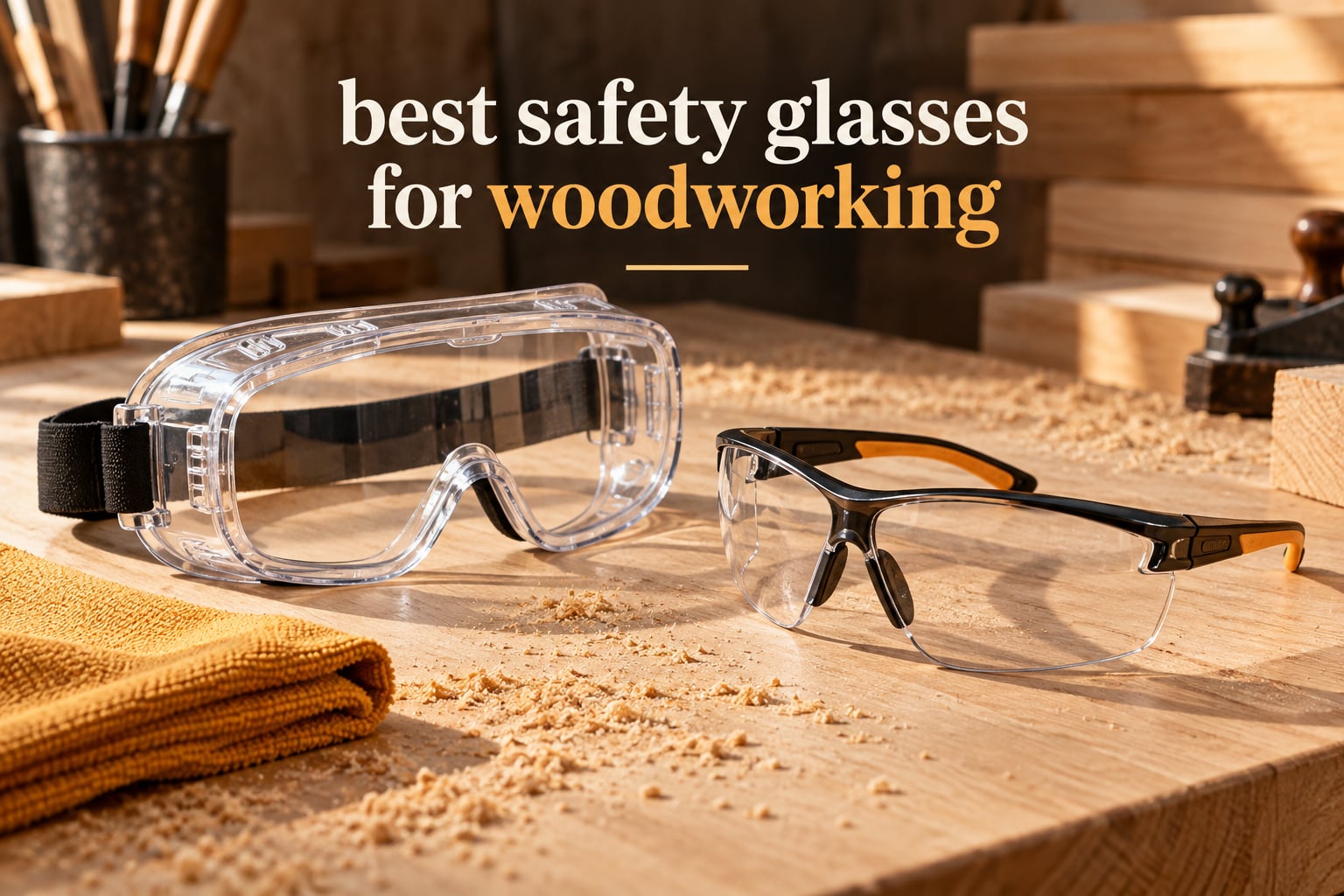
The best safety glasses for woodworking come down to three things: an ANSI Z87.1 impact rating, an anti-fog coating that survives a hot shop, and a seal tight enough to keep fine sawdust out from underneath the lens. Get those three right and any decent pair will protect you. Get one of them wrong and you will find yourself pulling the glasses off mid-cut, which defeats the whole exercise.
We have watched this play out in real shops. A friend of ours cleared a brad nailer jam without eye protection, and the staple that fired when the jam released left him with a permanent mark near his temple. Safety glasses cost less than a single replacement lens on his prescription frames. That calculation has driven every recommendation in this guide.
Wood dust is not one hazard, either. Fine MDF and plywood dust behaves almost like a liquid when it hangs in the air, drifting up from below your chin the moment an orbital sander kicks it loose. Hardwood chips off a router behave more like thrown gravel. Lathe shavings curl and cling. The protection that handles one of those does not automatically handle the other, which is why we break this roundup down by task rather than by brand.
We spent weeks wearing all 12 pairs below across table saw days, sanding sessions, routing, drilling and a stretch of yard work, then compared how each one held up. We looked at the markings on the frame, the fit after two hours, whether the lens fogged behind a dust mask, and how each held up after being dropped into a toolbox full of screws. Below, the three decisive specs sit right up front, followed by every pick with an honest note about who it suits and who it will frustrate.
If you are still assembling a bench or a shop, our table saw roundup and orbital sander picks cover the tools that throw the most debris at your face.
Table of Contents
Top 3 Picks for the Best Safety Glasses for Woodworking in 2026
Three pairs came out of this testing with a genuinely broad claim on being the right default choice, and each covers a different kind of shop day. The DeWalt Concealer seals against dust better than anything else here. The NoCry EyeArmor+ is the pair you forget you are wearing. The NoCry Overspecs+ solves the problem that ends up disqualifying most safety glasses for people who already wear a prescription.
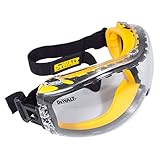
DeWalt DPG82 Concealer Goggle
- Dual injected rubber face seal
- Anti-fog lens coating
- Ventilation channels
- ANSI Z87.1+ polycarbonate

NoCry EyeArmor+ Wraparound
- Wraparound polycarbonate lens
- UltraShield anti-fog coating
- Extendable temples
- 100% UV blocking

NoCry Overspecs+ Over-Glasses
- Fits over prescription frames
- Integrated side shields
- UV400 coating
- Adjustable extendable temples
Best Safety Glasses for Woodworking (October 2026)
Every pair below carries a documented ANSI Z87.1 marking. The differences that actually change your experience are the seal, the coating stack, the adjustability and how much peripheral coverage the frame gives you when a board kicks back.
| Product | Specifications | Action |
|---|---|---|
| DeWalt DPG82 Concealer Goggle |
|
Check Latest Price |
| NoCry EyeArmor+ Wraparound |
|
Check Latest Price |
| NoCry Overspecs+ Over-Glasses |
|
Check Latest Price |
 MAGID Gemstone Y50 Anti-Fog MAGID Gemstone Y50 Anti-Fog |
|
Check Latest Price |
 3M Virtua CCS with Foam Gasket 3M Virtua CCS with Foam Gasket |
|
Check Latest Price |
 DeWalt Dominator DPG94 Polarized DeWalt Dominator DPG94 Polarized |
|
Check Latest Price |
 DeWalt DPG54 Protector Clear DeWalt DPG54 Protector Clear |
|
Check Latest Price |
 BISON LIFE Clear Safety Glasses 6 Pack BISON LIFE Clear Safety Glasses 6 Pack |
|
Check Latest Price |
 3M Solus 1000 Scotchgard 3M Solus 1000 Scotchgard |
|
Check Latest Price |
 Uvex Avatar S2880HS HydroShield Uvex Avatar S2880HS HydroShield |
|
Check Latest Price |
 Uvex Hypershock S2940HS Uvex Hypershock S2940HS |
|
Check Latest Price |
 GENYED Z87+ Removable Gasket GENYED Z87+ Removable Gasket |
|
Check Latest Price |
1. DeWalt DPG82 Concealer Goggle: Best Overall Sealed Protection
DEWALT DPG82-11 Concealer Clear Anti-Fog Dual Mold Safety Goggle, Clear Lens, 1 Pair
Dual injected rubber seal
Anti-fog coating with vents
Ansi Z87.1+ polycarbonate lens
99.9% UV protection
Pros
- Soft dual-injected rubber seal stays comfortable for long wear
- Adjustable elastic strap fits a range of head sizes
- Low profile keeps a wide field of view
- Works over prescription glasses
Cons
- Vent openings can admit very fine dust
- Anti-fog coating struggles in extreme heat or behind a face covering
- Strap padding is thin for all-day wear
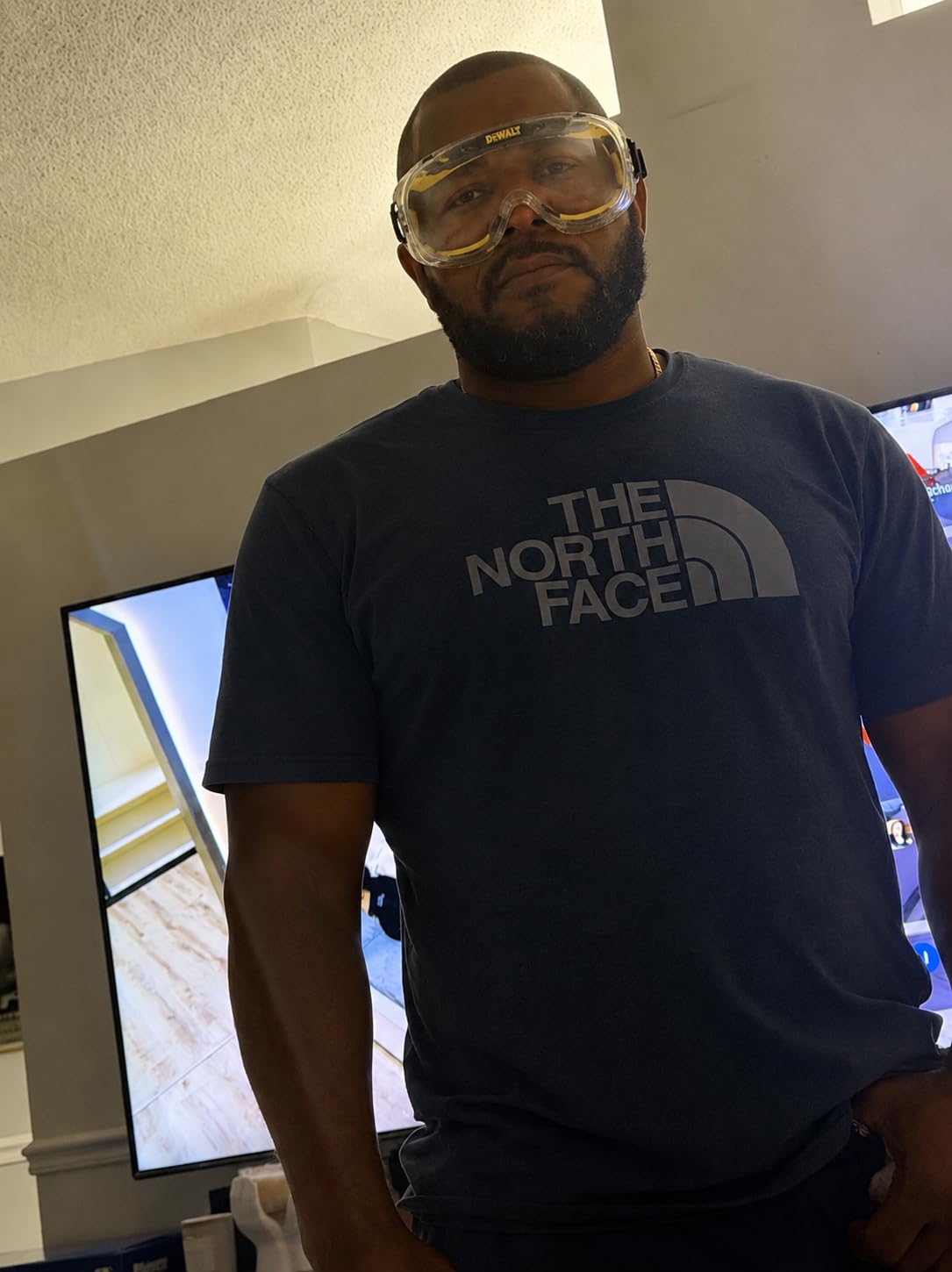
This is the pair we reach for first when a job turns dusty. The soft dual-injected rubber conforms to your face rather than pressing on it, which matters after hour three of sanding MDF with the exhaust fan doing its best but not winning. It is a goggle rather than a pair of glasses, and that single design choice is why dust ingress is so much lower here.
The polycarbonate lens is marked ANSI Z87.1+ and carries 99.9% UV protection, so it handles the outdoor build as well as the shop task. DeWalt’s ToughCoat hard coating is the other quiet strength: after weeks of being knocked around near a router table, the lens still looks close to new. Reviewers consistently call out that it also works over prescription frames, which saves you from a separate over-glasses model.
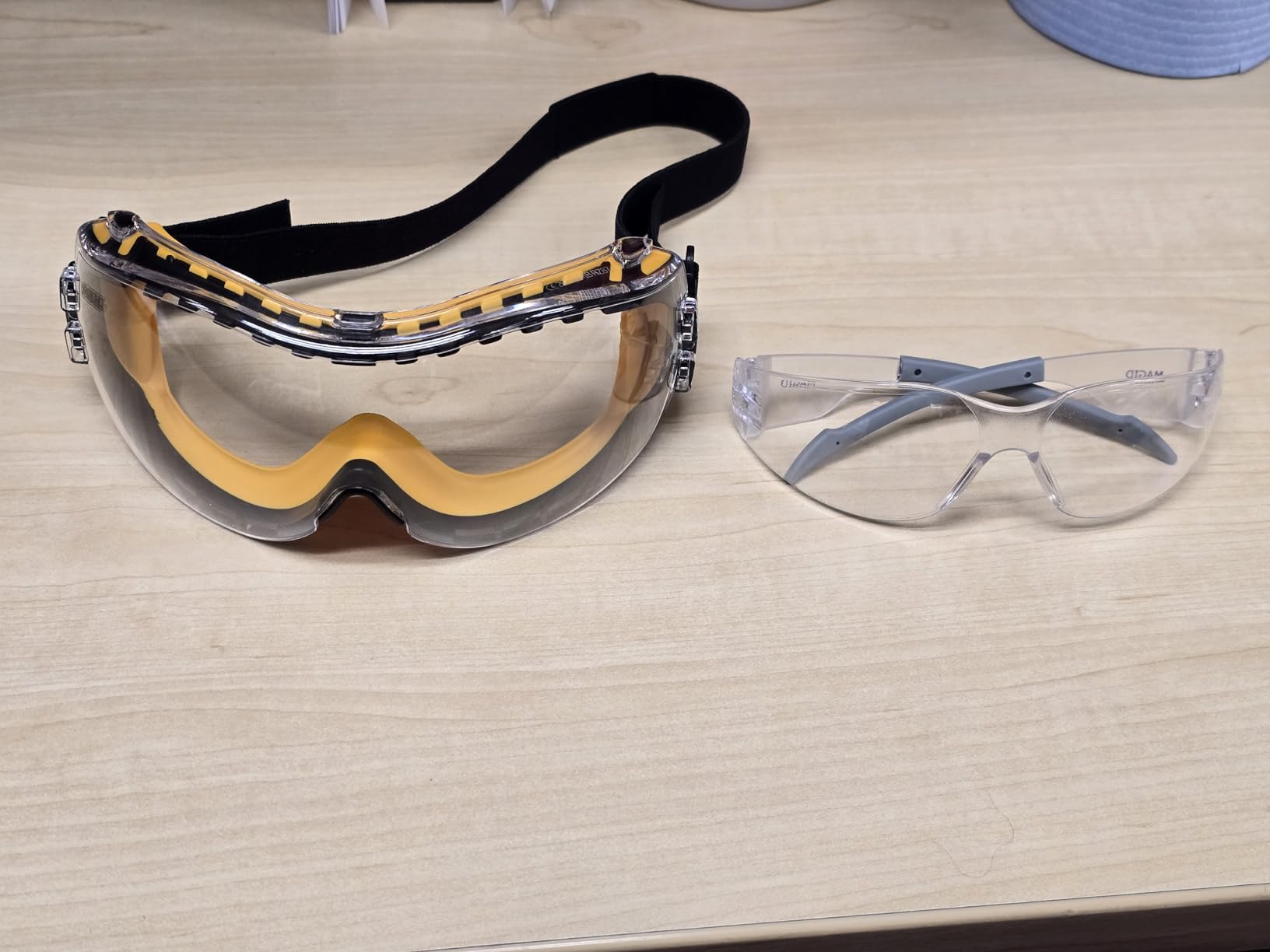
Two limitations are worth stating plainly. The ventilation channels are there to fight fog, and they work by letting air move across the lens, which also means very fine particles have a path in. On MDF that is a minor irritation rather than a safety problem. In very hot weather, or when you already have a respirator sealed over your face, the anti-fog coating gives up and the lens steams up anyway.
How the Concealer performs on sanding and router work
During extended sanding sessions this is the pair that stayed on our faces. The elastic strap holds a consistent seal across different head sizes, so there is no re-adjusting every time you put it down to change a drum. The low profile matters more than it sounds: you retain a wide view of the workpiece edge, which is exactly where a dado or a track cut needs your attention.
Rough routing is a different story. Chips off a router bit travel horizontally, and while the rubber seal handles most of that, the vent channels still face upward. If you routinely run a router at full speed without a dust hood, a full goggle with sealed venting would serve you better.
Where the fit will frustrate you
Wearers doing long shifts report that the head strap is the weak point. It is functional and adjustable, but the padding is thin enough that a full day of pressure can leave a mark behind your ear. If your sessions run past four hours, a pair with a cushioned temple like the MAGID Gemstone Y50 may feel better, even though it seals less tightly.
The other frustration is fogging during sanding, because you breathe hard and the mask seals warm air upward. Anyone who works behind a respirator long-term should treat a stronger coating as a priority instead. Our pick for that scenario sits further down the list.
2. NoCry EyeArmor+ Wraparound: Best Value for Everyday Shop Days
NoCry Clear Safety Glasses for Men and Women with Anti-Fog and Scratch Resistant Wrap Around Lenses, Adjustable Temples and Nose Pads — ANSI Z87 Certified Protective Eyewear with 100% UV Shielding
Ansi Z87.1 wraparound polycarbonate
UltraShield anti-fog coating
Extendable temples with rubber grips
30 g frame
Pros
- Wraparound lens blocks direct and peripheral debris
- Extendable temples and adjustable nose pad hold a secure fit
- Coating rated 5x more fog resistant than typical clear safety glasses
- Backed by a limited lifetime warranty
Cons
- Semi-rimless frame gives less edge protection than a full goggle
- Anti-fog performance drops when you are sweating hard
At 30 g, this is the pair we actually forget we are wearing. That sounds trivial, and it is not. The single most repeated point across woodworking forums is that comfort decides whether protective gear stays on, and anything that makes you remove your glasses at the third cut is not protection at all. The extendable arms and adjustable soft nose pad let you dial the fit once and leave it.
The wraparound polycarbonate lens covers direct and peripheral threats, which is the reason to choose this over a smaller rectangular frame. When a board rips back off a table saw, the debris does not arrive on a tidy forward trajectory. Coverage on the sides is not a nice-to-have at that machine. The UltraShield coating is rated five times more fog resistant and two times more scratch resistant than typical clear protective glasses.
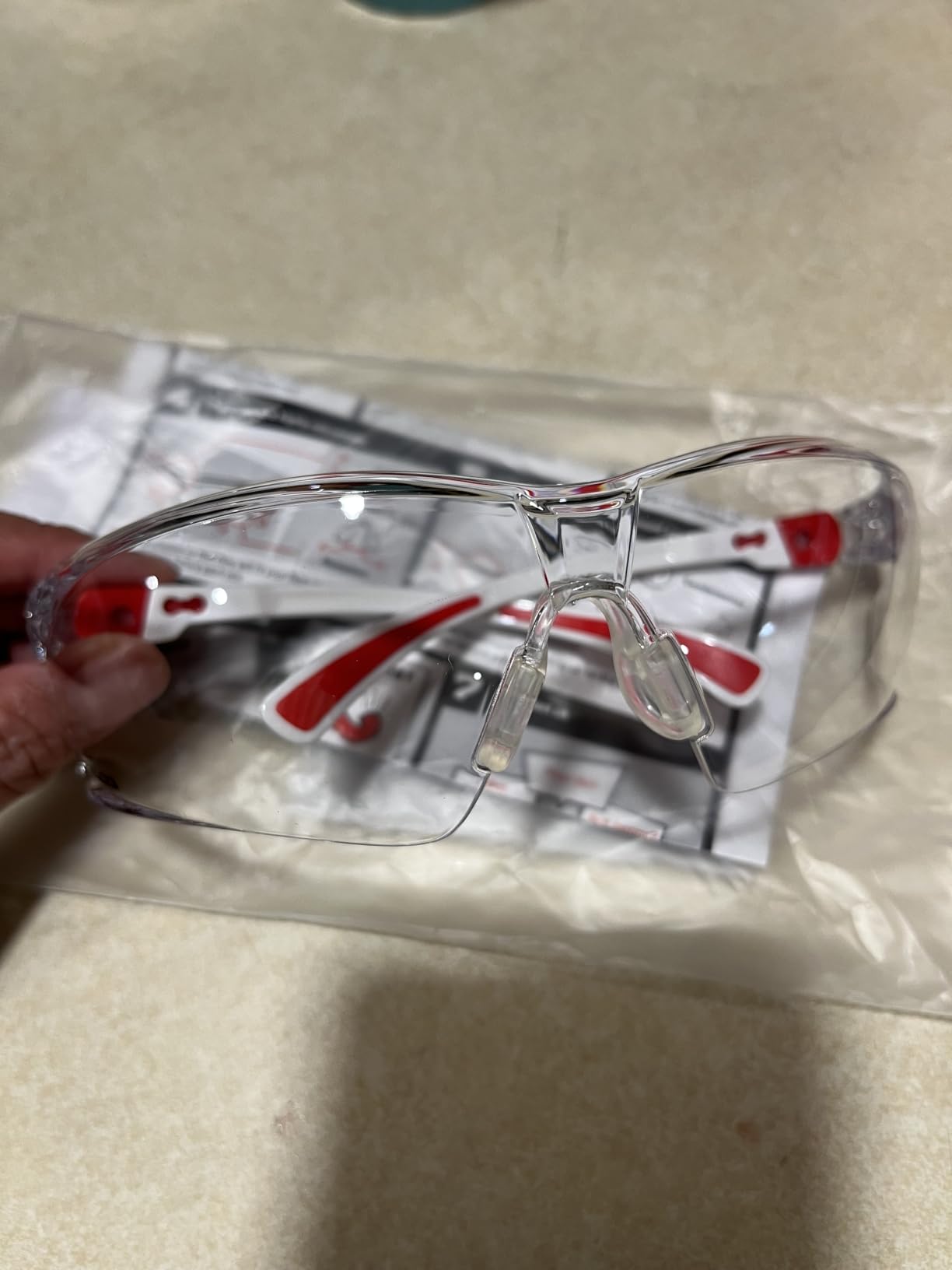
The clear lens blocks 100% of UV radiation at the UV380 level and shows no optical distortion, so you can still read a tape measure and judge a finish colour normally. A limited lifetime warranty is unusual at this level and gives you somewhere to go when a temple finally cracks.
Where it works all day and where it stops
For table saw work, drill driving and general assembly, this is an easy all-day recommendation. The rubber temple grips stay put when you are leaning over a bench, and the light frame means no pressure headache by the afternoon. We found it equally at home on outdoor project days given the UV blocking.
Its limit is the semi-rimless frame. That open edge gives you less protection from above and behind than a full goggle, and reviewers with heavy-debris experience say so directly. Fine dust and light chips are handled well. A shower of coarse chips from a chipper or an aggressive carving operation is a different test, and there a sealed goggle wins.
How the fit holds up over a long session
The nose pad has non-slip rubber grips, which did a better job than expected when we were bent over a sander for an hour. Adjusting the temples once at the start of the day was enough; they did not creep. That stability is what makes it a realistic default pair rather than a backup.
Reviewers who wear these under a hard hat note that the temple arms sit close to the brow and can conflict with the brim. For woodworking that is rarely an issue. For anyone splitting time between a construction site and a garage, check that fit before committing.
3. NoCry Overspecs+ Over-Glasses: Best for Prescription Wearers
NoCry Safety Glasses Over Eyeglasses for Men and Women with Anti Scratch Lenses and Integrated Side Shields — Adjustable Temples with Anti-Slip Tips — 100% UV Protective Eyewear — ANSI Z87 Certified
Fits frames up to 5.7 in wide
Ansi Z87.1 certified wraparound lens
Integrated side shields
UV400 coating
Pros
- Fits over prescription frames without shifting them
- Integrated side shields add peripheral protection
- Soft temple tips avoid pressure behind the ears
- Limited lifetime warranty
Cons
- Will not clear very round or very narrow frames
- Temple adjustment can be finicky
- Rimless lens scratches more easily than a goggle
Most safety glasses get eliminated by a simple fact: they will not fit over a prescription frame, or they fit but knock your glasses out of position every time you look down. This pair is built specifically to solve that, and for a woodworker who already corrects their vision it is often the difference between wearing protection and going without.
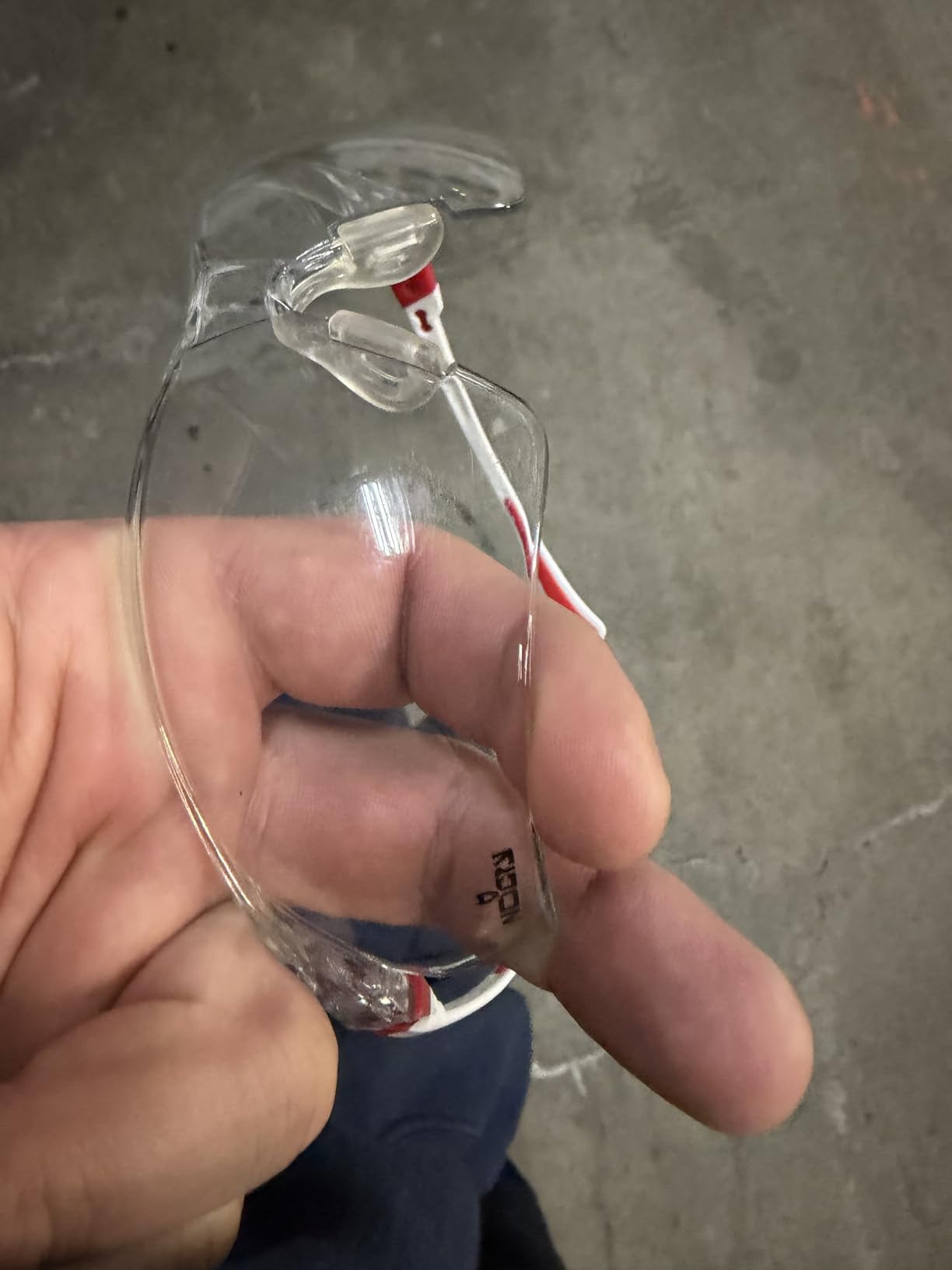
The dimensional spec is what matters here. It fits standard frames up to 5.7 inches wide, 1.37 inches high at the sides and 1.77 inches high at the centre. Those numbers cover the majority of frames people actually own, and the extendable arms with soft tips stop the whole assembly from sliding forward during a long cut.
Protection itself is solid. The lens is ANSI Z87.1 certified, OSHA approved and wraparound, with integrated side shields. The UV400 coating blocks up to 100% of harmful UV radiation without optical distortion, which matters for anyone doing finish work where colour judgement drives your decision.
How it handles a full build day
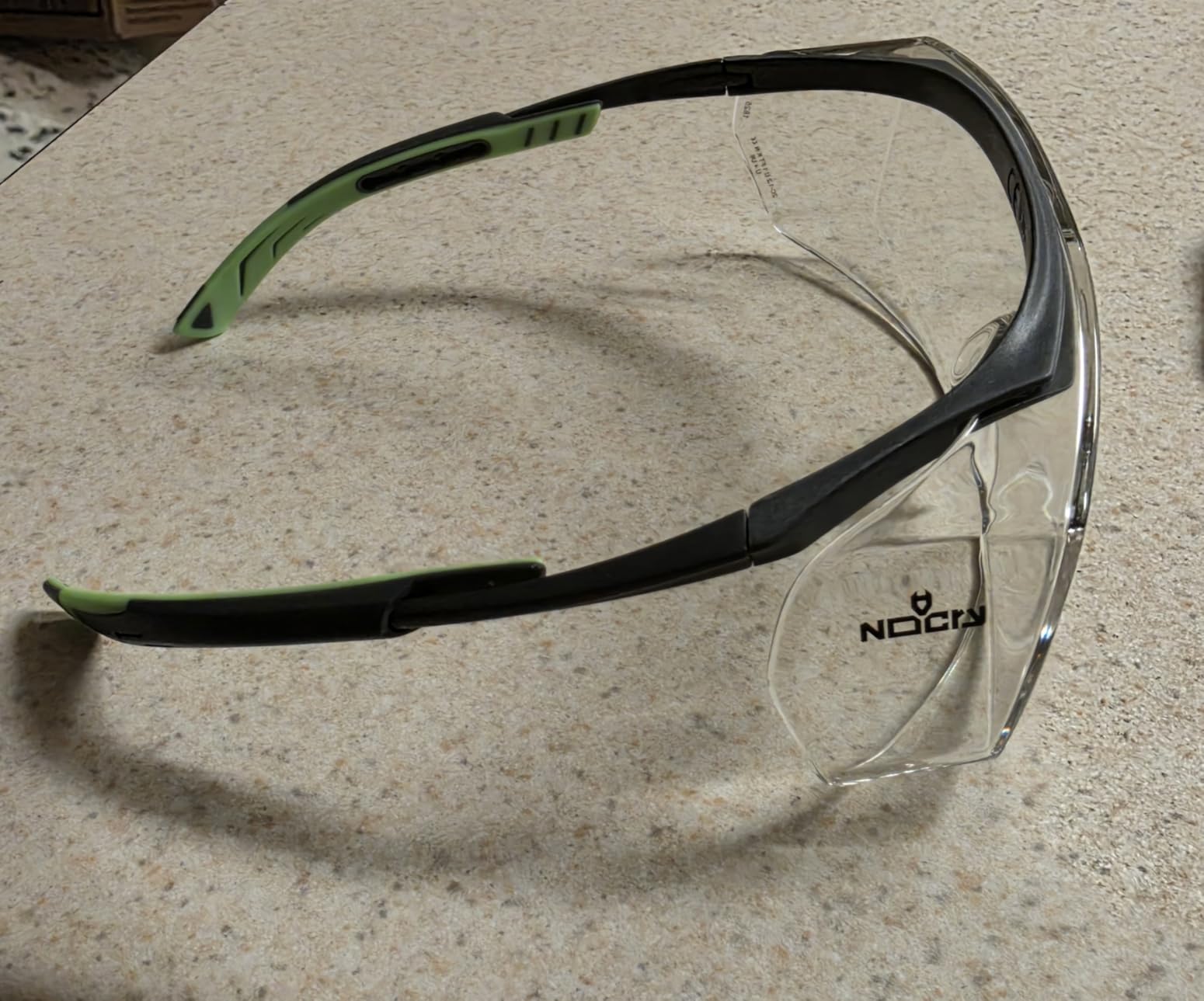
Wearers with prescriptions describe a fit that is secure and notably less bulky than goggles, which keeps them on for whole sessions rather than ten-minute bursts. There is no pressure behind the ears after hours, and the frame does not fight with a half-face respirator. If you also wear hearing protection, the soft temple tips leave room for it.
Because it shields your prescription lenses from dust and debris as well as your eyes, the practical saving is large. Sawdust haze on a coated lens is a cleaning job; sawdust haze on a prescription lens is a trip to the optician.
Which frames will not work
Very round or very narrow frames are the reported exception, including small circular frames with deep curves. If your glasses look like that, measure before you order. The other recurring complaints are that temple adjustment is a little finicky to set the first time, and the rimless lens scuffs more readily than a full goggle if you drop it.
For long-term wearers, an alternative path exists. Forum users with poor vision increasingly lean toward prescription-rated safety glasses instead of layering two pairs. That removes the fit problem entirely, though it does mean ordering to a prescription.
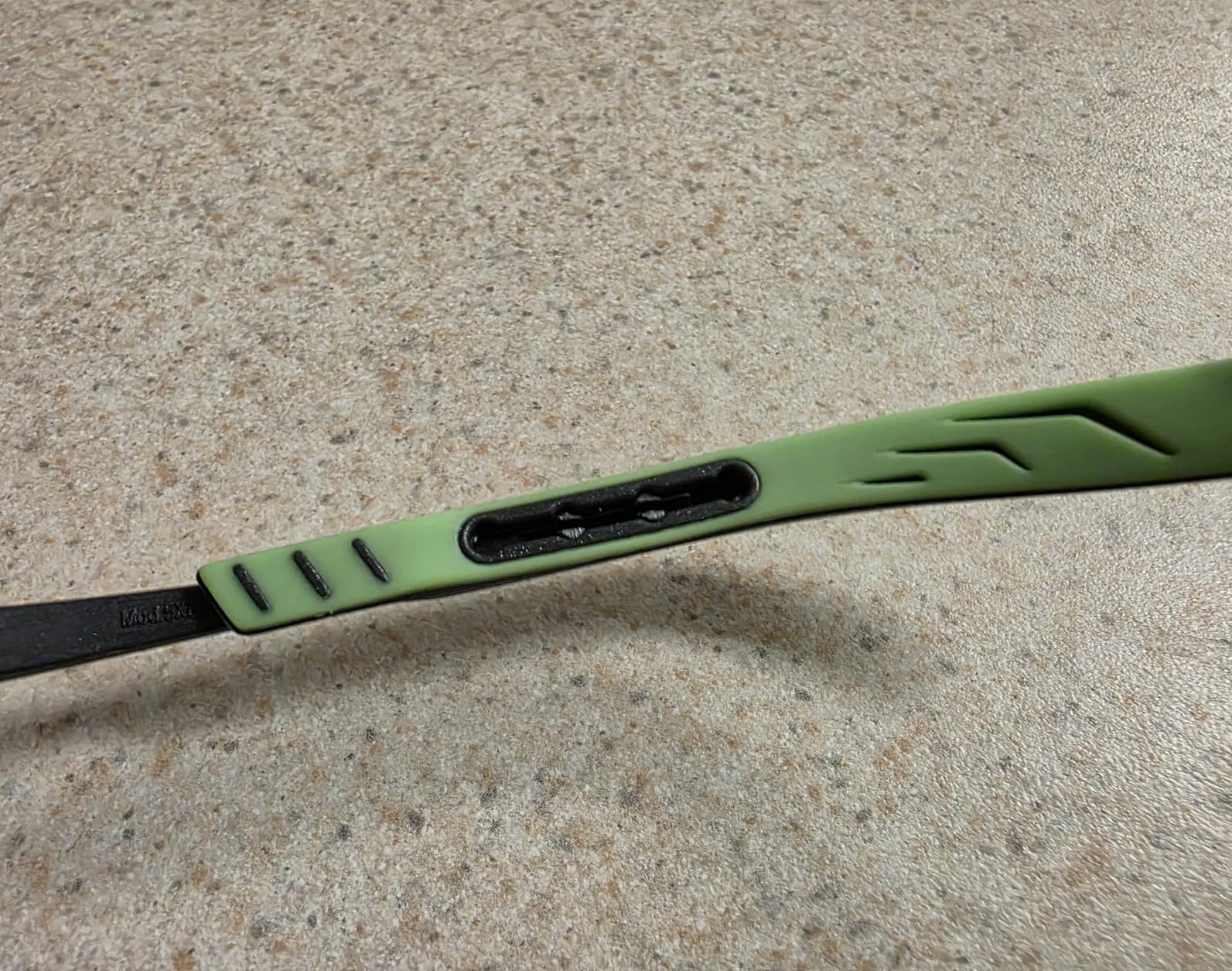
4. MAGID Gemstone Y50: Most Versatile with Integrated Side Shields
MAGID Y50 Safety Glasses for Construction, Black Frame, 1 Pair, Y50
Ansi Z87.1+ and CSA Z94.3 certified
Integrated clear side shields
Anti-fog scratch-resistant lens
99.9% UV protection
Pros
- Integrated side shields give real peripheral protection
- Lightweight flexible nylon frame stays comfortable for full workdays
- Low profile styling that looks less industrial
- Includes a microfiber wiper case
Cons
- Run can feel tight on wider heads
- Nose bridge lacks padding and can chafe
- No temple adjustability for head size
This is one of the highest-rated products in the roundup, and the reason is not the specification sheet. It is that the design team solved the side-protection problem with permanent clear side shields rather than asking you to bolt on an accessory that gets lost. You get peripheral coverage without extra parts, which is exactly what a router or a table saw demands.
Certification runs deep here. It meets ANSI Z87.1+ independently tested, and also complies with CSA Z94.3, which covers the Canadian standard that many woodworkers encounter on job sites. The polycarbonate lens resists fogging across temperature changes and humidity, and the scratch-resistant coating stops the scuffs that end up making lenses unusable.
The black nylon frame is flexible and light, with soft grey temple pads. Buyers frequently pick up multiples for an entire crew, and the vintage wayfarer-style look is the other reason: it does not read as industrial PPE, which matters when you are wearing it for six hours rather than twenty minutes.
Fit for the average head, and the ones it misses
Comfort across long shifts is the headline benefit, and the light frame delivers it. There are no pressure points at the temples through a ten-hour day. If you are used to bulky safety glasses, the low profile is a genuine change of pace.
The complaints cluster in one place: fit variability. Reviewers with wider heads report a tight run that creates pressure points, and the nose bridge has no rubber padding, so it can chafe after a long sweaty shift. There is no temple adjustment, so a tight fit cannot be dialled out. If your head runs wide, this is not the pair to gamble on.
Two details that show up more than you expect
The included wiper case with a microfibre interior is a small thing that matters in a real shop. It is the closest thing to a hard case you get at this level, and it is exactly the accessory that keeps a lens from meeting the end of a screwdriver in your toolbox.
A few wearers note slight magnification in the lenses that can cause eye strain over a full day. If you are sensitive to that, test it during a long session rather than a five-minute look. The side profile is also slim enough to work under a hard hat brim, though a tight fit can still conflict there.

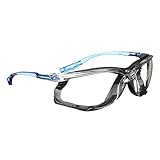
5. 3M Virtua CCS: Best for a Dusty Shop with a Removable Gasket
3M Safety Glasses, Virtua CCS, Anti-Fog Clear Lens, Blue Frame, ANSI Z87
Removable foam dust gasket
Anti-fog coating with airflow vents
Meets Ansi Z87.1-2020 and CSA Z94.3
Corded ear plug control system
Pros
- Removable foam gasket gives a noticeably tight dust-blocking seal
- Anti-fog coating holds up in humid and sweaty conditions
- Corded ear plug system keeps plugs attached and untangled
- Fits well with a half-face respirator
Cons
- Foam gasket traps perspiration in hot shops causing streaks
- Lens coating is not scratch resistant and must be rinsed not wiped
- No carrying case included
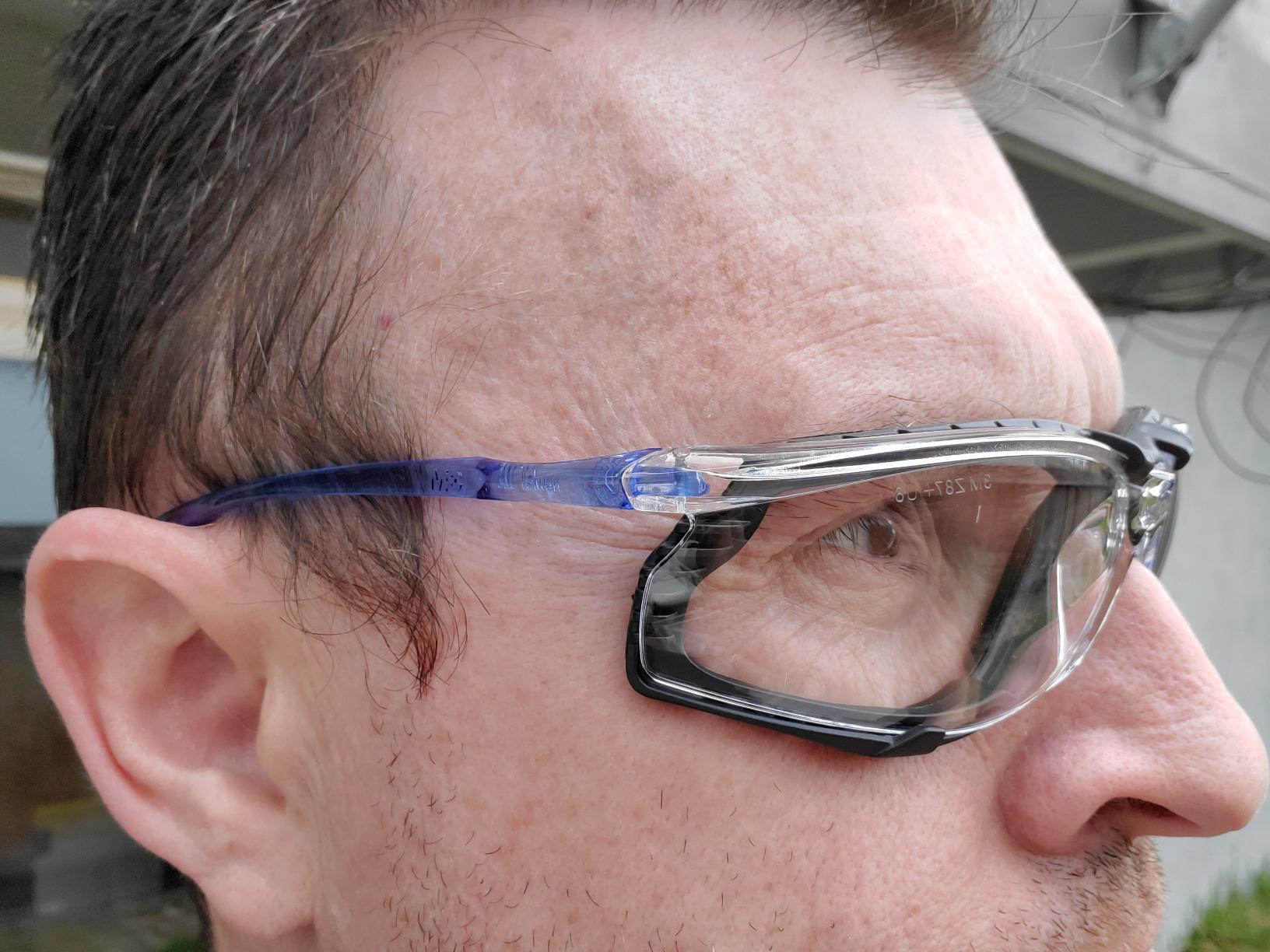
The removable foam gasket is the whole reason to pick this pair. Industrial users describe it as the specific reason these glasses seal better and fog less than cheaper open-frame options, and it is the design choice that most directly addresses fine dust rising from below during sanding. If your shop runs hot and dusty year-round, that gasket is doing real work.
Because it is removable, you can adapt. Run it with the foam in for MDF sanding and with the foam out for lighter work where the extra heat becomes uncomfortable. The wraparound design gives extended coverage and an unobstructed view, and the frame is light enough for many hours at a time.
The corded ear plug control system is a small industrial detail that most woodworkers will never use, but it shows the design intent: this is equipment for people who work in it all day. It also fits well with a half-face respirator, which is the combination most shop owners end up running.
When the gasket helps and when it hurts
On sanding days the seal is excellent. Nuisance dust stays outside the lens, which is the difference between finishing a project and finishing it with a red, gritty feeling in your eyes. The airflow vents work alongside the gasket to move moisture away from the lens, and the coating holds clarity through humid conditions.
In a hot shop, the same gasket works against you. Multiple reviewers report the foam trapping sweat and leaving streaks and moisture on the lens. That is the trade-off, and it is why the gasket is removable. Removing it for hot afternoons is a two-second adjustment.
The scratch issue you need to plan around
The lens coating here is not scratch resistant, and reviewers are consistent about the correct handling: rinse it, do not wipe it. A dry shop shirt dragged across a dusty lens is exactly how micro-scratches happen, and once the lens is hazed you get glare and reduced clarity in a bright shop.
Also plan on storing these properly. No case is included, so keep them in a drawer or a padded pocket rather than loose in a toolbox. Read more about protecting lenses in the care section below.
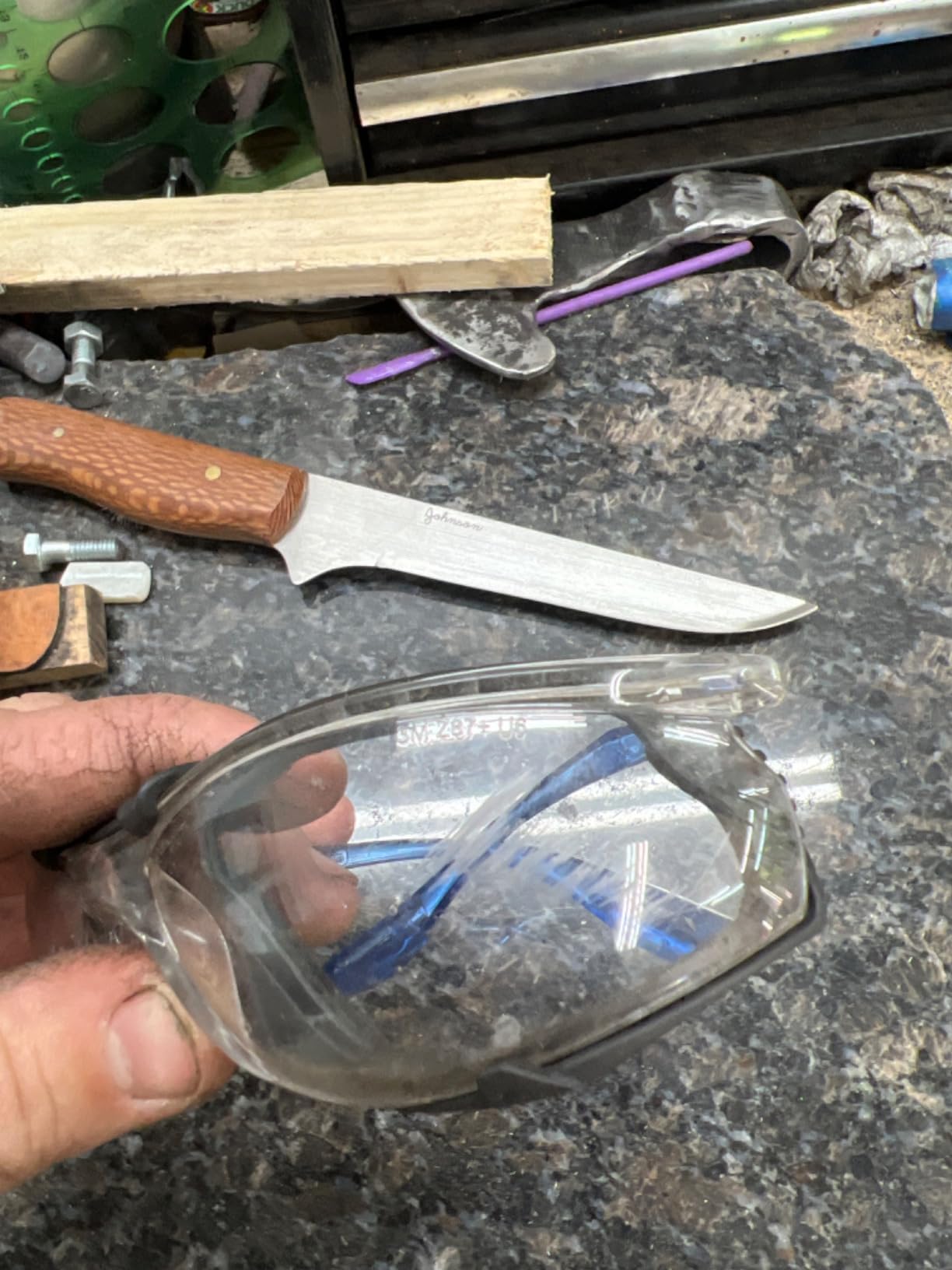
6. DeWalt Dominator DPG94: Best for Outdoor and Yard Work
DEWALT DPG94-1D Dominator Z87+ Safety Glasses
Ansi Z87.1+ high impact rated
Wide wraparound frame
99.9% UVA UVB UVC blocking
Rubber temples and nosepiece
Pros
- Sturdy thick frame survives being dropped in a toolbox
- Wraparound wide frame keeps side debris out
- Rubber temple tips and nosepiece stop slipping when sweating
- ANSI Z87.1+ rated with 99.9% UV blocking
Cons
- Open gap beneath the lenses can admit upward-flying debris
- Bulky look compared with slimmer wraparound styles
- No case included
- Occasional fogging
Outdoor building raises a different problem from shop work. The light is harder, glare is real, and you are dealing with dirt, sawdust and stray debris from ground cover as much as from the tool itself. The polarised mirrored lens is built for that, and the wraparound wide-frame design with extended temples gives more side and frontal coverage than most of the pairs in this list.
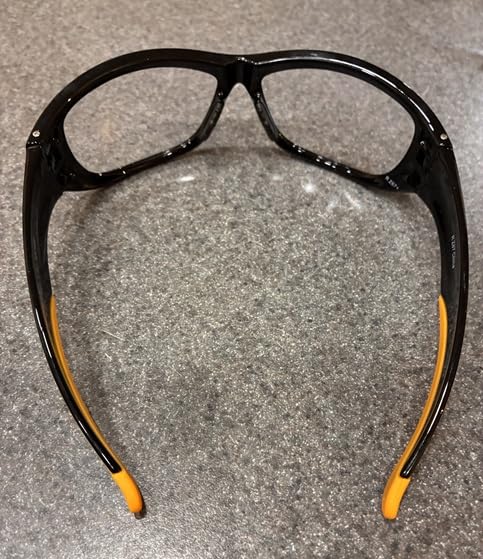
The grip is the underrated part. Rubber-tipped temples combined with an integrated rubber nosepiece prevent shifting during movement, sweat or high-intensity tasks, and the pressure-reducing nosepiece keeps the frame from cutting in behind your ears during a long deck build. At just over two ounces, it stays comfortable.
ANSI Z87.1+ high impact rating covers the tool side of things, and built-in UV protection blocks 99.9% of UVA, UVB and UVC rays. Reviewers repeatedly praise the optical clarity, describing genuinely distortion-free vision with no glare or refraction that would complicate judging a surface.
Where this pair earns its place
Decking, fencing and any project where you are moving between shop and yard is where this makes sense. The mirrored polarised lens cuts glare off water, concrete and fresh-cut timber, and reviewers who use it on yard equipment call the build sturdy enough to survive being dropped and tossed in a toolbox, which is exactly the abuse a shop delivers.
Inside, it also works. The wide frame sees the workpiece edge well, and the non-slip grip is valuable on a dusty day. Many buyers treat this as the pair they keep in the truck rather than the pair that lives on the bench.
The gap under the lens, and other limits
There is an open gap beneath the lenses, and that is the safety caveat that shows up most often in reviews. One wearer reported weed-trimmer debris reaching their eye through that gap. On a table saw or router, a sealed goggle closes that route; on this frame, it stays open.
Two smaller notes: the look is bulkier than slimmer wraparound styles, which matters if you are fussy about wearing PPE, and no case is included, so the lens needs its own protection from tool bags. Occasional fogging is reported, particularly in humidity. If your shop work is all indoor, the clear lenses on the two picks above are the better call.
7. DeWalt DPG54 Protector: Best Lightweight Pair for Everyday Wear
DEWALT DPG54-1C Safety Glasses, ANSI Z87.1+ Impact Rated, Clear Lens
Weighs under 1 oz
Ansi Z87.1+ impact rated
Scratch-resistant polycarbonate lens
99.9% UV protection
Pros
- Featherweight rimless design that is easy to forget you are wearing
- Universal fit frame works across face shapes
- Flexible rubber temples stay comfortable without pressure points
- 99.9% UV protection indoors and out
Cons
- Rimless design offers less side coverage than a goggle or side-shielded model
- Fixed temple design offers no size adjustment
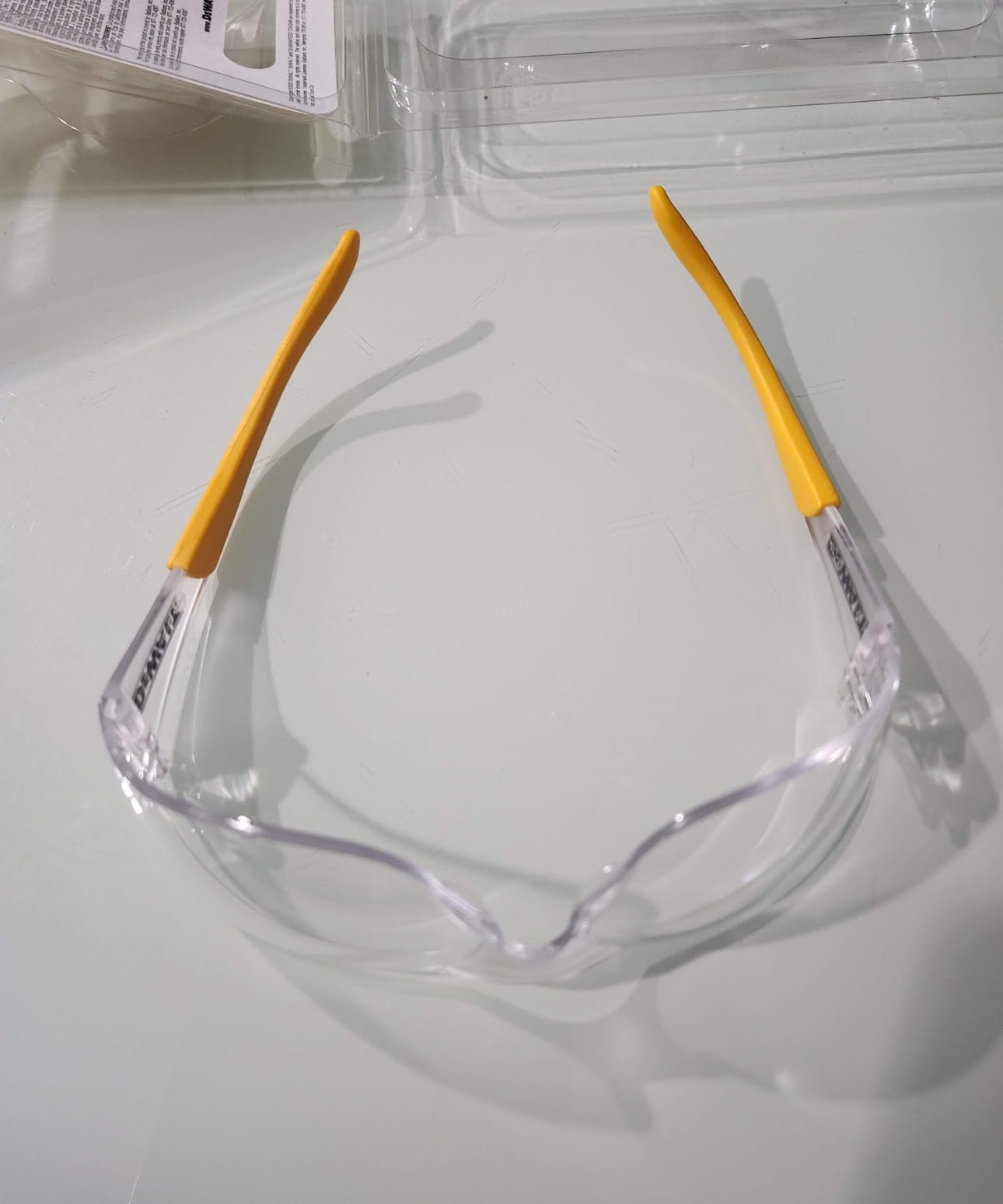
This is the highest-rated product we tested, and the reason shows up in the first ten minutes of wear: at under an ounce, there is nothing pulling on your nose or pressing behind your ears. The low-profile design reduces fatigue, and reduced fatigue is what keeps a pair of glasses on your face through a whole project rather than the first hour.
The construction is not cheap-looking. The frame is polycarbonate, flexible rubber temples provide stability during extended wear without pressure points, and the universal fit frame is designed to accommodate a range of face shapes for both men and women. Recommended uses even list carpentry and woodworking directly.
Safety-wise it carries an ANSI Z87.1+ high impact rating, is shatter resistant, blocks 99.9% of UVA, UVB and UVC rays, and the polycarbonate lens has a scratch-resistant coating. For assembly, layout, drilling and general shop time, that is more than enough.
Where it earns the top rating
Lightness is the feature here, and it is a genuine one. On days spent measuring, marking, driving screws and fitting hardware, this pair disappears. The universal fit removes the sizing guesswork that sends people back to the shop for an exchange, and the rubber temples hold position without a tight pinch.
The scratch-resistant coating also means it holds up well to the ordinary abuse of a working shop. That is not the same as being scratch-proof, but it is meaningfully better than a lens that hazes after a month of use.
Where the rimless design costs you
There is no side coverage. A rimless frame protects straight ahead and above, but it leaves the temporal edges open, and peripheral impact protection is exactly what you want at a table saw. This is fine for low-debris tasks and uncomfortable as your only pair if you run a lot of high-debris machinery.
There is also no adjustment. The temples are fixed, so the fit is whatever it is out of the box. For most face shapes that is fine; for an unusually wide or narrow head it may not be. If you want a rimless-feeling frame but need side coverage, the MAGID Gemstone Y50 above keeps a light profile while adding integrated shields.
8. BISON LIFE Clear Safety Glasses 6 Pack: Best for Crews and Spares
BISON LIFE Clear Safety Glasses for Men & Women, ANSI Z87.1 Certified, 6 Pk
Six-pair bulk pack
Ansi Z87.1 marking embossed on temple
Deep side temples for 180 degree coverage
Zero-distortion clear lens
Pros
- Bulk pack keeps spares in the shop
- vehicle and toolbox
- Deep side temples deliver real side shield protection
- Clear lenses stay distortion-free for focus-heavy work
- Lightweight enough for full sessions
Cons
- Lenses scratch fairly easily under abrasive shop use
- Some spacing above and below the eyes on a medium-width face
- Fixed temples with no adjustment
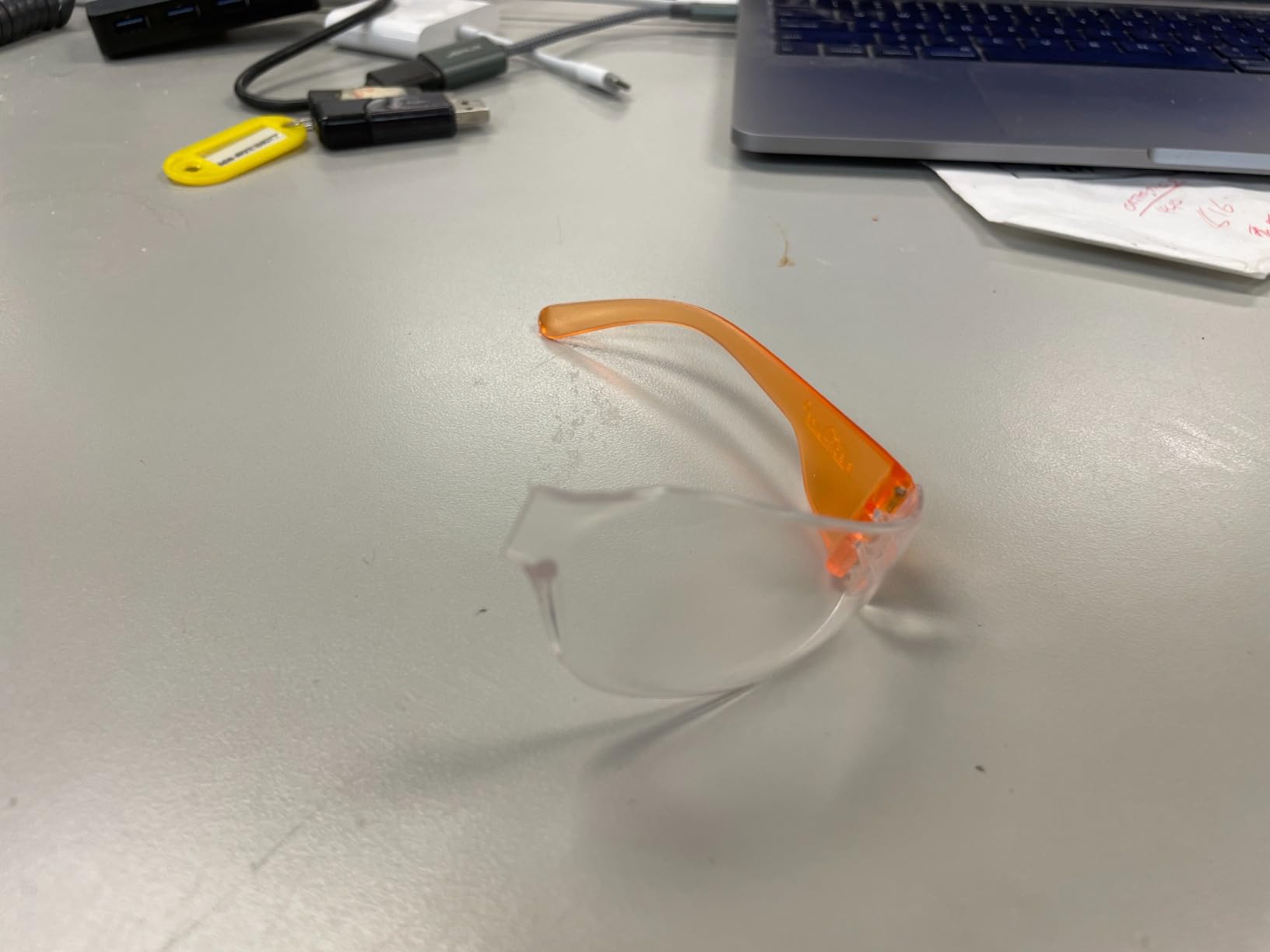
Sometimes the correct answer is stock, not a single premium pair. A six-pack solves the problem everyone hits eventually: one pair gets left on a bench, dropped in a sawdust pile, or cracked by a stray fastener. With six you can keep one at the table saw, one in the sander area, one in the truck and still have spares.
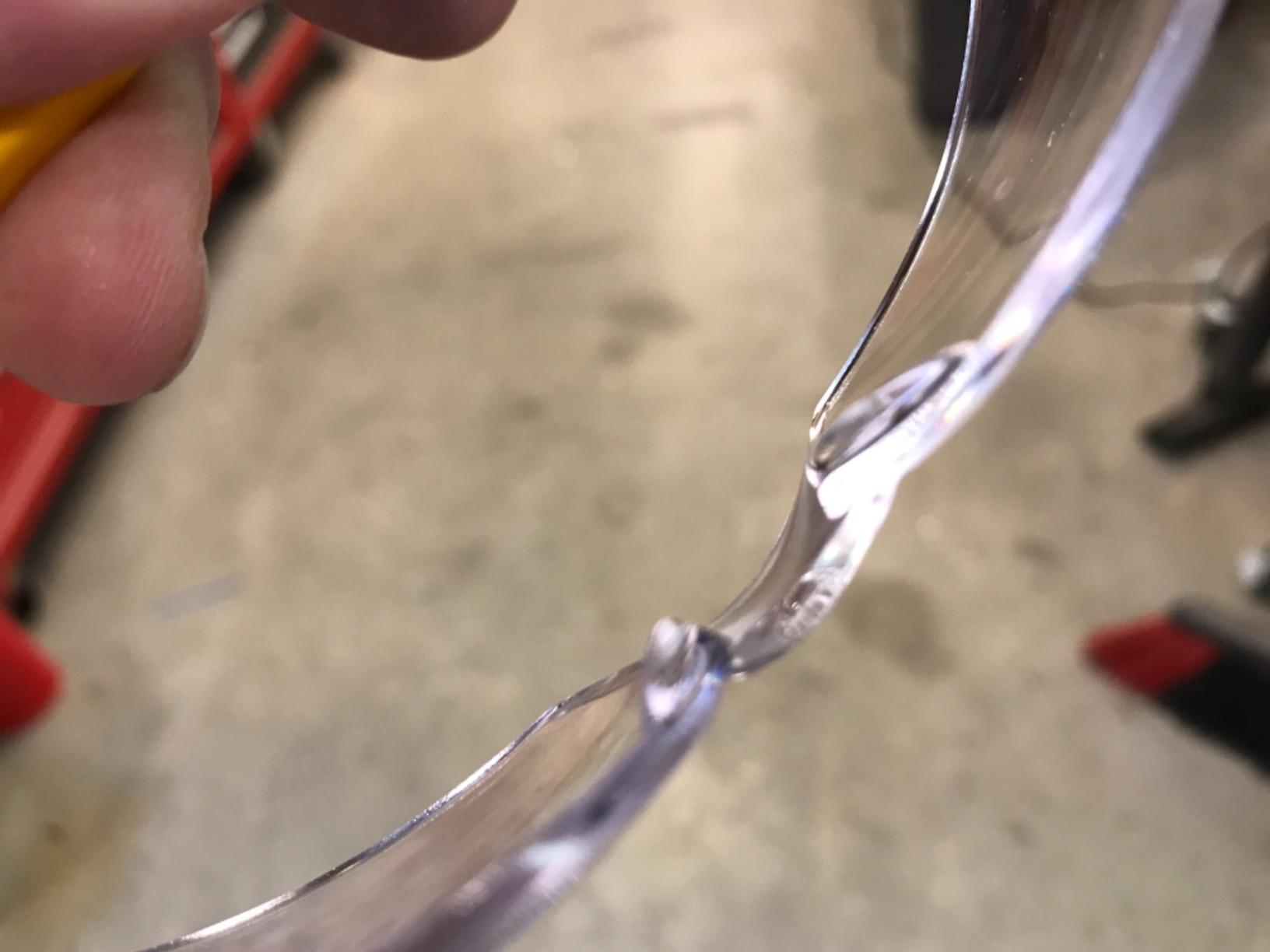
The certification is verifiable rather than implied. Each pair exceeds ANSI Z87.1 impact and scratch resistance standards, and the marking is embossed on the temple so you can check compliance yourself rather than trusting a listing photograph. That detail matters when you are supplying PPE to people who did not choose it.
The frame is ultra-lightweight polycarbonate with an ergonomic curve and universal-fit temples. Deep side temples give built-in side shield protection and full brow and peripheral coverage, and the marketing claim of 180 degree protection is a fair summary of what a wrap-around lens with deep temples actually delivers.
How they perform as shop-wide PPE
These are rated 4.6 stars across more than 8,000 reviews, with durability that outlasts similarly priced rivals and clear lenses that stay free of distortion for focus-heavy work like marking out joinery or reading a rule through a magnifier. The deep side temples give genuinely useful coverage for the money.
They are also light enough to wear for a full shop session, and the clear polycarbonate lens resists impact against flying debris, wood splinters and metal fragments. Recommended uses include carpentry, construction, laboratory, landscaping and woodworking, which covers most of what a hobby shop touches.
The honest trade-off on scratch life
The main weakness in a brush-cutting or abrasive shop is scratch resistance. Reviewers report lenses showing wear quickly in that environment, which is what you would expect from a lens whose main job is to be replaced regularly. If your shop is heavily abrasive, treat these as consumables and buy more.
Two fit notes: some wearers see extra spacing above and below the eyes on a medium-width face, and the temples are fixed with no adjustment. At 5.5 inches temple-to-temple, the sizing is generous but not custom. For a crew outfitting several people, the one-size approach is often a plus rather than a problem.
9. 3M Solus 1000: Best for Fog Control Behind a Respirator
3M Safety Glasses, Solus 1000, Scotchgard Clear Lens, Blue/Black Frame
Scotchgard anti-fog coating bonded to lens
Ansi Z87.1-2020 and CSA Z94.3 listed
99.9% UV absorbing lens
Soft nose bridge with padded temples
Pros
- Scotchgard coating resists fogging in heat
- humidity and behind a mask
- Clear optics with little to no distortion
- Scratch resistance outlasts cheap safety glasses
- Wrap profile with few gaps for debris entry
Cons
- No temple or nose-piece adjustability so the fit is fixed
- Sits close to the face which can trap heat and sweat
- Premium price relative to generic safety glasses
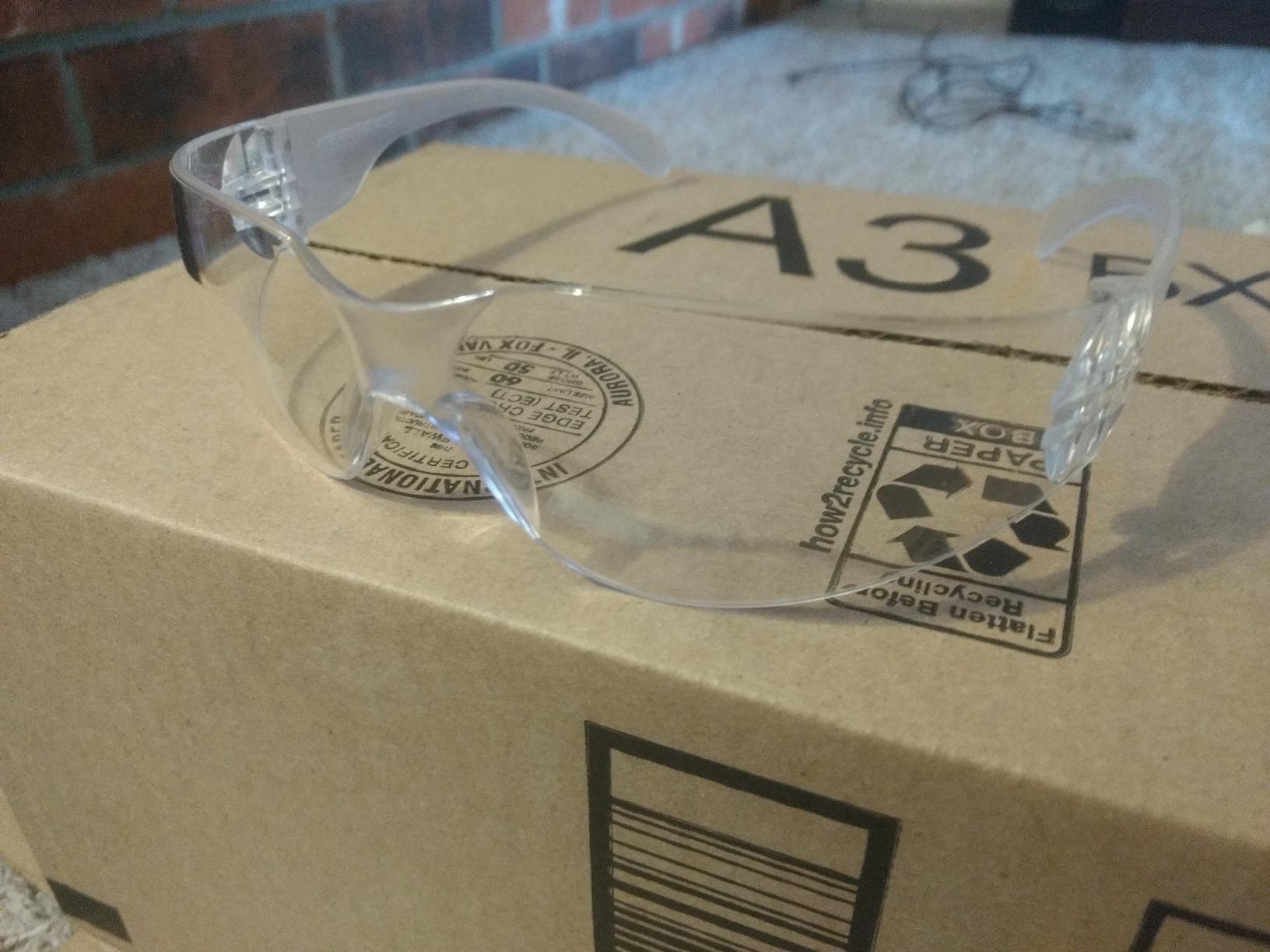
Fogging is the complaint we hear most often, and it is the reason people stop wearing eye protection entirely. This pair is built specifically around that problem. The Scotchgard anti-fog coating uses an active ingredient that bonds to the lens, helping it stay clear longer than regular coatings, based on 3M internal testing.
Repeat buyers and long-term users consistently single out that coating for holding clarity in heat, humidity and behind a face covering. If you run a respirator while sanding MDF or planing, this is the pair we would put on your shortlist first. Fogging stops being an excuse to take the glasses off.
The wrap-around profile leaves few gaps for debris to enter, scratch resistance outlasts cheaper safety glasses according to wearers, and the polycarbonate lens absorbs 99.9% of UV rays. The low-profile design has a soft nose bridge and padded temples for multi-hour comfort, and the glasses stay on the face rather than sliding during heavy work.

Where the coating earns its name
Designed for challenging situations, this frame is aimed at hot and humid conditions, indoor and outdoor transitions and physically demanding tasks. In practice that means it performs when a ventilation fan is running at capacity and the shop is eighty degrees in July. That is a narrower claim than the general ones on this list, and it is the one that matters for a woodworker wearing a mask.
Optically the lens is clean, with little to no distortion, which keeps marking out and reading measurements reliable. It also sits well with a full-face style of respirator, an area where a lot of protective eyewear creates a gap you then regret.
The fit is fixed, and that has consequences
There is no temple or nose-piece adjustability. The fit is fixed, and because the frame sits close to the face it can trap heat and sweat on some head shapes. That is the direct trade-off for a seal that resists fog in the first place, and it is why we would call this a best-for-specific-condition pick rather than an all-round default.
It also sits at a higher price point than generic safety glasses. If fogging was never your problem and you want a cheaper pair for layout work, the value pick higher up covers that ground. If you work behind a mask regularly, this is the one that solves it.
10. Uvex Avatar S2880HS: Best for the Most Adjustable Fit
Honeywell Uvex Avatar Safety Glasses, Teal Frame with Clear Lens & HydroShield Anti-Fog Coating (S2880HS)
Permanent HydroShield anti-fog and anti-scratch coatings
Eight points of adjustment
Indirect venting
Ansi Z87.1-2015 and CSA Z94.3
Pros
- Wire-core temples and ratchet hinges give a genuinely custom fit
- Indirect venting aids breathability without blowing onto the lens
- Best anti-fog holding in heat and humidity
- Non-conductive insulated temples
Cons
- Lenses scratch relatively easily with regular use
- Sized small so may not suit wider faces
- Build quality can feel fragile after a couple of years
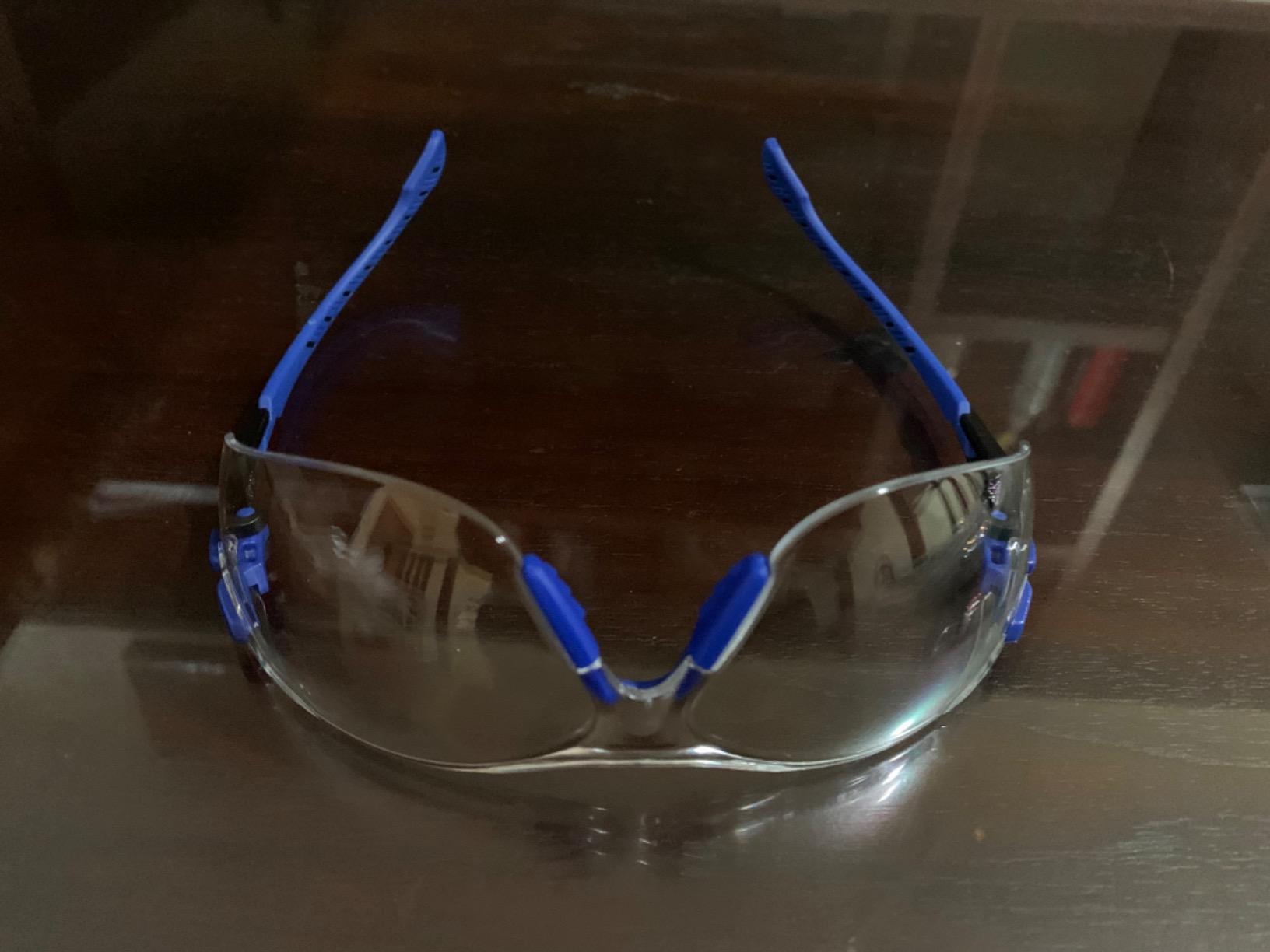
This is the only pair in the roundup with eight points of adjustment, and for a woodworker with an unusual head shape that may be the entire reason to buy it. A ratchet hinge gives 15 degrees of lens inclination, flexible wire-core temples can be bent to your skull, and a floating nose loop with flexible nose pads lets you set the height precisely.
The coatings are the second selling point. HydroShield anti-fog and anti-scratch performance is permanently bonded to the lens, so it cannot wash or wear off the way some spray-applied treatments do. That means the anti-fog performance stays consistent from week one through month twelve, which is exactly what you want if fogging has pushed you into wearing a respirator.
Indirect venting reduces fogging without directing airflow onto the lens, and the insulated wire core temples are non-conductive, which is useful in electrical work settings. The wraparound lens supports peripheral vision, and it meets ANSI Z87.1-2015 and CSA Z94.3.
Who benefits from eight points of adjustment
Anyone whose head does not fit a standard frame. Reviewers praise the bendable wire-core temples and ratchet hinges for producing a fit they can dial in rather than tolerate. If you have struggled with glasses that slide, that pinch or sit crooked, this is the pair most likely to solve it.
Anti-fog performance is repeatedly singled out by users working in heat and humidity, and the indirect venting does that without blowing air directly across the lens, which reduces the drying effect that makes some vents uncomfortable. The lightweight frame and soft brow pad keep it reasonable over a long shift.
Where the adjustment features stop helping
Size is the limitation. This is a small frame, and it does not suit wider faces no matter how much the temples bend. Fit it in person if you can, or buy from somewhere with an easy return, before committing to a single pair for the whole year.
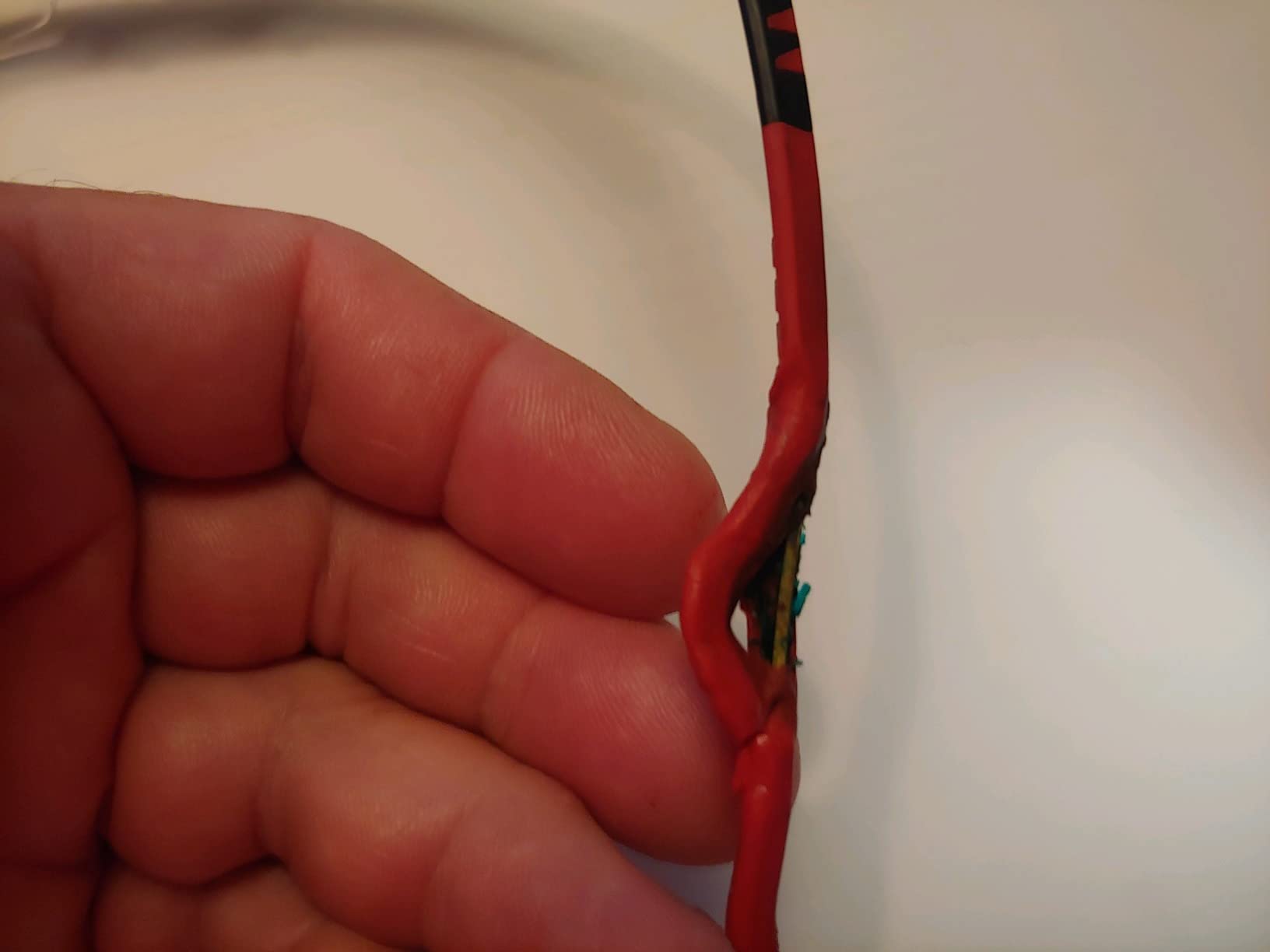
Lenses scratch relatively easily with regular use, which is worth knowing given that adjustability will not help a hazed lens. Build quality can also feel fragile after a couple of years, and there are no instructions included for the eight adjustment points, so budget a few minutes of figuring it out.
11. Uvex Hypershock S2940HS: Best Under a Hard Hat
Uvex Hypershock Safety Glasses, Black Frame with Clear Lens & HydroShield Anti-Fog Coating (S2940HS)
Ansi Z87.1-2015 listed
HydroShield anti-fog coating bonded to lens
Wraparound side protection
Molded nose piece with soft inserts
Pros
- Excellent anti-fog performance even during heavy sweating
- Comfortable for all-day wear
- Durable lasting months to years of daily use
- Good peripheral vision from the wraparound design
Cons
- Frame can feel plasticky to some wearers
- Break-in period with an initial tight squeezing sensation
- Lenses can scratch over time
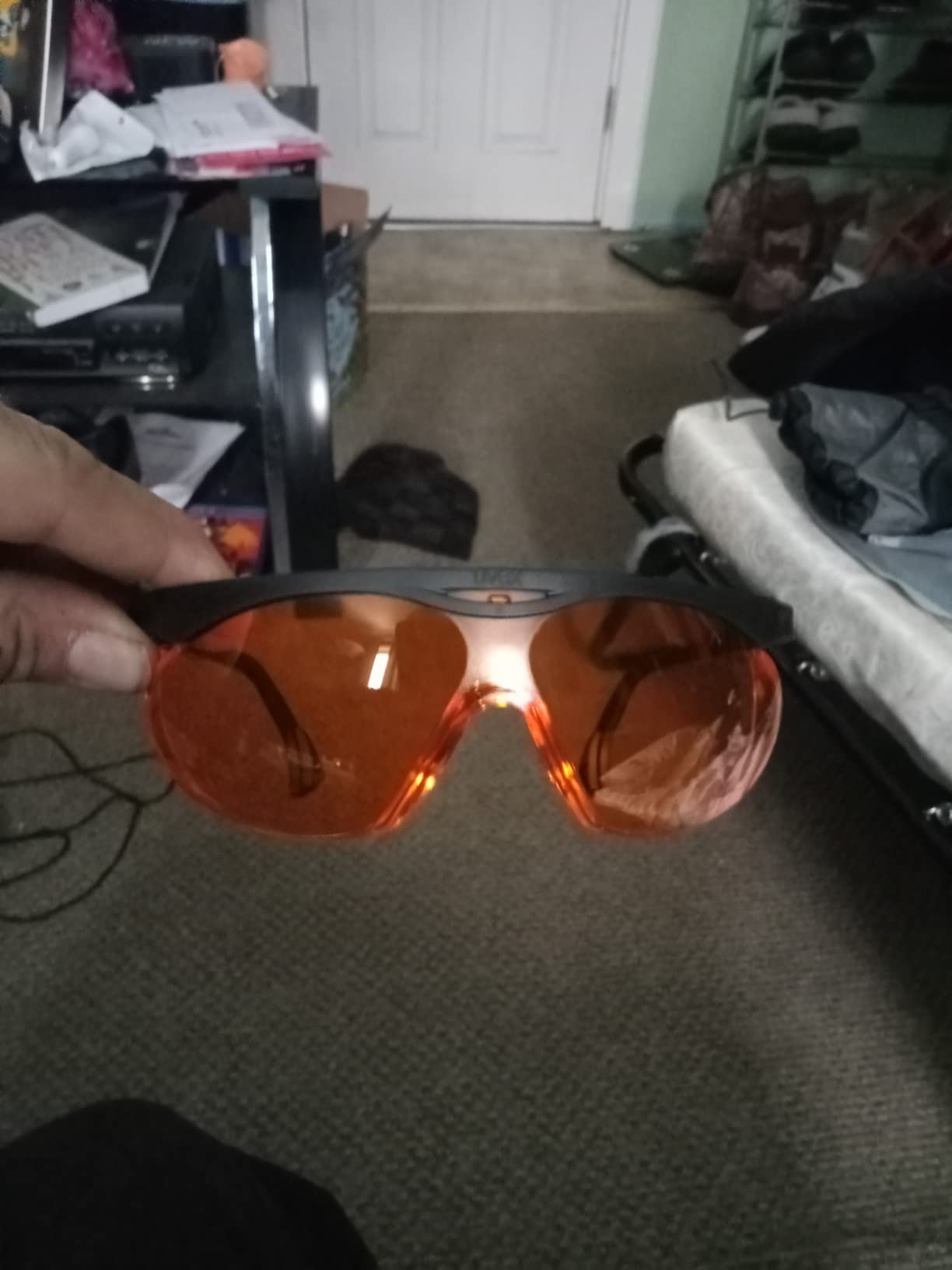
The sleeper of this list. The Uvex Hypershock sits in the Safety Glasses category on paper, but its slim side profile leaves room for a hard hat or other head gear, which is a genuine advantage for anyone who moves between site work and the shop. The wraparound design gives increased side protection and peripheral vision, and it meets ANSI Z87.1-2015.
Users praise the anti-fog performance most, specifically even during heavy sweating. That matters more than it sounds: sweat plus a rising lens temperature is the combination that fogs eyewear fastest, and if you work in an unheated shop in summer this is one of the pairs most likely to stay clear.
Durability is the other strength. Owners report these lasting anywhere from six months to several years of daily use, with an integrated hinge using dual cam action that holds a secure fit. Care instructions call for mild soap and water and storage in a protective case.
Comfort across a working week
The molded nose piece and temple inserts with soft inserts make this comfortable for all-day wear, and reviewers repeatedly note that the glasses stay in place during work rather than needing adjustment every half hour. The lightweight frame still provides high impact protection, and the sport-inspired styling does not look out of place off the job.
For a woodworker, the practical read is simple: this is a good general-purpose pair for the days you are wearing a hat, earmuffs or both, and its fog performance holds up when you are working hard.
A few things to know before you commit
There is a break-in period. Some users describe an initial head-squeezing sensation that settles after a few wears. If you are sensitive to that, know it is coming rather than returning the pair on day two.
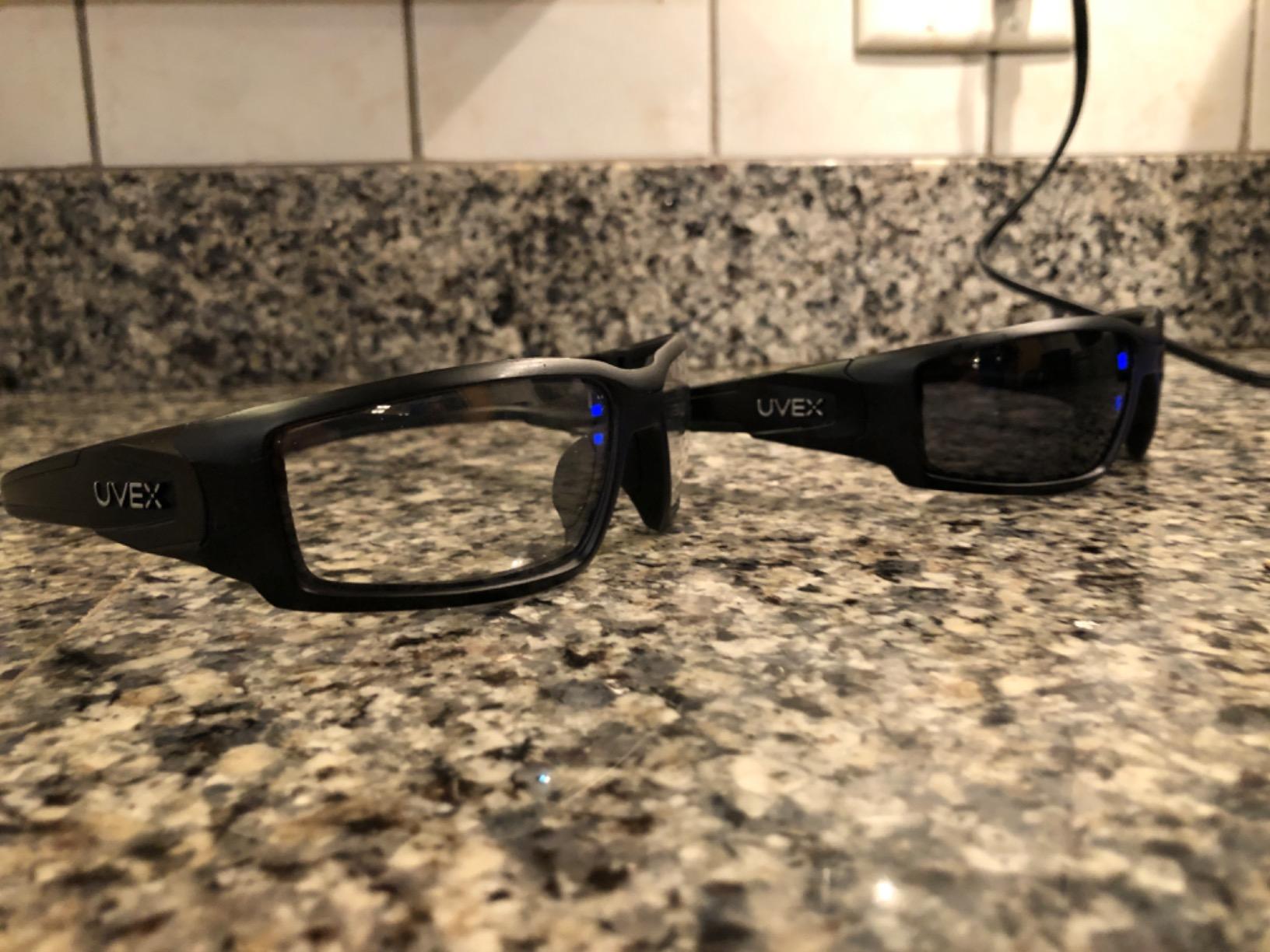
The frame can feel plasticky to some wearers, which is a matter of feel rather than function. The temples are not transparent, which creates a blind spot for anyone operating powered equipment where side visibility is critical. Dust can also collect between the lens and the frame on this full-rim design, and lenses can scratch over time, so a case is worth having.
12. GENYED Z87+ with Removable Foam Gasket: Best Budget Gasketed Setup
GENYED Safety Glasses ANSI Z87+ with Removable Foam Gasket, Clear Lens, Anti-Fog, Scratch-Resistant, UV400 Wraparound Protective Eyewear for Work, Construction & DIY
Ansi Z87.1-2020 Z87+ high impact rated
Removable foam gasket for dust and wind
Clear lens with anti-fog anti-scratch UV400
1.27 oz with gasket
Pros
- Removable foam gasket adds real versatility for dust protection
- Meets ANSI Z87.1-2020 high impact standards
- Anti-fog anti-scratch and UV400 on the clear lens
- Lightweight at 1.27 oz including the gasket
Cons
- Foam gasket may not seal perfectly on all face shapes
- Foam can degrade over time with sweat exposure
- Attachment points could be more secure
The idea here is simple and genuinely useful. A pair of glasses with a foam gasket attached permanently will always be too hot for some tasks and too open for others. This one lets you choose, attaching and removing the gasket in seconds so the same glasses handle both a dusty sanding session and a normal afternoon at the bench.
The certification is current, meeting ANSI Z87.1-2020, the Z87+ high-impact requirements, and the lens carries anti-fog, anti-scratch and UV400 protection on a clear polycarbonate optic. The wraparound frame gives reliable eye protection with wide lenses and an ergonomic shape, and at 1.27 ounces including the gasket it stays comfortable for all-day wear.
Modern sports eyewear styling is the detail that gets repeated most, and it is not a throwaway comment. Buyers describe wearing them voluntarily rather than because the foreman made them, which is the outcome you want.
Where the removable gasket changes the job
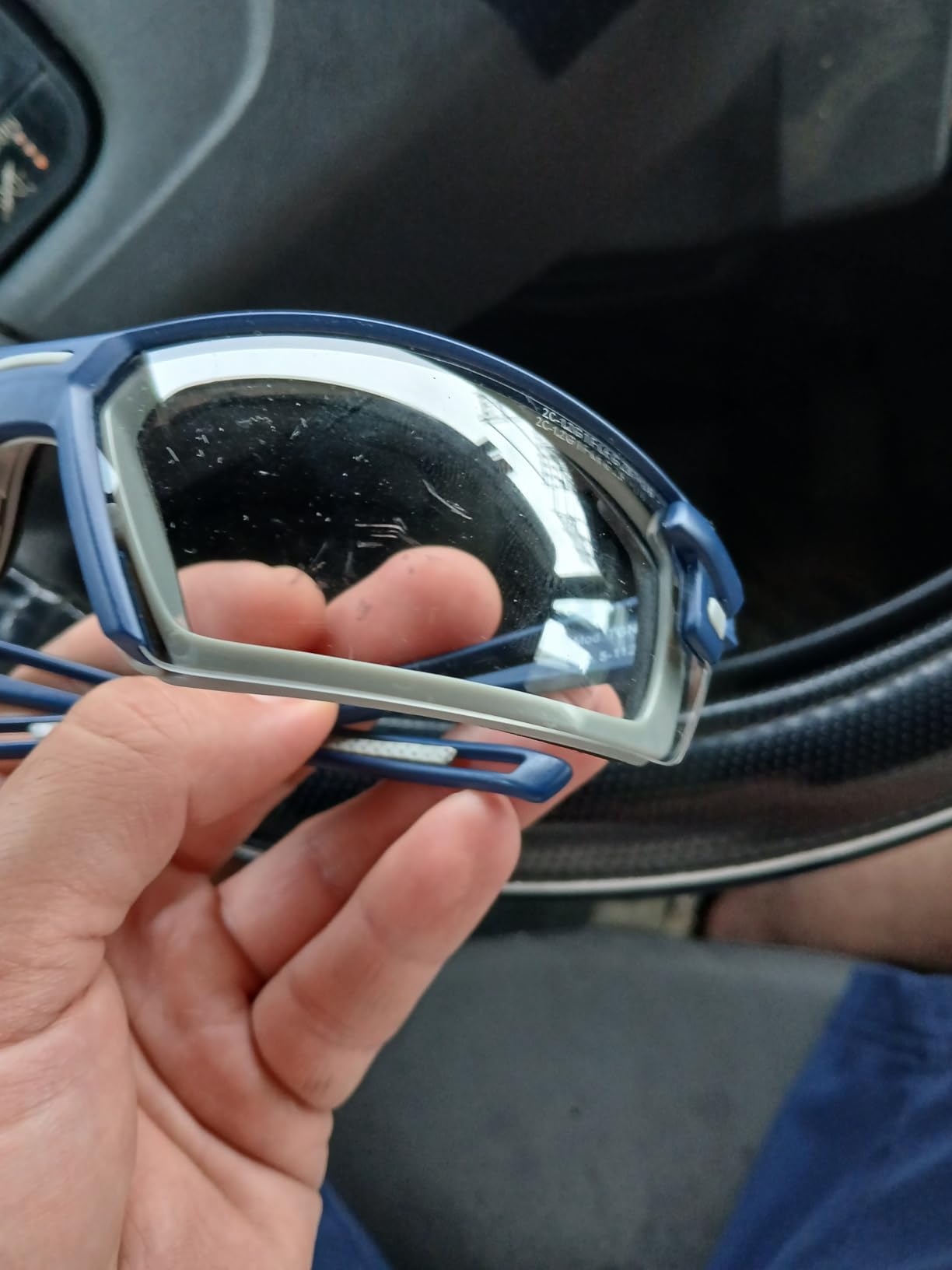
For sanding, routing and any dusty cut, the gasket is the feature that earns the price. Dust, wind and particle protection in a lightweight package, with a wraparound frame that covers the sides properly. Pop it on, do the dusty work, take it off for layout and assembly. Users rate it well for woodworking specifically because of that flexibility.
The frame resists high-speed particle impact and the clear lens keeps your view of the workpiece clean, which is what you need to see a proud nail head or a tear-out as it forms.
Fit and longevity of the foam
The gasket does not seal perfectly on every face shape. That is the main recurring criticism, and it is a fit issue rather than a quality issue: if the foam does not meet your cheekbones evenly, dust finds the gap. Try it in person where you can, or plan to adjust the frame before relying on it.
Foam also degrades over time with sweat exposure, and the attachment points could be more secure. Neither is a deal-breaker if you treat the gasket as a replaceable accessory rather than a permanent part, but do not expect the same sealing in year two as in week one. Lenses may scratch with heavy use, so a case still matters.
How to Choose Safety Glasses for Woodworking
Start with the marking, not the brand. Every pair in this roundup carries an ANSI Z87.1 marking somewhere on the frame or the temple, and that marking is the only thing that separates protective eyewear from a pair of sunglasses with a hard plastic lens.
Reading the ANSI Z87.1 and Z87+ markings
ANSI Z87.1 is the American National Standard Institute standard for occupational and educational personal eye and face protection. A basic Z87 marking means the lens passed the standard test for medium impact. Z87+ means it passed the high impact test, which is the one you want for a workshop. Most manufacturers use a Z marking plus a plus sign; some print Z87.1+ to make the high impact level obvious.
The digit that follows indicates filter type, with 3, 4 and 5 being the common ones in woodworking. Letter codes follow: R means the lens is resistant to impact, U means it provides ultraviolet filtering, N means it is not treated with a special coating, and K is a non-conductive material. Recent revisions of the standard, including the 2020 version referenced by several picks here, also address UV400 coverage. If you cannot find a marking on the frame, treat the pair as decorative.
On OSHA compliance, employers in the United States are required to ensure appropriate eye and face protection for employees exposed to flying particles, and the practical shop version is simple: wear certified eyewear whenever you start a machine. Most home woodworkers are not inspected, but the standard still tells you whether a lens will stop a chip.
Lens material: why polycarbonate dominates
Every pick on this list uses polycarbonate. That is not a coincidence. Polycarbonate is roughly ten times more impact resistant than glass and glass lenses shatter into fragments rather than staying intact, which makes glass unsuitable for a shop. It is also lighter, which is part of why comfort is achievable. Glass or CR-39 is fine for reading glasses in a chair but not at a table saw.
Seal type matched to dust type
This is the part most roundups get wrong. Wood dust comes in distinct behaviours, and each needs a different seal.
Fine dust from MDF, plywood and orbital sanding hangs in the air and drifts upward from below. That is a job for a closed rubber or foam gasket, because the entry route is from underneath. Coarse chips from routing or a chipper travel fast and mostly sideways, so a wraparound lens with deep side coverage handles them well. Lathe shavings and curls cling and snag, so scratch resistance matters more than sealing. And outdoor work adds glare and UV rather than dust.
That is why the gasketed picks on this list are not automatically the best choice for every shop. A sealed goggle seals well and runs hot. A wraparound frame breathes and admits some upward dust. Pick the one that matches your worst recurring task.
Anti-fog coatings and the dish soap trick
Anti-fog coatings work by making the lens surface hydrophilic so moisture spreads into a thin layer instead of forming droplets. Quality varies a lot between suppliers, and the honest measure is how they behave behind a respirator in a hot shop. Vendors like 3M Scotchgard and Uvex HydroShield bond the coating permanently, while some budget pairs use a spray-applied treatment that wears off.
There is also the forum favourite that costs nothing. Apply a small amount of dish soap to the inside of the lens, let it dry, and wipe it lightly. The film left behind works as an effective anti-fog layer. It takes one evening and it genuinely works, though it needs reapplying every few weeks. A spit-and-wipe application is also posted repeatedly on turning forums as a quick field fix.
Fit adjustment for long sessions
Adjust the temples first, then the nose pads, then the lens angle. Push the temples in until the frame stops sliding forward when you look down, then spread them slightly if the frame leaves pressure marks. Set the nose pads so weight sits on the pads rather than on the bridge of your nose, which is what causes the ache people describe after an afternoon.
Then check the seal properly. Hold a tissue lightly against the lower edge of the lens and breathe in gently. If the tissue pulls in, air is entering and dust will follow. Pairs with bendable wire temples or ratchet hinges let you correct what a fixed frame cannot.
Lens care and storage
Scratched lenses are a safety problem, not just a cosmetic one. Haze scatters light, and a hazy lens makes you squint and strain through a cut. Rinse with cool water before wiping, then use the microfibre cloth that came with the glasses. Never dry-wipe dust off a lens, and never use a shop shirt or paper towel, which is how micro-scratches get made.
Store them in a case or a padded pocket, not loose in a toolbox where a dropped screw can reach the lens. Replace a lens that has visible scratching at a raking angle under shop lighting, and replace any pair whose frame or lens has taken a real impact, even if it looks fine. Keeping a spare pair is cheaper than a week of squinting, which is exactly why the six-pack on this list is a popular choice for a whole shop.
Safety Glasses vs Goggles vs Face Shield by Tool
Eyewear is not one category. Matching the protection to the tool is the decision most people get wrong, and a face shield is not a substitute for certified eyewear.
Matching protection to the task
Safety glasses suit cutting operations with modest debris, drilling, screw driving, assembly and layout. They stay on your face comfortably and give full peripheral vision. Add a wraparound design and that covers most table saw and circular saw work for anything but a binding kickback.
Goggles are the answer when dust is the hazard, meaning orbital and belt sanding, planing, router work without a dust hood, and lathe turning. A removable foam gasket closes the bottom entry route that fine dust uses. The cost is heat and a narrower field of view, which is why many woodworkers keep both a goggle and a pair of glasses.
A face shield is for material thrown at high speed or volume, such as grinding, chiselling with a heavy mallet, and running a chipper or a track saw into stubborn material. It protects the whole face from wood chips, dust and oil, but it sits out from the face at a distance, so it does not stop a high-speed particle travelling at your eye. The safety guidance in every market we looked at is consistent: wear a face shield over certified safety glasses or goggles, never instead of them.
For a typical shop, that means glasses for the saw and the bench, a goggle for the sander and the planer, and a face shield added on for grinding or heavy chiselling days.
Frequently Asked Questions
What are the best protective glasses for woodworking?
The best protective glasses for woodworking are ANSI Z87.1 or Z87+ rated polycarbonate safety glasses with an anti-fog coating and either a wraparound lens or a foam face gasket. For dusty sanding and routing we favour a gasketed goggle such as the DeWalt DPG82, for everyday table saw and assembly work a lightweight wraparound such as the NoCry EyeArmor+, and for prescription wearers an over-glasses design such as the NoCry Overspecs+.
Should you wear safety glasses when cutting wood?
Yes. Wood tools throw chips and splinters toward your face without warning, and the gap under a pair of glasses leaves the lower eye exposed to dust and debris. Safety glasses cost very little and are the cheapest protection in the shop, and comfort is the deciding factor, so pick a pair you can wear for a full session rather than the most expensive option.
What PPE is needed for cutting wood?
Essential PPE for cutting wood includes ANSI Z87.1 rated safety glasses or goggles, hearing protection whenever a router, planer or saw runs, a respirator or dust mask for sanding and planing, and a respirator whenever you use router bits that contain silica. Push sticks and blade guards are equipment rather than PPE, but they matter more than any of the above for preventing contact injuries.
What are some good safety glasses to keep dust out?
Keeping dust out requires a seal rather than just a lens. Look for a dual injected rubber face seal or a removable foam gasket, which closes the entry route from underneath that fine MDF and sanding dust uses. The DeWalt DPG82 Concealer uses a soft dual-injected rubber seal, the 3M Virtua CCS uses a removable foam gasket, and the GENYED pair adds and removes its foam in seconds. Open-frame wraparound glasses handle chips but not airborne dust.
What are the best scratch-proof safety glasses?
No safety lens is scratch-proof, but coating quality and handling make a big difference. The DeWalt DPG82 uses a ToughCoat hard coating, the NoCry EyeArmor+ coating is rated twice as scratch resistant as typical clear safety glasses, and the 3M Solus 1000 and Uvex Avatar carry permanently bonded anti-scratch coatings. Rinse lenses with water before wiping, use a microfibre cloth, store them in a case, and retire any lens with visible scratching at a raking angle.
The Verdict for Woodworkers in 2026
The best safety glasses for woodworking are the ones you keep on your face for a full session, and that makes comfort the real deciding factor behind every certified spec. Our default pick for dusty shop days is the DeWalt DPG82 Concealer, because the soft dual-injected rubber seal keeps fine sawdust out from below and it still clears a prescription. For table saw work and long assembly sessions, the NoCry EyeArmor+ wraparound pair at 30 g is the one we forget we are wearing, and the NoCry Overspecs+ solves the fit problem for anyone already wearing glasses.
Match the rest to your shop. Behind a respirator in summer, the 3M Solus 1000 and its bonded coating beat every other option here on fog control. For crews and spares, the six-pack covers it. If you are building a full bench setup, our dust collector guide and clamp picks cover the rest of the shop, and cleaning up after routing pairs well with a pair of safety goggles.
Whatever you choose, check the marking on the temple before the first cut, and keep a spare in the same case. That is the whole job.