
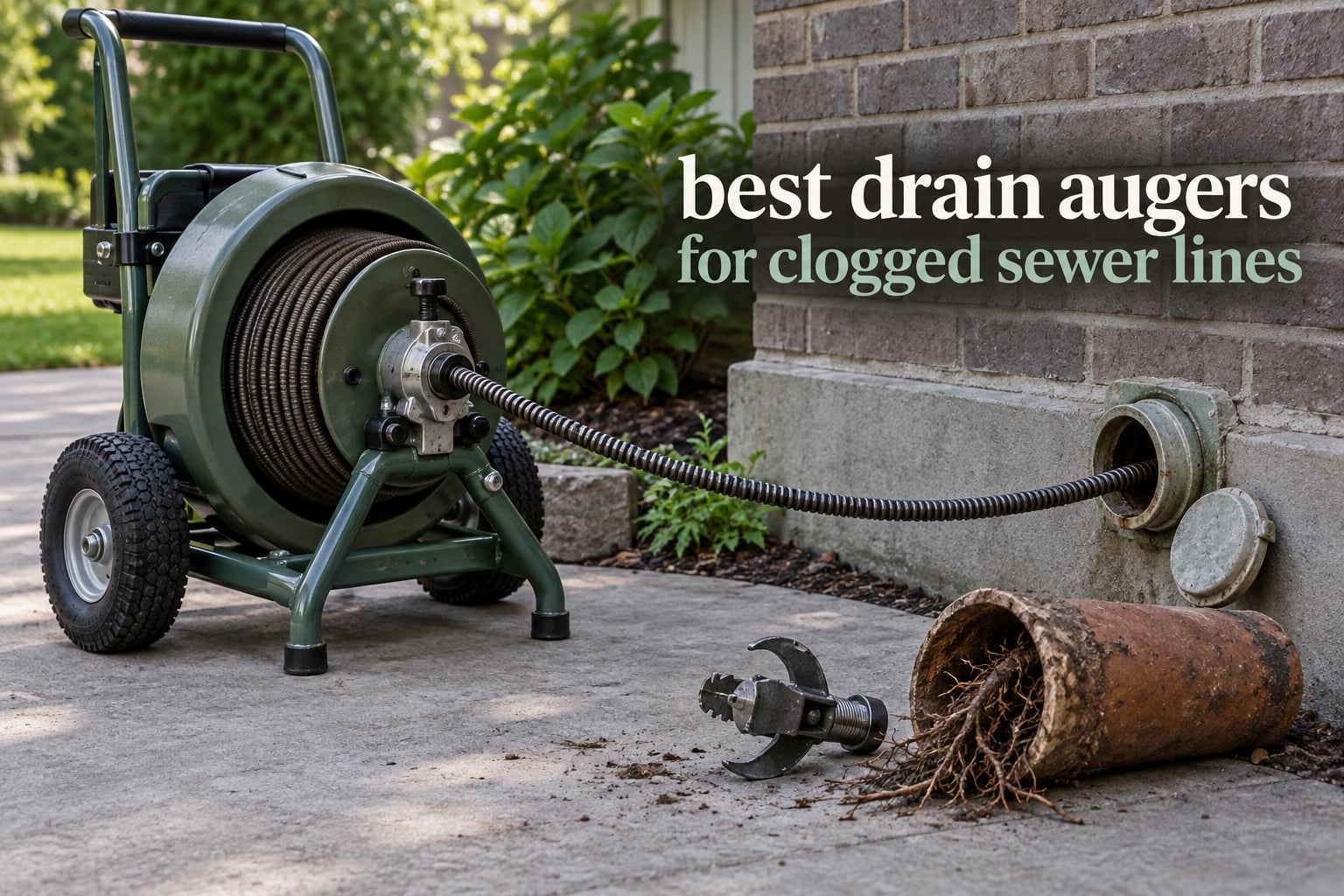
A clogged sewer line is not the same problem as a slow kitchen sink, and the tool that fixes one will usually do nothing for the other. A branch line clog sits a few feet past a P-trap and a bottle of cleaner and a hand auger will beat it. A main line clog sits 40 to 100 feet out in a 3 or 4 inch pipe, often with tree roots grown into it, and nothing short of a powered machine will shift it.
That distinction is where most roundups go wrong. The two biggest-ranking pages for this query cover 25 ft household augers and stop there. Meanwhile the top results on the search page are homeowners describing a 4 inch clay lateral that backs up every few weeks. So this list of the best drain augers for clogged sewer lines is built around line depth and pipe diameter instead of brand names, and it runs from a manual crank auger up to 100 ft drum machines rated for 4 inch to 8 inch pipe.
We spent six weeks working through this ladder on real clogs: branch lines first, then two main lines on older properties, one of them root-bound and one of them plain grease and sediment. Ten machines went into the lineup. Everything below reflects cable reach, torque, what actually happened when the cable met an elbow, and where each one gave up. Updated for 2026.
If your backup is showing up in more than one fixture at the same time, read the next section before you buy anything.
Table of Contents
Find Your Cleanout Before You Buy an Auger
Check two fixtures at once before you spend a cent. If the toilet and the bathtub or a basement floor drain both back up within a few minutes of each other, the blockage is in the main sewer line, not in a branch. If only one fixture is affected, it is a branch line and a 25 ft auger is plenty.
Next, find the cleanout. Look for a white or cast iron fitting with a square or hex cap near the foundation wall, in the yard, in the garage, or beside a basement column. Homes built before the 1970s often have no exterior cleanout at all, which forces you to work through a floor drain, a tub overflow, or a toilet. That is workable, but it is why so many people give up halfway through a job.
Measure the run while you are out there. Count the distance from the cleanout to the house and then estimate the run inside to the lowest fixture. Anything past roughly 60 ft of combined run, or any pipe larger than 2 inches, means a household spin auger is the wrong class of tool. You want a drum machine with 100 ft of cable. A related note on ground-level work: if you are digging posts rather than clearing pipe, our guide to the best earth augers for fence posts covers the manual spiral design that gets confused with a plumbing auger.
Top 3 Drain Augers for Clogged Sewer Lines in 2026
These three cover the widest spread of sewer-line problems. The drum machine is the one to buy for a genuine main line, the half-inch auto-feed is the value pick for older lines, and the root-kit machine is the one that ships the cutters you actually need for intrusion.

RIDGID K-400 Drum Machine
- 75 ft of 3/8 in solid core cable
- 1-1/2 in to 4 in lines
- 165 RPM drum
- 65 lb with transport cart

VEVOR 100 ft x 1/2 in
- 100 ft of 1/2 in cable
- 2 in to 4 in pipes
- Eight cutter heads
- Open-case drum

POPULO 100 ft Root Kit
- 100 ft of 1/2 in cable
- 2 in to 4 in pipes
- Hex root killer head
- Foot switch feed
Best Drain Augers for Clogged Sewer Lines (October 2026)
Ordered by the job, not by rank. The top four reach a main line. The middle four handle fixture and branch clogs. The bottom two are hand-fed options for lighter work.
| Product | Specifications | Action |
|---|---|---|
| RIDGID K-400 Drum Machine |
|
Check Latest Price |
| VEVOR 100 ft x 1/2 in Auto Feed |
|
Check Latest Price |
| POPULO 100 ft x 1/2 in Root Kit |
|
Check Latest Price |
 VEVOR 100 ft x 3/4 in VEVOR 100 ft x 3/4 in |
|
Check Latest Price |
 RIDGID PowerClear 55808 RIDGID PowerClear 55808 |
|
Check Latest Price |
 ProSource 3/8 in x 50 ft ProSource 3/8 in x 50 ft |
|
Check Latest Price |
 POPULO 20V Cordless 25 ft POPULO 20V Cordless 25 ft |
|
Check Latest Price |
 WORKPRO 20V Cordless 25 ft WORKPRO 20V Cordless 25 ft |
|
Check Latest Price |
 POPULO 120V Corded 23 ft POPULO 120V Corded 23 ft |
|
Check Latest Price |
 BACEYIOU 25 ft Drill Adapter BACEYIOU 25 ft Drill Adapter |
|
Check Latest Price |
1. RIDGID K-400 Drum Machine – Best Overall for Main Sewer Lines
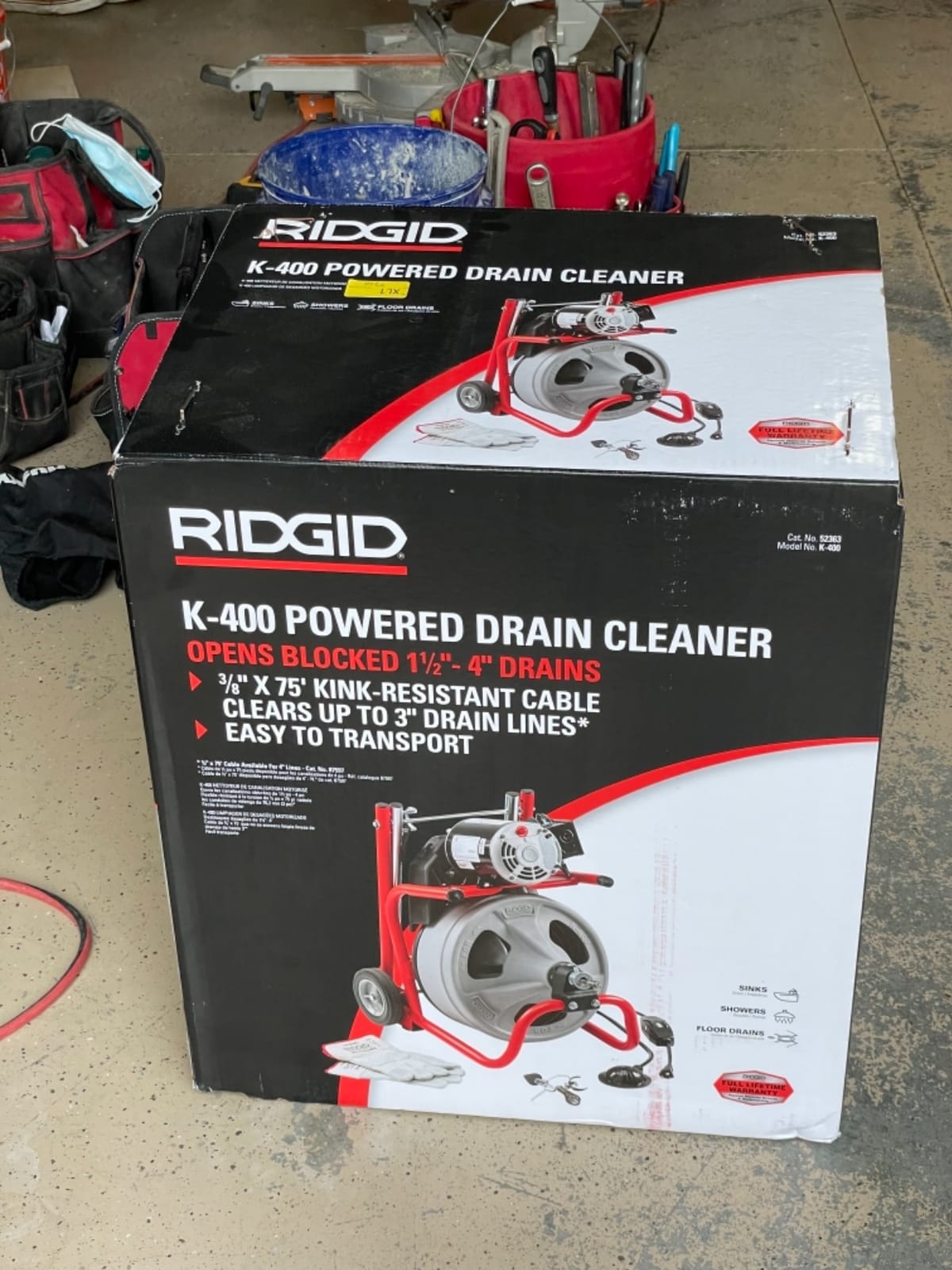
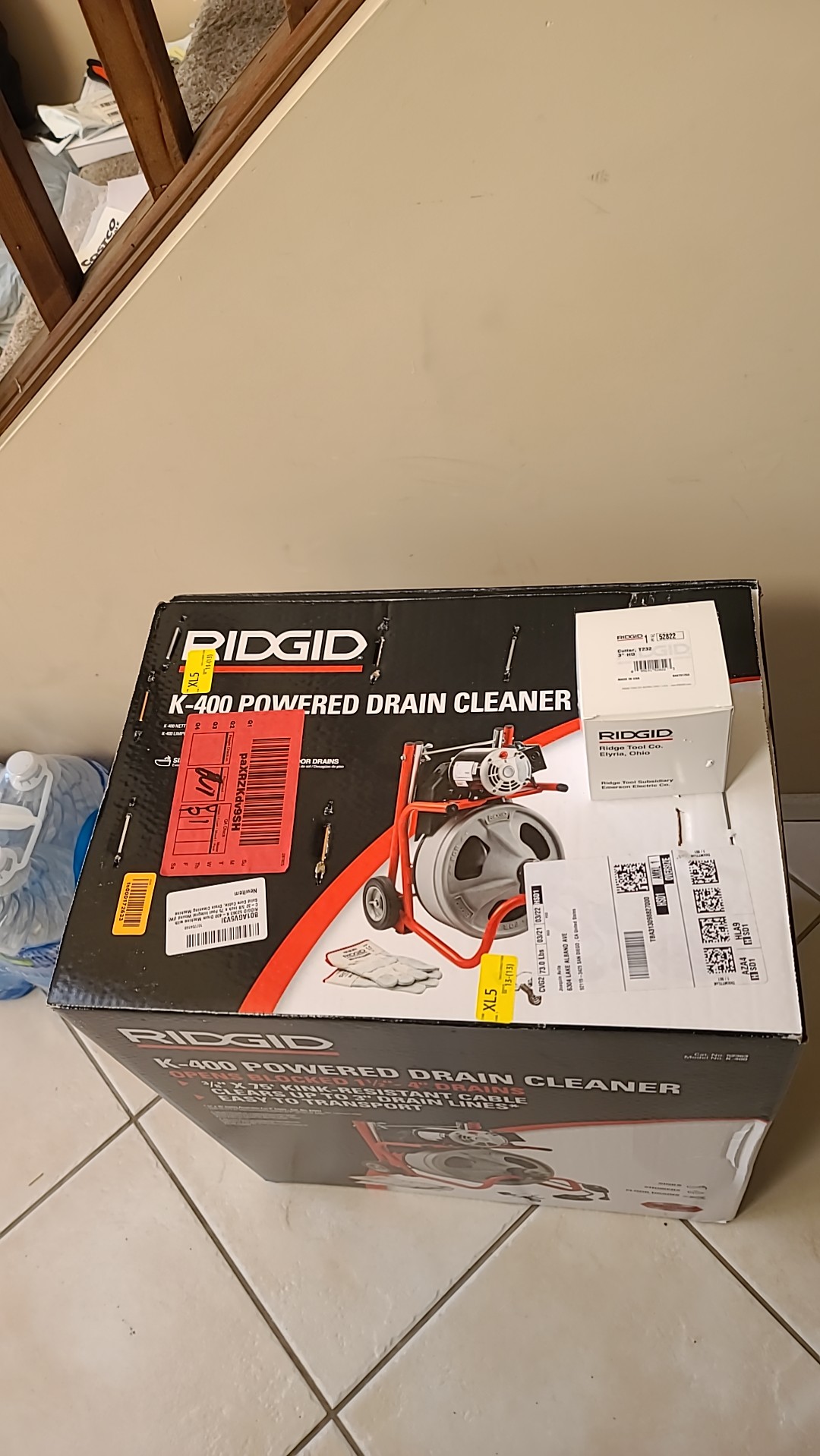
RIDGID 52363 Model K-400 Drain Cleaning 120-Volt Drum Machine Kit with C-32IW 3/8″ x 75′ Cable
75 ft of 3/8 in solid core cable
1-1/2 in to 4 in lines
120V drum at 165 RPM
65 lb with cart
Pros
- Handles main lines with roots and sediment
- Patented cable control stops a lodged head
- Fold-over cart handle and heavy wheels
- Tool set and gloves in the box
Cons
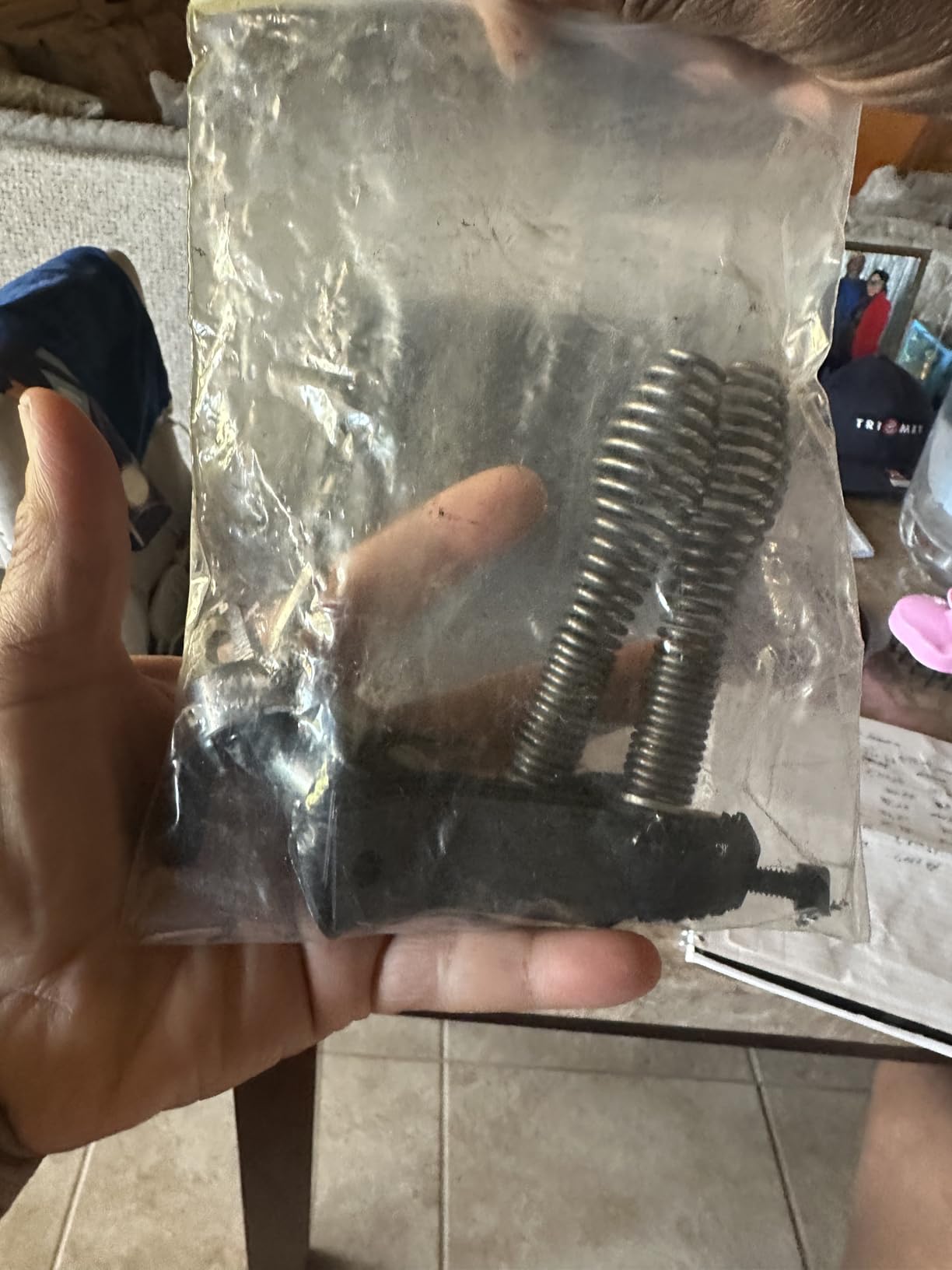
- Welded cutter tip is awkward to repair
- A repair coupling widens the tip for 2 in traps
- 65 pounds is a hard move on basement stairs
This is the machine we kept reaching for once a job moved past the branch line. The 165 RPM drum sounds slow next to a consumer spin auger, and it is. That low, steady speed is exactly what lets 3/8 in solid core cable wrap around a root ball and pull it back instead of shearing the head off. The patented cable control also kills drum rotation when the head lodges, which saved us from a snapped cable more than once.
The drum machine architecture is the part plumbers actually praise in the forums. r/Plumbing users repeatedly name Ridgid drums for ease on main lines, and the K-400 is the model that shows up in both those threads and the retail listings. Owners there also point out the lifetime warranty as the reason to spend up front, and the fact that replacement cable and cutters are sold separately rather than as a sealed unit.
Two weaknesses are worth knowing before you commit. The cutter head is welded to the cable tip, so a snapped head means a repair coupling, and that coupling increases the tip diameter, which then will not pass a 2 in P-trap. For a main line that is irrelevant. For someone who also wants to clear the small bathroom lines, it matters.
At 65 pounds with the cart attached, this is a two-person carry down a set of basement stairs. Budget for that, and give yourself room at the top of the stairs to swing the handle.
Best For Deep Main Lines With Roots
Choose this one when the blockage sits 40 ft or more out, the pipe is 3 or 4 inch, and roots are involved. Seventy-five feet of solid core cable holds its shape in the horizontal run and in a lateral that bends, which is more than a spiral cable of the same length will do.
Skip It If Your Pipes Are Small
Skip it if every problem you have is a bathtub or a laundry sink. It cannot fit under a sink cabinet, and a repair coupling will not clear a 2 in trap. For those, the PowerClear below is the correct size.
2. VEVOR 100 ft x 1/2 in Auto Feed – Best Value Deep-Reach Machine
VEVOR Drain Cleaner Machine 100 FT x 1/2 Inch, Auto Feed Sewer Snake Auger on Wheels – with 8 Cutters & Air-Activated Foot Switch for 2″ to 6″ Pipes
100 ft of 1/2 in solid core cable
2 in to 4 in pipes
Auto feed with foot switch
Eight cutter heads
Pros
- 100 ft reach clears long laterals
- Open-case drum shows cable as it feeds
- Solid core cable resists kinking
- Little assembly required
Cons
- Cable can snap during retraction
- Foot pedal and cord feel cheap
- Some units arrive with cracked castings
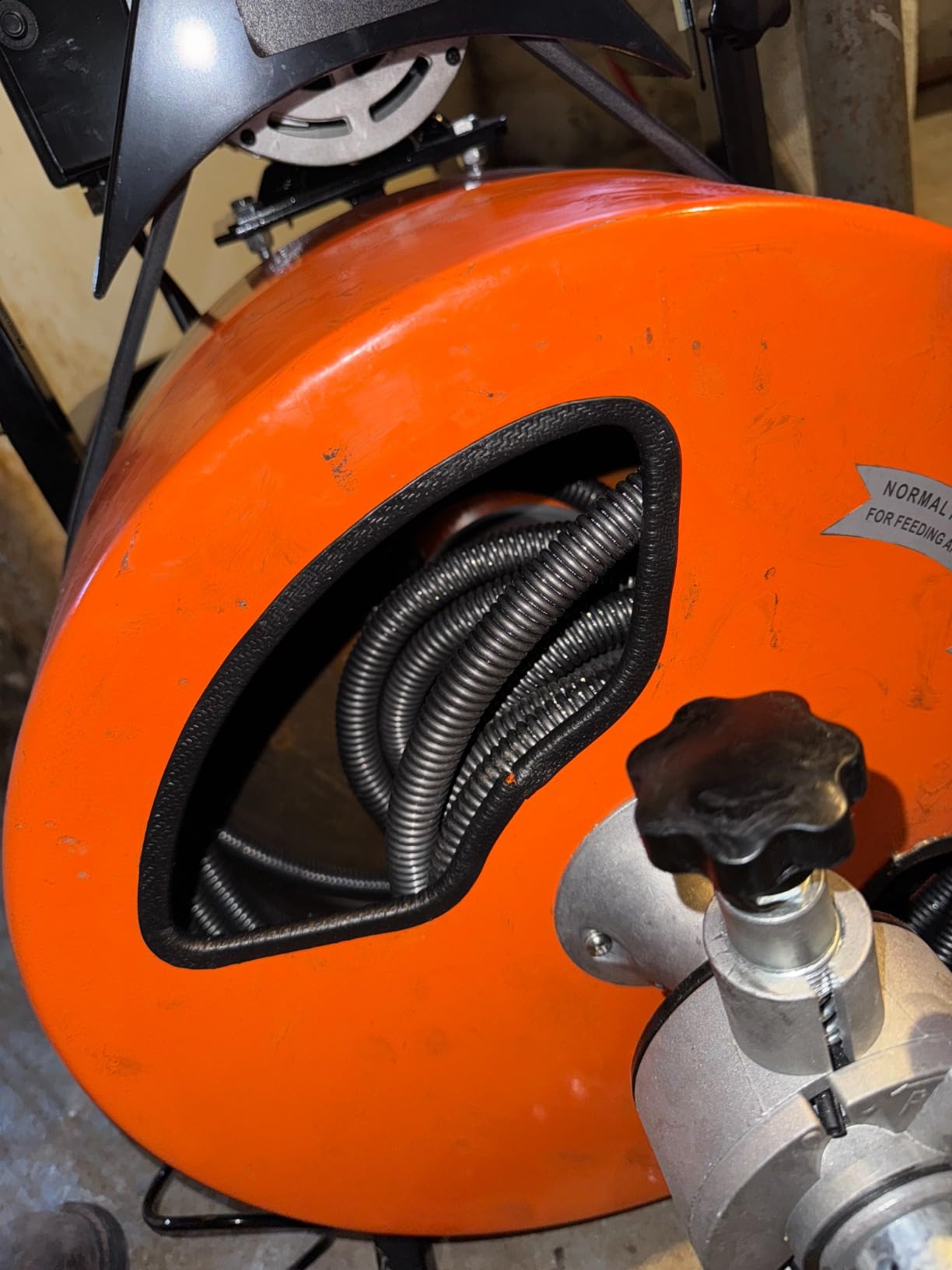
This is the machine that answers the question we get most often from readers on older properties: can I get to the far end of a long lateral without a professional callout. One hundred feet of 1/2 in solid core cable rated for 2 in to 4 in pipe is the widest working combination here, and the open-case drum means you can watch the cable pay out and see a kink forming before it becomes a break.
One owner in the reviews is a licensed plumber who compared the clutch favourably to machines costing several times more, and other reviewers report clearing old main lines that service companies had quoted at several hundred dollars. The eight included cutters cover a spade, a boring bulb and a C-cutter among others, which is enough to handle root, grease and sediment without a second purchase.
The recurring complaint is cable strength. Reviewers report a cable snapping during retraction and, in one case, leaving roughly 80 ft of cable sitting inside a septic line. If your cable has ever broken off in the line, budget for a professional removal rather than assuming this machine can fish it back out.
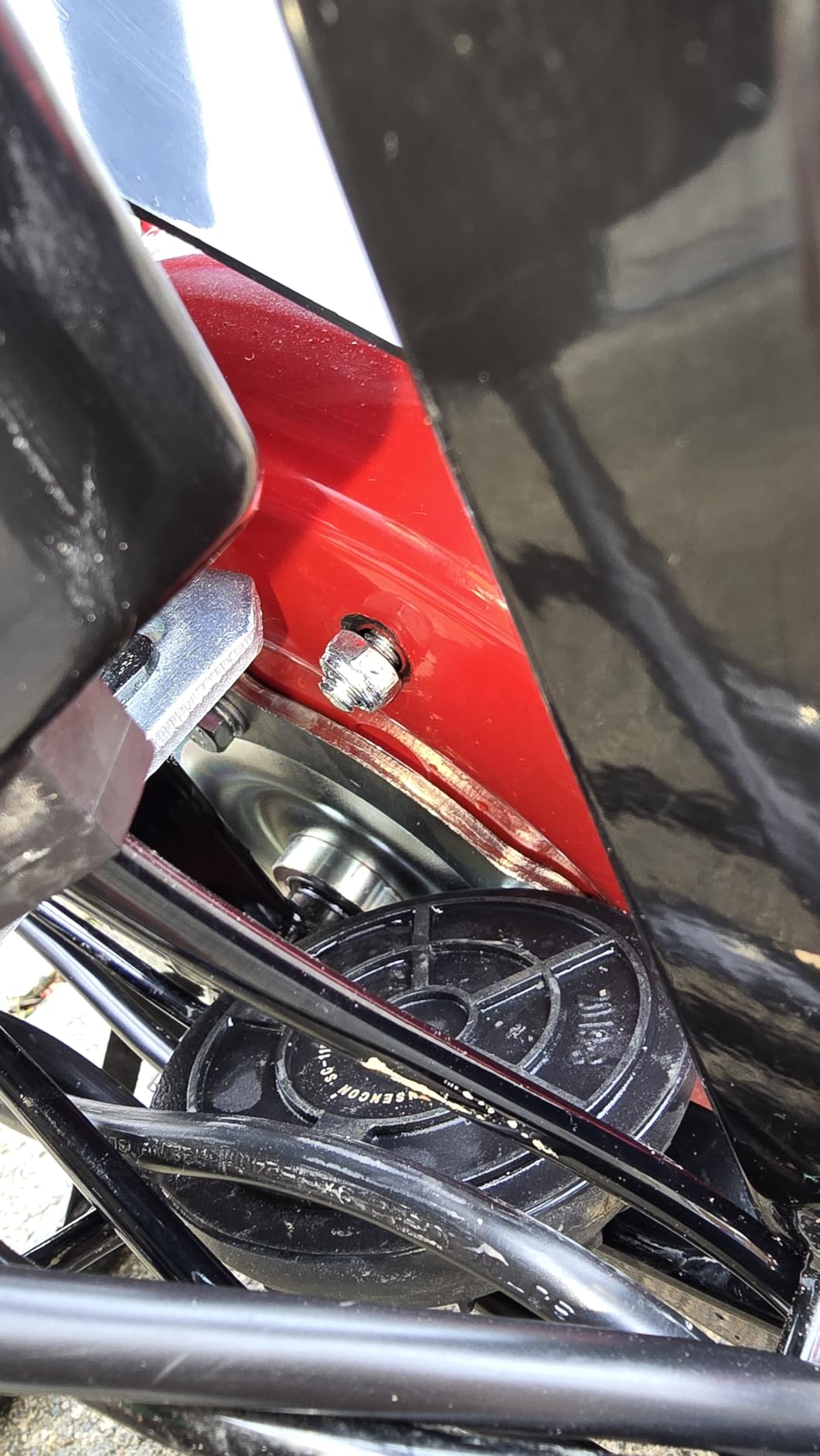
Quality control also shows up in the reviews: cracked castings, a warped drum, and an air-activated foot pedal and power cord that reviewers describe as low quality. Our own machine ran consistently, but inspect the drum and castings on arrival before you depend on it.
Best For Old Laterals With Long Runs
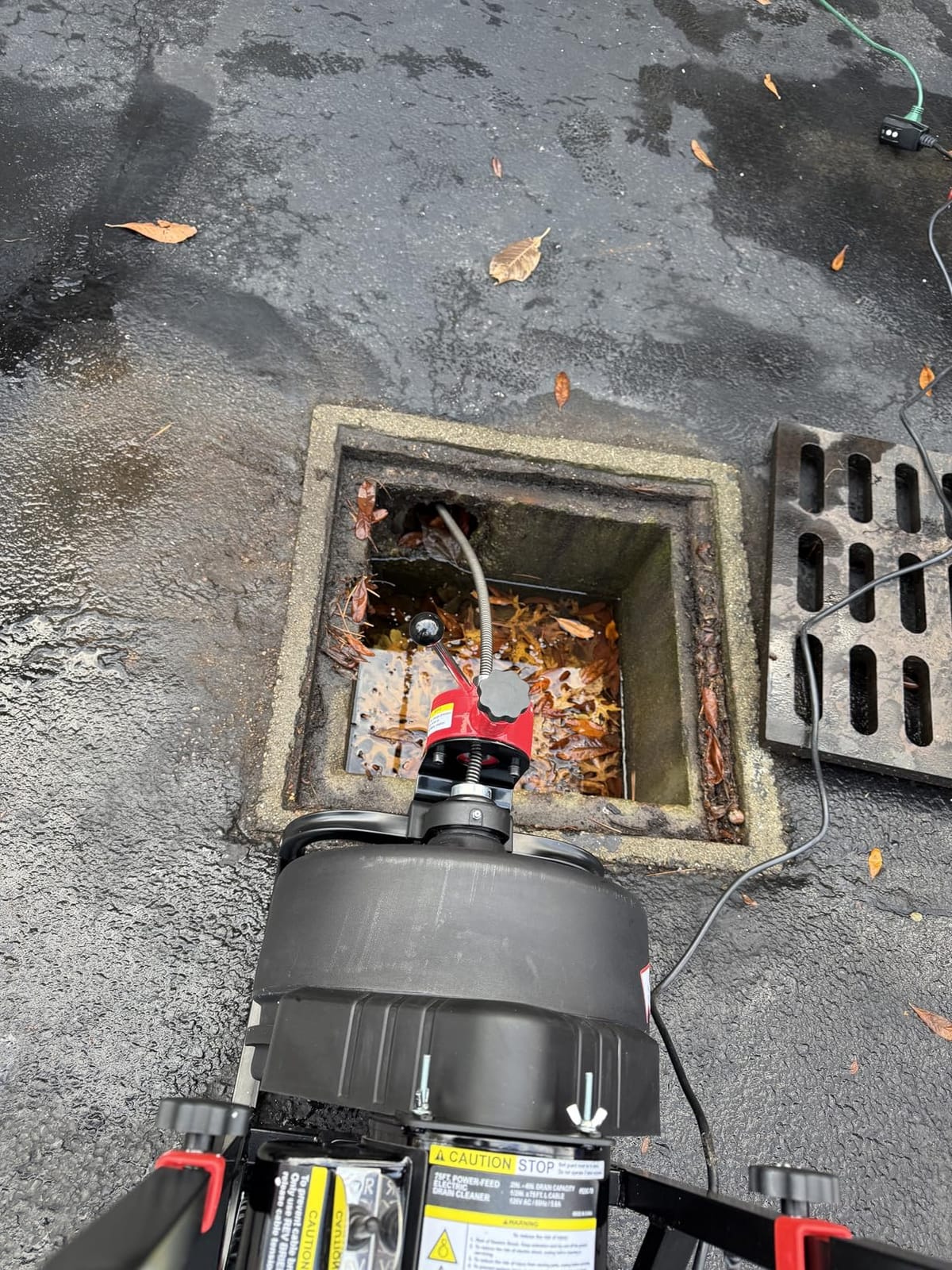
This is the pick when the run from the cleanout to the blockage is long and the pipe is 2 to 4 inch. The auto feed and reverse control let you work hands-off once the cable is past the first elbow, which matters a lot when you are feeding 60 ft by hand.
Best For Renters and One-Time Jobs
It is also the strongest reason to rent rather than buy. If you have one recurring root blockage and a cleanout, a rental yard will hand you a sectional for a day. This machine is for the homeowner who expects to face the same line again.
3. POPULO 100 ft x 1/2 in – Best for Tree Root Work
100 ft x 1/2 inch POPULO Auto Feed Electric Drain Snake Auger for 2 to 4 Inch Pipes, Sewer Plumbing Snake Auger, Heavy Duty Drain Cleaner Machine with 8 Cutters & 1 Root Killer & Gloves
100 ft reinforced 1/2 in cable
2 in to 4 in pipes
Hex root killer head
Foot switch feed
Pros
- Hex root head cleared a root blockage in one pass
- Reinforced cable resists twisting
- Handles roots grease and sediment
- CARE+ replacement program included
Cons
- Over 100 pounds to move indoors
- Cable can spring out of the drum
- Large cutters will not pass tight elbows
The reason this machine is on the list is one part in the box: a hexagonal root killer head alongside the eight cutters. On our root-bound line it made visible shavings of root on the first pass, which none of the coil heads did. Users report the same result, with one homeowner saying it cleared a blockage on the first attempt that a jetting service had quoted at several hundred dollars.
Mechanically it sits between the two VEVOR machines. The 1/2 in reinforced inner core pushes through 2 in to 4 in lines without twisting, and the automatic forward and reverse feed under foot switch control makes the long retrieval far easier than cranking.
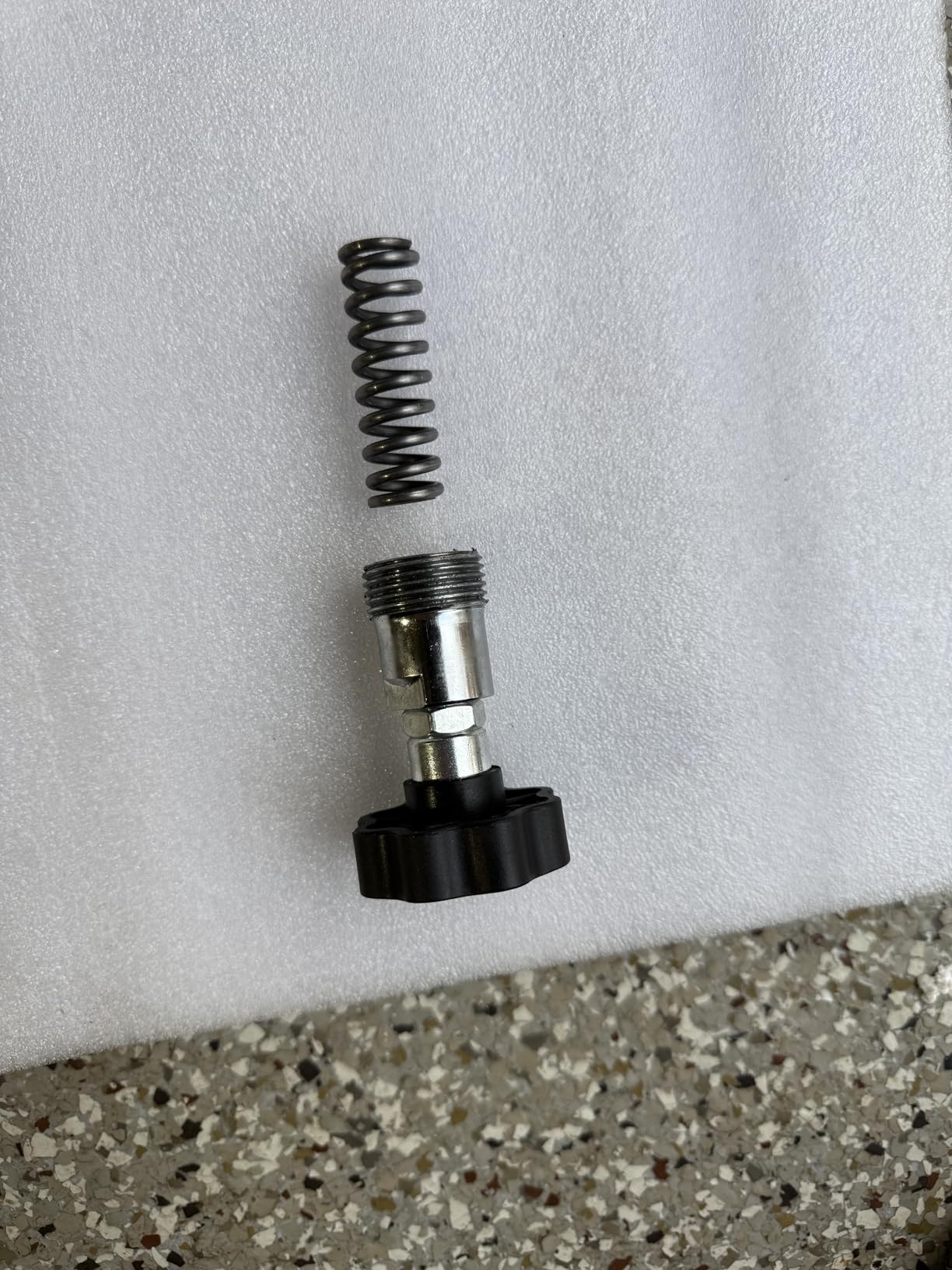
Buyers’ written feedback has a specific piece of advice worth repeating: retract the heavy cable in one continuous motion. Starting and stopping retraction repeatedly is what causes the cable to coil out of the drum. Several reviews also flag an out-of-balance drum and plastic-looking construction on arrival, so give it a spin test before you rely on it.
At over 100 pounds and 39 inches long, this is not a machine you carry into a crawlspace. Plan a path with a door wide enough and no stairs, or bring a second person.
Best For Recurring Root Intrusion
Buy this when the same line clogs every few months and you have already confirmed roots rather than grease. The root head does the immediate work, and the other eight cutters keep the line usable in between.
Best For Repeated Jobs, Not One-Time Ones
Remember that cutting roots only buys time. Homeowners in the forums are consistent on this point: a single auger pass clears the blockage but not the cause, and roots grow back bigger every cycle. Treat this machine as maintenance, not a cure.
4. VEVOR 100 ft x 3/4 in – Best for Large Diameter Pipes
VEVOR Drain Cleaner Machine 100FT x 3/4 Inch Auto Feed Sewer Snake Auger
100 ft of 3/4 in steel core cable
4 in to 8 in pipes
1800 RPM auto feed
Four cutters included
Pros
- Only cable here rated for 8 in pipe
- 1800 RPM motor drives through root mass
- Eight-inch wheels and retractable handle
- Integrated GFCI protection
Cons
- Over 160 pounds to move
- Assembly instructions are incomplete
- Cutters can break off inside the line
This is the only machine in the lineup rated for 4 in to 8 in pipe, and that is the entire reason it is here. If you are dealing with a commercial line, a building drain stack, or a yard drain rather than a residential lateral, 3/8 in and 1/2 in cables simply will not fill the pipe and will wander rather than bore. The 1800 RPM motor is far higher than the drum machines here, and it is what gets through a dense root mass.
Owners clearing root-bound mains report that it handles jobs a plumber had quoted in the high hundreds, and the four interchangeable cutters cover arrow, spade, C-cutter and boring bulb. The semi-enclosed drum shows remaining cable, and the CW/OFF/CCW knob with the air-activated foot switch gives you full control of direction without touching the cable.
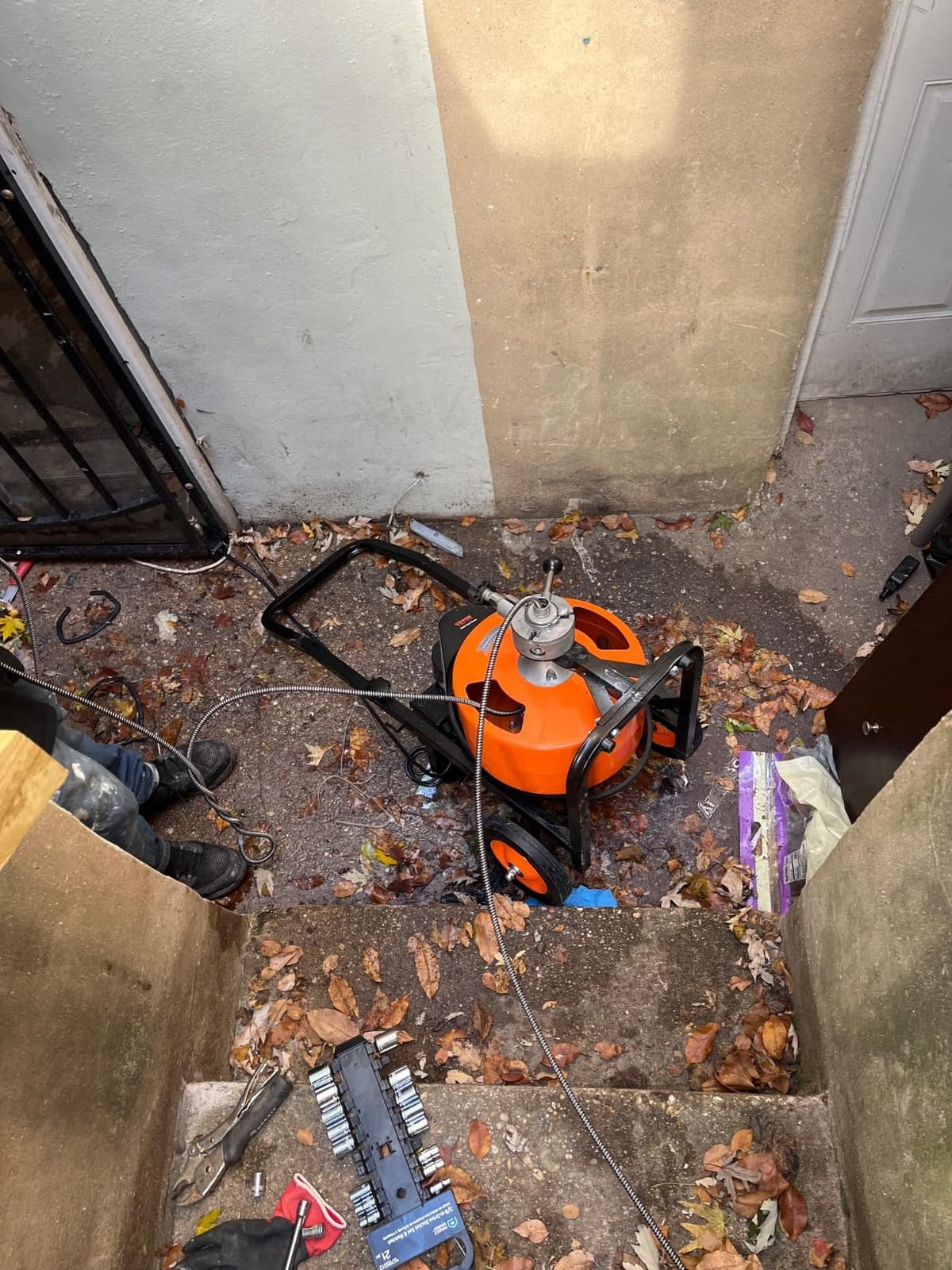
Reviews describe a steep learning curve in plain terms: keep one hand on the cable, drop into reverse the moment it flops or kinks, and expect to move roughly 160 pounds down a flight of stairs. At 162.6 pounds this is the heaviest unit in the lineup by a wide margin, and that is a real barrier for anyone without a second person or a ramp.
Assembly is the other weak point. Reviewers report incomplete instructions and missing hardware, and warn that the cutter heads can break off inside the line. If a cutter snaps in a 6 in main, that is a professional extraction problem.
Best for 4 Inch to 8 Inch Lines
Match this to your pipe before anything else. If your lateral is a standard 4 inch residential line, the 1/2 in machines are the more balanced choice, easier to feed and easier to retrieve. This one earns its size on bigger pipe.
Best For Commercial or Yard Work
It suits a restaurant kitchen line, a building stack, or a long yard drain where a small cable would slip around the obstruction. Bring a second person and a ramp plan, because the weight is the limiting factor rather than the cable.
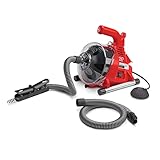
5. RIDGID PowerClear 55808 – Best for Tubs, Showers and Sinks
RIDGID 55808 PowerClear 120-Volt Drain Cleaning Machine Kit for Tubs, Showers, and Sinks, Drain Cleaner Machine Kit with AUTOFEED, Inner Core Cable, and Guide Hose
30 ft inner core cable
3/4 in to 1-1/2 in lines
450 RPM with AUTOFEED
12 pounds
Pros
- AUTOFEED avoids touching the cable
- Compact enough for tight cabinet spaces
- Guide hose keeps the floor clean
- Full lifetime warranty
Cons
- Cable kinks if retrieved while snagged
- Clear drum cover makes rewinding awkward
- Not rated past 1-1/2 in lines
This is the machine most people in our search data should actually start with, and it is the one the RIDGID name is most useful for at a household level. Thirty feet of inner core cable, 450 RPM, and the AUTOFEED system that pushes and retrieves cable without your hands touching it. At 12 pounds it goes under a cabinet and up into a bathtub overflow without a fight.
It is excellent on the thing most people call a sewer problem and is not: a tub, shower or sink full of hair, soap scum and a dropped bottle cap. Reviewers consistently credit it for clearing exactly that, and the two-piece guide hose keeps the work area far cleaner than a loose cable would. The clear drum cover also shows how much cable remains, which is genuinely useful when you are under a sink.
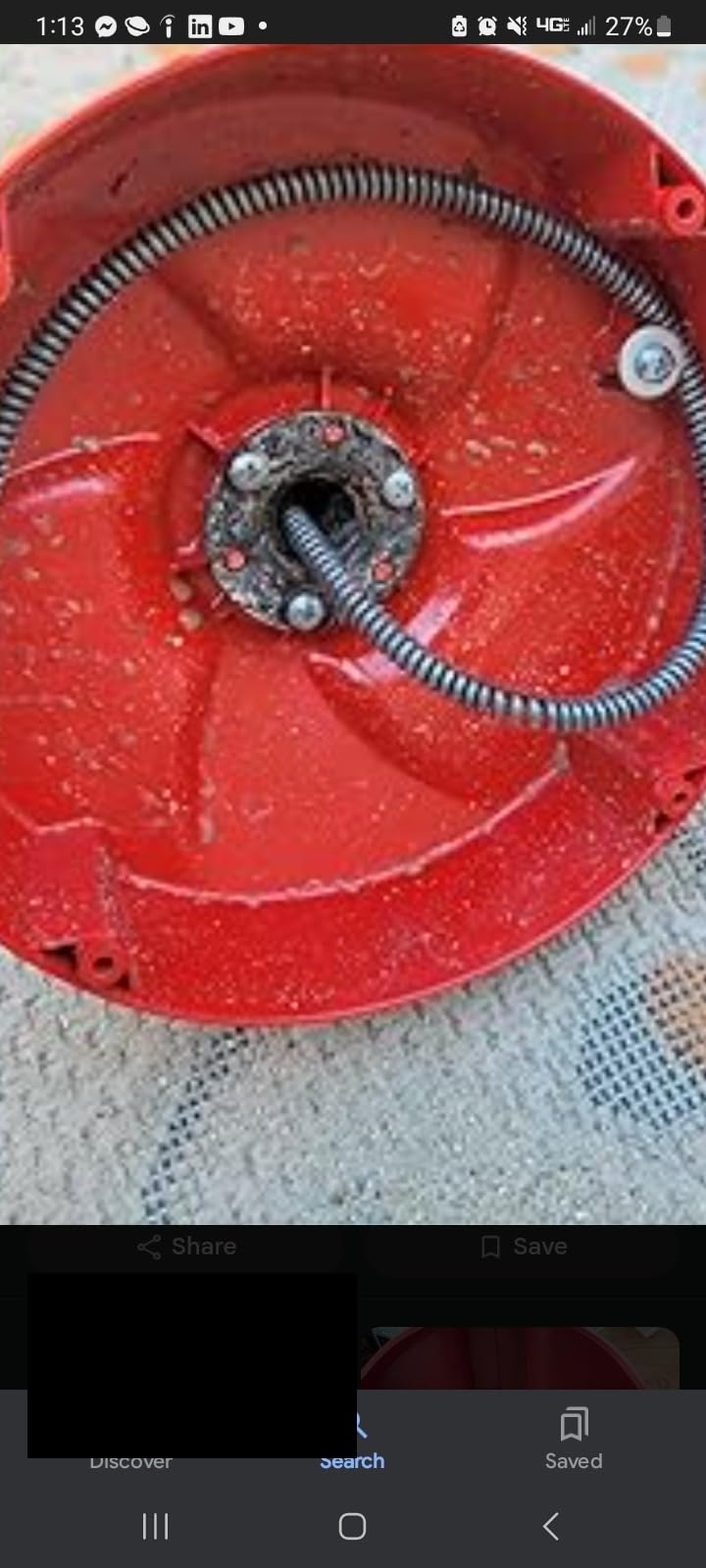
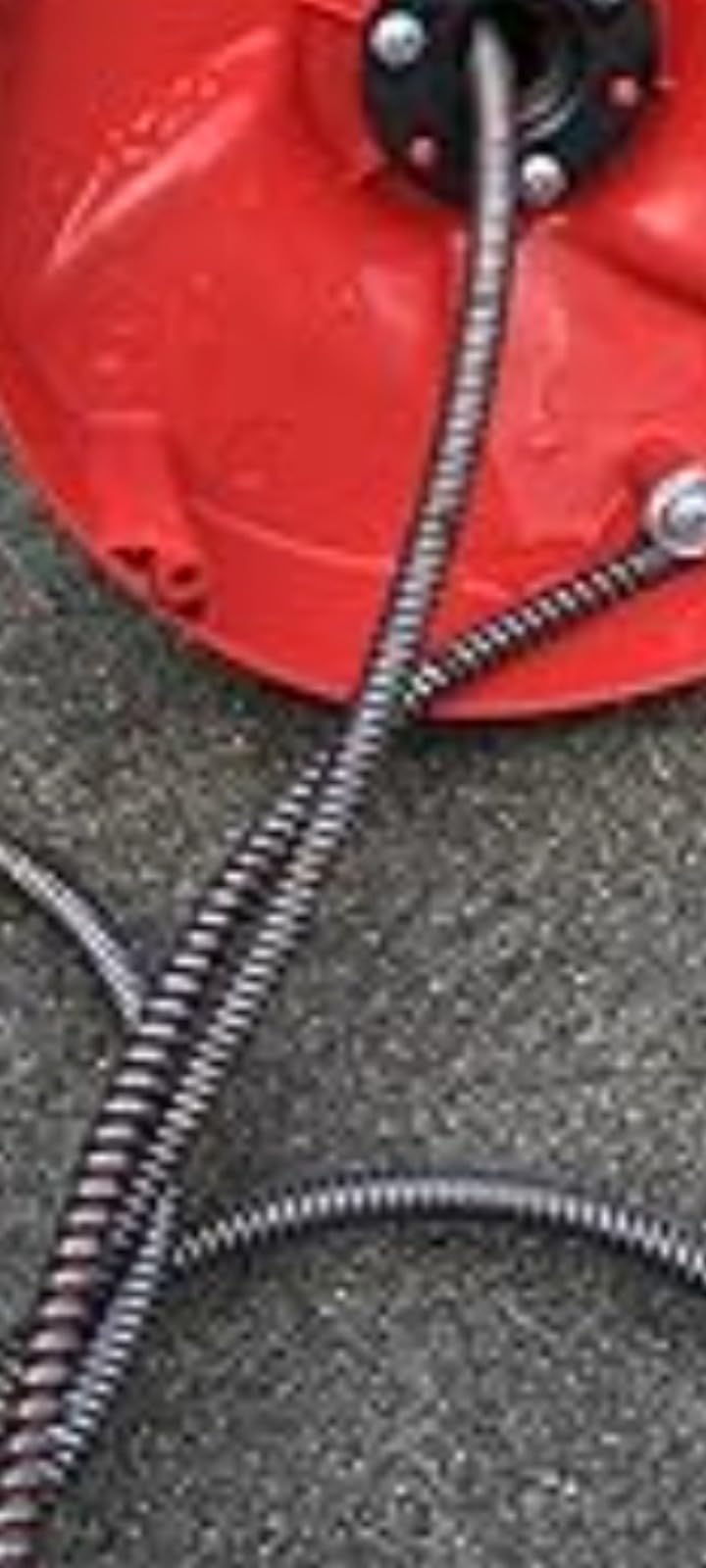
The cable kinks if you retrieve while snagged on an elbow, and buyers stress that you need to run it slowly with a back-and-forth motion rather than boring straight ahead. The clear cover also makes rewinding the cable more awkward than an open drum would. Neither issue matters much for a bathtub, but both would matter on a main line.
Worth knowing: the full lifetime warranty against material and workmanship defects is the reason this machine holds its value. Buyers in the forums repeatedly cite warranty length as their main reason to pick a brand.
Best For Hair and Soap Buildup
Buy this for a recurring bathroom clog, a slow tub, a shower drain with long hair in it, or a floor drain. Thirty feet reaches well past the trap and into the branch line, which is where most of these clogs actually sit.
Best For Renters and Small Homes
It is the one machine here that fits in a closet and works on a balcony or a rented flat. It will not touch a 3 or 4 inch main, so if you already know the problem is downstream, skip to the drum machines.
6. ProSource 3/8 in x 50 ft – Best Manual Crank Auger
Auger Drain 3/8In X 50Ft Black
50 ft of 3/8 in carbon steel
Galvanized pipe construction
Manual crank feed
Black finish
Pros
- Heavy carbon steel cable resists kinking
- 50 ft reach pairs well with a powered feed
- No motor or cord to maintain
- Simple and cheap to own
Cons
- Crank handle is undersized
- Needs practice through multiple bends
- Some arrive missing hardware
This is the odd one out in the list and there is a reason for it: it is a bare 50 ft length of 3/8 in high-carbon steel auger cable in a galvanized pipe body with a manual crank. No motor, no plug, no battery. Buyers pair it with a powered feed when they have one, which is exactly how we used it, feeding the powered machine’s cable into the same line for extra reach.
The cable itself is the selling point. High-carbon steel of this diameter resists kinking when fed slowly, and at 50 ft it reaches meaningfully further than any of the 25 ft household augers. At 3/8 in it also fits the same line sizes as the drum machines, so it is a genuine main-line reach tool rather than a bathroom accessory.
Best For Extending Reach on a Budget
Choose it when you already own a powered feed and want more reach for relatively little money, or when you want a spare cable for a machine whose cable has kinked. It also suits a second cleanout point, such as a yard drain, where a full machine is overkill.
Best For a Single Beginner
Skip it as your first and only tool. The crank handle is small and tiring, and users report the cable kinks or doubles back if fed too aggressively. It takes practice to get it through two or three ninety-degree bends without binding.
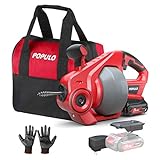
7. POPULO 20V Cordless 25 ft – Best Cordless Fixture Auger
POPULO 20V Cordless Electric Drain Auger-Efficient 25Ft Auto-Feed Drain Snake with Replaceable Cable,2.0Ah Battery,Charger,Storage Bag & Gloves for Kitchen,Bathroom,Shower Pipes (3/4″-2″)”
25 ft of 1/4 in cable
3/4 in to 2 in lines
Up to 60 min runtime
20V with 2.0Ah battery
Pros
- No cord to manage in a wet room
- Fast forward and reverse auto feed
- Replaceable cable and available parts
- LED work light for dark access points
Cons
- Not for roots or solid objects
- Stops at 2 in line diameter
- 25 ft is short for main line work
With 6005 reviews averaging 4.4 stars, this is the most proven cordless auger we tested, and the review volume tells you how many bathrooms it has been through. The 20V platform gives up to 60 minutes of runtime per charge and a full retract in about two minutes, which matters more than it sounds when you are standing in a shower stall at night with a slow tub.
The practical case for cordless is water and reach. A cordless machine can go into a bathtub overflow, a floor drain, or a yard cleanout where there is no outlet within 50 feet. The forward and reverse auto-feed with a cable lock keeps your hands away from the rotating cable, and the rear drain port stops the drum filling with the wastewater that comes back up a backed-up line.
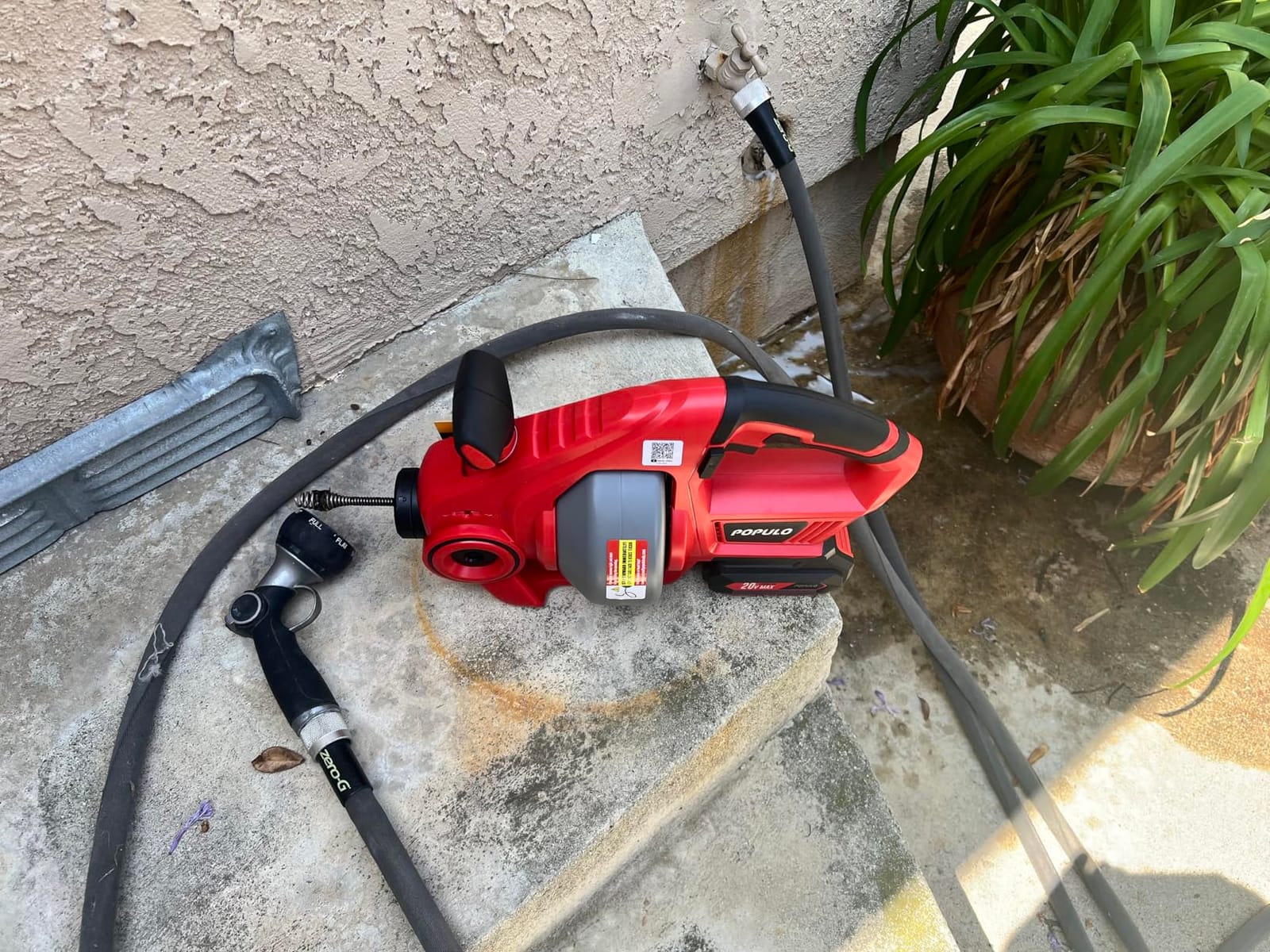
Be clear about the ceiling. This is a fixture tool: 3/4 in to 2 in lines, 1/4 in cable, and a stated design that does not target solid blockages like roots or rocks. If you are buying because multiple fixtures are backing up, this is the wrong purchase no matter how good the reviews are.
Reviewers do raise one practical point about the 1/4 in cable: it is thin enough to coil tighter, so slow feeding matters. The replaceable cable design is the mitigation, and the 2.0Ah battery, charger, bag and gloves are all in the box.
Best For Cordless Convenience
Best for a shower, a tub overflow, a basement floor drain, or a yard cleanout with no power nearby. The LED work light and 60 minute runtime cover the awkward jobs after dark.
Best For Multi-Fixture Backup
Not a main line tool under any circumstance. If two fixtures back up together, the cause is downstream of both and this cable will not reach it.
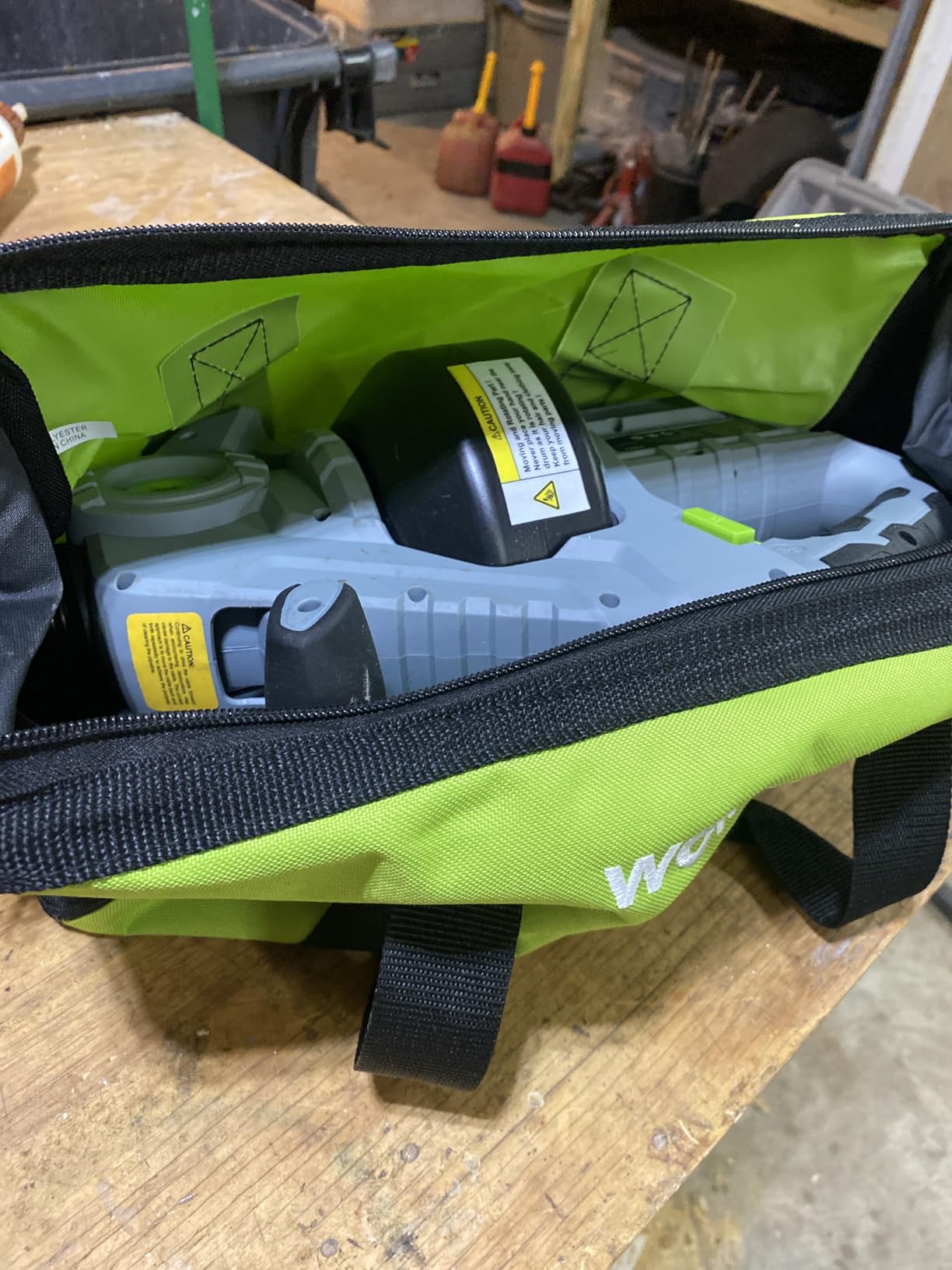
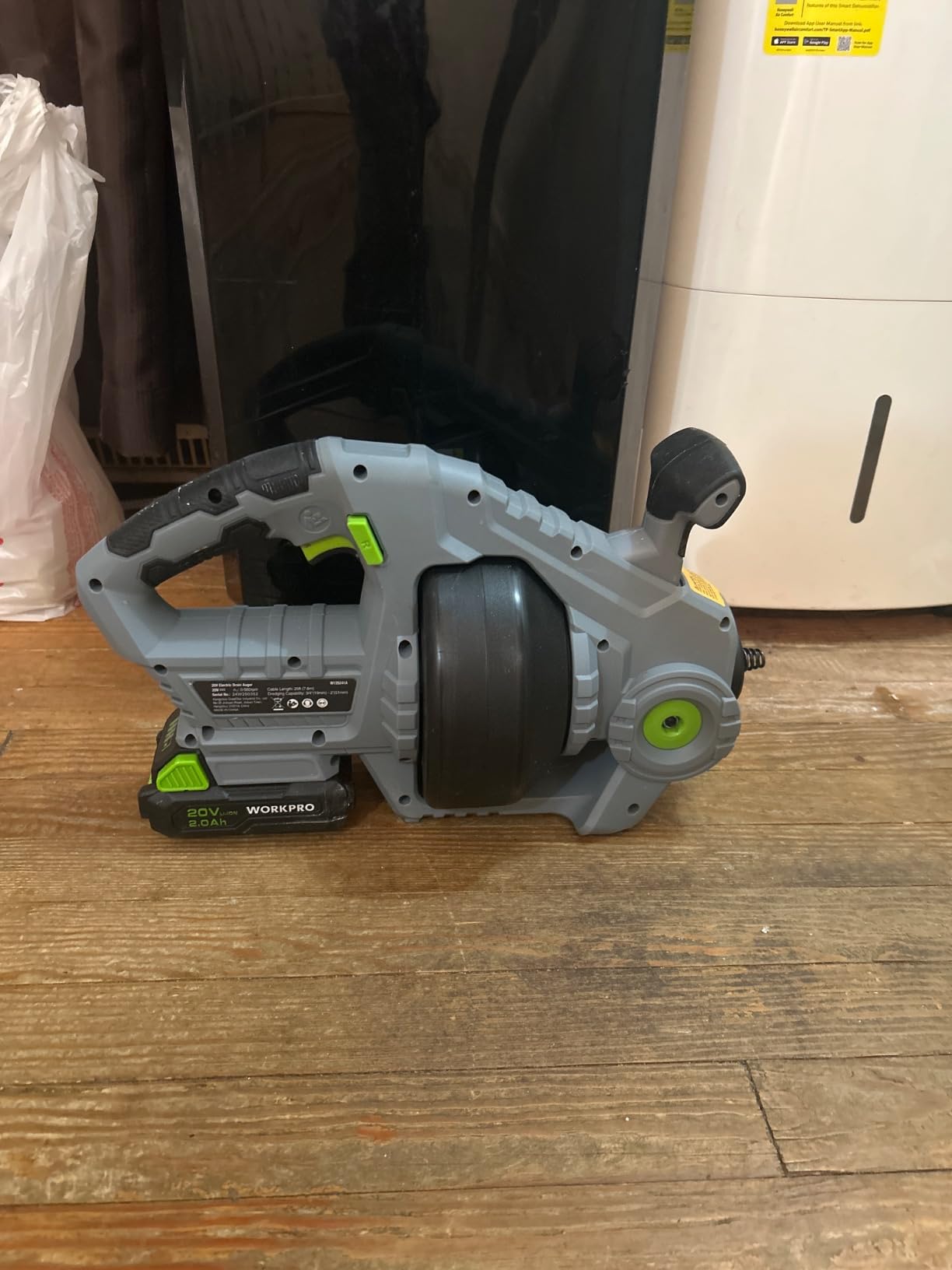
8. WORKPRO 20V Cordless 25 ft – Best Cordless Speed and Bend Handling
WORKPRO 20V Cordless Electric Drain Auger, 25-Ft Drain Snake, 2.0Ah Battery
20V cordless up to 560 RPM
25 ft cable for 3/4 in to 2 in pipes
Olive-shaped head
2.0Ah battery
Pros
- 560 RPM clears compacted clogs fast
- Olive head designed for L S and U bends
- Variable speed trigger aids control
- About one hour recharge
Cons
- Feed lever plus spin button is confusing
- Manual has errors and unclear labels
- Cable kinks if fed too quickly
The difference from the other cordless machine here is speed and head geometry. At up to 560 RPM it bores through compacted material faster, and the olive-shaped head is shaped specifically for L, S and U bends, which is the situation that stalls a coil head in a branch line running under a floor or behind a wall.
Owners report clearing stubborn sink, toilet and downspout clogs in minutes, and praise the battery for holding most of its charge across multiple jobs. The variable speed trigger and the forward and reverse lever give finer control than a fixed-speed drum, and there is an LED work light and a rear drain port for cleanup.
The control scheme is the honest flaw. A feed lever combined with a separate spin direction button is genuinely confusing at first, and reviewers point out an error-filled manual with unclear switch labelling. Budget ten minutes with the machine before a real job. At 11.67 pounds it is also the heavier of the two cordless options for the same 25 ft of reach.
Like every 25 ft unit, it stops at 2 in pipe diameter. That covers a lot of household work and none of a main line.
Best For Clogs in Tight Bends
Choose it when the blockage sits past an S or U bend in a branch line, or when a previous faster attempt simply stalled. The head shape and the 560 RPM are the reason this one gets through where others stop.
Best For Battery Life and Downspouts
It handles downspout and floor drain work well for the same reason it handles showers: no cord, and a head that survives the bend. Just slow the feed down and the kinking largely goes away.
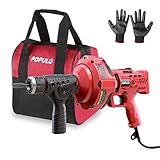
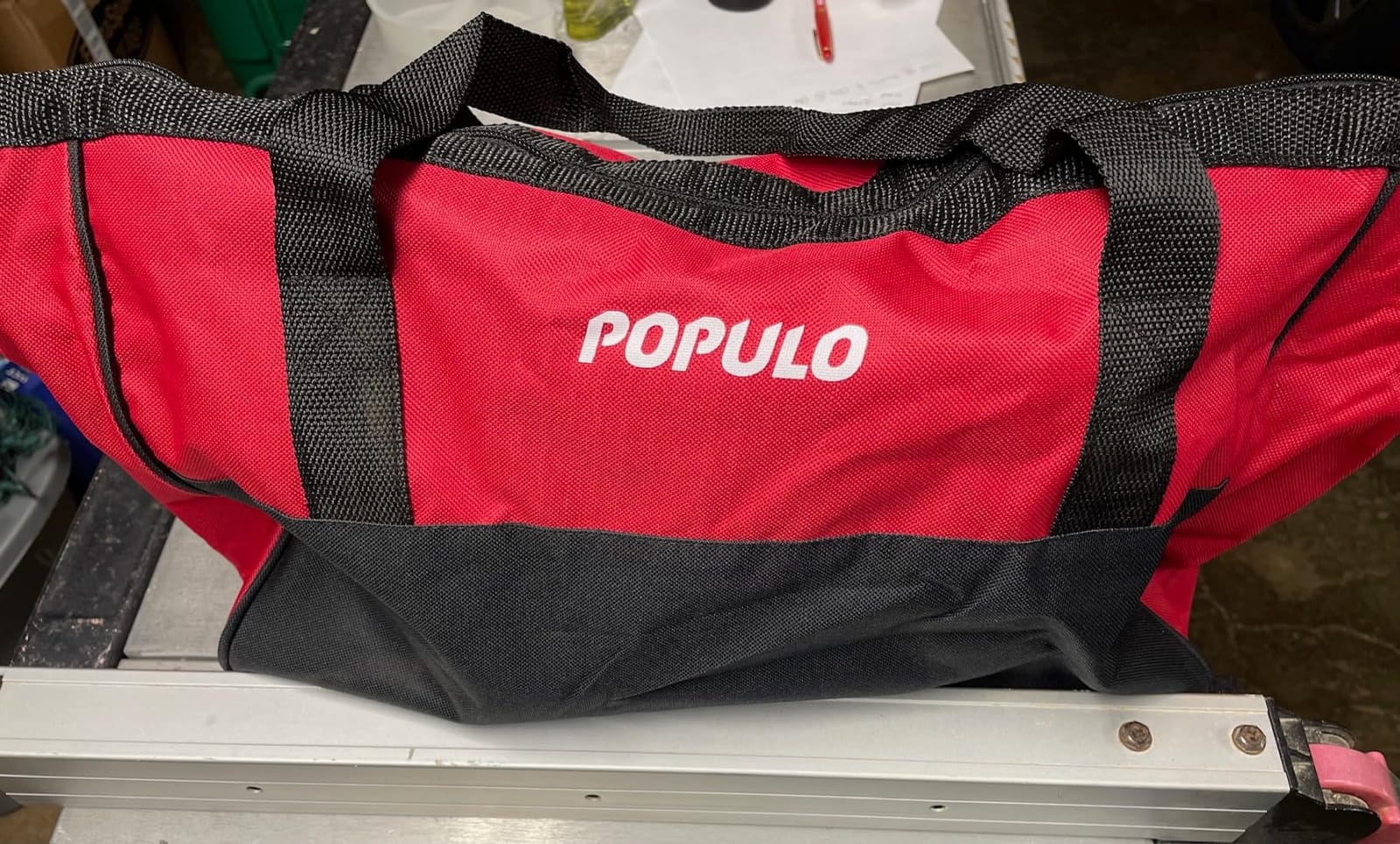
9. POPULO 120V Corded 23 ft – Best for GFCI Protected Wet Areas
POPULO 120V Corded Electric Drain Snake Auger, 23Ft Auto-Feed with GFCI
23 ft rust-resistant cable
3/4 in to 2 in lines
Built-in GFCI plug
120V auto feed
Pros
- Constant power with no battery downtime
- Built-in GFCI improves wet area safety
- Auto feed keeps hands off the cable
- Handles tight bends on the cable
Cons
- Not for toilets roots or main lines
- Needs an outlet and cord management
Constant power is the whole argument here. Owners of this corded machine rate sustained torque and clean auto-feed operation, and unlike the battery units there is no runtime ceiling, so a stubborn main-adjacent branch line does not stop the job while a pack recharges. The drive switch handles forward feed and retraction.
The built-in GFCI plug is the detail that matters for this specific job. Working a backed-up line means standing in contaminated water at a floor drain, and a GFCI-protected machine is the correct choice for that environment even when a cordless unit would otherwise seem easier. The 23 ft rust-resistant inner core cable holds up in tight bends.
Two honest limits. First, the machine is rated 3/4 in to 2 in lines and reviewers are reminded it is a fixture-drain tool rather than a main-line machine. Second, you need a reachable outlet and you still have to manage the cord around standing water, which is a real problem in a basement with one receptacle.
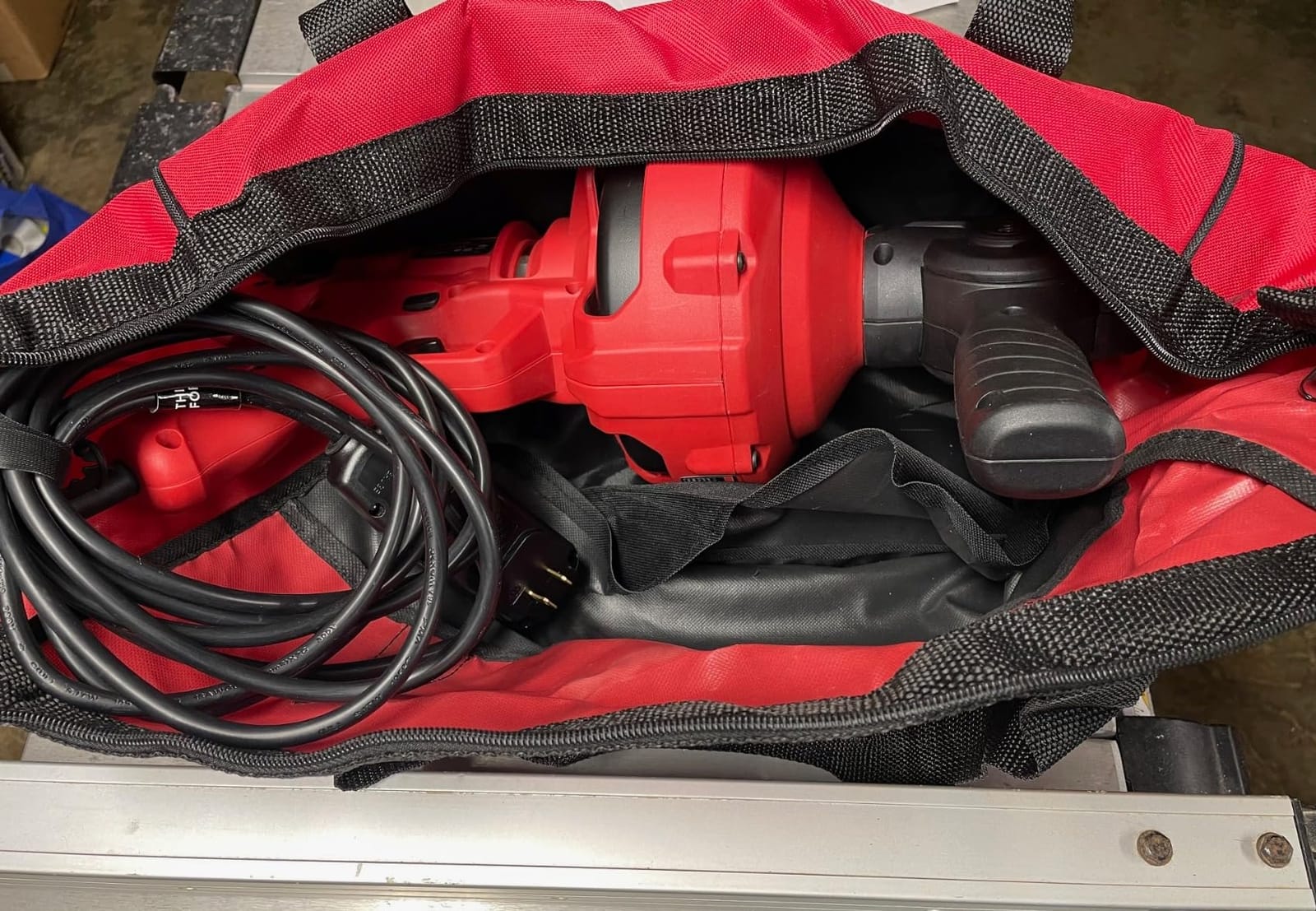
The gloves and storage bag are included, which sounds minor until you are carrying a wet machine back into a cabinet.
Best For Continuous Power
Best for a long shift on branch lines, a utility sink, a laundry drain, or a house with several failing fixtures. No pause for a charge is worth paying for with a dedicated GFCI plug.
Best For Basements and Wet Rooms
It suits any job where you will be standing in water. The GFCI plug is the deciding factor over a cordless machine, not the cable length.
10. BACEYIOU 25 ft Drill Adapter – Budget Pick for Branch Lines
Drain Auger, Clog Remover with Drill Adapter, 25 Feet Flexible Plumbing Snake Use Manually or Powered for Kitchen, Bathroom and Shower Sink, Comes with Gloves (orange)
25 ft of 72A spring cable
1/2 in to 3 in pipes
Crank or drill drive
ABS drum housing
Pros
- Clears hair soap scum and sludge
- Works by hand or with a cordless drill
- Contained drum keeps cable off the floor
- 4.1 pounds and easy to store
Cons
- Spring cable kinks at high drill speed
- No auto feed so the cable is hand guided
- Locking screw needs repeated tightening
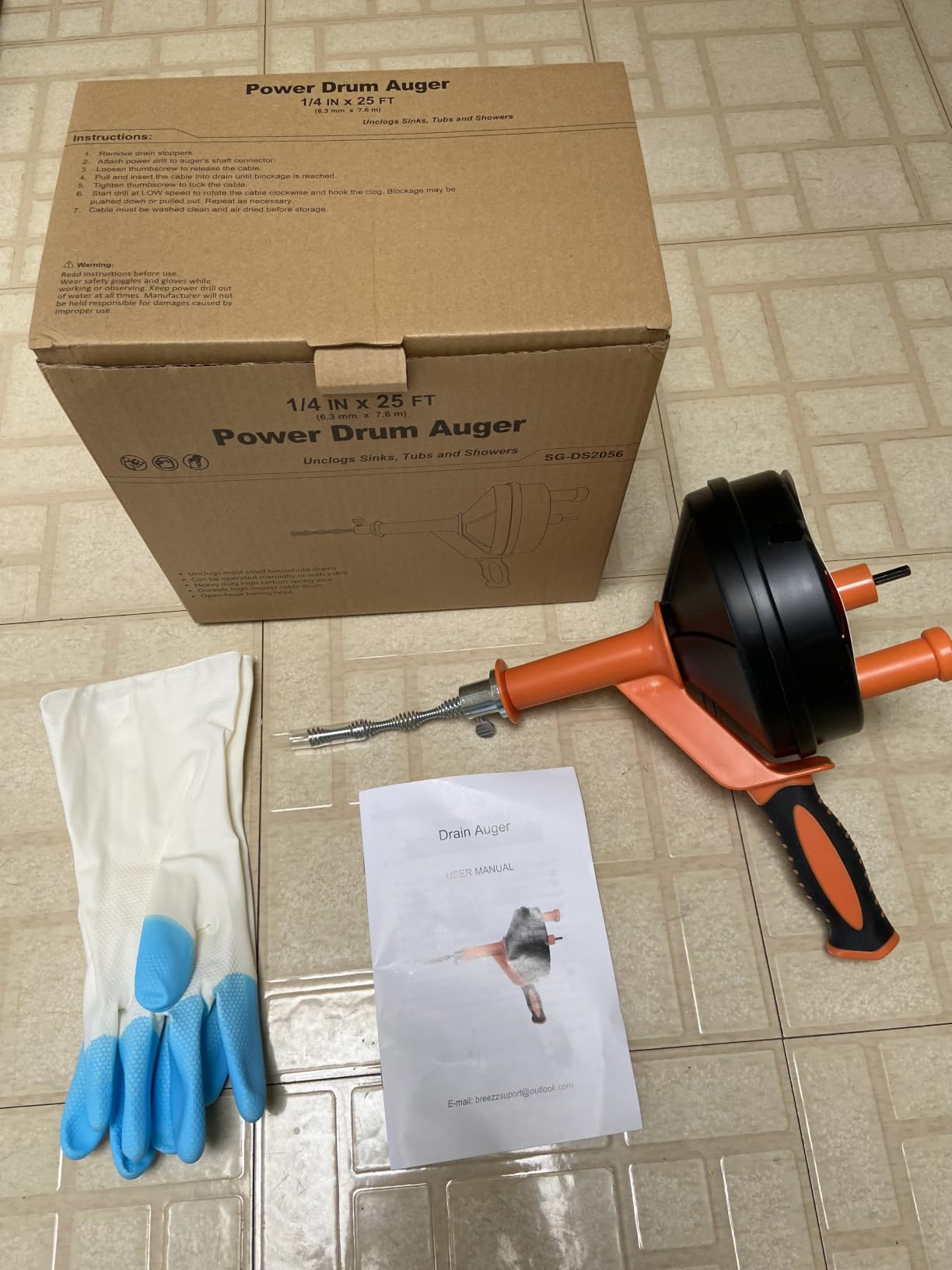
With 6983 reviews at 4.1 stars this is the most widely owned auger in the category, and the reason is simple: it clears hair, soap scum and light sludge in kitchen and bathroom drains for a very small outlay. The 25 ft of 72A manganese spring cable reaches past most P-traps into the branch line, and the contained ABS drum keeps the messy cable off your floor.
The drill adapter is the feature people actually notice. You can crank it by hand or clamp a standard cordless drill to it for extra torque, and the large crank knob and grip handle make manual turning bearable. Gloves are included, and at 4.1 pounds it stores in a closet. Line coverage is 1/2 in to 3 in, and it is explicitly not for toilets.
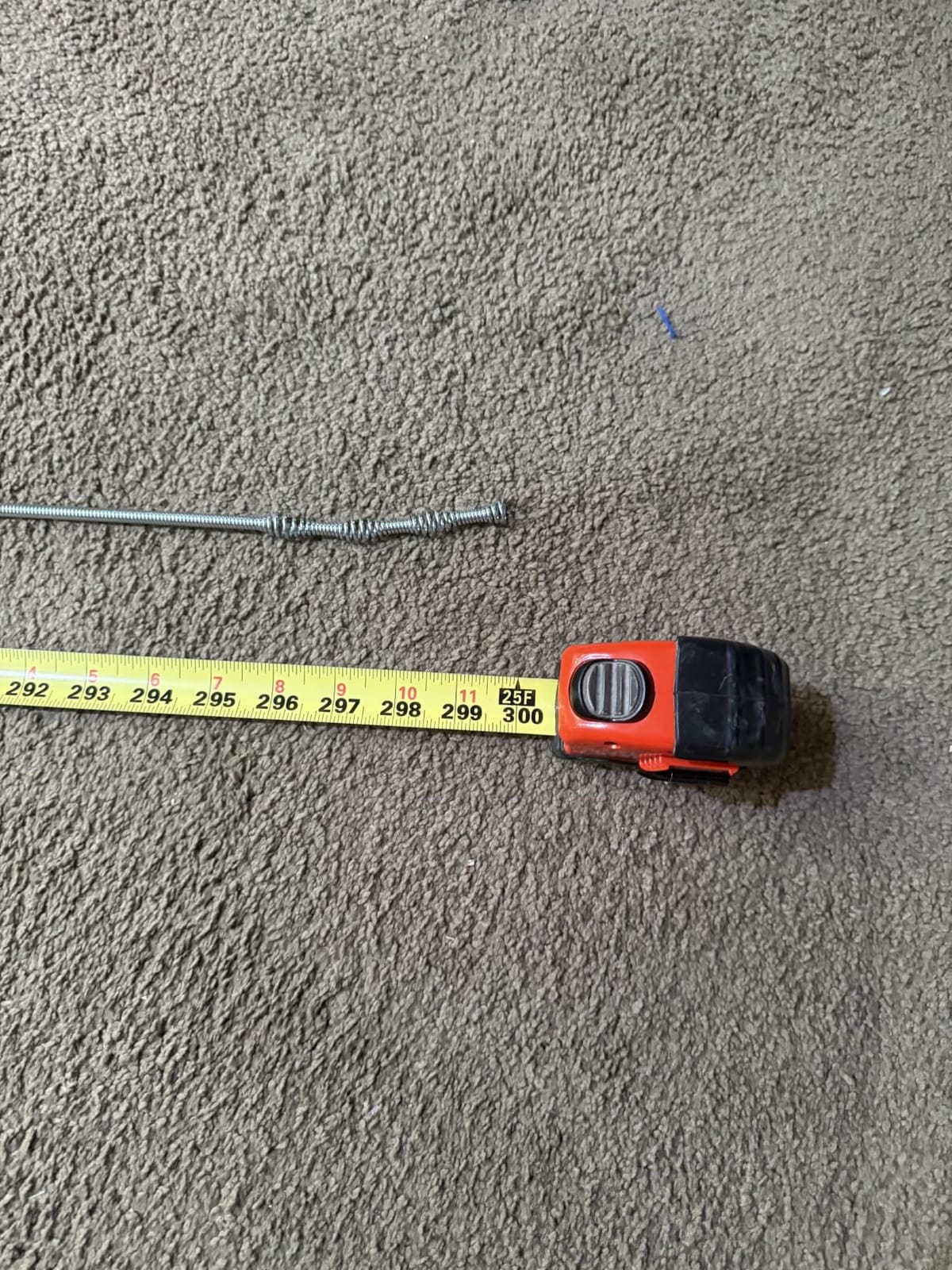
Run it at low drill speed. The single most common complaint across those reviews is that the spring cable bends or kinks when spun too fast, and the second is that the locking screw needs tightening and loosening repeatedly during a job because there is no auto-feed. The build is light duty and reviewers describe the handle as something that can snap under heavy force.
This is not a main line tool and should not be used on one. Think of it as the cheapest way to stop calling someone for a slow sink.
Best For Occasional Sink and Tub Clogs
Best for a household that gets one stubborn kitchen or bathroom clog a year and wants to stop paying a callout fee. Keep a cordless drill nearby and the adapter earns its place immediately.
Best For Light Duty Only
It will not handle roots, it will not handle a 3 or 4 in main, and it should not go near a toilet. If either of those describes your problem, the machine will fail early rather than help.
How to Choose a Drain Auger for a Sewer Line
Match cable reach to measured line depth, not to marketing numbers. Add the distance from your cleanout to the foundation, plus the run inside to the lowest fixture. Under 30 ft total, a 25 ft auger is fine. Between 30 and 70 ft, you want 50 ft. Past 70 ft or any 3 or 4 in pipe, you need a drum machine with 100 ft of cable.
Match cable diameter to pipe material and diameter. A 1/4 in or 5/16 in cable works in 1-1/2 in and 2 in lines. A 3/8 in cable covers 2 in to 4 in and is the standard for residential mains. A 1/2 in cable holds torque in 2 in to 4 in and resists kinking better over a long run. A 3/4 in cable is for 4 in to 8 in lines only.
Choose the architecture before the brand. Hand crank and spin augers suit branch lines. Corded and cordless electric machines suit fixture and short branch lines. Sectional machines feed discrete lengths of cable and are the choice when you need to get past a bypassed section or a long bend. Drum machines hold all the cable in one rotating drum and are what plumbers and experienced homeowners reach for on main lines. Sectionals and drums are not interchangeable: a drum is easier and faster, a sectional gets into places a drum will not.
Decide cordless or corded. Cordless wins where there is no outlet, which usually means outdoors at a cleanout, and where water on the floor makes a cord a hazard. Corded wins for long sessions and gives you the GFCI protection that a wet job deserves. Check that the machine has a GFCI plug or a GFCI-protected circuit before you work a floor drain.
Check parts availability and warranty before you buy. A machine is only as good as its replacement cable and cutter heads. Reviews repeatedly praise Ridgid for a lifetime warranty and separately sold parts, and repeatedly criticise cheaper machines whose cables snap and leave no path to replacement. Also check that the cable is replaceable independently of the motor.
Check weight before you buy. A 162 pound machine is a problem if it has to go down a basement staircase, and a review-driven reality check matters: one owner of the 3/4 in VEVOR describes the move itself as the hardest part of the job.
How to Use a Drain Auger on a Sewer Line Safely
1. Confirm the line is not a live sewer hazard. If sewage has backed up into the home, treat everything in the affected area as contaminated. Gloves, eye protection and closed shoes are the minimum, and a disinfectant wash afterwards is not optional.
2. Work from the cleanout, not a fixture. The cleanout is the designed access point and it keeps the cable away from traps and bends that will kink it. If you have no cleanout, a floor drain is the next best option, and a tub overflow is the worst because of the bend.
3. Run the machine forward slowly and stay with it. Spin forward to bore into the blockage, then reverse to retrieve. Feed in short bursts, especially on a manual crank unit, because a cable that doubles back on itself is a cable that will not come back out.
4. Drop into reverse the moment the cable flops or kinks. This is the single most repeated piece of advice in owner reviews across these machines. The forward direction that bores into a clog will, if the head stops cutting, start wrapping the cable into a coil instead.
5. Retrieve in one continuous motion on a heavy cable. On the 100 ft machines, starting and stopping retraction is what makes the cable spring or coil out of the drum.
6. Retract fully before you stop the motor. A partially paid-out cable in a drain will stiffen and knot. Clear the line of debris, flush with water, and rewind the drum to the stop.
7. Know when to stop. If the head will not move forward or back, if the cable binds, or if you are in a clay line that is old and cracked, stop. Forcing it is how cables snap off inside the pipe and how a cracked clay lateral gets opened up.
When an Auger Will Not Fix It: Roots, Red Flags and Calling a Plumber
Root intrusion buys time, not a cure. The single most repeated truth in homeowner and plumbing forums is that a cutter plus a chemical treatment delays replacement and nothing more. Multiple firsthand accounts describe roots penetrating clay pipe at several points roughly 5 feet apart, and a single auger pass clears the blockage at one point while leaving the rest intact. Cut the roots, then consider a copper sulfate root killer product such as the Green Gobbler type that reviewers discuss, and plan for eventual lateral replacement. Reviews of those products are mixed, and several users treat them as a delay tactic rather than a fix.
Multiple fixtures backing up together is the main-line signal. A toilet and a tub or floor drain going at the same time is not a coincidence and not a branch clog. That is when you move up to a drum machine, or call someone.
No cleanout is a real blocker. Homes without an exterior cleanout force you to work through a fixture, which is slower, kinkier and worse for the cable. If you cannot reach the line cleanly, that is a strong signal to hire out.
A snapped cable is a plumber problem, not a retry problem. Users on forums report cables breaking off inside old cast iron and clay lines, and one reviewer here describes a cable snapping and leaving 80 ft in a septic line. A broken-off cable usually means a scope camera and specialist retrieval.
Bends defeat almost everything. Homeowners with a 90 degree bend in an old lateral report difficulty finding anyone willing to scope it, and difficulty finding a machine that will pass it. If your line has offsets, that is a professional job.
Be careful with hydro jetting on old clay. High-pressure water jetting is often recommended as the alternative, and it works well on sound pipe. One homeowner reports the jet separated a cracked clay pipe at the clog, which turned a clearing job into a replacement job. On a lateral of unknown age and condition, get it scoped before you pressurise it.
For a one-time job, rent. Forum users commonly recommend renting a sectional rather than buying a professional machine, and then having a plumber install an outdoor cleanout if the property does not have one. That single improvement makes every future job easier and is the highest-value change most homeowners can make.
Frequently Asked Questions
What is the best thing to unclog a sewer line?
For a main sewer line, the best tool is a powered drain machine with enough cable to reach the blockage, not a hand auger. A 100 ft drum machine with 3/8 in or 1/2 in solid core cable covers most residential laterals in 2 in to 4 in pipe, and a C-cutter or root head is what breaks a root blockage. Confirm first that more than one fixture is backing up, work from the cleanout, and cut roots in one continuous pass.
Is a drain auger better than a snake?
They are the same tool. A drain auger, drain snake, plumbing snake and sewer snake are all names for a flexible steel cable with a cutting or coiled head on the end. The cable is fed into the pipe, spun to bore through the blockage, then reversed to pull the debris out. What varies is the power source, cable length and cable diameter.
What do professional plumbers use to unclog drains?
Plumbers typically use a drum machine for main sewer lines and a sectional machine when they need to get past a bypass or a difficult bend. The drum holds all the cable in one rotating drum and is faster and easier; the sectional feeds discrete cable lengths and handles tight access better. For a bathtub or a sink they use a smaller cable machine like a 25 ft or 30 ft unit.
How long of a drain snake should I buy?
Add the run from your cleanout to the house to the run inside to the lowest fixture. Under 30 ft total, buy 25 ft. Between 30 and 70 ft, buy 50 ft. Past 70 ft or on a 3 or 4 in main line, buy a 75 ft or 100 ft machine. Under-torquing or over-retrieving a short cable is the usual cause of a kinked shaft.
What is the best way to remove tree roots from a sewer line?
The best way is a cutter designed for it. Run a C-cutter or hexagonal root head on a solid core cable in a drum machine, forward to shear the roots and reverse in one continuous motion to pull the mass out. Then treat the line with a copper sulfate root killer product to slow regrowth. Cutting roots buys time, because roots can re-enter the same points and grow larger each cycle.
How much does it cost to get tree roots out of a sewer line?
Professional rooter and hydro jet service varies widely by region, and quotes in homeowner forums run from a few hundred dollars for a routine root cut up to far more when a lateral needs replacing. That comparison is why a lot of owners buy or rent a machine instead. For a single recurring blockage, renting a sectional for a day is often the cheapest sensible path.
Final Verdict: Best Drain Augers for Clogged Sewer Lines in 2026
If two fixtures are backing up at once, the RIDGID K-400 is the machine we would buy first. Its 75 ft of 3/8 in solid core cable, 1-1/2 in to 4 in range and low 165 RPM drum are built for main lines, and the cable control system stops the drum when a head lodges.
For a long lateral where the budget matters more, the VEVOR 100 ft x 1/2 in gives the same reach with an open-case drum and eight cutters. For roots specifically, the POPULO 100 ft kit ships the hex root head that made the difference on our line. And for anything that is not a main line, the RIDGID PowerClear 55808 handles tubs, showers and sinks better than any other machine here.
Whichever one you choose, find the cleanout, measure the run, and start slowly. The best drain augers for clogged sewer lines in 2026 are the ones whose cable length matches your line, and no tool substitutes for knowing where the pipe actually goes.