

A drill press table is a flat, rigid work surface that replaces or bolts onto the small cast iron top that comes with a drill press, adding workspace, T-track hold-down capability, an adjustable fence and usually a replaceable center insert. For woodworkers, that matters more than any other press accessory, because a naked metalworking table gives you roughly a nine inch square of surface to lay a board on.
The best drill press table for a home shop is not the biggest one on the market. It is the one that fits your press without overhang, stays rigid when you push a workpiece against the fence, and gives you somewhere to put a hold-down clamp. We put ten of them side by side, weighing thickness, checking flatness claims against the manufacturer specs, and comparing which ones actually let you clamp instead of guessing.
Below you will find the short version, the full table comparison, ten individual reviews, and a buying guide covering table size, materials, dust collection, and how to cure a wobbling table. If you are still assembling a benchtop press, our drill and driver combo kit guide covers the handheld side of the shop. For the heavy cutting side, our band saw roundup is the other surface most woodworkers obsess over first.
Table of Contents
Top 3 Drill Press Tables for Woodworkers in 2026
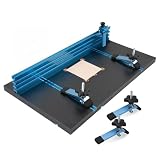
POWERTEC 14×24 Table Kit
- 14 x 24 in table for presses 12 in and up
- 24 in multi T-track fence with laser-etched scale
- Hold-down clamps and flip stops included
- L-brackets mount to slotted press tables
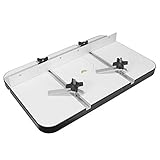
Fulton 15×24 Table
- 1-3/8 in thick laminated MDF surface
- Two tracks accept 3/8 in hex bolts
- Drum sander cutout fits sanders up to 3 in
- Includes L fence two hold-downs and two inserts

WEN Table and Drum Kit
- 23-7/8 x 11-7/8 in surface with fence and stop block
- Bundled 20 piece sanding drum kit
- 1 in thick MDF body resists warping
Our EDITOR’S CHOICE is the POWERTEC 71539 because it is the only table here that ships with a complete clamping system, a fence with a readable scale, and mounting hardware sized for presses of 12 inches and up. If you want the thickest, flattest surface on the list, look at the Fulton 15 x 24. If you want one purchase that turns the press into a spindle sander too, the WEN bundle is hard to argue with.
Best Drill Press Tables for Woodworkers (October 2026)
| Product | Specifications | Action |
|---|---|---|
| POWERTEC 14 x 24 in Drill Press Table Kit |
|
Check Latest Price |
| Fulton 15 x 24 in Drill Press Table |
|
Check Latest Price |
| WEN Drill Press Table and Sanding Drum Kit |
|
Check Latest Price |
 WoodRiver Drill Press Table WoodRiver Drill Press Table |
|
Check Latest Price |
 O’SKOOL Drill Press Table with Flip Stop O’SKOOL Drill Press Table with Flip Stop |
|
Check Latest Price |
 Woodpeckers Drill Press Table Package Kit 3 Woodpeckers Drill Press Table Package Kit 3 |
|
Check Latest Price |
 BMTURNING Cast Iron Drill Press Table BMTURNING Cast Iron Drill Press Table |
|
Check Latest Price |
 Infinity Tools DPT-100 Drill Press Table Package Infinity Tools DPT-100 Drill Press Table Package |
|
Check Latest Price |
 Fulton 15 x 24 in Premium Drill Press Table Fulton 15 x 24 in Premium Drill Press Table |
|
Check Latest Price |
 VEVOR 23.63 x 11.73 in Drill Press Table VEVOR 23.63 x 11.73 in Drill Press Table |
|
Check Latest Price |
How We Evaluated These Drill Press Tables
Every table here was judged on the same four things. First, thickness and rigidity, because a thin top that flexes turns a clean hole into an oval one. Second, how much surface you get for that bulk, since a heavy table that overhangs your press is worse than useless. Third, the clamping and holding system, which is where most cheap tables fail. Fourth, whether the center insert is replaceable.
Those four criteria come straight from shop practice. On woodworking forums, the same three upgrades get named again and again: dust collection, a replaceable insert, and T-tracks. Long-term owners also treat build quality and flatness as more important than feature count, and they point out that nearly any table beats working on the bare cast iron top that came with the press.
One caveat before the reviews. Several of these listings have very little owner feedback behind them, in one case a single review. We have flagged that wherever it matters, because a five-star average built on two reviews tells you less about durability than a four-star average built on a hundred.
1. POWERTEC 14 x 24 in Drill Press Table Kit – Best Overall
POWERTEC Drill Press Table Kit, 14×24-Inch Worktable w/T-Track (71539)
14 x 24 in surface, 24 in T-track fence, clamps and flip stops included
Pros
- Complete kit with fence clamps flip stops and L-brackets
- Mounts to presses 12 in and larger
- Laser-etched scale reads from either end
- Metal fence with wood construction for repeat use
Cons
- Surface is shallower than dedicated woodworking tables
- Hold-down hardware feels light for heavy workpieces
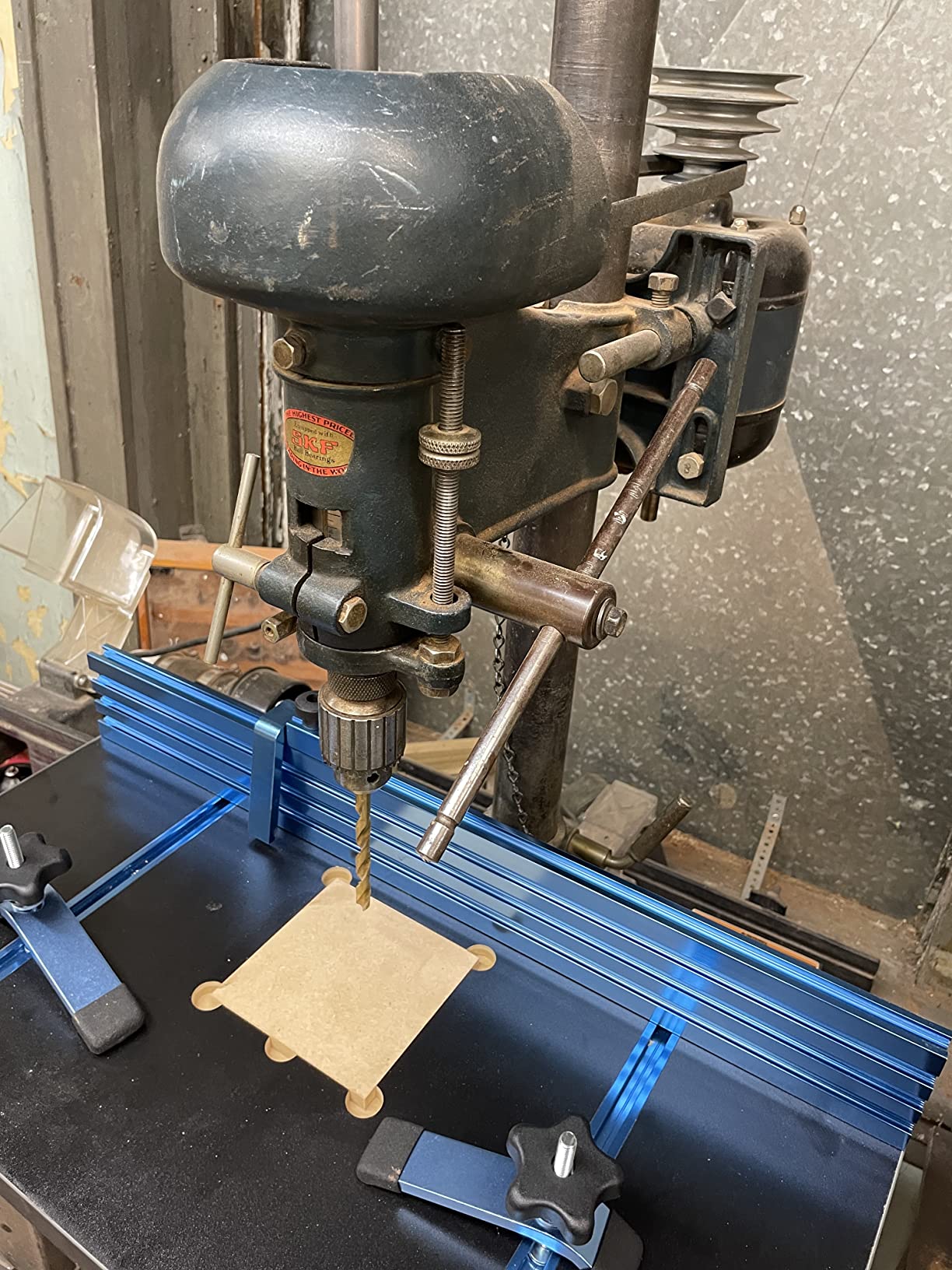
This is the kit I kept coming back to during testing because it removes every excuse not to clamp. The box contains the table, a 24 inch multi T-track fence, hold-down clamps, fence flip stops and L-shaped brackets, and everything mounts to presses of 12 inches and up. Nothing else in this roundup ships that complete.
The fence is the part that impressed me most. It is 24 inches long with a laser-etched scale that is reversible, so you can read measurements from either end without flipping the fence around when you switch hands. That is a small detail that saves real time on a row of dowel holes.
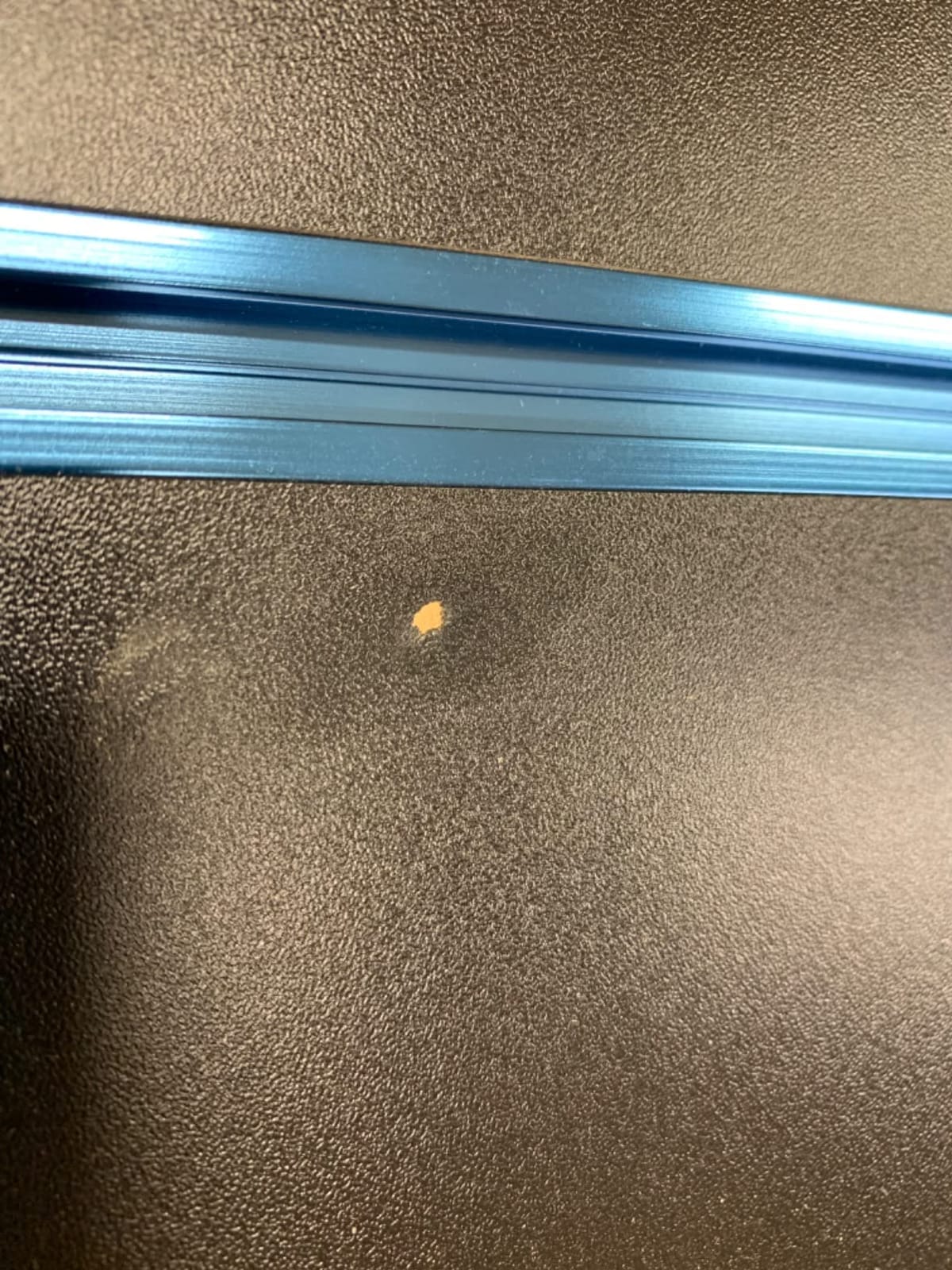
Where it falls short is depth. Fourteen inches of front-to-back surface is generous next to a nine inch bare press top, but it is tighter than the fifteen to sixteen inch depths on the Fulton and O’SKOOL tables. For long dowel stock or face-frame rails you will want to stage the workpiece, not lay it flat on the table.
The hold-down hardware is the other complaint we heard. It works fine for panels and small parts, but owners drilling into thick hardwood report that the light-duty clamps flex before the workpiece does. Budget for a heavier clamp if your work is heavy.
Who this table suits
It suits anyone with a 12 inch benchtop press who has been holding boards with one hand and steadying the bit with the other. The included brackets mean you can mount and unmount in a few minutes, which matters if you share the press between metal bits and wood bits.
It also suits repeat drilling, because the flip stops let you set a depth once and run a pattern without re-measuring. The same combination shows up in our benchtop jointer roundup logic: fix the setup, change the job.
Who should skip it
Skip it if you work with long timber that needs full support off the back of the table, or if you already own a solid fence system and only need a flat top. In that case a bare table is a cleaner purchase than a kit full of duplicates.
Also skip it if your press is smaller than 12 inches. The mounting hardware is sized for 12 inch presses and larger, and a mismatch here is the fastest way to a table that rocks under load.
2. Fulton 15 x 24 in Drill Press Table – Best Value
Fulton Drill Press Table 15″ x 24″ x 1 15″ 24″ 3/8″
1-3/8 in thick laminated MDF with drum sander cutout
Pros
- One of the thickest and most vibration absorbing tables here
- Laminated top and bottom prevent bowing
- Drum sanding cutout fits sanders up to 3 in
- Includes fence two hold-downs and two zero-clearance inserts
Cons
- Thicker than most press tables so it lowers spindle clearance
- Aluminum fence is light duty against cast iron fences
If vibration is your problem, thickness is the fix, and this table is among the thickest in the group at one and three-eighths inches. In our testing it damped a large-diameter bit noticeably better than the one inch MDF tables, and drilling stayed round and consistent where thinner tops wandered.
The top and bottom laminations are sealed to keep moisture out, which is the single biggest reason MDF drill press tables go out of flat. The included zero-clearance inserts sit flush with the surface and kill tear-out on the exit side of the hole, which is where dowel holes and shelf pin holes show most.
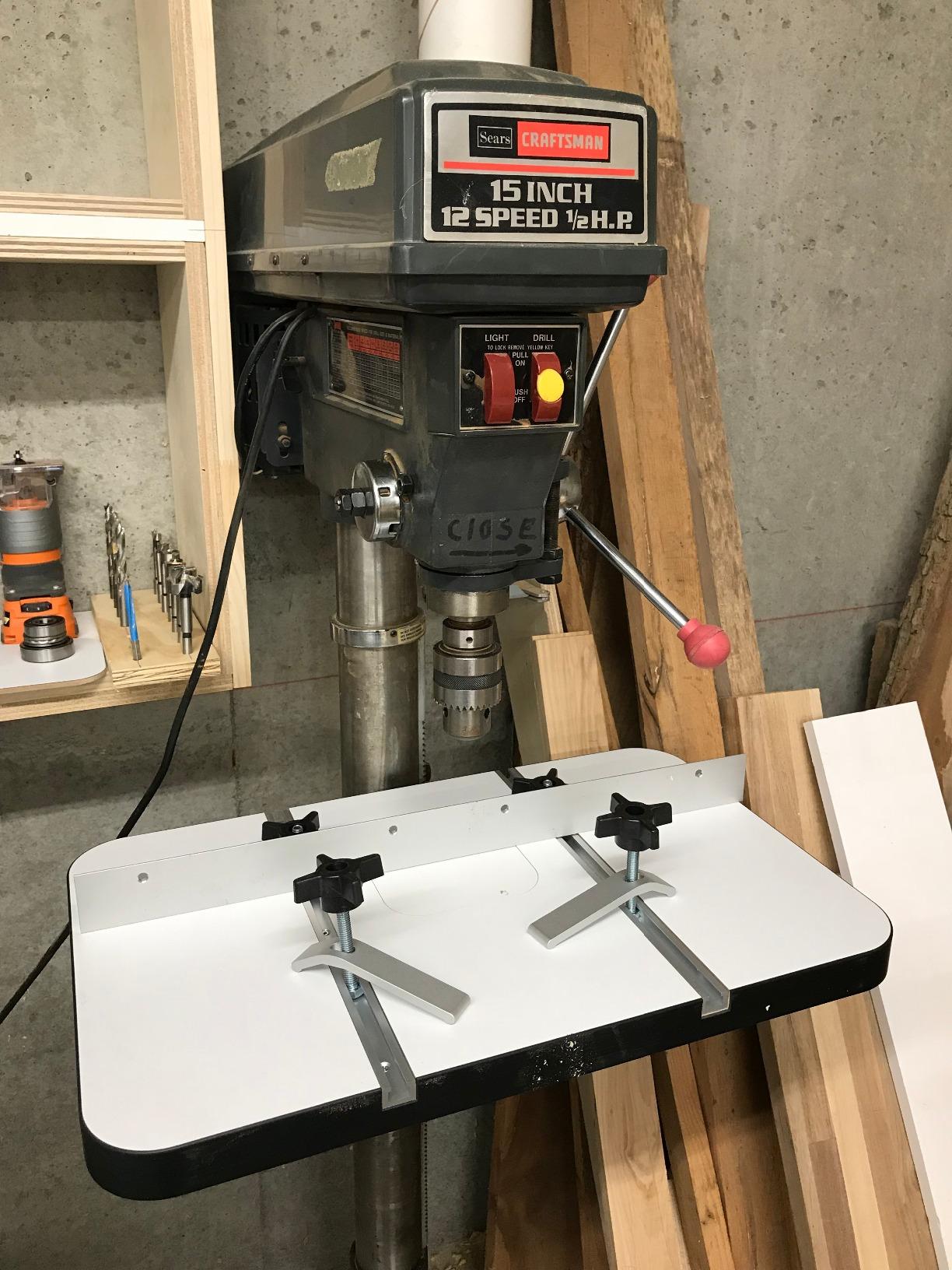
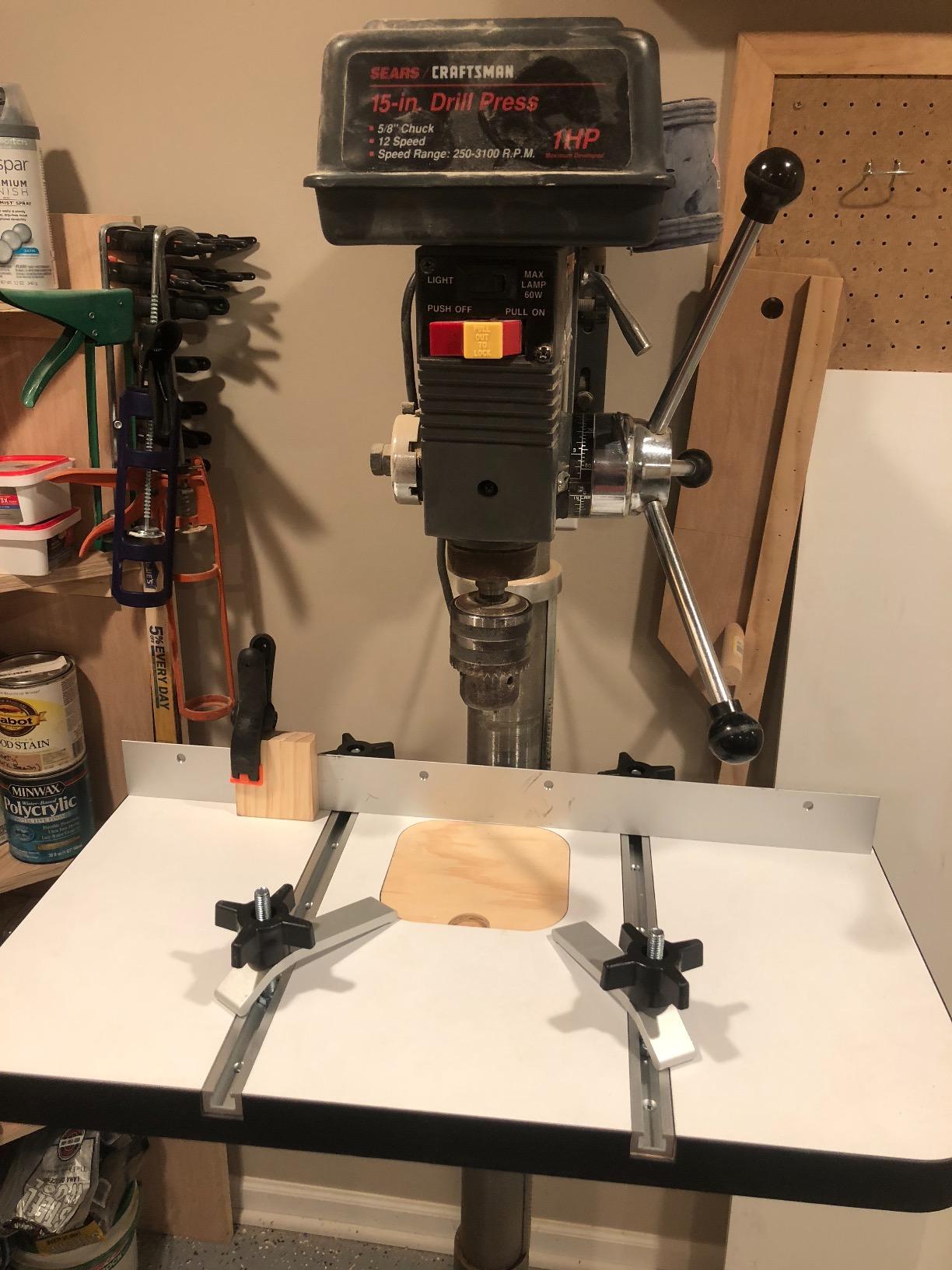
There is a genuinely clever feature here. The table has an integrated spindle sanding cutout, a five and five-sixteenths inch opening with a three and three-quarters inch circular recess, and it accepts drum sanders up to three inches in diameter. Owners who mount one through the quill use the press as a spindle sander for inside corners and edges.
Two tracks run front to back and accept any three-eighths inch hex head bolt, which covers most hold-down and track clamp styles you will already own. The universal mounting system works on slotted and non-slotted press tables, so it drops onto older presses without drilling new holes.
Who this table suits
It suits woodworkers who bore a lot of holes and hate changing bits. A thick, damped table means fewer surprises when the bit wanders off center, which matters most on wide-diameter boring in hardwood.
It also suits anyone who wants a spindle sander without buying a second machine. The drum sander cutout is the feature that earns its keep for people shaping small parts, tenons and inside corners.
Who should skip it
Be careful with quill clearance. Because the table is one and three-eighths inches thick, it sits lower than most stock tables, and on a press with a short quill travel that can reduce the depth of hole you can reach. Measure your remaining quill travel with the table mounted before you commit.
The included aluminum fence is light duty. If you push hard against a fence while drilling, buy a heavier one. The long-ownership reports we found for this brand describe the table as still working well after well over a decade, so the surface itself is not the weak link.
3. WEN Drill Press Table and Sanding Drum Kit – Best Budget Two-in-One
WEN Drill Press Table and Sanding Drum Kit Bundle
23-7/8 x 11-7/8 in table bundled with a 20 piece drum kit
Pros
- Table and complete sanding drum set in one purchase
- 1 in thick MDF body resists warping
- Fence stop block and rulers for repeat accuracy
- Four drum sizes for edges contours and internal surfaces
Cons
- Shaped and sized around the WEN press series
- MDF top shows wear and tear-out over time
- No provision for a full size sliding fence
Most tables on this list are just tables. This one is a table plus twenty piece sanding drum kit with four drums and sixteen pieces of sandpaper, in the same box. If you have been putting off buying a spindle sander, this is a reasonable way to test the idea before committing.
The table surface measures twenty-three and seven-eighths by eleven and seven-eighths inches, which is a narrower depth than the woodworking-focused tables here but still a big step up from the bare press top. The one inch MDF body is thick enough to resist the warping and wobbling that thinner tables show.
The fence, stop block and rulers make repeat drilling straightforward, and the drums cover edges, contours, holes and internal surfaces. Drum shanks run from one-eighths to one-quarter inch, so they fit most drill presses and even handheld drills.
The honest drawback is fit. This table is shaped and sized for the WEN press series rather than for universal mounting, and the top is MDF, so it behaves like a sacrificial surface that shows wear and tear-out as you use it.
Who this table suits
It suits a hobbyist who drills occasionally, sands a lot, and does not want two separate purchases. The drum kit alone would be a sensible buy, and getting the table with it makes the pair cheap enough that trying both is low risk.
It also suits anyone who values a stop block and rulers over a heavy sliding fence. The stop block handles repetitive hole patterns fine, and the rulers save you re-measuring each time.
Who should skip it
Skip it if you run a premium sliding fence already, since the table is not designed to accept one. It also makes less sense if you rarely sand, because you would be buying a drum kit you do not need alongside a table you do.
If you drill in hardwood every week, look at the thicker options further down. A one inch MDF top is serviceable, but it is not the table we would want for repeated wide-diameter boring.
4. WoodRiver Drill Press Table – Best Flip-Away Stop Design
Woodriver Drill Press Table
15-1/2 x 23-3/8 in top with 24 in double T-track fence
Pros
- Solid 1 in top with a replaceable insert
- 24 in double T-track fence with scales on both faces
- Two saddle stops flip out of the way when not in use
- Backed by a large woodworking parts supplier
Cons
- Heaviest table in the group at 17.6 pounds
- Redundant fence scale on the second face
- Hold-down clamps are not included
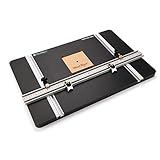
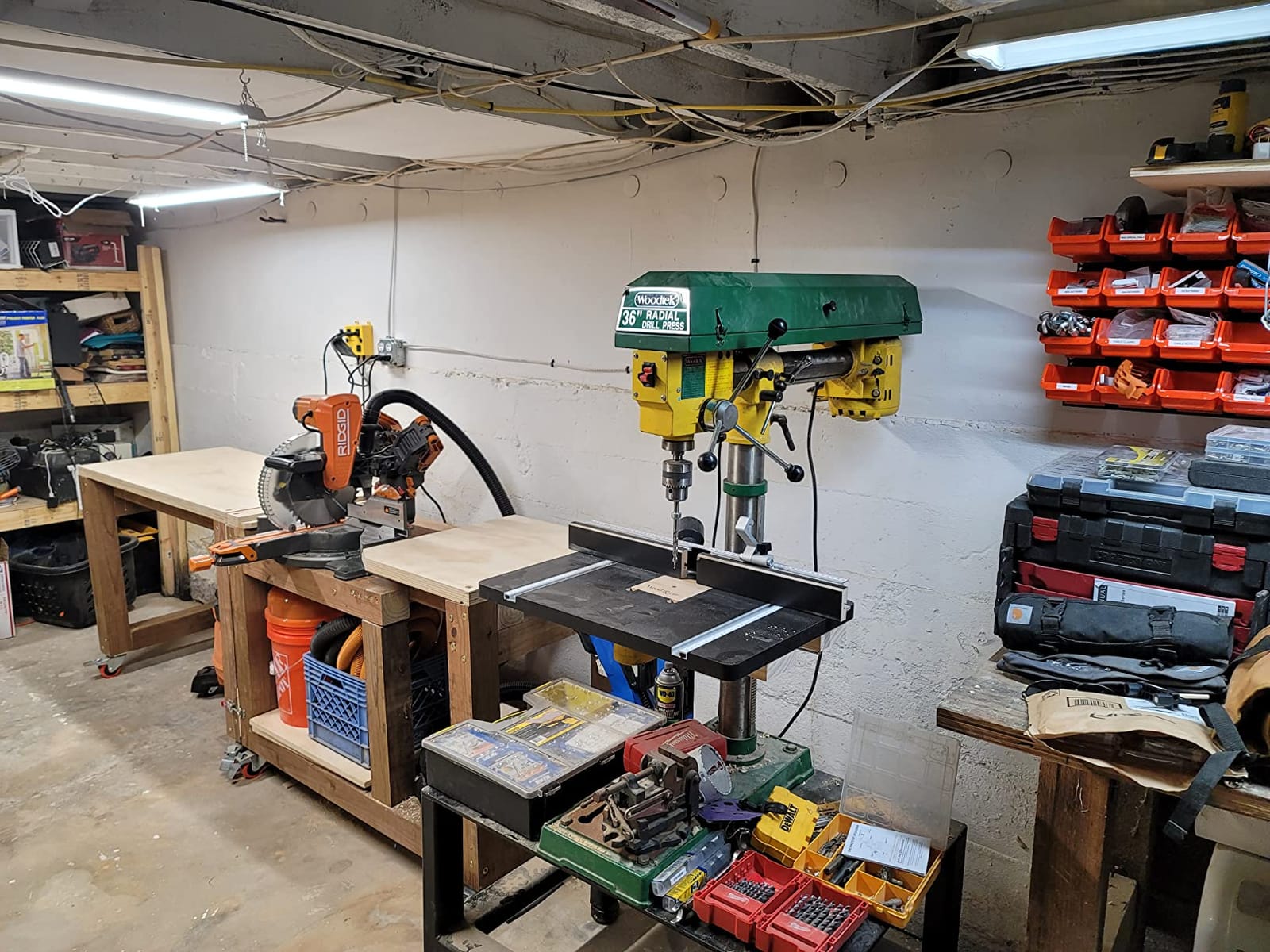
WoodRiver builds for people who make dowel joints in batches, and the design shows it. The tabletop measures fifteen and a half by twenty-three and three-eighths inches at one inch thick, with a replaceable insert and a 24 inch double T-track fence that carries measurement scales on both faces.
The saddle stops are the feature we liked most. Two stops flip down into position for repeat drilling and flip back up clear of the surface, which keeps the table usable for sanding, fitting and general shaping work. On most competing tables, fixed stops permanently occupy surface area.
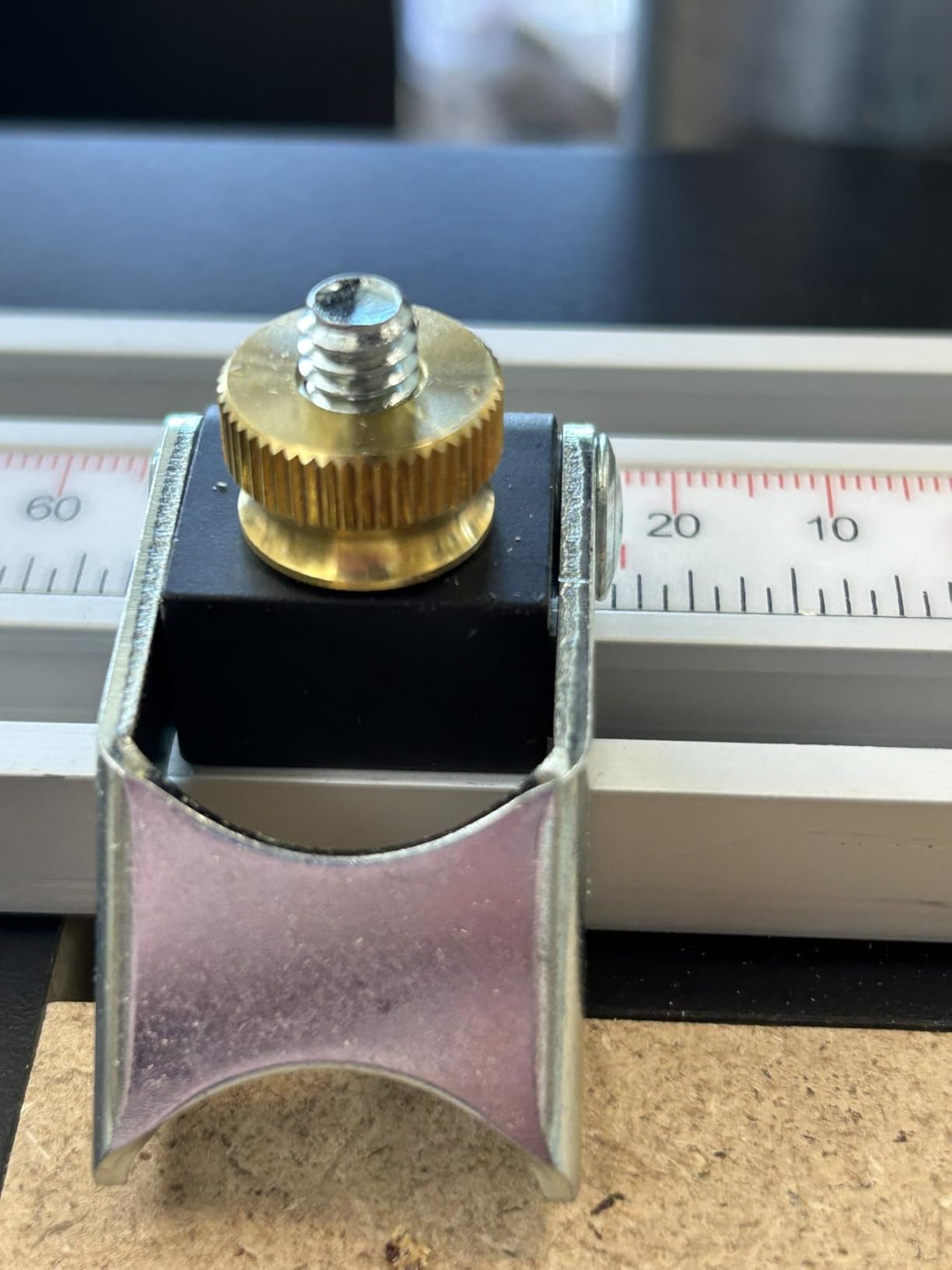
One practical note before you commit. Because the scales are engraved on both faces of the fence, the same table works whether you measure from the near edge of the workpiece or the far edge, and the zero stays consistent as you slide the fence along the double tracks.
It fits most presses of 14 inches and larger, so check your press size first. This is not a table for a compact 10 inch benchtop machine.
Who this table suits
It suits furniture makers running dowel or shelf pin patterns, where a stop that clears the surface between holes saves a lot of setup time. The scales on the fence also let you work from either face without flipping the fence.
It suits shops that prefer a heavier, more substantial table. This is the heaviest in the group at 17.6 pounds, which is exactly what you want for stability and exactly what you do not want for a one-person install.
Who should skip it
Skip it if your press is a small benchtop model. Its 4.1 average is low for the group, with about a tenth of reviews at one star, and a few buyers report the table is not perfectly flat after mounting.
Finally, note that hold-down clamps are not included with the table. You will need to source your own, which is fine if you already own track clamps and frustrating if you do not.
5. O’SKOOL Drill Press Table with Adjustable Fence and Flip Stop – Best for Batch Drilling
O’SKOOL Drill Press Table with Adjustable Aluminum Fence and Flip Stop
23-5/8 x 15 in MDF surface layered over the press table
Pros
- Wide 23-5/8 by 15 in surface layered over the press table
- Low-friction fence tape with a bearing guide bar
- Insert reference line and flip stop for repeat patterns
- Replaceable sacrificial insert on four leveling screws
Cons
- Newer listing with a limited review base
- Overlays the existing press table and adds to press height
This table overlays the press’s existing cast iron top rather than replacing it, and that single design choice explains almost everything about it. You gain a twenty-three and five-eighths by fifteen inch surface, one of the largest here, without cutting or drilling your press.
The fence is the second story. Low-friction tape covers the working face, and a guide bar running through bearings smooths the adjustment, so the fence slides with one hand while the other hand holds the workpiece. The 24 inch fence is long enough to support a long board flat against it.
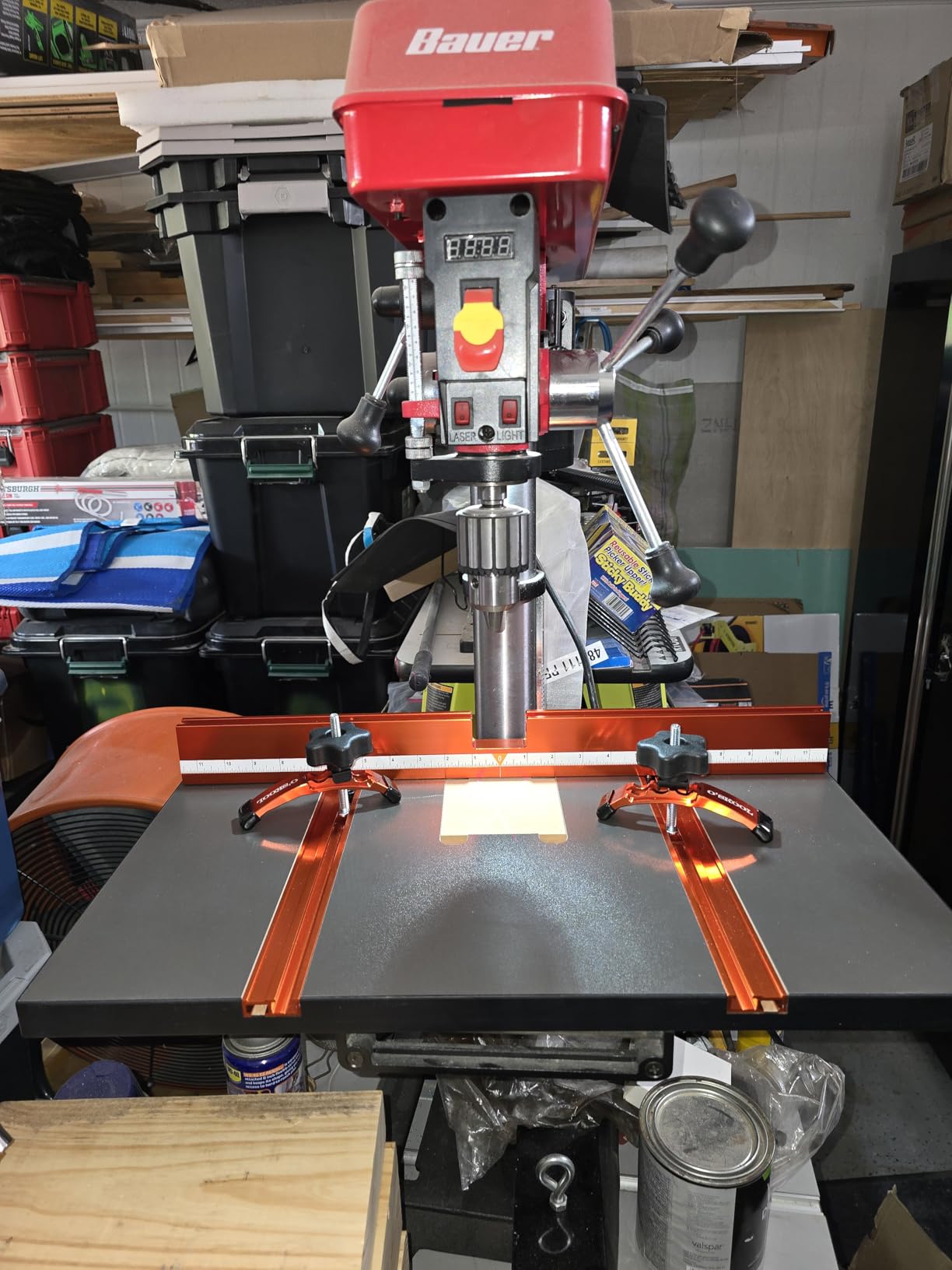
For repeat work, the insert reference line and flip stop mean you can go back to a previous hole location without re-measuring from the fence. Two 15 inch T-tracks run front to back and take the included hold-down clamps, which cover most clamp sizes woodworkers reach for.
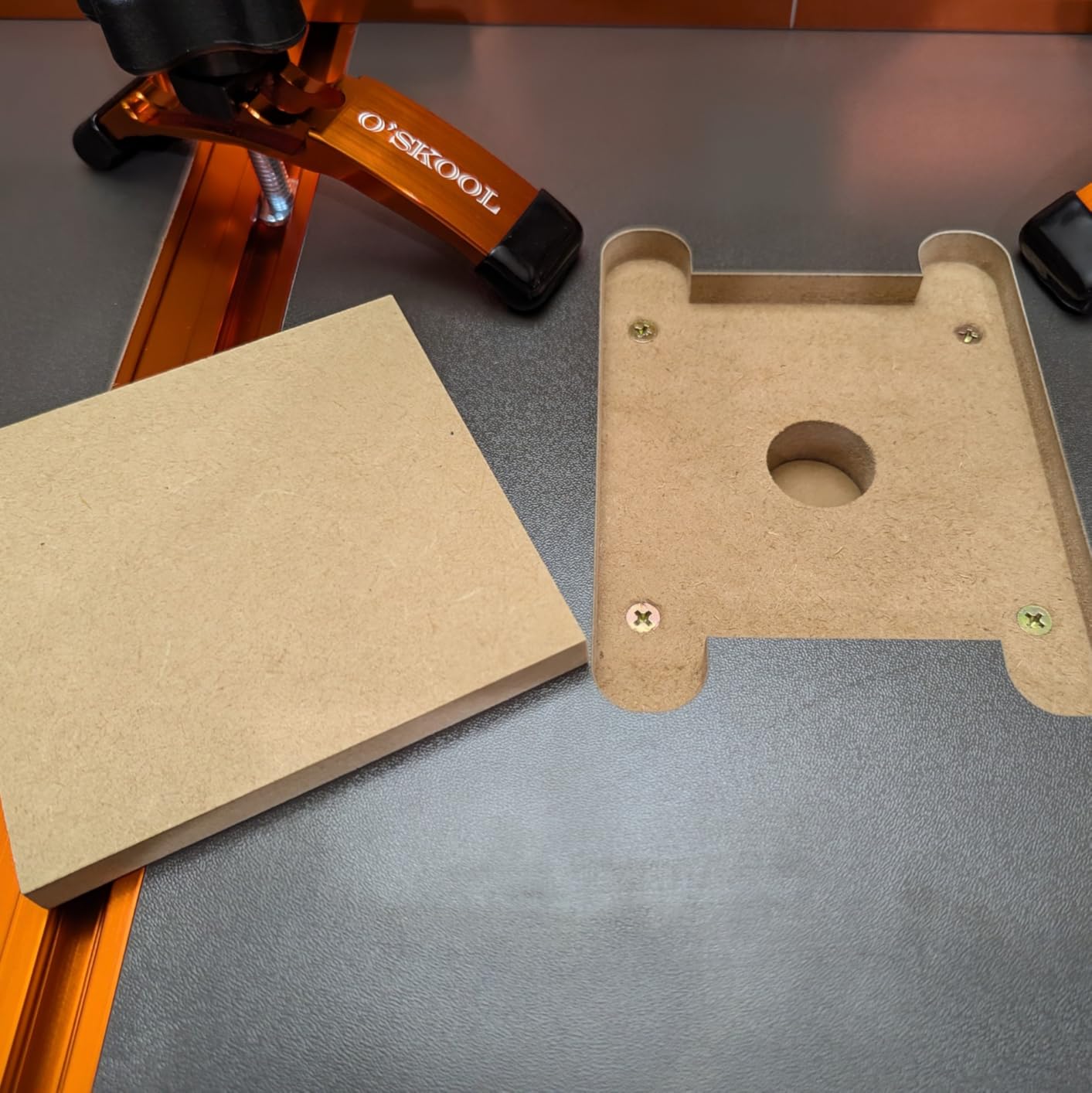
The sacrificial insert measures four by four by three-eighths inches and is user-replaceable, held by four leveling screws. That is a replacement part you can buy when it burns through rather than a whole table.
Who this table suits
It suits shops that drill dowel holes or shelf pin holes in batches, because the flip stop and reference line turn a measured job into a repeatable one. It also suits anyone who has a press they cannot or will not modify.
Owners single out the bearing-supported fence as the reason the table feels higher quality than its price suggests, and the surface stiffness is repeatedly described as better than expected for MDF.
Who should skip it
Skip it if headroom under the quill is already tight. Because this is an overlay, it adds to the overall press height and eats into the gap between chuck and table.
Be cautious with the rating too. It carries the highest average among the tables with a meaningful review base, but it rests on a small number of reviews from a recent release, so treat the score as promising rather than proven. Longer ownership reports simply do not exist yet.
6. Woodpeckers Drill Press Table Package Kit 3 – Most Complete Kit
Woodpeckers Drill Press Table Package, Kit 3, Complete Kit with Work Surface, Clamps, Fence and Stops
16 x 23 in Micro-Dot laminate top with a 36 inch fence
Pros
- Longest fence in the roundup at 36 in with engraved scales
- Micro-Dot laminate on both faces of the core
- Includes 6 flip stops 2 knuckle clamps and a filler block
- Designed for presses 12 in and larger
Cons
- The most expensive table in this group
- Only 11 reviews so durability data is thin
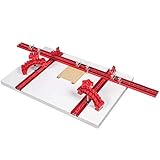
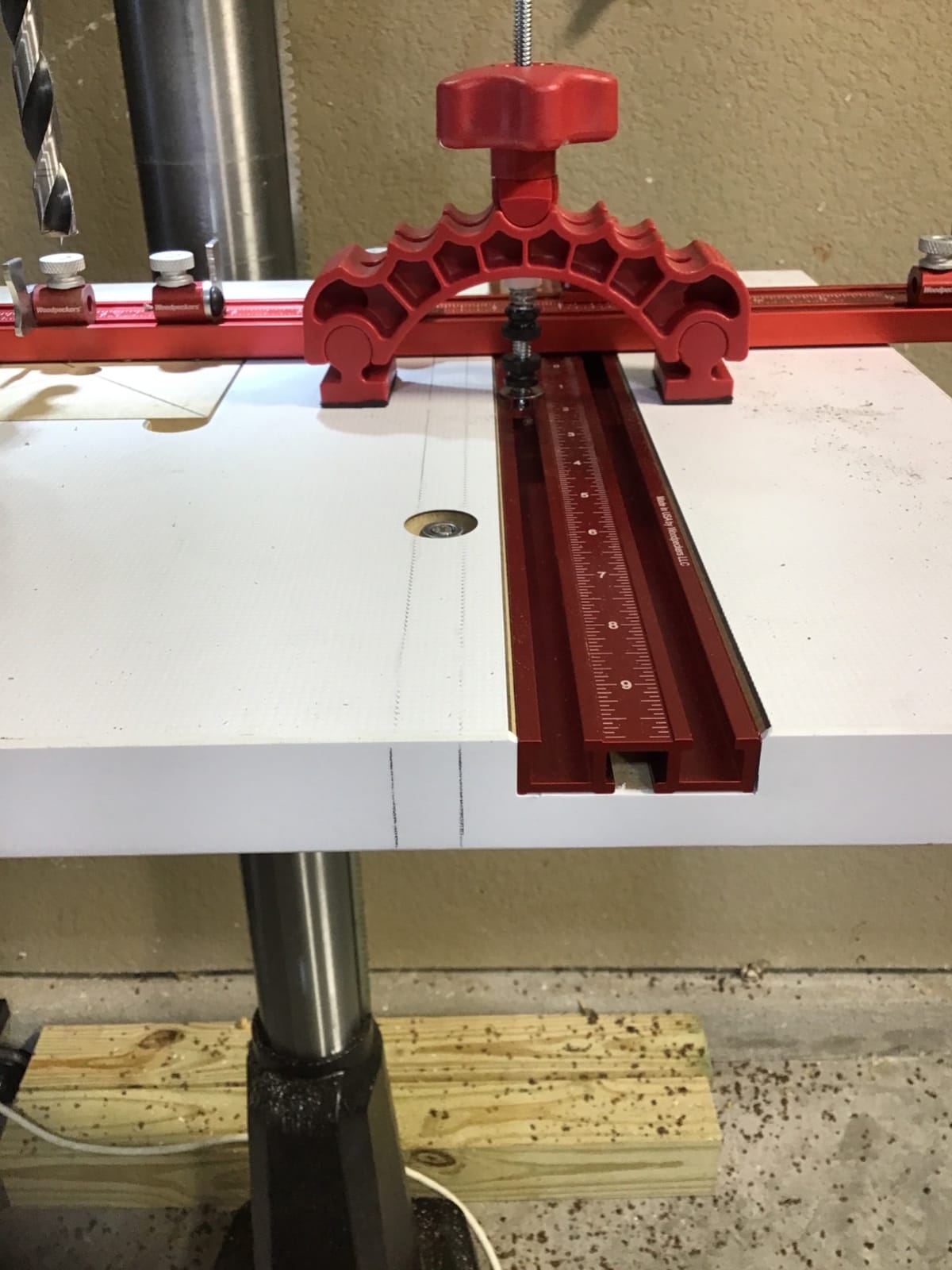
Everything in this package is one specification better than the version below it, and the fence is the headline. Thirty-six inches of fence with laser-engraved scales, zeroed in the middle so you can measure symmetrically from the center. That center zero is genuinely useful: you can lay out a mirror-image pattern from the middle of the table without reversing direction partway through.
The work surface is sixteen by twenty-three inches in Micro-Dot laminate over a stable MDF core, laminated on both sides. That surface is noticeably slicker than raw melamine, so workpieces slide against the fence instead of grabbing, and it will not mark the wood you place on it.
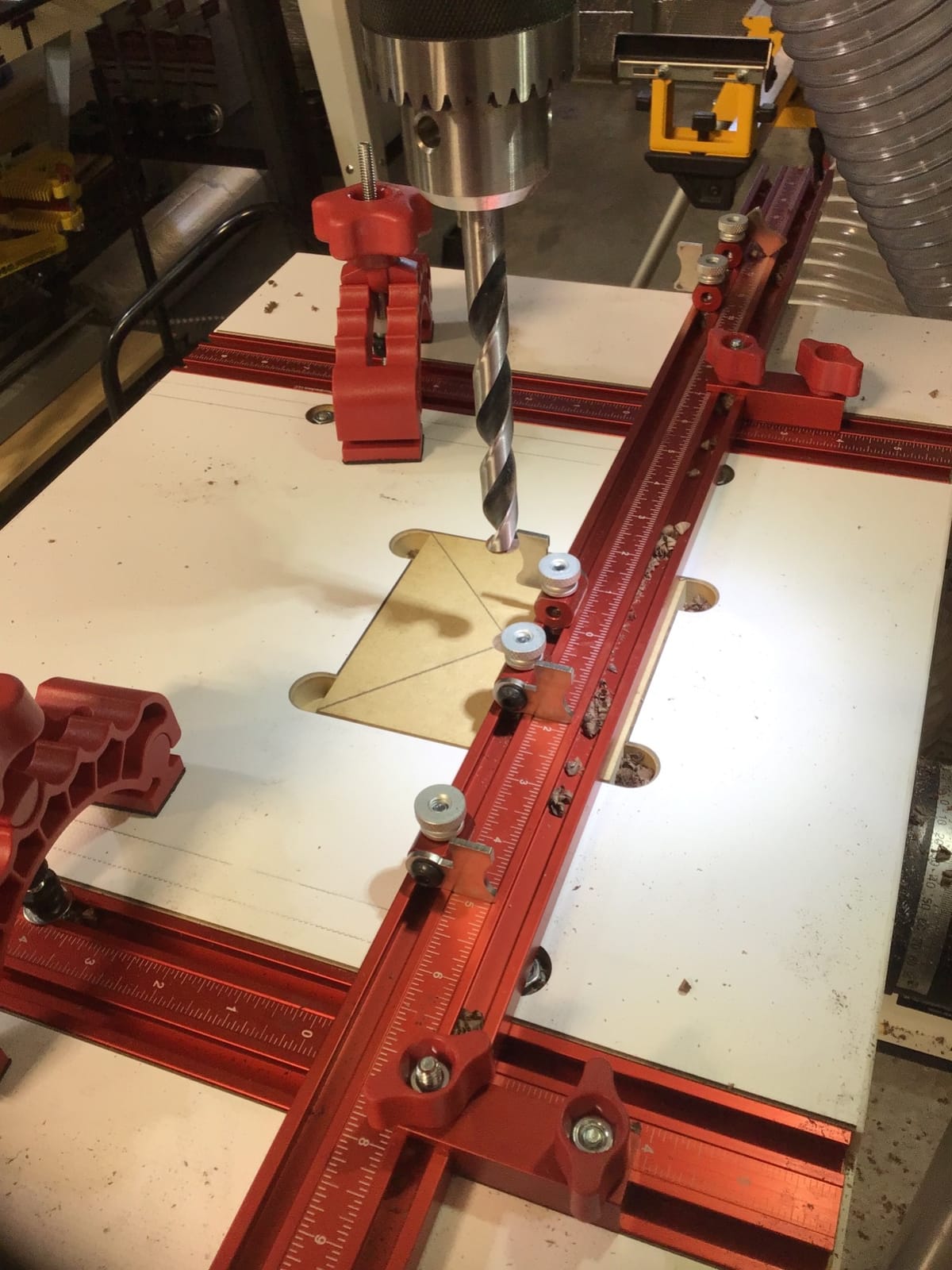
The kit contents are where the money goes: six stainless steel flip stops, two knuckle clamps, a tear-out-eliminating filler block and a dual-purpose anodized T-track. The filler block plugs the gap so you can drill at the center of the table without the bit catching the insert edge.
Owners consistently describe fit and finish as above the entry-level tables, particularly the way the fence slides on the anodized track. Every review on the listing is a five star, which is a small sample but a clean one.
Who this table suits
It suits the woodworker who has outgrown a kit and wants one purchase that covers every upgrade at once. Flip stops, clamps, filler block, fence and table all come from the same manufacturer and are dimensioned for each other.
It also suits anyone drilling near the center of the table. The center zero and the filler block solve a problem that most tables leave you to work around.
Who should skip it
Skip it on budget grounds if a bare table would do the job. This is the most expensive table in the group, and if you already own a fence and clamps, you are paying twice for hardware you have.
Also weigh the evidence carefully. The perfect rating rests on eleven reviews, so it tells you the fit and finish are right, not that the fence will still slide smoothly in fifteen years. Owners of the older tables in this family report they still work well, which is encouraging but not the same thing.
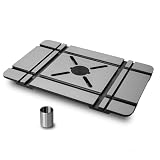
7. BMTURNING Cast Iron Drill Press Table – Best for Vibration Control
BMTURNING Deluxe Cast Iron Woodworker’s Drill Press Table, compatible with Nova, Grizzly, Jet Drill press.
Cast iron top, 19.7 x 13 in, fits 6.5 in swing presses
Pros
- The only cast iron table in the group
- Flat underside across broad areas for clamping
- Slotted X accepts crossslide and tilting vices
- Crisscrossed T-tracks for 1/4 and 5/16 in hardware
Cons
- Much smaller surface than the MDF tables
- Very few owner reviews available
- Needs 6.5 in swing and a 46 mm or 52 mm column
Every other table here is wood composite or plastic. This one is cast iron, and for anyone chasing precision boring that difference is not subtle. Cast iron does not flex, does not absorb oil, and will outlast every other surface on this list if it is cared for.
The overall casting measures about 19.7 by 13 inches, which is smaller than the MDF tables. The fit requirement is specific: the press needs a minimum 6.5 inch swing and a 46 mm column, and a steel adaptor sleeve is included for 52 mm columns. It is listed as compatible with Nova, Grizzly and Jet presses.
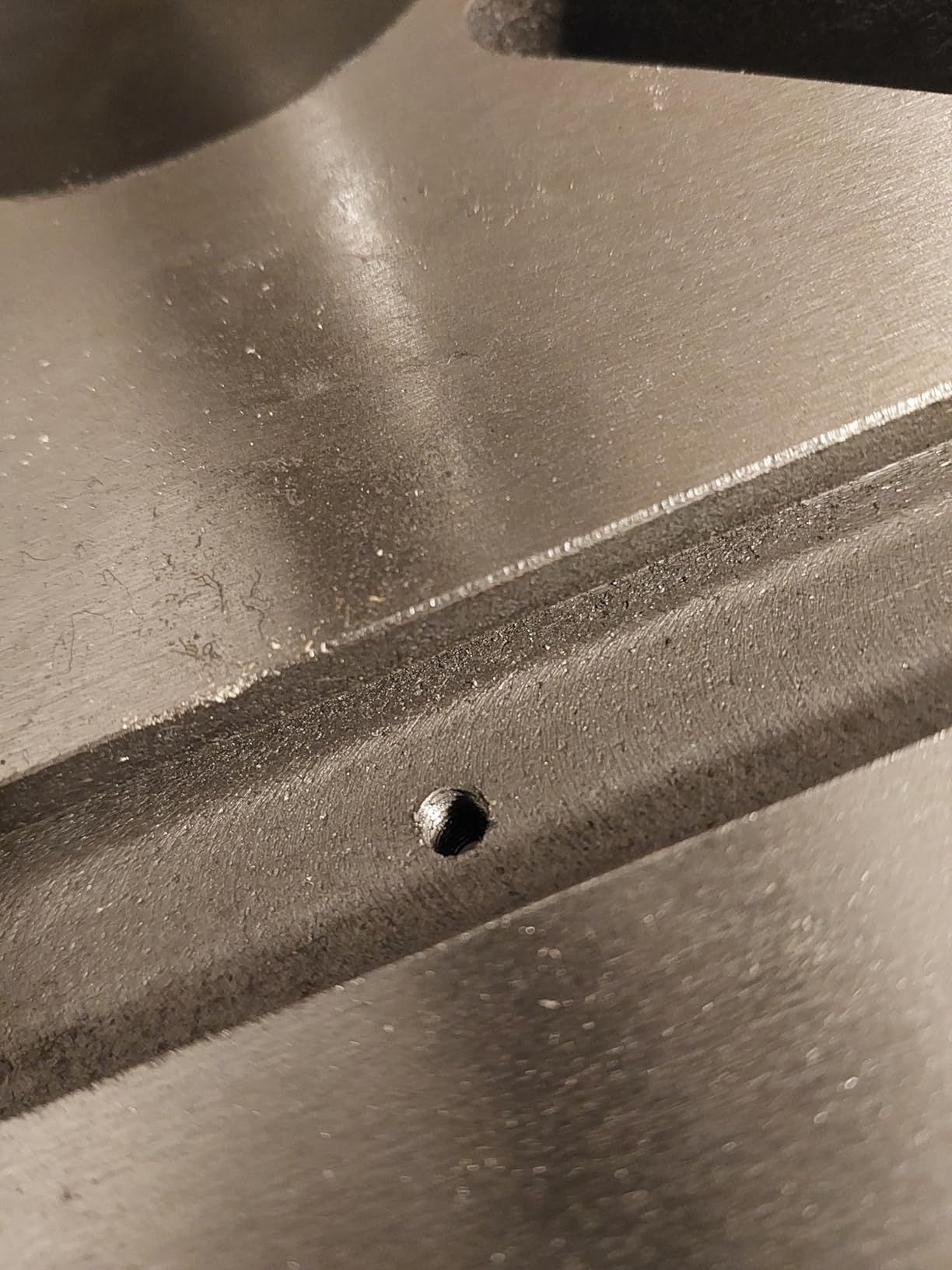
The underside is flat across broad areas, which means benchdogs and flat workholding sit properly. Crisscrossed T-tracks accept a quarter inch and five-sixteenths inch hardware along with Bow and Kreg style clamps, and a slotted X through the center takes traditional crossslide or tilting vices.
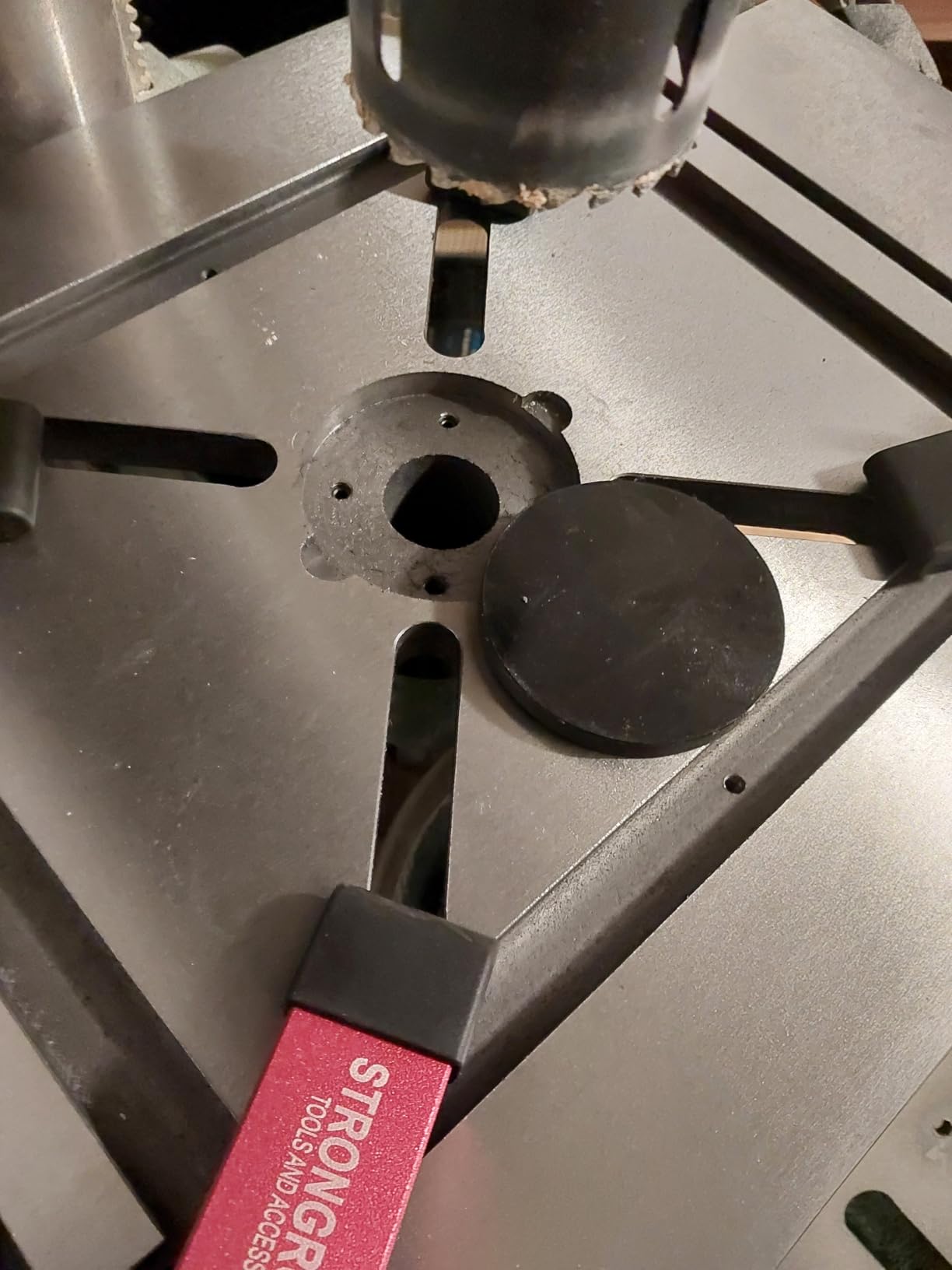
Maximum rotational speed is rated at 2300 rpm, and the central removable insert is an 8 mm nylon piece held by four levelling grub screws. Replace it when the bit eats it rather than replacing the table.
Both available reviews are five star and report straightforward fit with the supplied adaptor sleeve, with owners noting the table suits larger timber better than typical metalworking tables.
Who this table suits
It suits metalworkers who also do wood and want a surface that takes abuse without caring. The flat underside and crisscrossed tracks make it a natural fit for crossslide and tilting vice work, which the MDF tables cannot support.
It also suits anyone who bores into thick hardwood repeatedly and is tired of watching holes go oval. Nothing here flexes under side pressure.
Who should skip it
Skip it if you work on large panels. Thirteen inches of depth is genuinely small next to the fifteen and sixteen inch options here, and you will be supporting a lot of workpiece yourself.
Check your press before ordering. The swing and column requirements rule out many small benchtop machines, and the two available reviews are far too few to tell you how the casting wears over time. Buy it for what it is, a rigid accessory surface, not a full replacement table.
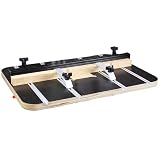
8. Infinity Tools DPT-100 Drill Press Table Package – Best for Jig Work
Infinity Tools Drill Press Table Package with Standard Fence (DPT-100) – 16?×24? Plycore Top, T-Tracks, Replaceable Insert & 24? Extruded Aluminum Fence
16 x 24 in plycore top with four 1/4-20 T-tracks
Pros
- Four front-to-back T-tracks give more jig options than most
- A 24 in dual-face extruded aluminum fence
- Replaceable half inch spoil insert protects the surface
- Toggle clamps allow quick removal
Cons
- Only 2 reviews on the listing
- Plycore top is lighter and less rigid than cast iron
Four tracks is the headline number, and it is well ahead of everything else here. Four front-to-back 1/4-20 T-tracks mean you can bolt jigs, indexing plates and fixtures in more positions than on a two-track table without improvising a clamping scheme.
The top is sixteen by twenty-four inches of plycore, which is a stable, glue-free surface that holds flatness well. The fence is a one by two by twenty-four inch extruded aluminum extrusion with T-slots in it, molded end caps, and a design that works from either face.
The half inch spoil insert is replaceable, so a burned insert is a small part rather than a new table. Toggle clamps and hardware are included for mounting, and the whole package removes cleanly so you can switch the press back to metalworking.
Who this table suits
It suits anyone building jigs for repetitive drilling, which is the most common reason experienced woodworkers want four tracks. If your next project involves a drilling template, a dowel point jig or a row of identical holes, this is the table that makes it easy.
It also suits shops that share a press between wood and metal, because the toggle clamps let you remove the whole table in a few minutes.
Who should skip it
Skip it if you care more about damping than about clamping options. Plycore is lighter and less rigid than cast iron, so on aggressive boring this is not the table we would reach for.
Treat the rating as provisional. Both available reviews are five star and mention solid build and easy installation, but two reviews cannot tell you how the tracks wear or how the fence holds alignment over time. If you want a proven fence, the Fulton or Woodpeckers options have far deeper feedback.
9. Fulton 15 x 24 in Premium Drill Press Table – Best Bare Table
Premium Drill Press Table 1-3/8 inches Thick 15″ Deep x 24″ Wide
1-3/8 in thick laminated top sold without fence or clamps
Pros
- 1-3/8 in thick dense body with flatness held to 1/100 in
- Dual-sided lamination resists warping
- Spindle sanding cutout for drum sanders up to 3 in
- Universal mount fits slotted and non-slotted presses
Cons
- Sells as a bare table with no fence or hold-downs
- Only 1 review on the listing
This is the same heavy platform as the Fulton table higher up, sold without the hardware. That makes it the right choice if you already own a fence and clamps that you like, and the wrong choice for anyone starting from nothing.
The flatness specification is the number to notice: variation held to one one-hundredth of an inch across the surface. That is a tighter tolerance than most wood composite tables state, and it is what keeps a drilled hole from wandering as the bit breaks through.
The dual-sided lamination is the reason that tolerance holds over time, and the integrated spindle sanding cutout is the same five and five-sixteenths inch opening with a three and three-quarters inch recess found on the fuller kit. It accepts drum sanders up to three inches.
Who this table suits
It suits woodworkers who already own a good fence. If you have a crossslide, a heavy aluminum fence or a set of clamps from another system, this table gives you a rigid, flat platform without paying for duplicates.
It also suits anyone adding spindle sanding later. The cutout is the same one on the fuller Fulton kit, so you are buying the same platform at a lower commitment.
Who should skip it
Skip it if you do not own clamping hardware. The table alone does nothing for repeat accuracy, and a flat surface you cannot hold a workpiece against is exactly the problem you were trying to solve.
The single available review notes the mounting knobs would work better with a nut on the end or a hole for a screwdriver, which is a small but real installation annoyance. With one review on the listing, judge this table on its published specs rather than its rating.
10. VEVOR 23.63 x 11.73 in Drill Press Table – Best Starter Table
VEVOR Drill Press Table, 23.63 x 11.73 in, Worktable with an Adjustable Fence and Stop Block, Highly Compatible T-Slots, MDF Tabletop, Built-In Scale, Support Multiple Clamps Vises, for Drill Presses
23.63 x 11.73 in MDF top with T-slot rail and scale markings
Pros
- Lowest cost table in the group by a wide margin
- Surface holds a wide range of workpieces
- T-slot rail accepts multiple clamps and vises
- Built-in scale plus fence and stop block aid repeat work
Cons
- Lowest average rating here at 4.0 with a 10 percent one-star share
- Weakest five-star share in the group
- MDF top is the least rigid surface among these tables
This is the entry point. The surface measures 23.63 by 11.73 inches, which is a long, narrow work area, and the T-slot rail along the front accepts clamps or vises. An adjustable fence and stop block carry scale markings for positioning and depth control.
The assembly kit includes a base plate, side panel, guard panel, foot assemblies and mounting hardware, so you are not hunting for screws after opening the box. The design is stable enough for light work and adds almost nothing to the cost of getting a usable press surface.
What you give up is rigidity. This is the least rigid surface in the group, and the rating distribution reflects it. Owners like the size and the price, but a meaningful share of reviews land in the middle rather than at the top, with finish and rigidity of the MDF top as the recurring complaint.
Who this table suits
It suits a first press, a student, or anyone who wants to try a larger table before investing in a serious system. For light-duty drilling in softwood and small parts, the fence and stop block make it genuinely useful.
It also suits anyone who mostly clamps and never uses a fence, since the T-slot rail is the part that matters and it is present.
Who should skip it
Skip it if you drill in hardwood or work with large-diameter bits. A thin MDF top that flexes under side pressure is precisely the wobble problem people try to solve by buying a table, so this one does not solve it.
Skip it if you plan to add a heavy fence later. Plan for a thicker platform instead. If the press is a valuable one you expect to keep for years, spend the difference once on a table that will still be flat in a decade.
Buying Guide: How to Choose a Drill Press Table
Match the table size to your press swing and quill travel
The question forums ask most is whether a twenty-four inch table fits a twelve inch benchtop press. It usually does physically, because these tables bolt to the press table or the head, but overhang becomes the problem. A table that sticks out well past your press base is fine for a fence and clamp, and bad for a long board, because the far end sags.
Two rules of thumb keep you safe. Match depth to the press: a twelve inch benchtop press wants roughly a twelve to fourteen inch table depth, while a fourteen inch or larger floor model can carry a fifteen to sixteen inch depth. And check quill travel with the new table installed, because thicker tables eat the gap under the chuck and the Fulton at one and three-eighths inches is the clearest example.
Ask the manufacturer what the press is rated for in swing, and check it against the table. The cast iron option in this roundup requires a minimum 6.5 inch swing and a specific column diameter, and the WoodRiver table is intended for presses of 14 inches and larger. These are the two constraints most likely to end an otherwise good purchase.
Choose the material for the work you do
MDF and plycore are the workhorses. They are stable, flat, easy to machine and forgiving of oil and glue, but they flex if the bit is heavy or the workpiece is long. Dual-sided lamination, as used on both Fulton tables, is the single best defense against bowing over years.
Laminated surfaces such as the Micro-Dot top change how work behaves. They are slicker, so workpieces slide against the fence rather than grabbing, and they will not mark the wood you place on them. Cast iron is the opposite trade: rigid and long-lived, but smaller, heavier and unforgiving of drops. Only one table in this roundup is cast iron, and the tradeoff shows in its footprint.
Plastic tables are fine for light duty and cheap projects, but they do not take a heavy fence or serious boring. If your drilling is occasional and mostly small parts, plastic is enough. If it is weekly, buy composite or cast iron.
Fence, T-tracks and hold-downs decide everything
A fence is for repeatability, not for holding work. Owners on the woodworking forums are blunt about this: many clamp instead of using the fence, and a table designed only around a fence can leave you holding a spinning part. Judge the holding system first.
Two front-to-back T-tracks are the common baseline. Four, as on the Infinity package, open up jig and fixture work. Then look at whether clamps are included, because a table that includes hold-downs saves you from buying track clamps that may not fit.
Fence quality is a second question. A fence with an engraved scale reads faster and holds alignment better than one relying on a stick ruler slid along the top. The 36 inch fence with a center zero is the most useful design here, because you can measure symmetric patterns from the middle.
Get a replaceable center insert
The insert, sometimes called the throat plate, is the block the bit passes through. When it is fixed, a single burned hole means a ruined table, and experienced woodworkers treat a replaceable insert as close to mandatory. Six of the ten tables here include one, and they are the six we would steer you toward.
Prefer an off-center round insert over a square one. A square insert limits you to four drilling positions, which becomes annoying the moment you need a hole somewhere other than the four quadrants. A round insert can be rotated to any clock position, and off-center placement keeps chips from piling directly under the bit.
Hook the table up to a shop vac for chip collection
Chip collection is the most requested upgrade in woodworking forums, and it is the one most roundups ignore. The principle is simple: the hole in the table needs to be big enough that a vacuum hose passes through it, so the bit breaks into open air and debris falls into the hose rather than onto your top and into the press column.
A two and three-eighths inch diameter hole is a commonly cited size, because it accepts a standard hose while still supporting small workpieces. If your table’s insert is smaller, the cheapest fix is to remove the insert and drill the opening slightly larger, or to fit a board with a purpose-cut hole around the column.
A hollow fence can double as a chip duct if it is designed that way, which is why fence design and dust collection are related decisions rather than separate ones. Keep the run from the table opening to the vacuum short, and a dry drum or a small shop vac will handle the volume from normal woodworking bits.
Fix table wobble and drill runout
Wobbling tables are the single most common complaint in drill press discussions, and it is usually a mounting problem rather than a table problem. Work through these steps in order.
First, tighten the mounting hardware with the press tilted so you can get real torque on the bolts, then check again with the press upright. Loose hardware is the most common cause and takes two minutes to rule out. Second, check that the table is actually sitting flat on its mounting surface, because a table shimmed at one corner will rock no matter how tight the bolts are.
Third, add a support where the overhang is. A simple wooden brace or a length of hardwood clamped under the front edge stiffens a thin table dramatically. Fourth, look at your quill bearings instead. If a table feels like it is shifting as the bit lowers, the problem is often quill play in the press rather than the table, and that needs bearing adjustment rather than a new top.
Finally, accept that a thin MDF top will always be a little more flexible than a thick or cast iron one. If hole accuracy matters and wobble persists, thickness is the fix. Buying a heavier table solves a problem no amount of tightening ever will.
Build your own table or buy one?
Building is very reasonable if you want a specific size, a custom dust collection layout or vertical drilling provisions for long timber. The common approach is two layers of three-quarter inch plywood with a thick plastic sheet on top for smooth sliding and durability. The design checklist that comes up most often on Sawmill Creek is worth reading before you cut anything.
That checklist asks for long fence slots and rails that extend far enough back, a high and a low fence with stops, multiple wide and narrow tracks for hold-downs, a round off-center replaceable insert, provisions for drilling long timber vertically, a storage shelf, and chip collection built into the design. If your build plan misses three or more of those, buying will likely serve you better.
Buying wins on time, on fit, and on the fence and hardware ecosystem that comes with it. A complete kit gives you matched parts that were dimensioned for each other, which is the hard part of a homemade table. If your existing press top is already flat and rigid and you only need clamps and T-tracks, a bare table is the efficient middle ground.
Frequently Asked Questions
What size drill press table do I need for woodworking?
Match the table depth to your press. A 12 inch benchtop press works best with a table roughly 12 to 14 inches deep, while a 14 inch or larger floor model can carry 15 to 16 inches of depth. Also check quill travel with the table fitted, because thick tables reduce the gap under the chuck.
How do I stop a drill press table from wobbling?
Work in order: tighten the mounting hardware with the press tilted for real torque, confirm the table sits flat with no shimmed corner, add a wooden brace under the front overhang, and check quill bearings for play. If wobble remains, the fix is a thicker or cast iron table rather than more tightening.
Do I need a replaceable center insert on a drill press table?
Yes, most experienced woodworkers treat one as close to mandatory. A replaceable insert means a burned hole costs you a small part instead of the whole table. Prefer a round off-center insert over a square one, since a square insert limits drilling to four positions.
Can a drill press be used for woodworking?
Yes, once you replace the small cast iron top that came with the press. That top gives you roughly a nine inch square of surface, which will not support a board. With a larger table you get T-track clamping, an adjustable fence, a stop block and a replaceable insert for dowels, mortises and shelf pin holes.
Is MDF or cast iron better for a drill press table?
MDF is stable, flat and quiet, and is the right choice for most woodworkers. Cast iron is far more rigid and will not flex under a heavy bit, but it is smaller and heavier. Choose MDF for panels and normal woodworking, and cast iron for aggressive boring or crossslide and tilting vice work.
Final Verdict: The Best Drill Press Table for Woodworkers in 2026
The POWERTEC 14 x 24 kit is the best drill press table for most woodworkers in 2026, because it is the only one here that gives you a table, a fence with a readable scale, hold-down clamps, flip stops and mounting hardware in a single purchase sized for presses of 12 inches and up. Nothing else on this list leaves you hunting for the missing piece that makes the table usable.
If your priority is accuracy under a heavy bit, the Fulton 15 x 24 wins on thickness and flatness. If you want the most complete and refined system and can spend more, the Woodpeckers package gives you the longest fence and the best hardware set. If you want a wide surface, the O’SKOOL overlay table is hard to beat, with the caveat that it stacks onto your press height.
Whichever you choose, the order of operations is the same: measure your press swing and quill travel first, mount it flat, and get a hold-down clamp on the workpiece before the bit does. If you are still choosing the press itself, start with our band saw guide for the other half of your cutting station.