
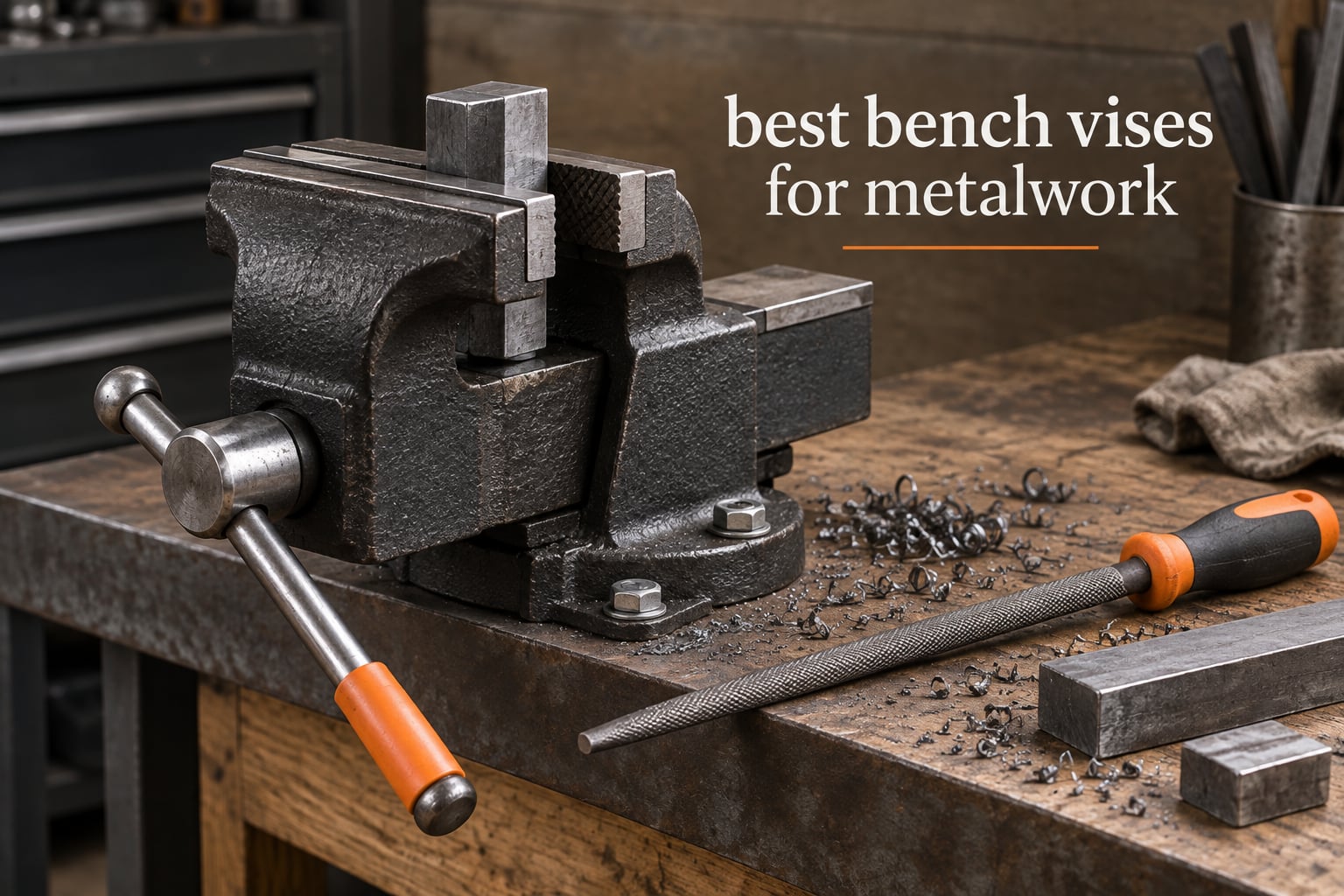
A bench vise is a heavy-duty clamp bolted to a workbench that holds metal, wood, or pipe rigidly so you can file, cut, hammer, drill, or grind the workpiece without it moving. It is the first tool most new metalworkers undersize and underspend on, and it is also the tool they notice most when it is wrong.
Choosing among the best bench vises for metalwork is harder than it looks. Jaw width is the number every roundup leads with, but on a real shop bench the decisive measurements are throat depth, jaw parallelism, and whether the screw starts moving the jaw within a quarter turn. Two vises with identical jaw width and clamping-force claims can behave nothing alike once you start filing a hot-cut bracket or bending a length of tube.
This roundup covers three shop profiles: the home garage hobbyist working weekends on one-off projects, the serious metalworker who grinds, files, and cuts material every day, and the working mechanic who clamps components under a truck. Ten vises are reviewed below, spanning light utility castings through to a 115 pound machinist-grade bench model, with jaw width, jaw opening, throat depth, material, weight, base type, and mounting covered for each. If you also need to finish what you cut, our guide to the best angle grinders for metalwork covers that half of the bench.
Last updated for 2026. Every rating and review count below is copied from the live product listing, and every specification comes from the manufacturer data on that listing.
Table of Contents
Top 3 Picks for Metalwork Right Now in 2026
The three vises below are the ones we would put on a bench first. The Forward DT08125A wins overall on the strength of its rating and review volume, the VEVOR 6 inch is the strongest value in the group, and the Wilton 11106 is the pick if a replaceable jaw insert and a lifetime warranty matter more than raw numbers.
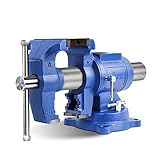
Forward DT08125A 5 Inch
- 5500 lbs clamp force
- Deep 2.6 inch throat
- Three jaw sets
- 360 degree head and swivel base

VEVOR 6 Inch Multi-Jaw
- 6 inch jaw and 5.9 inch opening
- 4496 lbs clamp force
- Magnetic soft jaws included
- 360 degree locking swivel

Wilton 11106 6 Inch
- Replaceable serrated jaw inserts
- 30000 PSI gray iron body
- 120 degree swivel with double lockdowns
- Lifetime warranty
Best Bench Vises for Metalwork (October 2026)
Read this table first. Jaw width tells you how wide a flat face you can clamp, jaw opening tells you the largest round bar or square tube that fits between the jaws, and throat depth tells you how tall a workpiece you can hang below the jaw line without the screw fouling it.
| Product | Specifications | Action |
|---|---|---|
| Forward DT08125A 5 Inch Heavy Duty Bench Vise |
|
Check Latest Price |
| VEVOR 6 Inch Ductile Iron Bench Vise |
|
Check Latest Price |
| Wilton 11106 6 Inch General Purpose Bench Vise |
|
Check Latest Price |
 Forward CR40A 4.5 Inch Heavy Duty Bench Vise Forward CR40A 4.5 Inch Heavy Duty Bench Vise |
|
Check Latest Price |
 Yost 760-DI 6 Inch Multi-Jaw Rotating Vise Yost 760-DI 6 Inch Multi-Jaw Rotating Vise |
|
Check Latest Price |
 IRWIN 4935505 5 Inch Multi-Purpose Bench Vise IRWIN 4935505 5 Inch Multi-Purpose Bench Vise |
|
Check Latest Price |
 Wilton Mechanics Pro 8100M 10 Inch Jaw Bench Vise Wilton Mechanics Pro 8100M 10 Inch Jaw Bench Vise |
|
Check Latest Price |
 PONY 5 Inch Heavy Duty Bench Vise PONY 5 Inch Heavy Duty Bench Vise |
|
Check Latest Price |
 Yost 445 4.5 Inch Combination Bench and Pipe Vise Yost 445 4.5 Inch Combination Bench and Pipe Vise |
|
Check Latest Price |
 VEVOR 6.5 Inch Bench Vise Model 9467 VEVOR 6.5 Inch Bench Vise Model 9467 |
|
Check Latest Price |
1. Forward DT08125A 5 Inch – Best Overall Bench Vise for Metalwork
Forward DT08125A 5 Inch Heavy Duty Bench Vise with 360°Swivel Base and Head
5 inch jaw
5 inch opening
2.6 inch throat
5500 lbs clamp force
33 lb ductile iron
Pros
- Highest rated and most reviewed vise in this roundup
- Rotating head plus swivel base for awkward angles
- Three jaw sets including microgroove pipe and V jaws
- Reinforced anvil for grinding cutting and tapping
Cons
- Swivel needs two lockdown bolts on a firmly mounted bench
- Jaw alignment at full close is not guaranteed perfect
The Forward DT08125A is the best bench vise for metalwork in this group for one reason above all others: it carries the highest rating and by far the highest review count of anything we looked at. Owners consistently describe the same two things, that the screw develops real force quickly, and that the rotating head makes awkward workpieces easy to position.
What separates this from a typical 5 inch multipurpose casting is the jaw package. You get replaceable microgroove top jaws, a built-in pipe jaw set covering roughly 3/5 inch to 2 1/2 inch round material, and a set of V-jaws. That is three workholding problems solved by one vise instead of three accessories sitting on a shelf.
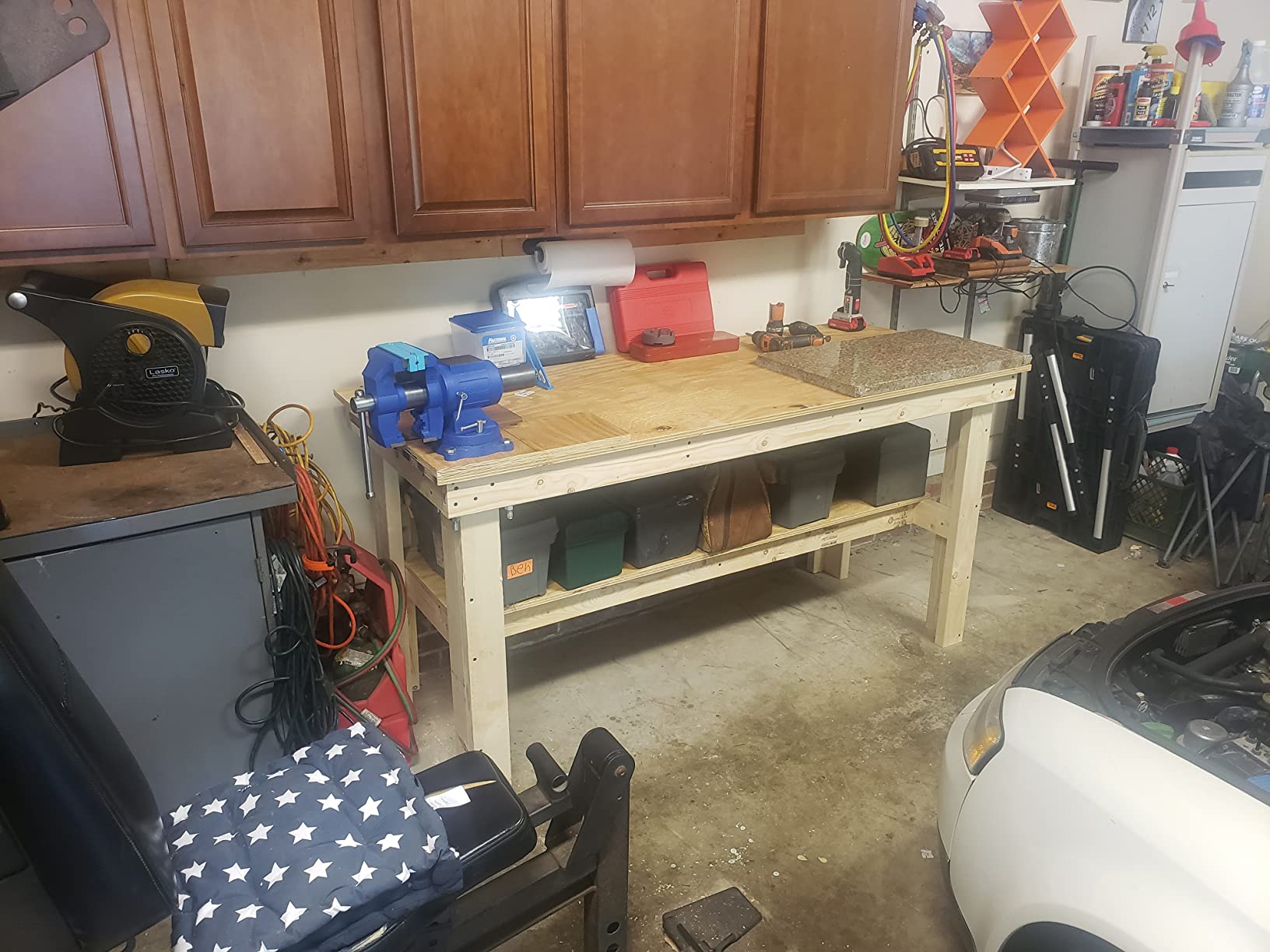
The body is ductile iron rated by the manufacturer at 60,000 PSI, and the listed clamping force is at least 5,500 pounds. Put differently, a 33 pound casting produces far more grip than you can apply by hand, which is the ratio that decides whether the vise flexes when you lean on a file.
The one caveat that shows up repeatedly is the swivel base. Owners note that the head only stays put if both lockdown bolts are torqued into a genuinely heavy bench top, not a folding table. Under load, a loosely mounted swivel base lets the whole casting creep, and the classic complaint from machinist forums is precisely that a loose base makes an otherwise good vise feel broken.
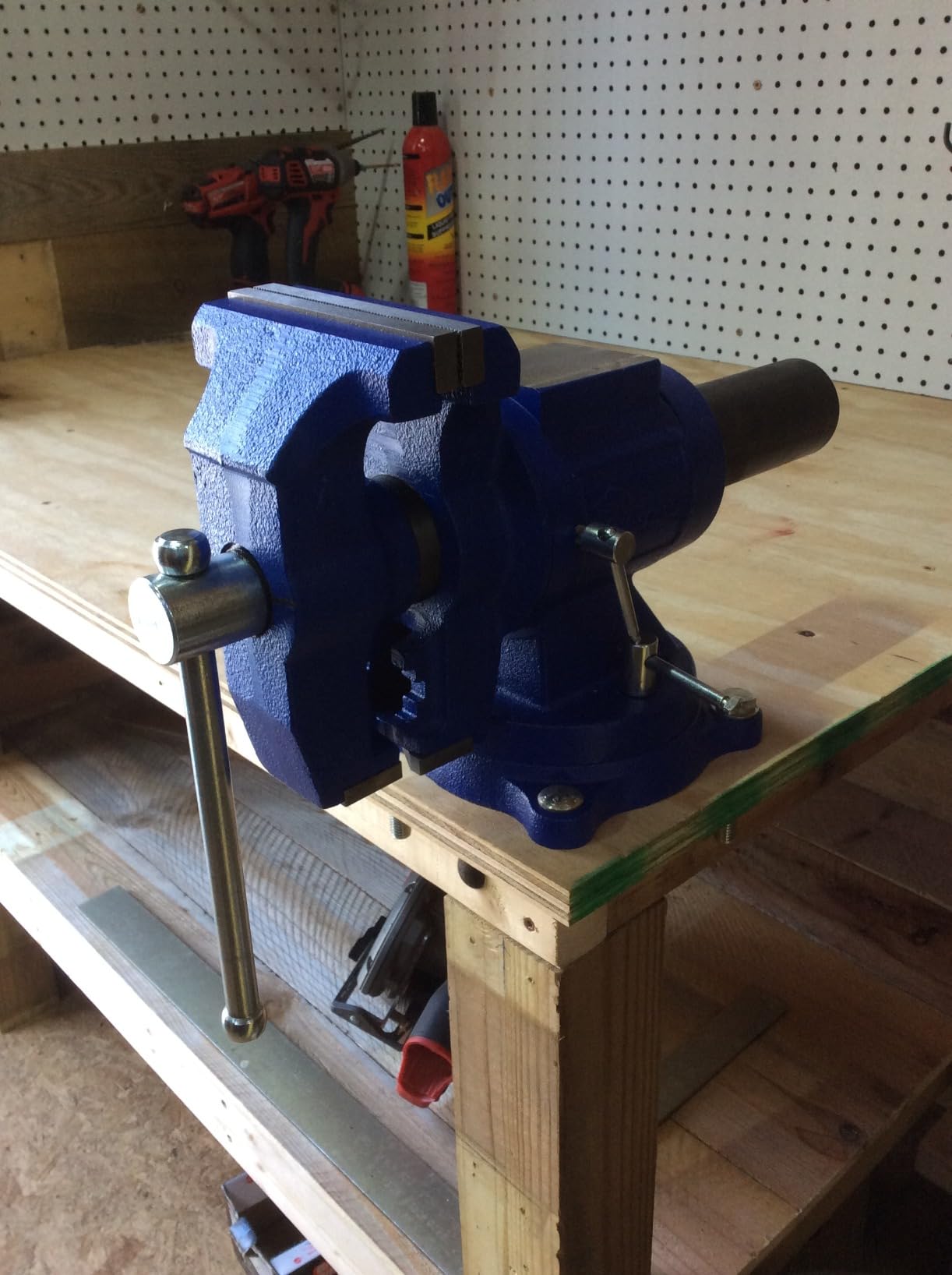
What the Forward DT08125A does well with real stock
Grinding and tapping on the anvil is the standout everyday use. Owners use the reinforced anvil surface for light chipping, scribing, and flattening work, and the 360 degree front head means you can bring a long angle or an L-bracket around to the jaw face without fighting the workpiece.
The microgroove top jaws are the feature we would point a first-time buyer toward. Microgrooves bite less aggressively than coarse serrations, so a finished face of flat bar stays readable while still refusing to slip when you push a chisel or a cold chisel against it.
Where the Forward DT08125A is the wrong buy
Its 2.6 inch throat is shallow. If you regularly hang tall plate, weld coupons, or long bar stock below the jaw line, you will hit the lead screw and the moving jaw before the workpiece is fully supported. For that profile, look at a deeper-throat model such as the Yost 760-DI.
Second, the jaw closure alignment is not guaranteed perfect on imported castings, and a minority of owners report edges that are very slightly off when the jaws meet. That is a cosmetic issue on rough work, but if you are squaring up a finished part, check the closure with a machinist square before you rely on it.
2. VEVOR 6 Inch Multi-Jaw Bench Vise – Best Value for Metalworking
VEVOR Bench Vise, 6-inch Jaw Width 5.9-inch Jaw Opening, 360-Degree Swivel Locking Base Multipurpose Vise w/Anvil, Heavy Duty Ductile Iron Workbench Vise w/Bolts & Nuts, for Drilling, Pipe Cutting
6 inch jaw
5.9 inch opening
3.5 inch throat
Up to 4496 lbs force
25 lb ductile iron
Pros
- 6 inch jaw and 3.5 inch throat in a 25 lb body
- Butter smooth lead screw and 360 degree rotation
- Magnetic soft jaw pads included for finished work
- Two base locking screws resist rotation loosening
Cons
- Supplied bolts are too short for most bench tops
- Jaw faces sit slightly off at full close though still parallel
The VEVOR 6 inch is the value pick of this roundup. At 6 inch jaw width, 5.9 inch of opening, and 3.5 inch of throat in a 25 pound ductile iron body, you get a useful amount of room per pound of vise, which is the number that matters when you are bolting it to an ordinary bench.
Owners single out two things above the rest. The lead screw is described as smooth to the point of being pleasant to turn, and the magnetic soft jaw pads that come in the box save you from buying a separate set the first time you clamp a finished or painted part.
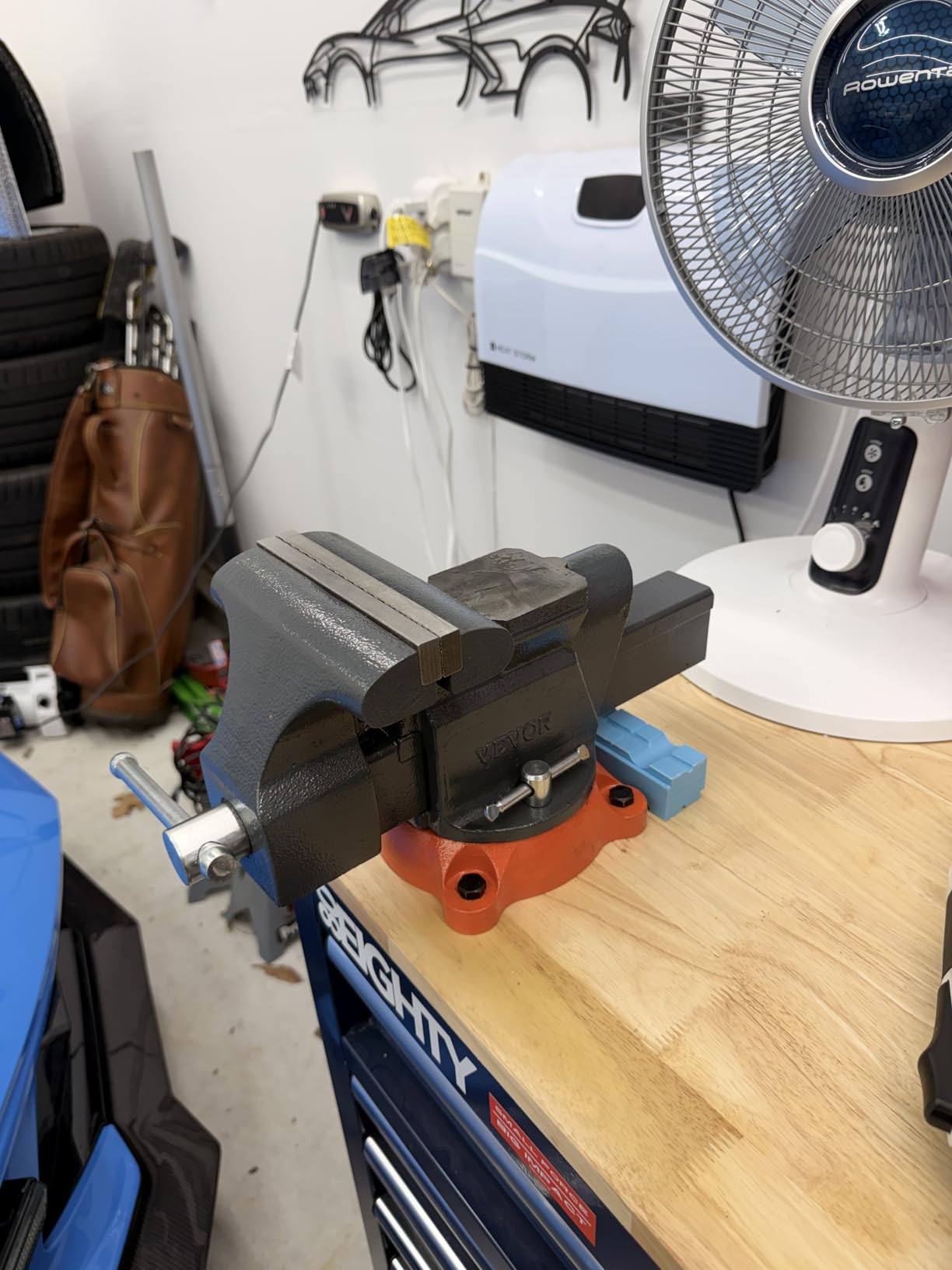
Clamping force is listed at up to 4,496 pounds, and the powder-coated finish has held up well in reviews. The 360 degree base has its own locking screws, and that detail matters more than it sounds, because a swivel that loosens under load is a common complaint about inexpensive vises, and the lock screws are what stop it.
The multi-jaw design covers flat, round, and V-shaped work, and the serrated carbon steel jaw plates are replaceable. For fencing work, bike repairs, or general shop grinding, that combination covers most of what a hobbyist or a working mechanic reaches for on a weekend.
Why the throat depth is the reason to buy it
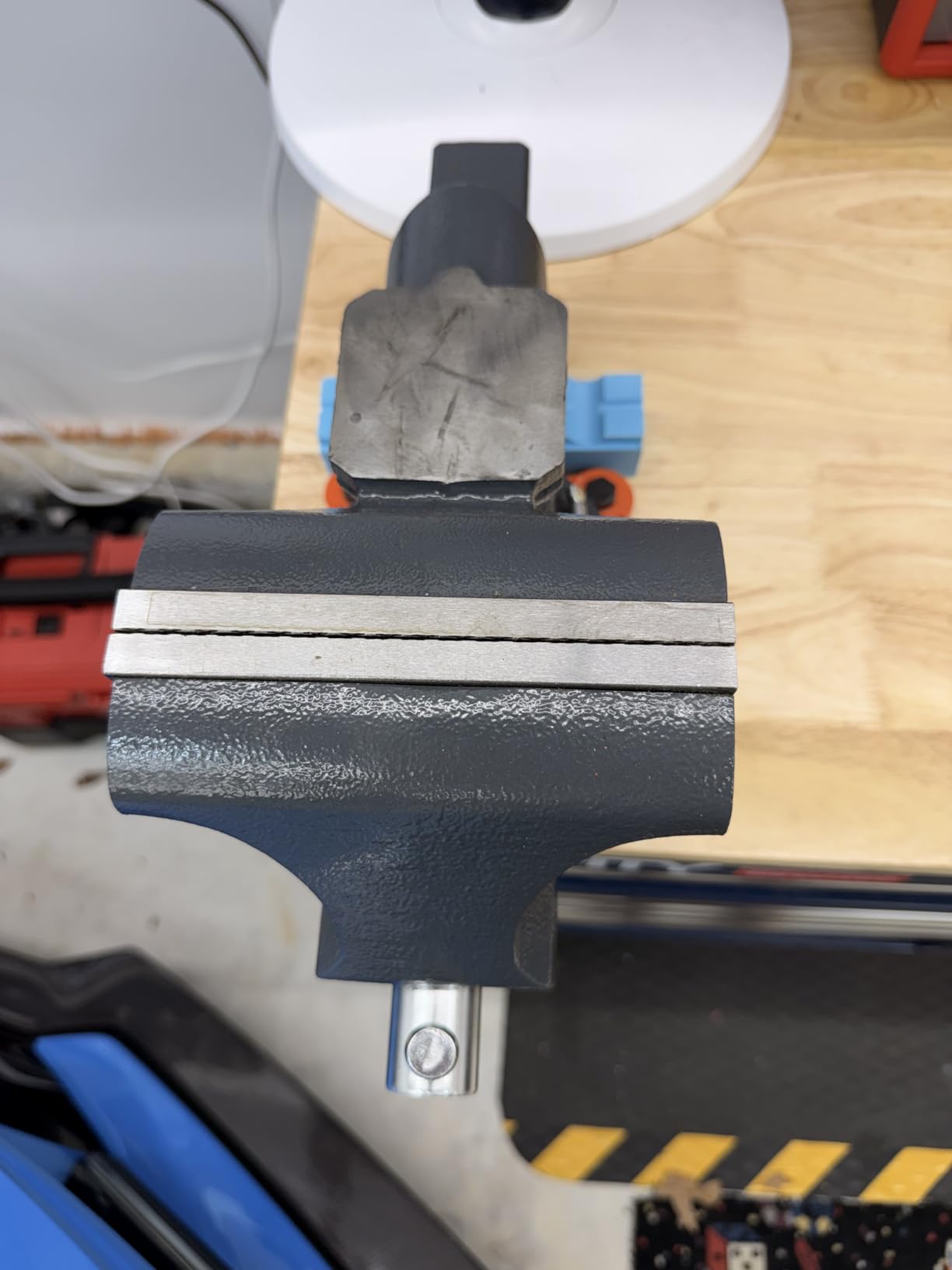
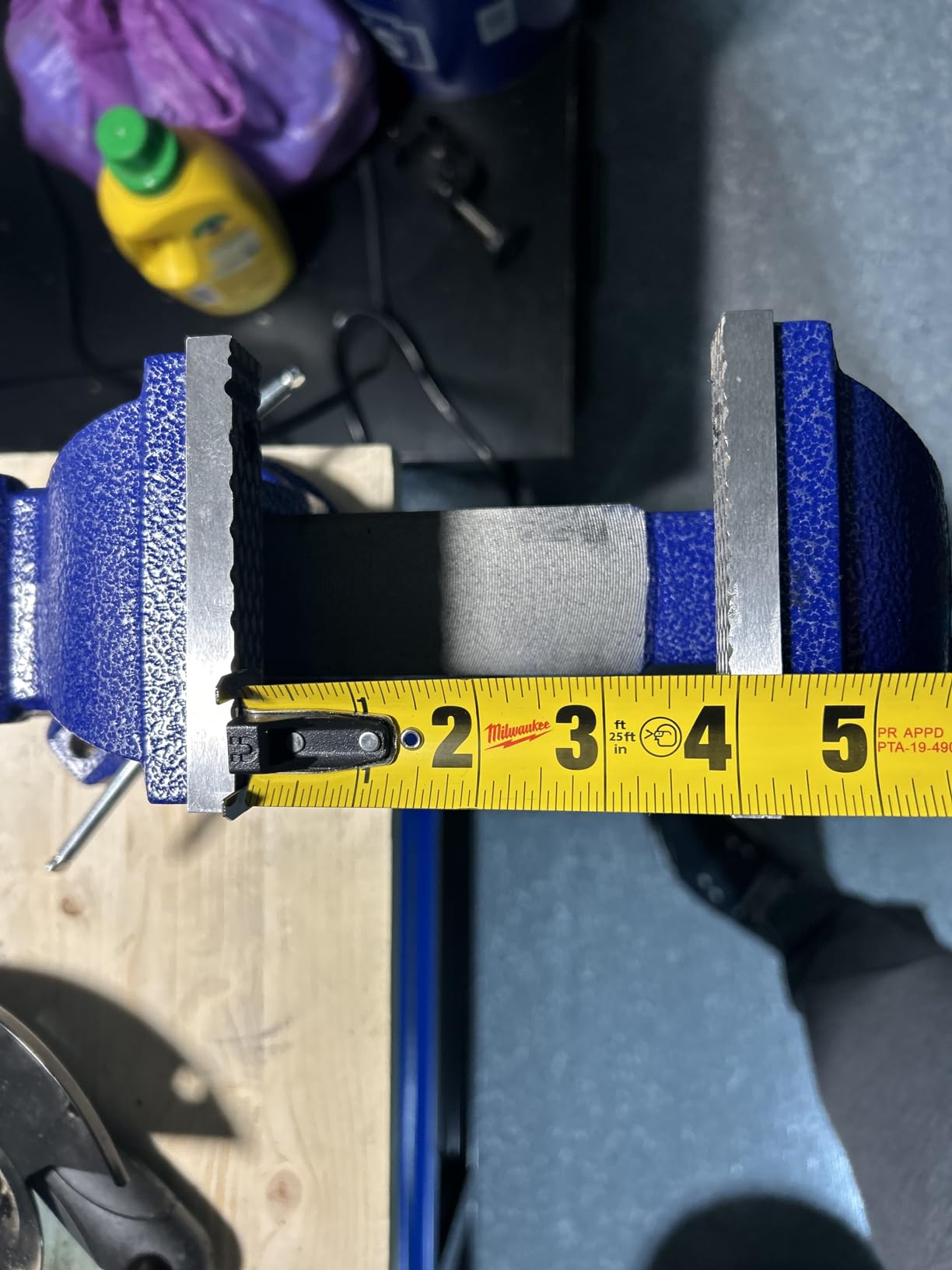
Throat depth is where it wins. A 3.5 inch throat is enough to hang a length of angle iron or a long flat bar down into the jaws without the screw fouling it, and that is the dimension that decides whether you can do a job at all rather than whether it looks tidy.
The magnetic soft jaws are the quiet bonus. Grinders and cutters on a bench like ours always end up clamping a part that is already finished, and aluminium or brass work in particular benefits from a soft face that will not chew the material.
What to watch before you mount it
Buy your own bolts. Owners repeatedly report that the supplied fasteners are too short for typical bench thickness and come without locking washers, which means a bolted-down vise that can still walk under a heavy sideways push. Use graded 3/8 inch bolts and lock washers, and bolt into a solid top.
Second, check jaw closure before your first precision job. Reviewers describe the faces as parallel but very slightly off at full close. For any setup where the two faces must meet exactly, back the handle off a quarter turn before you clamp and measure the gap with feeler gauges.
3. Wilton 11106 6 Inch General Purpose Bench Vise – Replaceable Inserts and a Lifetime Warranty
Wilton General Purpose Bench Vise, 6″ Jaw Width, 5″ Max Jaw Opening, 3″ Throat (11106)
6 inch jaw
5 inch opening
3 inch throat
30000 PSI gray iron
38 lb
Pros
- Replaceable hardened steel machine-serrated jaw inserts
- 38 lb casting resists flex under load
- Large anvil surface for striking and shaping
- 120 degree swivel base with double lockdowns
Cons
- Gray cast iron is less tough than ductile iron at the same size
- Swivel range of 120 degrees is narrower than rotating models
The Wilton 11106 is the best bench vise for metalworking if your priority is serviceable parts and a warranty rather than the highest numbers on a spec sheet. The hardened steel machine-serrated jaw inserts are replaceable, which means the wear item on this vise is a cheap consumable rather than a reason to buy a new casting.
It carries a lifetime warranty against manufacturing defects, and that reassurance comes up often in reviews. Practical Machinist threads on general-purpose bench vises are thick with owners who keep Wiltons for decades, and the replaceable insert design is part of why a vise like this ages well.
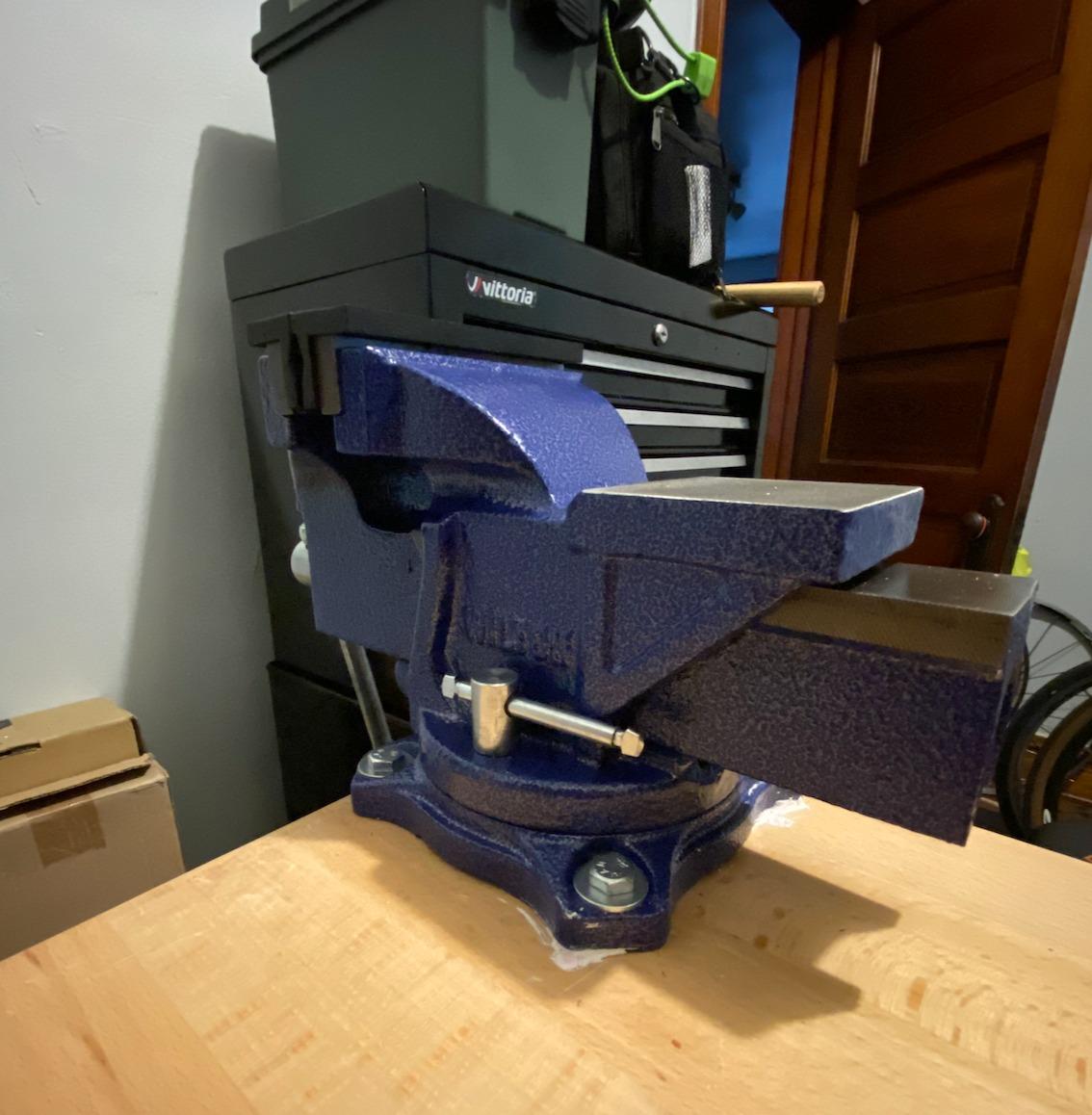
The body is 30,000 PSI gray cast iron at 38 pounds, and the swivel base rotates 120 degrees with double lockdowns. That range is less than the 360 degree rotating vises here, but 120 degrees covers the practical angles you need for grinding and cutting without giving up a chunk of bench footprint.
There is a large anvil work surface for striking and shaping, and the 6 inch jaw width with 5 inch of opening suits most flat, round, and square work up to a few inches across. In a home shop or a mechanic bay, that is a well-balanced package.
Who should buy the Wilton 11106
Buy it if you plan to keep this vise for a long time and you will wear the jaw inserts out. Swapping hardened serrated inserts is trivial on this design, and the wear on the screw and slide is what usually ends a cheap vise, not the jaws.
It is also a sensible choice for a workbench that gets used by several people. The double lockdown swivel is predictable, and 38 pounds of casting is not going to get nudged around by someone leaning on it.
Where the trade-offs show up
Gray cast iron at 30,000 PSI is more brittle than the ductile iron used in the Forward and Yost models here. That matters if you habitually clamp onto hardened or hardened-looking work, or if you shock the vise with a heavy hammer blow on a cold, hard workpiece. Owners generally treat it as a good general-purpose vise, not a machinist-grade one.
Second, the 120 degree swivel is a real limitation compared with a rotating head. If your work regularly involves holding a tall part at an angle, you will spend more time repositioning than you would with a full swivel design.
4. Forward CR40A 4.5 Inch Bench Vise – Most Versatile for a First Shop
Forward CR40A 4.5 Inch Bench Vise Heavy Duty with Anvil and 210°Swivel Base
4.5 inch jaw
5 inch opening
2.6 inch throat
6600 lbs clamp force
Ductile iron
Pros
- 6600 lbs of clamp force in a compact body
- 60000 PSI ductile iron rather than grey iron
- Replaceable flat slot jaws plus built-in pipe jaws
- Large reinforced anvil for grinding and tapping
Cons
- 210 degree swivel is not a full rotating head
- Jaw sets cover flat and pipe only with no V jaws
The Forward CR40A is the budget pick, and it is the one we would hand to someone building a first metalworking shop. A 4.5 inch jaw, 5 inch opening, and 6,600 pounds of listed clamping force in a compact ductile iron casting is a genuinely capable package for a starter bench.
The clamp force figure deserves attention because it is higher than that of several heavier vises in this roundup. Ductile iron at 60,000 PSI resists shock loading better than grey cast iron, which matters in a shop where someone occasionally leans on a chisel with their whole body.
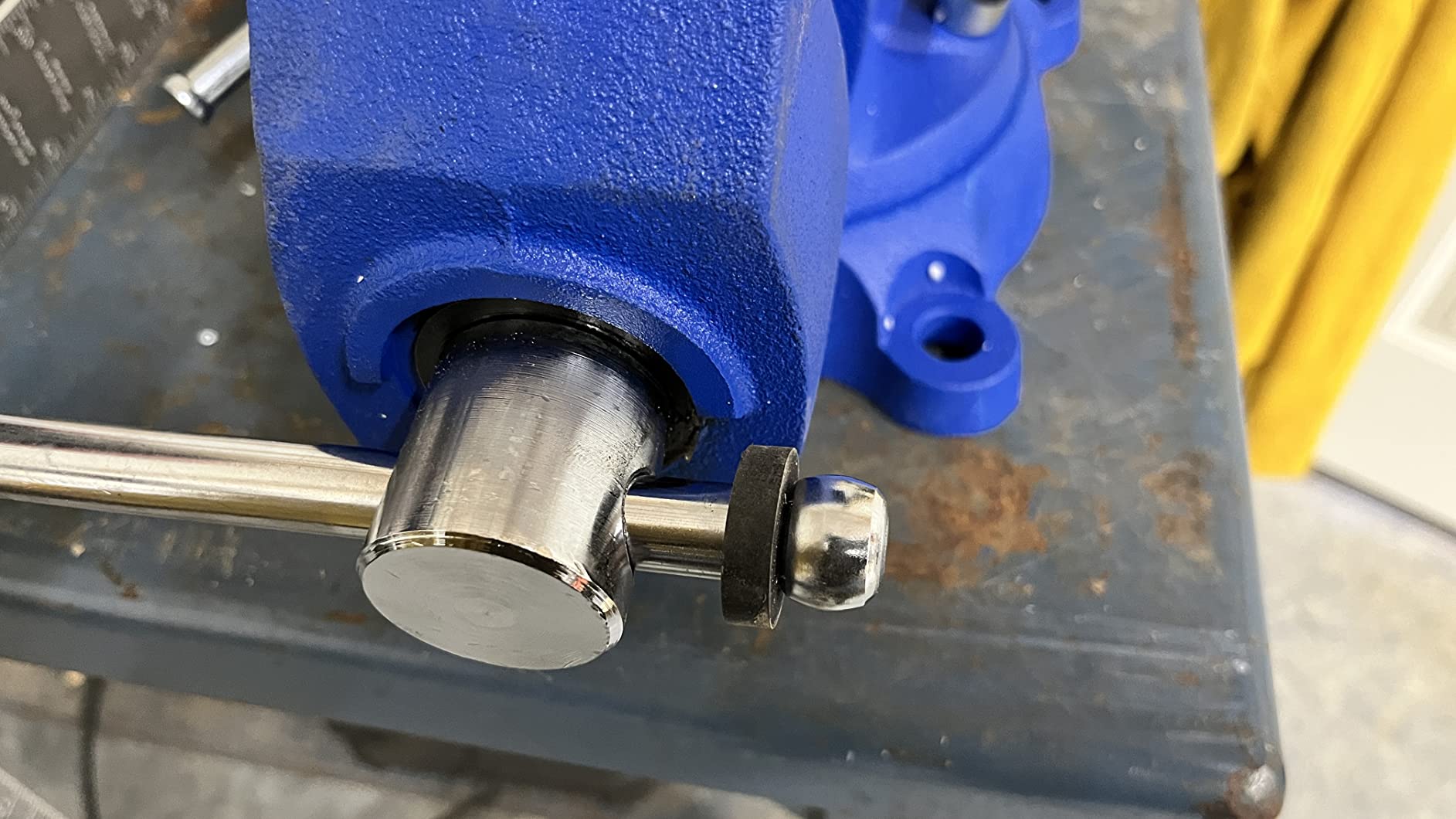
Owners describe it as well machined and heavy duty, and the 210 degree swivel base is praised for angled grinding, cutting, and tapping. The reinforced anvil takes the abuse of general shop work without being the feature you planned to buy it for.
Jaw provision is two sets: replaceable flat slot jaws, and built-in pipe jaws that take round material from 1/2 inch to 3 1/2 inch. That pipe range is generous relative to the jaw size, and it is why this vise shows up so often in utility and fencing contexts.
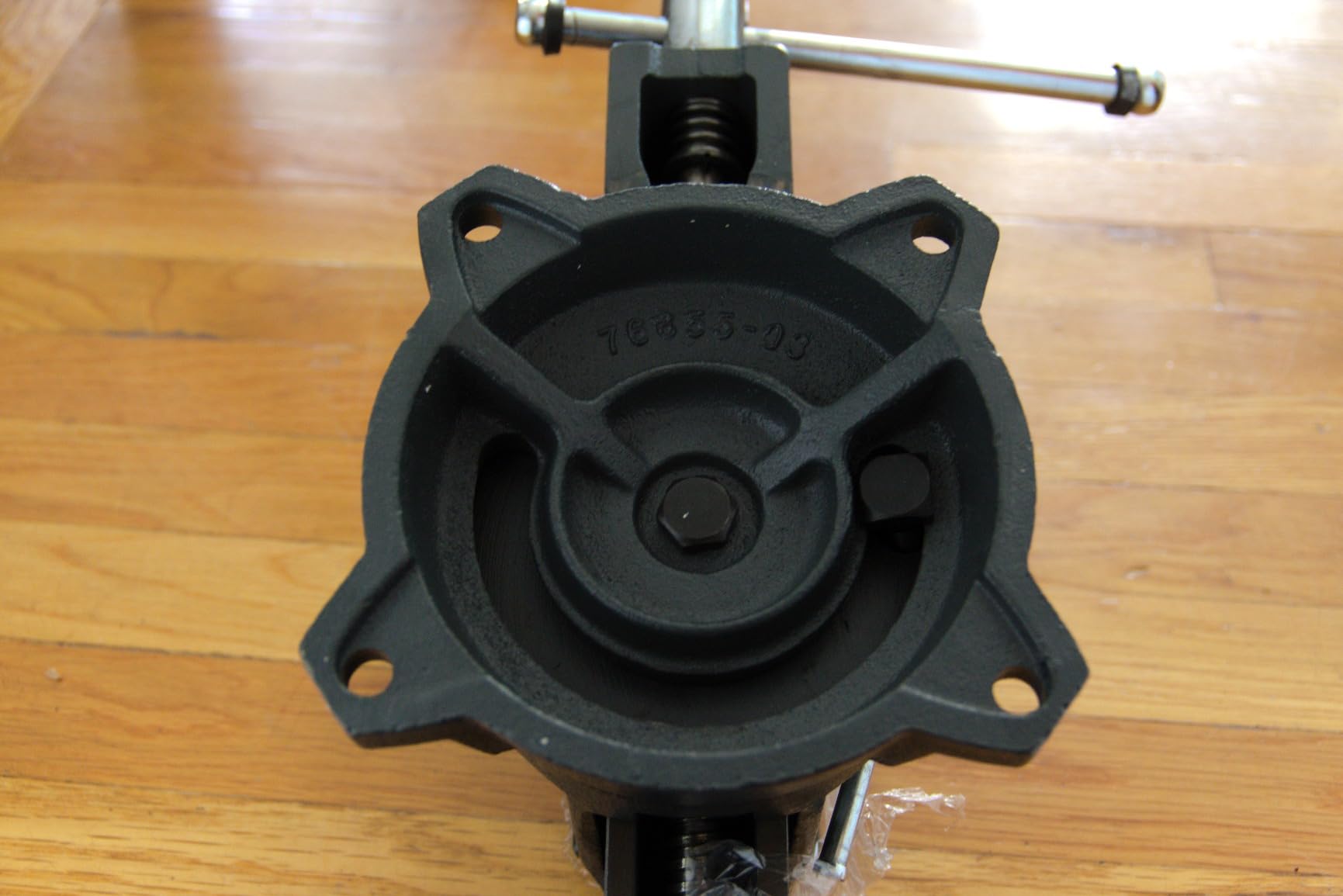
Where the CR40A earns its place
It is the right pick for a garage bench, a rental workshop, or a first vise for someone who grinds, files, and cuts brackets and small components. The compact footprint leaves bench space, and the 5 inch opening accepts more round bar than the jaw width suggests.
The replaceable flat slot jaws are also a quiet advantage. When the serrations wear through, you replace a part rather than a vise, and flat slot jaws are the style most often sold as standard replacement stock.
When to step up instead
If your work is mostly tall or deeply shaped parts, the 2.6 inch throat will disappoint you. Deep-geometry work is the one thing a shallow throat cannot be adapted to, because the screw housing gets in the way regardless of how you position the piece.
There is also no dedicated V-jaw set, so holding a cone, a point, or an odd tapered part is not a natural fit. If you do that kind of work regularly, add a separate V-jaw accessory or choose a model that includes one.
5. Yost 760-DI 6 Inch Multi-Jaw Rotating Vise – Best for Deep-Throat Machinist Work
Yost Vises 760-DI Multi-Jaw Rotating Vise 6 Inch Jaw Width | 2 in 1 Multipurpose Bench and Pipe Vise | Secure Grip with Swivel Base | Made with a Combination of Ductile Iron & Hardened Steel
6 inch jaw
5.90 inch opening
4.31 inch throat
75.8 lb ductile iron
Three jaw sets
Pros
- 4.31 inch throat for tall workpieces
- Body rotates 360 degrees and head locks at 12 positions
- Three sets of replaceable hardened steel jaws
- Large anvil that tolerates heavy hammering
Cons
- Tall body puts the handle close to the jaw head
- Workpiece cannot be rotated once the jaws are clamped
- Swivel base is stiff unless both lockdowns are backed off
The Yost 760-DI is the one to buy if your work hangs below the jaw line. Its 4.31 inch throat gives you a generous working depth, and that single number is what makes it a machinist-grade choice rather than another general-purpose casting.
Throat depth is the distance from the screw housing to the jaw face. It determines the tallest workpiece you can hold securely without the screw fouling the material, and it is the measurement most often left out of bench vise roundups even though it decides whether a job is possible.
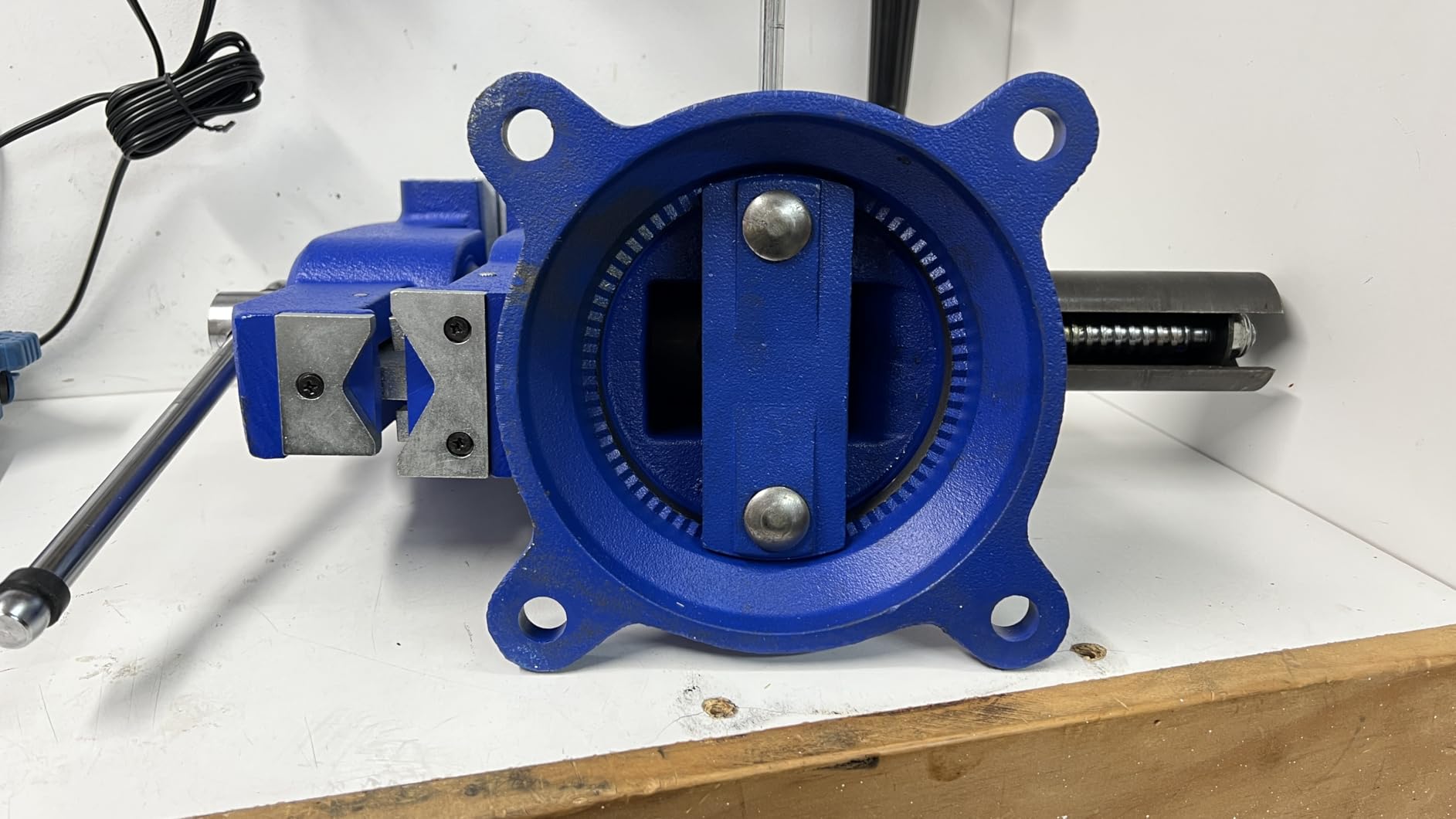
This vise rotates on two axes. The body turns 360 degrees on an interlocking V-grooved swivel base with two lockdowns, and the head separately rotates 360 degrees, locking every 30 degrees across 12 positions. In practice that means you can bring a long or tall piece around to a comfortable working angle and lock it there without creeping.
The jaw system includes three sets of replaceable hardened steel jaws: bench, serrated pipe, and V. Owners credit the smooth lead screw, the positive locking, and the very large anvil surface, which is described as taking heavy hammering without deforming.
Why the deep throat changes the work
With 4.31 inches of throat, you can hang a long piece of bar, a tall weld coupon, or a fabricated bracket down into the jaws and still have solid bite on it. On a 2.6 inch throat vise, that same part is held by its top few inches and rocks under a sideways push.
For anyone doing fabrication rather than assembly, that difference is the whole game. Fit-up work, marking, and grinding all improve when the part is held along its length rather than pinched at one end.
The practical catch: a 75.8 pound vise
This weighs 75.8 pounds, and that dictates the bench. A standard hobby workbench will not be the right home for it, and bolting it to a light top risks the same movement that makes any swivel base wander.
Owners also flag that the tall body brings the handle close to the jaw head, so your hands can catch while opening, and that you cannot rotate the workpiece once the jaws are clamped. The base rotation is stiff unless both lockdown handles are backed off first, and several owners add springs under the base plate to smooth it.
6. IRWIN 4935505 5 Inch Multi-Purpose Bench Vise – Best for Pipe and Round Work
IRWIN Tools Multi-Purpose Bench Vise, 5-Inch (4935505)
5 inch jaw
Rotating pipe jaws
360 degree swivel
33.1 lb cast iron
Fused steel handle
Pros
- Pipe jaws rotate to the top for clamping round work
- Opens wider than a typical fixed 3.5 inch vise
- 33.1 lb cast iron body survives heavy shop abuse
- Reported to keep jaws square over many years
Cons
- Machined pipe clamp is shallow because the casting blocks deep insertion
- Action is described as a little loose compared with machinist-grade vises
The IRWIN 4935505 is the vise to look at when your work is round. Its pipe jaws rotate to the top of the vise, which means a length of tube or pipe can be held horizontally without a separate clamp or an improvised blocking arrangement.
That rotating pipe capability, combined with a 360 degree swivel base, is what owners praise most. The fused steel handle gives fast adjustment on and off, and the incorporated anvil helps keep the vise steady while you work at the jaws.
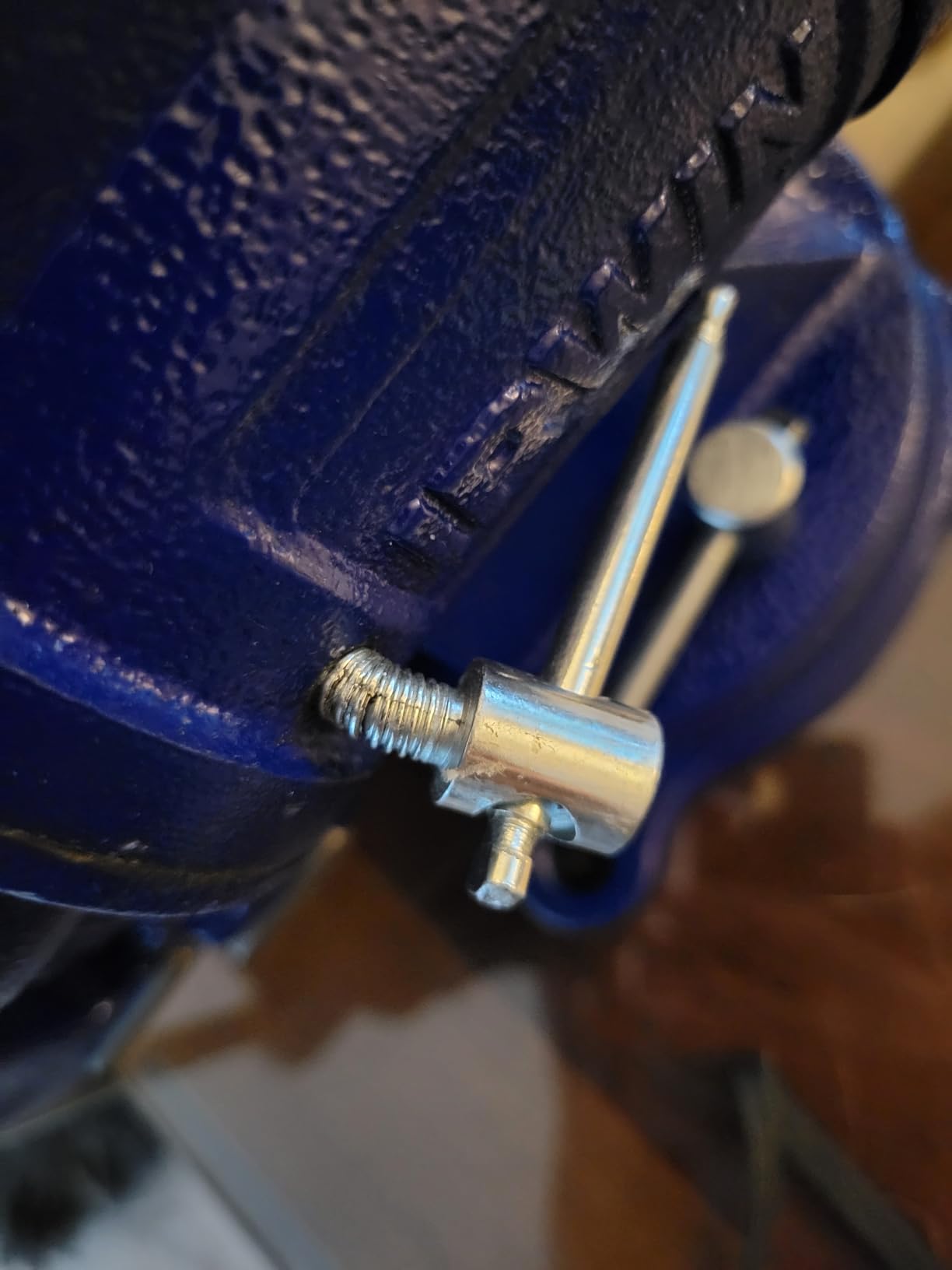
At 33.1 pounds, the cast iron body is heavy enough to absorb real abuse. Owners report jaws that have stayed square over a decade of home shop use, and mention cheater pipe tightening as a job it takes without complaint, which is not a small thing for a multipurpose vise.
It is also a well-documented option for automotive work. Holding a component under the truck or on a bench while a stubborn fastener gives up is a routine use, and the rotating base makes it easy to place the work where your body is not blocking the view.
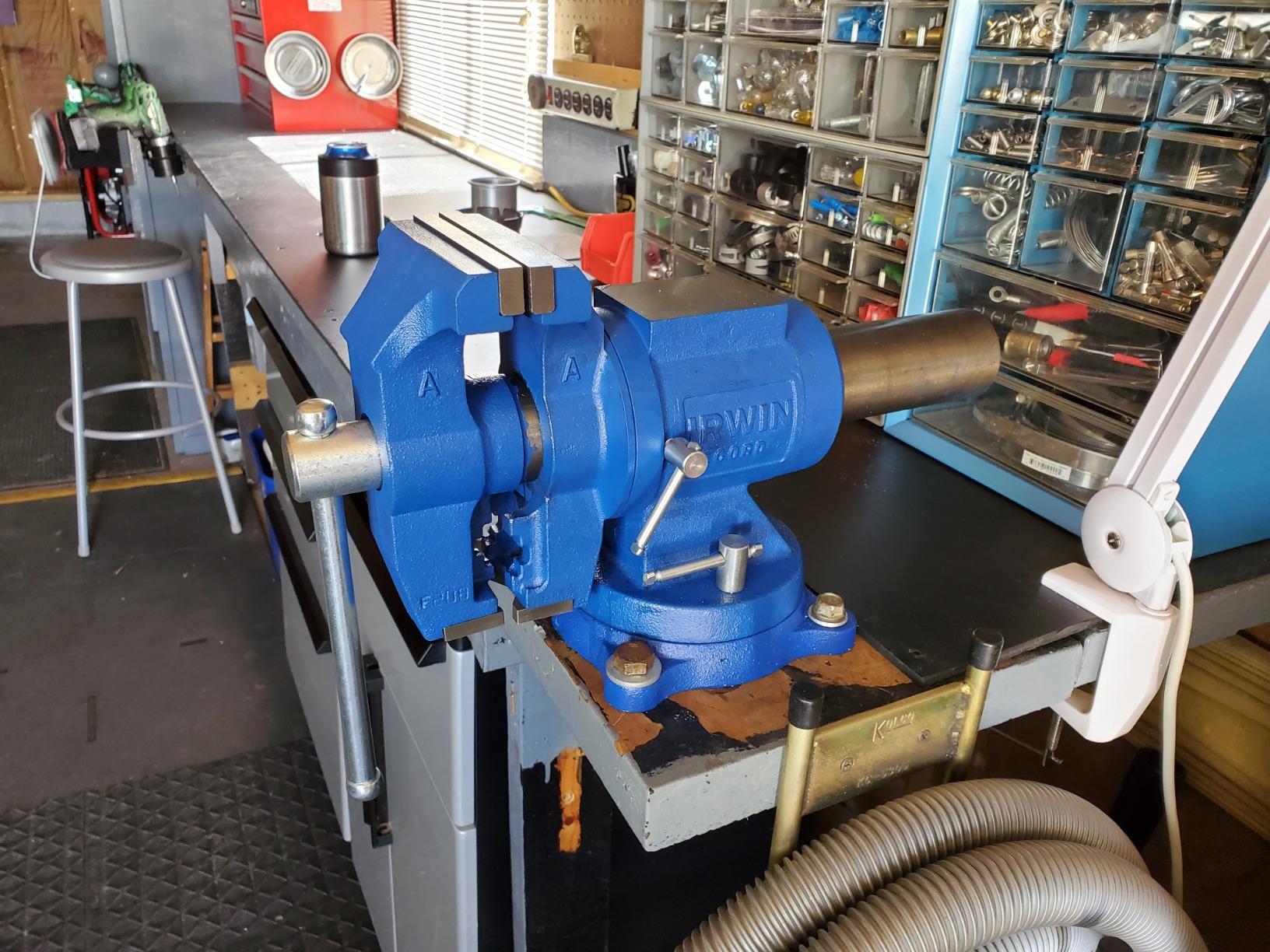
Where the IRWIN earns its spot
Motorcycle, ATV, and exhaust work is the obvious fit. Clamping a pipe section upright for cutting or fitting, or holding a round tube for a weld, is quick when the pipe jaws can be turned to the top and locked there.
It also suits hobby metalworkers who do a bit of everything. The anvil, the swivel, and the pipe grip cover grinding, sawing, and fitting without needing a second mounting point on the bench.
What the reviews flag as weak
The most-cited flaw is that the machined steel pipe clamp section is shallow, because the cast jaw body obstructs deep insertion. A thicker tube may clamp near the top of the section rather than well down it. The 360 degree rotation partly works around this, but it does not remove the limit.
Second, the action is described as a little loose compared with a machinist-grade vise. If dead-on parallel jaws at every opening are your requirement, this is not the model. If you want a durable general shop vise with a genuine pipe feature, it is very capable.
7. Wilton Mechanics Pro 8100M 10 Inch Jaw – Best for Heavy Fabrication
Wilton Mechanics Pro Bench Vise, 10″ Jaw (Width-12″, Opening-5-1/4″) Throat (Model 8100M), Gray
10 inch jaw
5-1/4 inch opening
12 inch throat
115.3 lb body
Enclosed spindle
Pros
- Precision-machined slide bar removes front jaw movement
- Enclosed spindle and needle roller thrust bearing for smooth clamping
- 360 degree swivel base with double lockdowns
- Alloy steel and ductile iron for heavy metalwork
Cons
- 115.3 lb weight needs a dedicated reinforced bench
- Enclosed spindle needs regular lubrication to stay smooth
The Wilton Mechanics Pro 8100M is built for the heaviest work in this roundup, and it is the least forgiving about what you bolt it to. At 115.3 pounds with a 10 inch jaw and a 12 inch throat, this is a machinist-grade tool that needs a machinist-grade bench.
The engineering detail that separates it from the rest is the precision-machined slide bar, which eliminates front jaw movement at any opening distance. Combined with an enclosed spindle and a needle roller thrust bearing, that produces a clamping action owners describe as the smoothest and most rigid in the group.
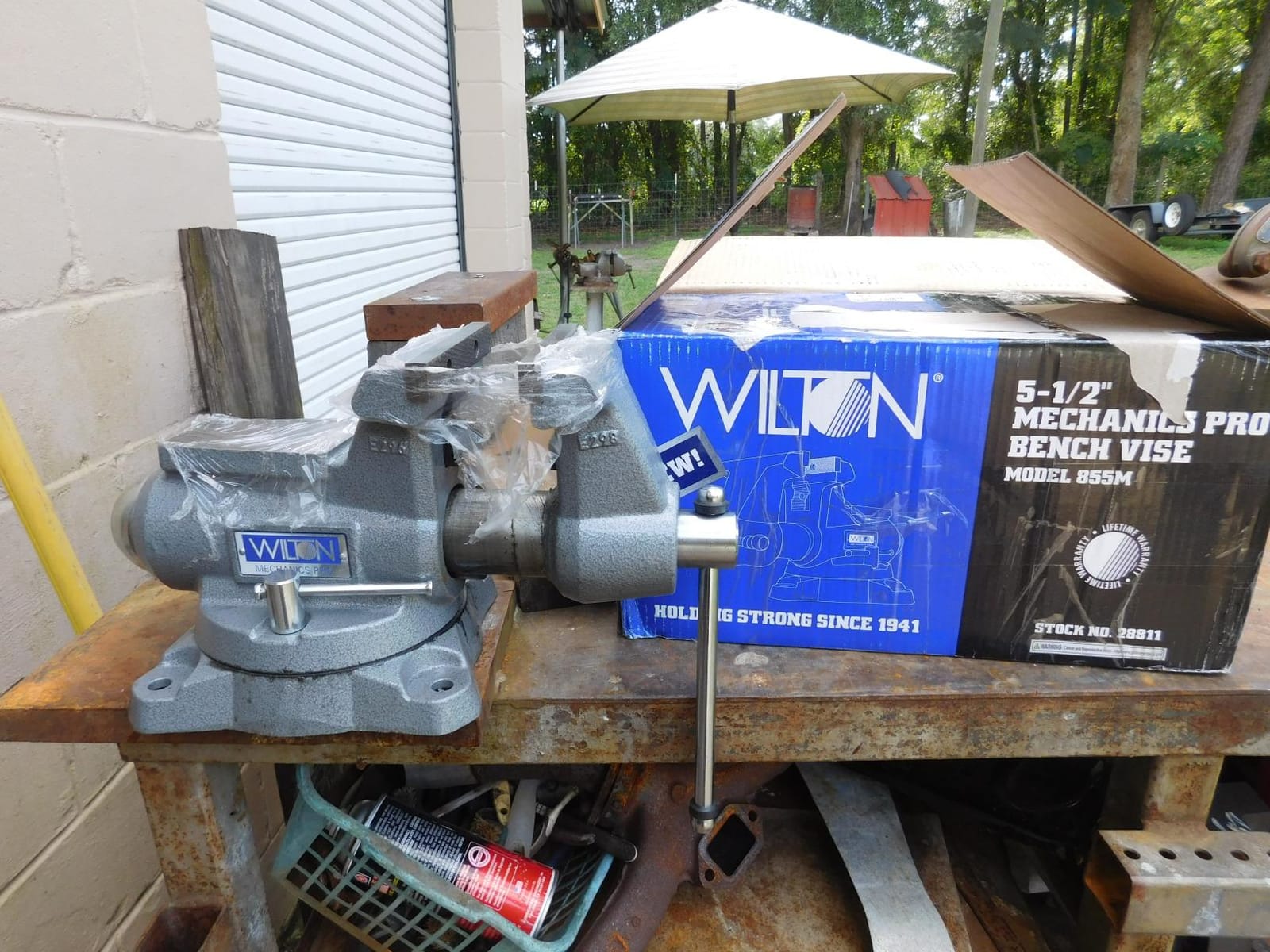
The 360 degree swivel base with double lockdowns means the whole 115 pound body can be swung to any working angle and stays there. Combined with the mass, that is what lets it absorb heavy torque and hammering rather than walking across the bench.
Reviewers emphasise the need for a properly reinforced bench, and that is the honest caveat. A shop-grade bench built to carry this weight is not an optional extra; it is part of the purchase decision.

What you can do with a 10 inch jaw
A 10 inch jaw holds wide plate, heavy flat bar, and fabricated assemblies that will not fit between smaller jaws. The 12 inch throat means you can hang a large part down into the vise with the jaws still fully engaged on the material.
For structural and heavy fabrication work, this is the difference between clamping an assembly and holding one end of it. The body is 60,000 psi ductile iron on the movable jaw and base, with alloy steel in the frame, and the lifetime warranty covers manufacturing defects.
The honest downside
Weight, first. A 115.3 lb vise on an under-built bench will be the weak link, and the bench needs to be able to resist the pull as well as the load. Measure before you buy, and check the footprint, because the unit is listed at 10 by 13 by 28 inches.
Second, the enclosed spindle is a benefit and a responsibility. It keeps lubricant in and contaminants out, which means the action stays smooth for years, but only if it is lubricated on a schedule. Dry it out and the screw you cannot get to will punish you.
8. PONY 5 Inch Heavy Duty Bench Vise – Best Dual-Axis Swivel for Small Shops
PONY 5 Inch Heavy Duty Bench Vise with 360-Degree Swivel Base and Head
5 inch jaw
5 inch opening
2-5/8 inch throat
5512 lbs force
Alloy steel body
Pros
- Rotates vertically and horizontally with dual lock nuts
- Cold-formed steel channel beams shield the screws
- Replaceable hardened steel serrated jaw faces
- Permanent pipe jaws plus large forming horns
Cons
- 4.6 stars with a small share of 1-star feedback
- 2-5/8 inch throat is shallow for tall workpieces
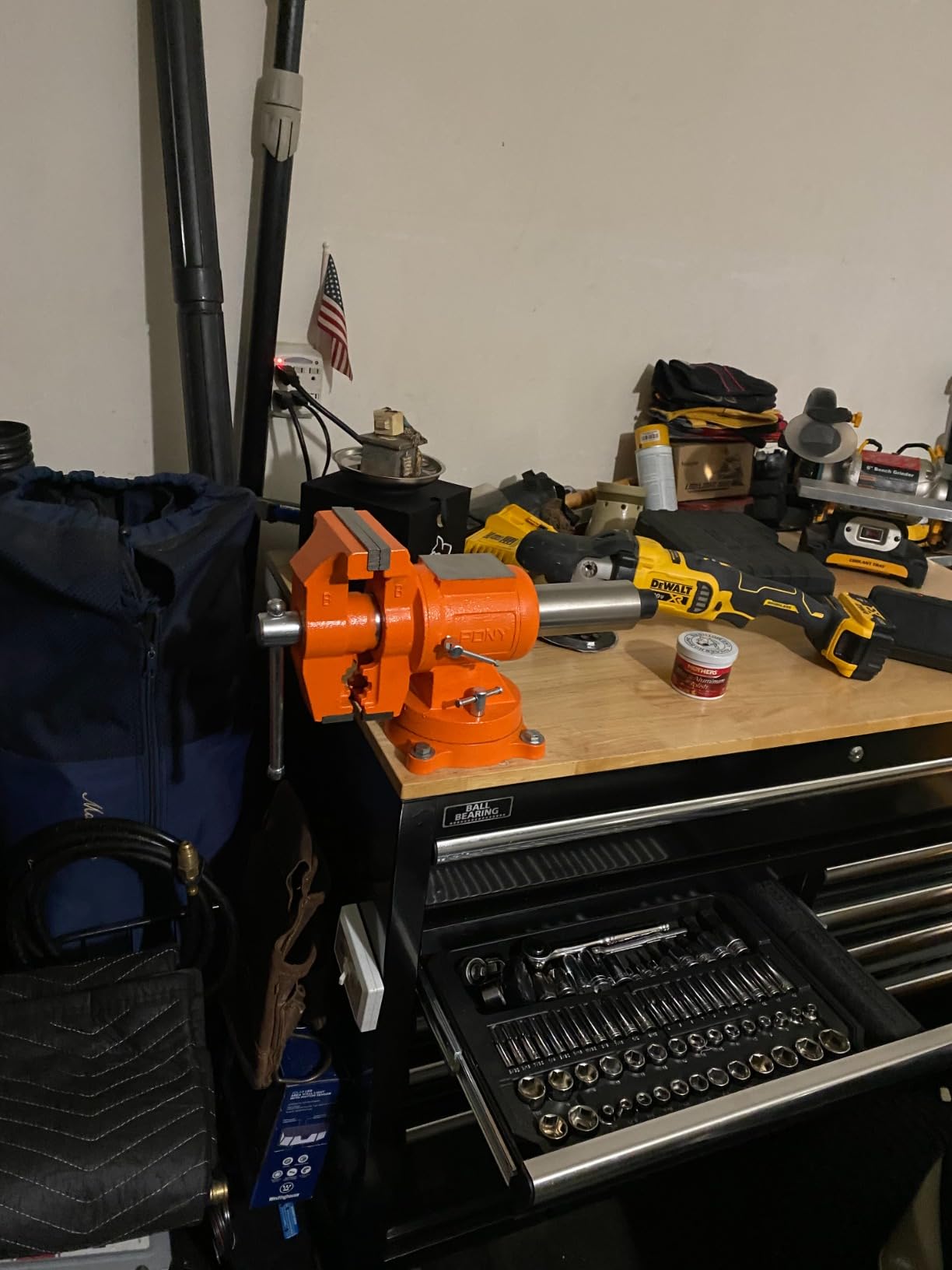
The PONY 5 Inch is a genuinely dual-axis vise, and that is the feature that makes it interesting in a small shop. The base and the front jaw both rotate 360 degrees, and dual lock nuts hold each axis where you put them.
Owners value it as a multipurpose vise for grinding, cutting, sawing, and general shop work. The permanent pipe jaws and the large forming horns are the details that show up in reviews most often, because they take round and odd-shaped material without a separate accessory.
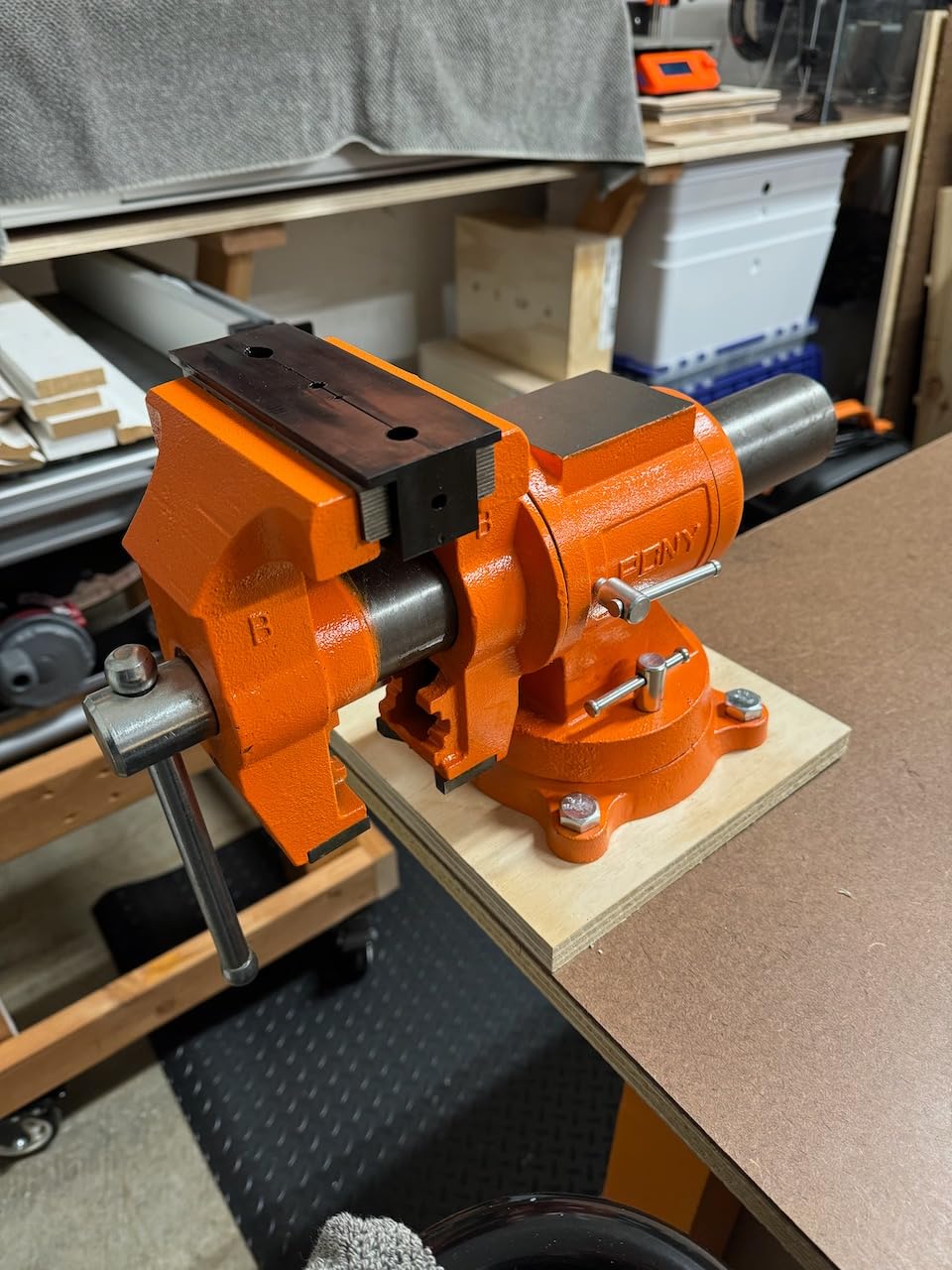
Clamping force is listed at 5,512 pounds. A detail worth noting is the cold-formed steel channel beams that cover and protect the screws, which guards the most vulnerable part of any multipurpose vise from impact during rough work.
The jaw faces are replaceable hardened steel with serrations, and a pair of vise jaw pads is included. The anvil surface is ground and polished and measures roughly 3-5/32 inch by 2-9/16 inch, so it is a working anvil rather than a decorative one.
When two-axis rotation earns its keep
When your work needs the jaw face vertical instead of horizontal, a dual-axis vise saves you from swapping to a clamp-on or refixturing the part on the anvil. That comes up more often than buyers expect once they start cutting long angle and grinding weld prep on irregular parts.
It is also a good fit for a bench that has one mounting point and needs a lot of flexibility. Rotate, lock, work, rotate, lock, and you never have to decide which side of the bench the vise belongs on.
Where it falls short
The 2-5/8 inch throat is the most common dimensional complaint, and it is shallow relative to the 5 inch jaw. Tall workpieces will hit the screw housing sooner than they would on the VEVOR 6 inch or the Yost 760-DI.
It also carries the lowest rating in this roundup at 4.6 stars, with a small share of 1-star feedback. That is not disqualifying, but it is worth factoring in against a 4.7-rated alternative if your work is close to the size limit of the throat.
9. Yost 445 4.5 Inch Combination Vise – Best for Plumbing, Fencing and Utility Work
Yost Vises 445 Combination Vise | 4.5 Inch Jaw Width Utility Pipe and Bench Vise |Secure Grip with Swivel Base and Large Pipe Jaw Capacity | Made with Cast Iron and Steel U Channel Bar
4.5 inch jaw
4 inch opening
2.625 inch throat
Pipe capacity to 2 inch
17 lb
Pros
- Large permanent serrated pipe jaw for utility and fence work
- Steel U channel bar adds rigidity over plain grey iron
- Replaceable hardened steel serrated top jaws
- 360 degree swivel base with two lockdowns
Cons
- 30000 PSI grey iron is more brittle than ductile iron
- 4 inch opening and 2 inch pipe capacity are modest
- Only a 1-year limited warranty
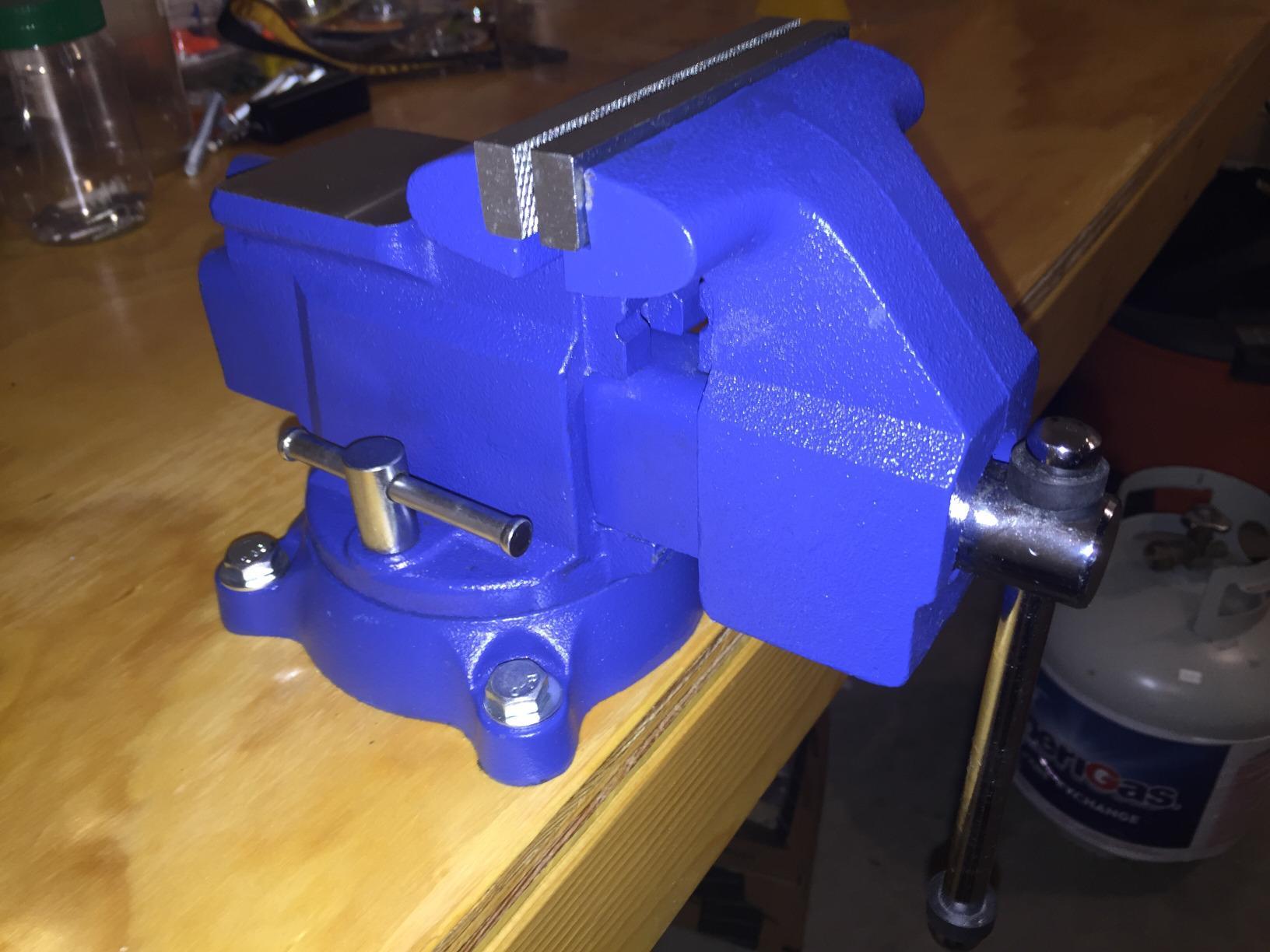
The Yost 445 is the light-duty end of this roundup, and it exists because a lot of real shop work is plumbing, fencing, and utility rather than fabrication. It weighs 17 pounds, mounts easily, and has a large permanent serrated pipe jaw from 0.125 inch up to 2 inch round material.
Owners treat it as a capable utility vise rather than a metalworking bench vise, and the reviews are consistent on that point. The steel U channel bar is credited with keeping the vise rigid despite the low weight, which is unusual at this size.
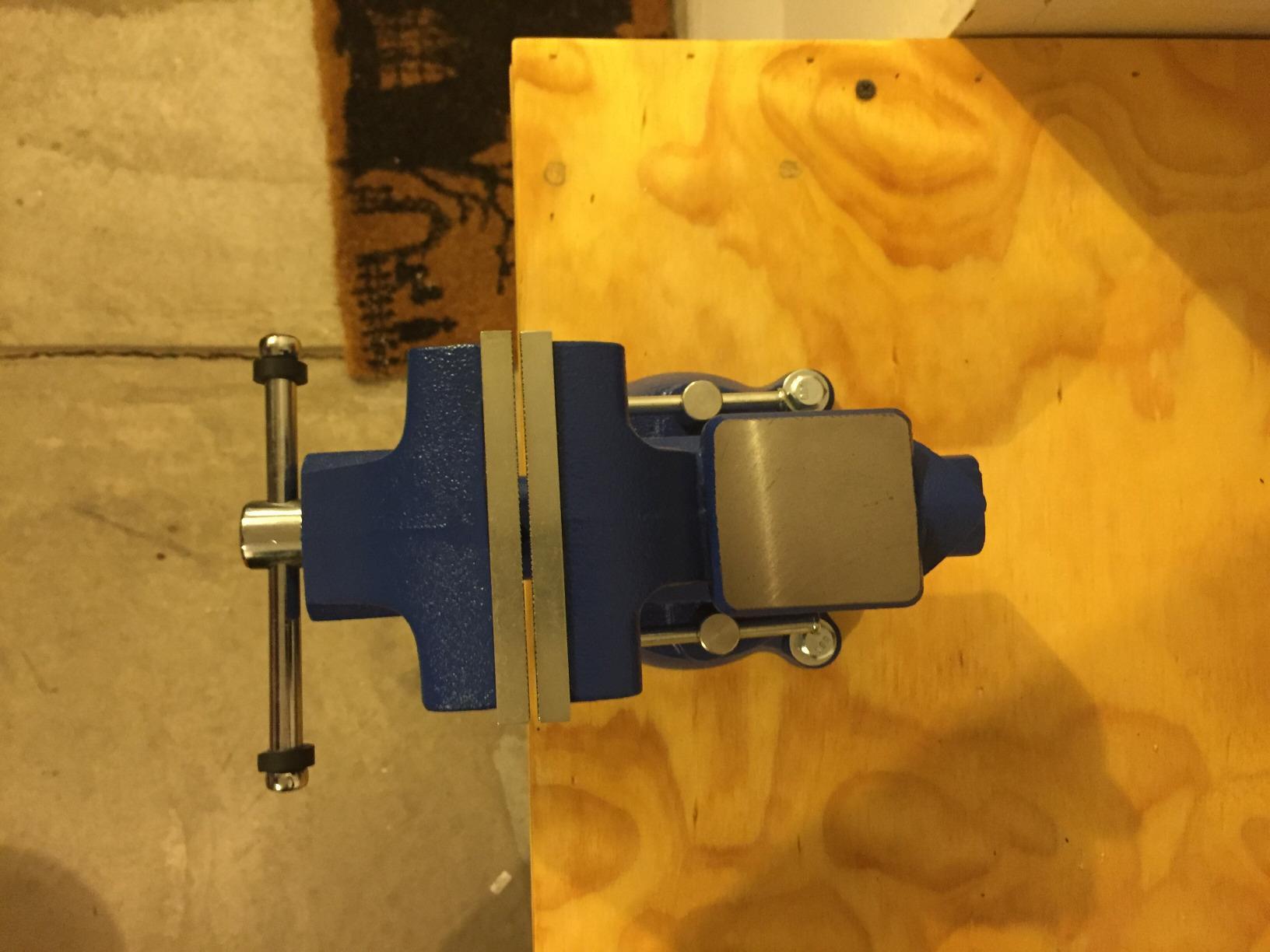
The base rotates 360 degrees with two lockdowns, the top jaws are replaceable hardened steel with serrations, and there is a large anvil work surface. In a service van or a small utility bench, being able to rotate and lock is worth more than a deep throat.
It carries a 1-year limited warranty with a 90-day return and lifetime technical support, which is a different arrangement from the lifetime defect warranties offered by Wilton in this roundup.
Who the Yost 445 suits
Fence post work, small electrical conduit, and light plumbing repairs are the sweet spot. If your holding needs are mostly round material under 2 inches, or short cut pieces you are filing and tapping, the pipe jaw does the job without a separate clamp.
It is also a sensible second vise for a bench that already has a heavy one, because at 17 pounds it is easy to carry, easy to bolt down, and easy to move when you need the space for a long piece of material.
Where it should stay out of the shop
Grey iron at 30,000 PSI is brittle under shock load, and the 4 inch opening plus 2 inch pipe capacity are the smallest here. On hardened, round, or thin-walled material, the bite is modest and the margin for error is small.
For a fabrication shop, look at one of the ductile iron models instead. The Yost 445 earns its place by doing a specific utility job well, not by competing with a machinist vise.
10. VEVOR 6.5 Inch Model 9467 – Best Jaw Alignment for Working From a Flat Bar Reference
VEVOR Bench Vise, 6.5″ Jaw Width, 360-Degree Swivel Base, Rotate Clamp
6.5 inch jaw
5 inch opening
3 inch throat
5620 lbs force
38.9 lb ductile cast iron
Pros
- Very tight jaw alignment and near-zero sliding jaw runout
- Smooth 360 degree rotation in both vertical and horizontal planes
- 38.9 lb ductile cast iron QT450 body
- Includes 6 inch magnetic jaw pads
Cons
- The degree strip on the swivel head is inaccurate
- Swivel lock levers can back out of their clamp screws
- Magnets in the soft pads can detach and need re-gluing
The VEVOR 6.5 Inch Model 9467 is the pick if jaw alignment is what you are buying. Owners specifically call out very tight jaw alignment and near-zero sliding jaw runout, which is the property that matters when you are using the flat of the jaw as a reference surface for squareness and depth.
It is also a wide vise. A 6.5 inch jaw takes wide plate and bar that will not fit a 5 inch model, and the 3 inch throat is adequate for most shop work without being the shallowest option here.
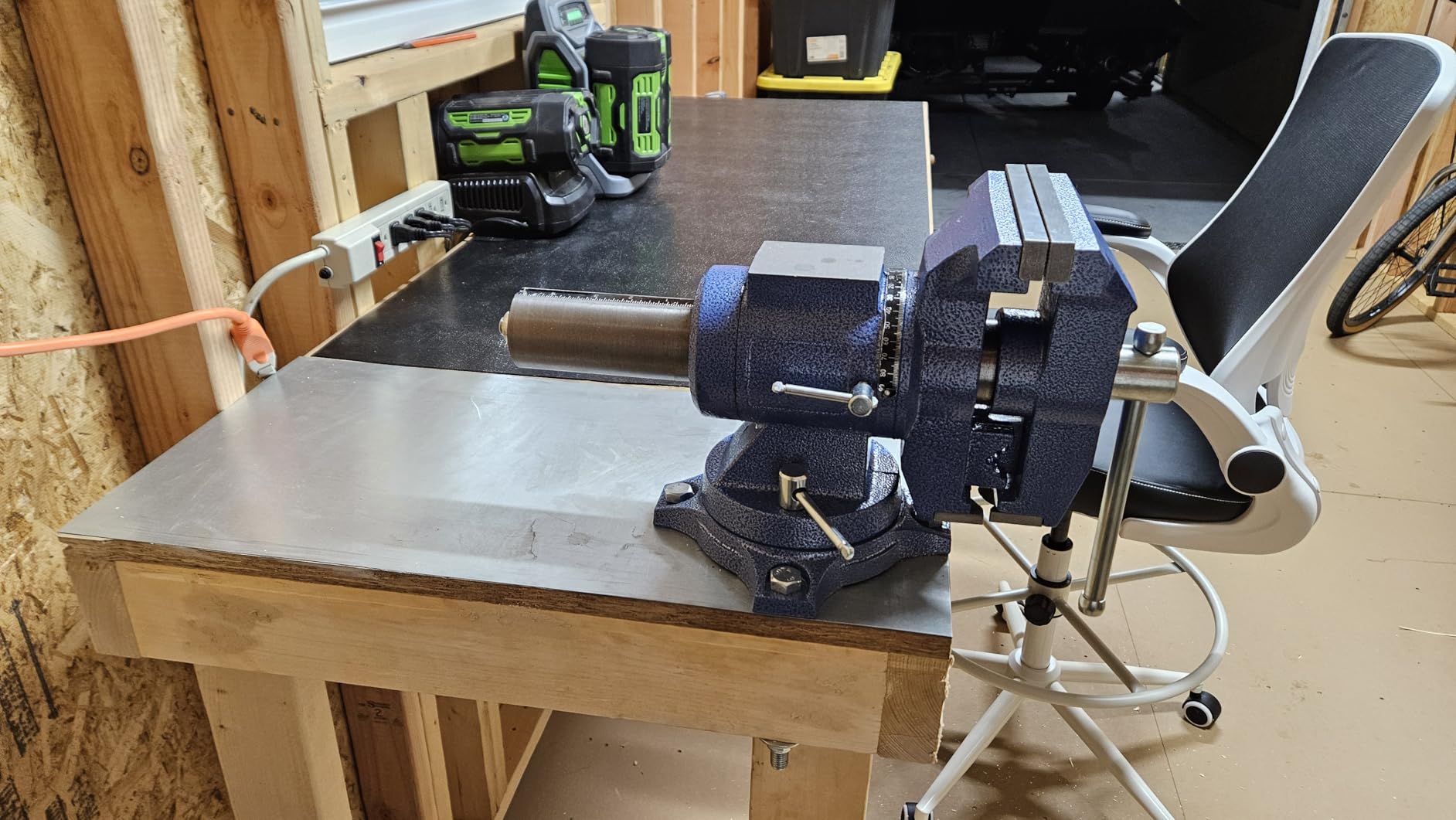
Clamping force is listed at 5,620 pounds, and the body is ductile cast iron QT450 with carbon steel components at 38.9 pounds. Owners compare the build favourably to heavier-priced models, and mention that the vertical and horizontal swivel head rotates smoothly in both planes.
It arrived coated against rust, so wiping it down before first use matters. The box includes a pair of 6 inch magnetic jaw pads and M10 mounting bolts, and the anvil measures roughly 3.11 by 2.60 inches for hammering and shaping.
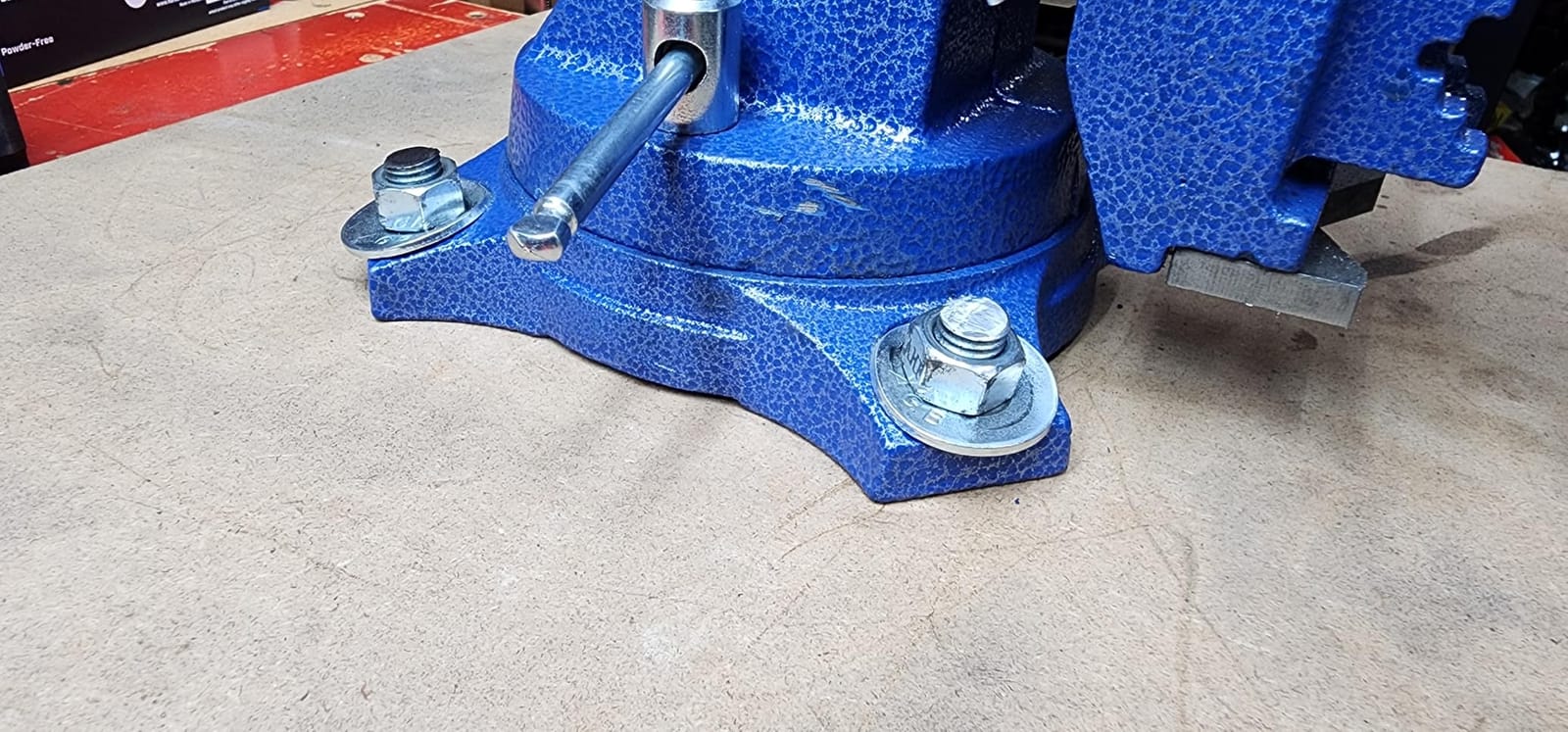
Why alignment is worth paying for
Jaw parallelism is what tells you a vise is holding a workpiece on two faces rather than one. When the jaws are parallel across the full width, a scribed line stays straight and a plate sits flat. When they are not, every marking and filing operation compounds the error.
Owners also praise the magnetic soft jaw pads for protecting workpieces at the cost of nothing. If you clamp aluminium, brass, or a finished surface, the pads are the difference between a clean part and a scarred one.
The small failures to know about
Three recurring complaints, all minor. The degree strip printed on the swivel head does not line up accurately with a real marker, so do not trust it for precise angle work. The swivel lock levers can work their way out of their clamp screws over time, so check them whenever you change the setup.
Finally, the magnets in the soft pads can detach and need re-gluing. That is a five-minute fix with an adhesive magnet sheet, and it is a good reason to keep a spare rather than to skip the pads entirely.
How to Choose a Bench Vise for Metalwork
A bench vise converts handle rotation into linear clamping force through a threaded screw inside the body, and it is the foundation of a shop. A vise that slips, marks, or drifts ruins the work, which is why the buying decision deserves an hour of research. Here is how to narrow it down.
Cast iron, ductile iron, or forged steel: what actually changes
Grey cast iron is the traditional vise material and it is what the Wilton 11106 and the Yost 445 use. It is heavy, inexpensive, and easy to machine, which is why it has been the default for a century. Its weakness is brittleness under shock load, so a heavy hammer blow on a hard workpiece can crack a casting.
Ductile iron is the modern answer, and most of this roundup uses it. It is rated around 60,000 PSI, tolerates shock far better, and is still castable into complex shapes with anvil and pipe jaws. The Forward models, the VEVOR models, and the Yost 760-DI are all in this group.
Forged steel is the hardest and the most repairable material, and it is the traditional choice in machining shops. The question of which steel to forge a vise from comes up constantly on r/AskEngineers. Forged steel resists shock better and is easiest to weld back up, but it costs more than cast iron and appears rarely among affordable bench-mounted vises. Pick a casting brand whose replacement parts you can still get, because that matters more than the alloy.
Size it by jaw width, but check throat depth first
Jaw width is the across-the-jaws measurement, and the rule of thumb is to buy a vise whose jaw width is a little larger than the largest flat face you intend to clamp, and never smaller than the round bar you plan to hold. A 5 inch vise handles common flat bar and up to roughly 3 inch round material; a 6 inch vise is the minimum for 4 inch pipe and wide plate.
Throat depth is the one competitors leave out. It is the distance from the screw housing to the jaw face, and it decides the tallest workpiece you can hold securely. A 2.6 inch throat is fine for short cut pieces; if you hang long bar, tall plate, or fabricated assemblies down into the jaws, you want 3.5 inches or more. The Yost 760-DI at 4.31 inches is the clearest example of paying for depth.
Jaw opening is the third number, and it is a cap rather than a goal. Only buy the opening you need, because a wide opening with a shallow throat still cannot hold a tall part properly.
Mounting: bench-mounted, clamp-on, or bolted to the floor
A bench-mounted vise gives you the most rigid grip, and it is the right answer for a permanent shop bench. Bolt it into the edge of a hardwood or steel-topped bench with graded bolts and lock washers, and mount it low enough that the work sits near your hands rather than at shoulder height.
A clamp-on vise trades some rigidity for flexibility, letting you put the vise where the job is instead of where the bench is. It is a sensible choice when the bench top is particleboard or a lightweight top that would crush under a mounting bolt, or when you need the same vise at two different benches.
Bolting to the floor or to a heavy steel stand is the answer for vises in the 75 to 115 pound range. Nothing else will hold still under that much mass, and a swivel base that creeps is the most common complaint in machinist forums.
Two mounting details are worth knowing. First, bolt patterns do not match between models, so when replacing an existing vise, measure the hole spacing and the bench edge overhang before you buy, and expect to drill new holes. Second, the bench top has to be thick enough to accept the bolt depth without splitting or crushing. Particleboard and low-density board will not do it no matter which vise you choose.
Stopping the vise from marking or dropping your work
Slip and marking are the most repeated complaints in metalworking forums, and both are solved the same way, by matching the jaw face to the workpiece. Serrated jaws bite hard and will leave a tooth pattern in soft aluminium and in finished surfaces. Microgroove jaws bite with less visible damage, and the Forward DT08125A comes with that style.
Soft jaws or jaw pads are the clean answer for anything you have already finished. Both VEVOR models in this roundup include magnetic soft jaw pads, and the PONY includes a pair of pads as standard. Bolt soft jaws on for flat plate work, and always use them for aluminium, brass, and anything you plan to paint or plate later.
The trap most beginners fall into is holding a knife edge upright. A workpiece clamped right at its edge will still mark, and a very thin edge can still be pushed out of a serrated jaw under a sideways push. Hold knife-edge work as far from the edge as the geometry allows, and use a thin film of wax on the jaws when the material is soft enough to smear.
New or used: what the used market actually looks like
The used market for bench vises is real and it is competitive, because heavy American-made vises hold value. Used USA-made vises frequently turn up at estate sales and online listings, and vintage Wilton bullet-style vises show up surprisingly often. The forum consensus is that the durability of older American castings is why people keep them for decades.
When you inspect a used vise, work through a short list. Turn the handle slowly and note how far the moving jaw takes to respond, since a well-regarded sign of quality is that the jaw starts moving within about a quarter turn with almost no slop. Lay a machinist square or a straightedge across the open jaws and check for taper or skew. Run the slide fully open and closed looking for wear ridges. Confirm the screw turns without binding, and check that the swivel lock handles, handle, and jaw hardware are all present.
There are two honest warnings. Freight charges on a vise over 40 pounds are expensive enough to matter, and paint damage to castings in transit is a known complaint on imported units. If you are buying used, local pickup is the sensible route.
More PSI is not the same as a better vise
Clamping force ratings are published by manufacturers and are best treated as claims rather than measured values. Two vises can carry similar numbers and behave very differently, because the number says nothing about screw smoothness, jaw parallelism, or whether the base stays locked.
Judge a vise on how it feels at quarter turn, how square the jaws stay across the opening, and whether it holds position when you push back on the handle. Those three things predict the working experience far better than the figure on the box.
Maintenance: five minutes after every dirty job
Clean chips out of the slide and off the screw threads, then lubricate the screw and the slide surfaces. A dry screw is the leading cause of a stiff, binding vise, and it is the cheapest thing to prevent. Wipe the whole casting down, especially if you have been working with copper or stainless, which will otherwise leave a staining film.
When a screw seizes, do not force the handle. Back it off, clean the threads, and work a penetrating oil into the joint between the screw and the nut. On an enclosed-spindle vise like the Wilton Mechanics Pro, prevention matters more because the screw is not meant to be stripped back out.
If you work with aluminium regularly, a dedicated vise for that material is worth considering. A small soft jaw vise with a light clamp force will keep the jaws clean, and you can keep a heavy vise for steel and hardened parts.
Frequently Asked Questions
What is the best brand of bench vise for mechanics?
Wilton and Yost are the two names mechanics come back to most, and the difference is which job you are doing. Wilton covers the general-purpose and mechanics vise range with replaceable jaw inserts and lifetime defect warranties, while Yost spans utility castings through the rotating 760-DI for machinist-grade work. For a mechanic who clamps components under a truck or on a bench, a rotating multi-pipe design such as the IRWIN 4935505 or a 5 to 6 inch ductile iron model is the most practical pick.
Who makes the best bench vices?
The shortlist that appears most often across machinist forums and recent video roundups is Yost, TEKTON, Wilton, and IRWIN, with the Forward and VEVOR ductile iron vises now established as the value tier. The deciding factor is not the brand name but the model line within it, since forum users repeatedly warn that a budget model and a professional model under the same name are not comparable tools. Match the casting material, throat depth, and jaw type to the work instead.
What is the best bench vise made in the USA?
The most respected American-made vises in this category are the Wilton professional lines and the Yost USA machinist vises, and vintage American castings are sought after for a reason. Practical Machinist owners report vises older than World War II that still have dead-on parallel jaws, and a reader describes a 6 inch USA-made Yost machinist vise as a monster. For a current purchase, check the casting label before buying, because brand name alone does not tell you where a given model was made.
What is the strongest bench vise available?
Strength comes from the casting material, the slide bar, and the screw, not the marketing figure. Ductile iron rated at 60,000 PSI, a precision-machined slide bar, and a needle roller thrust bearing give the highest sustained force, and the 10 inch jaw Wilton Mechanics Pro 8100M combines all three at 115.3 pounds. For most shops, a 5 or 6 inch ductile iron vise rated between 5,000 and 6,600 pounds produces more force than you can apply by hand.
Are Wilton vises of good quality?
Quality within the Wilton range varies a lot, which is the most repeated point in machinist forums. Owners are enthusiastic about the professional and tradesman lines, with replaceable hardened jaw inserts and lifetime warranties against manufacturing defects, and are more cautious about the entry-level models. The two Wilton models reviewed here, the 11106 general purpose vise and the Mechanics Pro 8100M, sit at the stronger end of that range.
Are Wilton vises made in China?
Some Wilton models are imported and some are not, which is why this comes up constantly in forums. The most reliable check is the casting and the packaging: look for a country of manufacture marking on the body or the label, and compare the stated casting material against the published specification. Many buyers report that some Wilton-banded vises are manufactured overseas while the professional lines are made in the USA, so verify per model rather than trusting the brand name alone.
What size bench vise do I need?
Match the jaw width to the largest flat face you will clamp, and check throat depth before you buy. A 4 to 5 inch vise suits hobby metalworking, small brackets, and round material up to about 3 inches; a 6 inch vise is the practical minimum for mechanics and fabricators. If you hang long bar or tall plate down into the jaws, you need at least 3.5 inches of throat, and the Yost 760-DI at 4.31 inches is built for exactly that.
The Verdict
If you buy only one, buy the Forward DT08125A 5 Inch. It has the best rating and the deepest review history in this group, the clamp force is more than most people can apply by hand, and the three jaw sets cover flat, round, and V-shaped material without buying accessories first. It is the best bench vise for metalwork overall because it is hard to find a weakness in it once you account for the 2.6 inch throat.
Buy the VEVOR 6 inch instead if you want the most usable room on an ordinary bench, and it comes with magnetic soft jaws. Buy the Yost 760-DI if your work hangs below the jaw line and a 4.31 inch throat is the difference between a workable setup and an impossible one. Buy the Wilton 8100M only if you have a bench built for 115 pounds.
Whatever you choose, mount it properly with graded bolts into a thick top, and treat the maintenance routine as part of the purchase. Clearing chips and lubricating the screw after a dirty job takes a few minutes, and it is the difference between a vise that still works in ten years and one with a rusted slide. That advice matters more in 2026 than ever as the bench becomes the tool you use most.