
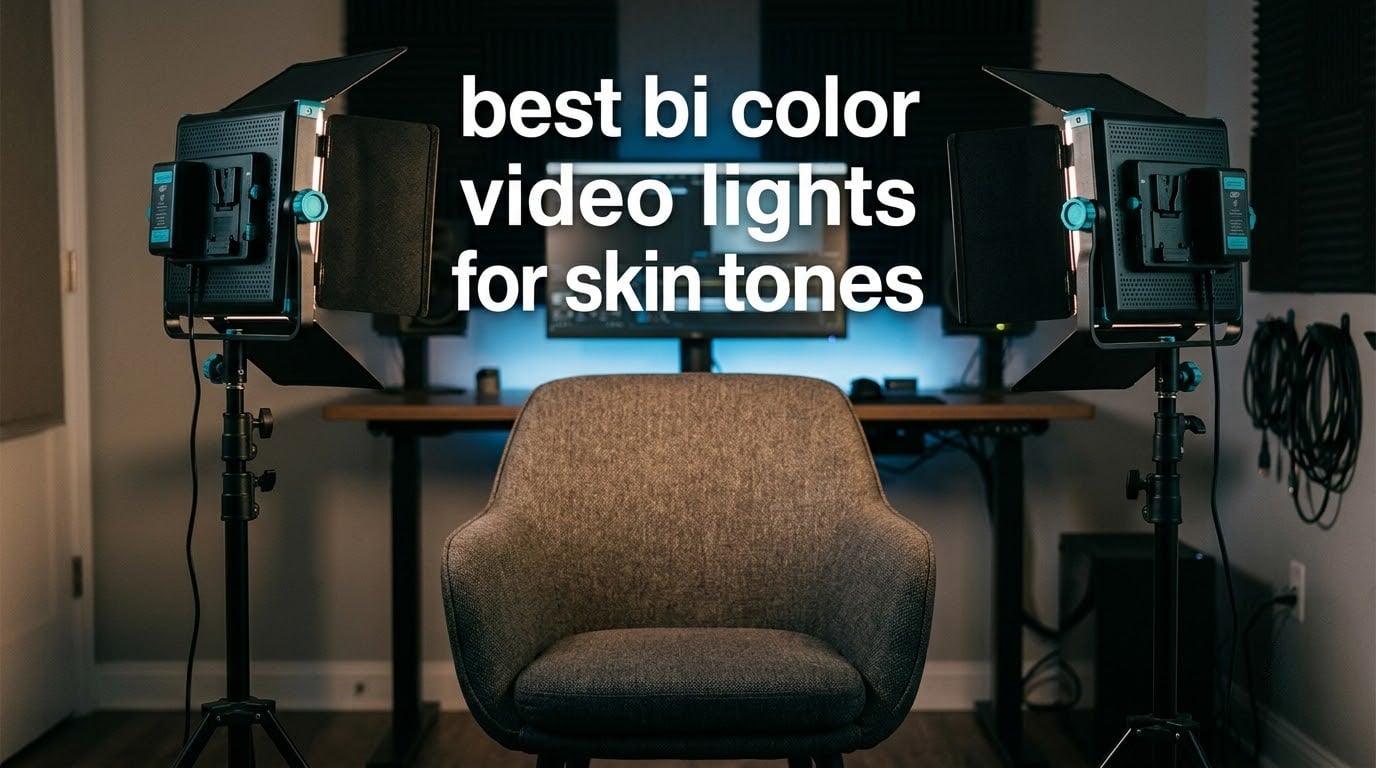
There is a specific moment on every shoot when you realise the light is lying to you. The waveform looks fine, the exposure is right, and your subject’s skin still reads slightly green or slightly dull on the monitor. That is not a white balance problem. It is a spectrum problem, and no amount of post-production grading will repair it.
That is what this roundup is built around. These are the best bi color video lights for skin tones we could justify in 2026, ranked on the two numbers that actually decide whether a complexion looks right on camera: CRI and TLCI. The practical floor for any close face work is CRI 95 and TLCI 95 or better, and for beauty and broadcast-grade work you want 97 or higher. Colour temperature range matters just as much, and for darker and deeper skin tones it matters more than most buyers realise.
We covered ten fixtures across panel, COB and on-camera formats, from 15W desk panels to a 250W monolight, and scored them the way we would score gear for our own shoots. Every spec quoted below comes from the manufacturer listing or from instrumented testing reported by owners, not from marketing adjectives. If you are still building a kit, our broader guides to LED video lights for filmmakers and LED video lights for YouTube creators cover the wider category.
Before the picks, one thing worth stating plainly: the top three below are the ones we would buy. Everything after that is a specialist pick for a specific setup, and we say which one.
Table of Contents
Top 3 Bi Color Video Lights for Skin Tones in 2026

Neewer NL660 2-Pack 40W Panel
- CRI 96+
- 3200K-5600K
- 3300 lux at 1m per panel
- Two stands and barn doors included


GVM 480 App 2-Pack
- CRI 97+ / TLCI 97+
- 2300K-6800K
- 10-100% dimming with digital display
- App control over Wi-Fi
Best Bi Color Video Lights for Skin Tones (October 2026)
Every fixture in the table below publishes a Kelvin range and a colour rendering figure. Where a manufacturer quotes TLCI as well as CRI, we have used both, because TLCI is measured against camera sensor response rather than human vision and is the more relevant number for video work.
| Product | Specifications | Action |
|---|---|---|
| Neewer NL660 2-Pack Bi Color 40W |
|
Check Latest Price |
| Godox SL60IIBi 75W Bi Color COB |
|
Check Latest Price |
| GVM 480 App 2-Pack Bi Color |
|
Check Latest Price |
 Neewer NL480 2-Pack Bi Color Panel Neewer NL480 2-Pack Bi Color Panel |
|
Check Latest Price |
 Neewer NL-192AI 2-Pack Battery Panel Neewer NL-192AI 2-Pack Battery Panel |
|
Check Latest Price |
 Aputure Amaran 200X-S 250W Aputure Amaran 200X-S 250W |
|
Check Latest Price |
 Aputure Light Storm LS 60x Aputure Light Storm LS 60x |
|
Check Latest Price |
 VIJIM VL200 On-Camera Bi Color VIJIM VL200 On-Camera Bi Color |
|
Check Latest Price |
 VIJIM VL120 Pocket Bi Color Panel VIJIM VL120 Pocket Bi Color Panel |
|
Check Latest Price |
 NiceVeedi 2-Pack 15W Studio Kit NiceVeedi 2-Pack 15W Studio Kit |
|
Check Latest Price |
What Color Temperature Is Best for Each Skin Tone?
Sit between 4300K and 5600K for almost everyone. Below roughly 4000K you add warmth that flatters deep and warm-undertoned skin but pushes pale and cool-undertoned skin toward orange. Above 6000K you get clinical neutrality that will not flatter anyone. The dial exists so you can match your light to the room, not so you can hunt for the flattering setting.
Deep and warm-undertoned skin: 3200K to 4300K. Warm light reinforces the red and gold in the complexion and gives separation from a cooler background.
Medium and neutral skin: 4300K to 5000K. The most forgiving band, and the one we would set a scene to by default.
Fair and cool-undertoned skin: 5000K to 5600K. Anything warmer starts to emphasise redness and unevenness.
Olive and deeply pigmented skin: 4500K to 5200K. Neutral-leaning light stops the complexion reading grey or ashen, which is the most common complaint we see from creators shooting darker skin.
One more rule that matters more than any of the above. Set your camera white balance manually against a grey card or the panel itself, never auto. Auto white balance will chase the light and shift your Kelvin mid-take, and that shift is what people recognise as “bad video” even when they cannot name the cause.
Why Cheap Bi Color Lights Make Skin Look Green
A light renders colour well when it emits a smooth spread of wavelengths. Budget emitters use a small number of narrow-band chips, which creates gaps in the spectrum. Skin has almost no tolerance for gaps, so it is the first thing to break, ahead of clothing, product or background.
The critical point is that white balance cannot fix this. White balance corrects an overall cast, meaning the light is too warm or too cool across the board. A spectral gap is not an overall cast, it is missing information. You can dial the green out of the whole frame and you will still be short on the red channel, which is why the result looks grey and lifeless rather than clean. Reviewers on dpreview forums reported being told their CRI 93 light was acceptable, and it is fine for product work, but on a face at close range that figure is the floor, not the target.
This is also the argument for spending on colour accuracy before features. A light with CRI 97, a wide Kelvin dial and app control will outperform a light with app control, effects and a battery but CRI 90, every single time you put a person on camera.
Bi Color vs RGB for Skin Work
For portrait, interview and talking-head work, bi-color is enough. A bi-color fixture moves along one axis, the Kelvin scale, and that is the only axis accurate skin rendering needs. RGB adds independent control of red, green and blue channels, which lets you push a sunset look or a teal-and-orange grade, but it usually costs you money and frequently costs you TLCI, because the extra emitters dilute the spectrum.
The forum consensus supports this. A user on r/videography asked for an RGB equivalent to an Aputure 200x or 300c framed entirely as value parity, same brightness and same features for less money, not as a request for RGB for its own sake. Another thread on r/Filmmakers recommended a plain bi-color panel plus softbox and a tube backlight for a sub-budget interview setup, prioritising clean skin tones and subject separation.
Buy RGB if you need to match a practical in frame, light a green screen, or grade aggressively in post. For everything else, put that budget into a higher CRI figure and a wider Kelvin range.
CRI vs TLCI: The Two Numbers That Decide Whether Skin Looks Right
CRI, the Color Rendering Index, measures how faithfully a light reproduces colour against a reference source, judged against human perception. TLCI, the Television Lighting Consistency Index, does the same job but weights the result by camera sensor response. For video work, TLCI is the more honest number, because your audience is looking at a screen, not at the room.
Our thresholds, applied consistently across all ten products here:
Below CRI 90: Do not light a face with it. Acceptable for a background or a product table shot.
CRI 90 to 94: Fine for product and general work. Visible shift on close faces, especially on deeper skin.
CRI 95 and above: The practical floor for face work. All ten lights in this roundup reach it, which is why none of them is disqualified on colour accuracy alone.
CRI 97 and above, with TLCI 97 or higher: The target for beauty, broadcast and any shot where skin is the subject.
Two extra figures worth knowing if a brand publishes them. TM-30 Rf, where anything above 90 indicates a good spectral rendering, and SSI, the Spectral Science Index, where the Aputure 200X-S publishes SSI 89 in daylight and SSI 90 in tungsten. Those three numbers together tell you more about skin rendering than a page of feature bullets will.
Flicker: The Failure Nobody Mentions Until It Ruins a Take
Flicker is brightness pulsing that your eye smooths over but your camera does not. The result is horizontal banding across skin that no amount of colour correction will remove, and it appears at specific shutter speeds rather than all of them.
The trouble spots are 1/50 and 1/60, the standard shutter angles in 50Hz and 60Hz countries, and 1/125, which is a common speed for 120fps slow motion. A cinematography instructor’s instrumented test of the Neewer NL480 confirmed flicker-free dimming across its range, and that is exactly the kind of claim to demand. Forum users also name loud cooling fans as a deal breaker on a shoot with on-set audio, which is a related problem: silent passive cooling matters as much as spectral quality if you are recording sound on the same take.
How to test any panel in about a minute. Point it at a wall, set your camera to 1/1000 to confirm it is clean, then step down to 1/60, 1/50 and 1/125 and watch for banding. If the light is modulated, most cheap panels will show it immediately at one of those three speeds.
How We Picked
We ranked these in priority order, and the order matters. Colour accuracy came first, at CRI and TLCI, with a hard disqualification below 95 for any pick we would call a face light. Output and colour temperature range came second, because a light that cannot reach a usable Kelvin at your working distance is a light you will fight on set.
Third was light quality, meaning softness, flicker behaviour and fan noise. Fourth was physical practicality: weight, battery options, mounts and what actually ships in the box. Feature counts came dead last. We did not reward effects presets or app polish, because a creator lighting a face for four hours cares far more about whether skin looks right than how many looks the fixture can fire.
Where owners report instrumented measurements, we used them. Where we have not handled a fixture, we say so rather than inventing a result.
How to Choose a Bi Color Video Light for Skin Tones
Work through these in order and the decision makes itself.
CRI 95 or above, TLCI published. Non-negotiable for faces. If the brand does not publish a figure at all, skip it.
Kelvin range that brackets your room. 3200K to 5600K covers almost any interior. 2700K to 6500K or wider gives you more matching room. A panel whose daylight end stops short of 5600K will not match window light.
Watts matched to working distance. Light falls off with the square of distance, so 60W at 1m is a main light and 60W at 3m is not. Budget roughly 100 to 200W for a subject at 1 to 2m, 300W and above beyond 3m. One dpreview forum user framed the minimum as at least 80W for a main light, which matches our experience.
Panel, COB or on-camera. A panel is a large area source, so it is inherently soft and forgiving on skin, but output falls off fast past 2m. A COB is a point source, far more output per watt and far more throw, but it needs a modifier to be soft. An on-camera light is an accent, never a key.
Battery options. AC-only is fine in a studio. If you shoot location, you want either a built-in cell or a plate that accepts NP-F or V-Mount packs. Plan for roughly 90 minutes of internal battery at full output as a realistic figure.
Dimming behaviour. Stepless, or at least fine steps, down to about 10%. Stepped dimming that jumps between levels is a deal breaker according to forum consensus.
What is in the box. Stands, barn doors, diffusers and a case tell you how close to ready-to-shoot the kit is out of the box.
1. Neewer NL660 2-Pack Bi Color Panel – Best Overall for Skin Tones
NEEWER 2 Pack Bi Color 660 LED Video Light and Stand Kit, 3200-5600K
40W per panel
3200K-5600K
CRI 96+
3300 lux at 1m
Two 75 inch stands included
Pros
- CRI 96+ renders skin accurately across a wide range of complexions
- 3300 lux at 1m per panel
- Aluminium housing with silent passive cooling
- Barn doors and soft diffusers included
- Two 75 inch stands and carrying bags in the box
Cons
- Barn doors can collide with the bracket when the head is tilted
- Onboard LCD is small and hard to read at a glance
- No numeric CCT markings or detents on the knob
Two 40W panels, each with 330 warm and 330 cool LEDs, rated at up to 3300 lux at 1m with CRI 96+ across a 3200K to 5600K range. This is the kit we keep recommending to people buying their first serious lighting setup, and the reason is the combination of a genuine two-light kit with a colour rendering figure above the face-work floor.
Long-standing owners report years of heavy weekly use without failure, and the passive aluminium cooling means there is no fan noise to contaminate a take with audio. The pair of 75 inch stands that fold down to 26 inch means each light can sit at eye height beside a subject with the key slightly above and the fill a stop or two under, which is where the two-panel shadow control starts to pay off on a face.
What we like most is the practical friction being low. You get barn doors to shape the spill, soft diffusers in the box, an LCD showing brightness, colour temperature and battery status, and NP-F550 or NP-F970 battery plates as an alternative to mains power. Set one light warm at roughly 3500K and the other cooler near 5000K and you get natural-looking separation on camera without touching a single gel.
For deeper and darker skin tones specifically, CRI 96+ across the full dimming range is what keeps the complexion from going grey as you bring the level down, which is where cheaper panels fall apart. The weaknesses are physical rather than optical. The barn doors can foul the U-bracket when the head is tilted sharply, the LCD is too small to read at a glance from a camera position, and there is no numeric colour temperature readout with detents, so repeatable setups mean writing your values down.
When this is the right pick
Choose this for a talking-head studio, a two-person interview, or a small product studio where you want key and fill from two matched sources without buying two fixtures separately. At 40W per panel it is comfortably a 1 to 2m light, and with both panels at full brightness you can lift a small room. It is also the safest choice for someone who shoots a range of complexions, because CRI 96+ is high enough that no single undertone gets punished.
When it is the wrong pick
It is wrong if you are lighting a subject from 3m or further, where 40W per panel is not enough output and you will end up cranking ISO instead. It is also wrong if you need a narrow, controlled beam, because a bare panel with barn doors throws a wide, soft spread and has no focusing optics at all. If you want a hard edge on the light, you need a COB with a grid and an iris, not a panel.
2. Godox SL60IIBi 75W Bi Color COB – Best Value
Godox SL60IIBi Bi-Color LED Video Light 75W, 2800K-6500K, CRI96+ TLCI97+, 25100Lux@1m, Bowens Mount LED Continuous Output Light w/11 FX Effects, APP/2.4G Wireless Control, Dimmiable Brightness
75W COB
2800K-6500K
CRI 96 / TLCI 97
25100 lux at 1m
Bowens mount
Pros
- 25100 lux at 1m from a 75W head
- CRI 96 and TLCI 97 for accurate skin
- Bowens mount opens up softboxes reflectors and grids
- Ultra-silent cooling fan
- RC-A6 remote and Bluetooth app control
Cons
- AC powered only with no battery option for location work
- Compact head means the modifier ecosystem adds cost
This is the output-to-cost winner in the whole list. A 75W COB head producing 25100 lux at 1m with the standard reflector, rated CRI 96 and TLCI 97 across 2800K to 6500K, is not a specification you see at this money in the panel category. Reviewers put 87% of its ratings at five stars, a five-star share that matches the best in the list.
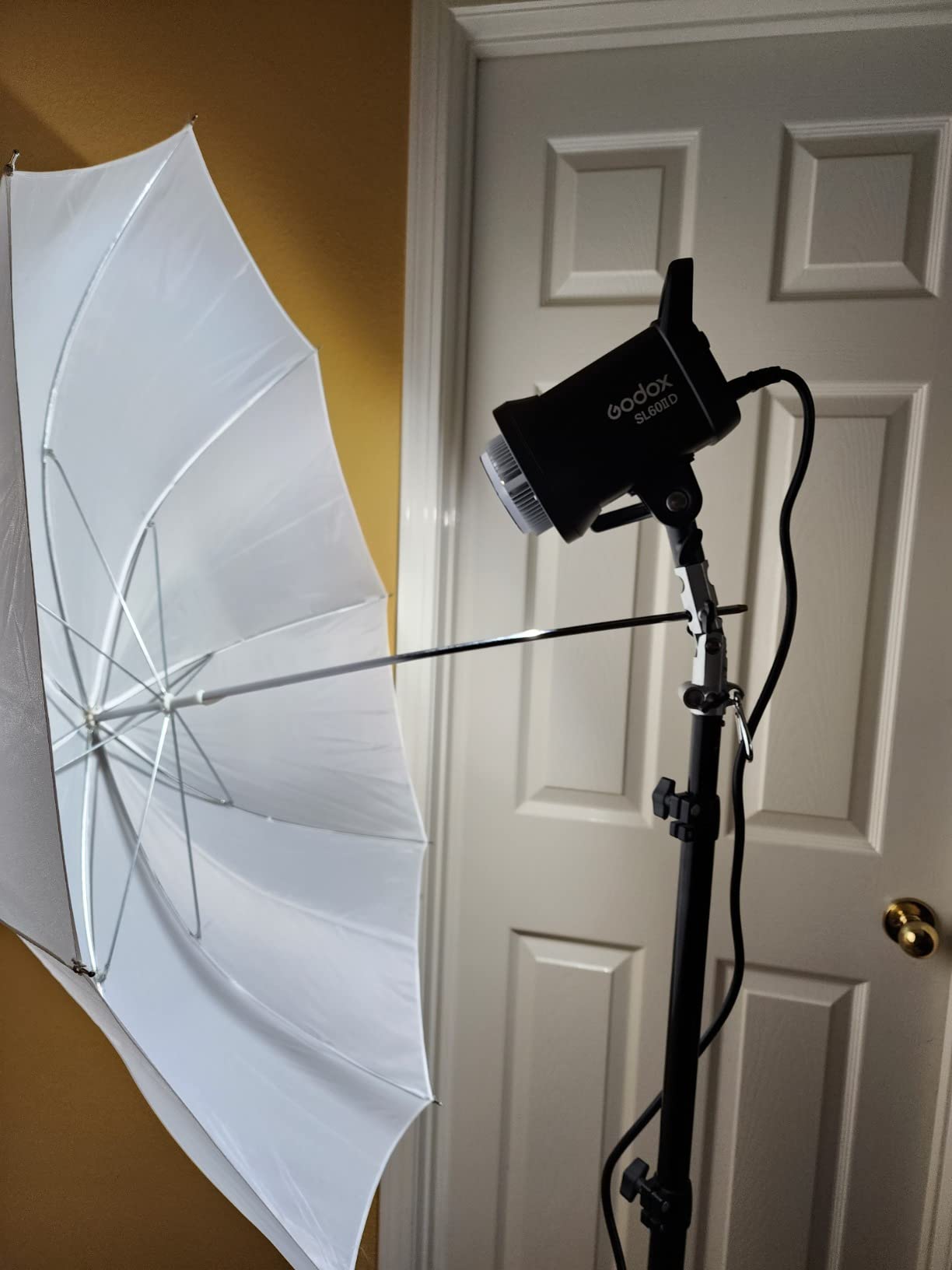
The Bowens mount is the reason it edges ahead of the cheaper panels in value terms. A COB head without a mount is a bright bare bulb, and a Bowens head is a platform: a Light Dome or an equivalent softbox turns that point source into a genuinely flattering area source on a face, and a grid gives you the negative fill you need to sculpt cheekbones.
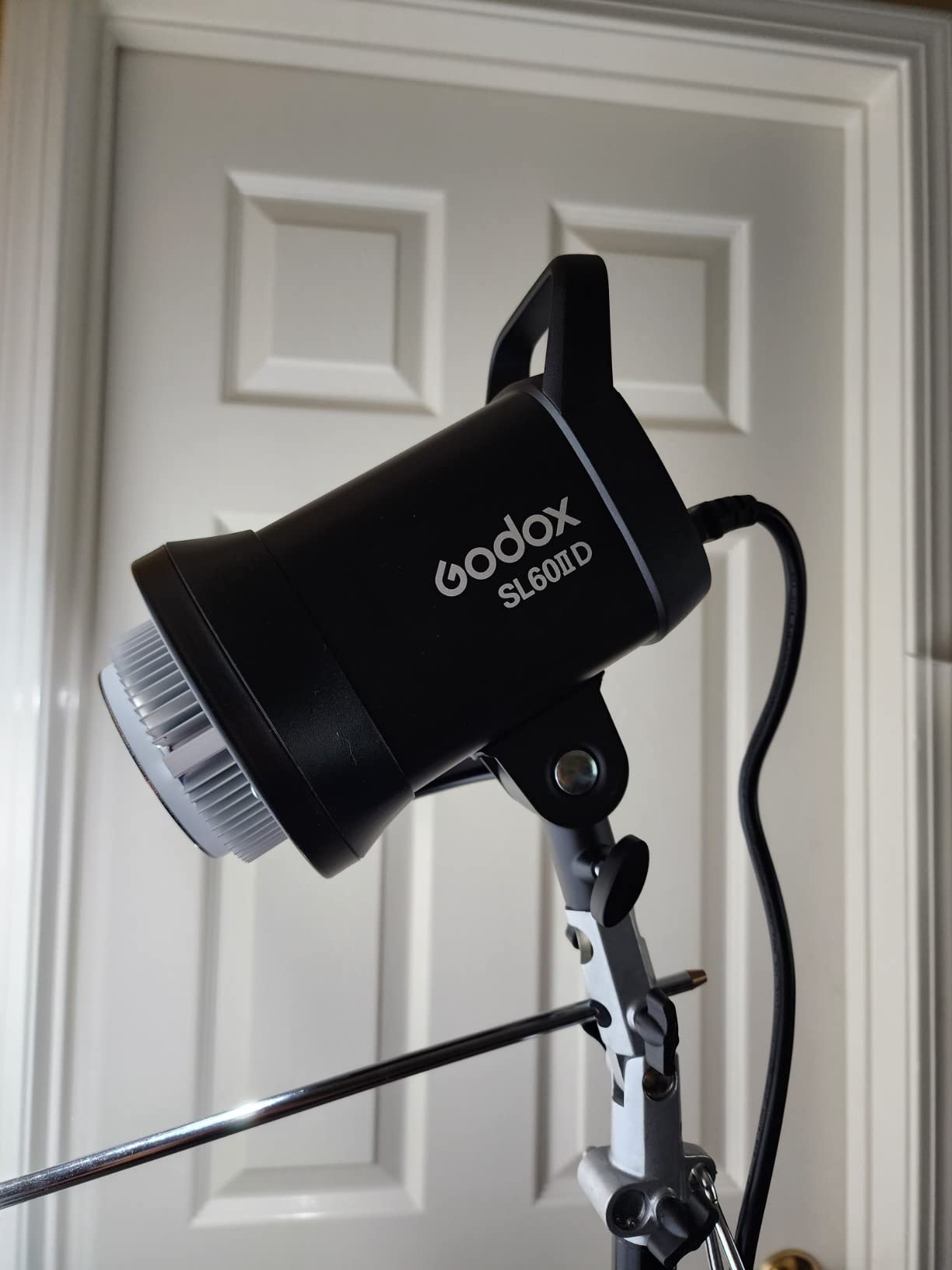
Skin rendering holds up well in practice, which is what the review base keeps pointing to. The 2800K to 6500K range is wide enough to dial a warm interview look at one extreme and a daylight-balanced window match at the other, and the TLCI 97 figure means the result survives the camera sensor rather than only looking right to the eye on the set. Eleven built-in effects, on-body controls, the included RC-A6 2.4G remote and Bluetooth app control cover the control options you would expect at this level.
The two limitations are honest ones. It is AC powered, so it lives in a studio and does not go to location, and the head is compact, which means building a larger setup with multiple modifiers is an added cost.
When this is the right pick
Choose this as your key light for anything from 1 to 3m. It is the fixture we would build a one-light interview setup around, because a single softbox on the Bowens mount gives you a large, soft, flattering source with enough punch to punch through a dim room. It is also the best choice if you plan to grow into modifiers, since the mount is the industry standard rather than a proprietary one.
When it is the wrong pick
Skip it if you shoot unplugged, on location or in a rented space where a cable run is impractical. It is also the wrong tool as a fill light for a two-person setup, because a COB point source at low output is still a harder, more directional source than you want opposite your subject. For that, a panel is the right form factor.
3. GVM 480 App 2-Pack Bi Color – Best for Studio Grids
GVM 2 Pack LED Video Lighting Kits with APP Control, Bi-Color Variable 2300K~6800K with Digital Display Brightness of 10~100% for Video Photography, CRI97+ TLCI97 Led Video Light Panel +Barndoor
2300K-6800K
CRI 97+ and TLCI 97+
480 LEDs per panel
10-100% dimming
Wi-Fi app control
Pros
- Deepest warm end here at 2300K with CRI 97+ and TLCI 97+
- Digital display for repeatable brightness and CCT
- App control useful for ceiling-mounted panels
- Aerospace aluminium housing with passive cooling
- Barn doors and soft filters included
Cons
- App has a learning curve and connects to one panel at a time
- Modest output for a single panel
- Build quality and plastic feel draw some criticism
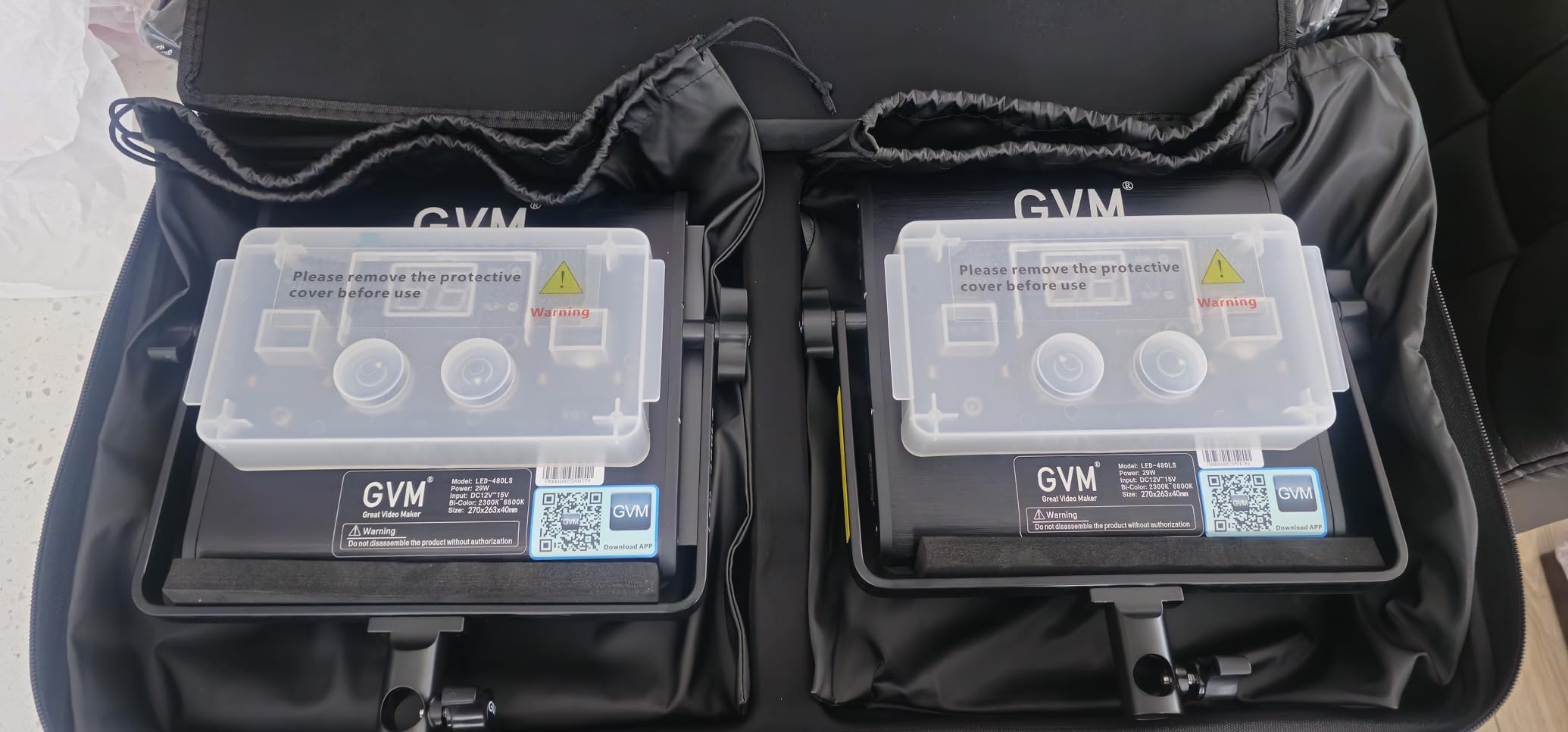
Two 480-LED panels rated CRI 97+ and TLCI 97+ across a 2300K to 6800K range. The 2300K floor is the deepest warm end anywhere in this roundup, and the 97-plus pair of colour figures means this is the most defensible answer to the question of which kit here renders the widest range of skin tones most faithfully.
The digital brightness and CCT display is a small feature that matters disproportionately on a multi-light set. When you have five or seven panels and you need to rebalance after a change, being able to read a number and dial back to it is worth more than any effects preset. The same logic drives the Wi-Fi app, each panel broadcasting its own network.
Owners running seven of these on a studio ceiling grid report they are only bright enough together, with all panels at 100% and near 5600K. That is the single most useful piece of real-world operating data in this entire roundup, because it tells you the output is genuinely modest per panel and you should plan a multi-light approach rather than expecting one panel to carry a room.
For skin specifically, 2300K at the warm end gives you a deep, golden look for warm-undertoned complexions without needing CTO gel, and 6800K at the cool end gives you a clean daylight match. The two weak points are practical. The app has a learning curve, connects to one panel at a time, and each panel must be renamed individually before remote control works, and the plastic feel of the housing draws criticism from people who expect a metal fixture at this tier.
When this is the right pick
This is the kit for a fixed studio, a small production rental operation, or a room with a ceiling grid you have already committed to populating. At 2300K to 6800K with CRI and TLCI both at 97+, it is the safest buy on this list if your subjects span a genuinely wide range of skin tones, and it is the only pair here that can reach a deep tungsten look without filtration.
When it is the wrong pick
Wrong for a single-subject shoot, because you will be fighting the modest per-panel output, and wrong for location work since the app is the only convenient control method and you will be away from Wi-Fi range. If you need a key light that reaches 3m on its own, look at the Aputure 200X-S instead.
4. Neewer NL480 2-Pack Bi Color Panel – Best for Dual Light Setups
Neewer 2 Packs Dimmable Bi Color 480 LED Video Light Kit, 3200~5600K CRI 96+ LED Panel with U Bracket, 75 inches Tripod Light Stand for YouTube Recording Studio Photography Streaming Key Lighting
3200K-5600K
CRI 96+
480 LEDs per panel
0-100% dimming
Two stands and diffusers
Pros
- CRI 96+ with clean non-washed-out rendering on camera
- 3200K-5600K lets you warm one light and cool the other
- Flicker-free dimming confirmed by instrumented testing
- Diffusers included soften output enough for portraits
- Folds down small and runs on NP-F batteries
Cons
- Measured daylight CCT tops out near 5220K rather than the advertised 5600K
- Power cord from brick to head is short on tall stands
A second two-pack, and the one to choose over the NL660 if your shots are head-and-shoulders rather than waist-up. Each panel carries 240 white and 240 yellow LEDs with CRI 96+ over 3200K to 5600K, in a body listed at 1.36 kg for the kit.
Makeup artists, hobbyists and working photographers consistently call this outstanding value, and the reason is the two-panel workflow. Warm one light to around 3600K and keep the other near 5000K and you get a natural-looking key and fill separation on a face, which is the single cheapest way to stop a talking head looking flat.
The instrumented test reported by a cinematography instructor confirmed flicker-free dimming and accurate warm colour temperature, which is the single most valuable piece of testing in this roundup. The same test flagged a daylight shortfall and a slightly green cast, and measured daylight CCT tops out near 5220K rather than the advertised 5600K. Practically, that means you can match a tungsten room accurately but should not expect a true window match without correction.
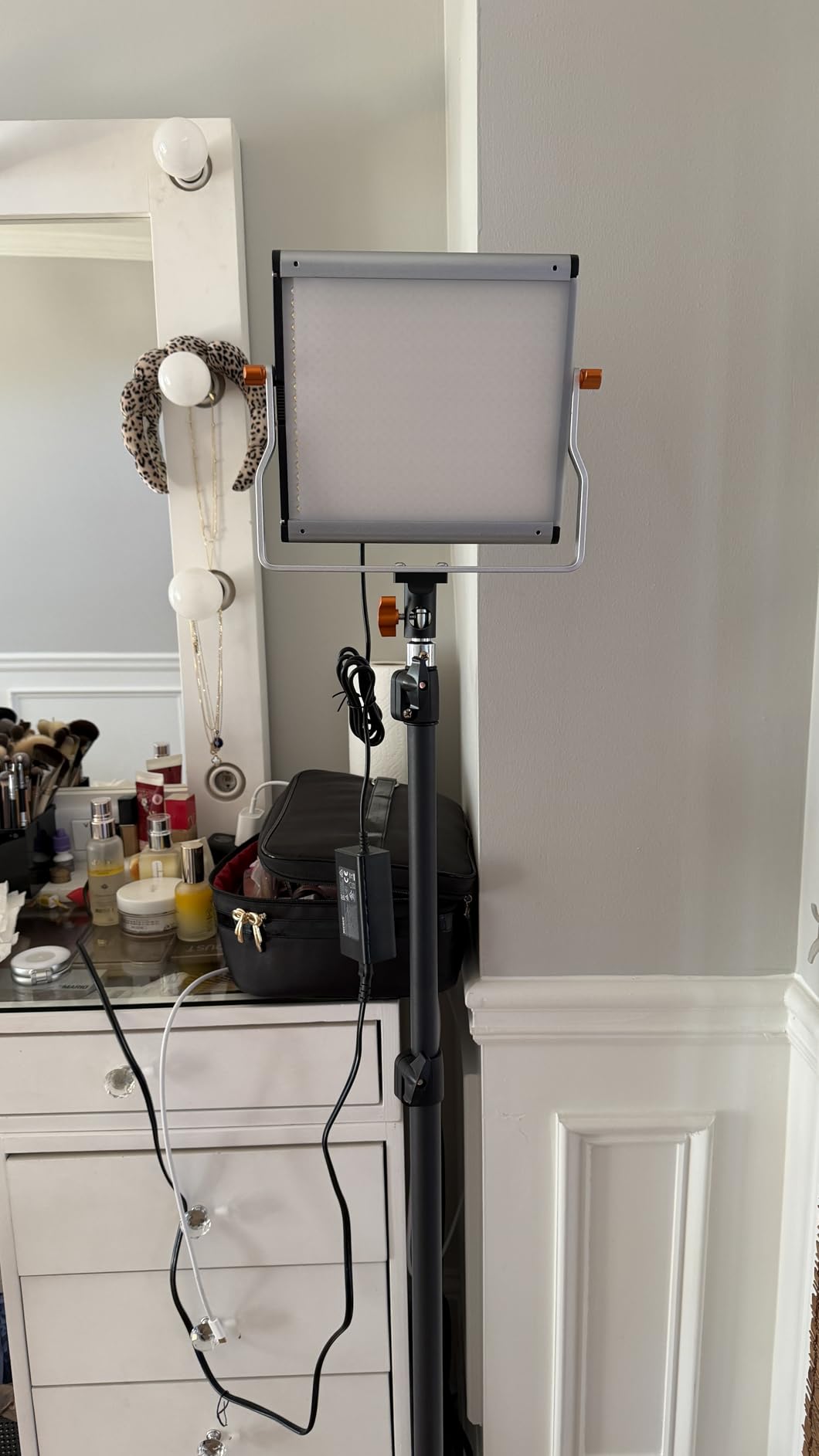
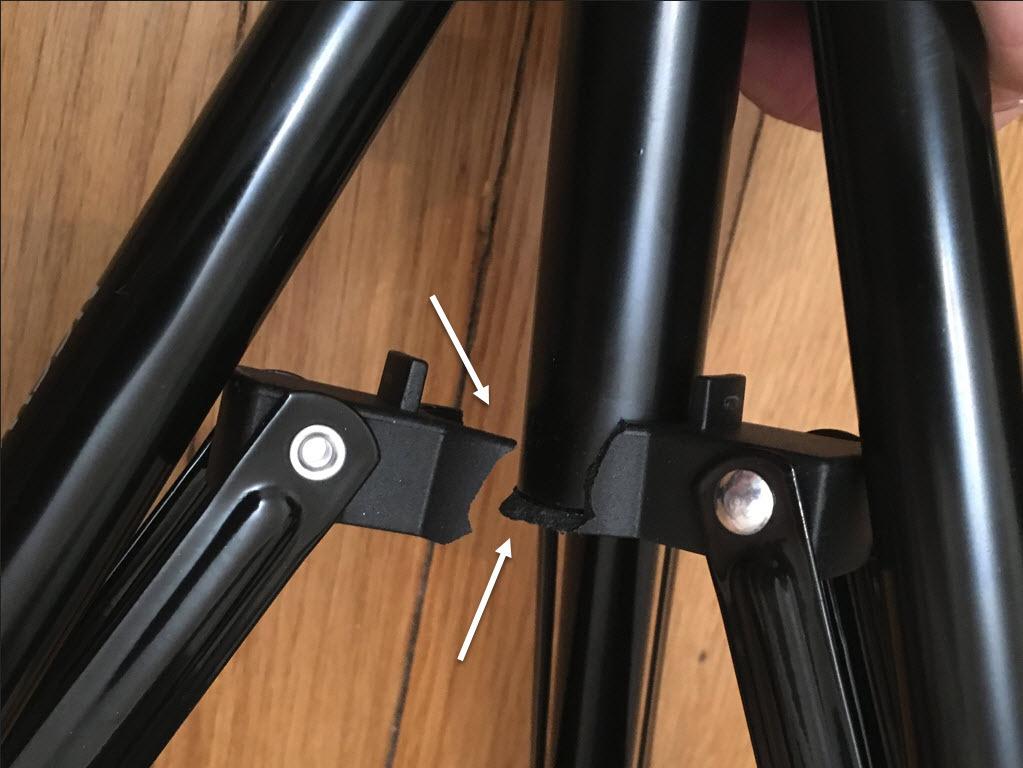
Two further practical notes from owners. The power supply cord running from the brick to the light head is short once the stands are raised high, so plan your cable routing, and the included folding stands are not rugged enough for sustained commercial work, which matters more if you are on a set daily. The good news is the diffuser slot accepts the included white diffuser, and it is enough to take the edge off the output for portrait work.
When this is the right pick
This is the interview and podcast kit. Two lights, two stands, two diffusers and two carrying cases at a total weight that fits in a car, with a colour rendering figure high enough for close faces. It is also the better choice of the two Neewer pairs if your working distance is short, because the smaller panels are easier to position close in for a head-and-shoulders frame.
When it is the wrong pick
Do not use it as your only light on a wide or full-body frame, since 480 LEDs at short throw will not carry a 3m subject. And if precise repeatable colour temperature matters to your workflow, the physical knobs with no numeric readout make that harder than it needs to be. For repeatable settings across a multi-panel room, the GVM pair wins.
5. Neewer NL-192AI Battery Panel 2-Pack – Best for Cordless Shoots
NEEWER 13″ LED Video Light Panel Kit with Tripod Stand, 2 Pack, NL-192AI
3200K-5600K
CRI 97+
2400 lux
4000mAh internal battery
0.4 inch thin at 580 g
Pros
- CRI 97+ and a 3200K-5600K range for accurate tunable skin
- Built-in rechargeable battery removes tethered power
- Very thin at 0.4 inch and light at 580 g per panel
- Stands diffusers and a carrying case included
- Cold shoe and quarter-inch thread with 180 degree tilt
Cons
- Internal battery runs about 90 minutes at full output
- Output insufficient for direct sunlight except as fill
- Rear LCD is small for checking parameters
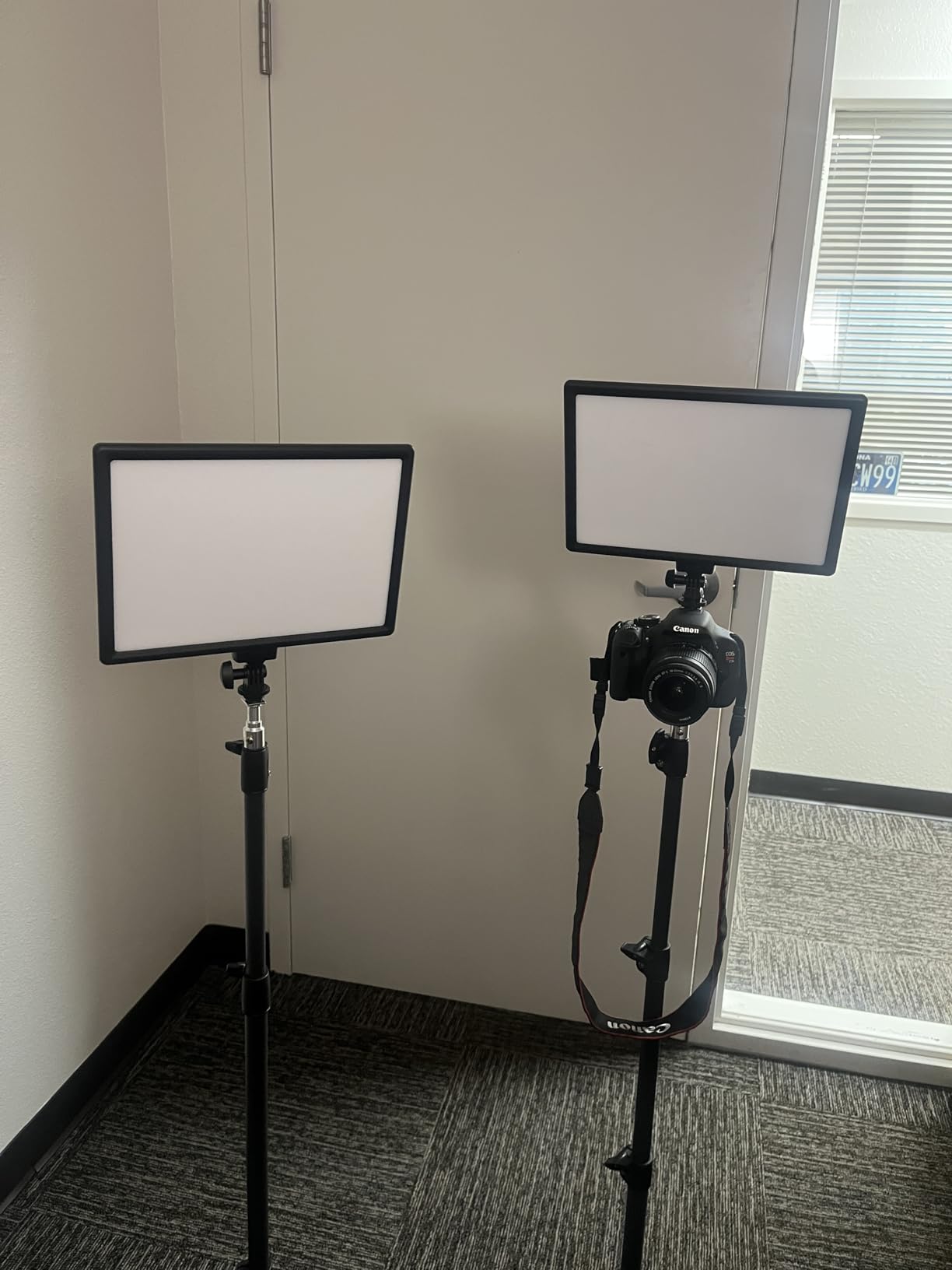
Each panel is 0.4 inch thick, weighs 580 g, and carries a 4000mAh internal battery rated for up to 90 minutes of continuous output at full brightness, with a full charge in about 2 hours on a 15V 2A charger. The colour spec is CRI 97+ across 3200K to 5600K with 2400 lux, which puts it in the same colour accuracy class as fixtures costing considerably more.
Content creators praise the portability and rechargeable convenience for daily streaming and podcast work, and the thin profile is a genuine advantage in a small studio with low ceilings where a deeper fixture will not fit above a seated subject. A cold shoe mount and quarter-inch thread with 180 degree tilt means these also work as on-camera or clamped fill.
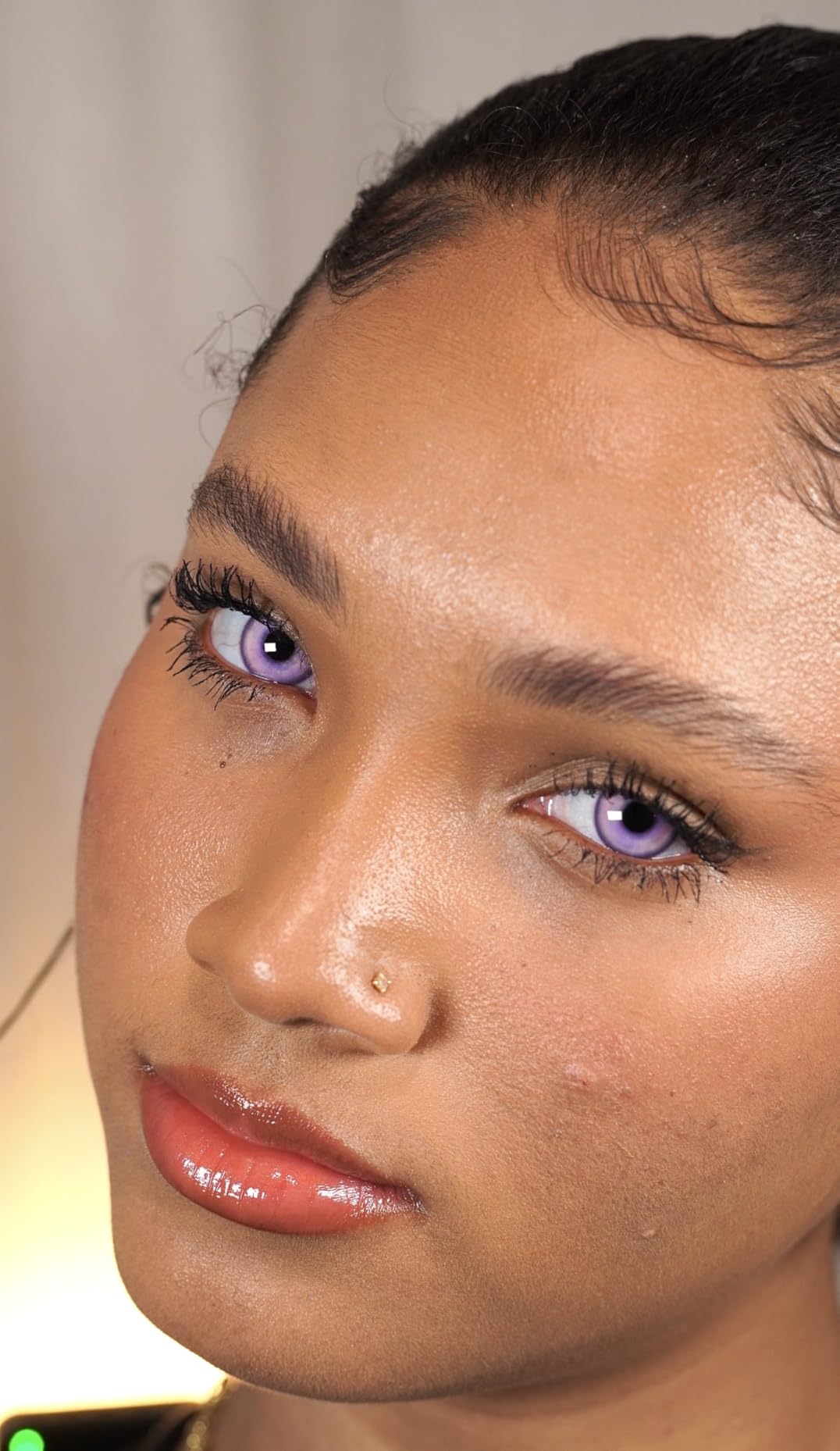
What makes this one interesting for skin tones is the CRI 97+ figure at a lower output than the bigger panels. Brightness is 2400 lux, well under the NL660, so it is a 1 to 2m light, but the colour rendering figure is the highest in this roundup alongside the GVM pair. That is what matters most on a face.
The honest limitation is battery life. A still photographer returned a set after finding roughly 90 minutes of internal runtime too short for event coverage, and the runtime figures drop further if you dim and re-dim through a take, which re-triggers the output stage. Add the fact that output is not enough for direct sunlight except as fill, and this is a studio and interior light, not an exterior one.
When this is the right pick
Right for anyone shooting a podcast, a stream or a talking-head set in a room where running cables is a nuisance or impossible. At 0.4 inch these mount under a shelf, on a monitor arm or on a ceiling track without stealing headroom, and the two included 70 inch stands cover the case where you want them freestanding.
When it is the wrong pick
Wrong for any shoot longer than about an hour and a half at full output, and wrong as a key light outdoors. If your production runs long, buy a spare set of panels or plan to run on mains through the stands for the key and keep these as wireless fill.
6. Aputure Amaran 200X-S 250W – Best Colour Accuracy
Aputure Amaran 200X-S Cob Led Video Light Bicolor 2700K-6500K,250W,51600Lux1M,App Control,9 pre Programmed Lighting Effects,Ultra Silent Fan
250W COB
2700K-6500K
CRI 95+ and TLCI 98+
51600 lux at 1m
Bowens mount
Pros
- Best published colour metrics here with TLCI 98+ and TM-30 Rf 97
- 51600 lux at 1m fills a room from one fixture
- Universal Bowens mount for the widest modifier selection
- Sidus Link and Sidus Mesh control multiple lights
- Dual-blue chipset improves spectral reproduction
Cons
- Active fan cooling even though it is rated ultra-silent
- Heaviest single head here at 3.92 kg so it needs a solid stand
The most spec-dense colour figure in this roundup: CRI 95+, TLCI 98+, TM-30 Rf 97 and TM-30 Rg 101, with SSI 89 in daylight and SSI 90 in tungsten. A 250W COB head rated at 51600 lux at 1m, running a dual-blue LED chipset specifically designed to improve spectral reproduction across 2700K to 6500K.
Owners consistently cite skin tone accuracy and room-filling output as the deciding factors, and treat the published CRI, TLCI, TM-30 and SSI figures as trustworthy in practice rather than marketing. It carries the highest rating of any fixture here at 4.8.
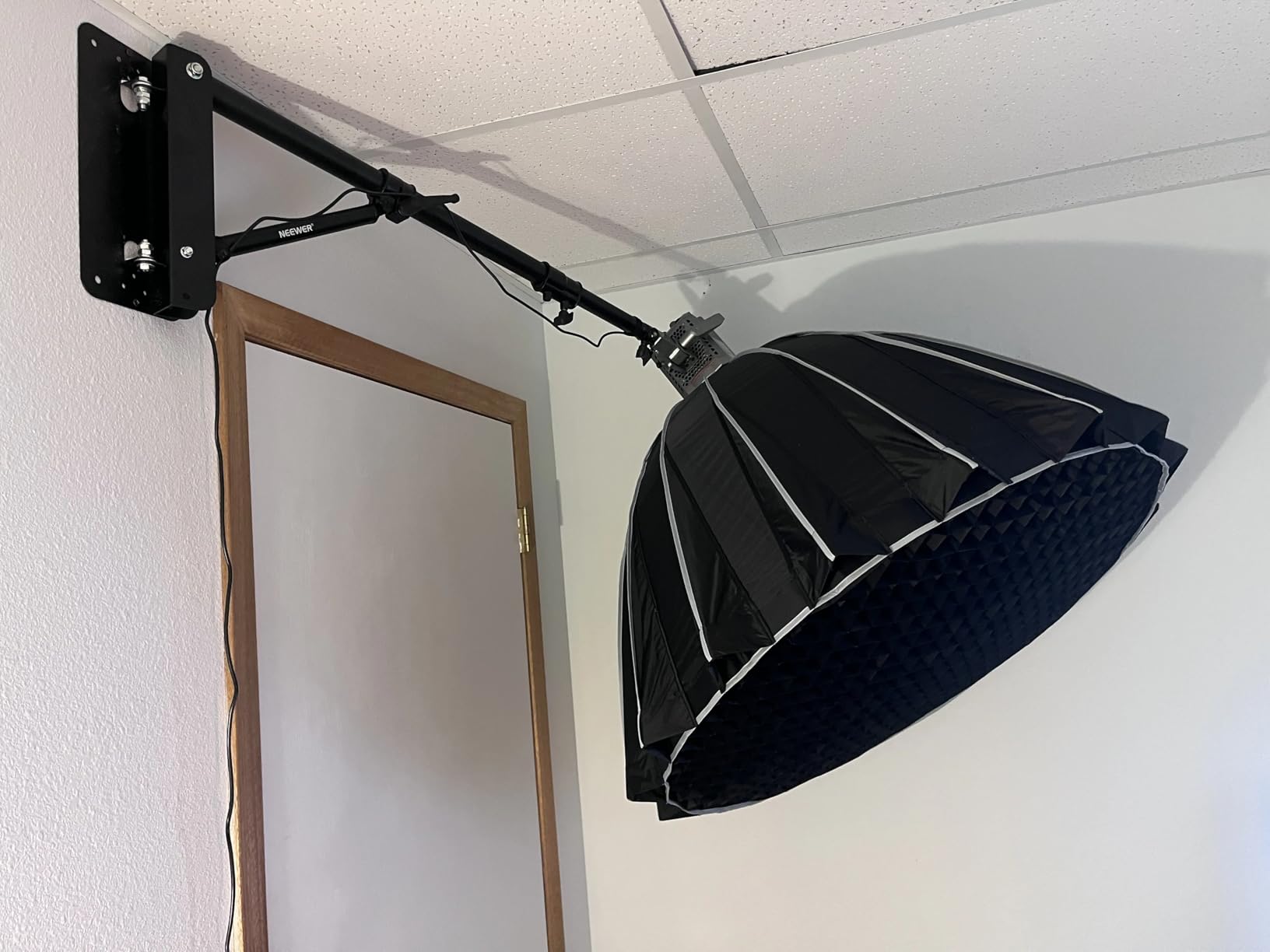
For darker and deeper skin tones this is the fixture we would most want on set. TLCI 98+ is the highest figure here and it is weighted for camera response, which is exactly where a mid-range light tends to lose saturation and detail in a deeply pigmented complexion. Combined with a Light Dome on the Bowens mount, the result is a large, soft, spectrally clean source.
Two caveats. It uses active fan cooling, which the manufacturer rates as ultra-silent but which is a consideration when recording audio on the same take, and at 3.92 kg it is the heaviest single head in this roundup, so it needs a properly rated stand. The universal Bowens mount is genuinely universal, working with the Light Dome SE, the Light Dome Mini II and the Aputure Lantern, so the accessory cost is not proprietary.
When this is the right pick
Right for a dedicated studio or a production rental where one fixture has to do the work of three, and right for beauty and portrait work where the difference between TLCI 96 and TLCI 98 shows on close skin detail. Sidus Mesh control means you can dim and warm several of them from a phone at the back of a room.
When it is the wrong pick
Wrong if you are building a first kit on a small budget, since a single softbox and stand is where the money should go instead. Also wrong for silent audio-critical work on a hot set, and note that 51600 lux at 1m is raw unmodulated output, so a Light Dome will reduce it substantially by the time it reaches your subject.
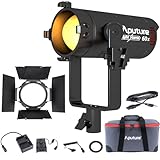
7. Aputure Light Storm LS 60x – Best for Focusable Beams
Aputure 60x Aputure Light Storm LS 60x Bi-Color LED Light 30000lux @1m, CRI 95+ TLCI 95+Built-in 9 Lighting FX, Support NP-F970 Battery, Includes Barn Doors Support Sidus APP Control
60W focusable COB
15-45 degree spot-flood
2700K-6500K
30000+ lux in spot
V-Mount receiver
Pros
- Spot-to-flood focusing gives real control over beam spread
- 30000+ lux in full spot from 60W
- 2700K-6500K with built-in CCT presets
- Modular V-Mount receiver accepts AC and D-Tap and NP-F
- Weatherproof build rated from -20C to 45C
Cons
- Smallest review base here at 116 ratings
- Flood output of about 5200 lux is modest against the spot figure
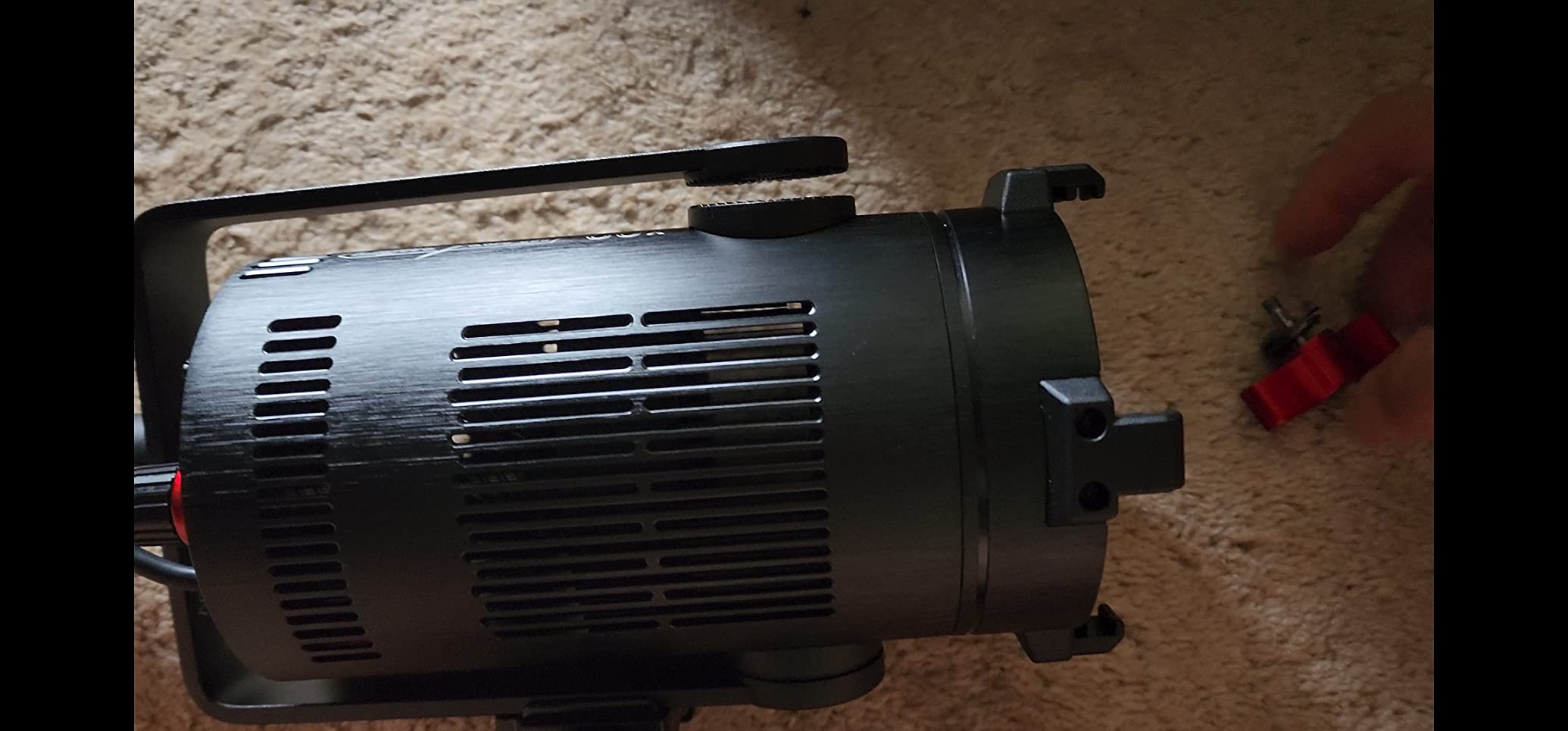
A 60W expanded bi-color COB with custom aspherical optics giving a 15 to 45 degree spot-to-flood beam angle. It delivers 30000+ lux in full spot at 5600K and about 5200 lux in flood, with CRI 95+ and TLCI 95+ over 2700K to 6500K, and the manufacturer rates it as outclassing a 300W tungsten fresnel.
Focusing is the feature that makes this genuinely different from everything else on the list. In spot at 15 degrees you can put a hard-edged pool of light on a background or a wall behind your subject; opened up to 45 degrees it becomes a wide, softer wash for a key. A still fixture cannot do that, which is why we picked this for anyone lighting a small set rather than a single face.
The power system is the other reason to like it. A modular V-Mount receiver on the yoke accepts an AC adapter, D-Tap V-Mount batteries, or a dual NP-F plate, so the same fixture goes from studio to location without a different light. Sidus Link control reaches up to 80m through Sidus Mesh, and the OLED screen shows parameters on set.
It has the smallest review base of any pick here and the most bimodal rating distribution, with users who want a portable focusable battery-capable bi-color fixture rating it highly and a noticeable minority rating it in the mid-range. Practically, the spread between 30000+ lux in spot and about 5200 lux in flood is wide enough that you need to know which end of the beam you are using before you commit to it as a key.
When this is the right pick
Right for small narrative work, interviews in a location with practicals you need to isolate, and any set where you want one fixture to serve as both a background light and a key. The weatherproof rating from -20C to 45C and the V-Mount options make it the most flexible light to move between studio and location in this roundup.
When it is the wrong pick
Wrong as your only light on a face in a small room, because in flood it is a 5200 lux source and you will be dimming below its comfortable range. It is also not the output-per-watt answer at this point in the roundup, since a plain 75W COB gives you more light with none of the focusing optics. Buy this for the beam control, not for the power.
8. VIJIM VL200 On-Camera Bi Color Light – Best On-Camera Light
Ulanzi VL200 Bi-Color LED Video Light On-Camera,5000mAh 2500-9000K CRI≥95
2500K-9000K
CRI 95+
550-750 lux at 0.5m
5000mAh battery
200 LED beads
Pros
- Widest span here at 2500K-9000K for an on-camera light
- CRI 95+ with continuous 1-100% dimming
- 5000mAh battery gives hours of intermittent use
- Slim at 440 g and easy to carry on location
- Rear LCD shows settings runtime and battery level
Cons
- Silicone diffuser sleeve can block the mount screw
- Battery drains quickly under heavy continuous output
- Ball swivel base is good but the mount interface is weak
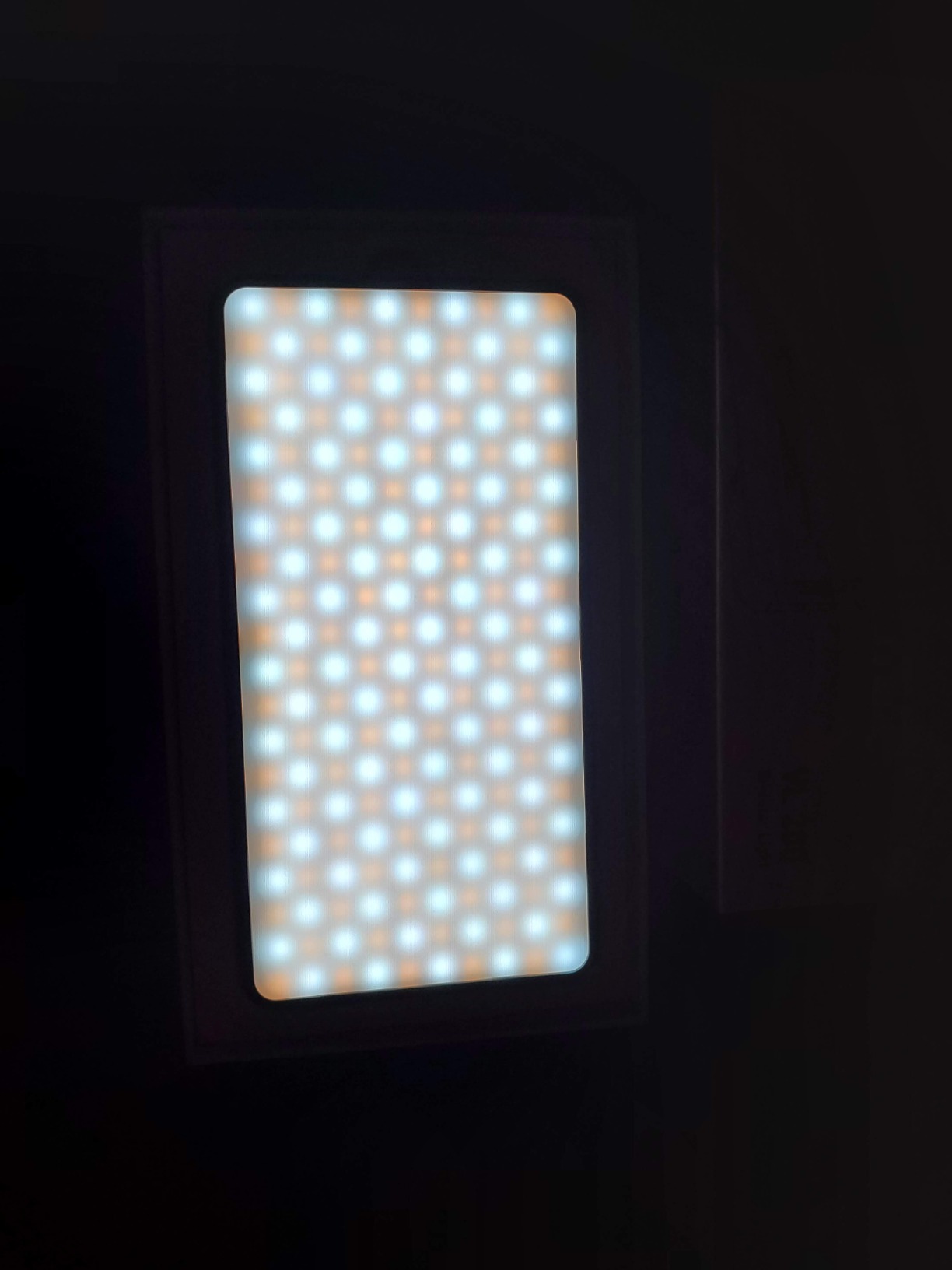
An on-camera panel with 200 LED beads, 100 warm and 100 cool, covering 2500K to 9000K at CRI 95+. That 9000K top end is unusual at this size and gives you a genuinely cool, neutral option for matching a bright window or a north-facing room.
Output is rated at 550 to 750 lux at 0.5m, and event and run-and-gun photographers report it gets very bright for its size. The 5000mAh internal battery gives a claimed 2 to 15 hours depending on level, with owners reporting roughly 3 to 4 hours of real-world intermittent use, and it recharges over USB Type-C with a diffuser sleeve in the box.

Skin tone performance is genuinely good for an on-camera light, which is more than can be said for most. CRI 95+ with a continuous 1% to 100% dimming control means you can dial it down to a subtle fill at 0.5m without the colour shifting, and the three-button control with an informative rear LCD is quick enough for a run-and-gun setup.
There is one recurring complaint and it is a real one: the silicone diffuser sleeve can block the mount screw, making the cold shoe hard to seat. Users work around it, but budget five minutes for it the first time. Battery life is the second limit, since heavy continuous output drains the 5000mAh cell quickly and this is not a fixture for a full day of continuous streaming.
When this is the right pick
Right for vlog and run-and-gun work where you need a hair light, a background wash or a subtle face fill at close range, and right for anyone shooting in mixed lighting who wants to dial from 2500K to 9000K without carrying gels. It is also a good travelling companion, at 440 g and 0.79 inch thick.
When it is the wrong pick
Never use it as your key light. Forum consensus is clear that pocket and on-camera lights are useless in daylight and at any real distance, and 550 to 750 lux at 0.5m is an accent level, not a key level. If you have room for one light, spend it on a panel or a COB with a mount.
9. VIJIM VL120 Pocket Bi Color Panel – Best Pocket Fill
VIJIM VL120 LED Video Light on Camera, 6 Color Filters Mini Rechargeable LED Photography Camera Lighting Panel 3200K-6500K Bi-Color Dimmable, CRI95+, 3100mAh Battery Fill Light for Nikon Sony DSLR
3200K-6500K
CRI 95+
1250 lux
3100mAh battery
0.57 lb
Pros
- Genuinely soft flattering on-camera fill
- CRI 95+ and 3200K-6500K for accurate tunable skin
- 0.57 lb so it fits in a camera bag
- Recharges over Type-C and runs while charging
- Silicone diffuser cover included
Cons
- Small switch and cold shoe hardware feel cheap and can fail
- Too weak to serve as a primary key light
- A few reports of panels stopping charging early in their life
A 120-LED panel rated at up to 1250 lux with CRI 95+ across 3200K to 6500K, weighing 0.57 lb and measuring 4.2 by 2.6 by 0.6 inches. It is genuinely the smallest bi-color light here, and photographers and smartphone shooters buy it for one reason: it solves flat-looking phone footage.
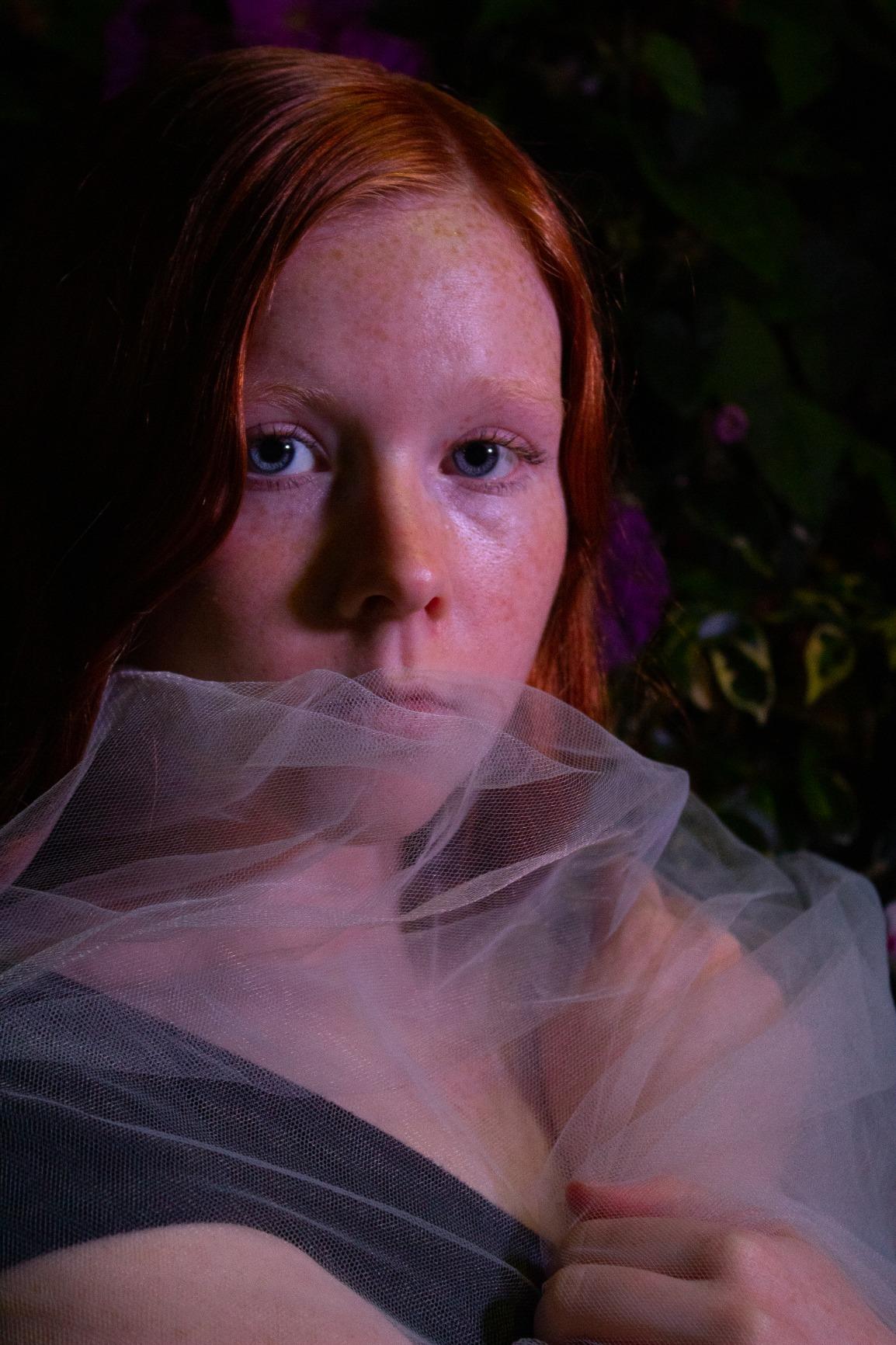
The silicone diffuser cover is what makes it worth carrying. Mounted a foot from a face it produces a soft wrap that removes the nose shadow, and at CRI 95+ the colour is accurate enough to use as a subtle fill without introducing a cast. It runs on a built-in 3100mAh battery for up to 150 minutes at maximum output, charges over USB Type-C, and works while charging.
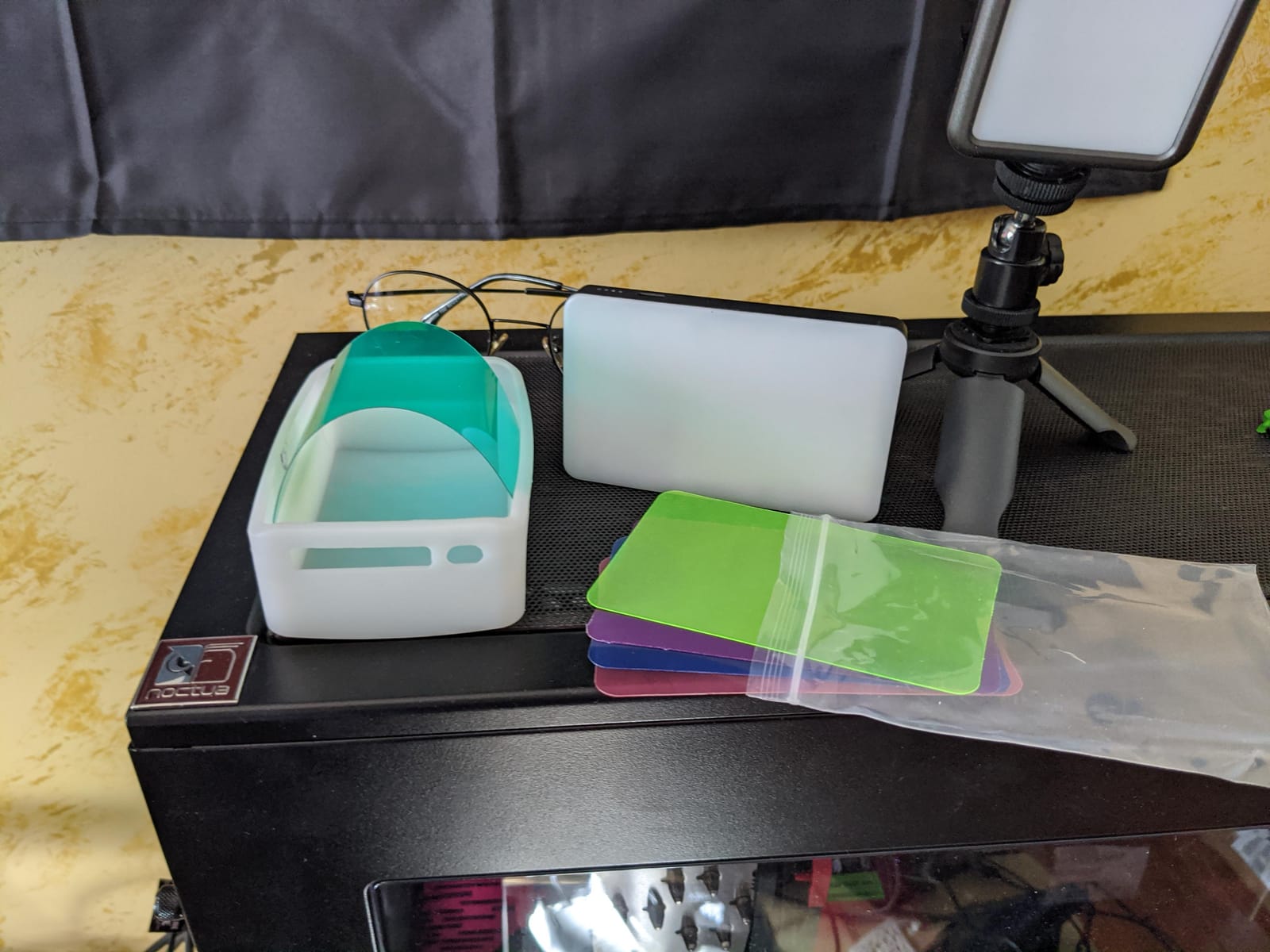
Six colour filters in pink, red, yellow, purple, green and blue are included, which costs almost nothing and covers accent and stylised looks. Brightness runs 10% to 100% on a single switch, and the cold shoe mount works with DSLRs, mirrorless cameras and smartphones.
The build is where it shows its entry price. The switch and cold shoe hardware feel cheap and can fail, and there are reports of panels that stop charging or die within weeks. Treat it as a consumable travel accessory rather than a studio fixture, and check it before a trip rather than on the day.
When this is the right pick
Right for smartphone video, for filling a face in a dim room during an interview where you have no space for a stand, and as a cheap second light for a bag that already holds a larger panel. It is also the right buy for anyone who wants to test whether bi-colour lighting makes a visible difference before spending properly.
When it is the wrong pick
Wrong for anything beyond 1m, and wrong for beauty or deep-skin-tone work where you need maximum output to see the colour accurately. At 1250 lux you will be dimming a real key light to use it, and at very low levels the noise floor of a small panel shows up in the shadows on a face.
10. NiceVeedi 2-Pack 15W Studio Kit – Best First Lighting Setup
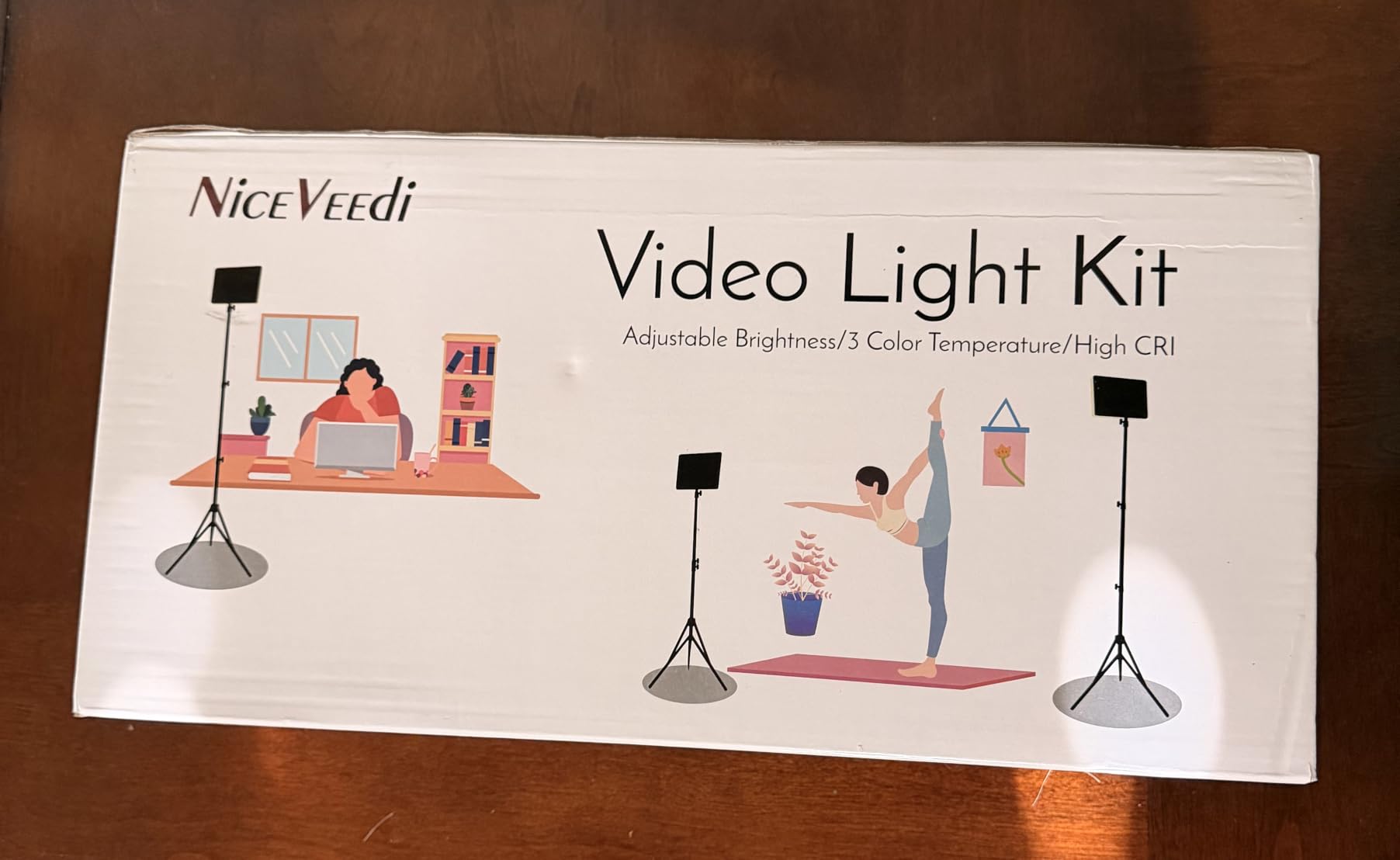
2-Pack LED Video Light Kit, NiceVeedi Studio Light, 2800-6500K Dimmable Photography Lighting Kit with Tripod Stand&Phone Holder, 73″ Stream Light for Video Recording, Game Streaming, YouTube
15W per panel
2800K / 4800K / 6500K presets
CRI 97+
Two 73 inch tripods
Pros
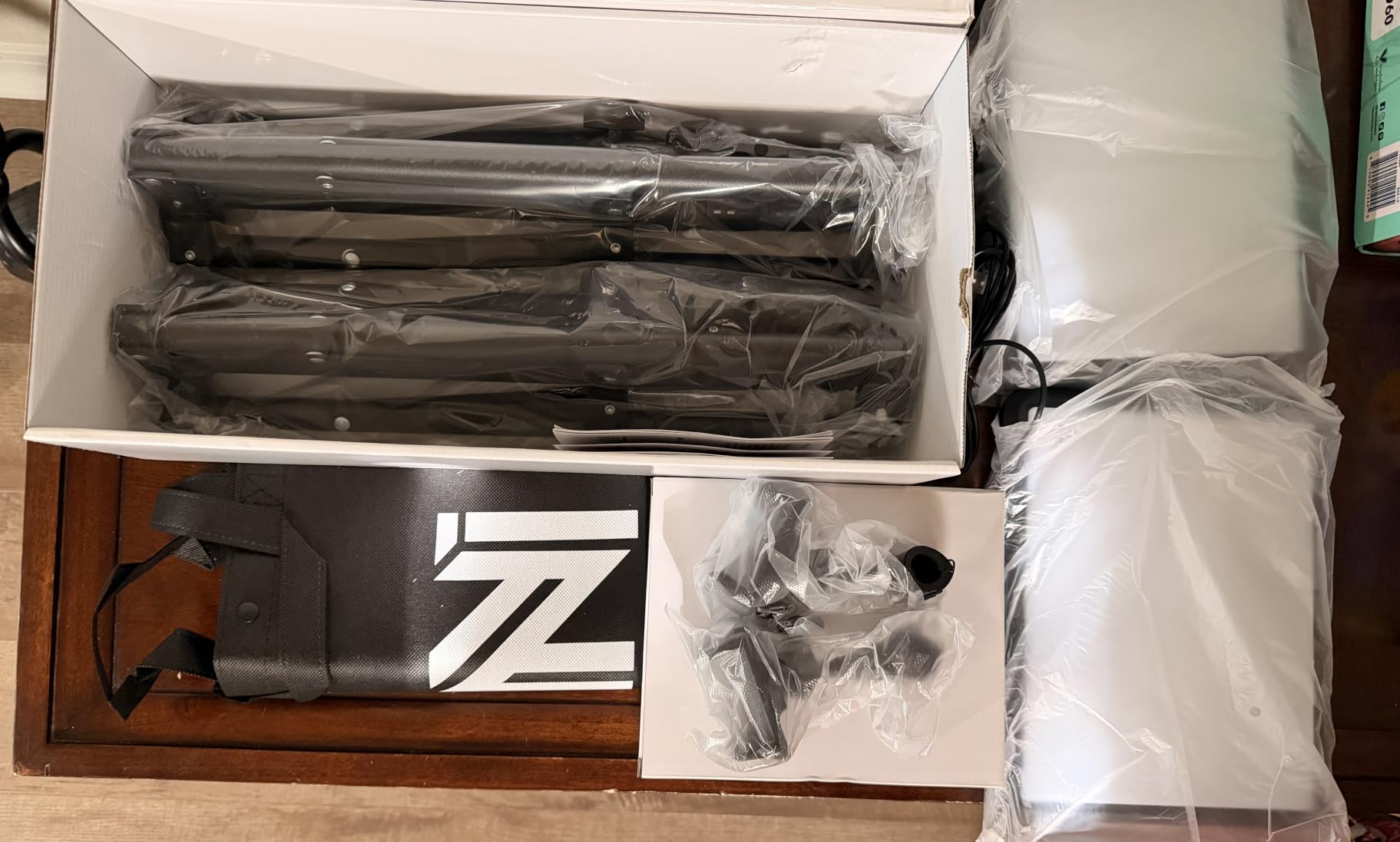
- Two lights and two tripods plus phone holders and a bag in the box
- CRI 97+ at this entry level
- Even soft output that reduces facial shadows with one light per side
- Lightweight and quick to adjust
- USB-C power from a laptop or power bank
Cons
- Only three preset colour temperatures instead of a continuous range
- No mains power supply included
- Some owners report a panel that shuts off at random
Two 15W panels with 356 LED beads each, rated CRI 97+, three preset colour temperatures at 2800K, 4800K and 6500K, and brightness from 10% to 100% with remote buttons. It has the largest review base of any pick in this roundup, at over 6000 ratings, and the majority of those are positive about the brightness-to-cost ratio and the two-light arrangement.
The one light per side arrangement is what makes it useful for skin. Because the panels are large relative to their output, one placed on each side of a subject at roughly a metre gives you soft, even facial lighting with the nose shadow largely gone, which is the entire goal of a simple talking-head setup.
The limiting factor is the three-preset colour temperature. A true bi-color light gives you a continuous dial; this one gives you warm, neutral or daylight and nothing between. That is workable for a dedicated studio with fixed white walls, and frustrating the moment you want to match a mixed-temperature room or dial one light warmer than the other for separation.
Two other things to know. The panels run over USB-C at 5V 2A and no mains supply is included, so you need a wall charger or a power bank, and the tripod legs cannot be adjusted individually, which makes placement between a desk and a wall awkward. A minority of owners report a panel that shuts off at random, and the included diffuser still leaves some shadow.
When this is the right pick
Right for a first setup in a fixed room with white or neutral walls, for stream and podcast use at close range, and for anyone who wants to know whether lighting changes their video before spending on a single larger fixture. At this weight and with phone holders included it also travels.
When it is the wrong pick
Wrong if you need a continuous Kelvin dial, wrong for location work because there is no battery, and wrong past about 1.5m. If you can afford a step up, the Neewer NL480 pair is a genuine bi-color light at a similar size and gives you the control this one lacks.
Frequently Asked Questions
What color light is best for different skin tones?
Sit between 4300K and 5600K for almost everyone. Deep and warm-undertoned skin looks best between 3200K and 4300K, while fair and cool-undertoned skin reads best between 5000K and 5600K. Olive and deeply pigmented skin sits in a neutral band of roughly 4500K to 5200K, which stops the complexion reading grey. The dial exists to match your light to the room, not to hunt for a flattering setting.
What is the best LED panel light for video?
A panel with CRI 95 or above and a continuous 3200K to 5600K dial is the most reliable all-round choice, because a large surface area is soft by nature and forgiving on a face. Our top pick is the Neewer NL660 2-Pack at CRI 96+ with 3300 lux at 1m per panel and two stands included. Panels lose output quickly past 2m, so add a COB head if your subject is further away.
Is 60W light enough for video?
Yes, for a subject at about 1m. Light falls off with the square of distance, so a 60W source is a main light at one metre, a fill at two, and unusable at three. Budget roughly 100 to 200W for a subject at 1 to 2m and 300W or more beyond 3m. Forum advice from dpreview put the floor for a main light at around 80W, which matches what we see in practice.
Do I need CRI 95 for video?
For face work, yes, treat 95 as the practical floor rather than a target. Below 90 you will see a visible shift on close faces, 90 to 94 is acceptable for product and general work, and 95 to 96 handles most complexion ranges. For beauty, broadcast and any shot where skin is the subject, aim for 97 or higher. Always check whether the brand also publishes TLCI, since that figure is weighted to camera response.
What is the most flattering LED light color?
Around 4300K to 5000K, because it sits close to neutral without going cold. Most flattering is also relative to the subject: warm light between 3200K and 4300K flatters deep and warm-undertoned skin, and cooler light between 5000K and 5600K suits fair and cool-undertoned skin. What matters more than the exact Kelvin is the colour rendering figure behind it, because no colour temperature fixes a spectrum with gaps in it.
The Best Bi Color Video Light for Your Skin Tones
The Neewer NL660 2-Pack is the best bi color video lights for skin tones pick in 2026 because it combines CRI 96+, a matched pair of 40W panels, real barn doors and diffusers, and two stands in one box. For a single head with more punch and a Bowens mount, take the Godox SL60IIBi at 25100 lux at 1m and CRI 96 with TLCI 97. For the widest Kelvin range and the highest TLCI in a fixed studio, the GVM 480 pair at 2300K to 6800K and TLCI 97+ is the answer.
Whichever one you pick, hold the same three rules. CRI 95 or TLCI 95 as an absolute floor for any face, 4300K to 5600K as your working band, and manual white balance on every take. Those three decisions will do more for how your skin tones read than any feature list a manufacturer can put on a box.
It is updated for October 2026, and every pick above links straight through to its current listing and owner reviews.