
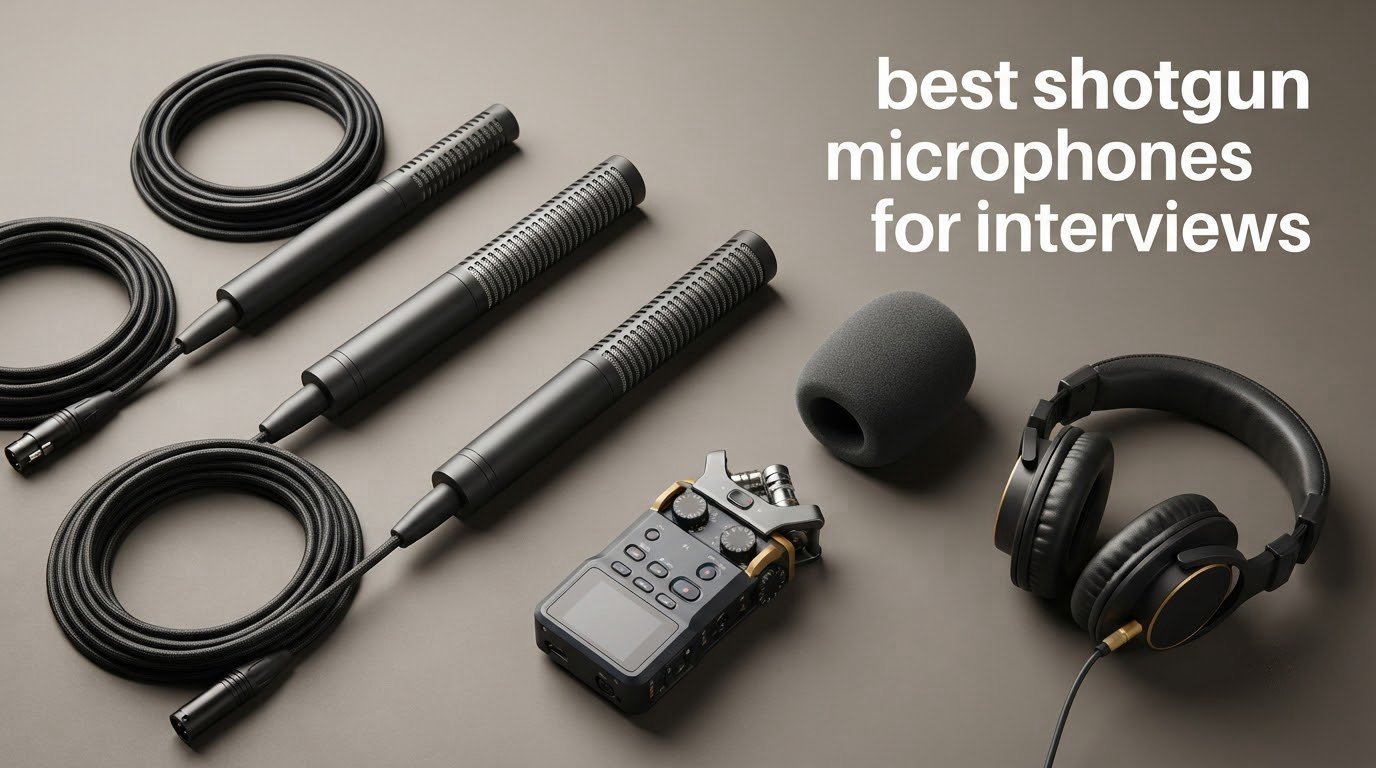
The best shotgun microphone for interviews is the Rode VideoMic Pro+ for most shooters, with the Rode VideoMic NTG close behind if you want more on-body switching and USB flexibility. Both sit in the middle of the range, both are 3.5mm mics that plug straight into a camera, and both handle the two situations that ruin interview audio: background noise bleeding in and hiss sitting under the dialogue.
That is the honest starting point, because most shotgun mic guides on the internet are written for filmmakers and then mention interviews in a single line. Interviews are their own job. The subject is close, usually stationary, usually talking at conversational volume, and the mic has to sit either just out of frame or on a boom. That changes what matters: self-noise over maximum SPL, off-axis rejection over reach, and a connection you can actually plug into.
We compared ten of the most popular shotguns for interviews, putting each one through the same questions: how quiet is it in a still room, how narrow is the sweet spot, what does it need to be powered, and what happens to your audio when the subject turns their head. All ten appear below with their real specifications, plus the honest drawbacks. If you want the wider take on the category, our picks for the best shotgun microphones for video and the best podcast microphones for professionals cover the studio side of the same question.
Table of Contents
Top 3 Picks for Interview Audio in 2026
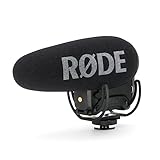
Rode VideoMic Pro+
- Rycote Lyre suspension
- Digital switching with safety channel
- Runs on LB-1 rechargeable pack or AA

Rode VideoMic NTG
- NTG5 broadcast design
- Variable gain plus digital filters
- Auto-sensing 3.5mm and USB

Rode VideoMic
- True line-plus-gradient supercardioid
- Rycote Lyre shock mount
- Ten year warranty
Best Shotgun Microphones for Interviews in 2026
Every microphone in this list is a condenser shotgun, and the column that changes your day most is the connection. Five of these ten need 48V phantom power over XLR, which means a field recorder, a camera with an XLR input, or an audio interface between the mic and whatever you were planning to record into. The other five run on batteries or plug-in power and go straight into a 3.5mm jack.
| Product | Specifications | Action |
|---|---|---|
| Rode VideoMic Pro+ |
|
Check Latest Price |
| Rode VideoMic NTG |
|
Check Latest Price |
 Sony ECM-XM1 Sony ECM-XM1 |
|
Check Latest Price |
 SYNCO D2 SYNCO D2 |
|
Check Latest Price |
 COMICA VM20 COMICA VM20 |
|
Check Latest Price |
 Audio-Technica AT897 Audio-Technica AT897 |
|
Check Latest Price |
 Sennheiser MKH 416-P48U3 Sennheiser MKH 416-P48U3 |
|
Check Latest Price |
| Rode VideoMic |
|
Check Latest Price |
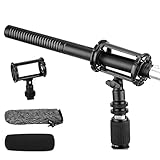 BOYA BY-BM6060 BOYA BY-BM6060 |
|
Check Latest Price |
 Movo VXR10 Movo VXR10 |
|
Check Latest Price |
1. Rode VideoMic Pro+ – Best Overall Shotgun Mic for Interview Audio
RØDE VideoMic Pro+ Premium On-Camera Shotgun Microphone with High-Pass
3.5mm jack
40Hz-20kHz
74dB SNR
LB-1 rechargeable plus 2 x AA
Pros
- Rycote Lyre suspension built into the body
- Digital switching for high-pass pad boost and safety channel
- Automatic power off when unplugged
- Three power options including continuous micro USB
Cons
- Larger than compact on-camera shotguns
- Heavy low end without the high-pass engaged
- Awkward phone connectivity with adapters
I keep the VideoMic Pro+ on my main camera for interviews because it removes three small decisions from the start of every shoot. It powers itself from three different sources, it switches a high-pass filter and a safety channel from the body, and it shuts off when you unplug it, so a hot mic sitting on a shelf never drains the pack.
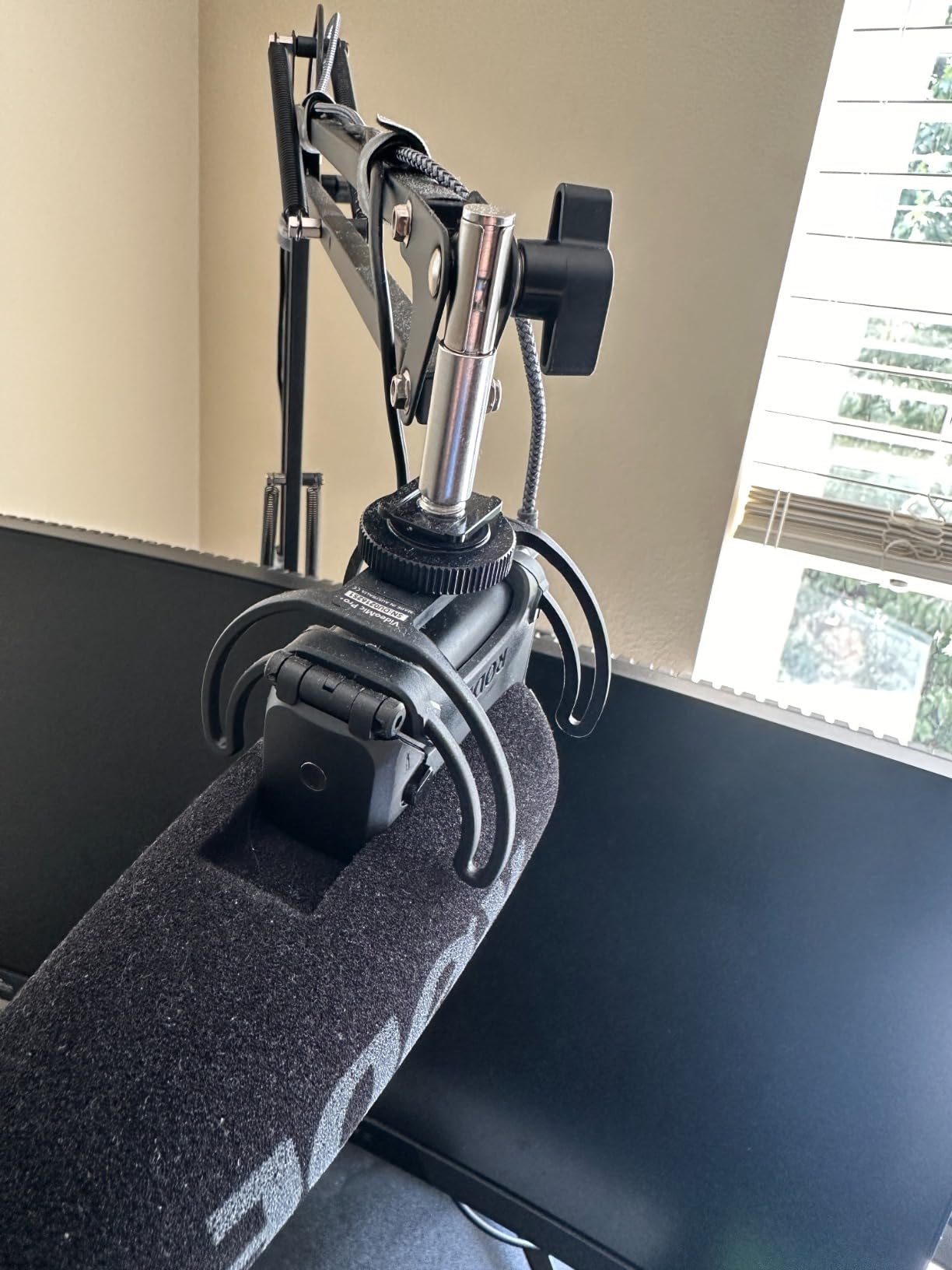
The Rycote Lyre suspension is the reason handling noise stays out of the interview track. The mic hangs on elastic rather than a hard ring, so a hand resting on the camera or a knuckle on the hot shoe does not travel straight into the capsule. On a sit-down interview I can rest the camera on a table and adjust the subject’s chair without touching the audio.
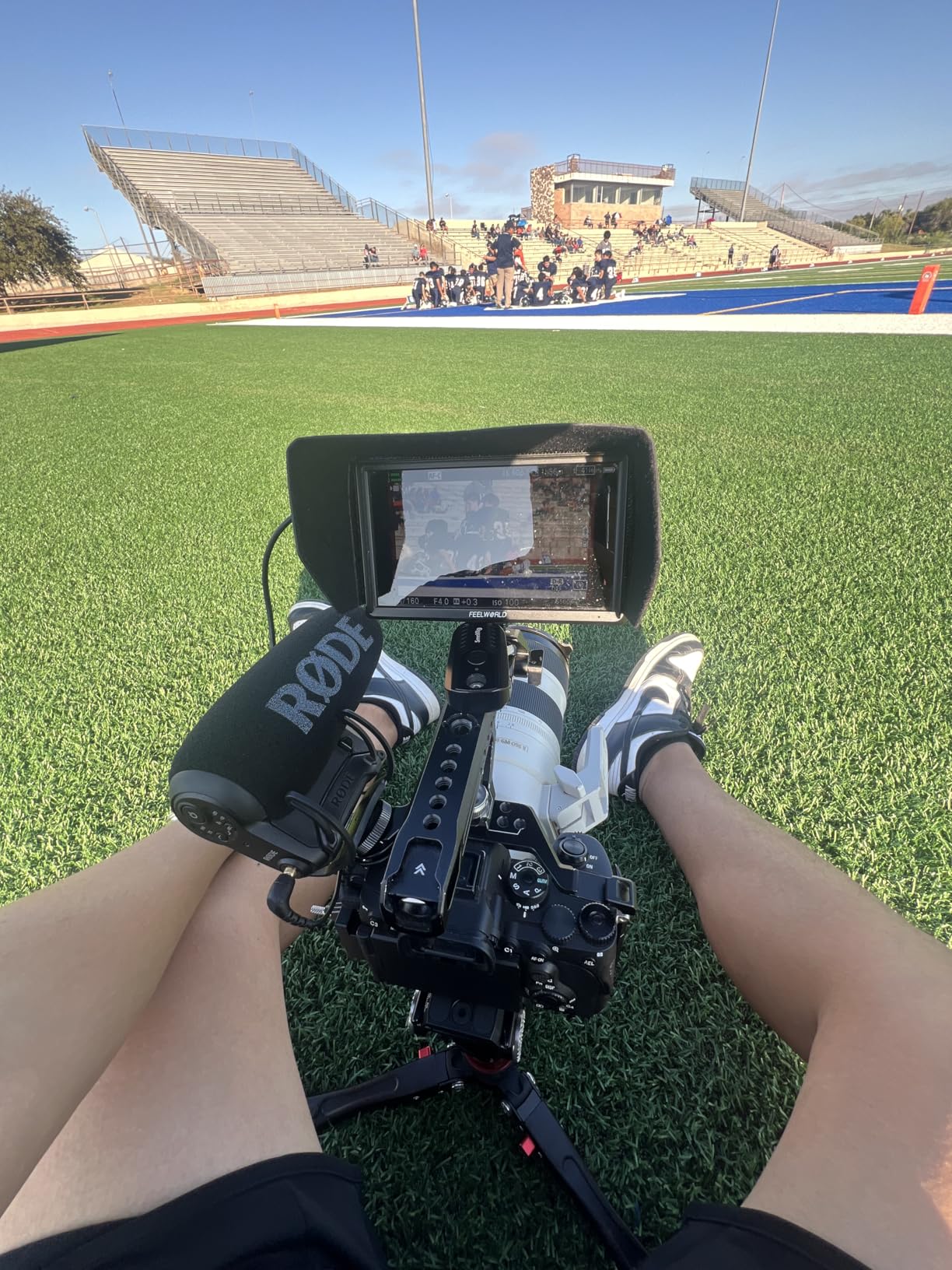
Sound quality is rich and clear, with a lot of body below 200Hz. That warmth is welcome on some voices and muddy on others, so the high-pass is the first switch I reach for when the subject is in a room with traffic outside. Turning it on is also what makes the -10dB pad useful: a close, animated subject can peak without you riding the gain down.
The safety channel records a second track 20dB below the main one, which has rescued more than one interview for me than any other feature here. If the subject suddenly gets loud and clips, the safety track survives it.
Is it the right choice for a sit-down interview?
Yes, if the interview happens in a reasonably controlled room and the mic sits on or near the camera at conversational distance. The pattern is unidirectional and the barrel is tuned for rejection from the sides, so a busy corridor or an office outside the door stays down where it belongs.
Pair it with a dead cat if the interview is outdoors. The bundled windshield is fine for a light breeze and nothing more.
Where will it let you down?
Two things. The body is noticeably larger than compact on-camera shotguns, so it will not disappear on a small mirrorless body without looking like a mic. And some users report hum when powering from a USB battery bank, so on a long day I run it on the included LB-1 rechargeable pack instead.
Reviewers also note the power LED sits on the back, which means you cannot see whether the mic is live from behind the camera. Check it before you roll.
2. Rode VideoMic NTG – Best Feature Set for On-Camera Interviews
Rode VideoMic NTG Camera-mount Shotgun Microphone,Black
3.5mm jack and USB
Lithium polymer or USB
20Hz-20kHz
79dB SNR
Pros
- Broadcast NTG5 acoustic design with natural uncoloured sound
- Infinitely variable gain plus digital switching
- Auto-sensing 3.5mm output
- Works as a USB mic with headphone monitoring
Cons
- Needs an SC15 accessory cable for iOS devices
- Battery powered so it will not run from camera power alone
The VideoMic NTG is built around the acoustic design of the NTG5 broadcast shotgun, which is the reason it sounds as natural as it does for a mic this size. Dialogue comes through open and uncoloured, with none of the boxy edge you get from smaller budget tubes.
For interviews, the control layout is the real story. A gain knob with no steps means you can match any subject’s voice without hunting through a menu, and the digital switching gives you a high-pass filter, a -20dB pad, a high-frequency boost and a safety channel. A lot of what I would normally fix in an edit gets fixed at the mic here.
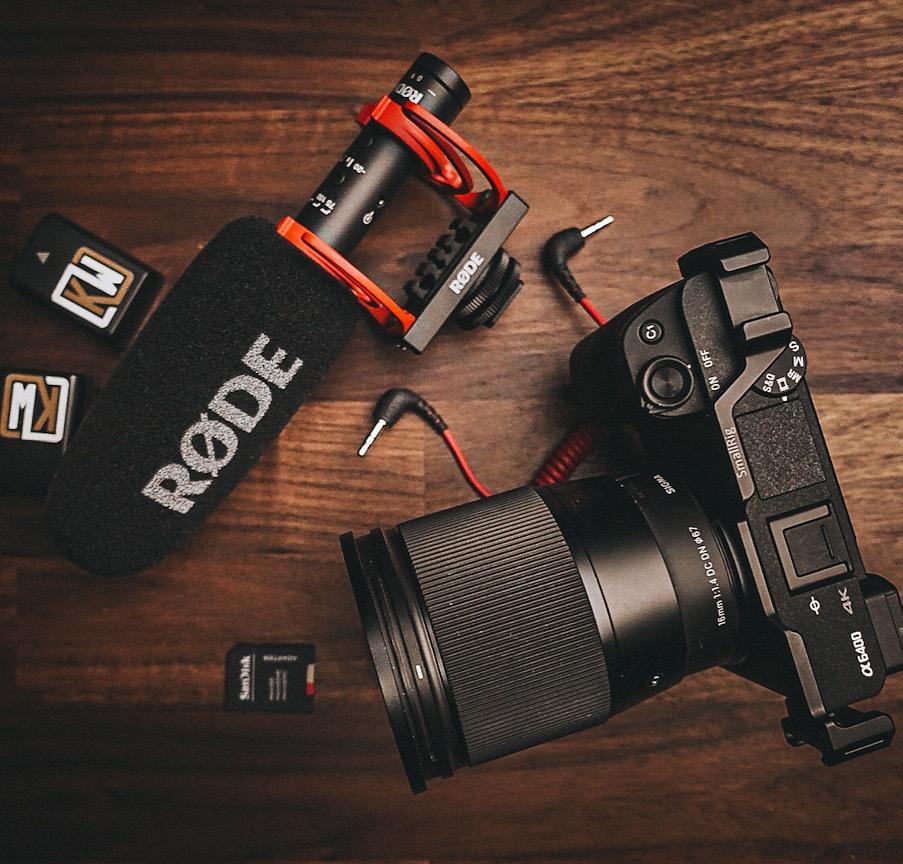
The auto-sensing 3.5mm output is genuinely useful in practice. Plug it into a camera and it behaves as a camera mic, plug it into a phone or tablet and it switches its output to suit. No adapter guessing, no menu diving on the recording device while the subject is talking.
It also works as a full USB microphone, and the 3.5mm jack doubles as a headphone output. For an interview I am not monitoring on the mic itself, but for a remote or a self-recorded piece that turns the same device into a two-person setup with instant playback.

Does it hold up in a two-person interview?
Point it at one person and the other becomes the background. A second identical mic on a small stand aimed at the second subject gives you two clean tracks from two small boxes, and the compact body sits better on camera than the Pro+. The safety channel on each mic is a cheap insurance policy for a chatty interviewee.
What are the compromises?
iOS devices need the SC15 Lightning accessory cable, so budget for that if part of your work is phone-based. It is also battery powered by design, which means it will not run indefinitely from camera power alone the way a phantom-powered XLR mic would on a long ENG day.
At 94g it is a touch heavier than the plain VideoMic, so on a very small rig it can pull the balance forward.
3. Sony ECM-XM1 – Best XLR Shotgun for Sony Broadcast and ENG Rigs
Sony Microphone ECM-XM1, 154274912, XLR
XLR connection
48V phantom power
75dB SNR
Compact metal body
Pros
- Compact body fits tight Sony XLR handles on the FX6 and FX3
- Clean natural sound with strong consonant clarity
- Phantom power means no batteries on a long shoot
- Reliable locking XLR connection
Cons
- Fixed cable with no removable connector
- Some units sit loosely in XLR handles
- Audible noise floor in very quiet post
The ECM-XM1 is the pick when you are working inside a camera that already takes XLR, especially a Sony FX-series handle. The body is small enough to sit in a tight handle without entering the frame, and reviewers consistently report it performs well within a few feet of the subject, which is exactly where an interview mic belongs.
It runs on phantom power through the XLR cable, so there is no battery to change in the middle of a two-hour corporate interview. On a long day that single fact removes a category of problems.
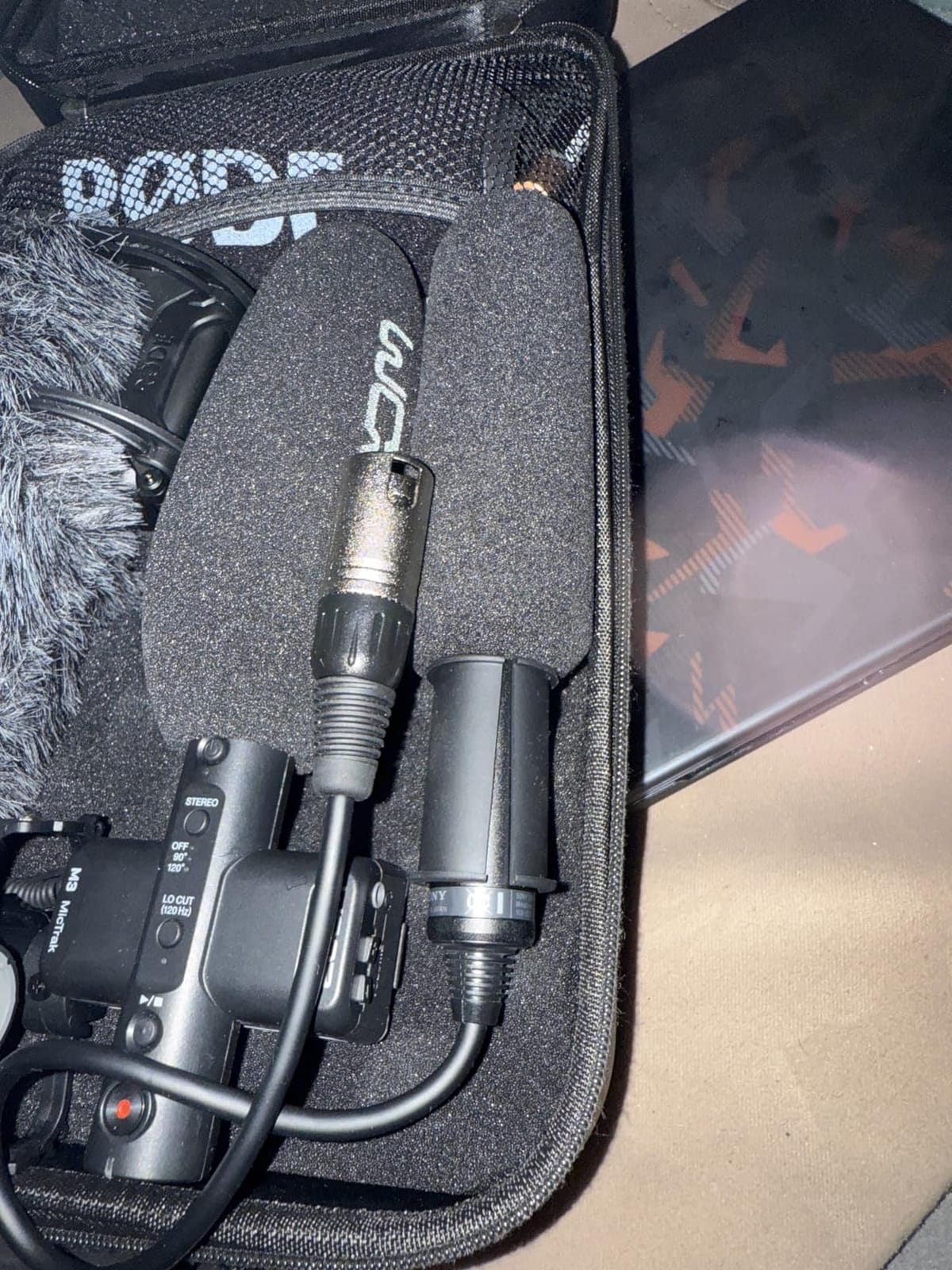
Sound is clean and natural with good clarity, and owners often compare it favourably on-axis against a Sennheiser MKE 600 for scratch audio and interviews. The super cardioid pattern keeps off-axis sound down without the harshness you sometimes hear from wider tubes at close range.
Because it is a shotgun, it does not capture ambience or room tone. If you want the sound of the office, a small-diaphragm condenser is the better tool, and reviewers on this model are clear about that limitation.
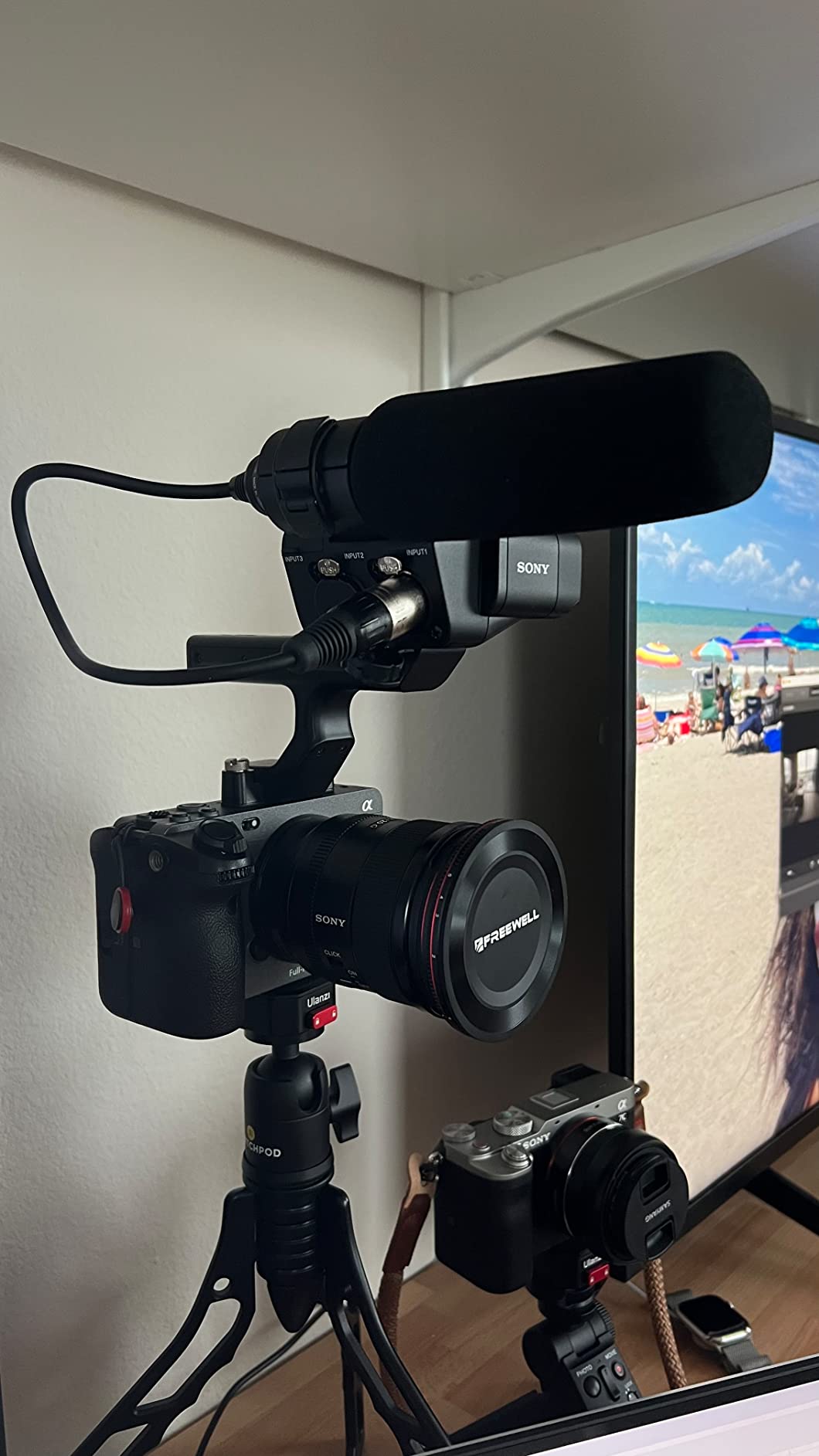
Will it work with your existing gear?
Only if you have somewhere to plug in an XLR with 48V. That is a real barrier for a first-time interview buyer. A mirrorless camera with only a 3.5mm jack cannot take this mic without an interface, and the interface is another device that needs power, gain and headphone monitoring set up correctly before you shoot.
If you already record to a Zoom or a field mixer, this is a comfortable fit and the locking XLR connection will not work loose on a moving operator.
What do reviewers complain about?
The cable is fixed rather than a removable connector, which limits how you route it on a rig. Some units fit loosely in an XLR handle and need the rubber sleeve or a wrap of tape. A slight noise floor is audible in very quiet passages and comes out with gating or noise reduction.
4. SYNCO D2 – Best Value XLR Shotgun With Very Low Self-Noise
SYNCO D2 Shotgun Microphone, XLR Condenser Boom Mic for Camera
XLR connection
48V phantom power
12dB self-noise
65g brass body
Pros
- Very low 12dB self-noise with an 80dB signal to noise ratio
- Hyper cardioid pattern with -18dB off-axis attenuation
- Ultra-flat 20Hz-20kHz response
- CNC brass body and 65g weight suit boom work
Cons
- Requires 48V phantom power so no consumer 3.5mm use
- No on-body high-pass filter or pad
Self-noise is the spec that shows up in your edit, and the SYNCO D2 has the lowest figure of any microphone in this roundup at 12dB A-weighted. In a genuinely still interview room, that number is the difference between a clean floor and audible hiss between sentences.
It is also light. At 65g it sits on a boom arm without you feeling it, and the brass body is CNC machined with a non-reflective black finish, so it will not throw a highlight into a subject’s eyes under a key light and it tolerates light rain.
The pattern is hyper cardioid rather than super cardioid, with -18dB of off-axis attenuation, which is tighter behind the subject than most on-camera shotguns here. For interview work that means a monitor playing in the room, a corridor outside the door, or a second person shifting in their chair stays down.
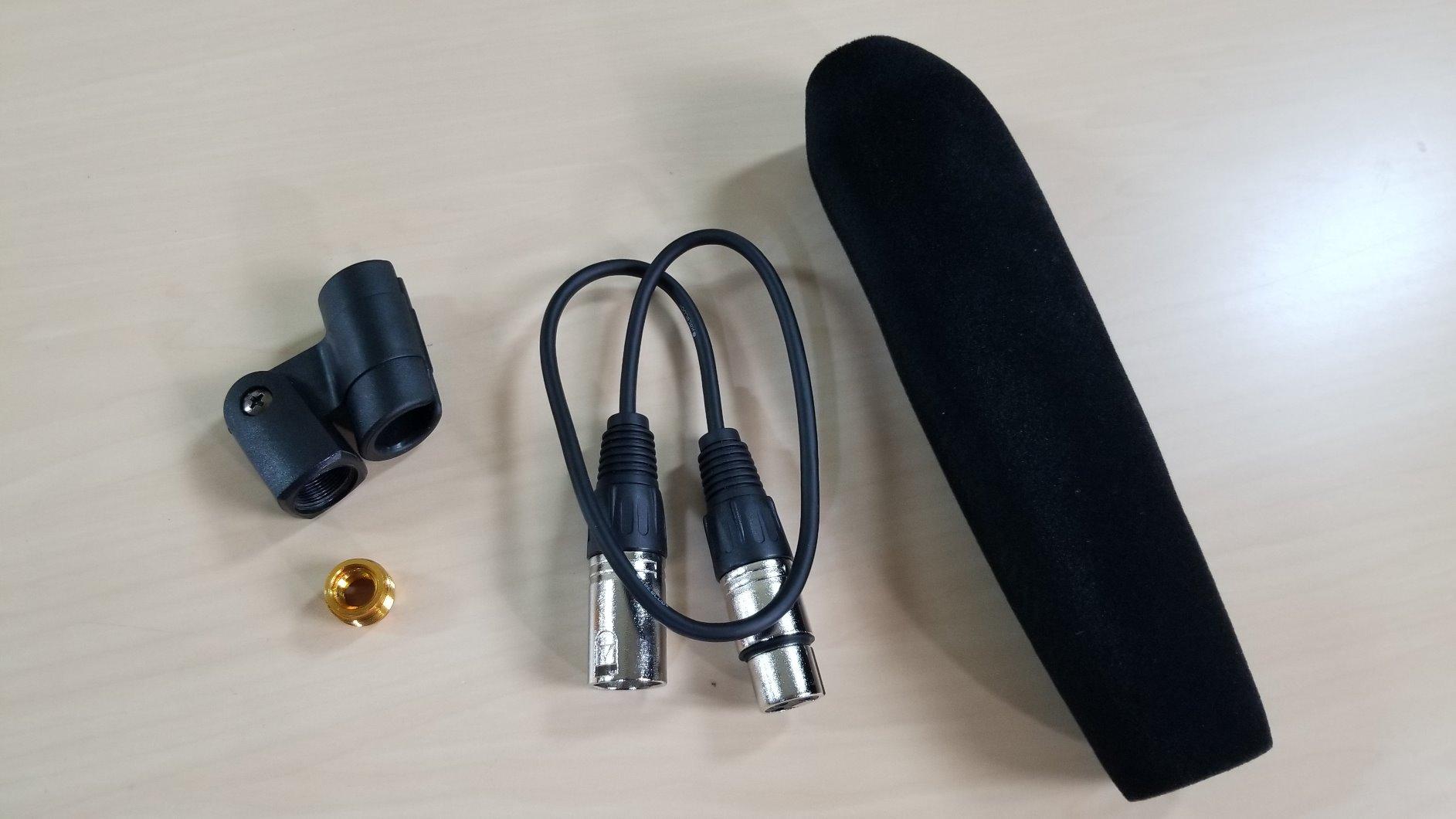
Frequency response is listed as ultra-flat from 20Hz to 20kHz, so you are not correcting a mic-specific bass hump later. The output is a gold-plated shielded 3-pin XLR, and a 19.7 inch XLR cable, a mini mic holder with 3/8 and 5/8 thread adapters, and a windshield are all in the box.
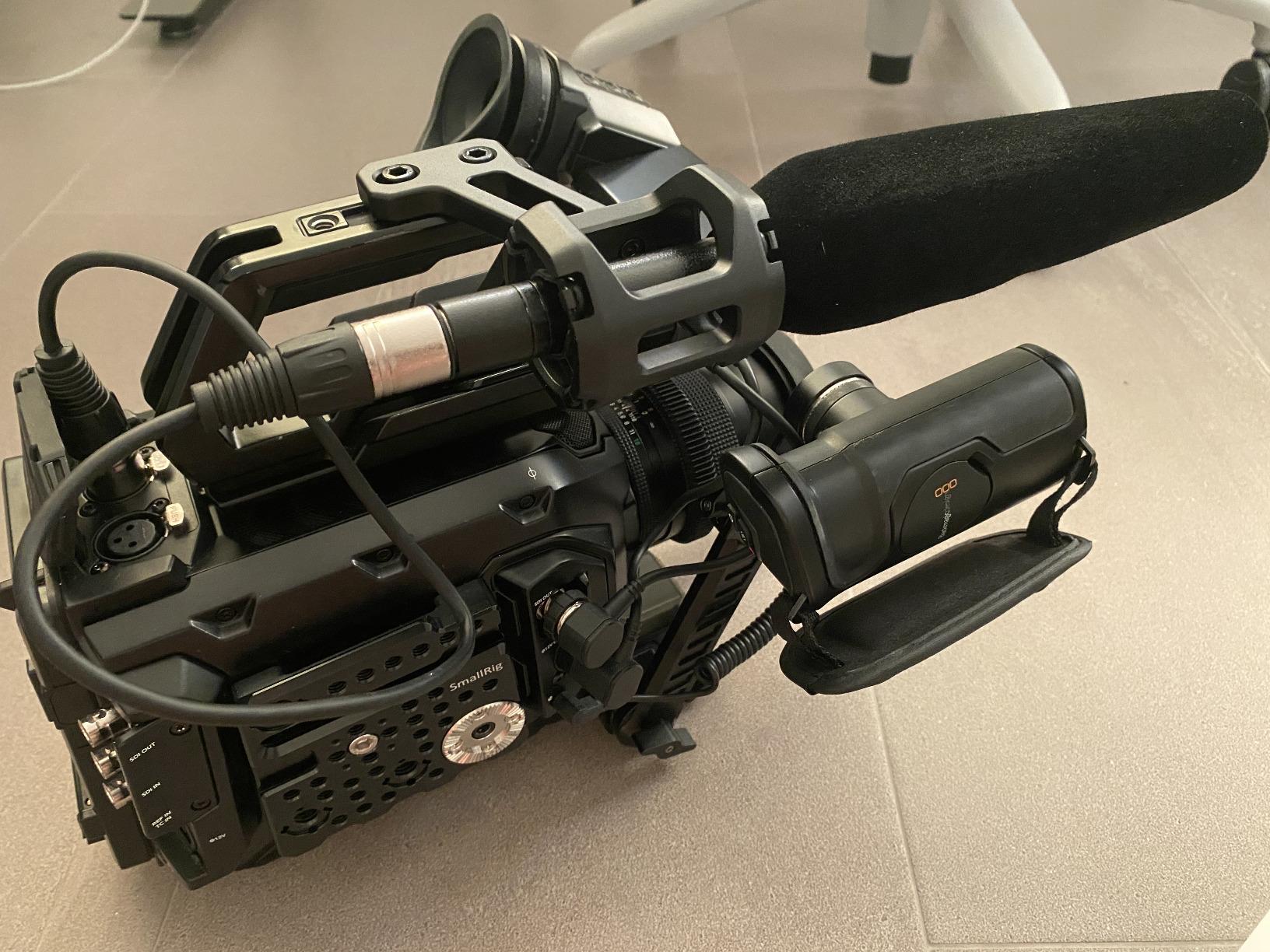
Is the phantom power requirement a problem?
It depends entirely on what you record into. If you are working with a field recorder, a broadcast camera or an audio interface that supplies 48V, this is a straightforward proposition and the noise floor is the selling point. If your plan was to plug a mic into a camera bag full of small gizmos and a 3.5mm jack, this is the wrong purchase and no adapter fixes it.
What is missing compared to the pricier picks?
There is no high-pass filter or pad switch on the body, so traffic rumble and sudden peaks get handled in post instead of at the source. The warranty is one year, against ten years on the Rode models.
It is also a bare microphone with no mount beyond the included holder, so budget for a proper boom clamp or a blimp if you are working outside.
5. COMICA VM20 – Best for On-Camera Gain and Filter Control
COMICA VM20 Shotgun Microphone for Camera, Super-Cardioid Camera Microphone with Rycote Shockmount, Windscreen, Wind Muff, OLED Power Display, Video Mic for Smartphones, DSLR Cameras, Camcorders
3.5mm jack
Rechargeable battery
Metal body
Switchable 75 and 150Hz low cut
Pros
- OLED display shows battery level in real time
- Switchable 75Hz and 150Hz low-cut filters
- Ten-level stepless gain from -43dB to -23dB
- Works while charging over USB-C with up to 60 hours standby
Cons
- Lower signal to noise rating than broadcast rivals
- XLR cable not included for camcorder rigs
- Self-noise comparatively high for the class
The VM20 is the one in this list where the display matters. An OLED panel on the mic body shows remaining battery in real time, which removes the mid-interview silence caused by an unexpected shutdown. On a long corporate shoot I would rather glance at the mic than at a menu on a camera screen the subject cannot see.
Gain is on a stepless knob with ten levels covering -43dB to -23dB, so matching a quiet subject and a loud one is a physical adjustment rather than a menu sequence. The low-cut filter switches between 75Hz and 150Hz, and the 150Hz setting is the one I use for outdoor interviews where rumble and handling noise come up through the floor.
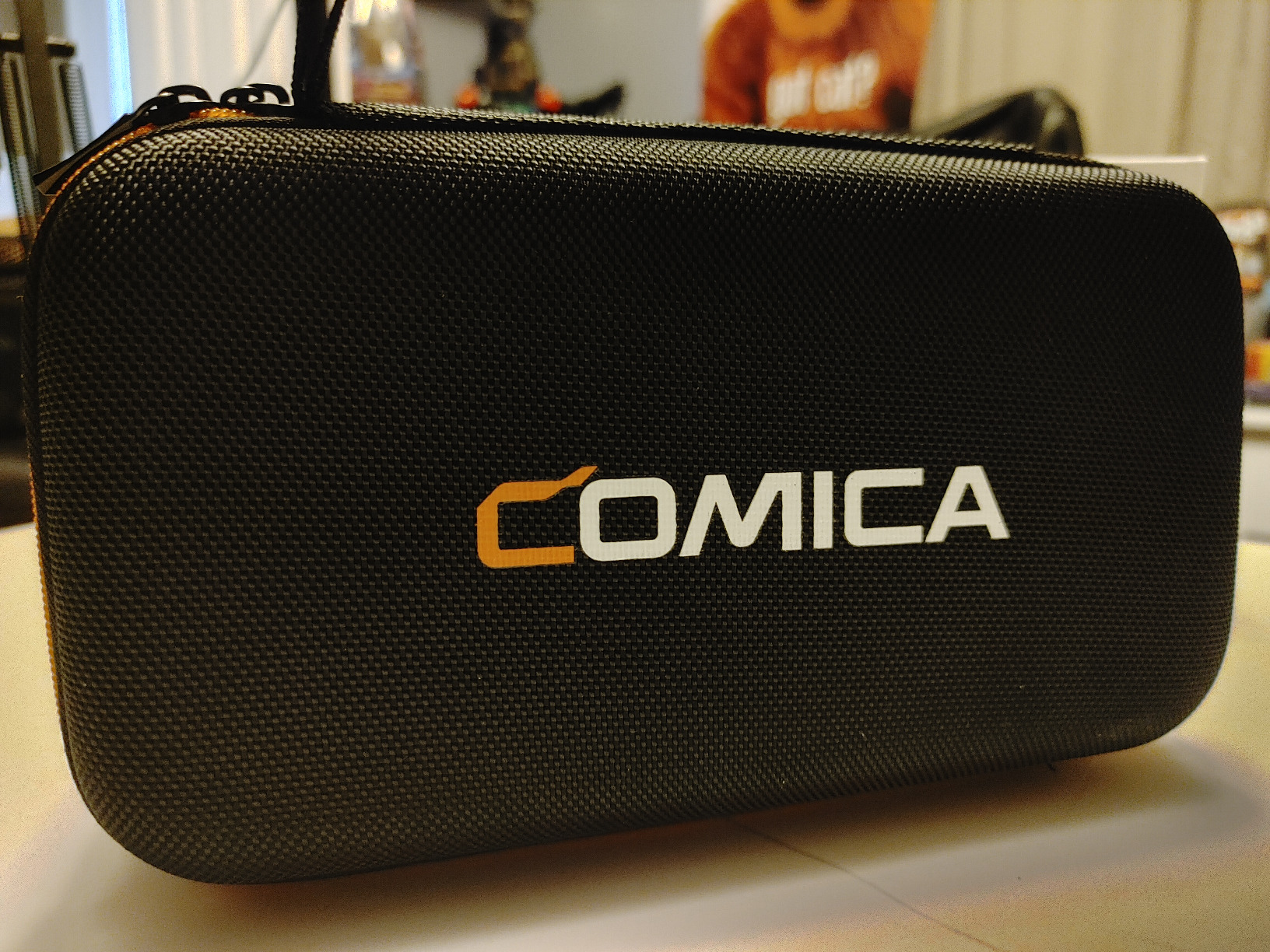
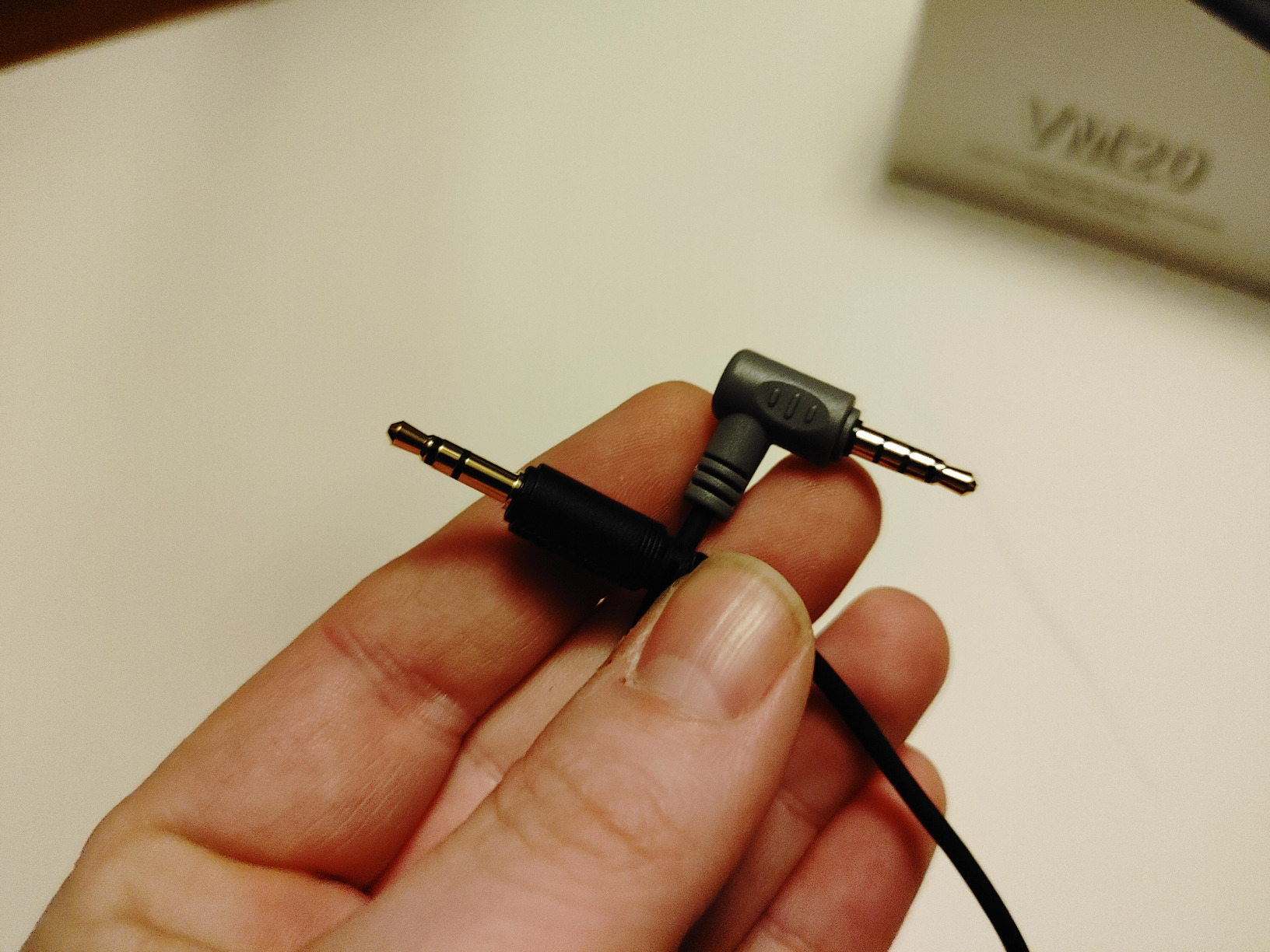
The body is full metal and heavier than the small on-camera mics in this list, so plan a stand or a proper shockmount rather than a bare hot shoe. A Rycote shockmount, a windscreen and a wind muff are included, and both 3.5mm TRS and TRRS cables are in the box, so it will reach a phone, a laptop, a tablet, a DSLR or a camcorder without a shopping trip.
The rechargeable battery runs for extended sessions, and it can be used while charging over USB-C, which is genuinely useful during a long day of back-to-back interviews.
Is it quiet enough for a quiet room?
No, and that is the honest limitation. Its listed signal to noise ratio of 43dB and audible noise of 23dB are the weakest figures in this roundup, and in a still room with a quiet subject you can hear the floor. In an interview with any ambient life, or with the subject speaking naturally and not too quietly, it is a non-issue.
What else to know before you buy
It is 3.5mm only, and the XLR cable is not included for camcorder rigs. A low-cut filter on the body helps, but there is no pad switch, so an unexpectedly loud subject will need attention in post.
6. Audio-Technica AT897 – Best Short Shotgun for Compact ENG Setups
Audio-Technica AT897 Line/Gradient Shotgun Condenser Microphone
XLR connection
Phantom power or single AA
11 inch body
77dB SNR
Pros
- Short 11 inch body keeps the mic out of shot
- Very narrow line and gradient acceptance angle
- Runs on phantom power or a single AA battery
- Switchable low-frequency roll-off and a five year warranty
Cons
- Fixed XLR cable with no onboard gain or pad
- Very narrow angle demands careful aiming
- Some listing images and packaging may arrive looking used
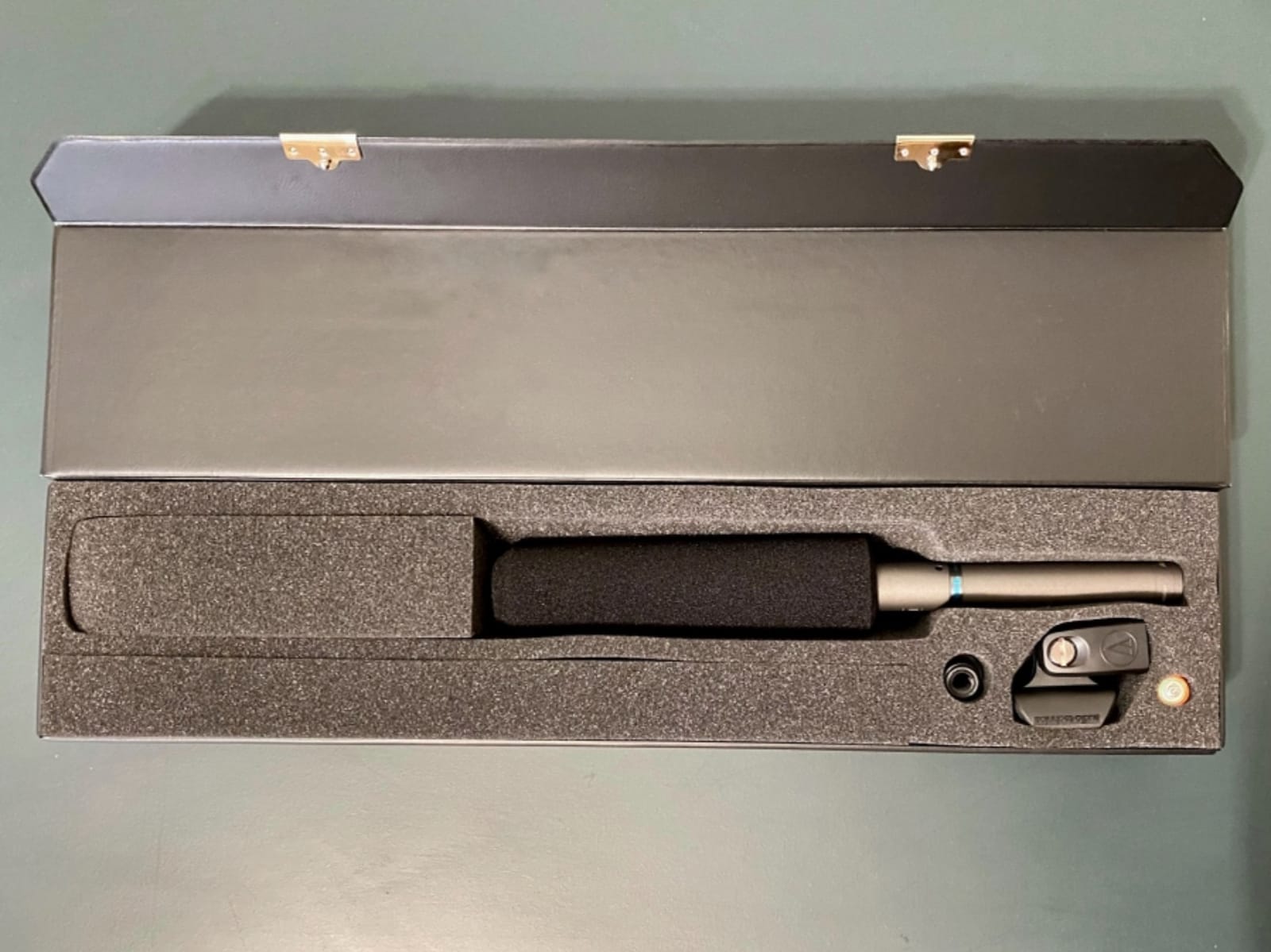
The AT897 is built for video production and broadcast audio, and it shows in the details. The body is 11 inches long, which is short enough to stay out of frame even on a compact digital camera, and it weighs just over five ounces. It is a stainless steel body in a line-plus-gradient pattern, the traditional approach to a long-distance shotgun.
What interests me for interviews is the power flexibility. It runs on phantom power or a single AA, which means the same mic works on a broadcast camera and on a field recorder with no phantom supply, without a battery adapter.
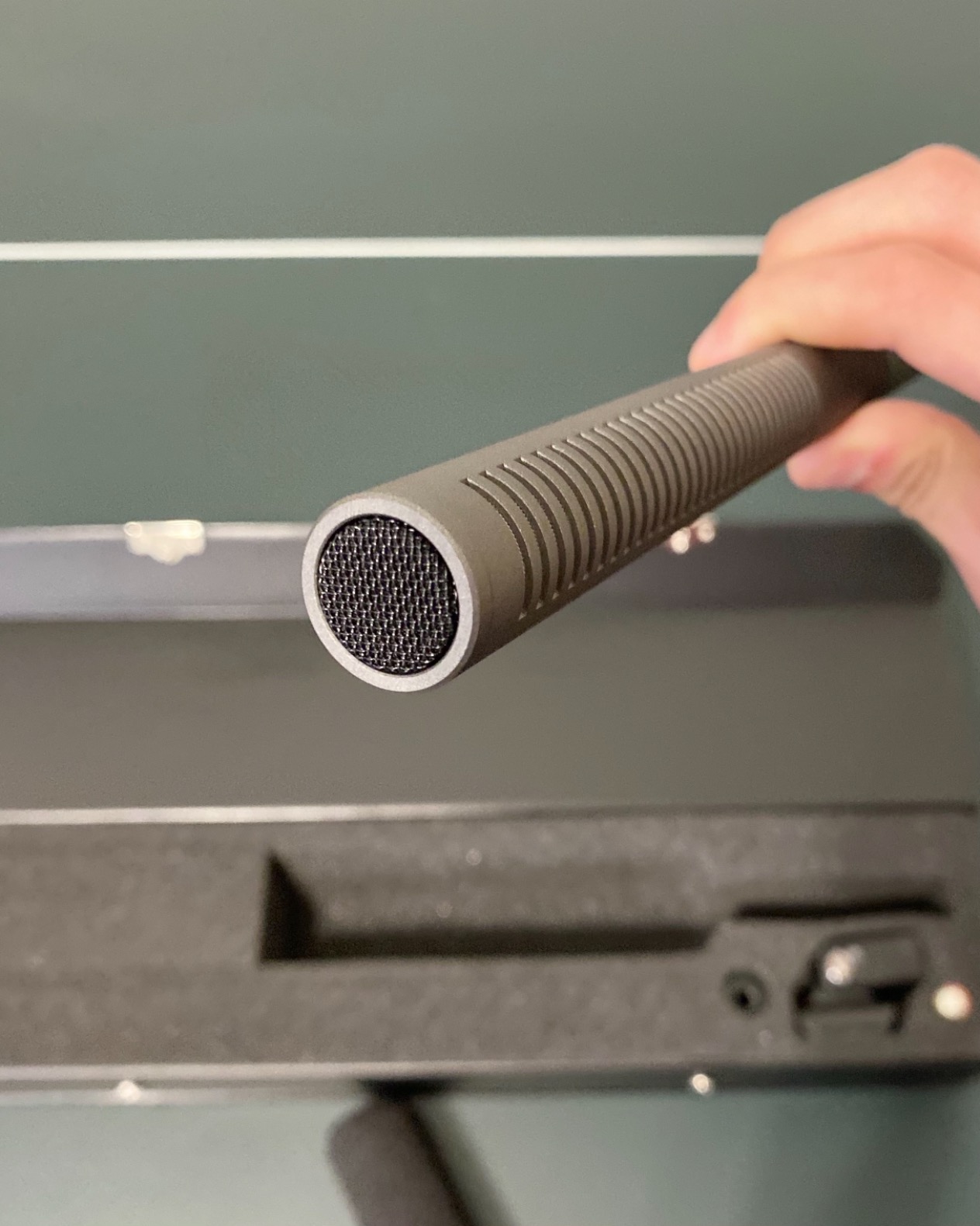
On-axis audio is smooth and natural, and the narrow acceptance angle gives excellent rejection from the sides and rear, which is what lets it pick up a subject at distance in a moderately noisy space. A switchable low-frequency roll-off helps when the mic is hand-held or set on a table that picks up traffic.
It is also a genuinely dual-purpose tool. A crew that shoots documentary interviews in the morning and voice-over in the afternoon can carry one microphone and cover both jobs with the same cable.
How precise does placement need to be?
Very. The acceptance angle is narrow enough that a subject who turns their head toward a window drifts off axis, and off-axis sound on a narrow-pattern mic is where colouration and comb filtering creep in. Practically, mark the spot on the floor where the subject sits and ask them to stay in it, or aim slightly high so head turns stay closer to on-axis.
What are the drawbacks?
There are no on-body controls, so gain and any padding happen at the recorder. The cable is fixed rather than a removable connector. And a few buyers report that listing images or packaging arrived looking used, so check the box on arrival.
7. Sennheiser MKH 416-P48U3 – the Broadcast Reference Shotgun
SENNHEISER Wired Professional MKH 416-P48U3 Short Shotgun Interference Tube Microphone,Black
XLR connection
48V phantom power
13dB self-noise
Transformerless balanced output
Pros
- The broadcast reference for film radio and television
- Crisp consonant articulation and strong feedback rejection
- Rugged all-metal body that resists humidity
- Records clean voice-over in untreated rooms
Cons
- Requires 48V phantom power
- Very narrow sweet spot
- Costs far more than alternatives with similar on-axis results in controlled rooms
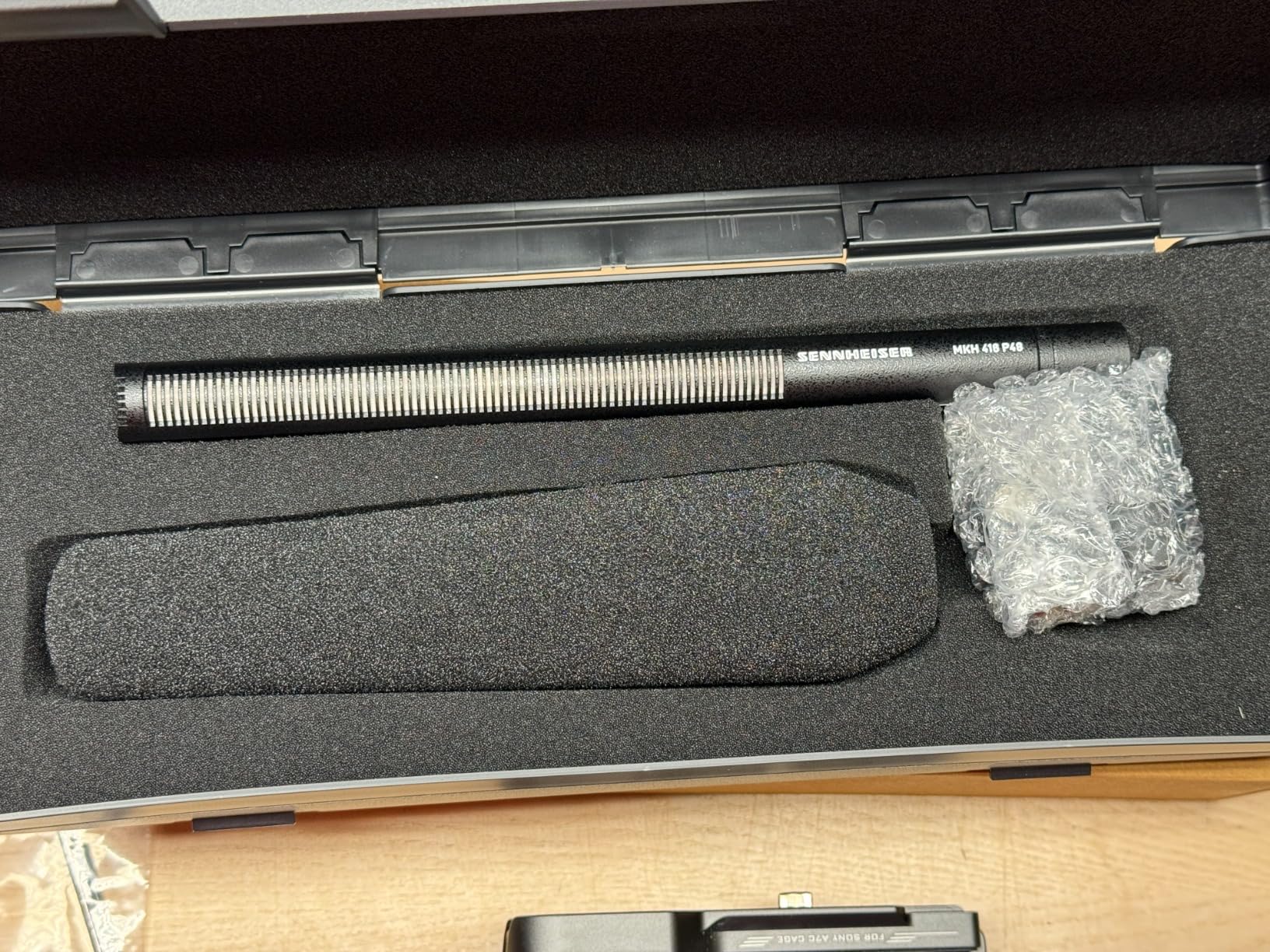
There is a reason the MKH 416 is the microphone other microphones get compared to. It is a pressure-gradient mic with a short interference tube, designed for film, radio and television, and it has been the default choice for broadcast dialogue for decades. If you are interviewing someone for a network, this is the microphone the interviewer is probably holding.
The 13dB self-noise figure keeps the floor low, and reviewers report crisp consonants and strong rejection of background chatter, birds and street noise. For voice-over it is also excellent, recording clean reads in rooms that were never treated.
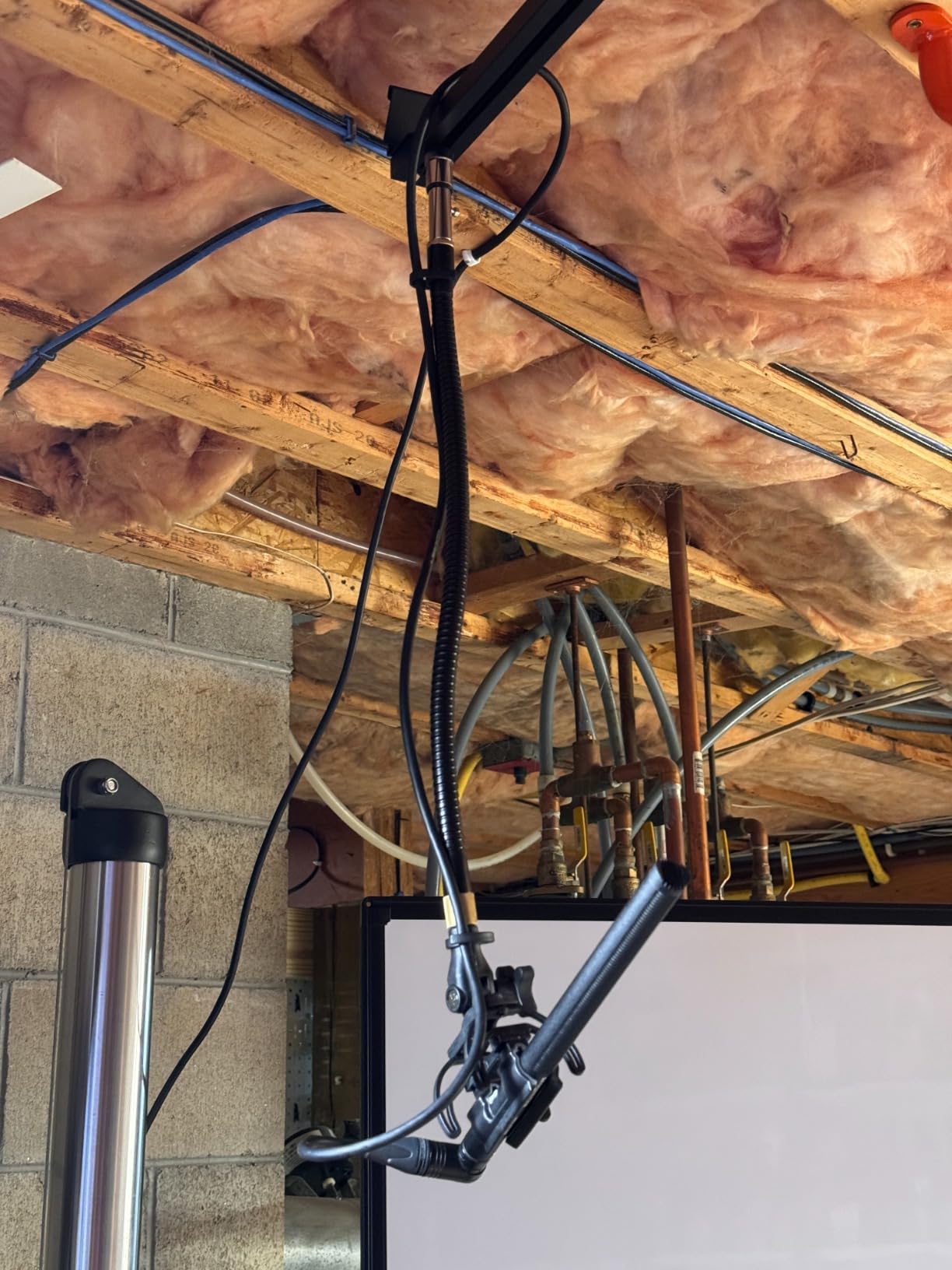
Physically it is a matte black all-metal body with a transformerless, fully floating balanced output, and the RF condenser design makes it unusually immune to humidity, which matters for outside work in warm climates. At just over a pound it is a full-size broadcast tube, so it wants a stand or a proper boom rather than a bare camera mount.
The pattern is a hyper cardioid lobe, so the sweet spot is tight. Point it slightly above the subject’s mouth and boom from above for a natural downward angle rather than pushing the tip directly at the face.
Is it worth the step up in cost?
It depends on your room. A reviewer comparing it with the Audio-Technica AT-8035 found them near indistinguishable in a treated studio, which is the honest argument against paying the premium. Where the difference earns its keep is outside, in humid conditions, and in rooms where you cannot control reflections but the mic’s off-axis rejection is doing the heavy lifting.
What stops it being right for you?
It needs 48V phantom power. It is not battery operable and it is not USB, so a mirrorless body with only a 3.5mm jack simply cannot take it without a recorder or interface in the chain. That barrier is the single biggest reason first-time interview buyers end up returning one.
8. Rode VideoMic – Best Proven All-Round On-Camera Start
Rode VideoMic Camera-Mount Shotgun Microphone with Rycote Lyre Shock
3.5mm jack
Single AA battery
40Hz-20kHz
75dB SNR
Pros
- True line-plus-gradient supercardioid with a barrel that cancels side audio
- Maximum pickup of the source in noisy environments
- Rycote Lyre shock mount included
- Ten year warranty
Cons
- Single AA battery only
- 3.5mm output with no XLR or USB
- Not weather sealed for sustained outdoor production
The plain VideoMic is the one I recommend to people who want a proven, boringly reliable answer. It is a true line-plus-gradient microphone with a super cardioid in front and a barrel that cancels side audio, and it has been on cameras for long enough that replacement parts and advice exist in every forum you will ever read.
For interviews its strength is noise rejection in a working environment. The barrel is doing real interference work, so a corridor, a cafe or a street behind the subject is rejected rather than recorded at lower level.
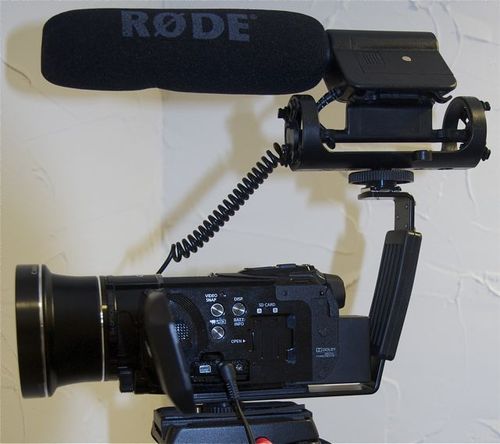
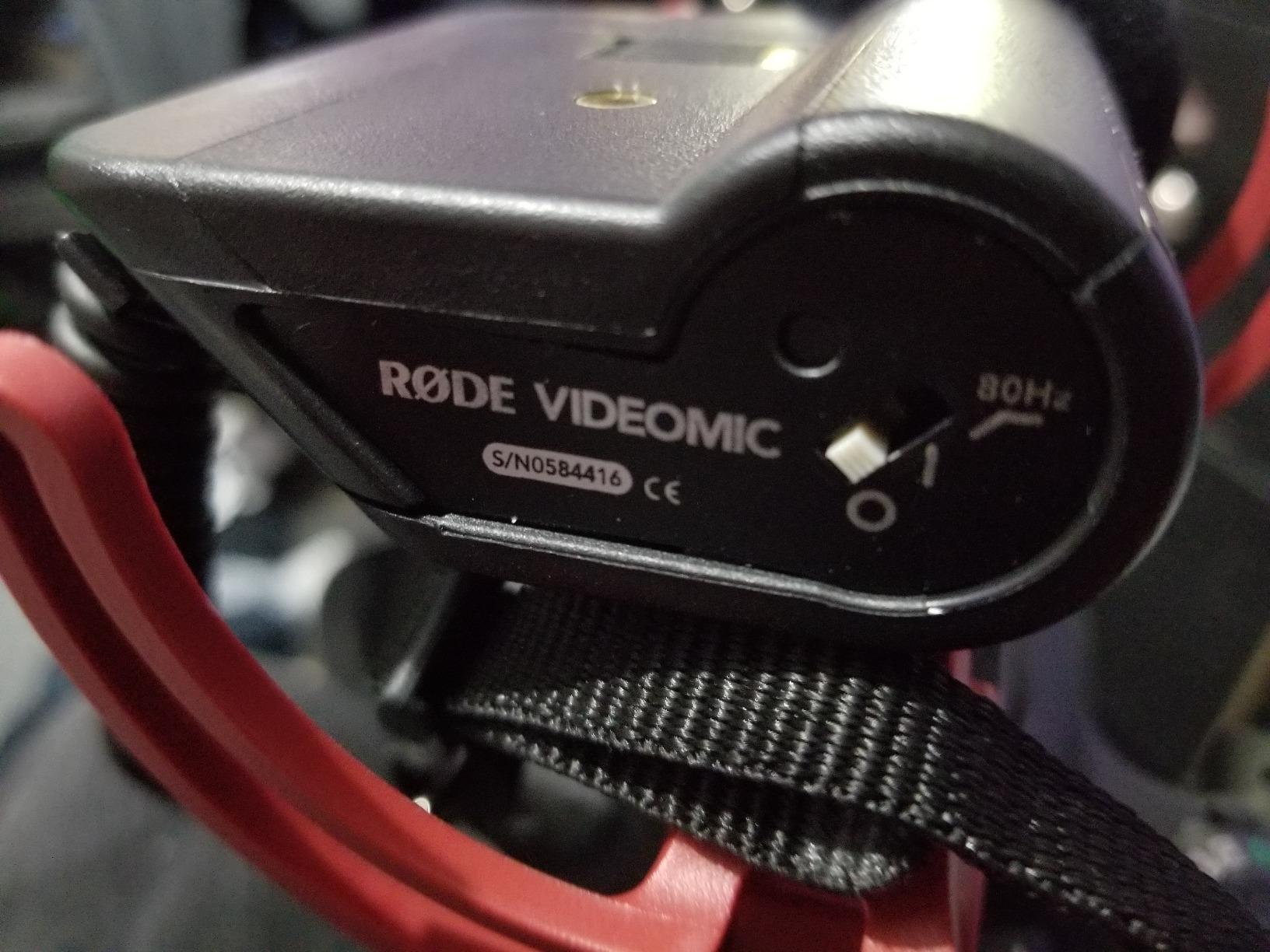
Frequency response runs 40Hz to 20kHz with a 75dB signal to noise ratio, which is respectable for an on-camera mic. The body is 12 ounces of acrylonitrile butadiene styrene, light enough not to unbalance a small camera, and the included Rycote Lyre mount handles contact noise from a table or a tripod head.
A single AA battery runs it. The company warranty is ten years, which on a microphone you may keep for a decade matters more than it sounds.
How does it compare with the VideoMic Pro+?
The Pro+ adds a rechargeable battery option, a digital menu with a high-pass and a safety channel, and better suspension. The plain VideoMic has none of that. If your interview audio is a single clean take in a quiet room with no need to recover a clipped peak, the extra features are not buying you anything audible.
What are the limits?
It is 3.5mm only, so no XLR rig and no USB recording without an adapter. It is not weather sealed, which limits sustained outdoor production without a blimp. And there is no on-body high-pass, so rumble is handled in the edit.
9. BOYA BY-BM6060 – Best Budget XLR Shotgun Kit
BOYA XLR Microphone BY-BM6060 Super-Cardioid Shotgun Condenser Microphone with 24 48V Phantom Power for Camera Film Interview ENG/EFP Outdoor Recording
XLR connection
24-48V phantom or single AA
60Hz-20kHz
80dB SNR
Pros
- Works on 24-48V phantom power or from a single AA battery
- Super cardioid pattern built for interview documentary and ENG work
- Shock mount plus fur and foam windscreens included
- Lightweight at 230g for an XLR shotgun
Cons
- 60Hz-20kHz response means less low end than broadcast shotguns
- Higher self-noise than more expensive condensers
- No on-body gain pad or high-pass switching
The BY-BM6060 is a budget XLR shotgun aimed straight at interview, documentary and ENG work, and the reason it is on this list is the power flexibility. It runs on 24V to 48V phantom power, or from a single AA when the device you are recording into has no phantom supply.
That dual option is unusual at this tier and it means you can buy the mic before you know exactly which recorder or mixer it will live behind. It is also one of the least expensive ways on this list to get a locking three-pin XLR connection into an interview setup.
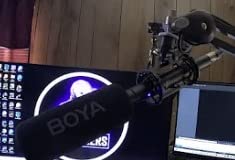
The pattern is super cardioid with resistance to low-noise circuitry noise, which is the right shape for cutting a subject out of a working background. The response is 60Hz to 20kHz with an 80dB signal to noise ratio, so there is less low end than a broadcast shotgun will give you and slightly more circuit noise in a still room.
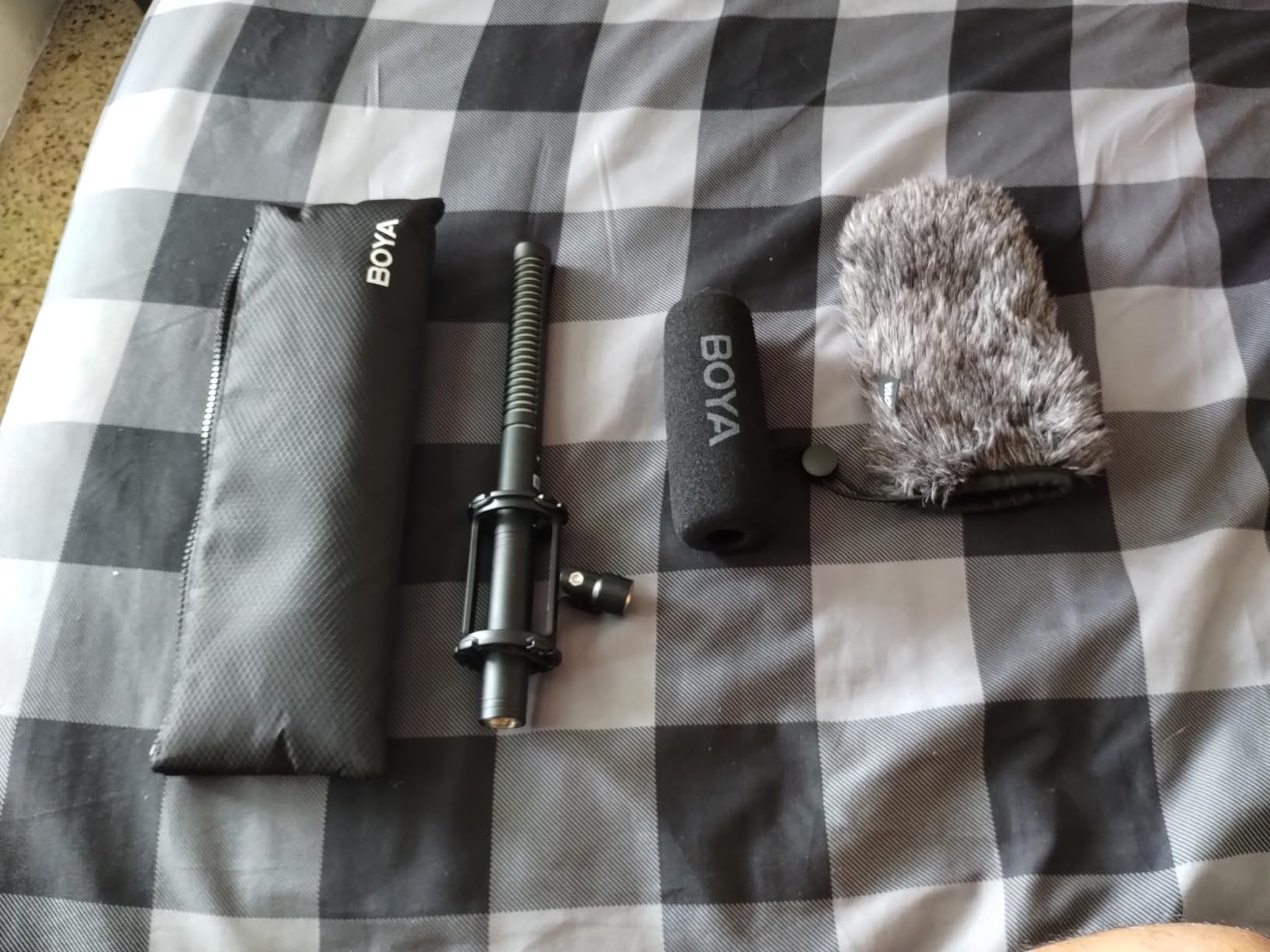
The kit is unusually complete. You get the microphone, a suspension shock mount, a fur windshield, a foam windshield and a cold-shoe mount with a quarter inch thread, so it can go on a DSLR, on a stand or on a small camera cage without buying anything else.
Who should buy this one?
A student or a small production team starting to do real interviews with a recorder in the bag, who wants the durability and the XLR connection of a broadcast workflow before committing to a high-end model. The body is aluminium and it weighs 230g, which is fine on a stand and heavy for a tiny on-camera cage.
Where does it fall short?
The 60Hz low end means you capture less of the chest and body of a voice than the broadcast models, and the noise floor is higher, which matters in a quiet interview room with a soft-spoken subject. There is no gain, pad or high-pass control on the body, so all of that happens downstream.
10. Movo VXR10 – the Cheapest Usable Shotgun for a First Interview Setup
Movo VXR10 Universal Shotgun Mic for Camera
3.5mm jack
Plug-in power, no battery
100Hz-20kHz
76dB SNR
Pros
- Works with phones DSLRs mirrorless cameras camcorders and laptops
- Aluminium body with a built-in shock mount
- Windscreen carrying case and two shock mounts included
- Very light at 51g
Cons
- Needs a 3.5mm input and an adapter for USB-C or Lightning phones
- Some Canon Rebel and VIXIA bodies do not accept external mics
- Distance matters more than usual inside 1 to 5 feet
The Movo VXR10 is what I would hand someone who has never recorded an interview and is out of patience with menus. It needs no battery, no gain control and no setup. Plug the cable into any 3.5mm mic input, point it at the subject, and record.
At 51g and 3.1 by 1.2 inches it is small enough to sit on a small stand or a hot shoe without weighing anything down, and the aluminium body will not break in a bag. The built-in shock mount absorbs bumps and handling noise without any extra gear.
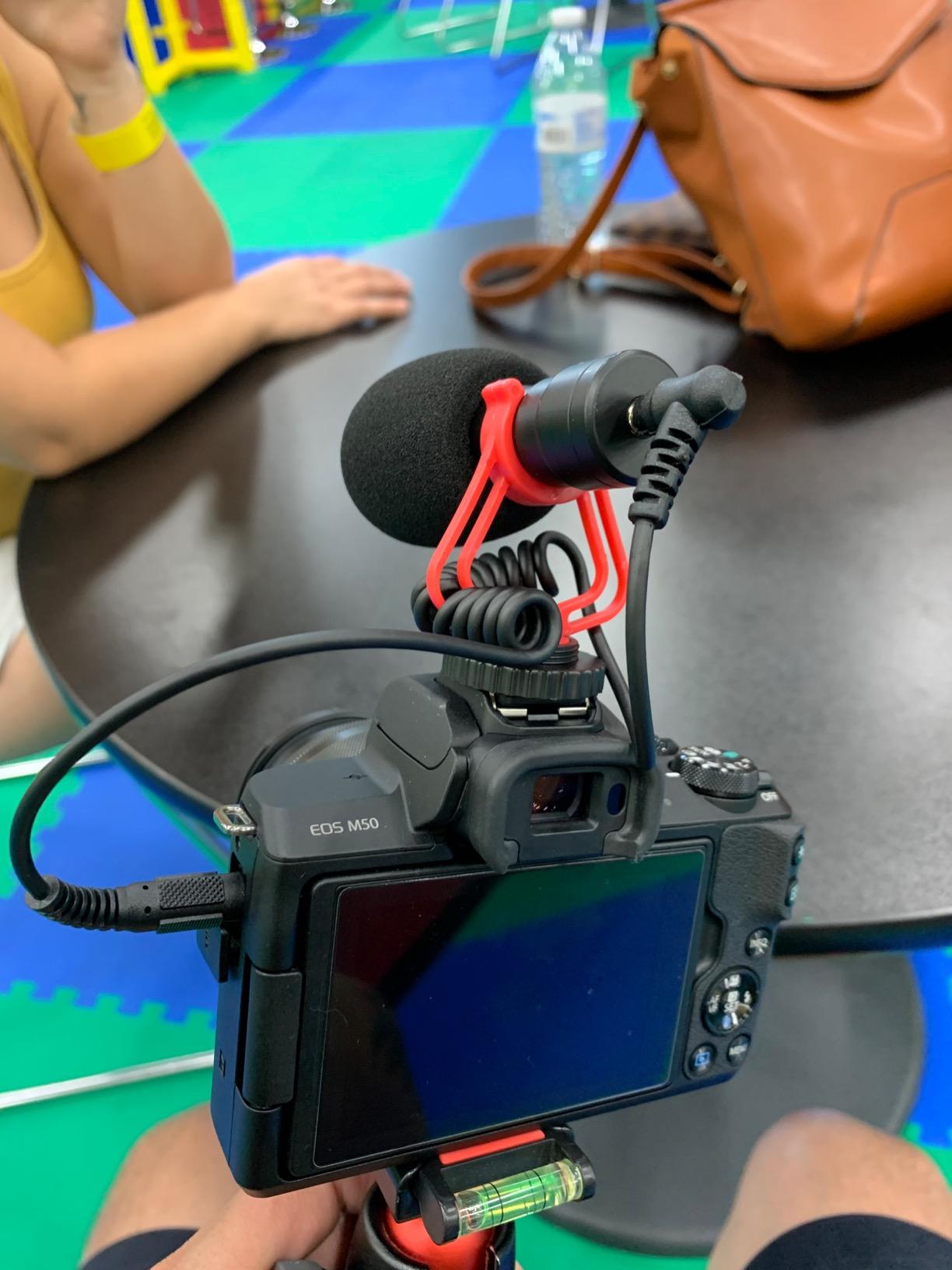
Pickup is directional and does reject off-axis noise, which is what makes it usable for a street interview or a cafe conversation rather than just a desk narration. Response is 100Hz to 20kHz with a 76dB signal to noise ratio and 200 ohm impedance.
For an interview the practical advice is the same as with any short tube: keep it inside about five feet, and if you move closer than about a foot expect the low end to fall away. Those range limits are the price of the tube length.
Is it worth upgrading from this later?
Almost certainly, and I would upgrade for a specific reason rather than a general one. The self-noise of this mic is the limit. It is fine for a street interview where the environment is loud enough to hide the floor, and thin in a quiet office with a calm subject.
Stepping up to a VideoMic Pro+ or a VideoMic NTG adds a lower floor, a high-pass filter and a safety channel, and those are the three things you will actually miss.
What to watch out for?
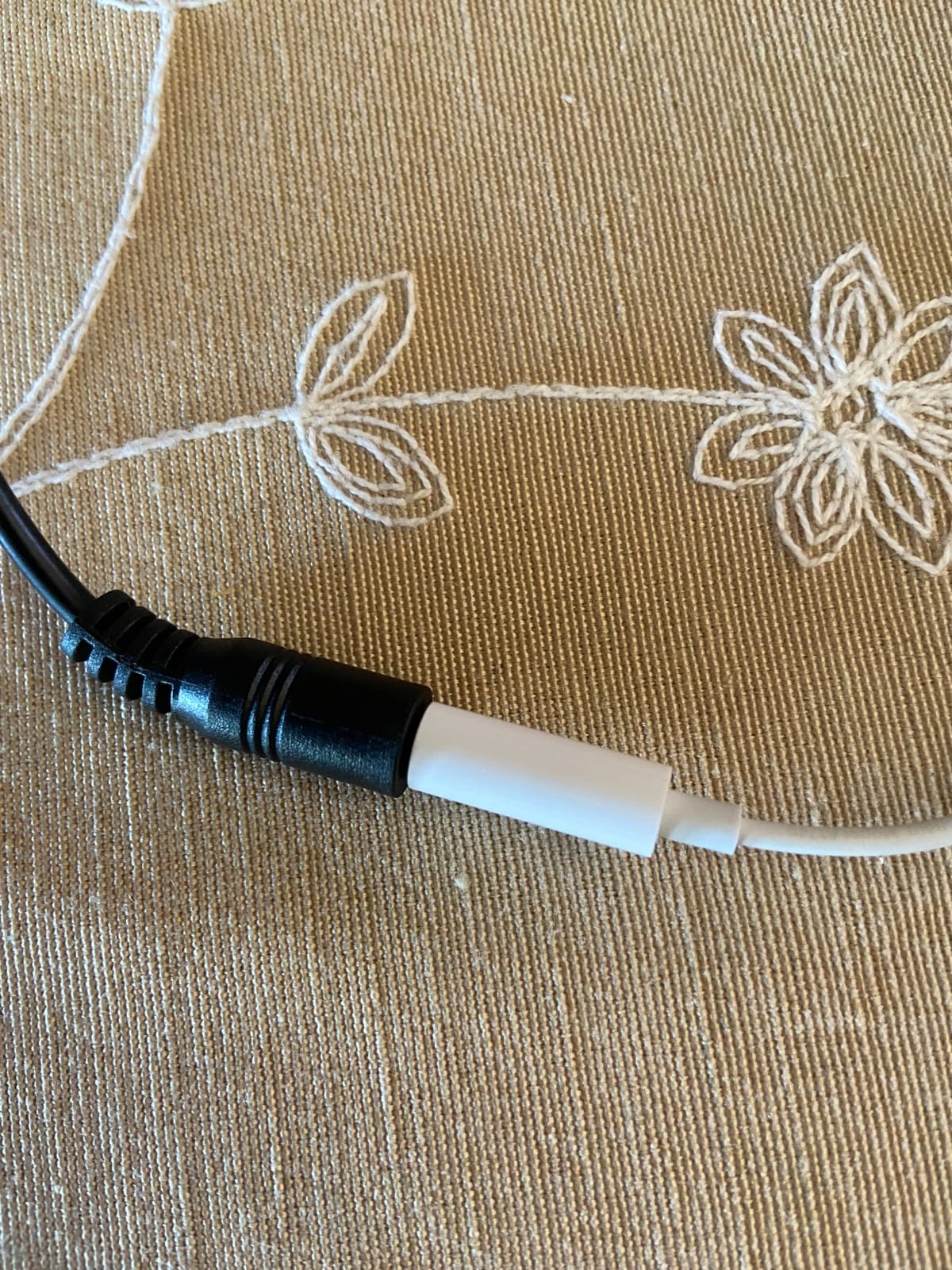
It needs a 3.5mm input and plug-in power, so newer USB-C and Lightning phones need an adapter. Some Canon Rebel T6 and T7 bodies and certain Canon VIXIA camcorders do not accept external microphones at all, so check your camera before you commit.
What Actually Matters in a Shotgun Mic for Interviews
Polar pattern and how narrow it is. Cardioid accepts sound from the front and some from the rear. Supercardioid and hyper cardioid tighten the rear lobe and are the standard interview patterns. A lobar pattern, the long interference tube used on the MKH 416, is narrower still. The trade is always the same: a narrower pattern rejects more background but punishes a subject who moves off axis, because off-axis sound on a narrow mic is where colouration and comb filtering come from.
Self-noise, the spec you will actually hear. It is the noise floor the microphone adds to a quiet room, and it is the number that shows up in your edit. Below about 15dB the floor is effectively gone in dialogue. Above about 20dB, in a still room with a soft-spoken subject, you can hear it between sentences. This is why the SYNCO D2 and the Sennheiser MKH 416 sit near the top of this list despite being XLR-only.
Connection and power, the most common reason for a return. A 3.5mm TRS mic with plug-in power goes into a camera and nothing else. An XLR microphone needs 48V phantom power, which means a recorder, a broadcast camera or an audio interface supplies it. Adapters that convert XLR to 3.5mm do not create phantom power, so buying the wrong connector is a dead end rather than a workaround. Check what your recording device actually accepts before you choose, and read our best microphones for filmmakers roundup if you are still deciding.
Wind protection for anything outdoors. A dead cat or a furry windscreen is not an accessory, it is a requirement for a street interview. A simple foam windscreen handles a still indoor room. Anything with real air movement needs the fur, and the Rycote blimps and shock mounts listed in most of these kits are worth owning regardless of which microphone sits inside them.
Where to place the mic, and the 3-to-1 rule
The 3-to-1 rule states that for every microphone you add, place the subject three times further from each additional mic. With a single shotgun there is nothing to ratio, but the principle still explains placement: the level of a source drops as you double your distance, so being twice as close is about 6dB louder. Get closer rather than chasing more reach. Professionals on location sound forums say this constantly, and it is the single most reliable improvement available to an interview shooter.
As a practical rule for the microphones in this list, short bodies like the AT897 and the ECM-XM1 are designed for a couple of feet of separation, medium bodies like the VideoMic Pro+ and the NTG are happy at conversational arm-and-boom distances, and the long-tube lobes are the ones you point from a boom at a subject who cannot move much.
For a sit-down interview, put the mic above the subject, angled down, on a stand or a boom so it never enters the frame. Aim it at the mouth rather than the chest, and give the subject a mark on the floor to stand or sit on so head turns do not pull them off axis. If you are booming, keep the tip within a foot or so of the subject, hold the grip with two hands under the mic, and route the cable slack so it cannot tug the capsule.
Shotgun mic or lav mic for interviews?
Use a lav when the subject moves, when clothing rubs, when the shot is tight and a boom would be visible, or when you need the audio to survive a wide reframing. Use a shotgun when rigging a lav is impractical, when you are shooting dozens of people, or when the subject stays put and you want isolation from the room.
The convention in professional location sound is that shotguns are the practical choice, not the ideal one, and professionals reach for a directional lav or a small-diaphragm condenser when the situation allows it. If you are still weighing the wider category, our best shotgun microphones for recording guide covers the non-interview end of the range.
When a Shotgun Mic Is the Wrong Tool for an Interview
Reverberant rooms. This is the most common complaint from location recordists, and it is a room problem, not a microphone problem. A shotgun rejects direct off-axis sound, not reflections that arrive from behind the microphone or from the walls. In an untreated warehouse or a hard-walled office, dialogue comes back hollow and smeared no matter which of these microphones you mount. Close the mic distance, move the subject away from the wall, hang something soft behind them, or record room tone and add it in post.
Subjects who move. Every narrowing you get from a longer tube costs you off-axis headroom. A subject who stands up, turns away or walks into the room leaves the sweet spot instantly. Switch to a wireless lav or a small-diaphragm condenser for moving interviews.
Wide group conversations. A shotgun points at one mouth. Two people sitting at an angle need two microphones, and a wide group conversation needs a different approach entirely, such as two-person dual output or multiple radio mic feeds.
Very quiet rooms with quiet subjects. This is the only place self-noise dominates. If the room is treated and the subject speaks softly, move up a tier in the list rather than expecting post-production noise reduction to build detail that was never recorded.
One more practical note. The wrong connection is worse than the wrong microphone. Check your recording device before you buy, and if it only accepts 3.5mm, stay with the plug-in power and battery models in this list.
Frequently Asked Questions
What is the best shotgun microphone for interviewing?
For most shooters the Rode VideoMic Pro+ is the best shotgun microphone for interviews, with the Rode VideoMic NTG a close second. The Pro+ combines a 3.5mm connection that fits a camera directly, three power options including a rechargeable pack, a high-pass filter, a safety channel and Rycote Lyre suspension. If your setup records to an XLR device, the SYNCO D2 offers the lowest self-noise in this roundup and the Sennheiser MKH 416-P48U3 is the broadcast reference standard.
What mics do interviewers use?
Interviewers working on broadcast or corporate video most often use a boom or on-camera shotgun with an XLR connection, such as the Sennheiser MKH 416, the Audio-Technica AT897 or the Sony ECM-XM1, all of which run on 48V phantom power. Professional location recordists usually prefer a directional lavalier or a small-diaphragm condenser when a subject can be rigged, and reach for a shotgun when putting a microphone on every person is impractical.
What is the 3 to 1 rule for microphones?
The 3-to-1 rule says that for every additional microphone, place the subject three times further away. With one shotgun mic there is nothing to ratio, but the underlying maths still applies because halving your distance adds roughly 6dB of level. The practical advice for interviews is to get the microphone closer to the subject rather than chasing more reach, since a close shotgun stays cleaner than a distant one in the same room.
What are the downsides of using a shotgun mic for interviews?
The main downsides are off-axis colouration when a subject moves out of the narrow sweet spot, poor performance in reverberant rooms because reflections arrive from behind the microphone, and a noise floor that shows in quiet rooms with soft-spoken subjects. Shotguns also cannot capture room tone or ambience, and the XLR models need 48V phantom power, which many camera bodies cannot supply.
How far should a shotgun mic be from the subject?
Get it as close as the framing allows. Short bodies such as the Audio-Technica AT897 and Sony ECM-XM1 are designed for a couple of feet, mid-size models like the Rode VideoMic Pro+ and VideoMic NTG work well at conversational boom distances, and longer interference tubes are intended to be aimed from further away on a stand. Inside about a foot, a short tube can lose low end, and beyond its intended reach the level drops and off-axis sound colours in.
Can a shotgun mic work in a reverberant room?
Only partly, and no microphone fixes a room. A shotgun rejects direct off-axis sound arriving from the sides and rear, but it cannot reject reflections that bounce off walls, ceilings and hard furniture behind the microphone. Move the subject away from bare walls, put something soft behind them, get the microphone closer, and record thirty seconds of room tone so the edit can hide the difference.
Final Verdict: the Best Shotgun Microphones for Interviews in 2026
The Rode VideoMic Pro+ takes the crown for interview audio in 2026. It handles a moving subject, a noisy room and an unexpected peak better than anything else here, and it connects to the kind of camera most people actually own.
For a sit-down corporate interview in a controlled room, the Rode VideoMic NTG gives you more switching and a quieter capsule. If you record to XLR, take the SYNCO D2 for its 12dB self-noise, the Audio-Technica AT897 for a short body that stays out of frame, or the Sennheiser MKH 416-P48U3 when you need the broadcast standard and have phantom power available.
Whatever you choose, get the mic closer than feels natural, keep it pointed at the mouth, and record a little room tone. Those three habits will do more for your interview audio than any upgrade. If you want more options beyond this list, read our best shotgun microphones for video roundup next.