
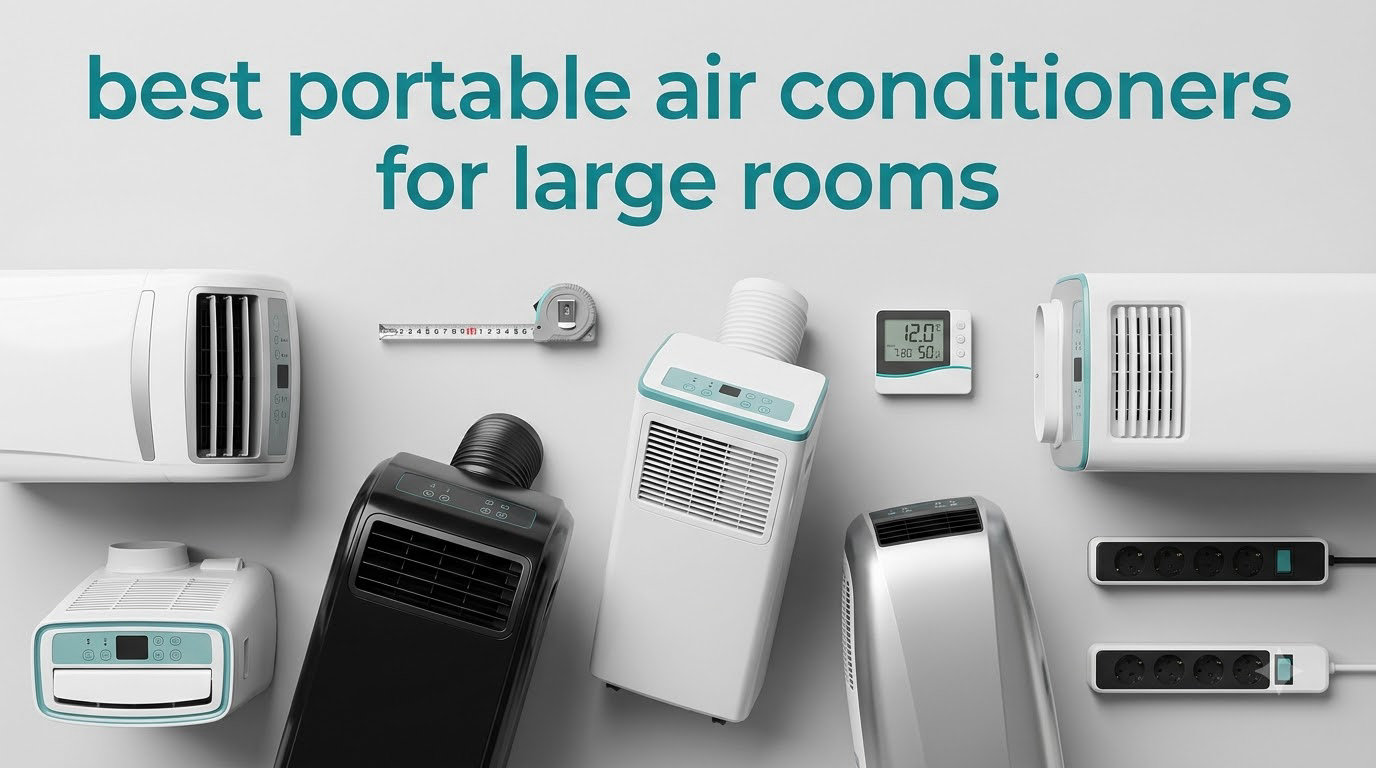
Most portable air conditioners are sold for rooms they were never built to cool. A listing that says 550 square feet is usually tested with the blinds shut, one sunny wall and a closed door, and the number on the box says nothing about the 700 square foot open-plan living room you actually want to fix. That gap between the sticker and the room is where most disappointed buyers end up.
This roundup exists to close that gap. We looked at the best portable air conditioners for large rooms with one question in mind: does the cooling capacity on the spec sheet actually match the square footage claimed, and does the venting design hold up when the room is bigger than a bedroom? Ten models qualified on measured coverage, verified noise levels and real owner feedback rather than marketing language.
One honest caveat before we start. A portable AC cools a zone, not a house. It pulls warm air from a single room, cools it over a refrigerant coil and shoves the heat out a window. In a 1,000 square foot open floor plan with a nine-foot ceiling and a west-facing glass wall, no single unit on the market will make the whole space comfortable, and the honest answer in that case is usually a mini-split or two smaller machines placed apart from each other. Where portables earn their keep is a rental, an apartment with no window AC slot, a basement bedroom or a bonus room you refuse to run ducted air to.
If your cooling problem is an entire apartment rather than one room, our guide to the best window air conditioners for apartments covers the cheaper-per-hour route. And if the real problem is stale air rather than heat, the best air purifiers for large rooms guide runs alongside this one. Updated for 2026.
Table of Contents
Top 3 Portable Air Conditioners for Large Rooms in 2026

SereneLife SLACHT128
- 12000 BTU ASHRAE
- 7000 BTU SACC
- Up to 550 sq ft
- Cools and heats
- 48-51 dBA sleep mode

ZAFRO A9092R-10K
- 10000 BTU SACC
- Up to 700 sq ft
- CEER 12.8 inverter
- 42 dB sleep mode
- 72-hour drainage-free

BLACK+DECKER BPACT10WT
- 10000 BTU ASHRAE
- Up to 450 sq ft
- AC
- dehumidifier and fan
- 54 dB
- 47.3 lbs
Best Portable Air Conditioners for Large Rooms (October 2026)
Every machine below is listed with the number that actually matters, which is usually the SACC or DOE figure rather than the headline ASHRAE BTU. Coverage is the manufacturer’s own claim, not ours. Noise is the published low setting, and weights are as listed in the product specifications.
| Product | Specifications | Action |
|---|---|---|
| SereneLife SLACHT128 |
|
Check Latest Price |
| BLACK+DECKER BPACT10WT |
|
Check Latest Price |
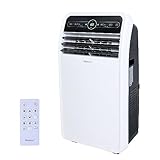 Shinco SPF1-12C Shinco SPF1-12C |
|
Check Latest Price |
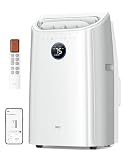 DREO DR-HAC010S DREO DR-HAC010S |
|
Check Latest Price |
 Gasbye CoolPrime 8000-W Gasbye CoolPrime 8000-W |
|
Check Latest Price |
| ZAFRO A9092R-10K |
|
Check Latest Price |
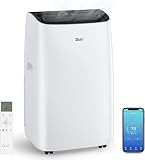 DuraComfort DP08CWV DuraComfort DP08CWV |
|
Check Latest Price |
 Temprium PAC013-16K Temprium PAC013-16K |
|
Check Latest Price |
 HUMHOLD HDPAC-12-BP1 HUMHOLD HDPAC-12-BP1 |
|
Check Latest Price |
 Garvee JHS-A020B-09KR-D Garvee JHS-A020B-09KR-D |
|
Check Latest Price |
How Big of a Room Will 10,000 BTU Actually Cool?
A 10,000 BTU portable AC realistically cools a room of roughly 400 to 500 square feet with standard eight-foot ceilings, moderate sun exposure and at least one closed door. In a sunlit room, a space with high ceilings, or an open floor plan, the same unit often manages only 300 square feet before the compressor runs nonstop without ever reaching your set temperature.
Rather than trusting a single number, work from the SACC or DOE rating and the room’s conditions. Here is how we would size each scenario.
400 square feet, standard ceiling, no direct sun: 8,000 to 10,000 BTU SACC is comfortable. This is the most common bedroom and small office case.
500 square feet, west-facing windows, afternoon sun: push to 12,000 BTU SACC and close the blinds. A single 10,000 BTU unit will run continuously here and the room will still feel warm by late afternoon.
600 square feet, one wall of glass, family living room: you want 12,000 BTU SACC minimum, and an inverter compressor so the unit can hold temperature instead of cycling on and off. The two dual-hose inverters in this roundup are the ones built for that job.
700 to 800 square feet, open plan or nine-foot ceilings: a single 12,000 to 16,000 BTU ASHRAE unit will struggle on a hot afternoon. Either go to a 16,000 BTU ASHRAE dual-hose inverter, or run two smaller machines on opposite walls. Two 8,000 BTU units in a wide open space beat one weak unit in the middle, because each one only has to handle the air within reach of its own vent.
Above 800 square feet, or a sun-facing glass wall the size of a garage door: stop reading portable AC guides and get a mini-split quote. The portable is a renter’s tool and a single-room tool, not a whole-floor solution.
1. SereneLife SLACHT128 – The Best Portable Air Conditioner for Large Rooms Overall
SereneLife Portable Air Conditioner With Heat & Built-in Dehumidifier 12,000 BTU, Portable Heater & AC For Rooms Up to 550 Sq. Ft. – Remote Control & Window Mount Exhaust Kit Included
12000 BTU ASHRAE / 7000 BTU SACC
550 sq ft
Also heats
70.3 lbs
51 dB
Pros
- Cools and heats
- so it works in spring and fall too
- Strong dehumidification with owners reporting a full bucket several times a day
- 24-hour timer and remote included
- Window kit and exhaust hose ship in the box
- Casters make room-to-room moves simple
Cons
- Flimsy window adapter panel and a hose connection that can detach
- Heavy condensation output needs a drain plan
- Heating mode reported by some owners as blowing cool air
- Moderate fan noise
The SLACHT128 is the machine we would put in a large living room first, and the reason is not the cooling number. It is that this is one of very few units in this roundup that also heats, which turns a one-season purchase into a year-round appliance for a drafty bonus room or a converted garage.
Cooling performance matches its 550 square foot claim more often than not. Owners running it in spaces at or under that size report steady cooling with the compressor holding set temperature rather than short-cycling constantly, which is the behavior that separates a correctly sized unit from an undersized one.
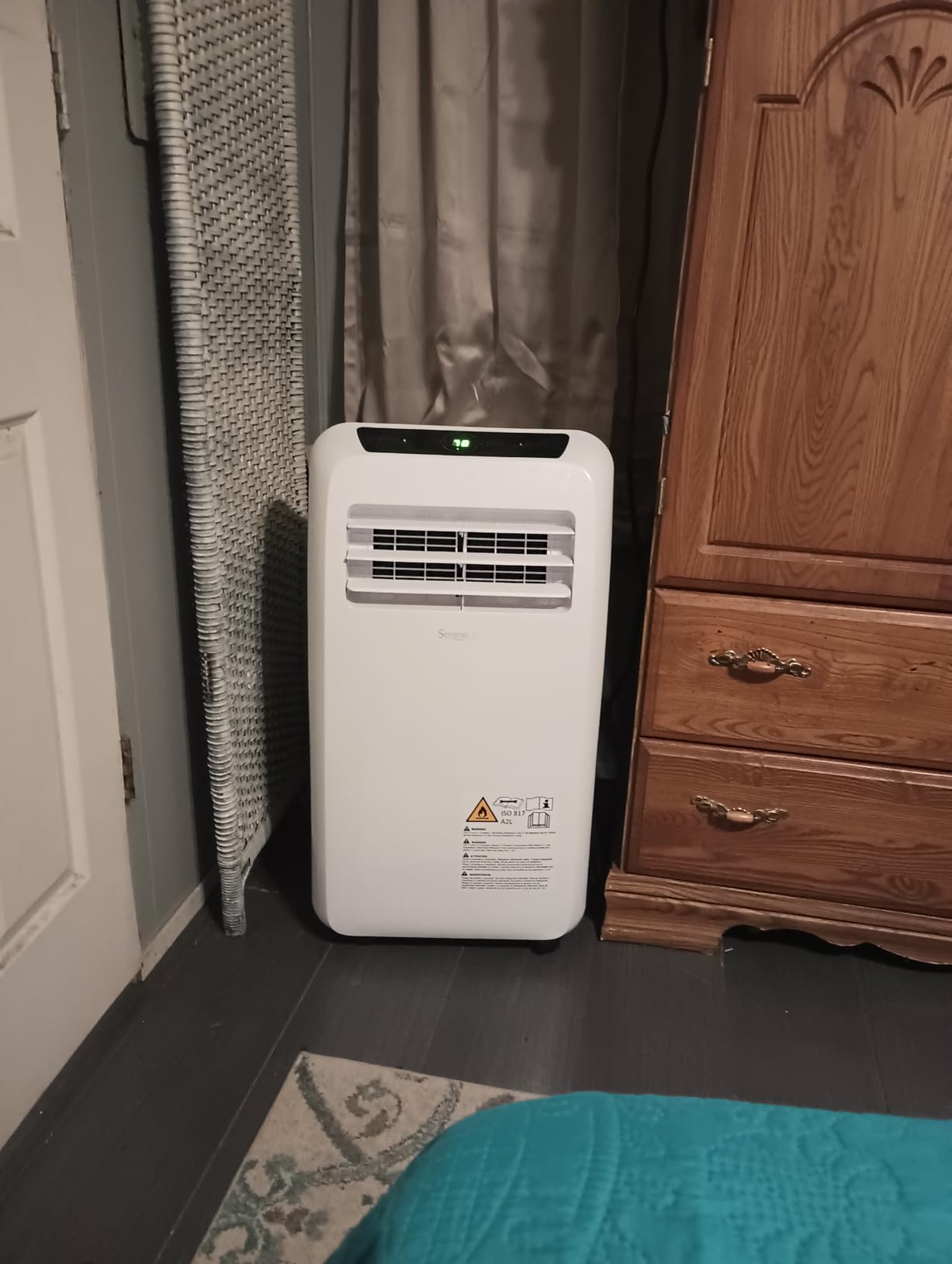
What stands out on the spec sheet is the 1,060 watt draw for a 12,000 BTU ASHRAE machine. That is a low figure for the output class, and it explains why the unit holds temperature without spiking your electrical bill the way a 1,500 watt compressor will. It runs on standard 120 volt alternating current, so any household outlet works with no circuit work.
The dehumidification is genuinely aggressive. Multiple owners describe filling a 12-liter bucket several times a day in humid weather, which is exactly what you want in a basement or a ground-floor room where the air is already close to saturation. The trade-off is that you are managing water, which brings us to the real complaints.
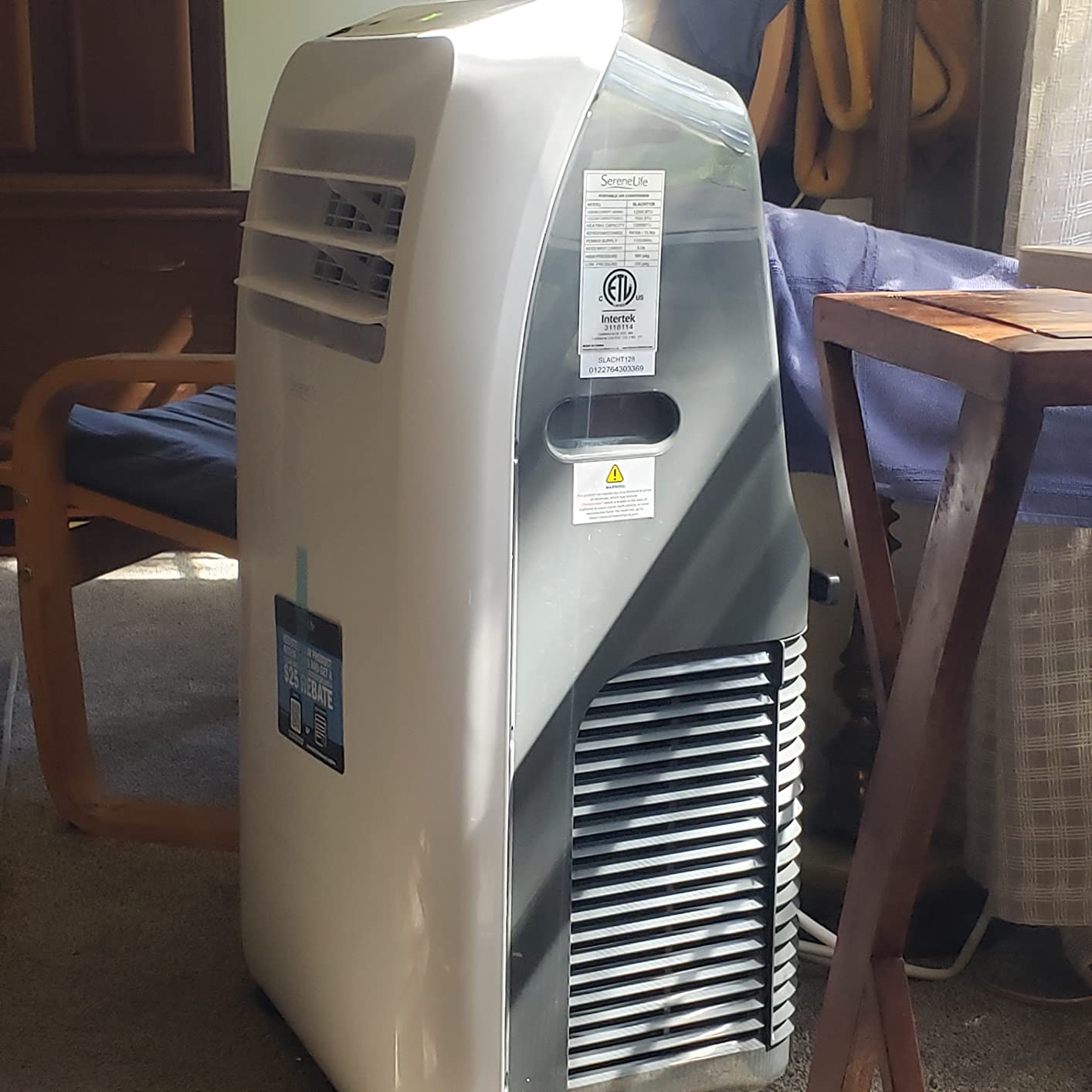
Check your window panel before you commit
The window adapter panel is the weakest part of an otherwise solid package, and owners report the exhaust hose disconnecting from it during a night of heavy condensation. Seal the joint with foil tape after assembly and it stops being an issue.
Fixed picture windows and casement windows rarely fit these panels without modification. For a sliding door, the panel usually works as supplied. If your window is anything unusual, budget an afternoon and a tape measure before you unbox this.
Who should skip it
Skip this model if you live in a very dry climate, because the condensation volume that makes it a dehumidifier workhorse in humid weather becomes a nuisance when the air is already dry. It is also the wrong choice for anyone who cannot lift 70 pounds up a staircase to an upstairs room.
And if you need genuine heating on a cold night, read the owner complaints carefully first. Several buyers report the reverse mode delivering cool air rather than warm, and while the heating capacity is rated at 10,500 BTU, the experience has been inconsistent enough that we would not rely on it as a primary heat source.
2. BLACK+DECKER BPACT10WT – The Best Value for a 450 Square Foot Room
BLACK+DECKER Portable Air Conditioner, 10,000 BTU, BPACT10WT, White
10000 BTU ASHRAE / 5550 DOE
450 sq ft
47.3 lbs
54 dB
Three-in-one
Pros
- Largest owner base in this roundup by a wide margin
- Lightest unit here at 47.3 lbs
- Follow Me remote acts as a thermostat
- AC
- dehumidifier and fan in one cabinet
- Complete window kit included
Cons
- SEER 6.7 is low next to the inverter models
- Single-hose design strains in open or very large rooms
- Noticeably louder than dual-hose rivals at high fan speed
With over eleven thousand reviews on this listing, the BPACT10WT is the most thoroughly used machine we evaluated, and that volume of long-term owner data is worth something in a category where many models have barely a few hundred reports. The pattern across those reviews is consistent: it cools a normal bedroom or a small living room exactly as advertised, and it keeps doing it for years.
It is also the lightest unit in this roundup at 47.3 pounds. That matters more than it sounds, because a portable AC is something you will move between rooms, drag around a corner and eventually haul up a set of stairs, and the difference between 47 and 70 pounds is the difference between a one-person job and a two-person job.
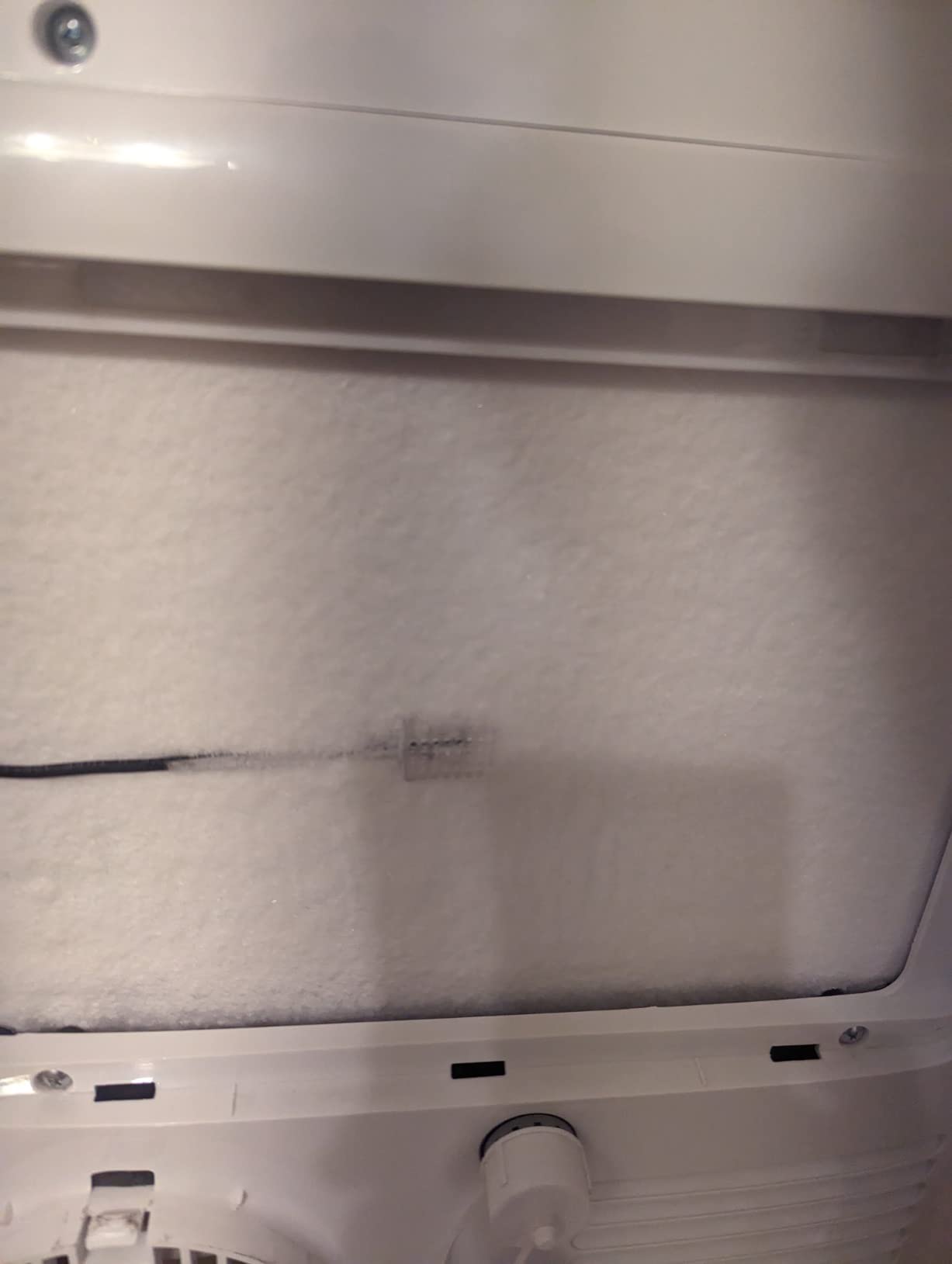
The Follow Me remote is a small feature that earns its place. You set the remote on the arm of the couch and the unit reads the temperature there rather than at the intake grille, which is a genuine improvement in a large room where the cold air pools near the vent and the far end stays warm.
Be realistic about the cooling figure, though. This is a 10,000 BTU ASHRAE unit rated for 450 square feet, and the 5,550 DOE number underneath it is the honest capacity figure. In a room at or under that size with the blinds drawn it performs well. Push past 500 square feet and the single-hose design starts pulling warm air back in, which is the failure mode owners describe in open-plan spaces.
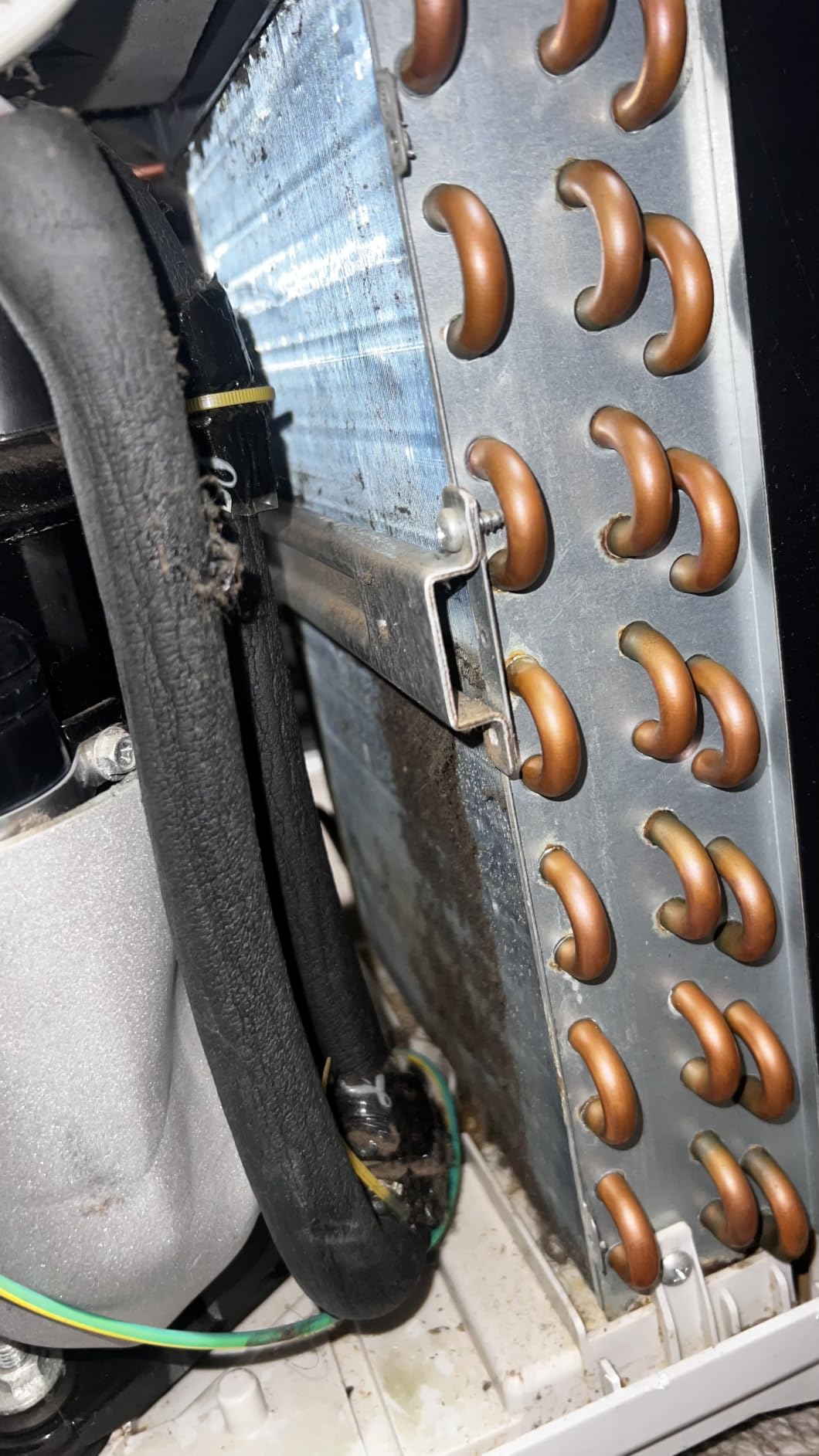
Where this one earns its keep
This is the unit for a 400 to 450 square foot bedroom, a home office, a den or a small apartment living room where the window is the wrong shape for a window unit. At 1,220 watts it also draws less current than several higher-output machines here.
It is a three-in-one: air conditioner, dehumidifier and fan, with a washable filter. In a humid stretch where you only need to take the dampness out of the air, the dehumidifier mode uses a fraction of the power of full cooling.
Where it falls short
The efficiency rating is the honest weakness. A SEER of 6.7 is well below what the inverter models in this list achieve, so over a long cooling season the running cost difference between this and an inverter unit narrows faster than most buyers expect.
The single-hose venting is the second limitation, and it is the one that matters for large rooms. The unit draws room air through the same duct it exhausts through, creating slight negative pressure in the room and drawing warm air back in alongside the cold. It is manageable at 450 square feet. It is the reason we do not recommend this for an open living space.
3. Shinco SPF1-12C – The Budget Pick with Serious Dehumidification
Shinco 12,000 BTU(7,500 BTU SACC) Portable Air Conditioner, Portable AC Unit with Built-in Cool, Dehumidifier&Fan Modes for Room up to 450 sq.ft, with Remote Control, 24 Hour Timer, Installation Kit
12000 BTU ASHRAE / 7500 BTU SACC
450 sq ft
43.2L per day
56.2 lbs
52 dB
Pros
- Entry-level pricing with genuine 3-in-1 operation
- Dehumidifies up to 43.2L per day
- Window sealing kit and hose included
- Four casters and a 23 ft remote range
- 24-hour timer and swing function
Cons
- Single-hose layout limits it in open rooms
- Listed SEER of 2.6 is the weakest number here
- Only rated to 450 sq ft
- Three thousand-plus watt draw is high
The Shinco SPF1-12C is the pick if your priority in a warm room is moisture rather than temperature. The published dehumidification capacity of 43.2 litres per day is exceptional, and in a humid basement or a ground-floor room that is a real advantage rather than a spec-sheet line item.
It covers 450 square feet with the same 7,500 BTU SACC figure as units costing considerably more, and the 24-hour timer, swing function and three fan speeds cover the basics most people actually use. Setup is genuinely quick, with the exhaust hose and window sealing kit in the box and no tools required.
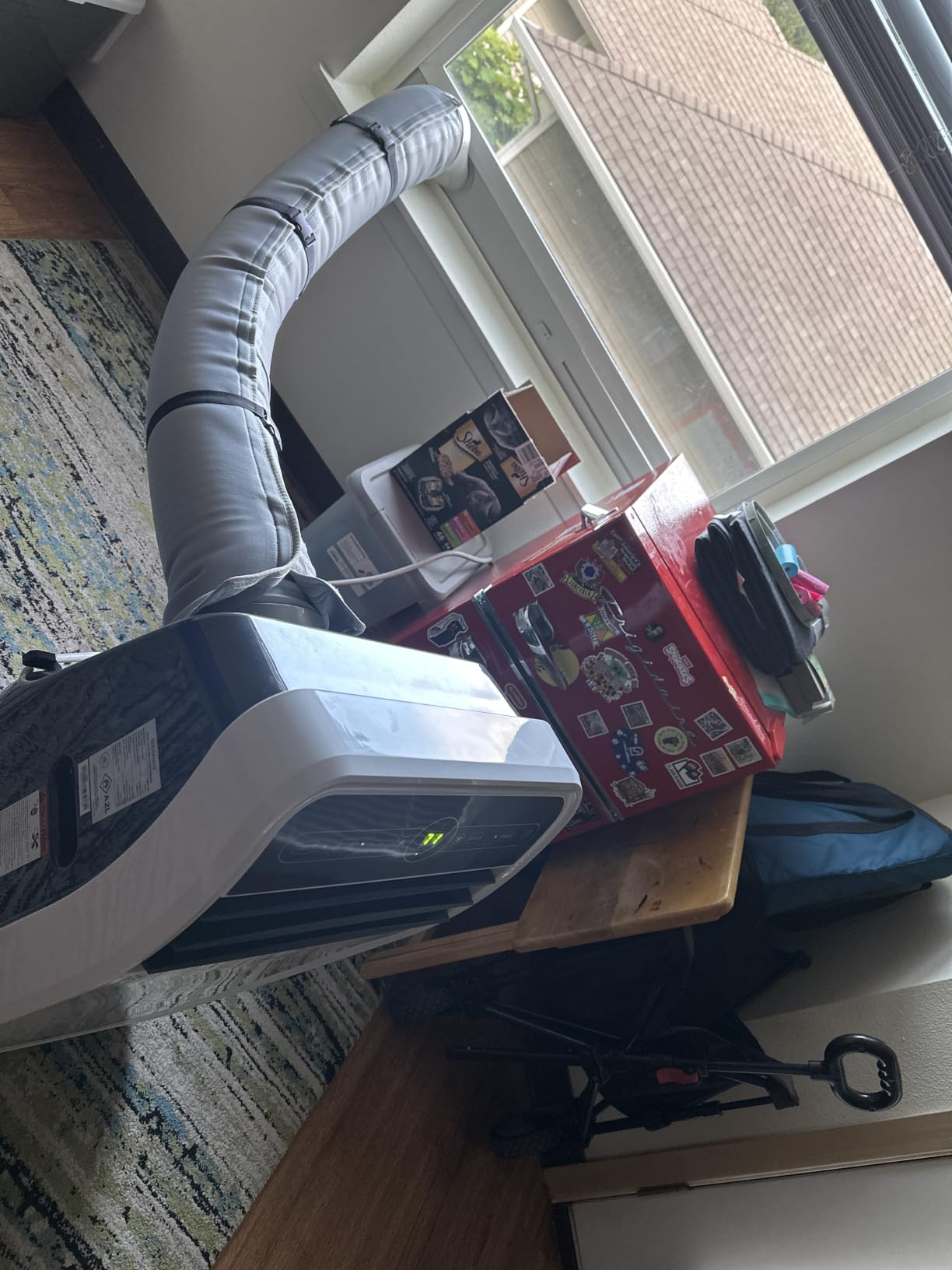
The four casters and the compact 13.4 by 17.4 inch footprint mean it slides under a table or a console when it is not running, which is a genuine consideration in a living room where aesthetics matter. The remote reaches about 23 feet, enough to cover a large room from the couch.
Now the honest part, and there are two numbers to look at. The listed wattage is 3,520 watts, which is the highest draw of any unit in this roundup by a wide margin, and the listed SEER is 2.6, the weakest efficiency figure on the list. Those two numbers together tell you the machine works hard to produce its cooling output, and your electricity bill will reflect that over a long season.
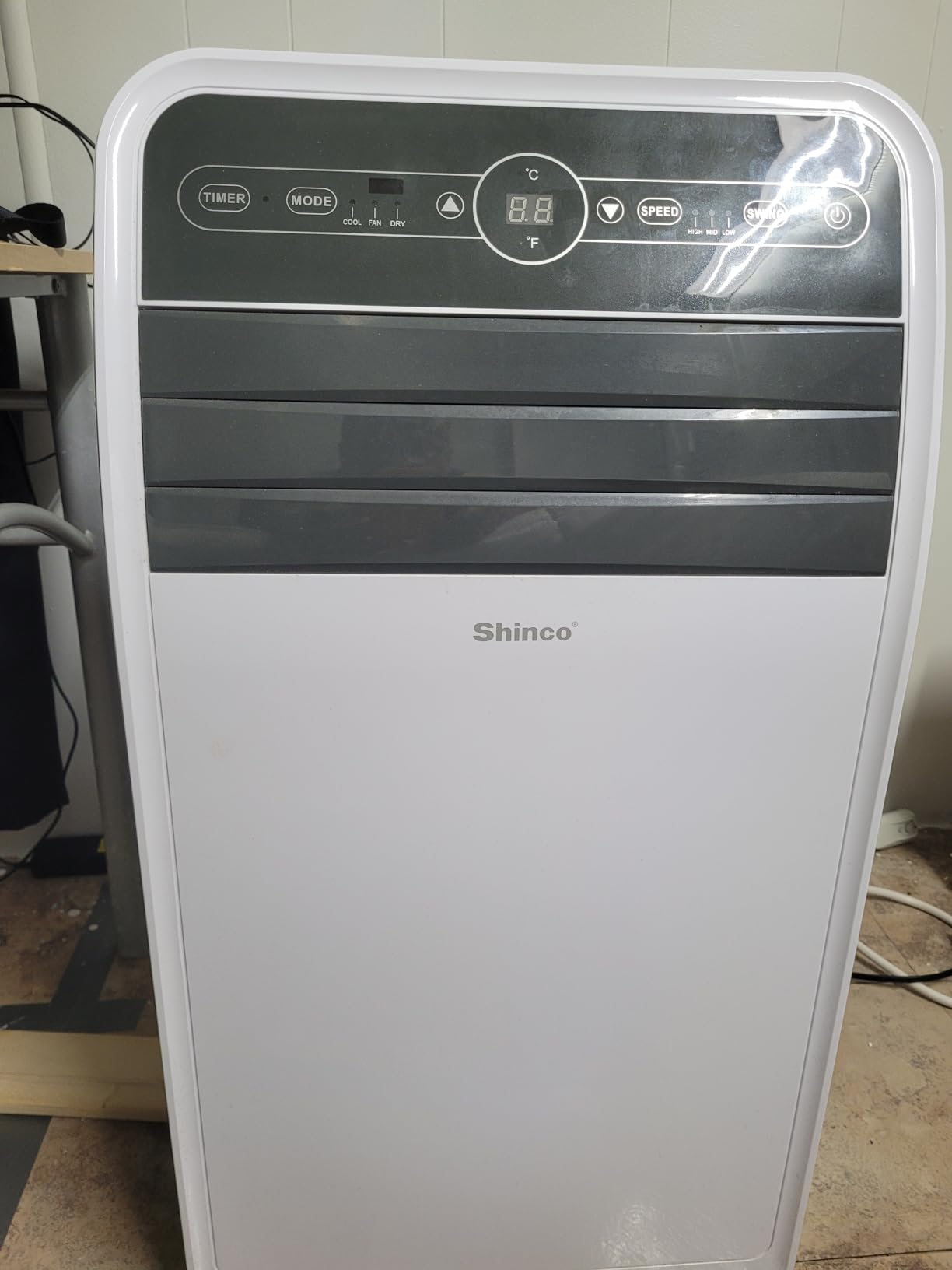
Consider this for a humid basement
If you are cooling a space that sits damp even on mild days, the extraction rate here does more for comfort than raw BTU. Owners in humid regions report the difference clearly against units of similar cooling capacity.
The 60 to 86 degree Fahrenheit adjustment range and the self-evaporating mode mean it can hold a set point without constant cycling. It is also a straightforward machine with three modes and a remote, which suits anyone who does not want to configure an app.
Know what you are giving up
At 450 square feet this is not a large-room machine despite the 12,000 BTU headline. That figure is ASHRAE, the inflated rating, and the SACC figure underneath it is 7,500. Buyers expecting 550 or 600 square foot coverage are the ones most likely to be disappointed.
It is also single-hose. In an open room that means warm air drawn back through the intake continuously, which is the same limitation as the BLACK+DECKER and the reason neither of these belongs in a large open-plan space. There is also no heating mode and no listed inverter compressor.
4. DREO DR-HAC010S – The Best Portable AC for Quiet Operation
DREO Inverter Portable Air Conditioners,High Efficiency,14000 BTU Dual-Hose
14000 BTU ASHRAE / 10000 DOE
Inverter dual-hose
42 dB
55.4 lbs
Window 20-53 in
Pros
- Inverter compressor runs near-silent once the fan settles
- Self-evaporating design means no bucket in most climates
- Dual-hose venting avoids pulling warm air back in
- App
- remote and Alexa voice control
- Weatherstripping and a good hose included
Cons
- Listing rates coverage at only 200-300 sq ft
- Front status display sometimes goes dark
- Exhaust hose runs very hot with no insulation wrap
- Adhesive foam seals are hard to remove for reuse
At 42 decibels this is one of the quietest machines in the roundup, and the difference from a 54 decibel single-hose unit is not a rounding error. In a bedroom, 42 decibels is roughly the level of a quiet refrigerator running. Owners consistently describe the fan starting up loudly for a few seconds and then settling to near silence, which is the normal behavior of a variable-speed inverter compressor.
The dual-hose design is the other reason this machine performs better in a large space than its single-hose rivals. One hose brings cool air in, the other pushes hot air out, so the room does not sit under negative pressure drawing warm air back through the return. The manufacturer puts the efficiency gain at roughly 32 percent against a traditional single-hose design.
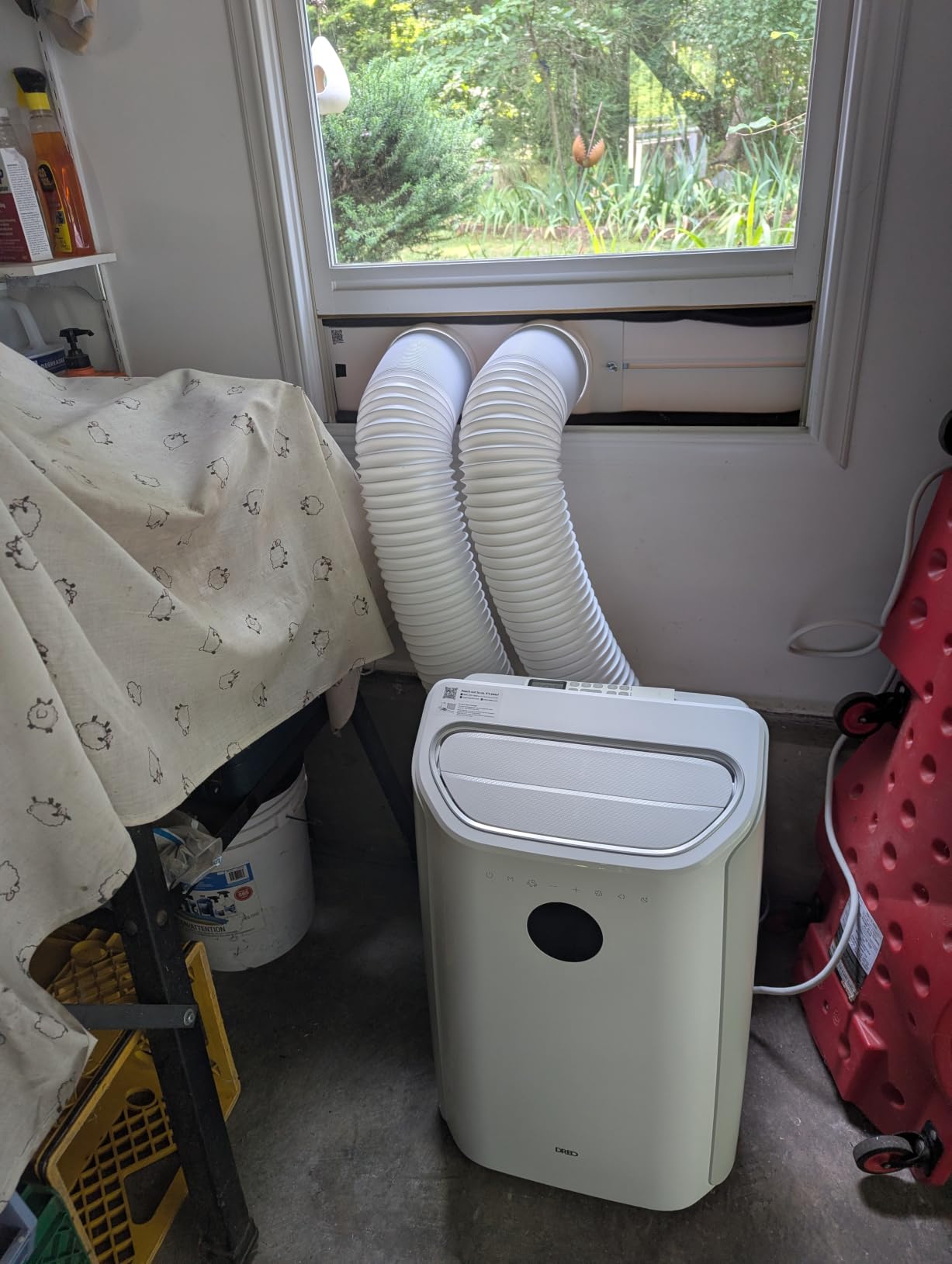
The self-evaporating drainage system is the feature that changes daily life. Sensors and a small pump evaporate excess condensate automatically as long as indoor humidity stays below 90 percent, so in most climates there is no bucket to empty overnight. The window fitting range of 20 to 53 inches is also the widest here, which matters if you are dealing with an unusual opening.
Control options cover everything: the app, the remote and Alexa voice control. The 1,540 watt draw is at the higher end, and one owner reported tripping a 15-amp circuit twice, which is worth taking seriously if you plan to run this on a shared circuit with other appliances.
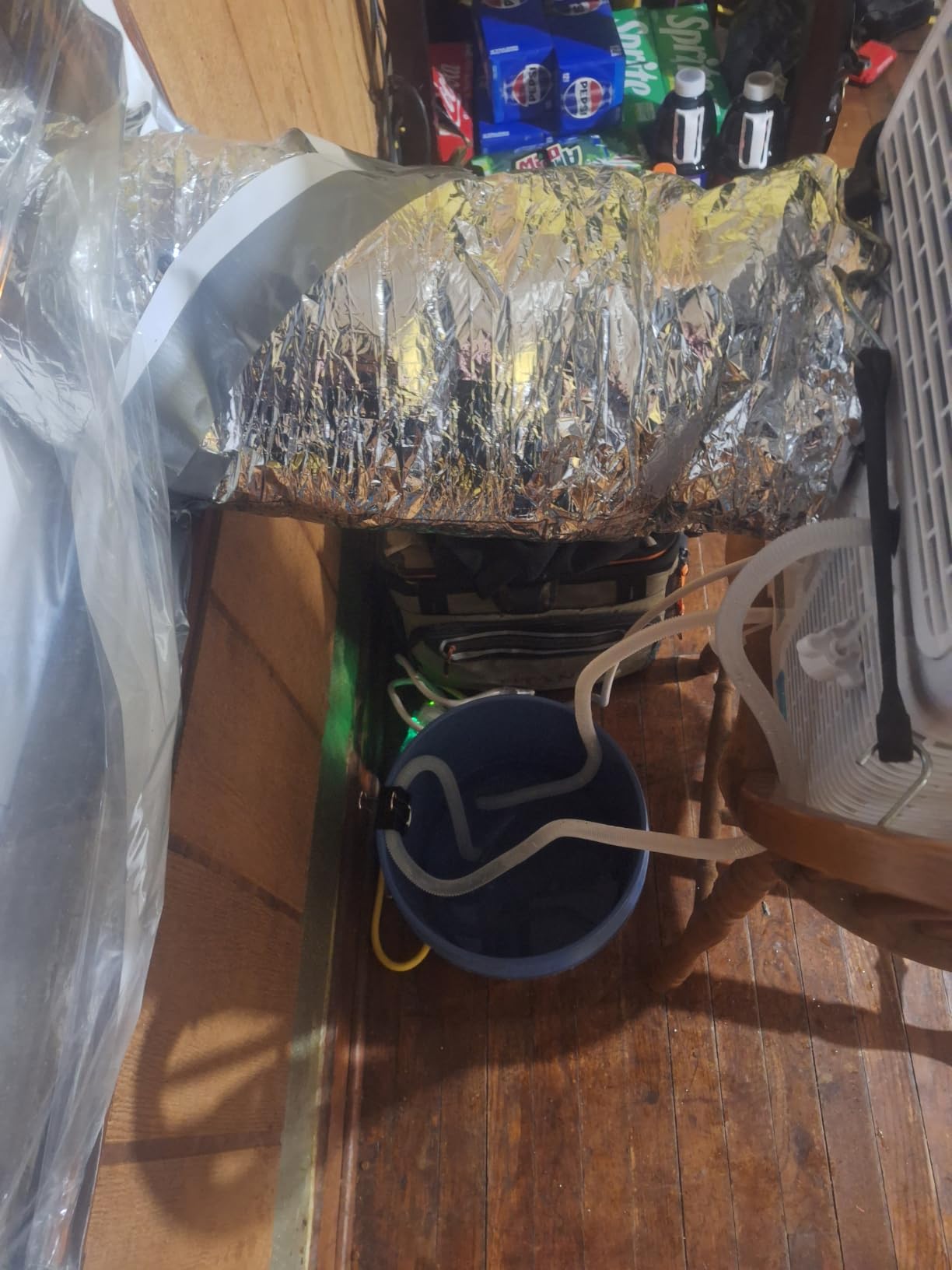
Read the coverage number carefully
The listing rates this unit for 200 to 300 square feet, which is well below what a 14,000 BTU ASHRAE machine and a 10,000 BTU DOE rating would suggest. Treat that coverage figure as the manufacturer being conservative rather than as the ceiling, but size your purchase against the DOE number and your own conditions.
If your room is over 500 square feet, this is not the right pick despite the quality of the compressor. The capacity per square foot is not there, no matter how efficient the unit is.
What to watch after the first month
The exhaust hose runs very hot, and no insulation wrap is included. Where the hose passes through the window panel, the heat radiating off it can warm the air immediately around it, so keep the run as short and as straight as you can.
The front status display has a habit of going dark for some owners, and the adhesive foam seals leave residue on the frame if you pull them off to reuse. A different sealing method, such as removable weatherstrip tape, avoids both problems. There have also been isolated reports of severe internal failures, so keep the unit on a dedicated outlet rather than a shared extension.
5. Gasbye CoolPrime 8000-W – The Best Dual-Hose Starter for a 450 Square Foot Room
Gasbye Dual Hose Portable Air Conditioners, 12,000 BTU Portable AC Cools Up to 450 Sq.Ft, Low Noise (45dB), Backlit Remote Control, 3-in-1 Cooling, Fan & Dehumidifier for Large Room, White
12000 BTU SACC / 8300 ASHRAE
450 sq ft
Dual-hose
45 dB
3-year coverage
Pros
- True dual-hose venting keeps indoor pressure balanced
- 45 dB is quiet enough for a bedroom
- Backlit remote and display-off feature for sleeping
- 360-degree casters and ergonomic handles
- Free returns or a brand-new replacement unit
Cons
- Only a small number of reviews
- so long-term data is thin
- Dual-hose window kit takes longer to set up
- Panel may need trimming to fit
- One owner reported a unit that never cooled
This is the pick for anyone who wants the venting performance of a dual-hose unit without stepping up to a full inverter machine. Balanced intake and exhaust airflow means the room does not go under negative pressure, and in practice that shows up as faster, more even cooling with less of the compressor-runs-forever behavior that frustrates single-hose owners.
The published noise level of 45 decibels suits a bedroom, and the backlit remote with a display-off feature is a thoughtful pair of touches for nighttime use. You can run the machine without a glowing panel in the dark. Cooling is adjustable from 64 to 90 degrees Fahrenheit across three modes.
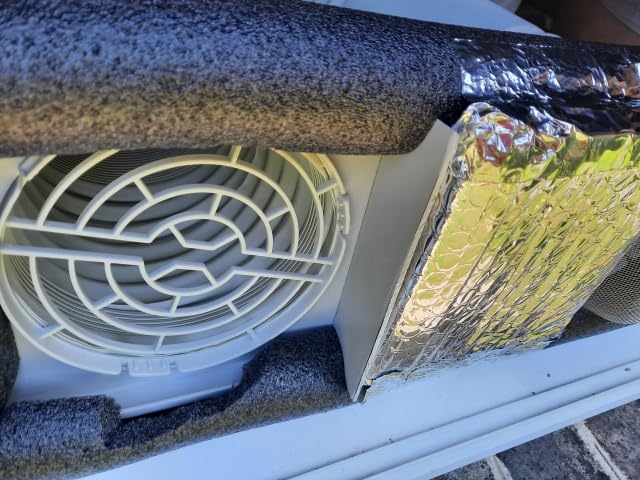
The 1,046 watt draw is the second lowest in the roundup, and the published annual consumption of 442 kilowatt hours is the lowest figure on the list, which is a meaningful advantage if you plan to run this every hot night for months.
Warranty coverage is also better than most: three years, with the brand offering returns or a brand-new replacement rather than a refurbished unit, and they commit to a response within 12 hours. For a first-time portable AC buyer, that support structure is worth as much as the spec sheet.
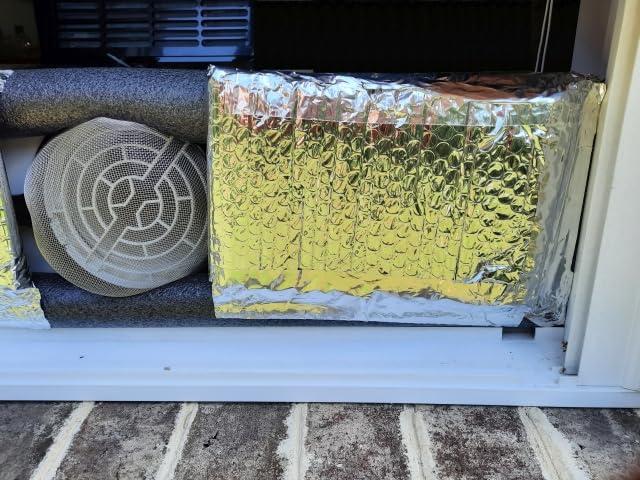
Buy this if you want dual-hose without the inverter price
When comparing dual-hose against single-hose designs, the honest answer is that dual-hose wins on cooling consistency in anything above about 400 square feet, and this machine delivers that at 450 square feet. It is also the quietest non-inverter unit here.
The reciprocating compressor is conventional rather than variable-speed, so it will cycle on and off rather than ramp. In a well-insulated room that is not noticeable, but in a space with a lot of glass you will hear it cycle.
The honest risk with this one
The review base is very small, which means there is not enough long-term data to tell you how this unit holds up across five summers. That is a real limitation, not a formality, and one owner reported a unit that never cooled at all.
Set-up also takes longer than a single-hose machine because you are fitting two hoses and a more complex panel, and that panel may need trimming to fit your window. Take the extra twenty minutes. The manufacturer on this listing is a TCL DeLonghi appliance subsidiary, which is a reasonable signal behind the brand name.
6. ZAFRO A9092R-10K – The Best Rated Portable AC for Large Rooms
ZAFRO Smart Inverter Portable Air Conditioners, 14000 BTU (10000 BTU SACC)
10000 BTU SACC
700 sq ft
Consumer 12.8
42 dB
54 lbs
Pros
- Highest average rating in the group at 4.3 stars
- CEER 12.8 against a 7.83 standard
- Inverter dual-hose with 480 cubic meters per hour airflow
- 72 hours drainage-free below 90 percent humidity
- Extra mode locks output at 61F
Cons
- Still needs intermittent draining in dry climates
- Window opening must be at least 17.72 inches wide
- One year manufacturer warranty only
At 4.3 stars across 466 reviews with roughly three quarters of owners handing out five stars, this is the best-rated machine in the group, and the number is deserved rather than an artifact. It pairs a 10,000 BTU SACC rating with a 700 square foot coverage claim, which puts it in a class of its own here: enough capacity for a genuinely large room, and enough efficiency to run it without punishment.
The 700 square foot figure is the standout spec. For comparison, most 10,000 BTU machines in this roundup are rated for 350 to 450 square feet, and they are usually quoting the inflated ASHRAE number rather than SACC. This one states SACC and then claims coverage that would ordinarily require a 14,000 BTU ASHRAE unit.
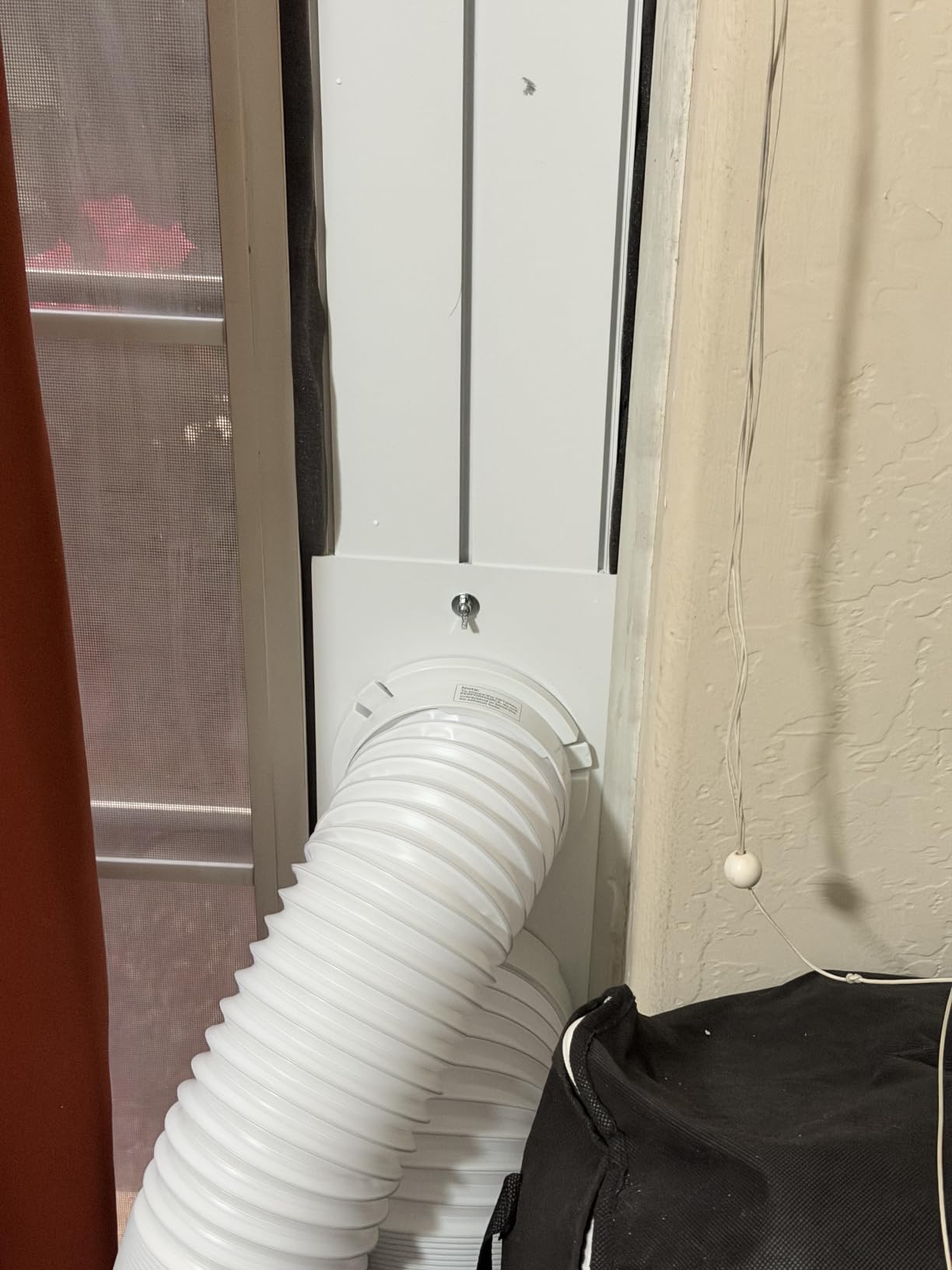
The efficiency rating is where the inverter compressor earns its keep. A CEER of 12.8 against a standard of 7.83 is a substantial margin, and the published 480 cubic meters per hour airflow is high for a portable, which is what pushes the air across the coil fast enough to keep a large volume of room moving rather than chilling a pocket near the vent.
Six operating modes are more than most people need, but two are worth knowing. Extra mode locks the set point at 61 degrees Fahrenheit and runs at full output for aggressive pull-down, and the 42 decibel sleep mode reduces compressor vibration rather than simply lowering the fan speed, which is why it stays quiet.
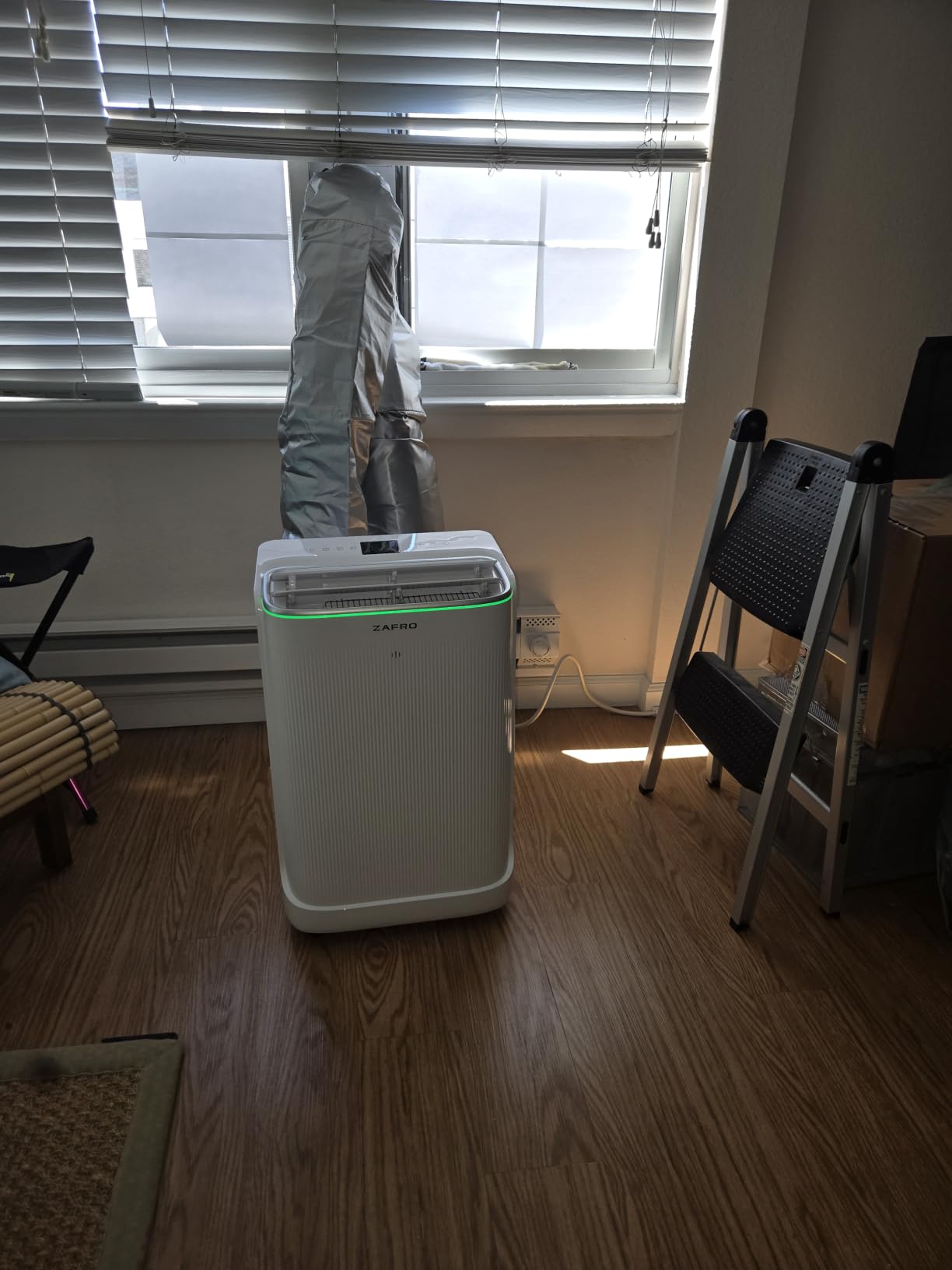
What makes this the efficiency leader
Variable-speed compressors ramp up and down instead of switching fully on and off. In a large room that means fewer startle cycles, less noise, and a lower average power draw for the same cooling delivered, which is the entire argument for inverter machines in a space this size.
The control set is thorough: app, remote and touch panel, four-way oscillation, a 24-hour timer, ambient lighting, power-off memory and filter-clean reminders. The self-evaporating system runs 72 hours without draining as long as indoor humidity stays under 90 percent.
Two things to plan around
Self-evaporation depends on ambient humidity. In a dry climate the water has nowhere to go and you will still need to drain the tank occasionally, so keep a drain hose or a low bucket ready if you live somewhere arid.
The window opening has a minimum width of 17.72 inches, which rules out some narrow openings. The warranty is one year, shorter than the three years on the Gasbye. And at 942 kilowatt hours of published annual consumption it is not the cheapest to run here, just the most efficient per unit of cooling delivered.
7. DuraComfort DP08CWV – The Best Compact Pick for a Smaller Bedroom
12000 BTU Portable Air Conditioner for Rooms Up to 550 Sq. Ft
12000 BTU SACC
350 sq ft
51 dB
55.4 lbs
839 kWh per year
Pros
- Quiet at 51 dB relative to larger units
- Fast connector window kit speeds up installation
- Self-evaporating and bucket-less in drier conditions
- Follow Me remote and top-mounted LED display
- Four 360-degree castors and handles
Cons
- Manual draining every couple of hours in humid rooms
- Some owners report it cycles to fan only instead of cooling
- Window panel often needs cutting to fit
- Strong chemical packaging odor on arrival for some
The DP08CWV is a small-room machine that does its job quietly, and the 51 decibel figure plus the 24.8 inch height mean it disappears into a bedroom corner without dominating the space. If your target room is 350 square feet, this does not try to be something it is not.
The fast connector on the window kit is a small piece of design that makes a real difference to setup time. Rather than wrestling a hose clamp into a panel bracket, you snap the connector into position. The washable filter and the top-mounted LED display with a 24-hour timer round out a sensible feature set.
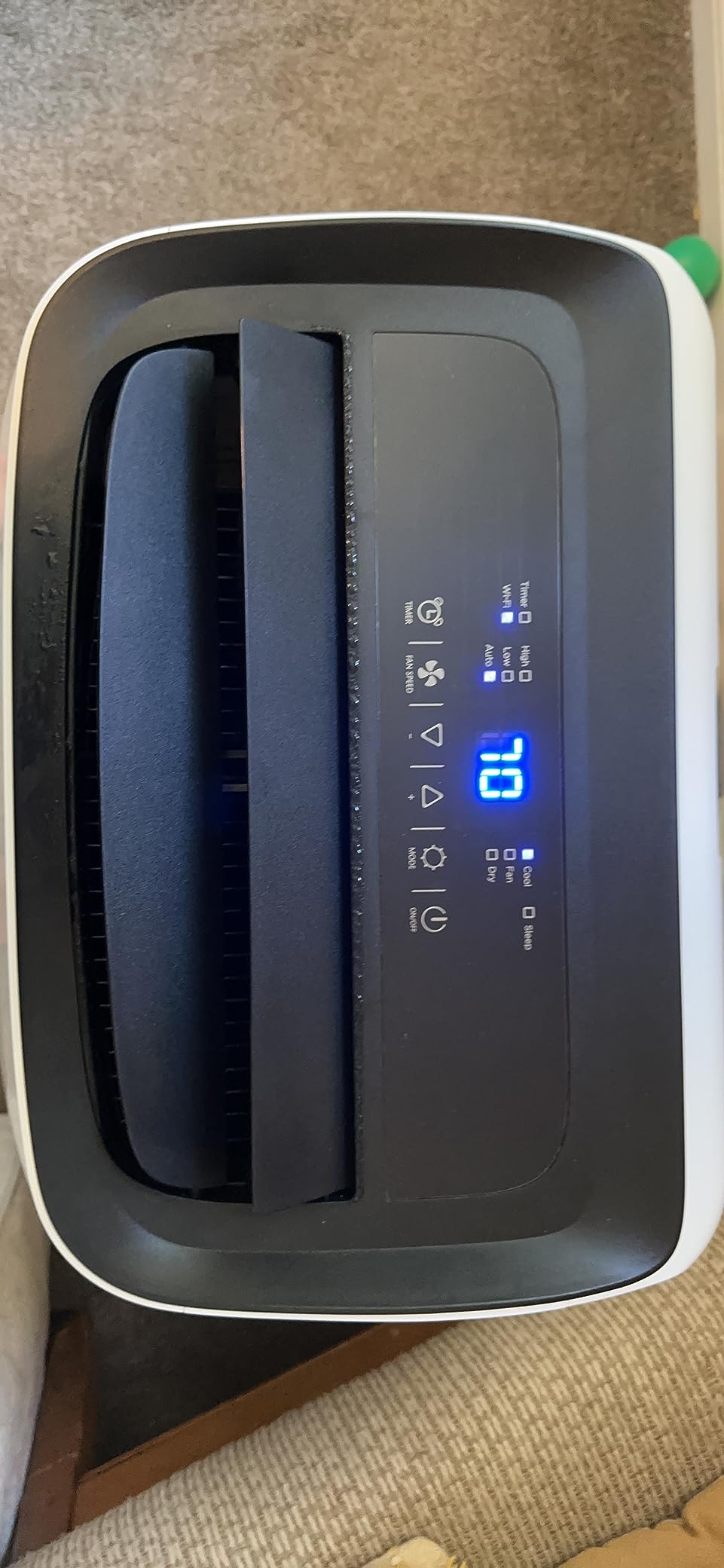
Owners frequently call it well built, and the dual-motor configuration is credited with better cooling effect and lower noise than comparable single-motor machines. The Follow Me remote function works the same way as the BLACK+DECKER version, with the remote acting as a floating thermostat.
Published annual consumption of 839 kilowatt hours is mid-range among the units here. At 1,250 watts it sits in the middle of the pack on draw, and the 115 volt connection means no special circuit is required.
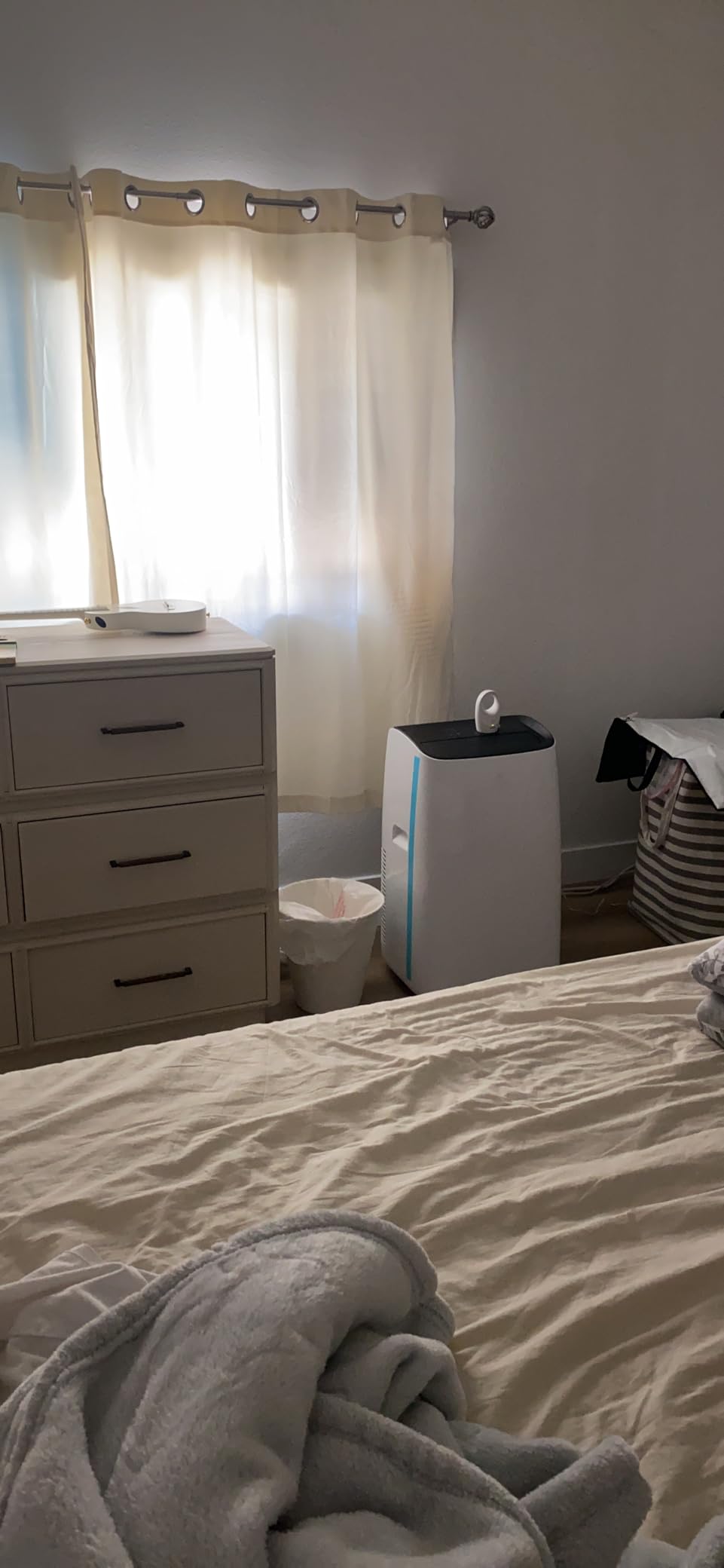
When the bucketless claim holds
The self-evaporating system reuses condensation to cool the coil, which works well in moderate humidity. In a genuinely humid room, though, owners report emptying the tank every couple of hours, and that is the single most common complaint about this machine.
If you live somewhere humid and you do not want to run a drain hose, either plan on checking it overnight or look at one of the inverter units with a 72-hour drainage-free system instead.
Why some owners stopped recommending it
A recurring report describes the unit cycling off and then circulating room-temperature air instead of continuing to cool. If you install this, give it a full hot afternoon before you judge it, because the first impression on a mild day is not representative.
Two smaller notes: the window panel frequently needs cutting to fit a non-standard opening, and some buyers report a strong chemical smell from the packaging on arrival. That odor dissipates once the unit has run for an hour or two in a ventilated space, but it is worth knowing about if you are putting this in a bedroom.
8. Temprium PAC013-16K – The Best High-Capacity Pick for Very Large Rooms
Temprium 16,000 BTU Inverter Dual Hose Portable Air Conditioner for Rooms
16000 BTU
750 sq ft
Inverter dual-hose
CEER 12.3
40 dB
64.8 lbs
Pros
- High cooling capacity with a 750 sq ft coverage claim
- 40 dB silent mode with a brushless DC motor
- CEER 12.3 with steady control within plus or minus 1 degree
- Eight modes plus app
- voice
- remote and touch
- 72 hours or more without draining
Cons
- 1550 watt draw needs a solid dedicated circuit
- At 64.8 lbs it is a two-person move
- One year manufacturer warranty
Among the units in this roundup, the PAC013-16K is built for the largest rooms, with a 16,000 BTU capacity and a 750 square foot coverage claim. For a big family room with high ceilings or an open living space that most window units cannot reach, this is the machine that has the raw output to attempt the job.
The 40 decibel silent mode is the standout for bedrooms. That figure comes from a brushless DC motor rather than a conventional fan motor, and it is paired with optimized ducting and a dedicated sleep mode. A 40 decibel unit is quieter than a quiet conversation held at arm’s length.
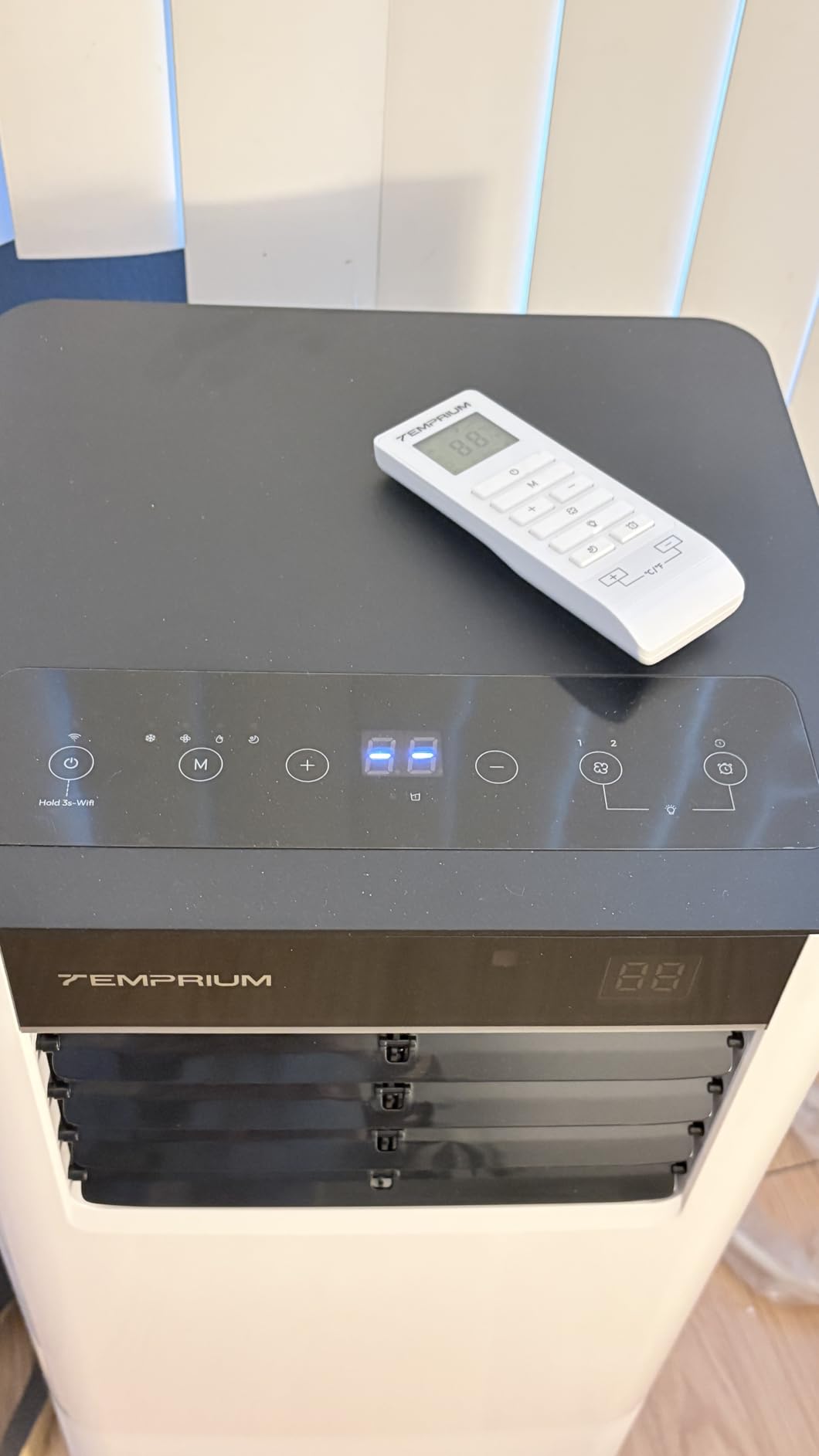
The efficiency rating of CEER 12.3 is close to the best in the roundup, and the manufacturer claims up to 57 percent more electricity saved than a standard unit of the same class. Even allowing for the usual optimism in those figures, an inverter at this capacity performing that well is unusual.
Control is thorough: eight operating modes, a 24-hour timer, app and voice control alongside remote and touch panel. Turbo mode locks the output at 61 degrees Fahrenheit for a hard pull-down after you get home, and four-way oscillation spreads the air across a wide room.
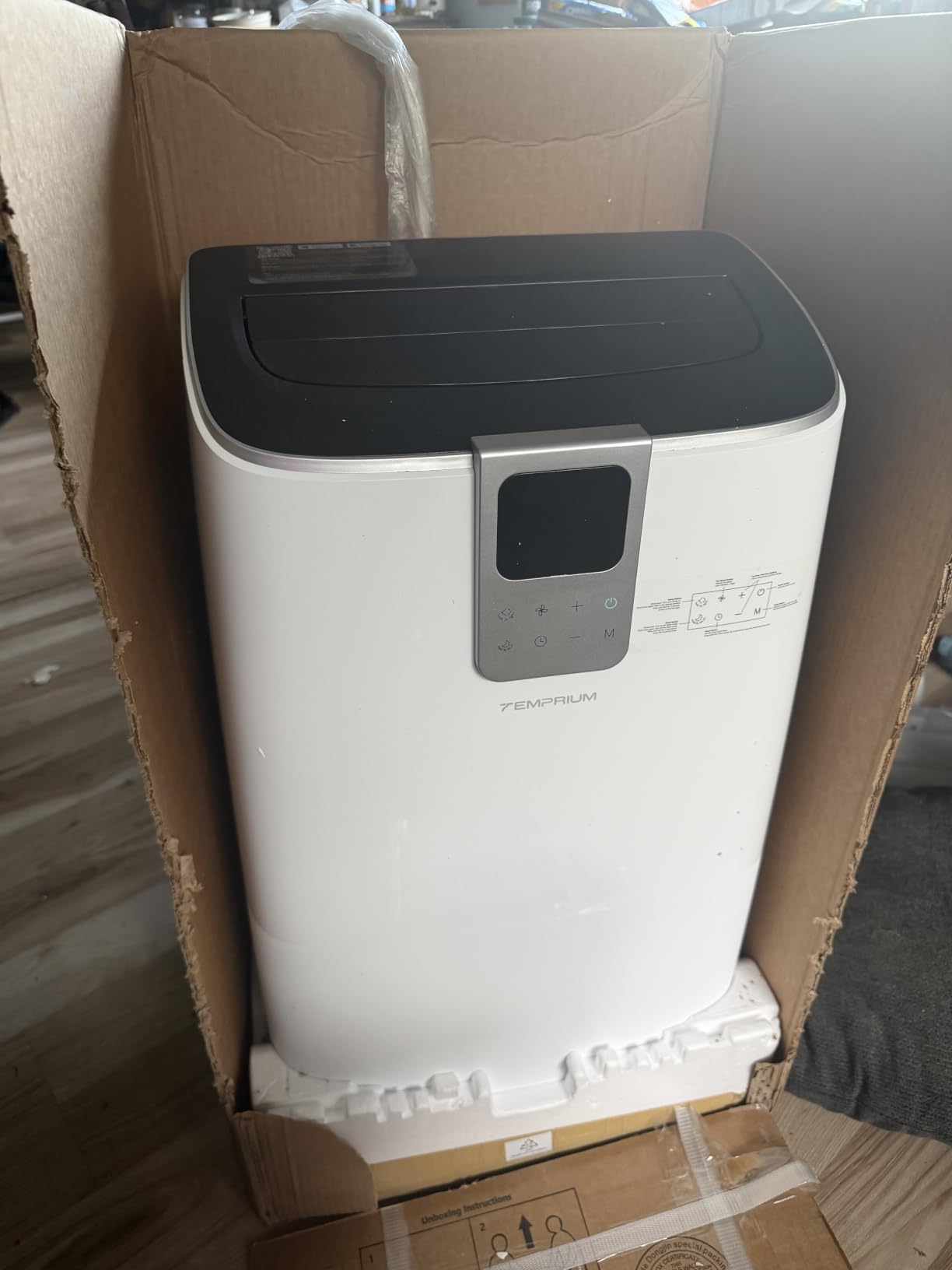
Why the capacity rating matters here
In a room above 600 square feet, capacity stops being optional. An undersized unit runs its compressor continuously, never reaches set temperature, and adds every point it fails to remove to your electricity bill. At 16,000 BTU with dual-hose venting, this machine has enough headroom to actually pull a large space down.
The self-evaporating water-slinging system runs 72 hours or more without draining below 90 percent humidity, and an overflow hose is included if you would rather drain continuously.
Plan the electrical side first
At 1,550 watts this is one of the highest draws in the roundup, and published annual consumption is 938 kilowatt hours. Run it on a dedicated circuit rather than sharing with a refrigerator or an oven, and expect it to need a circuit that can handle sustained high load without nuisance tripping.
At 64.8 pounds it is a two-person lift, so measure your stairwell before you commit. And note that the listing did not return written customer review text, so the long-term reliability picture for this specific model is thinner than the 4.2 star average suggests.
9. HUMHOLD HDPAC-12-BP1 – The Best Pick for Large Bedrooms and RVs
Humhold Inverter 16000BTU Portable Air Conditioners with Remote, Free Stand Cooling Portable AC Unit for Room up to 800 sq.ft, with Dehumidifier & Fan, Dual Hose, Quiet Sleep Mode(42dB), Windows Kit
16000 BTU ASHRAE / 12000 SACC
600-800 sq ft
Dual-hose
42 dB
95 pints per day
Pros
- Owners report pulling a 500 sq ft basement bedroom to about 62F in a couple of hours
- Dual-hose design cools 30-40 percent faster
- 42 dB for its output capacity
- Inverter variable-speed compressor with auto smart mode
- Tool-free washable filters and heavy-duty wheels
Cons
- One owner reports it stops cooling above 80F outside
- Fan mode performance is considered weak
- 1-star share of 17 percent is the highest in this group
- Window opening must be at least 36 by 24 inches
The HDPAC-12-BP1 covers 600 to 800 square feet, which puts it alongside the Temprium at the top of the capacity range here, and the 12,000 BTU SACC figure underneath the 16,000 BTU ASHRAE headline is a genuinely large number. This is the machine for a finished basement bedroom, a large primary suite, or an RV where a smaller unit would run nonstop.
Owner reports include a 500 square foot basement bedroom brought down to about 62 degrees in a couple of hours, which is the kind of real-world result that the coverage claims on cheaper units do not deliver. The dual-hose design is credited with cooling 30 to 40 percent faster than a single-hose equivalent by avoiding hot air backflow.
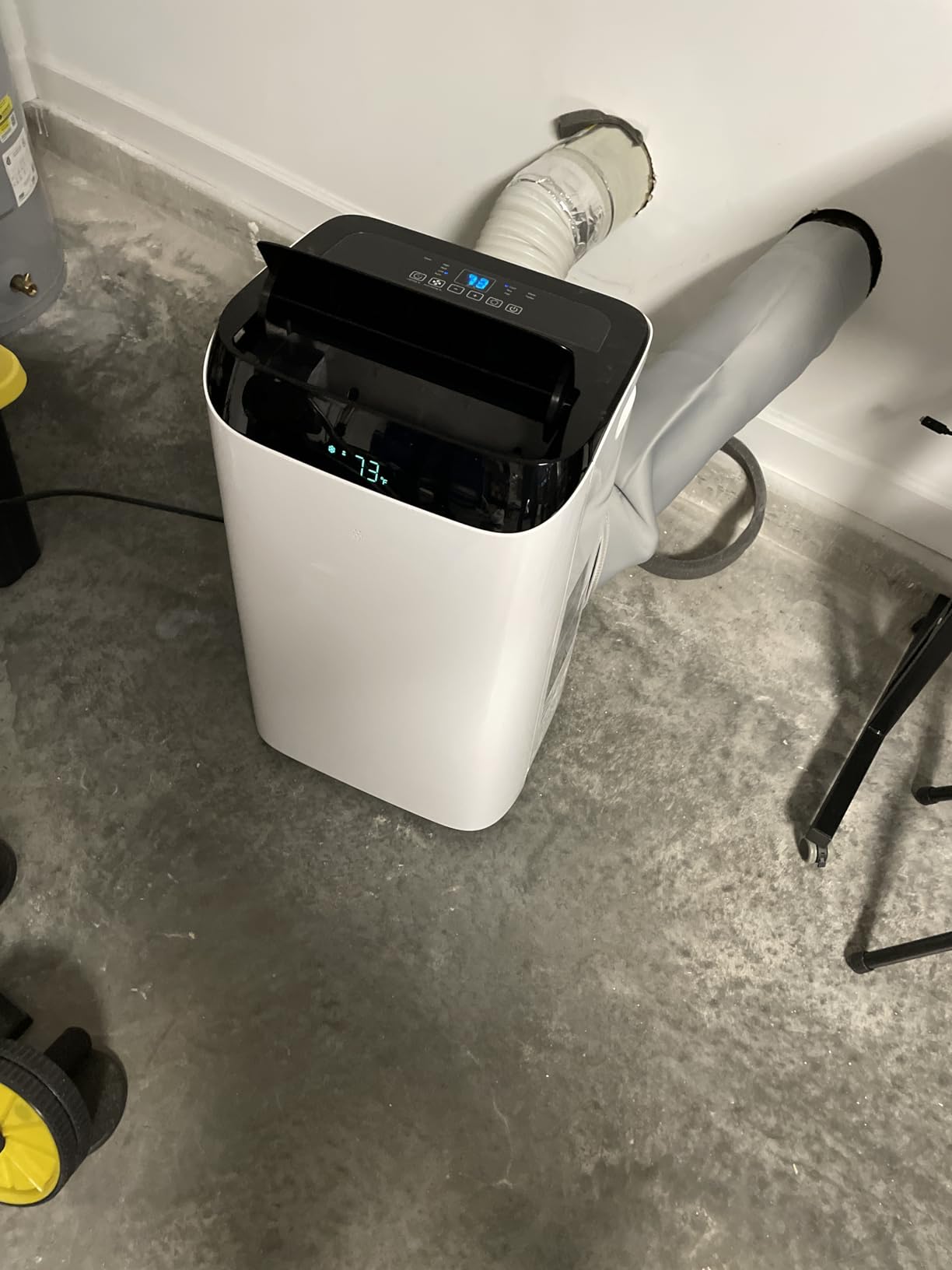
At 42 decibels for a unit of this capacity, the noise performance is genuinely good. Owners describe it as purring rather than loud. The inverter variable-speed compressor with an internal temperature sensor runs an auto smart mode that holds the room between 73 and 77 degrees, adjusting output continuously rather than cycling.
Dehumidification is rated at 95 pints per day, which matters a great deal in a basement. The water self-evaporation system means you can skip the bucket entirely, though a continuous drain hose is an option if you prefer one.
Check the outside temperature before you rely on it
The most important caveat here is about ambient conditions, not the unit. One owner reports that above roughly 80 degrees outside, the compressor cuts out and the machine runs as a fan, which is normal protection behavior for a portable AC but is disappointing when you bought it for a hot day.
Every portable AC has an upper ambient limit, and this one is no exception. In a climate where summer afternoons regularly exceed that threshold, plan on a window unit or a mini-split instead, because no amount of BTU overcomes the physics of a compressor running at the edge of its rating.
What to know before it arrives
The window opening requirement of at least 36 inches wide by 24 inches high is the widest in this roundup. Measure before you buy, and plan on trimming the panel if your opening is close to the minimum.
Two other notes. The fan mode is considered weak by at least one reviewer, so this is a cooling machine rather than a circulator. And the 17 percent one-star share is the highest among the ten units here, driven mainly by the overheat behaviour, so treat the 4.0 average with that context in mind.
10. Garvee JHS-A020B-09KR-D – The Best Pick for Rental Spaces
Garvee 3-in-1 Portable Air Conditioner, 14000 BTU (9300 BTU SACC) AC Unit
14000 BTU ASHRAE / 9300 SACC
750 sq ft
3-in-1
50 dB
85.3 lbs
Pros
- Strong cooling reach for the capacity at this tier
- 4.3 average rating with only 3 percent one-star reviews
- 3-in-1 operation as AC
- fan and dehumidifier
- 24-hour timer
- sleep mode and LED panel
- No-drill window kit fits most double-hung or sliding windows
Cons
- Heaviest unit in the roundup at 85.3 lbs
- Large 20.16 by 18.11 by 33.66 inch footprint
- No listed warranty
The Garvee pairs a 9,300 BTU SACC rating with a 750 square foot coverage claim, which puts real capacity behind the headline number. For a rental, a furnished apartment or a house you intend to move out of, it is a strong way to cool a large room without a permanent installation.
The 4.3 star average with only 3 percent one-star reviews is a good signal on a smaller sample, and owners are consistent about the cooling reach for the class of machine. The 24-hour timer and sleep mode are the two features renters use most, since you can set the room to cool before you get home and drop to a quiet output overnight.
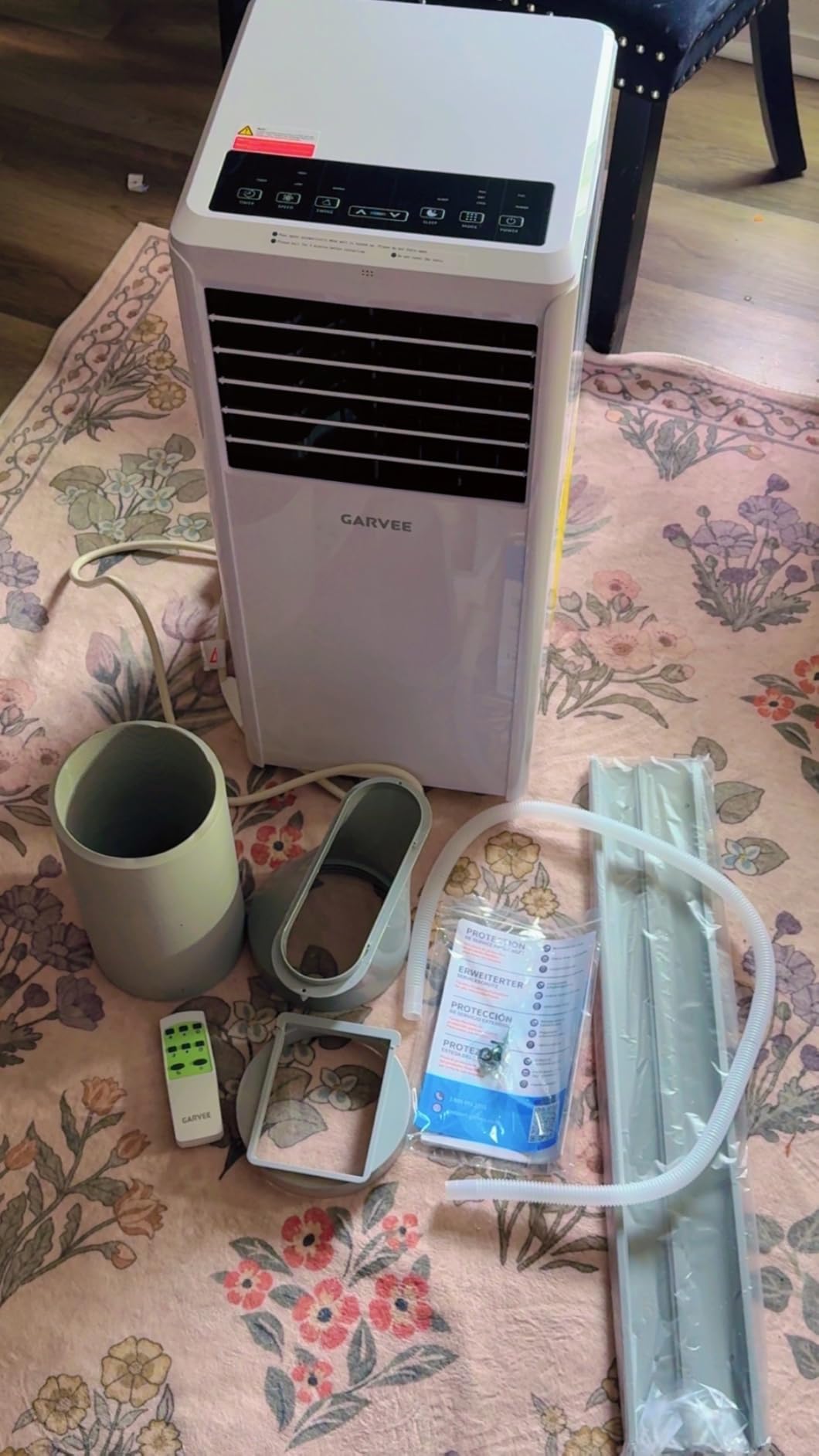
Dehumidification is rated at 90 pints, which is more than adequate for a normal summer room, and the three-in-one operation lets you run the fan alone on a mild evening without spinning the compressor. The LED control panel is clear and the setup is standard: rolling casters, side handles, an adjustable exhaust hose and window panels that need no drilling.
At 1,155 watts the draw is moderate, and published annual consumption of 869 kilowatt hours sits in the middle of the pack. That makes it a reasonable running cost for the coverage it provides.
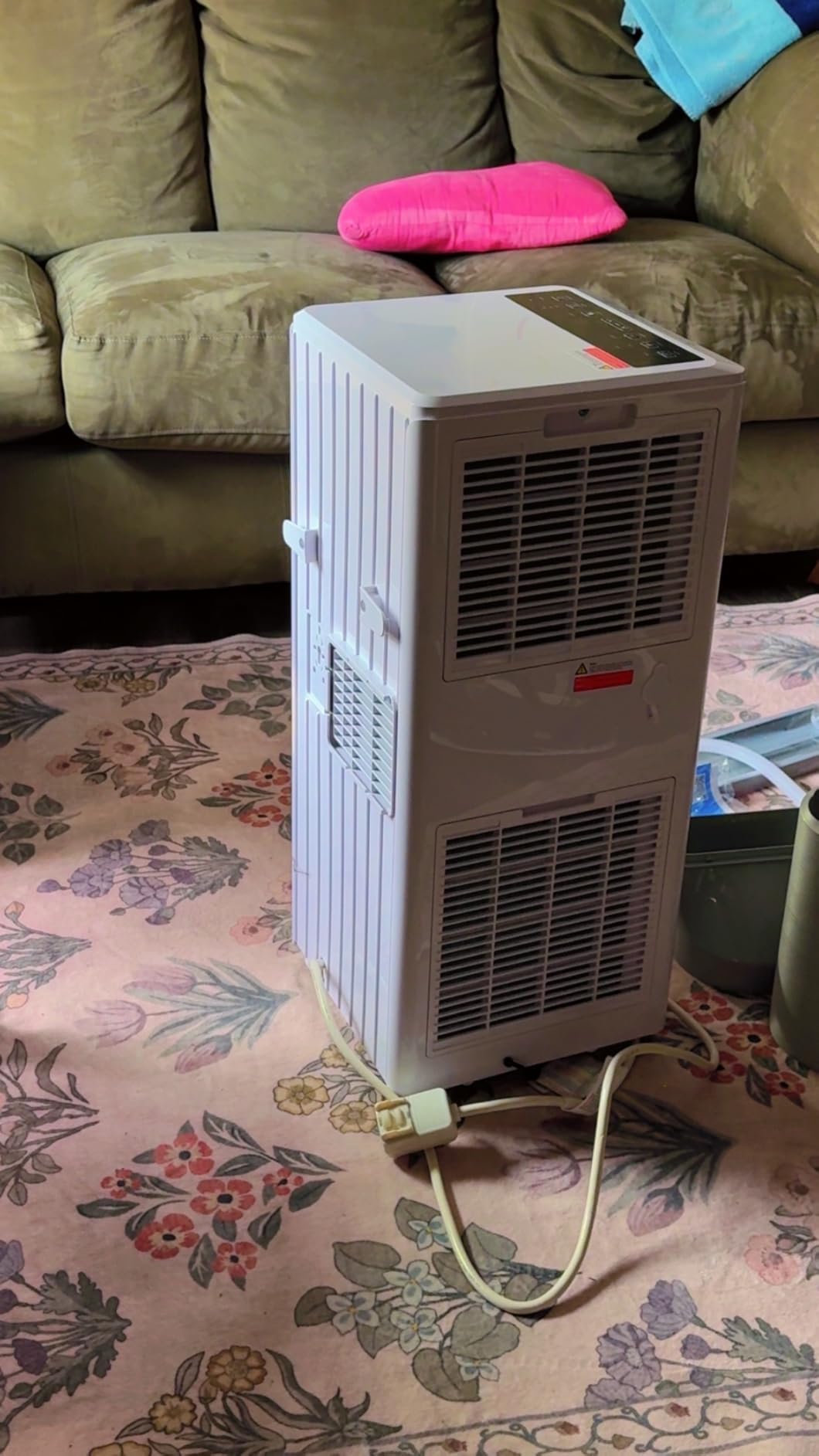
Why this fits the rental situation
The no-drill installation kit is the specific reason. It fits most double-hung and sliding windows without tools or modifications, which is exactly the constraint that rules out a window unit in many rental agreements. Nothing is screwed into the frame, so the unit can leave with you.
It also handles the awkward-window problem that stops people buying any air conditioner at all. Because the whole exhaust is contained in the panel and hose, you are not dependent on finding a window of a particular shape or size.
The weight is the dealbreaker for some people
At 85.3 pounds this is the heaviest unit in the roundup by a wide margin, and at 20.16 by 18.11 by 33.66 inches it also has the largest footprint. Moving it between rooms is a two-person job, and taking it up a staircase without help is a genuine injury risk.
There is also no listed warranty on this model, which is a meaningful gap given the physical demands of moving a machine this size. If you are cooling one spot and can leave it there, that is fine. If you plan to move it around, pick something closer to 55 pounds.
How to Choose a Portable AC for a Large Room
SACC versus ASHRAE: the number that actually matters
Every portable AC in this roundup carries two capacity numbers, and the gap between them is the single most useful thing a buyer can learn. ASHRAE BTU is a theoretical rating measured under ideal laboratory conditions. The DOE SACC rating, also called the DOE BTU figure, is a seasonally adjusted capacity measured under realistic conditions with a real window installation and real airflow.
Look at the Shinco and the SereneLife as the clearest examples. Both advertise 12,000 BTU ASHRAE. Underneath, the SereneLife is rated at 7,000 BTU SACC and the Shinco at 7,500. When a manufacturer prints only the ASHRAE number, they are quoting the flattering figure.
Some listings do it the other way around, which is why the Gasbye, listed as 12,000 BTU SACC, looks larger than units with higher headline numbers. Always check which rating is printed, and size your room against the SACC or DOE value. The efficiency equivalent of SACC is CEER or SEER, and anything above 10 indicates a variable-speed inverter compressor that holds temperature more efficiently.
Single-hose versus dual-hose, and the safety warning
A single-hose unit draws room air in through one duct and exhausts hot air through the same duct. That arrangement puts the room under slight negative pressure, which means the unit pulls in extra warm air from doorways and window gaps to compensate. In a small room this is manageable. In a large open space it is the main reason an undersized single-hose unit never seems to catch up.
A dual-hose unit uses one hose for intake and one for exhaust, so intake and outflow stay balanced. Owners of dual-hose units consistently report more even cooling across a large room, and several forums describe single-hose units in open plans as running constantly without producing comfort.
There is a safety point attached to the negative pressure. In a room with a gas water heater, gas fireplace or gas stove, a single-hose unit can pull combustion gases back into the room through the same negative pressure it creates. If your portable AC shares a room with a gas appliance, use a dual-hose model, keep the combustion appliance well sealed and ventilate the space. Several owners running dual-hose units in open plans specifically call out the even cooling as the reason they made the switch.
Noise in a bedroom: what 40 dB versus 55 dB means
Decibels are logarithmic, so the gap between the quietest and loudest units here is bigger than the numbers suggest. A 40 decibel unit is roughly a quiet refrigerator. A 50 decibel unit is close to moderate conversation at three feet. A 55 decibel unit is a busy office, and it is audible over a sleeping person’s breathing.
If the unit goes in a bedroom, anything above 45 decibels will wake light sleepers when the compressor kicks on. The 40 decibel Temprium and the 42 decibel ZAFRO and DREO are the three to focus on. For a living room or den, 50 decibels is acceptable if the unit sits in a corner rather than beside the seating.
Look for published low-speed noise figures, not marketing words. An inverter compressor that ramps rather than switches will also start and stop less often, which matters as much as the number itself.
Electrical requirements: 115V, watts, and a dedicated circuit
Every unit in this roundup runs on standard 115 volt household current, so none of them needs a 240 volt line. That is convenient, but the wattage still matters. Draws here run from about 1,046 watts at the low end to 3,520 watts on the Shinco, and anything at or above 1,400 watts deserves its own circuit.
Do not share a circuit with a refrigerator, an oven or a space heater. Compressor start-up draws a spike well above the running wattage, and one DREO owner reported tripping a 15-amp circuit twice. If the breaker trips when the compressor engages, that is a wiring problem, not a defect in the unit, and an electrician is the right call rather than an extension cord.
Two high-energy-efficiency figures are worth comparing directly. The ZAFRO runs at CEER 12.8 with 942 kilowatt hours of published annual consumption, and the Gasbye is rated 442 kilowatt hours annually at a conventional compressor. Higher efficiency offsets higher annual consumption, and the comparison that matters is the cost of the same room temperature, not the wattage alone.
Draining, filter cleaning, and the two-machine setup
Condensate management is the routine nobody mentions until it becomes a problem. Most of these units self-evaporate, reusing the collected water to cool the coil, which works as long as indoor humidity stays below 90 percent. In a humid climate the tank still fills, and the DuraComfort and SereneLife both draw frequent complaints from owners emptying buckets every couple of hours.
The fix in humid conditions is a continuous drain hose rather than a bucket. Run it from the drain port to a sink, a floor drain or a bucket you empty weekly. Filters are washable on every unit here and should be rinsed monthly, because a clogged filter restricts intake airflow and the compressor works harder for less cooling.
For an open floor plan above roughly 800 square feet, run two smaller machines on opposite walls rather than one large unit in the middle. Each unit only has to condition the air within reach of its own vent, and two 8,000 to 10,000 BTU machines positioned apart will outperform one unit trying to push air across a double-width space. Neither should be pointed at a doorway leading to another room, or you condition the hallway instead of the living space.
Running a regular fan alongside the portable AC is a common tactic among owners and it does improve perceived cooling, because moving air across skin feels cooler than still air at the same temperature. It does not lower the thermostat reading, but it makes the room feel better.
When a portable AC is the wrong purchase
There are three situations where a portable is the wrong tool. The first is a permanently cooled space of 800 square feet or more, where a mini-split installed once will beat a portable on every measure after the first two summers. The second is a room with a west-facing glass wall or a sun-facing window wall, where the heat gain outruns any single unit during peak afternoon hours. The third is a second home, a garage workshop or a space that needs cooling in August and heating in January.
If any of those describe your situation, a ducted mini-split or a ductless inverter system is the better investment over time, even with the installation cost. If you are cooling one room in a place you cannot modify, a portable is exactly the right answer, and the ten above cover the range from 350 to 800 square feet.
Frequently Asked Questions
Is there a portable AC that actually works?
Yes, but only when the capacity matches the room. A portable AC cools the air in front of its intake and vent, so it works well in one defined space and poorly across an open floor plan. Units that seem ineffective are usually undersized, single-hose in a large room, or installed with a long, kinked exhaust hose.
How big of a room will a 10,000 BTU portable AC cool?
Roughly 400 to 500 square feet with standard eight-foot ceilings, moderate sun and at least one closed door. In a sunlit room, a space with high ceilings, or an open floor plan, the same unit may only manage 300 square feet. Check the DOE or SACC rating rather than the ASHRAE headline figure.
Are single hose portable air conditioners worth it?
For rooms up to about 400 square feet, yes, largely because they cost less and use a single hose. Above that, dual-hose is worth the difference. A single-hose unit puts the room under slight negative pressure and draws warm air back in, which is why owners in open plans report compressors running constantly without cooling.
Why is my portable AC not cooling my room enough?
Work through these in order: the unit is likely undersized for the square footage, the exhaust hose is too long or kinked, the window panel gaps are leaking warm air, the room has a large uncovered glass surface, or the outside temperature is above the unit’s rated ambient limit. A clogged filter and a shared electrical circuit are also worth checking.
What is the best portable air conditioner for a large bedroom?
For a bedroom, noise matters more than raw capacity. The 40 decibel Temprium PAC013-16K and the 42 decibel ZAFRO A9092R-10K are the quietest options here, and both use inverter compressors that ramp output instead of switching on and off. Pick whichever covers your square footage, since a quiet unit that is too small will still run all night.
Do all portable AC units need to be drained?
Most use self-evaporating systems that recycle collected water to cool the coil, so in moderate climates you rarely empty the tank. In humid conditions above 90 percent relative humidity, or in dry air with no water to evaporate, you will still need to drain manually or attach a continuous drain hose.
The Verdict on Portable Air Conditioners for Large Rooms
After working through ten machines with published capacity, coverage and noise figures, the SereneLife SLACHT128 is our pick for the best portable air conditioners for large rooms. It covers 550 square feet in practice rather than on paper, runs on a low 1,060 watt draw, and it heats as well as it cools, which makes it the only unit here you would not retire in autumn.
The rest of the list maps cleanly onto specific needs. The ZAFRO A9092R-10K shares the top rating in the group at 4.3 stars and carries the widest large-room coverage claim on a 10,000 BTU SACC rating, at 700 square feet. The Temprium PAC013-16K and the HUMHOLD HDPAC-12-BP1 have the raw capacity for 750 and 800 square feet respectively. The BLACK+DECKER BPACT10WT is the sensible, light, well-proven choice for a room of 450 square feet or less.
Whatever you pick, size against the SACC or DOE number rather than the ASHRAE headline, keep the exhaust hose short and straight, run anything above 1,400 watts on its own circuit, and if your room is over 800 square feet, get a mini-split quote before you commit to anything portable. That is the honest answer, and it is the one that will still be true next summer.