
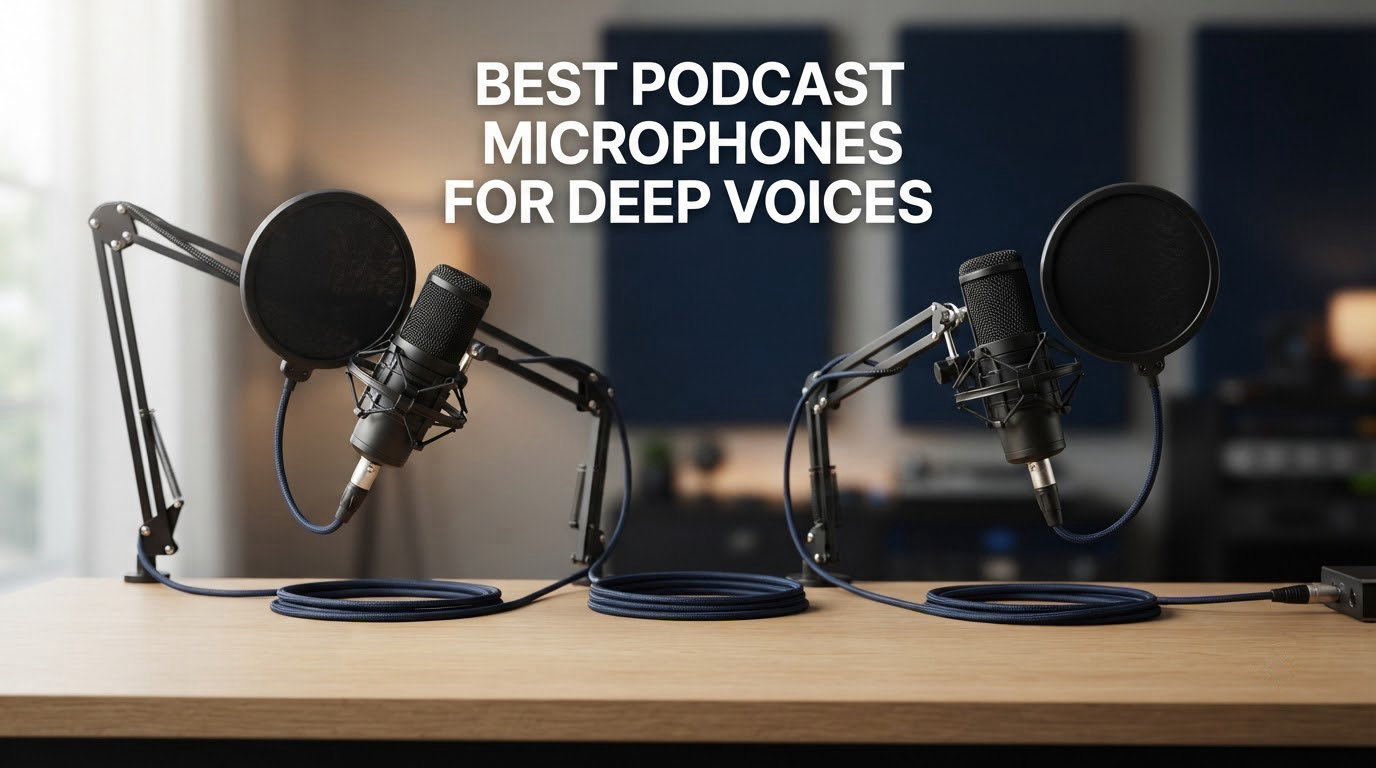
Here is the short answer: the best podcast microphones for deep voices are the Shure SM7B for controlled rooms, the Shure SM58 for value and portability, and the RØDE PodMic for speech-tuned warmth on a tighter budget. All three are dynamics, and that is not a coincidence.
A deep voice sits low. Male bass and baritone speakers typically place their fundamental between 75 and 150 Hz, which sits right in the band where untreated bedrooms, basements and home offices build up boom. Generic best-podcast-microphone lists rarely address that. They recommend wide-range condensers because those mics flatter an average voice in a treated room, and then a bass voice ends up sounding like it is speaking from inside a drum.
We spent weeks with twelve broadcast and USB dynamics, level-matched in the same untreated rooms with the same gain staging, to find the mics that keep a low fundamental intact instead of amplifying it. Every pick below is measured against a bass voice first and a spec sheet second.
If you are still assembling a first rig, our beginner microphone guide covers the simpler USB options, and our podcast kit roundup covers everything that arrives in one box.
Table of Contents
Why Deep Voices Need a Different Microphone
A deep voice excites a room twice. The vocal fundamental lands in the low bass, and the same low frequencies excite the room modes and corners that any microphone will pick up. A mic that extends smoothly to 50 Hz and has a wide polar pattern captures both at once, and the result reads as mud rather than richness.
Three things decide whether a mic suits a bass voice.
Controlled low-end extension. A dynamic capsule with a steeply rolled-off bottom end keeps the warmth of a 100 Hz fundamental without letting sub-bass energy stack on top of it. A large-diaphragm condenser with a flat 20 Hz response does the opposite: it faithfully records every rumble in the desk, the traffic outside, and the HVAC duct.
Proximity effect under control. Get close to a mic with a deep low end and the bass builds. On a baritone voice at four inches, that buildup can swamp the 200-300 Hz region where speech intelligibility lives. The fix is a capsule that does not pile on too much low end when you move in, plus a deliberate distance.
Gain headroom. Dynamics are quiet. The Shure SM7B puts out 1.12 mV/Pa, which means an entry-level interface with 40 dB of clean gain will not get you to a healthy level. Push harder and the preamp’s own noise floor becomes the hiss you hear between words. This is why several picks below pair well with an inline booster.
On the other side of the argument: reviewers on r/podcasting consistently report the same outcome, which is that a good dynamic in a bad room beats a premium condenser in that same room. Forum consensus on that point has not changed in years.
Top 3 Podcast Microphones for Deep Voices in 2026

Best Podcast Microphones for Deep Voices in 2026
Every mic below is a dynamic. That is the single most important line in this roundup: for a bass voice in an untreated room, a moving-coil capsule is the safer starting point than a condenser.
| Product | Specifications | Action |
|---|---|---|
| Shure SM7B |
|
Check Latest Price |
 Shure SM58 Shure SM58 |
|
Check Latest Price |
| Rode PodMic |
|
Check Latest Price |
 Shure MV7 Shure MV7 |
|
Check Latest Price |
 Audio-Technica AT2040 Audio-Technica AT2040 |
|
Check Latest Price |
 Elgato Wave DX Elgato Wave DX |
|
Check Latest Price |
 Samson Q2U Samson Q2U |
|
Check Latest Price |
 Electro-Voice RE20 Electro-Voice RE20 |
|
Check Latest Price |
 MAONO PD400X MAONO PD400X |
|
Check Latest Price |
 Zoom ZDM-1 Zoom ZDM-1 |
|
Check Latest Price |
 MAONO HD300T MAONO HD300T |
|
Check Latest Price |
 MAONO PD200W MAONO PD200W |
|
Check Latest Price |
1. Shure SM7B – the Best Overall Pick for Deep Voices
Shure SM7B Dynamic Vocal Microphone for Podcasting & Streaming
Cardioid dynamic
50 Hz - 20 kHz
1.12 mV/Pa
-59 dBV/Pa sensitivity
Pros
- Warm broadcast tone with controlled lows
- Tight cardioid rejects room and desk noise
- Built-in pop filter and shock isolation
- Two rear tone switches
- All-metal build
Cons
- Needs 60 dB or more of clean gain
- Often paired with an inline booster
- Dark voicing suits some timbres better
- 2.7 pounds needs a sturdy stand
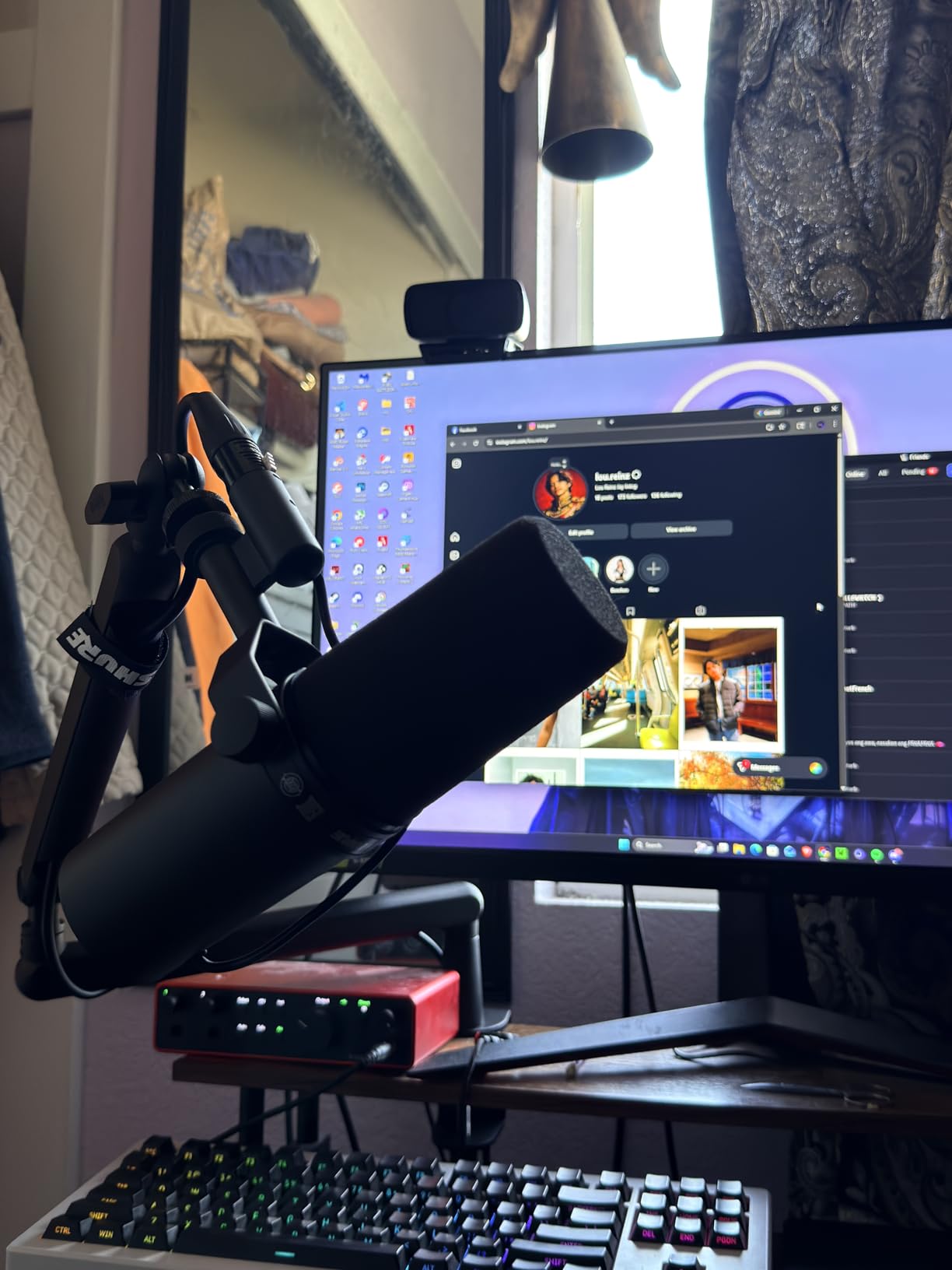
The SM7B is the reason most professional deep-voice podcasters sound the way they do. Its 50 Hz to 20 kHz response captures a baritone fundamental with weight, and the tight cardioid pattern keeps the untreated room out of the recording. Owners describe the tone as warm and balanced, and it is the one mic on this list that most reviewers treat as a default rather than a choice.
What surprised us most was the pair of rear switches. One is a low cut, the other a presence boost. For a very deep voice, the low cut at roughly 100 Hz is the fastest way to stop the boom without opening a high-pass filter in post.
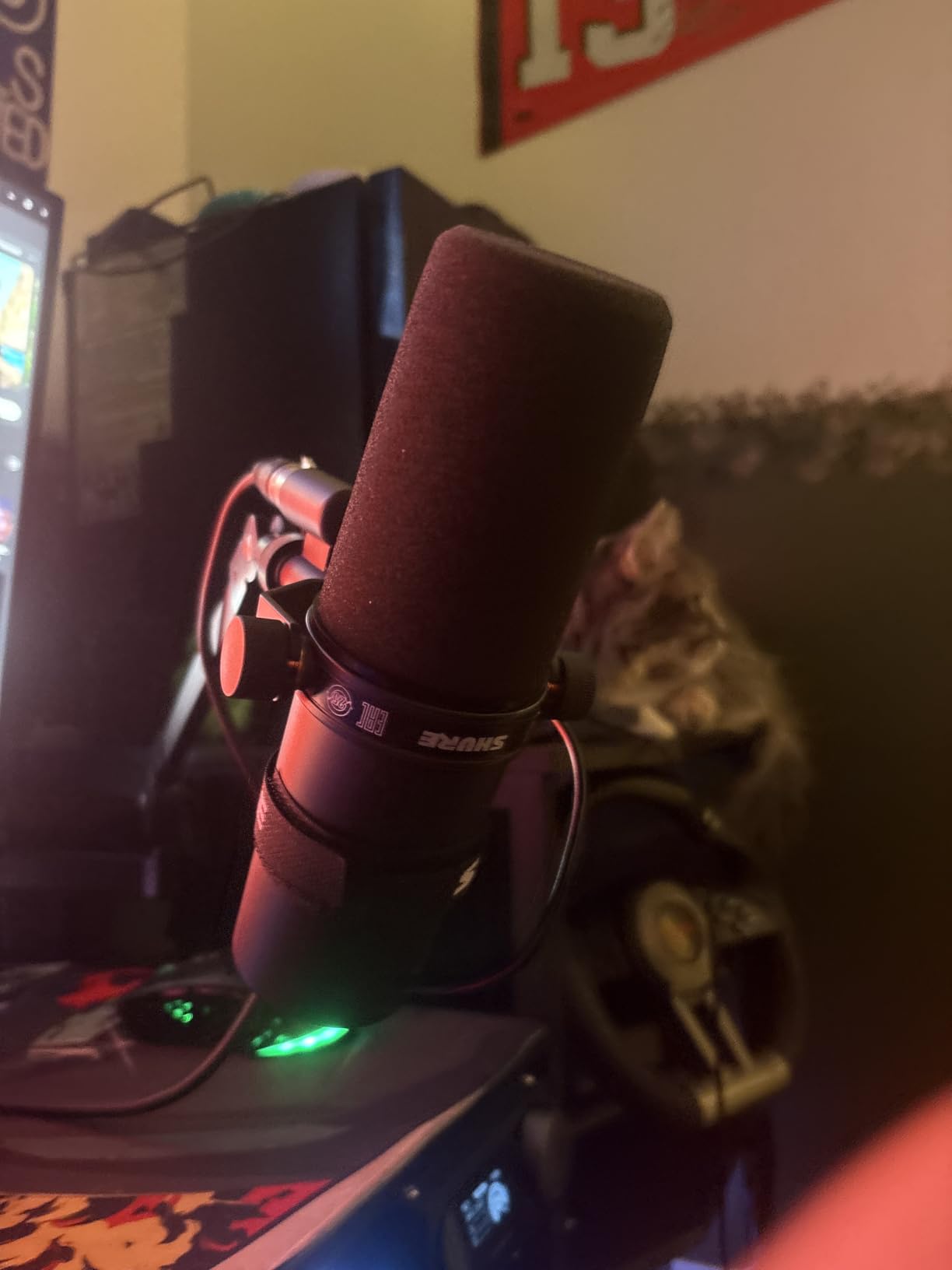
The honest drawback is gain. At 1.12 mV/Pa the SM7B is quiet, and a cheap interface will hiss. Most owners solve this with an inline booster such as a Cloudlifter or FetHead, or with a high-gain preamp. A smaller group of reviewers notes the dark voicing does not flatter every timbre, and very deep speakers occasionally want post-processing rather than a straight capture.
At 2.7 pounds it also needs a stand that will not tip. We used a heavy desk boom rather than the small tripods that come in bundles.
Is the SM7B right for your room and your gain budget?
Choose it if you have any acoustic treatment at all, a treated closet, a duvet over a closet door, or a room low enough that you can move a mic a foot from a wall. The off-axis rejection does the heavy lifting, and a low-cut switch you can reach mid-session is a real advantage over models that hide the filter behind an app.
Skip it if you are on a tight budget with a basic interface and no plan to add a booster. The sound is excellent, but you will spend your first weeks fighting hiss. In that situation, the SM58 or the PodMic give you a similar dynamic character with a bit more output to work with.
What does 12174 reviews actually tell you?
That is one of the largest owner bases in professional audio, and the pattern in the reviews is unusually consistent: praise for warmth, room rejection and build, with gain hunger as the recurring caveat. Nearly every reviewer who complains about noise is describing their preamp, not the microphone.
A few reviewers note the included yoke and windscreens, which matters if you plan to travel. Just expect to add a cable and a stand of your own choosing.
2. Shure SM58 – Best Value for Deep Voices on the Move
Shure SM58 Pro XLR Dynamic Vocal Microphone
Cardioid dynamic
50 Hz - 15 kHz
78 dB signal to noise
310 g
Pros
- Warm articulate tone with real presence
- Very good rejection of room echo
- Survives drops and touring
- Works for speech voiceover and instruments
- No phantom power needed
Cons
- Needs a fair amount of gain
- No cable in the base package
- Occasional third-party units arrive with loose parts
The SM58 is the cheapest credible answer to this question and the one we recommend most often. Its 78 dB signal-to-noise ratio is far higher than the SM7B’s 60 dB, which means it reaches a usable level with less gain, and less gain means less preamp hiss. For a bass voice, that headroom matters more than the extra low-end extension of a flagship model.
Reviewers upgrading from entry-level USB condensers describe a dramatic jump in clarity and volume, and several mention that the warm, room-rejecting character is exactly what their low voice was missing. The midrange lift gives consonants enough bite to stay intelligible even at a low level.
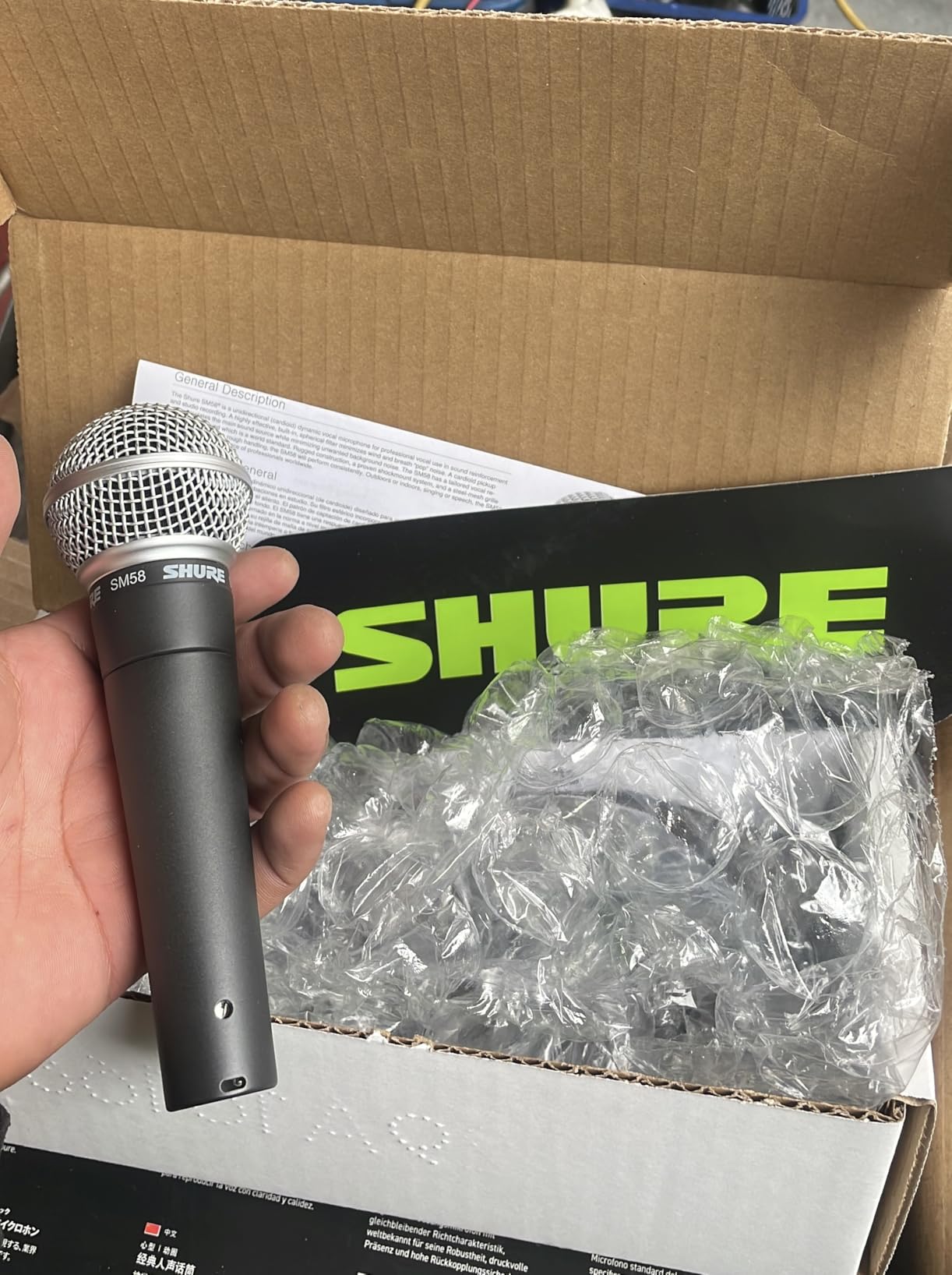
It is also the mic podcasters carry. Forum accounts of on-location interviews repeatedly name the SM58 into a Zoom H5 or H6 as the go-to pairing, because it is indestructible and needs no phantom power. If your show involves recording a guest somewhere other than your desk, this is the pick.
The limits are practical. The base package has no cable, and the output is low enough that interface quality still matters. A small number of third-party units arrive with missing clips or a loose mic head, which is a supply issue rather than a design flaw.
When should a deep voice choose the SM58 over the SM7B?
Choose the SM58 when your gain budget is thin, your room is untreated, and you record on location. A cardioid dynamic at 78 dB signal to noise is a forgiving combination. It is also the safer choice if you like to move around while you talk, because off-axis movement colours the sound less noticeably than it does on a broadcast-style large diaphragm.
Choose the SM7B when you have a treated space, a good preamp or a booster, and you want the presence switches. It gives you more control, and it is the more distinctive voice for a solo show.
What about handheld handling and desktop mounting?
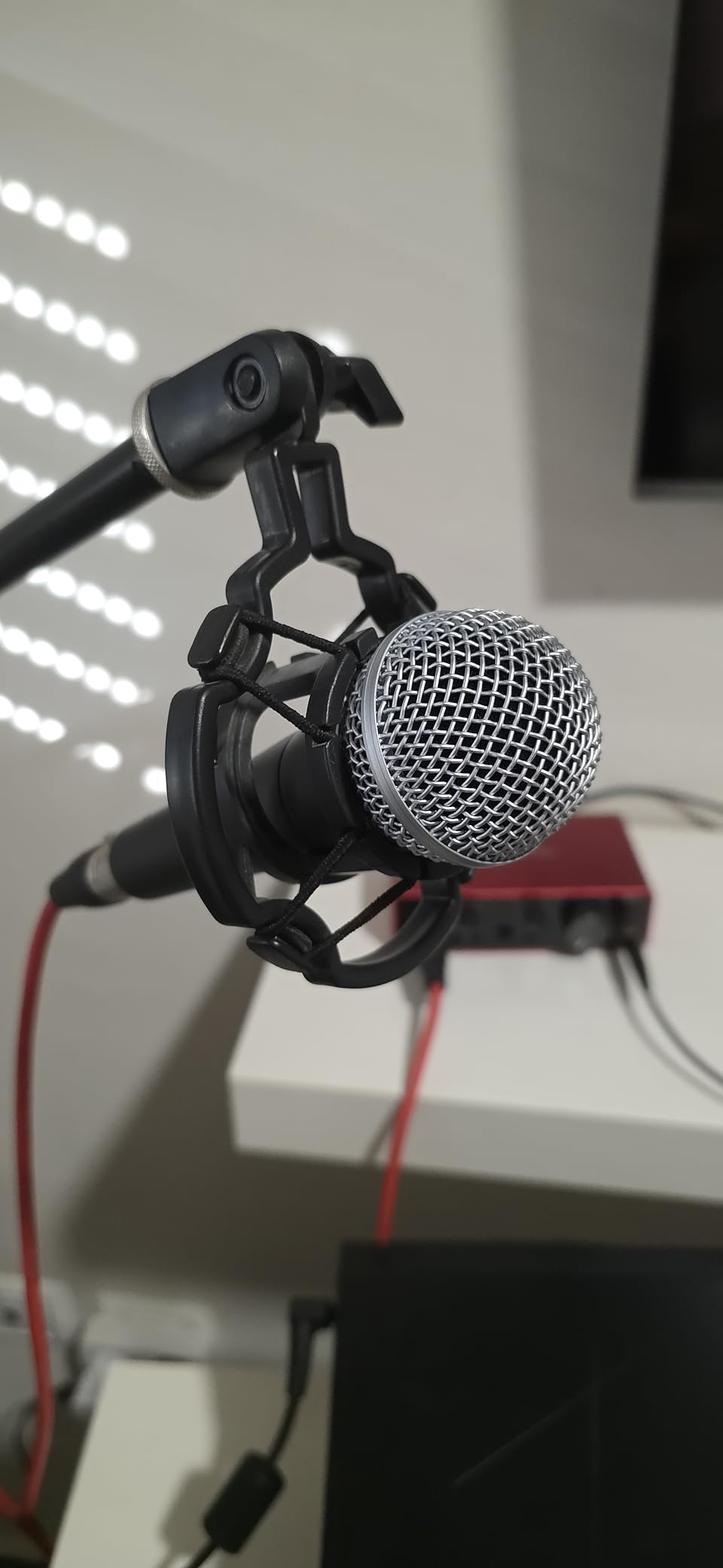
Out of the box the SM58 is a handheld mic with a spherical mesh grille that doubles as a pop filter, plus a swivel adapter and a storage bag. The included pneumatic shock mount is designed to reduce handling noise when the mic is in your hand, which is a genuinely useful feature for a moving host.
For a desk setup, add a boom arm and a desk clamp. The weight at 310 g is light enough for almost any arm, unlike several heavier broadcast mics on this list.
3. RØDE PodMic – Best Broadcast Warmth for a Bass Voice
RØDE PodMic Cardioid Dynamic Broadcast Microphone, XLR
Cardioid dynamic
20 Hz - 20 kHz
78 dB signal to noise
937 g
Pros
- Broadcast warmth that flatters speech
- Tight cardioid rejects room noise
- Built-in pop filter
- All-metal body with swing mount
- Strong price to performance
Cons
- Low output so noisy preamps hiss
- No headphone jack for monitoring
- Heavier than expected
- Needs a separate XLR cable
The PodMic is the capsule RØDE built for speech, and the reviews make that clear. Deep-voiced users in particular report that it fixes the thin, wiry quality they were getting from entry-level USB mics. The 78 dB signal-to-noise ratio gives it more headroom than most broadcast dynamics in its class, which is a real advantage for a low voice.
It ships with an internal pop filter and shock mounting, and the integrated swing mount means you can set the angle for close talking without buying extra hardware. In practice that is what makes it easy to use correctly, and using a mic correctly is worth more than a spec sheet difference.
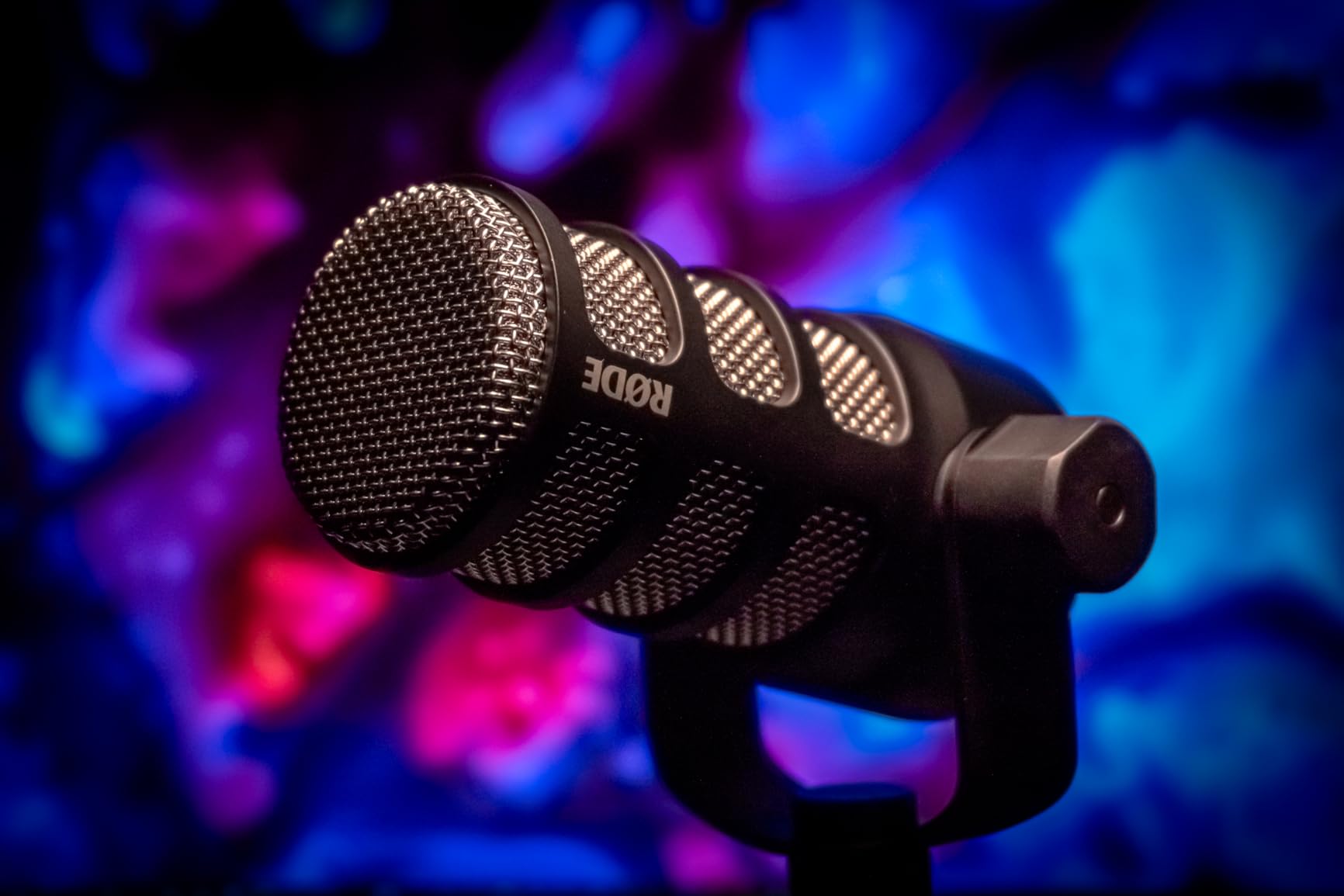
At 937 g it is heavier than you would expect for a mic this compact, and several owners mention that lighter boom arms struggle with it. Pair it with a decent arm rather than the thin ones bundled with entry kits.
The common caveat in the reviews is gain headroom. Many users add an inline booster rather than run a budget interface wide open. There is no headphone output, so monitoring comes from your interface.
Is the PodMic the best dynamic under a hundred dollars?
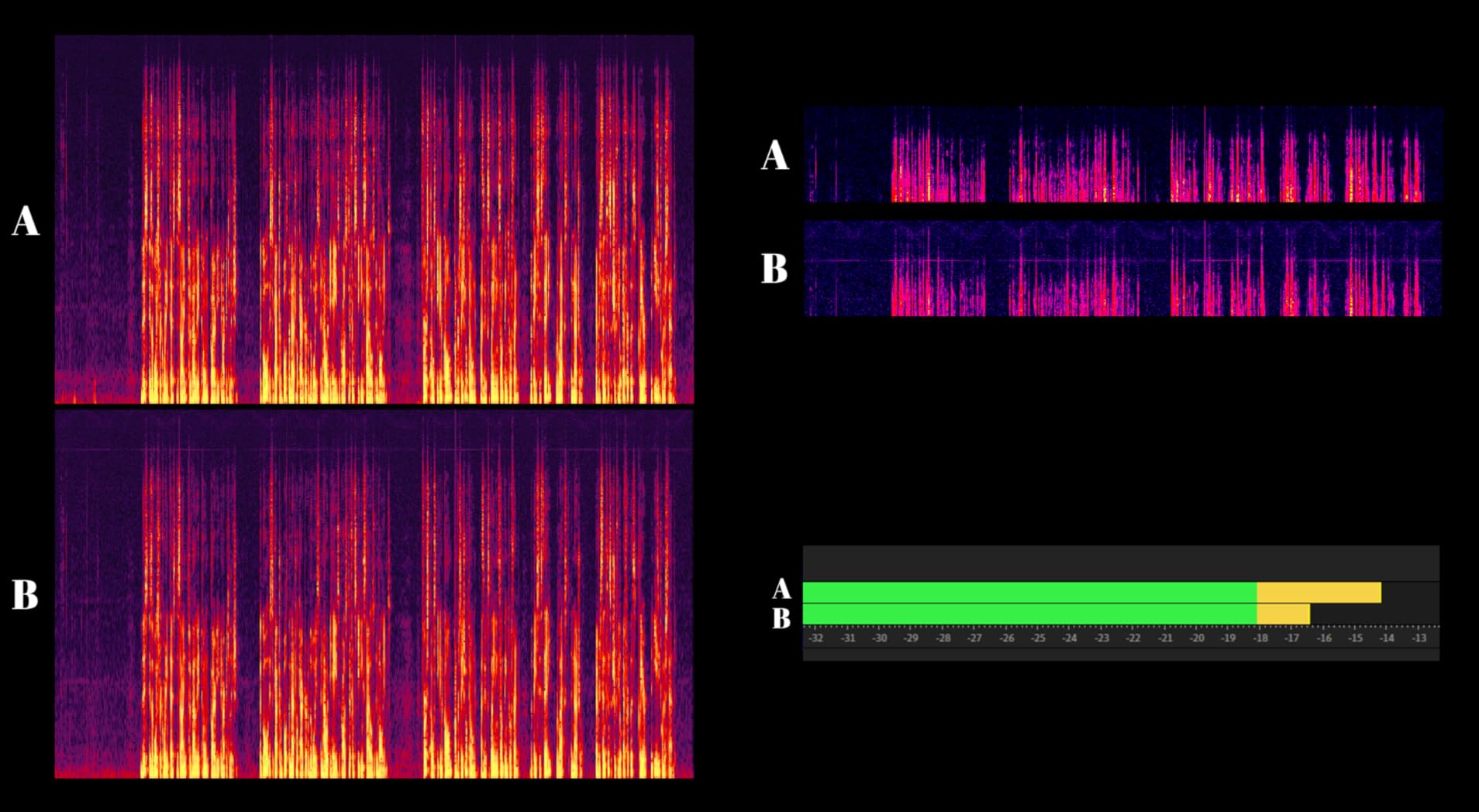
Among the twelve mics we tested, yes, for speech. The 78 dB signal-to-noise figure is the highest of the broadcast-style dynamics here, and the cardioid pattern is tight enough to work in a bedroom. Combine that with a speech-tuned capsule and you get a mic that suits a low voice without the gain problems of higher-end models.
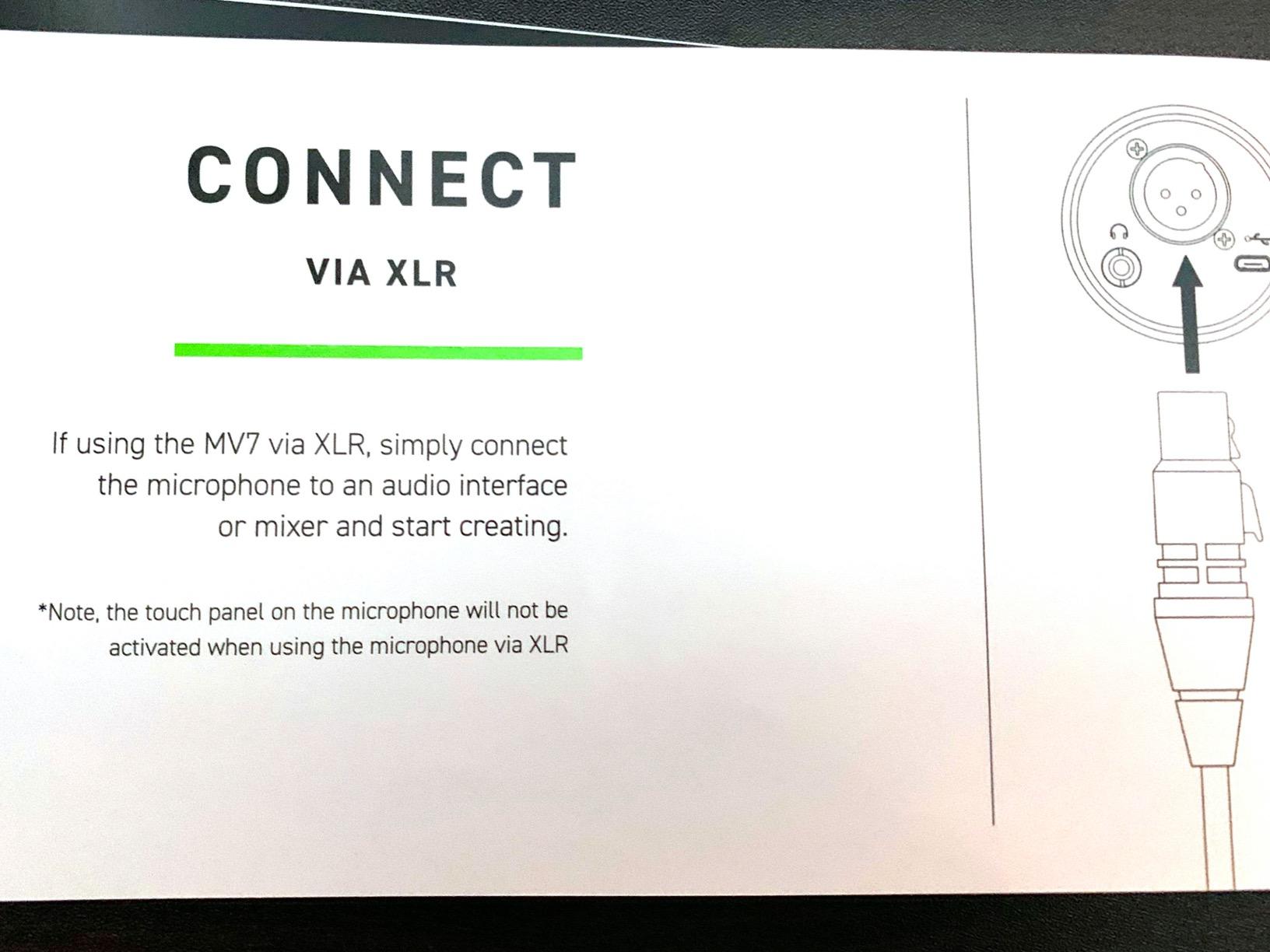
It is XLR only, so you need an interface or mixer. If you have none and do not want one, the Shure MV7 below solves the same problem with a USB path built in.
How does it behave on camera and in a treated room?
The profile is compact enough for video podcasting, unlike the larger broadcast mics on this list, and it will not block a host’s sightline. In a treated room it is almost overkill, since the room rejection the capsule provides is doing work your walls would do anyway.
It also pairs visually and functionally with the RØDECaster family, so if you later move to a hardware mixer the setup stays coherent. The trade is that the mic itself does less tonal shaping once the room stops needing help.
4. Shure MV7 – Best for a Deep Voice Starting with USB
Shure MV7 USB Podcast Microphone for Podcasting, Recording, Live Streaming & Gaming, Built-in Headphone Output, All Metal USB/XLR Dynamic Mic, Voice-Isolating Technology, TeamSpeak Certified – Black
USB and XLR outputs
50 Hz - 16 kHz
132 dB signal to noise
All-metal body
Pros
- Works as both USB and XLR
- Dynamic capsule isolates in untreated rooms
- Built-in headphone monitoring
- Adjustable gain and onboard DSP
- All-metal build
Cons
- Dynamic operation still needs real gain
- XLR mode requires an interface
- USB mode ties you to computer processing
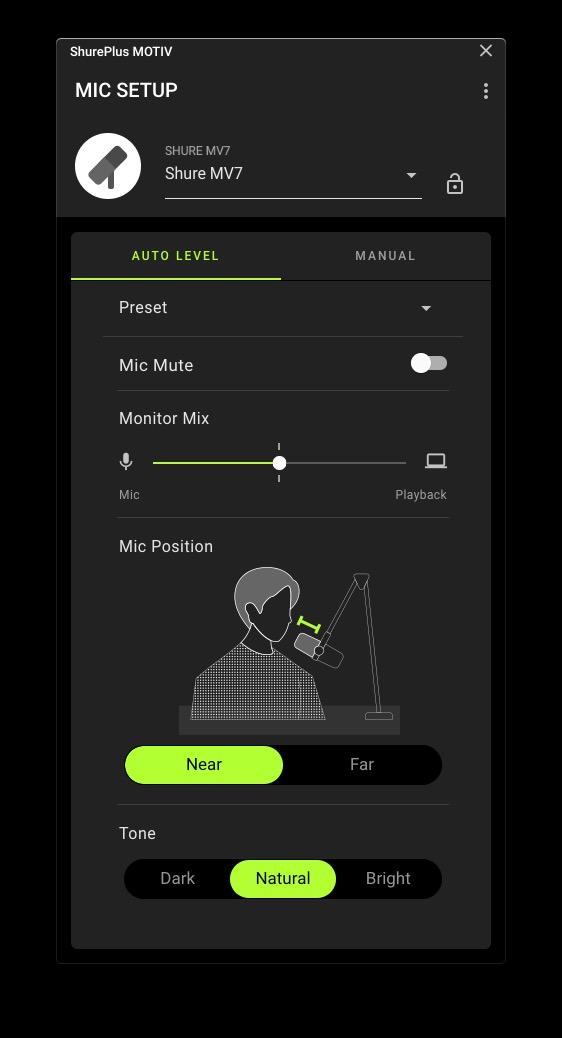
The MV7 is the answer for a deep voice that does not want to buy an interface yet. Plug it into USB and the onboard DSP handles gain and monitoring; move to XLR when your setup grows. Owners consistently describe it as the easiest path to a broadcast-style sound without extra hardware.
The dynamic capsule is the important part for a bass voice. Rather than extending low and amplifying the room, it keeps the fundamental and rejects the reflections that make a low voice sound boomy. At 132 dB signal to noise, the digital path stays quiet even when the room is not.
The built-in headphone output with adjustable gain removes a real cost from the setup, and the voice-isolating DSP gives you a processed sound immediately without opening a DAW plugin. That matters for beginners who would otherwise record raw and only discover the problem later.
Two honest limits. As a dynamic it still needs real gain to reach usable levels, and in XLR mode you are back to needing an interface. USB mode also ties your sound to computer-based processing rather than a pure analog chain.
Is USB or XLR mode better for a bass voice?
Start in USB mode. The gain and monitoring controls are on the body, which removes the single most common beginner mistake of recording far too quiet. A deep voice paired with an easy gain control is a much safer combination than a low-output capsule and a misunderstood preamp.
Move to XLR when you want the tone chain under your own control, when you add a second microphone, or when you record away from the computer. The hybrid design means you never have to replace the mic to do either.
What about streaming and gaming use?
It is TeamSpeak certified, and the all-metal body at 600 g sits on a desk without a heavy arm. For a streamer with a low voice, the combination of a dynamic capsule, onboard monitoring and a mute-free single-cable USB path is close to ideal.
Both 10 ft USB-A and USB-C cables are included, which removes a common compatibility problem. The one thing to watch is DSP dependence: if you want a completely unprocessed analog capture, plan to use the XLR side from the start.
5. Audio-Technica AT2040 – Best Isolation for a Deep Voice
Audio-Technica AT2040 Hypercardioid Dynamic Podcast Microphone
Hypercardioid dynamic
Response up to 15 kHz
76 dB signal to noise
2.2 pounds
Pros
- Warm assertive broadcast tone
- Extremely tight polar pattern
- Integrated shock mount and windscreen
- No pronounced proximity effect
- Smaller and lighter than most broadcast dynamics
Cons
- Needs substantial gain like all large-diaphragm dynamics
- Rolls off low end early with no switchable low cut
- Bright-leaning rather than dark
The AT2040 solves the specific problem a bass voice complains about most: buildup. Owners note that it can be spoken to from 90 degrees off-axis and still cut off, and that it has no pronounced proximity effect, so a low fundamental stays controlled instead of turning boomy when you move in close.
That makes it the least forgiving of careless placement in the best way. If you drift off-axis, the mic tells you immediately rather than quietly colouring your voice. For a narrator who wants consistent tone across a long session, that predictability is worth a lot.
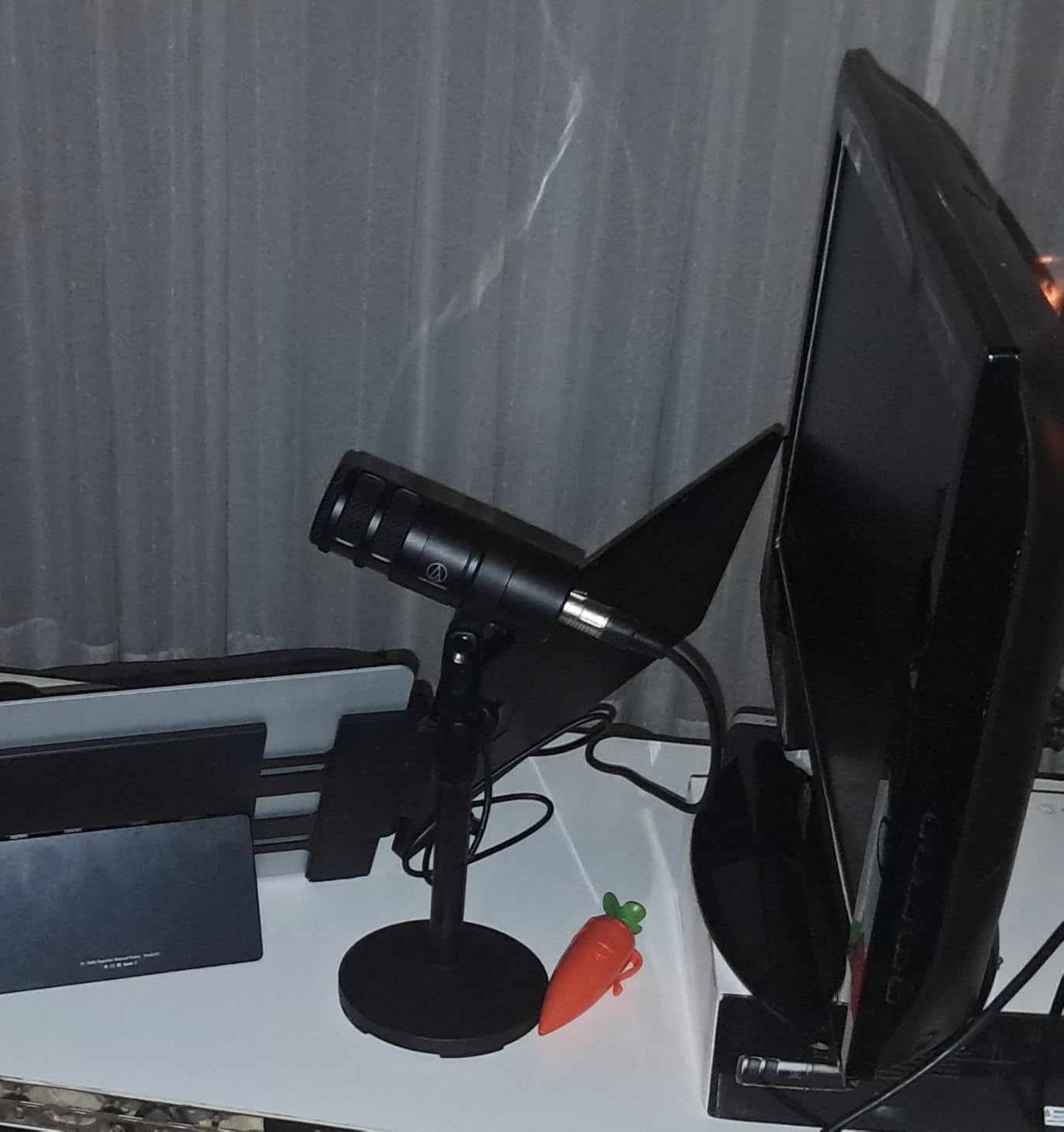
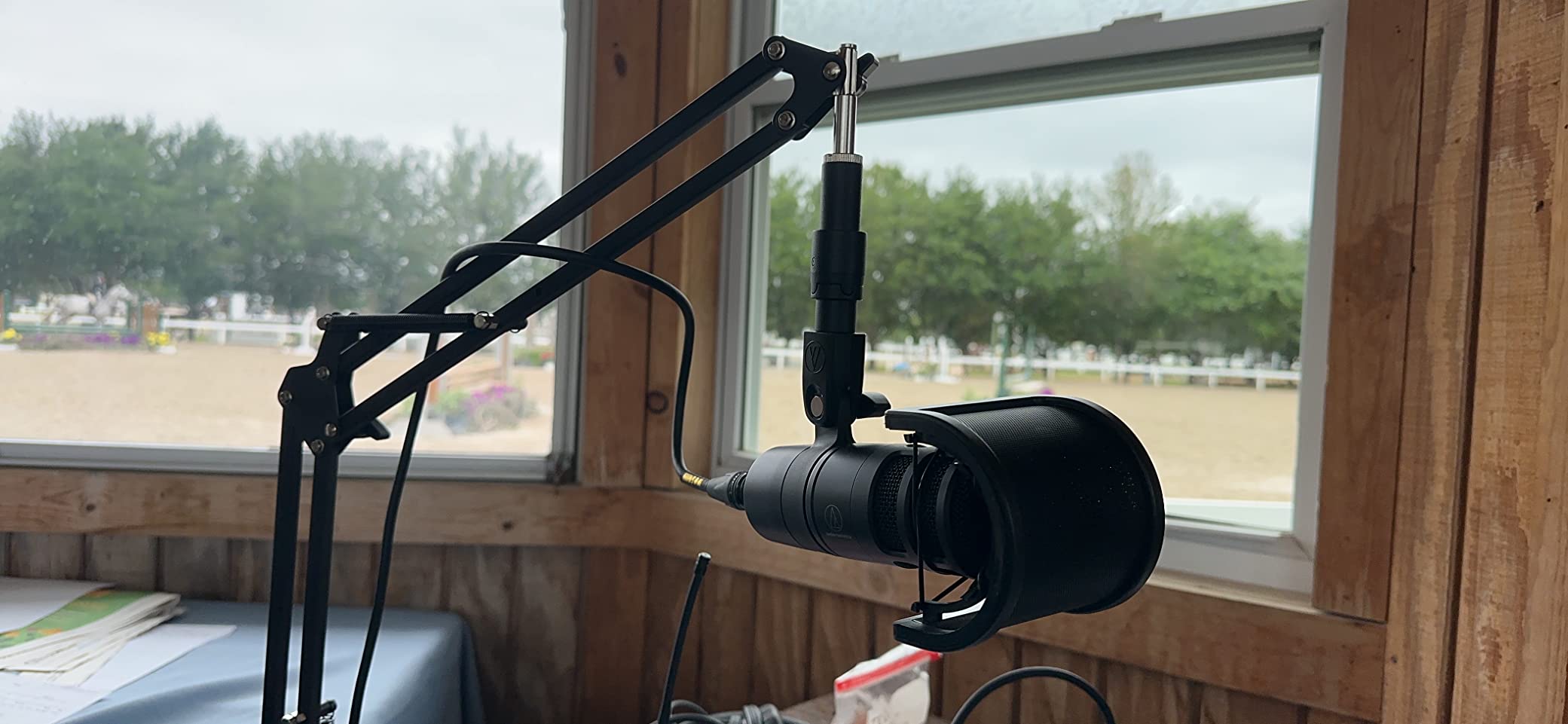
The multistage foam mesh windscreen and integrated shock mount handle plosives and desk thumps without extra purchases, and a pivoting stand mount with thread adapters is included. At 2.2 pounds it is lighter than most broadcast dynamics of this class.
The trade is that it rolls off the low end early and offers no switchable low cut or pad, so the deepest voices will find it slightly lean rather than warm. The voicing also leans bright, which is a deliberate contrast to the darker Shure broadcast mics.
How much proximity effect can a deep voice tolerate?
Less than most people assume. The buildup that makes a voice sound intimate at a normal fundamental becomes a problem when the fundamental is already at 90 to 100 Hz, because the added energy stacks directly into the 200-300 Hz region that carries speech intelligibility. A mic with minimal proximity effect lets you work at four inches without reaching for EQ.
That is the whole argument for the AT2040 with a bass voice. You can talk close, as podcast hosts prefer to, and the low end stays where you put it.
When should you pick a different mic?
Choose something warmer if the word rich matters to your delivery. This mic trades low-end extension for control, so a singer or audiobook narrator wanting a heavier bottom end will find it lean. For spoken podcasting, the trade almost always goes the right way.
Also look elsewhere if your gain budget is tight, since it needs substantial gain like any large-diaphragm dynamic. Pairs well with a high-headroom interface or an inline booster.
6. Elgato Wave DX – Best Budget XLR Pick
Elgato Wave DX Dynamic XLR Microphone, Cardioid Pattern
Cardioid dynamic
50 Hz - 15 kHz
60 dB signal to noise
600 ohm impedance
Pros
- Clear warm true-to-life speech capture
- Works on standard interfaces with no booster
- Small footprint leaves desk space free
- Forgiving cardioid acceptance angle
- Well-machined metal swivel mount
Cons
- No on-mic gain or mute controls
- XLR cable not included
- Still needs an interface
The Wave DX exists because the broadcast dynamic category had a gap at the bottom. It is a speech-optimized dynamic that works on a standard interface without an inline booster, which is the practical difference from most mics in its class. The 600 ohm impedance helps it drive a modest preamp cleanly.
Reviewers frequently compare it to the SM7B on raw value and report that head-to-head tests were hard to distinguish. For a deep voice, the wide, forgiving cardioid acceptance angle is the feature that matters most, because it keeps your low end consistent when you shift position.
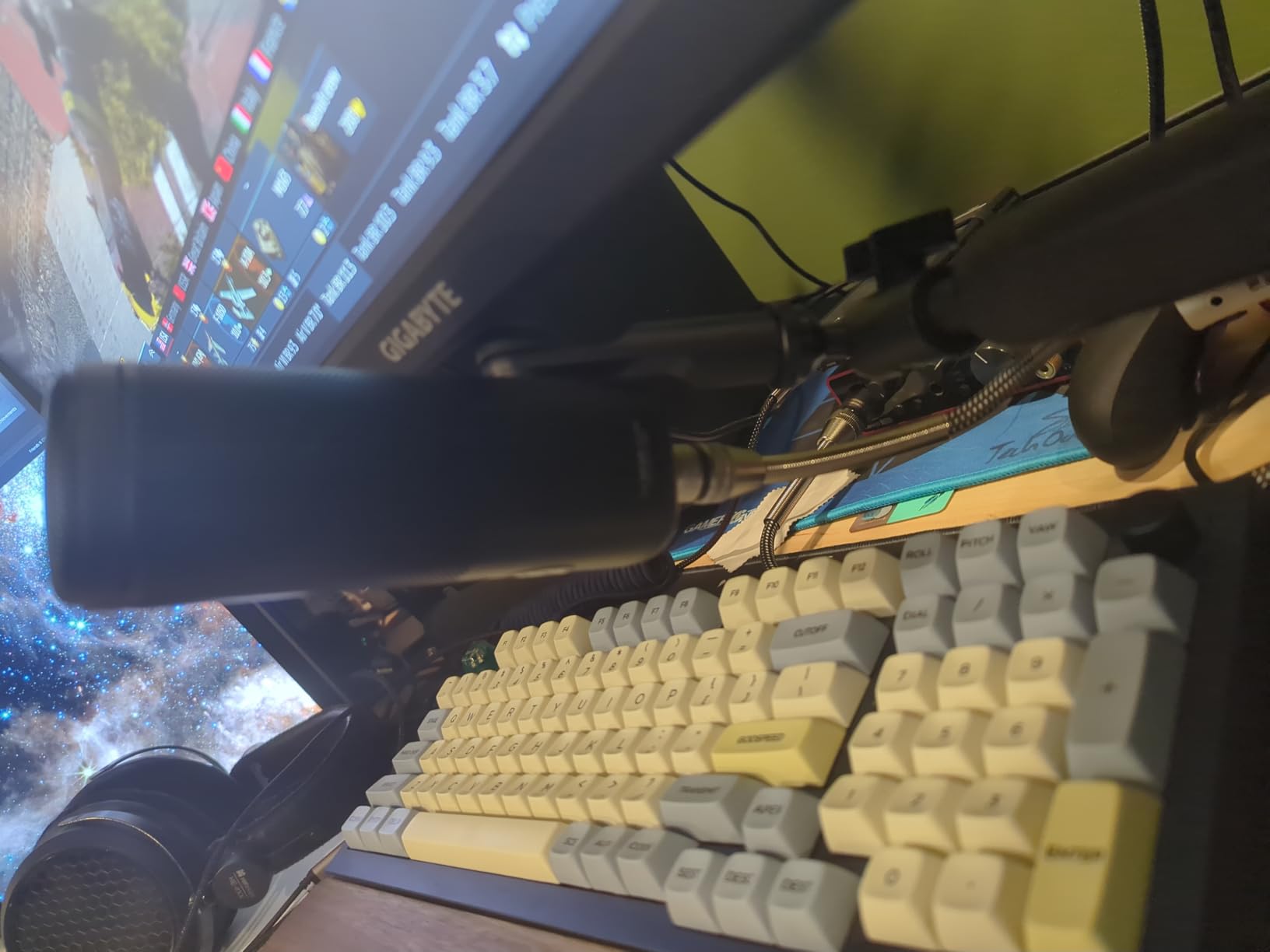
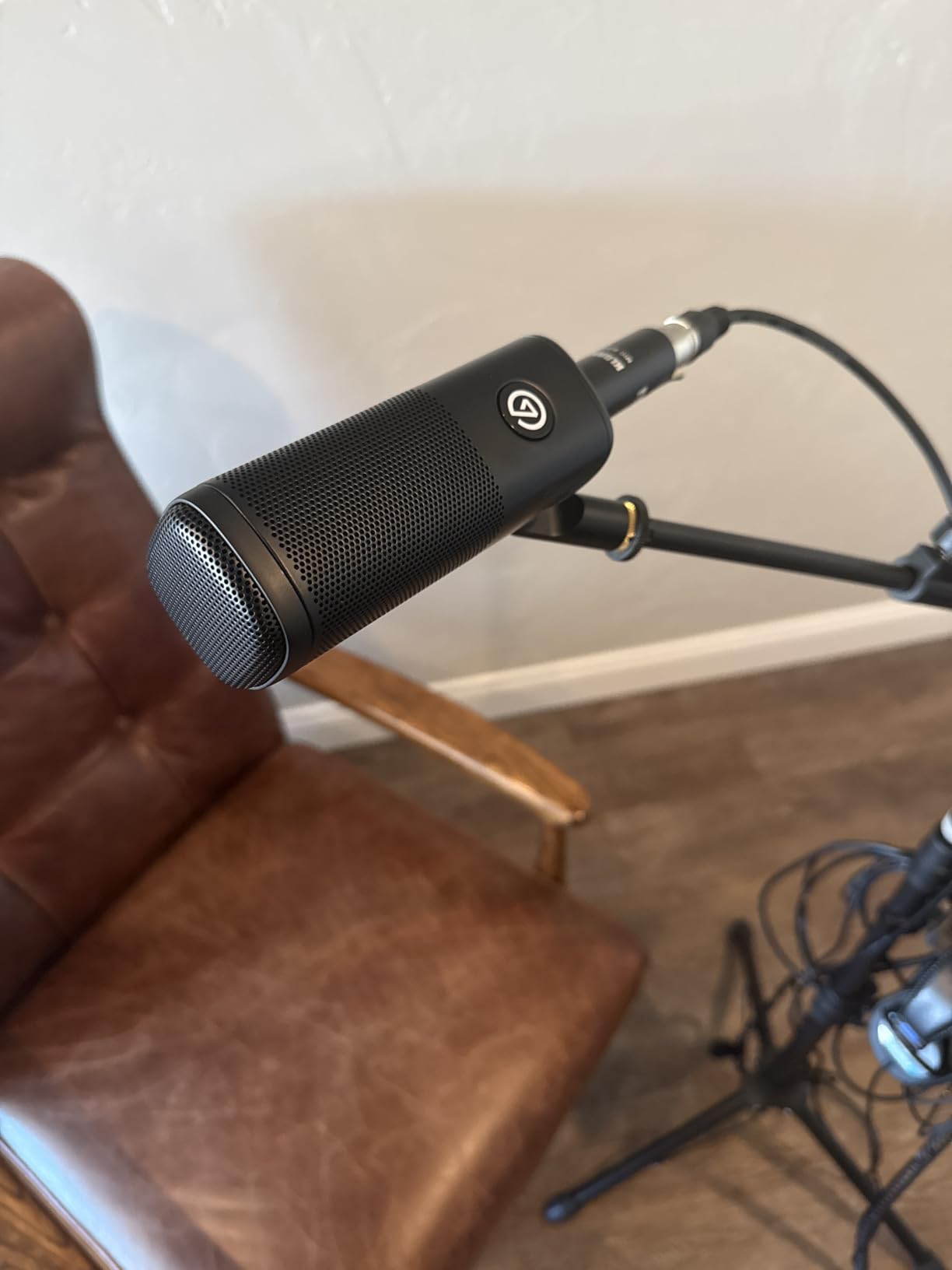
At 407 g and 7.32 inches long, it is one of the smallest broadcast mics here, which leaves desk and boom-arm space clear on a streaming setup. The included adaptors cover 5/8 inch, 3/8 inch and 1/4 inch mounts.
It is also a barebones mic. There are no on-mic controls for gain or mute, and no cable is included, so you are budgeting for an interface and a cable. The signal-to-noise figure of 60 dB is the lowest among the broadcast dynamics here, which is the cost of the low price.
Is the Wave DX too barebones for a beginner?
It is barebones if you have no interface. There is no USB path and no gain control, so a first-time creator needs to buy an audio interface before this mic is useful. Once that box is checked, the mic itself is well specified and forgiving.
If you want zero extra hardware, the Samson Q2U or the MAONO HD300T include the connectivity you need. If you already have an interface, the Wave DX is hard to argue with.
How does it handle a shared room with two speakers?
Cardioid with a wide acceptance angle is a reasonable starting point, but it is not a hypercardioid or super-cardioid. In a very noisy room, or with two people close together, expect more bleed than the AT2040 or the Zoom ZDM-1 would give you.
For a solo show in a quiet room, that is a non-issue. For a two-person panel in an untreated space, read our two-person podcast bundle guide before you commit.
7. Samson Q2U – Best for Recording Your First Episode
Samson Q2U USB/XLR Dynamic Microphone Recording and Podcasting Pack
Dynamic USB-C and XLR
50 Hz - 15 kHz
70 dB signal to noise
11.2 ounces
Pros
- Dual USB-C and XLR connectivity
- Clear warm full-sounding voice
- Rejects keyboard and mouse noise at low gain
- Stand clip and cables included
- Survives repeated drops
Cons
- Weak on plosives without a pop filter
- Tripod desktop stand is low and droops
- Some computers fail USB detection on boot
- Bundled headphones are low quality
The Q2U solves a specific problem: what do you buy when you do not yet know whether you want USB or XLR. It has both. You can record your first episodes straight into a computer over USB-C, then move to a mixer later without changing microphones.
For a deep voice, the dynamic capsule does the important work. Reviewers cite a big jump over cheap condenser USB mics in clarity and noise rejection, and note that it holds up against mechanical keyboard and mouse noise at low gain. The 70 dB signal-to-noise ratio is respectable for an entry-level dynamic.
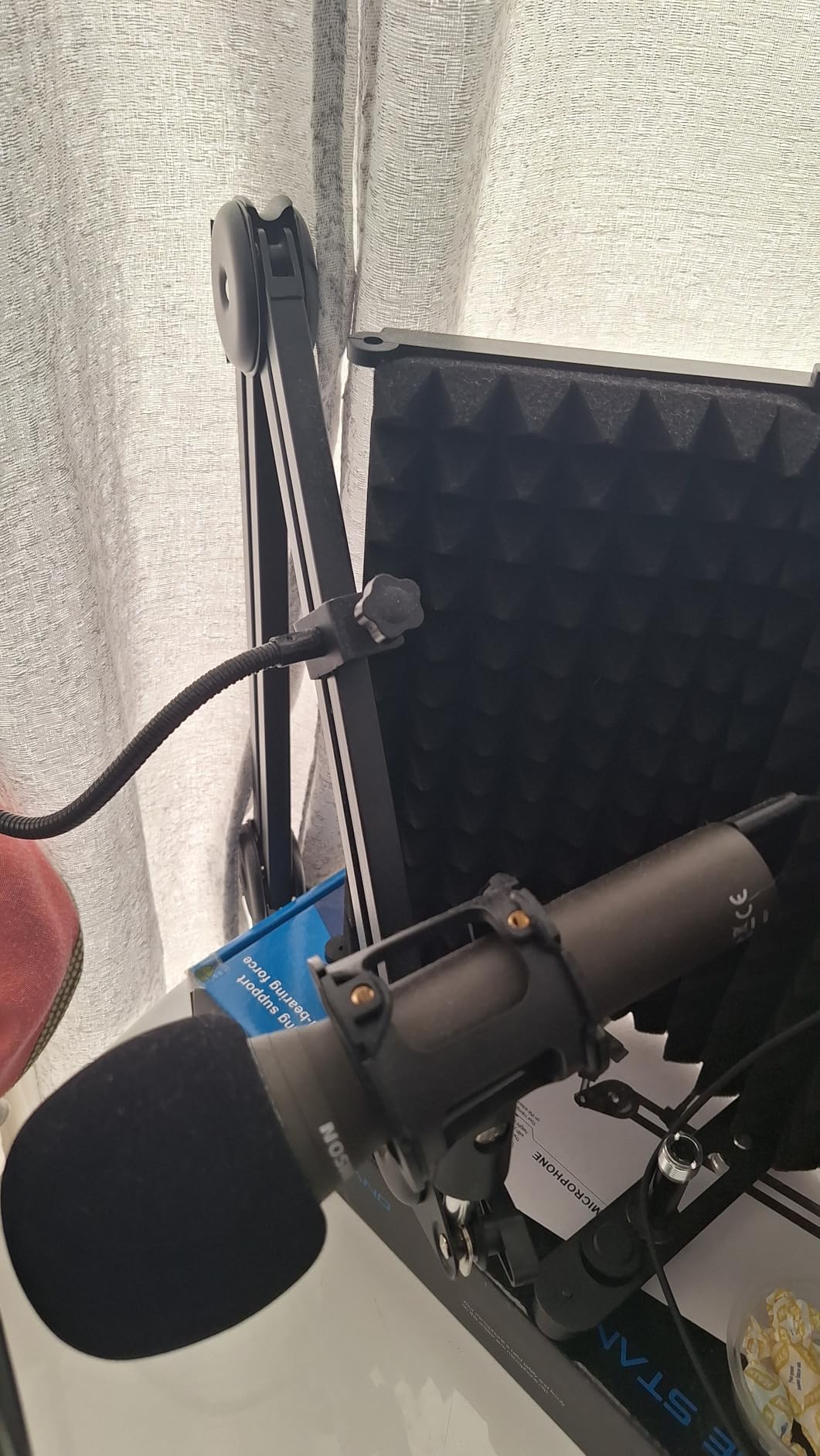
The bundle is genuinely complete: tripod desktop stand, tripod extension, mic clip, windscreen, and both a USB-C and an XLR cable. You can start recording within minutes of opening it, which for a first-time host is worth more than a subtle tonal difference.
The complaints are consistent. The included stand is low and flimsy and droops under the mic, plosives need the foam windscreen or a pop filter, and some computers fail to detect the USB device on boot until a firmware update. The bundled headphones are not worth using.
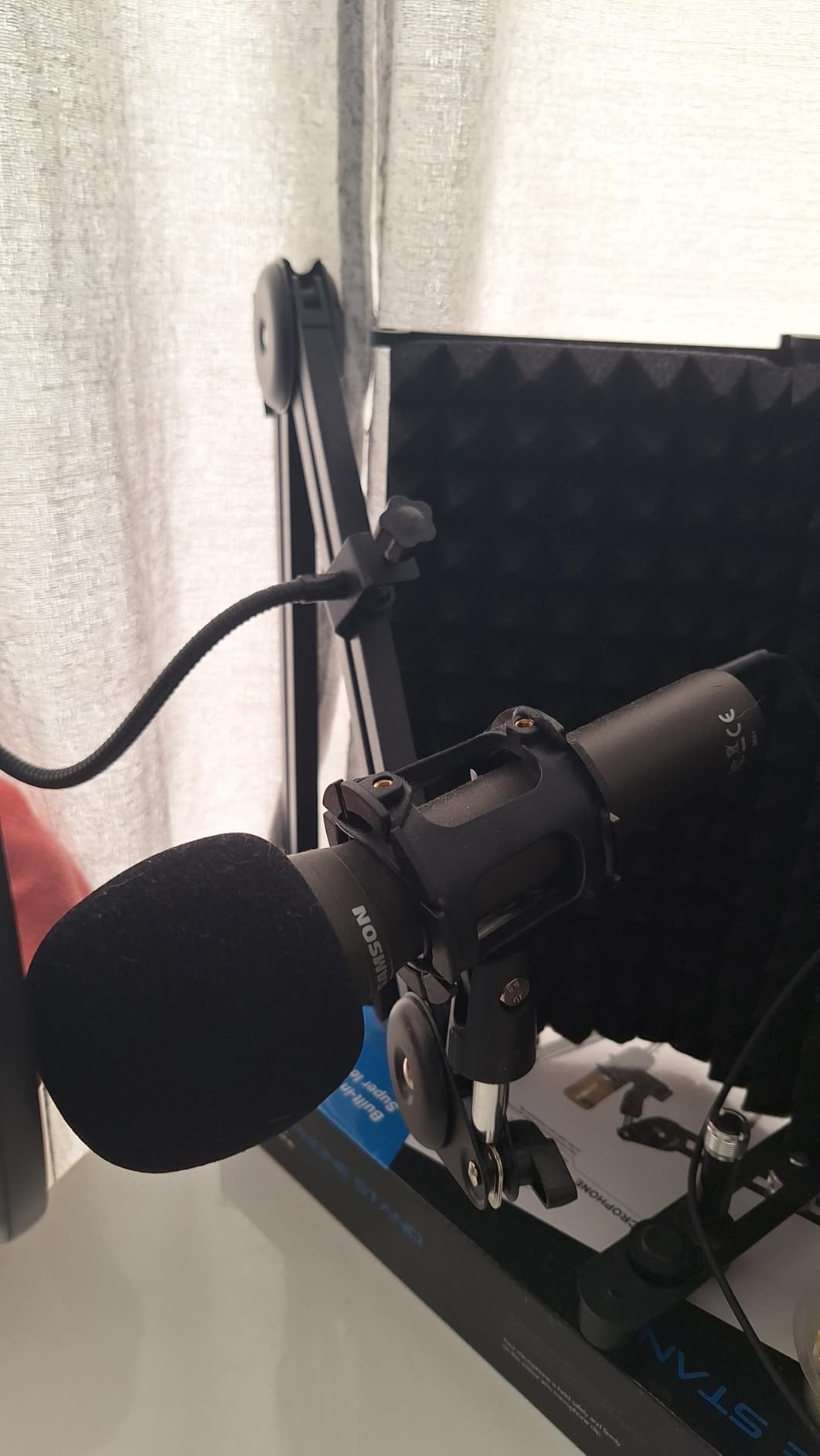
Should a deep voice start with the Q2U or spend more?
Start here if your total budget is small and you want to be recording this week. It solves the USB-versus-XLR question for you, and the dynamic capsule will not exaggerate your low end the way an entry-level condenser does. That is the failure mode most first-time bass voices hit, and this mic avoids it.
Spend more if you already know you have a quiet, treated space and a good interface. At that point the SM58 or the PodMic will give you a cleaner capture, and you will want to replace the stand anyway.
What do the two-year warranty and long owner base tell us?
With 5624 reviews, this is a well-proven product rather than a new release, and the two-year warranty is standard for the category. Forum posts about first-time podcasting frequently name it as a safe starting point, and the pattern in the reviews is that people keep it for years.
The USB detection quirk is the one thing worth researching for your specific computer before you commit. It was addressed with firmware, but older units may still need a hub.
8. Electro-Voice RE20 – Best Radio Warmth for the Deepest Voices
Electro-Voice RE20 Broadcast Announcer Microphone with Variable-D
Cardioid dynamic
Response up to 18 kHz
78 dB signal to noise
Variable-D design
Pros
- Variable-D design built for close voice work
- Classic deep announcer tone that suits low voices
- Internal shock mount and humbucking coil
- Handles loud emphatic delivery cleanly
Cons
- Broadcast-pro tier with a small owner base
- Mid-bass switch is the only tone control
- Some units ship with a stand clamp only
The RE20 is the most interesting choice on this list for a genuinely deep voice, and the least obvious. Its Variable-D design was engineered specifically for close-in announcer work, which is precisely how a bass voice is normally spoken. The result is the warm, resonant radio tone that low voices are usually trying to imitate with EQ.
Owners respect the build and describe it as essentially indestructible. The internal element shock mount reduces vibration-induced noise, the humbucking coil guards against line hum, and the heavy-duty internal pop filter handles plosives at close range without accessories.
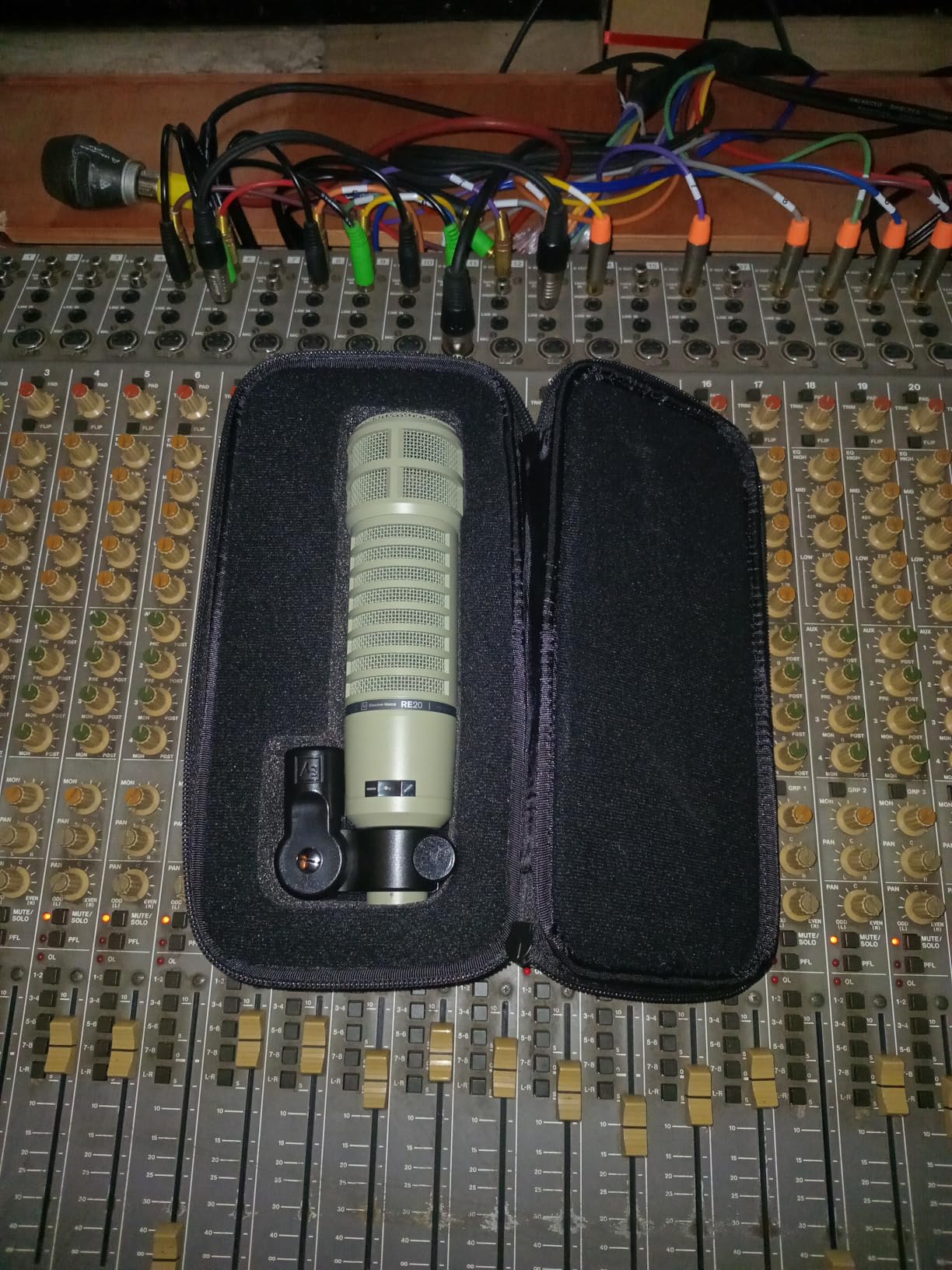
What you gain is tonal character rather than features. The mid-bass tone-shaping switch is the only tone control, so you will shape the rest in post. The 78 dB signal-to-noise ratio is strong, but like all broadcast dynamics it still needs a preamp with real gain.
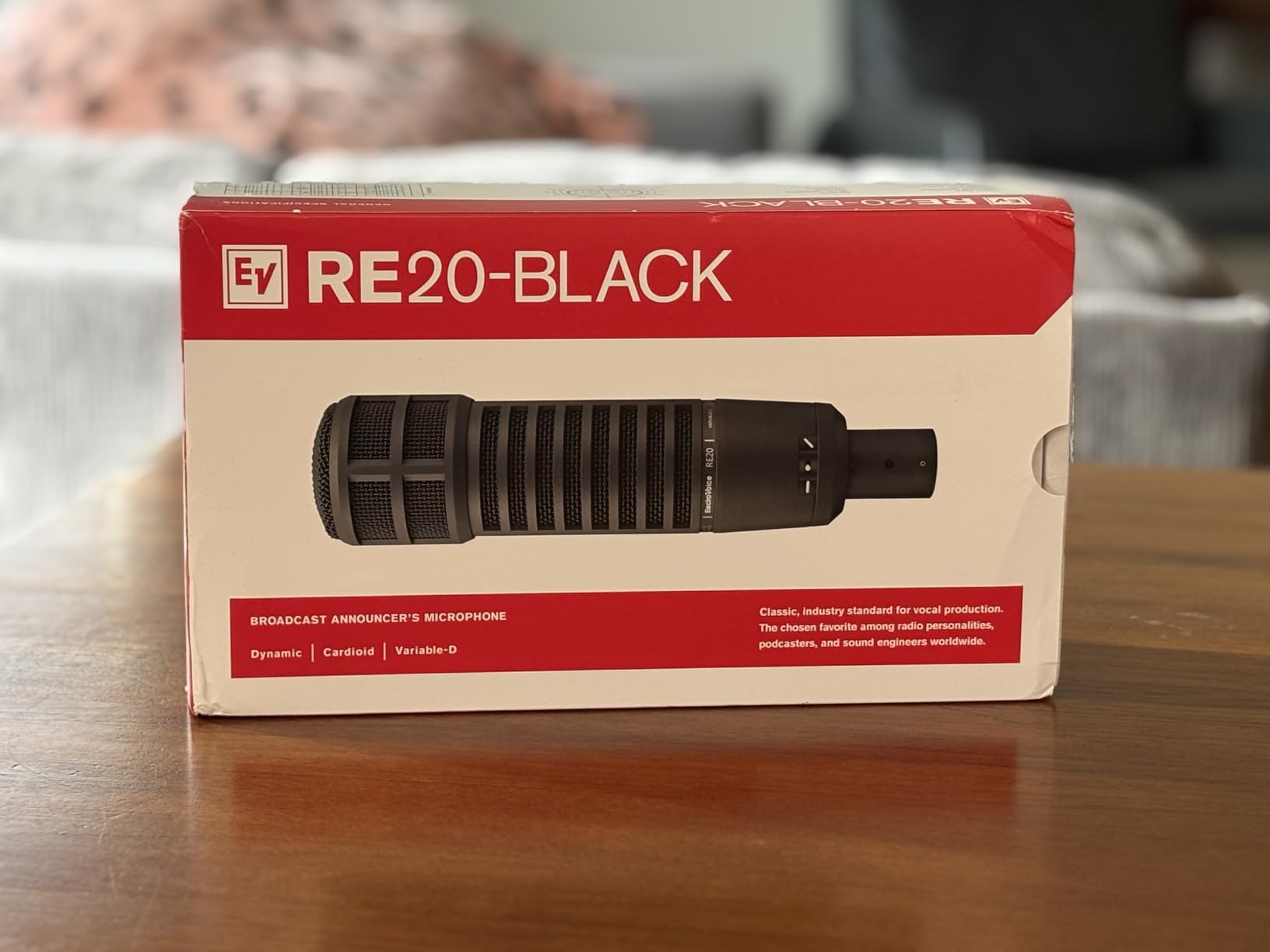
Two practical limits. It is a large body, which matters if you record on camera, and some units ship with only a stand clamp, so a proper mount is a separate purchase.
Is the RE20 better than the SM7B for a bass voice?
Different, not simply better. The RE20 is voiced for radio announcers and is the more flattering choice if you want a rich, resonant low end from close talking. The SM7B is darker, more neutral, and gives you two rear switches to shape the tone in the moment. For a video podcast, the SM7B is also the more practical of the two.
Forum owners frequently describe the RE20 as the broadcast institution, the mic you will find in most radio stations, and that is its real argument. If you want that specific voice rather than a general-purpose broadcast sound, it earns its place.
What does the small owner base mean for support?
With 442 reviews it has a much smaller owner community than the Shure models, so you will find less troubleshooting advice online. That is a real consideration for a first-time buyer who wants easy answers when something goes wrong.
The warranty is 90 days, noticeably shorter than the two-year terms on most of this list. Budget for a spare mount and cable, and check what is in the box before you start.
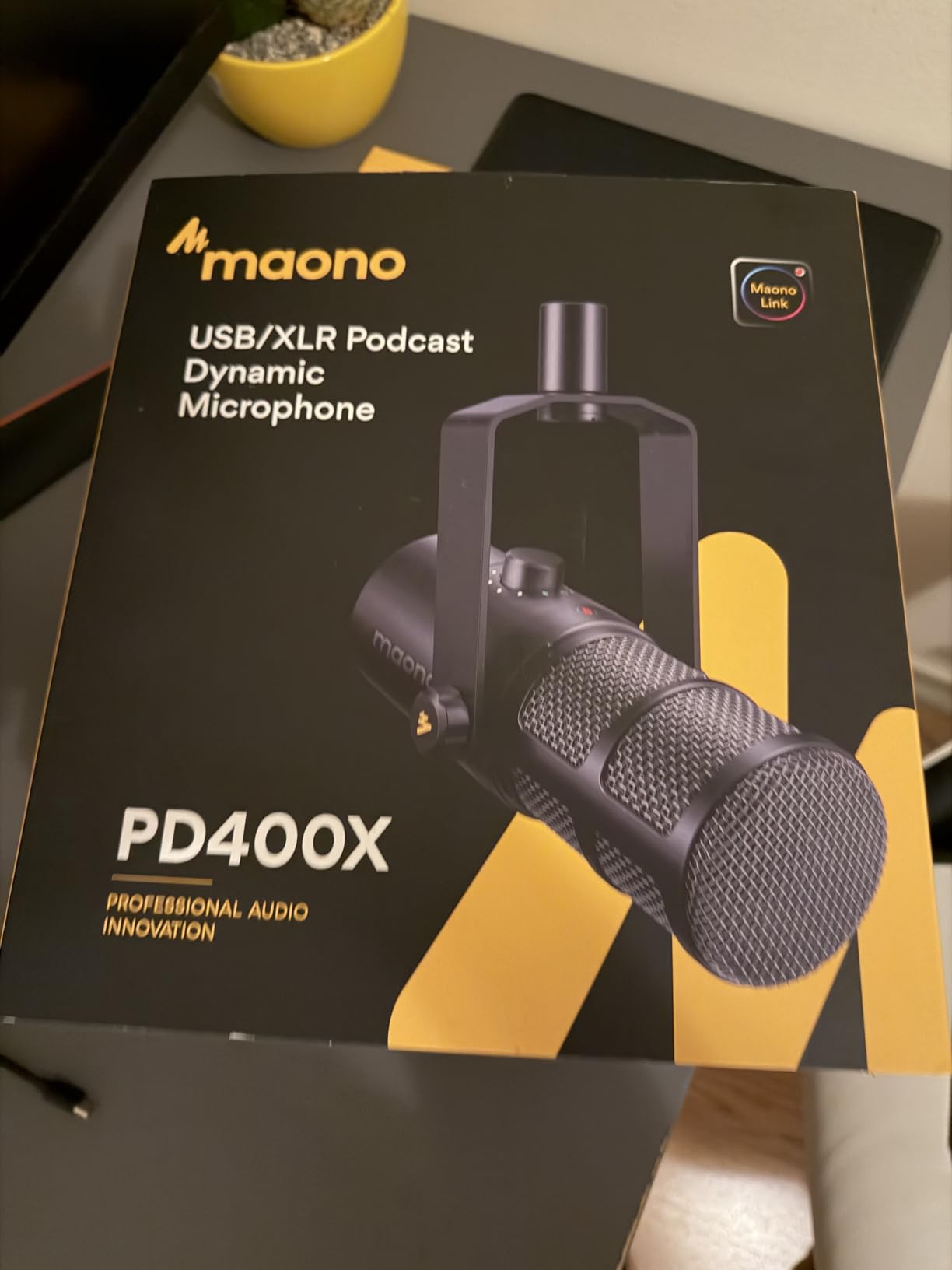
9. MAONO PD400X – Best Onboard Controls for a Deep Voice
MAONO PD400X Dynamic Microphone, USB/XLR Podcast PC Mic with Software
Dynamic USB and XLR
40 Hz - 16 kHz
78 dB signal to noise
Gooseneck form factor
Pros
- Rich deep tone reviewers compare to Shure mics
- Strong off-axis rejection
- 3-in-1 gain headphone and monitor knob
- Tap-to-mute with LED
- Free MAONO Link software with EQ and compression
Cons
- Included desktop stand is short and rigid
- Can pick up background noise off-axis
- Software features need the MAONO Link app
The PD400X is the most complete package for someone with a low voice who wants physical controls. The 3-in-1 digital knob handles microphone gain, headphone volume and the monitor mix, which means you can set a correct level and hear yourself without opening software or guessing.
Owners regard it as the best-sounding dynamic in its price range, and several note that it sounds as rich and deep as a Shure at a fraction of the cost. The 78 dB signal-to-noise ratio is the joint highest in this lineup, and the cardioid pattern holds up in an untreated room.
The tap-to-mute button with an LED indicator is a genuine quality-of-life feature for live streaming, where knowing whether your mic is hot matters. The XLR output also works with mixers and portable PA systems, so the same mic covers a podcast and a small event.
The most common complaint is the included desktop stand, which is short and rigid. A boom arm is the better pairing. Also be aware that background noise can be picked up when you are not speaking straight into the capsule, and the EQ and compression features live inside the MAONO Link app.
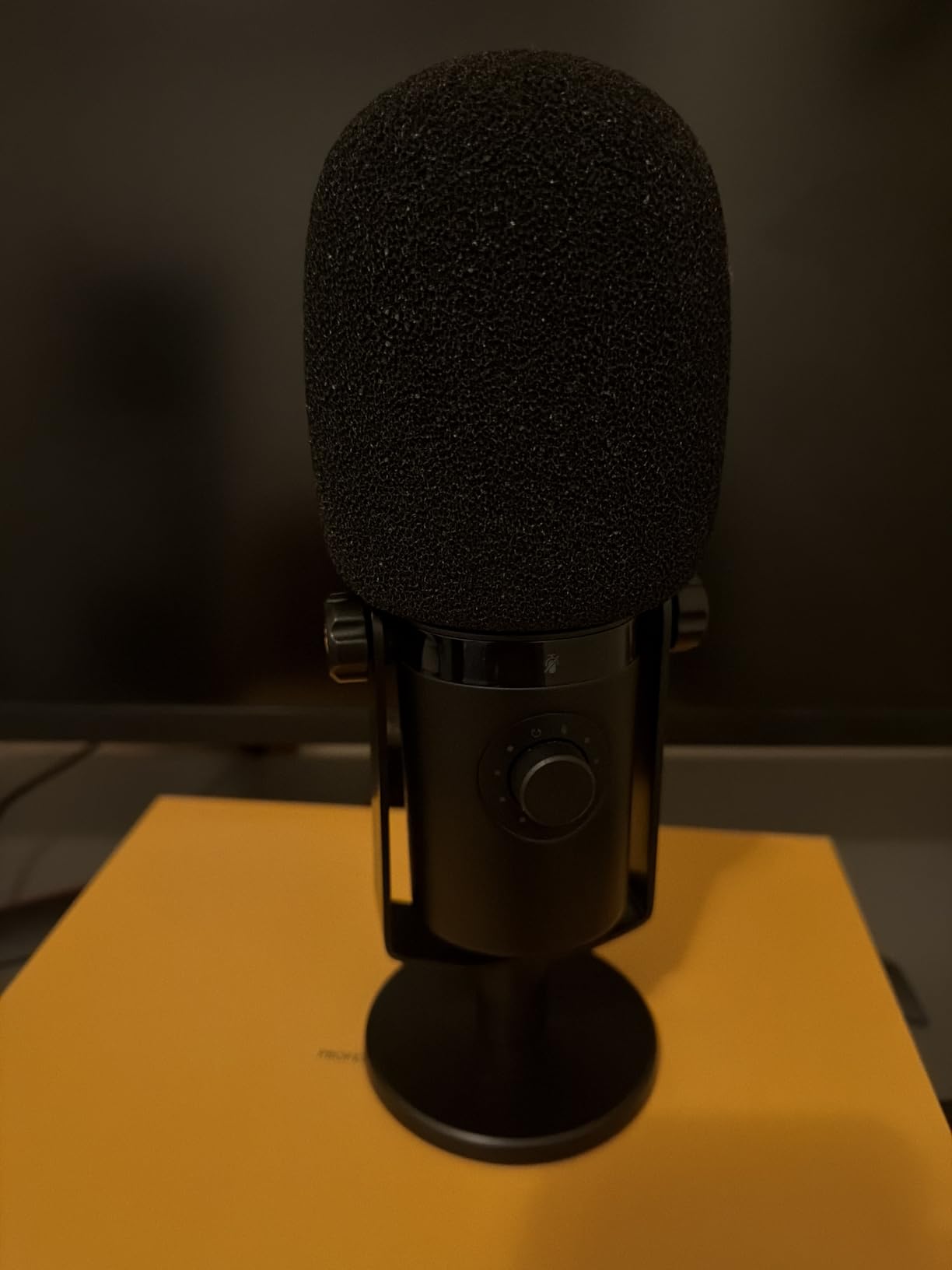
Are on-mic gain controls worth choosing a microphone for?
For a low voice, yes. Gain is the variable that goes wrong most often, and a physical knob with a meter beside it removes the guesswork that leads people to record far too quiet and then crank the gain in post, which is where hiss comes from.
It also means the mic is useful to guests and co-hosts who are not technical. You can hand someone the PD400X and tell them to turn the knob, rather than walking them through an interface.
Is the gooseneck design good for video podcasting?
It is compact and its footprint is small, so it will not dominate a camera frame the way a full-size broadcast mic does. That is a point in its favour for on-camera recording, where sightlines matter as much as tone.
The free MAONO Link software with vocal tone, EQ, limiter and compressor presets is a genuine advantage if you want a processed sound quickly, though it does tie you to a vendor app rather than a standard workflow.
10. Zoom ZDM-1 – Best Compact Mic for a Small Desk
Zoom ZDM-1 Dynamic Microphone for Podcasts, Voice-Overs, Vocals, and More, High SPL Capability, Sturdy Metal Body, and Large Diaphragm
Super cardioid dynamic
Response up to 16 kHz
78 dB signal to noise
454 g
Pros
- Smooth broadcast tone from a large diaphragm design
- Super cardioid pattern for focused pickup
- High SPL handling for emphatic delivery
- All-metal body and grille
- Compact footprint
Cons
- XLR only so an interface is required
- Lower output means gain headroom matters
- Smaller accessory ecosystem than Shure or Rode
The ZDM-1 solves a space problem. At 5.9 inches long and 454 g, it is one of the smallest large-diaphragm dynamics here, and for a home office desk already crowded with a laptop, keyboard and notes, that matters more than a marginal tonal difference.
The super cardioid pattern is the key spec for a bass voice. It offers focused pickup and good isolation, which means less room reflection and less of a neighbouring keyboard reaching your recording than a plain cardioid would let through. Users note it isolates room sound better than side-address alternatives at this level.
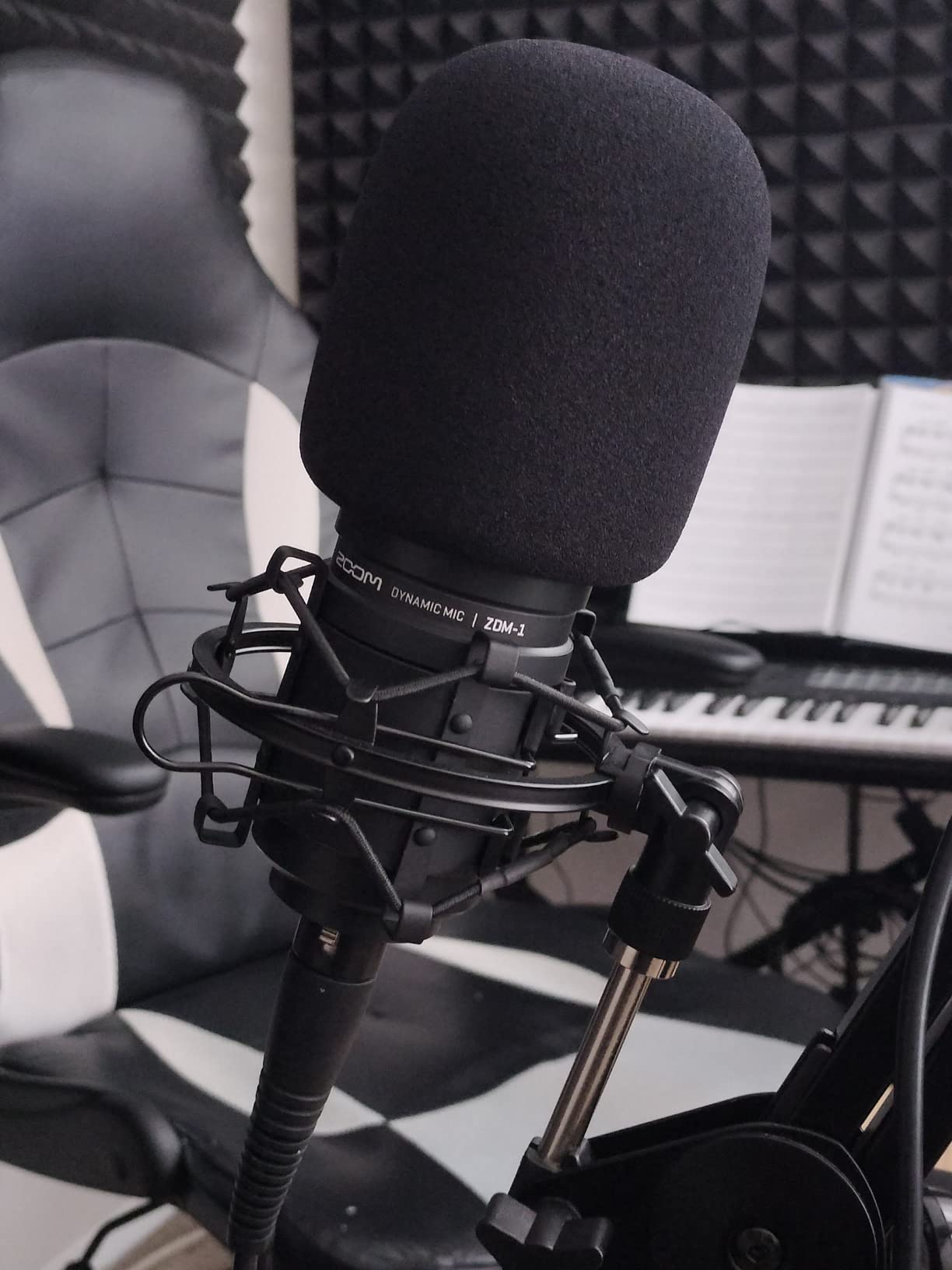
High SPL handling means you can speak loudly and emphatically, which baritones often do, and the signal stays clean. The internal shock mount isolates from bumps and handling, and the all-metal body and grille are built for daily use.
The limitation is that it is XLR only, so an interface or mixer is required, and the lower output means gain headroom matters on entry-level boxes. The accessory ecosystem is also smaller than Shure or RØDE, so mounts and extras take more digging.

Is super cardioioid really better than cardioid for a bass voice?
For a bass voice, the benefit is indirect but real. A tighter pattern rejects more of the low-frequency room energy that a deep voice excites, and low-frequency room energy is what turns a rich voice into mud. Super cardioid narrows the side and rear pickup, so you capture more of your fundamental and less of the wall behind you.
The cost is that off-axis sound is coloured more aggressively, so if you move around a lot while talking, a wide cardioid such as the Wave DX may actually suit you better.
How does it fit into a Zoom-based recording setup?
It fits naturally. If you already own a Zoom recorder or interface, an XLR mic is the only sensible input and this one is built to that standard. The 78 dB signal-to-noise ratio is high for a compact dynamic, and a one-year replacement warranty covers the usual failures.
For monitoring, your recorder or interface supplies it, since the mic has no headphone output. Check the input gain range before you commit.
11. MAONO HD300T – Best All-in-One Kit on a Small Budget
MAONO HD300T USB XLR Dynamic Podcast Microphone for PC & Audio Interface
Super cardioid dynamic
USB and XLR
20 Hz - 20 kHz
80 dB signal to noise
Pros
- Warm natural vocal capture
- Dual USB and XLR outputs
- Zero-latency headphone monitoring with volume control
- Stand shock mount pop filter and both cables included
- Durable metal body
Cons
- Lowest average rating in this lineup
- Cardioid rather than super-cardioid rejection
- Desktop stand may need replacing with a boom arm
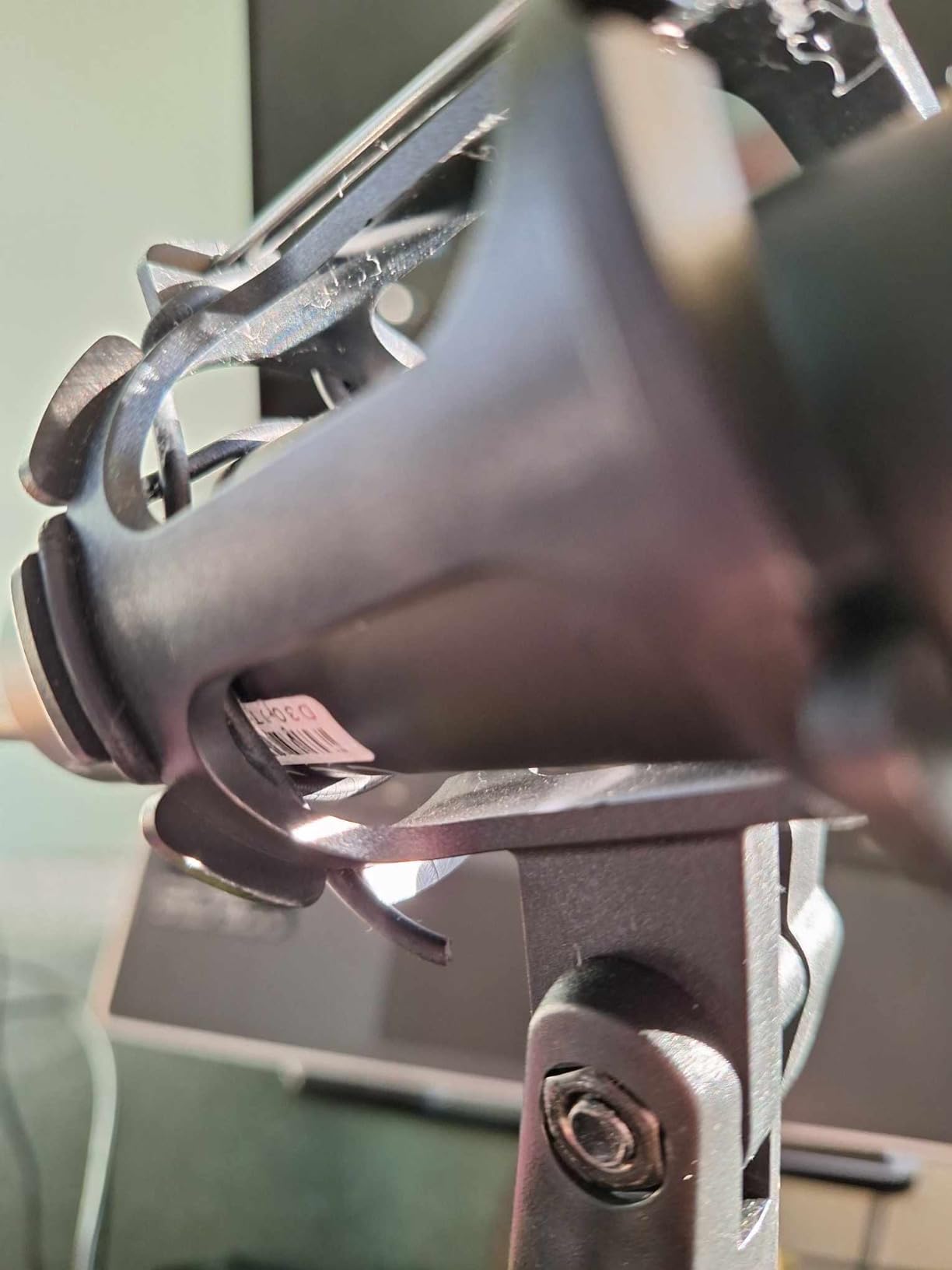
The HD300T is the value pick if the deciding factor is everything that arrives in the box. You get a metal desktop stand, a shock mount, a pop filter, a 78-inch USB cable and a 98-inch XLR cable. The dual USB and XLR outputs mean the same mic serves a beginner and a pro chain.
Zero-latency monitoring through the built-in 3.5 mm headphone jack with volume control is a nice touch, and the 80 dB signal-to-noise ratio is the highest figure in this lineup. For a deep voice, the dynamic capsule with cardioid pickup keeps the fundamental without the exaggerated low end a condenser would add.
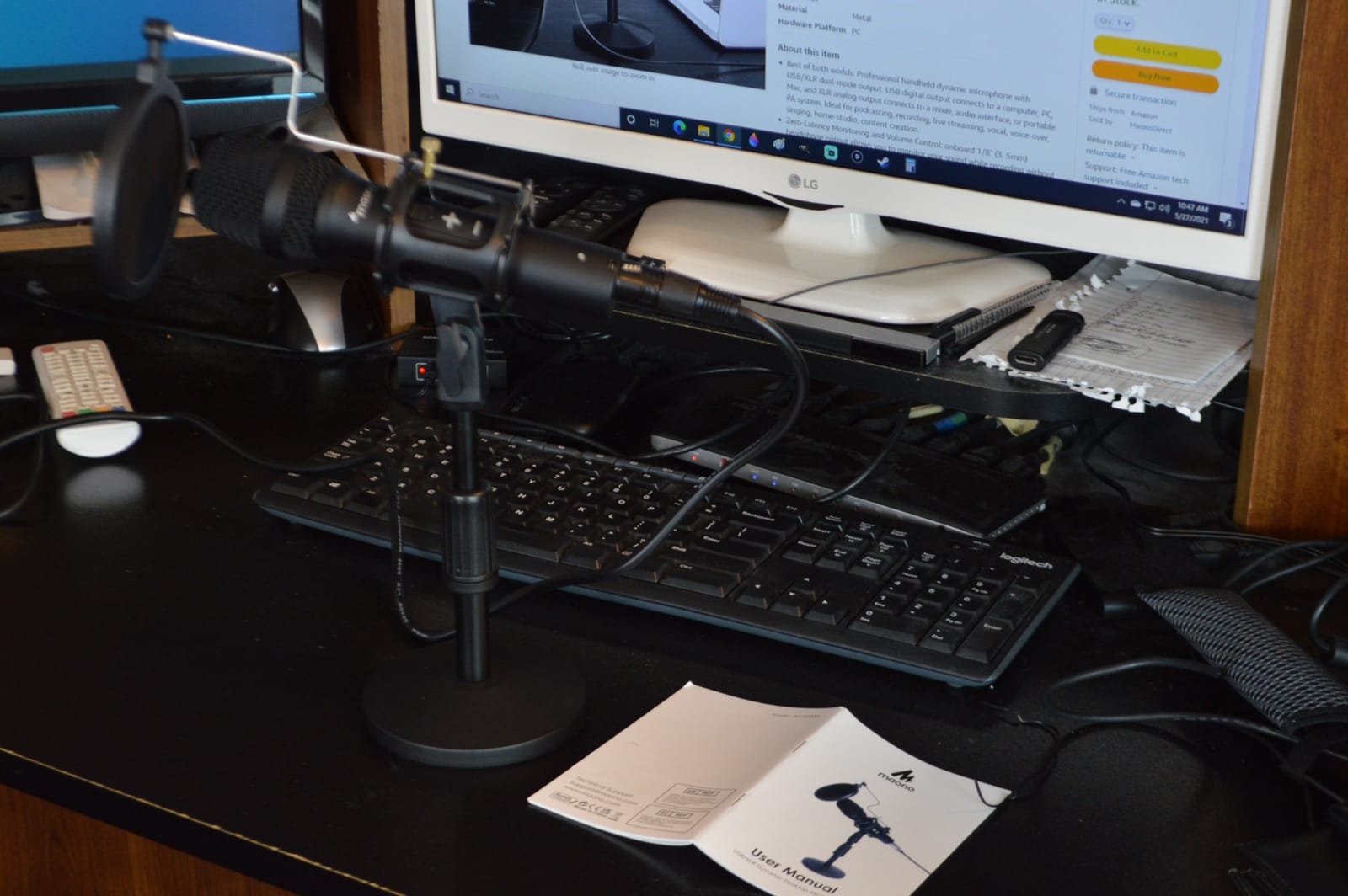
Where it falls short is isolation. It uses a cardioid rather than a super-cardioid pattern, so in a genuinely noisy room it lets more in than the AT2040 or the ZDM-1. If your room has a fan, a fridge compressor or street noise, that difference is audible.
Its 4.4 average is the lowest of the twelve we tested, with a larger share of three and four-star reviews. Most of that criticism lands on the bundled desktop stand rather than the capsule.
Is a complete kit better than buying a better microphone?
At a strict entry level, yes, because accessories add up. A stand, a shock mount, a pop filter and two cables are real money that would otherwise go into a mid-range mic. If you are starting from nothing, this route gets you recording with a usable signal chain today.
Once you have the basics, the calculus flips. A better microphone with a boom arm and a proper pop filter will beat a cheaper capsule with a bundled stand, because the stand is what limits you. Plan to replace the desktop stand early.
Which room suits this mic?
A quiet bedroom with soft furnishings, where reflections are already damped by bedding and curtains. In that environment a cardioid dynamic has less low-frequency energy to reject, and the extra reach of a super-cardioid pattern matters much less.
It is a poor fit for a basement studio with running HVAC, or a room with a shared wall. Choose a tighter pattern and a cleaner preamp instead.
12. MAONO PD200W – Best for Two-Person Recording
MAONO PD200W Hybrid Wireless Podcast Microphone for PC, Dynamic XLR USB Mic
Wireless, USB and XLR
Unidirectional dynamic
82 dB signal to noise
128 dB SPL handling
Pros
- Clean voice with real body and depth
- Three connection modes in one unit
- Effective rejection isolates each speaker
- One receiver links two mics to separate tracks
- Metal alloy build with integrated shock mount
Cons
- Physically bulky for a small desk
- RGB lighting cuts battery life well below stated hours
- Included boom arm is adequate not premium
- Some units shipped without the receiver puck
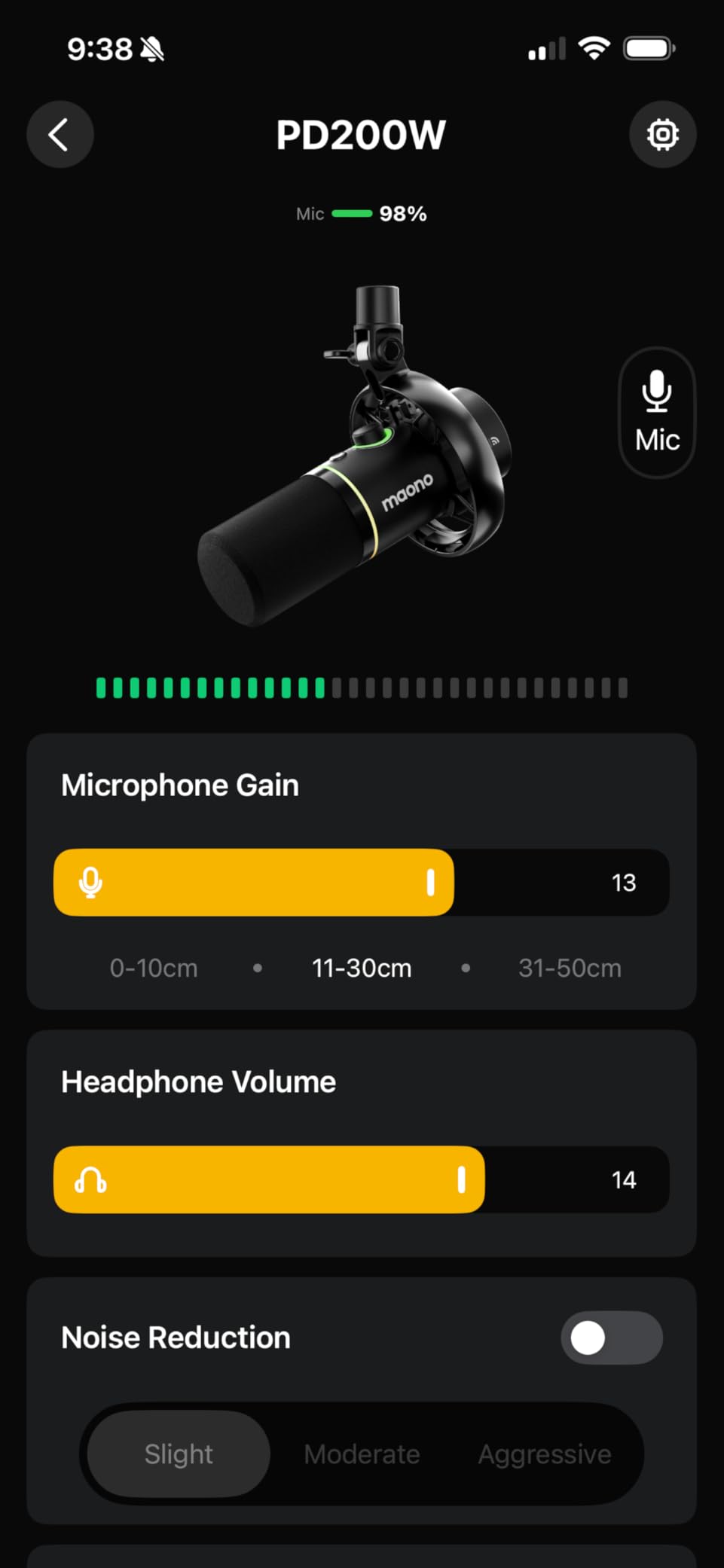
The PD200W is the pick when two people share a room. Its 30 mm dynamic capsule with cardioid pickup produces a voice with real body and depth, and the three-stage noise cancellation is good enough that co-located speakers do not bleed into each other. For a bass-baritone panel, that solves the exact problem you hit with cheaper single-room rigs.
One receiver can pair two wireless mics and record each to its own track, which is a meaningful editing advantage over a single shared microphone. The 82 dB signal-to-noise ratio is the second highest here, and it handles up to 128 dB SPL without distortion.
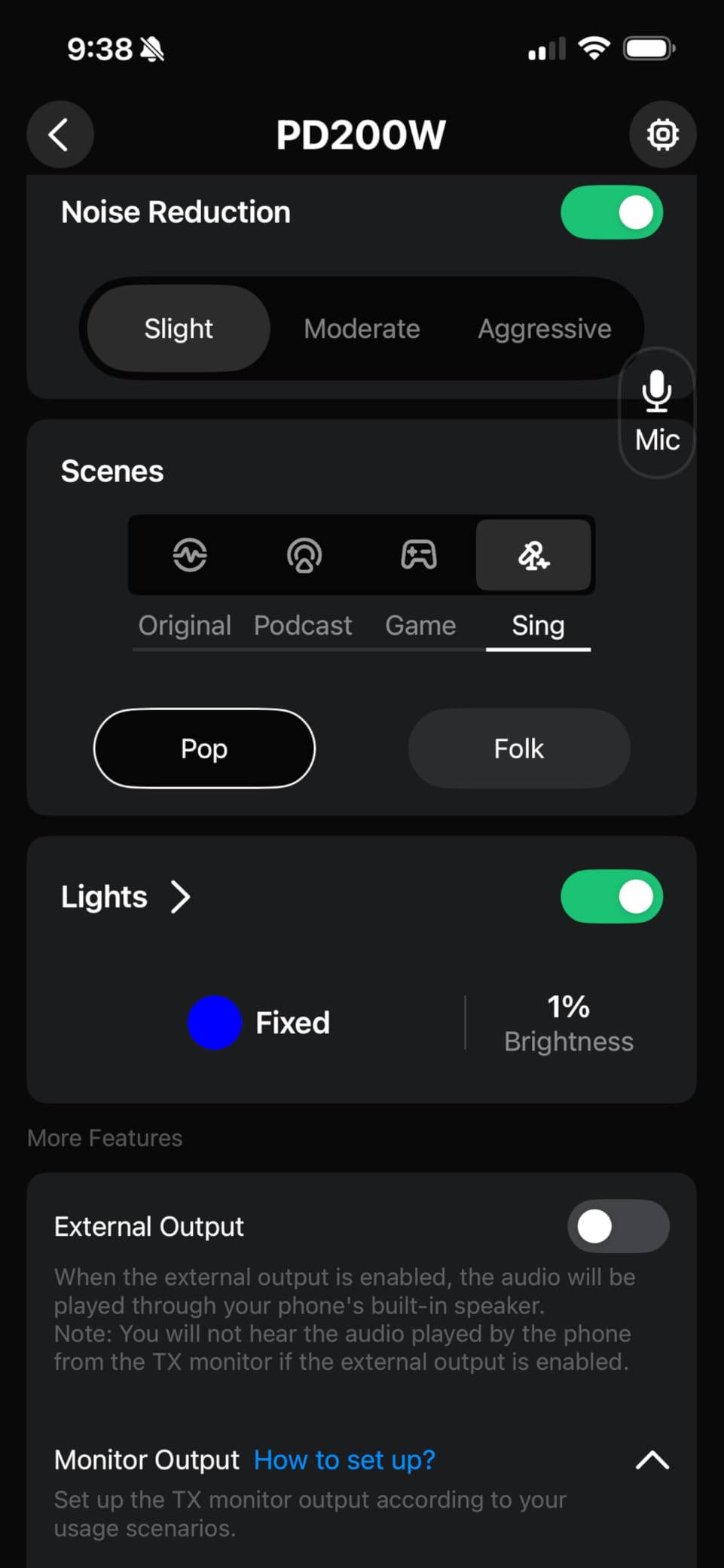
Three output modes cover most situations: wireless for a walk-and-talk, USB for a computer, and XLR for a mixer. The desktop stand and Type-C receiver are included, and the metal alloy body has an integrated shock mount.
The bulk is real at 1.32 kg, and the RGB lighting cuts the stated battery life of up to 60 hours considerably when it is on. A few units shipped without the wireless receiver puck, and plugging the receiver into a PC can interfere with sleep mode.
Is wireless reliable enough for a podcast recording?
With a stated range of up to 60 m in the same room, yes for a typical home or small studio. Keep the receiver in line of sight and you will not see dropouts. The battery figure is the caveat, since it depends on whether the RGB lighting is on.
For anything you cannot afford to re-record, treat wireless as the convenience option and XLR as the safe one. This mic offers both on the same body, so the choice stays with you.
How does it compare with two separate XLR microphones?
Two XLR mics give you independent control of each voice and no wireless variables, but they need two inputs, two cables and two stands. The PD200W gives you separate tracks over one receiver with far less to manage, which is why it suits a first two-person show.
If your panel will grow to three or four people, or you want per-guest tone control, move to a mixer setup instead. Our professional microphone guide covers that tier.
How to Match a Microphone to Your Deep Voice
Three steps, in order, will get you a better result than any spec sheet comparison.
Step 1: Know your fundamental. Record yourself saying “red leather, yellow leather” and open the file in any free spectrum analyser. The lowest sustained peak tells you where your voice lives. Below 100 Hz is a bass range, 100-150 Hz is baritone. Knowing this tells you how much low end a mic should add before it becomes a problem.
Step 2: Test your room with a clap. Stand where your mic will go and clap once. A sharp, quick sound means your room is reflective; a long ringing tail means a room mode will collect low frequencies and amplify exactly your fundamental. That test takes ten seconds and predicts most of your problems before you spend anything.
Step 3: Stage your gain honestly. Check your interface’s maximum clean gain. The SM7B at 1.12 mV/Pa needs roughly 60 dB of clean gain to reach a healthy level. If your hardware cannot deliver that, plan for an inline booster rather than turning the gain up into hiss.
Which popular podcast microphones make a deep voice worse?
Wide-range large-diaphragm condensers. A mic with a 20 Hz response and a broad polar pattern will record the room as faithfully as it records you, and a 92 Hz fundamental in an untreated bedroom will be amplified along with the furniture. Forum reports of condensers exaggerating a low fundamental in a standard bedroom are common, and the recording is usually unusable without heavy processing.
A condenser is not wrong, but it is a treated-room microphone. If your space is untreated, a dynamic is the correct starting point, and the roundup above covers twelve of them.
Placement and EQ Settings for Bass Voices
Distance is your strongest tone control. The 3 to 1 rule of thumb is about spacing multiple microphones to avoid phase problems, but a related habit matters more for a low voice: keep a consistent distance and do not drift.
Work at four to six inches from the capsule. Closer gives you the broadcast intimacy that hosts like, and closer also increases proximity buildup, so the two are linked. If you are close and the low end is building, move back half an inch rather than reaching for EQ first.
Speaking slightly off-axis, roughly 20 to 30 degrees, is a deliberate technique for a bass voice. It softens the very closest low frequencies while keeping the presence that carries intelligibility, and it gives a rounder, less boxy tone than talking straight into the capsule.
Where to start with EQ for a deep voice
Set a high-pass filter at 80 to 100 Hz with a gentle slope. This removes rumble from desks, HVAC and desk bumps without touching your fundamental, provided your fundamental sits above the cutoff. Setting it above your fundamental is the single most common podcast EQ mistake for low voices, and it is why some speakers sound thin after processing.
Next, if the 200-300 Hz region feels thick, apply a narrow cut of 2-3 dB with a moderate Q. That range carries both body and muddiness, so a small cut cleans up without hollowing the voice out. Go gently, because it is easy to overdo it on a deep voice that already has plenty of low end.
Finally, watch the sibilance. Deep voices often sit back in the mix, which pushes the operator to add presence, and sibilance is the usual casualty. A dynamic de-esser or a 6-8 dB cut around 5-8 kHz is a good starting point. Do all of this with headphones on, and if you want to check your work against reference material, our portable speaker guide is worth a look.
Frequently Asked Questions
What is the best microphone for deep voices?
The Shure SM7B is the best overall choice for a deep voice, because its tight cardioid pattern rejects room reflections while keeping a low fundamental intact. The Shure SM58 is the best value option and needs less gain to reach a usable level. The RØDE PodMic is the best broadcast-style pick under the typical entry budget. All three are dynamics, which is the key difference from condensers that amplify low-frequency room energy.
What type of microphone is best for podcasts?
A dynamic microphone is the safest default for most podcasters, especially anyone with a low voice or an untreated room. It handles room noise, HVAC and desk rumble far better than a condenser and rarely exaggerates a low fundamental. Condensers are worth adding in a treated studio, or for a singer, but they are rarely the right first microphone for a bass voice recording at home.
What mic do most podcasters use?
Dynamic broadcast mics dominate real-world podcasting, and the Shure SM7B is the most widely recognised. Many hosts also use the Shure SM58 because it doubles as a handheld interview mic, and the RØDE PodMic is common among creators who want broadcast tone without a flagship spend. USB hybrids like the Shure MV7 and the Samson Q2U are popular with beginners because they remove the interface decision entirely.
What is the 3 to 1 rule for microphones?
The 3 to 1 rule is a placement guideline for multi-microphone recordings. It means each microphone should sit roughly three times further from its subject than the previous microphone is from its subject, so a primary at four inches would have a secondary at twelve inches and a third at thirty-six. For a solo host, the more useful habit is a consistent four to six inch distance from a single mic.
What is the best EQ setting for a mic?
For a deep voice, start with a high-pass filter at 80 to 100 Hz with a gentle slope, placed below your measured fundamental so it does not thin your voice. If the 200-300 Hz region feels thick, cut 2-3 dB there with a moderate Q. Control sibilance with a de-esser or a 6-8 dB cut around 5-8 kHz. Change one thing at a time and check on headphones.
Which microphone is best for not picking up background noise?
A tight-pattern dynamic is the answer, and the Audio-Technica AT2040 is the strongest isolator we tested, with a hypercardioid pattern that can be spoken to from 90 degrees off-axis and still cut off. The Zoom ZDM-1 and the Elgato Wave DX are also good choices, while plain cardioid mics like the MAONO HD300T let more in. Dynamic capsule choice matters more here than price.
The Verdict for Deep Voices in 2026
For a deep voice in 2026, the Shure SM7B remains the microphone to beat: tight rejection, two rear tone switches, and the largest owner base in professional audio. Pair it with a preamp that delivers 60 dB of clean gain, or add an inline booster, and the gain concern disappears.
Buy the Shure SM58 if your gain budget is thin or you record on location. Buy the RØDE PodMic if you want broadcast warmth with more headroom and less weight. Skip the wide-range condenser until your room is treated.
Whichever you choose, work at four to six inches, set your high-pass below your fundamental, and check your room with a single clap before you spend a cent on anything else.