
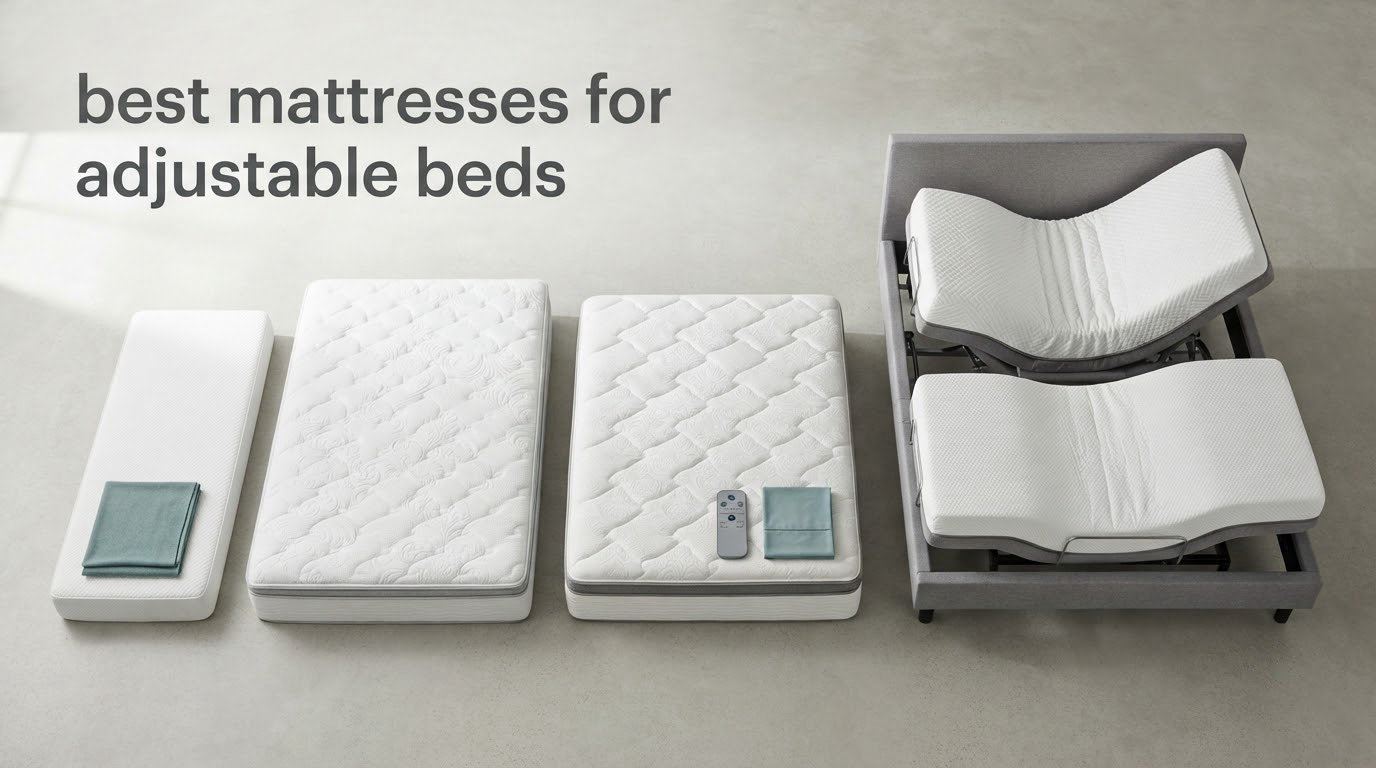
Choosing a mattress for an adjustable bed is a different problem from choosing a mattress for a flat frame. An articulating base folds the mattress twice a night, every night, for years, and that repeated bending is exactly what destroys traditional innerspring cores and thick pillow-top hybrids. The best mattresses for adjustable beds are the ones that flex cleanly and spring back without creasing, and the ones whose manufacturer explicitly certifies them for an adjustable base so the warranty stays intact.
I have been sorting through adjustable-base setups for years, and the single most common mistake I see is buying a mattress first and the base second. It works until the base warranty and the mattress warranty start arguing about who is at fault for the dip that appears along the fold line after a year of use.
This roundup covers ten mattresses that hold up on an articulating base, from a 10-inch budget foam to a 14-inch five-zone king with a breathable cover. Every pick below has a profile height and construction that can handle articulation, and I note where a manufacturer states adjustable-base approval on the listing and where it does not. I also flag the one pick whose own product copy specifically mentions articulating smoothly on an adjustable bed base, because that changes the conversation when your mattress warranty does not cover adjustable use.
Before the picks, here is the rule that decides almost everything: all-foam and flexible hybrid mattresses are the safest choices on an adjustable base, traditional rigid innerspring is the one to stay away from, and profile height matters more than most buyers expect.
Table of Contents
What Type of Mattress Works Best on an Adjustable Bed?
Here is the type-by-type breakdown. Each verdict is based on how the core bends and whether it returns to shape.
Memory foam — Best choice. Foam compresses and springs back cleanly at hinge points with no hardware to fatigue.
Latex — Excellent. Dense latex is inherently flexible and stays responsive through years of repeated folding.
Hybrid with pocketed coils — Very good, if the coils are individually wrapped and the border wire is flexible.
Traditional innerspring — Avoid. Rigid border wire and interconnected coils buckle at articulation points and can crease permanently.
Airbed with flexible chambers — Workable. Requires a base with a flat top deck; the chambers must be able to bend with the frame.
Split king — Best size for couples. Two independent mattresses mean one partner can elevate without disturbing the other.
Keep the thickness range in mind too. Most bases articulate best with a mattress between 9 and 13 inches. Anything above roughly 14 inches is tall enough to press into a headboard or guard rail when the head section is raised, which is a problem in guest rooms and smaller bedrooms.
There is no foundation requirement beyond the base itself. An adjustable bed frame replaces a box spring entirely, and adding a conventional foundation on top of an articulating base defeats the mechanism.
Top 3 Mattresses for Adjustable Beds in 2026

Vibe 12-Inch Gel Memory Foam
- 12-inch gel memory foam profile
- Plush medium-plush feel
- Breathable convoluted base foam

FDW 10-Inch Queen Gel Foam
- 10-inch profile under 12 inches
- 2.5 inch gel foam over 7.5 inch core
- Removable washable cover
Those three cover the range most buyers need. The Vibe is the one I put on an adjustable base without hesitating, the Novilla is the value pick for a first adjustable setup, and the FDW is the answer when the base is going into a spare room and the budget is fixed.
All 10 Mattresses for Adjustable Beds at a Glance in 2026
| Product | Specifications | Action |
|---|---|---|
| Vibe 12-Inch Gel Memory Foam Mattress |
|
Check Latest Price |
 Novilla Bliss 12-Inch Queen Memory Foam Novilla Bliss 12-Inch Queen Memory Foam |
|
Check Latest Price |
| FDW 10-Inch Queen Gel Memory Foam |
|
Check Latest Price |
 Amazon Basics 12-Inch Plush Memory Foam Amazon Basics 12-Inch Plush Memory Foam |
|
Check Latest Price |
 Casper Sleep Element 10-Inch Queen Casper Sleep Element 10-Inch Queen |
|
Check Latest Price |
 MLILY EGOHOME 14-Inch Queen Memory Foam MLILY EGOHOME 14-Inch Queen Memory Foam |
|
Check Latest Price |
 REVO Cooling Gel Hybrid 10-Inch Queen REVO Cooling Gel Hybrid 10-Inch Queen |
|
Check Latest Price |
 MLILY EGOHOME 12-Inch Copper Gel MLILY EGOHOME 12-Inch Copper Gel |
|
Check Latest Price |
 Nectar 12-Inch Queen Memory Foam Nectar 12-Inch Queen Memory Foam |
|
Check Latest Price |
 Sweetnight CoolNest 14-Inch King Sweetnight CoolNest 14-Inch King |
|
Check Latest Price |
Every mattress in that table is foam or a foam hybrid, which is why the list looks foam-heavy. Traditional innerspring does exist in adjustable-base testing, but it does not survive repeated articulation well enough for me to recommend it here.
How We Picked and How You Can Verify Compatibility
I score every candidate on five things: how cleanly the core bends, whether the profile height stays clear of the headboard when raised, how the surface behaves in the head-elevated position, how much motion crosses the mattress when a partner moves, and whether the warranty language addresses articulating bases at all. The first two do most of the work, because a mattress that creases along the knee break or presses into a headboard will annoy you every single night.
None of the ten picks below has a published, machine-readable adjustable-base certification that I could confirm across all models in the range. What the product data does show is construction, profile height, and in two cases explicit statements. The REVO hybrid lists adjustable base friendly in its own feature copy, and the MLILY EGOHOME 14-inch has owners describing that it articulates smoothly with no creasing. Treat those as strong signals and treat everything else as something you confirm yourself before ordering.
Here is the five-step check I run before buying a mattress for an articulating base.
Read the warranty PDF, not the marketing page. Look for the words adjustable base, articulating base, or adjustable foundation. If the warranty lists only platform bed, slatted base, or solid foundation, that is your answer.
Check the features field on the listing. Manufacturers that certify adjustable bases almost always say so in the bullet list. Silently compatible mattresses exist, but the warranty is what matters.
Call the brand and ask one specific question. Ask whether your exact model and profile height is approved for use on an articulating base, and ask for the answer in writing by email. Keep the reply.
Match the height to your base model. Measure from the top of the flat deck to the underside of your headboard. Leave clearance for the raised position, not the flat position.
Confirm the size before the mattress ships. A split king needs a split base, and two mattresses arriving as one box can be difficult to set up alone.
One more practical note. Owners of adjustable bases report consistently that the mattress is the component that needs replacing first, not the base. That is another argument for a mattress with a long warranty and a trial period, because you will likely be shopping for this bed again in eight to ten years.
If you are still choosing the base itself, our guide to the best adjustable beds for bedrooms covers the frame side of the decision.
1. Vibe 12-Inch Gel Memory Foam Mattress – Best Overall for Adjustable Beds
Vibe 12-Inch Gel Memory Foam Mattress – Cooling Gel – Pressure-Relieving Support – Medium-Firm Feel – CertiPUR-US Certified – Bed-in-a-Box – California King Size
12-inch profile
Gel memory foam over convoluted base
Plush feel
10-year warranty
Pros
- Flexes and returns to shape without hardware to fatigue
- Highest review count in this roundup at 51381 ratings
- Convoluted base foam improves airflow and weight distribution
- CertiPUR-US certified foams
- 1000 pound listed weight capacity
Cons
- Plush feel will not suit sleepers who want a firm surface
- Edge support softer than an innerspring core
- Full expansion can take up to 72 hours
This is the mattress I put at the top of the list, and the reasoning is unglamorous. It is a 12-inch all-foam build with a gel-infused top layer over high-density base foam, and that is exactly the construction profile that handles an articulating base well. There is no coil unit, no border wire and no rigid perimeter to fatigue at the fold line.
Reviewers consistently describe it as cooler than traditional memory foam, and the layered design reduces motion transfer well enough that a partner repositioning in the raised-head position rarely registers. The 4.5 average across 51381 ratings is the largest review base of any pick here, which matters because it means the long-term reports, not just the first-month impressions, are well represented.
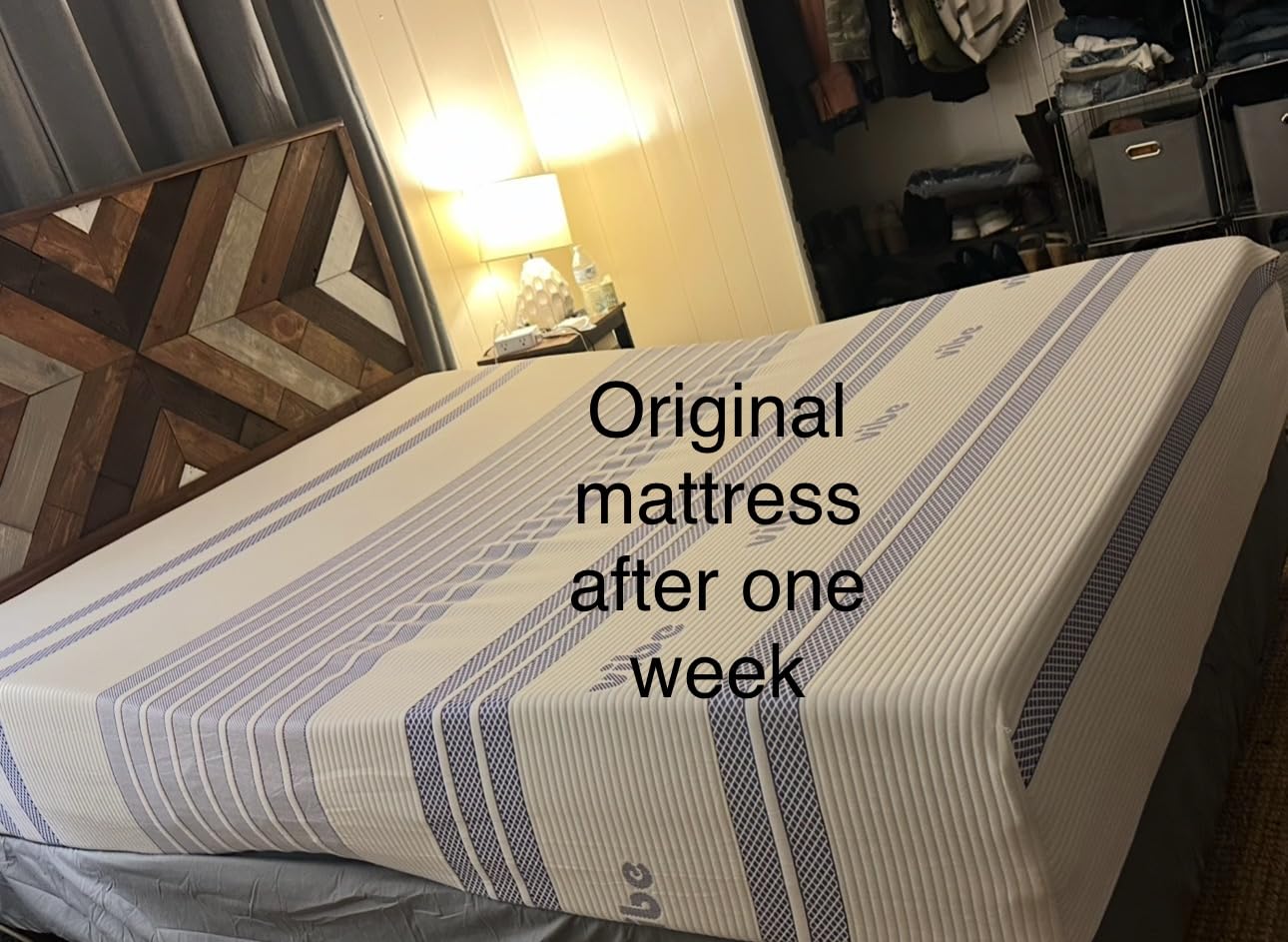
The main adjustment period is mental rather than physical. Owners say the memory foam feel takes about a week to get used to, and that some sleepers miss the spring of an innerspring. My advice is to give it three weeks of nightly use before judging it, because the surface does settle into something more predictable once your body weight has worked through the first layer.
Edge support is the trade-off. There is no reinforced perimeter here, so if you sit on the edge of the bed every morning to put your socks on, you will notice more give than you would on a hybrid. In the raised position this matters less, because the frame itself carries you away from the edge.
When this one fits your base
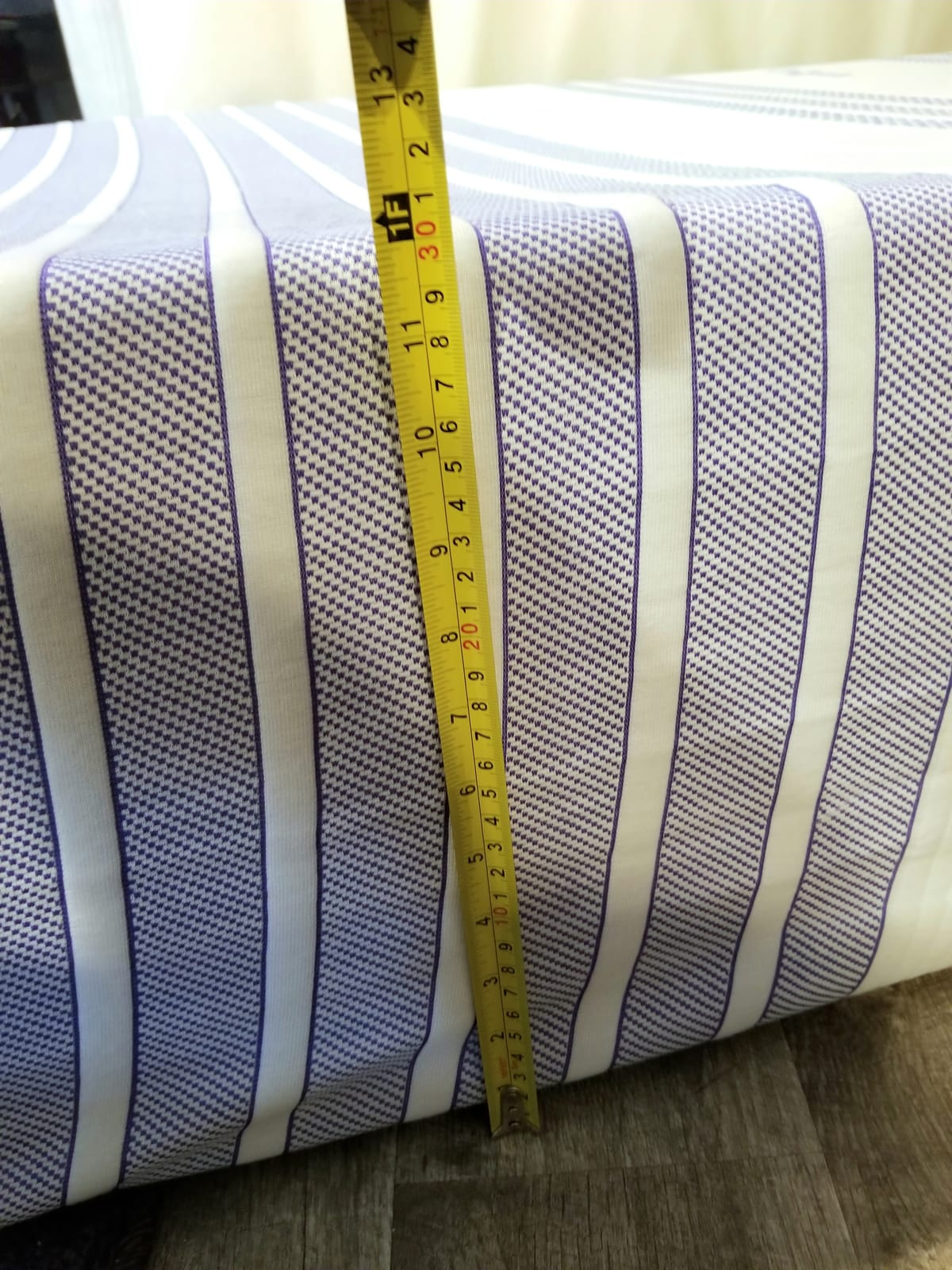
Choose it when your adjustable base has a low-profile headboard or a modern deck with nothing overhead. At 12 inches it clears most headboards comfortably in the raised position, and the 1000 pound listed weight capacity covers couples and heavier sleepers without argument. It is also the safest of the ten to move, since a 12-inch foam mattress is manageable for two people even after a full night of expansion.
It is the right call for anyone who sleeps hot, since the gel top layer and the convoluted base are both doing airflow work rather than just comfort work. A full 72 hours of expansion is needed before the mattress reaches its rated height, so plan the first night somewhere else if you unbox it in the morning.
When to skip it
Skip it if you need a genuinely firm surface, because the description is plush and there is no firmness option to change that. Heavy stomach sleepers sometimes find plush foam lets the hips sink enough to pull the spine out of line, and this model does not offer the firmer feel that would fix it.
Also skip it if you sit on the mattress edge as a habit or if you use the bed as a seat, since the perimeter is soft. If you already own a hybrid you love, read our mattress picks for side sleepers before switching, since side sleepers often prefer a firmer foam than this one delivers.
2. Novilla Bliss 12-Inch Queen Memory Foam Mattress – Best Value
Novilla Bliss Queen Size Mattress, 12 Inch Gel Memory Foam Mattress Queen
12-inch profile
Four foam layers
Medium firm
100-night trial
Pros
- Three-layer design relieves pressure and supports spinal alignment
- Knitted breathable cover with heat-dissipating gel foam
- Reinforced edge support for a foam mattress
- 100-day free trial and 10-year protection
- ACA certified
Cons
- Edge support weaker than innerspring
- can feel warm despite the cooling layer
- Some buyers report delivered firmness differs from the medium-firm description
The Novilla Bliss is the pick I send people to when they are building a first adjustable setup and want a proven mattress without overthinking it. It is a 12-inch, four-layer foam build rated medium firm, which is the sweet spot for an articulating base: tall enough to feel substantial, not so tall that it fouls a headboard.
Owners talk about two things more than anything else. The first is value, because a 12-inch four-layer foam with a 100-day trial at this tier of the market is unusual. The second is motion isolation, which matters more than usual on an adjustable base because one partner raising their side does not transfer movement through the shared frame the way a static bed does.
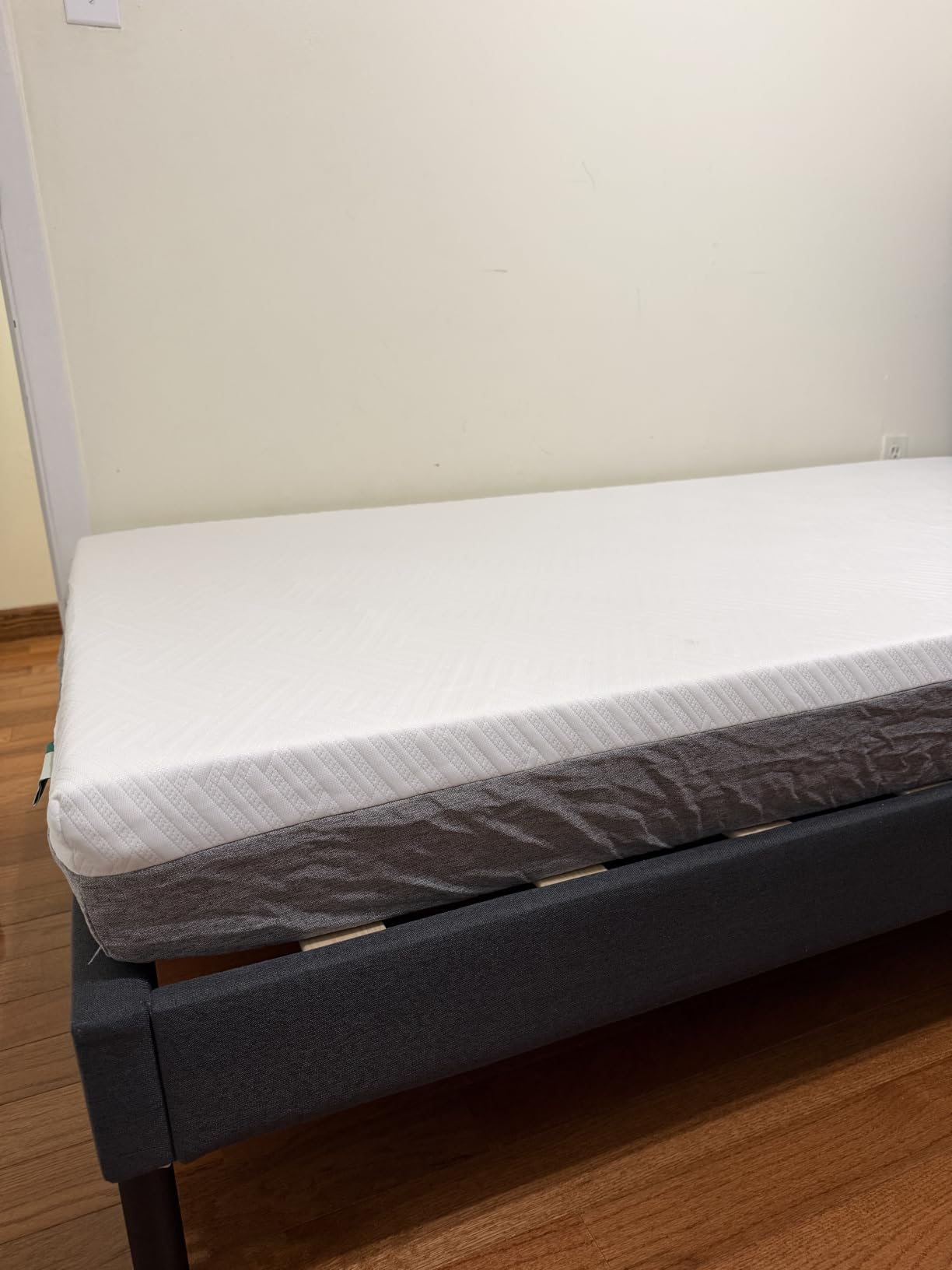
The honest weakness is warmth. Even with a knitted breathable cover and a gel top, owners still describe it as warmer than they expected, and this is the most common complaint in the reviews. If you run hot, skip to the cooling picks further down the list rather than accepting a mattress that has you kicking the covers off in month two.
A second complaint worth taking seriously is that some buyers found the delivered firmness firmer than the medium-firm description implied, particularly in the first week. It does soften with use. If you are sensitive to a firm initial surface, read that as a warning rather than a defect.
When this one fits your base
This is the mattress I recommend for a split king setup in a shared bedroom, because the reinforced edge support is a real upgrade over most foam at this level and the 600 pound weight capacity comfortably covers one person per side. The 12-inch height is comfortably within the range that articulates without creasing at the knee break.
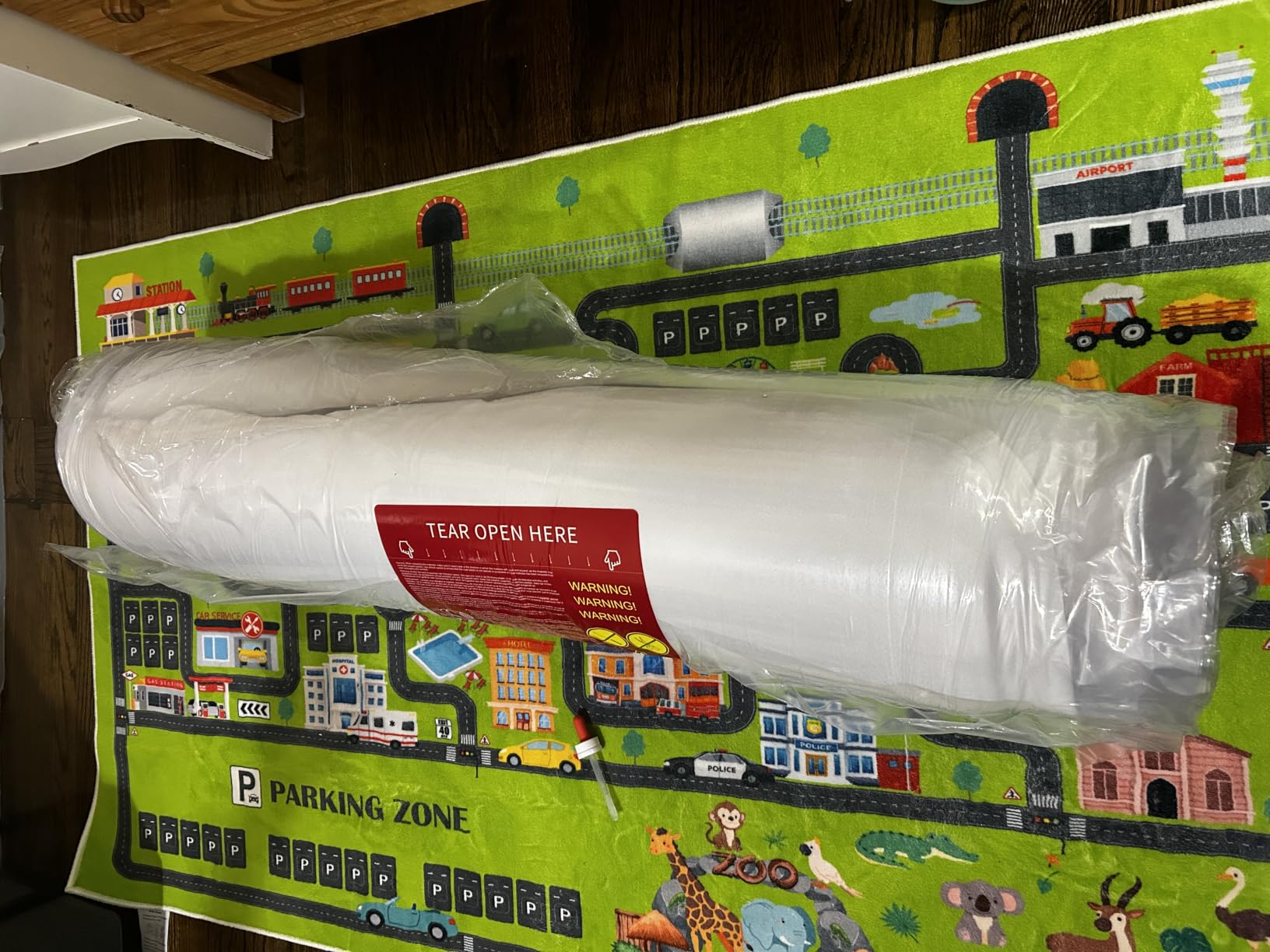
It is also the best fit for a bedroom where the adjustable base is raised for reading or watching television, since medium firm foam holds its shape in the lounging position better than a plush model would. White glove delivery is worth considering here, because a 61.5 pound boxed mattress is manageable but still awkward to move alone once expanded.
When to skip it
Skip it if you sleep hot. The warmth complaints are consistent enough that a cooling-focused pick is the better use of your money, and you will not solve it with a fan alone in a bedroom that stays warm all night.
Also consider alternatives if both of you are heavy. The listed weight capacity of 600 pounds is a per-mattress figure, and once you add a second adult or a lot of bedding, you are outside the number the manufacturer published. Our guide to mattresses tested for back pain covers the support-first picks in more depth.
3. FDW 10-Inch Queen Gel Memory Foam Mattress – Best Budget Pick
FDW | 10 Inch Queen Mattress | Medium Firm | Gel Memory Foam | White
10-inch profile
2.5 inch gel foam over 7.5 inch core
Medium feel
Machine washable cover
Pros
- Under 12 inches so it clears most headboards in the raised position
- Ventilated gel foam improves airflow
- Balanced medium firmness works in all positions
- Removable and machine washable cover
- 1000 pound listed weight capacity
Cons
- Shallow 10-inch profile gives less deep contouring than 12 to 14 inch models
- Edge support limited compared with innerspring
The FDW is the practical answer for a spare room, a guest suite or a first apartment. At 10 inches it is the shortest profile in this roundup, and that is exactly why it is a strong adjustable-base pick: the less height there is between the deck and the underside of a headboard or guard rail, the less likely you are to bind when the head section rises.
Construction is deliberately simple. Two and a half inches of gel memory foam sit over a 7.5 inch high-density base core, which is the standard bed-in-a-box recipe. A dual-layer foam build has nothing rigid in it, so it bends at the articulation points without any risk of coil fatigue or border wire stress.
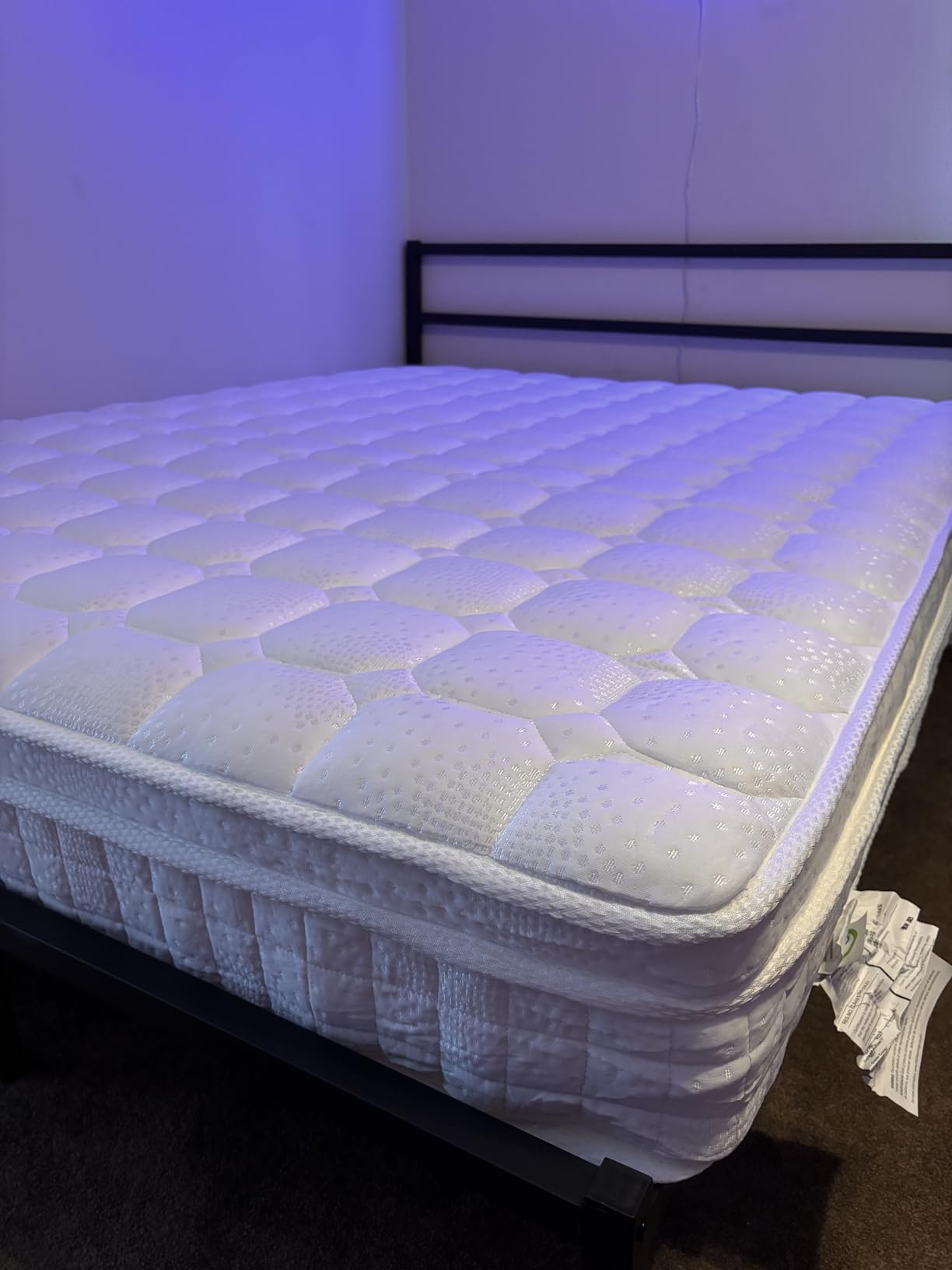
What you give up for the shorter profile is contour depth. Owners say the surface is comfortable and supportive across back, side and stomach sleeping positions, but it is not the deep cradle you get from a 12- or 14-inch model. For most people that is invisible. For heavier side sleepers with pronounced shoulder and hip pressure, it can matter.
The removable, machine-washable cover is genuinely useful in a guest room where the mattress takes a beating. That is a maintenance feature you will not find on most foam mattresses in this list, and it is worth more over a decade than the extra inch of foam would be.
When this one fits your base
Choose it when the adjustable base lives in a small room with a low headboard, a guard rail or a sloped ceiling. A 10-inch profile is the most forgiving height in this roundup, and I would put it in a dorm room or a child’s room without hesitating.
The 1000 pound listed weight capacity is the highest published figure among the foam picks here, which makes this the safe budget option for a room where two people might use the same mattress. The cover unzips and machine washes, so the practical upkeep burden is close to zero.
When to skip it
Skip it if you sleep on your side and carry noticeable weight on your shoulders and hips. Ten inches of foam with a 2.5 inch comfort layer will not contour deeply enough to keep your spine in a straight line, and you will feel the difference after a few weeks rather than the first night.
Skip it if you want a plush luxury feel. This is a medium, utilitarian mattress, and at this level it does not try to be anything else. If you want a softer surface, step up to the Vibe or the Amazon Basics instead.
4. Amazon Basics 12-Inch Plush Memory Foam Mattress – Best for Guests and Dorm Rooms
Amazon Basics Memory Foam Mattress, Soft Plush Feel, Breathable, 12 Inch, Queen, White/Grey
12-inch profile
Plush feel
Three foam layers
Vacuum packed
Pros
- Plush surface contours closely to the body
- Three layers including a ventilated middle foam
- Vacuum packed for compact shipping and solo setup
- Does not run excessively hot for the price
Cons
- Very soft initially and some owners report the surface flattening after a few weeks
- Plush feel unsuited to heavier sleepers or firm spinal support
- Cover is spot clean only
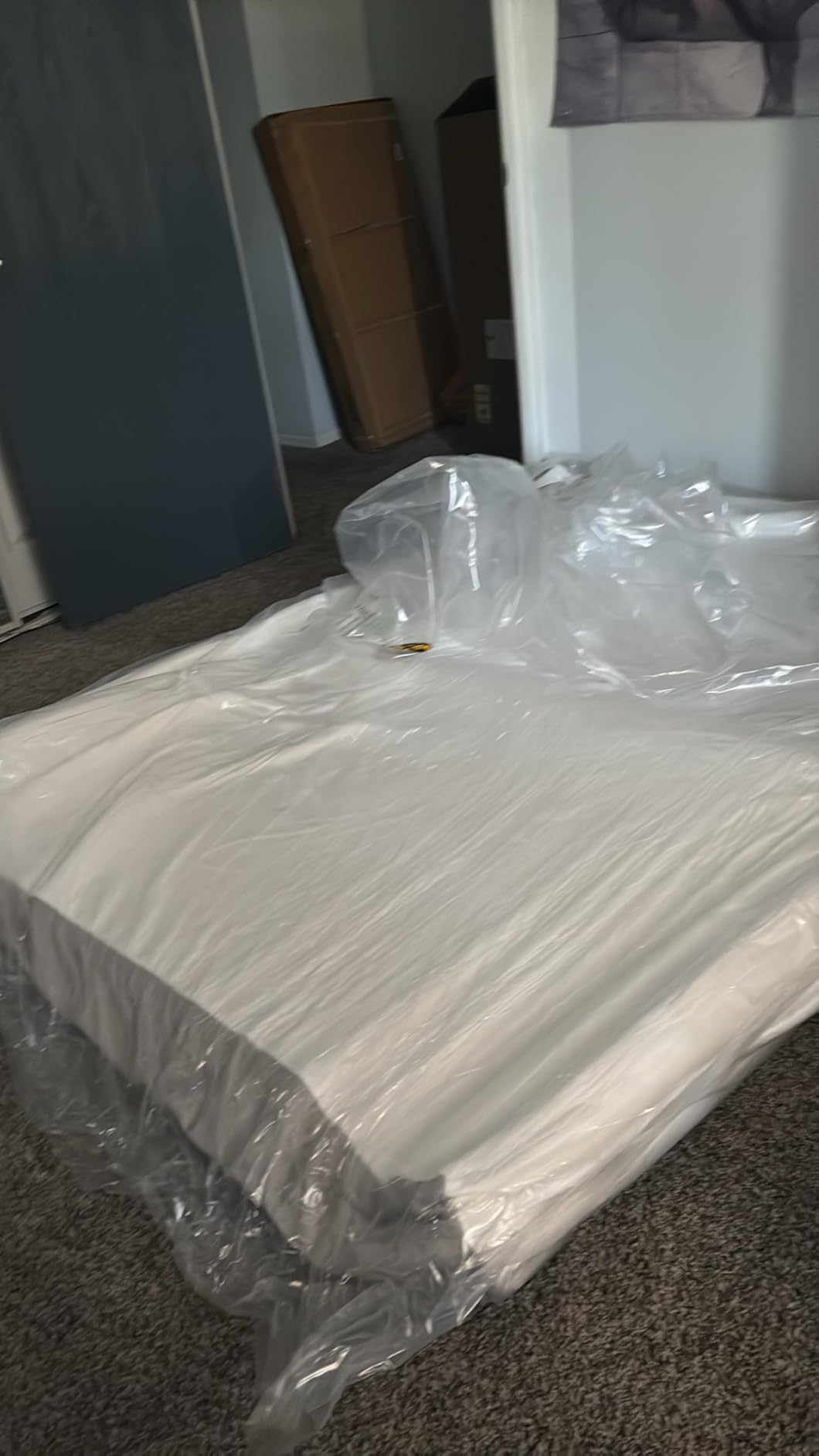
The Amazon Basics 12-inch is the plush option in a list where most picks are medium. That makes it useful for a guest room where the goal is a bed that feels generous rather than a bed that supports a specific sleeper profile. It is also the easiest of the ten to move, because it ships vacuum packed at 60.3 pounds.
Layering is straightforward: a memory foam top, a breathable middle layer with ventilation holes, and a convoluted foam base. The ventilation holes in the middle layer are a sensible touch on a plush foam mattress, since plush foam is where heat collects, and buyers generally report it does not run excessively hot for the tier.
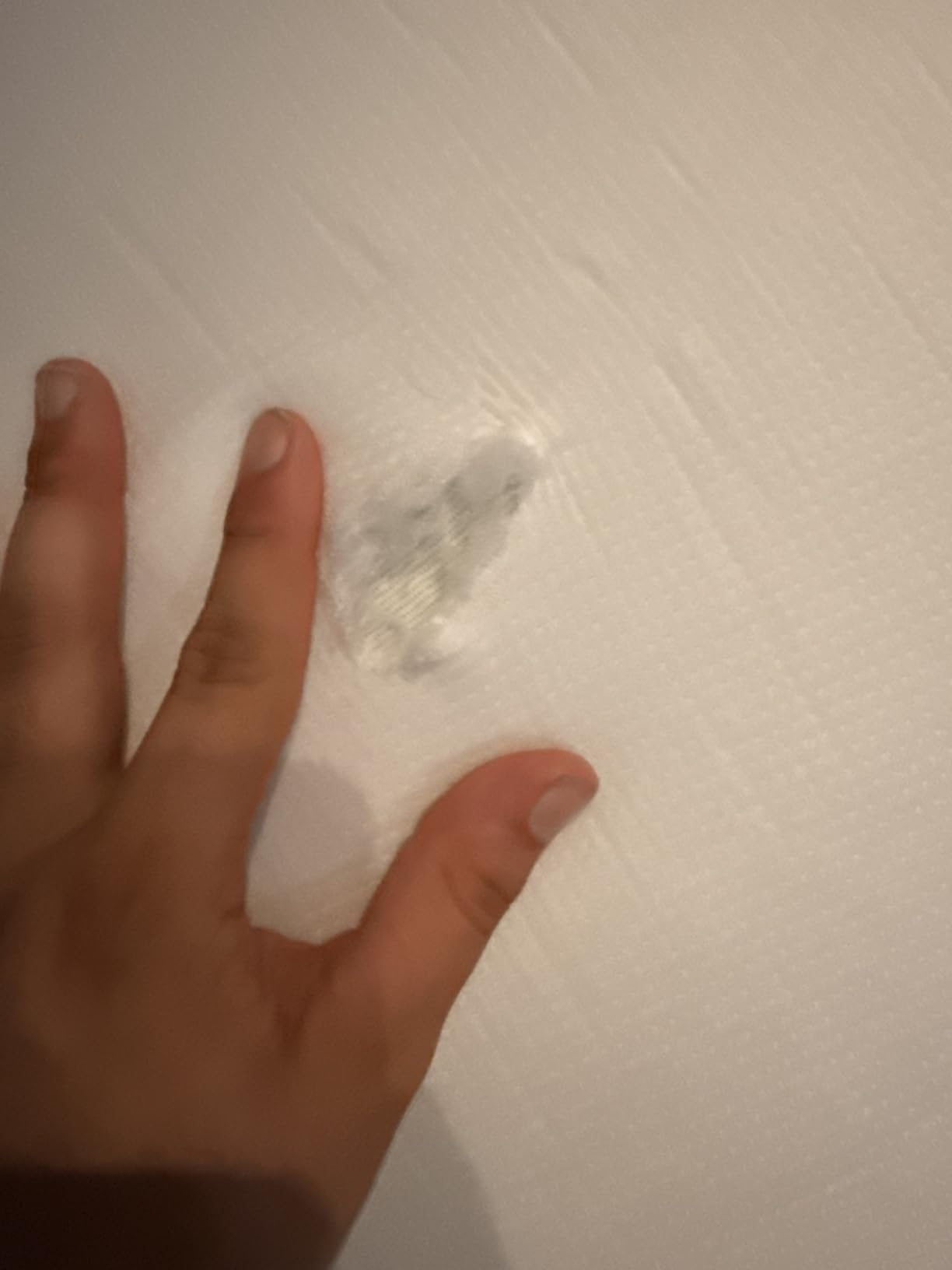
The durability reports are the reason this is not ranked higher. Most buyers love the feel, but a minority report the foam breaking down or sinking after several weeks of nightly use, and a few say the surface softens further and starts to feel flat. On an adjustable base, where the mattress is already under repeated flexing, that pattern is worth taking seriously rather than dismissing.
Edge support is soft as well, which is consistent with a plush design. Sitting on the side to get in and out of a raised bed is noticeably harder on this mattress than on the Casper or the REVO hybrid, and for anyone with limited mobility that matters more than comfort scores do.
When this one fits your base
This is my pick for a guest room adjustable base, a college dorm, or a short-term rental setup where the mattress will not see a decade of nightly use. The vacuum-packed format means one person can set it up without waiting for delivery, and the 12-inch height sits in the middle of the comfortable range for articulation.
It works well as a secondary mattress too, for a child moving up from a twin or for a guest mattress that gets used in bursts. Nothing about the construction fights an adjustable base, so compatibility is not the concern here; longevity is.
When to skip it
Skip it for a primary bedroom mattress, particularly if you are heavier or you sleep on your side. A plush surface that softens over time is a poor long-term match for a bed that is already flexing several times a night, and the initial softness can leave the spine unsupported once the foam compresses.
Skip it if you plan to sit on the edge of the bed frequently. There is no reinforced perimeter, and the cover is spot clean only, which is limiting in a room where a washable cover would be genuinely useful.
5. Casper Sleep Element 10-Inch Queen Mattress – Best for Motion Isolation
Casper Sleep Element Queen Mattress – Medium Feel – Motion Isolation – Breathable, Cooling Memory Foam – 100-Night Trial – CertiPUR-US
10-inch profile
Medium feel
Open-cell flex foam
100-night trial
Pros
- True medium feel suits all sleep styles and heavier sleepers
- Breatheable open-cell foam sleeps cooler than traditional memory foam
- Layered foams absorb motion transfer strongly
- Expands close to full height within hours
- 1000 pound listed weight capacity
Cons
- Noticeable off-gassing odor for the first few days
- Some owners report centre sagging and a hard feel after extended use
- Soft edges
- Undisclosed fiberglass fire-retardant layer under the cover
The Casper Element earns its place here for one reason above all others: motion isolation. On an articulating base the frame itself transmits more movement than a static bed does, so a mattress that absorbs motion rather than passing it along is genuinely valuable. Layered premium foams do that work, and owners specifically call out that a moving partner or a restless pet is barely felt.
Construction is a two-layer foam build in a true medium feel, which is the most universally workable firmness on an adjustable base. A medium surface holds its shape in the head-elevated position rather than letting your shoulders roll forward, and it still cushions a side sleeper without swallowing the shoulders.
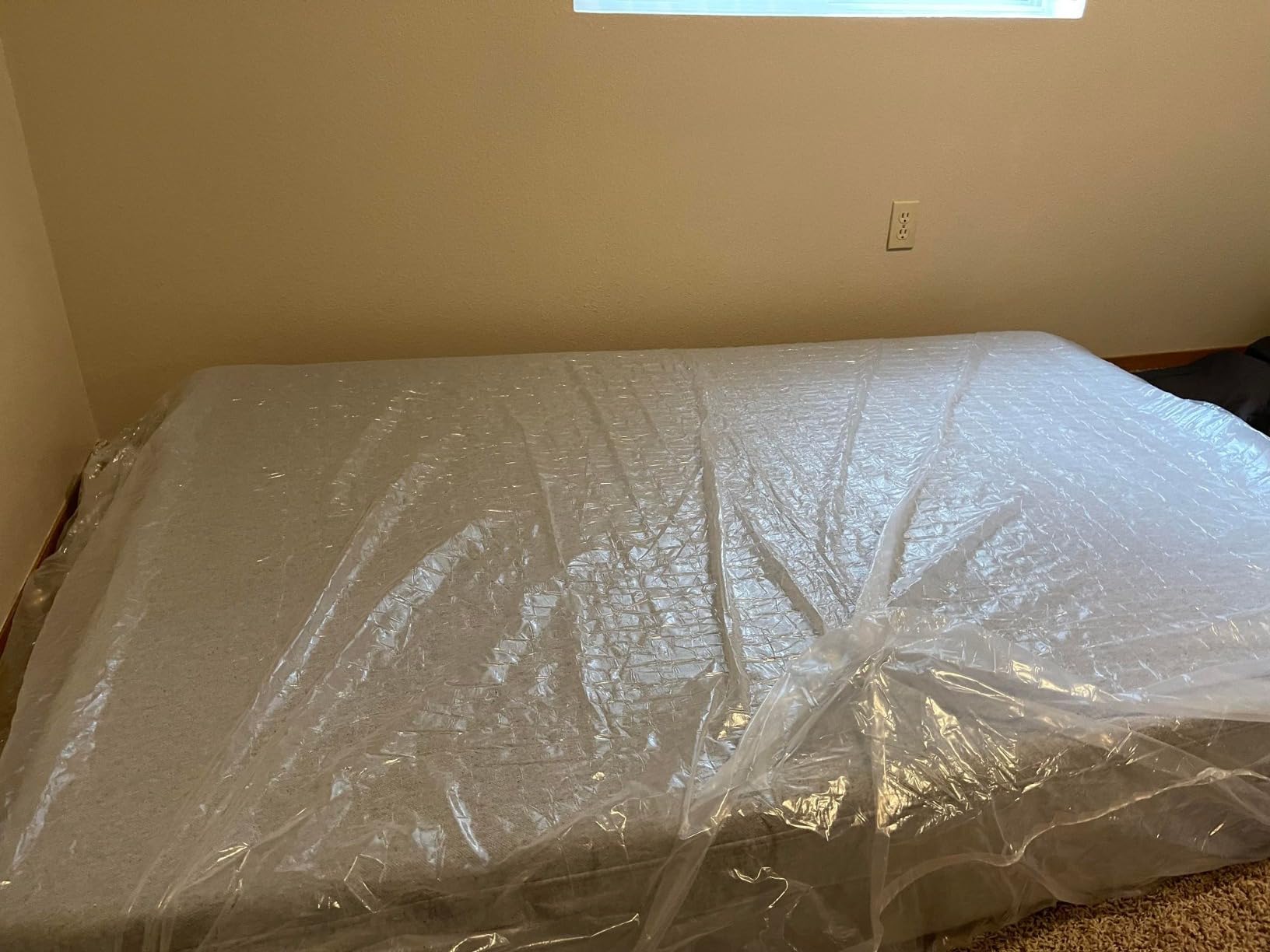
Two issues come up repeatedly and you should know about both. The first is off-gassing, which owners describe as noticeable and lasting several days, so you may need a workaround plan for the first week. The second is a fibre-glass fire-retardant layer under the removable cover that several buyers noted is not disclosed in the product description and can break down inside the cover over time.
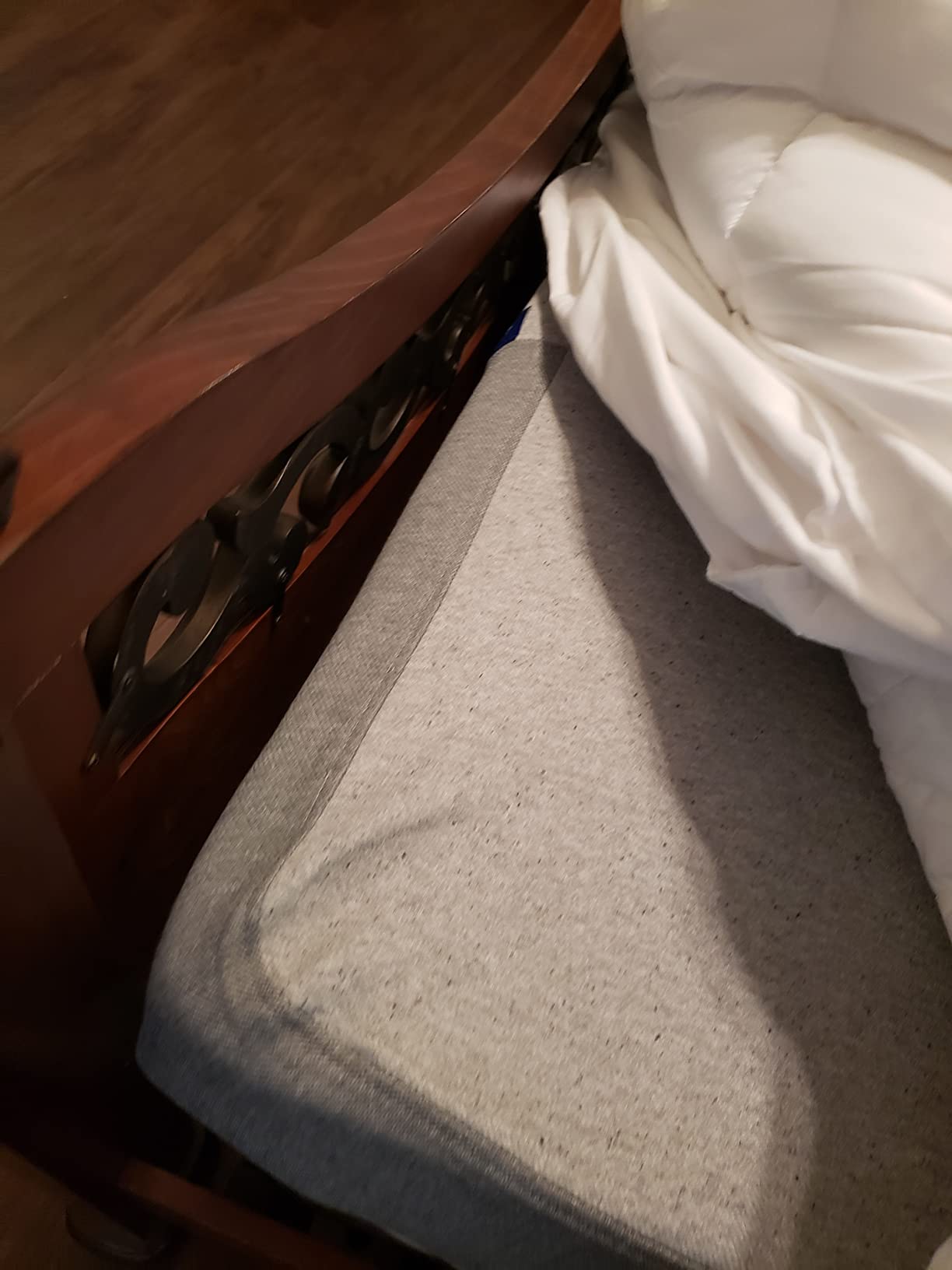
There is also a report pattern of centre sagging and a harder, less contouring feel after extended use. On an adjustable base that is the failure mode to watch, because the centre is exactly where the knee break sits. Inspect the fold line after the first six months rather than at year three.
When this one fits your base
Choose it when one partner is a light sleeper and the other moves a lot, and when you are using a split king so the two mattresses are physically separate. The Element is the pick I would put in a bed shared by two people with very different sleep sensitivity.
At 10 inches it clears almost any headboard, and it reaches near full height within hours of unboxing rather than the full 72 hours some boxed foam needs. That is convenient when you need to sleep on it the same night. The 100-night trial and 10-year limited warranty are both solid for this tier.
When to skip it
Skip it if you are highly sensitive to chemical smell at the start. The off-gassing complaints are consistent, and if you have been trying to sleep in the room for a few nights while the mattress settles, that will be unpleasant rather than merely annoying.
Skip it if sitting on the edge of the bed is part of your routine, or if you have limited mobility and use the raised position to sit upright on the side of the mattress. The edges are soft, and you will notice that immediately when getting in and out.
6. MLILY EGOHOME 14-Inch Queen Memory Foam Mattress – Best Thick Profile
EGOHOME Queen 14 inch Memory Foam Mattress for Back Pain Relief Medium Firm
14-inch profile
Medium firm copper gel foam
Graphene cool cover
4 layers
Pros
- Owners report it articulates smoothly on an adjustable base with no creasing
- Excellent motion isolation and stable edge support
- Copper gel foam and graphene cover manage heat and moisture
- Expands evenly to full 14-inch height with no chemical smell
- Made in the USA and ICA endorsed
Cons
- Feels firm for the first several nights before body heat softens it
- Weighs 84 pounds so two people are needed to move it
- 14-inch height makes fitted sheets hard to find
- Listed 250 pound weight capacity is low
This is the only mattress in the roundup whose own customer reviews specifically describe it working on an adjustable bed base, articulating smoothly with no creasing and no resistance. That is why it is here despite a modest review count of 5977, and it is the one I would verify by email before ordering if your base warranty is the thing you care most about protecting.
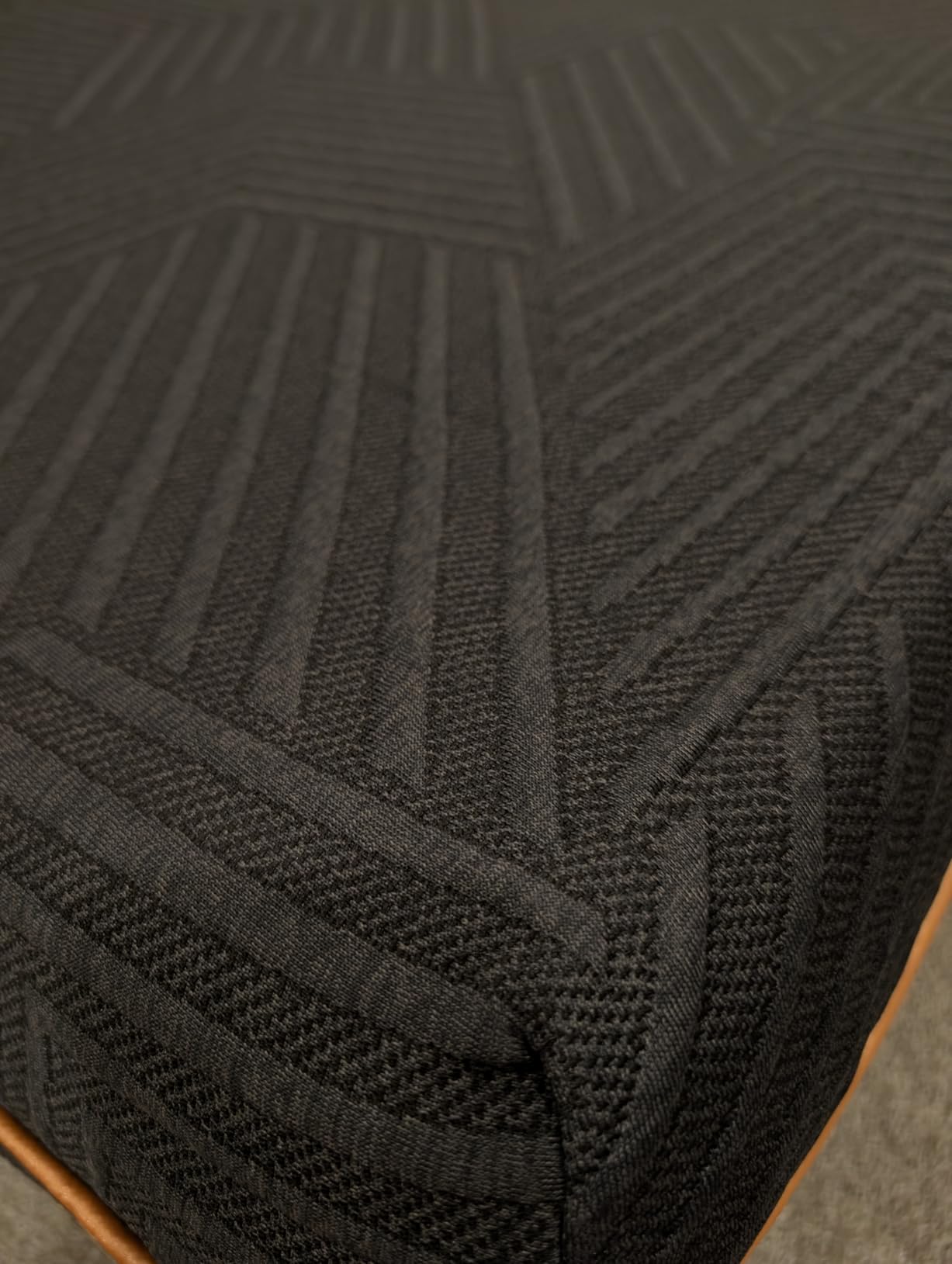
It is also the thickest foam pick here at 14 inches, across four layers with a copper gel aerofusion memory foam comfort layer and a graphene cool-tech cover. Owners describe the medium-firm feel as cushioning shoulders and hips while keeping the spine aligned, which is the right profile for a bed that will spend part of its life with the head section raised.
The two things that catch people out are weight and height. At 84 pounds, this mattress needs two people to move once it is out of the box, and 14 inches is tall enough that standard fitted sheets will not fit, so budget for a deep-pocket sheet before it arrives.
There is also a listed weight capacity of 250 pounds, which is low for a mattress sold to larger sleepers. I would treat that number as a real constraint rather than a formality. If you or your partner is over that weight, this is not the pick, and the manufacturer has published the figure so you can decide with the facts in hand.
When this one fits your base
Choose it when your adjustable base has generous headboard clearance and you want a deep, supportive surface rather than a thin one. The 14-inch profile gives a lot of material to work with in the zero gravity position, where your weight distributes across both the head and foot sections, and owners report the pressure distribution holds up well there.
It is a strong choice for a bedroom where one partner runs hot, since the copper gel foam and the graphene cover are both doing active temperature work rather than simply feeling cool for a while. It is also one of the few picks here with no reported off-gassing on delivery, which matters if you plan to sleep on it immediately.
When to skip it
Skip it if you have a low-profile frame, a headboard close to the deck, or a guard rail. At 14 inches, raising the head section can bring the top of the mattress into contact with furniture you did not account for, and that binding is the fastest way to damage a base mechanism.
Skip it if either of you is over 250 pounds, if you live alone and cannot recruit a second person to help move it, or if deep-pocket fitted sheets are going to be hard to source in your area.
7. REVO Cooling Gel Memory Foam Hybrid Mattress – Best Hybrid
REVO Cooling Gel Memory Foam Hybrid Mattress, Queen 10 Inch, Medium
10-inch profile
768 pocketed coils over gel foam
Medium feel
Adjustable base friendly
Pros
- Listing states adjustable base friendly
- Individually wrapped pocket coils flex where you press and stay firm elsewhere
- Reinforced edge support keeps the sides firm for sitting
- Cool to the touch stretch cover suits hot sleepers
- Coil unit springs back within hours of unrolling
Cons
- Coil feel is firmer and more utilitarian than plush foam
- Side edges can feel less reinforced over time
- No trial period for opened mattresses
The REVO is the one hybrid in this roundup, and it earns the place because its own product copy names adjustable base compatibility directly. The listing describes a perimeter support system and states that the mattress flexes with adjustable bed frames, and the product data lists its base compatibility as box spring, slatted base and solid foundation. That is the most explicit approval language anywhere in the ten picks.
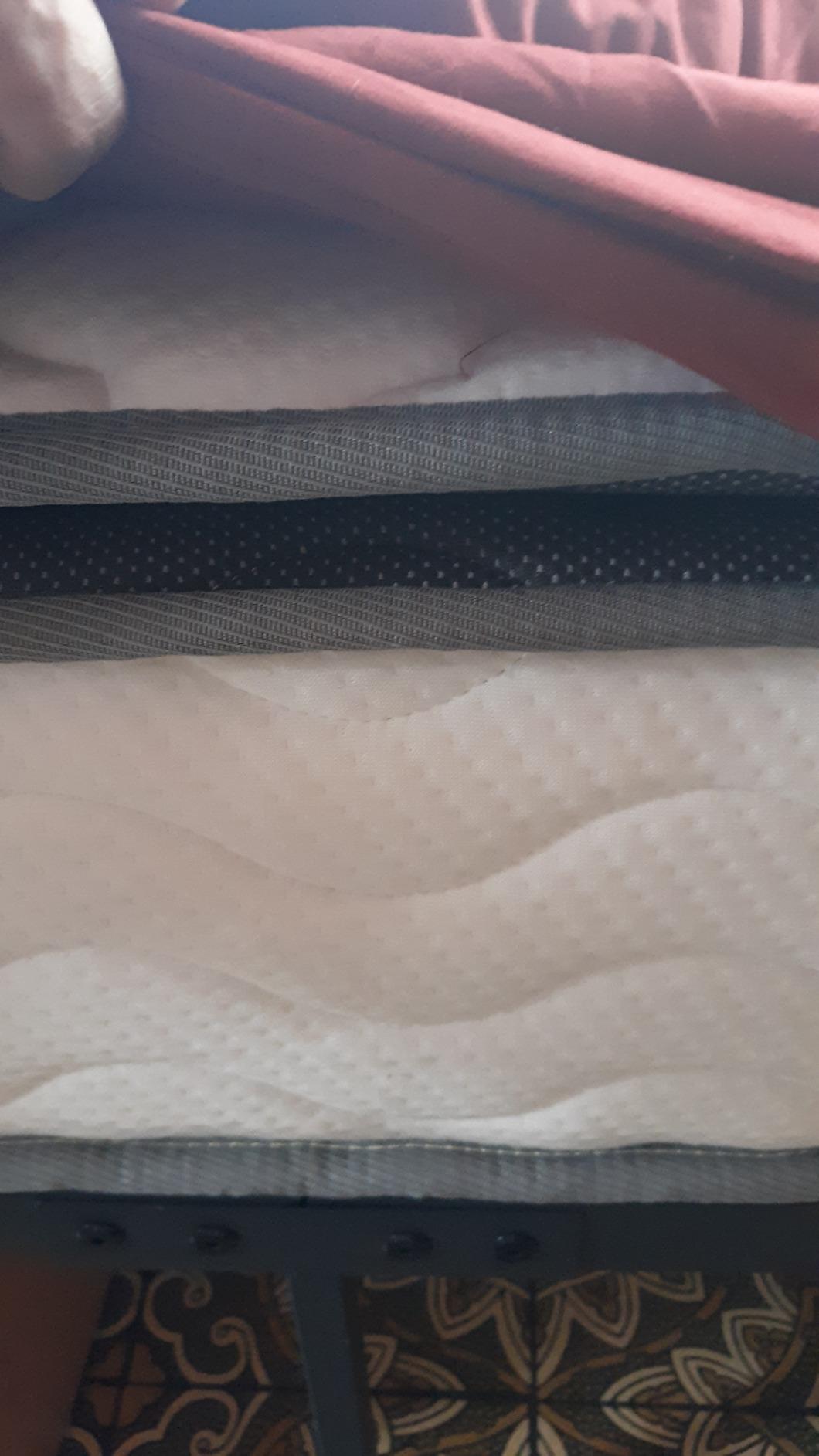
Under the gel memory foam sit 768 individually wrapped pocket coils across a 10-inch profile. Pocket coils are the reason this works on an articulating base where a traditional innerspring would not. Each coil moves independently under pressure and the design is inherently more forgiving at a fold line than interconnected coils held by a rigid perimeter.
If you are used to a plush foam mattress, the transition is the adjustment. Owners commonly say the hybrid feel is firmer and more utilitarian than they expected, and that it takes a week or two before the coil and foam layers stop feeling like two separate objects. The upside is responsiveness, which foam cannot match: you change position easily and there is none of the sinking sensation on getting out of bed.
The cool-touch stretch cover and gel-infused open-cell foam are built for hot sleepers, and reviewers do call the sleeping surface cool to the touch. The reinforced perimeter is also the best edge support among the mid-height picks here, which is why I would pick this one over a foam model for someone who sits on the edge of a raised bed every morning.

When this one fits your base
Choose it when you want the responsive feel of coils with the pressure relief of foam, and when you need a mattress that will hold its shape rather than take a permanent set. Pocket coils recover their shape quickly after being bent, which is exactly the behaviour you want from a mattress that articulates every night for a decade.
It is also the pick for a bed used for lounging. Because the coil core is responsive, sitting up to read or watch television in the raised position does not feel like sinking into the mattress. The same base is offered in 8, 10, 12 and 14 inch profiles, so a taller version exists if your headboard clearance demands it.
When to skip it
Skip it if you want a soft, cradling surface. A firmer, springier feel is the whole point of a hybrid, and no amount of break-in changes that.
Skip it if you are light or sensitive to pressure and want a foam-style contour, and note that the review base of 1859 is the thinnest among the picks here, so the long-term durability picture is less well documented than for the Vibe or the Novilla. Also read the return terms carefully, since there is no trial period once a mattress has been opened.
8. MLILY EGOHOME 12-Inch Copper Gel Mattress – Best for Cool Sleep
EGOHOME Queen 12″ Copper Gel Memory Foam Mattress Pressure Relief Medium
12-inch profile
Medium all-foam
Graphene cover and copper foam
42 pounds
Pros
- Graphene cover and copper-infused foam actively regulate heat and moisture
- Fiberglass-free construction with a flame-retardant layer
- Relieves pressure points and helps align the spine
- Lightest pick in the roundup at 42 pounds
- Expands in 2 to 12 hours
Cons
- Listed 300 pound weight capacity limits heavier sleepers
- No trial period and opened mattresses cannot be returned
Cooling is the entire point of this model, and the construction backs up the claim rather than just asserting it. A graphene-infused nylon cover sits over copper-infused memory foam across a 12-inch, three-layer all-foam build, and the two materials are doing different jobs: the cover manages surface temperature and moisture, the foam manages heat as it compresses.
Buyers consistently report a medium feel with genuinely cool, dry sleep and good pressure relief. That combination is rarer than it sounds, because most memory foam solves the pressure problem by making the mattress warmer. All-foam construction means it also articulates without any coil fatigue, and the medium feel holds its shape when the head section is raised.
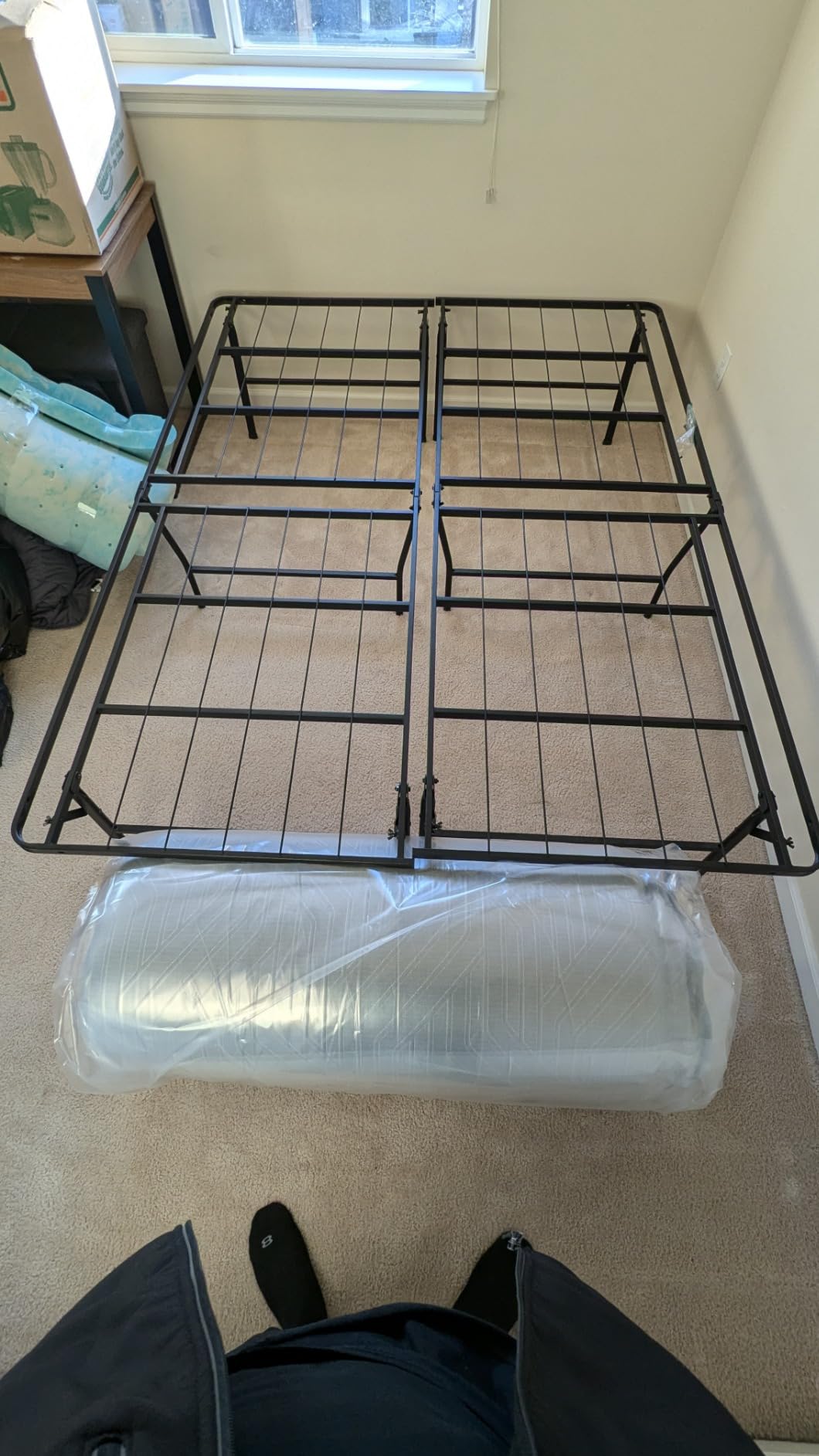
At 42 pounds this is by far the lightest mattress in the roundup, and that has real practical value. If you are setting up an adjustable base alone, or if you plan to move the mattress between rooms while the base is reconfigured, weight is a genuine factor rather than a spec-sheet detail.
Two limitations are published by the manufacturer. The listed weight capacity is 300 pounds, which is lower than most picks here, and there is no trial period, meaning an opened mattress cannot be returned. Both are worth weighing before you order, particularly the second one, because an adjustable base purchase is often a considered decision and you want the mattress to be reversible.
When this one fits your base
Choose it when the bedroom gets warm and the person using the adjustable base runs hot. It is the pick I would put in a room where the head section is raised regularly, because a raised position traps more warm air around the upper body and any heat you can remove at the mattress surface helps there.
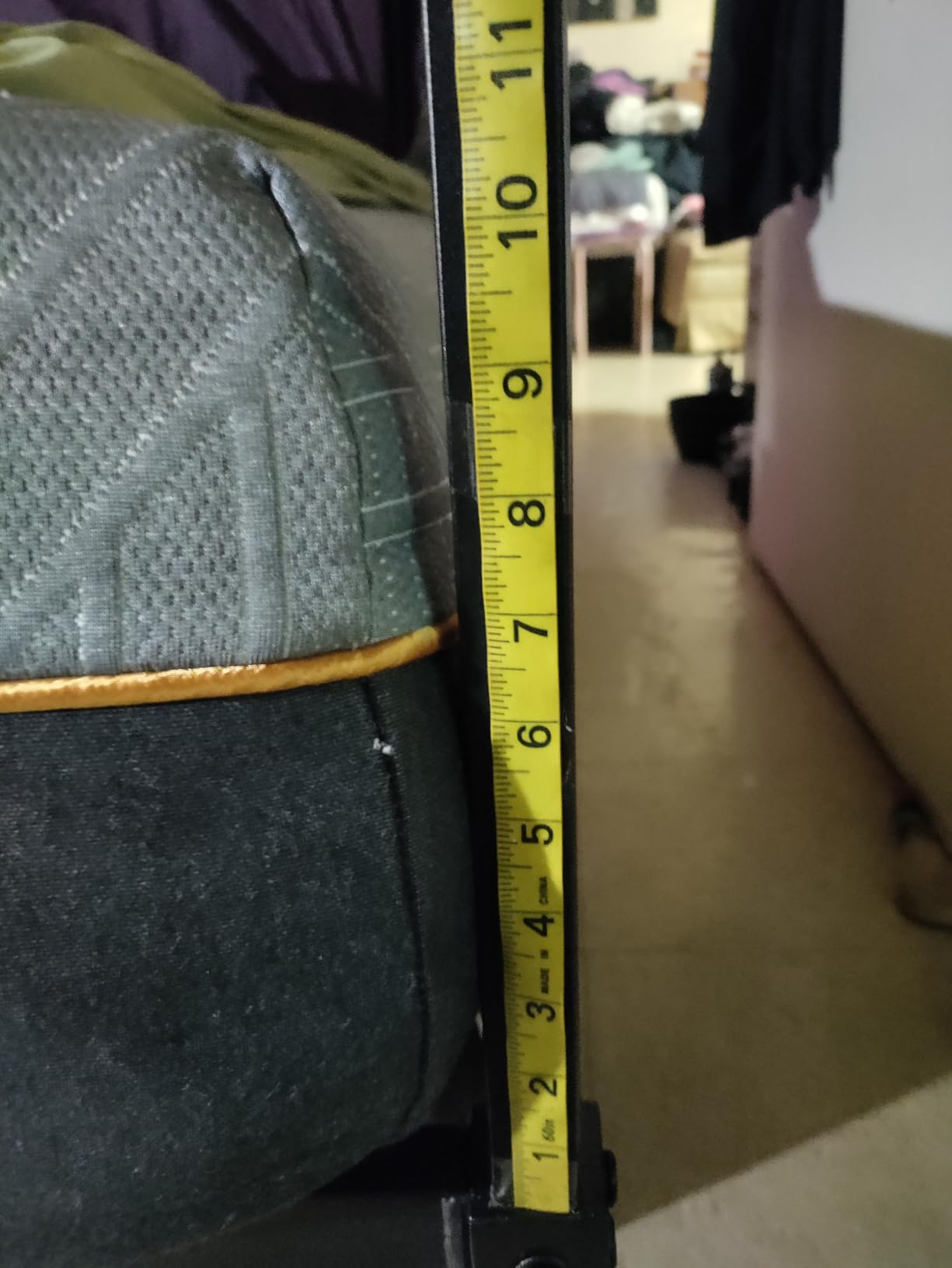
It is also the practical choice for a single adjustable base in a small room, since 42 pounds is light enough to reposition without help. The 12-inch profile sits in the middle of the flexible range, so it articulates cleanly without approaching headboard height.
When to skip it
Skip it if you weigh over 300 pounds, or if your partner does and you plan to share the mattress on a single base. That figure is published, and a mattress loaded beyond its stated capacity on a flexing base is exactly where durability problems show up early.
Skip it if you are not comfortable with a final purchase. With no trial period, you get one chance to get it right, which makes it a worse pairing with an unfamiliar adjustable base than any of the picks that carry a 100-night trial.
9. Nectar 12-Inch Queen Memory Foam Mattress – Best Lifetime Warranty
Nectar Queen Mattress – 365 Night Home Trial – Gel Memory Foam Mattress – CertiPUR-US Certified Foams – Forever Warranty
12-inch profile
Firm with cradling
Five foam layers
365-night trial
Pros
- Forever warranty is the strongest coverage in this roundup
- 365-night home trial
- Firm with a touch of cradling suits back pain and stomach sleepers
- No odour on delivery and expands fast
- 800 pound listed weight capacity
- Holds body weight with no sagging over months
Cons
- Edges sink noticeably when sitting
- Firmer than many side sleepers want
- Few owners report new shoulder and back aches after several months
- In-home trial return process reported as cumbersome
The Nectar is the coverage pick. A 365-night home trial and a forever warranty on a 12-inch all-foam build is the strongest warranty position of anything in this roundup, and on an articulating base that matters more than it does on a flat frame, because the warranty is the document that determines who pays when a fold line creases in year six.
Construction is five layers, with contouring memory foam over a dynamic support layer. The feel is firm with a touch of cradling, which owners say suits stomach sleepers and anyone with back pain, and it holds body weight well for heavier sleepers with no reported sagging over months of use. The listed weight capacity of 800 pounds is the second highest here.
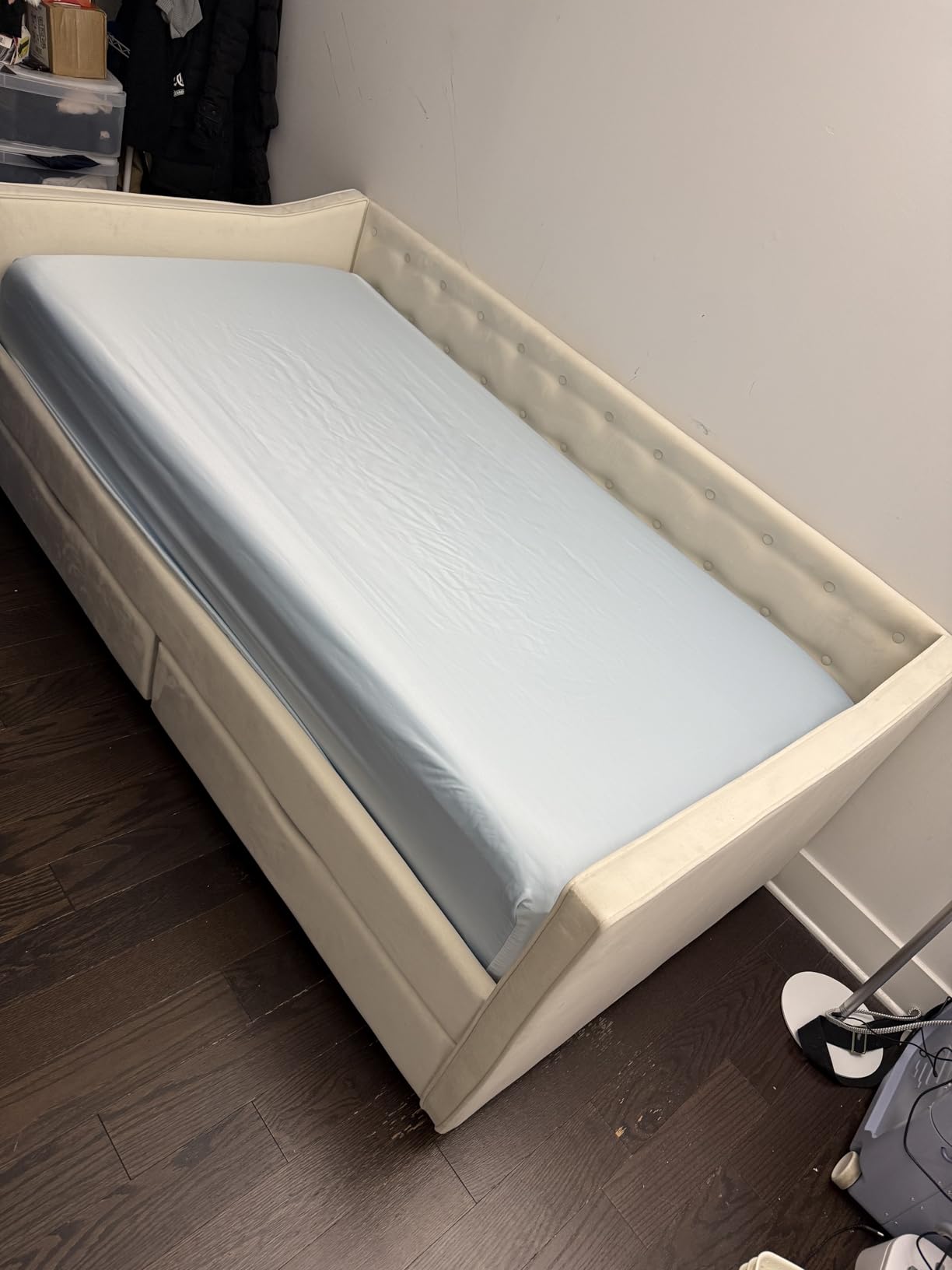
The firmness is the main thing to think about before ordering. It is described as firm, and several owners report it is firmer than side sleepers want, often recommending a topper. There is also a report of new shoulder and back aches after several months, which is the classic signature of a mattress that is too firm for a shoulder-heavy sleeping position.
The return process is the other real concern. Owners describe the in-home trial return as cumbersome and the refund terms as contested. A 365-night trial is only as good as the process behind it, and if you are buying this for a room where getting it wrong is expensive, read the return terms carefully before ordering.
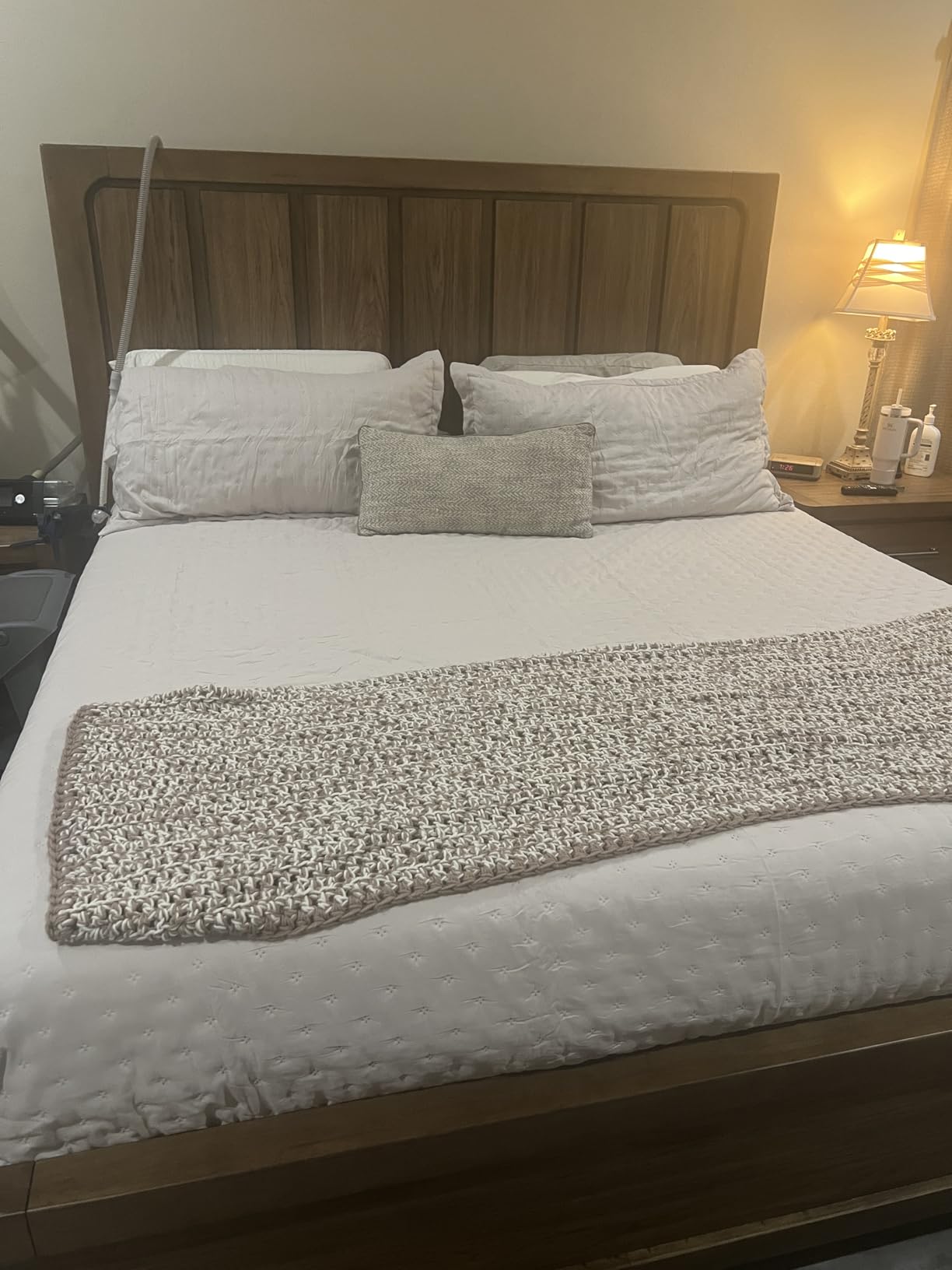
When this one fits your base
Choose it when warranty coverage is the deciding factor for you, which is a reasonable position given that a mattress on an articulating base is under more mechanical stress than one on a flat frame. The forever warranty means the discussion about who pays for a crease along the knee break has an answer written down in advance.
It is also the pick for stomach sleepers and combination sleepers who want support, because the firmer surface resists letting the hips sink. Owners report no odour on delivery and fast expansion, so it is usable almost immediately rather than requiring a week of settling.
When to skip it
Skip it if you are a side sleeper without a firm intention to add a topper. The side-sleeping fit is the most common negative theme in the reviews, and a topper changes both the feel and the profile height, which on an adjustable base is a complication rather than a detail.
Skip it if sitting on the edge of the bed is routine, since the edges sink noticeably under that kind of pressure. And if you value a simple return, read the in-home trial terms before committing, because a long trial with a complicated process can be harder to use than a shorter one.
10. Sweetnight CoolNest 14-Inch King Mattress – Best for 5-Zone Support
Sweetnight CoolNest 14 Inch King Size Mattress,Cooling Memory Foam Mattress
14-inch profile
Medium feel
5-zone ergo support
Cooling PCM foam
Pros
- 5-zone support design cushions pressure head to toe and is ACA recognised
- PCM high-resilience foam with gel memory foam for layered cooling
- Strong motion isolation across multiple foam layers
- 3D-woven cover with ventilation pores improves breathability by about 35 percent
- Expands quickly with minimal off-gassing
Cons
- Top surface is not quilted and feels flat
- Polyester cover feels synthetic
- Mattress is not flippable so head-end orientation must be set correctly
- Wide slat gaps without a bunkie board can cause foam to sag
The Sweetnight CoolNest is the most considered design in this roundup, and the thing that makes it interesting for adjustable bases is the five-zone support layout. Zoned support matters more here than it would on a flat bed, because articulating changes where your weight sits. When the head section is raised, the load shifts into the mid and lower zones, and a zoned build distributes it rather than letting one region collapse.
It is a 14-inch, six-layer foam construction in a king size, with a medium feel and a 3D-woven cover with ventilation pores. Owners report the cover improves breathability noticeably and that the combination of phase change material foam with gel-infused memory foam produces cool sleep without the synthetic coolness of a coated fabric.
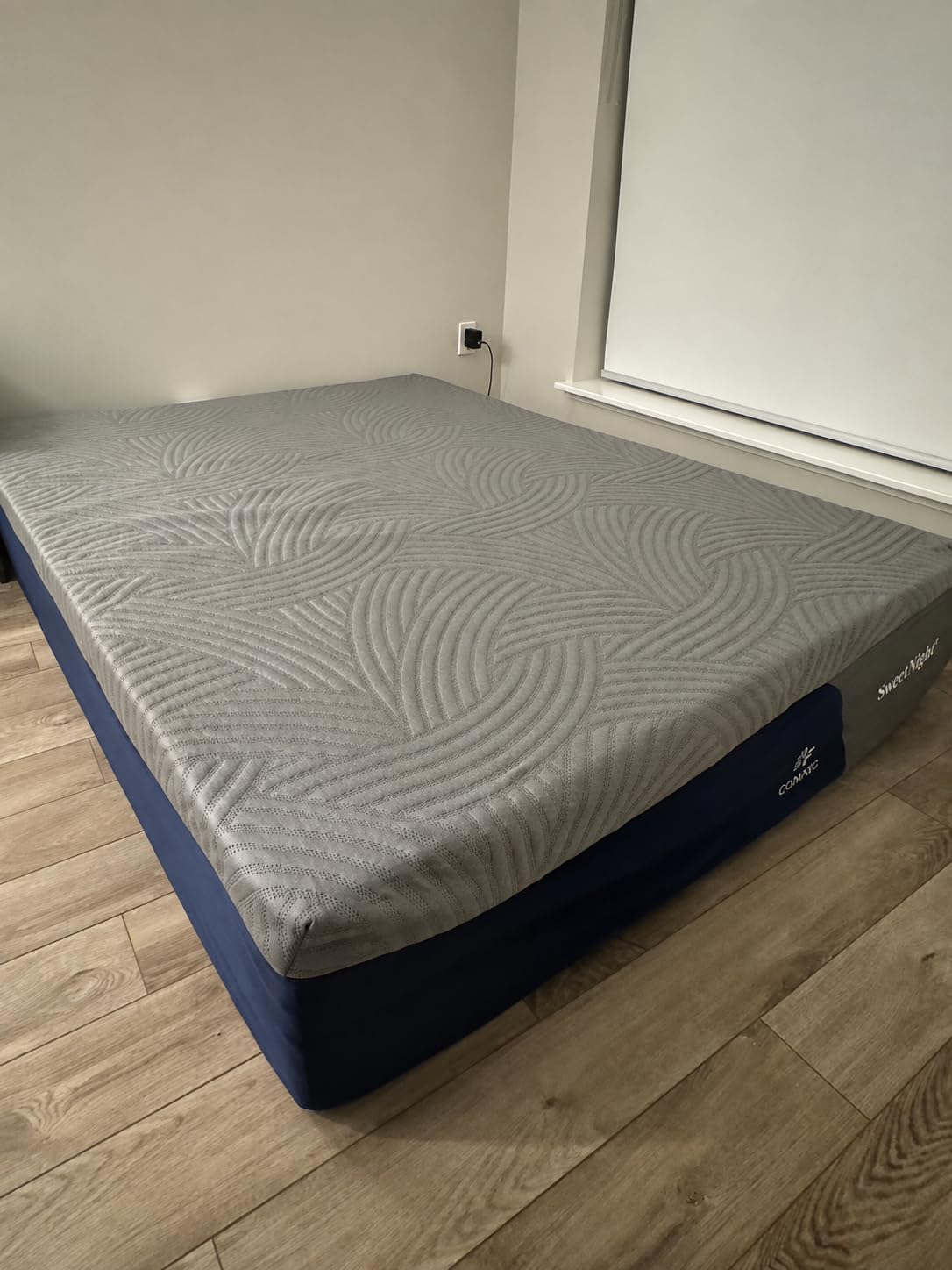
There is one setup detail that matters more than any of the spec numbers. The mattress is not flippable, because the head-end support zones are positioned by design, so it has to be installed with the correct end at the head of the bed. On an adjustable base with head and foot articulation, getting this wrong is not a minor issue and it is not reversible without moving the whole thing.
The other practical note is slat spacing. Owners warn that wide slat gaps without a bunkie board can cause the foam to sag between slats. Check the slat span on your base deck before unboxing, because this is far easier to solve with a board than after the foam has already taken a set.
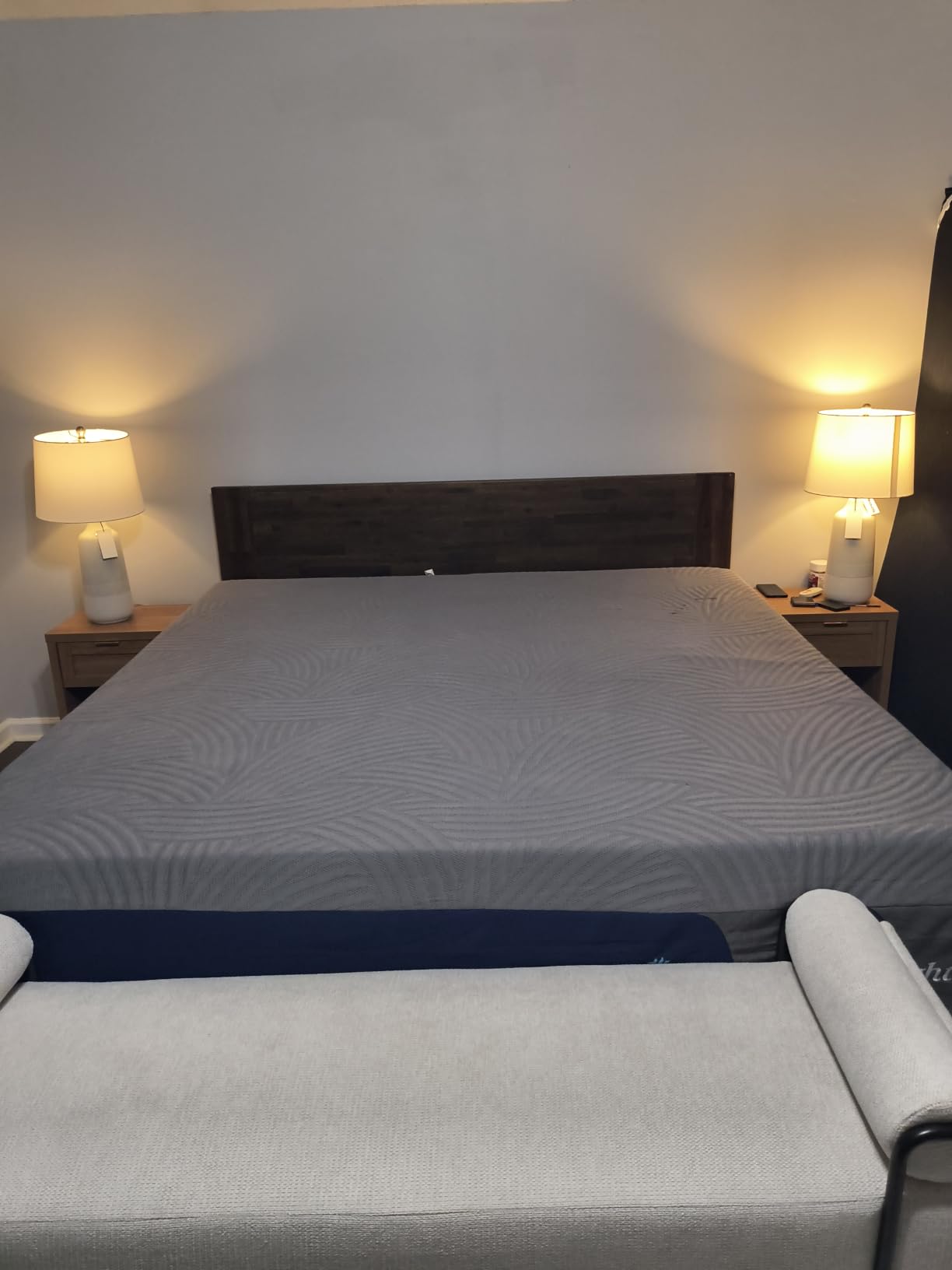
When this one fits your base
Choose it when you have a king adjustable base and both of you want the head and foot sections raised, since a full king gives each of you a full-width sleeping surface while the base moves. At 14 inches it needs generous headboard clearance, so measure before ordering rather than after delivery.
It is also a good pick for anyone who sleeps warm and wants a topper-friendly surface, and for a bed where one partner is a restless sleeper, since the multiple foam layers absorb motion well. Owners report minimal off-gassing and quick expansion, and the 10-year protection is a reasonable middle ground against the coverage on offer elsewhere in this list.
When to skip it
Skip it if you want a quilted, cushioned top surface. This one is flat by design, and buyers who expected a pillow-top finish describe the surface as flat in comparison. If surface feel matters more to you than zone support, choose a different pick.
Skip it if your base deck has wide slat gaps and you are not willing to add a bunkie board, if you need a flippable mattress, or if 14 inches is too tall for the headboard clearance in your room.
Buying Guide: How to Choose a Mattress for an Adjustable Bed
Mattresses to avoid on an adjustable base
Some constructions simply should not go on an articulating frame, and avoiding them is easier than troubleshooting the damage later.
Traditional innerspring with a rigid border wire — the perimeter and interconnected coils buckle at the fold line and crease permanently.
Pillow-top hybrids above roughly 14 inches — the extra topper layer has no structural support and breaks down first under repeated folding.
Non-flexible airbeds — chambers that cannot bend bridge the hinge and tear or lose their seal over time.
Box spring stacks on top of the base — a conventional foundation defeats the articulation mechanism entirely.
Mattresses with a hard edge foam encasement — perimeter foam without flexible reinforcement cracks at the corners first.
There is also a warranty reason beyond the physical one. Manufacturers list approved foundation types, and using a mattress on an unlisted foundation is the most common way people lose coverage on an otherwise good mattress.
How thick should a mattress be for an adjustable bed?
Most adjustable bases articulate best with a mattress between 9 and 13 inches. Under that range you lose the contour depth that makes foam mattresses comfortable, and above roughly 14 inches the mattress can contact a headboard or guard rail in the raised position.
9 to 11 inches — Best for low-profile bases, tight rooms and guest beds. Clears headboards easily, contours less deeply.
11 to 13 inches — The sweet spot for most articulating bases. Deep enough to contour, short enough to clear.
13 to 15 inches — Works well if your base and frame have generous clearance. Verify headboard space before ordering.
Measure the distance from the flat deck to the underside of your headboard rather than estimating from the room. If the mattress is 12 inches and your clearance is 14 inches, you have 2 inches of travel before contact, which is tight for a base that raises the head section fully.
Split king vs king: the center gap problem
A split king is two twin mattresses on a base with two independent motors, and it is the best configuration for couples on an adjustable base because each partner controls their own position. The trade-off is the center gap. Owners report that when one side is raised and the other is flat, a noticeable dip develops in the middle, and you can feel the split when you lie across it.
The gap is manageable if you sleep on your own side and stay in your half. It is much less manageable if you share a duvet or move across the center regularly. To reduce the problem, look for a mattress with a reinforced edge support system on the inner side, and keep both sides on similar settings when you can.
Can you still cuddle on a split king? Physically, yes, but owners are honest that the two halves do not move as one surface. A regular king on a single-motor base keeps the mattress unified, at the cost of both partners being locked into the same position.
Bundle or separate purchase?
Buying the base and the mattress together as a bundle simplifies delivery and often reduces the cost, and it removes any argument about warranty responsibility between two manufacturers. The downside is that a bundle is harder to return. If one component is fine and the other is not, you may be dealing with the bundle policy rather than two separate return processes.
Buying separately gives you more choice on both sides, which matters most when you already own an adjustable base. In that case, confirm the mattress is approved for your specific base model before you order, and keep the written confirmation.
Whichever route you take, white glove delivery and in-home setup are worth paying for on a thick foam mattress. Owners consistently note that a 14-inch expanded mattress is a two-person job, and paying to have it moved and set up removes the most common complaint of the whole buying process.
Troubleshooting: sliding, hammocking and crease lines
Owners of adjustable bases report several recurring mechanical complaints, and most have straightforward fixes.
Mattress sliding when the head is elevated — Add a non-slip mattress pad or a fitted sheet with a gripper underside. Foam on a smooth deck moves more than coils do.
Hammocking in a fixed raised position — Foam mattresses held at an angle for weeks develop a permanent curve. Return to flat nightly and rotate the position occasionally.
A gap at the knee break — Usually a height mismatch between the mattress profile and the base articulation range. A thicker mattress can bridge the gap better than a thin one.
Crease lines along the fold — Unavoidable with cheaper foam, more likely with plush models than medium or firm ones. Check the warranty before assuming it is a defect.
Motor noise — Audible on lighter frames, especially in a quiet room. Not a mattress problem, but worth considering before you blame the mattress.
On lifespan, owners report that the mattress is usually the first component to need replacing rather than the base itself. Budget for a replacement cycle and choose warranty coverage accordingly, which is the argument for the Nectar in this list and against the very cheapest options.
Frequently Asked Questions
What type of mattress is suitable for an adjustable bed?
All-foam memory foam and latex mattresses are the safest choices because they compress and spring back cleanly at hinge points. Flexible hybrids with individually wrapped pocket coils also work well. Avoid traditional innerspring with rigid border wire, pillow tops above 14 inches, and non-flexible airbeds.
Do adjustable beds need a special mattress?
They do not need a different category of mattress, but they do need one rated for articulating use. Look for the manufacturer to list adjustable or articulating bases as an approved foundation in the warranty, and confirm the profile height clears your headboard when raised.
Can any mattress go on an adjustable bed?
Physically most will bend, but many will crease, crack or lose their warranty. The warranty is the real test, since manufacturers list approved foundation types. If adjustable bases are not listed, coverage may be void even though the mattress still functions.
What mattress to stay away from on an adjustable base?
Avoid traditional innerspring with a rigid border wire, pillow-top hybrids thicker than about 14 inches, airbeds with non-flexible chambers, and any mattress stacked on a box spring above the base. These crease or break at the articulation points first.
How thick should a mattress be for an adjustable bed?
Between 9 and 13 inches is the range that articulates best. Under 11 inches you lose contour depth, and above 14 inches the mattress can contact a headboard or guard rail when the head section is raised. Measure deck-to-headboard clearance before ordering.
Does an adjustable bed frame replace a box spring?
Yes. The articulating base deck is the foundation, and a box spring or conventional foundation placed on top defeats the mechanism. The mattress sits directly on the base, with a non-slip pad if it tends to shift in the raised position.
What are the downsides of a split king adjustable bed?
The main drawbacks are the center gap and the loss of independent bed-wide movement. When one side is raised and the other flat, owners report a noticeable dip in the middle, and you can feel the split when lying across it. Cuddling is also harder than on a unified surface.
Are adjustable beds good for side sleepers?
They can be, particularly with the head section raised, which helps with snoring and reflux. Choose a medium or medium-plush mattress rather than a firm one, since a firm surface leaves the shoulder and hip unsupported. Check that the headboard clears the raised position.
Final Verdict: The Best Mattresses for Adjustable Beds in 2026
After working through all ten, the best mattresses for adjustable beds still come down to one rule: buy foam, or a hybrid with individually wrapped pocket coils, between 9 and 13 inches thick, and confirm in writing that your exact model is approved for an articulating base.
The Vibe 12-inch gel memory foam is my top pick overall, with the largest review base in the roundup and a 12-inch profile that sits comfortably in the flexible range. The Novilla Bliss is the value pick for a first adjustable setup, the FDW 10-inch is the budget and low-clearance answer, the REVO hybrid is the one listing that names adjustable base compatibility outright, and the Nectar carries the strongest warranty coverage of the ten.
Before you order, run the five-step verification. Read the warranty document, check the features field, email the manufacturer, measure your headboard clearance and confirm your size. Ten minutes of checking protects a purchase you will live with for a decade.