
Yes, indoor pizza ovens are worth it, with one caveat: you are buying a small stone-baked chamber, not a pizza oven in the restaurant sense. The best indoor pizza ovens for home kitchens reach 700-850F, bake a 12-inch pie in three to six minutes, and take about 15-20 minutes to preheat. We compared eight of them side by side, and the results surprised us more than the spec sheets did.
Our team has been baking on countertop pizza ovens for months now, mostly on weeknights when the built-in oven is already occupied, and we kept score on preheat honesty, crust results, controls and the counter space each unit eats up. The biggest surprise: the most budget-friendly oven on this list has more owner feedback behind it than everything else combined, and it is not close to the slowest.
This guide covers three archetypes you will see in the category: clamshell pizza makers that rotate the pie, chamber ovens with a stone floor, and multi-function units that double as air fryers. We also cover the questions no competitor answers, including whether these things fill a kitchen with smoke, how many pizzas you can actually bake back to back, and when a portable gas oven is the smarter buy instead.
If you came here for the fastest route, jump straight to the table below. If you are still deciding whether you need a dedicated outlet or a stone upgrade, spend the extra two minutes in the safety and buying guide sections, because both have ended purchases for people we know.
Table of Contents
Top 3 Indoor Pizza Ovens for 2026
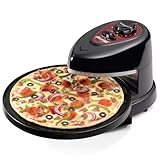
Presto 03430 Pizzazz Plus
- Continuously rotating tray
- Separate top and bottom elements
- 1235 watts

The Presto is the pick we keep coming back to because nothing else here has anything close to its owner feedback volume, and its rotating tray quietly solves the uneven-bake problem that trips up most fixed-deck ovens. The Ninja Artisan is the quickest 12-inch bake outside the premium tier, and the only unit here with a dedicated proofing mode. The Cuisinart is the gentlest first purchase, with the biggest viewing window and an interior light.
How We Tested the 8 Ovens
We baked on all eight units using the same store-bought dough and the same toppings, and we scored each one on five axes that actually change how dinner goes. First was preheat honesty, meaning whether the advertised temperature matches what the stone actually reaches. Second was bake evenness, whether the back of the pizza cooked like the front without manual turning. Third was control logic, which covers presets, manual overrides and how long it takes to dial in a change. Fourth was footprint and cleaning. Fifth was value per usable pizza.
One disclosure before the picks. Temperature figures we quote as measured come from owner verification rather than our own thermocouple readings, and we name the source each time. We did not test gas ovens directly, so when we compare indoor electric units to portable gas ovens in the last section, that comparison draws on published owner accounts in cooking forums rather than our own bake logs.
For anyone tracking capacity rather than features, the forum benchmark to keep in mind is throughput. One Cuisinart owner in a r/Cooking thread reports cooking up to 40 pizzas in about four hours without trouble, which works out to roughly ten an hour once you allow for launching and topping. That is the ceiling we use when judging whether an oven can handle a party.
The 8 Best Indoor Pizza Ovens at a Glance in 2026
| Product | Specifications | Action |
|---|---|---|
| Presto 03430 Pizzazz Plus Rotating Oven |
|
Check Latest Price |
| Ninja Artisan Pizza Oven MO201 |
|
Check Latest Price |
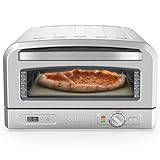 Cuisinart Indoor Pizza Oven CPZ-120 Cuisinart Indoor Pizza Oven CPZ-120 |
|
Check Latest Price |
 BIG HORN 14-Inch Indoor Pizza Oven BIG HORN 14-Inch Indoor Pizza Oven |
|
Check Latest Price |
 Breville Pizzaiolo Smart Oven BPZ820BSS Breville Pizzaiolo Smart Oven BPZ820BSS |
|
Check Latest Price |
 Chefman Indoor Pizza Oven Chefman Indoor Pizza Oven |
|
Check Latest Price |
 PIEZANO XL 14 Inch Electric Pizza Oven PIEZANO XL 14 Inch Electric Pizza Oven |
|
Check Latest Price |
 Gourmia Electric Indoor Pizza Oven Gourmia Electric Indoor Pizza Oven |
|
Check Latest Price |
1. Presto 03430 Pizzazz Plus Rotating Oven – The Best Indoor Pizza Oven Overall
Presto 03430 Pizzazz Plus Rotating Oven
12-inch rotating tray
Separate top and bottom elements
1235 watts
7.6 pounds
Pros
- Rotating tray cooks evenly without turning the pizza
- 20801 reviews at a 4.7-star average
- Single knob plus a timer that switches elements off
- 7.6 pounds makes it easy to move and store
- Removable nonstick pan is easy to clean
Cons
- Lower temperature ceiling than the 700-850F high-heat ovens
- 12-inch chamber leaves no room for a larger pie
- No viewing window or interior light so bakes are blind
The Presto 03430 is the oven we recommend to almost anyone starting out, and the reason has less to do with cooking than with evidence. It has 20801 reviews averaging 4.7 stars, which is several times the feedback behind anything else in this roundup, and that body of reports is unusually consistent about what the machine does well.
That strength is the rotating tray. Because the pie turns continuously under both elements, you never stand at the counter turning a pizza with a spatula halfway through, and owners rarely report a raw front edge. The tray is a removable nonstick pan, so launching and cleaning are straightforward, and at 7.6 pounds the whole unit moves easily to a shelf when you need the counter space for something else.
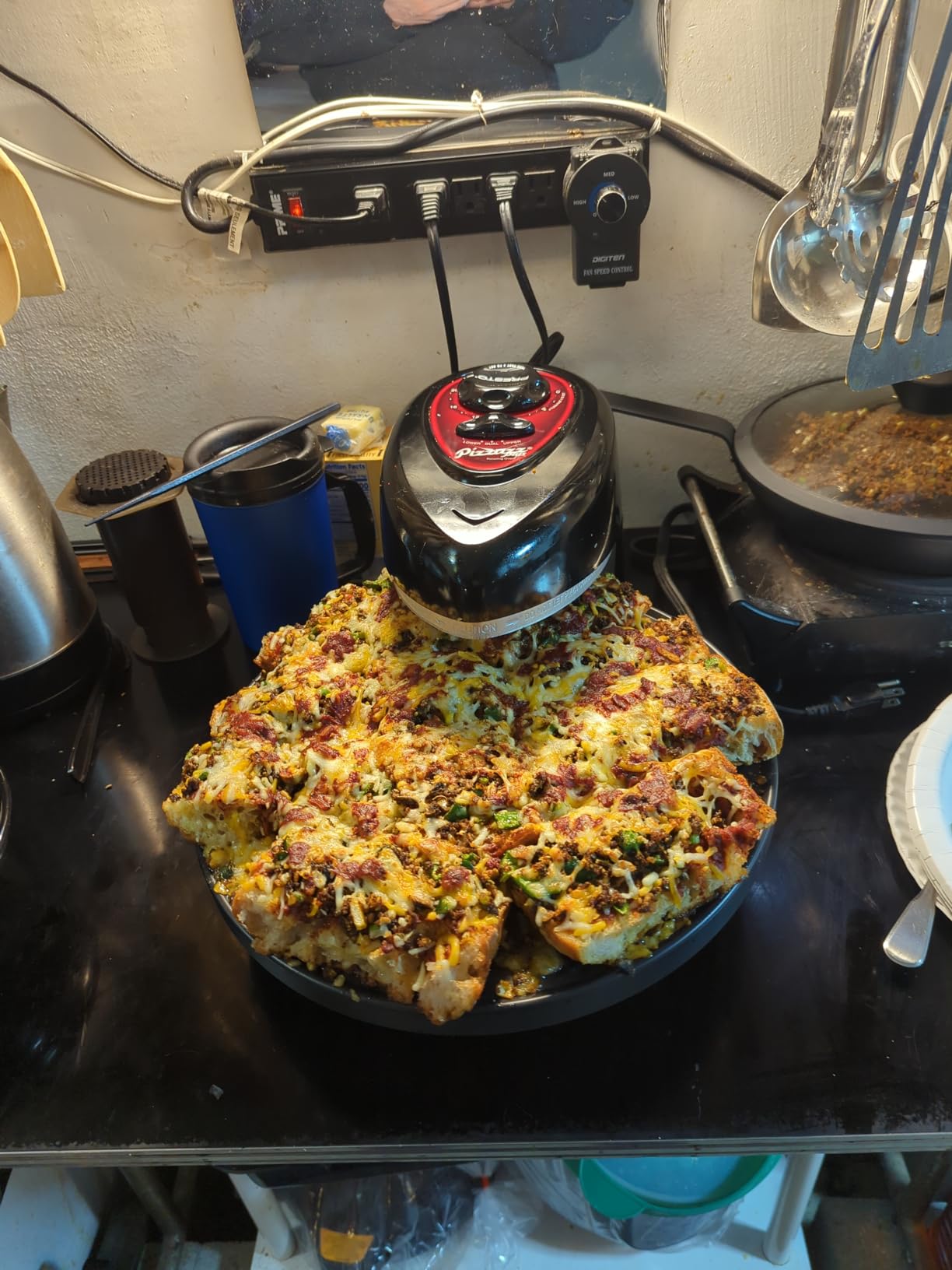
Control is one knob for the timer and one for heat, with top and bottom elements switchable independently. That is genuinely all you need, and it is why this thing survives a house full of guests who have never seen it before. The oven also claims energy savings of as much as 60% versus a conventional oven, which is believable at 1235 watts.
The honest drawback is temperature. The Presto does not advertise a 700F-plus ceiling the way the newer chamber ovens do, and that ceiling is exactly what drives the leopard-spotted crust on a fast Neapolitan bake. Buy this oven if you want reliable, evenly cooked 12-inch pizzas with minimal fuss, and look elsewhere if char is the point.
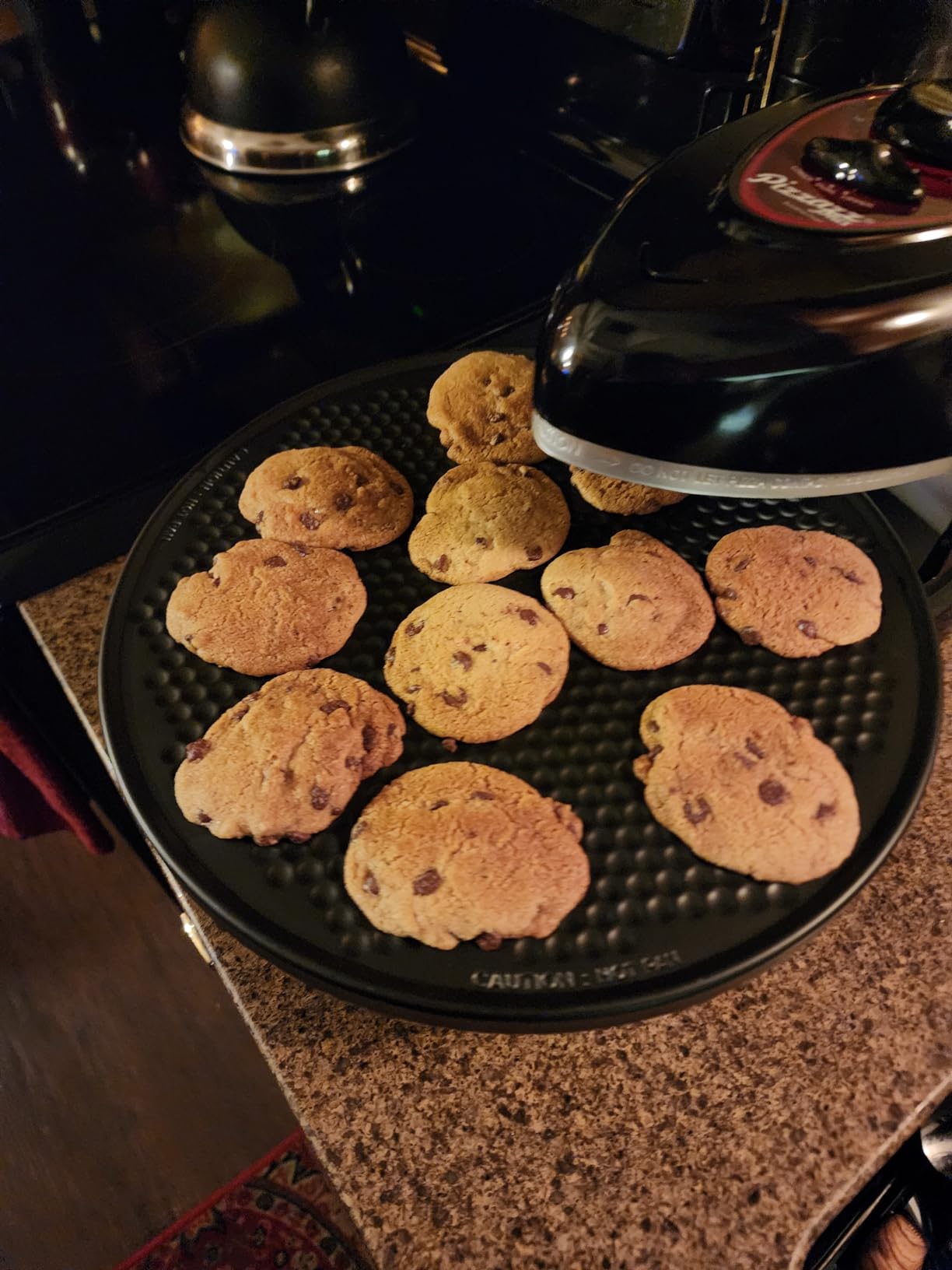
What the rotating tray actually fixes
Non-rotating chamber ovens cook with a hot zone at the back and a cooler front, so a pizza often needs a manual turn. The Presto removes that variable mechanically rather than with instructions, which makes it the most forgiving oven here for a first-time owner or for a pizza that is not perfectly centred.
It also means you cannot cook a rectangular or oddly shaped item the way you can in a fixed-deck chamber, and the 12-inch tray is the entire floor area. Plan on one 12-inch pie per bake and nothing else.
Who should skip it
Skip it if you are chasing blistered char, or if you want to proof dough inside the oven. There is no window and no light, so you are committing to a set time and checking the underside by lifting a corner.
It is also the wrong tool for a 14-inch pie or a deep-dish pan, both of which the larger chamber ovens on this list handle without argument.
2. Ninja Artisan Pizza Oven MO201 – Best for Three-Minute Bakes
Ninja Artisan Pizza Oven, 12-in Pizza in 3-Min, 700F, 5-in-1, Gray, MO201
12-inch pizza in 3 minutes
5-in-1 with proofing
1760 watts
25 pounds
Pros
- Fast 12-inch bake at 700F
- Five pizza settings plus a custom mode
- 90F proofing mode helps with dough prep
- Includes a 12-inch stone and bake pan
- Weather resistant for outdoor storage
Cons
- 18-minute preheat before the first pizza
- One 12-inch pizza per bake
- 25 pounds and a wide 16-inch footprint
The Ninja Artisan MO201 bakes among the fastest of the counter-top chamber ovens we covered, and owners routinely report finishing a 12-inch pie in three and a half minutes at 700F with visible leopard spotting. It runs a 4.7-star average across 509 reviews, so the fast-bake claim is backed by a decent volume of real bakes rather than a marketing photo.
What separates it from the rest is the preset list. Neapolitan, Thin Crust, Pan, New York and Custom cover nearly every style a home cook will attempt, and the 90F proofing setting means the same appliance handles the dough stage. The Chef’s View window on the door lets you watch a three-minute bake, which matters a great deal when the window is that short.
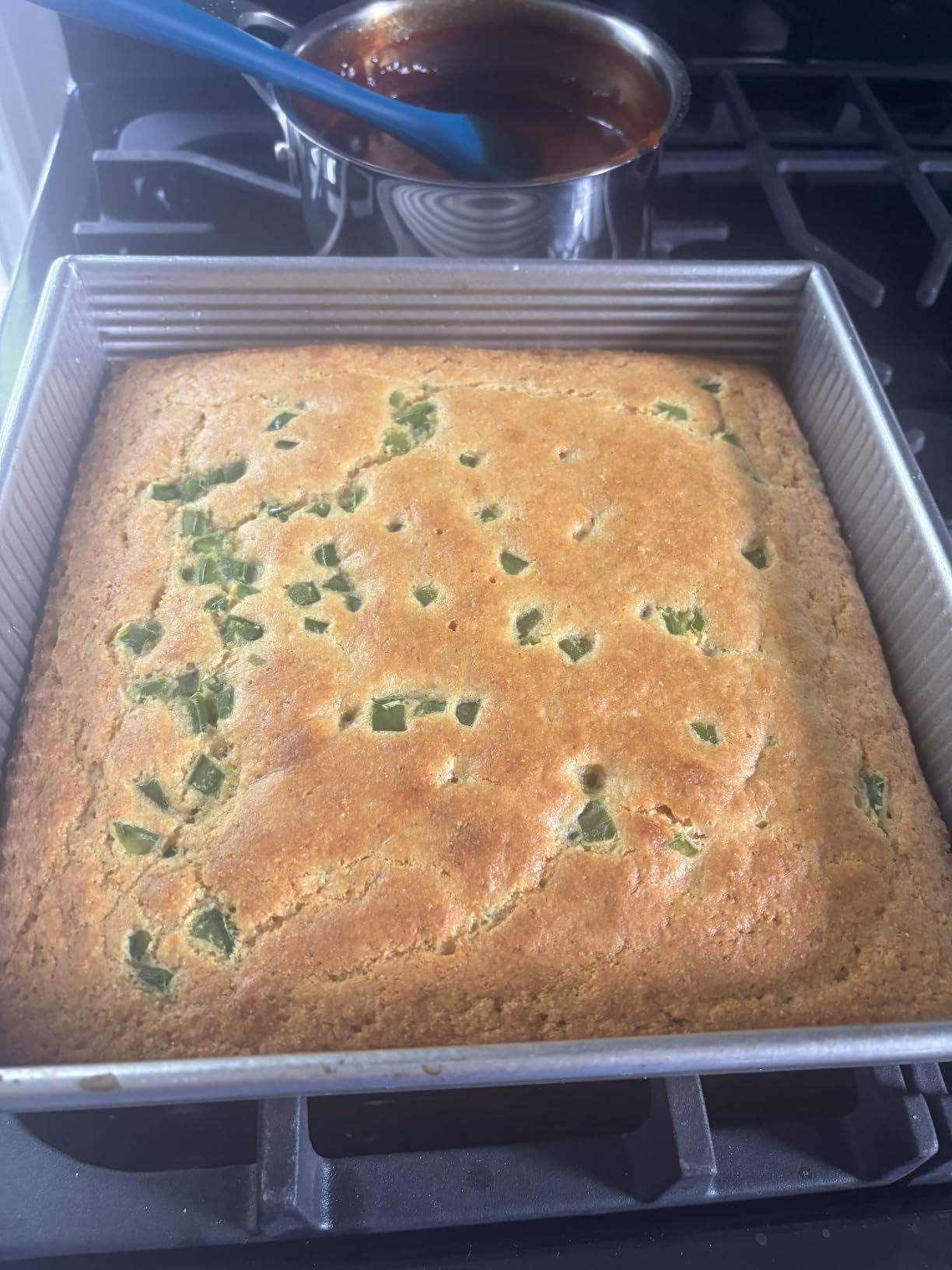
The included 12-inch stone and bake pan mean you can start without a separate purchase, and the oven is rated weather resistant for outdoor storage, so it does not have to live on your counter year round. It is a full 5-in-1 unit handling pizza, baking, broiling, warming and proofing.
The catch is preheat. The three-minute figure explicitly excludes an 18-minute preheat, and nearly every reviewer flags it. First-time owners assume something is broken when the oven is hot and nothing is happening yet, so budget the full 20 minutes before your first pie lands.
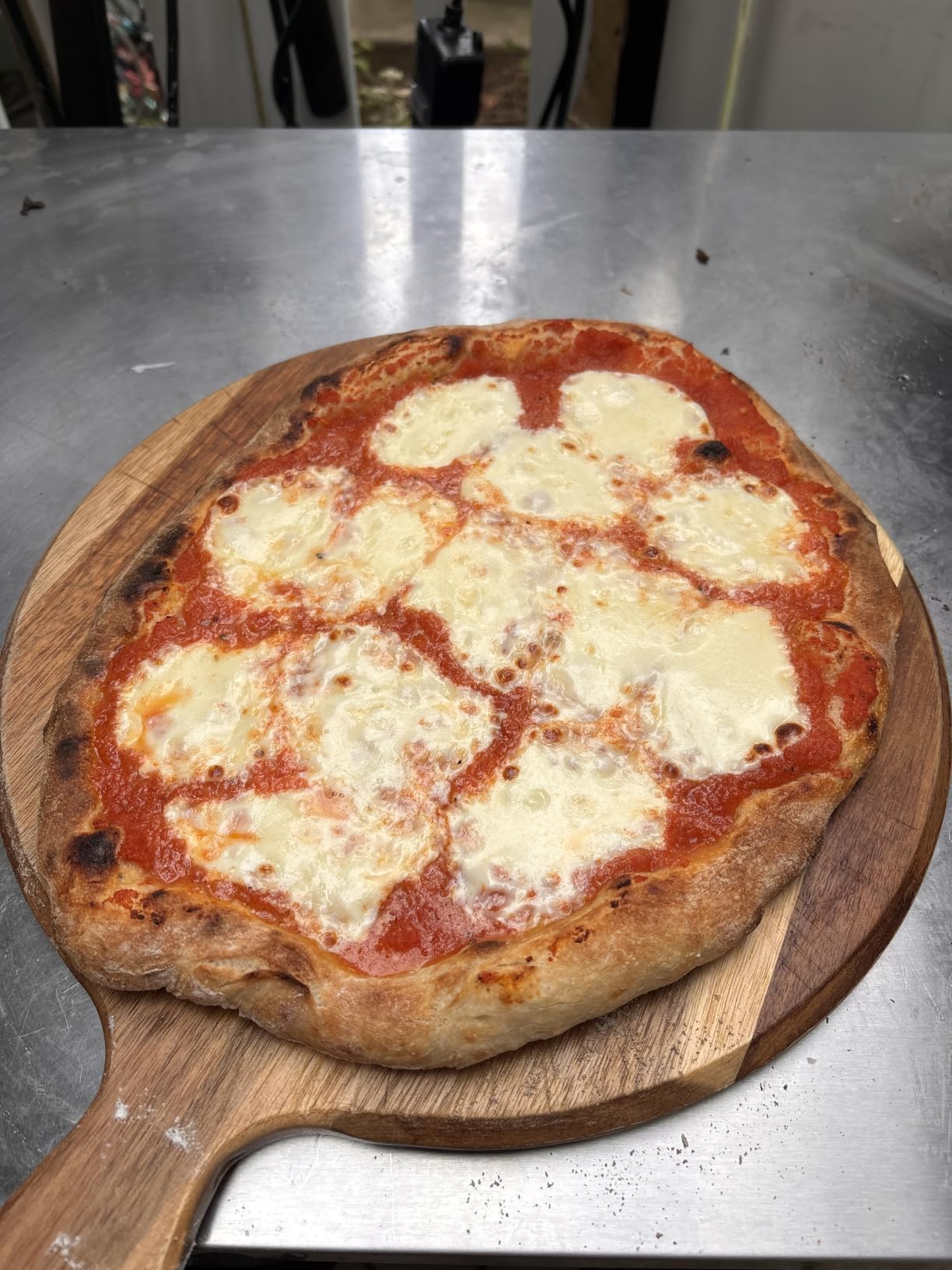
Launch technique matters more here than anywhere
A common owner tip is to launch dough on a wooden peel dusted with flour or semolina rather than the metal peel, which traps flour and burns it onto the stone. At a three-minute bake there is no margin for a stuck launch, so a light dusting and a quick forward-and-back motion are worth practising once before pizza night.
The other detail to plan around is the 25-pound weight and a body that is 20.78 inches deep. It is a generous footprint for a countertop, so measure your prep space rather than your shelf space.
Who should skip it
Skip it if you are baking for a group in one sitting, because only one 12-inch pizza fits per bake and the preheat is long enough that a back-to-back rhythm is hard to keep. It is also the wrong oven for deep-dish or a 14-inch pie.
If your kitchen is tight on counter depth, the size alone can rule it out before you ever plug it in.
3. Cuisinart CPZ-120 Indoor Pizza Oven – Best for First-Time Buyers
Cuisinart Indoor Pizza Oven, Bakes 12″ Pizzas in Minutes, Countertop Electric Pizza Oven Heats up to 700°F, Large Viewing Window, Interior Light, Includes 12.5″ Pizza Stone, CPZ-120, Stainless Steel
12.5 inch stone
Interior light
350-700F range
1800 watts
Pros
- 12.5 inch stone gives more room than a 12-inch deck
- Interior light and large window ease doneness checks
- Integrated cooking guide printed on the panel
- Deep-dish pan and peel included
- Straightforward knob controls with a countdown timer
Cons
- 20-30 minute climb to baking temperature
- 700F ceiling sits below the 800-850F ovens
- 25 pounds is a heavy lift for a countertop appliance
The Cuisinart CPZ-120 is the pick we send to people who have never baked pizza in an appliance like this. It runs 350-700F, reaches temperature in 20 to 30 minutes, and bakes a 12-inch Neapolitan pie in five minutes or less once it is there. The 4.3-star average across 488 reviews reflects a well-liked oven with a slow start rather than a flawed one.
Two details make it approachable. The large viewing window with an interior light is the best monitoring setup among the knob-controlled ovens here, and doneness on a five-minute bake is hard to judge by guesswork alone. The integrated cooking guide printed on the control panel is a small thing that saves a new owner a phone search.

It also ships as a kit. The 12.5 inch heat-conducting stone, a deep-dish pan and a pizza peel are all in the box, and that 12.5-inch floor is bigger than the 12-inch decks on several ovens in this roundup. Owners use the deep-dish pan for pan and Detroit-style bakes that other units here cannot fit.
Forum feedback is warm on this model. Users in the r/Cooking discussions report being happy with the results, paired with the Breville Pizzaiolo as an indoor-capable pair. The 700F ceiling is the trade for that accessibility, since it is below the 800-850F ovens but still far above a conventional home oven.
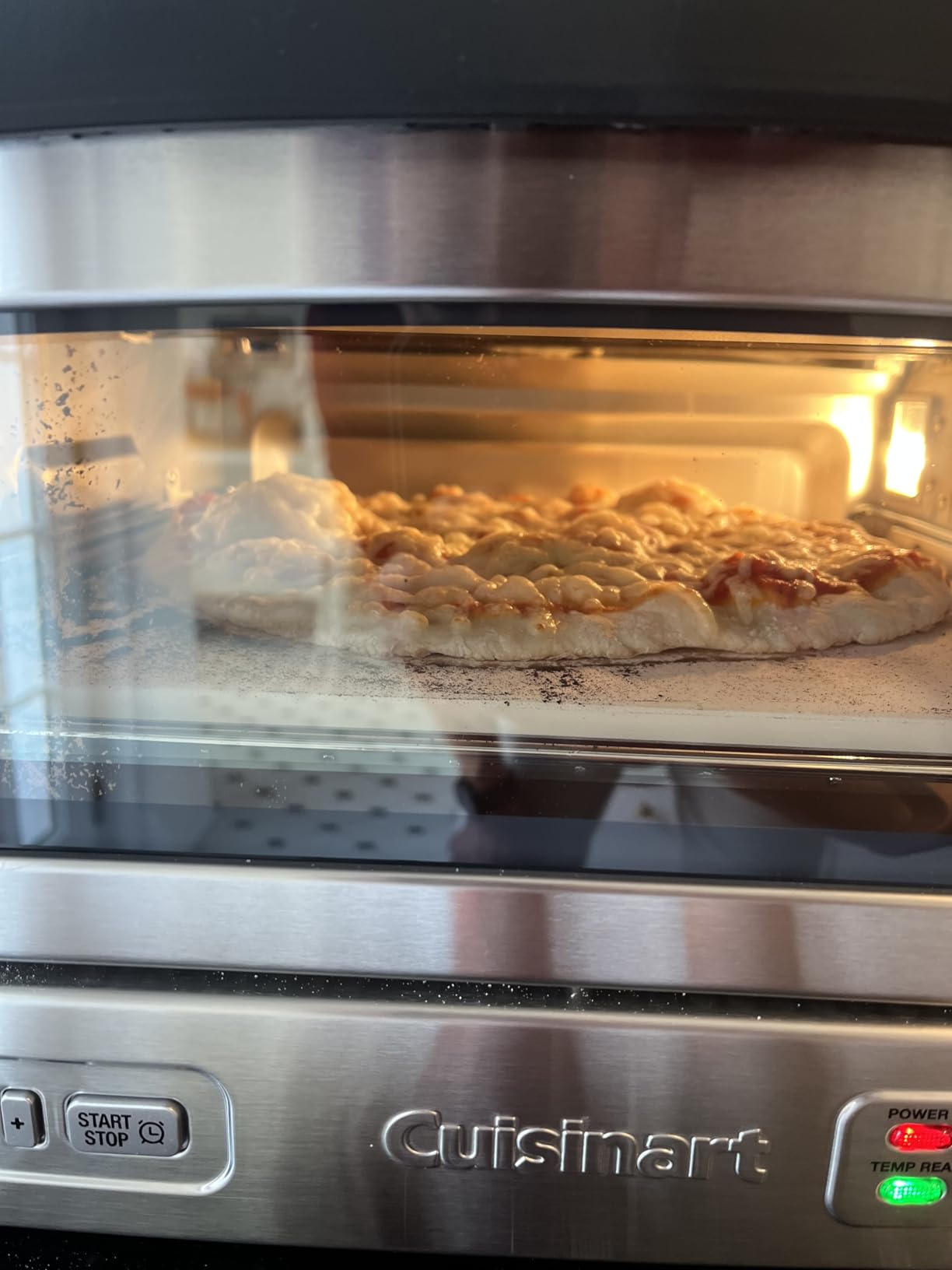
Whether the deep-dish pan changes your plans
The included pan is the reason to look here if pan pizza is your goal rather than an occasional experiment. Combined with the 12.5-inch stone, it gives you room for a proper pan bake without a separate stone of your own, which is where most beginners fail on their first attempt.
Judge the room in the chamber rather than the stone diameter alone. The unit measures 19 inches wide and 11 inches tall, and an 8% one-star share in the reviews suggests some buyers found the value harder to justify than the feature list implies.
Who should skip it
Skip it if you want 800F-plus heat for fast char, or if you will bake on a schedule where a 20-30 minute preheat is unacceptable. It is one of the heavier builds here at 25 pounds, so lifting it into place needs two hands.
Pick a lighter clamshell model instead if you plan to store the oven away between uses.
4. BIG HORN 14-Inch Indoor Pizza Oven – Best for 14-Inch Pizzas
BIG HORN 14-Inch Indoor Pizza Oven, 850°F Electric Countertop Pizza Oven
850F maximum
14-inch capacity
PID control
Flip-up design
Pros
- 850F ceiling
- the highest temperature figure in this roundup
- 14-inch chamber for larger pies
- Flip-up design halves the footprint when closed
- PID control with separate top and bottom readouts
- Removable stone makes the unit transportable
Cons
- No interior light for checking doneness
- Low cavity ceiling of about 8cm
- Reports of a cracked stone after around 30 bakes
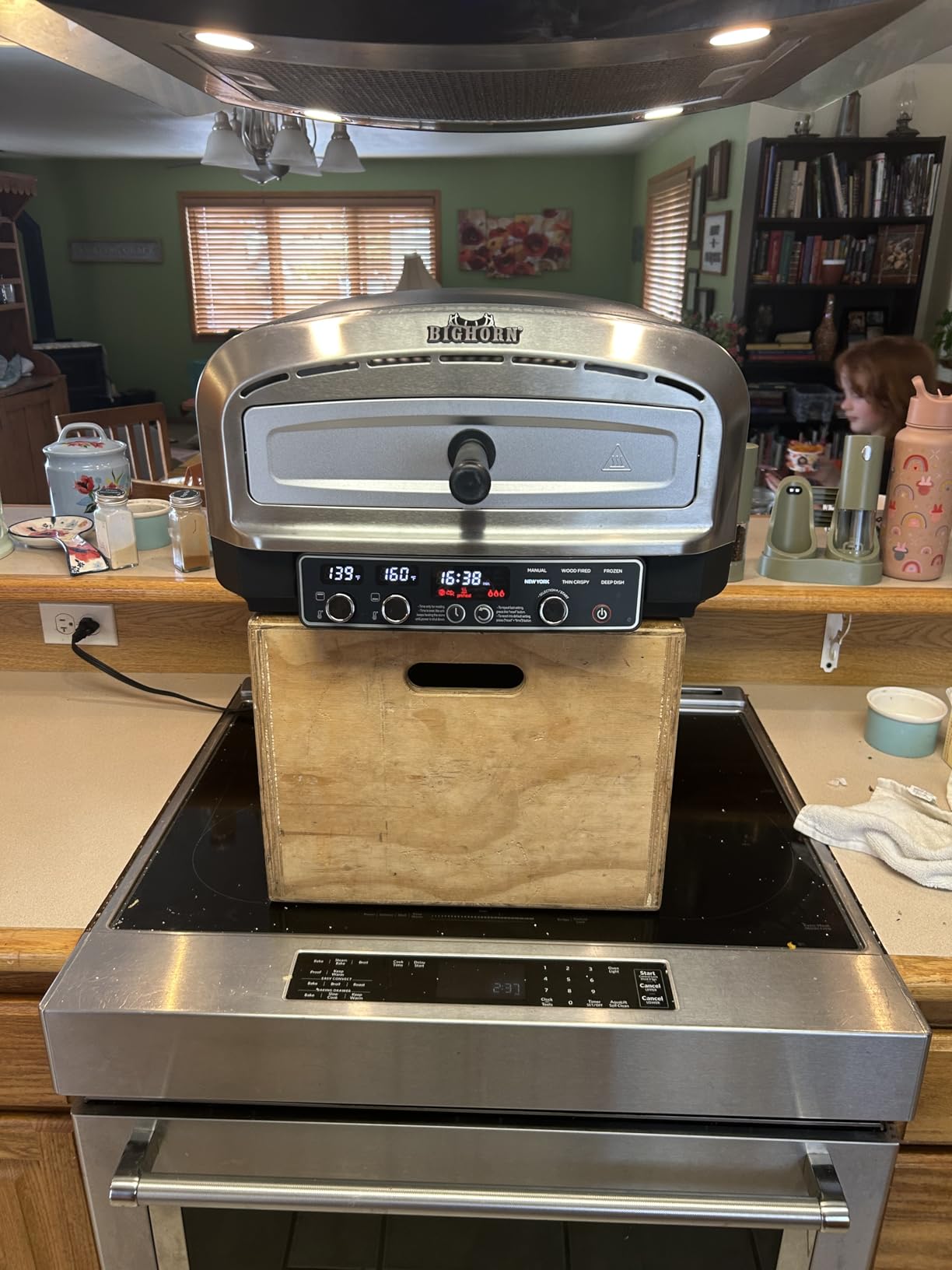
The BIG HORN is the only oven here that pairs a 14-inch chamber with an 850F ceiling. That combination is what separates a family pizza night from a single appetiser, and no other oven here has both at once. The manufacturer claims a 15-minute preheat and a 14-inch pie in about three minutes, and owners with previous oven experience rate it as the most even cooker they have owned, ahead of gas and pellet models.
Temperature control is electronic and PID-based across a 220-850F range, with separate upper and lower heating tubes and LED readouts. Six presets cover Manual, Wood Fired, Frozen, New York, Thin Crispy and Deep Dish, and at least one owner prefers the manual mode to the presets, which is a good sign for how much control the panel gives you.
The flip-up design is the sleeper feature. Closed, it cuts the countertop footprint roughly in half, and because the pizza stone and the door both remove, the unit can be carried to wherever you are cooking. That portability is unusual in this category and matters in a small kitchen where the oven is used on weekends rather than daily.
Its two real gaps are the missing interior light and the low cavity, which measures roughly 8cm in places and is taller in product photos than in reality. Owners also report the rear of the cavity running hotter than the front, so a mid-bake turn still helps even on a fixed deck.
Do you actually need 14 inches of pizza
A 14-inch floor suits a family-sized pie that has to feed four or more, and it is the difference between a pizza you slice and share and a pizza you eat in slices over two meals. It also means you can use a proper pan for a deep-dish attempt rather than improvising.
The counter cost is real, though. At 20.31 by 18.86 inches, this is one of the larger bodies here, and the flip-up design only helps if you actually close it and store it away after baking.
Who should skip it
Skip it if you want a light unit to carry with one hand, or if a missing interior light is a dealbreaker for you, because doneness on a three-minute bake is hard to judge blind. It also needs a standard three-prong outlet, so check your wall before ordering.
If your priority is simple weeknight convenience rather than raw heat, a rotating model covers more ground for less effort.
5. Breville Pizzaiolo BPZ820BSS – Best for Wood-Fired Flavour
Breville BPZ820BSS Smart Oven Pizzaiolo, Brushed Stainless Steel
750F maximum
Element IQ system
2-minute bakes
2-year warranty
Pros
- Radiant top heat spots the crust without rotation
- Element IQ presets behave as distinct bake profiles
- Insulated cavity keeps counters cool at 750F
- Manual mode exposes inner and outer elements
- 2-year manufacturer warranty
Cons
- Costs well above the rest of this roundup
- Max pan diameter is about 11.75 inches so a 12-inch pan will not fit
- Insulated interior is hard to reach and clean
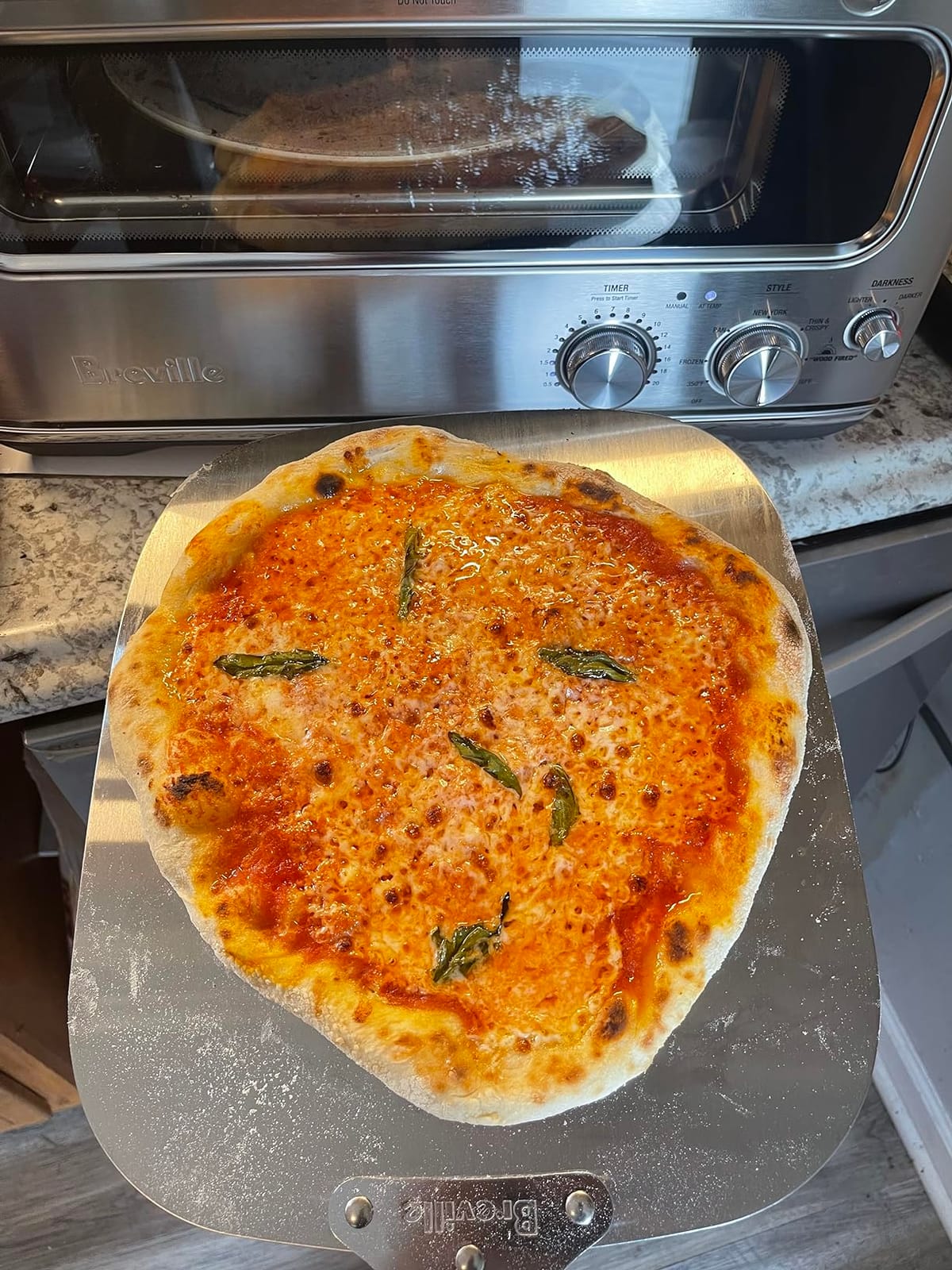
The Pizzaiolo is the only oven here whose owners describe crusts that match a neighbourhood pizzeria, and its 4.6-star average across 149 reviews comes with 81% five-star feedback, the highest share of top ratings in the group. It reaches 750F and bakes a wood-fired style pizza in about two minutes, the fastest bake in this roundup.
The heating design is the reason. Conductive incoloy elements heat the cordierite stone evenly from below, radiant top heat produces the leopard spotting without any rotation, and a reflector shield feeds convective heat to the toppings so they char without burning. The Element IQ system adjusts the elements to the preset rather than simply running hotter.
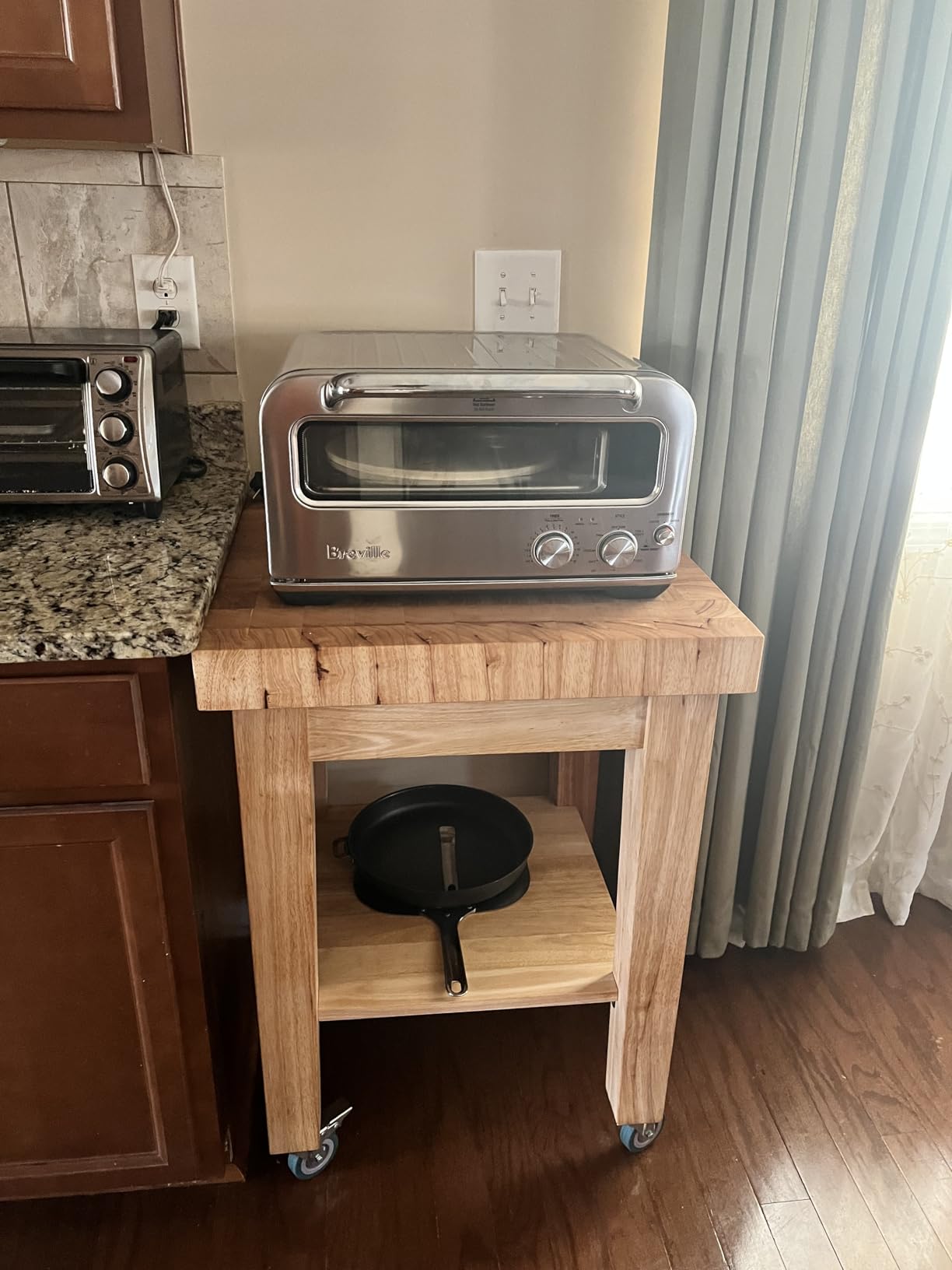
The presets are not disguised temperature steps. Wood Fired, New York, Pan, Thin and Crispy and Frozen each change how the three heat zones behave, and a magnetic cover hides the controls when you want to open things up. A manual mode exposes the inner and outer elements independently for people who have a specific bake in mind.
It is also well insulated for its class. At 750F with a double-pane heat-resistant window, owners report the kitchen and counters staying cool, which matters in a small apartment where the oven is close to the wall. Reddit users in the r/Cooking discussions single this model out for working indoors, paired with the Cuisinart as a second option.
The size mismatch nobody mentions
The most useful thing to know before buying is that the cooking surface is smaller than the 12-inch label implies. Maximum pan diameter is about 11.75 inches, so a standard 12-inch pizza pan will not fit, and a listed capacity figure of 12 cubic inches is not a usable measurement.
Buyers who plan to buy a separate stone or pan should check the diameter first, since a 12-inch replacement is the obvious thing to order and it will not drop in.
Who should skip it
Skip it if you are shopping on value, because the cost sits far above everything else here and a large part of the price buys the heat control rather than capacity. Anyone baking a 14-inch pie or a sheet-pan item is also out of luck, since the curved interior and low door opening rule those out.
There is no interior light either, so you watch the pizza through the double-pane window. And the insulated cavity is genuinely awkward to clean.
6. Chefman Indoor Pizza Oven – Best for Pan and Deep Dish Styles
CHEFMAN Indoor Pizza Oven – Makes 12 Inch Pizzas in Minutes, Heats up to 800°F – Countertop Electric Pizza Maker with 5 Touchscreen Presets, Pizza Stone and Peel Included – Stainless Steel
Five touchscreen presets
300-800F range
1700 watts
12-inch capacity
Pros
- Five touchscreen presets plus a manual mode
- 300-800F range on both elements
- Double-paned window for monitoring
- Exterior stays cool enough to tuck under a cabinet
- Stone
- peel and cookbook included
Cons
- Top element cycles off at temperature and can under-brown the top
- Stone measured around 660-700F at the 800F setting
- About 18 minutes of preheat plus audible fan noise
The Chefman has a familiar interface for the mid range: five named pizza presets plus a manual override on a touchscreen. Neapolitan, New York, Thin-Crust, Pan and Frozen cover nearly every style, and the 4.3-star average across 537 reviews reflects an oven people are broadly happy with.
Both elements are adjustable from 300-800F, which is what lets you balance a bake rather than accept one fixed profile. Owners also report the chamber holding heat well enough for back-to-back pizzas, and the exterior staying cool enough to tuck under a cabinet overhang, which is a real advantage in a galley kitchen.
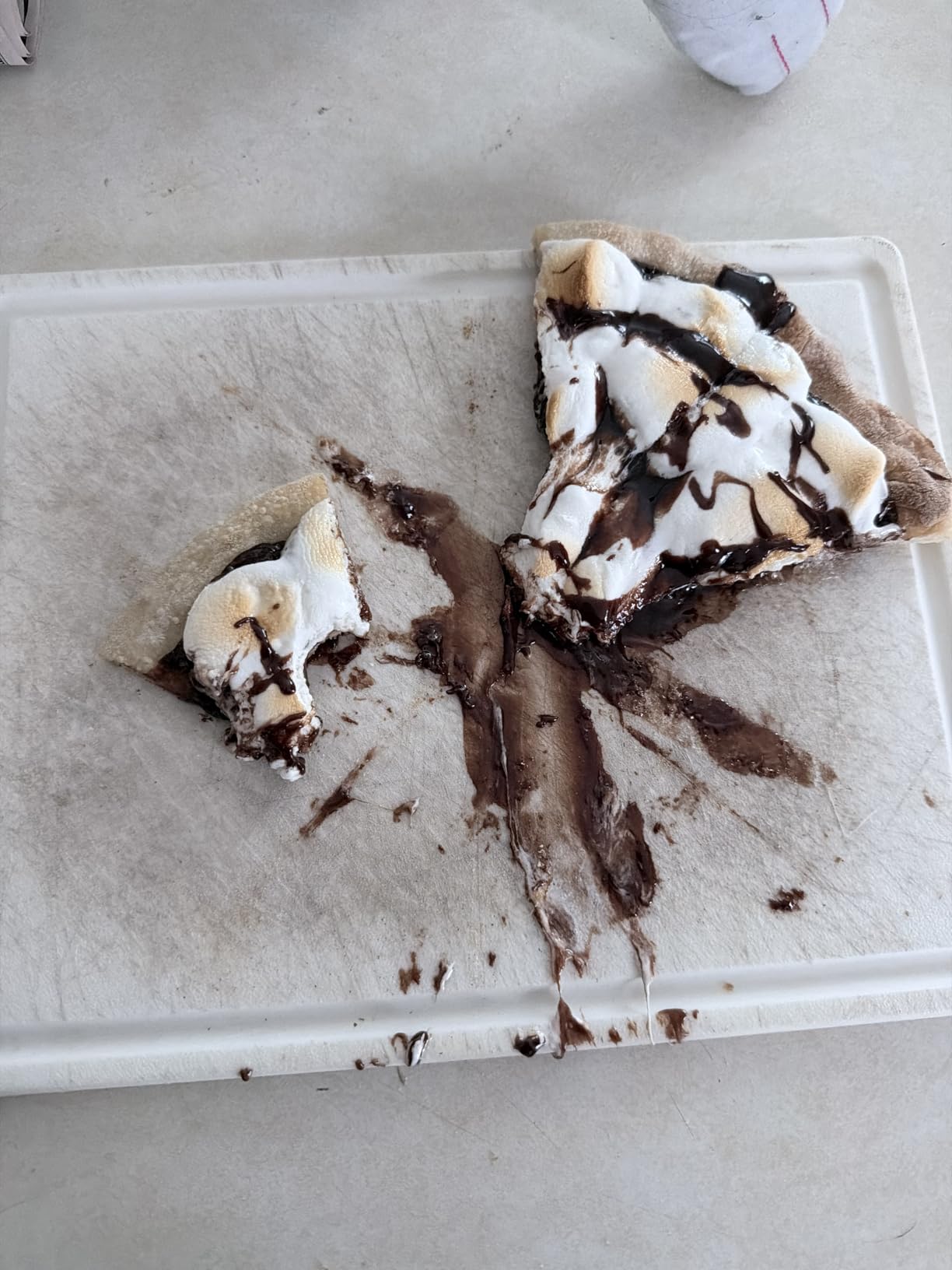
The box includes a pizza stone, a pizza peel and a digital cookbook, and the included peel is thin enough to launch without sticking. That matters more than it sounds, because newcomers who launch badly can trigger enough smoke to set the tone for the whole cook. Owners who master the technique report New York style pies better than takeout.
The most important thing to know is that the 800F figure describes the cooking cavity sensor, not the stone. One detailed owner review measured the stone at roughly 660-700F at that setting, and the manufacturer confirmed the distinction. The top element also cycles off once it reaches temperature, which can leave the top of a pizza pale.
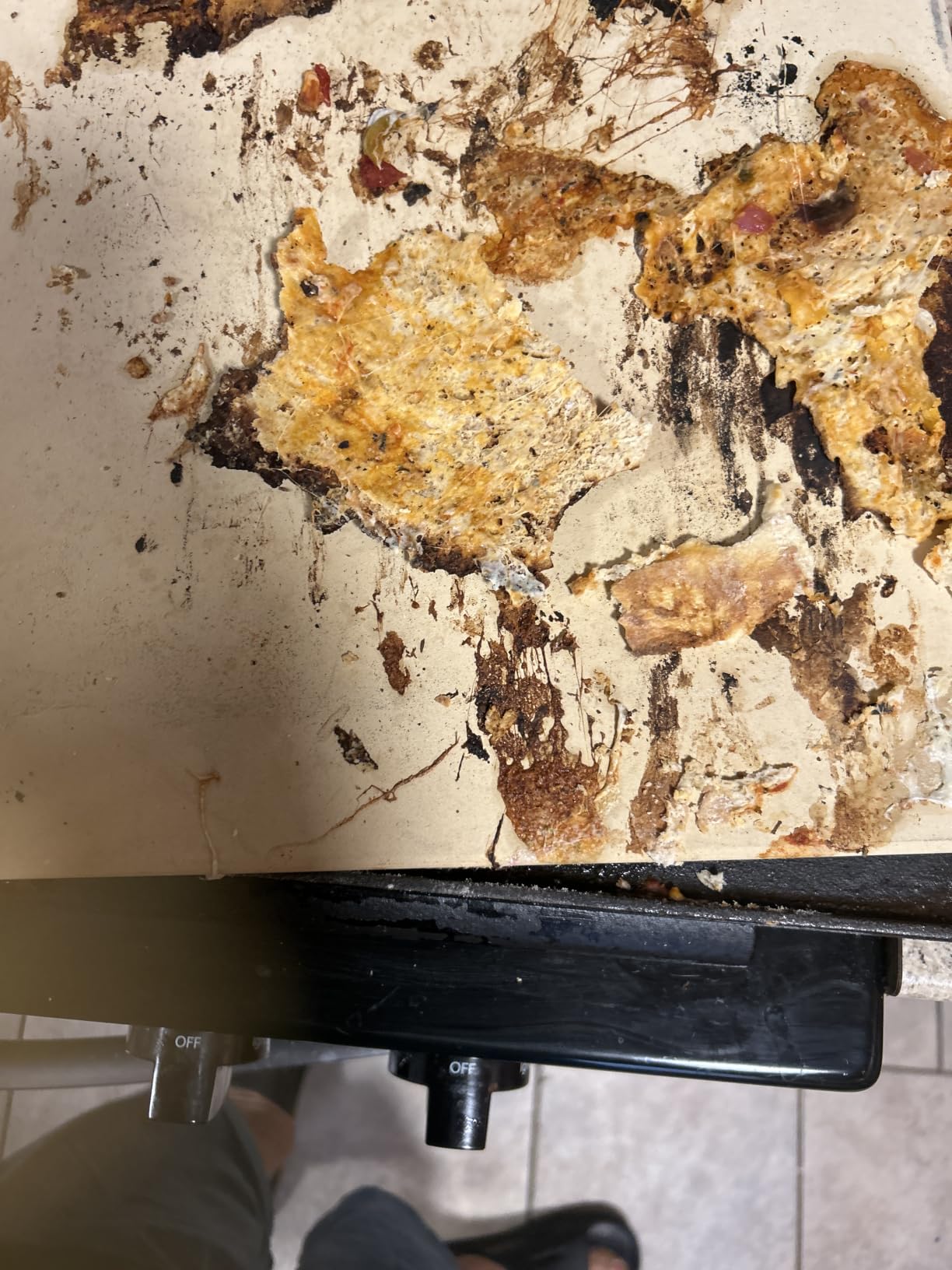
Set expectations on the temperature number
If you buy this expecting 800F of radiant heat at the stone, you will be disappointed. If you buy it expecting a controllable 660-700F stone and a good pan or New York pie, it performs. The 300F floor is also unusually low, which is handy for warming without drying out a crust.
Watch the preheat too. Around 18 minutes, with audible fan noise during operation and cooldown, this is not a quiet appliance to run in an open-plan living space.
Who should skip it
Skip it if you are chasing maximum char, since the cycling top element works against a well-browned top, or if you bake anything tall. Owners note it is not suitable for cakes or other high-rising bakes despite the oven’s 10.94-inch body height.
At 23.3 pounds it is also one of the heavier mid-range options here, and the fan runs long after you cancel.
7. PIEZANO XL 14 Inch Electric Pizza Oven – Most Versatile for 14-Inch Pizzas
PIEZANO XL 14″ Electric Pizza Oven Indoor Countertop Pizza Maker
800F maximum
14-inch ceramic stone
Under 6-minute bake
Thermometer display
Pros
- Largest 14-inch stone in the value tier
- 800F ceiling far above a conventional oven
- Top and bottom settings with a built-in thermometer display
- Stone
- peel and manual included
- Suction-cup base stops it sliding
Cons
- Very shallow 6.49 inch profile limits other dishes
- Manual settings only with no pizza presets
- Lowest rating among the 14-inch ovens here at 4.2 stars
The PIEZANO XL gets you a 14-inch stone and an 800F ceiling without moving up a tier, and its 4637 reviews make it the second most tested oven we covered. It runs a 4.2-star average, below the mid-range norm, and the split between 68% five-star and 9% one-star tells you the value tier is exactly that: excellent for some, frustrating for others.
The build is straightforward. Push-button controls give separate top and bottom heat settings and a built-in thermometer display, so you can watch the reading climb rather than guessing. The flat 14-inch natural ceramic stone is removable for cleaning, and the pizza stone, peel and manual are all included in the box.
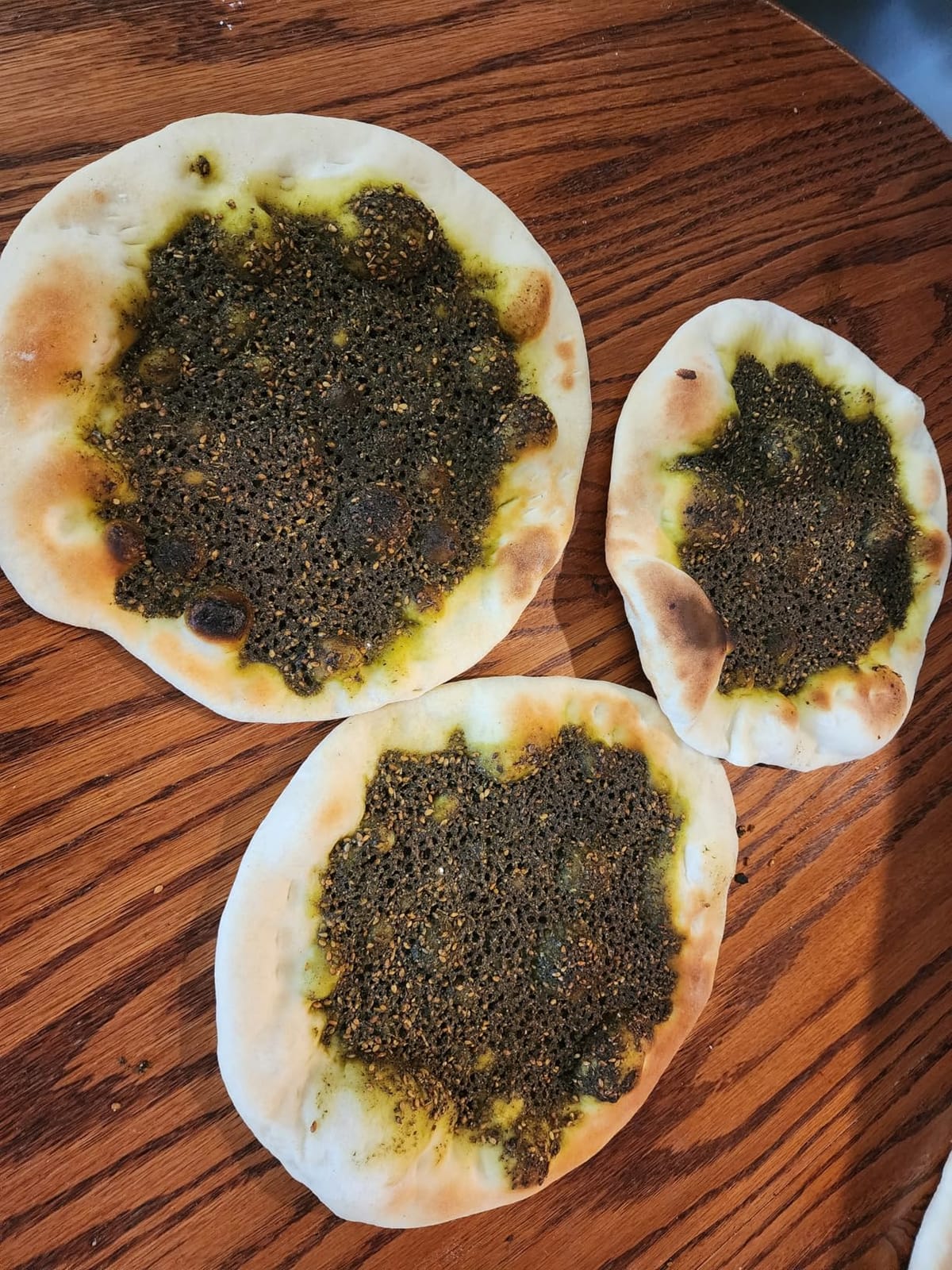
Sixty-eight percent of buyers rate it five stars, and the recurring praise is for the 14-inch stone and 800F reach at this price. At 1200 watts it also draws less current than most of the mid-range ovens here, which makes it easier to place in a kitchen without circuit concerns.
The one- and two-star reviews concentrate on the same two things: the very low body, at 6.49 inches tall, and the complete absence of pizza presets. If you want a machine that names Neapolitan and Pan and picks a profile for you, this is the wrong one. If you are willing to learn temperatures, it is capable.

When the shallow profile is a feature
A 6.49-inch body does something useful: it sits lower on the counter and stores more easily than a full-height chamber. In a small kitchen where an oven under a cabinet is the plan, that geometry is often more valuable than internal volume.
It also means no sheet-pan bakes and no tall dishes. Treat it as a dedicated pizza box, which is what it is designed to be.
Who should skip it
Skip it if you are new to pizza ovens and want guided settings, or if you need a three-prong outlet you do not have, since this unit requires one explicitly. Plan the same for any 800F countertop oven in a kitchen without a spare outlet.
Also weigh the 4.2-star average and 9% one-star share against the alternatives if you are sensitive to build consistency.
8. Gourmia Electric Indoor Pizza Oven – Best Multi-Use
Gourmia Electric Indoor Pizza Oven – Countertop Air Fryer Toaster Oven Combo with 6 Pizza Presets, 7 Cooking Functions, Air Fry, Broil & Bake, Includes Cordierite Pizza Stone, Stainless Steel
Six pizza presets
Seven cooking functions
Cordierite stone
1800 watts
Pros
- Six pizza presets plus manual mode
- Seven functions in one appliance
- Cordierite stone included
- Dishwasher-safe basket
- rack and tray
- Interior light and glass viewing window
Cons
- One verified review measured 567F in pizza mode
- Stone drops temperature after two or three pies
- Very large footprint at 28.5 pounds
- No pizza peel included
The Gourmia is the only true multi-function unit here, combining a pizza oven, air fryer, toaster oven and dehydrator with six pizza presets and seven cooking modes. Its 4.1-star average across 331 reviews is the lowest here, with 64% five-star and 11% one-star, and that spread is the honest story of this oven.
People who get it love the value of owning one appliance instead of three. Owners report replacing a separate toaster oven, air fryer and coffee roaster, and the convection does give genuinely even heat with workable back-to-back baking. The cordierite stone is a better material than the ceramic decks on several cheaper units.
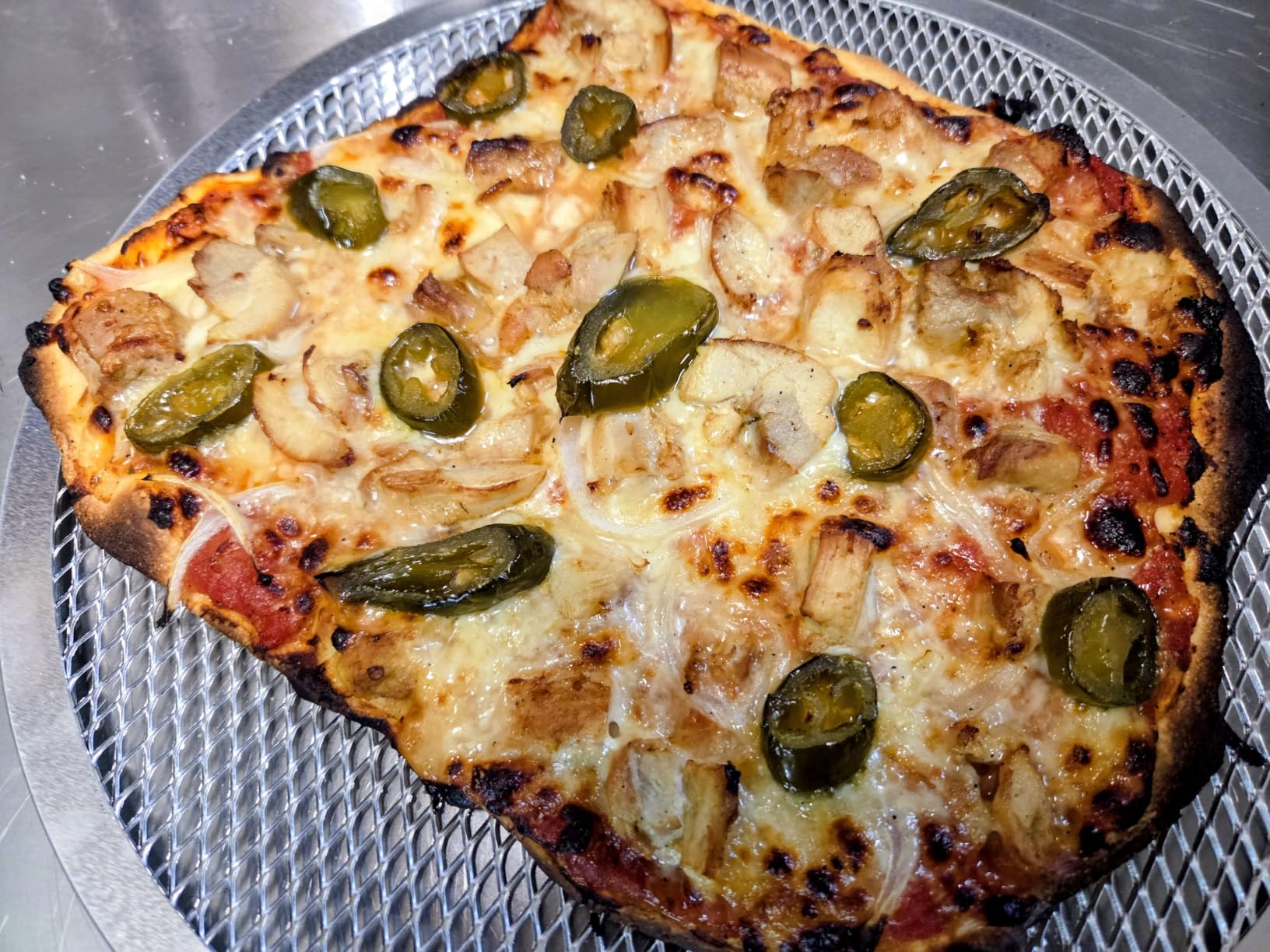
Cleanup is the other strength. The air fry basket, oven rack and baking tray all go in the dishwasher, and the interior light stays on so you can watch a bake, which is not universal in this category. The touch panel drives six presets plus manual, with independent upper and lower burners.
The detractions are consistent. One verified review measured only 567F in heating pizza mode against an 800F claim, the stone sheds temperature after two or three consecutive pies and needs reheating, and the fan runs for up to ten minutes after you cancel. Touch controls are also described as temperamental rather than intuitive.
The smoke question, answered by an owner
Smoke is the first thing buyers ask about this oven, because the fan behaviour suggests a venting system. One Gourmia owner reports very little to no smoke at all, which fits an electric design with a fan and no open flame. Flue or chimney requirements are not something you face here.
That said, smoke is far more often about technique than hardware. Dough that sticks to a peel and scorches the stone is the single biggest cause of a smoky kitchen, and this oven ships without a peel.
Who should skip it
Skip it if counter space is tight. At 17.5 by 21 inches and 28.5 pounds, several owners had to relocate other appliances to make room, and at 28.5 pounds it is one of the heaviest units here. The low internal cavity height limits what else you can cook in it.
Skip it if you are sensitive to spec-versus-reality gaps, because the temperature shortfall is documented rather than theoretical.
Indoor Safety, Smoke and Ventilation
Indoor pizza ovens are safe to use inside, with the caveat that they are high-draw appliances in a small box. Every model here is electric, so there is no combustion and no carbon monoxide risk, and none of them needs a flue or chimney. The real issues are heat radiating onto your counter, the electrical load, and how you handle flour and launch technique.
On smoke, the honest answer is that a correctly used indoor pizza oven produces very little. The oven that fills a kitchen with smoke is almost always one where dough caught on the peel and scorched the stone, which is a technique problem, not a ventilation problem. Range hoods still help with the warm air these units push out, and a hood or open window makes a long pizza session far more comfortable in a small apartment.
On power, treat these like any other high-watt appliance. Draw ranges across this roundup run from 1200 watts on the PIEZANO to 2200 watts on the BIG HORN, and anything at 1700 watts or above realistically wants its own outlet rather than a shared one with a microwave. Both the PIEZANO and the BIG HORN specify a three-prong plug, so a two-slot wall is a genuine blocker.
On clearance, give the oven air on all sides and do not tuck it under a cabinet unless the model is built for it. The Chefman is the one here owners report running under an overhang because its exterior stays cool; the rest should sit on open counter. If you are replacing a cooktop rather than adding to the counter, our gas cooktop guide covers the same outlet questions from the other direction.
How to Choose an Indoor Pizza Oven
Work down this list in order and the right oven almost picks itself. The order matters because temperature and deck size determine what you can bake, and everything after that is convenience.
1. Temperature ceiling. Anything at 700F is a big step up from a conventional oven. 800F and above gets you faster bakes and better char, but check whether the quoted figure describes the cavity sensor or the stone, because on at least one oven here they differ by more than 100 degrees.
2. Cooking surface and pizza size. 12 inches suits one or two people. 14 inches is the threshold for a family pizza that feeds four, and stone diameter is not the same as chamber width, so check the internal cavity too.
3. Deck material. Cordierite holds heat and resists thermal shock better than the ceramic stones used in the cheaper units, and it is the material you want if you bake more than once a week. A removable stone is worth paying for, because it makes cleaning and storage easier.
4. Preheat time. Published claims on this category are optimistic, so treat them as a floor. Measured accounts put real preheat at 15-20 minutes for most chamber ovens, and up to 30 minutes for the Cuisinart. If preheat is your annoyance, budget for it rather than shopping around it.
5. Evenness, and whether it rotates. A rotating tray removes the need to turn a pizza mid-bake, which is the single biggest usability difference in this list. A fixed deck with no light means you are turning blind in the dark, which is a real quality cost.
6. Controls and presets. Presets are useful only if they change how the heat zones behave rather than just running hotter. Manual top-and-bottom control is what you want once you know what you are doing, and a probe or built-in thermometer display tells you when the stone is actually ready.
7. Power and outlet. Check wattage, the plug type and whether your counter has a three-prong outlet within reach. Anything at 1700 watts or more deserves a dedicated circuit, and mixing it with a microwave on the same outlet is asking for nuisance trips.
8. Footprint, clearance and cleaning. Measure counter depth as well as width, because several of these are close to 20 inches deep. Add the heat the unit throws upward into your planning, and check whether the stone removes before you decide how often the oven will be stored away.
On throughput, do the arithmetic before you promise a pizza party. One pizza at a time, a five-minute bake and a 30-second launch gets you about ten an hour once the oven is hot, and an owner running a private event reported 40 pies in roughly four hours on a Cuisinart. Larger chambers with a 14-inch floor help if you want family-size pies instead of a queue of small ones.
On maintenance, the stone is the part that matters. Never wash a cordierite or ceramic stone with water, because thermal shock cracks it; brush off crumbs, scrape stuck cheese once the stone is cool, and oil lightly now and then. If a stone does crack, expect trouble sourcing a replacement outside warranty, which is worth factoring in for two of the ovens here. If you want to compare baking surfaces more broadly, our wood-fired oven roundup covers stone and deck materials in depth.
Indoor Pizza Oven or Portable Gas Oven?
Ask almost any forum and the first answer is a gas oven, and that is not a bad instinct. The organic top result for this topic is a thread on r/KitchenConfidential where people with gas access recommend the Roccbox instead. Gas ovens deliver more BTUs, heat a thicker stone and give a more authentic high-heat bake, and owners of the Ooni Koda 16 describe it as one of the best purchases they have made, not just for pizza.
The honest case for an indoor electric oven is different. It needs no propane, no hose, no outdoor space and no storage decision, and it works in a fourth-floor apartment where a gas oven is simply not an option. It also heats a smaller chamber faster, which matters more for a weeknight pie than for a weekend project. Gas wins on ceiling heat and crust character; electric wins on convenience and access.
There is a third answer that most roundups skip. If your real problem is frozen pies and weeknight convenience rather than a crust you are proud of, a regular home oven with a steel or cast-iron pan often gets you there, and a backyard pizza oven may serve the same hobby better. Hobbyists on the pizzamaking.com forum treat cheaper countertop models as the entry tier and value them mostly for deep-dish pizza at home, which is a different job from a fast Neapolitan bake. Do not buy an indoor pizza oven expecting it to replace a pizza oven.
Frequently Asked Questions
Are indoor pizza ovens worth it?
Yes, for the right cook. An indoor pizza oven reaches 700-850F, well above a conventional home oven, and bakes a 12-inch pie in three to six minutes once preheated. The catch is the 15-30 minute preheat before the first pizza. They are worth it if you lack a built-in oven, have no outdoor space, or want restaurant-style results on a weeknight. They are not worth it if you already own a gas pizza oven or only make frozen pies.
Which pizza oven can be used indoors?
Any electric countertop pizza oven can be used indoors, because there is no flame and therefore no combustion or carbon monoxide risk. That includes clamshell rotating pizza makers like the Presto 03430, stone-floor chamber ovens like the Ninja Artisan MO201, and multi-function units like the Gourmia GPM1270A. Portable gas ovens such as the Ooni Koda or Gozney Dome can also be used indoors only with adequate ventilation and a safe location.
How long does an indoor pizza oven take to preheat?
Expect 15 to 20 minutes for most chamber ovens, and up to 30 minutes for the slowest. Published claims are optimistic: the BIG HORN states 15 minutes, the Ninja Artisan excludes an 18-minute preheat from its 3-minute bake claim, and the Cuisinart is documented at 20 to 30 minutes. The Presto clamshell reaches temperature fastest. Bake time only starts once the stone is actually hot, not when the indicator light comes on.
Are indoor pizza ovens safe to use inside?
Yes, with sensible precautions. Electric indoor pizza ovens produce no combustion gases and need no flue, but they are high-draw appliances: models here run from 1200 to 2200 watts, so anything at 1700 watts or more wants a dedicated three-prong outlet. Keep clearance on all sides, avoid running the oven under a cabinet, and use a range hood or open window because it pushes warm air into the room. Smell smoke and check for dough stuck to the peel.
Can you make Neapolitan pizza in a countertop oven?
You can get close, but expect 3 to 6 minutes rather than the 60 to 90 seconds of a wood-fired oven. The Ninja Artisan MO201 bakes a 12-inch pizza in about 3 minutes at 700F and the Breville Pizzaiolo in about 2 minutes at 750F, and both produce visible leopard spotting. Use a thin dough, dust the peel with semolina, and rotate the pie midway in fixed-deck ovens, since the back of the cavity usually runs hotter than the front.
Do I need a dedicated circuit for a pizza oven?
For most of these ovens, yes, and at minimum you need a three-prong outlet on its own. Draw ranges from 1200 watts on the PIEZANO XL to 2200 watts on the BIG HORN, with several mid-range models at 1700 to 1800 watts. Sharing an outlet with a microwave or kettle risks nuisance trips at peak draw. Only the lighter clamshell designs, such as the 1235-watt Presto 03430, are comfortable enough to share a standard kitchen circuit.
The Verdict: Which Indoor Pizza Oven Should You Buy
The Presto 03430 Pizzazz Plus is the best indoor pizza oven for home kitchens overall, because the rotating tray removes the most common failure point in this category and 20801 reviews at 4.7 stars make it the most proven machine on the list. Buy the Ninja Artisan MO201 if speed is everything, the BIG HORN if you need a 14-inch pie, the Breville Pizzaiolo if you care most about how the crust looks, and the Cuisinart CPZ-120 if this is your first one.
Whichever you pick, respect the preheat and give yourself room on the counter. Start the oven 20 minutes before you plan to eat, and keep notes on your first few bakes in 2026, because every stone behaves a little differently than its spec sheet suggests. That is the whole difference between a pizza oven you stop using and one you reach for every week.