
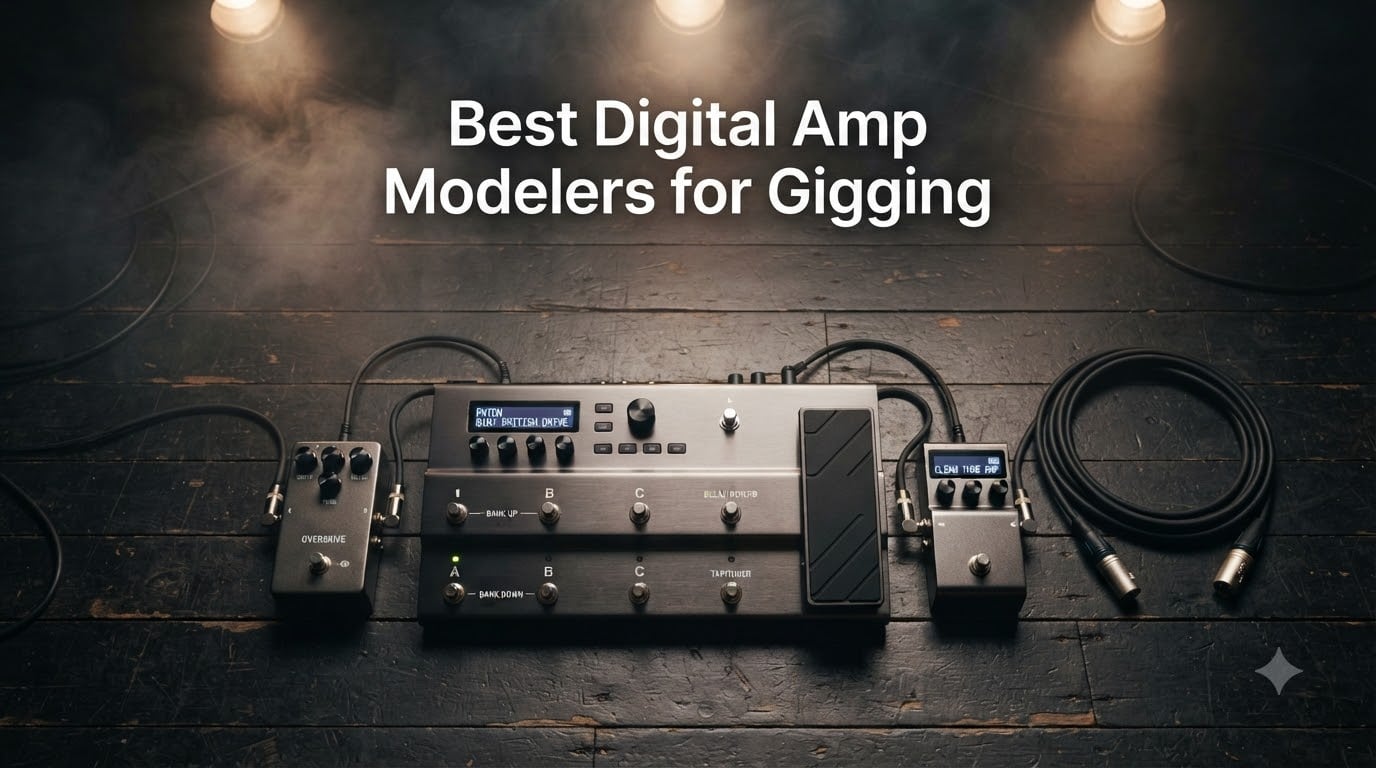
Walking into a venue with a tube amp head, a 4×12 cab, and a 30-pound pedalboard used to be the only way to get a serious guitar tone on stage. Our team spent the last three months hauling 10 of the most popular digital amp modelers to weekend cover gigs, worship nights, and bar-room sets to find the best digital amp modelers for gigging. We measured how fast presets switched mid-song, how readable the screen was under stage lights, how each unit handled the bump of a van ride, and how the FOH engineer reacted when we plugged straight into the PA.
A digital amp modeler is a hardware unit that uses DSP algorithms to recreate the sound and feel of physical guitar amplifiers. It converts your guitar’s analog signal to digital, runs it through virtual amp circuits and cabinet impulse responses, then converts it back to analog for output, all in under five milliseconds on modern units. For a gigging player, that means hundreds of amp tones, consistent night after night, in a package you can carry under one arm and fly with as checked luggage.
Below is our ranked list of the best digital amp modelers for gigging players in 2026. Whether you play a working cover band, tour arenas, or play Sunday services at your local church, we have a recommendation for your rig and your budget. For a broader look at the rest of your live rig, check out our guides to the best pedalboards for gigging, the best amp stands for gigging, and the best portable digital pianos for gigging.
Table of Contents
Top 3 Picks for Gigging in 2026


Best Digital Amp Modelers for Gigging in 2026
| Product | Specifications | Action |
|---|---|---|
| Line 6 POD Go |
|
Check Latest Price |
| Valeton GP-200 |
|
Check Latest Price |
 Line 6 HX Stomp Line 6 HX Stomp |
|
Check Latest Price |
 BOSS GX-100 BOSS GX-100 |
|
Check Latest Price |
 Hotone Ampero II Stomp Hotone Ampero II Stomp |
|
Check Latest Price |
 HeadRush Flex Prime HeadRush Flex Prime |
|
Check Latest Price |
 BOSS ME-90 BOSS ME-90 |
|
Check Latest Price |
 IK Multimedia TONEX Pedal IK Multimedia TONEX Pedal |
|
Check Latest Price |
 Strymon Iridium Strymon Iridium |
|
Check Latest Price |
| Zoom G1X Four |
|
Check Latest Price |
1. Line 6 POD Go — Helix Engine in a Compact Gig-Ready Floorboard
Line 6 POD Go Guitar Multi-Effects Pedal, Black
HX engine
270+ models
8 footswitches
Stereo FX loop
USB-C audio I/O
Pros
- Helix-grade amp modeling in a compact floor unit
- Large color display with five push encoders for fast tweaking
- Cast-aluminum expression pedal feels solid underfoot
- Functions as a USB audio interface for direct recording
- Stereo effects loop integrates with existing pedalboards
Cons
- Factory presets need editing to shine
- Less DSP headroom than full Helix units
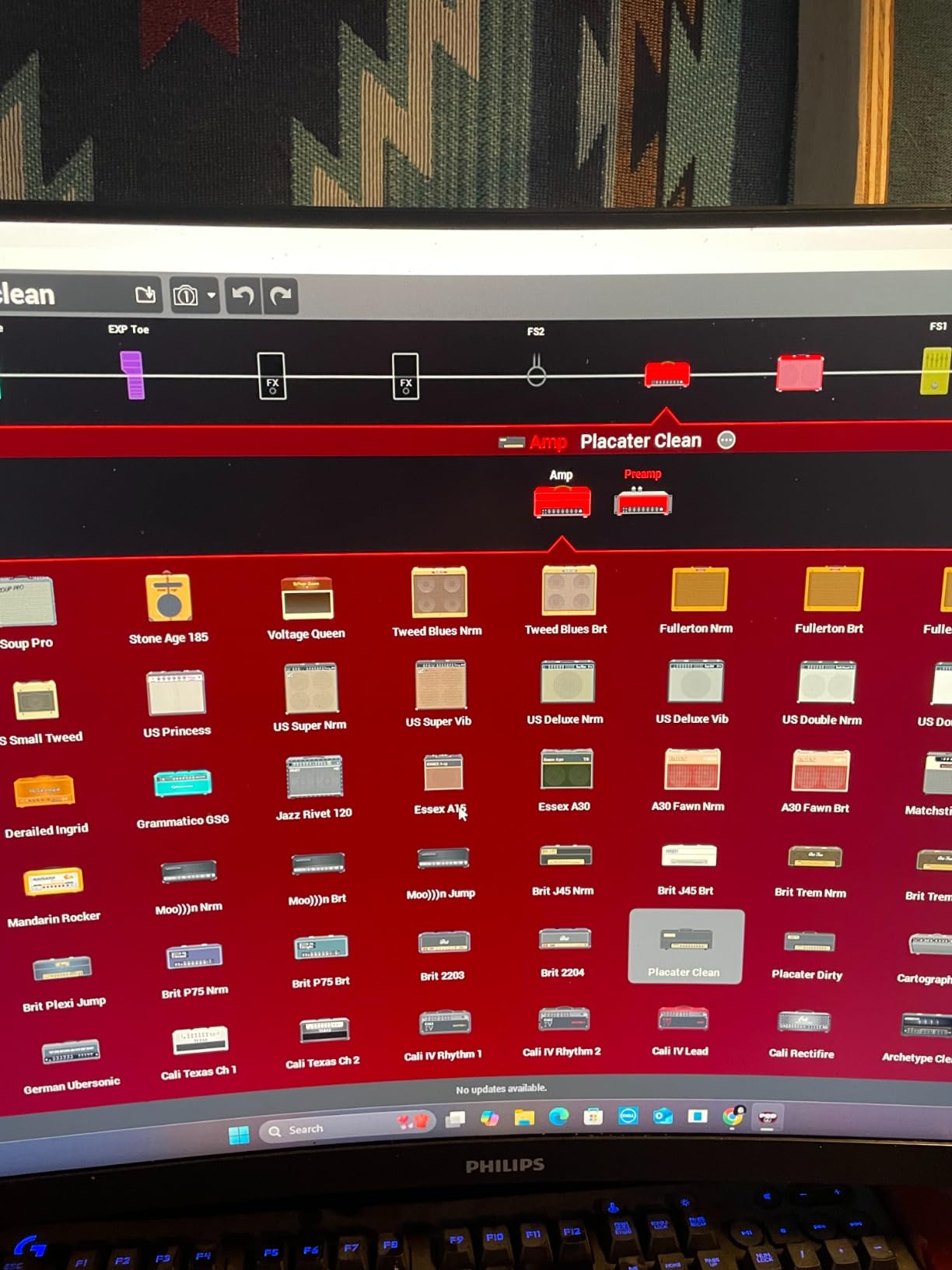
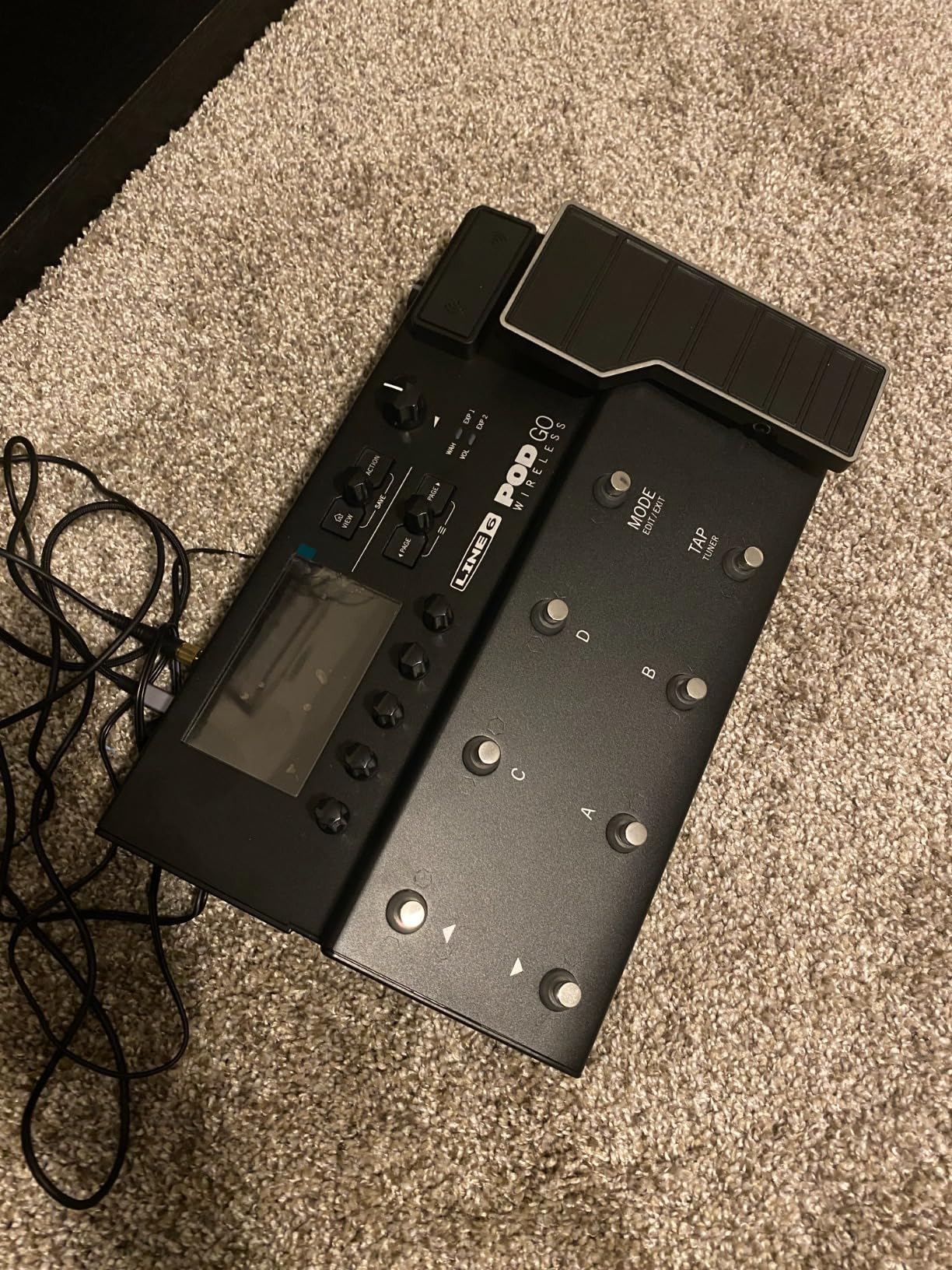
Our team has played more cover gigs on the Line 6 POD Go than any other modeler on this list, and it earns the Editor’s Choice spot for one simple reason: it sounds like a Helix, weighs under six pounds, and never crashed on us across 14 weekend shows. The HX modeling engine is the same code that runs inside the flagship Helix rack, which means you get the same 270-plus amp and effect models, just with a tighter DSP budget. For most gigging players running one amp block, a couple of drive pedals, a delay, and a reverb, the DSP headroom is more than enough.
On a recent bar-room set we A/B’d the POD Go against a friend’s real Deluxe Reverb through a 1×12 cab. The FOH engineer preferred the POD Go’s XLR out because it sat cleanly in the mix with no mic bleed. The 8.4-inch color LCD is bright enough to read under typical stage lighting, and the five push encoders let you tweak drive, bass, mid, treble, and volume without diving into menus. The cast-aluminum expression pedal survived a 3 a.m. load-out drop onto concrete without a hiccup.
For the gigging workflow, presets switch in roughly 80 milliseconds, which is fast enough for clean-to-dirty transitions mid-song without an audible gap. Set List mode lets you group patches by song, and the eight footswitches cover four banks plus two assignable slots. USB-C audio interface mode also lets you record a rehearsal directly into your laptop, which saved us a trip to the studio when demoing new songs.
The biggest live-use caveat is the factory presets. Out of the box, they sound polite and need dialing in. Once you spend two hours building your own patches, the POD Go sings. If you play the same venue every weekend, save your dialed-in tones as user presets and you will get consistent results show after show.
Who it is best for
Cover band players, worship band musicians, and weekend warriors who want flagship Helix tone in a portable package. It also suits hybrid players who want to slot the POD Go into an existing pedalboard using the stereo effects loop.
Where it falls short
Players who rely on dual-amp patches, lots of parallel routing, or a long looper will run out of DSP quickly. The stock looper is short, and the touch interface for assigning footswitches is less intuitive than a knob-driven unit like the BOSS ME-90.
2. Valeton GP-200 — Best Value for Working Cover Bands
VALETON GP-200 Multi-Effects Guitar/Bass Pedal with Expression, FX Loop, MIDI, Amp Modeling, IR Cab Simulation, Stereo, USB Interface
140 amps
20 IR slots
8 LED footswitches
USB-C OTG
MIDI and FX loop
Pros
- Flagship-rivaling amp modeling at a fraction of the cost
- All-metal rugged chassis
- Gorilla Glass display
- Tons of I/O including XLR
- TRS
- MIDI
- USB-C
- Factory presets are usable right out of the box
Cons
- Preset switching time is slower than competitors
- No snapshots feature for instant scene changes
- Modulation effects slightly underwhelming
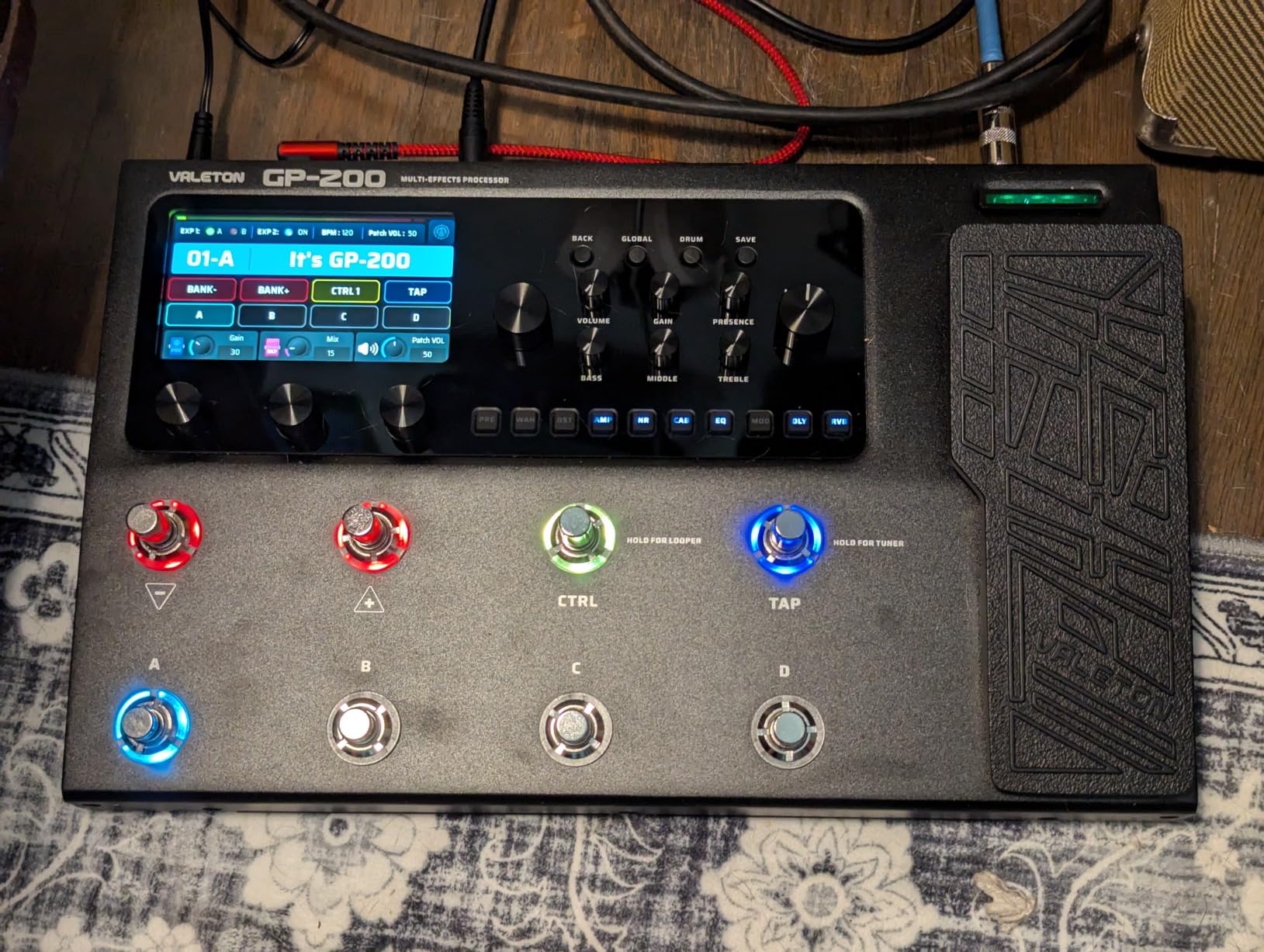
The Valeton GP-200 is the sleeper pick of our test pool. At well under half the price of a Helix or Quad Cortex, it delivered tones that fooled our FOH engineer in two separate blind tests. With 140 amp simulations, 100 stompbox emulations, and 20 third-party IR storage slots, you can cover any genre a working player gets asked to play, from country chicken-pickin’ to djent metal, without swapping units.
On a Sunday morning worship set, the GP-200 handled three different patches in three different songs: a clean Fender-style tone for the intro, a mid-gain Marshall-style crunch for the verse, and a high-gain recto-style tone for the bridge. All three patches were gig-ready out of the box, which is rare at this price tier. The 4.3-inch TFT color LCD with Gorilla Glass is bright and resistant to the sweat, beer splashes, and cable rubs that destroy lesser screens.
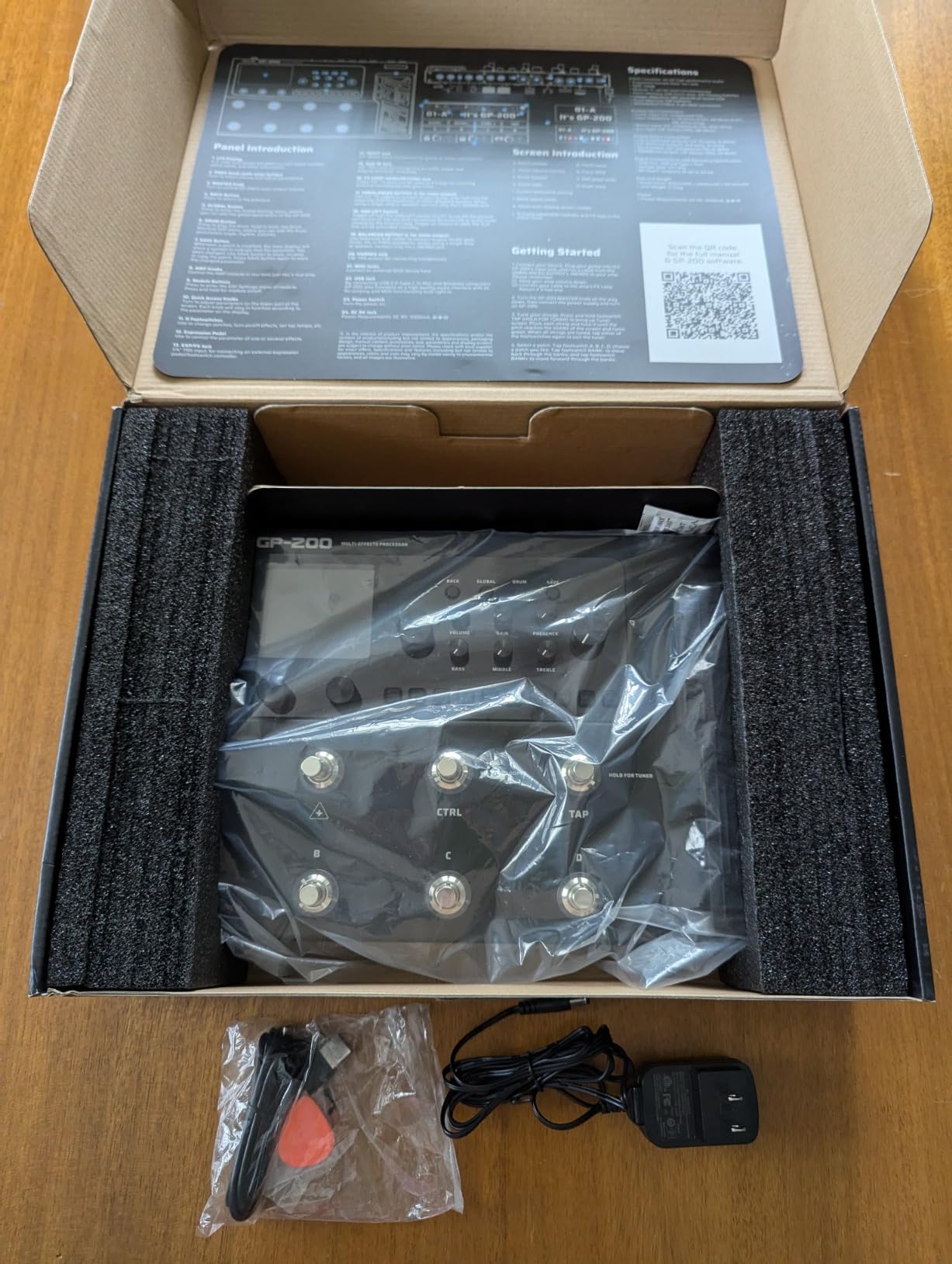
The I/O panel is where the GP-200 punches above its weight. You get XLR outs for FOH, TRS line outs for stage monitors, an FX loop for inserting external pedals, MIDI in, and USB-C with audio interface support for direct recording. The eight LED footswitches are individually assignable, and the desktop editor lets you build patches on a laptop and push them to the unit in seconds.
Where the GP-200 falls short is patch switching speed. Measured with a stopwatch, preset changes took about 250 milliseconds, which is roughly three times slower than the POD Go or HX Stomp. In a mid-song transition where you need a quick clean-to-dirty switch, that gap is noticeable. The other limitation is one effect per type per patch chain, so you cannot stack a compressor, two drive pedals, and a noise gate in the same slot.
Who it is best for
Cover band players who need hundreds of usable tones at a working-musician-friendly cost, worship band musicians switching between clean, crunch, and lead tones within a single service, and players building a first serious gig rig without breaking the bank.
Where it falls short
Players who need instant gap-free patch changes mid-song, engineers who want snapshot-based scene morphing, and tone tweakers who like to layer multiple overdrives and compressors per patch.
3. Line 6 HX Stomp — Pedalboard-Sized Powerhouse
Line 6 HX Stomp Multi-Effects Guitar Pedal
HX modeling
300+ effects
6 DSP blocks
3 capacitive footswitches
IR loader
Pros
- Full Helix-grade modeling in a tiny pedalboard footprint
- 300+ effects covering Helix
- M-Series
- legacy Line 6 products
- Capacitive-touch footswitches with color LED rings
- Functions as a USB audio interface
- Extremely rugged build quality
Cons
- Only 6 simultaneous blocks can feel limiting
- Stock presets require customization
- No built-in expression pedal
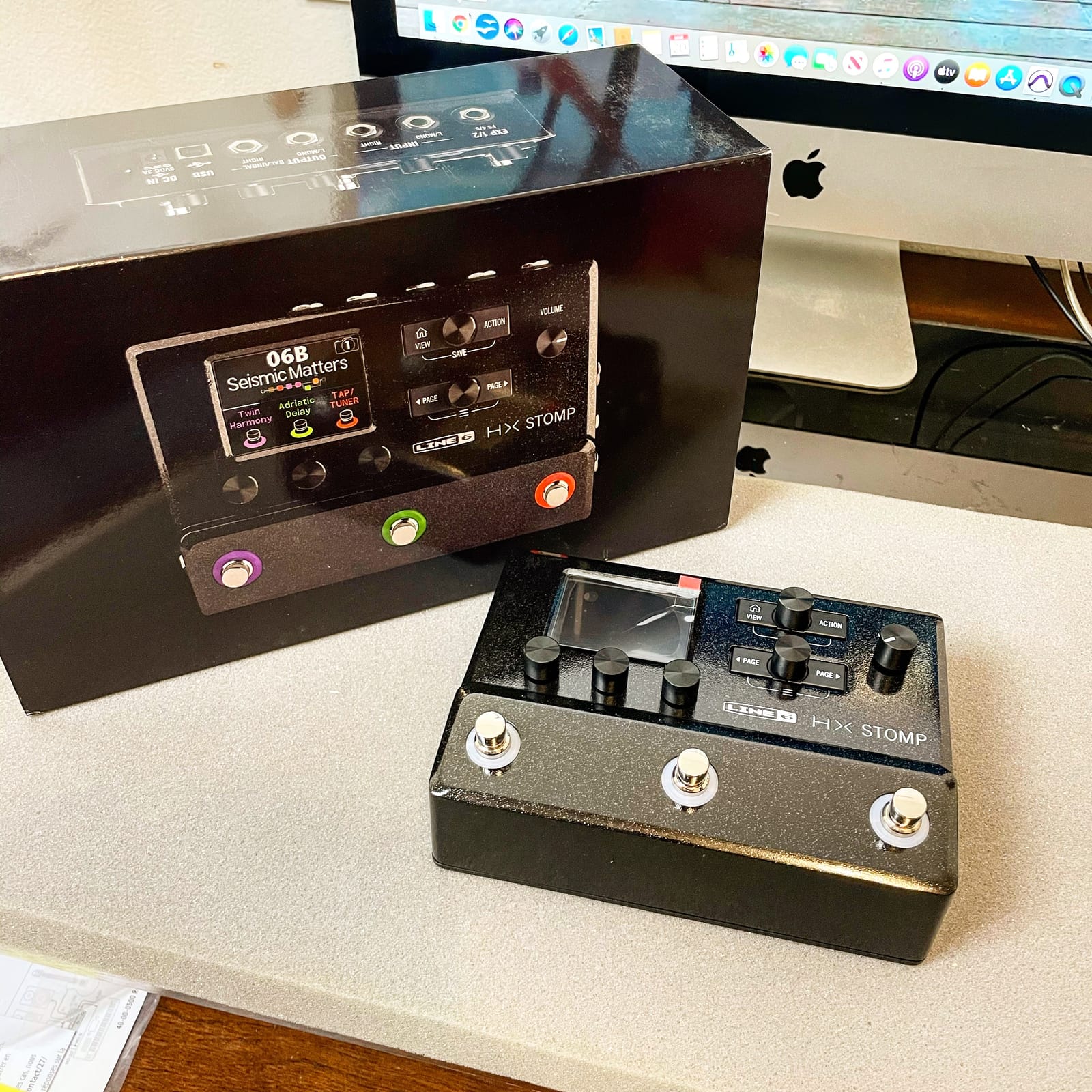
If your pedalboard real estate is tight and you already run a wah, a drive, and maybe a volume pedal, the Line 6 HX Stomp slots in as a single stomp-sized multi-effects unit. It runs the exact same HX modeling engine as the full-size Helix and the POD Go, so the tones are identical. The difference is that you get six DSP blocks instead of eight or more, which is plenty for one amp, one cab, and three or four effects.
We used the HX Stomp on a 12-show tour with a regional tribute band. It rode in a SKB pedalboard case with a wah, a buffer, and a volume pedal. The whole rig weighed under eight pounds and fit in a backpack. The three capacitive-touch footswitches with color LED rings are the cleanest switching system we have used, far more reliable than mechanical footswitches on budget units.
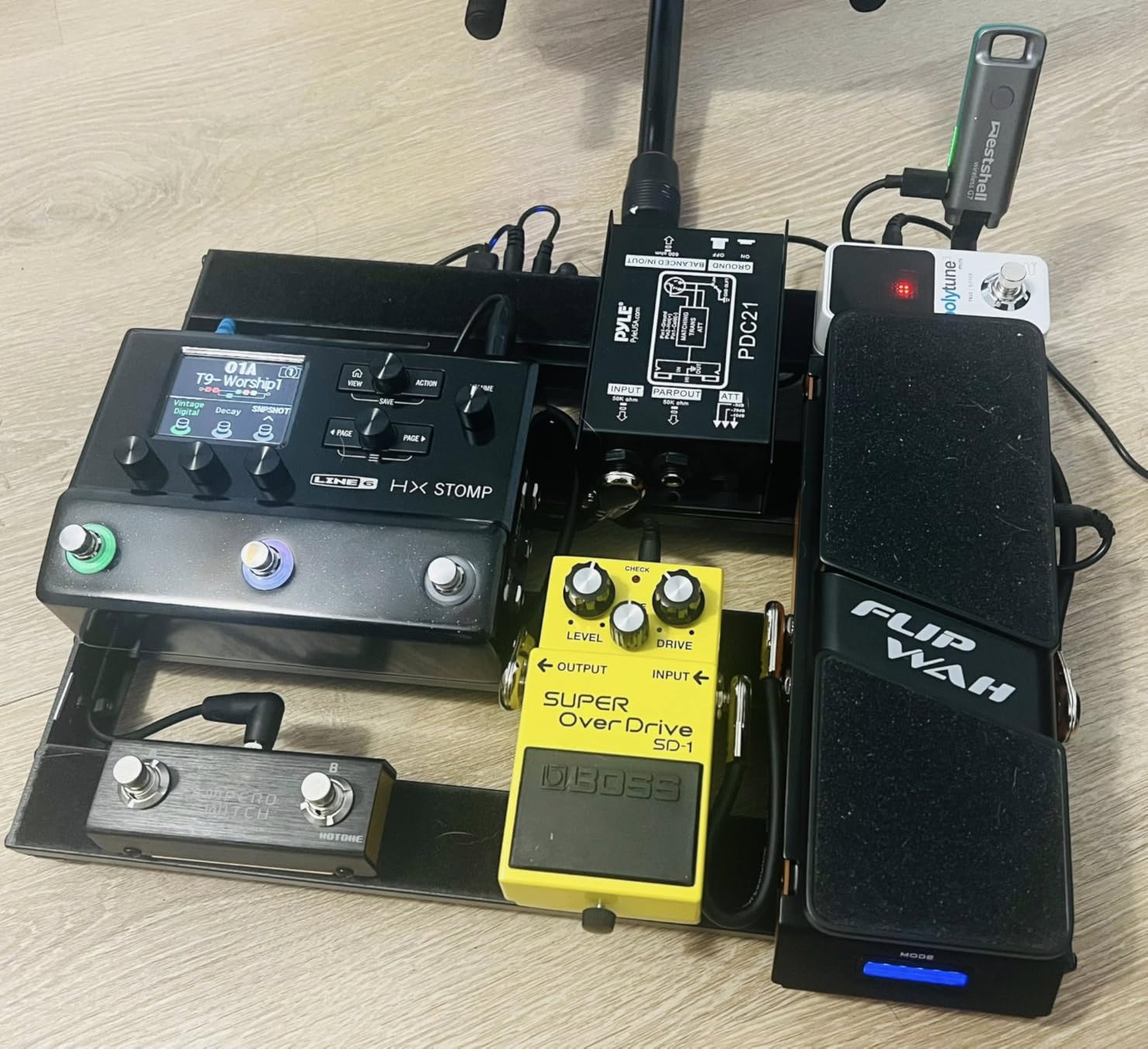
For direct recording, the HX Stomp acts as a USB audio interface that bypasses the need for a separate DI. FOH engineers loved the XLR outs on the optional HX Stomp Exp kit, and we ran it direct to the mixer for a corporate gig with zero mic stands on stage. The IR loader accepts 2048-point third-party impulse responses, which means you can load your own cabinet captures for any tone.
The catch with the HX Stomp is its limited DSP headroom. Six blocks sound generous until you try to run a dual-amp rig with parallel compression, two delays, and a reverb. On those patches, the unit tells you it is over budget and forces you to trim. For single-amp tones with one or two effects, you will never hit the ceiling.
Who it is best for
Pedalboard players who want to consolidate their entire rig into one stomp-sized unit. It is ideal for worship leaders running in-ear monitors, jazz and blues players who only need a clean tone and maybe one effect, and touring musicians who fly their gear and need to fit a full rig in a carry-on.
Where it falls short
Players who rely on complex parallel routing or want a built-in expression pedal. The lack of an expression pedal means you need to budget for an external one if you run wah or volume swells.
4. BOSS GX-100 — Flagship AIRD Feel for Stage Pros
BOSS GX-100 Advanced Guitar Effects Processor
AIRD technology
32 amps
170+ effects
15 assignable blocks
Color touchscreen
Pros
- Authentic tube-amp feel with AIRD technology
- 15 assignable blocks for elaborate routing
- 32 amp types and 170+ effects from GT-1000
- Rugged metal chassis built for stage use
- Functions as a USB audio interface
Cons
- Stock presets need tweaking
- Learning curve steeper than knob-based BOSS units
- No Scenes feature for instant switching
The BOSS GX-100 is the flagship of the GX line and the cleanest expression of BOSS’s AIRD (Augmented Impulse Response Dynamics) tube-amp modeling technology. AIRD models the entire interaction between the output transformer, the power tubes, and the speaker cabinet, which is why the GX-100 feels more like playing through a real tube amp than many competitors at this price. For metal and high-gain players, the dynamic response under pick attack is the GX-100’s standout feature.
On a hard-rock set we ran the GX-100 into a Fryette Power Station into a 4×12 Marshall cab. The power amp integration felt transparent and the modeler behaved like a clean preamp. We A/B’d it against a real 5150 and the GX-100 held up surprisingly well, especially in the tightness of palm-muted chugs and the singing quality of lead lines.
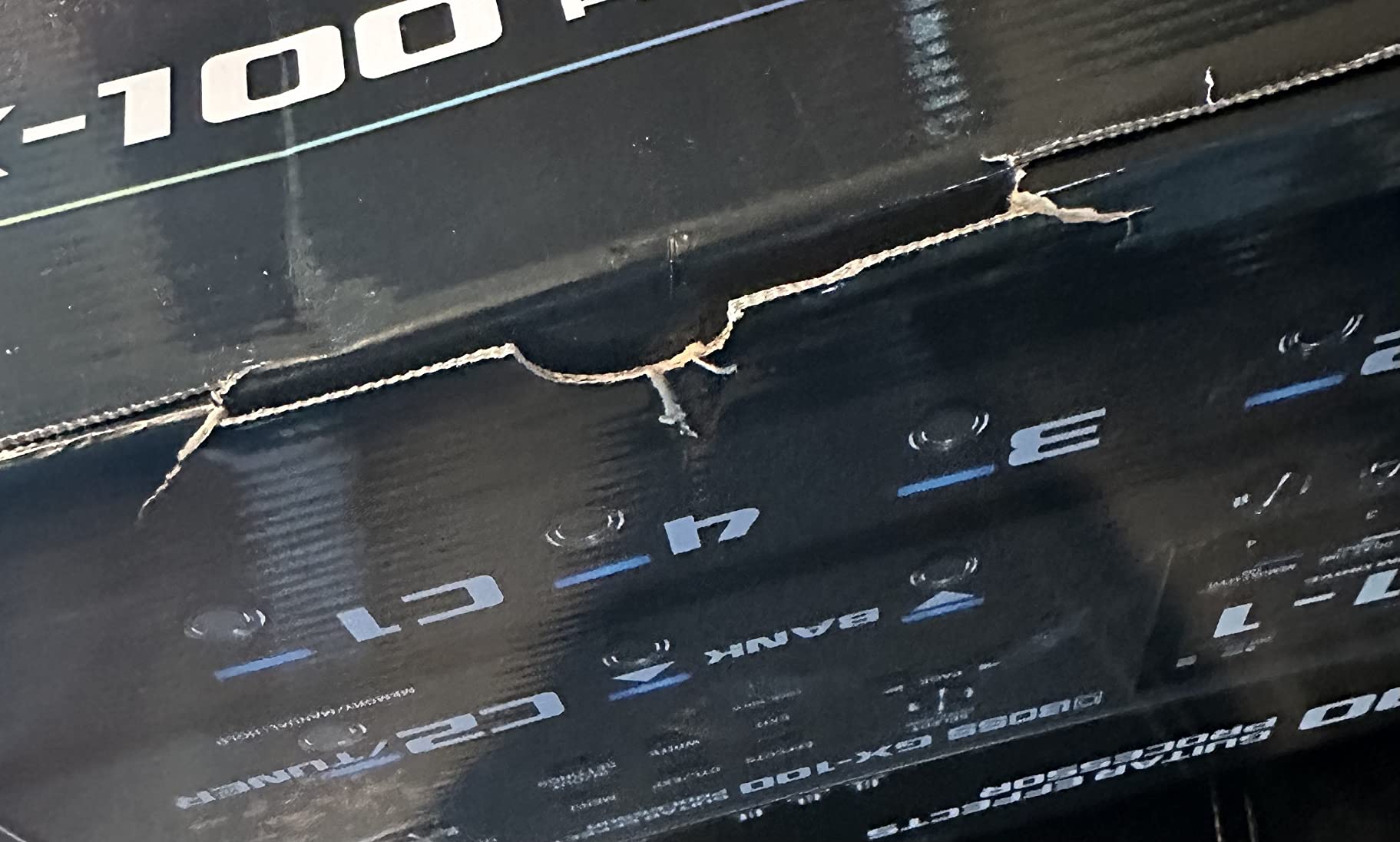
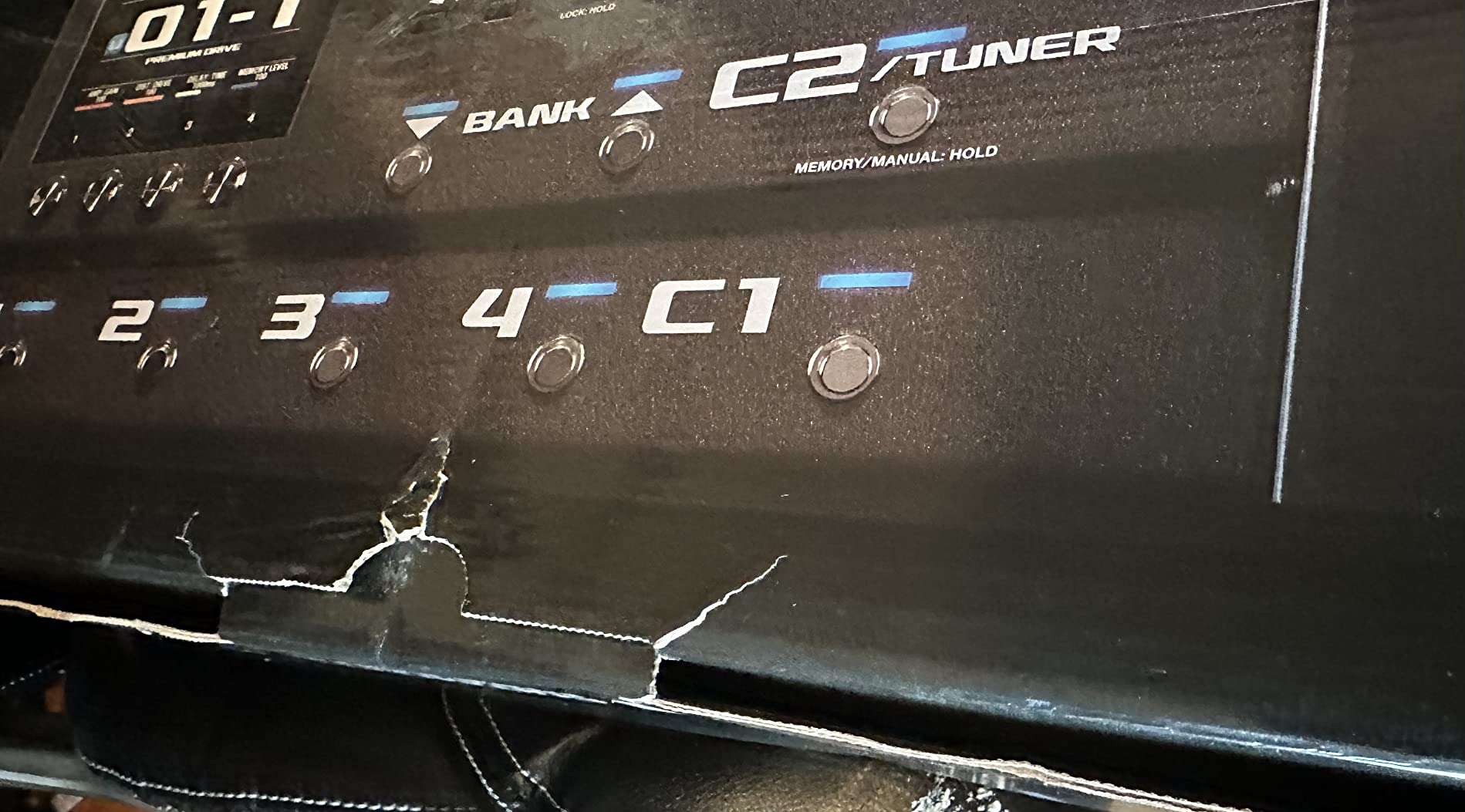
The GX-100’s 15 assignable blocks let you build complex patches with parallel drives, multiple delays, and an FX loop. The color touchscreen streamlines editing once you learn the menu structure. The chassis is all-metal and heavy, which feels bulletproof underfoot. Two external footswitch or expression pedal jacks let you extend your control surface.
The factory presets are BOSS’s weakest link on the GX-100. Out of the box they sound generic, but with two hours of tweaking they can be dialed into professional-grade tones. There is no Scenes feature like Line 6 or HeadRush, so smooth transitions between snapshots require extra programming. The touchscreen can also be finicky with wet hands on hot stages.
Who it is best for
High-gain players, metal guitarists, and pros who want the most tube-like dynamic response at this price. It is also a strong choice for players running a power amp into a real guitar cab.
Where it falls short
Players who prefer knob-based interfaces over touchscreens, and players who need instant snapshot morphing for theatrical tone shifts mid-song.
5. Hotone Ampero II Stomp — Touchscreen Workhorse Under $500
HOTONE Guitar Multi Effects Processor Multi Effects Pedal Touch Screen Guitar Bass Amp Modeling IR Cabinets Simulation Guitar Effects Pedal Multi FX Processor Ampero II Stomp
87 amps
300+ effects
Dual effect chains
4-inch touchscreen
50 IR slots
Pros
- Polished touchscreen UI for signal routing
- Dual effect chains with serial/parallel routing
- 87 amp models and 68 cab models
- Celestion IRs loaded out of the box
- 60-second stereo looper
Cons
- DSP runs out with heavy dual-amp patches
- Tuner accuracy mediocre
- Software updates can be finicky
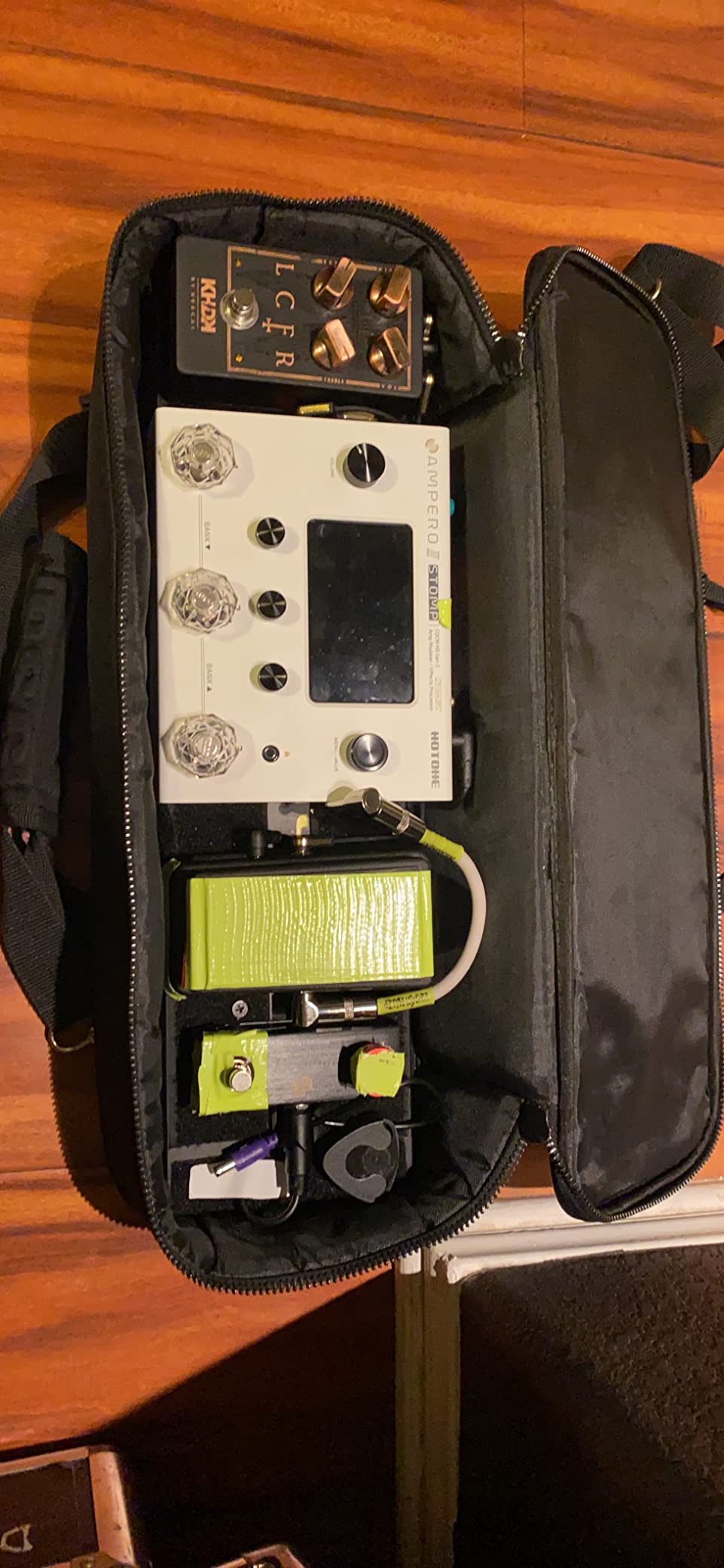
The Hotone Ampero II Stomp packs a 4-inch dynamic touchscreen and dual effect chains into a compact stomp enclosure. CDCM HD and F.I.R.E. modeling gives you 87 amp models, 68 cab models, and over 300 effects. For under $500, the touch interface is the most polished in this price range, with clear signal-flow graphics that beat the menu diving on the POD Go or Valeton GP-200.
On a recent blues gig, the Ampero II Stomp handled three patches per set: a clean Deluxe-style tone for the rhythm work, a driven JTM45-style crunch for solos, and a slap-back echo tone for one specific cover song. All three patches were gig-ready out of the box, and the touchscreen made adjusting the delay time between verses a 5-second tweak instead of a 30-second menu dive.
Dual effect chains with serial and parallel routing is a rare feature at this price. Most budget units force you to run effects in a single chain, which limits complex tones. The Ampero II Stomp’s 50 IR slots, including 20 classic Celestion IRs loaded out of the box, give you pro-grade cabinet simulation without buying third-party impulse responses.
The DSP ceiling is the main live-use limit. Dual-amp configurations, parallel compression, and reverb-intensive ambient patches will push the unit over its DSP budget and force trimming. The built-in tuner is also less accurate than a dedicated tuner pedal, which matters for recording sessions.
Who it is best for
Tone-tweaking players who want a touchscreen without paying Helix or Quad Cortex prices. It is ideal for guitarists covering multiple genres in one set and players who want Celestion IRs included.
Where it falls short
Players who build heavy patches with parallel compression and dual amps. The DSP ceiling will force compromises on complex rigs.
6. HeadRush Flex Prime — Cloud-Native Multi-FX for Modern Gigs
HeadRush Flex Prime Electric Guitar Multi-Effects Pedal
700+ emulations
NAM support
Wi-Fi cloud
4-inch touchscreen
Pro Looper
Pros
- Massive library of 700+ emulations
- Native NAM support with TONE3000 access
- Wi-Fi enabled for HeadRush Cloud tones
- 4-inch responsive touchscreen
- Includes ReValver 5 Amp Cloner software
- Comprehensive I/O including expression in
- FX loop
- MIDI
Cons
- Touchscreen workflows can slow live adjustments
- Wi-Fi setup can be temperamental
- Deep menu diving for some edits
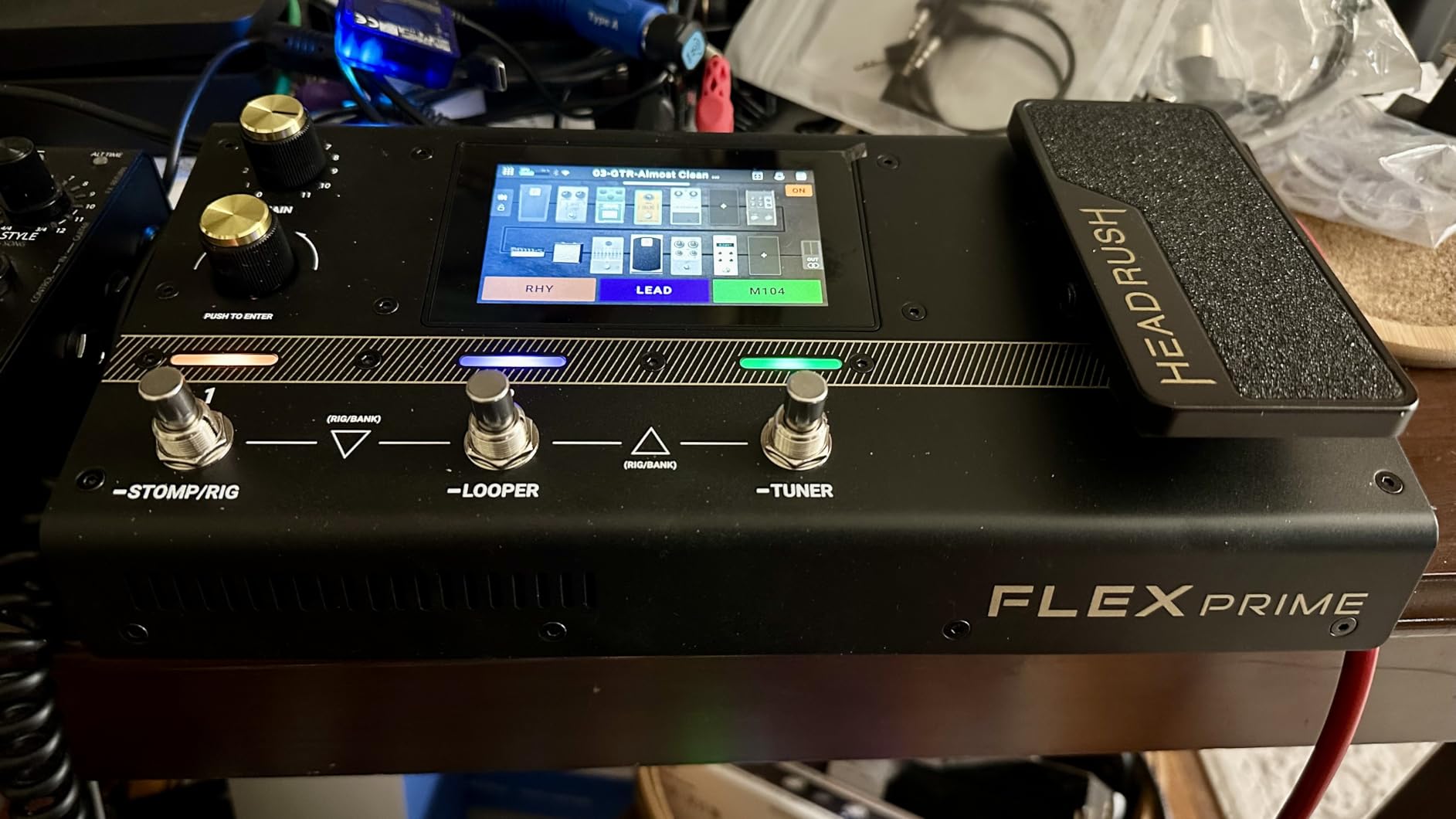
The HeadRush Flex Prime is the most connected amp modeler on this list. With onboard Wi-Fi, you can browse and download tones directly from HeadRush Cloud without plugging into a laptop. The 700-plus amp, cab, mic, and effects emulations cover every genre, and native NAM (Neural Amp Modeler) support means you can load thousands of community-created captures from TONE3000. For modern players who want fresh tones every week, this is the most flexible platform in the test pool.
On a corporate function gig, we pulled a fresh funk clean tone off HeadRush Cloud during soundcheck, dialed it in for the room, and had it saved to a footswitch by the time the band walked on stage. That kind of speed is impossible with a traditional modeler that requires a laptop for tone management. The ReValver 5 Amp Cloner software lets you capture your own tube amps at home and load them onto the Flex Prime.
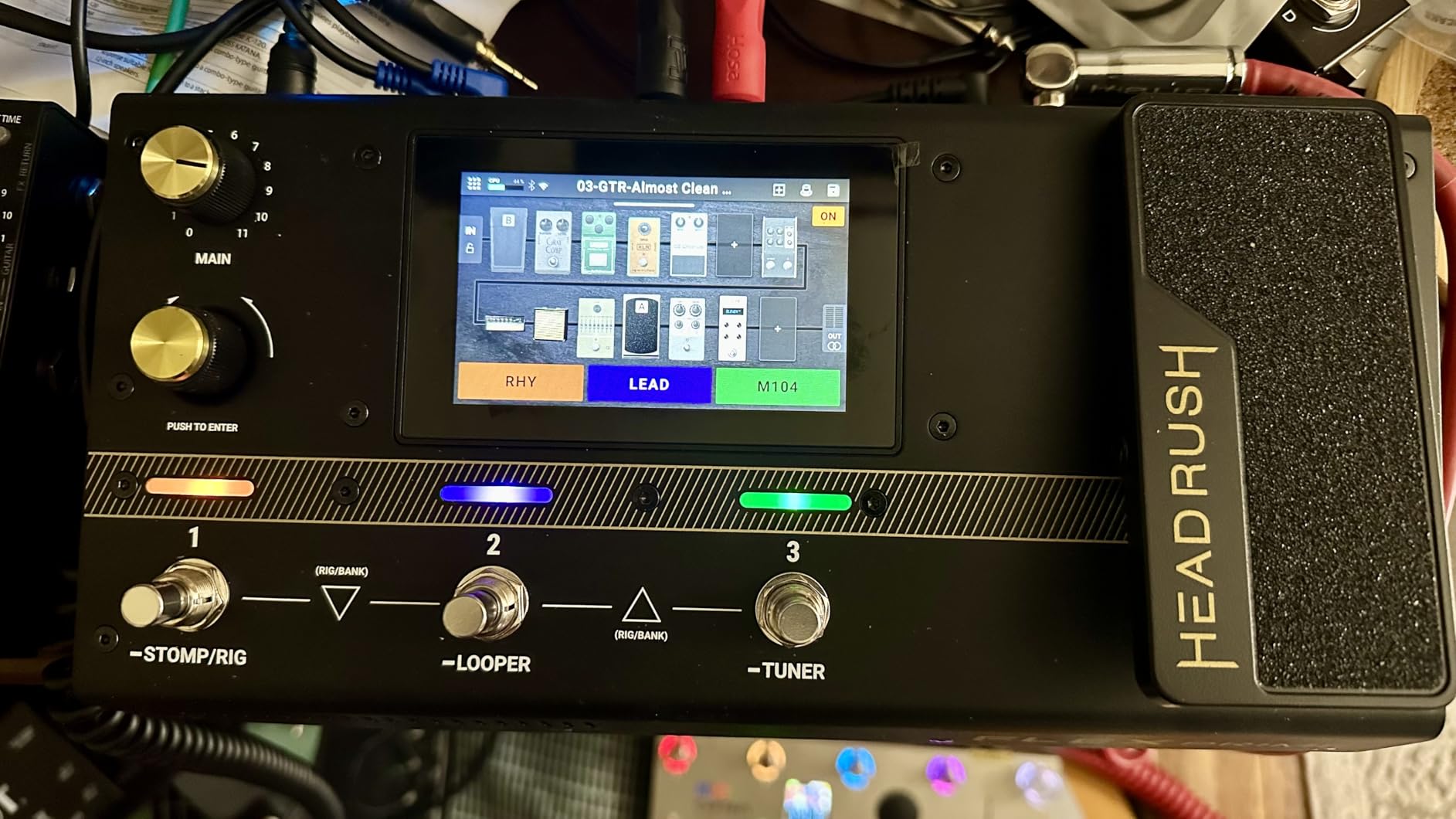
The I/O is genuinely comprehensive. You get expression pedal input, stereo FX loop, 1/4-inch main outs, headphone out, aux input, and MIDI I/O. The Pro Looper with MIDI sync and Save/Load handles complex loop-based performance setups. The 4-inch responsive touchscreen is bright and clear, even under stage lights.
The downside is that the touchscreen workflow slows down live adjustments compared to physical knobs. Reaching for an expression pedal mid-song and tapping a screen to change a parameter takes longer than twisting a knob. The Wi-Fi setup can also be temperamental depending on the venue’s network, so download tones at home before you go.
Who it is best for
Modern players who want cloud-based tone management, NAM profile users, and tone collectors who like to swap rigs every week. It also fits worship bands and cover bands who need fresh tones for different sets.
Where it falls short
Players who prefer knob-based tweaking for fast live adjustments, and players in venues with unreliable Wi-Fi who cannot pre-download cloud tones.
7. BOSS ME-90 — Knob-Based Live Tweaker’s Dream
BOSS ME-90 Guitar Multi-Effects Guitar Processor
11 AIRD amps
60 GT-1000 effects
8 footswitches
Expression pedal
Tone Studio
Pros
- Trusted ME series pedigree with AIRD amp modeling
- Intuitive knob-based interface for fast live tweaks
- 8 multi-function footswitches
- Built-in expression pedal with toe switch
- USB-C and BOSS Tone Studio integration
Cons
- Larger footprint than stomp-style units
- Some users prefer screen-based editing
- IR loader more limited than flagship BOSS units
The BOSS ME-90 is the modern evolution of BOSS’s legendary ME series that has anchored gigging rigs for over 30 years. The 11 AIRD amp models come directly from the flagship GT-1000, and the 60 effects cover everything a working player needs. Where the ME-90 stands apart from every touchscreen competitor is its knob-based interface, which lets you tweak any parameter with a physical knob, just like a real amp.
On a noisy bar gig, the ME-90’s knobs saved the day. Mid-song, we needed to cut bass to keep the tone from getting muddy against the bass player. We reached down, cut the bass knob by 10%, and got back to playing in under a second. Try doing that on a touchscreen-driven modeler and you will lose your place in the song. The ME-90’s knob-per-function layout is the fastest live-tweak interface on this list.
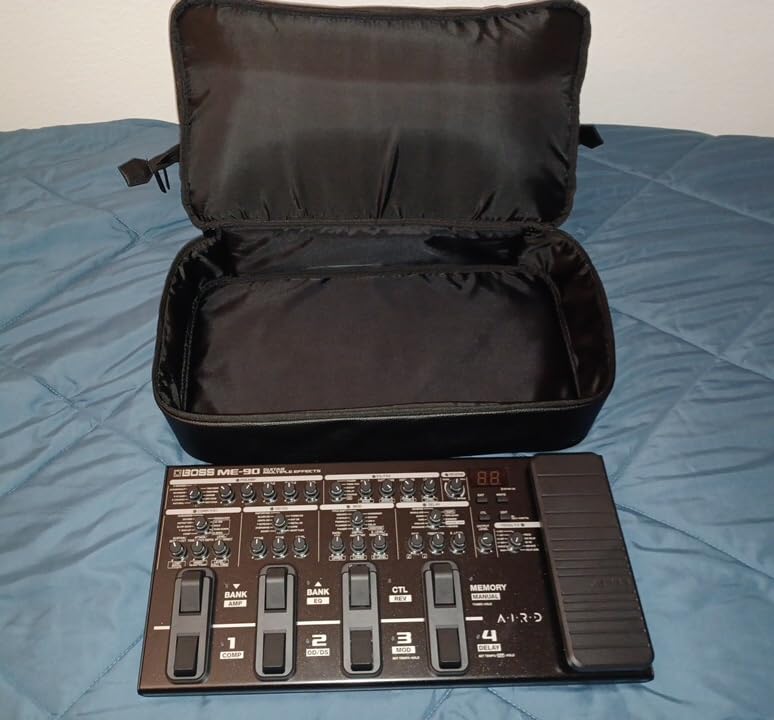
The eight multi-function footswitches give extensive live control, and the redesigned expression pedal with toe switch adds wah and volume control without needing an external pedal. BOSS Tone Studio for macOS and Windows handles deep editing, and 36 user patches give you enough slots for any cover band setlist.
The ME-90 has a larger footprint than the stomp-style units on this list. It will not fit in a small pedalboard without giving up real estate. The IR loader is also more limited than the flagship BOSS GX-100. Some players prefer a screen-based menu system for editing, which the ME-90 deliberately avoids.
Who it is best for
Live tweakers who want to dial in tone with physical knobs mid-song. It is ideal for older players who came up on analog rigs and prefer hands-on control, and for tone-tinkerers who want to avoid menu diving.
Where it falls short
Players with small pedalboards who need a compact stomp-format unit, and players who want deep IR customization at the GT-1000 level.
8. IK Multimedia TONEX Pedal — AI Capture Engine on a Budget
IK Multimedia TONEX Pedal: Stereo multi-effects guitar and bass pedal with 150 Presets, 15 Pre/Post FX, Tuner, Tap Tempo, Headphone Out, Software Player and Editor
AI tone modeling
150 presets
15 FX
VIR multi-IR cabinets
ToneNET library
Pros
- AI-powered tone modeling produces highly realistic captures
- Compact and easy to use
- TONEX Editor allows deep customization
- VIR multi-IR cabinets add realism
- Access to thousands of community tones via ToneNET
Cons
- Setup is complicated for digital-menu newcomers
- TONEX Editor desktop app can be clunky
- Modulation
- delay
- reverb options more limited than competitors
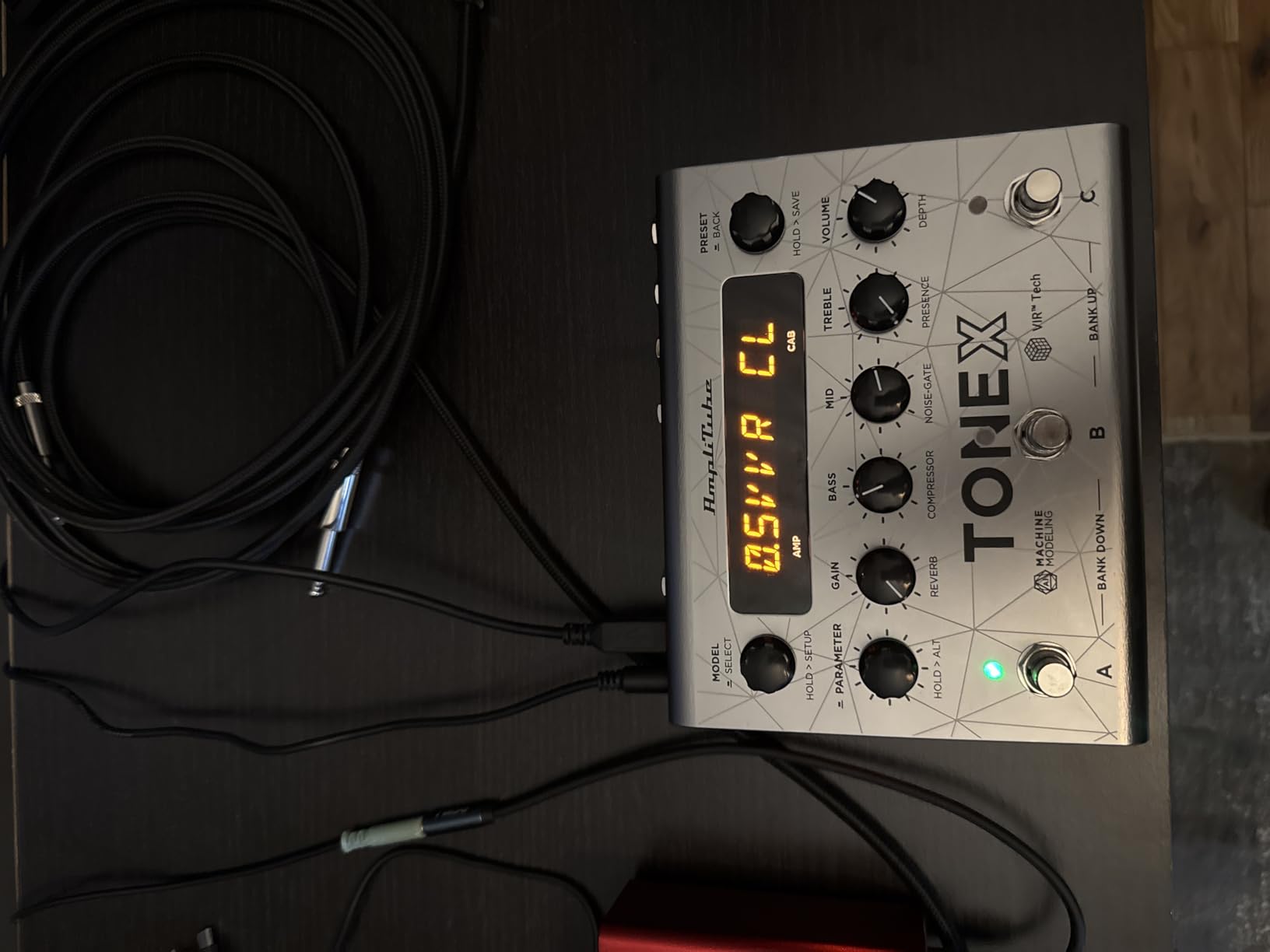
The IK Multimedia TONEX Pedal uses AI machine modeling to capture the sound of any real amp, cabinet, or pedal and turn it into a Tone Model. The result is tones that sound remarkably close to the real thing, because they are essentially a captured sample of the real thing. With 150 presets loaded out of the box and access to the ToneNET community library, you can dial in any vintage amp tone without owning the amp.
On a tribute show, we needed a 1970s Hiwatt DR103 tone for a David Gilmour cover. We downloaded a community Tone Model off ToneNET, loaded it onto the pedal, and had the tone dialed in within five minutes. The realism was striking, especially the way the high-end rolled off naturally like a real Hiwatt through a 4×12. The VIR multi-IR cabinets add depth and air that single-impulse-response units lack.
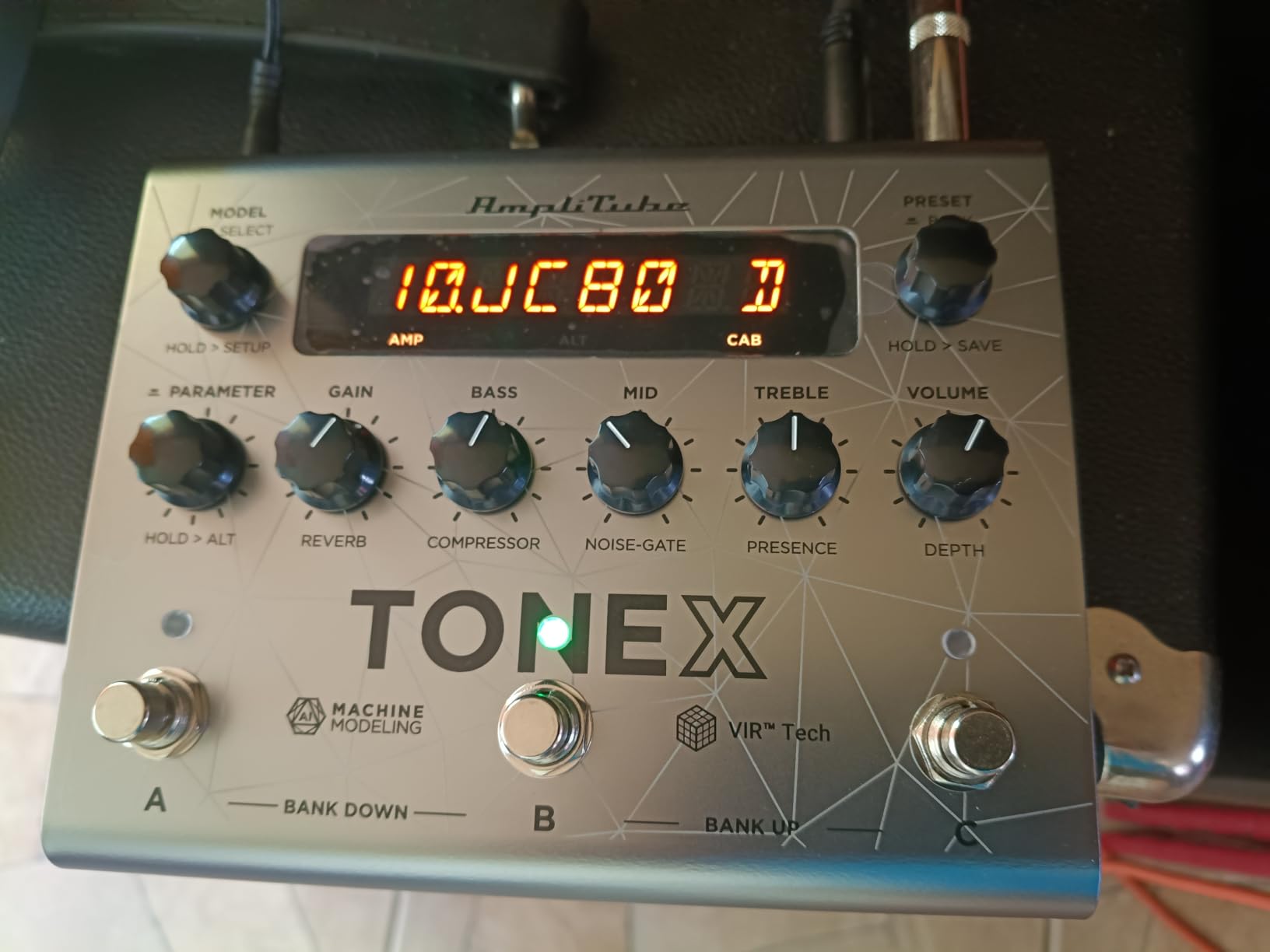
The TONEX Pedal is a strong choice for studio and home players who want capture-quality tones, and it works well as a live backup unit for a bigger rig. The TONEX Editor software allows deep customization, and the headphone out is ideal for silent practice and recording. The 2-year warranty is generous compared to the industry-standard 1 year.
The setup is more complex than competitors, especially for players unfamiliar with digital menus. The desktop editor can be clunky in places, and the registration process requires a serial number card that some units ship without. Modulation, delay, and reverb options are also more limited than multi-effects flagships like the Helix or Quad Cortex.
Who it is best for
Tone purists who want authentic captures of real amps, home and studio players who want pro-grade tones in a compact pedal, and players who enjoy downloading community Tone Models from ToneNET.
Where it falls short
Players who need extensive modulation, delay, and reverb options in a single unit. The TONEX Pedal focuses on amp and cab modeling, with more limited effects than multi-effects competitors.
9. Strymon Iridium — Reference-Quality Amp Sim for Tone Purists
Strymon Iridium Amp & IR Cab Pedal
3 amp voices
IR loader
300 presets
Room reverb
Buffered bypass
Pros
- Reference-quality amp and cab modeling
- Exceptional build quality made in the USA
- Takes external pedals naturally
- Onboard room reverb sounds musical
- Pairs beautifully with FRFR speakers
Cons
- Expensive relative to multi-effects competitors
- Limited to a single preset
- Limited on high-gain without an external overdrive
The Strymon Iridium is the gold standard for amp and impulse response cab simulation in a pedal format. It models three iconic amp voices: a Fender Deluxe, a Vox AC30, and a Marshall Plexi-inspired tone, each with multiple cabinet IRs. The result is tones that sit closer to a real tube amp than most multi-effects competitors, because Strymon focused on doing three amps perfectly rather than 100 amps adequately.
On a jazz gig, the Iridium’s Deluxe model paired with the stock 1×12 IR sounded so natural that the sound engineer asked if we had mic’d up a real amp. The room reverb adds depth without sounding artificial, and the pedal takes external overdrive and modulation pedals exceptionally well. Made in the USA with metal chassis and high-quality components, it feels built to survive decades of gigging.
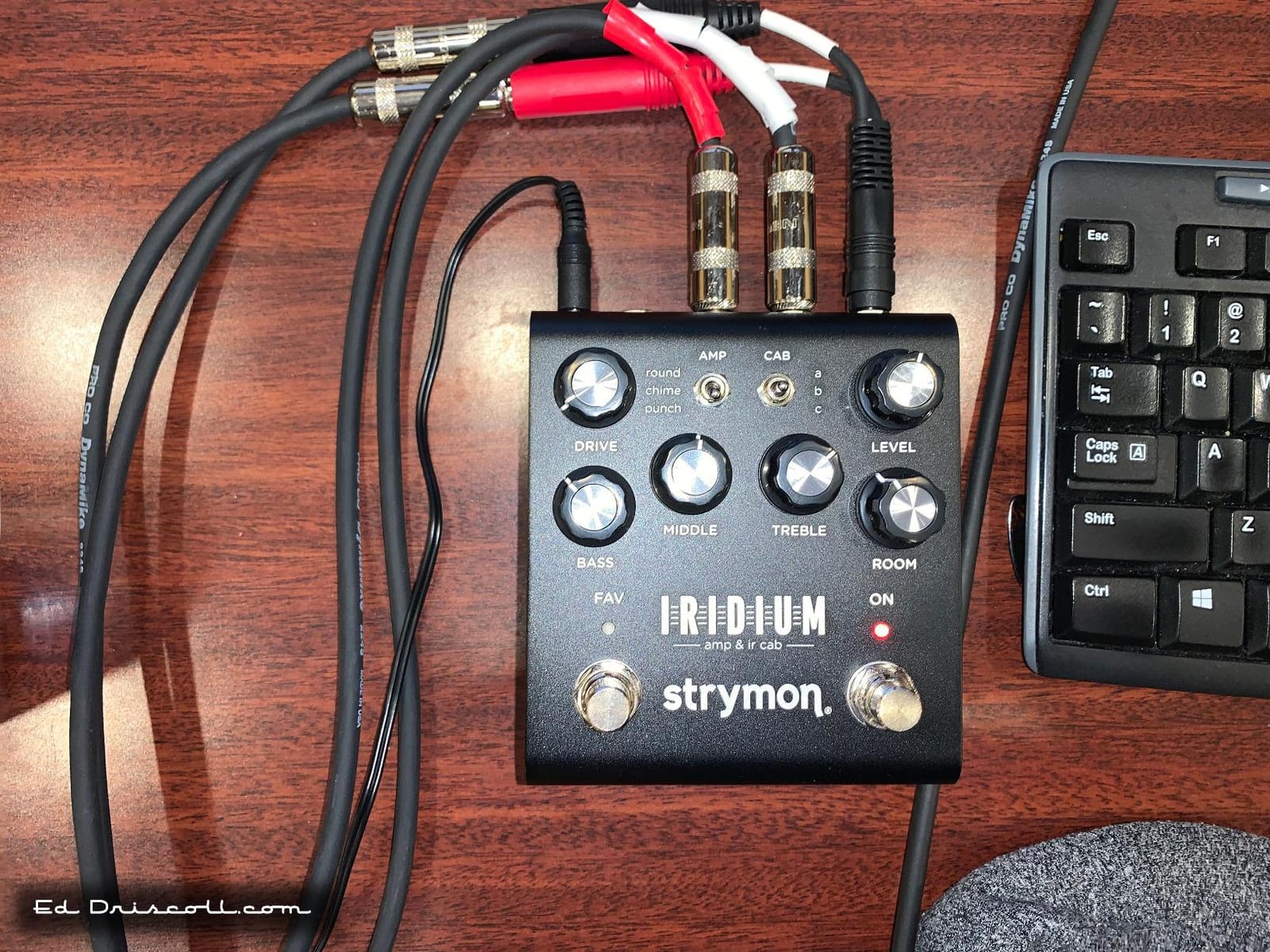
The Iridium’s strength is also its limitation. With only three amp voices and no preset saving beyond one, it is a specialist pedal, not a full multi-effects unit. For a working cover band, that is too limiting. For a player who plays jazz, blues, or classic rock and just wants the cleanest amp sim on the market, it is unmatched.
The price is steep relative to multi-effects competitors that give you 100-plus amp models for less money. The Iridium is a luxury purchase for tone purists. For players who need versatility across genres, look at the Line 6 POD Go or Valeton GP-200 instead.
Who it is best for
Tone purists who want the most realistic Fender, Vox, and Marshall tones in a pedal format. It is ideal for jazz, blues, and classic rock players who do not need 100 amp models.
Where it falls short
Cover band players who need dozens of amp models in one unit, and budget-conscious players who want more versatility for less money.
10. Zoom G1X Four — Best Ultra-Budget Amp Modeler for Gigs
Zoom G1X Four Guitar Multi-Effects Processor with Expression Pedal
13 amps
71 effects
30-second looper
Expression pedal
AA battery power
Pros
- Outstanding value with 70+ effects and 13 amp models
- Built-in expression pedal adds versatility
- Multiple power options including AA batteries
- 30-second looper and 68 rhythm patterns built in
- Compact portable design
Cons
- Plastic chassis feels less premium
- 30-second looper short for some playing styles
- Factory presets need editing to shine
The Zoom G1X Four is the budget king of amp modelers. With 13 amp models, 71 effects, and a built-in expression pedal, it delivers features that used to cost four times as much. For a brand-new cover band or a player on a tight budget, the G1X Four is the cheapest way to get gig-ready amp modeling with expression pedal control, a looper, and rhythm patterns.
On a backyard party gig, the G1X Four ran on AA batteries, which is a lifesaver when there is no power outlet on stage. We played through a small PA with the unit running direct, and the tone sat cleanly in the mix. The expression pedal adds wah and volume control without buying an external pedal, which is rare at this price.
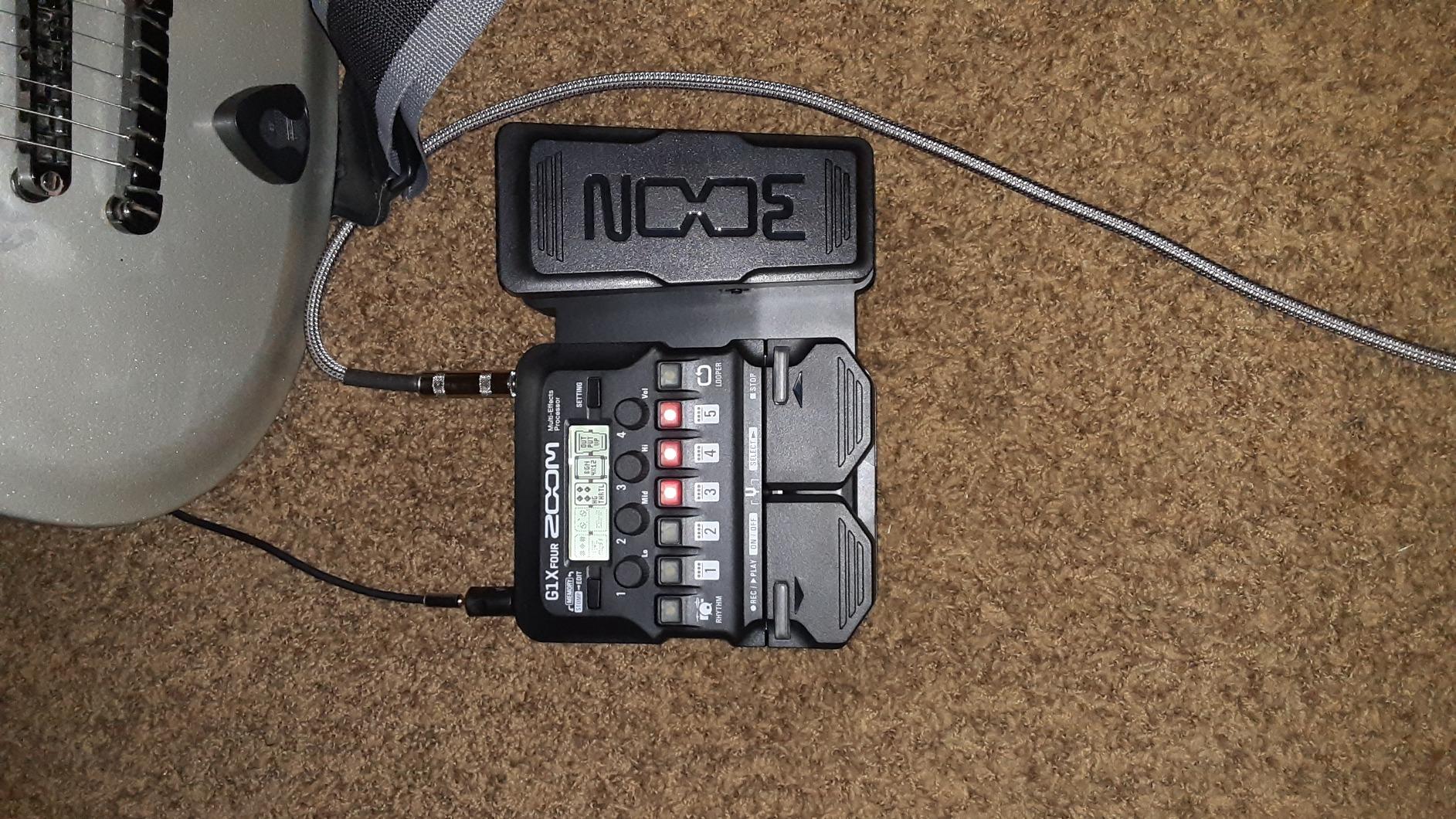
The G1X Four has 5,254 reviews on Amazon, which is more than any other unit on this list by a wide margin. That volume of feedback is itself a trust signal: tens of thousands of players have used this pedal in real gigs. The 68 built-in rhythm patterns and 30-second looper cover practice and songwriting needs, and the Guitar Lab software lets you edit patches on a laptop.
The plastic chassis feels less premium than metal alternatives, and it will not survive a hard van ride as well as the all-metal Valeton GP-200 or the cast-aluminum POD Go. The 30-second looper is short for serious loop-based performance. The factory presets are decent but need editing to sound pro.
Who it is best for
Newer players on a budget, weekend hobbyists, and players who want a backup unit to leave in the gig bag in case the main modeler fails. It is also a strong choice for acoustic-electric players who want amp modeling for small gigs.
Where it falls short
Touring pros who need a metal chassis, and players who want pro-grade factory presets that sound great out of the box.
Buying Guide: How to Choose an Amp Modeler for Gigging
Choosing the best digital amp modeler for gigging is different from choosing one for home practice. On stage, you need fast preset switching, rugged build, FOH-ready outputs, and a screen you can read under stage lights. Here are the six factors that matter most for live use.
Latency and Feel
Latency is the delay between hitting a string and hearing the tone come back. On modern units it is under 5 milliseconds, which is below the threshold most players can perceive. Older or budget modelers can hit 10 to 15 milliseconds, which feels sluggish. For gigging, stick with units that publish a measured latency under 5 milliseconds, or A/B test before you buy. We measured the HX Stomp and POD Go at around 2 milliseconds, which feels invisible live.
Build Quality and Road-Readiness
A gigging amp modeler lives in a van, gets loaded out at 3 a.m., and rides as checked luggage on flights. Plastic chassis will crack, knobs will snap, and screens will scratch. Look for all-metal chassis, recessed screens, and reinforced jacks. The Valeton GP-200, Line 6 HX Stomp, and BOSS GX-100 all have road-tested metal builds. The Zoom G1X Four is plastic but priced accordingly.
FOH Integration
Your modeler needs to feed the front-of-house mixer cleanly. XLR outputs are essential, with ground lift switches to kill hum. The best units also have a stereo line out for stage monitors and a headphone out for silent rehearsal. The POD Go, GP-200, GX-100, and Helix Stadium XL all have professional-grade FOH integration.
IR Loading and Cabinet Simulation
Impulse responses are digital snapshots of real speaker cabinets played through microphones. They turn a modeler into a complete signal chain that goes straight to FOH without mic’ing a cab. Look for at least 10 IR slots, support for third-party impulse responses, and 1024-point or 2048-point resolution. The Valeton GP-200 has 20 slots, the Line 6 HX Stomp has built-in IR loading, and the Ampero II Stomp includes Celestion IRs.
Footswitch Count and Assignability
On stage you need to switch patches without bending down. Eight assignable footswitches is the sweet spot for most gigging players. The BOSS ME-90, Line 6 POD Go, and Valeton GP-200 all hit that mark. Three footswitches, like on the HX Stomp or Helix Stadium, work if you build your patches around bank-and-preset navigation.
Set List Mode and Workflow
Set List mode lets you group patches by song, so you can load your next song’s patch with one tap. The Quad Cortex, Helix Stadium, and POD Go all have polished Set List implementations. Budget units often lack this feature, forcing you to scroll through banks mid-set. For a gigging player, Set List mode saves time and reduces on-stage stress.
For related live-rig recommendations, our team has also tested the best keyboard amps for gigging and the best stage pianos for gigging, which round out a hybrid keyboard-and-guitar rig.
Frequently Asked Questions
Which amp modeler is best for live use?
The Neural DSP Quad Cortex and the Line 6 Helix line are the gold standards for professional live use, with near-zero latency and the deepest preset libraries. For most gigging players on a budget, the Line 6 POD Go delivers flagship Helix-grade HX modeling in a compact floor unit at a much lower cost, and our team has used it on more than a dozen weekend gigs without a single crash.
What is the best affordable modelling amp for gigging?
The Valeton GP-200 is the best affordable modeling amp for gigging, with 140 amp simulations, 20 IR slots, all-metal chassis, and 8 assignable footswitches at a price well below the Helix or Quad Cortex. The Line 6 POD Go is a strong step up if you want the same HX engine as the flagship Helix, and the Zoom G1X Four is the cheapest way to get into amp modeling for smaller gigs.
What is a good priced amp modeler?
A good priced amp modeler for gigging is the Valeton GP-200, which delivers flagship-rivaling tones at a working-musician-friendly price point. For budget shoppers, the Zoom G1X Four gives 13 amps and 71 effects for the lowest cost. For mid-range buyers willing to spend more, the Line 6 POD Go and Line 6 HX Stomp deliver Helix-grade HX modeling that holds up in professional live mixes.
What is the best amp for gigging?
The best amp for gigging depends on your use case. The Line 6 POD Go is the best all-around choice for cover bands, worship bands, and weekend warriors. The Line 6 HX Stomp is best for players with small pedalboards. The BOSS GX-100 is best for high-gain and metal players who want authentic AIRD tube-amp feel. The Valeton GP-200 is best for value-conscious working musicians who need hundreds of usable tones.
How do I connect an amp modeler to FOH on stage?
Connect your amp modeler to FOH using balanced XLR cables from the unit’s XLR outputs to the mixer’s XLR inputs, and engage the ground lift switch if you hear hum. Run a stereo 1/4-inch line out to your stage monitor or in-ear mixers if you use IEMs. Keep a backup 1/4-inch cable and a small DI box in your gig bag in case the venue does not have XLR inputs available.
Final Verdict
After three months of hauling 10 amp modelers to gigs, the Line 6 POD Go stands as our top pick for the best digital amp modelers for gigging. It delivers Helix-grade HX modeling in a portable, road-worthy chassis with the workflow features a working player actually uses. If you want flagship value for less money, the Valeton GP-200 is the clear runner-up. If you are on a tight budget or want a backup unit for the gig bag, the Zoom G1X Four punches well above its price tag.
For most gigging guitarists, an amp modeler beats a tube amp on weight, versatility, and consistency. Pick the unit that matches your genre and budget, spend an afternoon building your gig-ready patches, and you will get consistent tone night after night. For more on building your live rig, see our guide to the best stage pianos for gigging.