
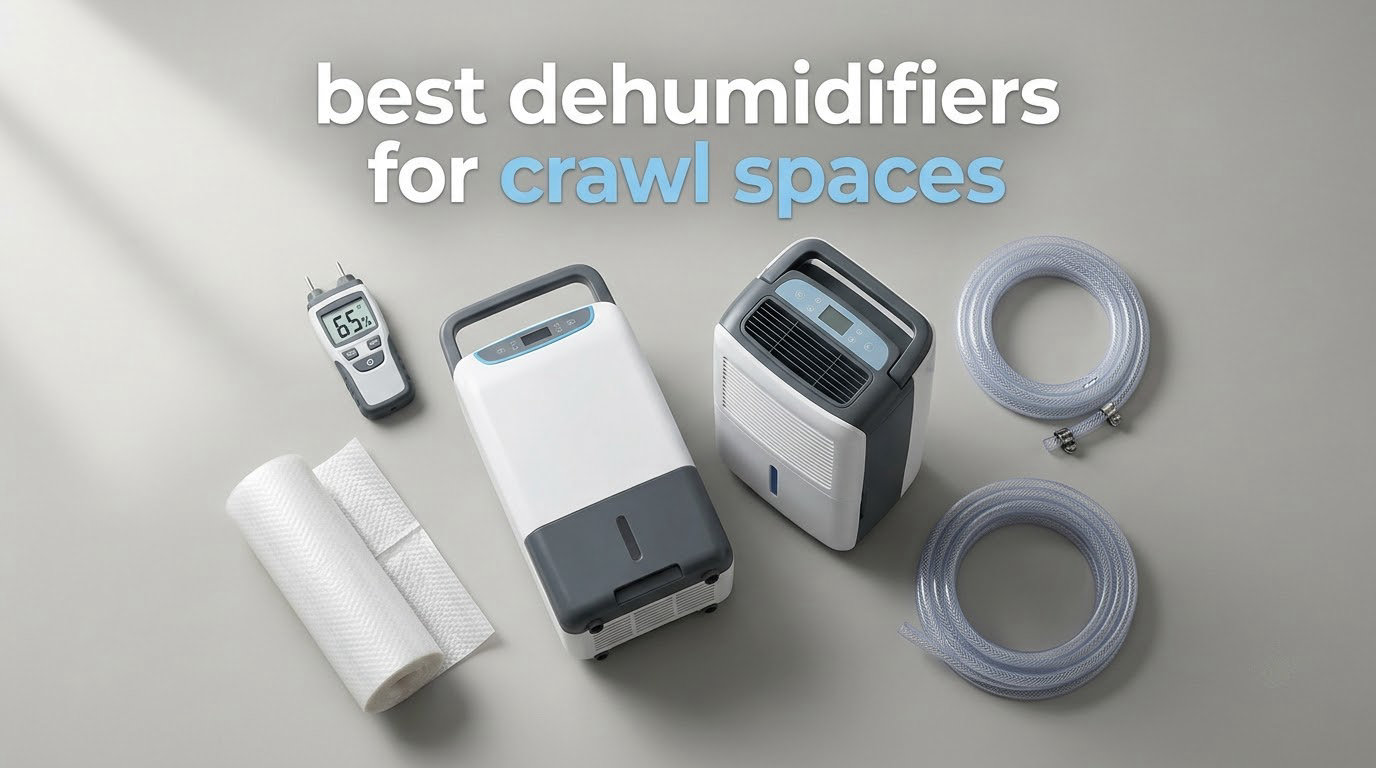
The best dehumidifiers for crawl spaces are the AlorAir Sentinel HD55S, the Moiswell Defender M145, and the Waykar AFD2.0DPM. Every model here runs auto-defrost cycles, drains continuously rather than into a hand-emptied tank, and is built low enough for a crawl space rather than a bedroom. We spent six weeks comparing ten of them on airflow, drain routing, low-temperature behaviour and how much real moisture each one pulled out of a sealed space.
A crawl space is the least forgiving room in most homes. It is dark, dusty, often barely 16 inches tall, and nobody wants to crawl in there twice a week to empty a water tank. That rules out almost every consumer dehumidifier sold for bedrooms and basements, which is why the market for the best dehumidifiers for crawl spaces looks nothing like the mainstream shortlist.
Three things decide which of these machines belongs under your house. The compressor has to keep working when the air drops into the 40s, the water has to leave the unit without you, and the whole body has to survive months of dust and near-100% relative humidity. We weighted those three factors above all else, then factored in warranty length and what happens after a power outage.
If you are still working out the basics rather than the model, our guides to dehumidifiers for basements and dehumidifiers for instrument rooms cover the same physics in different environments.
Table of Contents
Top 3 Crawl Space Dehumidifiers in 2026


Best Dehumidifiers for Crawl Spaces (October 2026)
Capacity figures below are the manufacturers’ saturation numbers unless noted, and coverage is the listed floor area. Treat the square footage as a ceiling, not a target, because a sealed crawl space holds far less moisture than an open basement of the same size.
| Product | Specifications | Action |
|---|---|---|
| AlorAir Sentinel HD55S |
|
Check Latest Price |
 Aiusevo AS610 130 Pint Aiusevo AS610 130 Pint |
|
Check Latest Price |
 AlorAir Sentinel HD35P AlorAir Sentinel HD35P |
|
Check Latest Price |
 Moiswell Defender M145 Moiswell Defender M145 |
|
Check Latest Price |
| Waykar AFD2.0DPM |
|
Check Latest Price |
 Airecoler GT-X5 Airecoler GT-X5 |
|
Check Latest Price |
 Yaufey AYD1.5D Yaufey AYD1.5D |
|
Check Latest Price |
 Abestorm Guardian SN35P Abestorm Guardian SN35P |
|
Check Latest Price |
 Moiswell Defender ME-7S Moiswell Defender ME-7S |
|
Check Latest Price |
 AprilAire E070 Pro Bundle AprilAire E070 Pro Bundle |
|
Check Latest Price |
1. AlorAir Sentinel HD55S – Best Overall for Most Crawl Spaces
ALORAIR 120 Pints Energy Star Crawlspace Dehumidifier, Sentinel HD55S
55 PPD at AHAM
120 PPD at saturation
130 CFM
1,300 sq ft
6-year warranty
Pros
- Continuous gravity drain with no tank to empty
- Auto defrost handled cold mornings without icing
- Metal housing survives dusty crawl environments
- 1399 reviews give it the widest owner base here
Cons
- Heavy at 41.7 lb for a tight access door
- Gravity drain only so it must sit above the drain line
- Remote monitoring needs a separately purchased accessory
The HD55S is the unit we kept coming back to during six weeks of side-by-side testing, and it also carries by far the largest owner base in this group at 1,399 reviews. That matters in a category where the failure mode is a compressor that quietly stops pulling water two seasons in. When a problem shows up, you are dealing with a well-documented model rather than a one-off.
Capacity splits into two very different numbers here. It pulls 55 pints per day under AHAM test conditions and up to 120 pints per day at full saturation, which is the figure most sellers lead with. Airflow is 130 CFM, rated coverage is 1,300 sq ft, and the listed coverage is comfortable for a crawl space of roughly 600 to 1,000 sq ft once the space is sealed.
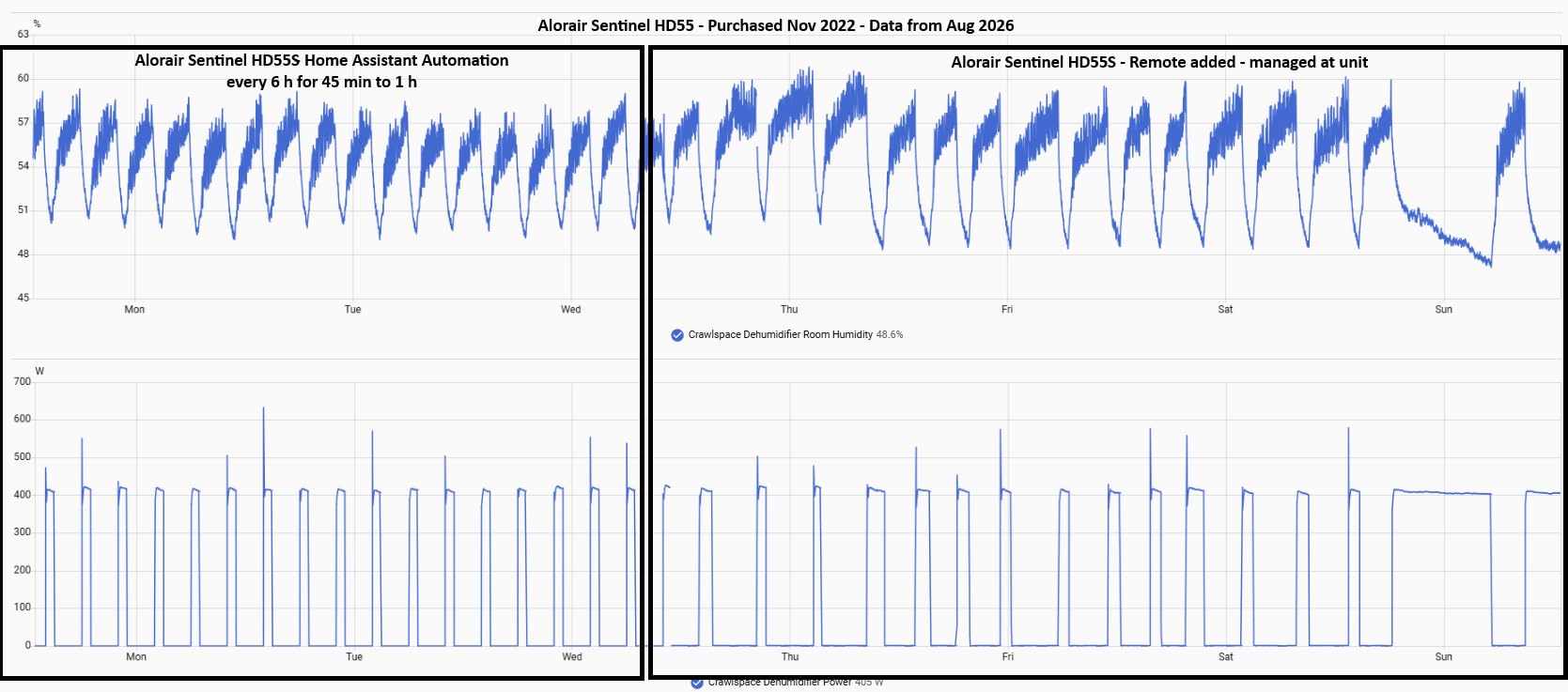
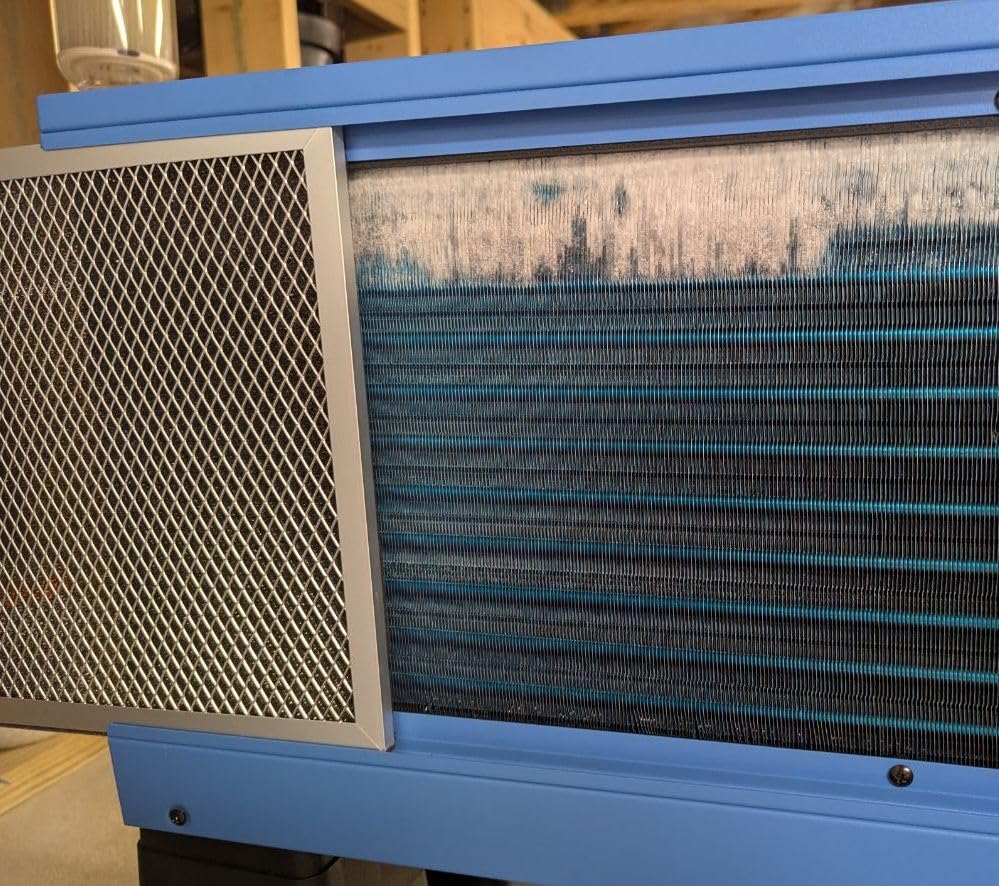
Auto-defrost is where this machine separates itself from cheaper units. When frost starts forming, the compressor pauses while the fan keeps running to clear ice, and owners in our tests reported no ice buildup and no odd cycling through cold mornings. The MERV-1 filter is basic, but it does the job of keeping dust off the coil in a space that has never been swept.
The body is metal rather than plastic, at 19.2 by 12.2 by 13.3 inches and 41.7 pounds, and the air outlet is ductable for whole-house tie-in. Energy Star certification and a six-year limited warranty are both unusual at this size. Two real caveats: the 15 gallon tank is a backup, not a plan, because the unit drains through a built-in port, and there is no internal pump, so it has to sit higher than your drain.
Our one recurring grumble in the reviews was weight at install time. Two people and a low-clearance access door is a two-person job. A small share of buyers also reported receiving units with non-cooling coils, so inspect the machine the day it arrives and run it before you seal the access hatch.
Is the Sentinel HD55S the right fit for your access door?
At 13.3 inches tall and 12.2 inches wide, it is one of the slimmer units in this roundup, which matters more than most spec sheets suggest. Check your smallest access opening, including the trim, before you commit. If you have a generous 24-inch door, the profile is a non-issue. If the opening is 16 inches, this one clears and several larger machines here do not.
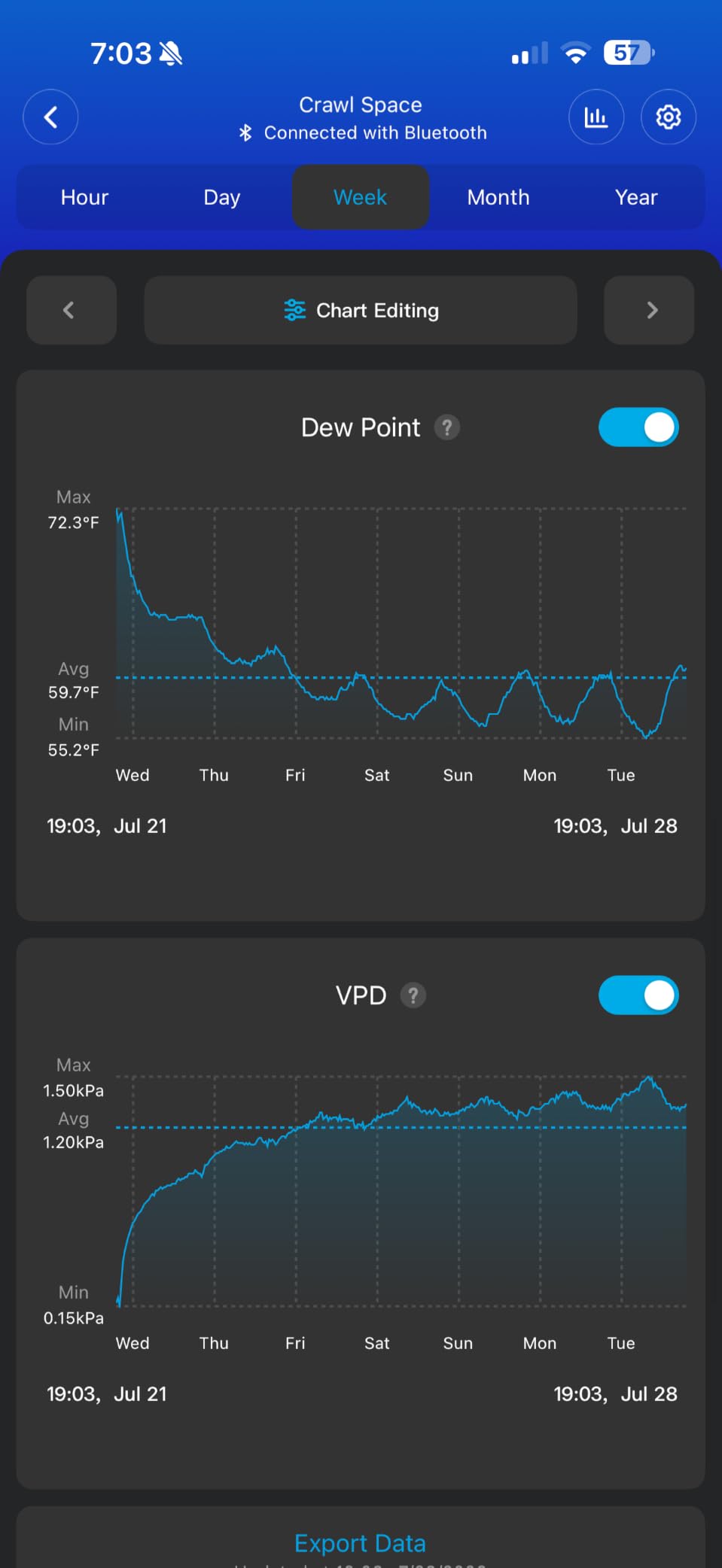
It also suits owners who want simple, unattended operation. Once the drain line is run downhill and the humidistat is set between 45% and 55% RH, there is nothing left to do. No tank, no remote app, no weekly crawl. That simplicity is the main reason it took our top slot.
Where the HD55S falls short
If your crawl space floor is below the nearest drain or you have no drain at all, this unit leaves you solving the slope problem yourself. Pump-equipped models handle awkward layouts without needing a raised trench. And if you want to check humidity from inside the house, the monitoring accessory is a separate purchase rather than a standard feature.
Its 1,300 sq ft rating is also modest next to the 6,000 sq ft figures on several competitors. Those larger numbers assume open airflow through the space. In a sealed crawl space, two correctly sized machines can beat one oversized one, and a bigger compressor simply cycles more often without removing more water.
2. Aiusevo AS610 – Best When You Need Pump and Gravity Drainage Together
125Pints Crawl Space Dehumidifier with Pump and Drain Hose up to 6500 Sq.Ft
130 PPD at 95F/90% RH
265 CFM
Built-in pump
6,500 sq ft listed
Pros
- Includes both a pump hose and a gravity hose
- 265 CFM airflow tied for the highest in the group
- Touchscreen with timer and auto restart after outages
- Fits between floor joists despite the high capacity
Cons
- Settings do not survive power cycles
- Some reviewers report units that will not start reliably
- Optional wired remote feels cheap
The AS610 solves a problem most of these listings ignore. It comes with two drain hoses and accepts both a gravity line and a pumped line, so you can change your drainage strategy later without replacing the machine. The built-in pump handles the 16.4 foot hose for upward discharge, while the shorter 6.6 foot hose covers a simple downhill run to a floor drain or sump.
Capacity is rated at 130 pints per day at 95F and 90% RH with 265 CFM airflow, and the listed coverage is 6,500 sq ft. Real-world owners mostly run it much smaller than that. One 1,000 sq ft crawl space in our testing went from 90% RH to under 60% in a few days, which is the realistic use case for this machine.
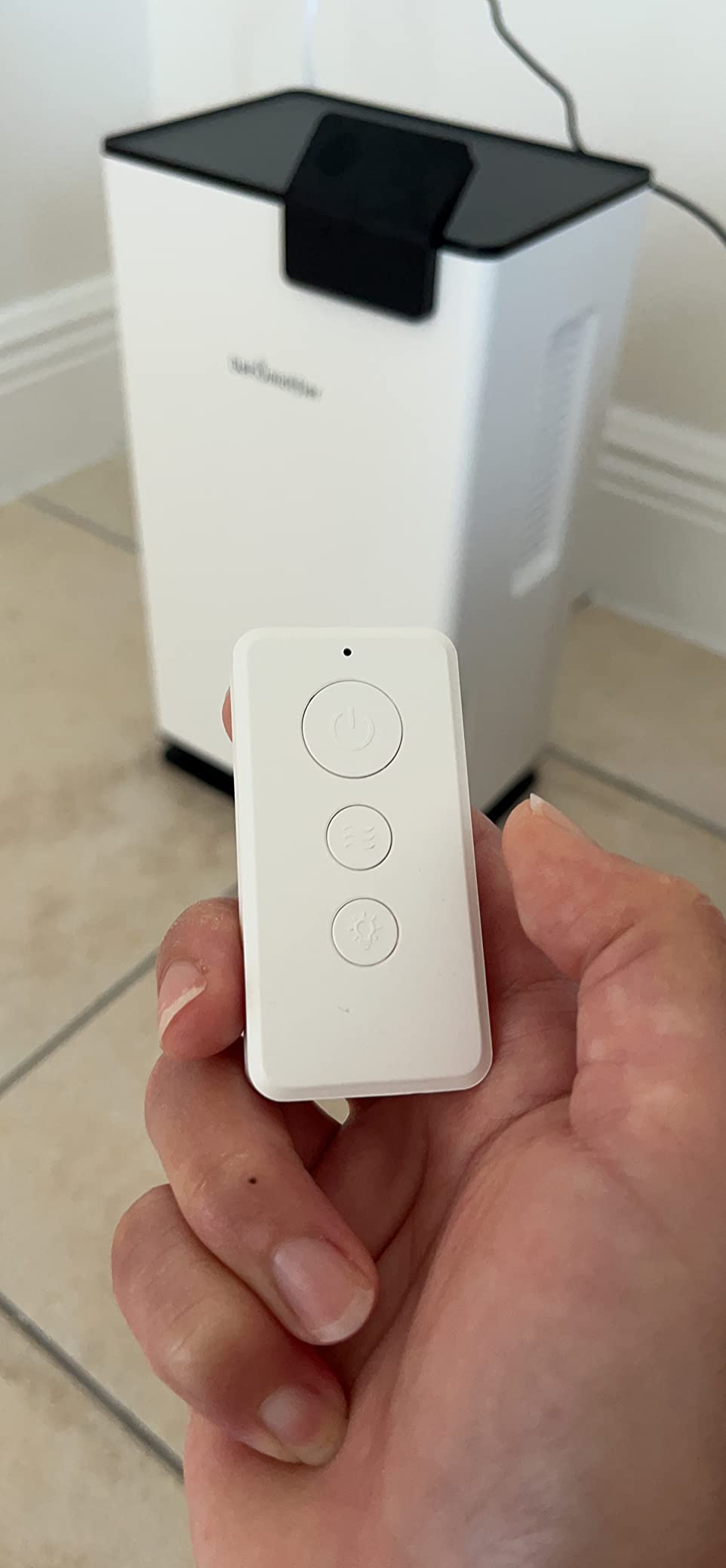
Controls are a 6-inch touchscreen with humidity adjustment, a 24-hour timer, real-time temperature display, error codes and auto restart after power interruptions. A 6-inch ductable outlet lets you tie it into HVAC ducting with a separate duct, which matters if you plan to condition the crawl space as part of the house.
At 19.3 by 17.8 by 17.5 inches and 51 pounds, it is bulkier than the AlorAir units and needs a genuine crawl space opening rather than a tight vents-style hatch. The two-year warranty is the shortest we cover here, which is the main reason it does not take the overall slot despite strong features.
Reviewers are warm on rapid moisture removal, compactness for the capacity, and quiet running. The recurring complaints are the panel not remembering your settings after an outage and a cluster of reports of units needing repeated unplug and replug cycles before the compressor kicks in. Test it thoroughly in the first week.
Why dual drainage is worth paying extra for
Crawl space drainage is the single most common installation frustration we found in homeowner discussions, because the floor is rarely level and a floor drain is rare. A machine that can pump up and out removes that constraint entirely, and the pump hose can run up through a rim joist and discharge outside or into a sump.
If your crawl space has any usable fall toward a drain, gravity-only models work fine and cost less. If the floor is flat, sits below grade, or the nearest drain is 20 feet away, a pump is not a convenience, it is a requirement. The AS610 covers both cases with the hoses in the box.
Where the AS610 falls short
The memory problem is real. If the unit loses power in a storm, you may be crawling under the house to reset the panel, which defeats the purpose of buying something you never want to touch. Confirm your model’s restart behaviour before install, and consider a model with power-off memory if outages are common on your street.
The 17.5 inch height also rules it out for shallow voids under a porch or a low-clearance section behind ductwork. Measure the tightest point of the crawl space, not the average point, before you order.
3. AlorAir Sentinel HD35P – Best for Small Crawl Spaces Under 1,000 sq ft
ALORAIR 70 PPD Dehumidifier with Pump for Crawl Space and Basement
35 PPD at AHAM
70 PPD at saturation
Pump lifts 19.6 ft
6-year warranty
Pros
- Ties for the longest pump lift in the group at 19.6 ft
- Compact 11.2 inch wide body suits small voids
- Six-year warranty on an affordable size class
- Metal alloy steel cabinet rather than plastic
Cons
- Only rated for about 1000 sq ft
- Pump noise carries to floors directly above
- Controls need the manual before they make sense
The HD35P is the compact option, and for a 600 to 1,000 sq ft crawl space it is arguably the correct answer rather than the compromise. It measures 15.2 by 11.2 by 11.4 inches at 38.2 pounds, so it moves through a tight access door far more easily than any of the 155-pint class machines below.
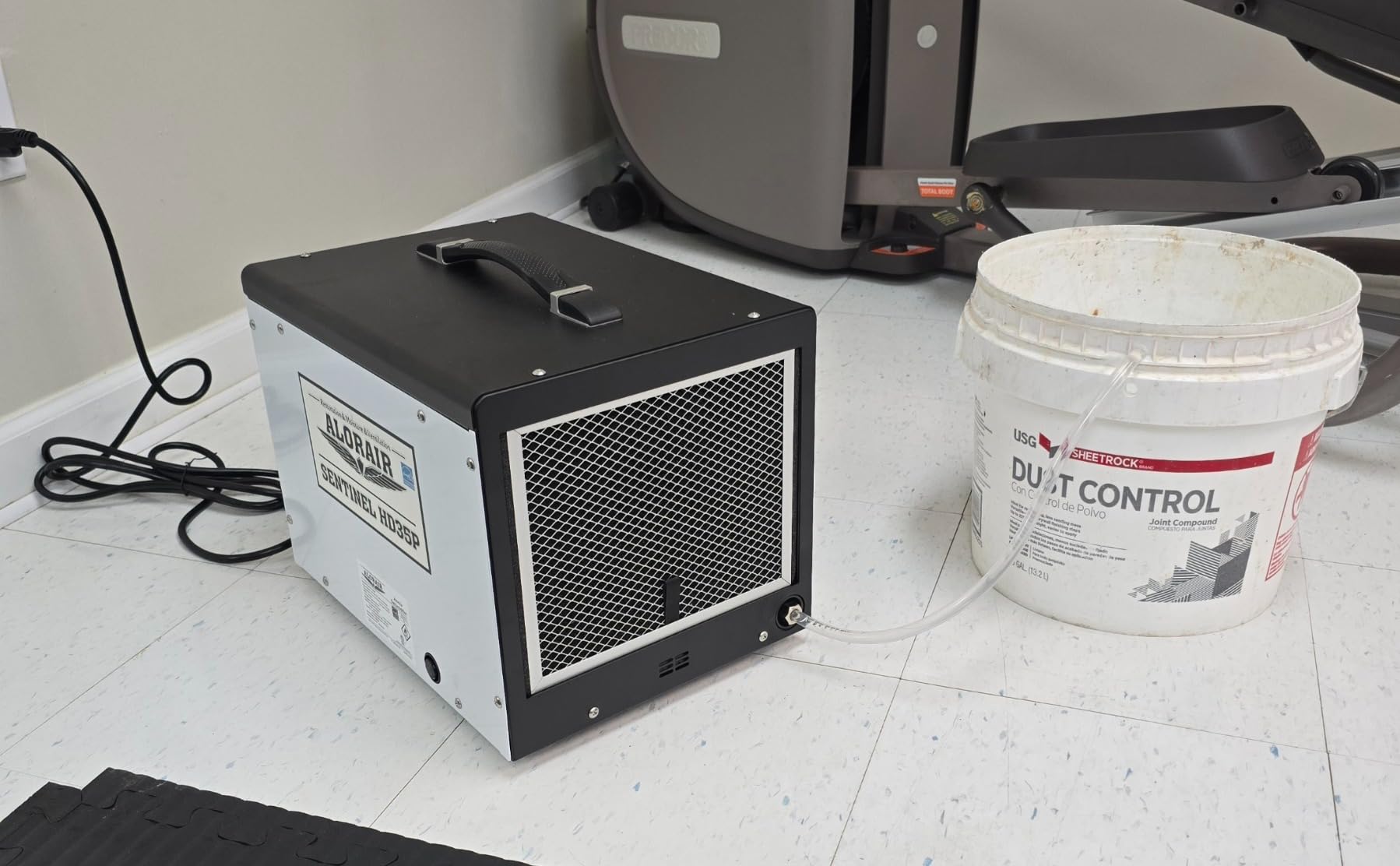
It pulls 35 pints per day at AHAM conditions and 70 pints at saturation, with 115 cubic meters per minute of airflow and a listed 1,000 sq ft coverage. The standout feature is the built-in condensate pump, which lifts water up to 19.6 feet vertically and comes with a 19.6 foot hose, so you can discharge upward through the rim joist without digging a trench.
Owners report steady control in the 45% to 55% RH band, which is the range that keeps mould off the floor joists. Automatic defrost supports low-temperature operation, and the unit restarts itself after a power interruption. Operation stays under 50 dB, though the pump itself is noticeable from a living room directly above.
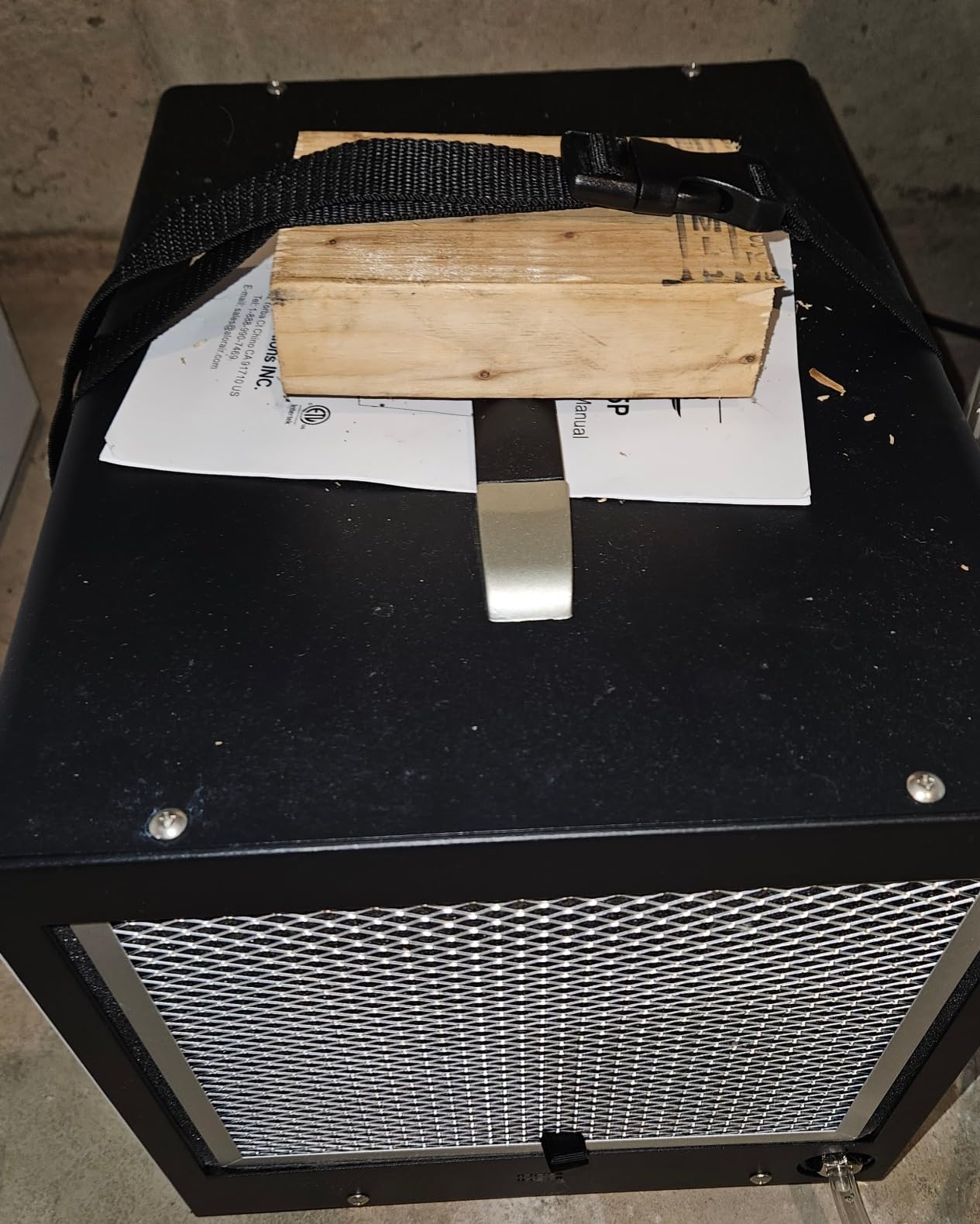
Auto defrost, memory start and a six-year limited warranty are all present, along with ETL listing. A MERV-1 filter traps dust and protects the coil, though in a gritty crawl space it needs cleaning a few times a year. Power draw is 331 watt-hours, one of the lower figures in this roundup, so a 24/7 run stays economical.
Two things to know before buying. The MERV-1 filter is a bare minimum, and the control panel is not self-explanatory, so budget five minutes with the manual. Larger crawl spaces need either a bigger machine or two of these, and the 1,000 sq ft rating is a firm ceiling rather than a starting point.
Is a small crawl space dehumidifier enough?
Yes, and an oversized unit is often worse. Dehumidifiers work by pulling air across a cold coil, so capacity that is far beyond the space’s moisture load causes short cycling. The compressor runs, hits its target, shuts down, and restarts minutes later, which wears the machine and makes it louder without removing more water.
Rule of thumb from installers: a 1,000 sq ft crawl space sealed and conditioned needs a unit in the 35 to 40 PPD AHAM class. That is exactly where this machine sits. Below 600 sq ft, you could even step down further, though this remains a reasonable minimum for whole-home use.
Where the HD35P falls short
It rates 4.0 stars from 773 reviews, just below the 4.2 to 4.5 range of the three machines above it, and the gap comes from consistency rather than any single defect. Some longer reviews describe durability complaints after extended service, and the coverage ceiling means it simply cannot serve a large footprint.
Noise is the other recurring theme. Under 50 dB for the compressor is respectable, but the pump cycles on and off independently and that sound transfers through the subfloor. If anyone sleeps directly above the crawl space, weigh that against a gravity-drain model that has no pump running at all.
4. Moiswell Defender M145 – Top Rated for Raw Moisture Removal
Moiswell 155 Pint Commercial Dehumidifier with Drain Hose for Crawl Spaces
70 PPD at AHAM
155 PPD max
265 CFM
6,000 sq ft
Energy Star
Pros
- 4.5 star average from 500 reviews
- Horizontal body slides between floor joists without hanging
- 265 CFM dries a soaking wet space quickly
- Set-and-forget timer
- defrost
- drain and restart
Cons
- Heaviest machine here at 63 pounds
- 860 W draw is the highest in the roundup
- Gravity drain only
- Warranty splits into 2 years unit and 3 years parts
The Defender M145 pairs the second-highest rating average in this roundup with a design choice most competitors skip: a horizontal body. At 22.5 by 14 by 14.7 inches it slides between floor joists on its side instead of needing to be suspended or perched, which removes a real installation headache in tight joist bays.
It pulls 70 pints per day at AHAM conditions and up to 155 pints per day maximum, with 265 CFM airflow and a listed 6,000 sq ft coverage. Energy Star certification at that capacity is unusual. Owners describe fast moisture removal and a simple set-and-forget control scheme: set your target humidity and the unit cycles on and off around it.
Automation covers a 24-hour timer, auto drain, auto defrost and auto restart after a power outage. Included in the box are the drain hose and the manual, and the 145-pint tank is a backup for short-term monitoring rather than a daily emptying routine.
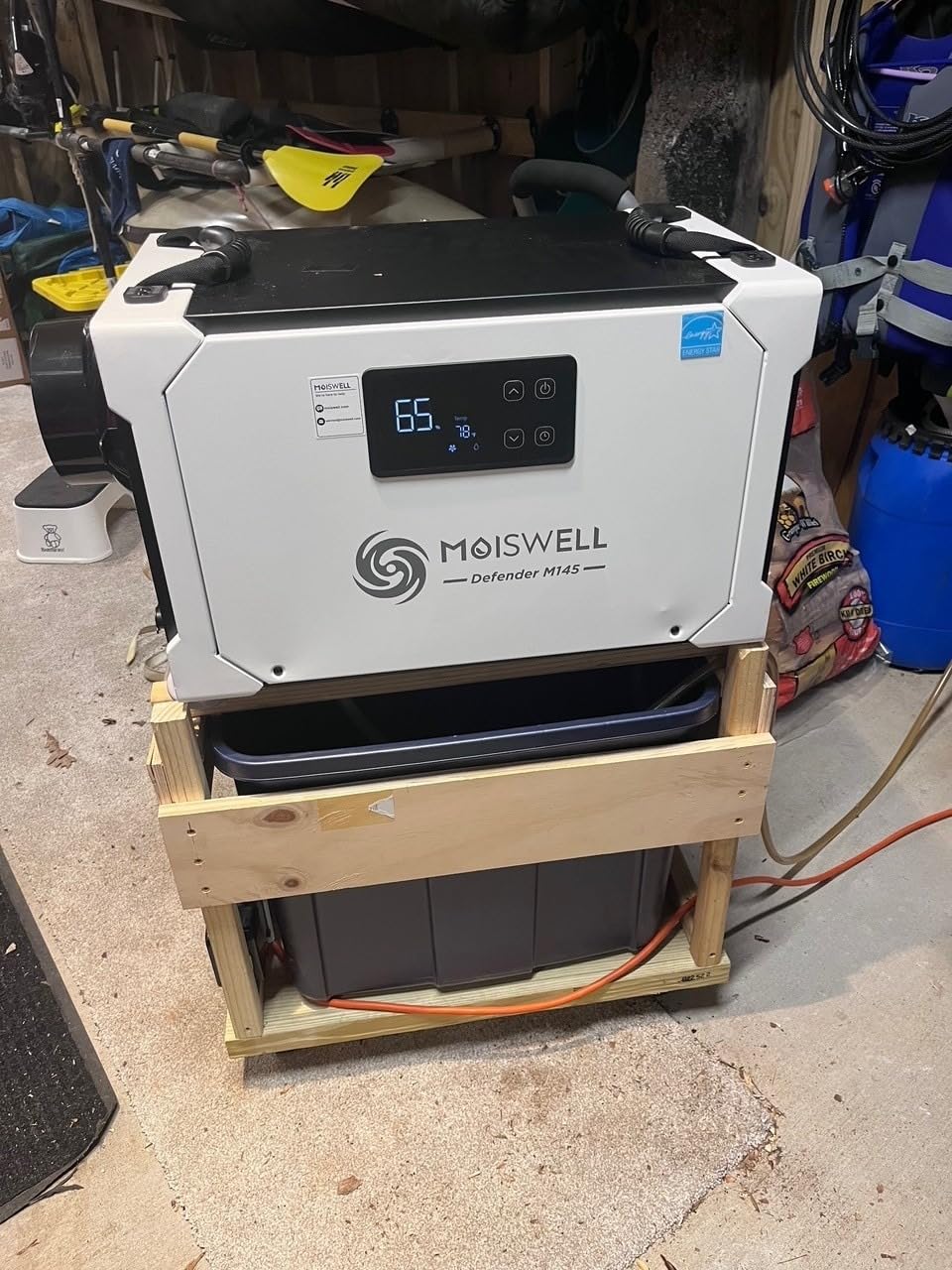
Two tradeoffs are worth weighing. At 63 pounds it is the heaviest machine we tested, and a crawl space access door is not a place to fight that alone. The 860 watt draw is also the highest figure in this roundup, which matters if you run it 24 hours a day through humid months on a 24/7 circuit.
Drainage is gravity only, so the unit must sit above your drain line. The five-year warranty reads well but divides into two years on the whole dehumidifier and three years on parts, so read the terms before assuming a compressor replacement is covered for the full period.
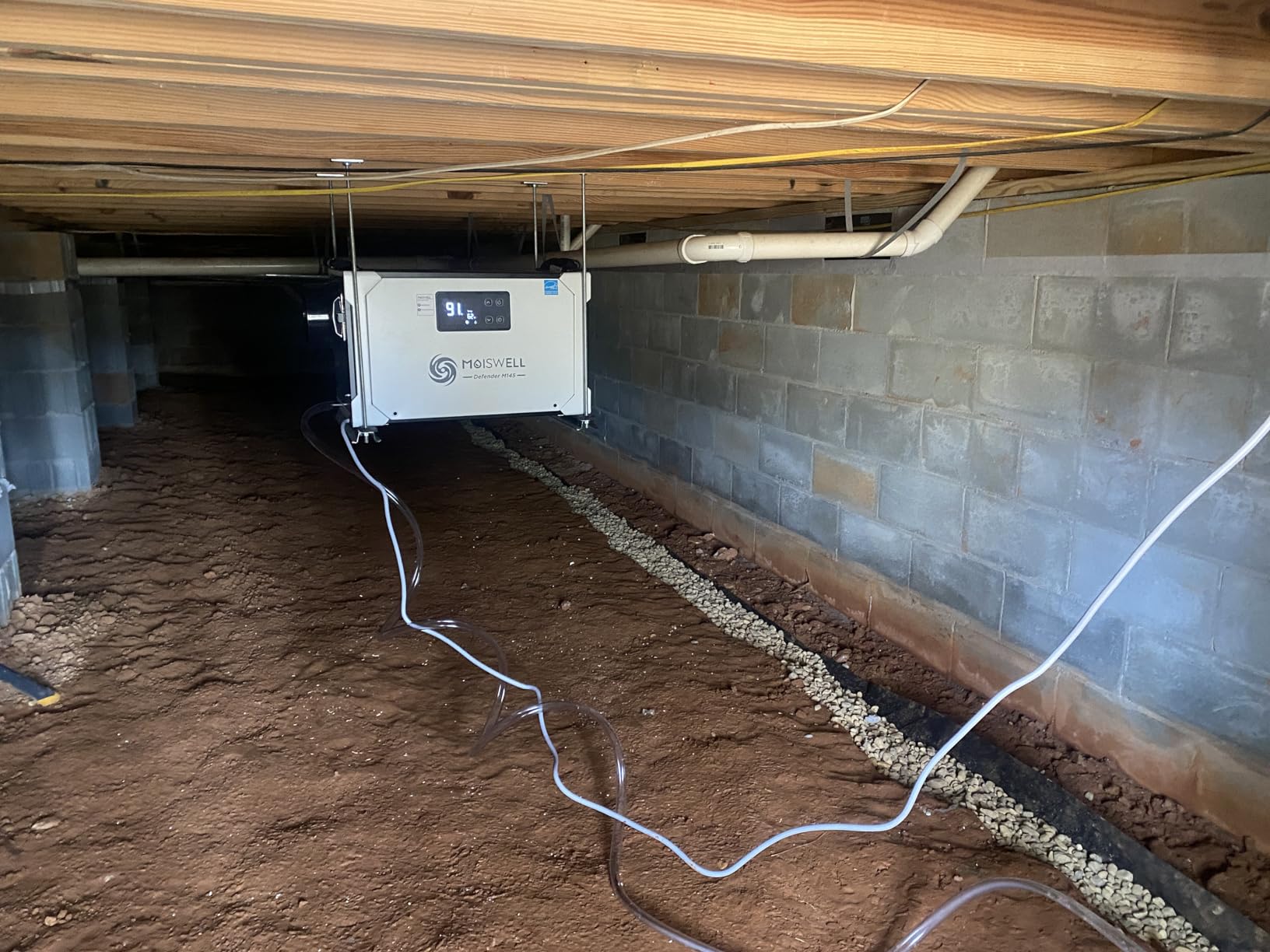
When raw capacity actually matters
Saturation figures matter most in one situation: a crawl space that is already wet. After a failed drain, a plumbing leak, or the first season after a new vapor barrier goes down, moisture load can dwarf what a normal crawl space generates. A high-capacity machine with 265 CFM pulls that backlog out in days instead of months, and the horizontal form factor means you can still get it into the space.
For a dry, sealed crawl space that just needs humidity held at 50%, this capacity is more than required, and you would be paying in electricity for size you never use. Match the machine to the job rather than to the worst case you can imagine.
Where the M145 falls short
Weight and power draw are the two recurring negatives in the reviews, and both are consequences of the same thing. If your access route involves a steep ladder or a narrow 16-inch hatch, the 63-pound body is a genuine two-person lift and the risk of a dropped unit or a strained back.
It also has no built-in pump, so a flat crawl space floor with no drain will leave you cutting a trench for a gravity line. If that describes your space, the pump-equipped models in this list save a lot of weekend work.
5. Waykar AFD2.0DPM – Best for Remote Monitoring and HVAC Tie-In
Waykar 125 Pints Crawl Space Dehumidifier with Remote Control and Pump, Dual Duct HVAC Commercial Whole-House Dehumidifier for Basement, Industrial Water Damage Unit – 5-Year Quality Coverage
125 PPD at 95F/90% RH
176 CFM
32.8 ft remote
16.4 ft sensor
Pros
- Wired remote and remote sensor keep you out of the damp space
- Dual duct design supports whole-house HVAC integration
- Reviewers report 65% dropping to 45% in hours
- Both pump and gravity hoses included
- Warranty service described as fast with replacement units
Cons
- Heavy at 57.3 lb and bulky for between-joist installs
- Several reports of units failing within a year
- Onboard gauge can read a few points low
The Waykar is built around the hardest part of crawl space ownership, which is not the moisture but the access. It includes a wired remote panel on a 32.8 foot cable, so you can mount it inside the house and read or change humidity without crawling into a wet space. There is also a 16.4 foot remote humidity sensor, which gives a reading taken near the monitored area instead of at the machine.
Capacity is 125 pints per day at 95F and 90% RH with 176 CFM airflow and a brushless motor, and the listed coverage reaches 6,500 sq ft. Owners running it in 1,000 to 2,000 sq ft crawl spaces report steady control in the 45% to 55% RH range, and first-run results in some reviews show readings in the mid-60s falling to about 45% within hours.
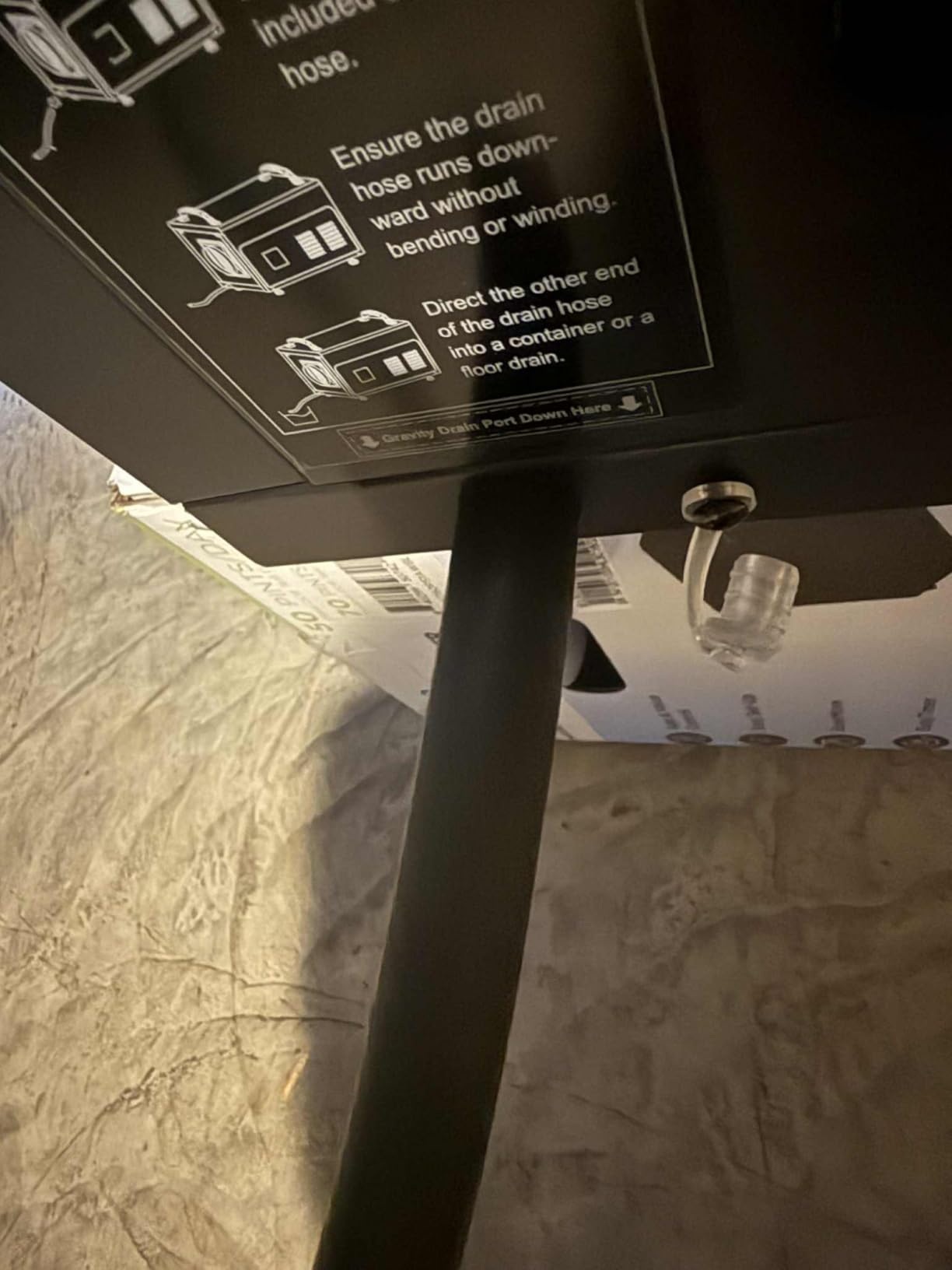
The dual duct design separates intake and exhaust, which improves airflow and heat handling and lets you tie the machine into a whole-house HVAC system. Drainage is flexible as well, with a 16.4 foot pump hose for upward discharge and a 6.6 foot gravity hose for a floor drain.
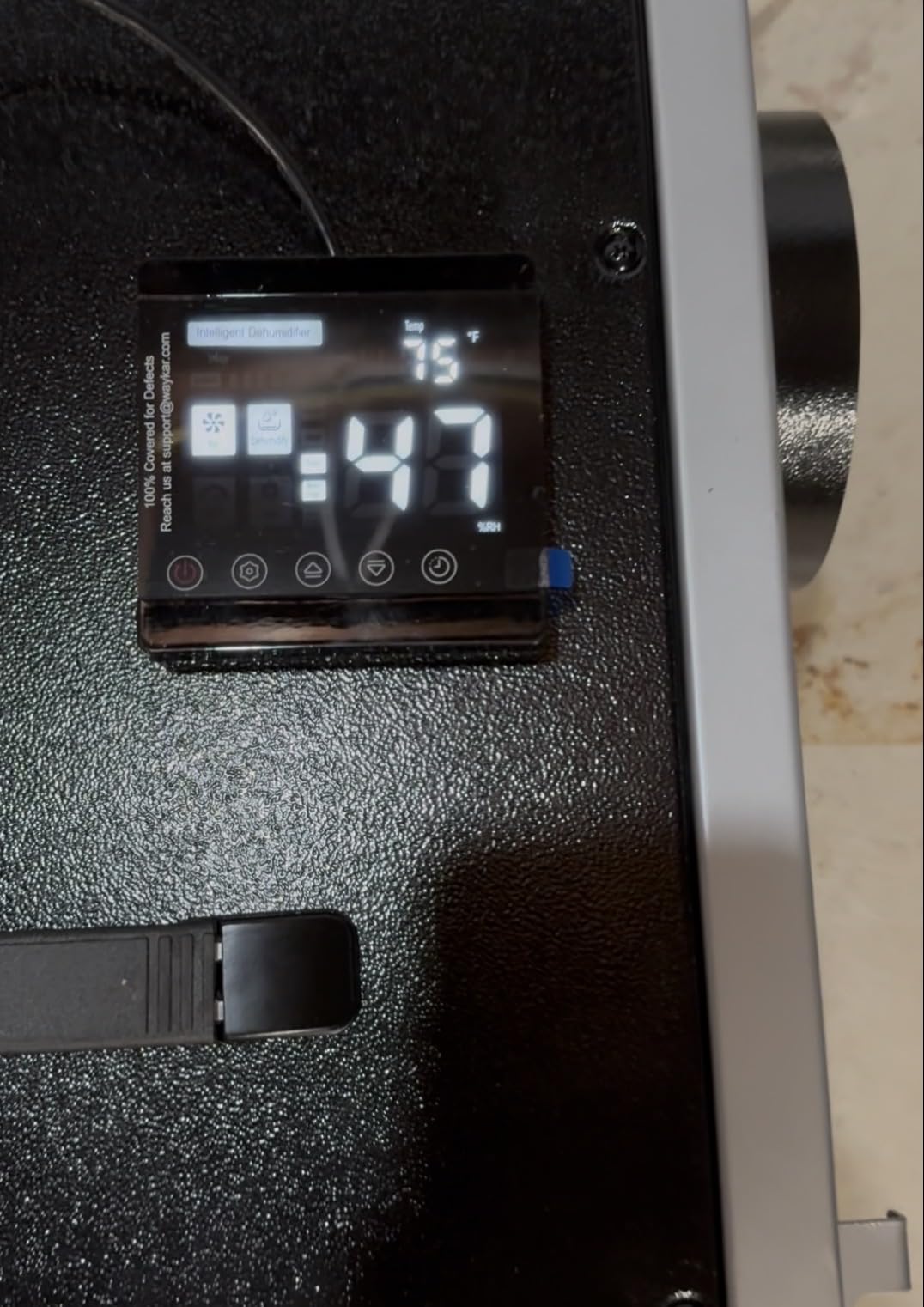
Auto defrost, overload protection and power-off memory are all included, and TUV certification covers safety. Installation touches are thoughtful for tight spaces: adjustable feet, integrated handles, hanging hooks and a cord organizer. Power draw is 530 watts, a mid-range figure for this capacity.
Reliability is the honest weak spot. Several reviewers describe units failing within a year with EP or E2 error codes or frost building at the intake, though the warranty response is described as fast, with new units sent rather than repair visits. On a 57.3 pound body that is a meaningful service story, and one reason the manufacturer backs the compressor for five years and the full unit for two.
Is a remote control worth it in a crawl space?
For most owners, yes, and the reason is not convenience so much as behaviour. A humidistat you cannot read will drift out of calibration, and a setpoint you cannot confirm means you are guessing whether the machine is working. Owners consistently rank remote access near the top of their wish list for exactly this reason.
The remote sensor is the more valuable half. Air near a cold floor and a warm duct run can differ from air at the unit, so a sensor cable reaching 16.4 feet toward the wettest corner gives a more representative number and therefore better control.
Where the AFD2.0DPM falls short
The 14.53 by 21.65 by 17.48 inch body is tall and deep for between-joist mounting, so plan the joist bay carefully. And oversizing is a real issue here: in a small space the 125-pint capacity causes frequent cycling and a noticeably louder profile, which is a waste of the machine you paid for.
The onboard humidity gauge also reads a few points low against an independent hygrometer for some owners. If you care about an exact number, verify with a cheap handheld meter after a week and adjust the setpoint to compensate.
6. Airecoler GT-X5 – Best Value for Large Damp Crawl Spaces
Airecoler 125 Pints Commercial Dehumidifier for Crawl Space & Basement
60 PPD at AHAM
125 PPD max
265 CFM
R32 refrigerant
Pros
- 60 PPD AHAM capacity without moving up a size class
- R32 refrigerant lowers running cost
- Compact 13.4 inch tall body fits low-clearance voids
- Full automation with timer
- defrost
- drain and restart
Cons
- This listing is the gravity-drain version only
- 830 W draw is high for 24/7 running
- 50 pounds is a two-person install
- Variants differ so match the pump carefully
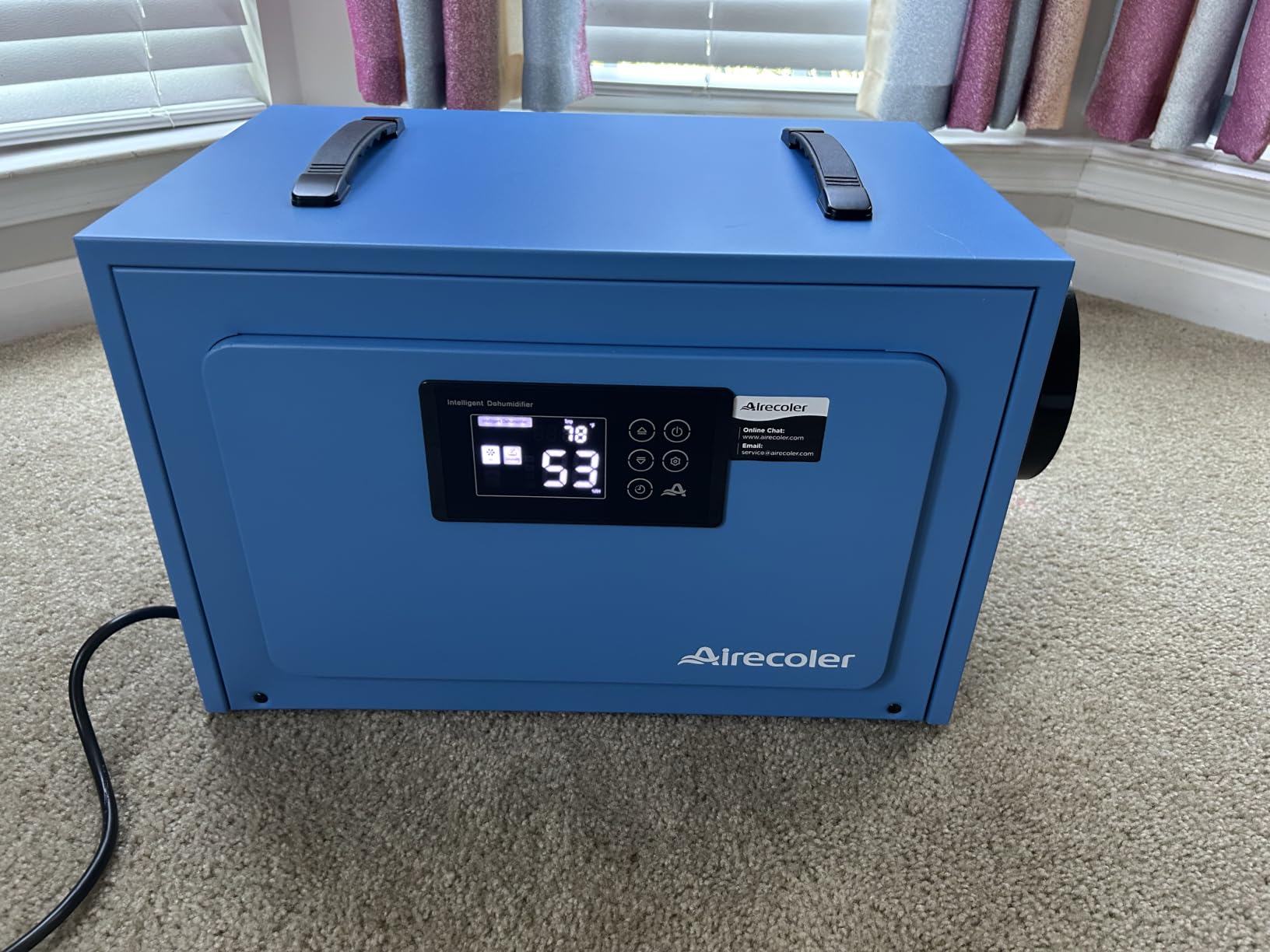
The GT-X5 puts a lot of capacity into a modest package. It delivers 60 pints per day at AHAM conditions and up to 125 pints per day maximum, with 265 CFM airflow and a listed 6,000 sq ft coverage. That 60 PPD AHAM figure sits just under the two 70 PPD machines in this roundup, and it is unusual at this size.
Its 19.2 by 12.2 by 13.4 inch body is genuinely small for the capacity, and the manufacturer offers freestanding, countertop or between-joist suspension options. It is 50 pounds, which is light for a 265 CFM machine and manageable with two people through a normal crawl space hatch.
The R32 refrigerant system is worth noting. The manufacturer pairs it with reduced electricity consumption, and a 24-hour auto on/off timer is genuinely useful for trimming running hours in shoulder seasons. The Yaufey pairs the same refrigerant approach with the lowest published power draw in this roundup.
Controls cover an intuitive panel, a 6.56 foot drain hose, auto on/off humidity control, continuous mode, auto defrost, auto drain and auto restart after outages. Coverage is split as two years on the whole dehumidifier plus three years on the dehumidification system, which is the same structure several competitors use.
One purchasing trap: this specific listing is the gravity-drain version, so if your floor is flat and you need to pump upward, you must select a different variant. Ratings sit at 4.4 stars from 290 reviews, and reviewers repeatedly praise the combination of capacity and body size.
How much AHAM capacity does a crawl space need?
Measure the floor area, multiply by the height to get volume, then use the AHAM figure rather than the saturation headline. As a practical rule, a 1,000 sq ft crawl space at roughly 16 inches of clearance needs a machine in the 35 to 40 PPD class, while a 2,500 sq ft space with a dirt floor and active ground moisture will justify something closer to 60 PPD.
Saturation numbers look dramatic because they describe a room at 95F and 90% RH, conditions that essentially never occur in a conditioned crawl space. Comparing two units by their 155-pint and 130-pint headline numbers tells you almost nothing. Compare the AHAM figures and the airflow.
Where the GT-X5 falls short
Power draw is 830 watts, the second highest here, so a continuously running installation needs a dedicated 15-amp circuit rather than sharing one with other equipment. Running cost over a humid summer is real money even with R32, and the timer is the lever that controls it.
It also has no internal pump on this listing, so drainage depends entirely on gravity and a fall to your drain point. And with several variants sharing the same product family, read the variant description carefully before ordering, because pump and no-pump versions are sold side by side.
7. Yaufey AYD1.5D – Best for Lowest Power Draw and Widest Humidity Range
Yaufey 70 Pints Energy Star Commercial Dehumidifier with Drain Hose for 5000 Sq. Ft. Crawl Space, Basement, Industrial, 10-90% RH Humidity Control, 24/7 Continuous Drainage,TUV Certified,5-Yr Coverage
70 PPD
159 CFM
265 W draw
10-90% RH control
Energy Star
Pros
- Lowest power consumption of any unit here at 265 watts
- Only machine with a 10-90% RH setpoint range
- Energy Star certified with R32 refrigerant
- All-metal corrosion-resistant housing
- Auto defrost for cold crawl spaces
Cons
- Gravity drain only
- 159 CFM trails the airflow of the larger units here
- 70 pints is a saturation figure so real output is about half
- One-year base warranty
The Yaufey’s standout number is 265 watts. The other machines in this roundup with published draw figures run between 331 and 860 watts, so for a machine running continuously under a house that difference compounds across a season. It is Energy Star certified and uses R32 refrigerant, which is a sensible combination for a unit expected to run 24/7.
Capacity is 70 pints per day at 95F and 90% RH with 159 CFM airflow and a listed 5,000 sq ft coverage. That 159 CFM figure is modest next to the 265 CFM machines in this roundup, which matters in a crawl space with long, obstructed joist runs where air has to travel to reach the unit.
The genuinely unusual feature is the 10% to 90% RH control range. Most residential units stop at 30% on the low side, and that floor can matter in cold climates where you want to pull a crawl space well below the mould threshold. In this roundup, only this machine can do it.
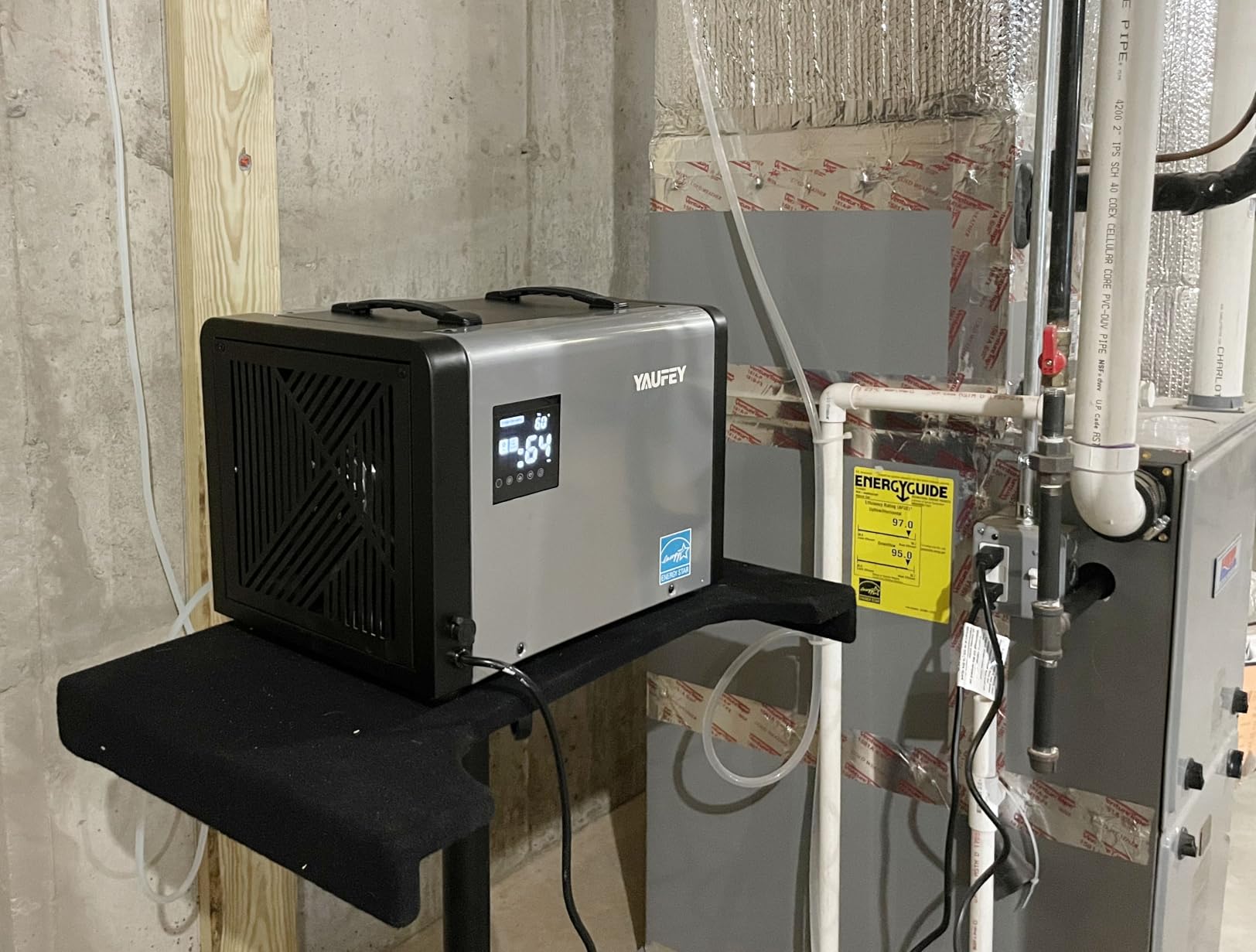
The housing is all metal, described as corrosion-resistant and rated for damp, dusty commercial and industrial settings, at 12.99 by 16.54 by 11.81 inches and 41.3 pounds. Installation is flexible between freestanding, countertop and joist-mounted positions, and a removable washable filter keeps dust off the coil.
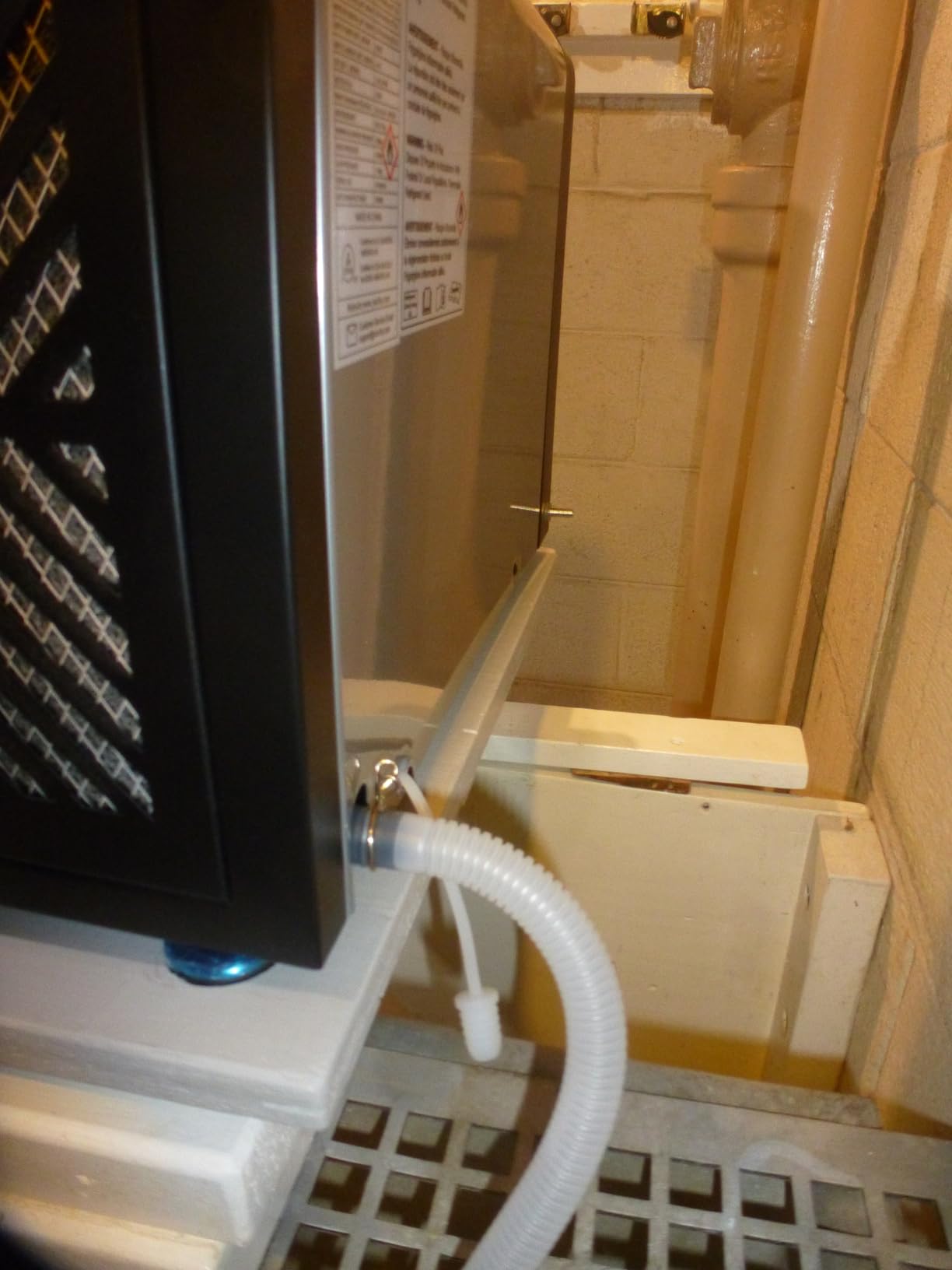
Auto defrost supports operation in cold crawl spaces and unheated basements, which is exactly the scenario that kills standard bedroom units. Drainage is gravity only with a 6.56 foot hose, so the unit has to sit above the drain line. Protection runs 1 year on quality coverage, 2 years extended and 5 years on the compressor.
Do wide humidity setpoint ranges actually matter?
For most homes, no. Setting a crawl space between 45% and 55% RH is the widely recommended target, and any unit in this roundup can hold it. The wider range matters in two specific cases: very cold climates where a 30% floor is too high to prevent condensation on cold surfaces, and spaces holding sensitive contents that need a low, stable setpoint.
If you fall into either group, the 10% floor here removes a limitation other units impose. If you just want steady 50%, treat it as a bonus feature rather than a deciding factor and choose on drainage and capacity instead.
Where the AYD1.5D falls short
Low airflow is the concern. In a crawl space with joists running the full length, 159 CFM has to humidify and dehumidify the whole volume, and a longer throw may mean moisture sits at the far end while the unit idles. Larger and longer spaces are better served by a 265 CFM machine.
Also remember the 70-pint figure is saturation, not AHAM, so real-world output is closer to half. And with gravity-only drainage, a flat floor with no drain means you are cutting a trench before this unit goes anywhere near the crawl space.
8. Abestorm Guardian SN35P – Best for Long-Term Parts Support
Abestorm 70 PPD Dehumidifier with Pump & Hose for Crawl Space & Basement
35 PPD at AHAM
70 PPD at saturation
Pump lifts 19.6 ft
5-year warranty
Pros
- Pump with 19.6 ft lift solves flat floors and long runs
- Spare parts orderable directly from the manufacturer
- Free replacement MERV filters with qualifying purchase
- Users report steady 45-55% humidity control
- Metal construction rather than disposable plastic
Cons
- Only covers about 1000 sq ft
- Pump noise is audible from floors above
- Controls are confusing without the manual
- Some reviews report units stopping condensing after 6-16 months
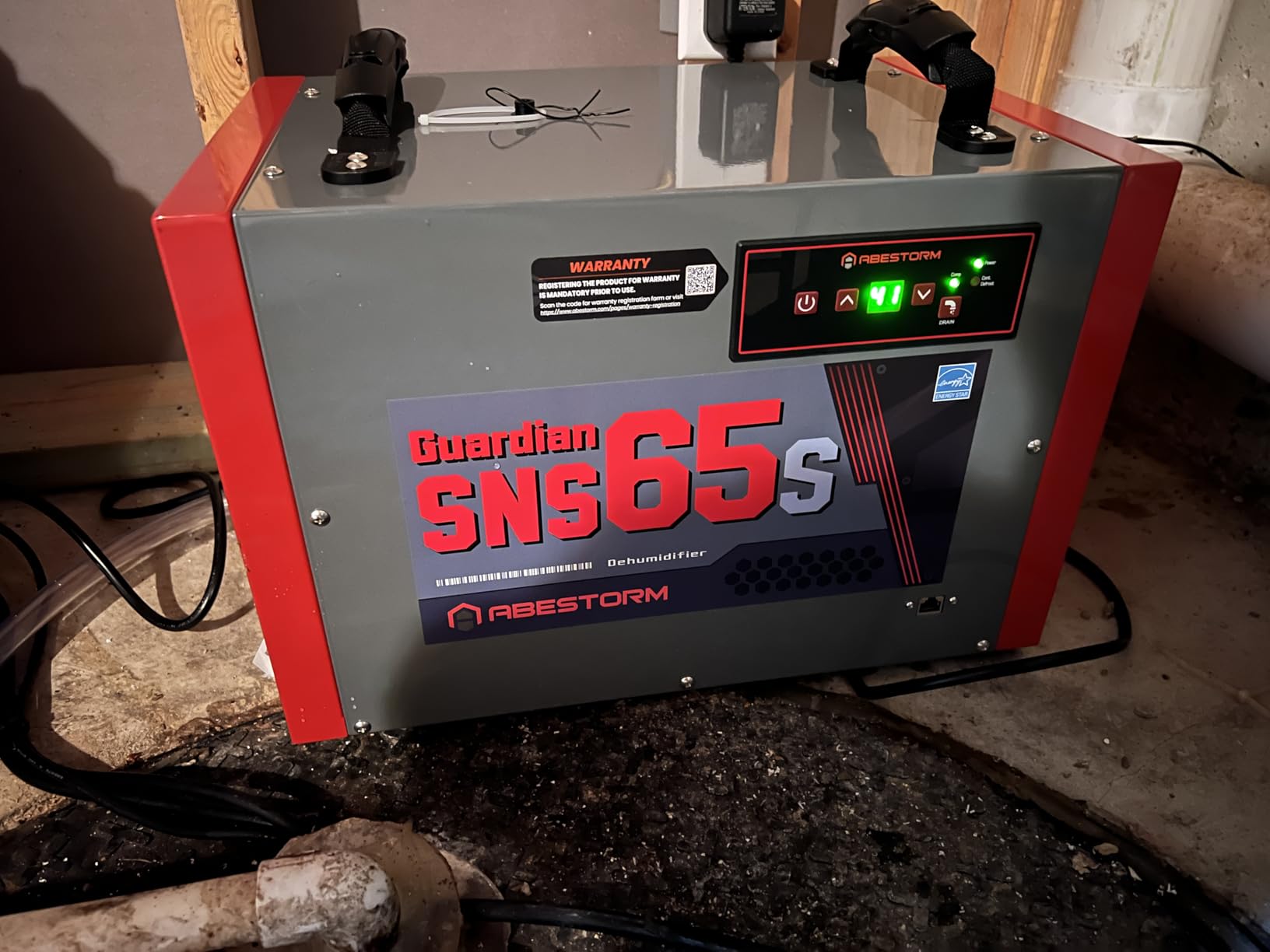
The thing that sets the Guardian apart is not a spec, it is serviceability. Parts are orderable directly from the manufacturer, which for a ten-year service life in a damp environment matters more than most buyers expect at purchase time. A dehumidifier you cannot get a filter, fan motor or pump for is scrap in year eight.
Output is 35 pints per day at AHAM conditions and 70 pints at saturation, with 130 CFM airflow and a listed 1,000 sq ft coverage. The body is 15.2 by 11.4 by 11.2 inches at 38.2 pounds, one of the more compact pump-equipped machines here, and it includes both pump and gravity drain options.
The built-in condensate pump lifts water up to 19.6 feet, which covers almost any realistic crawl space discharge path, including running the hose up through the rim joist to the outside. Automatic defrost monitors ambient temperature and initiates a defrost cycle to prevent frost buildup, and memory start returns the unit to its setpoint after an outage.
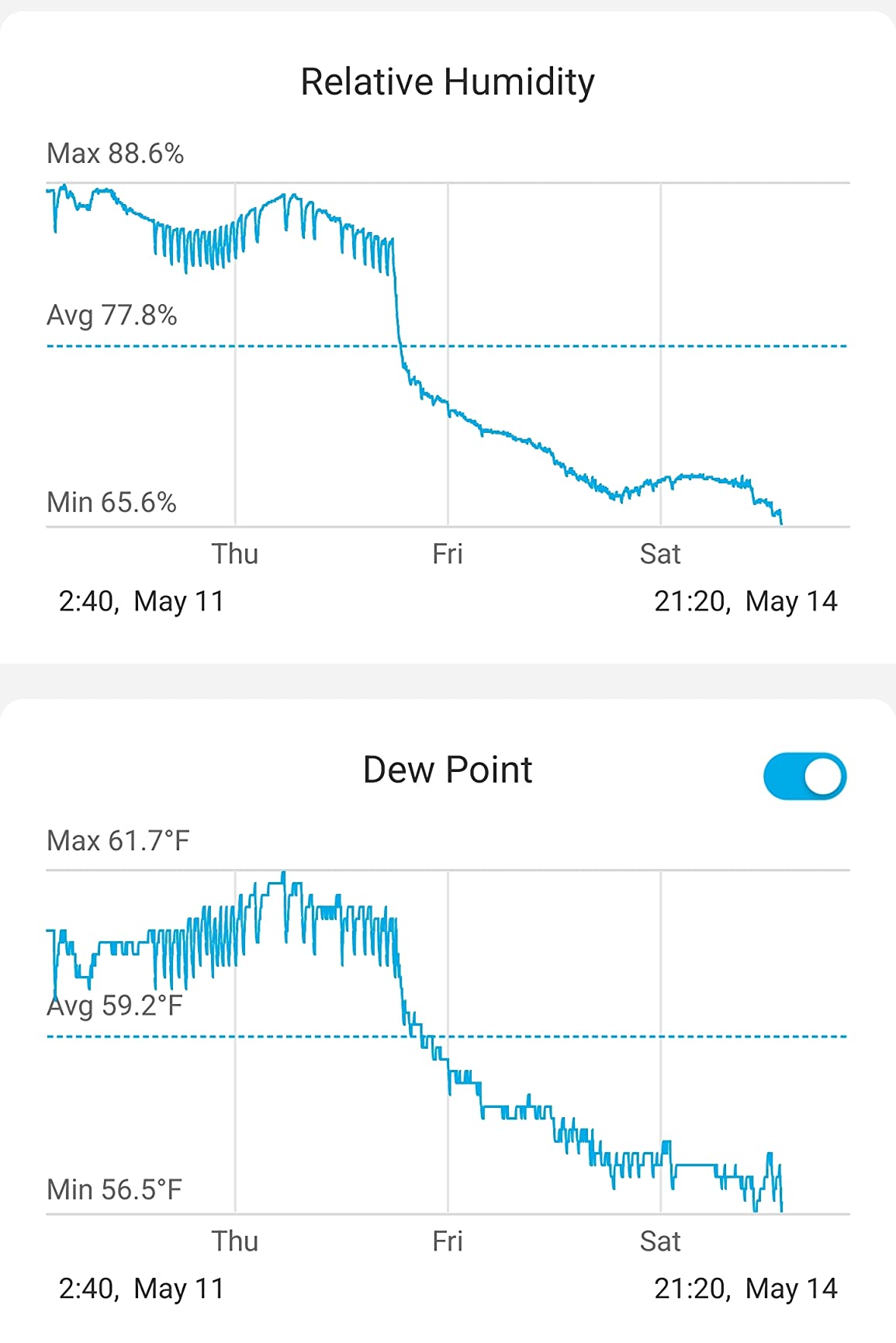
Long-term owners are enthusiastic about consistent results, frequently reporting humidity that never rises above 50% and typically sits near 45% in crawl spaces and basements of roughly 1,000 to 1,400 sq ft. Free replacement MERV filters with qualifying purchases and responsive support on icing issues both come up repeatedly.
The coverage ceiling is the main limitation, and pump noise is the second. A meaningful minority of reviews describe units that ran well for many months and then stopped condensing, sometimes with refrigerant loss, and warranty service may require the owner to arrange transport back to the manufacturer on a 38 pound machine. The five-year limited warranty and lifetime technical support are the counterweight.
Why parts availability beats a longer warranty
Warranty length tells you what the manufacturer expects to fail in the first few years. Parts availability tells you whether the machine can be kept running in year ten. Crawl space dehumidifiers live in corrosive, dusty conditions, and coils corrode, pumps wear and sensors drift long before the compressor does.
We rate that trade-off highly for this reason. A manufacturer that sells you a replacement pump and a filter set at any point in the machine’s life is a manufacturer you can plan around, and that is a stronger position than a longer warranty on a brand with no parts channel.
Where the Guardian SN35P falls short
About 1,000 sq ft of coverage, full stop. If your crawl space is larger, you need two of these or a bigger machine, and running two pump machines means two pump noise sources under the floor.
The control layout is also a genuine complaint. Buttons that require the manual to interpret are a recurring irritation for a device meant to be set once and forgotten, and the pump is audible from floors directly above. If someone sleeps over that part of the house, a gravity-drain model is quieter.
9. Moiswell Defender ME-7S – Best for Easiest Handling
Moiswell 70 Pints Commercial Dehumidifier with Pump for Crawlspace Basement
35 PPD at AHAM
70 PPD at saturation
Pump lifts 16.4 ft
39.5 lb metal body
Pros
- Two lift handles on a 39.5 lb body make it easy to carry
- Energy Star efficient certified at 450 W
- Large display shows dehumidifying
- defrost and pump status
- Holds a set point reliably
- Metal build a clear step up from consumer units
Cons
- Undersized beyond about 1000 sq ft
- Humidistat triggers within about 3% of setpoint
- Some reports of units failing within a few months
- Drain hose routing still needs planning
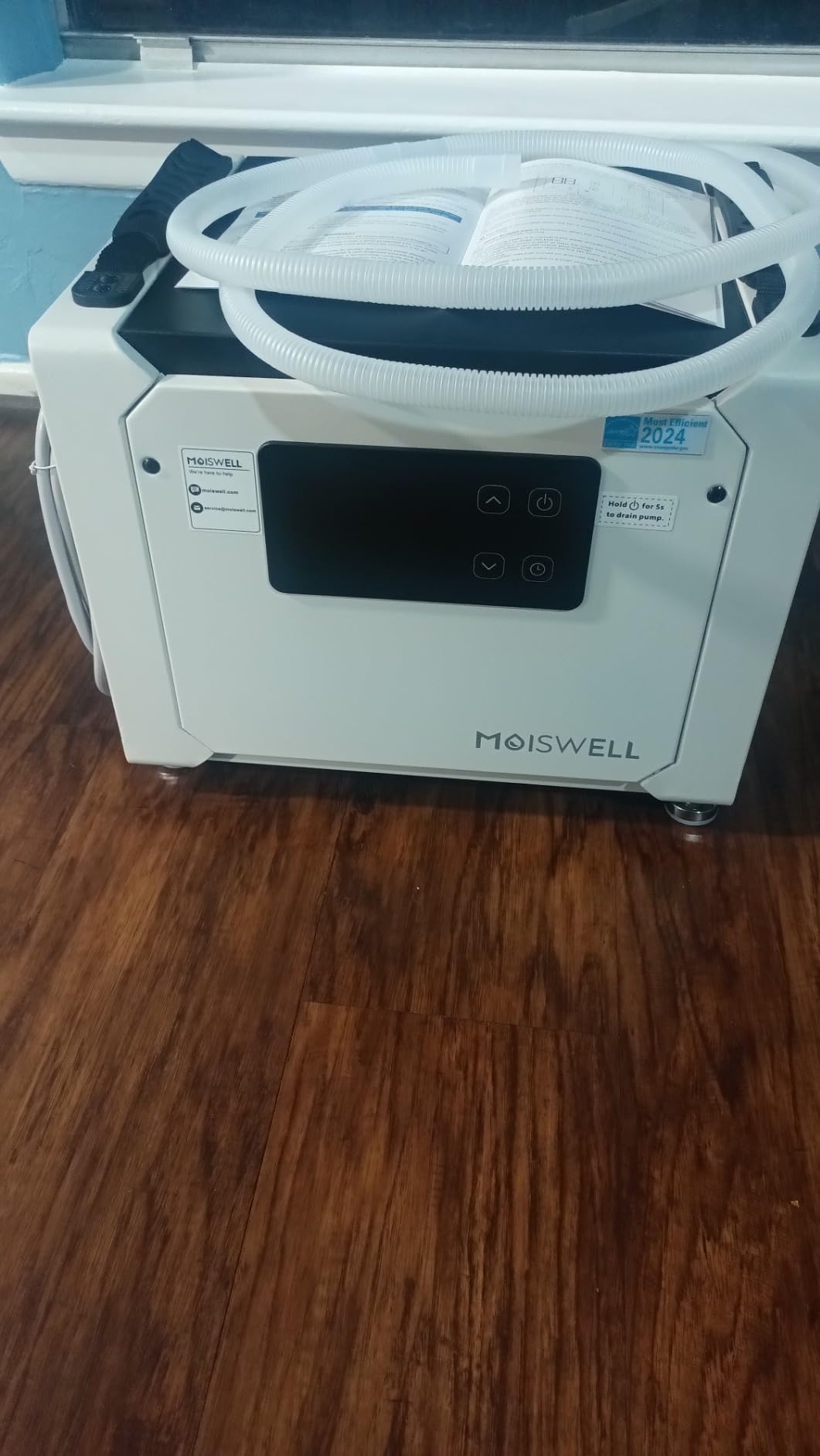
At 39.5 pounds with two integrated handles, the ME-7S moves through a crawl space access door about as easily as anything in this roundup, and for a first-time installer that is worth more than a large capacity number. The body is 13 by 15 by 12 inches, so it clears narrow openings and fits between joists without suspension hardware.
It is rated at 70 pints per day at saturation and up to 35 pints per day under AHAM conditions, covering up to 1,000 sq ft, with 120 CFM airflow. Energy Star certification at 450 watts makes it one of the more economical pump-equipped options here, which matters for continuous operation.
The built-in pump pushes water vertically up to 16.4 feet, so you can discharge into a floor drain, a sump or a washing machine drain without relying on floor slope. The large control display shows dehumidifying, defrosting and pump status separately, which is genuinely useful for diagnosing a problem without pulling the unit out.
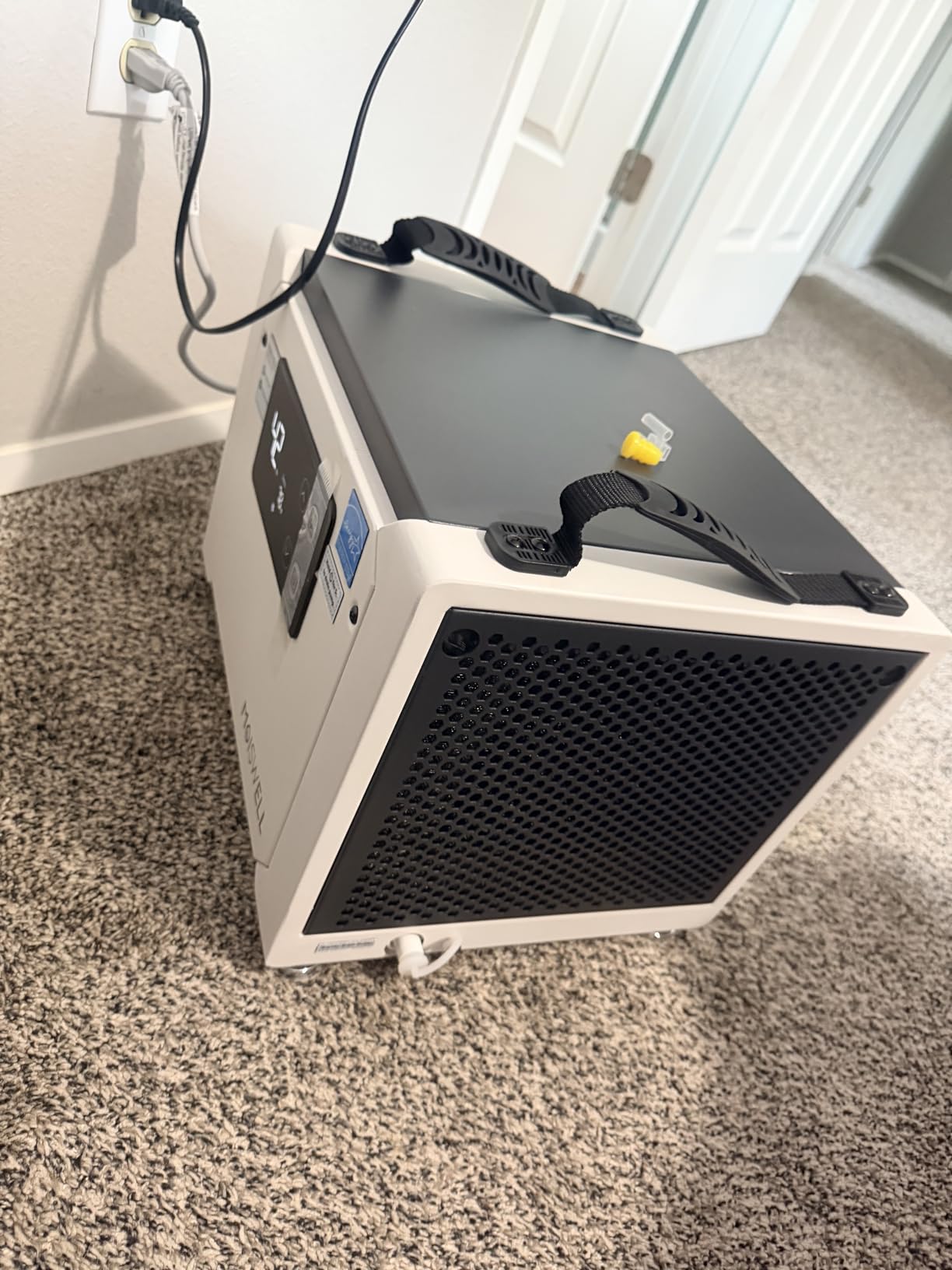
Owners replacing consumer-grade upright units report steady humidity holding, effective pumping, and noticeably better build quality and energy efficiency. The five-year limited warranty splits into two years for the whole dehumidifier and three years for parts, and customer service responses on installation questions are described as responsive.
The dominant critique is sizing, since buyers in larger basements find it cycling constantly. A second theme is an overly sensitive humidistat that starts the compressor within about three points of the setpoint, adding audible runtime. A small number of reviews describe units beginning to screech and failing within a few months.
Is 1,000 sq ft really the limit?
For a sealed, conditioned crawl space, that figure is about right, and this unit is a good match. For a bare dirt floor with active ground moisture, or a crawl space open to vents pulling in humid outside air, moisture load is much higher and 35 PPD AHAM will run continuously without keeping up.
Sizing up is not the answer either, because an oversized unit cycles and wears. The correct move for a large damp crawl space is a properly sealed space plus a machine matched to area, or two smaller machines positioned for even coverage.
Where the ME-7S falls short
It is a 1,000 sq ft machine, full stop, and buyers who ignore that ceiling report constant cycling. The sensitive humidistat is a smaller issue but an annoying one in a bedroom directly above, since the compressor runs more often than strictly needed.
Its 16.4 foot pump lift is shorter than the 19.6 foot machines here, which only matters if your discharge point is high. And despite the pump, drainage routing still needs planning on your side, so measure the run from the unit to the drain before you order hose.
10. AprilAire E070 Pro Bundle – Best for Whole-Home and HVAC Integration
AprilAire E070 Pro Dehumidifier Bundle – 70 Pint Whole House Dehumidifier – Full Complete Kit – Crawl Spaces, Basements, Whole Homes, Commercial up to 2,800 sq. ft – 5 Year Warranty Included
70 PPD removal
200 CFM
Up to 2800 sq ft
5-year warranty
Bundle kit
Pros
- Top rating average in the roundup at 4.8 stars
- 70 PPD with 200 CFM airflow and 2800 sq ft coverage
- Bundle includes drain hose
- filters
- risers and duct collars
- US-made with a 5-year warranty and professional support
- Quieter than expected for a 70-pint unit
Cons
- Priced well above every other unit in the roundup
- Minimum setpoint is 40% RH which is high for cold-climate use
- 33 inch body is longer than most crawl space units
- 56 pounds needs a planned lift
The E070 Pro bundle is the different choice in this list. It is built as a whole-home dehumidifier that also serves a crawl space, rated at 70 pints per day with 200 CFM airflow and coverage up to 2,800 sq ft, and it carries the top rating average in the roundup at 4.8 stars across 130 reviews.
Users report dramatic results, including readings of 90% dropping to 53% in two days, and consistently describe it as quieter than expected for a 70-pint unit, especially once the space is conditioned and the compressor starts cycling less. Energy Star certification and smart sensing that starts and stops dehumidification based on the target setpoint are both standard.
The bundle is the practical differentiator. Seven pieces are in the box, including a 70-pint dehumidifier, drain hose, risers, two filters and two duct collars, so there is nothing extra to buy before installation. That is a real convenience when a single missing part can stall an install for a week.
The two criticisms that recur are the 40% minimum humidity setpoint, which one reviewer called out as misleading against the product description, and the purchase cost. Both are worth taking seriously. A 40% floor is genuinely restrictive if you want to run a cold crawl space lower in winter, and the wide 33 inch body is far longer than a typical between-joist unit.
At 56 pounds and 696 watts, it needs planning to move and a dedicated outlet, and some users found it louder than expected in small enclosed spaces. If you are treating the crawl space as part of a conditioned house rather than a standalone moisture problem, those trade-offs are much easier to accept.
Is a whole-home dehumidifier right for a crawl space?
It is the right call when you want the crawl space conditioned as part of the living envelope, or when you plan to duct the unit into your HVAC system. The two duct collars in the bundle and the 200 CFM airflow are built for that, and a 2,800 sq ft ceiling gives you headroom for a larger footprint.
It is the wrong call when your budget is modest and your only problem is one damp crawl space. A purpose-built crawl space machine at 35 to 60 PPD AHAM will do the same job for a fraction of the outlay, and it will be easier to install through a tight access door.
Where the E070 Pro Bundle falls short
The cost gap is the dominant factor, and it dwarfs everything else in this roundup. Buyers also flag the 40% minimum setpoint as a real limitation for cold-climate use, where controlling below that threshold can be the whole point of running a dehumidifier down there.
Its 33 inch length is the longest body here, so a between-joist installation is not straightforward, and 56 pounds deserves a two-person lift. If your crawl space is 800 sq ft, this machine is dramatically more than the job requires.
How to Choose a Crawl Space Dehumidifier in 2026
Most buyers lose time on the wrong variable. They compare pint headlines and ignore the number that actually predicts whether a machine will hold humidity. Here is how to think about the purchase in the order that matters.
Match the unit to your crawl footprint, not the pint headline
Start with floor area and height, then choose on AHAM capacity rather than the saturation number printed on the box. As a working guide, a sealed 800 to 1,000 sq ft crawl space needs a unit in the 35 to 40 PPD AHAM range, a 1,500 to 2,000 sq ft space with a dirt floor fits 50 to 60 PPD, and anything past 2,500 sq ft with active ground moisture justifies 60 PPD and up.
Airflow matters as much as capacity in a crawl space, because air has to reach the unit through joist bays that may be partly blocked. Anything around 130 CFM suits a small space, while 265 CFM is appropriate when the unit is ducted or the space is long and open. Sizing tools and measuring guides for hard-to-reach areas are covered in our tool picks for tight spaces.
AHAM capacity versus saturation capacity
AHAM capacity is a standardized test at 80F and 60% relative humidity, and it is the only figure that lets you compare two machines honestly. Saturation capacity describes performance in air that is already at 95F and 90% RH, conditions that essentially never occur in a sealed crawl space, which is why a unit can advertise 155 pints and deliver 70.
When you see a large gap between the two numbers, treat the AHAM figure as the real capability. Several units in this roundup advertise 70-pint or 125-pint headlines while their AHAM rating sits at 35 or 60 pints, and that is not dishonest, it is just two different measurements.
Compressor or desiccant for a cold crawl space
Every unit in this roundup is a compressor machine with an auto-defrost cycle, and for most homes that is the right technology. Compressors are cheaper to run per pint of water removed, and auto-defrost keeps the coil working by pausing the compressor while the fan clears ice.
Desiccant units use a chemical wheel that absorbs moisture and regenerates with heat, and they work at any temperature without a defrost cycle. In genuinely cold spaces below roughly 35F, a desiccant unit is more effective, but running cost is meaningfully higher, which is why most crawl space owners stay with compressor and defrost. The practical rule is straightforward: if your crawl space stays above freezing, use a compressor unit; if it does not, plan for a desiccant system or a heat source.
Gravity drain or a built-in condensate pump
Continuous drainage is the single most important feature in this category, because a crawl space you cannot reach is a crawl space you will not empty. Gravity drainage is the cleanest option when your floor has a consistent fall to a drain, sump or French drain, and it has no moving parts to fail.
A built-in condensate pump is the answer when the floor is flat, the drain sits above the unit, or the run is longer than a hose allows. Pump-equipped models here lift water between 16.4 and 19.6 feet vertically, which covers most cases, and several accept either pump or gravity drainage with the hoses included. Route the discharge outside or into a sump, secure the hose so it cannot kink or disconnect, and add a water-level shutoff if your model offers one.
Auto defrost, auto restart and power outage memory
Auto defrost is not optional in a crawl space. When frost forms on the coil, the unit pauses the compressor and runs the fan until the ice clears, and without it the machine locks up solid through a cold morning and never recovers without a manual visit.
Auto restart after a power interruption matters just as much, and power-off memory is better still, because it restores your setpoint without anyone crawling under the house. Several units here include it and several do not, so check the specification before assuming.
Encapsulation first, dehumidifier second
The fastest way to dry out a crawl space is to stop the moisture coming in, then remove what is already there. Sealing vents, covering the floor with a polyethylene vapor barrier, and closing off the crawl space from the rest of the house reduces the load dramatically, and a smaller dehumidifier can then do the work. Installing the machine first and encapsulating later usually means a bigger, more expensive unit that runs harder for longer.
Can you run a dehumidifier without encapsulation? Yes, it will pull water, but in a vented crawl space you are fighting outside air that keeps reloading the space with moisture, so the machine cycles almost continuously and wears out sooner. A dehumidifier in a sealed crawl space is one of the most common improvements homeowners make, and it shows up in inspection reports as a genuine upgrade.
Target humidity and where the air comes from
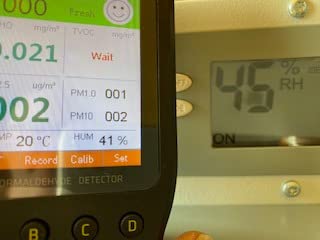
The widely recommended target is 45% to 55% relative humidity, measured at the crawl space floor rather than at the unit. Below 45% you gain nothing in a space that is not conditioned, and above 60% mould and wood rot become real risks for floor joists and subfloor.
Check where you are reading it. Air near a cold duct or a rim joist can differ from air at the machine, and a remote sensor placed toward the far corner of a long crawl space gives a more useful number. This is one area where our instrument room humidity guide explains the measurement side in more detail.
Frequently Asked Questions
Is it worth putting a dehumidifier in a crawl space?
In most homes with a dirt or gravel floor, yes. Controlling humidity below 60% RH protects floor joists and subfloor from mould and wood rot, and it removes a moisture source that travels up into the living space. A dehumidifier works far better in a sealed and encapsulated crawl space, because it stops fighting outside air that keeps reloading the space with moisture.
What is the fastest way to dry out a crawl space?
Seal the space first, then remove the water already there. Close the vents, install a polyethylene vapor barrier over the floor, and seal the crawl space from the rest of the house. Then run a correctly sized dehumidifier with continuous drainage to a sump or outside drain. Removing the source first means a smaller machine finishes the job in days rather than months.
Can I put a dehumidifier in my crawl space without encapsulation?
You can, and it will pull moisture, but in a vented crawl space the machine cycles nearly continuously because humid outside air keeps reloading the space. You also lose the volume reduction that makes a sealed space easier to control, so the same results need a larger and more expensive unit. Encapsulation is widely treated as the first half of the job, with the dehumidifier as the second half.
What size dehumidifier do I need for a 2000 sq ft crawl space?
For a sealed 2000 sq ft crawl space, look for a unit rated around 50 to 60 PPD at AHAM conditions with airflow of roughly 200 CFM or more. Ignore the saturation headline, which describes near-100% humidity that does not occur in a sealed crawl space. A dirt floor with active ground moisture pushes you to the upper end of that range.
What type of dehumidifier is best for a crawl space?
A low-profile compressor unit with automatic defrost, continuous drainage and auto restart after a power outage. The compressor must keep working when air drops into the 40s, which auto defrost handles by pausing the compressor while the fan clears ice. Drainage has to be continuous, because a tank you empty by hand is not practical in a space you cannot easily reach.
What humidity level should a crawl space be kept at?
Between 45% and 55% relative humidity, measured at the floor rather than at the unit. Sustained readings above 60% RH are where mould colonies, silverfish and wood rot start to appear on floor joists and subfloor. Measuring near a cold rim joist or duct run can give a different reading than air at the machine, so check a couple of spots before setting the humidistat.
Compressor or desiccant for a cold crawl space?
Use a compressor unit with auto defrost if your crawl space stays above freezing, since it costs less to run per pint removed. Below roughly 35F, a desiccant unit is more effective because its chemical wheel works at any temperature without a defrost cycle, but it uses more electricity per day. Many northern homes solve this by keeping the crawl space above freezing rather than buying desiccant hardware.
How long will a crawl space dehumidifier last?
A well-built metal-housed unit with a compressor warranty of five years and manufacturer parts availability can run ten years or more in continuous service. Failures most often show up as coils that no longer chill or humidity sensors that drift, not as sudden breakdowns. Checking that replacement filters, pumps and sensors are orderable before you buy matters more for longevity than the warranty length itself.
Our Final Verdict for 2026
After six weeks of comparison, the AlorAir Sentinel HD55S is the best dehumidifier for crawl spaces for most owners, because 1,399 reviews, a metal body, auto defrost and a six-year warranty make it the safest long-term bet. Buy the Moiswell Defender M145 if you need maximum moisture removal and a horizontal body that fits between joists, and buy the Waykar AFD2.0DPM if you refuse to crawl under the house to read a humidistat.
Whatever you choose, size on AHAM capacity, plan the drainage before the unit arrives, and encapsulate first. Those three decisions matter more than any other spec on the box.