
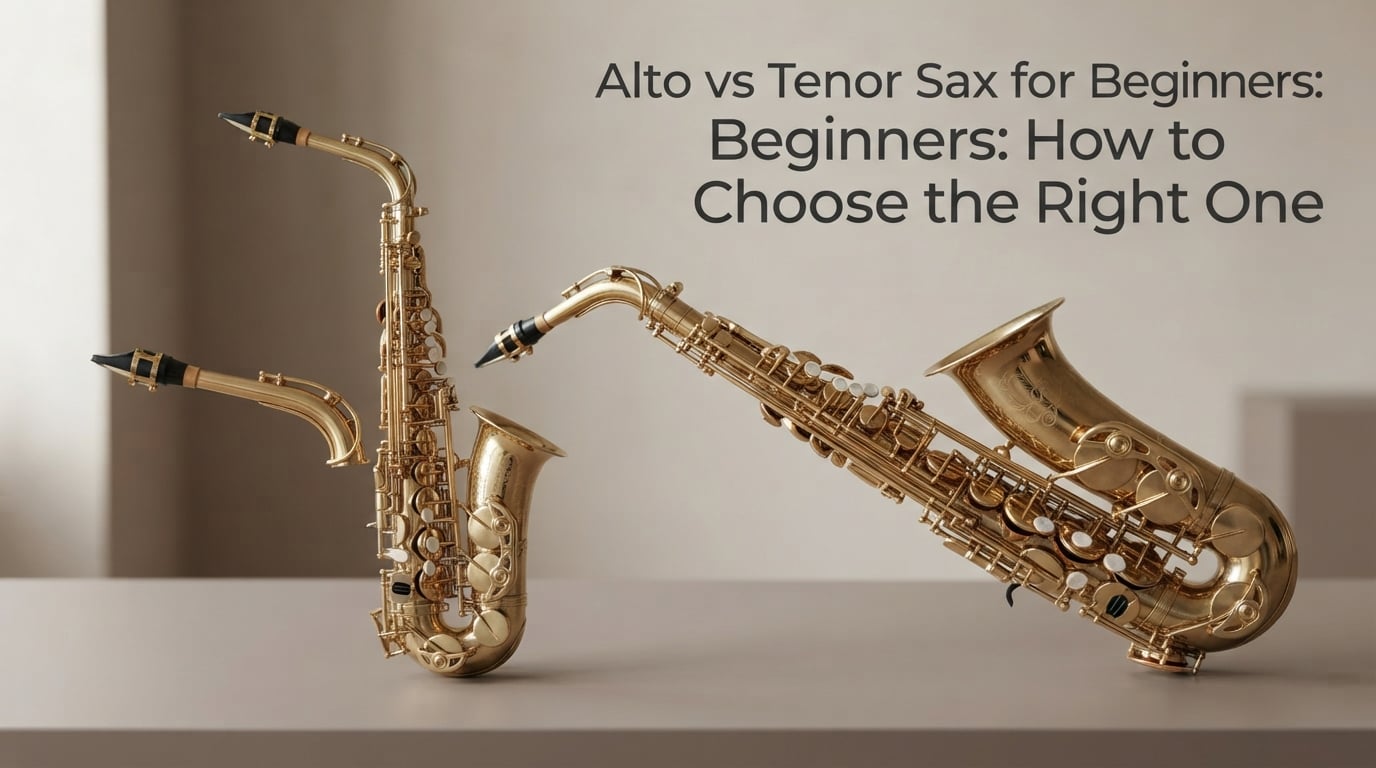
The alto saxophone is the go-to choice for most beginners starting their saxophone journey. It is smaller, lighter, and easier to handle than the tenor, making it ideal for younger players and those new to wind instruments. But the alto vs tenor sax for beginners decision is not always straightforward. Some players fall in love with the rich, warm sound of the tenor and wonder if they should start there instead.
I have helped hundreds of beginners navigate this exact choice over the years. The answer depends on your physical size, musical goals, and personal preferences. This guide breaks down every key difference so you can make the right call for your situation.
Table of Contents
Alto vs Tenor Sax for Beginners: Quick Comparison Table
The table below summarizes the key differences between these two saxophones. Use it as a quick reference as you read through the detailed comparisons.
| Feature | Alto Sax | Tenor Sax |
|---|---|---|
| Key/Pitch | E-flat (Eb) | B-flat (Bb) |
| Weight | 4.5-5.5 lbs (2-2.5 kg) | 6-7.5 lbs (3-3.5 kg) |
| Length | 26-28 inches | 33-35 inches |
| Reed Size | Strength 2-3 | Strength 2.5-3.5 |
| Best For | Kids, beginners, classical | Adults, jazz enthusiasts |
| Sound | Bright, focused, higher pitch | Warm, rich, deeper pitch |
| Air Required | Less air pressure | More air and breath support |
| Hand Span | Smaller key spacing | Wider key spacing |
Size and Weight: How Physical Differences Affect Beginners
The most obvious difference between the alto and tenor sax is size. The tenor sax stands about 33-35 inches tall, while the alto is roughly 26-28 inches. That size gap might not seem dramatic on paper, but it matters significantly when you hold the instrument for extended practice sessions.
Weight is another major factor. The alto sax weighs around 4.5-5.5 pounds (2-2.5 kg), compared to the tenor at 6-7.5 pounds (3-3.5 kg). Carrying an extra 2-3 pounds on your neck for an hour of practice takes its toll. Younger players and smaller-framed adults often find the alto much more manageable.
I have seen beginners as young as 10 start successfully on alto. The same age group struggles with the tenor because the weight strains their neck and back. For players under 14 or anyone with a smaller frame, the alto is almost always the better choice from a pure physical standpoint.
Adult learners face less of a physical barrier. Most adults can handle the tenor’s weight without issue. But even then, the larger size means you need a longer reach and more breath support to produce a solid tone.
Sound and Tone: Pitch Differences You Need to Understand
The alto sax plays in the key of E-flat, while the tenor plays in B-flat. This transposition difference means the tenor sounds exactly one octave lower than the soprano sax, and the alto sits in between the two. The alto produces a brighter, more focused sound that cuts through in ensemble settings. The tenor delivers a warmer, richer tone with more depth.
Beyond pitch, the timbre differs substantially. The alto has a tighter, more precise quality to its sound. Many players describe it as having more edge or bite. The tenor offers a broader, more resonant quality that fills a room differently. It sounds fuller in the lower register and has a distinctive growl when pushed.
I always recommend beginners listen to recordings of both instruments before choosing. Go to YouTube and search for alto and tenor sax demonstrations. The sound difference becomes immediately apparent when you hear them side by side.
Some players fall in love with the tenor sound specifically. If you cannot stop listening to John Coltrane or Dexter Gordon, the alto might never satisfy you. Your sound preference matters more than any physical consideration in the long run.
Difficulty Comparison: Which Sax is Easier to Learn?
Most teachers recommend the alto sax for beginners because it is slightly easier to produce a good tone initially. The smaller bore requires less air pressure to fill. Younger players and those with smaller lung capacity find the alto more forgiving in the early weeks of learning.
The tenor demands more breath support and air control. You need to push more air through a larger column to get the instrument to speak properly. This does not make the tenor harder to play, but it does require more physical effort. Players with asthma or breathing challenges might find the alto more comfortable.
Interestingly, some forum discussions reveal a counterintuitive insight. A few players report the tenor feels more open and responsive once they developed proper breath support. The larger bore gives some players more room to shape their sound. One Reddit user mentioned that switching from alto to tenor after eight months made them a better player overall.
The fingerings are identical between both saxophones. Skills transfer completely. If you learn on alto, you can pick up tenor later with minimal adjustment. This is why many players start on alto and add tenor to their arsenal after building fundamentals.
Genre Preferences: Jazz vs Classical vs Pop
One factor most guides ignore is how your musical goals should influence your choice. The saxophone you pick affects which genres you gravitate toward and which musical communities you join.
The alto sax dominates in classical and concert band settings. Most school bands stock altos as their primary beginner instrument. If you plan to play in school ensembles, orchestras, or classical contexts, the alto is the standard entry point. You will find more sheet music, more peers, and more resources for classical alto sax.
The tenor sax reigns supreme in jazz. Most iconic jazz saxophonists played tenor. Think John Coltrane, Sonny Rollins, Stan Getz, and Dexter Gordon. The warm, rich tone of the tenor is synonymous with the jazz sound. If your goal is to play jazz, starting on tenor puts you on the path that most jazz greats walked.
Pop and rock music use both instruments. You will hear alto in ska, funk, and pop horn sections. Tenor appears in rock bands, blues ensembles, and singer-songwriter accompaniment. Neither has a monopoly on contemporary styles.
I spoke with several gigging musicians who mentioned the tenor is more popular for professional work. One player noted that if you want to play paid gigs, knowing tenor gives you more opportunities. But this applies more to intermediate and advanced players than beginners just starting out.
Who Should Choose the Alto Sax?
The alto sax is the right choice for several specific groups of beginners. If you fall into these categories, the alto will serve you better from day one.
Young players under 14 almost always do best on alto. The weight and size suit growing bodies. The smaller key spacing fits smaller hands. Most school programs expect students to start on alto, so you will have peer support and teacher familiarity.
Beginners with smaller hands or shorter finger reach also benefit from the alto. The key spacing is tighter, which means less hand strain during practice. Players with arthritis or hand mobility issues often find the alto more comfortable long-term.
Students joining school band programs should lean toward alto unless their teacher specifically recommends otherwise. Most band programs have alto saxophones available for rental or loan. This reduces the initial investment risk while you discover if saxophone is right for you.
Players interested in classical saxophone should start on alto. The classical saxophone repertoire centers heavily on alto. Most conservatory programs and classical teachers focus their instruction around the alto sax.
Who Should Choose the Tenor Sax?
The tenor sax suits a different set of beginners. These players often know from the start that the tenor is their instrument.
Adult learners over 18 can usually handle the tenor without physical strain. The larger size feels proportionate to an adult frame. Many adult beginners appreciate that they do not have to compromise on the sound they want.
Jazz enthusiasts often know the tenor sound from listening to records. If you have spent years listening to Coltrane, Rollins, or Getz, the alto might feel like a compromise. Your musical passion matters more than any slight increase in difficulty.
Players who fall in love with the tenor sound should follow that instinct. One of the most common regrets I hear is from people who started on alto but always wanted tenor. They eventually switch, but they wish they had started on their preferred instrument.
Those with prior wind instrument experience often find the tenor easy to manage. If you played clarinet, flute, or another wind instrument, your breath control is already developed. The additional air requirement does not feel like a barrier.
Hand Size and Physical Considerations
Hand size affects your playing comfort more than most people realize. The tenor sax has wider key spacing than the alto. This means you need larger hands or longer fingers to reach certain keys comfortably.
I have seen adult beginners with smaller hands struggle on tenor. They can play, but certain passages require awkward hand positions. Over time, this leads to tension and potential injury. The alto fits smaller hands more naturally.
One practical test: Hold your right hand flat against a table. Measure from the tip of your thumb to the tip of your pinky when spread wide. A span under 7 inches suggests the alto will be more comfortable. A span over 7.5 inches can handle tenor with ease.
The neck strap also matters more on tenor. The heavier weight requires a higher-quality strap with more padding. Budget neck straps that work fine for alto often cause neck pain with tenor after 30 minutes of practice. Factor in the cost of a good harness or padded strap if you choose tenor.
Air Pressure and Embouchure Differences
The air pressure requirement is where many beginners underestimate the difference between alto and tenor. The alto needs a moderate, consistent airstream. The tenor requires more volume and support to fill the larger bore.
This does not mean the tenor is harder. It means you need to develop stronger breath control. Some players actually find this aspect of tenor satisfying. They feel more connected to the instrument because of the physical engagement required.
Embouchure development works similarly on both instruments. You still need firm corners, a relaxed jaw, and proper reed placement. But the larger mouthpiece on tenor requires a slightly bigger mouth opening. Players with smaller mouths sometimes find the alto mouthpiece more comfortable initially.
Reed strength also differs slightly. Alto players typically start with strength 2 reeds and move to 2.5-3 as they develop. Tenor players often start at 2.5 and progress to 3-3.5. The larger reed on tenor requires more air to vibrate properly.
Making Your Decision: A Simple Framework
Choosing between alto and tenor sax for beginners comes down to three factors. Here is a simple framework to help you decide.
First, consider your physical size. If you are under 14 or have a smaller frame, the alto is safer. The weight and key spacing will not hinder your progress. Adults and larger-framed players can choose based on preference rather than necessity.
Second, consider your musical goals. If you want to play in school band or classical settings, alto is the standard. If you dream of playing jazz, tenor aligns with that tradition. If you just want to play for fun, choose the sound you like best.
Third, try both before you buy. This advice comes up repeatedly in forum discussions. One player said they regret buying an alto online before trying a tenor. They discovered later that tenor felt more natural in their hands. Most music stores will let you hold and blow-test both instruments. Take advantage of this opportunity.
Renting before buying is another smart move. Many shops offer rental programs that let you apply rental fees toward purchase. This gives you weeks or months to discover which sax actually fits your style before committing to ownership.
FAQs
Is tenor or alto sax harder to play?
Neither saxophone is harder in absolute terms, but the alto is easier for most beginners initially. The alto requires less air pressure and has smaller key spacing, which suits younger players and those with smaller hands. The tenor needs more breath support but feels more responsive once you develop proper air control.
What type of saxophone should a beginner get?
Most beginners should start on the alto saxophone. It is the standard recommendation for players under 14, those with smaller hands, and anyone joining a school band program. Adults who prefer the tenor sound and feel should feel comfortable starting on tenor instead.
How to choose between alto and tenor sax?
Choose based on your physical size, musical goals, and sound preference. Younger players and those with smaller hands do best on alto. Jazz enthusiasts and adults who love the warm tenor sound should consider starting there. Always try both instruments before buying to see which feels right.
What are common problems with tenor saxophones?
Common tenor sax challenges include the weight causing neck strain, the wider key spacing requiring larger hands, and the need for more air pressure. Budget beginners often underestimate the need for a quality neck strap. Some players also find the larger mouthpiece less comfortable initially.
Is alto or tenor sax better for beginners?
The alto sax is better for most beginners, especially younger players and those joining school programs. However, the tenor is perfectly suitable for adult learners and jazz enthusiasts. The best saxophone for you is the one that matches your physical comfort and musical goals.
Which is easier alto or tenor sax?
The alto is easier for most beginners in the first few weeks. It needs less air, weighs less, and has smaller key spacing. However, both instruments use identical fingerings, so skills transfer completely. Many players find the tenor more satisfying once they develop breath control.
Conclusion
The alto vs tenor sax for beginners decision comes down to matching the instrument to your body and goals. The alto is the safer choice for younger players and those with smaller frames. It is lighter, easier to hold, and requires less air. The tenor offers a richer sound that many players prefer, but it demands more physical commitment.
Both instruments use the same fingerings, so switching later is straightforward. Many saxophonists play both throughout their musical careers. The most important factor is choosing an instrument you will want to practice every day. If you love the sound, you will stick with it through the challenging early weeks.
Visit a local music store, hold both instruments, and blow a few notes. The right choice often becomes clear the moment you pick one up. Your saxophone journey starts with this decision, but it certainly does not end here.