
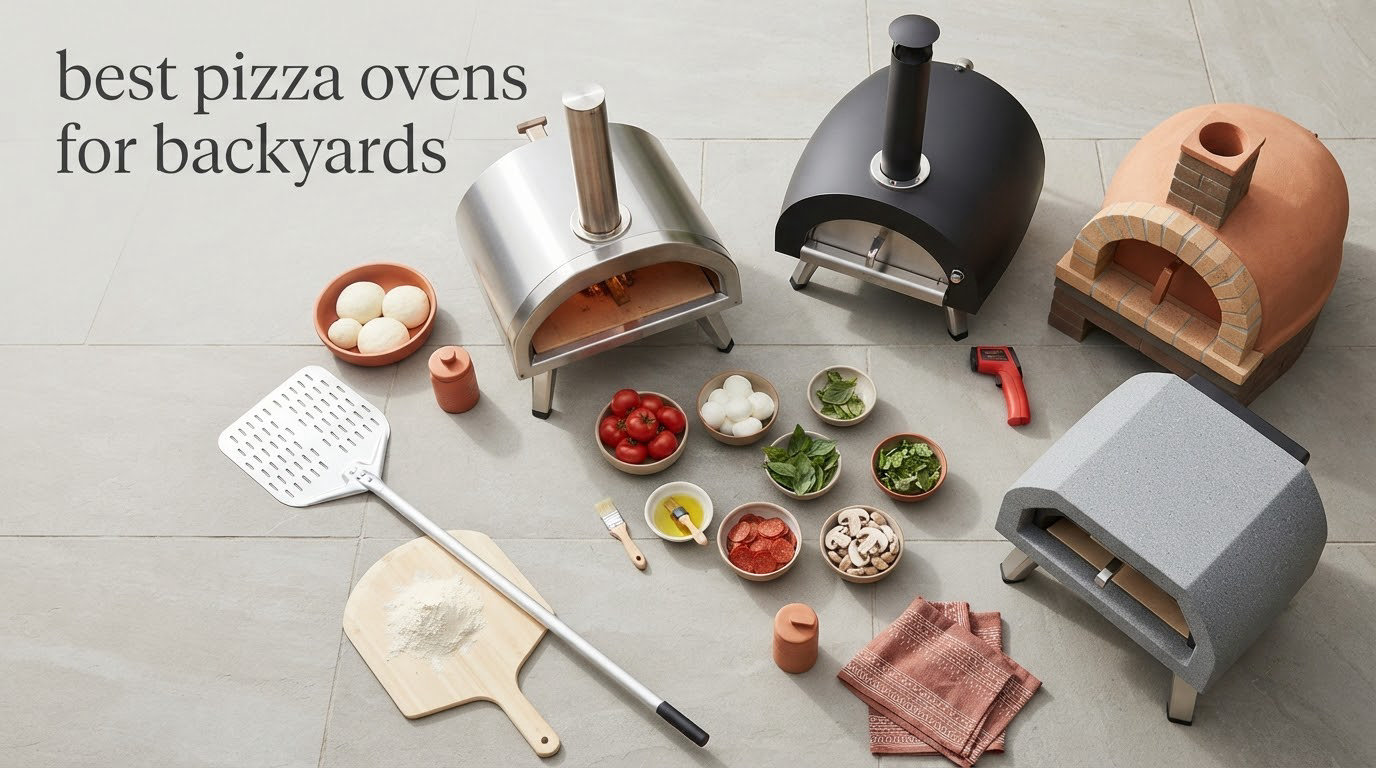
A stock indoor oven tops out around 500°F, and that single number explains why backyard pizza tastes different from the pizza you make on a weeknight. At 500°F a crust browns slowly and stays pale at the rim, cheese melts without blistering, and a pizza takes eight minutes. Push a stone to 900°F and the same dough cooks in 60 seconds with leopard spotting, a charred cornicione, and a flavor that comes from radiant heat rather than a convection fan.
That is the gap this roundup covers. Every oven below is built for outdoor backyard use, and every one of them clears 550°F or better. We sorted the current field of the best outdoor pizza oven options by what actually decides whether you cook on it every month or abandon it after a rainy August.
My team worked through eight ovens across the formats a real yard can hold: a 25 lb folding-leg pellet oven you carry to the patio, a 16 inch dual-fuel unit for family-size pies, a countertop propane oven that never leaves the counter, and a grill-top chamber that piggybacks on a gas grill you already own. We weighed stone temperature against preheat time, checked the fuel path against how much tending a backyard cook actually wants, and looked hard at weight and storage footprint because a 53 lb steel column on a patio is a different purchase than a 25 lb folding frame.
Read on for the full picks, or jump to the comparison table further down if you already know you are buying.
Table of Contents
What Is a Backyard Pizza Oven?
A backyard pizza oven is a freestanding outdoor cooker built to reach 750°F to 950°F, using wood, charcoal, pellets, propane or a combination, so you can cook a blistered pizza in your own yard. Heat is generated by a fire or burner, trapped around a thick stone, and held there by a firebrick or insulated stainless shell. You preheat the stone, launch a dough ball on a floured peel, and the pie bakes in 60 to 120 seconds.
One distinction matters more than any other on this page: oven temperature is not stone temperature. A chimney reading 950°F says nothing about the surface your dough lands on. If the stone has only been in a hot oven for five minutes it may sit at 500°F while the air around it reads 900°F, and your crust will bake pale and thick. Check the stone itself with an infrared thermometer, not the dial or the app.
Top 3 Picks for Backyard Pizza Ovens in 2026
BIG HORN 12 Inch Pellet Pizza Oven
- 1110°F maximum
- wood pellet fired
- 25 lb folding legs
- 12 inch stone

Ooni Karu 12 Multi-Fuel Pizza Oven
- 950°F in 15 minutes
- wood charcoal or gas
- 26.4 lb
- 60 second bakes

PIZZELLO 16 Inch Dual-Fuel Pizza Oven
- 16 inch stone
- propane and wood burners
- carry bag
- biggest accessory bundle
Best Pizza Ovens for Backyards (October 2026)
| Product | Specifications | Action |
|---|---|---|
| BIG HORN 12 Inch Pellet Pizza Oven |
|
Check Latest Price |
| Ooni Karu 12 Multi-Fuel Pizza Oven |
|
Check Latest Price |
| PIZZELLO 16 Inch Dual-Fuel Pizza Oven |
|
Check Latest Price |
 BIG HORN Gas Pizza Oven BIG HORN Gas Pizza Oven |
|
Check Latest Price |
 EDOSTORY Wood-Fired Backyard Pizza Oven EDOSTORY Wood-Fired Backyard Pizza Oven |
|
Check Latest Price |
 Mont Alpi Stainless Steel Pizza Oven Mont Alpi Stainless Steel Pizza Oven |
|
Check Latest Price |
 Ooni Karu 2 Pro Multi-Fuel Pizza Oven Ooni Karu 2 Pro Multi-Fuel Pizza Oven |
|
Check Latest Price |
 BakerStone Grill-Top Pizza Oven BakerStone Grill-Top Pizza Oven |
|
Check Latest Price |
1. BIG HORN 12 Inch Pellet Pizza Oven – Best Overall Backyard Pizza Oven
BIG HORN 12″ Outdoor Pizza Oven, 1110°F, Wood Pellet, Gas & Electric
Wood pellet fired
Gas and electric attachments
1110°F maximum
25 lb
12 in stone
Pros
- Genuine wood pellet flavor
- 60-90 second cooks once the stone is hot
- 25 lb folding leg design that collapses for storage
- durable stainless with no sharp edges
- also roasts steaks fish lamb and vegetables
Cons
- Steep learning curve for lighting pellets and holding temperature
- hopper needs refilling during a long session
- top can char before the base finishes on a small chamber
- gas and electric burners cost extra
The reason this one leads my list is simple arithmetic: 2,651 reviews averaging 4.4 stars, a 1110°F ceiling, and a 25 lb frame that one person can carry from the garage to the patio. It ranks at the top of the Patio, Lawn and Garden outdoor oven category, which tells you how many people are cooking on it rather than storing it.
Bottom line: this is the backyard pizza oven I would put in the hands of a family that wants real wood-fired flavor and does not want to spend a month learning a gas system. The pellet hopper is fed by hand in measured scoops, the fire is lit with a couple of fire starters, and after 18 to 20 minutes the 12 inch stone is ready. A pie cooks in 60 to 90 seconds.
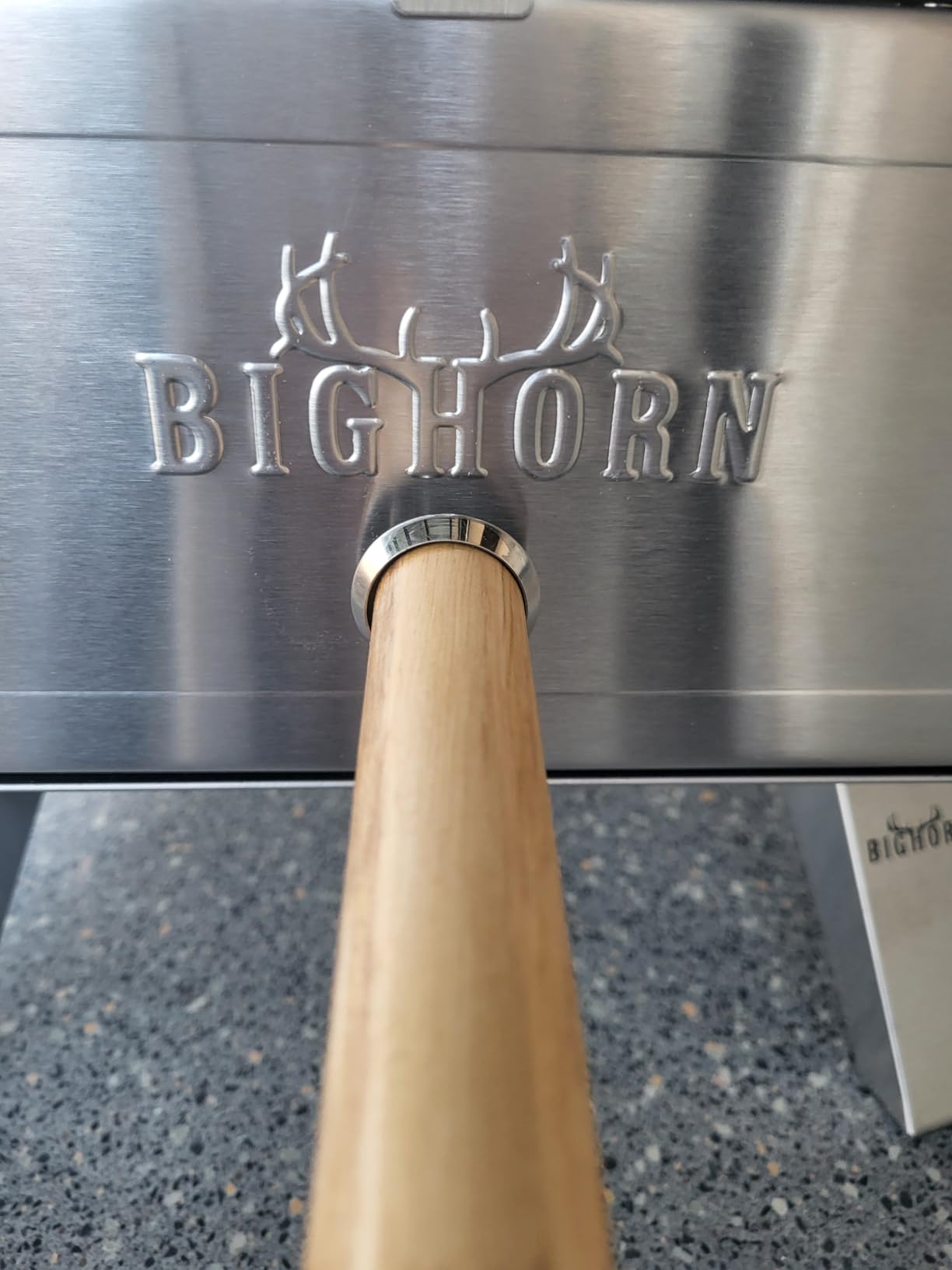
What surprised me was how much of the stainless build holds up. There are no sharp edges to worry about with a folding leg frame, and the whole thing disassembles for cleaning, which matters more in spring than you expect when ash has been sitting in the tray since October.
It is a 3-in-1 unit in the truest sense. Pellets ship in the box, and gas and electric burner attachments are add-ons, so you can move from a smoky Friday-night fire to a quick Saturday lunch session without changing ovens. Across reviews, owners also use it for steaks, fish, lamb and vegetables, which pushes the value well past pizza alone.
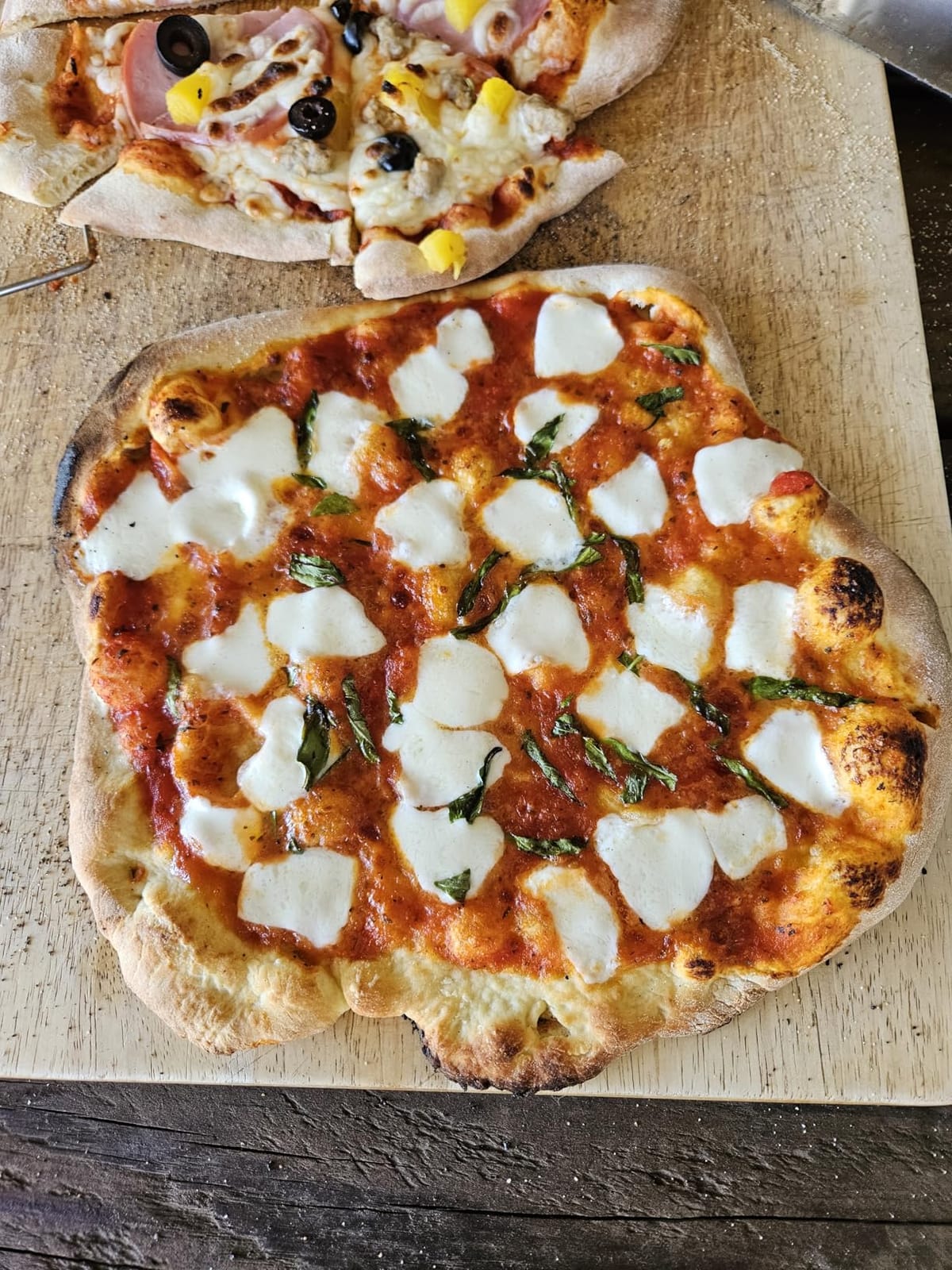
How the 1110°F claim actually performs
That 1110°F figure is the maximum the chamber can reach, not a temperature you will hold for a whole cook. Working with owners who use it regularly, the practical range sits between 750°F and 950°F for Neapolitan-style pies, and a 12 inch pizza finishes in well under 90 seconds once the stone is genuinely hot. A common early mistake is launching too soon, which is exactly why an infrared thermometer is the first accessory worth buying.
Where the pellet hopper gets in the way
The hopper needs refilling more than once during a long cook, and that means opening the lid or reaching into a hot chamber mid-session. For a family of four making four or five pies on a Saturday, it is a minor irritation. For a large party where you are firing continuously, it is a real one. Owners who cook for crowds add a second fuel source rather than trying to outrun the hopper.
2. Ooni Karu 12 Multi-Fuel Pizza Oven – Best Rated Backyard Pizza Oven
Ooni Karu 12 Multi-fuel Outdoor Portable Pizza Oven – Reaches 950°F and Cooks 12 Inch Pizzas in 60 Seconds. Versatile Wood or Propane Gas Fired Grill with Pizza Stone
Wood charcoal or gas
950°F in 15 minutes
26.4 lb
12 in capacity
60 second bakes
Pros
- Highest rated in the group at 4.6 stars
- 950°F reached in 15 minutes
- custom fuel tray gives strong airflow with very little ash
- well insulated build that holds heat
- fold-down legs make it genuinely portable
Cons
- Gas burner sold separately despite multi-fuel marketing
- included wooden peel fits so snugly it is awkward to use
- wood and charcoal firing has a learning curve versus push-button propane
At 4.6 stars with 84 percent of reviewers handing over five stars, the Karu 12 is the highest-rated oven in this roundup by a clear margin. It is also the one most owners describe as the best balance of heat, portability and build quality at this tier, and it reaches 950°F in 15 minutes on wood or charcoal straight out of the box.
Bottom line: pick the Karu 12 if you want the highest-rated option and you will cook with wood at least half the time. The custom fuel tray is the piece of engineering that matters most in practice, pushing fresh air under the fire so you get strong heat and very little ash to scrape out between cooks.
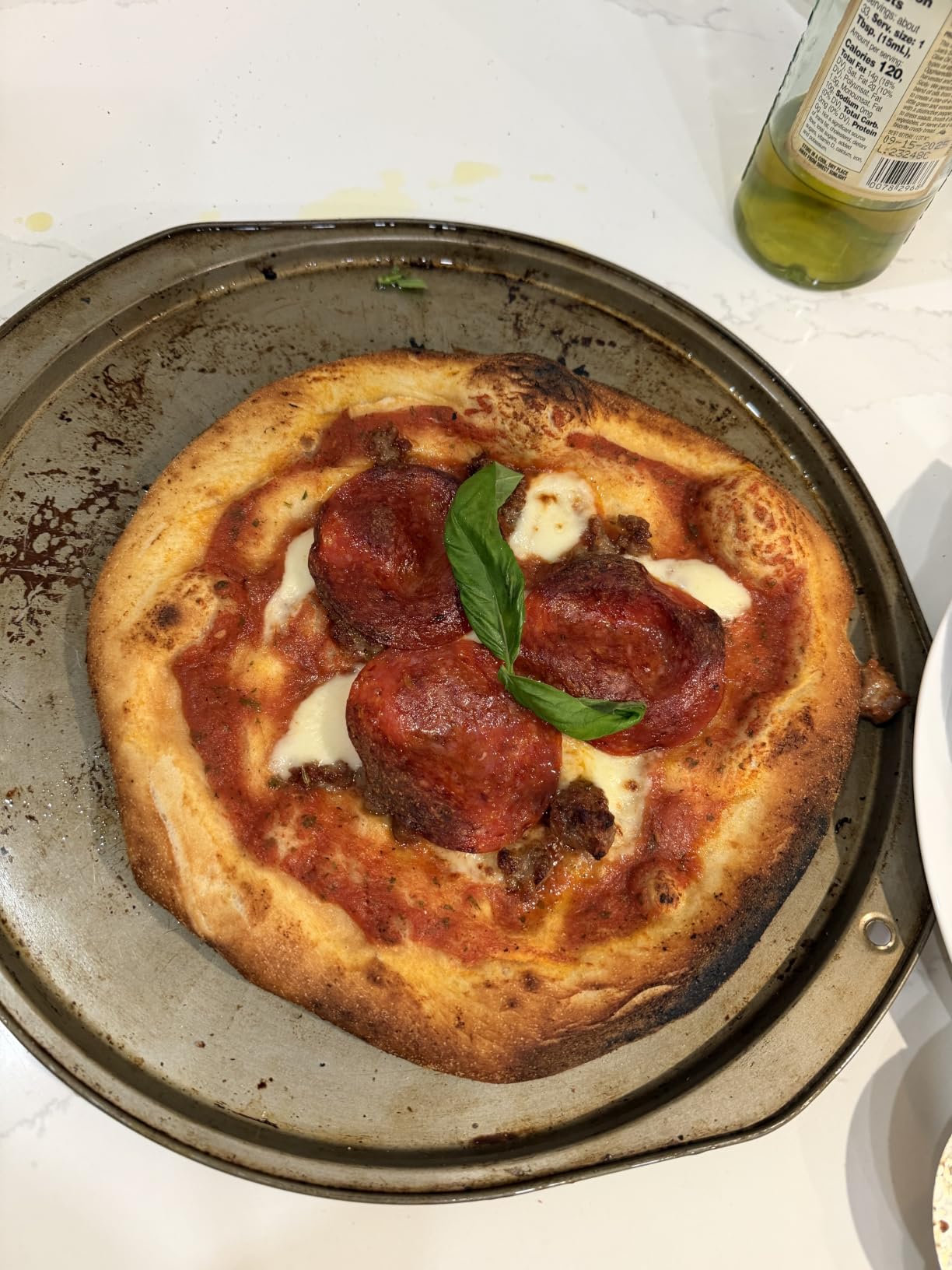
Portability is genuinely good here rather than a marketing line. At 26.4 lb with fold-down legs and a removable chimney, this is an oven you can move to the foot of the lawn for a party and back under cover when the weather turns. It also handles more than pizza, with owners cooking steaks, fish and vegetables in the same chamber.
The clearest criticism in the reviews is not about performance but about the box contents. The Ooni gas burner is sold separately, so the multi-fuel promise only arrives once you add the attachment, and that mismatch between the marketing and the packing list is the single most common source of buyer frustration. The included wooden peel is also a tight fit, and plenty of owners buy a separate one within a month.
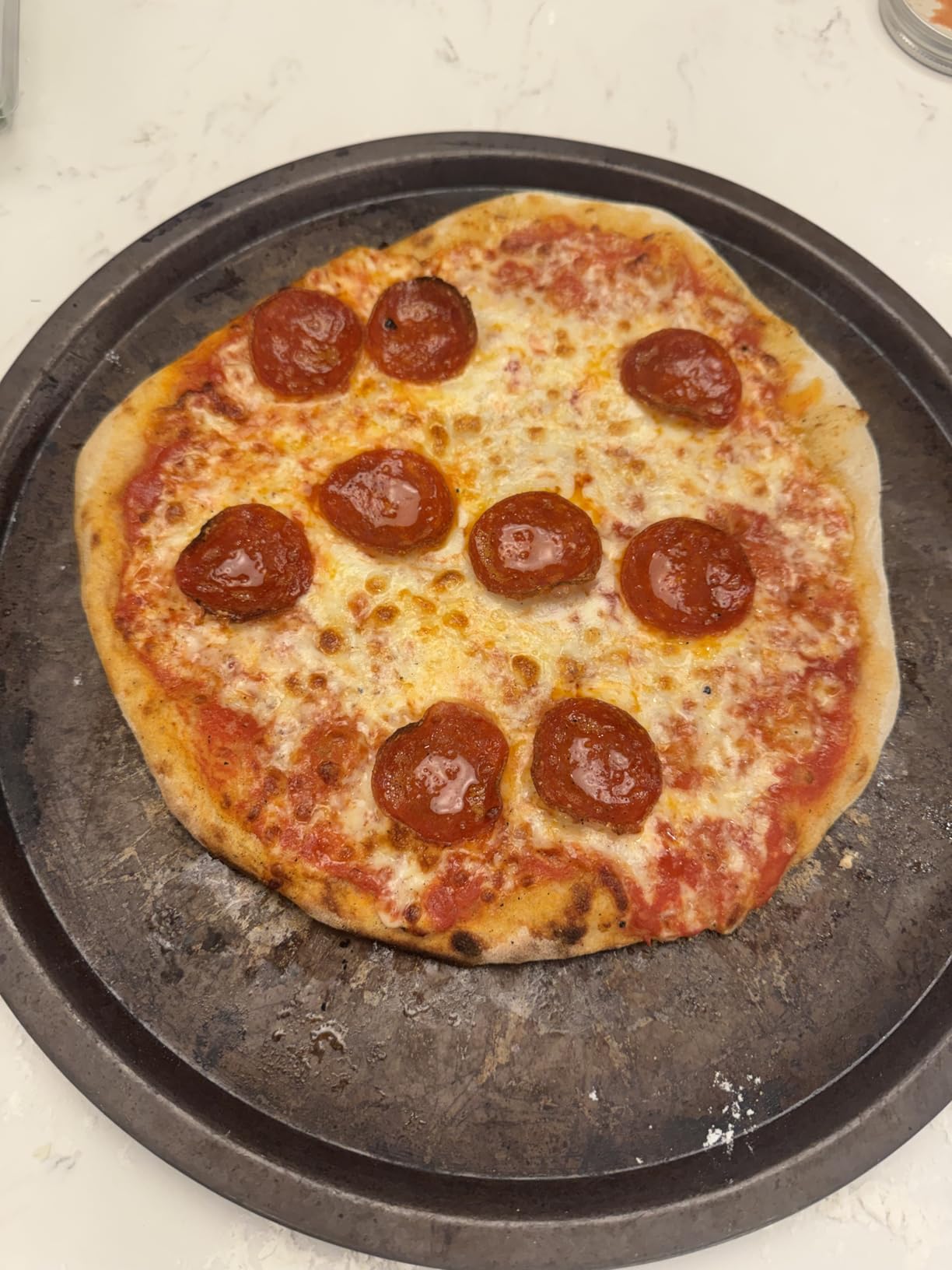
What the 15-minute preheat really needs
Fifteen minutes is realistic for the chamber, not necessarily for the stone. Owners who get consistent leopard spotting give the floor an extra five minutes and confirm with an infrared thermometer. A cold stone under a hot oven is the number one reason first-time owners report pale, thick crusts on an oven that supposedly hits 950°F.
Whether to add the gas burner
Adding the gas burner makes firing dramatically cleaner and faster, and most owners report no detectable flavor difference once the stone is up to temperature. It also removes the pellet or charcoal tending from the equation entirely, which is the deciding factor for anyone hosting a group rather than cooking for their own household. Budget for it as part of the total, not as an extra.
3. PIZZELLO 16 Inch Dual-Fuel Pizza Oven – Best Value for Family-Size Pies
PIZZELLO 16″ Outdoor Pizza Oven, Propane & Wood Fired Steel Pizza Grill
Propane and wood burners
16 in stone
752°F in 25-30 minutes
Folds flat with carry bag
Pros
- Largest cooking surface in the group at 16 inches
- dual fuel burners let you switch between fast propane and wood fired cooking
- generous accessory bundle with stone peel cutter scoop and carry bag
- fold up legs and detachable chimney
- coated shell resists fingerprints
Cons
- 752°F ceiling means longer bakes than 950°F class ovens
- 25 to 30 minute preheat is the slowest here
- 12 percent one-star share is the second highest in the group
- coated metal rather than thick stainless
This is the pick for a household where the pie size question decides everything. At 16 inches, the stone cooks a family-size pizza, and the review set is the largest in the roundup at 879 ratings, so there is a deep pool of real cooking feedback to read before you commit.
Bottom line: the PIZZELLO 16 is the best value choice when you regularly feed five or more people and want one oven to handle both quick propane lunches and slow wood-fired Saturdays. Both burners are included, which removes the add-on problem that trips up several other multi-fuel ovens in this price range.
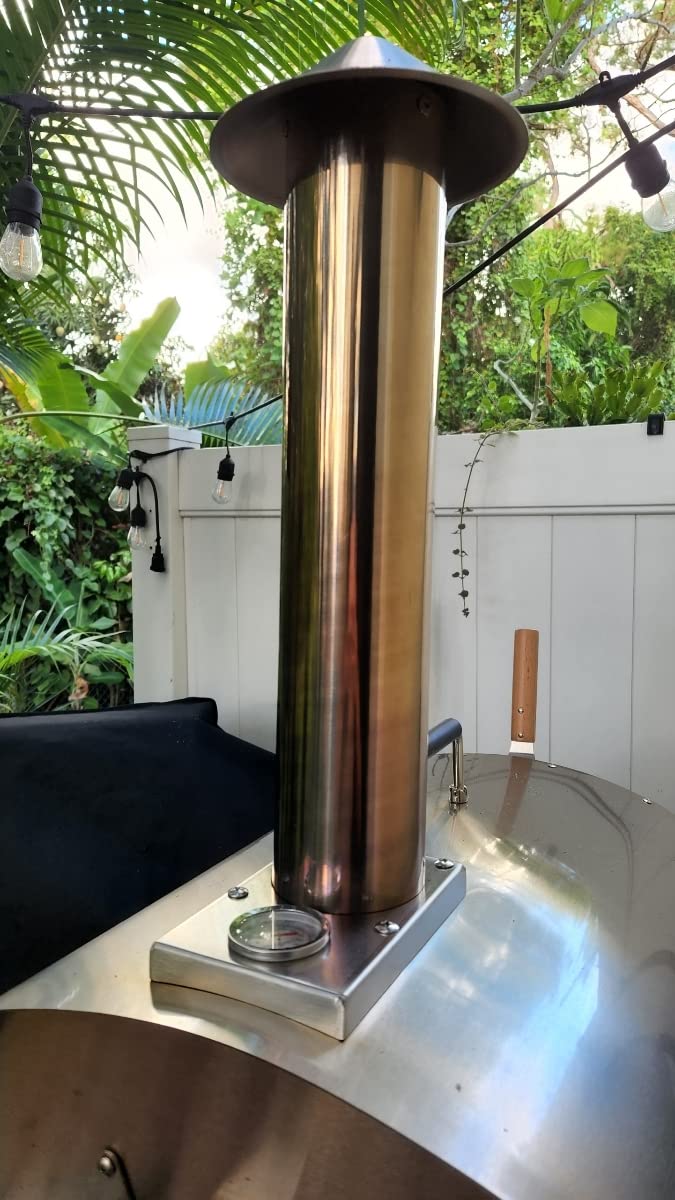
What arrives in the box is unusually complete: a 16 inch pizza stone, a pizza peel, a cutter, a pellet scoop, a waterproof carry bag, and both wood and gas burners. The double-walled stainless body has insulation cotton between the walls, and the fold-up legs plus detachable chimney mean the whole oven packs down rather than standing permanently on the patio.
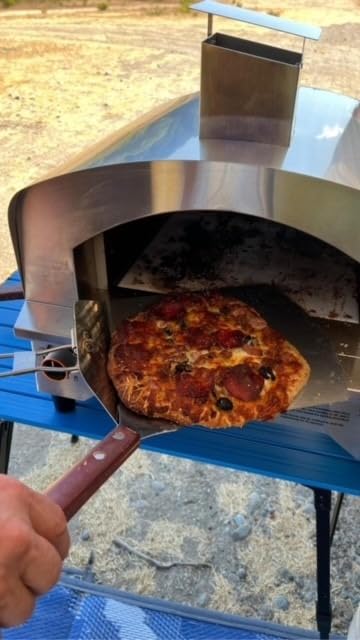
The honest trade-off is heat. It reaches 752°F, which sits below the 950°F to 1110°F class leaders in this roundup, and that ceiling takes 25 to 30 minutes to reach. Pizzas need a longer bake and closer watching, and owners who load the 16 inch stone heavily report uneven results with heavier toppings. Light toppings and a hot stone is where this oven earns its rating.
How long recovery takes on a big stone
A 16 inch stone holds a lot of energy, and that cuts both ways. It recovers well between pies if you are cooking two or three in a session, but after loading a large pie it needs more time than a 12 inch stone to come back up. For a party where you fire continuously, plan a slightly longer gap between bakes than you would on a smaller oven.
Whether the accessory bundle changes the value math
It genuinely does. Stone, peel, cutter, scoop and a carry bag are the items most owners end up buying within a month anyway, and here they are in the box. The coated steel shell feels less substantial than thick stainless on the ovens above it, and the 12 percent one-star share reflects that, but the price-to-complete-kit ratio is the best in this roundup.
4. BIG HORN Gas Pizza Oven – Best Backyard Pizza Oven for Hands-Off Gas Cooking
BIG HORN Gas Pizza Oven, Portable Propane Pizza Oven with 15 inch Pizza Stone, Stainless Steel Pizza Maker for Outdoor Cooking
Dual 23000 BTU burners
750°F in 10 minutes
1070°F maximum
Fits 14.7 in pizzas
Pros
- Fastest preheat in the group at 750°F in 10 minutes with no fire to tend
- arc shaped chamber circulates heat so pies cook in 60 seconds without rotation
- built-in thermometer plus independent dual burner knobs
- also grills steaks chicken fish and vegetables
Cons
- Gas only with no wood fired path
- needs a propane tank and regulator hose
- countertop height wants a sturdy raised table
- burner settings take a little practice the first time
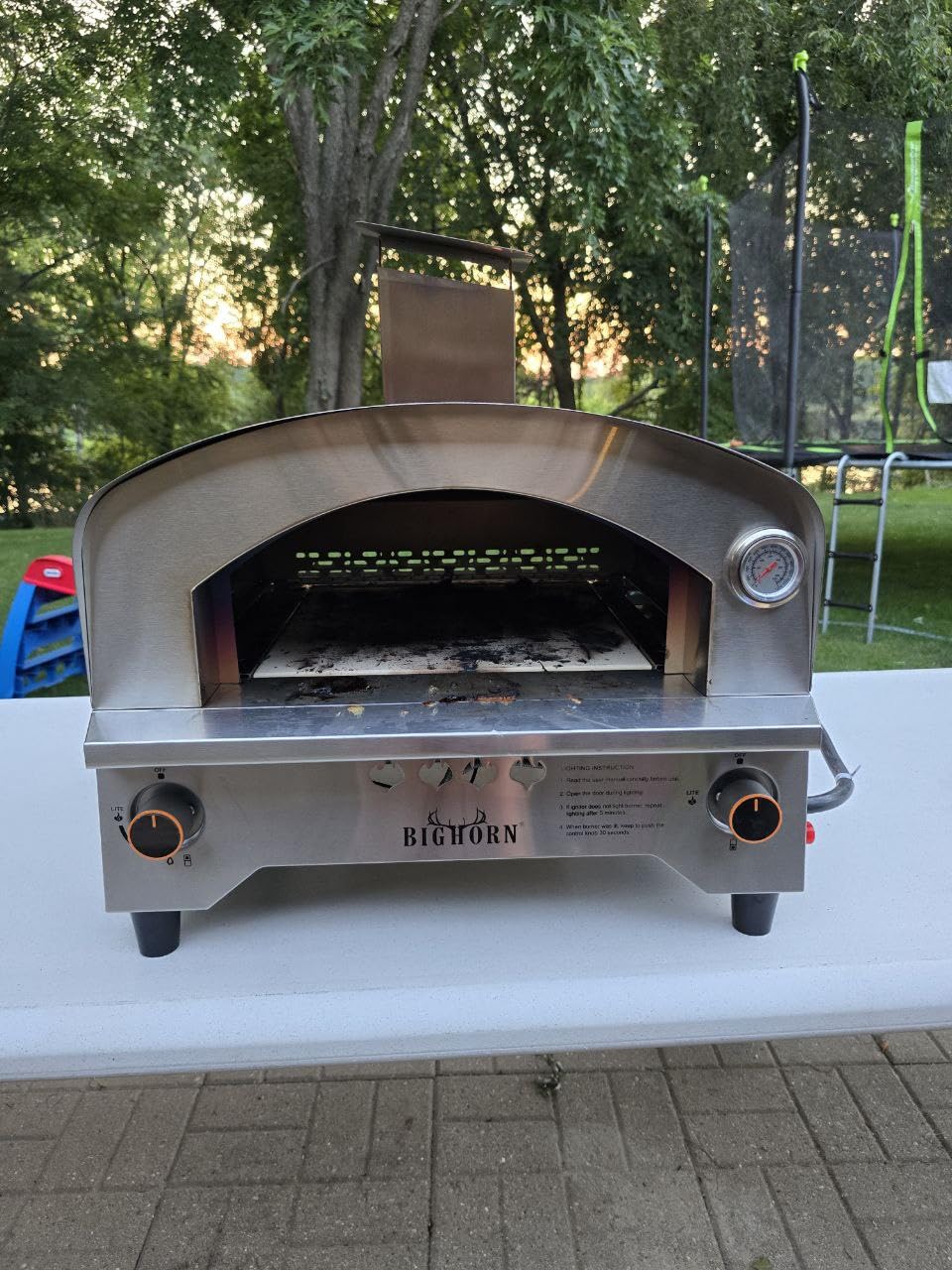
If wood is not for you, this is the cleanest gas experience in the roundup. The arc-shaped chamber wraps the burners around the chamber walls, and the effect is even cooking that does not require rotating the pie mid-bake, which is the single biggest quality-of-life difference between a gas oven and a wood oven in the hands of a beginner.
Bottom line: choose this oven if you want a backyard pizza oven you can start with a knob turn and no fire management. It reaches 750°F in 10 minutes, runs to a 1070°F maximum, and fits pies up to 14.7 inches across the 15 inch stone.
The built-in thermometer is singled out repeatedly in owner reviews as the reason temperature control feels easy, and the independent dual control knobs let you dial the burners back once the stone is up. That last point matters more than it sounds, because a gas oven that runs full blast will scorch the base before the top browns.
The included kit covers the basics with a foldable pizza peel, a 14.7 inch stone and a propane regulator hose. It is a countertop format, so it wants a sturdy raised table rather than patio furniture, and the dual side burners are rated at 23,000 BTU for the full chamber.
How steady the heat stays between bakes
Steadier than any wood oven here, which is the entire point. A gas burner holds its set temperature while the door is open, so the second pie in a session cooks as predictably as the first. That predictability is what lets you run eight or ten pies back to back without rebuilding a fire between each one.
Whether you will miss the wood flavor
You will, and that is the one limitation worth naming plainly. There is no wood or pellet path on this oven, so nothing in the crust carries smoke. If your reason for buying a backyard oven is genuine wood-fired character, the pellet and multi-fuel picks above are the right lane, and this one is for people who prioritize control and speed.
5. EDOSTORY Wood-Fired Backyard Pizza Oven – Best Budget Pick
EDOSTORY Outdoor Wood-Fired Pizza Oven Patio Pizza Maker for Backyard
Wood fired
550°F maximum
10 minute ready time
53 lb
12 in stone
Pros
- Lowest-cost full size stationary backyard wood oven in the group
- unusually large accessory bundle with cover stone peel cutter brush glove stands trays and meshes
- wheels and side handle make it movable
- adjustable chimney and air outlet for fire control
- also roasts meat bakes bread and cooks vegetables
Cons
- 550°F ceiling gives less blistering than 950°F class ovens
- 6 to 7 minute pizza bakes
- 62.7 inch standing height makes it a stationary unit
- smallest 12 inch stone in the group
The EDOSTORY is the pick if your priority is a permanent-looking wood oven in the yard for the least money. It is built as a standing unit with a wood shelf underneath, an ash drawer that detaches, and a 62.7 inch height that gives it the visual presence of a built-in oven rather than a table-top cooker.
Bottom line: this is the budget wood oven for a cook who wants the look and the smoke flavor of a backyard oven and is content with slower bakes. It is ready in 10 minutes, reaches 550°F, and cooks a 12 inch pizza in 6 to 7 minutes on the included stone.
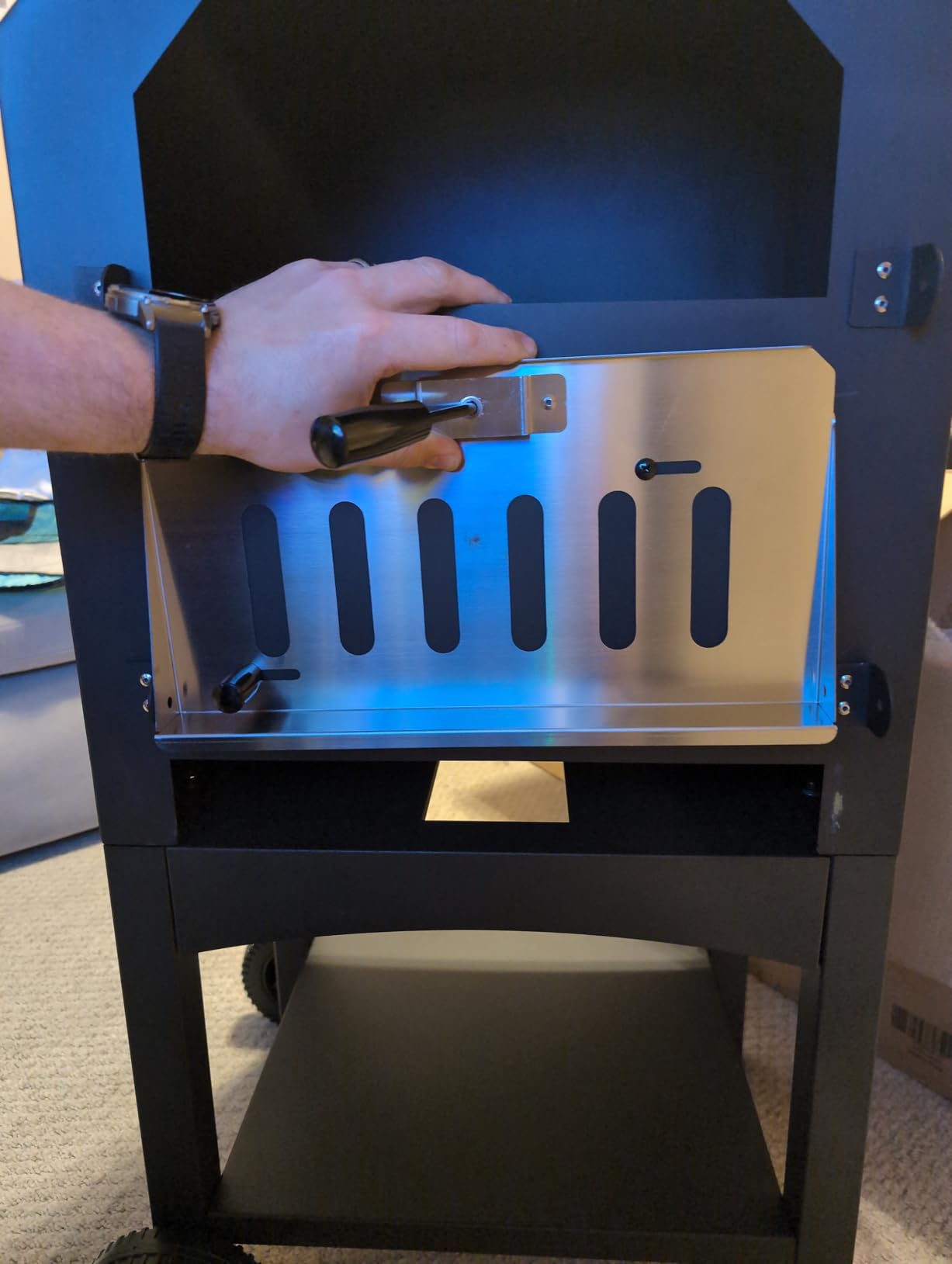
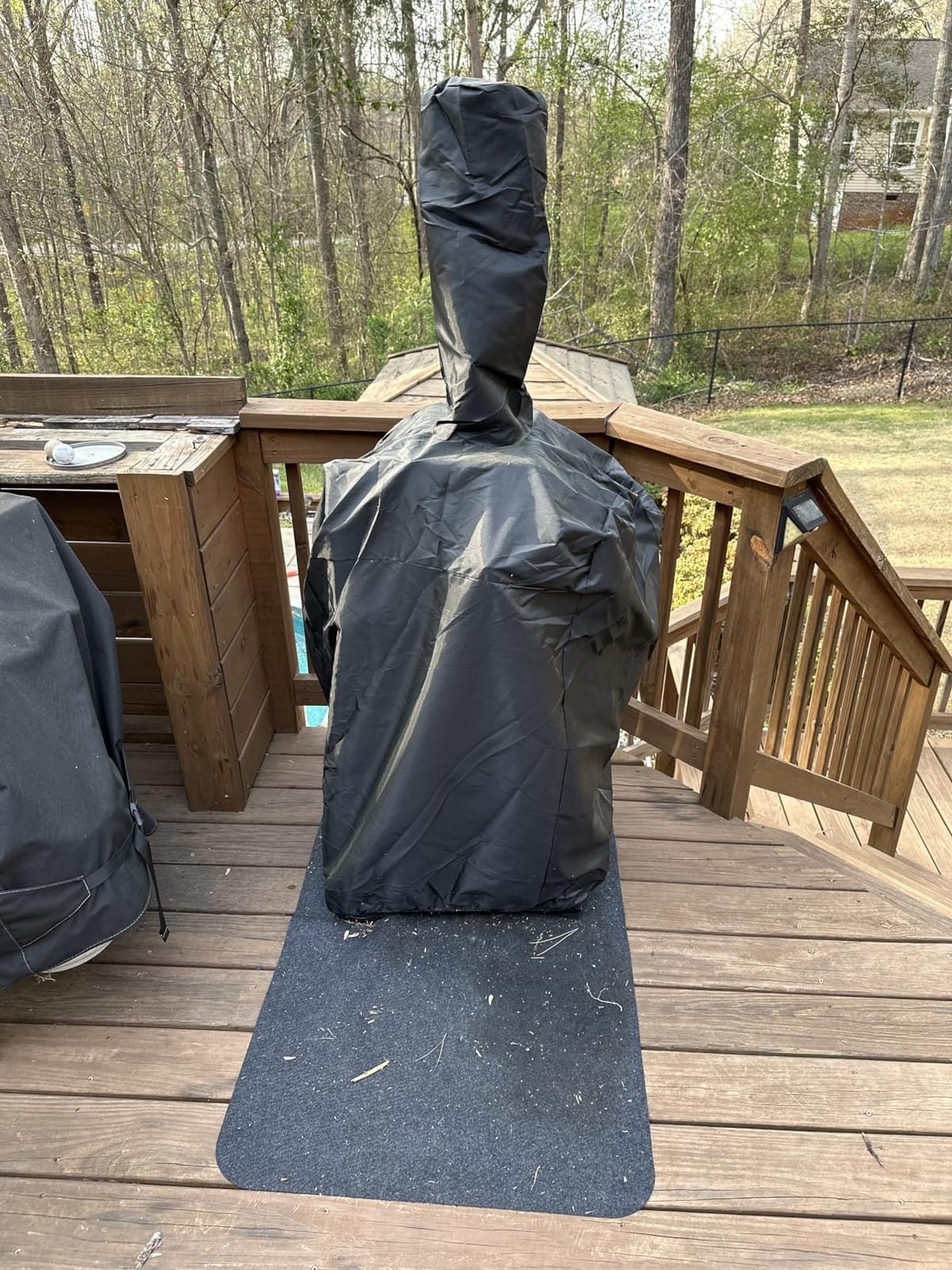
The accessory bundle is the story here. Out of the box you get a weather cover, a pizza stone, peel, cutter, brush, glove, stands, trays and carbon meshes, a set of items that most owners spend their first month assembling piecemeal. The powder-coated carbon steel shell with an iron core reads as substantial in person.
Mobility is better than the 53 lb weight suggests, because two large wheels and a side handle let you roll it onto the patio and reposition it as the sun moves. Owners also use it as a general roaster for meat, bread and vegetables, which stretches the value of a single cook session well past pizza.
How 550°F changes the crust
Expect a different pizza, not a worse one. At 550°F with a 6 to 7 minute bake, you are in New York pan-pizza territory rather than Neapolitan territory, and you will want a thicker, more forgiving dough with a longer proof. Trying to force a 60 second Neapolitan bake at this ceiling is where first-time owners get frustrated, and where a fair share of the 14 percent one-star ratings come from.
When this oven is the wrong choice
Skip it if you want Neapolitan crust, if you cook for more than four people at once, or if you need to store it. At 53 lb and 62.7 inches tall, this is a stationary piece of yard furniture that needs a permanent spot and weather cover between seasons. It also cooks one 12 inch pizza at a time on a stone smaller than most in this roundup.
6. Mont Alpi Stainless Steel Pizza Oven – Best Backyard Pizza Oven for Small Patios
Mont Alpi 17″W x 18″D x 19″H Stainless Steel Premium Outdoor Kitchen Countertop Table Top Portable Propane Gas Pizza Oven with Grease Tray + 12″ Pizza Stone – Great for Camping Backyard and Tailgating
Propane with natural gas conversion
550 to 600°F
25 lb countertop
5 year warranty
Pros
- Marine grade 304 stainless steel with a satisfying door and knob
- well insulated dome wall and door
- heats to 550 to 600°F in under 10 to 15 minutes
- recovers temperature within seconds between pizzas
- also roasts chicken prime rib tri tip fish and vegetables
Cons
- U shaped burner sits close to the stone so bases scorch before toppings brown
- cooks one pizza at a time
- no cover included and natural gas kit sold separately
- lowest burner output means slower stone preheat
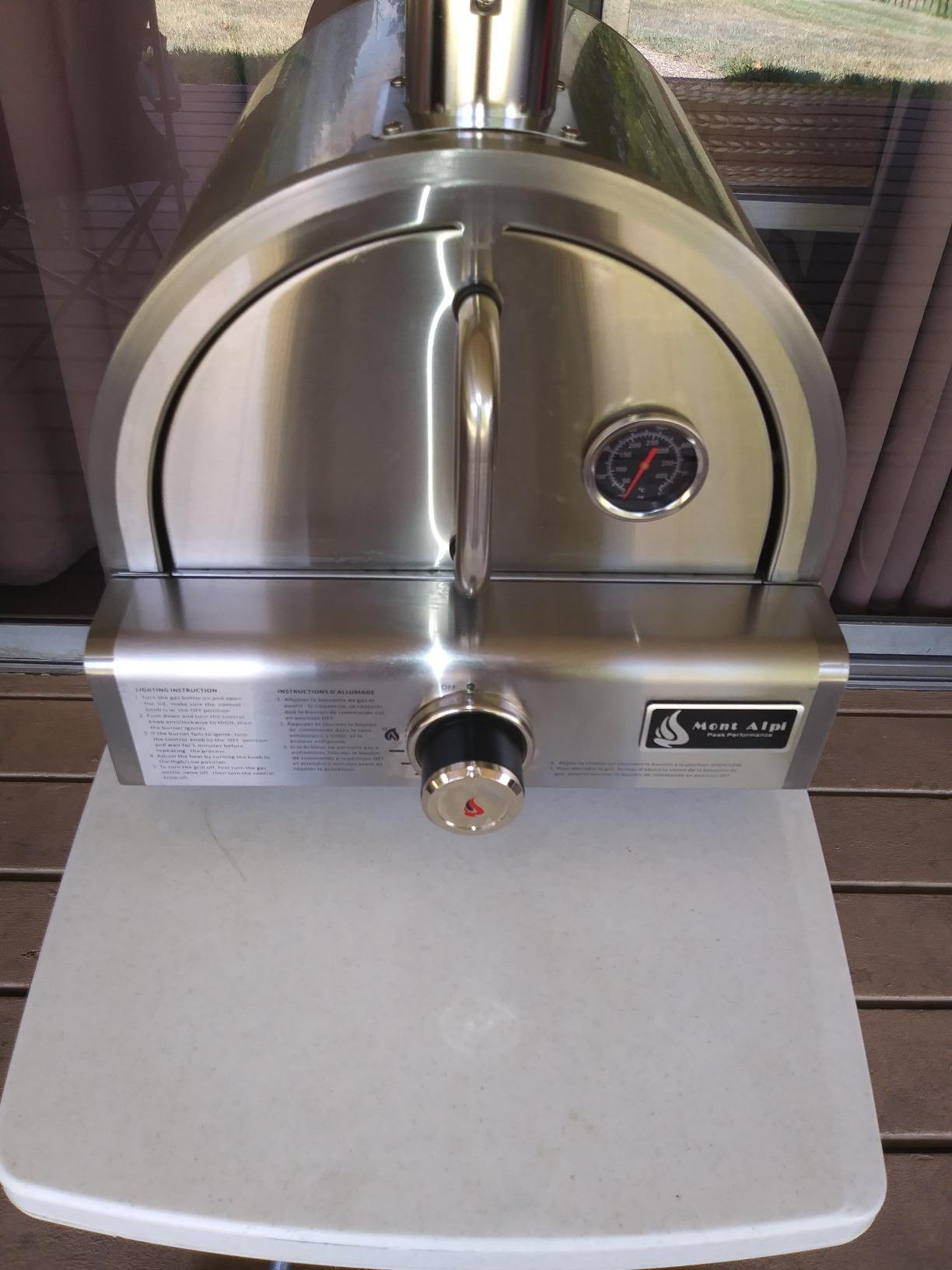
For a balcony, a compact patio or a rental backyard where a 53 lb steel column is not happening, the Mont Alpi is the most compact serious oven here. It is 25 lb, measures 18.4 by 16.8 by 23 inches, and it carries a 5 year warranty on the marine grade 304 stainless body.
Bottom line: this is the backyard pizza oven for a small outdoor space where storage matters as much as cooking. The propane hose and regulator are included, and it converts to natural gas with orifices that are pre-installed, so a permanent patio hookup is a straightforward step.
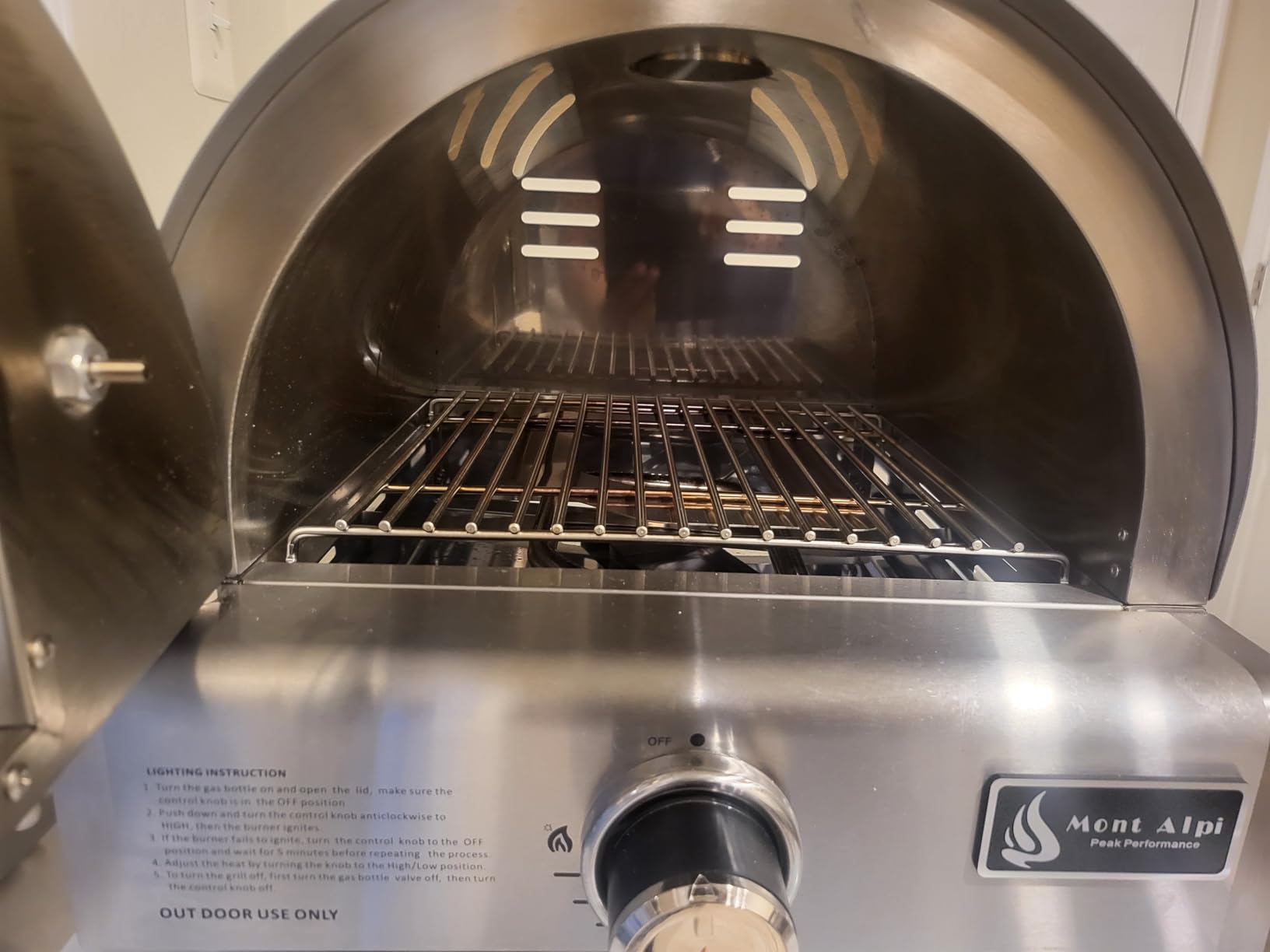
Temperature recovery is the underrated strength here. Owners report getting back to heat within seconds after pulling a pizza, which is what lets them run nine or ten 10 to 12 inch pies back to back in a single session. The adjustable tubular airflow system with a temperature display gives you real control over the burn pattern.
Owner reviews split sharply, and the reason is structural rather than random. A 13 percent one-star share comes largely from cooks who notice the U-shaped burner sits close to the stone, creating a hot spot that browns the crust bottom before the cheese on top melts. Several of those critics are former restaurant cooks, which is worth knowing.
How to work around the burner hot spot
The fix owners converge on is straightforward: preheat the stone fully before launching, keep the door shut during the bake so the top radiates, and turn the flame down once the stone is hot. Under those conditions it behaves far better than the one-star reviews suggest, and the recovery speed is genuinely quicker than most wood ovens in this roundup.
What you need to buy separately
Budget for a cover and, if you plan a permanent install, the natural gas conversion kit. The oven ships with a high heat pizza stone and the propane hardware, but no cover, and a stainless oven left through a wet winter without one is the fastest way to end up with surface rust around the door seal. Those who cook in cooler months also keep a turning peel nearby.
7. Ooni Karu 2 Pro Multi-Fuel Pizza Oven – Best for Connected Cooks
Ooni Karu 2 Pro Multi-Fuel Pizza Oven – Wood and Gas Outdoor Pizza Oven with Pizza Stone & Integrated Thermometer, Pizza Oven Outdoor, Dual Fuel 16 Inch Pizza Maker, Outdoor Cooking Grill
Wood charcoal or gas
950°F in 15 minutes
Digital thermometer
Glass ViewFlame door
Pros
- Reaches 950°F in 15 minutes for 60 second Neapolitan style pizza
- mounted digital thermometer in °F or °C
- ViewFlame full glass door shows the cook without losing heat
- fully insulated body
- Ooni Connect app adds smart cooking functionality
- premium stainless and brushed finish
Cons
- Gas burner attachment sold separately
- the most expensive oven in this roundup
- wood firing still carries the usual learning curve
- wood or charcoal only out of the box
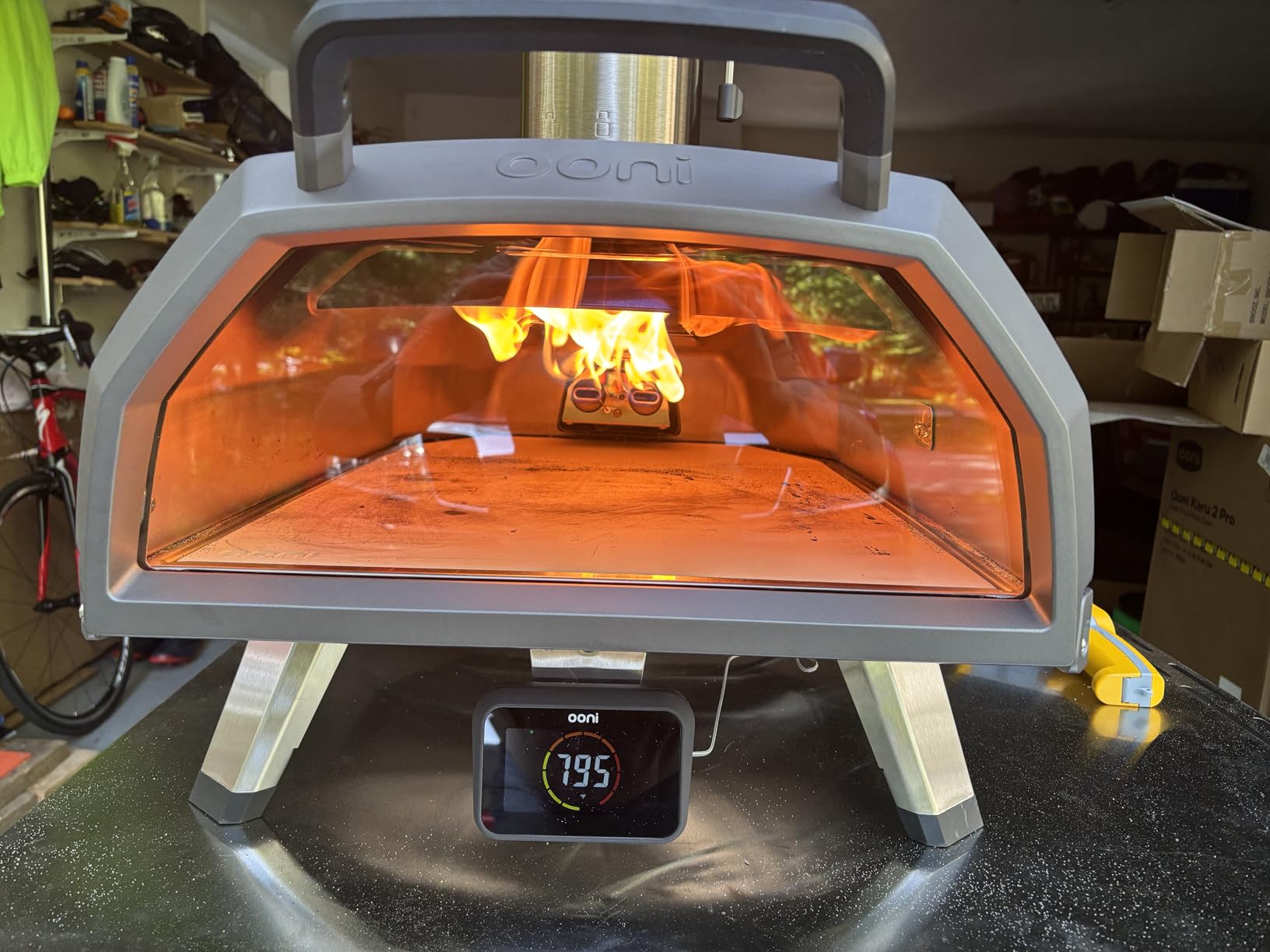
The Karu 2 Pro is where the Ooni line separates technology from tradition. It carries a mounted digital thermometer that reports internal temperature in Fahrenheit or Celsius, a full ViewFlame glass door so you can watch a bake without opening and losing heat, and Ooni Connect app connectivity on top of a fully insulated body.
Bottom line: this is the backyard pizza oven for cooks who want instrumentation and a door they can see through, and who intend to cook Neapolitan style. It reaches 950°F in 15 minutes and cooks a 12 inch pizza in 60 seconds, with a pizza stone included.
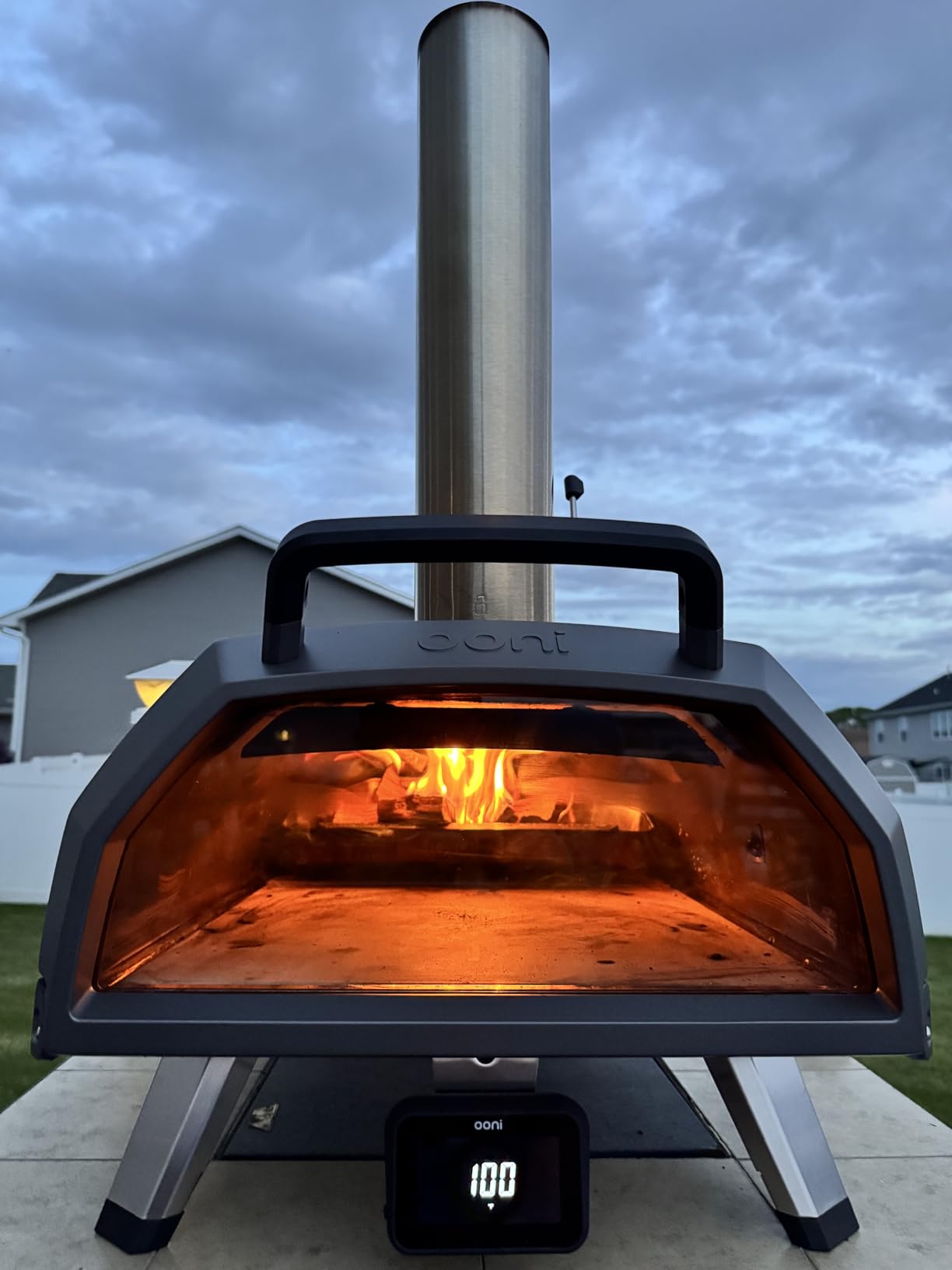
At 15.3 kg it is heavier than the Karu 12 but still firmly in portable territory, and the 77 percent five-star share in a smaller review pool of 156 ratings points to consistently satisfied owners. The upgrades people name most often are the digital thermometer and the improved insulation, which together make this noticeably more controllable.
The glass door matters more than it sounds. Opening a solid metal door on a hot oven drops chamber temperature and extends the next bake, so a window that shows you the cornicione turning amber without opening the door is a genuine cooking advantage rather than a styling choice.
Whether the app earns its place
For some cooks it does. Paired phone monitoring, temperature readouts and preset cook profiles are useful if you are managing a longer session or cooking in cooler weather when startup takes longer. If you rarely look at your phone while cooking, the mounted thermometer delivers most of the value and the app is a bonus rather than a reason to buy.
How it compares with the Karu 12
Same heat target and same 60 second bake, with better instrumentation, better insulation and a door you can see through. The trade is weight, bulk and cost, plus the same separately sold gas burner. If your budget stretches here, the Pro is the more refined tool; if it does not, the Karu 12 above makes pizza at the same temperature for a good deal less.
8. BakerStone Grill-Top Pizza Oven – Best for Existing Grill Owners
BakerStone Outdoor Pizza Oven, Propane Gas Pizza Oven for Grill 5-Sided Stone Baking Chamber, Portable Pizza Oven Box Kit with Wood Pizza Peel, Turning Peel, Dust Cover, Original Series
Propane, sits on a gas grill
5 sided stone chamber
2 to 4 minute bakes
14 in
Pros
- Unique grill top format turns a gas grill you already own into a brick style pizza oven
- patented 5 sided stone chamber gives charred blistered crusts
- can reach 800 to 900°F with the lid mostly closed
- includes wooden peel turning peel and dust cover
- long ownership history
Cons
- Requires a separate gas grill so total cost and setup exceed the sticker price
- heat output depends heavily on grill size and lid position
- serviceable rather than premium build
- some users cap out near 500°F on smaller grills
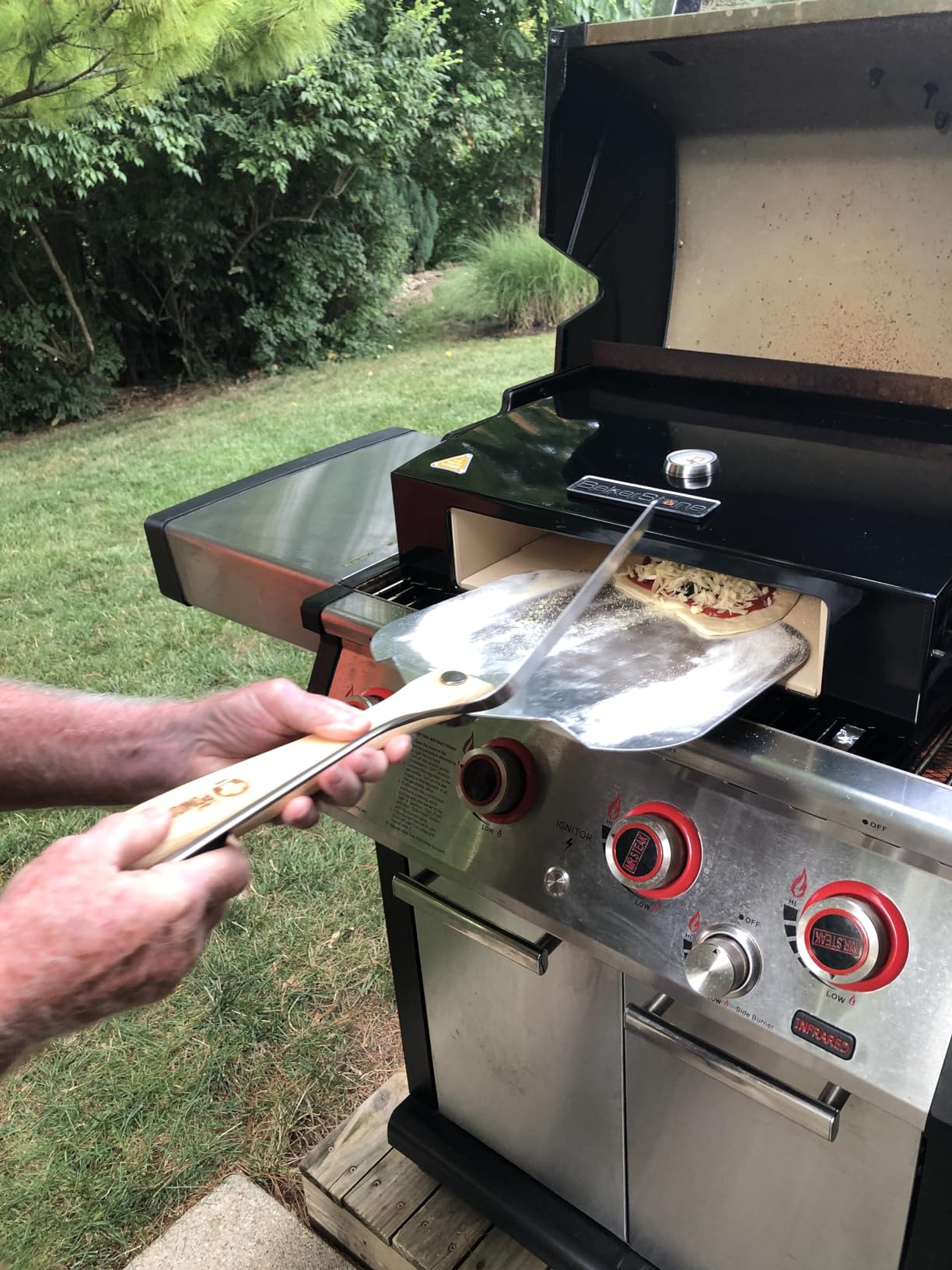
The BakerStone takes a completely different route. Instead of being a freestanding oven, it is a 5-sided stone baking chamber that sits on top of a gas grill, using the grill as the heat source. Owners with a large grill report reaching 800 to 900°F, and the chamber bakes a pizza in 2 to 4 minutes.
Bottom line: this is the best value path to brick-style pizza if you already own a substantial gas grill. It is the only option here that also handles bread and roasted meats alongside pizza, and the package includes a wooden peel, a turning peel and a dust cover.
Assembly takes about 30 minutes with step-by-step instructions, and the unit itself is 35 lb and 16.3 by 21.4 by 6.2 inches, light enough to lift on and off the grill shelf between cooks. The built-in thermometer and a separate temperature probe give you two ways to check where the heat is actually sitting.
The single most useful tip from owners is to partially close the grill lid, which cuts heat-up time dramatically compared with the 25 to 30 minutes the manual implies. The caveat is unavoidable: performance is a function of the host grill, and some owners with smaller four-burner setups report topping out near 500°F instead.
How grill size decides your results
This is the question to settle before buying. A large grill with the lid mostly closed holds heat well enough to drive the chamber into the 800 to 900°F range, while a compact four-burner grill may not get past roughly 500°F, which produces a pale, slow bake rather than a blistered crust. If your grill is small, the money is better spent on a freestanding oven above.
What long-term ownership looks like
The durability record here is among the best in the roundup, with owners reporting first units still in service after 11 years. The build is enamel shell over powder coated steel, which reads as serviceable rather than premium, and a few owners have reported a thermometer that fogged after a single use or a misdrilled stone support bar on assembly.
Where to Put Your Pizza Oven in the Backyard
The keyword is backyards, and almost every roundup on this topic stops at the oven itself. Placement decides whether you cook in April and October or exactly once. Here is what we learned watching these ovens run in real yards.
Give it clearance from the house. A pellet or wood oven puts a lot of radiant heat out of the front and the chimney. Point the opening away from siding, windows and vinyl panels, and leave more space than feels necessary. A two-foot buffer is the floor, not the goal.
Check what sits under it. A wooden deck or composite patio will scorch. The folding-leg ovens at 25 lb are fine on paving or a stand, the gas countertop units want a sturdy raised table, and the 53 lb EDOSTORY is a permanent piece that needs bare concrete or stone.
Watch the wind. Forum owners consistently report uneven cooking and one side charring in breezy conditions, because a gust pulls flame and heat away from one wall of the chamber. Positioning the oven where a wall, hedge or shed breaks the prevailing wind fixes most of it, and a simple screen does the job if you have no natural barrier.
Plan for shade and season. In hot climates, owners still run ovens at 700°F in 100°F ambient conditions, but preheat takes longer and you cook earlier in the day. The stovepipe direction also matters for smoke drift toward your own windows and your neighbors’ yards.
Protect it between seasons. Weather is the recurring durability complaint in owner communities, and a cover is the cheapest fix available. A stainless oven left through repeated rain without one will show surface rust around the door and base, and no cover is included with several ovens in this roundup. Store fuel and propane away from the cooking area too, and keep a hose reel and clearance for cleanup close by, similar to the setup advice in our backyard hose reel guide.
Finally, think about the yard around the oven. If your cooking area doubles as seating for eight or more, the oven becomes a gathering point and a trip hazard at the same time, so leave a walking lane between the peel station and the table. Seating decisions and oven placement get planned together more often than people expect, which is a topic we cover in our Adirondack chair roundup.
How We Picked: Oven Temperature Is Not Stone Temperature
Every oven in this roundup was assessed on the same five criteria, and the first one causes most buyer disappointment. We treated the advertised maximum temperature as a marketing number and scored the ovens on what the stone actually does.
1. Stone temperature over dial temperature. A chimney or built-in gauge reading high tells you about the air. We scored the temperature at the baking surface, which is the number that determines crust. The ovens that separate the two cleanly score highest, and the ones with a wide gap between air and stone need the most preheat patience.
2. Preheat time and recovery. Preheat is how long from cold to launchable stone temperature. Recovery is how fast the stone returns after a pie leaves, and recovery is what caps how many pizzas you can fire in a row at a party. The gas ovens here recover fastest; the large 16 inch stone holds the most energy and takes longest to come back.
3. Fuel flexibility and tending. A multi-fuel oven that includes its gas burner is a more complete purchase than one that advertises multi-fuel and sells the burner separately. We weighted included hardware heavily because add-on costs are the most common surprise in this category.
4. Capacity and footprint. Pie size decides how many people you feed, and footprint plus weight decide whether the oven lives on the patio or in the garage. For more on the wood-burning side of the category, our wood-fired pizza oven guide goes deeper on fuel choices.
5. Build quality and storage. Stainless thickness, insulation, warranty length and whether the unit folds down all feed into whether you will still be cooking on it in five years.
One more practical point before you choose: the fuel trade-off in one line. Wood and pellets give you smoke flavor and a learning curve. Propane gives you control, fast recovery and no smoke, but no wood character. Charcoal sits between them. Multi-fuel ovens let you move between the two paths as your schedule and hosting habits settle.
What to Expect From Your First 10 Pizzas
Owner communities rank alongside editorial pages for this query, and the most repeated thread is about the first ten pizzas rather than the first ten days. Here is the pattern that comes up, written plainly so you are not surprised.
Burn the first two. Everyone does. Multiple owners describe early pies with parts of the crust burnt while the center stayed pale, and one Karu 16 owner reported three pizzas out of three, only one of which had a badly burnt section. The usual cause is launching before the stone is hot, not a fault in the oven.
Wood means tending. Owners comparing wood firing to stoking a boiler are being dramatic and also accurate. A wood or pellet oven needs attention every few minutes during a cook, and anyone who wants to host rather than manage heat should read that as a real constraint.
Temperature drops between pies. Opening the door and loading a cold dough both pull heat out of the stone. This matters more the more people you feed, which is why recovery time sits in our scoring criteria.
The dough is often the real bottleneck. Forum regulars consistently argue that a better dough recipe improves the pizza more than a better oven does, and that a good store-bought dough ball is a sensible middle path while your own recipe develops.
Check for damage on arrival. Several owners of heavy stainless units report dented or misassembled pieces shipping badly, and a fogged thermometer or a misdrilled stone support bar shows up in reviews. Inspect the unit the day it arrives rather than after your first cook.
Frequently Asked Questions
What is the best pizza oven for home use?
The best pizza oven for home use is the BIG HORN 12 inch pellet oven in this roundup, with 2,651 reviews at 4.4 stars, a 1110°F maximum, an 18 to 20 minute preheat and a 25 lb folding frame. It suits most households because it cooks 12 inch pies in 60 to 90 seconds, runs on pellets in the box, and folds flat for storage. Cooks who want the highest rating overall should look at the Ooni Karu 12 at 4.6 stars.
Are outdoor pizza ovens worth it?
Outdoor pizza ovens are worth it when the oven holds stone heat at 750°F or above and you will cook on it weekly. Most indoor ovens cap around 500°F, which is too cool to blister a Neapolitan crust. They are less worth it if you cook pizza once or twice a year, if you have no outdoor storage or cover, or if you expect to leave it outdoors through winter unprotected. The gain is crust quality, not convenience.
How hot does a backyard pizza oven get?
A backyard pizza oven typically reaches 750°F to 950°F, and that range is where good crust happens. In this roundup the ovens span 550°F at the low end up to 1110°F maximum. What matters is the stone temperature rather than the chamber reading, so measure the baking surface with an infrared thermometer after a full preheat before you launch your first pie.
Is Ooni or Gozney better?
Ooni and Gozney both build high-heat outdoor ovens, and the honest answer depends on the model and your fuel preference. The Ooni models in this roundup reach 950°F in 15 minutes and are sold as multi-fuel with a separately purchased gas burner. Gozney is frequently discussed by owners as a step up in build quality and a bigger chamber, at a higher cost. Decide on fuel path and required pie size first, then compare models.
What is the lifespan of a pizza oven?
A stainless steel outdoor pizza oven commonly lasts many seasons when it is covered, and a coated steel model lasts less if rain reaches it. The most common durability complaint in owner communities is ovens falling apart after repeated rain without a cover, so a weatherproof cover is the cheapest lifespan extension available. Heavy stainless units also arrive with dents or misaligned parts more often than lighter models, so inspect on delivery.
What is the best outdoor pizza oven for a backyard?
The best outdoor pizza oven for a backyard balances three things: a stone that holds 750°F or more, a weight and footprint you can store between cooks, and a fuel path you will actually use. Multi-fuel ovens suit most yards because they cover fast propane sessions and slow wood-fired weekends. Check the patio clearance and cover situation before buying, since placement affects how often you cook more than the oven itself.
The Best Pizza Oven for Your Backyard in 2026
The best pizza ovens for backyards in 2026 come down to one question: how you want to cook. If you want real wood flavor, the highest owner rating in the group and 60 second bakes at 950°F, take the Ooni Karu 12. If you want the deepest owner history, the most review volume, a 25 lb frame that folds away and room to add gas or electric burners later, the BIG HORN 12 pellet oven is the pick we would buy first.
Go larger with the PIZZELLO 16 if a family-size pie is the goal. Go gas-only with the BIG HORN gas oven if you want no fire to tend and even cooking without rotating. Go stationary and cheap with the EDOSTORY, compact with the Mont Alpi, connected with the Ooni Karu 2 Pro, or onto an existing grill with the BakerStone.
Whichever you choose, measure the stone rather than the dial, buy a cover, and give yourself permission to burn the first two pies. If you are still building out the yard around the cooking area, our backyard playhouse picks cover the other half of that setup.