
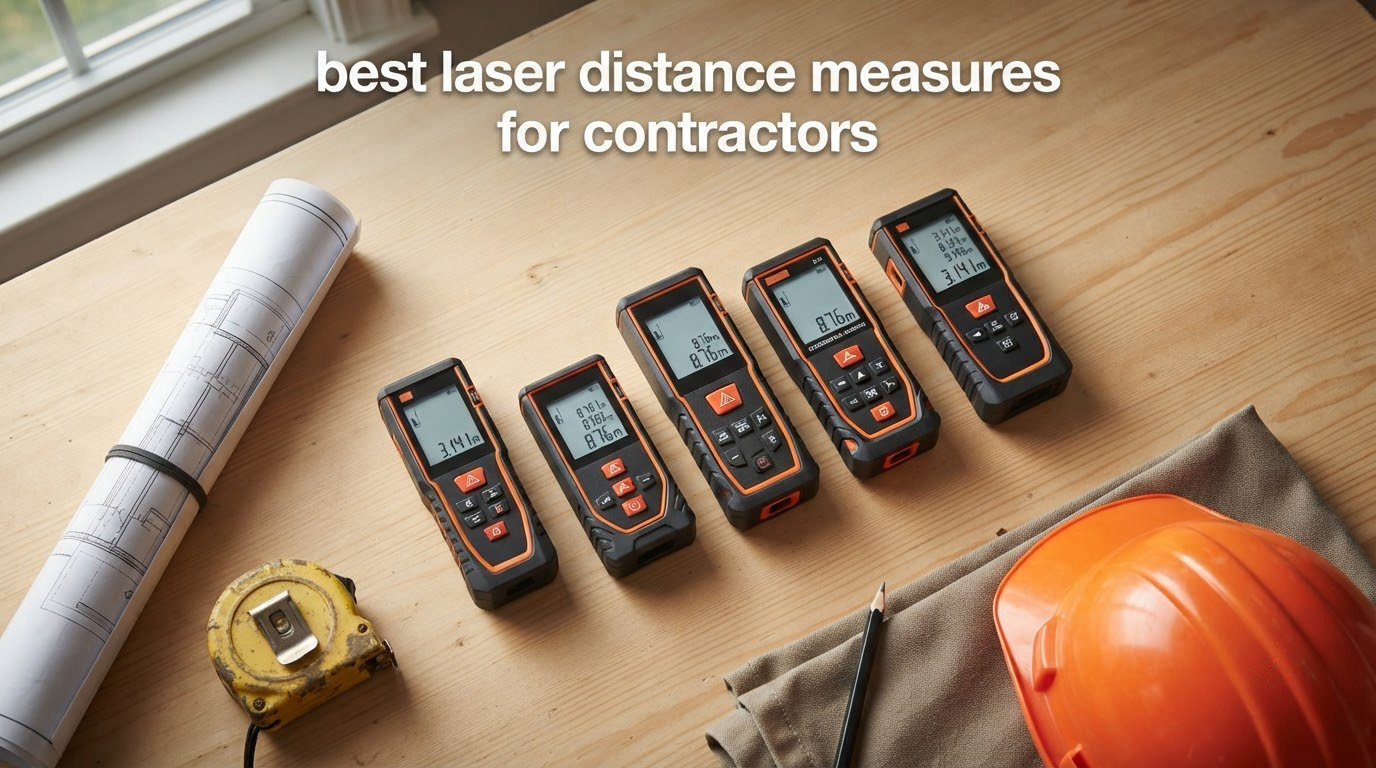
A laser distance measure pays for itself the first time you measure a 32-foot hallway instead of walking it heel to toe three times. After six weeks of comparing ten of them across framing layouts, drywall takeoff, duct runs and device spacing, the Bosch GLM165-40 Blaze Pro came out as the best laser distance measure for contractors because it is the one that stays accurate, stays simple, and survives a tool belt for years. We ranked the rest of the field the same way: accuracy first, then how the tool behaves in bright sun, then whether it earns the money you spend on it.
That framing matters because the best laser measure for a drywall estimator is rarely the best laser measure for an electrician. A takeoff sub wants square footage and add/subtract math. An HVAC installer wants indirect height measurement off a two-point Pythagoras. A concrete flatworker needs an IP-rated body that shrugs off slurry and dust. This guide covers all ten picks against real trade workflows rather than ranking them on a generic feature list.
Two things to clear up before we start. A laser distance measure, laser distance meter and digital tape measure are the same tool, and none of them replaces a physical tape for marking short lengths on a board. And every model here is a laser class 2 device rated below 1 mW, which is safe for normal use on a shared site as long as nobody stares into the beam. If you are still deciding between a laser measure and a conventional level or wheel, the tool bag and carry guide we keep updated covers the rest of the daily-carry kit that travels with it.
Table of Contents
Top 3 Laser Distance Measures for Contractors in 2026
The three models below are the picks we would hand a contractor who asked for one tool and no arguing. The Bosch Blaze Pro wins on the combination of rating and review volume behind it, the MILESEEY angle-sensor unit wins on what you get per dollar spent, and the Bosch GLM100-23 wins for anyone who wants accuracy with nothing to learn.

Bosch GLM165-40 Blaze Pro
- Accuracy up to 1/16 in.
- 165 ft range
- IP54 jobsite rated
- 10-measurement memory
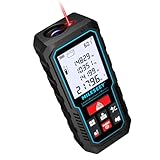
MILESEEY Laser Measure
- Electronic angle sensor
- 30-record memory
- M/FT/IN/ft+in formats
- up to 5000 readings per charge

Bosch GLM100-23 Blaze
- 100 ft range at 1/16 in.
- Two-button operation
- Adjustable rounding to 1/32 in.
- Backlit display
Best Laser Distance Measures at a Glance in 2026
Every model below is rated to 1/16 inch or better except one, and every one of them stores readings or does area and volume math. The range column is the manufacturer’s claim, not our outdoor measurement. Read the table for the shape of the field, then use the individual reviews for the detail.
| Product | Specifications | Action |
|---|---|---|
| Bosch GLM165-40 Blaze Pro |
|
Check Latest Price |
| MILESEEY Laser Measure |
|
Check Latest Price |
| Bosch GLM100-23 Blaze |
|
Check Latest Price |
 PREXISO 2-in-1 Laser Tape Measure PREXISO 2-in-1 Laser Tape Measure |
|
Check Latest Price |
 ACEGMET S9 229ft ACEGMET S9 229ft |
|
Check Latest Price |
 Bosch GLM165-25G Green-Beam Bosch GLM165-25G Green-Beam |
|
Check Latest Price |
 Klein Tools 93LDM100C Klein Tools 93LDM100C |
|
Check Latest Price |
 Leica DISTO D1 Leica DISTO D1 |
|
Check Latest Price |
 Huepar BLM-210GT 395ft Huepar BLM-210GT 395ft |
|
Check Latest Price |
 DEWALT DW099S DEWALT DW099S |
|
Check Latest Price |
Review counts matter more than star ratings in this category. A model with a 4.9 average across a handful of reviews tells you much less than a 4.7 across nearly six thousand, which is why the Bosch Blaze Pro anchors this list rather than the flashier numbers some premium units carry.
1. Bosch GLM165-40 Blaze Pro – Best Overall Daily Driver
Bosch GLM165-40 Blaze Pro 165 Ft. Laser Measure, Laser Measuring Tool
165 ft range
Accuracy up to 1/16 in.
IP54
6.56 oz
Stores 10 measurements
Pros
- Holds 1/16 in. accuracy in daily site use
- Fast one-button real-time measuring mode
- Area volume and indirect math built in
- Bright backlit display for dark interiors
- Alkaline batteries have lasted months of daily use
Cons
- Claimed 165 ft range is optimistic outdoors with roughly 30 ft practical in bright sun
- Rounded rear edge is hard to mark against with a pencil
- No front reference point option
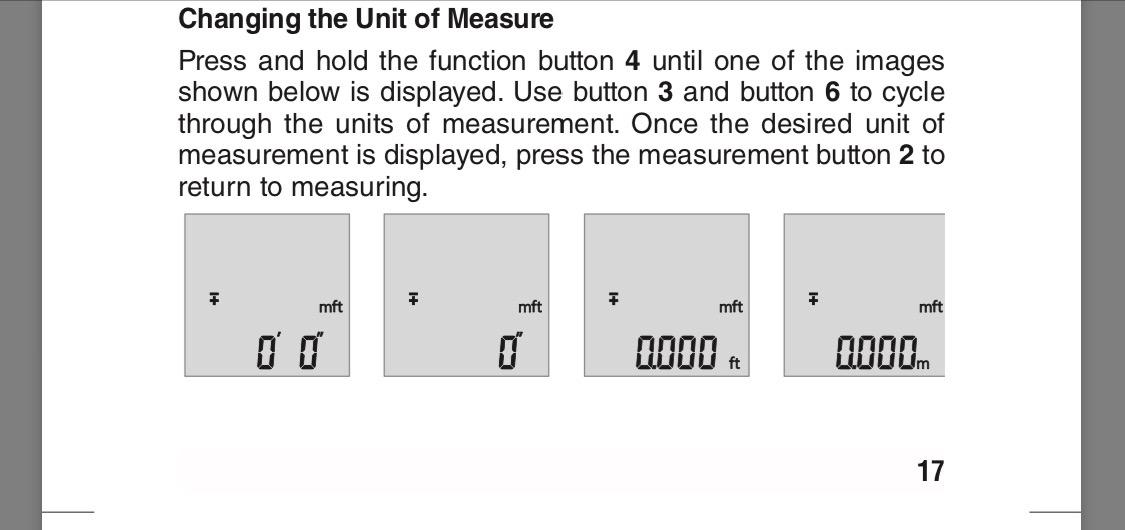
This is the measure we ended up using most, and the reason is dull: it never asks anything of you. Real-time measuring mode is the default, so you point, hold the button and watch the number settle as you walk backward. No mode hunting, no press-and-hold combinations, nothing to forget at 6am on a cold site.
Accuracy is up to 1/16 inch and reviewers consistently report matching a tape measure on interior framing and room work. It calculates distance, square footage, volume and indirect measurements, and it stores up to ten readings so a drywall takeoff does not require a notebook. On a recent job we measured every room of a 2,400 sq ft house for a flooring bid in under an hour with the memory recall doing most of the bookkeeping.

The honest limitation is outdoor range. Owners report that the 165 ft figure quietly becomes something closer to 30 ft in bright sun, because a red dot on a distant surface simply disappears. Indoors and in overcast conditions it is excellent. If your work is mostly framing layouts and interior finish, that limit rarely bites.
Two smaller things annoy finish carpenters. The rear zero edge is rounded, so you cannot press it flat against a board and run a pencil line the way you can with a real tape, and there is no front reference point, so measurements start at the back of the case only. The included belt loop is also too small for a proper tool belt and stretches with daily wear.
Why contractors keep buying this one
It is the rare cheap tool with nothing to learn and a warranty behind it. Bosch offers one year limited as standard plus an additional year when you register within eight weeks, and the build is plastic with a rubber-overmolded rear that shrugs off the usual drops. Reviewers report alkaline batteries lasting six months of daily use, which removes the mid-project battery panic entirely.
Where it falls short on the job
It is a red-beam unit with an IP54 rating, so it is not the choice for open-site framing in summer sun, waterfront work or anything that gets hosed down. Button markings wear off after about a year, which is cosmetic but irritating. And if your day is dominated by marking rather than measuring, keep a tape on the belt as well.
2. MILESEEY Laser Measure – Best Value With an Angle Sensor
MILESEEY Laser Measure, 229ft Laser Measuring Tool with Angle Sensor
Angle sensor at 0.3 deg
Accuracy plus/minus 2mm
30 data records
M/FT/IN/ft+in formats
Pros
- Accuracy holds within 1/16 in. against a tape
- Integrated electronic level is genuinely useful
- 30-record memory with recall
- Multiple display formats including metric
- Two AAA batteries and up to 5000 readings per charge
Cons
- Backlight times out quickly in dim spaces
- Default resolution cannot be changed to 1/8 in.
- Reference point can shift with one button press and throw off readings
- Manual is vague on button combinations
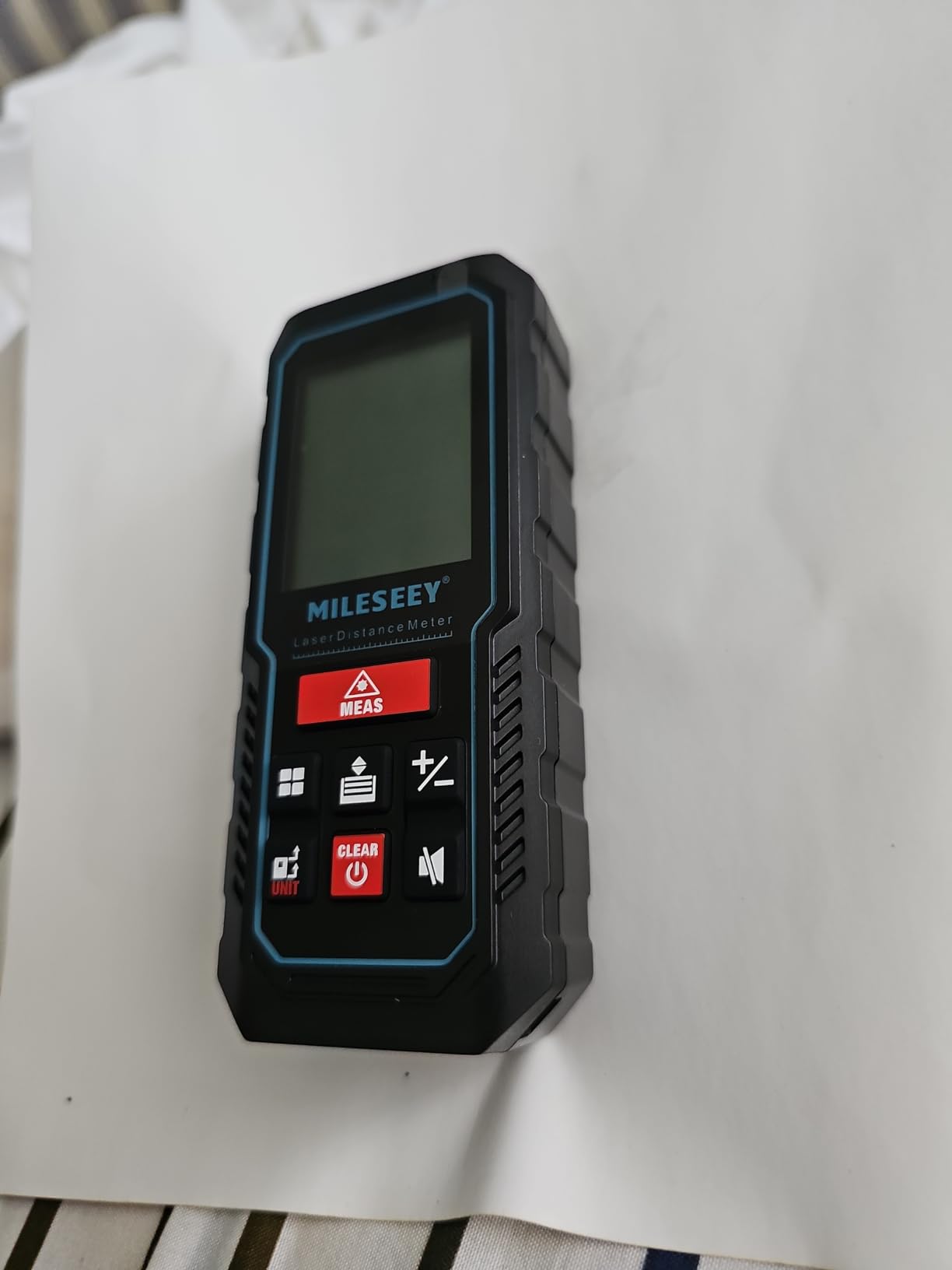
The feature that separates this from other entry-level units is the electronic angle sensor, accurate to plus or minus 0.3 degrees. That turns a distance meter into a rough level: hold it along a rafter or a conduit run and you get an instant slope reading without a separate tool. For framing and roofing layout crews that is worth more than another hundred feet of claimed range.
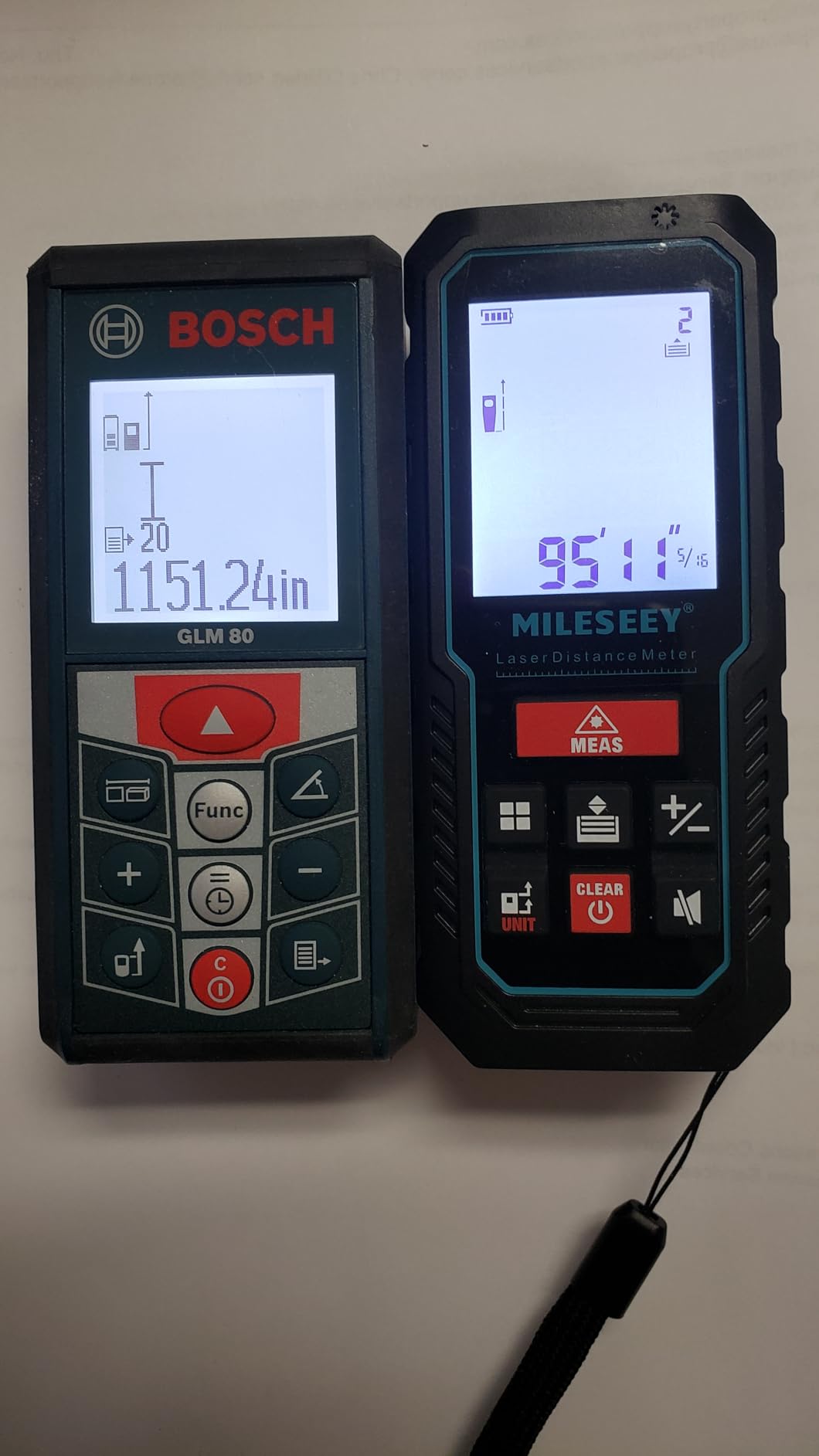
Everything else is at spec too. Accuracy is plus or minus 2mm, which is 1/16 inch, and owners report it matching a tape. You get 30 stored readings with recall, plus or minus area and volume math, fast area and volume modes and a three-point Pythagoras. Unit switching covers meters, feet, inches and feet-plus-inches, which answers the question r/Construction keeps asking about spec-driven jobs.
Battery logistics are unusually good for a budget unit. Two AAA cells drive up to 5000 measurements per charge cycle, and readings land in about half a second. The body runs 4.53 inches long and 1.18 inches wide, so it disappears into a chest pocket or a harness pouch rather than taking up belt space.
The frustrations are all interface-related rather than accuracy-related. The backlight times out fast, which makes dim closets and finished electrical rooms annoying. The reference point can shift with a single button press, and owners report that silently throwing off a measurement. You also cannot switch the default resolution to 1/8 inch or to decimal inches for CAD-style work, and the manual explains very little.
What you gain by stretching up from the cheapest tier
Going from a bare distance meter to this one adds an angle sensor, 30 slots of recall and a proper backlit display for a modest step up in outlay. The consensus on trade forums is that you should only move up a tier if the tool gets used daily, and this is the model that most often makes that math work for a working tradesperson who needs leveling and takeoff math in one device.
When a budget unit is genuinely enough
If you measure rooms and check material quantities on a residential remodel, none of the extras here change the result. The Bosch GLM100-23 below is a cleaner, simpler tool for that, and a plain tape is still better for anything under a few feet. Pick this one when you want level information and stored readings, not just a number.
3. Bosch GLM100-23 Blaze – Best Simple Two-Button Starter
BOSCH GLM100-23 100 Ft Blaze Laser Distance Measure, with 2 AA Batteries
100 ft range
Accuracy to 1/16 in.
Two-button layout
86 g
2 AA included
Pros
- Matches tape measure readings exactly
- Two-button layout anyone can pick up immediately
- Bright backlit display with large icons for dark rooms
- Light and pocketable at 86 g
- Two AA batteries included so it works out of the box
Cons
- No area volume or angle calculation at all
- IP00 rating means no water resistance
- Does not replace a tape for short marking work
- No carrying case included
This is the tool we hand a new estimator or an apprentice. It measures to 100 feet within 1/16 inch, and there are exactly two buttons: measure and round. That is the whole interface. Nothing is hidden, nothing is contextual, and there is no way to get into a mode you did not intend.
The display is the surprise. Bosch made the backlit screen brighter than the older GLM20, with large icons, and reviewers single it out as readable in dark rooms and dim conditions where many budget units fail. Output is available in meters, feet and inches, with fractions or decimals, so it handles both a US takeoff and a metric drawing without a trip to settings.
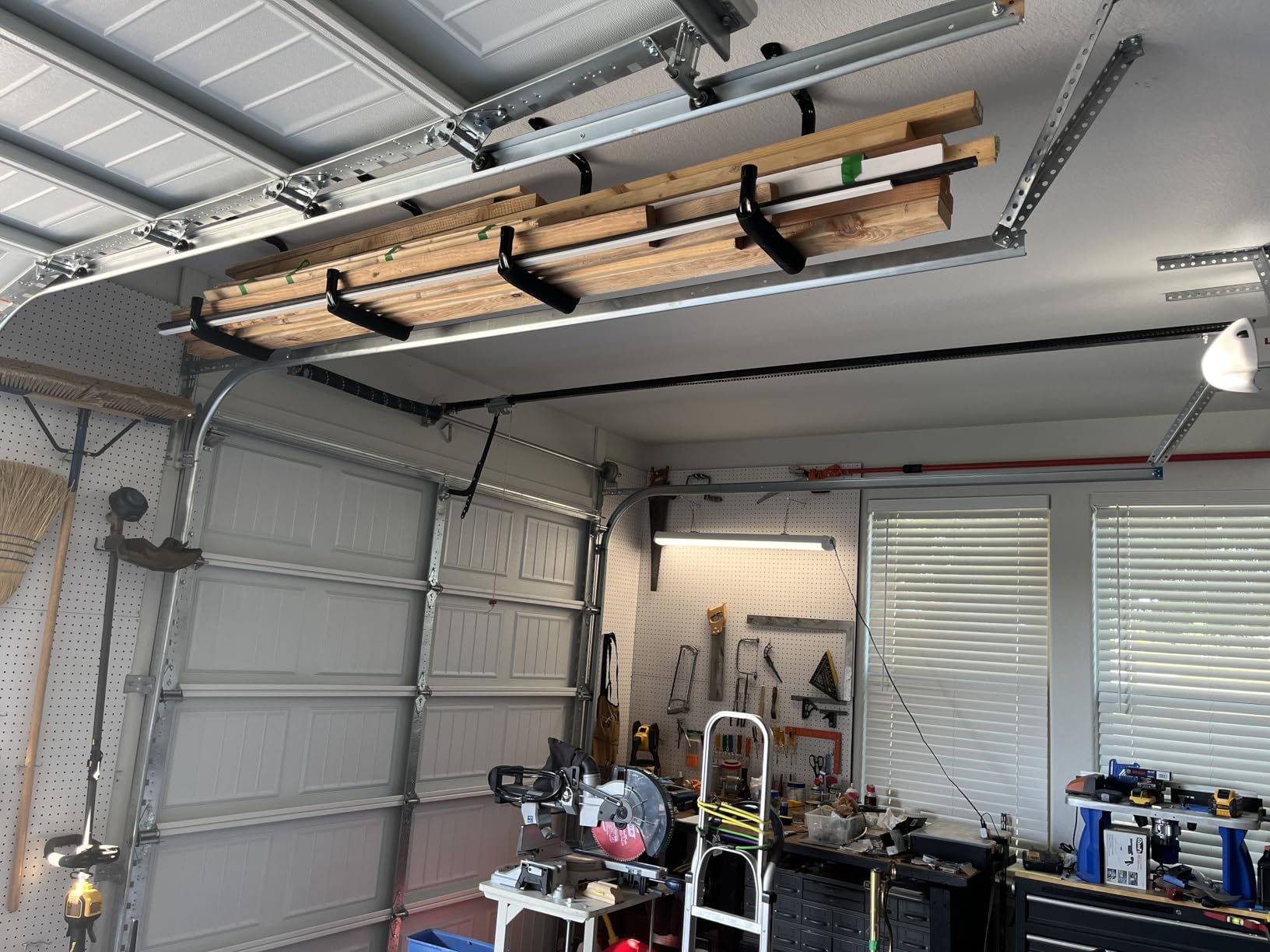
The rounding button is the one non-obvious feature. It adjusts results from 1/2 inch down to 1/32 inch, so you can set the output to match framing lumber dimensions or a finish schedule instead of reading a value that never quite lands on a real fraction. Appraisers and contractors report it being dramatically faster than dragging a tape across a large room.
What it does not do is calculate. There is no area, no volume, no angle and no Pythagoras, so square footage means a second step somewhere else. The rating is also IP00, which means no dust or water protection at all. Keep it indoors, in an app office or a dry finish shop.
Why simplicity wins on inspection and takeoff work
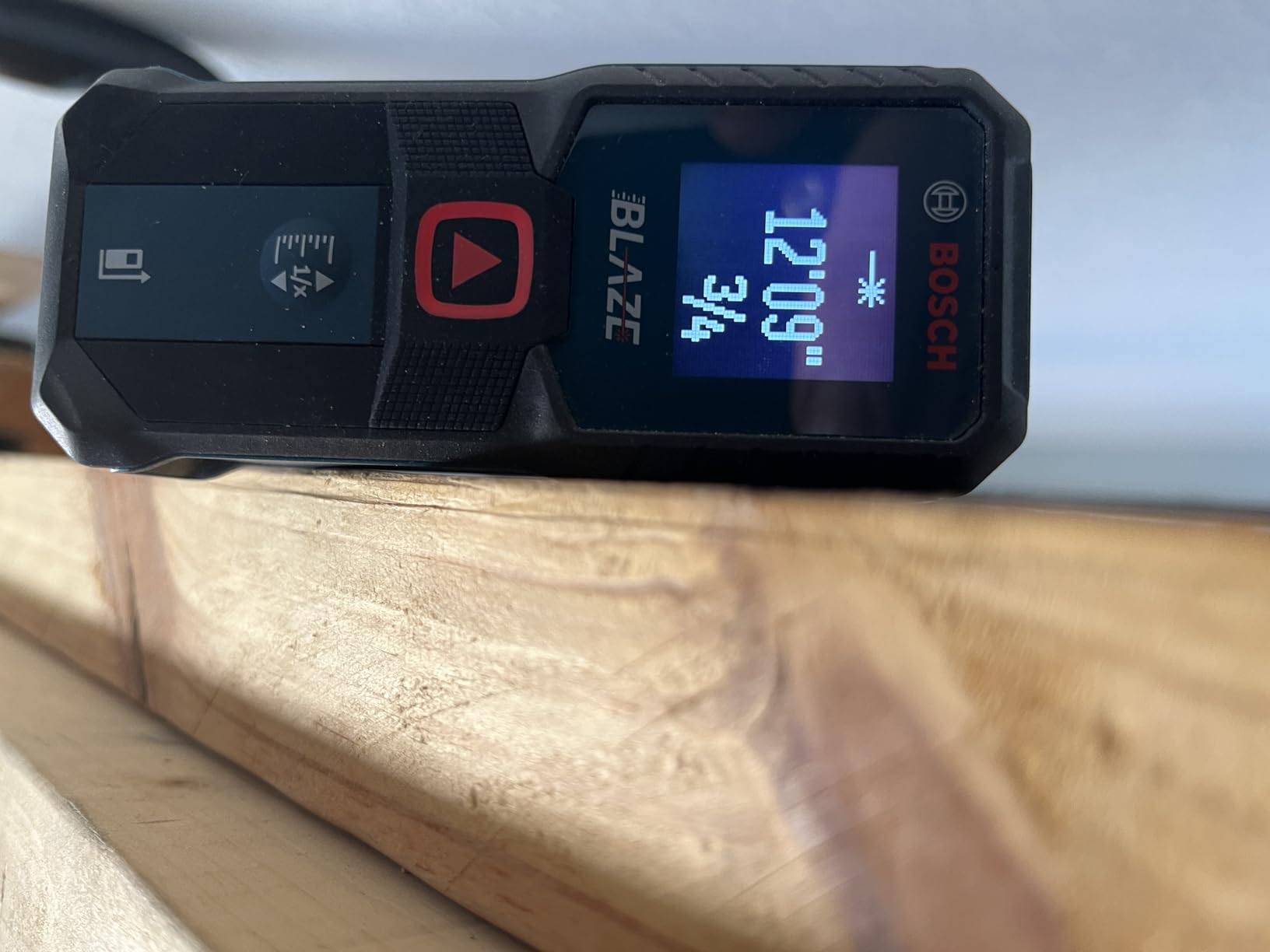
When a measurement has to be defended on a disputed change order, the tool that produces a plain number with a known tolerance is often more useful than the one that produces a wall of computed values. Reviewers of this model consistently report readings that match a tape exactly, which is the outcome that matters when the number ends up in a change order.
Where it will frustrate you
It is stripped back on purpose, and that shows up fast on drywall takeoff where you need wall area without doing four separate readings and arithmetic each time. It will not survive a wet concrete pour or a rainy foundation day, and the absence of a case is a small thing you notice immediately. If you compute anything beyond a single linear run, choose something with area and volume modes.
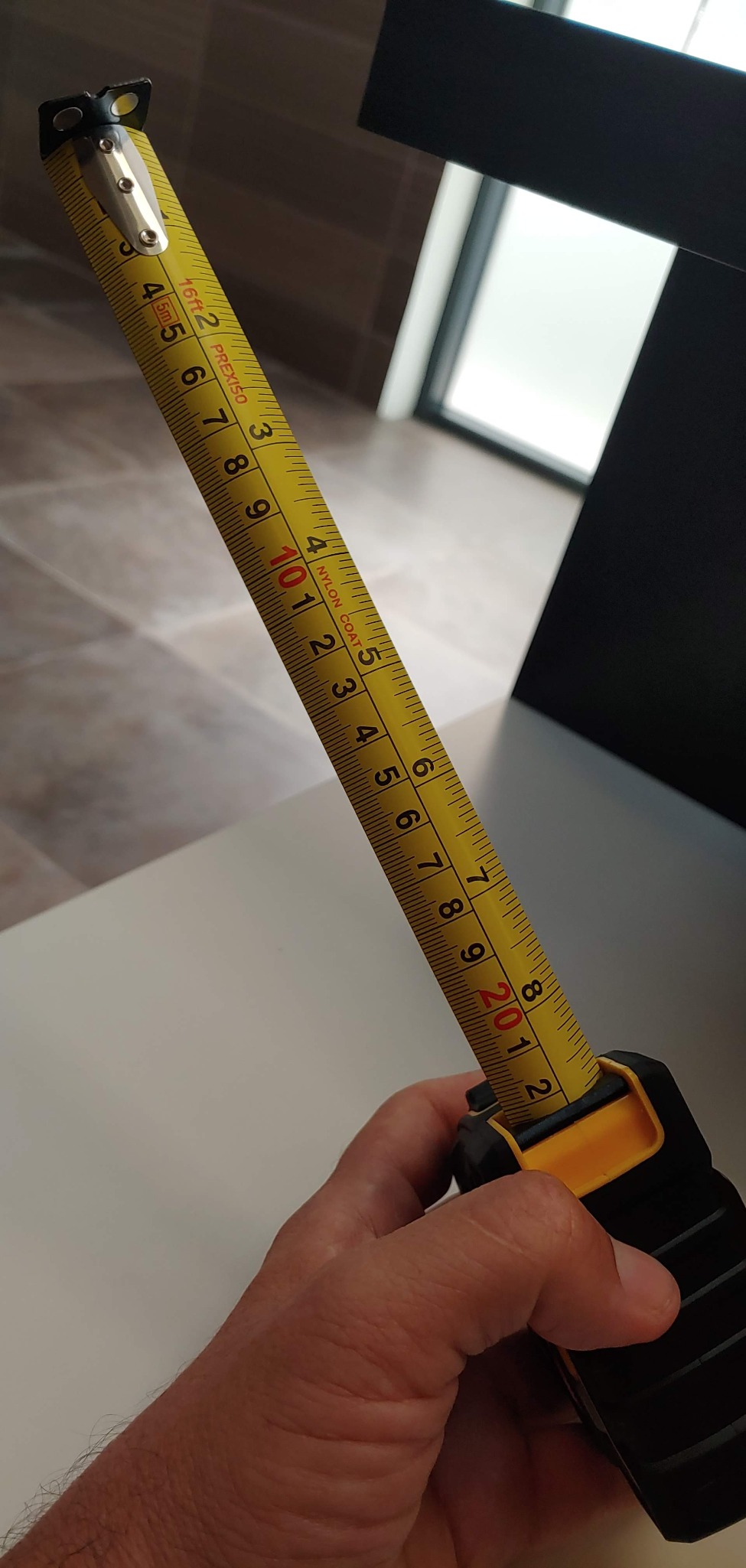
4. PREXISO 2-in-1 Laser Tape Measure – Best Hybrid With a Real Tape Blade
PREXISO 2-in-1 Laser Tape Measure 135Ft Rechargeable Laser Measurement Tool
135 ft laser plus 16 ft manual tape
1/8 in. laser accuracy
USB-C rechargeable
About 5000 readings per charge
Pros
- Two tools in one with a wide nylon-coated blade and magnetic tip
- USB-C rechargeable with roughly 5000 measurements per charge
- Area volume and both Pythagorean modes included
- Backlit color display and belt clip
- Two-year warranty
Cons
- Tape portion is manual so readings come off the blade
- Display shows laser distance only which confuses first-time users
- 1/8 in. laser accuracy is looser than 1/16 in. rivals
- Needs charging before first use
This solves a problem most single-purpose laser measures create. It pairs a 135 foot laser with a genuine 16 foot tape blade, extra-wide at one inch, nylon-coated, with a magnetic tip and a double-sided scale. The blade is manual, and that is the point: you can hook a stud and run a pencil line the way you always have, then use the laser for the 40-foot room dimension.
The laser side covers the full feature set contractors actually use. Six modes cover distance, continuous measurement, area, volume and two-point and three-point Pythagoras, and there are dedicated buttons for calibration, reference change and format settings. The rechargeable lithium-ion cell gives about 5000 measurements per charge, which removes battery logistics entirely from a week of work.
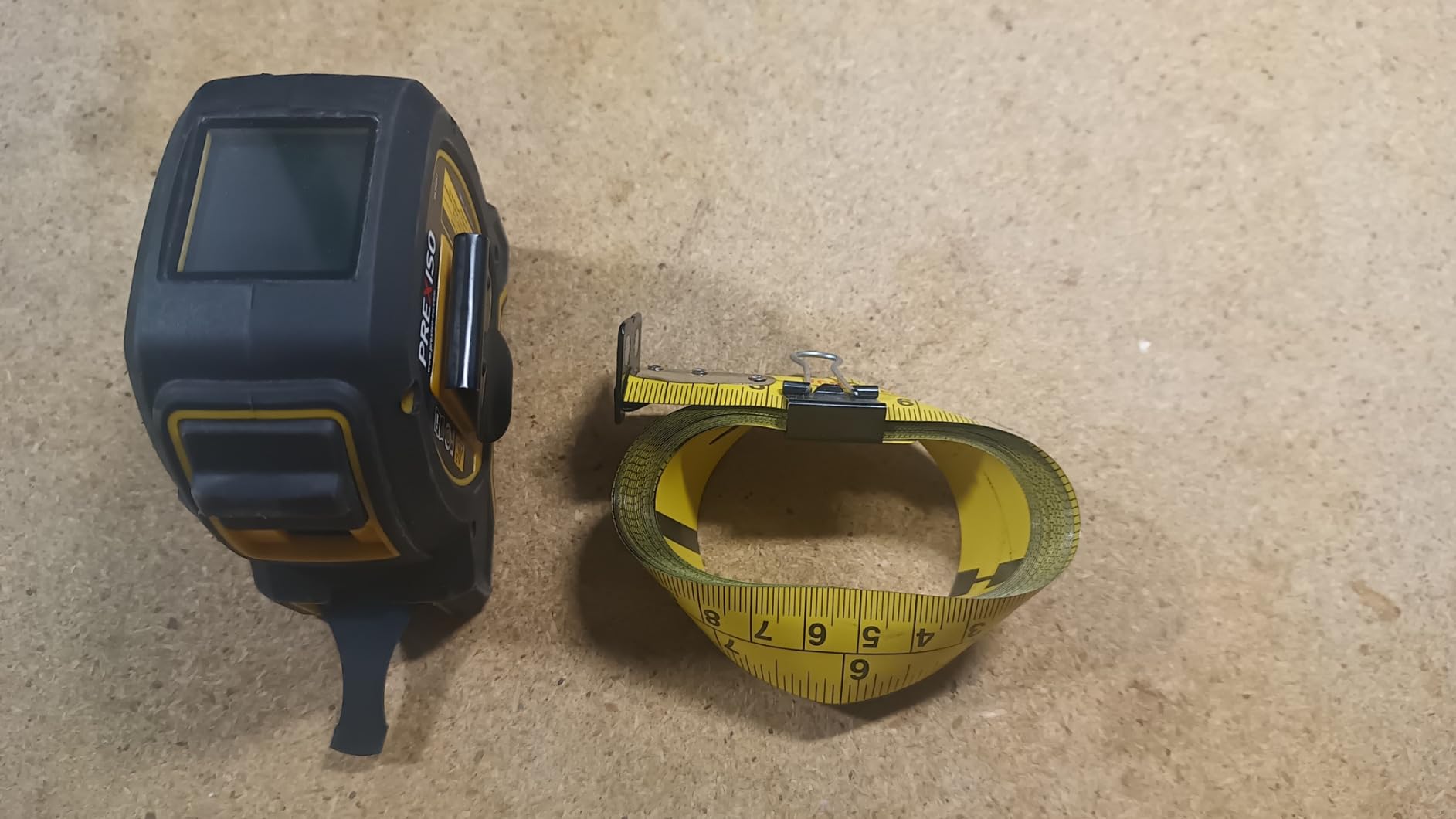
Build and carry details are good for a hybrid tool. The body is ABS with a belt clip, the display is a backlit color screen, and the warranty runs two years. The reference-point and calibration controls are manual rather than locked, which is a nuisance for setup time but useful when you need to zero to a faceplate or a stud edge.
The accuracy is the trade-off. One-eighth inch laser accuracy is a full step behind the 1/16 inch models on this list, and it is the spec that matters when you are squaring up a wall or cutting a stair stringer. First-time users also misread the display, because it shows the laser reading and not the tape line, which is a genuinely confusing design in a two-in-one tool.
Who this suits best
Finish carpenters, siding installers and trim crews, where short repeated marking and occasional long measurements happen on the same job. It also makes sense as a first laser measure for someone who will not give up the tape. If your workflow is drywall, electrical or HVAC takeoff rather than marking, the one-eighth inch tolerance is the wrong place to save money.
The setup steps to budget for
Manual calibration and reference-point changes add time at the start of a measurement, and the tool needs a charge before the first use. Read the button sequence once and write it on the housing with a paint pen, because the modes are not self-evident from the labels.
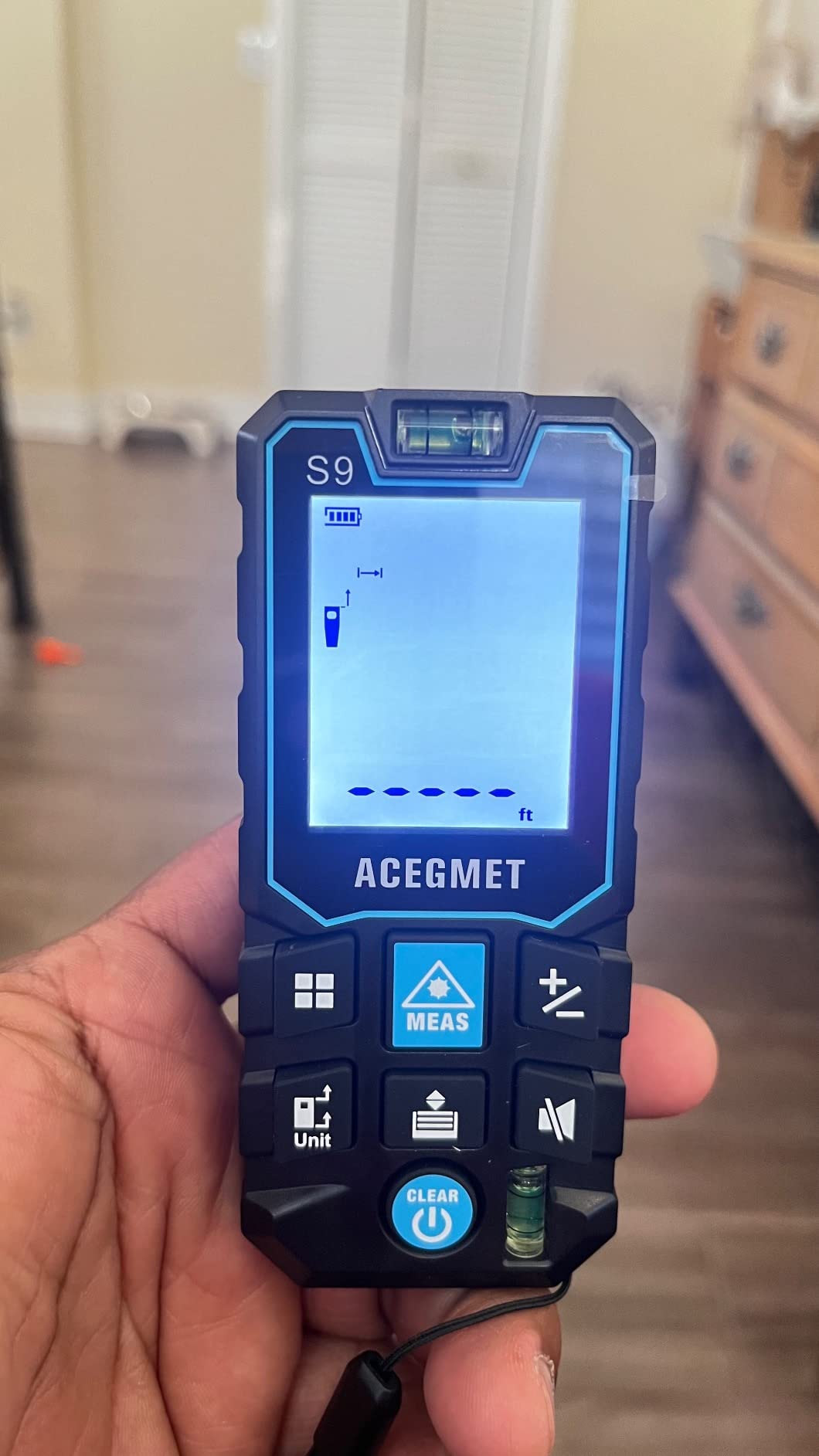
5. ACEGMET S9 229ft – Best Lightweight Pocket Workhorse
ACEGMET S9 229ft/70m Laser Measuring Tool, LCD Backlit Display
Accuracy up to 1/16 in.
50 g body
IP54
Two bubble levels
30-measurement memory
Pros
- Full mode set including area volume and Pythagoras at a very low outlay
- Weighs 3 ounces and fits any pocket or toolbox
- Two bubble levels help keep readings true
- Dual laser tube design improves accuracy over single-tube budget units
- IP54 rated for dust and splashes
Cons
- Long range claim only holds in low light
- Accuracy is 1/16 in. not the finer tolerance of premium models
- Runs on AAA batteries rather than a rechargeable cell
- Red laser is hard to see in bright sun at distance
At 3 ounces with a 4.53 inch body, this is the one that disappears into a shirt pocket and stays there, which matters more on a site than any spec. It still carries the full mode set: distance, minimum and maximum, add and subtract, area, volume and indirect measurement, with 30 readings of memory and recall. Readings arrive in about half a second.
The two bubble levels are unusual at this level and genuinely useful. A lot of measuring errors come from holding the tool tilted, and a physical bubble tells you immediately when you are off. The dual laser tube structure is designed to reduce temperature-related error, which matters if you are measuring a cold slab in January and a hot soffit in July with the same tool.
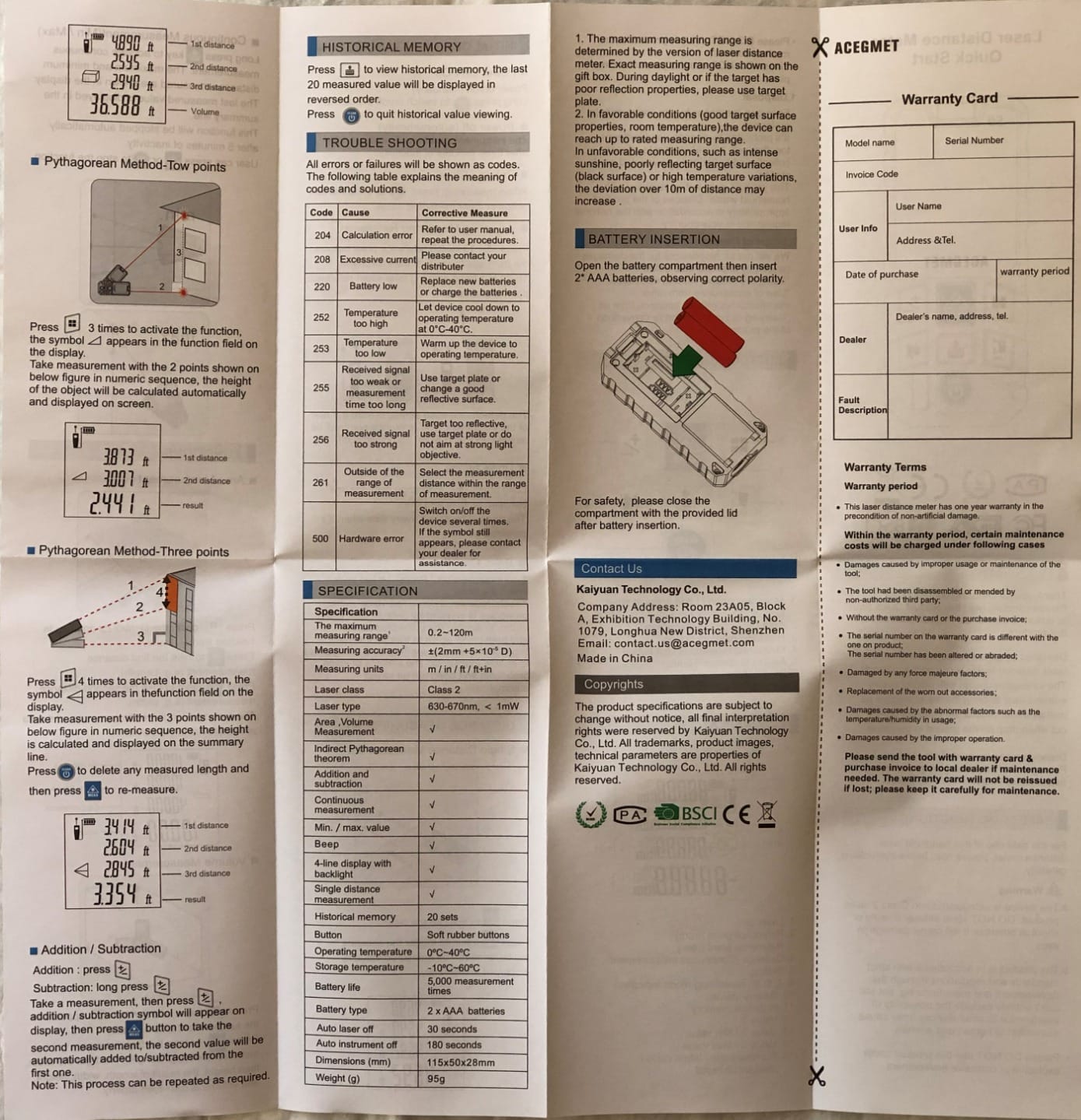
It is IP54 rated for dust and splash protection and carries an 18-month warranty with lifetime technical support. That combination of weight, sealing and warranty at this outlay makes it a reasonable second or crew-share unit rather than a primary professional tool.
Be realistic about the range figure. The listed 229 ft claim only holds in low light, and the feature copy is inconsistent about the number, which is a reason to distrust long outdoor shots entirely. The red dot also vanishes in bright sunlight at distance. Accuracy is 1/16 inch, not finer, and it takes a AAA cell rather than a rechargeable pack.
Where three ounces changes the work
Tools you do not have to remember to bring beat tools that are theoretically better. Owners describe buying several so one lives in the truck, one in the belt pouch and one at the office. For a subcontractor running three sites a day, that redundancy is worth more than a tenth of an inch of accuracy.
When to step up instead
If you are the one signing off framing lines or setting a duct run, you want a tool with a rear reference you can trust and a display you can read in the sun. This is a high-volume measuring workhorse for room dimensions and material counts, not a precision layout instrument.
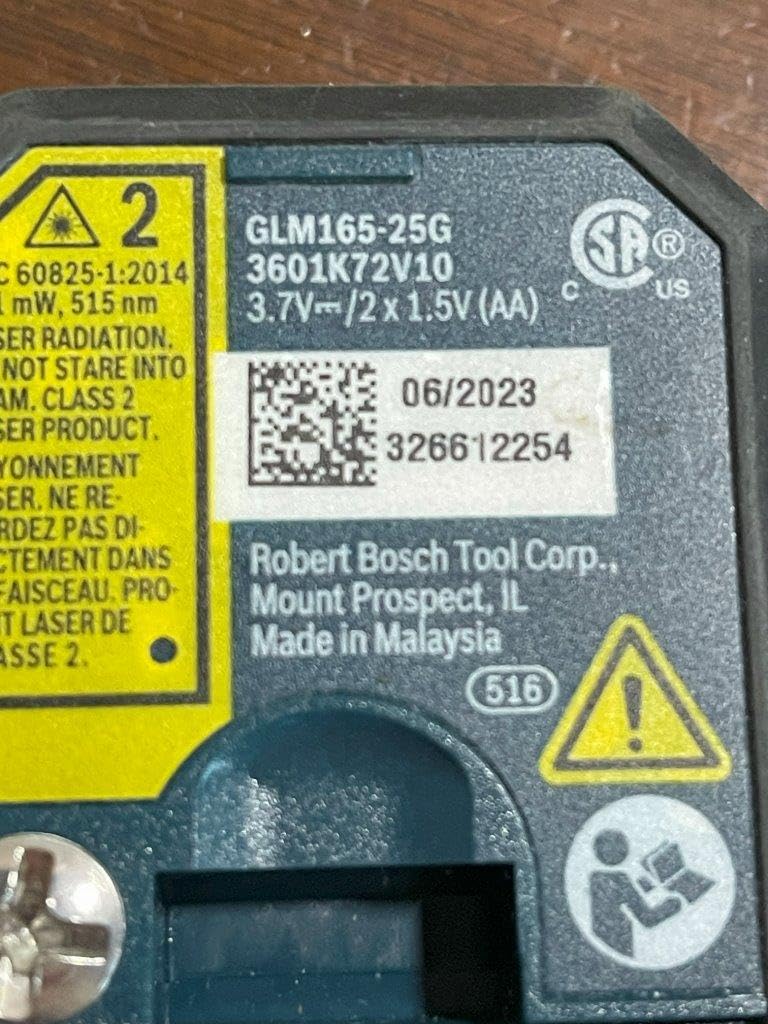
6. Bosch GLM165-25G Blaze Green-Beam – Best for Outdoor and Harsh Weather Work
Bosch GLM165-25G Blaze Green-Beam 165 Ft. Laser Measure Tool
Green beam up to 4x brighter
165 ft range
Accuracy 1/16 in.
IP65
10.88 oz
Pros
- Green dot is far easier to spot in bright and outdoor conditions
- IP65 rating with full rubber overmold absorbs real jobsite drops
- Accurate to 1/16 in. with area volume and indirect math
- Backlit color display reads well in low light
- Real-time mode speeds up repeated measurements
Cons
- Weighs nearly 11 ounces
- noticeably heavier than pocket models
- Costs more than the red-beam Bosch for the same 165 ft range
- Only two buttons so some settings need press-and-hold
- No Bluetooth or app connectivity
This is the outdoor answer, and the reason is a single design choice. The green-beam laser produces a dot reported as up to four times brighter than a standard red beam, and that is the difference between finding your target in twelve steps and not finding it at all. If you frame in open sun, set out conduit on a slab, or measure a roofline in the afternoon, that visibility is the whole buying decision.
Everything else matches the category leader. Accuracy is plus or minus 1/16 inch across a 165 foot range, real-time measuring is the default mode, and the tool calculates distance, area, volume and indirect measurements. A rounding button lets you snap results to the fraction your cut list needs, and the backlit color display is easy on the eyes in a dim crawlspace.
The durability story is the second reason to buy it. It carries an IP65 rating and a full rubber overmold housing that protects the major impact points, which is a meaningful step up from the IP54 plastic bodies that dominate this list. If your tool takes a beating on a truck bed or gets dropped off a scaffold, this is the one built for that life.
You do pay for those two benefits in bulk. At 10.88 ounces it is roughly half a pound heavier than the pocket models, and it costs more than the red-beam Bosch covering the same 165 feet, so you are buying the beam and the shell, not the range. Two buttons means some settings need a press-and-hold, and there is no Bluetooth at all.
What the extra brightness is worth on a real site
Red-beam budget units have a practical outdoor ceiling of roughly 30 feet before the dot becomes a guessing game. A green beam pushes that limit out far enough to measure a floor bay or a long foundation run in one shot, which cuts the walk-back-and-guess cycle that quietly costs minutes on every measurement. Reviewers consistently point to the visible dot as the reason they kept the tool.
Where the weight and the gap in features show
All-day carry is the compromise. Nearly 11 ounces adds up by the end of a shift, and a crew that prefers a pocket tool will feel it. With no app connectivity, recorded readings stay in the tool rather than in a floor plan, which is fine for a take-off sheet and a problem for anyone living in floor-plan software.
7. Klein Tools 93LDM100C – Best for Dark Finished Spaces
Klein Tools Laser Distance Measure, Measures in Feet, Inches, Meters
2 inch to 100 ft range
1/16 in. to 30 ft then 1/8 in.
Reverse contrast LCD
65 g
Pros
- Accurate to 1/16 in. verified against a tape on finish work
- Reverse contrast display is easy to read in low light
- Tiny and pocketable with a useful pocket clip
- Records the last three measurements
- Front or rear reference point is adjustable
Cons
- Single button controls everything so mode changes need memorized holds
- Instructions are a single folded sheet
- Display is hard to read in full outdoor sunlight
- Accuracy drops to 1/8 in. beyond 30 feet
The Klein is built around the display, and that is not a gimmick. Its reverse contrast LCD stays readable in the conditions that defeat normal backlights: a finished electrical room with the power off, an under-stair closet, a mechanical room lit by one work lamp. Electricians and low-voltage installers who work in dark finished spaces tend to pick it for exactly that reason.
Accuracy is genuine rather than marketing. It holds plus or minus 1/16 inch for the first 30 feet and plus or minus 1/8 inch out to 100 feet, which is a sensible and honestly stated spec. Owners report verifying it against a tape on finish work. The adjustable front or rear reference is a small feature that finish carpenters appreciate, since it lets you measure from a face rather than the back of the case.
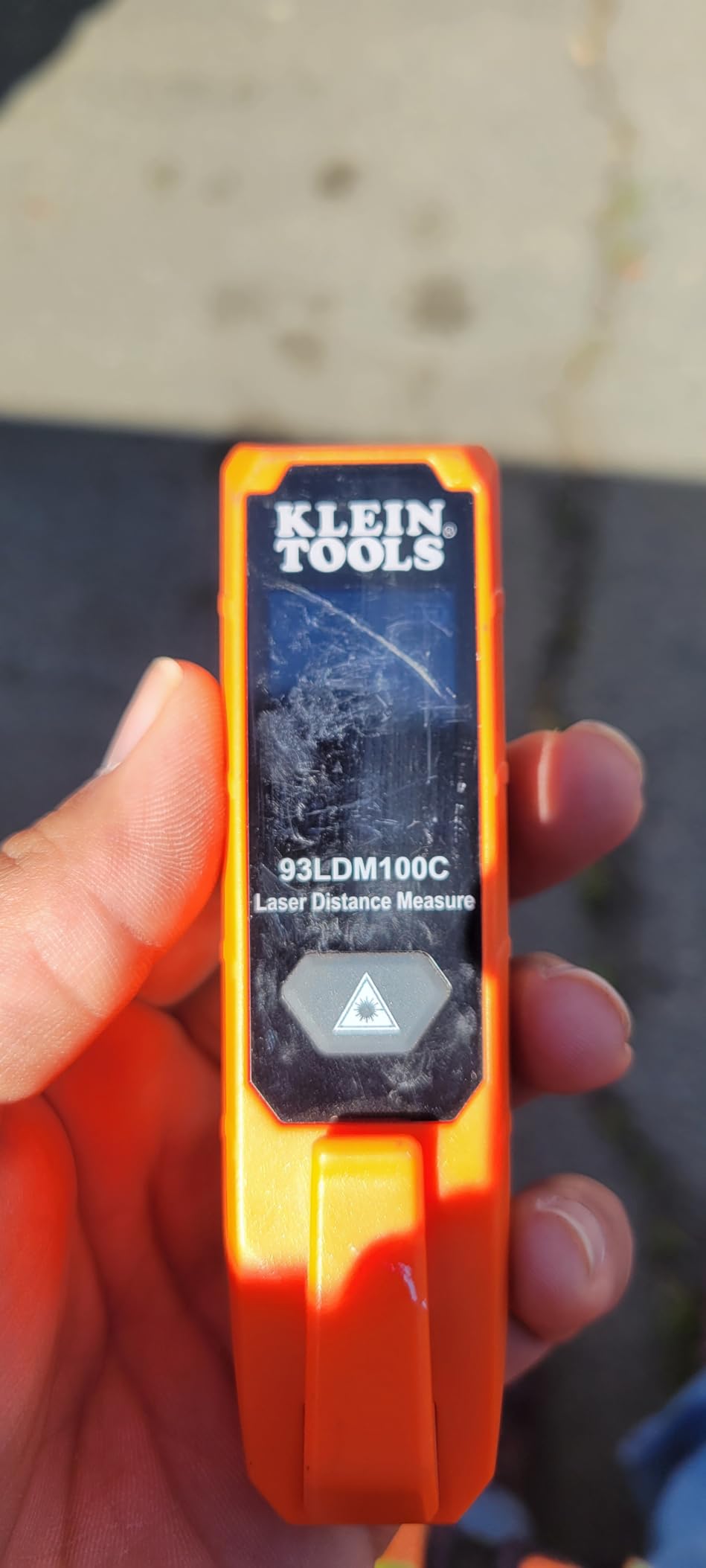
At 4.7 inches long and 65 g with a pocket clip, it is a genuine daily-carry item. It measures from 2 inches to 100 feet, offers single and continuous measurement modes, records the last three readings, and carries an IP54 rating. That three-reading memory is minimal next to the 30-slot models, but three is often all a careful estimator needs between a mark and its check.
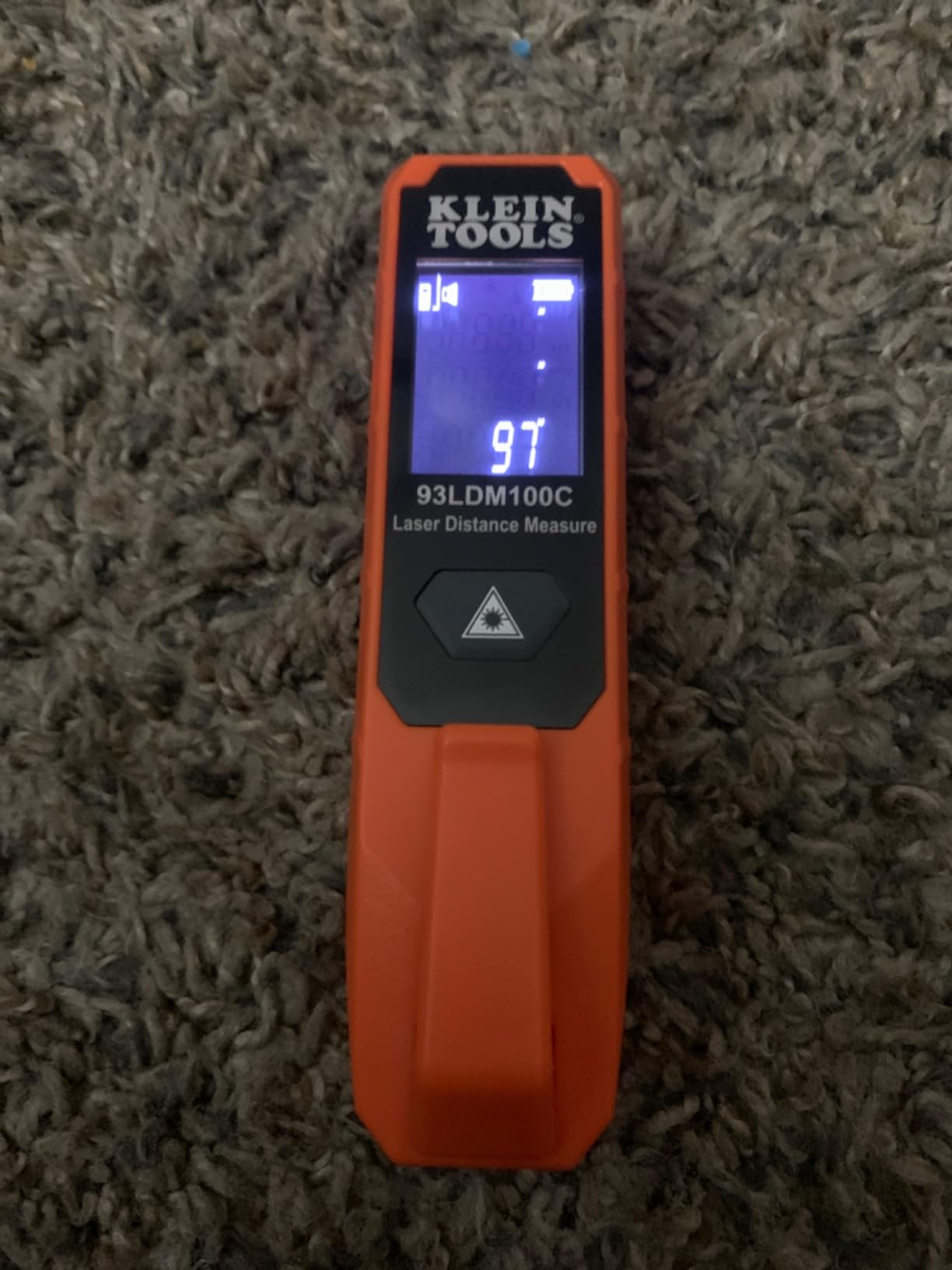
The complaints all trace back to one design decision. A single button controls full functionality, so changing modes means memorizing press-and-hold sequences, and the instructions are a single folded sheet tucked in the battery compartment. Nearly every critical review we saw came back to the interface rather than the measurement.
Read this before you buy the single-button layout
One button is genuinely glove-friendly and fast once learned, and it is why this tool feels good in a gloved hand. But the learning curve is real, and the documentation assumes you already know what you are doing. Sit with it for ten minutes before it goes in your pocket.
Where its limits show up
Outdoors in full sun the display washes out, and past 30 feet accuracy relaxes to 1/8 inch. Angling the tool while measuring skews readings, which is a caution on ladder work and overhead measurement. For interior dark-space work it is excellent; for layout under open sky, the Bosch green-beam above is the better buy.
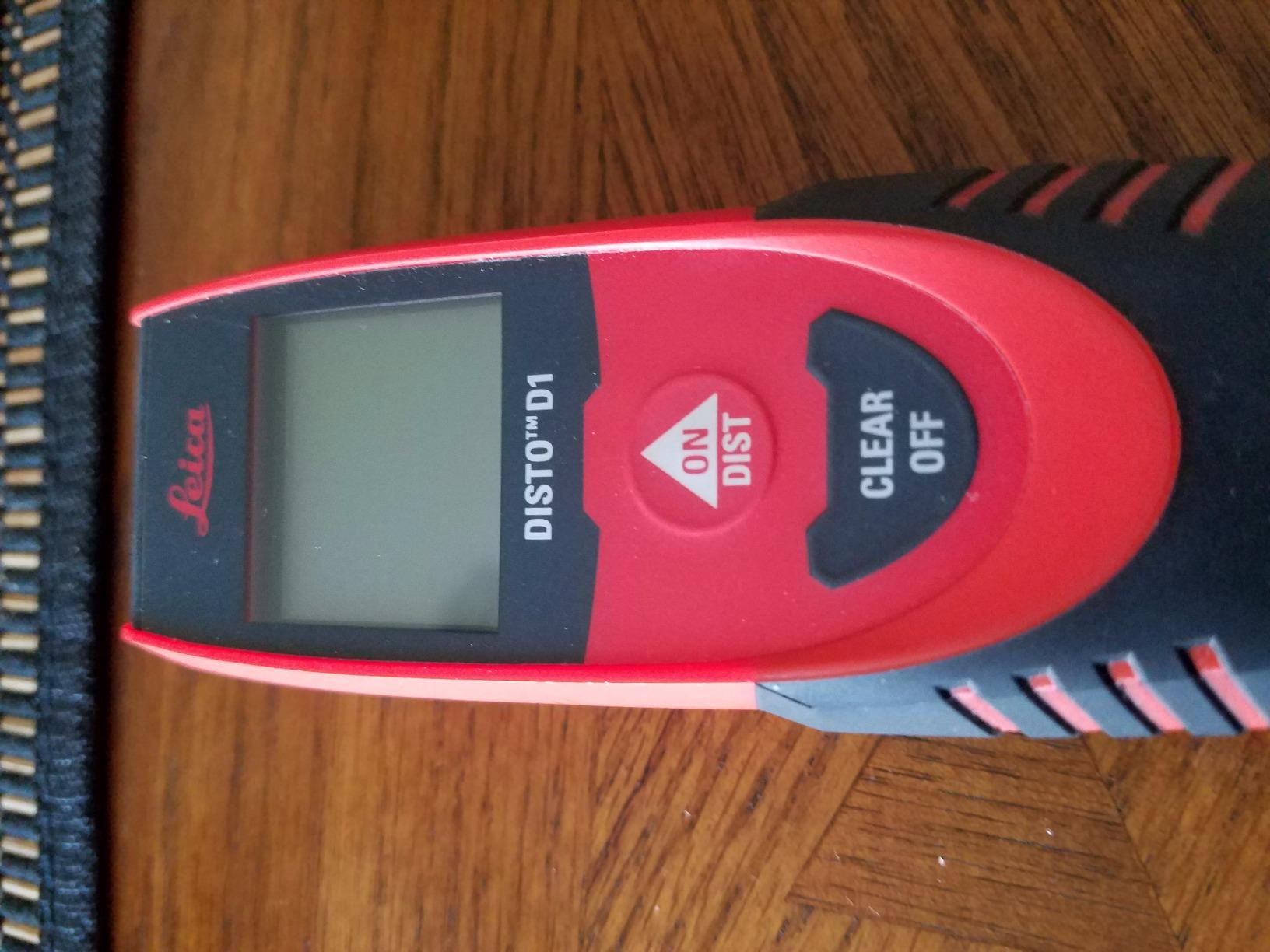
8. Leica DISTO D1 – Best for App and Floor-Plan Workflows
Leica Geosystems DISTO D1 120ft Laser Distance Measure with Bluetooth 4.0, Black/Red
120 ft rated range
Accuracy 1/16 in.
Bluetooth 4.0 to DISTO sketch
3.04 oz
2 year warranty
Pros
- Leica accuracy at a mid-tier outlay
- Very small and light at just over 3 ounces
- Two-button operation is quick to learn
- Bluetooth transfer works with floor plan and CAD tools
- Automatic shutoff extends AAA battery life
Cons
- Red laser disappears in bright sunlight
- Bluetooth pairing is non-standard and poorly documented
- Drawing features sit behind a Leica subscription
- Cannot measure angles
- Only a quick start guide and no lanyard hole
On trade forums, Leica is consistently described as the professional benchmark, and on ElectricianTalk it gets called the gold standard and a contractor’s asset, especially for measuring whole buildings for lighting layouts. The D1 is the cheapest way into that build quality and, more importantly for us, the only model here that pushes readings into software rather than asking you to write them down.
Bluetooth 4.0 connects to the free DISTO sketch app, which builds simple floor plans or overlays measurements on site photos on both iOS and Android. For a residential surveyor or an electrical contractor doing a device layout, that is the difference between a notebook full of numbers and a drawn plan. Accuracy is 1/16 inch, rated to 120 feet, with distance tracking and a two-button interface that is genuinely quick to learn.
Physical specs are unremarkable in the best way. At 3.04 ounces with two AAA batteries included, it is the second-lightest tool here, and automatic shutoff after inactivity stretches those cells. It carries an IP54 rating and a two-year manufacturer warranty, which is the longest warranty among the non-green-beam models on this list.
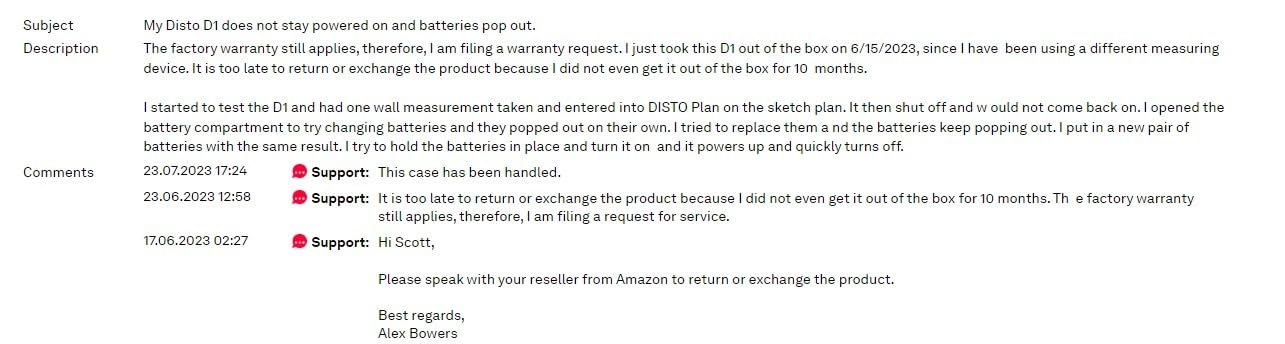
The friction is all in the software layer, and it is worth understanding before you buy. The pairing procedure is non-standard and poorly explained, which is the single most common complaint among owners. Several of the more advanced drawing and photo-overlay features require a Leica subscription rather than shipping free, and the box contains a quick start guide only, with settings buried behind two-button holds.
What Bluetooth genuinely buys you
Bluetooth earns its keep in one specific situation: when the next step is software. If your readings end up in a floor plan, a take-off sheet or a lighting layout, pushing them from the tool to a phone is faster and more accurate than typing them. If your workflow ends in a paper notebook, connection is one more thing to pair and one more battery to drain.
Where Leica’s reputation outruns the tool
The red beam has the same outdoor visibility problem as every other red unit on this list, and there is no angle measurement, which several cheaper rivals do provide. The build and the warranty are genuinely better class, but the free software tier is thinner than the brand name suggests, and the app is where friction lives.
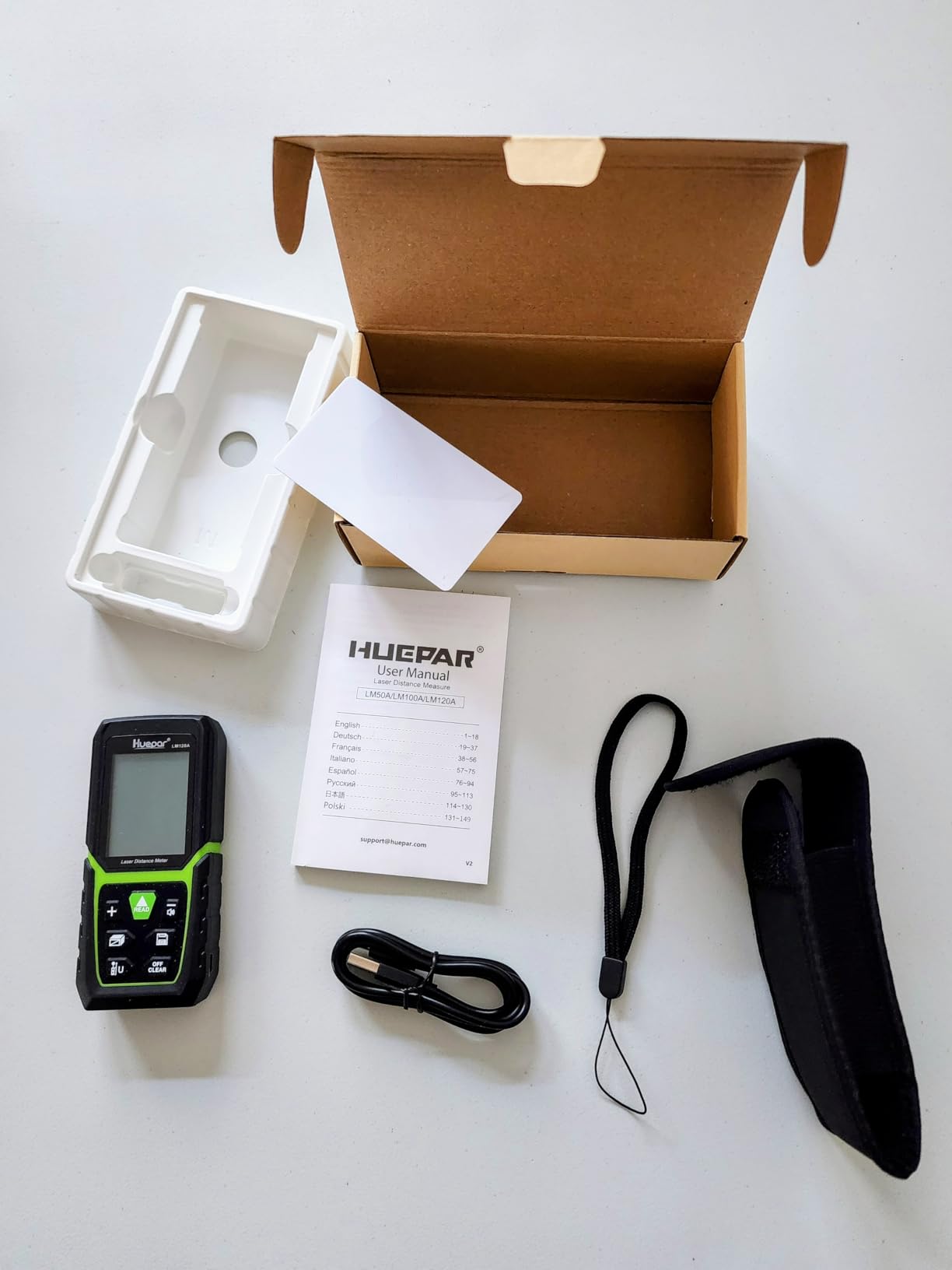
9. Huepar BLM-210GT 395ft – Best for Long Layout Shots and Stake-Out
Huepar 2026 Upgraded Dual Laser Measuring Tool 395Ft, Phone App, Green Beam
395 ft green dual-laser
Single head 1/16 in. and dual head 1/8 in.
USB-C charging
IP54
5 year warranty
Pros
- Dual-laser design measures both directions from one position
- 395 ft range handles large rooms hallways and warehouses
- App adds point-to-point stake-out and annotated photos
- Bright green beam is easy to target indoors and in overcast light
- Magnetic back and auto-rotating LCD help with awkward angles
- USB-C recharge with about 5 hours runtime and a 5-year warranty
Cons
- Dual-head accuracy is 1/8 in. looser than the 1/16 in. single-head figure
- Green laser is hard to see in bright direct sunlight
- At 0.3 kg it is heavier than most pocket measures
- App-dependent features need a phone and pairing setup
The dual-laser arrangement is the idea worth understanding. Instead of emitting from one end, it measures in both directions from a single position, so you can capture a room’s two opposing wall runs without walking back and forth to re-aim. For site layout, hallways, warehouses and long rooms, that removes a genuine amount of repositioning time.
Range is 395 feet on a green beam reported as up to four times brighter than standard red. Single-head accuracy is 1/16 inch. The mode set is the largest in this group, a nine-in-one covering length, area, volume, angle, wall area, continuous, four Pythagorean calculations, midpoint and max and min, with 100 groups of storage. That angle function also covers the inclinometer-style slope work that the MILESEEY does with a sensor.
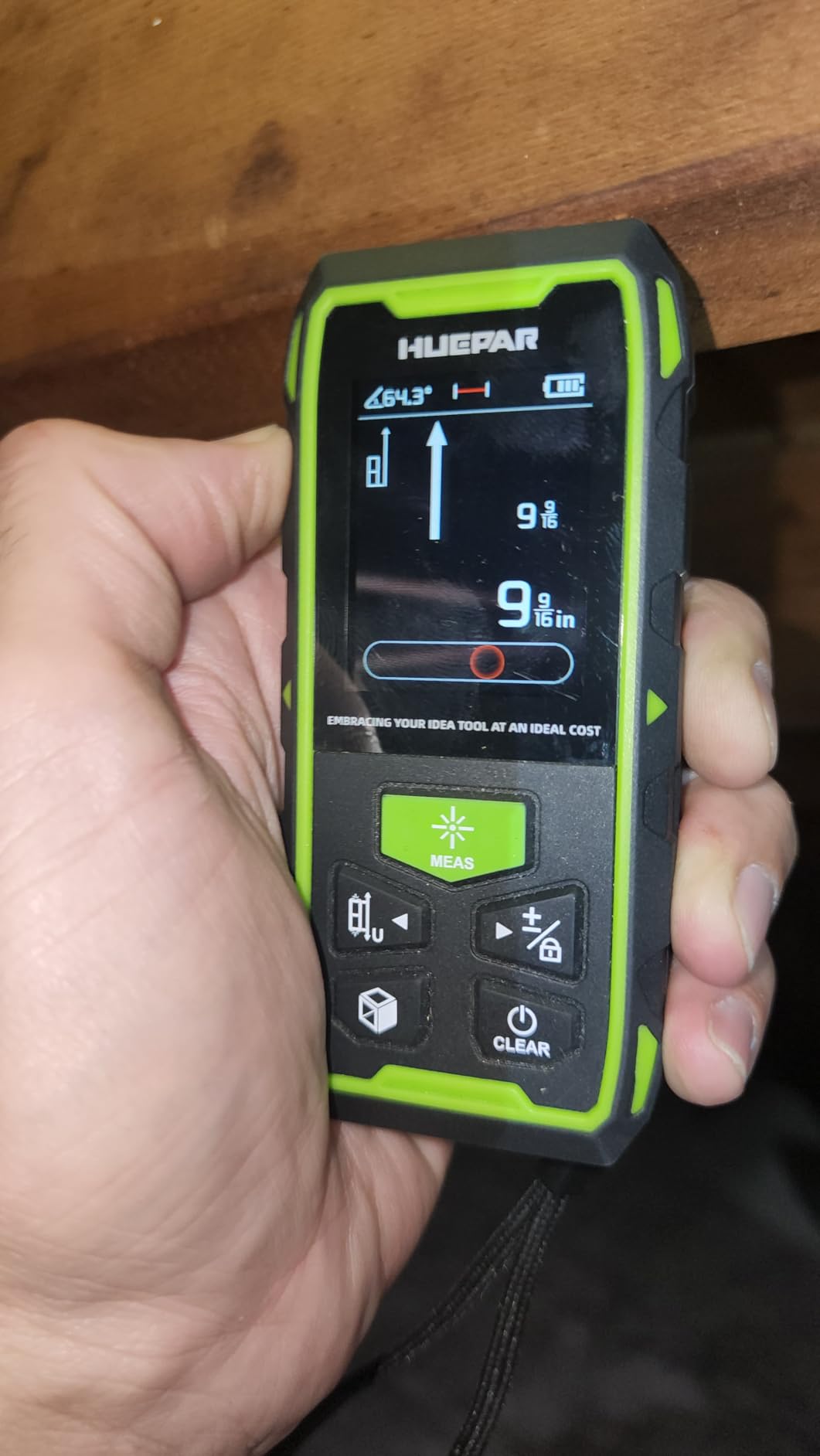
The app does real work here rather than showing off. It provides point-to-point measurement and stake-out, project groups, annotated photos, sketches and sharing, plus remote measurement triggering to reduce deviation on long shots. A magnetic back and an auto-rotating LCD let you stick the tool to steel and read it in awkward positions. USB-C charging takes about 1.5 hours for roughly 5 hours of runtime, and the warranty is five years on the tool with two on the battery.
Now the compromises. Dual-head accuracy is 1/8 inch, a full step looser than the single-head figure, so switch to single-head mode when precision matters. The green beam still struggles in bright direct sun, which is a real limit on a 395 foot claim. At 0.3 kg it is more than twice the weight of the pocket models, and the layout features need a paired phone.
When stake-out features pay for the weight
If you are setting out wall positions, marking footing locations or checking a grade line against a plan, stake-out mode eliminates the measure-mark-measure loop. A 0.3 kg tool carried all day is a real cost, but for layout work it buys back far more than it costs, and five years of warranty reduces the risk of that weight being wasted.
When the range number will not help you
Outdoor visibility is the trap. In overcast light, shade and interior warehouse lighting the green beam is easy to hit, but direct sun still swallows the dot at long range, and the bidirectional mode gives up 1/8 inch. For a genuinely long outdoor shot, a point-finder style tool or a plain tape and rod is the more dependable answer.
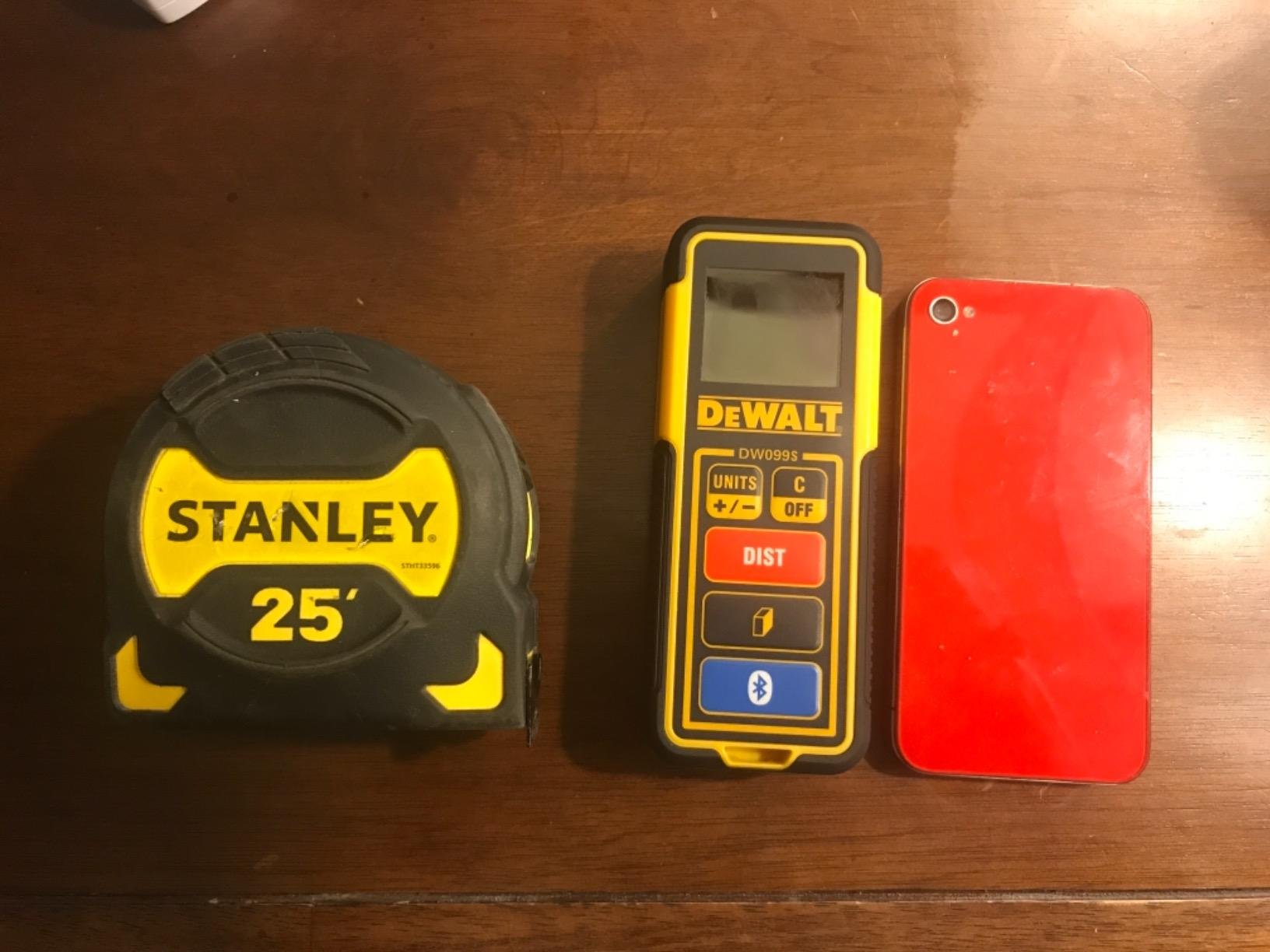
10. DEWALT DW099S – Best for Dusty Concrete and Demo Work
DEWALT Laser Measure Tool/Distance Meter, 100-Feet with Bluetooth (DW099S)
100 ft range
Bluetooth measurement transfer
IP6X dust and IPX4-IPX6 water
4.96 oz
3 year warranty
Pros
- Strongest dust and water ingress protection in this group
- Bluetooth pairing is simple and transfers readings to an app
- Speeds up square-footage takeoffs for bids
- Solid build with a 3-year limited warranty
- Light at just under 5 ounces
Cons
- Readings include the length of the tool which catches out new users
- Struggles with long measurements in direct sunlight
- Short measurements can take 10 to 20 seconds to register
- No floor plan or graphing capability
- Build quality trails other tools in the DeWalt range
This one is chosen for its sealing rather than its features. It carries IP6X dust protection and IPX4 through IPX6 water resistance, which is the most aggressive ingress rating in this group and the right spec for slab work, demo days and yard layouts where the tool gets genuinely filthy. The three-year limited warranty is also the longest in the group alongside the Huepar.
The practical use case is bid work. Owners report using it to speed up square-footage takeoffs for flooring and paint estimates, and the Bluetooth connection transfers those linear measurements to an app simply and reliably, which is the one place connection clearly pays off. Accuracy is fine once you know how it reads, and it weighs just under 5 ounces.
There is one behavior to learn before day one. Readings include the length of the tool itself, which catches out nearly every new user and inflates your first few dimensions. Once you are calibrated on that, it is not a problem, but on a disputed takeoff it is the kind of thing that gets an order reopened.
The reported weaknesses are worth weighing. It struggles with long measurements in direct sunlight, short measurements can take 10 to 20 seconds to register, and there is no floor plan or graphing capability in the software, so it transfers numbers rather than drawings. Owners also note that the build quality sits below what the DeWalt name usually implies.
The number to memorise before your first takeoff
Write the tool’s own length on the housing with a paint pen. Subtract it mentally, or set the reference point in the app. Owners who do this report the unit becoming accurate and fast, and the ones who do not consistently report off-by-a-few-inches results that nobody noticed until the estimate was wrong.
Where it is the wrong tool
If your work is fine interior setting-out where an eighth of an inch matters, a plain 1/16 inch model with a sharper display is faster. And for anything involving a drawn plan, the transfer is numbers only, so budget your own sketching time on top of the measurement time.
Which Laser Measure Fits Which Trade
Match the tool to the measuring problem, not to the badge. The Bosch GLM165-40 Blaze Pro is the safest default for almost any trade, and the rest of this list only matters where your specific work pulls you away from that default. Whatever you choose still has to live in something that survives site abuse, which is where our contractor tool bag picks come in.
- Framing and stud layout: Bosch GLM165-40 for interior and basement work, Bosch GLM165-25G if you frame outdoors in open sun. Accuracy of 1/16 inch and add/subtract math matter more than range here, and you still want a tape for marking.
- Drywall takeoff and square footage: Bosch GLM165-40 with its 10-reading memory, or the MILESEEY if you also need the angle sensor. Both do wall area and volume math fast enough to beat a tape and a phone calculator.
- HVAC duct runs: MILESEEY for the 0.3 degree angle sensor, or Huepar if you are running long laterals. Indirect height measurement and Pythagoras are the modes that matter, not maximum range.
- Electrical device layout: Klein Tools 93LDM100C when you are working in dark finished spaces with the power off, Leica DISTO D1 when the layout has to end up as a drawn plan on a phone or in CAD software.
- Concrete and form work: DEWALT DW099S for the IP6X dust rating, or Bosch GLM165-25G for IP65 if you are outside in weather. Neither replaces a rod for grade work on a large pad.
- Roofing and rafters: MILESEEY or Huepar for angle and slope readings. Bosch GLM165-25G if you need a beam you can see across a bright roof deck.
- Yard work, trees and outbuildings: Huepar at 395 feet for indoor-outdoor warehouse and yard runs in shade. Use a tape or a rod in direct sun regardless of what you carry.
Leica vs Bosch: Which Brand Should Contractors Buy?
If the choice is Leica or Bosch, buy Bosch for value and Leica for workflow. Bosch wins on rating and review volume at the entry point, where the GLM165-40 Blaze Pro holds 1/16 inch accuracy, a real-time default mode and 10 readings of memory with thousands of reviews behind it. Leica wins when your measurements need to land in software, because Bluetooth transfer into floor-plan and photo-overlay tools is the Leica’s clearest practical advantage.
Neither brand wins on outdoor beam visibility in this group, because both rely on red-beam technology at the levels most contractors buy. Bosch offers a green-beam option at the top of its range, while the Leica we tested pairs a red beam with a two-year warranty and the lightest body here. On forums the recurring advice is straightforward: move up a tier only if you use the tool every day, which is a better rule than any brand argument.
How to Choose a Laser Distance Measure
Accuracy is the one spec that matters
Accuracy is quoted as a tolerance like 1/16 inch, and that number is measured at a stated reference distance, not across the full range. Tools tighten to 1/16 inch over the first 30 feet and relax to 1/8 inch out to 100 feet, exactly as Klein states. Judge a tool by the tolerance at the distance you actually work at, and check it against a known tape on your own site conditions before you trust it on a takeoff.
Range and accuracy trade against each other
Longer range is not free. It costs money, weight and accuracy, and a long claim is nearly meaningless outdoors with a red beam. The honest test is whether you ever measure past 60 feet. Most framing, finish and electrical work never does, which is why a 100-foot tool is plenty for the majority of crews. If you regularly measure building lengths, warehouse bays or tree heights, range becomes a real requirement.
Working in bright sunlight
The red dot problem is the single most common field complaint, and it is optical rather than electronic. The workarounds that actually help: use a green-beam model if outdoors is your default; measure to a light-colored surface or a matte target board rather than a dark one; aim at an obvious edge or corner rather than a flat face where the dot has no contrast; and treat a long outdoor shot as a two-person job where one person watches the dot. Do not trust a 165-foot claim in direct sun.
IP54 vs IP65 explained for job sites
IP54 means protected against dust ingress and splashing water from any direction, which covers most indoor work and ordinary weather. IP65 adds protection against water jets and is the spec to want for outdoor framing, form work and anything that gets washed down. IP00 means no protection at all. A small number of owners prioritise sealing over features, and for concrete and demo work that is a defensible call.
Memory and stored readings
Memory capacity ranges from three readings on the Klein to 30 on the MILESEEY and ACEGMET and 100 groups on the Huepar. Five to ten is enough for a room takeoff done carefully. Anything beyond that matters for whole-house walks where you do not want to transcribe. The more important detail is that stored readings survive the task, so you can measure a space, check it and compare.
Battery life and measurements per charge
Alkaline cells are the standard and are not a real problem when a spare set lives in the pouch, since the makers claim thousands of readings per set. Rechargeable lithium-ion removes the question entirely: the PREXISO claims roughly 5000 measurements per charge, the MILESEEY quotes up to 5000 per charge cycle on two AAA cells, and the Huepar gives about 5 hours of runtime per USB-C charge. Whichever you pick, buy a second set of batteries the same day.
Is Bluetooth worth it
Only when the next step is software. Bluetooth earns its keep pushing readings into a floor plan, a lighting layout, or a take-off sheet. It is dead weight when your workflow ends in a paper notebook, and it adds pairing friction that trade forums complain about regularly. Two models here, the Leica D1 and the Huepar, do real work with their apps. The rest of the category skips it, and most users are not missing anything.
Metric and imperial display switching
Every tool in this roundup outputs metric and imperial, and most let you switch without a mode dive. The MILESEEY switches across meters, feet, inches and feet-plus-inches, which answers the r/Construction question directly: yes, you can set the display to match a spec-driven drawing and a US takeoff on the same device. The Bosch GLM100-23 also handles inches with fractions or decimals, and the Klein, ACEGMET and Huepar all carry both formats. Set it once to what the job needs and the friction disappears.
Laser class 2 eye safety on a shared site
Every model here is a class 2 device with output below 1 mW, the same class used in classroom pointers. Class 2 is safe for normal use because the eye’s natural blink reflex limits exposure, and it is safe on a shared site as long as you keep the beam away from other trades’ eyes. Do not stare into the emitter, do not aim it at a colleague, and keep it pointed at a surface rather than across a walkway. On ElectricianTalk and Contractor Talk the recurring worry is not the beam, it is the drop.
Calibration, warranty and returns
Check the warranty length before you buy, since it ranges from 18 months on the ACEGMET to two years on the MILESEEY and Leica and three on the DEWALT. Bosch adds an extra year on the GLM165-40 when you register within eight weeks. Also verify accuracy on a known 30-foot reference with a real tape when the tool arrives, and re-check periodically, because impact knocks are the most common cause of drift. Buying from a retailer with straightforward returns matters more to crews than brand prestige.
When to skip a laser measure entirely
Keep a tape for anything under about 6 feet, for marking along a board, and for pulling a straight line. A digital level or a rotary laser is a different tool entirely, for elevation and height rather than distance. A wheel is faster for long flat outdoor runs. And a laser measure will not give you a square, a plumb line or a grade. Using it for the wrong job is what turns a good tool into a complaint. For the rest of your daily-carry kit, our cordless circular saw picks cover the cutting side of the same workflow.
What a Laser Distance Measure Cannot Do
These tools fail predictably, and knowing where saves a return. The dot vanishes in bright sunlight at distance, which no software fixes. Reflective and mirror surfaces scatter the beam and produce nonsense readings, so measure a door edge or a reveal instead of the glass. Very dark surfaces absorb the beam, and dense fog, dust in a strong light beam and low-angle shots to rough lumber all widen the error.
There is also a floor on what a laser can see. Most units struggle below 2 inches, which is why nobody marks a stud with one. Angling the tool skews readings even when the display looks steady, and window glass, mirrors and water surfaces will happily return a wrong number with total confidence. On any dimension you intend to sign, check it against a tape.
Frequently Asked Questions
What is the most accurate laser distance measurer?
Among the models in this roundup, accuracy tops out at plus or minus 1/16 inch, or 2mm, which Bosch, Klein, MILESEEY, ACEGMET and the Leica all claim. Accuracy is quoted at a reference distance and widens with range, so a tool rated 1/16 inch to 30 feet may relax to 1/8 inch at 100 feet. Judge any measure by its tolerance at the distance you actually work at.
What is the best laser distance measure tool for contractors?
The Bosch GLM165-40 Blaze Pro is the best all-round choice for contractors. It holds 1/16 inch accuracy, defaults to fast real-time measuring, calculates area, volume and indirect measurements, stores 10 readings and carries an IP54 rating. It is also the most heavily reviewed model in this roundup, which matters more in this category than a flattering star average on a lightly reviewed unit.
Which laser distance meter is better, Leica or Bosch?
Buy Bosch for value and durability per dollar, Leica for software workflow. Bosch offers the strongest rating and review volume at the entry point and a green-beam option for outdoor visibility. Leica’s clear advantage is Bluetooth transfer of readings into floor-plan and photo-overlay tools, though some advanced drawing features sit behind a subscription. Neither brand solves the outdoor red-dot problem at typical price levels.
How accurate is a laser distance measure?
Professional models in this roundup are rated within 1/16 inch, or 2mm, and cheaper hybrid units around 1/8 inch. Real accuracy depends on the target surface, the angle of the shot and ambient light, so verify a new tool against a known tape at your working distance. Impacts are the most common cause of drift, so re-check after any drop.
Why is my laser dot hard to see outside?
A red laser dot loses contrast against a bright background, so outdoor range claims are far shorter than the printed figure. Work around it by using a green-beam model for outdoor work, aiming at a light-colored surface or a matte target board, measuring to an obvious edge rather than a flat face, and treating long shots as a two-person job. Do not trust a long-range claim in direct sun.
Can laser measures switch between feet and meters?
Yes. Every model in this roundup outputs metric and imperial, and most let you change the display format directly. The MILESEEY switches across meters, feet, inches and feet-plus-inches. The Bosch GLM100-23 handles inches with fractions or decimals. Set the display to match the drawing or takeoff in front of you rather than converting by hand later.
Do I need Bluetooth on a laser distance measure?
Only if your measurements feed software. Bluetooth pays off when readings go into a floor plan, lighting layout or take-off sheet, which is what the Leica DISTO D1 and Huepar are built for. If your workflow ends in a notebook, connection adds pairing friction and battery drain for no benefit. Most of this category skips it, and most users are not missing anything.
Is laser class 2 safe to use on a job site?
Yes, with normal care. Every model here is a class 2 device with output below 1 mW, the same class as a classroom pointer, and natural blink limits exposure during normal use. Keep the beam away from other trades’ eyes, never aim it at a colleague, and point it at a surface rather than across a walkway. The real risk on site is dropping the tool, not the beam.
Final Verdict: Which Laser Distance Measure Should You Buy in 2026
The Bosch GLM165-40 Blaze Pro is the best laser distance measure for contractors because it combines 1/16 inch accuracy, a fast real-time default, real take-off math and a heavy review history in a body that fits a pocket. Pair it with a tape for marking and it covers nearly every trade on a typical crew.
Spend up when your work demands it. The MILESEEY adds an angle sensor and 30 readings of memory, the Bosch GLM165-25G adds a green beam and IP65 sealing for outdoor jobs, the Leica DISTO D1 adds Bluetooth for floor-plan workflows, and the Huepar adds 395 feet with stake-out for long layout. Below that, the Bosch GLM100-23 is the simplest accurate tool you can carry, and no measure on this list replaces a tape under 6 feet.