
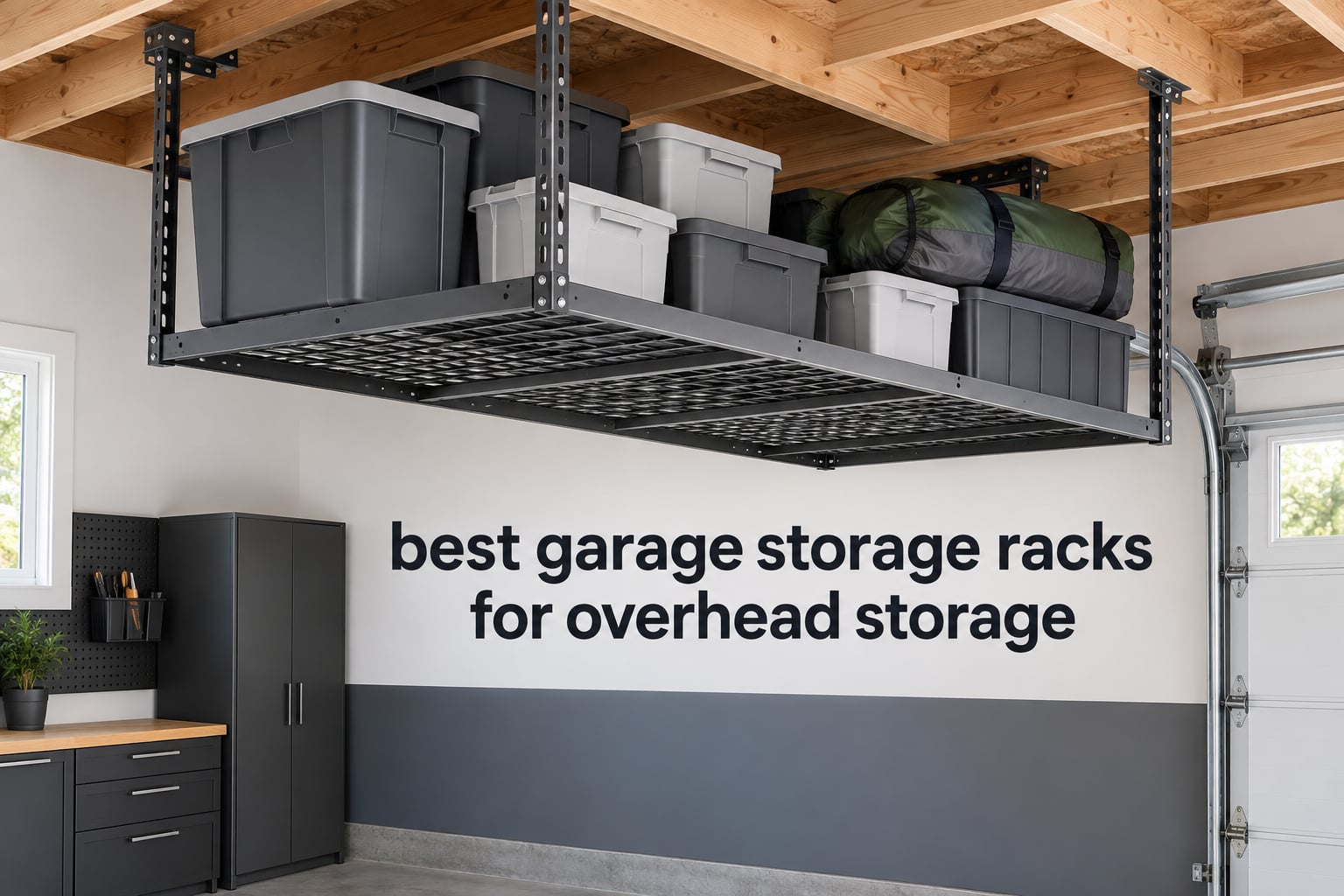
Most of us lose a full parking bay’s worth of floor space to the same handful of things: holiday decorations, camping gear, roof boxes, and the tote of tools we touch twice a year. An overhead garage storage rack fixes that by turning dead air between your joists and your parked car into usable storage. The catch is that the printed capacity on the box is not what your ceiling can take, and that is the decision most buyers get wrong.
Our team spent weeks comparing the best garage storage racks for overhead storage currently on the market, reading manufacturer specs line by line and cross-checking them against owner reviews. We picked eight that cover the real range of use cases, from a 4×4 platform for a single-car bay to a 1000-pound modular grid for a workshop. We also worked out the joist math, because a 750-pound rack is worthless if the joists behind your drywall only have 300 pounds of headroom.
Here is the short version: a fixed or adjustable steel platform hung from wood joists is the right answer for most garages, the joist capacity is always the limiting factor rather than the rack, and adjustable drop height matters more than any buyer expects because of garage door rails and tall vehicles. We explain the lifting-platform category too, though none of the eight racks we analyzed include a pulley or motorized lift, so treat that section as a category primer rather than a recommendation. If you are still organizing the rest of the garage, our guide to the best garage storage systems for organization covers the floor-level side of the equation.
Table of Contents
Top 3 Picks for Overhead Garage Storage in 2026

FLEXIMOUNTS 4×8 Overhead Rack
- 750 lb rated
- 1200 lb tested
- 22 inch to 40 inch dropdown
- 105 cu.ft platform

MonsterRAX 4×8 Overhead Rack
- 24 inch to 45 inch drop
- 500 lb capacity
- Up to 120 cu.ft storage
- Industrial carbon steel
HyLoft 45 inch Overhead Rack
- 250 lb capacity
- 17 inch to 28 inch drop
- Linkable multi-bay system
- Arrives partly pre-assembled
FLEXIMOUNTS wins on the combination of a 750-pound rating, the largest review base in the category by a wide margin, and a 22-inch to 40-inch drop that covers most standard ceilings. MonsterRAX takes the tall-bin crown because its drop reaches 45 inches, which is the difference between fitting a 39-inch tote and not fitting it. HyLoft is the value and scalability pick, since its 45-inch squares link into a continuous run.
Best Garage Storage Racks for Overhead Storage (October 2026)
| Product | Specifications | Action |
|---|---|---|
| FLEXIMOUNTS 4×8 Overhead Garage Ceiling Storage Rack |
|
Check Latest Price |
 eShelf 2×8 Overhead Ceiling Rack eShelf 2×8 Overhead Ceiling Rack |
|
Check Latest Price |
 SunsGrove 4×8 Overhead Rack SunsGrove 4×8 Overhead Rack |
|
Check Latest Price |
| MonsterRAX 4×8 Overhead Storage Rack |
|
Check Latest Price |
| HyLoft 45 x 45 Inch Overhead Rack |
|
Check Latest Price |
 Gladiator GearLoft Overhead Rack 4 x 8 Gladiator GearLoft Overhead Rack 4 x 8 |
|
Check Latest Price |
 SafeRacks 4×4 Overhead Garage Storage Rack SafeRacks 4×4 Overhead Garage Storage Rack |
|
Check Latest Price |
 Jusgym 4×8 Overhead Garage Storage Rack Jusgym 4×8 Overhead Garage Storage Rack |
|
Check Latest Price |
Two patterns jump out of that grid. First, every rack in this category is limited by joist spacing rather than by raw weight, and most are built for 24 inches on center. Second, the capacity spread runs from 250 pounds on the small units to 1000 pounds on the modular system, which is a 4x difference that mostly tracks deck size and steel gauge rather than cleverness.
1. FLEXIMOUNTS 4×8 Overhead Garage Ceiling Storage Rack for General-Purpose Load
FLEXIMOUNTS 4×8 Overhead Garage Ceiling Storage Rack Organization, Black
750 lb rated, 1200 lb tested
22 to 40 inch dropdown
96 by 48 inch deck
Hardware kit
Pros
- Tested to 1200 lb and rated for 750 lb
- Adjustable 22 to 40 inch dropdown gives up to 105 cu.ft
- Long brackets tie into two studs with six vertical posts for rigidity
- Installation template and hardware kit included
- Ranked number one in Ceiling Mounted Storage Racks
Cons
- Needs two ceiling studs and a helper to install
- Will not mount to metal walls
- Hooks are sold separately
This is the rack I keep coming back to, because it does the unglamorous thing well rather than specialising. The platform is 96 inches by 48 inches, and the six vertical posts let the drop adjust anywhere from 22 to 40 inches below the joists. That range is what makes it work in a normal attached garage where the door rail eats the first 18 inches of headroom.
The number that convinced me was the test figure. FLEXIMOUNTS load tested the frame to 1200 pounds, which is 1.6 times the 750-pound rating, and they use thicker M8 screws than most competitors. Over 19,000 owners have rated it, and the recurring feedback is about how much floor space it gives back rather than anything to do with the hardware itself.
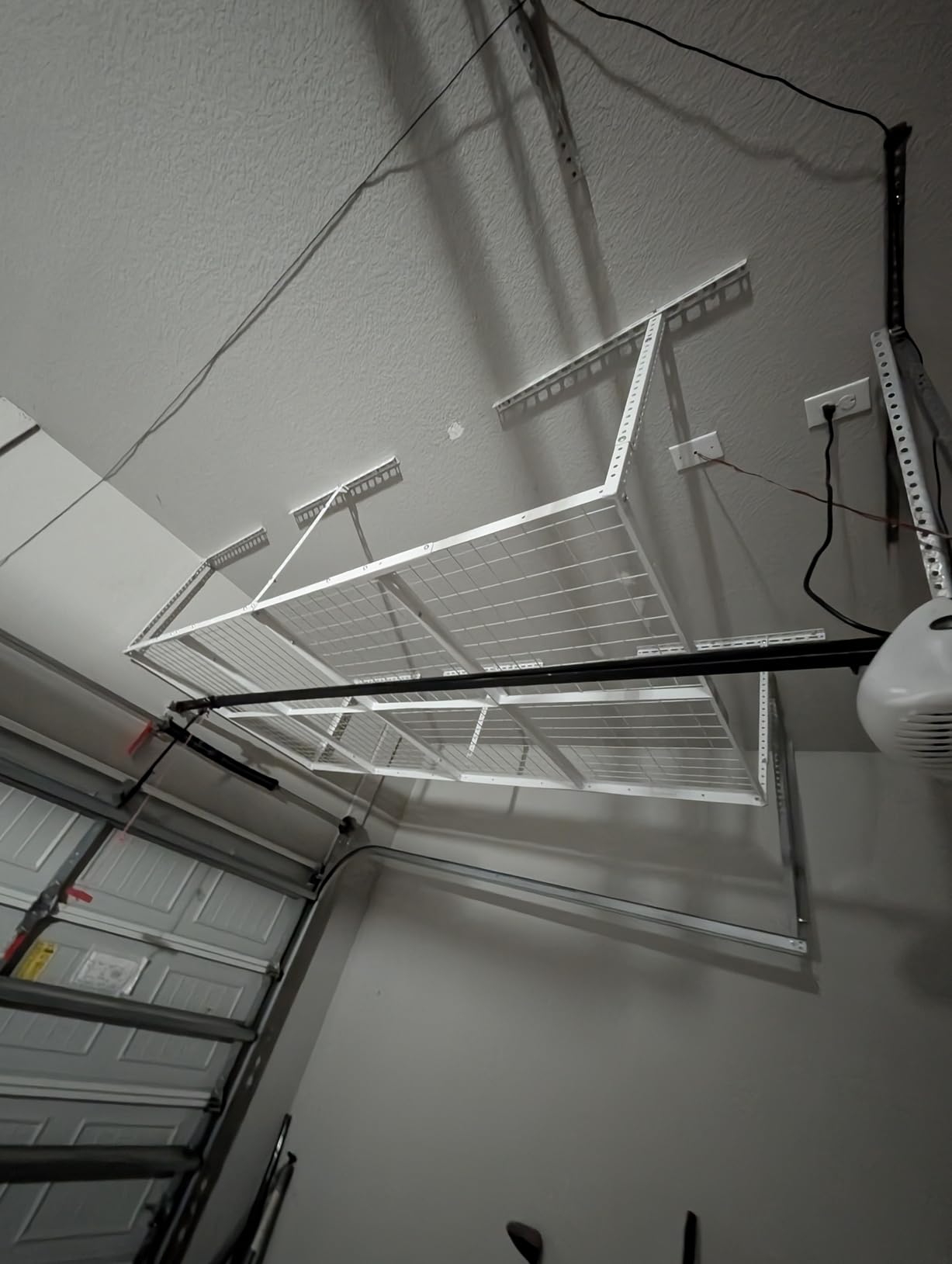
The honest wrinkle is joist spacing. This rack fits joists at 24 inches on center or less, and above that only 48-inch spacing works, which is the same limitation shared by most racks in the category. If your joists are at an awkward 26 inches, you will need cross-blocking or a different design entirely, and I would solve that before ordering.
Will a 750-pound rack overwhelm a standard garage ceiling
Not if you respect the 70 percent rule. A 750-pound rating on a typical platform means roughly 525 pounds of actual stored weight, spread across the deck rather than piled in one corner. Since the load travels as point loads through each fastener into the joists, how you arrange the bins matters as much as how much you put on them.
What you need before the day of installation
Two people, a stud finder, a stud sensor that also reads live wires, and a good cordless driver. The template that comes in the box is genuinely useful, so do not skip marking the mounting pattern before you touch a fastener. I would also add a set of structural screws to your cart, since joist lumber in older garages is often harder than expected.
2. eShelf 2×8 Overhead Ceiling Rack for Narrow Garage Bays
eShelf 2x8ft Overhead Ceiling Garage Storage Rack, 400LBS Capacity, Black
400 lb load capacity
22 to 40 inch adjustable drop
24 by 96 inch deck
Powder-coated finish
Pros
- Narrow 2 foot depth fits tight or awkward bays
- 400 lb rating on a small footprint
- 22 to 40 inch drop suits varied ceiling heights
- Integrally welded mesh panel resists separation
- Can be trimmed with a saw to clear a garage door
Cons
- 400 lb rating is the smallest capacity of the full-size platforms
- Instructions are thin on detail for first-time installers
- Needs two people and careful brace alignment
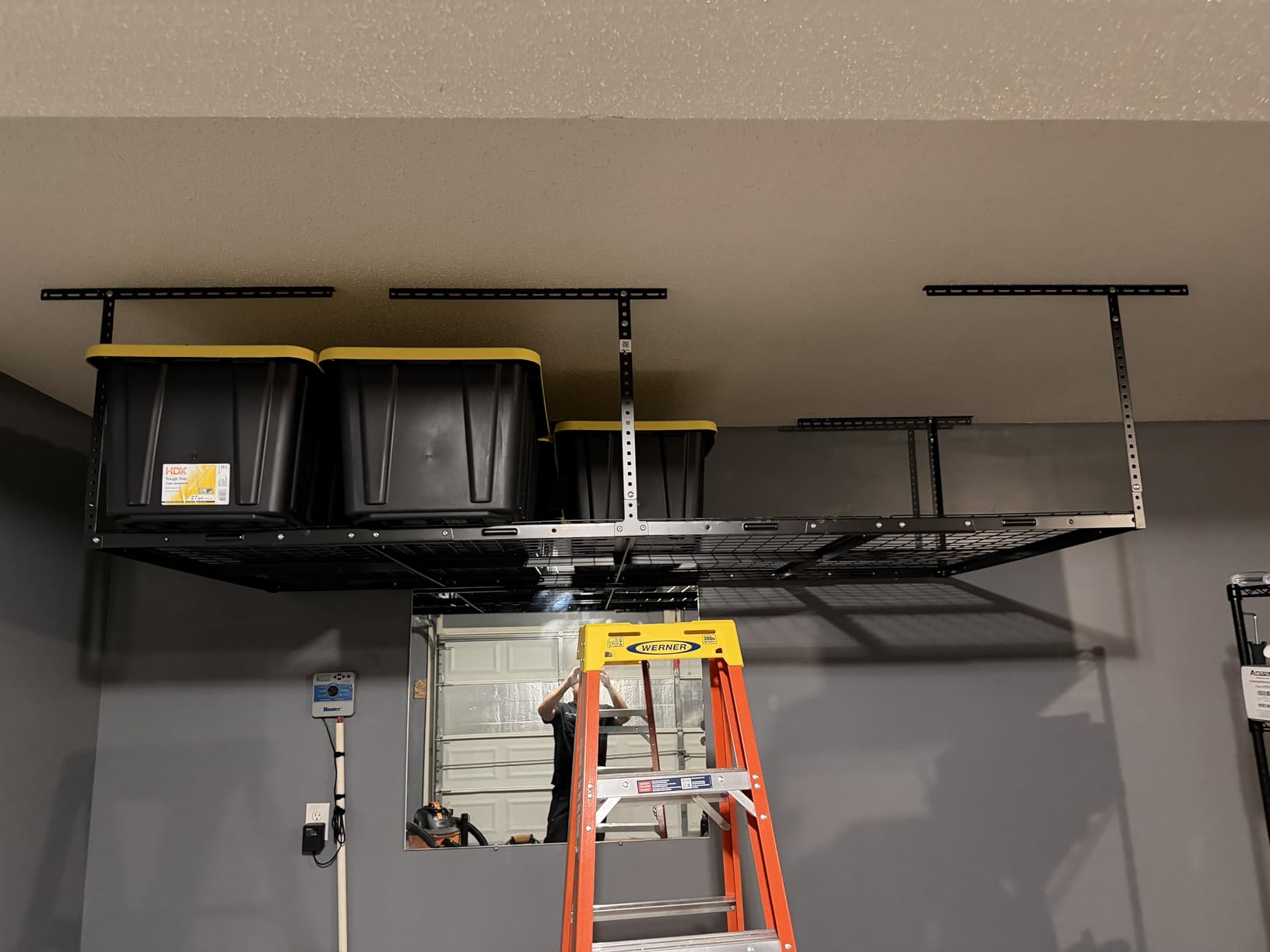
This is the answer when depth is the problem rather than weight. A 4×8 rack needs 48 inches of ceiling footprint, and in a single-car garage with an odd roofline or a deep storage wall, that footprint simply may not exist. At 24 inches deep by 96 inches long, this one fits where the bigger racks cannot, and owners frequently buy a second one to run alongside the first.
The 400-pound rating surprised me more than the 750-pound ones did, because the deck is an integrally welded mesh panel with 8 mm screws rather than a loose wire grid. That construction detail is why it feels solid once the braces are tightened, even though the paper rating is lower than the flagship 4×8 models.
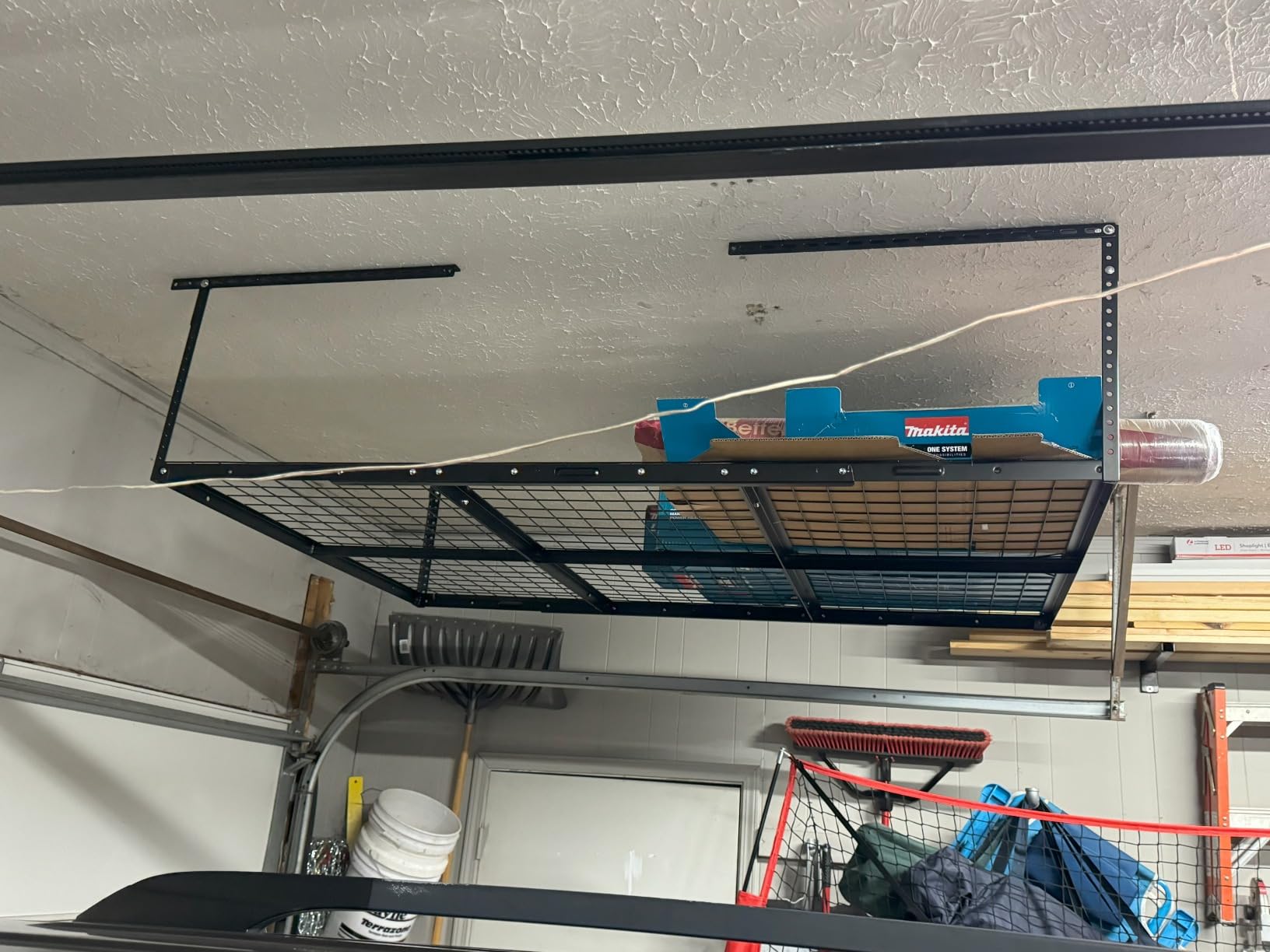
Two things come up repeatedly in the reviews and both are fair. The instructions are described as lacking detail by experienced DIYers who do not need them, and the hardest step is holding the braces perpendicular to the joists while a second person drives fasteners. A minority of buyers also reported chipped paint or bent frames from shipping, which they themselves attributed to the carrier rather than the manufacturer.
Is a 400-pound overhead rack strong enough for real garage storage
For seasonal bins, camping gear, and holiday decorations, yes with room to spare. Apply the 70 percent rule and you have about 280 pounds of real payload, which is a full set of totes rather than a pile of cast-iron shop equipment. If you plan to store dense items like full paint cans or a set of winter tyres up there, look at a higher-rated platform instead.
How this rack handles awkward ceiling layouts
Because the deck is a fixed rectangle, owners cut it down with a saw when they need to clear a garage door track or a support beam. That makes it the most flexible pick in the lineup for older garages with obstructions. Just re-check the cut edge for exposed steel and treat it before loading anything.
3. SunsGrove 4×8 Overhead Rack for Heavy Loads and a Stiffer Deck
SunsGrove 4×8 Overhead Garage Storage Rack Organization, Adjustable Ceiling Mounted Storage Racks, 800LBS Weight Capacity, 22″-40″ Ceiling Dropdown, Hammertone Black
800 lb load rating
2 inch slat grid deck
22 to 40 inch range
Rotatable brackets
Pros
- 800 lb rating is among the highest in the 4x8 class
- 2 inch slat grid is stiffer than a standard wire deck
- Rotatable brackets adapt to unusual stud layouts
- Reinforced crossbeams limit wobble under load
- All components numbered in a single carton
Cons
- Ceilings tilted more than 10 degrees are not supported
- Will not mount to metal walls
- Two-person lift to position the panel
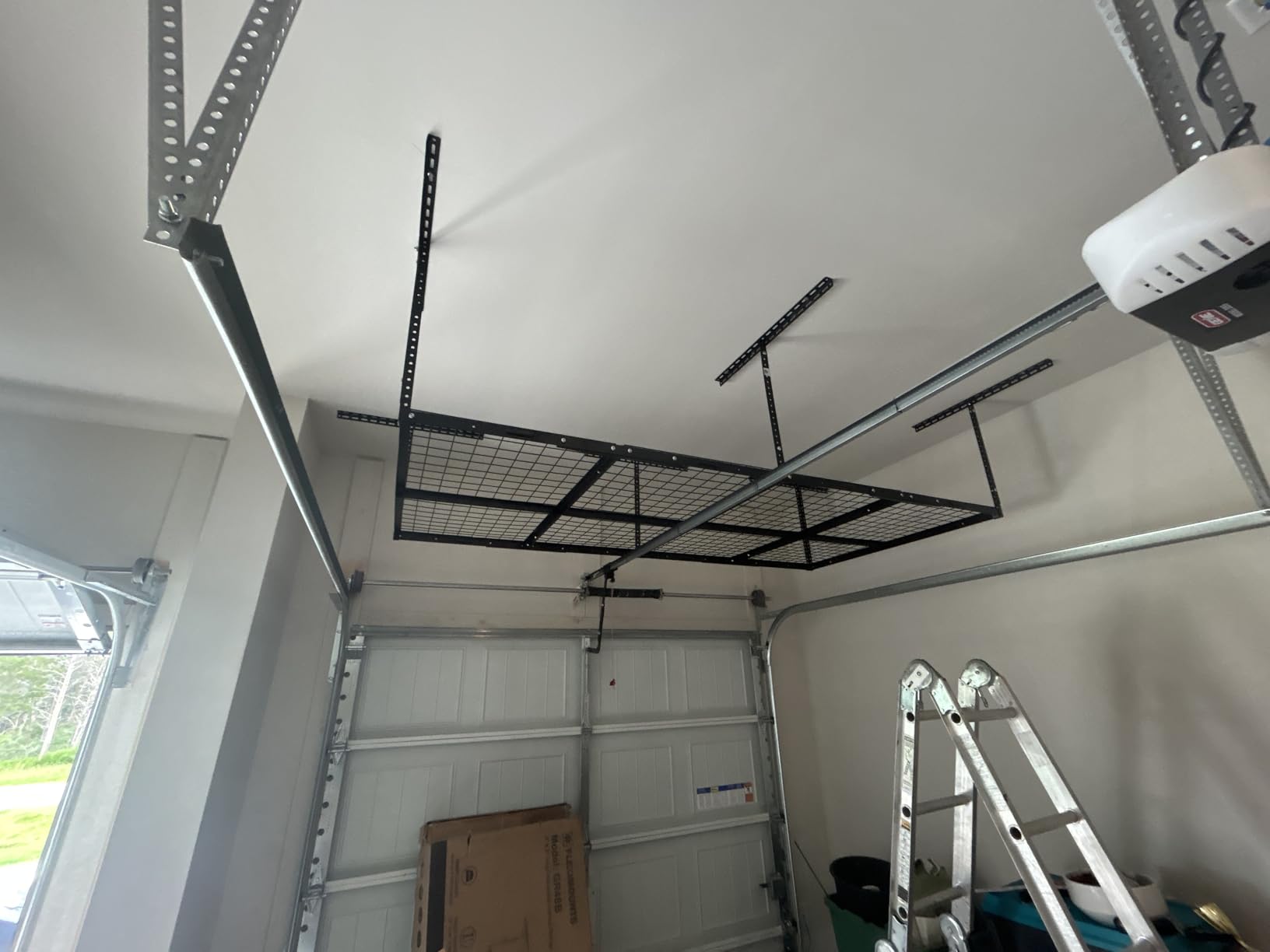
The differentiator here is the deck. Most racks in this category use a welded wire grid that sags under concentrated loads, and this one uses 2-inch wide slats, which is closer to a shelf than a rack. Reviewers consistently describe it as feeling stable once fully tightened, and I attribute most of that to the deck change rather than the capacity number.
The 800-pound rating comes from cold-rolled steel, wider bars, and reinforced crossbeams with extra mounting holes, and the height range runs 22 to 40 inches. The rotatable hanging pieces are worth calling out separately, because they let the drop lines land on joists that are not perfectly regular, which solves a real problem in older homes.
The 10-degree tilt limitation is unusual enough that you should check it before buying. Plenty of detached garages and carports have a slight fall for drainage, and if yours is more than about 10 degrees this rack is not for you. Installation is straightforward but physical, with two people needed to lift the panel onto the brackets and align the drop pieces.
Does a slat deck really outperform a wire deck
For point loads, yes. A wire grid spreads weight well across its whole span but softens visibly when you concentrate a load in the middle, and the slat design resists that bending. If your storage plan involves a few dense items rather than many light bins, the stiffer deck earns its place in the layout.
What the 800-pound rating does not tell you
It tells you what the rack is rated for, not what your joists are rated for. A high rating only matters if the structure behind it can deliver. Check joist size and span first, then decide whether the 800 pounds is something your ceiling can actually carry at 70 percent or less.
4. MonsterRAX 4×8 Overhead Storage Rack for Deep Drops and Tall Bins
MonsterRax 4×8 Overhead Garage Storage Rack, Gray, 24″-45″ Height
24 to 45 inch drop
500 lb capacity
Case-hardened carbon steel
Lifetime warranty
Pros
- 24 to 45 inch drop range is among the widest here
- Up to 120 cu.ft of storage per shelf
- Patented high-strength ceiling brackets
- Full hardware kit including lag bolts and lock nuts
- Powder coat resists rust and water
Cons
- Heaviest unit here at 80 pounds
- 500 lb rating is below the 750 to 800 lb options
- Twelve inch base height makes ceiling clearance the real constraint
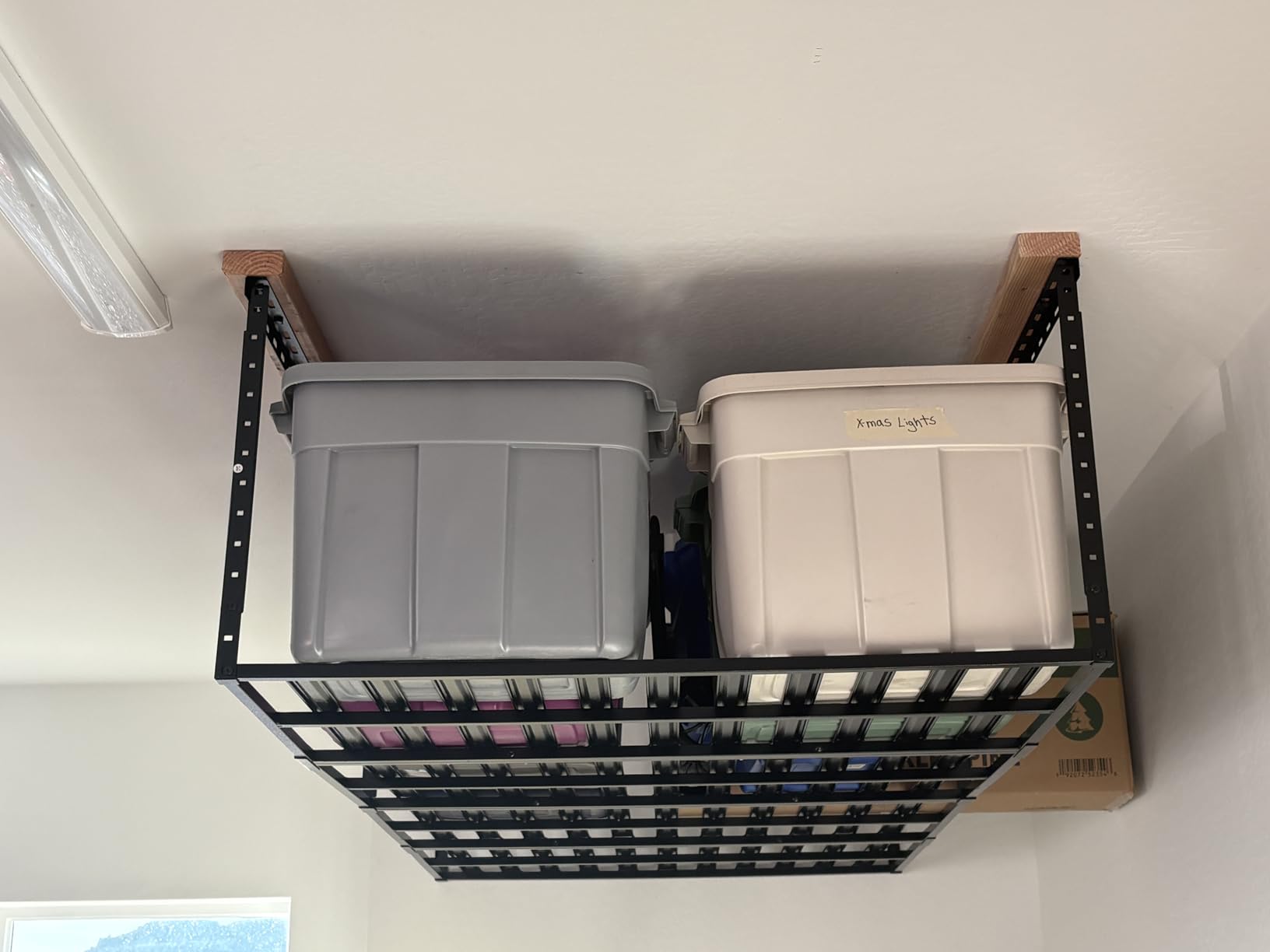
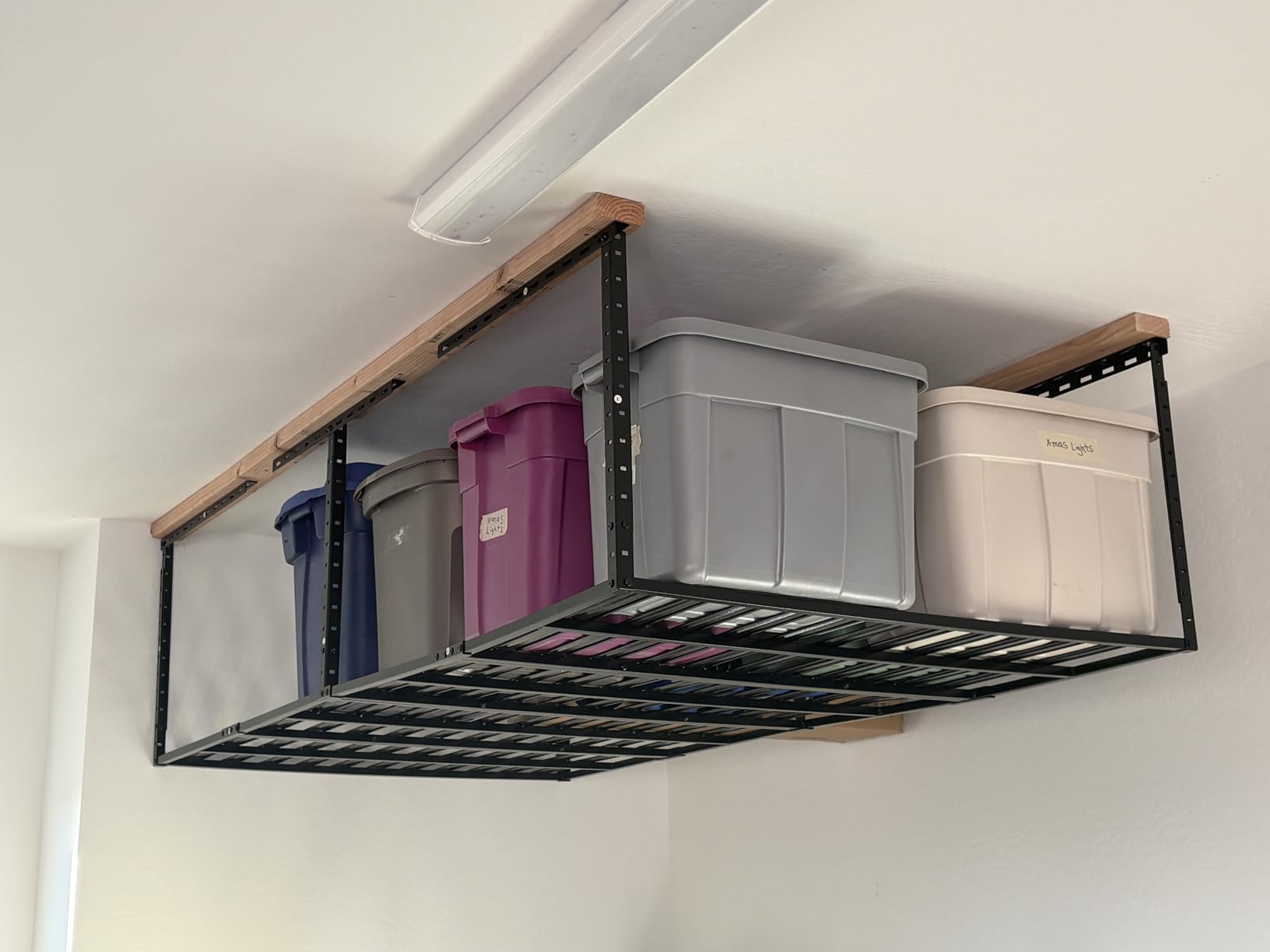
This is the rack for people with genuinely tall storage. A 45-inch drop gives you clearance for the tall totes and bulk bins that do not fit anywhere else, and the platform works out at up to 120 cubic feet, which is the most volume of any rack in this roundup. More than 2,100 owners have rated it, so it is also one of the most proven designs in the category.
The bracket system is the part worth understanding. It uses patented high-strength ceiling brackets that fasten into the joists, and the drop rods slide within them rather than hanging from a fixed point. That is what lets one frame cover such a wide range without reordering parts, and it is also why it fits joist layouts that stiffer fixed designs miss.
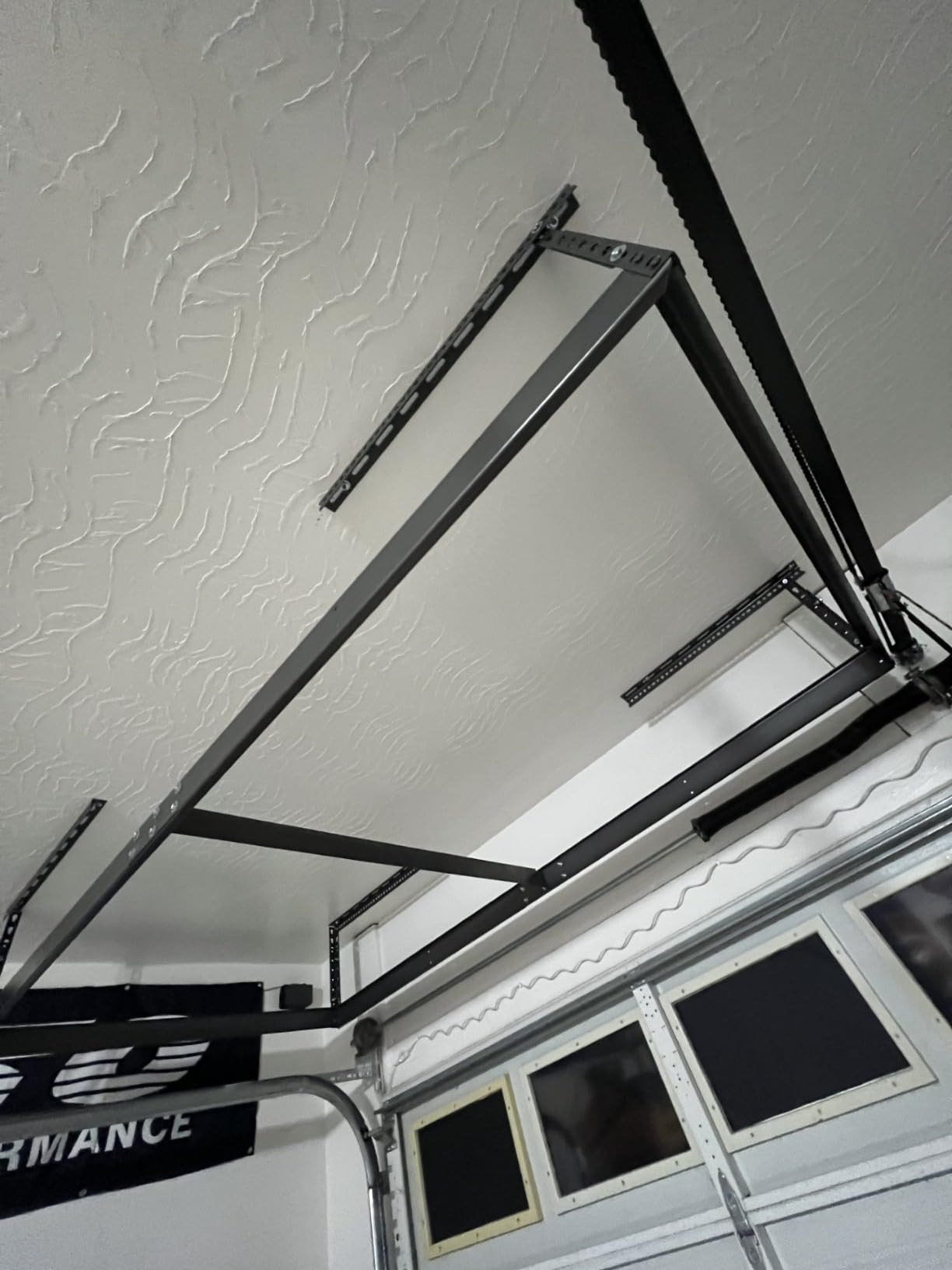
The 80-pound shipping weight is not a detail, it is the install. This is a two-person lift, and reviewers planning an afternoon install should budget the whole session. Buyers focused on maximum weight also note that 500 pounds is modest next to the 750 and 800-pound platforms, so treat this one as a volume pick rather than a strength pick.
Why the 45-inch drop changes what you can store
Most of the plastic totes people actually own are somewhere between 18 and 24 inches tall, and larger commercial bins go well past 30. A rack that only drops to 22 inches will not take them. This one does, which is the single clearest reason to pick it over the shallower alternatives.
How the bracket system handles uneven joist spacing
Because the ceiling brackets mount into the joists and the drop rods adjust below them, the frame tolerates spacing that a fixed-hole design would fight. That said, you still need brackets landing on wood, so a stud finder and a patient afternoon are mandatory. The included hardware kit covers lag bolts, hex bolts, washers and lock nuts, so nothing else is required.
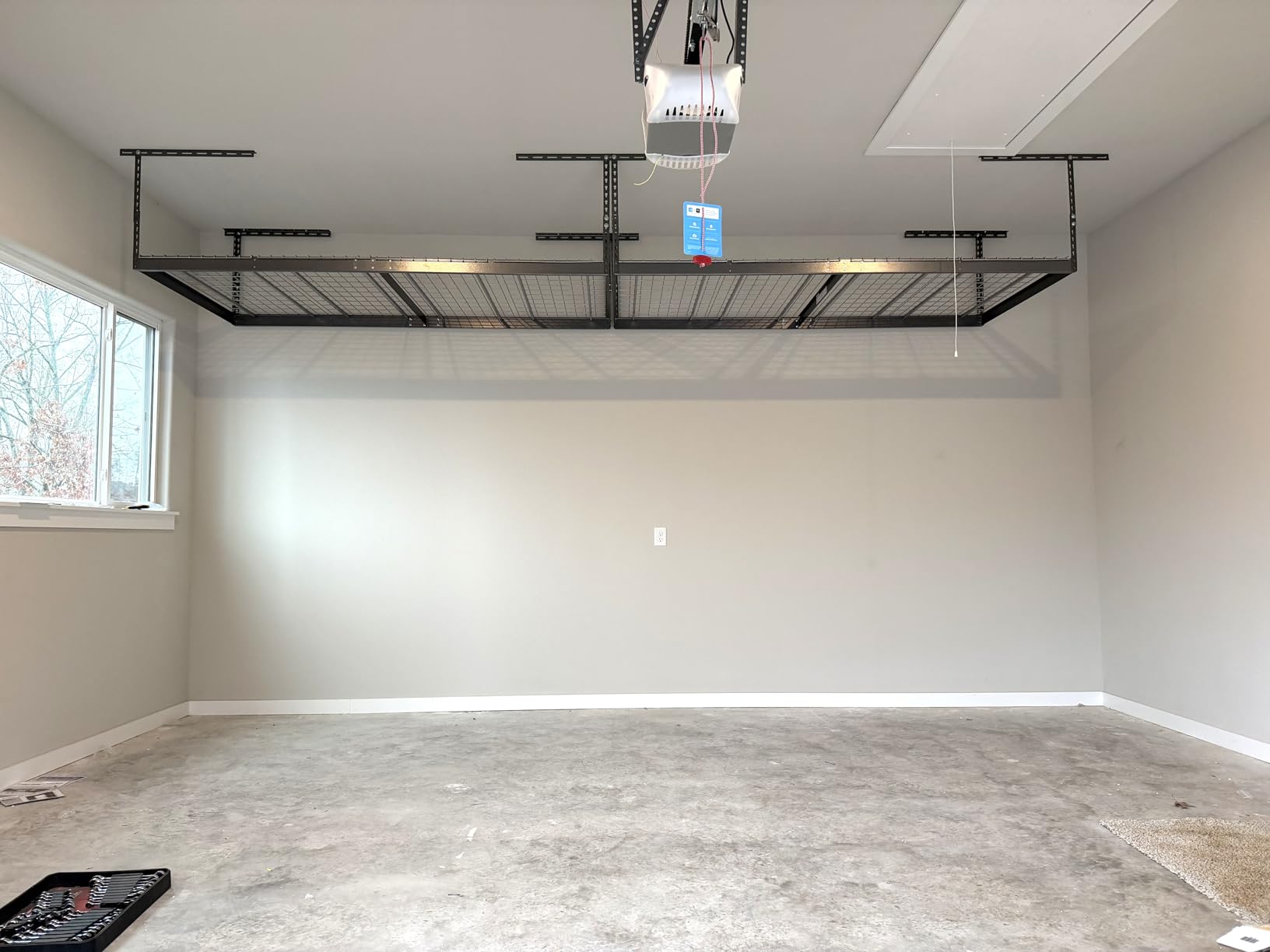
5. HyLoft 45 x 45 Inch Overhead Rack for Value and Expandable Layouts
HyLoft Overhead adjustable Garage Storage Rack,Heavy Duty Steel Garage Storage System, 45-Inch x 45-Inch, White
250 lb load rating
17 to 28 inch adjustable drop
45 by 45 inch platform
Over 30 cu.ft capacity
Pros
- Close to 3000 ratings spanning more than a decade
- Sections link together into a continuous overhead run
- Arrives partly pre-assembled and installs with hand tools
- Lightweight design is far easier to lift than a 4x8 rack
- Off-white finish suits most garage paint
Cons
- Smallest footprint here at 45 by 45 inches
- Lowest capacity tier at 250 lbs
- Units can sway until bracketed or linked
This is the system that solves the multi-bay problem better than anything else here. Each 45-inch square section connects to the next, so a single-car garage can start with one and grow into a continuous run along the ceiling as storage demands grow. With close to 3,000 ratings accumulated over more than ten years, it is also among the longest-running designs we analyzed.
Installation is the easiest in the lineup. It arrives partly assembled, needs basic hand tools, and a cordless drill plus a stud finder is genuinely all you require. Owners regularly report good customer service including complete replacement units, which matters for a product with a longer service life than most.
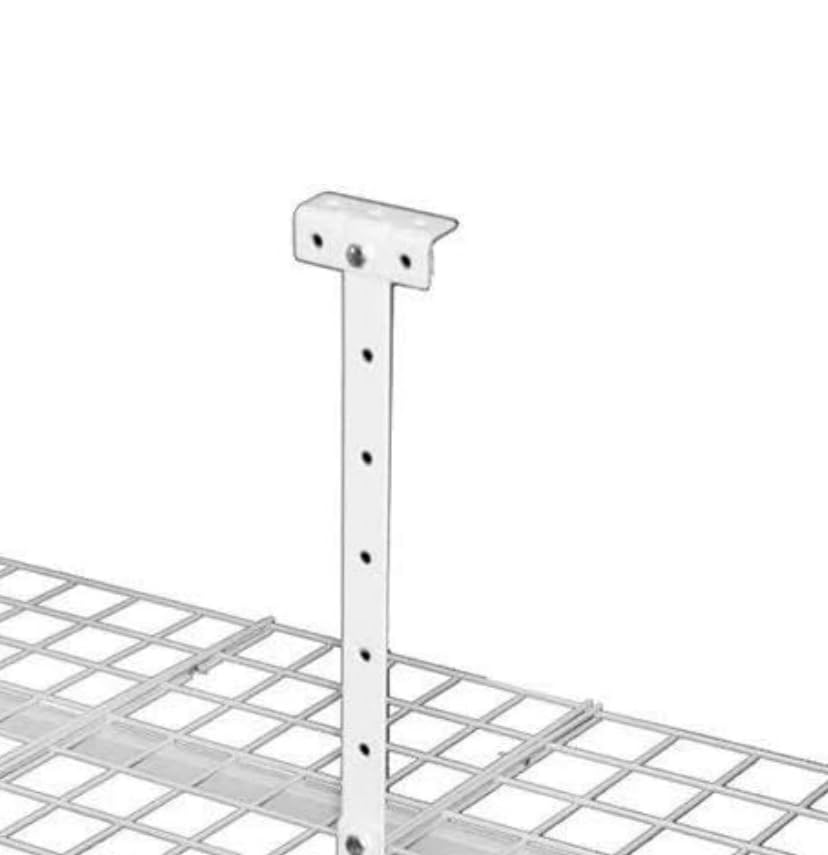
The trade-offs are real. But the 250-pound rating is the lowest tier in this category alongside the 4×4 SafeRacks, and at 70 percent that is about 175 pounds of actual payload, which suits bins and camping gear but not dense shop stock. Owners also note slight side-to-side sway under load until the sections are bracketed together or linked, and the boxes are famously awkward to receive.
When a 45 by 45 footprint is a feature rather than a limitation
In a townhome garage or a small workshop with limited ceiling depth, square sections are often the only thing that fits without cutting. They are also the easiest to move single-handed, which matters if you ever need to change the layout. If your ceiling is wide and open, a 4×8 platform gives you fewer mounting points to deal with for the same volume.
How the linked-system layout changes your installation plan
Plan the whole run before drilling. Because sections share side rails, the mounting pattern is set by the first unit, and getting that first position right saves re-hanging later sections. Where you already have wall shelving for tools, our guide to garage cabinets for tool storage covers the complementary ground-level option.
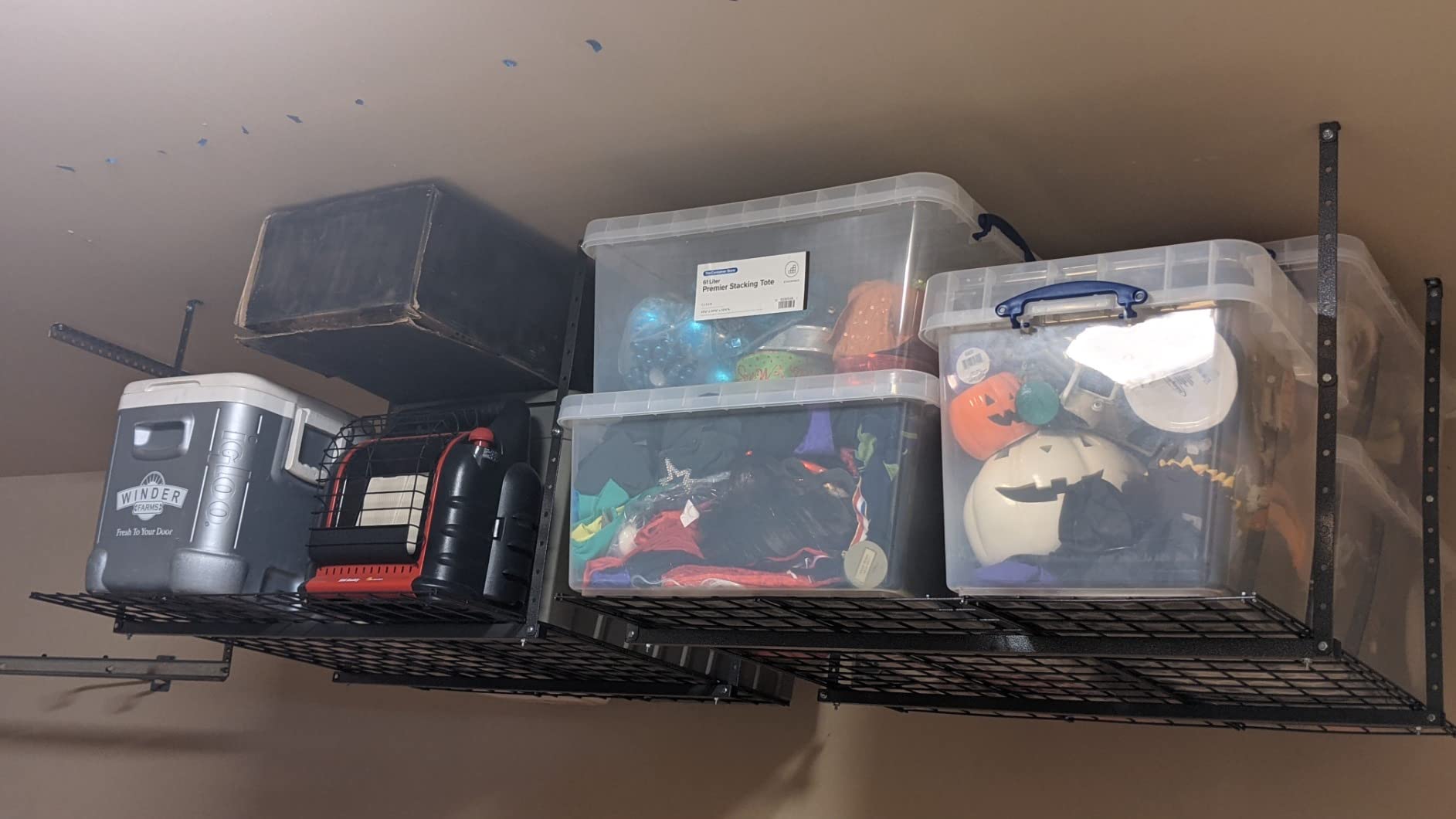
6. Gladiator GearLoft Overhead Rack 4 x 8 for Modular Ceiling Grids
Gladiator Overhead GearLoft™ Storage Rack 4 x 8, GALS48M4
1000 lb load rating
23 to 37 inch drop
EZ Connect locking pin
10 year limited warranty
Pros
- 1000 lb rating is the highest capacity here
- Modular EZ Connect system expands into a full ceiling grid
- 10 year limited warranty is among the longest offered
- Coated heavy-duty steel suits a working garage
Cons
- Priced well above generic racks in this roundup
- 23 to 37 inch drop is shallower than 24 to 45 inch alternatives
- Buying one section leaves the expansion path incomplete
If you are building out a garage rather than adding one shelf, this is the product. The 1000-pound rating is the highest of any rack we analyzed, and the EZ Connect locking pin means multiple sections link into a proper ceiling grid instead of a row of independent shelves. The 10-year limited warranty also outlasts most competitors, which matters if this becomes permanent infrastructure.
Buyers who choose it are typically planning a full system, and they rate the build quality highly once it goes up. The coated heavy-duty steel in Hammered Granite is designed for a working garage rather than a tidy showroom, and the platform carries 96 by 48 inches with a drop that adjusts from 23 to 37 inches.
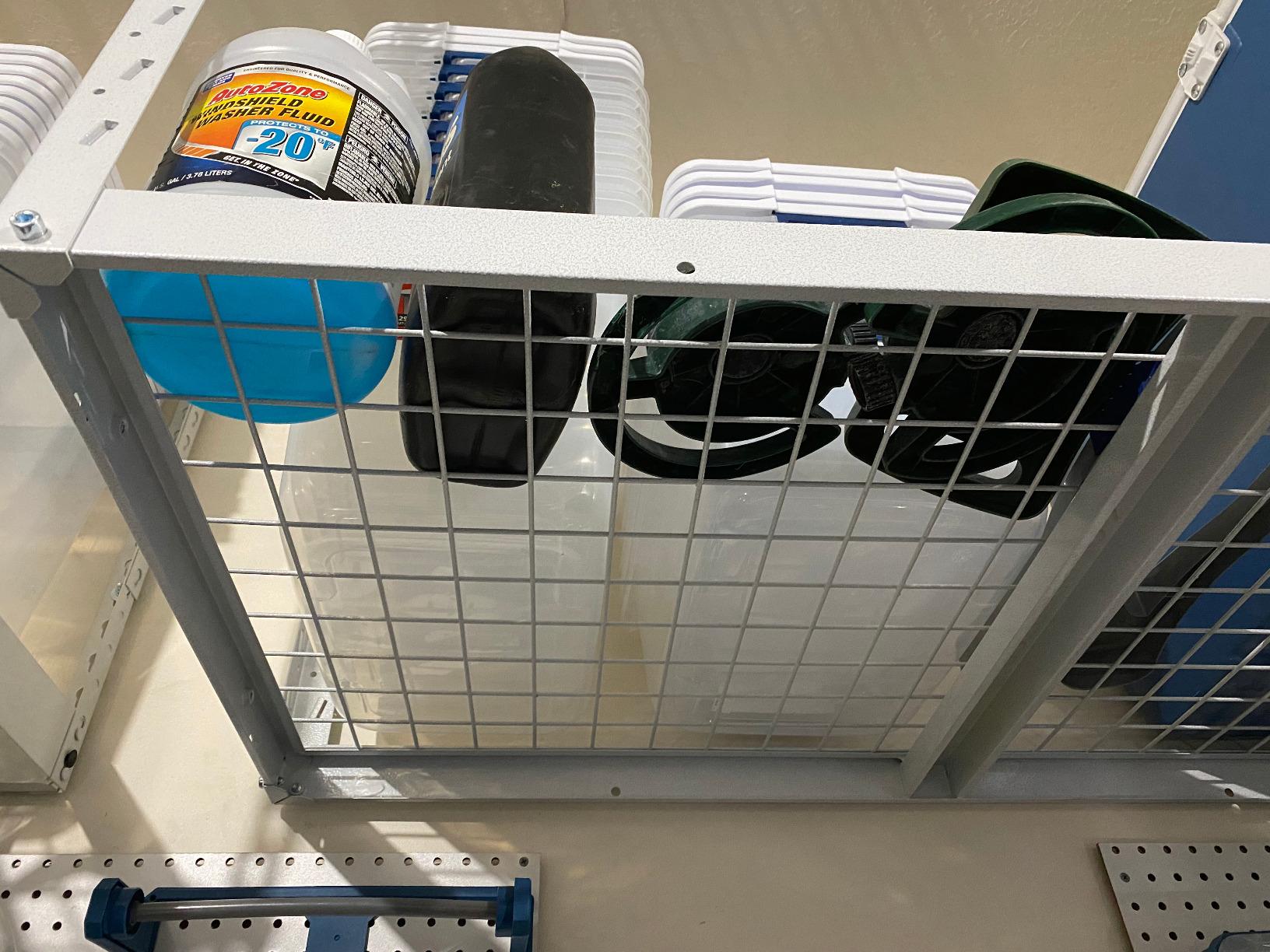
Cost is the obvious drawback, and it is steep relative to generic racks of similar footprint. The second issue is structural: buying a single section gives you a very expensive shelf, and the EZ Connect expansion path only pays off if you are going to fill the ceiling. The 23 to 37 inch range is also the most common complaint, since tall bins are the limit.
Is a 1000-pound rack actually usable in a residential garage
Rarely, and that is fine. Under the 70 percent rule this platform suggests about 700 pounds of distributed load, which is well beyond what most residential ceilings deliver at the joists. Buy it for the durability and the modular grid, not for the headline number, and size your real payload to the structure behind it.
How to plan a multi-bay Gladiator layout
Map your garage door travel and opener path first, then lay out the grid from the wall outwards so the locking pins have somewhere to go. Measure the full door swing at its lowest point, because the rear of the door travels further than the front. Where a garage also needs cold storage, our picks for the best refrigerators for garage use cover that separate problem.
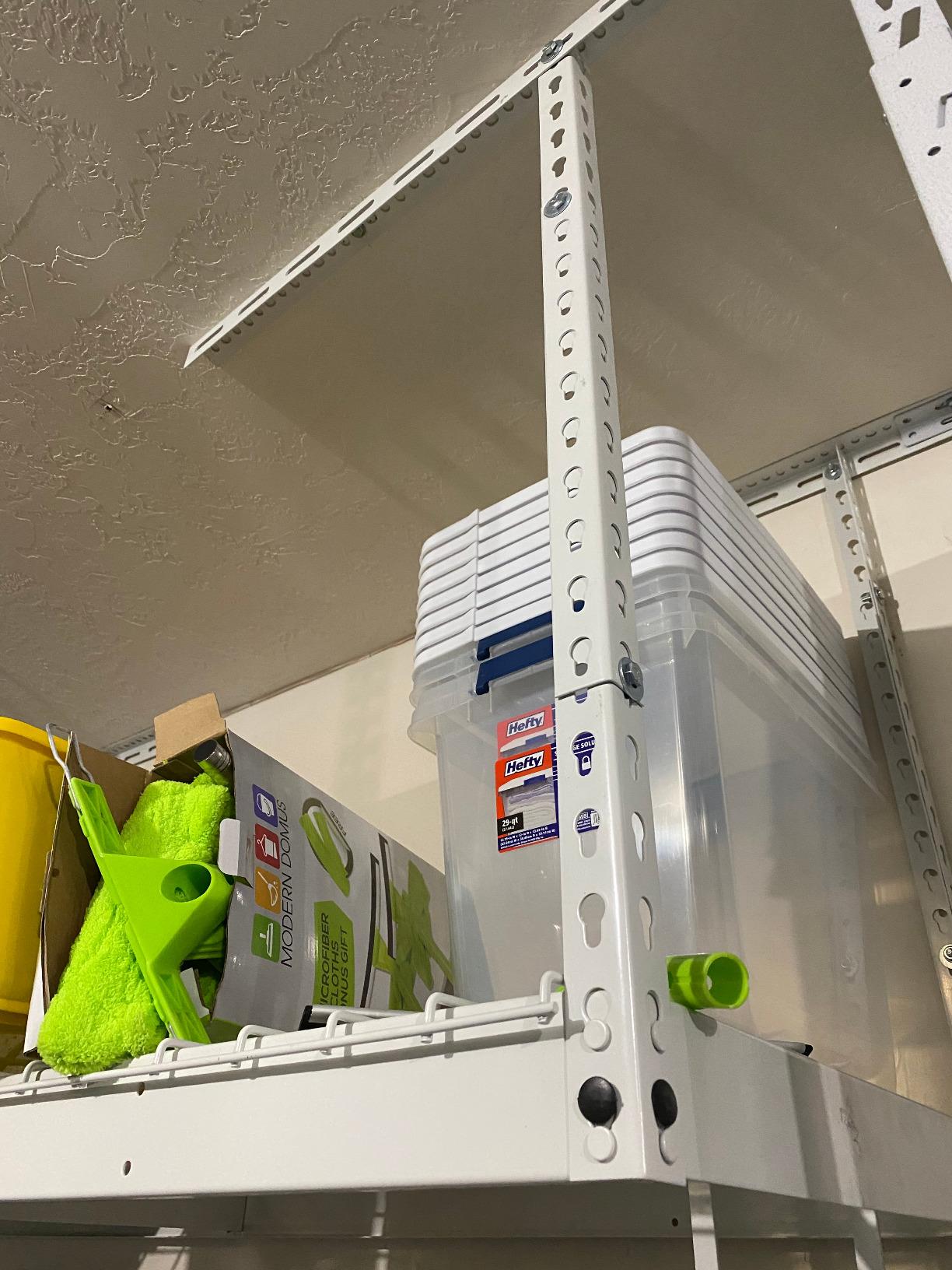
7. SafeRacks 4×4 Overhead Garage Storage Rack for Budget Installations
SafeRacks 4×4 Overhead Garage Storage Rack, White, 24″-45″ Height
250 lb load rating
24 to 45 inch drop
Carbon steel wire deck
Two free hooks included
Pros
- Lowest entry cost in this roundup
- 24 to 45 inch range is unusually wide for a 4x4
- Reports of one rack holding 18 standard crates
- Step-by-step instructions and a certified installer network
- Long repeat-purchase history from long-term owners
Cons
- 250 lb rating feels light for dense loads
- Strictly a two-person installation
- Older homes may need extra blocking cut in first
Value is the honest description. Owners repeatedly note that they bought three of these for less than the cost of one premium rack, and one long-term owner has installed five across more than a decade. For a garage full of holiday bins and camping gear, the maths works in your favour and the 18-crate capacity per rack is genuinely useful. In DIY forums this is also the brand owners name most often when they are recommending a rack to someone else.
The 24 to 45 inch drop is the specification that surprises people, because it matches the deepest range alongside the MonsterRAX despite being the smallest platform here. Carbon steel construction with a rust and scratch resistant powder coat, and the hardware kit includes posts, brackets, wire deck, rails, C-channel beams, lag bolts, hex bolts, washers and lock nuts.
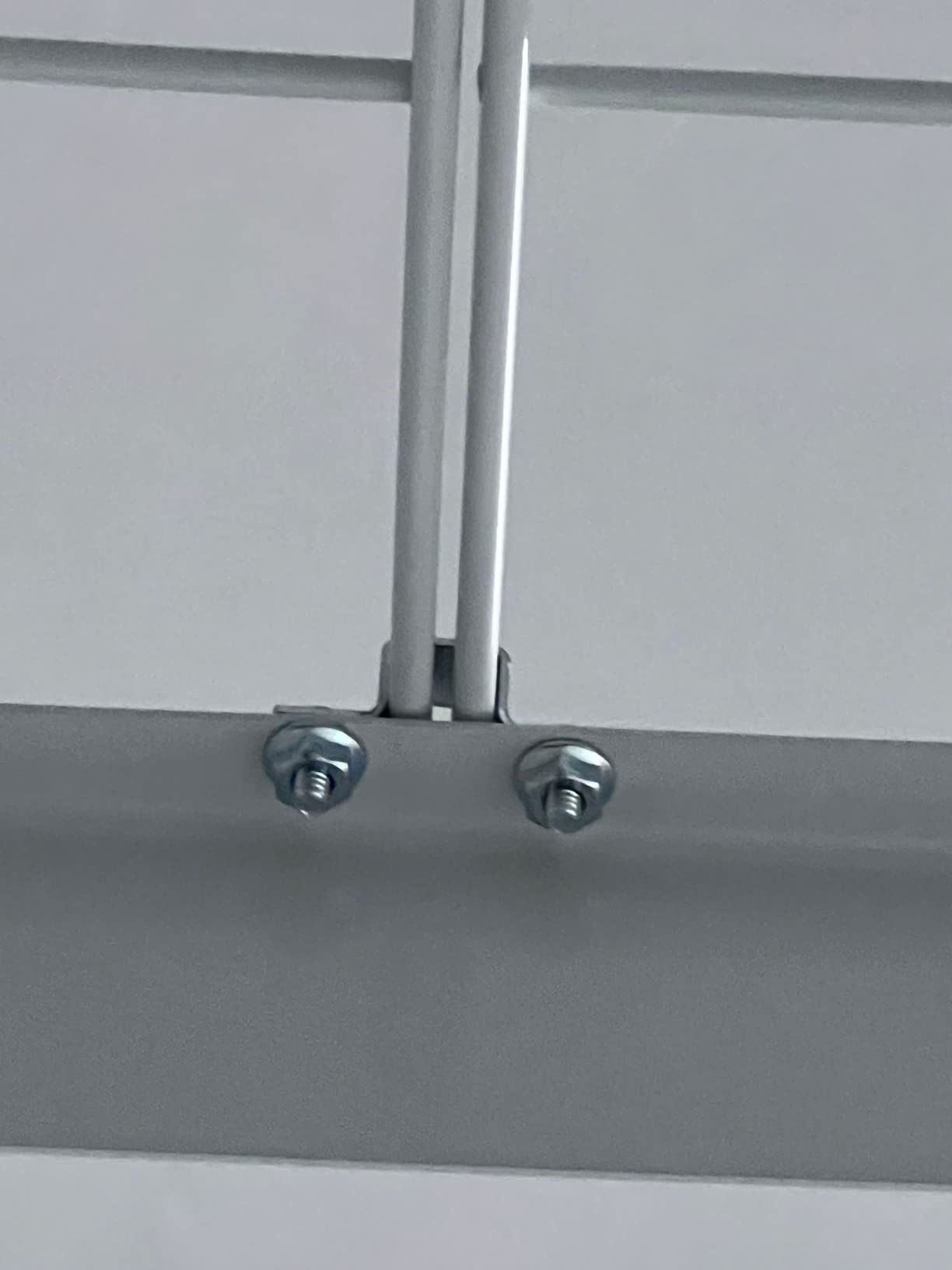
Its 4.4-star average reflects a higher share of critical reviews than the leaders here. The recurring notes are a 250-pound rating that some owners consider light, an unhelpful parts-replacement experience after one report of missing hardware, and sway that appears until every fastener is fully tightened. On older homes, expect to cut additional blocking so the mounting holes line up with the joists.
How many SafeRacks units most garages end up needing
Two, commonly, placed side by side along the ceiling over a double bay. That is where the value argument gets compelling, because the drop range and the hardware are identical to a single premium unit while the per-unit cost is far lower. Just check joist spacing across the full width before committing to a two-section layout.
What to tighten before you load anything
Every fastener, twice. Owners who report sway almost always trace it back to a bracket or beam bolt that was snug but not fully torqued, and the swing disappears once it is. Loading before that step is what turns a small hardware issue into a damaged bracket or a stripped hole.
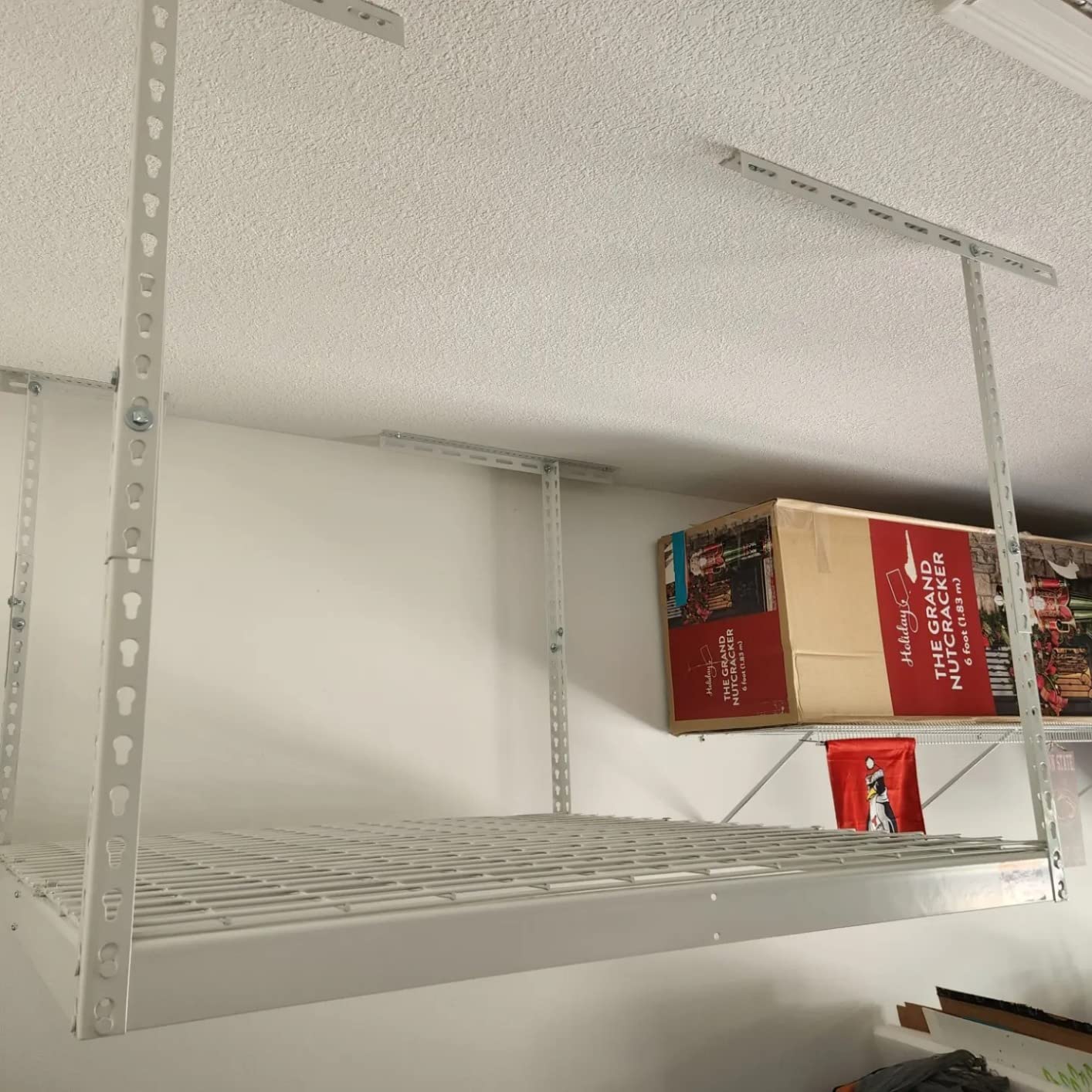
8. Jusgym 4×8 Overhead Garage Rack for the Fastest Install
4X8FT Overhead Garage Storage Rack 750LBS Capacity, 26″-40″ Height Adjust
750 lb load rating
26 to 40 inch height adjust
Nine support beams
Eight pre-installed hooks
Pros
- 750 lb rating on a 4x8 platform
- Nine support beams add rigidity versus five-beam designs
- Eight pre-installed hooks speed up mounting and reduce dropping risk
- 26 to 40 inch adjustment clears most vehicles
- Lifetime limited warranty with parts support
Cons
- Lowest average rating in this roundup at 4.3 stars
- Highest share of one-star ratings here
- Fits joist spacing up to 24 inches with 48 inches maximum
- Narrower adjustment range than racks that reach 24 inches
The design decision here is the eight pre-installed mounting hooks. They hold each panel in position while the frame is fastened, which roughly halves the install time and, more importantly, removes the moment where a heavy panel slips while two people are on ladders. For anyone nervous about working overhead, that is worth more than an extra 50 pounds of rating.
It is also a genuinely well-braced platform, with nine upgraded support beams where most competing 4×8 designs use five. That is the likely reason the 750-pound rating holds up as well as it does, and the 26 to 40 inch drop gives 105 cubic feet of storage in a familiar footprint.
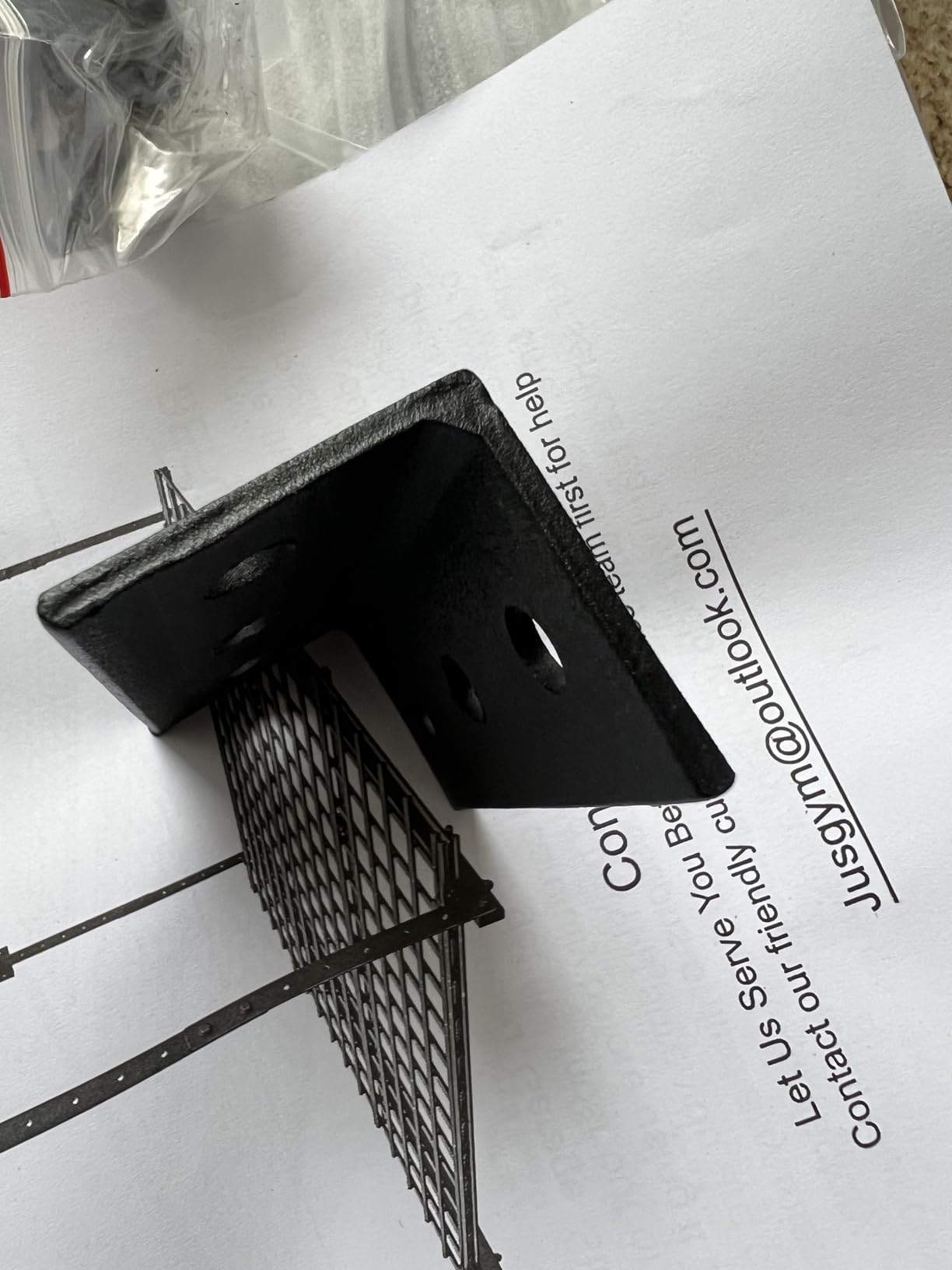
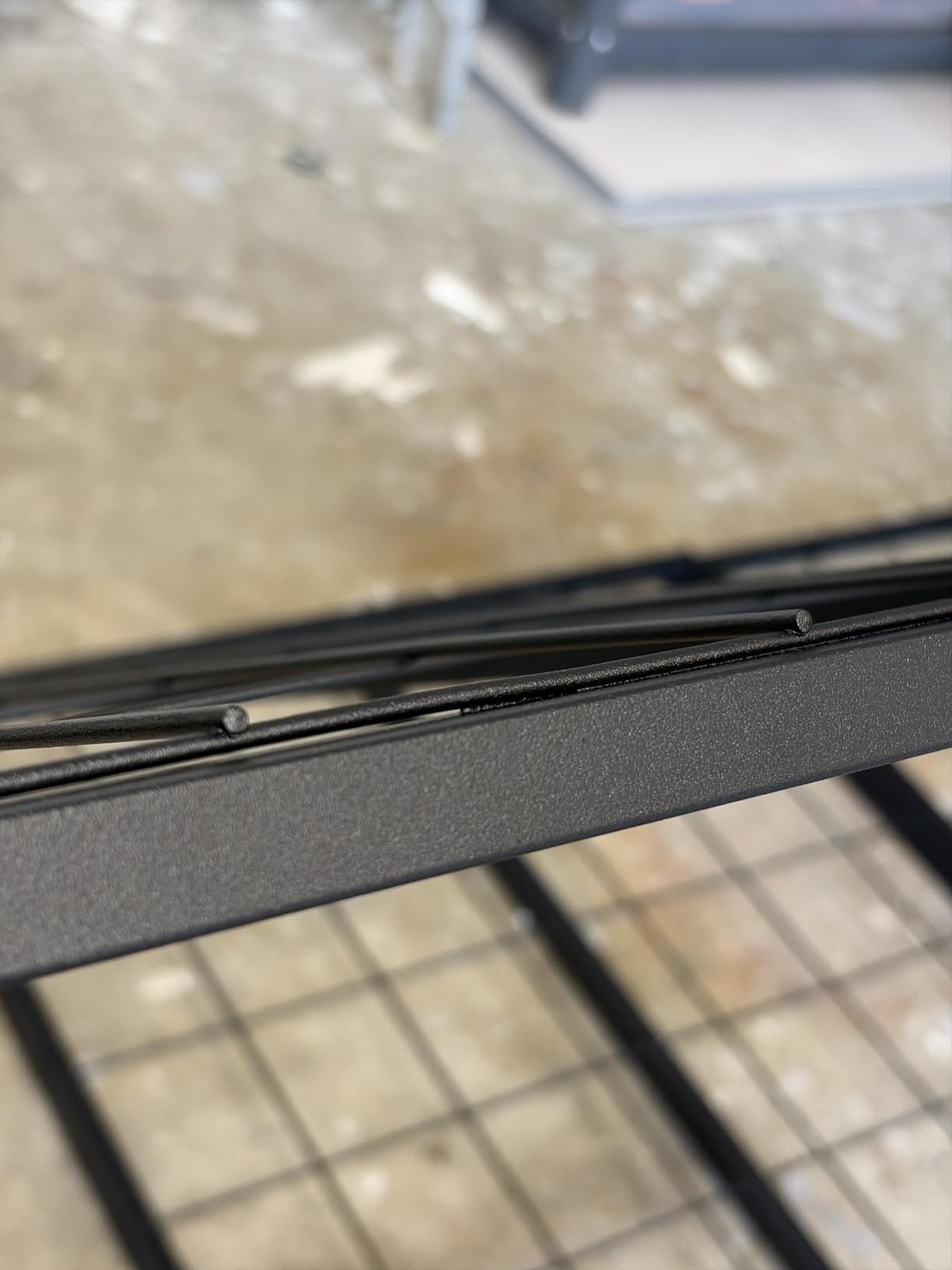
This rack carries the lowest average in the roundup at 4.3 stars, with the highest proportion of one-star ratings. Reviewers point to assembly alignment, joist spacing compatibility and post-purchase support, and several note the 26 to 40 inch range is less flexible than racks that reach down to 24 inches. The floating shelf deck also distributes load less evenly than a framed or slatted design.
Are nine support beams enough for heavy storage
For bins, camping gear and seasonal items, comfortably. The extra beams resist the sagging that wire decks show under a concentrated load, which is the usual complaint about cheaper 4×8 platforms. The limitation is the floating deck itself, since it gives you less true load distribution than a fully framed design, so spread weight rather than stacking it in one area.
How to handle the joist spacing restriction
This unit fits 24-inch on-center joists, and 48 inches only where spacing exceeds that, which rules out many older ceilings. Measure before you buy, and if the number is awkward, cross-blocking properly fastened to the joists is the legitimate fix. The alternative is a platform with adjustable width, which is the design more modern joist layouts actually reward.
How to Choose an Overhead Garage Storage Rack
Choose the rack type first, the capacity second, and the brand last. Fixed-height racks are the simplest and the cheapest, but they offer no way to clear a garage door rail or a tall vehicle, and that is the single most common regret owners report. Adjustable-drop racks, which most of the eight above are, cost a little more and solve that problem. Lifting platforms with a block and tackle or motorized drive are a separate category that is increasingly requested in DIY forums because they remove the ladder entirely, and none of the eight racks we analyzed include one, so treat them as a research step of their own rather than a feature to compare here.
Then do the joist reality check, because this is where projects go wrong. Start by identifying what you are dealing with. Solid wood floor joists, engineered I-joists and roof trusses are three different things, and a truss is not something you should be drilling into mid-span for a storage rack. Use a stud finder to locate the joists, then confirm with a screw test rather than trusting the finder alone in an older garage. Measure the span between the bearing wall and the next support, and check the joist depth and spacing on the same walk.
The recurring problem, raised in DIY forums more than any other, is joist spacing that is not 24 inches on center. Factory-drilled rack holes assume it is, and in older or custom garages it frequently is not. If your joists are at an odd spacing, your options are a rack with adjustable width or rotatable mounting brackets, or properly fastened cross-blocking cut between the joists. Do not improvise with a loose 2×4 spanning the gap, because that transfers load as a bending point rather than distributing it.
Next, understand what the capacity label means. A printed rating describes the rack frame, not your ceiling. A 600-pound rack bolted to four joists at two points each creates eight point loads, and the ceiling is the weak link in almost every case. Apply the 70 percent safety margin for static overhead loads, spread weight across the whole deck rather than concentrating it, and keep liquids, power tools and anything with a battery overhead strictly out of it.
What belongs up there is bulky, light, and seasonal: holiday decorations, camping gear and tents, roof cargo boxes, kayaks and paddle gear, and winter sports equipment. What never belongs up there is liquid, anything dense like full paint cans or a set of wheels, power tools you use daily, and anything you would be devastated to fish out of a water heater. Finally, match the drop height to your ceiling and your vehicle. Measure the lowest point of your garage door at its travel, add the opener rail, and then measure the roofline of the tallest vehicle that parks underneath. Buy for the larger of those two numbers.
How to Install Ceiling Mounted Garage Storage
Installation is a two-person job in almost every case, and the sequence matters more than the tools. Start by locating and marking every joist with a stud finder, then verify each mark with a screw test. Measure and record joist spacing in two or three places along the run, since garages are rarely perfectly regular, and decide now whether you need blocking before the rack is in the air.
Second, work out the mounting pattern on the floor and transfer it to the ceiling. Most racks include a cardboard or paper template, and using it is far faster than measuring from joist to joist by hand. Mark the drop height you need on each vertical post, accounting for door rail and vehicle clearance, before you attach anything.
Third, pre-drill every pilot hole with a bit slightly smaller than your lag screw. Skipping this step is the leading cause of split joist lumber, and pre-drilling is what makes the 5/16 lag screw included with these racks hold properly. Keep drilling straight and square to the joist face.
Fourth, set the fasteners without over-torquing them. Over-tightening crushes the wood fibres and creates a stripped pilot hole that has less holding power than the screw ever did. Tighten until snug and the bracket stops moving, then stop. If you do strip a hole, back it out, fill it with wood toothpicks and epoxy, let it cure, then re-drill slightly offset and use a longer screw.
Finally, hang the platform with a helper, level it, and tighten every fastener a second time before adding any load. Load conservatively for the first few days and watch for sway or fastener movement, since a rack that shifts early is telling you something. Photograph the completed install and keep the photos, because they document the work for future buyers and for any insurance question that comes up.
Frequently Asked Questions
Are overhead garage storage racks safe?
They are safe when they are fastened into solid wood joists with lag screws, loaded within the rack rating and kept under roughly 70 percent of it, and distributed evenly across the deck. They are not safe on roof trusses mid-span, on engineered I-joists without a check, or when liquids, batteries or dense tools are stored overhead.
How much weight can garage ceiling joists support?
It depends entirely on joist size, species, span and spacing, which is why no single number is honest. A practical approach is to keep stored weight to a fraction of the joist capacity rather than its maximum, spread it across several joists, and stay well below the manufacturer’s rating. If you cannot determine the joist size and span, ask a structural engineer.
How much weight can you put on a ceiling joist?
Treat a point load on a single joist as the most restrictive case in your plan, because that is how a heavy bin in one corner behaves. Concentrated loads far exceed what distributed loads do to the same joist, so keep the heaviest items centred over support points and never stack everything in a single pile near one end of the rack.
What is a good spacing for garage shelves?
Most ceiling racks are drilled for joists at 24 inches on center and only fit 48 inches where spacing is wider. Measure your actual joist spacing with a stud finder in several places before ordering. Where spacing is irregular, use a rack with adjustable width or rotatable brackets, or cut properly fastened blocking between the joists.
How do I install ceiling mounted garage storage?
Locate and verify the joists with a stud finder and a screw test, mark the mounting pattern from the included template, pre-drill every pilot hole, set your drop height clear of the door rail and vehicle roofline, then hang the platform with a second person. Tighten fasteners until snug and no more, level the frame, and load it conservatively.
What are common garage shelving mistakes?
The most common mistakes are trusting the rack rating instead of checking the ceiling, loading above the recommended margin, storing liquids or heavy tools overhead, drilling into roof trusses mid-span, skipping pre-drilled pilot holes, and over-torquing lag screws until the wood fibres are crushed. Each of those is cheap to avoid and expensive to get wrong.
The Bottom Line
For most garages, the FLEXIMOUNTS 4×8 is the default pick because its 750-pound rating, 22-to-40-inch drop and enormous review base make it the least likely to disappoint, provided your joists are at 24 inches on center and your ceiling can carry a sensible load. Choose MonsterRAX instead when your storage bins are tall and the extra depth is the deciding factor, and choose HyLoft when the budget matters more than capacity and you want a linked run you can expand later. Whichever you pick, measure your joist spacing, measure your door clearance, and keep real stored weight at or below 70 percent of the rating.