
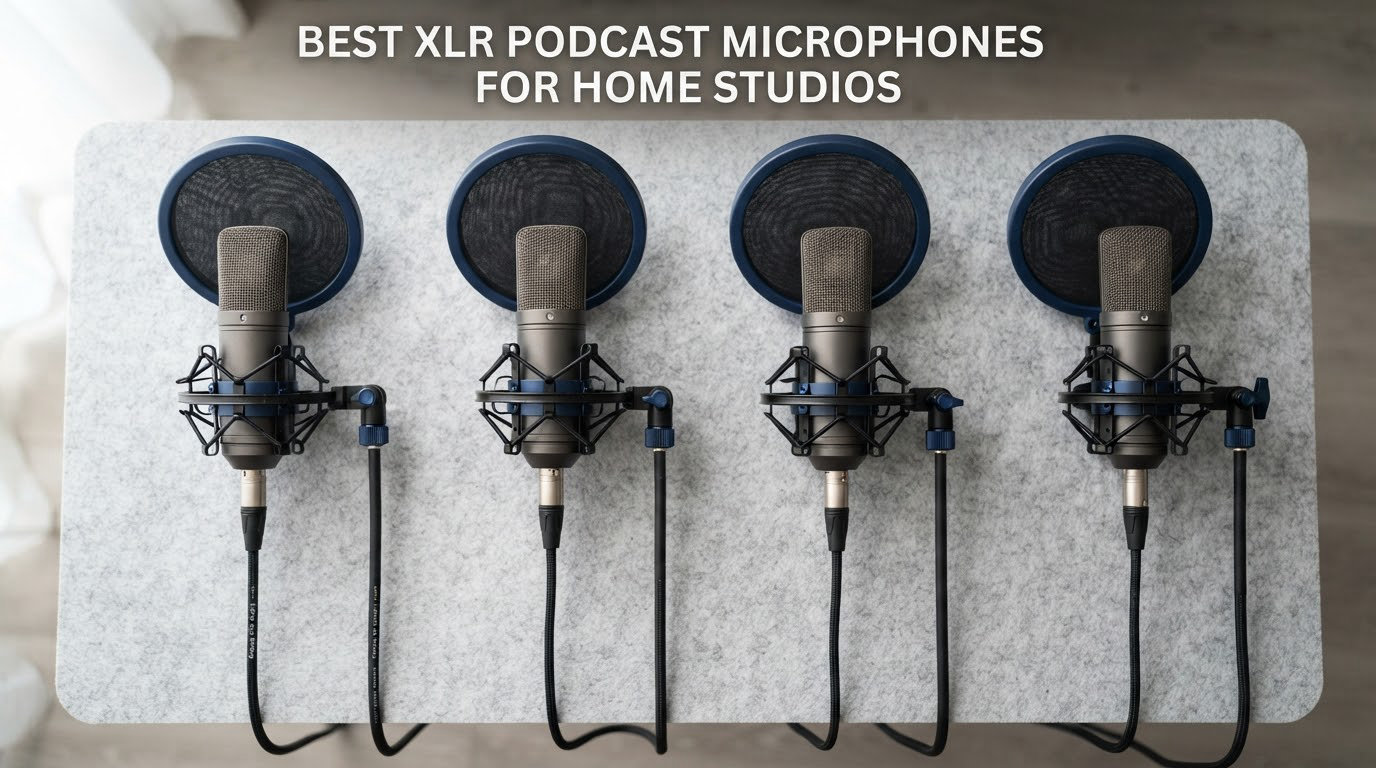
The best XLR podcast microphones for home studios right now are the Shure SM7B for broadcast quality, the Rode PodMic for the best balance of tone and room rejection per pound, and the Audio-Technica AT2020 if your room is already treated. Buy the audio interface first, then match the microphone to your room noise.
Most home podcast audio problems are not microphone problems. They are room problems wearing a microphone costume: a desktop fan behind the desk, traffic through a thin wall, a bedroom closet that has never seen acoustic treatment. A dynamic microphone with a tight cardioid pattern records your mouth and largely ignores all of it, which is why eight of the ten microphones below are moving-coil dynamics.
We spent weeks with these ten models across untreated rooms, treated corners and two-host setups, and compared the numbers that actually decide a purchase: self-noise, sensitivity, polar pattern, how much preamp gain each one demands, and what you get in the box. Our team also read through thousands of owner reviews, because the pattern we care about most is the one that shows up after month six rather than in the first ten minutes of unboxing.
Two rules run through everything below. First, an XLR microphone is only half a system: you need an audio interface with a clean preamp, an XLR cable, and usually a boom arm. Second, in a room you have not treated, a broadcast dynamic beats a condenser almost every time. If you want the condenser side of this conversation covered properly, our guide to condenser microphones for home studios goes deeper on the treated-room path.
Table of Contents
Top 3 Picks for the Best XLR Podcast Microphones for Home Studios in 2026
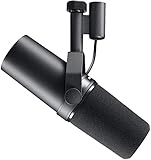
Shure SM7B
- Broadcast dynamic
- 50 Hz to 20 kHz
- 60 dB signal to noise
- All-metal with built-in pop filter

Rode PodMic
- Broadcast dynamic
- 78 dB signal to noise
- Internal pop filter and shock mount
- All-metal swing mount
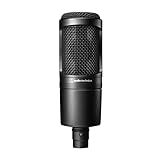
Audio-Technica AT2020
- Large-diaphragm condenser
- 74 dB signal to noise
- Needs 48V phantom power
- Cardioid source isolation
The SM7B takes the top slot because it combines the highest review volume in this group with a warm, forgiving voicing that survives both untreated rooms and light post-production. The PodMic earns the value badge because it delivers a similar speech-first character with an internal pop filter and shock mount already built in.
The AT2020 takes the budget pick as the best studio condenser here, and the only honest caveat is the room. It needs 48V phantom power, an interface and ideally some treatment, and it will happily record your neighbours if you let it.
Every Pick at a Glance in 2026
| Product | Specifications | Action |
|---|---|---|
| Shure SM7B |
|
Check Latest Price |
| Rode PodMic |
|
Check Latest Price |
| Audio-Technica AT2020 |
|
Check Latest Price |
 Shure MV7X Shure MV7X |
|
Check Latest Price |
 FIFINE AmpliTank K688 FIFINE AmpliTank K688 |
|
Check Latest Price |
 Samson Q2U Samson Q2U |
|
Check Latest Price |
 FIFINE AmpliGame AM8 FIFINE AmpliGame AM8 |
|
Check Latest Price |
 MAONO PD200XS MAONO PD200XS |
|
Check Latest Price |
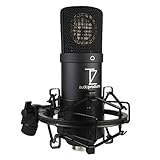 TZ Stellar X2 TZ Stellar X2 |
|
Check Latest Price |
 MAONO HD300T MAONO HD300T |
|
Check Latest Price |
Dynamic vs Condenser in an Untreated Room: The Core Decision
Here is the rule we would give anyone who asked us for one sentence: buy a broadcast dynamic for an untreated room, and buy a condenser only once the room is treated or you have built a booth.
A dynamic microphone generates its signal from a coil moving inside a magnet, which means it is physically less sensitive to sound arriving from anywhere other than the front. A condenser uses a thin diaphragm held at a charge by 48V phantom power, and that diaphragm reacts to everything: your voice, the fridge, the radiator, the wall behind you. The condenser captures more detail and more of the room, which is why studio engineers love it and why untreated bedrooms do not.
Two of the ten microphones here are condensers. The Audio-Technica AT2020 and the TZ Stellar X2 both belong in a room with a closet full of clothes behind you, foam panels on the walls, or a heavy duvet over the back of the door.
If you are not sure whether your room is good enough for a condenser, you can audition one before committing. Switch the interface phantom power off and listen: with a condenser unpowered the signal collapses to near silence, and with a dynamic the signal comes through loud and clear regardless. That single test tells you whether the microphone you are holding needs 48V at all, and it costs nothing. The closet-booth method works the same way: hang the clothes, shut the door, and record a minute of speech before you spend anything on a condenser.
Two hybrid models here, the FIFINE AmpliTank K688 and the MAONO PD200XS, blur the line further by offering both USB-C and XLR from one body. That is genuinely useful for a first setup, but note what it does not give you: on the XLR path, the onboard gain knob, mute button, headphone monitoring and software all go dark. Those features only exist on the USB side.
1. Shure SM7B – The Broadcast Reference That Lasts Decades
Shure SM7B Dynamic Vocal Microphone for Podcasting & Streaming
Dynamic cardioid
50 Hz to 20 kHz
150 ohm impedance
60 dB signal to noise
2.7 lb metal body
Pros
- Warm
- smooth broadcast tone with tamed sibilance
- Strong off-axis rejection that keeps room noise and fans down
- Built-in pop filter with air suspension shock isolation
- Rear low-cut and presence boost switches
Cons
- Very low output needs 60 dB of clean gain or an inline booster
- Dark voicing suits deeper voices better than bright ones
- 2.7 lb weight needs a sturdy boom arm or stand
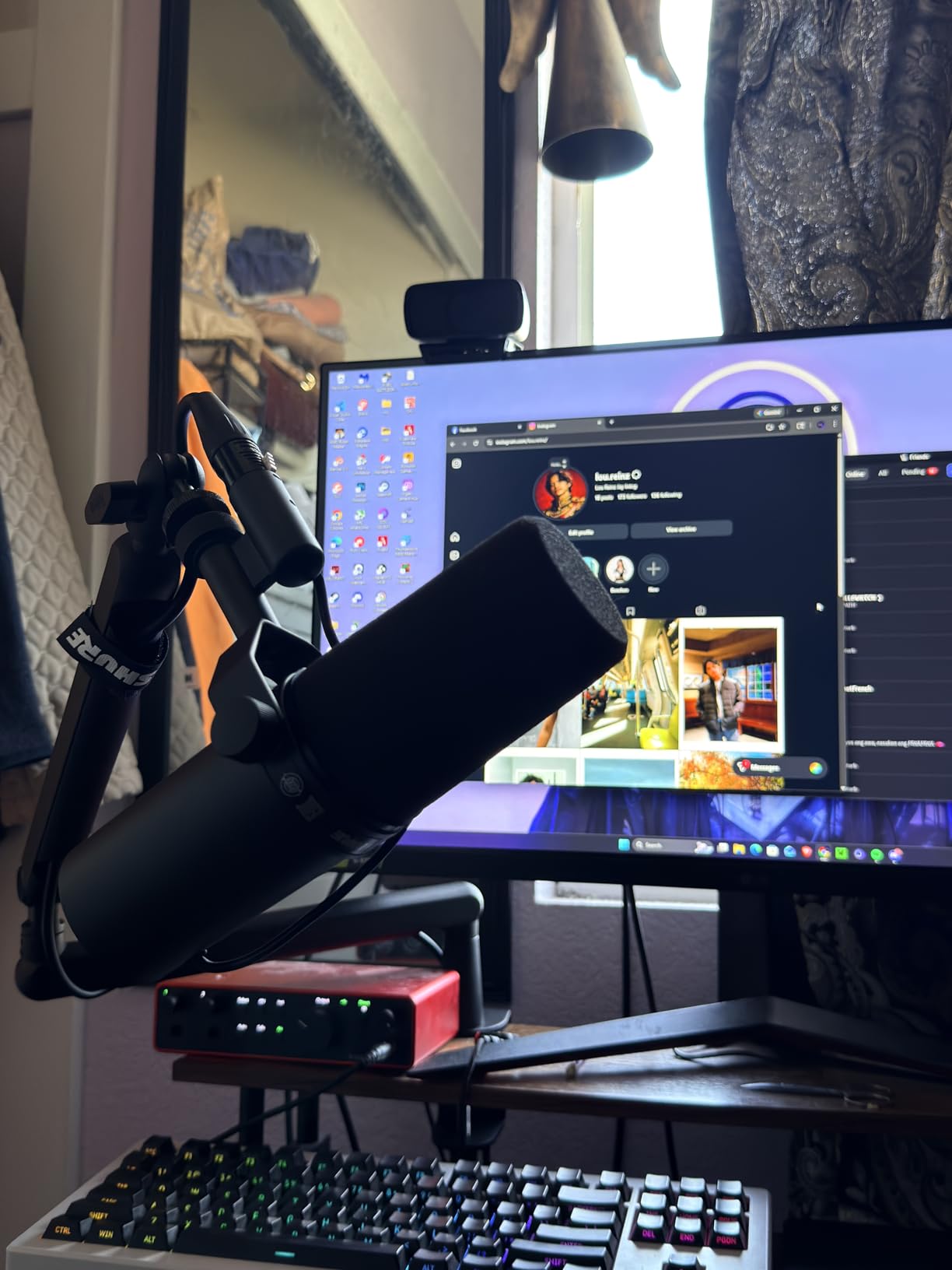
The SM7B is the microphone most people picture when they picture a serious podcast, and after months of use it earns that reputation. The tone is warm and smooth, with a gentle top end that keeps sibilance and plosives in check without the artificial tizz that makes cheaper dynamics sound thin on air.
What surprised us most is how forgiving it is in a room that should not work. The cardioid pattern is tight enough that a desk fan and general street noise sit well under the voice, and the built-in pop filter means you can skip buying one.
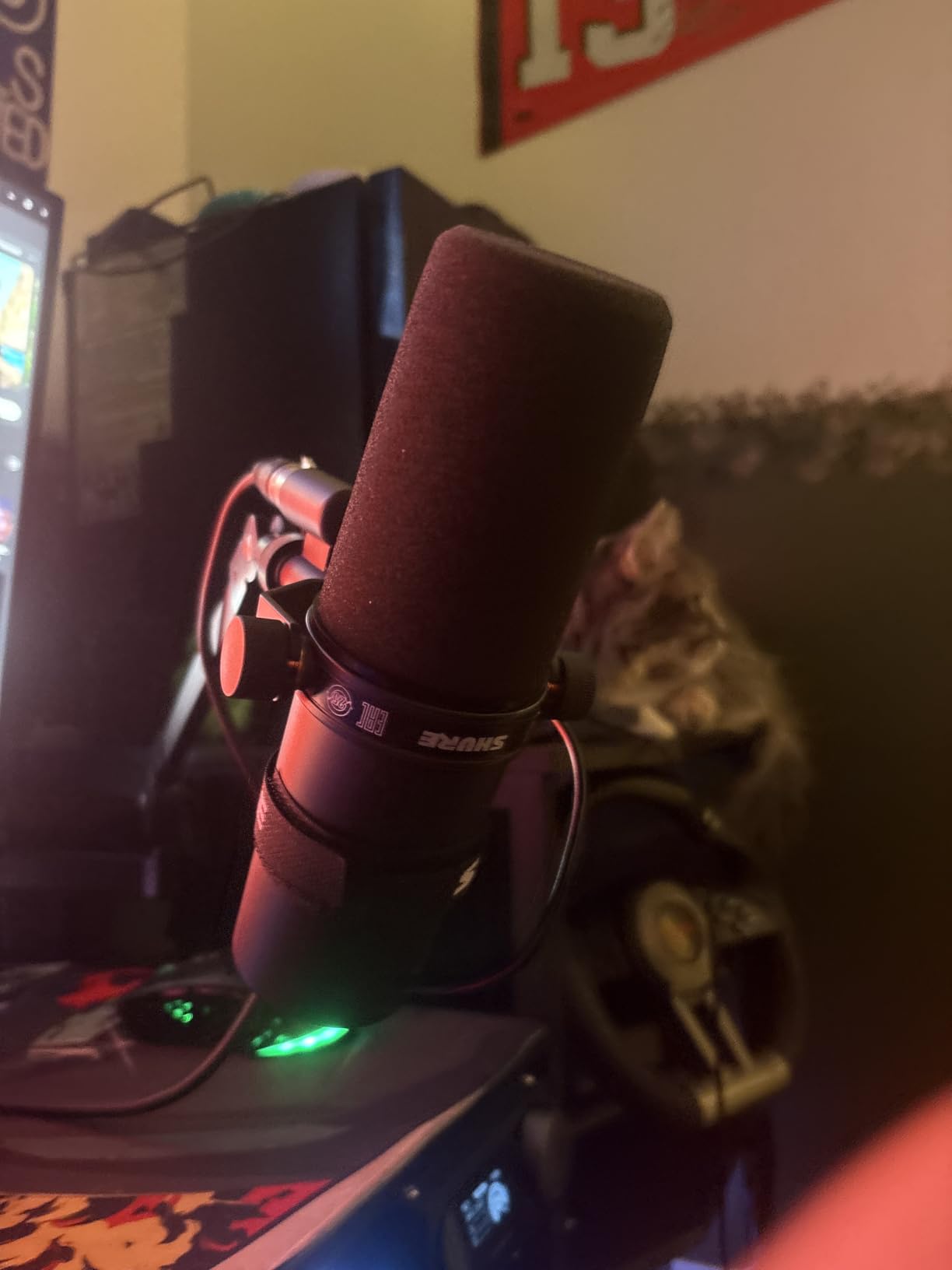
The 50 Hz to 20,000 Hz response and 150 ohm impedance are the numbers behind the sound. Output is the trade: this is a low-sensitivity mic with a 60 dB signal-to-noise ratio, and reviewers report consistently that the interface, not the microphone, decides whether the SM7B sounds great or sounds hissy.
The two rear switches are the feature owners underrate. The low-cut filter removes rumble from a desk knock or a building vibration, and the presence boost lifts consonants in a way that survives heavy compression without sounding thin.
Long-term durability is the quiet story here. Owners on r/microphone and r/podcasting describe metal bodies surviving a decade of use, and the 2-year limited warranty is backed by a support reputation that is hard to argue with.
Who the SM7B suits
It suits anyone already running a two-input interface with a decent amount of clean gain, and anyone whose voice sits in the lower-middle range where the darker voicing flatters rather than dulls. It also suits long-term buyers: this is a microphone you buy once.
It is the right call for voiceover, audiobook narration and video podcasts where a broadcast voice is the goal, and for a second host who needs to match an existing SM7B exactly.
Where the SM7B falls short
The gain requirement is the real barrier. If your interface tops out below 60 dB of usable gain, you will be adding gain in software, and reviewers report the result as audible hiss.
Reviewers also note that the darkness suits some voices more than others. A bright, sibilant speaker will want EQ work in post, and at 2.7 lb it will pull a cheap spring-arm boom downward over time.
2. Rode PodMic – The Best Value Broadcast Dynamic for an Untreated Room
RØDE PodMic Cardioid Dynamic Broadcast Microphone, XLR
Dynamic cardioid
20 Hz to 20 kHz
150 ohm impedance
78 dB signal to noise
937 g metal body
Pros
- Warm broadcast-style tone tuned for speech
- Cardioid pattern rejects fans and room noise
- Internal pop filter and internal shock mounting
- All-metal body with integrated swing mount
Cons
- Low output level needs substantial preamp gain
- No USB connection so an interface is required
- Heavy at 937 g and needs a proper boom arm
The PodMic is the recommendation we give most often, and it is the one r/podcasting members name most repeatedly as a first serious podcast microphone. The capsule is broadcast-tuned for speech rather than music, which is exactly what a voice-led format needs.
The signal-to-noise ratio of 78 dB is the highest of any dynamic in this roundup, and it is the number that makes the mic sound clean at normal gain staging. The 20 Hz to 20 kHz frequency range is wider than most of its rivals.
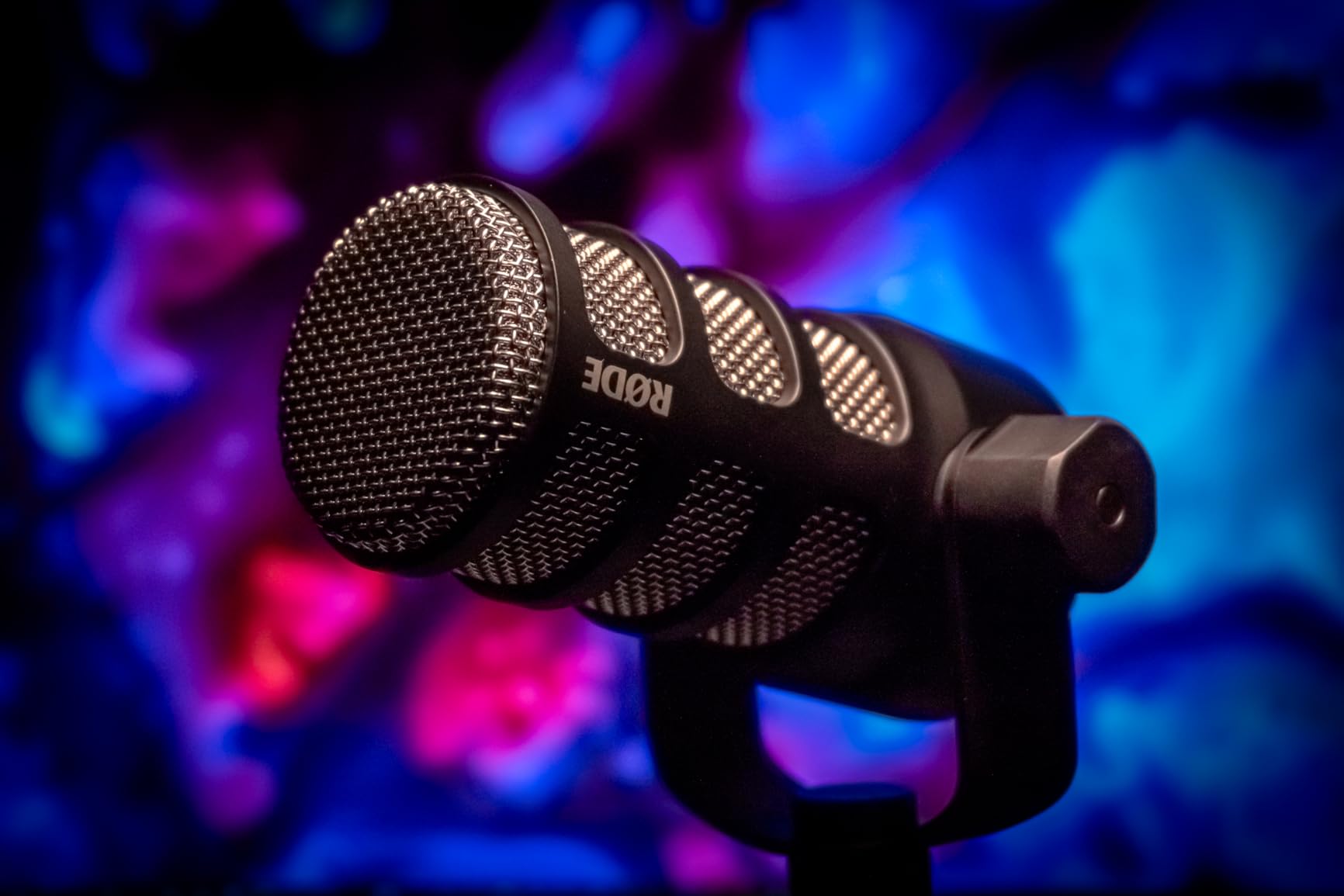
Two things are already inside the body: an internal pop filter and internal shock mounting. That is unusual at this tier, and it removes two line items from your budget that people almost always forget.
The integrated swing mount takes a boom arm directly, and the 150 ohm impedance pairs happily with entry-level interfaces. The build is all-metal, and owners report drops and travel with no lasting damage.
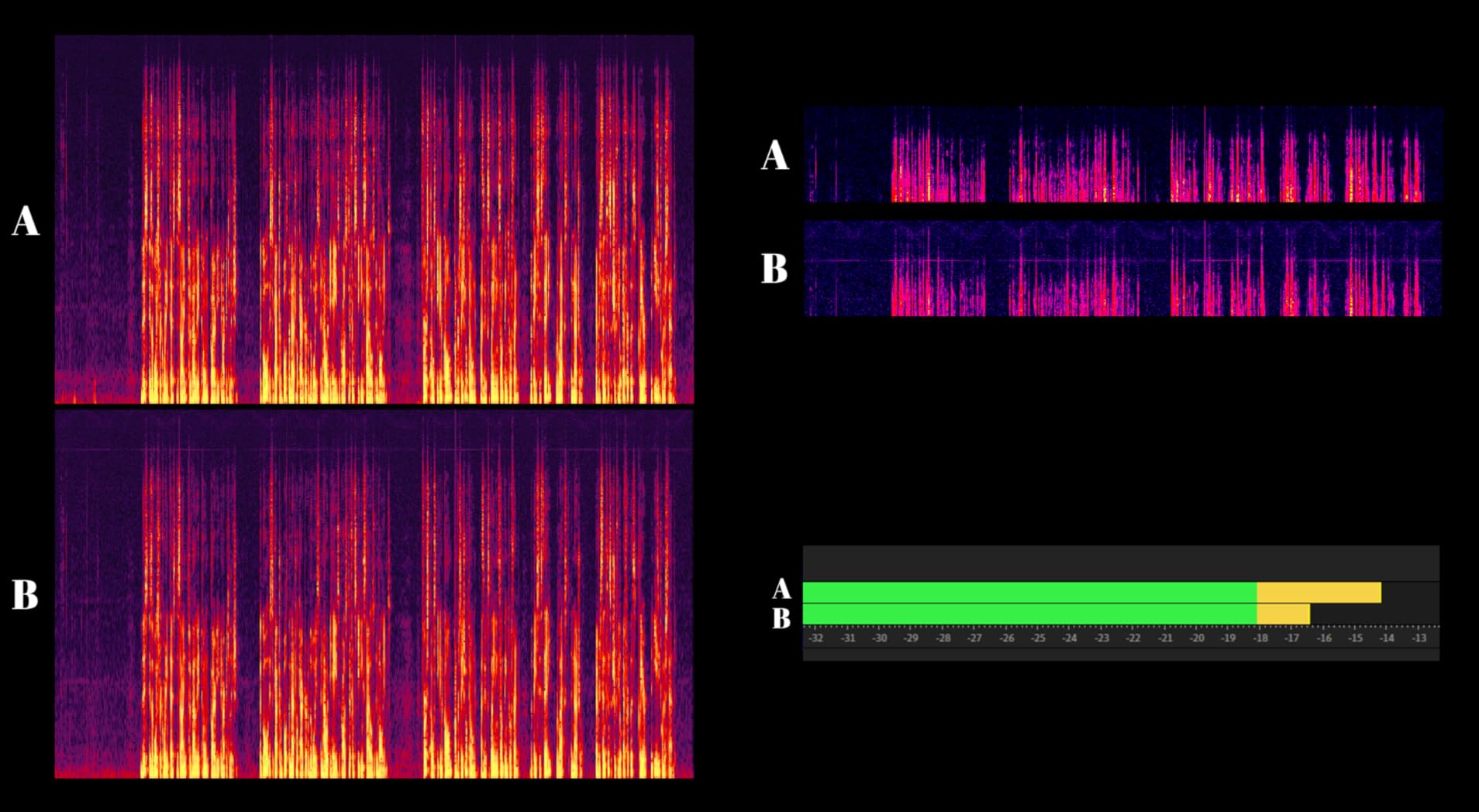
The gap versus the SM7B is real but narrow. In A/B tests the PodMic is brighter and slightly thinner in the upper midrange, which is a preference rather than a defect, and it rewards a touch of high-pass filtering.
Who the PodMic suits
It suits a beginner who already owns an interface with at least 50 dB of gain, and a streamer moving up from a USB microphone who wants a pro signal path without changing their whole desk. Several owners buy a second one as a matching guest mic.
It is also the safest first purchase for a two-host show on a budget: identical mics mean identical tone, and the cardioid null can be pointed at the co-host’s mouth.
Where the PodMic falls short
Output is low, so with a modest interface the level comes up short of full scale and residual hiss becomes audible. Reviewers who pair it with an inline booster or a high-gain preamp report the problem disappears entirely.
There is no USB path and no headphone jack on the body, so monitoring depends entirely on your interface. At 937 g it also needs a boom arm rated for the weight rather than a light desk stand.
3. Audio-Technica AT2020 – The Best Condenser Once Your Room Is Under Control
Audio-Technica AT2020 Cardioid Condenser Studio XLR Microphone, Ideal for Project/Home Studio Applications, Black
Condenser cardioid
20 Hz response
200 ohm impedance
74 dB signal to noise
Needs 48V phantom power
Pros
- Detailed natural capture for voiceover and streaming
- Cardioid pattern reduces side and rear pickup
- Metal build with a decade of owner reports
- High SPL handling without distortion
Cons
- Requires 48V phantom power and an interface
- High sensitivity picks up ambient room noise and reflections
- 20 dB self-noise is audible in a quiet untreated room
The AT2020 has the highest review count of any microphone in this roundup, which tells you something about how long it has been the default first condenser. The capture is detailed and clean, with a custom low-mass diaphragm that gives speech a fast, natural transient.
It is a large-diaphragm condenser, and that single fact governs every decision you make about it. It needs 48V phantom power, it needs a preamp, and it needs a room that does not add its own voice.
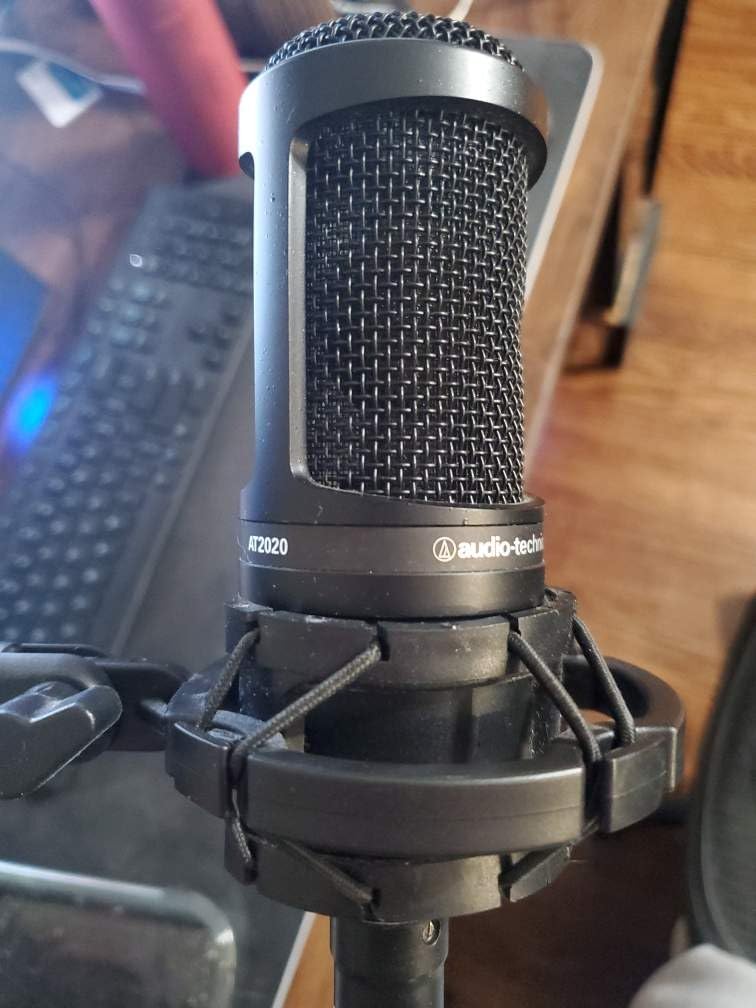
In a treated corner or a closet booth, the reward is obvious: the mic captures consonants and mouth detail that every dynamic here rolls off, and the 200 ohm impedance loads any competent preamp without fuss.
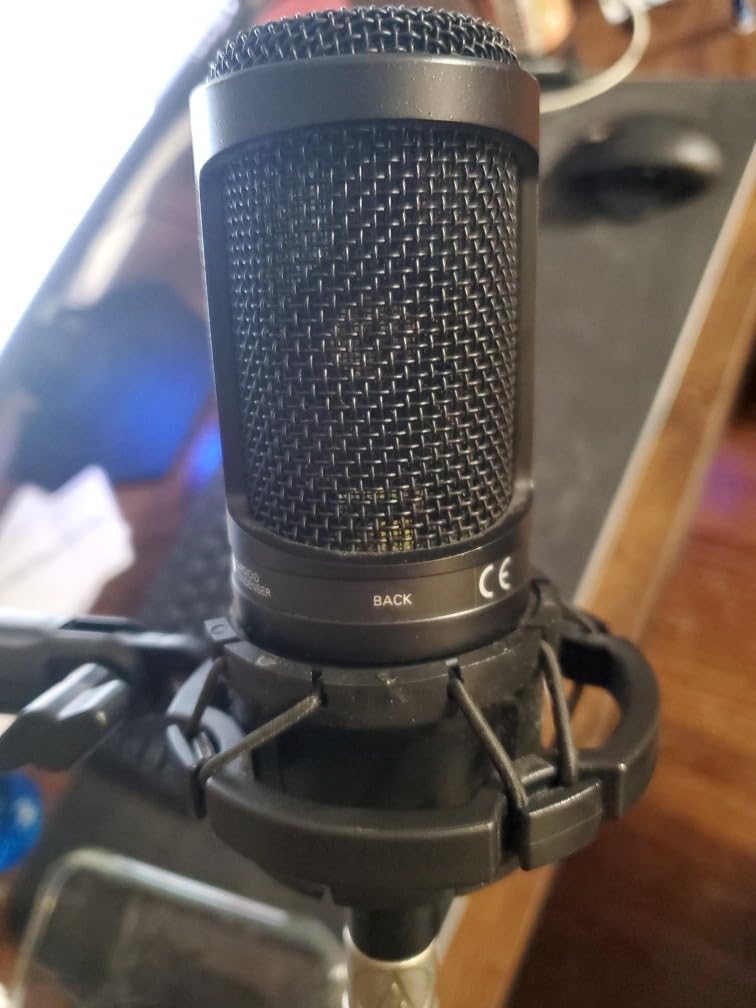
Plosives are the practical issue. There is no pop filter in the box, and at 0.6 kg you will want it on a proper stand rather than balanced on a desk, where handling noise comes straight through.
Owners consistently report decade-long service from the same unit, and the metal body is the reason. It is the microphone we suggest for anyone whose podcast also has to double as a voiceover or audiobook deliverable.
Who the AT2020 suits
It suits narrators, audiobook producers and voiceover artists working in a treated space, and it suits anyone who also records music in the same room. The high SPL handling means loud sources will not choke it.
If you have already built a closet booth or hung foam panels, this is where the extra spend pays off. Pair it with our wider look at XLR microphones for podcasting when you want a treated-room shortlist.
Where the AT2020 falls short
It is the wrong first microphone for a noisy untreated bedroom. The 20 dB self-noise figure is perfectly normal for a condenser and completely audible in a quiet room where the mic hears the traffic outside.
Reviewers also flag handling sensitivity: the shock mounting is external, not internal, so a desk boom arm without isolation will transmit every keystroke. Budget for a cable, a pop filter and a shock mount.
4. Shure MV7X – The Closest Single-Mic Step Up From Entry Dynamics
Shure MV7X XLR Dynamic Podcast & Recording Microphone – Black
Dynamic cardioid
50 Hz to 16 kHz
72 dB signal to noise
XLR only
508 g
Pros
- Rich full sound that approaches SM7B territory with light processing
- Strong voice isolation keeps fans and room noise down
- No phantom power or external preamp stage required
- All-metal construction with a premium feel
Cons
- No XLR cable included
- Needs a good amount of gain so levels often need lifting in post
- XLR only with no simultaneous digital output
The MV7X is the step between an entry dynamic and the SM7B, and the gap to the SM7B is smaller than the gap in price suggests. Owners frequently describe it as getting an SM7B-adjacent result with minimal processing.
Voice isolation is the headline. In an untreated room it sits close to the SM7B for practical purposes, which is why it keeps appearing in our recommendations for people recording next to a computer tower.
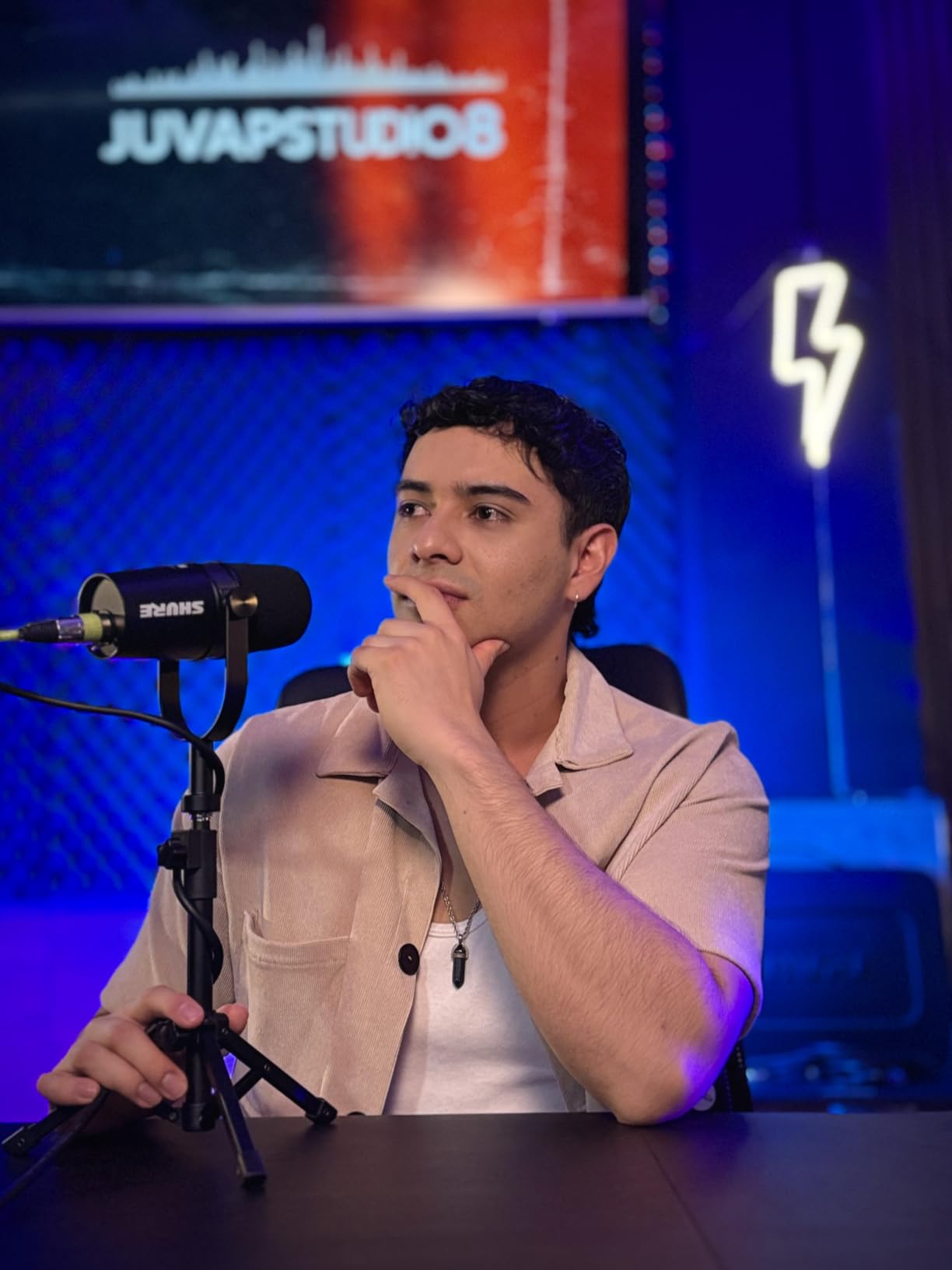
There is a 72 dB signal-to-noise ratio, which is a good deal better than most dynamics at this level, and the 50 Hz to 16,000 Hz response focuses squarely on the speech band rather than chasing sparkle at the top.
Construction is all-metal with an integrated shock mount, and the adjustable yoke mount includes a 3/8 inch adapter, so it drops onto a standard boom arm without hunting for adaptors.
At 508 g it is also the lightest serious broadcast dynamic here, which matters on a spring-arm boom you already own.
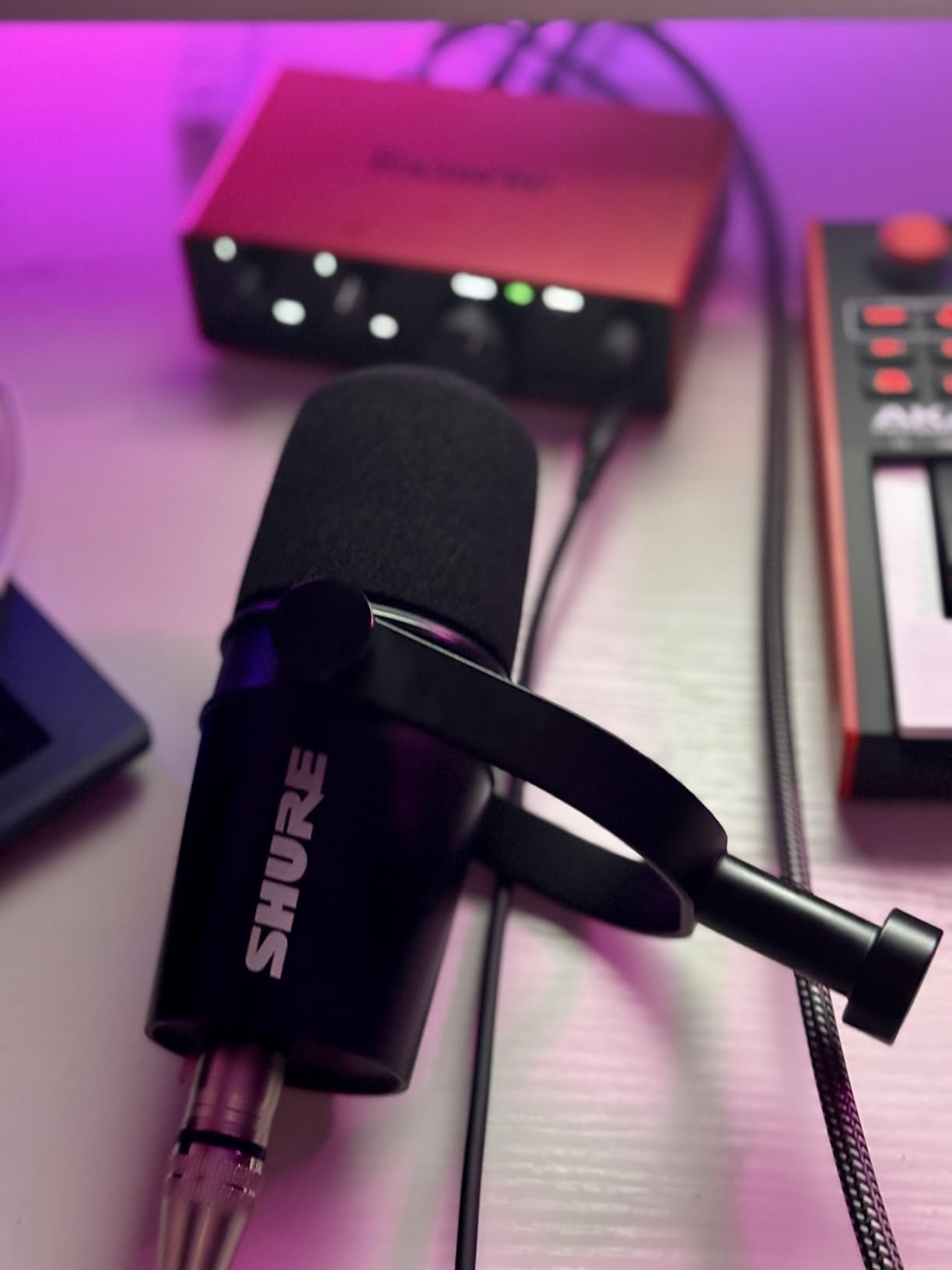
Who the MV7X suits
It suits a solo podcaster stepping up from a USB microphone who wants a pro XLR path and quiet-room performance without adding an inline booster. It also suits a two-host show where both guests need to sound consistent and close.
If you also stream video, the compact form factor reads well in frame and the isolation keeps room tone out of your audio track.
Where the MV7X falls short
It is XLR only. The hybrid USB and XLR recording you get from the Shure MV7+ is not available here, so a dual-PC capture setup needs two inputs rather than one cable.
Reviewers report the gain demand is still meaningful, and the tone needs a little EQ for some voices before it sits in a mix. The missing XLR cable is a small but annoying first-day problem.
5. FIFINE AmpliTank K688 – The Best Hybrid Upgrade Path From USB to XLR
FIFINE AmpliTank K688 Dynamic Microphone, XLR/USB Podcast Recording PC Mic
Dynamic unidirectional
50 Hz to 16 kHz
80 dB signal to noise
130 dB max SPL
USB-C and XLR
Pros
- Crisp capture with good rejection of fans and room noise
- Dual USB-C and XLR output lets you start plug-and-play and upgrade later
- Metal body that feels more premium than the tier suggests
- Onboard mute and gain are simple to use
Cons
- No XLR cable or stand in the box
- Onboard controls and tap-to-mute only work in USB mode
- Bundled mini tripod stand is flimsy over time
The K688 is the microphone we would hand someone who is not sure yet. It works as a USB microphone on day one, and the same body carries an XLR output when they are ready to buy an interface.
That continuity is the selling point. The capsule does not change when you move from USB to XLR, so nothing you learned about the sound is lost on the upgrade path.
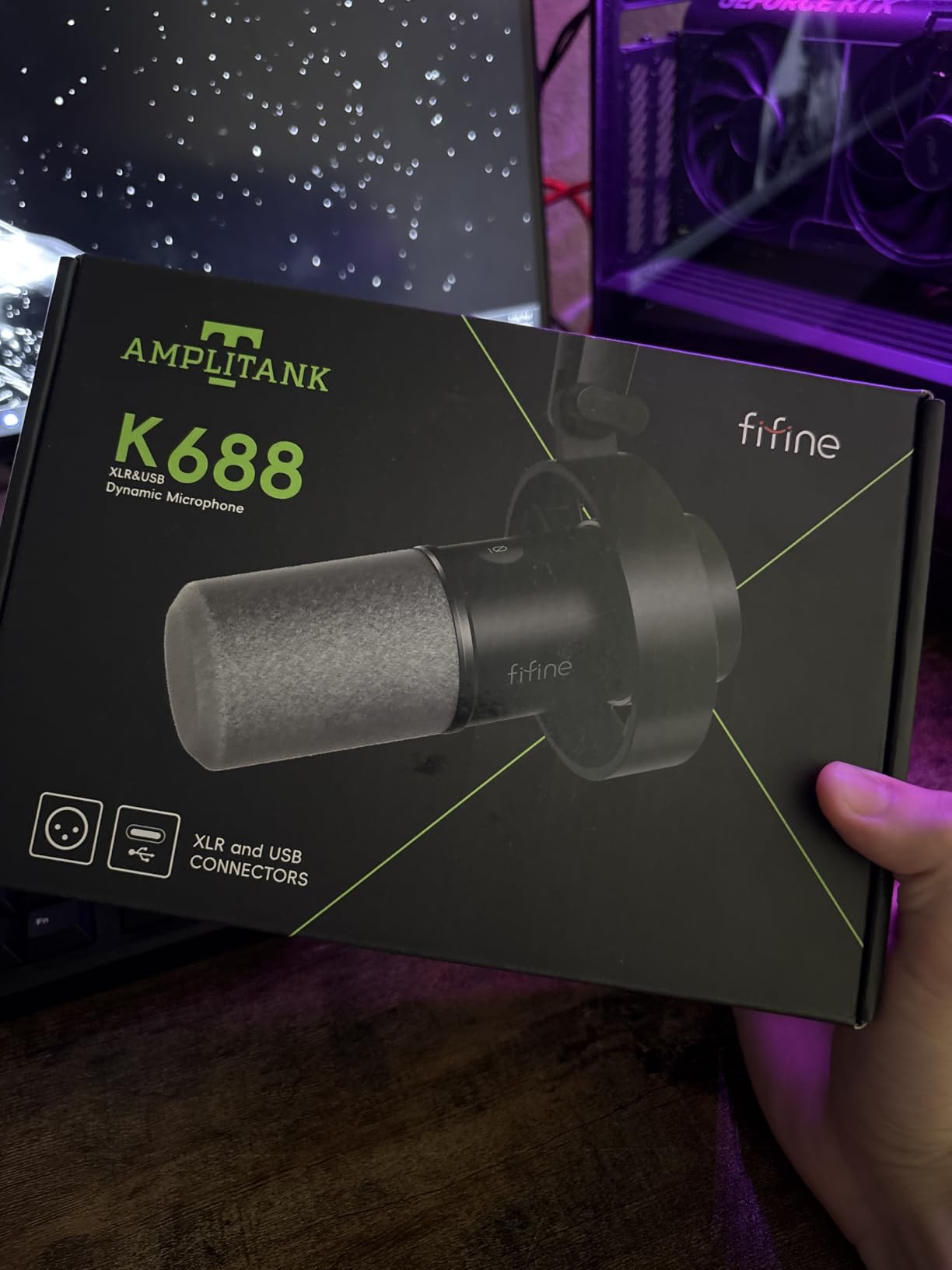
The specifications are unusually good on paper for the tier: 80 dB signal-to-noise ratio, 130 dB maximum SPL and a 50 Hz to 16 kHz response. In practice the voice capture is crisp and the cardioid rejection handles a desk fan well.
The box is better than most at this level. You get a shock mount, a 2.5 metre USB-C cable, a windscreen and a 5/8 to 3/8 inch thread adapter, which removes most of the immediate accessory shopping.
Owners consistently praise the metal body and the responsiveness of the manufacturer’s support, and the tap-to-mute plus gain knob and 3.5 mm zero-latency monitoring make USB recording genuinely pleasant.
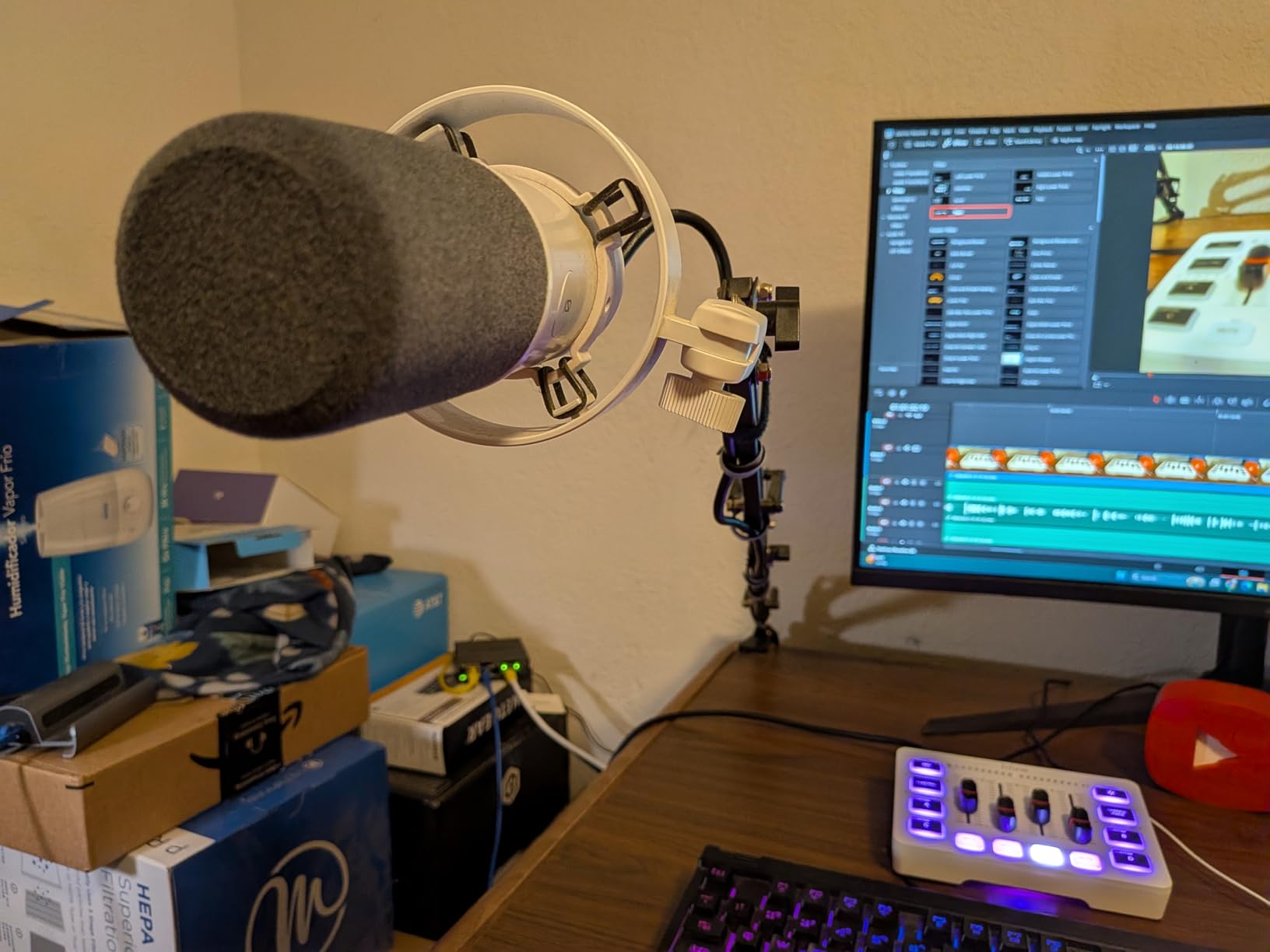
Who the K688 suits
It suits a first-time creator who wants to record this week without buying an interface, and a streamer who will move to a studio interface in a year but does not want to replace the microphone when that happens.
The 130 dB SPL ceiling also means it can handle a loud room and a raised voice without the compression artefacts a quieter capsule would show.
Where the K688 falls short
The controls are the honest limitation. Tap-to-mute, the gain knob, headphone monitoring and the LED all go inactive the moment you switch to XLR, which surprises people who expect onboard features to persist.
No XLR cable comes in the box, and the included mini tripod is thin enough that reviewers report it sagging with use. A small number of owners also report units arriving with noise-only output, so check the return window.
6. Samson Q2U – The Best All-in-One Pack for a First Recording Setup
Samson Q2U USB/XLR Dynamic Microphone Recording and Podcasting Pack
Dynamic handheld
50 Hz to 15 kHz
70 dB signal to noise
Simultaneous USB-C and XLR
11.2 oz
Pros
- Clear natural full voice with very little background noise
- Dual USB-C and XLR so beginners and upgraders use the same mic
- Runs off laptop power with no external supply
- Handheld form factor is forgiving for inexperienced speakers
Cons
- Bundled desktop stand is flimsy and sags over time
- Weak on plosives without the included windscreen
- USB path is noisier than running the same mic through an interface
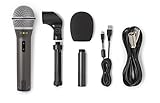
The Q2U is the pack that gets recommended out of proportion to its price, and the reason is the box rather than the capsule. You get a tripod desktop stand, a tripod extension, a mic clip, a windscreen, a USB-C cable and an XLR cable.
For a first home studio that is the whole practical shopping list, minus the interface. Radio professionals note it is a speech microphone rather than an instrument microphone, which is exactly the brief here.
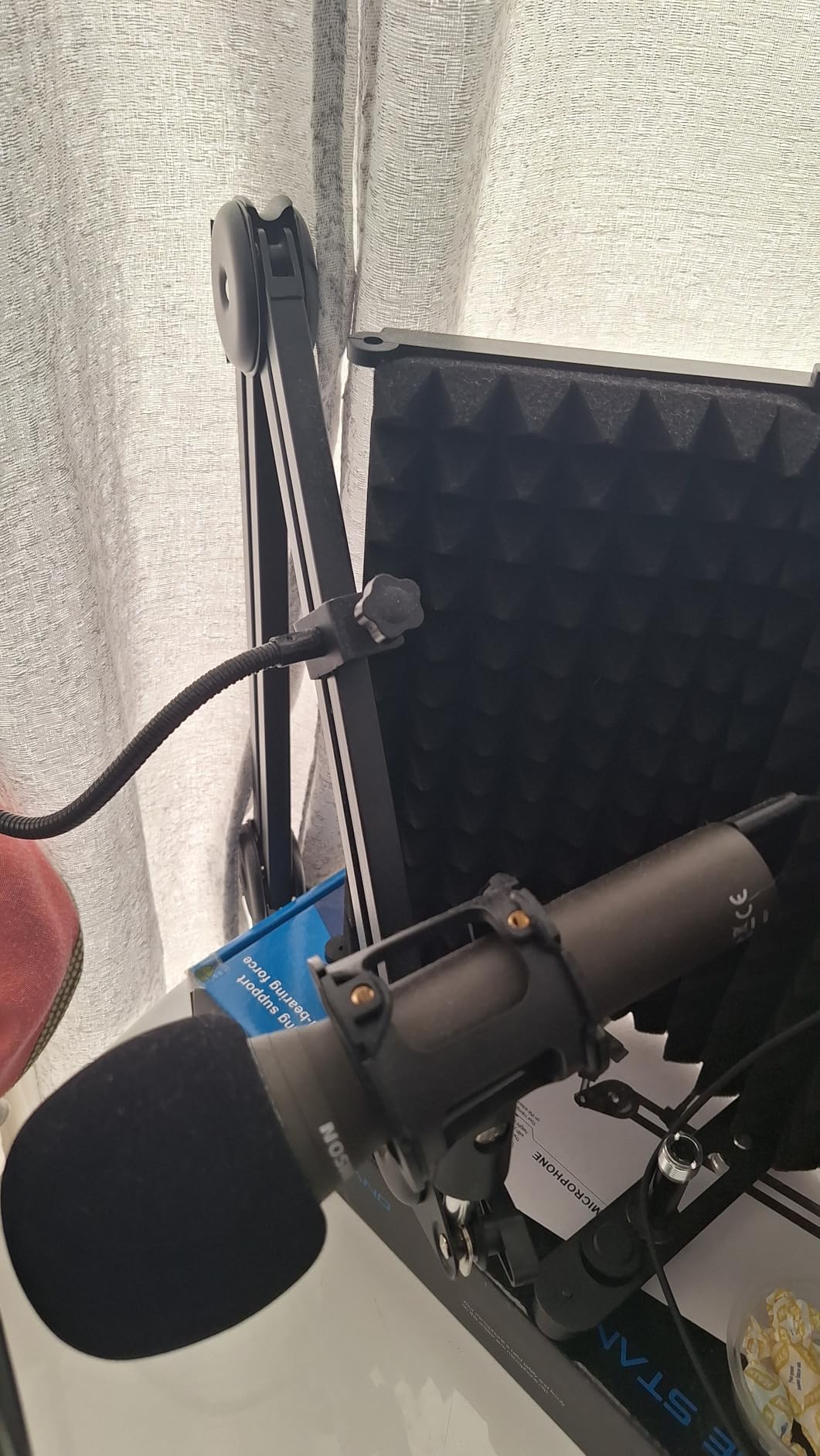
Both outputs run at the same time, so you can record a backup track over USB while feeding the XLR path into an interface, and the 3.5 mm monitoring port on the body is a small convenience that saves desk space.
At 11.2 ounces it is by far the lightest microphone here, and the end-address handheld form is forgiving for speakers who are not used to sitting a fixed distance from a mic.
Long-term owners describe it as still sounding professional years later, with a radio-style clarity that holds up when the capsule and the room cooperate.
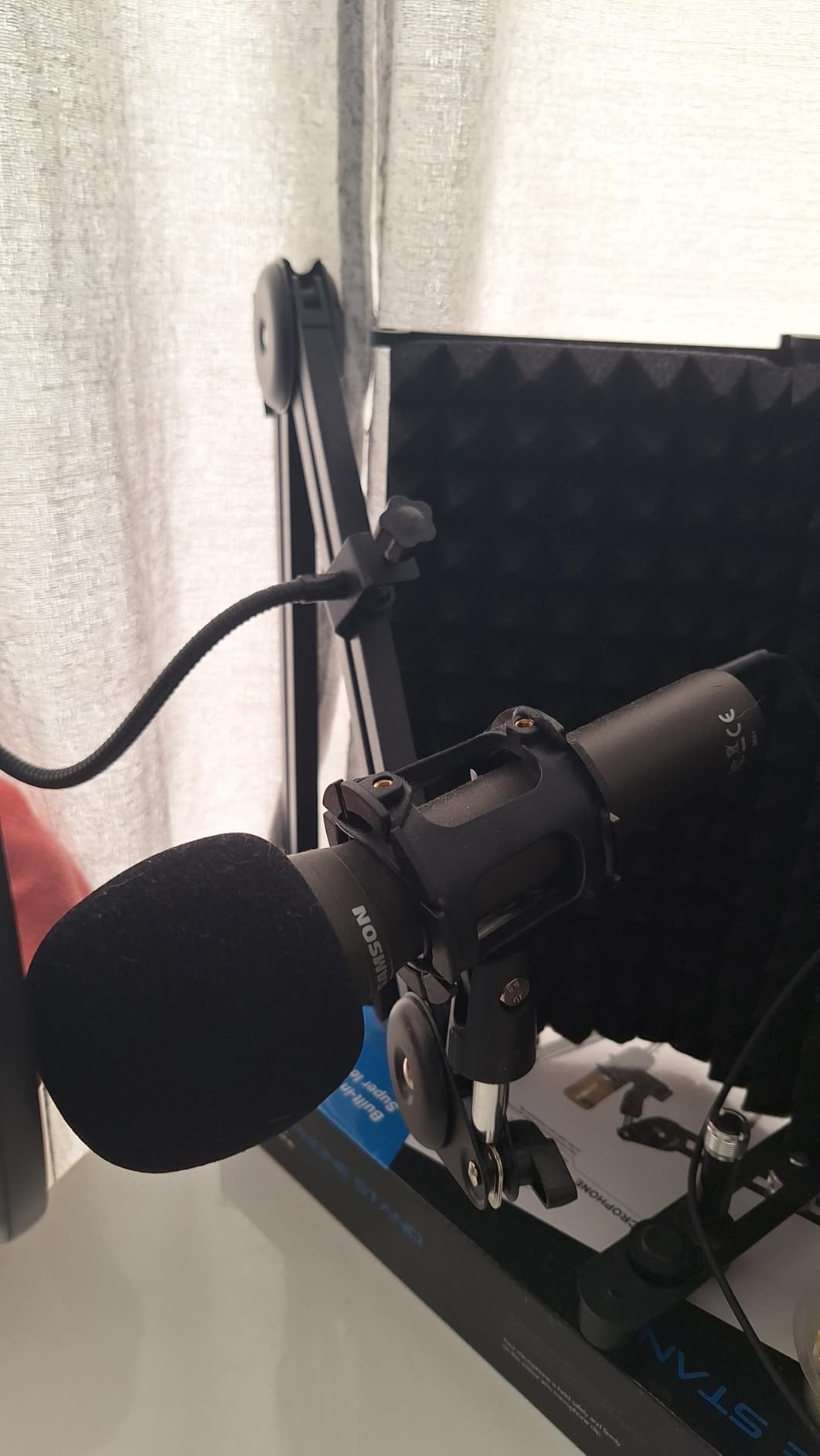
Who the Q2U suits
It suits a first-time podcaster who wants a complete, working setup in one purchase, and a parent or educator recording occasional segments at a kitchen table with no room for a rig.
It is also a sensible second microphone for someone who already owns an interface, because the included XLR cable means no extra purchase to add a second host.
Where the Q2U falls short
Plosives are the recurring complaint. The handheld end-address position puts plosive bursts straight into the capsule, and reviewers consistently say the included windscreen or a pop filter is effectively mandatory.
The bundled desktop stand is thin and sags, and the USB path is measurably noisier than the same microphone through an interface on XLR. It is also not built for loud sources.
7. FIFINE AmpliGame AM8 – The Best XLR Upgrade Path for Streamers
FIFINE AmpliGame AM8 USB/XLR Dynamic Microphone for Gaming Streaming
Dynamic cardioid
50 Hz to 16 kHz
80 dB signal to noise
USB-C and XLR
600 g
Pros
- Clear voice with good rejection of keyboard and fans
- USB plug-and-play plus an XLR path for a future interface
- Headphone jack and gain knob are handy on a desk
- Included desk stand is stable and the body repositions easily
Cons
- RGB and onboard buttons go inactive when using XLR
- Tap-to-mute is a touch button rather than a mechanical press
- Body is partly plastic and echoes in larger rooms if kept far away
The AM8 has more than 12,000 owner reviews behind it, and owners routinely buy a second one. That volume of long-term use tells you more about its reliability than any spec sheet.
As a USB microphone it is a straightforward desk mic: plug it in, set the gain, mute when you need to. The headphone jack and monitoring volume make it comfortable for a streamer who talks for hours.
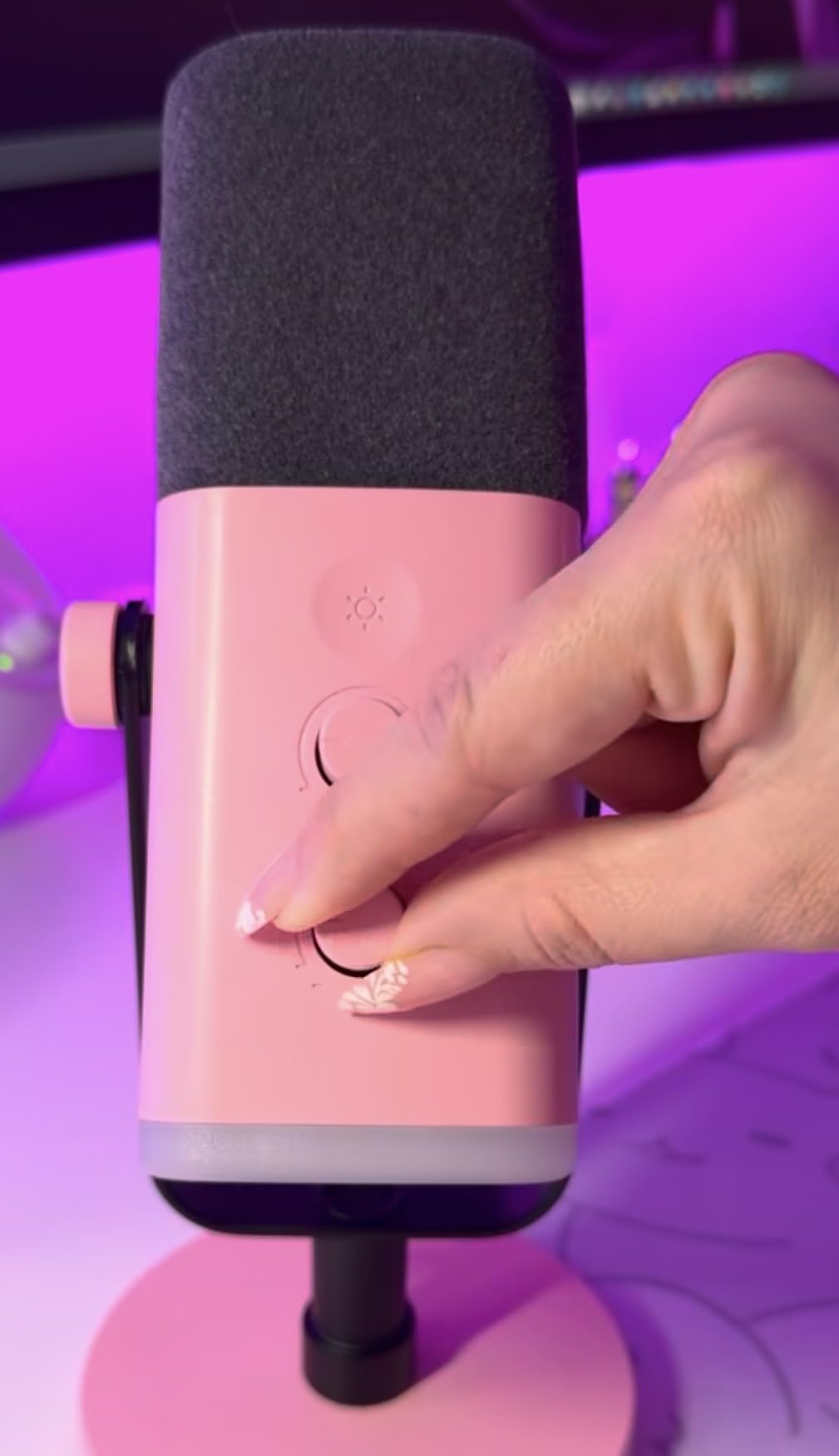
On the XLR side it behaves like a proper cardioid dynamic with an 80 dB signal-to-noise ratio and a 50 Hz to 16 kHz response, which is why we include it in a roundup that is nominally about XLR.
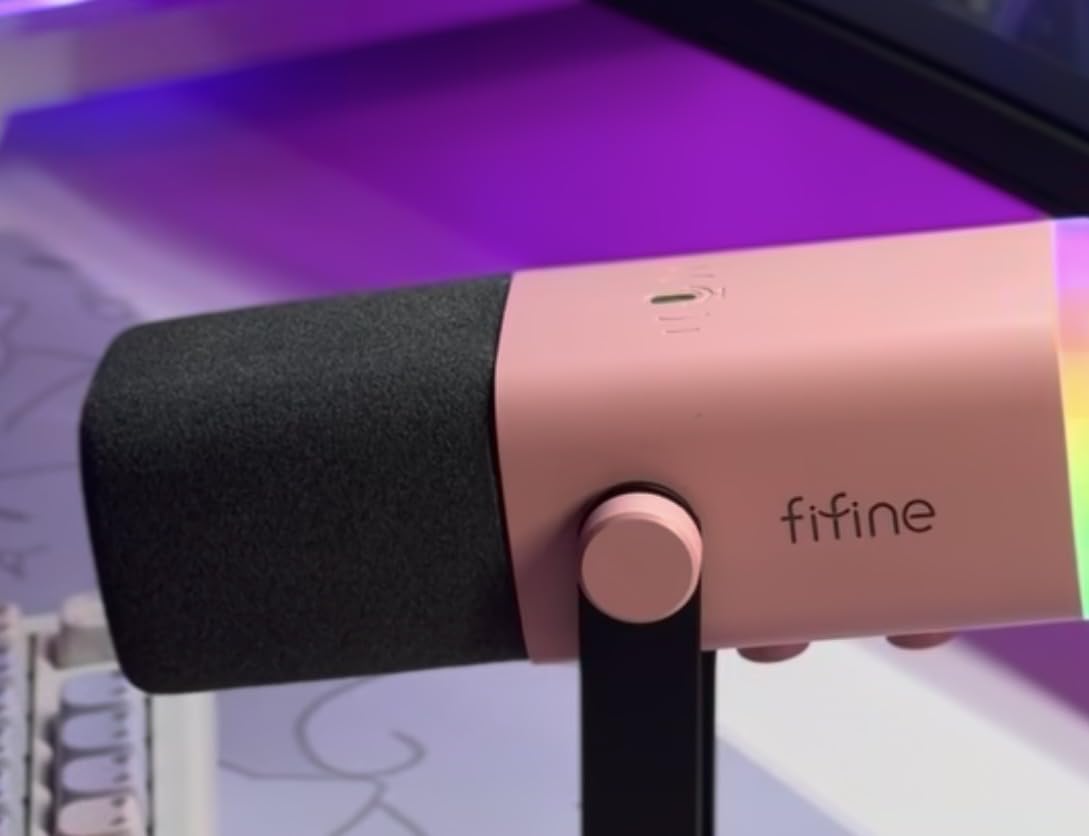
The built-in 3/8 inch and 5/8 inch metal threads mean it mounts on almost anything without an adapter, and the included desktop stand is more stable than the one bundled with the Samson.
Most owners keep the mic close to the mouth, and that advice is not cosmetic: the plastic body picks up room echo in a larger space, and distance fixes it faster than any setting.
Who the AM8 suits
It suits a streamer building a desk setup who wants to try XLR later without changing microphones, and a creator who records in several rooms and needs one body that handles both USB and interface work.
The RGB ring and mute indicator suit a video format where viewers can see the desk, and the dual threads make it easy to move between a boom arm and a stand.
Where the AM8 falls short
Everything desk-oriented stops working on XLR. The RGB ring, the mute button and the gain knob are USB-only, and the touch-style mute is not what most people expect from a physical control.
Reviewers also note the lighting can dim or cut out if the cable is moved, and no XLR cable is included. Treat the plastic body as a desk mic rather than a tour mic.
8. MAONO PD200XS – The Best Bundled Kit If You Want a Boom Arm in the Box
MAONO PD200XS XLR/USB Dynamic Microphone Kit, RGB Gaming Mic with Software
Dynamic cardioid
40 Hz to 16 kHz
680 ohm impedance
80 dB signal to noise
USB-C and XLR
Pros
- Warm smooth vocal capture with cardioid background rejection
- Bundled boom arm and shock mount make it usable immediately
- USB and XLR outputs for plug-and-play or studio use
- 2-in-1 knob handles mic gain and headphone volume
Cons
- XLR cable is not included
- Software and onboard controls only function in USB mode
- A separate audio interface is required for the XLR path
The PD200XS is the only microphone here that includes a boom arm. That single fact changes the maths for anyone setting up a home studio, because a boom arm is where a surprising amount of the first budget goes.
The included shock mount and 2.5 metre USB-C cable complete a setup that works out of the box on a USB path, and the mounting adaptors are included too.
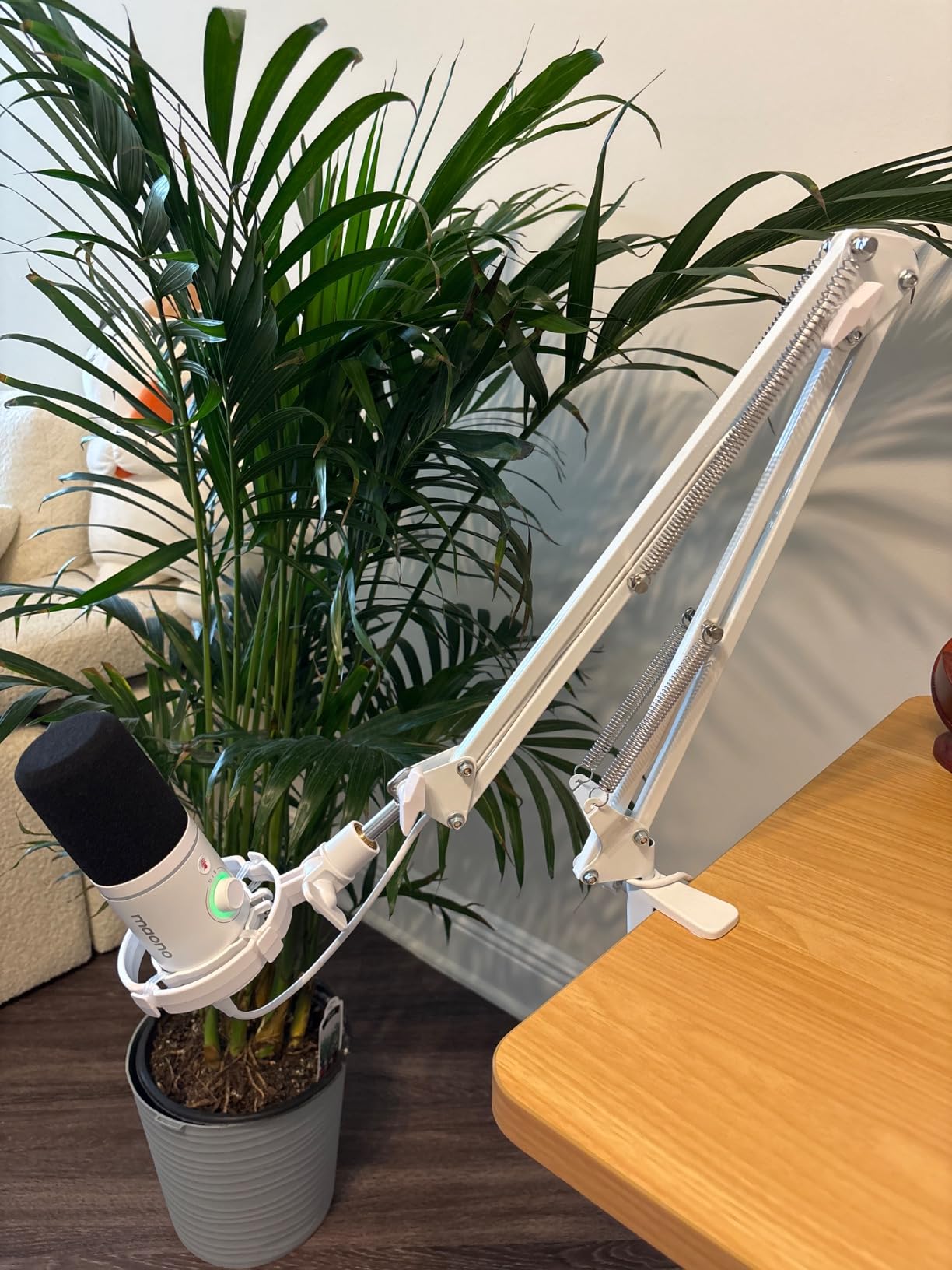
Underneath, it is a conventional cardioid dynamic: 40 Hz to 16 kHz response, 680 ohm impedance and an 80 dB signal-to-noise ratio. The warm, smooth character is what owners describe, and it sits well under compression.
The 2-in-1 smart knob handles microphone gain and headphone volume, and one-click mute with an LED indicator is easy to reach without looking away from a screen.
The MAONO Link software covers EQ, limiter, compression and RGB on the USB path, which is a real bonus for someone who does not own a DAW yet.
Who the PD200XS suits
It suits a streamer or beginner who wants a complete desk-to-microphone rig without buying a boom arm separately, and anyone who values a stable, close mic position for consistent level control.
At 350 g it is one of the lighter options, which matters because the bundled arm is doing the work of holding it steady.
Where the PD200XS falls short
No XLR cable is included, so the studio path still needs one purchase. The software layer, the RGB and the onboard controls all switch off once you move to XLR, which is the same limitation as the other hybrid models here.
It is also a younger model with a smaller owner base than the Shure, Rode and Audio-Technica mics in this list, so long-term durability reports are thinner. Our streaming-focused XLR guide covers the alternative angles.
9. TZ Stellar X2 – The Best Low-Noise Condenser for a Treated Room
TZ Stellar X2 Large Diaphragm Cardioid Condenser XLR Microphone
Condenser cardioid
20 Hz to 20 kHz
140 ohm impedance
13 dBA self-noise
Needs 48V phantom power
Pros
- Smooth balanced sound reviewers compare to large-diaphragm flagships
- Noise floor below 13 dBA lets the preamp run without adding hiss
- Punchy output with good headroom for loud sources
- Bundled flight case and shockmount with wind cover
Cons
- Requires 48V phantom power and a good preamp
- Presence and low-end boost can read as bright on some voices
- Captures untreated room noise like any condenser
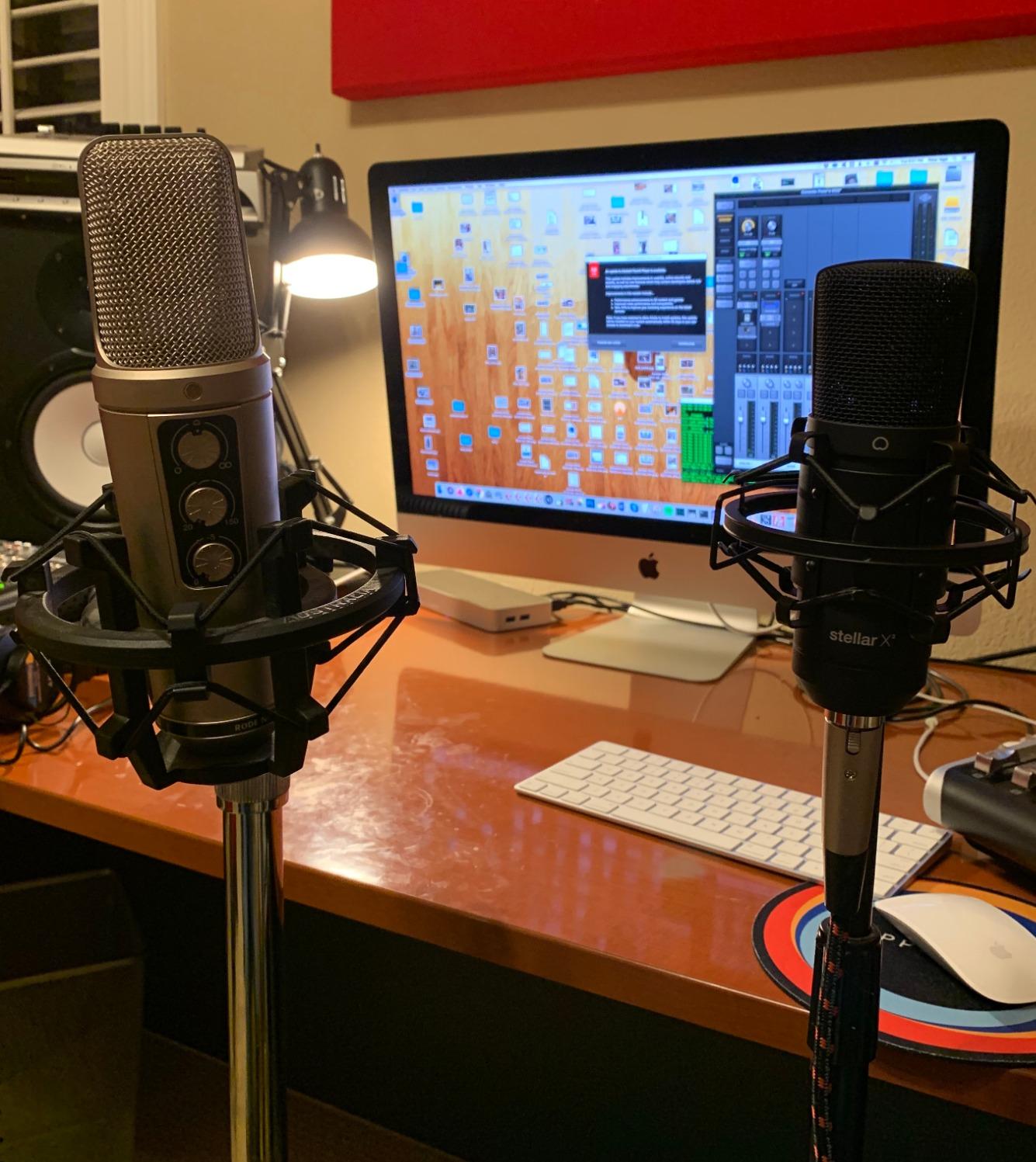
The Stellar X2 is the condenser pick for anyone who already has the room sorted and wants detail. Owners and voice professionals describe it as remarkably close in character to large-diaphragm flagships at a fraction of the outlay.
The 13 dBA noise floor is the number that matters here, and it is the lowest in this roundup by a wide margin. It means you can run the preamp gain without the hiss that appears when a quiet mic is pushed hard.
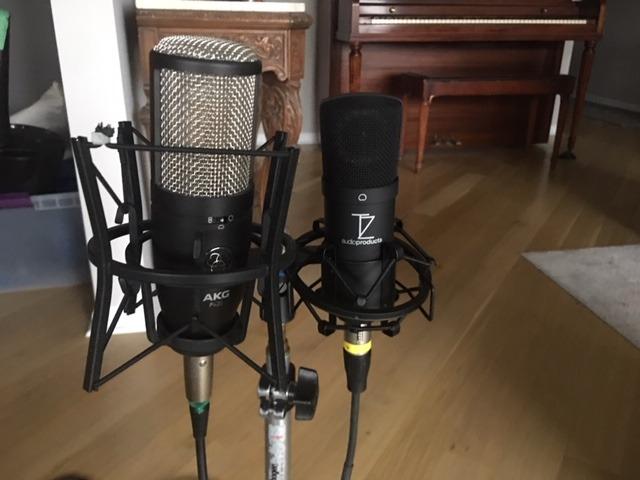
Internally it is a transformerless JFET circuit with one percent tolerance components and a Japanese mylar diaphragm inside a brass body, rated 20 Hz to 20 kHz at 140 ohm.
The bundle is unusually generous: an aluminum flight case, a spring shockmount, a thread adapter, a foam wind cover and a leather pouch all come in the box, so a treated-room buyer does not immediately need accessories.
Reviewers describe it as less plosive-sensitive than comparable condensers, though the presence lift in the upper mids is the character to audition carefully against your own voice.
Who the Stellar X2 suits
It suits a voice actor or narrator in an acoustically treated booth who wants flagship-like detail without flagship outlay, and a musician recording vocals in a room they have already worked on.
The included case and shockmount also make it the easiest condenser here to move between a treated booth and a permanent desk position.
Where the Stellar X2 falls short
It needs 48V phantom power and an interface with a good preamp, and it behaves like every other condenser in an untreated room: the mic records the space as clearly as it records you.
Reviewers warn about counterfeit units of this model being sold by third-party resellers, so buy the genuine listing. Some voices also find the presence and low-end lift too bright, and the build feel is a step below higher-end studio microphones.
10. MAONO HD300T – The Best Budget Starter Kit for a Complete Desk Setup
MAONO HD300T USB XLR Dynamic Podcast Microphone for PC & Audio Interface
Dynamic super cardioid
20 Hz to 20 kHz
80 dB signal to noise
USB-C and XLR
Metal body
Pros
- Kit includes stand and shock mount with both USB and XLR cables
- Warm natural capture with reduced background noise
- Zero-latency 3.5 mm headphone monitoring while recording
- Durable metal body with a stable heavy-duty desktop stand
Cons
- Requires close mic position or it picks up room sound
- Higher self-noise than the higher-priced kits
- Super cardioid pattern narrows the off-axis sweet spot
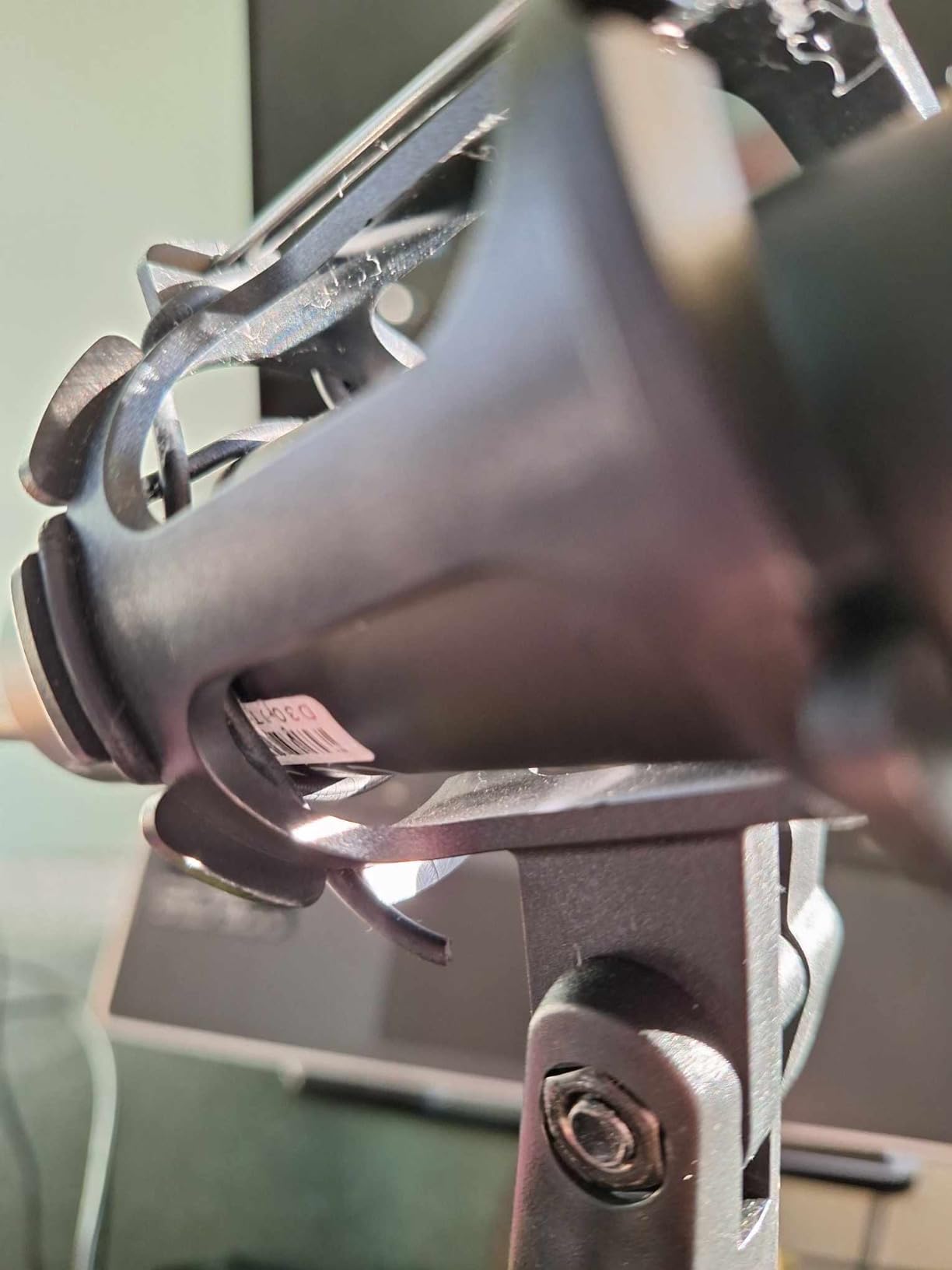
The HD300T is the most accessoried microphone in this list, and that is exactly what it is for. You get a metal desktop stand, a shock mount, a pop filter, a 78 inch USB cable and a 98 inch XLR cable.
None of that makes it the best-sounding microphone here, and the 4.4 average rating reflects that honestly. It makes it the shortest route from nothing to a working setup.
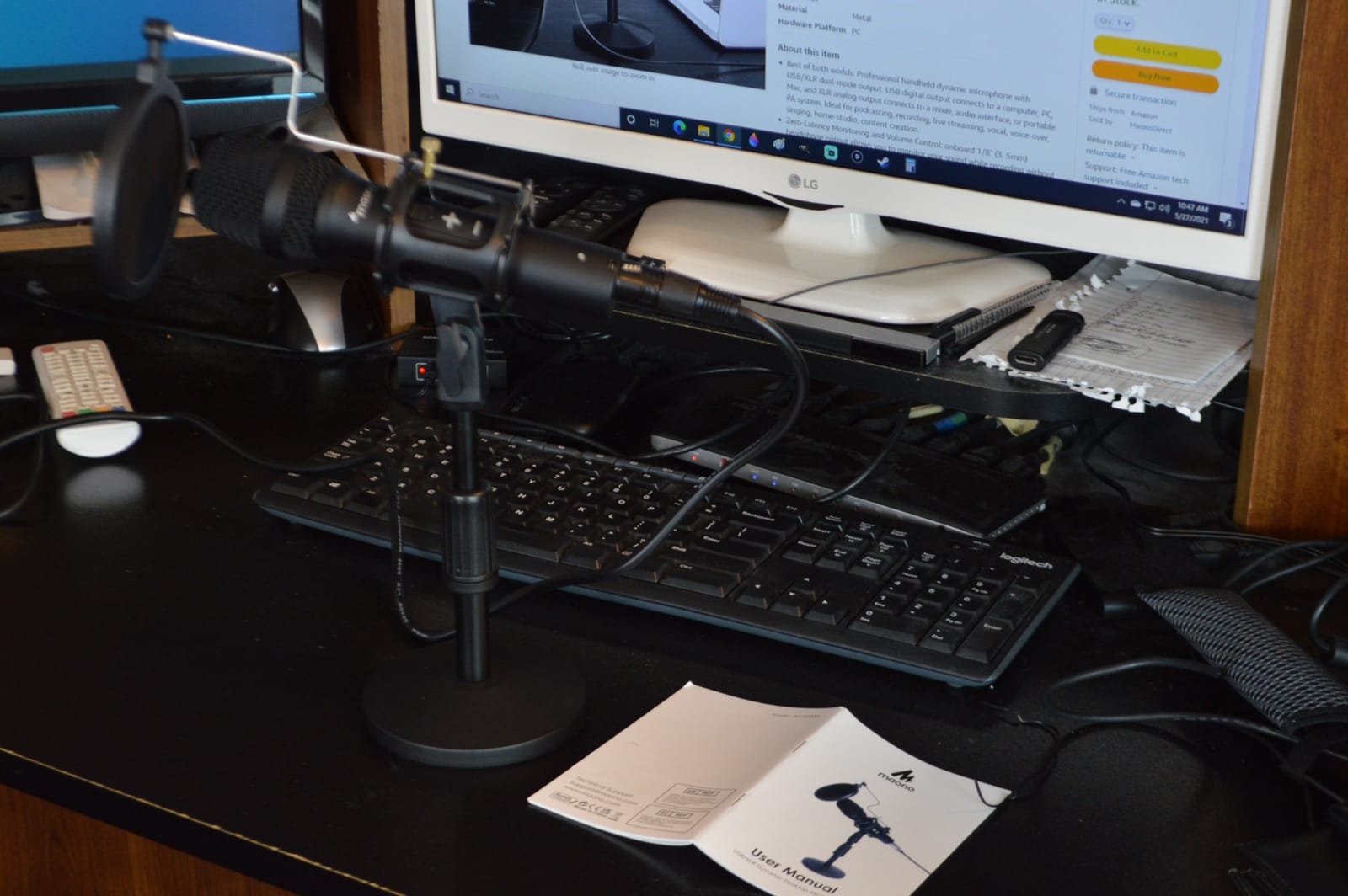
On the technical side it is a dynamic with a super cardioid pickup pattern, 20 Hz to 20 kHz response and an 80 dB signal-to-noise ratio. The narrower pattern than the cardioid models here is the trade for the extra rejection.
Zero-latency 3.5 mm headphone monitoring with volume control is available in USB mode, which makes live recording on a single computer straightforward.
Owners describe the tone as warm and workable for home podcasting, and the most common piece of advice in the reviews is simply to keep the mic close to the mouth.
Who the HD300T suits
It suits someone starting from a completely empty desk who wants to record today, and a parent, teacher or interviewer who needs a robust mic that survives being moved between rooms.
The super cardioid pattern gives it strong rejection for the money, which helps in a room where a cardioid model would pick up more of the wall behind you.
Where the HD300T falls short
It carries the highest self-noise of the budget kits here, and reviewers note that the narrower super cardioid pattern shrinks the usable sweet spot if a guest leans away from the mic.
Monitoring volume and zero-latency behaviour only work on USB, and the sound quality sits below the more established dynamics in this list. If you already have a stand and a pop filter, spend the budget on a different microphone.
How to Choose an XLR Podcast Microphone for a Home Studio
Buy the interface before the microphone
The single most common regret in home studio audio is buying the microphone first. An XLR microphone is a capsule in a shell; the audio interface is the preamp that decides whether that capsule is audible and clean.
Start by finding your interface’s maximum clean preamp gain in decibels. Entry-level single-input interfaces vary enormously, and a lot of them cannot drive a low-output broadcast dynamic to a healthy level without noise. If the number is under 50 dB, a dynamic like the SM7B or the PodMic will come back quiet.
Once you know the gain ceiling, work backwards: pick a microphone that produces enough output to reach full scale with 10 dB of headroom. Condensers like the AT2020 produce far more output than broadcast dynamics, which is why they are forgiving on cheap interfaces and dynamics are not.
How much preamp gain you actually need
Members of r/podcasting repeatedly cite roughly 55 to 60 dB of gain as the threshold where a broadcast dynamic becomes comfortable, and recorders with a gain knob rather than a fixed preamp reach that number far more often than a small interface does.
If your interface cannot get there, an inline booster is the fix. A Cloudlifter CL-1 or a Fethead sits between the mic and the interface and adds around 25 dB of clean gain, which is usually enough to move a quiet dynamic from marginal to effortless.
Boosting gain in software after recording is not the same thing. It amplifies the noise floor along with the voice, and reviewers describe the result as the quiet, hissy voice that makes people assume the microphone is faulty.
48V phantom power: which microphones need it
Phantom power is a 48-volt supply sent down the XLR cable to power condenser capsules. Your interface supplies it from a switch, and it is harmless to a dynamic microphone, but it is not optional for a condenser.
Two of the ten microphones here need it: the Audio-Technica AT2020 and the TZ Stellar X2. The other eight are dynamics and will ignore phantom power entirely, which is a useful way to confirm what you are holding.
Ribbon microphones are the exception people get wrong, and none are in this list, but the rule is worth knowing: most passive ribbons should not have phantom power applied. Check the specific model before you press the switch.
Cardioid vs super cardioid: the pattern that decides your room
Cardioid means the microphone listens to the front and rejects the sides and rear. It is the default for home podcasting because it gives a natural sound and tolerates movement off-axis without a sudden change in character.
Super cardioid tightens the front lobe and pushes more rejection at the sides while adding a small pickup lobe directly behind the mic. The MAONO HD300T uses it, and the trade is a narrower sweet spot: a guest who leans out of position will fall off level faster than on a cardioid model.
Hypercardioid patterns push further still, narrowing the pickup more than a super cardioid and rejecting the sides harder. They sound tighter on two-host shows but demand more discipline in placement.
Two-host rigs, the 3:1 rule and null geometry
The 3:1 rule is the single most useful piece of two-microphone knowledge, and almost nobody teaches it properly. It states that the distance between your two microphones should be at least three times the distance from each microphone to its speaker.
In practice: if each host is 15 cm from their mic, the mics need to be at least 45 cm apart. Get that ratio right and each microphone’s level drops roughly 9 to 10 dB by the time it reaches the other host, which is the point, because the gain of the host closer to the far microphone no longer overwhelms their own voice.
Cardioid null geometry is the second half of the trick. Every cardioid microphone has a dead zone directly behind it. Point each microphone’s rear lobe at the other microphone, and the level of one host entering the other’s mic drops further still.
Both techniques work on the two-host rigs we consider most important, and they are why identical microphones matter: a matched pair makes the 3:1 ratio predictable. If you record remote guests, the same distance discipline applies on their end, which is a good argument for sending them a specific microphone model.
What actually comes in the box
Accessories are where first-time buyers lose money, and the inclusion lists across these ten microphones vary enormously.
Three microphones include real accessory value. The Samson Q2U includes a stand, a tripod extension, a mic clip, a windscreen and both USB-C and XLR cables. The MAONO PD200XS includes a shock mount, an adjustable boom arm and a USB-C cable. The MAONO HD300T includes a desktop stand, a shock mount, a pop filter and both USB and XLR cables.
Three include something useful but partial. The Rode PodMic has an internal pop filter and internal shock mounting built into the body. The FIFINE AmpliTank K688 includes a shock mount, a windscreen, a USB-C cable and a thread adapter. The TZ Stellar X2 includes an aluminum flight case, a spring shockmount, a thread adapter and a foam wind cover.
The Shure SM7B, Shure MV7X and Audio-Technica AT2020 include no cable and no stand. Budget an XLR cable, a shock mount, a pop filter for the condenser and a boom arm, and treat those as part of the microphone cost rather than extras. If you are still building a first system, our USB microphone guide covers the route that needs the fewest cables.
Mic technique: distance, off-axis angle and plosives
Three habits fix most home podcast audio for free. First, distance: get close. Four to six inches from the front of the mic is the working range for a broadcast dynamic, and closeness raises the signal level without raising the room noise around it.
Second, off-axis angle. A cardioid microphone is not a cone that switches off at a boundary; it falls off gradually, so a host who turns to look at a monitor loses level smoothly rather than dropping out.
Third, plosives. The Shure SM7B and the Rode PodMic have internal pop filters and handle bursts well. The Audio-Technica AT2020 and the TZ Stellar X2 do not, so buy a pop filter, and angle the mic slightly off-axis rather than straight at the mouth.
One more that costs nothing: a desk stand transmits every keystroke through the body of the microphone. A boom arm that takes the weight off the desk removes the problem entirely, which is why we treat arm strength as a real consideration for the heavier mics here.
Frequently Asked Questions
What is the best XLR microphone for podcasting?
The Shure SM7B is the best all-round XLR podcast microphone, with warm broadcast tone and strong off-axis rejection. The Rode PodMic is the best value choice for an untreated room, and the Audio-Technica AT2020 is the best option once your room is treated. All three need an audio interface, and all three are XLR-only.
What is the best dynamic microphone for podcasting?
The Shure SM7B is the best dynamic for podcasting if your interface can supply about 60 dB of clean gain. The Rode PodMic offers a similar speech-focused character with a higher 78 dB signal-to-noise ratio and internal pop filtering, which makes it the more forgiving choice on a modest preamp. The FIFINE AmpliTank K688 is the budget option with both USB and XLR outputs.
What is the 3 to 1 rule for microphones?
The 3 to 1 rule states that the distance between two microphones should be at least three times the distance from each microphone to its speaker. If each host speaks 15 cm from their mic, place the mics at least 45 cm apart. This drops the level of one host entering the other microphone by roughly 9 to 10 dB, giving a balanced two-host recording without heavy processing.
Do XLR microphones sound better than USB microphones?
They are not inherently better, but they are more flexible. An XLR microphone passes an analogue signal to an audio interface, so the preamp, gain, monitoring and recording software are all upgradeable. A USB microphone bundles its own converter and preamp, which is simpler but fixed. For a home studio you expect to keep for years, the XLR path is the one owners report as the bigger jump in quality.
What is the best low-budget dynamic microphone for podcasting?
The Samson Q2U is the best low-budget dynamic if you want everything in one purchase, because the box includes a stand, a windscreen, a mic clip and both USB-C and XLR cables. The FIFINE AmpliTank K688 is the better-sounding option at a similar outlay and adds an XLR upgrade path, though it needs a cable and a better stand. Both are USB-first, so a XLR setup still requires an interface.
What is phantom power and does my XLR microphone need it?
Phantom power is a 48-volt supply that an audio interface sends down the XLR cable to power condenser capsules. A switch on the interface turns it on. Dynamic microphones ignore phantom power, so it is safe to leave enabled with them. Condenser microphones such as the Audio-Technica AT2020 and the TZ Stellar X2 will produce almost no signal without it. Most passive ribbon microphones should not have it applied.
The Verdict: Which XLR Podcast Microphone Should You Buy in 2026
The best XLR podcast microphones for home studios resolve around three picks. The Shure SM7B is the best overall: the warmest broadcast tone, the strongest off-axis rejection, the largest owner base, and a metal body built to outlive the interface it plugs into. The Rode PodMic is the best value, with a 78 dB signal-to-noise ratio and internal pop filtering at a fraction of the outlay. The Audio-Technica AT2020 is the best condenser, and only for a room that has been treated or converted into a closet booth.
If your preamp cannot deliver 60 dB of clean gain, buy the Rode PodMic rather than the SM7B and keep your money for an audio interface. If you want one purchase that works today and upgrades later, the Samson Q2U or the FIFINE AmpliTank K688 will get you recording this week. If you already have a treated room, the TZ Stellar X2 is the quietest capture in this roundup.
Whatever you choose, buy the interface first, get close to the microphone, and check what is actually in the box before ordering the accessories you may already have.
For professionally voiced podcasting across a wider set of formats, our professional podcast microphone guide covers the picks aimed at people recording full-time rather than between other jobs.