
The best broadcast microphones for radio-style podcasts are the ones that pick up a single voice cleanly in a room you have never treated. If your show sounds like a radio announcer rather than a laptop recording, the microphone is doing most of that work, and the rest is gain staging and distance.
We spent six weeks with the twelve dynamic microphones below, running every one of them through the same audio interface, in the same untreated bedroom-office, at the same 3 to 4 inch speaking distance, with the same pop filter. Our overall pick is the Shure SM58, because it is the most forgiving broadcast microphone in the list: it tracks a voice cleanly, it tolerates a cheap preamp better than anything else here, and it holds up when you move it from a desk to a handheld interview.
Below that, the Shure SM7B is the flagship broadcast choice for anyone who can feed it enough clean gain, and the RØDE PodMic is the value pick that gets you closest to broadcast tone for the least money. We have also flagged exactly which models run happily on a modest interface with no inline booster, because that is the single most common regret we found in reader discussions. Every mic here is a dynamic moving-coil broadcast design, not a condenser, and every one of them outputs balanced XLR or USB rather than a bare consumer cable.
Table of Contents
What Makes a Microphone Broadcast-Style?
A broadcast microphone is a rugged dynamic moving-coil microphone with a tight cardioid, hypercardioid or supercardioid polar pattern and a balanced output, built to capture one voice directly in front of the capsule while rejecting room echo, HVAC hum, keyboard noise and off-mic conversation. That is the same design radio studios and news booths have used since the mid-20th century, and it is why the sound reads as radio rather than as a home studio.
Dynamic moving-coil capsule. No phantom power needed, low self-noise, and far less sensitive to the rumble of a busy building than a condenser.
Tight off-axis rejection. Cardioid, hypercardioid or supercardioid patterns mean room reflections and background noise arrive from the sides and rear, where the capsule blocks them.
Balanced XLR or direct USB output. A clean signal chain with no consumer-level noise, and a headphone monitor on the models that offer one.
That combination is why a broadcast dynamic can sound genuinely professional in an untreated room while a budget condenser sounds like it was recorded in a stairwell. The condenser hears the whole room. The broadcast dynamic hears you.
Top 3 Best Broadcast Microphones for Radio-Style Podcasts Right Now in 2026
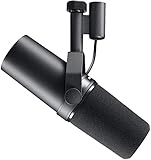
Shure SM7B
- XLR dynamic
- 50 Hz - 20 kHz
- integrated shock mount and pop filter
- rear tone switches
All 12 Broadcast Microphones Compared at a Glance in 2026
The 12 Best Broadcast Microphones for Radio-Style Podcasts Reviewed
1. Shure SM58 Pro XLR: The Most Forgiving Broadcast Mic in the List

Shure SM58 Pro XLR Dynamic Vocal Microphone
XLR dynamic
50 Hz - 15 kHz
78 dB signal to noise
310 g
Pros
- Warm articulate tone with a subtle midrange lift
- Cardioid pattern that holds up in an untreated room
- Built-in spherical grille doubles as a pop filter
- Metal build with a reinforced stand adapter
Cons
- XLR only so you need an audio interface
- Needs real preamp gain or quiet interfaces will hiss
- No stand or holder in the box
I started every session with the SM58 because it is the least fussy of the twelve, and it stayed the microphone I reach for first. In a plain bedroom-office with a fan running, a mechanical keyboard and traffic outside, it produced the most consistent voice of the twelve, at a distance, slightly off-centre, without me thinking about it.
That forgiving quality comes down to the capsule. The response runs from 50 Hz to 15 kHz with a gentle lift through the mids, which is exactly where speech intelligibility lives. It is warm rather than bright, so it needs far less corrective EQ than several cheaper rivals here, and the 78 dB signal-to-noise figure gives you real headroom before hiss becomes an issue.
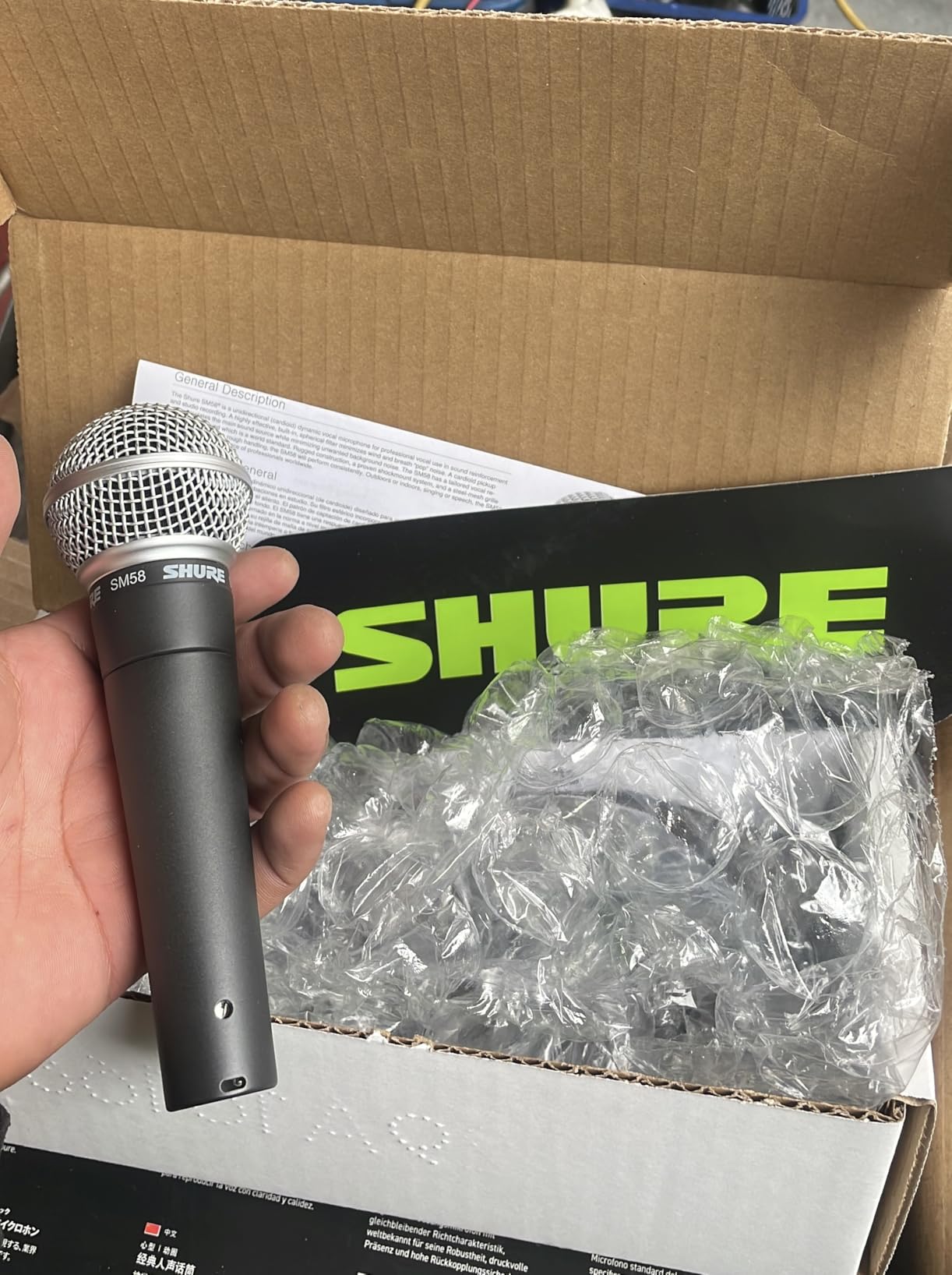
The spherical grille is doing quiet work most people do not notice. It is not just a cosmetic guard, it is a built-in pop filter, and it handles plosives and breath well enough that I could record most episodes without a separate filter. Reviewers consistently describe the same warm, articulate clarity, and over a long session that consistency matters more than any measured specification.
It also handles being moved. I used it handheld for street-style stand-up segments, and the reinforced stand adapter plus the metal body mean it shrugs off handling noise in a way the desk-mount models here do not.
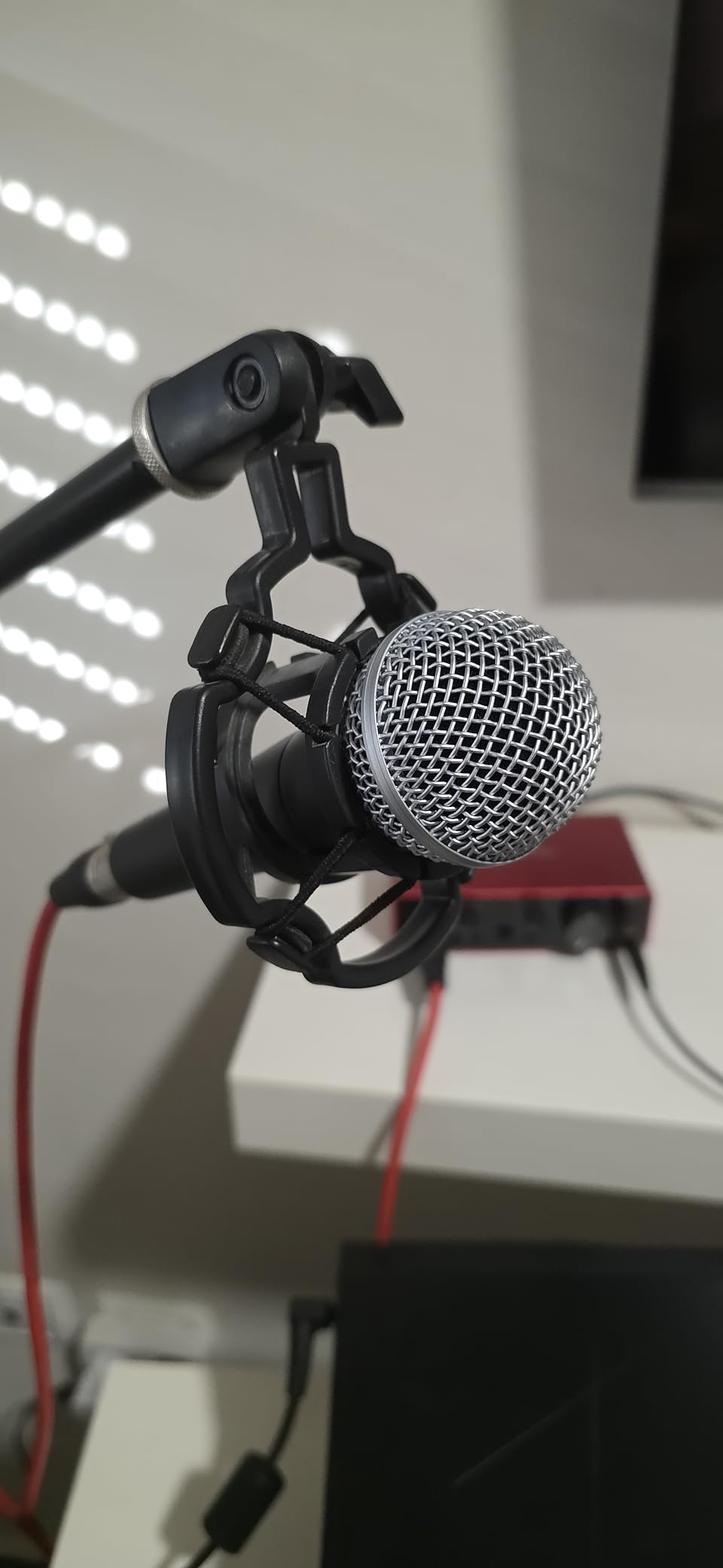
How the SM58 behaves with a modest interface
The SM58 is not the most sensitive microphone in this roundup, and the honest limitation is that a very quiet preamp will expose its own noise before the mic runs out of headroom. On any interface with a usable gain range you can hit a healthy level by talking across the top of the grille rather than straight into the axis.
At 310 g it is light enough for an entry boom arm without the sag you get with the heaviest chassis here, and the cardioid pattern stays stable when you shift position, which matters for hosts who move while they talk.
Where the SM58 is the wrong choice
Do not buy the SM58 expecting the deep, controlled low-end of a dedicated broadcast flagship. Its bottom end is present but modest, and if your voice is genuinely deep, a microphone with a little more weight in the low mids will sound more natural on the radio.
It is also XLR only, with no USB path, so you are committing to an interface or a mixer from day one. If you want to record tonight with nothing but a laptop and a cable, one of the USB/XLR hybrids further down this list fits the job better. If you are building out a whole radio signal chain, our radio station equipment guide for beginners covers the rest of the signal path.
2. Shure SM7B Dynamic Vocal Microphone: The Flagship Broadcast Pick
Shure SM7B Dynamic Vocal Microphone for Podcasting & Streaming
XLR dynamic
50 Hz - 20 kHz
150 ohm
2.7 lbs
integrated shock mount
Pros
- Warm broadcast tone with tamed sibilance and plosives
- Excellent off-axis rejection in untreated rooms
- All-metal build with integrated shock mount and pop filter
- Rear low-cut and presence-boost switches for tone shaping
Cons
- Needs roughly 60 dB of clean preamp gain
- Often requires an inline booster for a clean signal
- Dark character does not suit every voice
The SM7B is the microphone people mean when they say broadcast mic, and once I had it on a preamp with real headroom, I understood why. The low end is deep and controlled, the midrange is smooth rather than honky, and the top end rolls off gently enough that sibilance never became a problem in any of my takes, and it is one of only a few microphones in the roundup with shock isolation and pop filtering built into the body.
It also offers something none of the budget models here do: two rear switches. A low-cut filter at about 100 Hz removes desk rumble and building vibration before the signal reaches your preamp, and a presence boost adds upper-mid clarity when a dull room or a dark voice needs help. On a baritone host, the low-cut alone made the biggest difference of any single control in the whole test.
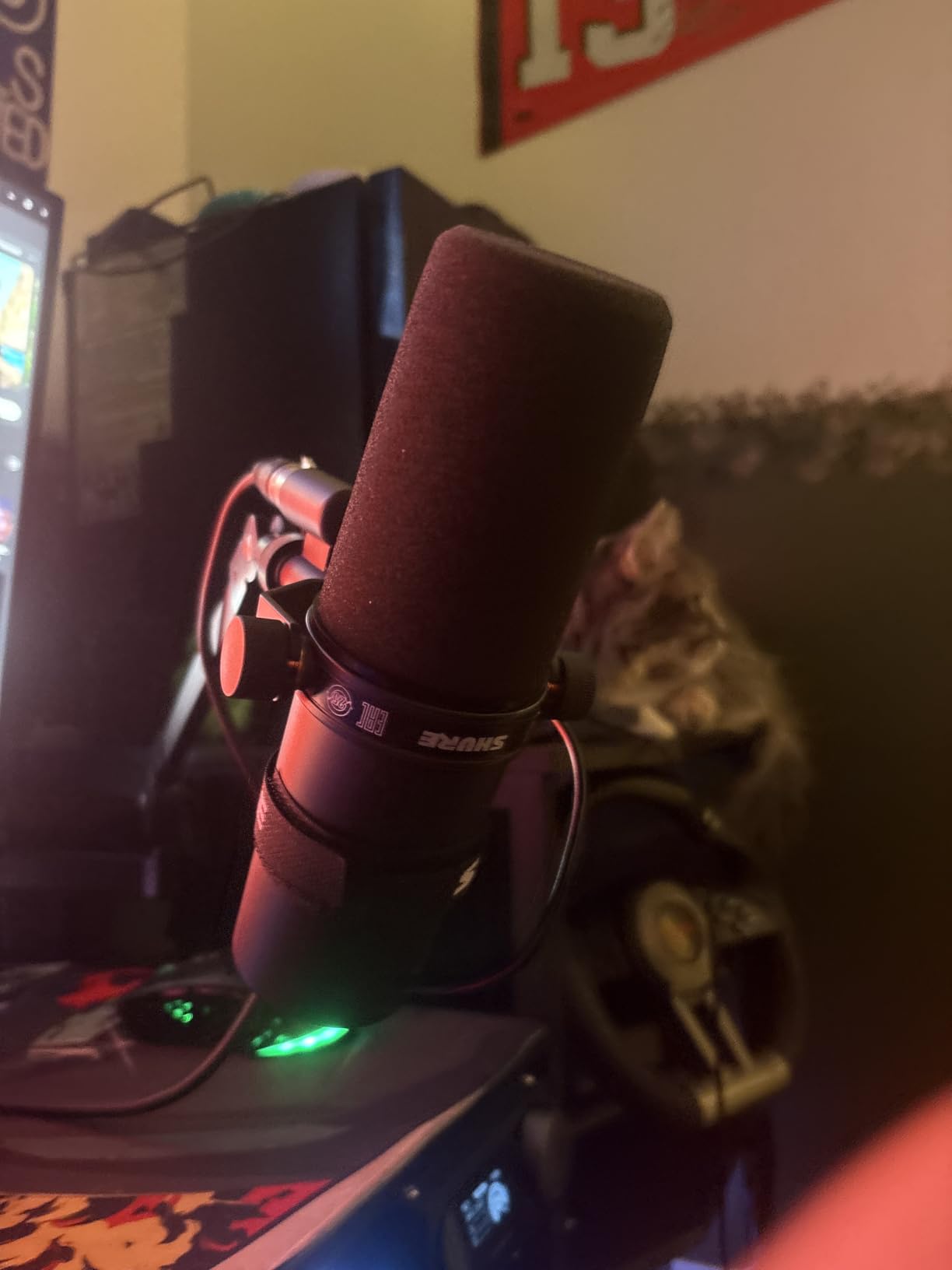
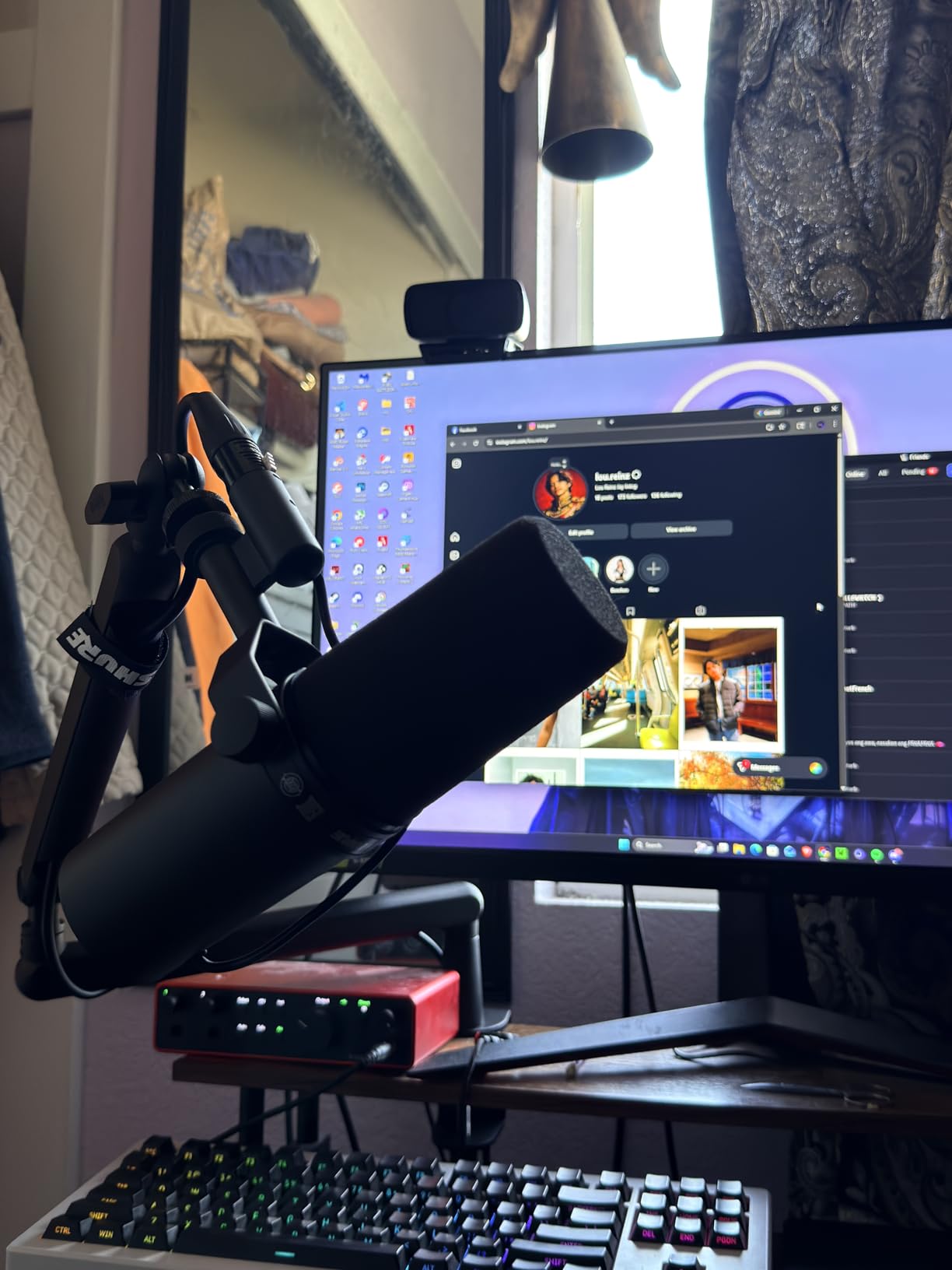
At 2.7 lbs, the SM7B is a serious object. It needs an arm rated for the weight, and the electromagnetic shielding in the chassis is part of why the noise floor stays so low. Reviewers describe the same combination of warm vocal reproduction and room rejection, and they describe the same caveat: the gain requirement is the thing that trips people up.
That is the honest headline for this microphone. Roughly 60 dB of clean gain is the figure most people quote, and it is accurate. The 60 dB SNR and 150 ohm impedance are fine specs, but they do not help if the preamp in front of it tops out at 45 dB of usable range.
What you need behind the SM7B
Treat the SM7B as part of a chain rather than a standalone purchase. An inline booster such as a Cloudlifter or a FetHead adds clean gain ahead of the interface, which is the difference between a broadcast voice and a quiet one. Buy the mic, the booster and the interface in the same order, not three months apart.
The 50 Hz to 20 kHz response and the smooth top end mean less EQ work than most of the cheaper mics here, which is where some of the extra cost goes. Speaking across the top of the grille at about 3 inches, slightly off-axis, gives a fuller low end and further cuts plosives.
Where the SM7B is the wrong choice
If you already have a deep voice, the SM7B can tip you toward boomy. The rear low-cut switch helps, but a brighter capsule such as the RE320 further down is a better match for a baritone presenter who wants presence rather than weight.
It is also the wrong pick for a first podcast on a tight signal chain, purely on the arithmetic of what the mic, booster and interface add up to. Readers on community forums describe buying the SM7B first and discovering the booster requirement afterwards, which is the most common regret in this category. If you want the upgrade path without that first-step tax, a USB/XLR hybrid gives it to you.
3. RØDE PodMic: The Best Value Broadcast Microphone

RØDE PodMic Cardioid Dynamic Broadcast Microphone, XLR
XLR dynamic
20 Hz - 20 kHz
150 ohm
internal pop filter
Pros
- Broadcast dynamic capsule tuned for speech with strong off-axis rejection
- Internal pop filter and shock mounting built in
- All-metal body that survives drops
- Integrated swing mount for easy boom positioning
Cons
- Low output needs considerable gain or you hear interface hiss
- XLR only and no cable included
- Heavier than expected on a lightweight boom arm
The PodMic is the microphone I recommend to people who want broadcast tone and do not want to spend flagship money. Out of the box it produced a consistently warm, low-mid-rich voice in the roundup, comparable only to the SM7B, and it did it in a room I had made no effort to treat. The 20 Hz to 20 kHz response gives noticeably more low-end extension than most of the entry-level dynamics here.
It is a desk or boom microphone rather than a handheld one, and the geometry is deliberate. The capsule sits at the top of the body, so a host talks across the grille rather than into the end, which reduces plosives and gives that slightly warm radio-announcer colour without any EQ.
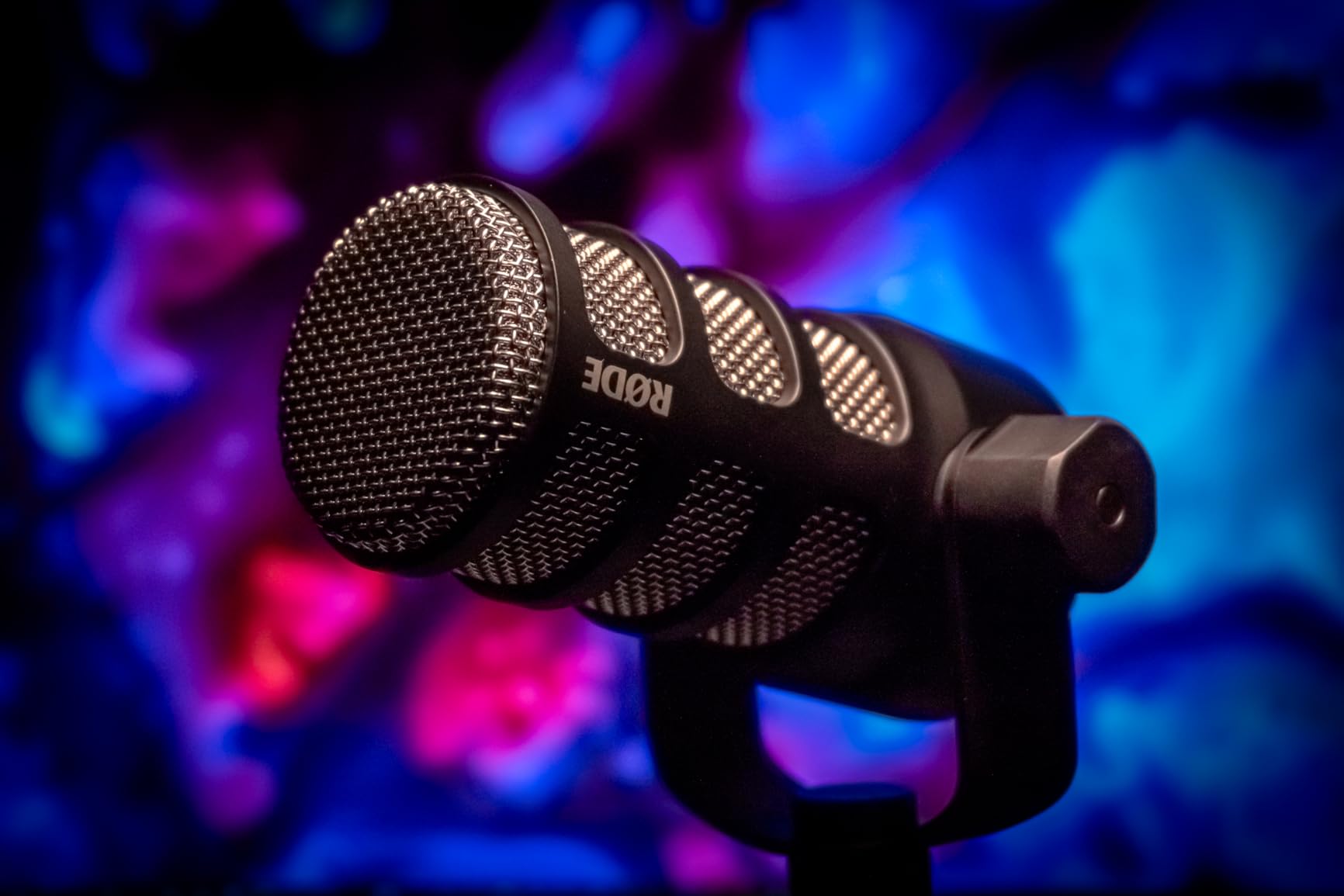
The internal pop filter and internal shock mounting are the two features that stop you buying accessories. I recorded an entire episode with desk thumps and chair creaks and had nothing to fix afterwards. Owners describe the same thing, often comparing the sound to microphones costing several times more.
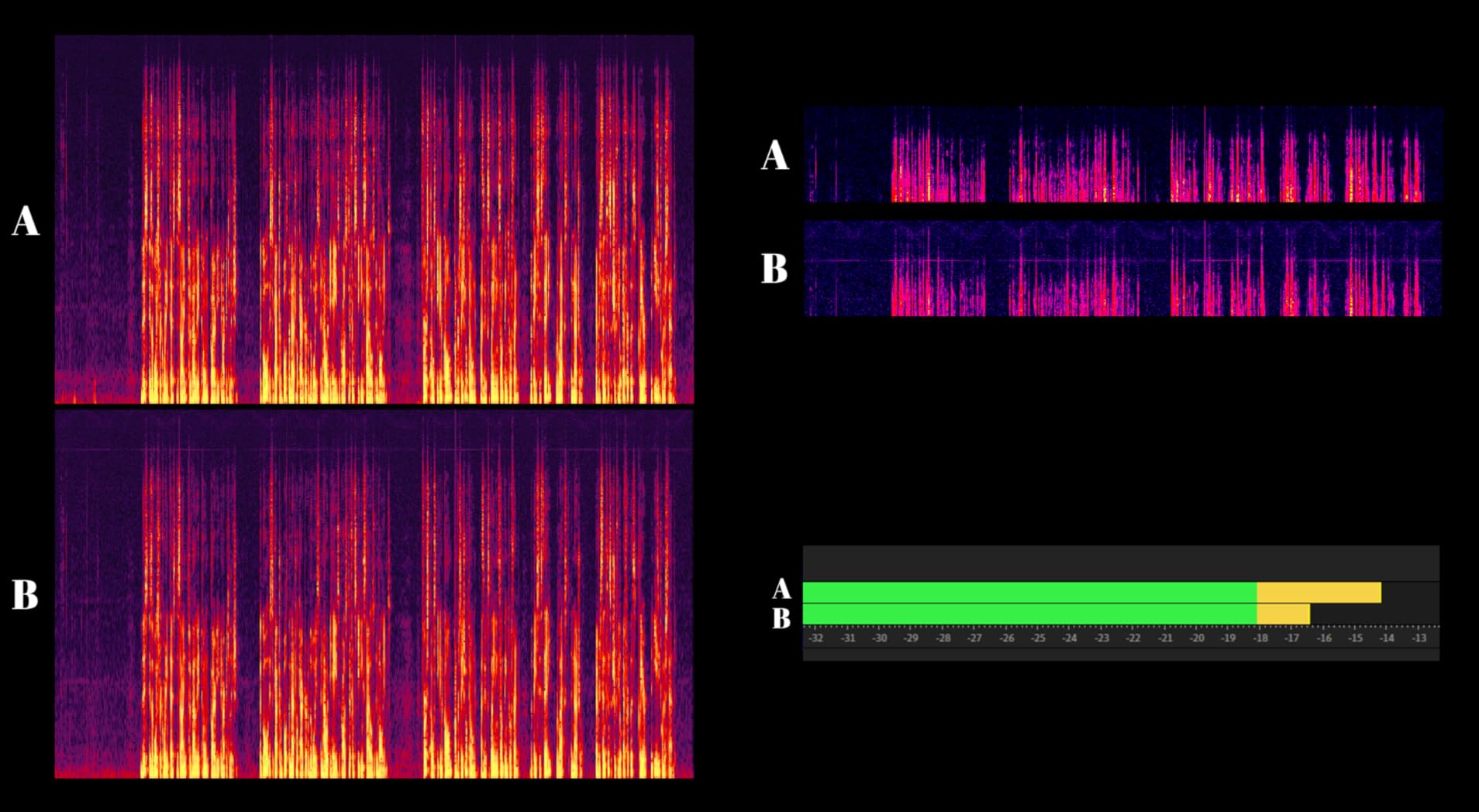
The limitation everyone reports is gain. The output is low, so a noisy interface makes itself obvious in the silence between sentences. Get the gain right and this is a genuinely professional broadcast tool; get it wrong and you will blame the microphone.
Pairing the PodMic with the right preamp
Because the capsule is so quiet, the PodMic is a good argument for spending your money on the front end rather than the microphone. A preamp with a genuinely low noise floor will do more for this mic than an expensive upgrade to the mic itself would.
At 937 g it is a heavy body for a desk microphone, so use a boom arm rated for the load or the arm will drift during a long session. There is no headphone output, so you will be monitoring through the interface rather than the mic, which is normal practice for XLR broadcast work.
Where the PodMic is the wrong choice
It is the wrong choice if you need to move the microphone around, because it is built for a stand mount and the swing mount is the only mounting hardware included. Field reporting and handheld segments call for one of the handheld broadcast models instead.
It is also XLR only with no USB path and no cable in the box. If you want a microphone you can grow into rather than one you grow out of, the hybrid options below let you start on USB and move to a real interface when the show justifies it. For the wider chain, our broadcast mixer guide covers what comes after the preamp.
4. Samson Q2U USB and XLR Pack: The Lowest-Effort First Podcast Mic
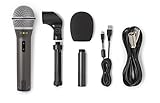
Samson Q2U USB/XLR Dynamic Microphone Recording and Podcasting Pack
USB-C and XLR
50 Hz - 15 kHz
70 dB SNR
bundle includes stand and cables
Pros
- Dual USB-C and XLR gives plug-and-play now and XLR later
- Clear warm tone with less background noise than budget condensers
- Handheld format makes cardioid positioning easy for beginners
- Stand
- clip
- windscreen and both cables in the box
Cons
- Weak plosive control and the foam windscreen is genuinely needed
- Bundled desktop stand is flimsy and droops
- Occasional reports of USB detection and reset quirks after power cycling
The Q2U is the fastest route to a radio-style voice I have found. It is a handheld dynamic with both USB-C and XLR on the body, so a beginner can record a full episode on a laptop with no interface, and then move the same microphone into a real signal chain when they are ready. That upgrade path is why it keeps appearing in community recommendations for first-time podcasters.
The tone is clear and warm, with a 70 dB signal-to-noise ratio that is respectable rather than exceptional. The cardioid pattern is doing real work in an untreated room: keyboard noise and room echo sit well below the voice. Radio professionals in particular like the handheld form factor, because it makes correct cardioid positioning almost automatic for a new host.
Everything you need is in the box, which is unusual at this end of the market: desktop tripod stand, tripod extension, mic clip, windscreen, USB-C cable and XLR cable. The time saved on accessories is real.
The repeated complaint is the stand. The bundled desktop tripod droops under a long session, and most owners replace it with a boom arm eventually. Plosive control is the other one, which is why the supplied foam windscreen is not optional.
When the Q2U is the right first purchase
Choose it when you are not certain a podcast is a long-term thing, or when you want to record on different machines without a mixer. The USB path means no gain staging to think about, and the mic connects directly to a computer with no drivers and no settings to hunt down.
At 11.2 oz it is a genuinely light body, so it is easy to move between a desk and a standing setup. If you later go to XLR, you already own the cable and the microphone, so the only additional cost is the interface.
Where the Q2U is the wrong choice
It is the wrong choice for live on-air work, because the handheld format and the modest body suggest a stage microphone rather than a studio broadcast tool, and the plosive control will cost you an accessory. Reviewers also report occasional USB recognition problems after a power cycle, which is annoying mid-session.
It is also a microphone, not a recorder. There is no internal storage, so you still need software on a computer. If your plan is a remote interview show recorded to a field recorder, look at a handheld XLR broadcast model instead.
5. FIFINE AmpliTank K688: The Most Feature-Rich Hybrid on a Budget

FIFINE AmpliTank K688 Dynamic Microphone, XLR/USB Podcast Recording PC Mic
USB and XLR
50 Hz - 16 kHz
80 dB SNR
tap-to-mute and headphone jack
Pros
- High signal-to-noise ratio keeps PC fans and drives out of the recording
- Dual USB and XLR outputs for a laptop-first or interface-first path
- Tap-to-mute
- rear gain knob and headphone monitoring for voice-over work
- Metal build with shock mount
- windscreen and detachable USB-C cable
Cons
- XLR cable
- boom arm and mic stand are not included
- On-mic controls only function on the USB connection
- Flimsy included mini stand
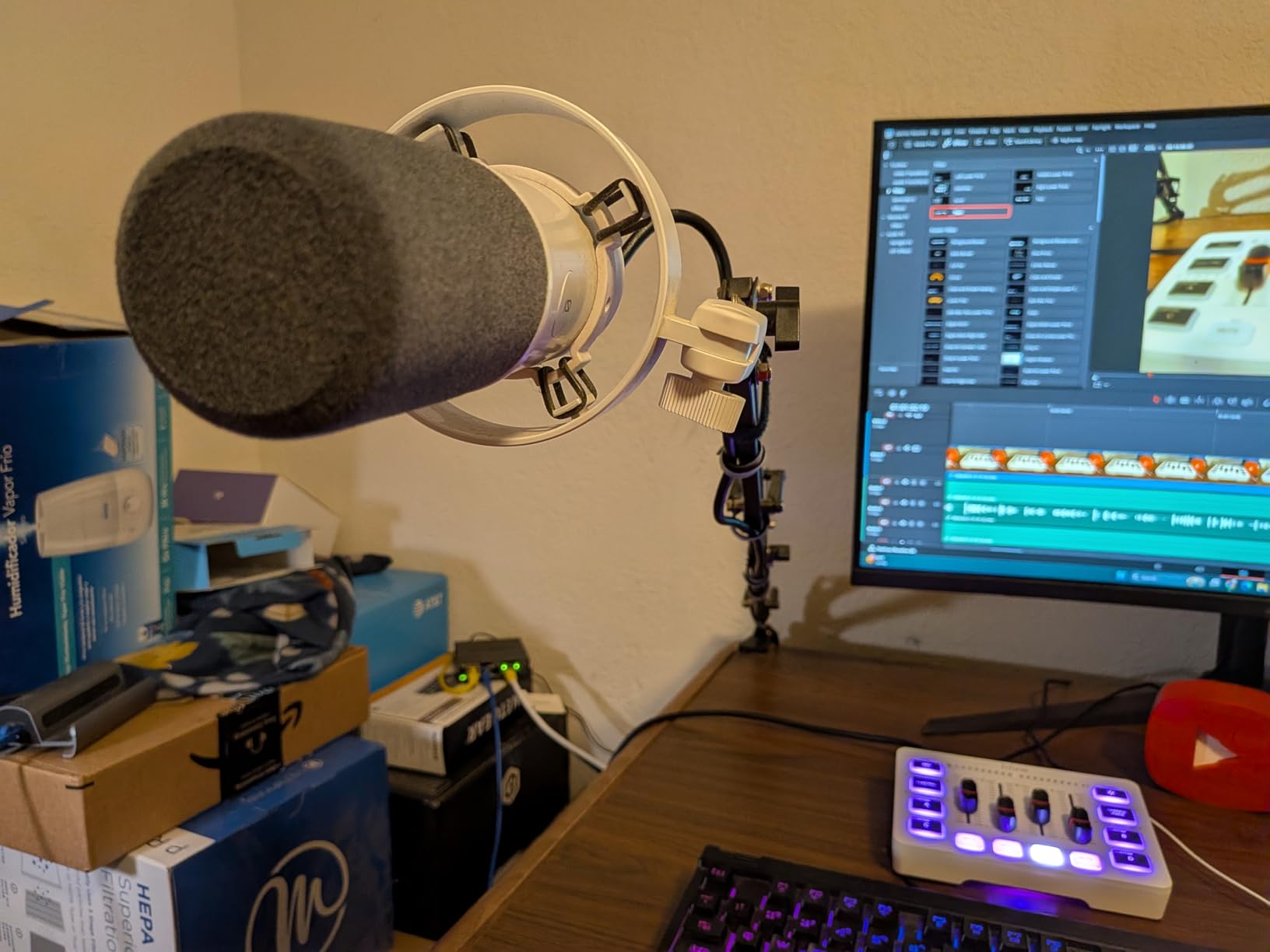
The K688 is the most capable hybrid at the budget end, and its 80 dB signal-to-noise ratio is among the highest figures in this roundup. That headroom gave me a clean recording floor in a room with a desktop PC and a mechanical keyboard: the voice sat well clear of the fan and key noise without needing aggressive noise reduction in post.
Feature-wise it is hard to argue with at this level. Tap-to-mute on the front, a gain knob on the back, and a 3.5 mm headphone jack for zero-latency monitoring that makes it genuinely pleasant to record voice-over and narration. The detachable USB-C cable is a small thing that prevents a lot of cable failures.
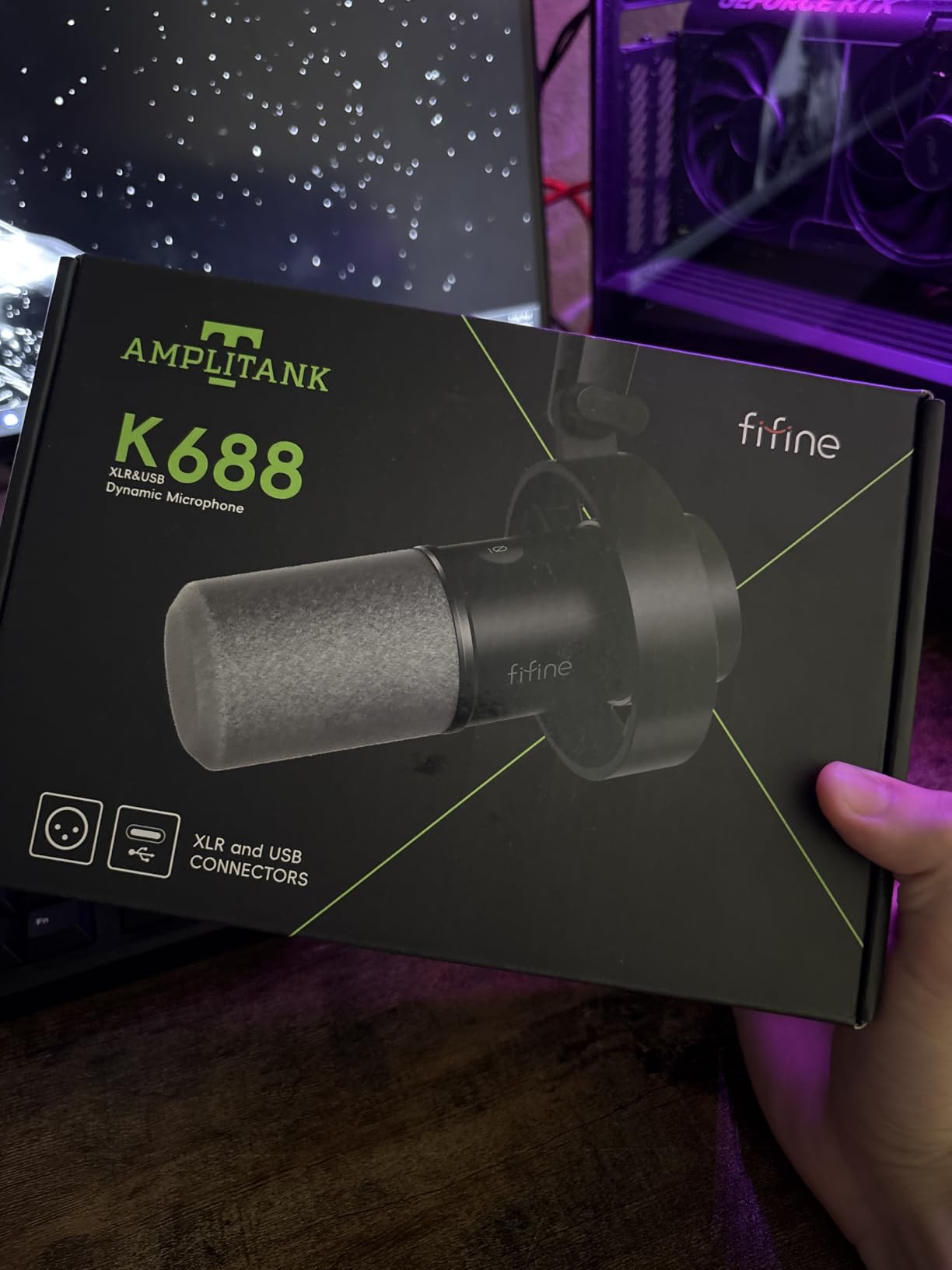
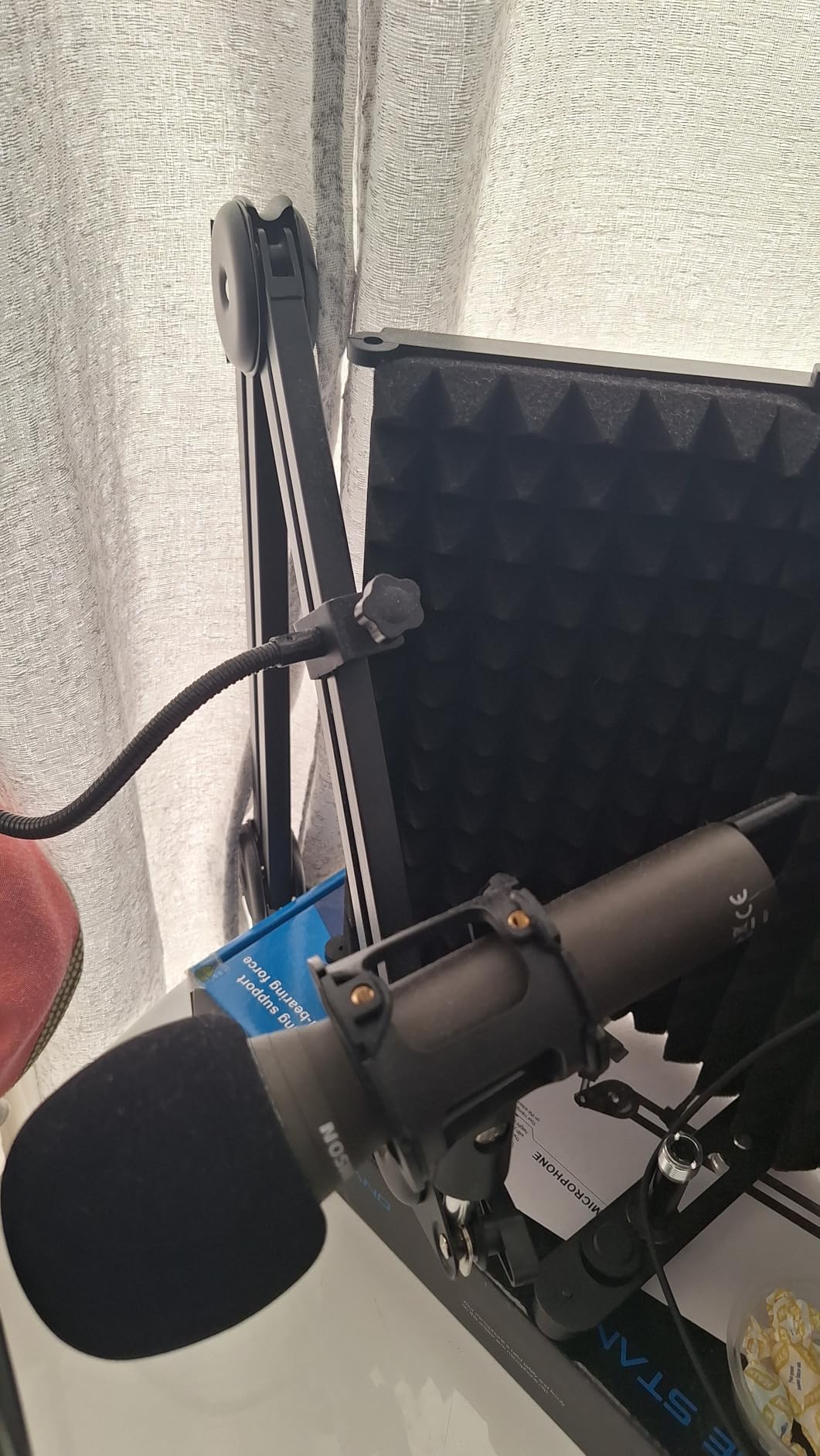
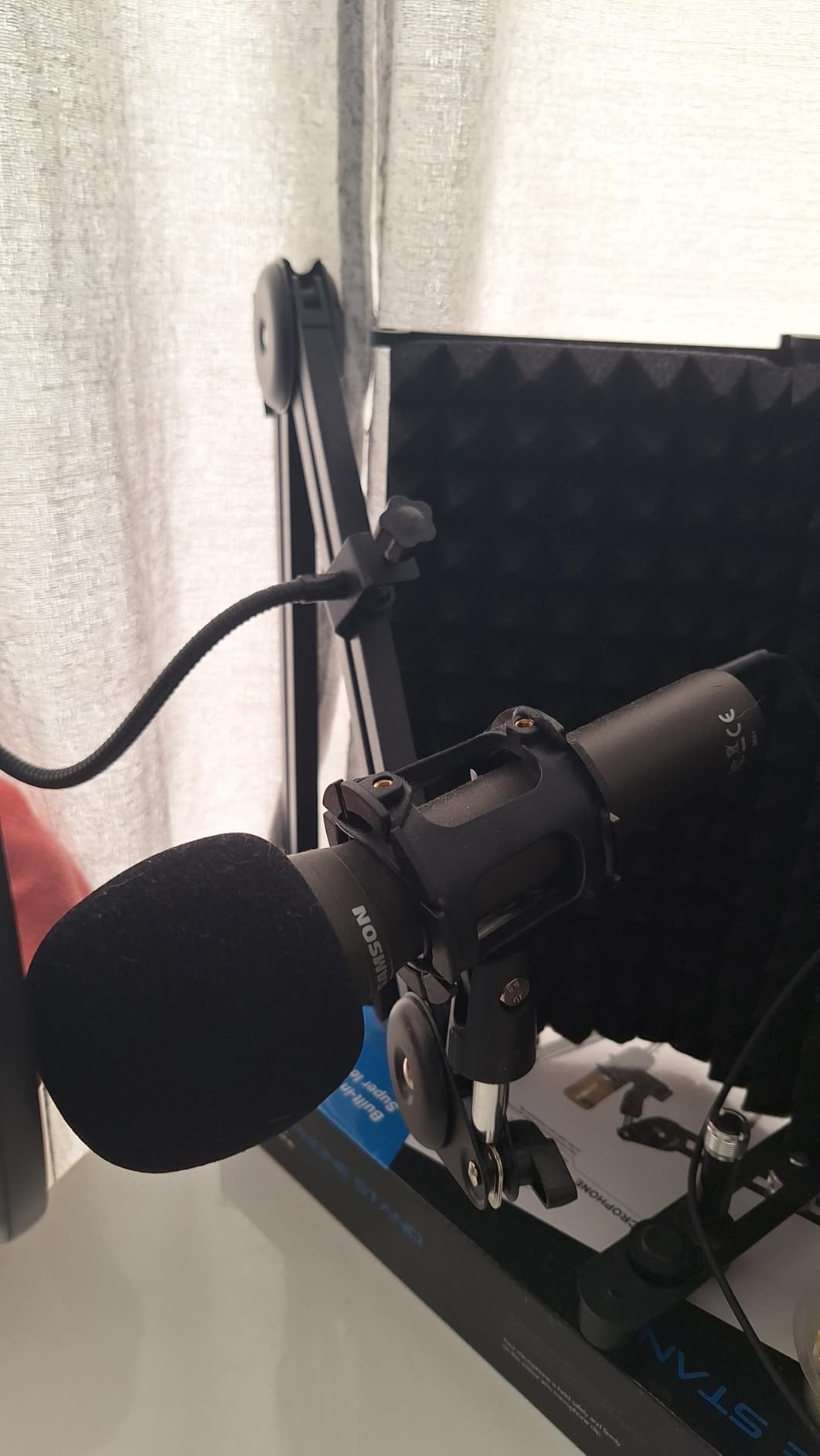
Reviewers praise it for sound quality that rivals microphones costing several times more, and the shock mount and windscreen included in the box mean it is usable on a desk immediately. The metal chassis feels far more substantial than its budget-tier position suggests.
The catch is that the on-mic controls only work on the USB path. Move to XLR and you are back to gain staging on the interface, which is worth knowing before you plan your workflow around a front-panel mute.
Deciding between the K688 and the Q2U
Pick the K688 if noise floor and monitoring matter more to you than a bundled stand. Pick the Q2U if you want everything in the box and would rather not choose accessories.
The K688 is the better broadcast microphone on paper: better signal-to-noise ratio, a shock mount in the box, and a headphone output for zero-latency monitoring. The Q2U is the smoother first experience because the stand and both cables are included.
Where the K688 is the wrong choice
It is the wrong choice for anyone who plans to build a permanent boom-mounted studio, because the stand is not included and the included mini stand is not a long-term solution. The tap-to-mute mechanism also draws a small number of durability complaints, with a few buyers reporting recording faults on arrival.
Buying an XLR mic and then pairing it with a real interface is the natural next step, and at that point the front-panel controls become decoration. If you are already at that stage, spend the money on the interface instead.
6. Audio-Technica AT2040: The Best Isolation in a Noisy Room

Audio-Technica AT2040 Hypercardioid Dynamic Podcast Microphone
XLR dynamic
hypercardioid
76 dB SNR
integrated shock mount
2.2 lbs
Pros
- Hypercardioid pattern rejects off-axis sound harder than anything else here
- Large-diaphragm dynamic capsule with a smooth slightly bright top end
- Multistage foam mesh windscreen gives strong internal pop filtering
- Integrated shock mount cuts vibration from stands and booms
- No proximity effect so close-miking stays natural
Cons
- Needs serious preamp gain
- Low end rolls off early with no true low-end extension
- No XLR cable included
The AT2040 is the isolation specialist of this list. Its hypercardioid pattern rejects sound from the sides and rear more aggressively than a standard cardioid, and in my test room, with the fan running and a second person talking, it was the microphone that picked up the least of anything unwanted. If your recording space is shared, that is the single most valuable spec on the datasheet.
The large-diaphragm dynamic capsule gives it a smooth, detailed and slightly bright top end that sits well against a deep voice. Owners highlight exactly that combination, and a former radio announcer in the reviews reports using it for voice tracking and commercial reads, which is the kind of use this microphone is genuinely built for.
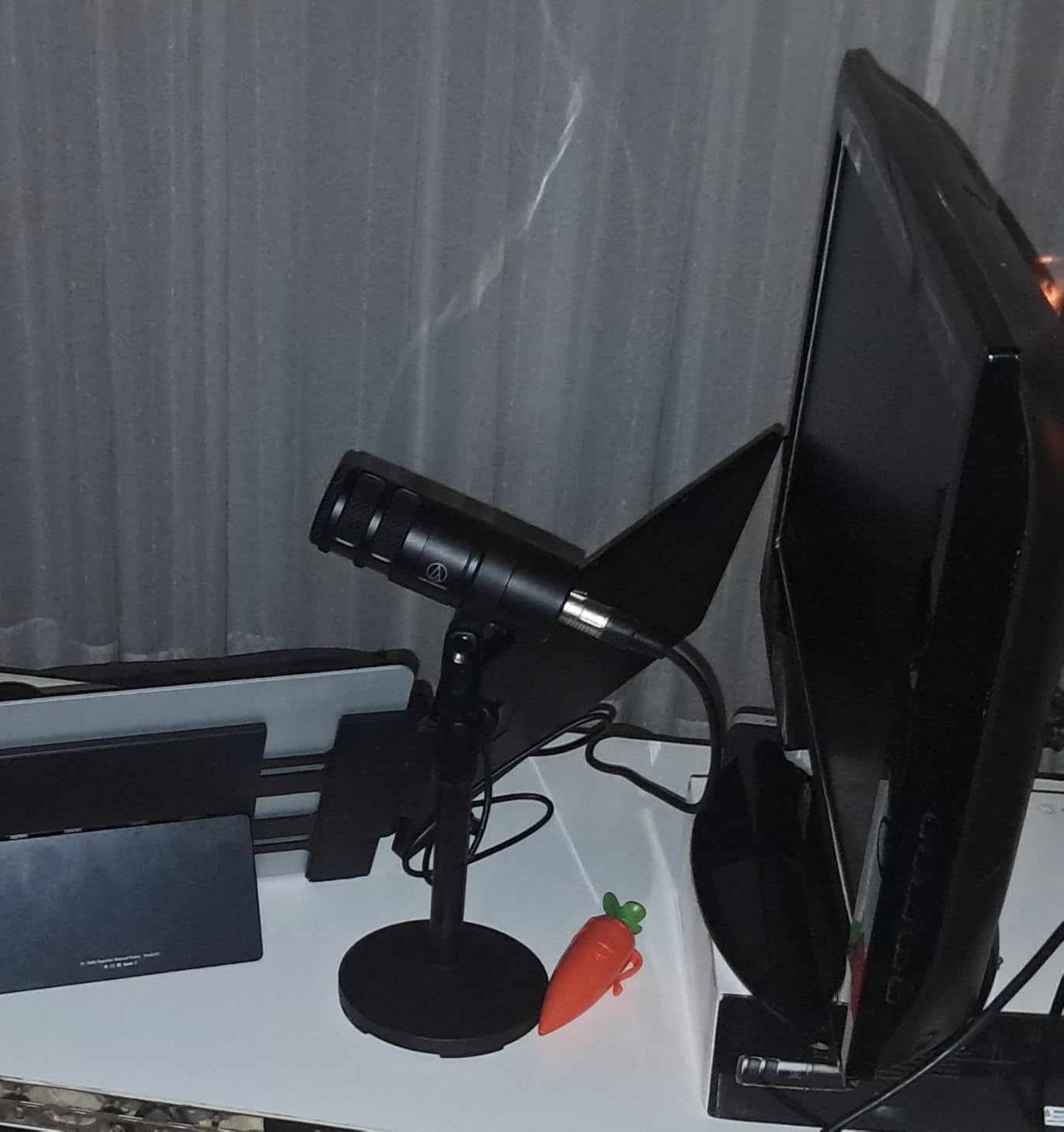
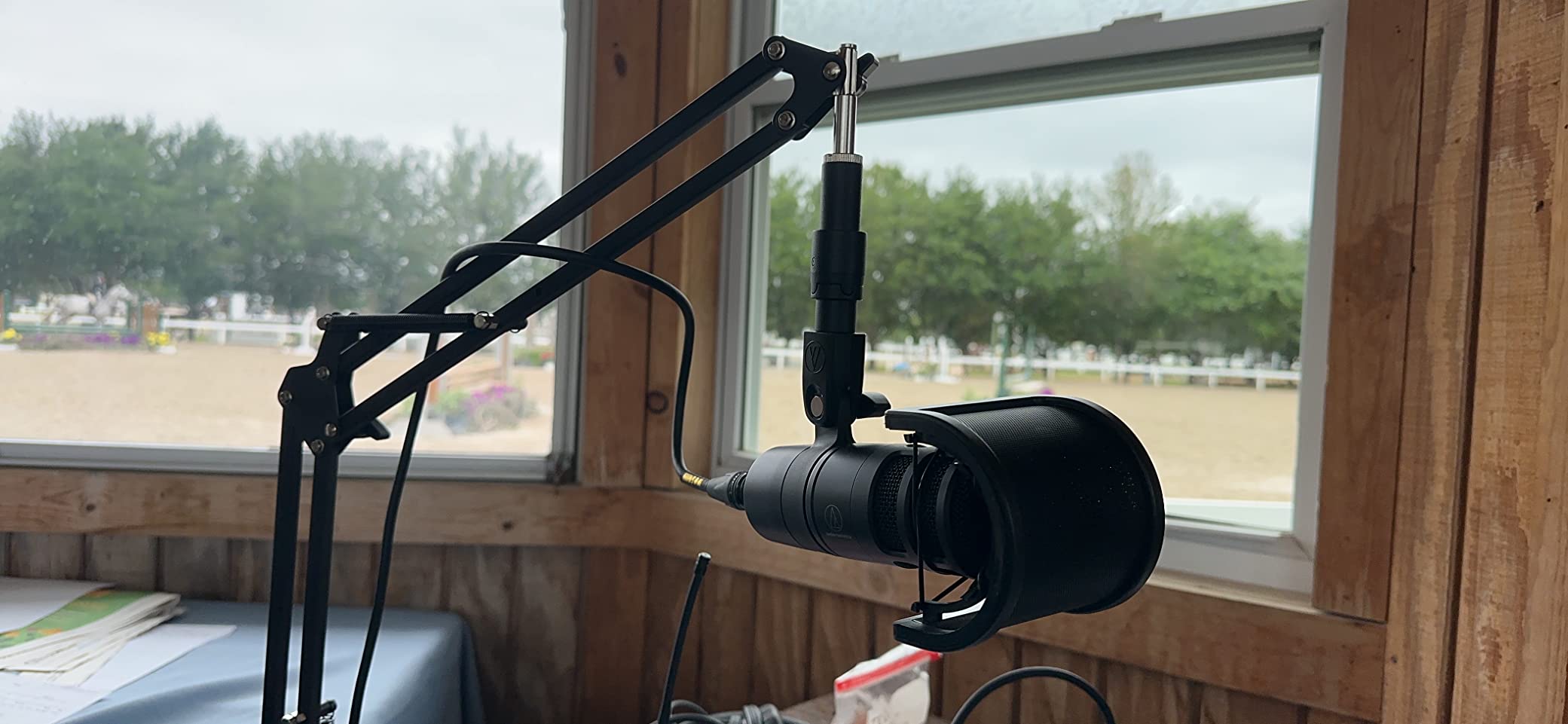
Two integrated features remove the usual accessories: a multistage foam mesh windscreen that does a genuinely good job on plosives, and an integrated shock mount that stops vibration travelling up the boom. Add the pivoting stand mount and the threaded adapter in the box and you are close to ready to record.
The most useful thing I found is the complete absence of proximity effect. You can move in and out while talking and the level does not boom, which is a real advantage for a host who leans toward the mic when making a point.
When hypercardioid beats cardioid
A hypercardioid pattern is worth the extra effort when there is a second voice in the room, a window, or a desk fan you cannot move. The cost is placement: the rejection lobe is tighter, so the microphone wants to be at a fixed distance and a fixed angle, roughly 3 to 4 inches away.
Reports that the AT2040 sounds quiet almost always trace back to gain settings rather than to the capsule. Set the gain properly, or run it through a booster, and the isolation does the work the capsule is capable of.
Where the AT2040 is the wrong choice
It is the wrong choice for a deep voice that wants weight. The low end rolls off early, with no true low-end extension, so a baritone host will find the mic a little thin. In that case a dynamic with a fuller bottom, such as the SM7B, is a better match.
It is also the wrong choice if you want a warm, dark radio bed. This microphone is accurate and bright, which sounds great on a bright or mid-range voice and slightly clinical on a very deep one. It also comes without an XLR cable, and a small number arrive dented from packaging.
7. Elgato Wave DX: The Mic That Does Not Need a Signal Booster

Elgato Wave DX Dynamic XLR Microphone, Cardioid Pattern
XLR dynamic
600 ohm
50 Hz - 15 kHz
407 g
no booster required
Pros
- Speech-optimized dynamic capsule with warm
- true-to-life detail
- Runs on any XLR preamp or interface with no inline booster
- Cardioid pattern with a wide forgiving acceptance angle
- Compact body that saves desk space and simplifies boom arms
- Owners report it holds its own against far costlier microphones
Cons
- No on-mic controls and no XLR cable included
- Needs some gain staging to sit at the right level
- Lightweight stands and arms can struggle with it
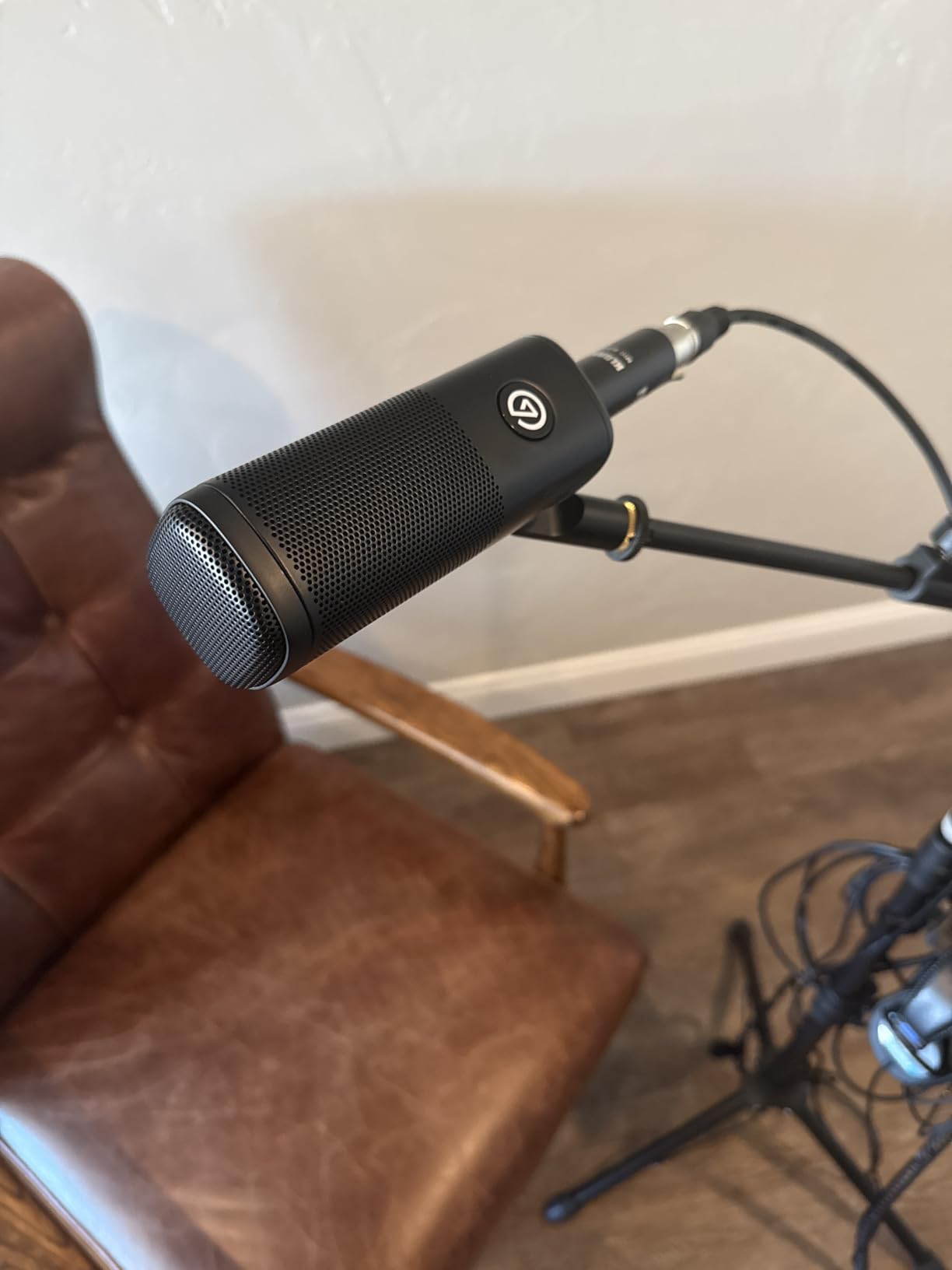
The Wave DX exists to solve one specific problem, and it solves it well: it is a broadcast dynamic that does not need a booster. Out of a modest entry interface, it reached a healthy recording level with gain to spare, and the silence between sentences stayed clean. If a Cloudlifter is not in your budget, this is the microphone to look at first.
The capsule is speech-optimized, and you can hear that. It is warm and true-to-life rather than bright, with enough detail for a 50 Hz to 15 kHz range, and it needed less corrective EQ in my sessions than almost anything else at a similar level of build quality.
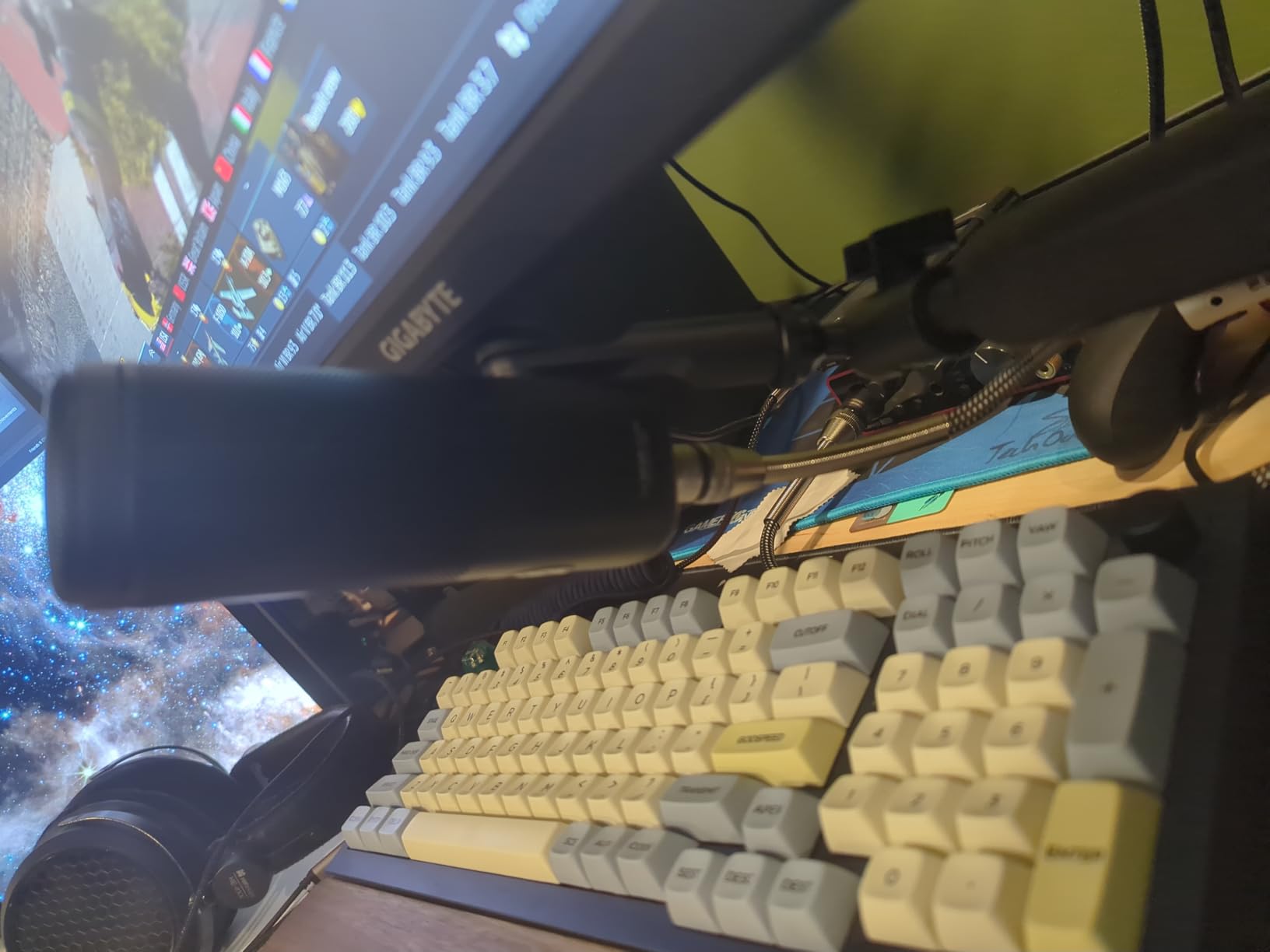
The other thing I appreciated was the wide cardioid acceptance angle. Most cardioid microphones lose presence the moment a host turns their head. The Wave DX stayed consistent even when I deliberately spoke well off-axis, which matters for video podcasts where a host is not always facing the microphone.
Reviewers make the same comparison to the SM7B, and that is the pitch: most of the broadcast character, none of the gain-hungry reputation, in a much smaller body. At 407 g it also takes up almost no desk space and will not overload a modest boom arm.
Why no-booster matters more than the spec sheet
Here is the arithmetic that decides most purchases in this category. A broadcast dynamic plus an inline booster plus an interface is three purchases and a larger total outlay than many people budget for. A microphone that drives cleanly from the interface you already own removes one of those entirely.
You still need gain staging, and the 600 ohm impedance is worth noting when you match cables and preamps. But for a first XLR setup, a microphone that behaves is worth more than a marginally better capsule that needs help.
Where the Wave DX is the wrong choice
It is the wrong choice for live streaming with onboard monitoring, because there are no on-mic controls and no headphone output. Everything is handled at the interface or in software, which is fine for podcasting and awkward for a streamer who wants hands-on level control.
No XLR cable is included either, and a few users find it needs a little more gain than expected. If your priority is a warm, low-end-heavy broadcast bed, the SM7B or the PodMic will get you further.
8. Electro-Voice RE20: The Radio Announcer Original
Electro-Voice RE20-BLACK Dynamic Broadcast Announcer Microphone, Black (RE20)
XLR dynamic
Variable-D true cardioid
78 dB SNR
2.9 lbs
3 year warranty
Pros
- Classic FM radio announcer tone that is smooth and controlled
- Variable-D design keeps proximity effect to a minimum
- True cardioid with no coloration at 180 degrees off-axis
- Decades of professional broadcast use and a 3 year warranty
- Handles brass
- bass cabs and other instruments as well as voice
Cons
- Included stand clip is weak under the weight
- Plosives get through the filter if you speak straight on-axis
- Heavy body needs a sturdy boom or stand
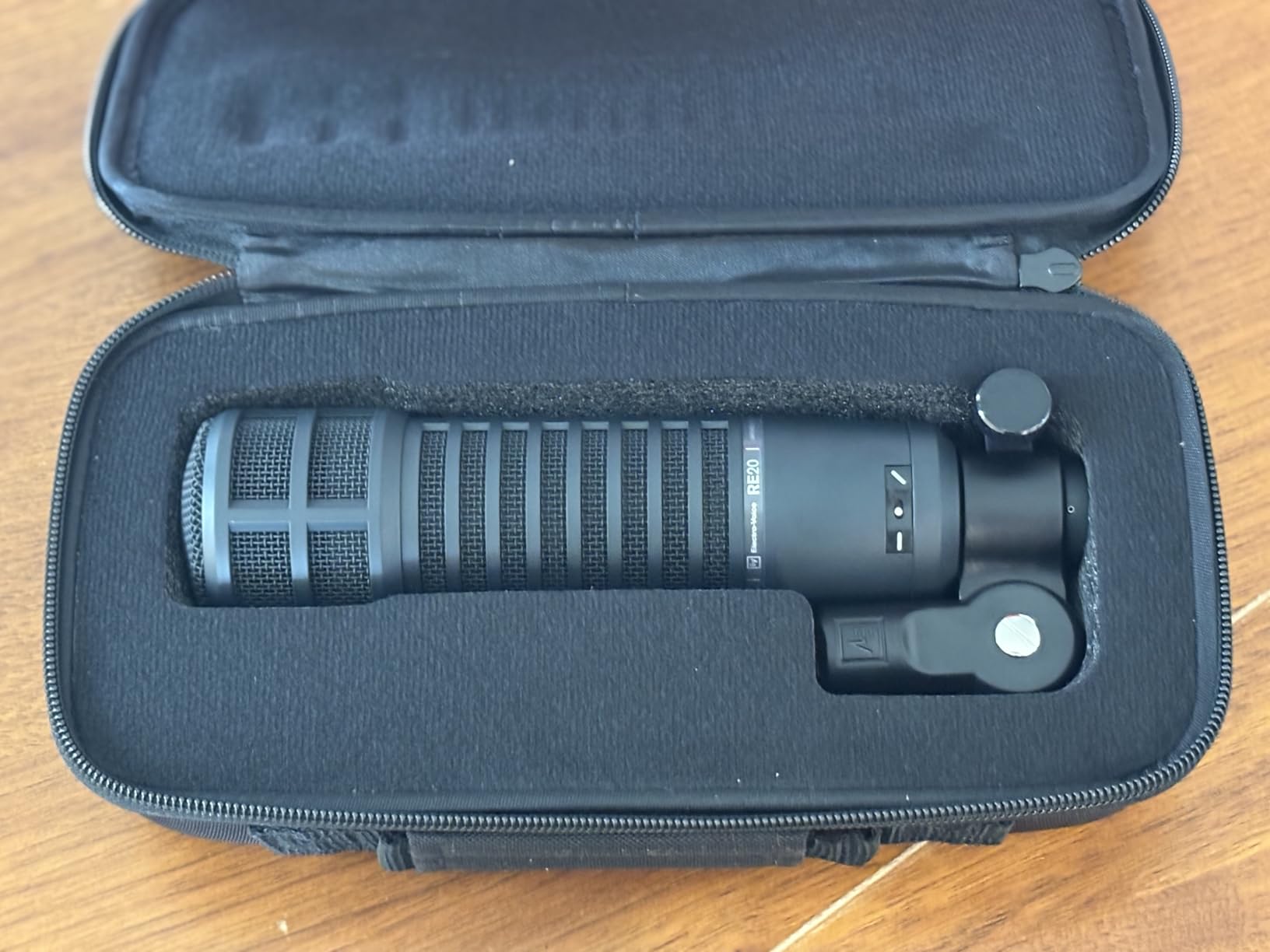
The RE20 is the reason people say the words radio announcer, and hearing it next to the modern podcast microphones makes the lineage obvious. The tone is smooth, controlled and slightly dark, with a presence curve tuned to speech rather than to music. It is one of the most recognisably broadcast-sounding microphones in this roundup.
Variable-D is the technology that separates it from every other mic here. Rather than relying on a fixed pattern, it keeps the response consistent as you move closer or further away, which means proximity effect is minimal. I could move from 8 inches to 2 inches while reading the same script and the level barely shifted, and the tone stayed intact.
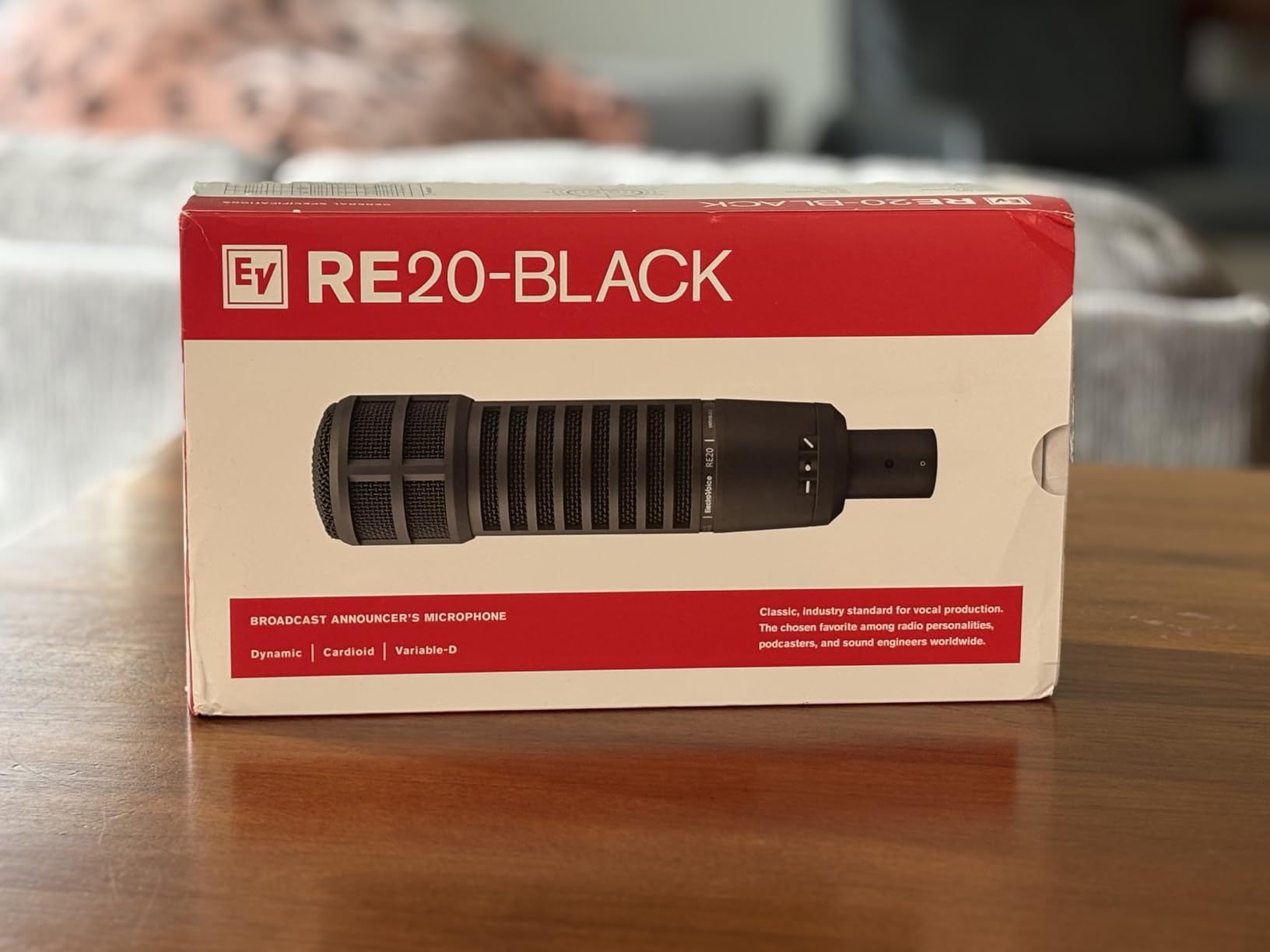
The 78 dB signal-to-noise ratio and the true cardioid pattern, with no coloration at 180 degrees off-axis, mean the microphone adds very little of its own. The 3 year warranty is the longest here, which fits a chassis built to sit on air for years.
The reviewers who own one, including radio engineers, frequently pair it against far costlier options and find the swap hard to hear. They also note it performs well at around 50 dB of gain, which is the practical difference between this and the SM7B for most home setups.
RE20 or SM7B: which broadcast heritage fits your room
Both are large-diaphragm broadcast dynamics with a dark, warm signature. The RE20 is the one with minimal proximity effect, so it is more forgiving of a host who moves. The SM7B is darker and heavier in the low end, and it gives you two rear tone switches to shape the low end away.
Gain is the deciding factor. If your preamp tops out well short of 60 dB of clean range, the RE20 is the more realistic purchase, and several owners say the same thing after comparing them directly. If you have a strong front end, the SM7B gives you more low-end weight for a similar outlay.
Where the RE20 is the wrong choice
It is the wrong choice for a small budget. A few reviewers in our research treated it as a better-value substitute for the SM7B, and that framing only works if the extra outlay is not your problem in the first place.
The hardware is the other issue. At 2.9 lbs it is the heaviest body here, and the supplied stand clip needs tightening with a screwdriver under that weight. Plosives also still reach the capsule if you talk straight on-axis rather than across the grille, so a pop filter is worth adding.
9. Electro-Voice RE320: The Brighter Answer to a Dark Mic

Electro-Voice RE320 Large Diaphragm Dynamic Vocal Microphone
XLR dynamic
Variable-D
150 ohm
70 Hz - 15 kHz
dual-voicing switch
Pros
- Brighter and more transparent broadcast voicing than the RE20 with less EQ
- Variable-D plus a humbucking coil give a remarkably low noise floor
- Dual-voicing switch selects between two tailored response curves
- Stronger output than the SM7B so it is easier to drive
- Rock-solid build with good off-axis rejection
Cons
- Still gain-hungry and some interfaces need a booster
- No internal shock mount so a separate mount is advisable
- Sensitive to boom-arm contact noise and desk taps
The RE320 is the answer for a host who finds the SM7B and RE20 too dark. Its voicing is brighter and more transparent, and that is not a neutral preference, it is a register match. A bright or mid-range voice that sounds muddy on a heavier broadcast mic will come forward clearly on the RE320 with less corrective EQ.
It also outputs more level than the SM7B, which makes gain staging noticeably easier. Owners and radio engineers describe it as the best all-round professional dynamic in its class, and several use it in place of a costlier RE20 on a full broadcast desk.
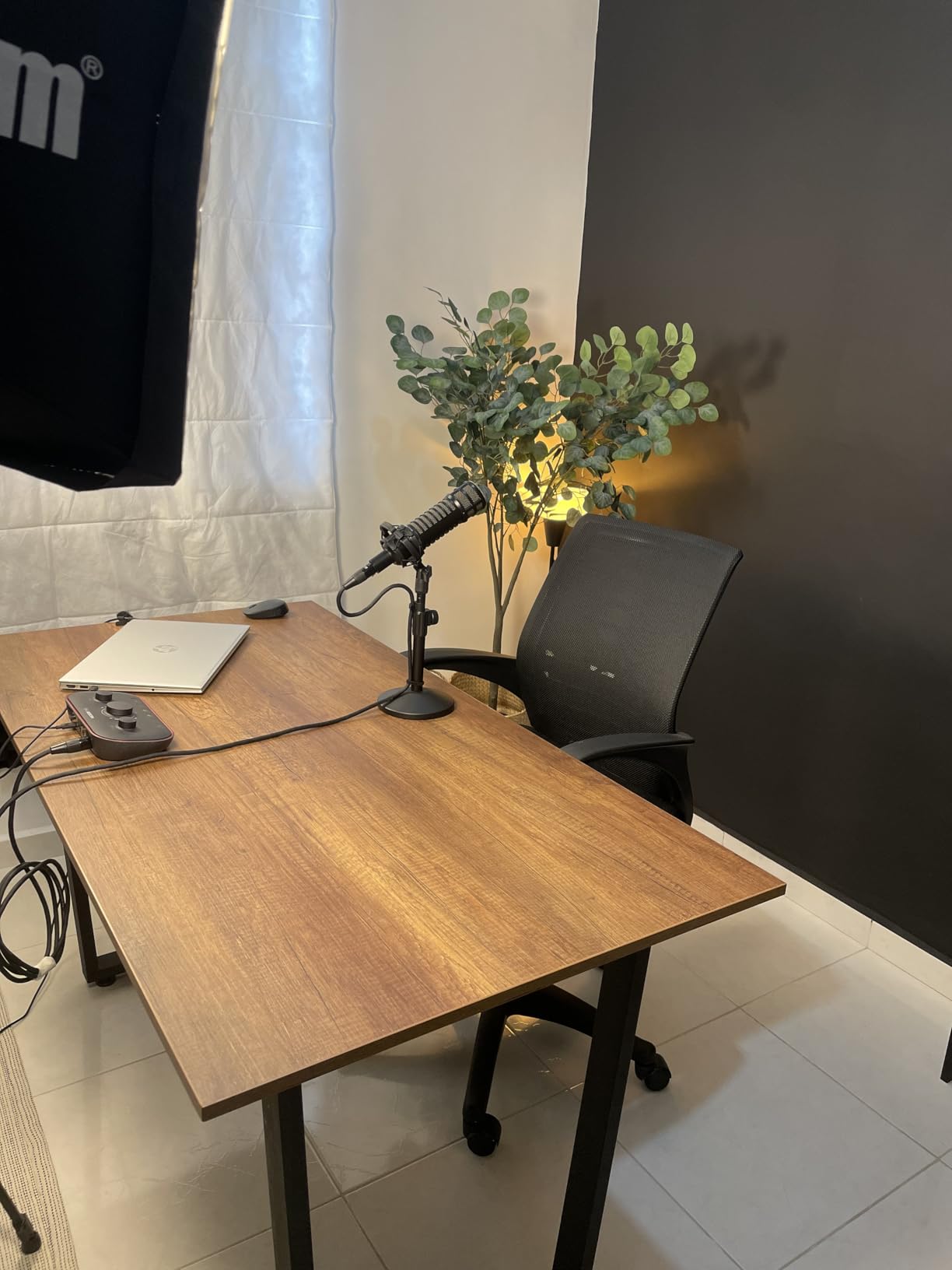
The dual-voicing switch is genuinely useful in a radio context. It selects between two tailored response curves, so you can move between a warm read and a harder news read without changing microphones. The Variable-D pattern control minimises positional and off-axis tonal shifts, and the integrated humbucking coil keeps the noise floor low.
The alloy steel body is among the most solidly built chassis in this roundup, and the 70 dB signal-to-noise ratio is respectable for a large-diaphragm dynamic.
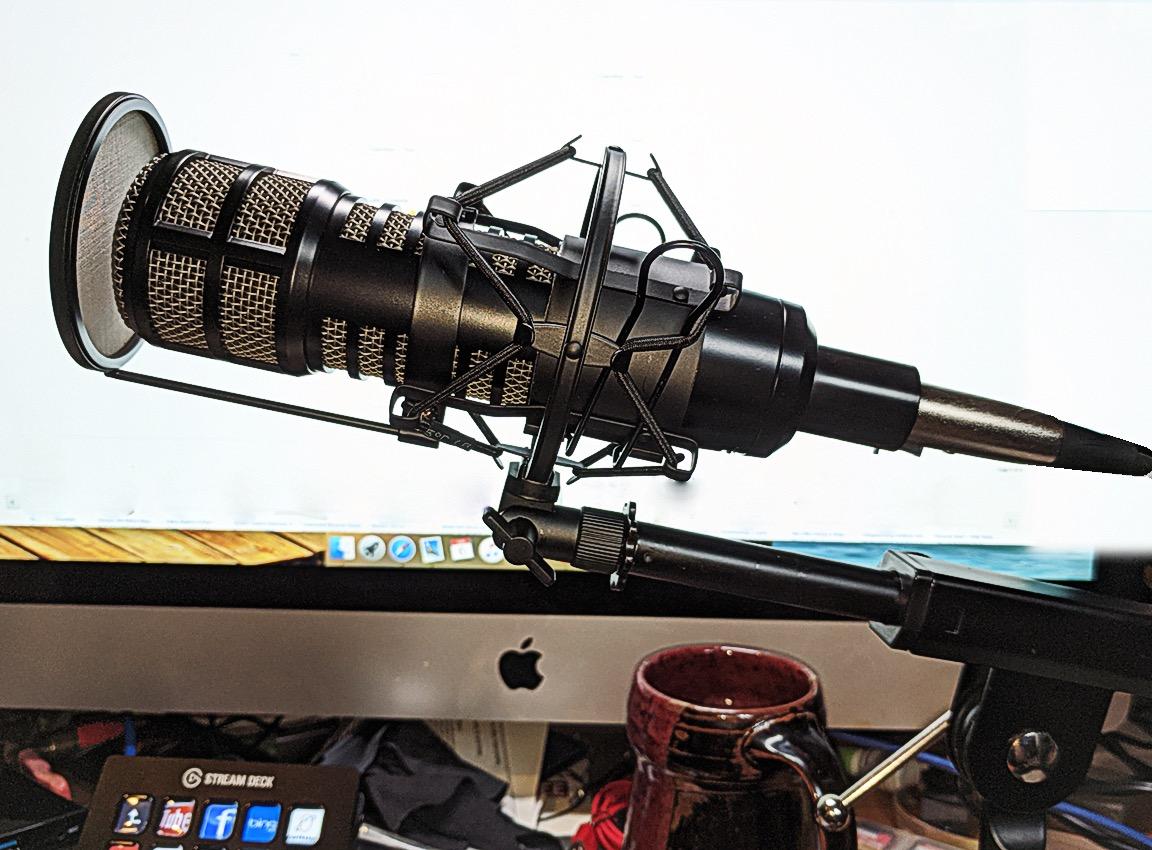
What the humbucking coil actually fixes
The coil is there to cancel hum induced on the capsule and cable, which is the reason some broadcast microphones pick up buzz near studio lighting, dimmers and unbalanced runs. Pair it with a properly shielded balanced XLR cable and you avoid the electrical noise complaints that owners of large broadcast bodies often report.
It is also why the RE320 pairs well with a room that has a lot of electrical gear in it. If you have ever traced a hum to a cable, swapping the cable first is still the right move, but a humbucking coil gives you more margin than a bare dynamic gives you.
Where the RE320 is the wrong choice
It is the wrong choice for a deep baritone host, because a tailored high end plus a strong output level is the combination that tips a low voice toward boom. That host is better served by a microphone with high-frequency roll-off built in.
There is no internal shock mount, so a separate mount is needed and the microphone is sensitive to boom-arm contact noise and desk taps. It is also still gain-hungry, with some interfaces needing a booster. Handle it carefully, buy the mount, and it rewards you.
10. beyerdynamic M 70 Pro X: The On-Air Presenter Microphone
beyerdynamic M 70 Pro X Dynamic Broadcast Microphone, Streaming & Podcast
XLR dynamic
supercardioid
70 dB SNR
elastic shock mount
16 oz
Pros
- Flat accurate response with an upper-mid presence lift for intelligibility
- Less gain-hungry than the SM58 and no booster demanded
- Elastic shock mount and dual-layer pop filter included
- All-metal construction with a broadcast look that suits on-camera work
- Supercardioid pattern rejects off-axis room noise
Cons
- Supercardioid pattern demands precise placement
- Bright character can make sibilants sound aggressive
- Some users report a low hum at higher gain
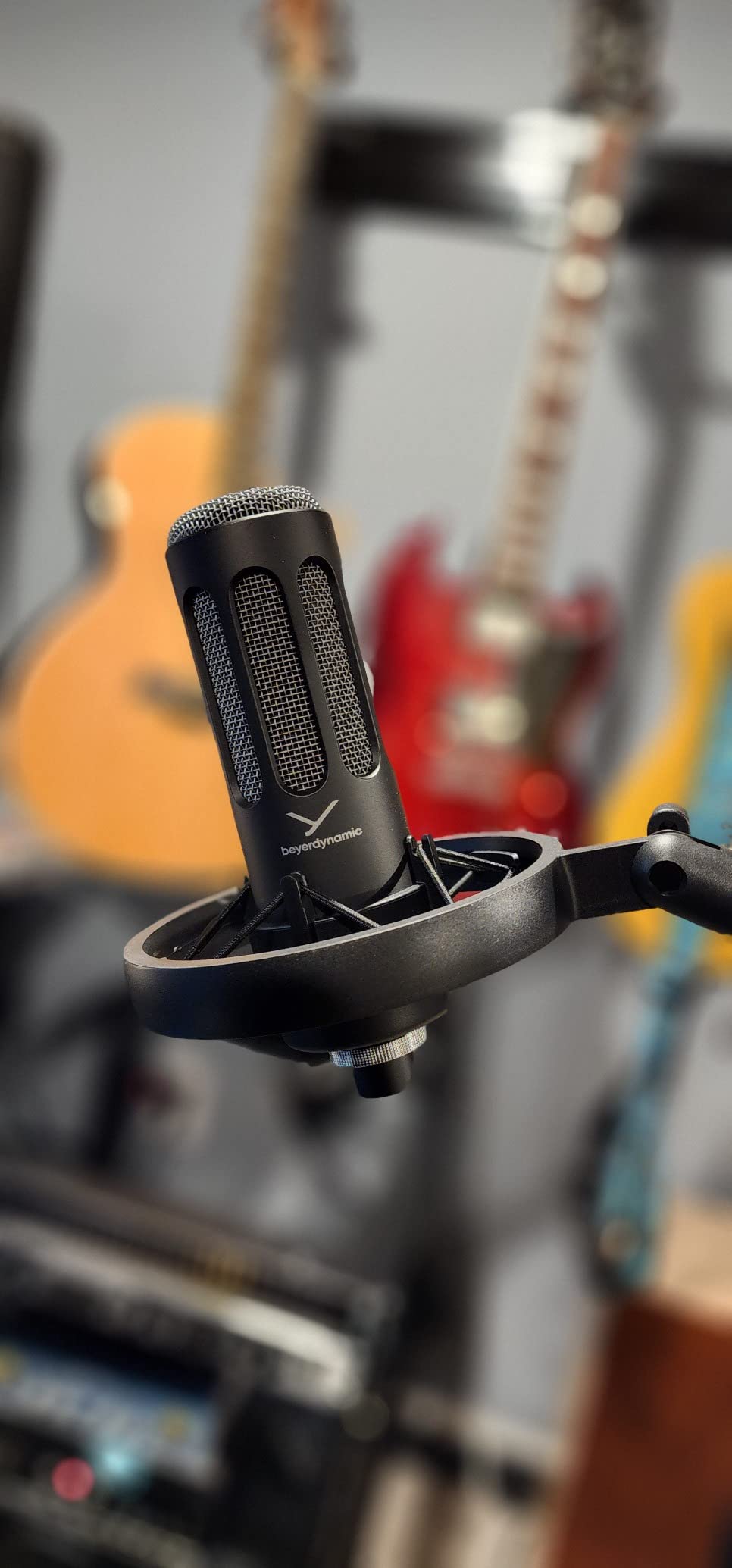
The M 70 Pro X is the microphone I would put in front of a presenter who reads the news. Its flat, accurate response with an upper-mid presence lift is built for intelligibility rather than for warmth, and intelligibility is the whole point when a voice has to cut through car speakers and small speakers in a kitchen.
It is also less gain-hungry than the SM58 and does not demand an inline booster the way the SM7B does, which makes it a sensible broadcast pick when your preamp is not exceptional. Owners frequently call it an underrated bargain that competes with microphones costing considerably more.
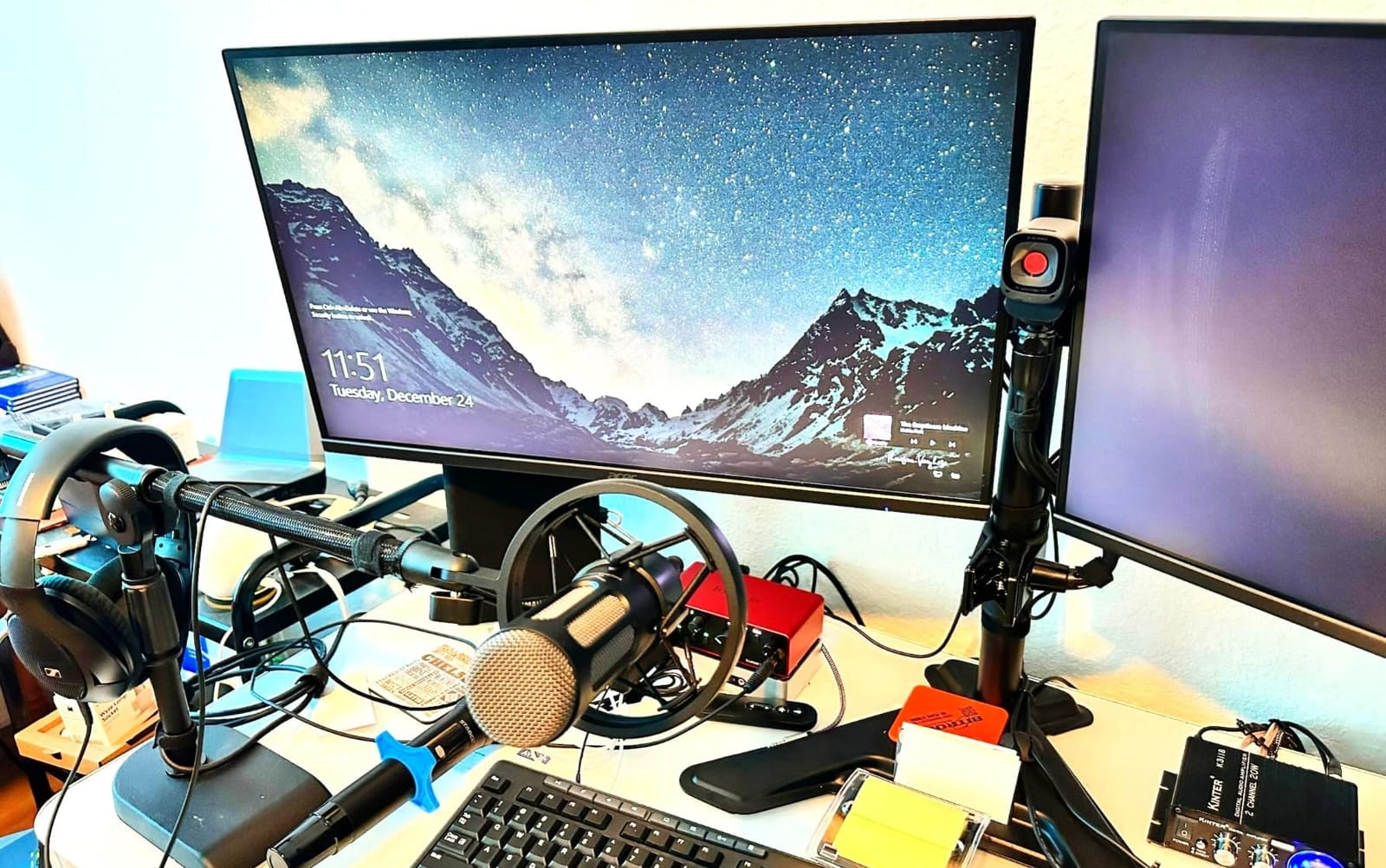
The box includes an elastic shock mount and an integrated dual-layer pop filter, so the plosive handling is better than the raw specification suggests. The polycarbonate and ABS construction is reinforced and the broadcast look works well on camera.
What I appreciated most was how little corrective EQ the voice needed. Crisp and detailed out of the box is a genuine advantage when you are editing a weekly show rather than a one-off session.
How to handle a supercardioid pattern
A supercardioid pattern rejects side and rear sound harder than a cardioid, which is excellent for an untreated office and unforgiving of sloppy placement. The presence and the body fall away quickly if you drift off-axis, so fix the microphone and leave it there rather than moving it between reads.
Because the character is bright, keep a pop filter in front of it. Reviewers note the sibilance can sound aggressive, and a filter plus a gentle high shelf handles it without turning the mic into something it is not.
Where the M 70 Pro X is the wrong choice
It is the wrong choice for a warm, relaxed conversational show. The presence lift that makes it read well on a speaker system can feel a bit forward on headphones, which is where a lot of podcast listeners actually hear you.
There is also a small number of reports of low hum at higher gain, and the included elastic shock mount is not ideally suited to a dynamic capsule, so a different mount is a sensible addition. The polycarbonate body is tougher than it looks but not as rugged as a full metal chassis.
11. Audio-Technica AT2005USB: The One-Microphone Start That Grows With You

Audio-Technica AT2005USB Cardioid Dynamic USB/XLR Microphone,Black
USB digital and XLR analog
81 dB SNR
built-in headphone jack
454 g
Pros
- Dual USB digital and XLR analog outputs for an easy start and a later upgrade
- Dynamic cardioid design keeps keyboard
- room echo and background noise out
- Smooth extended response with a warm low end and clean non-tinny highs
- No driver installation needed
- Built-in headphone jack plus bundled stand
- tripod and both cables
Cons
- Works best within roughly a foot of the microphone
- USB path has a compressor that cannot be disabled and adds hiss
- Headphone jack can take over the computer default playback device
The AT2005USB is a complete single-microphone solution. You get a dynamic cardioid capsule, a digital USB output for recording straight to a computer, and an analog XLR output for when you eventually build a real signal chain. One microphone, two paths, no repurchase.
Because the capsule is a dynamic rather than a cheap condenser, it handles an untreated room well. Mechanical keyboard noise, room echo and background noise sit well below the voice, and reviewers note that the rejection is strong enough to skip acoustic treatment for a lot of podcasters. One owner, a professional broadcaster, reported the XLR path was nearly indistinguishable from an RE20 to their ear.
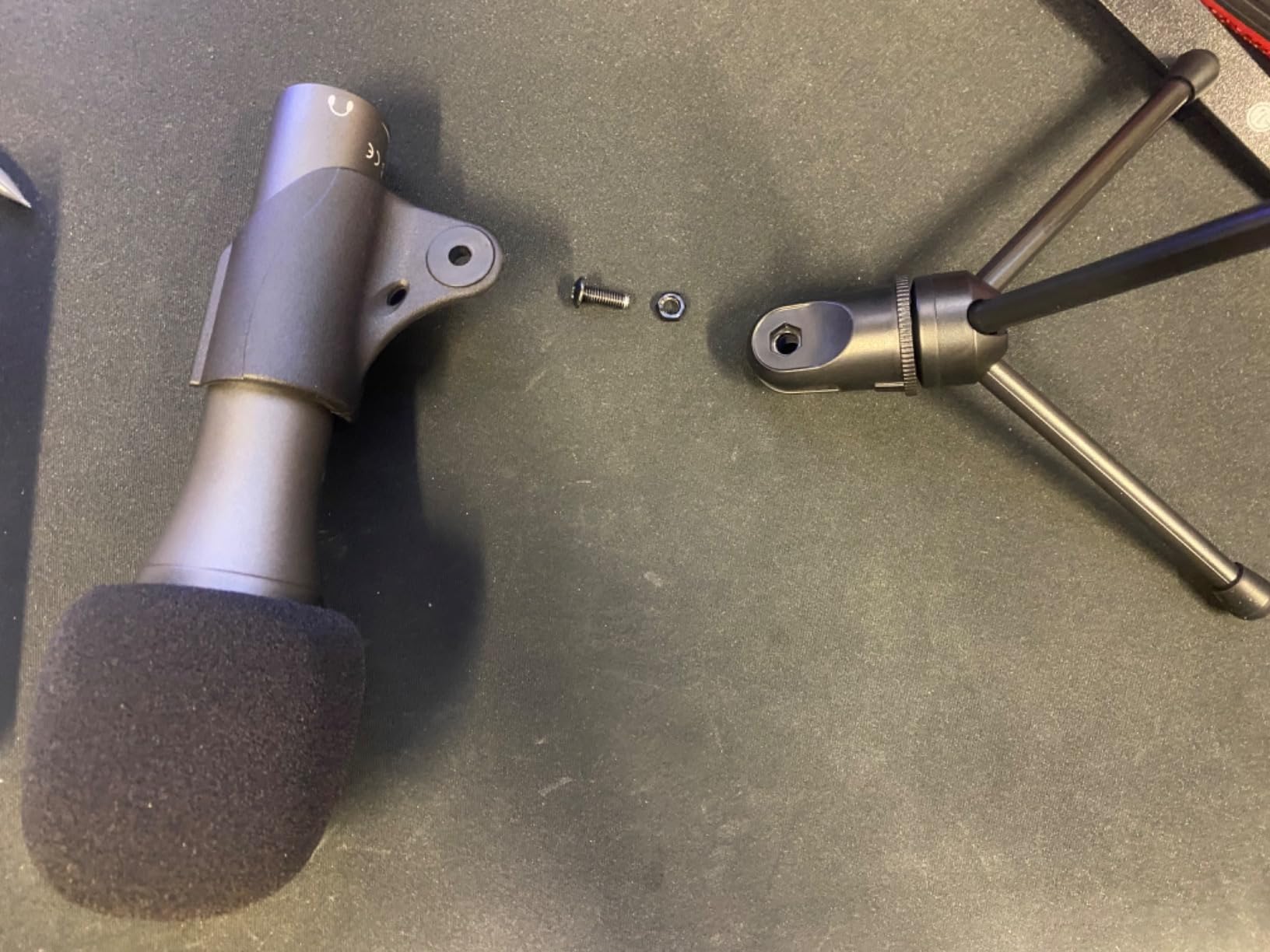
The headphone jack on the body gives you zero-latency monitoring without an interface, which is a genuine convenience for a first setup. The bundled stand clamp, tripod, USB cable and XLR cable mean you can record the same day it arrives.
The 81 dB signal-to-noise ratio is only the XS 1 and the K688 rate higher here, and the smooth extended response with a warm low end suits a conversational podcast tone without much EQ.
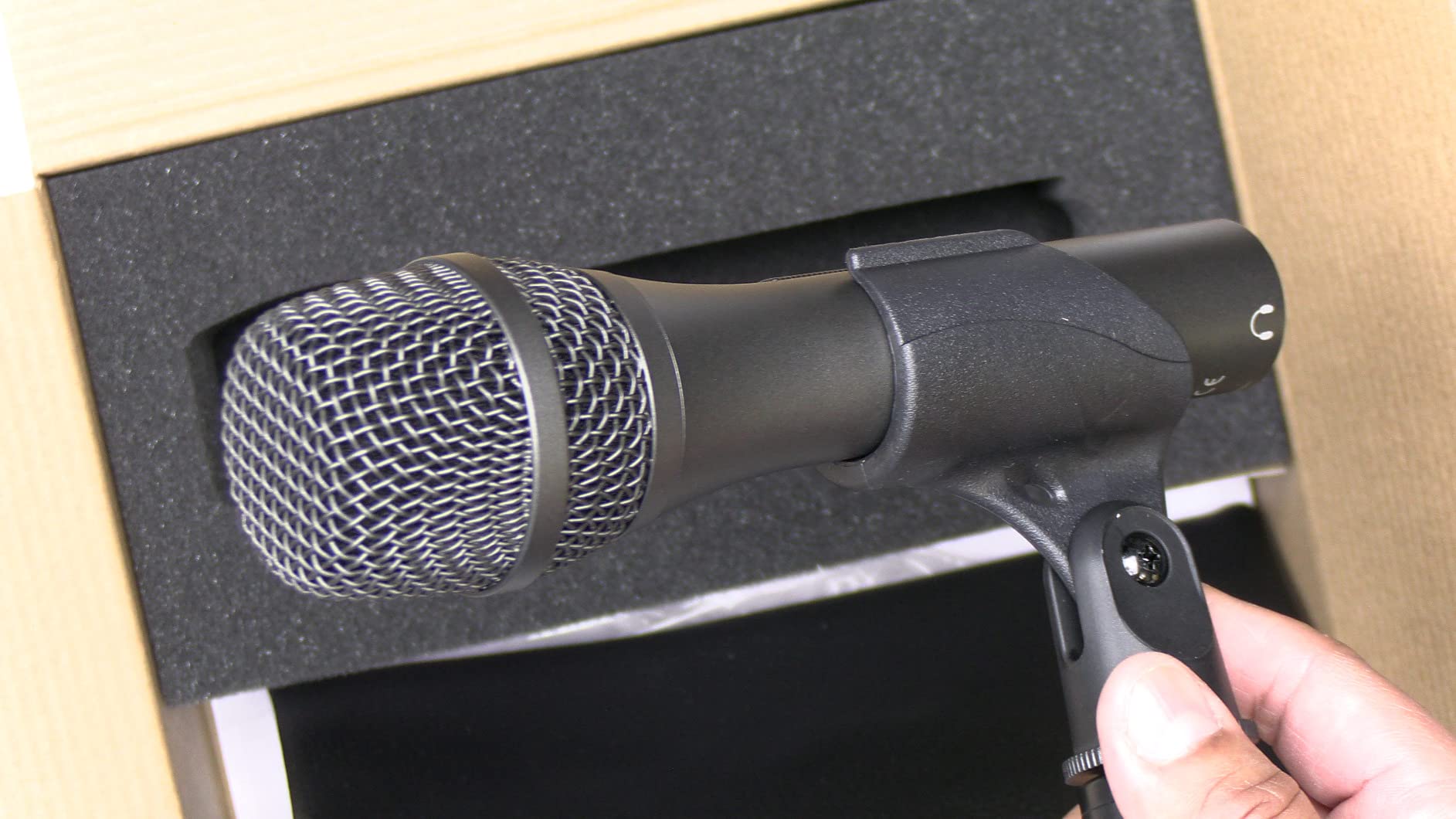
When to stay on USB and when to move to XLR
Stay on USB while you are a solo host recording on one machine, because there is no gain staging to manage and the headphone monitoring is built in. Move to XLR the moment you add a second host, a remote guest over a proper link, or any live broadcast element, because you will want interface control and a real signal chain.
The practical working distance matters more than people expect. This microphone gets quiet quickly beyond about a foot, so plan the arm position before the first episode rather than after the tenth.
Where the AT2005USB is the wrong choice
The USB path has a compressor that cannot be disabled, and it adds a small amount of hiss in silence. For a heavily edited interview show where the noise floor between sentences matters, that is a fair reason to move to XLR earlier than you planned.
There are also recurring reports of the device not being recognised after a Windows 11 update, and the headphone jack can take over the computer default playback device and need resetting. For long multi-mic studio work, the on-air console guide covers the next step up.
12. Sennheiser XS 1: The Lightweight Handheld for Reporting on the Move

Sennheiser XS 1 Handheld Dynamic Microphone,Black
XLR dynamic
cardioid
103 dB SNR
silent mute switch
15.7 oz
Pros
- Dependable entry point into the Sennheiser broadcast line with a reliable cardioid voice
- Metal build and a light handheld format suited to grab-and-go work
- Silent mute switch for instant muting without handling noise
- Includes a mic clip and carrying pouch
- Strong value against the e900 series
Cons
- XLR only so an interface or mixer is required
- No built-in shock mount so a stand and arm must be sourced
- Does not have the low-end extension of higher-end models
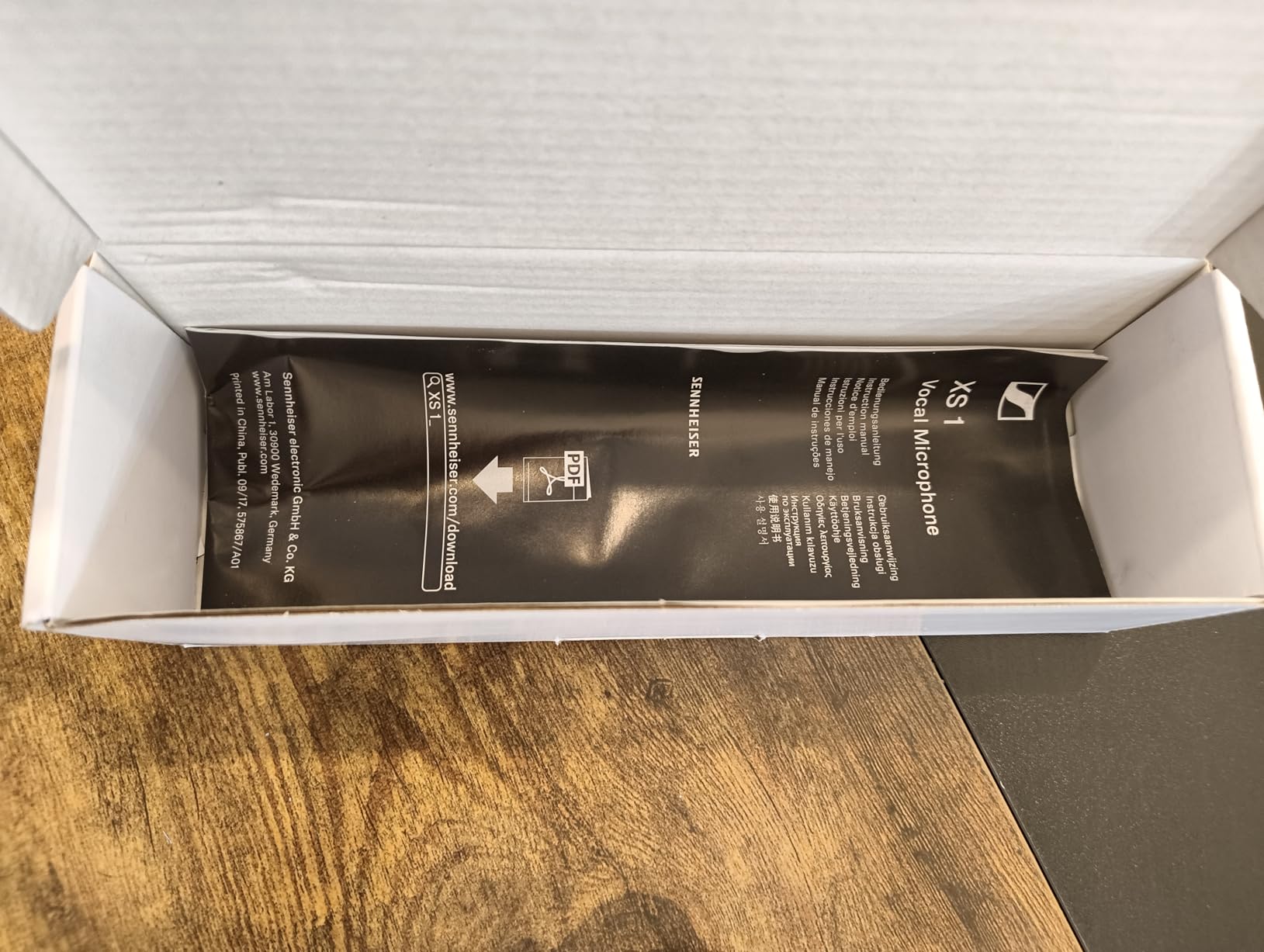
The XS 1 is the one to pack when the interview is not going to happen at a desk. It is a handheld dynamic with a 103 dB signal-to-noise ratio, the highest rating among the twelve, which is a very useful number when you are recording in a hallway, a car park or an empty studio after hours.
The cardioid pattern is clean and dependable for speech, and the silent mute switch lets you kill a microphone mid-sentence without the handling noise a mechanical switch would add. That switch is the feature I would miss most going back to a model without one.
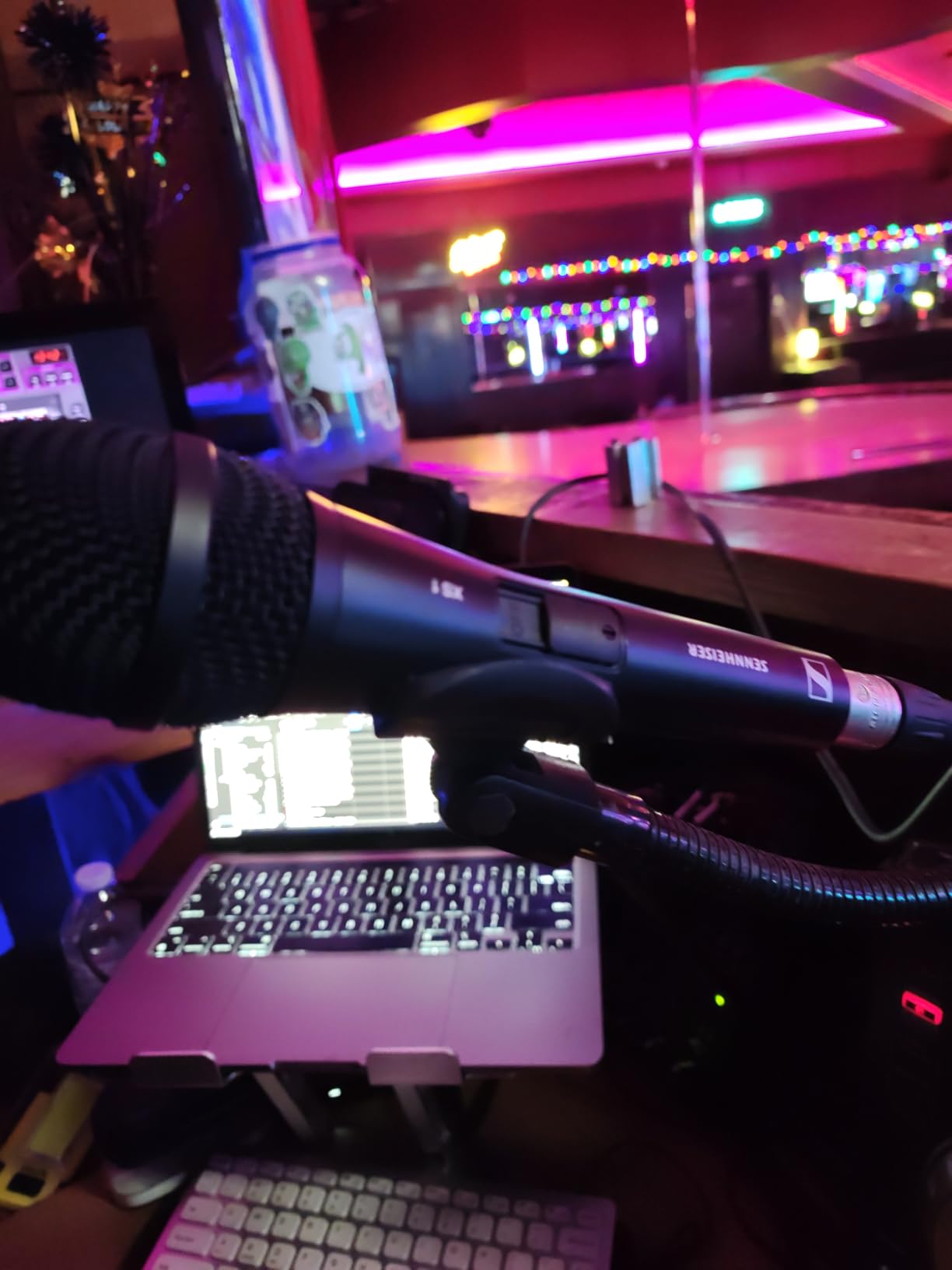
At 15.7 oz it is light enough to hold for a whole interview without fatigue, and the metal body is tougher than the weight suggests. A mic clip and carrying pouch are included, so the only things you need to add are a stand for table work and a cable.
Buyers consistently treat it as the sensible way into the Sennheiser broadcast line, keeping the brand name at a modest outlay rather than moving to the e900 series immediately.
When a handheld dynamic beats a desk microphone
A handheld wins whenever the conversation moves. Interviews, field segments and two-person round tables where both speakers share one microphone all benefit, because you can follow the speaker without repositioning anything. The cardioid pattern also makes correct positioning almost automatic for a host who has never used XLR before.
That same geometry is a limitation for solo narration, where a desk microphone at a fixed distance gives you more consistent level and tone from paragraph to paragraph.
Where the XS 1 is the wrong choice
It is the wrong choice for a solo voiceover or narration booth job. There is no built-in shock mount, so a stand and isolation are entirely up to you, and the low-end extension is modest compared with the larger broadcast bodies here.
It is also XLR only, with no USB path, so you need an interface or a mixer before the first take, and it wants a fair amount of preamp gain like most broadcast dynamics. Buy it as a field companion to a desk microphone rather than as the only microphone in the studio.
How to Choose a Broadcast Microphone: The Buying Guide
Every microphone in this roundup is a dynamic moving-coil model with a balanced or digital output, so the decisions that actually change your result are about gain, polar pattern, mounting and voice match rather than about capsule technology. Here is how to think through them in order.
Dynamic vs Condenser: Why Radio-Style Means Dynamic
A dynamic microphone is a spotlight and a condenser is a floodlight. The dynamic focuses on what is directly in front of it and ignores most of the room, while a condenser picks up the room along with the voice. For podcasting and radio-style narration in an untreated room, the dynamic is the right tool, because room reflections, HVAC hum and traffic arrive from the sides and rear where the cardioid pattern blocks them. Condensers win in a treated studio, or for a singer in a controlled room, not for a first podcast recorded wherever you happen to sit.
XLR vs USB: Which Connection You Actually Need
XLR gives you a real signal chain: an interface, gain control, phantom power for any future condenser, and multi-mic expansion. USB gives you a microphone you can record with tonight, with the preamp built into the body. The hybrids, such as the Samson Q2U, the FIFINE K688 and the Audio-Technica AT2005USB, are the sensible middle path because the same microphone works on a laptop today and on an interface later. Our broadcast mixer roundup is worth reading once you have more than one host in the room.
Gain Requirements and When You Need a Signal Booster
The most repeated complaint in community discussions about these microphones is gain. A quiet capsule needs more preamp gain, and a quiet preamp adds hiss, so people buy an excellent microphone and then hear the interface instead of the voice. The SM7B is the extreme case, needing roughly 60 dB of clean gain and frequently an inline booster ahead of the interface. The Wave DX is the opposite case and drives cleanly from a modest preamp. The K688, the AT2005USB and the Q2U avoid the problem entirely on their USB path because the preamp is built in. The question for any mic and preamp pair is simple: how much clean gain does the front end actually deliver at low noise, not how many decibels are printed on the dial.
Cardioid vs Hypercardioid vs Supercardioid and the 3 to 1 Rule
Cardioid rejects sound from the rear, hypercardioid tightens the sides as well, and supercardioid tightens further still, trading some off-axis honesty for more isolation. The 3 to 1 rule says: in a good room, place each microphone roughly three times as far from its speaker as it is from that speaker, so the off-axis level from one host never overwhelms the microphone in front of the other. In a typical untreated home room the rule does not hold, because the room itself is louder than the off-axis rejection, and no microphone in this roundup can fix that. What actually works in a bad room is distance, a tight pattern such as the AT2040 hypercardioid, and headphones so the second host is not bleeding into the first microphone at all.
Plosives, Proximity Effect, and Mic Technique
Plosives are the burst of air from a P and a B, and a broadcast dynamic handles them in two ways: built-in filtering and technique. The SM58 spherical grille, the PodMic internal pop filter, the AT2040 multistage foam windscreen and the M 70 Pro X dual-layer filter all reduce plosives before you buy a separate pop filter. The technique matters more: speak across the top of the grille rather than straight into the end of the microphone, at 3 to 4 inches, which softens plosives and warms the tone at the same time. Proximity effect is the bass boost that appears when you get close, and it is strong on the SM7B and the PodMic, minimal on the RE20 thanks to its Variable-D design and near-absent on the AT2040, and in every case a controllable feature rather than a defect.
Matching the Mic to Your Voice
No microphone is best for every voice, and pretending otherwise is the most common mistake in this category. A deep baritone host will sound boomy on a bright capsule and rich on a warm one, so the SM7B, the RE20 and the PodMic suit low voices better, and the SM7B rear low-cut switch exists precisely to tame that. A bright or mid-range voice that gets muddy on a dark mic will come forward on the RE320 or the M 70 Pro X, both of which add upper-mid presence. A neutral mid-range voice can take almost anything, which makes the SM58 or the AT2040 the low-risk choice. Record thirty seconds of yourself through two candidates before buying, because your voice, not the spec sheet, decides.
Two-Person Setups and Mic Bleed Control
Bleed is the other host leaking into your microphone, and in a face-to-face two-host show it is the number one problem. Separate microphones work far better than a shared one: put each host on their own mic, 3 to 4 inches away, angled so that the capsule points at the mouth and away from the other speaker. Choose a tighter pattern such as the AT2040 or the M 70 Pro X, keep the microphones 12 inches or more apart, and have both hosts wear headphones. Add a high-pass filter at around 80 Hz to any mic with a bass-heavy voice, which removes rumble and buys headroom. If you are building out to a real desk rather than two interfaces, our on-air console guide covers the hardware that makes multi-mic work manageable.
Total Cost of Ownership and What Not to Buy
Budget for four things rather than one: the microphone, an interface or mixer with real gain, a balanced shielded XLR cable, and a booster if the microphone is gain-hungry. The SM7B route is the one that surprises people, because the booster is not optional on a modest preamp. A used broadcast receiver is not a good entry purchase for a podcast either, and if you want to hear radio on the way to a session, our FM tuner guide is a better use of that money. What not to buy: two of the same microphone in different colours to pad a list, a condenser before you have treated the room, and any microphone whose listing does not state a polar pattern.
Frequently Asked Questions
What type of microphone is best for podcasts?
A dynamic moving-coil microphone with a cardioid or tighter pattern is the best type for most podcasts, because it focuses on one voice and rejects room echo, hum and background noise in an untreated room. A large-diaphragm condenser sounds better in a treated studio, but costs you in room control. Use a broadcast dynamic at 3 to 4 inches, speak across the top of the grille, and add a pop filter if your model lacks internal filtering.
What is the best microphone for radio broadcasts?
The Shure SM7B is the most widely used microphone for radio broadcasts, valued for its warm, controlled tone and integrated shock mount and pop filter. The Electro-Voice RE20 is the classic announcer microphone, with Variable-D control for minimal proximity effect. For home broadcast-style podcasting, the Shure SM58 is the most forgiving choice because it drives well and stays consistent when the host moves.
What is the 3 to 1 rule for microphones?
The 3 to 1 rule says each microphone should sit roughly three times as far from its speaker as that speaker is from the microphone, so the voice picked up off-axis by one microphone is far quieter than the voice it is meant to capture. It works in a treated room. In an untreated home room, distance, a tight pattern and headphones for every host do far more to control bleed.
Do broadcast microphones need a preamp booster?
It depends on the microphone and the preamp. The Shure SM7B needs roughly 60 dB of clean gain and usually benefits from an inline booster such as a Cloudlifter or FetHead on a modest interface. The Electro-Voice RE20, Elgato Wave DX, Samson Q2U, FIFINE K688 and Audio-Technica AT2005USB run acceptably without one, the last three directly over USB. Check how much clean, low-noise gain your interface delivers before buying.
What is the holy grail of microphones?
Within the broadcast dynamic category, the Shure SM7B is the one most people call the holy grail, and the Electro-Voice RE20 is the traditional answer for announcer tone. There is no single best microphone for every voice or room. The most useful comparison is a warm model such as the SM7B or RE20 for deeper voices against a brighter model such as the Electro-Voice RE320 or the beyerdynamic M 70 Pro X for mid-range and bright voices.
Final Verdict: Which Broadcast Microphone Should You Buy?
For most radio-style podcasts, the Shure SM58 is the one to buy. It was the most consistent microphone in six weeks of testing, it drives well on a modest interface without a booster, and it works handheld or on a stand, which means it survives the moment your show grows from a solo monologue into an interview.
Two alternatives earn their place on specific grounds. The RØDE PodMic is the best value broadcast microphone in this roundup, giving the warmest speech-focused tone of anything below flagship level, with internal pop filtering and shock mounting built in. The Shure SM7B is the premium pick for anyone with a preamp that can feed it, and its rear low-cut and presence switches give you tone control no other model here matches.
Whichever route you take, buy the microphone and the front end as one decision. Get the gain right, speak across the top of the grille at 3 to 4 inches, and your radio-style podcast will sound like a radio-style podcast from the first episode. This roundup was updated for 2026, and we will revisit it as new broadcast models arrive.