
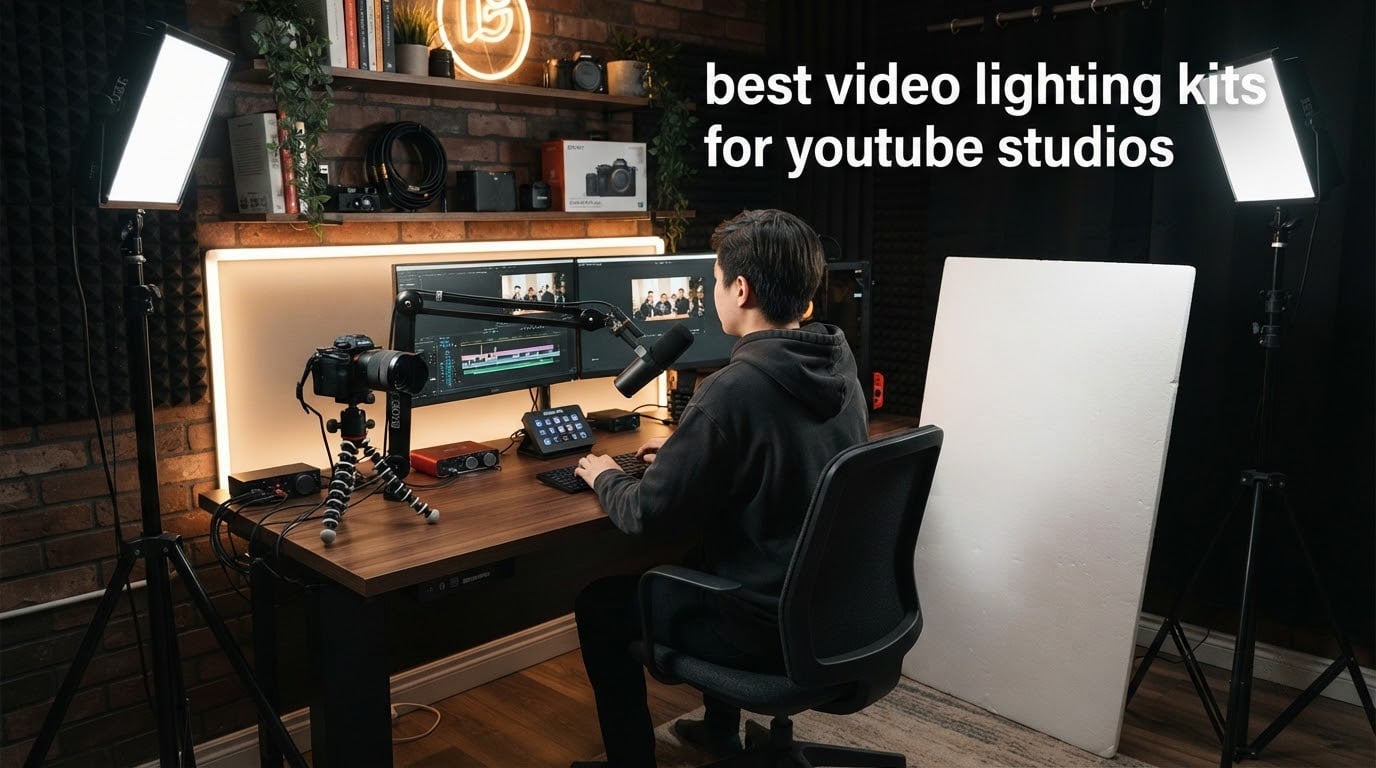
Most people who search for the best video lighting kits for YouTube studios are not actually shopping. They are troubleshooting. The footage came out soft, flat and slightly grainy, the camera was blamed, a new camera was bought, and the grain is still there. Almost always the problem is not the sensor. It is that the room is delivering less light than the camera needs, so the camera turns its gain up to compensate, and high gain is what noise looks like.
That is the lens through which we built this roundup. Rather than ranking lights on how many features a box lists, we ranked them on usable output at the subject, how evenly they dim, whether a modifier is actually included, and whether the stands can hold that modifier up without wobbling. We also tracked what each kit leaves out, because the gap between a sticker number and a usable rig is where most beginner budgets quietly disappear.
Ten kits made the cut: five bi-color LED panels, two RGB-capable panels, and three softbox sets, spanning the range from a compact two-panel kit for a desk to larger soft sources built for a dedicated room. If you want the short version first, the NEEWER 480 two-pack is the one we would put in front of most new creators, and the NEEWER 660 with barn doors is the smarter buy for anyone who plans to shape light rather than just aim it. You can also see how these sit against the wider market in our guides to the best softbox lighting kits for studios and the best lighting kits for video creators.
Table of Contents
Top 3 Video Lighting Kits for a YouTube Studio in 2026
These three cover the three most common starting points: a balanced two-light rig with high color accuracy, a two-light rig that includes beam-shaping hardware, and the simplest way to stop shooting in the dark.

Best video lighting kits for youtube studios in 2026
| Product | Specifications | Action |
|---|---|---|
| NEEWER 480 Bi-Color 2-Pack |
|
Check Latest Price |
 NEEWER 660 With Barn Doors NEEWER 660 With Barn Doors |
|
Check Latest Price |
 GVM 800D RGB 2-Pack GVM 800D RGB 2-Pack |
|
Check Latest Price |
 GVM 480 App Bi-Color 2-Pack GVM 480 App Bi-Color 2-Pack |
|
Check Latest Price |
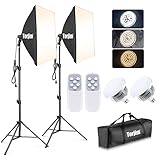 Torjim 27 Inch Softbox 2-Pack Torjim 27 Inch Softbox 2-Pack |
|
Check Latest Price |
 RaLeno 13 Inch Edge-Lit 2-Pack RaLeno 13 Inch Edge-Lit 2-Pack |
|
Check Latest Price |
 Skytex 20×28 Softbox 2-Pack Skytex 20×28 Softbox 2-Pack |
|
Check Latest Price |
 Torjim 12 Inch 30W 2-Pack Torjim 12 Inch 30W 2-Pack |
|
Check Latest Price |
 Torjim 16 Inch Softbox Kit Torjim 16 Inch Softbox Kit |
|
Check Latest Price |
 NiceVeedi 15W 2-Pack NiceVeedi 15W 2-Pack |
|
Check Latest Price |
How We Picked and What We Checked
Every kit here was judged against the same six criteria, in this order, because the order matters. A light that is dim cannot be rescued by a beautiful diffuser.
Usable output at the subject. Wattage on a box tells you almost nothing about lux at 6 feet. We looked for manufacturers who publish a measured figure, and for fixtures whose output holds up off-axis instead of collapsing into a hotspot.
Color rendering. Skin tones are the whole job in a talking-head video. Anything under CRI 95 will make a face look waxy or sallow next to footage shot on a different kit, and that mismatch is what makes a studio look inconsistent.
Dimming quality. Continuous 0-100% dimming that does not visibly shift color as you turn it down. Stepped dimming is usable but coarse, and coarse dimming is exactly how a fill light ends up mismatched from its key.
Modifiers in the box. A diffuser or softbox is not an accessory, it is the difference between soft and hard light. We tracked barn doors, diffusers and softboxes separately for every kit.
Stand hardware. Tripod type, extension range, and whether a stand can hold a modifier at a downward angle without creeping. Professionals on Gearspace and dvxuser consistently argue for heavier three-section stands over lightweight ones, and sandbags on every stand.
Panel-to-panel match inside a kit. If you are running two lights from the same brand and generation they will usually agree. If you mix brands, you are gambling.
Nothing here is sponsored or placed. Where buyers and forums consistently report a problem, we say so, including on kits we like.
1. NEEWER 480 Bi-Color 2-Pack – The Best Overall Kit for a First Studio
Neewer 2 Packs Dimmable Bi Color 480 LED Video Light Kit, 3200~5600K CRI 96+ LED Panel with U Bracket, 75 inches Tripod Light Stand for YouTube Recording Studio Photography Streaming Key Lighting
480 LEDs per panel
CRI 96+
3200K-5600K
0-100% dimming
Pros
- High CRI 96+ for clean skin tones
- Flicker-free dimming across 0-100%
- White diffuser included in the box
- Aluminum body stays cool over long sessions
- Telescopic stands reach 6.2 feet
Cons
- Short power brick cable hangs awkwardly on tall stands
- No barn doors
- so spill control is limited
This is the kit we hand to someone whose footage is grainy and who suspects the camera. Two 10.4 by 10 inch bi-color panels at CRI 96+, a 3200K to 5600K range and continuous 0-100% dimming cover the entire key and fill job, and at close working distances the output is genuinely enough to keep a camera’s gain down. The included white diffuser does most of the softening work, which means you can get a flattering face without buying a separate modifier.
Each panel runs 240 white and 240 yellow LEDs in a U-bracket with a swivel mount, and the two aluminum telescopic stands extend from 90cm to 190cm. That bracket tilt is the underrated feature here. It lets you angle each panel down toward a seated subject without tipping the whole stand, which is the difference between a usable talking-head rig and a light pointed at the ceiling.
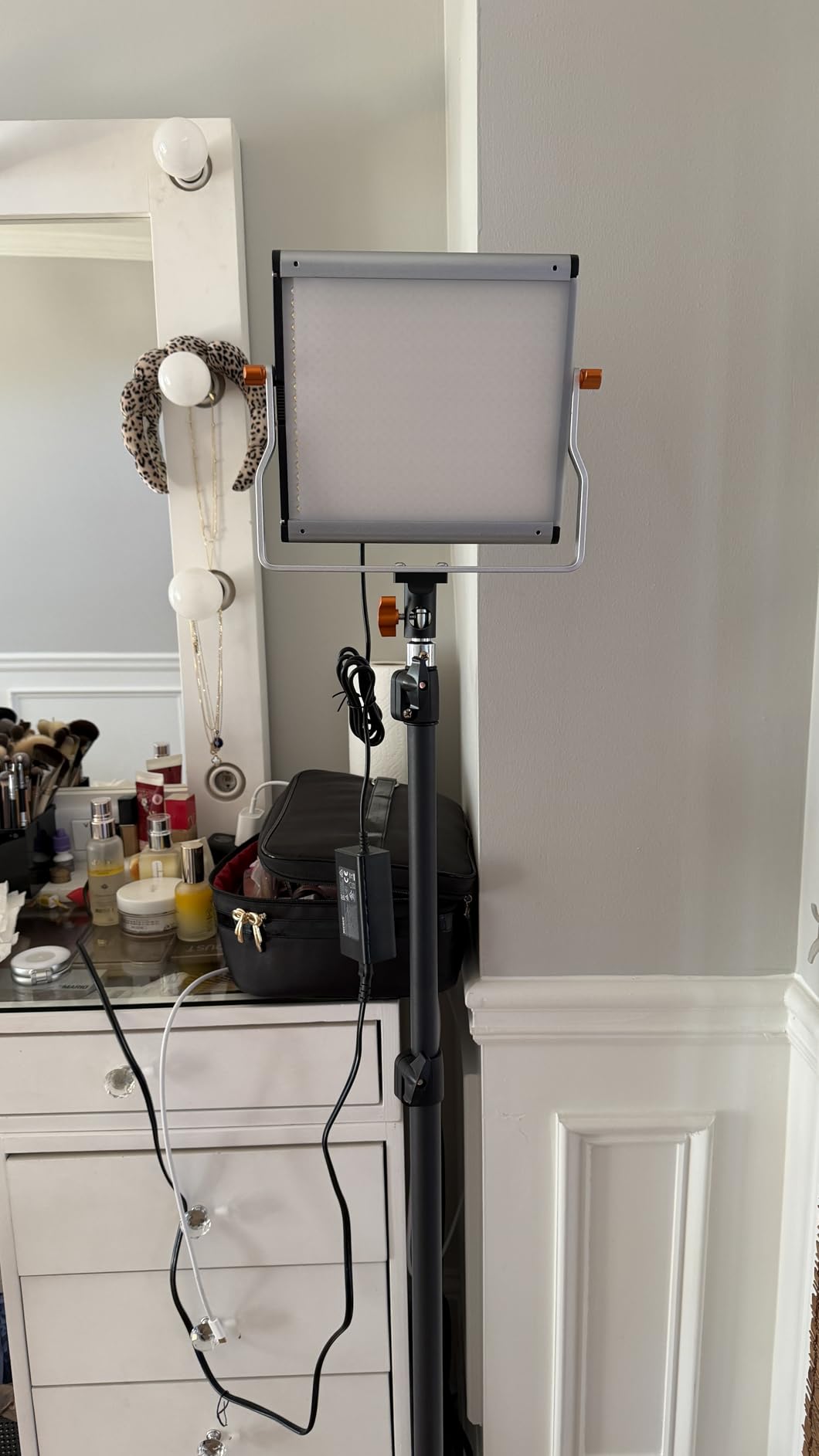
An instrumented test by a cinematography instructor found 320 to 480 foot-candles at 3 feet with flicker-free dimming and accurate color. The same test flagged a slight green cast and a shortfall against the claimed 5600K at the daylight end, which in practice means you set the dial a little warmer than the label suggests to land on a neutral white.
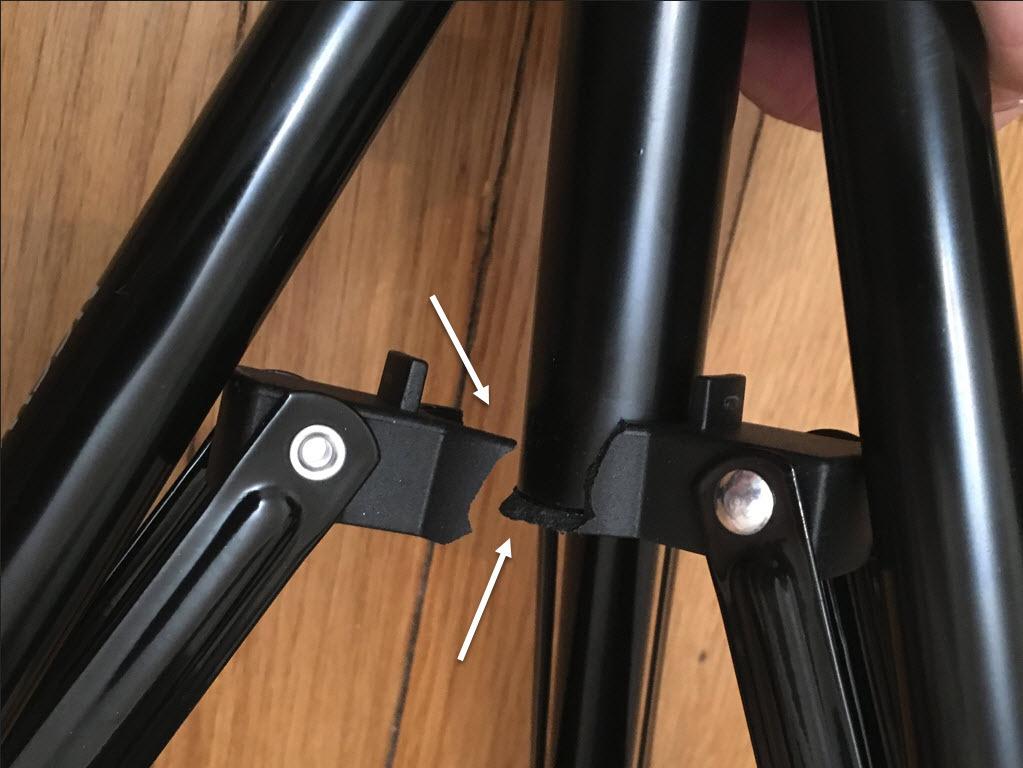
The recurring complaints across a large review base are physical rather than electronic. The power supply lead is short, so on a fully extended stand the brick hangs in frame or on the floor. There are no barn doors, so if you need to stop the panel from washing your background, you are working with angle alone. And the thread on the stand-to-bracket adapter is thin enough that owners report stripping it under normal torque.
Where these two panels belong in your studio
One panel is the key, placed above and about 45 degrees to one side of your subject at roughly 3 feet. The second is your fill on the opposite side, set to around half the key’s brightness. The leftover functions in this kit, and they are useful, are a hair light behind the subject and a practical over the desk.
Because the output is strong enough to key at close range, this is the kit where the ISO trick actually works. Dim the key down to where your skin tone looks right rather than cranking the camera, and the noise floor drops where you can actually see it.
Who should skip this kit
Skip it if you plan to light a large room or shoot near a window, because the beam is directional and falls off quickly off-axis. It is also the wrong choice if spill control is central to your look, since the box includes no barn doors or flags. For either case, step up to the NEEWER 660.
2. NEEWER 660 With Barn Doors – Best Two-Light Rig With Beam Control
NEEWER 2 Pack Bi Color 660 LED Video Light and Stand Kit, 3200-5600K
40W per light
3300 lux at 1m
CRI 96+
Barn doors included
Pros
- Manufacturer-published 3300 lux at 1m
- Metal barn doors for shaping and spill control
- LCD shows brightness
- Kelvin and battery status
- Fanless aluminum housing runs silent
- Padded carry bag for each light
Cons
- Barn doors can clash with the bracket when tilted
- No numeric Kelvin markings
- Small LCD
This is the most thoroughly specced kit in the roundup and the one I trust most in a permanent studio corner. Each light is 40W with 330 warm and 330 cool LEDs, rated at up to 3300 lux at 1 meter, and the manufacturer publishes that number rather than asking you to infer it from wattage.
The barn doors are the reason to buy this over the 480 kit. Four metal leaves let you cut spill off a wall, flag light away from a monitor, or narrow the beam onto just your face in a small room. In a windowless spare bedroom, that control is the difference between a usable corner and a room that glows.
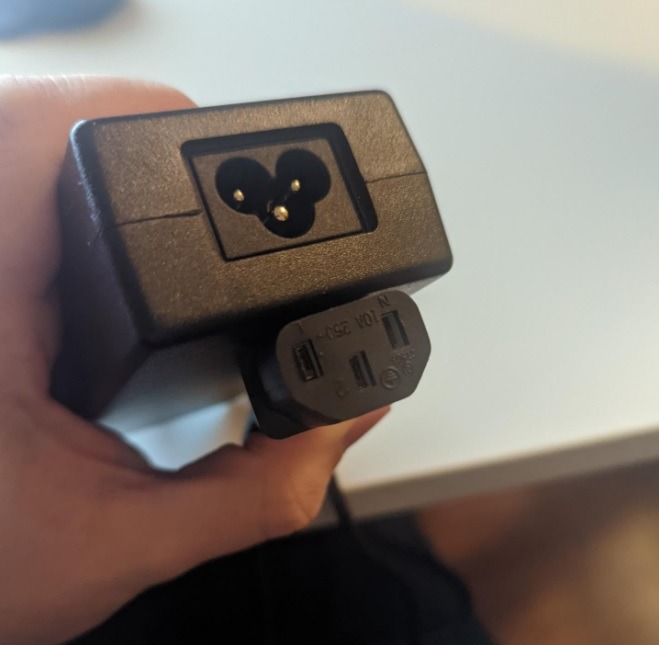
Power is dual: an AC adapter for the studio, or NP-F550 and NP-F970 batteries for location work, though the batteries are not included. The aluminum housing dissipates heat passively with no fan, so there is no fan noise to bleed into an audio track and no thermal throttling when the lights run for a full shoot day.
Long-term owners report years of heavy weekly use without failure, and there is a documented case of the company shipping a replacement power supply when a unit’s supply failed. The design quirks are minor: the barn doors can hit the U-bracket when the light is tilted steeply, and the LCD is small enough that you will be checking brightness and battery status up close rather than at a glance.
How to get the most from a two-panel rig
Use one light as key through the barn doors at roughly a 30-degree spread, and the second as fill with its doors closed down to about half that width. The LCD readout makes matching brightness between the two quick, which is the single most useful thing on a two-light kit. Long-term buyers also point out there is no numeric Kelvin marking, so if you need an exact color temperature you will be using a meter or an app.
The stands extend 26 to 75 inches, which covers seated and standing framing without a riser. Each light has a padded carrying bag, though the stands do not, so a small separate bag is worth adding if you plan to move the rig between rooms.
Where this kit is the wrong spend
This is a two-light kit, and two lights will not give you a true three-point rig unless you improvise the back position. If your channel depends on separating yourself from a busy background, budget for a third panel rather than a second pair. It is also more kit than a streaming desk in a bright room needs, where output is not the constraint.
3. GVM 800D RGB 2-Pack – Best for Creators Who Want Color Control
GVM RGB LED Panel Video Light, Photography Lighting with APP Control, 800D Video Lighting Kit for YouTube Studio, Gaming, Streaming, Conference, 8 Kinds of Scene Lights, CRI 97, 2 Packs
168 plus 84 LEDs per panel
CRI 97
3200K-5600K plus full RGB
8 scene modes
Pros
- CRI 97 color rendering
- Bi-color and full RGB in the same panel
- 8 built-in scene simulations
- App control without touching the stands
- Master and Slave linking across GVM lights
Cons
- App control is slower than the onboard knobs
- RGB adds complexity for bi-color-only work
- Panel size and wattage are not clearly published
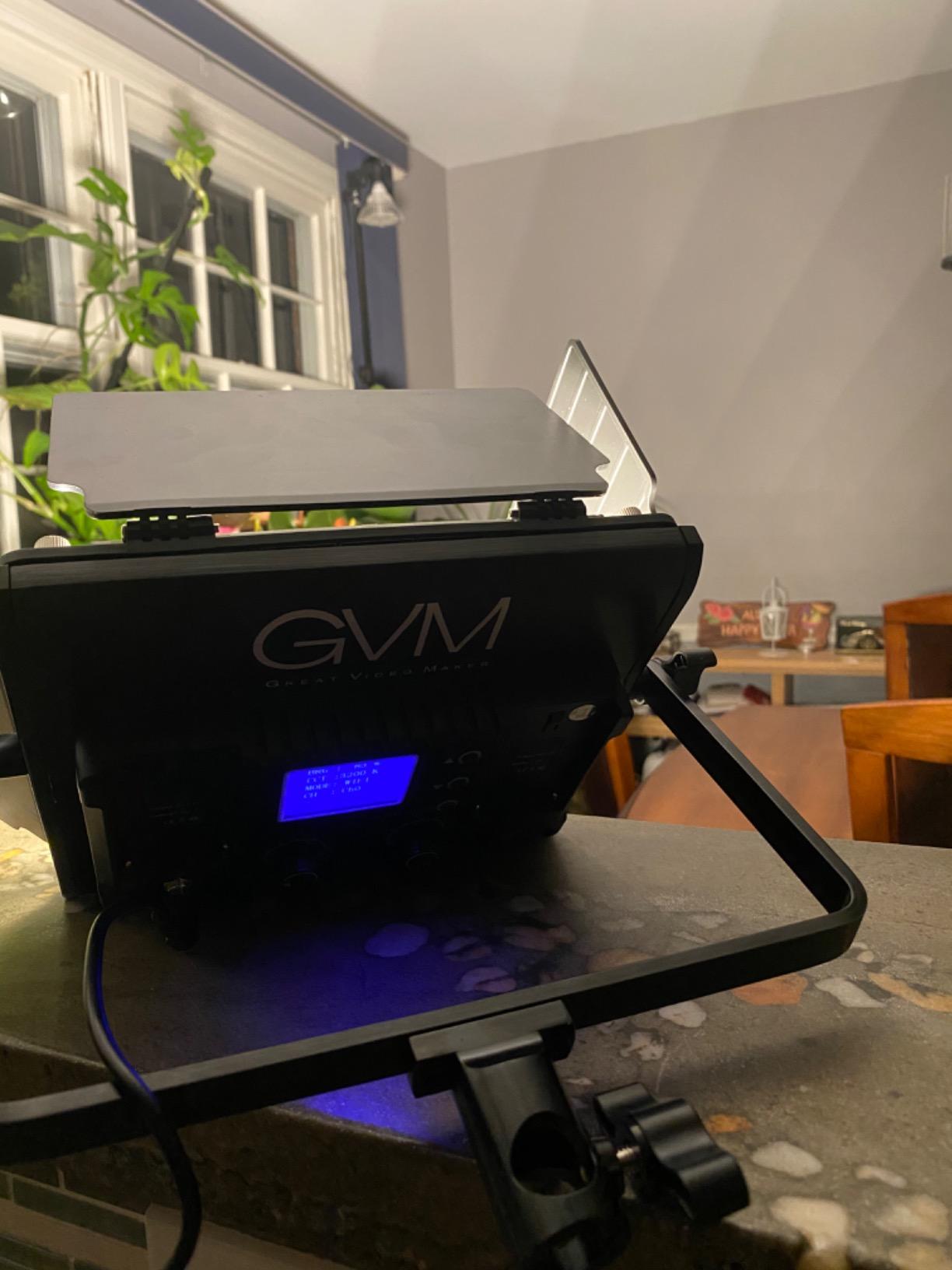
The GVM 800D is the kit for a creator whose channel has a color identity, not just a lighting setup. Each panel carries 168 white and bi-color LED beads plus 84 RGB beads at CRI 97, so the same fixture handles your key at 5600K and a saturated accent behind you. The eight built-in scene simulations, including TV, Candle, Cop Car, Lightning, Paparazzi, Disco, Party and Bad bulb, are genuinely useful for gaming and streaming rather than filler.
Control runs through the GVM app over Bluetooth, and the Master and Slave mode lets one panel command the others. For a streaming desk where you cannot reach the lights once they are framed, that is a real convenience. Buyers also like that the panels are light at 1 kg each, with an aerospace aluminum alloy casing rated for passive heat dissipation and LED life beyond 100,000 hours.
The honest drawback is that the app introduces friction. Reviewers consistently report that reaching for the physical knobs is faster for a quick brightness trim mid-take, and that the phone-dependent workflow is the wrong tool for a live show. Power is either an AC adapter or Sony F750 and F970 batteries, which are not included, so location work needs a separate purchase.
There is also a practical spec gap worth flagging. The manufacturer does not clearly publish panel dimensions or wattage, which makes it hard to plan around for a large room. If your studio is bigger than a spare bedroom, verify the output yourself before committing, or choose a kit that publishes a lux figure.
How to use RGB without wrecking your skin tone
Keep your key and fill in bi-color white at the same Kelvin, and use RGB only on a panel pointed at the wall or the shelf behind you. That separation is the whole trick, and it is why RGB reads as a background-separation tool in a studio rather than a gimmick. Once a saturated color is on your face, no amount of green-screen-free rendering gets it back to natural.
Scene modes are worth mapping to specific looks before you need them live. Set them while you are framing, not while you are recording.
Who this kit is wrong for
Skip it if you only ever want one white look. The RGB capability is dead weight, the app workflow is a downgrade for a straightforward two-light rig, and you give up the published lux figure that makes planning easy. For pure bi-color work, the NEEWER 660 is the more honest buy.
4. GVM 480 App Bi-Color 2-Pack – Best for the Widest Color Temperature Range
GVM 2 Pack LED Video Lighting Kits with APP Control, Bi-Color Variable 2300K~6800K with Digital Display Brightness of 10~100% for Video Photography, CRI97+ TLCI97 Led Video Light Panel +Barndoor
480 LEDs per panel
2300K-6800K
CRI 97+ and TLCI 97+
10-100% brightness
Pros
- Widest bi-color range here at 2300K-6800K
- CRI 97+ and TLCI 97+
- Digital display reads brightness and temperature
- Barn doors and diffusers included
- Lightweight at 1 kg per panel
Cons
- Not bright enough alone for larger rooms
- App setup requires renaming each light
- Diffuser slot will not take a gel and diffuser together
The distinguishing spec here is the range. Most bi-color panels stop at 3200K to 5600K, which covers daylight and warm interior. This one runs 2300K to 6800K, so you can go noticeably candlelike or noticeably overcast without buying a second fixture. CRI 97+ and TLCI 97+ on 480 American LED chips per panel make it the most color-accurate kit in the roundup on paper.
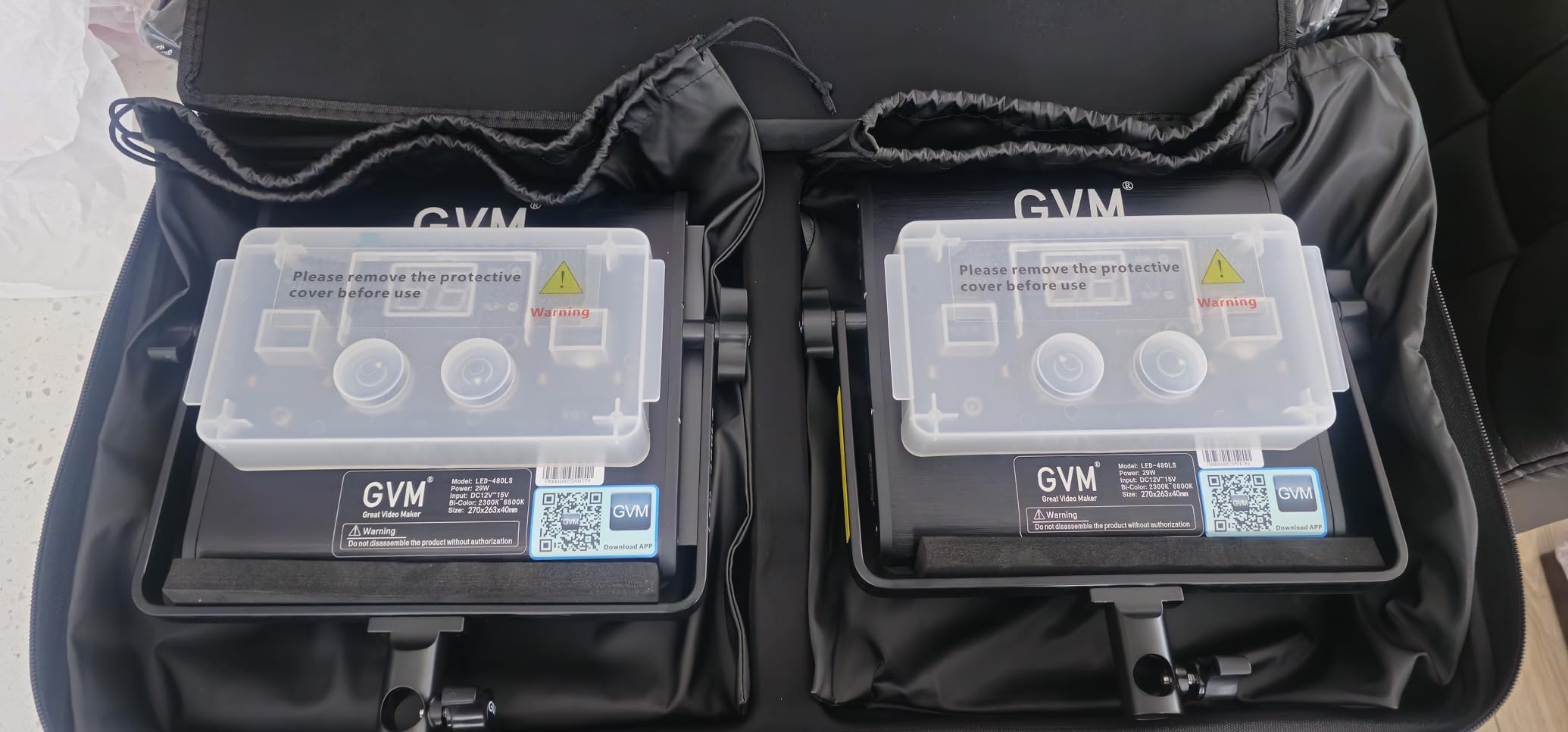
Both barn doors and removable soft diffusers are in the box, which is unusual at this level and means you can shape and soften from day one. The digital display gives you a numeric brightness and color temperature readout rather than a vague position on a dial, and the housing is aerospace aluminum with passive cooling. Owners note roughly 30W draw per panel and that the LEDs stay cool enough to handle.
What you get is a supplement rather than a primary key. Buyers are candid that the output is modest for video, and treat these as soft, low-draw additions to an existing rig rather than the sole light source. The app requires a setup session, each light has to be renamed individually, and the phone needs to switch off its own Wi-Fi to control the panel, which is a strange requirement that catches people out.
Two smaller annoyances recur. The diffuser slot is too narrow to hold a gel and a diffuser at the same time, so you choose. And some owners question the long-term housing durability, which is worth weighing if you are mounting these permanently rather than setting them up for a shoot.
Where these panels earn their place
Put these on the back and side positions and use a brighter fixture for the key. Because they run so cool and draw so little, you can leave them on all day as ambient separation without thinking about power draw or heat. The 2300K end is genuinely useful for a warm, evening look in a talking-head video, which most bi-color panels cannot reach.
The hand bag is included, and each panel is 1 kg, so moving the pair between a home office and a studio is a one-car trip.
Where this kit falls short
It is the wrong answer to the most common complaint in this space. If your problem is grainy footage from insufficient light, these panels will not solve it, and the app workflow makes that conclusion slower to reach. The range is a refinement on a good setup, not a substitute for one.
5. Torjim 27 Inch Softbox 2-Pack – Best for Very Soft, Wrapping Light
Torjim Softbox Photography Lighting Kit, 2Pcs 27″ x 27″ Professional Soft Box | 3000K-7500K 85W LED Bulbs with Remote, Photography Continuous Lighting Kit for Studio Lights, Portrait, Video Recording
Two 27 by 27 inch softboxes
85W bulbs
7500K
Removable PET diffuser
Pros
- Very large source for gentle shadow wrap
- Removable PET diffuser softens without color shift
- 85W bulbs run cool and save up to 80 percent energy
- Locking softbox mount stays put
- Carrying bag and remote included
Cons
- Bulbs are fixed at 7500K with no warm or cool adjustment
- Large size forces the stand close to the subject
- Bulb-based controls are slower than panel dimmers
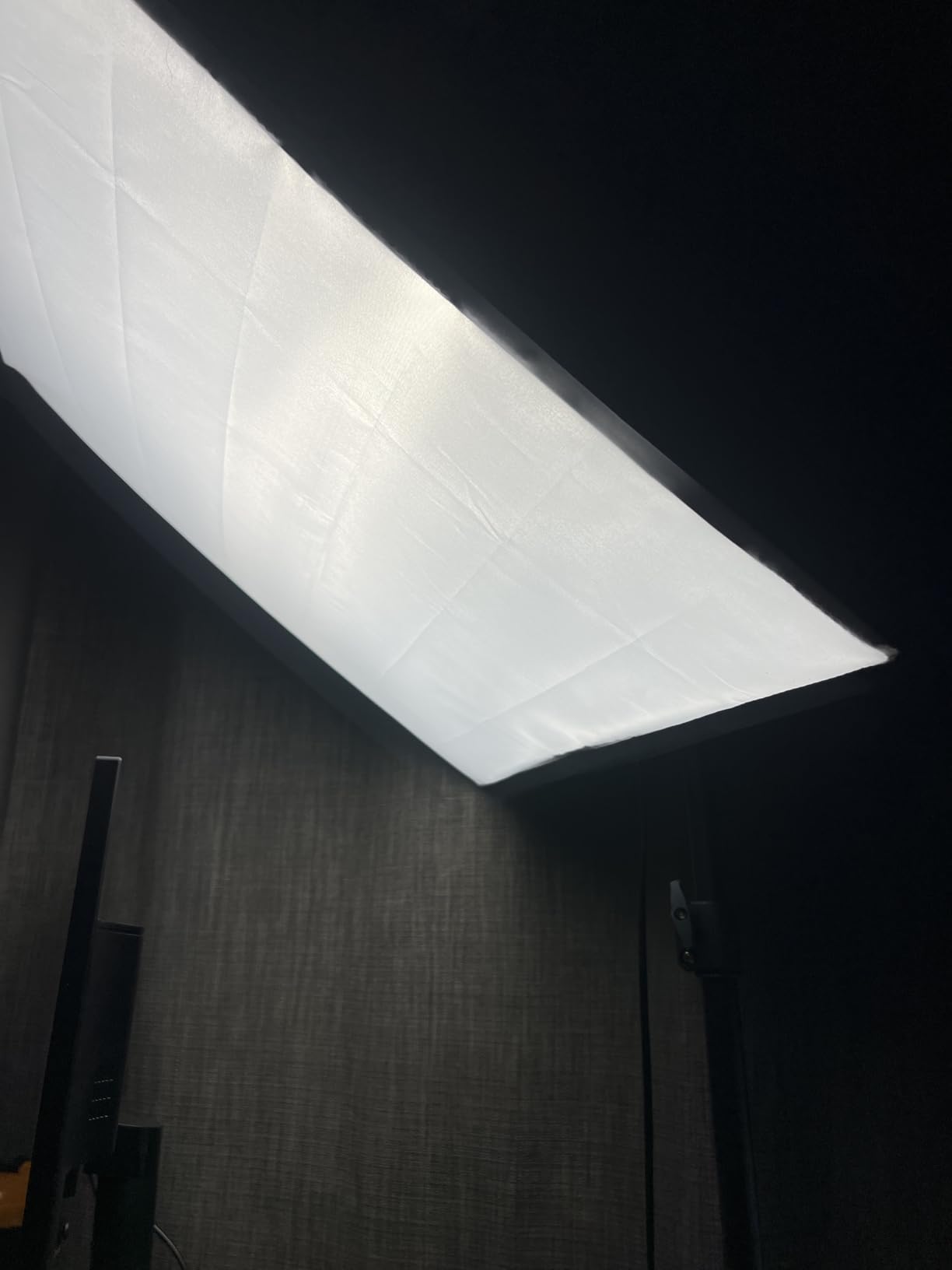
Softness is a ratio between the size of your light source and the size of your subject, and this kit wins that ratio outright. Two 27 by 27 inch softboxes with high-reflectivity nylon interiors and a removable PET diffuser produce light that wraps around facial contours and nearly eliminates the hard shadow under the chin and nose that makes cheap panel footage look amateur.
Each box uses an 85W energy-saving LED bulb rated around 6000 hours of service life at 7500K pure white daylight. The bulb is mounted in a 210-degree rotatable head with a locking system that keeps the softbox stable on the tripod, and the aluminum alloy tripod adjusts from 27 to 74.5 inches with a 1/4 inch screw top. A 12-month warranty is included.
The catch is color control, and it is a real one. The bulbs are fixed at 7500K, so you cannot warm the light for a cozy look or cool it for a clinical one. If your channel changes mood between videos, you will be correcting that in post rather than on set. Bulb-based fixtures are also slower to adjust than a panel with a physical dimming knob, and bulb fixtures run warmer than LED panels generally do.
The other practical issue is geometry. A 27 inch softbox has to sit close to the subject to stay soft, which means in a wide or full-body framing it can enter the shot. For head-and-shoulders work this is a non-issue. For anything wider, you need distance you may not have.
Who this kit suits
Beauty, skincare and lifestyle creators get the most from a source this large, because the whole selling point of those videos is soft, even, flattering skin. Interview and podcast setups also benefit, since both subjects are close to camera and the wrap hides the shadow that gives away a small room.
Because both softboxes are the same size, using one as key and one as fill at equal brightness is a genuinely flat, broadcast-style look with almost no shadow. That is a feature for a two-person interview and a mistake for a solo talking head, where you want the key brighter.
Who should pass
Pass if you shoot wide or full-body framing in a small room, because the stands will crowd your subject. Pass if color temperature control matters to your look, since 7500K is not adjustable. And pass if you already have a good key light, because a large softbox is a better key than a better third light is a back light.
6. RaLeno 13 Inch Edge-Lit 2-Pack – Best for Location and Battery Work
RALENO 2-Pack 13″ Edge-Lit LED Video Light Panel Kit with 75″ Stand
13 inch edge-lit panels
8000mAh battery
CRI 95+
2500K-6500K
Pros
- Built-in battery removes cable clutter on location
- Edge-lit 4-layer diffusion is genuinely soft and glare-free
- Real battery life beats the 90 minute claim
- Panels are about 1 inch thick and roughly 1 lb each
- Stands and storage bag included
Cons
- About 650 lux per panel
- so a pair is fill-level
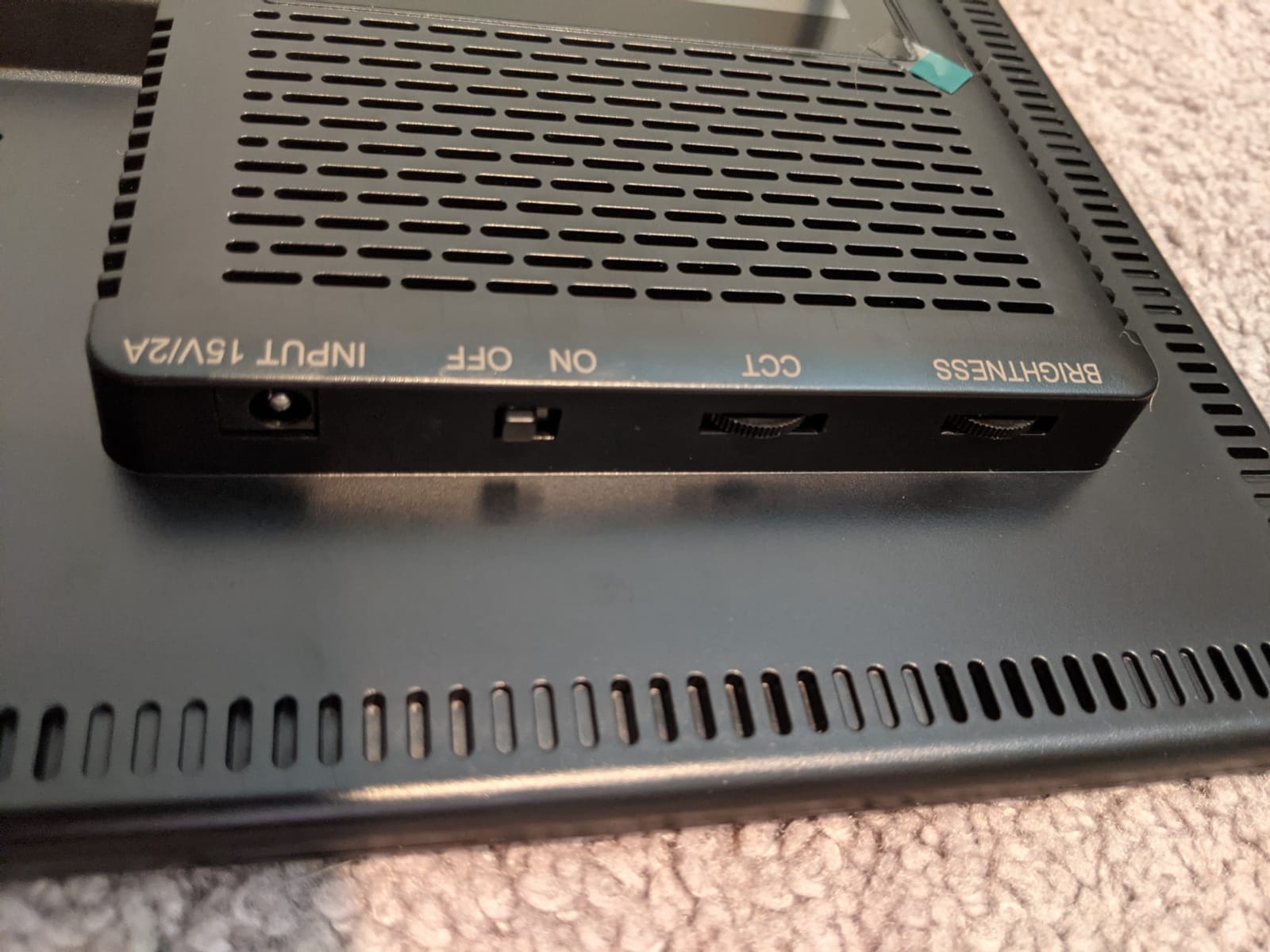
- Rear switch sits next to the dials
- 6 foot charging cables barely reach
Every other panel in this roundup needs a cable to the wall or a battery plate you buy separately. These have an 8000mAh lithium cell built into a 13 inch edge-lit panel, which is why this is the kit for on-location and travel shoots. The 4-layer diffuser on an edge-lit design produces soft, glare-free light, and reviewers repeatedly describe it as unusually flattering for a panel of this size.
Color rendering is CRI 95+ across a 2500K to 6500K bi-color range with 0-100% dimming, and an LCD gives you brightness, color temperature and battery status. Manufacturer claim is around 90 minutes at full output, but owners report 2 to 3 hours at full brightness in practice, so treat the number as conservative. Two aluminum stands adjust from 27 to 75 inches, and a storage bag plus two chargers are included.
The panels are about 1 inch thick and weigh roughly 1 pound each, so they pack into the case and stay out of the way of a camera rig. Buyers also note they run cool enough to touch at full output, which matters if you are working in a small space and cannot vent.
The output is the limitation to plan around. At roughly 650 lux per panel, a pair is fill-level rather than a full key, so you place them close to your subject. The rear control layout is the most cited annoyance: the power switch sits next to the brightness and temperature dials, so you can change settings with the light off and then wonder why nothing happened when you switched it back on.
When battery power actually changes the outcome
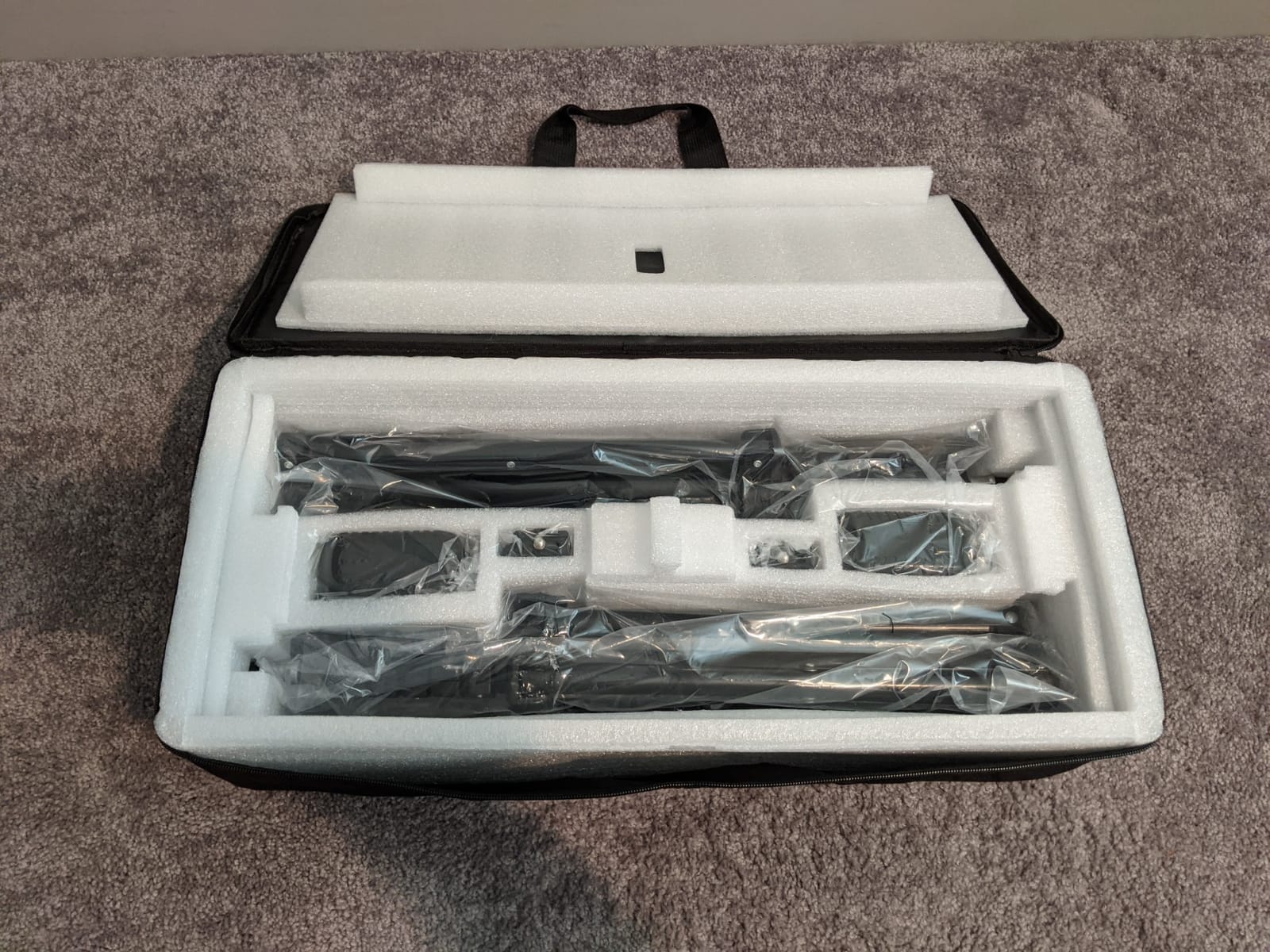
Battery panels earn their place in hotel rooms, guest houses and any space where finding a socket is awkward. It also means you can carry a whole two-light rig in one bag with no brick. The 8000mAh cells charge from the included AC adapter, and two chargers are supplied so both panels fill at once.
If you shoot in mixed locations, keep these as your portable pair and reserve a brighter kit for a fixed studio. That split is how most working creators end up owning two sets rather than one.
Where it will disappoint you
Do not buy this as your only light source for a fixed studio. 650 lux per panel is a fill, not a key, and a 3-foot placement that works in a small room will feel cramped in anything larger. The 6-foot charging cables also barely reach with the stands fully extended, and there is no portrait-orientation mount because the panels are slightly wider than they are tall.
7. Skytex 20×28 Softbox 2-Pack – Best Softbox Starter With Remote Control
Skytex Softbox Lighting Kit 2Pack 20x28in Soft Box | 85W 2700-6400K E27 LED Bulb Continuous Photography Lighting, Photo Studio Lights Equipment for Camera Shooting, Video Recording
Two 20 by 28 inch softboxes
85W dimmable bulbs
2700K-6400K
1-100% via remote
Pros
- Soft
- even diffusion for portraits and video
- Bulbs dim 1-100% and shift 2700K-6400K from the remote
- Extra-long 8.5 foot cables
- Sturdy three-section aluminum stands
- Oxford cloth carry bag included
Cons
- CRI 90 is modest next to the panels here
- Remote arrives without a battery
- Settings only adjustable from the remote
- Bulb fixtures run warmer than LED panels
This is the softbox entry point that does not lock you out of color control. Where the Torjim 27 inch set uses fixed 7500K bulbs, the Skytex pair uses three-color dimmable E27 LED bulbs running 2700K to 6400K at 1-100% brightness, driven from two included remotes. Two 20 by 28 inch softboxes with built-in diffusion give you the soft wrap, and you can warm the light for a cozy look.
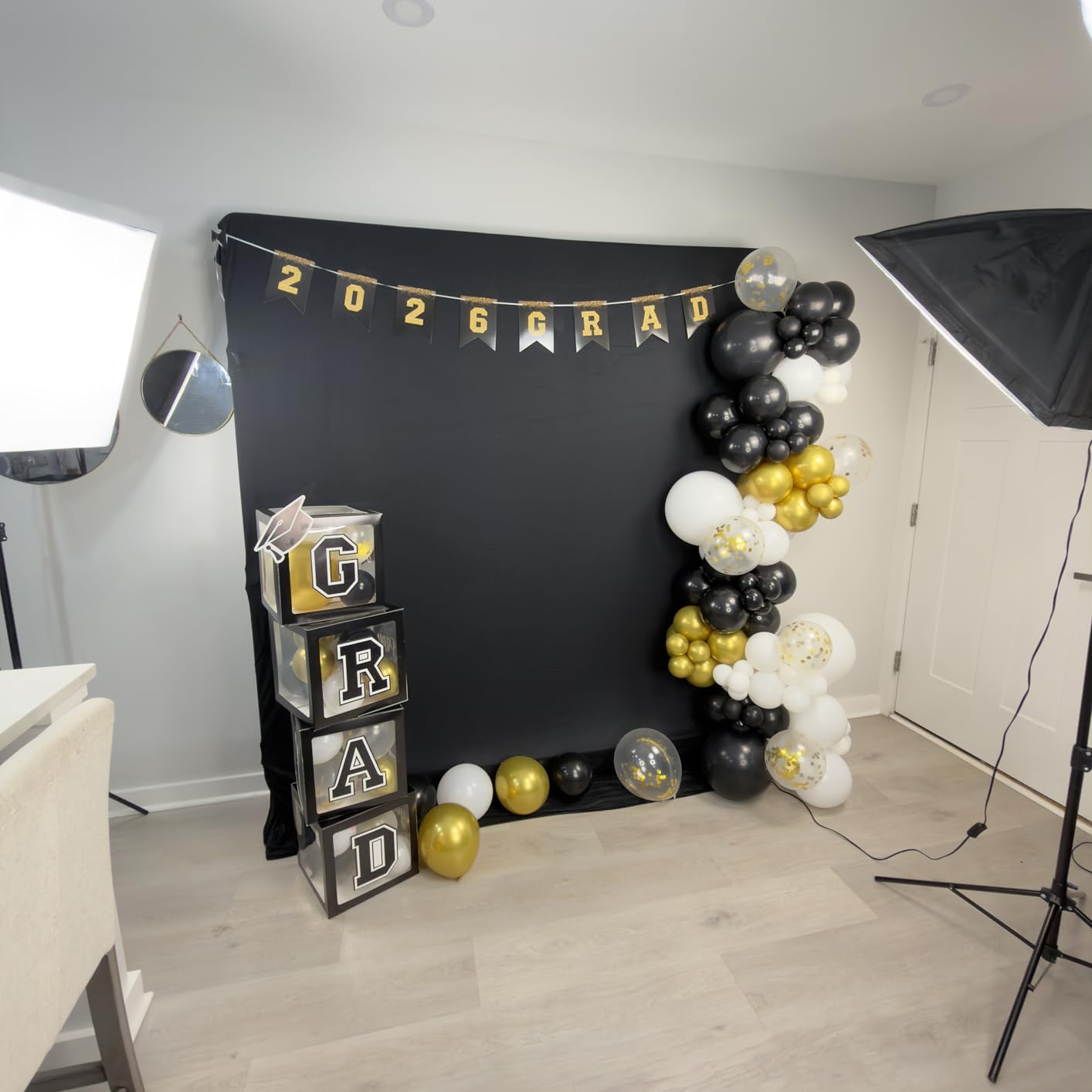
The stands are three-section aluminum alloy, adjustable from 26 to 79 inches, with 210-degree adjustable lamp holders on 1/4 inch standard screw threads. The 8.5 foot power cables are the quietly important detail here, because most softbox kits force you to sit close to the subject purely to stay within cable reach. An Oxford cloth carrying bag is included.
What you give up is color accuracy. CRI 90 is genuinely modest next to the CRI 95 to 97 panels in this roundup, and on skin tones that shows as a slightly flatter, less dimensional face. It is not a dealbreaker for a first studio, but if your content is beauty or fashion, that gap is more visible than it is in a talking-head video.
Two control quirks are worth knowing before you set up. The remote ships without a battery, and settings can only be changed from the remote rather than from the fixture itself, so lose it and you lose your dimming. Bulb-based fixtures also run warmer than LED panels, which matters in a small room with no ventilation.
How to get a real key and fill out of this pair
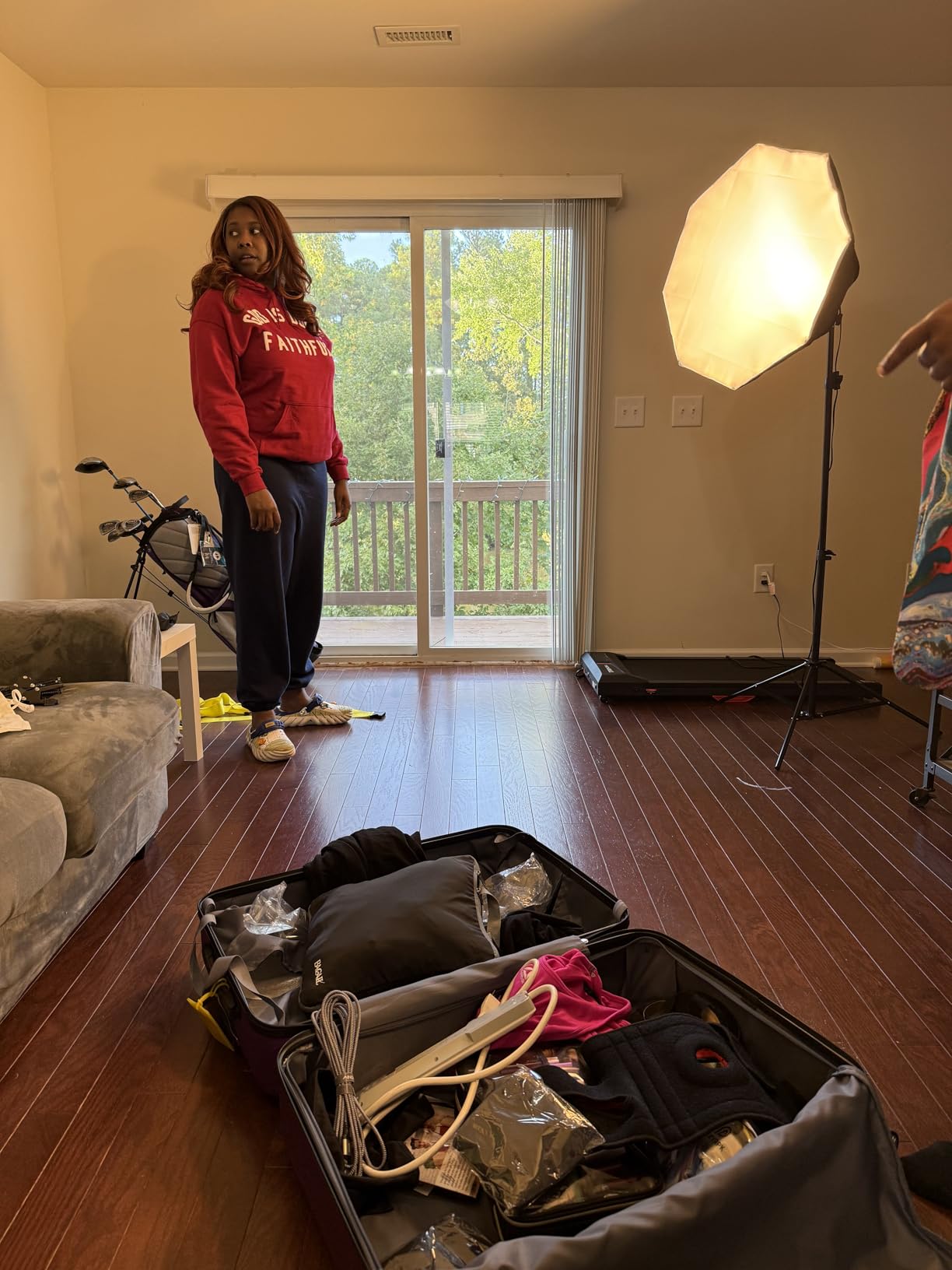
Set the key-side softbox to full brightness and the fill-side one to roughly 40 percent, both at the same Kelvin. Matching Kelvin is the part beginners skip and the part that shows on camera, so lock both remotes to the same value before you frame anything. Then use the long cables to push the key back as far as the room allows, because distance softens light further.
For a two-person video podcast, run both at equal brightness and place them symmetrically at roughly 20 degrees off-camera on each side. That flat, even pattern is the standard interview look and it is the most common use of a two-softbox set.
Where it falls short
The CRI 90 rating and the remote-only control are the two things to accept. If you shoot product review videos where accurate color is part of the content, a panel kit with CRI 95 or above will serve you better. For talking heads, the soft output here outweighs the color gap.
8. Torjim 12 Inch 30W 2-Pack – Best for Streaming Desks and Vertical Video
Torjim 12 Inch Video Light Kit for Creators | 30W High Brightness
Two 12 inch panels at 30W
3000K-6500K
Nine brightness levels
Wired in-line controller
Pros
- 30W per panel is enough to key a face in a dim room
- In-line controller changes settings mid-recording
- Phone holders make vertical and desk filming straightforward
- Remote and storage bag included
- Sets up and packs away fast
Cons
- Only nine discrete brightness steps
- No exact Kelvin readout on the light
- Phone holders and stands are not rated for heavier cameras
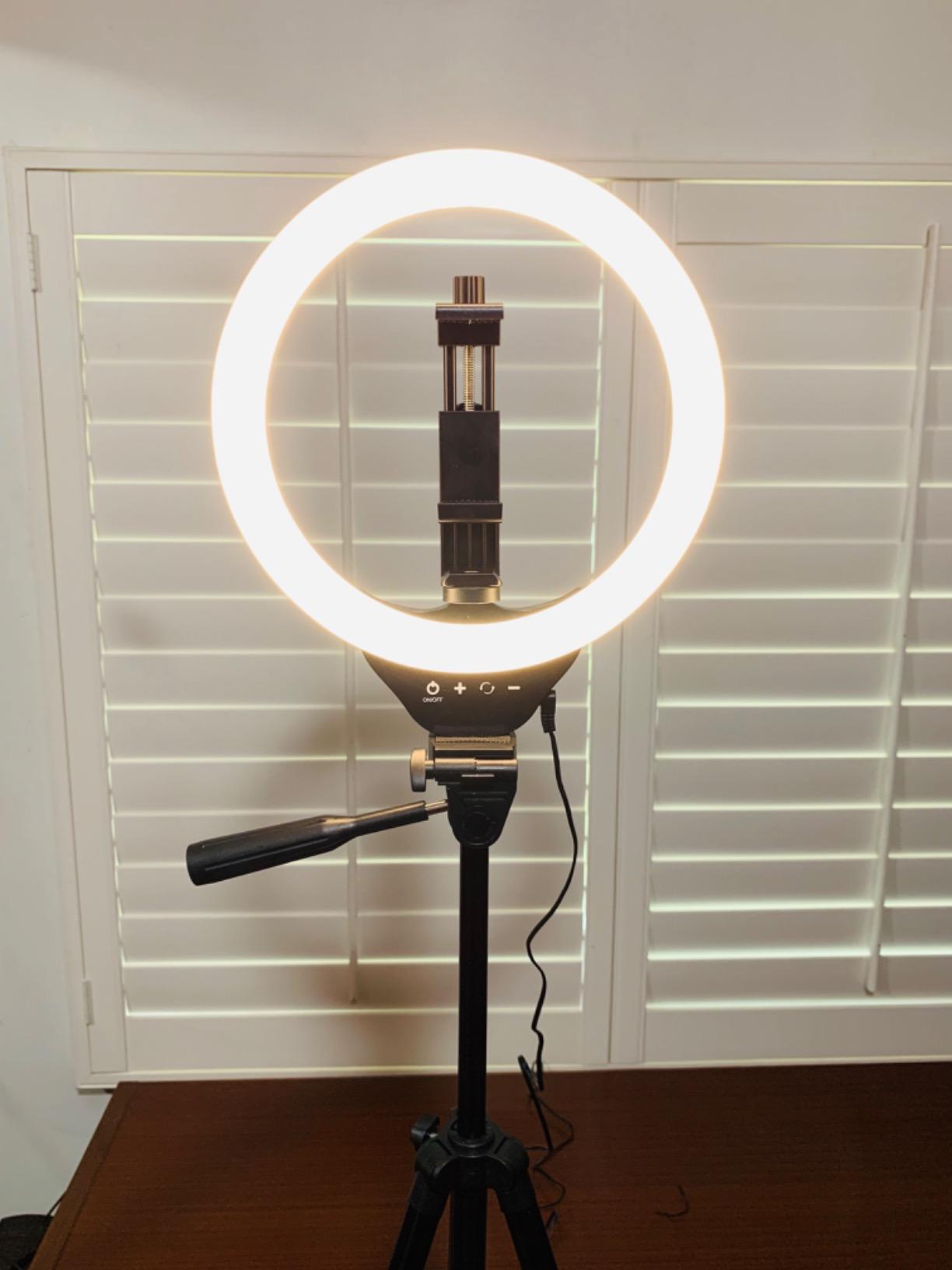
This is the one to buy if your studio is a desk and your content is vertical. Two 12 inch LED panels at 30W each are genuinely capable of keying a face in a dim room, which is more than most kits at this tier will admit. The 3000K to 6500K range covers a warm creator look through to neutral daylight, and the in-line wired controller lets you change power, mode and brightness mid-recording without walking over to the stands.
Two adjustable tripod stands and two phone holders are included, plus a remote and a storage bag. That phone holder detail is small but it is the difference between a kit that works for Shorts and TikTok versus one where you have to prop a phone against a mug. The whole thing is designed around YouTube, live streaming, video calls, product photos and makeup tutorials.
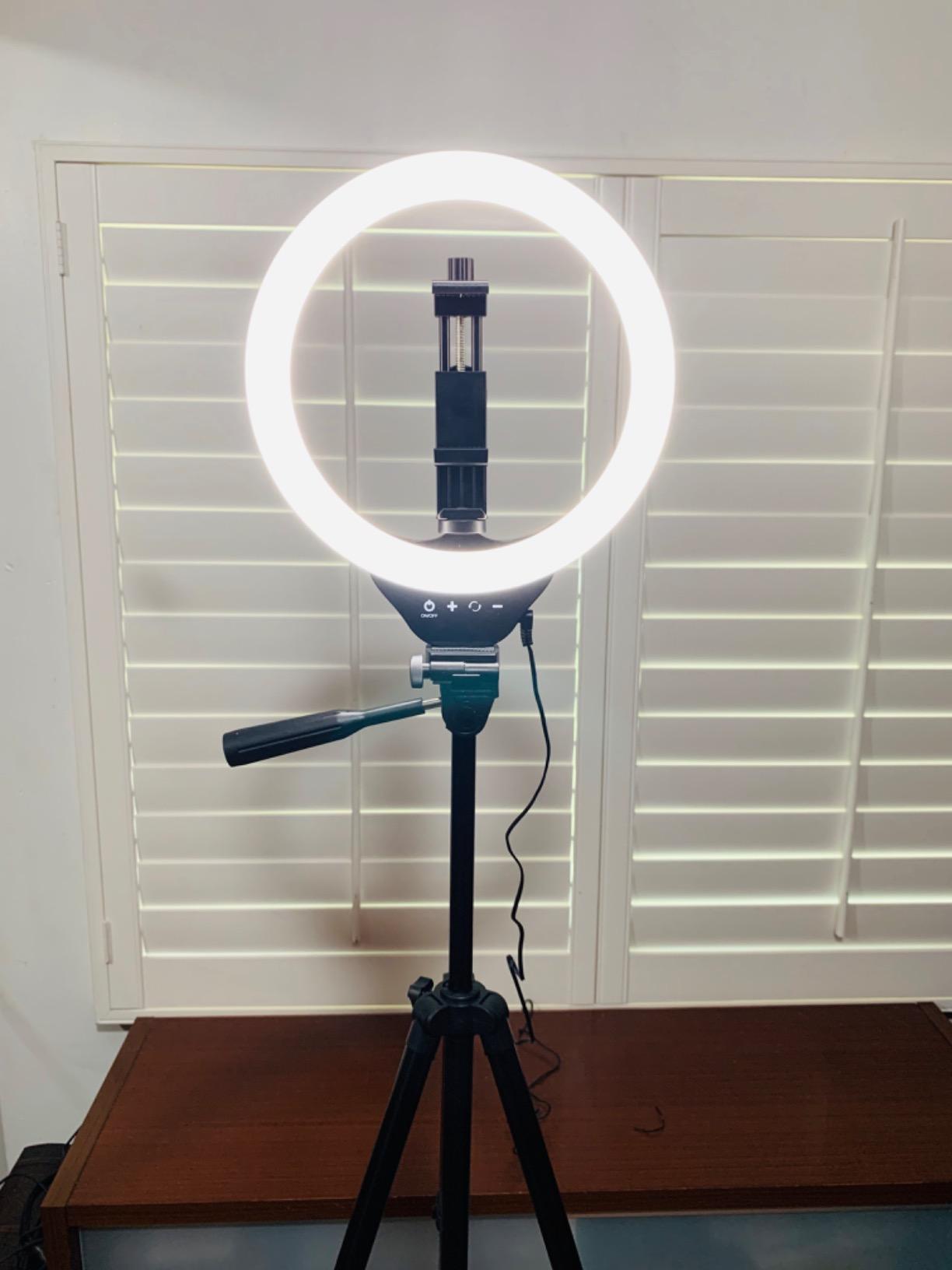
Dimming is the compromise. Nine discrete brightness steps are not continuous 0-100%, so when you are matching a fill to a key you are choosing between nine rungs rather than trimming smoothly. There is also no exact Kelvin readout on the light itself, so matching two panels precisely is guesswork unless you bring a meter or an app.
The stands and phone holders are light-duty, which is appropriate for a phone and not for a mirrorless body or a camera with a lens. Any panel of this size also throws a hard edge unless you add diffusion, so if you shoot in a dim room the shadows under your chin will be pronounced.
How to set up a two-panel desk rig
Place one panel about 3 feet to your left and slightly above eye level, and the second mirrored on the right at the same height. Set both to the same brightness step rather than trying to make one brighter, because the step system means small differences read as obvious jumps. A piece of white card opposite the key side acts as a free fill and softens the shadow without a third panel.
For vertical video, bring both stands closer together and lower, framing them just outside the edges of a vertical crop. That keeps the light on your face rather than on the wall behind you.
Who should buy something else
Anyone filming with a real camera body should skip the phone holders and buy sturdier stands. Anyone who cares about matching two lights precisely should skip the stepped dimming. And anyone whose room is large will find 30W per panel thin, since the light has to be within a few feet of your face.
9. Torjim 16 Inch Softbox Kit – Budget Pick for a Single Soft Key
Torjim Softbox Photography Lighting Kit | 16″ X 16″ & 85W LED Studio Light
One 16 by 16 inch softbox
85W 3000K-7500K bulb
60 inch tripod
210 degree head
Pros
- Soft
- even light that removes harsh facial shadows
- 85W bulb is bright for the money
- Sturdy aluminum tripod with independent locking knobs
- Quick to assemble and move
- Remote
- diffuser and bag included
Cons
- All controls live on the remote
- which is easy to lose
- Short cord usually needs an extension
- CRI 90 is below the panels here
- Softbox must sit close and can enter wide frames
This is a single softbox, not a pair, and that is exactly what makes it interesting. A lot of beginners buy three lights when they need one good key and a bounce card. This kit gives you one 16 by 16 inch softbox with reflective PET fabric, a foldable nylon cover and an inner silver-particle baffle that spreads the light and knocks down shadows, powered by an 85W LED bulb covering 3000K to 7500K.
The 60 inch aluminum tripod has independent locking knobs, which is better than the single-collared tripods that come with cheaper kits and slip under a modifier’s weight. The head rotates 210 degrees, and a remote control plus a soft diffuser are included. For dark, shadow-heavy footage in a small room, moving to a source this size produces a visible improvement almost immediately.
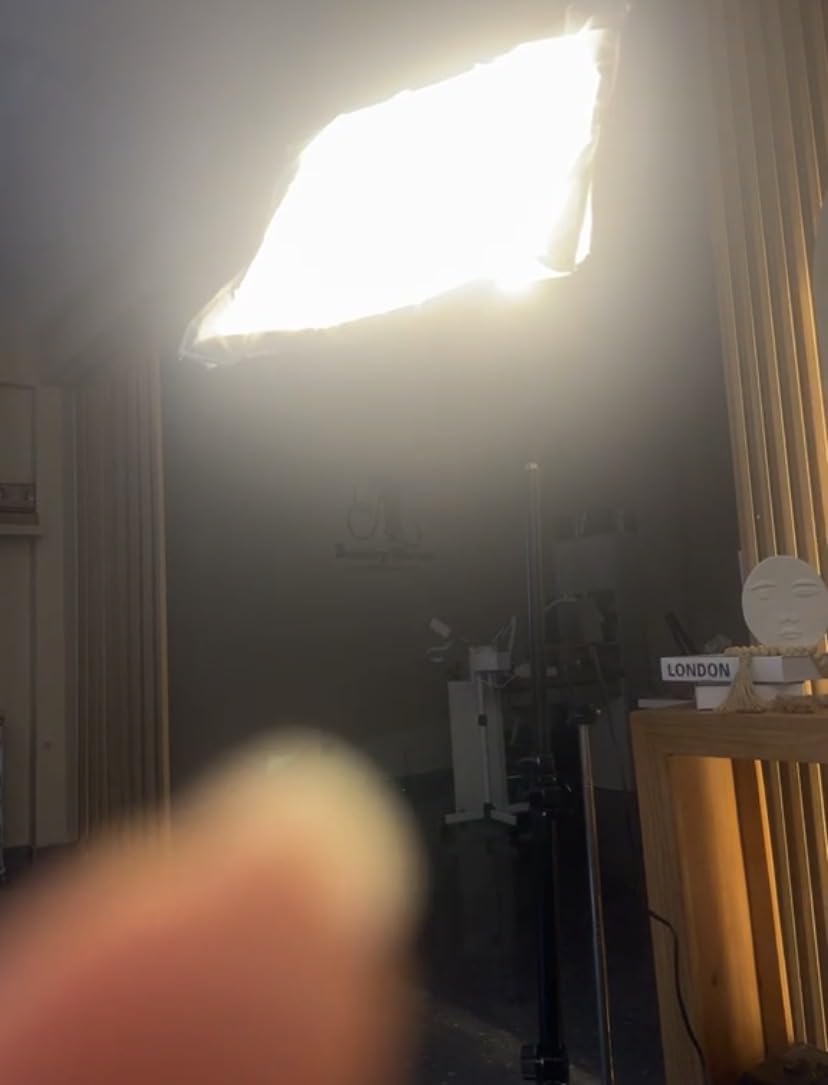
The practical list of complaints is short and specific. Every adjustment happens on the remote, so if you lose it you lose control of the light entirely. The cord is short and most owners end up buying an extension. And the softbox has to sit close to the subject to stay soft, which means it can appear in a full-body frame even when you have positioned it carefully.
CRI 90 is below the 95-plus panels in this roundup, so skin tones are flatter than they would be with a panel kit. The bulb also has no protective cover, and owners mention the on/off switch placement is awkward. None of these are serious, but they add up.
Why one softbox can beat a two-panel kit
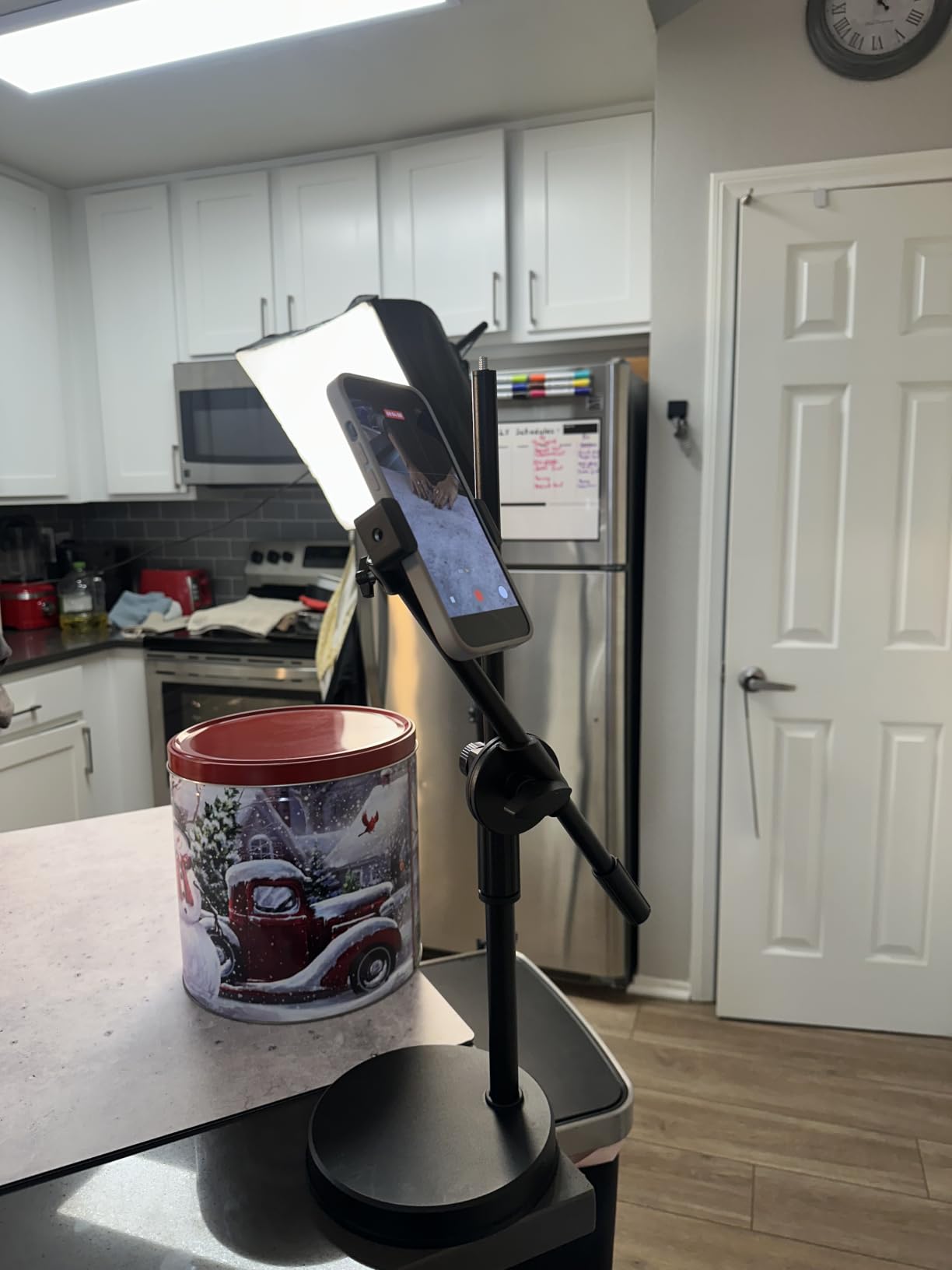
A single large source with a white foam board opposite it as a bounce gives you a key and a fill for the cost of one fixture. The softbox softens, and the bounce lifts the shadow side at a fraction of the price of a second light. This is the pattern a lighting group post on Facebook described, with one softbox about 20 degrees off-camera and a second smaller light aimed at the background.
Once you can see that pattern working, you will know whether you actually need a second panel, and you will add it deliberately rather than because it was in a box.
When to move on from this kit
Move up when you need a back light for separation, when you shoot wide enough that the softbox enters frame, or when accurate skin color becomes part of your content. At that point a bi-color panel pair with CRI 95 or above is the natural next step, and you already know how to place it.
10. NiceVeedi 15W 2-Pack – The Most Proven Kit in the Roundup
2-Pack LED Video Light Kit, NiceVeedi Studio Light, 2800-6500K Dimmable Photography Lighting Kit with Tripod Stand&Phone Holder, 73″ Stream Light for Video Recording, Game Streaming, YouTube
Two 10 by 7.8 inch panels
15W each, 356 LEDs
CRI 97+
Three preset color temperatures
Pros
- CRI 97+ color accuracy at an entry-level outlay
- Thickened shell diffuses for softer output
- USB-C power from a laptop
- phone or power bank
- Phone holders and carry bag included
- The most proven kit here by review volume
Cons
- Only three preset color temperatures
- No wall charger included
- Tripod legs cannot be adjusted individually
- Draw is high enough many USB ports will not run it
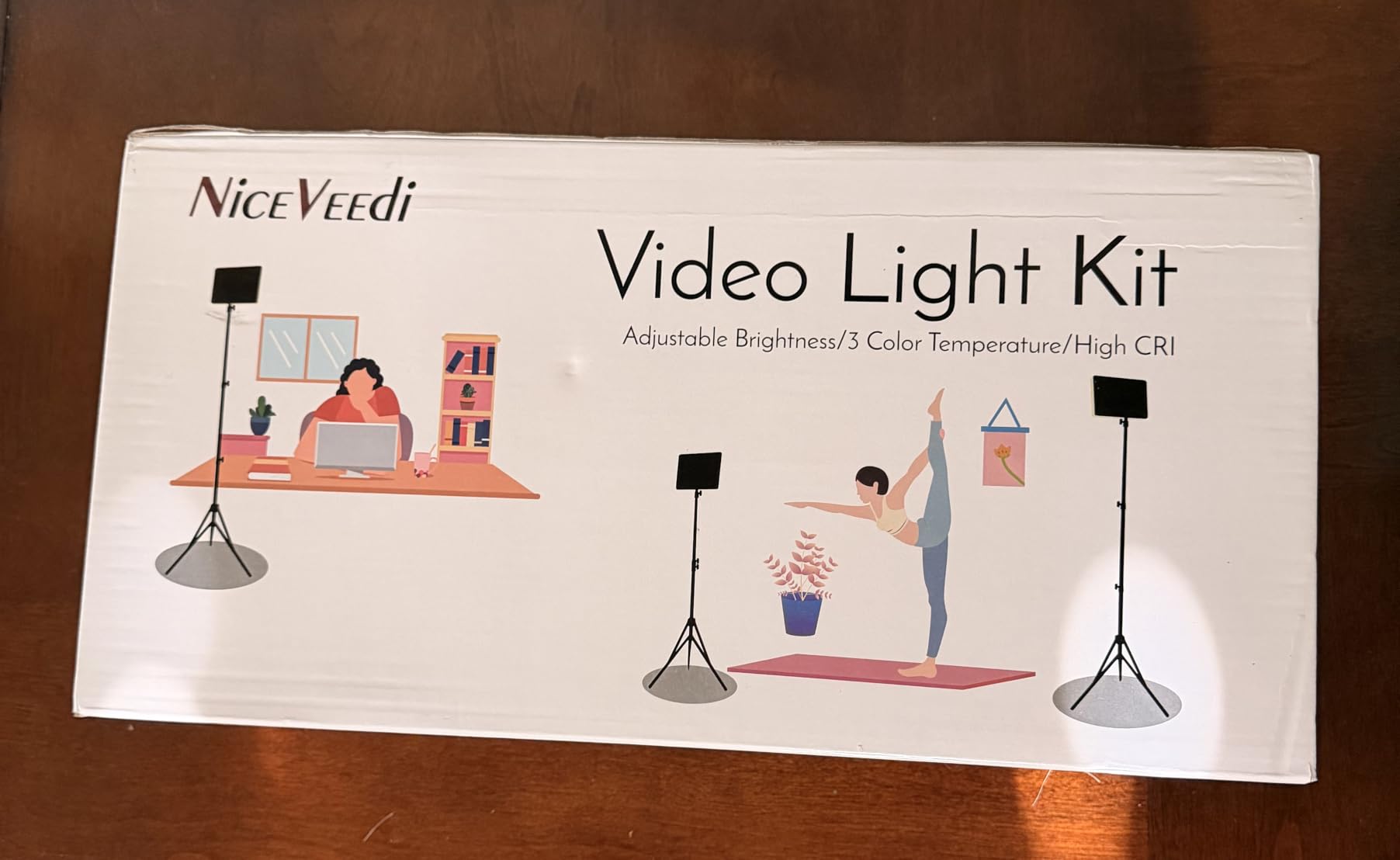
With over 6000 reviews behind it, this is the most battle-tested kit in the roundup and the one most people start with. Two 10 by 7.8 inch panels at 15W each with 356 LED beads per panel, and the standout is CRI 97+ at this price tier, which is color accuracy most creators never get. The thickened light shell acts as a built-in diffuser, so the output is softer than the raw panel size would suggest.
Power is USB-C at 5V 2A from a wall charger, laptop or power bank, and two USB-C adapters are included. The aluminum tripods raise to 60 or 73 inches and rotate the panel 180 degrees. Phone holders and a storage bag round out a genuinely portable package, and the remote dims from 10-100%.
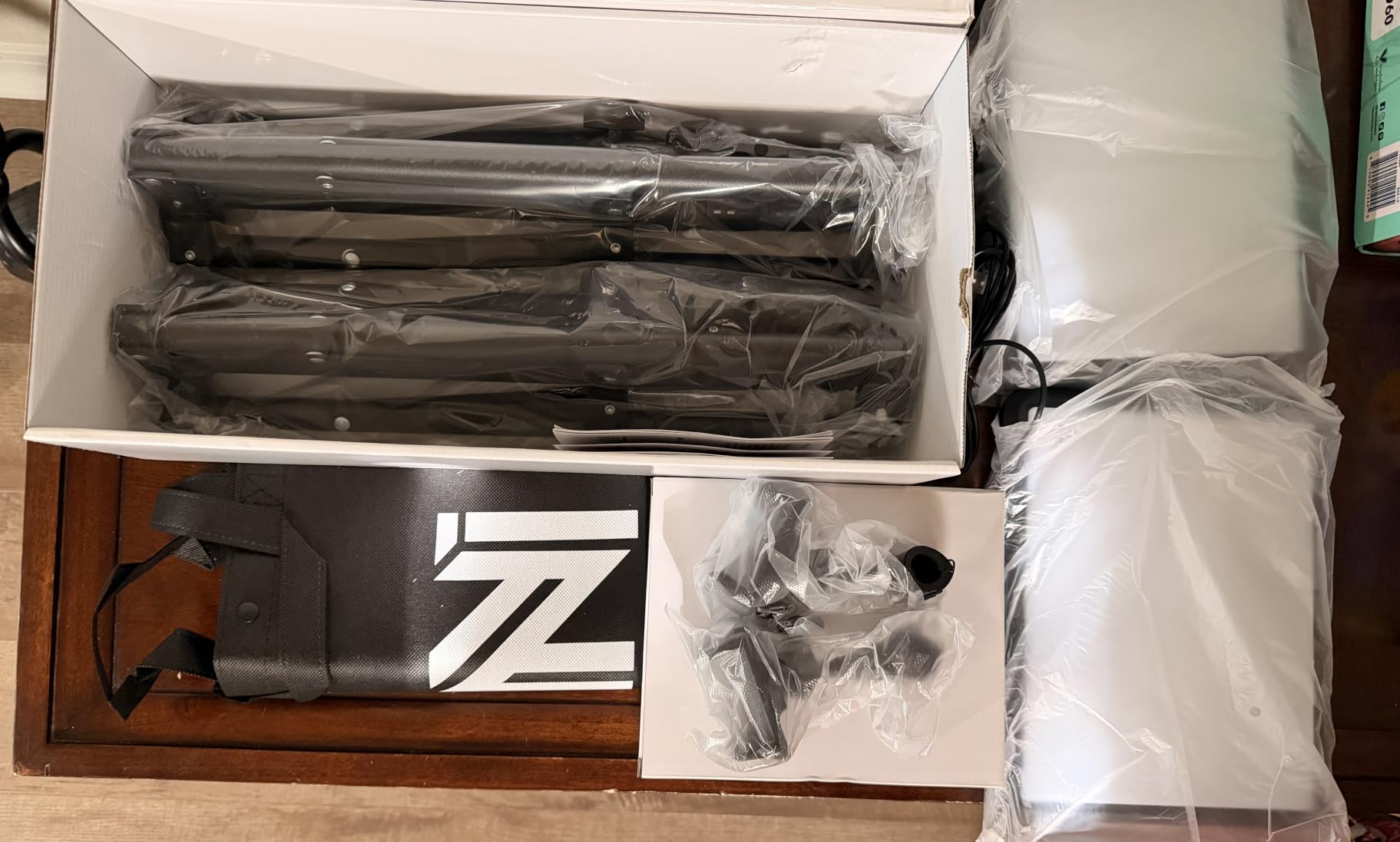
Two panels let you light both sides of a face at once, which kills the single-sided shadow that makes one-light footage look flat. That is the specific reason this kit works for beginners: it fixes the most obvious flaw in default room lighting without requiring you to learn light placement before your first upload.
There are real limits. Color temperature is three presets at 2800K, 4800K and 6500K rather than a continuous range, so matching a warm and a cool look is not possible. No wall charger is included, you need your own USB-C source, and the draw is high enough that many laptop and phone USB ports will not run a panel. Tripod legs cannot be adjusted individually, which makes positioning between a desk and a wall awkward.
How to get the most from a 15W panel
Work close. At this output, place each panel about 2 feet from your subject rather than across the room, and accept a tighter setup. Angle them inward at roughly 45 degrees so the light lands on your face and not on the wall behind, and use a piece of white card or a bedsheet opposite as a fill if one side is still darker.
Because there are only three color temperatures, pick one and commit to it across your whole set. Mixing 2800K and 6500K across two panels is the fastest way to make a two-light setup look wrong, and you do not have the range to blend them.
Where this kit stops being enough
It stops being enough the moment you want to shape light, because there are no barn doors, no softboxes and no flags. It is also not a back light, so you will have no separation from your background. At that point you have outgrown 15W panels entirely, and the NEEWER 480 or 660 is the natural upgrade rather than another panel of the same size.
The 3-Point Lighting Rule, With Exact Distances
Three-point lighting is simply a key light, a fill light and a back light, each doing one job. That is the whole rule, and every rig worth buying here is built around those three positions whether or not the box comes with three lights.
Key light. Your main source, placed above and roughly 45 degrees to one side of your subject. It sets the exposure and defines the shadows. At close range, aim it slightly downward at about 3 feet from the subject’s face and just above eye level.
Fill light. A softer, lower-output source on the opposite side that lifts the shadows the key creates. Set it to about half the key’s brightness, and lower it to the same height as your subject’s eyes rather than above them.
Back light or hair light. Placed behind and above the subject, pointed down at the shoulders and hair. It creates a bright rim that separates the subject from the background. Even modest output makes a large difference here.
Two things people get wrong. First, the fill should never compete with the key, because a face lit evenly from both sides looks flat. Second, most of the perceived quality in a talking-head video comes from the back light, which is the position beginners leave empty and the one that does the most work.
If two lights are all you have, put one at about 20 degrees off-camera as the key and bounce it off a white foam board, then use the second at lower output opposite. That is a complete, professional-looking two-light setup and it is enough for most YouTube channels for a long time.
Why Your Footage Looks Grainy (It Is Not Your Camera)
A camera collects a fixed amount of light, and when the scene is too dim it compensates by raising the ISO, which amplifies the signal and the noise together. That amplified noise is the grain, and it is why footage shot in a dim room looks soft and lifeless no matter which camera produced it. More usable light from your kit lets the ISO stay low, which is the single biggest jump in perceived video quality.
The clearest documented case comes from a detailed first-hand account on r/videography, where a creator ran two Neewer 13 inch LED panels on stands angled about 3 feet off to each side and slightly above eye level, bouncing off two white foam boards, and still got grainy soft footage. Adding a third identical 13 inch panel did not fix it. Swapping in a much brighter fixture with a 35 inch octagonal softbox on a boom arm, then running it at 30 percent power with the ISO lowered, produced dramatically better footage, and the original 13 inch panels were repurposed as side and hair lights.
Two lessons carry over directly to any kit on this list. Output matters more than panel count, and a cheap panel does not stop being useful once a brighter key is doing the heavy lifting. That is why several lower-output kits here are still worth buying, just not as your only light.
How to Size a Softbox for Your Subject
Softness is a ratio, not an absolute. The larger your light source is relative to your subject, the softer the light. SmallRig guidance surfaced on softbox searches puts it simply: use roughly 36×48 inches or larger, because the bigger the softbox relative to the subject, the softer the light. A photographer forum thread on modifiers makes the same point in framing terms, recommending a 32 inch umbrella or softbox as the practical size for head-and-shoulders work.
For a head-and-shoulders YouTube shot, treat 27 to 36 inches as the working range, and anything above 36×48 inches as genuinely broadcast-soft. The two 27 inch softboxes in this roundup sit comfortably in that band. The 20 by 28 inch Skytex pair is a step below, and the 16 inch Torjim is at the small end where you will still see some shadow definition.
Distance helps as much as size. Every foot you move the light back softens it further, which is why the 8.5 foot cables on the Skytex kit matter more than they look like they do. The trade-off is frame coverage, because a large softbox close to the subject enters a wide shot, and that is the practical limit on softbox kits in small rooms.
Buying Guide: The Specs That Actually Decide the Shot
Output: ignore wattage, look for published lux
Wattage tells you what the light consumes, not what reaches your subject. Lux at a stated distance is the number that matters, and only one kit in this roundup publishes it. The NEEWER 660 states 3300 lux at 1 meter, which is a number you can plan a room around. The RaLeno pair is described in reviews as roughly 650 lux per panel, a genuinely useful figure to know before you buy.
Color rendering and the color temperature trap
For skin tones, anything at CRI 95 or above is where you should start, and CRI 97 is better still. Below 90, faces look flat and slightly discolored. For color temperature, match every source in the room to the same Kelvin and switch off your overhead lights, which are usually the source of the odd green cast people spend months trying to grade out.
Bi-color or RGB?
Bi-color covers daylight and warm interior and is all most creators ever use. RGB adds color accents and scene effects for streaming and for background glow. The most common mistake is putting RGB light on a face, so keep RGB on the wall behind you and bi-color on your skin. Our guides to the best LED video lights for YouTube creators and the best lighting kits for home studio video go deeper on that decision.
Modifiers: what the box leaves out
This is where the real cost hides. Barn doors are included with the two GVM kits and the NEEWER 660, and are absent from the NEEWER 480. A diffuser is included with the NEEWER 480, the GVM kits and the softbox sets. A softbox is included only with the three softbox kits. Sandbags are included with none of them, and professionals on Gearspace and dvxuser recommend one on every stand without exception.
Stands and stability
Look for three-section aluminum stands with independent locking knobs, as the Torjim 16 inch tripod has. Avoid single-collared tripods holding a large softbox, because they creep. Professionals consistently prefer heavier three-stand kits over lightweight ones, and that advice holds whether you are in a studio or moving between rooms.
Powering a permanent studio corner
For a fixed corner, AC power wins because it never runs out and it never throttles. Battery panels like the RaLeno pair earn their keep on location rather than at a desk. USB-C panels are the most flexible for travel because they run from a laptop or power bank, but check your port output, because several kits draw more than a phone will supply. Whatever you choose, cable runs across a floor are a trip hazard and a noise problem, so route them along the wall.
Two lights or three?
Two lights plus a bounce card is a complete, professional setup and it is the right answer for most beginners. Add a third when you need separation from the background, which is the moment a back light stops being optional. Buying a three-light kit before you have a key light you are happy with is the most common overbuy in this category.
Frequently Asked Questions
What are the best studio lights for YouTube videos?
For most creators, two bi-color LED panels at CRI 95 or above with continuous dimming are the right answer. Our overall pick is the NEEWER 480 two-pack for its CRI 96+ and included diffuser, the NEEWER 660 for creators who want barn doors and a published 3300 lux at 1m figure, and the NiceVeedi 15W pair for anyone who needs a genuine fix for grainy footage on a tight budget.
What is the best 3 point lighting kit?
A three-point rig needs one key light, one fill light at about half the key’s brightness, and one back light for separation. Most of the kits here are two-light, so plan to add a third panel for the back position rather than buying a three-panel set blind. Key and fill go about 45 degrees to either side of your subject at roughly 3 feet, and the back light sits behind and above, aimed at your shoulders.
How do I set up a key light and fill light?
Place the key light about 3 feet from your subject, above eye level and roughly 45 degrees to one side, angled slightly downward. Place the fill on the opposite side at the same distance but at eye level, set to about half the key’s brightness so it lifts shadows without flattening the face. Turn off overhead room lights, match both lights to the same color temperature, and bounce a white foam board opposite the key to lift the shadow side further for free.
What is the best softbox for video recording?
For a head-and-shoulders YouTube shot, a 27 to 36 inch softbox is the practical range, and roughly 36×48 inches or larger gives genuinely broadcast-soft light because softness depends on the source size relative to your subject. In this roundup the two 27 inch Torjim softboxes are the largest sources, and the 16 inch Torjim is the most compact. Remember that a large softbox has to sit close, so check it does not enter a wide frame.
How much light do I need for video, and why does my footage look grainy?
Your footage looks grainy because the room is delivering less light than your camera needs, so the camera raises ISO and amplifies noise along with the signal. That is why upgrading the camera rarely fixes it. Add usable light instead, then lower the ISO. A detailed account on r/videography found that a third identical small panel changed nothing, while a brighter fixture with a 35 inch octagonal softbox and a lowered ISO transformed the footage, and the small panels were repurposed as side and hair lights.
Are cheap LED video lights good enough for YouTube?
Yes, for a two-panel kit aimed at a subject within a few feet, as long as the color rendering is CRI 95 or above. The NiceVeedi 15W pair reaches CRI 97+ and softbox kits reach high CRI 90 to 100 depending on the bulb. What cheap panels usually lack is output, beam control and modifiers, so expect to place them close and to add a bounce or a softbox separately.
Which Lighting Kit Should You Buy?
There is no single right answer to the best video lighting kits for YouTube studios question, but there is a short one. If your footage is grainy and you have never lit a face properly, start with the NEEWER 480 two-pack. It is our Editor’s Choice because CRI 96+, continuous dimming and an included diffuser solve the actual problem without a second round of purchases, and its U-bracket makes angled placement easy on day one.
If you already know you will want control, buy the NEEWER 660 instead. Barn doors and a manufacturer-published 3300 lux at 1m figure make it the more serious rig, and the LCD readout makes matching two lights painless. If your problem is purely budget, the NiceVeedi 15W pair is the most proven kit here by a wide margin, and its CRI 97+ color rendering holds up against panels costing several times more.
After that, add a back light before you add anything else, and buy a softbox only when you know your framing will allow it to sit close. Whatever you choose in 2026, turn off the overhead lights, match every source to the same color temperature, and put the key where the placement guide above says. That last part matters more than the model name.