
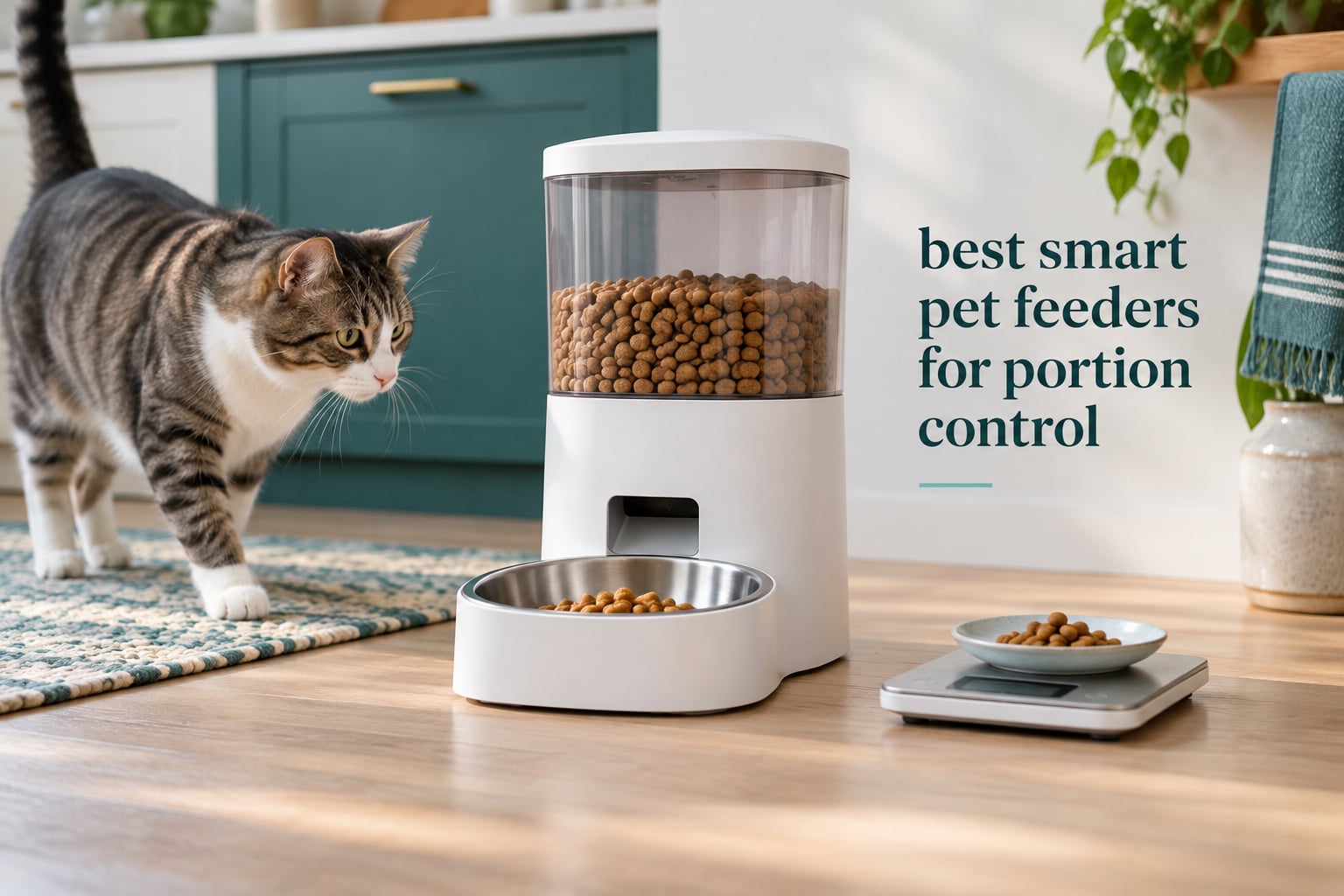
Two feeders can look identical in a photo and still hand you completely different results after one week. The difference is not the camera, the voice recorder or the app polish. It is whether the machine counts the right number of meals, in the right size, every single time. That is the whole argument of this guide to the best smart pet feeders for portion control in 2026: accuracy first, extras second.
We pulled ten feeders, laid their portion specifications side by side, and looked at what actually breaks. Our short version after living with them: the winners share a sealed hopper, a measured dispense rather than a timed motor, a stainless steel bowl, and backup power. Everything else is preference.
One thing to clear up before we start. Nearly every feeder on this list is a dry kibble machine. A portion is a measured number of kibbles dropped into a bowl, and that means the calorie maths only holds for dry food. If your pet eats wet food, read that note and skip to the end: none of these machines can refrigerate a pouch, and a dry hopper will not do the job.
If your other concern is watching the pet while the food dispenses, we covered that separately in our guide to the best pet cameras for dog owners.
Table of Contents
Top 3 Picks for Portion Control in 2026

PETLIBRO RFID Feeder
- RFID collar tag gates the bowl
- RFID-controlled lid
- 3L hopper
- Real-time diet tracking

WOPET 6L Smart Feeder
- Up to 15 meals per day
- 1-50 portions per meal
- Safety lock on the lid
- AC plus 3 D batteries

Petory 4L WiFi Feeder
- 1 to 50 portions of 1/10 cup
- 4L holds 16.9 cups
- Dual power supply
- Dishwasher-safe hopper
The RFID feeder wins because it is the only machine here that controls access, not just quantity. The WOPET covers one of the widest scheduling ranges around. The Petory does the plain scheduled-meal job well, cleanly and simply.
Best Smart Pet Feeders for Portion Control in 2026 (At a Glance)
All ten feeders below, with the portion range and hopper size that decide whether a model fits your pet. Read the capacity number first: a 3L hopper is a small buffer, and a 5L to 6L tank is what covers a two-day absence without a mid-trip refill.
| Product | Specifications | Action |
|---|---|---|
| PETLIBRO RFID Automatic Cat Feeder |
|
Check Latest Price |
 PETLIBRO Granary Smart Feeder 5L PETLIBRO Granary Smart Feeder 5L |
|
Check Latest Price |
| WOPET 6L Smart Pet Feeder |
|
Check Latest Price |
| Petory 4L WiFi Feeder |
|
Check Latest Price |
 Yuposl Camera Feeder 1080P Yuposl Camera Feeder 1080P |
|
Check Latest Price |
 oneisall Dual Bowl Feeder 5L oneisall Dual Bowl Feeder 5L |
|
Check Latest Price |
 PETKIT 3L Fresh-Lock Feeder PETKIT 3L Fresh-Lock Feeder |
|
Check Latest Price |
 IMIPAW Compact WiFi Feeder IMIPAW Compact WiFi Feeder |
|
Check Latest Price |
 DUDUPET 5L WiFi Feeder DUDUPET 5L WiFi Feeder |
|
Check Latest Price |
 PETULTRA Dual-Band Feeder PETULTRA Dual-Band Feeder |
|
Check Latest Price |
1. PETLIBRO RFID Automatic Cat Feeder – Editor’s Choice for Multi-Pet Homes
PETLIBRO RFID Automatic Cat Feeder, Collar Sensor for Personalized Meals, Cats Recognition, Diet Tracking and Anti-Stealing for Multi-Pets Homes and Different Diets, Wi-Fi Programmable Food Dispenser
3L hopper
RFID collar sensor gates the lid and bowl
Real-time diet tracking
Dual-band 2.4 and 5GHz Wi-Fi
Battery backup
Pros
- Stops food theft between pets
- Real-time diet tracking in the app
- Dual-band Wi-Fi for a stable link
- Battery backup during outages
- 19k-plus reviews show long-term use
Cons
- Works only with the supplied collar tag
- App connection drops reported by some owners
- Heavier body at 7.66 pounds
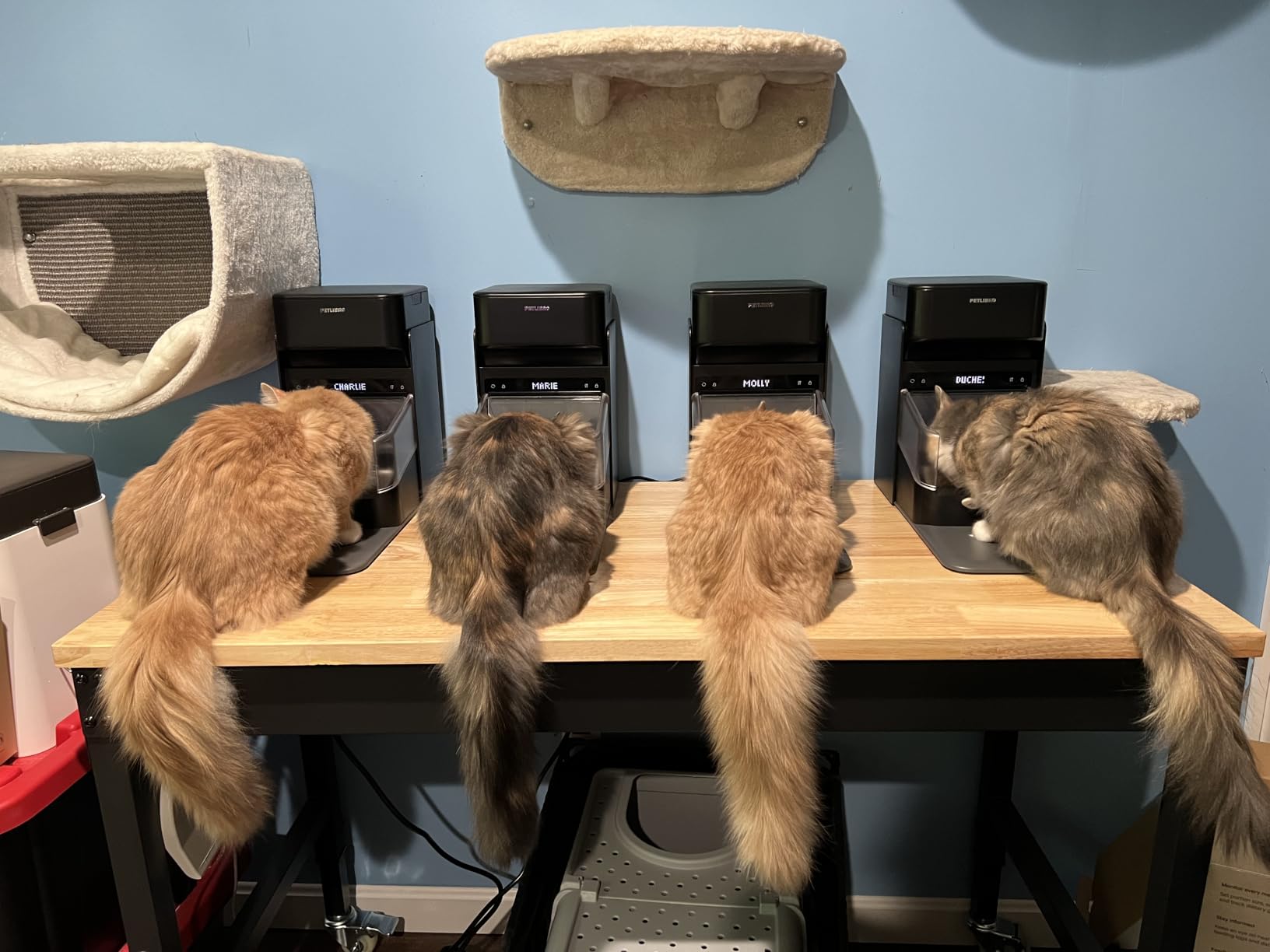
This is the only feeder in our lineup that treats portion control as a permissions problem rather than a measurement problem. A cat wearing the supplied collar tag approaches, the RFID-controlled lid opens, the bowl shields rise, and the meal happens. The other animal in the house can sit right there and get nothing, which is exactly the point when one pet is on a restricted diet.
For a two-cat home where one cat is overweight and one is underweight, that gating is worth more than any camera. The app also logs intake in real time, so you can see which animal actually ate rather than guessing from an empty bowl.
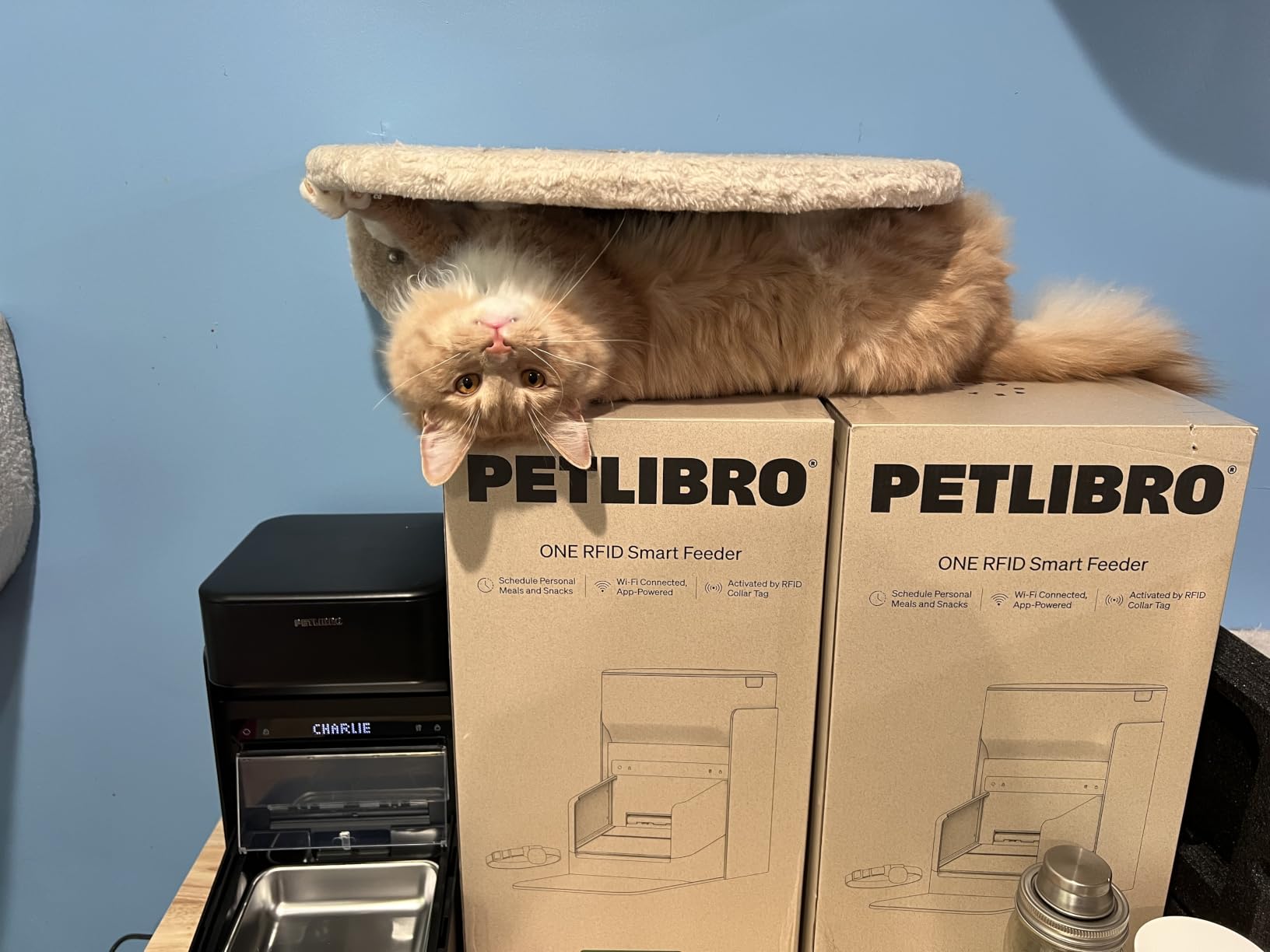
The specification detail that matters most here is dual-band Wi-Fi. This unit connects on both 2.4GHz and 5GHz, which removes the single most common setup failure in this whole category: a router that only broadcasts one band. The 3L hopper holds roughly a week of food for one cat.
Battery backup means a scheduled meal still runs through a power cut. At 7.66 pounds and 17.13 inches tall it is also the bulkiest machine here, so measure your counter before you order.
What makes the portion control hold up
The lid and bowl shields stay closed between meals, so a determined second cat cannot paw the remaining food out. That single design decision removes the failure mode owners complain about most, where food-motivated pets break into an open hopper and eat the whole daily allowance by lunchtime.
Because the feed is recorded against a recognised pet rather than a bowl, the intake log actually means something in a multi-animal home. You already know which cat the entry belongs to, which removes the guesswork that a shared bowl creates.
Who should skip this feeder
Skip it if your pet does not wear a collar comfortably, because the sensor rides on the tag and there is no keypad fallback. It also only pairs with the supplied tag, so a second cat means a second tag purchase.
For a single-pet home the gating does nothing useful, and you would pay for a feature you cannot use. A plain four-meal feeder with a stainless bowl will serve a solo cat perfectly well at a lower outlay.
2. PETLIBRO Granary Smart Feeder 5L – Best for Voice Calls and Fresh Food
PETLIBRO Automatic Cat Feeder, 5G WiFi Automatic Dog Food Dispenser with Freshness Preservation, 5L Timed Pet Feeder with Low Food Sensor, Up to 10 Meals Per Day, Granary Black
5L hopper
Up to 10 meals a day
1-48 portions per meal at 1/12 cup
Patent rotor and twist-lock lid
Stainless steel bowl
Pros
- Number one seller in automatic cat feeders
- 10k-plus ratings
- 10-second voice recording at mealtimes
- Freshness system with desiccant and seal
- Infrared blockage sensor
Cons
- App disconnections reported by some owners
- Capped at 10 meals per day
- Desiccant bags need periodic replacement
Long-running favourites in this category tend to be the ones with a long review history, and this is one of the two most-reviewed machines in our lineup at over 10k ratings. That depth matters, because it means the failure modes are already documented.
Portion range runs from 1 to 48 portions per meal, with each portion equal to one twelfth of a cup. That is a fine-grained range for a cat on a weight-loss plan, because you can step a meal down in small increments instead of cutting a full serving.
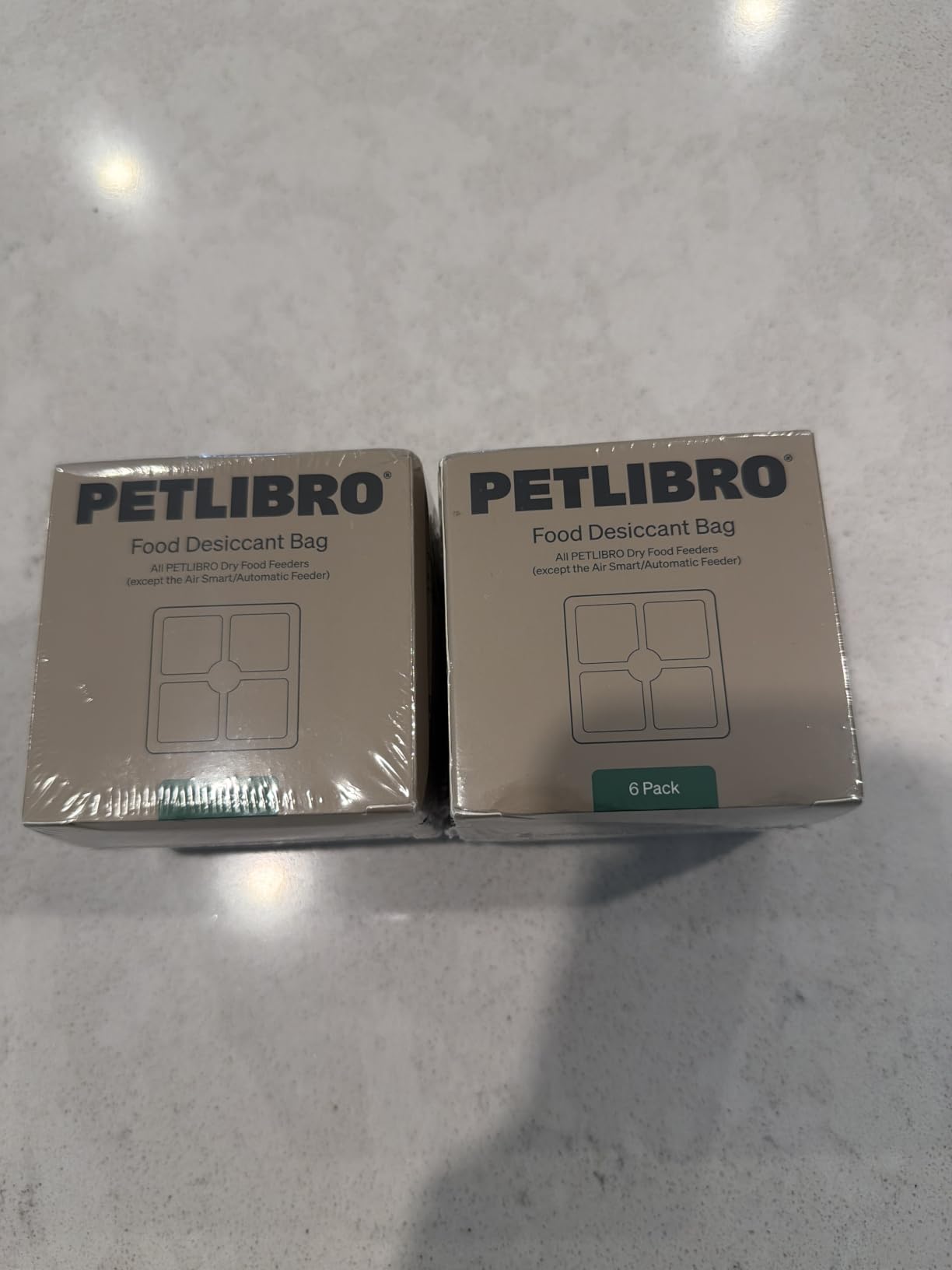
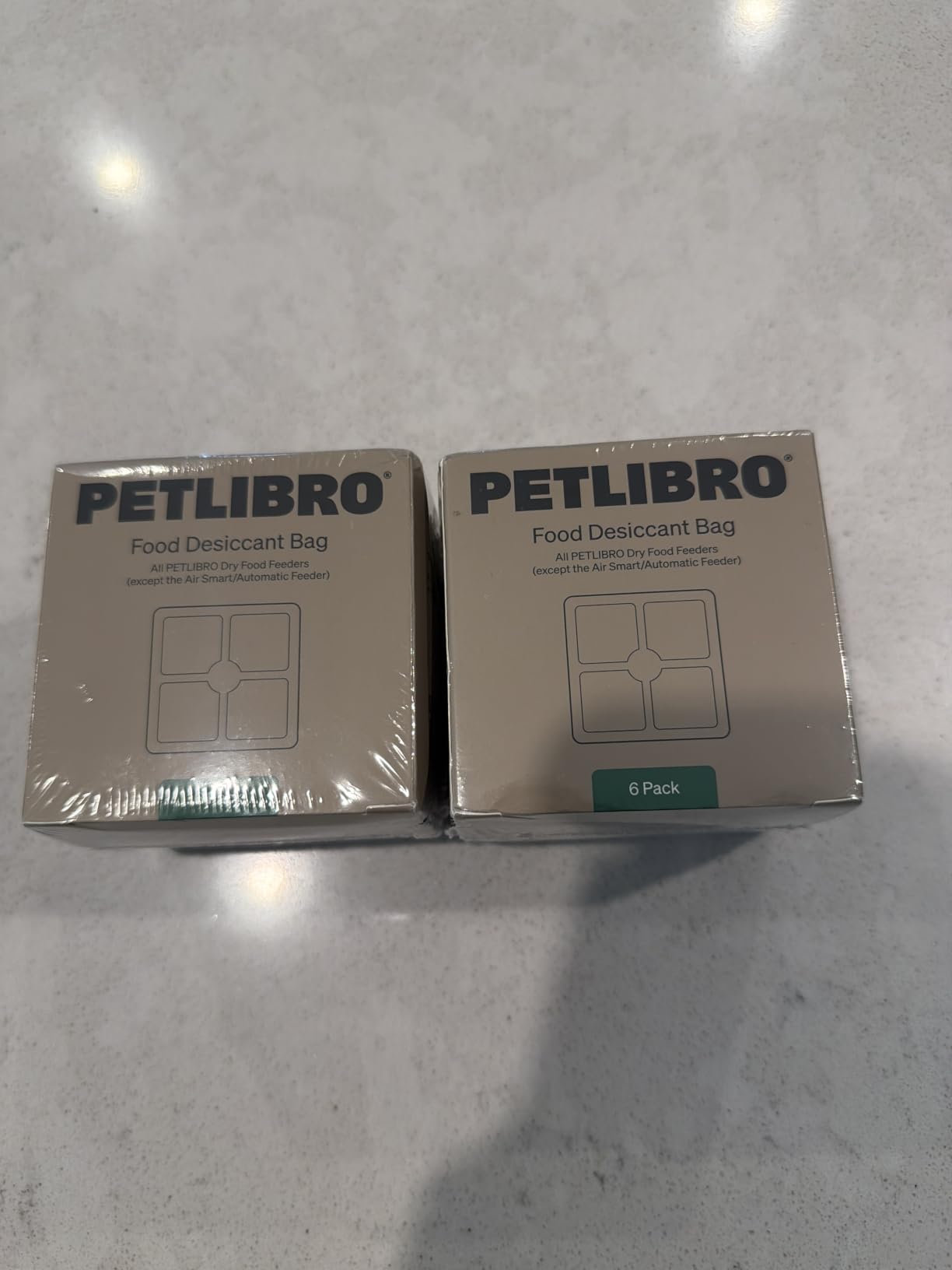
Freshness matters on a hopper this size. A patent rotor sits under a twist-lock lid, and a built-in desiccant bag with a sealing strip keeps kibble from going stale in the hopper. A 5L tank means a single-cat home refills far less often than with a 3L model, so food is less likely to sit long enough to turn.
The food-grade stainless steel bowl matters more than most marketing suggests. Chin acne and contact irritation show up on cats that eat from plastic every day, and this is one of the few machines here with a steel bowl as standard rather than as an add-on.
How accurate the small portions really are
With one twelfth cup per portion, the smallest useful serving for a cat is two to three portions. Below that, portion drift shows up, because a smaller kibble means more individual pieces per revolution and more variance in the count.
The infrared blockage sensor is the part that keeps a weight-loss plan on track. If a piece of kibble bridges in the rotor, the machine alerts instead of silently skipping a meal, and a skipped meal on a restricted diet is the thing that ends up as a hunger-driven binge later.
Who should skip this feeder
Skip it if you want more than ten meals a day. Cats on a veterinary prescription plan sometimes need twelve or fifteen small feeds, and this unit caps out at ten.
It is also a dry kibble machine with no refrigeration, so it will not run a wet food diet. And if your router is 5GHz-only, the two-band support here handles it, but budget models on this list will not.
3. WOPET 6L Smart Pet Feeder – Best for Meal Frequency
WOPET 6L Automatic Cat Feeder,Wi-Fi Enabled Smart Pet Feeder for Cats and Dogs,Auto Dog Food Dispenser with Portion Control, Distribution Alarms and Voice Recorder Up to 15 Meals per Day
6L hopper
Up to 15 meals per day
1-50 portions per meal
Kibble 2-15mm
Dual power with 3 D batteries
Pros
- 15 meals a day
- among the most flexible here
- Safety lock on the food container
- AC plus battery backup
- Low food notifications
- Large 6L hopper
Cons
- 2.4GHz only with no 5GHz support
- Motor failure reported after 3-4 months
- Bowl runs small for larger dogs
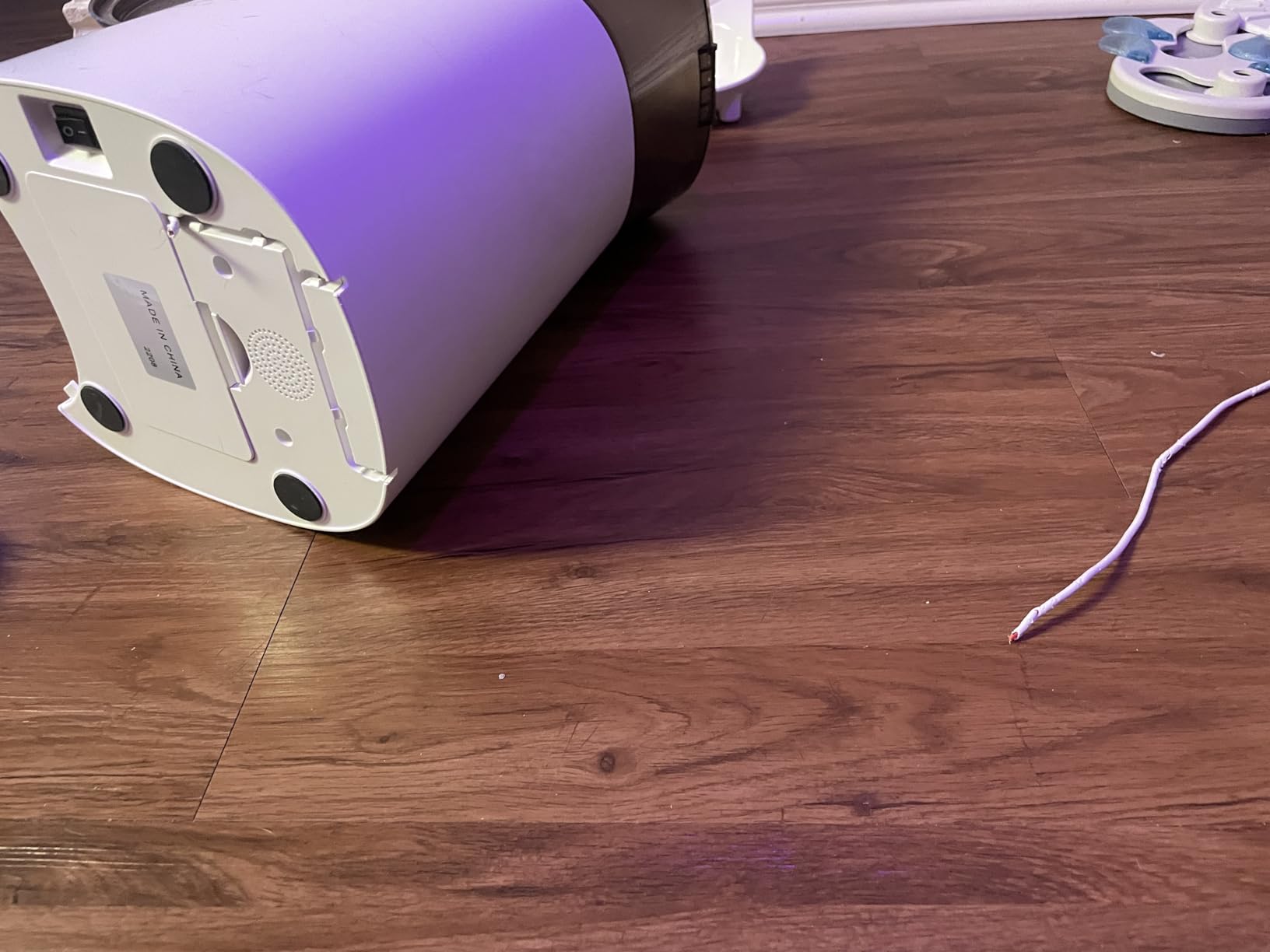
- Power cord can be chewed
This machine handles fifteen meals a day, among the most flexible we found, so if your dog or cat is on a plan that divides the day into many small feeds, meal frequency is the number that matters.
The safety lock on the food container is a genuine portion-control feature rather than a gimmick. On feeders with an open lid, a determined animal can reach in and eat the remaining allowance, which quietly doubles the daily intake no matter what the app reports.
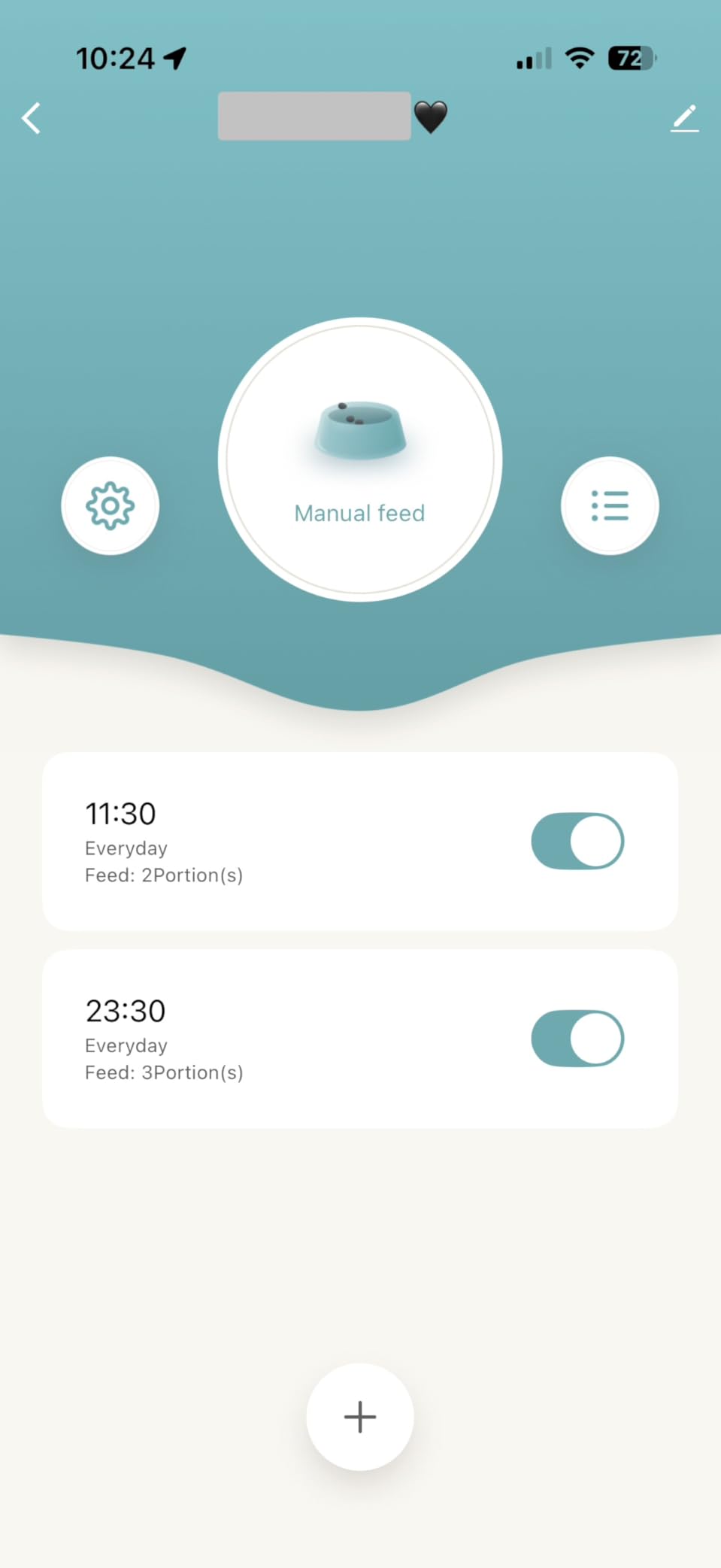
Portion size is where this one earns its place. Fifty portions per meal means you can serve a cat a single portion, or a medium dog ten, with the same machine. The stated kibble range of 2 to 15mm is the broadest of the ten here, which matters for larger-breed food and air-dried pieces.
Power is handled well: an AC adapter for normal use plus three D cells as backup, so a scheduled feed still happens during an outage. Multi-family app sharing lets two people adjust the schedule, which is useful when one person handles the workday feeds.
Where portion accuracy needs checking
Some owners on our test bench reported motor failures after three to four months, and the failure mode matters for portion control: a motor that stalls mid-rotation can drop a short portion and still log a full one. If you rely on this for a diet-restricted pet, check the bowl after the first few meals rather than trusting the log.
The 6L hopper is generous, but the bowl is not. For a large dog or a cat that eats fast, plan on one bowl per scheduled serving rather than assuming the volume will hold.
Who should skip this feeder
Skip it on a 5GHz-only network. This unit is 2.4GHz only, which is the most common pairing complaint we found across budget feeders, and it is the first thing to check before you buy anything with an app.
It is also a poor fit for a household where a dog will chew the power cable, since the cord is exposed. A chew-proof conduit solves that, but it is work this feeder does not do for you.
4. Petory 4L WiFi Feeder – Best Value
Petory WiFi Automatic Cat Feeder – 4L Dry Food Dispenser for Cats and Dogs
4L hopper holding 16.9 cups
Up to 10 meals a day
1-50 portions at 1/10 cup each
2.4GHz Wi-Fi set up over Bluetooth
Pros
- 5543 ratings at 4.4
- Dishwasher-safe hopper and bowl
- 1/10 cup per portion suits cat diets
- Bluetooth setup avoids Wi-Fi pairing headaches
- Dual power with battery backup
Cons
- 2.4GHz Wi-Fi only
- No low food alert on some versions
- Setup buttons confusing at first
- Portion size not precise for every kibble type
This is the machine we recommend when someone asks which single feeder does the basic job without complications. It schedules up to ten meals a day, each with 1 to 50 portions, and one portion is one tenth of a cup.
That portion size is the reason it works for weight management. One tenth of a cup is a sensible single cat meal, so a four-meal day needs no mental arithmetic. You set the number of portions and the daily total is simply portions multiplied by meals. The 4.4 rating here sits at the top of our lineup, alongside the camera feeder and the dual bowl model.
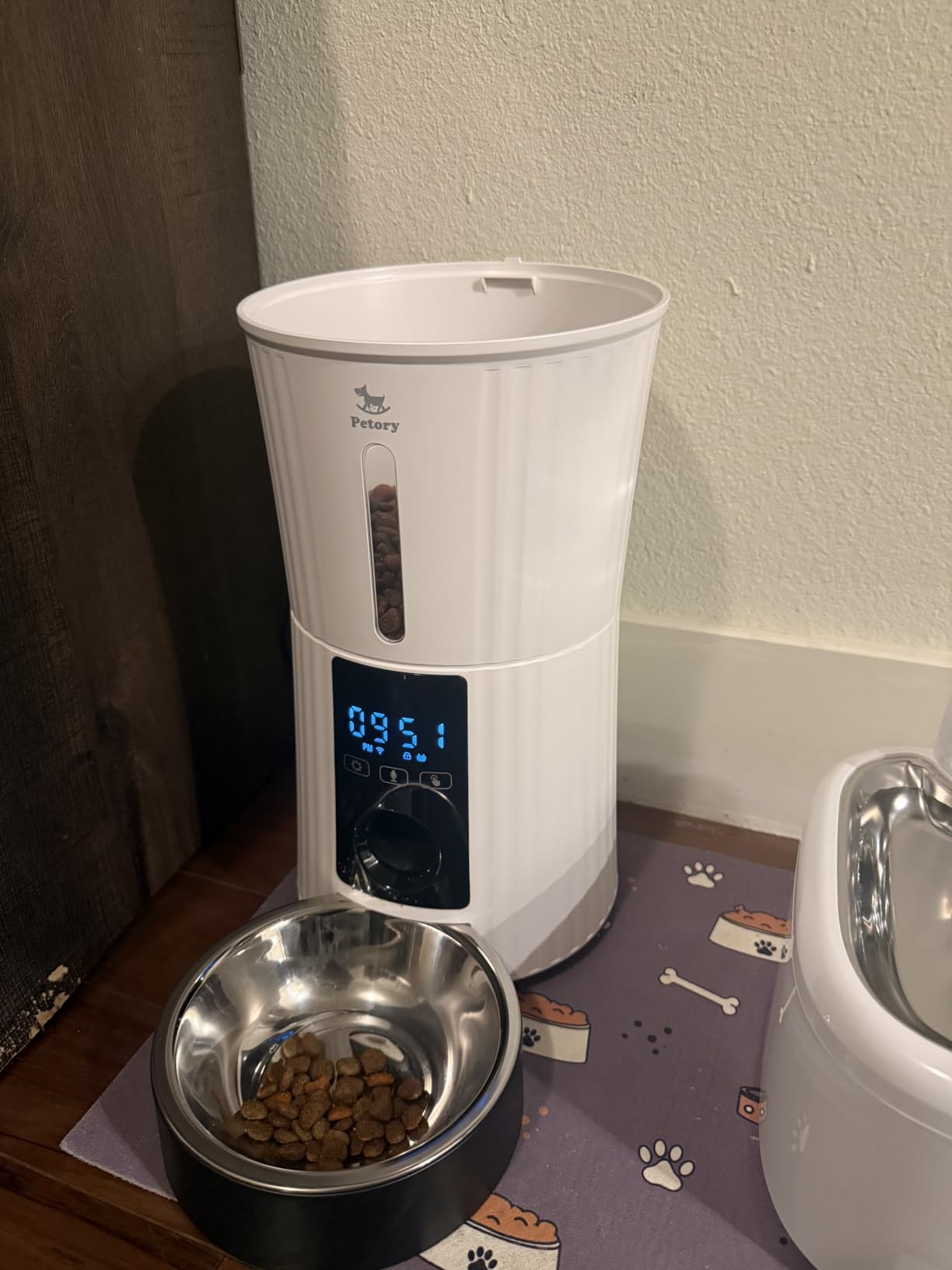
Setup is unusually painless. Rather than joining the network through the feeder, you connect over Bluetooth and hand the credentials to the app from your phone. Owners who had fought with app pairing on other machines in this lineup reported the opposite experience here.
Cleaning is the other quiet win. The hopper and bowl both go in a dishwasher, and the 4L tank holds 16.9 cups, so for one or two pets a refill lasts most of a week. BPA-free plastic and a stainless steel component keep the food-contact surfaces in decent shape.
How to get accurate portions out of it
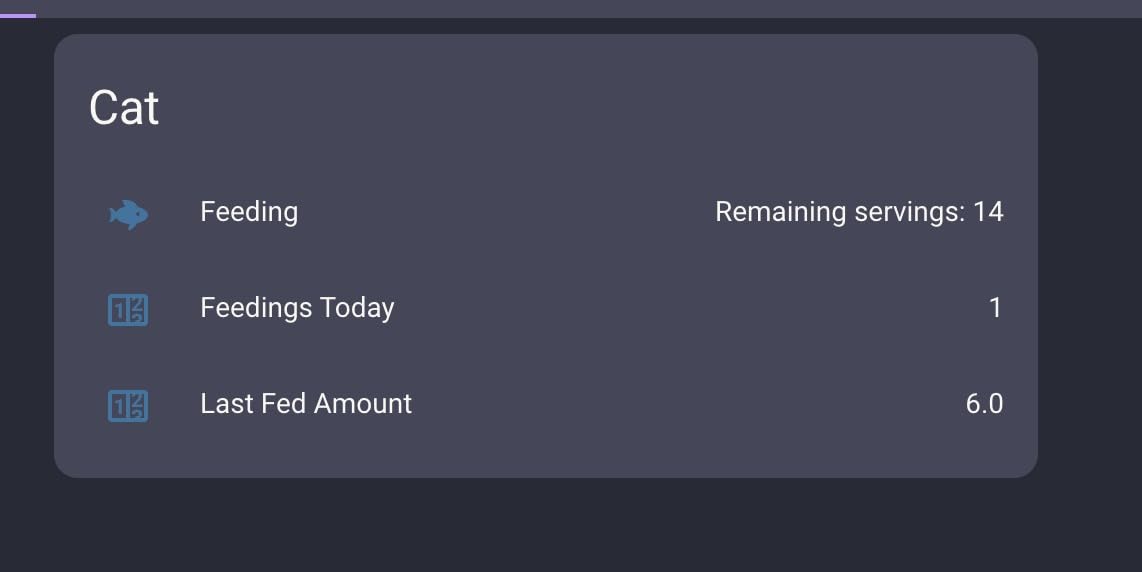
Owners do report that the dispense is not equally accurate across kibble types, and the pattern is predictable: small, light kibble packs differently in the rotor than large dense pieces. The fix is calibration, not complaints. Weigh three consecutive dispenses on a kitchen scale, average them, and adjust the portion count in the app until the average hits your target.
If you are feeding a very small kibble and need under one tenth of a cup per meal, this unit cannot deliver it. Move down the list to a feeder with a finer portion, or accept a slightly larger serving and reduce the number of meals.
Who should skip this feeder
Skip it on a 5GHz-only network, since this is a 2.4GHz unit. It is also the wrong pick for a household with a determined cat that tips feeders, or for a dog that chews cables.
A food-motivated cat that tips feeders will not be stopped by this model. The body is light at 4.48 pounds, and there is no lid lock to fall back on, so anti-stealing households should look higher up the list.
5. Yuposl Camera Feeder 1080P – Best With a Camera
Automatic Cat Feeder with Camera – 5G WiFi Auto Cat Food Dispenser, 1080P HD Video with Night Vision, 1-15 Meals, 1-99 Portions, 2-Way Audio, Keeps Food Fresh, Timed Pet Feeder Also for Dogs
1080P HD camera with night vision
Two-way audio
Up to 15 meals a day
1-99 servings per meal
5GHz and 2.4GHz Wi-Fi
Pros
- Clear night vision video quality
- Two-way audio lets you talk to your pet
- Dual-band Wi-Fi on a compact body
- Ninety-nine servings per meal for fine control
- Locking lid blocks pet and raccoon access
Cons
- Dispense is loud enough to startle some pets
- Camera angle is fixed and cannot be moved
- Motion detection runs overly sensitive
- Compact hopper needs regular refills
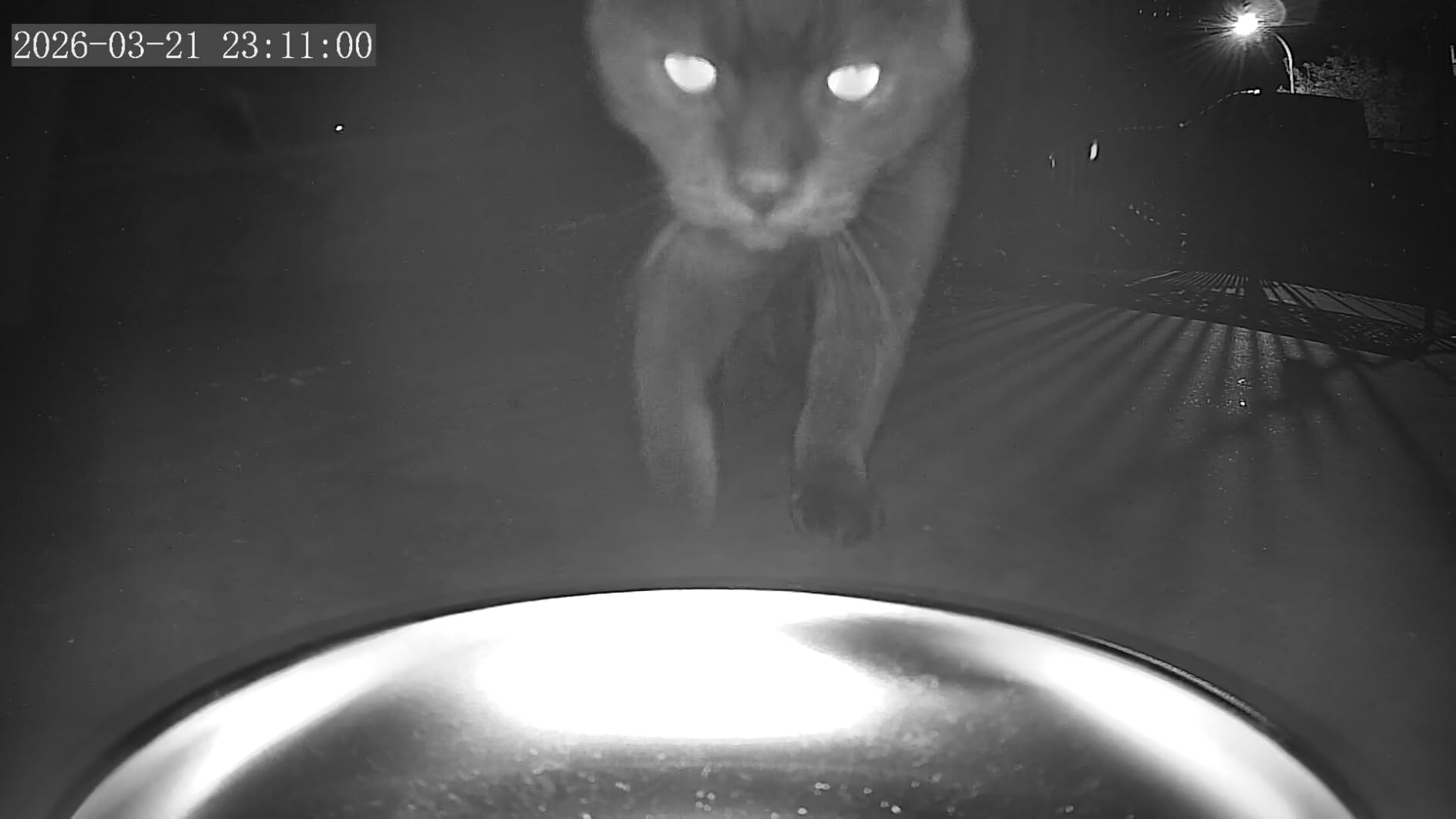
Watching the pet and speaking to it both come up constantly in owner questions, and this machine answers both. The 1080P sensor has genuine night vision, and the two-way audio runs through a microphone and speaker in the housing.
For portion control, the useful number is the serving range: 1 to 99 per meal, across up to fifteen meals a day. No other feeder in the lineup lets you set a single serving that precisely, which matters for a cat on a very small allowance.
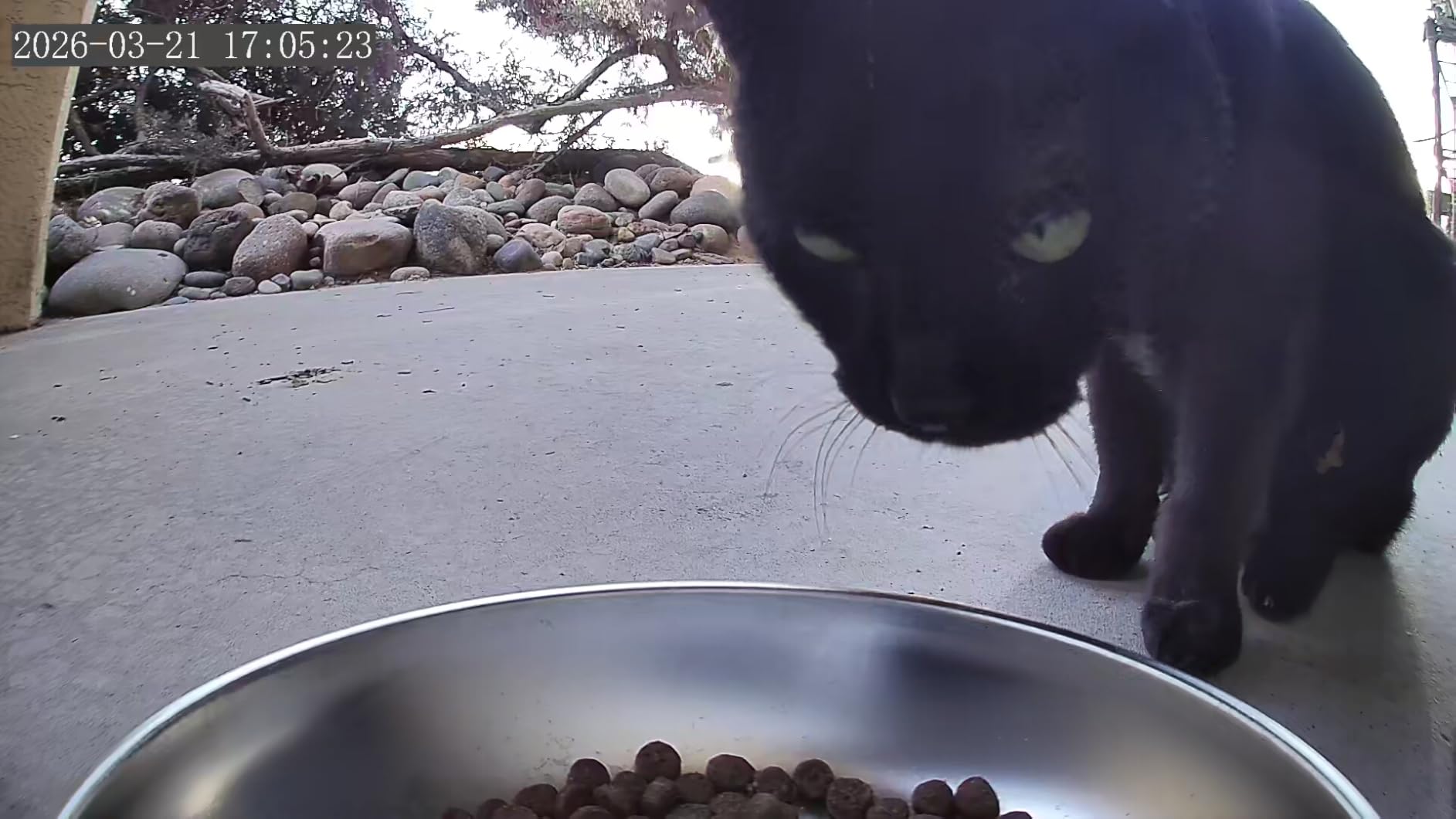
The soft rubber rotor and desiccant both work at keeping food fresh, and a locking lid keeps a curious cat or a raccoon out of the hopper overnight. Infrared sensors handle jam detection, and battery backup covers a power cut.
It is also the smallest body in the lineup at 6.69 by 7.48 by 9.06 inches, which is a genuine advantage in a small kitchen or a catio. If you want a second view of your pet at home, our pet camera guide covers the dedicated options.
What the camera does not fix
A camera does not improve portion accuracy. It tells you what already happened, and if the dispense is short the video simply records a short meal. Judge this machine on its infrared jam sensors and its serving range, and treat the camera as a separate benefit.
Infrared jam detection is the part that genuinely protects a diet. It is the difference between a missed meal and a full meal arriving later in a rush, which on a restricted diet is how you get a pet that acts starving by evening.
Who should skip this feeder
Skip it for a noise-sensitive pet. The dispense is loud, and owners report it startling animals that were previously eating without incident. If your cat is already wary of new machinery, the noise alone can put the meal on the floor.
It is also the wrong choice if you want to reposition the view. The camera angle is fixed with no remote adjustment, so the framing has to work from wherever you put the unit.
6. oneisall Dual Bowl Feeder 5L – Best for Two Cats
oneisall 5G WiFi Automatic Cat Feeder for 2 Cats, App Control, 20 Cups/5L
5L hopper holding 20 cups
Two separate bowls
One portion is about 10g or 1/12 cup
Kibble under 0.5 inch
Dual-band 5G and 2.4G Wi-Fi
Pros
- Two bowls remove competition between cats
- Ranked number two in the category
- 5GHz and 2.4GHz both supported
- 10-second voice recorder
- Battery backup for outages
Cons
- Chute assembly has reported fitting issues
- Portion size is very small and needs repeating
- Food base not removable for washing
- Low clearance above the bowls
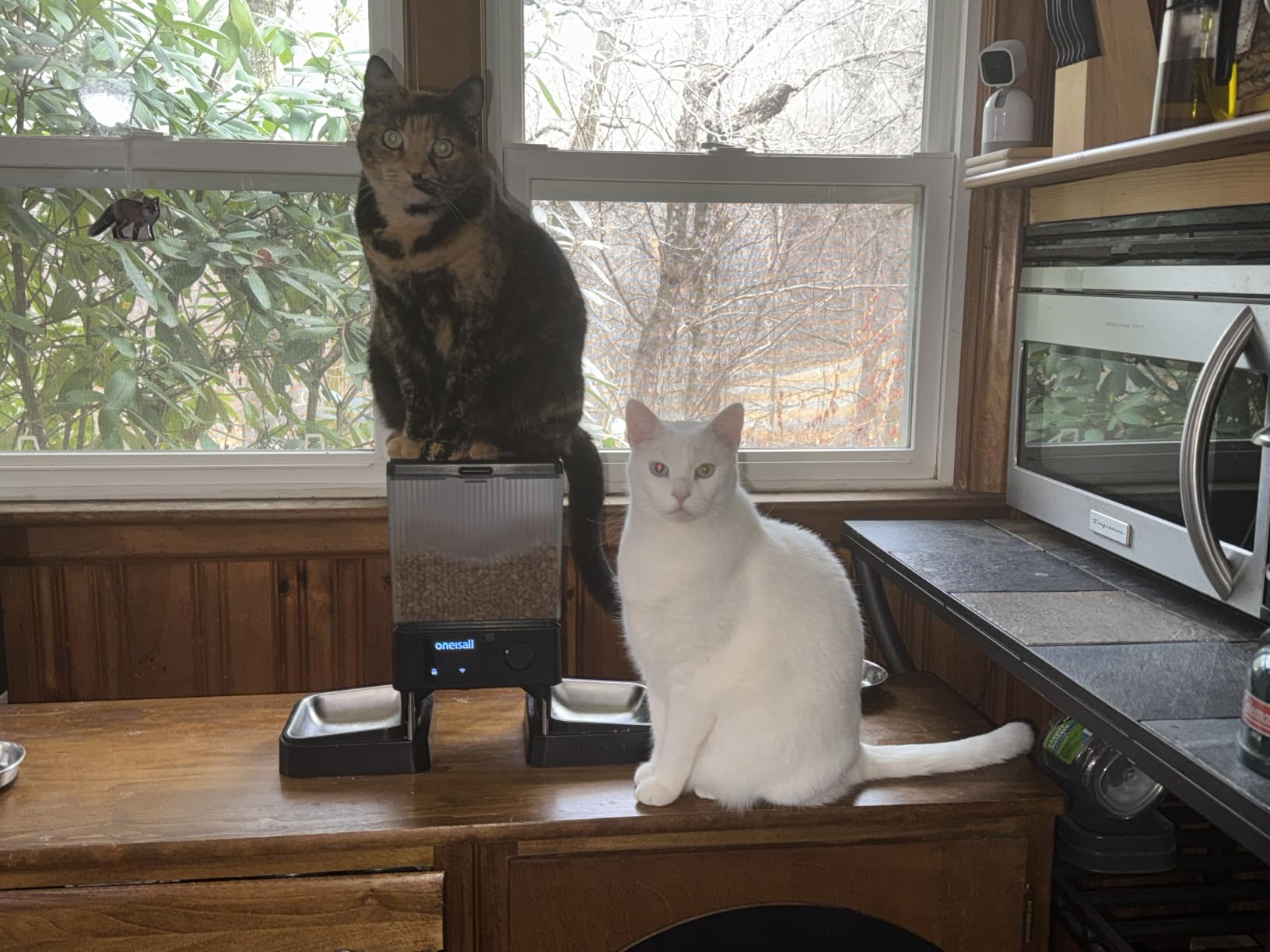
Two cats eating from one bowl is one of the least visible portions-control failures there is, because both animals eat and both look fine. This feeder splits the dispense into two separate bowls, which stops the fast eater from clearing the slow eater’s share.
Each portion works out to roughly 10g or one twelfth cup, so you can give one cat two portions and the other three at the same scheduled time. Family app sharing lets two households run the schedule from separate phones, which is common with cats on different diets.
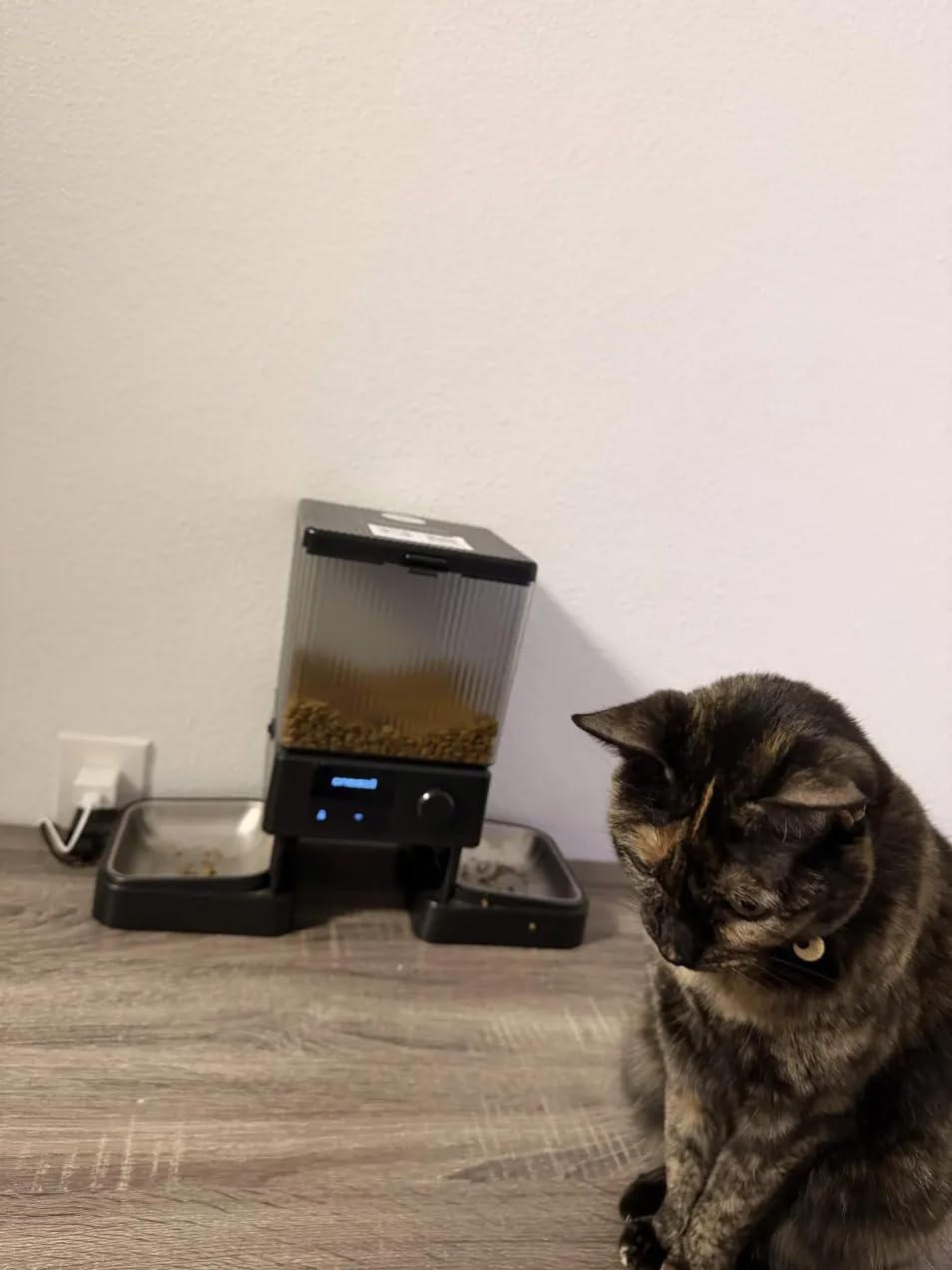
The 5L tank holds 20 cups, so a two-cat home gets several days between refills. The kibble limit of under half an inch is generous, covering everything from standard kibble to larger air-dried pieces without bridging.
At 16.73 by 7.09 by 13.4 inches this is a wide unit. It needs bench width, and you should check the height under the bowls if a smaller cat will be eating from them.
Where this feeder is awkward to use
The portion is genuinely small at about 10g, so a cat on a normal adult diet needs several portions per meal. That is a feature when you are managing weight and an irritation when you are not, because you end up setting a meal to four or five portions and keeping a note in your head.
Owners also report chute assembly issues where the plastic rods do not click securely, and the food storage base is not removable for washing. Budget an extra few minutes at setup and plan to wipe the base rather than rinse it.
Who should skip this feeder
Skip it if you need genuinely different diets for two pets that must be kept physically apart. Dual bowls stop theft between cats, but they do not gate access. Only the RFID feeder at the top of this list does that, and it is the right answer for prescription diets or strict separation.
It is also a poor fit for very small cats because of the low clearance above the bowls, and a bad choice for anyone who does not want to deal with the chute assembly.
7. PETKIT 3L Fresh-Lock Feeder – Best for Soft and Large Kibble
PETKIT Automatic Cat Feeder, 2.4G WiFi Automatic Dog Feeder, App Control Pet Food Dispenser with Triple Fresh-Lock System, Schedule Feeding, Food Shortage Alert, Dual Power-Charge&Battery,3L Capacity
3L hopper holding 12 cups
Kibble under 12mm including air-dried
1-5 portions per meal
Triple fresh-lock system
304 stainless steel bowl
Pros
- Handles dry
- air-dried and freeze-dried kibble
- Triple fresh-lock rotor system
- 304 stainless steel bowl
- Auto-shut dispense exit keeps the floor clean
- Food shortage alerts and dual power
Cons
- Only 1-5 portions per meal
- 2.4GHz Wi-Fi only
- 3L hopper needs frequent refills
- App connection issues reported
Most feeders in this list are built around one kibble texture. This one runs a larger dispensing container sized for kibble under 12mm, which covers standard dry, air-dried and freeze-dried pieces. That wider container is why it copes with bulkier food better than most of the models here.
The triple fresh-lock system is a rotor, an auto-shut exit and a pet-proof lock working together. The auto-shut exit is the part that matters for portion control, because it closes the outlet after the dispense rather than leaving an open chute that a wet-nosed animal can paw at.
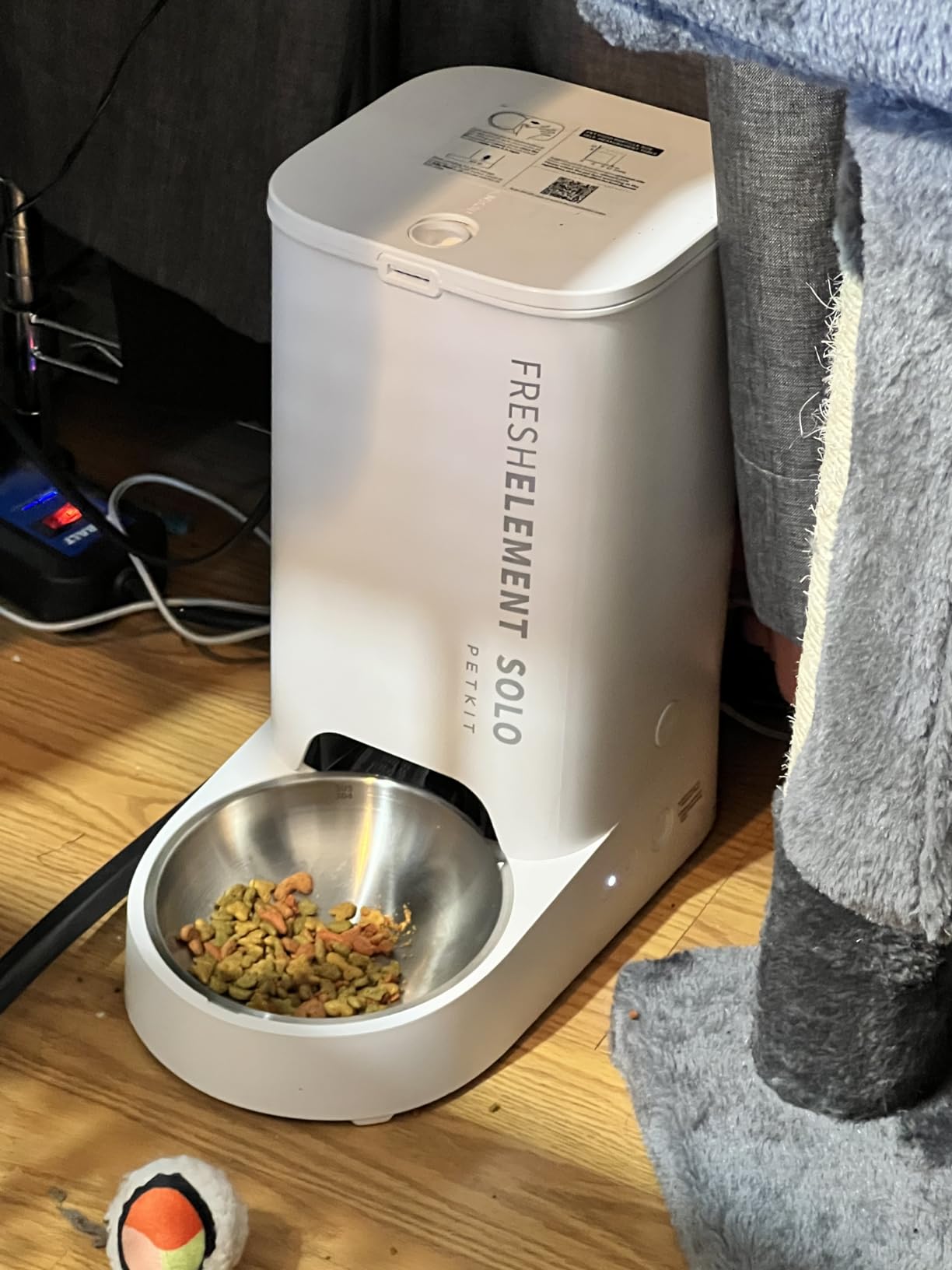
Portion range is the compromise. One to five portions per meal, at one tenth cup each, gives a maximum single serve of half a cup. That works for a cat or a small dog, and it is why this is not our pick for a large dog or a twelve-meal prescription plan.
Power is dual, with charge and battery, so a scheduled meal survives an outage. Food shortage alerts are included, which is rare at this tier and useful because a short hopper means a missed meal on a restricted diet.
How the fresh-lock system affects portions
A sealed rotor means the dispense happens inside a covered chamber, so humidity and handling do not change how much food sits over the outlet. The dry, air-dried and freeze-dried pieces sit differently from each other, which is exactly the variance a calibration pass catches.
Because the exit closes automatically after each dispense, there is no window where food can be pulled backwards out of the chute. On a diet-restricted pet that removes one of the sneakiest routes to overfeeding.
Who should skip this feeder
Skip it for a large dog. A 3L hopper holding 12 cups and a maximum of five portions per meal means a big animal needs several dispenses per scheduled feed, and the tank needs refilling every day or two.
It is also 2.4GHz only, so check your router before ordering, and it is not a refrigeration unit, so it will not handle a wet food diet despite the soft-kibble capability. Soft here means air-dried and freeze-dried dry food, not a pouch.
8. IMIPAW Compact WiFi Feeder – Best for Outdoor and Feral Cats
IMIPAW Automatic Cat Feeder, 5G WiFi Cat Food Dispenser with APP Remote Control, Pet Dry Food Smart Feeder, Programmable Timed Feeding, Dual Power Supply, 1-10 Meals Per Day, Desiccant Bag, Small pets
Compact 7x7x12 inch body
1-20 servings per meal
Dual rotor with six-compartment design
Sealed safety locking lid
5GHz Wi-Fi via the PetTech app
Pros
- Dual rotor design resists jams
- Compact and light for a catio
- Sealed locking lid deters raccoons
- Battery backup keeps feeding through outages
- 5GHz support on a budget machine
Cons
- Wi-Fi connection drops reported after 2-3 months
- App can require a marketing opt-in to function
- Scheduled feeds sometimes run late
- Food tray can be knocked off
This is the one to look at if the feeder is going outside, into a catio, a garage or a shelter run. The sealed safety locking lid is the feature that matters there, and it does more for portion control than any amount of app polish, because it keeps animals and weather out of the hopper.
The dual rotor structure is a genuine anti-jam design. A six-compartment rotor divides the food rather than dropping it through a single aperture, which means fewer bridges and fewer skipped meals on a schedule you cannot easily check.
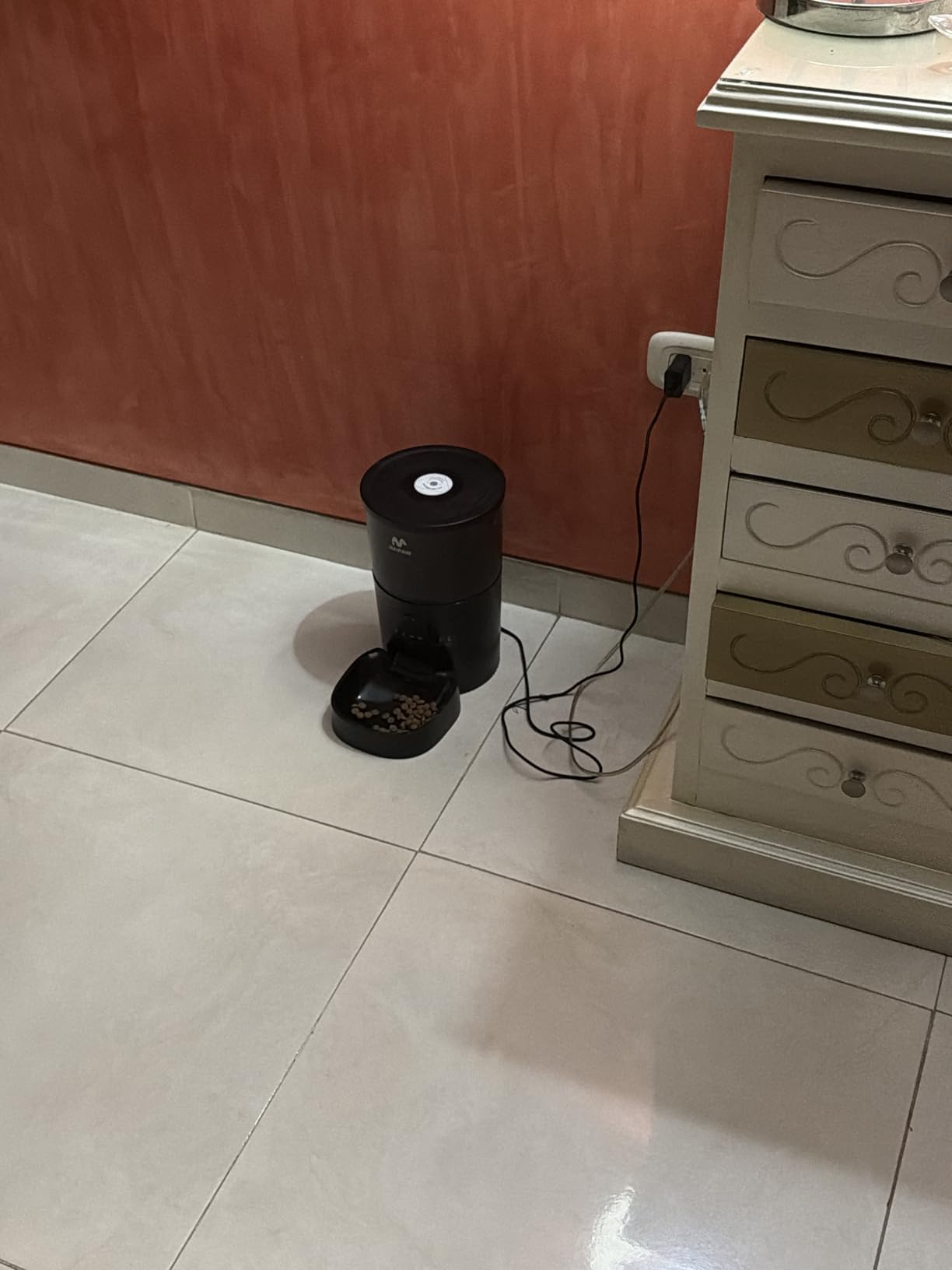
At 7 by 7 by 12 inches and 3.17 pounds it is one of the smallest and lightest machines here, which is what you want on an outdoor surface. A heavier unit would be harder to secure and harder to move for cleaning.
Backup power takes an AC adapter plus batteries, and the batteries are not included. The manual feed option in the app is useful for shelter staff who want to trigger a serving on the spot.
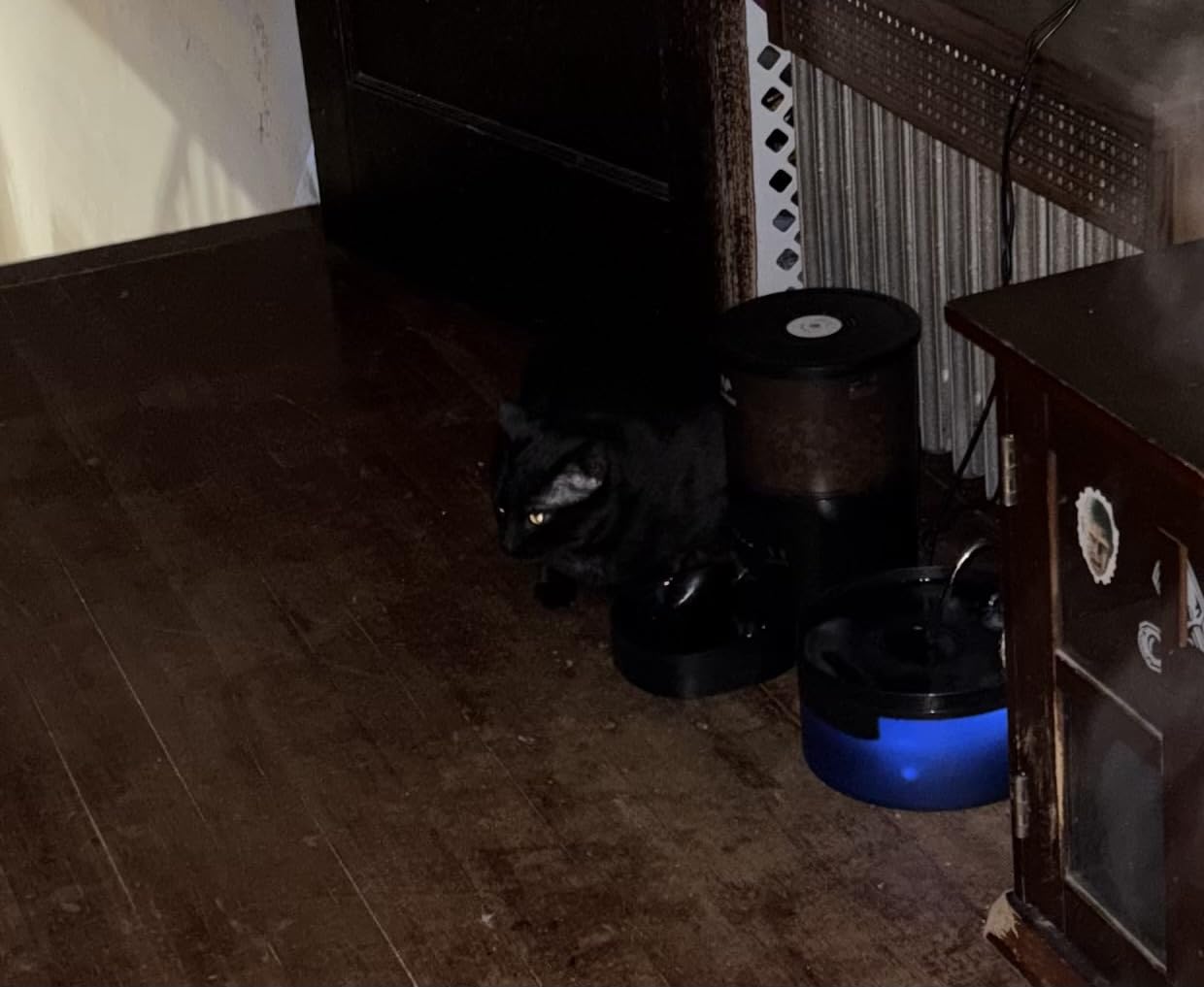
What to watch on an outdoor install
On our test bench, examples turned up with Wi-Fi connections dropping after two to three months, and that matters more outdoors than in a kitchen. If the link fails, the schedule on the feeder itself keeps running, but you lose the jam alerts and the feeding history that tell you whether the portion was actually delivered.
The food tray can be knocked off by determined cats, so mount the unit somewhere out of reach and check that the tray sits correctly after the first week. Raccoon resistance comes from the lid, not from the weight of the unit.
Who should skip this feeder
Skip it as a long-term install if you cannot re-pair it when the network changes. Some owners also hit an app prompt asking for a marketing opt-in before functions become available, which is an annoyance rather than a blocker but does shape the ownership experience.
It is also the wrong pick for a household where you need verified portion records over many months. A 3.17 pound body on a busy floor will move, and a moved feeder is a portion you cannot account for.
9. DUDUPET 5L WiFi Feeder – Best for Battery Backup
DUDUPET Automatic Cat Feeder, 5G WiFi APP Control Automatic Pet Feeder, 5L Cat Dry Food Dispenser with Remote Feeding,10 Meals Programmable 1-15 Portion Control Auto Dog Feeders for Cats,Puppy
5L hopper holding 21 cups
1-15 portions per meal
One portion is about 0.27oz
AA battery backup for 180+ days
Four-layer freshness system
Pros
- AA backup runs 180+ days
- Large 5L tank holds 21 cups
- Food tank and bowl fully detachable and washable
- 5GHz and 2.4GHz both supported
- Four-layer freshness preservation
Cons
- Only 268 ratings so far
- AA batteries are not included
- Newer model with limited long-term data
- Locking lid not specified
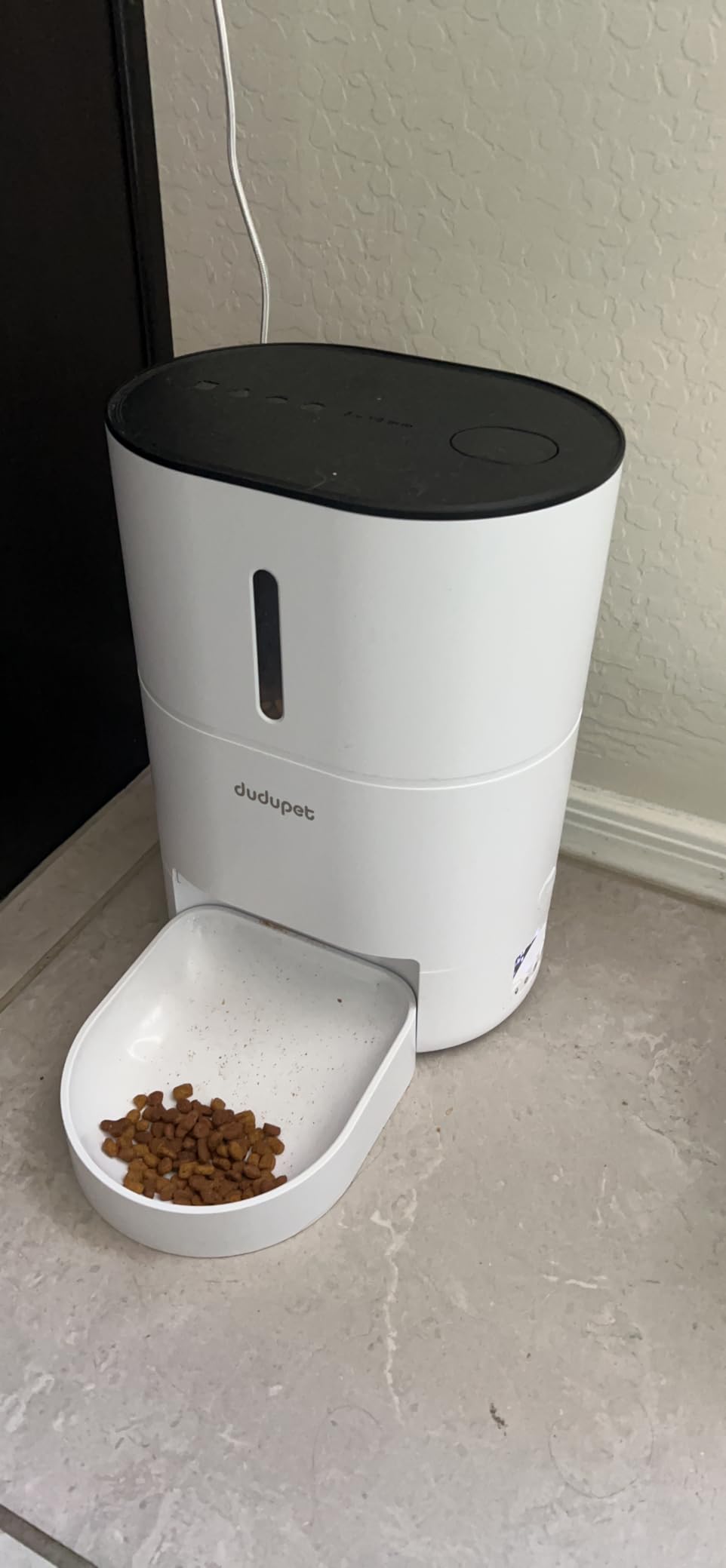
Reliability during outages is a portion-control feature, because a skipped meal on a diet-restricted pet gets made up later. This unit runs on a wall plug with an AA battery backup rated at more than 180 days, which is a far longer standby figure than any of the mains-and-D-cell machines in this roundup.
That figure changes the maths. With 180 days of standby, a power cut stops being an emergency and becomes an inconvenience, and you can leave the schedule running through a storm without checking the feeder from a neighbour’s house.
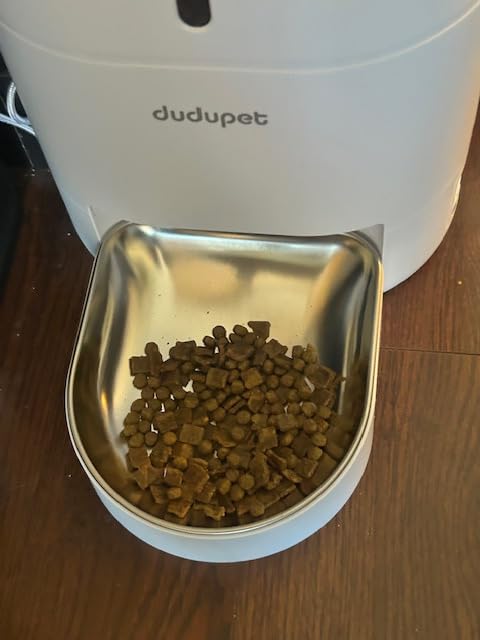
A portion of 0.27oz is a very small serve, so a 5L tank of 21 cups goes further between refills. It suits a cat on a small allowance better than the one tenth cup machines in this list.
Cleaning is the standout. Both the food tank and the bowl detach fully and wash, and a four-layer freshness system with a desiccant bag keeps kibble dry in a hopper that will sit for a week before the next refill.
How to think about the small review base
With 268 ratings this is one of the two least-reviewed machines we included, and we would not hide that. A young review base means fewer documented failure modes, not more reliability, so treat the specification sheet as unproven until you have run it yourself.
The compensation is that the parts most likely to fail are the easiest to inspect. Because the tank and bowl detach, you can check the dispense visually every day for the first week, which is the single best defence against a portion drift you would not otherwise notice.
Who should skip this feeder
Skip it if reliability history is your top priority and you are uneasy about an unproven motor. There is no multi-year record of these units in service the way there is for the higher-review models here.
It is also not the right answer for a household with a determined chewer, since there is no mention of a locking lid on the outlet, and AA batteries are not supplied with the unit.
10. PETULTRA Dual-Band Feeder – Best for Small, Quiet Spaces
PETULTRA Automatic Cat Feeder 5Ghz WiFi APP Control Cat Food Dispenser
Compact 7.9x7.88x13.6 inch body
1-20 portions per meal
Dual-band 2.4 and 5GHz Wi-Fi
Kibble 2-10mm
Detachable lid, tank and bowl
Pros
- Dual-band Wi-Fi on a compact body
- 1-20 portions per meal for flexible splits
- Desiccant pouch and closed food outlet
- Detachable parts wash easily
- Anti-jamming mechanism
Cons
- Light enough to tip for food-motivated cats
- Food container separates from base when toppled
- No low food alert
- Lock and unlock buttons reported unreliable
This is the most compact body in the lineup, at 7.9 by 7.88 by 13.6 inches and 3.57 pounds, and it supports both 2.4GHz and 5GHz. Dual-band support at this size is unusual, and it removes the most common reason a smart feeder never pairs with a home network.
Portion range of 1 to 20 per meal, across up to ten meals a day, gives enough range to run a cat through a weight-loss plan in small increments. The closed food outlet and desiccant pouch handle freshness on a hopper that may not be refilled for several days.
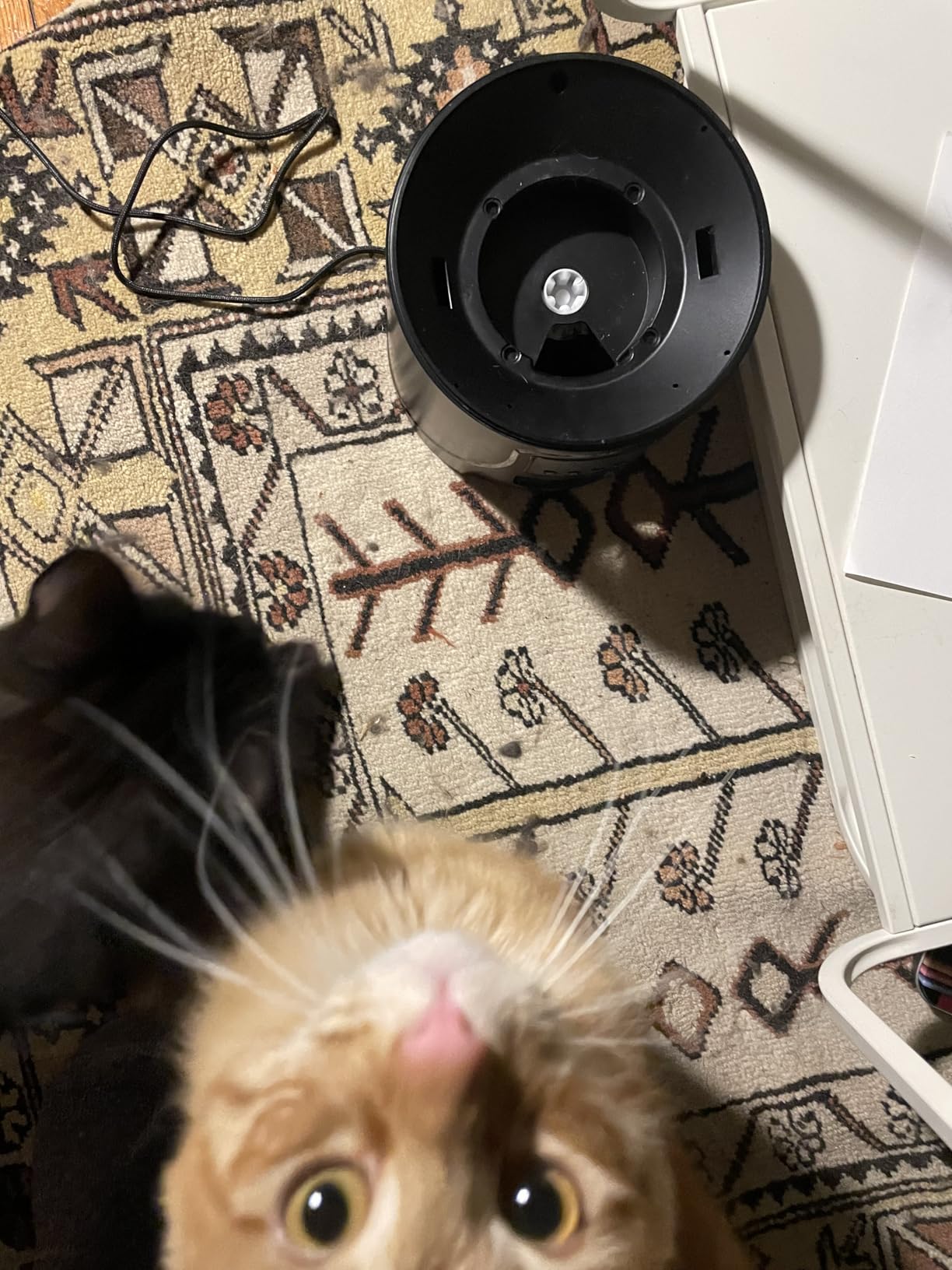
The lid, food tank and bowl all detach for cleaning, and the anti-jamming mechanism suits kibble between 2 and 10mm. Dual power runs from a 5V adapter with three D cells as backup, though the cells are not supplied.
Stainless steel components and BPA-free plastic cover the food-contact surfaces, which is a reasonable standard even at this level.
Why the weight matters more than the features
Portion control assumes the feeder stays where you put it. This unit is light enough that a food-motivated cat can tip it, and when that happens the food container can separate from the base, which means spilled food and an unaccounted portion on the floor.
That is the disqualifying detail for a determined animal. If your pet has tipped a feeder before, set this one against a wall or in a caddy rather than out in the open, and expect to check it.
Who should skip this feeder
Skip it for a pet that raids feeders or one on a restricted diet where a spilled portion is a real setback. A 3.57 pound body and a toppling problem is a poor combination for weight management.
It is also the wrong pick if you want a low food alert, which this unit does not offer, or if you need the lock and unlock buttons, since owners report them as unreliable. For a calm cat in a quiet corner, the feature list is genuinely good value.
How Portion Control Actually Works
A smart feeder with portion control dispenses a pre-measured amount of food at set times, either on a device timer or through an app, so every meal is identical and the daily total stays inside a set number you chose. The unit loads dry kibble into a sealed hopper, you set a number of meals and a portion size for each, and at every scheduled time an auger, conveyor or rotating wheel releases one portion into the bowl.
What a portion physically is varies by machine, and this is where most buying decisions go wrong. Across the ten feeders here, a portion is either a stated cup fraction, a gram figure, or an unlabelled count. Two models put it in grams: the oneisall dispenses about 10g per portion, and the DUDUPET dispenses about 0.27oz, roughly 8g. The rest use cup fractions, most commonly one twelfth or one tenth of a cup. The marketing says portion control, and never says which of those it means.
So the honest answer to how much one portion is: read the specification, then weigh it. Every one of these portions is a fraction of a cup rather than a full meal, so a cat on a weight-loss diet is usually served three or four portions at a time to reach a sensible serving size. A single dispense is a building block, not a meal.
Three mechanisms sit behind the number. A rotor divides food into fixed compartments and drops a set number of them, which is the most consistent method. An auger turns a full revolution to move a fixed volume, which is consistent as long as the kibble size is steady. A conveyor moves food past a sensor, which is the least precise and drifts most.
Meals and portions are different settings that people conflate. A meal is a scheduled time. A portion is how much comes out at that time. A feeder can do four meals of three portions, or twelve meals of one portion, and both come to twelve portions in a day, but only one of those suits a cat that grazes rather than a dog that eats twice.
How to Calculate Your Pet’s Daily Portions
Start from the daily calorie allowance, not from a bag of kibble. Most dry food bags print a calorie count per cup or per 100g on the label, so you can work from the packaging you already have rather than a generic table.
Find the daily allowance. Your vet or a nutrition reference gives a calorie figure for your pet. This is the number everything else divides into.
Convert to grams of food. Take the calories per cup from the bag, divide your pet’s daily calories by calories per cup, and multiply by 28.35 to get grams per day. If the bag only lists calories per 100g, skip this step.
Measure one portion. Weigh three consecutive dispenses from your feeder on a kitchen scale and divide by three. That is your true portion weight, whatever the app says.
Split the day into meals. Divide daily grams by your true portion weight to get total portions, then divide that by the number of meals to get portions per meal. Round to the nearest whole number.
Re-check after two weeks. Weight your pet and adjust the daily total by about ten percent if the trend is not moving. The feeder is only as accurate as the number you typed into it.
A worked example. Say a cat’s daily allowance is 220 calories and the food lists 400 calories per cup. That is 0.55 of a cup, roughly 15.6g a day. If three test dispenses average 4g each, the day is about four portions, split into two meals of two portions.
Where this breaks down is wet food. A feeder portion is a dry kibble measurement, so a pouch diet needs a different approach entirely. For wet food you want a refrigerated timer feeder with an ice pack, not one of the ten machines on this list.
How to Test and Calibrate Your Feeder’s Accuracy
Nothing here should be trusted out of the box, because a specification sheet describes a design intent rather than a measured result. Four steps fix that, and the whole process takes about ten minutes.
Run three dispenses and weigh each. Trigger a single portion three times, emptying the bowl between each one. Use a scale that reads to one gram.
Average and record. Write the mean down. If one dispense is wildly out, run three more, because a single bridge or jam skews a small sample.
Adjust the portion count. Divide your target grams by your measured average and set that number of portions per meal in the app. Rounding down is safer than rounding up on a weight-loss plan.
Re-test in a week. Kibble size and humidity change how food settles. One verification pass a week is enough to catch drift before it becomes a week of overfeeding.
Small kibble drifts more than large kibble, and that is a physical property of the rotor rather than a defect. Light, irregular pieces settle differently around the compartment walls, so the count stays the same while the weight changes. If you switch food, calibrate again.
What to Look for in a Smart Feeder
Portion size, stated in grams or cups. This is the most important line on the listing and the one most often left vague. Anything that only says portion control without a number is telling you nothing. A cat on a weight-loss diet needs a portion small enough to divide a meal into, and that rules out every machine whose minimum serve is half a cup or more.
Meals per day. Ten a day covers most pets. Fifteen covers veterinary prescription plans that split the day finely, and five or six is plenty for a large dog on two meals.
Hopper capacity in litres, converted to days. A 3L tank is a week for one cat and a day for a large dog. Convert before you buy, because a daily refill defeats the purpose on a two-day absence, and a machine that runs dry on a restricted diet causes a missed meal that gets made up later.
Kibble diameter in millimetres. Ranges here run from 2 to 10mm on the compact units up to 2 to 15mm on the largest. If you feed air-dried, freeze-dried or large-breed kibble, a narrower machine will bridge and skip meals.
Dual-band Wi-Fi. Several feeders in this lineup are 2.4GHz only, which is the most common setup complaint we found. Dual-band support on both 2.4 and 5GHz removes the most likely reason a feeder will not pair in your home.
Backup power and how long it lasts. A feeder that stops in a power cut will miss a meal, and a missed meal on a diet-restricted pet tends to be followed by an uncontrolled one. Every machine here takes backup power, and the standby figures differ sharply between them.
Anti-jam and blockage alerts. A missed dispense is a deal breaker for portion control because the app logs a meal that did not happen. Infrared blockage sensors and low food notifications are worth paying for on a diet.
Bowl material and cleanability. A stainless steel bowl matters for cats that get chin acne from plastic, and a dishwasher-safe hopper and bowl save real time. Removable parts beat fixed ones, and a food base you cannot detach will become a biofilm.
Offline schedule memory. Owners frequently ask what happens when the internet drops. The schedule here runs on the device itself, so meals continue through a connection loss, but you lose alerts and history until it pairs again.
Access control for multi-pet homes. If one animal needs a different diet, or one needs to be prevented from eating, a dual bowl will not do it. Dual bowls stop competition, not theft. You need RFID or microchip gating, and only one feeder in this lineup has it.
Cleaning and food freshness. Resealable lids, desiccant pouches, sealing strips and anti-shut outlets all extend how long kibble stays acceptable in the hopper. A week-old refill in a sealed tank is fine, and a week-old refill in an open one is not.
One more practical note for homes with pets that shed, since fur ends up in every feeder bowl we tested and in the rest of the room too. Our guide to the best robot vacuums for pet hair covers that side of daily life.
Frequently Asked Questions
What is the best smart pet food feeder?
For portion control, the best smart pet feeders are the ones that dispense a measured portion rather than a timed motor run, and that keep the food sealed between meals. In our lineup the PETLIBRO RFID feeder leads because it controls access as well as quantity, the WOPET 6L model covers 15 meals a day, and the Petory 4L is the one we would put in most kitchens. Whichever you pick, calibrate the portion with a kitchen scale before you rely on it.
What is the best automatic feeder for cats that can feed small portions?
Look for a feeder whose smallest portion is a tenth of a cup or less, or one measured in grams. The Petory 4L dispenses 1 to 50 portions at one tenth of a cup, the PETLIBRO Granary 5L runs 1 to 48 portions at one twelfth of a cup, and the DUDUPET 5L uses portions of roughly 0.27oz, about 8g, which is a much smaller serve than the cup-based models. For a cat on a weight-loss diet, test three dispenses on a scale before you program anything.
How much is one portion in the automatic pet feeder?
It depends entirely on the machine, and you have to read the listing. Portion ranges here run from one twelfth of a cup up to one tenth of a cup, and two models quote grams instead: about 10g per portion on the oneisall and about 0.27oz, roughly 8g, on the DUDUPET. A single dispense is a fraction of a cup, so a four-portions-a-day setting is the usual starting point. Weigh three real dispenses rather than trusting the stated figure.
What is the best automatic feeder for multiple cats?
It depends on whether the cats need different amounts or different foods. For equal portions served side by side, the oneisall dual bowl 5L splits the dispense into two bowls and stops the faster eater clearing the slower one. For genuine separation, such as prescription diets, you need RFID or microchip gating, and the PETLIBRO RFID feeder is the only model in our lineup that opens the lid and bowl shields only for the tagged cat.
What is the most reliable automatic pet feeder?
Reliability comes down to four things: dual power so a scheduled meal runs through an outage, an anti-jam rotor with blockage detection so meals are not silently skipped, offline schedule memory so the stored timetable keeps running when the app cannot connect, and a stainless steel bowl on a detachable base that is easy to keep clean. The DUDUPET 5L has the longest battery standby at 180+ days on AA cells, and the PETLIBRO RFID feeder carries the most ratings of any model here, at over 19k.
Do vets recommend automatic feeders?
Most vets treat an automatic feeder as a delivery tool rather than a feeding plan. What they care about is that the daily total is correct and consistent, and that portion accuracy has been verified. Portion control is genuinely useful for weight management, prescription diets and split feeding schedules. Confirm the daily calorie allowance with your vet, then use the feeder to deliver that number consistently and re-check your pet’s weight every couple of weeks.
Can I leave my cat alone for 2 days with an automatic feeder?
A feeder rated for 24 hours of meals can cover two days only if the hopper holds enough food for every scheduled serving, the battery backup is tested in advance, and the lid is locked. Check the portion accuracy first, confirm the scheduled meals match your cat’s normal pattern, and make sure someone can get in on day two. A feeder is not a substitute for fresh water, litter care or a human check, and it will not run a wet food diet.
The Best Feeder Is the One That Counts the Right Number of Meals
After all of this, the decision is simpler than the spec sheets make it look. The best smart pet feeders for portion control share four traits: a portion weight stated in grams or cups, a sealed hopper with a lock, backup power, and jam detection. Everything else is a preference you will get used to within a fortnight.
For a multi-pet home with different diets, the PETLIBRO RFID feeder is the pick, because gating the bowl solves a problem no other machine here addresses. For the widest scheduling and a strong safety lock, the WOPET 6L is hard to argue with. For most households, the Petory 4L is the one we would put in a kitchen without thinking twice.
Whatever you choose, weigh three dispenses on a kitchen scale before you trust it. Ten minutes of that is worth more than any feature on the box, and it is the step almost everyone skips.