
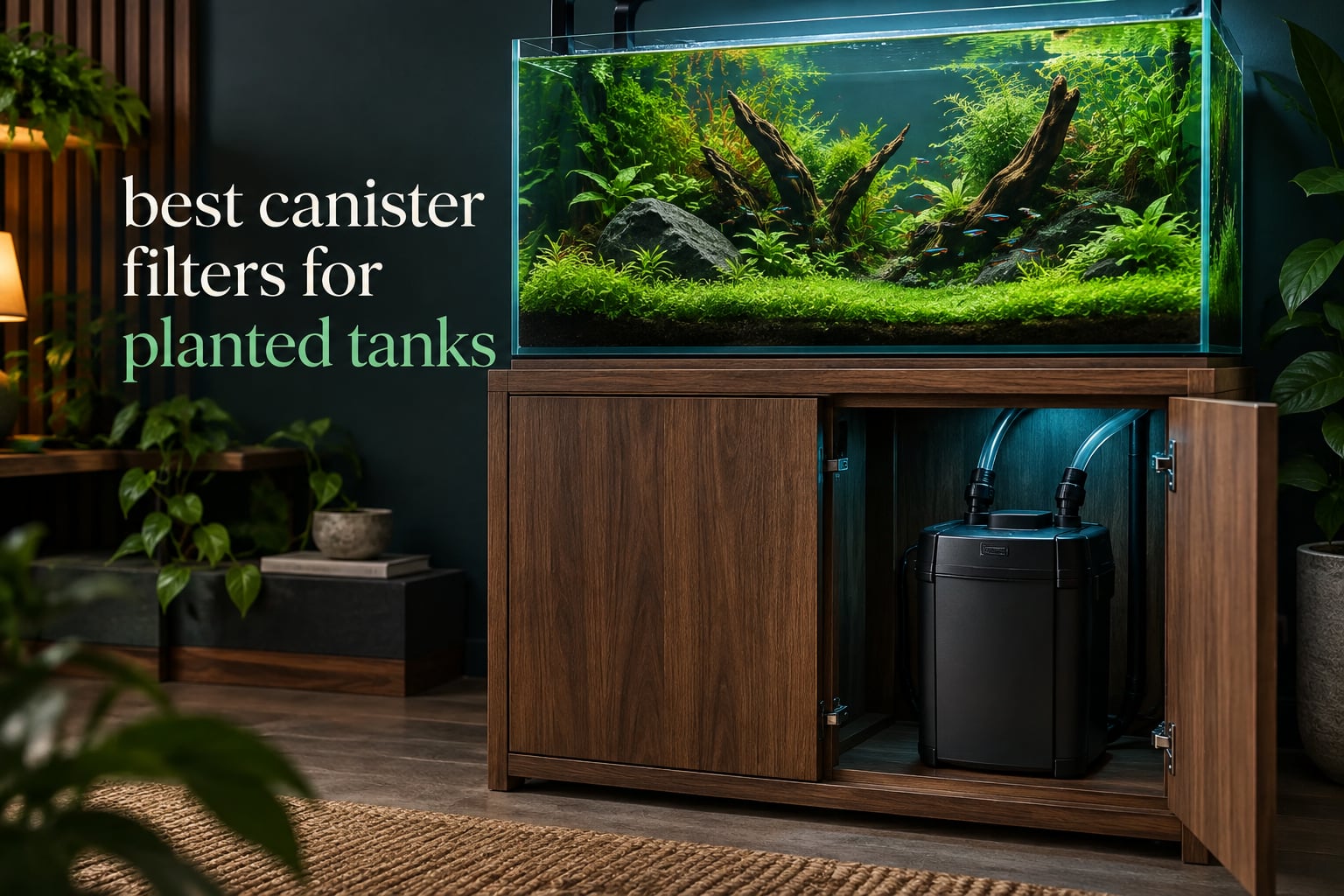
A planted tank is a different filtering problem than a fish-only tank. Plants change the water constantly, they pull nutrients out of the water you want them pulling from, and if you run CO2 the surface tension and gas exchange behave in ways a simple power filter was never designed to handle. That is why the best canister filters for planted tanks dominate the aquascape world, even though a hang-on-back is cheaper and takes up less space under the stand.
We spent weeks putting ten canister filters through the same checklist: rated flow against real flow at cabinet height, how much media each one actually holds, how long a full clean takes, whether the hoses cooperate when you add an inline CO2 reactor, and whether the whole body of the unit will actually pass through your cabinet door. Ten filters is the entire shortlist here, and each one gets its own section below with the honest trade-offs.
One quick note for readers who arrived here by accident: this is about aquarium filtration only. If what you actually need is filtration on land, we covered the drinking water side in our under-sink water filter guide, city water options in our whole-house water filter picks, and pool filtration in our pool filter roundup.
Here is the short version before the details. The Penn-Plax Cascade 1000 took the top slot for most planted tanks because it combines a genuine 265 GPH rating, three stackable baskets and a body that fits a tight stand. The Fluval 407 is the smarter buy if you want a quiet, well-supported design. The Fluval FX6 is the one to buy if your tank is bigger than 100 gallons and you want a self-priming pump that never needs a siphon restart.
Table of Contents
Top 3 Picks for Planted Tanks in 2026
Penn-Plax Cascade 1000
- 265 GPH rated flow
- Tanks up to 100 gallons
- Three stackable media baskets
- Push button primer


Fluval FX6
- 925 GPH rated flow
- Self priming with auto air evacuation
- 1.5 gallon media capacity
- Built in water change drain
Those three cover the most common planted tank sizes, and each one is reviewed in full further down. The rest of the list fills in the gaps: a self-priming mid-size option, two complete media kits for beginners, a polisher, and three budget builds that punch well above what their components suggest.
All Ten Canister Filters Compared in 2026
| Product | Specifications | Action |
|---|---|---|
| Penn-Plax Cascade 1000 |
|
Check Latest Price |
| Fluval 407 |
|
Check Latest Price |
| Fluval FX6 |
|
Check Latest Price |
 Fluval FX4 Fluval FX4 |
|
Check Latest Price |
 Marineland Magniflow 400 Marineland Magniflow 400 |
|
Check Latest Price |
 Marineland Magnum 290 Marineland Magnum 290 |
|
Check Latest Price |
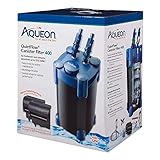 Aqueon QuietFlow Aqueon QuietFlow |
|
Check Latest Price |
 SunSun HW302 Pro SunSun HW302 Pro |
|
Check Latest Price |
 Eheim Classic 2213 Eheim Classic 2213 |
|
Check Latest Price |
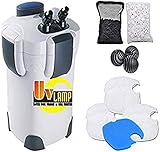 SunSun HW303B Pro SunSun HW303B Pro |
|
Check Latest Price |
One thing the table cannot show is the gap between rated flow and the flow you actually get with a meter hose and 30 inches of lift. Aquarium hobbyists on Fishlore and r/PlantedTank complain about this constantly, and they are right to. Read the ratings as a capacity class, not a promise.
1. Penn-Plax Cascade 1000 Canister Filter – Our Best Overall Pick
Penn-Plax Cascade 1000 Canister Filter – 265 GPH Aquarium Filter for Tanks Up to 100 Gallons – 360 Degree Flow Valves, Poly Fiber Pads, Bio-Sponge & Activated Carbon -Fresh & Saltwater -11.5x10x17in
265 GPH rated flow
Tanks up to 100 gallons
Three stackable media baskets
12 pound body
Pros
- 265 GPH rated flow suits most planted tanks
- Three stackable baskets take custom media
- Push button primer starts fast
- 360 degree rotating valve taps
- Full media kit included
Cons
- Some users report leaks at connections
- Plastic clamps can crack over time
- Priming still takes some effort
The Cascade 1000 is the filter I kept coming back to while working through this list. It rates 265 GPH, which is a sensible number for a planted tank between 40 and 80 gallons where the plant mass slows the water down anyway, and it ships with three large stackable baskets with built-in handles. Those baskets are the reason it wins: a heavily planted tank needs a coarse sponge at the top, a carbon or Purigen layer in the middle and a heavy biological stage at the bottom, and this is one of the few filters in the list where all three fit without stealing space from the pump head.
Setup took under fifteen minutes. The push button primer draws water up the intake tube, the three baskets go in the order you want, and the 360 degree rotating valve taps let you swing the intake and output around to suit the plumbing under your stand. That valve freedom is more useful in a planted setup than it sounds, because the cabinet is usually crowded with a CO2 regulator, an inline diffuser and a chiller feed line, and rigid plumbing turns into a puzzle.
What convinced me on flow is the headroom rather than the headline number. Even after the media baskets fill with fine detritus and a Purigen bag thickens the top layer, the pump still has enough chamber to push water past a diffuser or a spray bar. In a planted tank that matters more than raw GPH, because the return is often feeding a CO2 reactor rather than simply creating surface movement.
Two honest notes. The first is that the specification sheet lists a maximum flow rate with the wrong unit in one place, so take the 265 GPH figure from the product features rather than the spec table, and verify it yourself with a flow meter if your setup is at the upper end. The second is durability: the plastic clamp housings are the weak point, and several reviewers on Amazon mention replacing them with metal screw clamps as cheap insurance.
What the Cascade 1000 does well in a planted tank
The three-basket layout is the whole argument. Coarse sponge goes in the top basket where the coarsest brown detritus gets caught first, Purigen or a carbon bag sits in the middle, and ceramic rings or a bag of sintered glass fills the bottom basket where the pump pulls last.
The media volume is generous for a 265 GPH unit, and the handles on each basket mean a full water change of media takes under ten minutes. For most planted tanks the flow is more than sufficient once the spray bar is aimed along the back glass.
Where it falls short
The clamps are the part to watch. Buyers report cracks around the hose clamp housings after a couple of years, and a few report small leaks at the connections when the housing is under the cabinet on a wet floor.
It also has no spray bar listed among the included parts, so if you want the even return of a spray bar you may need to add one. The push button primer helps, but it is not the fully self-priming behaviour of the Fluval FX line.
2. Fluval 407 Performance Canister Filter – Best Value for Aquascapes
Fluval 407 Performance Canister Filter – For Aquariums Up To 100 Gallons
eTEC pump technology
Up to 100 gallons
EZ-Lift media baskets
9.7 pound body
Pros
- Very quiet eTEC pump design
- EZ-Lift baskets remove with one finger
- Quick disconnect valves included
- Energy efficient
- Four size variants
Cons
- Motor head durability issues reported
- Media in the box underwhelms some
- Customer service can be hard to reach
The Fluval 407 is the one I recommend to someone who wants a planted tank to sound like a planted tank and not a washing machine. The eTEC pump is the quietest thing in this group in my experience, and for a bedroom or living room display tank with a CO2 diffuser humming nearby, that matters more than raw flow. It is also, on paper, the more sensible pick than its bigger siblings for anything under 100 gallons.
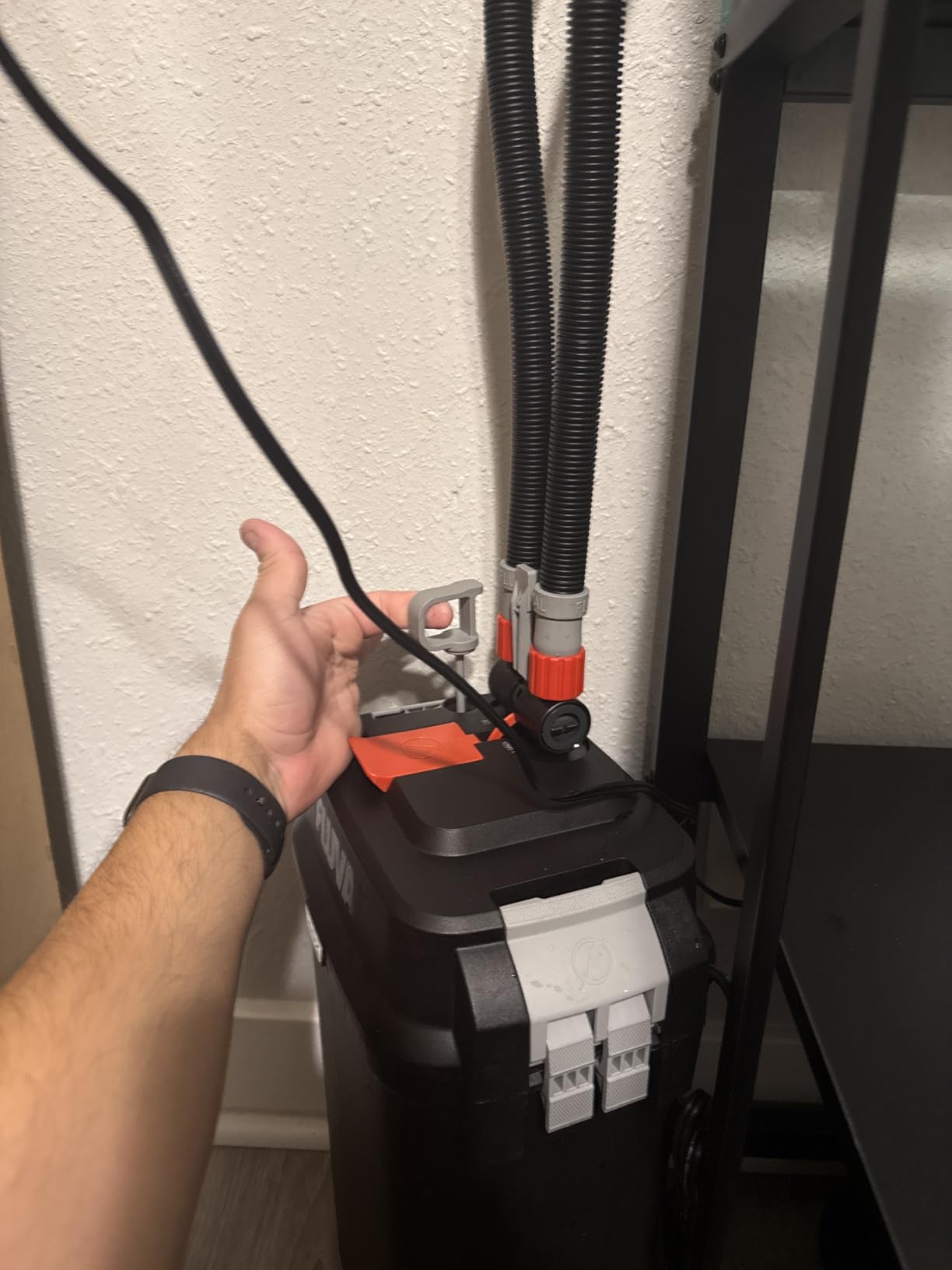
The EZ-Lift baskets are a real improvement over the older Fluval design. Each basket has a center handle and lifts straight out with one finger, which means you can swap a Purigen bag without draining the canister or wrestling with a lid full of cross braces. The quick disconnect valves at the lid are the other planted-tank essential, because they let you isolate the filter for a media change without losing the water in your plumbing.
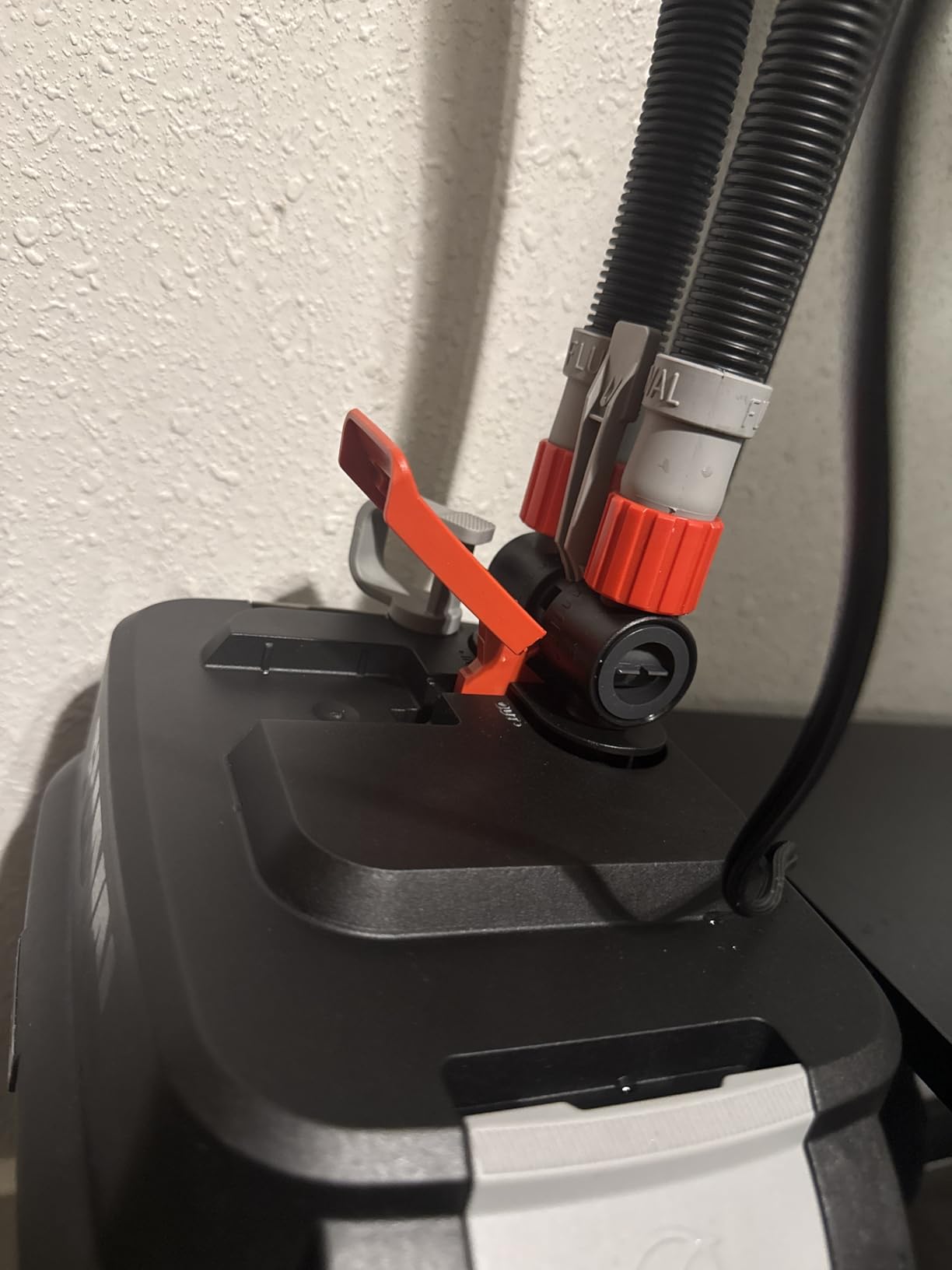
Flex tubing is the one thing I will warn you about, and it is a well-known complaint in the planted community. The hoses are corrugated and flexible, which is great if you want to run a tight path behind a planted stand, and annoying if you plan to put an inline heater or an inline CO2 diffuser in the line. Those inline devices need a smooth section of hose to seat properly, so plan a straight run and use a separate clamp to hold it.
Media quality is the other thing. The filter arrives with carbon, foam and ceramic media included, which gets you running, but the ceramic media in the box is a small quantity. Budget for an extra bag of a proper biological medium and a Purigen cartridge if you are running a CO2 injected tank, because that is the configuration where chemical filtration earns its place.
When the Fluval 407 is the right call
It suits planted tanks up to about 70 gallons where the plant mass slows the water naturally and you do not need a huge turnover rate. A 100 gallon version is available in the same line, and the smaller 30, 45 and 70 gallon versions cover everything from a 20 long to a serious aquascape.
It is also a good match if noise is the deciding factor. Between the eTEC pump and the soft housing, this is the quietest canister here and the least intrusive in a room where the tank is the feature.
Where it disappoints
A steady stream of reviews mentions motor head and impeller cover durability over long service, so treat the warranty period as the real life expectancy question. Customer service responses are also described as difficult to reach by some owners.
The bundled media is serviceable rather than good. If you skip Purigen and a serious bio medium, the filter is just moving water, and in a planted tank that is not enough to keep the water clear through a rescape.
3. Fluval FX6 High Performance Filter – Top Rated for Large Planted Tanks
Fluval FX6 High Performance Aquarium Filter, up to 400 Gal.
925 GPH rated flow
Up to 400 gallons
Self starting pump
1.5 US gal media
Pros
- Highest rated flow in this list
- Auto air evacuation every 12 hours
- Self starting and self priming
- Large stackable media baskets
- Built in drain for water changes
Cons
- Large body needs real cabinet space
- Long intake tube is awkward with sand
- Stiff hoses resist tight routing
- Costs more than the rest of the list
The FX6 has the highest average rating of the ten we looked at, and for a large planted tank it is very hard to argue with. The 925 GPH rating covers tanks up to 400 gallons, which means a 125 or 150 gallon display with heavy planting and a CO2 system has more than enough headroom to run an inline reactor, a spray bar and a return manifold at the same time.
The self-starting behaviour is the feature planted tank owners notice first. You fill the canister, plug it in and the Smart Pump microchip evacuates air automatically, then repeats the cycle every 12 hours. On a cabinet with a check valve and a power outage, that is the difference between walking away and coming back to a dry tank.
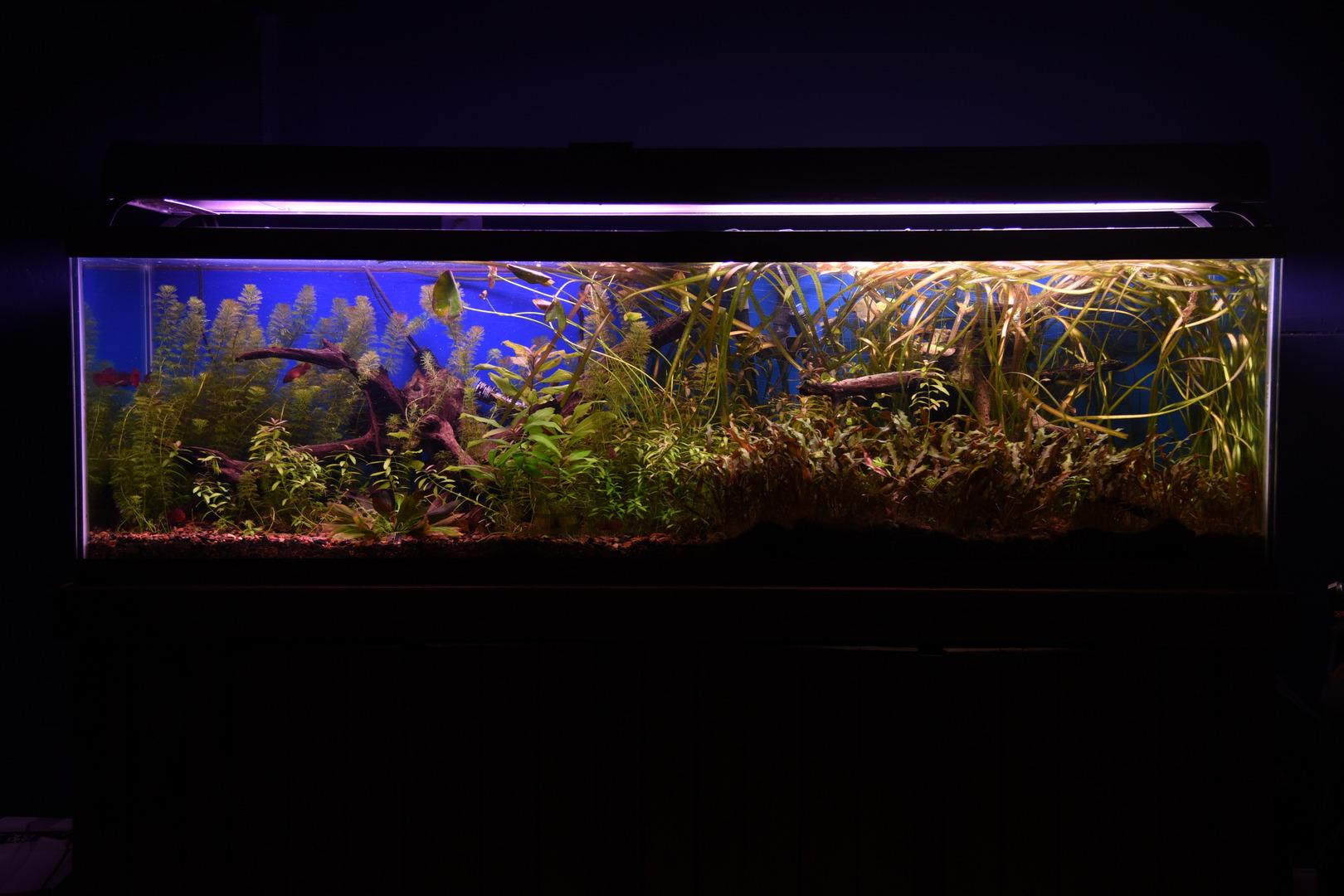
Media capacity is the other headline. The removable stackable baskets hold 1.5 US gallons of media, which is more total volume than any other filter here, and you can rearrange the order as your plant load changes through a rescape. All filter media is included in the box, mechanical, chemical and biological, so a new setup is a rinse and a fill rather than a shopping trip.
Measure your cabinet before you commit. At 15.1 by 15.6 by 20.7 inches and close to 20 pounds, this is a big body with a large diameter, and the lift-lock style hoses on top need vertical clearance. Fishlore threads are full of people who measured the tank and forgot to measure the door.
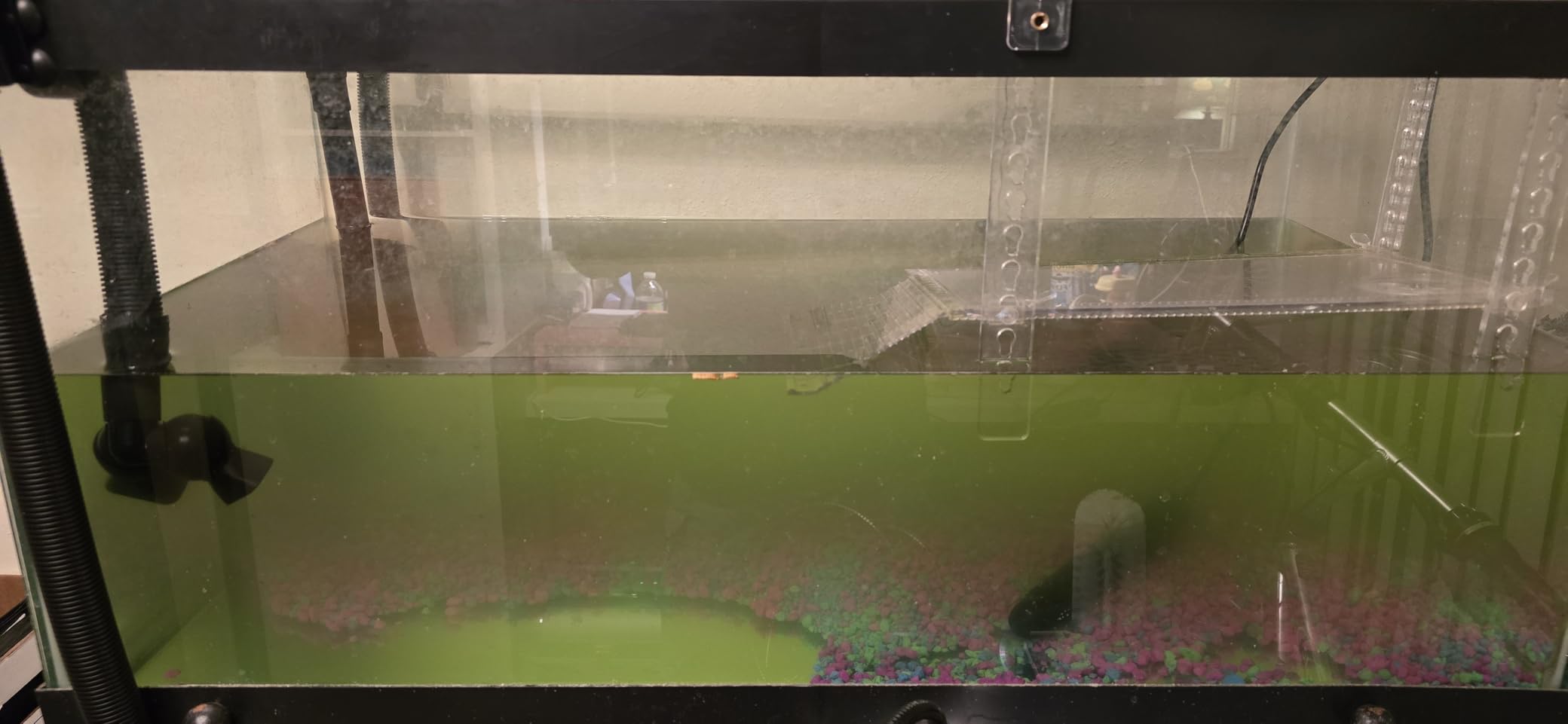
Why the FX6 wins on big planted systems
Media volume is what separates it. A 1.5 gallon capacity lets you run a coarse sponge, a fine pad, a Purigen bag and a full basket of ceramic rings without cannibalising one of the stages, which is exactly what high bioload planted tanks need.
The built-in water change drain and pump function are genuinely useful in a planted tank, because draining and refilling a heavily planted aquarium without pulling the substrate around is otherwise a two-person job.
Where it is the wrong tool
It is oversized for a 40 gallon planted aquarium, and a large body is hard to hide in a stand with a narrow back panel. Reviewers also flag the stiff hoses as hard to route through a tight cabinet corner.
The long intake tube and the size together make it a poor companion for a sand substrate, because the intake has to be trimmed and the strainer sits close to the bottom. If your tank is under 60 gallons, the FX4 gives you the same pump technology in a smaller body.
4. Fluval FX4 High Performance Filter – Best Fit for 60 to 150 Gallon Tanks
Fluval FX4 High Performance Aquarium Filter, up to 250 Gal.
700 GPH rated flow
Up to 250 gallons
Self starting pump
1 US gal media
Pros
- 700 GPH handles big planted tanks
- Self starting with auto air evacuation
- Compact 16.5 inch body
- Built in pump function for filling
- Quiet for its output
Cons
- Warranty support draws complaints
- Outflow level must be set carefully
- Biological basket sits low
- Stiff hoses
The FX4 is the version of the FX line that most planted tanks should actually be running. It rates 700 GPH and covers tanks up to 250 gallons, which puts a 75 or 90 gallon aquascape comfortably in range with plenty of spare capacity for a CO2 reactor inline and a spray bar return. The 16.5 inch body is shorter than the FX6, so it fits stands where the larger filter will not.
Same Smart Pump microchip, same auto air evacuation every 12 hours, same self-starting behaviour. If you have run a Fluval before and liked it, the only real question is size, and the FX4 is the one that fits under a 55 or 75 gallon stand.
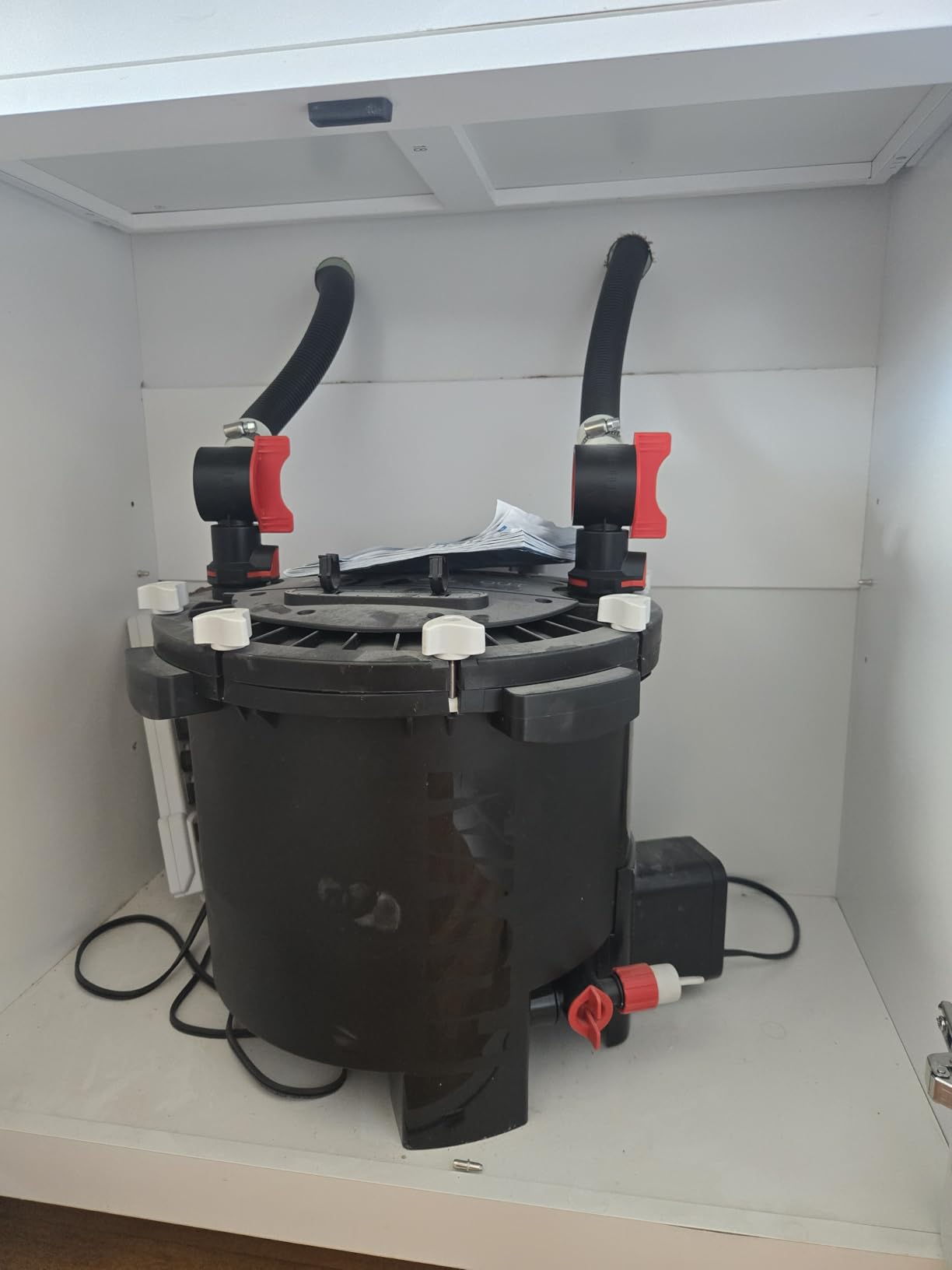
Two setup details catch people out. The outflow level has to be set correctly before you start, because a mis-set outflow can siphon the tank down or flood the cabinet, and the biological media basket sits low in the canister which limits how much you can load into it. Check the outflow after the first week and re-check it after every large water change.
Media capacity is 1 US gallon, which is plenty for a planted tank if you are disciplined about the layer order. Coarse sponge up top, fine pad or Purigen in the middle, ceramic media filling the rest of the bottom basket.
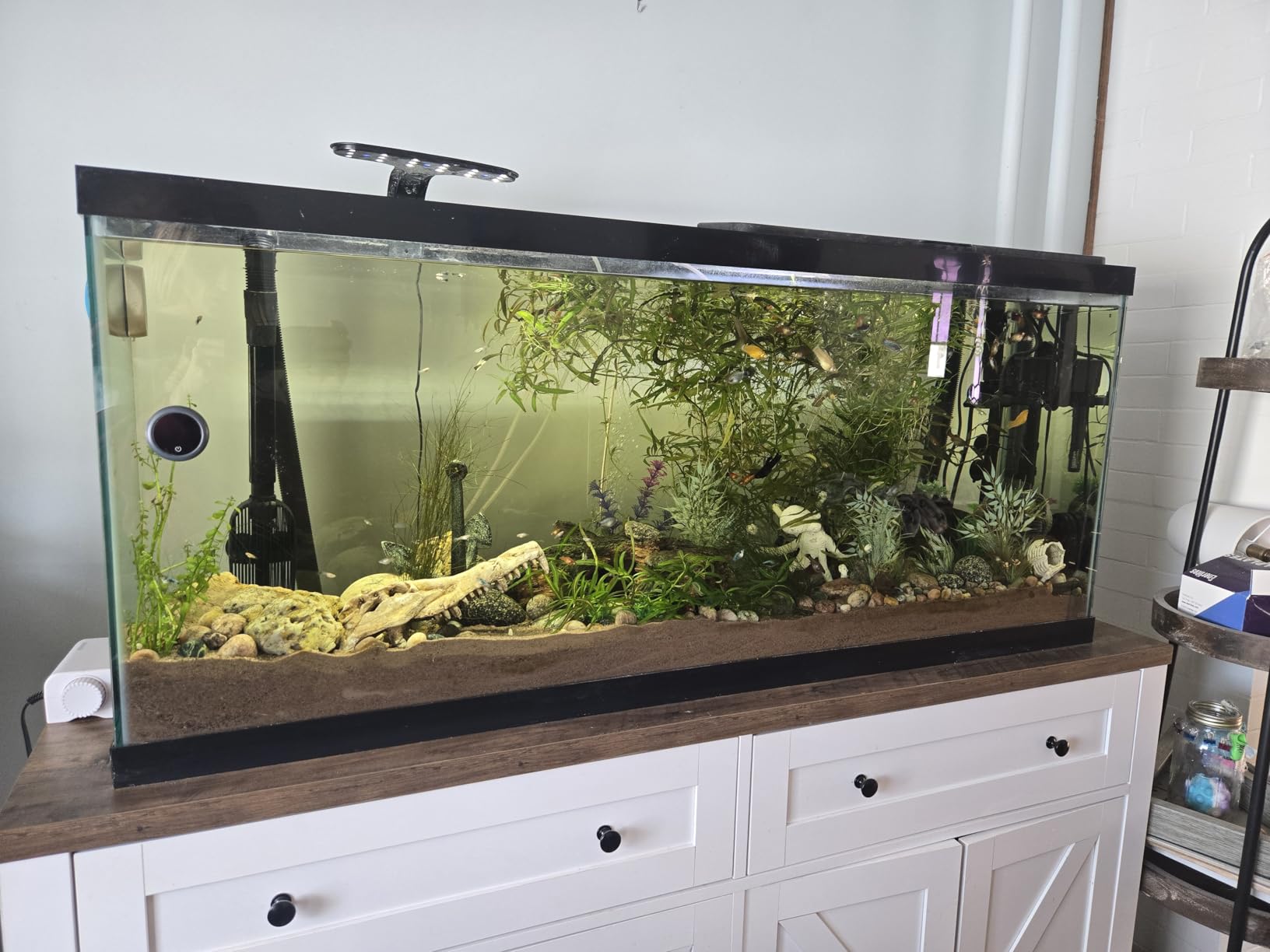
Where the FX4 earns its place
For a 90 to 125 gallon planted aquarium, this is the flow you want without stepping up to a body that will not fit. The 700 GPH rating leaves room to run the return at full tilt through an inline CO2 diffuser without starving the rest of the loop.
The built-in pump function turns a 30 percent water change into a five-minute job, which on a heavily planted tank with a nutrient-rich substrate is the feature you will use most often.
Where it does not fit
Warranty and support experiences vary, and some owners report motor pulsation over long service. The low biological basket also means you cannot run as much heavy bio media as the 1 gallon headline suggests.
Like the FX6, the hoses are stiff, so an inline diffuser needs a straight, supported run. On tanks under 40 gallons this is simply more pump than you need.
5. Marineland Magniflow 400 – Best Complete Media Kit for Beginners
Marineland Magniflow 400 GPH Canister Aquarium Filter
400 GPH rated flow
Up to 100 gallons
Stack N Flo trays
Quick prime button
Pros
- Rated 400 GPH is strong for the size
- Three stage Stack N Flo trays
- Quick prime button for startup
- Quiet running
- Works with Rite Size media
Cons
- Plastic hose clamps leak and crack
- Rigid tubing is awkward to route
- Some units leak at the lid seal
- Carbon bags need frequent swaps
The Magniflow 400 arrives with the most complete media package in this list, and for a first planted tank that matters. The box includes filter foam, activated carbon, bio-balls, ceramic rings and polishing pads, all sized for the Stack N Flo trays, so you can build a three-stage stack in the right order on day one without buying anything else.
Flow is the pleasant surprise. A 400 GPH rating on a canister this size is generous, and it is more than enough to run a 55 or 70 gallon planted tank with a spray bar and still have headroom. The quick prime button handles startup, and the watertight seal lid opens without tools.
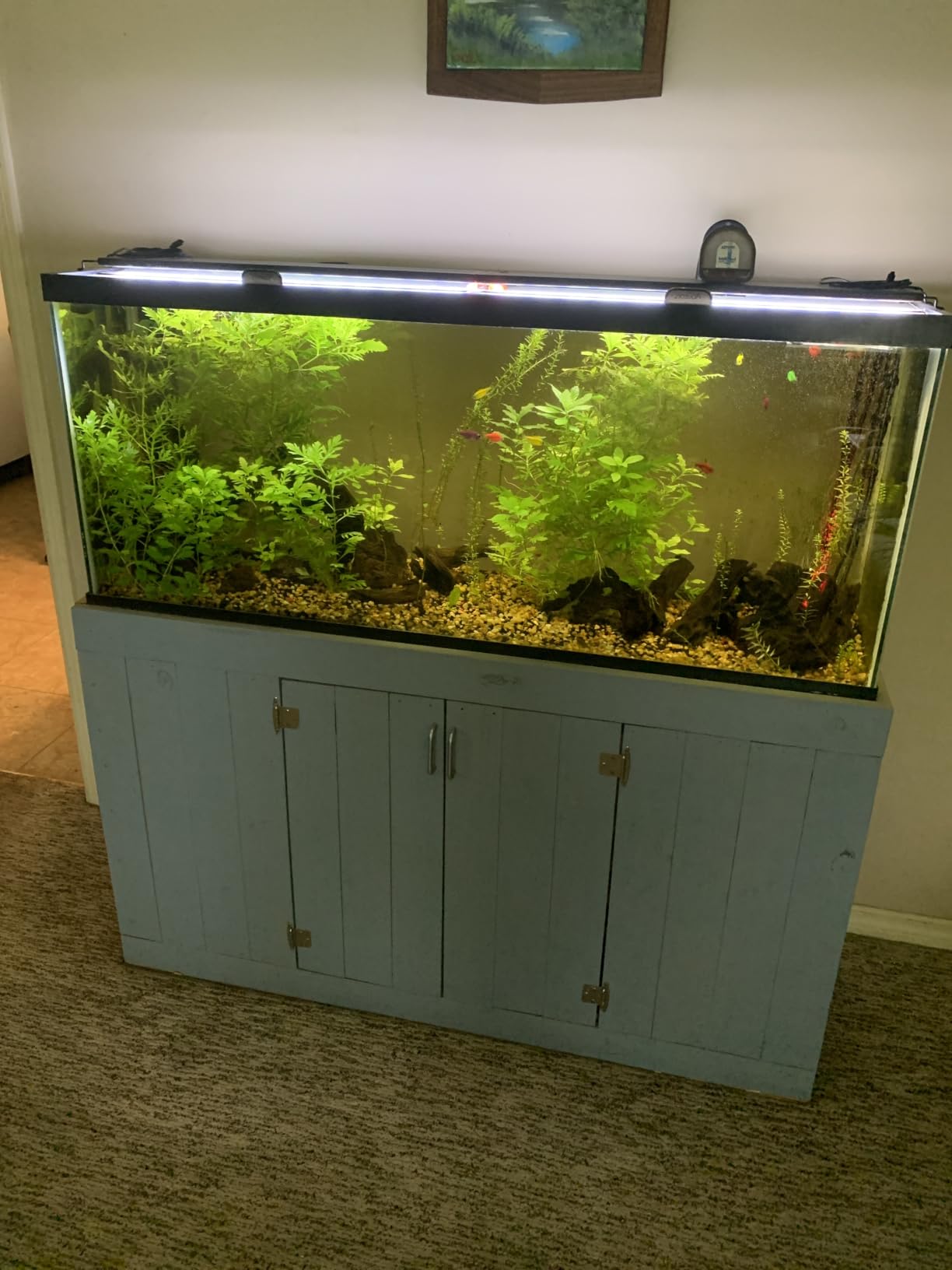
The Stack N Flo trays are trays rather than baskets, and that is a small design word with a real consequence: they do not lift out individually the way the Fluval EZ-Lift or OASE style baskets do. For a monthly clean it is fine, for a weekly Purigen swap it is slower.
The one thing I would change on day one is the clamps. Reviews describe the plastic hose clamps as low quality and leak prone, and a recurring theme in owner fixes is swapping them for metal screw clamps. Budget ten minutes and a small pack of clamps before your first water change.
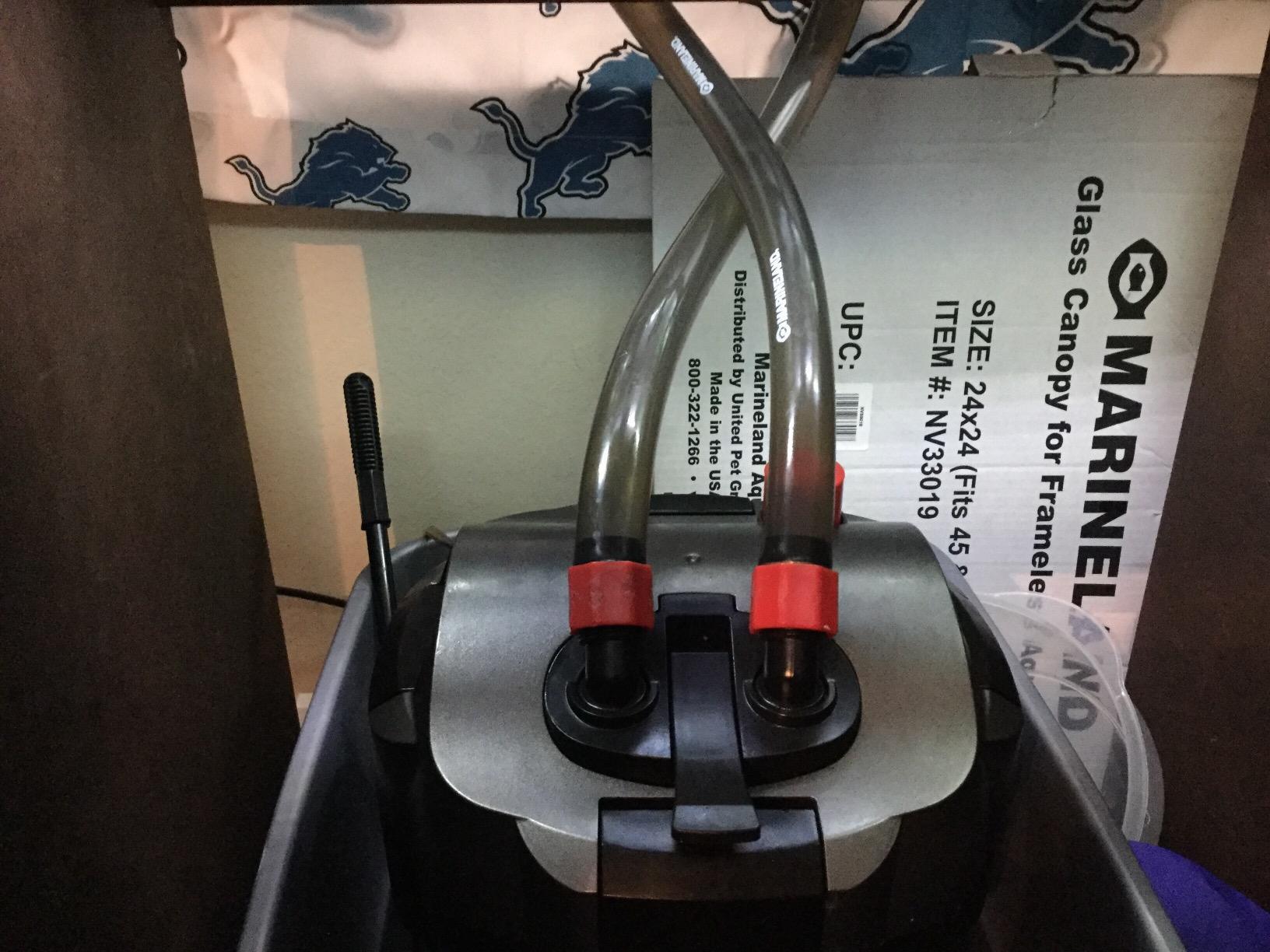
Where the Magniflow 400 makes sense
It is a strong first canister for a planted tank between 40 and 70 gallons. The included media means you can run mechanical, chemical and biological stages immediately, and the 400 GPH rating keeps CO2 mixing even in a densely planted scape.
It also accepts the standard Marineland Rite-Size media format, so replacement pads and carbon bags are widely available rather than proprietary.
Where it falls down
Leaks at the lid seal and at the connections are the most reported problem, and rigid tubing makes the plumbing harder than it needs to be in a tight cabinet. Owner experiences with customer service when a seal fails are described as unhelpful.
Carbon bags need replacing more often than the other media here, which adds a recurring consumable cost to a heavily planted tank that produces a lot of tannins and organics.
6. Marineland Magnum 290 Polishing Filter – Best for Water Clarity
Marineland Magnum 290 GPH Polishing Canister Aquarium Filter
290 GPH rated flow
Up to 97 gallons
Micron cartridge included
Internal design
Pros
- Genuinely clears fine particles
- Compact internal design saves space
- Two refillable media chambers
- Easy startup and maintenance
- Good supplementary filtration
Cons
- Internal design limits media capacity
- Not a primary filter on a large tank
- Micron cartridges need constant replacement
- Submerged motor is harder to service
I want to be straight about where the Magnum 290 fits, because it is not a planted tank canister in the way the others are. It is an internal canister with a submerged motor that rates 290 GPH and takes aquariums up to 97 gallons, and its job is polishing rather than biofiltration. That makes it a companion piece, not a replacement.
What it does better than anything else here is clarity. The micron cartridge catches what a foam pad cannot, and after a rescape or a filter change, running this alongside a main canister is the fastest way to get the water visually clear again. The two refillable chambers let you use carbon or custom media in the same body.
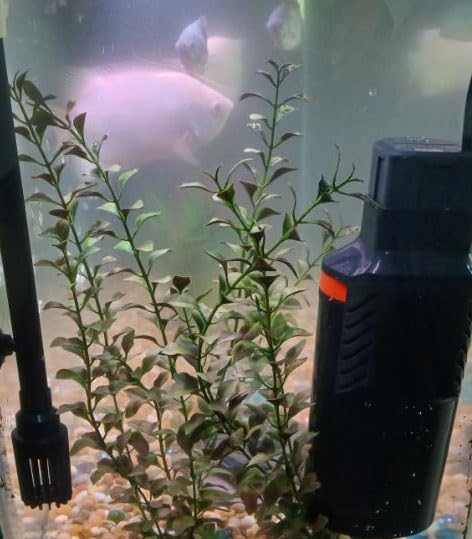
In a planted tank, the reason to want clarity is not decoration, it is light. A high tech planted aquarium with CO2 injection and a strong light is entirely dependent on clean water, because suspended particulate absorbs the light your carpeting plants need and dulls the whole scape. A polisher helps you get there faster after maintenance.
The limits are real. Internal design means the media capacity is small, the micron cartridge is a consumable that has to be replaced often, and a submerged motor is harder to service than a pump head you can swap on a bench. Flow is also lower than the external canisters here, so it cannot drive a reactor.
When the Magnum 290 helps a planted tank
It works well as a supplementary polisher on a tank up to about 60 gallons, especially in the weeks after a rescape or a filter service. Two refillable chambers let you put a carbon bag in one and a fine pad in the other.
It is also a good fit for a shrimp tank or a fry tank where you want clear water without a lot of surface agitation, since the return is gentle.
When it is the wrong choice
It cannot be the primary filter on a large or heavily planted aquarium, because the internal chamber simply does not hold enough bio media to keep a high bioload stable. Reviewers are consistent on that point.
Micron cartridges are a recurring replacement item, and the submerged motor is not convenient to service. If you want one filter to do everything, choose an external canister instead.
7. Aqueon QuietFlow Canister Filter – Best for Surface Skimming
Aqueon QuietFlow Canister Aquarium Filter, Up to 150 Gallons (ECOM)
Up to 150 gallons
Spray bar and director outlets
Hang on back polisher included
Quick disconnect valves
Pros
- Three return options in one box
- Includes a hang on back polishing unit
- Quick disconnect valves for fast servicing
- Quiet operation
- Three size variants
Cons
- Polisher cartridges replaced monthly
- Review base is much smaller than rivals
- Some owners report priming difficulty
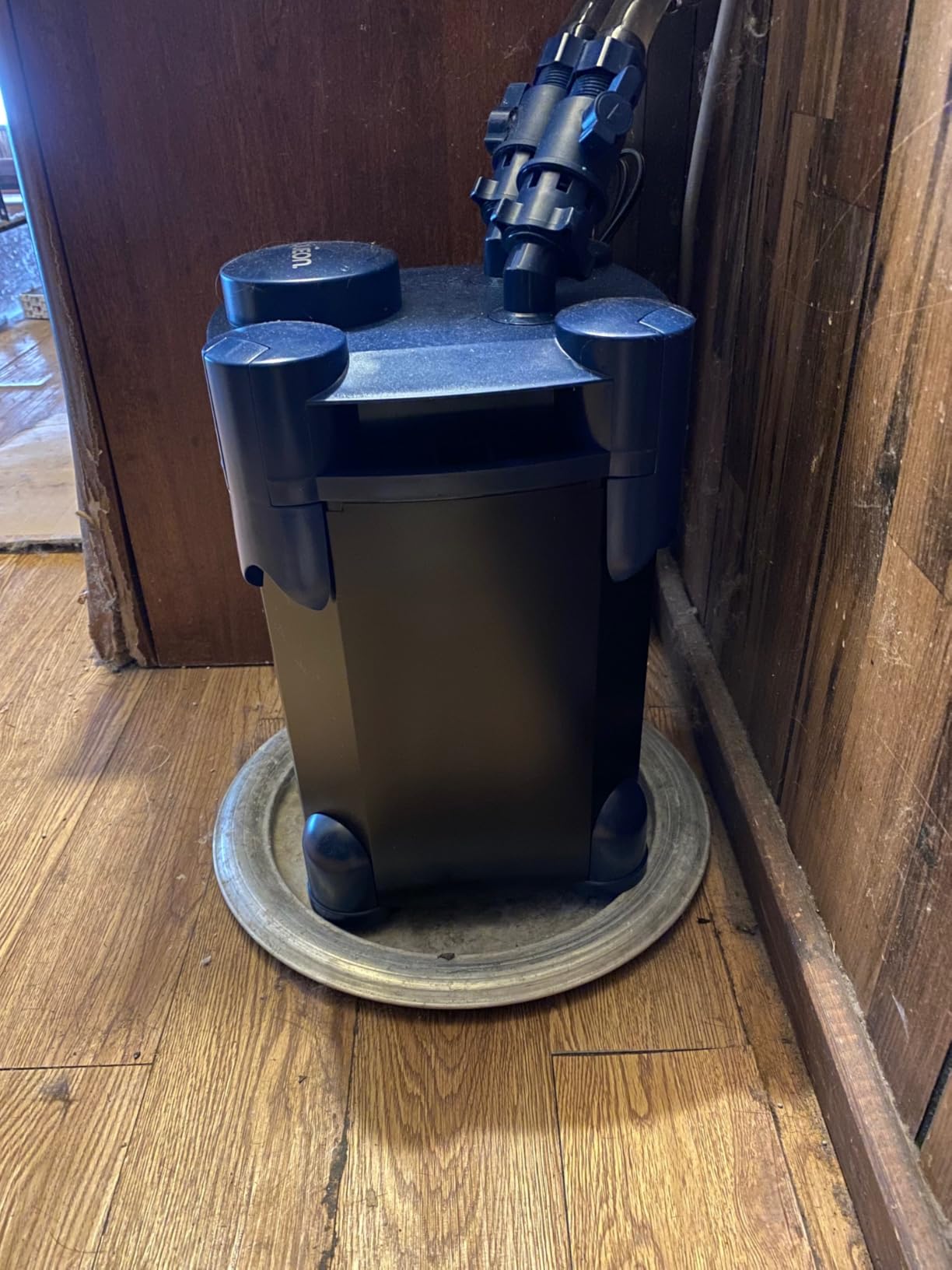
The QuietFlow solves a planted tank problem most canisters ignore. Surface skimming pulls floating protein film, dust and excess CO2 off the top of the water where it is doing the most damage, and this filter gives you three return options out of the box: a spray bar, a water director aimed along the surface, and a hang-on-back polishing unit that mounts on the rim.
In a low tech planted tank with no CO2, that surface outlet is genuinely useful. It keeps the top layer moving without blasting gas out of the water column, which is the opposite of what you want in a high tech scape with a diffuser, but is exactly right for a community tank with a light plant load.
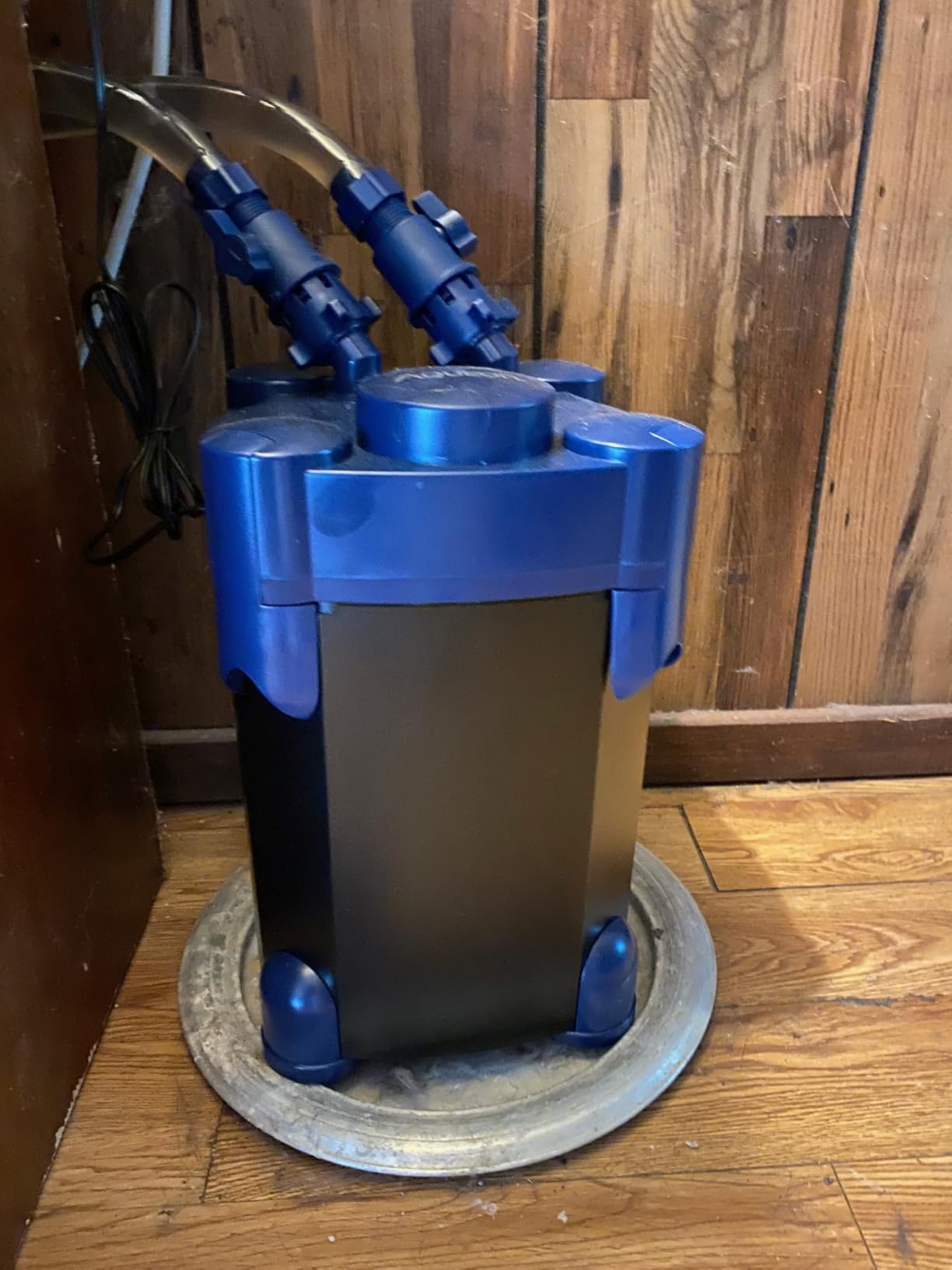
Maintenance is well served by the quick disconnect valves and pump locking heads. The multi-stage design covers biological, chemical and mechanical, and the box includes activated carbon, coarse foam, bio-balls and bio-ceramic rings, so the initial media layout is covered.
The honest caveat is the review base. At a little over a thousand reviews it is well behind the market leaders on this list, which means less long-term data and less community troubleshooting. The monthly replacement of the polishing unit cartridges is also a permanent line in your maintenance budget.
Where the QuietFlow earns its badge
It is the only filter here that includes a rim-mounted polishing unit, and that is the piece that makes surface skimming easy without buying extra parts. Low tech planted tanks and community tanks benefit from it immediately.
At 8.5 by 8.5 by 20.5 inches the body is tall and narrow, which is actually helpful in a stand with a tight back panel. Three size variants cover up to 55, up to 100 and up to 150 gallons.
Where it falls short
The polishing unit cartridges need replacing every month, which is a running cost that the other filters on this list do not impose on you. Some owners also report that priming takes more effort than the push button suggests.
With a much smaller review base than the Fluval or Penn-Plax options, long-term reliability is less well documented, and the one-year warranty is shorter than you get from the European brands.
8. SunSun HW302 Pro Kit – Best for Quarantine and Test Tanks
SunSun Hw302 265GPH Pro Canister Filter Kit
265 GPH rated flow
Up to 75 gallons
Three media baskets
Full media kit included
Pros
- Rated 265 GPH at a fraction of the cost
- Complete media kit in the box
- Quiet running
- Customizable baskets
- Handles 40 to 70 gallon tanks well
Cons
- Cheap plastic hose fittings
- Stiff tubing
- Weak instructions
- Clips and o rings wear over time
- Impeller gets noisier after about a year
The SunSun HW302 is the value pick on this list, and for a quarantine tank, a grow-out tank or a second planted system it is hard to argue with what you get. The rated 265 GPH matches the Penn-Plax Cascade 1000, it covers tanks up to 75 gallons, and the box includes three white filter pads, three media baskets, a pound of carbon, a pound of ceramic rings and a set of bio balls.
Hobbyists on r/PlantedTank and Fishlore regularly describe this class of filter as cheap and functional, and that is accurate. The performance per unit of spend is high, and experienced keepers are happy to soak the stiff tubing in hot water, replace the plastic fittings and spend a weekend making it reliable.
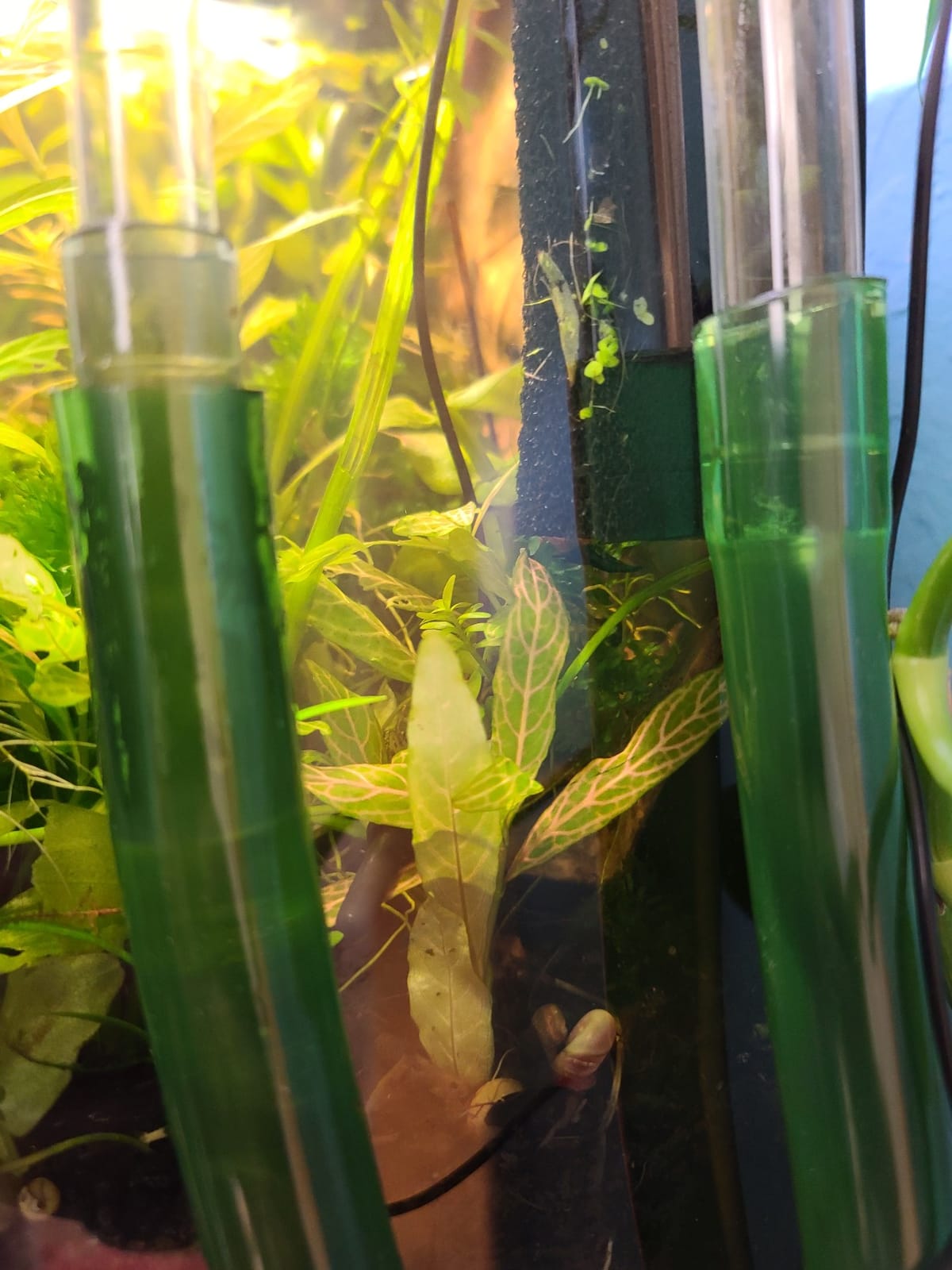
The media baskets are the same style as the larger SunSun kit below, three stackable baskets with a decent volume, which is more than you get from some budget units. That makes a planted media recipe easy to build: coarse pad in the top basket, Purigen in the middle, ceramic rings filling the bottom.
The durability note is the one to plan around. Reports describe the impeller becoming noticeably noisier after roughly a year of running, and the clips and o rings wearing over time. Forum consensus is that a spare impeller and a pack of clips is a sensible ten-minute investment the day you unbox it.
Where the HW302 works for planted tanks
It is a strong second filter: a quarantine tank, a shrimp tank, or a backup unit for a tank you do not want to risk with a single pump. The 265 GPH rating supports a planted tank up to about 60 gallons comfortably.
The included media kit means the running cost to get started is close to zero, and the three baskets accept any standard loose media, so you are not locked into one brand.
Where it does not work
The plastic hose connectors and clips are the weak point, and the instructions are widely criticised as poor. Budget time for a setup session rather than expecting a plug and play install.
Priming can frustrate beginners, and the stiff tubing needs a soak. For a show tank in a living room, the impeller noise after a year of service is the reason I would choose a different option.
9. Eheim Classic 2213 Canister – Best for Low Maintenance
EHEIM Classic Canister Filter 2213, Classic 250 – PetOverstock
Design unchanged since 2004
40 66 and 92 gallon versions
Silicone sealing ring
Spray bar included
Pros
- Proven design with a decade of service records
- Very quiet once established
- Simple layout is easy to service
- Permo-elastic silicone seal
- Premium EHEIM media included
Cons
- No self priming
- Media capacity is small by modern standards
- No quick disconnect valves
- Dated design and stiff hoses
- Lower flow than modern equivalents
The Eheim Classic 2213 is the oldest design in this roundup and the one most people end up keeping longest. Aquarium hobbyists on Fishlore describe Eheim Classics running for 20 and 30 years, and the consensus about why is simple: nothing in the design is complicated, so nothing breaks. The pump head is a plain motor, the seal is a silicone ring rather than a complex gasket, and the plumbing is all standard size.
It is also the quietest unit here once the biofilm that every canister develops has coated the internals. That sounds unsanitary and it is not, because the coating is on surfaces water has already passed through. What you get is a smooth, quiet flow path and a pump that settles down after the first few weeks.
Two things to know before you choose it. The first is priming: there is no self-priming pump, so the first startup needs a manual siphon of the intake line, and a power cut means a siphon again. In a planted tank that is a minor annoyance, but it is a real one.
The second is media capacity. The baskets are smaller than on the modern Fluval and Penn-Plax designs, so a heavily planted tank can run out of vertical media space sooner. A 40, 66 and 92 gallon version is available in the line, and each ships with EHEIM Mech and Substrat Pro media, a spray bar, an inlet pipe, hose and valves.
Where the Eheim Classic 2213 makes sense
It is the right pick for a planted tank where quiet operation and long service life matter more than features, and where the tank is 40 to 66 gallons. The 92 gallon version covers larger low tech setups.
Because the design has been in production since 2004, replacement impellers, seals and hose parts are easy to source, which is part of why these filters outlive owners.
Where it falls short
No self-priming means you siphon the line on day one and after every power cut. Media capacity is modest by modern standards, and there are no quick disconnect valves, so a media change means breaking the plumbing.
The green tubing and dated appearance do not disappear inside a stand the way they do with a matte black unit, and the flow rating is lower than the newer filters here even in the 92 gallon version.
10. SunSun HW303B Pro Kit – Best for UV Control on a Budget
SunSun Hw303B 370GPH Pro Canister Filter Kit with 9-watt UV Sterilizer
370 GPH rated flow
Up to 100 gallons
Built in 9 watt UV sterilizer
Three media baskets
Pros
- Rated 370 GPH covers large planted tanks
- UV sterilizer built into the body
- Same three basket media layout as the HW302
- Full media kit included
- Good value for the feature set
Cons
- Same plastic component concerns as the HW302
- UV bulb replacement is a running cost
- Stiff tubing
- Priming can be difficult
- Footprint is larger than the HW302
The HW303B is the HW302 with two upgrades: flow goes from 265 to 370 GPH and a 9 watt UV sterilizer is built into the body. For a planted tank that means it can run up to about a 100 gallon volume while still moving enough water through media for a CO2 injected system.
The UV is the feature that separates it. In a high bioload planted tank, a UV sterilizer knocks down free-floating algae and bacterial blooms in the water column, which is a different job from what the media stages do, and having it integrated saves you from plumbing a separate inline unit.
It uses the same three media basket layout as the smaller SunSun kit, so the media recipe transfers straight across: three white filter pads and a blue coarse pad in the top stage, a pound of carbon and three baskets in the body, and a pound of ceramic rings plus bio balls to fill out the bottom. That gives you real media volume on a budget.
The caveats match the smaller SunSun, because the components are the same generation of parts. The plastic connectors and clips are the weak point, the tubing is stiff, and the UV bulb is a consumable that has to be replaced on a schedule. The body is also larger than the HW302 at 12 by 12 by 20 inches, so cabinet fit is a factor.
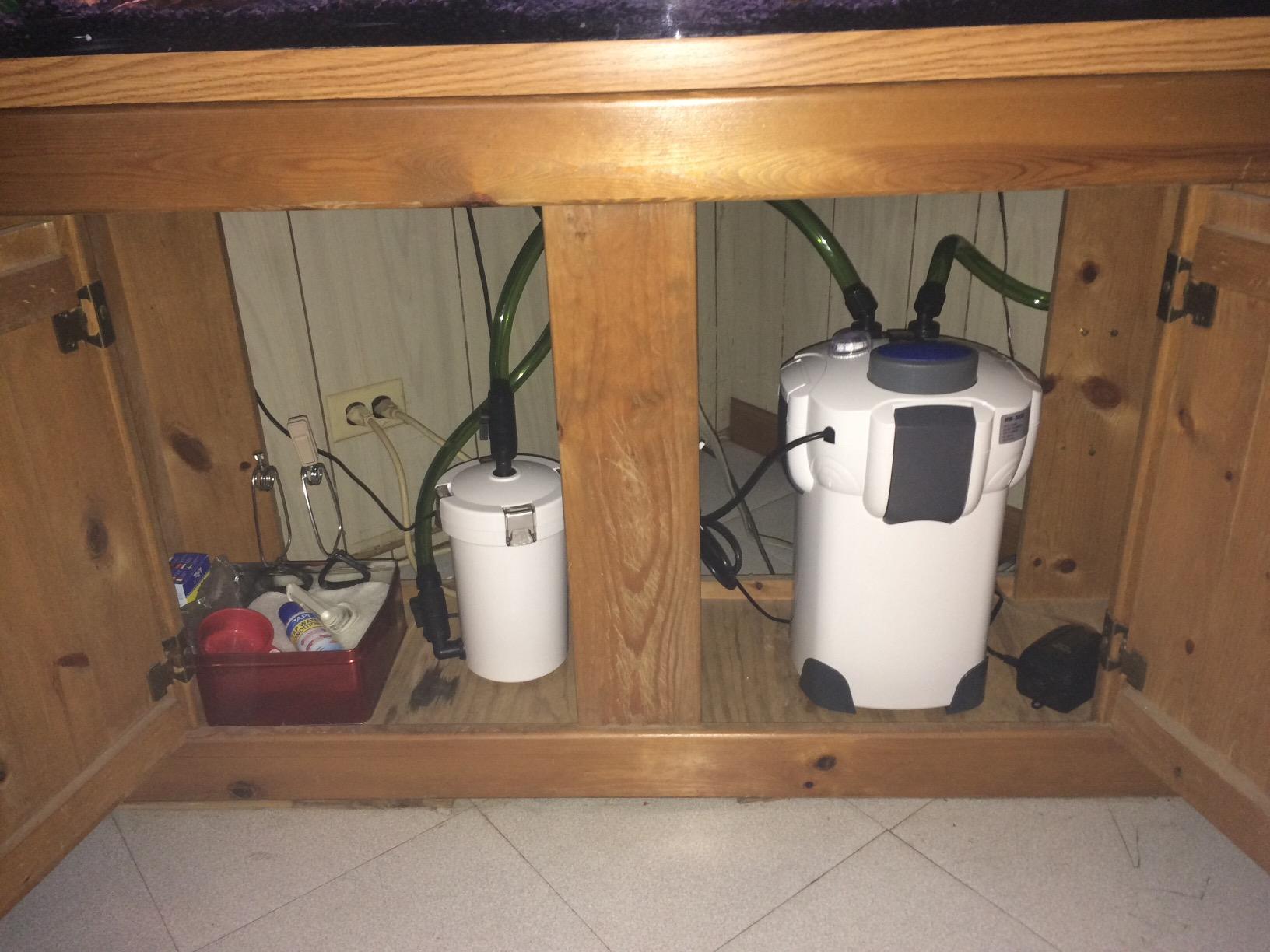
Where the HW303B is the smart buy
It suits planted tanks between 60 and 100 gallons where you want a UV sterilizer without adding a second inline device and its extra plumbing. The 370 GPH rating also gives better turnover than most budget canisters.
Three media baskets with a complete media kit included means the running cost of setting up a planted filter stack is close to nothing, and loose media is unrestricted.
Where it falls short
It shares the plastic component and tubing concerns of the smaller SunSun, and the included documentation is thin. The UV bulb replacement is an ongoing cost that shows up in year two, not day one.
Priming takes more effort than a self-starting pump, and the larger footprint needs more cabinet clearance than the HW302. For a bedroom display, a filter that is visibly plastic after a year of service is not the look you want.
What a Planted Tank Actually Asks of Its Filter
Fish tank sizing rules are about bioload. Planted tank rules are about gas exchange, nutrient stability and the amount of equipment you have to hide in a stand that is already full of a CO2 regulator and a dosing pump. These are the things that decide which of the ten above is right for you.
Size it by turnover, not by the tank label
Pick a filter rated for roughly four to six times your tank volume in gallons per hour, then step up one size if the tank is densely planted. The reason for the step up is head pressure, covered next. A filter rated exactly at your tank volume will be fine on paper and disappointing in practice once the lift hose and the filled media baskets are in the loop.
For reference, that means a 40 gallon planted tank is well served by a unit rated 150 to 265 GPH, a 75 gallon tank by 265 to 400 GPH, and a 125 gallon tank by 400 GPH and up. The FX4 and the Cascade 1000 sit at the middle of those bands.
Head pressure beats the number on the box
Rated GPH is measured at zero head, meaning with no lift and no restriction. In a cabinet, gravity takes roughly 20 to 30 inches off that number before the water even reaches the media. Add a coarse sponge, a Purigen bag and a carbon bag and the restriction grows, so a real-world figure of 50 to 70 percent of the rating is normal.
This is the single most common complaint on aquarium forums, and it is the reason a nominally smaller filter often performs like a bigger one. Before you buy, measure the height from your stand to the water line, and add 6 inches for the canister itself.
Will it fit your cabinet
Measure the door opening, not the cabinet interior. A lot of stands have a 12 inch opening and plenty of internal space, so a filter that is 15 inches wide will fit beautifully until you try to lift it through the door. Grab the product dimensions and compare the widest number against your opening, then check the height with the hoses attached.
The FX4 at 15.6 by 15.6 by 17.7 inches and the FX6 at 15.1 by 15.6 by 20.7 inches are both round-canister designs, so a narrow door rules them out. Slim designs like the Fluval 407 at 7.09 by 9.45 by 19.29 inches and the Eheim Classic 2213 at 8 by 6.3 by 13.98 inches pass through much tighter openings.
A planted media recipe that actually works
Layer order matters more than brand. Mechanical filtration first at the top basket so detritus never reaches the biological media, chemical filtration in the middle where water has already been cleaned, biological media in the bottom basket next to the pump where it gets the most flow and stays oxygenated.
For a low tech planted tank, coarse sponge in the top basket, a carbon bag in the middle and ceramic rings filling the bottom is plenty. For a CO2 injected tank, swap the middle stage to a Purigen cartridge, which binds nitrate and phosphate, and add a fine pad between the sponge and the Purigen so the carbon does not clog. For a shrimp tank, skip the carbon entirely and use only sponge and ceramic media.
One rule matters more than the recipe: never rinse your biological media under the cold tap. Chlorine kills the colony you are trying to preserve, and forum users have been saying this for years. Rinse in water from your own tank or in dechlorinated water, and only when the flow visibly slows.
CO2 and surface skimming
You can absolutely run CO2 with a canister filter, and it is the reason canisters dominate high tech planted tanks. Three integration methods are common. The simplest is an in-tank diffuser fed by a reactor, with the canister return feeding the reactor inlet. The second is an inline CO2 diffuser slotted into the return line, which needs a straight run of hose. The third, best on a canister with spare flow, is to use the canister outlet as a dedicated reactor feed and return water from the reactor into the tank.
Surface skimming is the opposite case. In a low tech planted tank, skimming pulls protein film and CO2 off the surface and improves gas exchange, which is why the Aqueon QuietFlow with its water director and rim polisher is a genuinely good match for that style. In a high tech CO2 tank you usually want to avoid it, because it strips the CO2 you are trying to keep dissolved. Know which one you are running before you choose the outlet.
Eheim or Fluval, and where the rest fit
The Eheim and Fluval comparison is the most common brand question in planted tanks, and the honest answer is that both are proven designs from European makers with long service records. Fluval wins on flow options, self-priming on the FX line, and media basket convenience. Eheim wins on simplicity, replacement part availability and the length of time owners report the same units running.
The rest of the field has its own logic. OASE and Sicce are the other two European names you will read about constantly in planted circles, with OASE known for integrated heater models and Sicce known for being the easiest to strip and clean. If you are weighing a decision between brands rather than models, the practical difference in a planted tank comes down to hose routing, media access and noise, not the brand name on the pump head.
Two more names show up in any roundup like this. UNS Delta is a HOB-mountable canister for small tanks, useful when there is no stand at all. FZone is an external pump design in a stainless steel body with a lifetime warranty on the body, popular with aquascapers who build their own media stacks. We did not test either, so treat their presence here as background rather than a recommendation.
How to set the flow rate on a planted tank
Every canister on this list has an outflow or a valve somewhere, and the right setting is the one that gives you circulation without disturbing the substrate or stripping dissolved CO2. There is a simple physical way to find it rather than guessing at a number on a box.
Start with the return aimed at the surface from the far corner of the tank. If you can hear the water hitting the glass from a metre away, turn it down until you cannot. Then drop the outflow until the surface is only gently moving, and watch the substrate for ten minutes. Sand that shifts on the far side means the return is still too strong, and a substrate that never moves at all usually means the flow is too low to keep the top layer oxygenated.
Where a filter has a flow regulator rather than a fixed outflow, set it somewhere in the lower third of the range. Reviewers consistently report that the high end of a flow regulator is what strips CO2 in a high tech tank, and a planted tank with a light on six hours a day does not need a hurricane at the surface.
For a CO2 injected tank specifically, aim the return along the back glass rather than across the front, and keep it below the water line. That keeps the gas dissolved instead of pushing it into the room, and it leaves the surface relatively still, which helps CO2 stay in solution.
What a planted tank filter must not do
There are three ways a filter can quietly undermine a planted aquarium, and all three are avoidable at the buying stage rather than after the tank is running.
The first is moving the substrate. A new canister full of carbon and ceramic rings is far heavier than a bare tank and will shift sand and aquasoil when the pump spins up. Seed the substrate deep, add water slowly, and run the filter at reduced flow for the first day.
The second is stripping the CO2 you paid for. High flow plus a strong surface disturbance is the fastest way to lose dissolved CO2, and the plant will show it within a week as slowing growth and then melting. This is the same reason surface skimming belongs in a low tech tank and not a high tech one.
The third is creating a dead zone. Filter intakes at the far end of the tank pull flow from one region while the rest of the tank goes still, and a still corner in a planted tank is where detritus lands and never leaves. Angle the intake across the longest dimension of the tank rather than straight up, and aim the return at the intake wall so the whole volume turns over as one body of water.
A maintenance schedule that keeps the colony alive
The maintenance mistake that costs planted tank owners the most is not cleaning too little, it is cleaning too aggressively. A canister should be opened when the flow drops noticeably, not on a fixed weekly schedule, because every opening exposes your bacterial colony to fresh oxygen and new water.
A realistic routine for a mature CO2 injected planted tank looks like this. Every two to four weeks, open the lid and check the top basket under a light. If the sponge is still draining freely, put the lid back on and walk away. Once a month, rinse the coarse sponge and the fine pad in removed tank water, squeezing the debris out until the water runs mostly clear, and leave the bottom basket alone. Every two to three months, when Purigen has visibly darkened from tan to grey, swap the cartridge. Once or twice a year, wash the impeller housing in the sink, wipe the grey biofilm off with a soft brush and put it back.
The two rules that keep the colony intact are simple. Never rinse biological media under the cold tap, because the chlorine in it kills the bacteria you are trying to protect. And never sterilise anything with soap or a sanitiser, because residual surfactant in the media is as damaging to the colony as chlorine. Old tank water and a squeeze is all you ever need.
Flow drop is also your best early warning. If a planted tank starts showing cloudy water, a faint smell or a nitrate reading that will not settle, measure the flow before you change anything. A filter losing a third of its rated GPH almost always means a clogged top basket, not a failing pump.
Common Canister Mistakes in Planted Tanks
Most of the bad experiences in the reviews we read are not about the pump. They are about setup and media handling, and every one of them is avoidable.
1. Sizing to the tank label instead of the real turnover. Buy one size up from the stated rating, then verify the flow yourself with a bucket and a stopwatch after a month of running.
2. Measuring the cabinet after buying. The door opening, not the interior, decides whether a round-canister filter like the FX4 physically fits.
3. Rinsing bio media in tap water. Use old tank water or dechlorinated water. Losing a colony to chlorine costs you a full cycle of tank cycling.
4. Running chemical filtration in the wrong basket. Carbon and Purigen go in the middle, after mechanical and before biological, or they clog and starve the bacteria.
5. Ignoring the outflow setting on the FX line. A mis-set outflow can siphon the tank or flood the cabinet. Re-check it after every large water change.
6. Leaving the hoses unsupported. Flex and stiff hoses both need clipping to a stand leg so the weight does not work the connections, especially with an inline CO2 diffuser carrying extra weight.
7. Forgetting the third stage. A planted tank with high bioload and CO2 injection needs a real chemical stage, not just a pad of carbon tossed in the top basket.
8. Believing the sticker GPH. A filter rated at 265 GPH on paper will often move 150 to 190 GPH in a real cabinet with 30 inches of lift and a full media stack. Buy for the real number, not the box.
9. Skipping the spray bar. A directed return nozzle sends most of the flow to one corner of the tank, which leaves dead zones where detritus settles and where CO2 pockets in a high tech scape. A spray bar is usually a few dollars and the cheapest circulation improvement you can make.
10. Underestimating noise. The pump hum in a quiet room is more disruptive than most buyers expect, and a bedroom tank deserves the quietest option on the list rather than the most powerful one.
Frequently Asked Questions
What is the best filter for a planted aquarium?
For most planted tanks between 40 and 80 gallons, a canister rated 265 to 400 GPH with three stackable media baskets is the right answer. The Penn-Plax Cascade 1000 is our top pick because of its 265 GPH rating, generous basket volume and a body that fits tight stands. High tech CO2 tanks should add a chemical media stage such as Purigen in the middle basket.
Which is better, Eheim or Fluval?
Both are proven designs from European manufacturers with long service records. Fluval offers more flow options, self-priming pumps on the FX line and the convenient EZ-Lift media baskets. Eheim wins on simplicity, widely available replacement parts and the number of owners reporting the same unit running for decades. For a heavily planted CO2 tank we lean Fluval, for a low maintenance set and forget setup we lean Eheim.
What is the best filter for a 20-gallon planted tank?
A 20 gallon planted tank is comfortably served by a canister rated 100 to 200 GPH, which also gives you room for a spray bar and a return to a CO2 reactor if you add one later. Bigger is not better here, because extra flow on a small tank strips CO2 and moves substrate. Look for a slim body and simple media baskets rather than a large high-flow unit.
What is the best brand of canister filter?
There is no single best brand, but OASE, Fluval, Eheim and Sicce all have strong service records and long-standing replacement part availability, and they are the names most often recommended by planted hobbyists for quiet, repairable designs. Budget brands such as SunSun offer the same rated flow for far less money, but the plastic fittings wear sooner and the impellers get noisier. Choose based on hose routing and media access as much as the brand.
What are the pros and cons of a canister filter?
Pros: large media capacity, customisable layer order, quieter than a hang-on-back, all hardware hidden under the stand, easy to run an inline CO2 reactor or heater. Cons: it must sit below the water line, it is not self-priming on every model, the large body needs real cabinet space, and cleaning takes longer than a sponge or HOB. Hose routing is also more involved on some brands.
Do canister filters need to be below the tank?
Yes, a canister must sit below the water surface so the pump can draw water up the intake tube. The practical rule is to keep the lid of the canister at or below the tank rim, and ideally lower, so gravity returns the water to the filter if the power drops. Hanging above the tank line risks an empty pump running dry.
Do I need a filter for a heavily planted tank?
You need more filtration and more chemical filtration than an unplanted tank, not a different type of filter. Plants absorb nitrate and ammonia, but they also shed detritus that clogs mechanical media quickly. A canister with three stackable baskets lets you run a coarse sponge, a chemical stage and a heavy biological stage in the right order, which is exactly what a heavily planted tank needs.
Can you use a canister filter with CO2?
Yes, and a canister is the preferred filter for CO2 injected planted tanks. You can run an in-tank diffuser, an inline diffuser in the return line, or use the canister outlet as a dedicated reactor feed. Aim for roughly four to six times your tank volume in rated GPH, and avoid surface skimming in a high tech CO2 tank because it strips the gas you are trying to retain.
The Verdict
After working through ten canister filters, the best canister filters for planted tanks come down to three sensible answers. Take the Penn-Plax Cascade 1000 for tanks up to around 80 gallons, because three stackable baskets, a 265 GPH rating and a body that passes through a tight door make it the most useful filter on this list. Take the Fluval 407 when noise is the deciding factor and you want the media access to be genuinely easy.
Go bigger only when the tank demands it. The Fluval FX4 handles 60 to 150 gallon planted systems and the FX6 covers 125 gallons and up, and both self-start, which is worth more in a planted tank than any feature list suggests. For a low maintenance tank that you want to run for a decade, the Eheim Classic 2213 is hard to beat, and for a quarantine or backup system the SunSun kits give you more filtration per pound than anything else here.
Before you order, measure the cabinet door, work out your real turnover rather than the printed number, and plan the media layer order for the plant load you actually have. Those three steps decide more about how a planted tank performs than the brand name on the pump head.