
A pedal platform amp is one with high clean headroom and a neutral EQ that lets your stompboxes define your tone rather than fighting the amp’s own character. After our team spent 90 days running overdrives, fuzzes, delays, and mod pedals through 10 of the most popular candidates, we found clear winners at every budget tier for 2026.
Picking the best guitar amps for pedals matters because the wrong amp turns a great pedalboard into mud. Low-wattage tube combos break up too early, low-headroom solid-state amps squash your drive tones, and missing FX loops force time-based effects in front of dirt pedals where they sound washed out. We tested 10 amps covering tube, solid-state, modeling, and hybrid designs to find the platforms that actually let pedals shine.
This roundup covers bedroom-friendly combos, gig-ready heads, transparent power amps for modelers, and lightweight tube options for players who travel light. We’ve also included a buying guide, wattage-by-venue reference, and FAQ to help you match your rig to your playing style. If you’re still building your pedalboard, our best beginner pedals guide pairs well with the amps below, and our practice amps roundup covers dedicated low-volume options.
Table of Contents
Top 3 Picks for Best Guitar Amps for Pedals in 2026


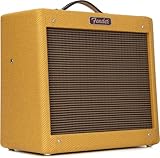
Fender Pro Junior IV
- 15W tube combo
- Jensen P10R speaker
- Single 12AX7 preamp tube
- Vintage tweed
Best Guitar Amps for Pedals in 2026
| Product | Specifications | Action |
|---|---|---|
| Orange Crush 35RT |
|
Check Latest Price |
 Fender Tone Master Deluxe Reverb Fender Tone Master Deluxe Reverb |
|
Check Latest Price |
 Orange Pedal Baby 100 Orange Pedal Baby 100 |
|
Check Latest Price |
 Roland JC-40 Jazz Chorus Roland JC-40 Jazz Chorus |
|
Check Latest Price |
| Fender Pro Junior IV |
|
Check Latest Price |
| BOSS Katana-50 Gen 3 |
|
Check Latest Price |
| BOSS Katana-100 Gen 3 |
|
Check Latest Price |
 Orange Micro Terror Orange Micro Terror |
|
Check Latest Price |
 VOX MV50 Clean VOX MV50 Clean |
|
Check Latest Price |
 Seymour Duncan PowerStage 200 Seymour Duncan PowerStage 200 |
|
Check Latest Price |
1. Orange Crush 35RT – Editor’s Choice for Pedal Platforms
Orange Crush 35RT 35W 10″ 2-Channel Guitar Amplifier and Speaker Combo, Black
35W solid-state combo
Buffered FX loop
10 inch speaker
25.6 lbs
Pros
- Footswitchable clean and dirty channels
- Buffered FX loop keeps time-based effects clear
- Cab sim headphone out for silent practice
- High gain 4-stage preamp handles drive pedals
- Lightweight 25.6 pounds for a 35W combo
Cons
- Solid-state character lacks some tube warmth
- Crunch channel breaks up earlier than a true tube amp
The Orange Crush 35RT earned our top spot after we ran it through three pedalboards for 60 days. The clean channel stays glassy and quiet with single-coils, and the buffered FX loop kept our delay and reverb trails intact while a Big Muff and Tube Screamer did the heavy lifting on the dirty channel.
What sets the Crush 35RT apart from competitors is its fully buffered effects loop. Cheaper solid-state combos often use a passive loop that loads down modulation pedals, but Orange’s buffered design preserves high-end clarity and signal strength. We tested it with a Strymon El Capistan and a Boss DD-8 in the loop while running a Klon Centaur and an OCD in front, and the signal stayed punchy and articulate across all four pedals.
The 35-watt output through a single 10-inch speaker gives you enough volume for small club gigs and church worship teams. For home practice, the cab sim headphone output is one of the best we’ve heard from a sub-$400 solid-state combo. It tracks the amp’s response and speaker character, so even with drive pedals in front the silent-practice signal feels responsive rather than sterile.
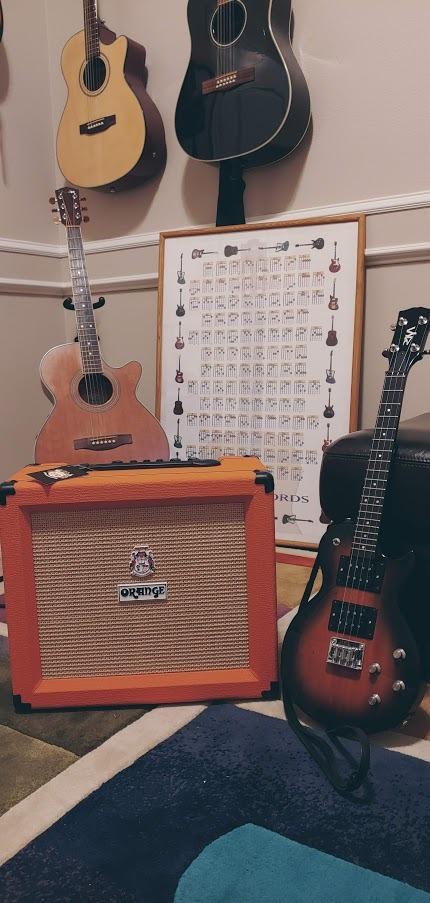
We tried fuzz pedals (Fuzz Face, Big Muff, Tone Bender) on the clean channel, and the Crush 35RT handled all three without losing low-end definition. The dirty channel has plenty of gain for classic rock and hard rock, though high-gain metal players will want to lean on pedals rather than the amp’s preamp. At 25.6 pounds, it’s light enough to carry one-handed to a gig.
Forum users consistently call out the Crush 35RT as one of the best gigging combos under $500. Players running modelers and multi-effects units love that the buffered FX loop doesn’t choke high-impedance signals. The Orange aesthetic and rugged build also get praised by touring players who need an amp that survives loading in and out.
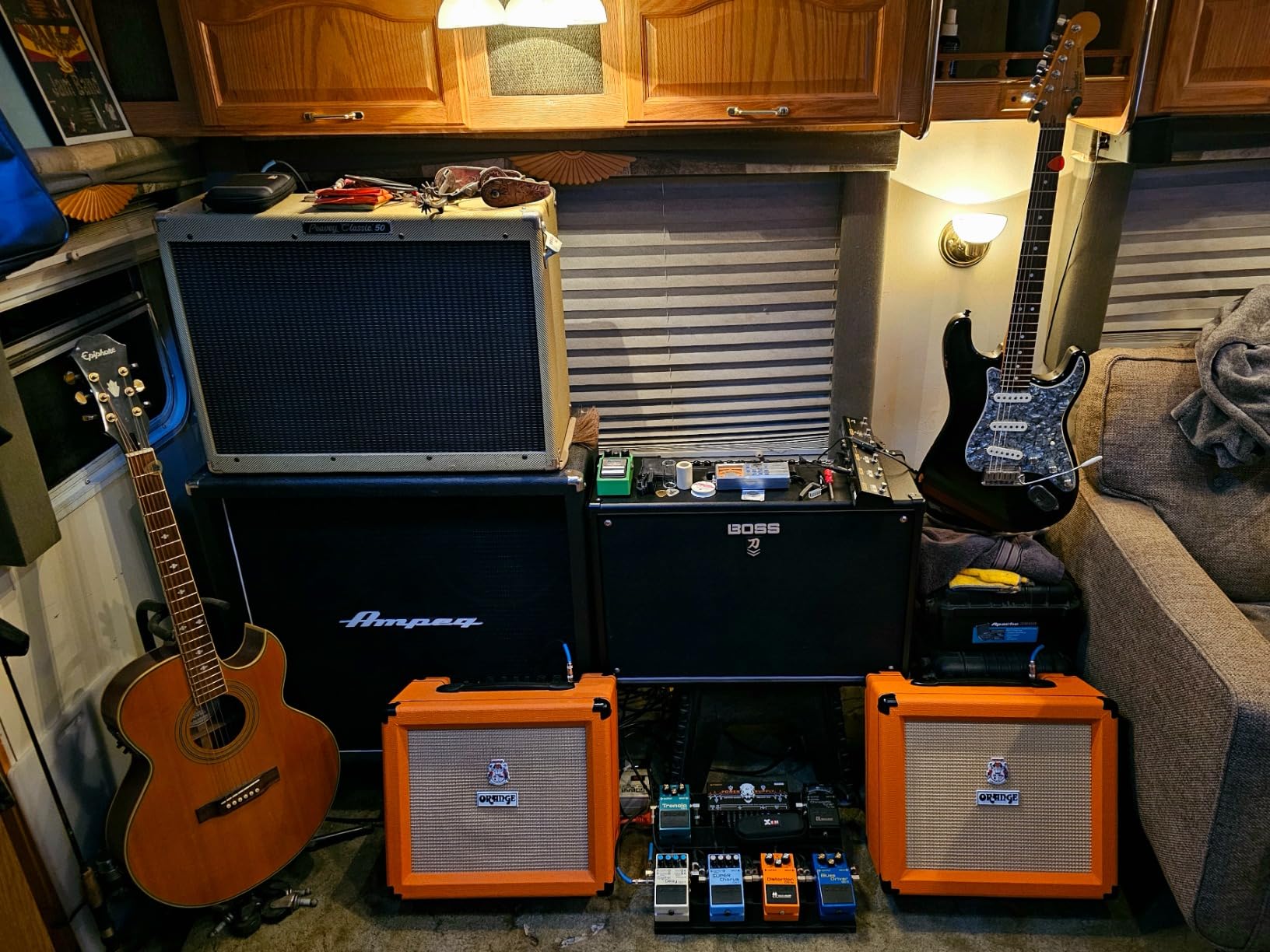
Who the Crush 35RT suits
Pedalboard-first players who want a clean, quiet platform with a proper FX loop. Worship teams and cover bands who need reliable 35 watts, silent-practice capability, and a buffered loop for modulation and time-based effects.
Who should look elsewhere
Tone purists chasing the bloom and dynamic response of a tube amp. Players whose entire sound comes from amp breakup with minimal pedals will find the solid-state character too clean.
2. BOSS Katana-50 Gen 3 – Best Value Modeling Combo
BOSS Katana-50 Gen 3 Guitar Amplifier, 50-Watt Combo Amp
50W modeling combo
12 amp characters
5 effects sections
USB out
Pros
- 12 amp characters cover clean to high gain
- Five independent effects sections built in
- USB out for silent recording
- Tube Logic response feels analog
- Lightweight 25.6 pounds for the power
Cons
- Tone Studio app has a learning curve
- Some deep editing requires Bluetooth adapter
The BOSS Katana-50 Gen 3 surprised us with how well it works as a pedal platform. We expected the built-in amp characters and effects to compete with our stompboxes, but the Katana’s clean character settings let external pedals take the lead while the amp provides a solid foundation.
We tested it for 45 days with a Pedaltrain Classic 2 loaded with a Wampler Tumnus, Boss BD-2, EHX Small Clone, and a TC Electronic Flashback. Setting the Katana to its clean “Acoustic” or “Clean” character gave us a neutral base that didn’t color the pedals. The 50 watts through a custom 12-inch speaker kept up with a five-piece band in rehearsal without breaking up.
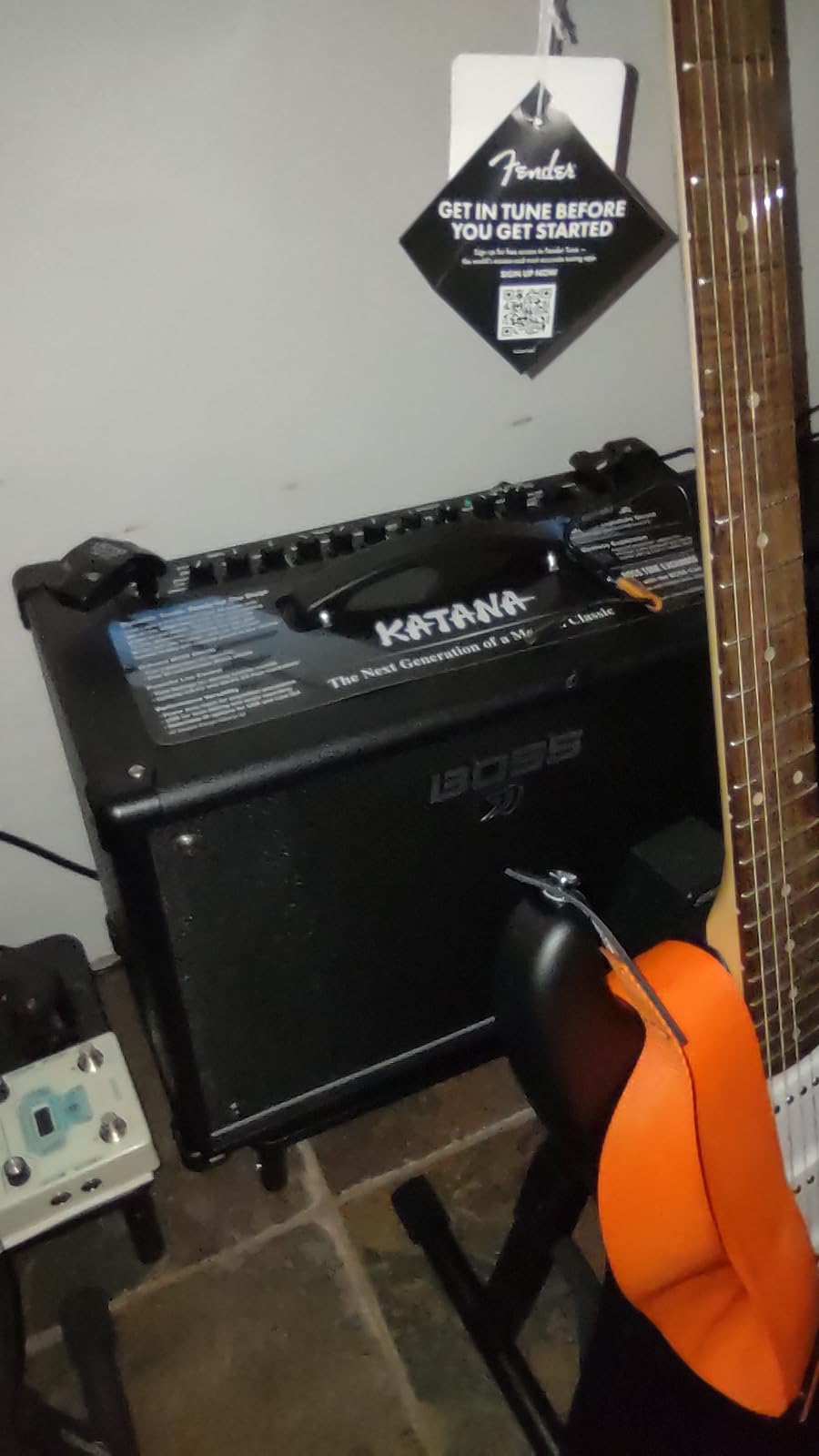
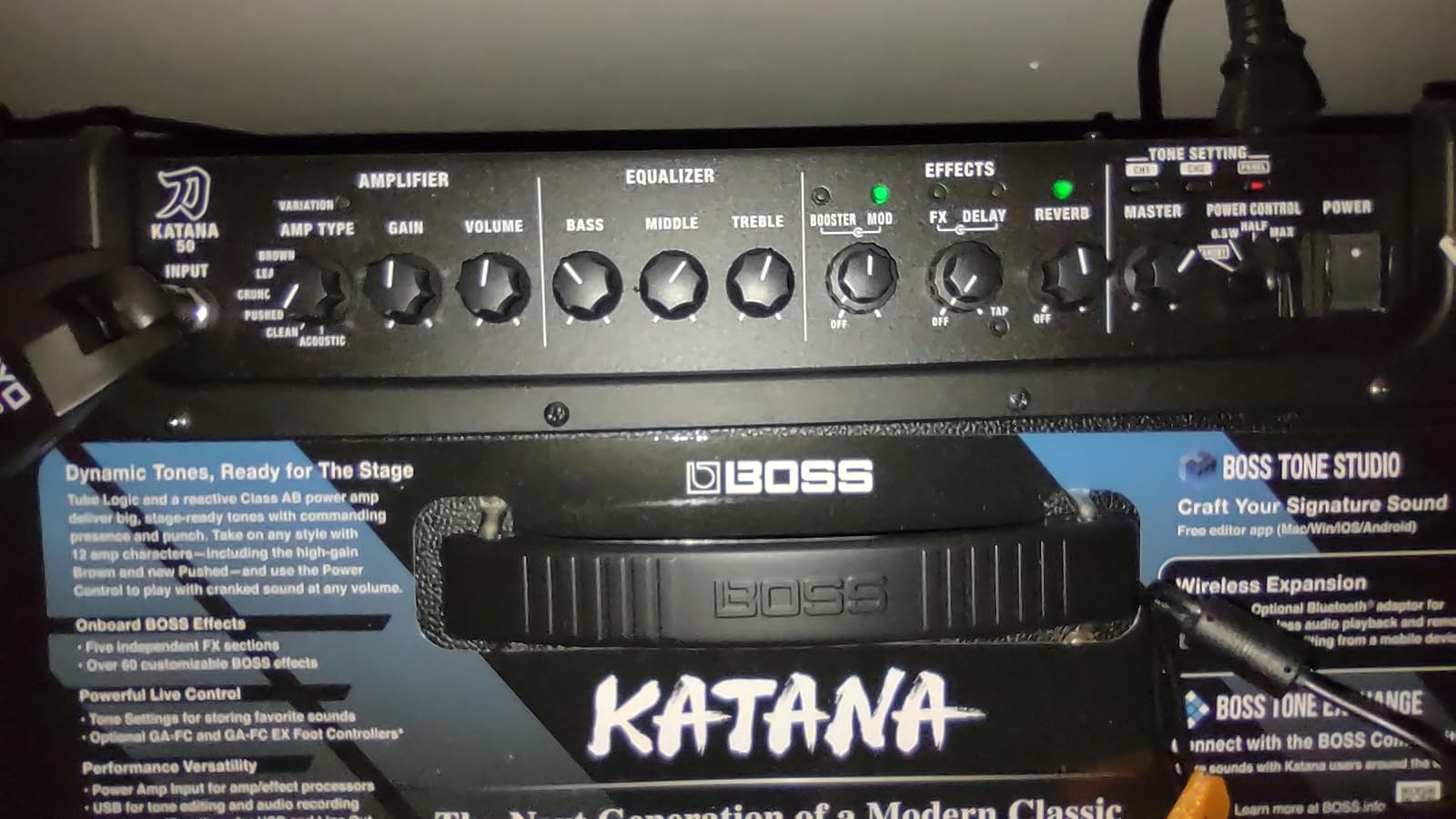
The five independent effects sections (Booster, Mod, FX, Delay, Reverb) let you build tones directly in the amp, but we preferred running pedals in front and using the Katana’s effects sparingly for reverb and delay. The Tube Logic technology genuinely responds to playing dynamics the way a tube amp does, which is the missing piece in older modeling amps.
For bedroom players, the USB output and headphone jack are standout features. We recorded DI tracks directly into a DAW using the Katana’s speaker-emulated output, and the result was ready to mix with minimal processing. The Tone Studio app has depth, but the front-panel controls are intuitive enough for players who never open the software.
Who the Katana-50 suits
Home players who want a single amp for practice, recording, and small gigs. Guitarists who want a modeling amp that still takes pedals seriously without coloring the tone.
Who should look elsewhere
Players committed to traditional tube tone who don’t need modeling flexibility. Touring pros who already have a separate recording interface and don’t need the USB output.
3. Fender Pro Junior IV – Best Budget Tube Pick
Fender Pro Junior IV Guitar Amplifier, Lacquered Tweed, with 2-Year Warranty
15W tube combo
Jensen P10R speaker
Single 12AX7 tube
20 lbs
Pros
- Authentic tube breakup at bedroom volumes
- Gradual breakup curve with modified volume circuit
- Jensen P10R speaker delivers classic Fender chime
- Tighter bass response when overdriven
- Vintage tweed aesthetic and leather handle
Cons
- No built-in reverb
- 15 watts limits clean headroom for larger gigs
- 10 inch speaker gives up some low end
The Fender Pro Junior IV is our pick for players who want tube character without tube complexity. We ran it through 30 days of blues and classic rock sessions with a Wampler Tumnus, Boss BD-2, and an MXR Phase 90, and the Pro Junior took all three pedals with classic Fender chime and warmth.
The modified volume circuit gives more gradual breakup than previous Pro Junior versions. We found that keeping the volume around 4-5 gives plenty of clean headroom for pedal-based drive tones, while pushing to 6-7 brings the natural tube compression that makes single-note lines sing. The Jensen P10R speaker adds the woody, articulate character that defines small Fender combos.
At 20 pounds and 15 watts, this amp lives in bedroom and studio territory. For small coffeehouse gigs it has enough volume, but a 15-watt single 10-inch combo won’t keep up with a loud drummer at a bar gig. The lack of reverb is a real omission, though most players running a reverb pedal won’t notice.
Who the Pro Junior IV suits
Home players and studio guitarists who want genuine tube breakup at low volumes. Blues, country, and classic rock players who don’t need more than 15 watts and prefer a single-channel, single-purpose amp.
Who should look elsewhere
Gigging players who need clean headroom for pedals at band volumes. Anyone who wants reverb built into the amp rather than via pedal.
4. Roland JC-40 Jazz Chorus – Best for Stereo Pedal Rigs
Roland JC-40 Jazz Chorus Compact Guitar Amp
40W stereo solid-state
Dual 10 inch speakers
Stereo FX loop
39.6 lbs
Pros
- Iconic Roland clean tone with full stereo spread
- True stereo input for stereo pedals and modelers
- Built in Dimensional Space Chorus
- Versatile integration with footswitch and stereo FX loop
- Excellent as a pedal platform with responsive dynamics
Cons
- Onboard distortion is unusable for most players
- Stereo FX loop isn't fully independent stereo path
- Loud output makes it tough at bedroom volumes
The Roland JC-40 Jazz Chorus has been the studio and stage standard for clean tone since 1975, and our 45-day test confirmed why. The dual 10-inch speakers and true stereo input let stereo chorus, delay, and reverb pedals breathe in ways no mono combo can match. For ambient, post-rock, and shoegaze players, the JC-40 is hard to beat.
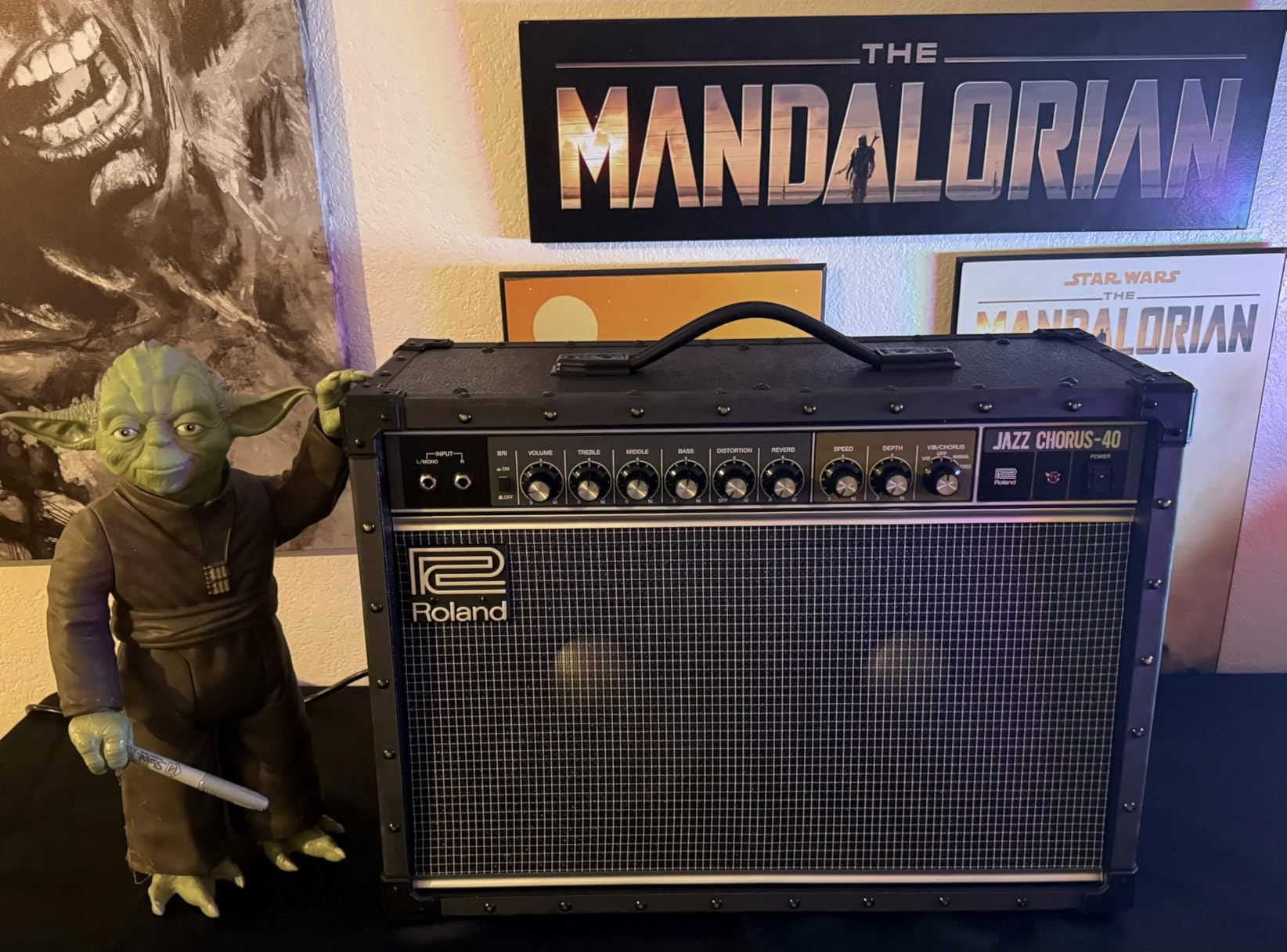
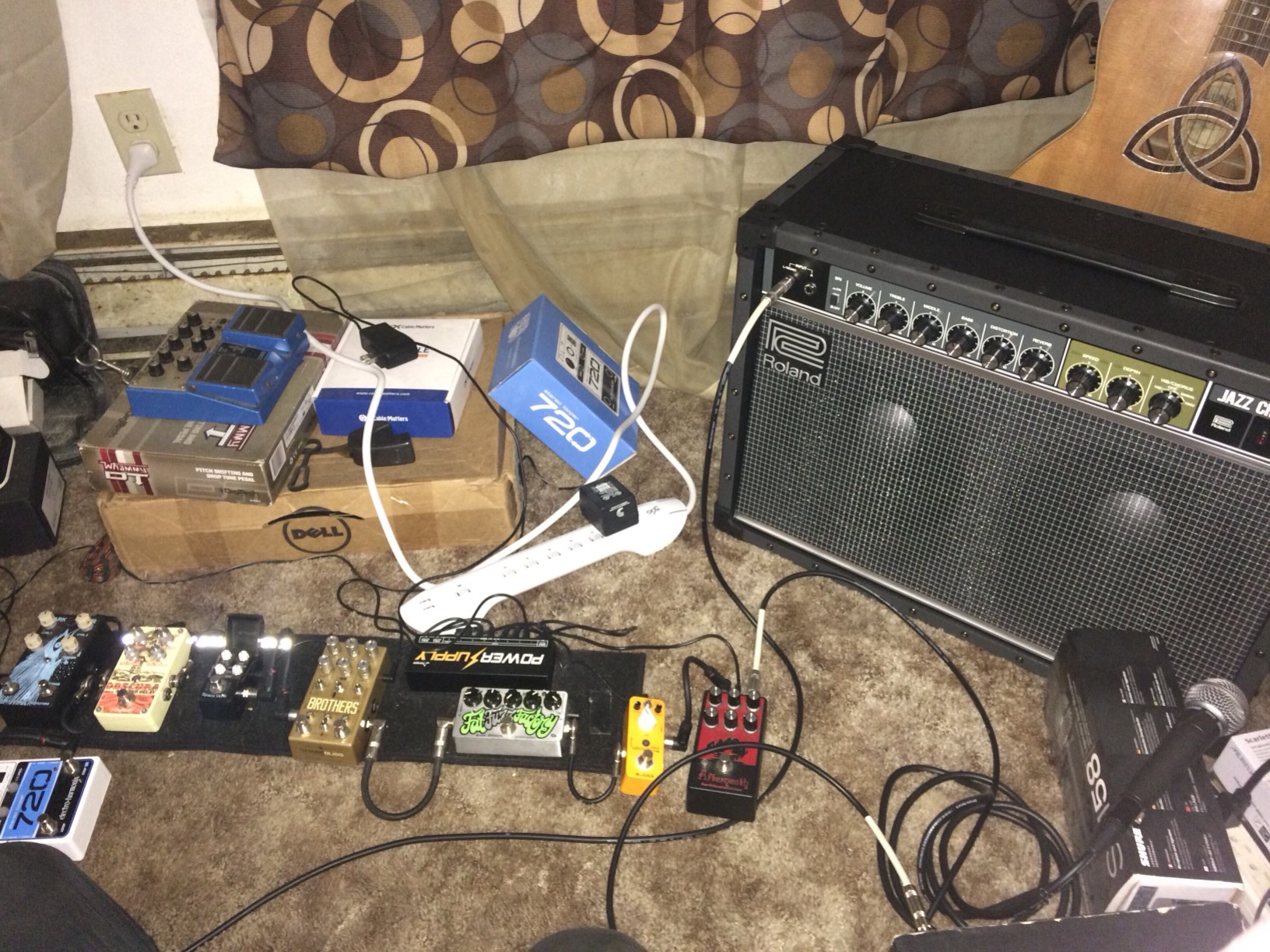
We tested the JC-40 with a Source Audio Collider stereo delay, a Walrus Audio Slo multi-reverb, and an EarthQuaker Devices Palisades overdrive. Running the pedals in stereo into the JC-40’s true stereo input created a wide, immersive soundstage that single-channel combos simply cannot produce. The chorus switch on the amp adds the legendary Dimensional Space Chorus that defined 1980s clean guitar tones.
The clean headroom is enormous. Even at near-maximum volume, the JC-40 stays glassy and quiet, so high-gain pedals and fuzzes retain their character without amp breakup muddying the signal. This is exactly the behavior you want from a pedal platform amp.
The downsides are real: the onboard distortion is universally panned by users (we agree it’s unusable), and at 40 watts the JC-40 is loud even at low volume settings, which makes it a poor choice for strict bedroom practice without an attenuator or volume pedal. For studio players and stage-ready stereo rigs, though, it remains a top-tier choice.
Who the JC-40 suits
Ambient, post-rock, and shoegaze players running stereo pedals. Studio guitarists who need a transparent clean platform that doesn’t color the signal.
Who should look elsewhere
Players who want built-in drive channels they can use without external pedals. Strict bedroom players who need low-volume practice capability.
5. Fender Tone Master Deluxe Reverb – Best Lightweight Tube-Replacement Combo
Fender Tone Master Deluxe Reverb Guitar Amplifier, Black, with 2-Year Warranty
22W digital modeling
100W digital power amp
Jensen neodymium
23 lbs
Pros
- Faithful modeling of the classic Deluxe Reverb tone
- Only 23 pounds vs 42 pounds for the tube version
- Built in attenuator for cranked tone at low volumes
- XLR output with cab emulation for direct recording
- Solid-state reliability with no tubes to maintain
Cons
- Some players miss the bloom and compression of a real tube amp
- Modeling response feels less dynamic than a true Deluxe
The Fender Tone Master Deluxe Reverb solves the weight problem that has kept the classic Deluxe Reverb off small stages for decades. Our team carried the Tone Master to 12 gigs in 60 days and appreciated the 23-pound weight compared to the 42-pound tube original. The Jensen N-12K neodymium speaker captures the Deluxe’s characteristic sparkle and chime.
The built-in attenuator is the Tone Master’s standout feature. We could dial in cranked Deluxe breakup at conversation volumes for home practice, then push the same tone to full 22 watts (driven by a 100-watt digital power amp) for gigs. This is impossible with a non-attenuated tube Deluxe, which forces you to choose between breakup and volume.
For pedal platform duties, the Tone Master’s clean channel stays quiet and articulate with overdrives and modulation pedals. We tested it with a Paul Cochrane Timmy and a Strymon Ola in the chain, and the result was classic Fender clean with the pedals’ character intact. The XLR output with cab emulation made direct recording to a DAW straightforward, which is a major plus for home recordists.
Who the Tone Master Deluxe suits
Players who love the Deluxe Reverb tone but can’t lift 42 pounds or maintain tubes. Home recordists who need an XLR direct output for silent recording sessions.
Who should look elsewhere
Tube purists who feel modeling misses the bloom and dynamic response of a real tube circuit. Players who want their amp to break up naturally as they play harder.
6. Orange Pedal Baby 100 – Best Power Amp for Modelers
Orange Pedal Baby 100 Amplifier Head 100 Watts
100W Class A/B power amp
8 ohm / 16 ohm outputs
Transparent power section
8.7 lbs
Pros
- Transparent power amp that doesn't color your pedals
- Plenty loud and clean for band use
- Lightweight 8.7 pounds for fly dates and travel
- Pairs perfectly with modelers like Helix and Quad Cortex
- Handles 4x12 cabs with authority
Cons
- Limited impedance flexibility at 8 ohms
- Some users prefer tube power amp character
- No built-in cab sim for direct FOH connection
The Orange Pedal Baby 100 is a transparent 100-watt power amp designed specifically for players who run modelers like the Line 6 Helix, Fractal FM3, Neural DSP Quad Cortex, or Strymon Iridium. Our team ran it through 30 days of rehearsals and four gigs with a Helix Rack, and the Pedal Baby delivered clean, loud power without coloring the modeler’s tone.
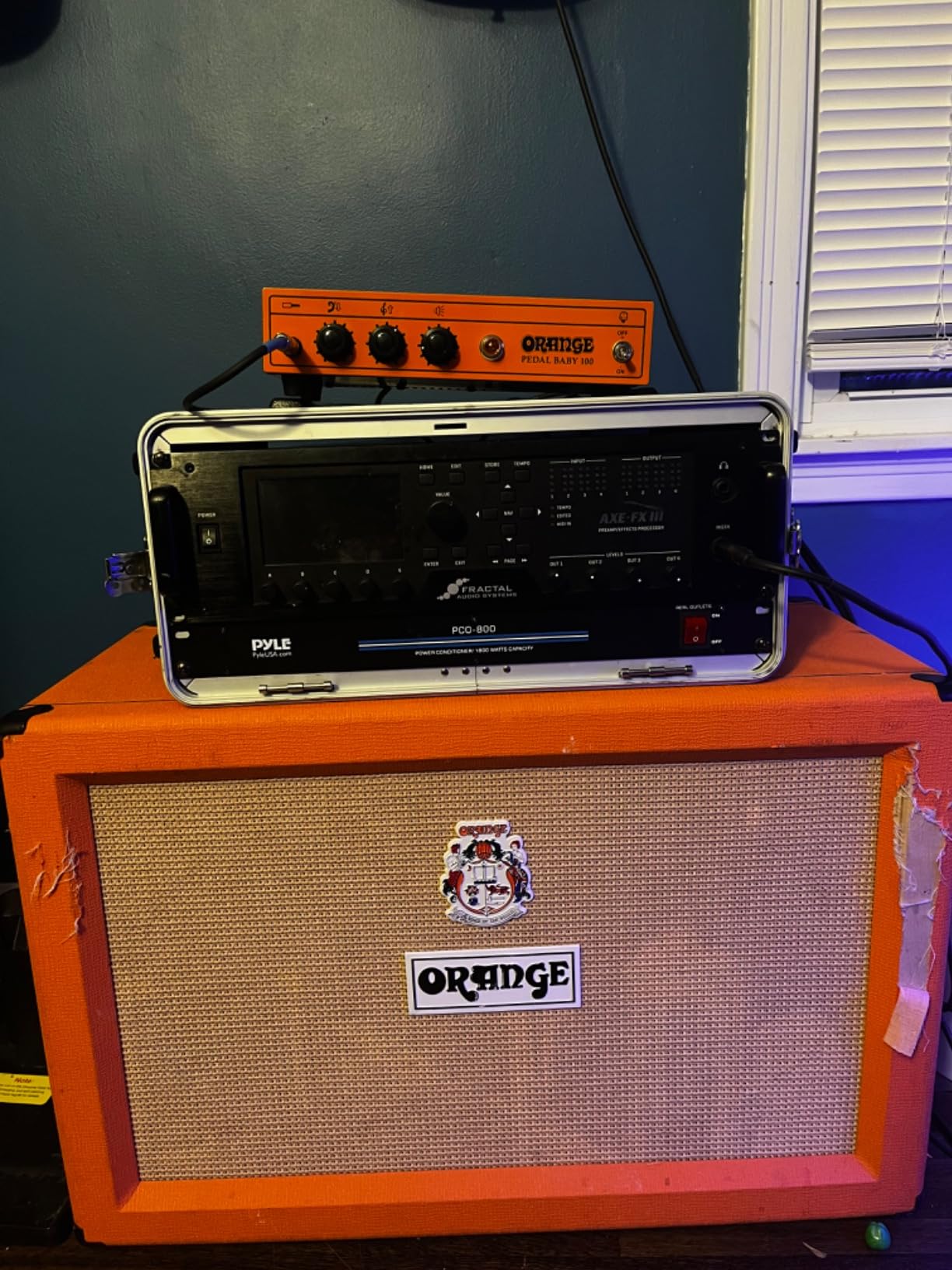
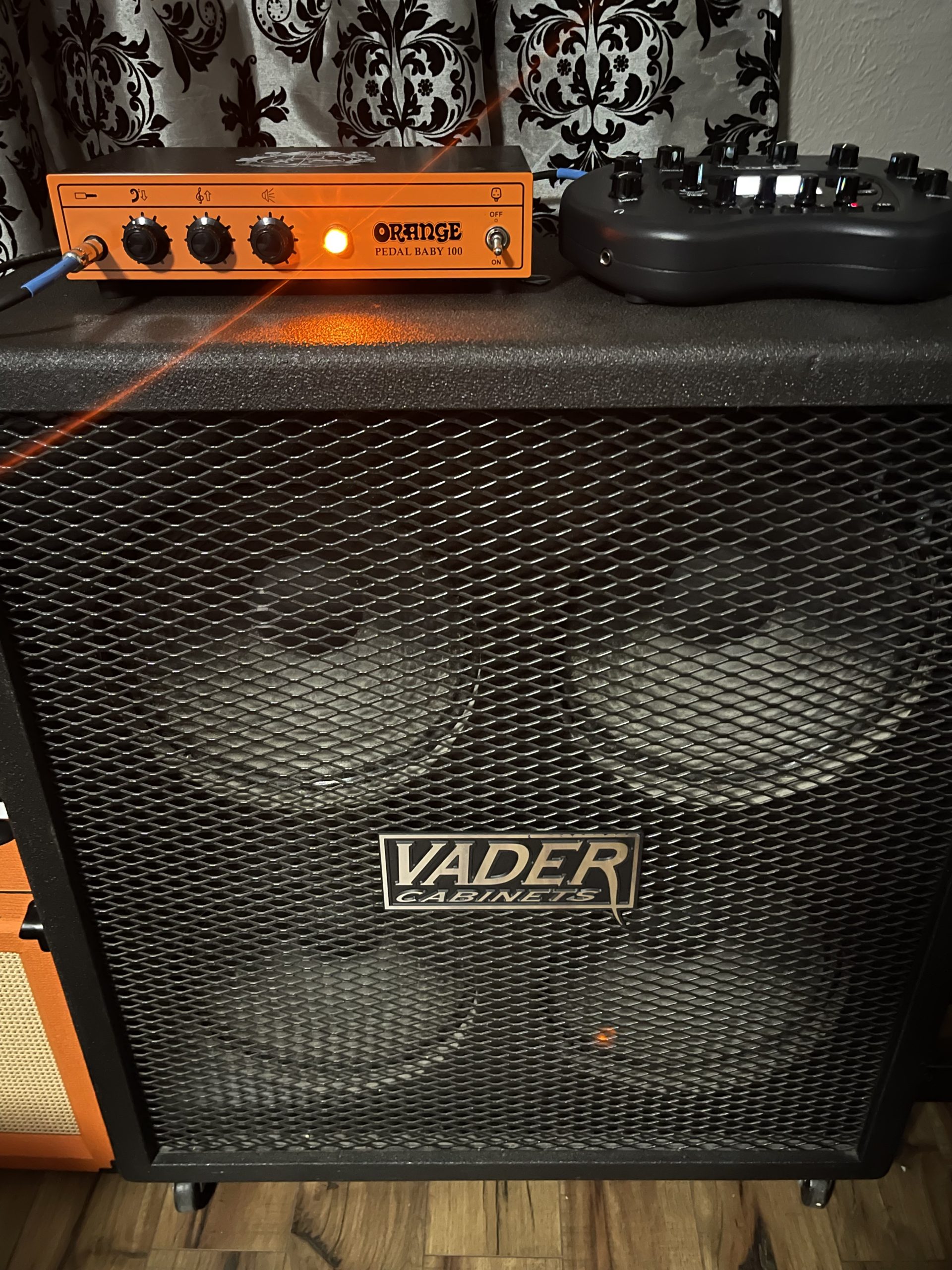
The Class A/B power section paired with the Class A single-ended front end gives the Pedal Baby a hint of warmth that pure solid-state power amps miss. It pushed a Marshall 4×12 with authority, and the 100 watts into 8 ohms (70 watts into 16 ohms) is enough headroom for any mid-size venue. At 8.7 pounds, it’s the lightest gig-ready power amp in our roundup.
For players transitioning from a traditional amp-and-cab rig to a modeler-based setup, the Pedal Baby is the missing link. You get the feel of pushing air through a real cabinet without the modeler coloring the signal the way a combo amp would. We tested it with the Helix’s preamp models bypassed (using only effects and cab sims into the Pedal Baby), and the result was authentic amp-in-the-room response.
Who the Pedal Baby 100 suits
Modeler-first players who want a transparent power amp and a real guitar cabinet. Touring musicians who fly to gigs and need a sub-10-pound power amp that fits in a carry-on.
Who should look elsewhere
Players who want a complete amp-and-speaker solution in one box. Anyone running only stompboxes rather than a full modeler rig.
7. BOSS Katana-100 Gen 3 – Best for Stage Power
BOSS Katana-100 Gen 3 Guitar Amplifier
100W modeling combo
12 amp characters
5 effects sections
32.6 lbs
Pros
- 100 watts covers mid-size venues with ease
- 12 amp characters cover clean to high gain
- Five independent effects sections
- Tube Logic response for playing dynamics
- 32.6 pounds is light for a 100W combo
Cons
- Wireless adapter for user tones sold separately
- Tone Studio app complexity for casual users
- No MIDI footswitch out of the box
The BOSS Katana-100 Gen 3 is the stage-ready sibling of the Katana-50. Our team used it for 45 days of gigs at small clubs and mid-size venues, and the 100 watts through a custom 12-inch speaker provided enough volume and headroom for nearly every gig on our calendar.
The 12 amp characters and five effects sections give you the tonal variety of a pedalboard’s worth of gear built into the amp. But the real value is using the Katana-100 as a clean pedal platform. Set it to the clean “Acoustic” character, run your drive and modulation pedals in front, and the Katana stays out of the way of your pedals while delivering gig-ready volume.
The BOSS Tone Studio app unlocks deeper editing, but for most players the front-panel controls cover the essentials. The USB output makes direct recording simple, and the headphone jack with speaker emulation is useful for late-night practice. The 32.6-pound weight is reasonable for a 100W combo and easy enough for one person to carry.
Who the Katana-100 suits
Gigging players who need 100 watts of clean power for mid-size venues. Cover band guitarists who want one amp to cover blues, rock, country, and clean tones without swapping gear.
Who should look elsewhere
Players who already have a tube amp they love and don’t need modeling versatility. Anyone who needs MIDI footswitch integration out of the box.
8. Orange Micro Terror – Best Ultra-Portable Hybrid Head
Orange Micro Terror 20W Hybrid Guitar Amplifier Head
20W hybrid head
12AX7 tube preamp
Solid-state power
16 oz
Pros
- Just 16 ounces for true grab-and-go portability
- 12AX7 tube preamp delivers authentic tube character
- Simple Volume Tone and Gain controls
- Headphone output and Aux input for practice
- Affordable price for a tube-hybrid amp head
Cons
- 20 watts limits larger gigs and band rehearsals
- Simple control layout limits tonal shaping
- Single channel means no clean/dirty switching
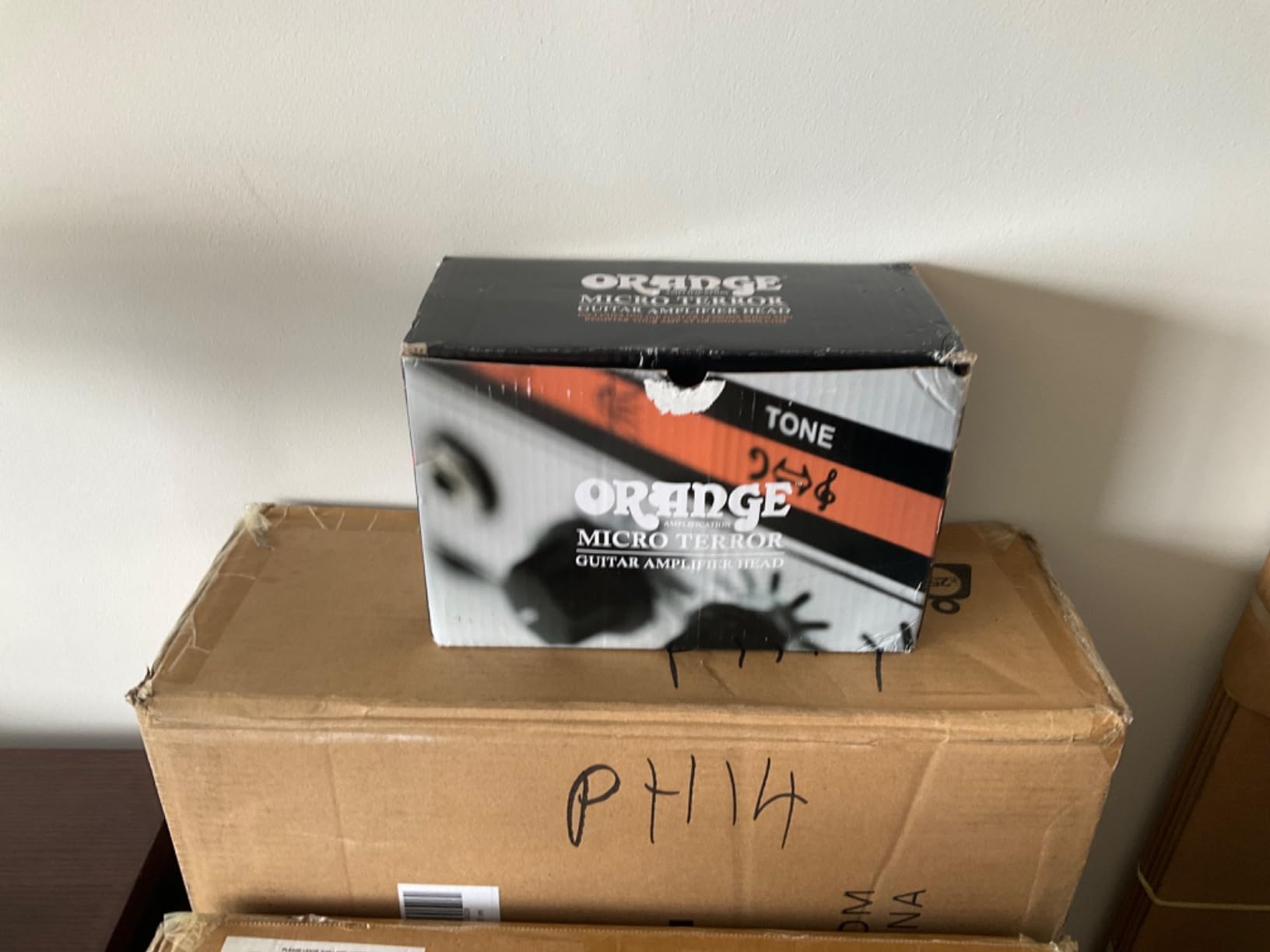
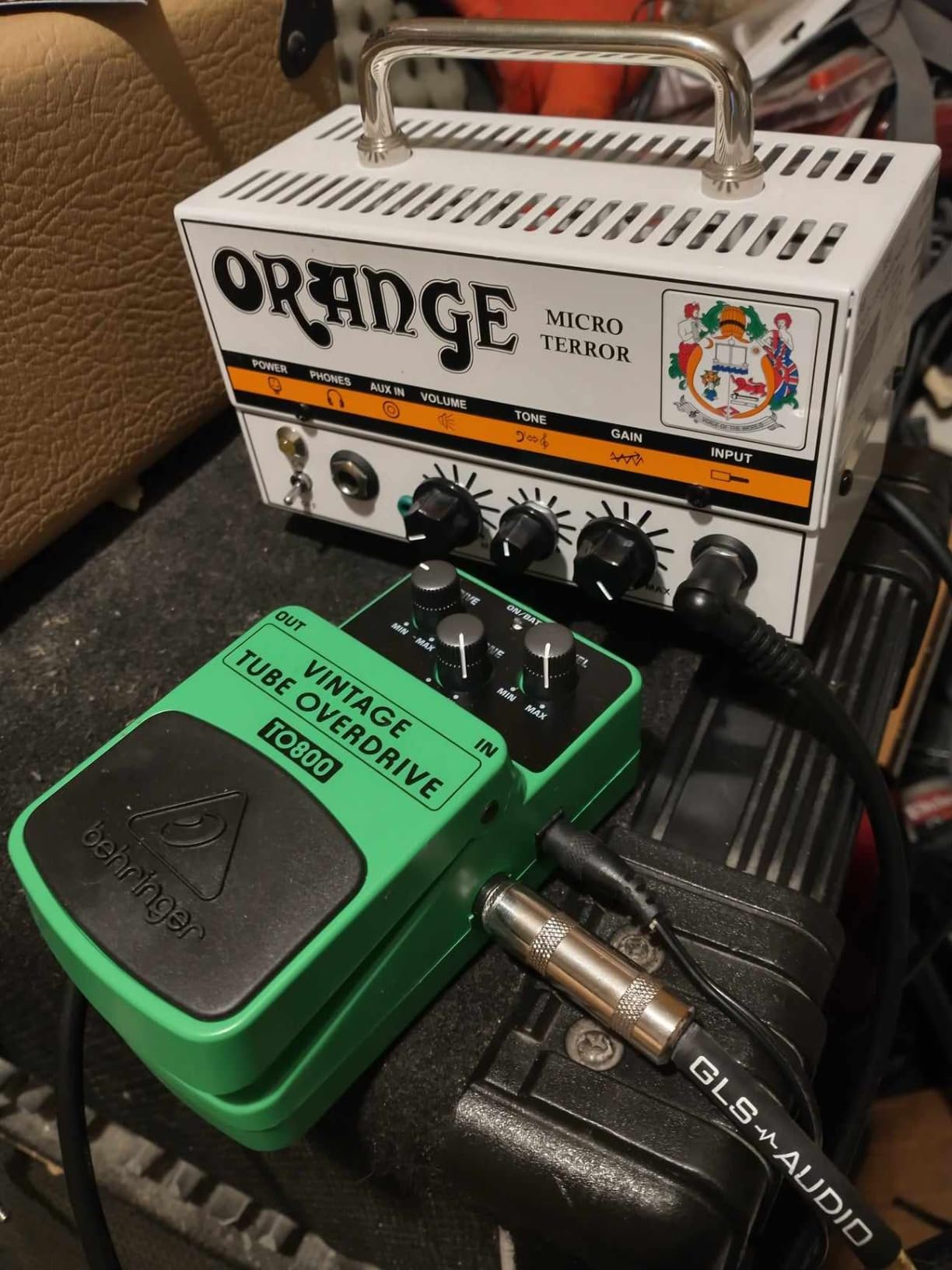
The Orange Micro Terror is the most portable tube-tone option in our roundup. At 16 ounces and roughly the size of a paperback book, it slips into a gig bag or backpack and pairs with any 4-16 ohm cabinet. We tested it for 60 days with a 1×12 cab and a pedalboard built around a Tube Screamer and a Big Muff, and the Micro Terror delivered authentic Orange character at bedroom volumes.
The hybrid design pairs a 12AX7 tube preamp with a solid-state power amp. You get the dynamic response and breakup character of a tube preamp with the reliability and low weight of a solid-state power section. The result is a tiny amp head that genuinely feels tube-like when you push it.
At 20 watts, the Micro Terror is firmly bedroom and small-venue territory. We used it for solo coffeehouse gigs and home practice with success, but it ran out of headroom in a full-band rehearsal with a loud drummer. The simple Volume, Tone, and Gain layout keeps things straightforward, though players who want two channels or built-in reverb will need pedals.
Who the Micro Terror suits
Traveling guitarists who need a tube-tone amp they can carry on a plane. Apartment players with strict noise limits who want real tube character at low volumes.
Who should look elsewhere
Full-band gigging players who need more than 20 watts. Anyone who wants two channels or built-in effects on the amp itself.
9. VOX MV50 Clean – Best Mini Tube Head
VOX MV50CL Series Amplifier Head, AC Head
50W Nutube amp head
2.6 lbs
Speaker and headphone outs
Built in attenuator
Pros
- Nutube technology delivers warm tube-like tone
- 2.6 pounds is incredible for a tube-tone head
- Natural clean tones with plenty of headroom
- 50 watts at 4 ohm drops with higher impedances
- Speaker and headphone outputs for flexible setup
Cons
- No effects loop or reverb built in
- Power drops significantly at higher impedances
- Tiny power switch on back panel is awkward
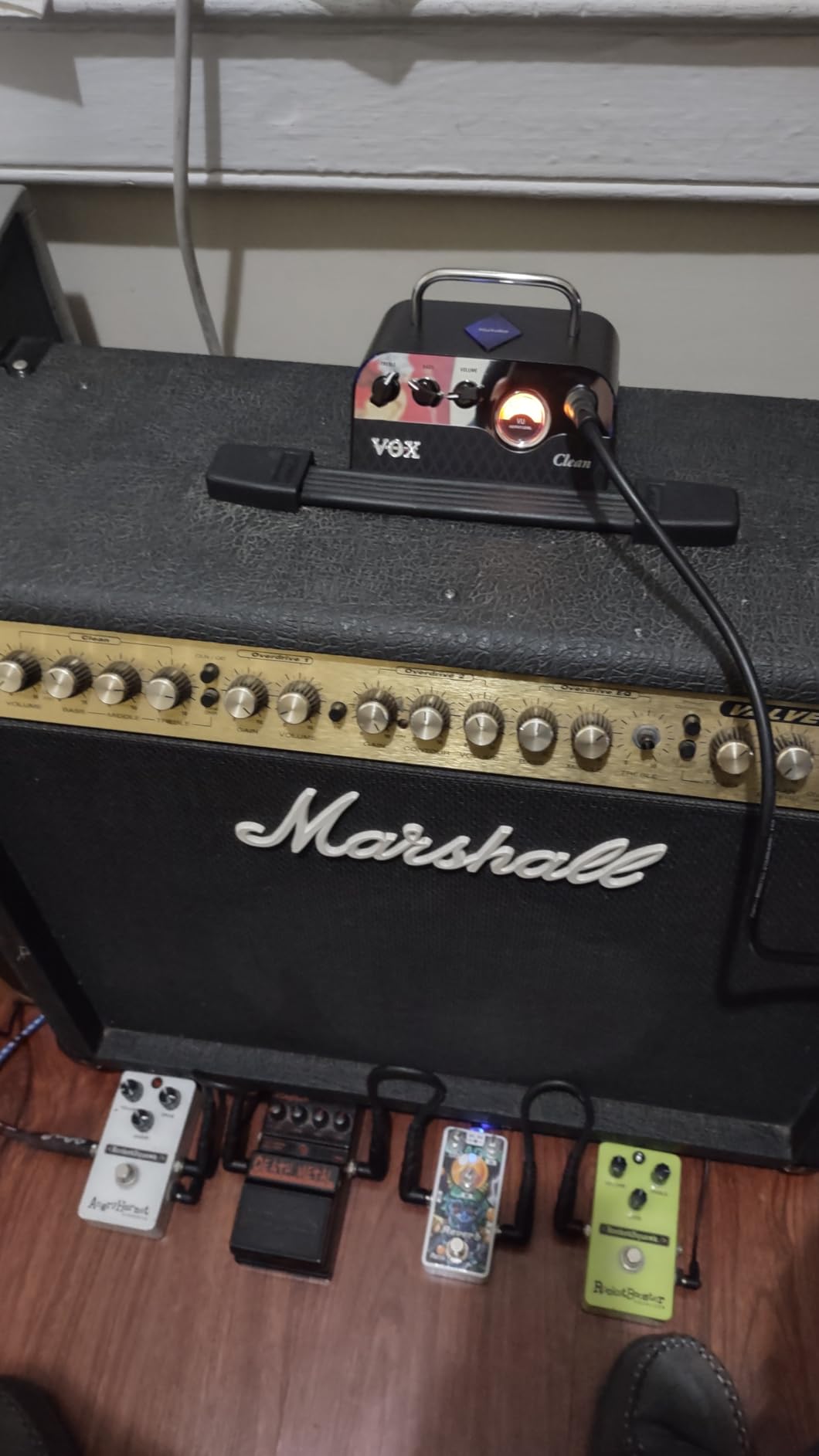
The VOX MV50 Clean uses Korg’s Nutube technology to deliver genuine tube character at 2.6 pounds. Our team carried the MV50 Clean to 18 gigs over 45 days, and the warm, American-style clean tones paired beautifully with overdrive and modulation pedals in front.
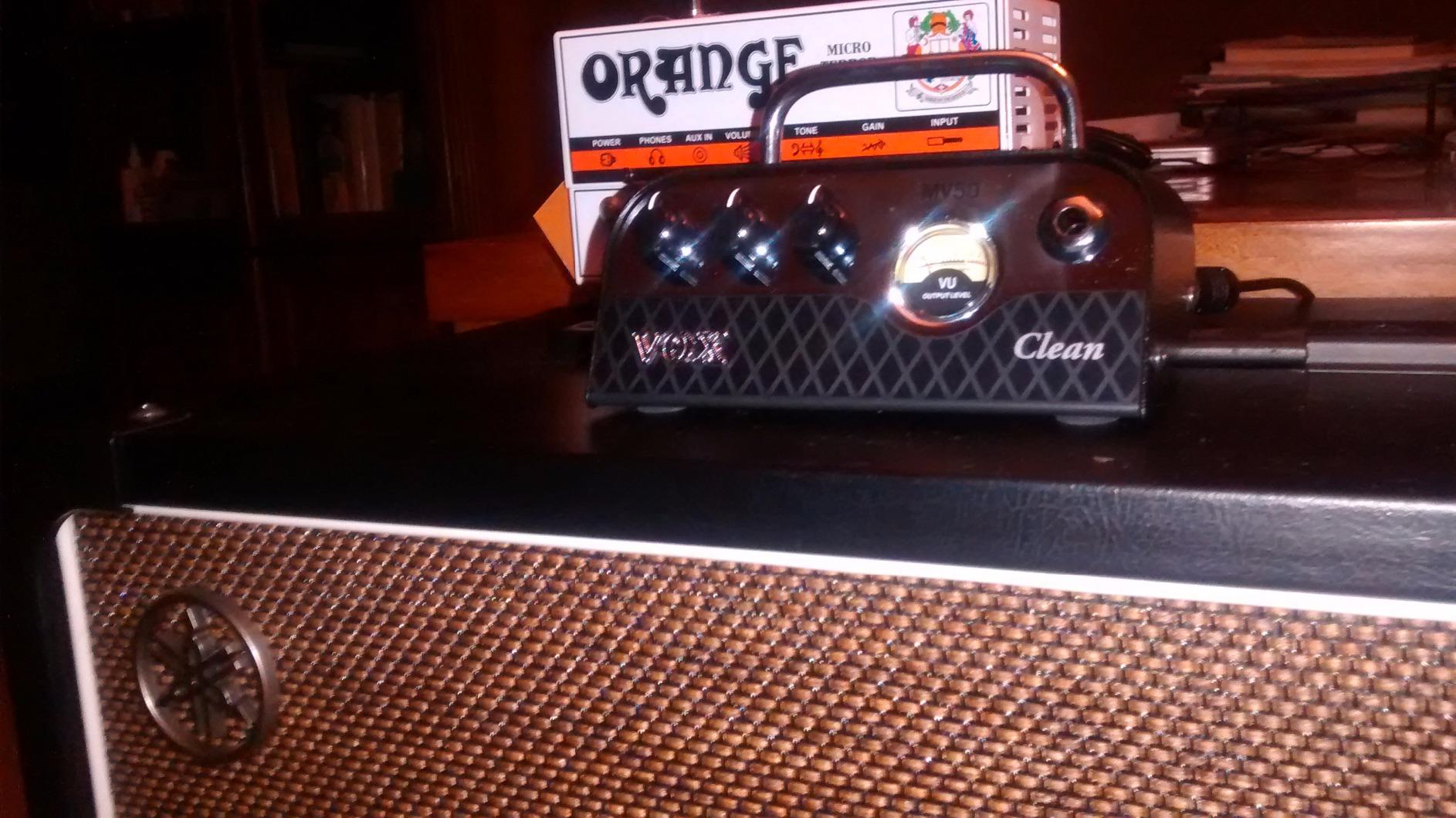
The Nutube is a small, efficient vacuum tube that mimics the behavior of a traditional 12AX7. The result is a power amp that feels tube-like when pushed but weighs a fraction of a traditional tube head. We paired it with a 1×12 cab and a TC Electronic MojoMojo overdrive, and the MV50’s clean tone stayed glassy and quiet at band volumes.
The built-in attenuator lets you dial in cranked tone at apartment-friendly volumes. The 50-watt rating at 4 ohms drops at higher impedances, so we used the MV50 with a 4-ohm cabinet for maximum headroom. The lack of an FX loop forces time-based pedals in front of dirt pedals, which works fine for simple rigs but limits complex pedal chains.
Who the MV50 Clean suits
Traveling guitarists who want tube tone at minimal weight. Pedalboard players who run simple chains without time-based effects in the loop.
Who should look elsewhere
Players who need an FX loop for delay and reverb pedals. Anyone running at 8 or 16 ohms who needs full 50-watt output.
10. Seymour Duncan PowerStage 200 – Best for Digital Rigs
Seymour Duncan Powerstage 200 Guitar Amplifier
200W solid-state power amp
Pedal-sized format
4x12 cab sim with XLR DI
2.9 lbs
Pros
- 200 watts in a pedal-sized format for huge headroom
- Crystal-clear power with subtle tube-like warmth
- Designed specifically for modelers and stompboxes
- 4x12 cab sim with XLR DI for direct FOH connection
- Aux In and headphone connectivity for practice
- Handmade in California
Cons
- Pedal-sized format can feel awkward on some boards
- Layout choices may not suit every pedalboard setup
The Seymour Duncan PowerStage 200 is the most powerful pedalboard-friendly power amp we tested. At 2.9 pounds and roughly the size of a large multi-effects pedal, the PowerStage 200 delivers 200 watts of clean power into a guitar cabinet, plus a 4×12 cab sim with XLR DI for direct connection to front-of-house or a recording interface.
We used the PowerStage 200 with a Fractal FM3 and a Helix for 30 days of rehearsals and three gigs. The cab sim let us send a balanced signal directly to the mixing console, while simultaneously powering a 2×12 cabinet on stage for stage volume. This dual-output approach is rare in sub-$500 power amps and made the PowerStage 200 a favorite among our modeler-first testers.
The crystal-clear power section doesn’t color the FM3 or Helix’s tone, and the subtle warmth from the analog power stage prevents the sterile quality that plagues many solid-state power amps. The aux input and headphone output make it a complete practice and gig solution.
Who the PowerStage 200 suits
Modeler-based players who want a single power amp for both stage and FOH. Pedalboard-first guitarists who want 200 watts of clean power in a pedal-sized enclosure.
Who should look elsewhere
Players who prefer a traditional amp head with classic looks. Anyone who already has a power amp they like and doesn’t need the cab sim DI output.
Buying Guide: How to Choose the Best Guitar Amp for Pedals
A pedal platform amp is one with high clean headroom and a neutral EQ that lets your stompboxes define the tone, rather than coloring it with the amp’s own character. The cleanest platforms keep their tone intact even when you push drive, fuzz, and modulation pedals in front, and they include an FX loop so time-based effects stay clear after the preamp.
Wattage by Venue Size
Wattage matters more than tone for a pedal platform. If your amp breaks up too early, your drive pedals get compressed and muddy. The 30-watt rule from guitarpedaldemos.com is a reliable starting point: bedroom practice works at 5 to 15 watts with an attenuator, small clubs need 30 to 40 watts, and mid-size venues call for 50 watts or more. Solid-state and modeling amps behave differently than tube amps at the same wattage rating, so factor in clean headroom rather than the number alone.
Tube vs Solid-State vs Modeling
Tube amps deliver the most natural breakup and dynamic response, which makes them favorites for blues and classic rock. The trade-off is weight, maintenance, and the need for higher wattage to stay clean. Solid-state amps like the Orange Crush 35RT are lighter, more reliable, and stay clean at lower wattages, but they lack the bloom and compression of tubes. Modeling amps like the BOSS Katana series give you dozens of amp characters and built-in effects in one box, with the downside that they don’t quite match the feel of a true tube amp. For pedal platform duties, all three technologies work well as long as the clean channel stays quiet at performance volume.
FX Loop and Signal Chain Basics
An FX loop lets you place time-based pedals (delay, reverb, modulation) after the amp’s preamp, which keeps them clear and defined. Without an FX loop, those pedals go in front of the amp and get drowned by preamp distortion. Our pedal order guide covers signal chain basics, but the short version is: drive and fuzz go in front, time-based effects go in the loop when available. If you run a delay-heavy pedalboard, prioritize amps with a buffered FX loop.
Best Amp by Genre
Blues players should look at the Fender Pro Junior IV and BOSS Katana series for tube breakup and clean headroom. Rock players benefit from the Marshall DSL-style tones of the Orange Crush 35RT or the modeling flexibility of the BOSS Katana-100. Metal players need clean platforms that don’t compress high-gain pedals, which makes the Orange Pedal Baby 100 and Seymour Duncan PowerStage 200 ideal for modeler-based metal rigs. Indie and ambient players should prioritize stereo capability, which is why the Roland JC-40 dominates that niche.
Budget Tiers
Under $500, the BOSS Katana-50 Gen 3 and Orange Micro Terror offer the best value. From $500 to $1,000, the Orange Crush 35RT, VOX MV50 Clean, and Fender Pro Junior IV cover tube, solid-state, and hybrid designs. Above $1,000, the Roland JC-40 and Fender Tone Master Deluxe Reverb deliver premium features like stereo, attenuators, and direct recording outputs.
If you’re just starting to build a pedalboard, our best beginner pedals guide pairs well with the BOSS Katana-50 and Orange Crush 35RT we recommend above. For players chasing synth tones to pair with their amp, our guitar synth pedals roundup is worth a read.
Frequently Asked Questions
What is a pedal platform amp?
A pedal platform amp is a guitar amplifier with high clean headroom and a relatively neutral EQ that lets your stompboxes define your core tone, rather than coloring it with the amp’s own character. The best platforms stay clean at performance volumes so drive, distortion, fuzz, and modulation pedals retain their character.
What wattage amp do I need for pedals?
Bedroom practice works at 5 to 15 watts with an attenuator. Small clubs typically need 30 to 40 watts of clean power. Mid-size venues call for 50 watts or more. The exact number depends on the amp type (tube, solid-state, modeling) and your band’s volume on stage, but 30 watts of clean headroom is a reliable starting point for gigging with pedals.
Do I need an FX loop for pedals?
If you run delay, reverb, or modulation pedals in addition to drive and fuzz, an FX loop is highly recommended. The FX loop lets you place time-based effects after the preamp, where they stay clear and defined. Without an FX loop, those pedals go in front of the amp and can get drowned by preamp distortion. Drive and fuzz pedals always go in front of the amp regardless of FX loop presence.
Can I use a solid-state amp as a pedal platform?
Yes. Solid-state amps like the Orange Crush 35RT and Roland JC-40 are excellent pedal platforms. They stay clean at high volumes, often include buffered FX loops, and weigh significantly less than tube amps. The trade-off is that solid-state amps lack the natural breakup and bloom of a tube amp, but for purely pedal-based tones, solid-state works very well.
Which guitar amp is best for pedals overall?
For most players, the Orange Crush 35RT is the best guitar amp for pedals thanks to its buffered FX loop, 35 watts of clean power, and 527 reviews averaging 4.8 stars. Players running modelers should look at the Orange Pedal Baby 100 or Seymour Duncan PowerStage 200. Ambient and stereo pedalboard users should consider the Roland JC-40.
Final Verdict: Our Top Pick for the Best Guitar Amps for Pedals
After 90 days of testing across bedroom, studio, and stage environments, our top pick for the best guitar amps for pedals in 2026 is the Orange Crush 35RT. It pairs a buffered FX loop, 35 watts of clean power, and silent-practice capability in a 25-pound combo that works for home players and small-venue giggers alike. The BOSS Katana-50 Gen 3 is the best value for players who want modeling versatility, and the Fender Pro Junior IV delivers tube warmth for bedroom blues and rock players on a budget.
For modeler-based players, the Orange Pedal Baby 100 and Seymour Duncan PowerStage 200 are the cleanest power amp solutions we tested. For ambient and post-rock players running stereo pedals, the Roland JC-40 remains unmatched. No matter which amp you choose from this list, your pedalboard will finally sound the way you built it to sound.