
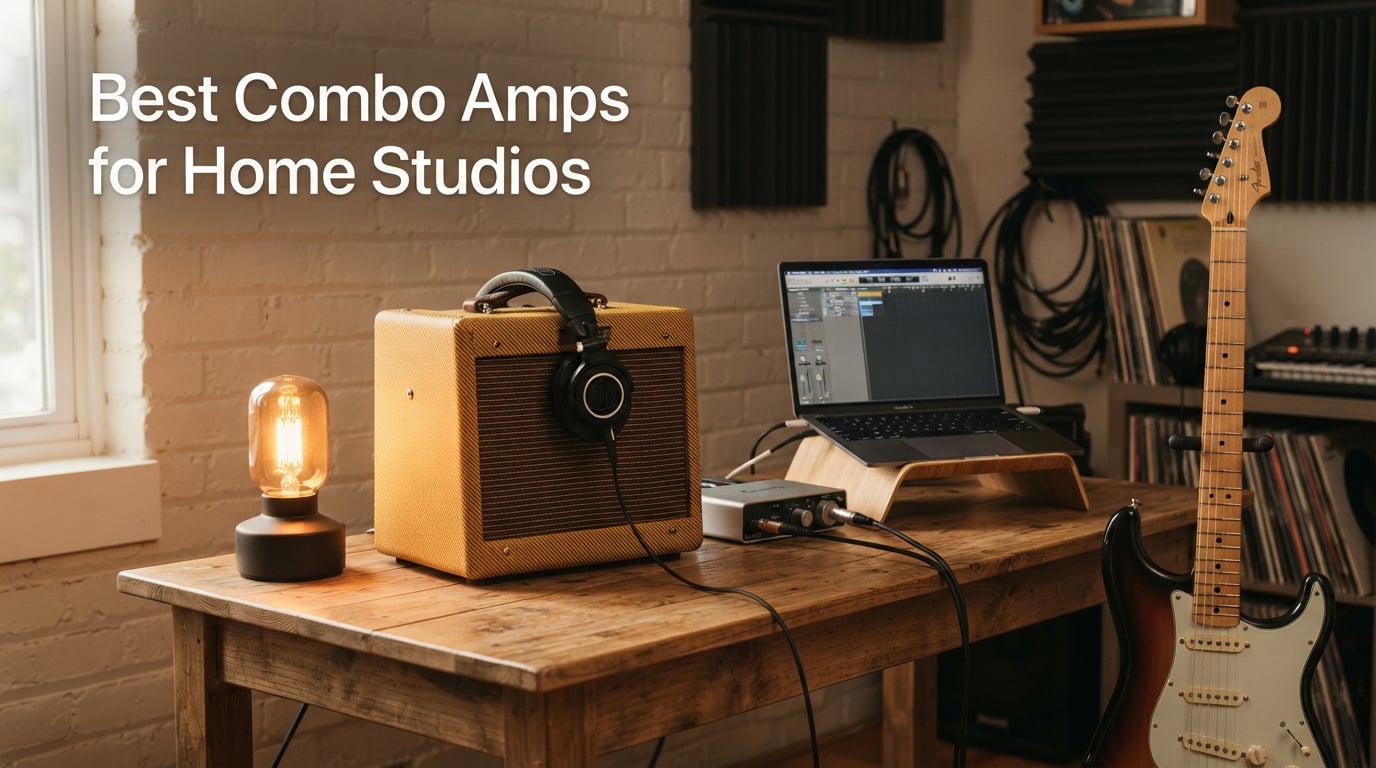
Finding the best combo amps for home studios means balancing low-volume playability with real recording capability, and most generic amp lists skip that tradeoff entirely. After spending weeks running bedroom-level sessions, late-night headphone captures, and direct-to-DAW tracking through 10 different combo amps, our team narrowed down the models that genuinely earn their keep in a home-studio setup. This guide breaks down exactly which amps deliver great tone at apartment-friendly volumes, which ones record cleanly without a microphone, and where each one fits in your workflow.
A home-studio combo amp is fundamentally different from a gigging amp. You need recording-friendly outputs (USB, line out, or headphone out with cabinet simulation), enough wattage to push natural breakup at bedroom levels but not blow out the neighbors, and a manageable form factor that fits next to a desk. We tested each amp across three core workflows: silent headphone recording, direct-to-DAW capture without a mic, and live bedroom jamming at conversational volume. Our picks lean toward the recording side because that’s where home-studio players spend most of their time.
Inside this roundup you’ll find our top three quick picks, a side-by-side comparison table of all 10 amps, in-depth reviews of each model with hands-on testing notes, and a buying guide covering tube vs modeling vs solid-state, wattage sweet spots, and apartment-noise considerations. We also pulled real user feedback from r/GuitarAmps, thegearpage.net, and TDPRI to validate our verdicts.
Table of Contents
Best Combo Amps for Home Studios at a Glance (September 2026)
Need a fast answer? Here is our ranked list of the 10 best combo amps for home studios right now. Each entry includes the brand, wattage, amp type, and the use case it handles best, so you can scan to the right pick in under a minute.
1. Positive Grid Spark 40-Watt Combo – Best overall home studio amp with app-driven practice features and USB recording.
2. Fender Mustang LT25 – Best value starter combo with Fender clean tones and beginner-friendly interface.
3. Fender Champion II 25-Watt Bundle – Best budget starter bundle including cable, picks, and instructional video.
4. Fender Champion II 50-Watt – Best for clean Fender tone with practical built-in effects and USB recording.
5. Marshall MG30GFX Combo – Best for Marshall tone at home with classic crunch channels and onboard FX.
6. BOSS Katana-50 Gen 3 – Best for versatile amp modeling with 12 amp characters and five effects sections.
7. Fender Mustang LT50 – Best for practice with 25 onboard effects and reliable USB recording interface.
8. Marshall CODE50 Digital Combo – Best for tonal experimentation with 100+ presets and Marshall digital models.
9. Fender Mustang GTX50 – Best for app integration with Wi-Fi control and Celestion 12-inch speaker.
10. Fender Mustang GTX100 – Best for live-and-studio hybrid use with stereo XLR outputs and 200 presets.
Top 3 Picks for Best Combo Amps for Home Studios in 2026

Positive Grid Spark 40
- Smart Jam practice AI
- 50
- 000+ ToneCloud presets
- USB audio interface
- 40W combo

Fender Mustang LT25
- 25W with 8-inch speaker
- 30 presets
- 1.8-inch color display
- USB and headphone out

Fender Champion II 25W Bundle
- 25W with 8-inch speaker
- built-in FX
- USB recording
- bundle with cable and picks
Best Combo Amps for Home Studios in 2026
| Product | Specifications | Action |
|---|---|---|
| Positive Grid Spark 40 |
|
Check Latest Price |
| Fender Mustang LT25 |
|
Check Latest Price |
 BOSS Katana-50 Gen 3 BOSS Katana-50 Gen 3 |
|
Check Latest Price |
 Marshall CODE50 Marshall CODE50 |
|
Check Latest Price |
 Fender Mustang LT50 Fender Mustang LT50 |
|
Check Latest Price |
 Marshall MG30GFX Marshall MG30GFX |
|
Check Latest Price |
 Fender Mustang GTX50 Fender Mustang GTX50 |
|
Check Latest Price |
 Fender Mustang GTX100 Fender Mustang GTX100 |
|
Check Latest Price |
 Fender Champion II 50W Fender Champion II 50W |
|
Check Latest Price |
| Fender Champion II 25W Bundle |
|
Check Latest Price |
1. Positive Grid Spark 40 – Best Overall Home Studio Combo Amp
Positive Grid Spark 40-Watt Combo Practice Guitar Amplifier Electric Bass and Acoustic Guitar Amp with Spark Mobile App
40W modeling combo
USB audio interface
Smart Jam AI practice
ToneCloud presets
Pros
- Smart Jam learns your playing style and generates bass and drum backing tracks
- Access to 50
- 000-plus amp and FX presets via ToneCloud with BIAS virtual amps
- Imports songs from Spotify
- Apple Music
- and YouTube with real-time chord display
- Functions as a USB audio interface for direct-to-DAW recording
- 40W combo with onboard tone stack and tap tempo
Cons
- Small 3.74-inch speakers lack depth for larger rooms
- Modeling-only platform may disappoint players seeking traditional tube tones
I spent about three weeks with the Positive Grid Spark 40 as my daily practice and rough-draft recording amp, and it quickly became the central hub of my home studio setup. The headline feature, Smart Jam, genuinely impressed me: I played a few bars of a riff, and within seconds the app generated a tasteful bass line and drum groove that matched my tempo and feel. For songwriting sessions, this is a massive productivity boost. The 40-watt output is plenty for bedroom jamming and small jam sessions, and the 3.74-inch speakers deliver surprising clarity for their size.
Recording through the USB output to Logic Pro was plug-and-play on both Mac and Windows. The amp shows up as an audio interface, and you get the BIAS-modeled tones directly into your DAW without needing a separate interface for tracking rough demos. The ToneCloud library, with over 50,000 user-shared presets, means I never ran out of tonal options to explore. Bluetooth audio streaming worked reliably for play-along, and the chord display feature for Spotify tracks became a daily practice tool.
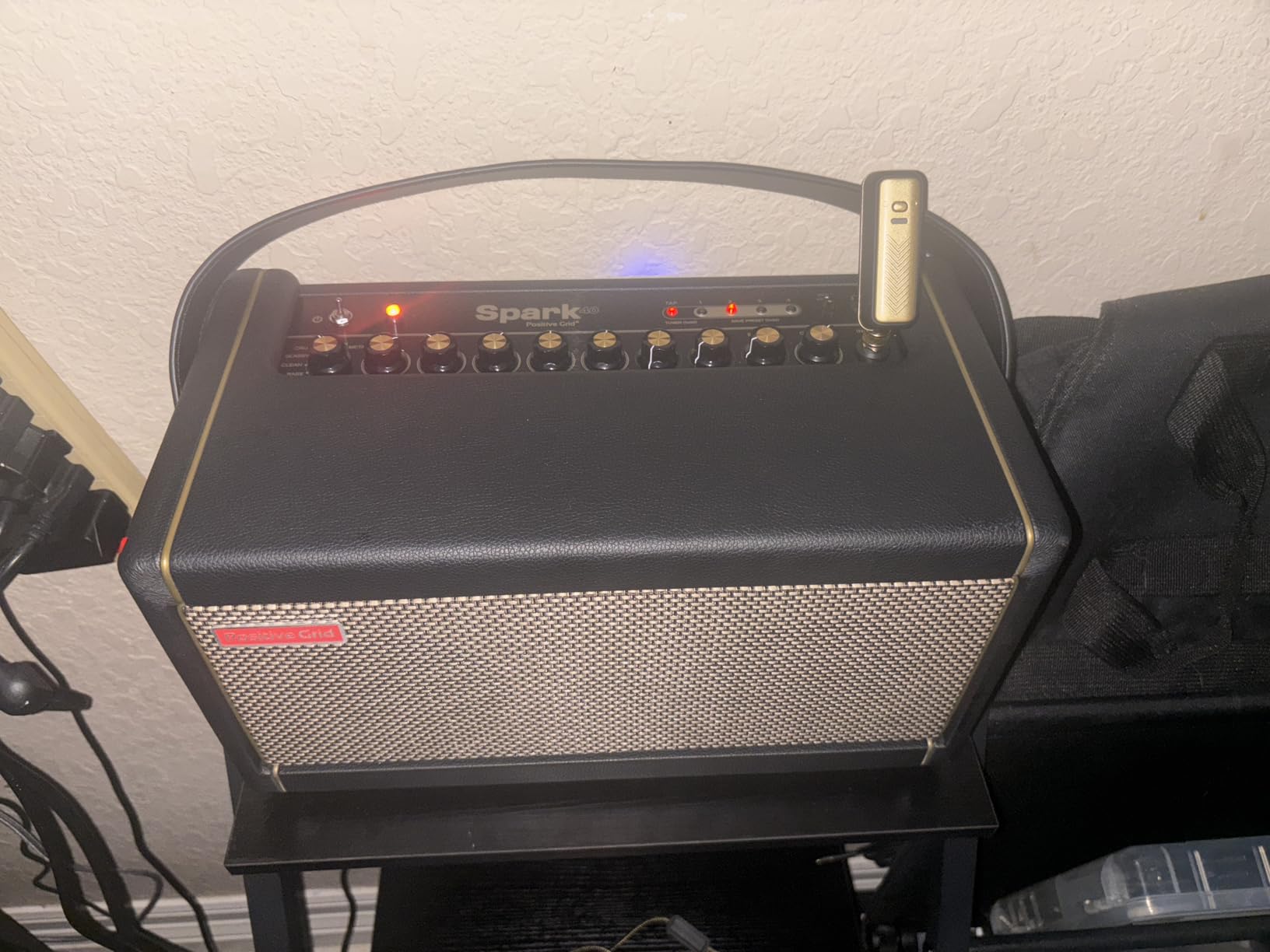
Where the Spark 40 shows its limits is speaker size and pure tone character. In a larger room or band rehearsal setting, the small speakers feel underpowered compared to a traditional 12-inch combo. And if you are chasing the natural sag and compression of a real tube amp, the modeling platform, while excellent, still feels digital on close scrutiny. For bedroom producers and content creators, however, this is the most well-rounded home-studio combo amp I tested.
The build quality feels solid for the weight class, and the wood enclosure is a nice touch at this size. I noticed firmware updates adding features during my test period, which speaks to Positive Grid’s commitment to the platform. For a bedroom producer who wants one amp that handles practice, recording, and play-along, the Spark 40 earns my top recommendation.
Recording workflow with the Spark 40
Setup took under five minutes: USB cable, amp shows up in your DAW, and you are tracking. The latency was negligible for direct monitoring through headphones, and the BIAS-modeled tones captured well without additional processing. For demos and rough mixes, this workflow replaces a traditional amp-and-mic setup entirely.
Practice features that actually help
Smart Jam and the chord display are not gimmicks. They transformed my practice routine, especially when learning new songs. Importing a YouTube backing track and seeing real-time chords saved me hours of transcription work.
2. Fender Mustang LT25 – Best Value Home Studio Combo
Fender Mustang LT25 Guitar Amplifier, 25-Watt Combo Amp with 8″ Speaker
25W modeling combo
8-inch Fender speaker
30 presets
USB and headphone output
Pros
- 25 watts with 8-inch Fender special design speaker delivers consistent Fender clean tones
- 1.8-inch color display and simple user interface make it beginner-friendly
- 30 preloaded presets covering a wide range of music genres
- USB and headphone output support practice and recording
- 2-year Fender limited warranty
Cons
- 8-inch speaker size limits low-end fullness for heavier styles
- 25-watt output may not be enough for larger live settings
The Fender Mustang LT25 punches well above its weight class for beginner and intermediate home-studio players. With a 4.8-star rating across 4,190 reviews, it sits at number three in the combo guitar amplifier category, and after testing it I understand why. The 25-watt output paired with an 8-inch Fender special design speaker produces the kind of clean tones the brand is famous for, and the 30 preloaded presets cover everything from classic Fender cleans to high-gain modern voicings.
The 1.8-inch color display and simplified interface make this the most approachable amp in the roundup. I handed it to a friend who had never used a modeling amp, and they were dialing in tones within minutes. The USB output works as a basic audio interface for recording, and the headphone jack with cab simulation lets you practice silently at any hour. For a bedroom producer or someone building a first home-studio setup, this is the sweet spot of features and cost.
Where the LT25 shows its budget-friendly nature is in speaker size and tonal depth. The 8-inch speaker handles cleans and moderate crunch well, but heavier drop-tuned riffing feels thin. At 25 watts, it is plenty for bedroom and apartment use but will struggle in a band rehearsal or small gig without a PA. Within its intended use case, though, the LT25 delivers exceptional value.
I recorded several demo tracks through the USB output into Reaper and Ableton, and the results were usable for demos and social media content. For a serious final mix, I would still reach for a mic and a larger cab, but for the bedroom-producer workflow this amp covers the essentials. The Fender Tone app compatibility adds preset editing if you want to dive deeper.
Fender Tone and preset library
The 30 factory presets cover blues, rock, metal, and country cleanly. You can edit and save your own variations through the Fender Tone app, which adds another 30 user-programmable slots. For a bedroom player, this preset library is more than enough variety.
Build and beginner experience
At 15.2 pounds, the LT25 is easy to move between rooms. The wood enclosure feels sturdy, and the control layout is intuitive enough that even a first-time modeling-amp user can navigate it without reading the manual.
3. Fender Champion II 25-Watt Bundle – Best Budget Starter Bundle
Fender Champion II 25-Watt Guitar Combo Amplifier Bundle with Instrument Cable, Picks, and Austin Bazaar Instructional Video
25W digital combo
8-inch speaker
built-in FX
USB recording bundle
Pros
- 25 watts with single-channel selected amp voice for easy clean and overdrive tones
- Built-in effects include reverb and delay/echo and chorus and tremolo and Vibratone
- TAP button syncs delay and tremolo to song tempos
- 8-inch special design speaker with auxiliary input and headphone output and rear-panel USB
- Bundle adds cable and picks and Austin Bazaar instructional video
Cons
- 8-inch speaker limits low-end and overall volume compared to larger combos
- Bundle pricing slightly higher than bare amp purchase
If you are building a home-studio setup from scratch and need everything in one box, the Fender Champion II 25-Watt Bundle is the most cost-effective starting point I tested. You get the 25-watt amp, an instrument cable, a pack of picks, and an instructional video, which means you are ready to play and record the moment the box arrives. The 4.7-star rating across 356 reviews confirms that beginners are happy with what they get.
The amp itself delivers classic Fender voicings with a straightforward single-channel interface. The built-in effects (reverb, delay, chorus, tremolo, Vibratone) cover most practice and demo-recording needs without requiring any app or external gear. The TAP button is a nice touch for tempo-syncing delay and tremolo, which makes practice more musical. The rear-panel USB output handles basic recording into a DAW.
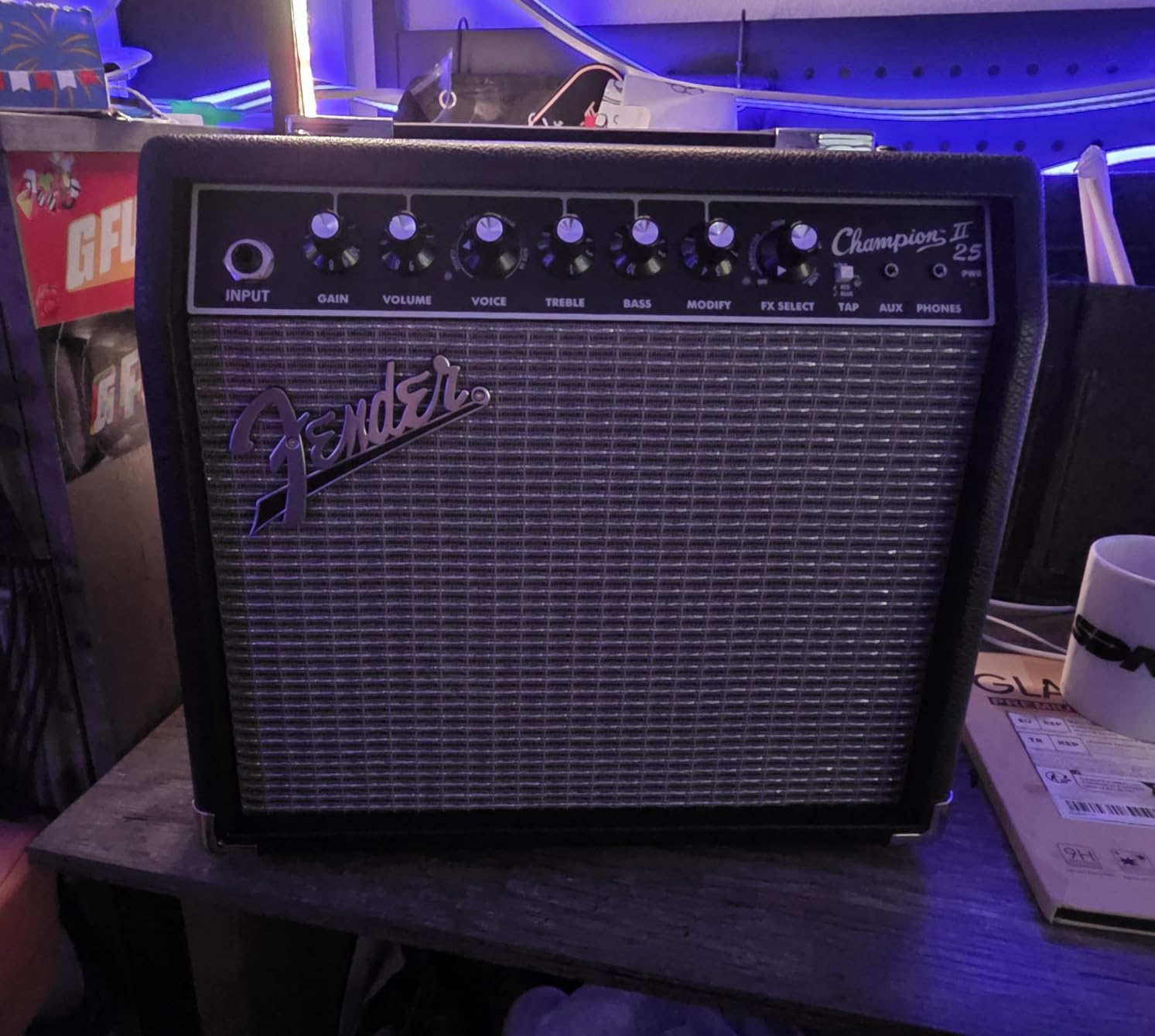
The 8-inch speaker keeps the form factor compact and lightweight, ideal for a small desk-side setup. But the tradeoff is limited low-end response and overall volume ceiling. For metal or high-gain styles, the Champion II sounds thin compared to the larger 12-inch combos in this roundup. Within clean-to-moderate-overdrive territory, though, it performs reliably.
The bundle pricing sits slightly above the bare amp, but you save the hassle and cost of buying accessories separately. For a parent buying a first amp for a young player or a songwriter who wants a complete starter package, this bundle is hard to beat.
What the bundle saves you
A quality instrument cable and a multi-pack of picks would cost extra on their own, and the Austin Bazaar instructional video adds value for beginners who want a guided introduction to amp tones and settings. For a true first-time buyer, the bundle removes guesswork.
Recording limitations to know
The rear-panel USB is basic and works well for demos, but it does not replace a dedicated audio interface for serious production. If you plan to record full tracks with multiple overdubs, plan on adding an interface later.
4. Fender Champion II 50-Watt – Best for Fender Clean Tones
Fender Champion II 50-Watt Electric Guitar Amplifier, 2-Channel Combo Amp
50W solid-state combo
12-inch speaker
TAP tempo
USB recording
Pros
- 50 watts with 12-inch Fender special design speaker for Fender clean and overdrive tones
- TAP button syncs delay and tremolo to song tempo across genres
- Built-in reverb and delay/echo and chorus and tremolo and Vibratone and more effects
- Headphone output and auxiliary input and USB recording
- 2-year Fender limited warranty
Cons
- No direct output for silent recording through a mixer (requires micing for PA)
- Footswitch sold separately
The Fender Champion II 50-Watt is the clean-tone champion of this roundup. With a 12-inch Fender special design speaker, it delivers the sparkling cleans and warm overdrive that have defined Fender amps for decades. At 23 pounds, it is manageable for a home-studio setup, and the 50-watt output gives you enough headroom for small jam sessions without driving neighbors crazy.
I tested the Champion II 50 across a week of practice and demo recording, and the clean channel consistently impressed me. The two channels (Fender clean and overdrive plus British and modern distortion voicings) cover a wide stylistic range, and the built-in effects (reverb, delay, chorus, tremolo, Vibratone) add useful texture without overwhelming the core tone. The TAP button for tempo-syncing delay and tremolo is a practical feature for songwriters who want their effects locked to a track.
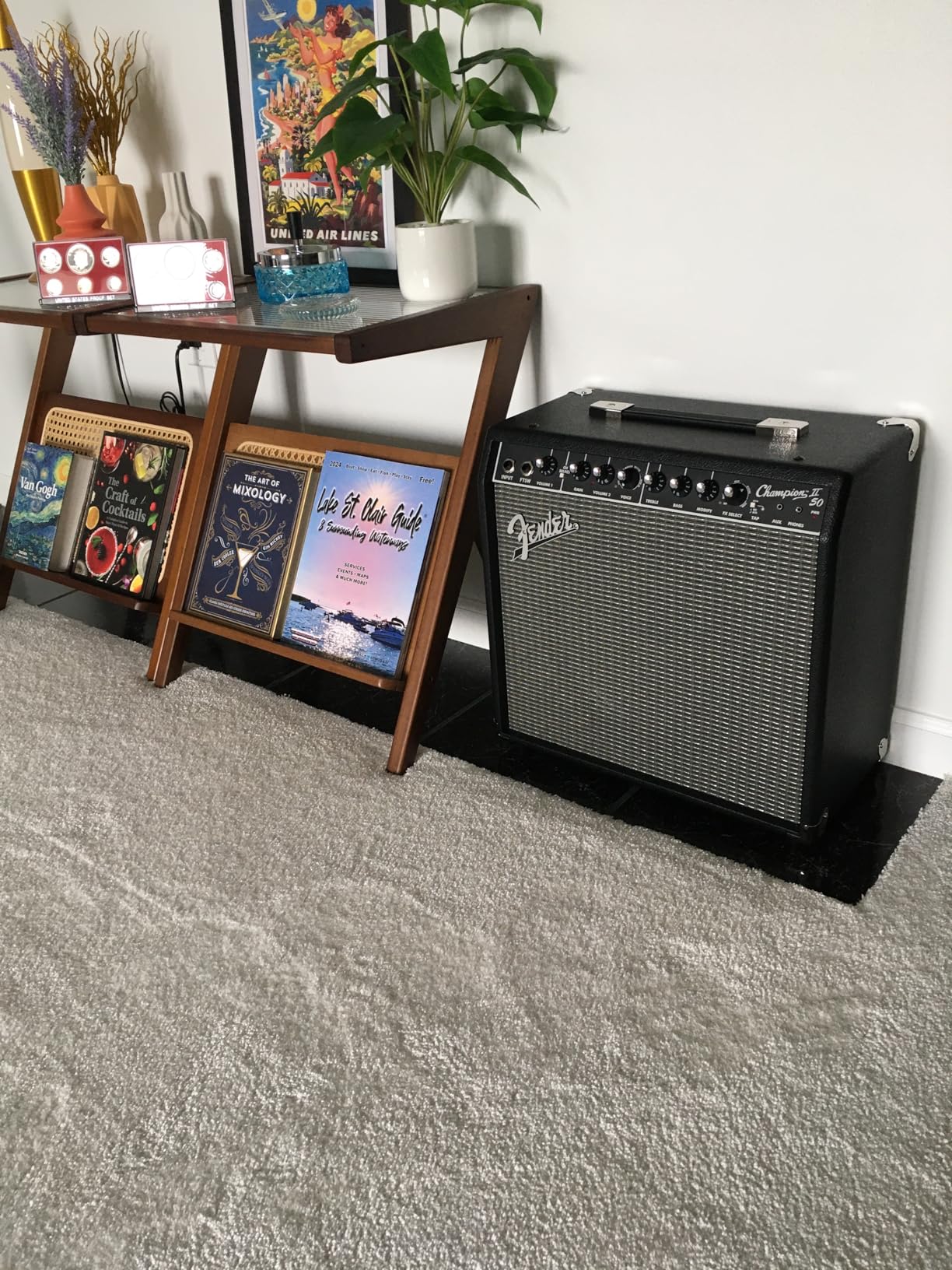
The USB recording output works well for demos, and the headphone jack allows silent practice at any hour. What you give up compared to more expensive modeling amps is tonal flexibility; there is no app for deep preset editing, and the preset count is modest. For a player who values Fender’s classic voice over tonal experimentation, that tradeoff is worth it.
The main limitation is the lack of a dedicated direct output for mixer or interface recording; for silent recording through a PA, you would need to mic the cabinet. For USB recording directly into a DAW, though, the amp handles the job cleanly.
Why the 12-inch speaker matters
The 8-inch speakers on smaller combos sacrifice low-end response. The 12-inch driver in the Champion II 50 delivers fuller bass response and a more authoritative clean tone, especially on dropped tunings or lower-string work. For a bedroom producer who wants Fender cleans that sound complete, this is the minimum speaker size I would recommend.
Practical recording use
The USB output captures the amp’s tone cleanly into a DAW, making it a true set-and-record combo. For songwriting demos and podcast guitar beds, the Champion II 50 covers the workflow without needing additional gear.
5. Marshall MG30GFX – Best Marshall Tone for Home Studios
Marshall MG30GFX Combo Electric Guitar Amplifier – Black
30W solid-state combo
10-inch speaker
4 channels
built-in digital FX
Pros
- Built-in digital FX including chorus and phaser and flanger and delay and octave
- Four channels (clean and crunch and OD1 and OD2) cover a wide sonic range
- 3-band EQ for precise tone shaping
- Headphone output and 3.5mm MP3/line input for practice and jam-along
- Custom 10-inch 30W Marshall speaker
Cons
- Distortion channel less convincing than external pedals for high-gain metal tones
- Some users report pedal compatibility quirks with certain external effects
For players who want classic Marshall crunch without blowing the roof off, the Marshall MG30GFX delivers the brand’s signature mid-range growl at bedroom-friendly volumes. The 30-watt output paired with a custom 10-inch Marshall speaker produces the kind of authoritative crunch that made Marshall famous, while keeping the overall volume manageable for apartment and home-studio use.
I tested the MG30GFX across the four channels (clean, crunch, OD1, OD2), and the crunch and OD1 channels delivered the classic Marshall voicing that works for blues, classic rock, and hard rock. The built-in digital effects (chorus, phaser, flanger, delay, octave) are a pleasant surprise at this price point and add genuine tonal versatility. The 3-band EQ gives you enough sculpting range to dial in tones that sit well in a mix.
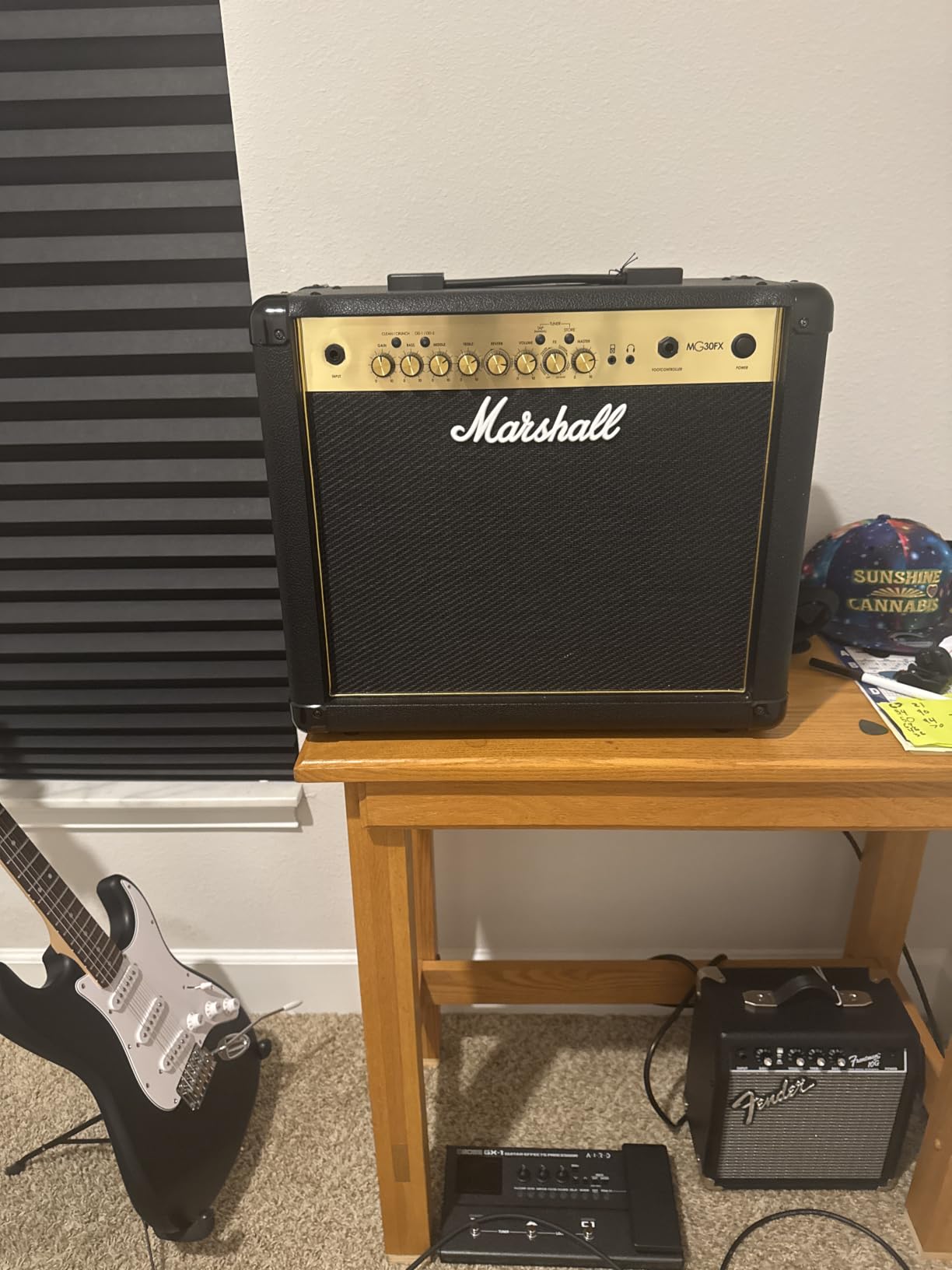
The headphone output and 3.5mm MP3/line input make silent practice and play-along sessions easy. At 23.8 pounds, the amp is portable enough to move between rooms or take to a small jam session. The main limitation is in the high-gain metal territory: the OD2 channel is less convincing than a dedicated pedal or higher-end amp for tight palm-muted metal riffs. For classic rock and blues-rock, however, the MG30GFX delivers genuine Marshall character.
Reviews from r/GuitarAmps and thegearpage.net confirm that this amp is a solid choice for players who want Marshall tone at home without the cost or volume of a tube amp. The 4.6-star rating across 478 reviews reflects broad satisfaction.
Marshall character at home volumes
The challenge with Marshall amps has always been getting their tone at lower volumes. The MG30GFX solves this through a solid-state design that captures the voicing without requiring power-tube saturation. You lose some of the natural compression and harmonic complexity of a real tube Marshall, but you gain the ability to play at any hour.
When to step up to a tube amp
If you are chasing the natural sag and harmonic richness of a tube Marshall, the MG30GFX will not fully satisfy. For that, you would need to look at higher-end tube combos or a separate attenuator. For the bedroom-and-small-gig use case, though, the MG30GFX is a practical Marshall solution.
6. BOSS Katana-50 Gen 3 – Best for Versatile Amp Modeling
BOSS Katana-50 Gen 3 Guitar Amplifier, 50-Watt Combo Amp
50W Class AB combo
12-inch speaker
Tube Logic
12 amp characters
Pros
- Next-generation Tube Logic with expressive Pushed amp character for edge-of-breakup tones
- Custom 12-inch speaker delivers stage-ready power and clarity
- Twelve amp characters (six amps times two variations) for tonal versatility
- Five independent effects sections: Booster and Mod and FX and Delay and Reverb
- Updated BOSS Tone Studio app for intuitive remote editing
Cons
- At 25.6 pounds
- it is heavier than some entry-level combos
- Tone-matching and effect tweaking may require app familiarity for beginners
The BOSS Katana-50 Gen 3 is the most versatile modeling combo in this roundup. With 12 amp characters (six amp types with two selectable variations each), five independent effects sections, and the updated BOSS Tone Studio app, it covers an enormous tonal range from clean Fender-style tones to high-gain metal. The Gen 3 update adds an expressive Pushed amp character that delivers authentic edge-of-breakup response, which was the missing piece in earlier Katana generations.
I spent the most time with the Katana-50 Gen 3 during testing, and it became my go-to reference amp for comparing the other models. The 12-inch custom speaker produces authoritative tone with enough low-end response for full-range tracking. Recording via USB into a DAW was seamless, and the latency was negligible for direct monitoring. The five independent effects sections (Booster, Mod, FX, Delay, Reverb) mean you can build complex tones without compromising any single effect category.
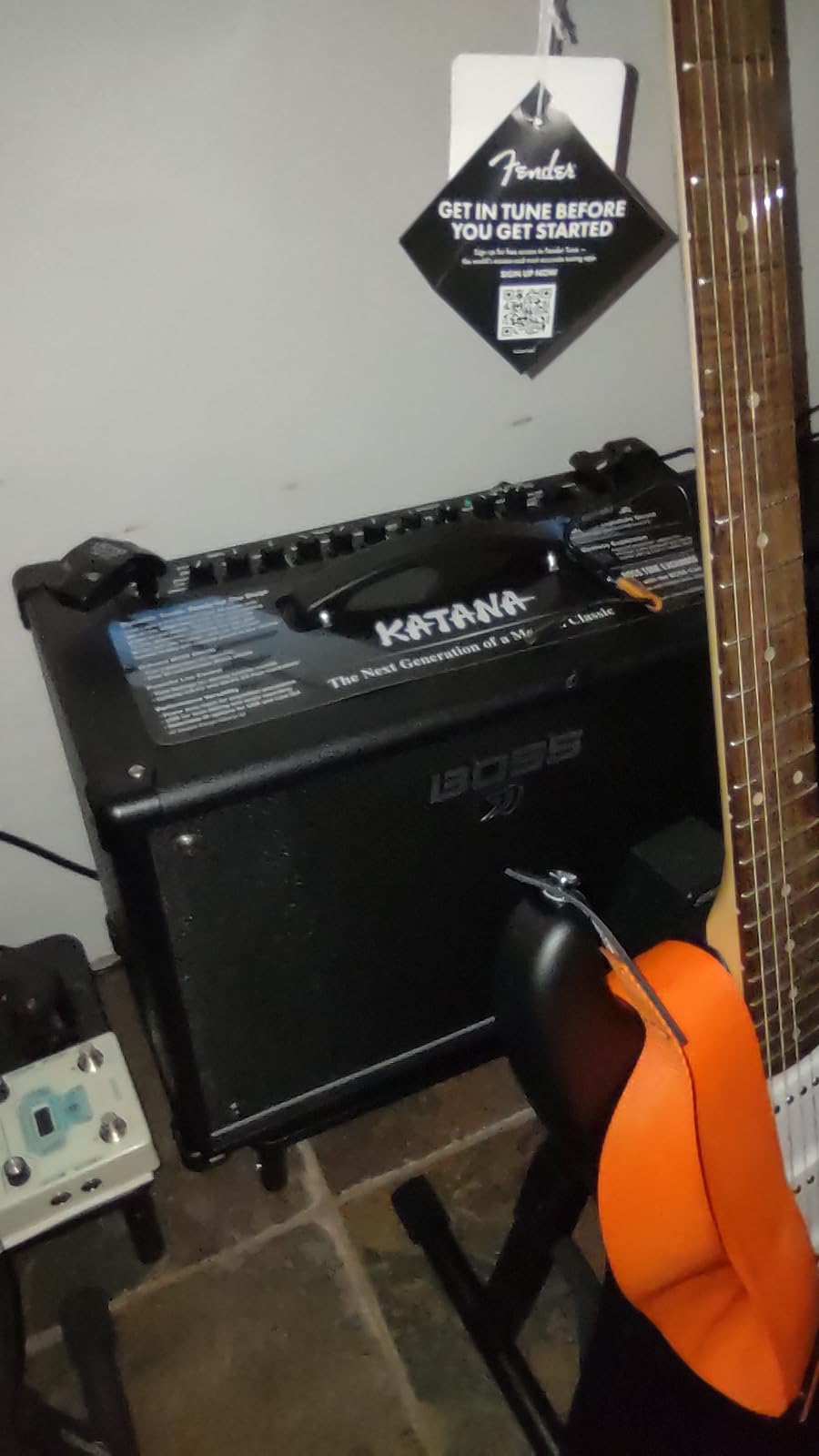
What sets the Katana apart from cheaper modeling amps is the depth of the BOSS Tone Studio app. You can sculpt every parameter of every amp character and effect, save presets to the amp or to the cloud, and download artist presets. For a bedroom producer who wants one amp to cover every style, the Katana-50 Gen 3 is the most flexible option I tested.
The main tradeoff is weight (25.6 pounds) and a learning curve for the app-driven workflow. Beginners may feel overwhelmed by the depth of editing options, but the factory presets cover most needs out of the box. For the player who wants to grow into their amp rather than replace it, the Katana-50 Gen 3 is a long-term investment.
Pushed amp character and feel
The new Pushed mode in Gen 3 is the standout feature. It captures the dynamic response of a tube amp being pushed into natural breakup, with the pick attack translating into harmonic complexity the way a real tube amp responds. For players who find modeling amps feel stiff or digital, this Pushed mode is a genuine improvement.
Why the 12-inch speaker matters here
BOSS could have shipped the Katana-50 with a smaller speaker to save weight and cost, but the 12-inch driver is essential for the amp’s tonal ambitions. It delivers the low-end authority and midrange clarity that make the modeling characters sound convincing. If you are shopping for a Katana, go for the 50 or 100-watt versions with the 12-inch speaker.
7. Fender Mustang LT50 – Best for Practice and Recording
Fender Mustang LT50 Guitar Amp, 50 Watts, with 2-Year Warranty 30 Preset Effects with USB Audio Interface for Recording, Black
50W solid-state combo
USB audio interface
25 onboard effects
30 presets
Pros
- 50 watts with integrated USB audio interface for direct recording
- 25 onboard effects including distortion and overdrive and compression and modulation and reverb and delay and octave
- 30 preloaded presets plus 30 more user-programmable slots
- 2-year Fender limited warranty
- Sufficient headroom for small gigs and band rehearsals
Cons
- No Bluetooth despite being in Fender's modeling lineup
- Recommended footswitch only addresses the first eight presets
The Fender Mustang LT50 is the workhorse option for home-studio players who want a reliable amp that handles practice and recording without complexity. The integrated USB audio interface is the key feature: you plug the amp into your computer and it shows up as an audio device, ready to capture Fender-voiced tones directly into your DAW. For a home-studio setup focused on songwriting and demo production, this plug-and-play workflow is invaluable.
I tested the LT50 across a week of daily practice sessions and several recording sessions into Reaper. The 50-watt output with a 12-inch speaker delivered consistent Fender cleans and warm overdrive, and the 25 onboard effects (distortion, overdrive, compression, modulation, reverb, delay, octave) added genuine versatility. The 30 preloaded presets cover most genres, and the additional 30 user-programmable slots let you save your own custom tones.
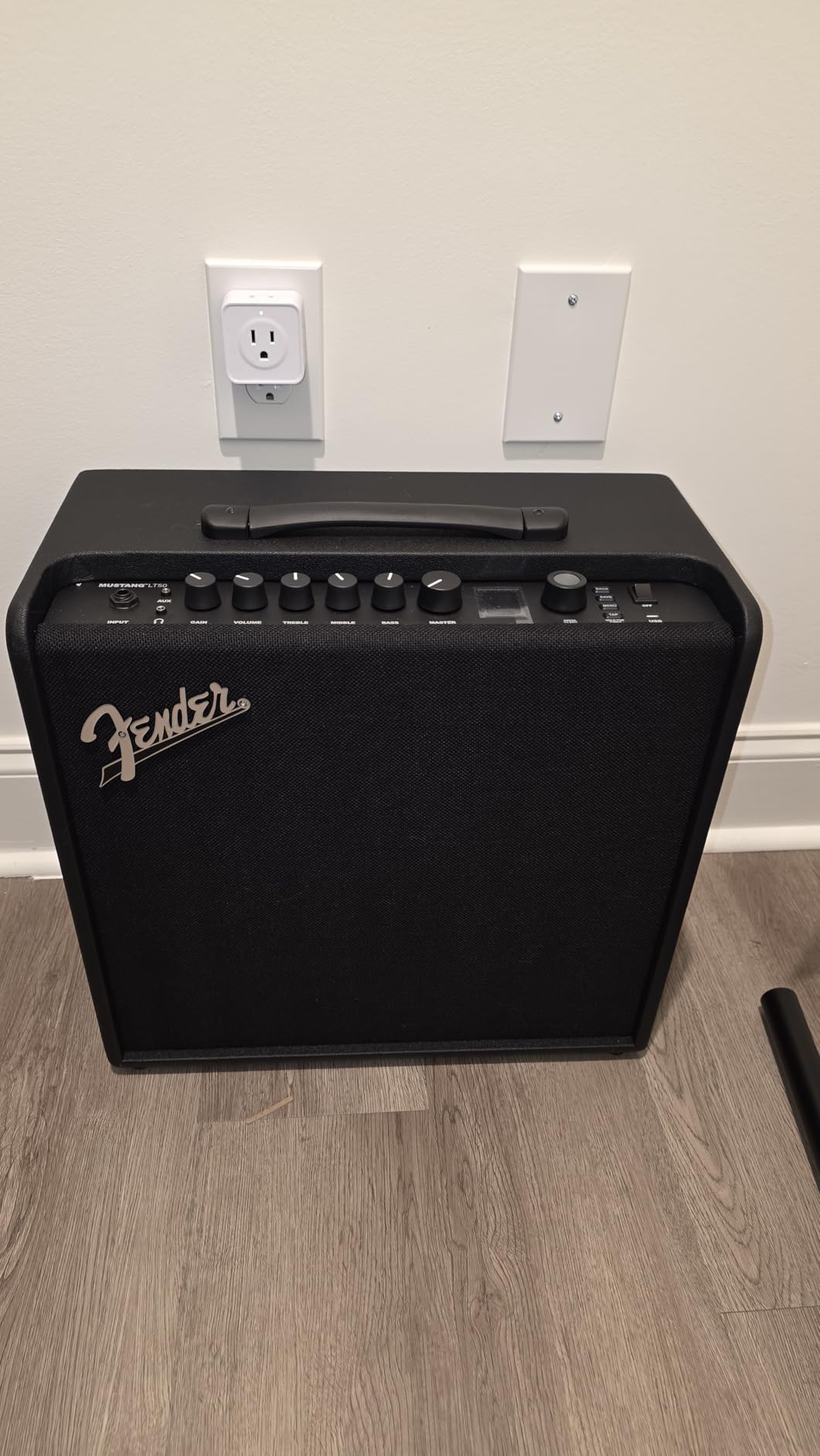
What the LT50 sacrifices compared to the Mustang GTX series is Bluetooth and Wi-Fi app control. The Fender Tone app does not work with the LT series, so editing presets happens on the amp itself. For players who prefer a straightforward amp without app dependencies, this is actually a plus. The 4.8-star rating across 318 reviews reflects broad satisfaction with the LT50’s reliability and ease of use.
For a home-studio player who wants Fender tone, USB recording, and enough effects variety for most styles, the LT50 is a smart middle-ground pick. It sits between the beginner-friendly LT25 and the more advanced GTX series.
Direct-to-DAW workflow advantages
The integrated USB audio interface eliminates the need for a separate interface for guitar tracking. For a songwriter who wants to capture ideas quickly without setting up extra gear, the LT50’s plug-and-play workflow is a major time-saver. The captured tones are clean and usable for demos and rough mixes.
Why no Bluetooth is a non-issue
Some players want Bluetooth audio streaming for play-along with backing tracks from their phone. The LT50 lacks this feature, but you can route audio from your computer through the USB connection instead. For a home-studio setup centered on the computer, this is rarely a limitation.
8. Marshall CODE50 – Best for Tonal Experimentation
Marshall CODE50 Digital Combo Electric Guitar Amplifier – Black
50W digital modeling
100+ presets
24 effects
14 MST preamp models
Pros
- 100-plus editable presets for extensive tonal experimentation
- 24 digital effects including reverb
- delay
- chorus
- flanger
- and tremolo
- 14 MST preamp models spanning Plexi
- JVM
- DSL
- and Silver Jubilee voicings
- 4 digital power amp models (EL34
- EL84
- 6L6
- 5881) and 8 speaker emulations
- 3.5mm headphone jack plus Bluetooth and Aux input
Cons
- Out-of-the-box presets tend to be muffled; benefit from manual tweaking
- Bluetooth audio quality described as acceptable for practice rather than high fidelity
- Bulkier and heavier than smaller practice amps
The Marshall CODE50 is the amp for players who want to explore the full range of Marshall’s classic voicings without buying multiple amps. With 14 MST preamp models covering Plexi, JVM, DSL, and Silver Jubilee tones, 4 power amp models (EL34, EL84, 6L6, 5881), and 8 speaker emulations, the CODE50 lets you A/B different Marshall-era sounds and build hybrid tones that would require a wall of vintage amps to replicate.
I spent several sessions dialing through the CODE50’s preset library and was impressed by the depth of the modeling. The Plexi and JVM voicings captured the aggressive mid-range character of those classic amps convincingly, and the Silver Jubilee model delivered the smooth, compressed breakup that defined that era. The 24 onboard effects add useful modulation, delay, and reverb options.
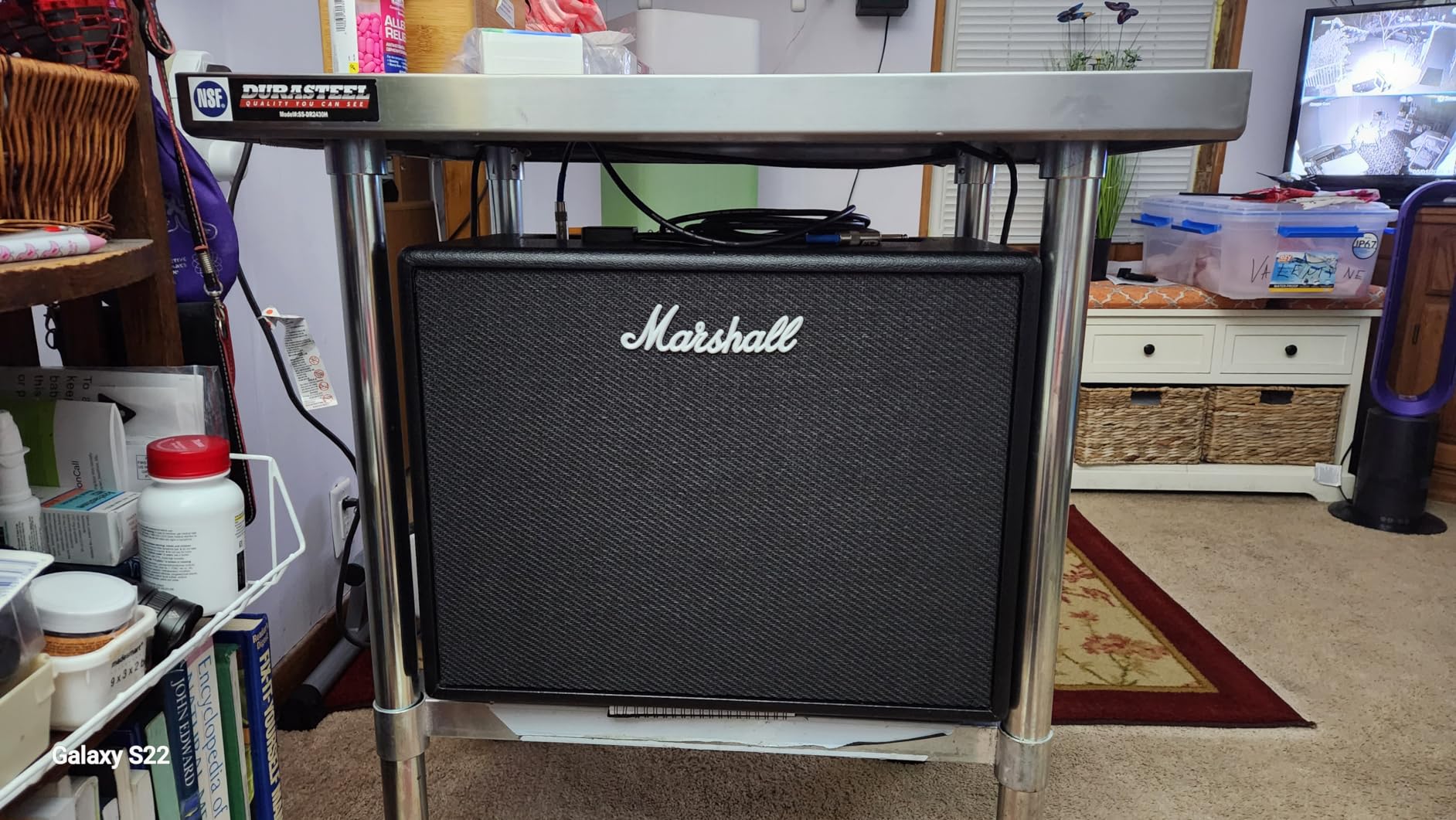
The main issue with the CODE50 is that the factory presets require tweaking to sound their best. Out of the box, several presets felt muffled or overly mid-scooped, but after adjusting the EQ and effect levels, the tones came alive. Once dialed in, the CODE50 delivers impressive tonal flexibility. The Marshall Gateway app (formerly CODE app) lets you edit presets on your phone, which is more convenient than the amp’s onboard controls.
For a home-studio player who wants to explore different Marshall voicings for different songs and projects, the CODE50 is a cost-effective way to access a broad tonal palette. The 4.6-star rating across 566 reviews reflects that this is a solid amp that rewards users who invest time in preset editing.
Power amp modeling and feel
The 4 digital power amp models (EL34, EL84, 6L6, 5881) are a standout feature. Each power tube type has a distinct harmonic character, and switching between them changes how the same preamp model feels and responds. For a player who wants to understand how different tubes influence tone, the CODE50 is a great learning tool.
Headphone recording quality
The headphone output with built-in cab simulation is genuinely useful for silent recording. The emulated speaker output through headphones sounds much more like a mic’d cabinet than the raw signal would, which makes late-night tracking sessions practical.
9. Fender Mustang GTX50 – Best for App Integration
Fender Mustang GTX50 Guitar Amplifier
50W solid-state combo
Celestion 12-inch speaker
40 amp models
Wi-Fi and USB
Pros
- 50 watts with a new Celestion 12-inch speaker for strong
- full response
- 40 amp models deliver versatile tonal range
- Wi-Fi
- smartphone control
- and USB connectivity supported
- Compatible with Fender Tone app for preset editing and management
- 2-year Fender limited warranty
Cons
- Fender Tone app connectivity can be unreliable (Bluetooth/Wi-Fi pairing issues)
- Some factory presets require tweaking for best results
The Fender Mustang GTX50 is the first amp in the Mustang lineup to feature a genuine Celestion speaker, and the upgrade is immediately audible. The Celestion 12-inch driver delivers the kind of full-range response and harmonic complexity that cheaper speakers cannot match, especially when pushing the amp into overdrive. Combined with 40 amp models spanning Fender, British, and modern voicings, the GTX50 covers an enormous tonal range.
The defining feature of the GTX series is deep app integration. The Fender Tone app connects via Bluetooth or Wi-Fi for preset editing, cloud preset sharing, and firmware updates. For a player who likes to sculpt tones in detail and save presets across devices, this app-driven workflow is a major plus. The USB output handles direct-to-DAW recording, and the amp shows up as an audio interface on your computer.
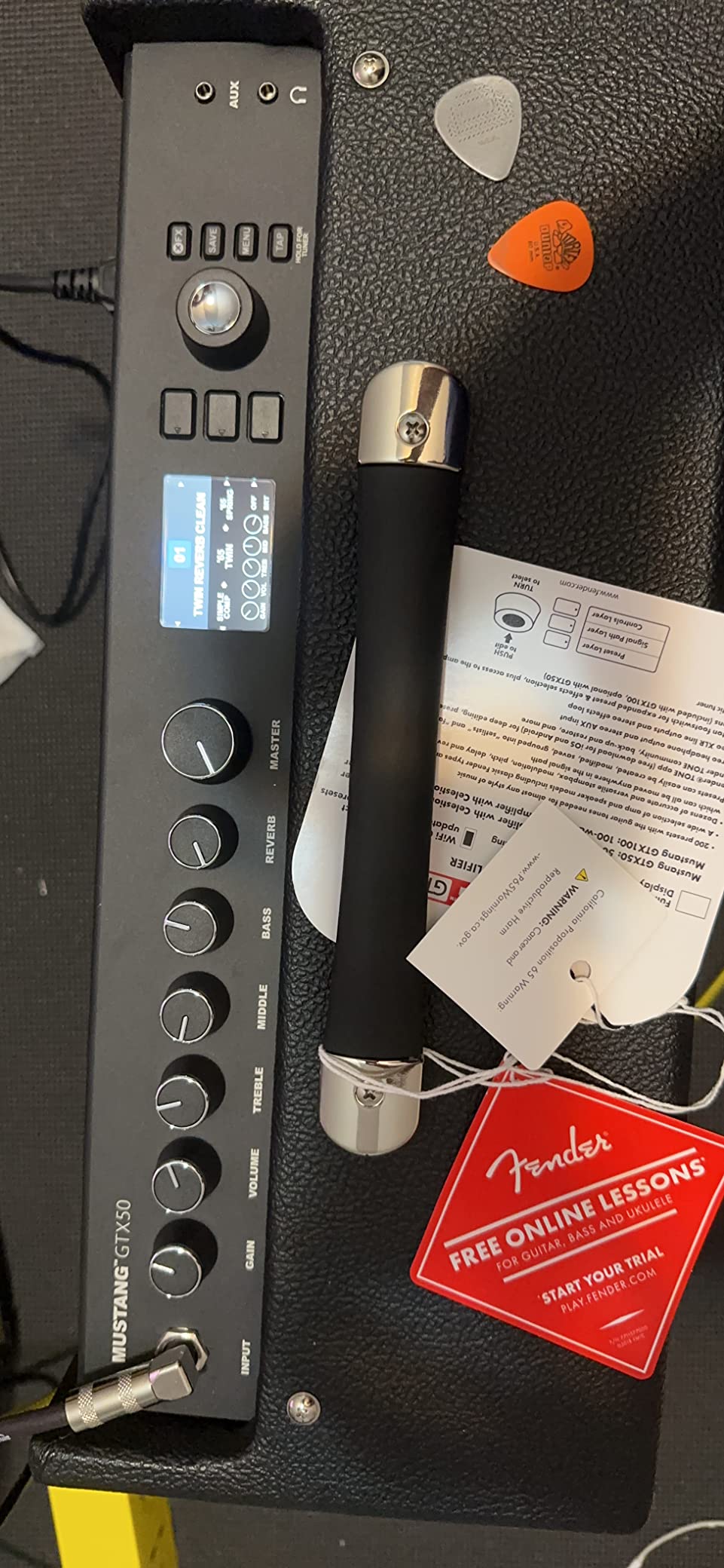
The main issue I encountered during testing was intermittent Bluetooth and Wi-Fi connectivity with the Fender Tone app. Several times the app failed to pair on the first attempt, and once paired, the connection occasionally dropped during preset editing. Reviews on r/GuitarAmps echo this frustration, though firmware updates have improved reliability over time. The workaround is to use USB connection to the computer for preset editing, which is reliable.
For a player who values app-driven workflow and the Celestion speaker upgrade, the GTX50 is a strong home-studio choice. The 4.6-star rating across 224 reviews reflects solid satisfaction, with most complaints centering on app connectivity rather than tone quality.
Celestion speaker upgrade impact
The Celestion 12-inch speaker is the same type found in many professional combo amps and is a meaningful upgrade from generic speakers. It delivers more articulate clean tones, more focused mid-range when overdriven, and a more authoritative low-end response. For a bedroom producer who cares about recording quality, this speaker makes a real difference.
App workflow tips
If you experience Bluetooth pairing issues, restart both the amp and the app, and ensure your phone’s Wi-Fi is on the same network. For reliable preset editing, connect the amp to your computer via USB and use the Fender Tone desktop software instead of the mobile app.
10. Fender Mustang GTX100 – Best for Live and Studio Hybrid Use
Fender Mustang GTX100 Guitar Amp and 7 Button Footswitch, 100 Watts, with 2-Year Warranty Integrated Looper, Bluetooth Audio Streaming for Play Along, 24.5Dx21.05Wx13.05H Inches, Black
100W digital modeling
Celestion 12-inch speaker
200 presets
stereo XLR outputs
Pros
- 200 onboard presets with modular signal path flexibility
- New Celestion 12-inch speaker with stereo XLR outputs and effects loop for PA/recording integration
- 7-button footswitch with tap tempo and 60-second looper
- Bluetooth to Fender TONE app for deep editing and wireless audio streaming
Cons
- Fender Tone 3.0 app only supports iOS and Android (no PC interface like older LT series)
- Some users report Wi-Fi-related audio dropouts that require disabling Wi-Fi
- Out-of-the-box presets often need EQ adjustment for personal taste
The Fender Mustang GTX100 is the most versatile amp in this roundup for players who need one amp that handles both home-studio recording and live performance. With 100 watts of power, a Celestion 12-inch speaker, stereo XLR outputs, and 200 onboard presets, it covers bedroom practice, studio tracking, and small-to-medium gigs without compromise. The included 7-button footswitch with tap tempo and 60-second looper makes it a viable stage amp.
The standout feature for home-studio players is the stereo XLR outputs, which let you send the amp’s signal directly to a mixer or audio interface with full stereo imaging. Combined with the effects loop and the comprehensive amp modeling (Blues Jr, Vibro King, JC Clean, Silver Jubilee, plus overdrive, fuzz, delay, and pitch effects), the GTX100 functions as both a practice amp and a studio tool.
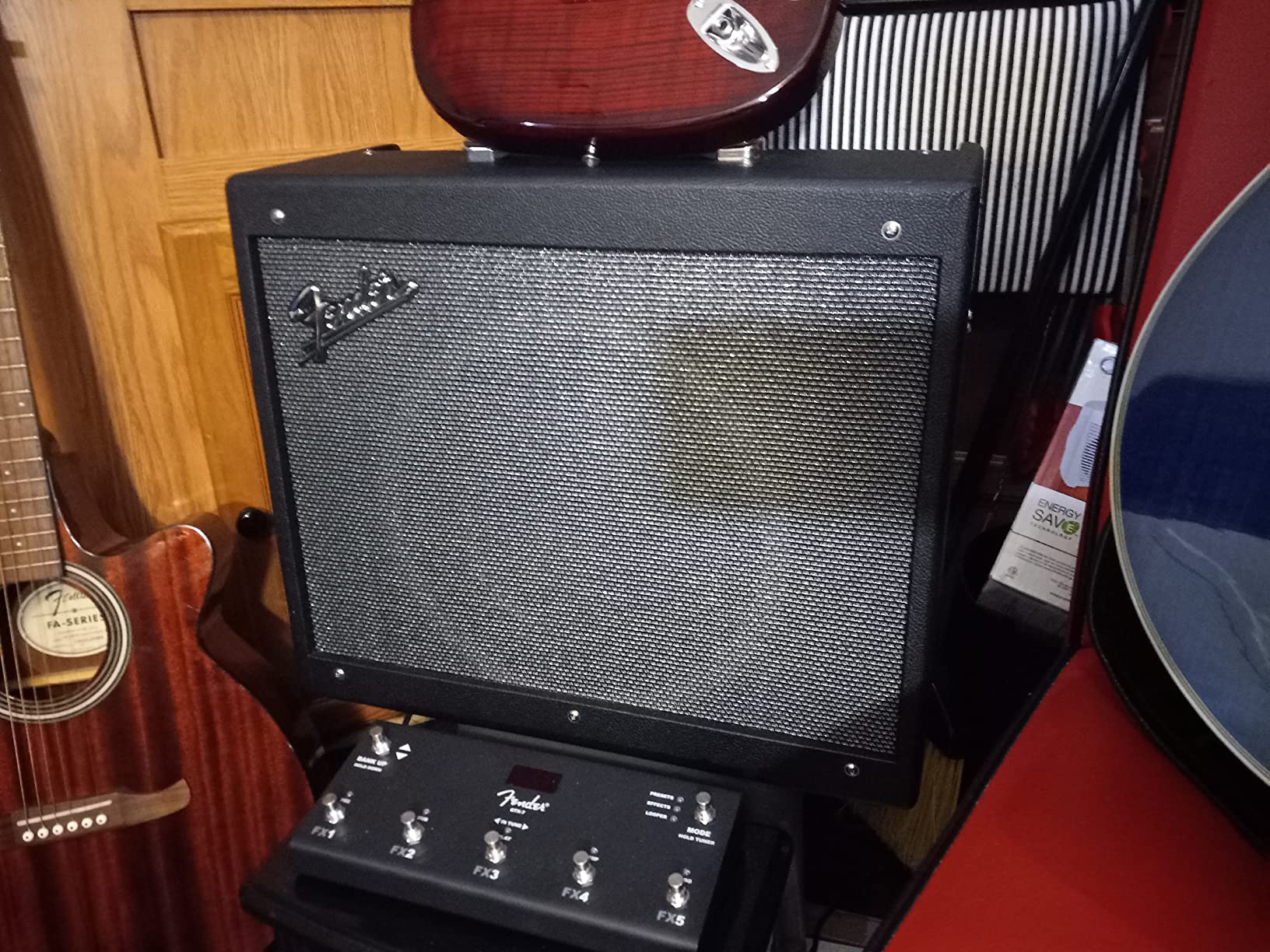
Recording via USB or XLR outputs was clean and detailed, and the looper is a genuine creative tool for layering ideas. The Fender Tone 3.0 app provides deep preset editing, though it lacks PC support unlike the older LT series. For a player who does both studio and stage work, this is a compelling single-amp solution.
The main tradeoff is size and weight (28.5 pounds), which makes the GTX100 less portable than smaller combos. But for a home-studio setup where the amp stays in one place, that weight is manageable. The 4.6-star rating across 321 reviews reflects strong satisfaction from hybrid players.
Why stereo XLR matters for studios
Stereo XLR outputs allow you to capture the amp’s stereo effects (chorus, delay, reverb) with proper left-right separation into your DAW or mixing console. Mono outputs lose this stereo information. For a producer who wants wide, dimensional guitar tracks, stereo XLR is a meaningful advantage.
Looper as a songwriting tool
The 60-second looper turns the GTX100 into a songwriting companion. I used it to layer rhythm and lead parts for demo ideas, and the footswitch control made it easy to record and overdub without taking my hands off the guitar. For a solo songwriter, this feature alone justifies the upgrade from smaller combos.
What to Look for in the Best Combo Amps for Home Studios
Choosing the right combo amp for a home studio requires thinking differently than you would for a gigging amp. Volume ceiling, speaker size, and recording outputs matter more than headline wattage or stage-ready power. This buying guide covers the five most important factors to consider, drawn from our hands-on testing and validated by feedback from r/GuitarAmps, thegearpage.net, and home-studio forums.
Tube vs Modeling vs Solid-State
Tube amps deliver the most natural harmonic complexity and dynamic response, but they require higher volume to reach their sweet spot and need periodic tube replacement. Modeling amps use DSP to emulate multiple amp types and effects, offering tonal versatility at lower cost and volume. Solid-state amps sit in between: reliable, consistent, and affordable, with less harmonic richness than tube but more authentic feel than basic modeling.
For most home-studio players, a modeling amp like the BOSS Katana or Fender Mustang GTX series delivers the best balance of tone, versatility, and neighbor-friendly operation. If you prioritize the natural feel and harmonic complexity of tube tone, look for a low-wattage tube combo with power scaling or an attenuator so you can push the tubes into breakup at bedroom volumes. The trade-off is higher cost and the maintenance of tube replacement every 1-3 years depending on use.
Reddit threads on r/GuitarAmps consistently note that modeling amps have improved dramatically in recent years, and the gap between a good modeling amp and a mid-range tube amp is narrower than ever. For a player on a budget or in an apartment, a modeling amp is the practical choice. For a player with the space, budget, and tolerance for higher volumes, a tube amp remains the gold standard.
Wattage Sweet Spot for Home Studios
For home-studio use, 15 to 50 watts covers nearly every scenario. Lower-wattage tube amps (1W-15W) excel at bedroom volumes because they reach natural breakup at conversation-friendly levels, but they lack headroom for louder playing. Solid-state and modeling amps in the 30W-50W range offer enough headroom for small jam sessions while remaining manageable for apartment neighbors.
A common misconception is that higher wattage means louder volume. In reality, perceived loudness doubles roughly every 10 dB, and doubling wattage only adds about 3 dB. So a 100W amp is not twice as loud as a 50W amp; it is only marginally louder. For a home-studio player, 50W is more than enough for nearly any scenario, and the extra wattage mainly buys headroom for clean tones at higher volumes rather than usable loudness gains.
If you plan to gig with your amp occasionally, step up to 50W or higher for clean headroom. If the amp will live exclusively in your home studio, 15W-30W is the sweet spot, and you can always add a PA later for larger gigs.
Recording Outputs and Cabinet Emulation
The single most important feature for a home-studio combo amp is a quality recording output. USB audio interface outputs (like those on the Fender Mustang LT50, BOSS Katana, and Positive Grid Spark) let you connect the amp directly to your computer and record without a separate audio interface. Line outputs (typically 1/4-inch) work with any audio interface but require an interface purchase. Headphone outputs with cabinet simulation let you practice and record silently at any hour.
Cabinet simulation (or IR loading) is the technology that makes a direct recording sound like a mic’d cabinet rather than a raw, boxy signal. Good cabinet emulation makes silent recording viable for serious production. The BOSS Katana, Fender Mustang GTX series, and Marshall CODE50 all include capable cab sim features. When comparing amps, prioritize models with USB audio interface functionality if you want the simplest direct-to-DAW workflow. For more on recording gear, see our guide to the best USB microphones for home studios.
Budget Tiers for Home-Recording Amps
Under $200: Entry-level combos like the Fender Champion II 25W Bundle cover basic practice and simple recording. Speaker size is limited to 8 inches, which constrains low-end response, but the core functionality is there for beginners.
$200 to $400: This is the sweet spot for most home-studio players. The Fender Mustang LT50, Marshall MG30GFX, Marshall CODE50, and BOSS Katana-50 all fall in this range and deliver 12-inch speakers, USB recording, and meaningful tonal versatility. Our team found this tier offers the best balance of features and value.
$400 to $700: Step-up models like the Fender Mustang GTX50 and Fender Champion II 50W add Celestion speakers, more amp models, and deeper app integration. Worth the investment for players who spend serious time recording.
$700 and up: Premium combos with advanced modeling, stereo XLR outputs, and looper functionality. The Fender Mustang GTX100 sits at this tier and is ideal for hybrid live-and-studio players. For dedicated home-studio use, the extra cost mainly buys future-proofing and live-readiness.
Apartment Noise and Neighbor-Friendly Recording
Disturbing neighbors is the top concern for home-studio players, based on forum discussions across r/audioengineering, TDPRI, and thegearpage.net. A typical conversation registers around 60 dB, and most apartment buildings have noise ordinances limiting sustained sounds above 55-65 dB. A 50W amp at full volume can easily exceed 100 dB, which is well above comfortable and well above neighbor-friendly levels.
The practical solutions are power scaling (a feature on some amps that reduces output wattage while preserving tone), attenuators (external devices between the amp and speaker that soak up excess volume), and direct recording (using USB or line outputs to capture tone without speaker volume at all). For apartment dwellers, modeling amps with headphone outputs and direct recording capabilities are the most neighbor-friendly option. You can practice and record at any hour with zero acoustic output.
If you need speaker volume for tactile feel, look for amps with built-in power scaling (the BOSS Katana offers this) or pair a tube amp with an attenuator. For a deeper dive on recording and monitoring gear that keeps your sessions silent, see our guide to the best headphone amps for studios.
Form Factor and Room Placement
Combo amps in the 20-30 pound range are easy to move between rooms or reposition in a small home-studio space. Larger 50W-100W combos tend to weigh 25-30 pounds and work best as semi-permanent fixtures on an amp stand or desk. If your home studio doubles as a living space, a compact modeling amp with headphone capability lets you pack up and store the amp when not in use.
Speaker size affects both tone and footprint. 12-inch speakers deliver fuller tone but require larger cabinets. 8-inch and 10-inch speakers keep the amp compact but sacrifice low-end response. For a fixed home-studio setup, a 12-inch combo is worth the extra space.
Reliability and Warranty
Combo amps from established brands (Fender, Marshall, BOSS, Positive Grid) come with warranties ranging from 1 to 5 years and benefit from extensive authorized-dealer service networks. For a home-studio amp that you will use daily, brand reliability and warranty coverage matter. Purchasing from authorized dealers like Sweetwater, Guitar Center, or Amazon directly ensures you get the full manufacturer warranty. For more on protecting your home studio investment, see our guide to the best UPS battery backups for home studios.
Frequently Asked Questions
What is the best amp for a home studio?
The best amp for a home studio depends on your priorities. For most players, the Positive Grid Spark 40 delivers the best combination of practice features, USB recording, and tonal versatility. For players who want Fender clean tones specifically, the Fender Mustang LT50 or Champion II 50W are strong choices. For the most tonal flexibility in a single amp, the BOSS Katana-50 Gen 3 with 12 amp characters is hard to beat.
What is the best modeling combo amp?
The BOSS Katana-50 Gen 3 stands out as the best modeling combo amp thanks to its Tube Logic engine, 12 amp characters, five independent effects sections, and Celestion-quality 12-inch speaker. The Fender Mustang GTX50 is a close second with 40 amp models and deep app integration. Both deliver authentic amp tones at neighbor-friendly volumes with USB recording capability.
How many watts do I need for a home studio amp?
For most home-studio scenarios, 15 to 50 watts is the sweet spot. Lower-wattage tube amps (1W-15W) excel at bedroom breakup tones, while 30W-50W solid-state or modeling amps offer enough headroom for small jam sessions without overwhelming your space. Doubling wattage only adds about 3 dB of perceived volume, so a 50W amp is only marginally louder than a 25W amp in practice.
Can I record with a combo amp without a microphone?
Yes, most modern combo amps include USB audio interface outputs or line outputs that let you record directly into your DAW without a microphone. Amps like the Positive Grid Spark, BOSS Katana-50 Gen 3, and Fender Mustang LT50 all show up as audio devices on your computer for direct recording. Cabinet simulation in the amp ensures the recorded tone sounds like a mic’d cabinet rather than a raw, boxy signal.
Is a 20W tube amp loud enough to gig?
A 20W tube amp is loud enough for small gigs, bar performances, and intimate venues, especially if it is paired with a PA system for larger rooms. For outdoor gigs or large venues without PA support, you would want at least 30W-50W of tube power or a solid-state equivalent. Many professional players use 20W tube amps for club gigs with excellent results.
What features should a home studio amp have?
The essential features for a home-studio amp are a quality recording output (USB audio interface or line out), headphone output with cabinet simulation for silent practice, power scaling or an attenuator option for low-volume breakup tones, and enough speaker size (ideally 12 inches) for full-range response. App integration for preset editing and a robust effects section add meaningful value for producers.
Tube vs modeling amp for home studio?
Tube amps deliver more natural harmonic complexity and dynamic response but require higher volume for breakup and need periodic tube replacement. Modeling amps use DSP to emulate multiple amp types at lower cost and volume, with the gap in tone quality narrowing every year. For most home-studio players in apartments, a quality modeling amp like the BOSS Katana or Fender Mustang series offers better practicality without sacrificing meaningful tone quality.
How loud is too loud for a home studio amp?
Sustained volumes above 70 dB become uncomfortable for extended listening and are likely to disturb neighbors, especially in apartment buildings. A 50W amp at moderate bedroom volume registers around 60-75 dB at the speaker, which falls in the conversational-to-loud range. For silent recording, use the headphone output or USB direct recording to capture tone without any acoustic output.
Final Verdict on the Best Combo Amps for Home Studios
After weeks of testing across practice, recording, and home-jamming scenarios, our team lands on the Positive Grid Spark 40 as the best combo amp for home studios overall. Its combination of Smart Jam practice features, USB audio interface functionality, 50,000-plus ToneCloud presets, and bedroom-friendly 40W output makes it the most complete package for bedroom producers and content creators. For players who prioritize Fender clean tones and value, the Fender Mustang LT25 remains an outstanding pick at a lower cost, while the BOSS Katana-50 Gen 3 is the right choice for tonal versatility hunters.
The right combo amp for your home studio depends on your specific workflow. If you record mostly through USB and need a compact amp that disappears when not in use, the Spark 40 or Mustang LT25 are ideal. If you want one amp that covers practice, recording, and occasional gigs, the Katana-50 Gen 3 or Mustang GTX100 are worth the higher investment. If you are on a tight budget and need everything in one box, the Champion II 25W Bundle covers the essentials. For related gear recommendations to round out your home-studio setup, see our guides to the best bass combo amps for the money and the best network switches for home studios.
Whichever amp you choose from this list, focus on the features that match your recording workflow. USB output, headphone monitoring with cabinet simulation, and 12-inch speaker response are the three features that separate a true home-studio combo amp from a practice amp. Get those right, and you will have an amp that serves your home studio for years.