
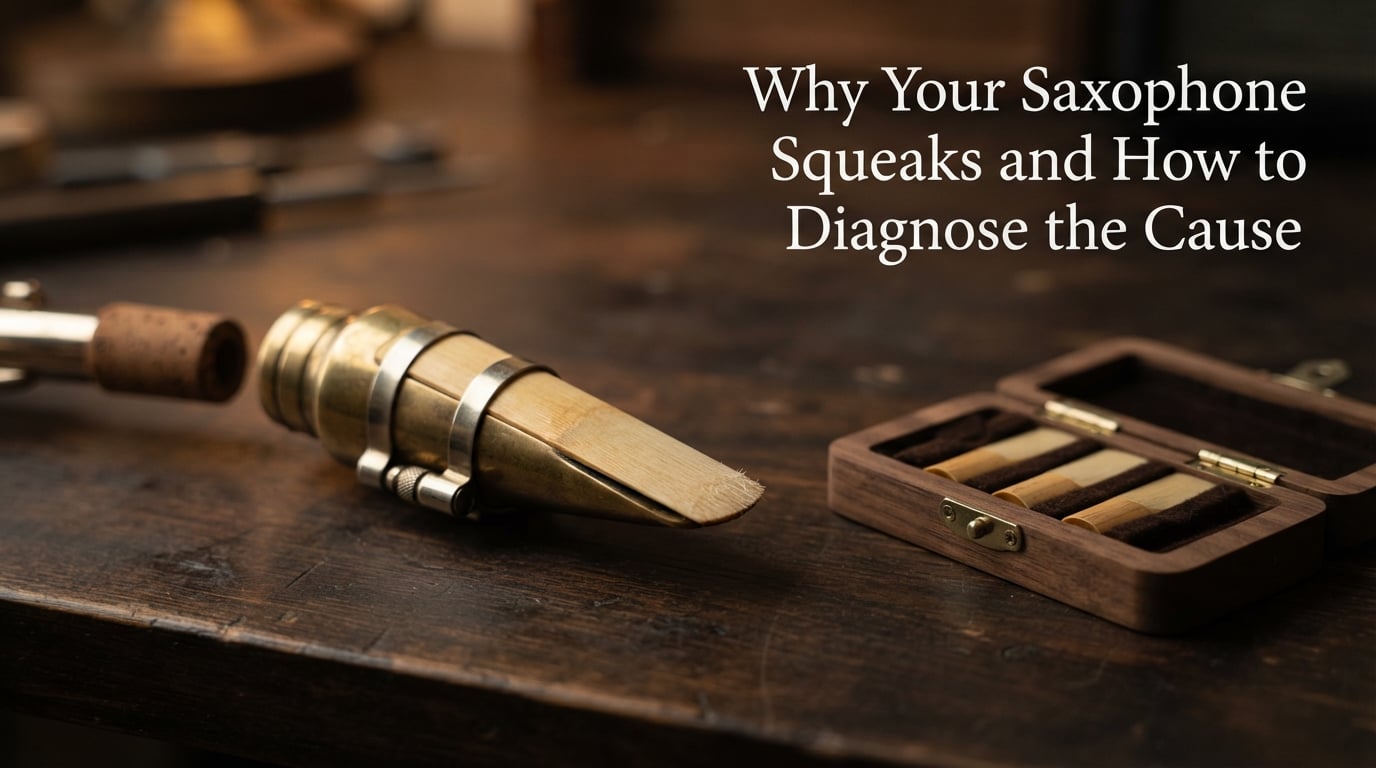
If your saxophone squeaks the moment you try to play a note, you’re not alone. Saxophone squeaking is the single most common frustration for beginners, and even intermediate players run into it when learning new notes or coming back after a break. The good news: a squeak is your sax telling you something specific, and almost every cause is fixable without buying new gear.
After spending time with band teachers, repair techs, and forum regulars on r/saxophone, I can tell you that roughly 99% of squeaks come from embouchure (how your mouth shapes around the mouthpiece), followed by reed and mouthpiece issues. This guide walks you through a fast diagnostic you can run in under two minutes, then walks you through every fix in order from most likely to least likely.
Table of Contents
Quick Diagnosis: What’s Causing Your Saxophone Squeaking?
Before changing anything, isolate the source. Play only your mouthpiece and neck (the curved metal tube that connects to the body), with no saxophone body attached. If the mouthpiece and neck squeak, the problem is your embouchure, your reed, or your air. If they produce a clean note, the problem is on the body of the saxophone, like a pad leak or an accidental key press.
Run through this short checklist before you start adjusting things:
- Is the reed new, or has it been played for more than a few weeks?
- Is the reed sitting flat against the mouthpiece table, or tipped forward?
- Are any extra keys pressed, including palm keys (the large levers on the side) or side keys?
- Is the octave key (the small lever near your left thumb) fully closed when you are not using it?
- Does the squeak happen on every note, or only specific ones like G or high notes?
If only one or two notes squeak, the issue is almost always technique. If every note squeaks, suspect the reed or a leak.
The Most Common Cause: Embouchure Problems
Embouchure issues cause the majority of saxophone squeaks, especially for beginners. The reed needs to vibrate freely against the mouthpiece, and any extra pressure from your jaw or lips stops that vibration, producing a high-pitched squeak instead of a full tone.
You Are Biting the Reed
Biting is the number one habit that causes saxophone squeaking. Your jaw clamps down, the reed stops vibrating, and you get a squeak. A simple test: place the mouthpiece in your mouth, let your jaw drop open, and breathe out. The note should sound full. Now close your jaw slightly until the note fades into a squeak. That closing motion is what you are doing when you bite.
To fix biting, think about pulling your bottom lip inward, away from your teeth, rather than pressing down. Your bottom teeth should rest lightly on the bottom of the mouthpiece, never touching the reed itself.
Your Bottom Teeth Are Touching the Reed
Even a small amount of tooth contact with the reed changes how it vibrates. Roll your bottom lip over your bottom teeth so only lip touches the reed, not tooth. If you feel a sharp edge during practice, your teeth are too close.
A rolled-in lip also gives you better control over high notes, where most beginners squeak first.
Jaw and Lip Tension
Squeaks often spike when you are nervous, playing in front of others, or reaching for a hard note. Tension in your jaw, neck, or shoulders transfers straight into your embouchure. Drop your shoulders, take a slow breath, and reset your mouth before each tricky passage.
One trick band directors swear by: hum the note on the mouthpiece before adding the neck. The relaxed throat helps you find the right shape.
Mouthpiece Depth and Position
Mouthpiece depth is the second most common cause of saxophone squeaking, and one of the easiest to fix.
Too Much Mouthpiece in Your Mouth
If you take in more than about half an inch of mouthpiece, the reed sits too far back in your mouth. You lose control and the sax squeaks on most notes. Pull the mouthpiece out until only the tip and a small flat section are inside your lips.
For most players, the mouthpiece line should sit just past the lower lip, never past the upper lip line.
Mouthpiece Tilt
If the mouthpiece tilts too far up or down, the reed cannot seal evenly. Hold the mouthpiece so the reed faces straight down when you breathe across it. A crooked setup is a squeak waiting to happen.
Reed Problems That Cause Squeaking
The reed is the voice of your saxophone. When it is unhappy, you squeak. Three reed issues cause most squeaks: warping, chipping or cracking, and misalignment on the mouthpiece.
Warped Reeds
A warped reed does not sit flat against the mouthpiece table, so air escapes around the sides and the reed vibrates unevenly. To check, hold the reed up to a light. If light passes under the tip or heart of the reed, it is warped. Replace warped reeds. You cannot fix the warp reliably with pressing.
Store reeds in a proper reed case, not on the mouthpiece between sessions. Dry, hot, or humid storage warps reeds faster than anything.
Chipped or Cracked Reeds
A chipped reed tip produces a distinctive thin, airy squeak on high notes. Run your finger along the reed tip. Any catch, ridge, or missing piece means the reed is done. Sanding chips down usually makes things worse. Use a fresh reed.
Misaligned Reeds
The reed must sit perfectly centered on the mouthpiece. If it slips toward the tip or the rails (the thin sides of the mouthpiece), the seal breaks and you squeak. Slide the reed up until the tip is even with the end of the mouthpiece, then gently clamp the ligature (the clip that holds the reed in place).
Do not overtighten the ligature. A tight ligature kills vibration the same way biting does.
The Suction Test for Reed Seal
Here is the diagnostic trick repair techs use. Place a wet reed on the mouthpiece, hold the mouthpiece flat against your palm to seal the opening, and gently suck on the tip. A good reed creates steady suction. If air leaks around the sides, the reed is warped or the rails are uneven. If the seal is strong but playing still squeaks, your embouchure is the cause.
Finger Placement and Accidental Key Presses
Sometimes the saxophone squeaks because you are pressing a key you did not mean to press. This shows up a lot on intermediate players learning new fingerings.
Palm Keys Squeaking on High Notes
The palm keys are the large flat levers on the side of the saxophone body. If your left thumb grazes them while reaching for high notes, the sax squeaks. Practice high note fingerings slowly and look down at your left hand before each phrase until the placement feels automatic.
Octave Key Issues
The octave key (small thumb lever near the neck) must close fully when you finish a high note. If it stays slightly open, you get a ghost squeak on the next low note. Snap the octave key closed between phrases.
Players also report squeaks on G specifically when they leave the octave key open by accident. The G note is the first one that flips between low and high versions, and the octave key needs to be off before you play the low G.
Air Support, Tongue, and Throat Position
Air problems sneak up on players who already nail the basics. If your embouchure and reed are fine and you still squeak on certain notes, look at how you are blowing.
Tongue Position
Place the tip of your tongue just behind your bottom front teeth when starting a note, then release. This “tah” or “tee” articulation sharpens the attack and prevents the reed from vibrating before you are ready. Without this position, the reed often squeaks on the first attack of every note.
Saying “tee” out loud while you play helps train the tongue position if it feels awkward at first.
Throat Position
Think of gargling while playing. Opening your throat lowers the airstream, supports long notes, and prevents the small whistles and squeaks that come from a tight throat. Try a quiet long tone on the mouthpiece and feel the openness of your throat.
Air Support
Blowing harder is not the answer. Steady, supported air from the diaphragm (the deep belly breath) keeps the reed vibrating cleanly. If your air pulses or runs out at the end of a phrase, the reed can collapse and squeak. Take a full breath before each line and engage your core muscles as you blow.
Step-by-Step Troubleshooting Guide
Use this exact order when you cannot figure out why your saxophone squeaks. Each step rules out one cause at a time.
- Play only the mouthpiece and neck. If it squeaks here, your reed or embouchure is the cause.
- Swap in a brand new reed. If the squeak stops, the old reed is bad.
- Check reed alignment and run the suction test. Replace the reed if it does not seal.
- Play a long tone on a comfortable note. If you can hold the note cleanly, your air and embouchure are sound.
- Play through every note from low to high. Notes that squeak in isolation point to fingering mistakes.
- If only G squeaks, make sure your octave key is closed and your left thumb is off the palm keys.
- Take the saxophone to a repair tech if every note squeaks across multiple reeds and fingerings. A pad leak or bent key can mimic technique problems.
When Squeaking Means a Repair Issue
If you have worked through every item above, swapped reeds, focused on air and embouchure, and the sax still squeaks, the instrument itself is the problem. Common repair issues that cause squeaks are sticky pads, a leaking neck octave key, or a body that has been dropped and slightly bent.
A repair tech can pressure-test the instrument in a few minutes. If you hear hissing or sneezing sounds when you finger the sax without blowing, that is a pad leak and worth fixing before you keep practicing.
Frequently Asked Questions About Saxophone Squeaking
How do I stop my saxophone from squeaking?
Start by checking your reed, since warped, chipped, or misaligned reeds are the most common cause. Then check that you are not biting the mouthpiece, only about half an inch of mouthpiece is in your mouth, and no extra keys are pressed including the octave key and palm keys.
Why does my saxophone squeak only on high notes?
High notes are the first to go when embouchure pressure is too high. Drop your jaw, roll your bottom lip inward, and use faster air rather than harder air. Make sure no palm keys are pressed and the octave key has snapped fully closed from the previous note.
How can I tell if my saxophone reed is bad?
Hold the reed up to a light. Light passing under the tip or heart means the reed is warped and should be replaced. Run your finger along the tip: any chip or ridge means the reed is done. Finally, do the suction test on the mouthpiece. If the reed does not seal, replace it.
Why does my saxophone squeak on G specifically?
G is the first note that switches between low and high fingerings, and the octave key plus left thumb position become critical. Make sure the octave key is fully closed, your left thumb is off the palm keys, and your embouchure is not clamped tight. A new reed also helps since old reeds tend to squeak on G first.
Is a squeaky saxophone a beginner problem?
Mostly. Beginners squeak a lot because the embouchure and air are still developing. Intermediate players can squeak when they grab a hard reed, switch mouthpieces, or come back after time off. Adult learners often squeak on G and high notes until muscle memory kicks in, usually within a few months of consistent practice.
Wrapping Up Saxophone Squeaking
Saxophone squeaking is almost always one of three things: an embouchure that is too tight, a reed that is past its prime, or mouthpiece position that is off. Walk through the diagnostic in order and you will find the cause within a few minutes. Most players see a big drop in squeaks within the first few weeks of focused practice on these basics. Stick with it. Every great saxophonist started with the same squeaks you are hearing right now.
Want to dig deeper into a specific cause? Start with the embouchure section, since that is where roughly 99% of squeaks begin. From there the rest of the fixes usually fall into place quickly.