
Most electric sit-stand desks stop climbing at 47 to 48 inches. That ceiling is exactly where the elbows of a 6 foot 3 inch or 6 foot 4 inch user sit, which is why the best standing desks for tall users are not the desks with the best motors or the prettiest tops. They are the desks whose published maximum surface height clears your standing elbow height with an inch to spare. If you are 6 foot 2 inches tall you can get away with a 47.7 inch frame. If you are 6 foot 4 inches you need at least 49 inches of maximum height. If you are 6 foot 6 inches you need 50.5 inches or more, and at that point you are shopping in a much smaller part of the market.
I spent weeks reading spec sheets and owner reviews across eight of the tallest frames that ship widely, and comparing what they actually deliver at full extension rather than what the marketing copy implies. The list below ranks by published maximum height first, then breaks ties on load capacity, stage count and warranty length. Every number here comes from the manufacturer listing or from the owner reviews attached to it.
One warning before we start. The single most common return story in tall-user threads is not a broken motor. It is a desk that arrives, goes up, and stops two inches short of where the buyer needed it. A published 48 inch maximum on a budget listing is the single most reliable disqualifier in this niche, so we lead with height every time.
If you are still working out how much screen space you need at that height, our dual monitor standing desk picks cover the surface-width side of the decision. If your setup is an audio or production rig, the standing desks for music studios guide goes deeper on weight load and cable routing.
Table of Contents
How to measure your standing elbow height before you buy anything
Your height in feet is not the number that decides which desk fits. Your standing elbow height is. It is the distance from the floor to the bottom of your elbow when you are standing upright with your arms relaxed at your sides, and every healthy desk height for a standing person sits within a few inches of it. A desk lower than your elbow height forces you to round your shoulders or raise your wrists. A desk much higher than it forces you to hunch.
There are four steps, and none of them need a tape measure partner.
Step one. Stand barefoot or in thin socks against a wall, heels together, and mark the floor where your heels sit. Stand the way you would at the desk rather than slouching against the wall.
Step two. Relax your arms so your forearms hang straight down in front of your body, and mark the floor where the tip of your middle finger lands. That is your standing fingertip height, which is several inches below your elbow.
Step three. Bend your elbow to 90 degrees with your upper arm hanging straight down. The underside of that elbow is your standing elbow height. Mark it.
Step four. Subtract, and then add one inch of buffer. A surface that lands exactly at your elbow height leaves no room for the monitor, the laptop riser or the stack of paper you did not account for. Add an inch and treat that as your target minimum.
Here is how that number translates into a desk requirement. The ladder below assumes a typical adult arm and adds the one inch buffer.
6 foot 0 inch standing elbow height is roughly 44 to 45 inches, so a desk rated to 45 inches clears you comfortably.
6 foot 2 inch standing elbow height is roughly 45.5 to 46.5 inches, so aim for a desk rated to 47 inches or higher.
6 foot 4 inch standing elbow height is roughly 47 to 48 inches, so aim for a desk rated to 49 inches or higher. This is the group the standard 47.7 inch frame fails.
6 foot 6 inch standing elbow height is roughly 49 to 50 inches, so you need a desk rated to 50.5 inches or more.
6 foot 7 inch and above pushes past 50 inches and into the band where you should be reading the frame specification sheet line by line rather than trusting the headline number.
That buffer advice came up repeatedly in owner threads, and it is the reason we rank on published maximum height rather than on the widest claimed range. A frame that advertises a 27 inch range because it drops to 24 and reaches 51 is not the same product as one that advertises a 24 inch range between 27 and 51. The bottom of the range matters if someone else shares the desk, but it never matters to the tall user alone.
Top 3 picks for standing desks for tall users in 2026
Three desks earn a badge here. The Vari Classic reaches 50.5 inches with the highest-rated and most-reviewed frame in this group. The TOPSKY 3-Stage frame carries the heaviest rated load of anything we tested and still clears 49.2 inches. The FlexiSpot E6 MAX hits 50 inches, ships with a monitor arm in the box, and carries a ten-year frame warranty that nothing else in this list matches.

Vari Classic Electric 60×30
- 50.5 inch max height
- Dual motor
- 4 memory presets
- 200 lb capacity

FlexiSpot E6 MAX 55×28
- 50 inch max height
- 10 year frame warranty
- 330 lb
- Monitor arm included
Best Standing Desks for Tall Users (October 2026)
Every desk below is sorted by published maximum height, tallest first. The Key Features column is deliberately short. Read the max height first and if it clears your target you can stop there.
| Product | Specifications | Action |
|---|---|---|
| Vari Classic Electric Standing Desk 60×30 |
|
Check Latest Price |
| FLEXISPOT E6 MAX Dual Motor 3-Stage 55×28 |
|
Check Latest Price |
 FlexiSpot E6 Bamboo 3-Stage 60×30 FlexiSpot E6 Bamboo 3-Stage 60×30 |
|
Check Latest Price |
 Fromann Dual Motor 3 Tier Frame Fromann Dual Motor 3 Tier Frame |
|
Check Latest Price |
 Vari ComfortEdge Electric Standing Desk 48×30 Vari ComfortEdge Electric Standing Desk 48×30 |
|
Check Latest Price |
| TOPSKY 3-Stage Dual Motor Frame 300 lb |
|
Check Latest Price |
 HUANUO 59×30 3-Stage Electric Standing Desk HUANUO 59×30 3-Stage Electric Standing Desk |
|
Check Latest Price |
 HUANUO 3-Stage Frame with Double Crossbeam HUANUO 3-Stage Frame with Double Crossbeam |
|
Check Latest Price |
1. Vari Classic Electric Standing Desk 60×30: the tallest complete desk here
Vari Classic Electric Standing Desk – 60×30 – Reclaimed Wood/Slate
Max height 50.5 inch
Min height 25 inch
200 lb load
1.25 inch laminate top
Pros
- Tallest published max height in this group at 50.5 inch
- Quiet dual motor lift
- One-piece top stays rigid at full height
- Limited lifetime warranty
Cons
- 200 lb rating is the second lowest here
- Dense top makes it a two person move
- Cable tray is small
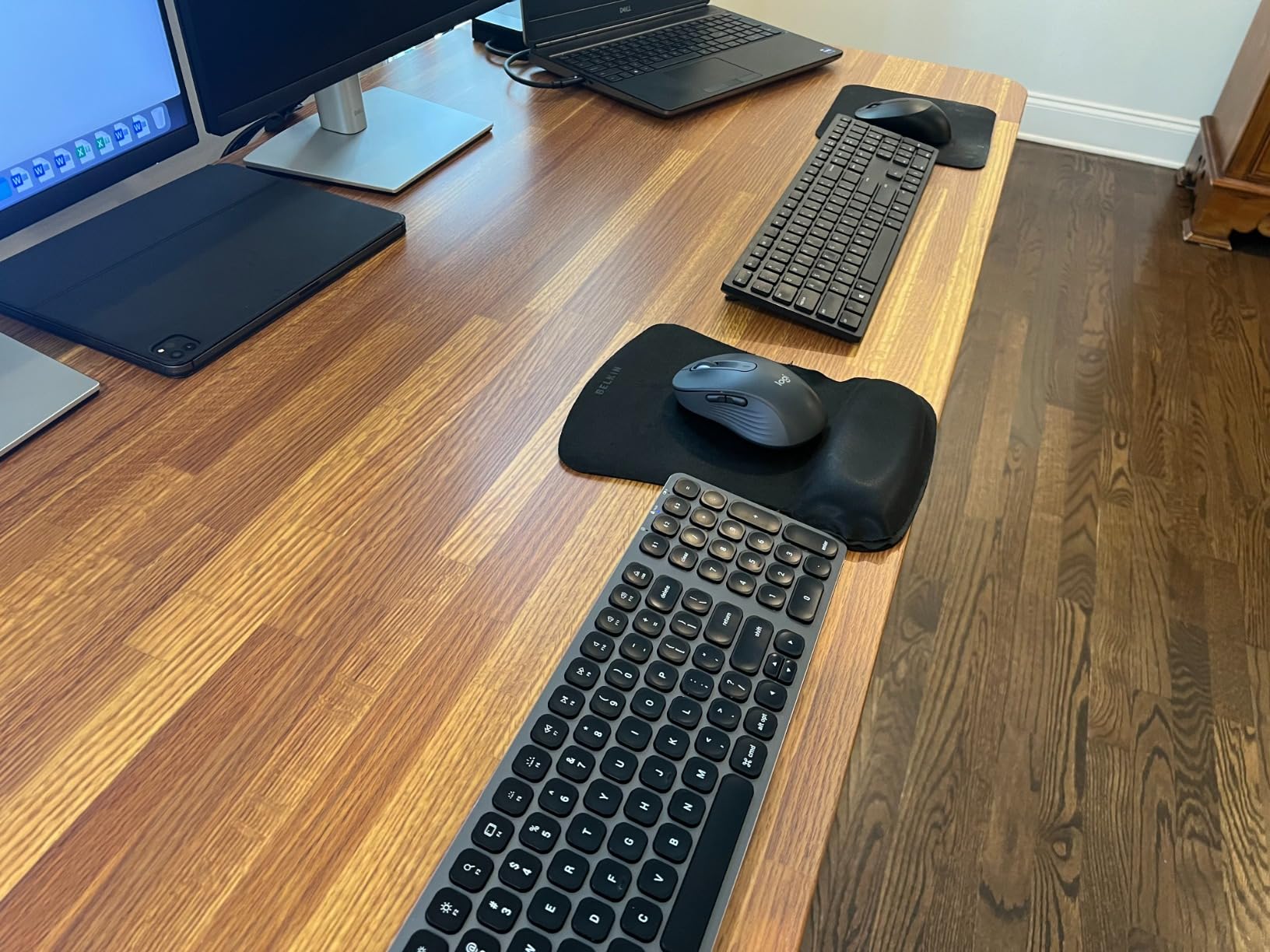
The Vari Classic is the one I keep coming back to for anyone at or above 6 foot 5 inches. It adjusts from 25 inches to 50.5 inches, and that 50.5 inch figure is the published maximum surface height rather than a frame number with an asterisk. Owners running dual monitors report that this is the first desk they have owned where the top simply stops being a compromise.
At full extension it stays rigid. The frame uses T-style steel legs with a mortise and tenon joint and a one-piece laminate top rated at 1.25 inches of thickness, and the reviews describe a surface that does not shift when you lean on it to type. That matters more for a tall user than it does for an average-height user, because tall users put more of their weight forward through their forearms when the surface is at their elbow height.
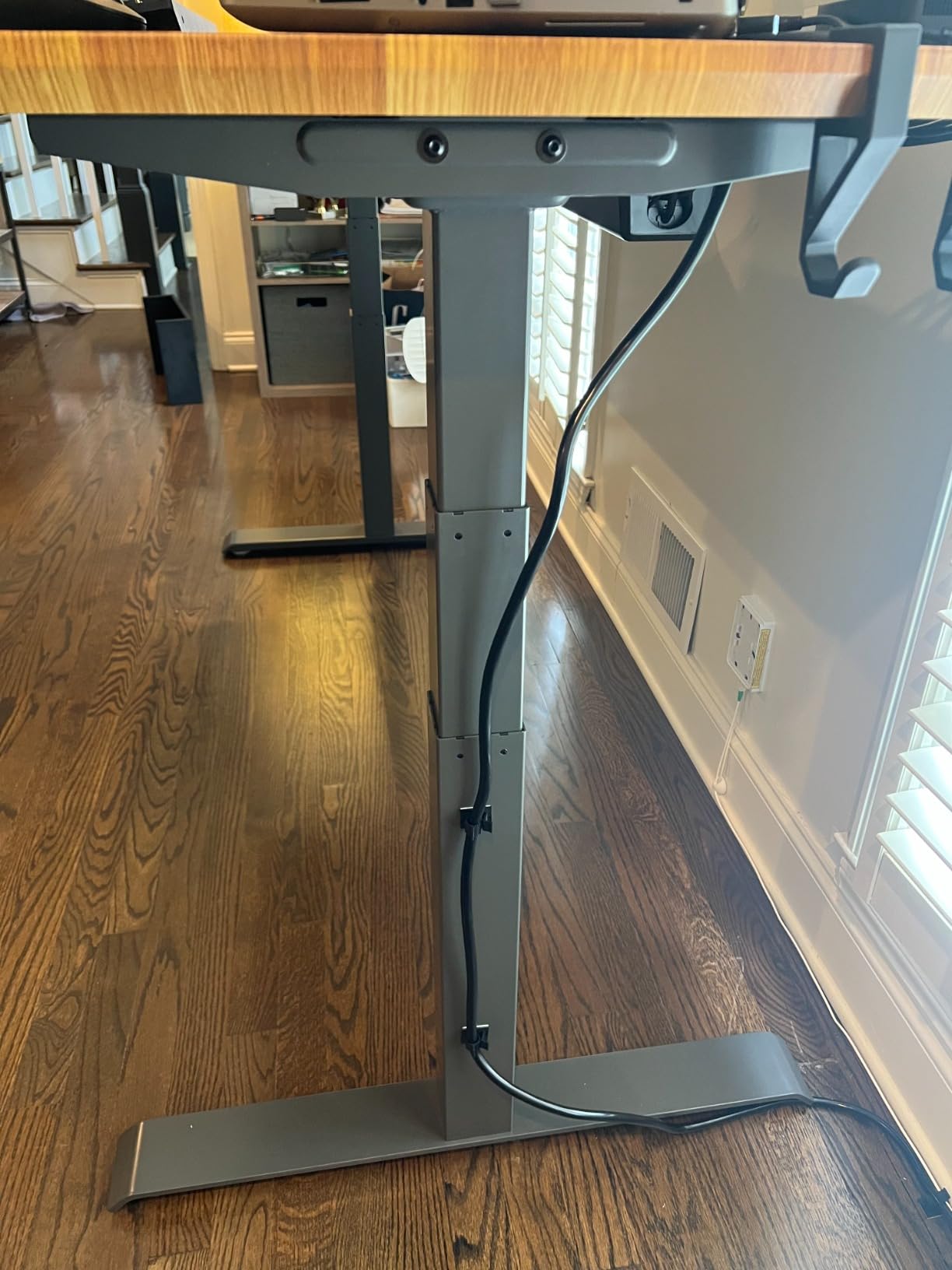
The dual-motor lift is quiet and smooth and runs four programmable presets. Assembly is the fastest in this group. The frame ships pre-installed and the legs slide and lock into place, which owners say is a genuinely under-ten-minute job with basic tools. The 30 inch depth and 60 inch width give you real room to set your forearms and spread two monitors without them falling off the back edge.
There are three things to weigh before buying. The 200 pound load rating is modest, and while it will carry two monitors and a laptop comfortably, it is not the frame for a full tower plus a heavy broadcast monitor array. The top is dense enough that moving the desk is a two-person job. And the included under-desk cable tray is small enough that owners doing serious cable management buy additional hardware.
Who this desk actually works for
This is the desk for a tall user with a normal office load. Two monitors, a laptop, a keyboard and a mouse puts you well inside the 200 pound rating and gives you the tallest surface we found in this group. The 60 inch width also solves the problem of a tall user’s stance, because you can sit with your forearms at a natural angle instead of pinching your elbows together.
The limited lifetime warranty is the strongest longevity signal in this roundup. Owners report units bought several years ago still running and still calibrated, which for a desk expected to last a decade matters as much as the frame quality itself.
Where it falls short for you
Do not buy it if your setup includes a desktop tower, a heavy monitor arm with three large displays, or anything else that pushes the real load past 200 pounds. In that case the TOPSKY frame below carries more than 100 pounds more rated load while still reaching 49.2 inches.
Also weigh the fact that this is a complete desk rather than a frame. If you want to pair an oversized top or a butcher-block surface, the frame-only options further down give you more freedom, at the cost of sourcing a top yourself.
2. FLEXISPOT E6 MAX Dual Motor 3-Stage 55×28: ten years of coverage and a monitor arm in the box
FLEXISPOT E6 MAX Dual Motor 3-Stage Electric Standing Desk, 55 x 28
Max height 50 inch
Min height 24.4 inch
330 lb capacity
Under 50 dB
Pros
- 50 inch 3-stage ceiling rated for users up to 6ft 5in
- 330 lb lifting capacity
- Ten year frame and motor warranty
- Monitor arm and keyboard tray included
Cons
- Assembly documentation widely criticised
- Top is not truly one piece
- Ships in two boxes
The E6 MAX is the pick if warranty length is part of your decision, because a ten-year frame and motor warranty is the longest in this group. The lift range runs 24.4 inches to 50 inches on a three-stage column, and the manufacturer states the desk is built for users up to 6 foot 5 inches. That makes it the second tallest complete desk here behind the Vari Classic.
Load is the standout number. The dual motors are rated to lift up to 330 pounds, which is the highest capacity of any complete desk in this roundup and comfortably more than the Vari Classic carries. Owners running multiple monitors report that the desk feels planted at standing height without visible wobble. The four backlit memory buttons mean you can drop to a sitting position and come back to your standing height without hunting for the keypad.
Two things arrive in the box that you would otherwise buy separately. The monitor arm matters more for a tall user than for anyone else, because at a 50 inch surface height your screens need to go even higher to reach eye level, and a desk-mounted arm is the cleanest way to get them there. The keyboard tray is also included, which is worth something on a frame this tall because the tray needs to travel with the surface.
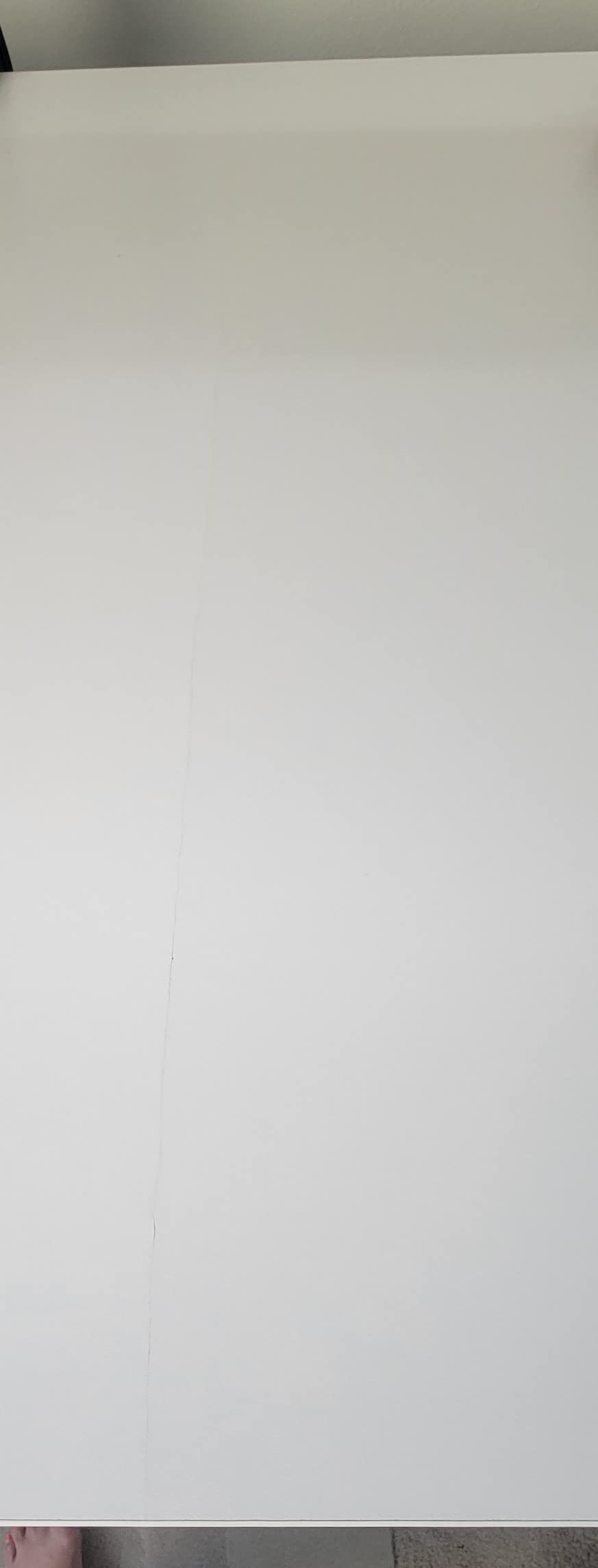
The documentation is the weak point. Reviews repeatedly describe the printed instructions as unclear, and the manual covers three different desk sizes in one document, so owners have to work out which section applies to their configuration. The workaround owners recommend is the brand setup video. The top is also described as a slab rather than a true single piece, with small glued sections visible up close.
Why the ten-year warranty should matter to you
A frame that reaches 50 inches has to run its columns further than a standard two-stage frame, and taller frames work harder at their limit. A ten-year frame and motor warranty is the manufacturer telling you they expect the extended column to last. Two-year electronics coverage is included on top of that, which is a reasonable split.
If you are buying once and keeping the desk for the length of a home office career, this is the strongest warranty position in the group. Our electric standing desk picks for producers go further on setups with heavy signal chains if your load is more than office equipment.
Where it falls short for you
The 55 by 28 inch surface is narrower and shallower than the Vari Classic, and a tall user with a wide forearm and monitor stance will feel the pinch. If your monitors need to sit side by side with a keyboard and a laptop, budget for a wider top or accept a tighter layout.
It also ships in two boxes that can arrive days apart, so plan the assembly for a day when both have landed. And if you are above 6 foot 5 inches, a 50 inch ceiling is a marginal fit rather than a comfortable one. At 6 foot 6 inches and up, go straight to a 50.5 inch desk.
3. FlexiSpot E6 Bamboo 3-Stage 60×30: the widest complete surface at this height
FlexiSpot E6 Bamboo 3-Stage Dual Motor 60 x 30 Electric Standing Desk Sit Stand Up Desk, Holds 220 lbs, Adjustable Height w/ Memory Presets, Solid Bamboo Desktop & Black Frame, Ships in 2 Boxes
Lift range 23.6 to 48.8 inch
220 lb load
Under 45 dB
3 memory positions
Pros
- Three-stage columns reach roughly 50 inch at the top of the range
- Quiet dual motors under 45 dB
- 60 by 30 inch bamboo surface fits long forearms
- 5 year frame and motor coverage
Cons
- Listing shows 3 memory positions not the 4 in marketing
- Top and frame can arrive on different days
- Heaviest negative review share in the group
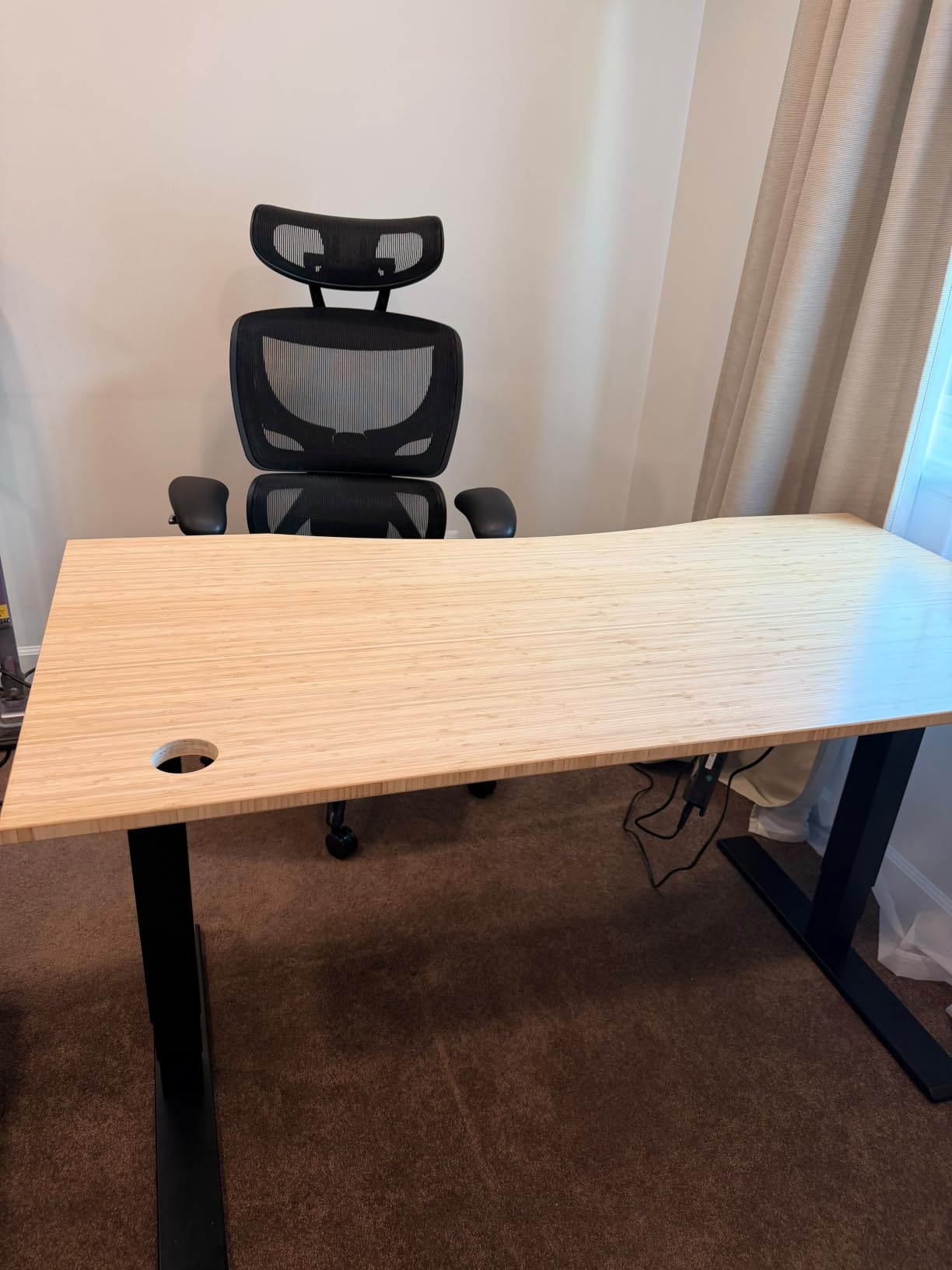
This is the bamboo option, and the surface is the reason to look at it. The 60 by 30 inch one-piece bamboo top is FSC certified and holds long forearms and two monitors without the width anxiety you get on a 48 inch top. The three-stage columns reach the top of the stated range at roughly 50 inches, which is enough for a tall user around 6 foot 4 inches to 6 foot 5 inches.
Quiet operation is the genuine surprise here. The dual motors run under 45 decibels, which is the quietest figure any desk in this group publishes, and owners describe the motion as smooth rather than just quiet. A desk that is audible at full extension is a real problem in a shared room, so this figure matters more than it first appears.
The 220 pound load rating sits in the middle of this group, high enough for dual monitors and a laptop, lower than the TOPSKY frame and the E6 MAX. Coverage is five years on frame and motors. A keyboard tray is included, which on a desk this tall is genuinely useful because your keyboard needs to be at the same surface height as everything else.
Two consistency problems to flag. The listing shows three memory positions while the marketing material references four, so treat the preset count as three. And 8 percent of reviews are one star, the highest negative share among these eight desks, so read the one-star reviews rather than only the summary.
What the 60 by 30 inch surface does for a tall user
Surface width is an under-rated constraint at standing height. Sitting down, you can angle your forearms inward and make a narrow top work. Standing up at 49 inches, you cannot, and a 48 inch top forces your shoulders to round forward over a keyboard that is too small. The 60 inch width here removes that problem entirely, and the 30 inch depth gives your forearms somewhere to land that is not the edge.
The bamboo itself is worth considering for a home office. It is warm to the touch, it hides dust and it does not show the fingerprints that a dark laminate collects.
Where it falls short for you
If you are 6 foot 6 inches or taller, the top of this range leaves you at the edge rather than comfortably above your elbow height. Two-stage-range desks that stop at 48 inches would be worse, but this is not the desk to buy at the very top of the height range.
It ships in two boxes and reviewers report the top and frame arriving on separate days, so plan assembly around that. The unit also weighs 75 pounds, and owners recommend two people for assembly.
4. Fromann Dual Motor 3 Tier Frame: the most flexibility on top size
Fromann Dual Motor Standing Desk Frame 3 Tier Legs Sit Stand up Electric Height Adjustable Desk Base for Home and Office (Grey)
Max height 49.3 inch
Min height 23.7 inch
270 lb load
Top not included
Pros
- 3 tier legs reach 49.3 inch
- Frame length adjusts 45.3 to 70.9 inch
- Accepts tops up to 84 inch long
- Dual motor smooth lift
Cons
- Desktop not included so you must source one
- Only 3 memory presets
- 270 lb rating below the TOPSKY frame
The Fromann frame is a frame-only purchase, and that is the whole argument for it. The 3-tier telescoping legs reach 49.3 inches, and the frame length adjusts from 45.3 inches to 70.9 inches, which means you can fit a top far longer than any complete desk in this group. The recommended top sizes run 45 inches to 84 inches long and 24 inches to 36 inches wide.
That width range is the reason to pick this frame. A tall user with a very wide monitor stance or a large drafting surface can pair an 80 inch top here, where the complete desks all top out around 60 inches. The dual-motor lift on an all-steel frame is described as powerful and smooth, and the frame itself weighs 55 pounds, which is light for a 49 inch reach.
Load is rated at 270 pounds, which is high for a three-tier frame and covers a heavy monitor array plus a tower. Tools are included in the box, and the handset is a digital display type with three memory presets. The 4.6 rating across its reviews is the second highest in this group.
The catch is obvious and it is the reason this sits fourth rather than higher. You do not get a desktop, so you are sourcing one separately, and you have to make sure the top you pick falls inside the 45 to 84 inch length and 24 to 36 inch width window or the frame will not hold it properly. Three presets is fewer than most desks here.
When a frame-only purchase is the right call
Buy the frame rather than a complete desk if you want a top thicker than 1.25 inches, and a thick top is free height for a tall user. It also is the only way to get a wider surface than 60 inches from this group, and the only way to match a top to a specific room shape you already own.
It is also the only option here if your setup is heavy. A 270 pound rating with a top you choose yourself means you can pick a top material that adds weight without pushing past the limit, because you control both numbers.
Where it falls short for you
At 49.3 inches this does not serve a 6 foot 6 inch user. It clears the elbow height of a 6 foot 4 inch person comfortably and sits just below what a 6 foot 5 inch user needs, so if you are in that band, choose the Vari Classic or the E6 MAX instead.
Brand awareness is the other practical issue. This is a much less recognised name than FlexiSpot or Vari, which matters less for a frame you will never look at again and more if you ever need warranty support. All tools are included, but the digital handset offers only three presets.
5. Vari ComfortEdge Electric Standing Desk 48×30: the same reach on a smaller top
Vari ComfortEdge Electric Standing Desk – 48×30 – Reclaimed Wood/Slate
Max height 50.5 inch
Min height 25 inch
48 by 30 inch top
Sloped front edge
Pros
- Same 25 to 50.5 inch dual motor lift as the Vari Classic
- Sloped ComfortEdge front edge eases wrist pressure
- Tool-free slide-lock assembly
- Limited lifetime warranty
Cons
- 48 inch top is the smallest surface here
- Capacity listed as 180 lb in one field and 220 lb in another
- Weighs nearly 110 pounds to move
The ComfortEdge runs the identical 25 to 50.5 inch dual-motor lift as the Vari Classic, so on height alone it ties for the tallest desk in this group. What makes it different is the front edge. The top has a sloped profile that owners describe as noticeably reducing wrist and forearm pressure through long typing sessions, and at a standing height where your weight is forward through your hands, that edge is doing more work than it would on a seated desk.
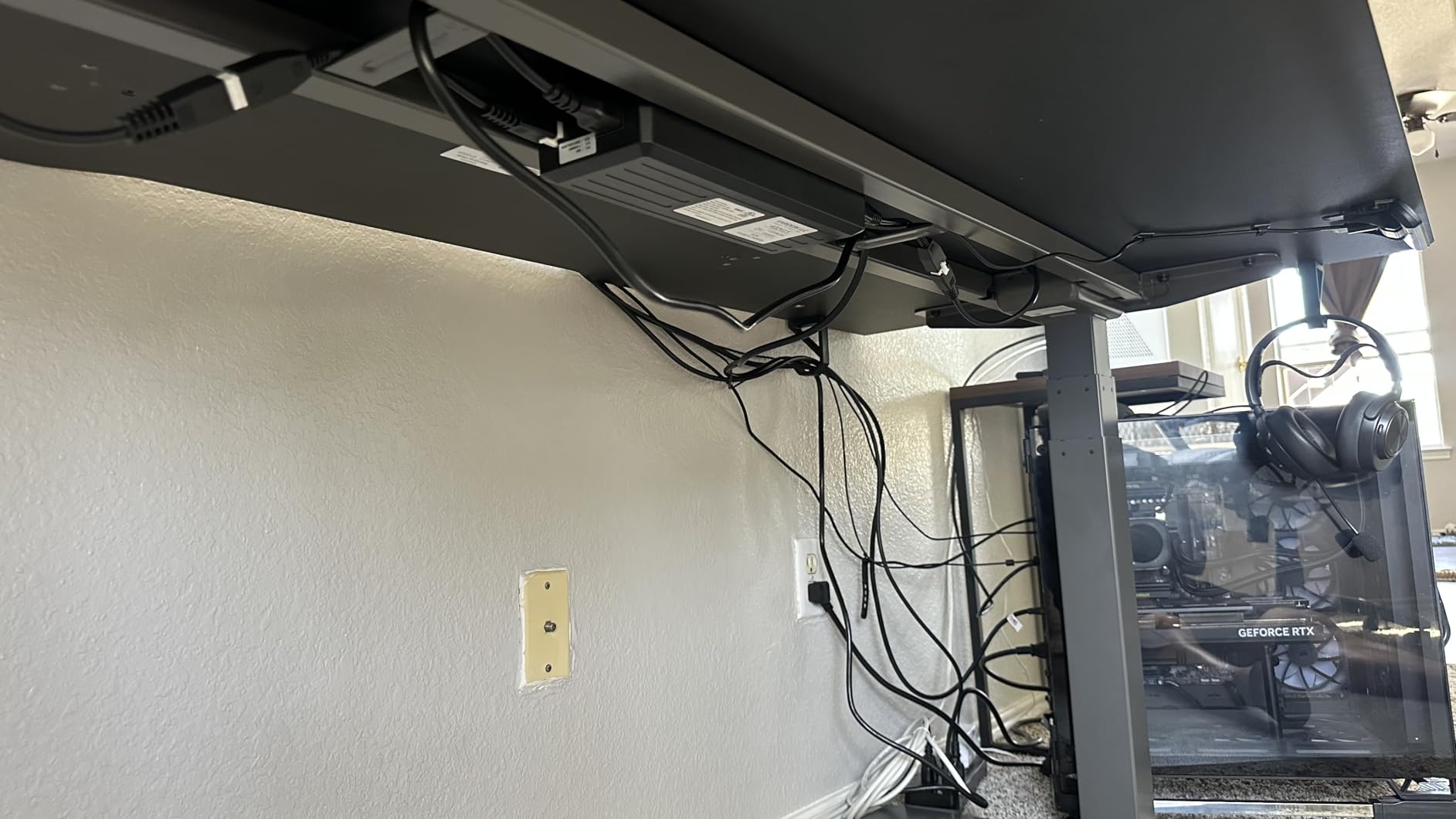
The frame is the same rigid steel T-style construction. Owners report no wobble even when they notch the top, and a recurring note is that the desk never hits a wall on the way up, which sounds trivial until you are pushing a 110 pound desk against a close wall. Assembly is slide-lock legs onto a pre-installed frame with no tools, finished in well under half an hour.
Two hooks ship in the box and work as a headset holder and a cable riser. Like the Classic, it carries a limited lifetime warranty, and owners report units bought years ago still working and still calibrated.
The 48 by 30 inch top is the problem. It is the smallest surface in this roundup, and it is the reason this desk sits fifth rather than second despite matching the winner on height and rating. A tall user who sets a wide monitor stance plus a keyboard on a 48 inch top is going to feel the edges. The published capacity is also inconsistent, listed as 180 pounds in one field and 220 pounds in the feature bullets, so treat the lower figure as the safe one.
Who should choose the sloped front edge
Choose this one if your standing hours are typing hours and you already have wrist discomfort. The sloped edge keeps your forearms at a flatter angle than a square edge, and reviews on this listing focus on exactly that benefit more than on anything else.
It is also a sensible choice for a smaller room. A 48 inch top leaves more floor space around it than a 60 inch top does, and the desk still reaches 50.5 inches. Our standing desk picks for music producers cover the cable routing side if this is an audio workstation.
Where it falls short for you
If your forearms spread wide or you run two monitors plus a laptop, the 48 inch top is tight. Buy the Vari Classic instead, which gives you the same reach and warranty with 12 more inches of width.
Weight is the other issue. At nearly 110 pounds, moving it needs a second person or caster wheels. And an occasional defective motor shipment is reported, though Vari replaced it quickly.
6. TOPSKY 3-Stage Dual Motor Frame 300 lb: the heaviest rated load here
TOPSKY 3-Stage Dual Motor Standing Desk Frame, 300 lb Capacity
Max height 49.2 inch
Min height 23.6 inch
300 lb capacity
1.37 inch per second
Pros
- 300 lb rating is the highest in this roundup
- 49.2 inch three-stage lift with dual motors
- Quiet operation under a butcher block top with three monitors
- Accepts tops from 47 to 80 inch wide
Cons
- No built-in cable management
- Printed manual is generic and hard to read
- Anti-collision sensor can stop the lift if mounted off level
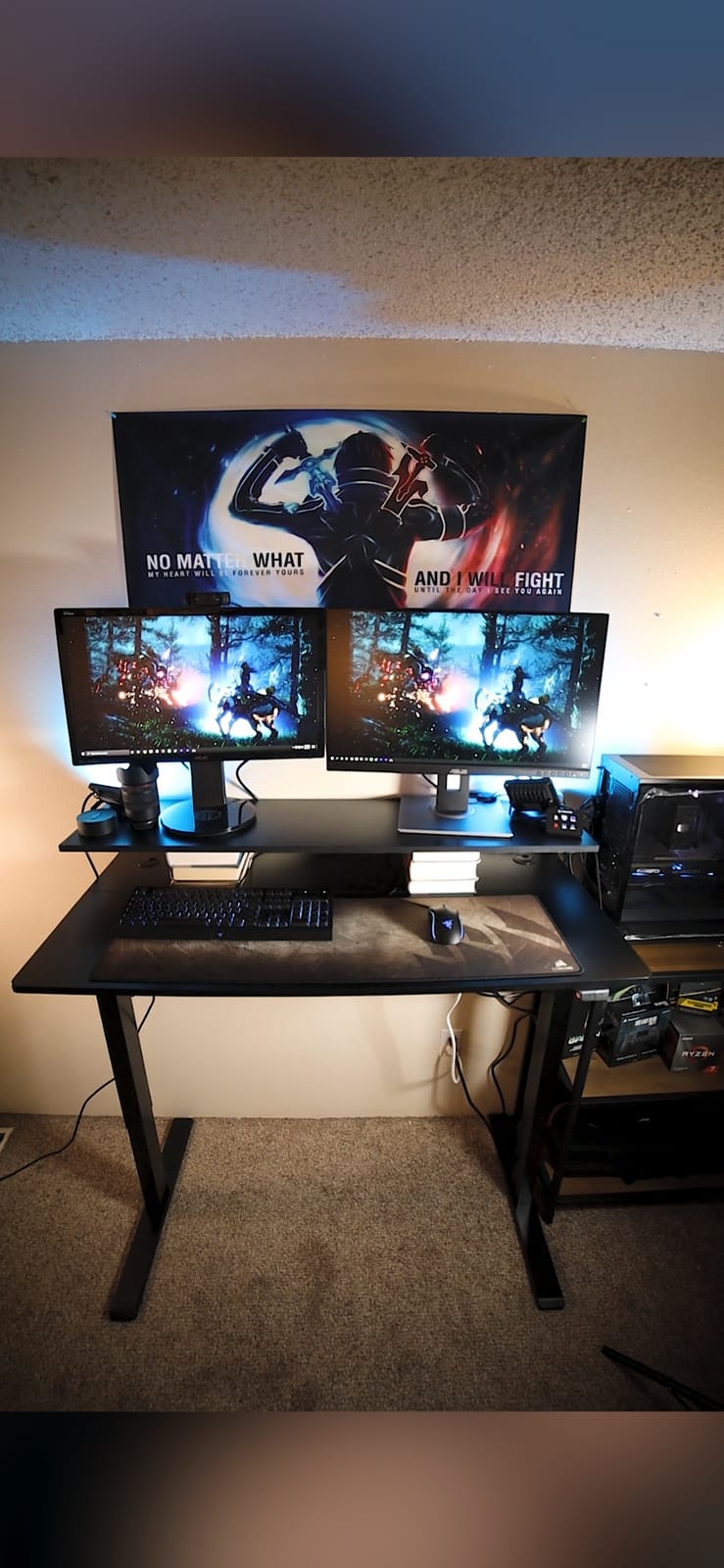
This frame carries the highest rated load in the group at 300 pounds, and that is not a marketing number with nothing behind it. Owners pair it with a butcher-block or heavy laminate top plus a 32 inch monitor and two 24 inch monitors, and describe the motors as smooth and quiet while doing it. The 3-stage dual-motor column reaches 49.2 inches, and a reviewer at 6 foot 0 inches confirms it goes higher than they can work at, which for a tall reader is the point.
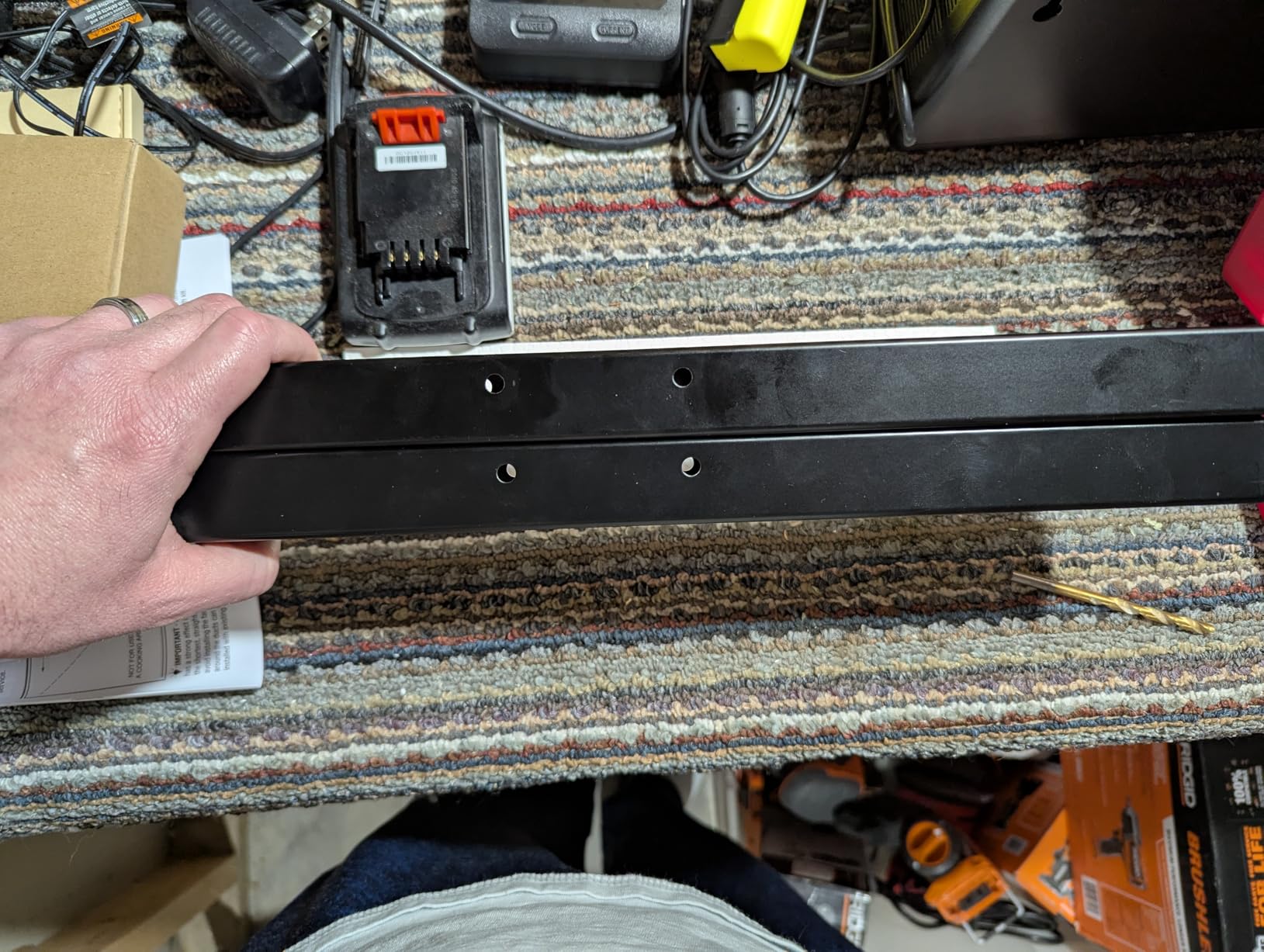
The top compatibility range is unusually wide. The crossbars accept tops from 47.2 by 23.6 inches at the small end up to 80 by 31.5 inches at the large end, so you can build a wide surface for a multi-monitor tall-user setup. Lift speed is up to 1.37 inches per second, which is the fastest published figure in this group, and the LED handset has unit conversion so you can work in centimetres.
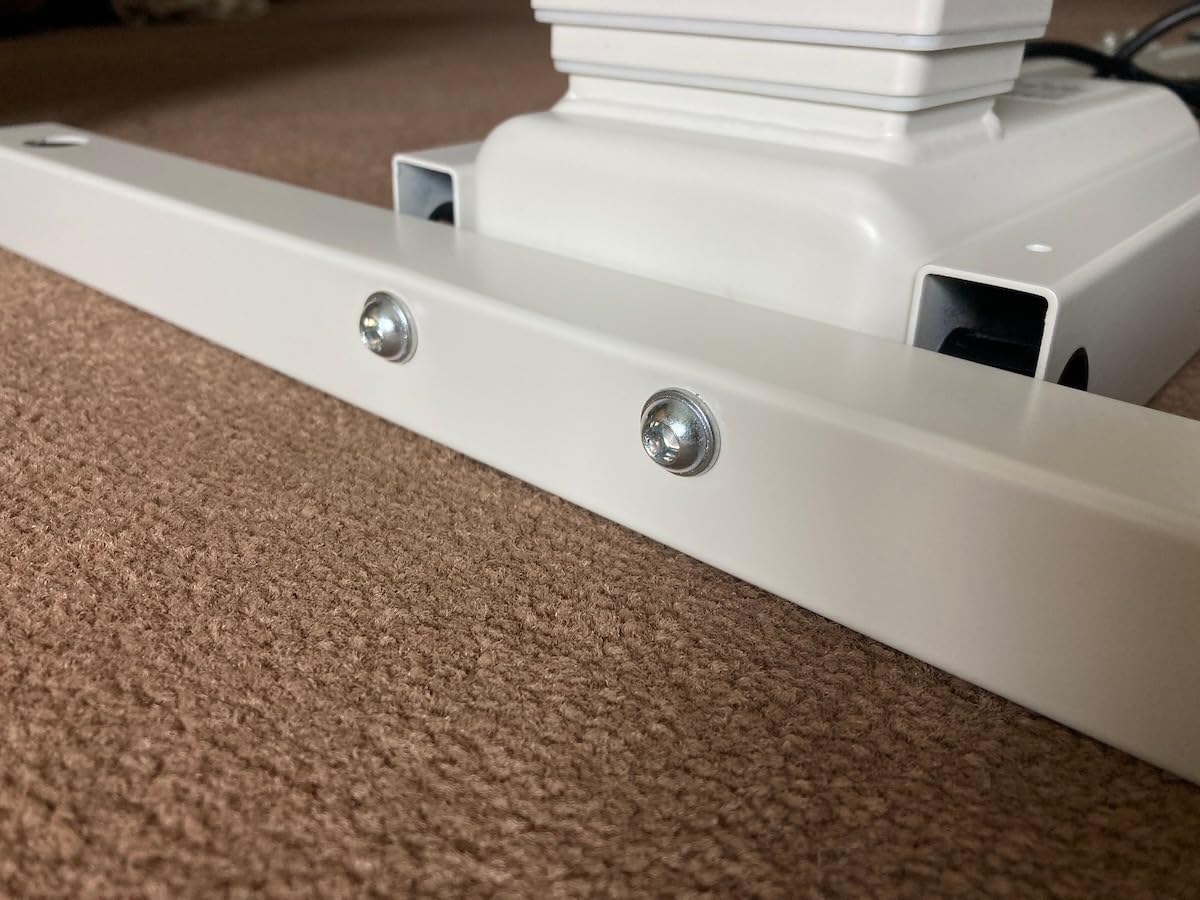
Cables are long enough for easy routing and cable straps come in the box, but there is no built-in cable management system, so owners improvise. If cable management is a priority for you, look at the complete desks higher up this list instead.
Two mechanical quirks to know about. The anti-collision and gyro sensor can interrupt a lift if the controller is not mounted level, and a power loss requires a manual reset under the desk. The printed manual is generic with small type, and owners consistently point to the assembly video as the better guide.
Why the 300 pound rating changes the decision
Height and load pull in opposite directions, because a frame that telescopes further has narrower columns carrying more of the load in compression. That is why the tallest desks in this group are not the heaviest rated ones. If your setup is tall, heavy and tall-heavy at once, that trade-off decides for you: a 6 foot 4 inch user running a tower, a monitor arm and a large array wants the 300 pound frame more than the extra inch of reach.
At 49.2 inches this clears the elbow height of a 6 foot 4 inch user with room to spare. It is a genuinely strong fit for that specific band, especially if your load is substantial.
Where it falls short for you
At 6 foot 6 inches and above, 49.2 inches is not enough. Do not stretch this frame to a height it was not built for, because the wobble reports in these reviews cluster at maximum extension on carpet or soft flooring, and side movement can be felt up there.
One reviewer also reported noticeable wobble even at sitting height along with a poor return experience, so check the return terms carefully before committing. There is no included desktop, so budget separately for a top.
7. HUANUO 59 x 30 3-Stage Electric Standing Desk: a stable complete desk at 49.2 inches
HUANUO 59 x 30 Inch 3-Stage Electric Standing Desk, Brushless Motor, Black
Max height 49.2 inch
Min height 23.6 inch
220 lb load
59 by 30 inch top
Pros
- Owners confirm no movement front to back at full height
- Quiet brushless motor with no stuttering
- 30 inch depth keeps the desk stable at max extension
- Well packed with foam and corner protection
Cons
- Power tools can strip the top
- Small step at the top seams can catch a mouse cursor
- Slight wobble reported while typing
The HUANUO 59 by 30 is a complete desk that holds 49.2 inches and stays planted at that height. Owners specifically confirm it does not budge front to back or side to side at full extension, and they credit the 30 inch depth for that stability. A deeper top resists the forward push that a tall user generates when typing at standing height, so the depth figure here is doing real structural work rather than just adding workspace.
The columns are 25 percent thicker and the side plates 30 percent longer than the previous design, and the brushless motor ran a 100,000-cycle loaded lifting test before it shipped. Noise is published at under 55 decibels, the highest figure in this group but still within the range most people will not notice in a home office. Four programmable presets with a digital display are easy to set.
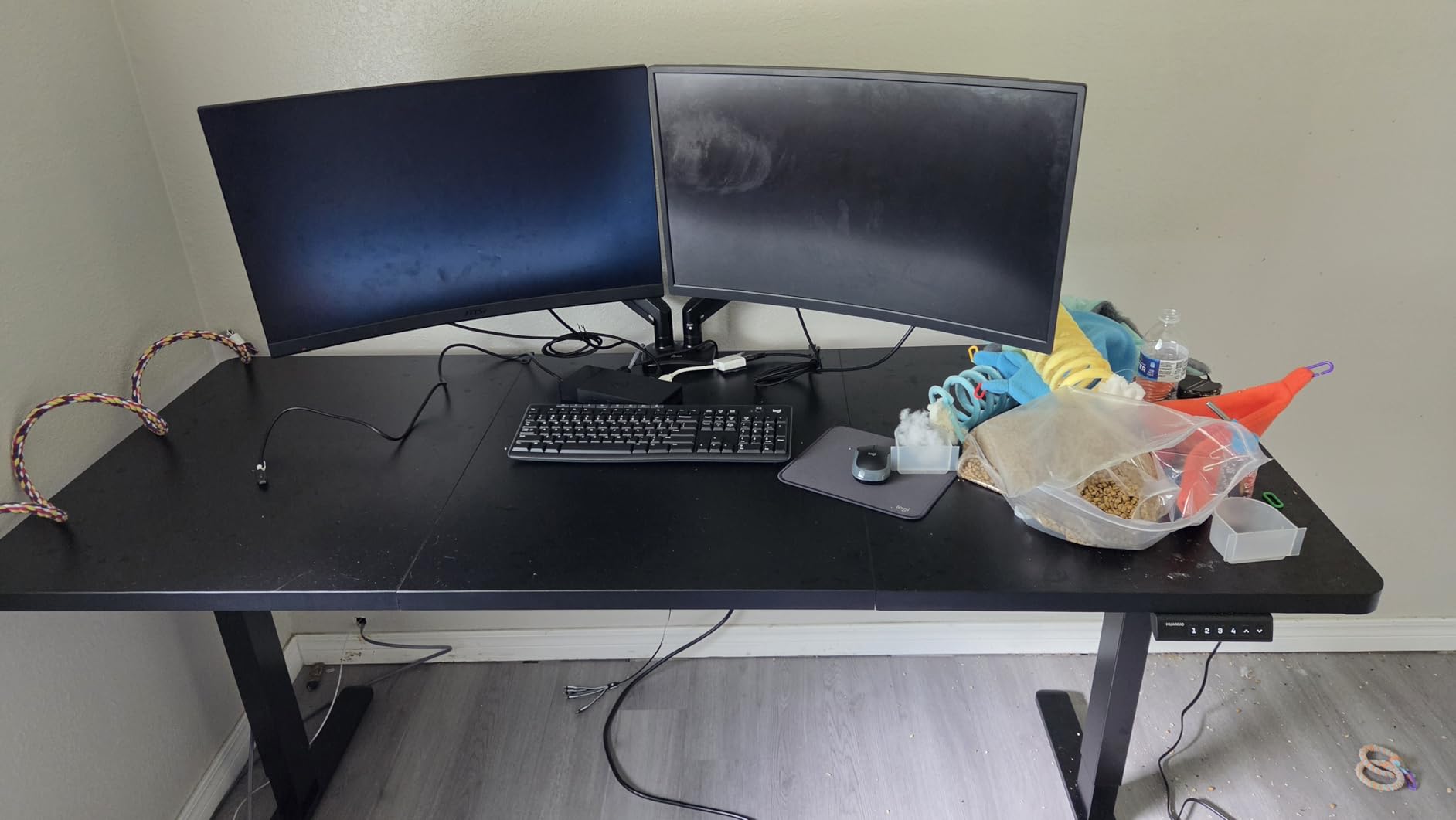
Packing gets an unusual mention in the reviews, with thick cardboard, foam and corner protection across both boxes. Two hooks are included, and the pre-drilled holes align well with rounded edges and corners.
Assembly is the recurring theme in the negative reviews. The manual permits power tools but over-torqued screws strip the particle board top, so hand tools are required. Seams between the three top sections can leave a small step that catches a mouse cursor if the alignment is off. A slight wobble while typing is reported, enough to move a small monitor. The desktop and frame also arrive in separate boxes.
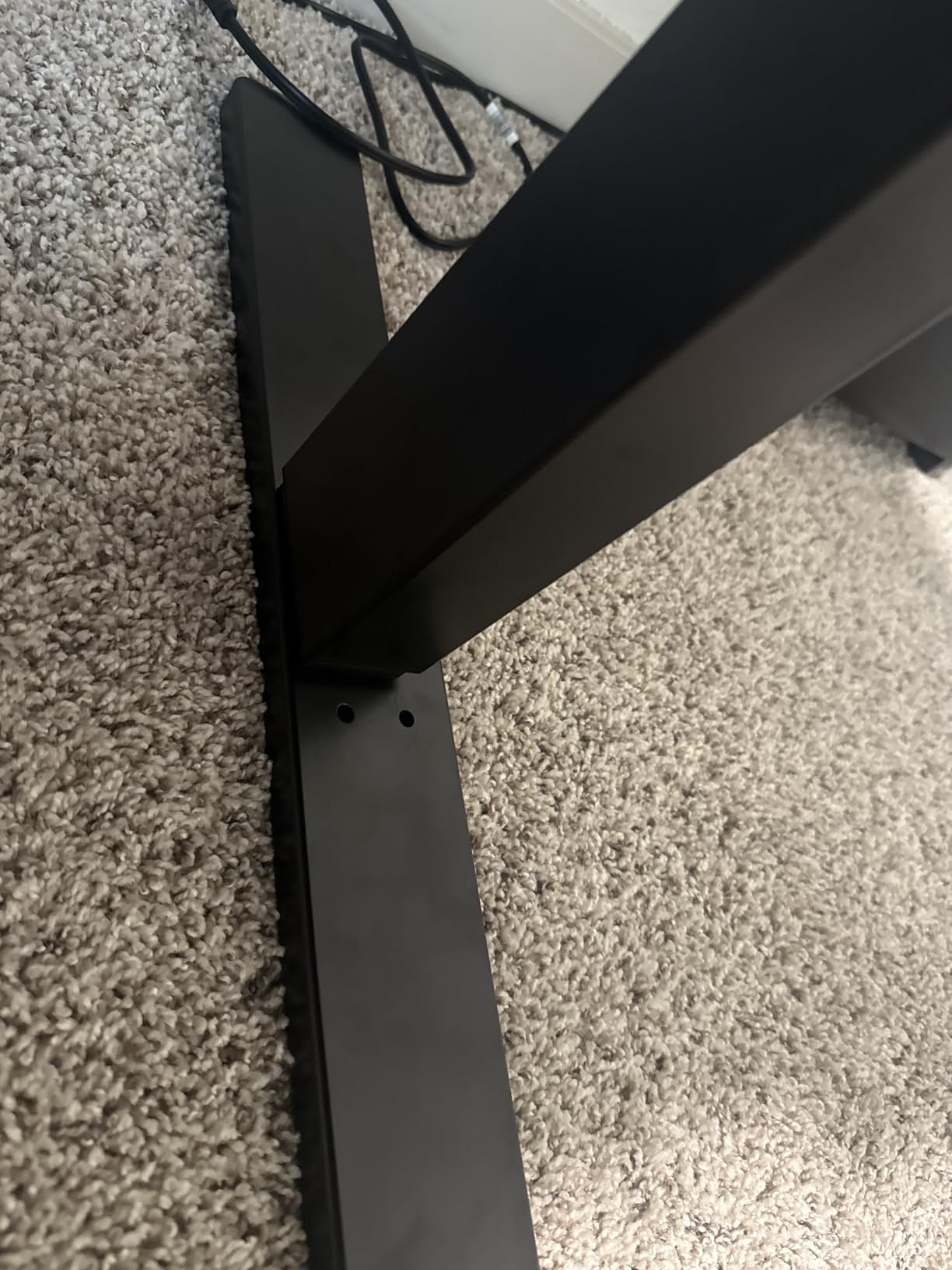
What the 30 inch depth actually buys you
Depth is a stability specification before it is a workspace specification. A 30 inch deep top distributes its own weight further forward and backward across the frame, and at 49 inches of extension that mass distribution is what keeps the desk from rocking when you type. If you have ever typed hard on a narrow standing desk and watched the surface flex, that is the reason it happened.
For a tall user this also means you can push your forearms forward into the surface without the front edge tipping. It is the more useful of the two dimensions at this height.
Where it falls short for you
At 49.2 inches this is a 6 foot 4 inch desk rather than a 6 foot 6 inch desk. If your elbow height is near 50 inches, it will not clear you comfortably and you should not try to work around it.
Handle the assembly with hand tools and take the time to align the top sections before you tighten anything. One owner also questioned the plastic parts in the motor drive for long-term durability, which is worth weighing against the ten-year frame warranty on the E6 MAX.
8. HUANUO 3-Stage Frame with Double Crossbeam: the built-for-6ft 7in frame
HUANUO 3-Stage Standing Desk Frame with Double Crossbeam,Black Frame Only
Max height 49.2 inch
Min height 23.6 inch
220 lb load
Frame only
Pros
- Stated fit from 4ft 11in to 6ft 7in
- Double crossbeam keeps a wide top solid at 49.2 inch
- Brushless motor under 45 dB with 100000 cycle test
- Four presets with two cable clips included
Cons
- Frame only so a desktop must be bought separately
- Included cable tray is too small for a power strip
- Limited depth adjustment on the crossbars
This frame is the one in the group that states its fit range explicitly: 4 foot 11 inches to 6 foot 7 inches. That is the tallest stated user height of anything here, and for anyone above 6 foot 5 inches it is worth reading even though the published maximum is 49.2 inches. Note the distinction. A stated fit range is a manufacturer comfort claim, whereas the maximum height is a mechanical limit, and a 49.2 inch ceiling will not clear a 6 foot 7 inch elbow height.
What makes it stable is the double crossbeam. Owners single that out as the reason the frame feels solid at full extension even with a thick oak or butcher-block top and multiple monitors on it. The columns are 40 percent thicker and the side plates 30 percent longer, built from cold-rolled and automotive-grade steel. The brushless motor runs under 45 decibels and passed the same 100,000-cycle loaded lift test as the complete HUANUO desk.
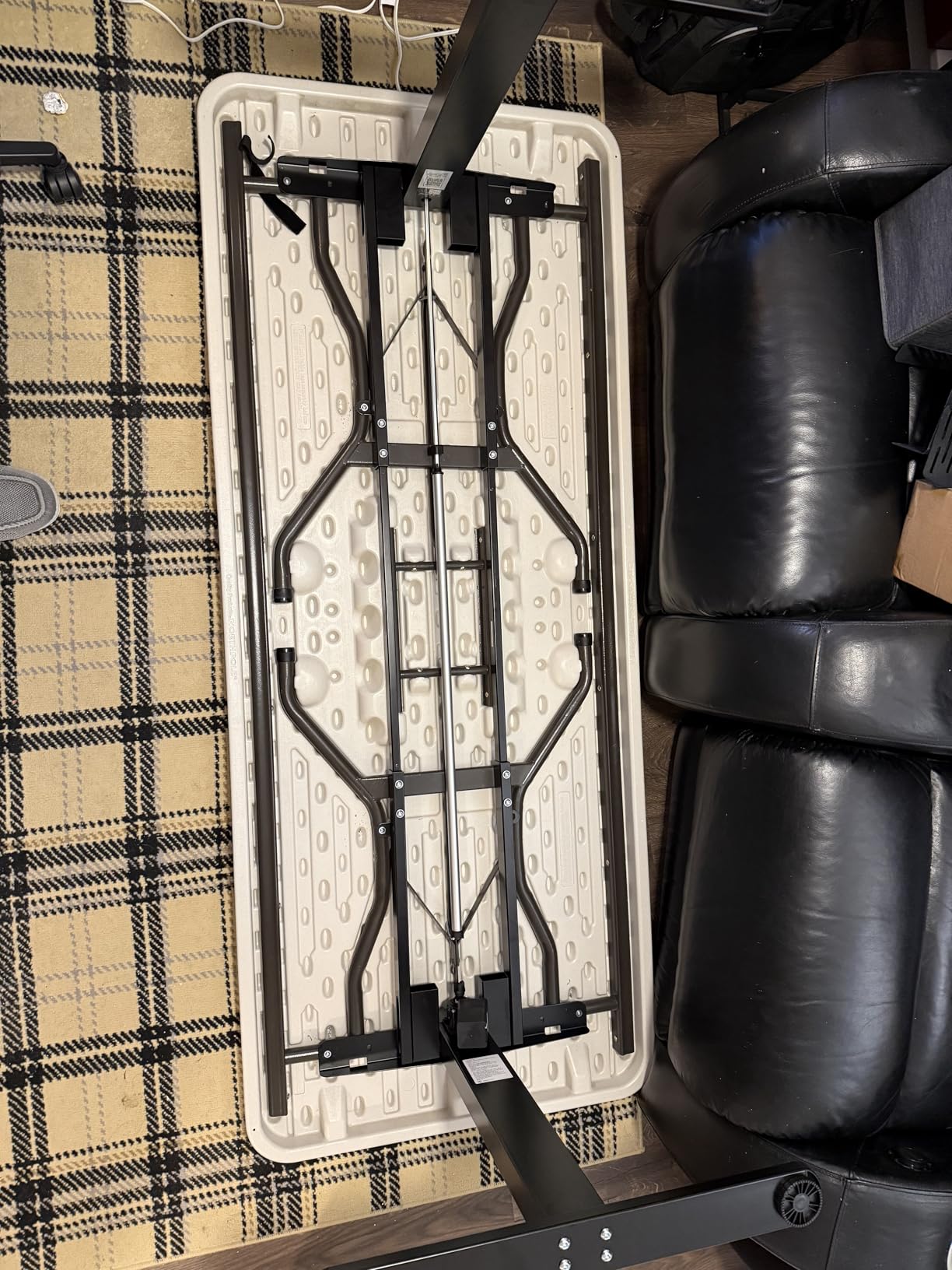
It also drops to 23.6 inches, so the same frame works for a short partner, which makes it a reasonable shared-desk option where other 3-stage frames here are one-sided. Four memory presets are included, along with two cable clips and two hooks. One owner runs three monitors plus a laptop on a three-quarter inch oak top on it.
It is a frame only, so you source the top yourself, and the crossbars accept tops from 43.31 inches to 86.61 inches wide, which is the widest compatibility window of any frame here. The included cable tray is reported as too small for a power strip, and depth adjustment on the crossbars is limited compared with the width range.
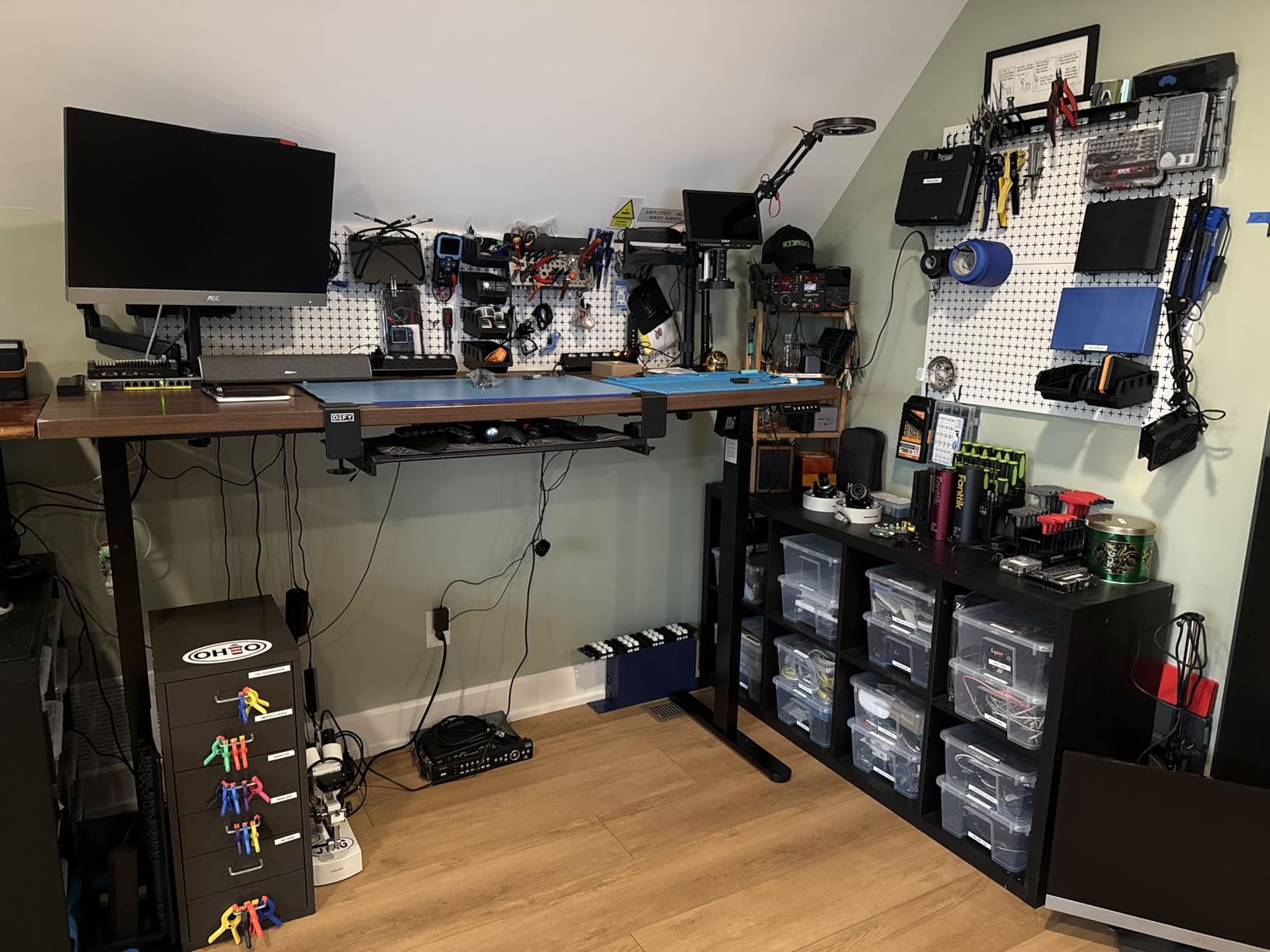
When this frame earns its place
It earns its place when your top is thick and wide. Three-quarter inch oak is heavy, and a top like that on a narrower frame produces visible wobble at 49 inches. The double crossbeam is the specific answer to that problem, and it is why this frame carries a 4.7 rating with 142 reviews behind it.
It is also the frame to pick if you share the desk with someone much shorter, because a 23.6 inch minimum is genuinely low. Our dual monitor standing desk guide covers the screen-arm decisions that pair with a frame this tall.
Where it falls short for you
The stated 6 foot 7 inch fit does not override the 49.2 inch mechanical ceiling. If your measured standing elbow height is above 48 inches, work out whether you need the extra inch from a 50.5 inch desk rather than assuming the fit range covers you.
At 220 pounds the load rating is mid-range, so a heavy monitor array plus a tower on a thick top would be pushing it. And you still need to buy a desktop and find cable management that fits a power strip.
What actually decides it: max height, frame versus surface, capacity and warranty
Height is the filter, but four other things decide the purchase once height is settled. We walk through each one in the order you should check them.
Frame height is not finished surface height
This is the most common spec-reading error in this niche and it causes people to reject desks that would have worked. A published frame height is the height the top of the frame reaches, not the height of the surface you type on. Add the thickness of the desktop to get the finished surface height.
The Vari Classic lists a maximum of 50.5 inches for a top that is 1.25 inches thick, which is the number you type at. Where a listing gives you a frame number and a top thickness, the finished surface height is the sum of the two. When in doubt, look for the manufacturer to state the surface height rather than the frame height. Any listing that publishes only a frame number is asking you to do arithmetic, and retailers get this wrong often enough that we would rather you check it yourself.
Two-stage, three-stage and what each one buys you
A two-stage frame has two telescoping sections and typically tops out between 47 and 48.4 inches. A three-stage frame has three, and reaches between 49.2 and 50.5 inches depending on the design. That extra section is the entire reason a 6 foot 4 inch user is choosing a more expensive frame, and it is the single biggest determinant of whether a desk fits you at all.
Four-leg frames are a separate category. They trade some reach for a wider base, which resists wobble at high extension because there are four feet on the floor instead of two. None of the eight desks here use a four-leg base, and for a tall user that is a real limitation to be aware of if your setup is heavy enough that lateral movement bothers you at 49 inches.
Reach versus load, and why the tallest desk is often not the heaviest
Every inch of extra reach narrows the columns that carry the load. That is physics rather than marketing, and it shows up clearly in this list. The Vari Classic reaches 50.5 inches and rates 200 pounds. The E6 MAX reaches 50 inches and rates 330 pounds. The TOPSKY frame reaches 49.2 inches and rates 300 pounds.
So if your body height is the binding constraint, buy on max height. If your equipment is the binding constraint, buy on load and treat the last inch of height as negotiable. A 6 foot 4 inch user with a heavy tower should take the 300 pound frame at 49.2 inches over a 200 pound frame at 50.5 inches.
Stability and wobble at full extension
This is where published specifications run out and owner reports begin, because deflection is not a manufacturer number. The pattern across these reviews is consistent. Wider and deeper tops are more stable. Four-leg frames are more stable than inverted T-style frames. Double crossbeams are more stable than single crossbeams. And carpet or soft flooring introduces side movement that hard flooring does not.
The most useful signal in these reviews is that owners of the HUANUO double crossbeam frame and the TOPSKY frame with a four-leg footprint report the least movement at height, while owners of narrower tops report the most. If you are at the top of the height range, a 30 inch deep top is the cheapest stability improvement available to you.
Warranty length, and what counts as a long warranty
Warranty length is the best available proxy for how long a desk is expected to last, and the range here is wide. The two Vari desks carry a limited lifetime warranty, which is the strongest position in the group. The FlexiSpot E6 MAX carries ten years on frame and motors with two years on electronics. The FlexiSpot E6 Bamboo carries five years on frame and motors. The TOPSKY frame carries up to five years of after-sales support. The Fromann frame carries a limited warranty with no specific term stated.
For a desk you expect to keep for the length of a home office career, anything under five years is worth weighing carefully. A tall frame works harder at its limit than a standard one, so the warranty term is doing more work in this niche than it would for a fixed-height desk.
Monitor height and whether you still need an arm
Yes, you still need one, and this is the most-skipped topic in the standing desk niche. If your desk reaches your elbow height at standing, your eyes sit considerably higher than they do when you are seated, and your monitors have to rise with you. A desk that gets you to a correct elbow height does not automatically get your screen to eye level.
The rule is that the top of your screen should sit at or slightly below eye level while you are standing, at a viewing distance of roughly 20 to 40 inches. The FlexiSpot E6 MAX is the only desk in this group that ships with a monitor arm included, which is convenient at a 50 inch surface height. If you are buying any of the others and you use a monitor, budget for an arm rather than trying to solve it with a stand on a surface that is already moving.
Shared desks and the minimum height nobody mentions
If someone shorter shares the desk, the minimum height becomes as important as the maximum. Frames in this group bottom out between 23.6 and 25 inches, and the HUANUO double crossbeam frame at 23.6 inches is the lowest, which makes it the most flexible shared option here. Most two-stage frames bottom out nearer 27 or 28 inches, which is already too high for a 5 foot 2 inch partner to use seated.
The same advice applies to the sit-stand schedule. The widely cited 20-8-2 rule suggests two hours of standing for every eight hours seated and two hours of activity, and applying it sensibly at 49 inches means your standing hours are short and deliberate rather than all day. An anti-fatigue mat and footwear with real support make standing at a tall desk height far more tolerable, and both are worth factoring into whether you can hold that height for a full session.
What to do if you are 6 foot 7 inches or taller
There are three routes, in priority order. First, buy a desk with a published maximum above 50.5 inches and accept that you will be assembling it yourself or paying for delivery, because the retail channel mostly stops at 50.5 inches. Second, order directly from the manufacturer rather than through a marketplace listing, since marketplace listings of tall frames are frequently the standard frame rather than the tall frame. Third, consider a sit-stand desk converter as a stopgap, with the caveat that converters are limited by the frame they sit on and rarely clear 50 inches.
None of the eight desks here are guaranteed to serve a 6 foot 7 inch user. That is a genuine gap in the market rather than a gap in this list, and the honest move is to measure your standing elbow height before you spend anything.
Frequently Asked Questions
How high should a standing desk be for a 6 foot person?
A 6 foot person typically has a standing elbow height of 44 to 45 inches, so a desk rated to at least 45 inches works, and 46 to 47 inches gives you a comfortable buffer. Measure your own elbow height rather than relying on your height in feet, because arm length varies as much as height does. Add an inch above your measured elbow height to leave room for your keyboard, monitor base and any equipment on the surface.
How tall should a standing desk be for 6’4u0022?
For someone 6 foot 4 inches tall, look for a published maximum surface height of 49 inches or more. Your standing elbow height is probably between 47 and 48 inches, so any desk that stops at 47.7 or 48.4 inches will leave you a couple of inches short and force a slouch. Every desk in this roundup that clears 49 inches will serve a 6 foot 4 inch user.
What is the maximum height a standing desk can reach?
The tallest electric standing desks available through mainstream retail reach 50.5 inches, which is the figure published for the Vari Classic and the Vari ComfortEdge. Three-stage frames cluster between 49.2 and 50 inches. Beyond that you move into brand-direct ordering rather than retail, where published maximums climb further. Always check whether a listing states the finished surface height or the frame height, since the desktop thickness sits on top of the frame number.
Is 50.5 inches tall enough for someone 6’6u0022?
It is borderline rather than comfortable. A 6 foot 6 inch person typically has a standing elbow height of 49 to 50 inches, so a 50.5 inch surface clears you by only half an inch to an inch and a half. That is enough to work at without a slouch, but there is no headroom for a thick desktop on top. If you are at the taller end of 6 foot 6 inches, buy on the frame number plus the top thickness rather than the surface number alone.
What is the best standing desk converter for tall people?
Most converters top out well below the 48 inch mark because they raise a platform rather than a full frame, so they work for a 6 foot 2 inch user but not for a 6 foot 4 inch user. For taller people a three-stage frame is the more reliable route, since it reaches 49.2 inches or more. If you only need extra height part of the day, a converter on a deep desk can still work, but measure your standing elbow height before buying one.
What is the 20-8-2 rule for standing desks?
The 20-8-2 rule is a guideline suggesting roughly two hours of standing for every eight hours of sitting, with the remaining two hours spent moving. It exists to stop people from treating standing all day as automatically healthy. For a tall user the rule matters because the higher your desk, the more quickly fatigue sets in, so shorter standing blocks spread through the day work better than one long standing period.
Why does the tallest standing desk have the lowest weight capacity?
Because extra reach comes from adding telescoping sections to the lifting column, and each added section narrows the metal carrying the load in compression. The Vari Classic reaches 50.5 inches and rates 200 pounds, while the TOPSKY frame reaches 49.2 inches and rates 300 pounds. If your body height is the binding constraint, buy on max height. If your equipment is the binding constraint, buy on load and treat the last inch of reach as negotiable.
Do I still need a monitor arm if my desk goes high enough?
Yes, usually. Getting the surface to your standing elbow height does not automatically put your screen at eye level while you are standing, because your eyes sit noticeably higher at standing height than at sitting height. Aim for the top of the screen at or slightly below eye level at a viewing distance of roughly 20 to 40 inches. An arm also keeps the monitor array off the surface, which reduces the load the frame is carrying.
The final call on standing desks for tall users
The best standing desks for tall users are the ones whose published maximum height clears your standing elbow height before anything else enters the decision. The Vari Classic Electric Standing Desk 60×30 is our pick because it reaches 50.5 inches, carries a 4.8 rating across more than 2,000 reviews, stays rigid at full extension, and comes with a limited lifetime warranty.
At 6 foot 2 inches to 6 foot 3 inches you have room to choose on other grounds, and the FlexiSpot E6 Bamboo or the HUANUO 59 by 30 will both serve you well. At 6 foot 4 inches you need 49 inches or more, which is where the three-stage frames start. At 6 foot 5 inches to 6 foot 6 inches take a 50 to 50.5 inch desk and add a monitor arm. Above 6 foot 6 inches, measure your elbow height and plan on ordering direct.
Measure first, buy second. The two inches you save by guessing are the two inches you will be living with every working day.