

Most pet doors are a chimney in disguise. A single flexible flap in an exterior wall of a heated home lets warm air pour out and cold air rush in, all season long, and the damage shows up on your heating bill. We spent weeks sorting through the smart dog door market to find the best smart dog doors for cold climates, and the answer is not the flashiest WiFi model.
The doors that actually hold their own below freezing share three traits: a rigid panel or stacked flaps that seal against the frame instead of a floppy rubber sheet, a metal frame that will not warp, and a power source that survives a dead afternoon. We judged every unit against those criteria, plus the things owners complain about most, like ice jamming the panel and a cold metal tunnel that senior dogs refuse to walk through.
What follows is a seven-door shortlist with a cold-climate verdict on each one. We also explain the leak physics in plain terms, and how to measure your opening before you cut anything, because the single most common owner regret in this category is a hole in the wrong place.
Table of Contents
Top 3 Picks for Cold Climates in 2026
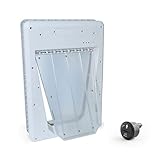
PetSafe Electronic Pet Door
- Rigid sealed panel
- Collar key for up to 5 pets
- Blocks wind and rain
- Dogs up to 100 lb

Power Pet PX-2
- Hermetically sealed panel
- Steel dead bolt
- Directional sensing
- AC power plus backup

PetSafe SmartDoor Large
- Spare SmartKey included
- RFID collar key
- LED status lights
- Cutting template
Our top pick, the PetSafe Electronic Pet Door, is the only one here with a review history long enough to trust in real winters, and its rigid sliding panel seals far better than a rubber flap. The Power Pet PX-2 is the better-built machine if you want a dead bolt and directional sensing. The SmartDoor Large bundle is the sensible spend if you want a second key in the box.
All 7 Smart Dog Doors Compared in 2026
| Product | Specifications | Action |
|---|---|---|
| PetSafe Electronic Pet Door, Collar Key, Dogs Up to 100 lb |
|
Check Latest Price |
| Power Pet PX-2 Fully Automatic Pet Door |
|
Check Latest Price |
| PetSafe Electronic SmartDoor Large with Extra SmartKey |
|
Check Latest Price |
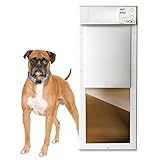 Power Pet PX-2DM Door Mount for Large Dogs Power Pet PX-2DM Door Mount for Large Dogs |
|
Check Latest Price |
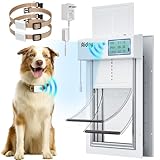 Aiday Two-Flap Electronic Dog Door, Large Aiday Two-Flap Electronic Dog Door, Large |
|
Check Latest Price |
 PlexiDor Performance Electronic Pet Door, Large Wall Mount PlexiDor Performance Electronic Pet Door, Large Wall Mount |
|
Check Latest Price |
 PetSafe SmartDoor Connected, App Controlled, Medium PetSafe SmartDoor Connected, App Controlled, Medium |
|
Check Latest Price |
1. PetSafe Electronic Pet Door, Collar Key, Dogs Up to 100 lb
PetSafe Electronic Pet Door, Collar Key Sensor, Dogs Up to 100 lb, Large
Rigid sliding panel
Collar key for 5 pets
4 D-cell battery
Dogs to 100 lb
8.6 x 3.25 x 27.1 inch
Pros
- Rigid panel seals against wind and rain better than a rubber flap
- Blocks raccoons and stray cats
- Separate keys for each of up to 5 pets
- Programmable entry and auto-lock modes
- Thousands of owners report years of service
Cons
- Bulky collar key on small breeds
- Loud unlock pop startles timid dogs
- Four D-cells consumed every one to three months
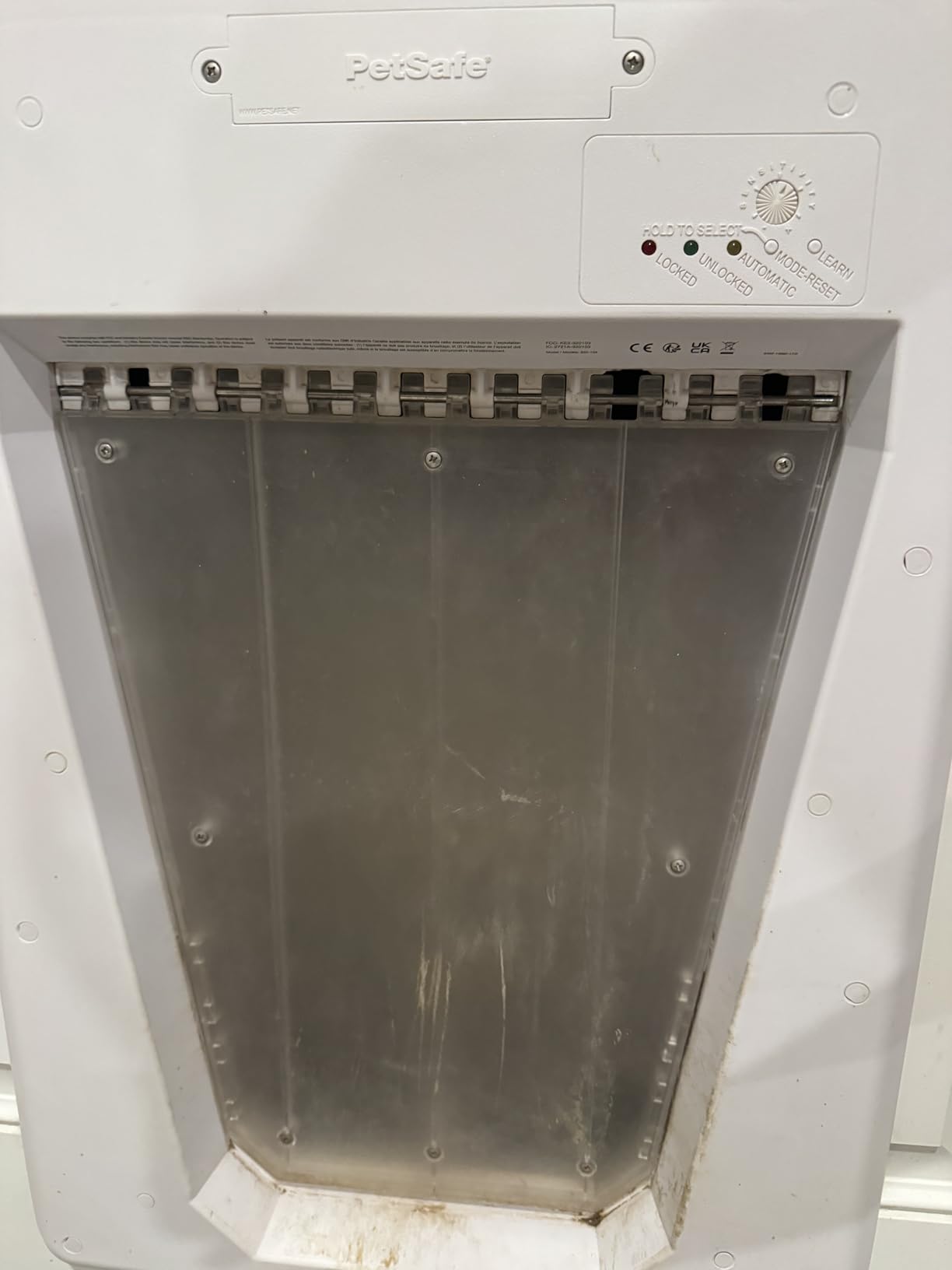
The single best thing about this door is that it has no flap. The panel is a rigid slab that slides across the opening, and when it closes it presses into the frame rather than hanging from it. That matters enormously in January, because a rubber flap that is 5 percent longer than its opening will never seal once the frame contracts.
Owners describe it as holding off heavy wind and cold drafts, and as keeping raccoons and stray cats from pushing through. Several report the panel still slides smoothly after years of daily use, which is not something we can say for the electronic hardware in every category.
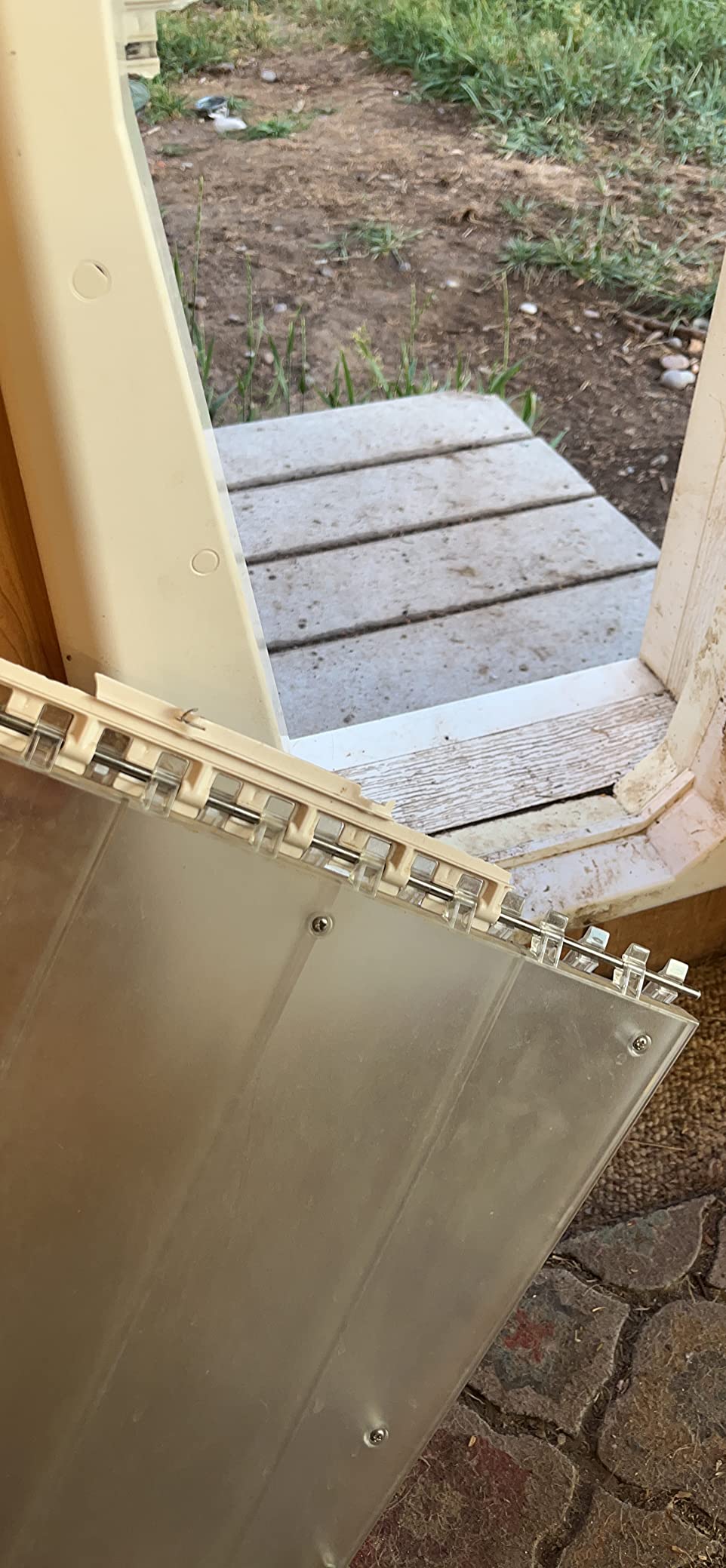
Where it loses points is the collar key itself. It is a chunky waterproof box that bothers owners of small breeds, and the unlock makes a sharp pop loud enough to frighten nervous dogs. Four D-cell batteries are the power source, and owners report replacing them somewhere between every one and three months, which in a cold garage is a chore you will do more often than you expect.
Two more details before you buy. Sensitivity can be finicky, and it will occasionally unlock on its own, which in freezing weather means you may find the panel open at 6am. The door also has to be installed dead square, or the rigid panel binds. That is the single most common installation complaint.
What you should check before you order
Measure your wall or door thickness and the cut opening carefully. This is a door-mount design with a wall install kit sold separately, so a deep exterior wall means buying the kit before the day you cut.
If you run more than two dogs, note the programming limit of five keys. Beyond that you need a different unit, and no firmware upgrade will change it.
Where owners report trouble
The battery drain is the loudest recurring complaint, and it gets worse in an unheated mudroom or garage where winter temperatures cut battery life short. A door that fails to unlock on a cold morning is a door your dog cannot get back in through.
Random unlocking and the sensitivity dial get the most criticism, and the loud pop is a behavioural rather than a mechanical problem, since some dogs simply refuse to approach a door that startles them.
2. Power Pet PX-2 Fully Automatic Pet Door
Genuine Power Pet Fully Automatic Pet Door from High Tech Pet Brand. Pet Collar Operated, 4 Way Access, Directional Sensing, Dead Bolt Lock, Air Tight, Quick, Quiet Operation, USA Customer Service
Hermetically sealed panel
Steel dead bolt lock
Ultrasonic MS-5 collar
AC power plus backup
18 x 6 x 47 inch
Pros
- Hermetically sealed panel blocks wind
- rain and drafts
- Directional sensing stops unlock from animals just passing by
- Steel dead bolt secures the opening immediately
- AC adapter with optional rechargeable battery
- Quiet panel travel
Cons
- Premium cost for the category
- Performance warranty depends on genuine MS-5 transmitters
- Only medium and large sizes offered
This is the most complete cold-weather machine in the group, and the reason is the panel seal plus the lock. Once the panel closes, a steel dead bolt throws immediately, so there is no gap and no wind-driven flutter in the leaf.
Directional sensing is the feature we did not expect to care about. The door only unlocks when your dog approaches the opening head-on, so an animal resting beside the door, or a stray pressing against it, gets nothing. In a cold climate that is a meaningful cut in wasted unlocks and cold air.
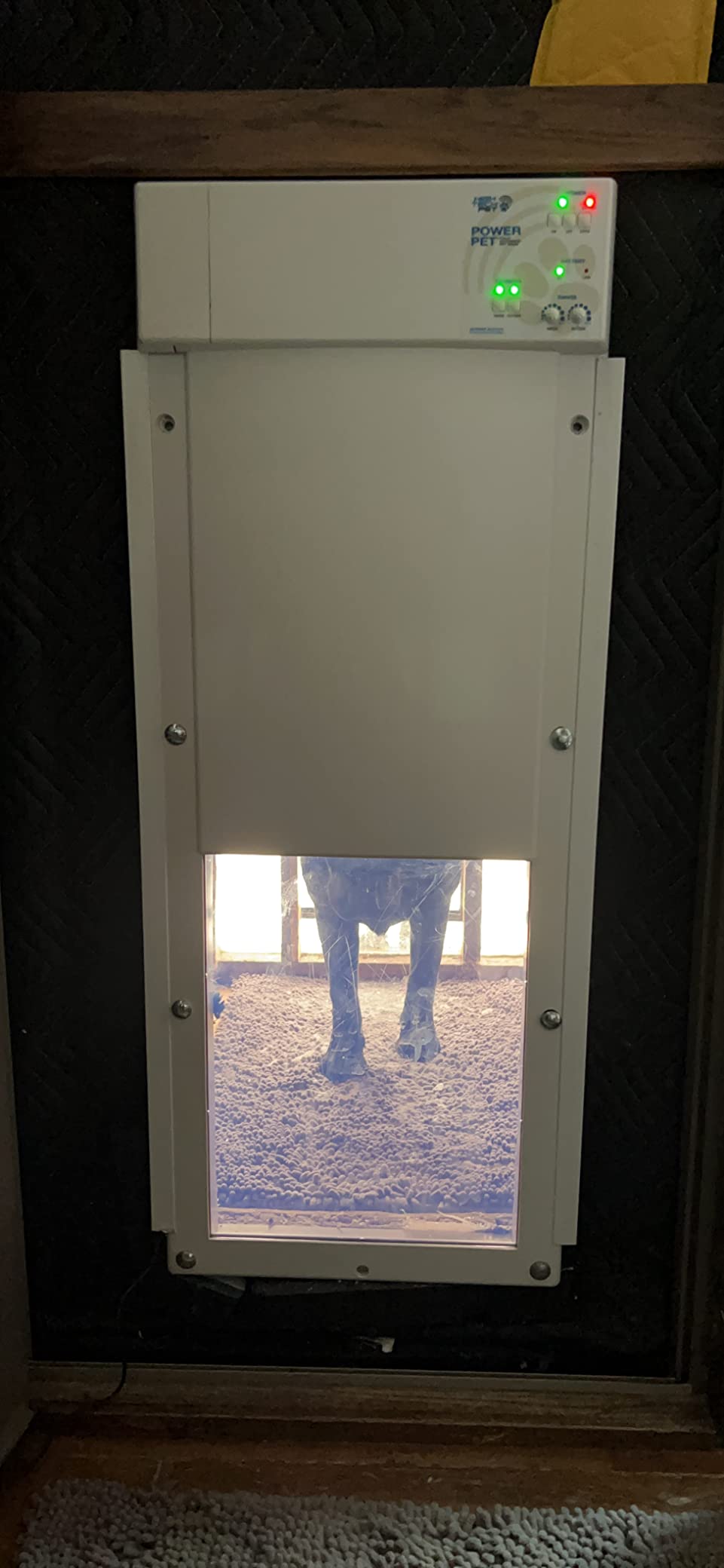
Power comes from an AC adapter, with an optional rechargeable battery for outages. That matters more in winter than it seems, because a battery-only door in an unheated porch is a door that eventually fails at the coldest moment of the year.
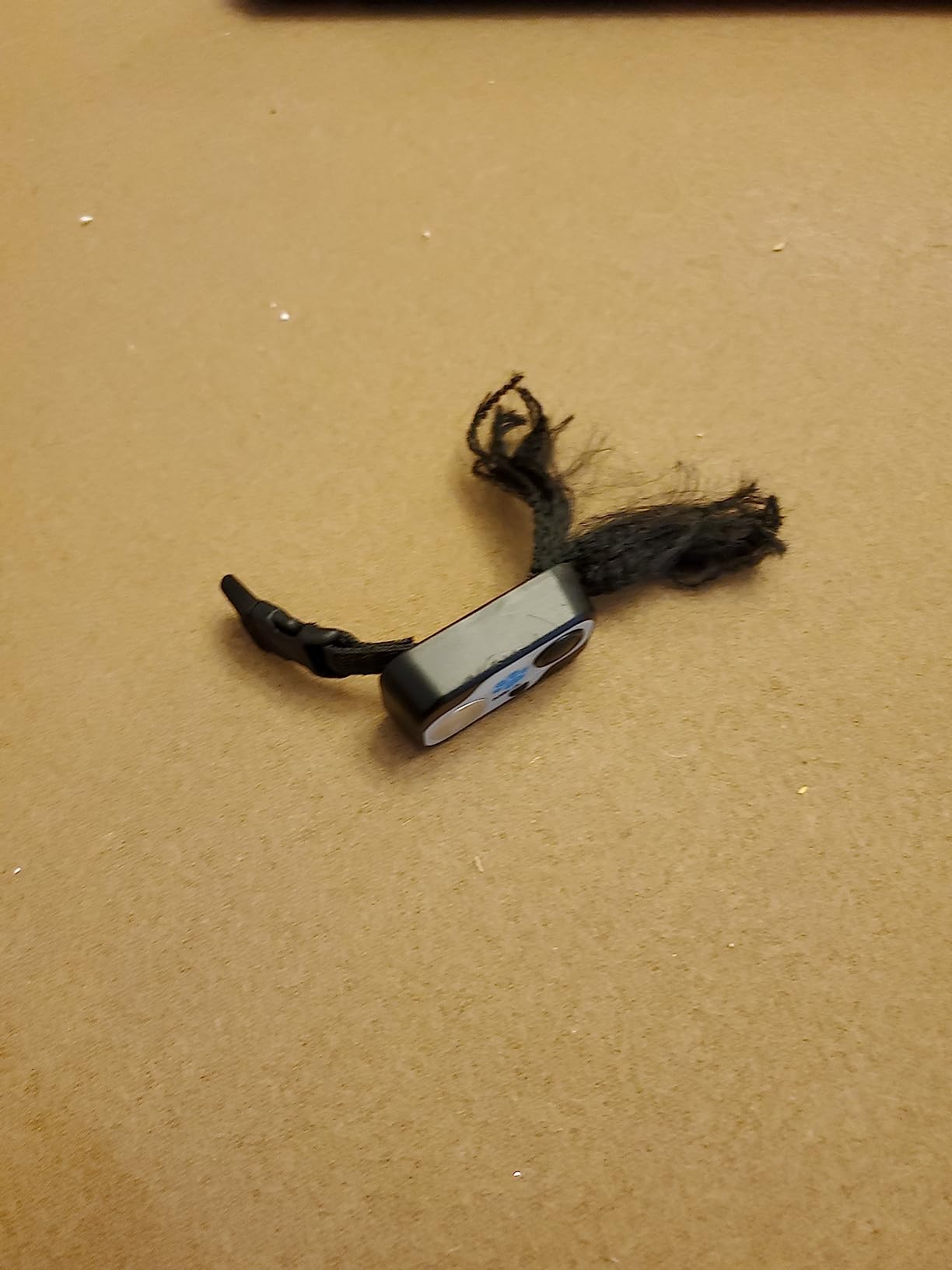
The catch is the MS-5 ultrasonic collar, which is included. The performance warranty depends on genuine transmitters, so mixing in cheap aftermarket collars costs you the warranty coverage on the whole door. Sizes start at medium, so a small dog household is out of luck.
Owners also note that the directional sensing needs training. A dog that approaches the door from the side will not get an unlock, and until the dog learns to come straight at it, you will be opening the door by hand in the snow.
What you should check before you order
Confirm your dog approaches head-on. If your dog is elderly, arthritic or hesitant in bad weather, directional sensing adds a training step you may not want.
Decide on power before you install. The AC adapter route needs a socket on the warm side of the wall, which is a reason to plan the opening rather than drill first.
Where owners report trouble
Multiple mounting configurations are ordered separately, so the door does not arrive with everything you need for a wall install. Factor that into your plan and your tools.
The size range is narrow. Owners of small breeds report moving up to a different product entirely, and the collar transmitter is a recurring cost if a dog goes missing outdoors.
3. PetSafe Electronic SmartDoor Large with Extra SmartKey
PetSafe Electronic SmartDoor – White, Large with Extra SmartKey
Extra SmartKey included
RFID collar key
LED status lights
Five programmable keys
Cutting template
Pros
- Spare SmartKey in the box covers a second pet or a lost key
- Key programming is straightforward
- LED indicators show door status at a glance
- Sensitivity control adjusts the trigger range
- Cutting template included
Cons
- Same loud unlock pop as the base PetSafe door
- Bulky SmartKey housing on small breeds
- Thin review history
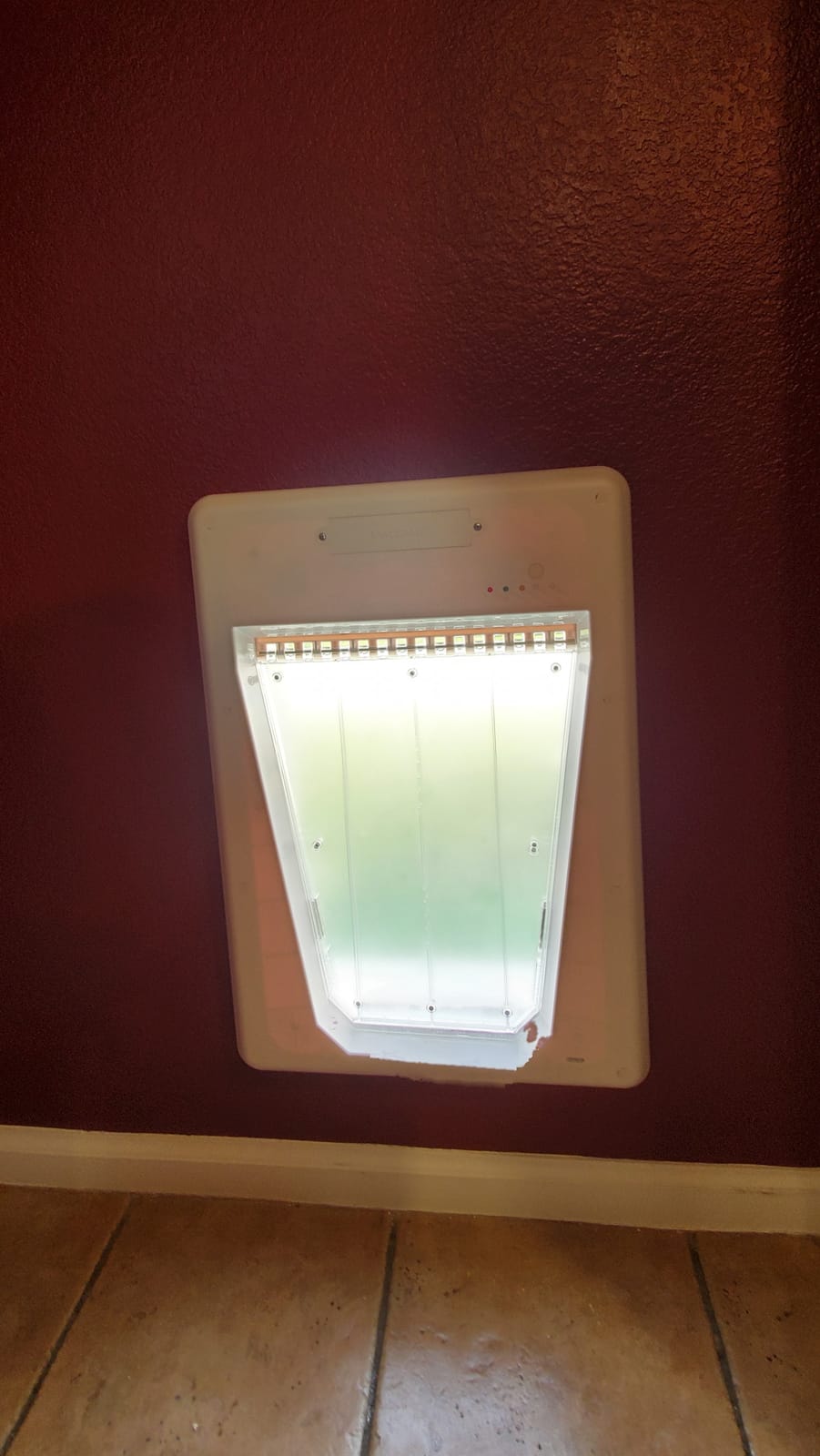
This is the base PetSafe electronic door bundled with a second SmartKey, and that spare is the entire reason to pick this listing over the standalone model. If you have two dogs, a backup key, or a dog whose collar key keeps getting chewed off in the snow, that second unit solves the problem before it starts.
Programming is the part PetSafe has clearly worked on. Keys are added at the touch of a button, up to five, and the LED indicators on the frame show the door state without walking outside to check. Sensitivity control lets you pull the trigger range back if it is unlocking too eagerly.
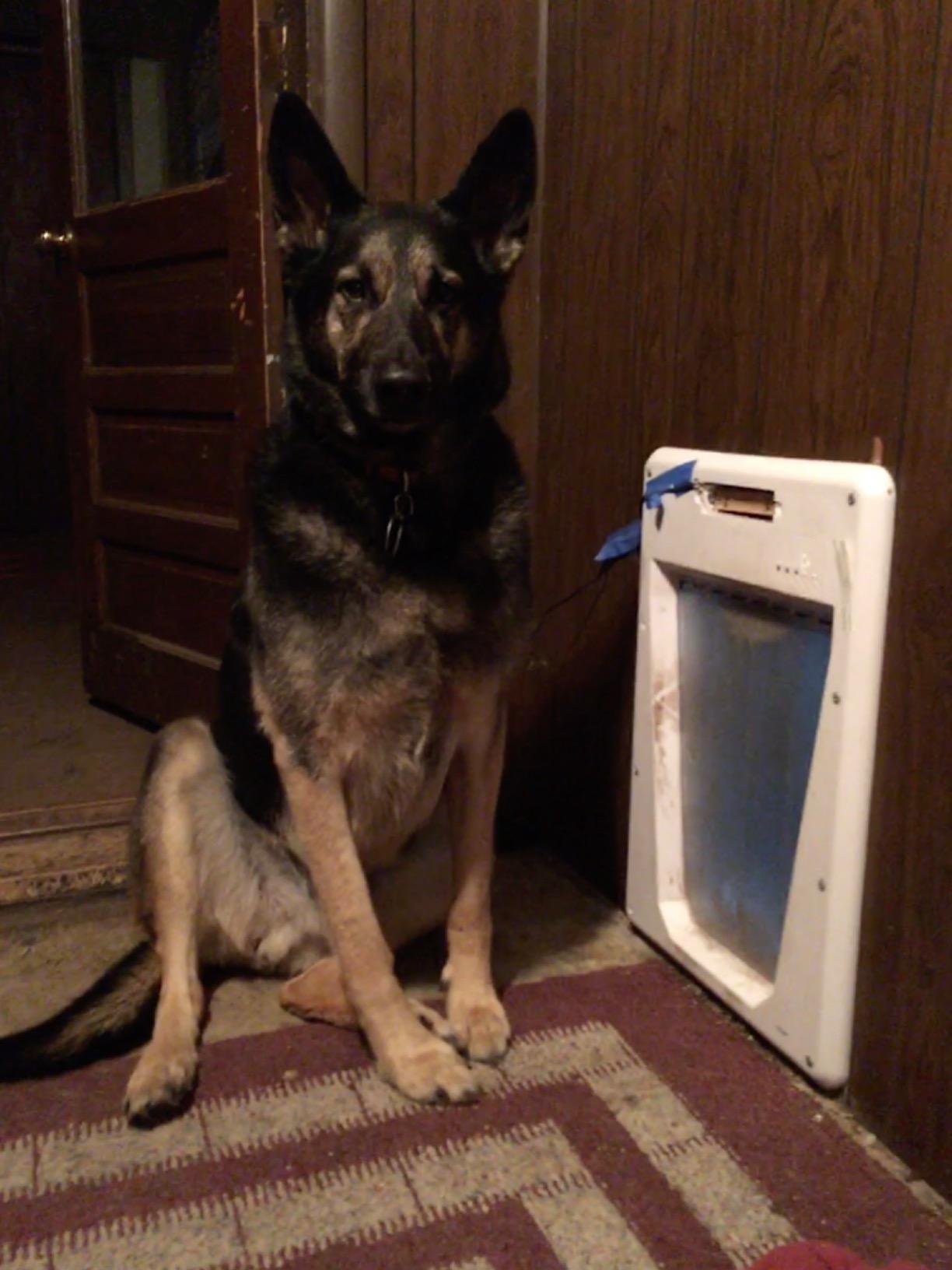
Thermally it is the same sealed rigid panel as our top pick, so it inherits the same good cold-weather behaviour. Where it falls short of the PX-2 is the absence of a mechanical lock, which means the panel itself is the only barrier between your house and the night.
What the reviews flag again and again is noise. Owners with timid dogs describe the unlock pop as the single thing they would change. The bulky key housing is the other recurring note, and the two-size range leaves medium dogs fitting awkwardly into one option or the other.
Battery life on the collar key is a periodic job, and in deep cold you will check it more often than the calendar suggests. The door itself takes 4 D-cell batteries, so you are managing two batteries in two places.
What you should check before you order
Check the collar girth on your dog. The SmartKey is a boxy unit, and owners of small and short-haired breeds report it catching on furniture and fences.
Look at your door thickness. This is a door-mount design, and a thicker exterior door may need a different approach than the frame kit.
Where owners report trouble
With only 158 reviews, this listing has a thinner history than the standalone model, so the long-term reliability picture is less well documented. Owners more often report installation fit and the unlock noise than hardware failure.
Because there is no dead bolt, an outage or a low battery means a panel that will not move. Plan a manual way to get your dog back inside on the worst night of the year.
4. Power Pet PX-2DM Door Mount for Large Dogs
Power Pet Automatic Electronic Pet Door by High Tech Pet – Pet Operated Dog Door, High Security, Air Tight, for Large Dogs 30-100 lbs. (12 1/4″ x 16″ Pet Opening), Door Mount, Easy Install – PX-2DM
Aluminum frame
Hermetically sealed panel
Steel dead bolt
12.25 by 16 inch opening
Up to 2 inch door
Pros
- Aluminum frame resists weather better than plastic
- Highest rated door here at 4.4
- Hermetically sealed panel holds out wind and rain
- Steel dead bolt secures every cycle
- Directional sensing limits false triggers
Cons
- Premium cost for the category
- Warranty depends on genuine MS-5 transmitters
- Door mount only and limited to 2 inch thickness
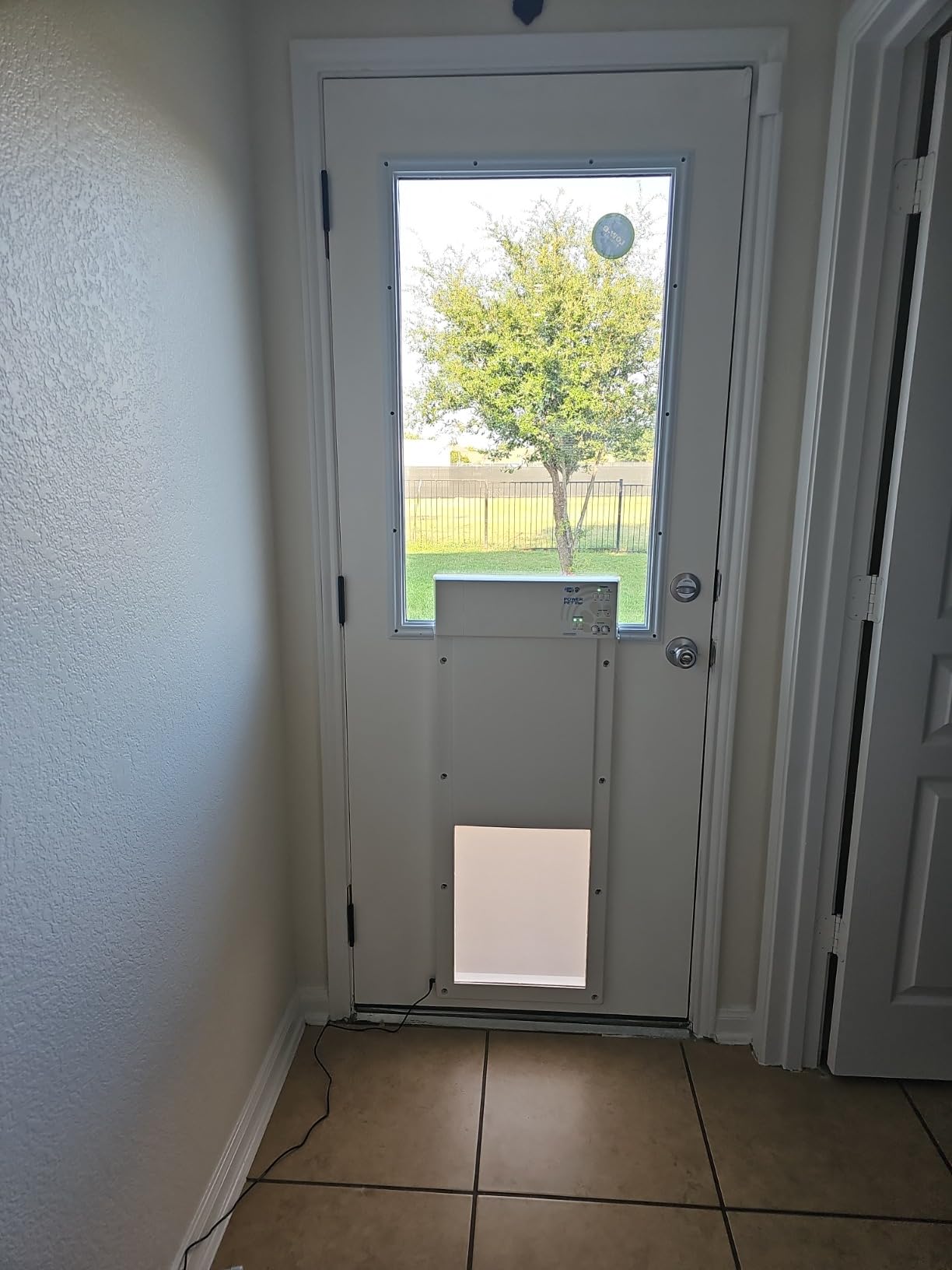
This is the door-mount version of the PX-2, and the frame is aluminum rather than plastic. In a freezing climate that single material change is worth more than most feature lists, because plastic frames flex and crack and then stop sealing.
The opening measures 12.25 by 16 inches and is rated for dogs between 30 and 100 pounds. Owners running Labs, Goldens and similar breeds call the opening generous enough that a medium adult passes without turning sideways, which cuts the hesitation that often stops a dog using a door in bad weather.
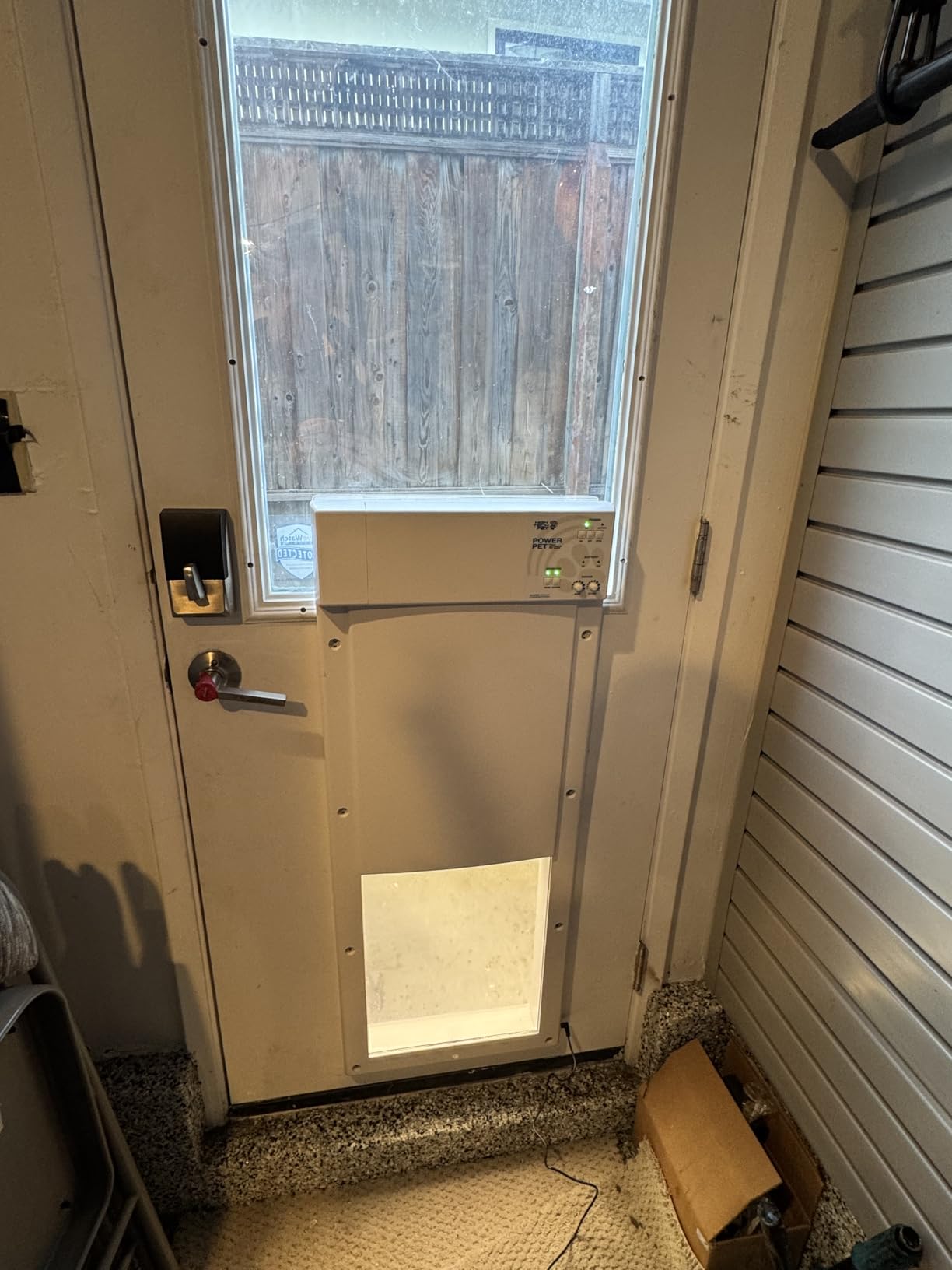
Everything else follows the PX-2 blueprint: hermetically sealed panel, automatic steel dead bolt, anti-pinch retraction, directional sensing and four access modes including a fully locked position. Power is AC with an optional rechargeable battery, so cold does not eat the electronics.
Two limitations shape the decision. It fits doors up to 2 inches thick, so it is not for a thick exterior door, and with 58 reviews the history is thin. Owners of very small or very large dogs are outside the stated range.
Like its sibling, the directional sensing needs a dog that comes at the opening head-on, and the MS-5 collar is required to keep the performance warranty intact. Budget for a replacement collar if your dog loses hardware outdoors, which in a snowy yard happens more than people expect.
What you should check before you order
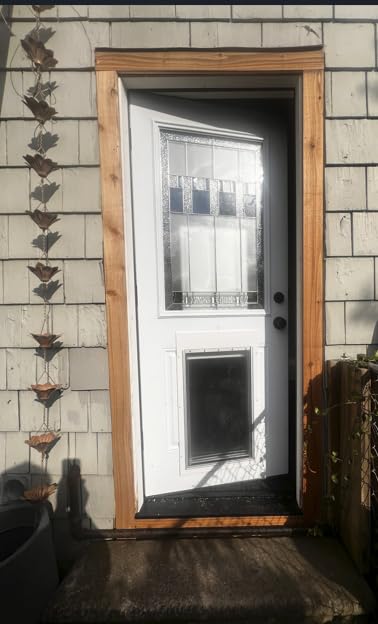
Measure your door thickness with a tape before ordering. Anything over 2 inches needs a wall-mounted unit instead, and swapping after the hole is cut is expensive.
Check the dog weight range. This is a large-size door for 30 to 100 pounds, and a lighter dog will find the opening intimidating rather than welcoming.
Where owners report trouble
Owners cite the price most often, which is simply the cost of a metal-framed, dead-bolted door from a manufacturer that has been building them for a long time.
A thinner review base means fewer accounts of multi-year use. Treat the mechanical reputation as inherited from the PX-2 line rather than proven by this listing alone.
5. Aiday Two-Flap Electronic Dog Door, Large
Automatic Dog Door with Collar Sensor, 2-Flap Large Electronic Dog Door for Door with Anti-Pinch, Mains-Powered, LCD Display, Timing Function, Metal Frame- L
Two-flap construction
Mains powered with LCD timer
Two IP65 sensor collars
Metal frame
Pros
- Two flaps slow the transfer of outside air
- Mains powered so the door has no batteries to fail in the cold
- Scheduling lets you disable sensing overnight
- Two sensing ranges suit different dog sizes
- Cutting template included
Cons
- Reported as loud in operation
- Collar sensors can stop responding near the door
- One report of a blinking panel and a dog locked outside
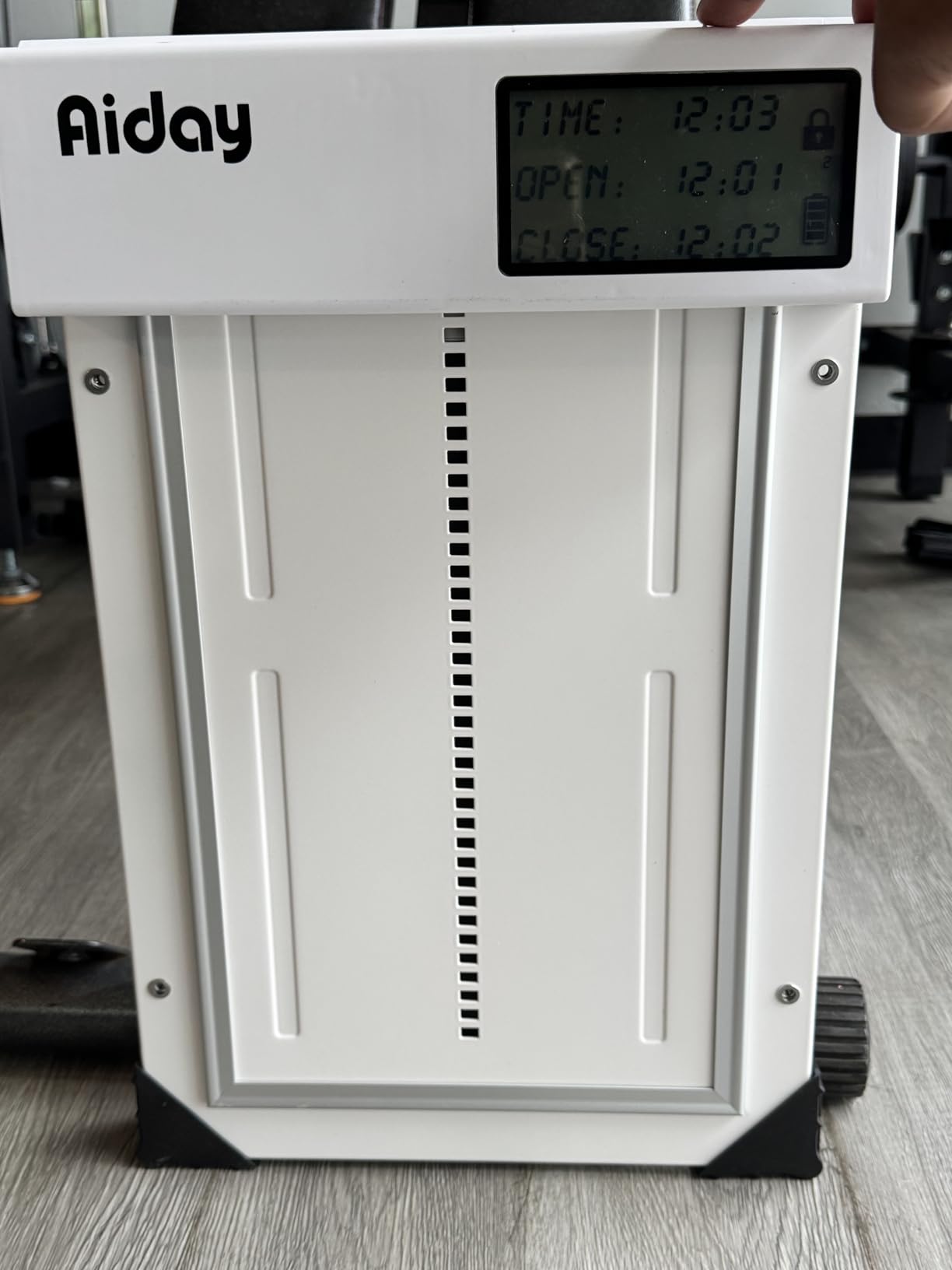
This is the only door here built as a genuine double-flap unit, and that is thermally interesting. Two flaps create a trapped air space between them, and the second flap is what stops the convection loop that drives cold air through a single opening.
It is also the only one with a real mains supply and no door batteries at all. In a cold garage or mudroom where winter temperatures destroy battery life, removing the battery from the equation is a genuine cold-climate advantage rather than a spec-sheet line.
The LCD panel adds open and close schedules, so you can disable sensing overnight and lock your dog out of a freezing porch while still letting it out at 6am. Two waterproof IP65 sensor collars come in the box, and selectable sensing ranges of 20 to 28 inches or 35 to 43 inches let you tune for a small dog or a large one.
What holds it back is reliability. Owners describe it as annoyingly loud, and there is at least one report of a control panel that would not stop blinking, a timer that reset itself and a dog left outside. That failure mode matters far more in winter than it would in July.
The collar sensors also need a button battery roughly every three months, and owners report that a collar left sitting near the door can stop responding until it is reset. The panel can bend if a dog rushes through it, which weakens the seal over time.
What you should check before you order
Measure your door thickness. The frame fits doors between 1.2 and 2 inches, which excludes most thick exterior doors.
The cutout is 11.2 by 18.1 inches with a 10.2 by 15.6 inch flap, rated to 100 pounds. Compare those against the dog you are sizing for before you cut.
Where owners report trouble
Noise is the top complaint by a wide margin, and a startling door is a door a nervous dog will refuse to use when it is snowing and dark.
With 35 reviews the sample is small, and one owner ended up with a locked-out dog in bad weather. Whatever else you do, keep a physical way to open the panel from inside.
6. PlexiDor Performance Electronic Pet Door, Large Wall Mount
PlexiDor Performance Pet Doors Electronic Dog Door Large White Wall Mount
Battery free RFID keys
Stainless steel deadbolt
Wall mount to 12 inch
Dogs to 125 lb
Five year warranty
Pros
- RFID keys need no batteries so nothing dies in the cold
- Sliding panel cannot be blown open by wind
- Quarter inch stainless steel deadbolt holds when inactive
- Installs in walls up to 12 inches thick
- Five year limited residential warranty
Cons
- The most expensive option in this roundup
- Very loud per reviewers
- No internal battery backup so an outage locks the door
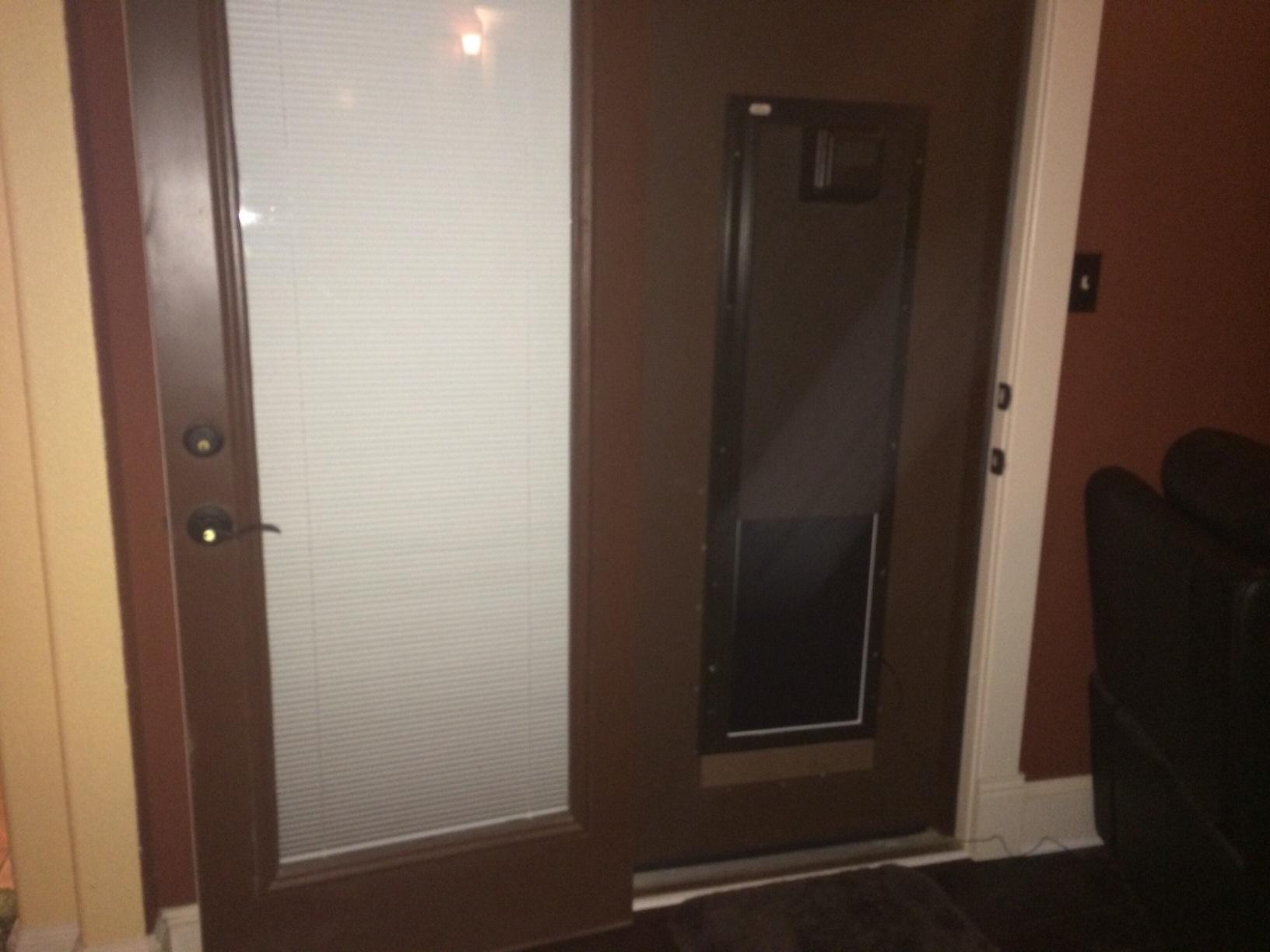
The PlexiDor is the most serious piece of hardware here and the most demanding. A hardened panel slides up and down like a small garage door, and a quarter inch stainless steel deadbolt holds it shut when nothing is passing. No wind, no raccoon and no curious neighbour opens that.
The cold-climate detail we like most is the RFID key, which needs no battery whatsoever. A collar key that cannot die at 20 below is a real advantage over every collar unit in this roundup, and owners in the Midwest describe it working through winters with wind chill far below freezing.
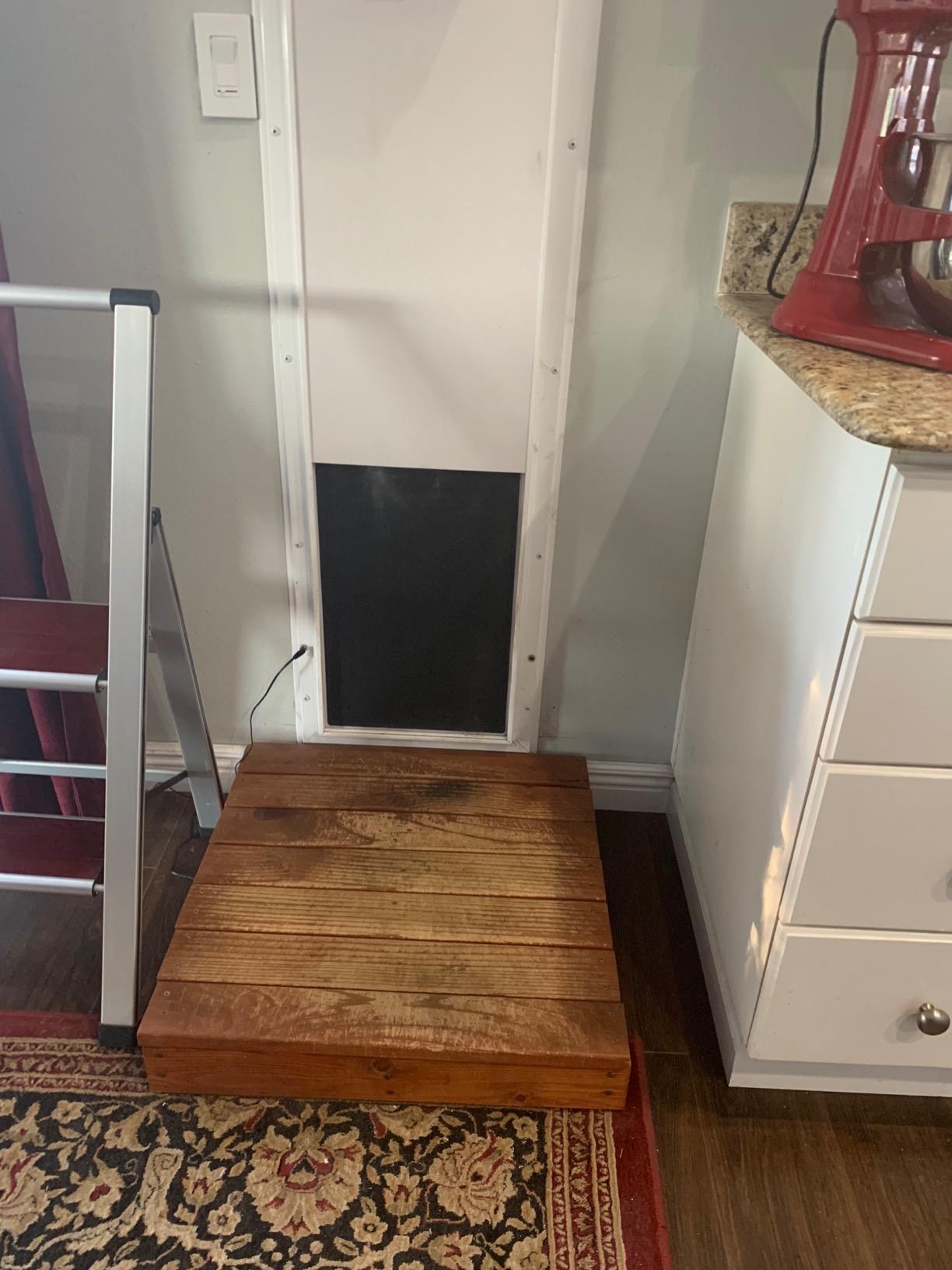
It is also the only door rated for a genuinely thick wall, installing into stud, brick, block or cement up to 12 inches, and the only one rated for dogs up to 125 pounds. For a masonry house with large breeds, nothing else in this list fits.
Against that, the drawbacks are substantial. It is by far the most expensive door here, it weighs 32 pounds, and owners describe the operation as very loud. There is no internal battery backup, so a power failure means a locked door with your dog outside.
Cold can frost the interior metal and stall the panel, and the short sensor range means a large or tall dog has to get close to trigger it. The antenna wire flexes on every cycle and eventually breaks, which owners report after extended use.
What you should check before you order
Talk to a glazier or a masonry contractor before cutting. A 32 pound stainless assembly in a brick or cement wall is not a weekend job, and the install cost can rival the door.
Measure the pet opening against the largest dog that will use it, and test the sensor range on that dog before you finalise the position.
Where owners report trouble
Programming uses small circuit board switches rather than a panel, which owners find fiddly. Set it up indoors with the manual open and close buttons before it goes into the wall.
Frost stalling the panel is the cold-weather failure owners actually report, so expect to clear the interior lip after an ice storm rather than assuming the unit has broken.
7. PetSafe SmartDoor Connected, App Controlled, Medium
PetSafe SmartDoor Connected Pet Door, App Controlled, Medium
My PetSafe app control
Remote lock and unlock
Per pet schedules
Dynamic weather sealing
One year warranty
Pros
- App control for schedules and remote locking
- Microchip pairing lets a cat use the door without a collar key
- Dynamic weather sealing with multi-point locking
- Templates for metal and non-metal doors included
Cons
- Lowest rated here at 3.0 with 38 percent one star reviews
- App and connectivity problems reported after the firmware update
- One year warranty against five years elsewhere
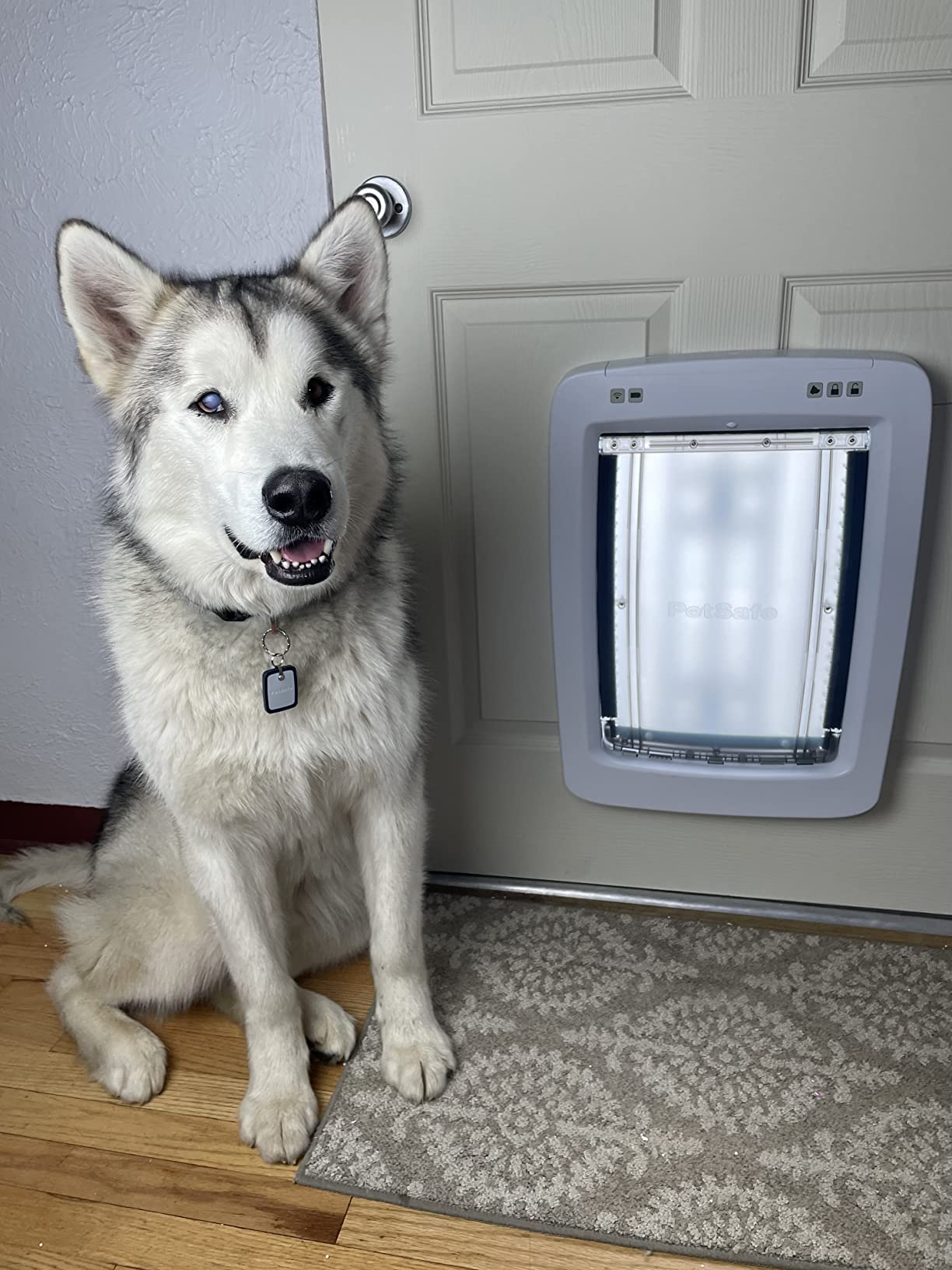
The software story is the draw. Through the My PetSafe app you get per-pet schedules, remote lock and unlock, and notifications for door use, lock state and battery status. Pairing a cat microchip directly is a genuinely good idea, since cats do not wear collars and this stops the neighbour cat walking in during a January evening.
The sealing is reasonable on paper too, with dynamic weather sealing on the flap and a multi-point lock. And you get cutting templates for both metal and non-metal doors, which is the kind of small courtesy that saves an afternoon.
Then there is the rating, and it is the lowest here at 3.0 with 38 percent of reviews at one star. That distribution is the story. Owners report connection drops, app failures and unreliable locking, and a firmware update that only partly fixed things. In a house where the app is the only way to unlock the door, that is a real risk on a freezing night.
The frame is plastic, which is the least suitable material for harsh weather in this whole roundup, and the door-mount thickness is limited to 1.5 inches. The warranty is one year, against five years on the PlexiDor.
Only a medium size appears in this listing, so a large or small dog household has to look elsewhere. I would use this door in a mild climate, and treat it as a second-tier choice where winters are short.
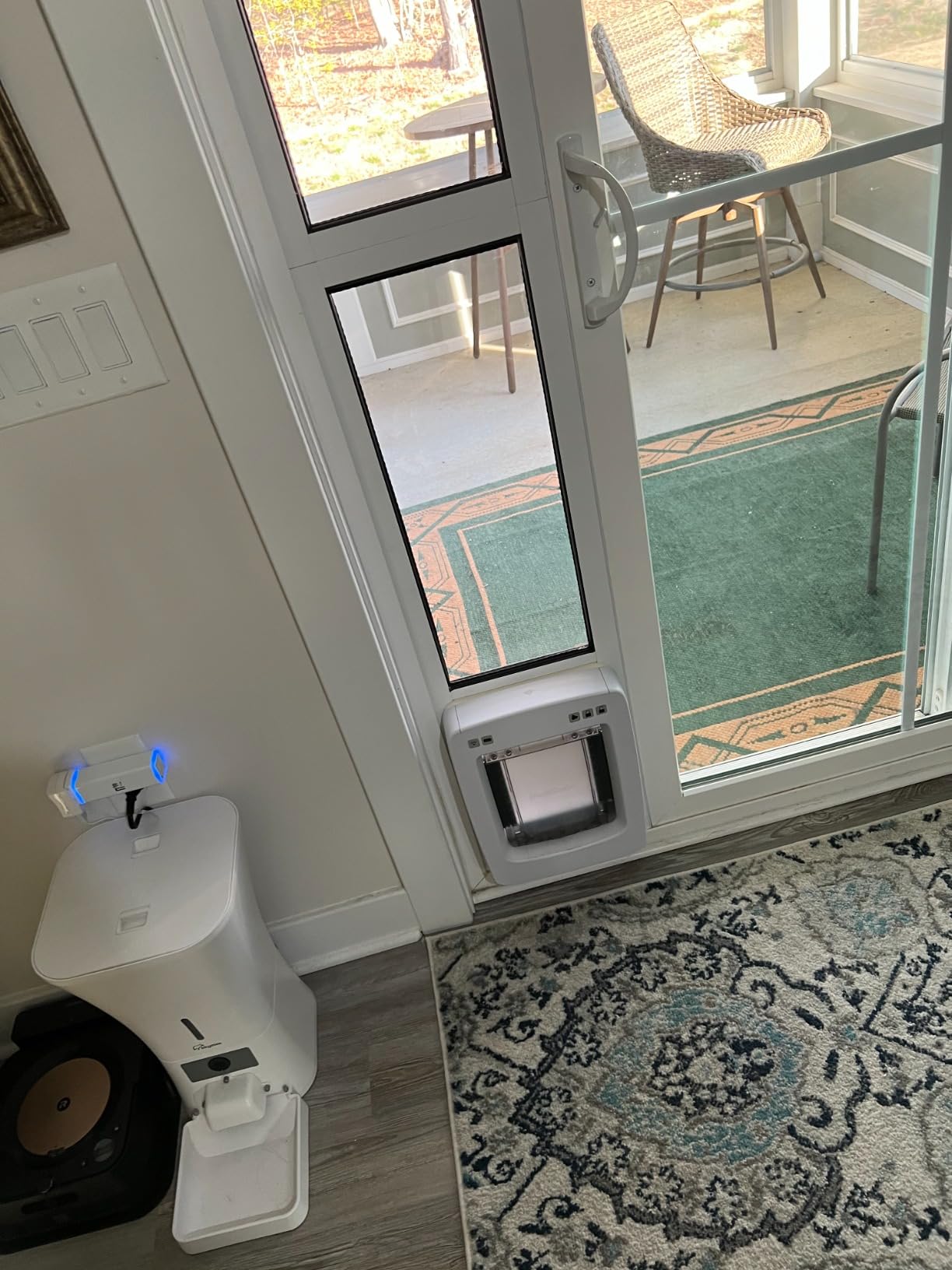
What you should check before you order
Test your phone signal and WiFi at the intended door location before you cut. Owners report connectivity gaps, and a smart door that cannot reach your router is a locked door.
Confirm your cat or dog uses a compatible microchip. The pairing feature is the best idea on this door, and it only works if the chip is recognised.
Where owners report trouble
The app is the recurring theme: dropped connections, failed unlocks and notifications that never arrive. A plastic frame that flexes in cold weather will also wear its seal faster than metal.
A one year warranty on an electronic component is short by category standards, and it is the reason I would not put this door in a northern climate as the only way out.
What Makes a Smart Dog Door Cold-Climate Rated
A cold-climate rated pet door has four ingredients, and you can check all four before you buy. Here is the short version, because most product pages blur these together.
Rigid panel or stacked flaps. A rigid sliding panel pressed against the frame makes a far better seal than a flexible flap, because it does not depend on gravity or tension. A double-flap design is the next best thing, because the second flap kills the convection loop between them. This is why every top-ranked door on this page has a panel instead of a flap.
A metal frame. Aluminum and stainless steel hold their shape and their seal through temperature swings. Plastic frames flex, and a flexing frame is a leaking frame. It is the least glamorous item on the list and the one we would not compromise on.
A mechanical lock. A dead bolt that throws the instant the panel closes removes the wind-driven flutter that a powered panel would otherwise suffer on the next cycle. The PX-2, the PX-2DM and the PlexiDor all have one.
Power that survives the cold. Mains power is the most robust option. Battery backup is second. Battery only is the one to think hardest about, because cold drains cells faster and the failure lands on the coldest night of the year. The PlexiDor solves this differently again, with RFID keys that hold no battery at all.
On selective entry versus selective exit: selective entry grants access from outside only, and selective exit allows a dog to leave but not return. In a freezing climate, selective exit is the setting you want on a door facing a road, because a dog that goes out cannot come back in without you.
How to Stop a Smart Dog Door Leaking Heat
Even a good door leaks some heat every time it opens, so where you put it matters as much as which one you buy. The dominant heat-loss mechanism is the stack effect: warm indoor air rises, finds the top of your wall, and exits through the highest opening available, drawing cold air in at floor level. A pet door is usually that opening.
Here is the order we would work in.
1. Put the door in an unheated space. A mudroom, an enclosed porch or a garage vestibule turns your pet door into a door to a space that costs nothing to heat. This is the single biggest thermal improvement available and it costs nothing but floor space.
2. Choose a rigid panel over a flap. Every cycle through a rubber flap pushes a puff of warm air outside. A panel that seats on a gasket pushes much less, and the difference compounds across a heating season.
3. Add a second barrier, not a second flap. A heavy curtain hung inside the vestibule, well clear of the door swing, gives you a second still-air barrier that the door hardware cannot undo.
4. Seal the tunnel, not just the frame. A deep wall with a metal tunnel creates a cold, slippery floor for older dogs and a surface where condensation forms. Adding a tunnel extender to match your wall depth reduces the draft, and a mat or carpet in the tunnel makes it usable for a senior dog with arthritic paws.
5. Check the seal twice a year. Run your hand around the frame edge on a windy day. Gaps that let your hand through let warm air through. Weather stripping tape fixes most of them in an afternoon.
6. Do your cold-weather service in October. Replace the batteries before the first freeze rather than in February, wipe frost off the interior lip, and confirm that the collar key or RFID tag is still working. A collar key that fails on a snowy morning is a dog left outside.
On installation type: an exterior wall mount gives you the best seal, because you can line the tunnel with insulation. A retrofit over an existing flap is the cheapest option and the worst thermally. A sliding glass install needs a glazier, and there is no way around that. Owners on r/dogs repeatedly ask about sub-25 inch wide units for narrow walls, and the honest answer is that most electronic doors in this category are not built that small.
One more practical note before you cut anything. Publish the flap opening size and the installation hole size as separate numbers before you order, exactly as manufacturers should. Owners who buy the wrong one end up with a hole they have to patch, and that repair costs more than the door.
If your real concern is entry security rather than pet access, our guide to the best smart locks for front doors covers the hardware side of keeping an exterior opening properly secured. And if cold recovery is the reason you are reading about freezing temperatures, our cold plunge tub picks cover the other end of the same problem. Home comfort tech is not the only place a smart upgrade pays off either: our picks for the best smart TVs for streaming cover the same idea on the entertainment side of the house.
Frequently Asked Questions
What is the best dog door to use in cold weather?
The best dog door for cold weather uses a rigid sliding panel that seals against the frame, a metal frame, and a mechanical dead bolt rather than a flexible flap. Among the electronic options we reviewed, the PetSafe Electronic Pet Door stands out for the sheer size of its review history, the Power Pet PX-2 for its airtight panel and lock, and the PlexiDor for thick wall mounts and battery-free RFID keys. Placed in an unheated mudroom, any of the three loses far less heat than a single-flap door in a heated wall.
How to better insulate a dog door?
Six moves make the biggest difference. Put the door in an unheated mudroom or vestibule so the opening leads to space you do not heat. Choose a rigid panel or a double-flap design instead of a flexible flap. Hang a heavy curtain inside for a second air barrier. Extend the tunnel to match your wall depth and line it with insulation. Add weather stripping anywhere your hand finds a gap on a windy day. Finally, service the batteries and clean the interior frost lip before the first freeze rather than in the middle of winter.
How much cold air does a dog door let in?
No manufacturer in this category publishes an infiltration figure, which is why we judge by design instead. A single-flap door in a heated exterior wall acts as a chimney: warm air rises out through it while cold air enters low, and that loop runs continuously. A rigid panel that seats on a gasket reduces the leak substantially, and a second flap stops the convection loop entirely. The single biggest reduction available, though, is moving the opening out of the heated envelope altogether.
Are electronic dog doors worth it?
They are worth it when you need selective access, such as keeping cats indoors while dogs go out, or letting a dog leave without being able to force its way back in from the street. Owners on r/TechnoBarkDogGear debate this constantly, and the recurring complaint is less about the electronics than the batteries. If you only need a flap, an electronic door adds cost and a power dependency without solving a problem you have. If you need access control, there is no manual substitute.
Which brand of smart dog door is the best?
PetSafe has the largest installed base and the deepest review history, with more than four thousand reviews on its large electronic door, and it is the safer default for most households. High Tech Pet builds the more capable machine, with a hermetically sealed panel, a steel dead bolt and directional sensing. PlexiDor makes the most heavy-duty product, with a wall mount to 12 inches, a stainless deadbolt and a five year warranty. Brand matters less than matching the frame material and seal to your climate.
Why does my pet door create a cold draft?
Almost always for one of two reasons, as manufacturers themselves diagnose it. Either the door does not close tightly enough, which usually means a stretched or stiff flap, a panel that has been knocked out of square, or a frame that has warped, or it is not insulated well enough, which means a single-flap design with no second barrier. Check the seal with your hand on a windy day first, since a draught you can feel is a gap you can fix with weather stripping.
Best Smart Dog Door for Cold Climates by Severity
For most households in a cold climate, the PetSafe Electronic Pet Door is the pick. Its rigid panel holds off wind and rain, its collar key keeps cats and wildlife out, and more than four thousand reviews make it the only door here with a properly documented track record through real winters.
If you can accept a higher spend and want a mechanical lock, the Power Pet PX-2 is the better machine, and the PX-2DM is the version to pick if your door is aluminum-friendly and under 2 inches thick. For a thick masonry wall, large breeds, or a location where a battery dying at 20 below is unacceptable, the PlexiDor is the only serious answer, with battery-free RFID keys doing the work.
Whatever you choose in 2026, put it in an unheated space if you possibly can. A cold-rated door in a vestibule beats a premium door in a heated wall every time, and it is the one improvement on this list that costs nothing.