
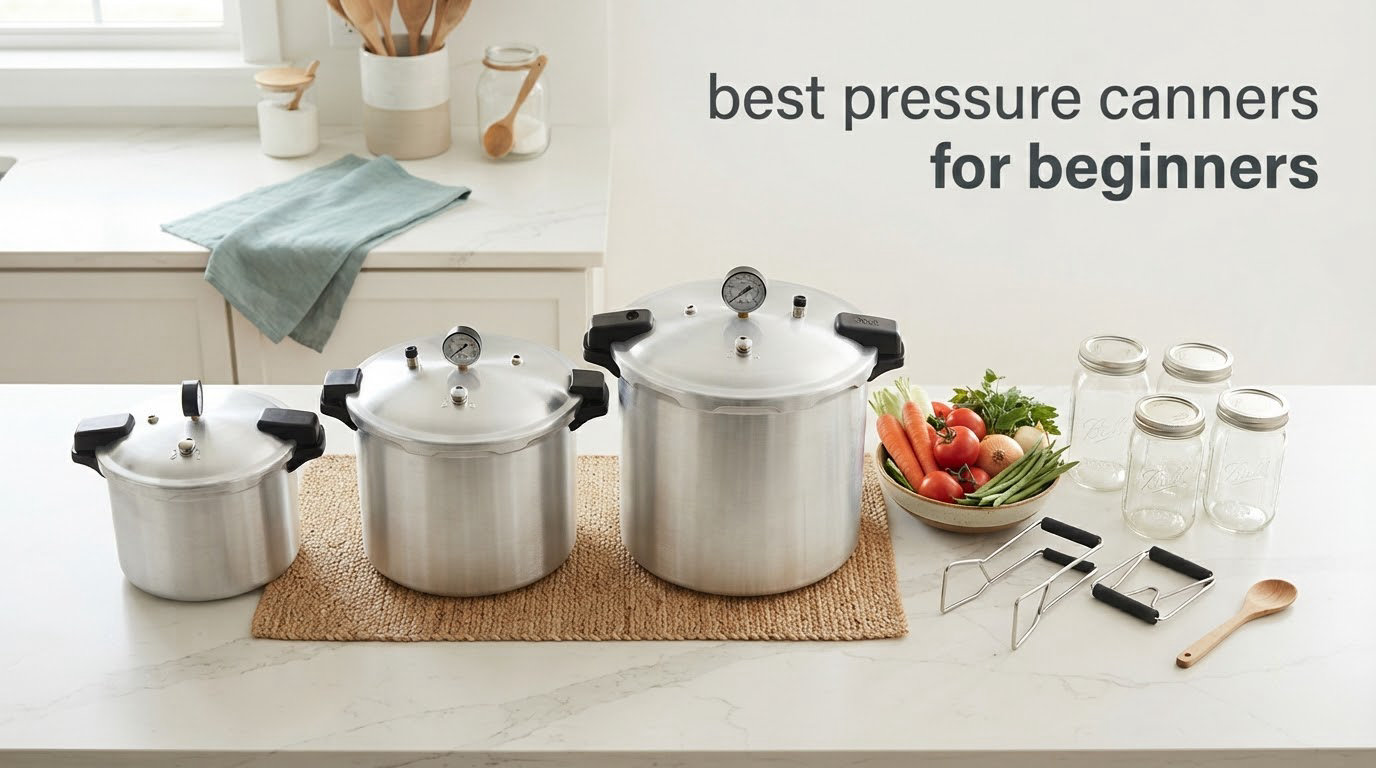
Short answer: the Presto 01781 23-Quart is the best pressure canner for beginners because it holds a full 7-quart load, shows pressure on a readable dial, and ships with the rack and instructions a first-timer needs. The All American 1930 is the pick if you want a canner with no gasket to ever replace, and the Presto 01784 is the one to buy for an induction cooktop.
Pressure canning has a reputation it has not earned. Nearly everyone who starts down this road has heard a story about somebody’s pressure canner exploding, and that single image does more to keep people from putting up a single jar of green beans than any USDA warning ever has.
Here is the part that story leaves out. A pressure canner is a locked, heavy-gauge pot that traps steam so the boiling point of water climbs past 212 degrees, which is the only way to make low-acid foods such as vegetables, beans, soups, stocks, and meat safe for the pantry. Every canner on this list has a locking cover, a pressure indicator you can watch, and a vent you clear before every single use. The danger is real when a canner is misused, and near zero when it is operated the way the manual describes.
We spent weeks putting these eight models through the beginner’s filter: how heavy they are to lift, whether the instructions actually make sense on a first read, how many jars fit, whether the cooktop in your kitchen can heat them, and how much of the work the machine does for you. What follows is the full 2026 roundup, plus the buying guidance that the spec sheets leave out, including the electric canner argument that most roundups dodge.
If you are still working out what you want to preserve, our guide to the best pressure cookers for families covers the fast-cooking side of the same aisle, which is a different job entirely from putting food in a pantry.
Table of Contents
Top 3 Beginner Pressure Canners in 2026

Presto 01781 23-Quart
- Holds 7 quarts
- 20 pints or 26 half-pints
- Weighted gauge with deluxe dial gauge
- 12-year limited warranty
All American 1930 10.5-Quart
- Metal-to-metal seal
- no gasket to replace
- Holds about 4 quarts or 7 pints per load

Presto 01784 23-Quart Induction
- Stainless clad induction base
- Same 7-quart capacity
- Arrow-matched lid lock
The Presto 01781 takes the top slot because it solves the three things that trip up beginners at once: a real load size, a gauge you can read without a magnifying glass, and printed instructions that assume you have never done this before.
The All American 1930 runs the highest star rating in this group at 4.9, and its metal-to-metal seal means there is no rubber part to stretch out and replace. It is also the smallest jar capacity here, which makes it a second canner rather than a first one for most households.
The Presto 01784 is the same 23-quart format with a stainless clad base bolted to the bottom, so it is the direct answer for induction households. Everything else about it, including the arrow-matched cover lock, matches the model above it.
Best Pressure Canners for Beginners at a Glance in 2026
| Product | Specifications | Action |
|---|---|---|
| Presto 01781 23-Quart Pressure Canner |
|
Check Latest Price |
| All American 1930 10.5-Quart Canner |
|
Check Latest Price |
| Presto 01784 23-Quart Induction |
|
Check Latest Price |
 T-Fal 22-Quart Pressure Canner T-Fal 22-Quart Pressure Canner |
|
Check Latest Price |
 Presto 02144 12-Quart Digital Presto 02144 12-Quart Digital |
|
Check Latest Price |
 NESCO NPC-9 9.5-Quart Smart NESCO NPC-9 9.5-Quart Smart |
|
Check Latest Price |
 Granite Ware 20-Quart Pressure Canner Granite Ware 20-Quart Pressure Canner |
|
Check Latest Price |
 IMUSA 16-Quart Stovetop Cooker IMUSA 16-Quart Stovetop Cooker |
|
Check Latest Price |
Two things stand out in that table. First, every genuine canner on this list holds at least four quart jars per load, which is the practical floor for safe home pressure canning. Second, the induction column is thin, which is exactly the gap that pushes glass and induction households toward a canner that was not built for them.
1. Presto 01781 23-Quart Pressure Canner and Cooker – Best Overall for Beginners
Presto 01781 23-Quart Pressure Canner and Cooker
21.8 liter capacity
26 half-pints, 20 pints, 7 quarts
12 lb empty
Heavy-gauge aluminum
12-year limited warranty
Pros
- Holds a full 7-quart load without crowding the wall
- Dial gauge tracks the full pressure range so you can adjust for altitude
- Doubles as a boiling-water canner and a large pressure cooker
- Canning rack and 76-page instruction book included
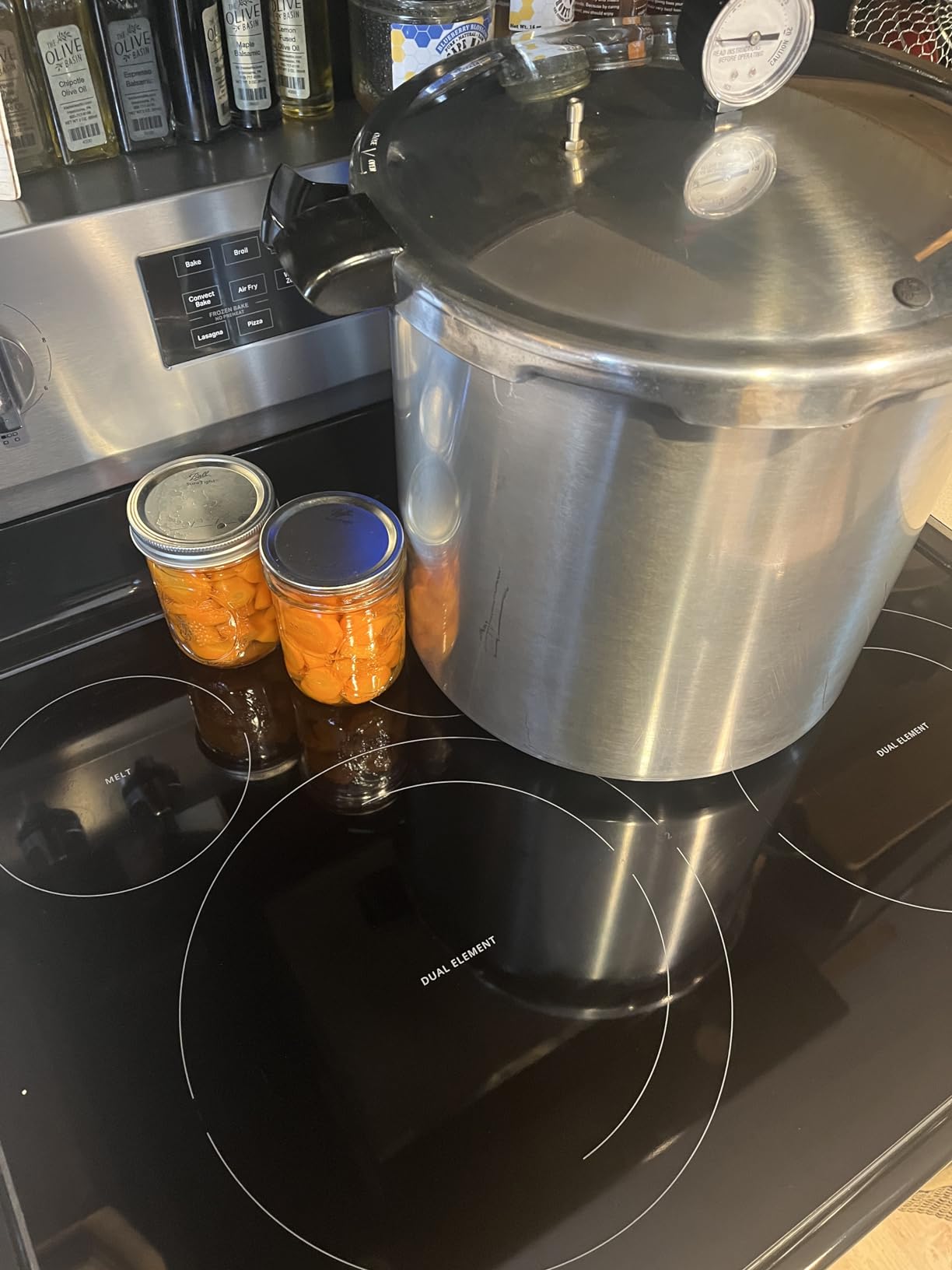
- Works on regular and smooth-top ranges
Cons
- Aluminum body is a poor match for highly acidic foods
- Weighted regulator needs steady heat attention to hold pressure
- Heavy to lift onto the burner when full
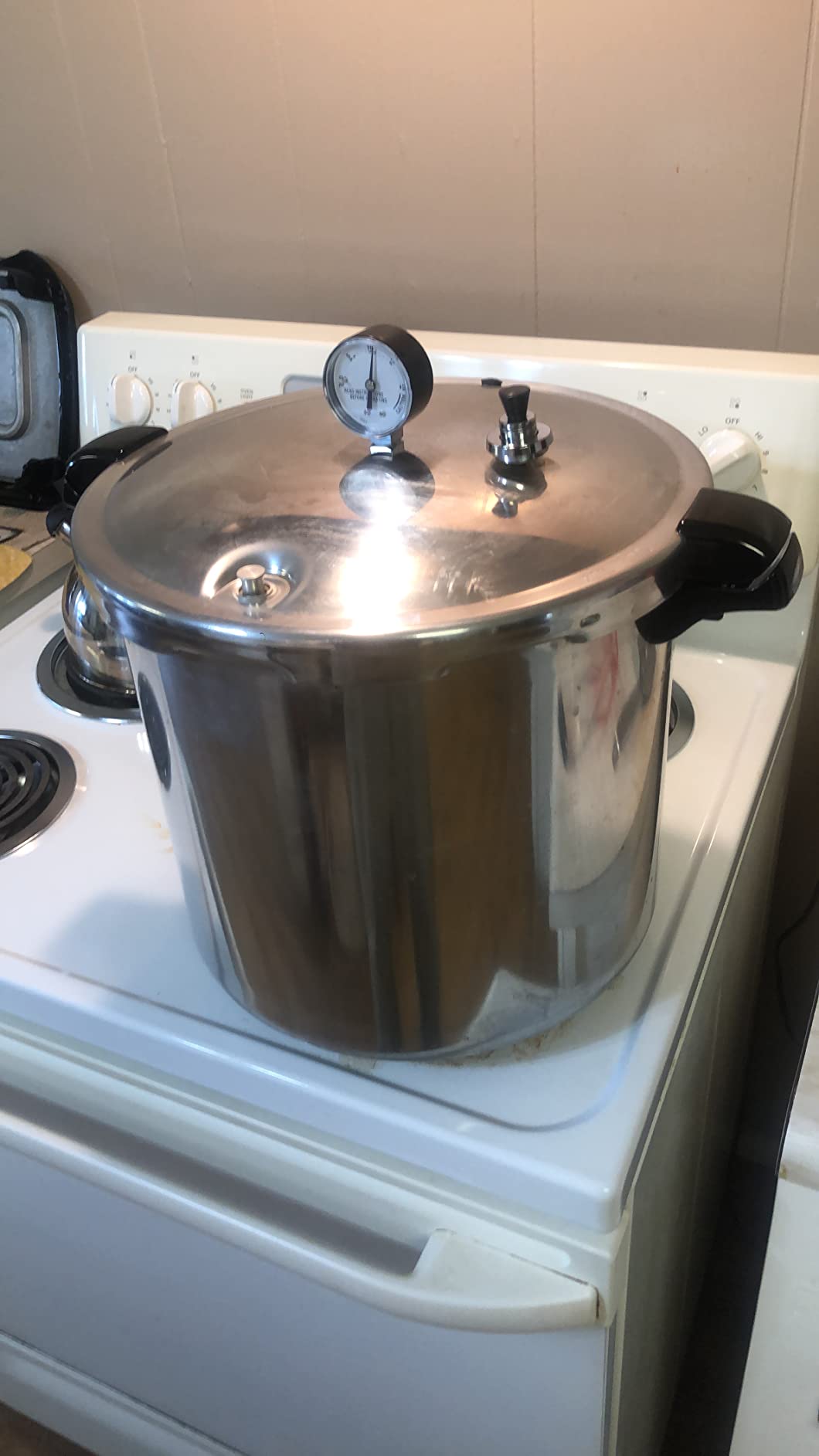
This is the canner we would hand to somebody learning the craft. The 23-quart body gives you room for seven quart jars on the canning rack, and that matters more than it sounds, because a canner packed shoulder to shoulder circulates steam poorly and the USDA process tables assume a normal load.
Both pressure monitoring systems are present. A weighted regulator sits on the vent pipe and does the actual work, and a deluxe dial gauge on the lid gives you a readable reference so you can see where you are in the range rather than guessing from a rocking weight alone.
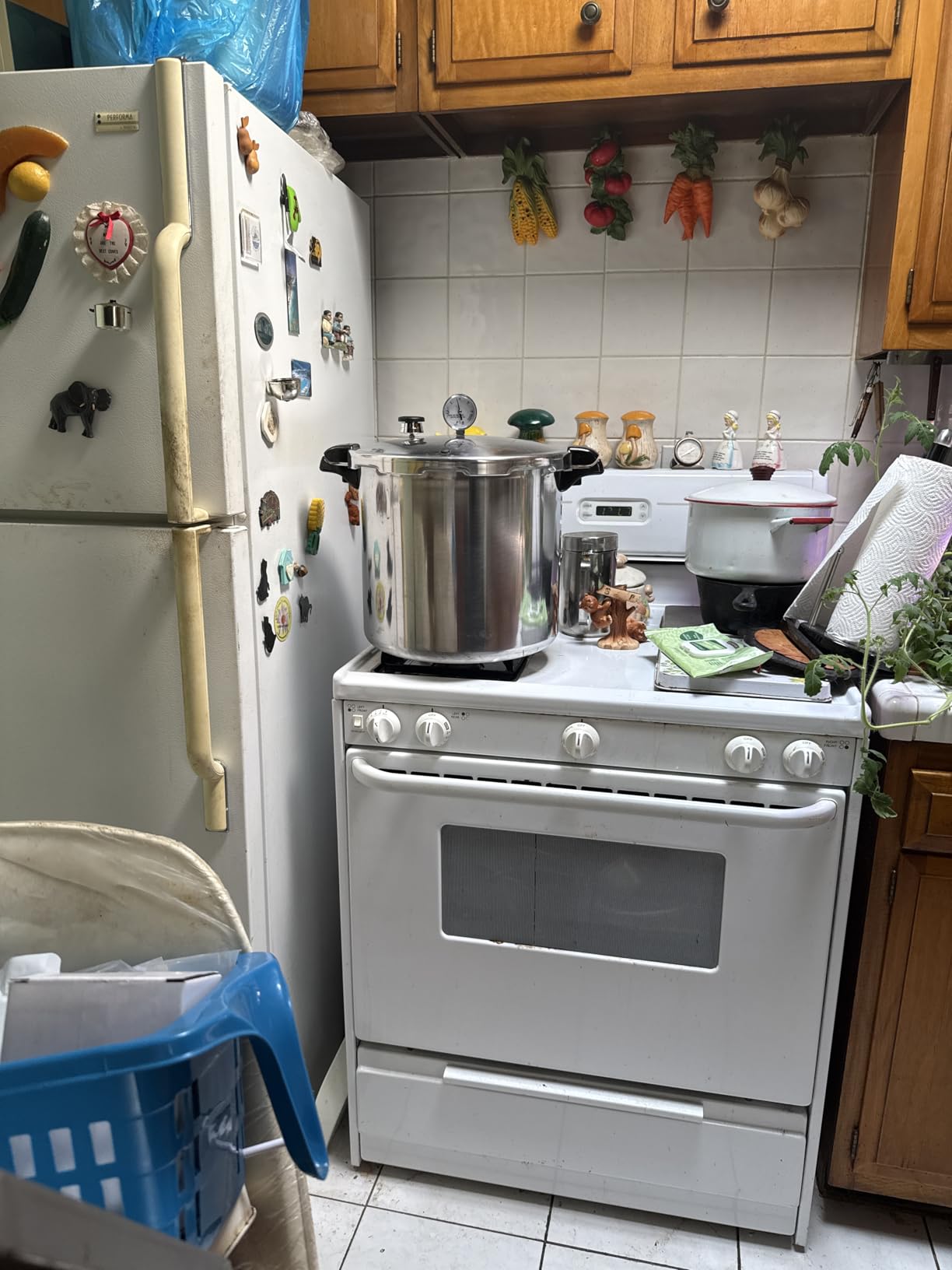
The heat behavior is where most beginners get stuck, so it is worth being blunt: you hold this gauge by managing your burner, not by turning anything on the canner. A weight that rocks steadily means the pressure is in range, and a weight that sits still means the heat is too low.
It also handles the boiling-water side, so jams, pickles, and salsa come out of the same pot, which means one appliance covers most of a beginner’s preserving year. The 76-page book that comes in the box is unusually good, and experienced canners tend to keep it on the counter long after they stop needing it.
Is the 23-quart size too much for one person or two?
For a household that puts up a few jars a week, no, because the size is what lets you run a safe minimum load. A canner half full of jars can run through its water faster than you expect, and a batch that never reaches full pressure is a batch that does not count as processed.
The practical downside is weight. Empty it is 12 pounds, and full of jars and water it is heavy enough that you load it onto the burner rather than carrying it across a kitchen. If lifting matters to you, look at the smaller option in position two and plan to run two smaller batches instead.
What do owners complain about after a year of use?
The aluminum body is the consistent note. It heats fast and evenly, but bare aluminum reacts with highly acidic foods, so this is a canner for your low-acid garden output and not a pot for your tomato sauce.
The second note is the learning curve on the weighted regulator, and that one fades quickly. Owners who worked through the first few batches describe the dial gauge as the reason they stopped worrying, since it confirms what the weight is doing.
2. All American 1930 10.5-Quart Pressure Cooker/Canner – Best Gasket-Free Design
All American 1930: 10.5qt Pressure Cooker/Canner (The 910) – Exclusive Metal-to-Metal Sealing System – Easy to Open & Close – Suitable for Gas, Electric, or Flat Top Stoves – Made in the USA
9.94 liter capacity
About 7 pints or 4 quarts
14.8 lb empty
Cast aluminum
Made in the USA
Pros
- Metal-to-metal seal means no gasket to stretch or replace
- Precision-machined regulator weight gives an audible steady rock
- Highest star rating in this roundup at 4.9
- Made in the USA with long-term service and free replacement safety labels
- Manual doubles as a usable cookbook
Cons
- One of the highest price points of the eight models here
- Smallest jar capacity in the group
- at about 4 quarts per load
- Not intended for glass-top stoves
The defining feature here is the sealing system. Instead of a rubber or silicone gasket compressed between two surfaces, the All American uses a machined metal-to-metal fit that only needs a thin film of oil. There is no consumable part, which removes the single most common reason a canner leaves a shelf and goes to a resale site.
Experienced canners tend to describe this as the reference canner of the group, and the ownership pattern backs that up: a very large body of owners who talk about repeatable jar seals and a unit they expect to keep for decades.
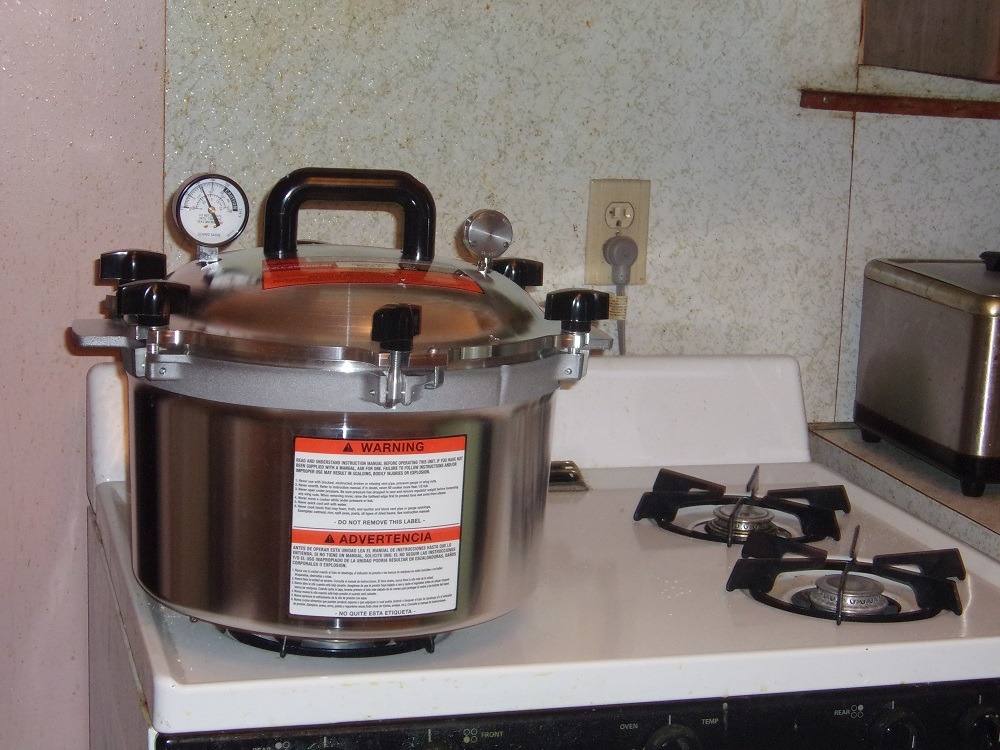
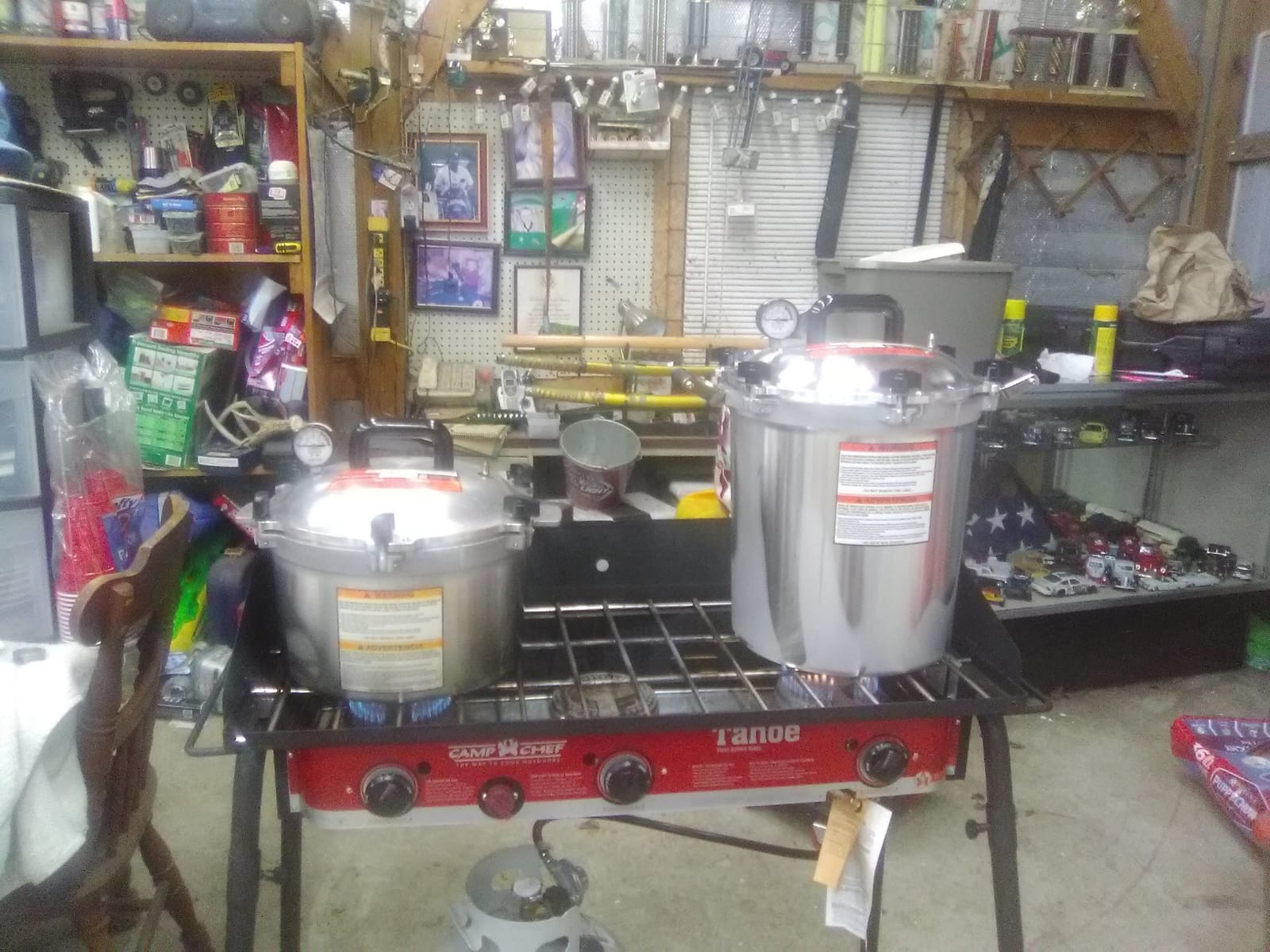
Capacity is the trade. Seven pint jars or four quart jars is the classic minimum load, and it is a genuine limit, tied for the smallest batch here alongside the two electric units. A canner this size is best owned alongside a larger model rather than instead of one, which is why it slots in here as a second canner for smaller batches and a primary for anyone who values the seal above all else.
The dial gauge on the lid reads as a reference while the machined weight does the pressure work, which is the same two-part arrangement as the Presto in position one. The difference is feel: owners more often describe this regulator as louder and more defined, which is exactly what you want to hear at a glance you are not watching.
Does the metal-to-metal seal really need no maintenance?
There is no gasket, but there is still a process. The sealing surfaces get wiped clean after each use and given a light coat of cooking oil before reassembly, and the canner is stored with the cover loose or inverted so nothing rests on the sealing face.
The payoff is that you will not find yourself at a hardware store replacing a part you cannot identify. For beginners who inherited a canner with a perished gasket and no idea what to order, that single design choice removes an entire category of frustration.
Who should skip it and which kitchens should avoid it?
Skip it if your garden output is large. Four quarts per load means three or four stovetop sessions to put up a real harvest, and each session carries the full heat-up, process, and cool-down cycle.
Avoid it on glass and ceramic cooktops. The listing is explicit that it is not intended for glass-top stoves, and a canner that does not make solid contact with the burner is a canner that never reaches processing pressure. Gas and coil electric are the safe choices here.
3. Presto 01784 23-Quart Induction Compatible Pressure Canner – Best for Induction Cooktops
Presto 01784 23-Quart Induction Compatible Pressure Canner
23 liter capacity
7 quarts, 20 pints, 26 half-pints
5.67 kg empty
Aluminum with stainless clad base
12-year limited warranty
Pros
- Stainless clad base works on induction
- gas
- electric
- and smooth-top ranges
- Arrow alignment system makes a correct lid lock obvious
- Air vent and cover lock block opening under pressure
- Same 7-quart load as the standard 23-quart model
- Well-written instructions for first-time canners
Cons
- Includes only the 15 lb regulator
- so lower pressure weights cost extra
- Only one canning rack
- no second rack for stacking smaller jars
If your kitchen has an induction burner, this is the shortlist. Induction rejects plain aluminum and stainless steel with a thin bonded layer, and nearly every traditional canner is one or the other, which is why induction households so often end up with a canner that sits on the counter as a very expensive decoration.
Otherwise this is the canner from position one with a different bottom. Same 23-quart body, same seven-quart load, same weighted regulator and dial gauge, and owners switching from an older non-induction canner single out the more even heating they get from the clad base.
The cover lock is worth a closer look because it changes how a first batch feels. Rather than tightening a clamp or hoping a handle lines up, you rotate the cover until the arrow on the lid matches the arrow on the body. It is a small design choice that removes a genuinely common beginner error.
Buy the extra regulator weights if you plan to can at lower pressures, which you will for some vegetable processes and for any altitude adjustment. The package carries the 15 lb weight, and an additional rack is worth adding if you regularly double-stack pints or half-pints.
Will it work on my cooktop if I do not have induction?
Yes, and that is the appeal for anyone undecided about a kitchen upgrade. The same base runs on gas, coil electric, and smooth-top ranges, so a single canner covers a move, a rental, or a change of stove.
One caution for smooth-top households: aluminum conducts heat well but spreads it thinly, so a large canner on a smooth top needs a burner that can deliver real output. If your cooktop takes a while to come up to a strong rolling boil in a big pot, the canner will be slow with it.
What do owners say they wish it came with?
The two most repeated notes are the missing weights and the single rack. Neither is a design fault, both are just the difference between a working canner and a fully equipped one, and both are cheap to correct after purchase.
A smaller group mentions that the dial gauge may need manufacturer recalibration over the years and that some owners simply run the weighted regulator without consulting it. That is a common pattern in this category, and it is another argument for having a dial gauge you trust on a machine you own.
4. T-Fal 22-Quart Aluminum Pressure Canner – Best Budget Batch Canner
T-fal 22-Quart Aluminum Pressure Canner, 3 PSI Settings, Home Canning, Includes Racks & Canning Guide, Large Capacity, Pressure & Water Bath Canning for Vegetables, Meats, Seafood & Fruits, Silver
22 quart capacity
24 half-pints, 18 pints, 7 quarts
14.8 lb empty
Polished aluminum
One-year warranty
Pros
- Full 22-quart batch size at an accessible entry price
- Built-in adjustable weight with three PSI settings
- Two canning racks included so small jars can be stacked
- Step-by-step canning guide in the box
- Locking lid
- release valve
- and readable gauge
Cons
- Lower star rating than the rest of this group
- with a 9 percent one-star share
- Handles must be aligned carefully or steam weeps at the joint
- Gauge is marked 1-2-3 rather than 5-10-15 PSI
This is the canner people reach for when the deciding factor is simply getting started. The 22-quart body holds the same seven quart jars as the Presto models, and the two included racks let you double-stack smaller jars, which is how you make a real batch out of a few quarts of beans.
The design decision that stands out is the adjustable weight built into the lid. Rather than lifting weights on and off a vent pipe, you set a dial for your pressure. For a first-timer, removing the handling of loose metal weights removes a genuine source of early mistakes.
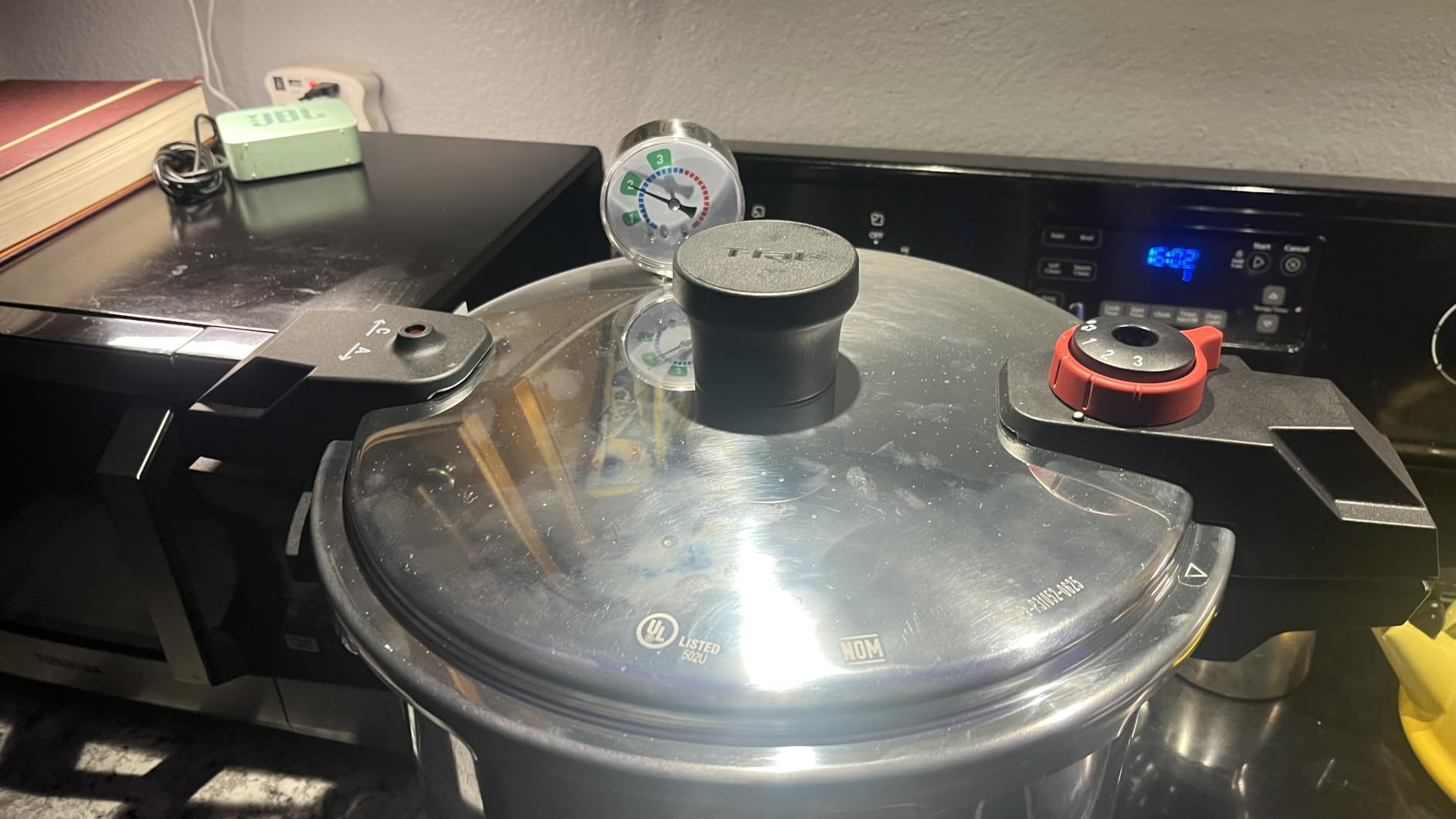
The two operational notes that appear most often in owner feedback are simple. Align the handles before you pressurize, and keep the gasket clean. Both are five-second habits, and both address the most common complaint, which is a small amount of steam weeping at the handle joint.
The 1-2-3 gauge marking confuses people who arrive expecting 5, 10, and 15 PSI, because the lid weight setting and the dial markings are numbered differently. The canning guide in the box maps between them, and reading it once up front prevents a genuinely common early frustration.
Is the low rating a reason to skip it?
Not on its own, but it is a signal worth respecting. A 4.4 with a 9 percent one-star share means a meaningful group of owners had a problem, and in this category the recurring problems are gauge accuracy and early automatic venting, both of which are safety-relevant rather than cosmetic.
Our advice for a first canner is to unbox it, run a water-only test with a dial tester if you have one, and confirm the gauge agrees with the reference before you fill it with a harvest worth saving. That ten-minute check converts the rating from a worry into information.
What cooktops does it work on?
Gas and electric coil are the supported surfaces. The polished aluminum base is a good conductor, but a concave bottom that does not sit flat will not transfer heat properly to a coil, and a canner that cannot reach pressure is a canner that cannot process food safely.
It is also among the shortest warranties in the group at one year, so treat it as a starter tool rather than a lifetime purchase. If you think you will still be canning in five years, the arithmetic favors a longer-warranted model.
5. Presto 02144 12-Quart Digital Pressure Canner – Best Digital Guidance
Presto 02144 12-Quart Digital Pressure Canner
12 quart capacity
About 4 quarts per load
20.5 lb
Stainless steel body
1485 watts, 120 volts
Pros
- Guided digital interface with LED indicators for every stage
- Automates preheating the jars
- which is a common beginner error
- No altitude adjustments needed
- Ten built-in safety features including a cover lock and temperature sensor
- Quiet enough to run while you work elsewhere
Cons
- Very expensive for a 12-quart canner
- 12-quart body holds only about 4 quarts at a time
- Long cooling cycle that cannot be interrupted
- Cannot water-bath can quart jars
This is the canner to buy if the thing standing between you and canning is fear of doing it wrong. The unit narrates. A control knob selects canning method and time, LED icons illuminate each stage, and the machine preheats the jars for you, which owners single out as the step first-timers most often get wrong.
It handles both pressure canning and water bath canning, so the same appliance covers your green beans and your jam. There is no stovetop involved at all, which also means no burner to match and no kitchen heat added in July.
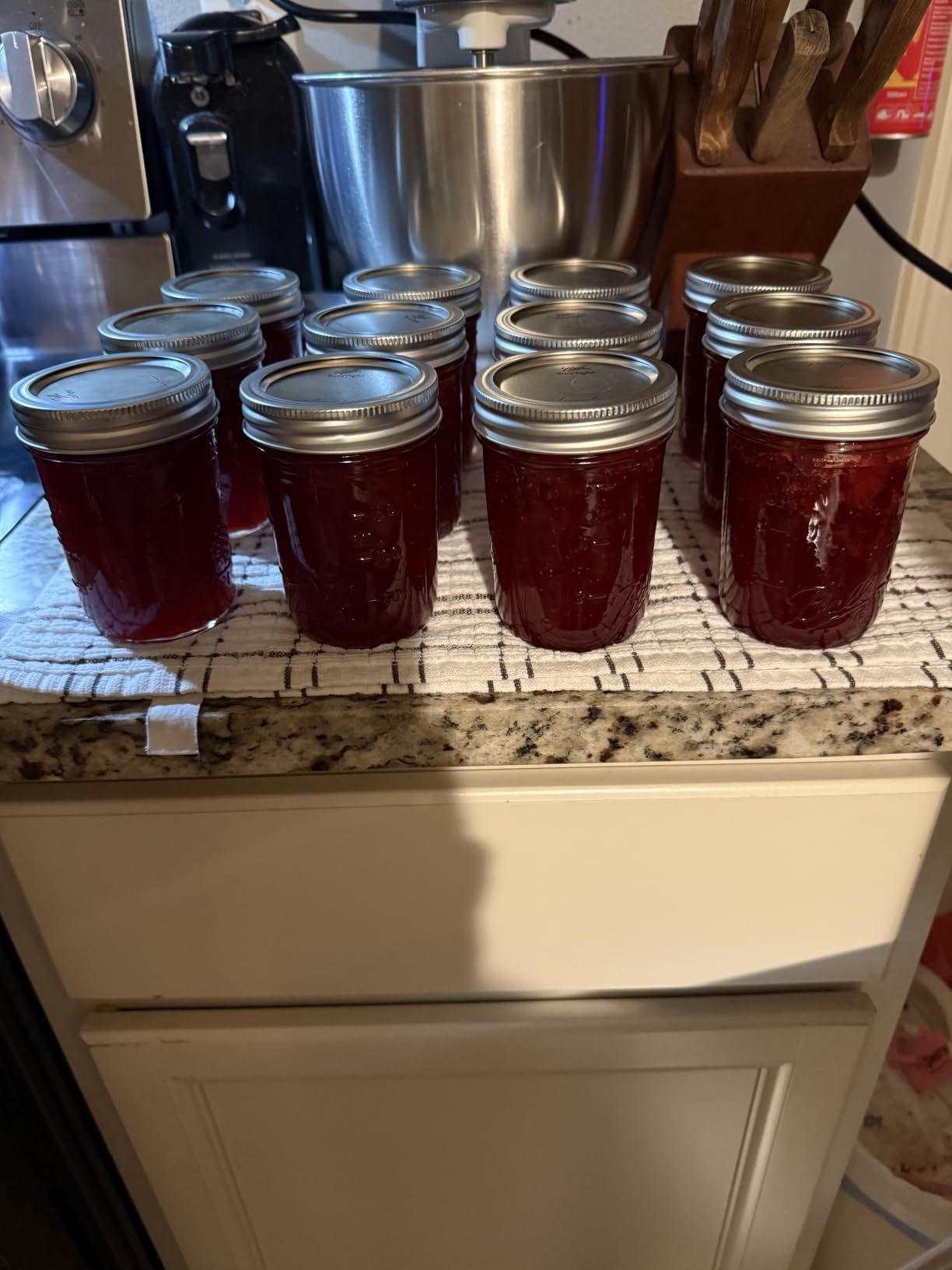
Be honest about the capacity. Twelve quarts holds about four quart jars, so this is a small-batch machine, and a larger 17-quart version exists. Most owners keep a stovetop canner alongside it for the big harvest and use the digital unit for testing recipes and smaller runs.
The cooling cycle is the other thing to plan around. It is a fixed program that can stretch toward three hours for a load and cannot be cut short, so it works best when you start a batch in the morning rather than at the end of a long canning day.

Is an electric canner actually as safe as a dial gauge?
This is the question that splits the canning community, so it deserves a straight answer rather than a hedge. A stovetop dial gauge canner lets you see the pressure on a physical gauge and confirm it independently. An electric canner uses an internal sensor and a control system, and you are trusting the manufacturer’s calibration rather than your own eyes.
Supporters point out that the sensor holds temperature automatically with no altitude adjustment, which removes a whole class of human error. Critics note that you cannot verify what the machine is doing, and that university extension guidance generally does not recommend multi-cookers for canning. If independent verification matters to you, a stovetop canner is the more conservative choice.
Will it fit in my kitchen and last?
It measures tall enough that clearance under a kitchen cabinet is worth checking before you commit, and at 20.5 pounds it is the heaviest unit in this roundup. There is no stovetop lifting at all, which is a genuine advantage if lifting a full canner is what puts you off.
Long-term feedback is mostly positive, with a minority reporting a peeling nonstick liner or a lid handle problem early in ownership. Owners who hit that describe Presto support as responsive once they reach the right representative, and replacements being resolved rather than argued.
6. NESCO NPC-9 9.5-Quart Smart Electric Pressure Canner and Cooker – Best for Small Kitchens
NESCO NPC‑9 Smart Electric Pressure Canner and Cooker for Home Food Preservation, 9.5‑Quart Stainless Steel with Digital Controls
9.5 quart removable nonstick pot
About 4 quarts or 5 pints
Stainless steel exterior
1000 watts
1 year warranty
Pros
- A less costly entry into electric pressure canning than the 12-quart digital
- Pressures
- slow cooks
- steams
- and water baths in one appliance
- Digital display with preset programs and timers
- Lock lid
- automatic float valve
- and pressure regulation
- Includes standard and high-altitude limiting valves
Cons
- Among the smallest batches here at about 4 quarts or 5 pints
- Instructions are wordy and the first session has a learning curve
- You still stay with it until it comes up to pressure
The NESCO is the canner for someone who wants the automation without the step-up in cost. Owners who were specifically afraid of stovetop pressure canning describe this as the appliance that removed the fear, and it behaves much like a larger multi-cooker with canning added on top.
The removable nonstick inner pot, the canning rack, the steam rack, and a condensation catcher all come in the box, and the removable pot is the reason cleanup feels normal rather than like a chore.
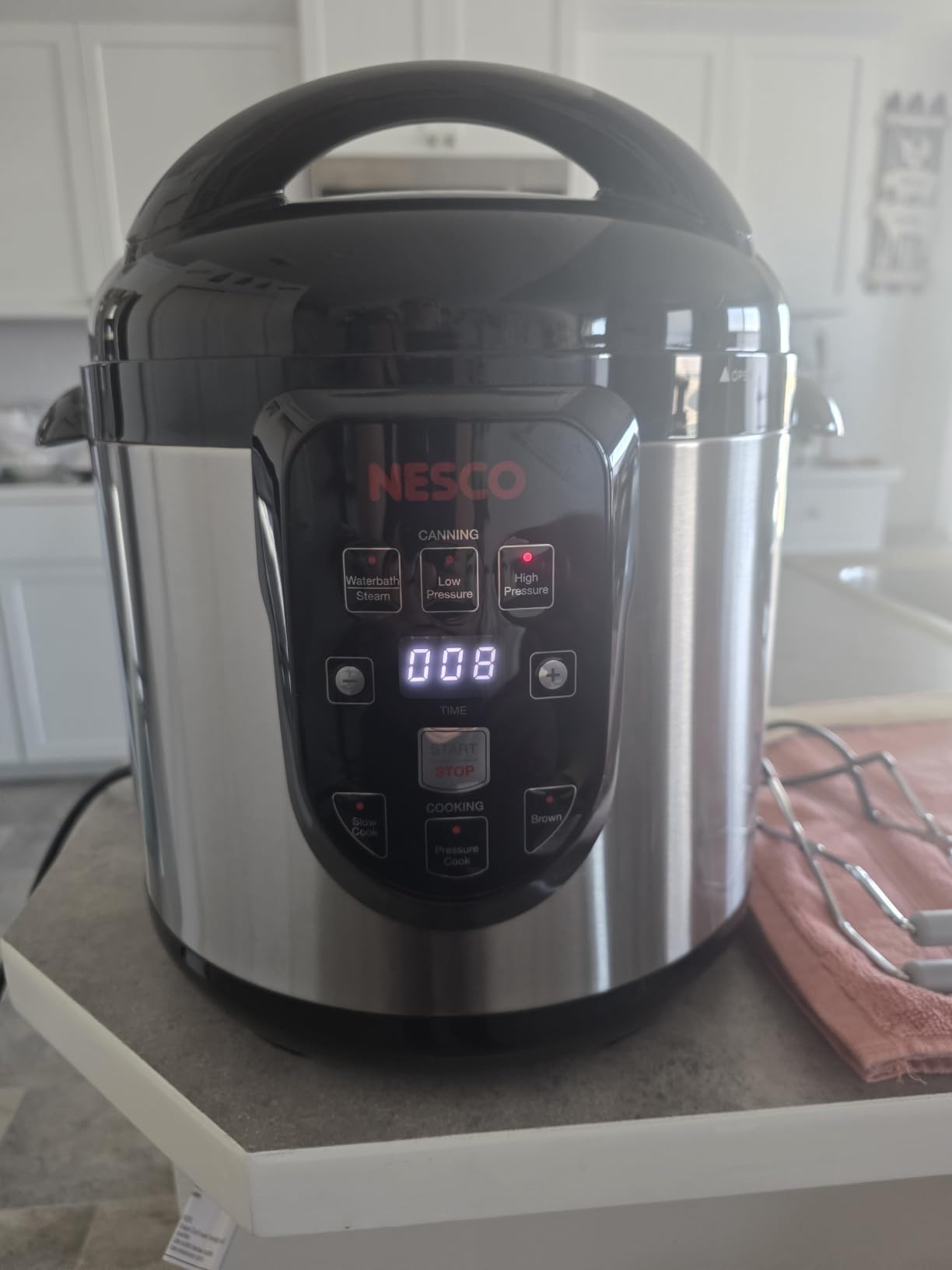
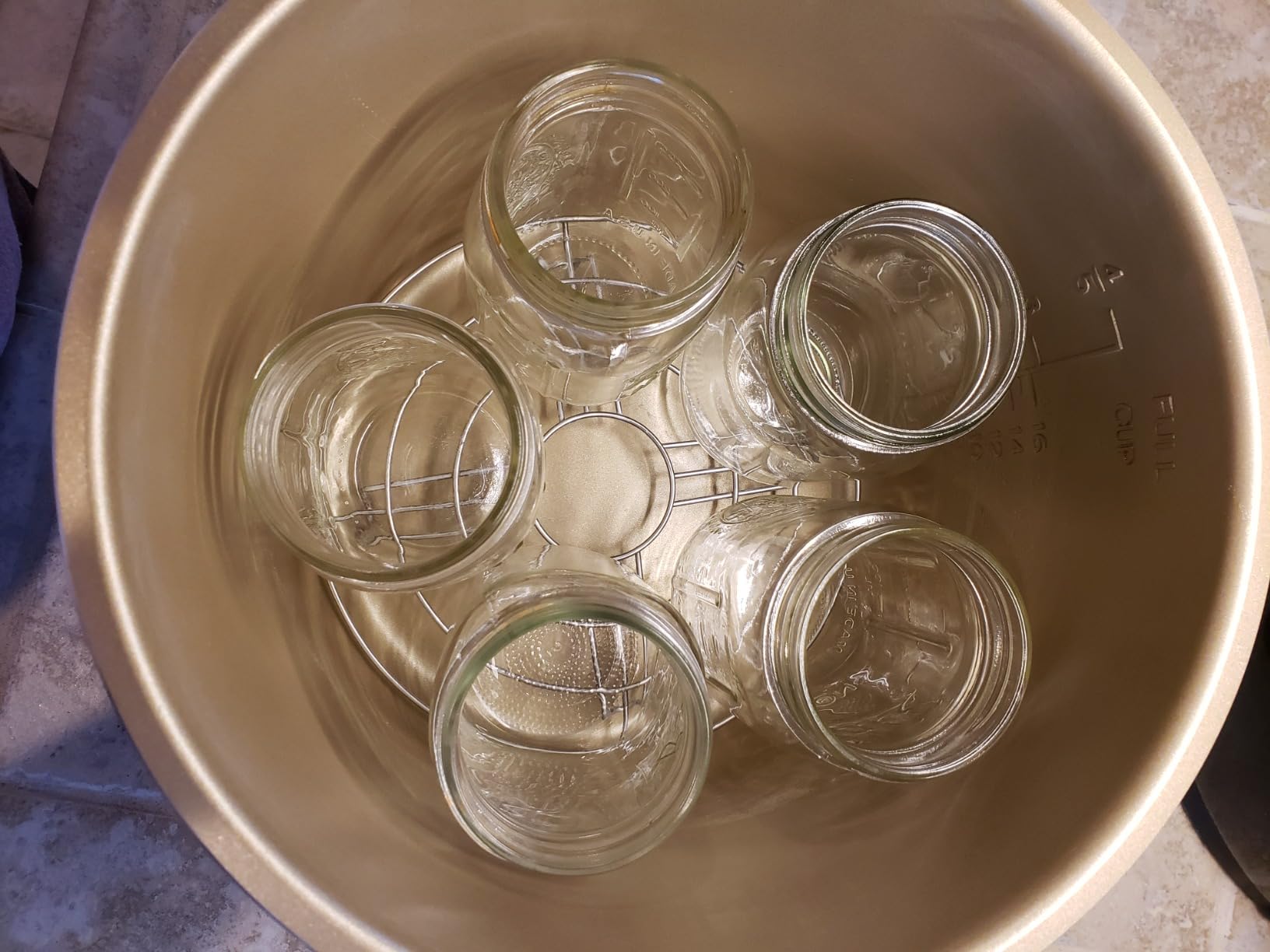
The honest limitation is batch size. About four quarts or five pints at a time, and the jars sit close together, so wide-mouth pint jars are genuinely awkward to grip and lift out. Many owners pair it with a larger stovetop canner once their preserving habits settle.
One operating note that catches people out: stay with it until it comes up to pressure before you switch modes and walk away. The loud beeps at plug-in, timer start, and pressure-gauge switch are startling the first time and harmless after that.
Is it worth it for a household that only cans occasionally?
Yes, if your cooking is the bottleneck. It pressure cooks, slow cooks, steams, and water baths, so it earns its counter space even in the months when you are not preserving anything.
For canning alone, the small batch and the one-year warranty pull the other way. The trade is a machine that is pleasant to use every week against one built for a few heavy sessions a year.
How does it handle altitude?
It includes both a standard and a high-altitude limiting valve, which is the correct way to handle elevation in an electric unit, because the sensor is regulating temperature rather than reading an open pressure gauge.
Users above a thousand feet should still confirm the process times in your altitude chart rather than assuming the valve handles everything. The valve keeps the machine honest, but the process time comes from the table.
7. Granite Ware 20-Quart Pressure Canner – Best Hard-Anodized Build
Granite Ware Pressure Canner/Cooker/Steamer, 20-Quart
20 quart capacity
Hard-anodized aluminum
10.5 lb empty
Adjustable 5, 10, 15 PSI regulator
Manual operation
Pros
- Hard-anodized body resists rusting and staining
- Adjustable three-piece regulator calibrated at 5
- 10 and 15 PSI
- Also works as a pressure cooker and steamer
- Light for a metal canner at 10.5 pounds
Cons
- Smallest established review base in this roundup
- Lower sales volume than the Presto and All American models
- Less published owner detail and fewer customer images
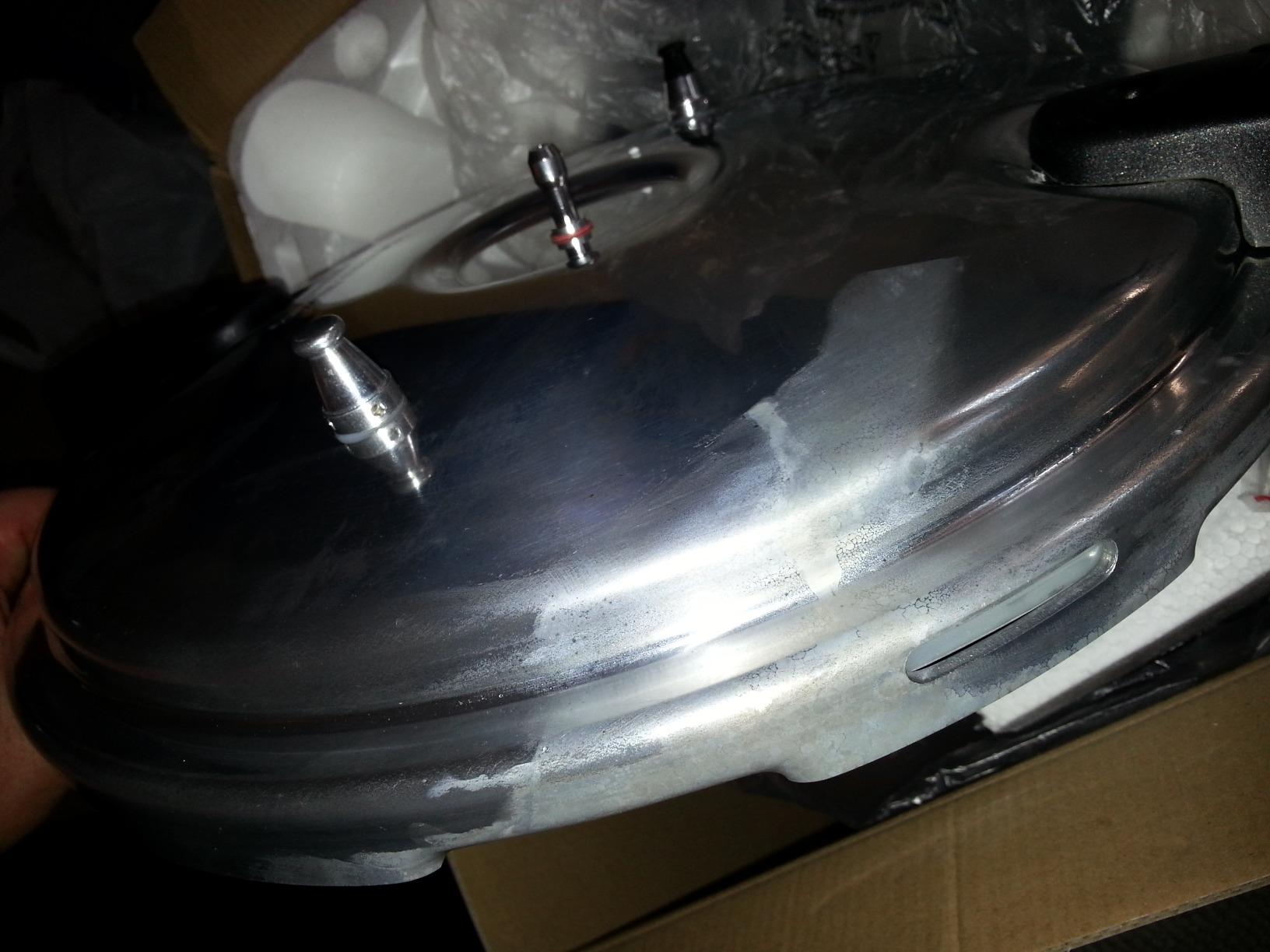
The build is the argument here. Hard-anodized aluminum is treated at the surface rather than simply polished, and owners who comment on it tend to point to rust and stain resistance over years of storage, which matters for a pot that lives on a shelf and only works a few times a season.
The three-piece adjustable regulator covers 5, 10, and 15 PSI, which covers every standard process and gives you the low-pressure range for altitude work and for the shorter processes that call for 5 or 10 PSI.
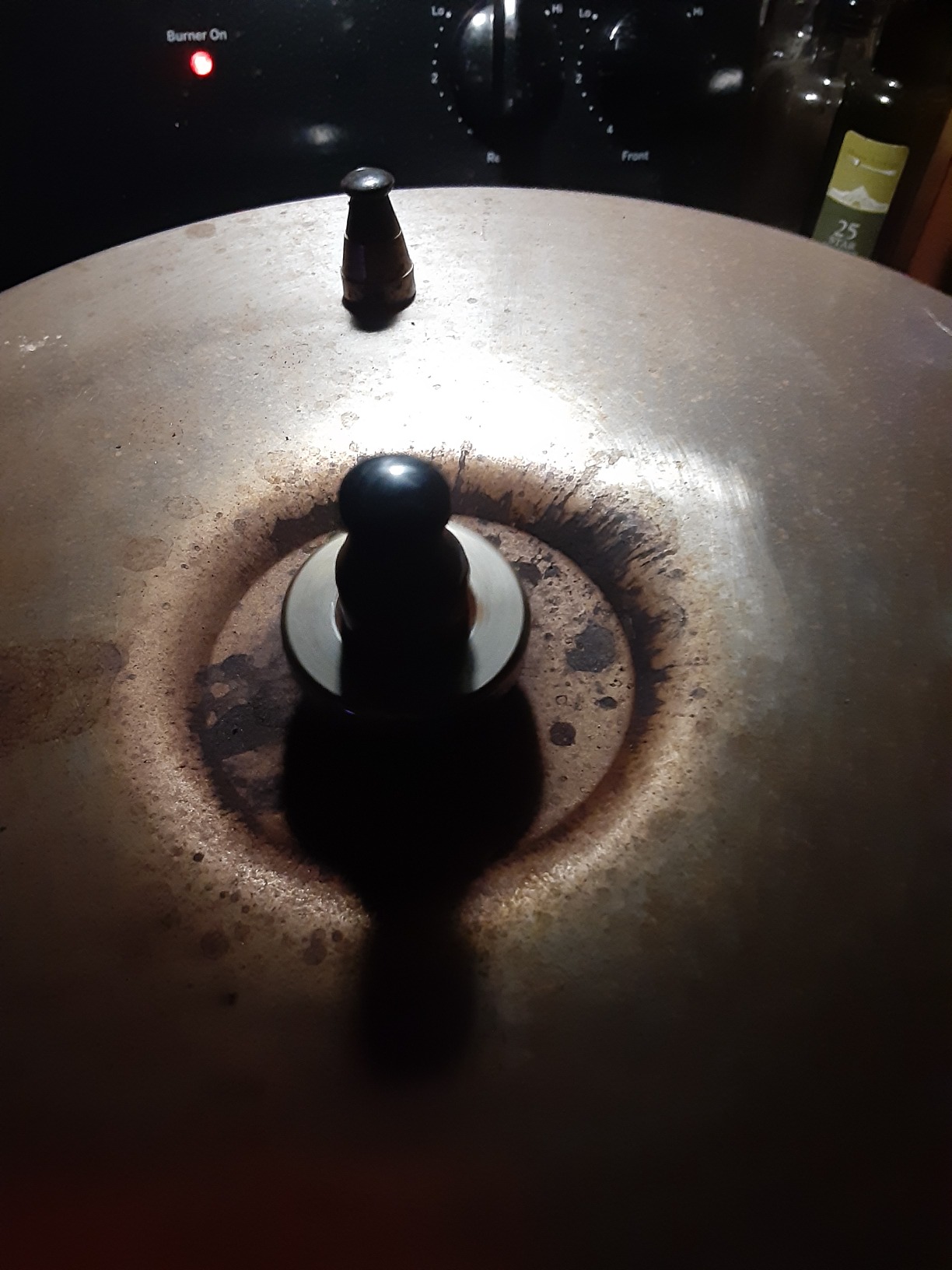
At 10.5 pounds empty, this is one of the lighter metal canners here, and at 20 quarts it still holds a workable batch. It doubles as a pressure cooker and steamer, which extends its usefulness well beyond canning season.
What you are accepting is a thinner field history. The rating is solid at 4.6, but the volume of owner feedback sits well below the Presto and All American models, and a canner is exactly the kind of purchase where a long, well-documented service record is worth real money.
Is 20 quarts enough capacity for a family garden?
It is a middle ground, and middle grounds are rarely wrong. It is bigger than the small electric units and smaller than the 22 and 23-quart workhorses, so plan on two sessions for a large harvest rather than one.
It also works as a large pressure cooker, so a smaller canning canner in a smaller kitchen is a reasonable way to own one vessel instead of two.
What should I verify before my first batch?
Check that the dial reads zero when cold, that the needle sweeps smoothly across its range, and that there is no moisture or corrosion inside the gauge face. Any of those and you need a service visit rather than a first batch.
Confirm the vent pipe is clear end to end and that the safety plug lifts freely. Those two checks take a minute and they are the same checks you should run on any canner, new or inherited.
8. IMUSA 16-Quart Stovetop Pressure Cooker with Regulator – Best Lightweight Cooker
IMUSA USA A417-80807 16Qt Jumbo Stovetop Pressure Cooker with Regulator and Side Handles, Silver
16 quart capacity
9 lb empty
Polished aluminum
Cool-touch side handles
Gas stovetop compatible
Pros
- Among the lightest metal canners here
- at a 9-pound empty weight
- 16-quart capacity suits family-scale cooking
- Cool-touch side handles move safer than a single top handle
- Locking lid
- pressure regulator
- and safety valves
- Also produced in 22
- 7
- and 4.2 quart sizes
Cons
- Listed as a pressure cooker rather than a purpose-built canner
- No induction capability and gas is the listed surface
- Aluminum body is unsuitable for highly acidic foods
We are including this one with a caveat, and the caveat matters: the manufacturer lists this as a stovetop pressure cooker rather than a dedicated pressure canner, and canning suitability is not what it was designed around. Read its instructions for pressure canning before you commit a harvest to it.
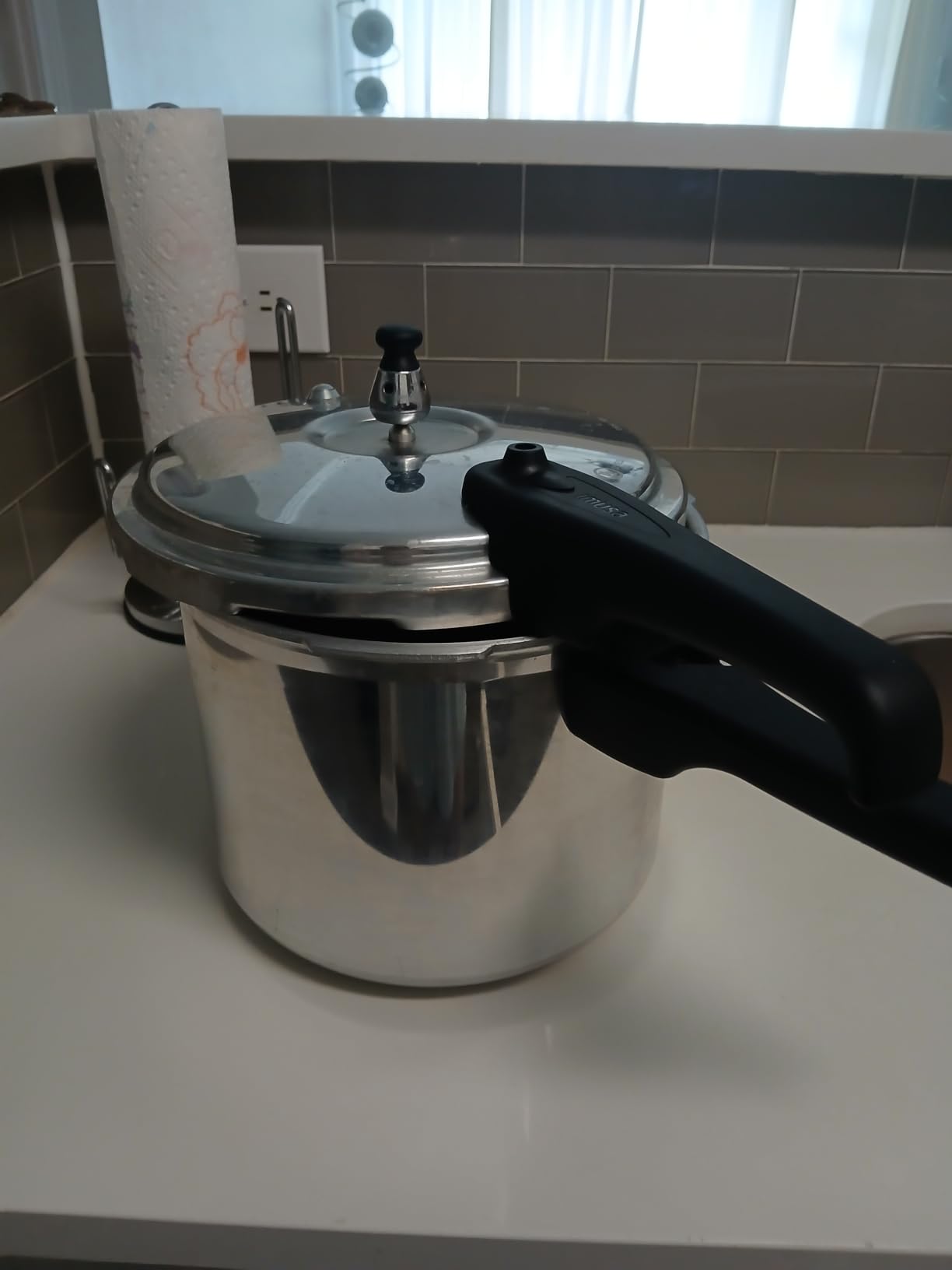
What it does well is everyday pressure cooking. Sixteen quarts is a genuine family batch, the 9-pound empty weight is the lightest of the metal units we list, and the cool-touch side handles make it far easier to move than a canner with a single top handle.
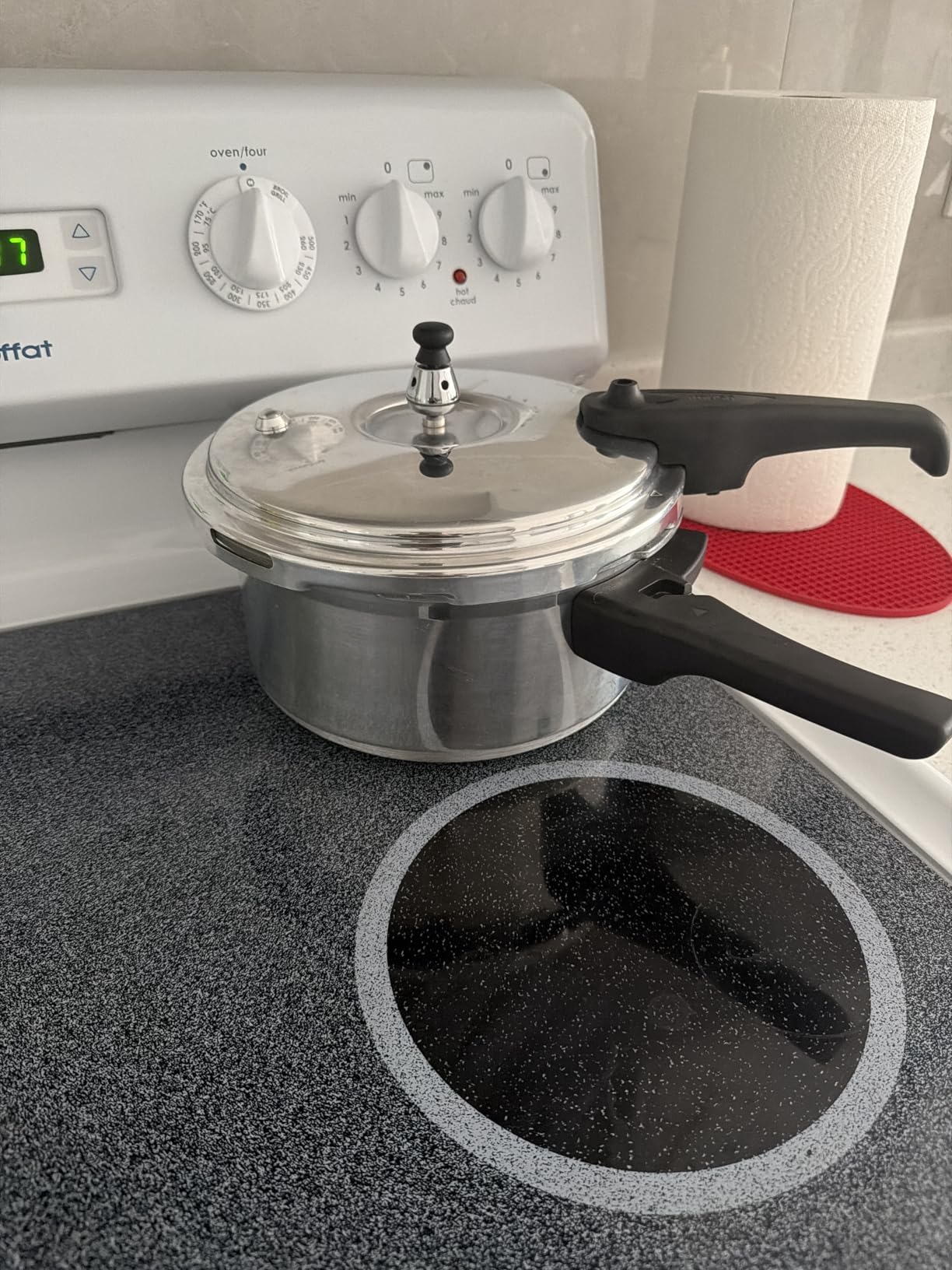
Owners rate it highly for beans, meats, and vegetables, and the locking lid, regulator, and safety valves cover the basics of pressurized cooking. The polished aluminum body is easy to clean and easy to move between burners.
The cooktop situation is the practical limit. Gas is the listed surface, there is no induction capability, and a coil burner with a flat contact surface would need to be tested before you trust it with a canning load.
Can it be used for home canning?
Only if the manufacturer says so, and for this model that is not what the listing claims. The safest reading is that it is a pressure cooker that happens to be large, and using a cooker for canning means working without a certified canning process.
If you want a genuinely versatile second vessel and already own a canner, this fills the role well. If canning is the main reason you are shopping, one of the seven dedicated canners above is the right purchase.
Is the light weight worth the trade-off?
It is the single biggest ergonomic advantage on this list. A 9-pound pot moves between burners and off the heat without a two-person lift, and for anyone with a back, a shoulder, or a small kitchen, that matters every single time.
You give up nothing on capacity for a family batch, and the same line is produced in 22-quart and smaller sizes if you want to match the size to your burner and your preserving habits.
How to Choose a Pressure Canner as a Beginner in 2026
Five decisions determine whether you enjoy this hobby, and all five can be made before you buy anything.
Start with your cooktop. This disqualifies more cans than any other factor. Gas and coil electric are the safe defaults, a smooth-top or ceramic surface needs a canner with a flat base that will sit flush against the glass, and induction needs a stainless clad base like the Presto 01784. A concave base is a hard incompatibility on a coil burner, because a pot that does not make full contact does not reach processing pressure no matter how long you wait.
Decide dial gauge against weighted gauge. Nearly every canner here ships with both, which is the ideal arrangement. The weighted regulator does the work and needs no calibration, while the dial gauge lets you read the pressure and confirm it. A weighted-only canner is simpler and cheaper. A dial-only canner requires an annual accuracy check through a Cooperative Extension office or the manufacturer, and a gauge that has drifted is worse than no gauge at all.
Check the seal type. A gasket seal is cheap and effective but it perishes, and an old canner without its gasket is a parts hunt. A metal-to-metal seal such as the All American uses needs only a clean surface and a film of oil, and it will outlive you.
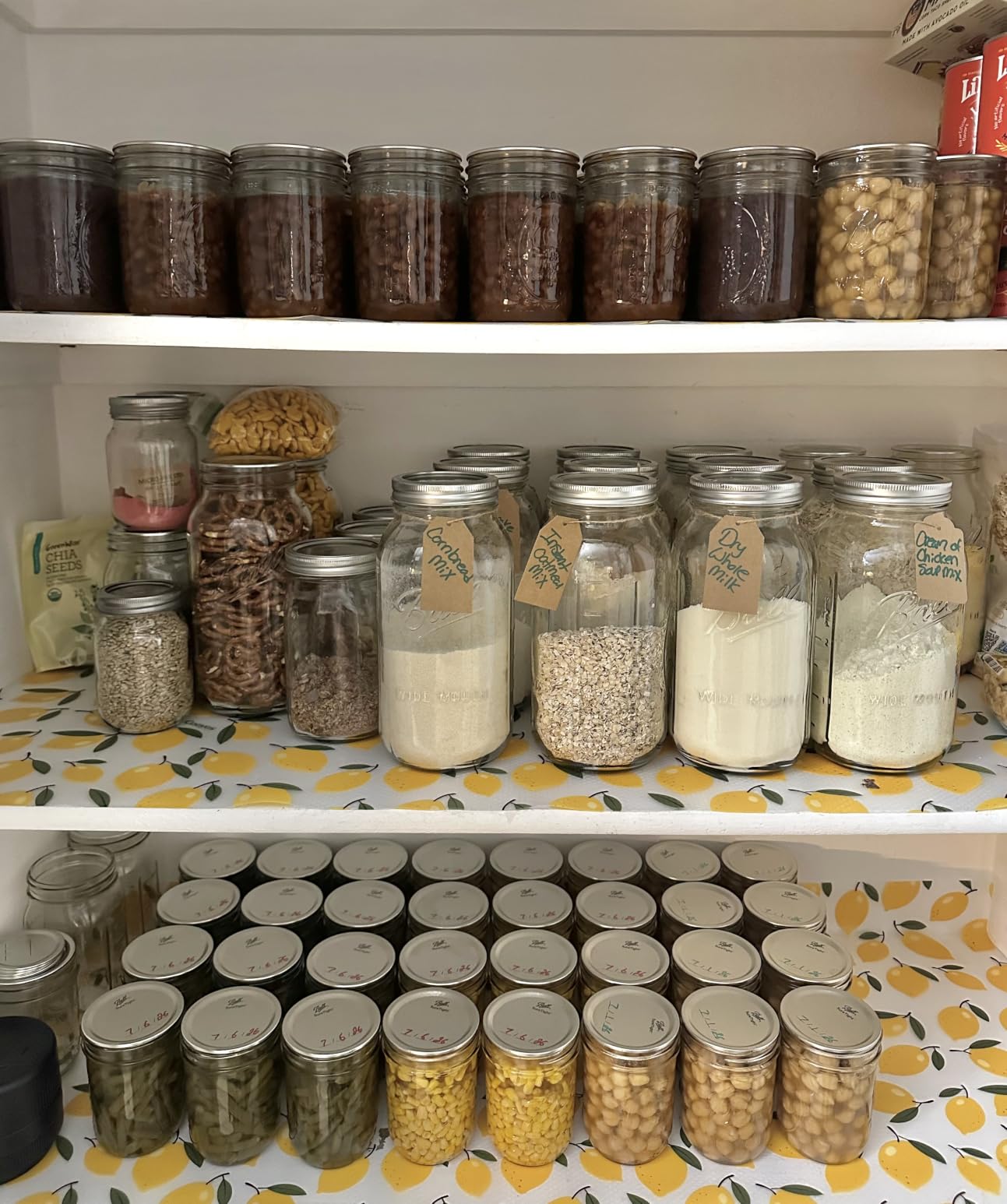
Match capacity to your harvest. The floor for safe home pressure canning is a normal load, which works out to four quart jars or seven pints. Below that, a canner can run its water down and fail to reach full pressure. Bigger is not better for a beginner with a handful of jars, but a canner too small to hold a minimum load is the wrong purchase.
Verify the safety triad. A cover lock that physically prevents opening under pressure, an overpressure plug that vents rather than ruptures, and a vent pipe you can see through and clear. Those three features, plus a body that is UL or ETL listed, are the checklist that matters more than any brand.
Sizing the electric question. Electric and digital canners remove the burner matching problem, the vent timing, and the manual heat management, which is why most first-timers find them the least frightening entry. The trade is verification. A dial gauge canner shows you the pressure; an electric canner shows you a program, and you are trusting its sensor. If you can accept that, and your batches are small, an electric unit is a genuinely good way to learn. If you want to confirm the pressure yourself, buy stovetop.
Two rules that are not optional. Never pressure can dairy, eggs, fats, flour, pasta, rice, purees, or summer squash and zucchini, and do not improvise. Home canning has no improvisation, because the process tables are the only thing standing between a jar of beans and botulism. If a recipe is not in a tested source, you are not canning it, you are guessing.
If you inherited a canner. Do not run food through it yet. Confirm the dial rests at zero when cold, that the needle sweeps smoothly, and that there is no water or corrosion inside the gauge face. Identify the brand and model and check that the pressure weights and gasket exist as parts. Make sure it is UL or ETL listed, and if it is not, that is the end of the inspection.
On maintenance. Wash the canner, dry the sealing surfaces, and store the cover inverted or loose so it does not rest on the seal. Run a dial tester on the gauge annually. Check the gasket for cracks and softness, and replace it rather than trying to make a tired seal work. Most of the canners in this roundup carry long warranties, and keeping the gauge honest is what makes that warranty meaningful.
Frequently Asked Questions
Is there a pressure canner that doesn’t require a gasket?
Yes. The All American 1930 uses a precision-machined metal-to-metal sealing system instead of a rubber or silicone gasket, so there is no consumable seal to stretch out and replace. The sealing faces only need to be wiped clean and given a light film of cooking oil before reassembly. That is a genuine advantage for beginners, especially anyone who has inherited an older canner whose gasket has perished and cannot identify the correct replacement part.
What is the easiest canning system for beginners?
An electric pressure canner such as the NESCO NPC-9 or the Presto 02144 digital is the lowest-friction entry, because it automates venting, pressure, and timing and never needs a burner matched to the pot. The trade is that you cannot independently verify the pressure. If seeing the gauge matters to you, a dial gauge stovetop canner is the more conservative long-term choice, and most experienced canners keep one of each.
Which pressure canner is considered the safest?
Safety is a checklist rather than a brand. Look for a UL or ETL listed body, a cover lock that physically prevents opening under pressure, an overpressure plug, and a vent pipe you can inspect and clear before every use. On top of that, choose a dial gauge that rests at zero when cold and gets an accuracy check annually. Among these eight, the All American 1930 leads on seal durability and the Presto models lead on value for those features.
Can jars touch the side of a pressure canner?
Jars may sit close against the canner wall, but they should not touch each other, and the canning rack matters more than it looks. The rack holds jars above the water so steam circulates under them and every jar gets equal heat. Do not stack jars unless the canner is rated for it and you have the second rack, and always load a normal batch so the water does not run down before processing pressure is reached.
What foods should never be pressure canned at home?
Dairy, eggs, fats and oils, flour, pasta, rice, purees, and summer squash including zucchini are not safe to can at home, whether by pressure or water bath. The problem is not heat, it is that these foods either cannot be made shelf-stable, block heat transfer in a way that leaves cold spots, or have an acidity that makes tested process times meaningless. Can the same product commercially if you need it in the pantry.
Can I use an Instant Pot or other electric pressure cooker to can food?
No. University extension guidance does not recommend multi-cookers for canning because they heat and cool too quickly, lack verifiable pressure measurement, and have not been tested against the USDA process tables. Use a canner whose manufacturer states it is intended for home canning, and follow that manual. A large stovetop pressure cooker such as the IMUSA 16-quart is fine for cooking beans and meat, but it is not a canning vessel.
Final Verdict: The Best Pressure Canners for Beginners in 2026
The Presto 01781 23-Quart is the best pressure canner for beginners because it handles the whole first year of canning without a compromise you will regret: seven quart jars per load, both a weighted regulator and a readable dial gauge, instructions in the box, and a 12-year warranty behind it. If your kitchen runs on induction, take the Presto 01784 instead, and if you would rather never own a gasket again, the All American 1930 is the one.
Start with a tested recipe from a USDA or extension source, load a full batch, vent for the full ten minutes, and let the canner cool naturally before you touch the weight. That sequence, followed every time, is what separates a pressure canner from the story about somebody whose canner exploded. If you also want a fast-cooking pot for the days you are not preserving, our best pressure cookers for families guide covers that side of the aisle.