
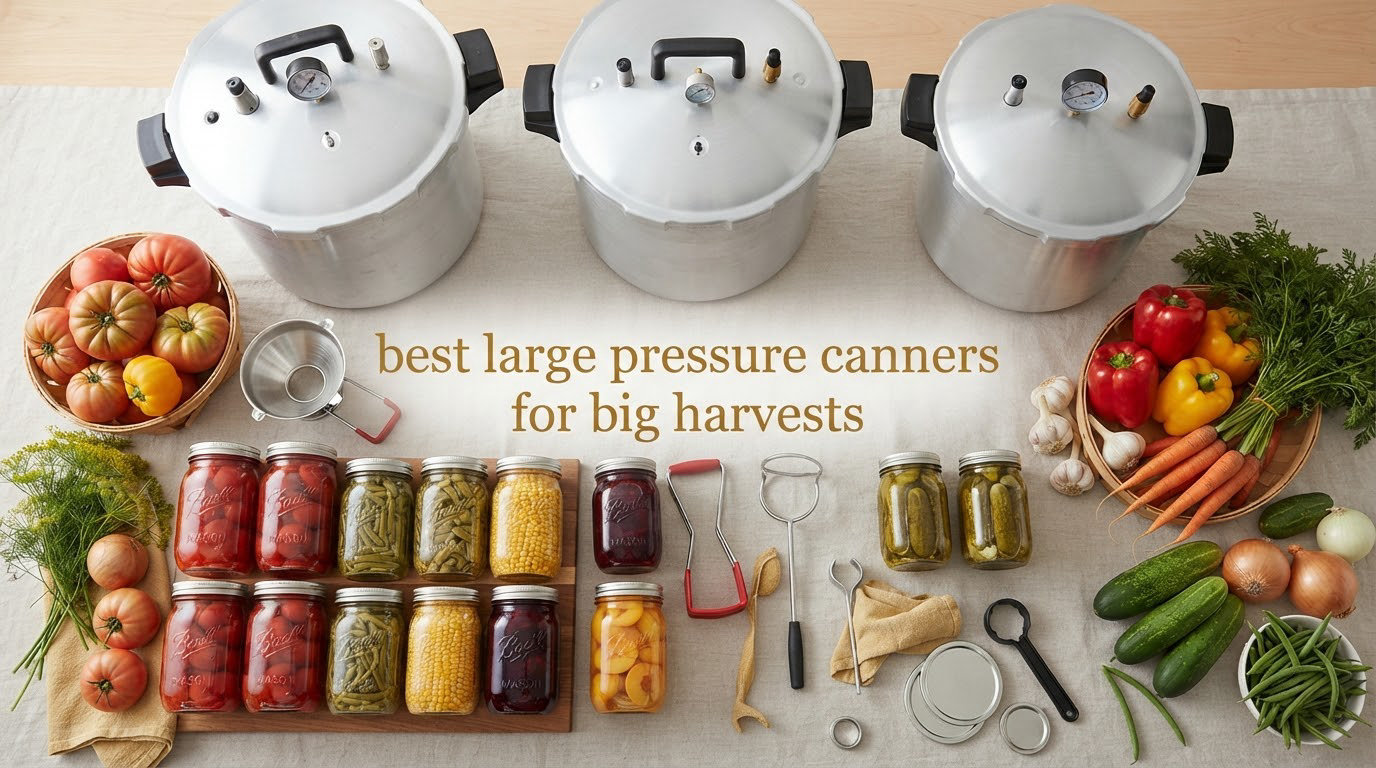
A garden that produces 80 pounds of green beans does not care how nice your 7-quart cooker looks on the shelf. It cares how many loads you make before midnight, and how your back feels on day three. That is the whole argument for the best large pressure canners: capacity, measured in jars per load, decides whether a harvest takes an afternoon or an entire weekend.
We spent weeks working through the whole large-capacity category, from a 20-quart stovetop model that weighs 10.5 pounds to a 41.5-quart American-made machine that weighs 33 pounds empty and holds 19 quart jars. The best pressure cookers for families cover the everyday cooking side of this category, but a pressure canner is a different machine with a different job, and the wrong one will not get your beans on a shelf safely.
This guide covers all eight large pressure canners that make sense for serious home preserving, ranked by how they perform on real harvest loads rather than by spec sheet alone. We look at jar count per batch, gauge type, seal type, stove compatibility and the weight you will be lifting all day. Updated for 2026, with current ratings pulled from thousands of verified buyer reviews.
Table of Contents
Top 3 Large Pressure Canners for Big Harvests in 2026
If you want the short version: the Presto 01781 23-quart is the best large pressure canner for most households, the All American 941 handles the heaviest harvests at 19 quart jars per load, and the T-fal 22-quart is the least expensive way into 7-quart-jar batches.

Presto 01781 23-Quart Canner
- 7 quart jars per load
- 20 pints or 26 half-pints
- Dial gauge tracks full pressure range
- 12-year limited warranty

All American 941 41.5-Quart Canner
- 19 quart jars or 32 pints
- Metal-to-metal seal with no gasket
- 33 pounds empty
- Weighted gauge needs no annual test
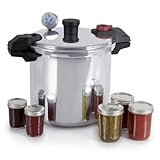
T-fal 22-Quart Pressure Canner
- 22-quart capacity
- 7 quart jars per batch
- Three PSI settings at 5 10 15
- Two racks included
All 8 Large Pressure Canners Compared in 2026
Liquid capacity and jar capacity are not the same number, which is where most comparisons go wrong. The table below uses the jar counts and pressure systems each manufacturer states, so you can size a canner against the harvest you actually have.
| Product | Specifications | Action |
|---|---|---|
| Presto 01781 23-Quart Pressure Canner and Cooker |
|
Check Latest Price |
| All American 941 41.5-Quart Pressure Cooker/Canner |
|
Check Latest Price |
| T-fal 22-Quart Aluminum Pressure Canner |
|
Check Latest Price |
 Presto 02153 23-Quart Digital Pressure Canner Presto 02153 23-Quart Digital Pressure Canner |
|
Check Latest Price |
 Granite Ware 20-Quart Pressure Canner Cooker Steamer Granite Ware 20-Quart Pressure Canner Cooker Steamer |
|
Check Latest Price |
 Mirro 22-Quart Pressure Canner with 3 Regulators Mirro 22-Quart Pressure Canner with 3 Regulators |
|
Check Latest Price |
 TSTQH 15-Quart Induction-Compatible Pressure Canner TSTQH 15-Quart Induction-Compatible Pressure Canner |
|
Check Latest Price |
 TSTQH 25-Quart Stainless Steel Pressure Cooker and Steamer TSTQH 25-Quart Stainless Steel Pressure Cooker and Steamer |
|
Check Latest Price |
How Pressure Canning Works and Why Capacity Decides Your Day
A pressure canner is a sealed vessel that traps steam until the boiling point of water climbs above 212 degrees Fahrenheit. At 10 to 15 PSI, water inside the canner reaches roughly 240 to 250 degrees, and that heat is what destroys the spores of Clostridium botulinum in low-acid foods like green beans, corn, potatoes, meat and soups.
Jars sit on a canning rack above a few inches of water. They are not submerged, and the canner needs at least four quart jars in the vessel for the pressure reading to be accurate, which is the rule that makes canners under about 10 quarts useless for actual canning.
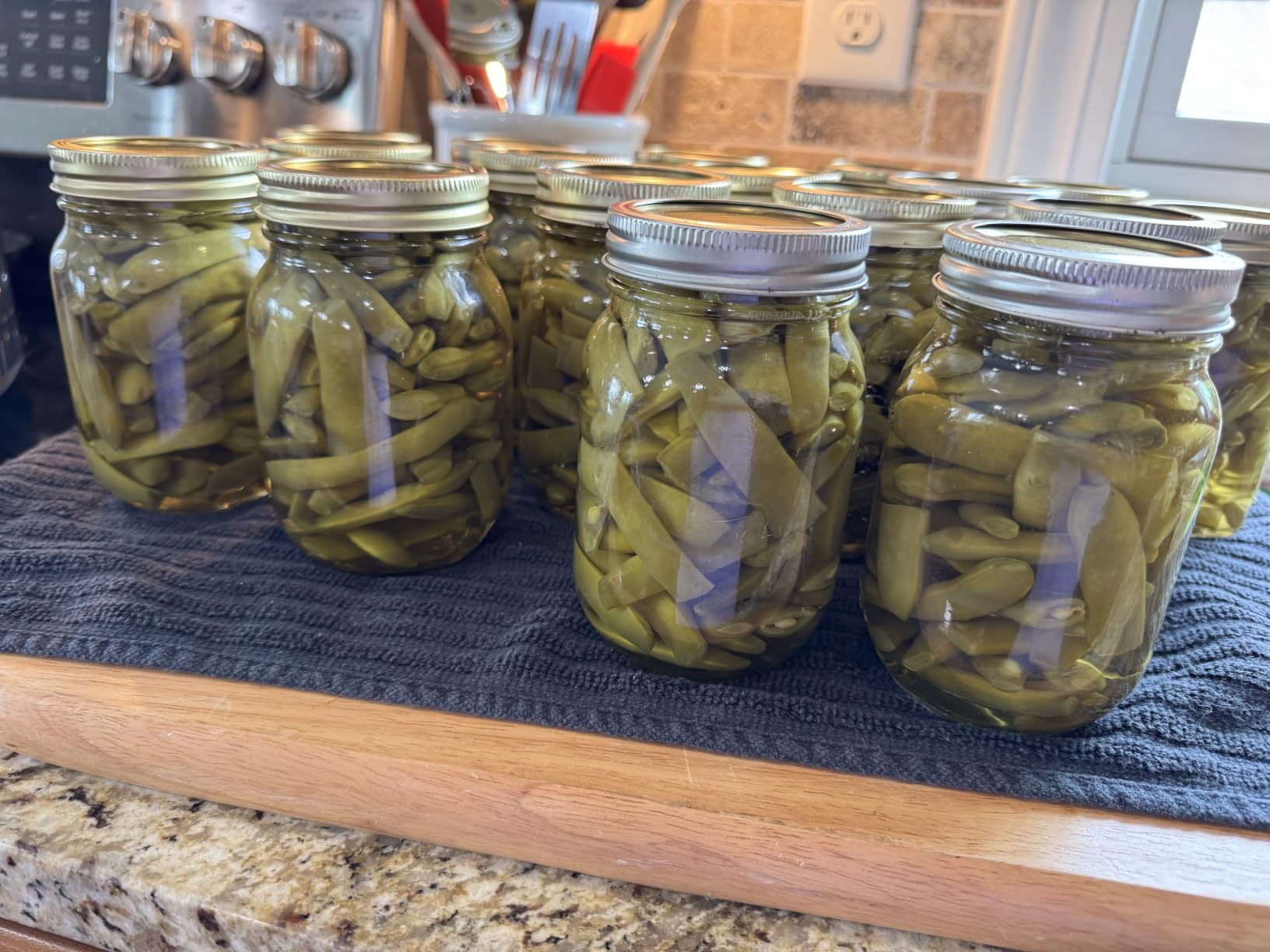
Here is the arithmetic that makes capacity matter. A 7-quart jar takes roughly 90 minutes to process at sea level, and a 23-quart canner takes 7 quart jars per load. A 7-quart cooker takes 1 jar per load. Put those side by side and the same 50 jars means 7 loads instead of 50.
Big harvests are where the gap becomes painful. A backyard planting of beans, squash and tomatoes can easily produce more low-acid food than a small cooker can process in a working day, and every extra load is another heat-up, another processing timer and another set of hot jars to cool.
1. Presto 01781 23-Quart Pressure Canner and Cooker – Best Overall for Big Harvests
Presto 01781 23-Quart Pressure Canner and Cooker
21.8 liter aluminum body
Holds 7 quarts 20 pints or 26 half-pints
12 pounds
12-year warranty
Pros
- Holds 7 quart jars 20 pints or 26 half-pints per load
- Dial gauge covers the full processing pressure range
- Works on regular and smooth-top ranges
- Includes canning rack and recipe book
- 12-year limited warranty
Cons
- Aluminum body discolors with acidic foods
- Manual burner heat needs constant adjustment
Our default recommendation, and the one we kept reaching for. The Presto 01781 is a 23-quart aluminum canner listed at 21.8 liters of capacity, and the manufacturer states it holds 26 half-pints, 20 pints or 7 quarts in a single load. That 7-quart figure is the number that matters for a big harvest.
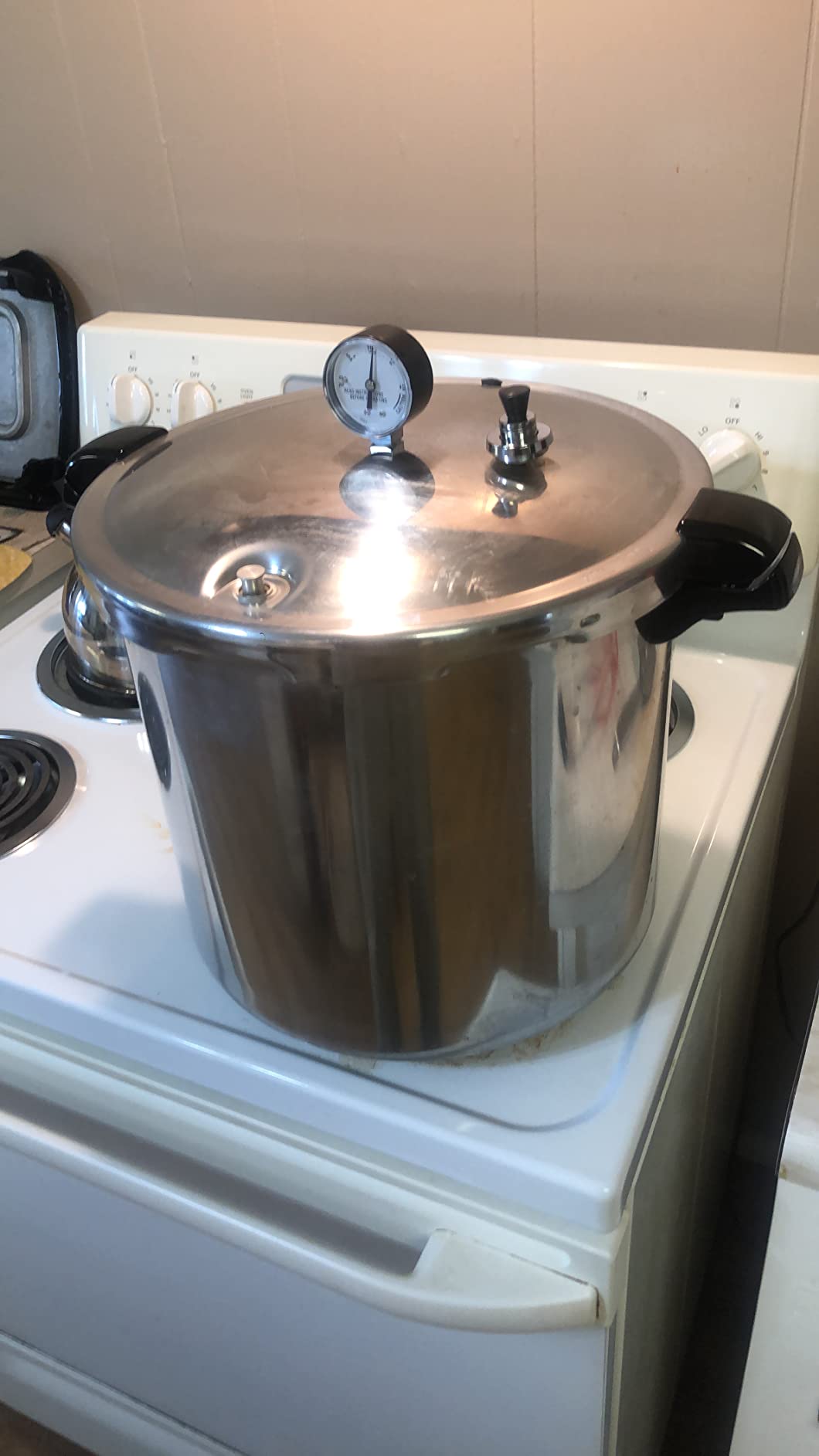
At 12 pounds empty, it is also one of the lighter large canners in this roundup, which is the difference between lifting a pot onto a burner and wrestling a loaded vessel. Buyers have filed more than 20,000 reviews, and the average sits at 4.8 stars, which tells you this is not a product that surprises anyone.
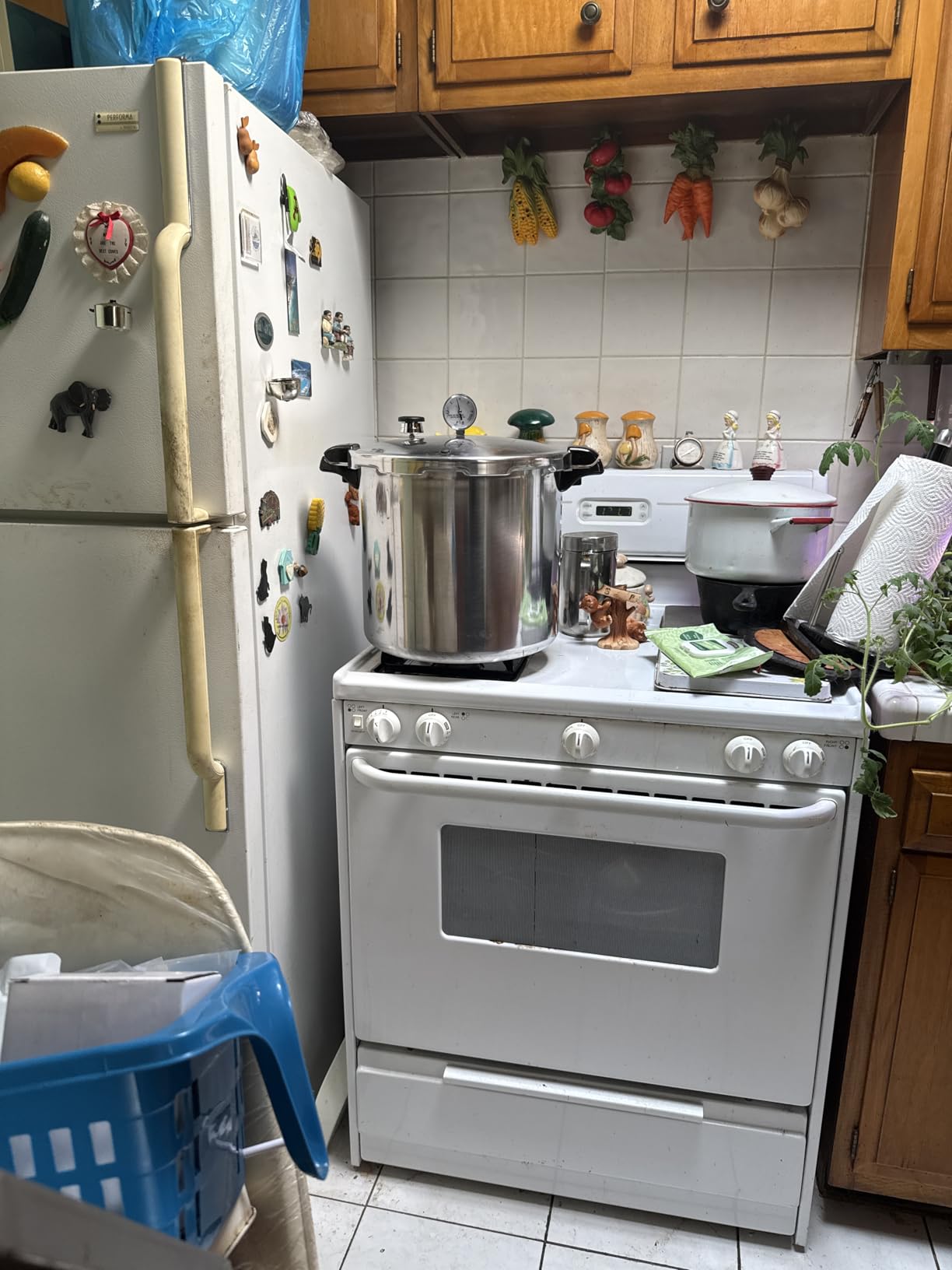
The deluxe dial gauge is the feature experienced canners point to most. It registers the complete range of processing pressures, so if you live above 1,000 feet and need to run a higher weight or a different pressure setting, this gauge shows you the difference rather than leaving you guessing by sound alone.
It also doubles as a boiling-water canner and a large pressure cooker, so a single vessel covers high-acid jams and pickles as well as low-acid vegetables. Presto includes the canning and cooking rack plus a 76-page instruction and recipe book, and the warranty runs 12 years, which is far longer than anything else here.
Who this canner suits
This is the right pick for a household that wants one machine to do everything without crossing the 7-quart jar threshold. Seven quart jars per load cuts a normal evening of canning down to a couple of hours, and 20 pints per load means jam season moves at a real pace.
Smooth-top range owners are covered too. Reviewers specifically note that this model works on both regular and smooth-top cooktops, and Presto backs it with a service operation that responds by phone and email, which matters when you have a question mid-season.
Who should skip it
If your harvest is mostly tomatoes, vinegar pickles or fruit, you are paying for capacity you do not need and dealing with a body that reacts with acid. Aluminum takes on discoloration from tomato-based and vinegar-heavy recipes, and while that does not affect safety, it is permanent.
The second limitation is heat attention. Operation is fully manual, so you are watching the burner for the entire processing time. If you would rather set a program and walk away, look at the electric option below instead.
2. All American 941 41.5-Quart Pressure Cooker/Canner – Largest Capacity Available
All American 1930: 41.5qt Pressure Cooker/Canner (The 941) – Exclusive Metal-to-Metal Sealing System – Easy to Open & Close – Suitable for Gas or Electric Stoves – Made in the USA
41.5 quart capacity
Holds about 19 quart jars or 32 pints
Metal-to-metal seal, no gasket
33 pounds
Pros
- Largest capacity in this roundup at about 19 quart jars
- Metal-to-metal seal means no gasket to replace
- Weighted gauge needs no annual calibration
- Parts interchange with other All American models
- Made in the USA with reorderable parts
Cons
- 33 pounds empty so it is loaded on the stove
- Not suitable for flat glass cooktops
- Long heat-up and cool-down times
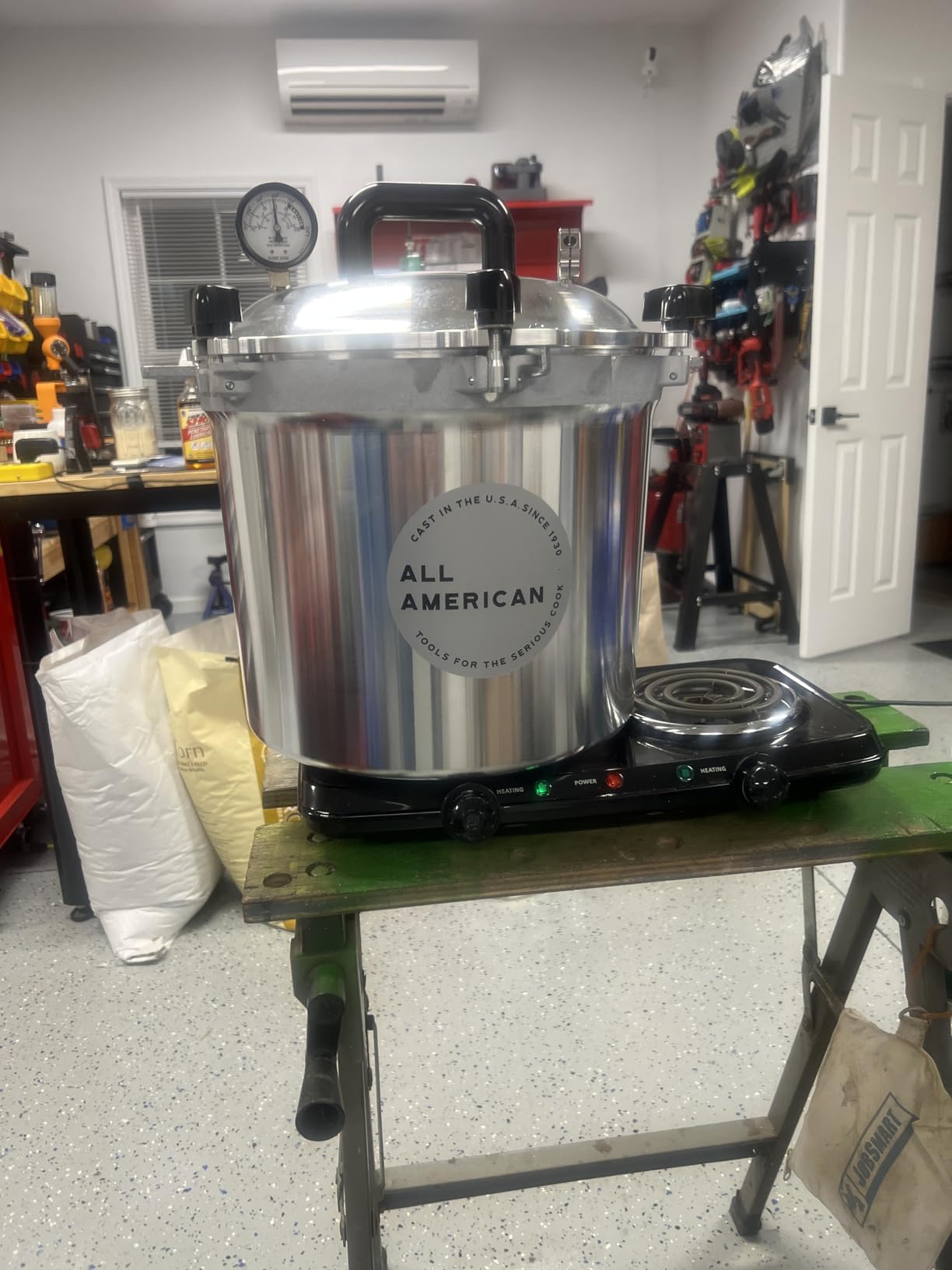
This is the largest pressure canner in our roundup, and the honest answer to the question about the biggest one available for home use. At 41.5 quarts it holds approximately 32 pint jars or 19 quart jars, which is close to triple what a 21-quart model processes per load.
It carries a 4.9 star average across nearly 10,000 reviews, the highest rating of anything we looked at. The design is also fundamentally different from every other canner here: the seal is metal-to-metal, so there is no rubber gasket in the lid to stretch, harden or replace.
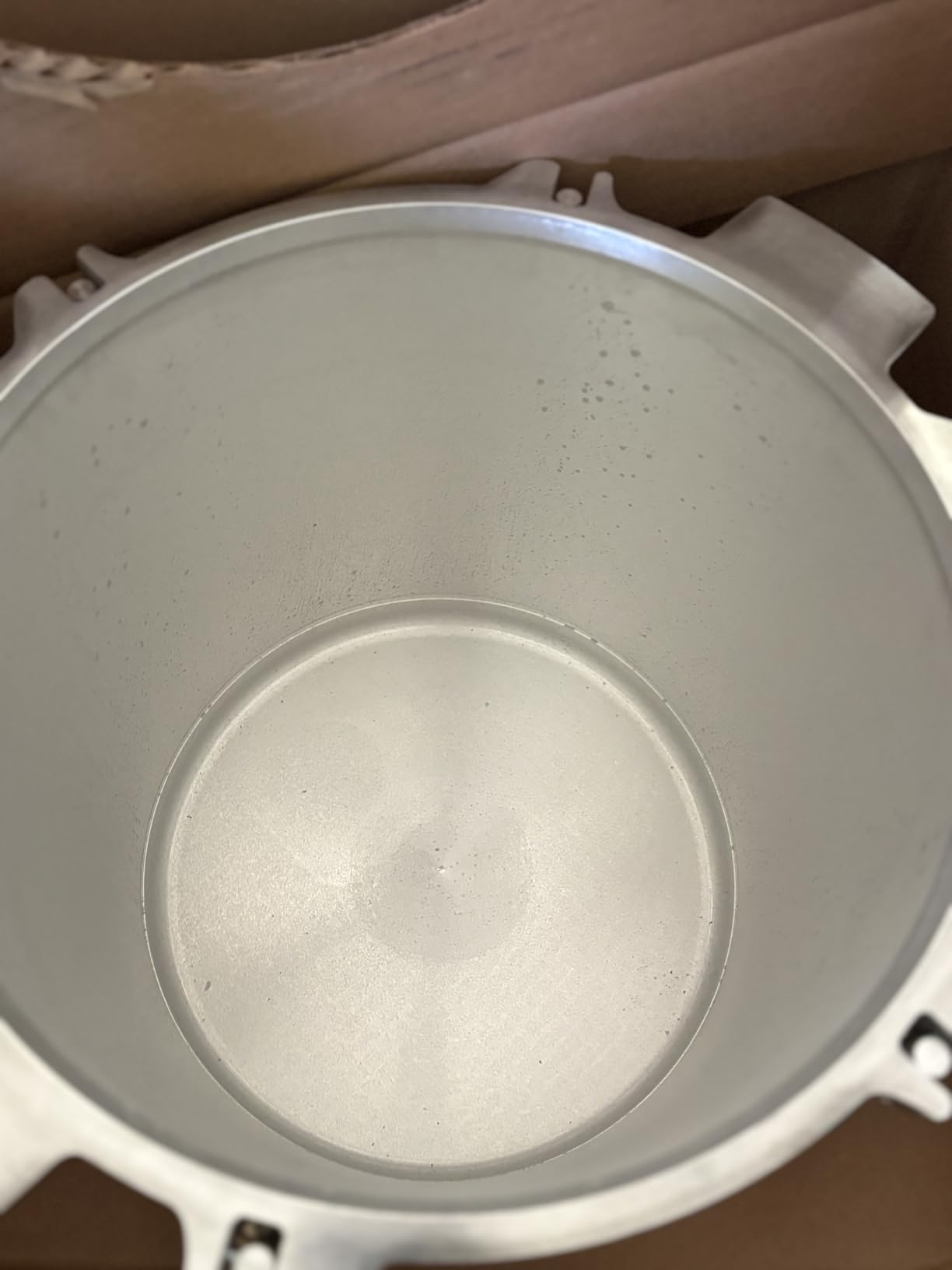
Pressure is regulated by a precision-machined weight rather than a spring gauge, and that choice removes an entire maintenance chore. Weighted regulators do not drift and do not need annual calibration testing, because you are not reading a number, you are listening for a steady rock and a continuous stream of steam from the vent pipe.
Positive-action clamping locks form the steam-tight seal, the body is cast aluminum with double-thickness edges at the wear points, and the maker builds it in the USA with reorderable parts and free replacement safety labels. Gauge knobs and weights are shared across the All American line, so a single spare covers several models.
Who this canner suits
If you put up 50 pounds or more of low-acid food a season, this is where the payback shows up. Nineteen quart jars per load means a serious harvest can move through in a few loads rather than a dozen, and the metal-to-metal seal means you will never be splitting a gasket mid-season.
It also suits anyone who wants both halves of a vintage setup. It works as a pressure cooker and a boiling-water canner, and owners report years of heavy use with no noticeable wear. Communities that buy from Amish catalog retailers have long treated this as the standard heavy-duty machine.
Who should skip it
Measure your hood and your cabinet before you commit. The listed dimensions are 15.25 inches deep by 15.25 inches wide by 19 inches tall, and canners at that height will not fit under many standard kitchen hoods. This is a documented problem, not a rare edge case.
At 33 pounds empty, the canner has to be filled, heated and emptied on the stove. It is also not designed for flat glass cooktops, where the weight risks scratching or cracking the surface. If you cook on induction or smooth-top glass, choose a different machine.
3. T-fal 22-Quart Aluminum Pressure Canner – Best Budget Large Canner
T-fal 22-Quart Aluminum Pressure Canner, 3 PSI Settings, Home Canning, Includes Racks & Canning Guide, Large Capacity, Pressure & Water Bath Canning for Vegetables, Meats, Seafood & Fruits, Silver
22 quart aluminum body
Holds 7 quarts 18 pints or 24 half-pints
Three PSI settings
14.8 pounds
Pros
- Holds 7 quart jars 18 pints or 24 half-pints
- Two racks allow two rows of jars
- Three pressure settings at 5 10 and 15 PSI
- Works as both pressure and water bath canner
- Simple enough for first-time canners
Cons
- Some units report a weak or uncalibrated pressure indicator
- Gasket can weep a little steam until reseated
- Bulky 16.26 inch height needs a large burner
The cheapest route to real large-batch capacity in this roundup, and the model most first-time canners end up buying. It holds up to 24 half-pint, 18 pint or 7 quart jars, and two canning racks are included so jars can sit in two rows rather than a single layer.
Pressure is set with a dial integrated into the canner top, offering 5, 10 and 15 PSI. That makes altitude work straightforward, since you select a higher setting rather than hunting for a different weight. The listing covers both USDA-recommended pressure canning for low-acid foods and boiling-water canning for high-acid foods.
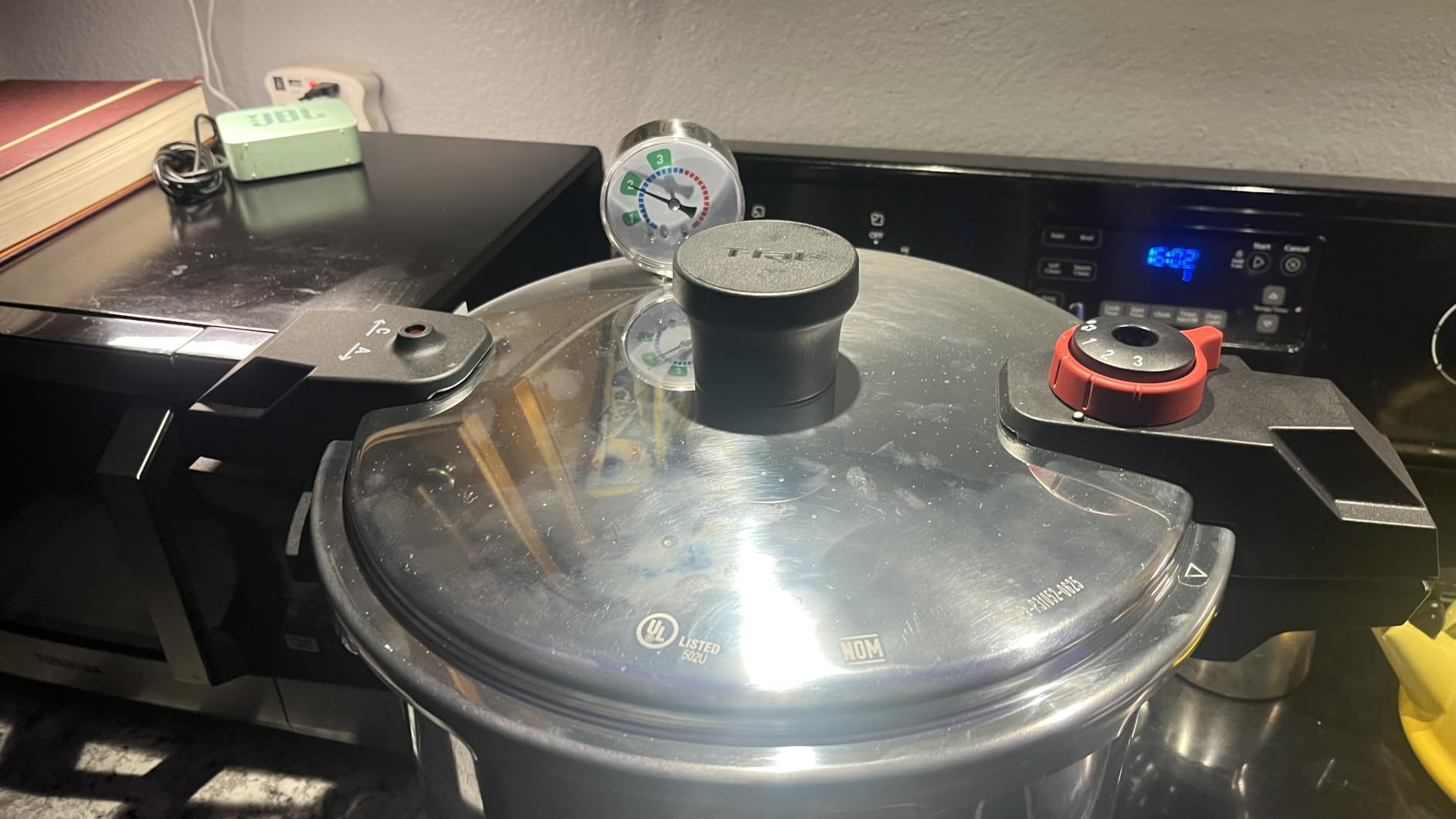
Two racks matter more than they sound. A single rack means you get one layer of jars and leftover space; two racks let you process 7 quart jars in a 22-quart vessel and actually use the capacity you paid for. It also doubles as a pressure cooker and steamer for the rest of the year.
Reviewers consistently describe it as simple and safe enough for a novice, and the 4.4 star average from nearly 6,800 reviews reflects that view. The warranty is one year, which is the shortest in the group, and the listed dimensions come in at 19.33 by 15.39 by 16.26 inches.
Who this canner suits
Beginners who want a large canner without a large learning curve, and anyone who would rather pick a PSI setting than listen for a weighted gauge. It is compatible with gas and electric coil cooktops, and the 14.8-pound weight is easy to handle.
It also makes sense for a first season of pressure canning, followed by a step up later. The two-rack configuration means a real batch of 7 quart jars goes in at once, which is the whole point of moving past small canners.
Who should skip it
Pressure consistency is the recurring complaint. Some units report a pressure indicator that is hard to read once seated in the lid, a handle gasket that weeps a small amount of steam until cleaned and reseated, and a canner that self-vents before it reaches full pressure.
Be cautious if you can a lot of tomatoes or vinegar-based recipes, since the aluminum body discolors quickly. The height also matters for storage, and the included manual has been reported arriving with a broken binding.
4. Presto 02153 23-Quart Digital Pressure Canner – Best for Set-and-Forget Canning
Presto 02153 23-Quart Digital Pressure Canner
23 quart electric canner
Holds up to 7 quart jars
Sensor-controlled processing
16.1 pounds
Pros
- No stovetop monitoring during processing
- Step-by-step digital prompts and LED display
- Built-in automatic altitude adjustment
- Handles pressure and boiling-water canning
- Audible beeps signal stage changes
Cons
- Comes with a single rack so jars cannot stack
- Settings cannot be changed once a cycle starts
- Long heat-up and cool-down times
The only true electric canner at this capacity in our group, and the answer for anyone who does not want to babysit a burner. Sensor technology holds the processing temperature automatically while you prep the next batch, which is exactly the workflow a big harvest demands.
It holds up to 7 quart jars for both pressure and boiling-water canning, and the guided controls walk you through the process with step-by-step prompts on an LED display. Audible beeps let you know from another room when a cycle changes, and it runs quietly compared with most stovetop canners.
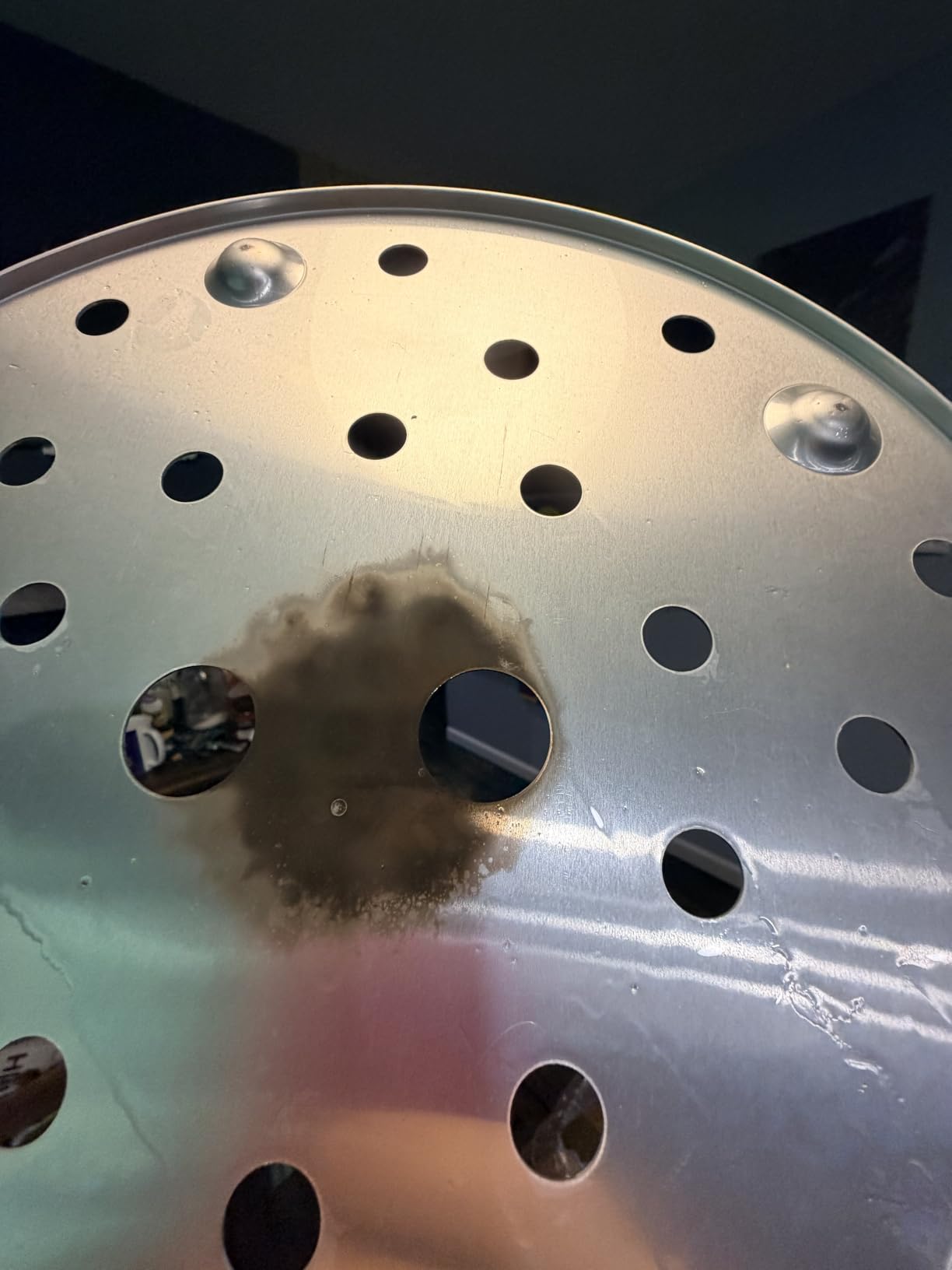
Built-in automatic altitude adjustment is the sleeper feature for anyone above 1,000 feet. Instead of manually changing a weight or a dial setting, the unit compensates on its own. Automatic shut-off, a built-in timer, a locking lid and programmable controls round out the safety package.
This is a 2026 model with 276 reviews at a 4.5 average, so the feedback pool is younger than the classic stovetop cans. Early owners are largely enthusiastic, particularly beginners and households without a reliable burner setup, and Presto supplies the lid, canning rack, body and cord as a four-piece set.
Who this canner suits
Homes where canning is a team activity. While one person loads jars, the canner holds temperature on its own, and the prompts reduce the amount of recipe knowledge needed on a first run. The 16.1-pound weight is reasonable for a 23-quart electric vessel.
It is also a genuinely good fit for anyone who wants pressure canning and water-bath canning in one appliance, since the same 23-quart body handles jams, pickles and low-acid vegetables without a second pot on the burner.
Who should skip it
Only one rack is included, so jars cannot be stacked out of the box. If double stacking matters to your plan, buy a second rack before your first session, because the accessible capacity otherwise drops well below 7 quarts of jars.
Once a cycle starts, settings and processing time cannot be adjusted and the unit must be restarted. Heat-up and cool-down times are long, and the jar-warming cycle is not intuitive to skip, so plan batches around the full cycle rather than the timer alone.
5. Granite Ware 20-Quart Pressure Canner Cooker Steamer – Lightest Large Canner
Granite Ware Pressure Canner/Cooker/Steamer, 20-Quart
20 quart aluminum body
Adjustable regulator at 5 10 15 PSI
10.5 pounds
Hard-anodized interior
Pros
- Lowest published empty weight among 20 quart and larger models
- Hard-anodized aluminum resists rust and staining
- Adjustable 3-piece regulator at three pressures
- Compact 15.75 by 15.5 by 12.75 inch body
- Nonstick interior simplifies cleanup
Cons
- Manual burner control with no digital guidance
- Aluminum body unsuitable for long vinegar-based cooks
- No guided canning cycle
Among the canners here that publish an empty weight, 10.5 pounds is the lowest figure on the list, and at 12.75 inches tall it is also the shortest of the 20-quart-and-up models. Together those numbers make it the easiest large canner to move, store and lift.
Pressure comes from an adjustable three-piece regulator calibrated at 5, 10 and 15 PSI. That is the same weighted-gauge logic as a traditional canner, and the solid cast aluminum body makes it quick to bring up to pressure and steady once there.
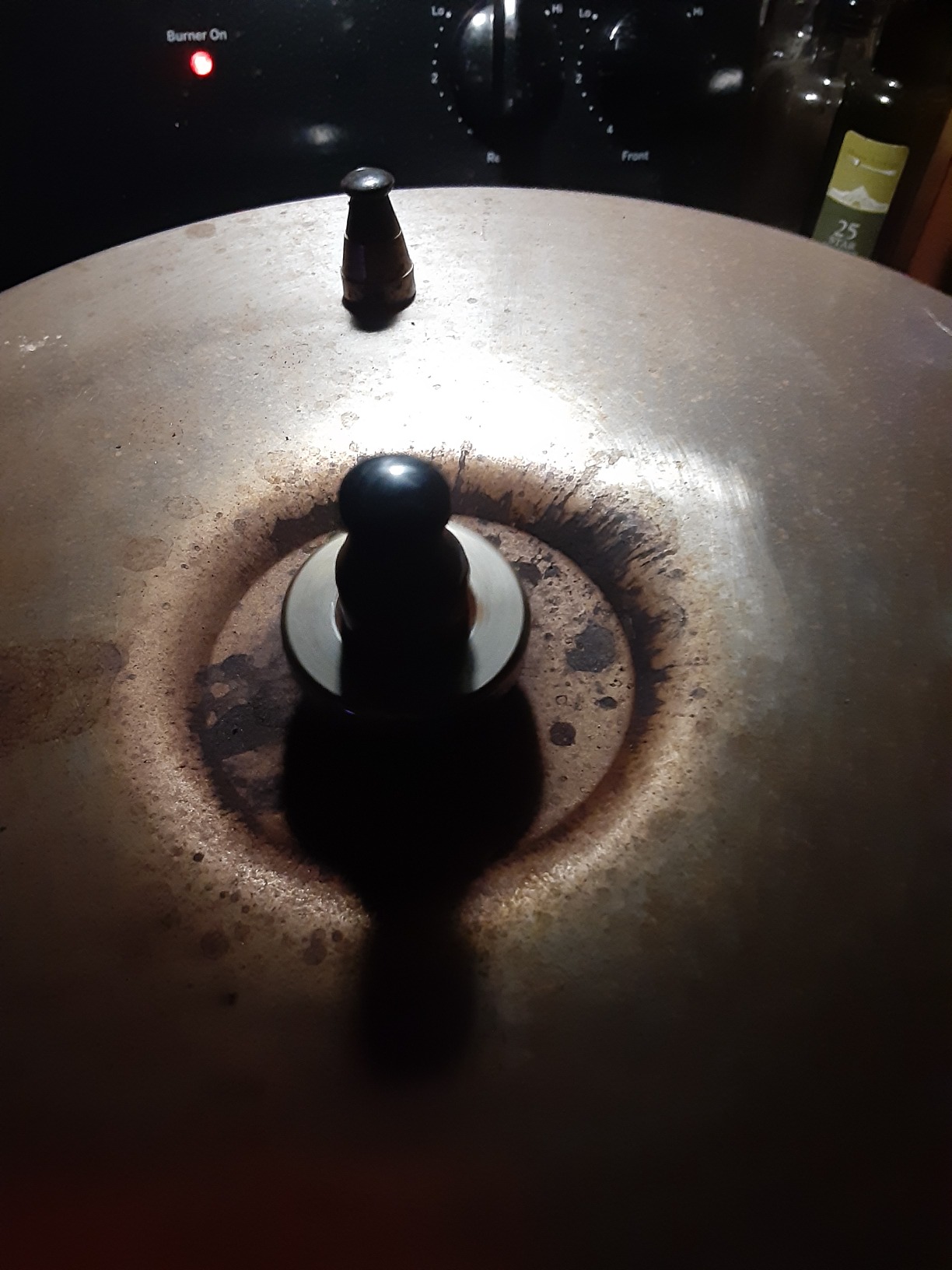
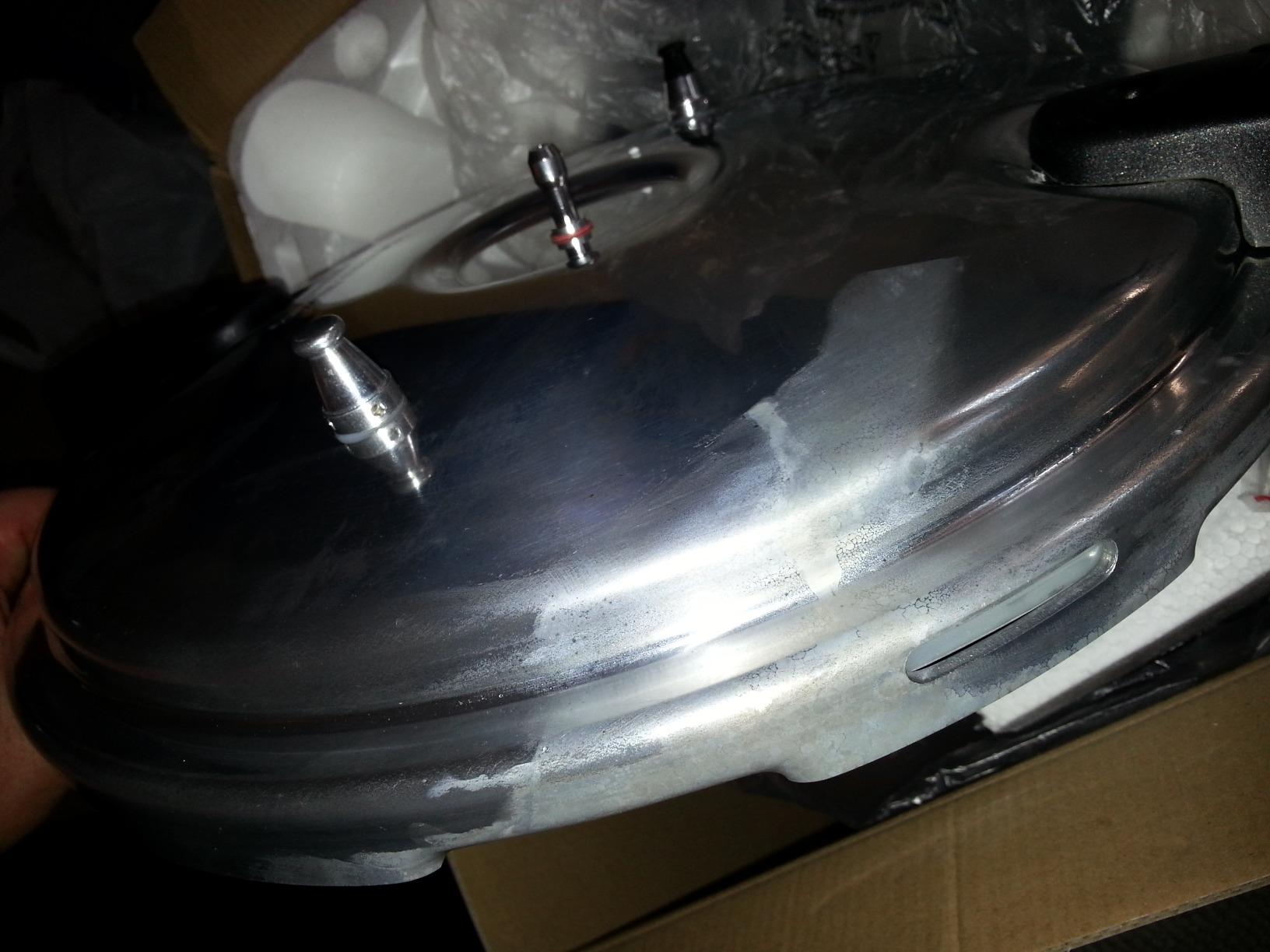
The hard-anodized aluminum is genuinely useful for a working canner. Reviewers single out the fact that it will not rust or stain, which matters when the same pot sees tomato sauce in August and stocks in November, and the nonstick interior makes cleanup after a full load far less of a chore.
With 801 reviews at a 4.6 average, it sits in the middle of the pack on both rating and confidence. It doubles as a pressure cooker and a steamer, and the USDA-recommended pressure canning method covers meats, poultry and low-acid vegetables.
Who this canner suits
Kitchens with limited counter space, a single heavy burner, or anyone with back or grip issues. A 20-quart capacity still handles a meaningful harvest load, and moving a 10.5-pound pot is a very different proposition from moving 33 pounds.
It is also a good fit for people who want a weighted regulator with three pressure options but do not want a tall profile. The 20-quart size is the only variant offered, so there is no decision to make within the model.
Who should skip it
Heat control is entirely manual, and there is no digital guidance for the process. If you are new to pressure canning, the directed prompts on a digital canner are worth a great deal, and this model will not give you any.
Because the body is aluminum, it is a poor match for long vinegar-based cooks or heavy tomato loads that would discolor it permanently. Pick a stainless body for that, and a lighter stovetop model only if the weight is the deciding factor.
6. Mirro 22-Quart Pressure Canner with 3 Regulators – Best Value Weighted-Gauge Canner
MIRRO 22 Qt Aluminum Pressure Canner with 3 Regulators, 5, 10 & 15 PSI
22 quart aluminum
Regulators for 5 10 15 PSI
Two racks, cool-touch handles
Dishwasher safe
Pros
- 22-quart capacity with a stackable rack
- Three regulators included in the box
- Heats quickly and holds pressure steadily
- Widely praised as strong value
- Dual cool-touch handles and dishwasher safe
Cons
- No pressure gauge for verification
- Regulator must be pushed firmly onto the stem
- Not ideal on glass cooktops
Reviewers frequently describe this as the value pick in the large-canner category, and the reason is straightforward: it performs like cans that cost far more. Long-time canners report it holding pressure with little burner adjustment, sealing jars consistently, and heating up faster than larger aluminum bodies.
Three regulators ship in the box, calibrated at 5, 10 and 15 PSI, so the full altitude range is covered without buying accessories. With two racks included, the 22-quart capacity gets used properly rather than running a single half-empty layer.
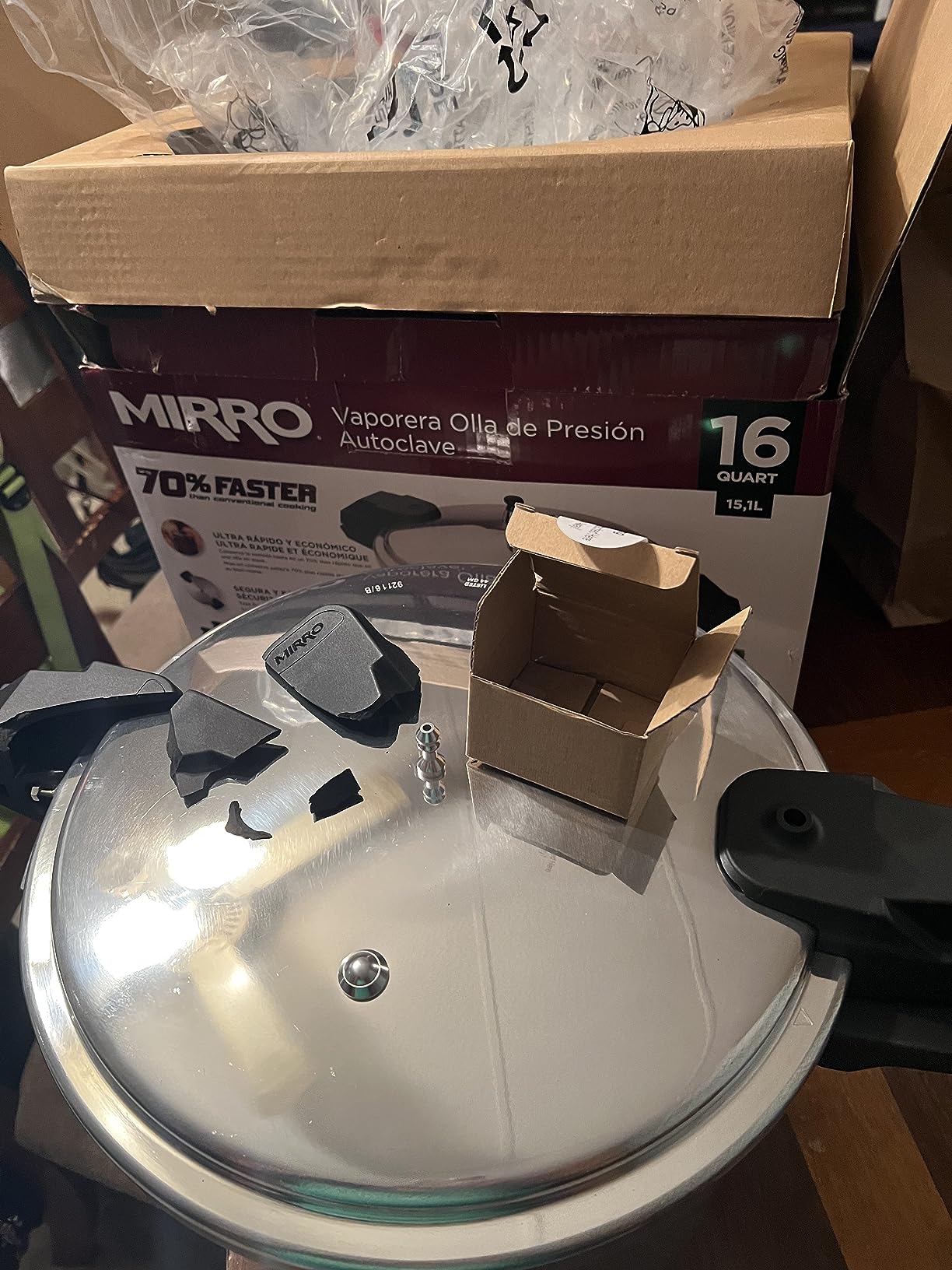
There is no pressure reading gauge, and that is a real trade. You confirm pressure by listening for the weight to settle into a steady rock with a continuous steam release, which is a skill new canners take a season to trust, and impossible to verify precisely.
Dual cool-touch handles make moving a loaded canner safer than a single-handle design, and the whole unit is dishwasher safe. The 741 reviews average 4.5 stars, with praise concentrated on build quality, even heating and value.
Who this canner suits
Experienced home canners who already know what a weighted gauge sounds like and want capacity without spending heavily. It handles 7 quart jars and a full harvest load, and the two-rack layout means you are not leaving usable volume empty.
It is also a sensible second canner for a household running batches back to back, since a lighter aluminum body moves quickly between loads. The included rack, lid and regulators mean nothing else needs buying on day one.
Who should skip it
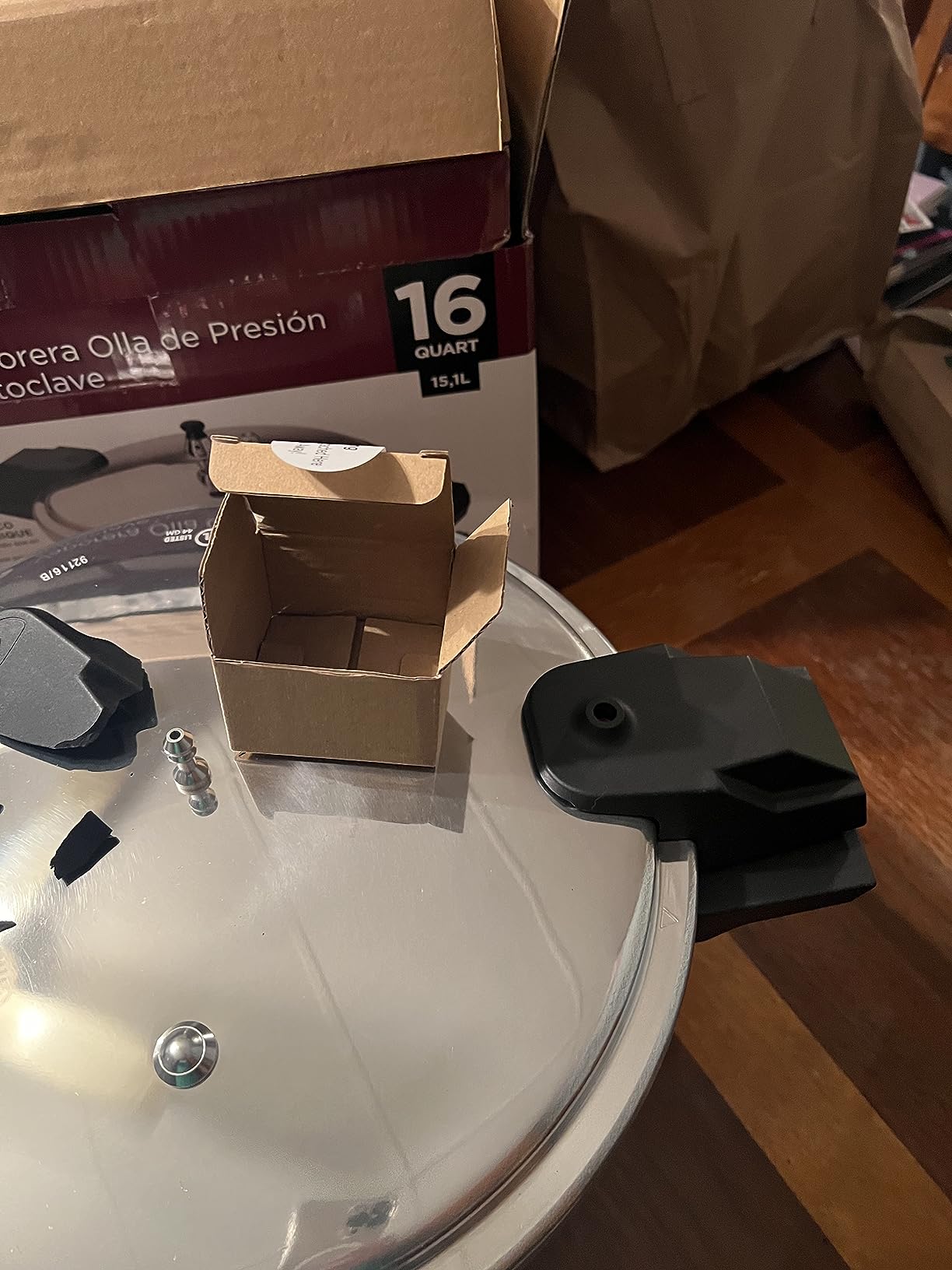
The regulator must be pushed firmly onto the stem to seat properly, and reviewers note a rust-colored stain that can appear around the steam vent after use. Both are cosmetic or habitual, but they matter if you want a set-and-forget experience.
Glass cooktop owners should look elsewhere, since the cast aluminum base is not suited to smooth glass. As with the other aluminum models here, the body reacts with acidic foods, so limit it to low-acid vegetables, meats and stocks.
7. TSTQH 15-Quart Induction-Compatible Pressure Canner with Gauge – Best for Induction
High capacity pressure cookers with cooking rack 15 quart canning pressure cooker with gauge Explosion proof safety valve great for big canning jobs ompatible:induction,natural gas-open flame
15 quart aluminum and steel
90 KPA / 13 PSI with gauge
Induction base
Automatic safety valve
Pros
- Induction base also works on gas and ceramic hobs
- Readable gauge for pressure and altitude
- Automatic safety valve relieves excess pressure
- Complete canning accessory kit in the box
- Free replacement parts from the manufacturer
Cons
- Smallest liquid capacity in this roundup
- Capacity is described inconsistently across listings
- 8 percent one-star reviews
The only model here with a true induction-compatible base, and that alone solves a real problem. Most cast aluminum canners are excluded from glass and induction cooking because of the base material, and canners of this style often sit on a separate portable burner for exactly that reason.
It reaches 90 KPA, or 13 PSI, with a tolerance of plus or minus 5 percent, and the gauge lets you read actual pressure rather than infer it. That is genuinely useful above 1,000 feet, where you need to confirm you are holding a higher processing pressure.
The accessory kit is the largest in the roundup by a wide margin: a large canning rack, spare seal ring, canning funnel, tongs, jar wrench, jar lifter, bubble remover and a magnetic lid lifter. For a first canner, that removes most of the startup shopping list, and the manufacturer supplies free replacement parts through Amazon.
Be realistic about the trade-offs. The 15-quart capacity is the smallest liquid volume in this group, and listings describe it inconsistently as 25 liters or 15 quarts. The 265 reviews average 4.4 stars, but the spread is wide, with about 8 percent one-star feedback pointing at build consistency and limited brand support.

Who this canner suits
Households on induction cooktops who have been forced to buy a separate burner for canning. The multifunctional safety lock and heat-insulating handle also make it easier to handle for beginners who are new to pressurized equipment.
It is a good starter vessel for someone building a first canning setup, largely because the complete kit means you can begin a batch on day one without sourcing a funnel, lifter and rack separately.
Who should skip it
If your harvest genuinely needs 7 quart jars per load, this is the wrong size. The inconsistent capacity claims across listings make planning a batch count harder than it should be, and there is no listed weight or dimension data to plan cabinet space with.
Long-term durability is also unproven next to brands with decades of service records, and one-star feedback concentrates on quality variation between pieces. Treat it as a flexible add-on rather than the machine that has to get a whole harvest done.
8. TSTQH 25-Quart Stainless Steel Pressure Cooker and Steamer – Best for Acidic Foods
25 Quart olla de presion grande & stainless steel pressure cooker & large steamer cooking pressure canners,safety lock Explosion-proof,Suitable for All Hob Types,ollas de presión para cocinar
25 quart stainless steel body
For all hob types
Safety lock and relief valve
Also steams
Pros
- Stainless steel body suits acidic and vinegar-heavy cooking
- 25-quart capacity among the largest here
- Induction base works on every hob type
- Safety lock and explosion-proof relief valve
- Doubles as a large steamer
Cons
- Lowest rating in the roundup at 4.0 stars
- Minimal published specification detail
- No listed weight or dimensions
Every other aluminum canner in this guide will discolor if you put enough tomatoes or vinegar-based recipes through it. This one has a stainless steel body, which makes it the right choice for picklers, jam makers and anyone whose harvest skews acidic.
At 25 quarts it is among the largest capacities in the roundup, and the induction-compatible base means it works on every hob type, from gas and electric ceramic to induction. A safety lock and an explosion-proof relief valve handle the pressure side, and it doubles as a large steamer.
We are recommending it with a caveat. The 162 reviews produce a 4.0 average, the lowest here, with about 17 percent one-star feedback, and that distribution usually points to inconsistency between pieces rather than a design flaw. Build variation is the theme in the negative reviews.
Documentation is thin, too. The listing offers only a single feature, gives no weight or dimensions, and covers no canning accessories beyond the pressure relief valve and sealing ring. It is sold inside a long family of size variants, so check that the listing you buy from actually describes a 25-quart canner.
Who this canner suits
Picklers and tomato canners who want stainless steel and a large vessel at the same time. If you already know what you are doing with a canner and want a second pot for acid-heavy batches, this fills a real gap that the aluminum models leave.
The all-hob compatibility is also worth noting for anyone splitting canning between a summer outdoor setup and a winter kitchen, since the same vessel works on any burner you have.
Who should skip it
New canners. With no meaningful published specification detail, no listed dimensions and no canning rack in the box, you are assembling the process yourself, and the 4.0 average with heavy one-star feedback is a warning about consistency.
Anyone with a heavy low-acid harvest should also skip it, because 25 quarts of capacity with no extra racks does not solve a double-stacking problem. Choose a model with a documented jar count and included accessories instead.
Pressure Canner vs Pressure Cooker: The Distinction That Matters
A pressure cooker and a pressure canner are not the same appliance, and using one for the other job is the most common canning error we see. A canner is built to hold and regulate pressure for 10 to 90 minutes at a sustained, verifiable level, with a gauge or weighted regulator you can trust over a full processing time.
An electric pressure cooker is built to cook food quickly, then vent. Most run a timer, drop pressure deliberately and are not certified to maintain a canning pressure for the extended periods low-acid foods require. Several models are not listed by a safety testing laboratory for canning at all.
There is a capacity floor too. The USDA method assumes at least four quart jars in the vessel, because a canner with a tiny volume of water and food cannot reach and hold a reliable internal pressure. That is why canners under about 10 quarts are essentially never recommended for actual canning.
If you want a second appliance purely for weekday cooking, our guide to the best pressure cookers for families covers that side. For low-acid preserving, the canner is the only safe answer, regardless of what the box says.
How to Choose a Large Pressure Canner for Your Kitchen
Calculate your batch size from real harvest numbers
Start with your harvest, not the cooker’s advertised capacity. A bushel of green beans yields roughly 7 to 9 quarts of finished jars, tomatoes run a bit higher, and squash is water-heavy so it takes more raw weight per finished jar.
Then divide by jars per load. A 50-quart harvest with a 7-quart-jar canner is 8 loads, and at roughly 90 minutes of processing plus heat-up and cool-down, that is most of a working day. The same harvest in a 19-quart-jar canner is 3 loads.
Be skeptical of liquid capacity numbers. Marketing quotes liquid quarts, while what you actually need is jar count, and the two are not the same figure. Look for the manufacturer’s stated jar capacity in half-pints, pints and quarts, and count the racks you are actually given.
Choose your gauge type
Dial gauges give you a number to read and let you run a wider pressure range, which matters above 1,000 feet. They need annual calibration testing, usually through a university extension service, and uncalibrated dial gauges are a recurring complaint on several models here.
Weighted gauges cannot drift because they do not measure, they simply release excess pressure at a set weight. You learn to listen for a steady rock and a continuous steam plume. There is nothing to calibrate, which is a real advantage for canners who process a few batches a year rather than weekly.
For a beginner, the choice comes down to temperament. If you want a number and a reminder to test the gauge each year, a dial gauge is fine. If you would rather never mail your canner off for service, a weighted gauge removes the task entirely.
Gasket or metal-to-metal seal
Rubber gaskets on Presto, T-fal, Mirro and Granite Ware models compress and harden with heat cycles. Replace them every couple of years, and expect a minor weeping of steam around the handle until the gasket is cleaned and reseated.
All American models use a metal-to-metal sealing system with no replaceable gasket. There is nothing to buy and nothing to degrade, and the clamping locks form the seal mechanically. Owners of those canners frequently report never replacing a gasket at all.
For a canner you expect to use for a decade, the gasket-free design has real appeal. Check the overpressure plug annually regardless of seal type, since it is a wear item on every model and inexpensive to replace.
Match the canner to your stove and your hood
Cast aluminum canners generally need a gas burner or an electric coil. They are not suitable for flat glass cooktops, where the weight can scratch or crack the surface, and they will not work on induction without a separate compatible base.
Large canners are also tall. The All American 941 is listed at 19 inches, and hood clearance is a real constraint in older kitchens. Measure the height from your burner to the underside of your hood before buying anything over about 16 inches.
For a harvest processed in summer, a canner that works on a portable camp burner lets you keep the heat out of the house entirely. Weigh the added setup effort against the fact that a full 23-quart load keeps a stove running for several hours at a stretch.
Electric canners: what you gain and what you give up
An electric canner holds processing temperature with sensors instead of a burner flame, which removes the single most error-prone part of stovetop canning. It also removes the need for a matching cooktop and works well in homes without gas.
What you give up is capacity and flexibility. Most electric canners on the market are small, and the 23-quart model here holds 7 quart jars, which is large for the category but still well short of a 19-quart-jar stovetop machine. Cycles are also locked once started, and heat-up and cool-down times are long.
Our read: an electric canner is a strong second machine for beginners and off-grid households, while a stovetop canner remains the right primary tool for very large harvests.
Plan for maintenance and parts
Write down the model number before you need it. Gaskets, regulators, canning racks and overpressure plugs are model-specific, and the established brands publish part lists you can order against for years.
Budget an annual check: inspect the overpressure plug, look at the gasket for flattening or cracks, and send a dial gauge out for calibration if your canner uses one. None of these tasks take long once they are on a calendar rather than discovered mid-harvest.
If you are buying second-hand, check the gauge and the gasket first, then look for cracks around the lid threads and verify the vent pipe is clear. A canner with a sound body and a replaceable gasket is a reasonable purchase; a canner with a suspect gauge is not worth the risk.
Planning a Two-Batch Canning Day (and Canning Outdoors)
Once you own a canner that holds 7 quart jars, the bottleneck stops being the pot and becomes the staging. Each jar needs to be filled, wiped, checked for a bubble, capped and set on the rack, and you cannot touch a jar until the canner has depressurized and the jars have cooled enough to handle.
Stage in batches. Fill and cap seven jars at a time, load them, start the processing timer, and use the wait to fill the next seven on the counter. With a 23-quart canner, that rhythm turns a 50-jar harvest into seven short cycles instead of one long continuous session.
Cooling is the other half of the timeline. Jars that have been under pressure need to rest undisturbed before handling, and a 41.5-quart canner loaded with 19 quart jars also takes noticeably longer to heat up and cool down than a 20-quart model with half the load.
For summer harvests, canning outside solves the kitchen heat problem and gives you room for a long table of filled jars. Set up on a stable level surface away from dry vegetation, use a burner rated for the canner’s weight, and never leave a pressurized canner unattended. Weight and heat management matter more outdoors, not less.
Frequently Asked Questions
What is the largest capacity pressure canner available?
The largest we found for home use is the All American 941, a 41.5-quart canner that holds approximately 19 quart jars or 32 pint jars per load. It is cast aluminum, weighs 33 pounds empty and stands 19 inches tall, so measure your hood and counter clearance before buying.
Which pressure canner has the highest rating?
Among these eight, the All American 941 has the highest average rating at 4.9 stars from 9769 reviews. The Presto 01781 23-quart is close behind at 4.8 stars, and it carries far more reviews at 20113, which makes it the safer default pick for most households.
Is there a pressure canner that doesn’t require a gasket?
Yes. Every All American model uses a precision-machined metal-to-metal sealing system, so there is no rubber gasket to stretch or replace. Presto, T-fal, Mirro and Granite Ware canners use rubber gaskets that typically need replacing every one to two years.
How many jars fit in a 23-quart pressure canner?
The Presto 01781 23-quart is rated for 26 half-pints, 20 pints or 7 quart jars in a single load. The Presto 02153 digital 23-quart model also holds up to 7 quart jars for both pressure and boiling-water canning, but it includes only one rack out of the box.
Can you double stack jars in a pressure canner?
Yes, as long as a second canning rack is available. The T-fal 22-quart and Mirro 22-quart both ship with two racks, so jars sit in two rows. The Presto 01781 and most single-rack setups need a purchased extra rack before you can double stack.
Do pressure canners work on induction stoves?
Most cast aluminum canners, including the Presto 01781, All American 941, Mirro 22-quart and Granite Ware 20-quart, are not suitable for flat glass or induction cooking. In this roundup the TSTQH 15-quart and 25-quart models are the ones with induction-compatible bases.
How do you adjust pressure for canning at high altitude?
Water boils at a lower temperature at altitude, so you need higher pressure to reach the required processing temperature. Dial-gauge and multi-setting canners such as the Presto 01781 and T-fal 22-quart let you select a higher PSI, while the Presto 02153 digital canner adjusts automatically.
How often should you replace a pressure canner gasket?
Replace a rubber gasket every one to two years, or sooner if you see flattening, cracks, hardening or persistent steam weeping around the lid. Metal-to-metal sealed canners have no gasket to replace. Either way, inspect the overpressure plug annually and replace it if worn.
Final Verdict: The Best Large Pressure Canners for Big Harvests
The best large pressure canners come down to two numbers: how many jars fit in one load, and how much of the vessel you can actually carry. The Presto 01781 23-quart wins on both counts for most households, putting 7 quart jars or 20 pints in a 12-pound body with a 12-year warranty and a dial gauge for altitude work.
If your harvest runs to 50 pounds or more a season, the All American 941 is the better investment. Nineteen quart jars per load and a metal-to-metal seal remove an entire day of cooking and a recurring gasket expense, at the cost of 33 pounds and a tall profile you need to measure for first.
For the rest, the T-fal 22-quart is the cheapest way to 7-quart batches, the Mirro 22-quart is the strongest value, the Granite Ware 20-quart is the easiest to lift and store, and the Presto 02153 digital model removes burner babysitting entirely. Whichever you choose, size it against your real harvest numbers and check your hood clearance before the first batch.