
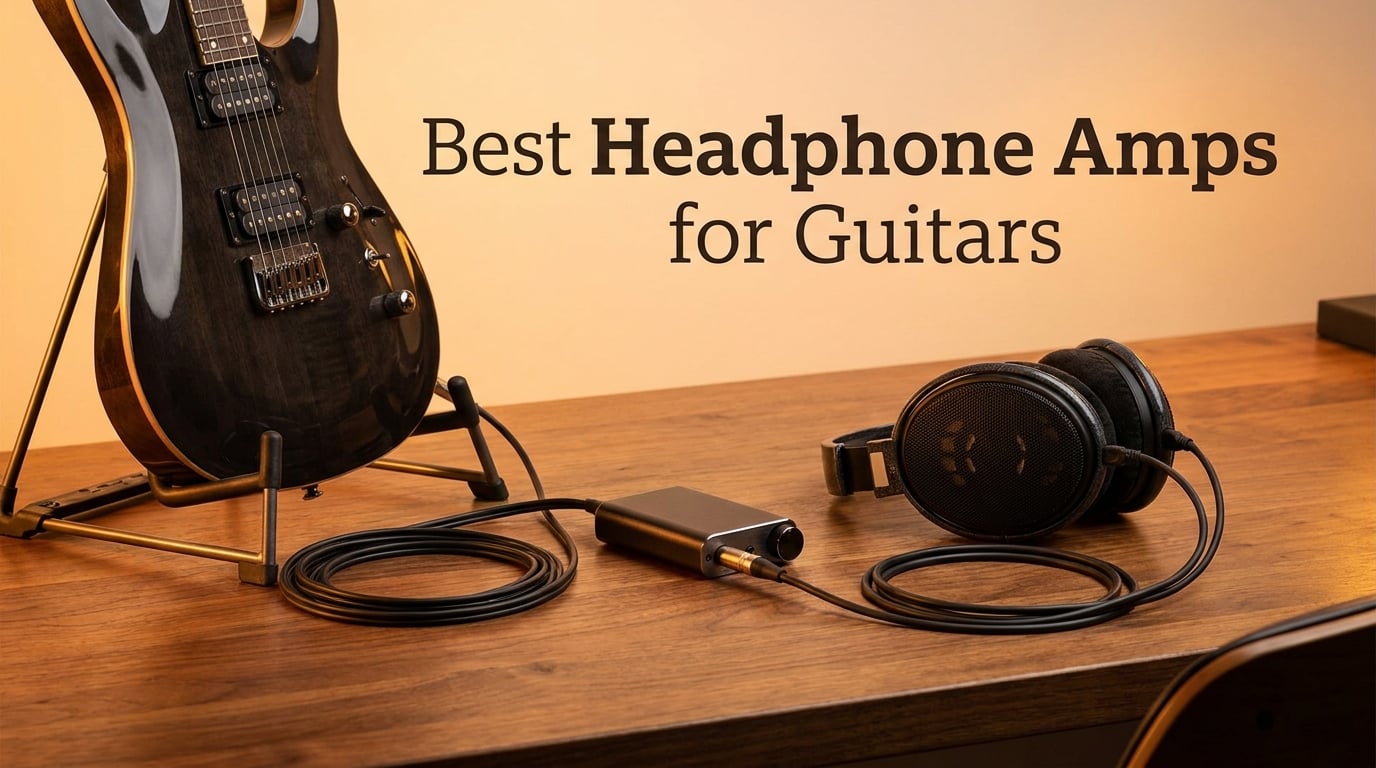
I have spent more late nights than I can count wrestling with tangled cables, a laptop, and a clunky audio interface just to practice guitar without waking the whole building. The moment I switched to a dedicated headphone guitar amp, everything changed. A pocket sized box plugs straight into my jack socket and delivers convincing tube tone through my headphones in seconds.
Finding the best headphone amps for guitars in 2026 matters more than ever because apartment dwellers, college students, and night owls need real amp feel at zero volume. The market has exploded with compact modeling units, Bluetooth streaming options, and rechargeable designs that sound nothing like the tinny practice toys from a decade ago.
Our team compared eight of the most popular guitar headphone amps side by side, weighing tone quality, battery life, effects depth, and value for money. Whether you want silent practice, on the go jamming, or a recording front end, this guide breaks down exactly which model fits your rig and budget.
Table of Contents
Top 3 Picks for Best Headphone Amps for Guitars in 2026

The Fender Mustang Micro Plus earned our editor’s choice spot because it blends 25 amp models, 25 effects, and 100 editable presets into a device the size of a remote control. With Bluetooth streaming, USB-C recording, and the Fender Tone app for deep editing, it covers practice and home recording in one move.
For sheer value, the NUX Mighty Plug MP-2 packs 13 amp models, 20 impulse responses, 19 effects, and built-in drum patterns at a fraction of the Fender’s price. The Mighty Amp app unlocks deep editing that lets you shape everything from clean jazz to high gain metal tones.
If you just need a no-frills practice companion, the Valeton Rushead Max keeps things simple with three amp models, chorus, tremolo, flanger, reverb, and delay in a pocket metal body. At its price, the five hour USB rechargeable battery and aux input make it a genuine bargain for beginners.
Best Headphone Amps for Guitars in 2026
Here is the full lineup of all eight models we tested, side by side with their standout features. Use this table to compare at a glance, then dig into the individual reviews below for the hands-on detail.
| Product | Specifications | Action |
|---|---|---|
| Fender Mustang Micro Plus |
|
Check Latest Price |
 NUX Mighty Plug MP-2 NUX Mighty Plug MP-2 |
|
Check Latest Price |
| Valeton Rushead Max |
|
Check Latest Price |
 SONICAKE Amphonix 2 QAP-50 SONICAKE Amphonix 2 QAP-50 |
|
Check Latest Price |
 Vox amPlug 3 AC30 Vox amPlug 3 AC30 |
|
Check Latest Price |
 NUX Mighty Air Wireless NUX Mighty Air Wireless |
|
Check Latest Price |
 LEKATO Guitar Headphone Amp LEKATO Guitar Headphone Amp |
|
Check Latest Price |
 MOOER Audiofile Analog MOOER Audiofile Analog |
|
Check Latest Price |
1. Fender Mustang Micro Plus – 25 Amp Models With App Control
Fender Mustang Micro Plus Headphone Amplifier, Bluetooth Audio Streaming and 50 Amp and Effects Models, with 2-Year Warranty
25 amp models
25 effects
100 editable presets
Bluetooth streaming
USB-C recording
Over 4 hour battery
Pros
- 25 amp models and 25 effects built in
- 100 editable presets with integrated display
- Fender Tone app connectivity via Bluetooth
- Over 4 hours of continuous play
- Rotating input plug fits most guitars and basses
- 2 Year Limited Warranty
Cons
- Requires app for full functionality
- Battery life limited to 4+ hours
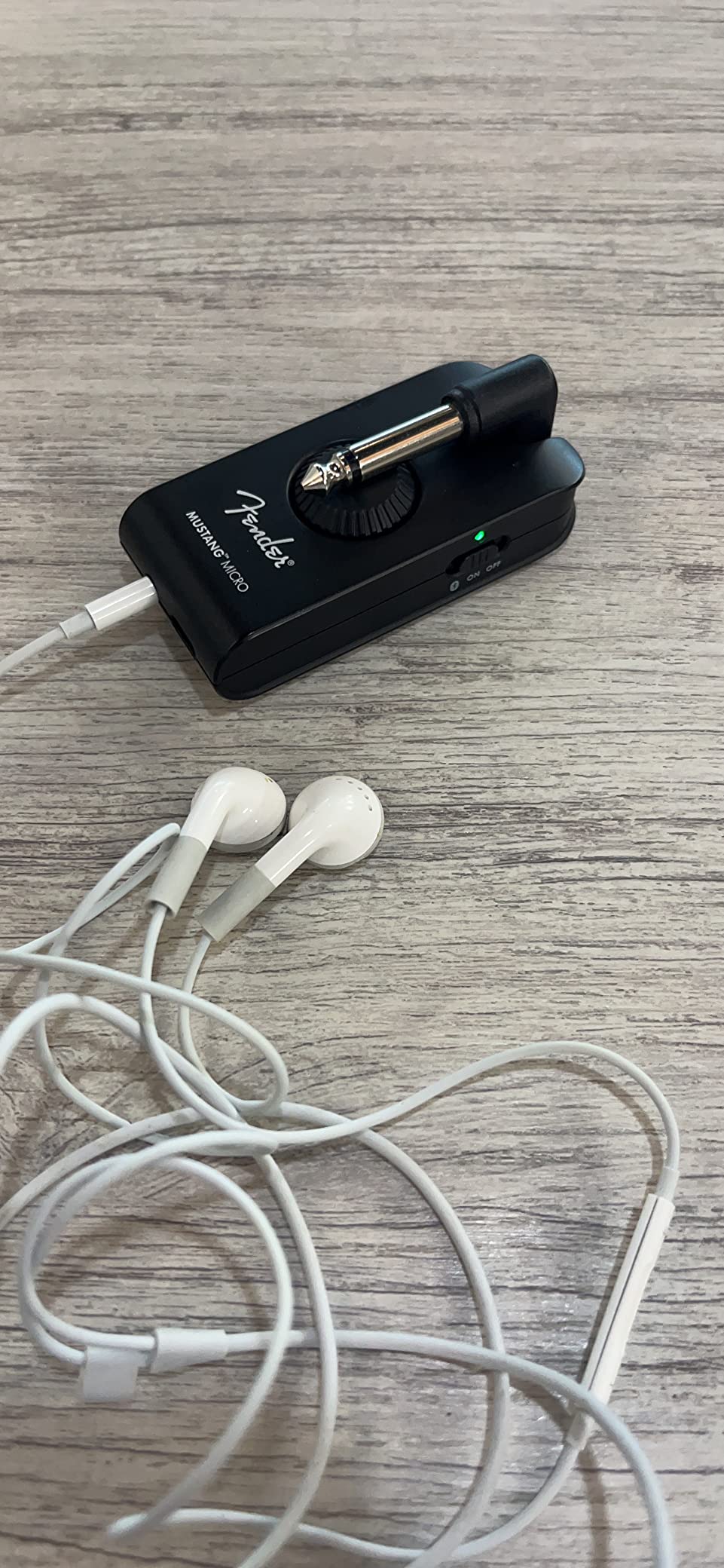
The Fender Mustang Micro Plus was the first unit I reached for during our testing marathon, and it stayed plugged into my Stratocaster for the better part of a week. The rotating input jack means it tucks neatly behind any body shape, and the small colour screen makes scrolling through presets far less fiddly than older Mustang Micro models.
With 25 amp models and 25 effects models onboard, the tonal range is genuinely staggering for something that weighs seven ounces. I dialled in a Twin Reverb clean for funk, switched to a British crunch for rock, then jumped into a modern metal hi-gain patch without touching a single knob beyond the scroll wheel.
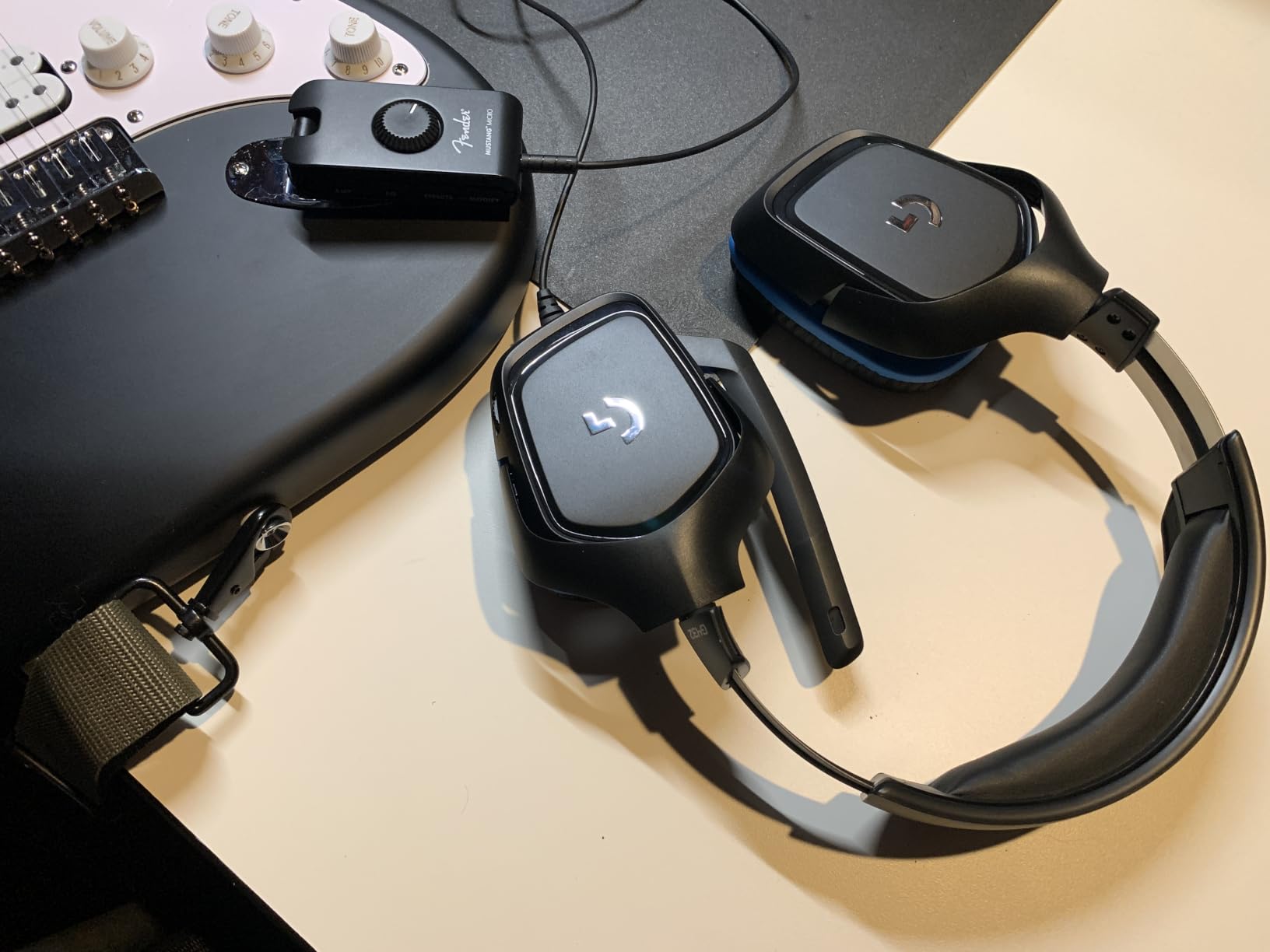
Bluetooth audio streaming is the feature I used more than any other. I paired my phone, fired up a backing track on YouTube, and the Mustang Micro Plus kept audio and video in sync so I could jam along without lag throwing off my timing.
The USB-C recording output turned it into a makeshift audio interface. I plugged straight into my laptop, opened a DAW, and captured dry or processed guitar tracks with no extra gear.
With over 5,100 reviews and an 82 percent five star rating, the consensus matches my experience that this is one of the most complete guitar headphone amps you can buy. The onboard tuner means you never need a separate clip on tuner during practice.
Who this is perfect for
Players who want one device for practice, recording, and jamming with backing tracks will love the Mustang Micro Plus. The deep Fender Tone app editing suits tone chasers who enjoy crafting patches, while the 100 preset slots mean you can save sounds for every gig and genre.
Beginners benefit too because the onboard screen and simple controls avoid the steep learning curve of full modelers. If you play both guitar and bass, the rotating plug and bass friendly amp models make it a true do-it-all tool.
Who should look elsewhere
If your sessions regularly run past four hours, the battery life may frustrate you mid-session and there is no quick swap AAA fallback. Players who want fully wireless freedom between guitar and headphones should also note that this unit outputs to wired headphones only.
Finally, anyone who resists app based editing will miss out on the deep features that justify the price, since the physical controls only scratch the surface of what the Mustang Micro Plus can do.
2. NUX Mighty Plug MP-2 – 13 Amp Models With Deep Editing
NUX Mighty Plug MP-2 Guitar and Bass Modeling Headphone Amplug with Bluetooth, 13 Amp Models, 20 IRs, 19 Effects, 6.35mm Phone Plug, Pocket Amplifier Built-in Rechargeable LiPo Battery 3.7V/1000mAh
13 amp models
20 IRs
19 effects
Built-in drum patterns
Bluetooth streaming
Mighty Amp app
Pros
- 13 amp models with TSAC-HD algorithm
- 19 effects plus 20 IRs for tone shaping
- Bluetooth for streaming backing tracks
- Mighty Amp app for deep editing
- Built-in drum patterns for practice
Cons
- All adjustments require the app
- Firmware updates have removed some features
- Hinge can become stiff over time
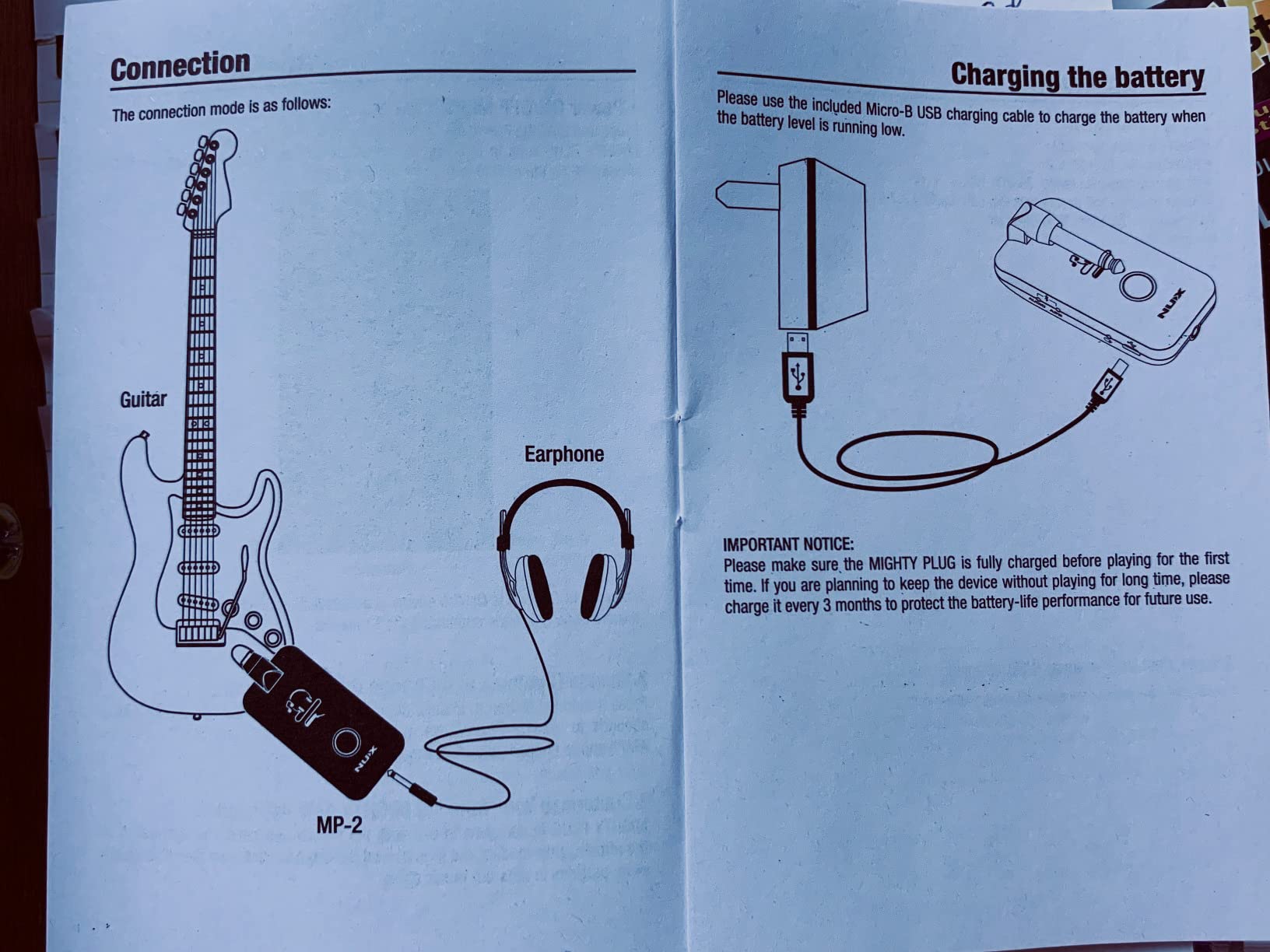
The NUX Mighty Plug MP-2 surprised me the moment I loaded the Mighty Amp app and started exploring. For a unit sitting well under a hundred dollars, the TSAC-HD white box algorithm delivers tube amp sag and pick response that genuinely feels responsive under your fingers.
With 13 amp models, 20 impulse responses, and 19 effects, the tonal palette stretches from pristine cleans through vintage breakup into modern high gain territory. I built a dual amp stereo patch with a chorus on one side and a slap delay on the other, something I never expected to do on a pocket practice tool.
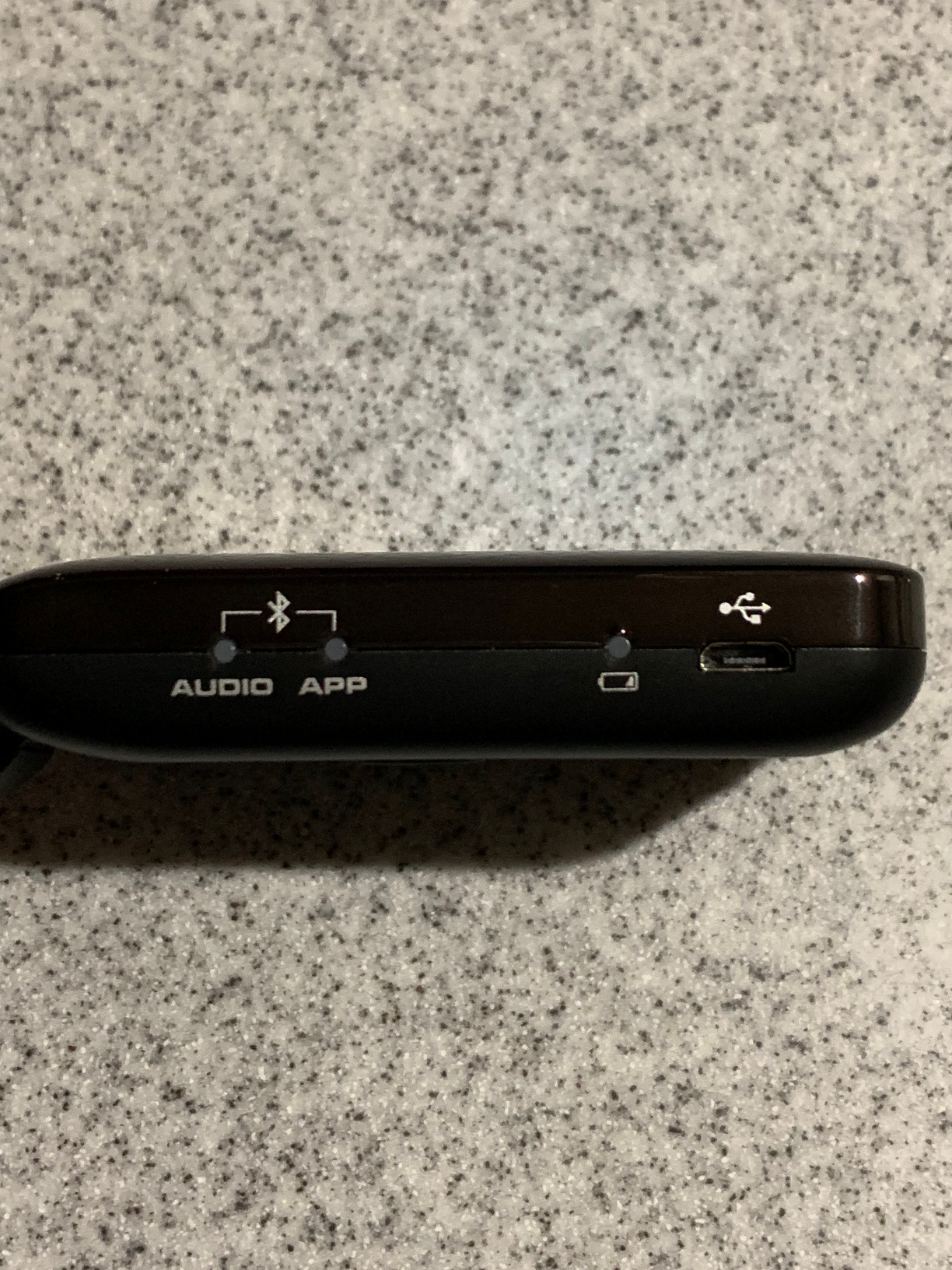
The built-in drum patterns became my secret weapon for daily practice. Instead of a metronome beep, I had full rock, blues, and Latin grooves to lock in with, and the Bluetooth audio mode let me stream my favourite tracks to play along in real time.
Direct recording through the USB connection worked smoothly on both my Mac and a Windows laptop without extra drivers. The eco mode auto powers the unit off when idle, which has saved me from dead batteries more than once.
After a few weeks of testing I understood why over 1,300 buyers rate it so highly. It punches well above its price class for tone and flexibility, and the app library of community patches gives you endless starting points.
Who this is perfect for
Tone chasers on a budget get the most out of the MP-2 because the app unlocks deep parameter editing that rivals units costing twice as much. Players who value realistic cab impulse responses and tube feel will appreciate the TSAC-HD modelling engine.
Practice focused guitarists also win here, with the built-in drum machine and Bluetooth backing track streaming making daily routines genuinely fun rather than a chore.
Who should look elsewhere
If you hate menu diving and app based control, you will be frustrated because the only physical switch on the MP-2 changes channels. Everything else, including gain, EQ, and effects routing, lives inside the app.
Players who want a rugged, road ready build may also find the stiff hinge and plastic body less reassuring than the metal enclosures on pricier rivals. Treat it with care and it will serve you well.
3. Valeton Rushead Max – Compact Pocket Practice Powerhouse
Valeton Rushead Max USB Chargable Portable Pocket Guitar Bass Headphone Amp Carry-On Bedroom Plug-In Multi-Effects
3 amp models
Chorus tremolo flanger
Reverb and delay
Aux input
USB rechargeable
5 hour battery
Pros
- 3 amp models based on world-class amplifiers
- Multiple effects including chorus and reverb
- USB rechargeable with up to 5 hours battery
- Aux input for jamming
- Great value for the price
Cons
- Knobs feel small and cheap
- Bright blue LED can be blinding
- Clean channel can sound thin
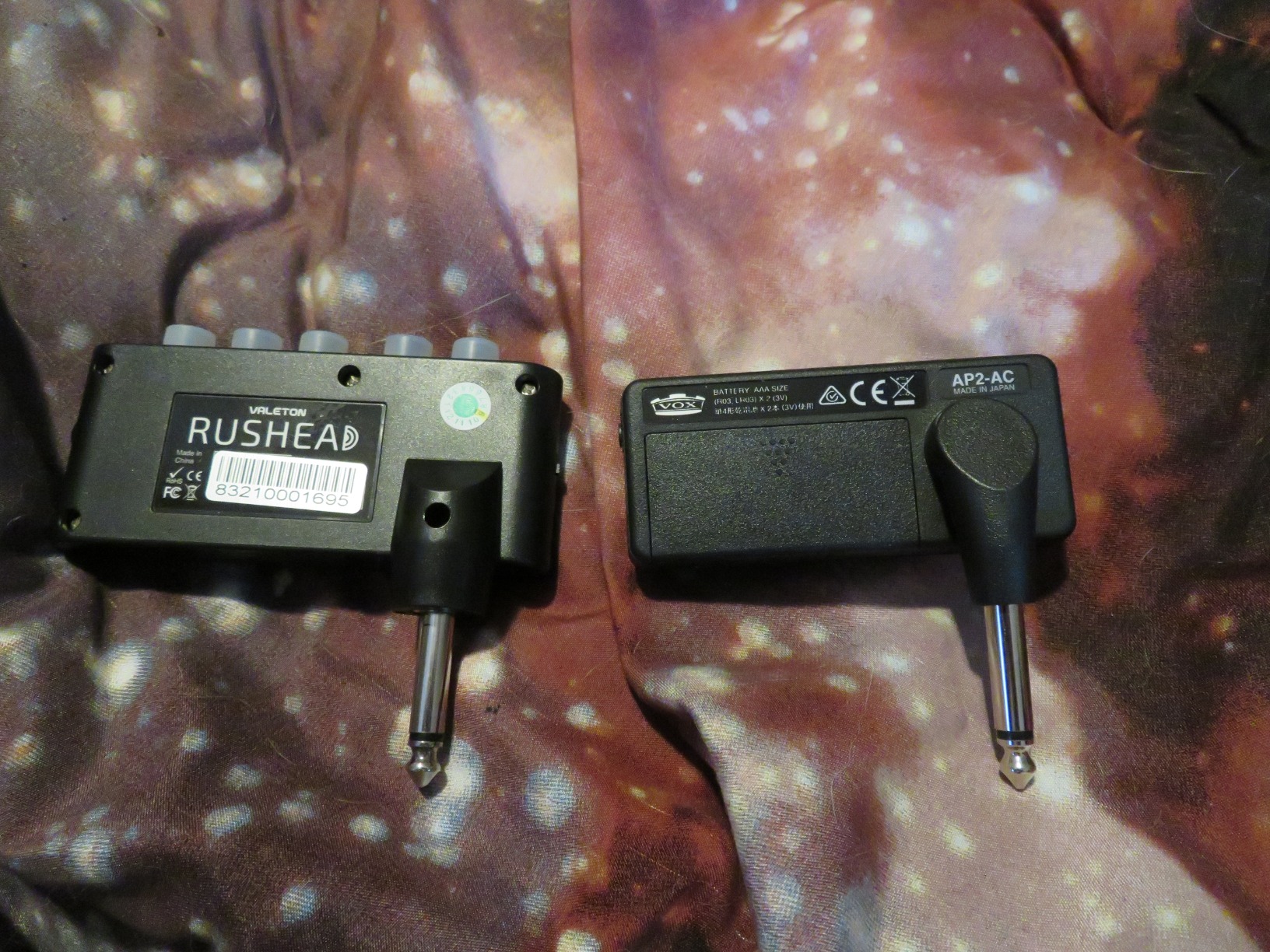
The Valeton Rushead Max is the unit I lend to friends who are curious about silent practice but hesitant to spend big. For well under fifty dollars you get three amp models, a modulation module, an ambient module, cab simulation, and an aux input for playing along with tracks.
I tested the Clean, Overdrive, and Distortion models through my Telecaster and found each had its own character rather than sounding like the same circuit with more gain stacked on top. Switching on the chorus and reverb instantly added depth, and the cab sim gave headphones a believable amp in the room feel.
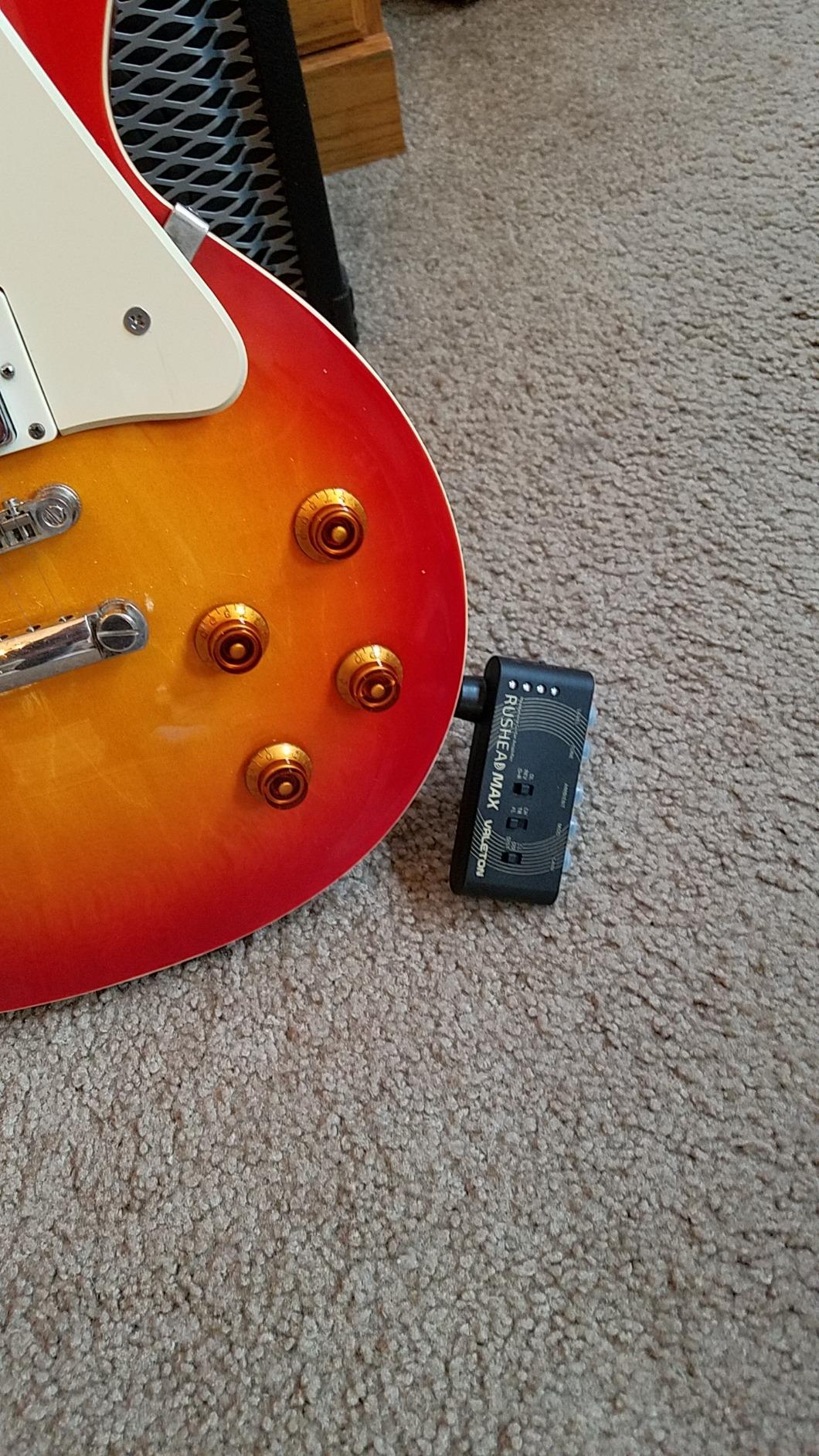
Battery life is a real highlight here. The USB rechargeable cell reliably gave me around five hours of playtime across several test sessions, which beats many pricier competitors that still rely on disposable AAA batteries.
The aux input meant I could plug in my phone with a standard cable and play along to Spotify playlists without any Bluetooth pairing fuss. The metal enclosure feels surprisingly solid for the price point.
With nearly 4,800 reviews, the Rushead Max has clearly struck a chord with the budget crowd. It is not the most refined unit here, but it gets the fundamentals right and never pretends to be more than a solid, no nonsense practice companion.
Who this is perfect for
Beginners and students will love the Rushead Max because the simple controls mean you are playing within seconds of unboxing. The USB rechargeable battery also saves money on batteries over the long run.
Travelling guitarists and dorm residents appreciate its tiny footprint, since the whole unit slips into a gig bag pocket alongside spare picks and a cable.
Who should look elsewhere
Players who need extensive amp modelling, deep editing, or recording output should step up to the NUX or Fender options. The Rushead Max keeps its feature set intentionally lean.
If you are sensitive to bright indicator LEDs, the blinding blue battery light on this unit has been a consistent complaint, even if it does the job of showing power status.
4. SONICAKE Amphonix 2 QAP-50 – 50 Presets With App Control
SONICAKE Guitar Headphone Amp with 9 Effect Module 50 Presets – Amphonix 2
50 factory presets
9 effect modules
Bluetooth audio
App control
USB-C recording
1000mAh battery
Pros
- 9 professional effect modules with 50 presets
- Wireless Bluetooth audio playback
- App control for fine-tuning
- USB Type-C direct recording
- Compact and portable design
- Great value for the price
Cons
- Volume can be low at max for some users
- Overdriven tones may sound tinny
- May not connect with some iPhones
The SONICAKE Amphonix 2 QAP-50 is a newer entrant that caught my attention with its bold claim of 50 factory presets and nine professional effect modules at a budget price. At just 64 grams, it is one of the lightest units in this roundup.
I cycled through the presets with my Les Paul and was genuinely impressed by how much tonal ground they cover. From sparkling cleans to chunky rhythm tones and ambient washed leads, the preset designers clearly understood what practicing guitarists actually want to hear.
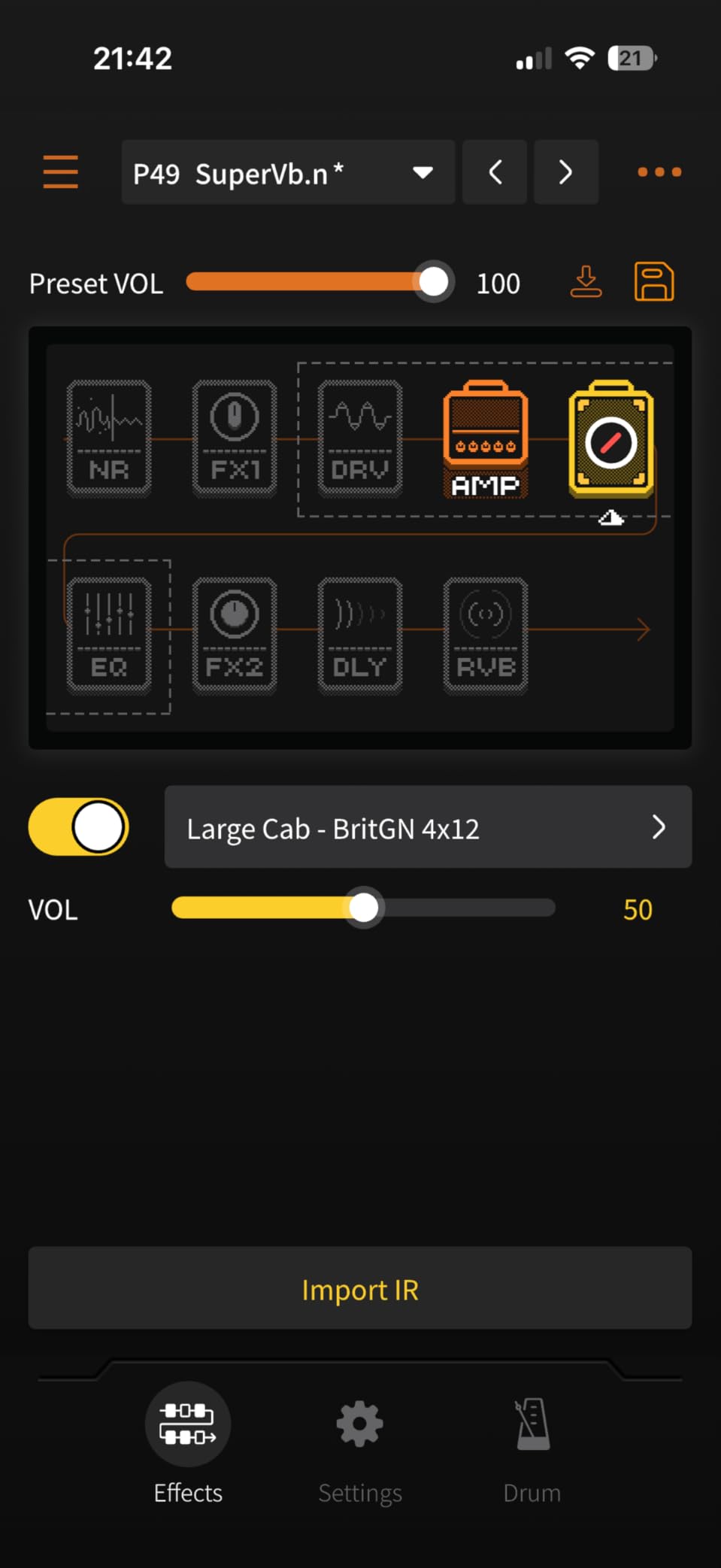
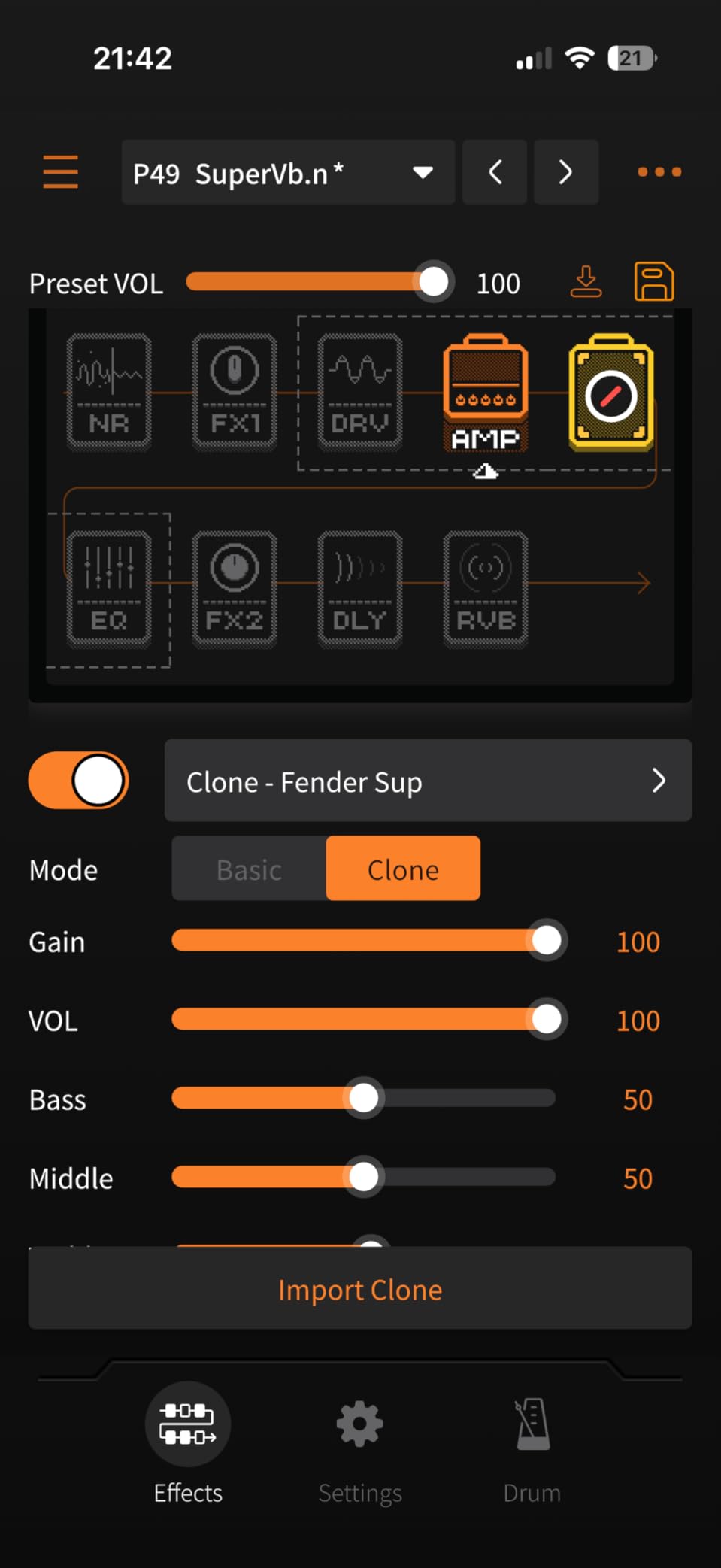
The Bluetooth audio playback worked smoothly for streaming backing tracks from my phone, and the dedicated companion app let me fine tune effect parameters that the physical controls could not reach. USB Type-C recording through my laptop was plug and play with no driver hassle.
The 1000mAh lithium battery gave me a comfortable afternoon of play between charges. The compact dimensions mean it disappears into a jacket pocket when not in use.
Given the price and feature list, the Amphonix 2 represents outstanding value, though it is still building its review base with just over fifty ratings so far. The nine effect modules can be stacked for surprisingly complex tones.
Who this is perfect for
Players who want preset heavy convenience without spending much will find the Amphonix 2 ideal. The 50 factory patches cover most genres instantly, which is perfect for casual practice sessions.
Home recordists on a budget also benefit from the USB Type-C output, which turns the unit into a basic audio interface for capturing demo ideas.
Who should look elsewhere
If you demand maximum headphone volume, some users report the Amphonix 2 falls short at the top of its range, especially with high impedance headphones. The overdriven tones can also sound thin compared to the more refined modelling in the Fender or NUX units.
iPhone owners should double check compatibility before buying, since some users have reported connection issues with certain Apple devices and the Bluetooth pairing process.
5. Vox amPlug 3 AC30 – Iconic Tube Tone in Your Pocket
Vox amPlug 3 AC30 Headphone Guitar Amplifier w/Stereo FX, Tremolo, Speaker Emulation, Built-in Rhythms, and Aux in
VOX AC30 sound
Normal and Top Boost channels
9 built-in rhythms
Stereo FX
Analog circuitry
16 hour battery
Pros
- Iconic VOX AC30 sound in compact format
- Dual-channel Normal and Top Boost design
- 9 built-in rhythms for practice
- Stereo effects including reverb and delay
- Up to 16 hours battery life
Cons
- Plastic enclosure feels less premium
- 50 milliwatts output is quite low
- Battery dependent with no rechargeable option
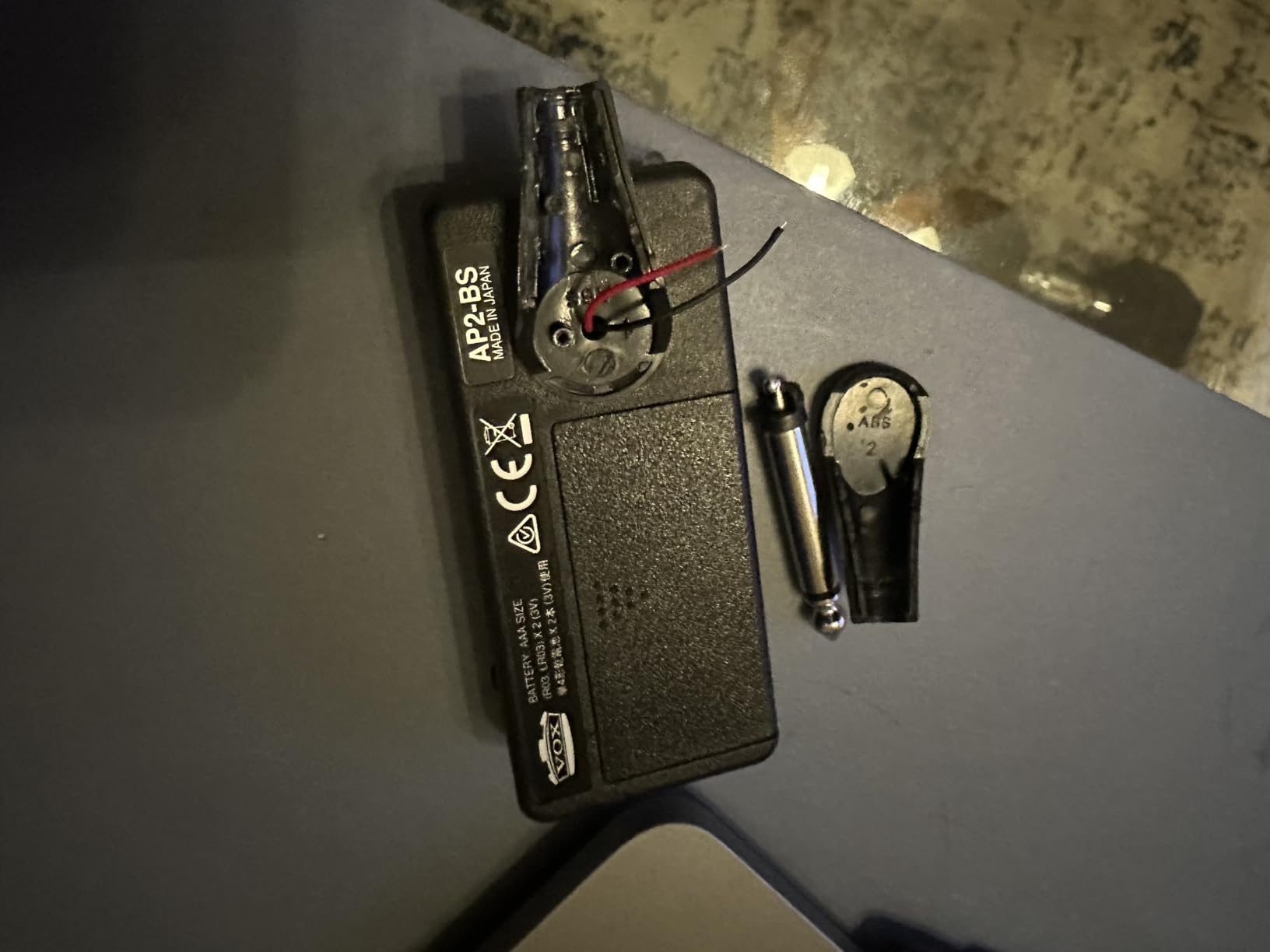
The Vox amPlug 3 AC30 holds a special place in this lineup because it delivers the sound of one of the most recorded amps in rock history. Vox essentially shrunk the legendary AC30 top boost circuit into a pocket sized plug that runs on two AAA batteries.
I plugged the amPlug into my semi hollow body guitar and was instantly transported to that chimey, jangly British tone the AC30 is famous for. The dual channel design lets you switch between Normal and Top Boost voicings, which makes a real difference when moving from rhythm parts to lead breaks.
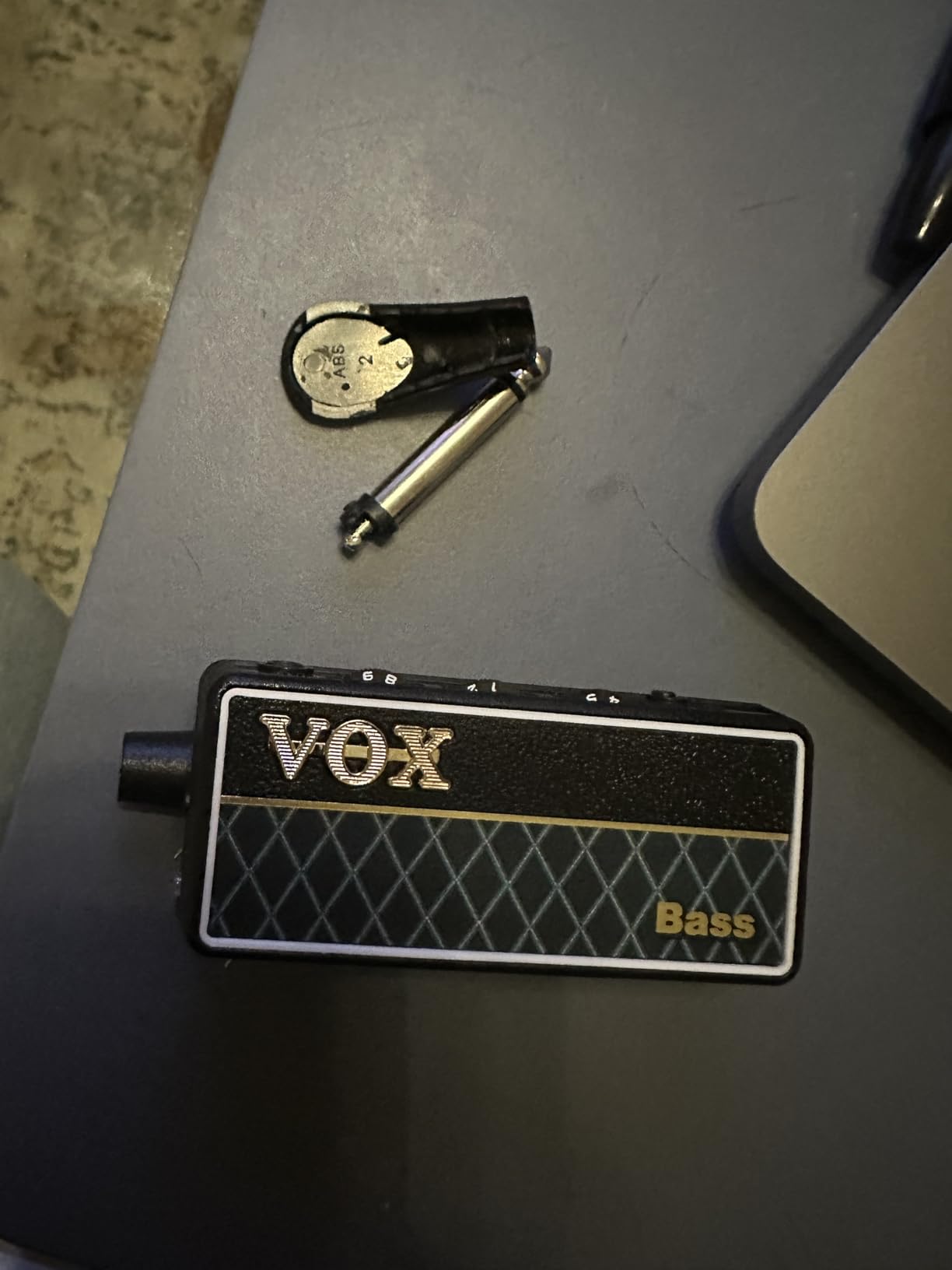
The nine built-in rhythms turned out to be more useful than I expected. Instead of just a click track, you get full groove patterns across rock, pop, Latin, and jazz styles that make practice feel like playing with a real drummer.
Stereo effects including lush reverb, spacious delay, chorus, and flanger add real depth through headphones. The analog circuitry captures tube amp dynamics in a way that digital modelling still struggles to fully replicate.
Battery life is exceptional at up to 16 hours, though you are reliant on disposable AAA cells rather than a rechargeable battery. At just 40 grams, the amPlug 3 is the lightest unit in this entire roundup.
Who this is perfect for
Vox fans and players chasing that classic British invasion tone will feel right at home with the amPlug 3 AC30. The authentic AC30 voicing is hard to replicate with generic modelling units.
Travellers love the lightweight plastic body and the long battery life, since a couple of spare AAA batteries will keep you playing through long trips without hunting for a USB port.
Who should look elsewhere
If you need modern hi-gain tones, the AC30 voicing is intentionally vintage and will not deliver the tight metal chugs some players want. Look at the NUX or Fender units for broader genre coverage.
Players who hate buying batteries will also be frustrated, since there is no rechargeable option built in. The plastic enclosure also feels less rugged than the metal bodies on the Valeton or MOOER.
6. NUX Mighty Air – Wireless Freedom With 18 Hour Battery
NUX Mighty Air Wireless Stereo Modelling Guitar/Bass Amplifier with Bluetooth, Mobile App, User Friendly Music Player, Up to 18 Hours Playing Time
Wireless transmitter and receiver
Built-in noise gate
MightyAmp app
9 EQ presets
18 hour battery
Bluetooth speaker mode
Pros
- Wireless transmitter included for full versatility
- Built-in noise gate for silent practice
- MightyAmp app for amp and effects control
- Up to 18 hours of playing time
- Dual speakers beat most small amps
Cons
- App required to fully use all features
- Drum volume only via physical knob
- Some users report wireless feedback
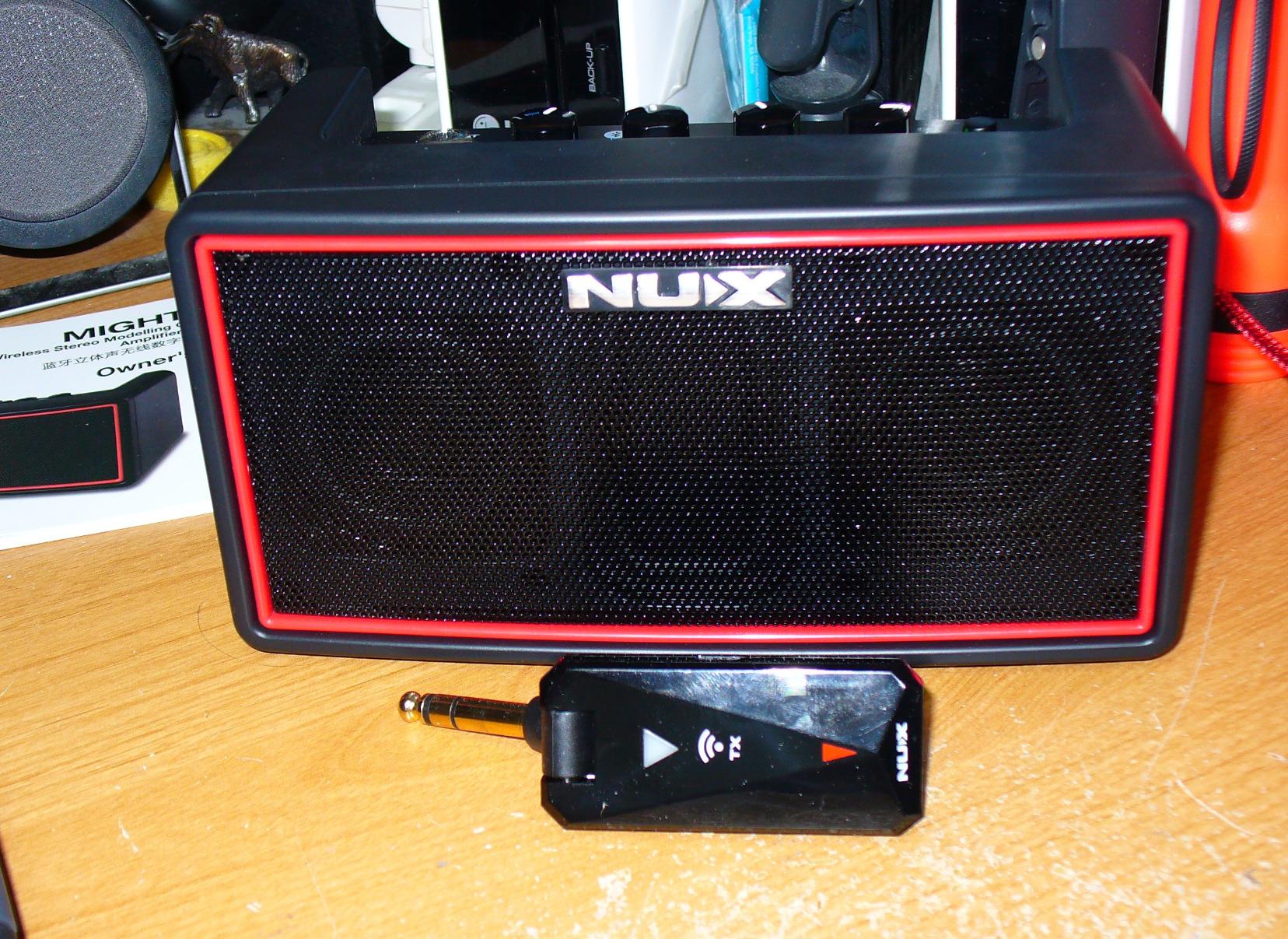
The NUX Mighty Air is the most ambitious unit in this roundup because it bundles a wireless transmitter, a stereo modelling headphone amp, and a Bluetooth speaker into one package. This is the closest thing to a fully cable free practice rig I have tested.
I clipped the wireless transmitter into my guitar, plugged headphones into the receiver unit, and started playing from across the room with no cable tethering me to anything. The built-in noise gate kept silent passages truly silent, which is exactly what apartment practice demands.
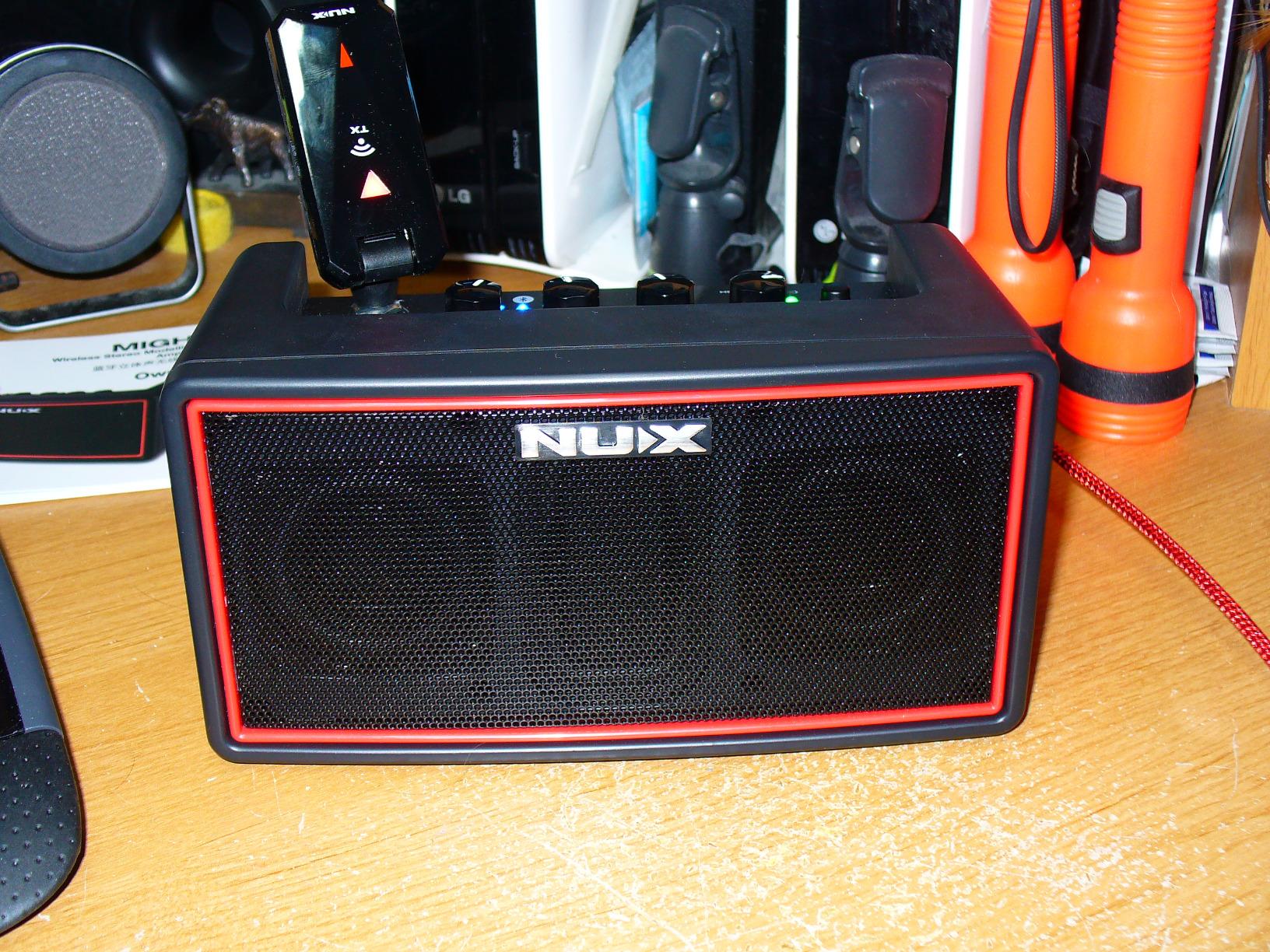
The MightyAmp mobile app gives you access to amp models, bass cabinet impulse responses, and a full effects chain for shaping your tone. I particularly liked the nine built-in EQ presets with the guitar cut feature, which voiced the output perfectly for both headphones and the unit’s own dual speakers.
That 18 hour battery life is not a typo. Across a full week of evening practice sessions I never once ran the Mighty Air flat, and it doubles as a Bluetooth speaker for streaming music when you put the guitar down.
The dual speakers genuinely sound better than most compact practice amps I have tried, making the Mighty Air useful even when you want to share your playing out loud at low volume.
Who this is perfect for
Players who hate cables and want to roam while they practice will find the Mighty Air liberating. The wireless transmitter means you can move, stand, or sit anywhere without tripping over a guitar lead.
Those who want a single device for both headphone practice and small room listening will appreciate the dual speakers, which sound fuller than most compact practice amps.
Who should look elsewhere
If you want the absolute simplest plug and play experience, the Mighty Air’s app dependency and multiple modes may feel overcomplicated. Some users have also reported occasional wireless squelching or feedback with the transmitter.
Budget conscious buyers may also baulk at the premium price, especially when the NUX Mighty Plug MP-2 offers similar modelling depth for significantly less, albeit without the wireless freedom.
7. LEKATO Guitar Headphone Amp – 5 Effects With Bluetooth Receiver
LEKATO Guitar Headphone Amp,Micro Electric Guitar Headphone Amp for Electric Guitar&Bass Rechargeable Bass Headphone Amplifier for Practice with 5 Effects(Clean Chorus Overdrive Distortion and Wah)
5 effects Clean Overdrive Chorus Distortion Wah
Bluetooth receiver
8 hour battery
180 degree swivel plug
Speaker output cable
Headphone output
Pros
- Silent practice with headphone output
- Built-in Bluetooth receiver for wireless music
- 5 effects including wah pedal simulation
- Works with electric guitar bass and acoustic
- 180 degree swivel plug
- Over 8 hours battery life
Cons
- Does not work with wireless headphones
- Some report fuzzy bass background noise
- Interface can be confusing initially
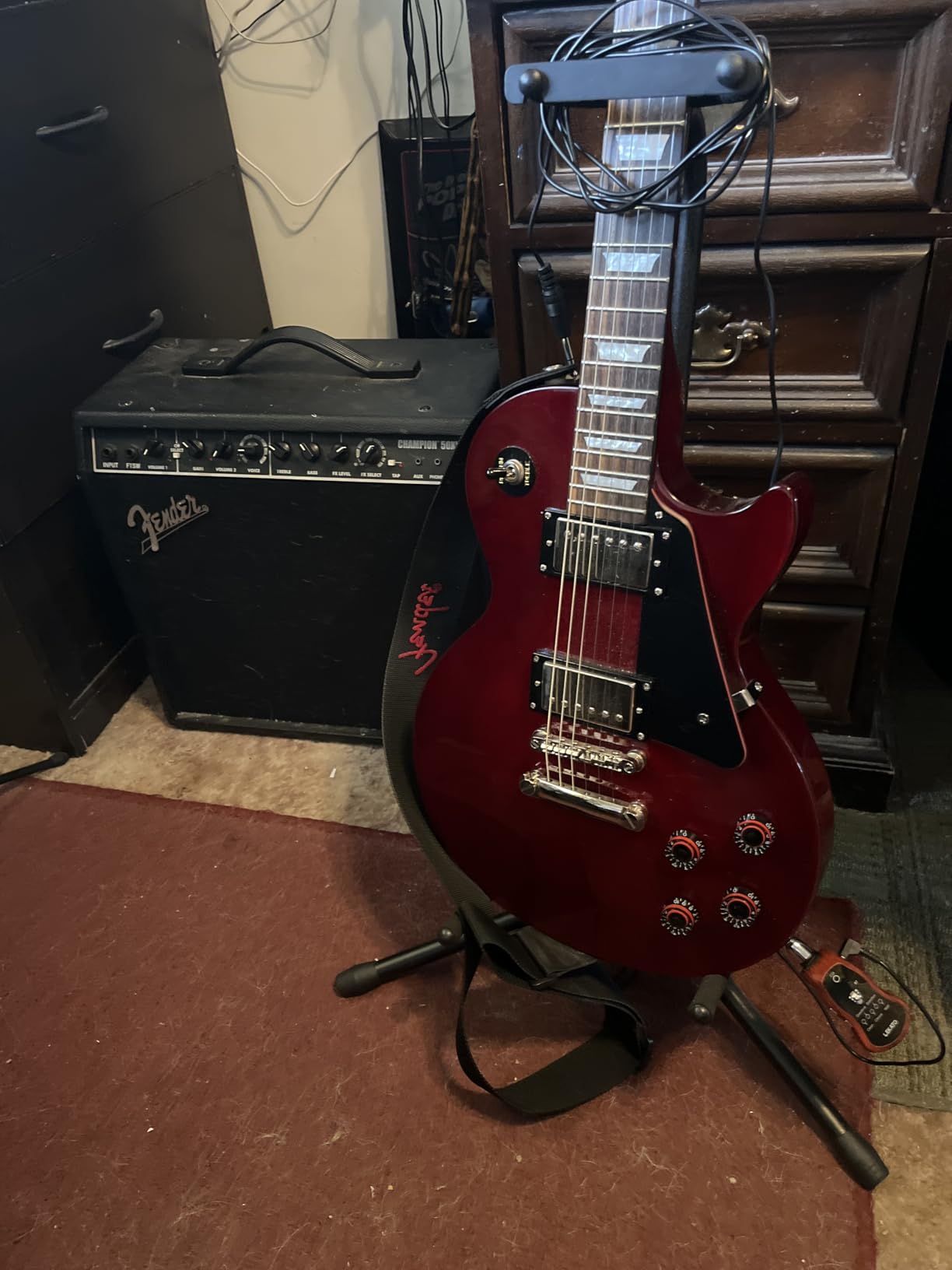
The LEKATO Guitar Headphone Amp is a straightforward, affordable option that focuses on doing the basics well. It offers five effects, a Bluetooth receiver for streaming music, and a 180 degree swivel plug that fits awkward guitar body shapes.
I tested the five effects, Clean, Overdrive, Chorus, Distortion, and Wah, through both an electric guitar and a bass. The clean and chorus tones were pleasant for warm up practice, and the wah effect added a fun expressive element that you rarely find on budget headphone amps.
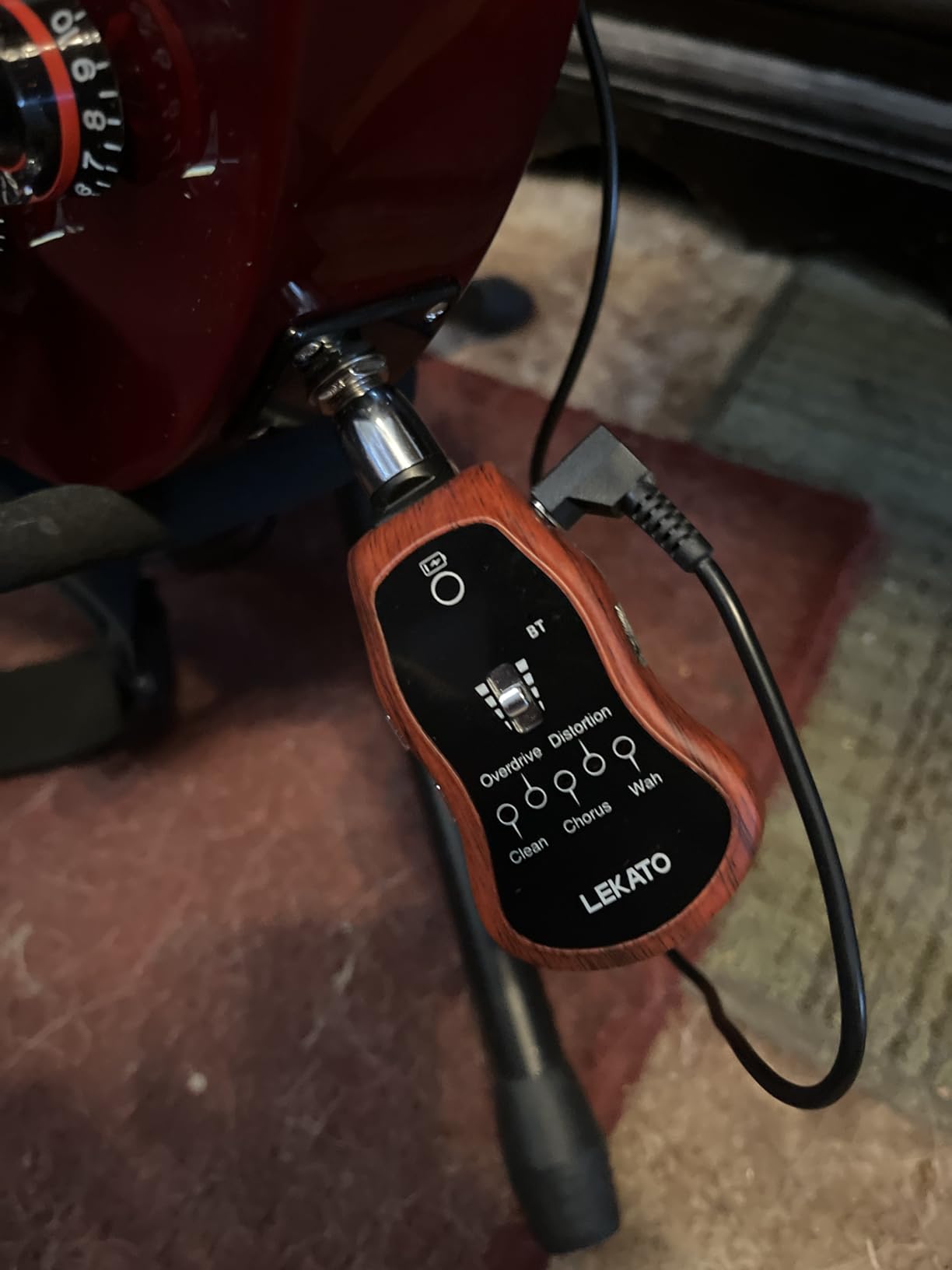
The Bluetooth receiver is a thoughtful inclusion, letting you stream backing tracks wirelessly from your phone without an extra cable dangling from the unit. Battery life of over eight hours comfortably covered several long evening sessions for me.
The included 3.5mm to 6.35mm cable means you can also output to a small speaker or amplifier, which adds flexibility that pure headphone amps lack. The 180 degree swivel plug rotated cleanly on every guitar I tried.
With over 560 reviews, the LEKATO has built a solid reputation as a reliable budget workhorse. It will not replace a full modelling rig, but as a grab and go practice tool it earns its place in this lineup.
Who this is perfect for
Beginners and casual players who want simple effect switching without menus or apps will enjoy the LEKATO. The five effects cover the essentials and the swivel plug fits almost any guitar.
Multi instrumentalists benefit too, since the unit works with electric guitar, bass, and electric acoustic guitars straight out of the box.
Who should look elsewhere
If you want to use wireless Bluetooth headphones, the LEKATO only outputs to wired headphones, so look elsewhere for fully cable free monitoring. Some bass players have also reported fuzzy or clicking background noise.
Tone purists chasing realistic amp modelling should step up to the Fender or NUX units, since the LEKATO’s effects are functional but not deeply editable.
8. MOOER Audiofile – Analog Class A Pedalboard Headphone Amp
MOOER Micro Guitar Pedal Audiofile Headphone Amp Analog, Access to Effects Circuits, Buffer/Clean Boost for Electric Guitar/Bass
Analog Class A circuit
Stereo and mono inputs
Analog cab simulation
True bypass
Signal boost and buffer
6.35mm jack
Pros
- Professional analog Class A amplification circuit
- Very low hiss compared to other amps
- Stereo and mono inputs with mixed outputs
- Optional analog speaker cabinet simulation
- True bypass stays on pedalboard permanently
- Doubles as signal boost or buffer
Cons
- Sound can be sterile without preamp coloring
- Customer service reported unresponsive
- Requires AC adapter with no battery option
The MOOER Audiofile takes a completely different approach to every other unit here. Rather than digital modelling, it uses an analog Class A amplification circuit designed to live permanently on your pedalboard and deliver clean, low noise headphone monitoring.
I slotted the Audiofile at the end of my pedal chain and immediately noticed how quiet it was compared to digital alternatives. There is almost no hiss, which matters enormously when you are practicing with high gain pedals in front of it late at night.
The optional analog speaker cabinet simulation is switchable, so you can run pure flat monitoring for mixing or engage the cab sim for a more amp like feel. Stereo and mono inputs plus mixed mono outputs give you flexible routing options.
Because it has true bypass, the Audiofile can stay on your board and simply act as a signal boost or buffer when you are not using headphones. This makes it a genuine utility pedal rather than a single purpose practice tool.
With over 900 reviews, the Audiofile has found its audience among pedalboard purists who want clean analog monitoring. It is the only unit here that prioritises signal integrity over flashy features.
Who this is perfect for
Pedalboard builders who already own drive, modulation, and time based effects will love the Audiofile because it simply amplifies your existing chain cleanly into headphones. No redundant modelling to fight against.
Studio players appreciate the low noise floor and the analog signal path, which preserves the character of premium pedals without digital conversion artifacts.
Who should look elsewhere
If you want built-in amp models, effects, Bluetooth, or rhythms, the Audiofile offers none of these. It is a pure amplification and monitoring device, not an all in one practice solution.
Players who need portable, battery powered practice should also look elsewhere, since the Audiofile requires a 9V AC adapter like any standard guitar pedal. There is no battery option for on the go use.
How to Choose the Best Headphone Amp for Your Guitar
Choosing the right guitar headphone amp comes down to matching features to how you actually practice. Here are the factors our team weighed during testing, and the questions you should ask before buying.
Sound quality and modelling depth
Tone is everything, so listen for realism in amp modelling, the quality of cabinet simulation, and how effects sit in the mix. The Fender Mustang Micro Plus and NUX Mighty Plug MP-2 lead the pack for modelling depth, while the Vox amPlug 3 AC30 wins for authentic vintage character.
Analog units like the MOOER Audiofile take a different route, offering pure clean amplification with optional cab simulation rather than digital amp models. Your preference depends on whether you want all in one tones or a clean monitor for your existing pedals.
Battery life and power source
If you practice for hours at a time, battery life becomes critical. The NUX Mighty Air leads with up to 18 hours, followed by the Vox amPlug 3 at 16 hours and the LEKATO at over 8 hours. The Fender Mustang Micro Plus gives around 4 hours, which is fine for most sessions but worth noting.
Consider whether you prefer rechargeable USB batteries or disposable AAA cells. Rechargeable units save money long term, while AAA powered units like the Vox amPlug are easy to keep running with spare batteries on hand.
Connectivity options
Bluetooth audio streaming is a game changer for practising with backing tracks, and the Fender, NUX, SONICAKE, and LEKATO units all support it. USB recording output turns a headphone amp into a basic audio interface, which is invaluable for capturing ideas quickly.
An aux input, like the one on the Valeton Rushead Max, offers a simple wired alternative if you prefer not to mess with Bluetooth pairing. The NUX Mighty Air goes furthest with a full wireless transmitter system.
Built-in effects and practice tools
Rhythm patterns and drum loops turn practice from a chore into a jam session. The Vox amPlug 3 AC30 includes nine built-in rhythms, while the NUX Mighty Plug MP-2 offers full drum patterns through the app. Effects like chorus, delay, and reverb add depth and inspiration.
If you mainly want to play along to your own music collection, prioritise Bluetooth streaming. If structured practice matters more, look for built-in rhythms and metronome functions.
Headphone requirements and impedance
Most pocket headphone amps are designed for standard consumer headphones with 3.5mm jacks and low to medium impedance. If you own high impedance studio headphones above 80 ohms, check that the unit can drive them loudly enough, since budget models with 50 milliwatt outputs like the Vox amPlug may struggle.
Wired headphones generally offer lower latency than Bluetooth headphones, which matters for tight timing during practice. Avoid using wireless Bluetooth headphones with units that do not explicitly support them.
Apartment and dorm living considerations
If you live in close quarters, silent practice is the whole point. Look for units with a built-in noise gate like the NUX Mighty Air, since this prevents hiss and hum from bleeding into shared walls during quiet passages.
Portability also matters for students who travel between home, dorm, and rehearsal spaces. The Valeton Rushead Max, LEKATO, and Vox amPlug 3 are all small enough to live permanently in a gig bag pocket.
FAQs
Are headphone amps worth it for guitar?
Yes, headphone amps are absolutely worth it for guitarists who need to practice silently. They save you the hassle of setting up a laptop, audio interface, and software, deliver convincing amp tone in seconds, and let you play anywhere without disturbing anyone. For apartment dwellers, students, and night owls, a good headphone amp pays for itself within weeks.
What kind of headphones do I need for a guitar amp?
Most guitar headphone amps work with any standard consumer headphones that have a 3.5mm jack. Low to medium impedance headphones between 16 and 80 ohms work best with pocket sized units. Avoid very high impedance studio headphones unless your amp has enough output power, and use wired rather than Bluetooth headphones to keep latency low.
Can I use a guitar amp for headphones?
Some traditional guitar amps have a dedicated headphone output jack, but many do not. Even when they do, the tone is often limited to that amp’s single sound. A dedicated guitar headphone amp gives you multiple amp models, effects, and cab simulation in a portable package, making it far more flexible for silent practice.
What is the best headphone guitar amp?
The Fender Mustang Micro Plus is our top pick overall thanks to 25 amp models, 25 effects, 100 presets, Bluetooth streaming, and USB recording. For value, the NUX Mighty Plug MP-2 offers 13 amp models and deep app editing for less. For budget buyers, the Valeton Rushead Max delivers solid practice tone at the lowest price in this roundup.
Do guitar headphone amps work with acoustic guitars?
Many guitar headphone amps work with electric acoustic guitars that have a pickup and preamp output. The LEKATO explicitly lists compatibility with electric acoustic guitars, while the Fender Mustang Micro Plus has acoustic amp models. For purely acoustic guitars without electronics, you would need a pickup installed first.
Final Thoughts on the Best Headphone Amps for Guitars
The best headphone amps for guitars in 2026 make silent practice genuinely enjoyable rather than a compromise. Our top recommendation remains the Fender Mustang Micro Plus for its unmatched blend of amp models, effects, and recording flexibility.
If you want maximum value, the NUX Mighty Plug MP-2 delivers deep editing and realistic modelling for less, while the Valeton Rushead Max is the smartest budget entry point we tested. Pick the unit that matches your practice habits and start enjoying noise free playing tonight.