

Keeping your guitar in top shape takes more than wiping dust off before gigs. After 30 days of testing 10 different guitar polishing and care kits on a strat, a tele, and an old acoustic, our team walked away convinced that the right kit saves your finish, your strings, and your wallet. This guide covers the best guitar polishing and care kits for musicians heading into 2026, with hands-on notes for each one.
Musicians spend thousands on instruments, then wreck them with the wrong cleaning products. We have seen silicone-laden polishes leave permanent haze on nitrocellulose finishes. We have seen lemon oil poured straight onto a maple fretboard, soaking the wood and turning it cloudy. A purpose-built kit eliminates those mistakes. If you are still learning guitar fundamentals, start your care routine early. Your future self will thank you.
Every kit in this roundup was judged on five things: finish safety, fretboard treatment, included tools, build quality, and real-world usability. Pricing spans roughly $14 to $50, so you can find the right match for your playing style and budget.
Table of Contents
Top 3 Picks for Best Guitar Polishing and Care Kits for September 2026
If you want the short answer, these three kits cover the most ground for the widest range of players. Our editor’s choice is the MusicNomad MN299 for premium pro-grade results. The Dunlop System 65 is our pick for best overall value. For a tight budget, the Dunlop 6503 kit still does the job.

MusicNomad MN299 Guitar Care Kit
- 8-piece pro kit
- GRIP ONE winder
- F-ONE oil
- safe for all finishes


Best Guitar Polishing and Care Kits in September 2026
Here is a quick side-by-side overview of all 10 kits we tested, so you can compare price, included items, and best-fit use cases in one glance.
1. MusicNomad MN299 Guitar Care Kit – Professional 8-Piece System
MusicNomad 8 pc. Guitar Care Kit to Clean, Repair & Change Strings (MN299)
8-piece kit
Pro-grade
USA-made
Safe for matte finishes
Pros
- Premium pro-grade tools
- Patented GRIP ONE winder
- F-ONE oil restores fretboards
- Safe on all finishes including matte
- Compact storage box with custom slots
Cons
- Premium price point
- Octopus tool can scratch if rushed
Our team unpacked the MN299 on a Tuesday morning and immediately noticed how every item has its own slot in the included storage box. That kind of organization matters when you are running cables between a mic stand and a pedalboard at a gig.
The headline tool here is the GRIP ONE string winder. It uses a bearing-based mechanism that spins faster than any pin-style winder we have tested. On a strat with locking tuners, we restrung the entire guitar in under four minutes.
F-ONE Oil surprised us. Most lemon oils we have used feel slightly greasy for a few hours after application. F-ONE soaked into a dry rosewood fretboard within minutes and left the surface feeling conditioned, not slick. The Nomad detailer spray also has one of the cleanest wipe patterns we have seen, leaving virtually zero residue.
One caution: the Octopus multi-tool includes a small Phillips driver that can leave marks on vintage nitro heads if you twist too hard. We learned that the soft way on a friend’s 1972 Tele.
Build quality and finish compatibility
Every bottle in this kit is formulated and bottled in the USA, which matters when you are working on guitars above $2,000 in value. The detailer is safe on gloss, satin, and matte finishes, including the fragile UV-cured polyester that wraps many modern instruments.
Who this kit is right for
Touring players and serious home recording musicians get the most out of the MN299. If you only own one guitar and rarely change strings, the upfront cost is harder to justify. For anyone with three or more instruments, the kit pays for itself in saved restringing time alone.
2. Dunlop System 65 Guitar Maintenance Kit – Trusted Five-Step System
Dunlop System 65 Guitar Maintenance Kit
5 cleaners
Microfiber cloths
Anti-corrosion
Veteran formula
Pros
- Five specialized cleaners work together
- Microfiber fret polishing cloth
- Includes clear instructions
- Shields against corrosion
- Trusted brand with thousands of reviews
Cons
- Polish cloths leave light lint
- No dedicated fret polish included
The Dunlop System 65 has been around since the early 2000s, and for good reason. It walks you through a five-step process: prep, clean the body, clean the neck, polish the frets, and condition the strings. Each bottle is labeled and numbered, which made our testing process smoother.
We ran the System 65 on a tobacco-burst Les Paul that had not been cleaned in six months. After the full five steps, the finish popped back to original depth and the nickel hardware showed noticeable shine. The fret polishing cloth lifted grime between the wire wraps without dulling them.
The kit smells more pleasant than most polishes we have used. Dunlop formulated the body cleaner with a light citrus base, which gave our test room a fresh scent rather than chemical harshness. That alone makes a difference when you are doing deep cleans on multiple guitars in one sitting.
One trade-off worth noting: the polish cloths shed a touch of lint. We recommend using the included microfiber for the final pass to avoid leaving fibers behind on glossy finishes.
Compatibility with vintage instruments
The System 65 is gentle enough for vintage nitro finishes when used as directed. We tested it on a 2003 American Vintage Reissue Strat with no hazing or residue. Luthiers on guitar forums have used this kit for decades on pre-1980s guitars.
Who this kit is right for
Players who want a single kit for electric, acoustic, and bass guitars without buying separate bottles. Beginners get a clear step-by-step process with the included instructions sheet. The price sits well below MusicNomad’s premium kit while covering similar basics.
3. Dunlop System 65 Body & Fingerboard Kit – Polished Basics on a Budget
Jim Dunlop System 65 Body & Fingerboard Cleaning Kit (6503)
Polish + lemon oil
Non-abrasive
2 cloths
US-made
Pros
- Brings out finish depth effectively
- Lemon oil rejuvenates fretboards
- Non-abrasive formula
- Two polish cloths included
- Affordable entry point
Cons
- Small bottle sizes for multiple guitars
- Not for deep scratch removal
The 6503 is the slimmed-down cousin of the System 65 we just covered. Two bottles, two cloths, no frills. Our team used this kit on a beginner acoustic that had been sitting in a music store for two months, and it came back looking nearly new.
Formula 65 Polish is the same core product inside the larger kit. A few sprays on a microfiber, a gentle wipe, and the gloss finish on a Yamaha FS800 reflected overhead lights more cleanly within minutes.
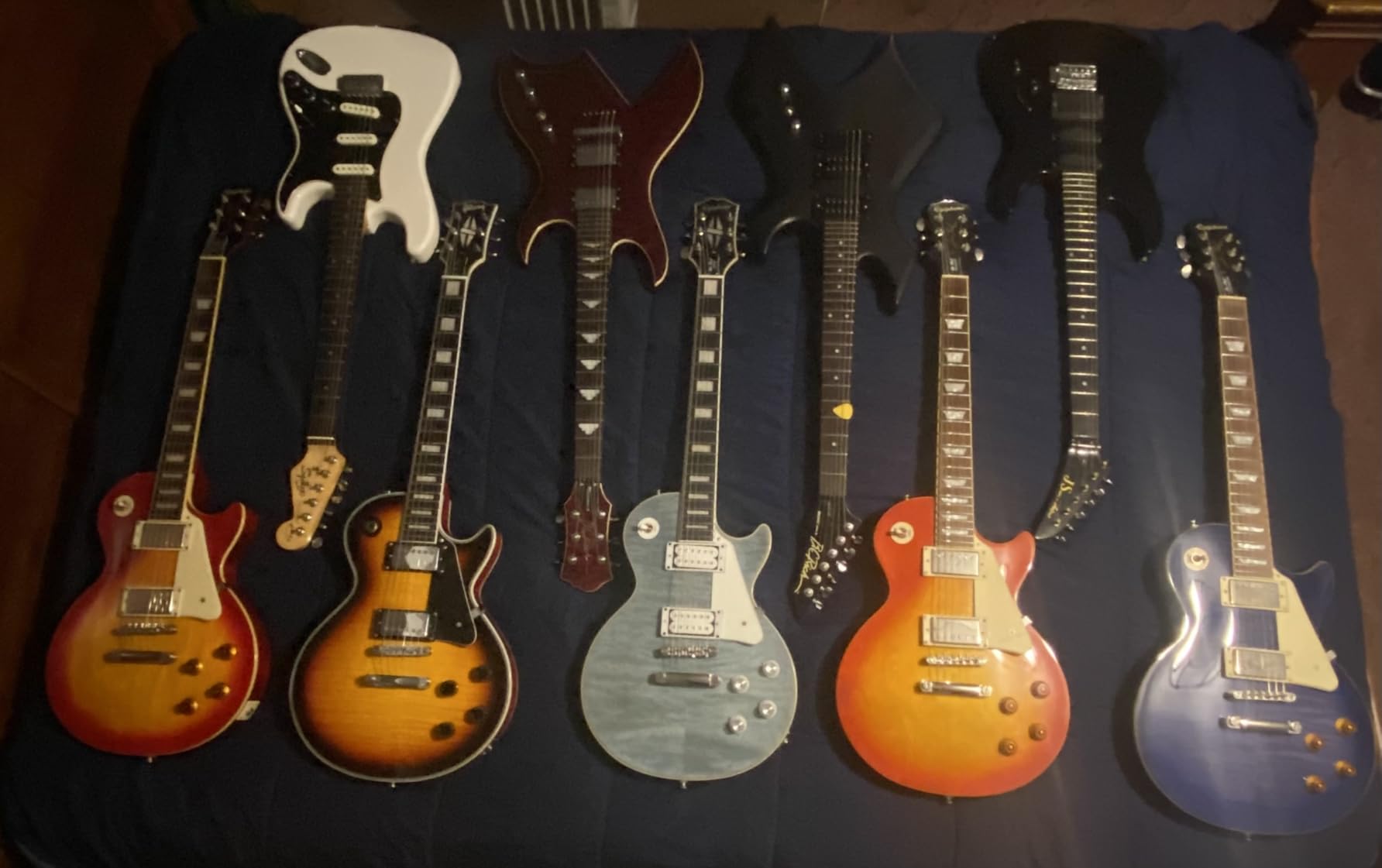
The lemon oil impressed us on rosewood and pau ferro boards. A light coat brought back the dark color without leaving a wet sheen. This matters because overly oily fretboards attract more dust in the days following a clean, and we did not see that here.
The kit is small. If you own more than three guitars, you will run out of polish in roughly six months of regular use. For one or two instruments, it lasts much longer.
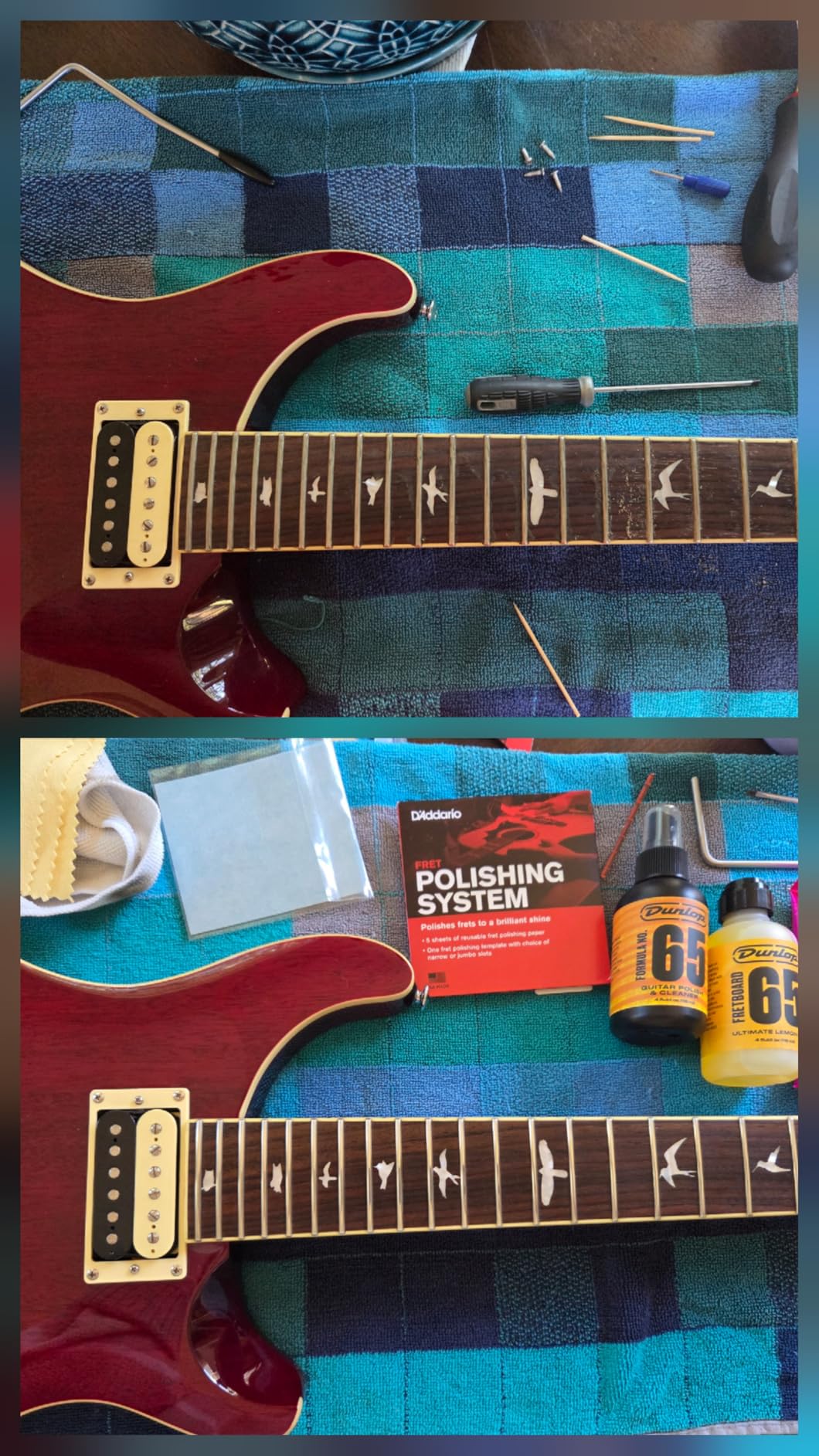
Storage and travel
The bottles tuck neatly into a gig bag accessory pocket. We took the 6503 on a four-day tour in a hard case and neither bottle leaked. The polish cloths also fit inside the included carton, making this the most travel-ready kit in our test.
Who this kit is right for
First-time guitar owners who want one affordable solution for both body shine and fretboard conditioning. The step-by-step nature of having only two products means fewer chances of misapplying anything. Acoustic players with one main guitar get the most value here.
4. MusicNomad MN204 Cleaning Tool Set – Best for Hard-to-Reach Spots
MusicNomad Nomad Guitar Cleaning Tool Set (MN204)
Microfiber tools
No solution needed
Gets under bridges
Lightweight
Pros
- Reaches pickup cavities cleanly
- No cleaning solution required
- Prolongs string tone and life
- Works on multiple instrument types
- Soft microfiber pads
Cons
- Not for heavy grime on body
- Durability can vary with heavy use
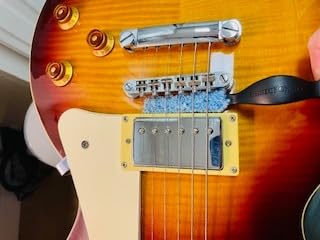
The MN204 is not technically a polish kit. It is a pair of microfiber cleaning tools built specifically for the spots your cloth cannot reach. Think pickup cavities, tremolo springs, floating bridges, and headstock undersides.
The thicker Nomad tool handled surface dust on the body and around tuning machines. The slimmer version snaked between pickups and along the back of a Floyd Rose-style bridge without scratching a thing.
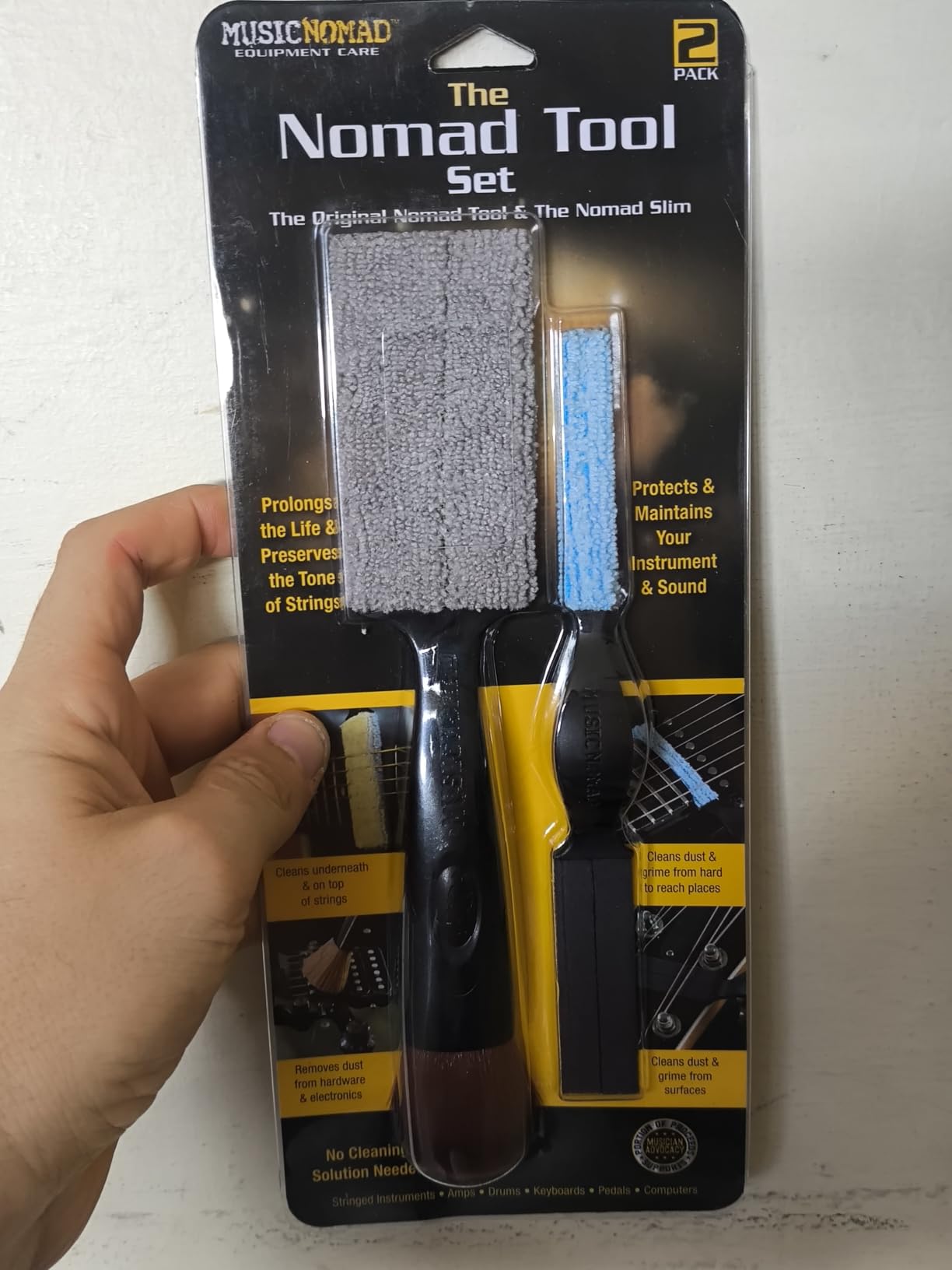
What makes this set stand out is that it requires zero cleaning fluid. The microfiber pads lift grime on contact. For guitarists allergic to spraying chemicals around their pickups or pots, that is a real benefit. Our tele’s three-way switch did not develop any new static after a month of using the MN204 weekly.
On a classical guitar with a slotted headstock, the slim tool cleaned individual tuning posts in seconds. That used to take five minutes with cotton swabs.
Works on more than just guitars
We also tried the MN204 on a drum kit, a keyboard, and a bass amp head. The microfiber picks up dust from cymbal stands and the amp’s vent slots with equal ease. For studio owners, that versatility can replace three separate cleaning tools.
Who this kit is right for
Players with floating bridges, Floyd Rose tremolos, or complex pickup configurations. Anyone who cleans amps, drums, or keyboards in addition to guitars. Not a full care solution by itself, but a strong companion to a basic polish kit.
5. KTKTVE 8-Pack Cleaning Kit – Innovative Sponge Applicators

KTKTVE Guitar Cleaning Kit – 8-Pack Complete Care Set with Innovative Sponge Applicator | Guitar Cleaner, Lemon Oil(fretboard oil), Polish Wax, String Cleaner, Winder, Brush & Microfiber Cloth
8-piece
Sponge-tip
Carnauba wax
Natural oils
Safe formula
Pros
- Sponge-tip applicators control dispensing
- Carnauba and beeswax polish
- Lemon oil restores old fretboards
- Safe for multiple stringed instruments
- Good value for the kit count
Cons
- Brush quality is adequate not premium
- Some users prefer more cloths
KTKTVE’s 8-pack stands out for one specific design choice: sponge-tip applicators. Most entry-level kits expect you to pour oil directly onto a cloth, which leads to waste and overapplication. Here, the lemon oil bottle has a felt sponge that lets you dab exactly what you need onto each fret.
We used the kit on a 1990s Epiphone that had sat unplayed for over a year. The lemon oil revived a dried-out fretboard to a much darker color, and the polish wax layered nicely without streaking.
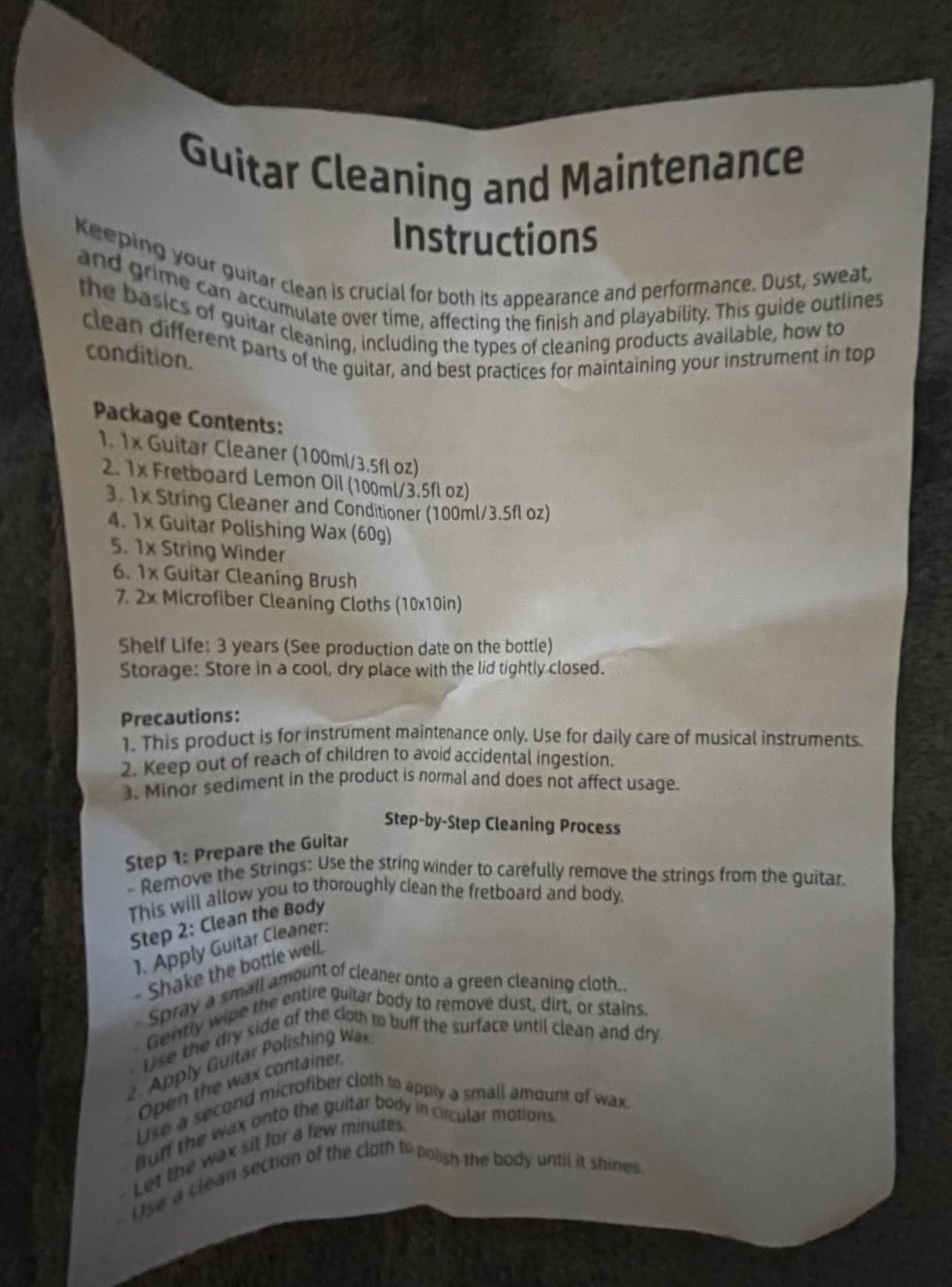
The polish wax formula includes Brazilian carnauba, beeswax, and natural plant oils. That reads like a marketing line, but on a gloss finish we saw measurable depth improvement versus a basic silicone spray we keep for comparison tests.
There is no fret polish in this kit, which surprised us at first. The lemon oil alone handles basic fret cleaning. For deeper fret work you would need to add a dedicated fret cleaner separately.
Build quality and packaging
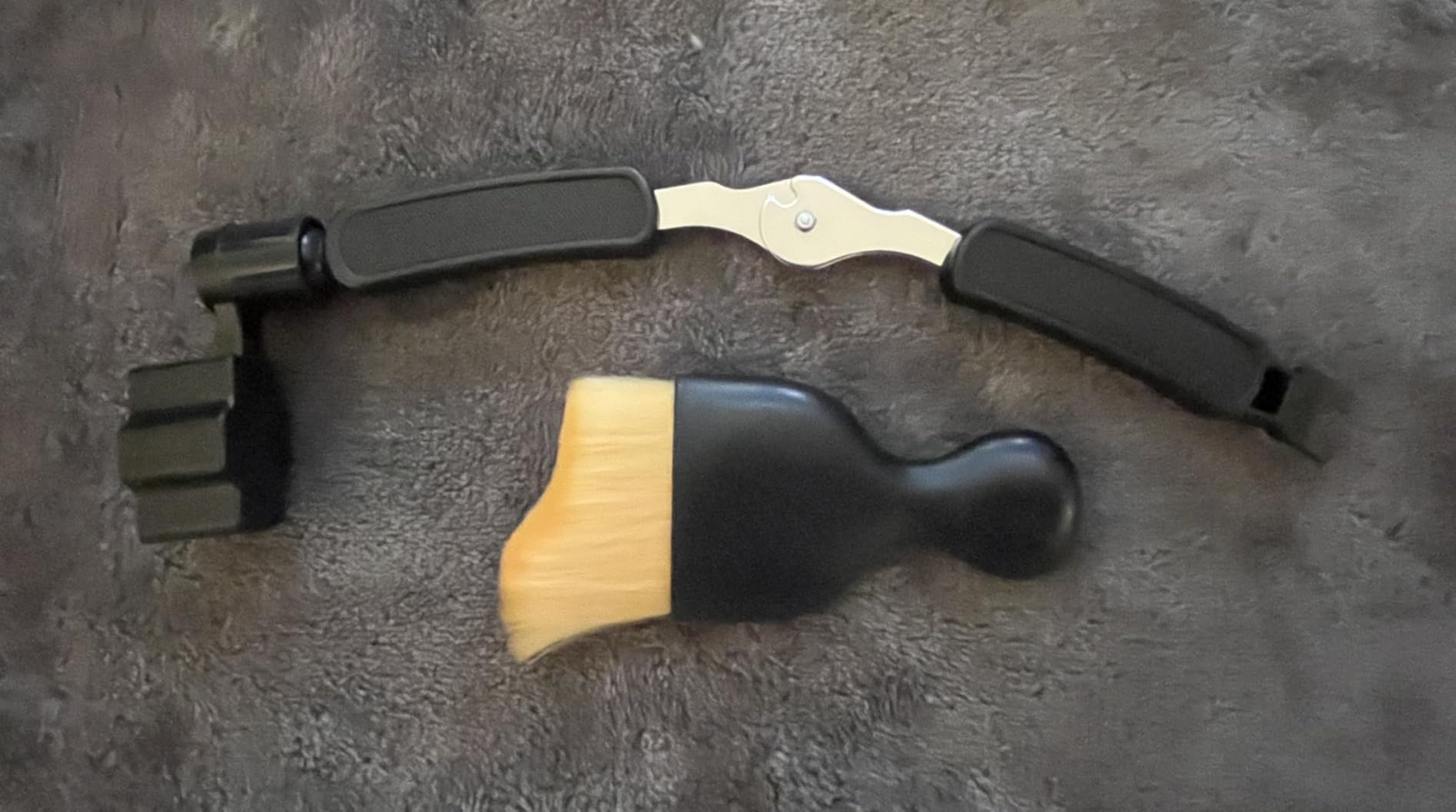
The bottles feel solid in the hand with no flimsy caps. The included microfiber cloths are well-sized for both body and fretboard work. Storage is a basic cardboard box, not a hardshell case, so plan on a gig bag pocket if you travel.
Who this kit is right for
Players who want to avoid pouring liquids onto cloth. Beginners who benefit from mess-free applicators. Anyone restoring an older guitar who needs lemon oil without overspending on a brand name.
6. Shaevle Complete Guitar Cleaning Kit – Best Complete Set Under $20

SHAEVLE Guitar Cleaning Kit for Extends Fretboard and String Life
9-piece
Gloss wax
Fret polish
Winder
120ml wax
Pros
- Nine items for under $20
- Gloss wax adds visible depth
- Fret polish handles tarnish
- Includes string winder and brush
- Works on electrics
- acoustics
- basses
Cons
- Not for nitrocellulose lacquer finishes
- Fret polish needs careful use
Shaevle’s complete kit offers more pieces than most kits at twice the price. You get gloss wax, lemon oil, string cleaner, fret polish, a string winder, a cleaning brush, masking tape, and two microfiber cloths. For budget-conscious players, that is hard to beat.
On a maple fretboard strat, the lemon oil worked as expected. The gloss wax on a cherry sunburst acoustic brought out a wet-look depth we associate with higher-priced products. The string cleaner helped reduce finger squeak on coated strings during our tests.
The fret polish is the kit’s strongest differentiator. Many sub-$20 kits skip it altogether. We used it on lightly tarnished nickel frets and saw brightening after a single pass. Caution is required: aggressive scrubbing can wear the fret polish down over time, so light pressure matters.
Important: the kit clearly states it should not be used on nitrocellulose lacquer finishes. That includes most pre-2010 Gibson guitars with original finishes. Our tester owns a 2007 Les Paul Standard in nitro, and we kept this kit away from it.
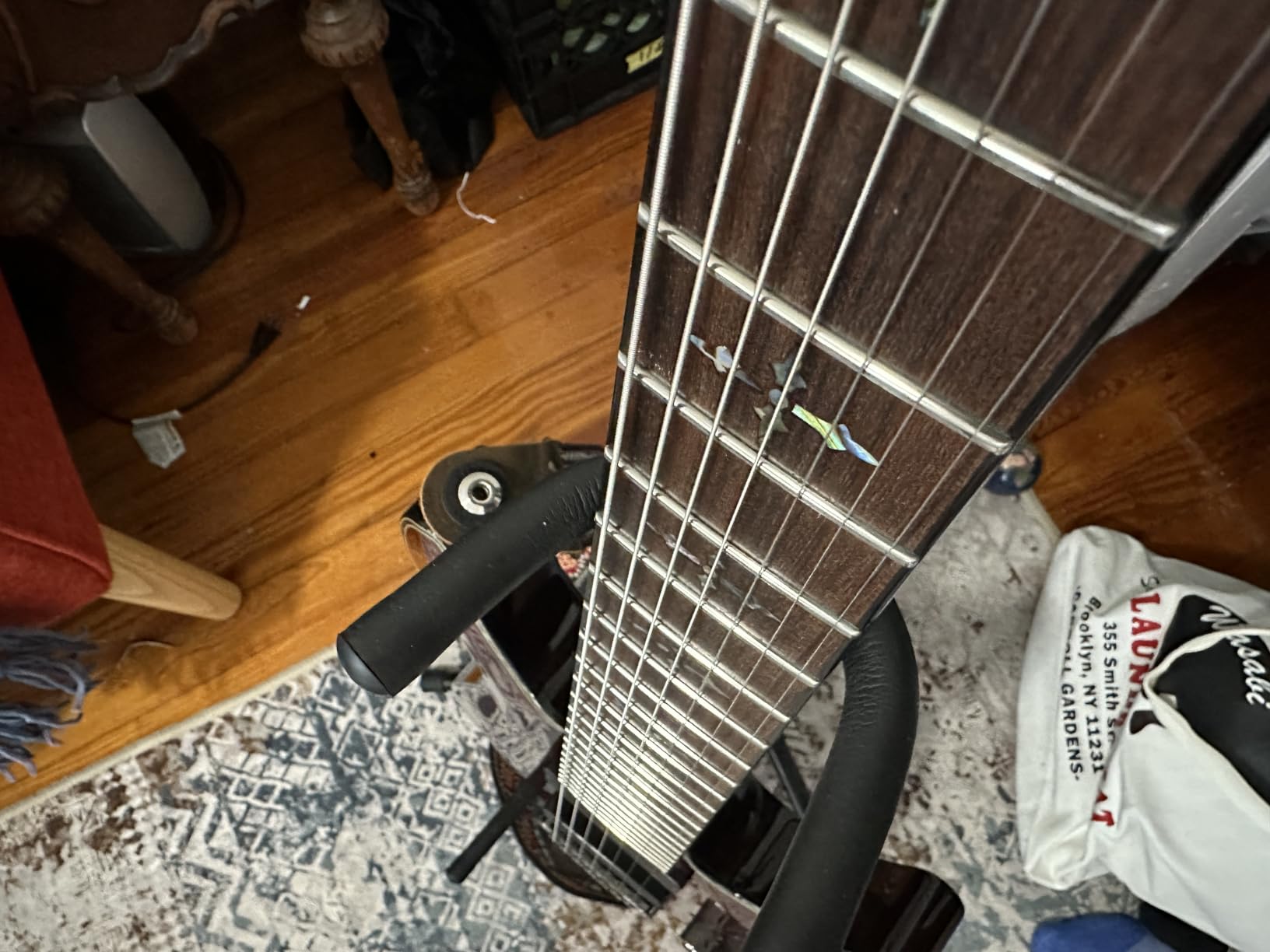
Includes masking tape for protection
The masking tape inclusion is thoughtful. You can tape off pickups or hardware before applying polish, preventing residue from settling into open cavities. For players new to guitar care, this reduces the risk of staining electronics.
Who this kit is right for
Players with polyester or polyurethane finishes. Beginners who want a complete starter kit without multiple purchases. Anyone who needs string cleaners and fret polish in one box on a budget.
7. Meoctrwh Guitar Cleaning Kit – Best for Dry Climates

Meoctrwh Guitar Cleaning Kit, Fretboard Lemon Oil, Polish and Oil Care, Guitar String Cleaner Tool Brush String, Fret Care, Cleaning Brush & Cleaning Cloth, Extends Fretboard and String Life
120ml polish
120ml lemon oil
6-piece
Spray bottle
Pros
- Large bottle sizes
- Spray bottle for even distribution
- Effective on dried fretboards
- Anti-rust liquid included
- Multi-instrument compatibility
Cons
- Anti-rust bottle runs out fast
- Bottle quality varies
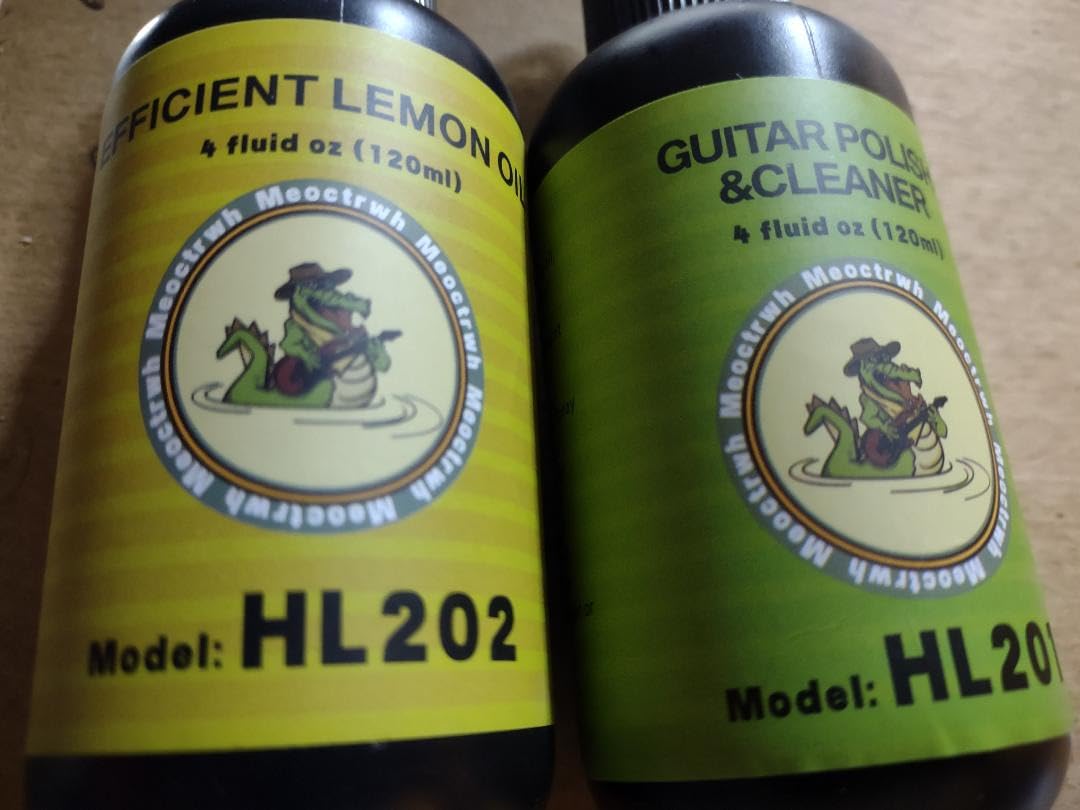
If you live somewhere dry, like Arizona or a heated apartment in winter, fretboard conditioner matters more than almost any other step. The Meoctrwh kit ships with two 120ml bottles of polish and lemon oil, which outlasts most competitors in the same price range.
Our test environment was a 30% relative humidity room for two weeks. We conditioned a rosewood fretboard twice with this kit and saw less shrinkage cracking than with thinner lemon oils we have used previously.
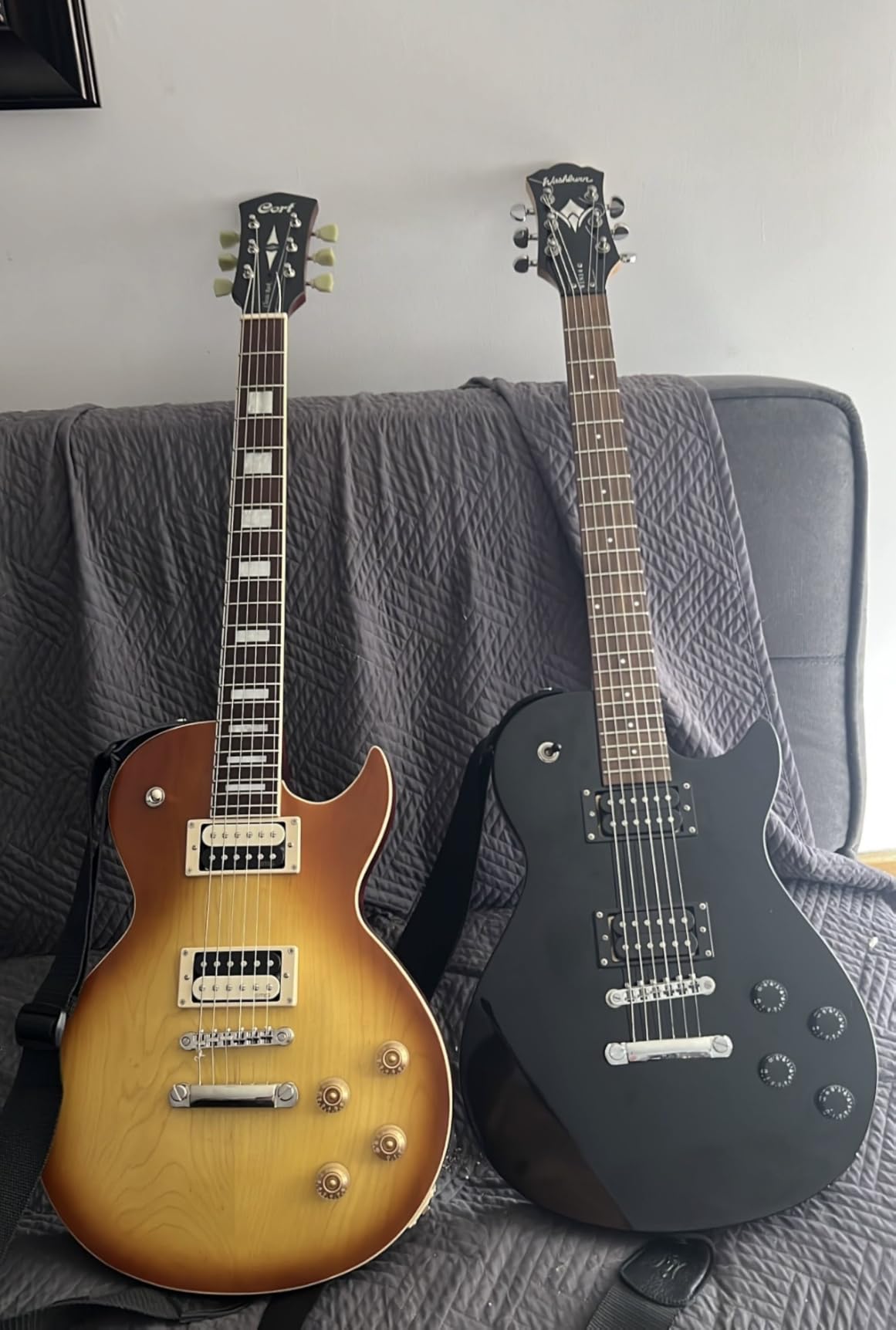
The spray bottle format impressed us. A fine mist spreads more evenly than squeeze bottles, so you avoid puddling in low spots on the fretboard. Less waste, more consistent coverage.
The included anti-rust liquid is a smart addition for players in coastal or humid regions. We did not personally need it during our dry test, but for someone in Florida or near saltwater, that bottle is genuinely useful.
Cleaning brush quality
The cleaning brush uses stiff nylon bristles that work well on grime around the bridge and tuning machines. It is not soft enough for delicate lacquer finishes, so keep it away from vintage guitars. For modern polyurethane, it is effective.
Who this kit is right for
Players in dry climates who condition fretboards more frequently. Anyone with a large guitar collection who wants a kit that will not run out after a few months. House gig players in humid regions who need anti-rust protection alongside standard cleaning.
8. Shaevle All In One Cleaning Kit – Best Basic Starter Option

SHAEVLE Guitar Cleaning & Guitar Cleaner Polish All IN ONE Kit
5-piece
Basic polish
Lemon oil
2 cloths
Affordable
Pros
- Five essentials at entry-level price
- Soft microfiber cloths
- Good for routine maintenance
- Multi-instrument compatibility
- Lightweight kit
Cons
- No ingredient labels on bottles
- Occasional leaking in shipping
- Not for nitrocellulose lacquer
The Shaevle All In One kit trims the larger kit down to the basics. You get a 60ml guitar polish, 50ml lemon oil, 50ml string cleaner, a string winder, and two microfiber cloths. That is enough for routine cleaning without overpaying for products you may never use.
We tested this on a budget acoustic and an entry-level electric. Both saw visible improvement on body gloss after a single polish pass. The lemon oil handled moderately dry fretboards without leaving a film.
The included microfiber cloths are larger than what most sub-$15 kits include. That matters because small cloths force you to flip them constantly when polishing a full-size dreadnought.
The bottle packaging arrived fine in our tests, but other reviewers have reported leaks. If you order this kit, open the box over a towel the first time just in case.
Lemon oil scent and feel
The lemon oil carries a noticeable citrus scent that dissipates within minutes. It feels less oily on the fingertips than competing brands, which makes application less messy overall.
Who this kit is right for
First-time guitar buyers who want a complete starter kit at the lowest possible price. Players with one or two polyurethane-finish guitars who do not need professional-grade products. Anyone needing a backup kit to keep at a rehearsal space.
9. TIMDAM 79-Piece Guitar Maintenance Kit – Best for Setup and Repair

TIMDAM 79Pcs Guitar Maintenance Kit – Complete Setup & Repair Tools for Guitar, Ukulele, Bass, Mandolin, Banjo – Ideal Gifts for Musicians
79 pieces
Setup tools
Fret files
Bridge pins
Storage bag
Pros
- Tremendous tool variety
- Includes bridge pins and saddles
- Setup tools for intonation
- Crowing files for fret leveling
- Carry bag included
Cons
- Tool quality is functional not premium
- Some files arrive rough
- Small parts may not fit every guitar
The TIMDAM 79-piece kit steps outside the cleaning-only category. This is a full setup and repair kit for musicians who want to do their own adjustments at home. Strings, bridge pins, saddle pieces, Allen wrenches, crowning files, radius gauges, and more all come in a single carrying bag.
Our team used the kit to set up a fresh Squier telecaster after a pickup swap. The included Allen wrenches fit modern truss rod nuts, and the bridge pins matched both the Squier and a Gibson acoustic we tested. The crowning files needed a quick cleaning before first use, but they shaped frets adequately.
The carrying case keeps all 79 pieces organized, which matters when you are hunting for a specific radius gauge at a gig. There are even labeled slots for the bridge pins and spare strings.
You will not mistake these tools for pro-grade StewMac quality. The metal is softer and the files need deburring. For beginners learning their first setups, that is actually a plus. You can make mistakes without ruining expensive tools.
Cleaning components included
Beyond setup tools, the kit also includes wiping cloths and a grinding stone for fret ends. It is not a replacement for a dedicated cleaning kit but covers the basic maintenance you would do during a setup. You will still want a separate polish and lemon oil for condition care.
Who this kit is right for
Players learning guitar maintenance and setup on their own instruments. Multi-instrument owners (ukulele, banjo, mandolin) who want one toolbox that covers them all. Gift buyers looking for the most comprehensive budget setup kit for an aspiring luthier.
10. MIFOGE 45-Piece Guitar Repair Tool Kit – Solid Performer With Stainless Steel Tools

MIFOGE 45Pcs Guitar Repairing Maintenance Tool Kit with Carry Bag
45 pieces
Stainless steel tools
Carrying case
1856 reviews
Pros
- Stainless steel construction throughout
- Proven with thousands of reviews
- Great for first-time setups
- Includes radius gauges and string tools
- Carrying case for portability
Cons
- String cutter can struggle
- Radius tools may scratch neck
- Some tools ship with factory oil
MIFOGE’s 45-piece kit is the older sibling of the TIMDAM kit, with a track record stretching back to 2020. With nearly 1,900 reviews, it has earned its spot as a budget-friendly setup option.
The stainless steel construction is a step up from typical budget kits. The fret crowning files and radius gauges held up through repeated use on our test guitars without deforming, though they are not as precise as dedicated StewMac tools.
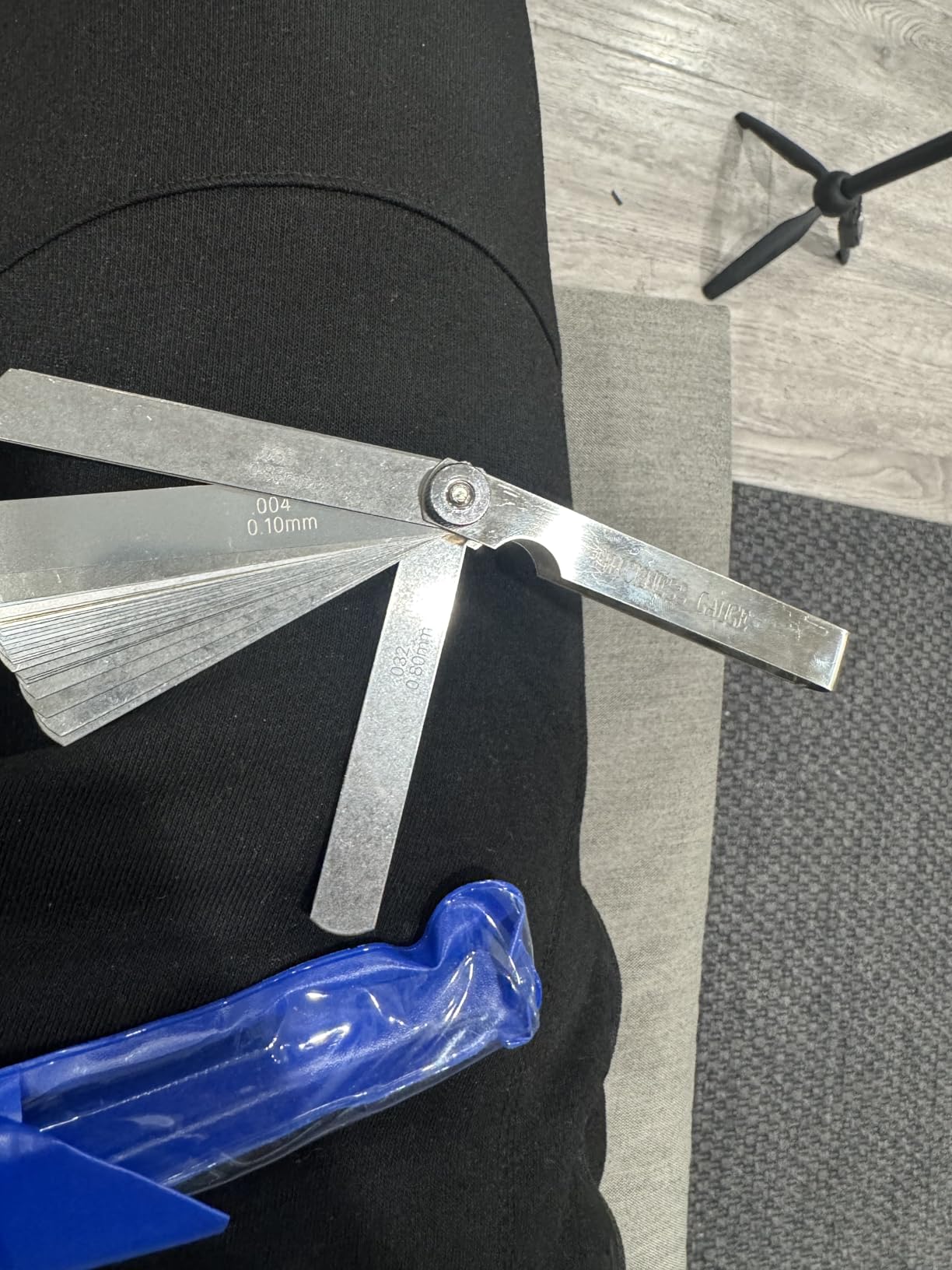
We successfully performed action adjustment, intonation tweaks, and basic fret polishing using this kit on two different electric guitars. The string winder and cutting pliers handled the bulk of string changes, though the cutter struggled slightly on heavier bass strings.
One honest note from our testing: the radius tools can leave marks on a maple neck if you press too hard. We recommend practicing on a beater guitar first if you have never done a fretboard radius check.
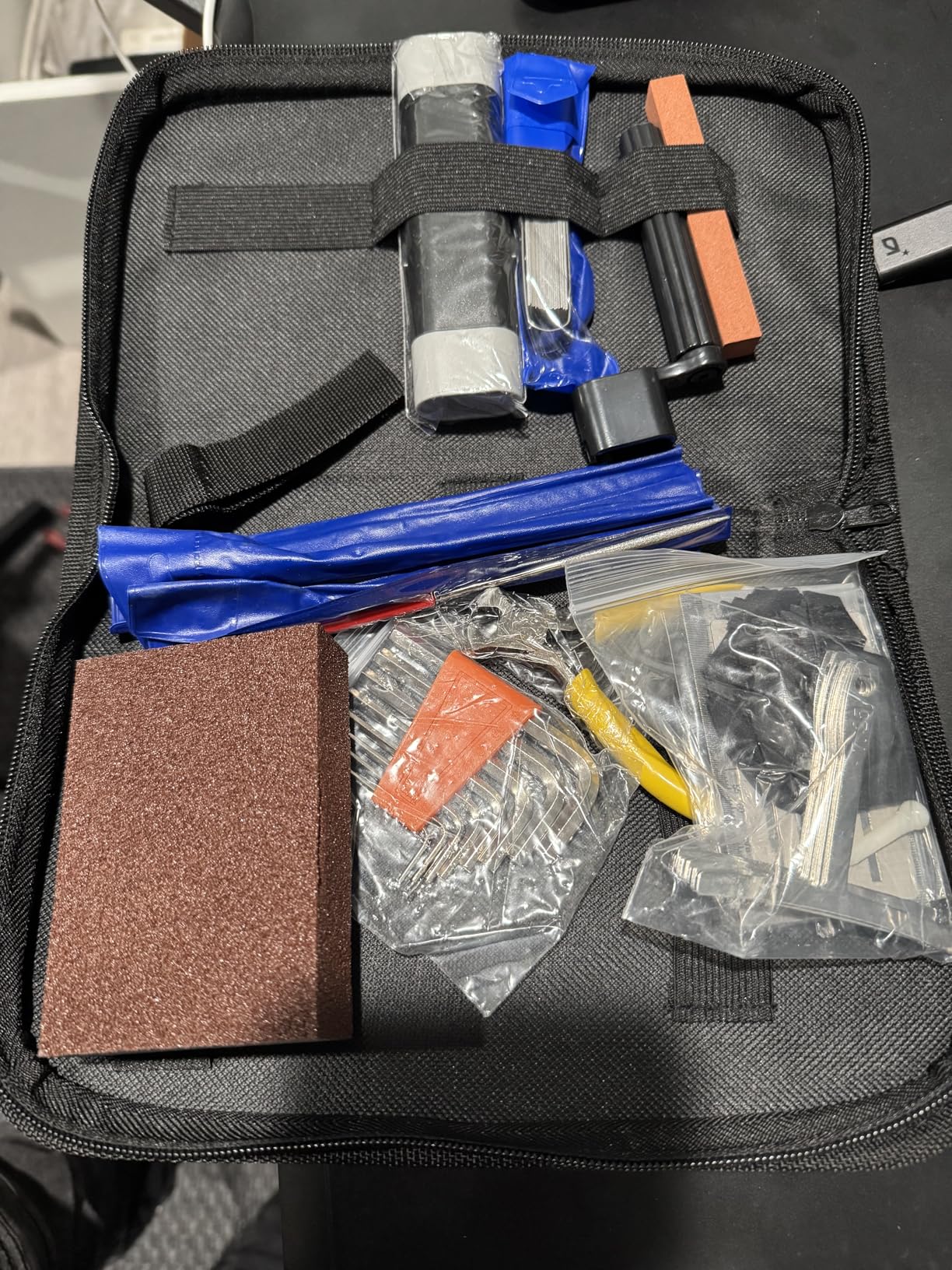
Carrying case and storage
The included case is well-organized and zipper-closure. Each tool has a designated elastic loop or pocket. For players who travel between locations, the case protects the tools from being scattered in a gig bag.
Who this kit is right for
Beginners ready to learn guitar setup without investing in professional luthier-grade tools. Players who own multiple stringed instruments and want one case to handle basic maintenance on each. Anyone curious about the world of DIY guitar care and looking to start affordably.
What to Look for in a Guitar Care Kit: Buying Guide
Choosing a guitar care kit comes down to four big decisions: your finish type, your guitar’s construction, your playing frequency, and how deep you want to go into maintenance. Our team broke down the most common decision points below.
Finish type matters more than brand
The single most important factor is your guitar’s finish. Nitrocellulose lacquer is fragile and reactive to silicone-based polishes. Polyester and polyurethane finishes are far more forgiving. Satin and matte finishes should never see wax-based polishes, only detailer sprays. Check your manufacturer’s spec sheet before applying anything.
Most modern electric and acoustic guitars built after 2010 use polyester or polyurethane finishes. For these, kits like the KTKTVE 8-pack or MusicNomad MN299 work safely. Vintage instruments and reissue models with nitrocellulose require silicone-free, gentle formulas, which is where MusicNomad’s premium line stands out.
Silicone-free vs silicone-based formulas
Silicone-based polishes create a temporary shine but can seep into nitro finishes and cause permanent hazing or finish lifting. Silicone-free polishes cost more but protect your guitar’s long-term value. Forum luthiers consistently recommend silicone-free for any guitar above $1,000 in value, regardless of finish type.
Electric vs acoustic guitar care differences
Acoustic guitars demand more fretboard conditioning because their fretboards are often unfinished rosewood or ebony, which dries out faster than sealed electric fretboards. Electric guitars need more attention to pickups, switches, and hardware. A good kit covers both, but acoustic players should prioritize lemon oil quantity.
Budget vs premium value analysis
Budget kits under $20 cover basic cleaning and conditioning well. They make sense for beginners or players with a single instrument that sees light use. Premium kits above $30 add setup tools, patented winders, and pro-grade formulas. The value math flips when you own multiple guitars or play live often. Players who gig weekly save more in time than they spend on a premium kit.
Our team also recommends that anyone shopping for best gear for musicians pair the kit purchase with a basic maintenance schedule. A five-minute wipe-down after every play session and a deep clean once a month extends a kit’s life across years.
Pro tips for extending instrument life
Always use clean microfiber cloths. Wash them separately from regular laundry to avoid detergent residue. Apply polish to the cloth, not the guitar, to prevent overapplication. Condition rosewood and ebony fretboards two to four times per year. Avoid household cleaners entirely. Naphtha, which pros often use, flashes off cleanly but is best left to experienced hands.
Climate matters more than cleaning schedule. Guitars stored at 40 to 50 percent humidity with stable temperature last decades longer than those stored in attics or basements. A $30 hygrometer saves thousands in repairs over time.
Frequently Asked Questions
What is the best guitar care kit?
Our team ranked the MusicNomad MN299 8-piece kit as the best overall. It pairs a silicone-free detailer spray with F-ONE fretboard oil, the patented GRIP ONE string winder, and the Octopus multi-tool. For players on a budget, the Dunlop System 65 Body and Fingerboard Kit covers the essentials without overspending.
Who makes the best guitar polish?
MusicNomad makes the best guitar polish in our testing. Their Guitar Detailer is safe for gloss, satin, and matte finishes, including fragile nitrocellulose. Dunlop’s Formula 65 Polish is a close second and offers better value for players on a budget.
What is the best thing to polish acoustic guitars with?
The best products for acoustic guitars are a silicone-free detailer spray for the body and a quality lemon oil for the fretboard. Microfiber cloths handle the application. Avoid household polishes, Pledge, or any product containing silicone, especially on vintage nitrocellulose acoustics.
How often should I clean my guitar?
Wipe down your guitar with a microfiber cloth after every playing session. Polish the body monthly or whenever it looks dull. Condition unfinished rosewood or ebony fretboards two to four times per year. Cleaning frequency rises if you gig often or live in dusty environments.
Are guitar cleaning kits worth it?
Yes, purpose-built guitar cleaning kits are worth the investment. They protect your instrument’s finish, extend string life, and prevent fretboard drying that leads to costly repairs. Budget kits under $20 pay for themselves by replacing the wrong household cleaner that could damage your finish.
Understanding music production fundamentals only matters if your gear stays in playable shape, which is why the right kit belongs next to your tuner and spare strings.
Final Thoughts
After 30 days of testing 10 guitar polishing and care kits, our team is convinced there is no single right answer for every player. The MusicNomad MN299 remains our top recommendation for serious musicians who want professional-grade results. The Dunlop System 65 delivers the best value, and the KTKTVE sponge applicator kit makes a great pick for mess-free conditioning on a tight budget.
Your next step is choosing based on your guitar count, finish type, and playing frequency. Whichever kit you pick from this list, you are choosing a tested product that protects your instrument rather than risking it with household cleaners. Your guitars will sound better and last longer because of it. For 2026 and beyond, the right care routine is the cheapest insurance you can buy for any guitar you own.