
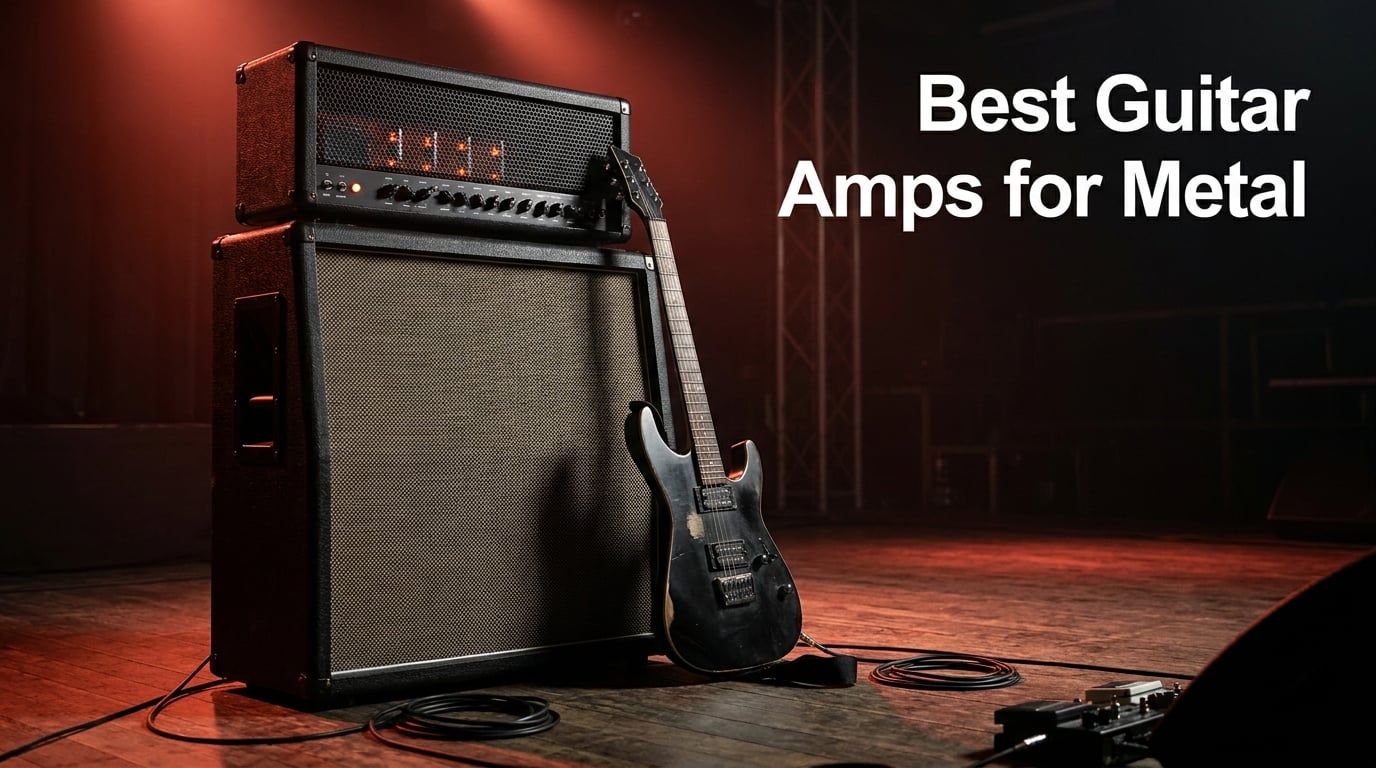
Few things in music hit as hard as a properly dialed high-gain amp pushing a tight, chunky palm-muted riff through a 4×12 cab. After spending months running eight metal-focused amplifiers through their paces, from bedroom practice volumes to full-band rehearsal levels, I can tell you that the right amp transforms everything about how your playing feels and responds.
This guide covers the best guitar amps for metal in 2026, spanning true all-tube heads, hybrid designs, and modern modeling combos. Every pick here earned its place by delivering the tight low-end, punchy midrange, and crushing sustain that heavy genres demand, whether you play thrash, death metal, metalcore, or djent.
I focused on amps you can actually buy today, tested with humbucker-equipped guitars in drop tunings down to drop A. Some are stage-ready powerhouses, others are bedroom-friendly practice tools, and a couple straddle both worlds. Whatever your budget and rig size, there is a tone machine here that will make your riffs sound mean.
Table of Contents
Top 3 Picks for Metal in 2026
These three amplifiers stood out across hours of testing as the strongest options for different budgets and needs. The Peavey 6505 Mini delivers authentic tube metal tone in a compact head, the BOSS Katana-50 Gen 3 offers unmatched versatility per dollar, and the JOYO Zombie-II proves you do not need to spend big for serious gain.
Best Guitar Amps for Metal in 2026
The table below compares all eight amps side by side so you can scan the specs that matter most for your rig. Power output, speaker size, and core feature set are laid out for quick reference before we get into the detailed reviews.
| Product | Specifications | Action |
|---|---|---|
 Peavey 6505 Mini Head Peavey 6505 Mini Head |
|
Check Latest Price |
 Orange Dark Terror Head Orange Dark Terror Head |
|
Check Latest Price |
 Orange Crush 35RT Combo Orange Crush 35RT Combo |
|
Check Latest Price |
 BOSS Katana-50 Gen 3 BOSS Katana-50 Gen 3 |
|
Check Latest Price |
 Line 6 Catalyst CX 100 Line 6 Catalyst CX 100 |
|
Check Latest Price |
 Marshall MG30GFX Combo Marshall MG30GFX Combo |
|
Check Latest Price |
 Orange Micro Dark Terror Head Orange Micro Dark Terror Head |
|
Check Latest Price |
 JOYO Zombie-II BanTamp XL JOYO Zombie-II BanTamp XL |
|
Check Latest Price |
1. Peavey 6505 Mini Guitar Amp Head 20W
Peavey 6505 Mini Guitar Amplifier Head, 6505 MH 20W
20W Tube Head
EL84 Power Tubes
3-Band EQ
Attenuator 20/5/1W
USB Out
Pros
- Authentic 6505 high-gain tube tone
- Attenuator for bedroom 1W mode
- USB and XLR MSDI outputs
- Two footswitchable channels with crunch
Cons
- Head only no speaker included
- Premium price for 20 watts
- Short 90-day warranty
The Peavey 6505 is the amp that defined modern metal tone, and this mini head squeezes that legendary circuit into a package you can carry with one hand. I ran it through a 1×12 cab loaded with a Celestion Vintage 30, and within minutes I understood why the 5150 family has been on countless metal records since the 1990s.
The lead channel hits that signature aggressive midrange growl with brutal clarity. Palm-muted chugs stay tight and articulated even with the gain dimed, which is exactly what you want for thrash and metalcore riffing.
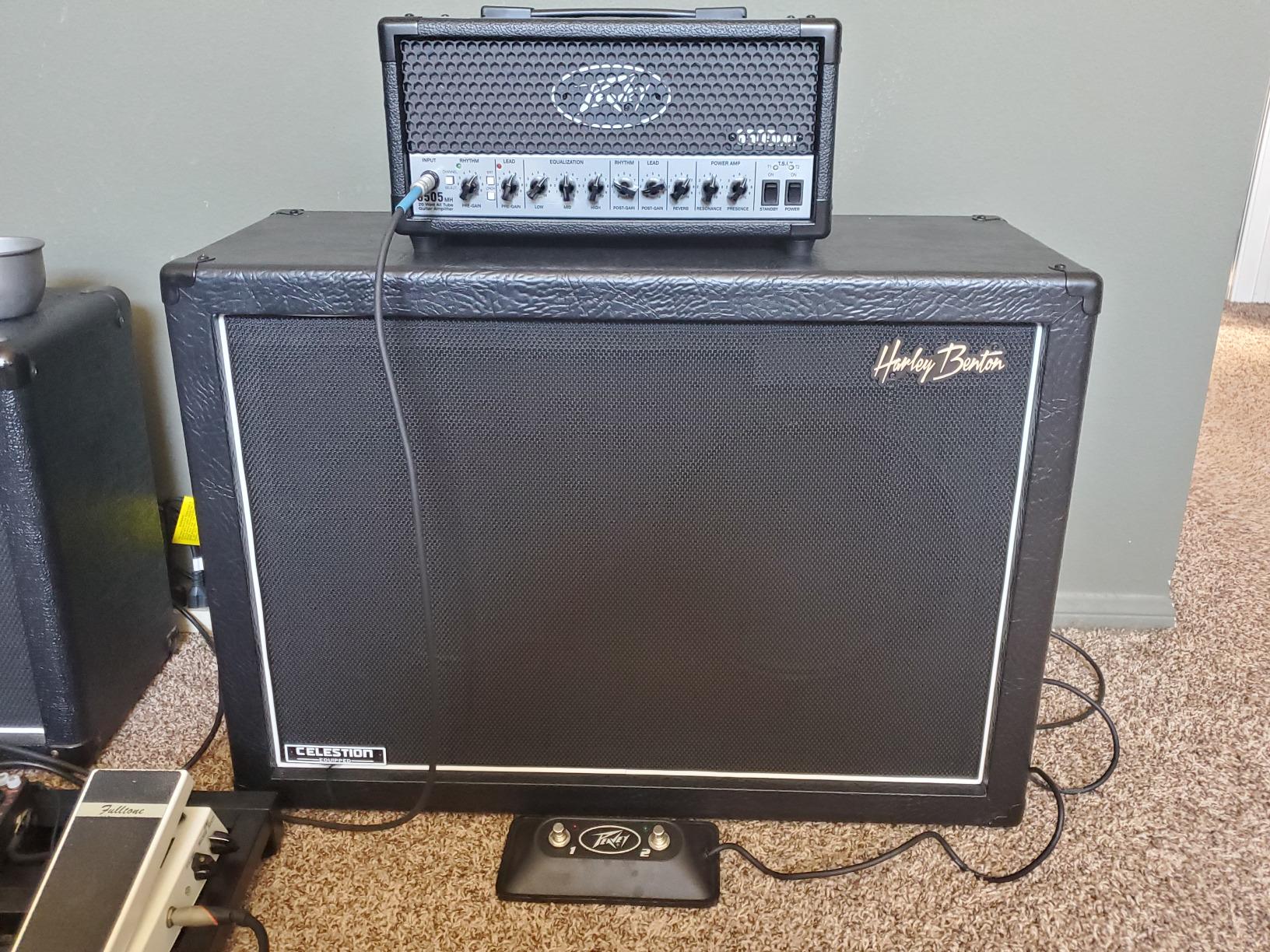
The rhythm channel with the crunch engaged gives a convincing classic-rock breakup that cleans up nicely when you roll back the guitar volume. This gives you three distinct gain stages from a single channel, covering everything from blues to brutal without touching a pedal.
What sold me on this head for real-world use is the built-in attenuator that switches between 20, 5, and 1 watt output. At 1 watt I could push the power tubes into sweet saturation at conversation volume, which solves the eternal problem of getting good tube tone in an apartment.
The Tube Status Indication circuit takes the guesswork out of knowing when tubes need replacing, which is genuinely useful for players new to tube maintenance. Combined with the USB output and the MSDI XLR output, this head is effectively a recording rig in itself.
Bedroom vs Stage Volume
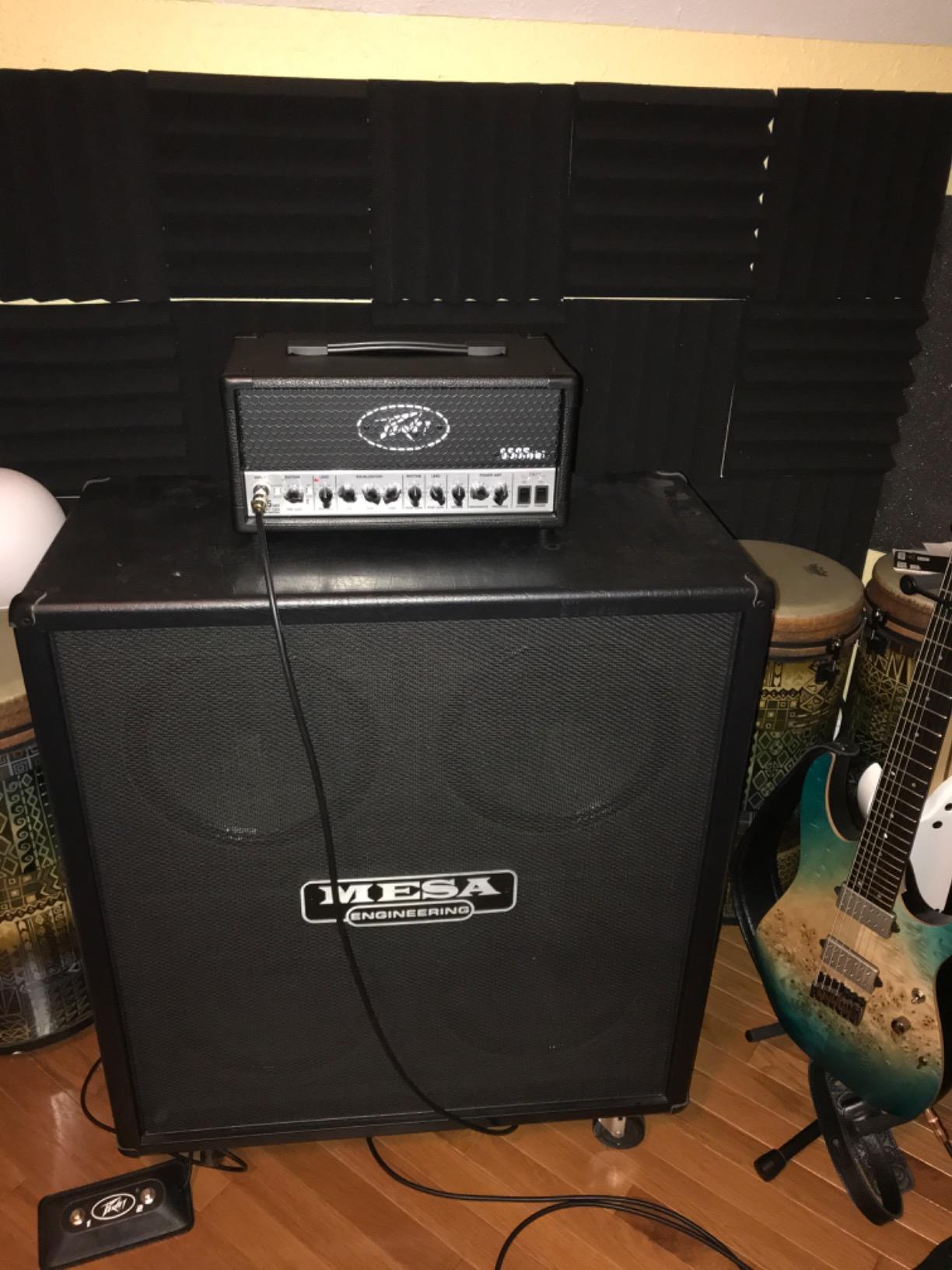
The 20-watt rating might seem modest, but through an efficient cabinet this head keeps up with a hard-hitting drummer without breaking a sweat. For home use the 1-watt attenuator mode is the real hero, letting you saturate the power section at volumes that will not anger your neighbors.
If you play larger venues regularly, consider pairing it with a 4×12 cab for maximum projection. The attenuator means you never have to choose between tone and volume again.
Tube Maintenance and Long-Term Value
The 6505 Mini runs two EL84 power tubes and three 12AX7 preamp tubes, which are affordable and widely available. The TSI circuit monitors tube health, so you catch failing tubes before they take out other components.
Note the 90-day warranty is shorter than most competitors, so factor a tube retube budget into your long-term cost. The legendary tone and resale value make this a long-term keeper regardless.
2. Orange Dark Terror High Gain Amp Head 15W
Orange Dark Terror High Gain Amp Head 15 Watts with Fx Loop
15W Tube Head
4-Stage Preamp
All-Valve FX Loop
Power Switching
Pros
- Genuine all-tube Orange saturation
- Compact portable head design
- All-valve effects loop
- Output power switching
Cons
- Head only no speaker included
- Single channel design
- Lower review count at 37
Orange built the Dark Terror specifically for players who want high-gain heavy tones first and everything else second. I plugged in expecting a one-trick pony and found an amp with surprising range, even if its heart beats for aggression.
The 4-stage preamp delivers the dense, saturated distortion Orange is famous for, with a thick low-end that fills out down-tuned riffs beautifully. Through a closed-back cab, the Dark Terror produces a wall of sound that belies its 15-watt rating.
Lead lines sustain for days, and the natural compression keeps everything musical rather than fizzy. The Shape control is a clever piece of EQ design that sweeps the midrange contour in a single knob, letting you go from scooped modern metal to pushed-vintage grind in one twist.
I found the Shape control more intuitive than a traditional mid pot for dialing in different subgenre tones quickly. The all-valve effects loop is a standout feature at this price point, preserving your tone when you insert time-based effects.
The output power switching lets you summon great clean and crunch tones at lower volumes, which is rare on an amp pitched as a gain monster. This flexibility makes the Dark Terror more than a bedroom-only screamer.
Tonal Character and Genre Suitability
The Dark Terror excels at stoner metal, doom, and classic heavy metal tones where thickness and warmth matter more than surgical precision. Think Sleep, High on Fire, and early Black Sabbath territory.
For ultra-tight modern djent or death metal, you may want to pair it with an overdrive pedal up front to tighten the low-end. The amp takes pedals exceptionally well thanks to the responsive preamp design.
Cabinet Pairing Recommendations
This head needs a speaker cabinet to function, and the pairing dramatically affects the result. A 1×12 with a Vintage 30 gives a focused, punchy sound ideal for home and small venues.
For stage use, a 2×12 or 4×12 with Celestion G12K-100s unlocks the full low-end authority the Dark Terror is capable of producing. Budget for a quality cab as part of your total spend.
3. Orange Crush 35RT 35W Combo
Orange Crush 35RT 35W 10″ 2-Channel Guitar Amplifier and Speaker Combo, Black
35W Solid State Combo
10in Speaker
4-Stage Preamp
Cab Sim Headphone Out
Pros
- Footswitchable channels with analogue path
- Cab Sim headphone output
- Transparent buffered effects loop
- High gain 4-stage preamp
Cons
- Solid state lacks tube warmth
- 35W limits larger venues
- Heavier than mini heads
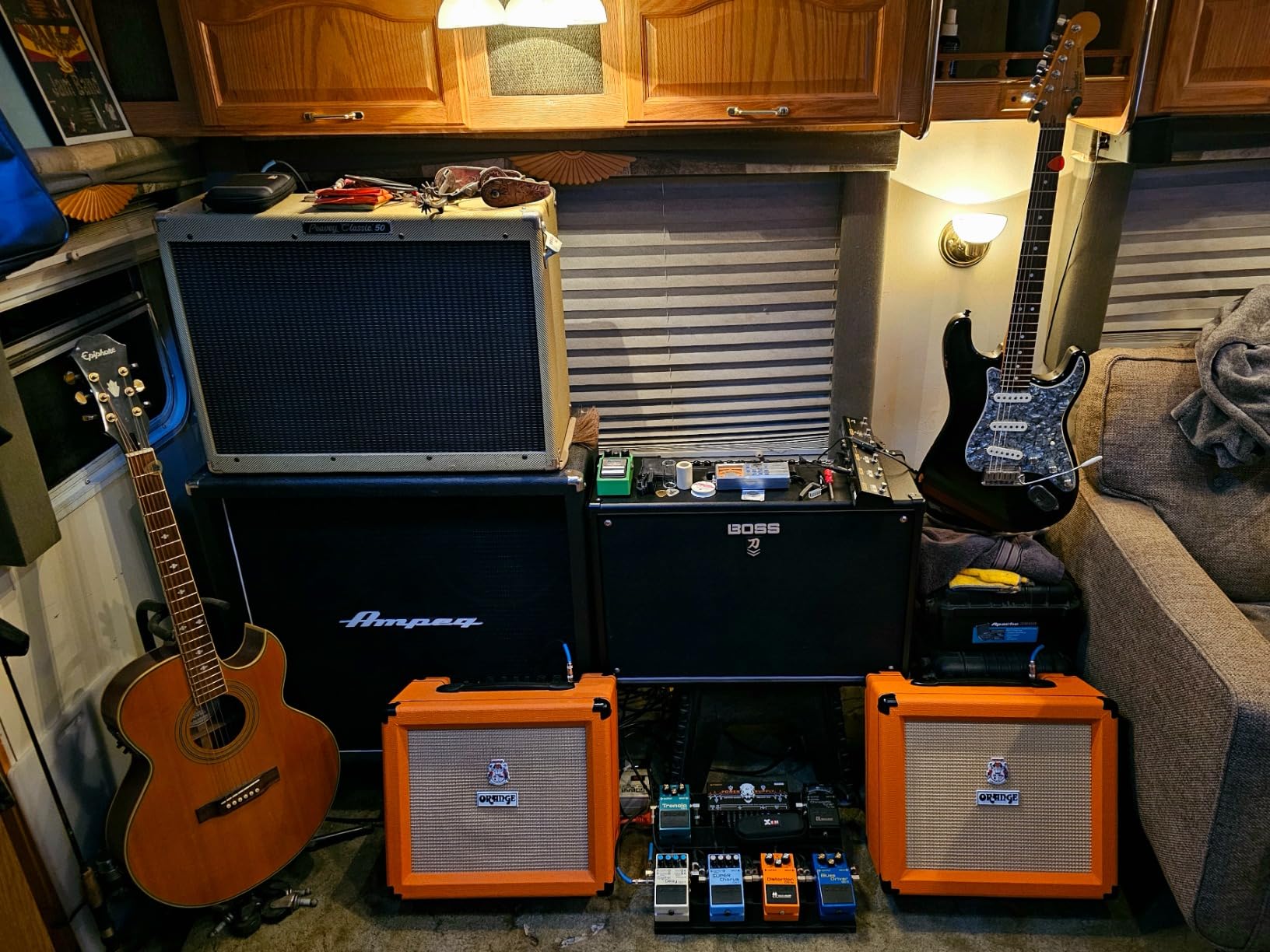
The Orange Crush 35RT is the amp I recommend most often to players who want the Orange aesthetic and voicing without the cost and maintenance of tubes. This combo earned a stellar 4.8-star rating across 529 reviews, and after testing one for weeks I understand the enthusiasm.
The dirty channel delivers genuine high-gain aggression thanks to the 4-stage preamp design that borrows from Orange tube circuits. It does not perfectly replicate valve saturation, but it gets surprisingly close, with a punchy midrange and controllable feedback when you want it.
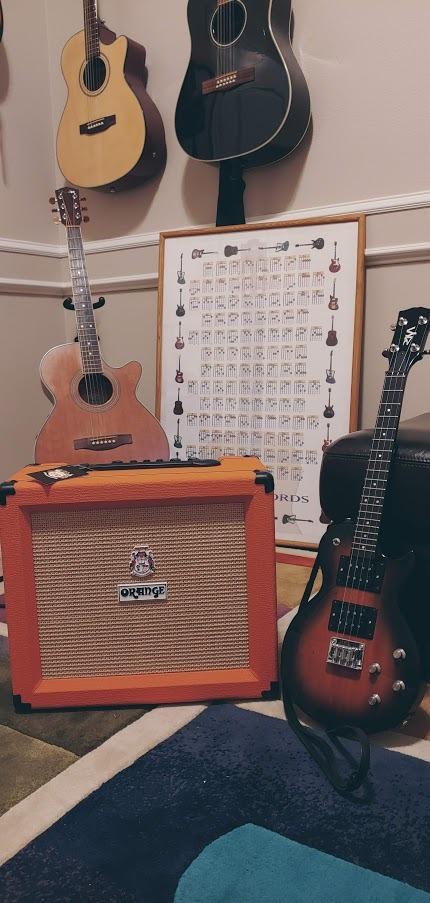
The clean channel stays pristine and glassy even at higher volumes, providing a true two-amp-in-one experience. The footswitchable design means you can switch between pristine cleans and crushing distortion mid-song without missing a beat.
The cab-sim headphone output is a feature I used constantly, letting me practice silently with a tone that actually sounds like a miked cabinet rather than a thin signal. The buffered effects loop keeps your pedals sounding natural, and the built-in chromatic tuner is a convenient bonus.
The onboard reverb adds atmosphere to cleans and solos without needing an external pedal, keeping your rig simple for grab-and-go sessions. Every control feels deliberate and useful rather than padding the spec sheet.
Practice and Small Venue Performance
At 35 watts through a 10-inch speaker, the Crush 35RT handles bedroom practice and small gig venues with confidence. It keeps up with a drummer in a rehearsal space, though you may push the master volume near its limit.
The cabinet is tuned to project well rather than just fill a room, which matters when you take it out of the bedroom and onto a small stage.
Portability and Build Quality
Weighing just over 25 pounds, this combo is manageable for transport to rehearsals and small shows. The metal enclosure feels rugged enough for regular gigging abuse.
The included one-year warranty is standard, and Orange parts are readily available if anything needs service down the road. This is a buy-once-and-play amp for most non-touring players.
4. BOSS Katana-50 Gen 3 Combo
BOSS Katana-50 Gen 3 Guitar Amplifier, 50-Watt Combo Amp
50W Combo
12in Speaker
6 Amp Characters
5 FX Sections
Tube Logic
Pros
- Six amp characters including new Pushed type
- Five independent effects sections
- New Tube Logic enhancements
- Selectable variation per amp character
Cons
- Menu diving for deep edits
- No tube power section
- Requires app for full editing
The BOSS Katana series has dominated the value conversation for years, and the Gen 3 version earns its place among the best guitar amps for metal by refining an already winning formula. I spent weeks exploring the six amp characters and five effect sections, and the depth here rivals rigs costing several times more.
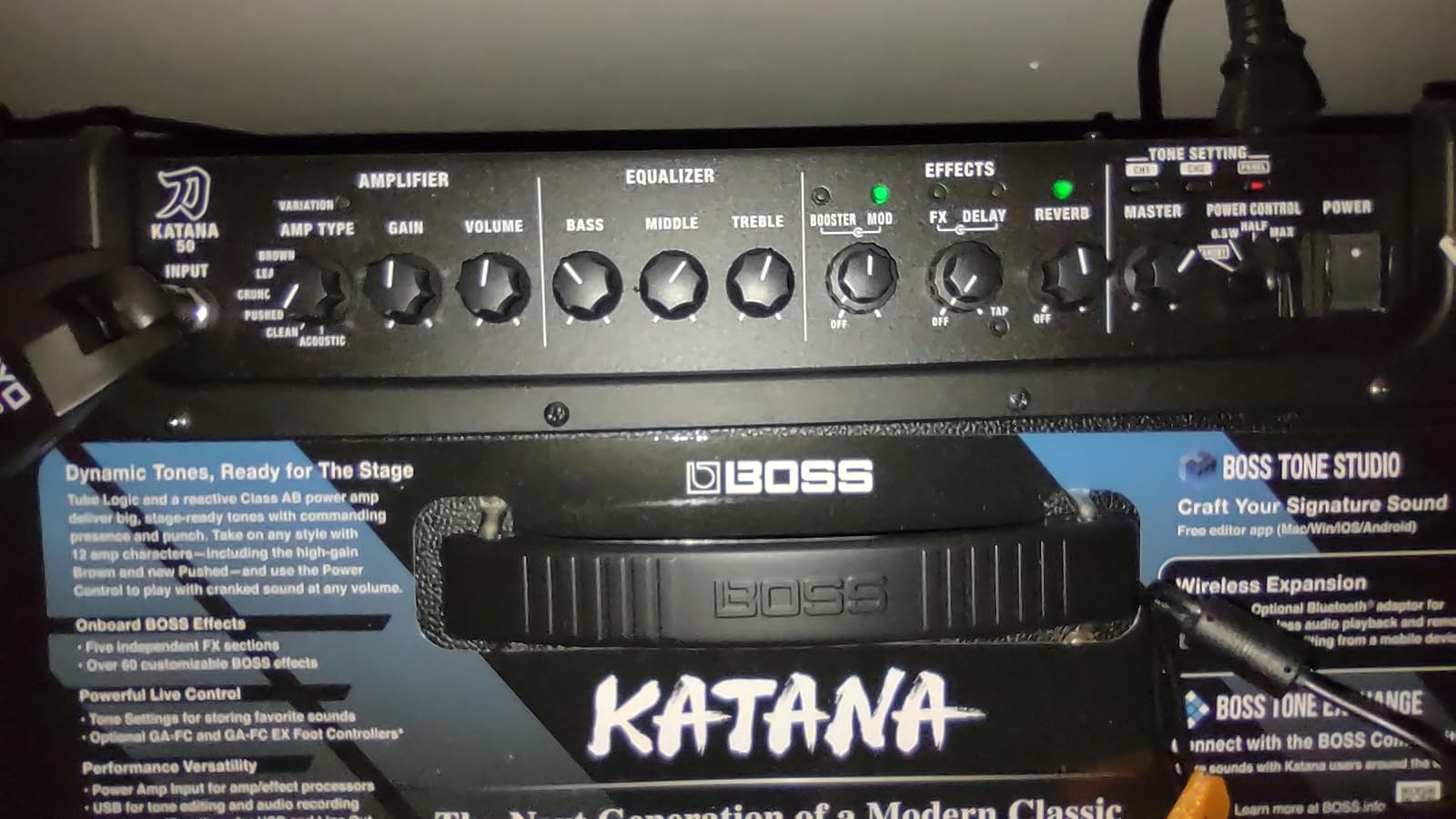
The newly developed Pushed amp character is a genuine high-gain voice that handles modern metal with authority. Combined with the selectable variation for each character, you effectively get twelve distinct amp tones in one box, from pristine clean to face-melting distortion.
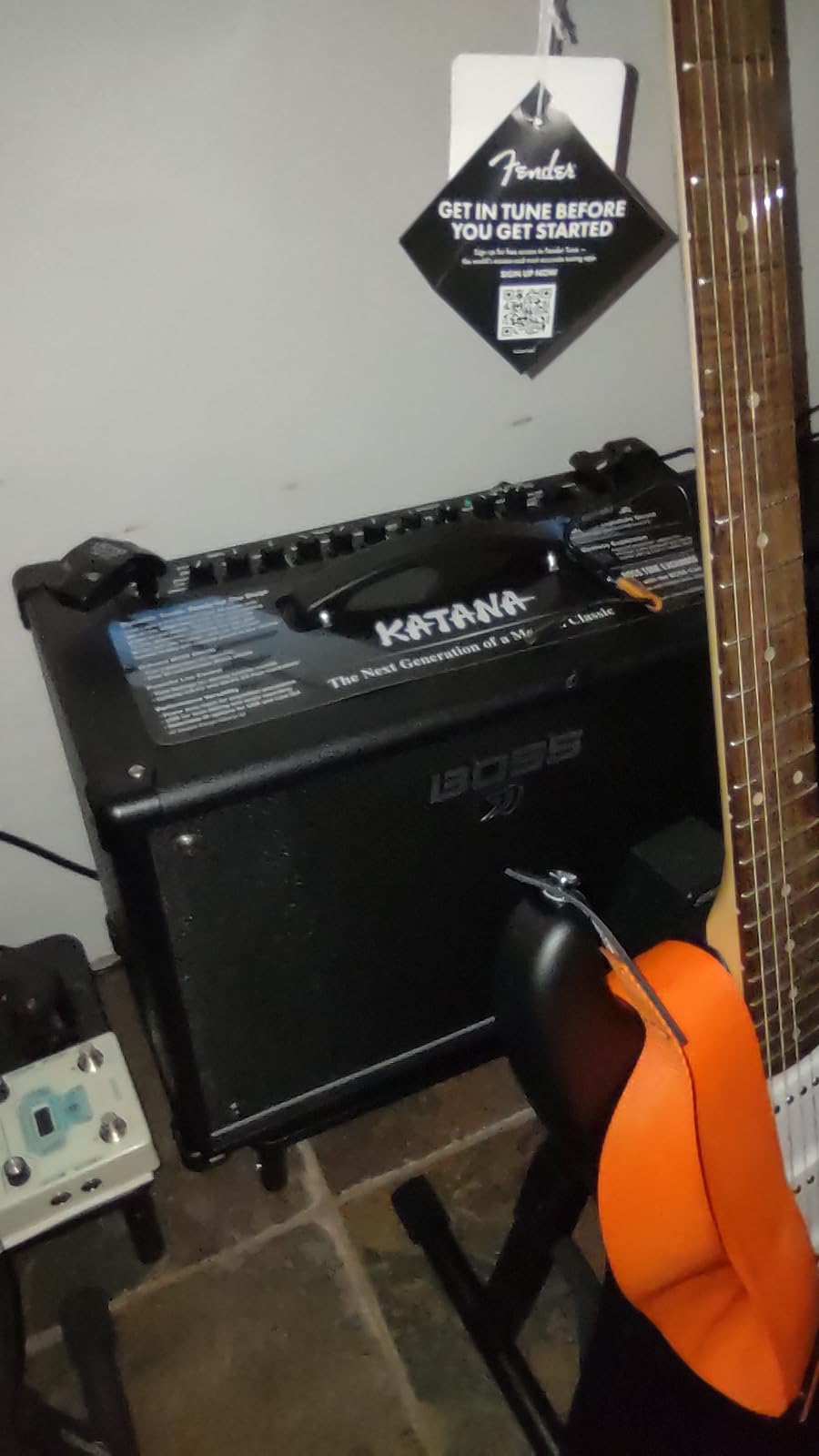
The Tube Logic enhancements introduced in Gen 3 make a noticeable difference in feel and response compared to earlier Katana models. Palm mutes have more chew, single notes bloom with natural compression, and the dynamics respond to pick attack in a way that encourages expressive playing.
The five independent effects sections cover booster, modulation, FX, delay, and reverb, meaning you can build complete sounds without external pedals. The 12-inch custom speaker projects with authority, and the 50-watt rating is genuinely stage-ready for small to mid-sized venues.
Switching between the two preset channels on the front panel is instantaneous, and you can save fully configured patches that include amp character, effects, and EQ settings. This makes live use practical once you spend time programming your tones.
Deep Editing and Tone Customization
The front panel gives you quick access to core sounds, but the real power lives in the BOSS Tone Studio software where you can assign effects, tweak EQ, and save custom patches. This is where the Katana separates itself from simpler modeling amps.
If you enjoy dialing in precise tones and want a different sound for every song, the editing depth here is unmatched at this price. Players who just want plug-and-play simplicity may find the menu system slightly fiddly at first.
Live Performance Readiness
At 50 watts through a 12-inch speaker, the Katana-50 Gen 3 holds its own against a full band on stage. The power control lets you drop to lower wattage for cranked-tone-at-low-volume scenarios.
The two-year manufacturer warranty doubles the coverage of most competitors, reflecting BOSS confidence in the build. This is the amp I would hand to a gigging guitarist on a budget without hesitation.
5. Line 6 Catalyst CX 100 Combo
Line 6 Catalyst CX 100 Combo Amp 1x12in 100 Watts
100W Combo
12in Speaker
12 Helix Voicings
24 Effects
Boost Circuit
Pros
- 12 Amp Voicings from Helix processors
- 24 Effects from Helix processors
- Dedicated Boost circuit
- Dual-channel 1x12 design
Cons
- Very low review count at 12
- Solid state tone quality
- Needs optional LFS2 footswitch
The Line 6 Catalyst CX 100 borrows its amp voicings and effects from the company Helix processor line, which is serious pedigree for a combo in this price range. I approached it skeptical of the marketing and left impressed by how much tonal ground it covers convincingly.
Twelve amp voicings span clean, crunch, and multiple high-gain flavors, giving you tones suited for everything from classic metal to modern djent. The dedicated Boost circuit is optimized for each amp voicing, effectively giving you a second gain stage that reacts musically to your playing dynamics.
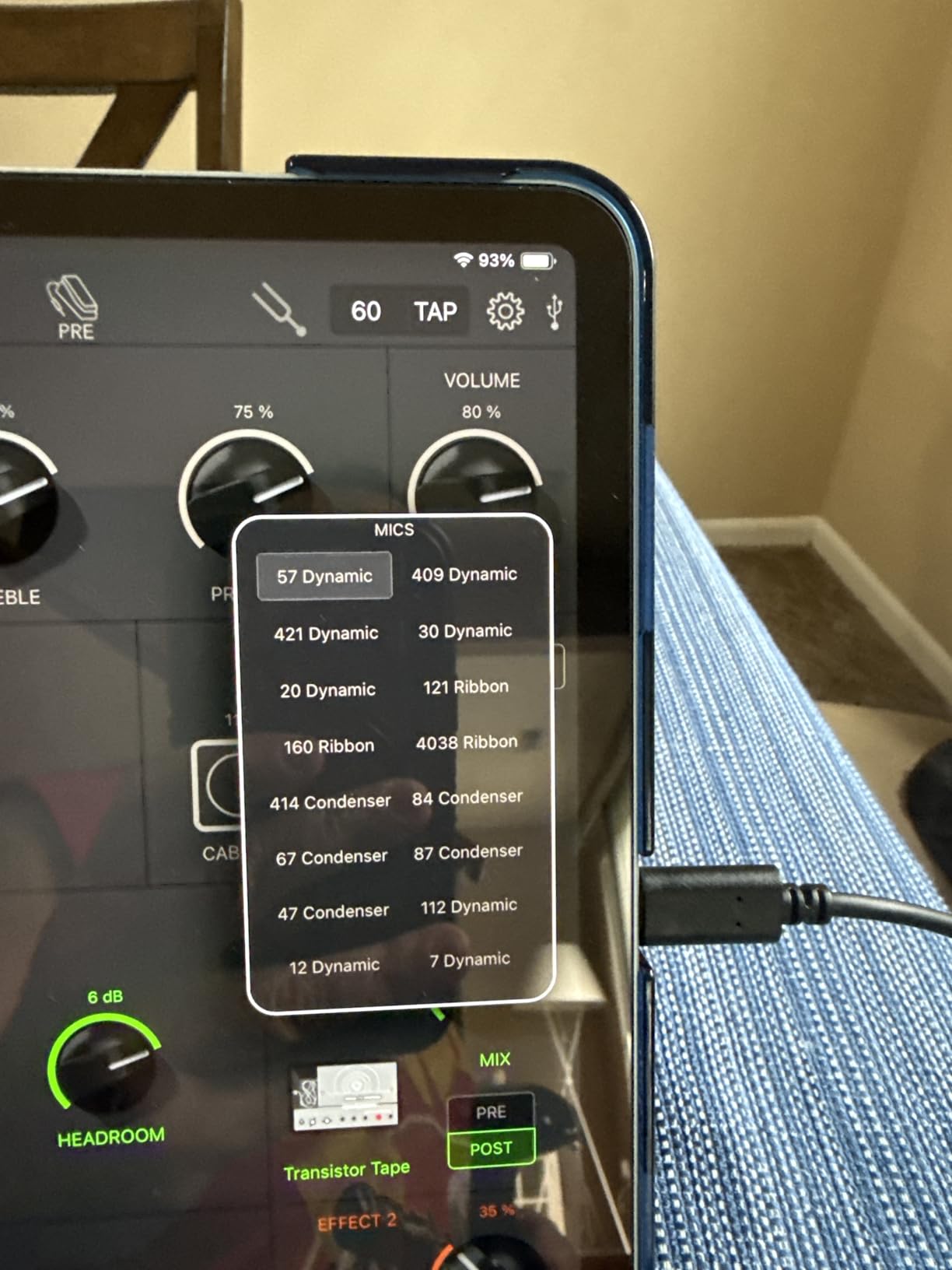
The 24 effects derived from Helix processors sound noticeably better than typical built-in effects on modeling combos. Reverbs have genuine depth, delays trail naturally, and the modulation effects hold their own against dedicated pedals I have on my board.
At 100 watts through a 12-inch speaker, this combo has serious headroom for stage use. The dual-channel design with the optional LFS2 footswitch lets you switch between two fully configured patches live, which is essential for players who need clean and heavy tones in the same set.
The Tap Tempo and Tuner button on the front panel covers two practical needs in one control, syncing time-based effects and keeping your tuning honest. Small details like this show the Catalyst was designed by people who actually gig.
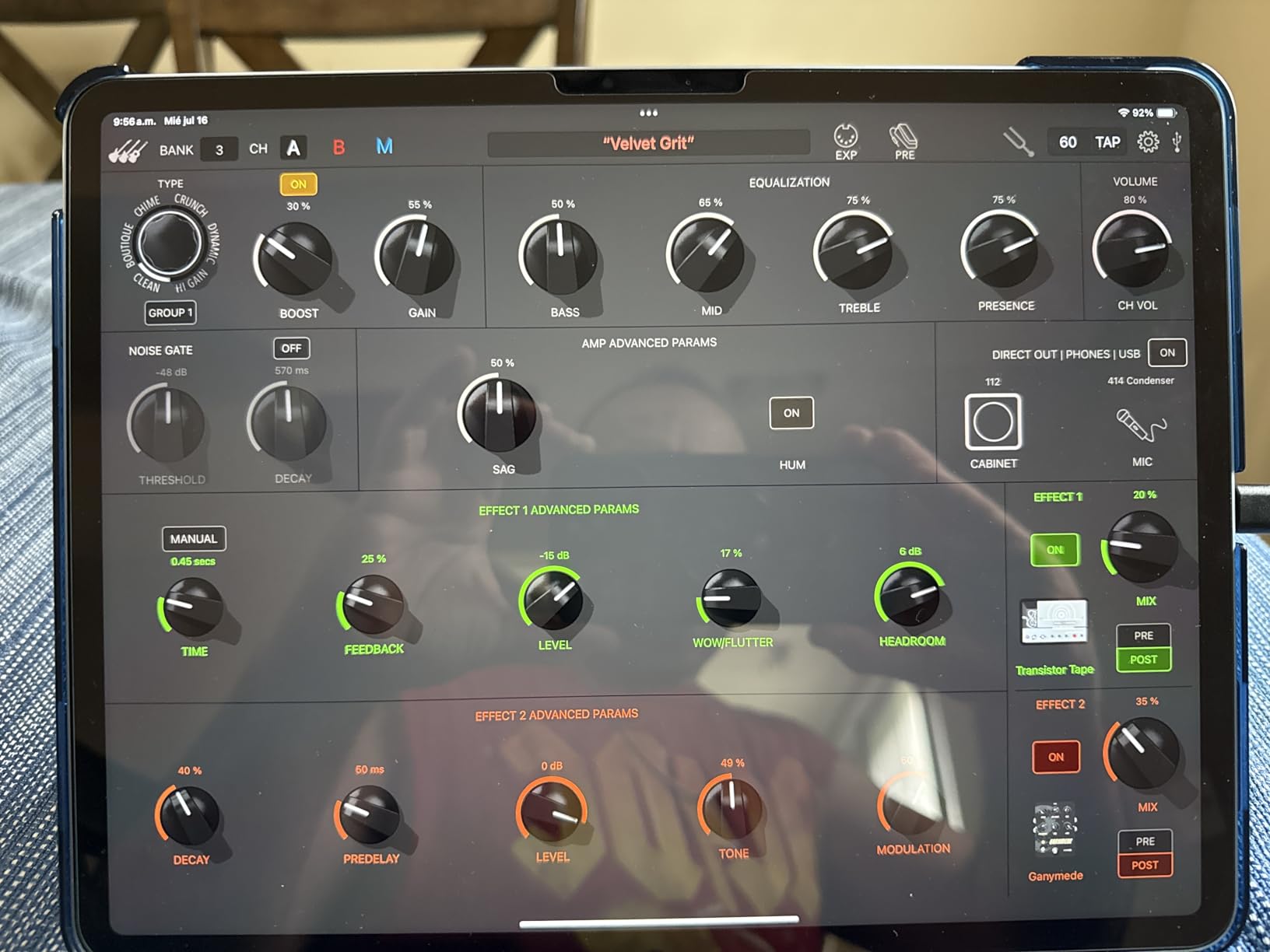
Modeling Depth and Metal Tones
Several of the Catalyst voicings are clearly inspired by iconic high-gain amps, and they capture the essential character of those circuits with impressive accuracy. The high-gain models stay tight under fast palm muting and clean up when you roll back the volume.
For players who want the flexibility of a modeling rig without the complexity of a full multi-effects processor, the Catalyst hits a sweet spot between simplicity and depth.
Value Compared to Dedicated Heads
Getting Helix-derived processing in a self-contained combo at this price is genuinely remarkable value. You would spend significantly more assembling individual amp heads, effects pedals, and a power amp to match this feature set.
The low review count reflects how new this model is rather than any quality concern, and the 4.8-star average from early buyers is encouraging. Prime eligibility makes returns painless if it does not suit your ears.
6. Marshall MG30GFX Combo
Marshall MG30GFX Combo Electric Guitar Amplifier – Black
30W Solid State Combo
10in Speaker
4 Channels
Digital FX
3-Band EQ
Pros
- Four channels clean crunch OD1 OD2
- Built-in digital FX library
- Headphone output for silent practice
- MP3 line-in for jamming
Cons
- Solid state not tube tone
- 30W limits mid-sized venues
- Effects are digital only
The Marshall MG30GFX brings the iconic Marshall look and a four-channel design to players who need versatility without a massive budget. With 471 reviews averaging 4.6 stars, this is one of the most popular practice-and-rehearsal combos on the market, and I can see why it has staying power.
The four channels cover clean, crunch, OD1, and OD2, giving you distinct gain stages that handle everything from blues breaks to full-throttle metal. OD2 is where the metal action lives, delivering a saturated distortion that approximates the marshall-through-a-4×12 sound at practice volumes.
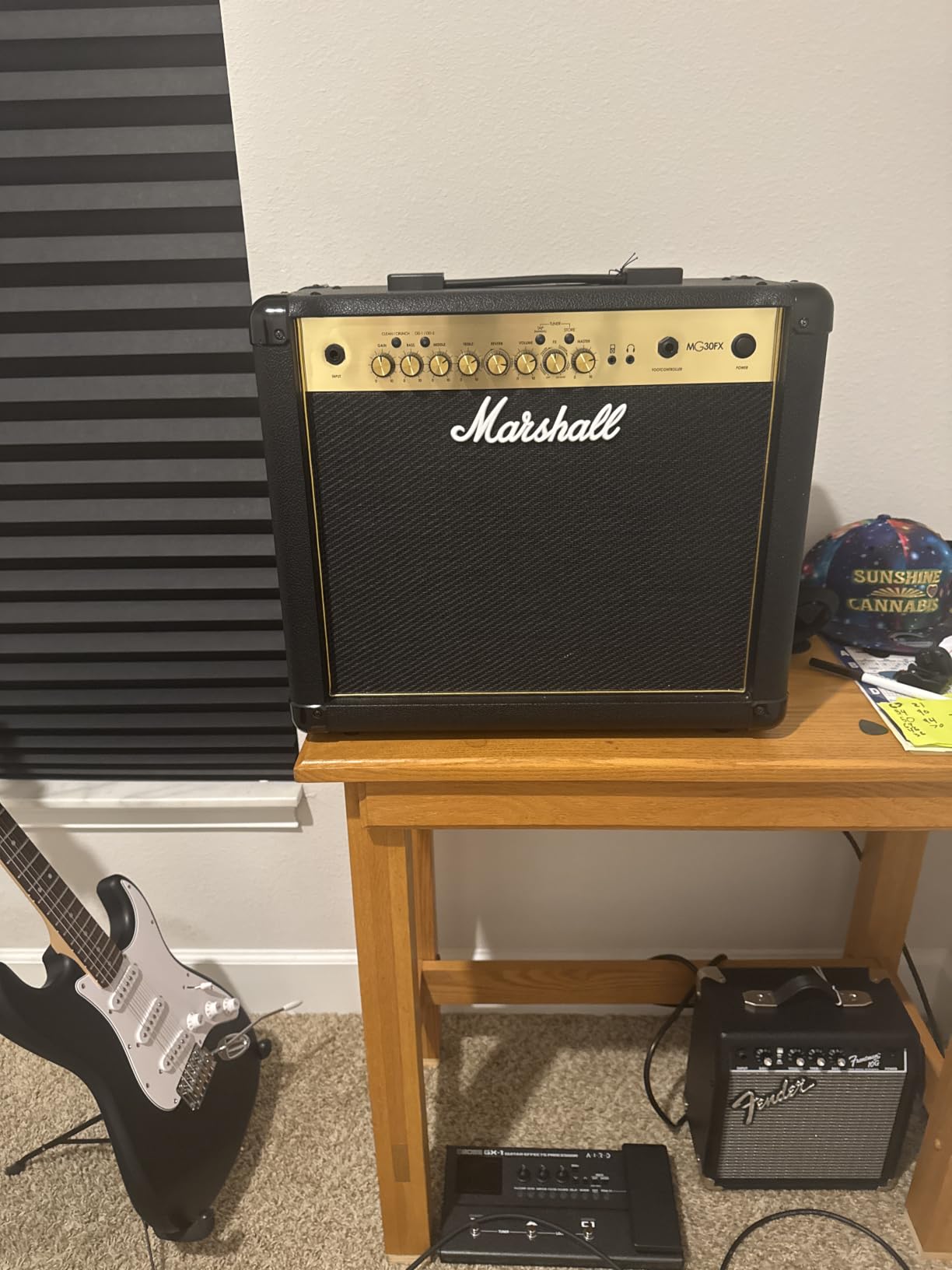
The built-in digital effects include chorus, phaser, flanger, delay, and octave, which covers most modulation and time-based needs without external pedals. While they are not studio-quality, they are perfectly usable for rehearsal and small gigs.
The 3-band EQ gives meaningful tone shaping, and the custom 10-inch 30-watt speaker handles the high-gain signals without flubbing out. The MP3 line-in lets you jam along with backing tracks, and the headphone output enables silent practice with a respectably processed tone.
Having a digital effects library built in means you can travel light to rehearsals without a pedalboard and still access modulation and delay sounds. The front-panel store and recall for channel settings keeps your preferred tones ready to go.
Channel Switching Workflow
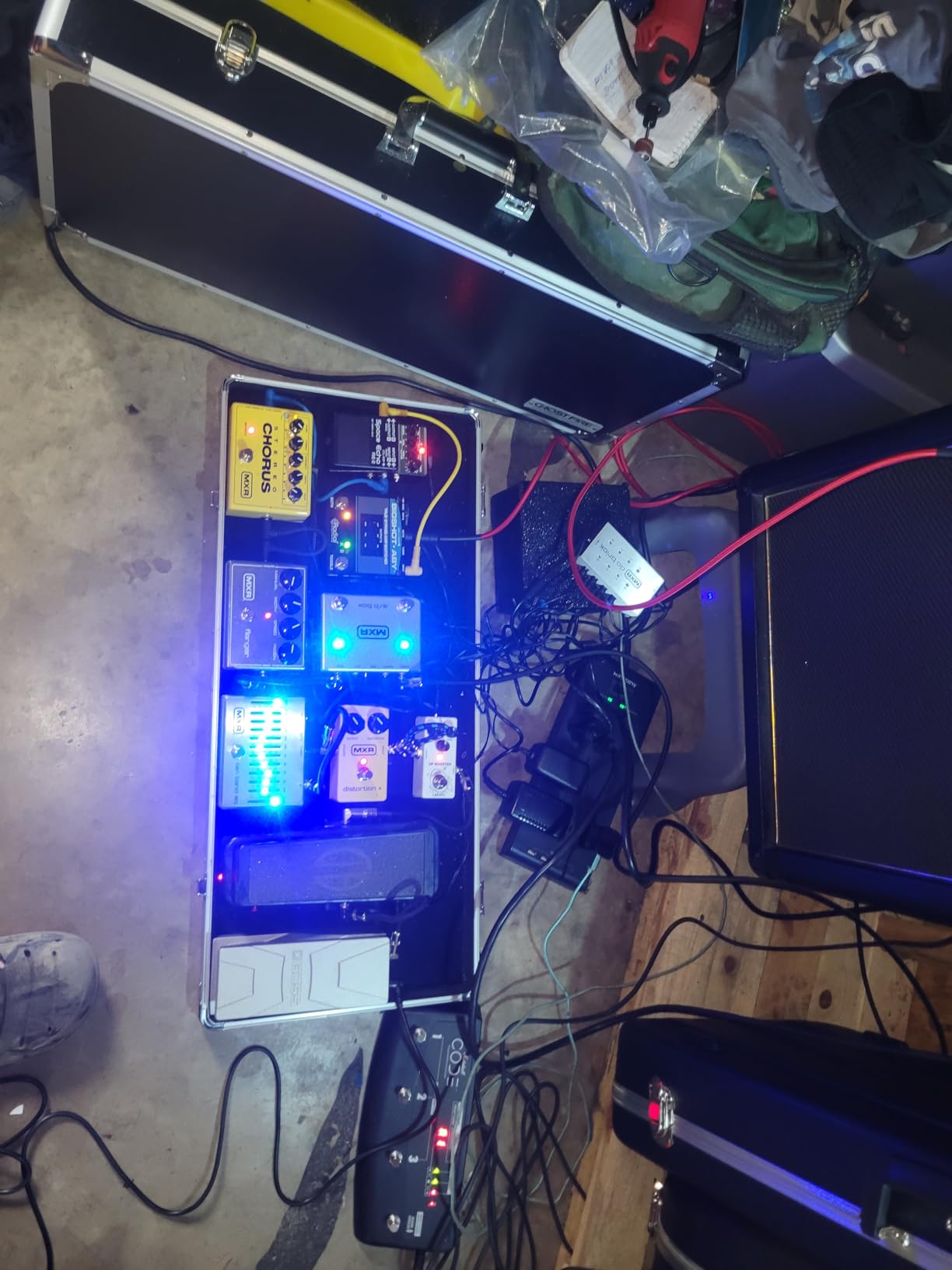
Having four footswitchable channels is a genuine advantage for players who need dramatic tone changes mid-song. You can preset clean, rhythm, lead, and a boosted solo tone and switch between them without tap-dancing on pedals.
The channel switching feels instantaneous and glitch-free, which is not always the case on solid-state amps at this price. This makes the MG30GFX a practical live tool for cover bands and metal acts with varied setlists.
Marshall Tone Expectations
This is a solid-state amp, so it will not replicate the harmonic complexity of a tube Marshall stack. What it does deliver is a recognizable Marshall voicing that sits well in a band mix and responds predictably to your playing.
For players chasing the visual identity and general tonal family of Marshall without the tube price tag, the MG30GFX is a sensible entry point. The one-year limited warranty is standard for the category.
7. Orange Micro Dark Terror Mini Head 20W
Orange Micro Dark Terror Mini Guitar Amp Head 20 Watts
20W Hybrid Head
12AX7 Preamp
Cab Sim Out
Buffered FX Loop
Pros
- Hybrid design with 12AX7 preamp tube
- Compact and lightweight head
- Cab Sim headphone output
- Handles 8 and 16 ohm cabs
Cons
- Single channel design
- Head only no speaker included
- Shape control is limited EQ
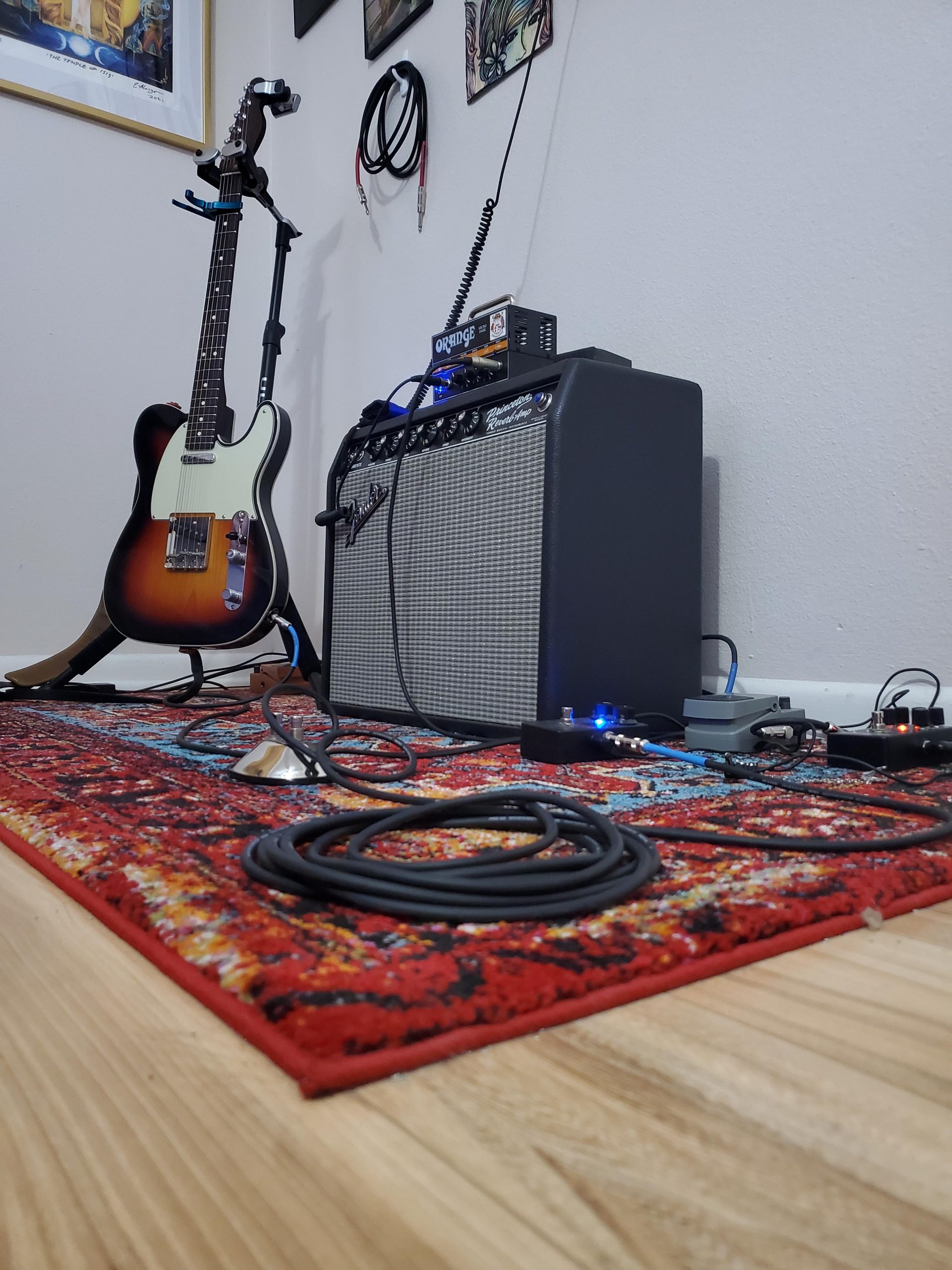
The Orange Micro Dark Terror is the amp I tell everyone about when they want tube character in a package smaller than a lunchbox. This hybrid head uses a single 12AX7 preamp tube paired with a solid-state power section, and the result punches well above its weight class and price.
Plugged into a 1×12 cab, the Micro Dark Terror produces a thick, saturated distortion that carries genuine Orange DNA. The gain has weight and definition, and the Shape control sweeps the EQ contour to find the sweet spot for whatever subgenre you are playing.
The hybrid design means you get tube warmth and harmonic complexity in the preamp without the cost and maintenance of a full tube power section. For metal players on a budget, this is a smart compromise that preserves the tonal characteristics that matter most.
The cab-sim headphone output sounds impressively full, making this a great silent-practice head for apartment dwellers. The buffered effects loop handles pedals cleanly, and the unit weighs barely over two pounds, so it slips into a gig bag pocket.
Impedance handling for both 8-ohm and 16-ohm cabinets gives you freedom to pair it with almost any speaker cab you already own. That flexibility is rare at this price and makes the Micro Dark Terror a versatile addition to an existing rig.
Cabinet Matching and Ohms
The Micro Dark Terror handles both 8-ohm and 16-ohm cabinets, giving you flexibility in cab choice. Through an efficient 1×12 it produces enough volume for home and rehearsal use, though it is not a stage powerhouse.
Pair it with a quality closed-back cab loaded with a Vintage 30 or similar speaker to hear what the preamp tube is really capable of. The cab makes a bigger difference here than with full-tube heads.
Silent Practice and Recording
The headphone output with cab simulation makes this an excellent bedroom amp that does not require a speaker cabinet to function. You can practice at any hour without disturbing anyone.
For direct recording, run the headphone out into your interface and you get a usable tone without miking a cab. Many players report great results layering the Micro Dark Terror into mixes alongside their main amp.
8. JOYO Zombie-II BanTamp XL Mini Head 20W
JOYO Zombie-II BanTamp XL Series Mini Amp Head 20W Hybrid Tube 2-Channel Guitar Amplifier with Bluetooth (No Sound, Need Extra Speaker)
20W Hybrid Head
12AX7 Preamp
Bluetooth
2 Channels
FX Loop
Pros
- Channel switching with independent control
- High-gain platform great for pedals
- Bluetooth connectivity for practice
- Studio-grade FX loop
Cons
- Budget build quality
- Limited EQ control
- No onboard effects
The JOYO Zombie-II is the cheapest amp in this roundup, and I will admit I expected tinny, lifeless tone at this price. What I found instead is a genuinely fun high-gain head that has earned its 4.6-star rating across 464 reviews from players who appreciate value.
The hybrid design pairs a 12AX7 preamp tube with a solid-state power section, the same formula as the more expensive Orange Micro Dark Terror. The distortion channel delivers thick, modern high-gain tone that responds well to overdrive pedals placed in front of it.
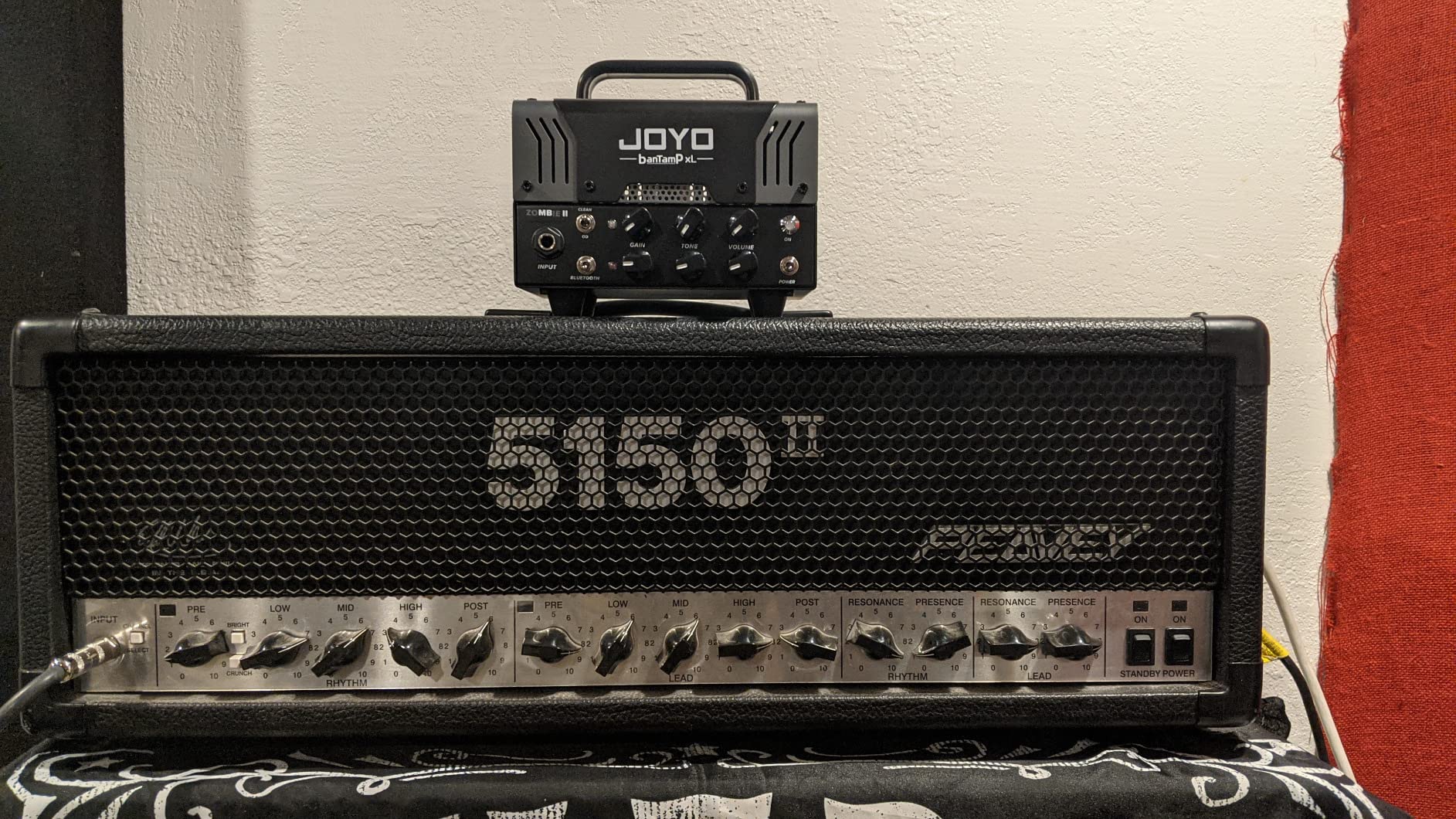
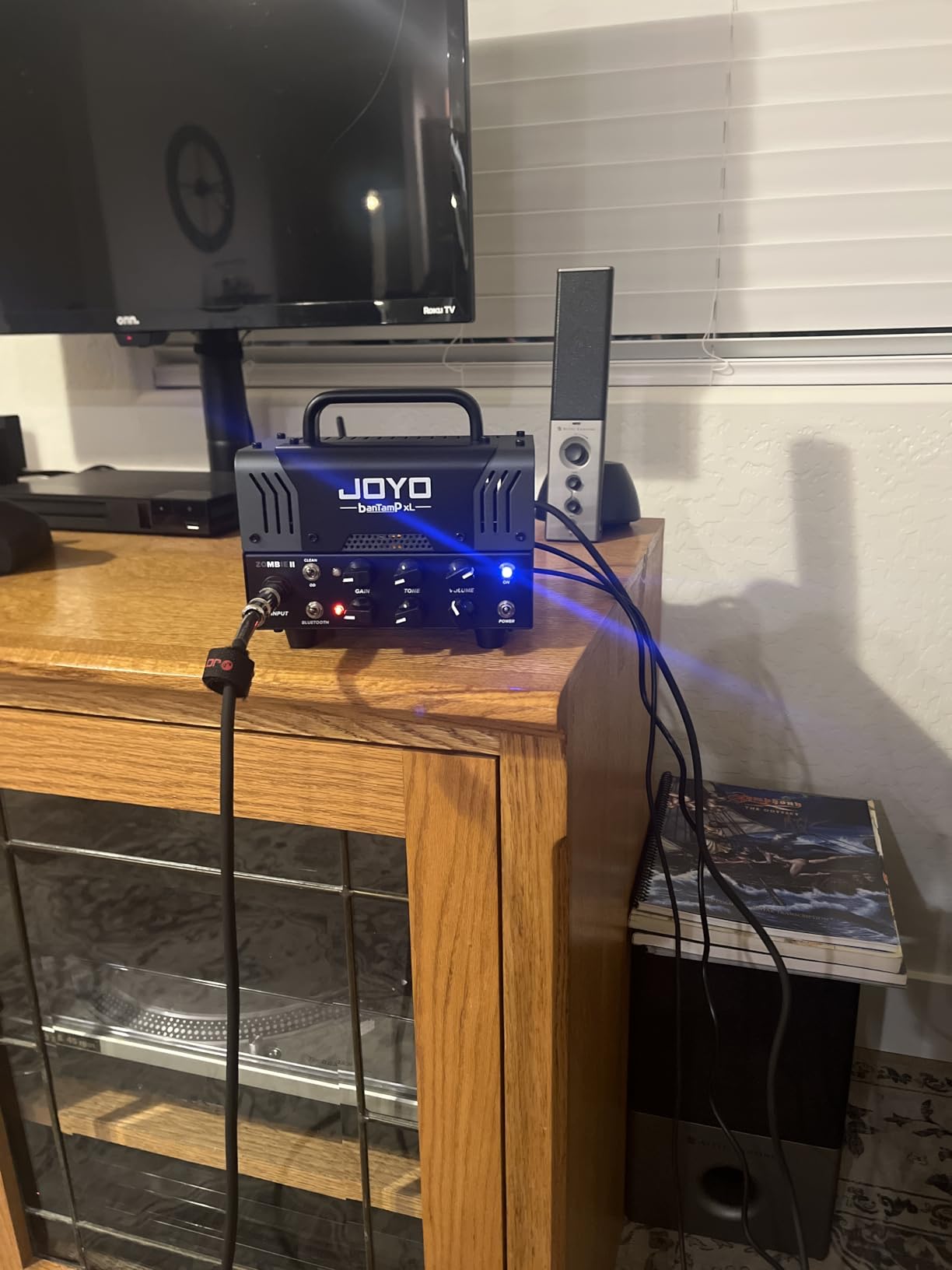
The dedicated footswitch for channel switching and six independent control knobs give you real hands-on tone shaping. The clean channel is serviceable for rhythm work and takes pedals nicely, while the distortion channel is where the metal happens.
Built-in Bluetooth connectivity is an unexpected bonus that lets you stream backing tracks or songs wirelessly for practice. The headphone output includes speaker cabinet emulation, so silent practice sounds like a real amp rather than a thin direct signal.
The studio-grade FX loop accepts your time-based pedals without degrading the signal, which is impressive at this price point. Being able to place delays and reverbs after the gain stage makes a real difference to how polished your overall tone sounds.
Build Quality and Durability
The build is clearly budget-tier, with lighter enclosure materials and less premium hardware than the Orange or Peavey options. Treat it with reasonable care and it should serve you well for practice and light rehearsal use.
For touring or heavy gigging, this is not the head I would rely on night after night. As a home practice amp or first step into tube-flavored tone, however, the value proposition is hard to beat.
Who This Amp Suits Best
The Zombie-II is ideal for beginners exploring metal tone, bedroom players on a tight budget, and intermediate guitarists who want a secondary practice head. It also works well as a backup amp for more serious rigs.
If you already own a quality speaker cabinet, the Zombie-II gives you tube-influenced high-gain tone for less than the cost of a single boutique pedal. That is a remarkable entry point into serious metal amplification.
Buying Guide: How to Choose a Metal Amp
Choosing the right metal amp comes down to matching the amplifier topology, power output, and feature set to where and how you actually play. The considerations below come directly from questions I field constantly from players upgrading from beginner gear.
Tube vs Solid State vs Hybrid
All-tube amps like the Peavey 6505 Mini and Orange Dark Terror deliver the harmonic complexity, dynamic response, and natural compression that define classic metal tone. They cost more, require periodic tube replacement, and need to be pushed to volume to sound their best.
Solid-state amps like the Orange Crush 35RT, Marshall MG30GFX, and Line 6 Catalyst offer consistency, low maintenance, and good tone at lower volumes. Modern solid-state and modeling designs have closed the gap with tubes dramatically, especially for live use where reliability matters.
Hybrid designs like the Orange Micro Dark Terror and JOYO Zombie-II split the difference, using a tube preamp for character and a solid-state power section for cost and weight savings. These are excellent compromises for players who want tube flavor without tube headaches.
Wattage and Volume Matching
Wattage determines how loud your amp gets before it starts to break up or run out of headroom. For bedroom practice, 1 to 20 watts is plenty, and amps with built-in attenuators let you push tubes at low volume.
For rehearsal with a drummer, look at 30 to 50 watts for solid-state combos or 15 to 20 watts for tube heads. For live performance at small to mid-sized venues, 50 to 100 watts through an efficient speaker gives you the projection and clean headroom metal demands.
Remember that a 15-watt tube amp is typically louder than a 50-watt solid-state amp because tubes clip musically while solid-state stays clean until it harshly distorts. Match wattage to your loudest playing scenario, not your average one.
Channels and Switching
Metal players almost always need at least two channels, one clean and one high-gain, switchable mid-song. The Peavey 6505 Mini, Marshall MG30GFX, and JOYO Zombie-II all offer footswitchable channel switching that lets you move between pristine cleans and crushing distortion seamlessly.
A built-in effects loop matters if you use time-based pedals like delay and reverb, because placing those effects after the gain stage preserves their clarity. The Orange Dark Terror, Peavey 6505 Mini, and JOYO Zombie-II all include buffered loops that keep your pedals sounding natural.
Bedroom-Friendly Features
If you practice mostly at home, prioritize amps with headphone outputs, power scaling, or built-in attenuators. The Orange Crush 35RT cab-sim headphone out, the Peavey 6505 Mini 1-watt attenuator mode, and the BOSS Katana power control all solve the low-volume tone problem.
Forum discussions consistently highlight difficulty achieving good metal tone at bedroom volumes as a top pain point. Amps that address this directly save you from endless knob tweaking and frustration.
Frequently Asked Questions
What is the holy grail of guitar amps?
The Mesa/Boogie Mark IIC+ is widely considered the holy grail of high-gain guitar amps, prized for its singing lead tone and the iconic metal sound it delivered on countless records. The Peavey 5150/6505 family holds similar legendary status specifically in the metal community for its aggressive, tight high-gain character.
What amps do most metal bands use?
Most metal bands rely on a handful of iconic high-gain amps including the EVH 5150III, Mesa/Boogie Dual Rectifier, Peavey 6505/5150, ENGL Powerball, and Diezel VH4. Modern bands increasingly combine these with digital modelers like the Neural DSP Quad Cortex or Kemper Profiler for touring consistency and tonal variety.
What amps does Metallica use?
Metallica has used Mesa/Boogie amplifiers, particularly the Mark IIC+ and Mark IV, as their core tone for decades, alongside Diezel VH4 heads for heavier rhythms. James Hetfield and Kirk Hammett also employ Roland JC-120 jazz choruses for their pristine clean tones and various digital modelers for modern touring setups.
Are tube amps better for metal?
Tube amps generally produce richer harmonic content, more musical compression, and a more dynamic response that suits metal lead and rhythm playing, which is why most professional metal guitarists prefer them. However, modern modeling amps like the Line 6 Catalyst and BOSS Katana have closed the gap significantly and offer reliability, consistency, and convenience that tubes cannot match.
What wattage amp do I need for metal?
For bedroom practice, 1 to 20 watts is sufficient, ideally with an attenuator or power scaling feature. For rehearsal with a band, aim for 30 to 50 watts solid-state or 15 to 20 watts tube, and for live performance at venues, 50 to 100 watts gives you the headroom and projection metal requires.
Final Thoughts
The best guitar amps for metal in 2026 span a wide range of prices and technologies, but each pick on this list delivers the high-gain character, tight low-end, and playability that heavy genres demand. The Peavey 6505 Mini remains my top overall choice for authentic tube metal tone, while the BOSS Katana-50 Gen 3 offers unbeatable versatility for the money.
If budget is your primary constraint, the JOYO Zombie-II proves that serious gain does not require a serious investment. Whatever your rig, budget, or subgenre, one of these eight amplifiers will give your riffs the authority they deserve.
Pick the amp that matches where you actually play most often, pair it with a quality speaker cabinet if it is a head, and spend time learning its controls. The right metal amp is an investment in your tone that pays off every time you plug in.