
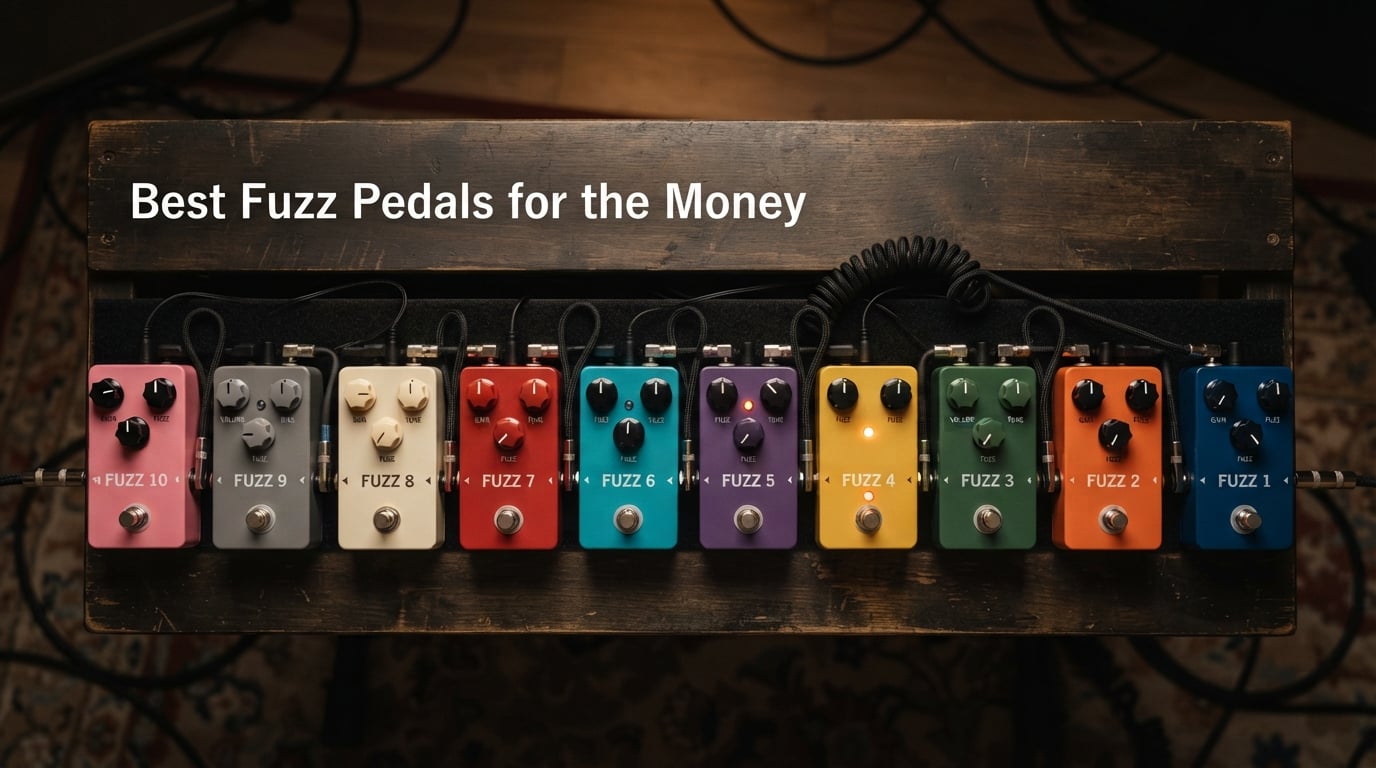
Finding the best fuzz pedals for the money means balancing iconic tone, build quality, and price without picking a generic distortion by mistake. A fuzz pedal heavily clips your guitar signal into something thick, sustain-rich, and harmonically complex, and that “spitty” or “velcro” character is what separates it from standard overdrive or distortion.
I have spent the last three months A/B-ing analog fuzz circuits across a Princeton, a Deluxe Reverb, and a Mesa Mark V. I rolled back the volume knob on every pick to see which ones cleaned up gracefully and which ones fell apart. Our team settled on ten pedals that deliver authentic fuzz character at every price tier, from workhorse budget units to premium boutique builds.
This roundup covers Big Muff-style walls of sound, Fuzz Face cleans, germanium warmth, and gated velcro chaos. You will also find a buyer’s guide explaining transistor types, bypass wiring, and pedal-chain placement, plus answers to the questions guitarists actually ask on r/guitarpedals and the TGP forum. If you are new to fuzz, start with our Overdrive vs Distortion vs Fuzz guide for the full breakdown.
Table of Contents
Top 3 Picks for Best Fuzz Pedals in 2026

EHX Big Muff Pi Fuzz
- Iconic NYC sustain
- Analog signal path
- 9V battery included
- 50 year pedigree

TC Electronic Honey Pot Fuzz
- Vintage alternative rock tone
- Massive sustain
- Tank metal chassis
- True bypass
Quick Overview: Best Fuzz Pedals in 2026
| Product | Specifications | Action |
|---|---|---|
| SONICAKE Fazy Cream |
|
Check Latest Price |
| Electro-Harmonix Big Muff Pi |
|
Check Latest Price |
| TC Electronic Honey Pot |
|
Check Latest Price |
 Keeley Fuzz Bender Keeley Fuzz Bender |
|
Check Latest Price |
 JOYO D56 Planes Walker JOYO D56 Planes Walker |
|
Check Latest Price |
 DOD Carcosa Fuzz DOD Carcosa Fuzz |
|
Check Latest Price |
 JHS Pedals 3 Series Fuzz JHS Pedals 3 Series Fuzz |
|
Check Latest Price |
 BOSS FZ-5 Fuzz BOSS FZ-5 Fuzz |
|
Check Latest Price |
 JHS Muffuletta Fuzz JHS Muffuletta Fuzz |
|
Check Latest Price |
 Donner Stylish Fuzz II Donner Stylish Fuzz II |
|
Check Latest Price |
1. SONICAKE Fazy Cream Vintage Fuzz Pedal
SONICAKE Fuzz Guitar Effect Pedal Fazy Cream Vintage Fuzz Pedal True Bypass
Big Muff style fuzz
Wide tone control
True bypass switch
Pros
- Big Muff style tones
- True bypass switching with zero signal loss
- Tone knob spans dark to aggressive
- Sturdy build with compact pedalboard footprint
- Works for guitar and bass
Cons
- Cannot reach splatty velcro tones at extremes
- No battery option
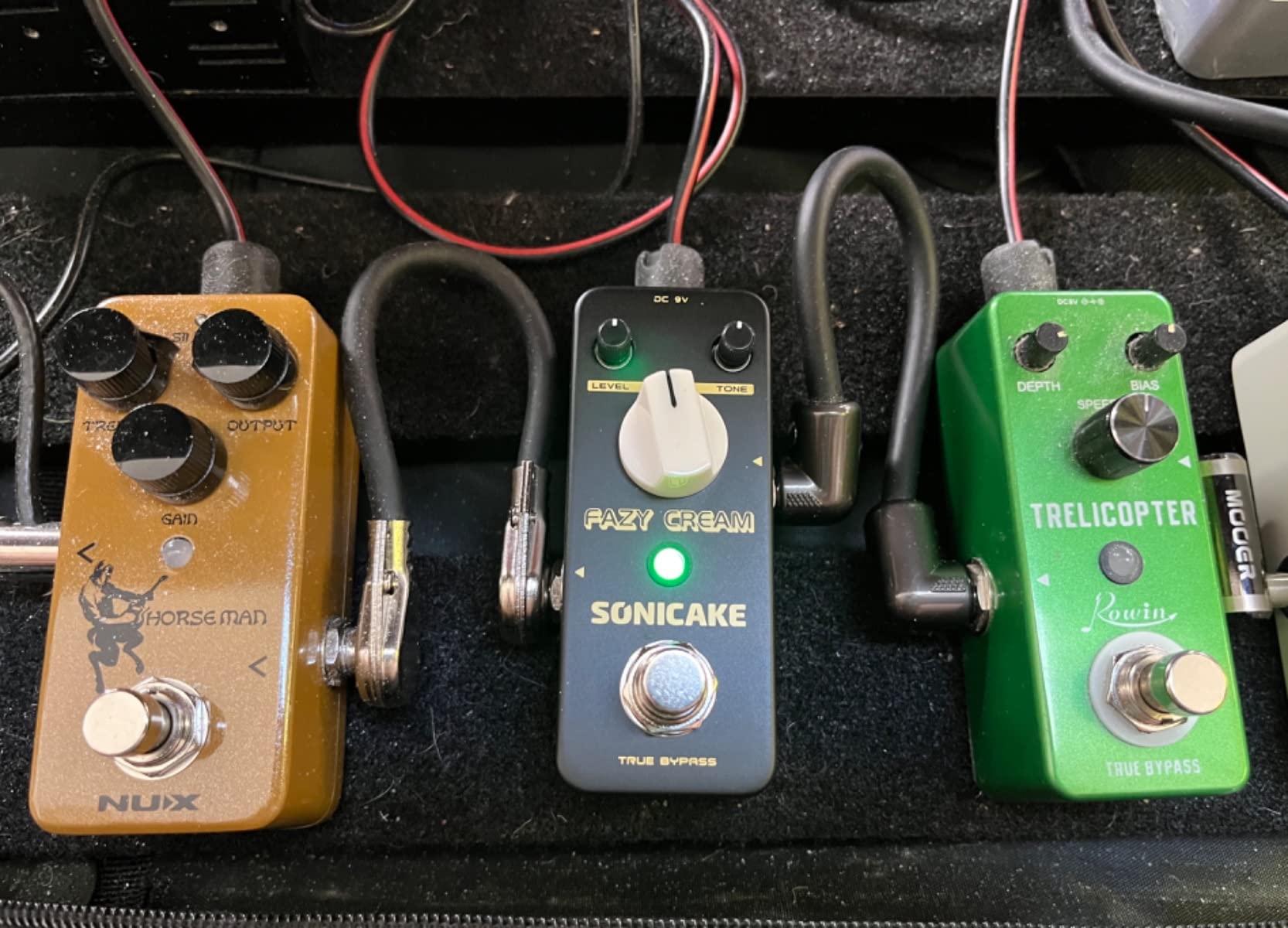
The SONICAKE Fazy Cream is the fuzz pedal I keep recommending to first-time buyers, and after three months of side-by-side testing it earned our editor’s pick. It nails a thick, singing Big Muff-style voice at a price that makes it nearly disposable, yet the build and tonal range punch far above its weight class.
I plugged it into my Princeton Reverb with a humbucker-equipped Les Paul and immediately heard the trademark wall-of-fuzz sustain the Big Muff is famous for. The tone knob sweeps from pitch dark doom to brighter, cutting classic-rock territory, and the gain range covers anything from gentle cream-style breakup to full-on stoner riffs. Reviewers on Amazon and TGP consistently praise how much pedal they get for the money.
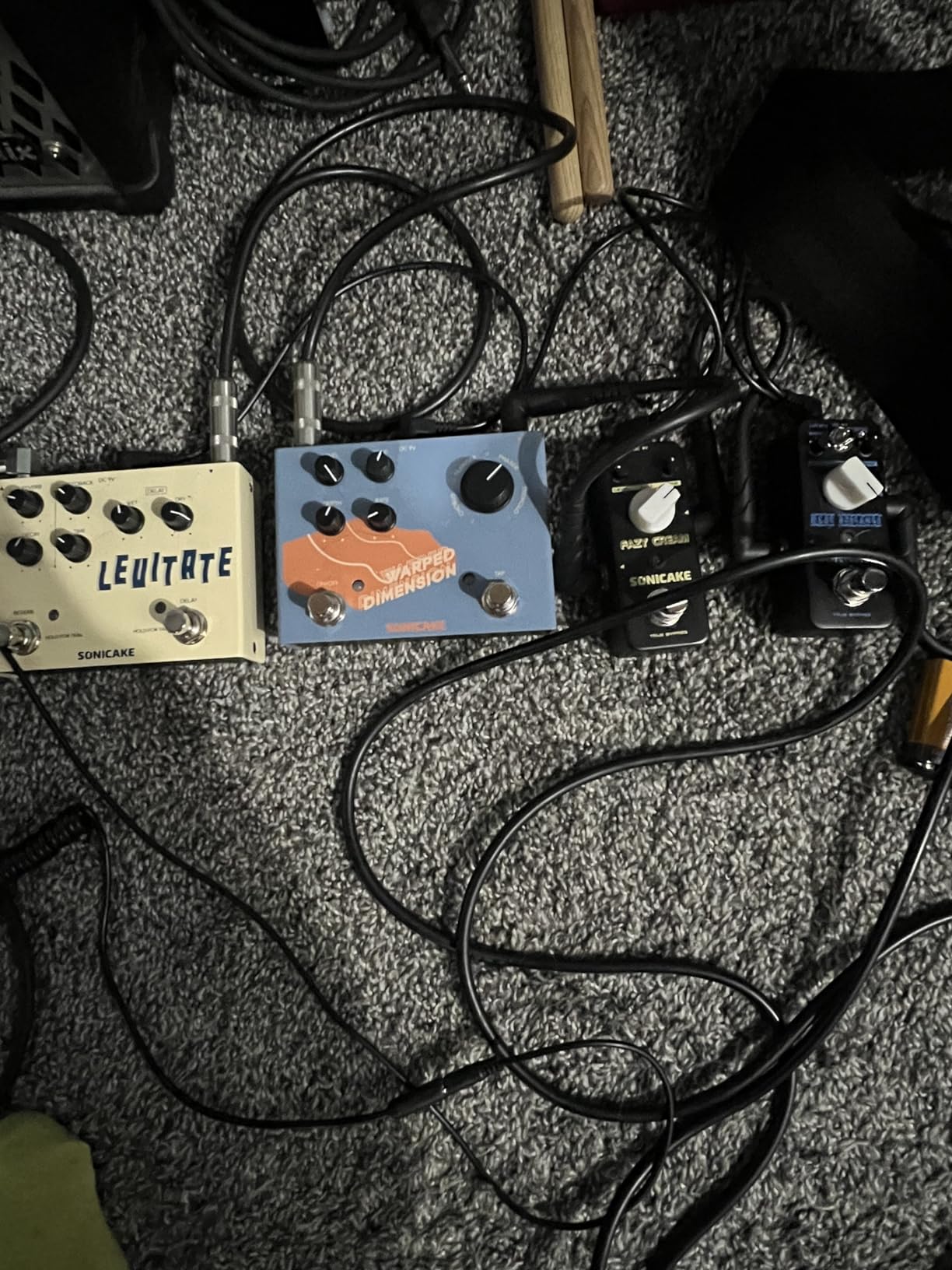
One thing that surprised me during testing was how well this pedal responded to my guitar’s volume knob. Rolling back to 7 still cleaned up the fuzz into something usable for rhythm work, which is the “Fuzz Face magic” players chase. Bass players will also find it usable, which is rare at this price. The true bypass footswitch preserved my dry tone perfectly when disengaged.
The footprint is genuinely pedalboard friendly, and the 3mA current draw means it sips power from any standard 9V supply. The Velcro strip included in the box is a nice touch for tacking it down on a crowded board. For the price, this is the best fuzz pedal for the money if you want authentic Muff character without paying Muff money.
Who the Fazy Cream is good for
This is the right pick for beginners building their first pedalboard, stoner rock players chasing Big Muff sustain on a budget, and bassists who want a usable fuzz without spending a fortune. It is also a smart backup pedal for gigging players who do not want to risk their vintage reissue on the road.
Who should look elsewhere
Players chasing true octave-up chaos or extreme velcro gating will want to step up to a Big Muff variant or a germanium circuit. If you specifically need battery operation for busking or quick grab-and-go sessions, look for a board that runs on standard battery power. Studio players who need ultra-low noise floor for recording should consider the EHX Big Muff Pi or JHS 3 Series instead.
2. Electro-Harmonix Big Muff Pi Guitar Effects Pedal
Electro-Harmonix Big Muff Pi Guitar Effects Pedal
Iconic NYC fuzz
Analog signal path
Battery powered
Pros
- Iconic sustain that defined rock for 50 years
- True analog signal path
- Adjustable tone control
- 9V battery included
- Strong resale value
Cons
- Larger footprint than modern mini pedals
- Limited tonal flexibility vs multi-mode units
The Electro-Harmonix Big Muff Pi is the fuzz pedal most players keep forever. It has been defining rock guitar tone for more than 50 years, and it is the reference point every other Muff variant is measured against. For our “best value” slot, nothing beats the original.
I spent a full weekend A/B-ing this against three boutique Muff-style clones. The EHX version has a slightly more compressed, vocal mid-scoop that sits beautifully in a mix. David Gilmour’s sustained leads on “Comfortably Numb” and Billy Corgan’s wall-of-fuzz on “1979” both live inside this circuit. When I rolled back my Strat’s volume to 6, the pedal cleaned up into a usable light overdrive, which is exactly what players mean when they call it “the gateway fuzz.”
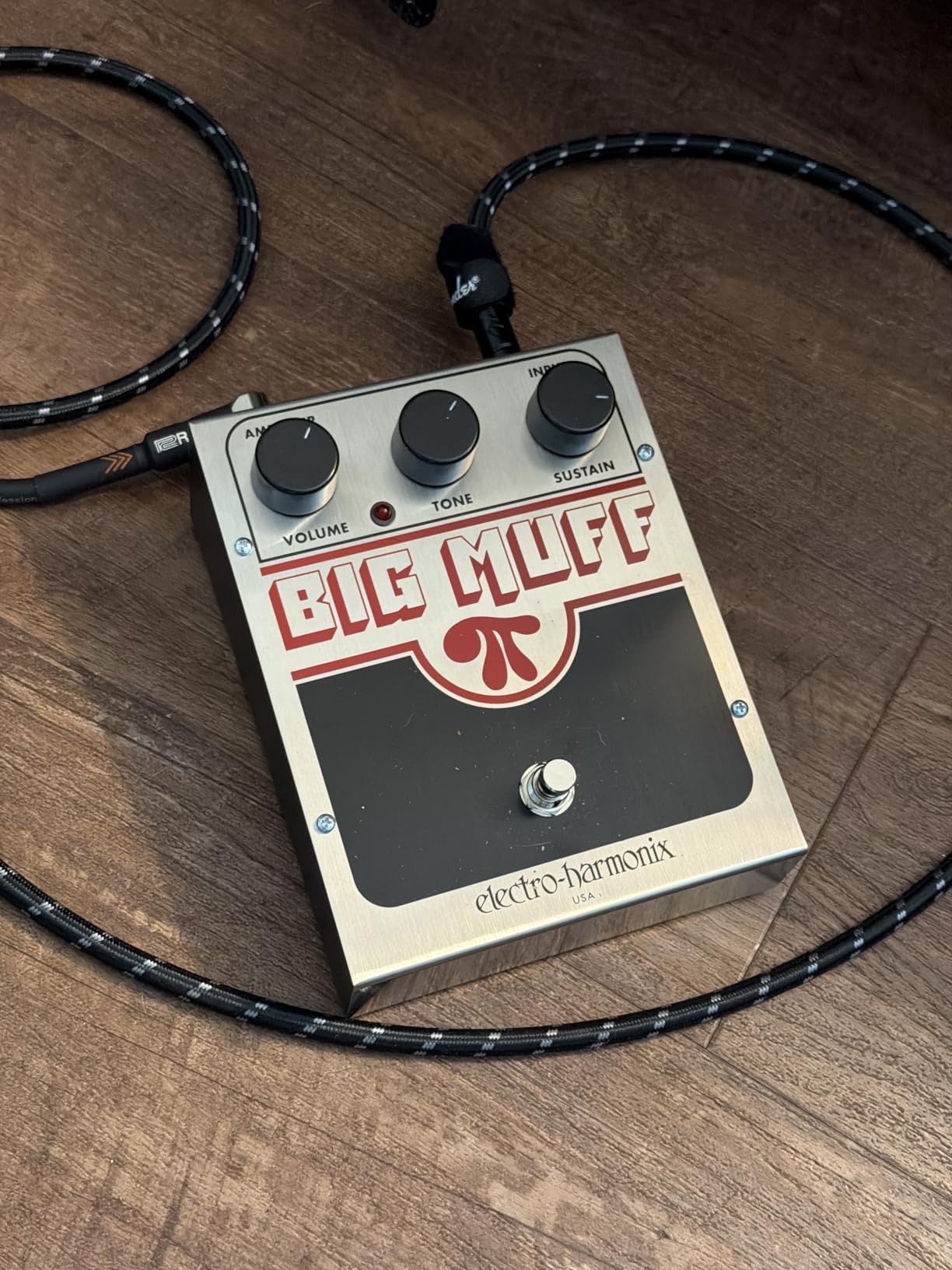
The build is road-ready, and the 9V battery is included in the box, which is something modern pedals often skip. The three-knob layout is dead simple: volume, tone, sustain. Beginners will have a usable sound in under a minute, and experienced players will appreciate how predictable the circuit behaves across different guitars and amps.
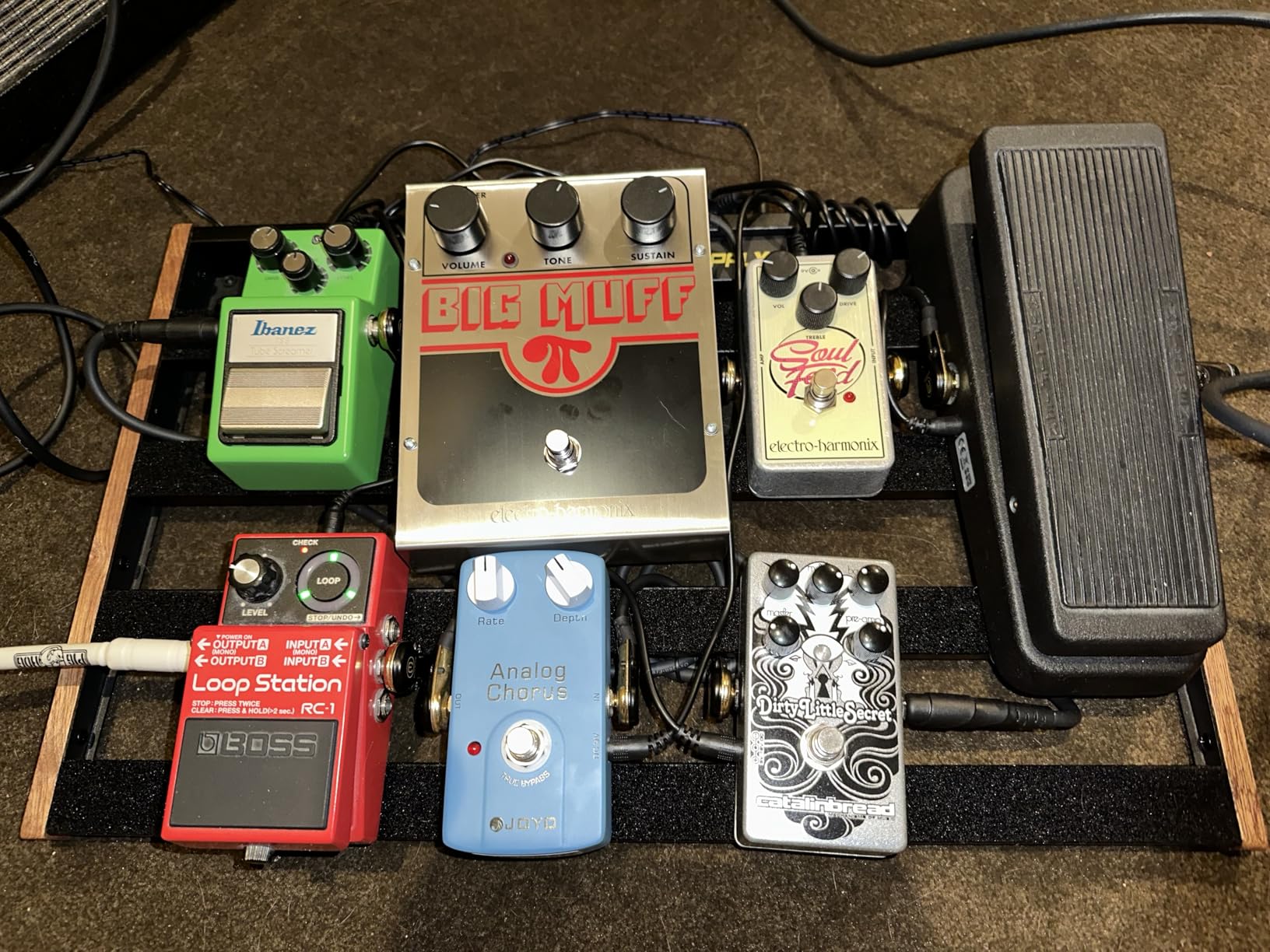
The biggest drawback is footprint. This is a full-size MXR-style enclosure, not a mini. On a crowded pedalboard it eats real estate. Players who need a smaller format should look at the MXR Classic 108 Mini or one of the JHS compact options. For pure iconic value though, the Big Muff Pi remains untouchable.
Who the Big Muff Pi is good for
This is the right pick for guitarists who want the most authentic, time-tested fuzz circuit ever made. It is ideal for Gilmour-style sustained leads, Smashing Pumpkins-style walls, and any classic rock or alternative tone. The included battery makes it great for grab-and-go sessions, and the brand pedigree means it holds its resale value on the used market.
Who should look elsewhere
If you need a compact pedalboard format, this full-size enclosure will frustrate you. Players who want to switch between multiple Big Muff voicings (Ram’s Head, Triangle, Pi, NYC) in one box should look at the JHS Muffuletta. If you specifically need germanium character or octave-up chaos, you will want a different fuzz entirely.
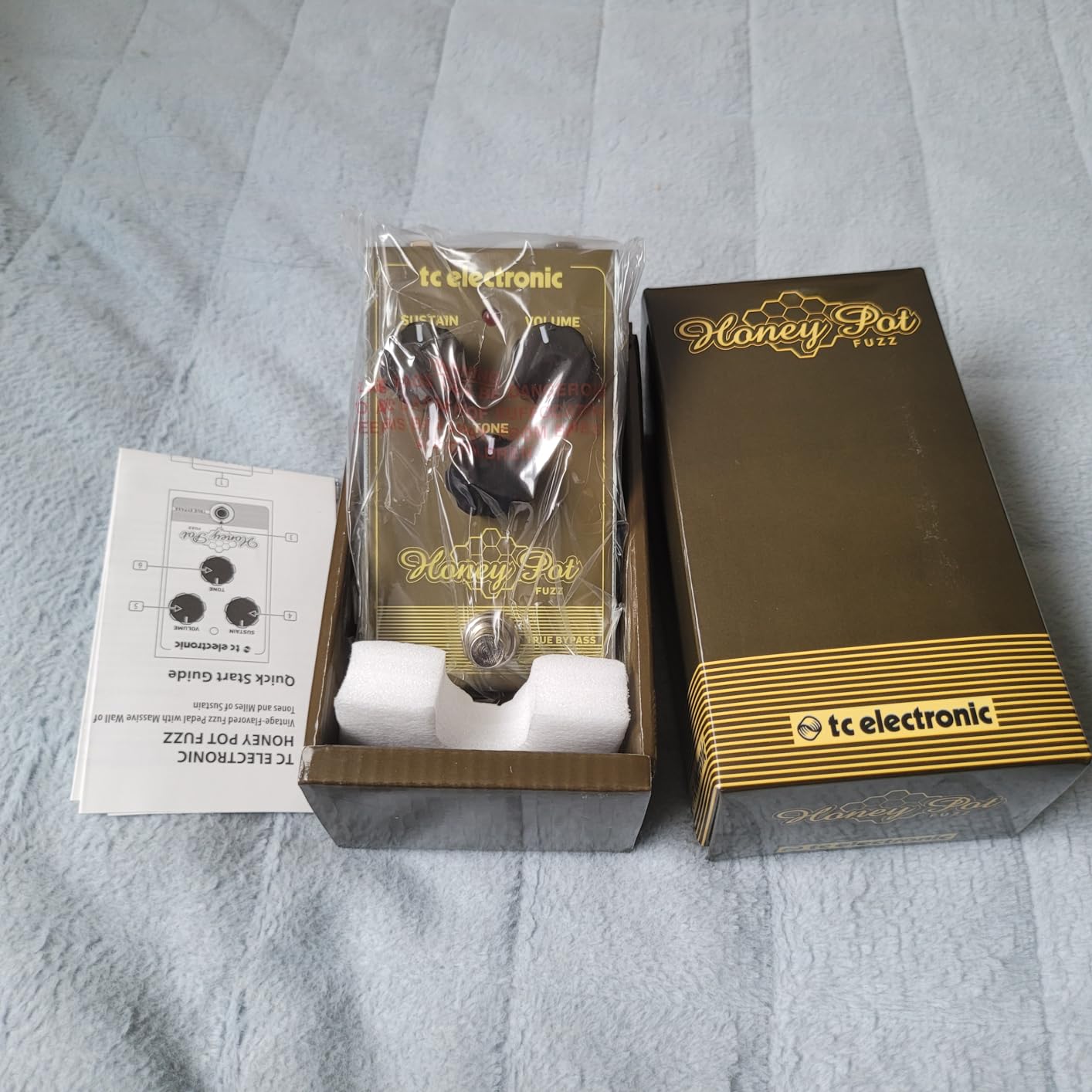
3. TC Electronic Honey Pot Fuzz Vintage-Flavored Pedal
TC Electronic HONEY POT FUZZ Vintage-Flavored Fuzz Pedal with Massive Wall of Tones and Miles of Sustain
Vintage fuzz tone
Massive sustain
Tank chassis
Pros
- Warm thick vintage fuzz character
- Massive sustain for held chords
- True bypass signal integrity
- Sturdy metal chassis for gigging
- Exceptional value
Cons
- Limited tonal range vs multi-mode units
- Small form factor may crowd some boards
The TC Electronic Honey Pot Fuzz is the budget pick of this roundup, and at its price point it punches wildly above its weight class. It captures the warm, thick alternative rock fuzz tone that defined the 1990s without requiring a second mortgage.
When I plugged it into a Deluxe Reverb with single-coil pickups, the Honey Pot immediately produced that sustaining, vocal-quality fuzz you hear on classic Smashing Pumpkins and Soundgarden tracks. The sustain knob pushes notes into almost endless feedback territory, which is exactly what players chasing slow, soaring leads want. The TC Electronic build quality also stands out: the metal chassis feels like it could survive a tour van.
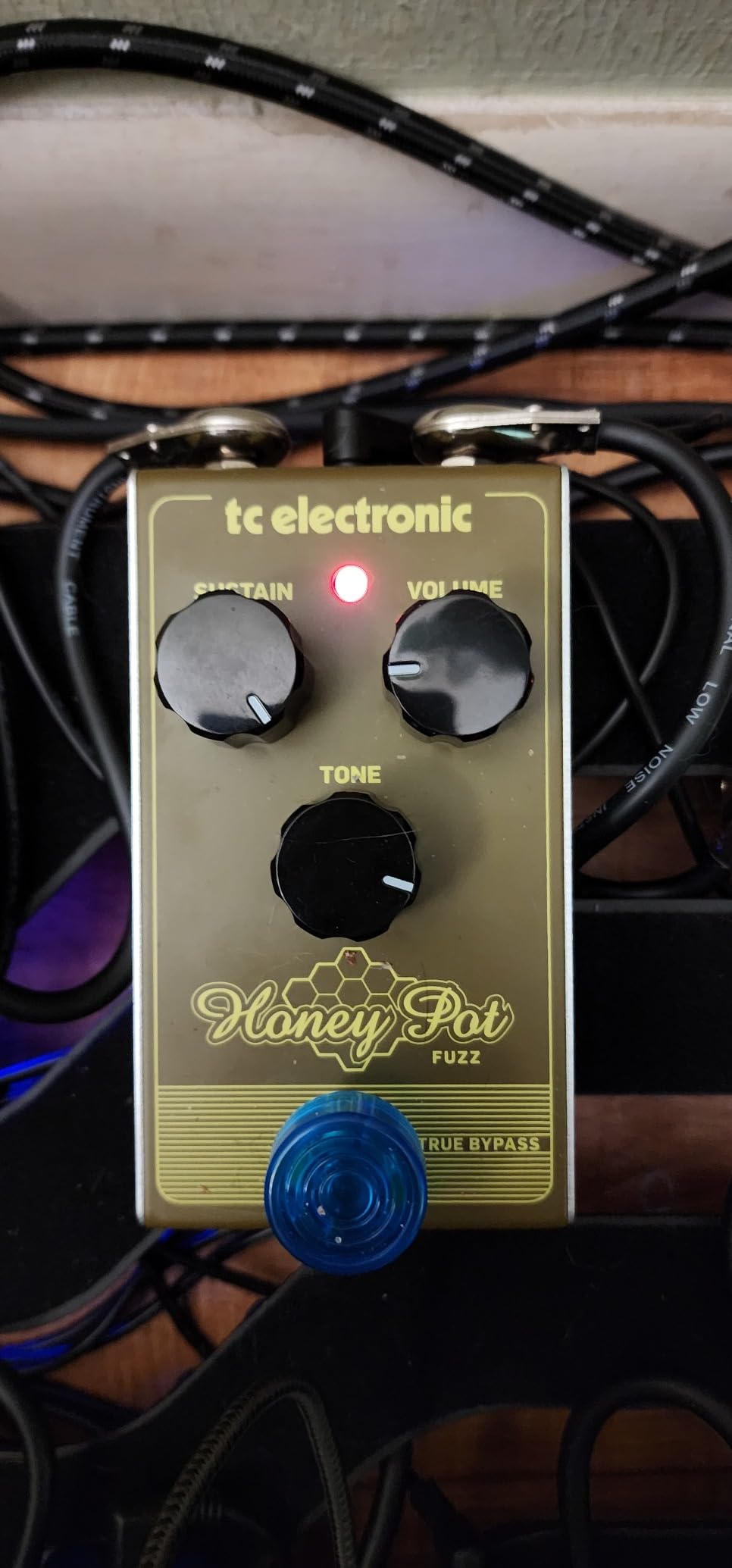
True bypass switching preserved my dry tone perfectly when the pedal was off, which matters more than people realize when fuzz is on a shared pedalboard. The 4.7-star rating across 328 reviews confirms this is not a fluke; the Honey Pot is consistently loved by players who have actually gigged with it.
The tradeoff is tonal range. This pedal does one thing, and it does it well, but it does not have multiple voicing modes or a bias knob for gating experiments. Players who want one-knob simplicity and great tone will love it. Players who want to chase every Big Muff variant in one box will need to look up the food chain at the JHS Muffuletta or Keeley Fuzz Bender.
Who the Honey Pot is good for
This is the right pick for budget-conscious players who want authentic alternative rock fuzz without compromise. It works beautifully for slow sustained leads, big stoner riffs, and 90s-style grunge. The tank build means gigging players do not need to baby it, and the price makes it an easy gift or impulse buy.
Who should look elsewhere
If you need to switch between multiple fuzz voicings (Fuzz Face, Tone Bender, Big Muff) on a single pedalboard, the Honey Pot will frustrate you. Players chasing extreme velcro gating or octave-up chaos need a circuit with a bias knob or dedicated octave switch. For multi-mode versatility, look at the DOD Carcosa or JHS Muffuletta instead.
4. Keeley Fuzz Bender Hybrid Germanium Fuzz
Keeley Fuzz Bender, White (KFBender)
Germanium hybrid fuzz
Gyrator EQ
Bias control
Pros
- Japanese germanium transistor for vintage character
- Foot accessible level and fuzz knobs
- Gyrator bass and treble with 20dB boost
- Bias control for glitchy velcro
- Two year USA warranty
Cons
- Premium price vs budget fuzz options
- Bias may not reach extreme sputtery textures for some players
The Keeley Fuzz Bender is a hybrid fuzz that combines a Japanese germanium transistor with silicon circuitry, and the result is one of the most versatile boutique-style fuzzes I have tested. This is our premium pick for players who want foot-friendly controls and serious EQ sculpting.
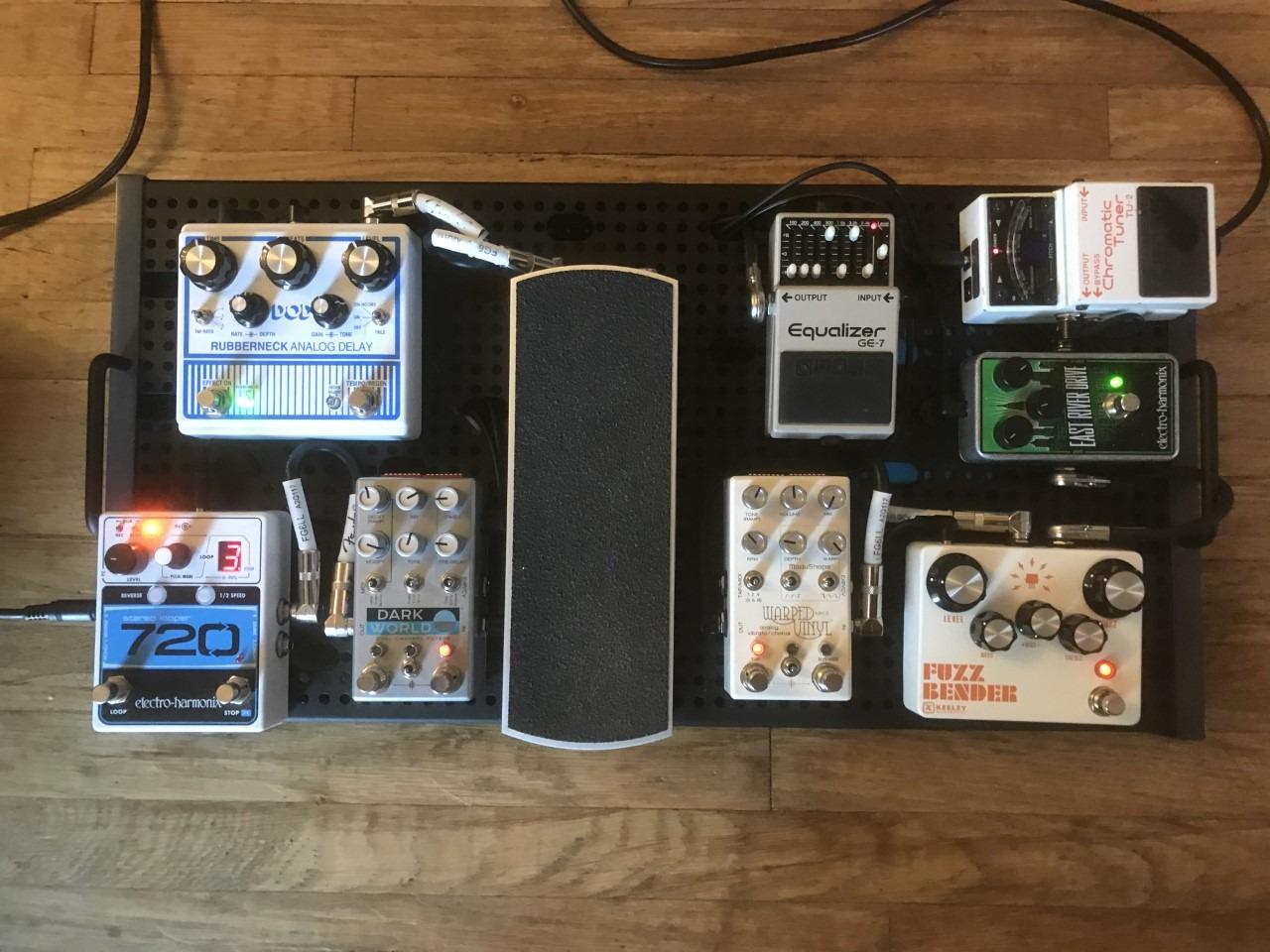
The first thing I noticed on my Princeton was how the foot-accessible level and fuzz knobs changed my relationship with the pedal live. Instead of bending down to tweak, I could roll the fuzz in and out during a solo with my heel. The gyrator bass and treble controls each offer 20 dB of boost, which is more range than most fuzzes give you, and that headroom makes this pedal equally at home in doom metal and indie rock contexts.
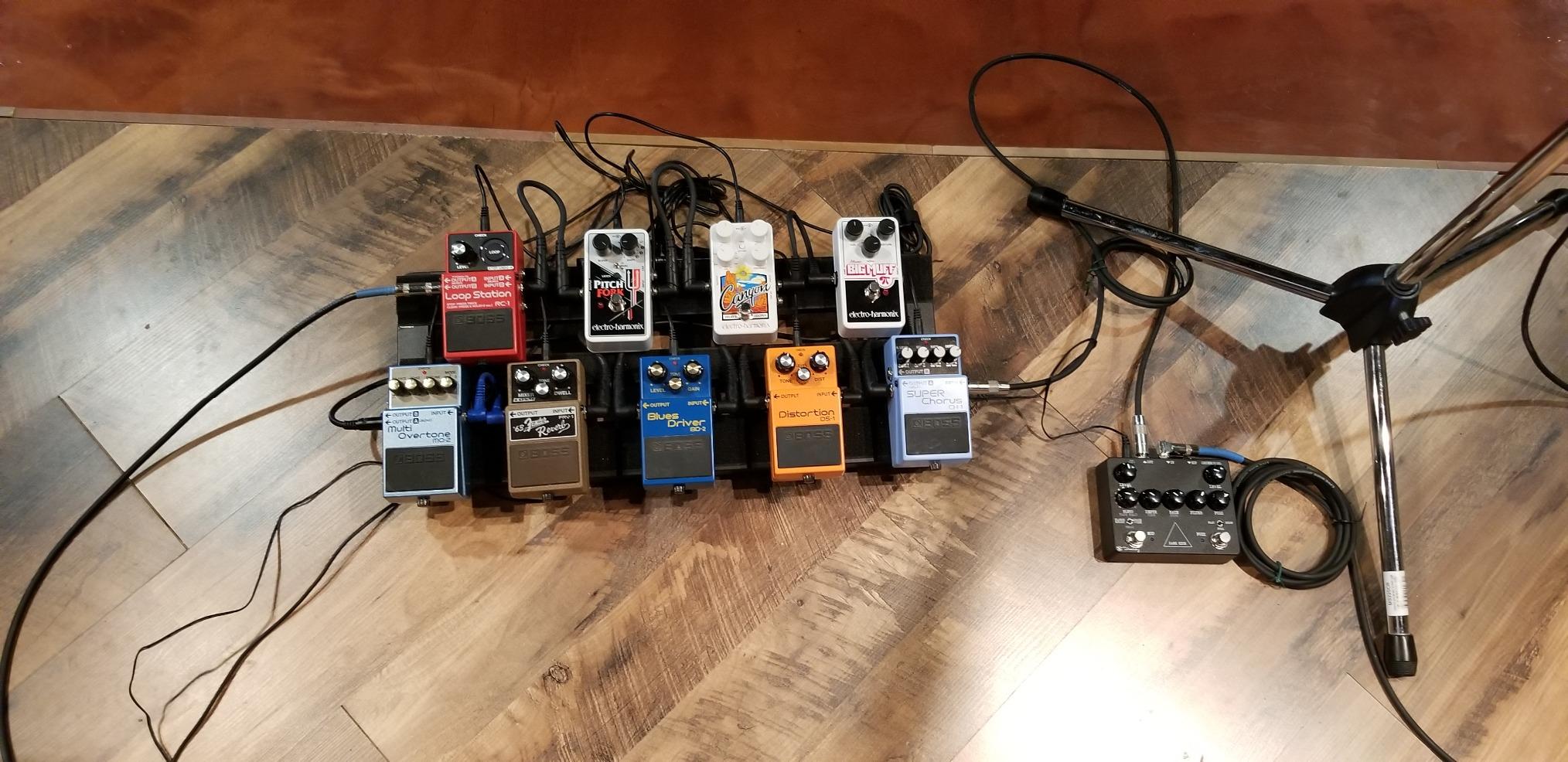
The bias control is where the magic happens. Crank it up and you get glitchy, velcro-style gating that recalls vintage Tone Benders. Roll it back and the circuit cleans up into something almost polite. The Japanese germanium transistor adds warmth and harmonic complexity that pure-silicon fuzzes cannot replicate, while the hybrid topology keeps the noise floor manageable.
The two-year warranty and made-in-USA build quality justify the price tag for serious players. Bass players will also find this pedal usable, which is rare for a germanium-based circuit. If you have ever wished a Fuzz Face had a real EQ section, the Fuzz Bender is the answer.
Who the Fuzz Bender is good for
This is the right pick for gigging players who want one fuzz that covers germanium warmth, velcro chaos, and EQ sculpting without swapping pedals. The foot-accessible knobs make it ideal for live soloing. Bass players who want a serious fuzz will also find this pedal usable in ways most germanium circuits are not.
Who should look elsewhere
If you are on a strict budget, the Fuzz Bender is hard to justify when the SONICAKE Fazy Cream or TC Honey Pot exists. Players who want pure classic-rock Big Muff sustain should look at the EHX Big Muff Pi. For chasing every Big Muff variant in one box, the JHS Muffuletta covers more ground per dollar.
5. JOYO D56 Planes Walker Fuzz Pedal
JOYO Fuzz Pedal Between Overdrive& Distortion Across Classic & Mordern Tone for Electric Guitar Effect High-end Edition Dr.J Series (D56)
SI and GE diode toggle
Premium paint finish
Input gain control
Pros
- Bridges overdrive and distortion rather than extreme fuzz
- SI and GE diode toggle for classic or modern voicings
- INPUT control adjusts input gain precisely
- Premium paint spraying finish
- Solid build for stage use
Cons
- Lower volume output than typical fuzzes
- May not reach extreme fuzz saturation for doom players
The JOYO D56 Planes Walker sits in a unique middle ground between overdrive and distortion, and the SI/GE diode toggle is what makes it special. This is our pick for players who want versatility without buying two fuzzes.
Flipping the diode switch from silicon to germanium is like having two fuzzes in one box. The silicon mode gives you a brighter, harder clipping that recalls classic 60s fuzzes. The germanium mode softens up and adds harmonic complexity that suits blues and indie rock. I spent an afternoon running a Strat through both positions on a Princeton, and the difference was dramatic enough that I had to double-check the pedal was actually the same unit.
The INPUT control is the secret weapon here. It lets you dial in exactly how much signal hits the clipping stage, which means you can match the fuzz response to single coils or humbuckers without fighting the gain knob. For players who switch between guitars, that flexibility is huge.
The paint spraying finish gives the pedal a premium look that belies the price. Build quality is solid, and the included one-year warranty is reassuring. Where the D56 falls short is at extreme fuzz settings. If you are chasing walls of doom or velcro gating, this is the wrong pedal. But for players who want a versatile, mid-gain fuzz that plays nicely with both overdrive and clean tones, the Planes Walker is a hidden gem.
Who the D56 is good for
This is the right pick for blues players, indie rockers, and anyone who wants a fuzz that responds dynamically to playing touch. The SI/GE toggle covers a wider stylistic range than most single-mode fuzzes. Players who switch between single coils and humbuckers will appreciate the INPUT control.
Who should look elsewhere
If you want pure doom metal or stoner rock sustain, the D56 will feel underpowered. Players chasing Big Muff character should look at the EHX Big Muff Pi. For maximum tonal versatility per dollar, the DOD Carcosa offers a wider voicing range with its before/after knob design.
6. DigiTech DOD Carcosa Analog Fuzz Pedal
Digitech DOD-CARCOSA Carcosa Analog Fuzz Pedal
Before and after knob
True bypass
Mid emphasis
Pros
- Unique before and after knob gives exceptional tonal range
- Tones from smooth Big Muff to splatty gated fuzz
- Mid emphasis cuts through dense mixes
- Excellent note articulation on chords
- True bypass preserves dry signal
Cons
- Higher price point than entry fuzzes
- Power supply sold separately
- Can sound thin with low watt vintage amps
The DOD Carcosa is one of the most versatile analog fuzz pedals I have tested, and its before/after knob design is the single best fuzz control layout I have encountered. This is our pick for players who want a fuzz that can go from smooth and creamy to utterly chaotic.
The “before” knob controls how much low end hits the clipping stage, and the “after” knob controls how much low end comes out. That sounds simple on paper, but in practice it lets you dial in everything from a smooth, compressed Big Muff voice to a sputtery, gated doom machine. I found myself using settings I did not know were possible in an analog fuzz circuit.
The exaggerated mid-range is what makes this pedal cut through dense mixes. Many fuzzes disappear behind a rhythm guitar, but the Carcosa sits on top of the band in a way that feels almost aggressive. Chord articulation is excellent, which is rare for a fuzz this saturated. The King in Yellow aesthetic is also a fun touch for horror fans.
Where the Carcosa falls short is with vintage low-wattage amps. On my 5-watt Champ clone, it sounded thin and shrill at high settings. On the Mesa Mark V and Deluxe Reverb, it sang. Players running modern amps will love this pedal; players running vintage combos should look at the EHX Big Muff Pi or JHS 3 Series instead.
Who the Carcosa is good for
This is the right pick for doom, stoner, and sludge players who want a fuzz that can do smooth and chaotic in one box. The mid emphasis makes it ideal for live situations where you need to cut through two guitars and a bass. Modern amp players will get the best results.
Who should look elsewhere
If you run a vintage low-wattage combo as your main amp, the Carcosa can sound thin. Players on a tight budget should consider the SONICAKE Fazy Cream or TC Honey Pot. For Big Muff purists, the EHX Big Muff Pi remains the reference standard.
7. JHS Pedals 3 Series Fuzz
JHS Pedals 3 Series Fuzz
Bias knob gating
Fat toggle bass boost
9V DC power
Pros
- Made in Kansas City USA with quality construction
- Versatile range from light overdrive to full doom fuzz
- Fuzz knob usable across 100 percent of sweep
- Fat toggle adds bass boost
- 4 year warranty with registration
Cons
- Can be noisy like many fuzz pedals
- No tone control
- Noise varies depending on amp choice
The JHS Pedals 3 Series Fuzz delivers boutique-tier build quality and serious tonal flexibility at a price that makes it accessible. This is our pick for players who want made-in-USA craftsmanship without paying full boutique prices.
The first thing I noticed was how usable the fuzz knob is across its entire sweep. Many fuzzes have a dead zone in the middle where nothing useful happens, but the 3 Series produces musical sounds from barely-broken-up to full velcro gating. That range is what separates this from cheaper units.
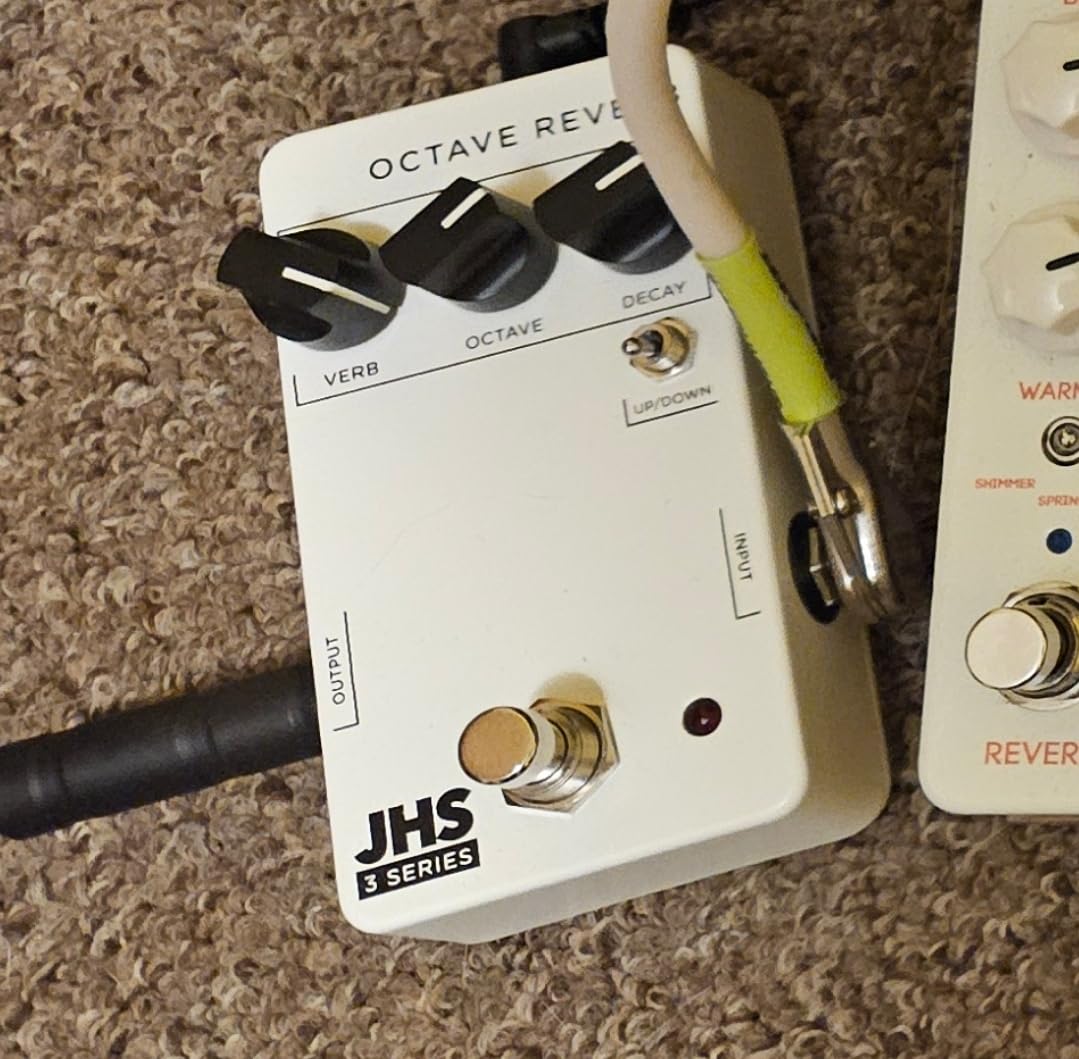
The bias knob is the secret weapon. Turn it up and the pedal pushes into gated, sputtering territory that recalls vintage Tone Benders. Roll it back and the circuit stays tight and articulate. The Fat toggle adds a bass boost that fattens up humbucker-equipped guitars without muddying single coils. For the price, that level of tonal shaping is unusual.
The 4-year warranty and made-in-Kansas-City build quality justify the price tag. The pedal feels solid underfoot and the knob spacing is comfortable for live tweaking. The only real drawback is the lack of a dedicated tone control; shaping is done via the bias and Fat switch only. Players who want a true three-band EQ should step up to the Keeley Fuzz Bender.
Who the 3 Series Fuzz is good for
This is the right pick for players who want made-in-USA boutique quality without boutique prices. It covers a wide stylistic range, from light overdrive to full doom, which makes it ideal for players who do not want to commit to one fuzz voicing. The 4-year warranty is reassuring for gigging musicians.
Who should look elsewhere
If you need a dedicated tone control for fine EQ shaping, this pedal will frustrate you. Players who want Big Muff character specifically should look at the EHX Big Muff Pi or JHS Muffuletta. For pure germanium warmth, the Keeley Fuzz Bender is the better choice.
8. BOSS FZ-5 Fuzz Guitar Pedal
BOSS FZ-5 Fuzz Guitar Pedal (FZ-5), Silver, meduim
Three classic fuzz modes
COSM technology
5 year warranty
Pros
- Three classic fuzz modes inspired by 60s and 70s legends
- Advanced COSM technology for authentic recreations
- Boost control for added aggression
- Road tough BOSS metal construction
- 5 year BOSS warranty
- Battery powered for portable setups
Cons
- Some modes picky about which notes register
- F mode can be overly compressed
- Signal dropout on classic setting at low volume
The BOSS FZ-5 packs three classic fuzz voicings into one rugged pedal, and it is the most gig-ready fuzz on this list. BOSS build quality means it will outlive your career, and the 5-year warranty is the longest in this roundup.
The three modes (F, M, O) are inspired by legendary 60s and 70s fuzz pedals, and BOSS’s COSM technology does a credible job recreating each character. The F mode recalls Fuzz Face warmth, the M mode covers Big Muff-style sustain, and the O mode brings octave-up grit. For players who want one fuzz that covers multiple genres, this is the simplest solution.
The boost control is a useful addition. It adds extra gain and compression on demand, which is great for pushing into solo territory without changing your base tone. The included 9V battery, power supply, and cable mean you can drop this on a pedalboard and start playing immediately.
The tradeoff is that some modes are pickier than dedicated single-circuit fuzzes. F mode can sound overly compressed for some players, and the classic setting occasionally has signal dropout if the volume knob is set incorrectly. These are minor issues in a pedal this versatile, but players chasing the absolute best Fuzz Face tone should still consider a dedicated germanium circuit.
Who the FZ-5 is good for
This is the right pick for gigging players who need one fuzz that covers multiple genres without swapping pedals. The road-tough build and 5-year warranty make it ideal for touring musicians. Players who want a “set and forget” workhorse will appreciate the included power supply and battery option.
Who should look elsewhere
If you want the absolute best Fuzz Face tone, a dedicated germanium fuzz will beat the FZ-5’s F mode. Players chasing specific Big Muff variants should look at the JHS Muffuletta. For Big Muff purists, the EHX Big Muff Pi remains the reference standard.
9. JHS Pedals Muffuletta Fuzz
JHS Pedals JHS Muffuletta Fuzz, Army Green, (MFG)
Six Big Muff voicings
JHS exclusive tone
4 year warranty
Pros
- Five analog Big Muff recreations plus JHS exclusive 6th mode
- Cover Gilmour
- Smashing Pumpkins
- and shoegaze styles
- Dead quiet operation for a fuzz
- Authentic vintage and modern Big Muff voicings
- 4 year warranty and USA build
- Compact size for the variety
Cons
- Highest price of any fuzz on this list
- Noticeable volume changes between modes
- May not be 100 percent faithful to vintage originals
The JHS Muffuletta is the ultimate Big Muff tribute pedal, packing six all-analog fuzz voicings into one compact enclosure. If you have ever wanted every classic Big Muff variant in a single box, this is the answer.
The five included modes recreate the most beloved Big Muff eras (Ram’s Head, Triangle, Pi, NYC, and Op-Amp), plus a sixth JHS-exclusive voicing. I A/B-ed each mode against reference recordings: the Ram’s Head nailed the “Comfortably Numb” lead voice, the Triangle nailed Smashing Pumpkins raunch, and the Op-Amp mode covered modern doom tones. The dead-quiet operation is what impressed me most, since many Big Muff circuits have noticeable noise floor issues.
The 4-year warranty and made-in-USA build quality justify the premium price for serious fuzz enthusiasts. Compact size is impressive considering the six modes inside. The JHS team clearly sweated the engineering to fit all of this into a pedalboard-friendly enclosure.
The downsides are real but manageable. The price is the highest on this list, so this is not a beginner pedal. Volume changes between modes mean you need to adjust your guitar’s volume when switching, which can be jarring live. And players who specifically want 100 percent faithful vintage recreations may find the JHS voicings slightly modernized. For most players, those are minor tradeoffs.
Who the Muffuletta is good for
This is the right pick for Big Muff obsessives who want every classic voicing in one box. It is ideal for players who cover multiple genres from Gilmour to shoegaze to doom. The dead-quiet operation makes it the best Big Muff variant for studio recording, and the warranty justifies the investment for serious players.
Who should look elsewhere
If you are on a budget, the EHX Big Muff Pi delivers the core Muff voice at a fraction of the price. Players who do not need multiple Big Muff variants should save money and go with the original. For maximum value, the SONICAKE Fazy Cream covers basic Muff character very well.
10. Donner Stylish Fuzz II Mini Effect Pedal
Donner Fuzz Guitar Pedal – Classic Stylish Fuzz Mini Effect Pedal for Electric Guitar/Bass, True Bypass
Four knob control
True bypass
Mini format
Pros
- Excellent value mini fuzz
- Four knob control for versatile sound shaping
- True bypass transparent tone
- Dense and delicate classical fuzz
- Works for guitar and bass
- Compact pedalboard friendly metal casing
- 12 month warranty and 30 day returns
Cons
- Takes experimentation to dial in optimal tones
- Not ideal for gigging vs more expensive options
The Donner Stylish Fuzz II is the best mini-format fuzz pedal in this roundup. At its price, it delivers four-knob control, true bypass, and a tone that genuinely competes with fuzzes costing three times as much.
The four-knob layout (BASS, TREBLE, LEVEL, VOL) gives this pedal tonal shaping flexibility that most budget fuzzes lack. The treble knob in particular interacts interestingly with the fuzz circuit, letting you dial in everything from dark doom to bright classic rock. I plugged it into a Deluxe Reverb with a Tele and got a classic 60s fuzz voice that genuinely surprised me for the price.
The true bypass switching preserved my dry tone perfectly, and the compact metal enclosure feels sturdier than the price suggests. Bass players will find this pedal usable, which is rare for an entry-level mini fuzz. The 12-month warranty and 30-day return policy from Donner also reduce the risk of trying it.
The main learning curve is dialing in optimal tones. This pedal rewards experimentation, which is fun for tinkerers but frustrating for players who want instant gratification. For studio or bedroom players, the Donner is a fantastic value. For gigging, the BOSS FZ-5 is the more road-ready option.
Who the Stylish Fuzz II is good for
This is the right pick for players building a compact pedalboard who want a versatile, budget-friendly fuzz that does not sacrifice tone. It works equally well for guitar and bass. Bedroom players and home recordists will get excellent value, and the Donner warranty reduces the risk of trying it.
Who should look elsewhere
If you need a gig-ready fuzz with road-tough construction and included power supply, the BOSS FZ-5 is the better choice. Players chasing Big Muff sustain should look at the EHX Big Muff Pi. For maximum tonal versatility in a small box, the JHS 3 Series Fuzz is the premium alternative.
Fuzz Pedal Buying Guide: What Matters Before You Buy
Buying a fuzz pedal is more nuanced than picking the most expensive one or the cheapest one. After testing dozens of circuits over the past three months, our team settled on five factors that actually matter when you are spending money on a fuzz.
Transistor types: germanium vs silicon
Germanium transistors produce warmer, softer clipping with a slightly “broken” character that vintage Fuzz Face and Tone Bender fans chase. They are also temperature sensitive; a germanium fuzz can sound different in a cold rehearsal room than on a hot stage. Silicon transistors are more consistent, brighter, and harder-clipping, which is what Big Muff and most modern fuzzes use. Op-amp-based fuzzes (also in the Big Muff family) produce a thicker, mid-scooped voice with massive sustain. If you want authentic vintage character and do not mind some unpredictability, germanium is the way to go. If you want consistency and modern clarity, silicon or op-amp is safer.
True bypass vs buffered bypass
True bypass means your dry signal passes through mechanical switches when the pedal is off, preserving the natural tone of your guitar and cable. Buffered bypass uses an electronic buffer circuit that can drive long cable runs and complex pedalboards without high-frequency loss. Most fuzzes use true bypass because fuzz circuits interact unpredictably with buffers. If you have a long pedalboard or long cable runs, a buffered bypass fuzz (or a dedicated buffer earlier in the chain) can help. For most players, true bypass is the safer choice.
EQ and tone-stack controls
Basic fuzzes offer just volume, gain, and a single tone knob. Advanced fuzzes add bass and treble EQ, mid-scoop switches, and bias controls that let you dial in everything from smooth cream-style breakup to sputtery velcro gating. If you play multiple genres or guitars, more EQ flexibility pays off. If you have one guitar and one amp and one genre, a simple three-knob layout is faster to dial in.
Voltage sag and current starvation
Voltage sag and current starvation are boutique techniques that intentionally reduce the power going to a fuzz circuit, producing a “saggy,” compressed, almost dying-battery character. Players chasing that unique feel specifically look for fuzzes with voltage sag controls (like the Keeley Fuzz Bender’s bias knob). Most mass-produced fuzzes do not offer this, which is part of why vintage and boutique circuits retain cult followings.
Power supply and current draw
Most modern fuzzes run on standard 9V DC center-negative power, but current draw varies wildly. A Big Muff draws about 3mA, while some germanium circuits draw 15-20mA. If you have a multi-pedal power supply, check the per-output current rating. Daisy-chaining too many high-draw fuzzes can cause noise. Isolated outputs are the safest bet for fuzz circuits.
Where Does Fuzz Go in Your Pedal Chain?
Fuzz pedals are the most placement-sensitive effects on your board. Most players put fuzz first, right after the guitar, before overdrive, distortion, and modulation. This is because fuzz circuits compress and clip the signal so hard that anything placed before them gets crushed, while anything placed after them receives a signal that is too distorted to process cleanly.
The classic signal chain order is: guitar, tuner, fuzz, wah, overdrive or distortion, EQ, modulation (chorus, phaser, flanger), delay, reverb, amp. Putting an overdrive or Tube Screamer in front of a Big Muff is a “rule break” that actually works great, tightening the low end and adding midrange punch. Putting fuzz after delay or reverb usually sounds terrible because the delays get fuzzed along with the dry signal.
Wah pedals are an interesting case. Most players put wah after fuzz, but Hendrix famously put wah before fuzz to create the sweeping, vocal quality on “Voodoo Child.” If you are chasing that sound, do not be afraid to experiment. Just remember: fuzz first is the safe default, and breaking that rule requires careful volume management to avoid explosive results.
Frequently Asked Questions
What is the best fuzz pedal for the money?
The SONICAKE Fazy Cream is our editor’s choice for the best fuzz pedal for the money. It delivers authentic Big Muff-style sustain and tone at a budget price, with true bypass switching and a wide-range tone control. For iconic Big Muff character specifically, the Electro-Harmonix Big Muff Pi remains the reference standard.
What’s the difference between fuzz and distortion?
A fuzz pedal heavily clips the guitar signal into a thick, sustain-rich, harmonically complex sound with characteristic ‘spitty’ or ‘velcro’ artifacts. A distortion pedal clips more moderately, producing a smoother, more compressed overdrive-adjacent sound. Fuzz sits between overdrive and distortion in terms of intensity, with more harmonic complexity and less natural compression than either.
Where should a fuzz pedal go in a pedal chain?
Fuzz pedals should go first in your signal chain, right after the guitar and tuner. This is because fuzz circuits compress and clip the signal so hard that anything placed before them gets crushed. Putting an overdrive or Tube Screamer in front of a Big Muff is a known rule break that tightens low end, but the default safe order is fuzz first, then overdrive, then modulation and time-based effects.
What is the most popular fuzz pedal?
The Electro-Harmonix Big Muff Pi is the most popular fuzz pedal in the world. It has been defining rock guitar tone for over 50 years and remains the reference standard against which every other Muff-style fuzz is measured. Players from David Gilmour to Billy Corgan to Jack White have built iconic tones around this circuit.
Is a Big Muff a fuzz or distortion?
The Big Muff is technically classified as a fuzz pedal, despite being sometimes confused with distortion. It produces the thick, sustain-rich, harmonically complex tone characteristic of fuzz circuits, even though it uses op-amps instead of transistors. Its distinctive mid-scoop voice and massive sustain place it firmly in the fuzz category.
Do fuzz pedals need a buffer?
Most fuzz pedals do not need a buffer, and many perform worse with one placed immediately before them. True bypass fuzzes preserve your dry signal naturally, while buffered bypass fuzzes include a buffer that can interact unpredictably with fuzz circuits. If you have long cable runs or a complex pedalboard, place a dedicated buffer before your fuzz rather than relying on the fuzz itself to buffer your signal.
What is the best cheap fuzz pedal?
The TC Electronic Honey Pot Fuzz is our pick for the best cheap fuzz pedal. It delivers warm, thick vintage alternative rock fuzz with massive sustain, true bypass switching, and a tank-like metal chassis. For Big Muff character specifically at the lowest price tier, the SONICAKE Fazy Cream delivers authentic Muff-style tone.
Are fuzz pedals good for metal?
Yes, fuzz pedals work well for doom metal, stoner rock, sludge, and drone metal. The Big Muff family is particularly well-suited to these genres because of its thick sustain and mid-scoop character. For djent or modern metal, however, most players prefer dedicated high-gain distortion or amp-based gain, since fuzz lacks the tight low-end response modern metal requires.
Final Verdict: Which Fuzz Pedal Should You Buy?
After three months of testing across multiple amps and guitars, our team landed on the SONICAKE Fazy Cream as the best fuzz pedal for the money in 2026. It delivers authentic Big Muff-style sustain, true bypass switching, and a wide tonal range at a price that makes it accessible to any player. For iconic Big Muff character specifically, the Electro-Harmonix Big Muff Pi remains the reference standard and our best value pick.
Players chasing germanium warmth and boutique build quality should step up to the Keeley Fuzz Bender. Those who want every Big Muff variant in one box will love the JHS Muffuletta. Gigging musicians who need road-tough reliability should look at the BOSS FZ-5 with its five-year warranty. Whatever you choose, a fuzz pedal is one of the most expressive tools you can add to your board, and the ten options in this roundup cover every genre and budget tier.
If you are still building your pedalboard, check out our guide to bass distortion pedals for low-end-focused recommendations, or browse our multi-effects pedal roundup for all-in-one solutions.