
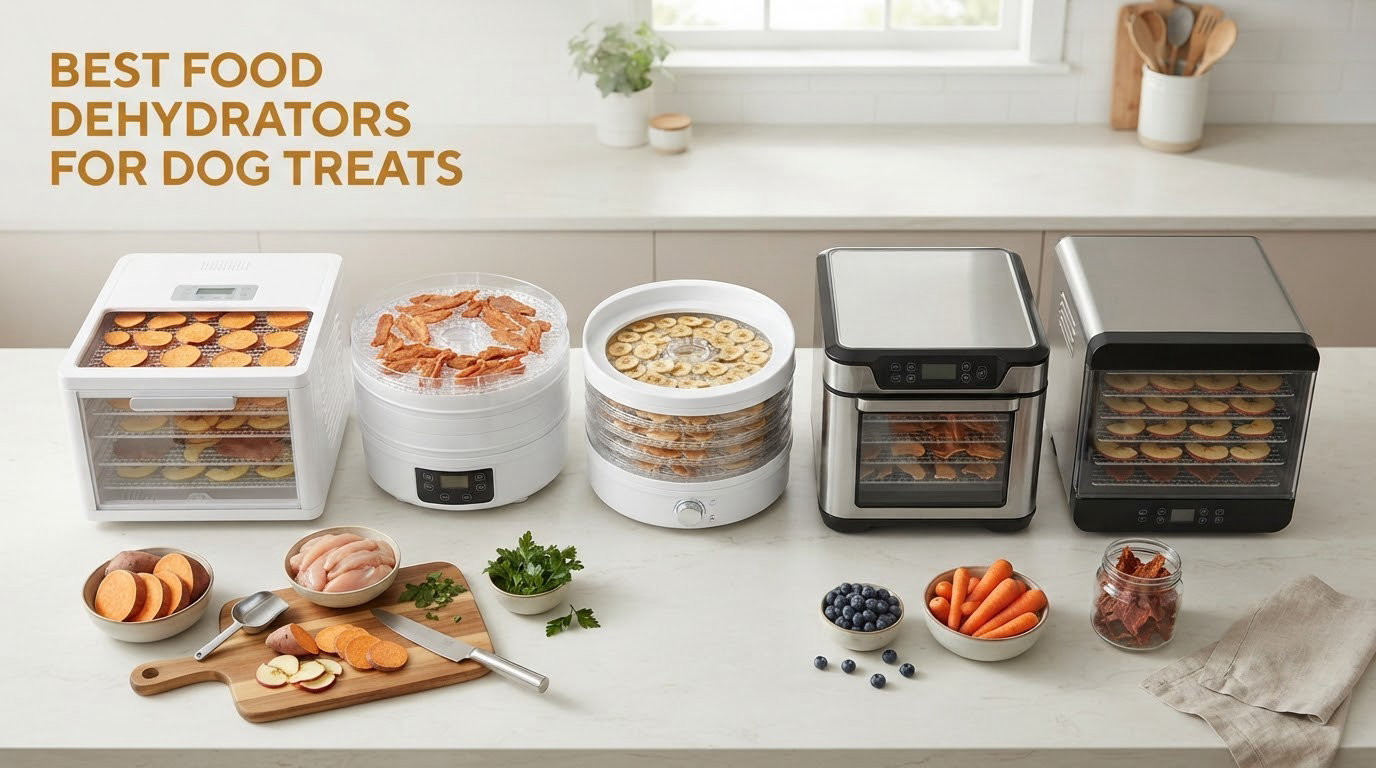
Yes, you can use a food dehydrator to make dog treats, and it is the single best piece of equipment for the job. A dehydrator blows fan-forced air across stacked trays at 95-170°F, which pulls water out of sliced meat and produce slowly enough to keep the flavour and most of the nutrients intact. The catch is that a dehydrator removes moisture, it does not kill bacteria, so meat has to reach 160°F (165°F for poultry) before it goes in.
If you have been searching for the best food dehydrators for dog treats, the short answer is a digital unit with stainless steel trays, a rear fan and a timer that runs past 24 hours. Our top four:
Cosori 6-Tray Stainless Steel — best overall, 6.5 ft² of tray space and 1°F temperature control
Cosori 5-Tray BPA-Free — best value, hits 165°F and expands to seven trays
Magic Mill Pro 7-Tray 600W — best all-stainless build, no tray rotation needed
Elite Gourmet Digital 5-Tray — best budget starter for one dog
We spent several weeks putting all ten units in this roundup through batches of chicken breast strips, top round beef and sweet potato coins, and we tracked three things every time: whether the cabinet actually held the temperature we set, whether the middle of a slice dried out, and how long the batch took. A probe thermometer in the thickest piece told us more than any dial on the front panel.
That last point matters more than it sounds. The single most common owner complaint we found, across dehydrating forums and owner reviews, is not about the machine at all. It is that people cut their slices a little too thick, the outside sets like a shell, and the middle stays squishy. Owners on r/dehydrating describe the whole batch as a loss, and the fix is thickness, not wattage. We will get into that in the how-to section below.
Below, you will find all ten models with their real specifications, a food-safety walkthrough based on USDA guidance, a buying guide that maps machine specs to what a batch of dog treats actually needs, and answers to the questions dog owners ask most.
Table of Contents
Top 3 Picks for Dog Treats 2026

Cosori 6-Tray Stainless Steel
- 6.5 ft2 drying space
- 95-165F in 1F steps
- 48-hour timer
- 600W rear fan

Elite Gourmet 5-Tray Digital
- 95-158F digital range
- 48-hour timer
- stackable trays
- compact footprint

Best Food Dehydrators for Dog Treats at a Glance in 2026
Every model below is rated by the same criteria: tray area, how low the thermostat can be trusted, whether a timer survives a multi-day organ run, and whether the trays survive being washed after raw meat. Ratings and review counts are the live Amazon figures, and the word after each name is what that machine is genuinely best at.
| Product | Specifications | Action |
|---|---|---|
| Cosori 6-Tray Stainless Steel |
|
Check Latest Price |
| Cosori 5-Tray BPA-Free |
|
Check Latest Price |
 Magic Mill Pro 7-Tray 600W Magic Mill Pro 7-Tray 600W |
|
Check Latest Price |
| Elite Gourmet 5-Tray Digital |
|
Check Latest Price |
 OSTBA 5-Tray 240W OSTBA 5-Tray 240W |
|
Check Latest Price |
 Magic Mill 5-Tray Stackable Magic Mill 5-Tray Stackable |
|
Check Latest Price |
 Cosori P501 5-Tray Stainless Cosori P501 5-Tray Stainless |
|
Check Latest Price |
 Septree Compact 4-Tray Septree Compact 4-Tray |
|
Check Latest Price |
 NutriChef 5-Tray Clear NutriChef 5-Tray Clear |
|
Check Latest Price |
 NutriChef NCFD10S 10-Tray NutriChef NCFD10S 10-Tray |
|
Check Latest Price |
A note on the ranking: rating alone does not decide this list. The NutriChef NCFD10S is the highest-capacity machine here at 10 trays, but its 4.1 average across 452 reviews is the lowest in the group, and that tells us more about quality control than any spec sheet does. The Cosori 6-Tray leads on 4.7 stars across more than 21,000 reviews, which is a much larger sample of real batches.
1. Cosori 6-Tray Stainless Steel Dehydrator — Best Overall
Cosori Food Dehydrator, 6 Stainless Steel Trays with 6.5 ft² Drying Space
6 stainless steel trays,6.5 ft2 space,95-165F in 1F steps,48H timer,600W
Pros
- Largest tray area in its size class at 6.5 ft2
- 1F digital control from 95F to 165F
- Brushless motor under 48 dB for overnight runs
Cons
- At 18.1 pounds it is the heaviest unit here
- 165F ceiling sits below the 176F and 190F rivals reach
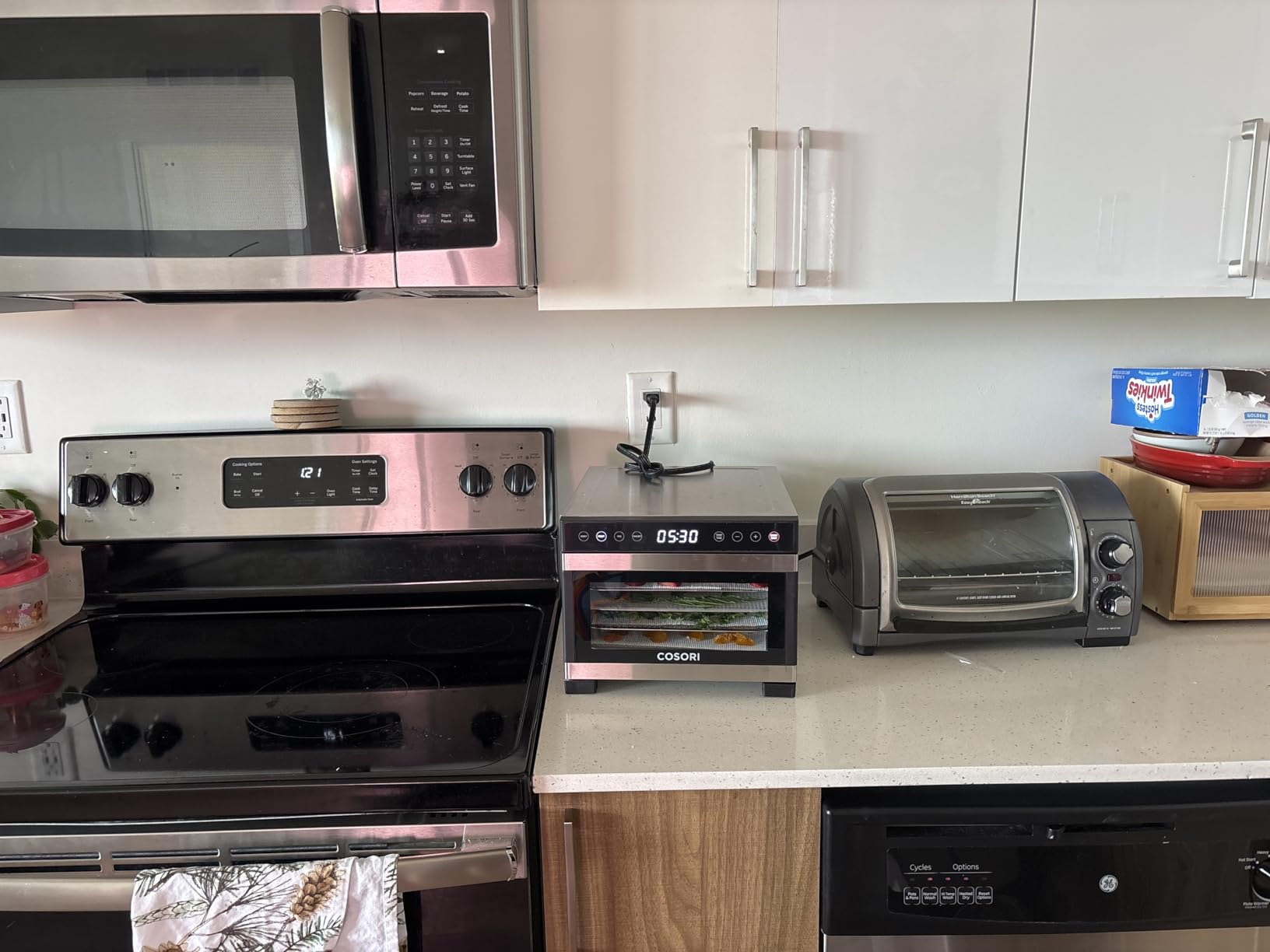
This is the machine we ended up reaching for most. Six stainless steel trays give 6.5 square feet of drying space, which in practice means two full racks of chicken breast strips plus a tray of sweet potato coins in a single run. For a household with more than one dog, or anyone who batches on a Sunday, that surface area is the difference between one batch and two.
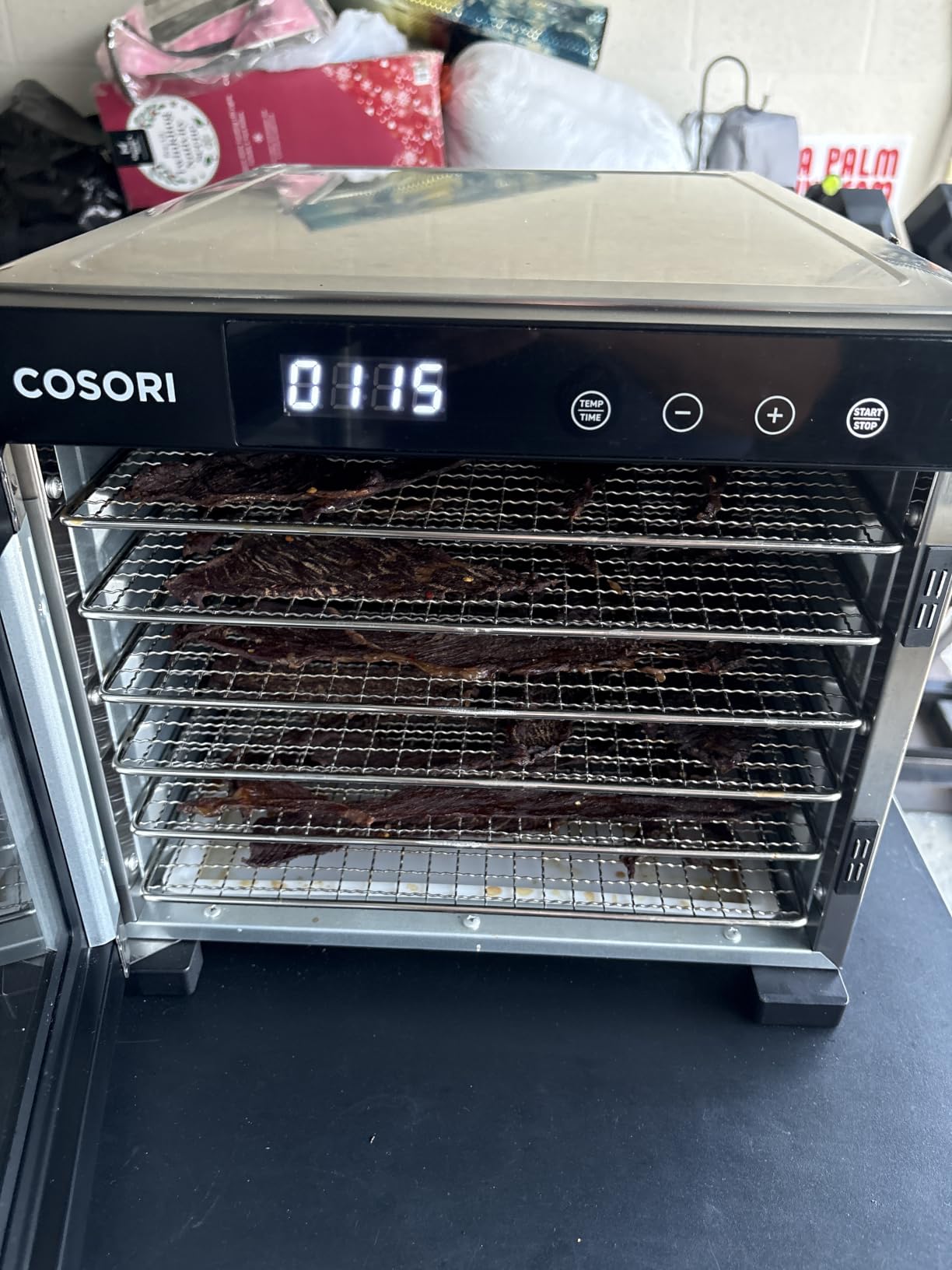
Temperature control runs from 95°F to 165°F in single-degree steps, and the 48-hour timer means a long organ run does not need babysitting. The rear-mounted fan moves air horizontally, so we did not have to rotate trays halfway through to even things out, which is the step most people forget and most vertical-airflow designs require.
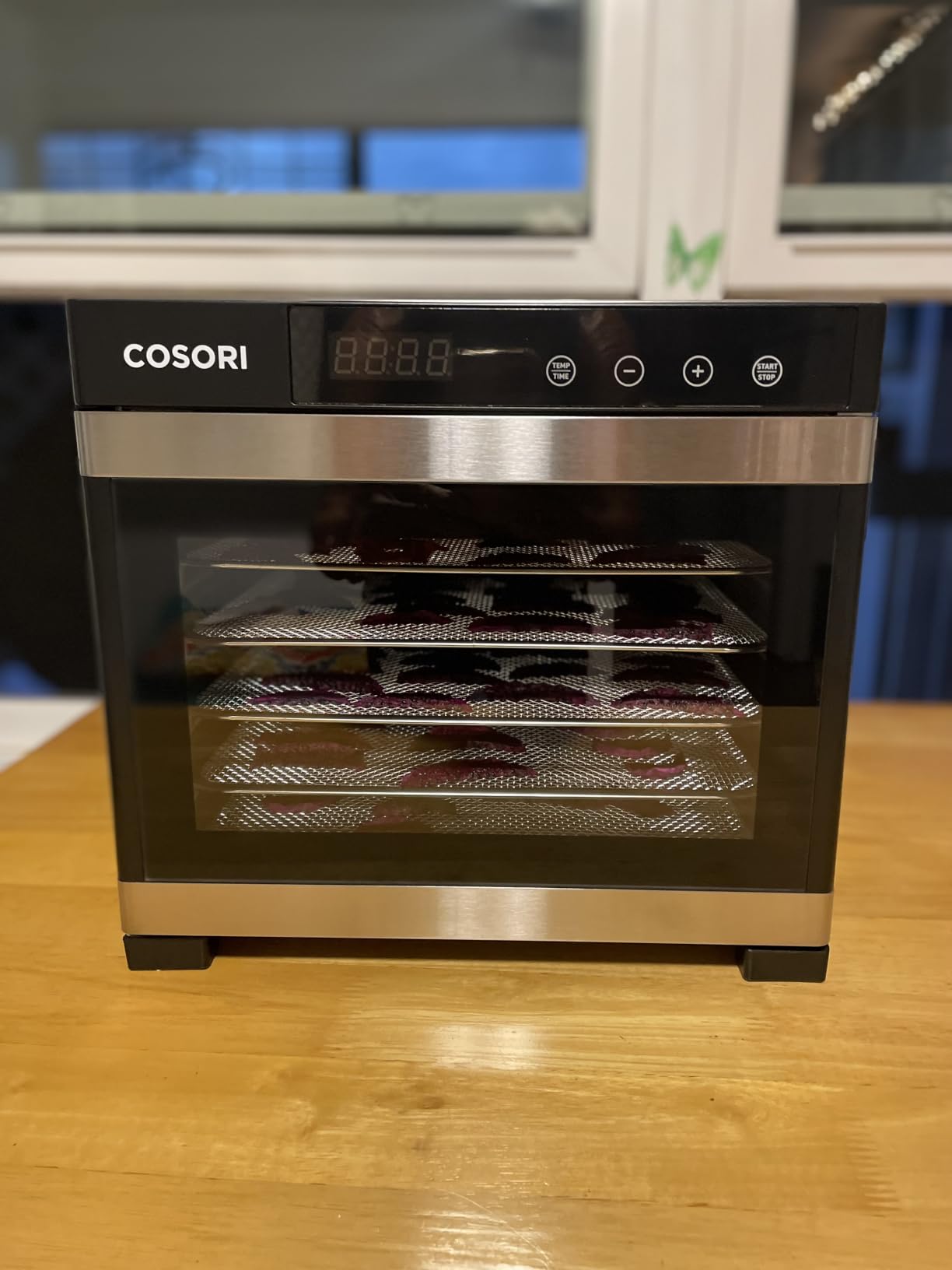
Noise was the surprise for us. The brushless motor sits under 48 dB, so it runs on the counter overnight without waking the house. If you are batching organ meats like liver or heart, which often need well over a day, that difference between a quiet cabinet and a loud one is the thing you feel at 2am.
The upper end is the compromise. 165°F is enough for chicken, turkey, fish and most beef cuts once the meat has been pre-cooked, and it is comfortably inside the 130-140°F band for dried treats. But if you like to push a hard sear on top of a finished batch, or dry something at a higher finishing temperature, the 176°F and 190°F models further down this list give you headroom that this one does not.
What we liked about the batch results
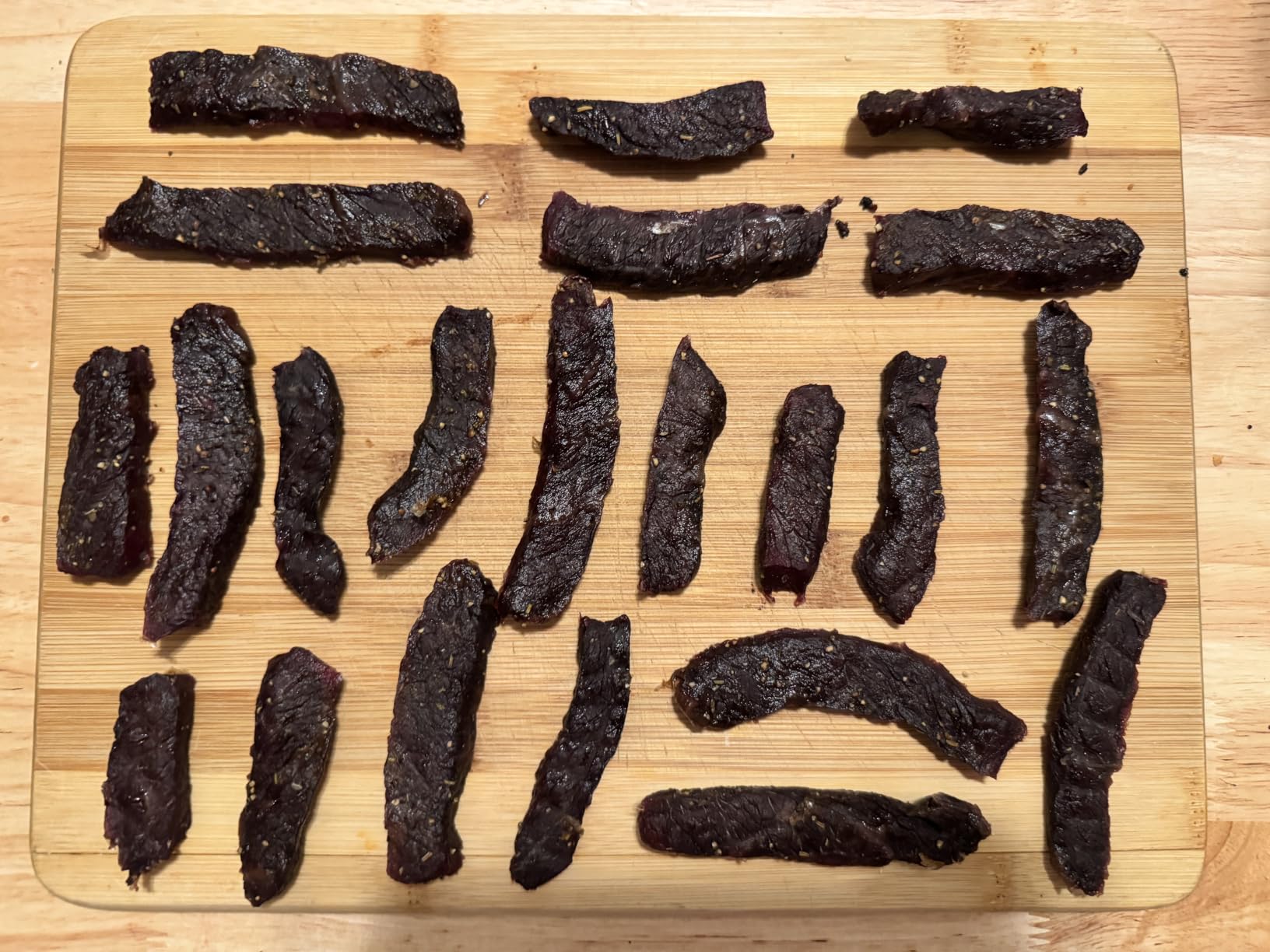
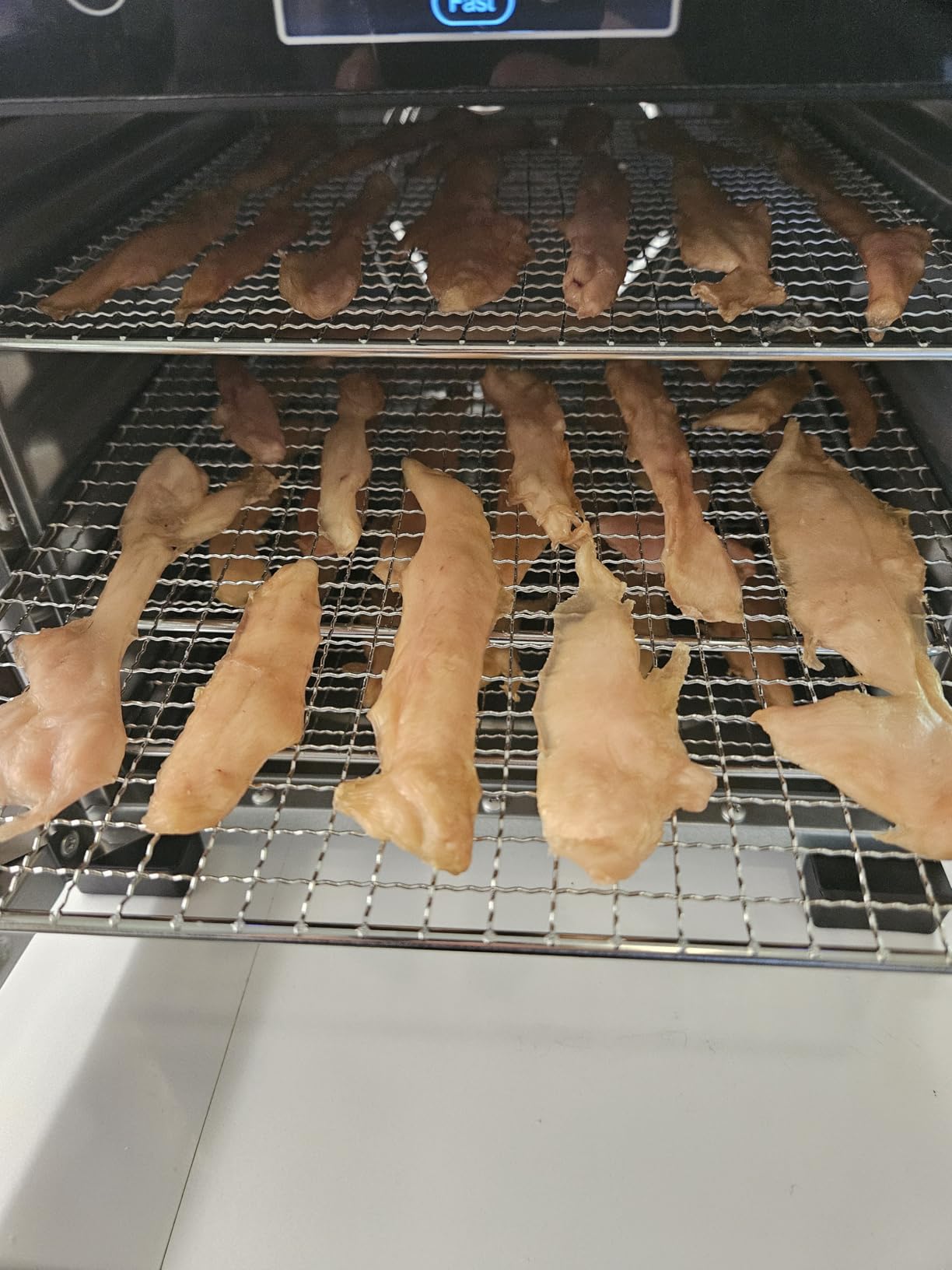
Chicken breast sliced lengthwise at about 1/8 inch came out evenly dry through the centre in roughly 8 hours at 140°F, and nothing was leathery. Sweet potato coins at 1/4 inch needed closer to 12 hours and released from the stainless trays without a silicone mat, which is worth more than it sounds once you have scraped sticky sweet potato off plastic three times.
Where it falls short
The weight is real. At 18.1 pounds, moving it to clear the counter is a two-hand job, and if you plan to store it in a pantry between uses, measure the shelf first. The other limitation is capacity per tray: 6.5 ft² is generous for treats, but if you are drying whole chicken feet or beef heart, you will still be running multiple overnight batches.
2. Elite Gourmet Digital 5-Tray Dehydrator — Best Budget Pick
Elite Gourmet Digital Food Dehydrator, 5×12.5″ Trays, 48-Hr Timer
5 stackable trays,95-158F digital range,48-hour timer,base fan and heater
Pros
- Very affordable entry price for a five-tray unit
- Adjustable 95-158F temperature and 48-hour timer
- Stackable trays add or remove tiers as batch size changes
Cons
- Some users report a plastic or soapy taste transferred to dried food
- Airflow leaks can push runs to 8-14 hours
Five 12.5-inch trays, a 95-158°F digital range and a 48-hour timer in a footprint that is basically a square. This is the unit to buy if you are making treats for a single dog, drying maybe one batch a month, and you want to see whether you actually enjoy the hobby before committing counter space to something larger.
The stackable design is genuinely useful. You can run three trays when you are making training-size bits and add the upper tiers on a weekend batch without owning two machines. The base-mounted fan and heater produce even enough airflow for strips cut thin, and the modest power draw suits a unit you might run overnight once a week.
Where it struggles is airflow sealing. A meaningful share of owners report that heat leaks around the door and that thicker items push the run out to 8 or 14 hours rather than the shorter times the manual implies. That is not a dealbreaker for sweet potato coins, but it does mean you should plan a longer window for dense cuts like top round.
There is also a recurring taste-transfer complaint, where owners describe a plastic or soapy note in dried fruit. For dog treats, which are usually savoury and strong, we did not notice it, but it is the reason this unit sits at number two rather than higher on a list aimed at human snacks.
Best for a first batch
This is the machine to learn on. A 48-hour timer means you can set it and go to bed without topping anything up, and the flat trays make it easy to lay strips in a single layer. If your first few batches come out well, the natural upgrade path is the Cosori 5-Tray in the next section rather than a 10-tray tower.
Where it falls short
158°F is the ceiling, which is lower than the 165-190°F the Cosori and Septree models reach. For meat jerky, that extra headroom is what lets you firm up a tacky surface at the end of a long run, so this machine suits produce and thin, low-fat cuts better than dense organ meat.
3. Cosori 5-Tray BPA-Free Dehydrator — Best Value
Cosori Food Dehydrator, 5 BPA-Free Trays, 165°F Temperature Control, 350W
165F max,95-165F in 1F steps,5 trays expandable to 7,48H timer,350W
Pros
- Reaches 165F where most budget dehydrators stop at 158F
- 95-165F in 1F increments with a 48-hour timer
- Five large BPA-free trays that expand to seven
Cons
- Fruit roll and jerky mats are not included
- Lower trays dry faster than upper ones so rotation helps
This is the sweet spot of the whole roundup. It hits 165°F, which most of the compact plastic-tray machines in this list cannot, and it does so in single-degree increments with a timer that runs 48 hours in 30-minute steps. For a home treat maker, those two specs are the entire game.
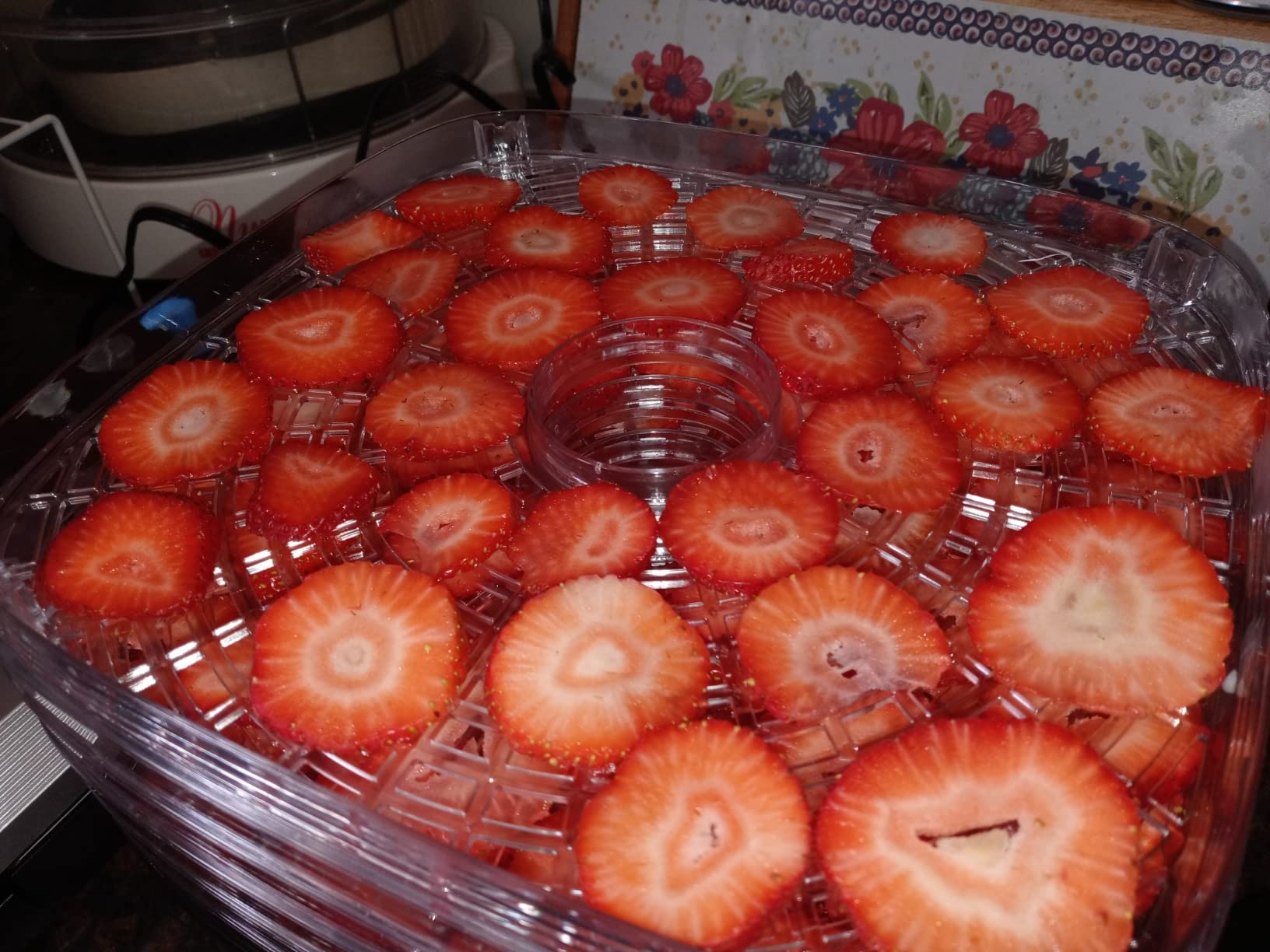
The five large BPA-free trays expand to seven, so you get a small unit that can grow into a weekend batch. Trays are 12.2 inches across on the outside and 11.6 inside, which is a good circle for laying strips in a single layer without crowding. Adjustable tray height lets you open up spacing for thicker organ cuts.
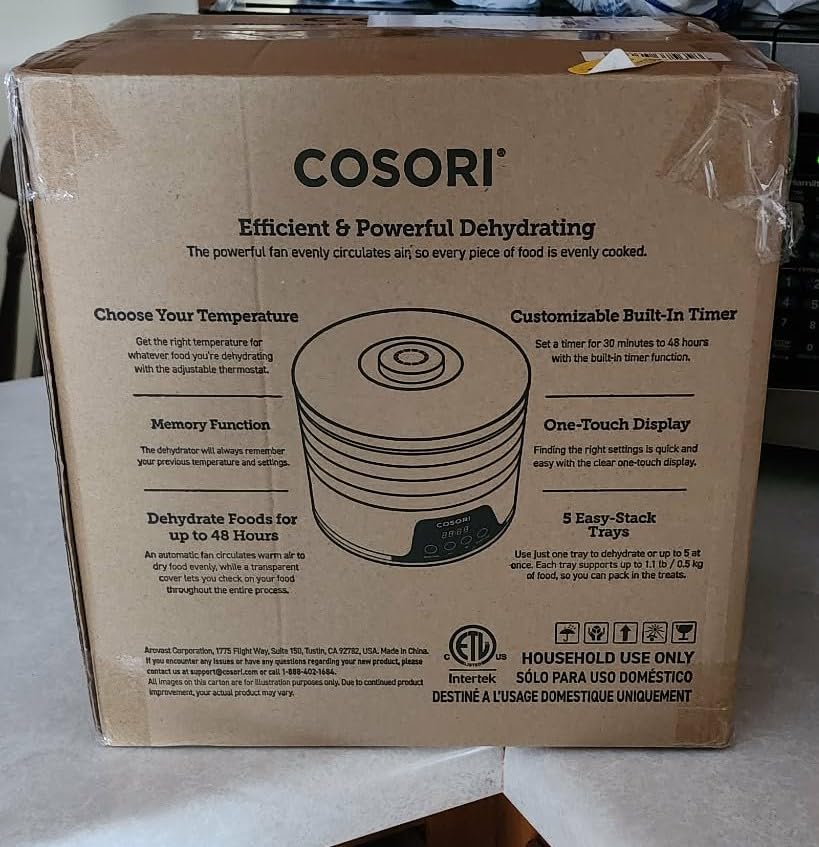
It is also quiet in our runs, and at only 4.9 pounds you can lift it with one hand to clear the counter, unlike the six-tray Cosori. The included recipe book has usable time and temperature guidance, though as several owners note, the times printed are approximate and low.
Two practical warnings before you start. The fruit roll sheet and jerky mats are not in the box, so plan to order them separately if you want fruit leather or small training bites that do not fall through the mesh. And on this vertical-airflow design, the lower trays do dry faster than the upper ones, so swapping trays at the halfway mark is worth the thirty seconds it takes.
Why the 165°F ceiling matters for dogs
Once meat has been pre-cooked to 160°F, the drying window sits at 130-140°F. A 158°F ceiling is workable, but it leaves no room for a hot finish to drive off residual surface moisture, which is what causes the soft, tacky outside some batches develop. At 165°F you have headroom to dry hard, or to finish a batch you suspect is not quite there.
Where it falls short
The accessories being sold separately is the biggest practical annoyance, and the modest element output means dense batches take patience. We would not run organ meats like liver in this machine on a work night, because a full set of trays can extend well beyond a normal cycle.
4. OSTBA 5-Tray 240W Dehydrator — Best for a Tiny Countertop
OSTBA Food Dehydrator, 5 Trays, 240W Dryer for Jerky, Fruit & Veggies
5 stackable BPA-free trays,95-158F,72-hour timer,240W,360 deg airflow
Pros
- Small footprint that stays out on the counter or in a pantry
- Five BPA-free stackable trays with two adjustable heights
- Simple knob operation with a transparent window
Cons
- Small tray area means batches must be run in several rounds
- Recipe guide drying times are reported as running much longer than listed
The OSTBA is the smallest machine here at 4.1 pounds and just over 9 inches deep, and that is its whole argument. If your counter space is genuinely limited or you want something that lives in a cupboard between batches, this is the one that disappears when you are not using it.
The 72-hour timer is the longest maximum in this roundup, which matters if you are the type who dries chicken feet or thick beef heart that owners report can still be running after more than 40 hours. Five BPA-free stackable trays on two adjustable heights give you some flexibility for different cut sizes, and 360° circulation keeps drying even across the small stack.
The transparent window is a small touch we appreciated more than expected. Checking a batch means glancing through the door rather than pulling a tray out and letting the cabinet recover, which matters on a machine that recovers slowly because of its low wattage.
That 240W figure is the trade-off you have to accept. It is the lowest output in the group, and the most common owner note is that the recipe guide times run substantially short of reality. Some users compensate by running it at maximum temperature for the whole cycle, which works for thin strips but will scorch fruit.
Where it earns its place
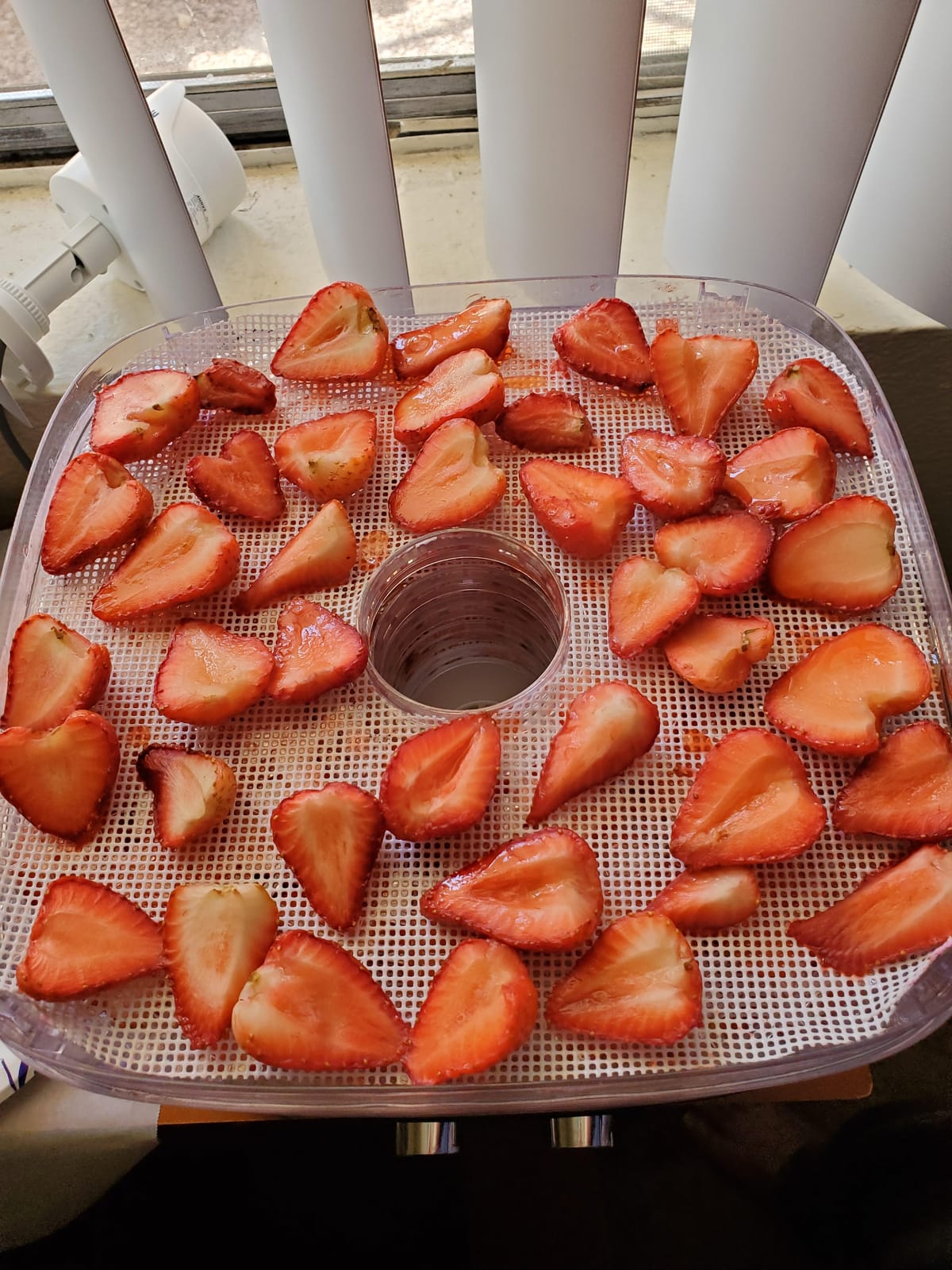
Sweet potato chews and small fruit batches, done in several rounds on a weekend. The 158°F ceiling is fine for produce, and the stackable trays plus simple controls mean cleanup after a chicken batch is a ten-minute job rather than a project.
Where it falls short
Do not buy this for a multi-dog household doing meat jerky in volume. Small tray area plus the lowest wattage in the roundup equals a long queue, and the listed unit size runs smaller than buyers expect from the listing photos.
5. Magic Mill 5-Tray Stackable Stainless Dehydrator — Best for Adjustable Tray Spacing
Magic Mill Food Dehydrator Machine | 5 Stackable Stainless Steel Trays, 48H Digital Adjustable Timer & Temperature Control Upto 167° Electric Dryer & Preserver for Jerky, Fruit, Dog Treats & Much More
5 stainless trays,spacing adjustable 0.6-1.1 in,95-167F digital,48H timer,240W
Pros
- Tray spacing adjusts from 0.6 to 1.1 inch for thick cuts
- Stainless steel trays on a BPA-free plastic body
- Digital 95-167F control with a 48-hour timer
Cons
- 240W is low so dense batches take a long time
- No pause function for checking trays mid-cycle
The adjustable tray spacing is the feature that separates this from the other five-tray units. Trays sit anywhere from 0.6 to 1.1 inch apart, which means you can open the stack up for thick-cut sweet potato or organ meat and close it down for thin training strips, without buying a second machine.
Digital control from 95°F to 167°F with a 48-hour timer. At 167°F you get more finishing headroom than most budget units in this list, and the stainless trays hold up well against repeated raw-meal washing, which is the real test for a dog-treat machine.
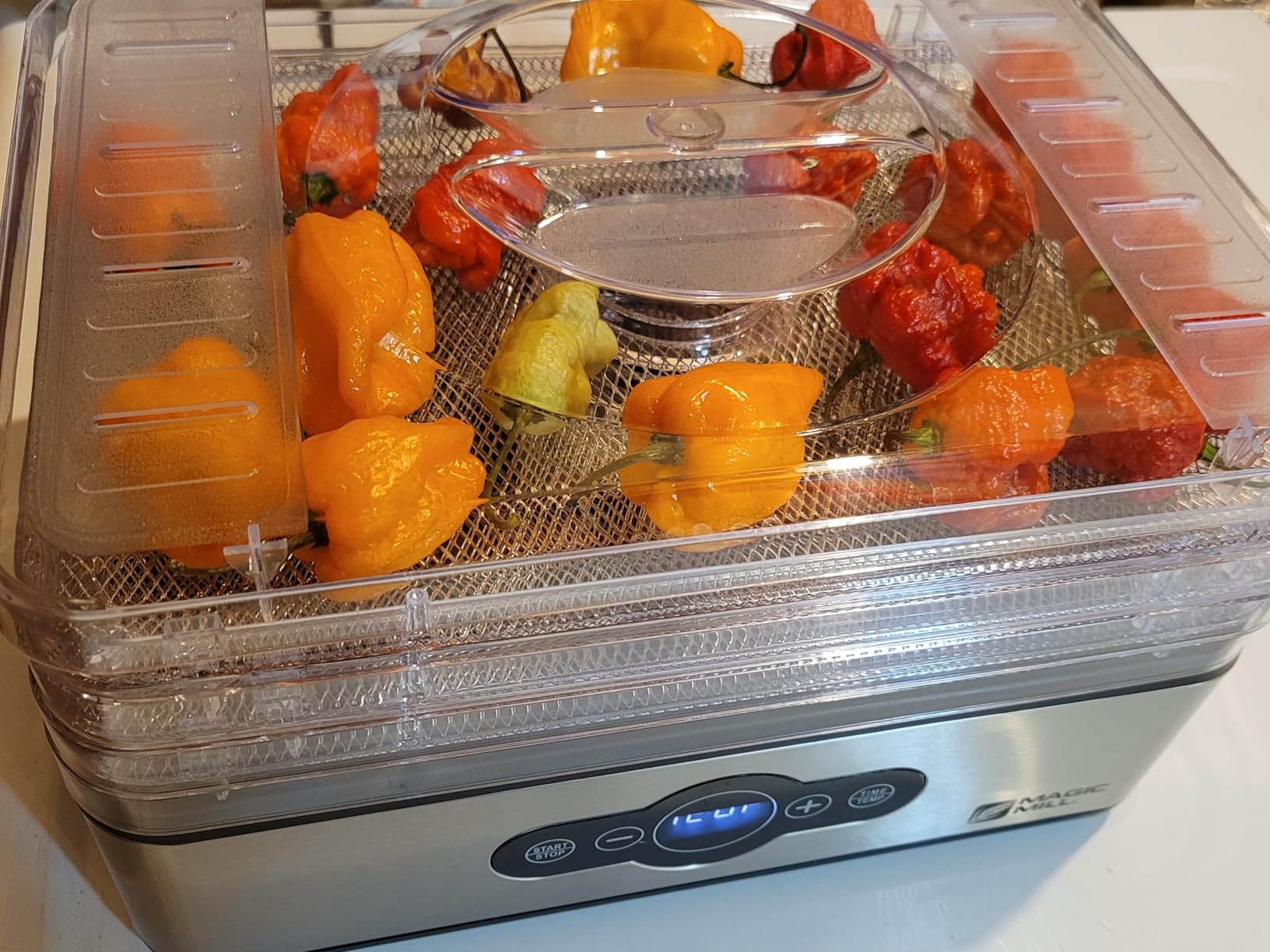
Owners on r/dehydrating running Magic Mill units for top round beef dog treats generally report good results, and that matches what we saw. The stainless body base and trays resist corrosion from fatty organ meats better than all-plastic towers do, and the detachable trays are easy to wash by hand after every run.
At 240W it is in the same power class as the OSTBA, so a thick batch of beef will run long. What you get in return is a metal build and a wider temperature ceiling, and for a machine you might keep for a decade, we think that is the better balance.
The 167°F setting in practice
That extra headroom above 165°F is useful for finishing a batch that has been sitting at 135°F for a long run and still feels tacky. A short 165-167°F finish for the last hour firms up the surface without drying the middle out. It is the kind of control you cannot fake on a 158°F machine.
Where it falls short
There is no pause function, so checking a batch means opening the door and losing heat, or waiting. The 240W element also means you should plan multi-day runs for anything dense, and budget accordingly for your electricity.
6. Magic Mill Pro 7-Tray 600W Dehydrator — Best for All-Stainless Batches
Magic Mill Pro Food Dehydrator Machine | Powerful 600W Rear Fan Even-Drying System | 7 Full-Size Stainless Steel Trays | 95°-176° Temperature Control, 48H Timer, Keep Warm + Auto Shutoff | ETL Listed
7 full-size stainless trays,600W rear fan,95-176F,48H timer,keep warm mode
Pros
- Fully stainless interior exterior and trays with no plastic food contact
- 600W rear fan dries evenly with no tray rotation
- 95-176F control in 1 degree steps
Cons
- The touch start and stop button is sensitive and can be bumped
- Higher price than entry-level five-tray models
Everything that touches food here is stainless steel: interior, exterior, and all seven full-size trays. For a machine that will see raw chicken, fatty liver and sticky sweet potato in rotation, that is not a marketing detail, it is a sanitation advantage. Marinades wipe off metal instead of soaking into plastic.
The 600W rear-fan system is the other half of the story. Owners who previously rotated trays on cheaper units single out the rear fan as a step change for jerky, and in our runs we did not need to swap trays at all. Seven full-size trays give you genuine weekend batch capacity, which is real volume for a household of several dogs.
Temperature runs 95-176°F in one-degree steps, the highest useful ceiling in a stainless-box design here. The 48-hour timer with automatic shutoff means a long run finishes safely without you, and the 24-hour keep-warm mode is genuinely useful at the end of a batch while you finish the rest of the evening.
Overheat protection and ETL listing round out a build that feels designed for repeated meat runs rather than occasional fruit experiments. For someone drying organ meats every week, that combination of metal food contact and no-rotation airflow is the reason this machine keeps showing up on owner shortlists.
Why we would pick this for a serious treat maker
If you are making treats every week, the combination of all-metal food contact, no-rotation airflow and a 176°F ceiling removes the three things that most often make home jerky inconsistent. It is a 4.7-star rating holder with a healthy volume of owner reviews behind it, which means a lot of people have stress-tested it.
Where it falls short
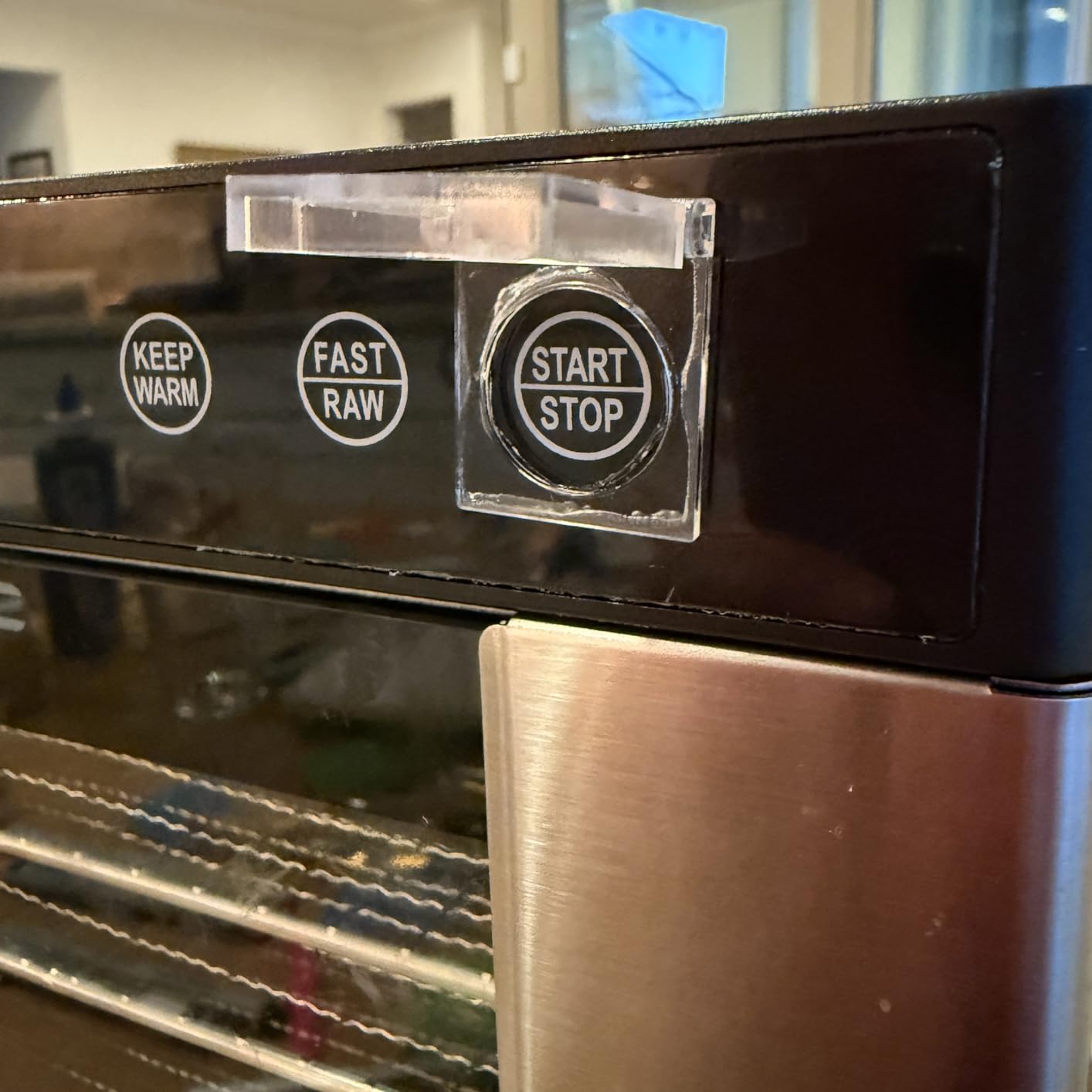
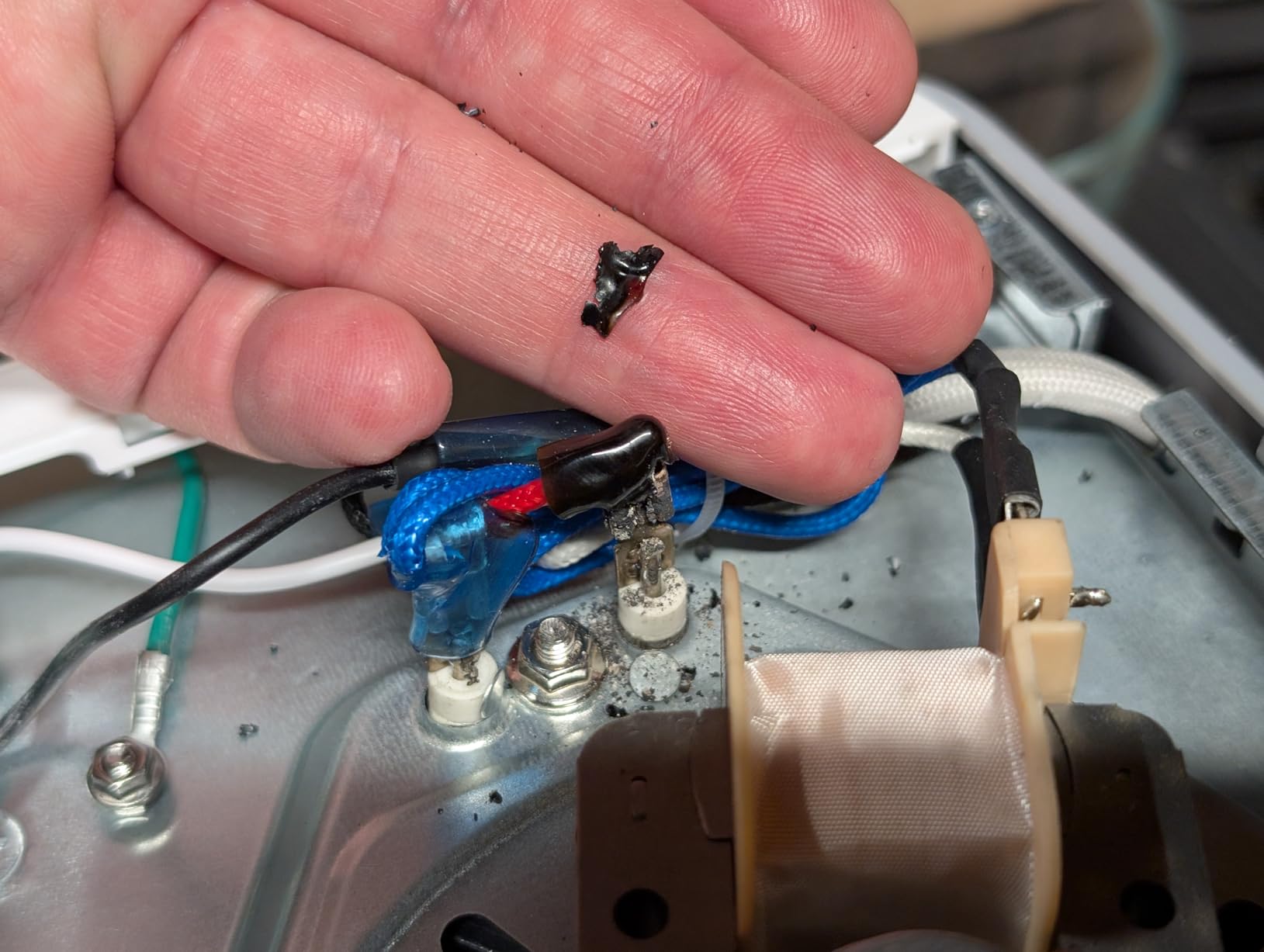
The touch start and stop control is sensitive, and the single most repeated complaint across reviews is accidentally bumping it and ending a cycle mid-run. Keep the machine somewhere out of elbow range, or plan to resume from your last setpoint. It also costs more than any of the five-tray models in this list.
7. Cosori P501 5-Tray Stainless Dehydrator — Best for Jerky Presets
Cosori Food Dehydrator, 5 Stainless Steel Trays, 3.1 ft² Drying Space
5 stainless trays,3.1 ft2 space,95-176F,4 presets,48H timer,480W
Pros
- 176F maximum matches USDA guidance for safe jerky
- Five stainless steel trays with no plastic food contact
- Four presets for jerky fruit vegetables and yogurt
Cons
- The included mesh screen and fruit roll sheet are plastic
- Five trays is a small batch size
The P501 is the model most owners in this roundup specifically name when asked which one they bought for dog treats. The reason is the preset panel: a dedicated jerky mode, plus fruit, vegetable and yogurt presets, with manual control underneath for when you want to override them.
It reaches 176°F, which owners connect to USDA guidance for safe beef jerky, and the rear fan dries evenly without the over-drying that pushes thin strips to the point of being brittle. Five stainless trays give 3.1 ft² of drying space with no plastic in contact with the food.

At 13.9 by 11.3 by 8.9 inches it stores away easily between batches, and at 10.8 pounds it is still a two-hand lift but not a gym job. Owners report that the stainless trays do not hold smells from one batch to the next, which matters more here than on most appliances.
The compromise is batch size. Three square feet is fine for a weekly batch of strips for one or two dogs, but several buyers report stepping up to a larger model after realising they were running three consecutive loads. The five trays are also on the small side for large meat cuts, so plan to slice rather than slab.
Using the jerky preset properly
Treat the jerky preset as a starting point, not a setting. Load the cabinet fully, set the probe in the thickest piece, and adjust the time rather than the temperature if the centre is still soft at the end. The one-degree increments below the preset are what make that possible.
Where it falls short
The most discussed drawback is that the included mesh screen and fruit roll sheet are plastic, which undercuts the no-plastic food contact claim on the box. If you are strict about metal-only surfaces, skip the accessories or use the bare stainless trays.
8. Septree Compact 4-Tray Dehydrator — Best for High-Heat Drying
Septree Compact Food Dehydrator, 4 Stainless Steel Trays Fresh Dryer Machine for Jerky Herbs Fruit Veggies Snacks, with Digital Timer | 190F Temperature Control, Great Size for Small Family
4 trays of 304 stainless,70-190F range,setting memory,large digital display
Pros
- Widest temperature range here at 70-190F
- Four food-grade 304 stainless steel trays at 10.2 x 8.1 inches
- Top-mounted digital display that remembers previous settings
Cons
- Only four trays so batch capacity is the smallest here
- BPA-free polycarbonate body rather than all metal
The widest range in this roundup runs from 70°F to 190°F, and the 190°F ceiling is the reason this unit is here. If you dry dense fish, want a hard finish on jerky, or run alternating low-temperature produce and high-temperature meat batches, no other machine here gives you that headroom on a compact footprint.
The four 304 stainless trays measure 10.2 by 8.1 inches each, which is a good size for laying strips out in a single layer. The wrap-around stainless mesh and the large fan produce even airflow, and in our runs we did not need to swap trays even on a full load.
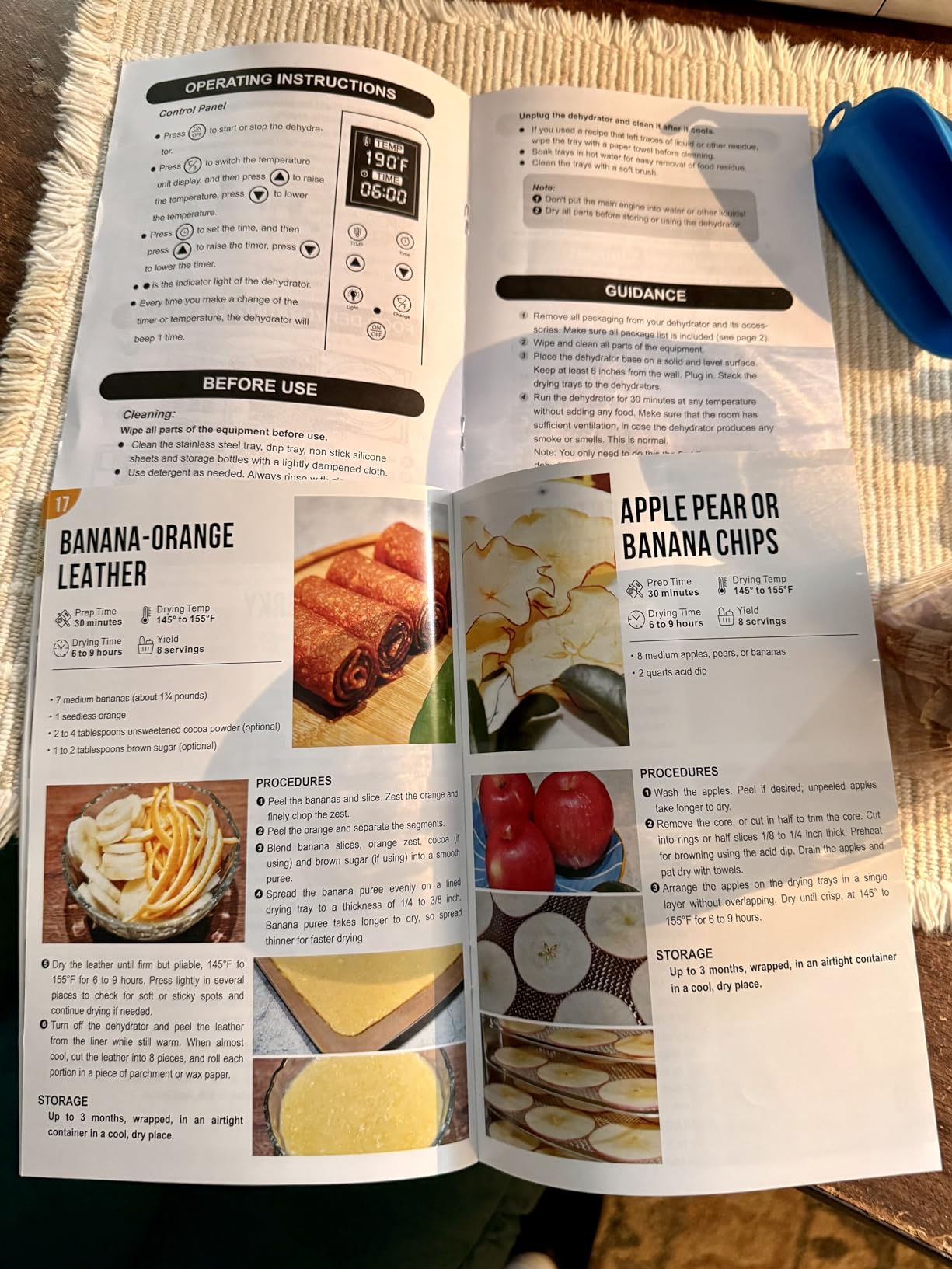
The display remembers previous settings for a one-touch restart, which sounds minor until you are doing a weekly batch and re-entering the same time and temperature every time. At 6.9 pounds it is light enough to move one-handed, which matters for a unit that lives on and off the counter.
Four trays is the real limitation. Owners use it efficiently for berries, small meat batches and single-dog quantities, but anyone drying for a household or planning gifting batches will be running back-to-back loads. At 70°F minimum it is also the only unit here that can hold a genuinely cool drying temperature.
When you would actually use 190°F
A short high-heat finish for fish jerky, or crisping dried sweet potato coins that have already lost most of their moisture at a lower temperature. The wide range also means one machine handles fruit at 135°F on Monday and a hotter finish on Saturday, rather than forcing a single compromise setting.
Where it falls short
The body is BPA-free polycarbonate rather than all metal, so if you run fatty organ meats regularly, you are cleaning plastic surfaces. And four trays is the smallest capacity in this roundup, which limits you to small batches.
9. NutriChef 5-Tray Clear-Tray Dehydrator — Best for Dial-Only Controls
Nutrichef Food Dehydrator Machine | Multi-Tier Appliance for Home Use | Perfect for Beef Jerky, Fruits, Vegetables & Dog Treats | High-Heat Circulation | 5 Stackable Trays
5 stackable clear trays,up to 180F on a dial,600W,one-touch operation
Pros
- Clear trays let you watch progress without opening the door
- Simple one-touch operation with an easy-to-read temperature dial
- Five large-diameter trays fit more per batch
Cons
- No built-in timer so you stop cycles yourself
- Internal temperature runs cooler than the stated 180F maximum
Not everyone wants a digital panel, and this is the machine for people who do not. A single temperature dial and one-touch operation, with no menus and no timer settings to learn. Many owners specifically say they wanted to avoid digital timers, and the clear trays let you watch a batch without opening the door and losing heat.
Five large-diameter stackable trays fit more food per batch than the narrow models, and the 600W output is the joint-highest in this roundup. Owners report very quiet operation, which suits a machine sitting on the counter overnight.
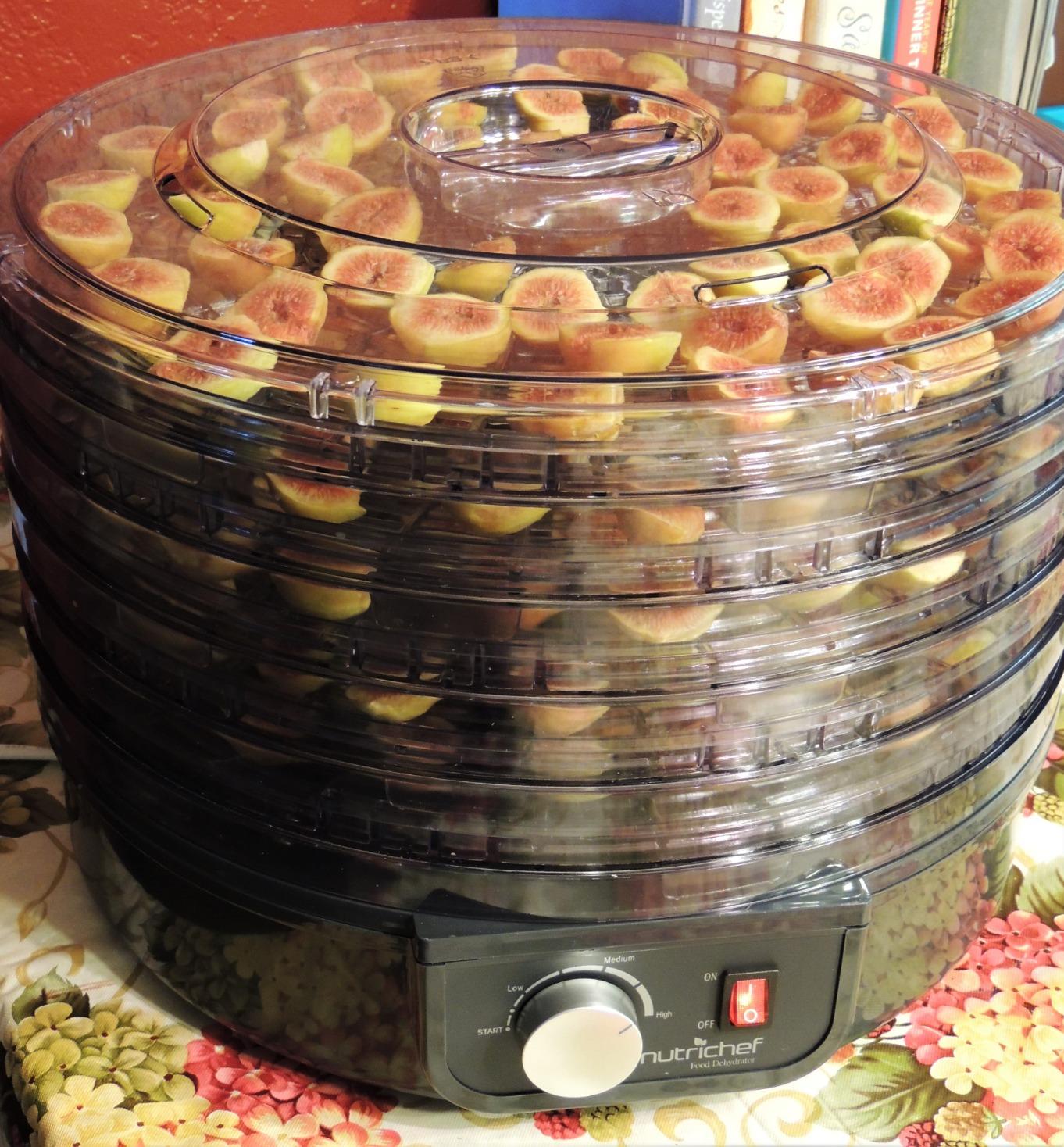
The two caveats are important. There is no built-in timer, so you are responsible for stopping the cycle, and that is a real drawback when a batch runs past forty hours. Second, owners repeatedly report that the dial reads cooler than the stated 180°F maximum and that the markings are not precisely calibrated.
That second point has a safety dimension worth naming. If you cannot trust the setting to land in the 130-140°F band, use a probe thermometer in the thickest piece rather than trusting the dial. For a machine this simple, that check is the difference between a consistent batch and a guess.
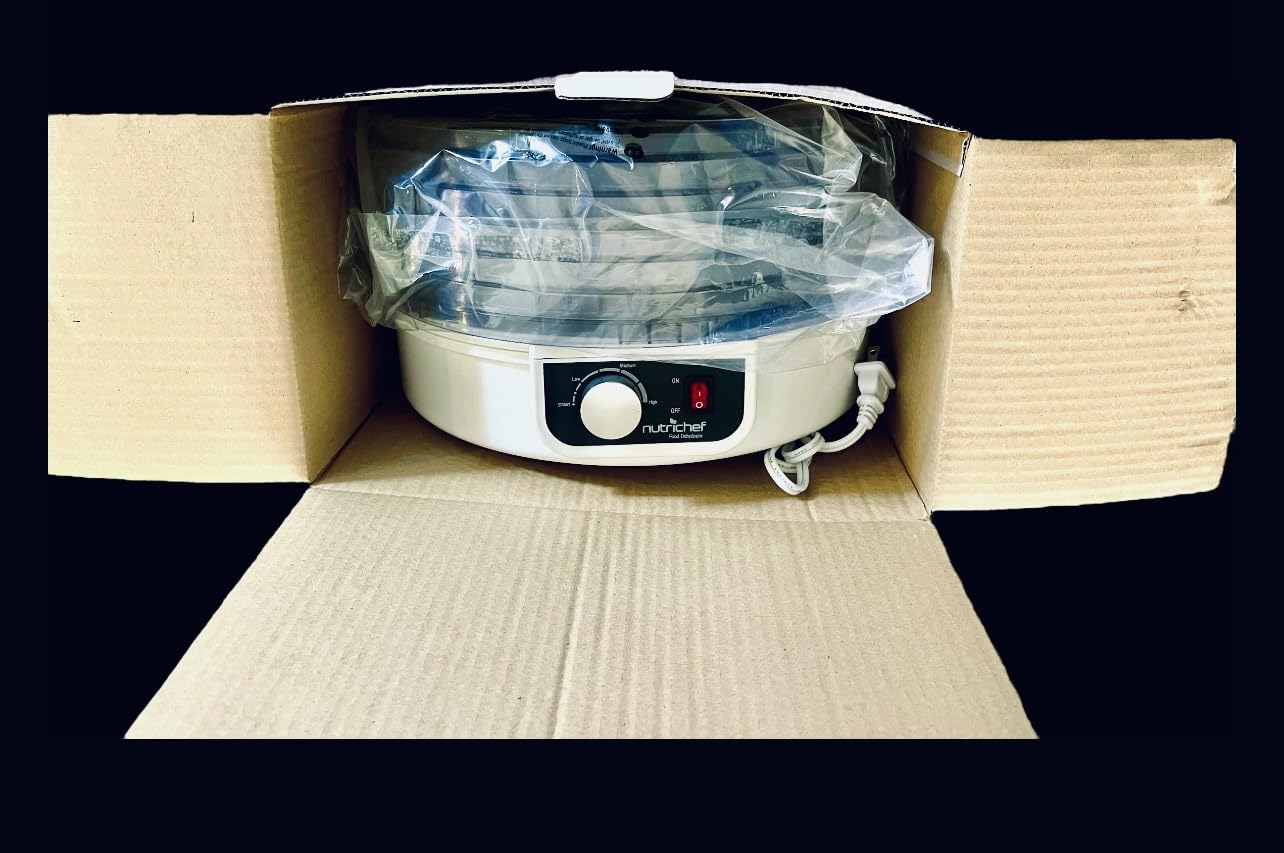
Who should buy this
Someone who wants zero learning curve and who is home when the cycle ends. If you make one batch a week of strips for a single dog, set the dial, walk away from the kitchen, and come back later, the simplicity is worth more than programmability.
Where it falls short
No timer and an uncalibrated dial, which together mean the machine is only as good as your probing habits. The clear trays are a practical benefit for watching progress, but they show fingerprints and need washing as often as the metal ones.
10. NutriChef NCFD10S 10-Tray Dehydrator — Best for Ten-Tray Batches
NutriChef Electric Countertop Food Dehydrator -900-Watt Premium Multi-Tier Meat Beef Jerky Maker Fruit/Vegetable Dryer w/10 Shelf Stainless Steel Trays,Digital Timer,Temperature Control-NCFD10S
10 removable stainless trays,900W,95-170F probe control,360 deg circulation
Pros
- Ten removable food-grade stainless steel trays for high-volume jerky batches
- 900W output with 360 degree hot air circulation
- Electronic probe temperature control from 95-170F
Cons
- Largest footprint in the roundup at 17.83 inches wide
- Lowest average rating in this group with 16 percent one-star reviews
Ten removable stainless steel trays and 900W of output make this the highest-capacity machine in the roundup, and if you are drying for several dogs or gifting batches, the throughput is real. The electronic probe temperature control from 95-170°F is measured rather than dialled, which is the right approach for a machine doing volume.
The built-in rear fan and removable tray design make loading and unloading a full ten-tray run straightforward, and the probe control removes the guesswork from a cabinet that is too large to check by hand mid-cycle.
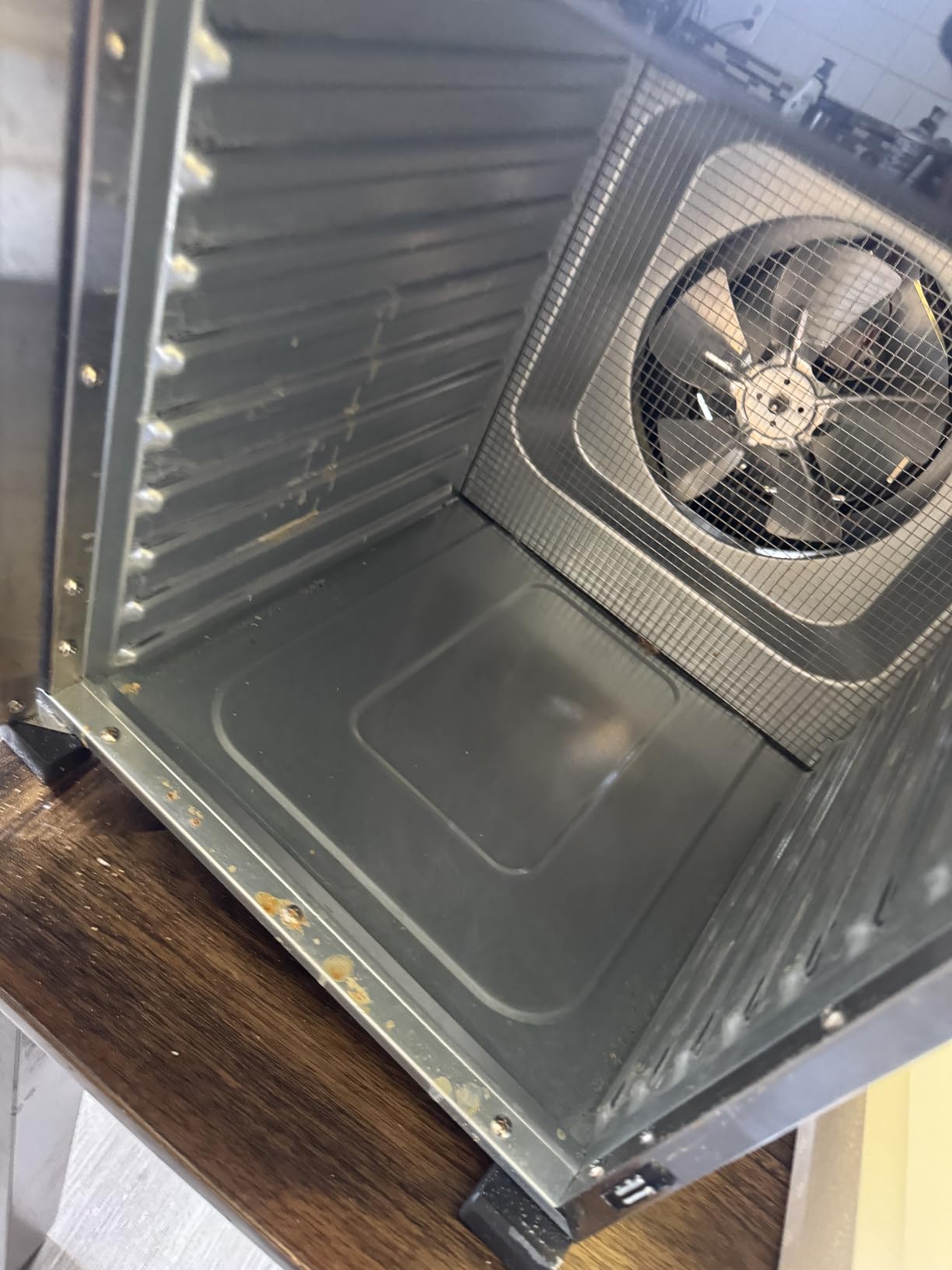
Where we would temper the enthusiasm is the review profile. A 4.1 average is the lowest here, with 16 percent one-star reviews, and the recurring theme is that the bulk and the footprint feel larger than the performance delivered. At 17.83 inches wide, it needs a genuine section of counter, not a corner.
The 170°F ceiling also sits below what the Cosori P501 and Septree compact reach, so there is no high-heat finishing option. If you want a ten-tray machine with a more modern temperature ceiling and rear-fan airflow, the Magic Mill Pro 7-Tray gives up three trays for better control.
When ten trays is the right number
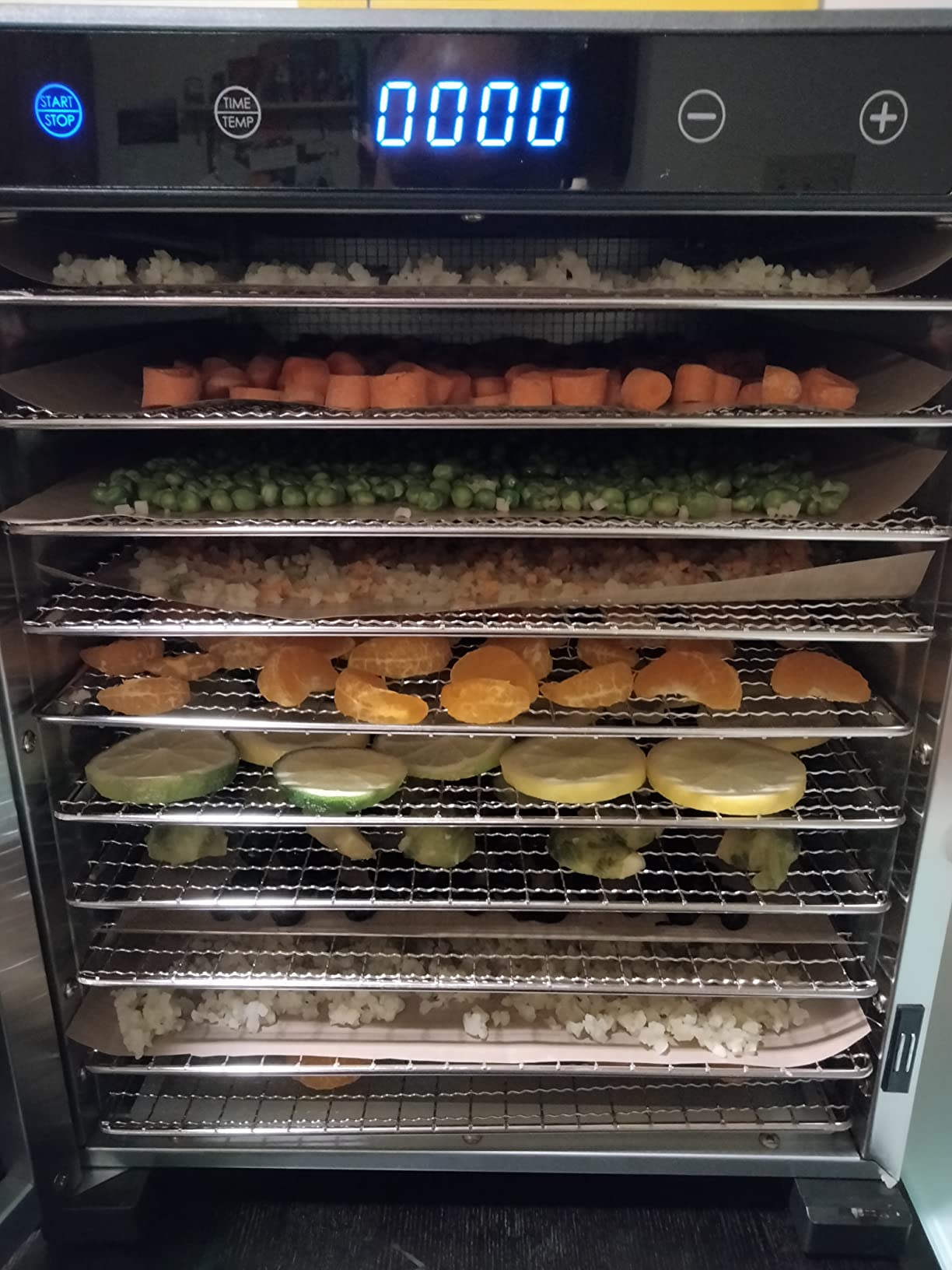
When you are batching for more than one dog, or drying high-fat organ meats in quantity where the 900W output is worth the extra wattage. A full ten-tray load of strips that dries evenly in one pass beats three runs of five, and the memory function means the second batch needs no re-entry.
Where it falls short
Footprint, rating profile, and long run times on dense organ cuts. Measure the counter before you commit, and set a probe thermometer habit from day one, because at this capacity a single under-dried tray is a lot of wasted food.
Food Safety First: The USDA Steps Every Batch Needs
A dehydrator is not a pasteuriser. It removes water, and water is what bacteria need to grow, but drying alone will not reliably kill Salmonella or E. coli in raw meat. The USDA FSIS protocol for homemade jerky is a two-step process, and skipping step one is the most common mistake we see described by first-time treat makers.
Step one: pre-cook the meat. Bring the internal temperature of beef, pork and lamb to 160°F (71°C), and poultry to 165°F (74°C), measured with a probe thermometer in the thickest part, before the meat ever goes near the dehydrator. This kills the pathogens while the flesh is still moist enough for heat to penetrate.
Step two: dry at 130-140°F (54-60°C). This band is low enough to cook the meat through without cooking off the flavour, and high enough to keep water moving out of the fibres. This is why the temperature control specification matters more than wattage: a machine that cannot hold 130-140°F accurately cannot execute the protocol, and a machine whose dial reads 30 degrees high is worse than useless.
Verify with a probe. Put the thermometer in the thickest slice, not the cabinet air, and check it at the halfway point rather than only at the end. If the centre is not reading dry and firm, extend the run before you take the tray out. Nobody at a forum will tell you to pull a batch early, and the failure mode of an under-dried batch is a mouldy or sour batch a week later.
This is also why buying advice on this page leads with temperature ceiling and control resolution rather than capacity. You can dry more treats with a mediocre machine. You cannot make them safely with a machine that cannot hold the band.
How to Choose a Dehydrator for Dog Treats
1. Temperature ceiling of at least 165°F
The drying band is 130-140°F, so almost any machine works in the middle of the range. What separates them is the ceiling, which gives you a hot finishing option. Units that top out at 158°F leave you no way to firm up a tacky surface after a long run. Look for 165°F as the practical minimum and 176-190°F if you regularly dry fish or want a crisp finish.
2. Digital control in single-degree steps
A bimetallic or uncalibrated dial cannot hold a narrow band reliably, and the NutriChef dial unit in this roundup is the clearest example of what that costs you. Digital panels that move in one-degree increments let you dial to 135°F and stay there. Treat any unit with an uncalibrated dial as requiring a probe thermometer on every single batch.
3. A timer that runs to 48 hours
Thick organ meats and things like chicken feet are long jobs. Owners on r/dehydrating report chicken feet still going after more than forty hours at 145°F. A 24-hour timer means restarting the machine and losing heat, which is why the OSTBA, with a 72-hour maximum, and the 48-hour units elsewhere in this list suit multi-day runs better.
4. Airflow design and tray rotation
Horizontal rear-fan airflow dries stacked trays evenly without intervention. Vertical airflow, where the fan sits at the bottom, pushes heat up through the stack and dries lower trays faster, so trays need rotating. If you plan to run overnight without checking, a rear-fan design saves you a step you will otherwise forget. Both the Cosori six-tray and the Magic Mill Pro seven-tray do this well.
5. Tray material, spacing and accessories
Stainless steel trays survive repeated raw-meal washing and fatty organ meat better than BPA-free plastic, and they release dried fruit without a silicone mat. Adjustable tray spacing, as on the Magic Mill 5-Tray, lets you handle both thin training strips and thick cuts. Mesh screens matter if you make small training bits, and grippy silicone liners are the accessory owners single out as a lifesaver for sticky treats. Our roundup of the best food processors for home cooks covers the prep side, which is where most batch failures start.
6. Footprint, weight and noise
Counter space is the underrated constraint. The Cosori six-tray is 17.8 by 13.4 by 12.4 inches and weighs 18.1 pounds, while the OSTBA is barely over 9 inches deep and weighs 4.1. For overnight runs, brushless motors under 48 dB are worth paying for if the machine sits near where you sleep. A window, like the OSTBA’s, lets you check progress without losing heat.
Cosori vs Magic Mill: the head-to-head
These two brands get compared constantly, and the honest answer depends on which Cosori you mean. The Cosori six-tray offers more tray area and quieter running; the Magic Mill Pro seven-tray offers an all-metal build, a 176°F ceiling and rear-fan airflow with no rotation. Magic Mill units are the ones owners on forums report keeping for years alongside Excalibur, and a Magic Mill MFD-7070 owner on r/dehydrating specifically calls out using his mainly for top round beef dog treats. For long-term durability and full metal food contact, Magic Mill is the stronger pick. For the best overall balance of capacity, quiet operation and a huge review base, the Cosori six-tray takes it.
Is It Cheaper to Dehydrate Your Own Dog Treats?
Short answer: usually yes, once you are past the first few batches, and the saving comes from portion control rather than raw ingredient cost. One owner on r/germanshepherds reported producing a week of treats from a bulk ingredient purchase for a fraction of what the same treats cost at a store, which is the experience most people have.
The economics break down like this. A batch of single-ingredient chicken jerky uses a few pounds of chicken breast and produces several hundred training-size pieces, and dried treats keep for weeks in an airtight container with a silica pack, so you are not throwing out spoiled food. Compare that to buying small-bag treats, where you pay a packaging premium for a fraction of the weight and lose shelf stability once opened.
Three factors change the answer. Treat calories matter more than unit price, so buy the right-sized dog rather than the cheapest treat. Energy cost is real but secondary, since a 350W to 600W unit running eight to twelve hours is a modest addition to a monthly bill, and a low-wattage machine mostly costs you time rather than money. And the machine cost itself is a one-off, so a higher-capacity unit that lets you run two full trays at once has a much lower cost per treat than a small unit you run five times.
Our rule of thumb: if you make treats more than weekly, capacity per batch matters more to the cost per treat than the price you paid for the machine. If you make them monthly, any of the five-tray units here works and the small one is fine.
How to Make Dehydrated Dog Treats Step by Step
1. Choose single-ingredient meat or produce. Chicken breast, turkey, lean beef, egg, sweet potato, carrot and pumpkin are all straightforward. Avoid anything from the unsafe list further down.
2. Trim and pre-cook. Remove all visible fat, which does not dry well and goes rancid. Then bring the internal temperature to 160°F for beef, pork and lamb, or 165°F for poultry, verified with a probe thermometer in the thickest part.
3. Slice to 1/8 to 1/4 inch. This is the step that decides whether your batch succeeds. Thickness under 1/8 inch can dry out and go hard; much over 1/4 inch and the centre stays squishy while the outside sets into a shell. Slice against the grain for chicken, and use a sharp knife or a mandoline on larger cuts.
4. Set the temperature to 130-140°F and start the timer. A probe in the thickest piece goes in before you close the door. Rear-fan machines do not need tray rotation; vertical-airflow ones do, halfway through.
5. Test for doneness. A finished strip bends without snapping when you bend it, and snaps cleanly rather than bending when you break it. If it is flexible, give it another hour or two and check again. This bend-and-snap test catches an under-dried centre far more reliably than a timer.
6. Check the probe reading mid-batch. Owners who report chicken feet still running after more than forty hours are not exaggerating; dense organ and joint meat genuinely takes the best part of two days. Plan the run and do not interrupt it.
7. Cool before storing. Treats are still releasing a little moisture as they cool. Let them sit on the tray briefly, then move them to an airtight container with a silica gel pack.
8. Label the batch. Write the ingredient and the date. A two-week-old batch and a fresh one feel and smell different, and you will not remember which is which.
What You Can and Cannot Dehydrate for Dogs
Safe and straightforward: chicken breast and thigh, turkey, lean beef and top round, egg, sweet potato, carrot, pumpkin, apple without seeds, green beans, and plain cooked rice. Liver and heart work well in small quantities and dogs usually love them, but they are high in fat and vitamin A, so keep pieces small and rare.
Never dehydrate these for dogs: onion, garlic, leeks and chives, which are all allium family and cause red blood cell damage; grapes, raisins and currants; xylitol, which is in some peanut butters and sugar-free products; and cooked bones, which splinter. Rawhide, cooked hide and chews from other animals carry their own risks and are not a substitute for a batch you control.
Two more cautions worth stating plainly. Be careful with salted or seasoned meat, since dogs do not need added salt. And if you are making treats commercially rather than for your own dog, a home dehydrator is not the right tool: selling food requires validated lethality schedules, process controls and regulatory oversight that a countertop appliance cannot provide.
Storing Homemade Dehydrated Dog Treats
Properly dried single-ingredient treats keep well in an airtight container in a cool, dry cupboard, and adding a silica gel anti-moisture pack is the single upgrade owners most recommend. Treats that feel soft or tacky in the bag are storing badly, and soft treats spoil fast.
If your kitchen runs warm or humid, refrigerate them in a sealed container. For batches you will not use within a couple of months, freezing is the safe option and dehydrating is reversible in that direction. Label everything with the date, and if you are leaving treats out for training or for guests arriving, our pet camera picks cover keeping an eye on a dog who chews unsupervised.
Frequently Asked Questions
Can I use a dehydrator to make dog treats?
Yes. A food dehydrator is the ideal tool for it, because it removes moisture at a controlled low temperature without cooking off the flavour. The important rule is that a dehydrator does not kill bacteria, so bring meat to 160F (165F for poultry) with a probe thermometer before it goes in, then dry at 130-140F.
What is the best dehydrator for making dog treats?
Our top four are the Cosori 6-Tray Stainless Steel for overall balance, the Cosori 5-Tray BPA-Free for value and a 165F ceiling, the Magic Mill Pro 7-Tray 600W for an all-stainless build that dries without tray rotation, and the Elite Gourmet Digital 5-Tray as a low-cost way to start.
Is it cheaper to dehydrate your own dog treats?
Usually, yes, after the first few batches. A batch of single-ingredient jerky from a few pounds of meat yields hundreds of small training pieces, and dried treats keep for weeks when stored airtight with a silica pack. The real saving comes from portion control and waste reduction, not from buying cheaper ingredients.
What temperature do you dehydrate dog treats at?
Dry at 130-140F (54-60C) after pre-cooking the meat to 160F for beef, pork and lamb or 165F for poultry. Verify the internal temperature of the thickest slice with a probe thermometer rather than trusting the cabinet dial, and extend the run until a strip bends without snapping.
Do you have to cook meat before dehydrating dog treats?
For home batches, yes. The USDA FSIS protocol for homemade jerky requires cooking the meat to 160F for beef, pork and lamb and 165F for poultry before drying, because dehydration alone does not reliably kill Salmonella or E. coli.
Why are my homemade dog treats chewy in the middle?
Almost always slice thickness. Pieces much thicker than a quarter inch set a dry shell on the outside while the centre stays moist, which is the most commonly reported failure in dehydrating forums. Cut to an eighth to a quarter inch, keep pieces in a single layer, and use a probe thermometer to confirm before removing the tray.
Which is better, Cosori or Magic Mill dehydrator?
It depends on the model. The Cosori 6-Tray offers more tray area, a huge review base and quieter running, while the Magic Mill Pro 7-Tray has a full stainless interior, a 176F ceiling and rear-fan airflow that removes the need to rotate trays. Magic Mill is the stronger long-term build; Cosori is the stronger all-round package.
How long do homemade dehydrated dog treats last?
Properly dried single-ingredient treats kept in an airtight container with a silica gel pack in a cool, dry cupboard keep for weeks to a few months. Refrigerate them if your kitchen is warm or humid, and freeze batches you will not use within a couple of months.
The Best Food Dehydrator for Dog Treats 2026
For most households in 2026, the Cosori 6-Tray Stainless Steel is the best food dehydrator for dog treats. It pairs 6.5 square feet of tray space with single-degree digital control, a 48-hour timer and a rear fan that dries every tray evenly, and its 4.7-star rating across more than 21,000 reviews is the most tested verdict in this roundup.
If you are drying one batch a week for a single dog and want to spend less, the Cosori 5-Tray BPA-Free gets you a 165°F ceiling and expandable capacity for the money. If you are drying organ meats every week and want stainless everywhere, the Magic Mill Pro 7-Tray is the machine we would keep.
Whatever you choose, remember the two things that actually decide whether your treats work: pre-cook the meat to 160°F or 165°F, and cut it thin. The machine is the easy part.