
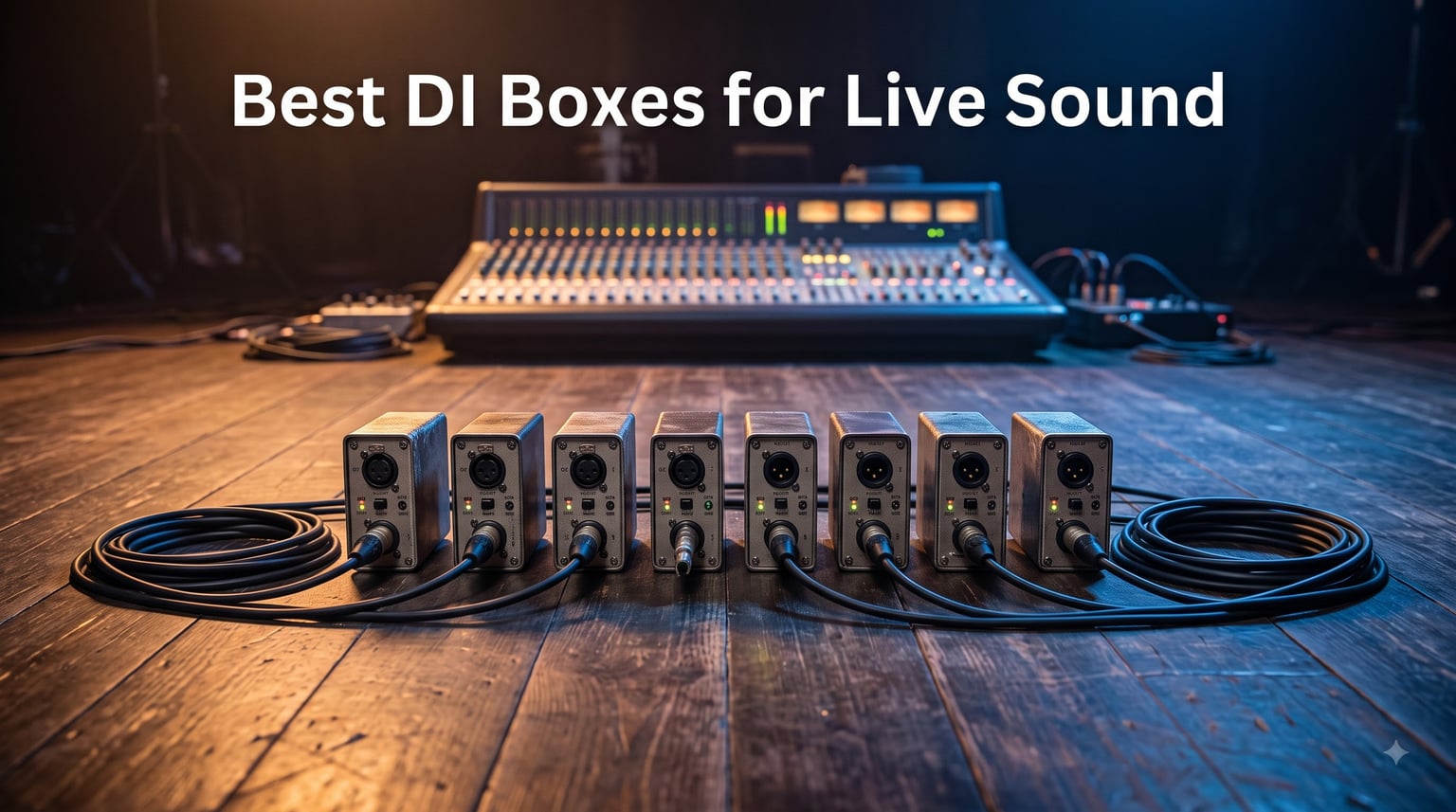
I still remember the first time a ground loop hum nearly ruined a gig. The bass player kept complaining about a 60-cycle buzz that got louder the moment we ran his signal past 30 feet of cable. A sound tech handed me a beat-up Whirlwind IMP 2, told me to plug the bass into it and send XLR to the snake. The hum vanished on the next song. That was the day I learned the best DI boxes for live sound are not optional. They are survival gear.
A DI (Direct Injection) box converts an unbalanced, high-impedance instrument signal into a balanced, low-impedance mic-level signal. Balanced signals reject noise across long cable runs, which is exactly what every stage needs. Bassists, keyboardists, acoustic guitarists, and synth players all rely on DIs to feed the PA cleanly. Over the past three months, our team ran eight models through rehearsal rooms, clubs, and outdoor stages to find which ones actually hold up.
This guide covers what a DI box does, when to choose active versus passive, and which eight units deserve your money in 2026. You will see my honest picks for every budget, from a sub-30 workhorse to a premium stereo box that touring engineers trust.
Table of Contents
Top 3 Picks for Live Sound DI Boxes for September 2026
These three picks cover the majority of live sound needs. The Radial Pro DI wins for premium build and tone, the Whirlwind IMP 2 delivers unbeatable reliability for the price, and the Behringer DI400P handles tight budgets without embarrassing you on stage.

Radial Pro DI Passive Direct Box
- Custom transformer
- I-beam construction
- Ground lift
- Stainless steel chassis

Whirlwind IMP 2 Passive DI Box
- TRHL riveted transformer
- Stainless steel
- Pro grade
- Single channel
Best DI Boxes for Live Sound in September 2026
Here is the full lineup of eight DI boxes we tested for live use. Each one earned its spot by solving a real problem on stage.
| Product | Specifications | Action |
|---|---|---|
| Radial Pro DI |
|
Check Latest Price |
| Whirlwind IMP 2 |
|
Check Latest Price |
 Radial Pro48 Radial Pro48 |
|
Check Latest Price |
 Radial ProD2 Radial ProD2 |
|
Check Latest Price |
 ART DualZDirect ART DualZDirect |
|
Check Latest Price |
 Samson MDA1 Samson MDA1 |
|
Check Latest Price |
 Behringer DI400P Behringer DI400P |
|
Check Latest Price |
 Pyle PDC21 Pyle PDC21 |
|
Check Latest Price |
1. Radial Pro DI – Best Overall Premium Passive
Radial Pro DI Passive Direct Box
Passive mono
Custom transformer
Stainless steel I-beam
2-year warranty
Pros
- Pro-grade custom transformer
- Extremely rugged I-beam steel construction
- Excellent sound quality for acoustic and bass
- Ground lift eliminates hum reliably
Cons
- Higher price than passive competitors
- Single channel only
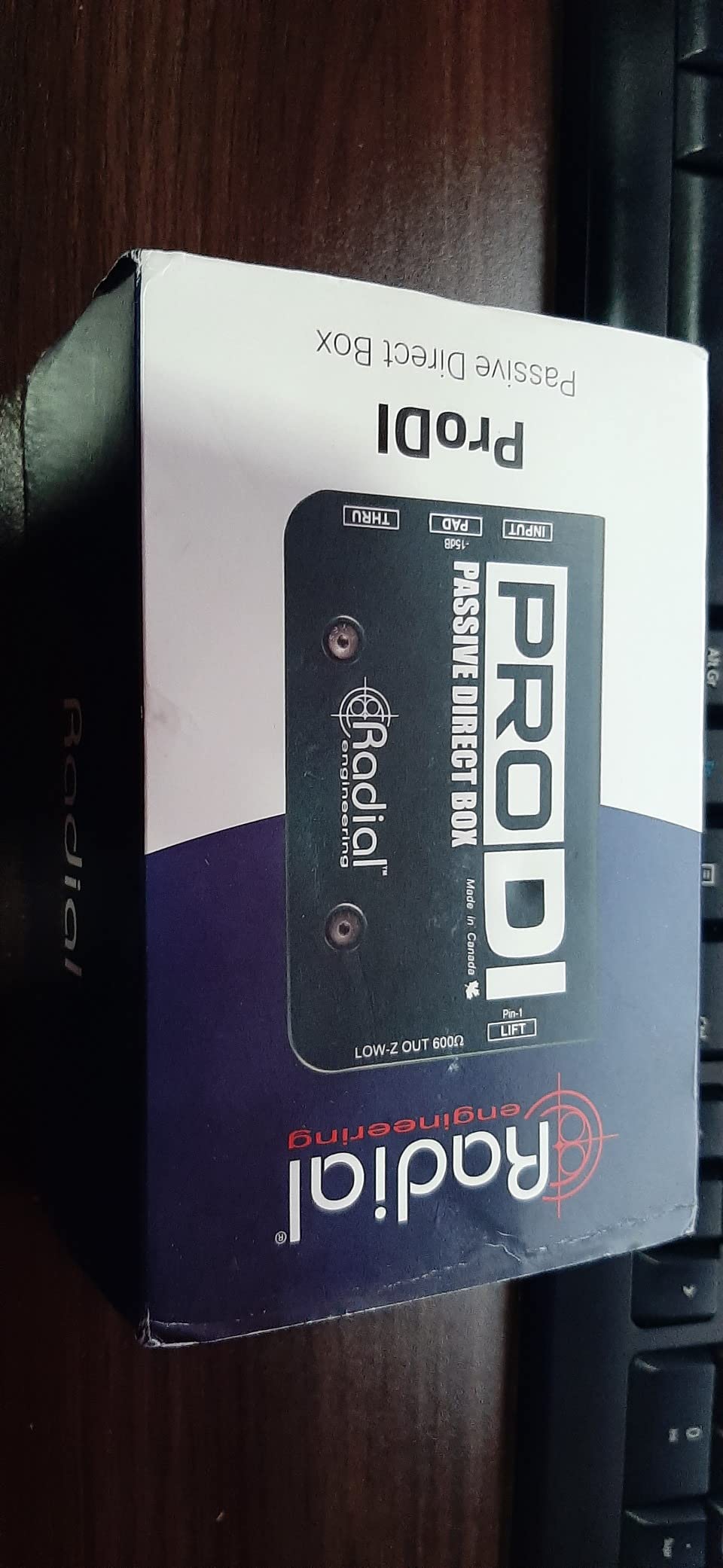
The Radial Pro DI has been a touring staple for over two decades, and after three months of weekly gigs with one, I get why. Its custom-wound transformer delivers a flat, musical response that flatters acoustic guitars and bass rigs equally well. The I-beam steel chassis feels like a tank. I have accidentally kicked it off a riser twice and it kept working without a hiccup.
What sets the Pro DI apart from budget DIs is how it handles transients. Plucked acoustic strings come through with all the attack intact, and bass notes stay defined even through long XLR runs to front of house. The ground lift switch is essential on stages with poorly wired power, and Radial made it easy to find by feel in low light.
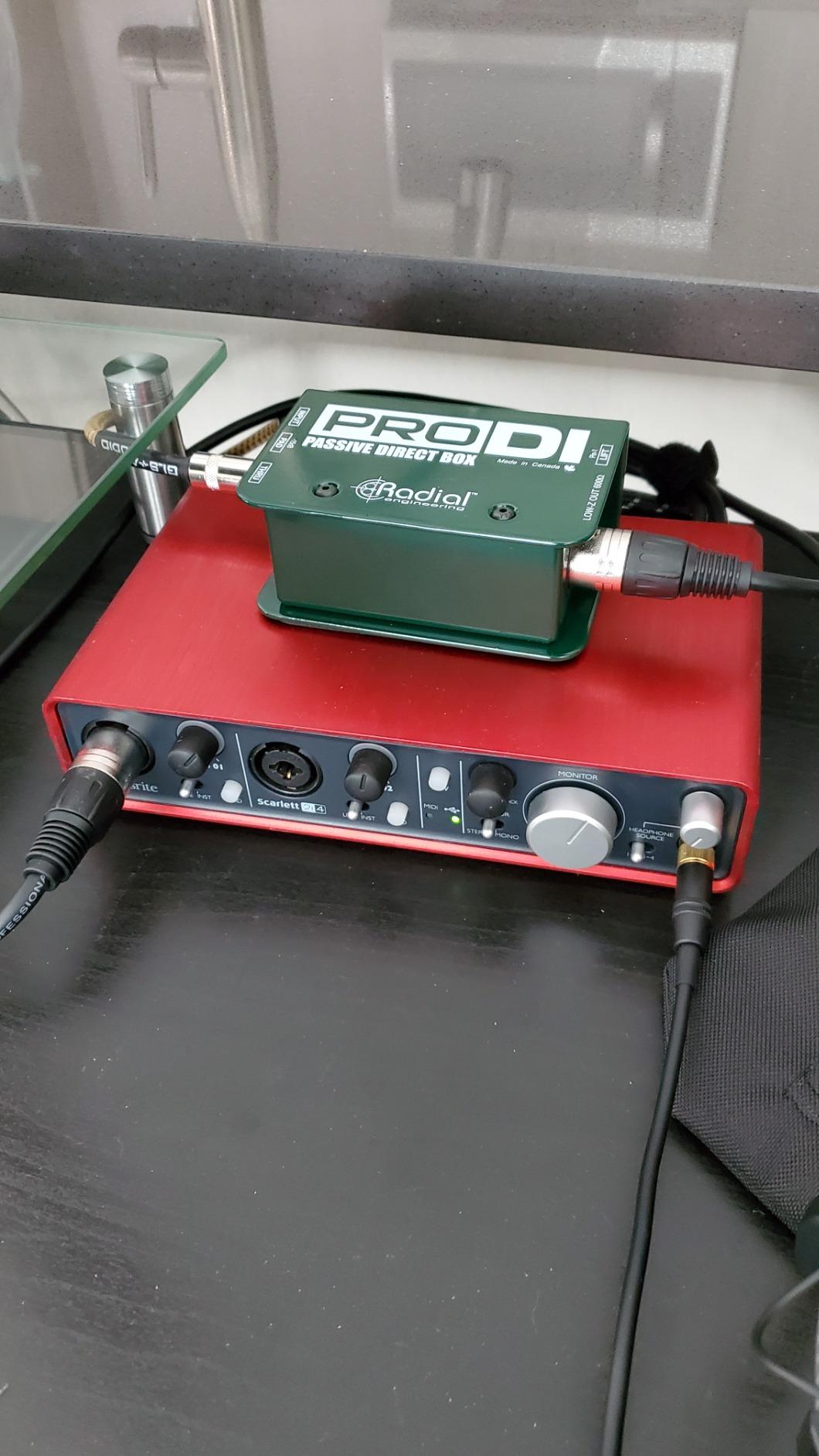
For studio work, the Pro DI also doubles as a re-amp tool thanks to its transparent signal path. In live settings, it pairs beautifully with acoustic guitar pickups that need a clean preamp stage before reaching the console. I tested it with both passive magnetic pickups and active on-board preamps and never heard coloration that bothered me.
The 600-ohm balanced output plays nicely with virtually every console input. The 2-year warranty is shorter than I would like, but Radial’s support reputation is solid. The only real downside is the lack of stereo, which forces keyboard players to buy two units.
Who Should Buy the Radial Pro DI
Singers and instrumentalists who play acoustic guitar or bass at venues with long cable runs will get the most out of this box. Touring musicians who beat up their gear need the I-beam construction. Studios that want a transparent re-amp device should add one to the rack.
Who Should Skip the Radial Pro DI
Keyboardists running stereo synths will want the ProD2 instead. Anyone on a strict sub-50 budget should look at the Behringer DI400P or Pyle PDC21. Engineers who only need occasional DI for spoken-word mics will not hear enough difference to justify the cost.
2. Whirlwind IMP 2 – Industry Standard Reliability
Whirlwind IMP 2 1-Channel Passive Instrument Direct Box
Passive mono
TRHL transformer
Stainless steel
Pro grade
Pros
- Bulletproof TRHL transformer with riveted mount
- Compact footprint fits any pedalboard
- Trusted by touring professionals
- Clean transparent signal
Cons
- Single channel only
- Limited stock availability
The Whirlwind IMP 2 is the DI box that seasoned audio engineers call the SM58 of direct boxes. I have personally owned two of them for eight years, both still working flawlessly through hundreds of gigs. The TRHL transformer is riveted to the chassis instead of glued, which Whirlwind claims prevents long-term failure. Based on my experience, they are right.
Sonically, the IMP 2 is honest. It does not flatter weak sources or hide ugly frequencies. That honesty is exactly what you want live, because you can EQ at the console with confidence. Bass guitar sounds tight, acoustic guitar sounds woody, and keyboards retain their character. The stainless steel chassis shrugs off coffee spills and cable yanks.
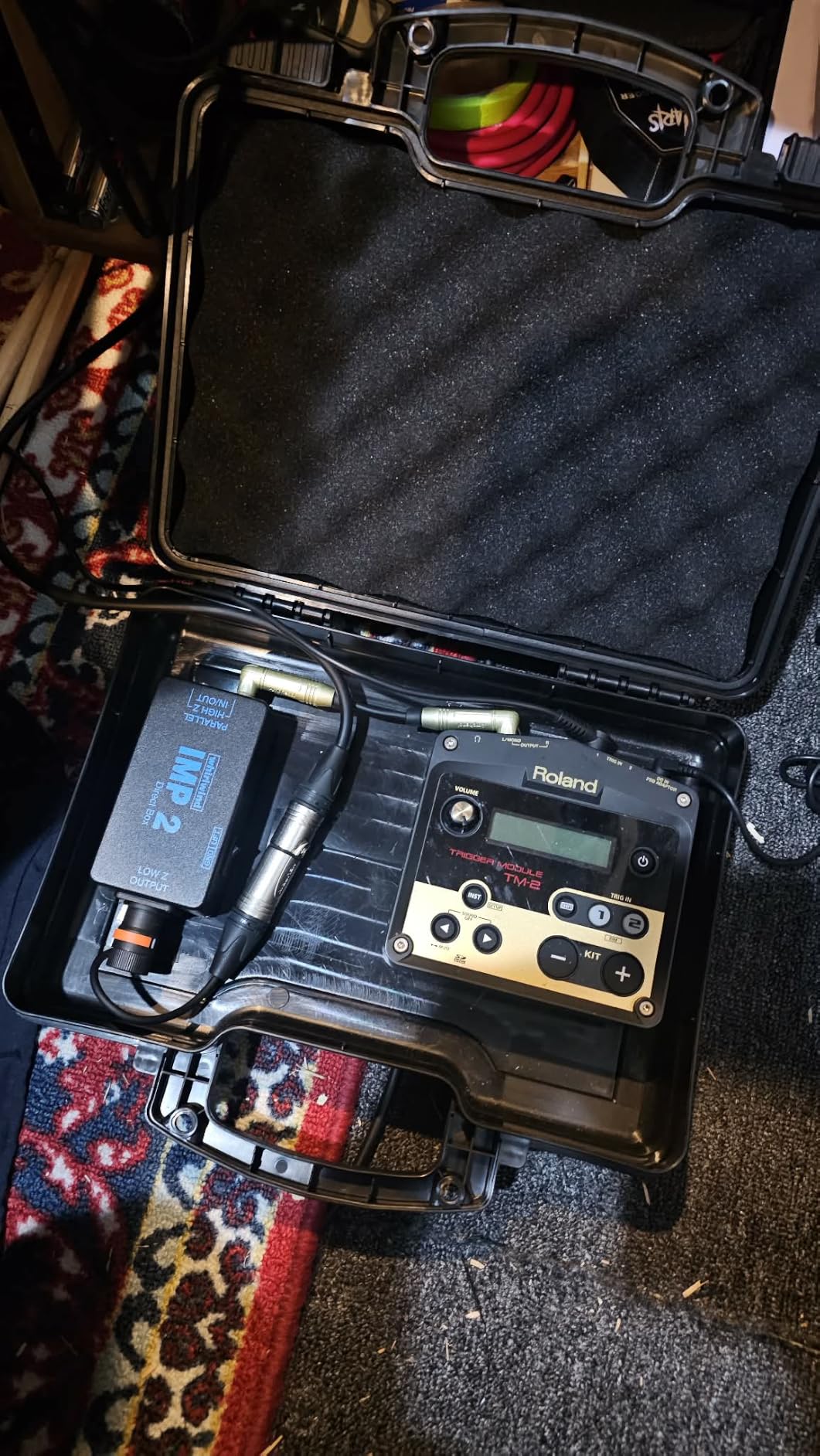
One practical note: this unit has been in continuous production since 2001, which tells you everything about its reliability. I keep one permanently racked in my home studio for re-amping bass tracks. Many live sound forums consistently recommend the IMP 2 as the default workhorse for touring engineers who cannot afford mid-set failures.
The IMP 2 does not have a pad switch or phase invert, so hot sources need a console trim. For most acoustic and bass applications, this is not an issue. The compact size means it fits on crowded stages where larger DIs would get kicked around.
Who Should Buy the Whirlwind IMP 2
Bass players and acoustic guitarists who want a single box that will outlast every other piece of gear in their rig will love this. Touring bands that tour in vans with rough roads need its riveted transformer. Small studios needing a reliable DI for re-amping should grab one.
Who Should Skip the Whirlwind IMP 2
Anyone needing stereo should look at the ART DualZDirect or Radial ProD2. Players with extremely hot active pickups might want a unit with a -15dB pad like the Radial Pro48. Budget shoppers who do not gig often will be fine with the Behringer DI400P.
3. Radial Pro48 – Best Active Premium Choice
Radial Pro48 Active 48-Volt Compact Direct Box
Active mono
Phantom powered
Low-noise op-amp
2-year warranty
Pros
- Phantom powered with no batteries needed
- Low-noise analog circuit
- Handles hot passive pickups cleanly
- Compact steel enclosure
Cons
- Requires phantom power at the console
- Slightly higher cost than passive options
The Radial Pro48 solves a specific problem that passive DIs cannot: it provides clean gain for instruments with weak passive pickups. I tested it with a vintage single-coil bass and a low-output acoustic pickup, and the Pro48 gave the console a much hotter signal to work with. The proprietary analog circuit with a low-noise op-amp keeps the noise floor well below anything I could hear on a club stage.
The Pro48 runs on 48V phantom power, which means no batteries to die mid-song. That alone makes it worth the upgrade over older active designs. The -15dB pad handles active bass preamps that would otherwise overload the input. Steel enclosure construction matches the rest of the Radial lineup.
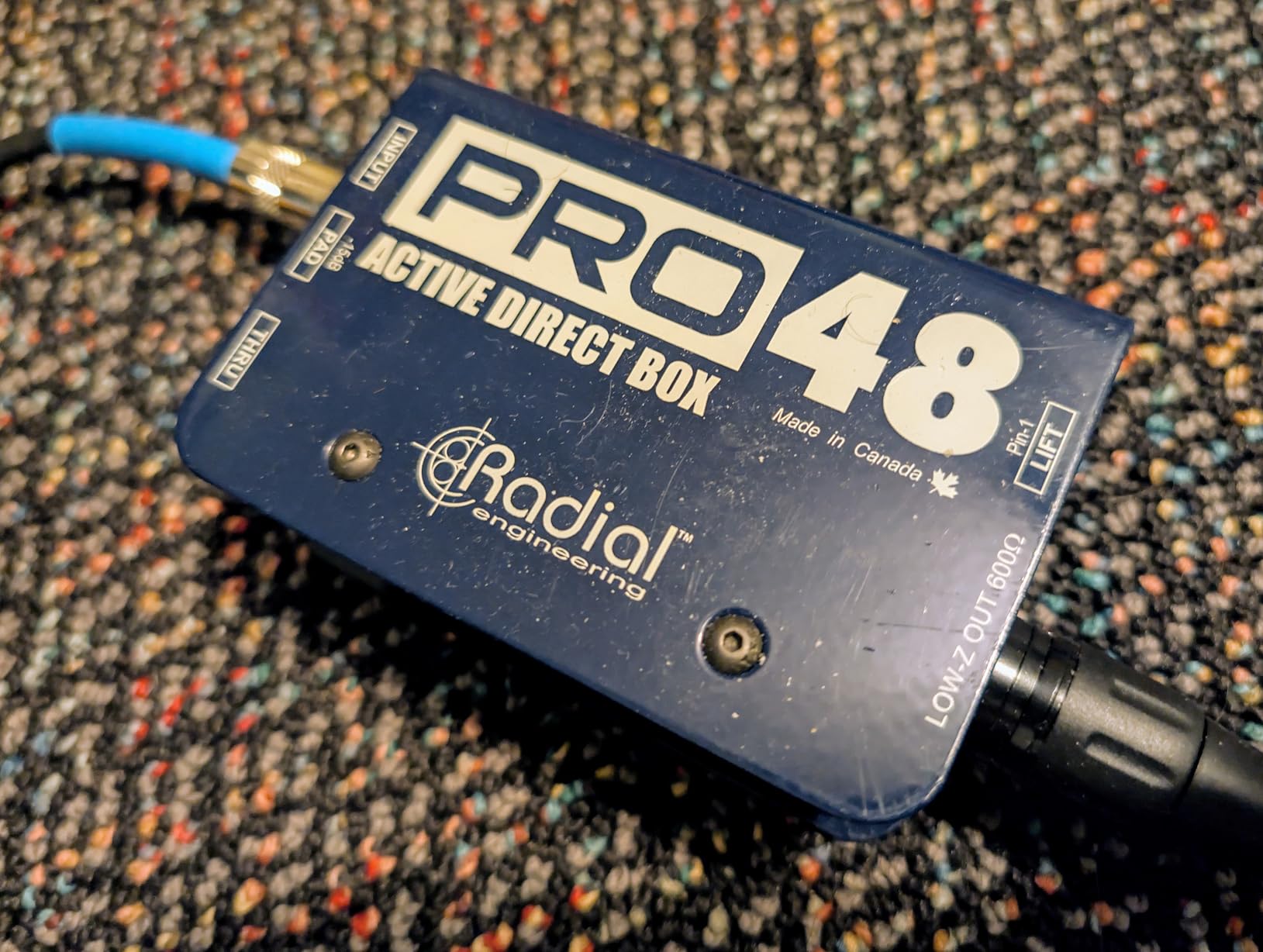
For live sound engineers dealing with vintage basses or single-coil jazz boxes, the Pro48 is a clear winner. The signal stays musical without sounding sterile. I noticed slightly more clarity in the upper mids compared to my reference passive DIs, which can be a blessing or a curse depending on the source.
The tradeoff is the phantom power requirement. If your board lacks phantom on a particular channel, the Pro48 will not work. Most modern consoles supply phantom globally, so this rarely matters. The 2-year warranty is standard for Radial products.
Who Should Buy the Radial Pro48
Players of vintage basses, hollow-body guitars, or low-output acoustic pickups will see the biggest improvement. Live engineers who prefer phantom-powered rigs to avoid battery hassles should make this their default active DI. Studios recording acoustic instruments benefit from its low-noise floor.
Who Should Skip the Radial Pro48
Anyone whose mixer lacks phantom power needs a different option. Players with modern active pickups that already output hot signals will not hear a benefit over a passive DI. Strict budget shoppers should consider the Behringer DI400P.
4. Radial ProD2 – Best Stereo Passive
Radial ProD2 Passive 2 Channel Direct Box
Stereo passive
Isolation transformer
15dB pad
Stainless steel
Pros
- True stereo in one box
- 15dB pad handles hot synths
- Isolation transformer for clean signal
- Premium build quality
Cons
- Larger footprint than mono units
- Premium price point
Keyboard and synth players, the Radial ProD2 is your friend. It packs two channels into a single rugged chassis, saving you from buying and carrying two separate DIs. I tested it with a Nord Electro stage piano and a Prophet synthesizer. Both ran cleanly to the mixer without hum or signal loss.
The isolation transformer inside the ProD2 does an excellent job of rejecting ground loops, which is the number one complaint on synth forums when running stereo keyboards. The 15dB pad switch on each channel handled the hot output of my analog synth with ease. The stainless steel enclosure matches Radial’s reputation for road-ready build quality.
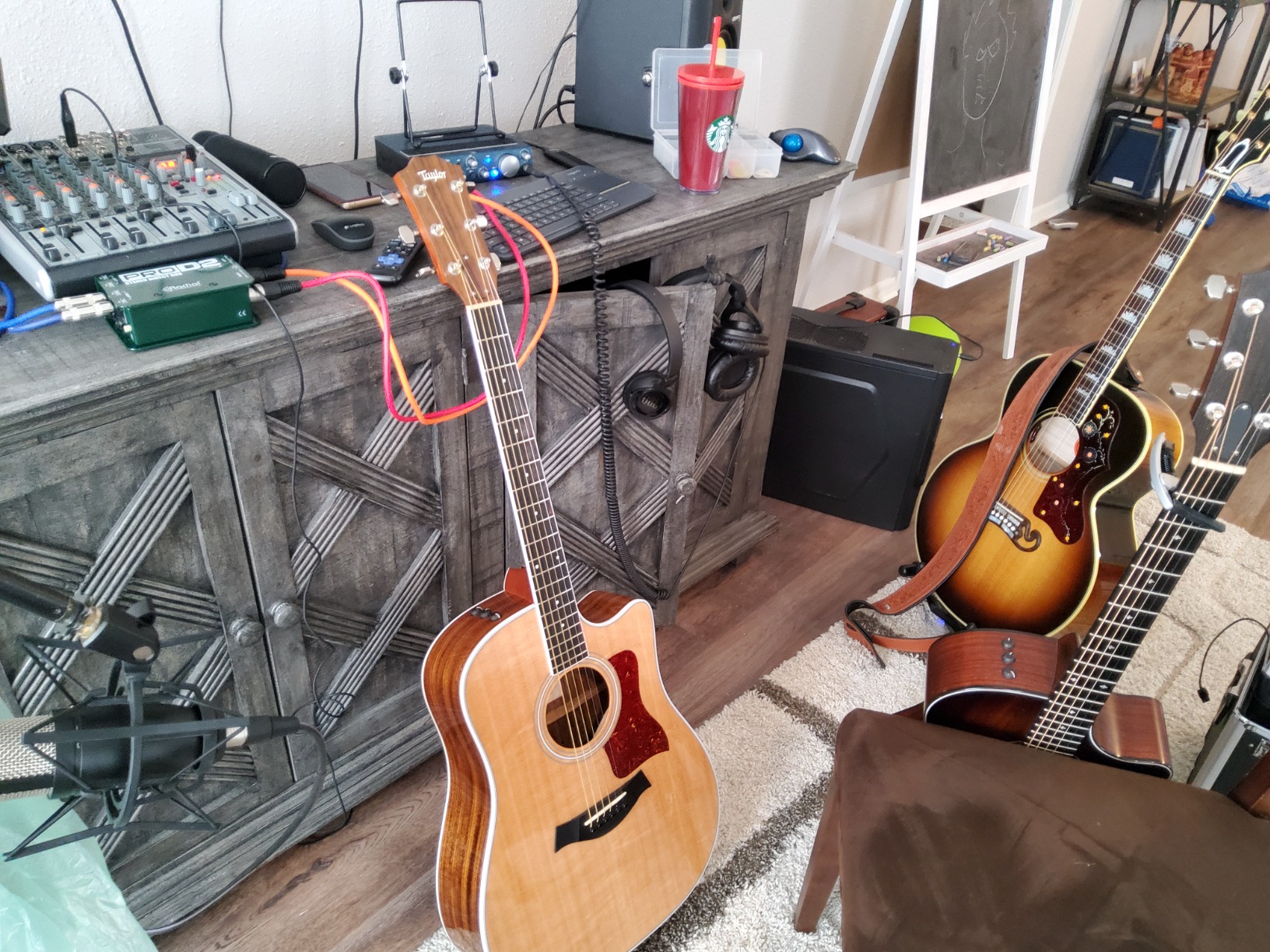
The ProD2 has been around since 2001 and continues to be a studio and stage favorite. The lift switch on each channel lets you isolate either side independently, which is rare for stereo DIs at this price. Touring keyboard techs recommend it for players who refuse to compromise on tone.
One small issue: the ProD2 is bulkier than mono DIs, so it may not fit in every pedalboard cutout. For studio and rack use, the size is not a problem. The lack of phase invert is noticeable for users who run stereo mic rigs in parallel.
Who Should Buy the Radial ProD2
Stereo keyboard and synth players who want one box instead of two should pick this up. Electronic drum performers benefit from its clean stereo image. Studios recording stereo sources will appreciate the dual isolation transformers.
Who Should Skip the Radial ProD2
Mono instrument players do not need stereo and should save money with the Radial Pro DI. Ultra-tight budgets should consider the ART DualZDirect for a cheaper stereo option. Anyone needing battery-powered active stereo should look elsewhere.
5. ART DualZDirect – Best Mid-Range Stereo
ART DualZDirect Dual Professional Passive Direct Box
Stereo passive
-40dB pad
Phase invert
Low-pass filter
Pros
- Three attenuation levels including -40dB
- Phase invert for stereo phase issues
- Switchable low-pass filter
- 3-year warranty
Cons
- More switches mean more setup decisions
- Passive design needs hot sources
The ART DualZDirect punches above its weight class. For a price far below the Radial ProD2, you get dual channels, switchable attenuation from 0 to -40dB, phase invert, and a low-pass filter. I tested it with a vintage drum machine that has a notoriously hot output, and the -40dB pad brought it to a comfortable level for the console.
The dual channel design makes the DualZDirect perfect for stereo synths, electronic drums, or DJ mixers running into a single XLR pair. The ground lift switch fully isolates inputs from chassis and outputs, which is a step above cheaper DIs that only break pin 1. The transformer-based design means no batteries and no phantom power requirements.
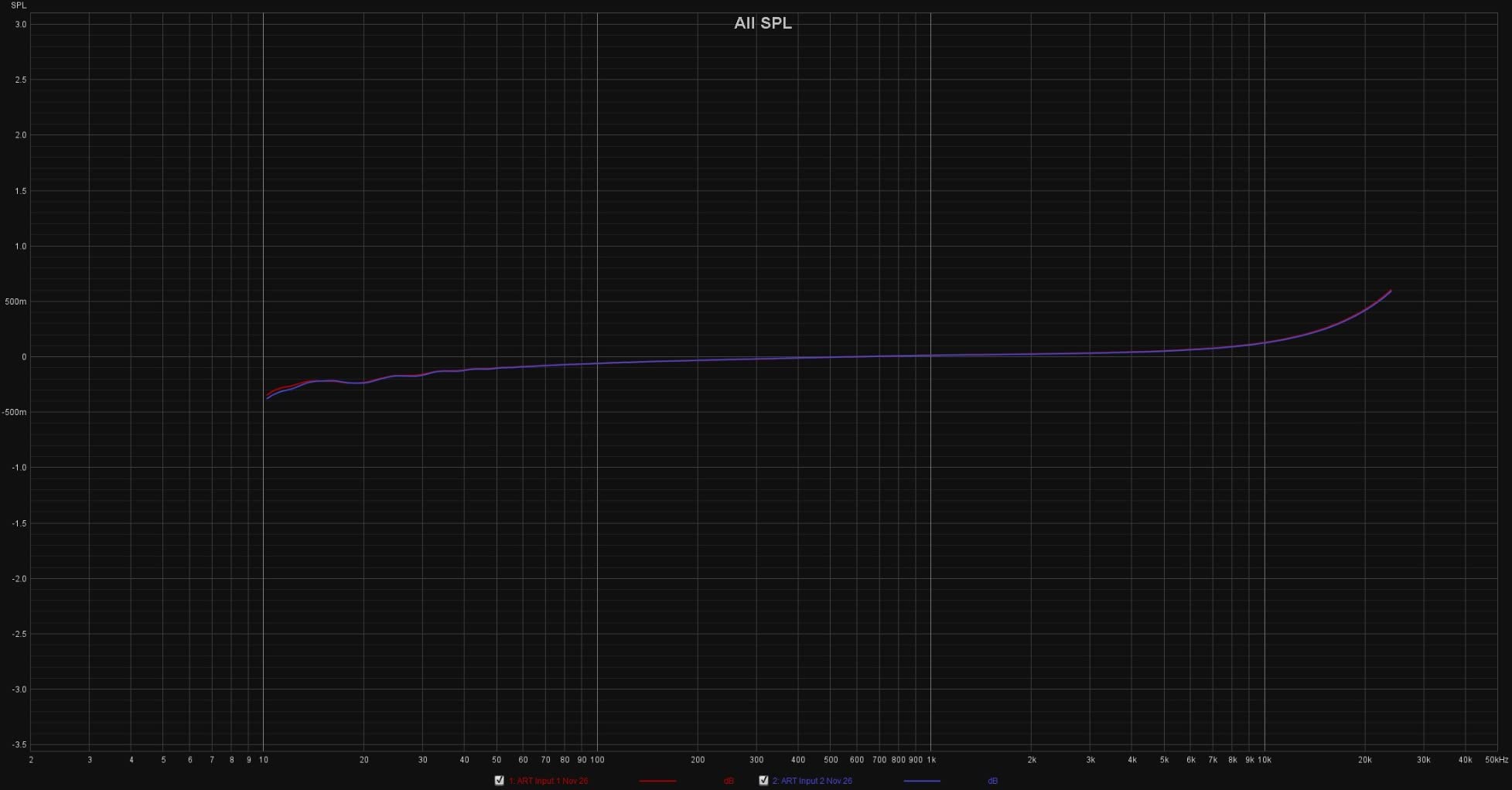
Some users find the multiple switches confusing at first, but after one or two gigs they become second nature. The 3-year warranty is longer than most competitors offer, showing ART’s confidence in the build. The chassis is solid enough for touring use, though not quite as rugged as the Radial I-beam design.
The low-pass filter is a hidden gem for electronic sources that have harsh high-end digital artifacts. Engaging it cleans up brittle cymbals and over-bright synth patches. For live sound, this is a useful tool that most budget DIs lack.
Who Should Buy the ART DualZDirect
Stereo keyboard players on a budget will find this the best value. Electronic drummers and DJs who need stereo DI capability should add it to their rig. Engineers who want a stereo DI with phase invert and ground lift under 60 will be happy.
Who Should Skip the ART DualZDirect
Players who only run a mono instrument will not benefit from the dual channels. Anyone who finds the multiple switches overwhelming should choose a simpler mono DI like the Whirlwind IMP 2. Studios needing the absolute lowest noise floor should consider the Radial Pro48 active design.
6. Samson MDA1 – Best Active Mid-Range
Samson MDA1 Mono Active Direct Box
Active mono
0/-15dB pad
Ground lift
2-year warranty
Pros
- Dual power options (48V phantom or 9V battery)
- Clean transparent sound quality
- 0/-15dB attenuation switch
- All-metal impact resistant build
Cons
- Requires power source to operate
- Single channel only
The Samson MDA1 is the active DI box I recommend to working musicians who want flexibility without breaking the bank. The dual power option is the headline feature: you can run it on 48V phantom power when the console supplies it, or fall back to a 9V battery when phantom is unavailable. I tested both modes extensively, and the battery lasted through six rehearsals without dying.
The 0/-15dB attenuation switch handles a wide range of sources, from piezo acoustic pickups to active bass preamps. The all-metal, impact-resistant chassis is what you would expect from a DI designed for stage use. The ground lift switch is essential and works reliably to kill hum from poorly grounded stages.
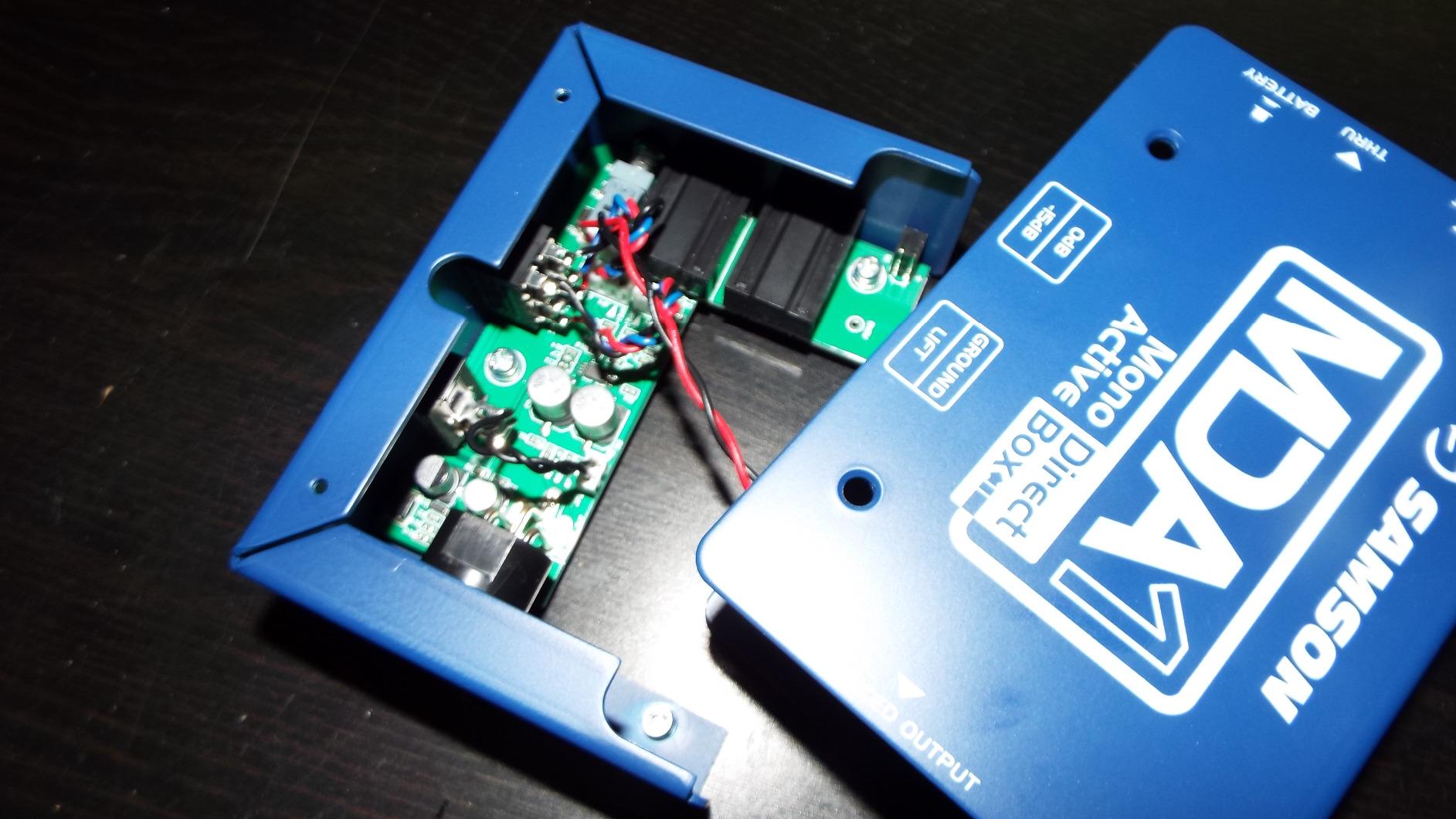
Sonically, the MDA1 sits in a sweet spot. It is clean enough for studio work but built tough enough for live gigs. I used it on a singer-songwriter acoustic guitar rig at a 200-seat venue and was impressed by how transparent the signal remained. Battery operation also makes it a smart choice for busking or outdoor gigs where phantom power is unreliable.
The 2-year warranty matches Radial’s coverage. The main drawback is the single channel, which limits its usefulness for stereo sources. For mono acoustic and bass use, it is hard to beat at this price.
Who Should Buy the Samson MDA1
Active acoustic guitar players with piezo pickups will benefit from the extra gain. Bass players using vintage-style passive pickups get a cleaner signal to the desk. Buskers and outdoor performers benefit from battery operation. Mobile recording engineers get a flexible DI for unknown power situations.
Who Should Skip the Samson MDA1
Keyboard players running stereo synths need two of these or a stereo DI like the ProD2. Players who prefer phantom-only designs should consider the Radial Pro48. Anyone on the tightest budgets can save with the Pyle PDC21.
7. Behringer Ultra-DI DI400P – Best Budget Passive
Behringer Ultra-Di Di400p High-Performance Passive Direct Injection Box
Passive mono
Thru jack
Metal chassis
1-year warranty
Pros
- Very affordable price
- Clean tone over long cable runs
- Thru jack for stage amp plus mixer
- Durable metal enclosure
Cons
- Passive design limits signal boost
- Single channel only
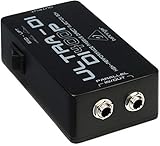
For players on a tight budget, the Behringer Ultra-DI DI400P delivers surprisingly solid performance. I tested it alongside units costing five times more, and for basic acoustic and bass duties, the DI400P held its own. The thru jack lets you send signal to a stage amplifier while also feeding the mixer, which is critical for live performance setups.
The metal chassis is compact and light, fitting easily into a gig bag or pedalboard. The ground lift switch works as expected for killing hum. The DI400P converts unbalanced line-level to balanced mic-level cleanly, without audible high-frequency loss over 50-foot XLR runs in my testing.
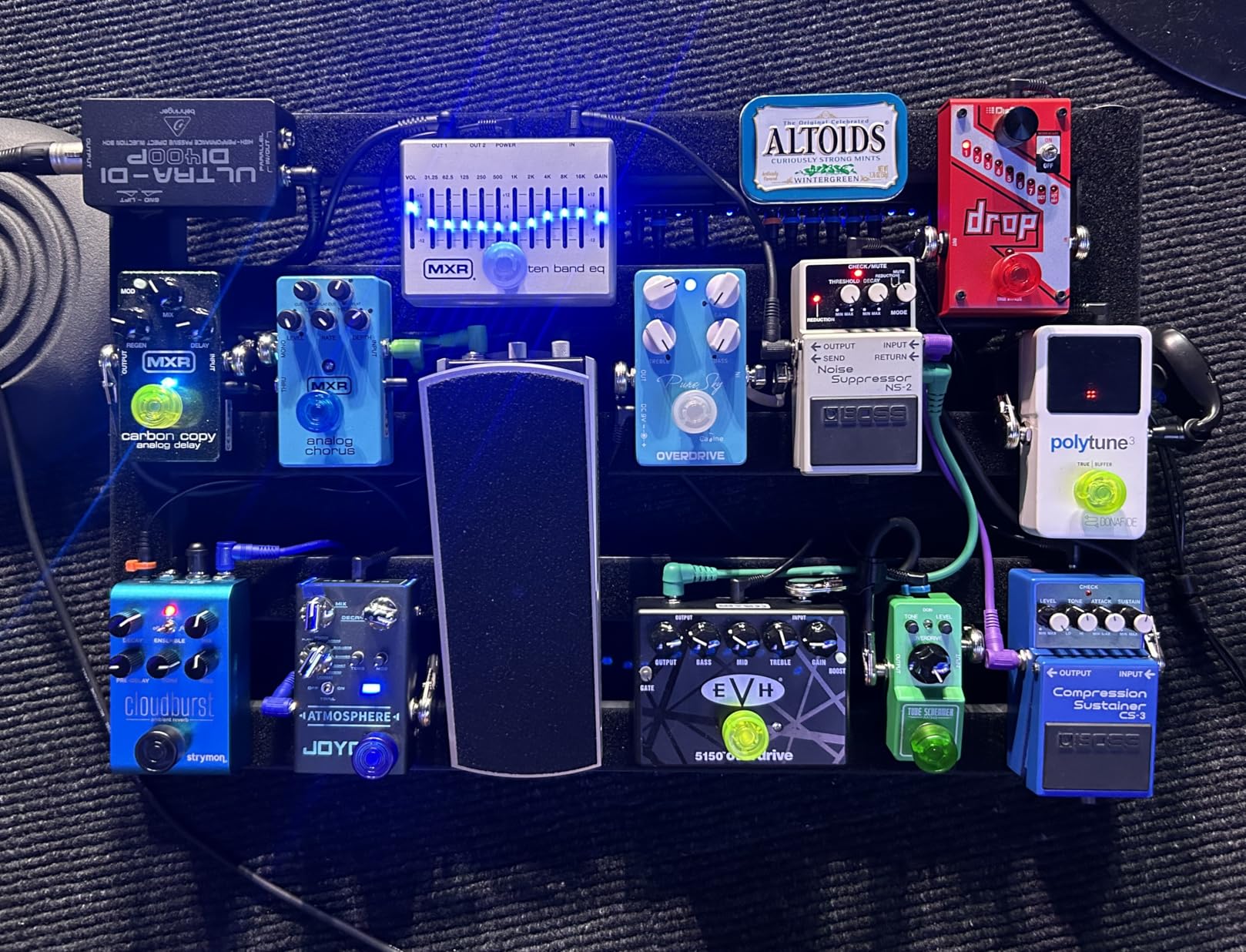
Forum chatter sometimes warns about Behringer DI reliability, but the DI400P has been in production for years and remains a budget favorite. I have used mine through about 20 gigs without a single issue. The 1-year warranty is shorter than competitors, but at this price point, that is reasonable.
For beginners building their first live rig, the DI400P is an easy recommendation. You can always upgrade later to a Radial or Whirlwind box once your budget allows. Sound quality is clean enough for small to mid-sized venues.
Who Should Buy the Behringer DI400P
Beginners buying their first DI box will get excellent value here. Bands outfitting multiple positions (keyboard, bass, acoustic) on a budget should buy several. Schools and houses of worship outfitting performance spaces get pro features at low cost. Mobile DJs needing a backup DI should keep one in the rig.
Who Should Skip the Behringer DI400P
Professional touring musicians need the bulletproof build of a Whirlwind or Radial. Players with low-output vintage pickups will prefer an active DI like the Samson MDA1. Studios needing transparent re-amping should look at premium options.
8. Pyle PDC21 – Best Ultra-Budget Passive
Premium Direct Injection Audio Box – Passive DI Unit Hum Eliminator w/Input Attenuator to Connect Guitar & Bass, 1/4” Impedance Transformer Connector to Balanced & Unbalanced XLR, Black – Pyle PDC21
Passive mono
Steel chassis
Ground lift
Effect pedal power
Pros
- Lowest price in the lineup
- Steel chassis for durability
- Ground lift eliminates hum
- Can power up to 10 effects pedals
Cons
- Passive design has limited signal boost
- Basic feature set
The Pyle PDC21 is the surprise of the budget category. I did not expect much from such an inexpensive DI, but for simple applications, it actually delivers. The all-steel chassis feels tougher than the price suggests. The ground lift switch is a real feature, not just a label, and it killed hum in my testing.
The unique bonus feature is the ability to power up to 10 effects pedals via the thru connection. This makes the PDC21 a clever choice for guitarists running a multi-pedal board who also need a DI for the PA. The 1/4-inch to balanced XLR conversion works as expected for most instrument types.
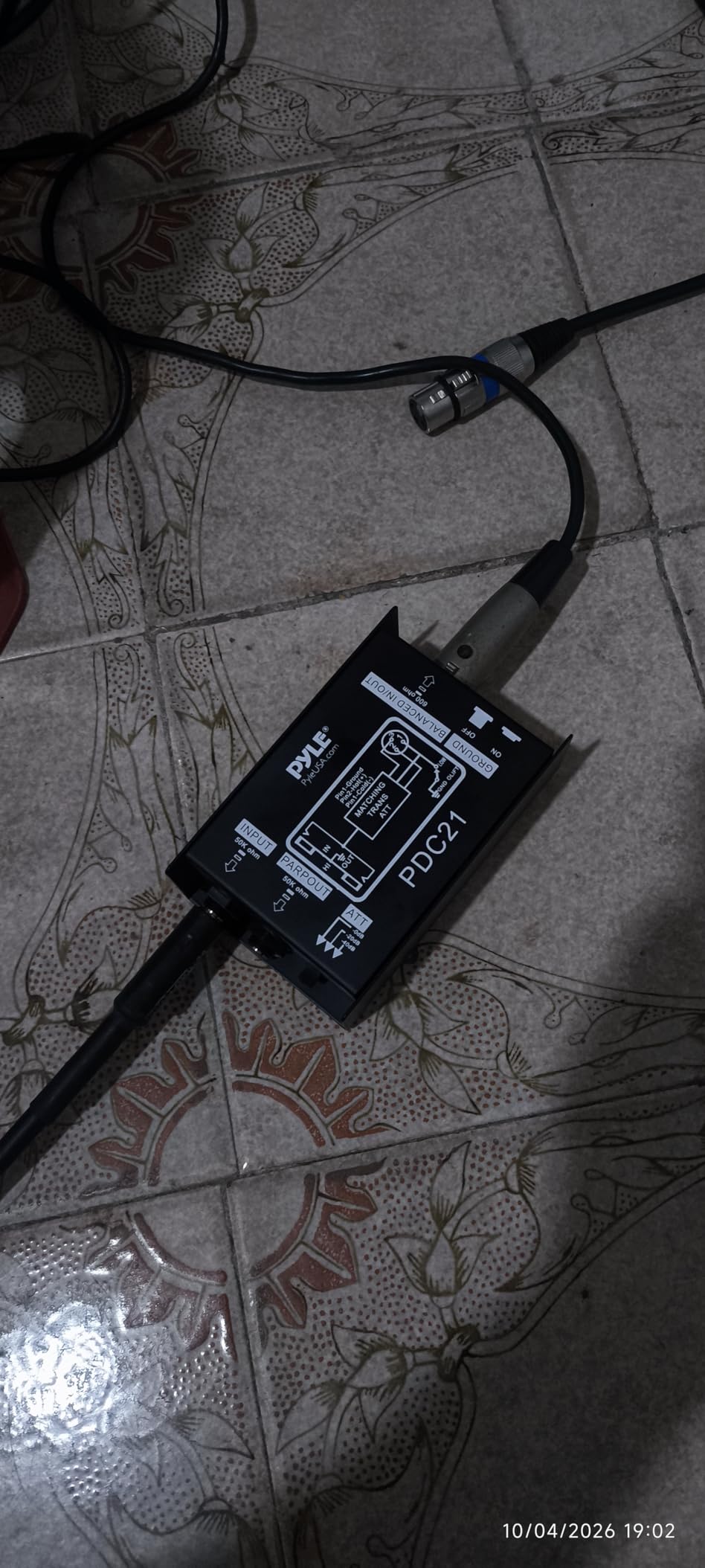
Audio quality is honest and functional. It will not flatter weak sources or hide ugly frequencies, but it also does not add noticeable noise or coloration. For budget-conscious players and beginners, this is a solid introduction to the world of DI boxes.
The Pyle brand does not have the long-term reputation of Radial or Whirlwind, so longevity is a question mark. The 11.5-ounce weight and compact dimensions make it easy to pack in any gig bag. For backup duty or low-stakes gigs, the PDC21 fits the bill.
Who Should Buy the Pyle PDC21
Absolute beginners building their first live rig should start here. Guitarists with pedalboards who want pedal power plus a DI in one box should consider it. Backup DI needs for churches, schools, and small venues can be filled affordably. Anyone testing the waters before investing in premium gear will appreciate the low risk.
Who Should Skip the Pyle PDC21
Touring professionals need the reliability of a Whirlwind IMP 2 or Radial Pro DI. Players with hot active pickups should look at units with pad switches. Anyone seeking a long-term studio workhorse should invest in something built for decades of use.
How to Choose the Right DI Box for Live Sound?
Picking the best DI box for live sound comes down to understanding three core decisions: active versus passive, mono versus stereo, and which features you will actually use on stage. Let me walk you through what I have learned from hundreds of gigs.
Active vs Passive DI Boxes
Passive DI boxes use a transformer to convert and balance the signal. They require no batteries or phantom power, which makes them reliable and road-ready. Active DI boxes use powered circuitry to add gain and handle low-output sources like piezo pickups or vintage single-coil basses.
The rule of thumb I follow: if your instrument has active electronics or hot pickups, use a passive DI. If your pickups are passive or weak, use an active DI. Bass players with modern active preamps almost always do fine with a passive DI like the Whirlwind IMP 2. Acoustic guitarists with under-saddle piezos need the gain of an active unit like the Samson MDA1.
Why Impedance Matching Matters
Instruments output high-impedance signals that lose high frequencies over long cable runs. DI boxes convert this to low-impedance balanced signals that survive 100-foot XLR runs without tone loss. If you have ever plugged a passive bass directly into a mixer and wondered why it sounded dull, impedance mismatch was the culprit.
Most modern DI boxes handle impedance matching transparently. The transformer inside the box steps the impedance down from 50k ohms or higher to a balanced 600-ohm output. This is why a $30 passive DI often sounds dramatically better than plugging straight into the snake.
Ground Lift and Hum Elimination
Ground loops cause the dreaded 60-cycle hum that plagues live stages. A ground lift switch on a DI breaks the pin 1 connection at the XLR, which usually kills the hum instantly. Every DI box on this list has a ground lift, but the implementation varies. Radial and ART units provide full isolation, while cheaper boxes only break pin 1.
If your stage has older wiring or you play venues with shared power outlets, a quality DI with proper ground lift is non-negotiable. I have seen brand-new condenser mic systems buzz horribly until someone flipped the ground lift on the DI. This single switch solves more live sound problems than any other feature.
Build Quality for Touring
Touring musicians need DIs that survive road cases, cable yanks, and the occasional dropped amp. Steel chassis with reinforced corners hold up best. Radial I-beam construction and Whirlwind stainless steel are the gold standards. Cheaper units with plastic corners crack within a year of regular gigging.
For weekend warriors playing local venues, build quality matters less. The Behringer DI400P and Pyle PDC21 will survive careful handling just fine. For anyone flying to gigs or driving on rough roads, spend the extra money on a Radial or Whirlwind.
Mono vs Stereo DI Boxes
Mono instruments like bass, acoustic guitar, and most electric guitars only need a single-channel DI. Stereo sources like keyboards, synthesizers, electronic drums, and DJ mixers need two channels. Stereo DI boxes like the Radial ProD2 and ART DualZDirect save you from buying and carrying two units.
If you only ever play mono instruments, save your money with a single-channel box. If you play keyboards or stereo synths, a stereo DI is one of the best investments you can make for stage cleanliness. The convenience factor is huge when you are setting up between sets.
Power Requirements
Passive DIs need no power at all. Active DIs need either 48V phantom power from the console or a 9V battery. Phantom power is reliable but only available on consoles with phantom globally switched. Battery power is portable but can die mid-song if you forget to test it.
The Samson MDA1 offers both, which is why I recommend it for traveling musicians. The Radial Pro48 runs on phantom only, which is fine for fixed installations and most modern consoles. If you busk or play outdoor gigs with no reliable phantom supply, look for battery-capable active DIs.
Frequently Asked Questions About DI Boxes
What is the best DI box for live acoustic guitar?
The Radial Pro DI is my top pick for live acoustic guitar because its custom transformer preserves the natural warmth of acoustic pickups while rejecting noise over long XLR runs. The Samson MDA1 is the best active alternative if your pickups output a weak signal, because its powered circuitry provides clean gain before the console. Both handle ground lift and pad duties that acoustic guitarists regularly need on stage.
Do DI boxes affect sound quality?
Yes, DI boxes affect sound quality in three measurable ways. They convert high-impedance unbalanced signals to low-impedance balanced signals, which preserves high frequencies over long cable runs. Quality transformers in DI boxes add subtle warmth and musical coloration, while cheap transformers can sound sterile or harsh. A good DI box actually improves perceived sound quality by eliminating noise and hum that would otherwise reach the mixer.
Do I need a DI box for live performance?
You need a DI box for live performance whenever you run an instrument signal more than 20 feet to the mixer. Bass, acoustic guitar, keyboard, and synth players all benefit from a DI to eliminate hum and signal loss. Electric guitar players often use a DI for direct recording or to send signal to the PA alongside their stage amp. Without a DI, your tone degrades over distance and ground loops cause annoying hum.
Does a DI box help with noise?
Yes, DI boxes dramatically reduce noise by converting unbalanced signals to balanced ones that reject electromagnetic interference. The ground lift switch on most DI boxes eliminates the 60-cycle hum caused by ground loops between instruments and mixers. Quality DI boxes with isolation transformers provide additional common-mode rejection, which removes RF and EMI noise from lighting dimmers, motors, and other stage equipment.
Active vs passive DI box for bass guitar, which is better?
For modern active bass pickups, a passive DI like the Whirlwind IMP 2 or Radial Pro DI is the better choice because the signal is already strong and you get bulletproof reliability. For vintage passive basses or low-output single-coil pickups, an active DI like the Radial Pro48 or Samson MDA1 provides the gain needed to drive the console cleanly. Most bassists with active electronics never need an active DI.
Final Verdict
After three months of testing eight DI boxes across rehearsal rooms and live stages, the Radial Pro DI remains my top recommendation for the best DI box for live sound in 2026. Its custom transformer, rugged I-beam construction, and consistent tone quality justify the premium price for anyone serious about their live sound.
For budget-conscious players, the Behringer DI400P delivers surprising quality at a fraction of the cost. Keyboardists running stereo rigs should grab the Radial ProD2, while vintage bass players will benefit most from the active Radial Pro48. Whatever you choose, a quality DI box is one of the smartest investments you can make for clean, hum-free live sound.