
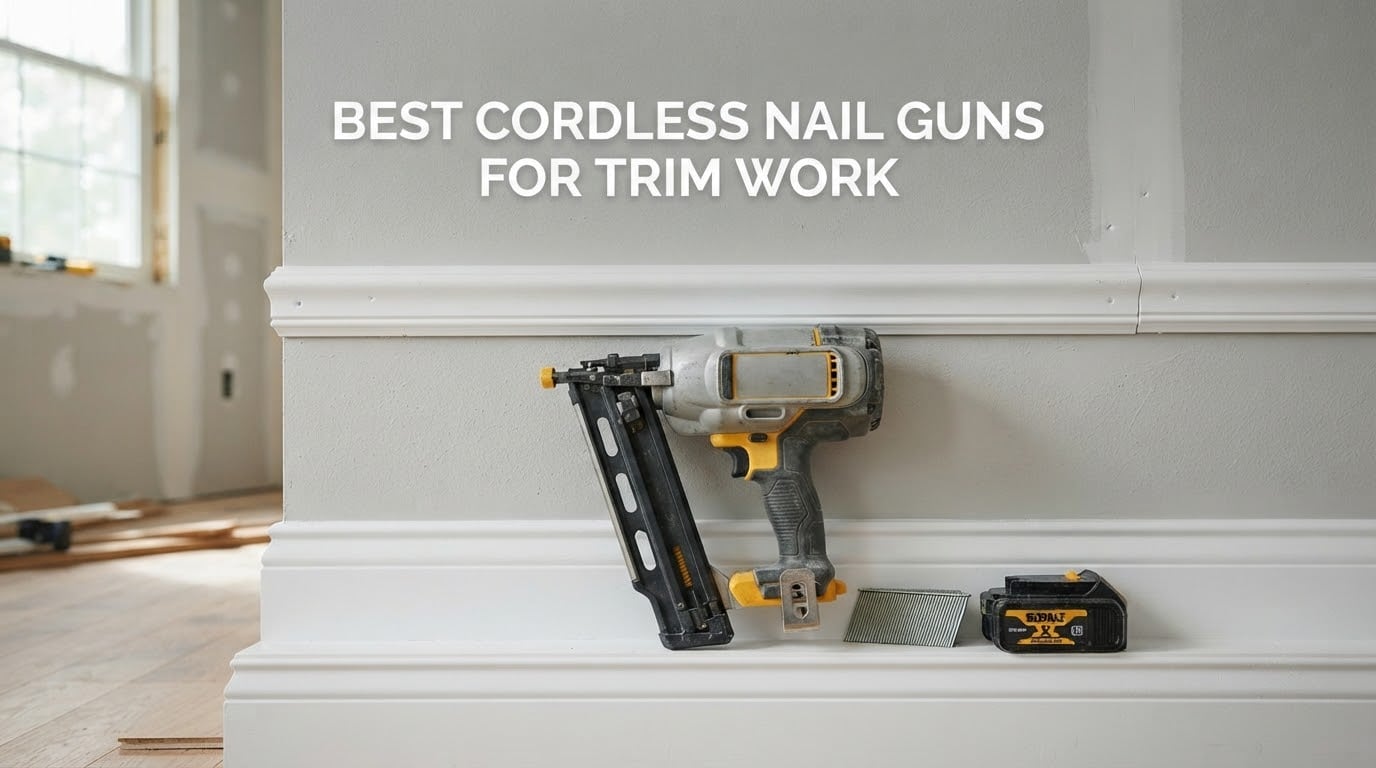
Trim is the most visible finish carpentry on any job, and it is unforgiving. A proud nail head, a split in painted MDF or a shallow fastener in a door jamb shows up in every photo of the finished room. The right tool removes most of that risk before the first nail goes in.
The short answer on the best cordless nail guns for trim work is a 16-gauge angled finish nailer for baseboards, casing, crown and door trim, paired with an 18-gauge brad nailer for delicate casing, painted MDF, cabinet face frames and stair work. Most finish carpenters carry two gauges on the belt for exactly this reason, using the heavier nail at doors and the lighter nail at casings.
Below I break down 12 cordless nailers, all of them battery powered, with no pneumatic picks mixed in. Every model here runs without a compressor, hose or gas cartridge, and each write-up covers gauge, nail range, weight, actuation, jam clearing and the trim jobs it actually suits. I also mapped the messy 15-versus-16-versus-18-gauge argument onto individual trim pieces so you can skip straight to the right tool.
Table of Contents
Which Cordless Nail Gauge for Each Trim Piece
Before any tool list, here is the mapping most trim carpenters work from. Nail gauge sets nail thickness, and thicker nails hold better but leave bigger holes and need more drive power.
- Baseboard and skirting: 16-gauge angled finish nails, 1-1/2 inch to 2 inch. An angled magazine gets you into tight inside corners where a straight nailer will not fit.
- Door casing and window casing: 15-gauge or 16-gauge angled nails, 2 inch to 2-1/2 inch when you are fastening into a door jamb. A brad nailer works on thin casing that is only nailed to a backer.
- Crown molding in a room: 15-gauge angled nails. The heavier gauge resists the downward pull that a big profile puts on the fastener.
- Chair rail and decorative wall trim: 16-gauge angled nails at 1-1/2 inch. Drop the driving depth so the head sits flush without splitting a painted face.
- Painted MDF or already-finished trim: 18-gauge brad nails, 1 inch to 1-1/2 inch. The smaller hole is easier to fill and far less likely to crack a factory finish.
- Cabinet and face frame assembly: 18-gauge brads, 5/8 inch to 1 inch, driven with a no-mar tip and a flush depth setting.
- Picture frame, glazing bead and fine millwork: 23-gauge pin nails, 5/8 inch to 1 inch. These leave an almost invisible hole, which is the whole point.
- Stair treads and closed stairwells: 18-gauge brads. Low center height and low weight matter more than nail power in a tight stair.
One rule covers most of the arguments online: buy the heaviest gauge the trim can hide. If a hole would show, the nail is too thick or too long for that piece.
Top 3 Cordless Nailers for Trim Work in 2026
These three cover the widest range of trim jobs and carry the strongest owner feedback in the group. The full list of 12 follows underneath.

DEWALT DCN680B 18GA Brad Nailer
- Brushless motor
- Micro nose for line of sight
- Tool-free depth and jam release
- LED work light

DEWALT DCN660B 16GA Angled Nailer
- 16-gauge angled finish nails
- Inline magazine
- Selectable trigger modes
- 20V MAX platform

Metabo HPT NT1850DG 18GA Kit
- 5.5 lb low center height
- Battery and charger included
- Tool-less depth adjust
- LED light
All 12 Cordless Nail Guns at a Glance
Every nailer in the table below is cordless only. Features are pulled from the manufacturer specifications and owner feedback for each model.
| Product | Specifications | Action |
|---|---|---|
| DEWALT DCN680B 18GA Cordless Brad Nailer |
|
Check Latest Price |
 Ryobi P320 18V ONE+ Cordless Brad Nailer Ryobi P320 18V ONE+ Cordless Brad Nailer |
|
Check Latest Price |
| DEWALT DCN660B 16GA Angled Finish Nailer |
|
Check Latest Price |
 Makita XNB01Z 18V LXT 18GA Brad Nailer Makita XNB01Z 18V LXT 18GA Brad Nailer |
|
Check Latest Price |
 Makita XNB02Z 16GA Straight Finish Nailer Makita XNB02Z 16GA Straight Finish Nailer |
|
Check Latest Price |
| Metabo HPT NT1850DG 18GA Cordless Brad Nailer |
|
Check Latest Price |
 DEWALT DCN623B 23GA Cordless Pin Nailer DEWALT DCN623B 23GA Cordless Pin Nailer |
|
Check Latest Price |
 CRAFTSMAN V20 CMCN618B 18GA Brad Nailer CRAFTSMAN V20 CMCN618B 18GA Brad Nailer |
|
Check Latest Price |
 DEWALT DCN650B 15GA Angled Finish Nailer DEWALT DCN650B 15GA Angled Finish Nailer |
|
Check Latest Price |
 Milwaukee M18 FUEL 2746-20 18GA Brad Nailer Milwaukee M18 FUEL 2746-20 18GA Brad Nailer |
|
Check Latest Price |
 WORX WX842L 20V 18GA Cordless Brad Nailer WORX WX842L 20V 18GA Cordless Brad Nailer |
|
Check Latest Price |
 WEN 20512 20V 18GA Cordless Brad Nailer WEN 20512 20V 18GA Cordless Brad Nailer |
|
Check Latest Price |
1. DEWALT DCN680B 18-Gauge Cordless Brad Nailer – The All-Rounder
DEWALT DCN680B 20V MAX* XR® 18 GA Cordless Brad Nailer (Tool Only)
18-gauge brads 5/8-2 inch
6.2 lb
20V MAX brushless motor
Tool-free depth and jam release
Pros
- Brushless motor for long runtime
- Tool-free depth adjustment and jam release
- Micro nose improves line of sight
- Bright LED work light and low nail lockout
- Highest rated model in the group at 4.8 stars
Cons
- Tool-only listing so battery and charger cost extra
- Micro nose can be finicky on very thin brittle trim
- Premium tier compared with entry brad nailers
This is the one I reach for first on most trim jobs. It weighs 6.2 pounds, drives 18-gauge brads from 5/8 inch to 2 inch and has a brushless motor, which is what separates it from the cheaper cordless drivers that fade on hardwood.
Owners consistently point at the tool-free depth adjustment, the tool-free jam release and the LED light, and 88 percent of its reviews sit at five stars. The light matters more than it sounds like it should, because a lot of trim work happens with the nose in a dark corner against a wall.
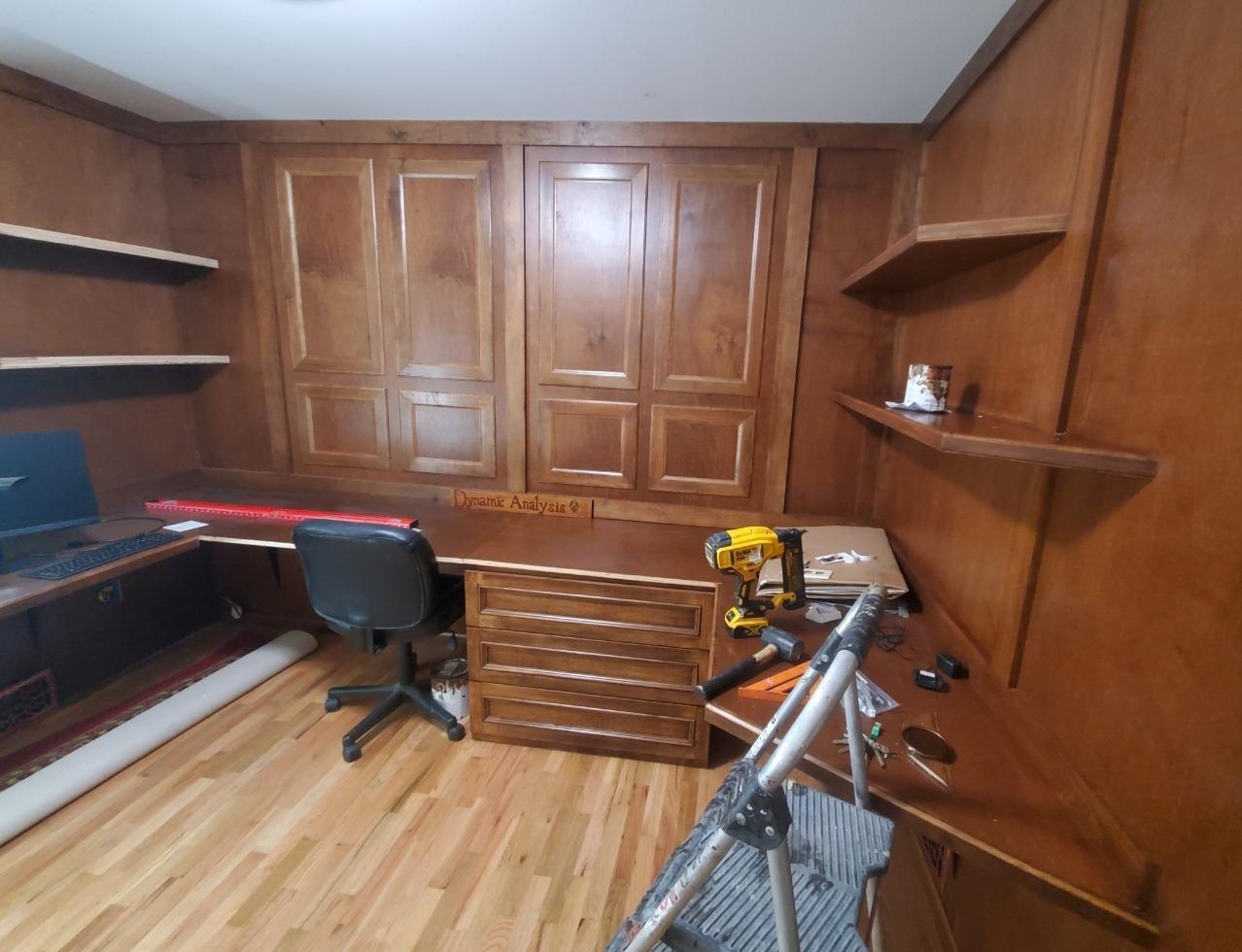
The selectable trigger is genuinely useful. Sequential mode fires one nail per pull for a clean face frame, and contact mode lets you bump-fire along a long run of baseboard without watching the nose. The integrated stall release lever means a stopped nail does not send you hunting for a wrench mid-run.
It is not the tool for a full 2-1/2 inch finish nail into a solid door jamb, and the micro nose is narrower than some owners like on brittle trim, where a wide face gives you more support. On paint-grade MDF and finished casing I set the depth one notch shallower and it behaves.
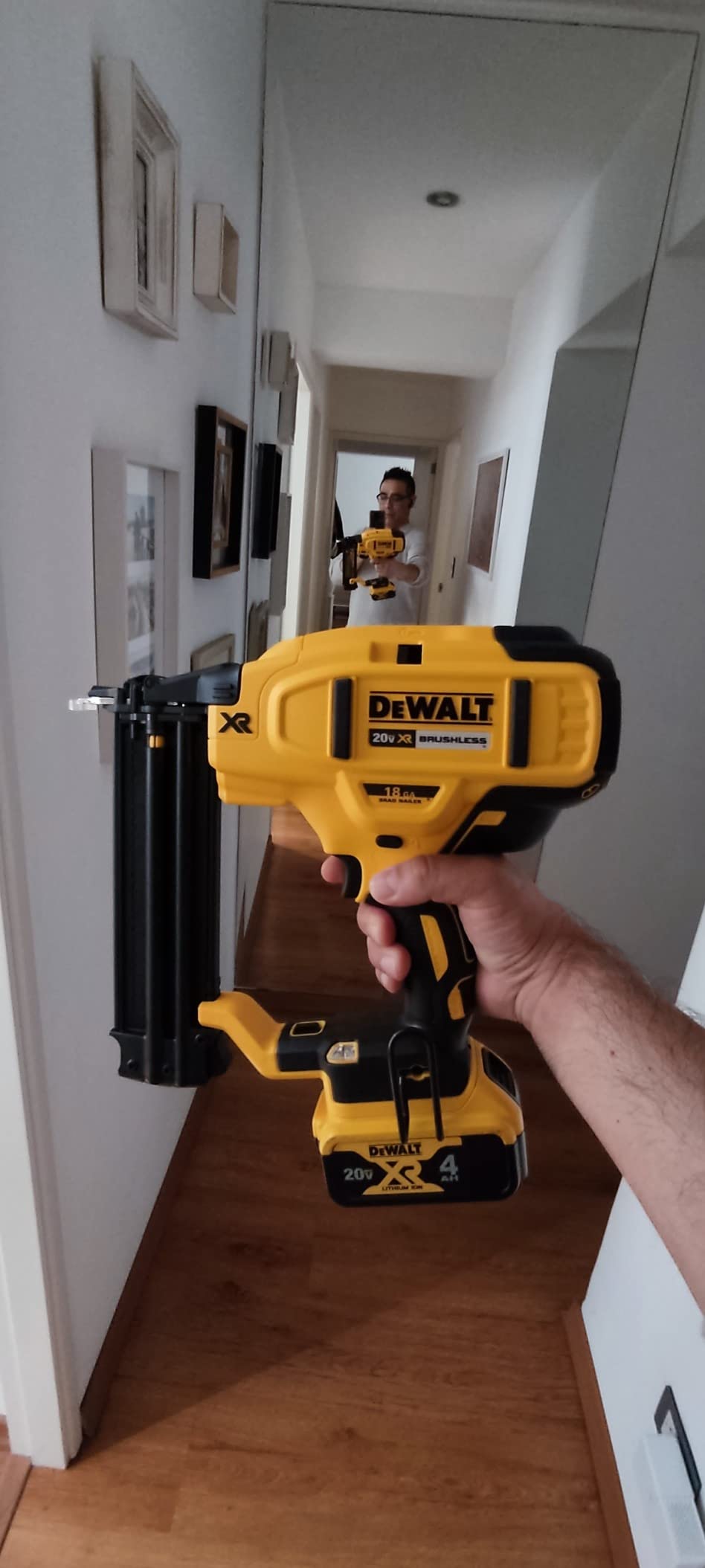
What it does well on baseboard and casing
It is the safest all-round choice for painted MDF baseboard, cabinet face frames, window casing fastened to a backer and picture-frame-scale work. The low nail lockout prevents dry firing that would leave a row of dents in a finished face.
Because the magazine and nose are compact, it also works on a closed stair where a larger angled nailer will not turn the corner. For a single tool that covers most residential trim, this is the one I would pick.
Where it falls short
The bare-tool listing means you are buying a battery and charger on top, which pushes the real cost of ownership above the sticker. If you already own 20V MAX packs that cost disappears, and if you do not, it is the biggest line item in the purchase.
It is also an 18-gauge machine, so any trim that needs real holding power into a jamb or framing lumber is out of range. For that you want the 16-gauge angled finish nailer below.
2. Ryobi P320 18V ONE+ Cordless Brad Nailer – The Budget Entry
Ryobi P320 Airstrike 18 Volt One+ Lithium Ion Cordless Brad Nailer (Battery Not Included, Power Tool Only)
18-gauge brad nailer
6 lb
18V ONE+ lithium-ion
Up to 1700 nails per charge
Pros
- Low entry cost for a cordless brad nailer
- Drives up to 1700 nails per charge
- Simple pressure adjustment dial
- Low-nail indicator window
- ONE+ platform owners already own
Cons
- Battery and charger sold separately
- Less drive power on hardwood and long brads than brushless rivals
- 2013 design carries only a 30-day limited warranty
The P320 is one of the most affordable ways into cordless trim nailing, and at 6 pounds it is not a toy weight. It holds a 4.6-star average across 2,971 reviews, so there is a large body of long-term owners behind it rather than a thin launch cohort.
Runtime is the headline number: up to 1,700 nails per charge on the ONE+ platform. For a single-room second fix that is more than a full day of fastening, which is why owners running it on stair and cabinet punch lists keep coming back to it.
Instead of a depth dial, this tool uses an adjustment dial that regulates air pressure for the material. It takes a minute to understand, and some users report needing to re-set the depth when they change nail sizes.
The 2013 design date and a 30-day limited warranty are the honest downsides. There is no multi-year coverage here, and owners consistently note it is slower and less powerful than premium brushless tools on solid hardwood.
Where the ONE+ platform pays off
If you already own ONE+ packs and a charger, this is close to a free upgrade to your trim kit. The battery ecosystem is broad, packs are inexpensive and the platform is well established, which removes the usual first-buy friction.
For painted MDF casing, skirting in a rental refurb and light trim in an occupied apartment, it does the job without a compressor anywhere on site. Owners also like the low-nail indicator for planning reloads.
Where it falls short
Hardwood and long brads are the limit. Reviews describe it as noticeably less forceful than newer brushless drivers when driving into solid trim stock, and forum owners of this platform have reported misfiring developing after two or three years of regular use.
A 30-day warranty on a tool intended for daily jobsite use is thin. If you expect to run this full time rather than on weekends, factor that into the decision.
3. DEWALT DCN660B 16-Gauge Angled Finish Nailer – Baseboard and Casing
DEWALT 20V MAX* Finish Nailer, Angled, 16GA, Tool Only (DCN660B)
16-gauge angled finish nails
Brushless motor
Inline magazine
Sequential or contact trigger
Pros
- 16-gauge angled format sized for baseboard and crown
- Inline magazine works in tight spaces and odd orientations
- Brushless motor with broad 20V MAX battery compatibility
- Tool-free depth adjustment jam release and stall release
- LED lighting plus selectable trigger modes
Cons
- Tool-only so battery and charger cost extra
- One of the higher prices in this roundup
- About 5 percent of reviews are 1-star with some durability complaints
This is the gauge that answers most of the questions people search with, and it is the one I recommend for a first trim nailer. A 16-gauge angled finish nailer handles baseboard, casing, chair rail and standard door trim with a single magazine of nails.
The angled magazine and inline body are the reason it beats a straight nailer in tight work. You can get the nose into an inside corner, up against a tub surround or behind a radiator without fighting the magazine, and the same body handles vertical and overhead orientations.
Owners rate the driving consistency highly on thicker stock, and 84 percent of reviews are five stars. The brushless motor holds its drive as the battery drains, which is the exact failure mode that makes older cordless finish nailers feel unpredictable on a long trim run.
The caveats are straightforward: it is a bare tool, and it is one of the more expensive cordless finish nailers in this group. A small share of owners report reliability problems after extended use, which is normal wear on a high-volume tool rather than a design flaw.
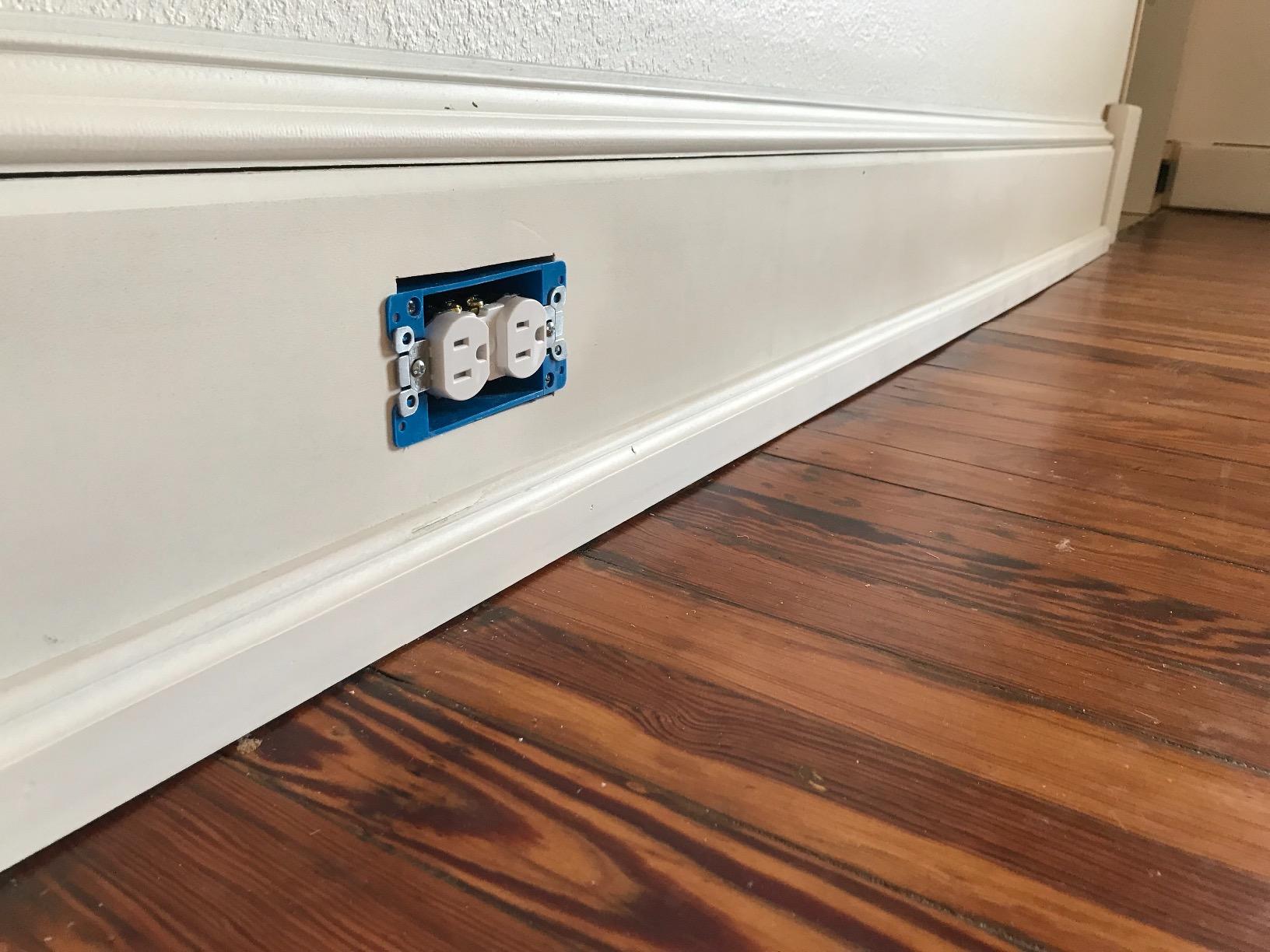
Why angled beats straight for baseboard
Angle-collated nails sit at 30 degrees in the strip, so the magazine runs narrow and the tool nose stays slim. On a straight-collated nailer the magazine is directly behind the nose, and in a 4 inch baseboard corner you simply cannot get the body into the space.
For a homeowner replacing baseboard in a hallway, that single geometry difference decides whether the job takes twenty minutes or an hour of awkward angles. It is also the format trim carpenters name first when asked which single nailer covers the most trim.
Where it falls short
It is not a delicate-detail tool. 16-gauge holes are noticeably larger than 18-gauge or 23-gauge holes, so if the trim face is visible from a seated position you will be filling more holes than you would with a brad nailer.
It also does not reach the same nail length as a heavy 15-gauge or straight finish nailer for structural fastening. If your trim is being nailed straight into framing rather than into a backer, check the nail range before committing.
4. Makita XNB01Z 18V LXT 18-Gauge Brad Nailer – Cabinets and Face Frames
Makita XNB01Z 18V LXT Lithium-Ion Cordless 2″ Brad Nailer
18-gauge brads 5/8-2 inch
Magazine holds 110 nails
7.7 lb with battery
3-year limited warranty
Pros
- Clean driving with no tear-out on cabinet face frames
- Easy to load and rarely jams once set up
- Narrow nose is easy to position precisely
- Anti-dry drive protects finished surfaces
- Three-year limited warranty
Cons
- 4.0-star average with 15 percent of reviews at one star
- Some owners report misfires and jams developing after months
- Heavy and back-weighted for overhead work
The Makita is the specialist here for cabinet and face frame assembly, where nail placement and hole quality matter more than raw drive power. Owners building cabinets report no visible tear-out and a narrow nose that is easy to align on a face frame joint.
It drives 18-gauge brads from 5/8 inch to 2 inch, holds up to 110 nails and runs up to 1,660 nails on a 5.0Ah 18V LXT pack. The two-mode selector and anti-dry drive mechanism are the features that keep a finished cabinet face clean.
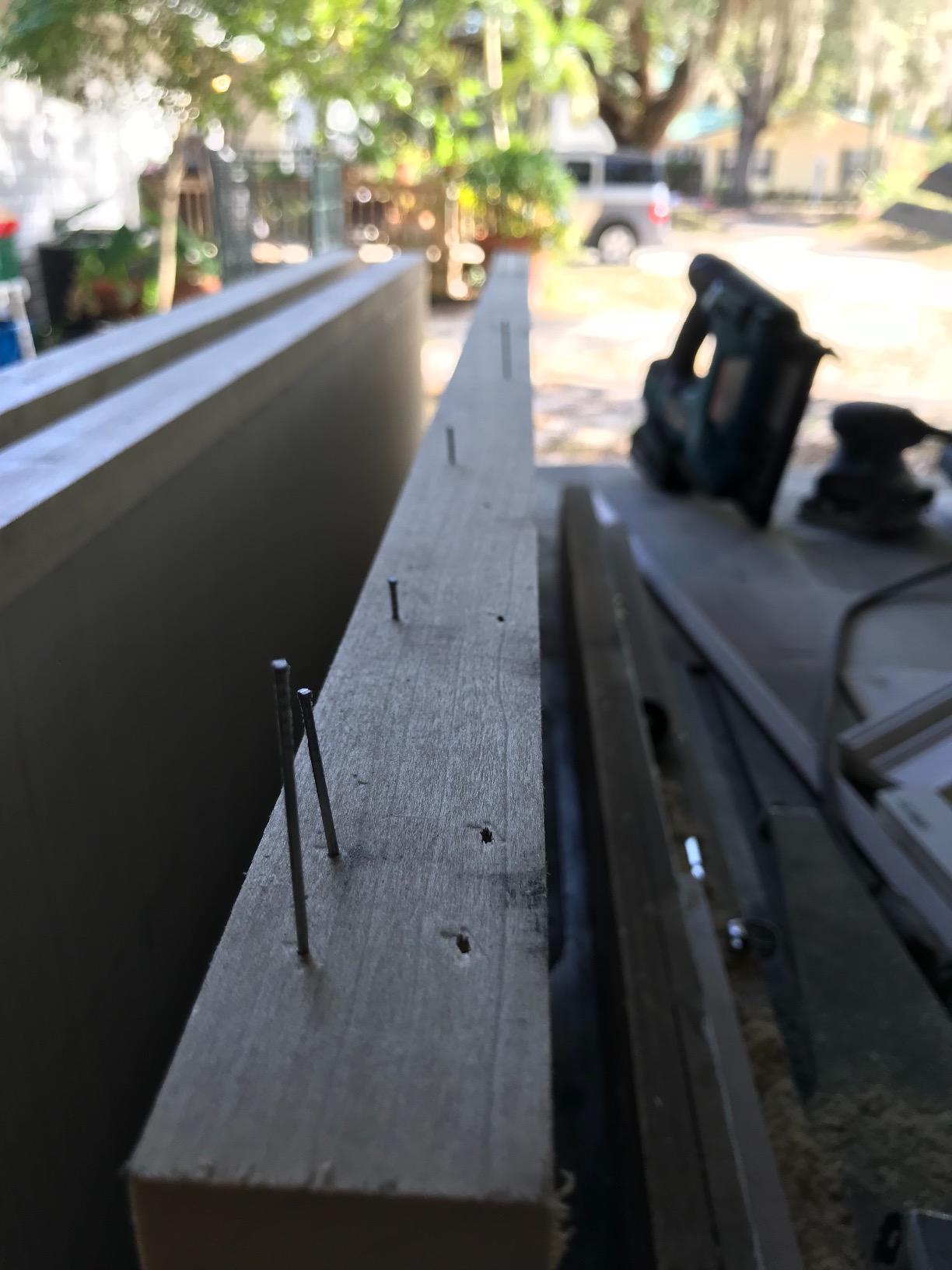
This is also the most polarizing tool in the group. It holds a 4.0-star average from 1,171 reviews, with 64 percent at five stars but 15 percent at one star, and that split is unusual for a Makita product.
The negative reviews cluster around reliability: misfires and jams that appear after months of use, and complaints about performance on MDF and hardwood. At 7.7 pounds with a battery fitted, it is back-weighted and tiring overhead.
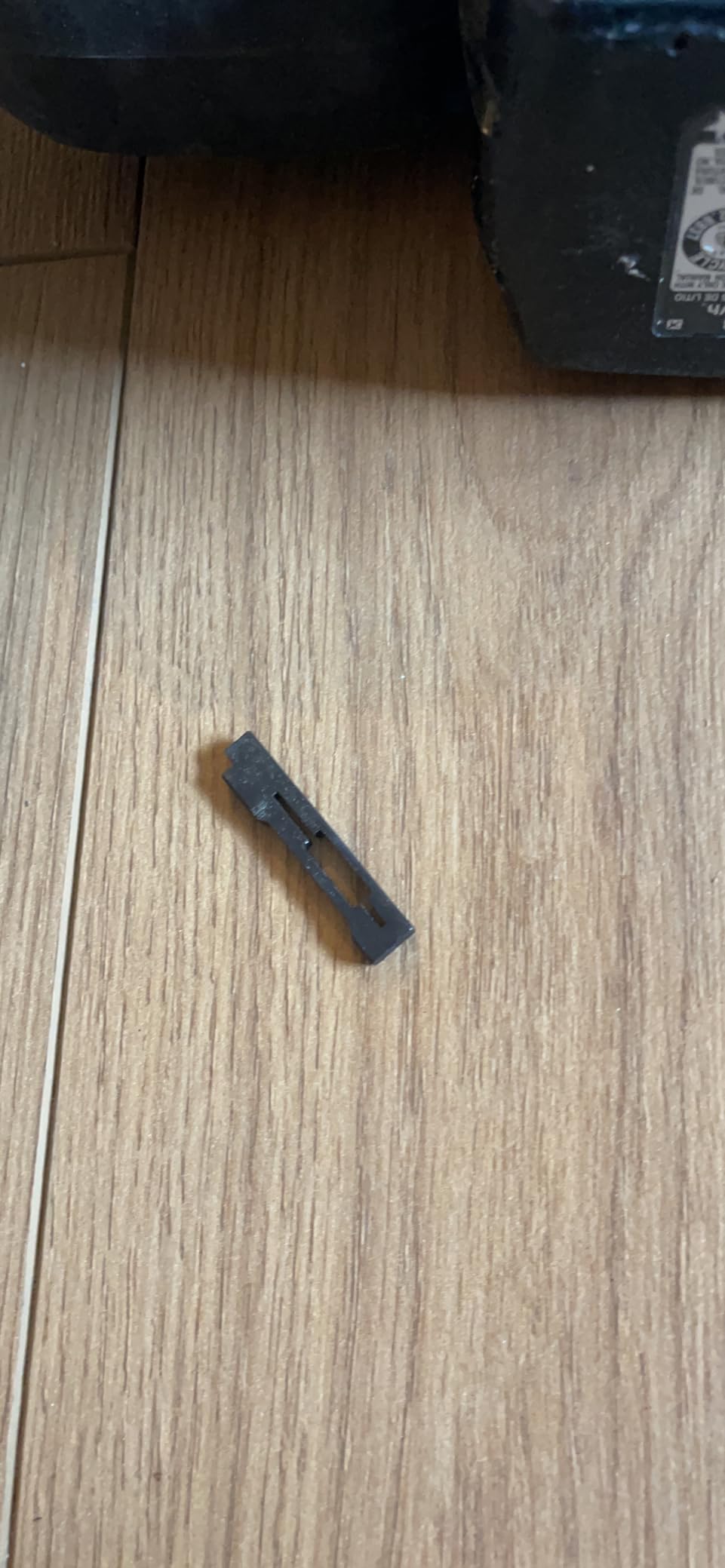
What makes it good for cabinet work
Face frames are nailed in a confined jig where you are looking straight at the joint. A narrow nose, a repeatable depth setting and anti-dry drive that will not fire an empty cycle are exactly the three things you want in that situation, and owners consistently single them out.
The 110-nail magazine also means fewer reloads when you are fitting a run of base cabinet boxes, and the three-year limited warranty is the longest coverage in this roundup alongside the Makita finish nailer.
Where it falls short
The weight and rear bias are the ergonomic complaint. Finish carpenters doing overhead crown work complain about 6 to 7 pound tools as a rule, and this one is at the top of that range before you even account for a loaded magazine.
The 4.0-star average with a 15 percent one-star share tells you the durability record is uneven. If you are buying once and expecting a decade of service, this is not the safest pick in the group.
5. Makita XNB02Z 16-Gauge Straight Finish Nailer – The Longest Nails
Makita XNB02Z 18V LXT Straight Finish Nailer, 16 Gauge, 2-1/2″
16-gauge straight nails 1-2-1/2 inch
8.12 lb
Up to 1000 nails per 5.0Ah pack
Includes no-mar tip
Pros
- Drives long 2-1/2 inch 16-gauge finish nails
- Compact center height improves visibility in tight spots
- Long runtime on a single 5.0Ah pack
- Anti-dry fire protects finished surfaces
- No-mar tip belt clip and safety glasses included
Cons
- Heavy with battery and nails loaded for overhead work
- Very loud firing so hearing protection matters
- Nail depth consistency trails a pneumatic finish nailer
When the question is how deep can I go, this is the answer. It drives straight 16-gauge finish nails from 1 inch to 2-1/2 inch, which is enough to reach framing behind a door jamb or a thick casing assembly without a second pass.
Owners report running 400-plus square feet of ceiling and shiplap on a single 5.0Ah pack, so runtime on demanding work is not the weakness here. The compact center height also helps in a tight spot where you need to see the nail entry point.
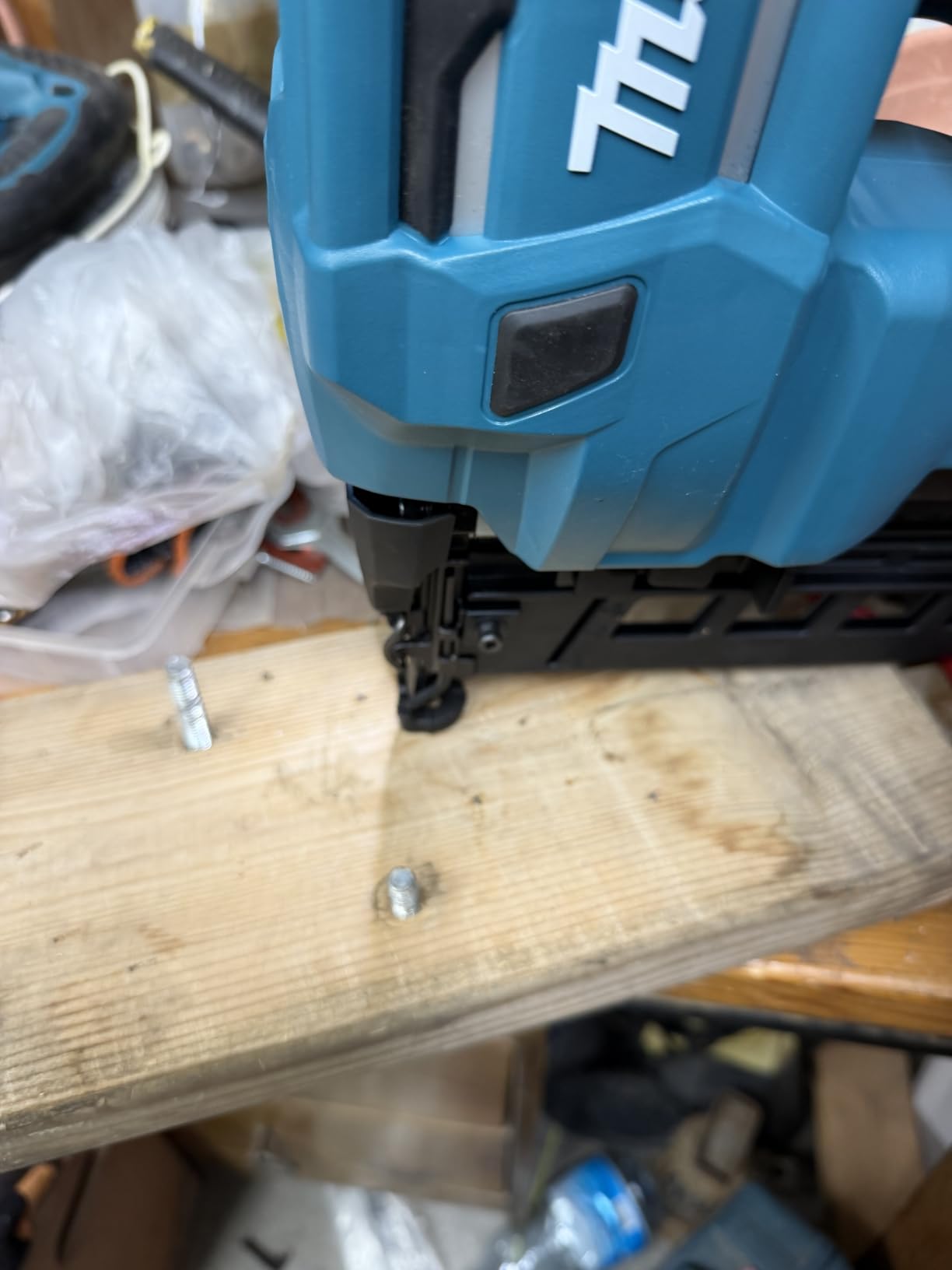
It is better balanced than the Makita brad nailer, and it ships with a no-mar tip, belt clip and safety glasses. Those included extras matter because the no-mar tip is what stops the tool denting a painted casing face.
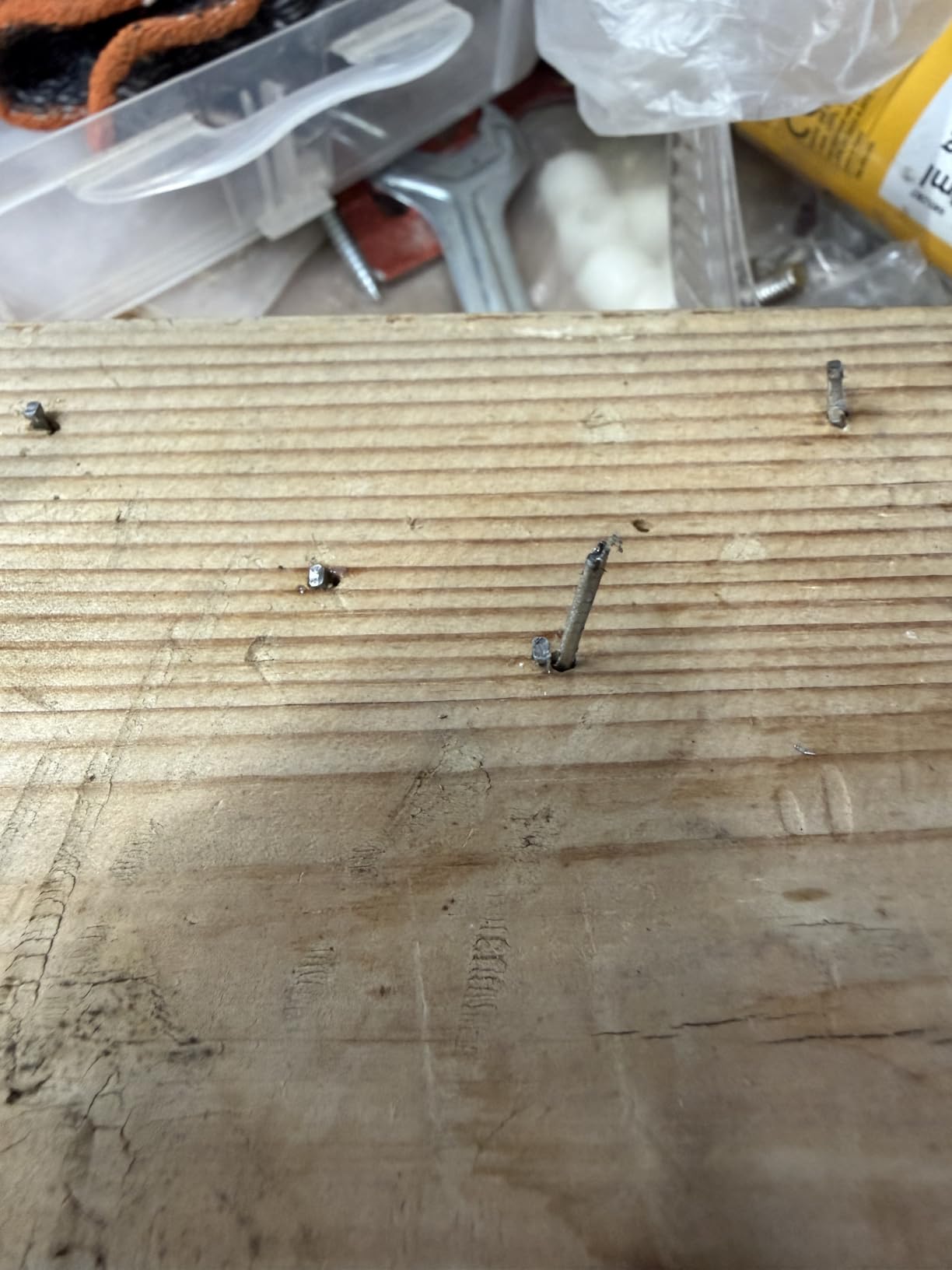
It also holds a 4.3-star average from 978 reviews, where 72 percent are five stars and 11 percent are one star. The complaints cluster on weight, a stiff depth dial, loud operation and depth consistency that does not match a good pneumatic finish nailer.
Where straight collation still wins
A straight magazine gives you a square face to work against and is the traditional format for overhead work, because the tool hangs in a predictable orientation. On soffits, bulkheads and long ceiling runs the straight nailer is still easier to control than an angled body.
The no-mar tip that ships with the tool is worth more than it sounds. On painted or finished casing the tip takes the contact load instead of the metal nose, which prevents the small crescent dent that spoils a trim job otherwise done well.
Where it falls short
At 8.12 pounds with a battery and nails loaded, this is the heaviest finish nailer in the list and the one most likely to cause shoulder fatigue on an all-day overhead run. Overhead is exactly where trim work concentrates.
Owners also report depth consistency falling short of a pneumatic finish nailer. If you are nailing visible painted trim all afternoon and every fastener head must be identical, that variance is the thing to plan around rather than discover on site.
6. Metabo HPT NT1850DG 18-Gauge Cordless Brad Nailer – Best Ready-to-Use Kit
Metabo HPT Brad Nailer, 18 Gauge Cordless, 18V Kit, NT1850DG
18-gauge brads 5/8-2 inch
5.5 lb
Battery and charger included
700 nails per charge
Pros
- Lightest kit at 5.5 lb with a low center height
- Clean driving with no misfires or jams reported
- Tool-less depth dial plus effective no-mar tip and LED
- Battery and charger included so it works out of the box
- Good value against premium brand brad nailers
Cons
- Bundled charger is US voltage only
- Some reports of the charger failing after about a month
- 2.0Ah battery is the smallest capacity in the class
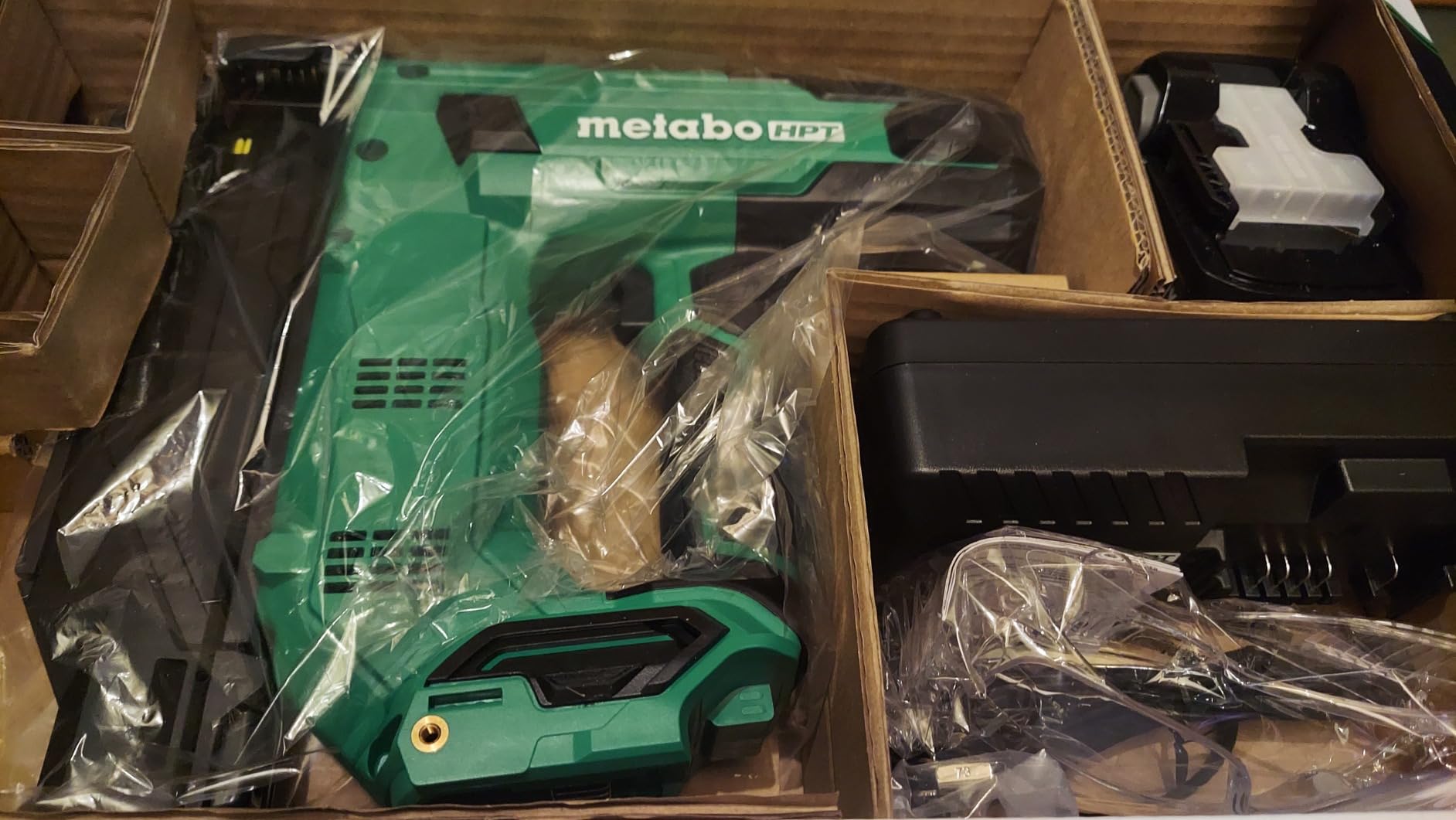
This is the kit I hand to anyone starting out, because the battery, charger, no-mar nose caps, hook and safety glasses are all in the box. Most of the list is a bare tool, and that difference decides whether a first-time buyer is productive on day one or after a second shopping trip.
At 5.5 pounds with a low center height, it is also the best trim nailer here for stairs and tight corners. The mechanical spring drive responds between nails with no ramp-up time, and owners report clean, jam-free driving with a precise tool-less depth dial.
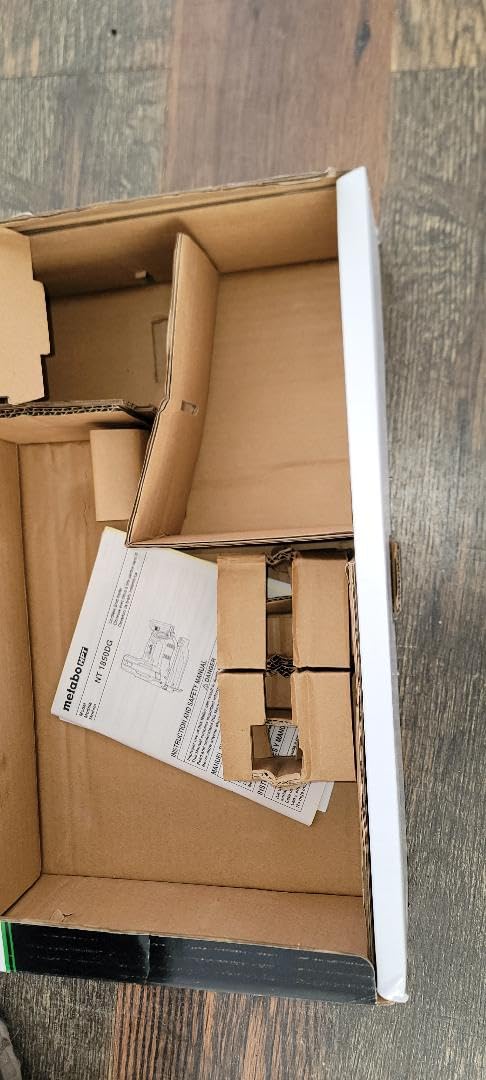
It holds a 4.7-star average from 928 reviews with 86 percent at five stars, and it drives 5/8 inch to 2 inch 18-gauge brads. The bright LED work light and the included no-mar caps make it a strong second-fix and punch-list tool.
The honest limitations are the 2.0Ah battery, the smallest in the class, which caps output at up to 700 nails per charge, and the bundled US-voltage charger. A few owners report the charger failing after about a month, and some need to re-set the depth when they change nail sizes.
Why it suits stairs and tight spaces
Weight and center height are the deciding numbers in a closed stairwell. When you are kneeling on a tread with one hand on the rail and the other holding a nailer, a low, light body changes how the work feels more than any drive feature does.
The low-nail window and the fast response between nails also suit a long, broken run of fastening where you are constantly starting and stopping. For a homeowner fitting a flight of treads and risers, that is the practical use case that matters.
Where it falls short
Seven hundred nails per charge is about half what the higher-capacity packs deliver elsewhere in this list, so on a full trim-out you will be swapping batteries. Budget for a second pack if the tool is going on a multi-day job.
The included charger is the weak link rather than the nailer. If you work outside the US, or if the charger fails as some owners report, you are replacing a component that many owners would rather not chase.
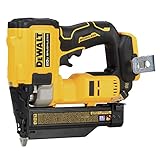
7. DEWALT DCN623B 23-Gauge Cordless Pin Nailer – Fine Millwork
ATOMIC 20V MAX Lithium Ion Cordless 23 Gauge Pin Nailer Tool Only
23-gauge pins 5/8-1-1/2 inch
4.45 lb
Up to 2000 pins per charge
Tool-free jam release
Pros
- Sets pins flush with almost no visible marking
- Lightweight and well balanced for long trim sessions
- Tool-free jam release and tool-free depth adjustment
- Up to 2000 pins per charge on average
- Runs on the widely owned 20V MAX platform
Cons
- Battery and charger not included
- Performs best with quality pin nails as cheap pins feed poorly
- Initial pin loading takes practice
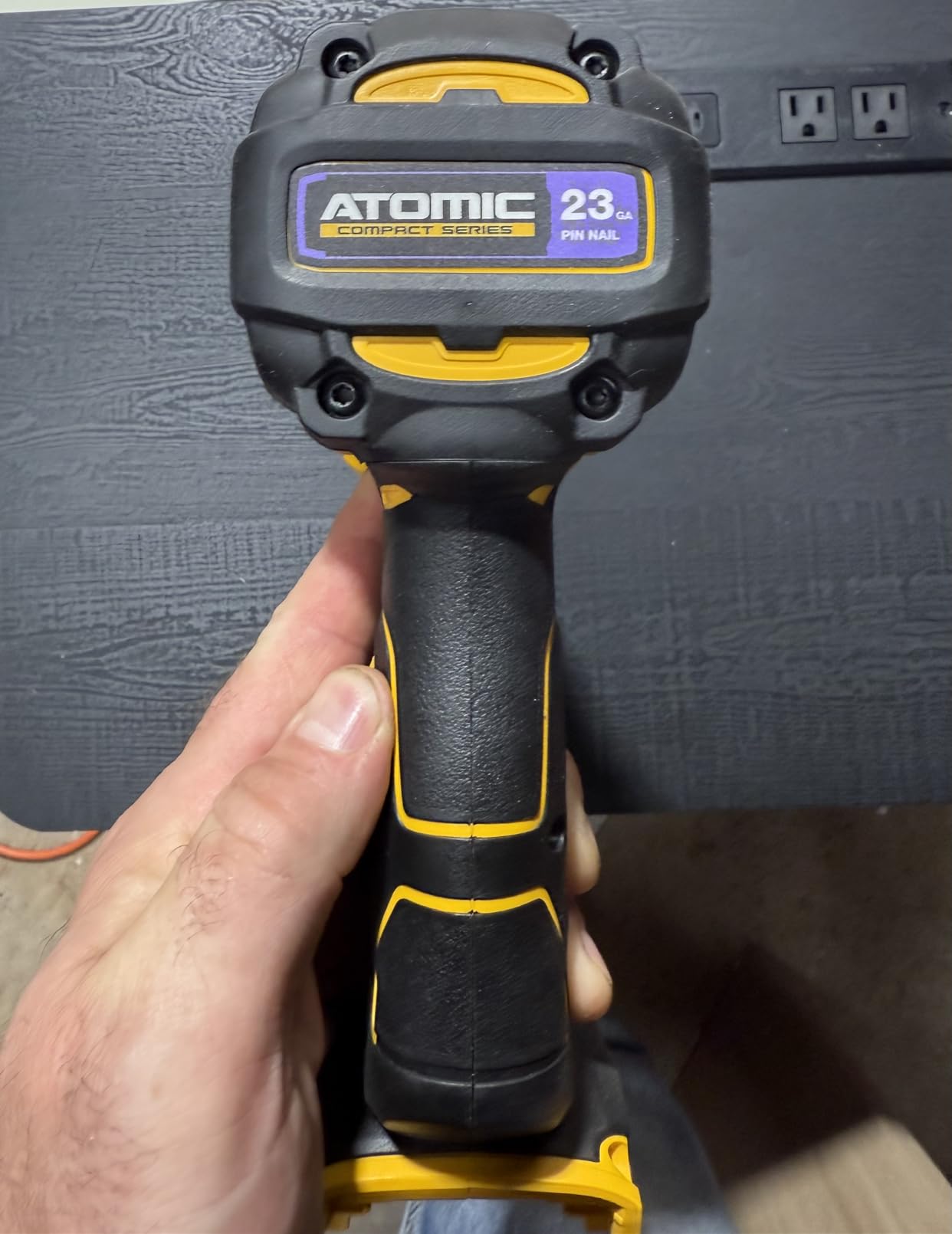
The 23-gauge pin nailer is for the pieces where a brad hole still shows. Glazing bead, picture frame, window stool, small molding returns and anything you plan to paint over or leave a natural finish on all belong here.
Pin nailers have a reputation for feeding problems, and that is the fair criticism to level at the category. This DEWALT is the counter-example: it holds 4.7 stars from 928 reviews with 88 percent at five stars, and professional finish carpenters report it as fully reliable with clean flush holes.
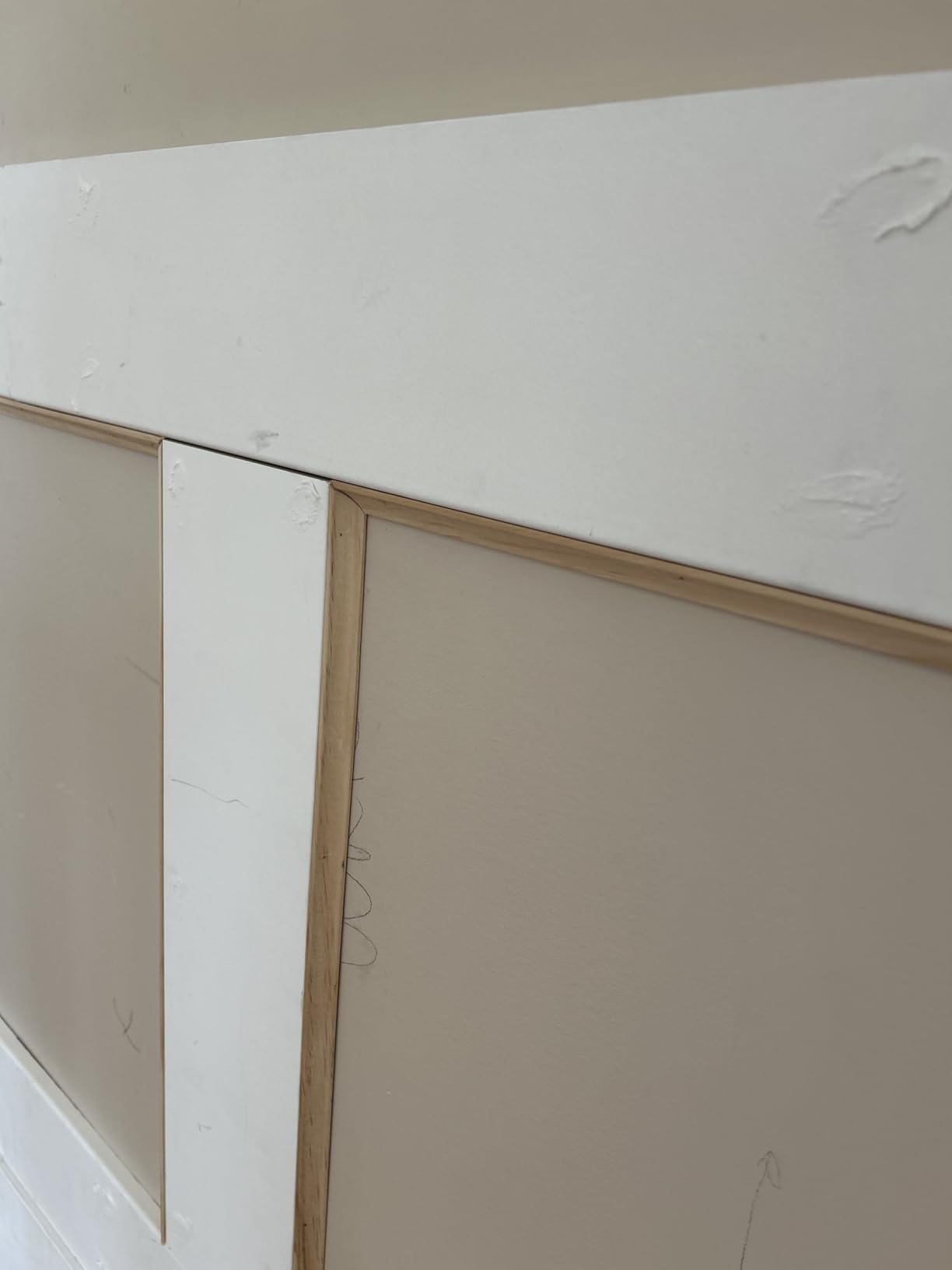
It drives 23-gauge pins from 5/8 inch to 1-1/2 inch, weighs 4.45 pounds and runs up to 2,000 pins per charge on average. That runtime figure is the highest in this group and it pairs with a low nail lockout and an LED indicator.
Two practical notes. First, it performs best with quality pins, and cheaper pin strips feed poorly in a 23-gauge magazine. Second, loading the pin strip takes some practice the first couple of times, and buyers who expect the tool to behave like a brad nailer are disappointed.
Where a pin nailer is the only correct answer
There is no substitute for a 23-gauge pin when the fastener hole is visible on a finished face. On a picture frame in walnut, a window stool painted to match the trim, or a small return on a built-in, a brad hole reads as a defect even after careful filling.
At 4.45 pounds it is also the lightest tool here, which makes it the right pick for a long day of fine millwork in a seated position. A handful of professional finish carpenters use a cordless pin nailer as their only cordless nailer, which tells you how far this format has come.
Where it falls short
It is not a holding-power tool. Pins this thin will not hold trim against a pull, so anything that needs structural fastening still requires a finish or brad nailer alongside it.
Nail cost is the other real factor. 23-gauge pins cost considerably more per nail than brads, and quality strips cost more than discount ones. For a small second fix that is irrelevant, but on a large decorative job it adds up and the cheap-pin feeding problem is real.
8. CRAFTSMAN V20 CMCN618B 18-Gauge Cordless Brad Nailer – Straightforward Trim Gun
CRAFTSMAN V20 Brad Nailer, 18GA, Cordless, Bare Tool Only (CMCN618B)
18-gauge brad nailer
Up to 420 nails per charge
Tool-free jam release and stall reset
Pros
- Low entry cost with steady jam-free firing on common trim stock
- Quick tool-free depth adjustment and a no-mar tip
- Well balanced enough for one-handed work including overhead
- Runs several consecutive 100-nail magazines without issue
- Uses CRAFTSMAN V20 batteries many owners already have
Cons
- 420 nails per charge is the lowest runtime in the roundup
- Bare tool only so battery charger and nails are extra
- 2 inch brads need a fully charged battery to seat completely
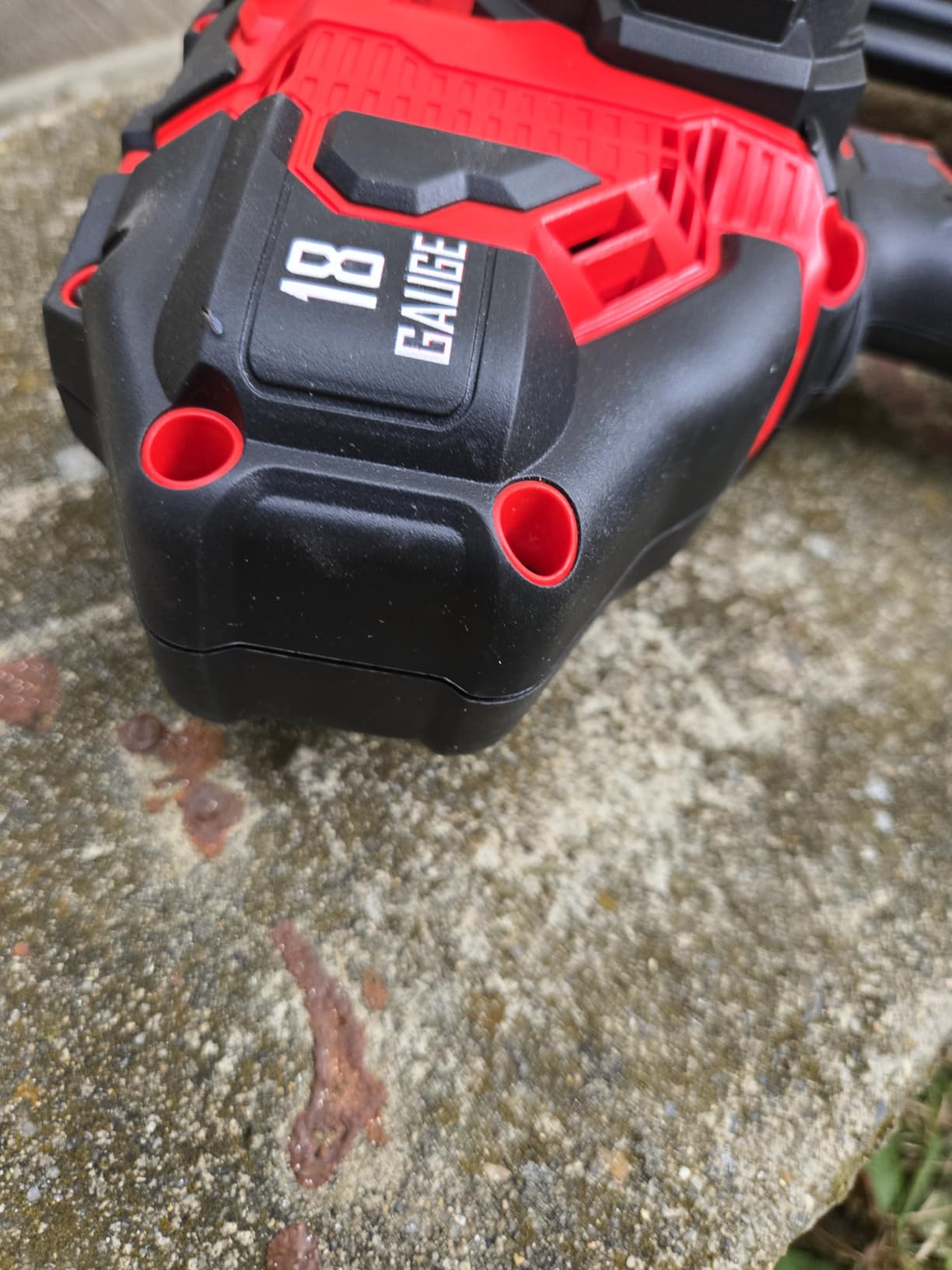
The CRAFTSMAN is the uncomplicated option, and that is a genuine strength. It has a tool-free jam release, a tool-free stall reset, a no-mar tip and a well-balanced body, and owners report it running several consecutive 100-nail magazines without an issue on pine, poplar and trim stock.
For a homeowner replacing skirting and casing around one room, it does everything needed without a compressor. Reviewers treat it as a strong value pick for DIYers and occasional users rather than a professional daily driver.
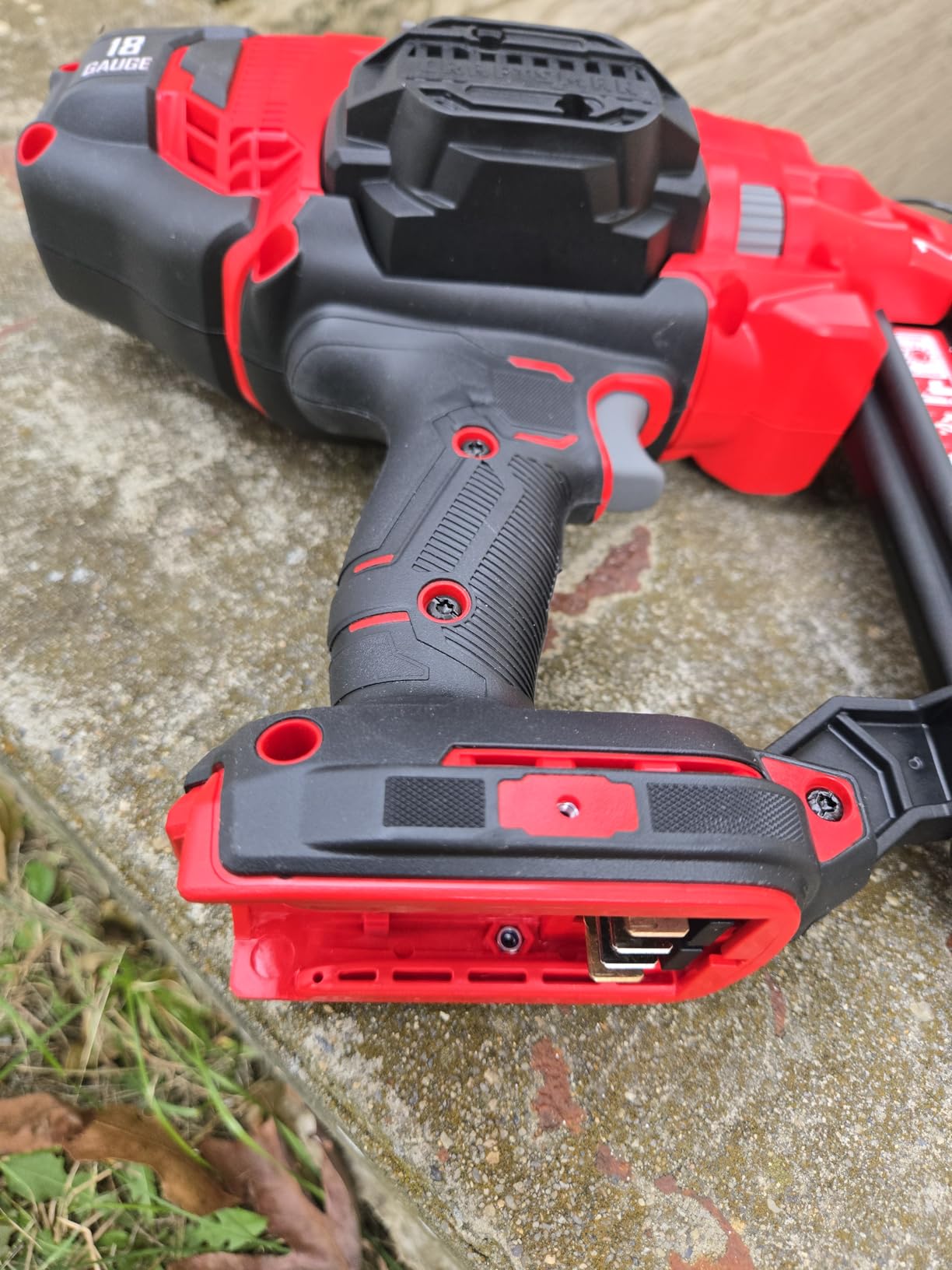
It holds 4.6 stars from 890 reviews with 81 percent at five stars. The balance is called out specifically as good enough for one-handed work, including overhead, which is unusual praise for a tool at this level.
The constraint is runtime. At up to 420 nails per charge, this is the lowest figure in the roundup, and 2 inch brads need a fully charged battery to seat completely. On a longer trim-out you are swapping packs more often than the specification sheet suggests you should.
What it handles without drama
Everyday interior trim: skirting, back band, window stool fastened to a backer, and small casing runs on a stud wall. The tool-free depth adjustment is quick enough to reset when you move between materials, which is the main thing that slows a beginner down on a pneumatic gun.
It runs on CRAFTSMAN V20 batteries, which many owners of other V20 tools already have. Combined with the belt hook and a balanced body, it is a reasonable first cordless nailer for someone who does trim a few times a year.
Where it falls short
A 420-nail runtime and a bare-tool listing put more friction in a full day of work than the low cost suggests. The cycle is also slower than an air brad gun, so a professional running trim all day will feel the difference.
If you expect long nails into hardwood framing, this is not the tool. It is built for brad work into soft trim stock and backer boards, and pushing it beyond that is where the battery-charge complaints come from.
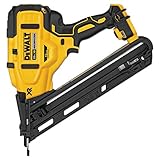
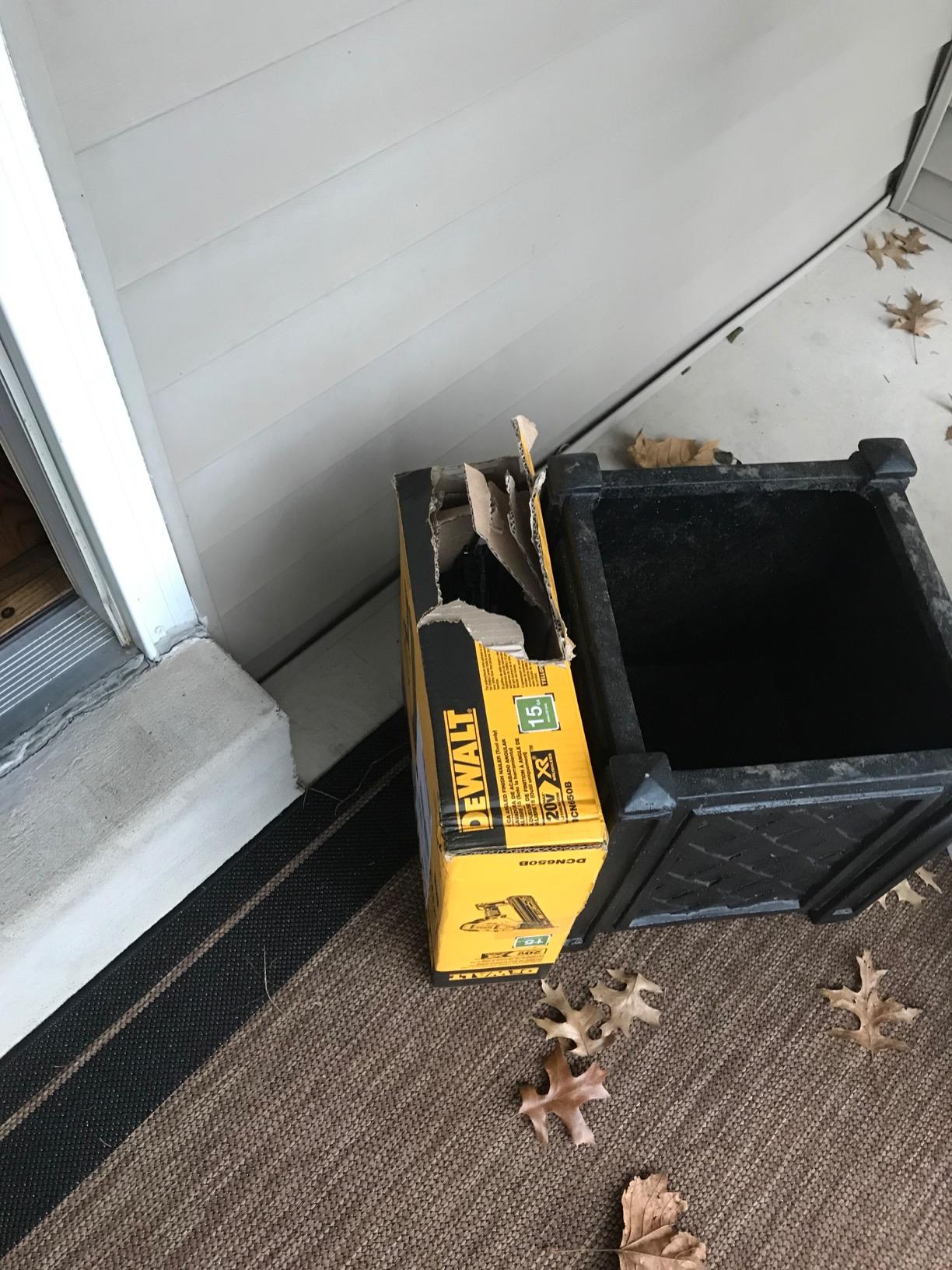
9. DEWALT DCN650B 15-Gauge Angled Finish Nailer – Crown and Heavy Casing
20V MAX XR Lithium-Ion Cordless 15-Gauge Angled Finish Nailer (Tool Only)
15-gauge angled finish nails
6.6 lb
20V MAX brushless motor
Micro nose with LED lighting
Pros
- Heavy 15-gauge angled format for crown molding and casing
- Brushless motor with long runtime and durability
- Inline magazine and micro nose help in tight spaces and odd angles
- Full set of tool-free adjustments plus LED lighting
- Broad compatibility across the 20V MAX battery range
Cons
- Tool only so battery and charger are separate
- Heavy at 6.6 lb for overhead crown work
- About 7 percent of reviews are 1-star
This is the heavy gauge, and heavy gauge is the correct answer for large crown profiles and thick casing. A 15-gauge nail resists the downward pull that a tall crown section puts on the fastener in a way an 18-gauge brad will not.
The feature set matches the 16-gauge DEWALT closely: brushless motor, micro nose, inline magazine, tool-free selectable trigger, tool-free depth adjustment, jam release and stall release, plus multi-functional LED lighting. Owners generally recommend it for heavy 15-gauge trim and molding duty.
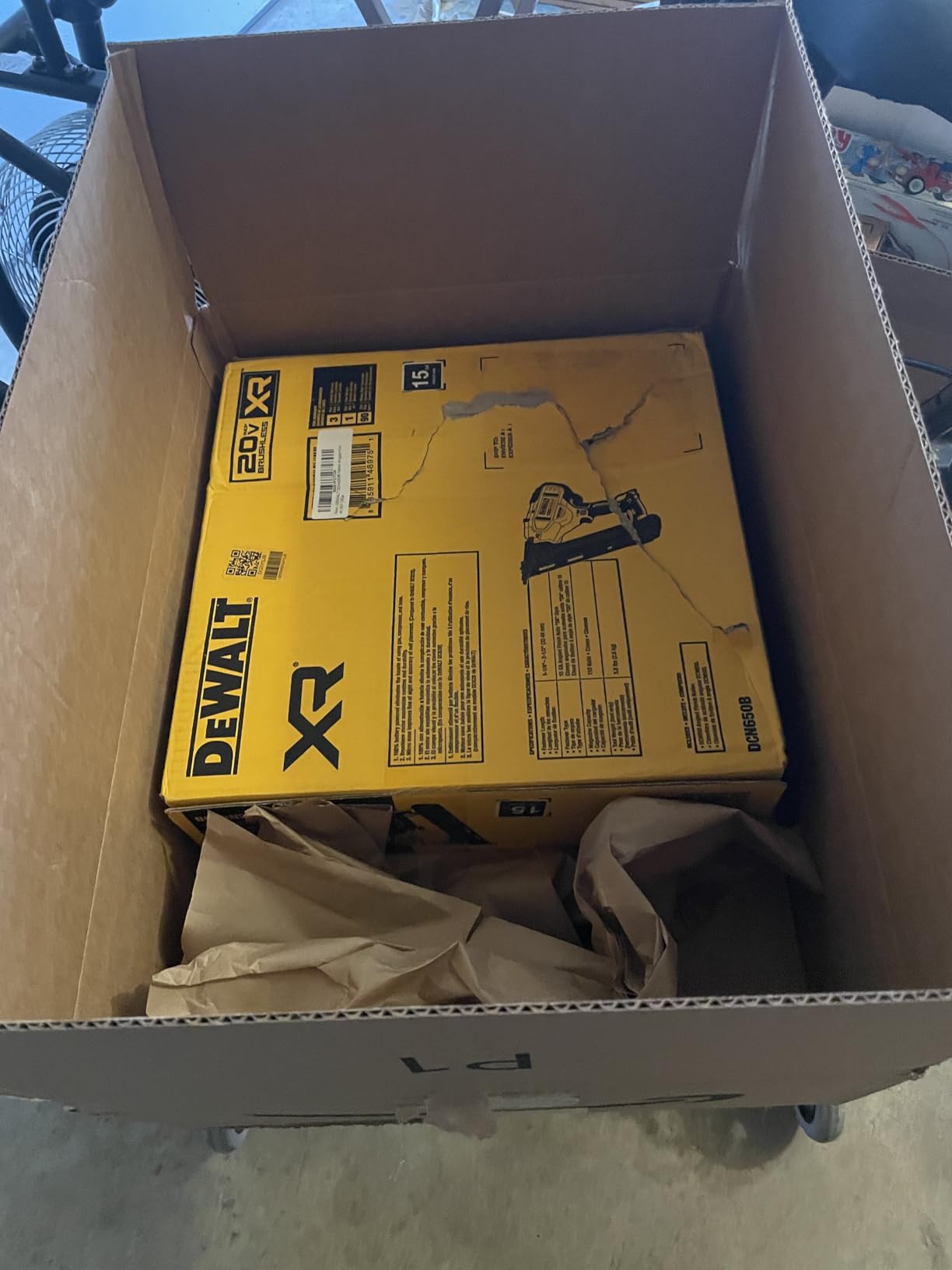
It holds 4.5 stars from 853 reviews with 77 percent at five stars, ranking in the top of its category. The 20V MAX battery range is broad, so if the platform is already in your garage the ownership cost is close to nothing.
At 6.6 pounds it is one of the heavier finish nailers here, which is the complaint that matters most for crown work held overhead. Owners also note that 7 percent of reviews are one star, and that choosing between the overlapping 15-gauge and 16-gauge DEWALT options is genuinely confusing.
When you actually need 15-gauge
The dividing line is holding power. If the trim is being fastened into a backer board and the load is lateral, 16-gauge is enough. If the trim is a tall crown profile pulling downward on the fastener, or you are nailing into thick casing without a backer, step up to 15.
Crown in a living room and a formal dining room is the classic case. A big profile has real mass, and the fastener is the only thing resisting that weight over a long run, which is why experienced finish carpenters reach for the heavier gauge here rather than the brad nailer.
Where it falls short
Six and a half pounds held above your head for a four-hour soffit run is a fatigue problem, and it is the single most repeated ergonomic complaint in the finish nailer category. A lighter brad nailer for the same profile is possible if the profile is simple.
If you are replacing baseboard and light casing, this gauge is more than you need. You pay for holding power you will not use, and you carry more weight for it.
10. Milwaukee M18 FUEL 2746-20 18-Gauge Brad Nailer – Fastest Firing Cycle
Milwaukee Electric – M18 Fuel 18 Gauge Brad Nailer
18-gauge brad nailer
6.5 lb
Nitrogen air spring drive
Zero ramp-up time
Pros
- Zero ramp-up time gives the fastest fire rate in the roundup
- Nitrogen air spring sets consistent depth in hard and soft wood
- Clean nail holes that match the nail head
- Quiet operation with minimal drain on a single charge
- Built-in LED light and tool-free depth adjustment
Cons
- Tool only with no battery charger or case included
- Some owners wish the body were more compact
- Premium price against generic 18-gauge brad nailers
The Milwaukee is the speed pick. The POWERSTATE brushless motor has zero ramp-up time, so the nailer fires the moment you pull rather than spinning up first, and that difference shows up over a full day of fastening.
The nitrogen air spring mechanism is the technical headline. It stores pressure in a sealed chamber rather than relying on a solenoid coil, and owners with decades of experience credit it with consistent depth in both hard and soft wood and clean holes that match the nail head.
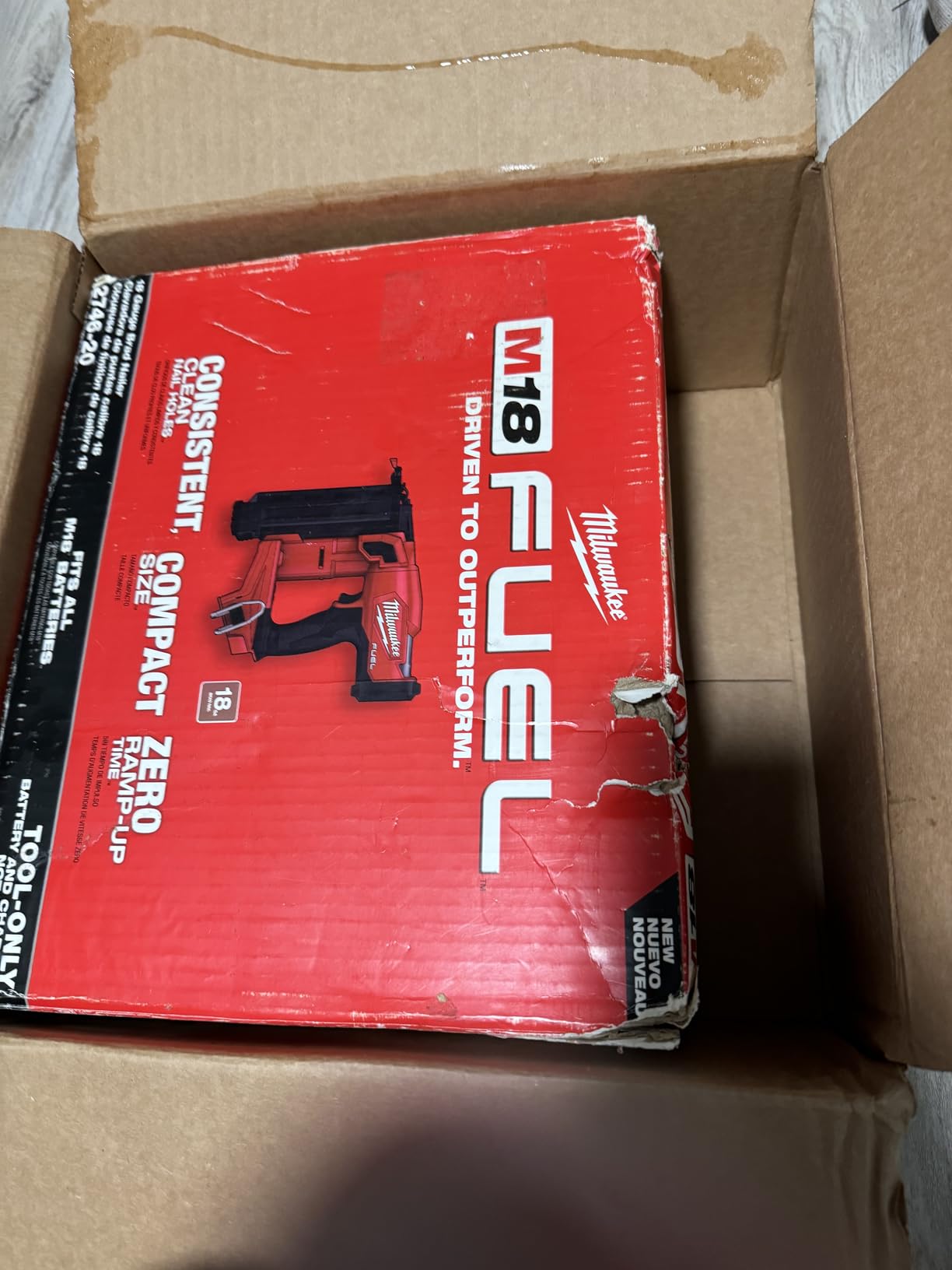
At 4.6 stars from 811 reviews with 85 percent at five stars, the feedback is consistent across the board: fire rate, consistent depth, quiet operation and the absence of compressor and hose problems. Forum carpenters also single out the near-absence of kick as a real comfort benefit.
Quiet operation matters more than most roundups admit. On an occupied-home remodel or an apartment second fix, a tool that runs at conversation volume lets you keep working without raising your voice to be heard in the next room.
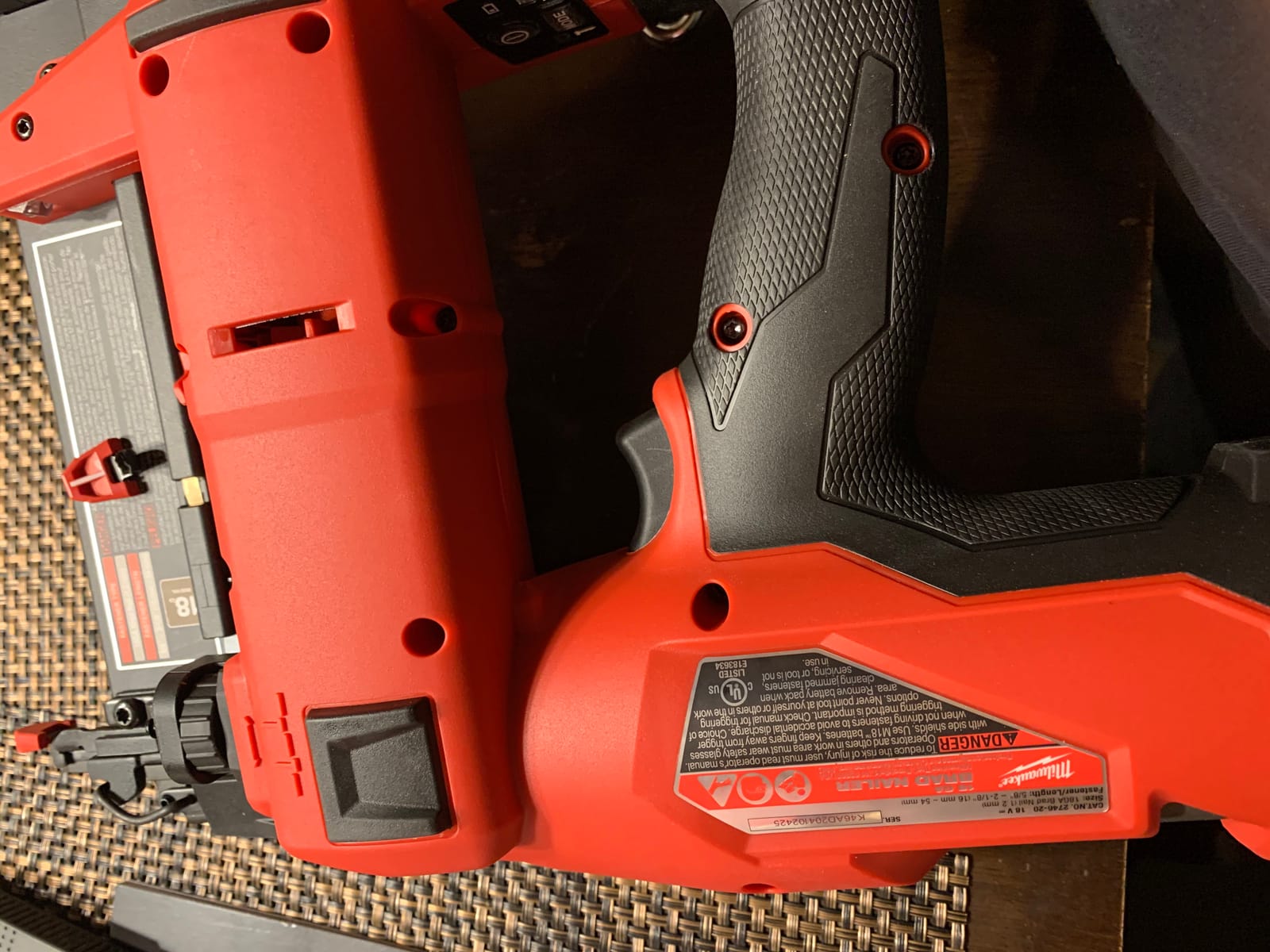
What the air spring drive actually changes
A solenoid-driven cordless nailer uses current to build a magnetic field that drives the driver, and drive strength falls as the battery charge drops. An air spring stores energy in a sealed nitrogen chamber and releases it mechanically, so depth stays the same from a full pack to a low one.
On painted casing that stability is the difference between a row of flush heads and a row that needs filling. On baseboard run around a room it is the difference between a clean job and a slow one spent adjusting depth between sections.
Where it falls short
It is a bare tool with no battery, charger or case, so the all-in cost is higher than the kits lower down this list. M18 packs are among the most widely owned platforms, which offsets that for a lot of buyers but not all.
A few owners wish the body were more compact, which matters when you are working between studs or behind a wall. If you order this, check what actually landed in the box before you start work.
11. WORX WX842L 20V Cordless Brad Nailer – Battery on the Power Share Platform
WORX Cordless Brad Nailer, 20V 18GA Nail Gun, WX842L
18-gauge brads up to 2 inch
7.06 lb
Up to 80 nails per minute
Power Share battery included
Pros
- Drives 2 inch brads into hardwood reliably
- Fires up to 80 nails per minute for quick trim runs
- Battery included and shares the Power Share platform
- Tool-free jam release with anti-ejection safety design
- Suited to panel molding and window trim
Cons
- 7.06 lb makes it heavy for overhead trim work
- Uneven consistency with a spread across mid ratings
- Air impact design needs a short break-in period
The WORX is unusual in a good way: a battery is included, and it uses the Power Share platform shared across a wide range of garden and power tools. If you already have packs in that system, this is a cheap way to add trim capability to an existing kit.
NailForce Air Impact Technology is what lets it secure brads up to 2 inch into hardwood, which is more than most entry-level 18-gauge drivers manage. It fires up to 80 nails per minute, and owners use it for panel molding, window trim and small baseboards.
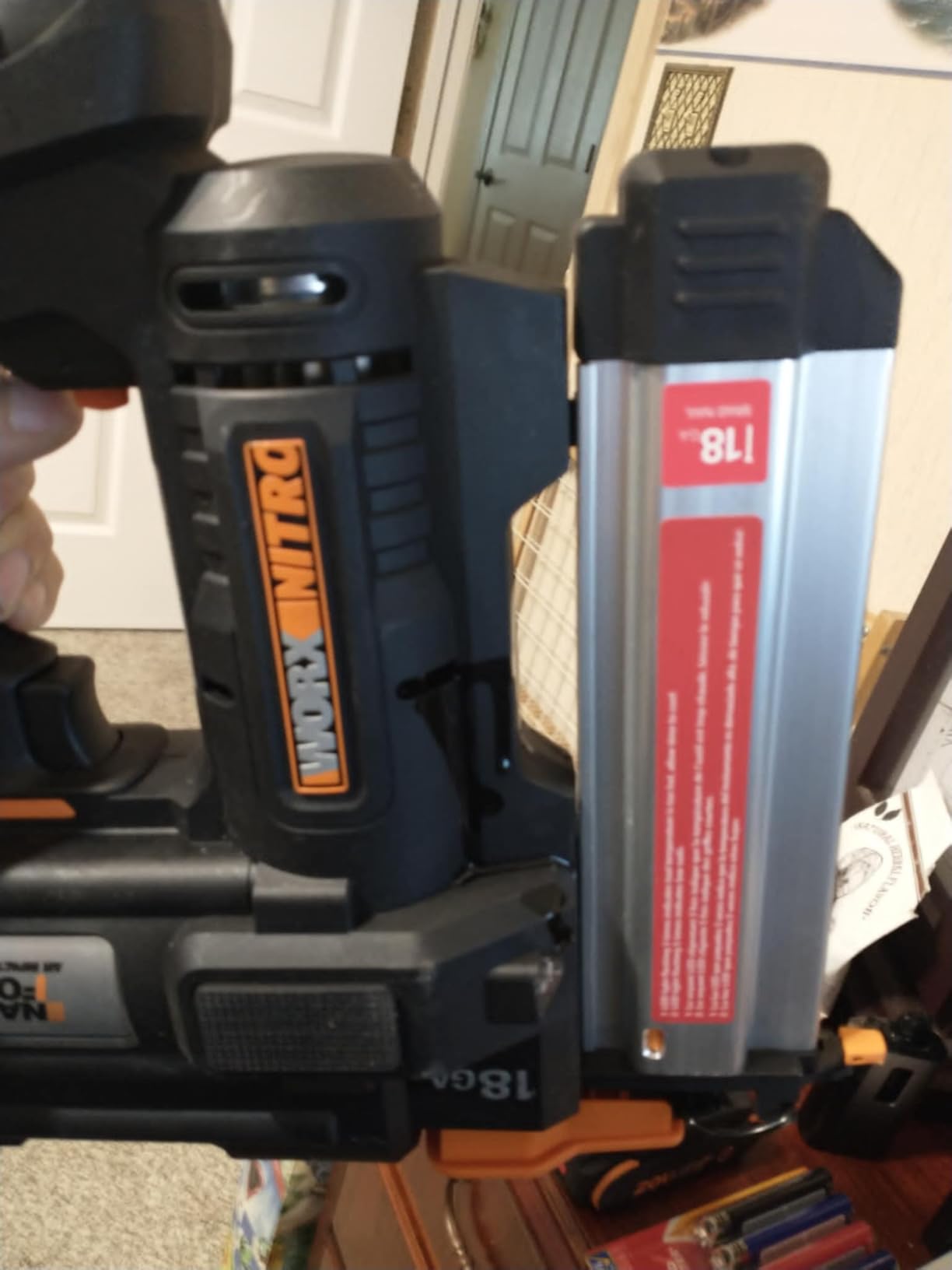
It holds 4.5 stars from 733 reviews with 78 percent at five stars. The anti-ejection design is a genuinely good idea for a tool you are likely to use on a ladder or in a tight space, because it stops nails flying when you open the magazine or clear a jam.
At 7.06 pounds it is one of the heavier brad nailers in the list, and that is the main reason it does not climb higher. Owners also note the air impact design needs a brief break-in period before accuracy settles, and the rating spread suggests uneven consistency.
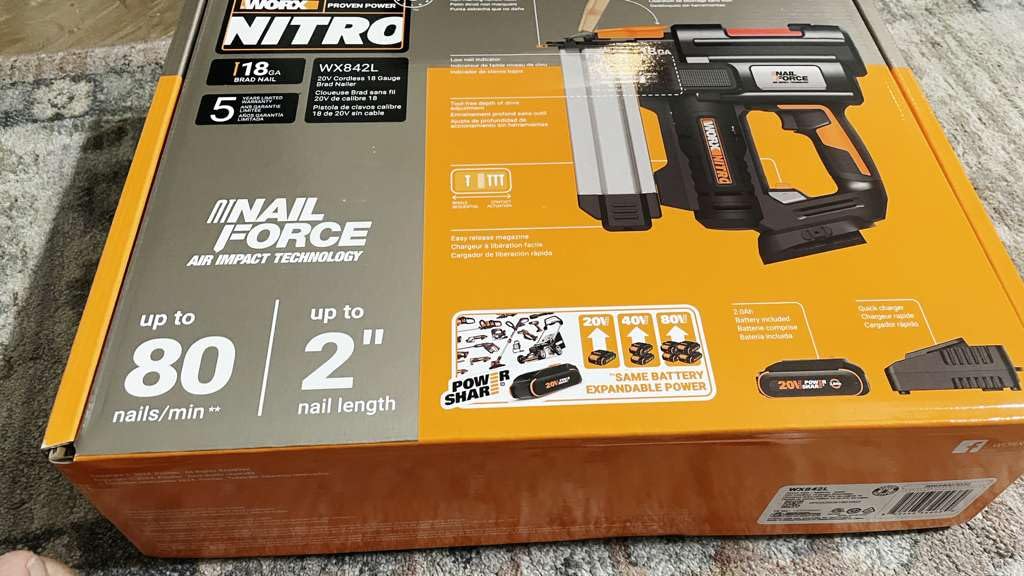
Where the included battery changes the decision
Most bare tools on this list only make financial sense if you already own the battery platform. The WORX is one of the few that works out of the box, which removes the largest hidden cost from the purchase and makes it a strong first cordless nailer.
The 80 nails-per-minute rate is a good match for short, repetitive trim runs like window casing in a single room, where the tool is lifted and lowered many times rather than held overhead for a long stretch.
Where it falls short
Seven pounds is heavy for an 18-gauge brad nailer and it is the most common complaint in owner feedback. On a stair or a soffit, that weight is felt quickly and the compactness of the platform does not compensate.
The published review pool is smaller than the leading models here, and the mid-range ratings suggest some inconsistency between units. Give it a short trial run on your own material before committing to a large job.
12. WEN 20512 Cordless 18-Gauge Brad Nailer – The Complete Starter Kit
WEN 20V Max Cordless 18-Gauge Brad Nailer with 2.0Ah Battery and Charger (20512)
18-gauge brads 3/4-2 inch
7.84 lb
100-nail magazine
Battery, charger and nails
Pros
- Lowest cost in the roundup with a complete kit
- Smart LED indicator tracks battery magazine and tool temperature
- Easy-load 100-nail magazine with no compressor to manage
- Handles 3/4 to 2 inch brads for general trim duty
- 400 brads supplied so you can start immediately
Cons
- 4.2-star average with about 10 percent one-star reviews
- Brushed motor is less powerful and slower than brushless rivals
- Entry-level drive consistency on hardwood
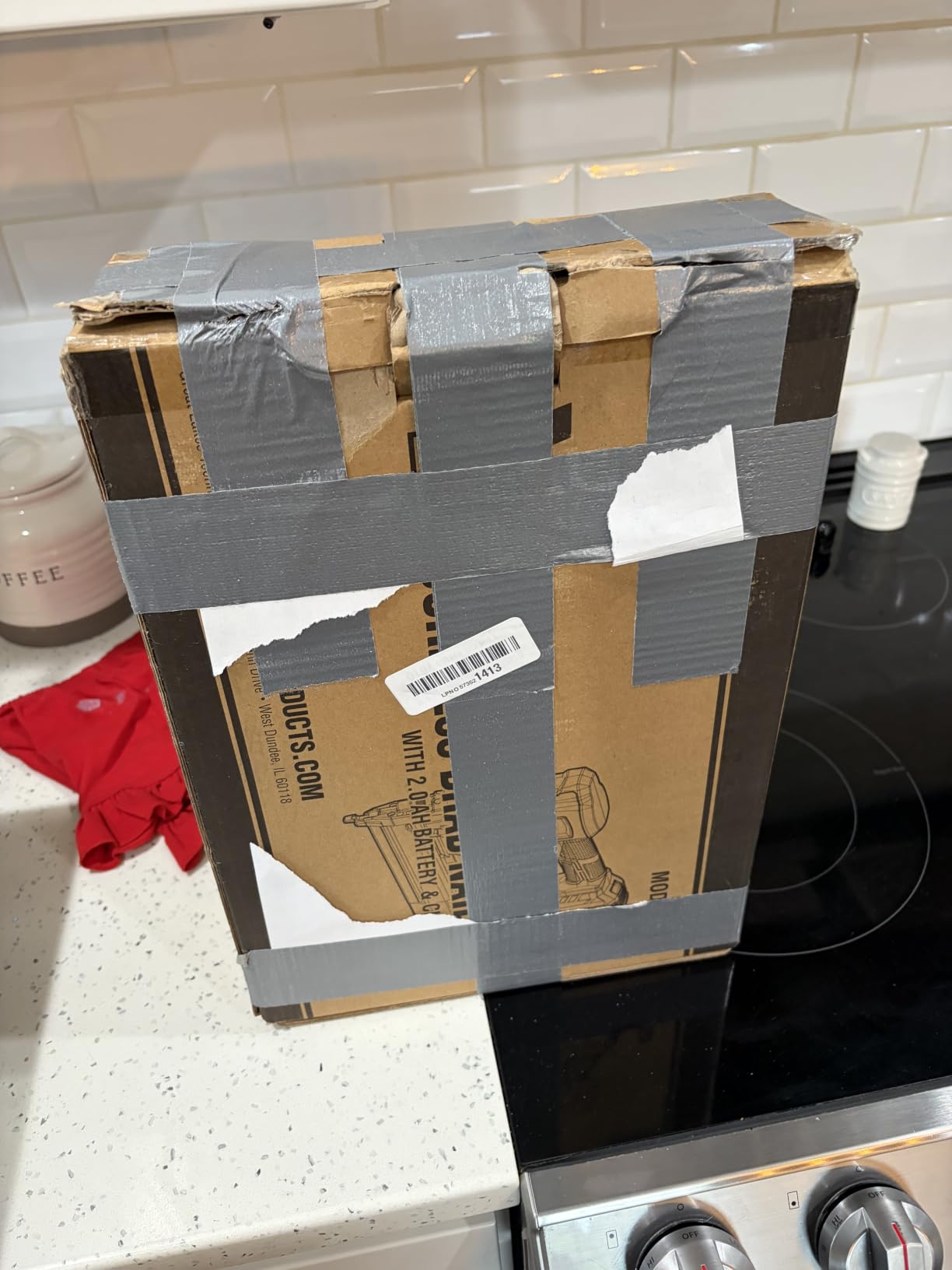
The WEN is the most complete package on this list. You get the nailer, a 2.0Ah lithium-ion battery, a charger and 400 18-gauge brads in the box, which for a first-time buyer removes the three separate purchases that make bare tools expensive to get running.
It fires 18-gauge brads from 3/4 inch to 2 inch through a 100-nail magazine, and the smart LED indicator reports battery status, magazine fill and tool temperature. That temperature readout is unusual at this level and genuinely useful when you are driving into dense hardwood.
It holds 4.2 stars from 701 reviews, with 66 percent at five stars and about 10 percent at one star, a solid showing for an entry kit. Reviewers are positive about the complete, inexpensive kit and the informative indicator.
The brushed motor is the limitation. It delivers less power and a slower cycle than the brushless tools above it, and drive consistency on hardwood is entry-level. At 7.84 pounds it is also one of the heavier tools in the group. Fine for skirting and light trim, not built for dense hardwood.
Who this kit suits
If the job is a weekend of skirting, back band and light casing in soft trim stock, this kit is a rational starting point. Nothing else in the roundup gets you a battery, a charger and 400 nails in one purchase, and the 100-nail magazine is a sensible capacity for intermittent work.
The 400 supplied nails also mean you can evaluate the tool on your own material before committing to bulk nail purchases, which is a good way to find out how it behaves on painted MDF or a softwood backer.
Where it falls short
Brush rather than brushless means a slower cycle and lower drive force, with about 10 percent of owner reviews at one star. If the trim is solid hardwood or you are fastening into framing, the lighter brushless tools are the better buy.
At 7.84 pounds with a battery fitted, the weight is the other issue. It suits waist-height trim better than overhead work.
How to Choose a Cordless Nailer for Trim Work
Most disappointing trim tools are not bad tools, they are the wrong gauge or the wrong battery platform. Work through these seven points in order and the choice usually makes itself.
1. Match the gauge to the trim and the substrate
Start with the fastener, not the brand. If the trim is nailed into a backer board, 18-gauge is enough and leaves the smallest hole. If it is nailed into framing or a door jamb, move to 16-gauge, and to 15-gauge when a heavy profile pulls downward on the fastener.
Use 23-gauge pins only where the hole is visible on a finished face. They are for detail, not for holding power, and the pins cost more per piece.
2. Choose the magazine angle for the space
An angled magazine at 30 or 34 degrees keeps the tool narrow, which is what lets you reach an inside corner, a tub surround or a tight stair. A straight magazine gives a square body that is easier to control overhead, and it accepts a longer range of nail lengths in some tools.
If most of your trim is baseboard and casing in tight rooms, choose angled. If most of your trim is soffit and bulkhead work held overhead, straight is easier to manage.
3. Count the cost of the battery platform
Most bare tools here do not include a battery or charger, and the pack is often the largest single cost in the purchase. Before choosing a model, work out what platform you already own.
- 20V MAX covers three of the DEWALT models in this roundup, so buying one nailer makes the other two nearly free to add later.
- M18 covers the Milwaukee, and 18V LXT covers both Makita models.
- ONE+ covers the Ryobi, and Power Share covers the WORX, which ships with a battery.
- CRAFTSMAN V20 and the Metabo HPT kit work if you are starting from nothing or already own those packs.
Rough rule of thumb: if you own no packs at all, buy a kit that includes a battery and charger. If you already own a platform, ignore the tool that comes with a battery and buy the bare tool you actually want.
4. Pick the actuation mode for the job
Sequential mode fires one nail per trigger pull and gives you control and accuracy. Contact or bump mode fires a burst as long as the trigger is held and the safety contact is pressed against the work, which is much faster along a long run.
Use sequential for casing, face frames and anything where a misplaced fastener is visible. Use contact for long straight runs of baseboard on soft material. A tool with a tool-free trigger selector lets you switch without tools on site.
5. Check that jams clear without tools
A jammed nailer in a finished room with no wrench nearby is a bad afternoon. Most of the quality tools here have a tool-free jam release and a stall release lever, and on models without them you are pulling fasteners out by hand.
This is the single most practical durability feature to check, and it is worth more to you than a slightly faster cycle time.
6. Judge the weight for your actual work
Finish carpenters on multi-story jobs complain about 6 to 7 pound finish nailers as a rule, and it is the most repeated ergonomic complaint in owner feedback. The tools here range from 4.45 pounds for the pin nailer to just over 8 pounds for the heaviest brad and finish models.
Match the tool to the job position. Overhead crown and soffit work punishes weight, while a lot of baseboard and casing work is done at waist height where it matters much less. For stairs, low center height matters more than total weight.
7. Budget for the accessories you will actually need
A no-mar tip, ear protection, a spare pack and a belt hook are the accessories that make a trim nailer pleasant to use. Some kits include no-mar caps and safety glasses, and bare tools frequently do not.
Nails are a running cost as well, and pin nails in particular cost considerably more per piece. If the tool is sold as a bare unit, the real total includes a pack, a charger and a starter box of nails, and it is worth writing that number down before you decide.
Related reading for the rest of the trim job
A nailer is only one part of trim work. If you are cutting baseboard, casing and crown to length, our guide to the best miter saws for trim work covers the saw side of the same jobs, and our picks for the best brad nailers for trim go deeper on the brad gauge covered here.
If your project runs beyond trim into structural work, the best nail guns for framing covers the heavier gauge tools for that side of the job.
Cordless vs Pneumatic for Trim Work
For baseboard and casing, a pneumatic finish nailer still sets nails beautifully and costs far less. The case for cordless is not raw drive performance, it is everything around the driving.
- Setup time: a pneumatic setup means compressor, regulator, hose and fittings before the first nail. A cordless tool is out of the case and running.
- Mobility: no hose to drag up a ladder or through a stairwell, and no compressor to move between rooms or to a site with no power.
- Noise: cordless tools are noticeably quieter, which matters in an occupied home or an apartment where a compressor cannot run at all.
- Depth consistency: air-spring designs now match pneumatic closely. Older solenoid-driven cordless tools were the weak point, and it is worth checking the drive type.
- Ongoing cost: a pneumatic tool needs a compressor, fittings and oil. A cordless tool needs packs that eventually lose capacity.
The honest summary is that cordless wins on everything except absolute cost per tool, and a modern brushless air-spring nailer has closed the driving consistency gap that used to hold it back.
Frequently Asked Questions
What are some good cordless nail guns for baseboards?
A 16-gauge angled finish nailer is the strongest all-round choice for baseboard, because the angled magazine reaches inside corners a straight nailer cannot enter. Add an 18-gauge brad nailer if your skirting is painted MDF or a thin decorative profile, since the smaller hole is far easier to fill. Both run without a compressor or hose.
What type of nail gun is best for installing trim?
For general interior trim, a 16-gauge angled finish nailer covering baseboard, casing, chair rail and door trim is the standard answer. Use a 15-gauge nailer for large crown profiles or trim fastened into framing, and an 18-gauge brad nailer for painted MDF, cabinet face frames and stair work. Most finish carpenters carry two gauges.
Should I use a 16 or 18 gauge nailer for baseboards?
Use 16-gauge when the baseboard is nailed into framing or a thick backer and you want holding power, and use 18-gauge when the skirting is painted MDF, thin vinyl-wrapped board or a delicate profile. An 18-gauge hole is smaller and far less likely to show on a finished face, which is usually the deciding factor in a living space.
What kind of nail gun do I need to install baseboards?
A cordless angled finish nailer is enough for most baseboard jobs, with 16-gauge nails between 1-1/2 and 2 inch for a standard painted wall. Look for a tool-free depth adjustment so you can countersink the nail heads, a no-mar tip to protect the finish, and a magazine angle narrow enough to reach inside corners.
What is the best cordless nailer for trim work?
For a single tool covering the most trim, an angled 16-gauge finish nailer is the most versatile format. It handles baseboard, casing, chair rail and door trim in one magazine, reaches tight corners and keeps nail holes small enough to fill on a visible face. If you can carry two tools, add an 18-gauge brad nailer for delicate and painted work.
Are cordless finish nailers as good as pneumatic?
Modern brushless cordless finish nailers with an air-spring or similar sealed drive now set nails to consistent depth in both soft and hardwood, which closes most of the old gap. Pneumatic tools still cost less per unit and stay extremely consistent. Cordless wins on setup time, mobility, quiet operation in occupied homes and working without power on site.
Our Final Verdict on Cordless Nail Guns for Trim Work
The best cordless nail guns for trim work come down to two tools for most people. The DEWALT DCN680B is the one to buy if you want a single nailer that handles the widest range of trim, and its 4.8-star average from 3,736 reviews is the strongest owner feedback in this group.
For baseboard and casing specifically, the DEWALT DCN660B 16-gauge angled finish nailer is the right tool, because the angled magazine gets into the corners a straight nailer cannot reach. If you want everything in the box and the lightest kit for stairs and tight rooms, the Metabo HPT NT1850DG includes its battery, charger and no-mar caps.
Add a 23-gauge pin nailer only when the fastener hole is visible on a finished face, and step up to a 15-gauge nailer only when a heavy profile is pulling on the fastener. Work out which battery platform you already own before you commit, because the pack and charger are usually the largest part of the cost. Then check the current listing for the model that matches your platform and get the trim finished this 2026.