

The best cordless circular saws for plywood are the DEWALT DCS391B for overall sheet-goods work, the DEWALT DCS565B when cut quality matters most, and the DEWALT DCS578B when you need 7-1/4 inch capacity on a full 4×8 sheet. All three clear 3/4 inch plywood in a single pass with room to spare.
That is the short answer, and it is the answer I would give a neighbor standing in my garage with a stack of half sheets leaning against the wall. Plywood punishes a mediocre saw faster than lumber does, because a wandering cut wastes the whole panel and a chipped exit face ruins the piece you actually wanted.
What follows is a roundup of ten cordless circular saws judged on the criteria that matter for sheet goods rather than on framing lumber: how much depth you have against the sheet thickness, how the saw tracks along a straightedge, what blade ships with it, and how the tool feels with a battery on top of a full sheet. We did not run lab cut-speed rigs, so we lean on published specifications, owner feedback and the accumulated experience of our editorial team rather than inventing cut times.
One thing to settle before you read further: if you already own batteries from a particular brand, that decision usually beats every other consideration on this page. Buying a second platform to own one saw is the most common regret our team hears about, and our cordless circular saw picks for contractors make the same point from a jobsite angle.
Table of Contents
Top 3 Cordless Circular Saws for Plywood in 2026
These three cover the widest range of plywood work in this roundup, from subfloor and utility sheets to finished birch ply that has to look good on both faces.
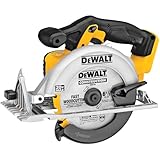
DEWALT DCS391B 20V MAX 6-1/2 inch
- 2-1/8 inch depth at 90 degrees
- 5150 RPM motor
- 18-tooth blade
- 3 year limited warranty

DEWALT DCS565B 20V MAX Brushless
- Brushless motor
- 24-tooth blade
- electric brake
- LED work light
- dust chute port

Milwaukee M18 2630-20 6-1/2 inch
- 3500 RPM
- Magnesium upper and lower guards
- Aircraft aluminum shoe
- Soft-grip handle
The DCS391B wins the top slot on evidence volume rather than on any single spec. With more than eleven thousand owner reviews behind it, its weaknesses are well documented and manageable: a bare tool package and a factory blade that most serious plywood cutters replace on day one.
Every Saw in This Roundup Compared for Plywood in 2026
All ten saws appear below with the features that decide plywood performance. Blade diameter and depth come first because they determine whether you can make the cut in one pass at all.
| Product | Specifications | Action |
|---|---|---|
| DEWALT DCS391B 20V MAX 6-1/2 inch |
|
Check Latest Price |
| DEWALT DCS565B 20V MAX Brushless 6-1/2 inch |
|
Check Latest Price |
| Milwaukee M18 2630-20 6-1/2 inch |
|
Check Latest Price |
 DEWALT DCS578B 60V MAX 7-1/4 inch DEWALT DCS578B 60V MAX 7-1/4 inch |
|
Check Latest Price |
 Makita XSH03Z 18V LXT 6-1/2 inch Makita XSH03Z 18V LXT 6-1/2 inch |
|
Check Latest Price |
 Milwaukee 2631-20 M18 Brushless 7-1/4 inch Milwaukee 2631-20 M18 Brushless 7-1/4 inch |
|
Check Latest Price |
 CRAFTSMAN V20 CMCS500B 6-1/2 inch CRAFTSMAN V20 CMCS500B 6-1/2 inch |
|
Check Latest Price |
 Makita XSH04ZB Sub-Compact 6-1/2 inch Makita XSH04ZB Sub-Compact 6-1/2 inch |
|
Check Latest Price |
 CRAFTSMAN CMCS551B V20 7-1/4 inch CRAFTSMAN CMCS551B V20 7-1/4 inch |
|
Check Latest Price |
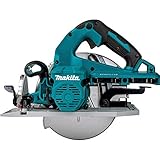 Makita XSH06Z 18V X2 7-1/4 inch Makita XSH06Z 18V X2 7-1/4 inch |
|
Check Latest Price |
How We Picked the Best Cordless Circular Saws for Plywood
We ranked these saws on sheet-goods performance first and everything else second. A saw that rips dimensional lumber beautifully but wanders across a four-by-eight panel is the wrong answer to this question, no matter what its marketing page says.
The first filter was single-pass depth. Plywood at 1/2 inch, 5/8 inch and 3/4 inch all fit comfortably inside a 6-1/2 inch saw’s stated 2-1/8 inch or 2-1/4 inch capacity, so a compact saw handles the thicknesses most homeowners actually buy. Material at 1-1/8 inch is different: you are asking for more than half the stated capacity, and blade deflection becomes the limiting factor rather than the motor.
The second filter was trackability, meaning how the saw behaves when a straightedge is screwed to the sheet and the shoe rides that straightedge for eight feet. Shoe rigidity, shoe surface friction and overall balance all matter more here than on a short crosscut, because the cut is long enough for small errors to accumulate.
The third filter was the factory blade. Several saws here ship with an 18-tooth framing blade, which is a compromise on plywood. A finer-tooth blade with more teeth generally leaves a cleaner exit face, and several owners in the data for these specific models report swapping in a better blade improved their results noticeably.
Owner ratings and review volume came last, but they broke ties. A saw with a strong average and a thin review count tells us less than a saw with a slightly lower average and a deep, consistent history. Our circular saw picks for DIY projects cover the same ground for buyers who are not shopping specifically for sheet goods.
1. DEWALT DCS391B 20V MAX 6-1/2 inch Circular Saw for Everyday Plywood
DEWALT 20V MAX Circular Saw, Cordless Sidewinder Style Portable, 6-1/2-Inch Blade, 5150 RPM, 0-50 Degree Bevel Capability, Battery Not Included (DCS391B)
6-1/2 inch 18T blade
5150 RPM
2-1/8 inch depth at 90 degrees
0-50 degree bevel
Magnesium shoe
Pros
- 2-1/8 inch depth clears 3/4 inch plywood in one pass
- High review volume means known failure points
- Magnesium shoe stays rigid and light
- Keyless blade change with spindle lock
Cons
- Battery and charger not included
- 18-tooth factory blade causes tear-out on finished faces
- Sidewinder format is less steady on long rips than a rear-handle saw
This is the saw we hand to friends who are cutting their first stack of utility plywood, and it is the one that appears most often in our own shop for subfloor patches and garage shelving. The 5150 RPM motor is quick enough to move through a panel without the motor complaining, and the magnesium shoe is rigid enough that the saw does not develop a wobble after months of on/off cuts.
For plywood work the number that matters is the 2-1/8 inch depth at 90 degrees. Set the shoe so roughly a quarter inch of blade protrudes below the panel and you have a clean full pass through 3/4 inch material with a margin, which is the thickness where most mistakes happen.
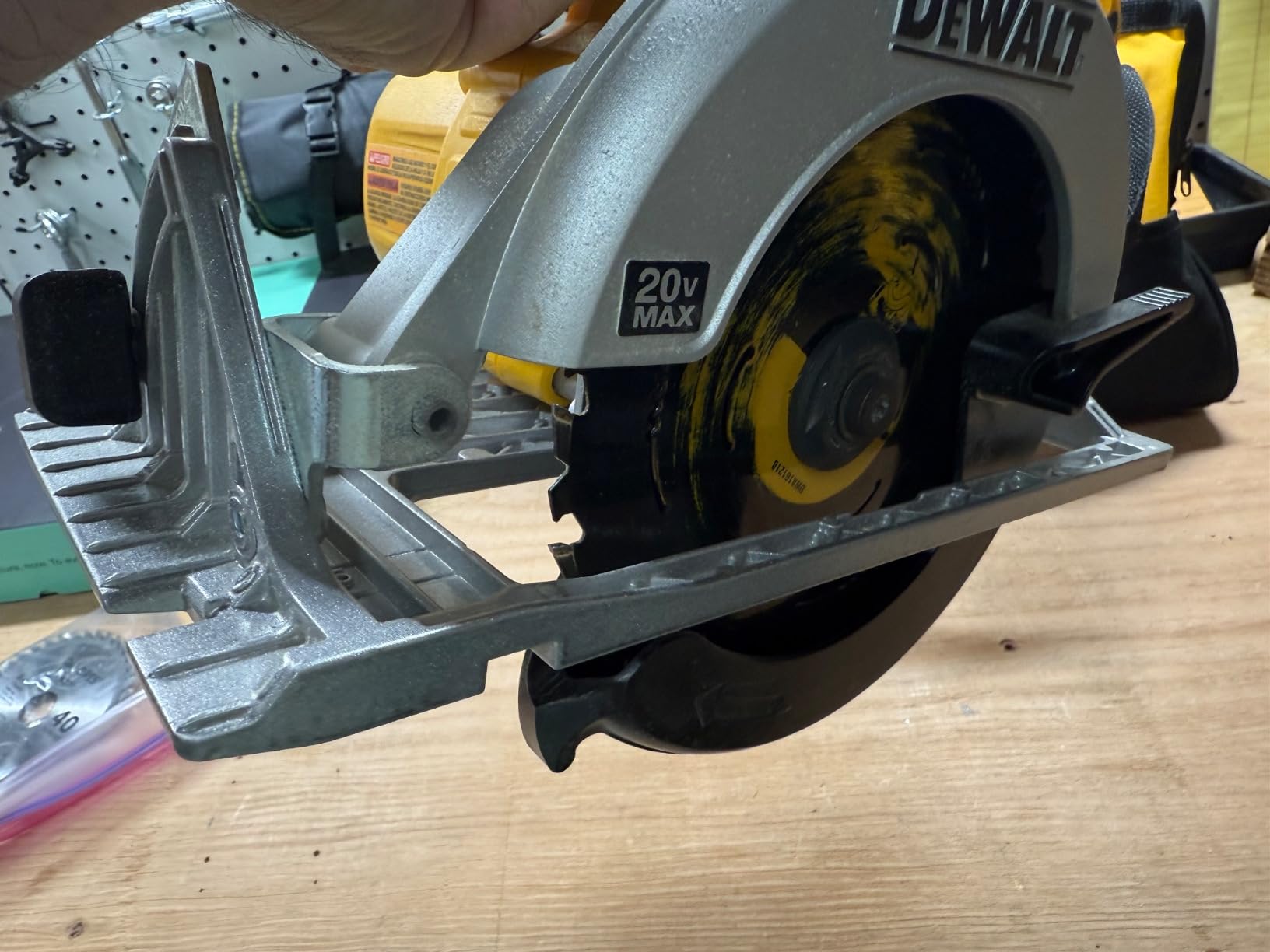
The bevel capacity of 0 to 50 degrees covers gussets, angled shelf brackets and the mitred edges of a plywood box without a special tool. Owners also like the rubber over-molded grip, which stays comfortable when the saw is held out over the offcut side of a sheet on a hot afternoon.
Be aware of two things. The 18-tooth carbide blade in the box is a general framing blade, and if the exit face of your cut will be visible, upgrade it before the first cut rather than after. Second, the compact sidewinder format means you are pressing the saw with one hand on the top grip and one on the side handle, which gets tiring across an eight-foot rip.
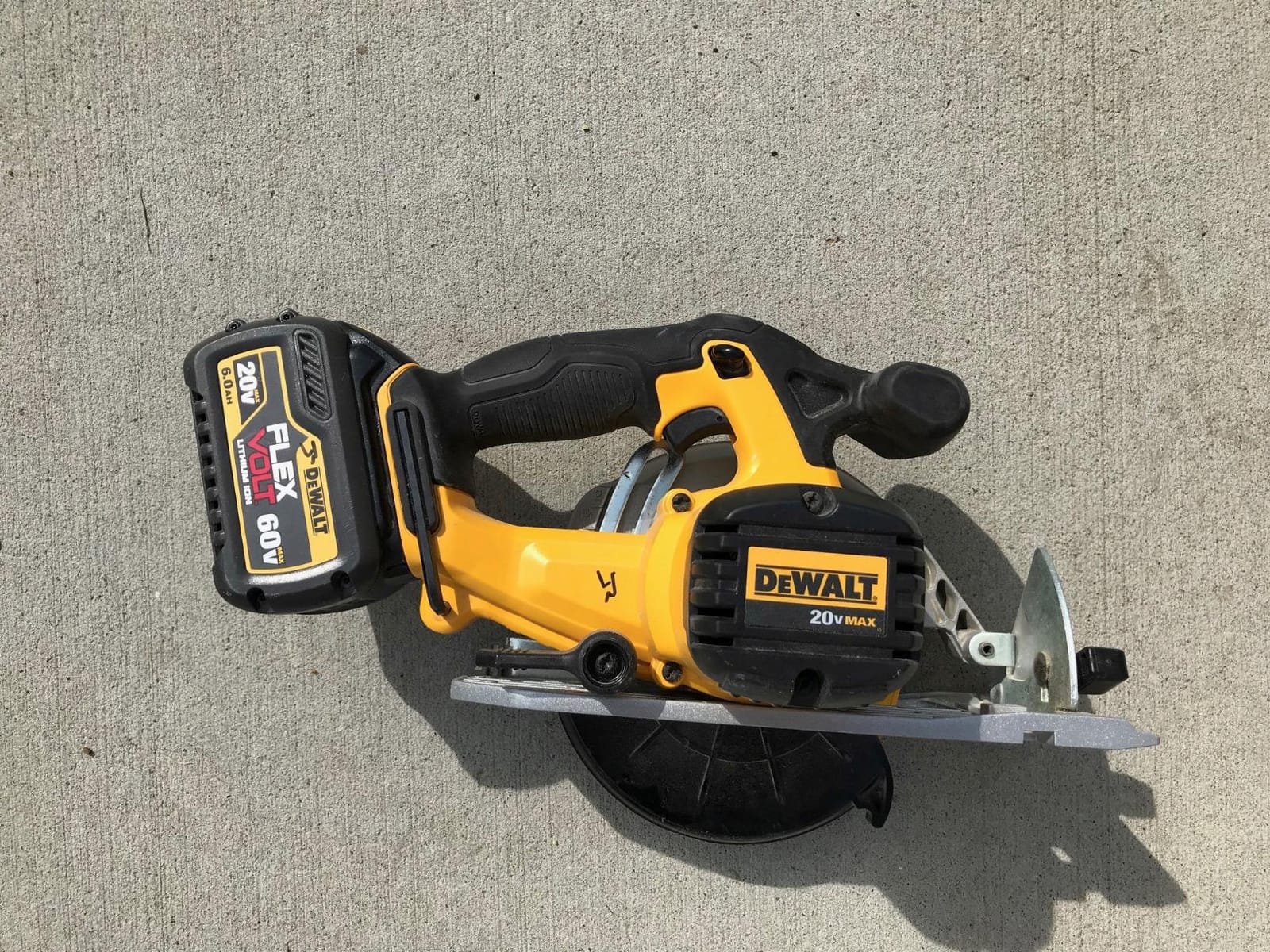
What you get in a full sheet of 3/4 inch plywood
Set the depth to about 7/8 inch so a quarter inch of the blade sticks below the shoe, and the saw takes the full 3/4 inch panel in a single pass. You can stack a second sheet underneath as sacrificial support, which catches the exit-side tear-out and costs nothing.
Over a whole sheet, the 20V MAX platform is the practical advantage. The battery weight stays modest, so the saw does not drift downward at the far end of the cut the way a heavier high-voltage saw can.
Where it stops being the right answer
Thick material in the 1-1/8 inch range is the limit, both from depth and from blade deflection. If your project is mostly laminated beams and thick structural panels, the 7-1/4 inch saws further down this list are a better match.
Visible face work is the other limit. The factory blade will leave visible chipping on birch ply, and the compact chassis takes more effort to hold on a straightedge for a long cut than a rear-handle design does.
2. DEWALT DCS565B 20V MAX Brushless Circular Saw for Clean Sheet Cuts
DEWALT 20V MAX* 6-1/2 in. Brushless Cordless Circular Saw, Tool Only (DCS565B)
6-1/2 inch 24T blade
4950 RPM brushless
Electric brake
LED work light
0-50 degree bevel
Pros
- 24-tooth blade leaves a noticeably cleaner exit face
- Brushless motor runs cool and efficient
- Electric brake stops the blade fast
- LED lights the cut line on dark stock
Cons
- Battery and charger sold separately
- Some owners report bogging in thick timber
- 6-1/2 inch blade limits depth on thicker stock
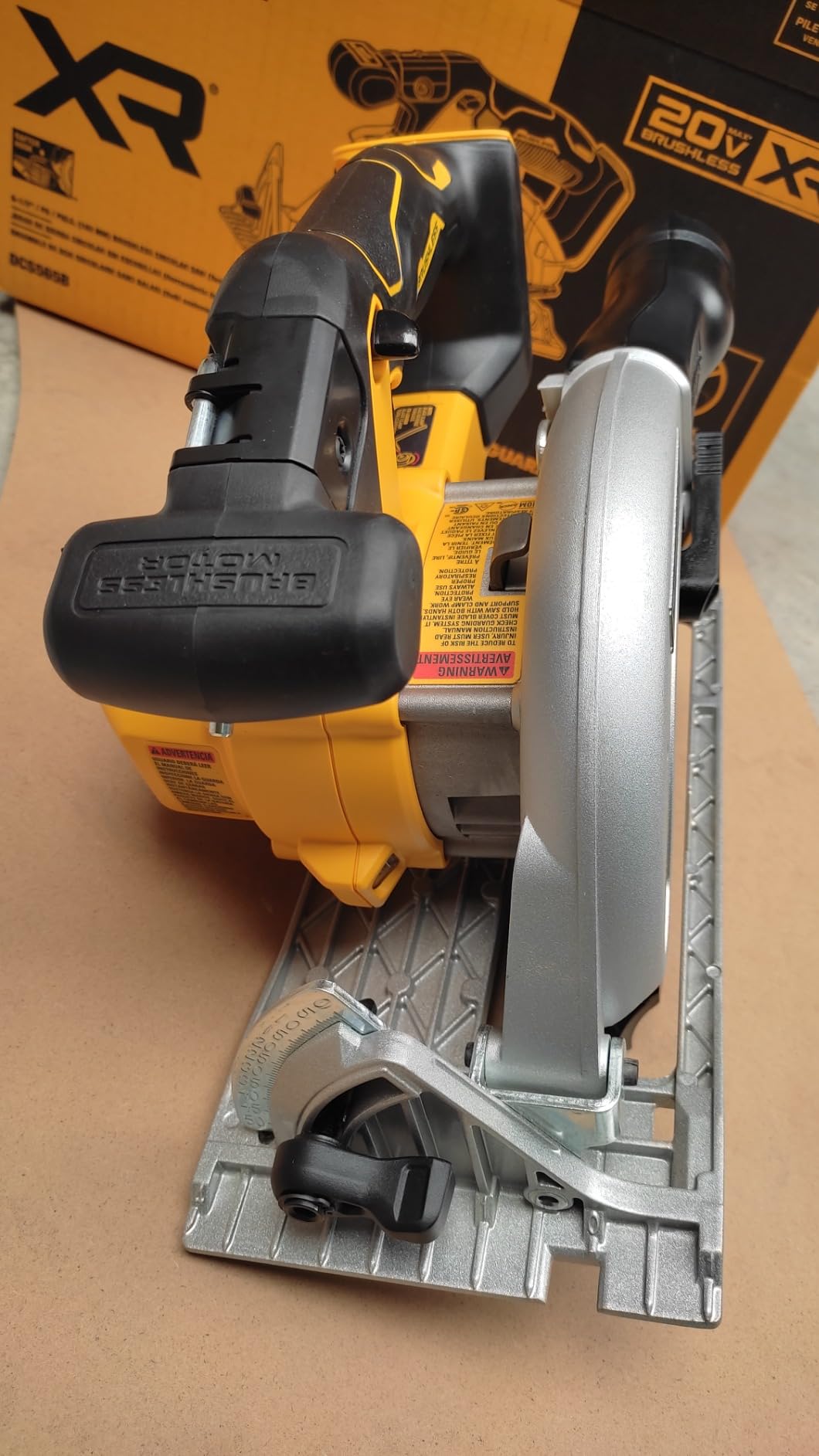
If the panel face will be seen, this is the saw we would pick over the DCS391B. The two share a platform, so the battery decision is the same, but the blade is a 24-tooth rather than an 18-tooth, and that tooth count does most of the work in reducing splintering on the exit side of a plywood cut.
Owners also point to the LED as a quiet upgrade. On a sheet laid out in a dim garage, the light throws a narrow beam along the shoe line so you can see the blade path on dark construction panels without clamping a work light to the framing.
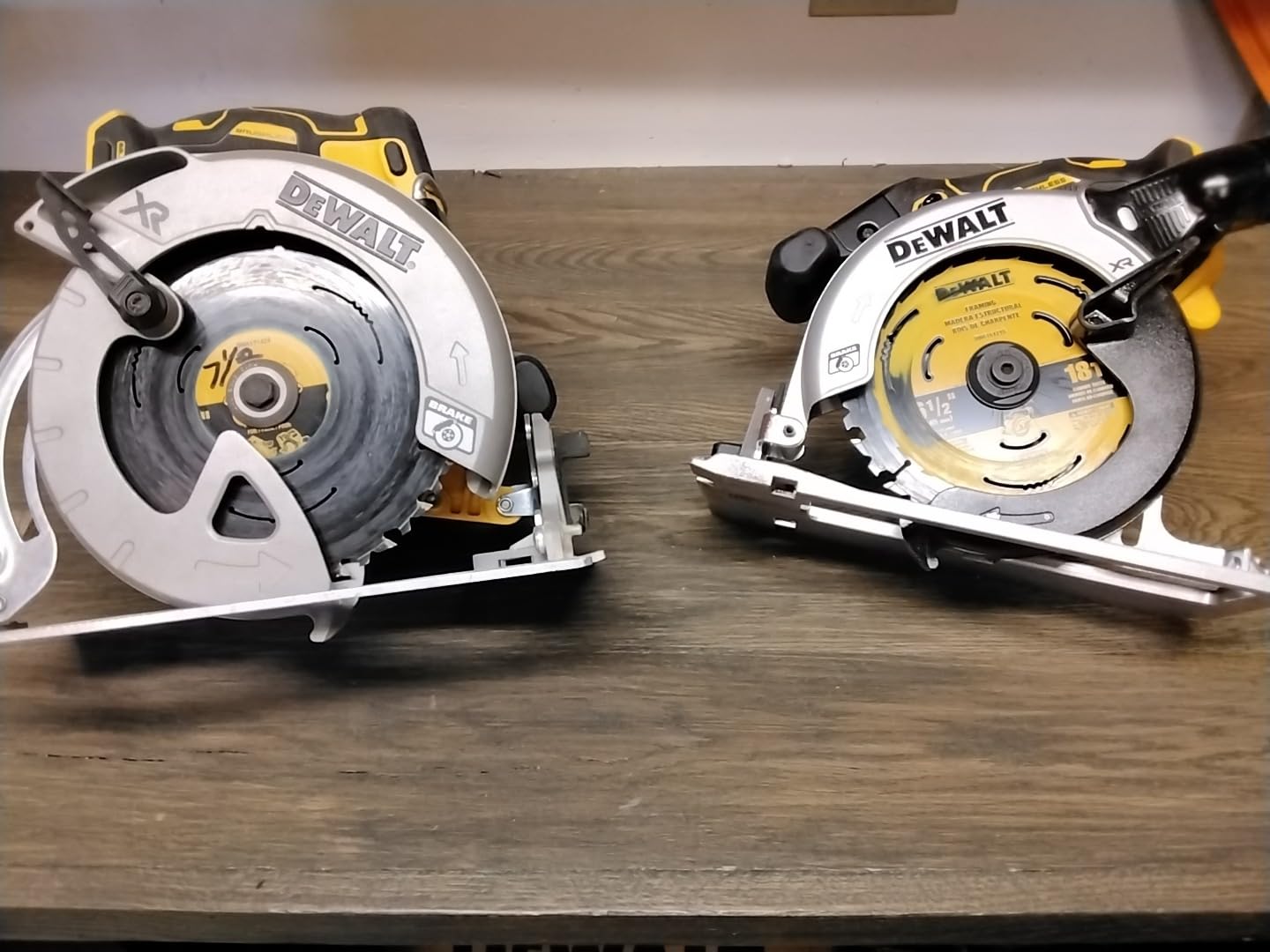
The brushless motor is the reason this saw holds speed through a full-depth cut better than its brushed siblings, and the electric brake means the blade is stopped within a second of releasing the trigger, which matters when you set a finished panel down after the cut.
Several owners in the review data report that swapping the included blade for a Diablo aftermarket blade improved results further. That is consistent with what we see on finished ply, where a thin-kerf plywood blade with many teeth leaves a noticeably cleaner edge than a general-purpose framing blade.
Best use: cabinet boxes and shelving in birch ply
For shelving and cabinet sides, cut quality on both faces matters, and the 24-tooth blade plus the compact chassis make this a comfortable one-handed rip. The optional dust chute port is worth buying if you are working indoors, because plywood fines are fine enough to stay suspended for a long time.
For rough breakdown of construction sheets, spend the extra effort on a straightedge instead. The saw will track well against a stiff guide clamped to the panel.
Where it stops being the right answer
Owners do report the blade bogging or stalling in thicker timber, and the 6-1/2 inch diameter caps your depth. If you are cutting a stack of thick panels or framing 2x material all day, a 7-1/4 inch saw is a better fit.
The tool-only package also means you need a battery and charger on hand before the first cut, which is a real consideration for anyone starting from nothing.
3. Milwaukee M18 2630-20 6-1/2 inch Circular Saw for Rough Sheet Breakdown
M18 Cordless Lithium-Ion 6-1/2″ Circular Saw – 2630-20 – ( MILWAUKEE ) – BARE TOOL
18V M18 platform
3500 RPM
24-tooth blade
Magnesium upper and lower guards
Aircraft aluminum shoe
Pros
- Magnesium guards survive dropped-tool jobsite abuse
- Aircraft aluminum shoe is stiff and consistent
- Soft-grip handle stays comfortable
- Works with the huge M18 battery ecosystem
Cons
- Battery and charger sold separately
- 3500 RPM is the slowest motor in this roundup
- Older brushed design compared with newer brushless rivals
This is the saw for the demolition side of a renovation, where the plywood is going into a skip and nobody is going to look at the edge. The magnesium upper and lower guards are the reason it survives being knocked off a scaffold or dropped off a sheet, and the aircraft aluminum shoe stays flat and rigid for the life of the tool.
On cut quality for rough work it is perfectly adequate. The 24-tooth blade gives a reasonably clean exit, and the 3500 RPM motor is slower than every other saw in this roundup, which shows up more in hardwood and thick stock than it does in standard plywood.

The real argument for this saw is the platform. If you have any M18 batteries already, this is the cheapest way to add a working circular saw to the shelf. That ecosystem argument applies across our contractor-oriented saw guide as well, where the batteries are usually the deciding factor.
Owners consistently describe it as a long-running workhorse with stable ratings, and the complaints are consistent too: the blade speed is modest and the package is bare.
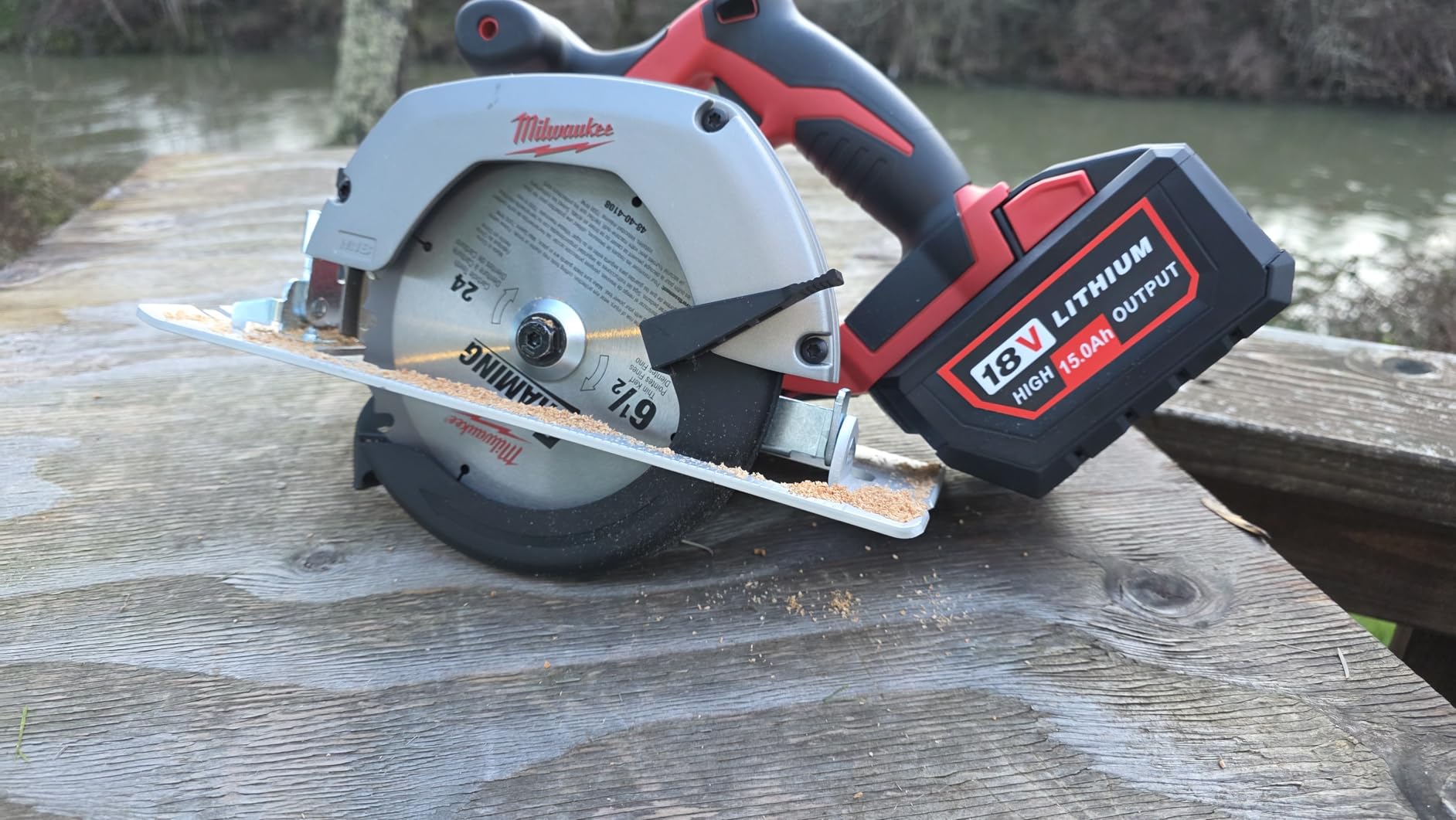
Best use: subfloor and wall sheathing takeoffs
When a project involves cutting several sheets of rough sheathing down to fit a wall or a floor bay, this saw is comfortable to hold for a long session and tough enough to take the knocks. A magnesium shoe glides consistently even across the dusty surface of a sheet that has already been cut once.
Keep a 24-tooth blade in it and let the speed go; on rough material nobody is grading the exit face.
Where it stops being the right answer
The 3500 RPM figure is the weakest in the group, and it is a brushed-era design rather than a brushless one. On thick or dense material, expect a slower cut and more heat in the motor housing than a newer brushless saw would give you.
If finish quality on both faces of a panel matters to you, choose a finer-tooth blade first. As shipped, this is a breakdown saw, not a cabinetry saw.
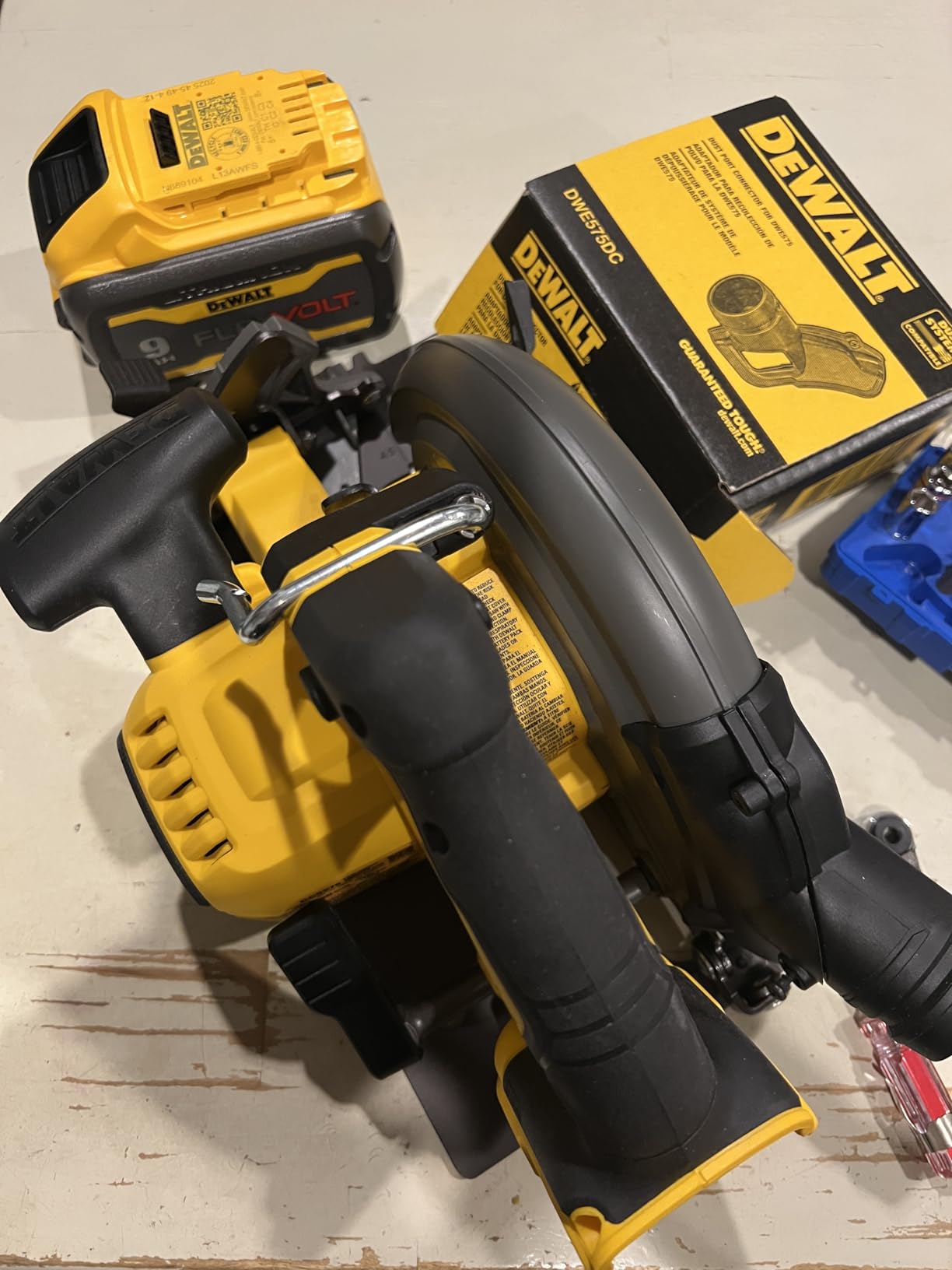
4. DEWALT DCS578B 60V MAX 7-1/4 inch Circular Saw for Full-Size Sheets
DEWALT FLEXVOLT 60V MAX* Circular Saw with Brake, 7-1/4-Inch, Tool Only (DCS578B)
7-1/4 inch 24T blade
5800 RPM
2-9/16 inch depth at 90 degrees
57 degree bevel
Electric brake
Pros
- 2-9/16 inch depth at 90 degrees covers thick sheet material
- 5800 RPM performance comparable to corded saws
- 57 degree bevel with stops at 22.5 and 45 degrees
- Contractors report long service life in daily use
Cons
- Metal shoe surface resists gliding smoothly over the workpiece
- LED is partly blocked by the bevel knob
- Heavier than 20V class saws
This is the saw for someone who rips full 4×8 panels every week rather than twice a year. A 7-1/4 inch blade at 2-9/16 inch of depth at 90 degrees gives you the headroom to cut 1-1/8 inch material in a single pass, and the 5800 RPM motor has the energy to keep the cut moving through the full thickness.
Owners with daily saw duty report performance on par with corded saws, and the electric brake stops the blade quickly enough to set a finished panel down without waiting. The 57 degree bevel with positive detents at 22.5 and 45 degrees covers most joinery angles without eyeballing.
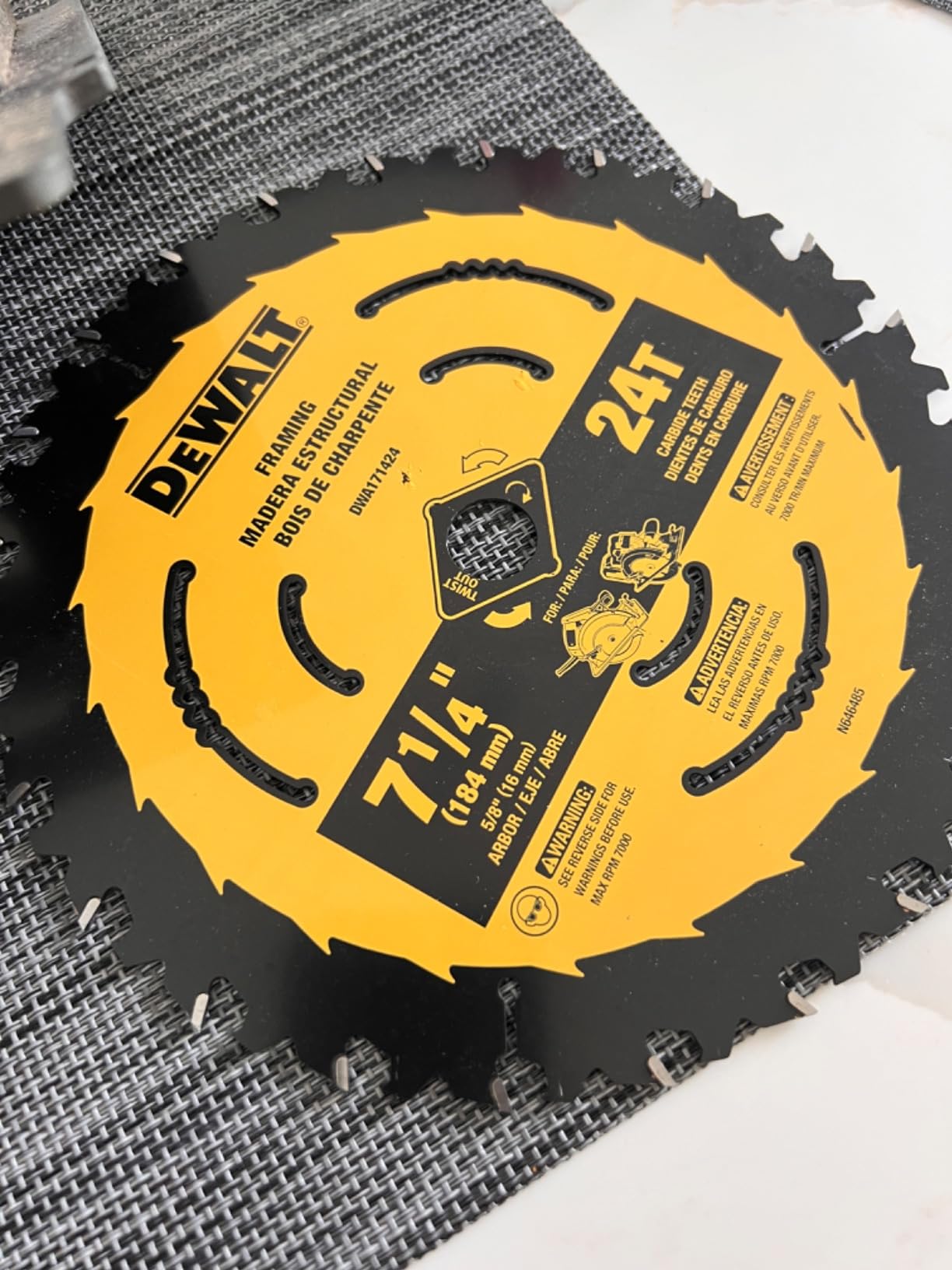
The 60V MAX battery also runs every 20V MAX tool, so if you already have some of the smaller packs they still work here at reduced output. That flexibility is the quiet advantage of this platform for plywood work, because you can keep a compact pack for trim and a big pack for full-depth rips.
Balance is good for a saw of this class. It is noticeably lighter than a corded worm-drive of similar capacity, which shows up at the far end of a long rip when the sheet is supported on one side.
Best use: 1-1/8 inch panels and thick laminated stock
When the material is thick, the 7-1/4 inch diameter does two useful things at once. It increases cutting depth so you are not asking for half your full depth, and a larger diameter is inherently stiffer at the same material thickness, which reduces the deflection that closes the kerf and pinches the blade.
For 3/4 inch material you are comfortably overqualified, which is fine. This saw simply never runs out of capacity as your projects get bigger.
Where it stops being the right answer
Owners frequently mention that the metal shoe surface resists gliding smoothly over the workpiece, which is a real issue when you are trying to ride a straightedge for a long rip. A strip of low-friction tape on the shoe edge is a common workaround.
The LED is partly blocked by the bevel adjustment knob at some angles, and the whole package is heavier than the 20V class saws here, which is worth weighing if most of your cuts are short.
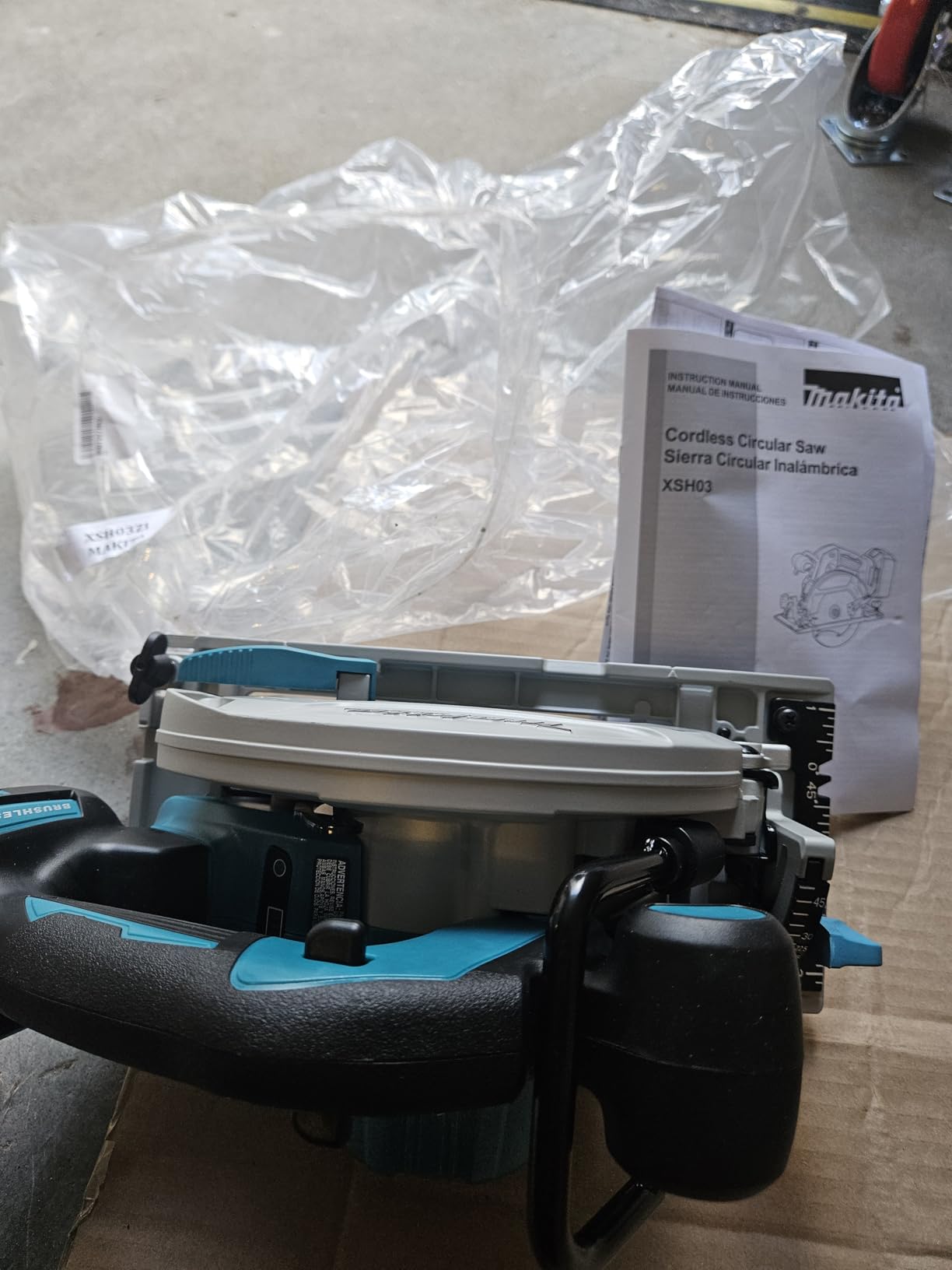
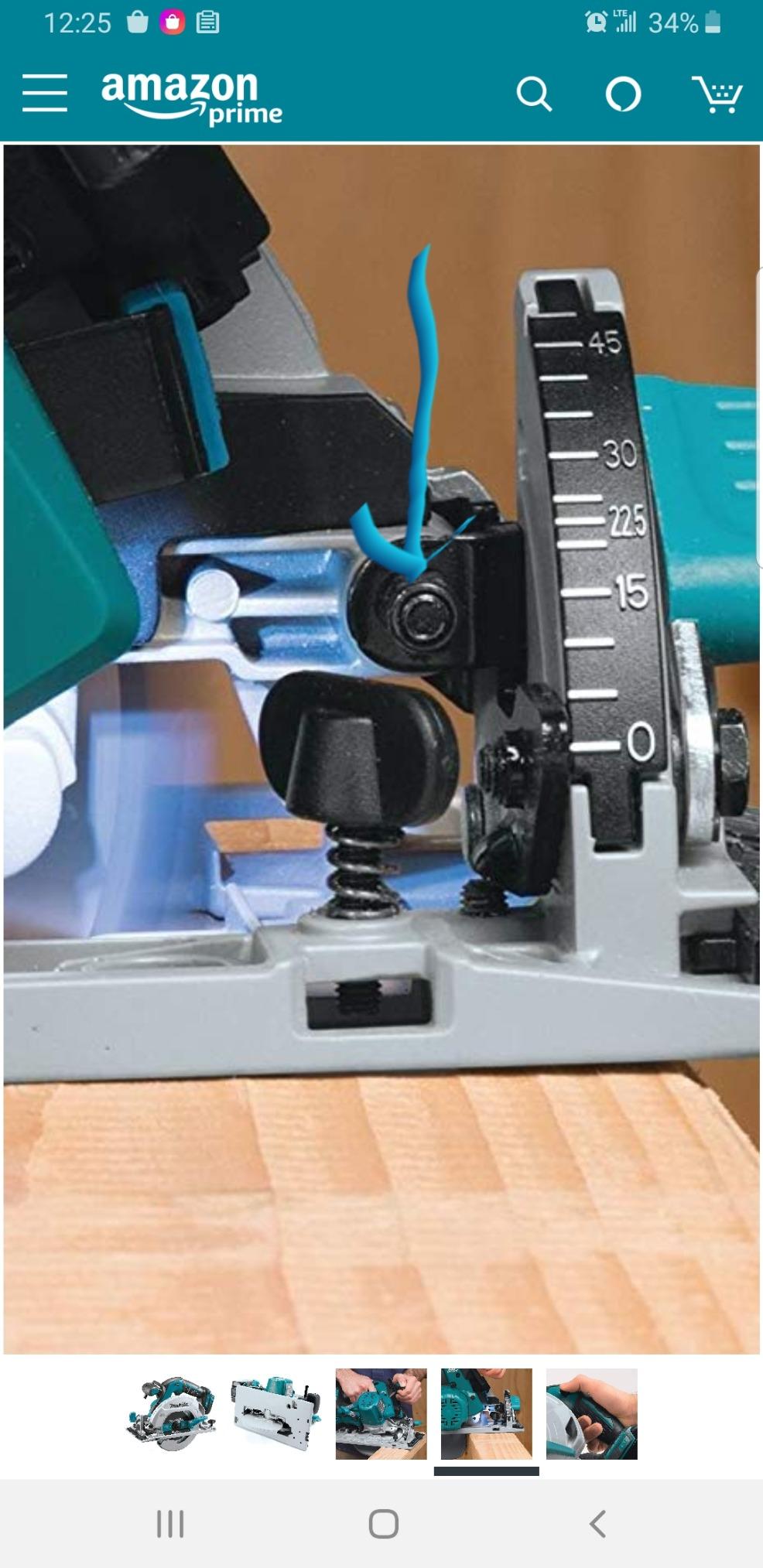
5. Makita XSH03Z 18V LXT Brushless Circular Saw for Platform Owners
Makita XSH03Z 18V LXT® Lithium-Ion Brushless Cordless 6-1/2″ Circular Saw, Tool Only
6-1/2 inch 24T blade
5000 RPM brushless
Automatic speed change
18V LXT platform
7 pounds
Pros
- 5000 RPM brushless motor cuts and rips quickly
- Automatic speed change holds torque through the cut
- Runs cooler than brushed designs
- Up to 50 percent longer runtime per charge
Cons
- Battery and charger not included
- Some owners report bogging versus a corded saw
- 6-1/2 inch blade limits depth on thick sheet material
The XSH03Z is the standard Makita 18V answer, and for plywood it is a genuinely capable tool rather than a compromise. The 5000 RPM electronically controlled brushless motor combined with the automatic speed change function keeps torque up through the middle of a cut instead of letting the blade bog at entry.
The included 6-1/2 inch 24-tooth carbide blade is a sensible default for sheet work. A 24-tooth count on a panel cut leaves a decent edge, and the fine-tooth pattern resists the splintering that ruins the face of a cabinet panel.
Owners emphasise the ecosystem above all else. Makita 18V LXT packs fit a very large range of tools, so adding this saw to a household that already has some means one battery and one charger covers the whole collection. Makita states up to 50 percent longer run time per charge than a comparable brushed motor.
On a long rip in plywood, the compact sidewinder shape is easy to control because the saw is light and the hand positions are close together.
Best use: matched to a 5.0Ah LXT pack for extended sheet work
With a 5.0Ah pack, this saw is the practical choice for a weekend of breaking down a stack of panels. The runtime figure matters less than the fact that the second battery you already own will fit and the charger is shared across the platform.
On a sawmillcreek.org thread about intermittent plywood work, owners repeatedly single out 6-1/2 inch Makita saws as the right size for the job rather than a compromise.
Where it stops being the right answer
Some owners report it bogs down compared with a corded saw, and the 6-1/2 inch blade caps depth. If your material regularly exceeds 3/4 inch, or you rip structural panels every week, look at a 7-1/4 inch model on the same or a higher platform.
The tool-only package is the other drawback, and it is the single most common misunderstanding among first-time buyers who assumed a saw included a battery.
6. Milwaukee 2631-20 M18 Brushless 7-1/4 inch Circular Saw for M18 Owners
Milwaukee M18 BRUSHLESS 7-1/4″ CIRCULAR SAW – BARE
7-1/4 inch 24T blade
5000 RPM brushless
Electric brake
LED light
Dust port on guard
Pros
- 7-1/4 inch capacity on the M18 platform
- Brushless motor with 5000 RPM
- LED light and electric brake aid accuracy
- Dust port on the guard supports indoor sheet cutting
Cons
- Bare tool with battery and charger sold separately
- Heavier than compact 6-1/2 inch saws
- 7-1/4 inch blade needs more clearance for bevel cuts
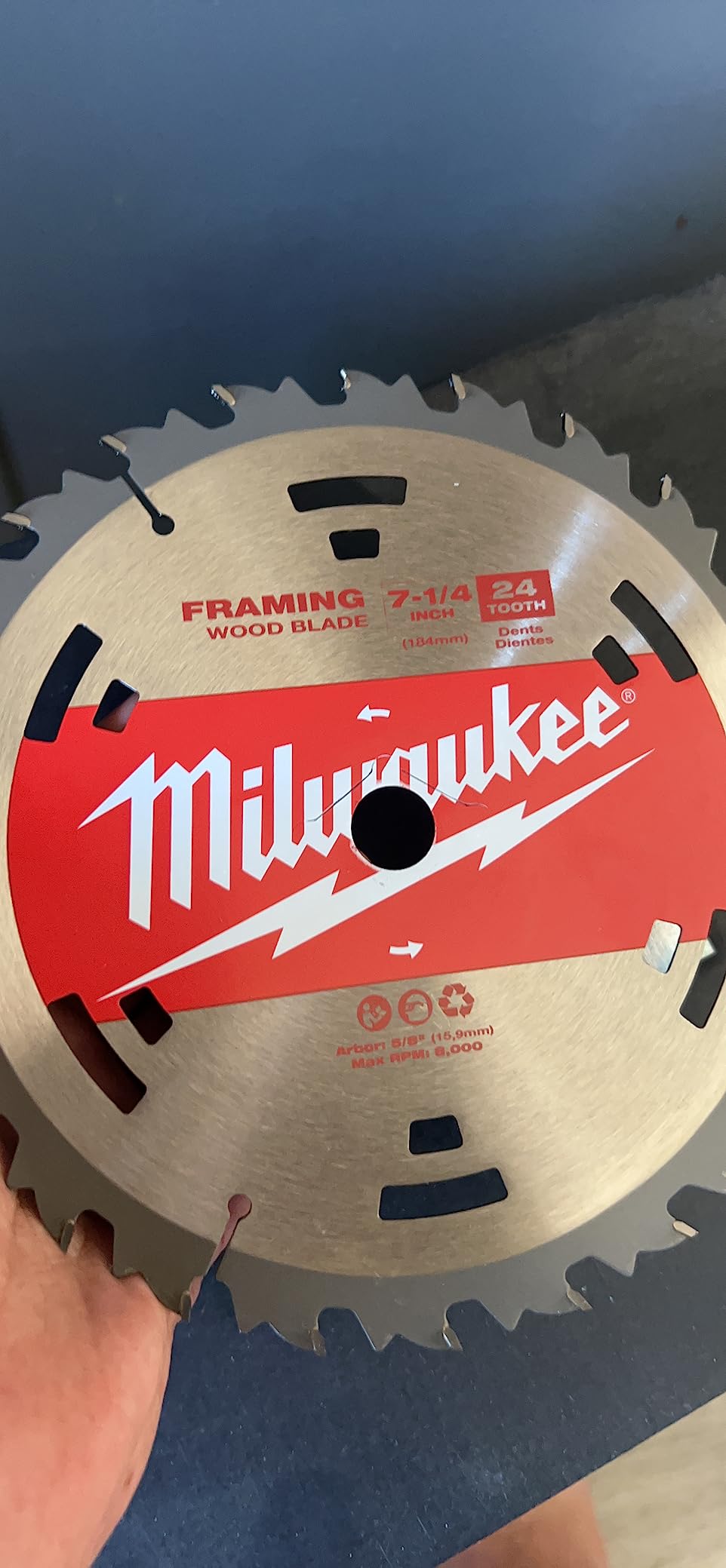
This is the pairing we recommend for anyone already committed to M18 batteries who wants 7-1/4 inch capacity without moving to a 60V or dual-battery system. The 7-1/4 inch blade gives you full-size sheet-goods capability on an 18V platform, which is unusual and useful for panel work.
The 5000 RPM brushless motor cuts quickly, and the LED plus electric brake combination does two jobs on sheet work: one lights the cut line on a dark panel and the other lets you release the trigger and set the piece down quickly at the end of a long rip.

The dust port on the guard is a genuine advantage for indoor sheet cutting. Plywood fines are light enough to hang in the air for hours, and connecting a vacuum directly to the guard keeps the work area and the cut line far cleaner than relying on the shop vacuum alone.
Magnesium upper and lower guards are standard on this generation of Milwaukee saws, and on jobsite work that is the difference between a saw that survives a few years and one that does not.
Best use: full panels when you are not ready to buy into a high-voltage platform
If you already run M18 packs everywhere else on site, this is the cheapest path to a full-size sheet saw. One battery type covers the saw, the driver, the light and everything else in the kit.
For finish work, fit a thin-kerf plywood blade with more teeth than the 24-tooth it comes with and the quality of the exit face improves noticeably.
Where it stops being the right answer
It is heavier than the compact 6-1/2 inch saws in this roundup, and a 7-1/4 inch blade needs more clearance when you set a deep bevel, so the saw cannot always reach the same corner on a panel laid flat on the floor.
Battery and charger are sold separately here, so budget for those before the first cut rather than discovering it mid-project.
7. CRAFTSMAN V20 CMCS500B 6-1/2 inch Circular Saw for Light Sheet Work
CRAFTSMAN V20 Cordless Circular Saw, 6-1/2 inch, Bare Tool Only (CMCS500B)
6-1/2 inch 24-tooth blade
4200 RPM
50 degree tool-free bevel
Metal shoe
5.3 pounds
Pros
- Lightest and least tiring saw in the roundup
- Tool-free bevel adjustment up to 50 degrees
- Metal shoe adds durability and rip accuracy
- Metal shoe helps the saw track on a straightedge
Cons
- 4200 RPM is slower than most brushless rivals
- Bare tool with battery and charger sold separately
- Bevel detent detail differs between spec sources
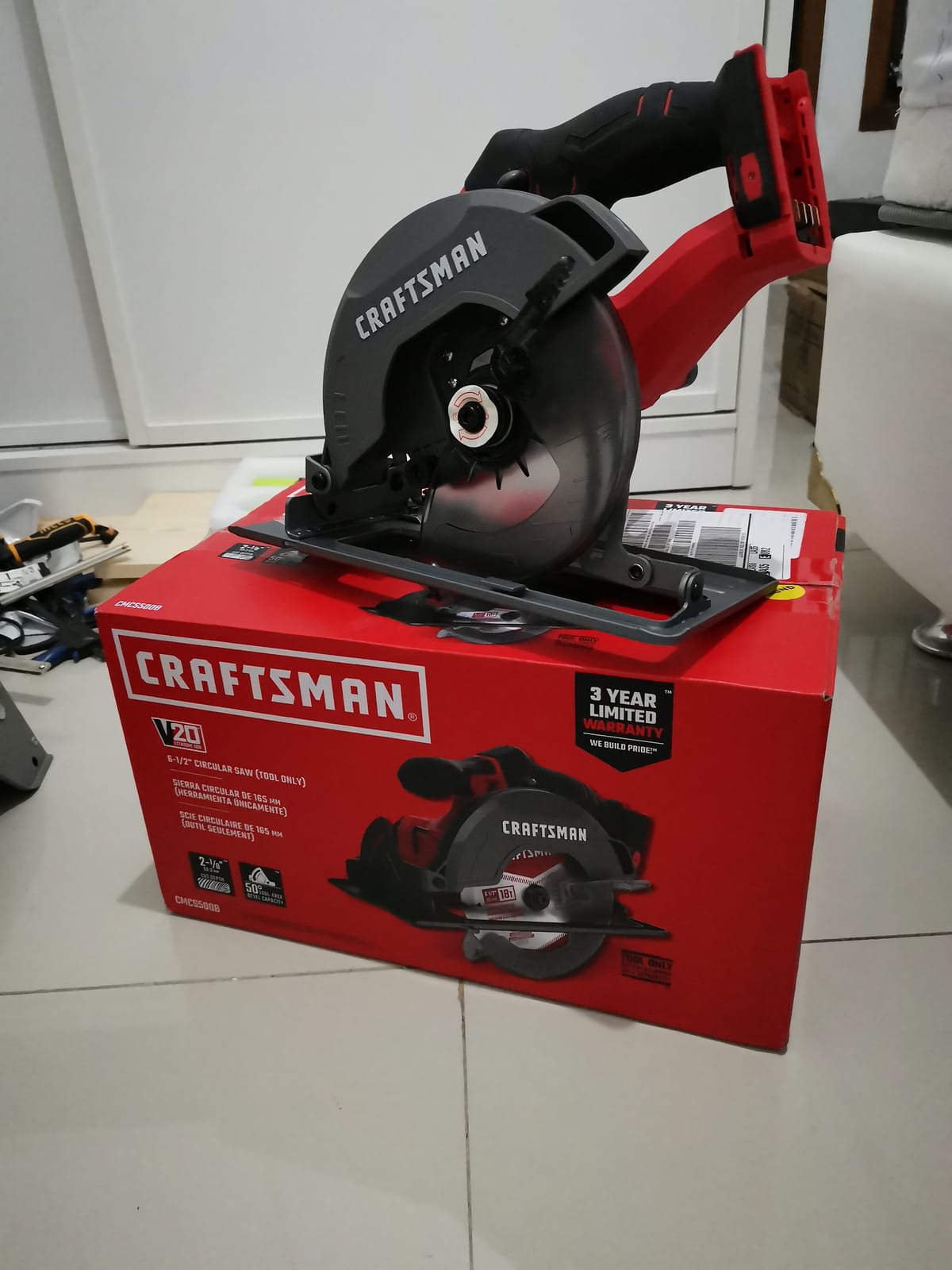
The Craftsman V20 is the pick for someone who breaks down a few sheets a year and does not want a heavy tool hanging on the wall for the rest of its life. At 5.3 pounds it is the lightest saw here, and that weight is felt most at the far end of a long rip where a heavier saw tends to pull downward.
The metal shoe is a genuine plus for plywood. A rigid shoe with a consistent surface gives the blade something stable to run against, and the tool-free bevel adjustment up to 50 degrees means you can change angles without hunting for a hex key mid-project.
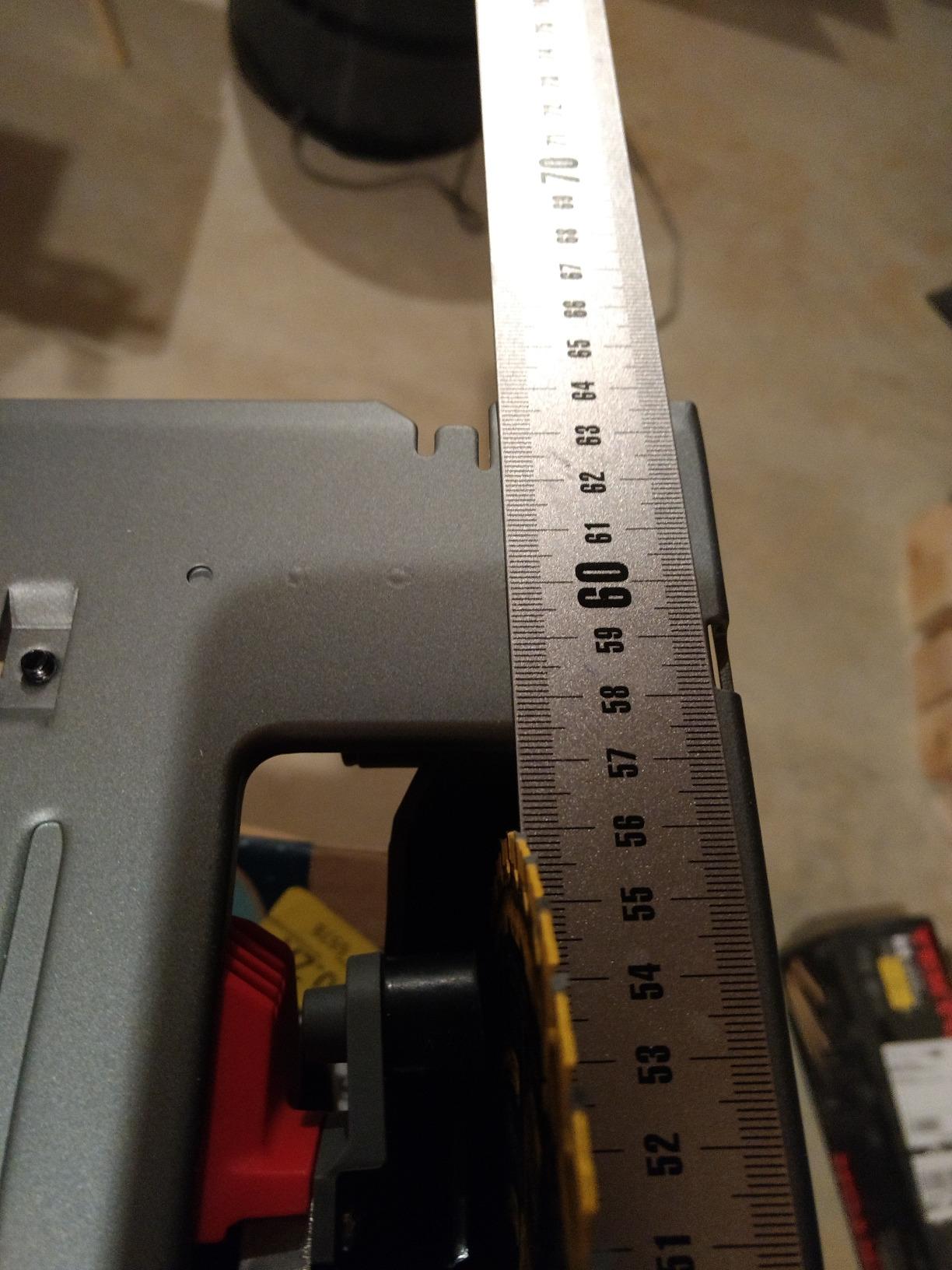
The 4200 RPM motor is the trade-off for the low weight and the price position. On standard construction-grade plywood at 1/2 inch or 5/8 inch, the cut speed is perfectly workable. On thicker material you will feel it working.
Owners praise ease of use and low weight and identify the slower blade speed as the main caveat, which is an honest summary of where this saw sits in the range.
Best use: occasional breakdowns and hobby-scale projects
This is the saw for a garage workshop where a sheet comes off the rack every few months. The light weight and simple controls mean the whole job is one battery, one cut, and a battery back on the charger.
For visible faces, change the blade to a higher-tooth plywood blade. The 24-tooth it ships with is adequate but not a finish blade.
Where it stops being the right answer
At 4200 RPM this is the second-slowest motor in the roundup, and that gap widens on thick panels and dense hardwood. If you expect regular sheet work, the slower cut adds up over a project.
It is also a bare tool. Battery and charger are separate purchases, and the V20 platform is worth checking against the tool range you plan to grow into.
8. Makita XSH04ZB Sub-Compact 6-1/2 inch Circular Saw for Track and Rail Work
Makita XSH04ZB 18V LXT® Lithium-Ion Sub-Compact Brushless Cordless 6-1/2” Circular Saw, Tool Only
6-1/2 inch 24T blade
5000 RPM brushless
2-1/4 inch depth at 90 degrees
6.4 pounds with battery
Dust port included
Pros
- Weighs only 6.4 pounds with a 2.0Ah battery
- Cuts 25mm plywood cleanly
- Dust extracting attachment is included
- Works with the Makita guide rail adapter for track-saw accuracy
Cons
- Splinters rough-cut boards without a zero-clearance insert
- Depth lock lever is awkward in a narrow one-finger area
- Blade angle pin can drift out of alignment in storage
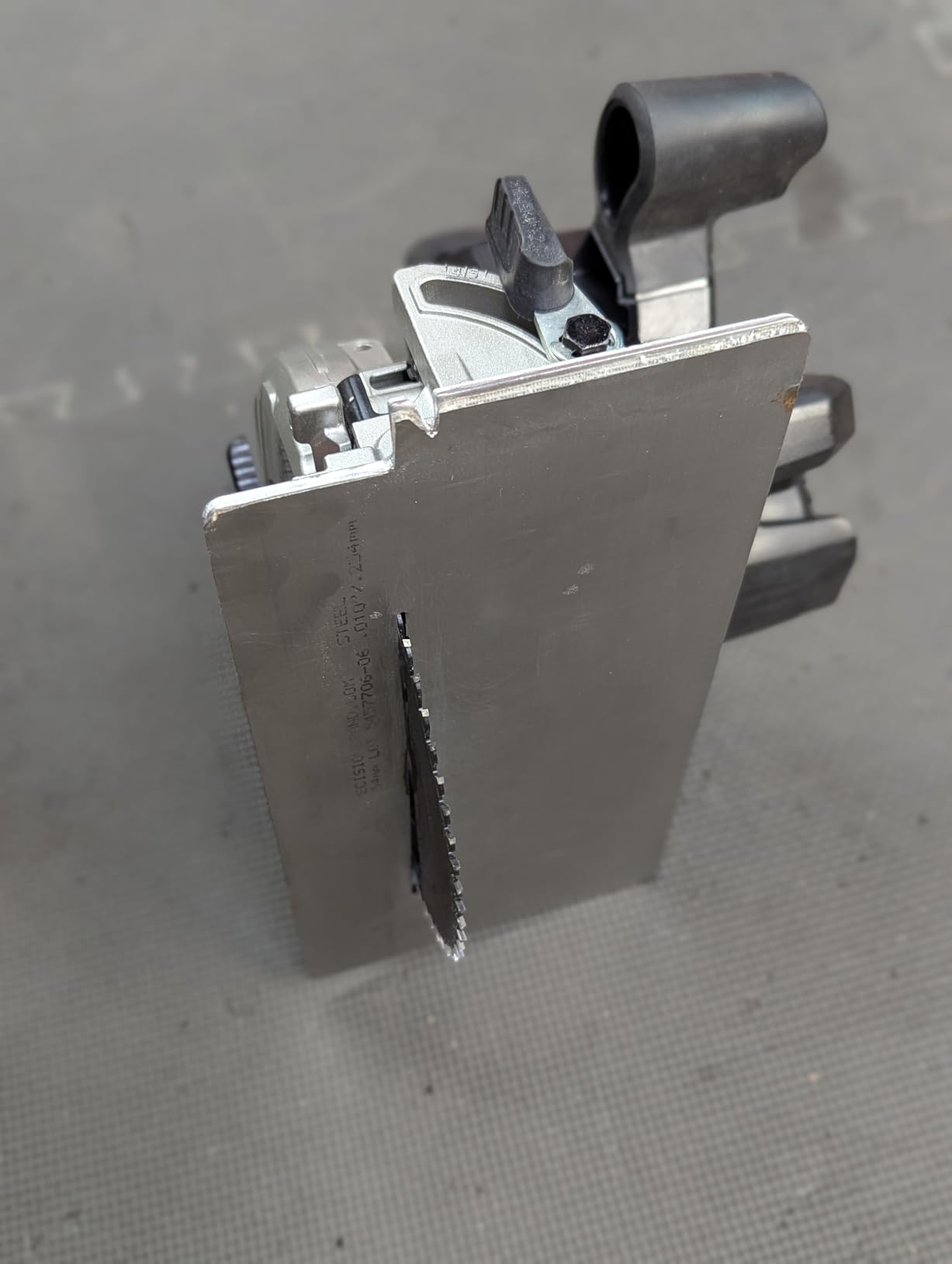
This is the most interesting saw in the roundup for anyone who cares about straight cuts more than raw capacity. At 6.4 pounds with a 2.0Ah battery it is the second-lightest option here, and owners pair it with the Makita guide rail adapter to get track-saw accuracy on full panels.
The 5000 RPM brushless motor has plenty of power for its size, and the 2-1/4 inch depth at 90 degrees covers 3/4 inch plywood with a full inch of margin. The included 6-1/2 inch 24-tooth carbide blade and the bundled dust extraction attachment are both useful additions that many competitors sell separately.
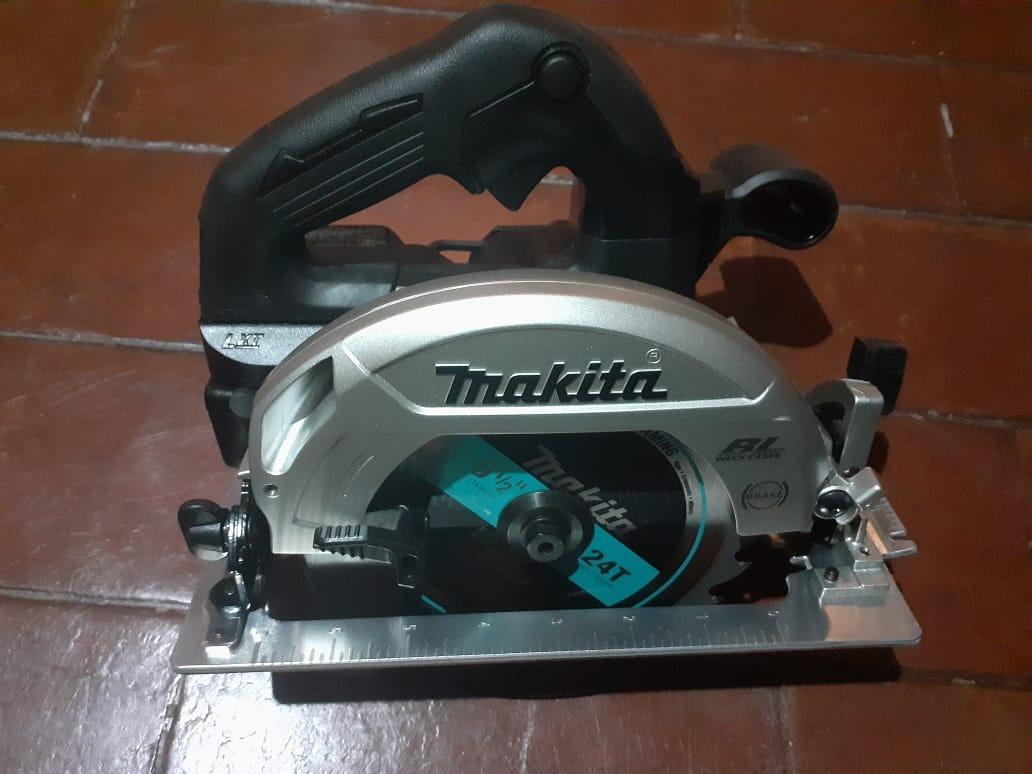
Owners repeatedly note that it cuts 25mm plywood cleanly, which is the single most common sheet thickness in cabinet and shelving work. The sub-compact blade-right body is short enough to work in tight corners where a full-size saw cannot reach.
For anyone who already owns Makita batteries and any interest in guided cutting, this is the most flexible tool in the roundup: bare saw for a quick breakdown, or rail-mounted for a straight edge across a full panel.
Best use: shelving, cabinet panels and any cut where straightness is visible
Mounted on the guide rail, this saw cuts a full panel in a straight line with the kind of repeatability that a bare shoe and a straightedge approach approaches but does not match. The rail is a separate purchase, and the saw is one of the cheapest ways to build a track-saw setup on the Makita platform.
The bundled dust attachment keeps the cut line clear when you are working indoors on birch ply or MDF.
Where it stops being the right answer
Owners report splintering on rough-cut boards without a zero-clearance insert, and the depth lock lever is awkward to reach with one finger. Struggles also appear at 45 degree bevels through thick material, so this is not the pick for heavy compound work.
It is also the smallest platform battery of the group, so on a full sheet you may want a larger pack than the 2.0Ah used for the published weight figure.
9. CRAFTSMAN CMCS551B V20 7-1/4 inch Circular Saw for Large Sheets on a Budget
CRAFTSMAN V20 RP Cordless Circular Saw, 7-1/4 inch, Bare Tool Only (CMCS551B)
7-1/4 inch 24-tooth blade
Brushless motor
56 degree bevel
LED cut line light
Upper metal guard
Pros
- 7-1/4 inch blade handles full-size sheet material
- Brushless motor with up to 75 percent more power
- LED clearly illuminates the cutting line
- 56 degree bevel with detents at 22.5 and 45 degrees
Cons
- Heaviest option in the group at 9.3 pounds
- Bare tool with battery and charger sold separately
- Lower review count than the established DEWALT and Makita models
7-1/4 inch capacity on an entry-level platform is unusual, and for someone breaking down full sheets on a limited tool budget that combination is hard to argue with. The brushless motor is quoted at up to 75 percent more power than the brushed model in the same line, which is the difference that matters when you are pushing through a thick panel.
The LED is the detail owners mention most. It illuminates the cutting line and the work surface directly, which on a dark sheet laid across sawhorses in a garage is more useful than it sounds in a spec list.
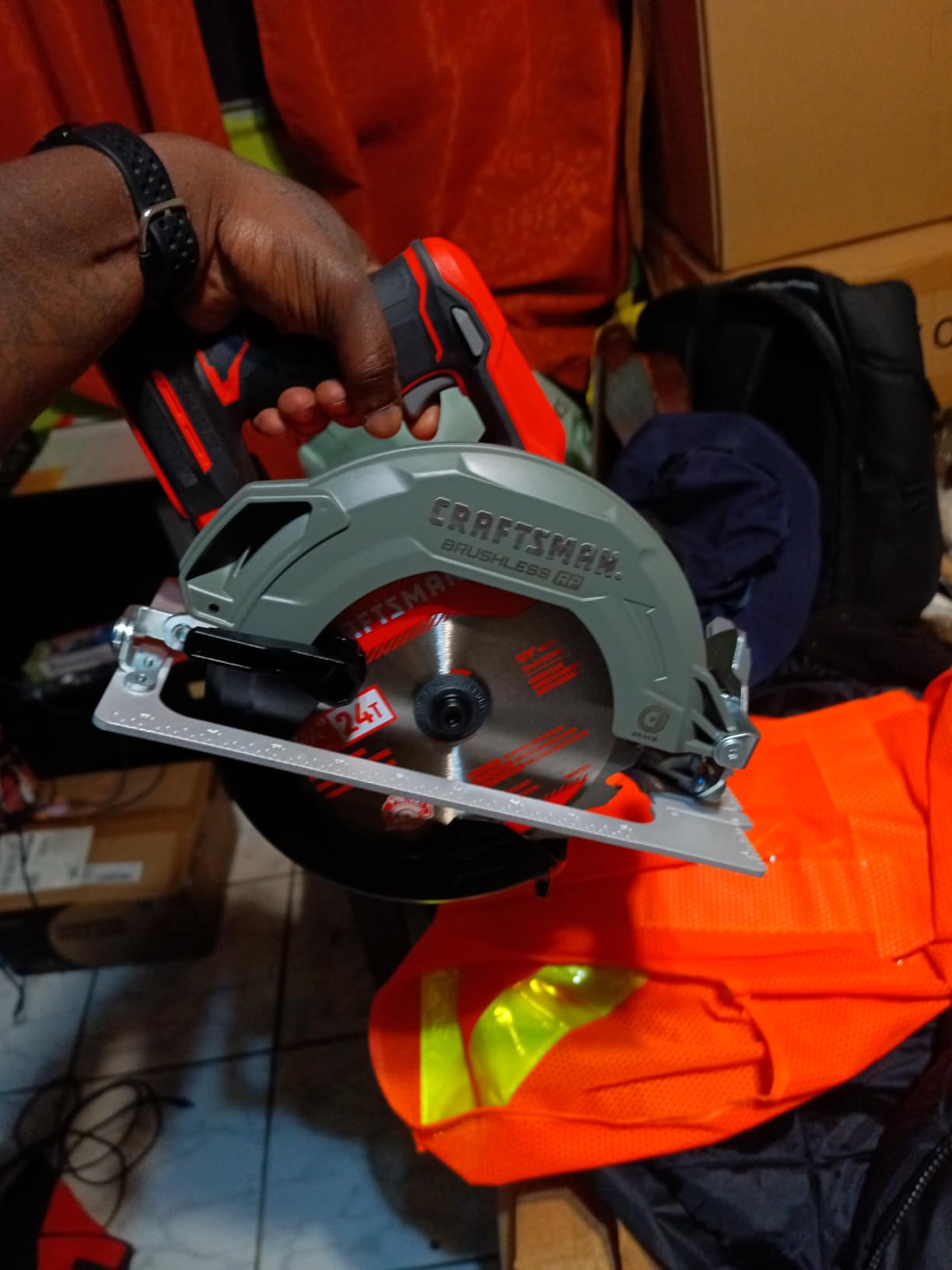
The 56 degree maximum bevel with positive stops at 22.5 and 45 degrees covers nearly every angle you meet in general construction and cabinet work, and the metal upper guard adds resilience in rough use where a thin plastic guard would crack.
It sits in the same family as the V20 saw earlier in this list, so battery interchangeability is straightforward if you end up owning both.

Best use: full 4×8 rips where capacity beats portability
The 7-1/4 inch blade means you are not working near the limit when you cut a 3/4 inch or 5/8 inch panel, and a larger blade deflects less at the same material thickness. For long rips across a full sheet, that extra stiffness shows up as a straighter line.
Pair it with a stiff straightedge and a support roller under the sheet, and it is a capable panel saw for a homeowner or a small crew.
Where it stops being the right answer
At 9.3 pounds it is the heaviest saw in this roundup, and on top of a full sheet that weight is felt in the wrist by the far end of the cut. If most of your work is small panels, that is a lot of saw for the job.
The review count is also the lowest of the established platforms here, so the long-term reliability record is simply shorter than a model with thousands of owner reports.
10. Makita XSH06Z 18V X2 7-1/4 inch Circular Saw for Maximum Cut Speed
Makita XSH06Z 18V X2 LXT® Lithium-Ion (36V) Brushless Cordless 7-1/4” Circular Saw, Tool Only
7-1/4 inch 24T blade
6000 RPM brushless
Two 18V LXT batteries
Automatic speed change
7-1/4 inch full sheet capacity
Pros
- 6000 RPM is the highest no-load speed in this roundup
- Dual 18V LXT batteries deliver corded-class power
- 7-1/4 inch blade handles full-size plywood and lumber
- Long run time per charge on 5.0Ah packs
Cons
- Requires two 18V batteries so weight and cost add up
- Heaviest saw in the comparison at 10.4 pounds
- Bare tool with batteries not included
The XSH06Z is the fastest-cutting saw here on paper, with a 6000 RPM brushless motor driving a 7-1/4 inch blade. Makita states up to 610 crosscuts per charge in 2×4 lumber and up to 320 crosscuts in 2×10 using two 5.0Ah packs, which gives you a sense of the endurance available for long panel sessions.
The automatic speed change function adjusts both speed and torque during the cut, which is the feature that makes a high no-load speed usable on dense material rather than just a headline number.
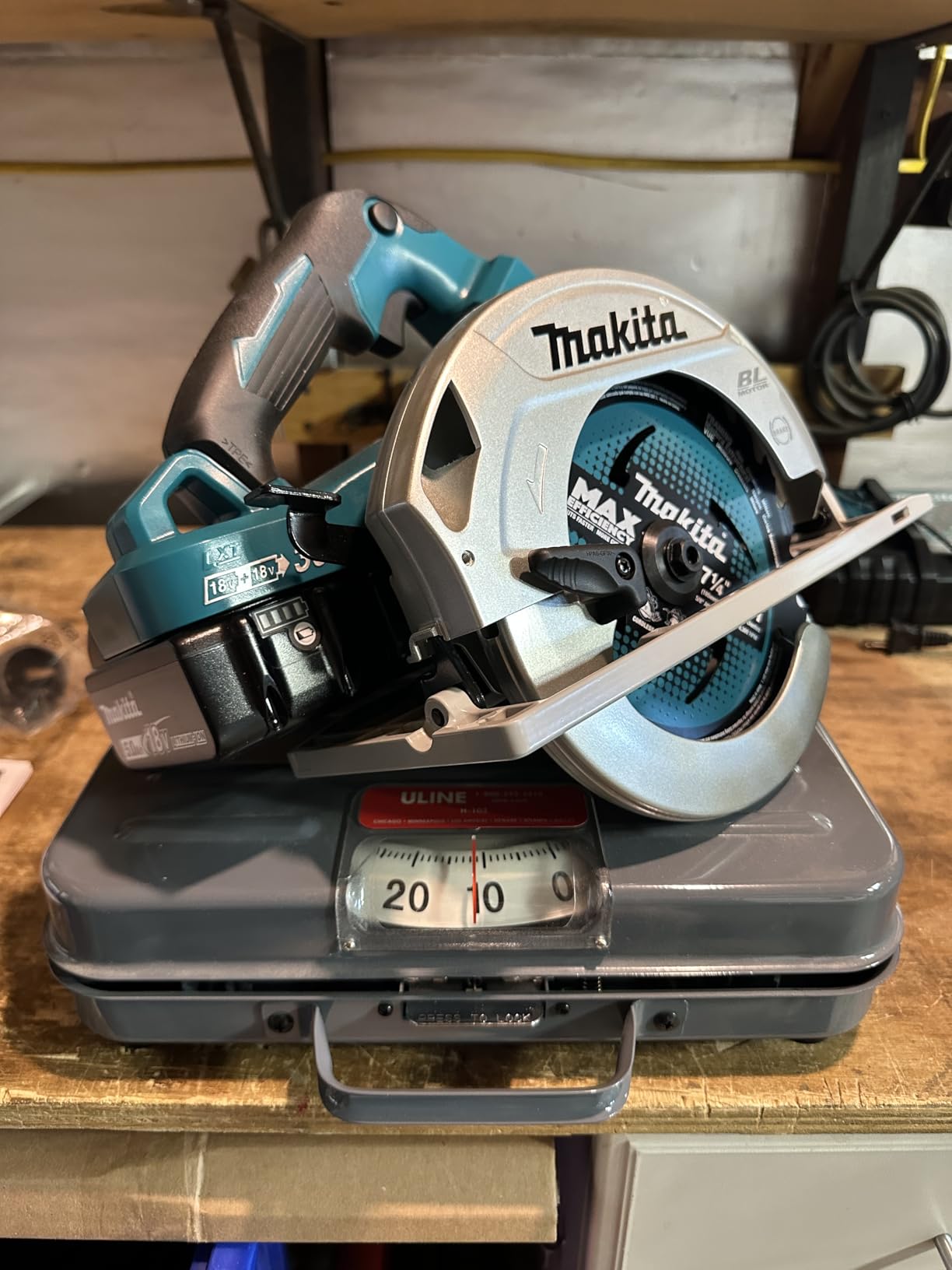
The dual-battery approach has a practical upside for anyone who already runs Makita tools: you are not buying into a new battery family, you are using two of the packs you probably already have. Owners who own two 18V packs specifically recommend this saw for that reason.
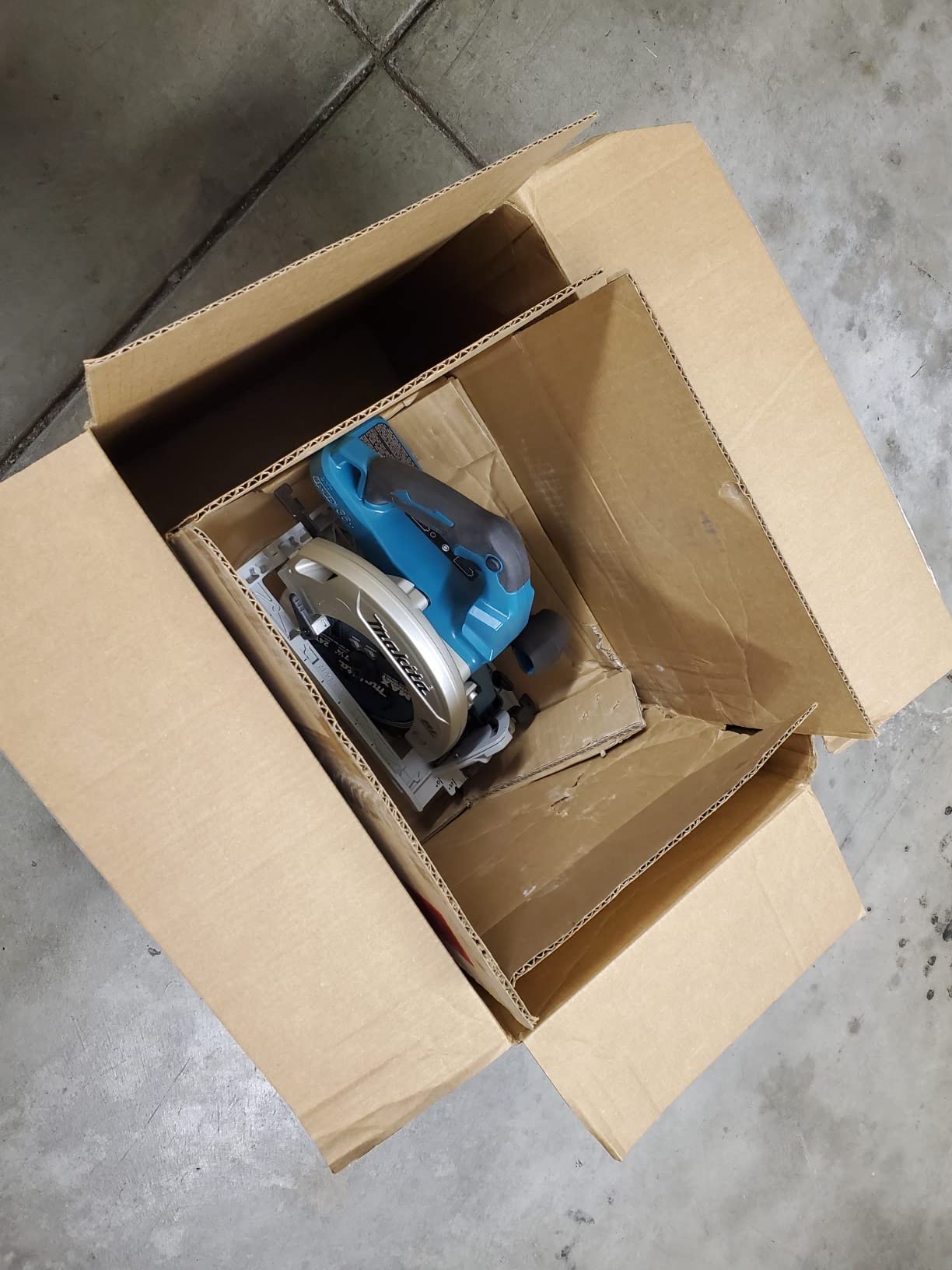
For plywood, the 7-1/4 inch blade handles 1-1/8 inch material in a single pass, and the higher rotational speed keeps the cut moving through the full thickness instead of grinding.
Best use: thick panels and high-volume sheet work
When material thickness or volume is the constraint, this saw answers both at once. The 7-1/4 inch diameter gives capacity, the 6000 RPM motor gives speed, and the two-battery platform gives the run time to finish a stack of panels without a mid-project recharge.
Owners of this class of tool tend to be those cutting sheet goods professionally or nearly so, and the feedback is consistent about power and endurance.
Where it stops being the right answer
It weighs 10.4 pounds, the heaviest in this roundup, and that figure does not include batteries. On top of a full sheet, that is a real load on the end of an eight-foot cut, and a lighter saw may be easier to control even if it cuts more slowly.
Two batteries are required, so the platform cost and weight only make sense if you already own the 18V LXT system or plan to use the saw heavily enough to justify it.
How to Choose a Cordless Circular Saw for Plywood
The single most useful question is not about the motor. It is whether the saw can take your thickest sheet in one pass with a quarter inch of blade showing below the shoe, because a two-pass cut doubles your handling time and doubles the chance of a mistake.
Blade size: 6-1/2 inch vs 7-1/4 inch
A 6-1/2 inch saw is enough for plywood and is the right answer for most people. Standard construction and cabinet plywood comes in 1/4, 1/2, 5/8 and 3/4 inch thicknesses, and a 6-1/2 inch saw with 2-1/8 to 2-1/4 inch of depth handles all of them comfortably in a single pass.
A 7-1/4 inch saw earns its extra size when you work in 1-1/8 inch material, or when you want a stiffer blade for long rips. A larger diameter deflects less at the same cut depth, and that matters more than most spec sheets admit. On a sawmillcreek.org thread about occasional plywood work, 6-1/2 inch saws were repeatedly endorsed as the right size, which matches our own view for most projects.
Cut depth vs sheet thickness
Do the arithmetic before you buy. Set your depth so a quarter inch of blade protrudes below the shoe, then subtract the quarter inch from the stated maximum depth at 90 degrees. That is your real single-pass ceiling.
With a stated 2-1/8 inch depth, the practical ceiling is just under 2 inches, which covers every common sheet thickness with margin. With 2-9/16 inch, you get past 2-1/4 inches, which brings 1-1/8 inch CDX and structural panels into single-pass territory. Note that at a 45 degree bevel every saw’s depth drops, so a sheet that clears at 90 degrees may not at full bevel.
Blade choice: finish vs rip blades and tooth count
The factory blade matters more for plywood than for lumber, and this is the section most roundups skip. A framing blade with relatively few teeth is designed to chew through nails and leave a rough edge, which is the opposite of what you want on a panel face.
A 40-tooth blade makes a fast, coarse rip cut but splinters veneer. A 24-tooth blade is a reasonable all-rounder. A 60-tooth or plywood-specific blade with fine teeth cuts more slowly but leaves the exit face of the panel noticeably cleaner, and on finished birch ply the difference is the whole job. Thin-kerf plywood blades also reduce the load on the motor, which helps on a compact saw.
Our advice is to keep the factory blade for framing and fit a plywood blade for anything visible. This is the one upgrade we would make on every saw in this roundup.
Battery platform and voltage
Platform beats voltage. An 18V saw running a 5.0Ah pack has more usable energy than a 20V saw running a 1.5Ah pack, and a full sheet cut is a battery-capacity problem far more often than it is a voltage problem.
The real decision is which ecosystem you want to own. DeWalt’s 60V MAX packs also run 20V MAX tools, and Makita’s 18V X2 saws run two ordinary 18V packs, so both give you a path to high output without a separate battery family. Check what you already own before anything else, because a second platform bought for one saw is the regret people report most often.
On the DeWalt or Milwaukee question specifically, both are strong for plywood and the deciding factor is the saw geometry and the batteries in your hand rather than the badge. Our contractor saw guide covers the jobsite differences in more depth.
Sidewinder vs rear-handle for sheet work
All ten saws in this roundup are sidewinder designs, which put both hands close to the blade and make them easy to control in tight corners and on a supported panel. A rear-handle saw puts the second hand behind the guard, which is better for one-handed plunge cuts and safer in some framings, but heavier and less precise for joinery-adjacent panel work.
For plywood, the sidewinder’s short body and low centre of gravity win more often than the rear handle’s strength advantage matters.
Weight, balance, shoe glide and dust
On a full sheet, weight shows up as fatigue at the far end of an eight-foot cut, and balance matters more than raw weight. A 5-pound saw that is badly balanced is harder to control than a well-balanced 7-pound saw.
Shoe rigidity and surface friction decide whether the saw tracks along a straightedge. A magnesium or aluminium shoe that stays flat is the minimum; a coated or taped shoe surface helps further. For indoor sheet cutting, a dust port on the guard is worth having, because plywood fines stay airborne far longer than sawdust.
How to Cut Plywood Cleanly With a Cordless Circular Saw
Yes, a circular saw can cut plywood cleanly, and the result depends far more on setup than on the saw. Four things decide the quality of the cut: full support under the sheet, a rigid straightedge the shoe can actually ride, a sharp blade with enough teeth, and a way to catch the exit-side chips.
Step-by-step: ripping a 4×8 sheet
First, lay the sheet on two pairs of sawhorses with a wide sacrificial surface between them, such as a second sheet of cheap plywood or a stack of foam board. The support has to run under the entire cut line, or the sheet will sag as you pass the midpoint and the cut will change angle.
Second, clamp a straightedge to the sheet a few inches from your line, and position the straightedge so its edge lies on the waste side of the cut. You want the offcut to fall away, not the panel you are keeping.
Third, set the depth so a quarter inch of blade shows below the shoe. Check it at both ends of the straightedge, because a bowed sheet will not give you a consistent setting.
Fourth, start the cut with the saw sitting on the waste side, bring the spinning blade up to speed, then set the shoe down on the sheet and push into the straightedge gradually. Let the motor reach full speed before the blade meets material, and keep the shoe flat and pressed against the straightedge the entire length of the cut. Stop at the far end with the blade still running, and only release the trigger once the saw is clear of the panel.
Preventing tear-out on the exit side
Tear-out happens because the blade pushes the outer veneer layer outward as it exits the bottom of the cut. Four fixes work, in order of how often we reach for them.
Cut on a sacrificial surface. A scrap sheet under the panel catches the exiting chips and costs nothing.
Score the veneer. A sharp utility knife run along the line on the exit face, followed by a straight edge and a firm score, severs the surface fibres so they cannot be pulled outward.
Tape the line. Low-tack tape over the cut line holds the surface layer together and is removed with the waste piece still in place.
Use the waste as a clamp. Cutting slightly past the end of the panel into a scrap block gives the blade somewhere to put its energy instead of into the edge of your sheet.
For a visible face, all four of these are cheaper than a new panel.
Why your saw wanders, and what fixes it
Wandering on plywood is almost always setup rather than a faulty tool. A r/Dewalt user reported an XR saw drifting badly along the line on 3/4 inch plywood, and that pattern is common enough to be worth diagnosing rather than replacing a saw.
Check the sheet support first. An unsupported middle deflects downward as the blade passes it, and the saw follows the deflection. A stiff straightedge solves this more reliably than any technique.
Then check blade sharpness. A dull blade needs more force, and more force means you are pushing harder and creating the very drift you are trying to avoid.
Finally, check your hand position. Pushing on the front of the guard makes the saw dive; lifting the rear makes it climb. Force should go straight down onto the shoe, with the shoe pinned to the straightedge, and the cut should advance at whatever rate keeps the motor at speed.
When a track saw or table saw is the better tool
For a room full of cabinet panels, a track saw or a table saw will produce a straighter and cleaner edge than any handheld saw, because the workpiece is fully supported and the cut is referenced to a fixed fence. Forum advice repeatedly points the same way: on r/woodworking, track saws are described as ideal for sheet material like OSB, plywood and MDF.
For a few panels, a circular saw and a good straightedge is the budget path, and r/BeginnerWoodWorking consistently recommends exactly that combination for beginners ripping full sheets. The difference is repeatability rather than capability, and it only matters when every cut edge will be visible.
So the honest answer to what kind of saw is best for plywood depends on volume and visibility. One visible panel edge: straightedge and circular saw. Twenty matching cabinet parts: a track saw earns its cost. Either way, the blade choice and the tear-out technique above apply to both.
Frequently Asked Questions
What is the best circular saw for cutting through plywood?
For most people, the DEWALT DCS391B is the best cordless circular saw for plywood. Its 2-1/8 inch depth at 90 degrees clears 3/4 inch sheet in a single pass, the magnesium shoe tracks well against a straightedge, and its review history is deep enough that its limits are well known. If your material is 1-1/8 inch thick or you want a cleaner exit face, step up to a 7-1/4 inch saw or fit a fine-tooth plywood blade.
Is a 6-1/2 inch circular saw enough for plywood?
Yes. Standard plywood comes in 1/4, 1/2, 5/8 and 3/4 inch, and a 6-1/2 inch saw with 2-1/8 to 2-1/4 inches of depth cuts all of them in one pass with a quarter inch of blade showing below the shoe. A 7-1/4 inch saw only becomes necessary at 1-1/8 inch material or for stiffer long rips.
What type of blade is best for cutting plywood with a circular saw?
A fine-tooth plywood or finish blade is best. A 40-tooth framing blade cuts fast but splinters veneer, while a 24-tooth blade is an acceptable all-rounder. For a clean exit face on birch ply or cabinet material, fit a 60-tooth plywood blade with a thin kerf, which also reduces the load on the motor.
How do I cut 4×8 plywood with a circular saw?
Support the sheet fully on sawhorses with a sacrificial surface, clamp a straightedge to the waste side of your line, set the depth so a quarter inch of blade shows below the shoe, and ride the shoe against the straightedge for the entire cut. Score the exit-face veneer with a knife, let the blade reach full speed before it meets the material, and keep the blade running until the saw is clear of the panel.
Why does my circular saw wander when cutting plywood?
Wandering is nearly always setup, not a defective saw. Check that the sheet is supported under the entire cut line, since an unsupported middle deflects and pulls the blade with it. Then check blade sharpness, because a dull blade needs more force and more force causes drift. Finally, push straight down onto the shoe and let the cut advance at a rate that keeps the motor at speed.
Is a track saw better than a circular saw for cutting plywood?
For a large number of visible, matching edges, yes. A track saw or table saw fully supports the panel and references the cut to a fixed fence, so repeatability is far better than a handheld saw riding a straightedge. For a handful of panels, a circular saw with a stiff straightedge and a good blade is the budget path and produces a perfectly workable edge.
Is a DeWalt or Milwaukee circular saw better for plywood?
Both are strong choices and the deciding factor is usually the batteries you already own rather than the badge. DeWalt 60V MAX packs also run 20V MAX tools, and Milwaukee M18 packs are among the most widely owned platforms in home and trade use. Pick the saw geometry that suits your work, the compact 6-1/2 inch or the 7-1/4 inch, and then commit to one ecosystem.
Is it worth getting a cordless circular saw?
For anyone breaking down plywood, OSB or MDF, yes. A cordless circular saw removes the cord management, trip hazard and outlet distance that make corded saws awkward on a driveway or in a garage, and modern brushless models cut with corded-class speed. The trade-off is battery cost and the platform lock-in, so check what packs you already have before buying.
Bottom Line: Which Cordless Circular Saw Should You Buy for Plywood?
The best cordless circular saws for plywood start with the platform you already own and end with a measurement. Know your thickest sheet, work out whether it clears the saw’s stated depth at 90 degrees with a quarter inch of blade exposed, and buy the lighter 6-1/2 inch tool if it does. Most plywood work never needs more.
For a general-purpose saw with the deepest evidence behind it, the DEWALT DCS391B is our pick. For visible panel faces, the DCS565B and its 24-tooth blade make more sense. For 1-1/8 inch material and long full-sheet rips, move up to a 7-1/4 inch saw, and the DCS578B is the strongest of those. Whichever you choose, buy a good straightedge, fit a plywood blade, and support the sheet properly, because those three things do more for cut quality than any spec on a list.
Whichever saw you land on, start with a fully charged battery and a short practice cut on a scrap panel, so the first sheet you cut is not the one that teaches you. If you want the rest of our saw coverage, the band saw guide for woodworkers covers curved work, and the reciprocating saw picks handle teardown and demolition.