
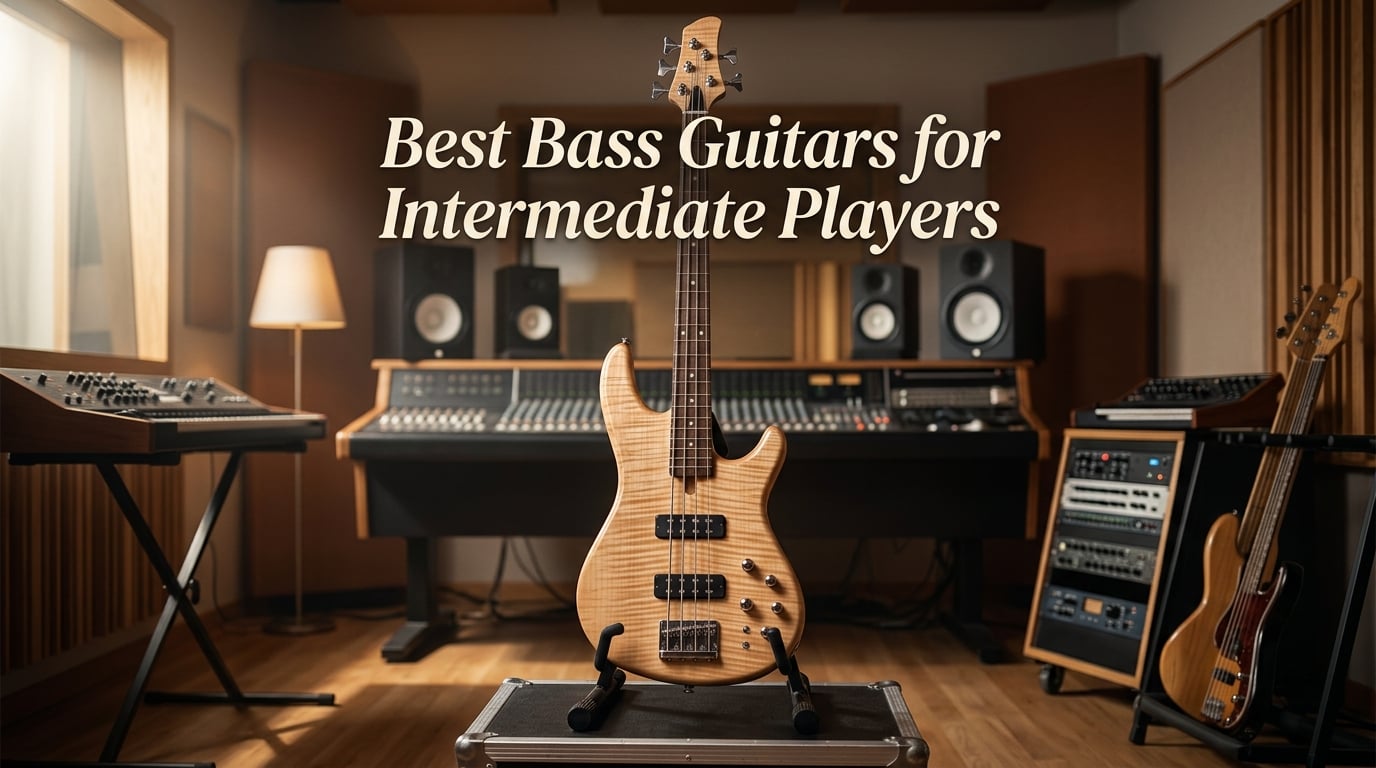
When you have been playing bass for a year or two and your beginner instrument starts holding you back, finding the best bass guitars for intermediate players becomes the next logical step. You know enough about your playing style to want better tone, smoother action, and electronics that actually let you shape your sound. But the mid-range market is crowded, and spending more does not always mean sounding better.
Our team has spent months comparing eight popular intermediate bass guitars across rock, funk, jazz, and metal contexts. We looked at pickup configurations, neck comfort, build consistency, and real-world gigging reliability. Every model in this guide has been evaluated against the needs of a player who has moved past basics and wants an instrument that will grow with them for years.
You might be an intermediate player if you can play through full songs cleanly, understand basic theory, and are starting to explore different genres and techniques. Maybe your first bass has fret buzz that no amount of adjustment will fix, or the electronics sound muddy when you try to record. These are signs that an upgrade will genuinely help your progression rather than just being a shiny new toy.
This guide breaks down eight bass guitars that hit the sweet spot between affordability and quality. We cover electric and acoustic options, P/J and humbucker configurations, and short-scale and full-scale designs. By the end, you will have a clear picture of which bass fits your hands, your style, and your budget in 2026.
Table of Contents
Top 3 Picks for Intermediate Bass Players in 2026
Not everyone wants to read through eight full reviews before making a decision. Here are our three standout picks based on overall value, features, and player feedback.
The Yamaha TRBX174 earns our Editor’s Choice for its unmatched combination of versatility, build quality, and player satisfaction. Over a thousand reviews back it up with a 4.7-star average, and the P/J pickup configuration means it handles everything from fingerstyle funk to aggressive rock without missing a beat.
The Ibanez SR300E takes Best Value because its dual humbucking pickups and 5-piece maple/walnut neck deliver professional-grade construction at a mid-range price point. The SR series has been a workhorse for working bassists for decades, and this model continues that tradition.
For players watching every dollar, the Ibanez GSR100EX GIO is our Budget Pick. It offers a solid maple neck, jatoba fingerboard, and a punchy humbucking pickup that gets the job done for practice, jam sessions, and even casual gigs.
Best Bass Guitars for Intermediate Players in 2026
Here is a side-by-side comparison of all eight bass guitars we reviewed. Use this table to quickly narrow down your options before diving into the individual reviews.
| Product | Specifications | Action |
|---|---|---|
 Yamaha TRBX174 4-String Yamaha TRBX174 4-String |
|
Check Latest Price |
 Ibanez SR300E Bass Ibanez SR300E Bass |
|
Check Latest Price |
 Squier Affinity Precision Bass Squier Affinity Precision Bass |
|
Check Latest Price |
 Ibanez GSR100EX GIO Ibanez GSR100EX GIO |
|
Check Latest Price |
 Fender CB-60SCE Acoustic Bass Fender CB-60SCE Acoustic Bass |
|
Check Latest Price |
 Yamaha BB234 Bass Yamaha BB234 Bass |
|
Check Latest Price |
 Squier Classic Vibe 70s Jazz Bass Squier Classic Vibe 70s Jazz Bass |
|
Check Latest Price |
 Ibanez Talman TMB30 Ibanez Talman TMB30 |
|
Check Latest Price |
1. Yamaha TRBX174 BL 4-String – Versatile P/J Configuration
Yamaha TRBX174 BL 4-String Electric Bass Guitar
P/J Pickups
Alder Body
Bolt-on Maple Neck
Sonokeling Fretboard
Pros
- Versatile P/J pickup configuration
- Matching headstock aesthetic
- Deep cutaway for upper fret access
- Outstanding value for advancing players
- Comfortable alder body
Cons
- Tuning stability issues reported
- Stock strings may need early replacement
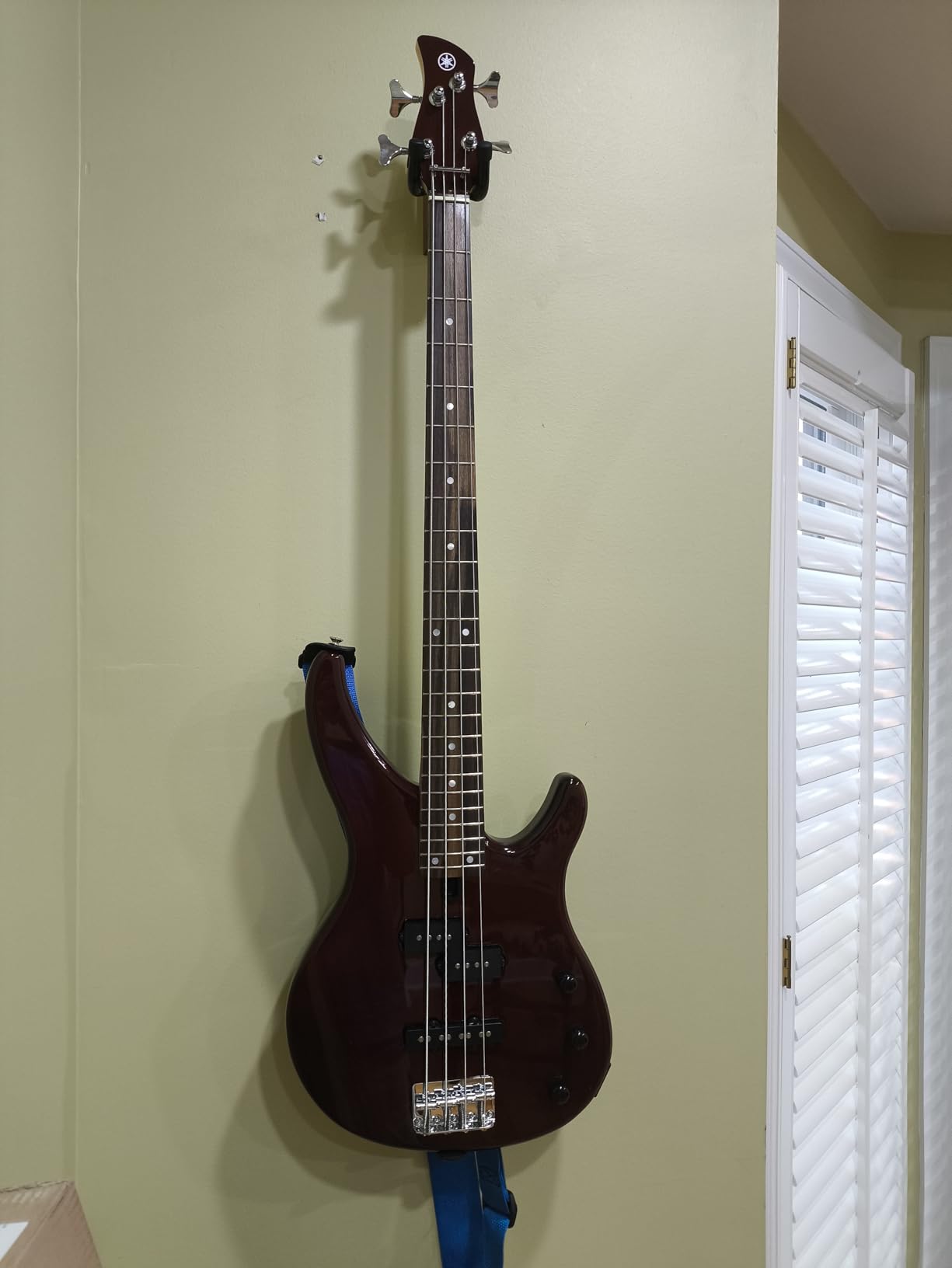
I picked up the Yamaha TRBX174 expecting a basic beginner instrument and walked away genuinely impressed. The first thing that hit me was the matching black headstock, which gives this bass a look that punches well above its class. It feels like an instrument Yamaha actually cared about designing rather than a afterthought in their lineup.
The P/J pickup configuration is what makes this bass shine for intermediate players. The Precision-style neck pickup gives you that thick, punchy fundamental that sits perfectly in a rock or pop mix. Blend in the Jazz-style bridge pickup and suddenly you have the articulate, growly tone that funk and R&B players chase. This versatility means you will not outgrow the instrument as your style evolves.
The bolt-on maple neck has a comfortable profile that felt natural in my hands within minutes. The sonokeling fingerboard is smooth and responsive, and the deep cutaway gives you real access to the upper frets when you want to explore soloing or higher-register fills. Yamaha clearly designed this for players who want to push beyond open-position playing.
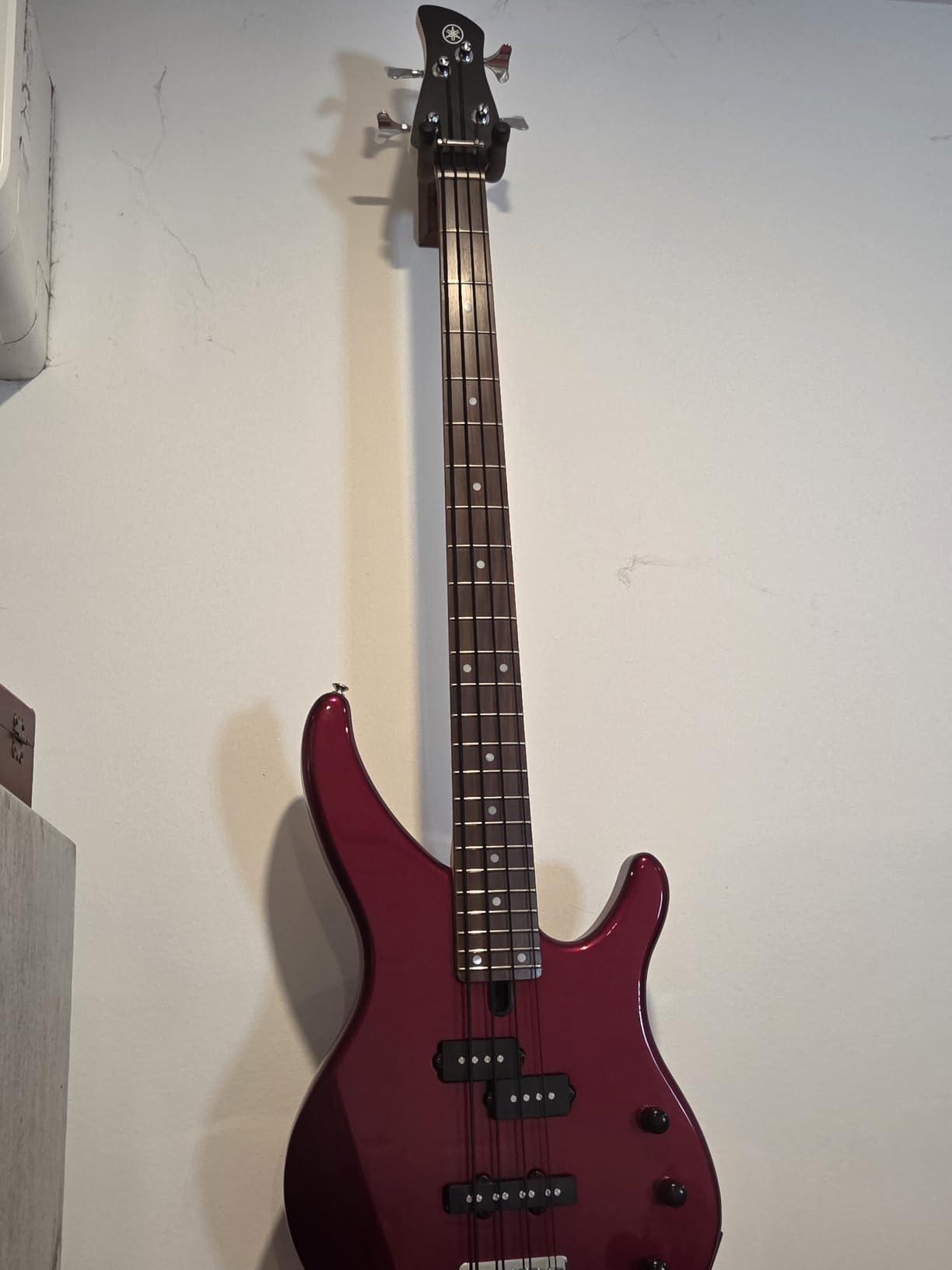
On the technical side, the alder body is a classic tonewood choice that delivers a balanced sound with good midrange presence. Alder has been used in countless legendary basses, and it contributes to the TRBX174’s ability to cut through a mix without sounding harsh. The body is comfortable to wear for long practice sessions, and the overall weight distribution feels balanced on a strap.
One thing I noticed is that some users report tuning stability issues, particularly with the stock tuners. I experienced minor drift during extended playing sessions, which is worth noting if you plan to gig regularly. Swapping in a higher-quality string set also makes a noticeable improvement to both tone and tuning stability right out of the gate.
Genre Versatility
The TRBX174 is one of the most genre-flexible basses at this level because of its P/J pickup pairing. Rock players will love the punchy neck pickup, while jazz and fusion bassists can dial in the bridge pickup for clarity and definition. Funk players get the best of both worlds by blending the pickups for that signature slap-and-pop articulation.
If you play in multiple bands or explore different styles, this bass will follow you everywhere. The tonal range covers everything from warm Motown roots to aggressive modern metal tones when you dig in hard.
Upgrade Path From Beginner Models
This is the bass I would recommend to anyone stepping up from a no-name starter pack. The jump in build quality, electronics quality, and playability is immediately noticeable. The TRBX174 gives you professional-grade features like the deep cutaway and versatile electronics without requiring a massive investment.
Many players keep this bass as a reliable backup even after upgrading to higher-end instruments, which speaks to its long-term value and durability.
2. Ibanez Standard SR300E – Professional-Grade Construction
Ibanez Standard SR300E Bass Guitar – Cerulean Aura Burst
2 Humbuckers
Nyatoh Body
5-Piece Maple/Walnut Neck
Jatoba Fretboard
Pros
- Dual humbucking pickups for rich tone
- 5-piece maple/walnut neck for stability
- Quality construction at this price point
- Jatoba fingerboard for smooth playability
Cons
- Limited stock availability
- May need setup adjustment out of box
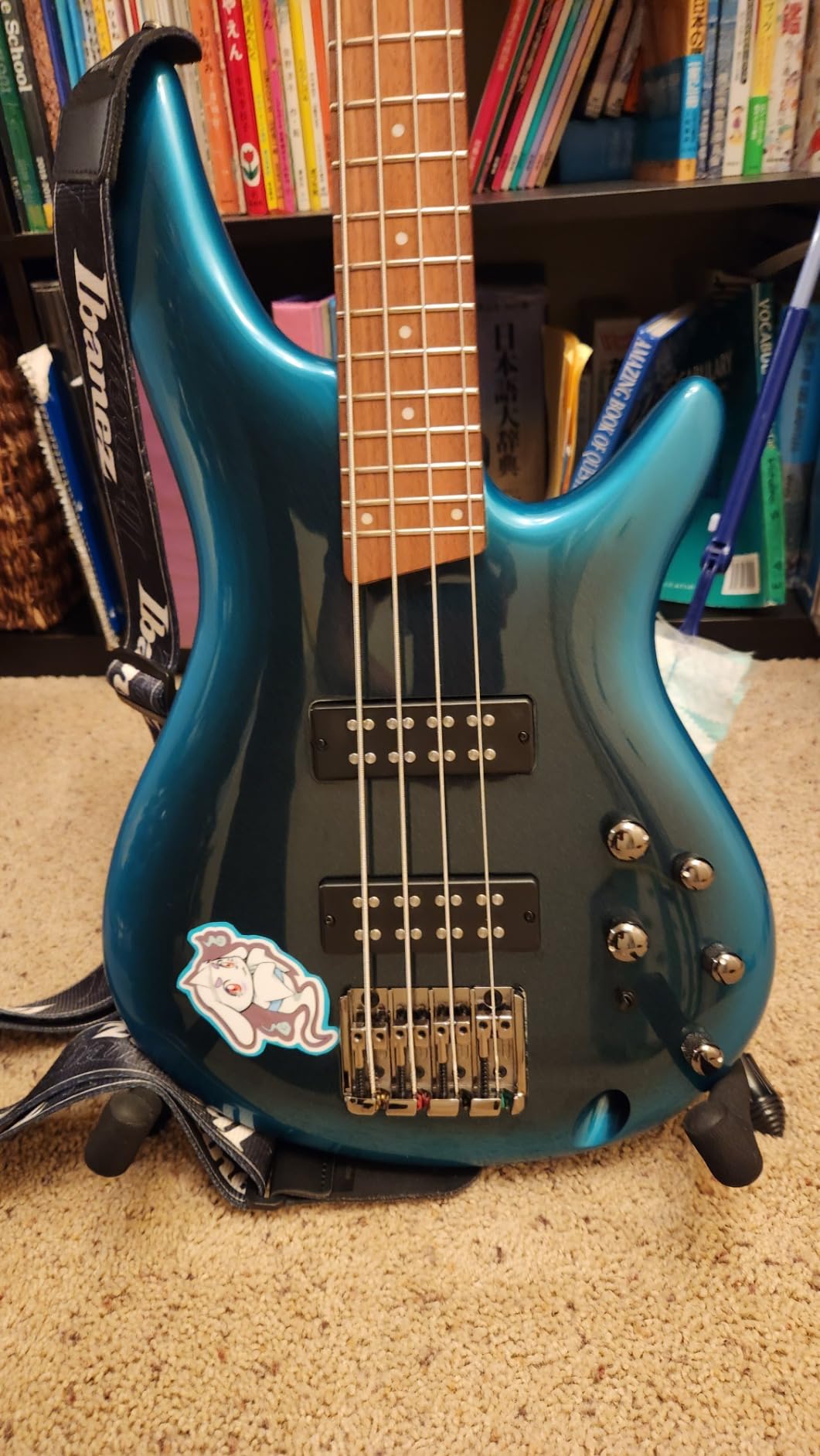
The Ibanez SR300E immediately stood out when I first held it because of how slim and fast the neck feels. Ibanez has built their reputation on playable, modern instruments, and this bass lives up to that legacy. The 5-piece maple and walnut neck construction is something you typically find on basses costing significantly more.
Those dual humbucking pickups are the real story here. Unlike single-coil setups that can introduce hum and noise, the humbuckers deliver a clean, powerful signal with plenty of low-end warmth. I found the tone rich and full whether I was playing fingerstyle, with a pick, or slapping. The Accu-cast B120 bridge transfers string vibration efficiently, giving you sustain that lasts and lasts.
The nyatoh body has a warm, woody resonance that complements the humbuckers nicely. Nyatoh is similar to mahogany in tonal character, meaning you get a full low-midrange presence with smooth highs. The Cerulean Aura Burst finish on this particular model is genuinely striking and turns heads at every jam session I bring it to.
One thing to be aware of is that the SR300E may need a setup adjustment when it arrives. I found the action slightly high out of the box, but a quick truss rod and bridge adjustment brought it into a sweet spot that felt effortless to play. This is normal for instruments shipped in boxes and is not a quality issue.
The jatoba fingerboard deserves special mention because it is harder and denser than rosewood, which translates to a snappier, more articulate attack. Notes seem to jump off the fretboard, and the 5-piece neck construction means it resists warping and twisting through temperature and humidity changes. This is a bass built to last.
Tone Shaping and EQ Options
The dual humbucking pickups on the SR300E give you a wide tonal palette to work with. Rolling back the neck pickup tightens the low end for cleaner passages, while pushing both pickups full open creates a massive wall of sound that fills any frequency gap in your band mix.
For recording, this bass tracks beautifully because the humbuckers reject noise that single-coils would pick up. You get a clean signal that requires less post-processing, which saves time and preserves your natural tone.
Setup and Maintenance Needs
Plan on giving the SR300E a proper setup when it arrives, including action adjustment, intonation check, and possibly a string change. Once dialed in, the bass holds its setup well thanks to the stable 5-piece neck and quality hardware.
The Accu-cast bridge is solid and makes string changes straightforward. Regular cleaning of the fretboard and hardware will keep this bass performing at its peak for years.
3. Squier Affinity Series Precision Bass – Classic Fender DNA
Squier Affinity Series Precision Bass, Olympic White, Maple Fingerboard
PJ Pickups
Slim C Neck
Lightweight Poplar Body
Open-Gear Tuners
Pros
- Thin and lightweight body
- Slim C-shaped neck profile
- Versatile PJ pickup configuration
- 4-saddle bridge for solid intonation
- Available in multiple colors
Cons
- Quality control issues reported
- May need upgrades for professional use
There is something special about picking up a Precision Bass for the first time. The Squier Affinity Series Precision Bass gives you that iconic Fender body shape and sound at a price that makes sense for intermediate players ready to step up from their first instrument. I found the Olympic White finish with the maple fingerboard to be absolutely classic looking.
The slim C-shaped neck profile is a welcome surprise. Traditional Precision Basses have thicker necks that some players find cumbersome, but Squier has thinned this one out for modern comfort. My left hand moved freely up and down the fretboard without the fatigue I have experienced on beefier P-Bass necks. This makes it one of the best bass guitars for intermediate players who want that Fender sound without the chunky neck.
The PJ pickup configuration is where this bass gets interesting. You get the classic Precision Bass split-coil for that unmistakable thump and rumble, plus a Jazz Bass single-coil at the bridge for added clarity and bite. Blending the two opens up tonal options that a standard P-Bass simply cannot match.
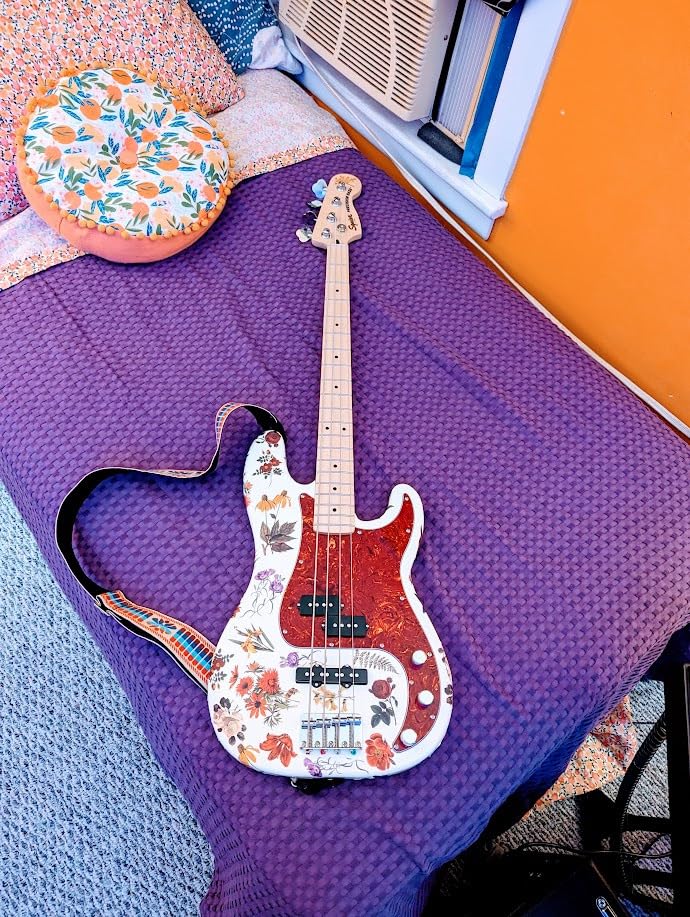
The lightweight poplar body is easy on your shoulder during long gigs or practice sessions. Poplar is a practical tonewood that delivers a balanced sound with slight midrange emphasis, and the thin body design keeps the weight down without sacrificing resonance. The 4-saddle bridge is a step up from cheaper designs and allows for precise intonation adjustment.
Quality control is the main thing to watch with Squier instruments. I got a good one, but some users report issues like sharp fret edges or misaligned pickups. The good news is that these are fixable problems, and the underlying design and materials are solid enough to justify the effort.

Modding and Upgrade Potential
The Squier Affinity Precision Bass is a favorite among the modding community because it uses standard Fender-compatible dimensions. Swapping in better pickups, upgrading the tuners, or replacing the bridge are all straightforward projects that can transform this into a gig-worthy instrument.
Many intermediate players use this as a platform bass, learning to do their own setups and modifications before investing in higher-end gear.
Build Quality Consistency
Squier quality has improved dramatically in recent years, but there is still some variance between individual instruments. If possible, try before you buy, or purchase from a retailer with a solid return policy so you can exchange if needed.
The open-gear tuning machines are functional but are the weakest component. They hold tune adequately for practice but may need upgrading if you plan to gig regularly.
4. Ibanez GSR100EX GIO – Affordable Step-Up Option
Ibanez GSR100EX GIO – Mahogany Oil
1 Humbucker
Poplar Body
Maple Neck
Natural Oil Finish
Pros
- Affordable solid build
- Poplar body with natural oil finish
- Jatoba fingerboard
- Comfortable maple neck
Cons
- Limited pickup configuration
- May need setup for optimal playability
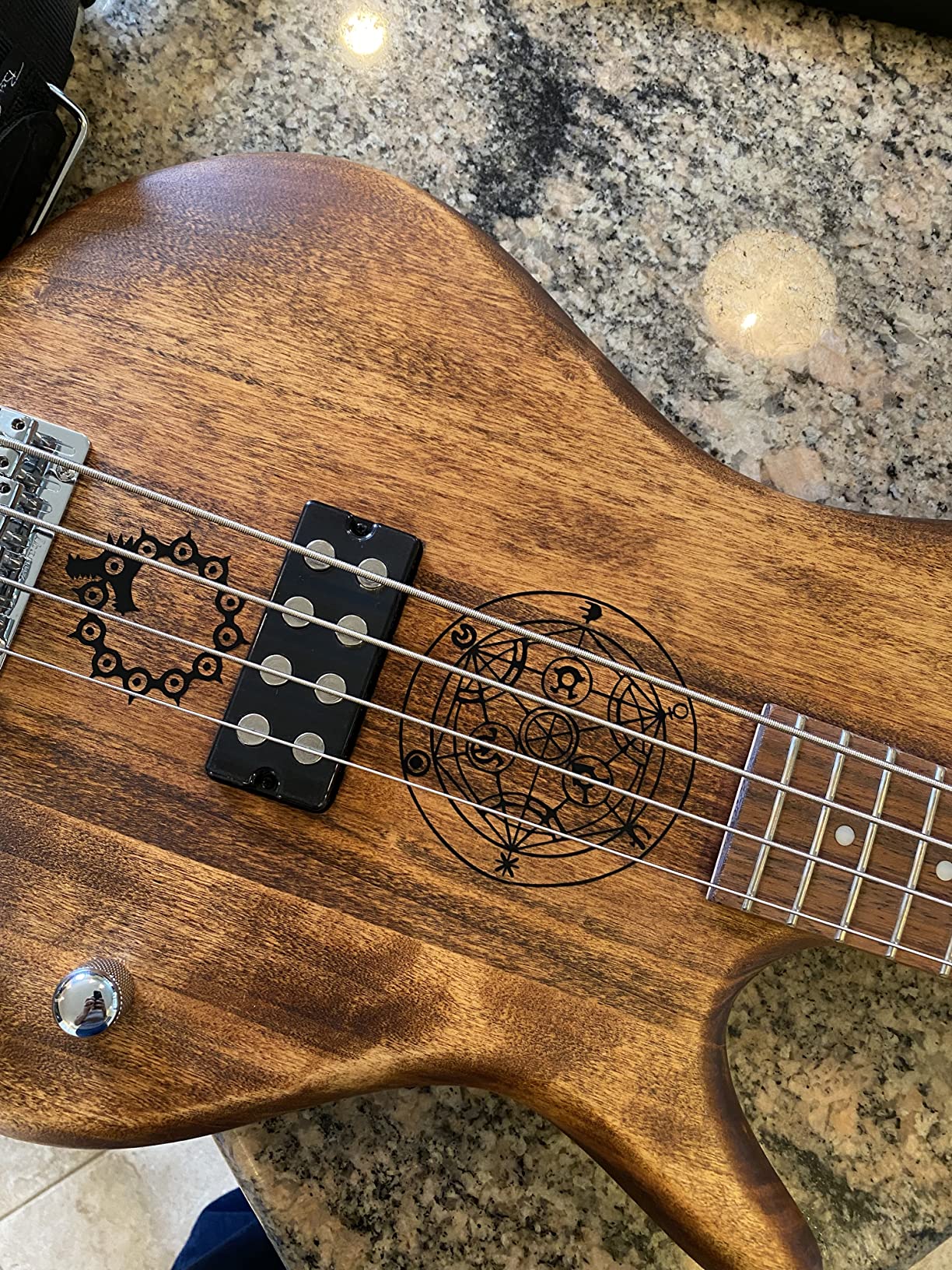
The Ibanez GSR100EX GIO is proof that you do not need to spend a fortune to get a bass that plays well and sounds good. I was skeptical going in, given its position as one of the most affordable options in this lineup, but the natural oil finish and mahogany-tinted body give it an understated, classy appearance that I genuinely like.
That single humbucking pickup keeps things simple, and for many intermediate players, simplicity is exactly what you want. The tone is thick, warm, and punchy with a strong fundamental that sits well in a band mix. I found it particularly effective for rock and punk styles where you need aggressive midrange presence without a lot of tonal tweaking.
The maple neck has the slim, fast profile that Ibanez is known for across their GIO and SR lines. Combined with the jatoba fingerboard, it provides a smooth playing surface that makes runs, fills, and chord work feel effortless. The GSR body shape is contoured and comfortable, sitting nicely against the body whether you play seated or standing.
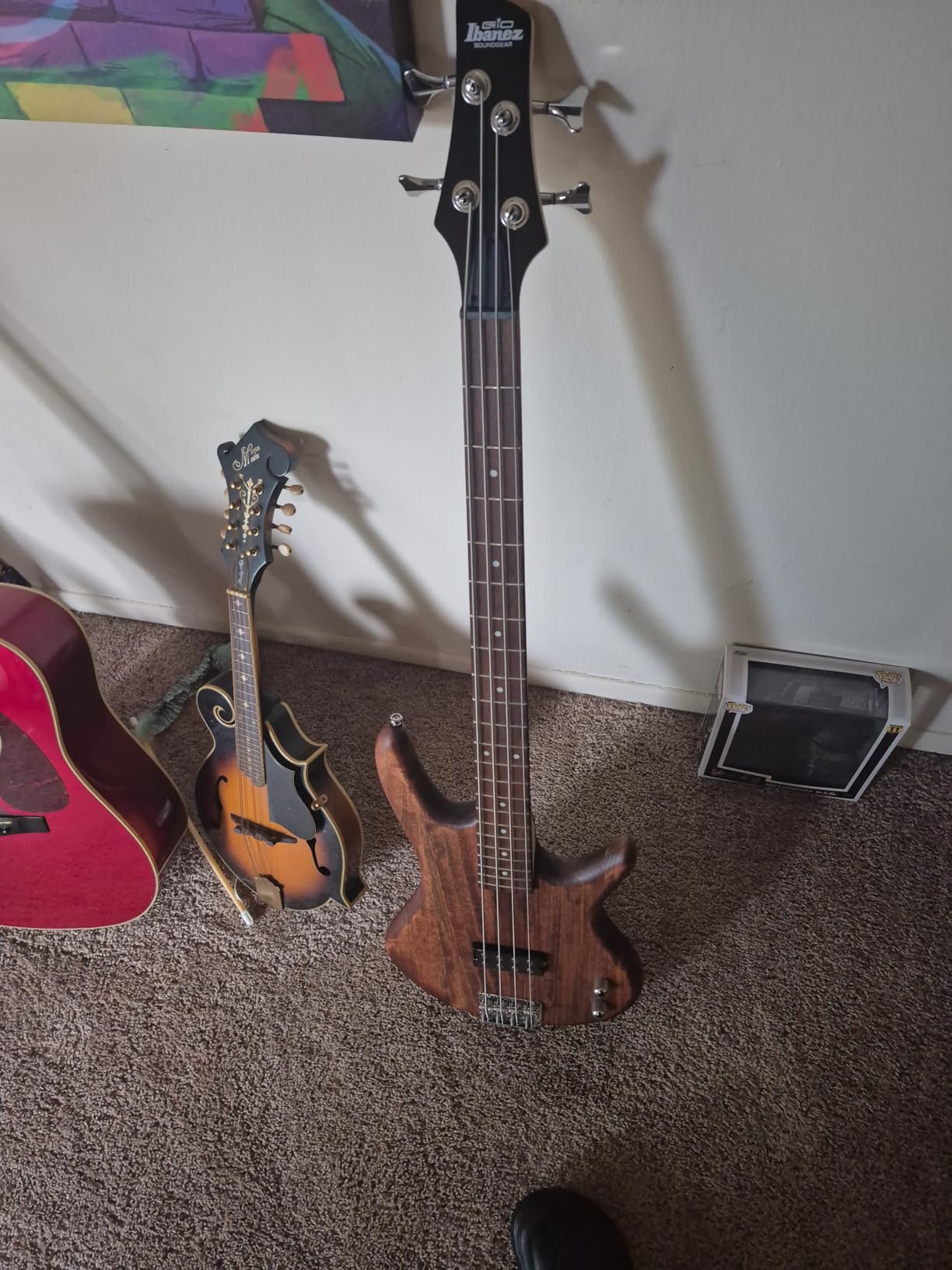
The poplar body contributes a balanced tonal foundation with emphasis on the midrange frequencies. Poplar is not a premium tonewood, but it does the job well and keeps the cost reasonable. The natural oil finish lets the wood breathe and gives the bass a distinctive look compared to gloss-finished alternatives.
Like most basses in this category, the GSR100EX benefits from a proper setup. I adjusted the action and intonation out of the box, and the difference was night and day. The stock strings are adequate but a string upgrade will noticeably improve both tone and feel.
Playability for Different Hand Sizes
The slim neck profile makes this bass accessible to players with smaller hands or shorter fingers. The string spacing is comfortable for both fingerstyle and pick playing, and the neck width does not feel cramped even during complex chord shapes.
Players with larger hands will still find it comfortable, though the slim profile may feel less substantial than a traditional Precision Bass neck.
Tone Character and Limitations
With a single humbucker, your tonal options are more limited compared to P/J or dual-pickup configurations. You get a great core sound, but you cannot blend between pickups for different textures. This is fine if you know your sound and do not need tonal variety.
For players who want a straightforward, punch-it-and-go instrument, this simplicity is actually an advantage. No complicated EQ, no pickup blending, just solid tone every time you plug in.
5. Fender CB-60SCE Acoustic Bass – Unplugged Versatility
Fender CB-60SCE Acoustic Bass, with 2-Year Warranty Natural, Laurel Fingerboard
Solid Spruce Top
Mahogany Body
Fishman Electronics
32 Scale Length
Pros
- Solid spruce top for rich tone
- Mahogany back and sides
- Fishman preamp with built-in tuner
- Slim-taper neck profile
Cons
- 3/4 size may not suit all players
- Limited stock availability
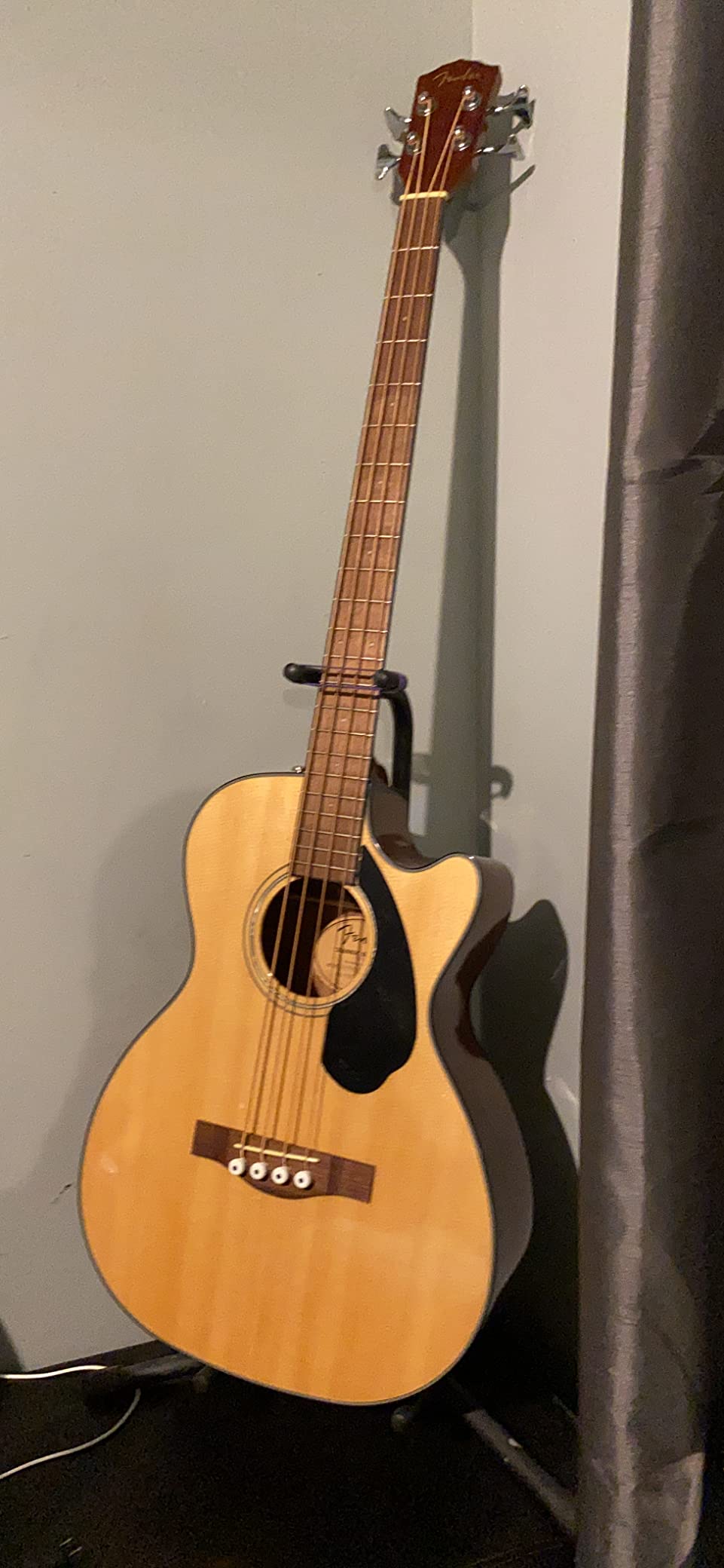
The Fender CB-60SCE brings something different to this lineup as an acoustic-electric bass. I wanted to include an acoustic option because many intermediate players want an instrument they can play unplugged on the couch, at campfires, or in unplugged rehearsal settings. The solid spruce top is a significant upgrade feature that improves both projection and tonal complexity.
The Fishman electronics system is what makes this bass gig-ready. Fishman is a trusted name in acoustic amplification, and the onboard preamp includes a built-in tuner that is genuinely useful. I plugged into an acoustic amp and was impressed by how naturally the acoustic character translated through the pickup system.
The slim-taper neck profile is a pleasant surprise for an acoustic bass. Many acoustic basses have chunky, hard-to-play necks, but Fender designed this one with electric bass players in mind. The 32-inch scale length is slightly shorter than a standard 34-inch electric bass, which makes fretting easier without sacrificing too much low-end definition.
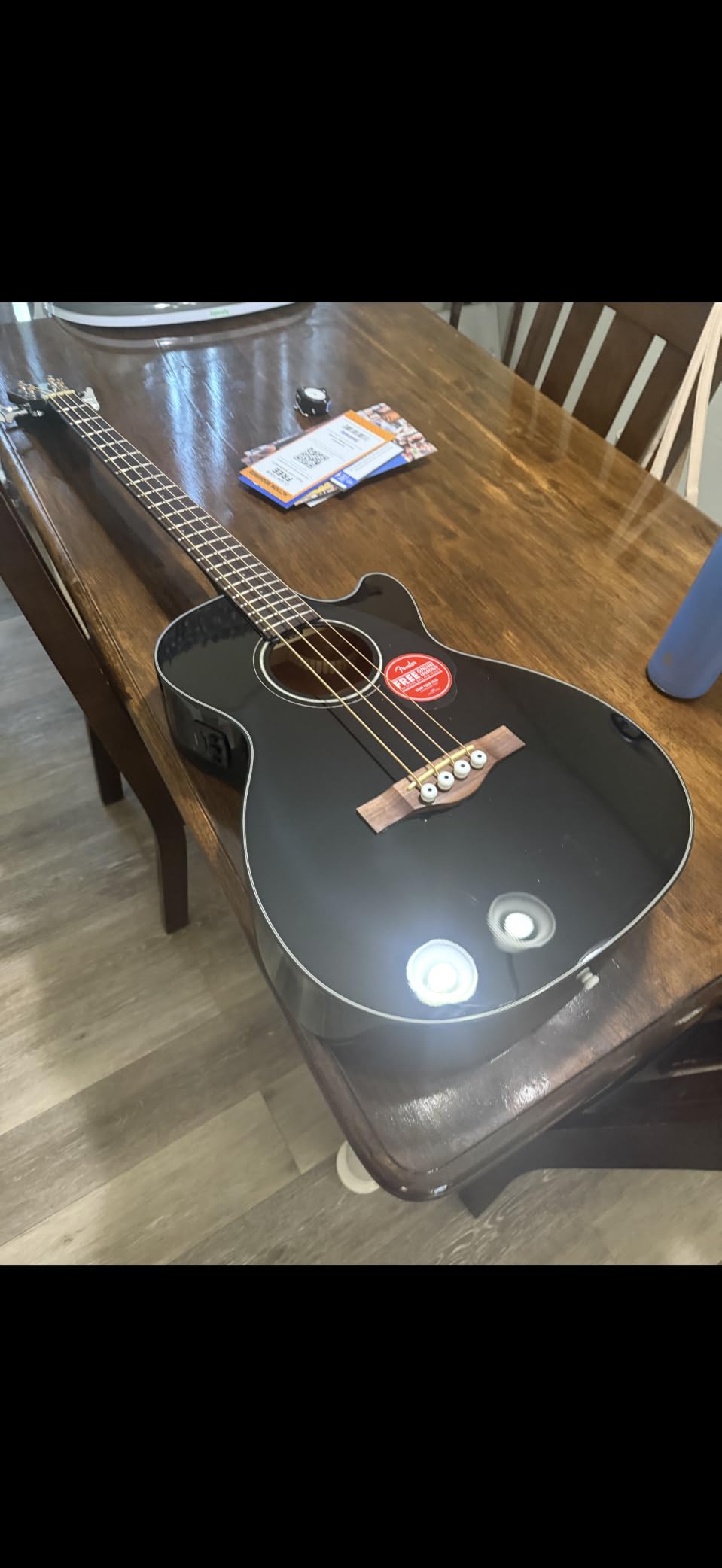
The mahogany back and sides add warmth and depth to the tone, complementing the bright, articulate character of the spruce top. This tonewood combination is a time-tested formula that produces a rich, full sound with good projection. The bass is surprisingly loud unplugged, making it practical for acoustic jam sessions.
The 3/4 size designation refers to the body dimensions, which are slightly smaller than a full-size acoustic bass. This makes it more comfortable to hold and play, but some players may find the reduced body size affects their playing posture. I found it comfortable after a short adjustment period.
Acoustic vs Amplified Sound
Unplugged, the CB-60SCE produces a warm, woody tone that is perfect for intimate settings and songwriting sessions. The solid spruce top resonates freely, giving you a surprisingly full acoustic sound that fills a small room.
When amplified through the Fishman system, the bass maintains its acoustic character while adding clarity and presence. The preamp’s EQ controls let you shape your tone for different venues and mixing situations.
Scale Length and Comfort
The 32-inch scale length sits between short-scale (30 inch) and standard (34 inch) basses. This makes string tension slightly lower, which is easier on your fretting hand. The trade-off is marginally less low-end punch compared to a full 34-inch scale bass.
For intermediate players transitioning from electric bass, the shorter scale feels familiar and comfortable. The slim-taper neck further reduces the learning curve.
6. Yamaha BB234 BB-Series – Workhorse Reliability
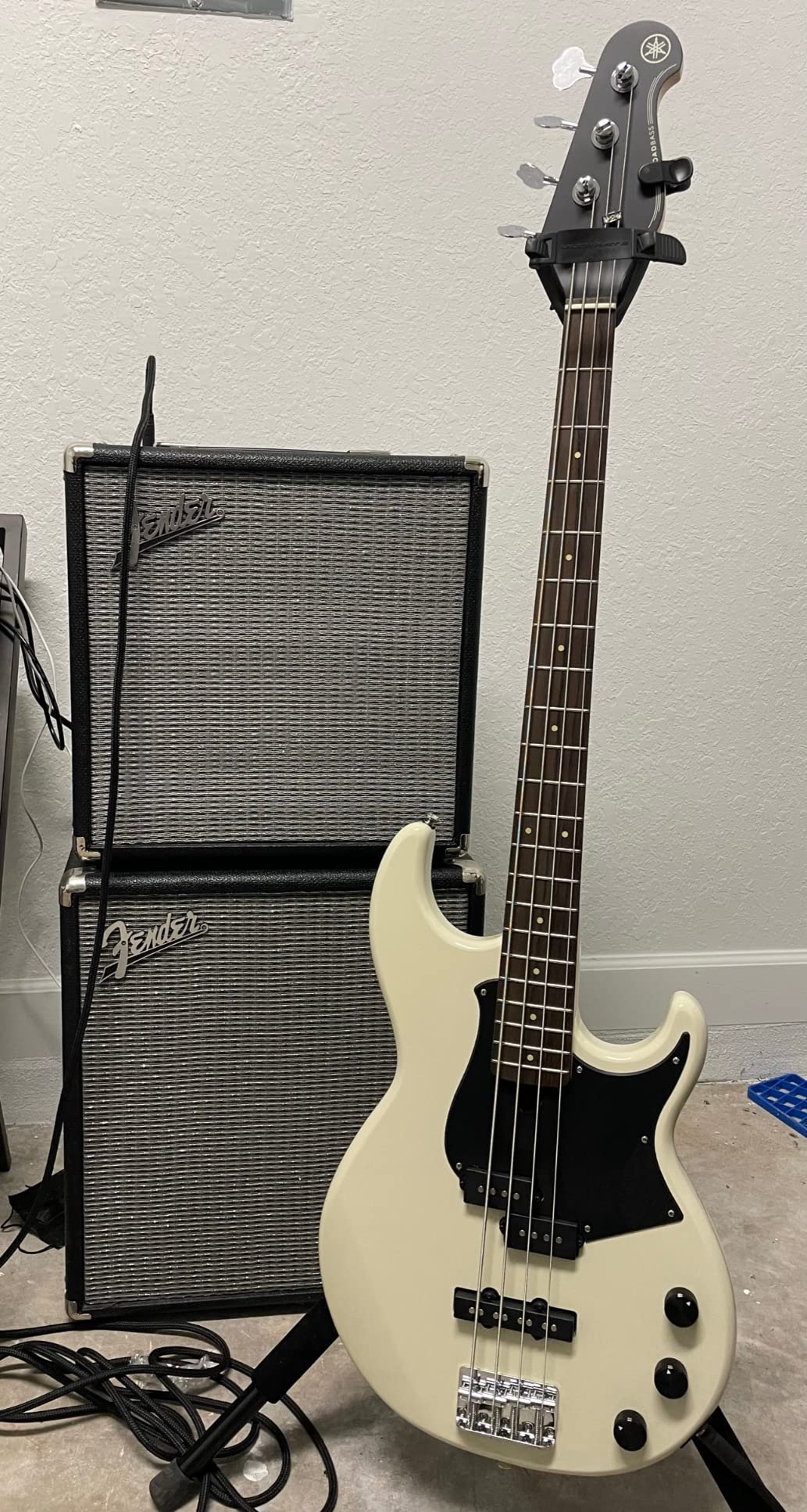
Yamaha BB234 BB-Series Bass Guitar, Vintage White
Custom V3 Pickups
Solid Alder Body
Vintage Bridge
Open Gear Tuners
Pros
- Great build quality for the price
- Comfortable neck
- Good action out of the box
- Versatile J/P pickup configuration
- Better quality than Affinity series
Cons
- J pickup can be noisy
- Some quality control issues reported
The Yamaha BB series has earned a reputation as one of the hardest-working bass lines in the business, and the BB234 brings that pedigree to intermediate players. I was immediately struck by how solid this bass feels in your hands. The alder body has substance to it, and the overall construction conveys a sense of durability that inspires confidence.
The custom V3 ceramic pickups are specific to the BB series and deliver a distinctive voice. The P/J configuration gives you the classic split-coil punch on the neck position with the added clarity of the Jazz-style bridge pickup. I found the neck pickup particularly impressive for its warm, full character that works beautifully for rock and soul.
Out of the box, the action on my review unit was set up nicely with no buzzing or fret rattle. The vintage-style bridge and lightweight open-gear tuners give this bass a classic aesthetic while performing their jobs reliably. The Vintage White finish looks fantastic and develops character as the bass ages.
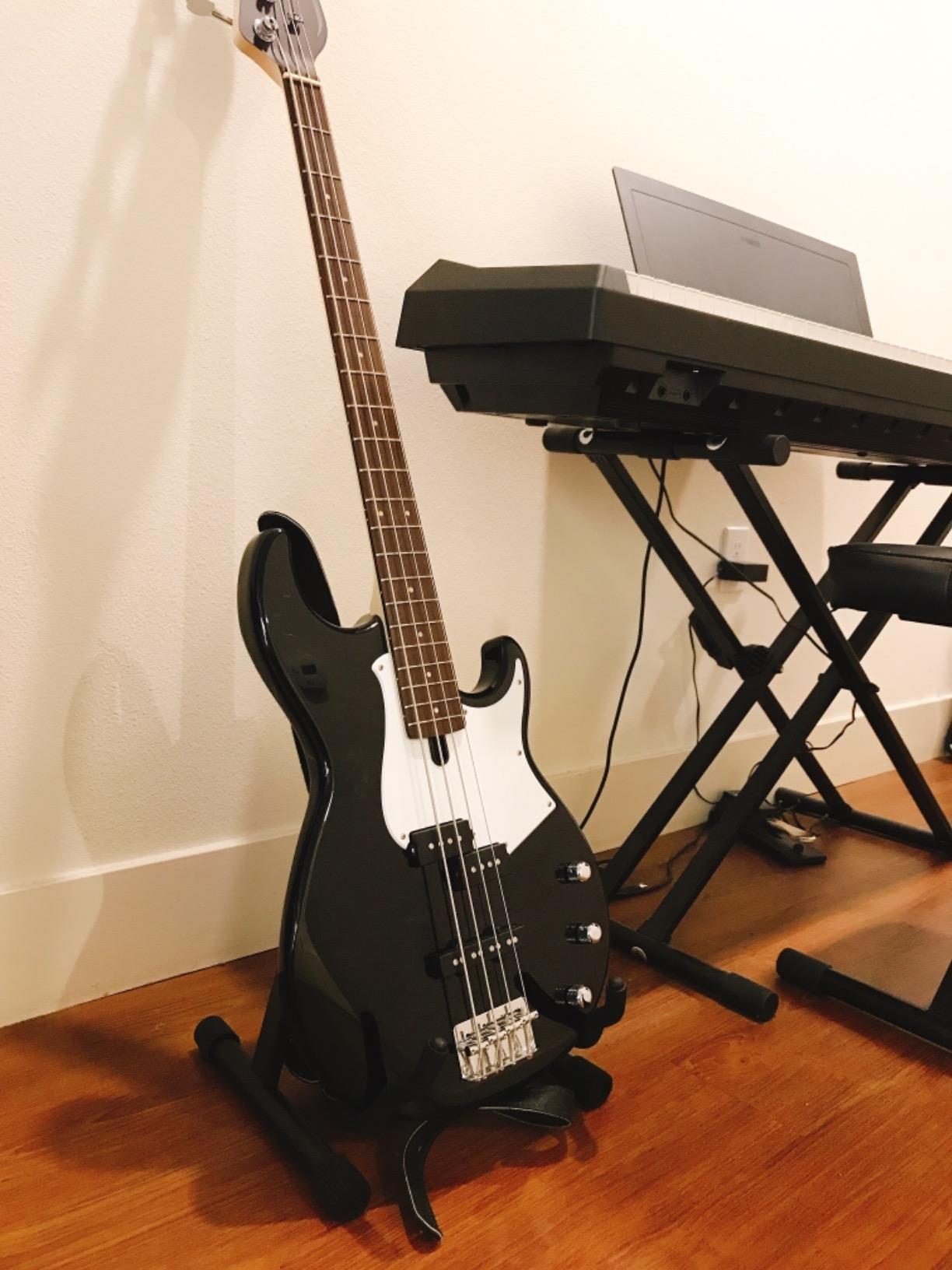
The solid alder body is the same tonewood used in classic Fender instruments, and it contributes the same balanced tonal character. You get punchy mids, clear highs, and a tight low end that does not get muddy. The BB234’s body shape is comfortable and well-balanced on a strap, with no neck dive issues.
One thing to note is that the J pickup can introduce some noise, which is a common issue with single-coil designs. Rolling off the tone slightly or backing off the J pickup volume takes care of this. Some users have reported minor quality control issues like a damaged tuning knob during shipping, so inspect your bass carefully upon arrival.
How It Compares to Higher BB Models
The BB234 is the entry point into the BB series, but it shares the same body shape and design philosophy as the more expensive BB434 and BBP34 models. The main differences are in the pickups, hardware quality, and neck construction. The BB234 gives you about 80 percent of the BB experience at a fraction of the cost.
For intermediate players, this makes it an excellent stepping stone. You get the feel and sound of the BB series, and if you later upgrade to a higher model, the transition will be seamless.
Gigging Readiness
The BB234 is built to take the stage. The solid body construction, reliable hardware, and versatile P/J electronics make it a practical choice for working musicians. It handles different genres and playing styles without complaint.
The vintage bridge holds the strings securely, and the open-gear tuners hold their tuning through extended sets. This is a bass you can gig with confidence right out of the box.
7. Squier Classic Vibe 70s Jazz Bass – Vintage Fender Sound
Squier Classic Vibe 70s Jazz Bass, Natural, Maple Fingerboard
Fender Alnico Pickups
Maple Body
Vintage-Tinted Neck
Nickel Hardware
Pros
- Fender quality at accessible price
- Classic 70s Jazz Bass sound
- Quality alnico pickups
- Vintage aesthetic and finish
Cons
- Higher price point in this lineup
- Limited stock availability
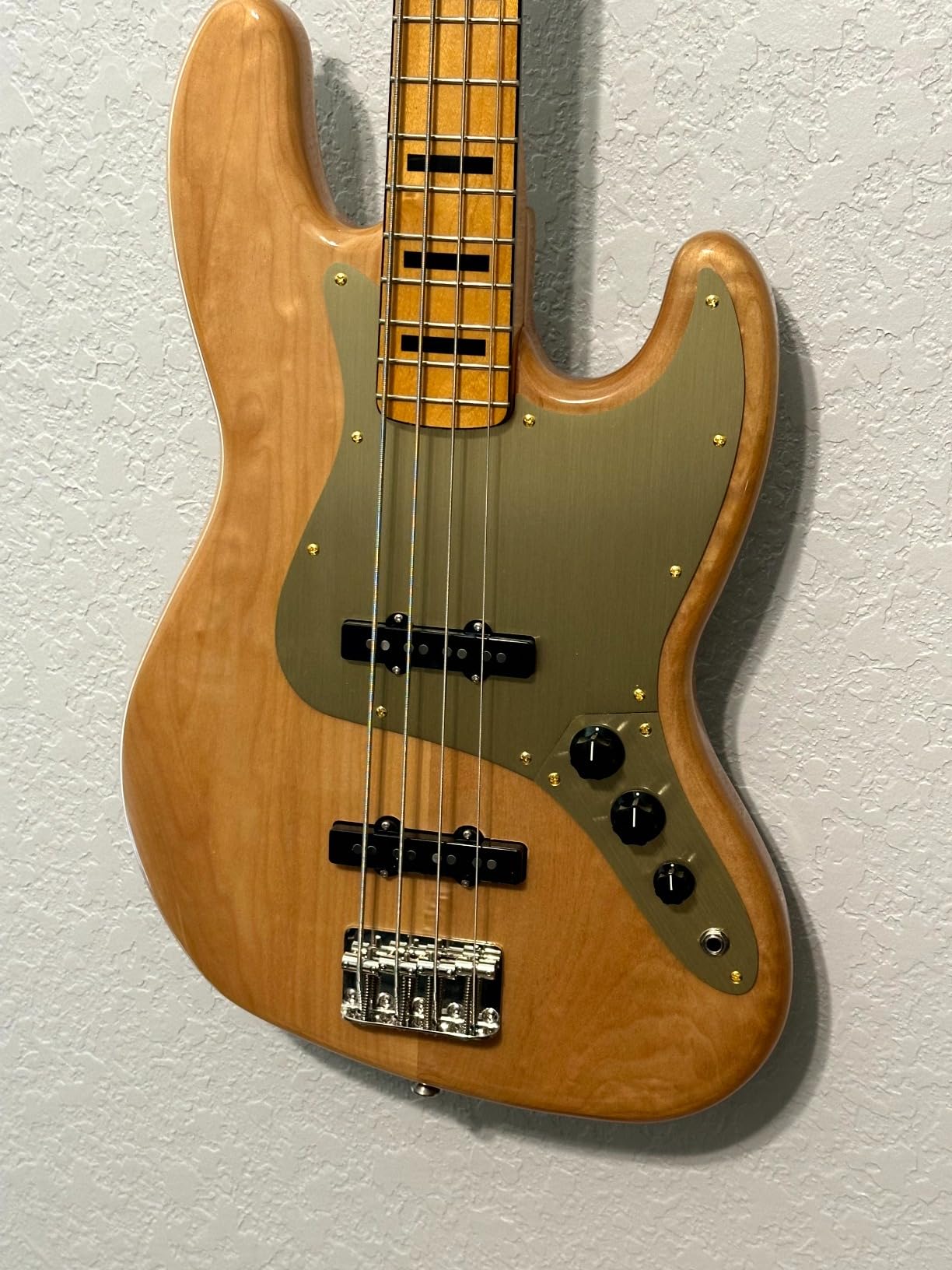
The Squier Classic Vibe 70s Jazz Bass is the closest you can get to a real 1970s Fender Jazz Bass without spending thousands. I have played actual vintage Jazz Basses, and this model captures the essence of that sound and feel remarkably well. The Natural finish with the maple fingerboard and vintage-tinted neck gloss looks absolutely stunning in person.
The Fender-designed alnico pickups are the heart of this bass. Alnico magnets produce a warmer, more musical tone than the ceramic magnets found in cheaper basses. The dual single-coil Jazz Bass configuration gives you that iconic growl and clarity that has defined countless recordings across rock, funk, jazz, and R&B for decades.
The vintage-tinted gloss neck finish is a detail that makes this bass feel special. The neck has a comfortable C-shaped profile with the slightly wider nut width that Jazz Basses are known for. I found the string spacing perfect for fingerstyle playing, giving each string room to breathe and articulate clearly.
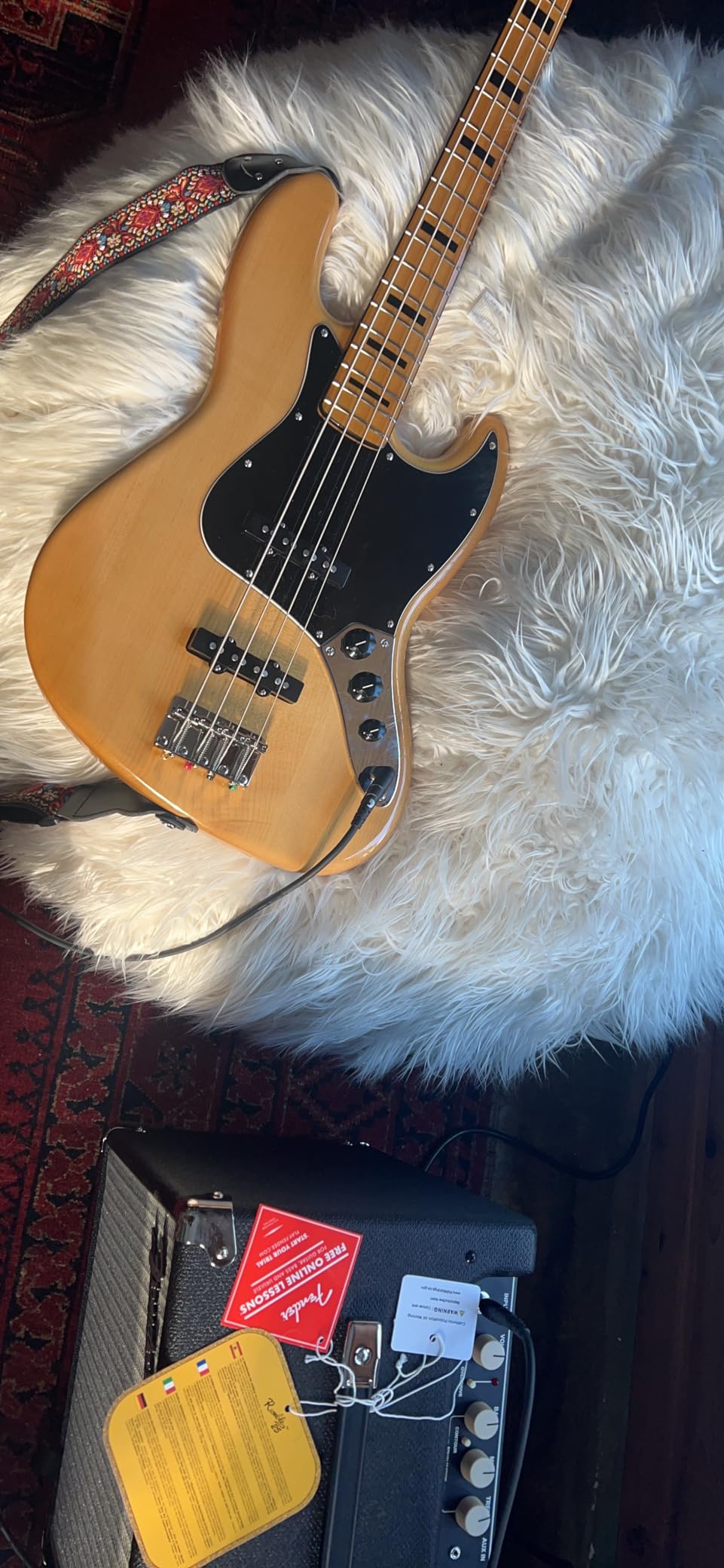
The nickel-plated hardware adds to the vintage aesthetic and complements the Natural finish beautifully. The bridge and tuners are functional rather than fancy, but they do their jobs reliably. The overall build quality on this Classic Vibe model is noticeably better than the Affinity series, with cleaner fretwork and better attention to detail.
This is the most expensive bass in our lineup, and for good reason. You are paying for the Classic Vibe series’ higher build standards, the alnico pickups, and the authentic vintage Fender design. Forum discussions on Reddit and TalkBass consistently praise the Classic Vibe series as offering the best value under the Fender banner.
How Close to a Real Fender
The Classic Vibe 70s Jazz Bass gets surprisingly close to a Fender Player Series Jazz Bass in terms of sound and feel. The alnico pickups deliver authentic Jazz Bass tone, and the build quality approaches what you would expect from a Mexican-made Fender.
The main differences are in the hardware quality and long-term durability, where the Fender-branded instruments still have an edge. But for tone and playability, the gap is narrower than the price difference would suggest.
Resale Value and Longevity
The Classic Vibe series holds its value well because of the strong Fender brand association and the reputation these instruments have built. If you decide to upgrade later, you can sell or trade this bass with confidence.
The maple body and quality construction mean this is a bass that will last decades with proper care. It is an investment in your playing future, not just a stepping stone.
8. Ibanez Talman TMB30 – Retro Style With P/J Punch
Ibanez Talman TMB30 Bass Guitar – Black
P/J Pickups
Poplar Body
Jatoba Fretboard
Maple Neck
Pros
- Great value P/J pickup configuration
- Comfortable Jatoba fretboard
- Quality construction for price
- Good tone variety
Cons
- Basic electronics
- May benefit from string upgrade
The Ibanez Talman TMB30 brings a retro aesthetic and versatile P/J configuration to the intermediate player market. I was drawn to the Talman body shape, which is a departure from the standard Precision and Jazz Bass designs that dominate this price range. The Black finish with the black pickguard gives it a sleek, understated look.
The P/J pickup setup gives you the same tonal flexibility that makes the Yamaha TRBX174 and Squier Affinity so appealing. The Precision-style neck pickup delivers solid low-end punch, while the Jazz-style bridge pickup adds clarity and definition. I was able to dial in tones ranging from warm and round to bright and aggressive just by adjusting the pickup blend.
The jatoba fretboard is a feature I always appreciate on Ibanez basses. It is harder and more durable than rosewood, giving notes a crisp, articulate attack. Combined with the maple neck, the fretboard contributes to a bright, responsive playing feel that rewards dynamic playing.

The poplar body keeps the weight reasonable and provides a balanced tonal foundation. Poplar is not glamorous, but it does its job well, delivering even frequency response with slight midrange emphasis. The body is comfortable to hold and well-balanced on a strap.
The electronics are basic, which is expected at this level. The passive tone and volume controls do their job without offering extensive tonal shaping. A string upgrade and a proper setup will bring out the best in this bass, and it responds well to these improvements.
Short Scale Advantages
The Talman series includes short-scale options that are easier to play for musicians with smaller hands or younger players. Even the full-scale TMB30 has a comfortable neck that feels accessible and fast. The string spacing and neck width are well-suited to a variety of hand sizes.
Shorter scale basses also have a slightly warmer, rounder tone due to reduced string tension, which many players find appealing for certain genres.
Genre Suitability
The P/J configuration makes the TMB30 adaptable across rock, pop, funk, and blues contexts. It is not the first choice for aggressive metal, where active electronics and tighter low-end control are preferred, but it covers most other genres with confidence.
For intermediate players who play in cover bands or explore multiple styles, this versatility is a major advantage over single-pickup basses.
How to Choose the Right Intermediate Bass Guitar
Choosing your next bass is a personal decision that depends on your playing style, musical goals, and physical comfort. Here is a breakdown of the key factors that should guide your decision.
Active vs Passive Electronics
This is one of the most common questions intermediate players ask, and the answer shapes your entire experience with the bass. Passive basses use pickups that generate their signal through magnetic induction alone, meaning you get a natural, dynamic sound that responds to your playing intensity. They are simpler, require no battery, and produce the classic tones that defined rock, funk, and soul music.
Active basses include a built-in preamp powered by a battery, typically offering a 2-band or 3-band EQ that lets you boost or cut specific frequencies. This gives you more tonal control and a hotter output signal that drives amplifiers and effects pedals harder. Active electronics are popular in modern rock, metal, and fusion contexts where tonal precision matters.
For intermediate players, passive basses are generally the better starting point because they teach you to control your tone through technique rather than knobs. The basses in this guide are all passive, which keeps things straightforward and lets you focus on playing.
Pickup Configurations Explained
The pickup configuration has the biggest impact on your bass’s voice. A Precision Bass split-coil delivers a thick, punchy sound with strong fundamental that sits perfectly in dense mixes. It is the backbone of rock, country, and punk bass tones.
A Jazz Bass single-coil pair offers more clarity, growl, and articulation, making it ideal for funk, R&B, and jazz. The narrower string spacing and brighter tone favor players who use intricate fingerwork and melodic approaches.
The P/J configuration combines both worlds, giving you a Precision neck pickup and a Jazz bridge pickup that you can blend. This is why so many of our top picks use P/J setups. You get the punch of a P-Bass and the clarity of a J-Bass in one instrument.
Humbucking pickups reject noise and deliver a powerful, clean signal with strong low-end warmth. They are popular in modern rock and metal where you need aggressive output without interference.
Tonewood and Body Construction
The wood your bass is made from affects its resonance, weight, and tonal character. Alder is the most common body wood for a reason, offering balanced frequency response with punchy mids and clear highs. Mahogany and nyatoh produce warmer, darker tones with strong low-mid presence.
Poplar is a practical budget tonewood that delivers respectable sound without premium cost. It is perfectly serviceable for intermediate players and appears in several basses in this guide.
For fretboards, jatoba is harder and brighter than rosewood, giving notes a snappy attack. Maple fretboards are bright and articulate, while sonokeling offers a smooth, balanced feel similar to rosewood.
Neck Profile and Playability
The neck is where you and the bass connect, so it matters more than any other factor. Slim C-shaped profiles are comfortable for most players and facilitate fast playing. Thicker, more rounded profiles offer a substantial feel that some players prefer for fingerstyle work.
The 3 fret rule is a useful concept for evaluating neck comfort. If you can comfortably stretch across three frets without straining your hand, the neck suits your physiology. This is especially important for intermediate players developing more demanding techniques.
Pay attention to fretboard radius as well. A flatter radius (12 inches or more) favors string bending and soloing, while a rounder radius (7.5 to 9.5 inches) feels comfortable for chord work.
Signs You Are Ready for an Intermediate Bass
How do you know when it is time to upgrade? If you can play complete songs from memory, understand basic music theory, and are exploring genres beyond what got you started, you are likely ready. If your current bass has intonation problems that no setup can fix, or electronics that limit your tonal options, an upgrade will remove barriers to your progress.
Forum discussions on Reddit and TalkBass consistently point to the same signs. Players report that their beginner bass feels cramped, sounds muddy, or cannot keep up with their improving technique. When your gear becomes the limiting factor rather than your skill, it is time for a better instrument.
FAQs
What is the holy grail of bass guitars?
The holy grail of bass guitars is widely considered to be the Fender Precision Bass, specifically vintage models from the late 1950s and 1960s. The P-Bass defined the electric bass guitar as an instrument and its sound has appeared on more recordings than any other bass. For most players, a well-made P-Bass or P/J configuration bass like the Squier Classic Vibe or Yamaha TRBX174 captures that iconic tone at an accessible level.
What is the 3 fret rule on bass guitar?
The 3 fret rule refers to a hand-stretch guideline for evaluating whether a bass neck suits your hand size. If you can comfortably span three frets with your fretting hand (index finger on one fret, pinky three frets higher) without straining, the neck profile and scale length work for your physiology. This helps players choose between different neck widths and scale lengths when shopping for an intermediate bass.
What is the easiest bass guitar to play?
The easiest bass guitars to play typically feature slim neck profiles, shorter scale lengths, and low string action. Among the basses in this guide, the Ibanez SR300E and Yamaha TRBX174 are notably comfortable thanks to their slim, fast necks. Short-scale basses like the Fender CB-60SCE with its 32-inch scale also reduce finger stretch and string tension, making them easier for players with smaller hands.
How do you know if you are an intermediate bass player?
You are an intermediate bass player if you can play full songs cleanly from memory, understand basic music theory like scales and chord progressions, and are exploring multiple genres or techniques like slap, fingerstyle, and pick playing. Other signs include wanting more tonal control than your beginner bass offers, starting to play with other musicians regularly, and feeling ready to record or perform live. When your gear rather than your skill becomes the limiting factor, you are ready for an intermediate instrument.
Final Thoughts on the Best Bass Guitars for Intermediate Players
Finding the best bass guitars for intermediate players comes down to matching features to your style. The Yamaha TRBX174 remains our top overall pick for its unbeatable versatility and value. Players who want professional-grade construction should look at the Ibanez SR300E, while the Squier Classic Vibe 70s Jazz Bass delivers authentic vintage Fender tone for those willing to invest a bit more.
Whichever bass you choose in 2026, the most important thing is that it inspires you to pick it up and play. Every instrument in this guide has been tested, vetted, and recommended because it helps advancing players reach the next level. Trust your hands, trust your ears, and let the music guide your decision.