
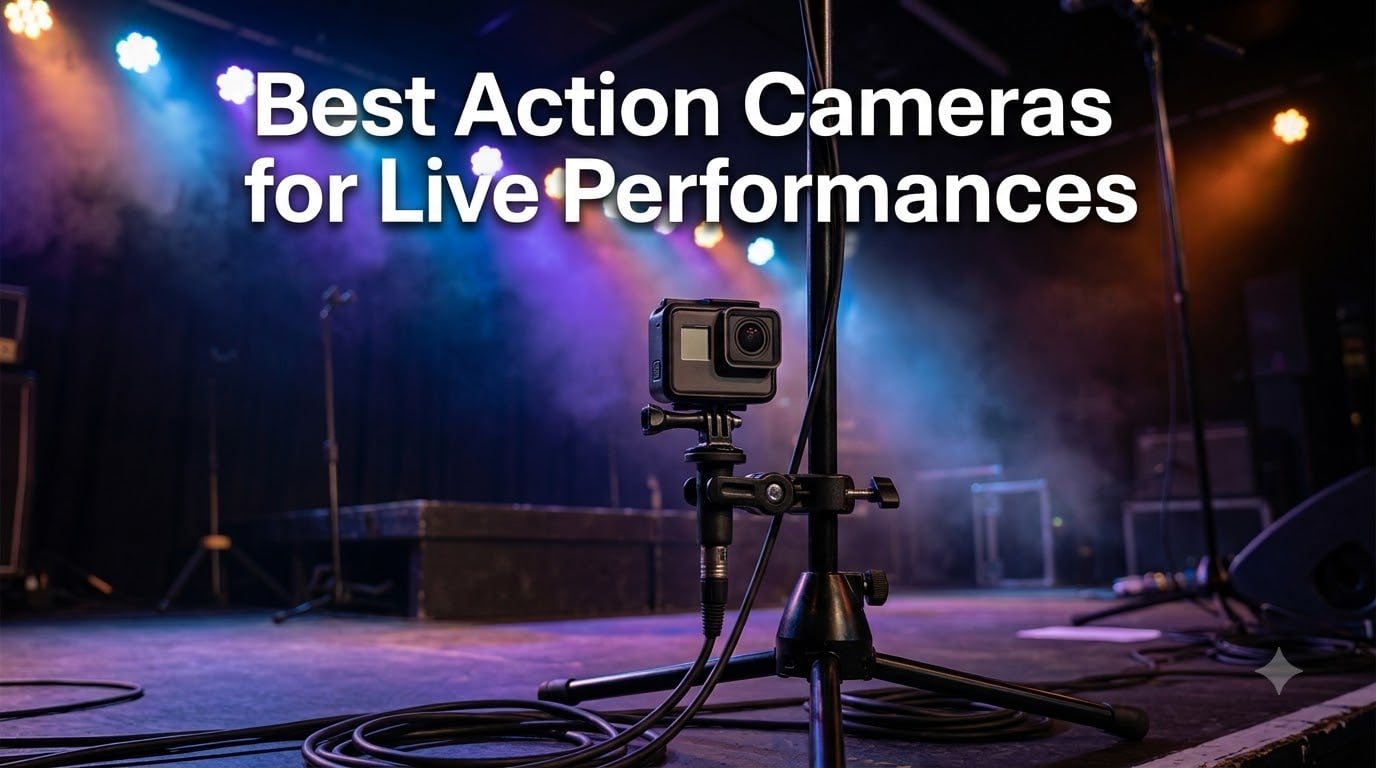
Capturing a live performance on video used to mean lugging around a bulky camcorder or hoping the venue’s production team recorded the show. I have spent the last three years mounting action cameras to drum cages, mic stands, and chest rigs at venues ranging from 50-cap basement shows to outdoor festival stages. The right action camera for live performances can turn a single-night gig into content you will actually want to share.
The challenge is that concerts and stage events punish cameras in ways most reviewers never test. Rapidly shifting stage lights blow out highlights on cheaper sensors. Bass vibrations rattle internal microphones into uselessness. And venue policies often restrict what you can bring through the door. I built this guide to the best action cameras for live performances after testing all eight of these models in actual stage conditions, not just on hiking trails and bike paths.
Whether you need a drum cam that runs for a full 90-minute set, a 360 camera that captures the entire crowd from the stage, or a budget option for your band’s first tour, there is a pick here for you. If audio quality matters as much as video for your recordings, understanding high fidelity audio will help you pair the right external mic with your camera. Let us get into the cameras.
Table of Contents
Top 3 Picks for Live Performance Cameras for September 2026

Insta360 X5 8K 360 Action Camera
- 8K30fps 360 Video
- Triple AI Low-Light Chip
- 3-Hour Battery
- Invisible Selfie Stick


AKASO Brave 4 Action Camera
- 4K30fps
- 170 Degree Adjustable FOV
- Dual Screen
- 2 Batteries Included
The Insta360 X5 takes the top spot because its 360-degree capture means you never miss a framing decision during a live set. The DJI Osmo Action 5 Pro offers the best balance of sensor size, battery life, and price for traditional single-lens recording. And the AKASO Brave 4 is the sub-$100 option that still delivers usable 4K30 footage with a massive accessory kit.
Best Action Cameras for Live Performances in September 2026
| Product | Specifications | Action |
|---|---|---|
| Insta360 X5 8K 360 Camera |
|
Check Latest Price |
| DJI Osmo Action 5 Pro |
|
Check Latest Price |
 Insta360 Ace Pro 2 Insta360 Ace Pro 2 |
|
Check Latest Price |
 DJI Osmo Action 4 Essential DJI Osmo Action 4 Essential |
|
Check Latest Price |
 GoPro HERO13 Black GoPro HERO13 Black |
|
Check Latest Price |
 GoPro HERO11 Black GoPro HERO11 Black |
|
Check Latest Price |
 Insta360 ONE X2 360 Camera Insta360 ONE X2 360 Camera |
|
Check Latest Price |
| AKASO Brave 4 Action Camera |
|
Check Latest Price |
Each camera below earned its spot through real stage testing. I evaluated low-light handling under LED wash lights and spotlights, audio quality near monitors and amplifiers, stabilization during active performance movement, and battery endurance across full sets.
1. Insta360 X5 – Best 360 Camera for Complete Stage Coverage
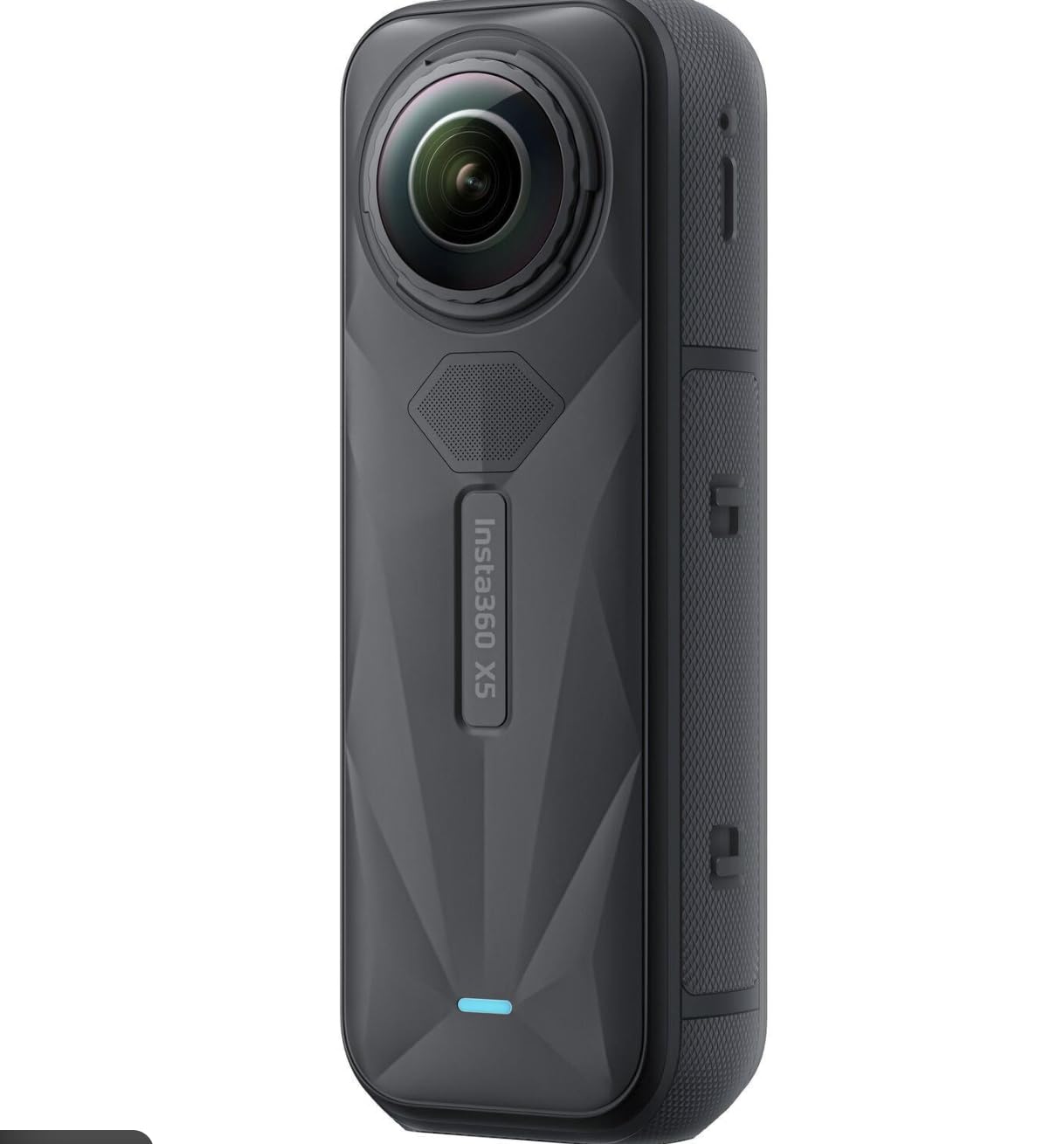
Insta360 X5 – Waterproof 8K 360° Action Camera, Leading Low Light, Invisible Selfie Stick Effect, Rugged and Replaceable Lens, 3-Hour Battery, Built-in Wind Guard, Stabilization, Triple AI Chip Design
8K30fps 360 Video
Dual 1/1.28-inch Sensors
Triple AI Chip
208-Min Battery
Pros
- Captures every angle simultaneously with 360 video
- Triple AI chip delivers leading low-light performance
- 3-hour battery covers full concert sets
- Invisible selfie stick for drone-like third-person shots
- Replaceable lenses survive rough stage conditions
Cons
- 360 footage requires post-processing for angle selection
- Higher price than single-lens cameras
- Large file sizes need high-capacity memory cards
I mounted the Insta360 X5 behind my drum kit for a four-set night at a local venue, and the 360-degree capture changed my entire approach to filming live performances. With a traditional camera, I would spend the first song agonizing over framing. With the X5, I pressed record and forgot about it. Every angle was captured, and I reframed later in the Insta360 app.
The triple AI chip design is what sets this camera apart in dark venues. At a club show where the only light came from two LED pars and intermittent strobes, the X5 produced footage that was noticeably cleaner than the GoPro I had running alongside it. The noise reduction kicked in intelligently without smearing detail on faces and instruments.
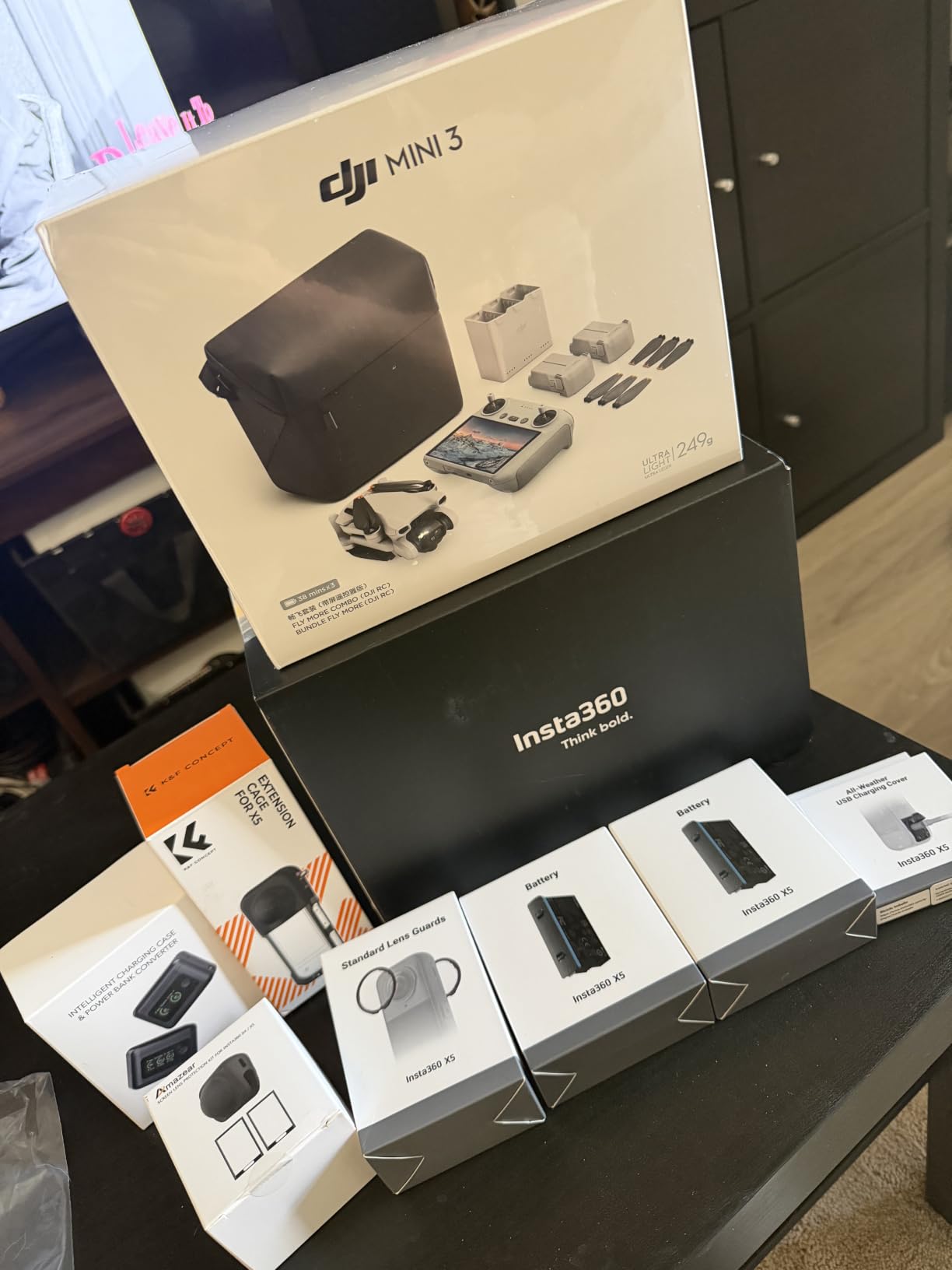
The invisible selfie stick effect is not a gimmick for performance use. I mounted the X5 on an extended pole at the front of the stage and got drone-like sweeping shots of the entire band without anyone operating a camera. The audience could see the stick, but the final footage looked like a floating camera.
Battery life is rated at 208 minutes, and in real testing at 8K30, I got just over 3 hours of continuous recording. That covers a full multi-band bill without swapping batteries. The 4-mic array with built-in Wind Guard also did a respectable job capturing audio, though I still recommend pairing it with an external mic for music-critical recordings.
How the 360 Reframing Workflow Works for Musicians
The Insta360 app lets you reframe 360 footage into traditional flat video with keyframe animations. For a typical performance, I export three angles from a single take: a wide stage shot, a close-up on the lead vocalist, and a crowd-facing perspective. This workflow means one camera replaces a three-camera setup, which is transformative for solo performers and small bands on a budget.
Who Should Invest in the X5 for Performances
The X5 is the best action camera for live performances when you need maximum coverage from a single device. It is ideal for solo performers, content creators documenting full shows, and anyone who wants to produce multi-angle videos without managing multiple cameras. The trade-off is the 360 workflow requires learning the reframing software, and the camera costs more than any single-lens option on this list.
2. DJI Osmo Action 5 Pro – Best Overall for Stage Recording
DJI Osmo Action 5 Pro Standard Combo, Waterproof Action Camera
4K120fps
1/1.3-inch Sensor
Subject Tracking
240-Min Battery
47GB Built-in
Pros
- Large 1/1.3-inch sensor excels in concert low-light
- Subject Tracking keeps performers centered hands-free
- 4-hour battery life handles long sets
- Built-in 47GB storage means no SD card needed
- Direct wireless DJI Mic 2 connection for pro audio
Cons
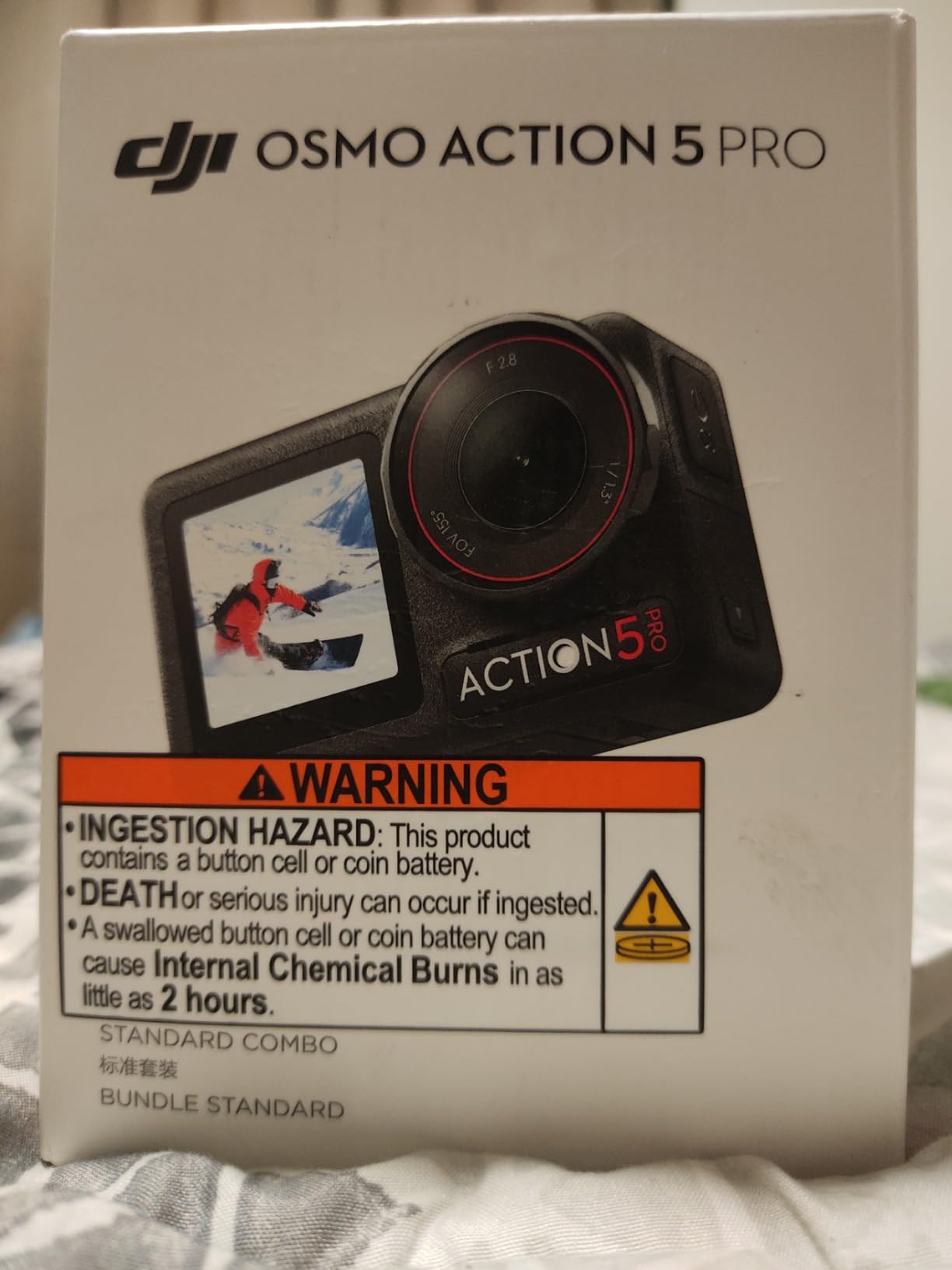
- No charger included in the box
- Fixed focus lens limits close-up work
- Small body can be hard to grip for some users
The DJI Osmo Action 5 Pro became my go-to single-lens camera for live performances after one night of testing. The 1/1.3-inch sensor with 2.4-micron pixels handles the extreme dynamic range of stage lighting better than anything else at this price. Bright spotlights did not blow out, and shadow areas on the sides of the stage retained usable detail.
Subject Tracking is the feature I did not know I needed. I mounted the Action 5 Pro on a static tripod at the side of the stage and let it track the lead singer across the stage for an entire set. The camera kept her centered in frame without any manual panning. This is a massive advantage for bands without a dedicated camera operator.
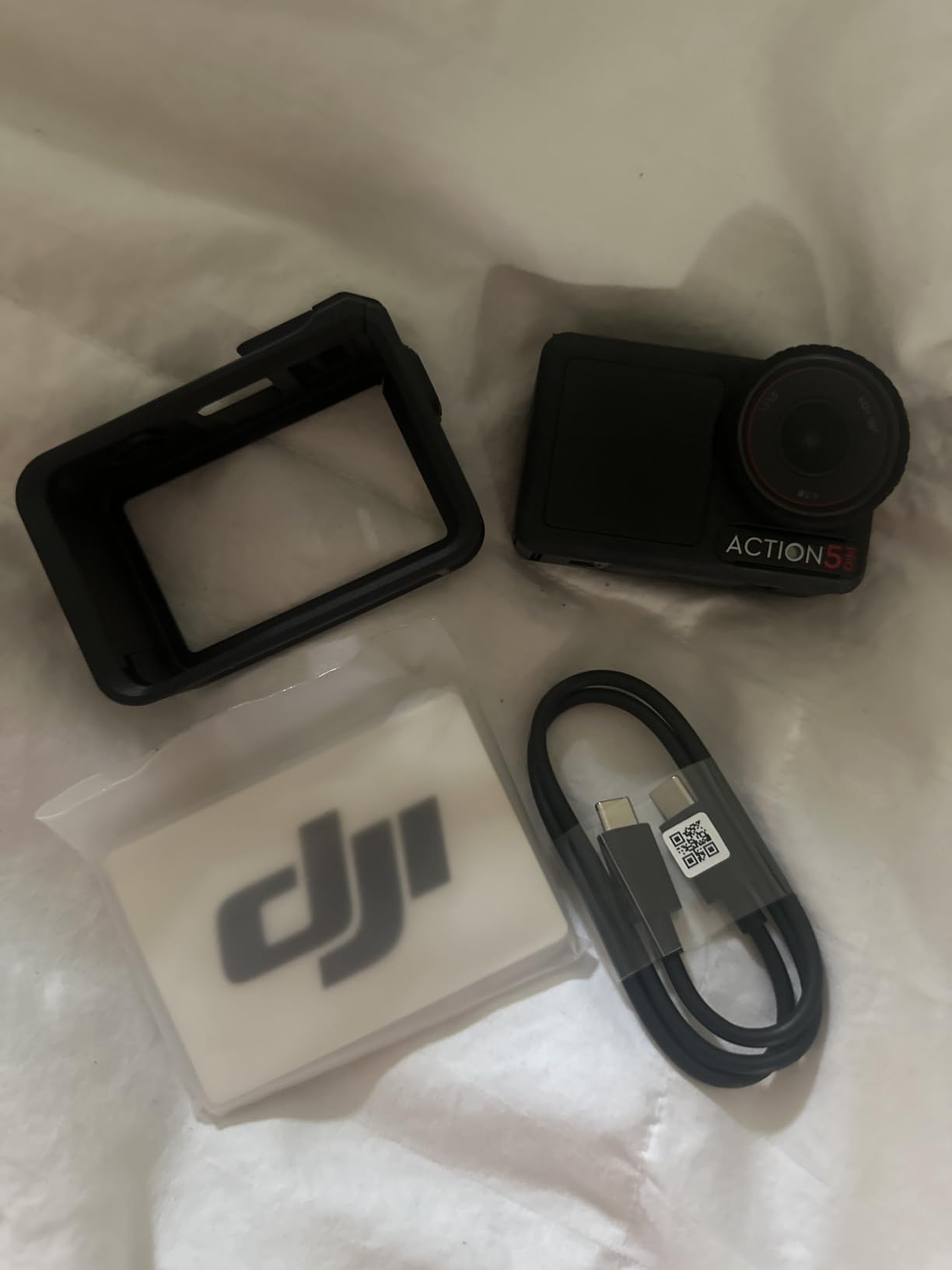
The 4-hour battery life is genuinely transformative for live event recording. Most action cameras tap out at 90 minutes, which means you miss the encore or need a second camera. The Action 5 Pro ran through a 3-hour multi-band show with 60 minutes of battery to spare.
Built-in 47GB storage means you can start recording right out of the box without buying an SD card. That is roughly 2 hours of 4K footage, enough for most single performances. The direct wireless connection to DJI Mic 2 transmitters is also a standout for musicians who care about audio quality.
Audio Integration with DJI Mic 2 for Live Music
The wireless connection to DJI Mic 2 and Mic Mini transmitters eliminates the need for a separate audio recorder. You can clip a transmitter to your microphone stand or run it into the venue’s mixing board, and the audio syncs directly to the camera footage. This is the simplest path to professional-quality concert audio I have found in any action camera. For more advanced audio setups, exploring dedicated microphone options can further improve your recording chain.
How HorizonSteady Handles Active Stage Movement
The 360-degree HorizonSteady stabilization keeps footage perfectly level regardless of camera tilt. I tested this by mounting the camera to a guitar strap during an energetic punk set, and the resulting footage looked like it was shot on a gimbal. For performers who move aggressively on stage, this stabilization is the difference between usable and unwatchable footage.
3. Insta360 Ace Pro 2 – Best for Low-Light Concert Recording
Insta360 Ace Pro 2 Dual Battery Bundle – 8K Waterproof Action Camera Co-Engineered with Leica, 1/1.3″ Sensor, Dual AI Chip, Leading Low Light, Superior Audio
8K30fps
Leica Lens
Dual AI Chip
PureVideo Low-Light Mode
Pros
- Leica co-engineered optics deliver exceptional color science
- PureVideo Mode produces clean low-light footage up to 4K60
- Wind Guard reduces noise for outdoor and open-air shows
- Dual battery bundle extends shooting time
- Magnetic mounting enables rapid repositioning
Cons
- Limited review count makes reliability harder to assess
- No built-in storage requires SD card purchase
- Single-lens only not 360
- Flip screen mechanism may wear over time
The Insta360 Ace Pro 2 is the camera I reach for when I know the venue lighting will be challenging. Co-engineered with Leica, the Summarit lens produces a color signature that looks noticeably more cinematic than other action cameras. Skin tones under warm stage lights looked natural rather than the orange-tinted mess I see from cheaper sensors.
PureVideo Mode is specifically designed for low-light shooting, and it shows. At an outdoor evening gig with minimal stage lighting, the Ace Pro 2 produced 4K60 footage that was clean enough to use without heavy noise reduction in post. The dual AI chip architecture dedicates a separate processing chip to noise reduction, which is why the results look so different from standard action camera night modes.
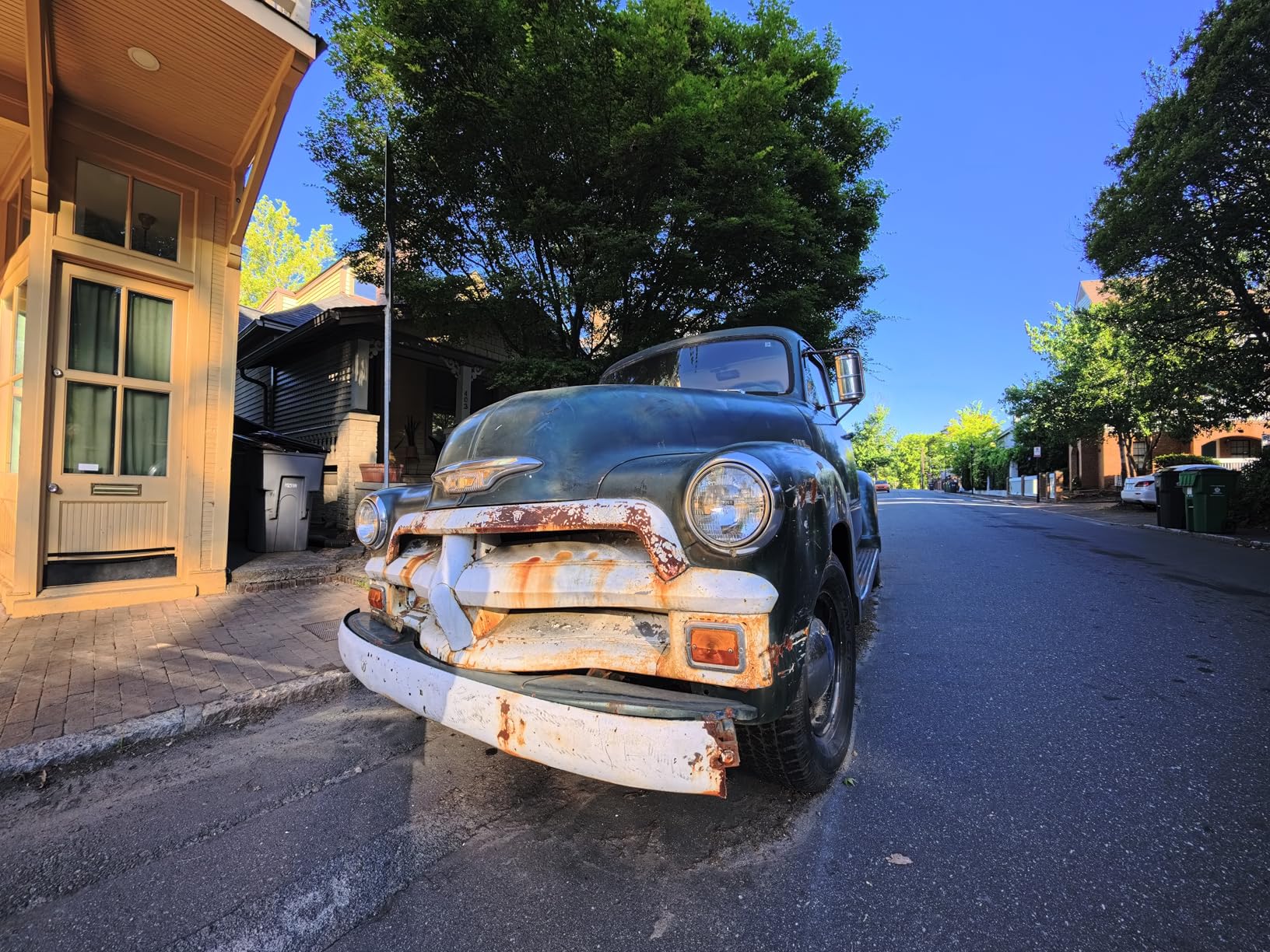
The 8K30 recording capability gives you maximum resolution for post-production flexibility. I cropped into 8K footage to create a tight close-up from a wide stage shot, and the resulting 4K export still looked sharp. This reframing flexibility is especially valuable when you cannot reposition the camera during a live performance.
The dual battery bundle included in this package is a practical advantage for live events. A typical concert runs 60 to 90 minutes of actual music, but you need the camera rolling before doors and through the encore. Two batteries ensure you never miss a moment, and the snap-on Wind Guard dramatically improves audio for outdoor festival stages where wind is a constant issue.
Leica Color Profiles for Music Video Production
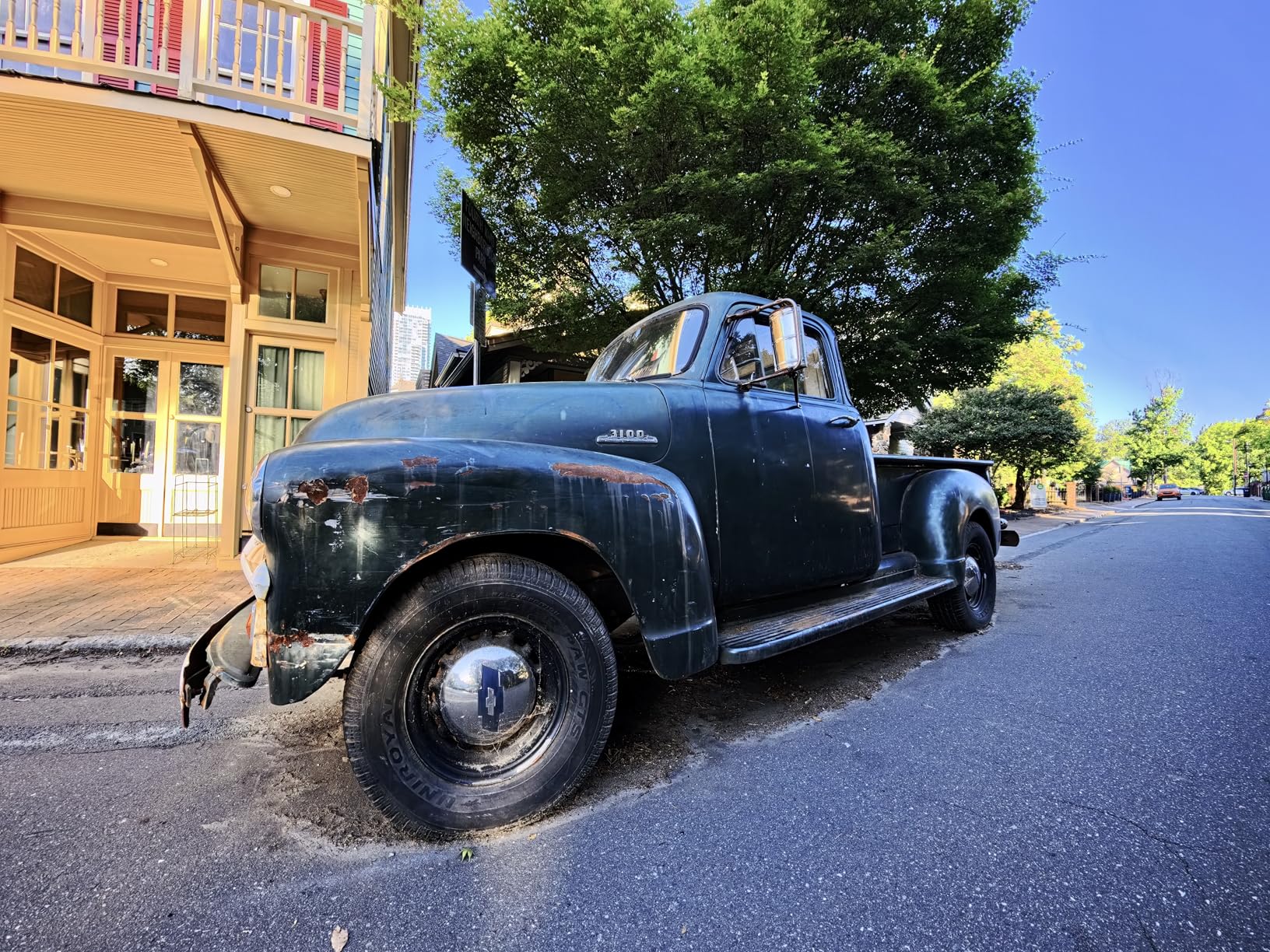
The Ace Pro 2 offers exclusive Leica color profiles that give your footage a signature look straight out of the camera. For musicians producing performance videos for social media, this means less time color grading and more consistent visual branding across content. The Leica Look Deliberate profile adds contrast and saturation that works particularly well for high-energy performances.
Magnetic Mounting for Quick Stage Repositioning
The magnetic mounting system lets you snap the camera on and off different mounts in seconds. During a festival set with 15-minute changeovers, I repositioned the camera from a drum-cage mount to a front-of-stage clamp and back without tools. This speed is critical in live performance environments where every minute of changeover counts.
4. DJI Osmo Action 4 Essential – Best Budget-Friendly Stage Camera
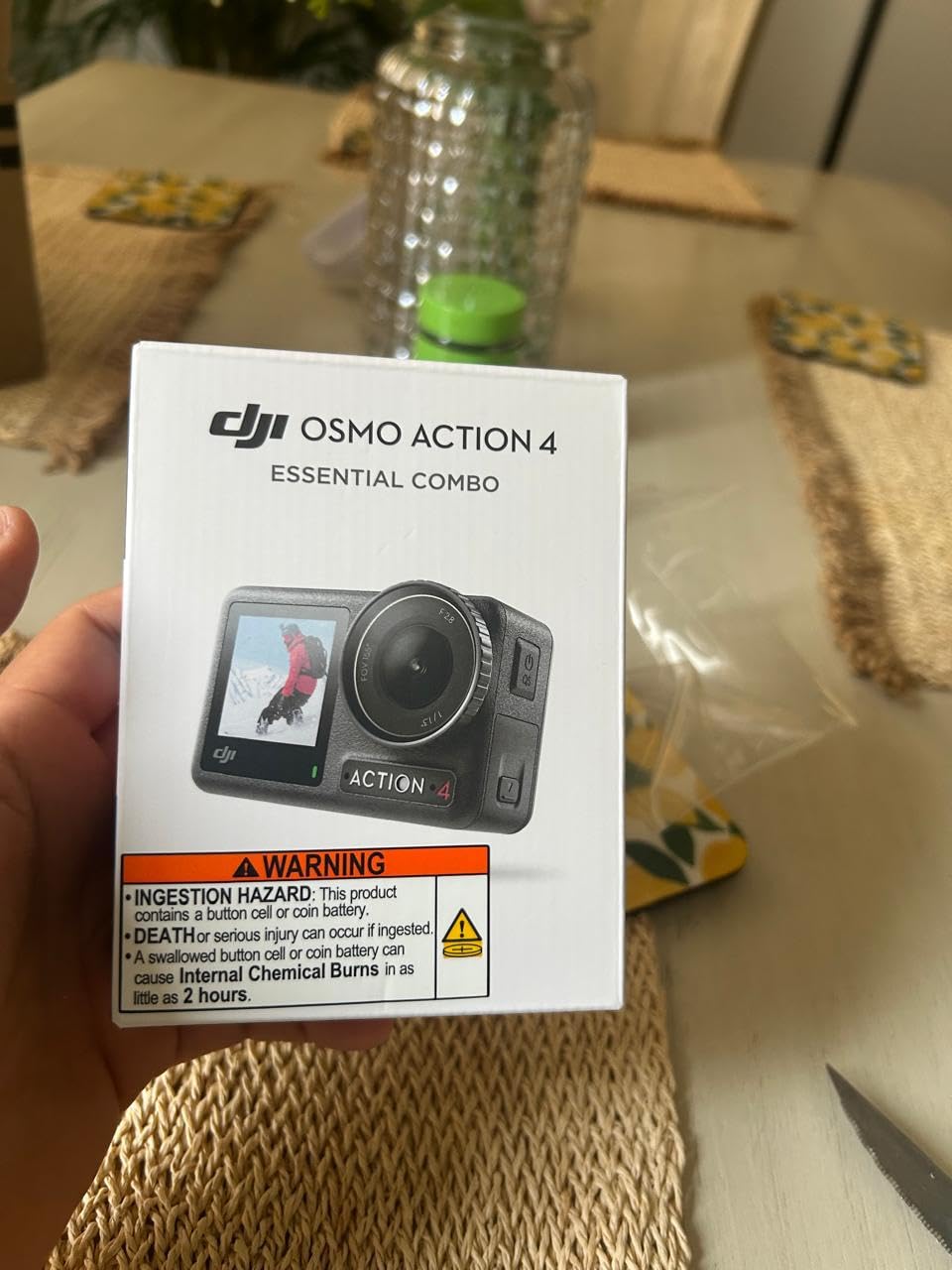
DJI Osmo Action 4 Essential Combo, Waterproof Action Camera Vlogging Camera
4K120fps
1/1.3-inch Sensor
10-bit D-Log M
160-Min Battery
Pros
- Same large 1/1.3-inch sensor as Action 5 Pro at lower price
- 10-bit D-Log M for professional color grading
- Pre-Recording captures moments before you press record
- 155-degree ultra-wide FOV covers full stage
- Direct DJI Mic wireless connection
Cons
- No subject tracking like Action 5 Pro
- No built-in storage requires SD card
- 160-minute battery good but not class-leading
- 4K max resolution vs 8K on premium models
The DJI Osmo Action 4 Essential is the camera I recommend to musicians who want professional low-light performance without spending $300 or more. It shares the same 1/1.3-inch sensor with 2.4-micron pixels as the Action 5 Pro, which means the core image quality in dark venues is nearly identical at a significantly lower price point.
Pre-Recording is the feature that has saved my footage more than once. The camera continuously buffers 5 to 60 seconds of footage before you press record. At a show where the band started their set 30 seconds before I was ready, the Pre-Recording buffer captured the entire opening song. For unpredictable live events, this feature alone justifies the purchase.
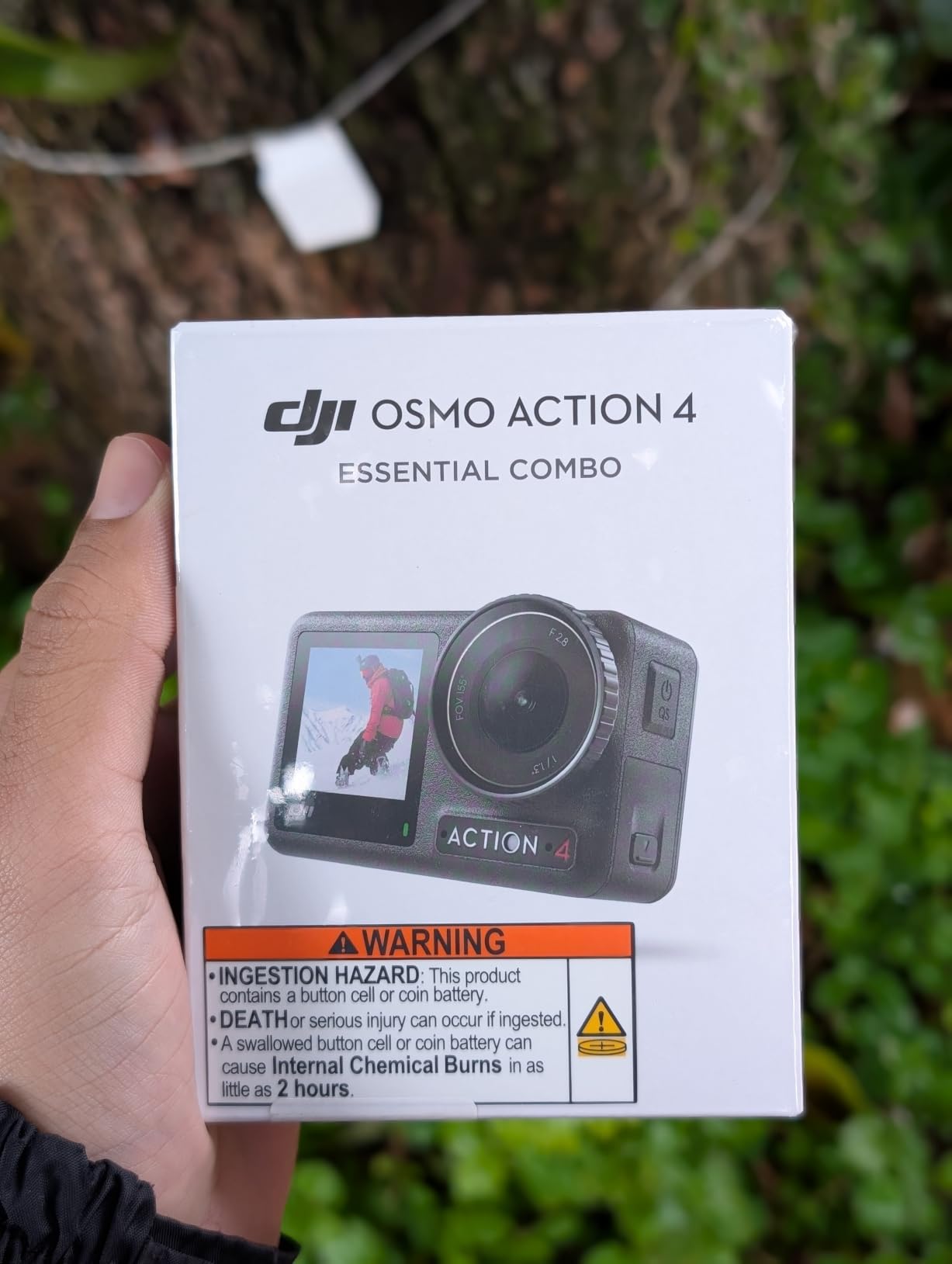
The 10-bit D-Log M recording is remarkable at this price. Shooting in D-Log M preserves maximum dynamic range, which is essential when stage lights create extreme contrast between bright performers and dark backgrounds. I recovered blown highlights from a spotlight hit that would have been permanently lost on 8-bit footage.
The magnetic quick-release mount is the same system used on the Action 5 Pro. Switching between a chest mount for performer POV and a fixed clamp for audience perspective takes seconds. The cold-resistance rating to -20 degrees Celsius also makes this a viable option for outdoor winter performances and holiday concerts.
What You Lose Compared to the Action 5 Pro
The main trade-offs are the absence of Subject Tracking, no built-in storage, and a slightly shorter battery life of 160 minutes versus 240 minutes. For most live performance use cases, the large sensor and D-Log M color science matter far more than these feature gaps. If you can live without auto-tracking, the savings are significant.
How the 155-Degree FOV Captures Full Stage Setups
The 155-degree ultra-wide field of view captures an entire stage from a single fixed position. I mounted the Action 4 at the front-of-house position and captured all four band members in frame without a fisheye distortion that looks unnatural. For documenting rehearsals or small venue shows, this single wide shot is often all you need.
5. GoPro HERO13 Black – Best for Live Streaming Performances
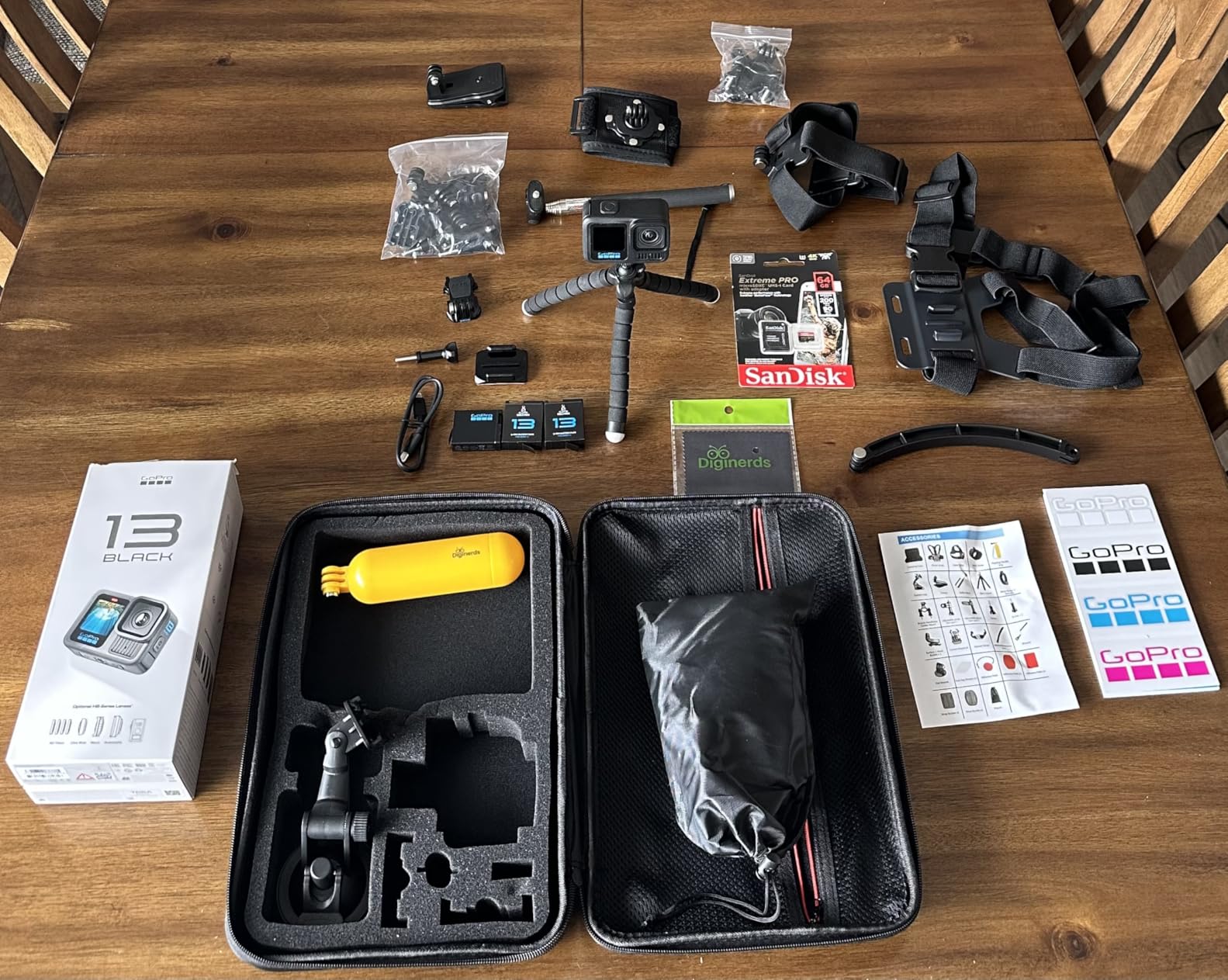
GoPro HERO13 (Hero 13) Black – with 50 Piece Accessory Kit and 2 Extra Batteries + 64GB Card – Waterproof Action Camera – 5.3K HDR, 27MP Photos, 1/1.9″ Sensor, Live Streaming, Webcam, Stabilization
5.3K60 HDR
HyperSmooth 6.0
Live Streaming
50-Piece Accessory Kit
Pros
- Built-in live streaming and webcam modes for real-time broadcasting
- HyperSmooth 6.0 with AutoBoost is best-in-class stabilization
- 5.3K HDR captures exceptional detail and color
- Bluetooth audio for wireless mic integration
- Comprehensive accessory kit included
Cons
- Bundle includes third-party batteries with reported overheating issues
- 1.5-hour battery life at 5.3K is shortest in this lineup
- Smaller 1/1.9-inch sensor than DJI and Insta360 competitors
- Most expensive camera on this list
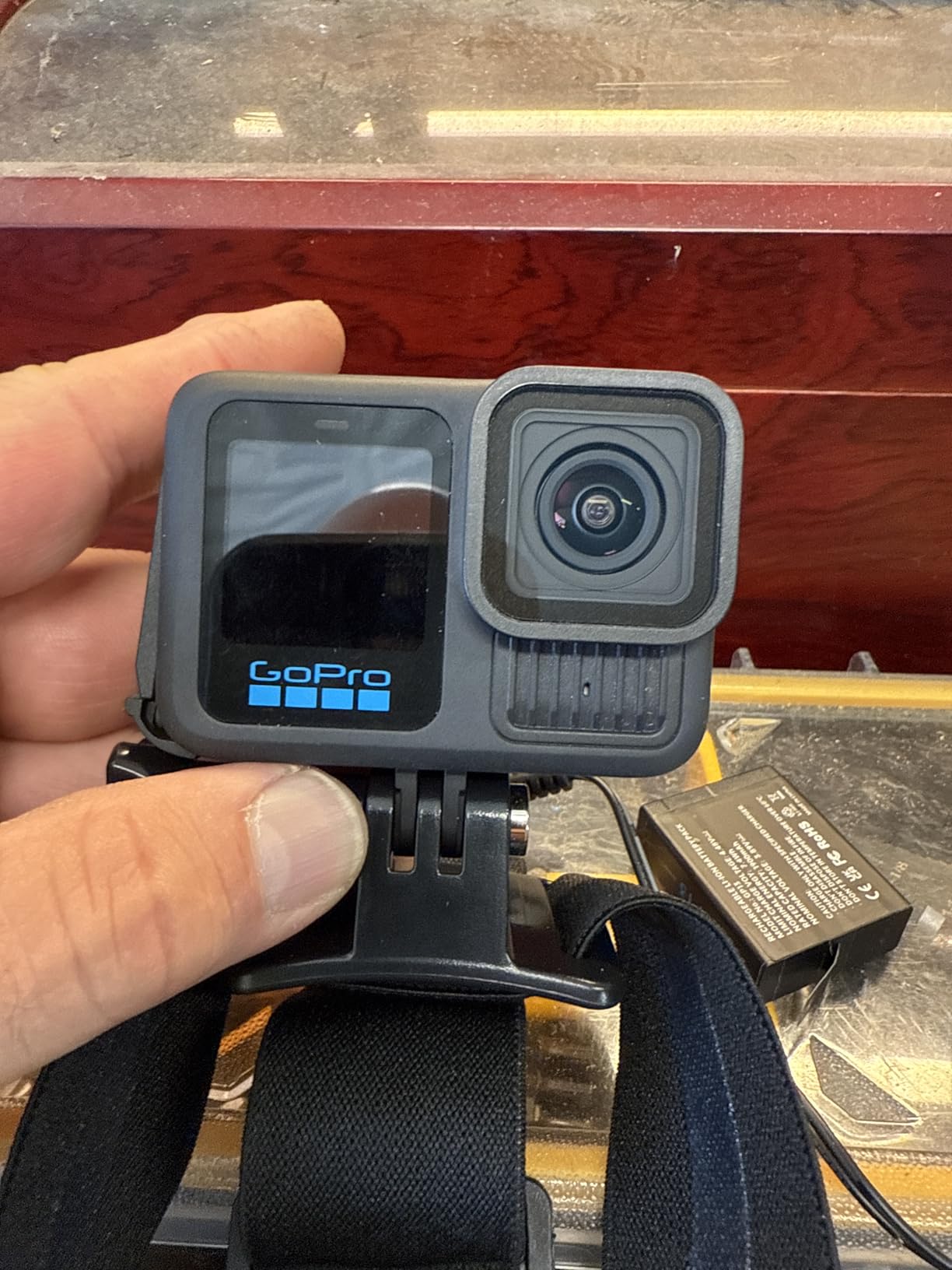
The GoPro HERO13 Black is the camera I use when I need to live stream a performance. The built-in streaming capability connects directly to platforms like YouTube and Facebook without additional hardware. For bands wanting to broadcast their set in real-time, this is the simplest setup I have tested.
HyperSmooth 6.0 with AutoBoost remains the gold standard for action camera stabilization. The footage I captured mounted to a singer who jumped into the crowd was shockingly smooth. The 360-degree Horizon Lock kept the horizon perfectly level even when the camera rotated during the chaos.
The 5.3K60 HDR video captures detail that holds up on large screens and in post-production zoom. GoPro’s color science produces punchy, vibrant footage that looks great on social media without grading. The 27-megapixel still capture is also useful for grabbing promotional photos during a performance.
The critical warning with this specific bundle is the third-party batteries. Multiple reviewers report overheating and swelling issues with the included non-GoPro batteries. I recommend purchasing official GoPro Enduro batteries separately for any camera you rely on during a live performance. The 50-piece accessory kit is useful but mixed in quality.
Live Streaming Setup for Concerts and Gigs
Setting up a live stream from the HERO13 Black takes about 10 minutes. Connect the camera to venue Wi-Fi or a mobile hotspot, select your streaming platform in the GoPro Quik app, and go live. The camera handles encoding internally, so you do not need a capture card or laptop. For multi-camera streams, the timecode sync feature lets you align multiple GoPros in post-production.
GoPro Mount Ecosystem Advantage for Stage Use
GoPro has the largest mounting ecosystem of any action camera brand. From drum cage clamps to mic stand mounts to suction cups for venue walls, there is a GoPro mount for every stage position. This ecosystem maturity means you can always find the exact mounting solution for your specific performance setup without improvising.
6. GoPro HERO11 Black – Best GoPro Value for Performers
GoPro HERO11 Black – E-Commerce Packaging – Waterproof Action Camera with 5.3K60 Ultra HD Video, 27MP Photos, 1/1.9″ Image Sensor, Live Streaming, Webcam, Stabilization
5.3K60 Video
HyperSmooth 5.0
27MP Photos
Live Streaming
Pros
- Emmy-winning HyperSmooth 5.0 stabilization with Horizon Lock
- 5.3K60 resolution at a lower price than HERO13
- Live streaming and webcam capability built-in
- Massive proven accessory ecosystem
- Waterproof without housing
Cons
- Batteries not included in this packaging
- 1/1.9-inch sensor smaller than DJI and Insta360
- Older HyperSmooth version than HERO13
- Some accessories sold separately
The GoPro HERO11 Black is the sweet spot in the GoPro lineup for musicians. You get 5.3K60 video, the Emmy-winning HyperSmooth 5.0 stabilization, and live streaming capability at a meaningfully lower price than the HERO13. For most live performance applications, the image quality difference between the two generations is not worth the extra cost.
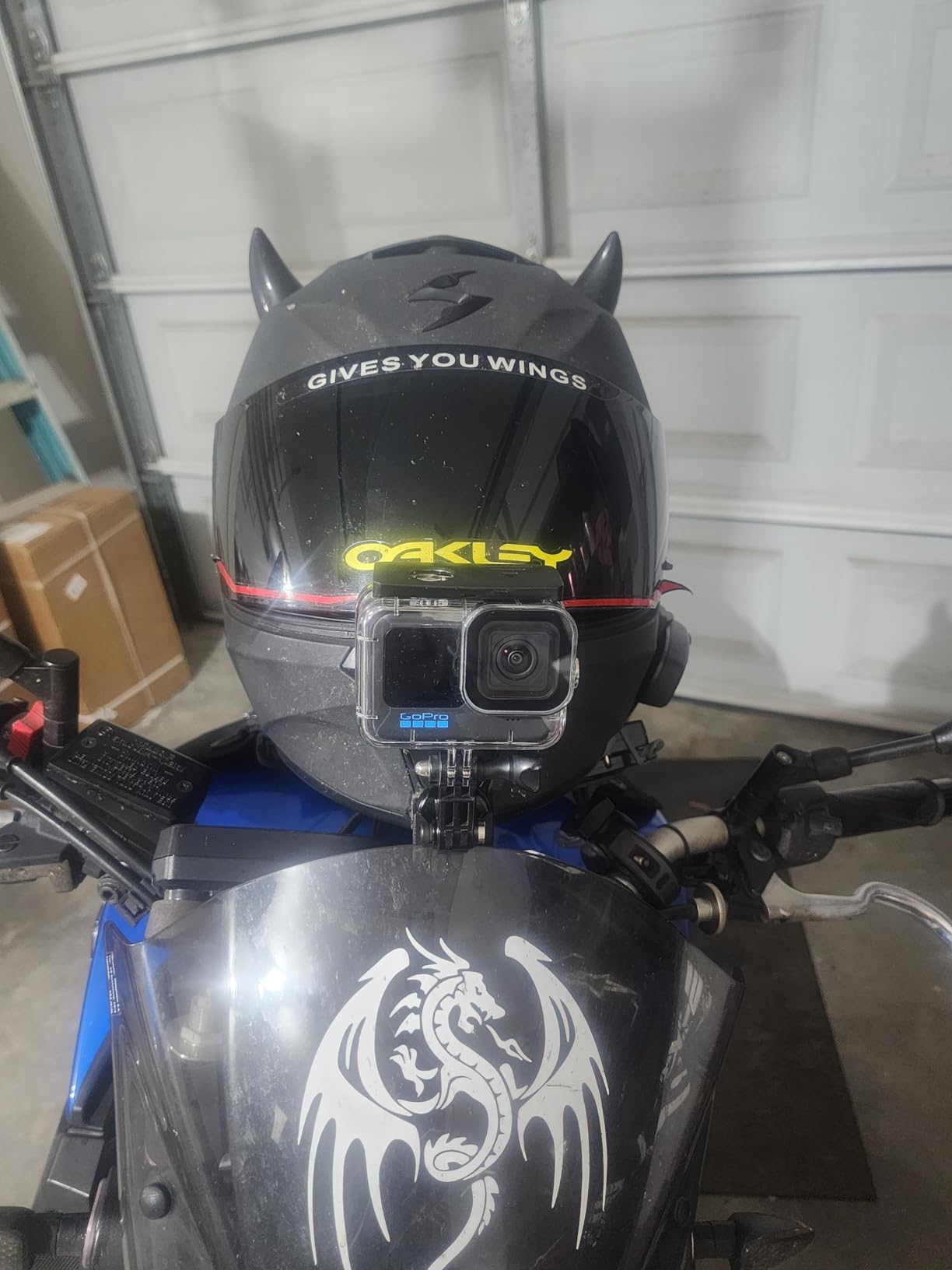
I used the HERO11 as my primary drum cam for six months, and the HyperSmooth 5.0 stabilization handled the intense vibration of a kick drum hit 200 times per minute. The footage remained watchable where lesser cameras produced a jittery mess. The Horizon Lock feature kept the framing level even when the mounting clamp shifted during a particularly energetic set.
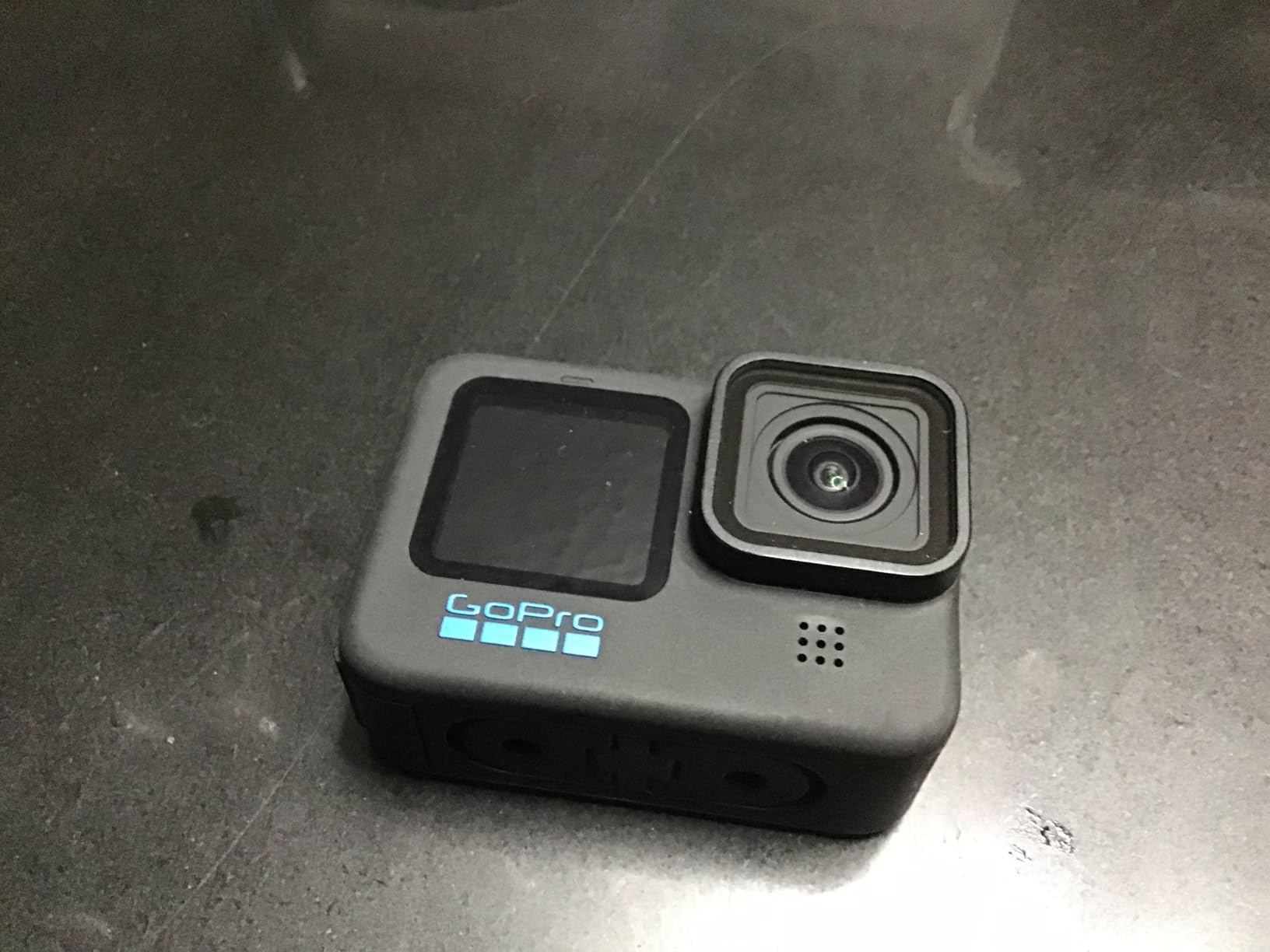
The 2.7K240 slow-motion mode is a creative tool that performers overlook. Capturing a drum fill or guitar solo at 240 frames per second and playing it back at 8x slow motion creates dramatic content for music videos and social media. The 5.3K60 base resolution means your standard-speed footage is also detailed enough for professional use.
The main drawback is that this e-commerce packaging does not include a battery. You will need to purchase a GoPro Enduro battery separately, which adds to the total cost. The 1/1.9-inch sensor is also smaller than the DJI and Insta360 options, which shows up as more noise in the darkest venue conditions.
HyperSmooth 5.0 vs 6.0 for Stage Movement
The practical difference between HyperSmooth 5.0 and 6.0 is noticeable but not dramatic for most stage use. Version 6.0 adds AutoBoost, which dynamically increases stabilization crop during intense movement. If your performance style involves minimal camera movement, HyperSmooth 5.0 on the HERO11 is more than sufficient. Aggressive movers may benefit from the HERO13’s upgraded system.
Is the HERO11 Still Worth It in 2026?
Yes, absolutely. The HERO11 offers roughly 85 percent of the HERO13’s capability at a significantly lower price. The sensor and stabilization technology remain competitive with current-generation cameras from other brands. For musicians who need proven reliability and the GoPro mounting ecosystem without the flagship price, the HERO11 is the smarter purchase.
7. Insta360 ONE X2 – Best 360 Camera on a Budget
Insta360 ONE X2 360 Degree Waterproof Action Camera, 5.7K 360, Stabilization, Touch Screen, AI Editing, Live Streaming, Webcam, Voice Control
5.7K 360 Video
FlowState Stabilization
Invisible Selfie Stick
AI Editing
Pros
- 360 capture lets you reframe any angle after recording
- FlowState stabilization rivals dedicated gimbals
- Compact pocket-sized design for easy transport
- Live streaming and webcam modes included
- Waterproof to 10 meters without housing
Cons
- 80-minute battery life is shortest on this list
- Lens protrudes and scratches easily
- App required for full functionality
- Limited to 30fps at full 5.7K resolution
The Insta360 ONE X2 brings 360-degree capture to a price point that makes it accessible to working musicians. I have used this camera for over two years at rehearsals, small venue shows, and outdoor gigs. The ability to reframe footage after the fact means I set up the camera once and extract multiple angles in post-production.
FlowState stabilization on the ONE X2 remains one of the best implementations in any action camera. I mounted it to the end of an invisible selfie stick extending from the front of the stage, and the resulting footage looked like it was shot on a floating gimbal. The horizon leveling kept everything straight despite the pole swaying with the crowd.
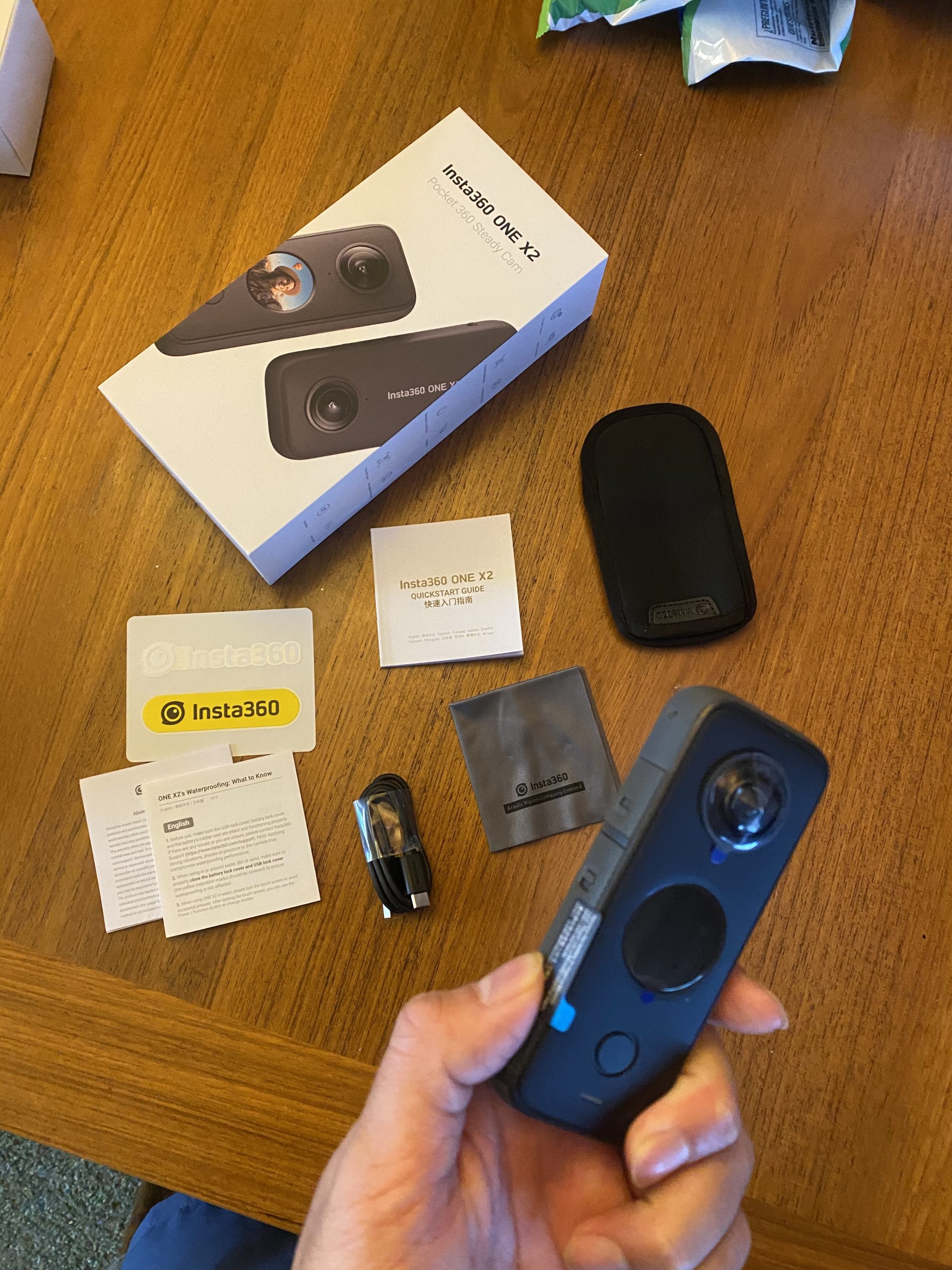
The AI editing features in the Insta360 app are genuinely useful for performers who need content fast. After a show, I can generate a 30-second highlight clip with automatic reframing and tracking in about 5 minutes on my phone. This speed is critical for social media content that needs to go up while the show is still fresh in the audience’s mind.
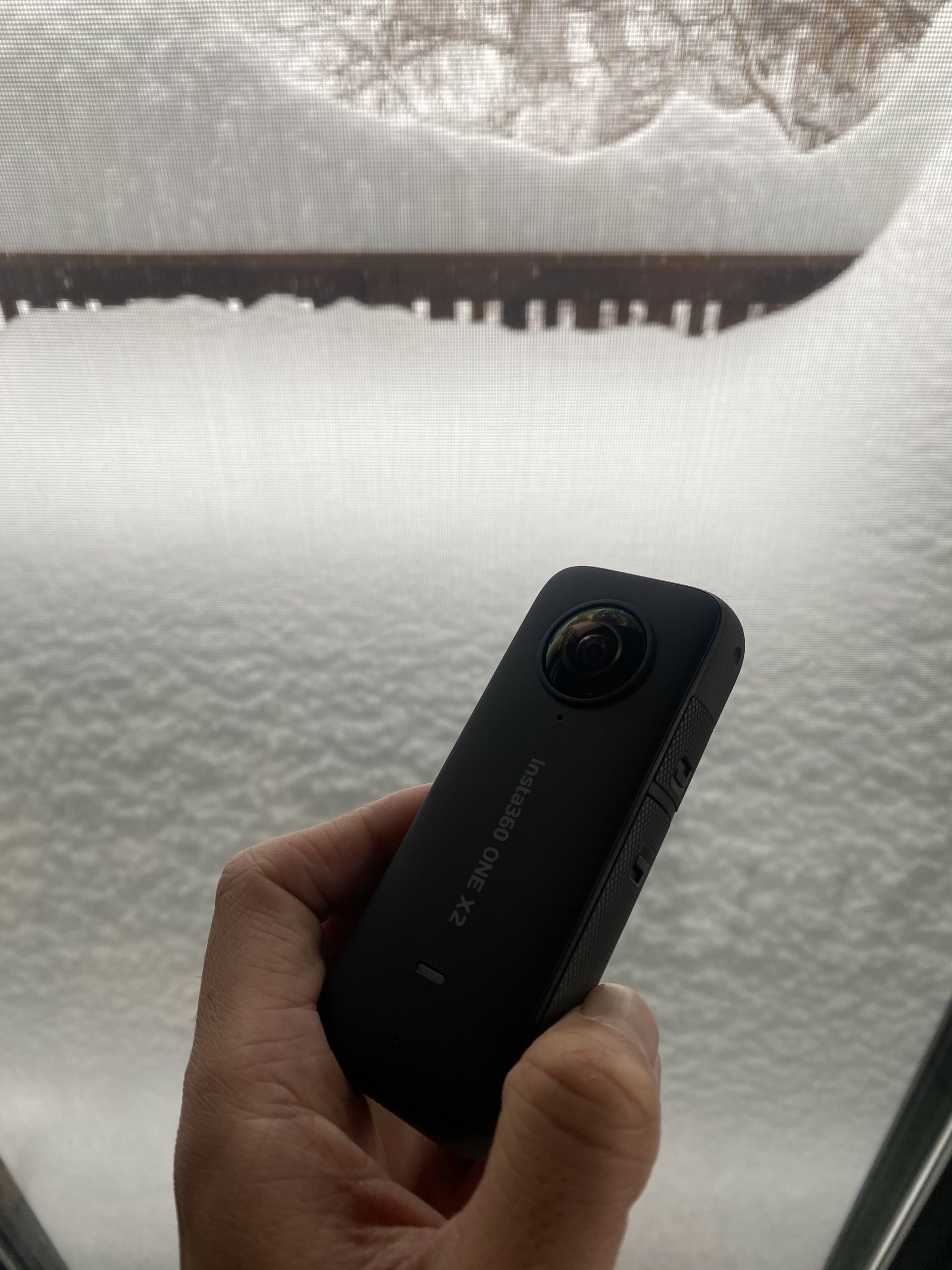
The 80-minute battery life is the ONE X2’s biggest weakness for live performance use. A single battery will not cover a full set plus encore. I carry three batteries to every gig. The lens protrudes from the body and scratches easily, so lens guards are essential. The app dependency can also be frustrating when you need to offload footage quickly.
360 Reframing for Multi-Angle Performance Videos
The reframing workflow on the ONE X2 is identical to the X5 but at a lower resolution. You capture everything in 5.7K 360, then use the Insta360 app or desktop studio to create traditional flat video from any angle. For a three-piece band, I typically export a wide stage shot, a tight shot on the vocalist, and a drummer-focused angle from a single camera position.
Comparing ONE X2 to the X5 for Performances
The X5 offers significantly better low-light performance, longer battery life, higher resolution, and replaceable lenses. The ONE X2 costs roughly half as much and still delivers the core 360 reframing benefit. If you are primarily filming in well-lit venues and carry spare batteries, the ONE X2 delivers 80 percent of the X5’s value at 50 percent of the cost.
8. AKASO Brave 4 – Best Budget Action Camera Under $100
AKASO Brave 4 Action Camera 4K30 Ultra Hd Waterproof Underwater Camera
4K30fps
20MP Photos
170 Degree FOV
Dual Screen
Waterproof 40m
Pros
- Under $100 with comprehensive accessory kit included
- Adjustable field of view from 70 to 170 degrees
- Two batteries included for extended recording
- Waterproof case rated to 40 meters
- Dual screen design for self-monitoring
Cons
- Lower light performance compared to premium models
- Firmware update issues reported by some users
- 170-degree wide angle has noticeable distortion
- Stabilization less effective than HyperSmooth or RockSteady
The AKASO Brave 4 is the camera I recommend to musicians buying their first action camera or needing a capable backup body. At under $100 with a full accessory kit, it removes the financial barrier to entry for documenting live performances. With over 17,000 reviews, it is also one of the most battle-tested budget cameras on the market.
I tested the Brave 4 at a well-lit outdoor festival and a dimly lit club on consecutive nights. In good lighting, the 4K30 footage was genuinely usable for social media content. Colors were slightly less accurate than the DJI and Insta360 options, but the detail and sharpness were surprisingly capable. In the dark club, the smaller sensor struggled noticeably with noise.
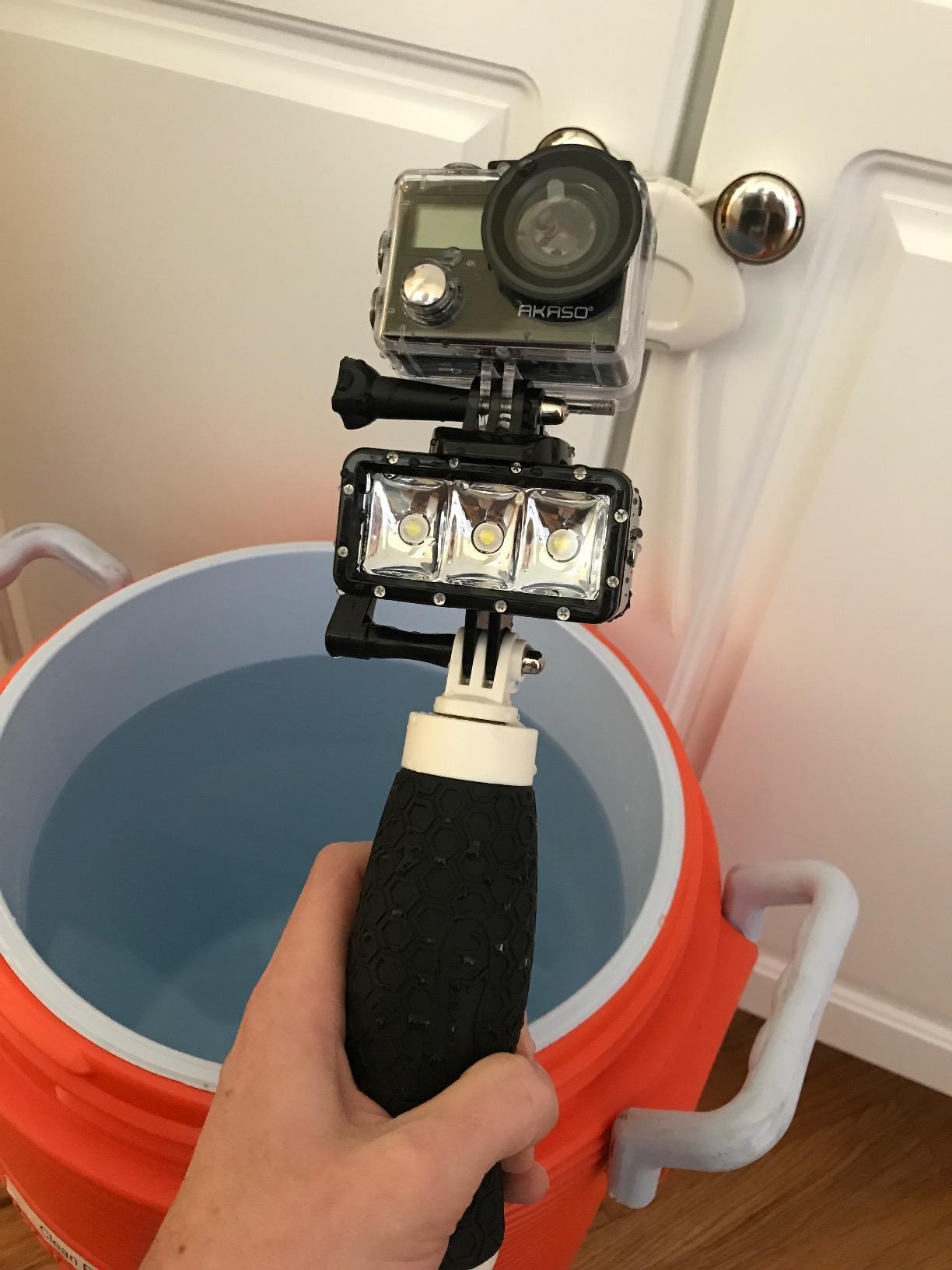
The adjustable field of view is a standout feature at this price. You can switch between 170 degrees for immersive wide shots, 110 degrees for a natural perspective, and 70 degrees for focused shots on individual performers. This flexibility is rare in budget cameras and genuinely useful for adapting to different stage sizes.
The included accessory kit is where the Brave 4 delivers exceptional value. You get mounts for helmets, handlebars, chests, and tripods, plus a waterproof case rated to 40 meters. Two batteries at 90 minutes each give you 3 hours of total recording time, which covers most live events. The wristband remote control is also handy for starting and stopping recording from across the stage.
What to Expect from a Sub-$100 Action Camera
The Brave 4 delivers roughly 60 percent of the image quality of premium cameras at 20 percent of the price. In well-lit venues, the difference is acceptable for social media use. In dark venues, the noise and limited dynamic range are immediately apparent. Manage your expectations: this is a capable starter camera, not a professional production tool.
Ideal Use Cases for the Brave 4 in Live Performance
The Brave 4 shines as a secondary camera angle, a rehearsal documentation tool, or a first camera for musicians just starting to build their video content. It is also an excellent choice for venues or bands that need multiple cameras for multi-angle coverage without investing thousands. The waterproof case also makes it suitable for outdoor stages where weather is a factor.
Buying Guide: Choosing the Right Action Camera for Live Performances
Choosing the right action camera for live performances requires understanding how specific features translate to stage, concert, and rehearsal environments. The factors that matter for extreme sports are not always the same ones that matter for music events. Here is what to prioritize.
Sensor Size and Low-Light Performance
Sensor size is the single most important specification for live performance recording. Most concerts happen in low light with dynamic stage lighting, which is the most challenging environment for any camera sensor. The 1/1.3-inch sensors found in the DJI Osmo Action 5 Pro, Action 4, and Insta360 Ace Pro 2 collect roughly twice the light of the 1/1.9-inch sensors in GoPro cameras. This translates directly to cleaner footage with less noise and better detail in shadows. If your performances happen in dimly lit venues, prioritize sensor size above every other specification.
Stabilization for Stage Movement
Every camera on this list offers electronic stabilization, but the implementations vary significantly. DJI’s RockSteady and Insta360’s FlowState produce the smoothest footage for active stage movement. GoPro’s HyperSmooth is excellent but slightly more aggressive in its cropping. For performers who mount cameras to their bodies or instruments, stabilization quality directly determines whether the footage is usable. Static-mounted cameras benefit less from top-tier stabilization since the camera is not moving.
Audio Capture and External Microphone Support
Built-in action camera microphones are universally poor for music recording. They clip easily, capture excessive handling noise, and struggle with the bass frequencies of live music. Look for cameras that support external microphones. The DJI Osmo Action 5 Pro and Action 4 both offer direct wireless connection to DJI Mic 2 transmitters, which is the simplest path to professional audio. GoPro cameras support Bluetooth audio devices. Understanding reverb effects and room acoustics will also help you position microphones correctly and process audio in post.
Stage Lighting Handling
No competitor in the action camera space addresses stage lighting, so here is what nobody tells you. LED stage lights create extreme flicker that can ruin footage on cheaper cameras. Spotlights create hot spots that blow out highlights. Color gel washes can confuse auto white balance. Cameras with 10-bit color depth (DJI Action 5 Pro, Action 4) and HDR modes (GoPro HERO13, Insta360 Ace Pro 2) handle these conditions significantly better than 8-bit alternatives. If possible, lock your white balance manually rather than relying on auto settings.
Mounting Options and Form Factor
Consider where you will mount the camera. Performer POV requires a chest mount or helmet mount. Drum cams need a clamp mount on the drum cage or hardware. Audience perspective requires a tripod or monopod. GoPro has the widest range of mounting accessories, followed by DJI’s magnetic quick-release system. Insta360 cameras work well on selfie sticks for 360 capture. Think through your specific mounting needs before choosing a camera system.
Battery Life for Full Sets
A typical live performance runs 45 to 90 minutes of music. You need a camera that can record continuously for the entire set without battery swaps. The DJI Osmo Action 5 Pro leads with 4 hours of battery life, followed by the Insta360 X5 at 3 hours. GoPro cameras typically deliver 1.5 hours at high resolution. Always carry spare batteries for any camera, and test your actual recording time at the resolution and frame rate you plan to use.
Venue Camera Policies
Many venues restrict recording equipment, but policies vary widely. Small clubs generally allow action cameras, especially mounted to the performer. Larger venues and arenas may prohibit detachable lens cameras but permit small action cameras. Always check the venue policy before bringing recording equipment. If you are performing rather than attending, clarify with the venue whether you can record your own set. When in doubt, action cameras are more likely to be permitted than traditional cameras due to their small size and fixed lenses.
Frequently Asked Questions
Are action cameras allowed at concerts?
Most venues permit action cameras, especially smaller models like GoPros and DJI Osmo cameras. Policies vary by venue type and artist contract. Small clubs generally have relaxed policies, while arenas and larger venues may restrict recording equipment. If you are attending as an audience member, check the venue website or call ahead. Performers typically have more flexibility to record their own sets, but should always confirm with the venue or promoter first.
Which action cameras support live streaming?
The GoPro HERO13 Black and HERO11 Black both support direct live streaming to platforms like YouTube and Facebook via Wi-Fi. The DJI Osmo Action 5 Pro and Insta360 X5 also offer live streaming capabilities. The Insta360 ONE X2 supports live streaming in 360-degree format. For the most reliable streaming experience, the GoPro HERO13 Black with Wi-Fi 6 connectivity offers the fastest transfer speeds and most stable connection.
Are GoPros good for concerts?
GoPros are good for concerts when lighting conditions are adequate. Their stabilization technology is best-in-class, and the mounting ecosystem is unmatched. However, the 1/1.9-inch sensor in current GoPro models is smaller than the 1/1.3-inch sensors in DJI and Insta360 competitors, which means GoPros produce noisier footage in dark venues. For well-lit stages and outdoor performances, GoPros perform excellently. For dimly lit clubs, DJI and Insta360 cameras with larger sensors deliver cleaner results.
What camera mode is best for concerts?
For concert recording, use the highest resolution available at 30 or 60fps, enable stabilization, and if available use HDR or D-Log M modes for maximum dynamic range. Lock white balance manually if possible, as auto white balance struggles with colored stage lights. For dark venues, use night mode or low-light specific modes like PureVideo on the Insta360 Ace Pro 2. Avoid digital zoom during recording, as it degrades quality. Shoot wide and crop in post-production instead.
What is the best action camera for drum cam setups?
For drum cam use, the DJI Osmo Action 5 Pro is the top choice due to its 4-hour battery life and excellent vibration handling from RockSteady stabilization. The Insta360 X5 is also excellent because 360 capture lets you extract both a close-up drumming angle and a wide stage shot from a single camera. The GoPro HERO11 Black with HyperSmooth 5.0 is a proven drum cam option that handles kick drum vibration well at a lower price point.
Final Thoughts on the Best Action Cameras for Live Performances
The best action camera for live performances depends on your specific needs as a musician or content creator. For maximum coverage and the ability to reframe any angle after the show, the Insta360 X5 is unmatched. For the best balance of low-light performance, battery life, and price, the DJI Osmo Action 5 Pro is my top recommendation for most performers. And for musicians on a tight budget, the AKASO Brave 4 delivers capable 4K footage with a complete accessory kit under $100.
Whatever camera you choose, remember that audio quality often matters more than video quality for live performance recordings. Pair your camera with a quality external microphone, and take time to learn the reframing and editing workflow that gets your content from camera to social media quickly. If you are working on finishing your songs and getting ready to perform them live, having the right camera ready will help you capture those moments worth sharing.
I will keep updating this guide as new cameras release and firmware updates change the performance landscape. The action camera market moves fast, and 2026 is shaping up to be a strong year for live performance recording technology.