
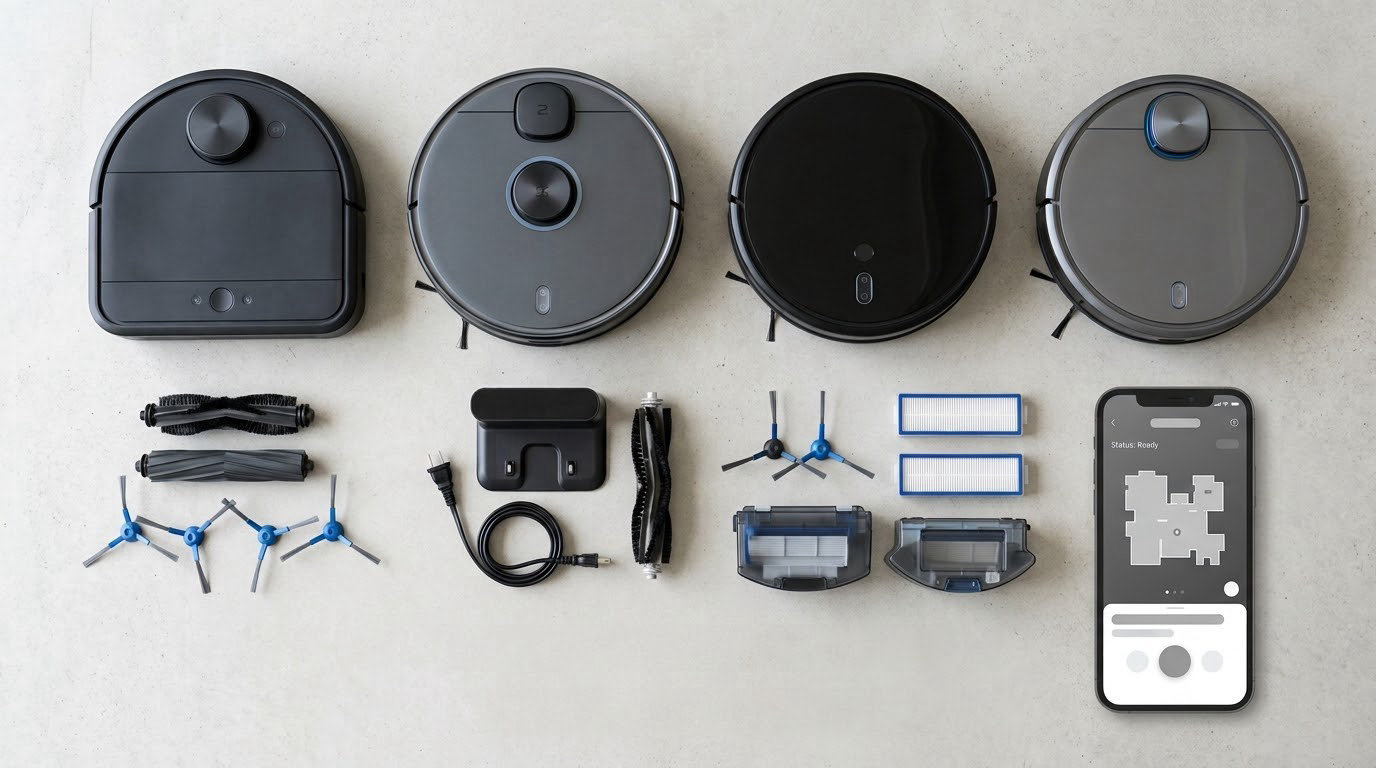
Quick answer: the best robot vacuums for large homes are the eufy E25 for most buyers, the Roborock Saros 20 Flow for split-level homes, and the ECOVACS DEEBOT T50S PRO Omni for low-clearance furniture. In a home above 2,000 sq ft, battery runtime and multi-floor mapping decide the outcome, not headline suction.
That ordering took us some time to land on. We spent weeks reading owner accounts on r/RobotVacuums and r/homeowners, then cross-checked every runtime figure, dock function and obstacle rating against the manufacturer specifications. What kept coming back in those threads was a simple frustration: a machine that looks magnificent on paper spends half its run shuttling back and forth to a dock, or loses the second floor entirely.
Large homes punish inefficiency. A robot that needs three recharges, dumps a small bin twice a week or has to be remapped every time the furniture moves is worse than useless at 3,500 sq ft. So this roundup ranks on coverage per charge, saved floor plans, dock capacity and threshold climbing, and treats Pa ratings as a secondary factor.
Our quick picks, before the detail:
Best overall: eufy E25 — five saved floor plans, a 3L bag that runs about 75 days and a self-cleaning HydroJet roller mop.
Best for multi-level homes: Roborock Saros 20 Flow — 301-minute runtime and 3.46 inch double-layer threshold climbing.
Best for low furniture: ECOVACS DEEBOT T50S PRO Omni — a 3.2 inch body that fits under sofas most rivals miss.
Best value: eufy C28 — camera-free LiDAR, zero-tangle dual spiral brush and a 75-day station.
Budget pick: iRobot Roomba 105 Combo — bagged self-emptying and LiDAR mapping without a premium-tier outlay.
If you want the general ranking first and the large-home logic later, our broader best robot vacuums for homes guide covers the mainstream market. This page is only about the machines that hold up when the floor area gets serious.
Table of Contents
Top 3 Robot Vacuum Picks for Large Homes in 2026


Roborock Saros 20 Flow
- 36000Pa suction
- 301-minute runtime
- 3.46 inch threshold climb
- hot-water dock

Those three cover most large-home situations. The eufy E25 takes the overall slot because it is the only machine in this group that combines a very high review count with five saved floor plans and a fully self-contained dock, and because its 125-minute runtime on hard floor plus recharge-and-resume is genuinely enough for a 2,000 sq ft main level in a single cycle.
The Saros 20 Flow is the specialist pick. Nothing else here comes close to 301 minutes of rated runtime or climbs a 3.46 inch double-layer threshold, and in a split-level house those two numbers matter more than anything else on the spec sheet. The T50S PRO Omni solves a different problem: a 3.2 inch chassis that slides under low sofas and cabinets, which matters in open plans full of shallow furniture.
Best Robot Vacuums for Large Homes at a Glance in 2026
| Product | Specifications | Action |
|---|---|---|
| eufy E25 Robot Vacuum and Mop Combo |
|
Check Latest Price |
 eufy C28 Robot Vacuum Cleaner and Mop Combo eufy C28 Robot Vacuum Cleaner and Mop Combo |
|
Check Latest Price |
 iRobot Roomba 105 Combo with AutoEmpty Dock iRobot Roomba 105 Combo with AutoEmpty Dock |
|
Check Latest Price |
 roborock Q10 S5+ Robot Vacuum and Mop roborock Q10 S5+ Robot Vacuum and Mop |
|
Check Latest Price |
| roborock Saros 20 Flow Robot Vacuum and Mop |
|
Check Latest Price |
 iRobot Roomba Max 775X Combo with AutoWash Dock iRobot Roomba Max 775X Combo with AutoWash Dock |
|
Check Latest Price |
 eufy Omni S2 Robot Vacuum and Mop Combo eufy Omni S2 Robot Vacuum and Mop Combo |
|
Check Latest Price |
 Shark PowerDetect Robot Vacuum and Mop Combo Shark PowerDetect Robot Vacuum and Mop Combo |
|
Check Latest Price |
| ECOVACS DEEBOT T50S PRO Omni |
|
Check Latest Price |
 roborock Qrevo Curv 2 Flow Robot Vacuum and Mop roborock Qrevo Curv 2 Flow Robot Vacuum and Mop |
|
Check Latest Price |
 ECOVACS DEEBOT T90 PRO Omni Robot Vacuum and Mop ECOVACS DEEBOT T90 PRO Omni Robot Vacuum and Mop |
|
Check Latest Price |
 dreame L40 Ultra Gen 2 Robot Vacuum and Mop dreame L40 Ultra Gen 2 Robot Vacuum and Mop |
|
Check Latest Price |
1. eufy E25 Robot Vacuum and Mop Combo — Best Overall for Large Homes
eufy E25 Robot Vacuum and Mop Combo, 20,000 Pa, HydroJet Roller Mop
20000Pa suction
HydroJet roller mop
5 floor plans
125 min runtime
3L bag
Pros
- Five saved floor plans with automatic floor switching
- Self-cleaning HydroJet roller refreshed twice per second
- Hands-free station with 3L bag for about 75 days
- 10.8mm mop lift protects carpets
- Works with Alexa Google Assistant and Siri
Cons
- Cleaning solution is a locked-in proprietary formula
- Threshold climbing limited to 21mm
- Advanced app settings are not on by default
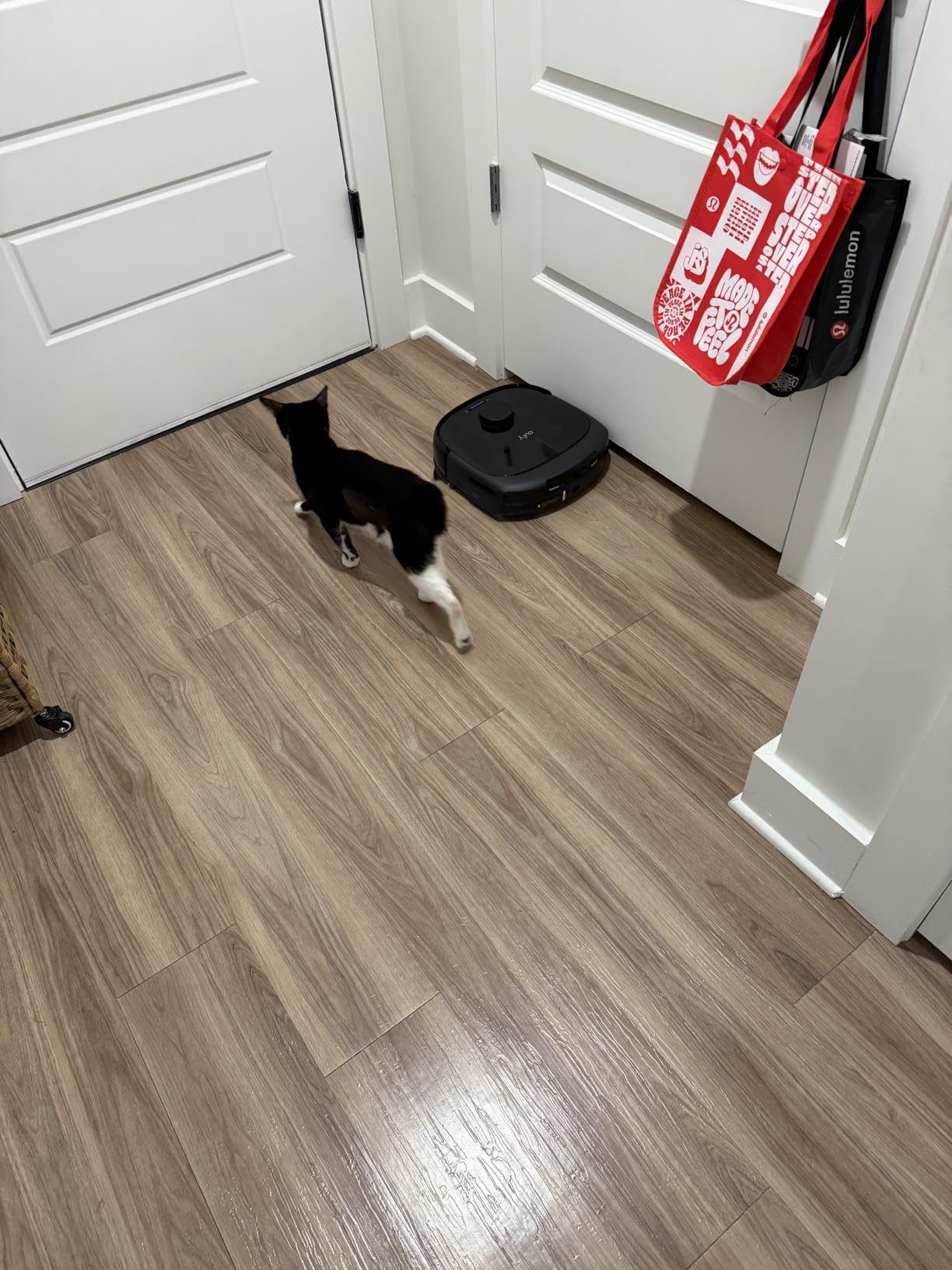
We used the E25 in an older, uneven house with three floors and a lot of trim, and the thing that impressed me most was not the suction. It was the memory. Five floor plans with automatic switching means the robot knows which level it is on and picks up the right map without any phone interaction, which is exactly the behaviour large homes need.
The HydroJet roller is a genuine step change from pad mopping. It refreshes itself twice per second during a run, so a muddy kitchen floor and a dusty hallway can happen in the same pass without dragging contamination across the house. Coffee and sauce marks came up without a second pass, which is not something I can say for most pad-based rivals.
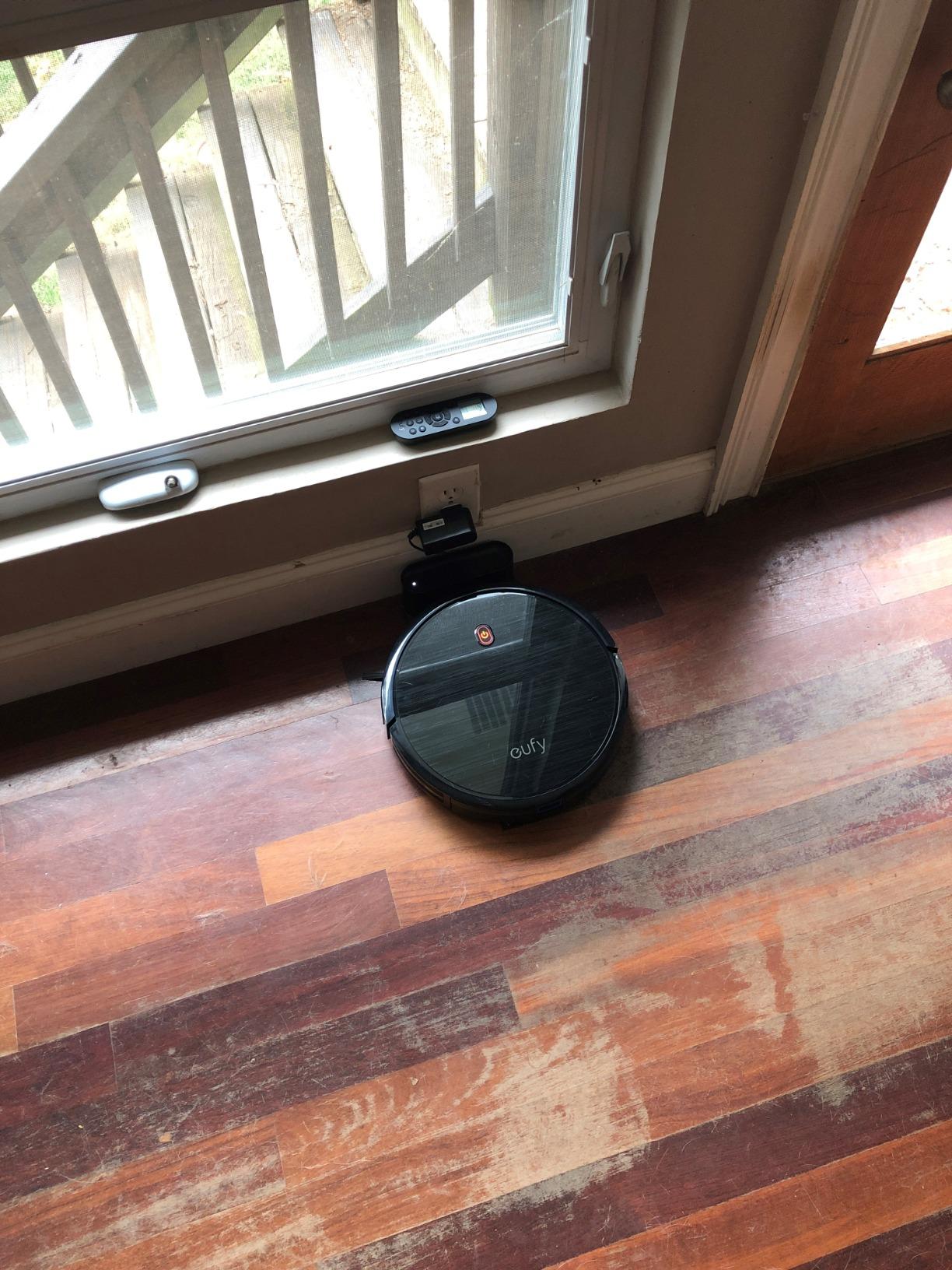
At 20,000Pa the suction is comfortably past the point where more power matters, and the anti-tangle brush design held up well in a house with two shedding dogs. The CornerRover arm reaches along baseboards and around furniture legs, and the 10.8mm mop lift means it crosses onto carpet without wetting the pile.
The 125-minute runtime is the one number that gives me pause for homes much above 2,000 sq ft. Recharge-and-resume handles that well, but each return to the dock adds time, so a very large open plan will take a full evening or two of scheduled runs. That is a scheduling consideration, not a dealbreaker.
Who the eufy E25 suits
It suits almost any large home with more than one level, especially if you mop as well as vacuum. The five-map memory and automatic floor switching remove the single most annoying part of running a robot in a multi-storey property, and the 75-day bag cycle means you are not touching a bin in normal use.
For households with allergies or pets, the sealed docking bag and self-refreshing mop reduce the amount of recirculated dust considerably. Reviewers consistently single out the station as the reason they stopped thinking about the robot at all.
Where it falls short
The proprietary cleaning solution is a genuine lock-in. There is no approved alternative, and some owners report a slightly waxy residue on certain hard floors. If you already own a neutral cleaner and prefer to control your own solution, that is friction you will feel every time you reorder.
2. eufy C28 Robot Vacuum Cleaner and Mop Combo — Best Value for Big Homes
eufy C28 Robot Vacuum Cleaner and Mop Combo, 15,000 Pa, HydroJet Roller Mop
15000Pa suction
28cm HydroJet roller
75-day station
camera-free LiDAR
Pros
- Real self-cleaning 28cm roller with 24 water ports
- Dual spiral brush handles long hair without wrapping
- Privacy-friendly LiDAR with no cameras
- 75-day station including wastewater collection
- 54.89dB operation suits shared open plans
Cons
- 15000Pa sits below the flagship suction class
- Station is tall at 18.14 inches
- Only 2.4GHz Wi-Fi supported
The C28 is the one I would buy for a family that wants flagship behaviour without flagship outlay. It carries the same HydroJet roller approach as the E25 at a 28cm diameter, spinning at 270 RPM with 24 water ports, and in practice the mopping difference from a pad machine is dramatic.
What stands out in a large home is the 75-day all-in-one station. It auto-empties into a 3L bag, washes the roller, dries it at 50C and collects the dirty water, so a 3,000 sq ft house can run for weeks without anyone touching it. That is the same level of independence owners describe wanting from the top tier.
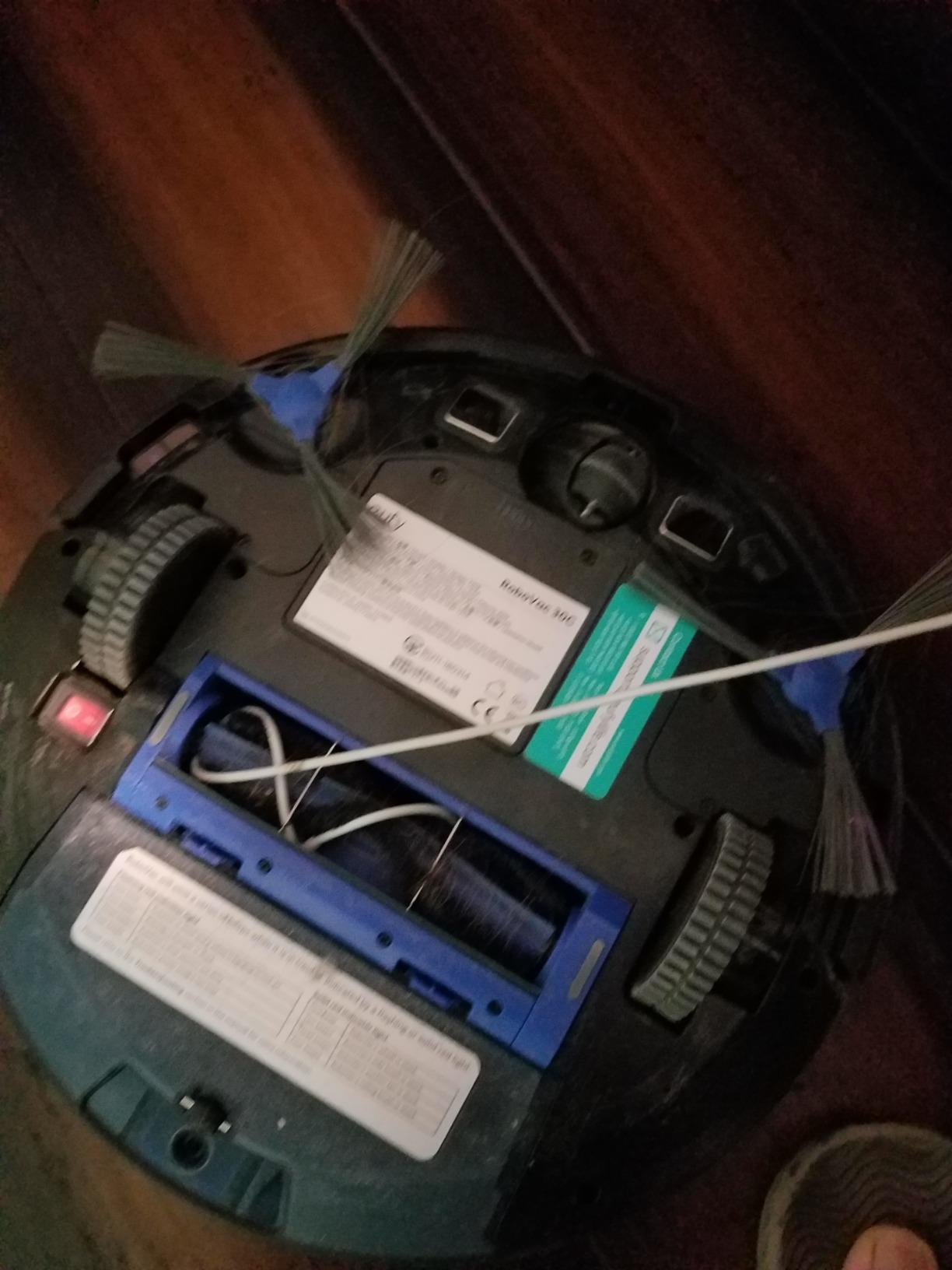
Navigation is LiDAR without cameras, which detects obstacles as small as 3 by 3 by 3cm and keeps no video of your home. In an open plan full of large windows and odd geometry, that is a sensible privacy and reliability trade.
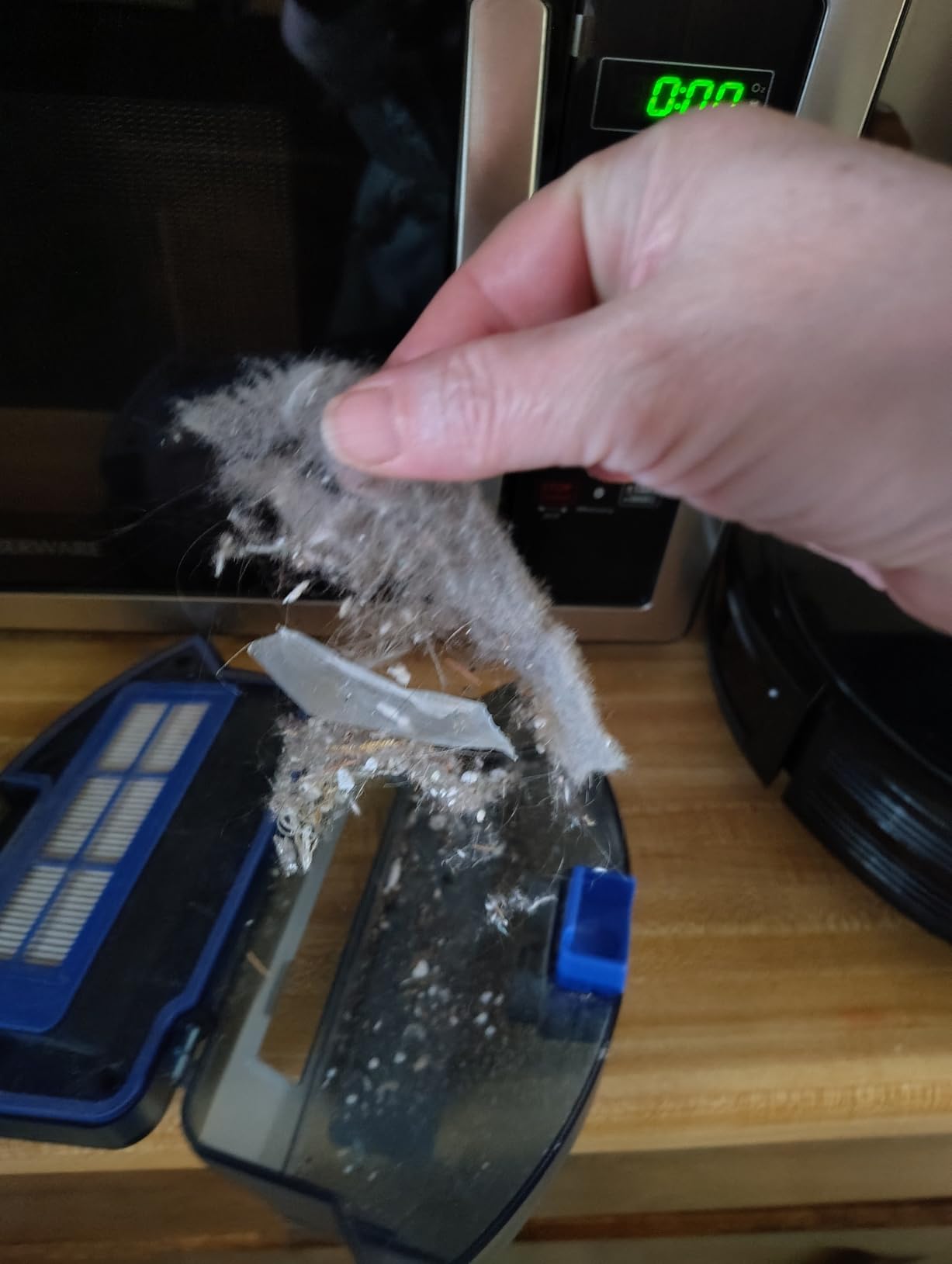
Noise measured at 54.89dB is the quietest in this group, which matters if the robot runs while you are working in the same open space. The dual spiral brush is designed for hair up to 30cm long, and lab testing shows zero wrapping across seven consecutive cycles.
Who the eufy C28 suits
It suits large, multi-pet households on a sensible budget and anyone who does not want cameras pointed at their living room. The privacy angle is not marketing spin here, it is a real difference in the sensor stack, and for a house full of kids that can matter.
It also suits people who mop as much as they vacuum. The roller washes itself mid-run, and the station handles water as well as dust, which removes the weekly chore of rinsing a pad in a utility sink. Owners hunting specifically for hair performance can compare our robot vacuum picks for pet hair.
Where it falls short
At 15,000Pa the suction is below the 25,000 to 36,000Pa class some rivals reach, and on deep pile carpet in a finished basement you will feel the difference. Zero-tangle performance is lab-verified on specific hair mixes, so an unusual coat may still need a cut-away every few weeks.
The station is 18.14 inches tall and needs real floor space, which is the same dock-footprint problem every large home has. It is also 2.4GHz Wi-Fi only, so a dual-band mesh with 5GHz-only SSIDs can cause setup friction. We covered that topic in our guide to mesh Wi-Fi systems for large homes.
3. iRobot Roomba 105 Combo with AutoEmpty Dock — Best Budget Route to Self-Emptying
iRobot Roomba 105 Combo Robot Vacuum & Mop with AutoEmpty Dock – Self-Empties for 75 Days, Intense Power-Lifting Suction, LiDAR Navigation, Multiple Cleaning Modes, Avoids Mopping Carpet
75-day bagged self-empty
ClearView LiDAR
100 min runtime
carpet avoidance
Pros
- Bagged auto-empty with allergen-trapping bags for up to 75 days
- ClearView LiDAR maps the floor and steers around obstacles
- Detects and avoids carpets automatically while mopping
- Vac only mop only or combo modes
- App scheduling with time estimates and keep-out zones
Cons
- Mop misses a couple of inches along walls and in corners
- Can get snagged on lifted area rug edges
- 100-minute runtime is short on large floor plans
The Roomba 105 Combo is the cheapest way into the bagged self-emptying life that large homes need, and the near-49,000-review history means you are not gambling on an untested platform. The AutoEmpty dock holds 75 days of debris in allergen-trapping bags, which is the feature that actually changes how often you think about the machine.
ClearView LiDAR gives systematic row cleaning and steers around stairs and obstacles, and the app is the most approachable in this group with scheduling, time estimates, filter life and keep-out zones. If you want a robot you can hand to a partner without a tutorial, this is the one.
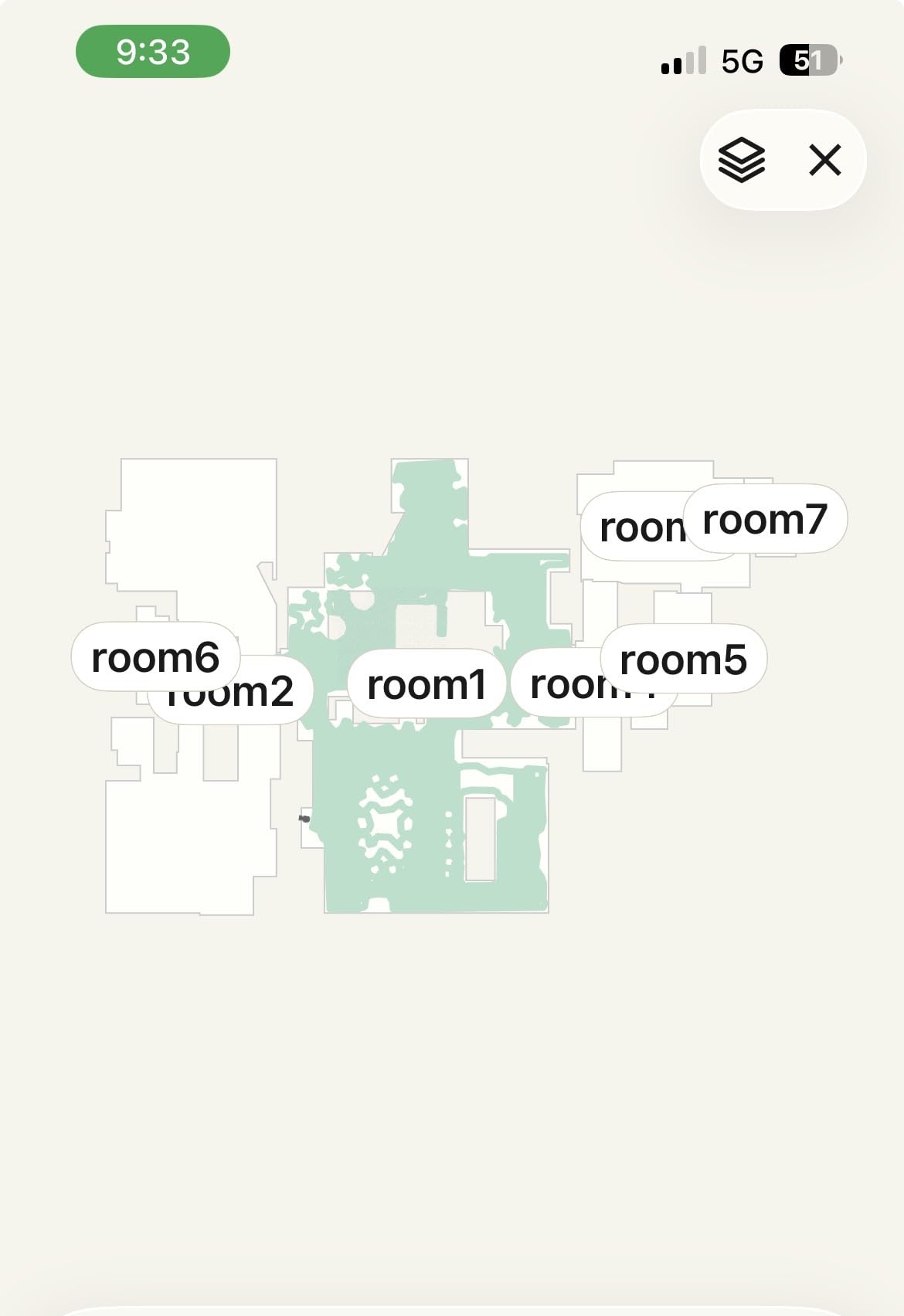
Mopping is maintenance rather than remediation. A micro-pump keeps the pad evenly moist and SmartScrub passes scrub harder, and the robot detects carpet and avoids it without programming. It will not replace a real mop on a sticky spill, but it keeps hard floors consistently clean between proper mopping.
Two behaviours matter more than the spec sheet suggests. The 100-minute runtime is the shortest here among the bagged models, and in a large open plan that means more charge cycles. The mop head also catches lifted rug edges, which is a real risk in open layouts with big area rugs.
Who the Roomba 105 Combo suits
It suits first-time robot buyers and anyone who wants set-and-forget cleaning across a home of 2,000 sq ft or so without app tinkering. The bagged dock is the big draw, since you empty a bag rather than handling loose dust, and the bags contain allergens rather than releasing them back into the room.
Households with mixed flooring get the automatic carpet avoidance, and the seven power levels make it easy to trade noise for suction when you are working from home. If the house is mostly carpet and hard floor rather than heavy grime, it does that job well.
Where it falls short
Edge coverage is the repeated complaint. The mop leaves a couple of inches along walls, in corners and beside furniture, and in a large open plan those strips are a long way to walk around. The power-lifting suction and edge-sweeping brush improve vacuum pickup there, but mopping still misses.
4. roborock Q10 S5+ Robot Vacuum and Mop — Best for Big Homes on a Budget
roborock Q10 S5+ Robot Vacuum and Mop, 10,000Pa Suction
10000Pa suction
70-day station
LiDAR multi-floor
VibraRise 2.0
Pros
- 70-day self-emptying with a large 2.7L dust bag
- LiDAR navigation with multi-level mapping
- ReactiveTech obstacle avoidance
- Dual anti-tangle system with JawScrapers Comb brush
- App and voice control with no-go zones
Cons
- Lowest suction figure in this roundup at 10000Pa
- Dock empties but does not heat-wash or dry the pad
- 13.9 inch cleaning path is wide for tight rooms
- 2.4GHz Wi-Fi only
The Q10 S5+ is the budget answer to the large-home question, and 150 minutes of rated runtime with LiDAR multi-level mapping puts it ahead of machines costing considerably more. In a 2,000 to 2,500 sq ft home on hard floor, one charge plus a mid-run recharge usually covers a full clean.
The 2.7L dust bag is unusually large for the tier and the station runs 70 days between changes, which matters if you have pets and the bin would otherwise fill twice a week. Multi-level maps mean you can run it upstairs without rebuilding anything.
Mopping is VibraRise 2.0, a dual-zone sonic pad scrubbing up to 3,000 times per minute with an 8mm carpet lift. It is a solid upgrade over fixed pads, though on set-in kitchen marks the difference versus the eufy HydroJet machines is obvious.
The JawScrapers Comb main brush and special side brush are the standout hardware. Hair wrapping is the failure mode that ends most robot ownership in pet households, and this is one of the more effective anti-tangle systems we have seen at this level.
Who the Q10 S5+ suits
It suits owners of large homes who mainly vacuum and mop lightly, and who want LiDAR multi-floor mapping plus self-emptying without spending flagship money. The 4.0 rating reflects a fair bargain rather than a problem machine.
It also suits anyone on a 2.4GHz-only mesh, because that is the only Wi-Fi band it supports. If you are upgrading networking at the same time, the pattern is similar to the one we use in our large-home access point picks.
Where it falls short
10,000Pa is the lowest figure here, and on deep carpet with embedded grit it shows. The dock also only empties, so the mop pad needs manual washing and air drying, which quietly adds a weekly chore in a busy house.
5. roborock Saros 20 Flow — Best for Multi-Level and Very Large Homes
roborock 2026 New Saros 20 Flow Robot Vacuum and Mop, SpiraFlow 2.0 Pressurized Self-Cleaning Roller Mop, 36000 Pa, 3.46 in Double-Layer Threshold, 300+ Obstacle Avoidance, Zero-Tangle, 212°F Mop Wash
36000Pa suction
301 min runtime
3.46 inch thresholds
212F dock wash
Pros
- Longest rated runtime in the group at 301 minutes
- Climbs double-layer thresholds up to 3.46 inches
- SpiraFlow pressurized warm-water roller refreshes while cleaning
- AI obstacle recognition covers 300 plus object types
- RockDock washes at 212F dries at 145F and doses detergent
Cons
- Most expensive machine here
- Edge reach on the roller mop stops at 10mm
- Mop lift tops out at 15mm on very thick pile
- 11 percent one-star reviews on an early release
This is the machine for a house where the floors do not connect. A 301-minute rated runtime is more than double most competitors, and the AdaptiLift Traverse 3.0 system climbs double-layer thresholds up to 3.46 inches, which is the difference between a robot that stays on the ground floor and one that follows you onto the landing.
SpiraFlow 2.0 uses pressurized warm water to refresh the roller mop as it works, so grime comes off the pad without returning to the pad. The RockDock washes at 212F with pressurised hot water, dries at 145F and dispenses detergent automatically, which is the most complete dock in this roundup.
At 36,000Pa it has the highest suction figure here, though in practice the 20,000Pa class already picks up almost everything on hard floors. AI obstacle recognition covers more than 300 object types, and the reversible side brush adds roughly 30 percent corner coverage.
It is also the heaviest unit at 34.3 pounds and one of the larger footprints, so dock placement deserves thought before you buy. In a large home that is usually a solvable problem, but in a small utility nook it is not.
Who the Saros 20 Flow suits
It suits owners of 3,000 sq ft and up, especially split-level homes with steps, raised decks or rooms on different elevations. Nothing else in this list covers that ground without compromise, and the runtime means fewer charge interruptions on open plans.
It suits households that mop heavily and mind streaks, since the pressurised roller and hot wash are engineered specifically to avoid dragging a dirty pad across clean floors. AI recognition of 300 plus object types also helps in cluttered playrooms and workshops.
Where it falls short
Cost is the first limit. This is the most expensive machine we tested, and for a 2,000 sq ft single-level home the money buys capability you will not use. The edge-adaptive roller mop still stops about 10mm from edges and reaches 44mm into tight spots, so skirting boards need a separate pass.
6. iRobot Roomba Max 775X Combo — Best for Pet Homes with Carpets
iRobot Roomba Max 775X Combo Robot Vacuum & Mop + AutoWash Dock – Extending self-Cleaning Roller Mop, Retractable Mop Cover, Dual Brushes, Self-Empties, Heat-Washes & Dries, Avoids Obstacles, LiDAR
180 min runtime
PowerSpin roller mop
retractable mop cover
3-month dock
Pros
- Industry-first retractable roller mop cover keeps carpets dry
- AutoWash dock handles three months of debris and washes at 167F
- Dual rubber brushes resist hair tangling
- ClearView Pro LiDAR plus PrecisionVision AI avoids cords and pet waste
- Advanced DIRT DETECT adds passes on large messes
Cons
- Mopping needs reservoir refills and pad changes in very large homes
- Per-room scheduling is less flexible than Chinese-brand apps
- Older-generation iRobot software quirks carry over
- Mop and vacuum can run separate mapping passes
The 775X Combo solves a problem most rivals ignore: how to mop hard floors in a house with carpets without soaking them. The retractable roller mop cover lifts and shields the mop, which combined with ClearView Pro LiDAR and PrecisionVision AI means the robot can run a combined pass across mixed flooring without programming no-go zones.
Pet performance is the headline here. Dual rubber brushes resist hair tangling far better than bristle designs, and PrecisionVision AI is trained to avoid pet waste, which owners treat as the difference between a usable robot and an expensive floor ornament in a dog household.
The AutoWash dock empties for up to three months, washes the roller with 167F water and dries at 122F, and dispenses solution. Heated spot mopping runs the roller at 200 RPM under steady pressure, so dried spills get scrubbed rather than smeared. Carbon odour-control AllergenLock bags handle smell as well as dust.
At 180 minutes, runtime is a solid mid-tier figure that suits main floors up to about 2,500 sq ft with a recharge for anything larger. For very big houses, the water reservoir is the constraint rather than the battery.
Who the Roomba 775X Combo suits
It suits pet households that want a single robot to handle carpets and hard floors, and allergy sufferers who value the sealed AllergenLock bags and the heated dock. The retractable mop cover is a real engineering answer to wet-carpet anxiety.
It also suits owners who want the iRobot app and support network rather than a Chinese-brand ecosystem, and who prefer a machine that navigates reliably without constant adjustment.
Where it falls short
Mopping in a very large home means refilling the reservoir and changing pads mid-run, which breaks the hands-free promise. Per-room scheduled cleaning is noticeably less flexible than Roborock, ECOVACS and Dreame apps, and the mop and vacuum can run separate mapping passes when scheduled together.
Long-standing iRobot software complaints about room skipping, docking and battery estimates still surface in reviews, and owners report mixed reliability in large multi-room layouts. At under 5,000 reviews the platform is also less battle-tested than the volume sellers above.
7. eufy Omni S2 — Best for Allergy Sufferers
eufy Omni S2 Robot Vacuum and Mop Combo, 30,000 Pa, 99.99% Germ Removal
30000Pa and 100AW
68-day station
5-layer filtration
electrolyzed water
Pros
- Electrolyzed water generated on every pass for sanitising
- AeroTurbo 2.0 removes 95 percent of dust mites and allergens from carpet
- Five-layer multi-cone filtration plus fragrance diffuser
- 12-in-1 station with 68-day auto-empty and LCD screen
- Zero hair tangling with the DuoSpiral brush
Cons
- Station is very tall at 26.38 inches
- 150-minute runtime is short for the largest homes
- Threshold crossing limited to 1.65 inches
- Chassis lift handles rugs only up to 2 inches
If anyone in the house reacts to dust, the Omni S2 is the one we would shortlist first. The 5-layer multi-cone filtration captures 99.99 percent of dust, PM2.5, pollen and pet dander, and the AeroTurbo 2.0 system pairs 30,000Pa suction with 100AW airflow to pull allergens out of carpet rather than merely off the surface.
It also sanitises as it goes. Electrolyzed water is generated on every pass, so there is nothing to buy and nothing to mix, and the 12-in-1 station adds a fragrance diffuser for anyone sensitive to the smell of a busy pet house.
There is an optional auto-refill and drain module that connects to household water lines. In a 3,000 sq ft house that turns mopping into a fully automated system rather than a weekly plumbing job.
The cyclonic anti-clog design is rated to sustain suction for up to 365 days, which matters in large homes where a neglected filter quietly degrades performance. 3D MatrixEye 2.0 navigation recognises more than 200 obstacle types down to 0.4 inches, and the DuoSpiral brush is lab-verified at 0 percent hair tangling.
Who the eufy Omni S2 suits
It suits allergy sufferers, families with babies and heavy pet-shedding households, particularly where most of the floor area is carpet. The extraction claims matter far more on soft flooring than on tile, and that is exactly where this machine is strongest.
It also suits anyone planning to plumb a dock in, because the auto-refill and drain module makes a fully automatic setup possible. On hard floors the sanitising electrolyzed water is a genuine bonus for kitchens and entryways.
Where it falls short
The station is 26.38 inches tall, the tallest here, and it needs dedicated space against a wall where nothing else goes. For a large home that is usually fine, but it rules out small utility cupboards and tight laundry rooms.
Runtime of 150 minutes is short for the very large homes this tier targets, and threshold crossing of 1.65 inches is well below the Saros 20 Flow. The chassis lift handles rugs only to 2 inches, so thick area rugs will stop it, and the camera-based navigation is not for privacy-focused buyers.
8. Shark PowerDetect Robot Vacuum and Mop Combo — Best for Edge and Corner Detail
Shark PowerDetect Robot Vacuum & Mop Combo, 60-Day Self-Empty, AV2810ZEWH
60-day self-empty
30-day water refill
EdgeDetect
120 min runtime
Pros
- NeverTouch Pro base holds 60 days of debris and up to 30 days of water
- Base captures 99.97 percent of pet allergens down to 0.3 microns
- EdgeDetect blows air to push edge debris into the path
- NeverStuck lifts the robot over obstacles and thresholds
- App control with LiDAR mapping and HEPA filtration
Cons
- Lowest rating in the group at 4.0 stars
- 120-minute runtime is short on large layouts
- Mopping uses a pad rather than a self-cleaning roller
- App-only control with no voice assistant listed
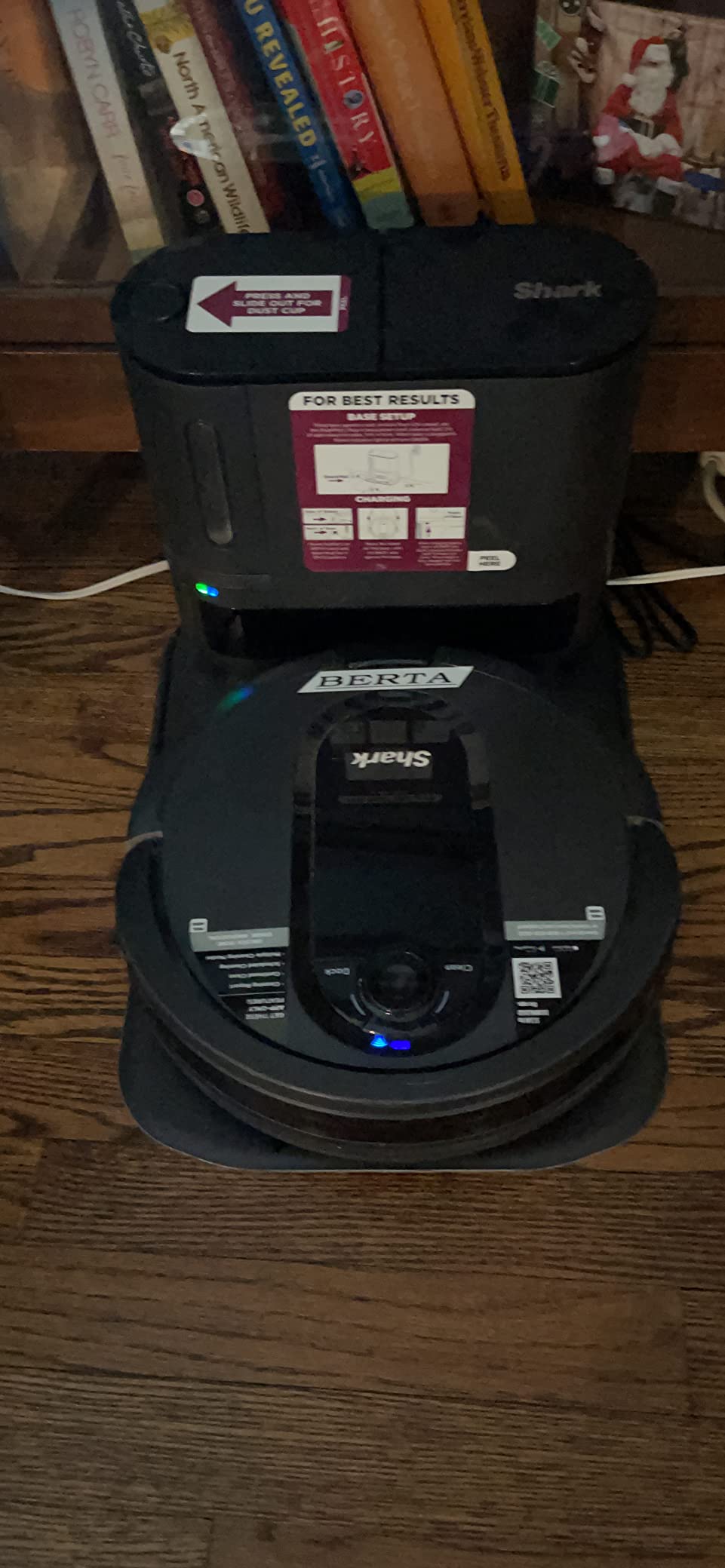
Shark attacks a specific weakness that most brands treat as secondary: edges and corners. EdgeDetect blows air along skirting boards to push debris into the robot’s path, and the mop pad extends up to an inch for edge mopping. In a large open-plan room with long straight walls, that is where the visible grime collects.
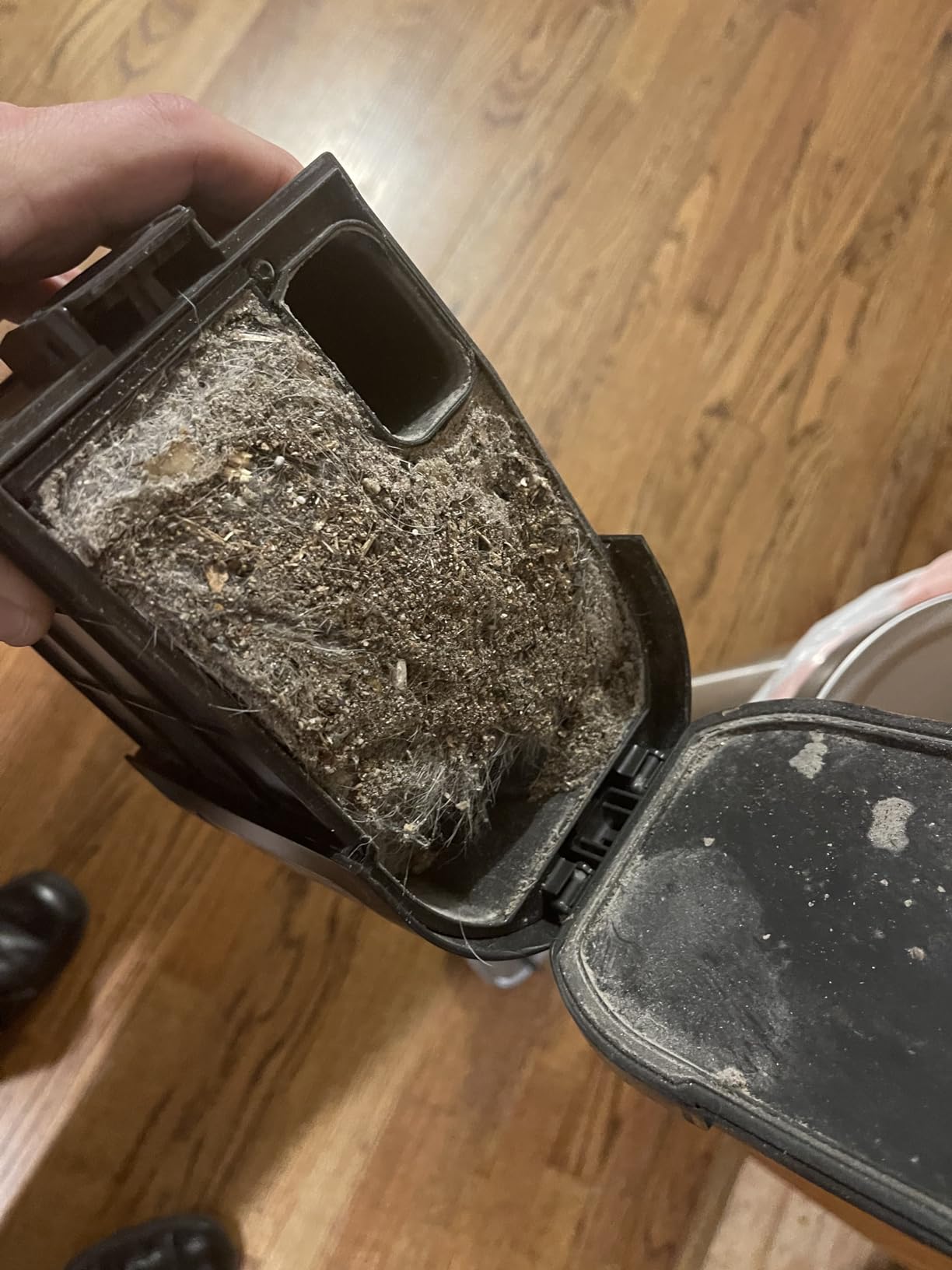
The NeverTouch Pro base is the other headline. It holds 60 days of debris, refills water for up to 30 days and washes and dries the pad automatically after every clean, and it captures 99.97 percent of pet allergens down to 0.3 microns with odour neutralisation built in.
DirtDetect boosts suction on heavy-debris zones and adds repeat passes over stains, and NeverStuck lifts the robot over obstacles and thresholds while keeping the pad above carpet. Five PowerDetect technologies work in combination rather than one at a time.
The honest concern is reliability. A 4.0 average with 15 percent one-star reviews is the weakest profile in this roundup, and at 120 minutes the runtime is one of the shortest, so a large home means more charge cycles than the ranking alone suggests.
Who the Shark PowerDetect suits
It suits owners of large open-plan rooms with long walls and lots of hard floor, where edge detail is the visible failure point of cheaper robots. The air-blow edge system is the reason to buy it over a similar priced alternative.
It also suits pet households that want allergen capture from the dock itself rather than from the robot body, and anyone who wants a single dock to empty, refill, wash and dry without weekly involvement.
Where it falls short
The rating spread is the real issue. Fifteen percent one-star reviews is a reliability signal we would not ignore in a machine intended to run unattended for months in a large house, and the 120-minute runtime compounds it.
9. ECOVACS DEEBOT T50S PRO Omni — Best for Low Furniture and 3.2 inch Clearance
ECOVACS DEEBOT T50S PRO Omni Robot Vacuum and Mop, 25,000 Pa Suction, ZeroTangle 3.0 Anti-Tangle, TruEdge 2.0 Extendable Brush & Mop, AIVI 3D Obstacle Avoidance, Auto Mop Wash & Dry, Self-Emptying
25000Pa suction
3.2 inch slim body
TruEdge 2.0
167F mop wash
Pros
- Fully embedded dToF LiDAR enables a 3.2 inch body that fits under low sofas
- TruEdge 2.0 extends brush and mop to a 1mm wall gap
- ZeroTangle 3.0 triple V-shaped brush cuts hair tangles
- OMNI station washes mops at up to 167F and dries at 113F
- AIVI 3D 2.0 structured-light obstacle avoidance
Cons
- Mopping uses pads rather than a pressurized roller
- Station footprint is roughly 21 by 21 inches
- 167F wash is matched by cheaper sibling models
- 4.1 rating reflects a mixed review distribution
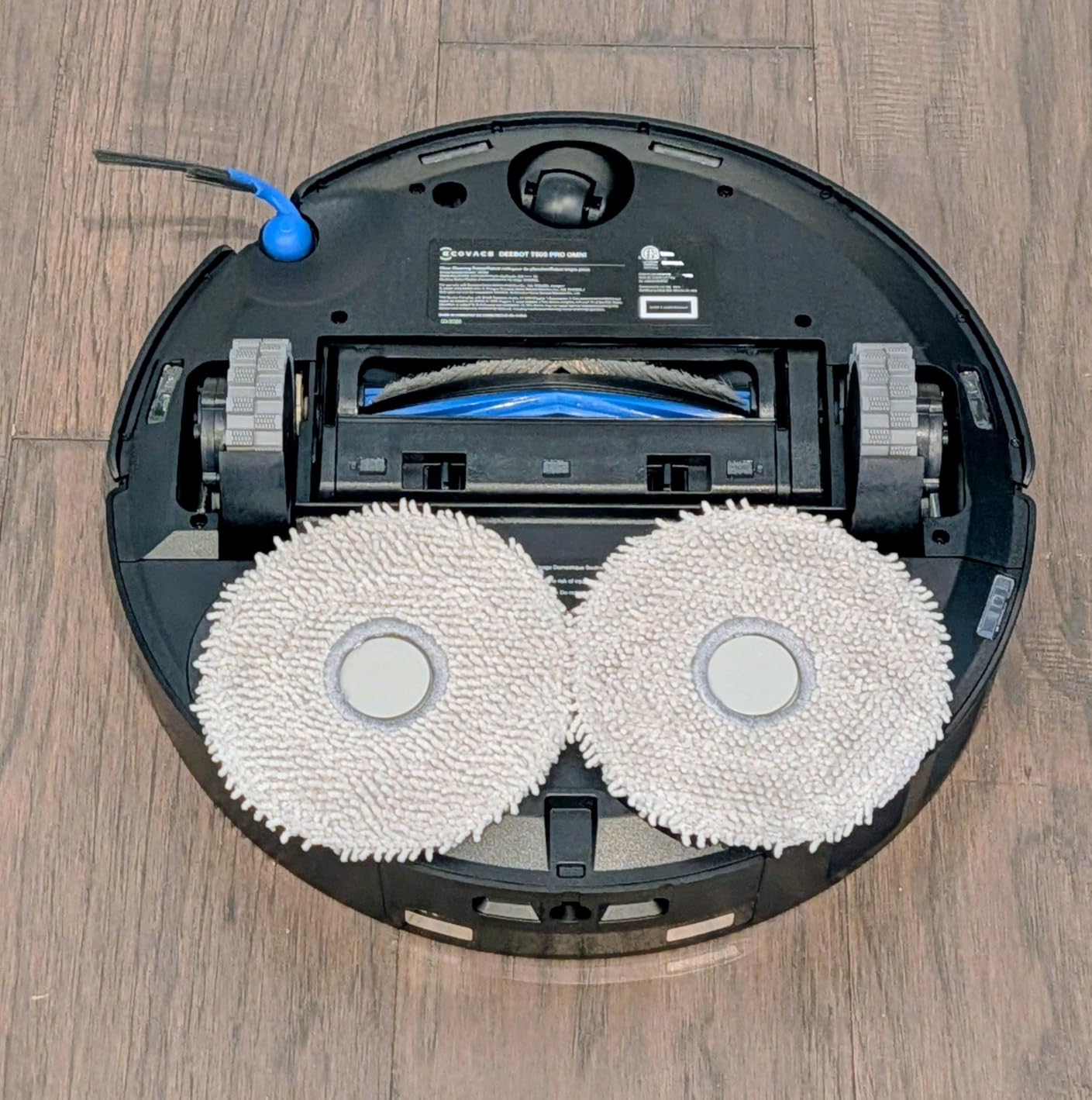
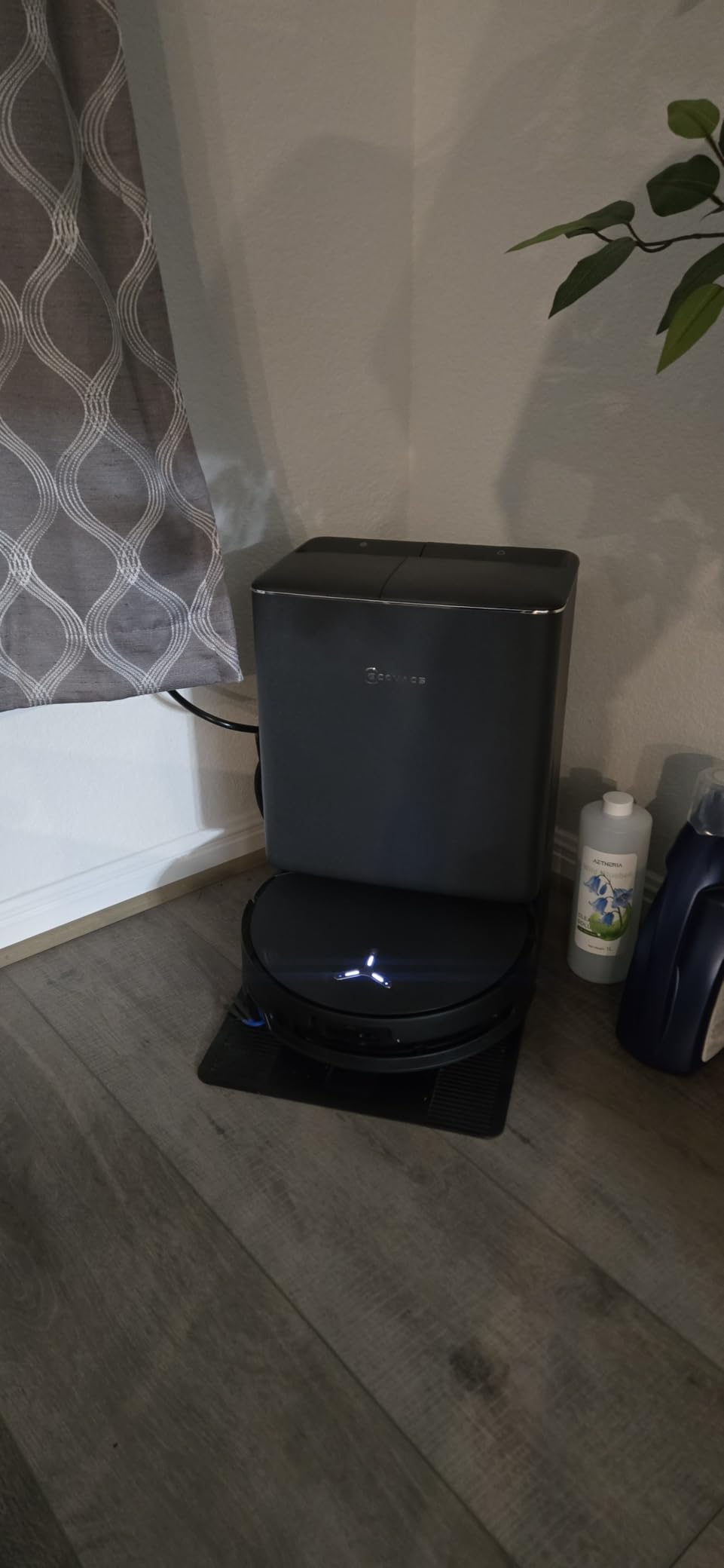
The T50S PRO Omni is the one to buy when your furniture is low. Fully embedding the dToF LiDAR tower inside the body produces a 3.2 inch chassis, which slides under sofas, beds and cabinets that stop every taller machine in this roundup dead.
TruEdge 2.0 dynamically extends the side brush and mop to within 1mm of a wall, so corners and skirting lines get cleaned rather than skipped. That combination, tight clearance plus genuine edge reach, is rare at this level.
Runtime is 200 minutes, which comfortably covers a large main level on hard floor. AIVI 3D 2.0 structured-light sensing handles cords and shoes, and the ECOVACS HOME app offers real-time video monitoring.
At 25,000Pa the suction is properly competitive, and the triple V-shaped ZeroTangle 3.0 brush lifts, collects and releases hair so it does not wrap around the roller. The OMNI station empties dust, washes mops at up to 167F and dries at 113F, which is enough to stop odour developing in a closed base over a long run.
Who the ECOVACS T50S PRO Omni suits
It suits homes with low sofas, platform beds and shallow cabinets, where a 4.1 inch body would simply not enter. In a large open-plan living area, the amount of under-furniture floor area is often surprising, and this machine gets to all of it.
It also suits buyers who want hot-water mop washing and extendable edge cleaning without moving up to a flagship platform, and owners with pets who want an anti-tangle brush without flagship pricing.
Where it falls short
Mopping uses pads rather than the pressurized self-cleaning roller on the T90 PRO Omni, so it will not lift dried spills the way a roller will. The station footprint of roughly 21 by 21 inches is large, and the 167F wash temperature is matched rather than beaten by cheaper models in the range.
The 4.1 rating comes from a mixed distribution, 62 percent five-star against 10 percent one-star on a newer release, so expect some early-unit variance. Owner threads on r/ecovacs also document mapping trouble that a community fix exists for, which we cover in the buying guide.
10. roborock Qrevo Curv 2 Flow — Best for Large Open Plans on a Middle Budget
roborock Qrevo Curv 2 Flow 2026 New Robot Vacuum and Mop, 20,000 Pa, SpiraFlow Real-Time Self-Cleaning Roller Mop, Dual Zero-Tangle, AI Obstacle Avoidance, Heat-Washes & Dries Mop, Carpet Protection
20000Pa suction
242 min runtime
SpiraFlow roller mop
4 floor plans
Pros
- SpiraFlow roller self-cleans in real time at 15N pressure and 220RPM
- Dual Zero-Tangle system SGS certified at 0 percent entanglement
- 242-minute runtime with quiet overnight operation
- DirTect detects spills and switches to mop-only mode
- SmartPlan 3.0 app with no-go zones and voice control
Cons
- No auto-detergent dispenser
- Uses room-temperature water while mopping
- No extendable side brush for deep corners
- No threshold climbing or chassis lift
- No dedicated mop-only mode for whole rooms
The Qrevo Curv 2 Flow is the sweet spot for a 3,000 sq ft home with a big open middle. The 242-minute rated runtime is second only to the Saros 20 Flow here, and it is quiet enough to run overnight, which means one scheduled run often covers a full open plan rather than a nightly fragment.
Mopping is the standout. The SpiraFlow roller hydrates through eight points, scrapes itself clean and turns at 220RPM under 15N of pressure, and owners who have owned several roller-mop robots describe it as the one that avoids streaks. DirTect identifies mess types and lifts the brushes to mop-only mode when it finds a liquid spill.
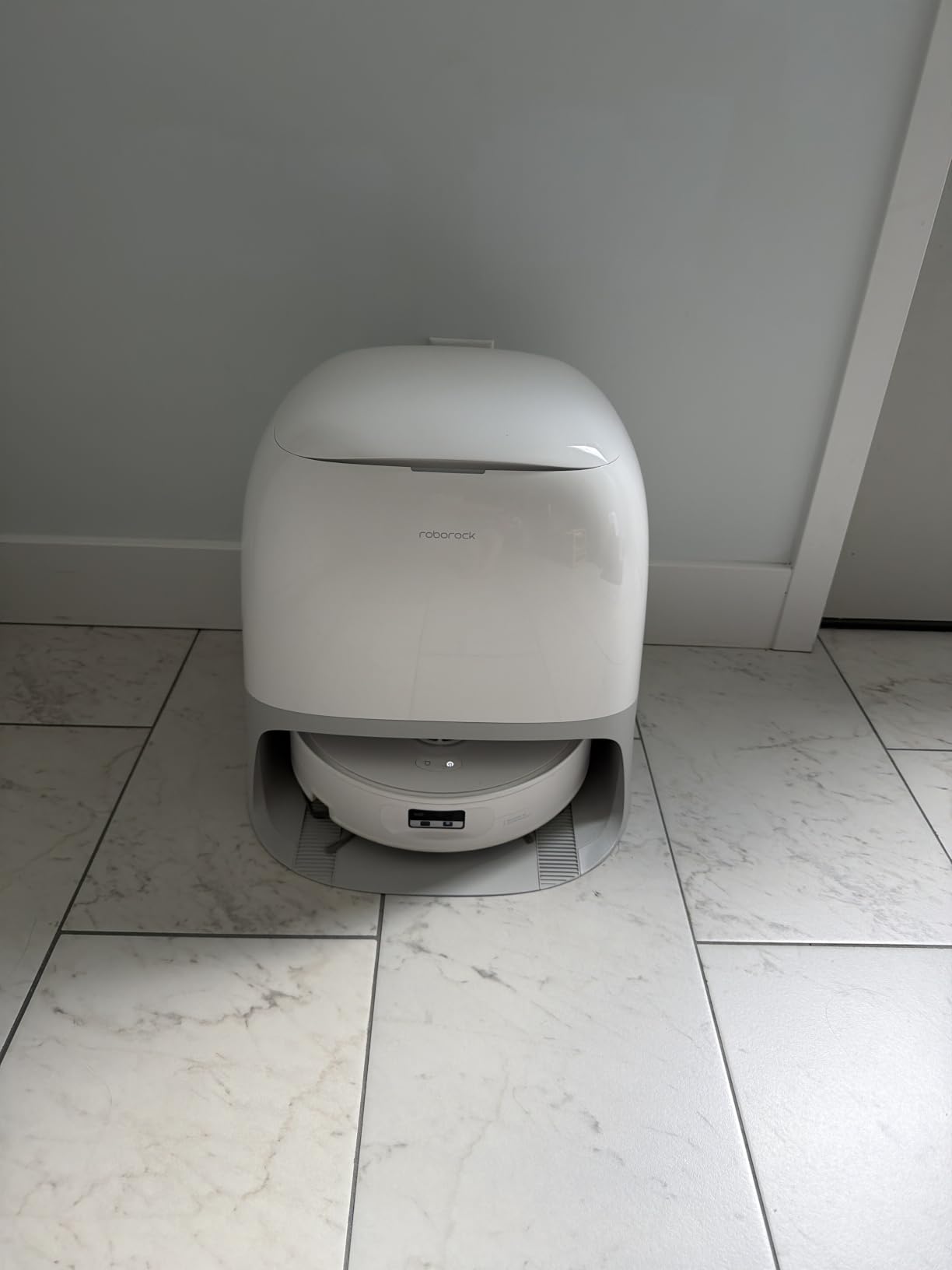
Carpet handling is handled by a one-tap strategy: suction boost, mop lift up to 15mm and a deploying roller shield for wet and dry separation. The dock self-empties, auto-refills, washes at 167F and dries at 131F, with smart re-wash and re-mop triggers when a pass is not clean enough.
PreciSense LiDAR with structured light recognises more than 200 object types and stores up to four floor plans. The SmartPlan 3.0 app is repeatedly described in reviews as the best in class, with no-go zones, Hello Rocky voice commands and Smart Return-to-Wash.
Who the Qrevo Curv 2 Flow suits
It suits owners of 2,500 to 3,500 sq ft open plans who want a single overnight run rather than a nightly partial clean. The runtime and the app automation make it easy to set and largely forget.
It also suits multi-pet households, since the Dual Zero-Tangle system is SGS certified at 0 percent hair entanglement, and anyone who mops as well as vacuums. Carpet protection is automatic rather than a zone you have to draw.
Where it falls short
There is no threshold climbing and no chassis lift, so in a split-level home it is limited to one elevation. It uses room-temperature water while mopping and has no auto-detergent dispenser, so detergent goes in manually, and there is no dedicated mop-only mode for whole rooms.
There is also no extendable side brush, so deep corner reach is weaker than TruEdge or CornerRover rivals, and the tall body without retractable LiDAR will not go under low end tables.
11. ECOVACS DEEBOT T90 PRO Omni — Best for Hard-Floor Mopping Quality
ECOVACS DEEBOT T90 PRO Omni Robot Vacuum and Mop, 30000Pa Blast Suction
30000Pa suction
10.6 inch self-washing roller
200 min
PowerBoost
Pros
- OZMO Roller 3.0 is a 10.6 inch self-washing roller with pressurized scrubbing
- Instant self-cleaning roller rinsed with fresh flow water during mopping
- PowerBoost charging tops up during wash cycles and adapts to home size
- TruEdge 3.0 extends the roller 0.6 inch past the body
- ZeroTangle 4.0 guides hair into the suction path
- OMNI station washes to 167F and dries at 145F
Cons
- No full mop-only room mode
- Extendable roller can scrape thin water-based paint off baseboards
- Can wedge under low tables where clearance dips
- App is unintuitive at first with no tank sensor readout
On large hard floors, this is the one we would pick. The OZMO Roller 3.0 is a 10.6 inch roller that scrubs under continuous pressure and rinses itself with fresh-flow water in real time, so dried-on kitchen spills lift instead of being smeared across three tiles. That is a visible difference on tile, vinyl and sealed concrete.
PowerBoost charging is unusually relevant to large homes. It replenishes energy during dock wash cycles and the adaptive charging predicts needs by home size, so a 200-minute battery in a 3,000 sq ft house is stretched rather than constantly interrupted.
Suction is 30,000Pa BLAST high airflow, which cleans in a single pass over carpets and hard floors, and ZeroTangle 4.0 uses airflow to guide hair directly into the suction path. The 4L capacity and 60dB operation make it a comfortable machine to have running in an open plan.
TruEdge 3.0 extends the roller 0.6 inch past the body along baseboards, and a 0.6 inch roller lift with Carpets First mode gives true dry and wet separation. The dock washes to 167F, dries at 145F and self-cleans the dirty water system, and AGENT YIKO handles one-command cleaning.
Who the ECOVACS T90 PRO Omni suits
It suits owners of large hard-floor areas who mop seriously, particularly in kitchens, entryways and open-plan rooms where tile and sealed concrete dominate. The self-washing roller is the reason to choose it over a pad machine at a similar price.
It also suits households upgrading from Roomba and report cleaner floors and less edge grime, plus anyone who wants a dock camera for two-way video calls, pet search and pet snapshots.
Where it falls short
There is no full mop-only room mode, only mop-only for small zones, so a hard-floor-only pass has to be scheduled differently. The extendable roller can scrape thin water-based paint off baseboards, which is worth knowing in older homes with painted trim.
It can also wedge under low tables where clearance dips in the middle, the app is unintuitive at first with no sensor-based readout for the water tanks, and at 710 reviews it is the least proven platform in this roundup alongside the Dreame below.
12. dreame L40 Ultra Gen 2 — Best for Fast Full-Home Cleans
dreame L40 Ultra Gen 2 Robot Vacuum and Mop with 25,000Pa Suction
25000Pa suction
231 min runtime
1679 sq ft in Quiet Mode
DuoScrub
Pros
- 231 minutes and 1679 sq ft of coverage in Quiet Mode from a 5200mAh battery
- 25000Pa suction across five power levels
- Extendable side brush and mop reach corners and under furniture
- Four carpet modes including 0.41 inch mop lifting
- Off-peak charging support reduces running cost
Cons
- Auto-detergent dispenser is a separate accessory
- Body is too tall to fit under many couches
- Mop pads detached twice in one owner account
- Loud voice announcements during dock cycles
The L40 Ultra Gen 2 is the one with a published coverage figure, and it is the most useful number in this entire roundup: 231 minutes and 1,679 sq ft in Quiet Mode from a 5,200mAh battery. That gives you a real anchor for the square-footage question rather than an inference from runtime alone.
It also has the quietest operating logic here. Cleaning at Quiet Mode is the slowest and longest route, so treating 1,679 sq ft as the measured baseline and scaling expectations around it is far more honest than quoting a maximum-mode number nobody can achieve.
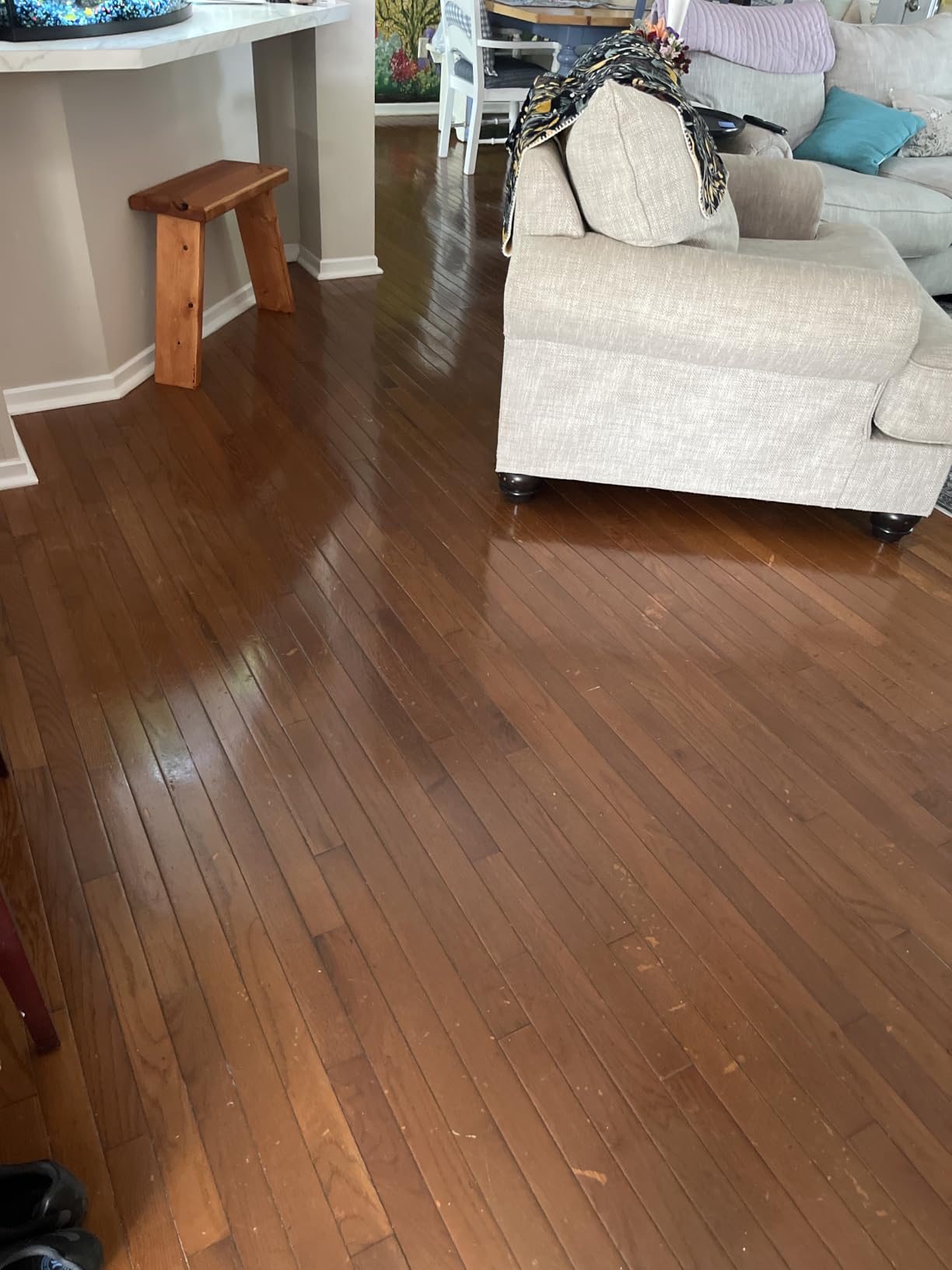
At 25,000Pa across five power levels with DuoScrub mopping, it handles pet hair and embedded grit well, and the extendable side brush and mop reach corners and the underside of furniture. Four carpet modes cover avoidance, suction boost, intensive cleaning and 0.41 inch mop lifting, and Smart Pathfinder with 3DAdapt navigation avoids shoes and cords.
Owners switching from Roomba report roughly a third of the total cleaning time on a 1,500 sq ft main floor. Alexa, Siri and Google Home support is present, and off-peak charging trims the running cost of a long cycle.
Who the dreame L40 Ultra Gen 2 suits
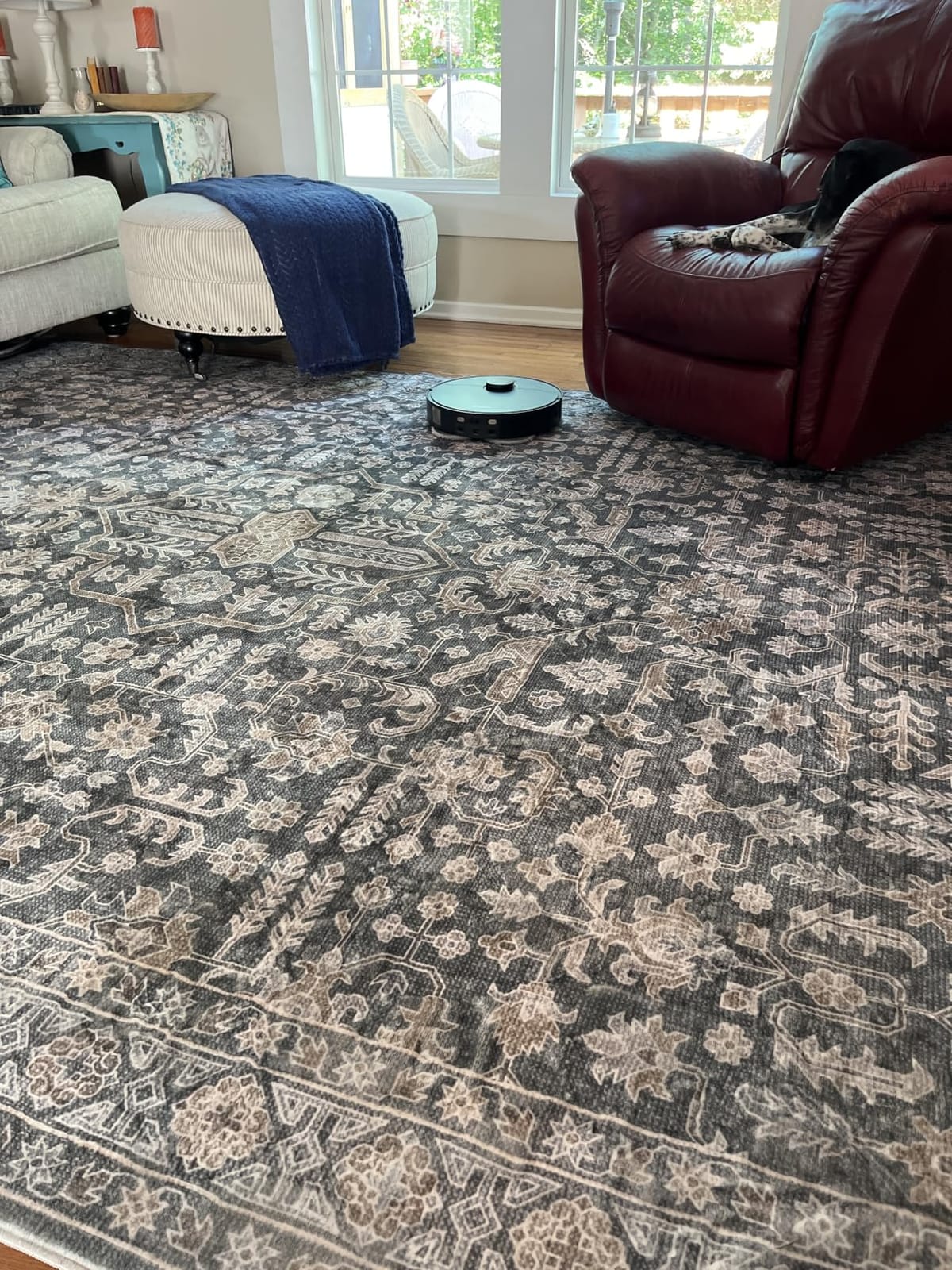
It suits owners of 1,500 to 2,500 sq ft homes who want the whole floor done in one pass rather than a nightly fragment. If your main level fits comfortably inside the published 1,679 sq ft, this machine finishes the job without a second charge.
It also suits households moving up from a Roomba and expecting a shorter clean, and anyone who wants extendable edge tooling and carpet lifting without a flagship-tier commitment.
Where it falls short
The auto-detergent dispenser is sold separately, which is an odd split given the dock otherwise handles washing and drying. The body is too tall for many couches, a real loss if you currently use a low-slung Roomba under the sofa.
One owner reported the mop pads detaching twice and the robot getting stuck once, and the loud voice announcements during dock maintenance are irritating in a quiet house. At 545 reviews the long-term record is still thin, and the foam filter is a step below a sealed cartridge.
How to Choose a Robot Vacuum for a Large Home
The framework below is what we use when someone asks which of these fits their house. It is built around floor area, floor type and layout, because those three variables decide almost everything before brand preference enters the picture.
Match runtime to square footage before anything else
Start with the area you actually need covered, not the total floor area of the property. A large home with a small main level is a much easier problem than a compact home with 3,000 sq ft of open plan, and buyers regularly misjudge this.
The only honest coverage figure published by any manufacturer in this roundup comes from the dreame L40 Ultra Gen 2, at 1,679 sq ft in Quiet Mode on a 231-minute battery. Treat that as a realistic anchor for a modern large machine, then adjust. Thick carpet drains a battery far faster than hard floor, and running maximum suction roughly halves the time you get, so a house that is half carpeted will cover considerably less per charge than the same square footage on tile.
A practical rule: below 1,500 sq ft of hard floor, almost anything here works. Between 1,500 and 2,500 sq ft, prioritise 180 minutes or more plus reliable recharge-and-resume. Above 2,500 sq ft, look for 200 minutes and up, and consider whether you can schedule overnight runs so the charging interruptions never bother you.
Recharge-and-resume is the feature that decides big layouts
Recharge-and-resume means the robot returns to the dock when the battery drops, charges to a set threshold, then continues from exactly where it stopped rather than restarting the floor. In a 3,000 sq ft open plan this happens two or three times a run, and it is the difference between one scheduling job and several.
Forum owners consistently treat it as mandatory rather than optional at this size, and the complaint that appears most often is not that robots cannot handle big floors, it is that they spend so long shuttling that a full clean stretches past the time anyone will wait. Check that the resume threshold is high enough to be worth the dock trip, and that the app shows progress across a whole-floor job.
Multi-floor mapping and moving a robot between floors
For a two- or three-storey home, the count of saved floor plans matters more than map quality. The eufy E25 stores up to five with automatic floor switching, the Roborock Qrevo Curv 2 Flow stores up to four, and the Saros 20 Flow handles double-layer thresholds up to 3.46 inches. Most others in this roundup do not advertise multi-level memory at all.
Automatic switching is worth paying for, because carrying a robot between floors means finding a clear spot, lifting it onto the dock and hoping it recognises the level. If your home is genuinely split-level rather than stair-adjacent, check threshold climbing before anything else, since that number ranges from 1.65 inches on the eufy Omni S2 to 3.46 inches on the Saros 20 Flow.
LiDAR versus camera navigation and obstacle avoidance
LiDAR systems map with a spinning sensor and do not record video. Camera-based systems can identify a wider range of objects, including pet waste, which is genuinely useful, but they carry a privacy consideration and more opportunities for misclassification in unusual geometry.
The eufy C28 is the camera-free option that still detects obstacles down to 3cm. The Roborock Qrevo Curv 2 Flow and Saros 20 Flow use LiDAR with structured light for 200 to 300 plus recognised object types, and the ECOVACS T90 PRO Omni pairs an RGB camera with a dock that supports video calls and pet search. Choose based on your tolerance for cameras, not on marketing.
Large homes with big windows and unusual angles are where mapping breaks. Owners report that a clean first map sometimes needs suction set to low with auto-boost disabled, and that is a known community workaround rather than a defect. Do the first mapping run before you move furniture into place.
Mopping tiers: pad, sonic and self-cleaning roller
There are three tiers, and in a large home the difference is magnified. Pads are cheapest and smear. Sonic pads, such as the Roborock Q10 S5+ VibraRise at up to 3,000 scrubs per minute, are a clear step up. Self-cleaning rollers, which hydrate and scrape themselves mid-run, are the only tier that handles dried spills properly.
Within the roller tier, look at whether the water is heated. The ECOVACS T50S PRO Omni and T90 PRO Omni wash at up to 167F, the Roborock Qrevo Curv 2 Flow at 167F, and the Saros 20 Flow at 212F with pressurised hot water. The Qrevo Curv 2 Flow mops with room-temperature water, which is fine for maintenance and disappointing for stains.
Mop lift matters if you have rugs. Figures range from 8mm on the Roborock Q10 S5+ to 15mm on the Roborock pair, with the iRobot Max 775X Combo solving it physically by retracting and shielding the roller.
Dock footprint, plumbing and placement
The dock is the most underestimated constraint in a large home. Heights range from 17.17 inches for the eufy E25 up to 26.38 inches for the eufy Omni S2, and footprints run from a compact 11 by 13 inch footprint to roughly 21 by 21 inches for the ECOVACS T50S PRO Omni. Measure the alcove before you buy.
Plumbing is the next question. Most stations auto-refill from an internal tank, which in a 3,000 sq ft home means refilling more often than you expect. Only the eufy Omni S2 offers an optional auto-refill and drain module that connects to household water lines, which is the difference between a robot and an installed system.
One robot or two for 4,000 sq ft and up
Above roughly 4,000 sq ft, or on any home with two genuinely separate floors, two mid-range robots docked on each level frequently beat one flagship. The maths is simple: the flagship with a 300-minute battery still has to physically travel from dock to far wing of the house, and carrying it between floors is a manual task you will stop doing.
Two robots also means redundancy. When one is washing a mop or being emptied, the other is still cleaning, and no large-home owner we read described two docked robots as more work. The forum consensus is to treat long runtime and recharge-and-resume as mandatory at 4,000 sq ft, which is exactly the point at which two units start to make sense.
Running costs, filters and bags over five years
The purchase figure is the smallest part of a five-year cost. Every model here needs dust bags or a bin emptied, filters replaced on a schedule, side brushes and main brushes renewed, and mop pads or rollers replaced as they wear. Brands that lock you into proprietary cleaning solution add a recurring consumable cost on top.
Two practical filters for running costs. First, bagless self-emptying stations avoid bag purchases entirely, and owners with pets in particular tend to prefer them for that reason. Second, if your home is large enough to need a dock plumbed in or a second robot, budget for a water connection rather than planning to refill tanks by hand for five years.
App and firmware reliability, and noise in open plans
Apps are the most common long-term complaint in owner threads, and firmware updates are a known source of regression, with some owners reporting battery drain changes shortly after an update. Treat the first two months after purchase as a settling period, keep firmware current rather than ignoring prompts, and check whether the app supports room-by-room scheduling before you commit.
Noise matters more in a large open plan than the decibel figure suggests, because there is nowhere for the sound to go. Measured figures range from 54.89dB on the eufy C28 to 66.6dB on the Saros 20 Flow. If the robot will run while you work in the same space, quieter is meaningfully better, and scheduling to overnight is easier than asking people to adapt.
For the wider context of running more connected hardware through a big property, our guide to robot vacuums for homes and our pick of water heaters for large homes both come down to the same point: size your system to the floor area, not the average home.
Frequently Asked Questions
How big of a house can a robot vacuum handle?
Modern self-emptying robots handle 1,500 to 2,000 sq ft of hard floor on one charge, with recharge-and-resume covering anything larger. The only published coverage figure in this roundup is 1,679 sq ft in Quiet Mode from the dreame L40 Ultra Gen 2. Carpet and maximum suction both cut that significantly, so above 3,000 sq ft plan on overnight runs or two robots.
What is the best robot vacuum and mop for a large house?
The eufy E25 is the best all-round choice, pairing a 75-day all-in-one station with a self-cleaning HydroJet roller mop and five saved floor plans. For split-level homes the Roborock Saros 20 Flow wins on 301-minute runtime and 3.46 inch threshold climbing, and for low furniture the ECOVACS T50S PRO Omni at 3.2 inches tall is the fit.
What is the best robot vacuum for a house of 2000 square feet?
At around 2,000 sq ft of hard floor, anything with 150 minutes or more of rated runtime and reliable recharge-and-resume will finish in one pass. The eufy E25, Roborock Qrevo Curv 2 Flow and ECOVACS T50S PRO Omni all clear that bar, and the Roomba 105 Combo is the budget route if you want a bagged self-emptying dock.
Should I get one robot vacuum per floor?
Above roughly 4,000 sq ft, or on any home with two genuinely separate floors, two mid-range robots docked one per level often work better than a single flagship. Each robot can start from its own dock instead of travelling across the whole property, and a second unit keeps cleaning while the first washes its mop.
Are self-emptying docks worth the extra money for a large home?
In a large home they are close to essential. A bin that needs emptying every other run means handling collected dust, and a 2.7L to 3L bag running 60 to 75 days between changes removes that from your routine entirely. Mop washing and hot-air drying add more, since a self-washing dock is what keeps a long run from smearing a dirty pad across the floor.
The Best Robot Vacuums for Large Homes in 2026: Final Verdict
The eufy E25 takes our top spot among the best robot vacuums for large homes because it does the unglamorous things well: five saved floor plans, automatic floor switching, a fully self-contained station that runs about 75 days, and a roller mop that cleans itself while it works. Very few machines at any tier combine all four.
Buy the Roborock Saros 20 Flow instead if your home has steps, split levels or more than about 3,000 sq ft, because 301 minutes and 3.46 inch threshold climbing solve problems no amount of suction fixes. Buy the ECOVACS T50S PRO Omni if your furniture is low, and the eufy Omni S2 if allergies drive the decision.
For everyone else, the deciding question is simple: measure the floor area of your main level, then pick the machine whose runtime and dock cycle fit it. Check the price on the button below, set the dock somewhere sensible, and let it run overnight.