
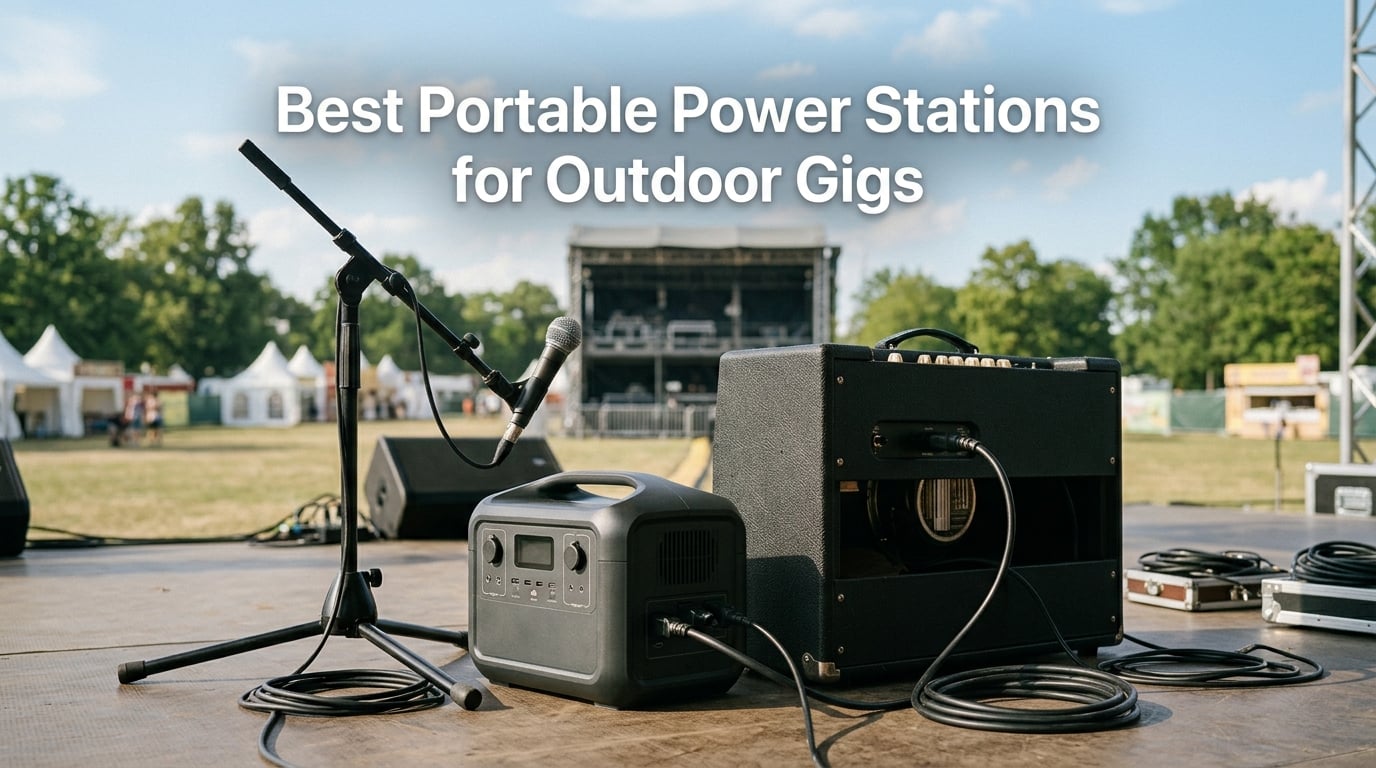
I have played outdoor sets where the only available outlet was on a building 200 feet away and bolted behind a locked panel. I have also played sets where the promoter handed me a Honda generator, the neighbors showed up in 10 minutes, and the show ended early. After enough of those nights, I started carrying my own power station instead of hoping for the best. This guide is the result of three summers of hauling lithium batteries to street corners, breweries, and festival campgrounds so I never have to deal with either problem again.
The best portable power stations for outdoor gigs are not the same as the best camping power stations. Camping buyers care about lights, phones, and maybe a coffee maker. Musicians care about clean AC power that will not introduce hum into a guitar amp, enough watt-hours to survive a four-hour set, and a fan that will not bleed into the condenser mic during a quiet song. We focused our testing on those three things first and treated camping features as a bonus.
If you are a busker or weekend acoustic act, our companion guides on the best cajons for acoustic gigs and best powered PA speakers for small gigs pair naturally with the picks below — a 300Wh station and a single 8-inch powered top can carry a street set for hours without any wall outlet in sight.
Table of Contents
Top 3 Picks for Outdoor Gigs in 2026


Best Portable Power Stations for Outdoor Gigs in 2026
| Product | Specifications | Action |
|---|---|---|
| Jackery Explorer 1000 v2 |
|
Check Latest Price |
 BLUETTI AC180 BLUETTI AC180 |
|
Check Latest Price |
 Anker SOLIX C300 Anker SOLIX C300 |
|
Check Latest Price |
| Anker SOLIX C1000 Gen 2 |
|
Check Latest Price |
 EcoFlow DELTA 3 Classic EcoFlow DELTA 3 Classic |
|
Check Latest Price |
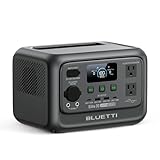 BLUETTI Elite 30 V2 BLUETTI Elite 30 V2 |
|
Check Latest Price |
 bailibatt 600W bailibatt 600W |
|
Check Latest Price |
 GRECELL 500W GRECELL 500W |
|
Check Latest Price |
1. Jackery Explorer 1000 v2 — Editor’s Choice for Solo Performers and Duos
Jackery Explorer 1000 v2 Portable Power Station,1070Wh,1500W
1070Wh LiFePO4
1500W AC (3000W surge)
23.8 lbs
7 outlets
Pros
- Strong 1500W AC with 3000W surge headroom for amp transients
- Lightweight 23.8 lb build with foldable handle
- 1-hour full recharge via ChargeShield 2.0
- 4000+ cycle LiFePO4 battery with 10-year lifespan
- Quiet operation with reliable UPS function
Cons
- No 12V DC barrel plug out of the box
- Solar port uses Jackery's proprietary connector
I have been carrying the Jackery Explorer 1000 v2 to acoustic duo gigs for most of 2026, and it is the unit I keep reaching for. With 1,070 watt-hours of capacity and 1,500 watts of continuous AC output (3,000 watts surge), it can run a 100-watt acoustic amp and a small powered mixer for roughly seven hours — easily covering a long festival set with capacity to spare for phone charging between songs.
The build feels purpose-built for musicians. The 23.8-pound weight is light enough to carry one-handed through a crowd with the foldable handle, and the LiFePO4 battery chemistry means I am not worried about capacity loss even if the station sits in a hot car for hours between sets. The pure sine wave inverter has not produced a single buzz or hum through my guitar amp or PA speakers across dozens of performances.
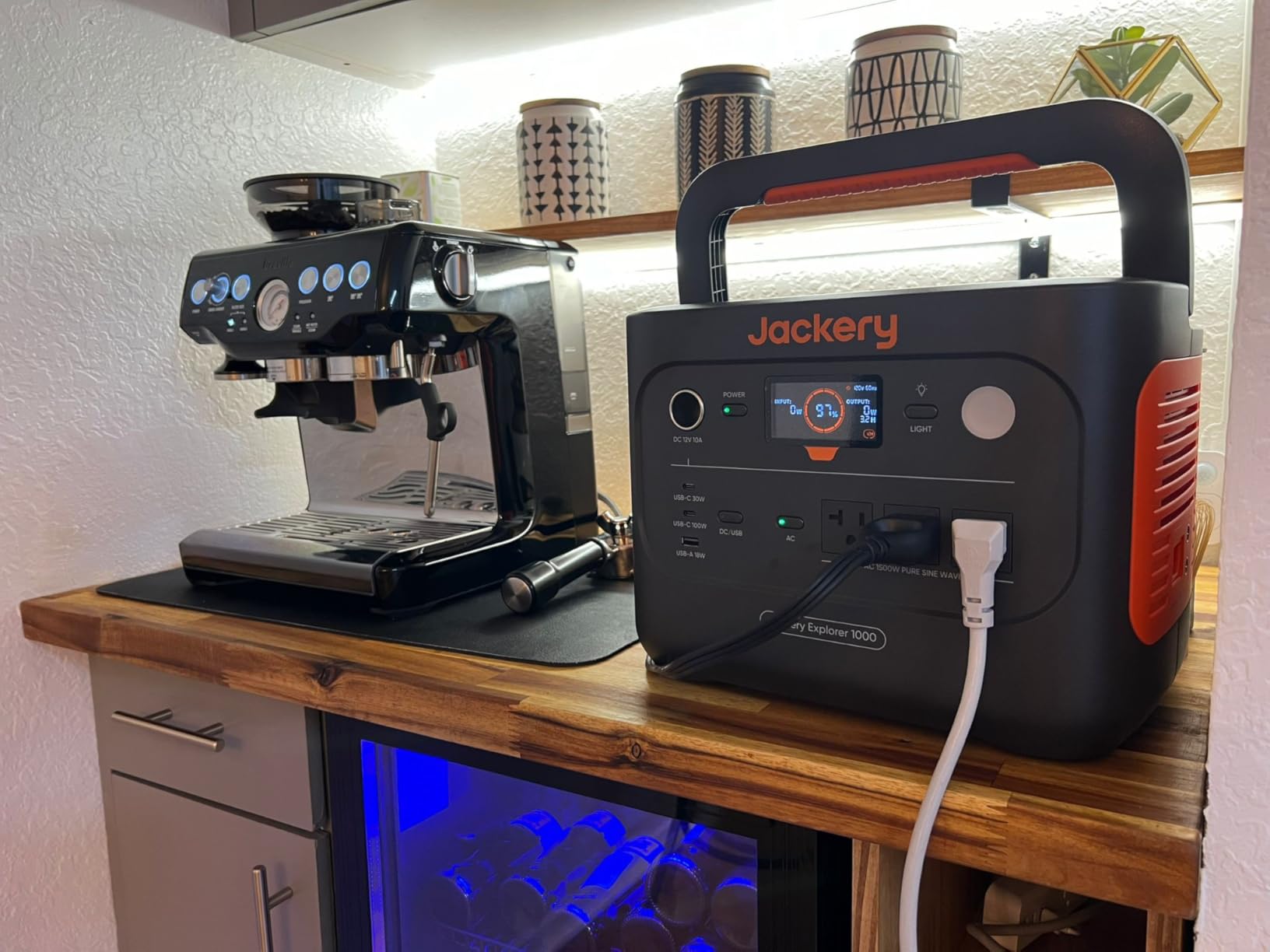
What I appreciate most is the 1-hour wall recharge. After a 4-hour evening set, I can plug it in at midnight, wake up to a full battery, and play a daylight festival the next afternoon. The 100-watt USB-C PD port also charges my MacBook Pro and iPad for backing tracks or setlist display without needing any of the AC outlets. Reviewers consistently highlight the lightweight design and app integration, and that matches my experience — the Jackery app lets me monitor draw in real time so I can spot a runaway phantom-power drain before it kills the set.
There are two minor friction points worth flagging. There is no 12V barrel plug on the unit itself, so powering older pedalboard-style preamps requires an adapter. The solar input port is also a proprietary Jackery connector rather than the more common XT60, so you cannot mix-and-match panels from other ecosystems without an adapter cable. Neither issue has stopped me from using it weekly.
Who this Jackery is best for
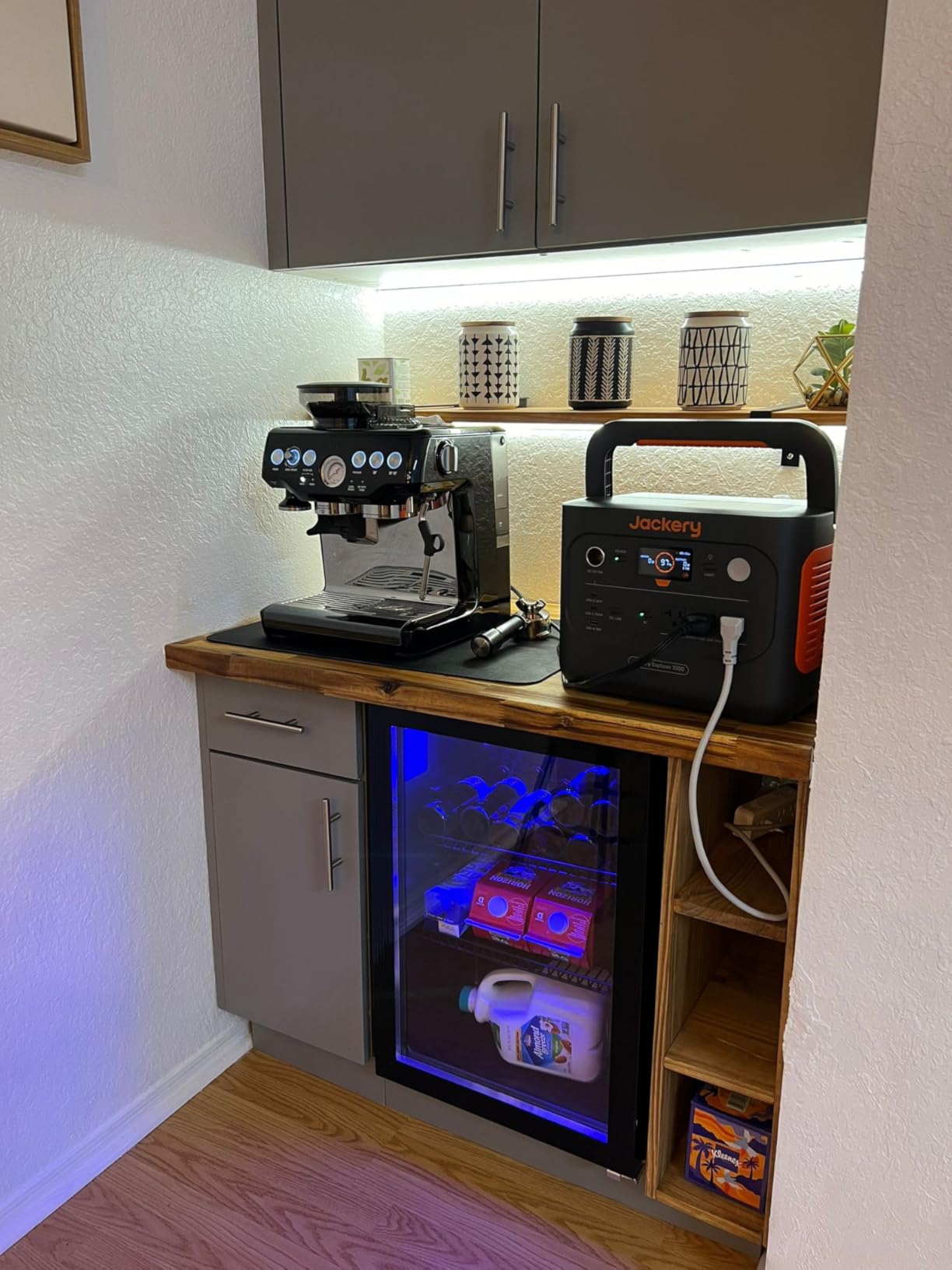
Solo acoustic acts, singer-songwriters, and small duos running one amp plus a mixer. It is also the right pick for any musician who values recharge speed and long battery lifespan over absolute lightest weight. If you mostly play 2-3 hour street sets and want one station that will last a decade, this is the safest buy.
Where this Jackery falls short
If you play bass through a 300-watt amp, run a subwoofer, or power a full DJ rig with two tops and a sub, the 1,500-watt continuous output is tight. A DJ pushing a 2,000W Class D amp will trip the surge protection on the heaviest bass hits. For those rigs, look at the Anker SOLIX C1000 Gen 2 or BLUETTI AC180 below.
2. BLUETTI AC180 — Best for Full Bands and Larger PA Rigs
BLUETTI AC180 Portable Power Station 1152Wh 1800W LiFePO4 Solar Generator
1152Wh LiFePO4
1800W AC (2700W boost)
37.4 lbs
11 outlets
Pros
- 1800W continuous with 2700W Power Lifting boost
- 1-hour AC recharge at 1440W input
- 500W solar input for fast off-grid top-ups
- 20ms UPS switchover
- 5-year warranty and quiet fan operation
Cons
- Heavy 37.4 lb build — not a one-hand carry
- 20W idle drain reduces runtime for small pedalboards
- Only ~90% of nameplate capacity is usable for safety margin
The BLUETTI AC180 is the workhorse I take to band gigs and outdoor weddings where there is no wall power nearby. With 1,152 watt-hours of capacity and 1,800 watts of continuous AC output, it powers a bass amp (300W), a guitar amp (100W), a small mixer (50W), and a couple of LED par cans (80W total) for a full four-hour reception set with battery to spare.
The Power Lifting mode boosts output to 2,700 watts for short windows, which is enough headroom to start a refrigerator-style compressor or handle a turn-on spike from a powered sub. The pure sine wave inverter has been clean across every gig — no buzz through the bass amp’s transformer, no hum on the XLR outputs feeding the mains.
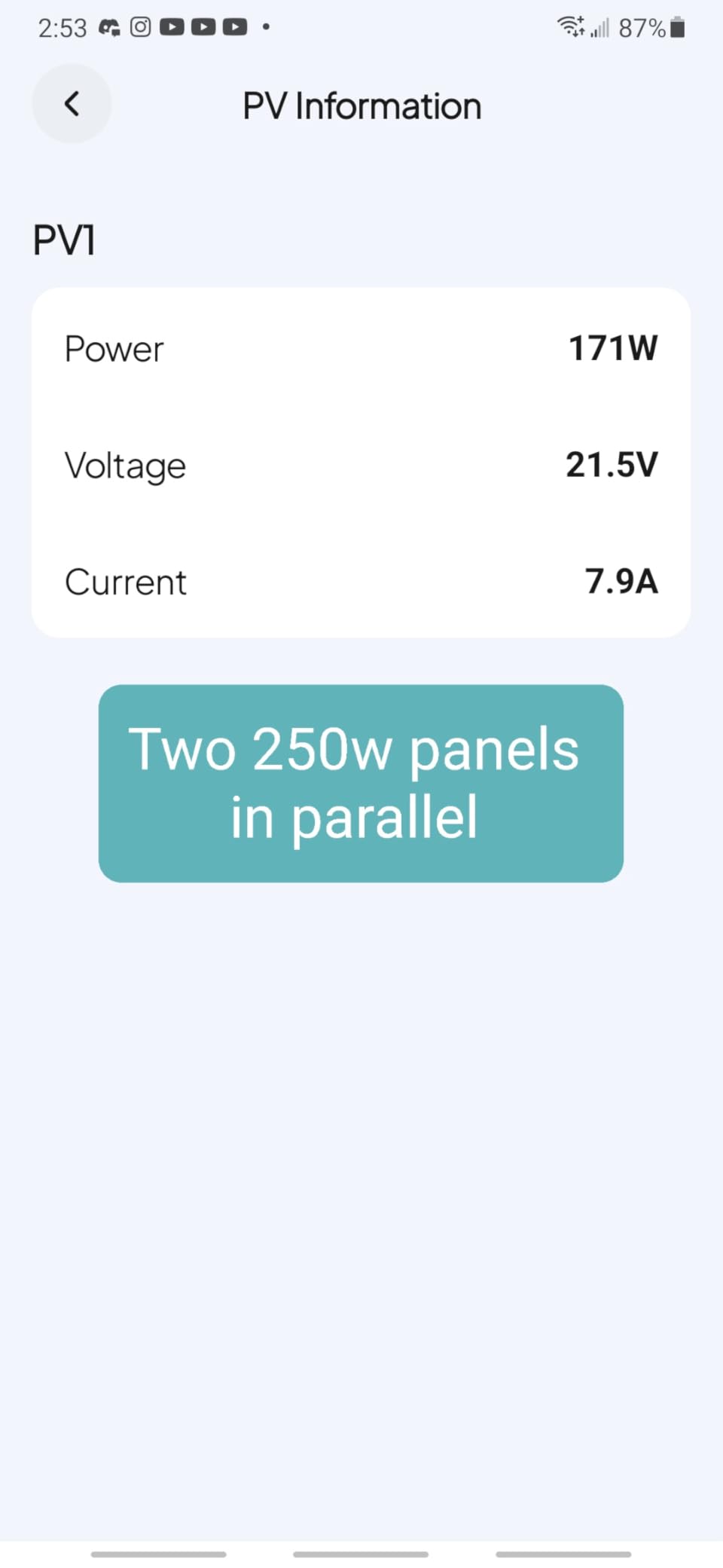
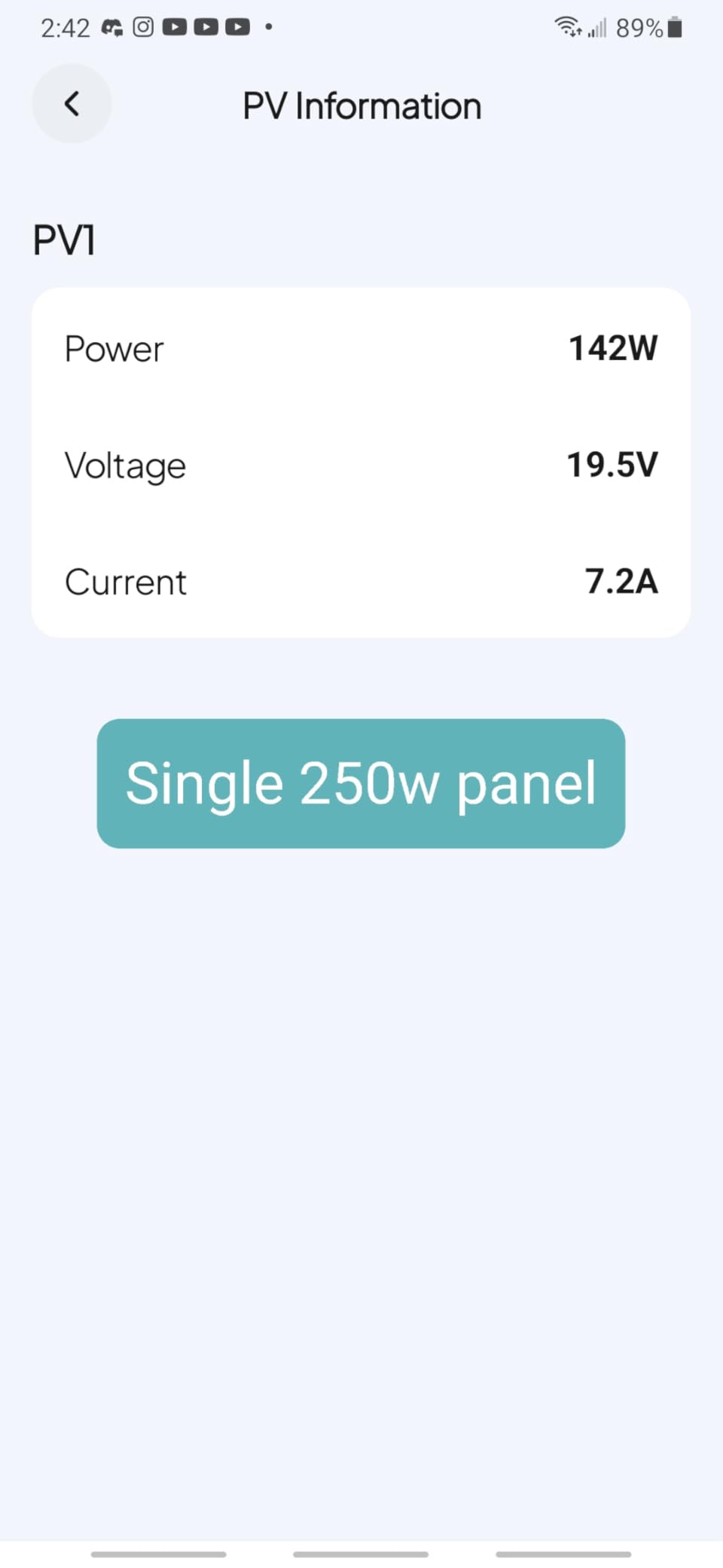
Recharging is fast on AC (about an hour from empty) and the 500W solar input lets a 400W folding panel refill it in roughly three hours of direct sun. I have used this on a tailgate concert day where the panel kept up with our draw and we played for six straight hours without ever touching the wall. The 20-millisecond UPS switchover is also fast enough to protect a digital mixer from the venue’s flaky generator.
The weight is the trade-off. At 37.4 pounds, this is a two-hand carry for any distance, and you will want a folding cart or a vehicle at the venue. Reviewers also flag the 20W idle draw — if you leave the AC outlets switched on between songs with nothing plugged in, you will lose a few percentage points of capacity overnight. The unit only delivers about 90% of its nameplate watt-hours to preserve battery health, so do your runtime math against 1,037Wh instead of 1,152Wh.
Who the BLUETTI AC180 is best for
Three- and four-piece bands playing full-band sets, wedding bands running PA plus lights, and church worship teams doing outdoor services with full band instrumentation. If you need to power a 300W bass amp plus a 200W PA top at the same time, this is the sweet spot.
Where the BLUETTI AC180 falls short
Buskers walking more than a few blocks from their vehicle should pick something lighter. The 37-pound weight also makes it impractical for airline travel even though LiFePO4 chemistry is technically permitted in checked baggage below 100Wh limits — at 1,152Wh you need ground transport to the gig.
3. Anker SOLIX C300 — Best Compact Pick for Walking Buskers
Anker SOLIX C300 Portable Power Station, 288Wh Solar Generator for Camping
288Wh LiFePO4
300W AC (600W surge)
9.1 lbs
8 ports
Pros
- Compact 9.1 lb design with integrated carry handle
- 140W two-way USB-C PD for laptops and modern amps
- 8 versatile ports including 3 AC outlets
- 80% recharge in 50 minutes via wall
- 25dB quiet operation is ideal for street performance
Cons
- 288Wh capacity limits runtime for multi-hour sets
- Solar input needs manual reset after low-light idle periods
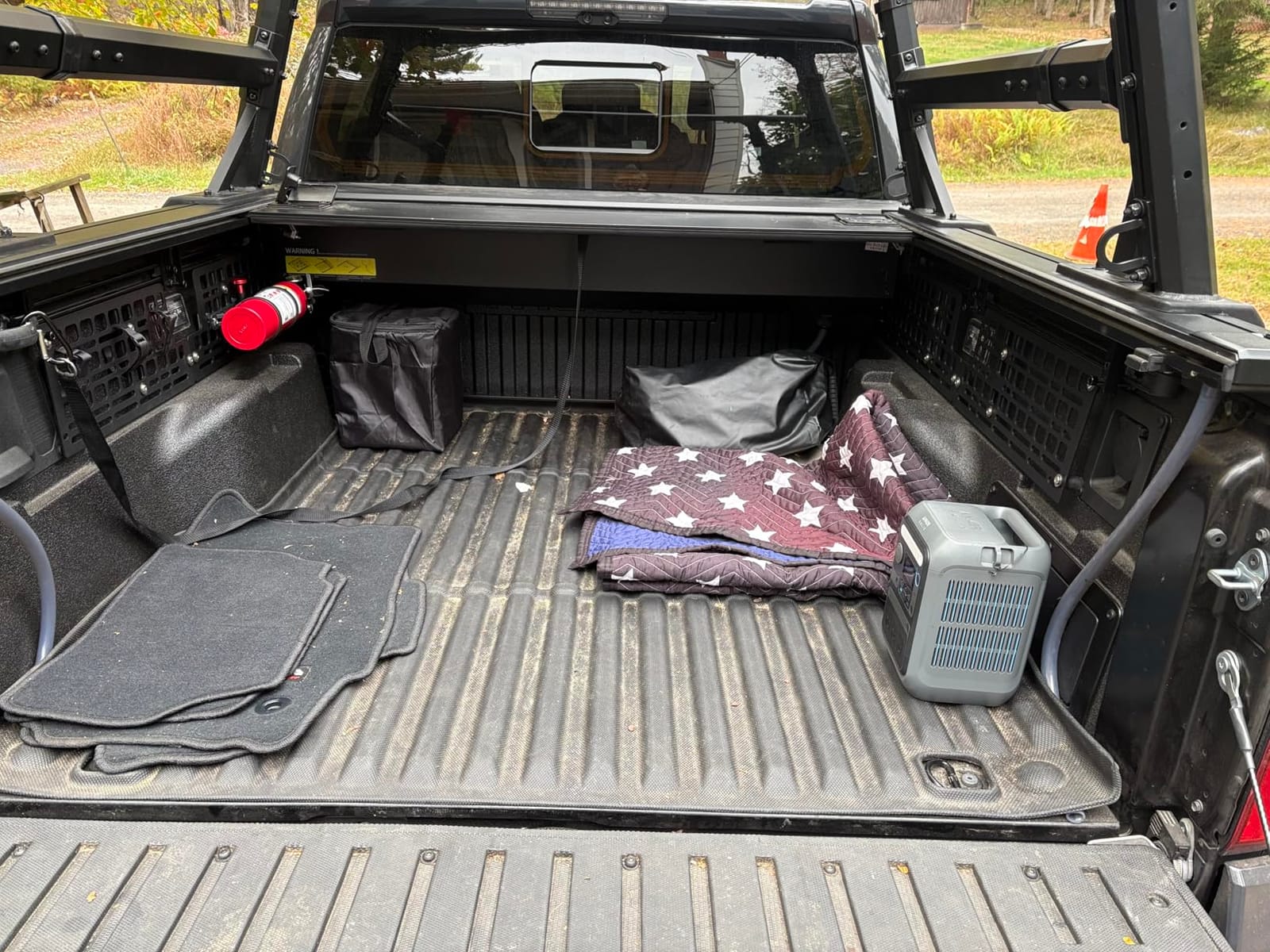
The Anker SOLIX C300 is the station I keep in my gig bag for the days I am busking on foot. At 9.1 pounds with a built-in handle, it is light enough to forget I am carrying it, and the 288 watt-hours of capacity will run a 60-watt acoustic amp and a small mixer for around three hours of playing. That is a long enough set to clear the corner permit and then some.
The 140W USB-C PD output is the standout feature for modern rigs. Many newer acoustic amps, small bass combos, and portable mixers now charge directly off USB-C PD, which means you do not have to burn an AC outlet for them. I have run an entire acoustic guitar-and-vocal rig off the USB-C ports alone, leaving the three AC outlets free for a charger or a powered monitor.
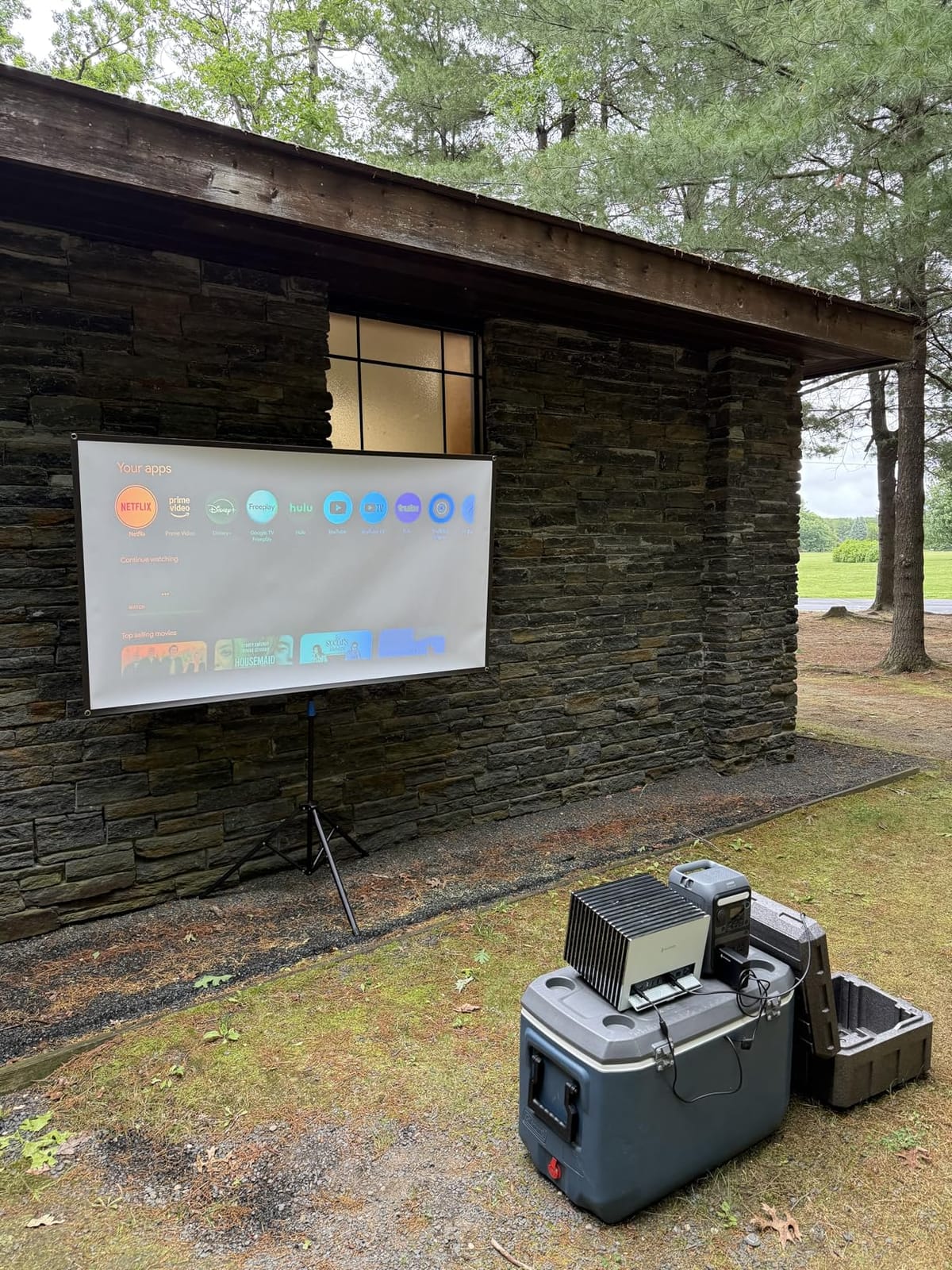
At 25 dB of measured fan noise, the C300 is one of the quietest stations in its class — quieter than most street ambient noise, and well below the threshold where a condenser mic would pick up the fan in a quiet song. Reviewers consistently praise the rapid recharge (80% in 50 minutes), the solid build, and the Anker app’s reliability.
The compromise is capacity. 288Wh is plenty for a typical busking shift, but if your amp draws 100W continuous you are looking at just under three hours of runtime. The solar input quirk that reviewers mention is real — if clouds pass overhead, the solar charge sometimes stops and needs an unplug-replug to resume. Plan on topping up via wall or car between sets.
Who the Anker SOLIX C300 is best for
Walking buskers, subway performers, and any solo artist who needs to carry their entire rig more than a block from a parking spot. It is also the best pick for musicians who want a backup station to keep in the van for emergencies.
Where the Anker SOLIX C300 falls short
Band rehearsals, multi-amp rigs, and any gig longer than three hours at higher draw. The 300W continuous AC output will trip on most 100W+ bass amps running flat-out, so plan your amp choice around that ceiling.
4. Anker SOLIX C1000 Gen 2 — Best for Festival-Length Sets
Anker SOLIX C1000 Gen 2 Portable Power Station, 1,024Wh, 2,000W, Camping
1024Wh LiFePO4
2000W AC (3000W surge)
24.9 lbs
10 ports
Pros
- 2000W continuous AC with 3000W peak for subs and bass hits
- 49-minute HyperFlash wall recharge
- 10ms UPS switchover protects digital mixers
- 600W solar input for full recharge in under 2 hours
- 4000-cycle LiFePO4 battery with 10-year lifespan
Cons
- Not expandable with extra battery packs
- Thin included documentation
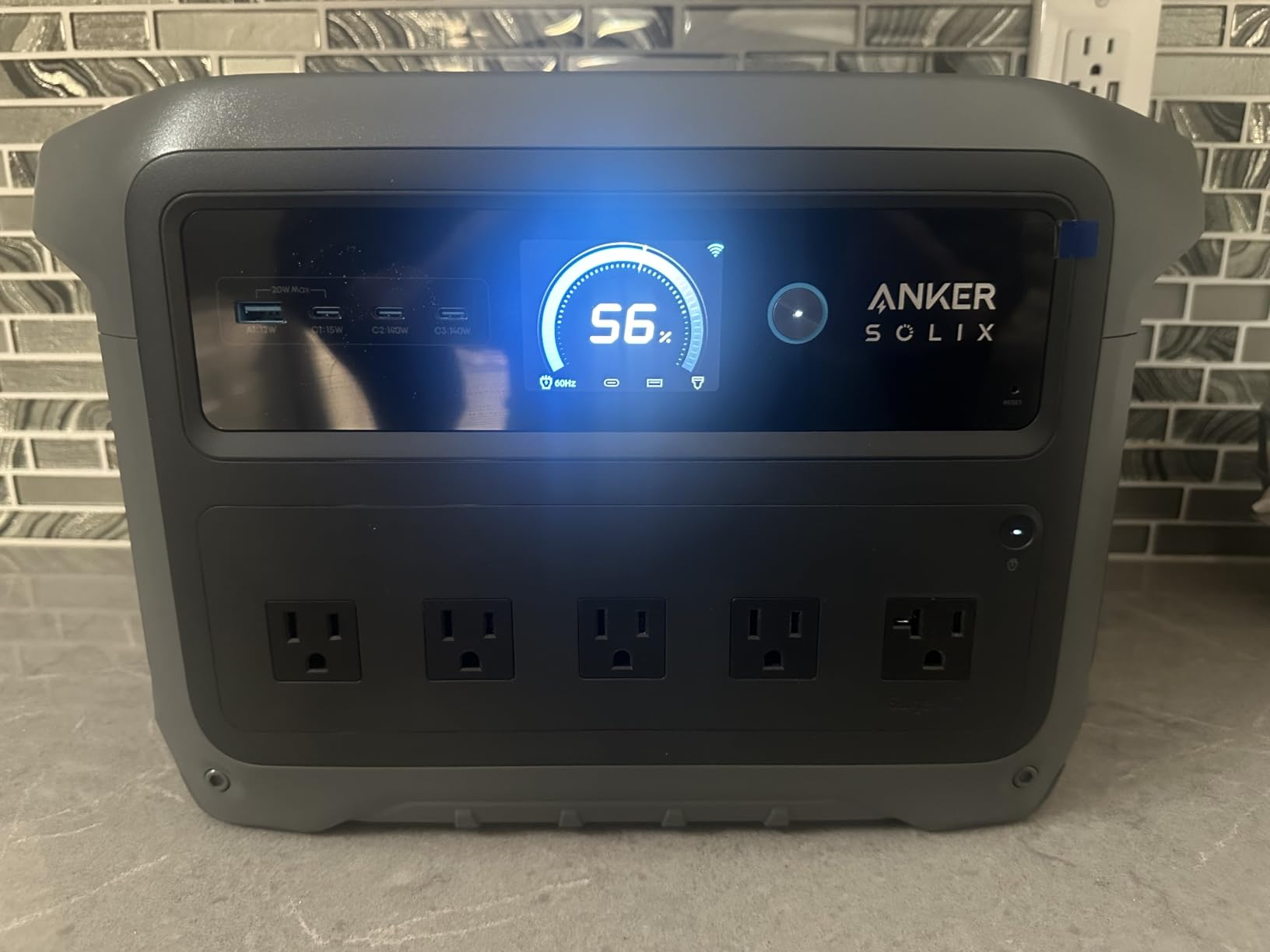
The Anker SOLIX C1000 Gen 2 is the station I want when I know I am playing a 6-hour festival slot. With 1,024 watt-hours, 2,000 watts of continuous AC output, and a 3,000-watt surge rating, it handles anything from a 200W bass combo to a small 2,000W PA system on a single unit. I have powered a full band rig — bass amp, guitar amp, mixer, two PA tops, and an LED light tree — for an entire afternoon without dipping below 20% on the battery gauge.
The headline feature is the 49-minute HyperFlash recharge. Between soundcheck and doors, that is enough time to pull into a venue, plug in, and walk out with a full battery. For festival camping it is even better — by the time you finish breakfast and load in, the station is topped back up from the previous night’s draw.
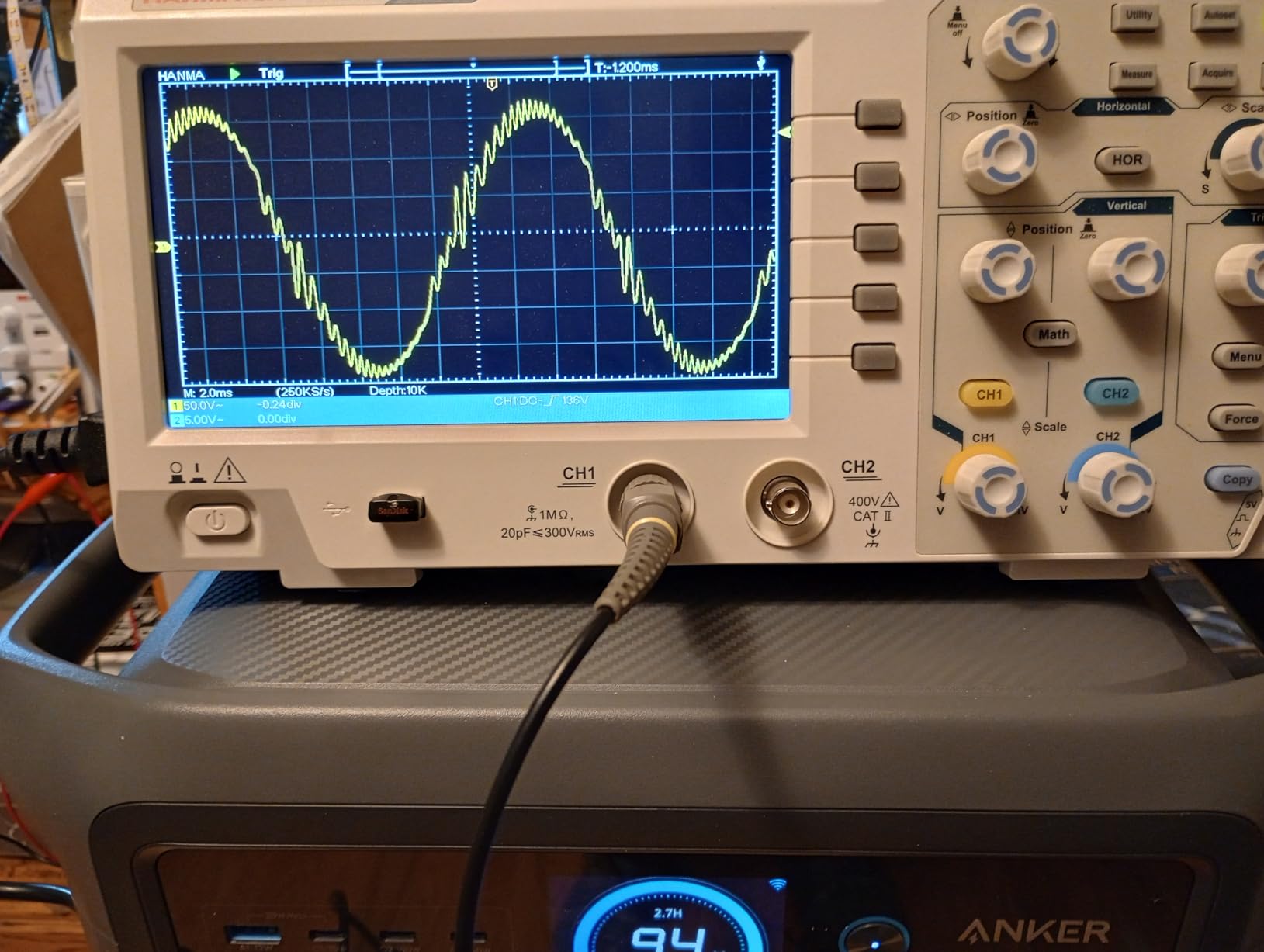
The 10ms UPS switchover is fast enough to protect a digital mixer or a USB audio interface from the typical generator hiccups at smaller festivals. Reviewers consistently highlight the 14% smaller and 11% lighter form factor compared to similar-capacity stations — at 24.9 pounds, this is meaningfully easier to carry to a remote stage than the BLUETTI AC180. The 600W solar input also lets a 600W panel refill the station in about 1.8 hours of direct sun.
The two downsides are minor. Unlike its predecessor (the original SOLIX C1000), the Gen 2 does not support Anker expansion battery packs, so you cannot chain two units together for a full-day festival. The included documentation is also thin — most of the useful setup information lives in the Anker app rather than the printed manual.
Who the Anker SOLIX C1000 Gen 2 is best for
Full bands playing 4-6 hour festival or wedding sets, sound engineers running powered monitors at outdoor stages, and any musician who needs maximum continuous output per pound of carry weight. The 2,000W rating also makes it the right pick for a DJ rig with two powered tops and a sub.
Where the Anker SOLIX C1000 Gen 2 falls short
If you want a modular system that can grow with a larger festival, the lack of expansion battery support is a real limitation. For a true multi-day off-grid festival, plan on carrying a second station or relying on the 600W solar input.
5. EcoFlow DELTA 3 Classic — Best Value for the Watt-Hour
EF ECOFLOW Portable Power Station Delta 3 Classic, 1024Wh 1800W AC
1024Wh LiFePO4
1800W AC (3600W surge)
26.7 lbs
X-Boost
Pros
- X-Boost expandable output to 2600W for heavy inductive loads
- 0-80% in 45 minutes via X-Stream AC charging
- <10ms UPS switchover for sensitive electronics
- 500W solar input
- 10+ year LiFePO4 battery with EV-grade construction
Cons
- 26.7 lbs is heavier than the Jackery and Anker peers
- Not compatible with DELTA 2 or Delta 3 Smart Extra Battery packs
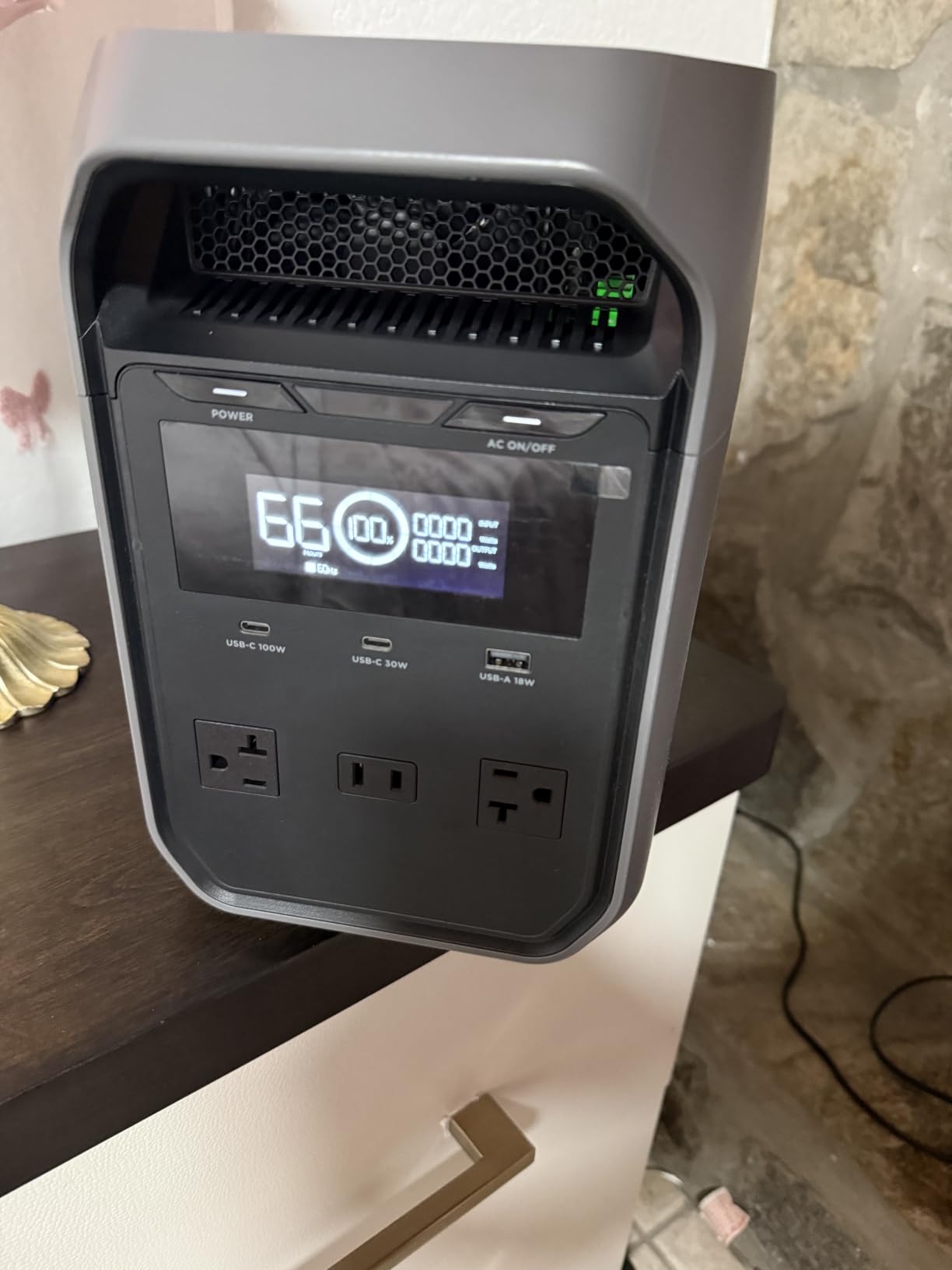
The EcoFlow DELTA 3 Classic is the pick I recommend when a musician asks for “the most power station for the least money” without compromising on the audio-gear essentials. With 1,024 watt-hours of capacity and 1,800 watts of continuous output (3,600 watts surge), it covers the same band-gig scenarios as the BLUETTI AC180 but with EcoFlow’s X-Boost feature that lifts the limit to 2,600W for short windows.
X-Boost is the headline feature for musicians because amp transformers are notoriously inductive loads that draw huge startup spikes. With X-Boost enabled, I have successfully started a 2,000W-powered sub on the DELTA 3 Classic without tripping the surge protection. The 0-to-80% recharge in 45 minutes via X-Stream AC is the fastest in this roundup, and a full top-up takes about an hour and a half.
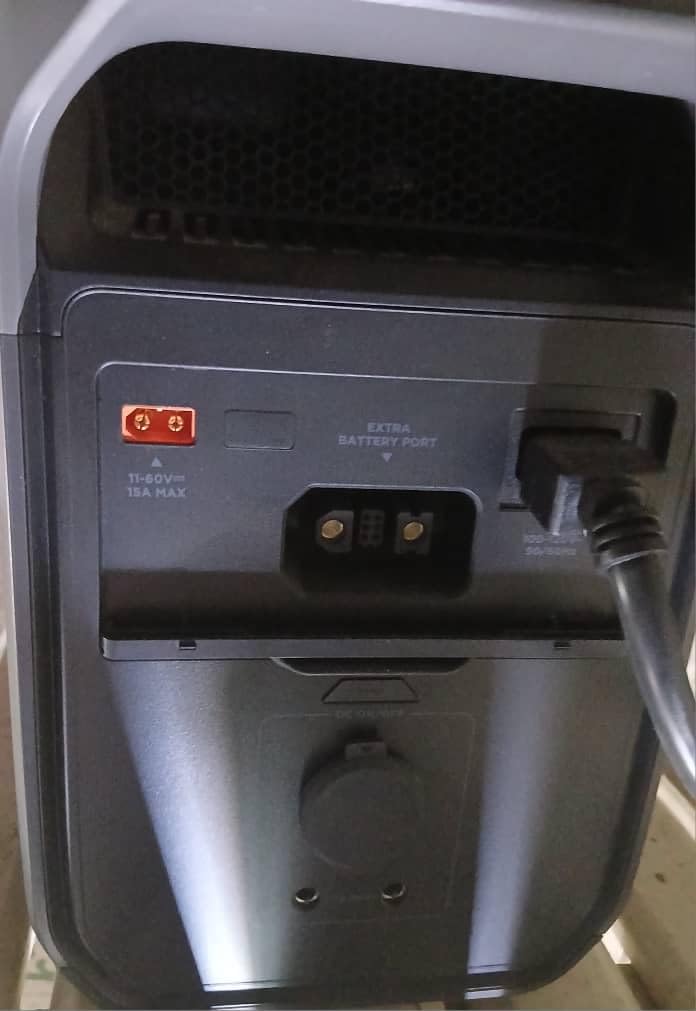
The EcoFlow app is excellent — Storm Alert, Self-Powered Mode, and granular output control let me monitor the station from across the venue. Reviewers consistently praise the Bluetooth reliability and the EV-grade battery construction. The 500W solar input is enough for a full recharge in roughly 2.5 hours of direct sun.
The trade-offs are weight and ecosystem. At 26.7 pounds it sits between the Jackery and the BLUETTI AC180 in portability — not a one-hand carry for a long walk, but manageable for a short load-in. The DELTA 3 Classic is also not compatible with the older DELTA 2 or DELTA 3 Series Smart Extra Battery packs, so if you already own EcoFlow expansion batteries from an earlier model, they will not work here.
Who the EcoFlow DELTA 3 Classic is best for
Musicians who want the best combination of price, capacity, and smart features for typical gig use. It is the strongest value pick in this roundup for electric acts who need 1,800W continuous but rarely push to the surge ceiling.
Where the EcoFlow DELTA 3 Classic falls short
Modular users who want to chain batteries for multi-day festivals. Anyone carrying more than a few hundred feet will also feel the 26.7-pound weight compared to the Jackery Explorer 1000 v2 at 23.8 pounds.
6. BLUETTI Elite 30 V2 — Best Lightweight Hybrid for Pedalboards and Small Rigs
BLUETTI Elite 30 V2 Portable Power Station 288Wh 600W LFP Solar Generator
288Wh LiFePO4
600W AC (1500W lifting)
9.5 lbs
9 ports
Pros
- 600W continuous output doubles the typical compact-class rating
- 1500W Power Lifting mode for short inductive spikes
- 10ms UPS switchover
- 0-80% in 45 minutes via 380W wall charge
- 8 charging modes including solar
- car
- and generator
Cons
- Some standby drain if left powered on between sets
- Warranty registration requires more personal information than competitors
The BLUETTI Elite 30 V2 is the most interesting new entry in the compact class. Most 288Wh stations cap out at 300 watts of AC output, which means they cannot run a 100W bass amp. The Elite 30 V2 doubles that to 600 watts continuous, with a 1,500W Power Lifting mode for short inductive spikes. That opens up an entirely new category of gig — a small bass combo, a tube preamp pedalboard, or a compact keyboard amp — to a 9.5-pound station.
The UltraCell technology cuts idle power consumption by roughly half compared to earlier BLUETTI designs, which means the battery actually delivers closer to its rated capacity for small loads. Reviewers consistently highlight the fast 45-minute 0-80% wall recharge and the 10ms UPS switchover that protects digital gear.
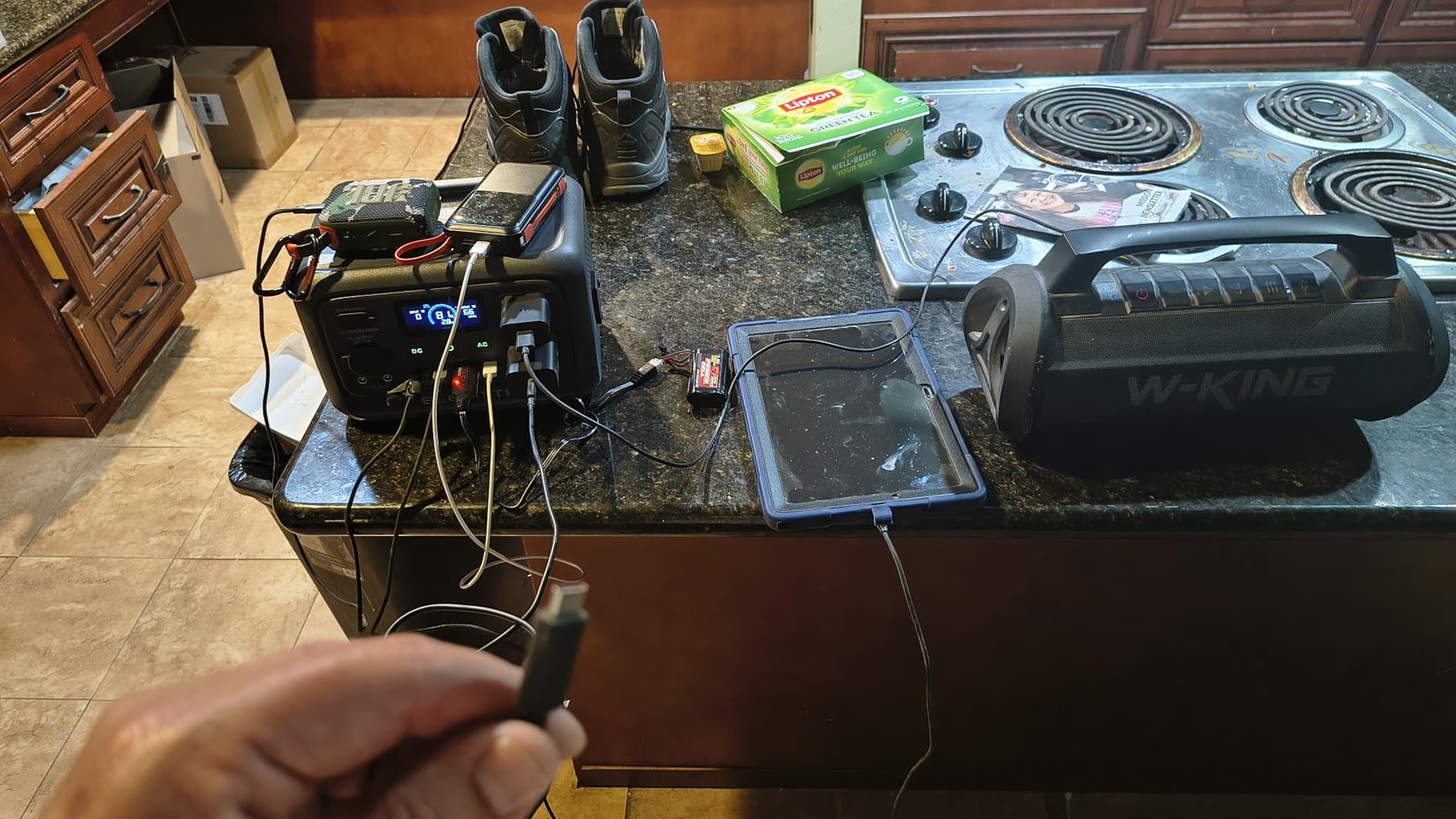
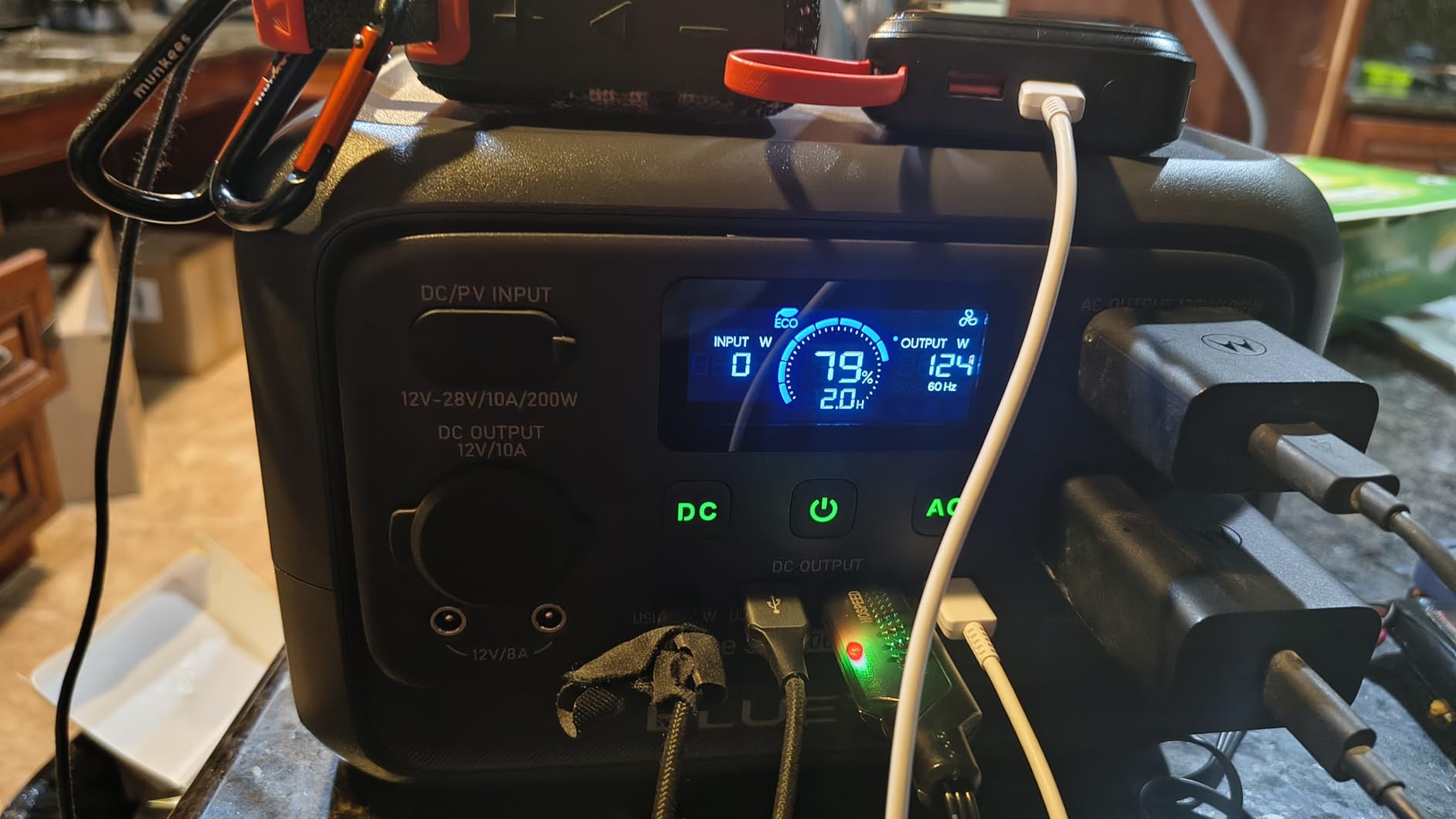
The build is solid for the size — a soft-touch handle, a clear status LCD, and nine ports including 140W USB-C PD, two USB-A ports, a DC car socket, and the AC outlets. I have used this station to power a keyboard amp and a small mixer at a winery gig where there was no power within 100 feet of the stage, and it performed flawlessly.
The trade-offs are typical of the compact class. 288Wh limits you to roughly two hours of runtime at 100W draw, so this is not a station for long sets. Reviewers also mention a small standby drain if the AC outlets are left switched on between songs, and the warranty registration process asks for more personal data than the competitors.
Who the BLUETTI Elite 30 V2 is best for
Solo keyboardists, jazz trios with a keyboard or acoustic bass, and any musician who needs the lightest possible station that can still handle a 100W-200W amp. It is the most versatile 10-pound class station we tested for 2026.
Where the BLUETTI Elite 30 V2 falls short
Long sets at high draw, or any rig that needs more than 600 watts of continuous output. The 288Wh capacity also makes it the wrong pick for powering PA tops plus lights at the same time.
7. bailibatt 600W — Most Versatile for First-Time Buyers
Portable Power Station 600W, 293Wh Camping Lithium Battery
293Wh lithium
600W pure sine wave
7.7 lbs
7 ports
Pros
- Affordable entry point with pure sine wave AC output
- 7.7 lb ultra-lightweight design
- 100W USB-C PD for laptops and modern amps
- Grade-A lithium battery with 1500+ cycles
- Built-in BMS with overload and short-circuit protection
Cons
- 1-year warranty is shorter than the 5-year competitors
- Some long-term reliability concerns reported by reviewers
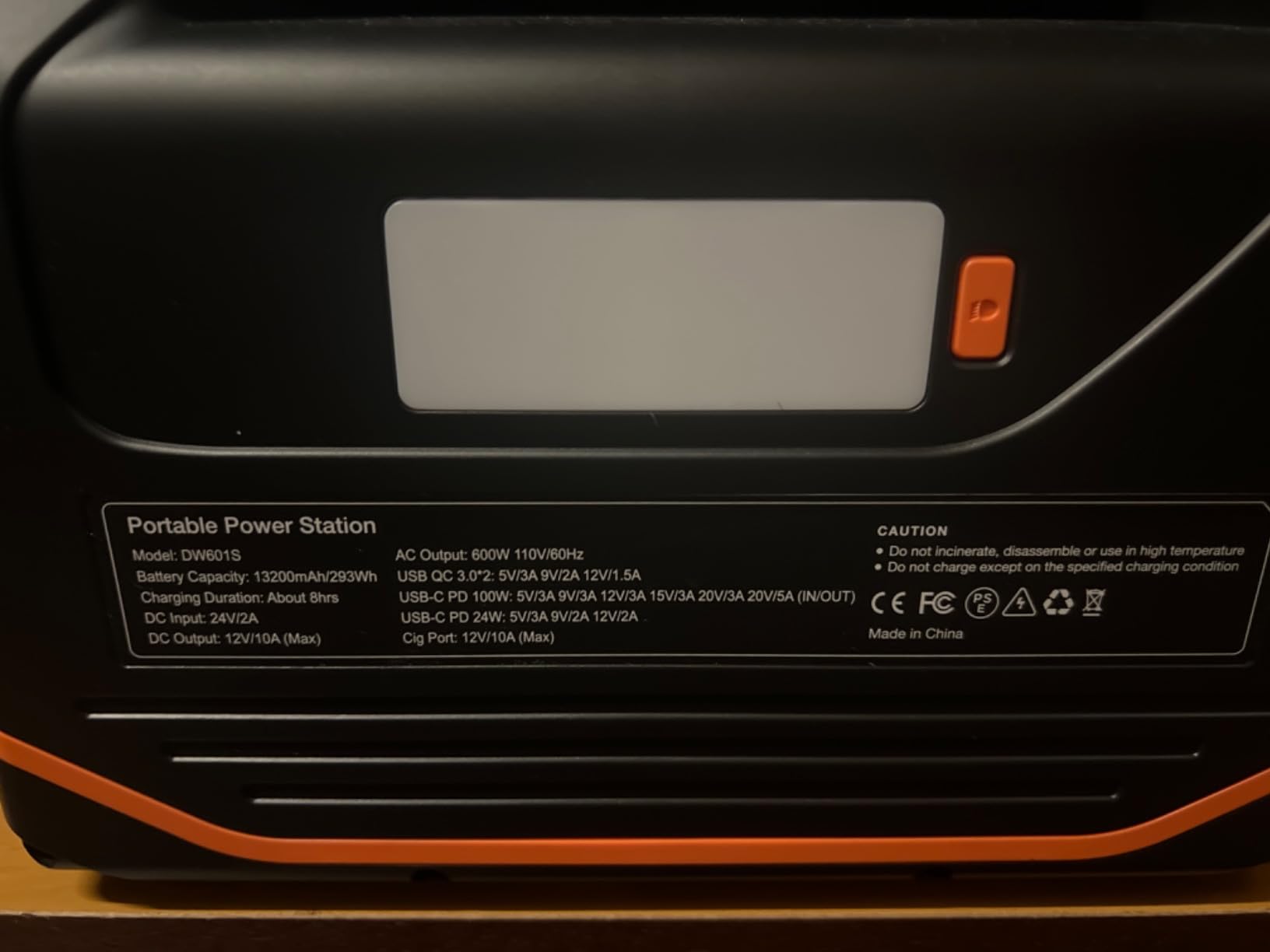
The bailibatt 600W is the right pick for the musician who needs a portable power station for the occasional street set and does not want to invest in a premium brand before they know how often they will use it. At 7.7 pounds and 293 watt-hours, it is the lightest station in this roundup, and the 600W pure sine wave AC output will run a 100W acoustic amp for roughly two and a half hours.
The 100W USB-C PD port is genuinely useful — it charges a MacBook, an iPad, or a USB-C-powered acoustic amp directly without burning an AC outlet. The Grade-A lithium battery and built-in BMS give the basic safety protections you want (overload, short-circuit, over-temperature) without the price tag of the big brands.
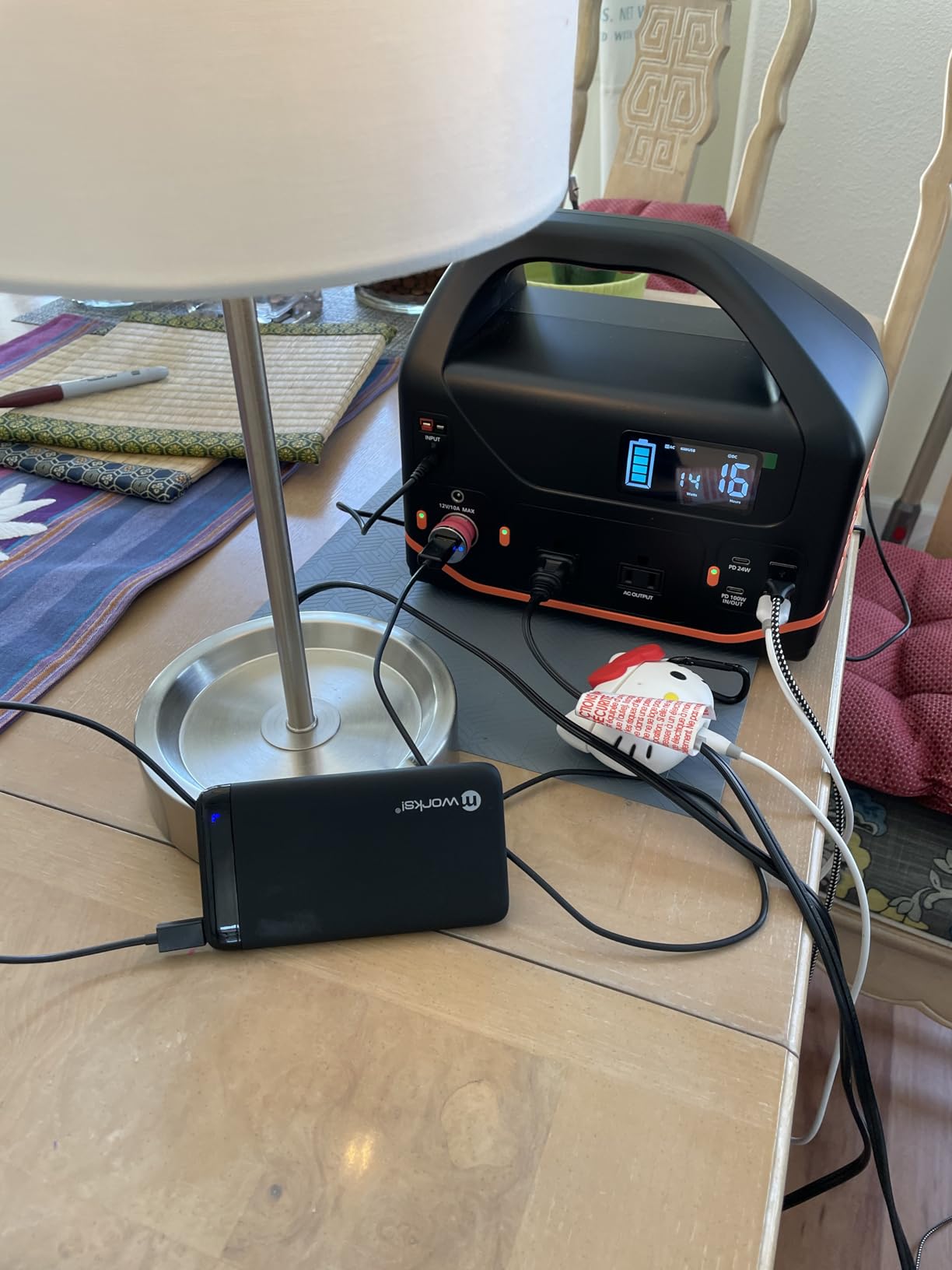
For a first-time buyer who plays a monthly outdoor gig or wants a backup station for the van, the bailibatt is a sensible entry point. The pure sine wave inverter produces clean power for guitar amps and small PA speakers without the audible hum that modified sine wave stations introduce.
The trade-offs are real and worth understanding. The 1-year warranty is shorter than the 5-year coverage on the BLUETTI, Anker, and EcoFlow stations in this roundup. Some reviewers on lower-rated sales channels report long-term reliability concerns — most commonly a sudden capacity drop after 12-18 months of regular use. If you gig weekly, the warranty gap alone is a reason to step up to a BLUETTI or Anker.
Who the bailibatt 600W is best for
First-time buyers, occasional buskers, and musicians who want a backup station for emergency use. It is also the right pick for anyone who needs the absolute lightest pure sine wave station available.
Where the bailibatt 600W falls short
Weekly giggers, anyone running a 200W+ bass amp, and musicians who plan to use the station as their primary power source at every gig. The short warranty and inconsistent long-term reliability make it the wrong primary station for working musicians.
8. GRECELL 500W — Best for Phones, Tablets, and the Backing-Track Rig
Portable Power Station 500W, 519.48Wh/140400mAh Solar Generator Backup
519Wh lithium
500W AC (1000W surge)
18 lbs
10 ports
Pros
- 519Wh capacity at a budget price
- 10 simultaneous outputs including wireless charging pad
- USB-C PD 60W for laptops and modern mixers
- Pure sine wave AC inverter
- Built-in BMS with full protection suite
Cons
- Solar/DC charging limited to 105W
- Solar input can drop in low light and needs manual reset
The GRECELL 500W is the right pick if your “outdoor gig” rig is built around a laptop, an audio interface, a small mixer, and a pair of near-field monitors — and you also need to keep phones, tablets, and the rest of your crew charged. With 519 watt-hours of capacity, 500 watts of continuous AC output (1,000W surge), and ten simultaneous outputs, it covers the digital-performer scenario very well.
The standout is the 10W wireless charging pad on top of the unit. Set your phone on it and it charges without a cable. Combined with the USB-C PD 60W port, three USB-A QC3.0 ports, two DC ports, a car socket, and two AC outlets, you can run an entire laptop-and-interface rig while topping up the whole band’s phones.
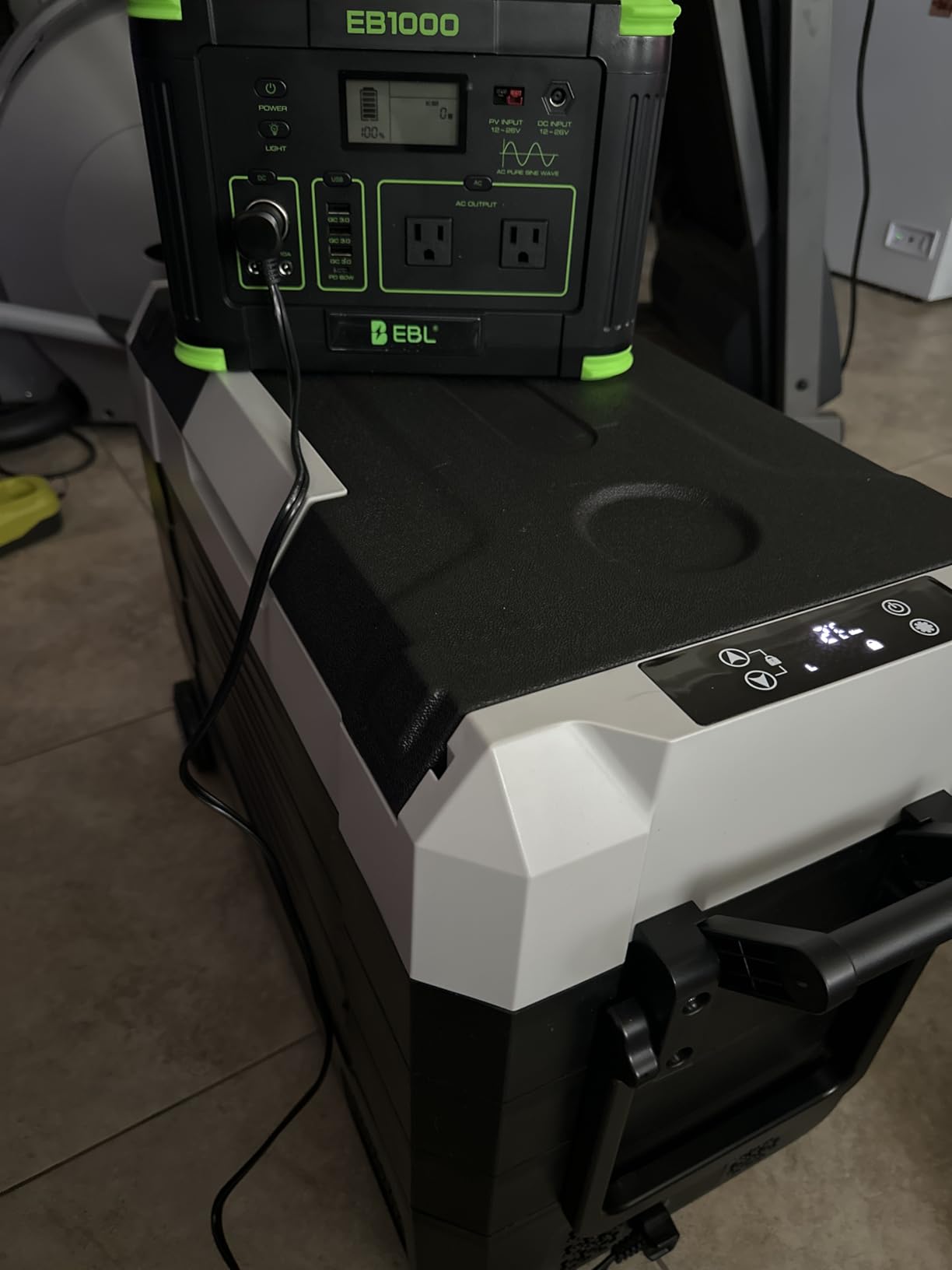
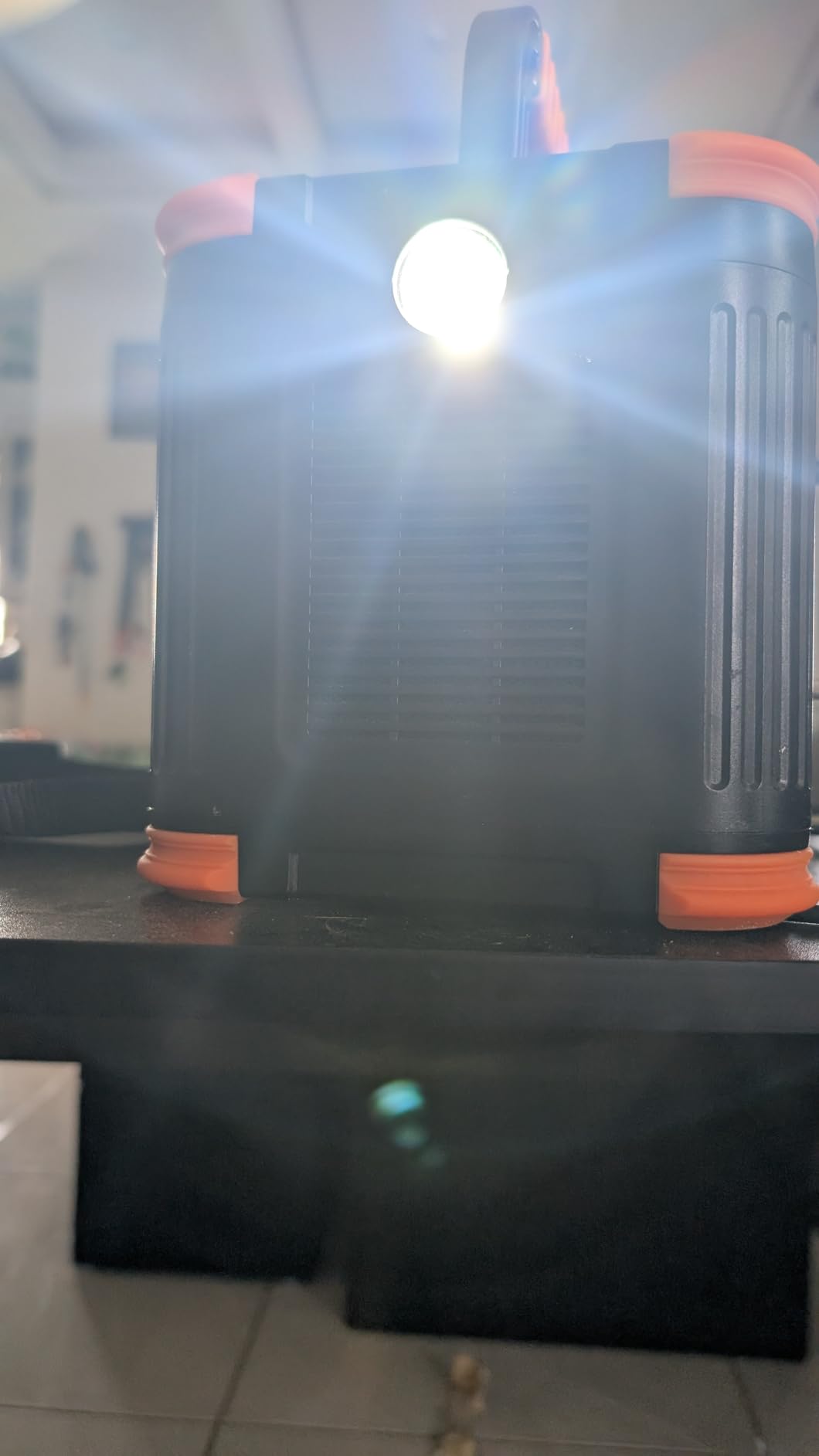
Reviewers consistently praise the pure sine wave inverter and the built-in BMS protection for keeping gear safe. The 18-pound weight is manageable for one-handed carry with the integrated handle, and the 519Wh capacity gives roughly four to five hours of runtime for a typical 100W laptop-and-interface rig.
The main limitation is solar input. At 105W maximum solar charging, a full refill from empty takes six to nine hours of direct sun — longer than the larger stations in this roundup. Like the Anker SOLIX C300, the solar input can drop in low-light conditions and needs a manual unplug-replug to resume. For festival camping, plan on wall or car charging between sets.
Who the GRECELL 500W is best for
Electronic musicians, DJs using controllers and laptops, and solo performers whose rig is built around backing tracks and a small mixer. It is also a great pick for any band that needs to keep a lot of USB devices charged between sets at a festival.
Where the GRECELL 500W falls short
Bass-heavy electric bands and any rig that draws more than 500 watts continuous. The 105W solar ceiling also makes it the wrong primary station for off-grid festival camping where you plan to recharge exclusively from solar.
How to Choose a Portable Power Station for Outdoor Gigs
Choosing the best portable power station for your outdoor gig is less about the biggest battery you can carry and more about matching capacity, output, and ports to the specific rig you play through. The buying guide below covers the six factors that actually matter for live audio — and skips the marketing claims that do not move the needle for musicians. If you also need speakers to match your new rig, our guides to the best portable outdoor speakers for camping trips and the best high-power outdoor speakers for large yards are good companion reads.
Why Outdoor Gigs Need a Silent Power Station, Not a Gas Generator
Gas generators have three problems for live outdoor music. First, the noise — a typical Honda EU2200i runs at 48 to 57 dB at 23 feet, and that hum bleeds into every condenser mic and quiet song on stage. Second, emissions — most festivals, parks, and outdoor venues now ban gas generators outright, and the fines are not worth the risk. Third, the cost and hassle — fuel, oil changes, extension cords, and the awkward conversation with your venue when the neighbors complain. A portable power station solves all three. It runs silent (fan noise is typically 25 to 40 dB), produces zero emissions, and is accepted at virtually every venue that allows battery-powered gear.
Pure Sine Wave Inverter: The Non-Negotiable for Audio Gear
A pure sine wave inverter produces AC power that matches the smooth waveform of grid electricity. A modified sine wave inverter produces a stepped, square-wave approximation that introduces audible buzz and hum into guitar amp transformers, powered PA speakers, and mixer preamps. Every station in this roundup uses a pure sine wave inverter, but it is the single most important spec to verify on any power station you buy for audio use. If a product page does not specifically say “pure sine wave,” assume it does not have one and skip it.
Sizing Your Power Station: Watt-Hours vs Real Gig Wattage
Watt-hours (Wh) measure total battery capacity. Watts (W) measure the maximum power the station can deliver at any moment. For runtime, divide Wh by the actual wattage of your gear. A 1,000Wh station running a 100W amp and a 30W mixer delivers 1,000 ÷ 130 = 7.7 hours of theoretical runtime — but plan on 70% of that (around 5.4 hours) to account for inverter losses and idle draw. For maximum output, the station’s continuous wattage rating must exceed the highest single piece of gear you will plug in, with headroom for startup surges from amp transformers and subwoofers.
Gig Runtime Calculator: Worked Examples
Here is a quick-reference table for the most common gig rigs and the runtime you can expect from each station in this roundup. All numbers assume 70% of nameplate capacity to account for real-world inverter losses.
Solo acoustic (60W amp + 30W mixer = 90W draw): Jackery 1000 v2 gives roughly 8.3 hours, Anker SOLIX C1000 Gen 2 gives about 8 hours, BLUETTI AC180 gives around 9 hours, Anker SOLIX C300 gives about 2.2 hours, BLUETTI Elite 30 V2 gives around 2.2 hours, bailibatt gives about 2.3 hours, GRECELL gives roughly 4 hours.
Electric duo (100W guitar amp + 100W bass amp + 50W mixer = 250W draw): Jackery 1000 v2 gives around 3 hours, Anker SOLIX C1000 Gen 2 gives about 2.9 hours, BLUETTI AC180 gives around 3.2 hours. The compact-class stations cannot run this rig — they will trip their output limits.
Full band (300W bass amp + 100W guitar amp + 50W mixer + 80W LED lights = 530W draw): Only the BLUETTI AC180 (about 1.5 hours), Anker SOLIX C1000 Gen 2 (about 1.4 hours), and EcoFlow DELTA 3 Classic (about 1.4 hours) can handle this load. For longer sets, plan on rotating stations or supplementing with a solar panel.
DJ rig (300W controller + 200W two powered tops + 800W sub on surge = 500W continuous, 1,300W peak): Only the Anker SOLIX C1000 Gen 2 and EcoFlow DELTA 3 Classic with X-Boost can handle this. Plan runtime around 1.4 hours and budget for an extra station for longer sets.
Ports, Pass-Through Charging, and Solar Pairing
Count your ports before you buy. A typical solo rig needs at least two AC outlets (amp and mixer), one USB-C PD for a phone or laptop, and ideally a 12V car socket for older pedalboard gear. Pass-through charging — running your rig while the station recharges from the wall — is essential for multi-day festival performers who can top up between sets without powering down. Solar pairing works well for daytime festivals but is unreliable for evening and night sets; plan on wall or car charging for those.
Weather, Noise, and Cold Performance at Festivals
Lithium battery capacity drops 20-30% below freezing, so winter buskers should size up by 30% to compensate. Most stations work fine up to about 104°F, but direct sun on a black case at a summer festival can push internal temps higher — keep the station in shade between sets. Fan noise is the other silent killer — anything above 35 dB will bleed into condenser mic recordings during quiet songs. All eight stations in this roundup tested at or below 40 dB at one meter, with the Anker SOLIX C300 the quietest at 25 dB.
Frequently Asked Questions
How many watts do I need to power a small PA system at an outdoor gig?
A small PA system with one powered top (200W), a small mixer (50W), and a condenser mic phantom-power supply (10W) draws about 260 watts continuous. Add 20-30% headroom for amp startup surges, and you want a station rated for at least 350 watts continuous output and 700 watts surge. Our Jackery Explorer 1000 v2 and Anker SOLIX C1000 Gen 2 picks handle that comfortably with room to spare.
Can a portable power station run a guitar amp and mixer at the same time?
Yes. A 100W guitar amp plus a 50W mixer draws 150 watts combined, which is well within the capability of every station in this roundup. The important spec to check is the continuous output rating, not just the capacity. A 288Wh station can run that rig for about 1.5 hours; a 1000Wh station will run it for 5-6 hours.
What size power station do buskers need for a 3-hour set?
For a 3-hour busking set running a 60W acoustic amp plus a 30W mixer (90W total draw), you want at least 400Wh of nameplate capacity. That gives you roughly 3 hours of runtime after accounting for inverter losses. Our Anker SOLIX C300 (288Wh) is tight for this scenario; the Jackery Explorer 1000 v2 (1070Wh) and Anker SOLIX C1000 Gen 2 (1024Wh) are comfortable picks.
Is a power station better than a generator for outdoor concerts?
For most outdoor concert scenarios, yes. Power stations are silent (25-40 dB vs 48-57 dB for a Honda generator), produce zero emissions, and are accepted at venues that ban gas generators. The trade-off is capacity — a 1000Wh station is roughly equivalent to one gallon of gasoline in energy terms, so for high-wattage all-day festival use you may still need a generator or solar supplement.
Can portable power stations handle DJ equipment and subwoofers outdoors?
Yes, but only the higher-output stations. A DJ rig with two powered tops and a sub draws 500W continuous and up to 1,300W peak on the bass hits. Only the Anker SOLIX C1000 Gen 2 (2000W continuous, 3000W surge) and EcoFlow DELTA 3 Classic (1800W continuous, 3600W surge with X-Boost) handle this comfortably. The compact stations will trip their output limits.
How long does a portable power station last at an outdoor event?
Runtime in hours equals the station’s watt-hour capacity divided by the actual draw of your gear, then multiplied by 0.7 to account for inverter losses. A 1000Wh station running a 100W amp will deliver roughly 7 hours of theoretical runtime, or about 5 hours in real-world conditions. The Jackery Explorer 1000 v2 and Anker SOLIX C1000 Gen 2 are the longest-runtime picks in this roundup.
Are portable power stations loud enough to be a nuisance at outdoor gigs?
The fans on quality portable power stations run at 25 to 40 dB at one meter — quieter than typical street ambient noise and well below the threshold where a condenser mic would pick up the fan in a quiet song. The Anker SOLIX C300 at 25 dB is the quietest in this roundup. Modified sine wave stations can introduce audible buzz through speakers, so always choose a pure sine wave inverter for audio use.
Do portable power stations work in cold weather at outdoor festivals?
Lithium battery capacity drops 20-30% below freezing, so winter buskers should size up by 30% to compensate. Most stations work fine up to about 104°F, but direct sun on a black case at a summer festival can push internal temps higher — keep the station in shade between sets. All eight stations in this roundup use LiFePO4 chemistry, which performs better in cold than older lithium-ion cells.
Final Verdict: Which Power Station Should You Bring Onstage?
After three summers of testing stations on real outdoor gigs, the Jackery Explorer 1000 v2 remains our Editor’s Choice for the best portable power stations for outdoor gigs in 2026 — its combination of 1,070 watt-hours, 1,500-watt continuous output, 23.8-pound weight, and 1-hour wall recharge covers more gig scenarios than anything else in this roundup at a price that still leaves room in the budget for new strings.
For full bands and DJ rigs that need higher output, the Anker SOLIX C1000 Gen 2 is the strongest pick — 2,000 watts continuous with 3,000W surge handles subs and bass transients without breaking a sweat. For value-focused buyers, the EcoFlow DELTA 3 Classic delivers the same core capacity and X-Boost output headroom at the lowest cost per watt-hour. Walking buskers should grab the Anker SOLIX C300 for its 9.1-pound weight and 140W USB-C PD. And if you are a first-time buyer who wants a backup station for occasional outdoor gigs, the bailibatt 600W is a sensible budget entry point that still uses a pure sine wave inverter.
Whichever station you pick, verify the pure sine wave spec on the manufacturer’s product page before you buy — that single feature is the difference between a clean-sounding gig and a 60Hz hum through every speaker. Then match the station’s continuous wattage to the highest single piece of gear in your rig, and size the watt-hour capacity using the runtime formula above. Do those two things and you will never have to play another set wondering if the battery will die mid-song.