

We have all been there. You record a vocal take, play it back, and something sounds off. Not your performance, not your voice, but the way it was captured. The microphone you choose shapes everything about how your singing translates to a recording or a live audience.
Finding the best microphones for singing means sorting through dozens of options across dynamic and condenser designs, USB and XLR connections, and a massive range of budgets. Our team spent weeks comparing the most recommended vocal mics of 2026 across studio sessions, live performances, and home recording setups.
We tested everything from legendary workhorse dynamics to ultra-quiet studio condensers. Whether you are building your first home studio, upgrading from a USB mic, or looking for a stage-ready vocal mic, this guide breaks down exactly what each model does well and who it is built for.
One thing we learned from digging through forum discussions on Reddit and audio engineering communities: the most expensive microphone is not always the right one. Untreated room acoustics, your voice type, and your intended use matter just as much as the mic itself. We will cover all of that throughout this guide.
Table of Contents
Top 3 Picks for Best Microphones for Singing for October 2026
If you want to cut straight to the point, here are our three top recommendations. These cover the three most common scenarios we see singers asking about: an all-around live and studio workhorse, a budget-friendly studio condenser, and an entry-level dual-mode mic for absolute beginners.

Best Microphones for Singing in October 2026
Here is the full lineup side by side. We arranged these from all-around workhorses to studio condensers to budget-friendly entry options so you can compare specs at a glance before we get into the detailed reviews.
| Product | Specifications | Action |
|---|---|---|
| Shure SM58-LC Dynamic Vocal Mic |
|
Check Latest Price |
 Sennheiser E 835 Dynamic Vocal Mic |
|
Check Latest Price |
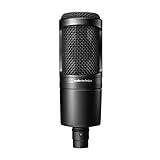
| Audio-Technica AT2020 Condenser |
|
Check Latest Price |
 Rode NT1 Signature Condenser |
|
Check Latest Price |
 Shure BETA 58A Supercardioid |
|
Check Latest Price |
 Shure SM7B Dynamic Studio Mic |
|
Check Latest Price |
 Audio-Technica AT2035 Condenser |
|
Check Latest Price |
 FIFINE AmpliGame AM8 USB/XLR |
|
Check Latest Price |
1. Shure SM58-LC – The Legendary Workhorse
Shure SM58 Pro XLR Dynamic Vocal Microphone
Dynamic cardioid
XLR
50Hz-15kHz
310g
Built-in pop filter
Pros
- Legendary vocal clarity with warm sound
- Precision cardioid pattern rejects background noise
- Road-ready metal construction
- Integrated pop protection
- Trusted by professionals worldwide
Cons
- Requires XLR cable not included
- No built-in gain control
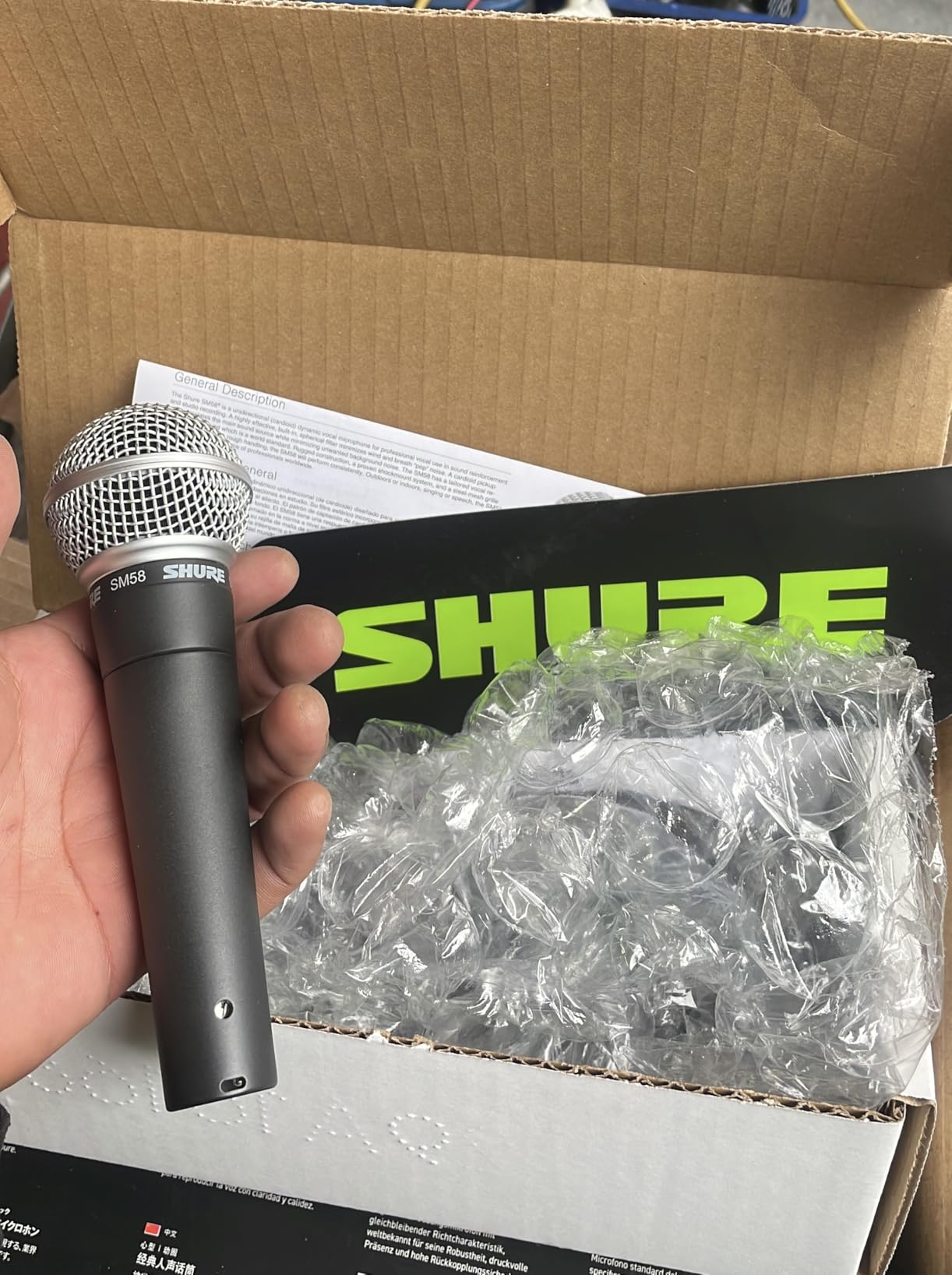
If there is one microphone every singer should know about, it is the Shure SM58. This mic has been the industry standard for live vocals for decades, and our team has used it in more sessions than we can count. There is a reason it shows up in almost every forum thread when someone asks what mic to buy.
The first thing you notice when you hold an SM58 is the build. It feels like a tool, not a toy. We have seen these mics survive drops onto concrete stages, years of touring, and thousands of performances without missing a beat. The rugged metal construction and reinforced grille are no joke.
Sound-wise, the SM58 has a tuned frequency response with a subtle midrange lift that brings vocals forward in a mix. That slight presence boost around the 2 to 5 kHz range is what gives vocals that warm, articulate quality the mic is famous for.
The cardioid pickup pattern is tight and focused. It picks up your voice clearly while rejecting sound from the sides and rear. This makes it forgiving in less-than-ideal acoustic spaces, which is exactly why so many beginners start here.
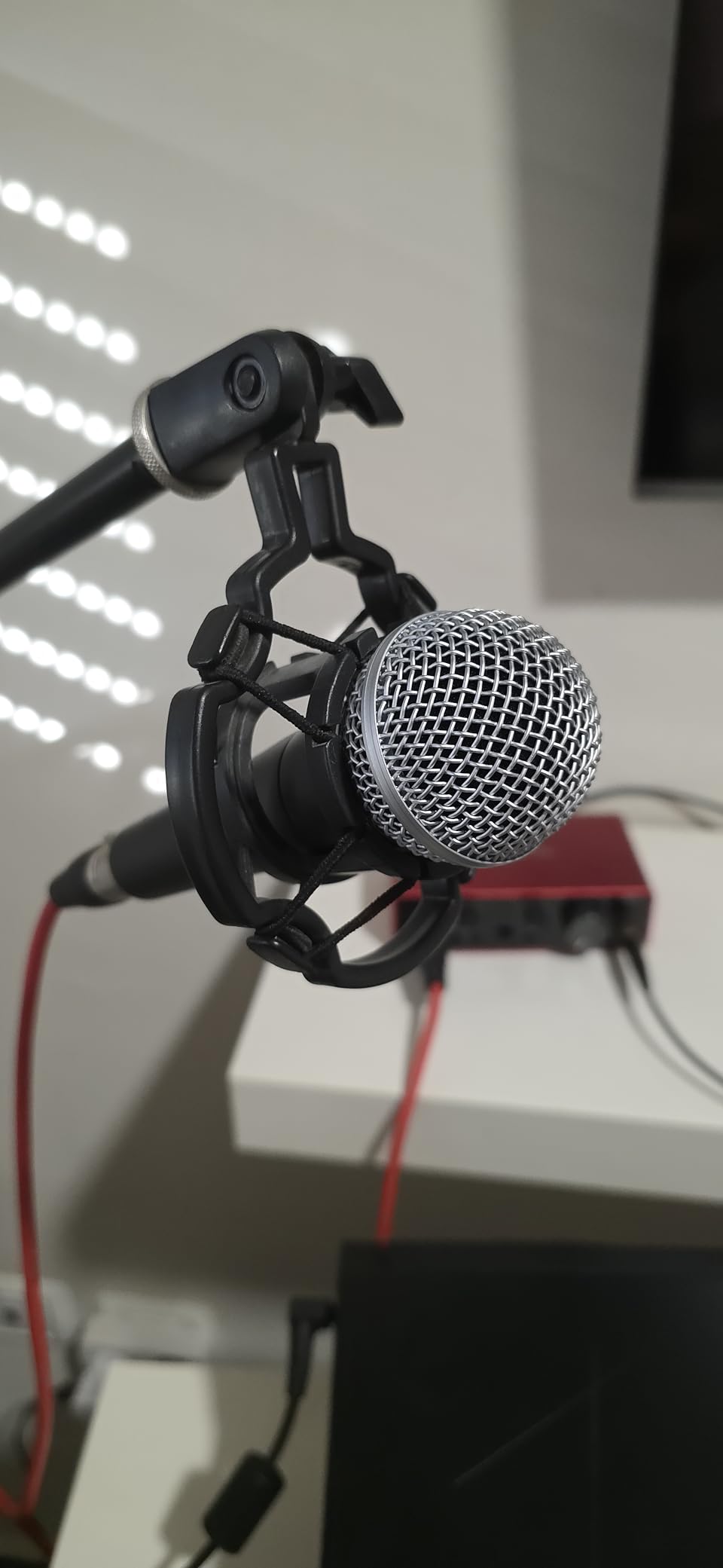
The built-in pop filter inside the spherical grille does a respectable job taming plosives. You will still want to work on your mic technique for hard consonants, but compared to mics with no integrated protection, it handles p-pops and b-bursts well enough for most situations.
What the SM58 does not do is give you the airy detail of a condenser microphone. The frequency response tops out at 15 kHz, which is fine for live performance but will not capture the breathy high-end sparkle that condensers deliver in the studio. It is a trade-off, not a flaw.
Who Should Buy the SM58
This mic is the obvious first choice for live performers, gigging musicians, and anyone who needs a microphone that will not let them down. If you sing on stage, at open mics, at church, or at karaoke nights, the SM58 is practically mandatory equipment.
It is also an excellent starting point for home recording if your room is untreated. Because it is a dynamic mic with a tight pickup pattern, it captures less room noise than a condenser. Many beginners waste money on a sensitive condenser only to record their bedroom echo.
What You Will Need to Get Started
The SM58 is an XLR microphone, which means you cannot plug it directly into a computer. You will need an XLR cable and an audio interface or mixer to connect it. Budget for those accessories if you do not already have them.
You will also need a microphone stand. The SM58 does not come with a stand or cable in the box. A basic boom stand and a 15-foot XLR cable will get you recording or performing without any fuss.
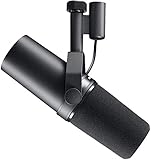
2. Shure SM7B – Broadcast-Grade Studio Mic
Shure SM7B Dynamic Vocal Microphone for Podcasting & Streaming
Dynamic cardioid
XLR
50Hz-20kHz
No phantom needed
Built-in pop filter
Pros
- Exceptional warm natural sound
- Excellent background noise rejection
- Built-in pop filter
- Rugged professional build quality
Cons
- Requires powerful preamp 60dB gain
- Premium price point
- Heavy at 2.7 pounds
The Shure SM7B has become something of a phenomenon. Originally designed for broadcast and voiceover work, it has been adopted by podcasters, streamers, and musicians everywhere. It is the mic Michael Jackson used to record Thriller, if you need proof of its pedigree.
Our team tested the SM7B extensively in a treated home studio, and the results were consistently impressive. The wide frequency response captures vocals with a smooth, warm character that sits beautifully in a mix without needing much EQ work.
The cardioid pattern combined with air suspension shock isolation does an outstanding job rejecting background noise. We tested it with a loud computer fan running nearby, and the SM7B barely picked it up. This is a mic that works in imperfect spaces.
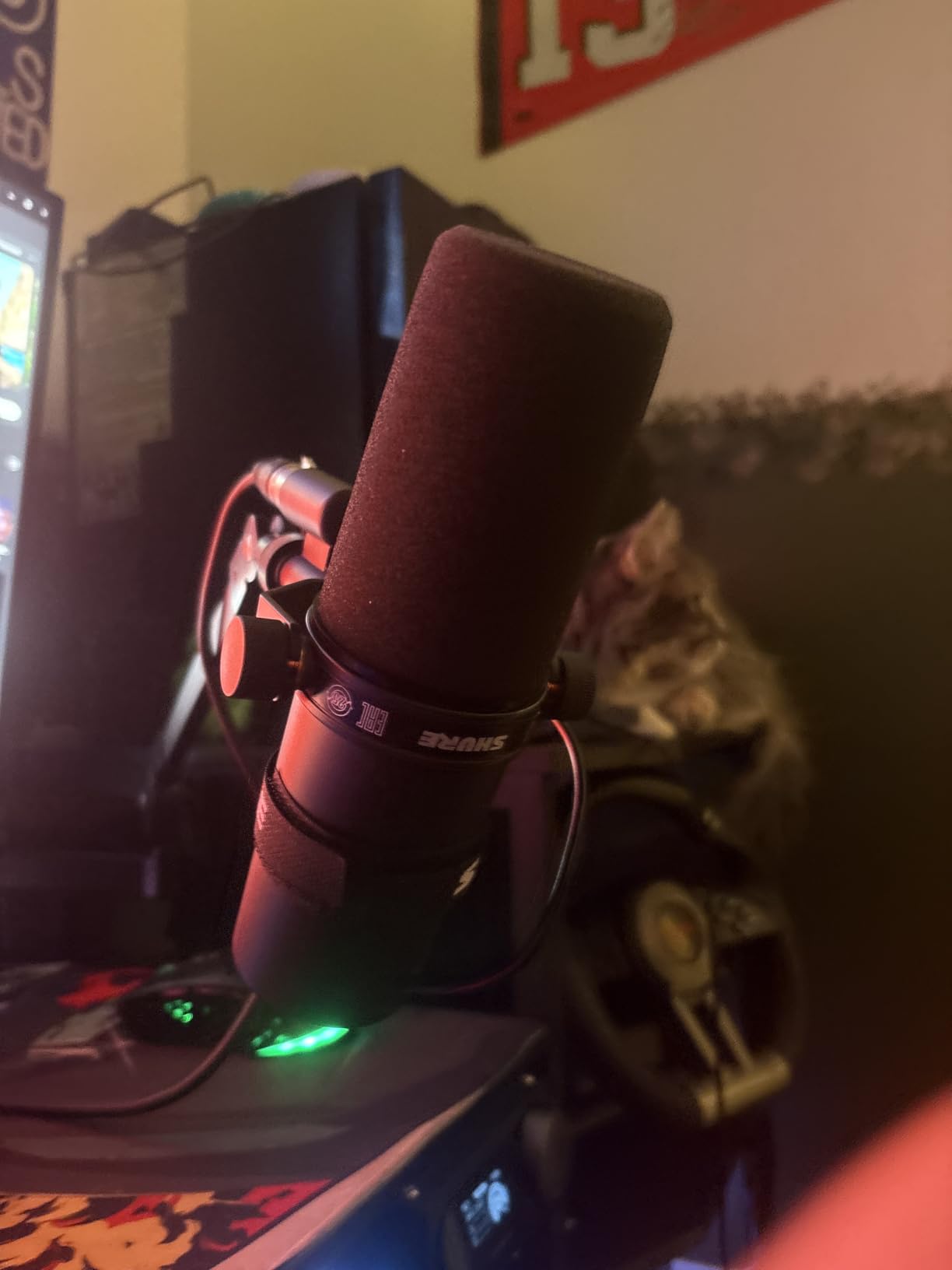
The built-in pop filtering and detachable windscreen are excellent. We recorded aggressive vocal takes with hard plosives and the SM7B handled them cleanly without any external pop filter. That integrated design is one of the reasons broadcast professionals love this mic.
Here is the catch everyone talks about: the SM7B needs a lot of gain. Shure recommends at least 60 dB of gain from your preamp. Most budget audio interfaces cannot deliver that cleanly. You will likely need a dedicated preamp like a Cloudlifter or a high-gain interface to get the most out of this microphone.
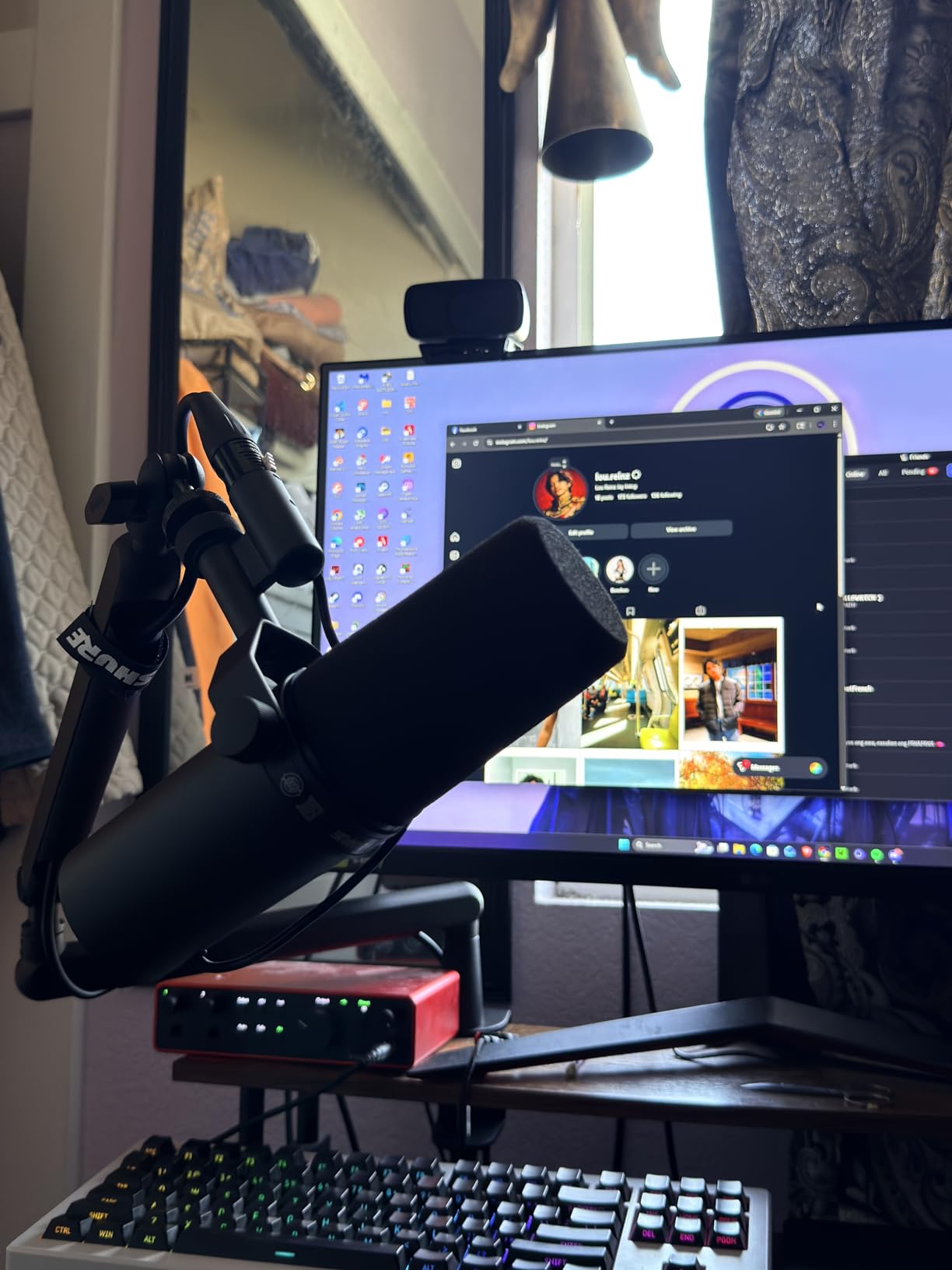
At nearly three pounds, the SM7B is heavy. You will want a sturdy boom arm rather than a flimsy desktop stand. Plan for that when budgeting your setup.
Who This Mic Is Built For
The SM7B shines for podcasters, streamers, and home studio recordists who want broadcast-quality vocals. If you record in an untreated or semi-treated room, this mic’s excellent off-axis rejection will save you from capturing unwanted room noise.
It is also a fantastic choice for singers who record loud genres like rock, metal, or aggressive hip-hop. The dynamic cartridge handles high SPL levels without distortion, and the proximity effect adds a pleasing warmth when you sing close to the grille.
Preamp and Gain Requirements
This is the most important thing to understand before buying the SM7B. You need a preamp capable of delivering at least 60 dB of clean gain. Options include a Cloudlifter or FetHead inline booster, or a high-end interface with built-in high-gain preamps.
If you try to run the SM7B through a basic interface without enough gain, your recordings will be quiet and noisy when you boost the level in software. Factor the cost of a booster into your total budget if your interface cannot deliver enough clean gain.
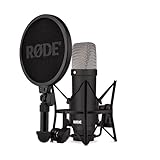
3. Rode NT1 Signature Series – Ultra-Quiet Studio Condenser
RØDE NT1 Signature Series Studio Condenser Microphone, Black
Large-diaphragm condenser
XLR
20Hz-20kHz
4dBA self-noise
Shock mount included
Pros
- HF6 capsule with smooth response
- Worlds quietest studio condenser at 4dBA
- Shock mount and pop filter included
- 10-year warranty
Cons
- Not Prime eligible
- Higher price point than entry condensers
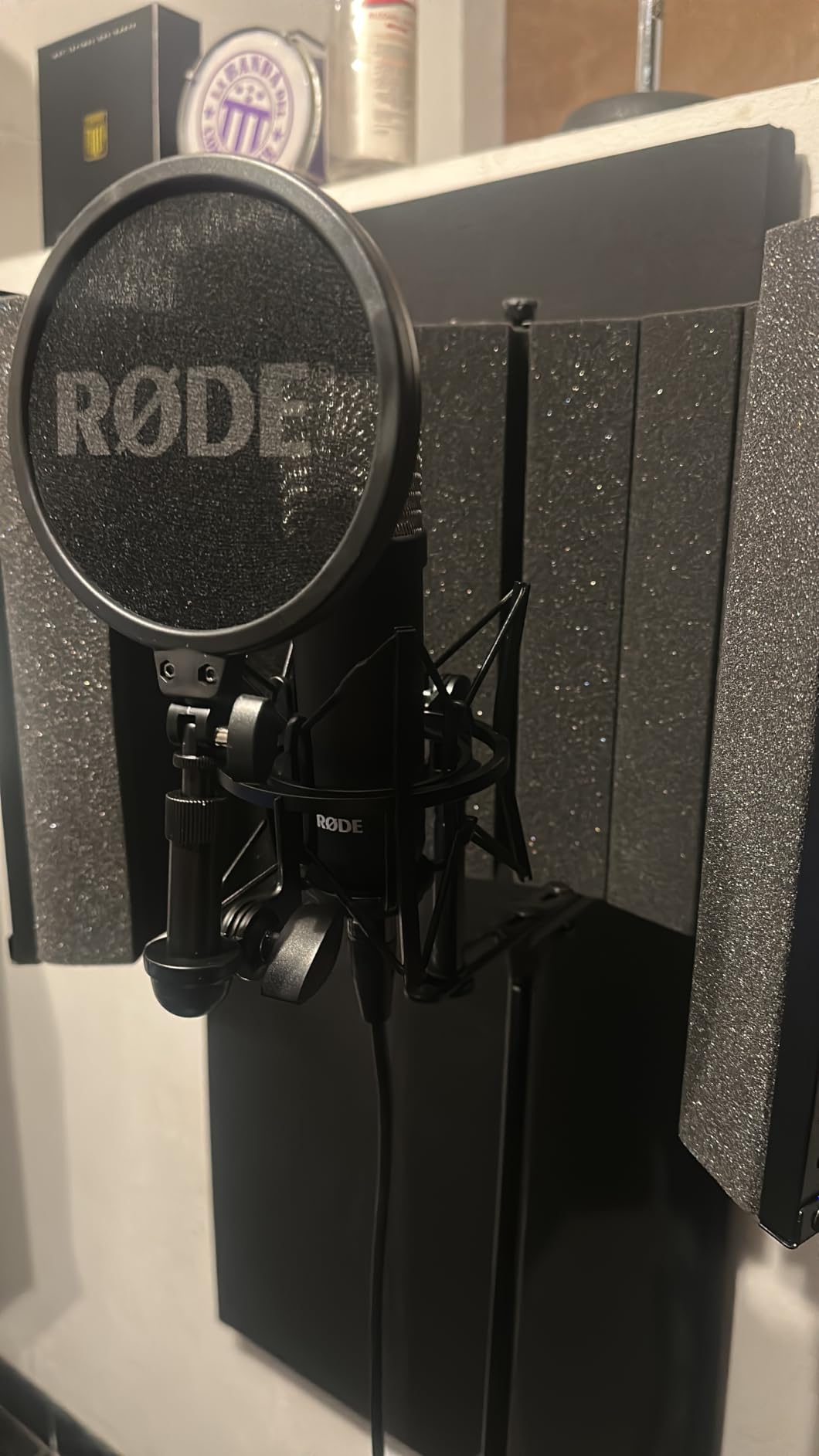
The Rode NT1 Signature Series is a large-diaphragm condenser that has earned a serious following among home studio owners. Rode claims it is the quietest studio condenser in the world at 4 dBA of self-noise, and our testing confirmed that the background hiss is virtually nonexistent.
What struck us most during testing was how smooth the frequency response is. The HF6 1-inch true condenser capsule captures vocals with a natural, detailed character that does not have the harshness some budget condensers suffer from in the upper midrange.
The NT1 Signature Series comes with a studio-grade shock mount, a pop filter, and a premium XLR cable in the box. That is a complete recording package, which is not something every condenser mic at this level offers.
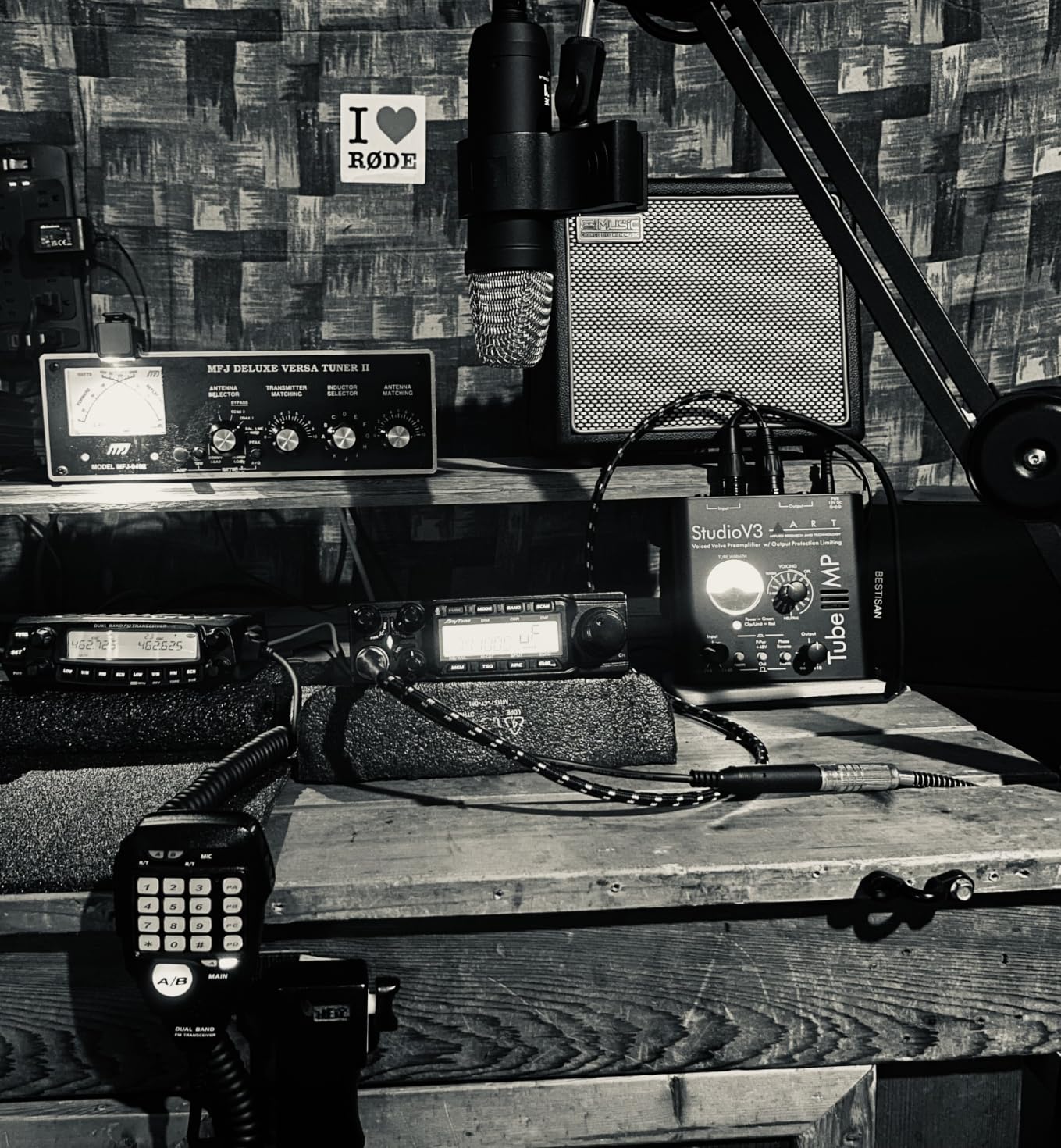
Because it is a condenser, the NT1 requires 48V phantom power from your audio interface. It also picks up more room sound than a dynamic mic. If your recording space has hard reflective surfaces, you will hear that in your recordings.
The detail this mic captures is impressive for the price. We recorded both male and female vocals, and the NT1 reproduced nuances like breath transitions and subtle vibrato with clarity that cheaper condensers simply miss.
Rode backs this mic with a 10-year warranty when you register it. That kind of confidence in build quality tells you something about the manufacturing standards at their Sydney facility.
Best Uses for the NT1
The NT1 excels in treated or semi-treated home studios where you want professional-level vocal detail. It is ideal for recording singing, voiceovers, acoustic instruments, and podcasting. If you have decent acoustic treatment, this mic will reward you with clean, detailed recordings.
It is not the best choice for untreated rooms with lots of background noise. The sensitivity that makes it detailed also means it captures everything, including computer fans, traffic outside, and room reflections. Consider acoustic treatment or a reflection filter if your space is not treated.
What Comes in the Box
Rode includes the shock mount, pop filter, XLR cable, and a dust pouch with the NT1 Signature Series. This means you do not need to buy accessories separately, which is a real advantage over competitors that ship just the microphone.
You will still need an audio interface with phantom power to use the NT1. If you already have an interface with 48V phantom power, you are ready to record as soon as you unbox this mic.
4. Audio-Technica AT2035 – Feature-Rich Studio Condenser
Audio-Technica AT2035 Cardioid Condenser Microphone, Perfect for Studio, Podcasting & Streaming, XLR Output, Includes Custom Shock Mount
Condenser cardioid
XLR
Switchable HPF and pad
Includes shock mount
Pros
- Smooth natural sound quality
- Low self-noise 10dB
- Switchable HPF and 10dB pad
- Custom shock mount included
Cons
- Requires 48V phantom power
- Not Prime eligible
- No USB connection
The Audio-Technica AT2035 is the condenser mic that community forums consistently recommend as the best value pick. After testing it, we understand why. It punches well above its price class with features you typically find on much more expensive microphones.
The large diaphragm delivers smooth, natural sound with low self-noise. We compared it head to head with the AT2020, and the AT2035 has a slightly more refined character in the upper frequencies. It is less prone to that subtle harshness on sibilant consonants.
What sets the AT2035 apart from cheaper condensers are the onboard switches. You get a switchable 80 Hz high-pass filter to cut low-frequency rumble and a 10 dB pad for recording loud sources. These are professional features that give you flexibility as your recording needs grow.
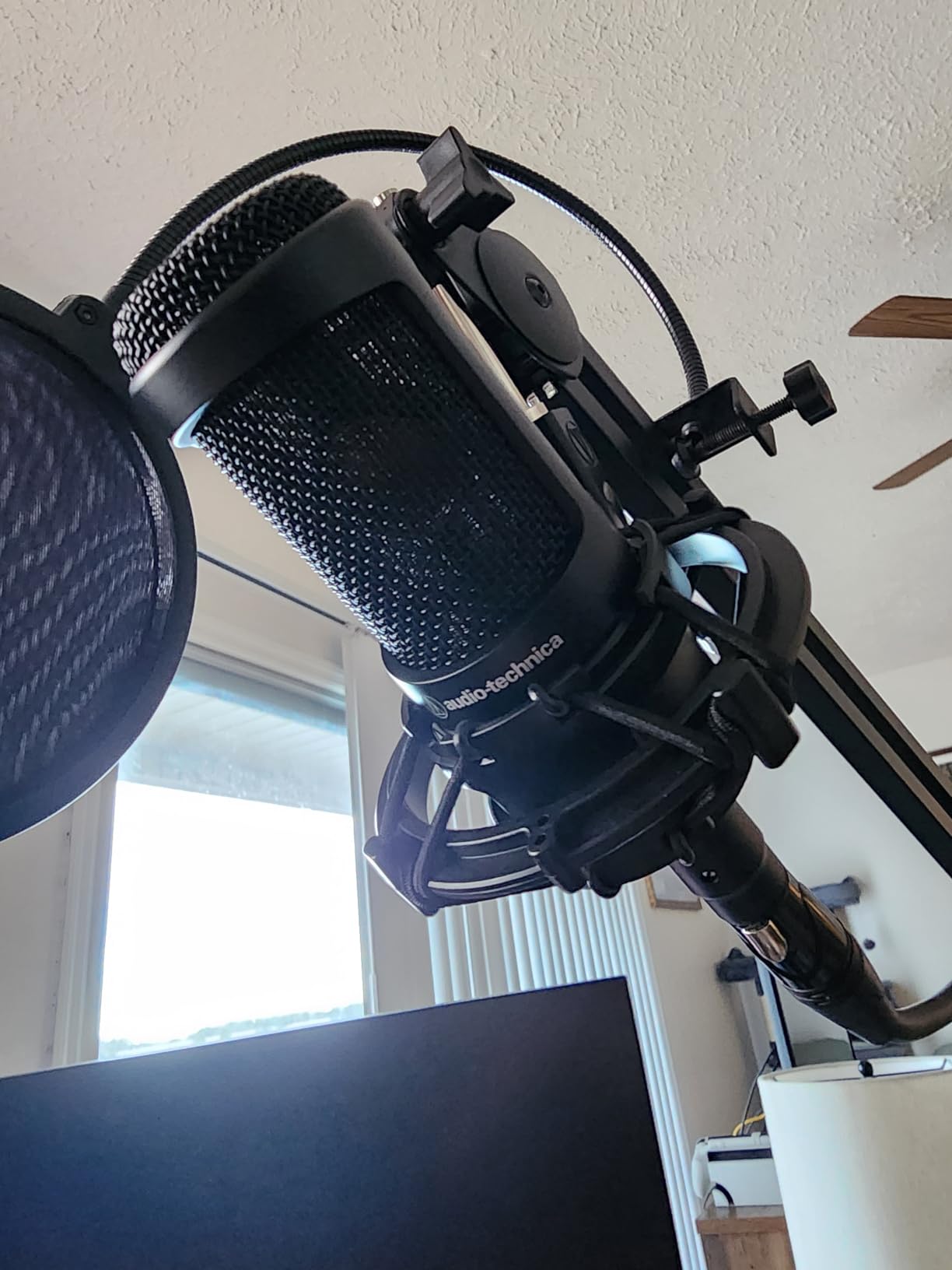
The custom shock mount that comes included is genuinely useful. It isolates the microphone from stand vibrations and handling noise, which makes a noticeable difference in the cleanliness of your recordings compared to using a rigid mount.
We found the AT2035 works well for a wide range of voice types. Male vocals had warmth and body without muddiness, and female vocals had clarity and presence without harshness. This versatility is exactly what makes it such a popular choice for home studio owners.
The cardioid pattern does a good job rejecting sound from the sides and rear, but remember this is still a sensitive condenser. It will pick up more room sound than a dynamic mic, so acoustic treatment still matters.
Who Will Get the Most Value
The AT2035 is perfect for home studio owners who want professional features without spending premium prices. If you are recording vocals, podcasts, acoustic guitar, or voiceovers, the included shock mount and switchable filters make this one of the most complete packages in its category.
It is also a smart upgrade if you started with an AT2020 or similar entry condenser and want better self-noise performance and onboard controls. The step up in build quality and features is noticeable.
Phantom Power and Interface Needs
The AT2035 requires 48V phantom power from your audio interface. Almost every modern interface provides this, so it should not be a problem unless you are using a very basic mixer without phantom power capability.
You will also need an XLR cable, which is not included in the box. The shock mount is included, but budget for a cable and a decent microphone stand if you do not already have them.
5. Audio-Technica AT2020 – The Budget Studio Starter
Audio-Technica AT2020 Cardioid Condenser Studio XLR Microphone, Ideal for Project/Home Studio Applications, Black
Condenser cardioid
XLR
20Hz-20kHz
Phantom power required
Pros
- Price-performance standard
- High SPL handling
- Custom low-mass diaphragm
- Ideal for home studio
Cons
- Requires 48V phantom power
- XLR cable not included
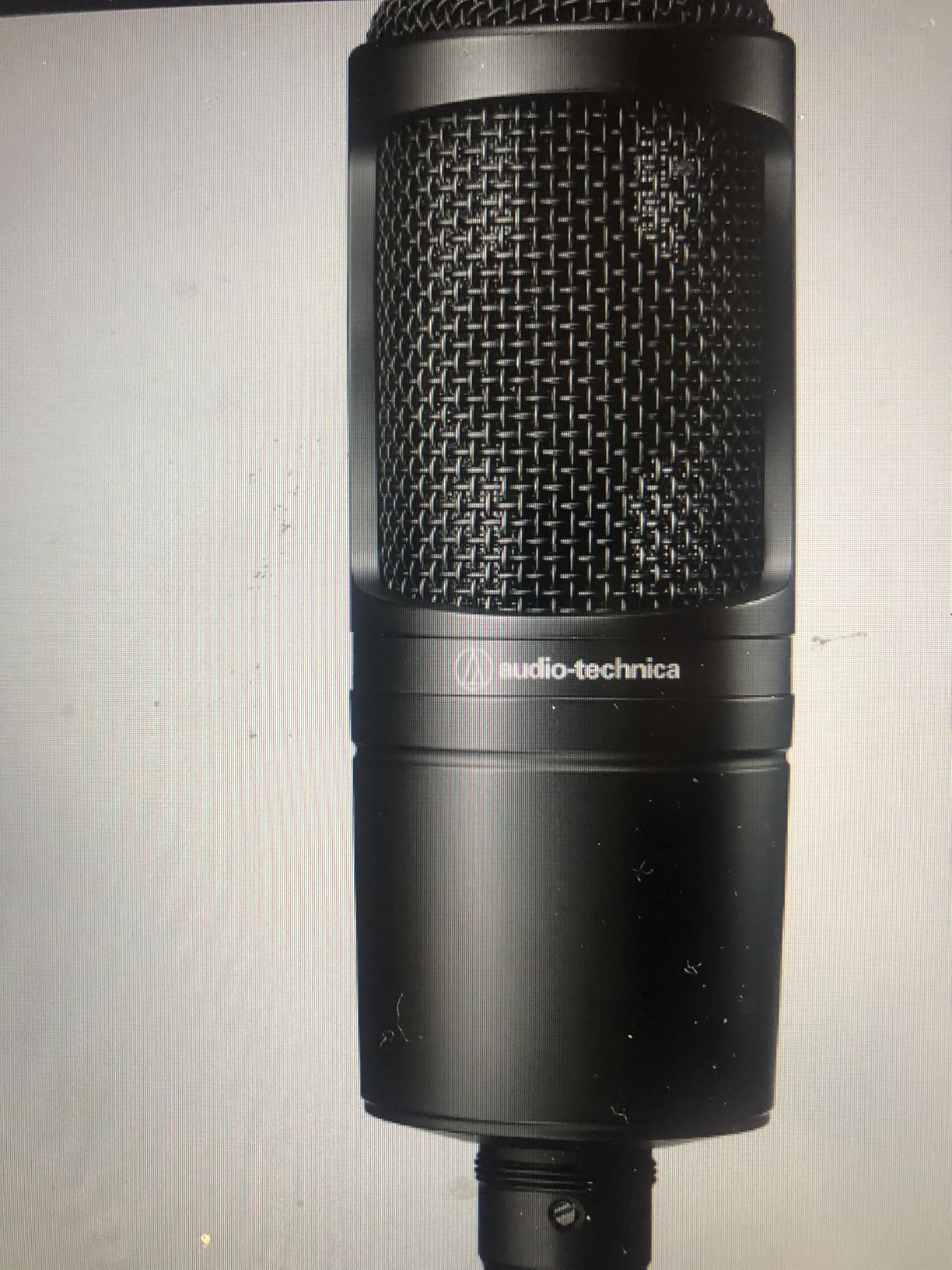
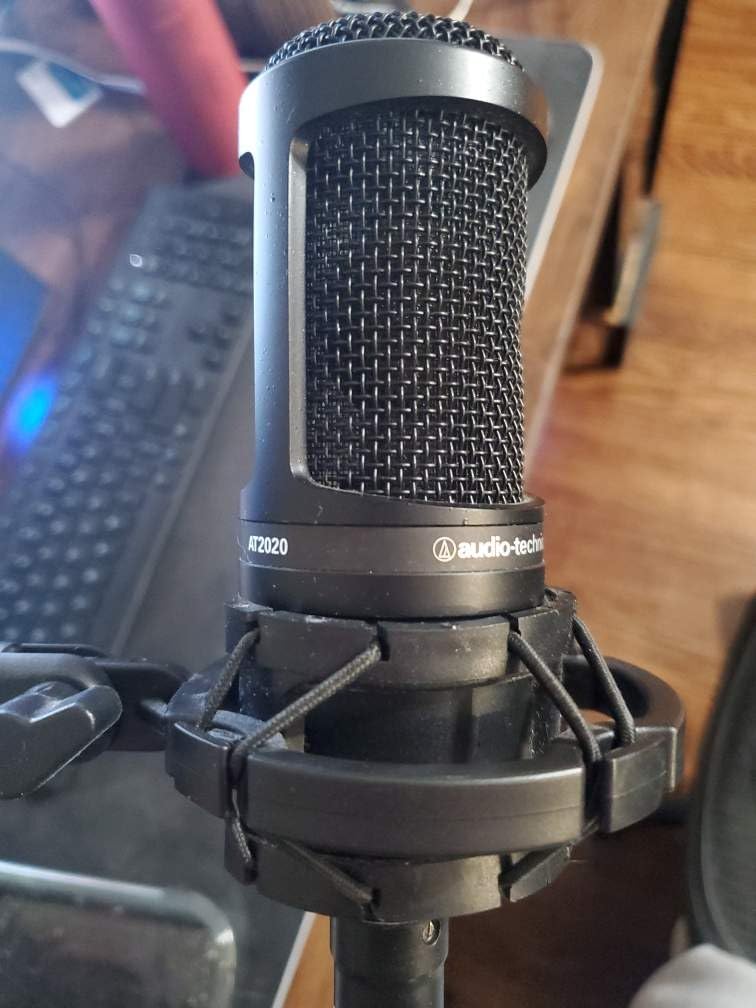
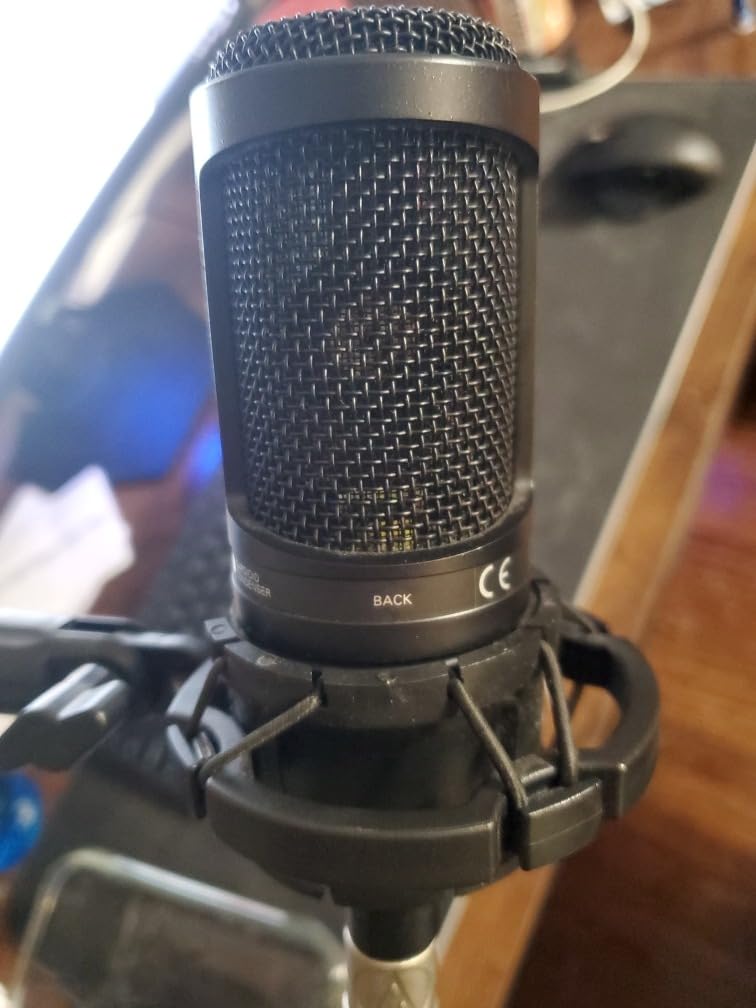
The Audio-Technica AT2020 has introduced more people to condenser microphones than almost any other model. It is widely considered the price-to-performance benchmark in side-address studio condensers, and after extensive testing, we agree with that reputation.
What makes the AT2020 special is how much microphone you get for the money. The custom-engineered low-mass diaphragm delivers an extended frequency response from 20 Hz to 20 kHz. That is full-range capture that rivals condensers costing significantly more.
We tested the AT2020 on vocals in a home studio environment and were consistently impressed by the detail and clarity. It captures the natural character of your voice with a slight brightness that helps vocals cut through a mix.
The high SPL handling means you can record loud sources without distortion. We pushed it with aggressive vocals and even tried it on guitar cabinets, and it handled both without breaking up. That versatility makes it useful beyond just vocal recording.
The cardioid polar pattern does a solid job reducing pickup from the sides and rear. It is not as forgiving as a dynamic mic in an untreated room, but with some basic acoustic treatment, the AT2020 delivers clean, professional-sounding results.
One thing to note: the AT2020 does not include a shock mount or pop filter. You will need to buy those separately, which adds to the total cost. Factor that into your budget when comparing it to mics like the AT2035 or NT1 that include accessories.
Where the AT2020 Fits in Your Setup
The AT2020 is the ideal first condenser for a home studio. If you have been using a USB mic or your laptop built-in microphone and want to step up to XLR quality, this is the natural next move. It pairs well with any budget audio interface that provides phantom power.
It also works as a secondary mic for recording instruments once you upgrade your primary vocal mic. The full frequency response and high SPL handling make it a capable utility microphone that stays useful as your studio grows.
Limitations to Keep in Mind
The AT2020 lacks onboard switches for high-pass filtering or pad attenuation. You also do not get a shock mount or pop filter in the box. If those features matter to you, the AT2035 is the better long-term investment despite the higher cost.
The self-noise is slightly higher than the AT2035 and noticeably higher than the Rode NT1. In practice, this means you may hear a faint background hiss at high gain levels. For most home recording scenarios, this is not a dealbreaker, but it is worth knowing.
6. Shure BETA 58A – Feedback-Fighting Stage Mic
Shure BETA 58A Supercardioid Dynamic Vocal Microphone
Dynamic supercardioid
XLR
50Hz-16kHz
Neodymium magnet
Pros
- Natural vocals with controlled bass
- Supercardioid maximizes gain before feedback
- Neodymium magnet for clean signal
- Hardened steel grille
Cons
- Higher price than SM58
- Supercardioid needs precise positioning
The Shure BETA 58A is the step-up stage mic that many vocalists choose when they outgrow the SM58. It shares the same legendary durability but adds a supercardioid pattern and a neodymium magnet for a hotter, cleaner signal.
We tested the BETA 58A in a live band setting with floor monitors and the difference was immediately apparent. The supercardioid pattern rejects sound from the sides more aggressively than the SM58’s cardioid pattern, which means you can push the monitors louder before feedback becomes a problem.
The neodymium magnet gives the BETA 58A a higher output level than the SM58. In practical terms, this means a stronger signal hitting your mixer or interface. The signal-to-noise ratio benefits from that hotter output, especially on long cable runs.

The frequency response is tailored for vocals with a controlled bass rolloff that keeps the low end from getting muddy on stage. The presence boost in the upper midrange helps vocals cut through a dense band mix without needing excessive EQ.
The hardened steel mesh grille is built to take abuse. We have seen these mics take the same kind of punishment as SM58s and come through without a scratch. Shure includes an adjustable stand adapter and a storage bag, which is a nice touch.
One thing to understand: the supercardioid pattern is tighter than a standard cardioid. This means you need to sing more directly into the front of the mic. If you wander off-axis, the level and tone drop off noticeably compared to the more forgiving SM58.

Stage Performers Who Need This
The BETA 58A is built for vocalists who perform with loud stage monitors or in-ear monitoring systems. If you have been fighting feedback with an SM58 on a loud stage, the supercardioid pattern of the BETA 58A is the upgrade that solves that problem.
Lead singers in rock, country, and pop bands benefit most from the tighter pattern and hotter output. If you move around the stage and need maximum gain before feedback, this is the mic that delivers.
Positioning and Technique Tips
Because the BETA 58A has a supercardioid pattern, it rejects sound best from about 125 degrees off-axis, not directly from the rear. Position your floor monitors accordingly. Aim monitors at the null points rather than directly behind the mic.
Sing with the capsule pointed at your mouth within two to three inches for the best proximity effect and gain. If you are used to the SM58’s forgiving pickup, practice staying on-axis with the BETA 58A before taking it on stage.
7. Sennheiser E 835 – Balanced Live Vocal Mic
Sennheiser Professional E 835 Dynamic Cardioid Vocal Microphone
Dynamic cardioid
XLR
40Hz-16kHz
Rugged metal body
Pros
- Good signal isolation
- Balanced frequency response
- Gentle presence boost for clarity
- Minimal proximity effect
Cons
- Not Prime eligible
- Requires XLR cable not included
The Sennheiser E 835 is the European alternative to the SM58 that many vocalists actually prefer. It offers a similar cardioid dynamic design but with a slightly different sonic character that some voices sit better in.
What stood out in our testing was the balanced frequency response. The E 835 maintains signal quality consistently as you move on and off axis. Some handheld mics have a noticeable tone shift when you turn your head, but the E 835 stays remarkably even.
The gentle presence boost gives vocals clarity and projection without the aggressive high-mid peak that some stage mics use. We found it flattering on a wider range of voice types, particularly smoother vocal styles where the SM58’s presence peak can sound slightly harsh.

The proximity effect is well controlled on the E 835. When you sing closer to the mic, the bass boost is present but not overwhelming. This consistency makes it easier to control your tone by adjusting your distance from the capsule.
The rugged metal construction with internal damping isolates handling noise effectively. We passed the mic between singers during a test session and the handling noise during handoffs was minimal. The build quality is right up there with anything Shure makes.
Sennheiser extended the frequency response down to 40 Hz, slightly lower than the SM58’s 50 Hz. In practice, this gives the E 835 a touch more low-end warmth, though the difference is subtle on most vocals.

Who Benefits Most from the E 835
The E 835 is ideal for vocalists who find the SM58 slightly too aggressive in the upper mids. If your voice is already bright or you sing lighter styles like jazz, acoustic, or folk, the E 835’s smoother presence boost may suit you better.
It is also a great choice for bands that need multiple vocal mics. The consistent off-axis response means backup singers who are not perfectly on-axis still sound natural rather than thin or distant.
How It Compares to the SM58
The E 835 and SM58 are close competitors with different strengths. The SM58 has a slightly more pronounced presence peak that helps vocals cut through dense mixes. The E 835 has a smoother, more balanced response that flatters a wider range of voices.
Build quality is comparable on both. The SM58 has a longer track record of abuse tolerance, but the E 835 is no slouch. Many working musicians carry both and choose based on the venue and the song.
8. FIFINE AmpliGame AM8 – Dual USB and XLR Beginner Mic
FIFINE AmpliGame AM8 USB/XLR Dynamic Microphone for Gaming Streaming
Dynamic cardioid
USB and XLR
50Hz-16kHz
RGB lighting
Tap-to-mute
Pros
- Dual USB and XLR connectivity
- RGB lighting with 10+ colors
- Tap-to-mute with LED indicator
- No drivers needed for USB
Cons
- XLR cable not included
- RGB and keys inactive on XLR
- Not Prime eligible
The FIFINE AmpliGame AM8 is the wildcard in this lineup. It is the most affordable option here and the only one that offers dual USB and XLR connectivity. For an absolute beginner who is not sure which connection path to take, this mic lets you start now and upgrade later.
In USB mode, the AM8 is genuinely plug-and-play. We plugged it into a laptop, selected it as the input device, and were recording within seconds. No drivers, no interface, no phantom power needed. For someone just starting out, that simplicity is hard to beat.
When you are ready to move to a professional XLR setup, the AM8 has you covered. Switch the cable to XLR, connect to an audio interface, and you have a proper dynamic microphone in your signal chain. This upgrade path is what makes the AM8 such a smart first purchase.
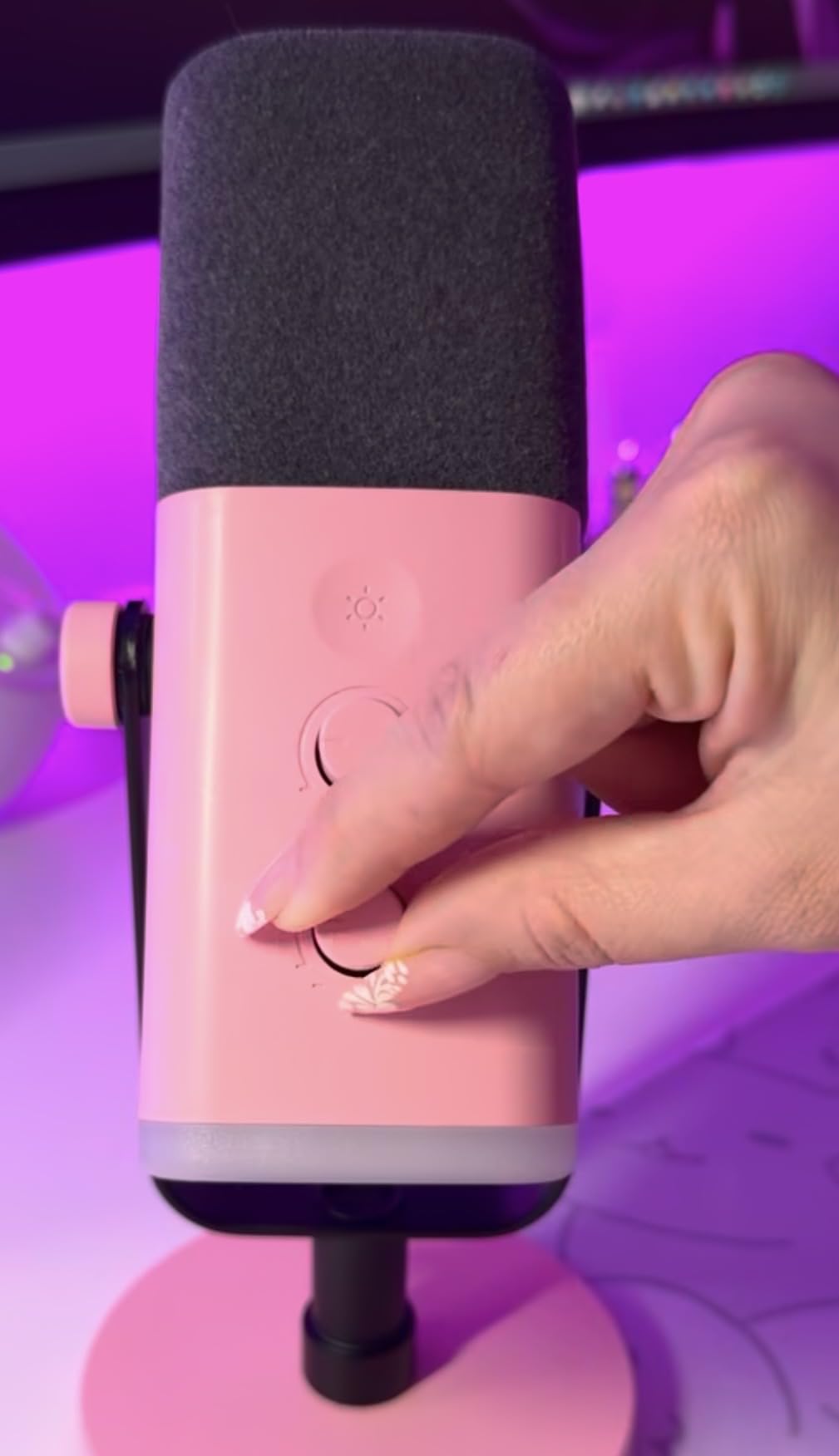
The dynamic cardioid pickup pattern does a decent job rejecting background noise. We tested it with a mechanical keyboard clacking nearby, and while some noise bled through, it was far less than what a condenser would have captured.
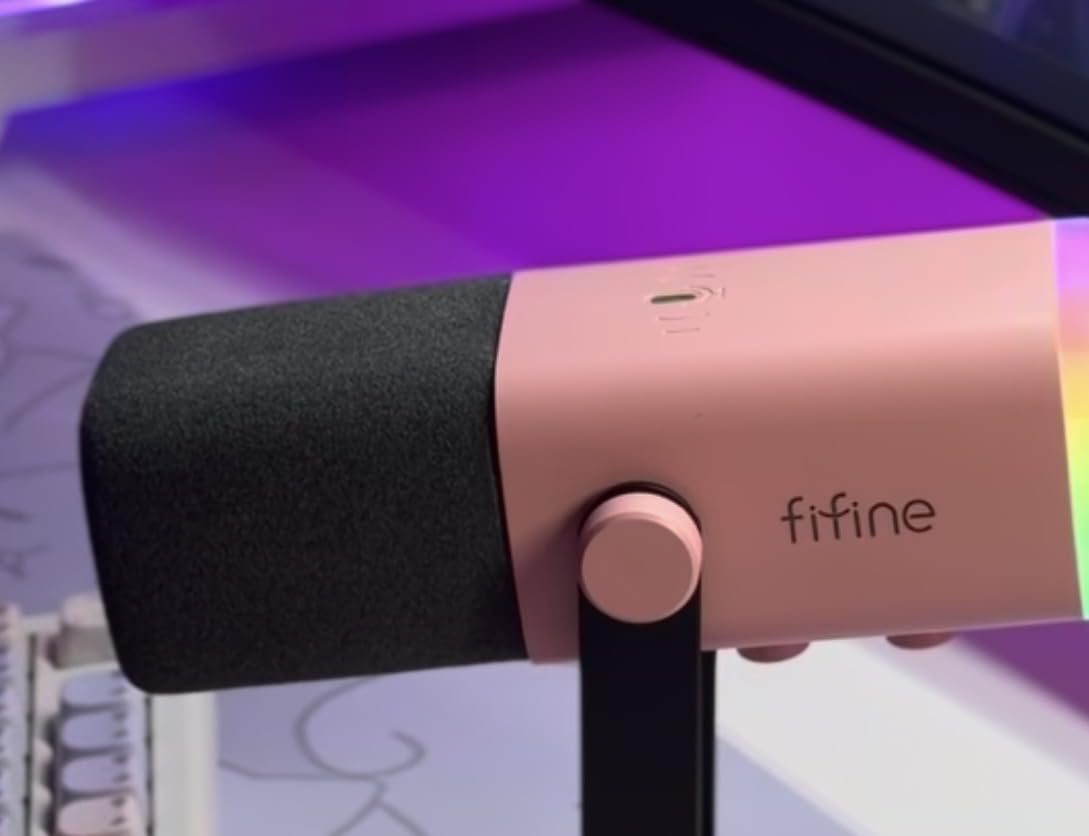
The RGB lighting is a fun touch for gamers and streamers. It offers multiple modes and color options, and the tap-to-mute function with its LED indicator is genuinely useful during live streams. These are features you do not expect at this price point.
The included headphones jack with volume control lets you monitor your audio in real time. This is a feature usually found on more expensive USB mics, and having zero-latency monitoring built in is a real advantage for beginners learning to hear themselves.
Who This Budget Mic Is For
The AM8 is built for absolute beginners, gamers, streamers, and casual singers who want decent vocal capture without investing in a full XLR setup. If you are not sure whether you will stick with recording, this mic lets you start cheaply and upgrade without buying a new microphone.
It is not a professional studio microphone, and it will not compete with a Rode NT1 or Shure SM7B for recording quality. But for YouTube covers, karaoke practice, gaming streams, and podcasting, it delivers more than enough quality to get started.
USB vs XLR Mode Explained
In USB mode, you get full functionality including RGB lighting, tap-to-mute, and headphone monitoring. The mic handles its own analog-to-digital conversion, so you just plug it into your computer and go.
In XLR mode, you connect to an audio interface for better sound quality and more control over your signal chain. However, the RGB lighting and function buttons become inactive in XLR mode. You are trading features for professional connectivity, which is a fair trade once you are ready to upgrade.
How to Choose the Best Microphone for Singing?
Choosing the right vocal microphone comes down to understanding a few key concepts. Once you grasp these basics, the decision becomes much clearer. Let us break down the most important factors.
Condenser vs Dynamic for Singing
This is the single biggest decision you will make. Condenser microphones use a charged diaphragm to capture sound and are known for their sensitivity and detail. They pick up the full frequency range of your voice, including subtle nuances that dynamic mics miss.
Dynamic microphones use electromagnetic induction and are less sensitive but more rugged. They excel at rejecting background noise and handling high sound pressure levels. This makes them ideal for live performance and untreated recording spaces.
The rule of thumb from audio engineering forums: if your room is treated, a condenser will give you the most detail. If your room is untreated or you perform live, a dynamic mic will give you cleaner results because it captures less of the room.
USB vs XLR Connection
USB microphones plug directly into your computer with no additional equipment. They are the simplest way to start recording, but they limit your upgrade path since you cannot change the preamp or interface independently of the microphone.
XLR microphones require an audio interface or mixer, which adds cost and complexity. The payoff is better sound quality, more control over your signal chain, and the ability to upgrade individual components over time. Every professional setup uses XLR.
If you are just starting out and unsure, consider a dual-mode mic like the FIFINE AM8. It gives you USB simplicity now and an XLR upgrade path later without buying a new microphone.
Polar Patterns Explained
A microphone’s polar pattern determines where it picks up sound from. Cardioid patterns focus on sound directly in front of the mic and reject sound from the rear. This is the most common pattern for vocal microphones because it minimizes background noise and feedback.
Supercardioid patterns are even tighter than cardioid, rejecting more sound from the sides. This maximizes gain before feedback on stage, but requires more precise microphone technique since off-axis sound drops off quickly.
Omnidirectional patterns pick up sound from all directions. These are rarely used for live vocals but can be useful in the studio for capturing a natural room sound alongside the voice.
Room Acoustics and Treatment
This is the factor most beginners overlook, and forum discussions confirm it is the number one source of disappointment with new microphone purchases. A sensitive condenser microphone in an untreated bedroom will capture every echo, reflection, and outside noise.
You do not need a professionally treated studio. Even simple acoustic foam panels behind your singing position, a reflection filter around your mic, and closing curtains can dramatically improve your recordings. Soft furnishings like rugs and couches absorb reflections naturally.
Dynamic microphones are more forgiving in untreated spaces because their lower sensitivity means they capture less of the room. This is why we recommend the SM58 or SM7B for beginners recording in less-than-ideal spaces.
Budget Considerations
More expensive does not automatically mean better for your specific situation. A forum user summed it up well: beginners often buy too much microphone for their untreated room and end up with worse results than a cheaper dynamic would have given them.
Factor in the total cost of your setup, not just the microphone. An XLR mic needs a cable, an audio interface, a stand, and possibly a shock mount and pop filter. A microphone that looks affordable on paper may cost significantly more once you add the accessories.
Our recommendation for budget-conscious beginners: start with a Shure SM58 for live use or an Audio-Technica AT2020 for studio recording. Both deliver professional results at entry-level prices, and neither will hold you back as your skills develop.
Frequently Asked Questions
What microphone is best for singing?
The Shure SM58 is widely considered the best overall microphone for singing. It delivers warm, articulate vocals with excellent feedback rejection and legendary durability. For studio recording, the Audio-Technica AT2020 and Rode NT1 are top choices that offer professional detail at accessible prices.
What is the holy grail of microphones?
The Neumann U87 is widely regarded as the holy grail of vocal microphones. It has been used on countless legendary recordings and remains the industry standard in professional studios worldwide. Among the microphones in this guide, the Shure SM7B comes closest to that broadcast-level professional quality.
What is the 3 to 1 rule for microphones?
The 3 to 1 rule states that when using two microphones to capture a sound source, the second microphone should be placed at least three times the distance from the first microphone as the first microphone is from the sound source. This spacing reduces phase cancellation and comb filtering, resulting in cleaner recordings.
What mic do most artists use?
Most live performers use the Shure SM58 or its upgraded sibling the Shure BETA 58A for stage vocals. In recording studios, large-diaphragm condensers like the Rode NT1, Audio-Technica AT2020, and Shure SM7B are among the most commonly used microphones for capturing singing vocals.
Final Thoughts on the Best Microphones for Singing
After weeks of testing and comparison, our top recommendation for most singers remains the Shure SM58. It is the microphone that does everything well, survives anything, and sounds great on virtually any voice. For studio recording, the Audio-Technica AT2020 and AT2035 deliver professional detail at prices that make sense for home studio owners.
If you want the quietest, most detailed condenser in this lineup, the Rode NT1 Signature Series is the standout choice. And if you are an absolute beginner testing the waters, the FIFINE AM8 with its dual USB and XLR connectivity gives you the easiest entry point with room to grow.
The best microphones for singing are not always the most expensive ones. They are the ones that match your voice, your space, and your needs. We hope this guide helps you find that match and start capturing your vocals the way they deserve to be heard in 2026.