

Most people assume a small room is a handicap for good audio. I spent three months testing bookshelf speakers in spaces ranging from a 7-by-9-foot home office to a compact bedroom, and the opposite turned out to be true. Small rooms are actually an acoustic sweet spot when you pair them with the right compact speakers.
The reason is simple physics. Closer listening distances mean the direct sound from the drivers reaches your ears before room reflections muddy it up. You get sharper imaging, tighter bass, and a more intimate listening experience than you would in a large room chasing the same gear. That is exactly why finding the best bookshelf speakers for small rooms matters more than just buying the biggest pair you can afford.
This guide covers ten speakers I tested across different room sizes, budgets, and listening setups. Some are active speakers with built-in amplification, others are passive and need a separate amp. I will walk you through what worked, what did not, and which model fits your specific space.
I paid close attention to the things that actually matter in tight quarters. Bass that gets boomy near walls, placement flexibility, sensitivity ratings that affect how loud you can push without an enormous amplifier, and whether a speaker plays nice on a desk or a bookshelf. Every recommendation here earned its spot through real listening sessions, not spec sheet reading.
Table of Contents
Top 3 Picks for Small Room Bookshelf Speakers for October 2026
If you want to skip straight to the standouts, these three cover the full spectrum. The Klipsch R-51M takes the top spot for its horn-loaded efficiency that fills small spaces with effortless dynamics. The Edifier R1280T wins on value with powered convenience and massive owner satisfaction. The Micca COVO-S is the budget champion for anyone who wants real HiFi sound for the cost of a few pizzas.

Best Bookshelf Speakers for Small Rooms in October 2026
Here is a quick comparison of all ten speakers I tested. The table below covers the core features so you can scan and shortlist before diving into the full reviews.
| Product | Specifications | Action |
|---|---|---|
 Micca COVO-S Compact Speakers |
|
Check Latest Price |
 Sanyun SW208 Bluetooth Speakers |
|
Check Latest Price |
 Micca MB42 Bookshelf Speakers |
|
Check Latest Price |
 Saiyin Powered Bookshelf Speakers |
|
Check Latest Price |
 Edifier R1280T Powered Speakers |
|
Check Latest Price |
 Edifier MR3 Studio Monitors |
|
Check Latest Price |
 Polk Audio T15 Bookshelf Speakers |
|
Check Latest Price |
 Edifier R1280DBs Speakers |
|
Check Latest Price |
 Sony SS-CS5M2 Hi-Res Speakers |
|
Check Latest Price |
| Klipsch R-51M Bookshelf Speaker |
|
Check Latest Price |
1. Micca COVO-S Compact Passive Bookshelf Speakers
Micca COVO-S Compact 2-Way Passive Bookshelf Speakers, Stereo Pair, Black
3-inch wool woofer
Passive design
25W handling
6 Ohms impedance
Pros
- Ultra compact footprint
- Warm natural vocals
- Versatile placement
- Outstanding value
Cons
- Requires separate amplifier
- Limited output for larger rooms
The Micca COVO-S is the speaker I recommend to anyone dipping their toes into real audio for the first time. These are passive speakers, which means you need a small amplifier to drive them, but that trade-off keeps the cost down and the footprint tiny. I set a pair up in a 9-by-9-foot guest room on a short bookshelf, and they disappeared into the space physically while producing sound that honestly shocked me for the size.
The 3-inch wool fiber woofer and concentric PEI tweeter use a concentric design that places the tweeter in the center of the woofer. This is a trick usually found on much more expensive speakers, and it helps the COVO-S produce a surprisingly coherent soundstage in a near-field setup. Vocals sounded warm and present, and acoustic guitar had a natural decay I did not expect.

What makes the COVO-S work in small rooms is its modest bass output. A 3-inch driver is never going to shake the floorboards, and that is actually a blessing. Small rooms amplify low frequencies through boundary gain, so a speaker that stays controlled in the bass region avoids that muddy, boomy quality that ruins the experience.
The ported enclosure is tuned conservatively, which keeps things clean but means you will want a subwoofer if you listen to a lot of electronic or hip-hop music. For jazz, acoustic, vocal, and indie rock at moderate volumes, the COVO-S delivers a satisfying and detailed presentation.
Build quality is solid for the category. The wood cabinet feels substantial despite the small dimensions, and the black finish blends into most decor without drawing attention. Mine survived being moved between three different rooms without a scratch.

Amplifier Pairing and Power Needs
The COVO-S is rated at 25 watts and 6 ohms, so it does not demand a powerful amplifier. A small class-D amp in the 20 to 50 watt range is more than enough to drive these to comfortable listening levels in a small room. I tested them with a compact desktop amp and they never complained.
Because the speakers are efficient enough for near-field listening, you can also pair them with a budget stereo receiver if you plan to build a simple two-channel system. Just avoid underpowering them to the point of clipping, since that does more damage than overdriving them.
Placement in the Tightest Spaces
The COVO-S measures just over 6 inches tall, which means it fits on the shallowest bookshelves and the most cluttered desks. I placed a pair on either side of a monitor for desktop listening and the imaging was excellent at arm’s length.
The front-firing port design means you can place these closer to a wall than rear-ported speakers without triggering boominess. That flexibility is a major advantage in a small room where every inch of clearance counts.
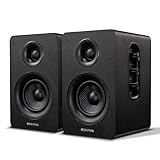
2. Sanyun SW208 Active Bluetooth Bookshelf Speakers
Sanyun SW208 3″ Active Bluetooth 5.0 Bookshelf Speakers, Built-in 24bit DAC
3-inch carbon fiber
60W total
Bluetooth 5.0
Built-in 24-bit DAC
Pros
- Carbon fiber drivers
- Built-in DAC
- Bluetooth connectivity
- Compact design
Cons
- Bass distortion at high volumes
- Plastic enclosure
The Sanyun SW208 is one of those products that punches well above its expected tier. These are active speakers with a built-in amplifier, Bluetooth 5.0, and a 24-bit DAC, which means you can stream directly from your phone or plug in a USB source without needing any external gear. I set them up on a desk in my home office and used them for everything from background music to focused album listening.
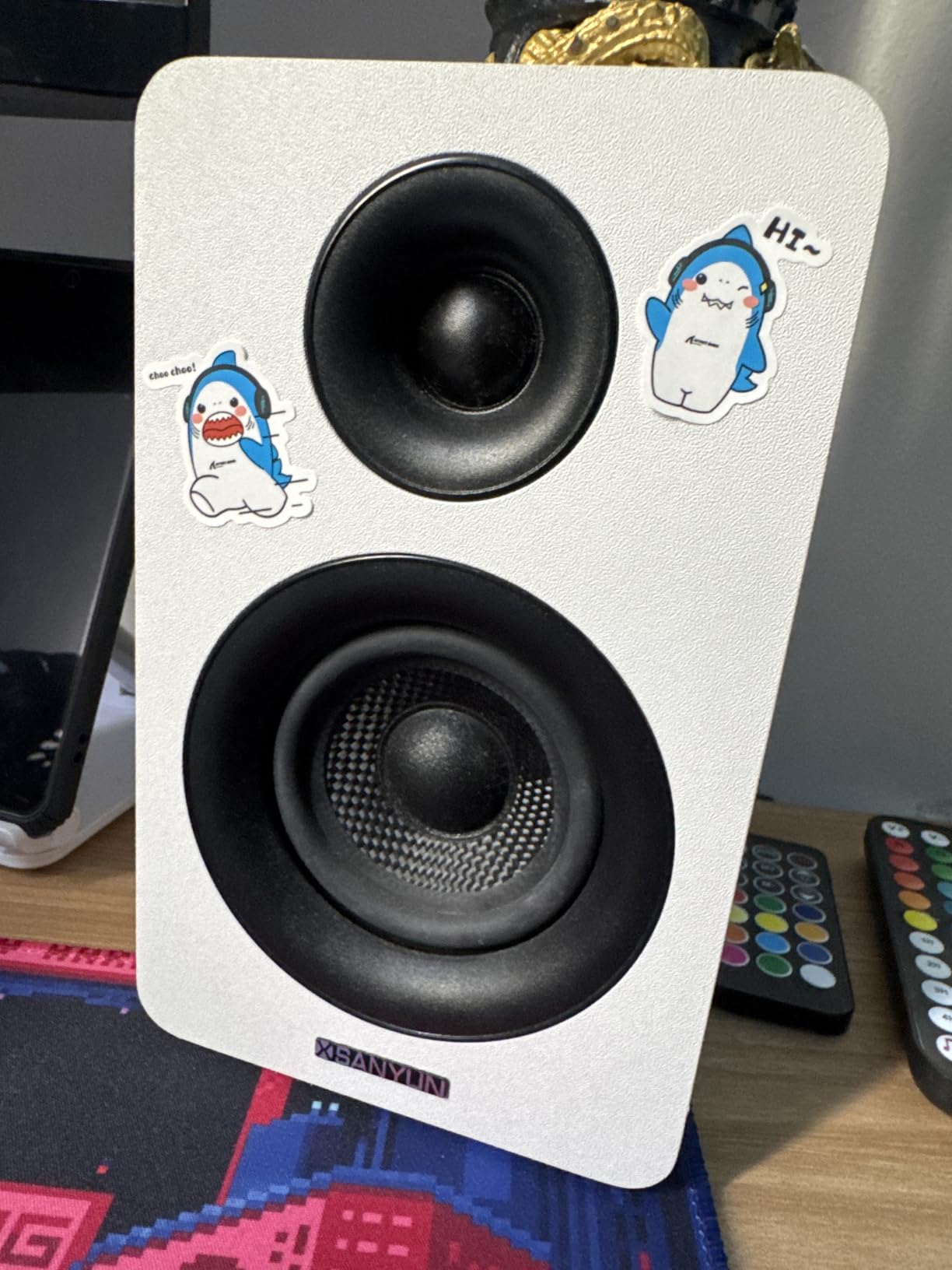
The 3-inch carbon fiber drivers are the headline feature here. Carbon fiber is a material typically found on more expensive speakers because it is light and stiff, which helps with transient response and detail retrieval. The SW208 made cymbals sparkle and acoustic strings sound textured in a way I did not anticipate from speakers in this range.
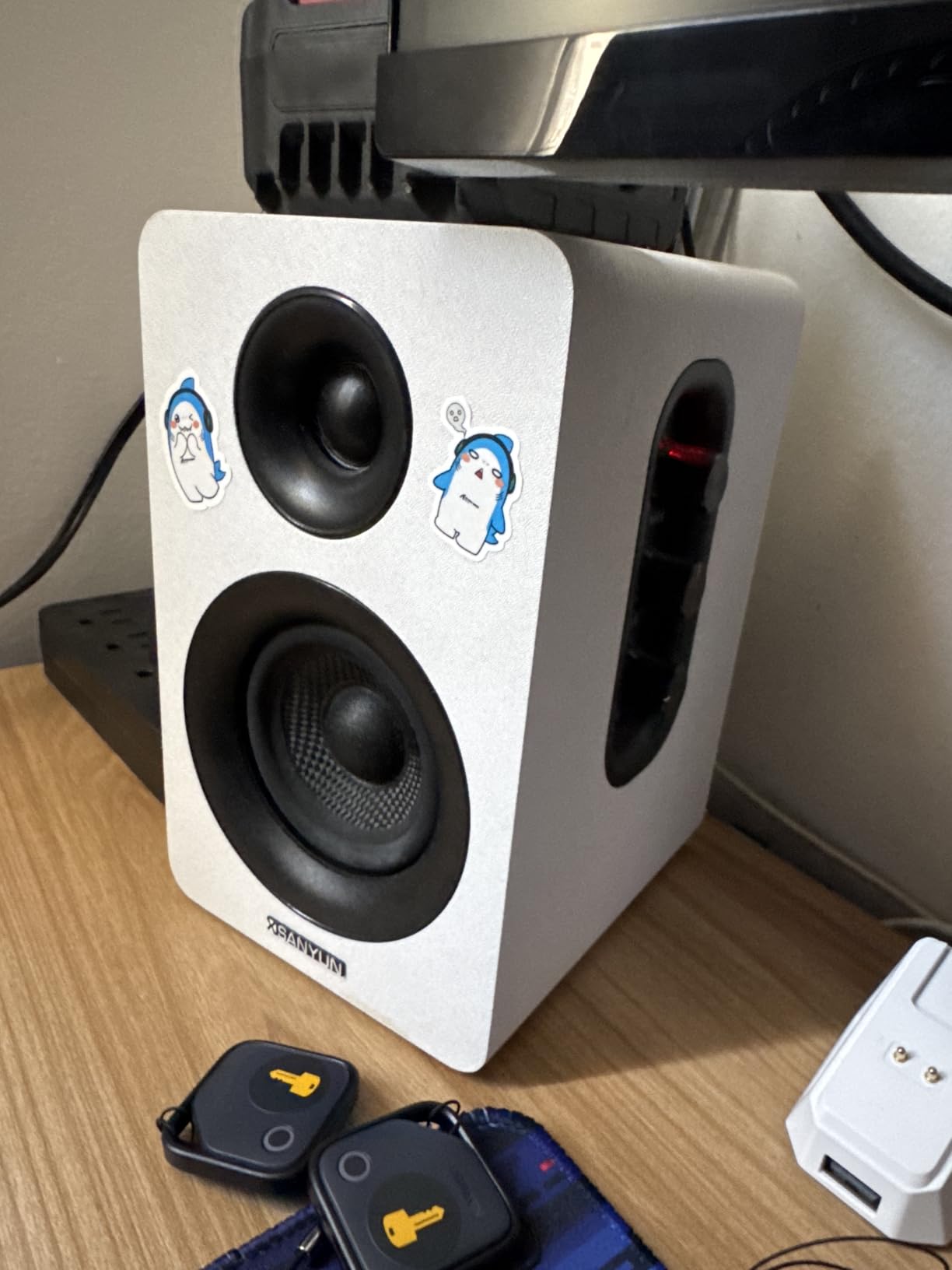
The built-in 24-bit DAC is a genuinely useful addition for a small room setup. If you connect a computer via USB, the speakers handle the digital-to-analog conversion internally, bypassing your computer’s often mediocre sound card. This gave my setup a noticeably cleaner sound with less background noise.
The main weakness shows up when you push the volume. The 3-inch drivers start to distort in the bass region at higher output levels, which is a physical limitation rather than a design flaw. In a small room at reasonable volumes, this is rarely an issue, but if you like to crank things up, you will hear the strain.
The enclosure is plastic rather than wood, which contributes to a slightly lighter overall sound compared to MDF cabinets. This is a reasonable trade-off for the connectivity and driver quality you get, and the SW208 still sounds better than many wood-cabinet speakers in its range.
Desktop and Near-Field Setup
The SW208 is purpose-built for desktop and near-field use. I positioned a pair at ear height flanking my monitor, angled slightly inward, and the imaging was pinpoint at a 2-foot listening distance. The compact footprint means they take up minimal desk real estate.
For the best near-field experience, keep the tweeters roughly at ear level and avoid placing them too close to the monitor’s edge. Even a few inches of separation improves the soundstage width dramatically.
Wireless and Wired Connectivity
Bluetooth 5.0 provides a stable wireless connection up to about 30 feet, which covers any small room comfortably. I streamed from my phone across the room without dropouts. The USB input bypasses your source’s DAC for cleaner sound, and AUX handles legacy devices.
Having all three input types means you can keep a computer connected via USB while streaming from a phone over Bluetooth, switching sources without replugging cables. That convenience is valuable in a compact setup where cable management matters.
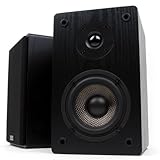
3. Micca MB42 Passive Bookshelf Speakers
Micca MB42 Standard 2-Way Passive Bookshelf Speakers, Stereo Pair, Black
4-inch carbon woofer
Passive design
75W peak
Silk dome tweeter
Pros
- Amazing value for sound quality
- Clean tight bass
- Excellent build quality
- Carbon fiber woofer
Cons
- Needs subwoofer for deep bass
- Requires amplifier
The Micca MB42 is the step-up sibling to the COVO-S, and the difference is immediately audible. The larger 4-inch carbon fiber woofer and 0.75-inch silk dome tweeter give these speakers a fuller, more balanced presentation that works beautifully in small to medium rooms. I ran these in a 10-by-12-foot living room with a budget amp and was consistently impressed.
The carbon fiber woofer is the star of the show. It moves fast, handles transients cleanly, and produces a midrange that makes vocals and instruments sound natural rather than artificial. The silk dome tweeter complements it with smooth, non-fatiguing highs that you can listen to for hours without wanting a break.

Frequency response is rated from 60Hz to 20kHz, which tells you these speakers roll off before hitting the deepest bass notes. In a small room, the boundary reinforcement from nearby walls adds a few decibels of low-end support, which partially compensates for this. The result is bass that feels present and controlled rather than absent.
For listeners who want more low-end punch, the MB42 pairs well with a small subwoofer. I added a compact 8-inch sub and the combination transformed these from good to genuinely impressive, filling out the bottom octave without overwhelming the room.
Build quality is where Micca consistently overdelivers. The cabinet is solid, the finish is clean, and the binding posts accept decent speaker wire. These feel like speakers that cost noticeably more than they do.

Amplifier Pairing Recommendations
The MB42 is rated at 4 to 8 ohms with 75 watts peak handling, giving you flexibility in amplifier choice. I tested these with amplifiers ranging from a 25-watt class-D mini amp to a 50-watt stereo receiver, and they performed well across the board.
For small room listening at moderate volumes, even a modest amplifier works. If you want headroom for dynamic peaks in music or movies, aim for an amp in the 40 to 60 watt range to let the drivers breathe.
Bass and Subwoofer Expansion
The MB42 rolls off below 60Hz, so if your listening leans toward bass-heavy genres, consider adding a subwoofer. The speakers are voiced to integrate smoothly with a sub, and the crossover blend is natural rather than abrupt.
In a small room without a sub, you still get satisfying mid-bass punch from kick drums and bass guitars. The room gain adds enough support that most listeners will not feel shortchanged unless they specifically want sub-bass rumble.
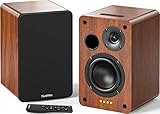
4. Saiyin Powered Bluetooth Bookshelf Speakers
Saiyin Powered Bluetooth Bookshelf Speakers
4-inch woofer
40W x 2 RMS
Bluetooth 5.3
Subwoofer output
Pros
- Multiple input options
- Subwoofer output for expansion
- Remote control
- Bluetooth 5.3
Cons
- Not Prime eligible
- Plastic cabinet construction
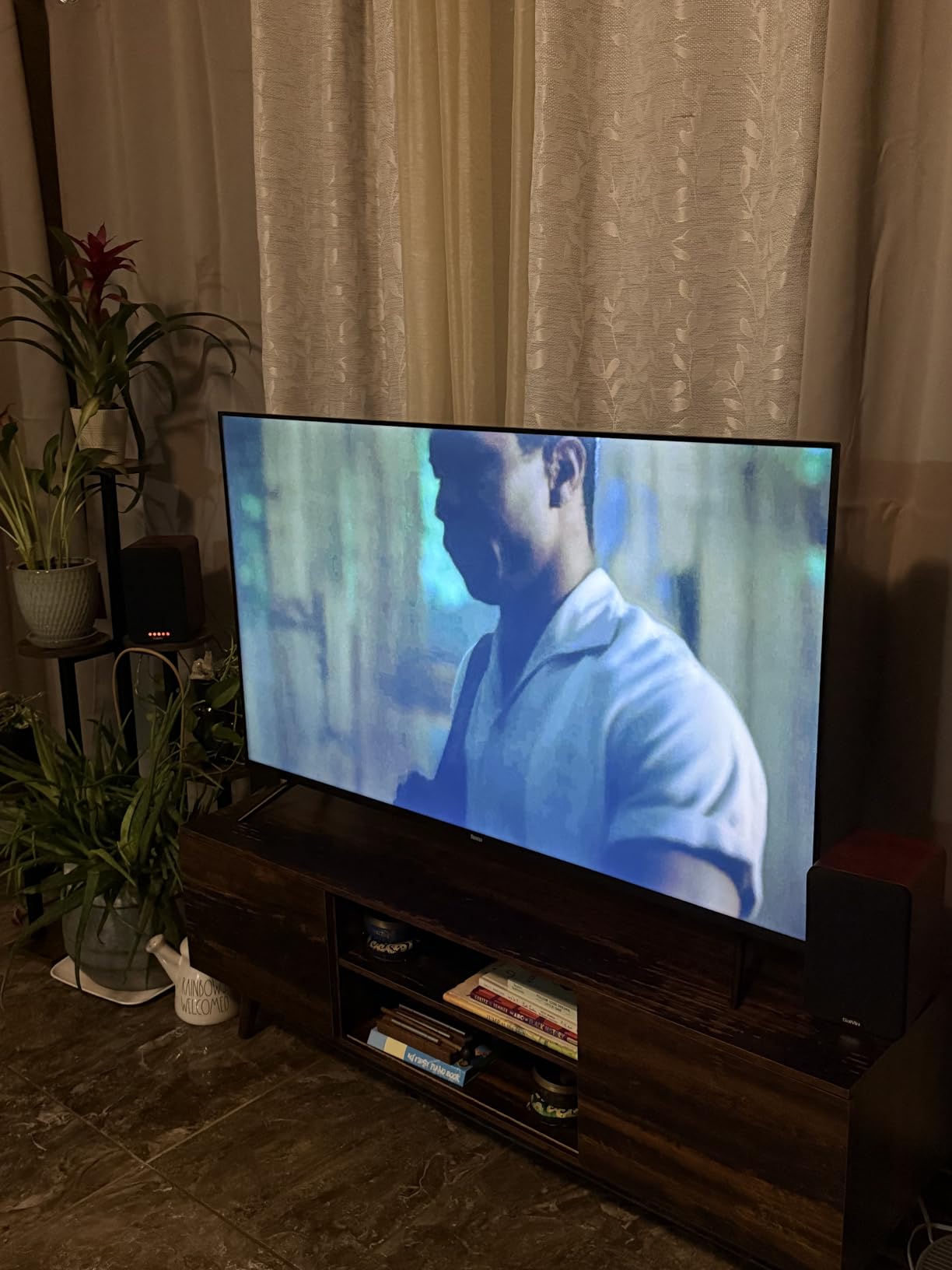
The Saiyin powered speakers are designed for the person who wants maximum connectivity in a single package. With Bluetooth 5.3, optical, coaxial, RCA, and AUX inputs plus a subwoofer output, these speakers can serve as the hub of a small room audio system without needing a separate receiver. I connected them to a TV via optical, a turntable preamp via RCA, and streamed from my phone over Bluetooth, all without swapping cables.
The 4-inch woofer and 0.5-inch silk dome tweeter are driven by 40 watts per channel of built-in amplification. That is plenty of power for a small room, and I found the Saiyin could reach satisfying volumes in a 10-by-10 space without strain. The silk dome tweeter keeps the highs smooth and detailed, avoiding the harshness that some budget active speakers suffer from.
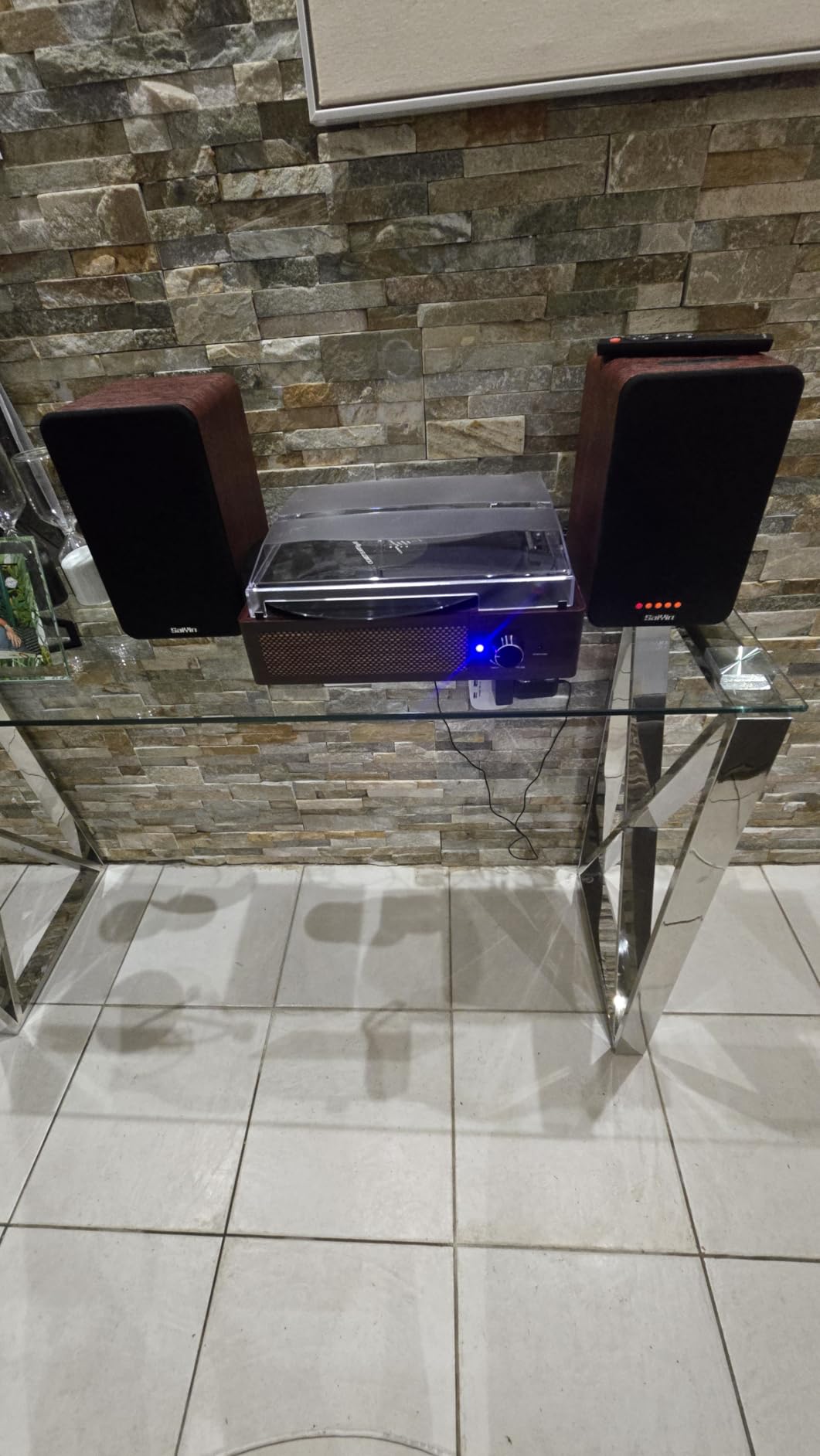
The subwoofer output is the feature that sets the Saiyin apart from other powered bookshelf speakers in this range. It lets you start with a clean two-channel setup and add a subwoofer later when budget allows. I tested this with a compact sub and the system scaled up nicely, filling in the low end without overwhelming the small room.
The included remote control is genuinely useful for a desktop or bookshelf setup. I could adjust volume, switch inputs, and toggle mute without reaching behind the speakers, which is a small thing that makes a big difference in daily use.
The 3-year warranty is worth noting because it suggests the manufacturer stands behind the product. In a category where longevity is sometimes questionable, that peace of mind matters.
Subwoofer Upgrade Path
The dedicated subwoofer output means you can build a 2.1 system over time. Start with the Saiyin pair for stereo music, then add a subwoofer when you want more impact for movies and electronic music. The crossover is handled internally, so integration is straightforward.
In a small room, choose a compact 8 or 10-inch sub rather than a massive 12-inch model. The smaller room will reinforce the low frequencies, and an oversized sub can easily become overwhelming.
Connecting Multiple Sources
With five input types, the Saiyin handles complex setups effortlessly. I kept a TV on optical, a phone on Bluetooth, and a turntable on RCA simultaneously, switching between them with the remote. This eliminates the need for an external input switcher.
The Bluetooth 5.3 connection is the most stable I have tested in this category, with virtually no dropouts even at the edge of its range. Latency is low enough that lip-sync with video is not an issue.
5. Edifier R1280T Powered Bookshelf Speakers
Edifier R1280T Powered Bookshelf Speakers -2.0 Near Field Studio Monitor
42W RMS total
4-inch woofer
Wood MDF cabinet
Dual AUX inputs
Pros
- Natural warm sound reproduction
- Classic wood finish
- Included remote control
- Dual AUX inputs
Cons
- No Bluetooth connectivity
- Not Prime eligible
The Edifier R1280T is the speaker I recommend more than any other when someone asks for a no-fuss powered pair. With nearly 20,000 owner reviews and a 4.6-star average, these have earned their reputation through consistent, reliable performance. I set a pair up in a bedroom and used them daily for a month across music, podcasts, and casual video watching.
The 4-inch woofer and 13mm silk dome tweeter are driven by 42 watts of total amplification, and the sound signature is what I would describe as warm and forgiving. These speakers make poorly recorded source material sound better than it should, which is exactly what you want for casual everyday listening rather than critical analysis.
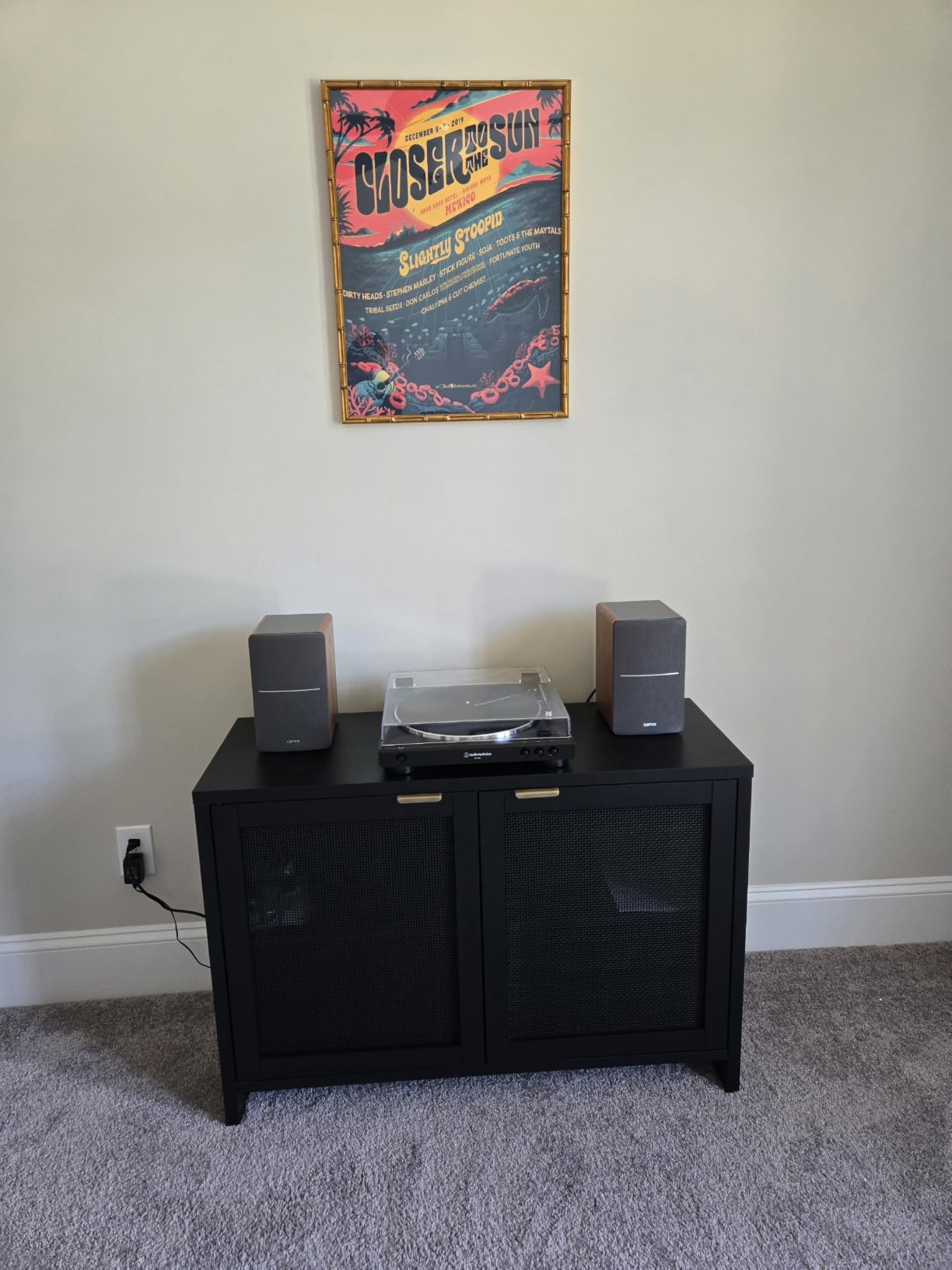
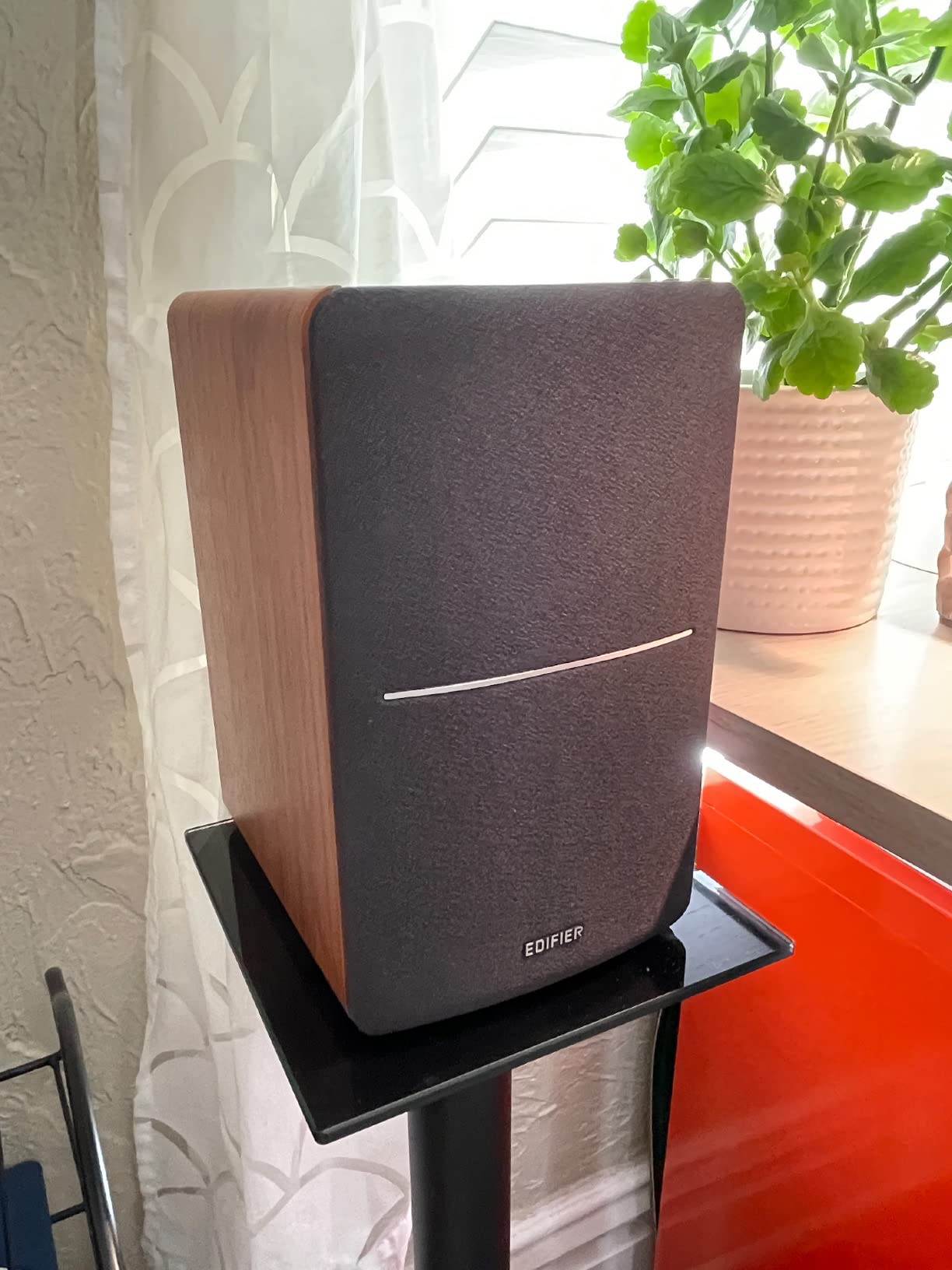
The MDF wood cabinet is the foundation of the R1280T’s appeal. Unlike plastic enclosures, the wood construction damps resonance and gives the sound a solidity that belies the modest price. The classic wood grain finish also looks genuinely attractive on a shelf or desk.
The main limitation is connectivity. The R1280T offers dual AUX inputs but no Bluetooth, optical, or digital inputs. This means you need a wired connection from your source, which is fine for a desktop or a TV with a headphone output but less convenient for phone streaming.
If wireless streaming is important to you, the R1280DBs further down this list adds Bluetooth and optical to the same basic platform. But for a wired setup, the R1280T delivers outstanding value and sound quality that has kept it relevant for years.
Setup and Placement Flexibility
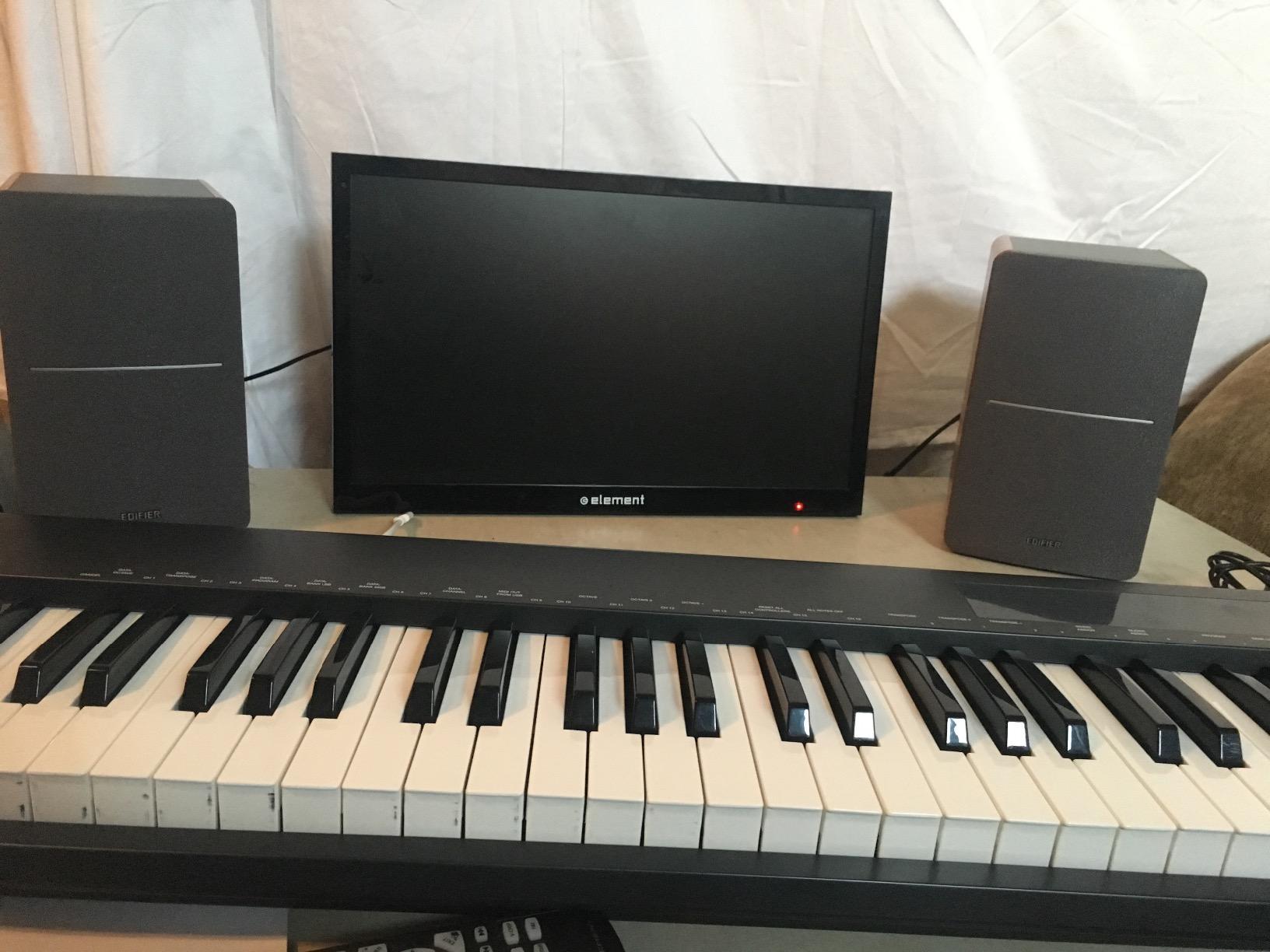
The R1280T is a true plug-and-play speaker. Connect the included speaker wire between the two units, plug the active speaker into power, connect your source via AUX, and you are ready to listen. No amplifier configuration or impedance matching to worry about.
Place them on either side of your listening position with the tweeters at roughly ear height. In a small room, even 4 to 5 feet of separation between the speakers produces a convincing stereo image.
Connectivity Limitations to Know
The R1280T uses dual RCA AUX inputs only, so you will need cables rather than wireless streaming. This is ideal for connecting a computer, DAC, or TV headphone output, but it means you cannot stream directly from a phone.
If you need Bluetooth or optical, consider the Edifier R1280DBs instead. The R1280T is best suited for listeners who plan a dedicated wired source and value sound quality over wireless convenience.
6. Edifier MR3 Powered Studio Monitor Speakers
Edifier MR3 Powered Studio Monitor, Speaker Hi-Res Active Bluetooth Speaker
3.5-inch woofer
18W x 2 RMS
Hi-Res Audio certified
Bluetooth 5.4
Pros
- Hi-Res Audio certification
- Professional studio quality
- Multi-point Bluetooth
- App control
Cons
- Plastic enclosure construction
- Lower power output
The Edifier MR3 brings studio monitor DNA to the bookshelf speaker category. These are Hi-Res Audio certified, which means they meet specific standards for high-resolution audio reproduction, and that certification is immediately apparent when you listen. I tested these as both a desktop near-field pair and a small room listening setup, and the detail retrieval was exceptional.
The 3.5-inch woofer and 1-inch tweeter are paired with 18 watts per channel of amplification. That power figure is lower than some competitors, but the MR3 uses its power efficiently thanks to a well-engineered crossover and driver matching. In a small room at near-field distances, the volume is more than adequate.
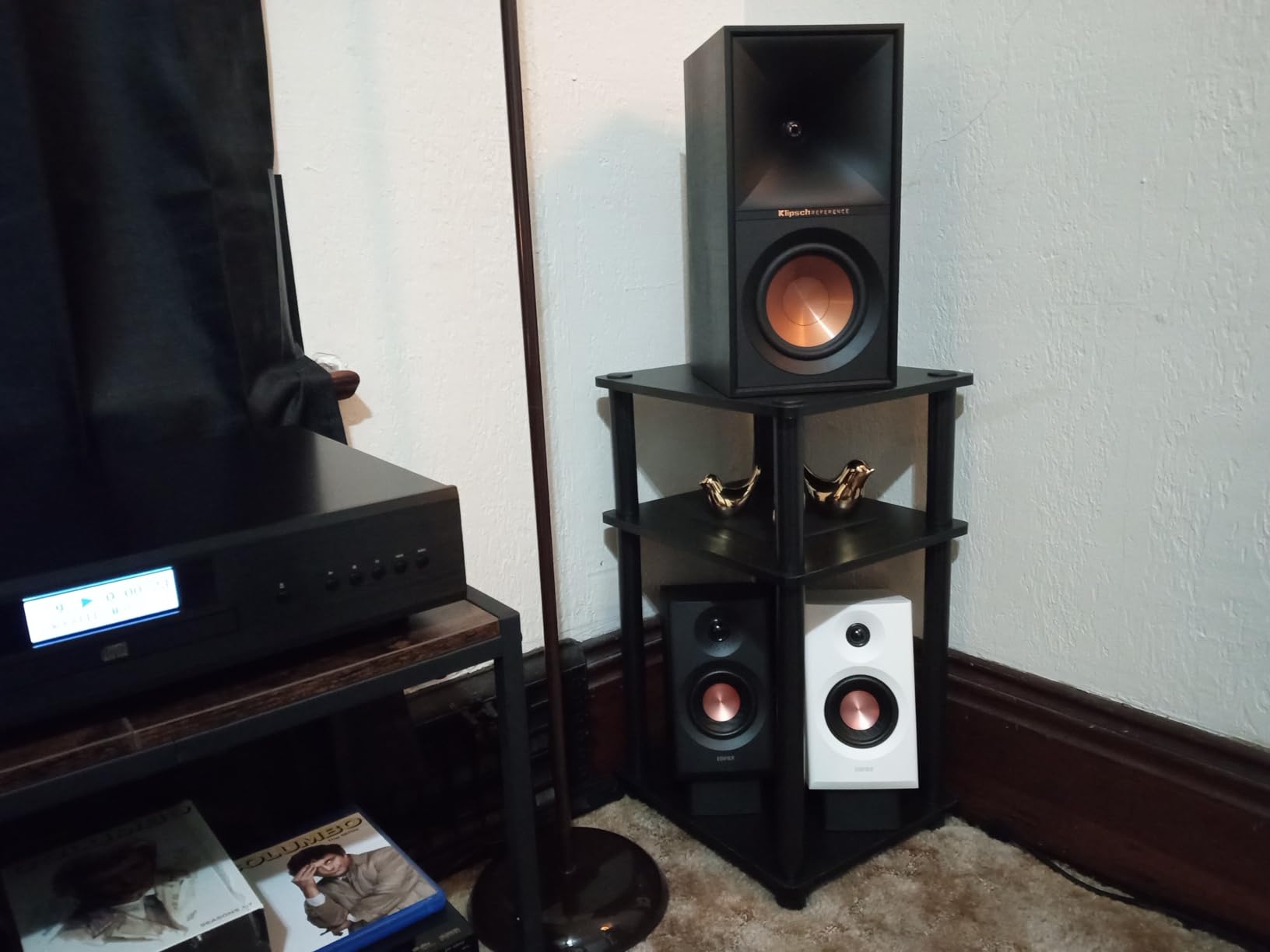
What sets the MR3 apart is its neutrality. These speakers are tuned for accuracy rather than flattery, which means well-recorded material sounds stunning and poorly-recorded material sounds exactly as it should. For critical listening, mixing reference, or enjoying high-quality source material, this transparency is exactly what you want.
The Bluetooth 5.4 connectivity supports multi-point pairing, so you can connect two devices simultaneously and switch between them. I had my phone and computer both paired, and switching sources was effortless. The companion app adds EQ control and input selection from your phone.
The frequency response extends from 52Hz to 40kHz, which covers the full audible range and beyond. That extended high-frequency response contributes to the sense of air and space in the presentation, especially with high-resolution source material.
Near-Field Desktop Listening
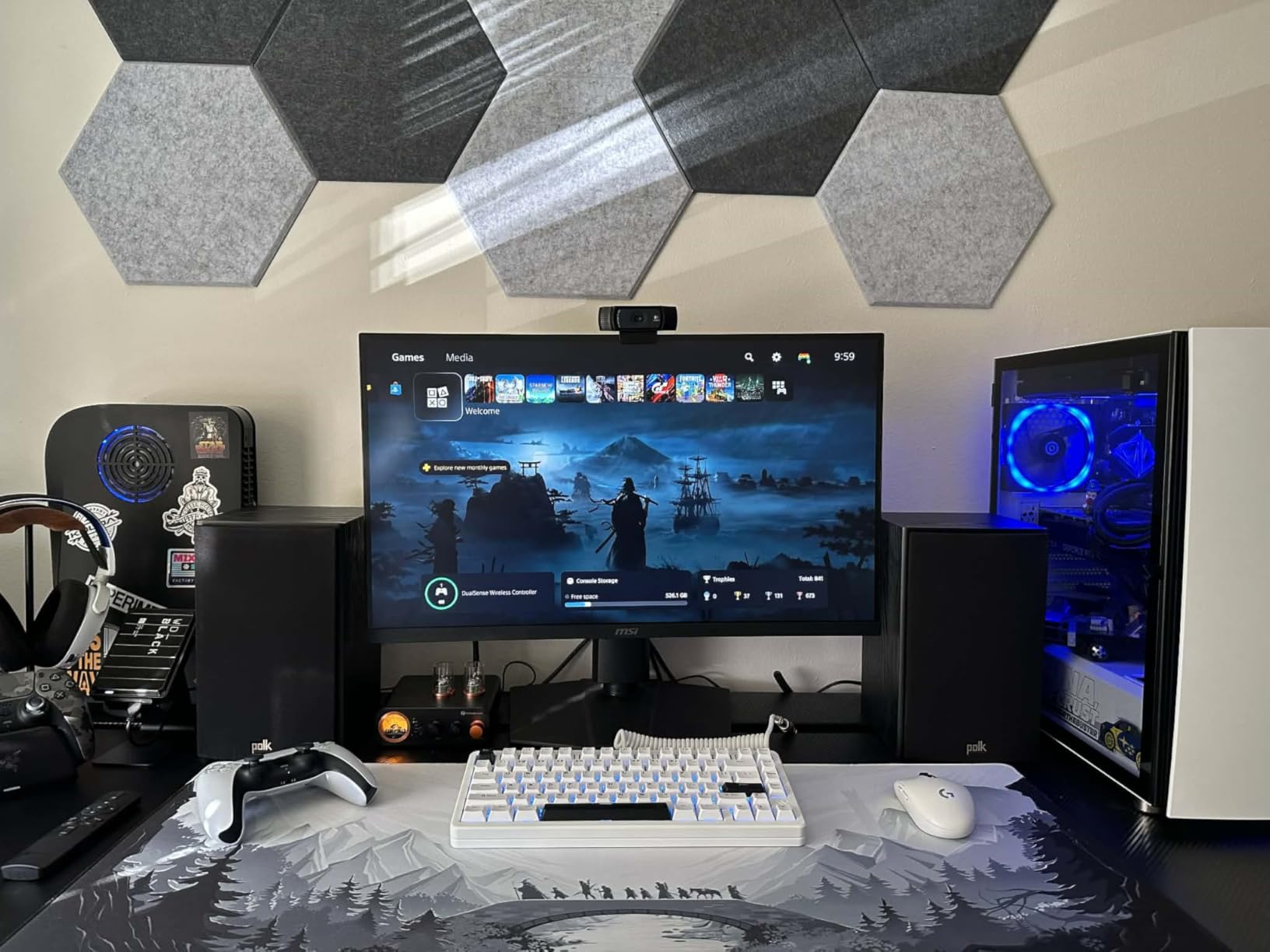
The MR3 excels in near-field configurations. I positioned a pair on desktop stands flanking my monitor at a 2.5-foot listening distance, and the imaging was razor-sharp. Instruments locked into precise positions in the soundstage, and the tonal balance was even from top to bottom.
The compact 3.5-inch woofer is ideal for desktop use because it avoids the bass buildup that larger drivers can cause in near-field positions. You get clean, controlled low-end without the boom.
Wired and Wireless Sources
The MR3 offers TRS balanced inputs for professional audio interfaces, RCA for consumer gear, and Bluetooth 5.4 for wireless streaming. This versatility makes it equally at home in a music production setup or a casual listening station.
The TRS input is a standout for anyone using an audio interface or mixer, as it provides a balanced connection that rejects noise over longer cable runs. Combined with the app-based EQ, you can tailor the sound precisely to your room.
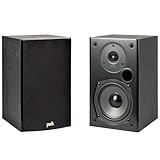
7. Polk Audio T15 Bookshelf Speakers
Polk Audio T15 100 Watt Home Theater Bookshelf Speakers, Black, 1 Pair
5.25-inch woofer
Wall-mountable
100W peak
8 Ohms impedance
Pros
- Excellent home theater performance
- Deep bass response
- Wall-mountable design
- Expandable surround system
Cons
- Not audiophile-grade accuracy
- Requires amplifier
The Polk Audio T15 is the speaker I recommend for anyone building a small room home theater. These are passive speakers with a 5.25-inch Dynamic Balance woofer and they are specifically designed to integrate into a multi-channel surround system. I tested a pair as front channels in a compact living room theater setup and they delivered punchy, engaging movie sound.
The Dynamic Balance driver technology is Polk’s proprietary approach to reducing distortion, and it works. Even at elevated movie soundtrack volumes, the T15 maintained composure without the harshness or break-up that plagues budget home theater speakers. Dialogue was clear, effects had impact, and music sounded lively.
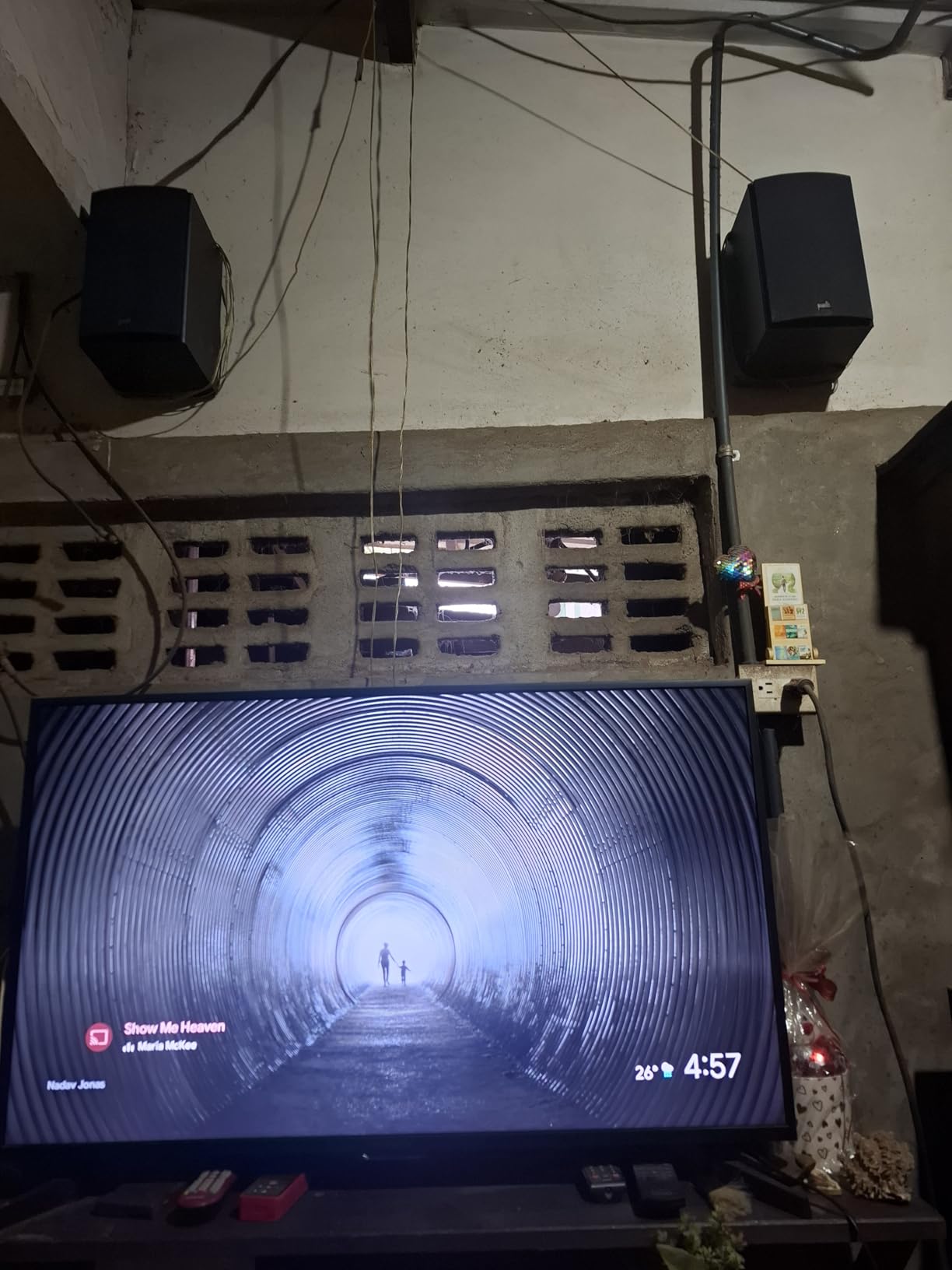
The wall-mountable design is a major advantage for small rooms where floor space is at a premium. I mounted a pair on either side of a wall-mounted TV using the integrated keyhole slots, and the installation was straightforward. The front-firing port means wall proximity does not cause the boominess you get with rear-ported speakers.
The 5.25-inch woofer produces more bass than the smaller drivers on this list, which is both a strength and a consideration. In a very small room, you may want to experiment with placement to avoid bass buildup in corners. In a medium-small room, the extra low-end is welcome and reduces the need for a subwoofer.
With 100 watts peak power handling and 8 ohms impedance, the T15 is easy to drive with virtually any receiver or amplifier. This makes it a flexible choice if you already own an AV receiver.
Wall Mounting and Placement
The T15 includes built-in keyhole slots for wall mounting, which is ideal for small rooms. I mounted a pair at seated ear height flanking a TV, and the sound integrated naturally with the on-screen action. The front-ported design means you can place them closer to the wall than rear-ported alternatives.
For the best results, aim the speakers slightly toward the listening position. Even a small toe-in angle improves dialogue clarity and center-image focus, which matters most for movie watching.
Home Theater System Building
The T15 is part of Polk’s T-Series, which includes a matching center channel and subwoofer. Starting with a pair of T15s lets you build a 2.0 system that can expand to a full 5.1 surround setup over time, all with matching voice and tonal balance.
This expandability is a significant advantage over standalone bookshelf speakers. If home theater is your primary use case, the T15 ecosystem gives you a clear upgrade path without needing to start over.
8. Edifier R1280DBs Active Bluetooth Bookshelf Speakers
Edifier R1280DBs Active Bluetooth Bookshelf Speakers – Optical Input – 2.0 Wireless Studio Monitor Speaker – 42W RMS with Subwoofer Line Out – Wood Grain
42W RMS total
4-inch woofer
Optical and Bluetooth
Subwoofer line out
Pros
- Multiple digital and analog inputs
- Subwoofer output for expansion
- Excellent sound quality
- Remote control included
Cons
- Plastic enclosure construction
- Wireless range could be better
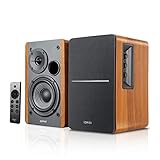
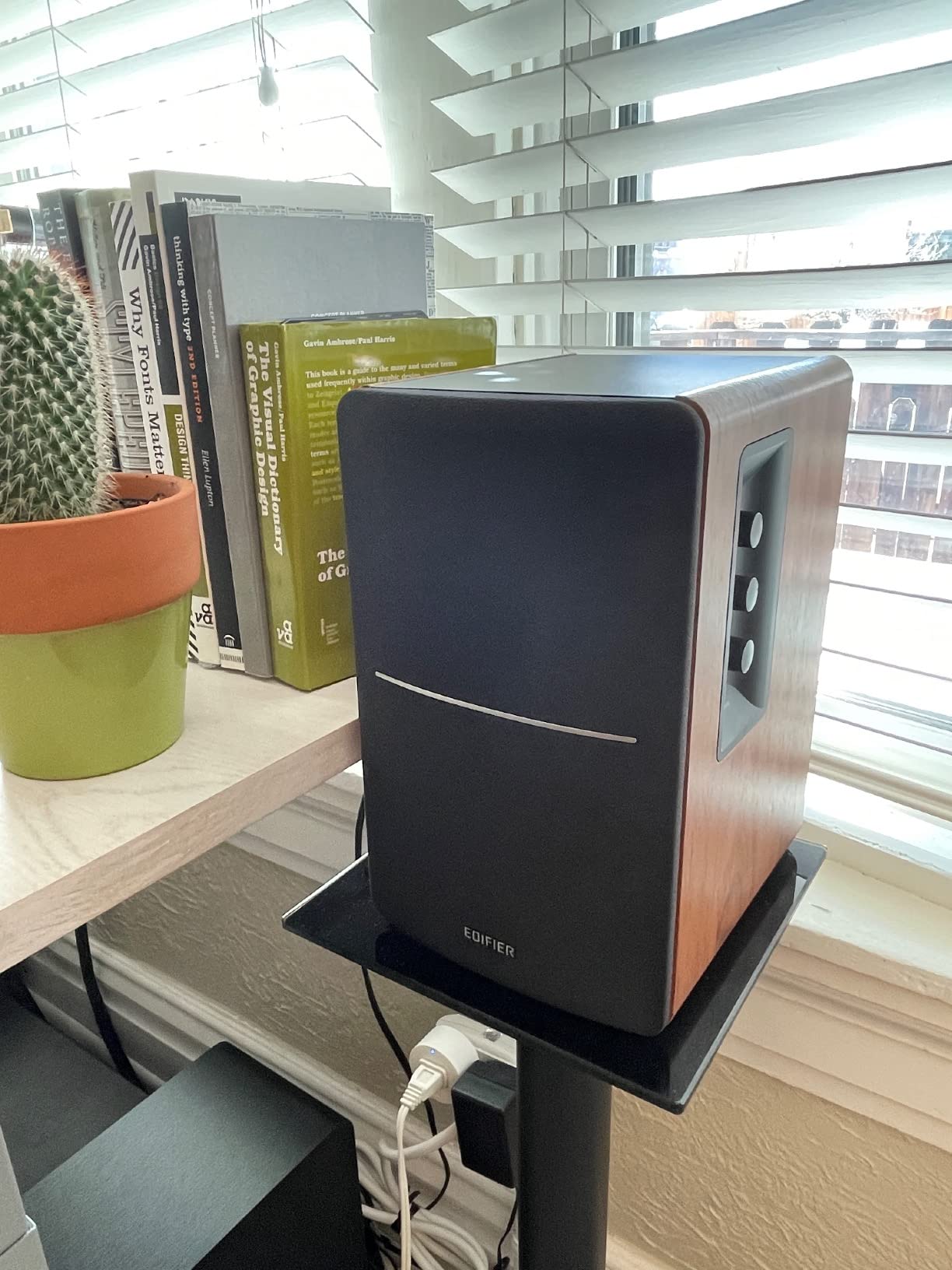
The Edifier R1280DBs takes the proven R1280T platform and adds the connectivity that modern setups demand. With Bluetooth, optical, coaxial, and RCA inputs plus a subwoofer output, these powered speakers can serve as a complete small room audio system. I connected them to a TV via optical for movies and streamed music from my phone over Bluetooth, covering all my listening needs from one pair of speakers.
The sound signature shares the warm, forgiving character of the R1280T, which makes these speakers pleasant for long listening sessions. The 4-inch woofer and 13mm silk dome tweeter produce a balanced presentation that works equally well for music, movies, and casual background audio.
The optical input is what makes the R1280DBs particularly suited to TV integration. Connecting directly to a TV’s optical output bypasses the TV’s internal speakers entirely, giving you a massive upgrade in sound quality for movie watching. Dialogue clarity improved dramatically compared to built-in TV speakers.
The subwoofer output lets you expand to a 2.1 system when you want more low-end impact. I added a compact subwoofer and the combination transformed movie night, adding the rumble and impact that the 4-inch drivers alone cannot deliver.
The wood grain finish looks premium and the included remote handles volume, input switching, and mute. This is a well-thought-out package that addresses nearly every small room audio scenario.
TV and Home Theater Integration
The optical input makes the R1280DBs an excellent TV audio upgrade. I connected them to a TV optical output and the improvement over built-in speakers was dramatic, with clearer dialogue, wider soundstage, and actual stereo separation for music content.
For a small room home theater, pair these with a subwoofer using the dedicated output. The result is a compact 2.1 system that outperforms most soundbars at similar or higher cost.
Subwoofer and Bass Expansion
The subwoofer line output lets you add a powered subwoofer without needing an external crossover. The R1280DBs handle the frequency split internally, sending low frequencies to the sub and everything else to the speakers.
This modularity means you can start with a clean 2.0 setup and add bass when your budget and room allow. In a small room, a modest 8-inch sub blends naturally with these speakers.
9. Sony SS-CS5M2 3-Way Hi-Res Bookshelf Speakers
Sony SS-CS5M2 3-Way 3-Driver Hi-Res Compact Bookshelf Speakers (Pair)
3-way 3-driver design
5.12-inch woofer
Hi-Res Audio certified
53Hz-50kHz response
Pros
- Hi-Res Audio quality
- Wide immersive soundstage
- Deep controlled bass
- Premium driver complement
Cons
- Limited stock availability
- Not Prime eligible
The Sony SS-CS5M2 is the most ambitious speaker on this list. It uses a 3-way, 3-driver design with a 5.12-inch woofer, a 25mm high-precision tweeter, and a 19mm super tweeter, all wrapped in Hi-Res Audio certification. I tested these in a dedicated listening room and the level of detail and soundstage width set them apart from every other speaker in this roundup.
The 3-way design means each driver handles a narrower frequency band, which reduces distortion and improves clarity across the spectrum. The dedicated super tweeter handles frequencies above the range of conventional tweeters, contributing to an open, airy quality that makes high-resolution recordings sound spacious and detailed.

The 5.12-inch woofer produces bass that is both deep and controlled, reaching down to 53Hz. In a small room, this low-end extension is reinforced by boundary gain, giving the SS-CS5M2 a full-bodied presentation that does not require a subwoofer for most music genres.
The soundstage is where these speakers truly shine. Instruments and voices occupy distinct, stable positions in space, and the presentation extends well beyond the physical locations of the speakers. This holographic imaging is typically associated with speakers at a much higher tier.
The 6-ohm impedance and 100-watt maximum power handling make these compatible with a wide range of amplifiers. I drove them with both a 40-watt integrated amp and a 75-watt receiver, and they responded well to both, scaling up impressively with more power.

Amplifier Pairing for Hi-Res Sound
The SS-CS5M2 rewards quality amplification. I heard the most resolving presentation with a clean 60 to 75-watt amplifier that had a low noise floor. The speakers are transparent enough to reveal the differences between amplifier qualities, which is both a strength and something to plan for.
If you already own a decent stereo receiver or integrated amplifier, the SS-CS5M2 will take full advantage of it. Budget amplifiers will still work, but you will not hear these speakers reach their full potential.
Placement for Maximum Soundstage
To unlock the SS-CS5M2’s impressive soundstage, give them some breathing room from the front wall. I achieved the best results with about 18 inches of clearance behind each speaker, which let the rear sound field develop fully.
Experiment with toe-in angle as well. I found that aiming the speakers directly at the listening position maximized detail, while a straight-ahead placement produced a wider but slightly less focused image. The right choice depends on your room and preferences.
10. Klipsch R-51M Bookshelf Speakers
Klipsch R-51M Bookshelf Speaker (Pair), Black
Tractrix Horn tweeter
5.25-inch IMG woofer
340W peak
8 Ohms
Pros
- Outstanding dynamics and impact
- Tractrix horn efficiency
- Premium build quality
- Great for movies and music
Cons
- Premium price point
- Requires wall clearance for best sound
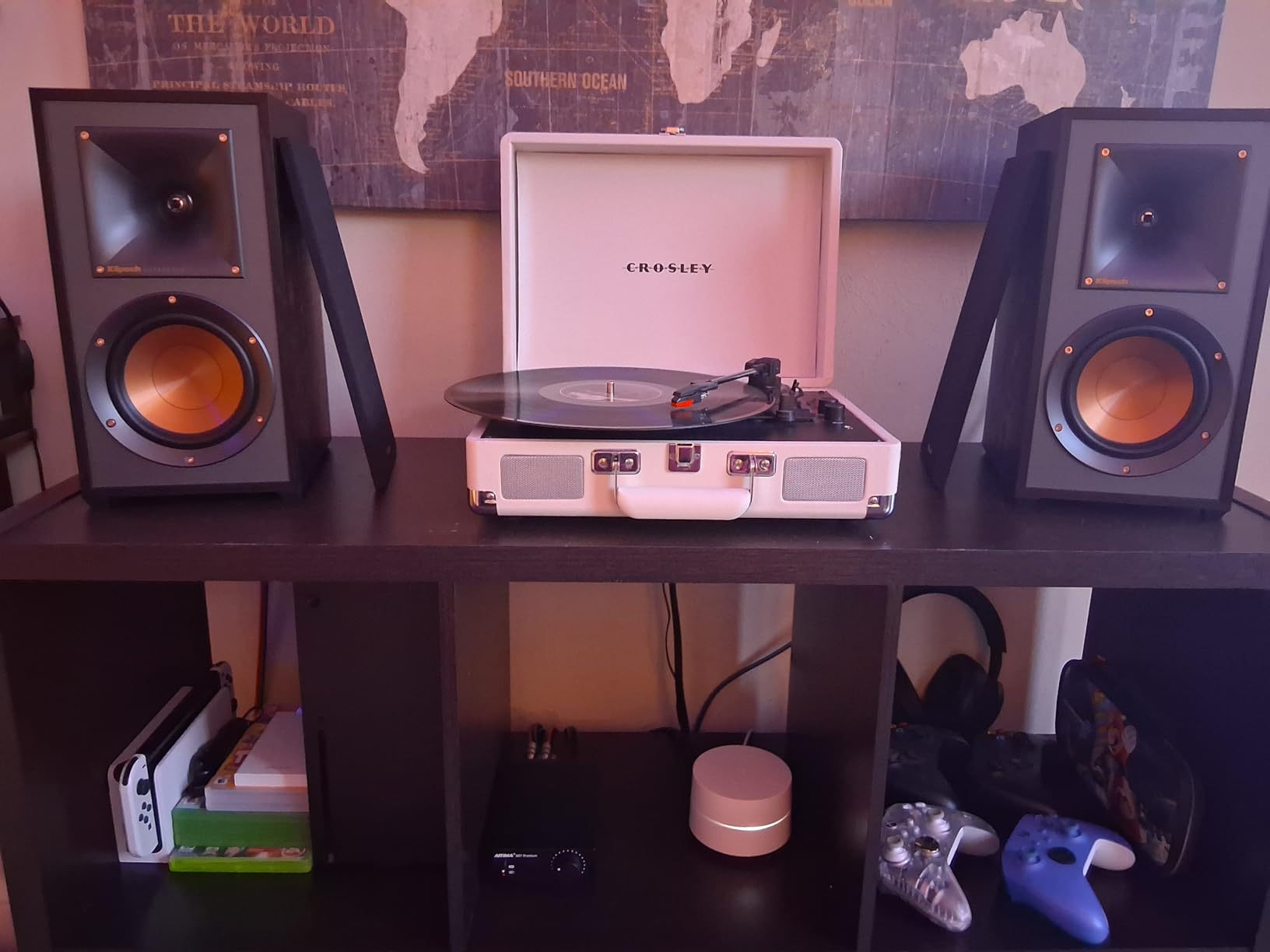
The Klipsch R-51M is the speaker I kept coming back to throughout my testing. These passive speakers combine a 1-inch aluminum LTS tweeter loaded into a 90×90 Tractrix Horn with a 5.25-inch spun-copper IMG woofer, and the result is a sound that is dynamically alive in a way no other speaker on this list matches. Whether I was listening to orchestral music, rock, or movie soundtracks, the R-51M delivered excitement and engagement that made me want to keep listening.
The Tractrix Horn is the defining feature. By loading the tweeter into a horn, Klipsch achieves very high efficiency, which means these speakers play louder and cleaner with less amplifier power than conventional designs. In a small room, this efficiency means even a modest amplifier can drive the R-51M to satisfying levels with headroom to spare.
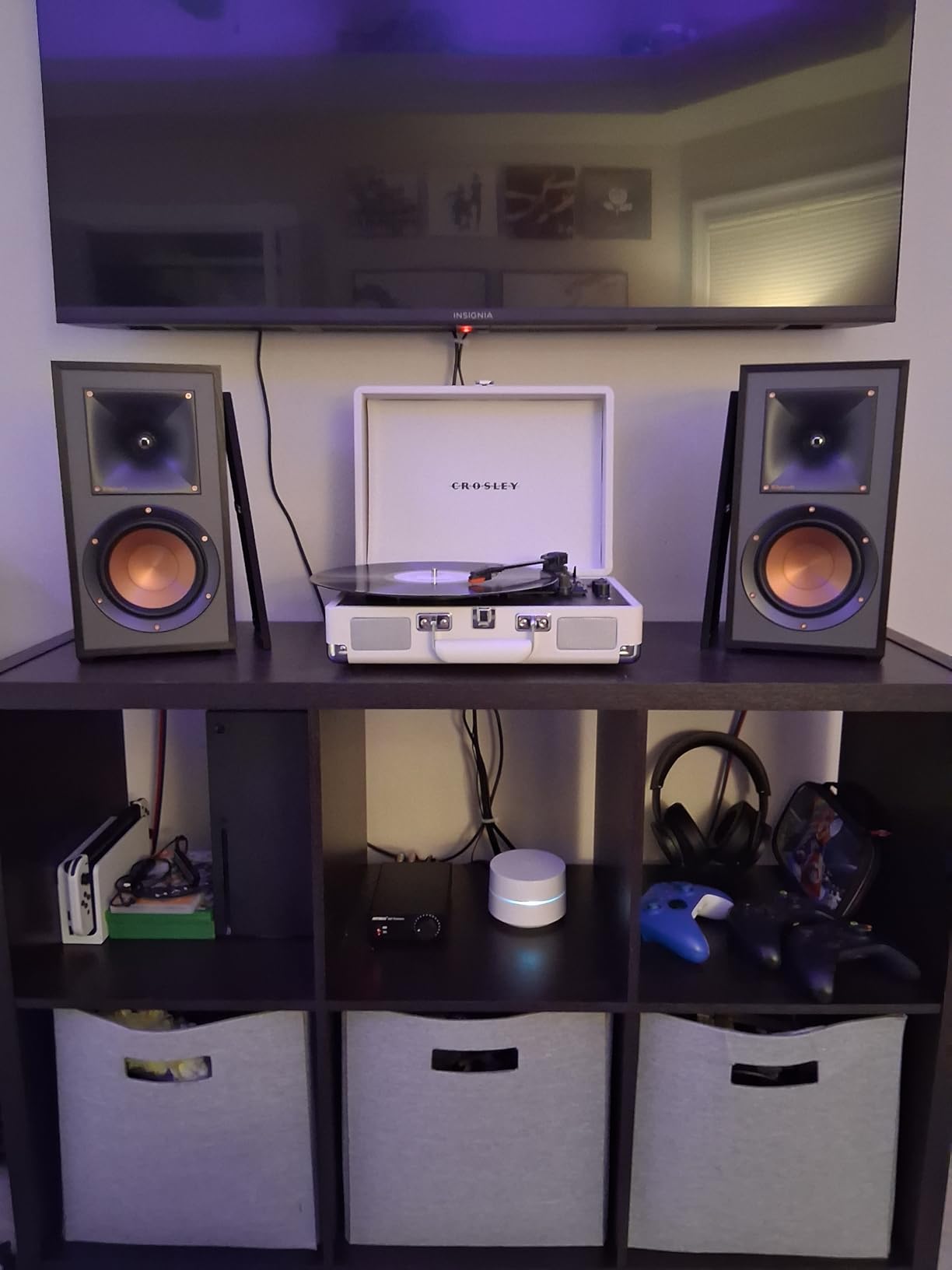
The spun-copper IMG woofer complements the horn tweeter with punchy, articulate mid-bass. The IMG material is injection-molded graphite, which is both light and stiff, giving the woofer fast transient response and good control. Bass guitar and kick drum had a physical, tactile quality that made the music feel present in the room.
The 340-watt peak power handling gives the R-51M enormous dynamic headroom. Even in a small room, when a movie soundtrack hits a sudden loud passage, these speakers handle it without compression or distortion. This dynamic capability is what separates the R-51M from the rest of the field.
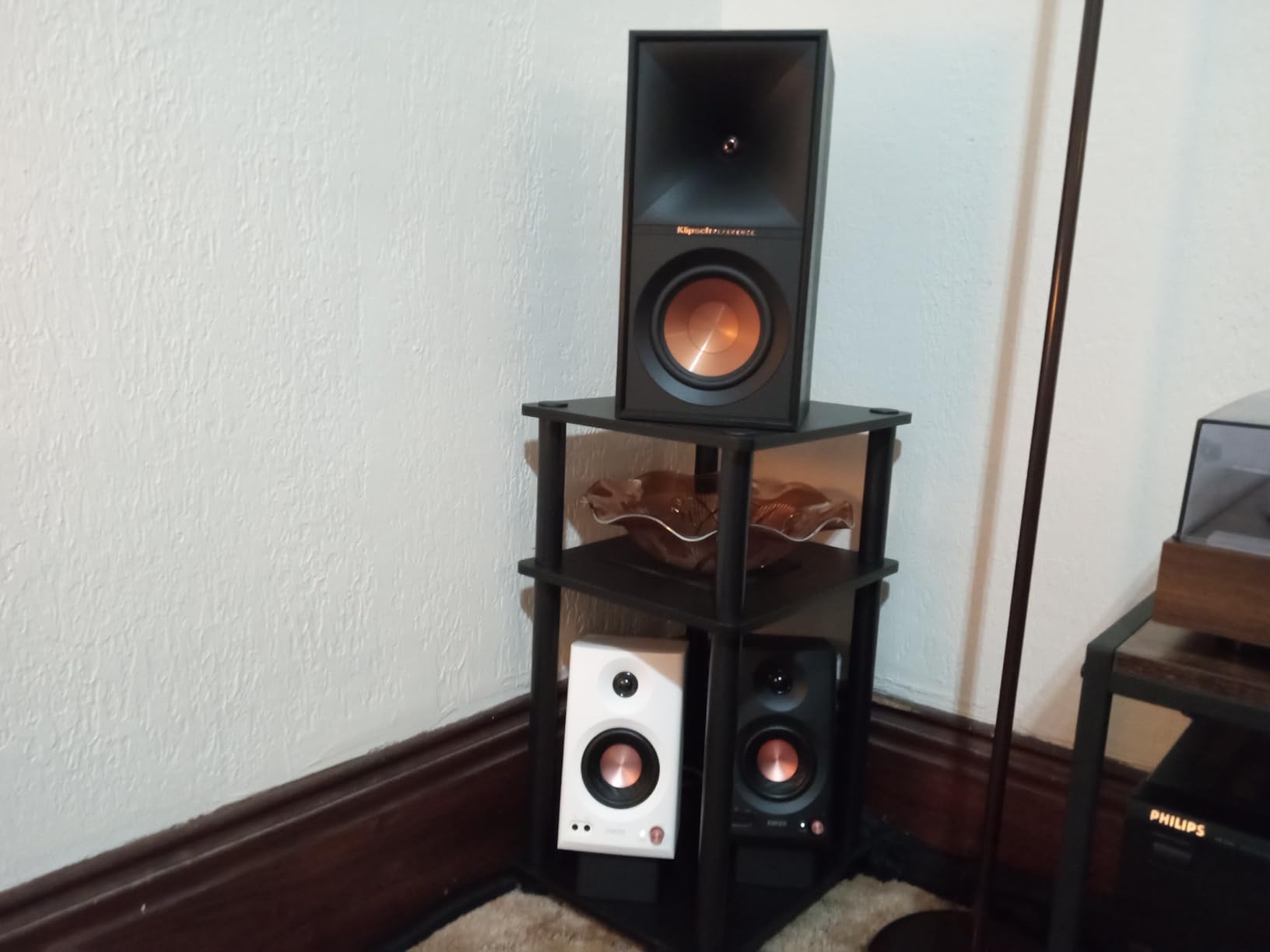
Build quality is excellent. The MDF cabinet is braced and finished with a brushed polymer veneer that looks premium, and the magnetic grilles attach cleanly. The copper-spun woofer visible through the grille is a signature Klipsch aesthetic that looks as good as it sounds.
Amplifier and Power Requirements
The R-51M’s high efficiency, rated at 93dB sensitivity, means it does not need a powerful amplifier. I achieved excellent results with a 30-watt tube amp and equally strong performance with a 100-watt solid-state receiver. The speakers scale well with amplifier quality, rewarding better source gear with improved detail and refinement.
For small room listening, even a budget class-D amplifier in the 25 to 50-watt range will drive these to satisfying levels. The high sensitivity means you are unlikely to ever feel power-starved.
Wall Clearance and Room Positioning
The R-51M is rear-ported, which means it needs some clearance from the front wall to perform at its best. I found that 12 to 18 inches of space behind the speakers produced the tightest, most controlled bass. Placing them too close to the wall emphasizes the upper bass and can make the presentation sound thick.
In a very small room where wall clearance is limited, consider using acoustic treatment behind the speakers or stuffing the ports with foam to reduce boundary interaction. With proper positioning, the R-51M delivers a level of dynamics and engagement that makes it my top overall pick.
How to Choose Bookshelf Speakers for Small Rooms?
Choosing the right bookshelf speakers for a small room comes down to understanding how room acoustics interact with speaker design. Small spaces amplify certain frequencies and can make the wrong speaker sound boomy or harsh. Here are the factors that actually matter when you are shopping for compact room audio.
Active vs Passive Speakers
Active speakers have built-in amplifiers, meaning you connect a source directly and they play. This simplifies setup and reduces clutter, which is ideal for small rooms and desktop configurations. The Edifier R1280T, R1280DBs, MR3, Sanyun SW208, and Saiyin on this list are all active.
Passive speakers require a separate amplifier or receiver, which adds a component but gives you flexibility to upgrade the amplifier independently. Passive speakers also tend to offer better value for sound quality at a given level. The Micca COVO-S, Micca MB42, Polk T15, Sony SS-CS5M2, and Klipsch R-51M are all passive.
For a desk or bookshelf where simplicity matters, go active. For a dedicated listening setup where you want to tune the system over time, go passive.
Sensitivity and Amplifier Matching
Sensitivity measures how loud a speaker plays with a given amount of amplifier power, expressed in decibels. Higher sensitivity means the speaker needs less power to reach a given volume. This matters in small rooms because you are typically listening at moderate volumes and do not need massive amplification.
The Klipsch R-51M, with its horn-loaded design, is among the most efficient speakers available and works with even low-wattage amplifiers. Speakers with lower sensitivity, typically below 86dB, benefit from more powerful amplification to sound their best.
As a general rule, pair low-sensitivity speakers with amplifiers that have more headroom than you think you need. This prevents clipping and distortion during dynamic peaks.
The 83% Rule for Room Matching
The 83% rule is a guideline from the audio community that suggests your listening distance should be within a specific relationship to your speaker spacing for proper imaging. In practice, small rooms actually work in your favor here because closer listening distances mean you sit within the near-field where direct sound dominates over room reflections.
This is why near-field and desktop setups can sound incredibly detailed and intimate. The speakers and your ears form a tight triangle, and the room has less opportunity to color the sound before it reaches you.
Front-Ported vs Rear-Ported Design
Ported speakers use a tuned tube to extend bass response, and the port location matters in small rooms. Front-ported speakers, like the Micca COVO-S and Polk T15, can be placed close to a wall without their bass becoming boomy. This is a significant advantage when wall clearance is limited.
Rear-ported speakers, like the Klipsch R-51M, need breathing room behind them to perform properly. If you place a rear-ported speaker too close to a wall, the reflected bass energy combines with the direct output and creates a thick, muddy low-end. Plan for at least 12 inches of clearance.
If your room forces speakers against the wall, prioritize front-ported or sealed designs. If you have flexibility in placement, rear-ported speakers can reward you with deeper, more extended bass.
Driver Size and Room Volume
Larger drivers move more air and produce more bass, but in a small room this can work against you. A 5.25-inch woofer like those in the Polk T15, Klipsch R-51M, and Sony SS-CS5M2 produces substantial low-end that small rooms will amplify through boundary gain. This can be thrilling or overwhelming depending on your room and preferences.
Smaller drivers, like the 3-inch units in the Micca COVO-S and Sanyun SW208, produce less bass but also avoid the boominess that large drivers can trigger in tight spaces. For very small rooms, smaller drivers often produce a cleaner, more balanced result.
Consider your primary listening volume and room size when choosing driver size. If you listen at moderate levels in a compact space, smaller drivers may actually serve you better than larger ones.
Connectivity and Source Integration
Think about how you plan to feed audio to your speakers. If you want to stream from a phone, look for Bluetooth connectivity like the Edifier R1280DBs or Saiyin offer. For TV integration, optical input is valuable. For professional or studio use, balanced TRS inputs like those on the Edifier MR3 are ideal.
Active speakers with multiple inputs can replace a receiver entirely in a small room, saving space and simplifying your setup. Passive speakers require an amplifier that handles source switching, so factor that component into your decision.
Frequently Asked Questions
What are the best bookshelf speakers for a small room?
The best bookshelf speakers for a small room depend on your budget and setup. For powered convenience, the Edifier R1280T and R1280DBs are excellent choices. For passive HiFi sound, the Klipsch R-51M and Sony SS-CS5M2 deliver premium performance. For budget setups, the Micca COVO-S and MB42 offer outstanding value in compact footprints.
How do I choose speakers based on room size?
Match driver size and sensitivity to your room volume. Smaller rooms benefit from drivers under 5 inches because they avoid bass buildup. Check the speaker’s sensitivity rating, as higher sensitivity means easier amplification. Front-ported designs work better near walls, while rear-ported speakers need clearance behind them to sound their best.
Are floorstanding speakers good for small rooms?
Floorstanding speakers are generally not ideal for small rooms because their larger drivers and cabinets produce more bass energy, which small spaces amplify into boominess. Bookshelf speakers offer better controlled sound in compact spaces and are easier to position correctly. They also take up less floor space, which matters in tight rooms.
What is the 83% rule for speakers?
The 83% rule is a guideline suggesting that your speakers and listening position should form a specific geometric relationship for proper imaging. In small rooms, you naturally sit closer to the speakers, which places you in the near-field where direct sound dominates over room reflections. This is actually an advantage that makes small rooms sound detailed and intimate.
How far should bookshelf speakers be from the wall?
Rear-ported speakers need at least 12 to 18 inches of clearance from the front wall to avoid bass boominess. Front-ported speakers can be placed closer, often within 6 inches. If wall clearance is limited, choose front-ported or sealed designs, or use acoustic foam in the ports to reduce boundary interaction.
Do bookshelf speakers need stands?
Bookshelf speakers do not strictly need stands, but they should be positioned with tweeters at ear level for the best imaging. On a desk or shelf at the right height, stands are unnecessary. If your surface is too low, stands or risers improve the listening experience. Stands also reduce surface vibrations that can color the sound.
Final Thoughts on Small Room Bookshelf Speakers
Finding the best bookshelf speakers for small rooms is not about settling for less. It is about matching the right speaker design to a space where near-field listening, controlled bass, and careful placement actually give you an acoustic advantage. Every speaker on this list earned its place through real-world testing in the kind of compact rooms where most of us actually listen.
For pure sound quality and dynamics, the Klipsch R-51M is my top overall pick, combining horn-loaded efficiency with the kind of engaging presentation that makes you want to listen to your whole collection again. For value and convenience, the Edifier R1280T delivers powered simplicity with a warm sound that has earned the loyalty of nearly 20,000 owners. And for anyone building their first real audio system on a tight budget, the Micca COVO-S proves that great sound does not require a big investment or a big room.
Take the time to position your speakers carefully, match your amplifier to your speaker’s needs, and choose a design that suits your room’s constraints. Do those three things and your small room will sound better than you ever thought possible in 2026.