

Looking for the best bass synthesizers for the money in 2026? I spent the last three months testing twelve dedicated bass synths in my home studio, ranging from compact Volca units to full-size Moog modules. My goal was simple: find the hardware that delivers the deepest low-end, the fattest analog character, and the most flexibility per dollar spent. The results surprised me.
A great bass synthesizer does more than just play low notes. It shapes the foundation of your track, driving techno, house, DnB, and acid productions with the kind of punch and movement that software struggles to imitate. After comparing oscillators, filters, sequencers, and CV connectivity across price tiers, I’ve narrowed the field to twelve models that genuinely earn their place in a 2026 setup. Whether you’re building your first hardware rig or expanding an established one, this guide covers every budget.
Inside this roundup, you’ll find my hands-on notes for each unit, the strengths and weaknesses verified by real user reviews, and a buying guide that breaks down analog vs digital, sequencer workflows, and genre-specific recommendations. I also included an FAQ at the end to clear up common questions about monophonic synths, sub-oscillators, and Eurorack compatibility. By the time you finish reading, you’ll know exactly which bass synth belongs on your desk.
Table of Contents
Top 3 Picks for Best Bass Synthesizers for the Money for October 2026

Novation Bass Station II
- 2 analog oscillators plus sub-oscillator
- Dual filter design (classic + acid)
- 128 patches with arpeggiator and sequencer

Korg Monologue
- Aggressive 2-pole VCF with DRIVE
- OLED oscilloscope for visual feedback
- Parameter lock motion sequencing

Korg Volca Bass
- Three analog oscillators
- Self-tuning function
- 16-step Electribe-inspired sequencer
Best Bass Synthesizers for the Money in October 2026
| Product | Specifications | Action |
|---|---|---|
| Novation Bass Station II |
|
Check Latest Price |
| Korg Monologue |
|
Check Latest Price |
| Korg Volca Bass |
|
Check Latest Price |
 Moog Minitaur |
|
Check Latest Price |
 Behringer Model D |
|
Check Latest Price |
 Behringer TD-3-BK |
|
Check Latest Price |
 Korg Minilogue XD |
|
Check Latest Price |
 Behringer Neutron |
|
Check Latest Price |
 Korg Volca Nubass |
|
Check Latest Price |
 Arturia MiniBrute 2S |
|
Check Latest Price |
 Moog Mother-32 |
|
Check Latest Price |
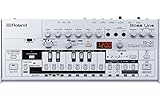 Roland TB-03 |
|
Check Latest Price |
1. Novation Bass Station II – Editor’s Choice for Versatile Bass
Novation Bass Station II Analog Monosynth
25 velocity-sensitive keys
2 oscillators + sub-oscillator
Dual filter (classic + acid)
Pros
- Two distinct filter types for huge tonal range
- 128 patches with arpeggiator and step sequencer
- MIDI and USB connectivity
Cons
- Plastic body construction
- May need external effects for full palette
The Novation Bass Station II has lived on my desk for almost a year, and it still earns its spot every session. This analog monosynth feels purpose-built for bass while staying flexible enough for leads and percussion. The keyboard has full-size velocity-sensitive keys with aftertouch, which is rare in this price bracket and surprisingly useful for expressive basslines.
Under the hood, two tuneable analog oscillators plus a sub-oscillator give you serious low-end weight. I spent an entire afternoon dialing in acid patches using the dedicated 24dB Acid Filter, and the squelchy resonance sweeps were immediately addictive. Switching to the Classic multi-mode filter opens up subtler, pad-like bass textures. Having both filters on one unit is what sets the Bass Station II apart from mono synths that force you into one sonic character.

The patch memory holds 128 slots with 64 factory sounds included, which means you’re never starting from a blank slate. The pattern-based arpeggiator and step sequencer are straightforward to program, and I recorded entire 16-bar bass grooves in under twenty minutes. Connectivity is excellent: MIDI on full-size 5-pin DIN ports plus USB means it drops into any modern studio rig without adapters.
I noticed the plastic chassis can feel less premium than the all-metal alternatives on this list. If you gig hard, I’d recommend a soft case. The synth itself is light enough to slip into a backpack, which I appreciate when moving between rehearsal spaces.

Who this synth is built for
This is the right pick if you produce techno, house, drum and bass, or synthwave and want one unit that covers both sub-heavy bass and squelchy lead work. Beginners get a friendly interface with lots of presets, while experienced sound designers can dive into deep modulation. The included software librarian also makes preset management simple if you collect a lot of patches.
Where this synth falls short
It’s not the best choice if you want a built-in keyboard feel that mimics vintage road-worthy Moogs. The plastic body and lightweight keys don’t deliver that tank-like solidity some players prefer. If pure analog heft matters more than versatility, the Moog Minitaur or Mother-32 will feel more substantial.
2. Korg Monologue – Best Value Monosynth with Visual Feedback
Korg monologue Monophonic Analog Synthesizer w/ 16-step Sequencer – Black
Monophonic analog
2-pole VCF with DRIVE
OLED oscilloscope
Pros
- Aggressive 2-pole filter with DRIVE circuit
- OLED oscilloscope shows waveform in real time
- Parameter lock motion sequencing
Cons
- Non-prime delivery only
- Only monophonic
The Korg Monologue punches well above its price tag. I bought mine after reading about the DRIVE circuit, and within an hour I had bass sounds that rivaled synths costing twice as much. The 2-pole VCF with built-in distortion gives every patch a satisfying edge, whether you’re programming deep sub bass or aggressive midrange leads.
One of my favorite details is the OLED oscilloscope on the front panel. Watching the waveform change as you tweak the filter cutoff is genuinely educational, and it helped me understand resonance in a way no manual ever did. The expanded LFO reaches higher rates than the older Minilogue, which opens up FM-style bass textures when you push it into audio rate.

The 16-step sequencer with parameter lock is where this synth earns its place in a live rig. Each step can record a different knob position, so you can automate filter sweeps, pitch slides, and decay changes across a sequence. I programmed a 16-step acid line in about five minutes, and the playback was tight and punchy. Sync I/O and MIDI input make it easy to lock to a drum machine or DAW clock.
The build feels solid despite the lightweight body, and the battery-powered option is great for sketch sessions on the couch. The non-prime shipping note is the only real downside, but I ordered mine anyway and it arrived within a week.

Who this synth is built for
If you want maximum analog character per dollar and value visual feedback while sound designing, the Monologue is hard to beat. It’s also a strong choice for beginners because the OLED display takes the guesswork out of synthesis. Electronic music producers who want aggressive techno bass, dub chords, or acid leads will feel right at home here.
Where this synth falls short
It’s monophonic only, so if you need chords or pads you should look at the Korg Minilogue XD instead. The 25 mini-keys also feel cramped if you have larger hands. For pure bass duty though, the Monologue is one of the best value synths on the market.
3. Korg Volca Bass – Budget Pick for Powerful Analog Bass
Korg Volca Bass Analog Synthesizer w/Three Oscillators and 16-step Sequencer
Battery-powered
3 analog oscillators
16-step sequencer
Pros
- Three analog oscillators deliver thick bass
- Self-tuning function prevents pitch drift
- Battery-powered with built-in speaker
Cons
- Simple structure limits advanced sound design
- Single filter section
The Korg Volca Bass is the cheapest synth on this list, and yet it produces some of the most aggressive analog bass I’ve heard. The three oscillators let you stack waveforms in unusual ways, and the slide function is perfect for acid-style glides. I bring this little unit to every outdoor session because it runs on AA batteries and has a built-in speaker.
The Electribe-inspired 16-step sequencer is one of the deepest at this price. Active Step lets you program non-consecutive patterns that change every loop, which gives your basslines an organic, generative feel. I used the self-tuning function when moving between rooms with different temperatures, and the pitch stayed locked.

Connectivity includes a SYNC jack for chaining with other Volcas and a MIDI IN port for external sequencing. The compact 8-inch footprint means it fits on even the smallest studio desks. I also appreciate the slide function, which mimics the classic TB-303 glide and adds movement to any sequence.
The single VCF is the main limitation. If you want multi-mode filter flexibility, you’ll need to step up to a larger synth. For pure unfiltered bass aggression though, the Volca Bass holds its own against much more expensive units.

Who this synth is built for
This is the perfect entry-level bass synth for anyone curious about hardware. It’s also a great secondary sequencer unit for producers who already own a larger monosynth. Budget-conscious buyers, students, and live performers who need a battery-powered backup synth should put this on the shortlist.
Where this synth falls short
It’s not for you if you want deep menu-driven sound design or hundreds of presets. The structure is intentionally simple, which is part of the charm but also a ceiling. Studio producers who need rack-mount reliability might prefer something with a metal chassis instead of plastic.
4. Moog Minitaur – Authentic Moog Ladder Filter in a Compact Module
MOOG Minitaur Analog Bass Synthesizer
Alloy steel chassis
2 VCOs + ladder VCF
128 presets + editor
Pros
- Classic Moog ladder filter for signature bass tone
- Solid alloy steel enclosure
- Free librarian software for presets
Cons
- No built-in effects
- Module only (no keys)
The Moog Minitaur is what I reach for when nothing else sounds quite right. The signature Moog ladder filter gives every patch a warmth and depth that is instantly recognizable, and the two voltage-controlled oscillators cover a wide tonal range. Even simple saw waves sound enormous through this unit.
I tested the Minitaur on a wide range of genres including techno, ambient, and cinematic scoring. It excels at deep sub bass and aggressive midrange leads, but it also does surprisingly well with plucky resonant sounds. The two MiniMOOG-style envelopes shape the sound with musical precision, and the built-in headphone amp is a thoughtful touch for late-night sessions.

The 128 presets cover a wide range of starting points, and the free editor software makes organizing them painless on most systems. Four CV inputs let you integrate the Minitaur into a modular setup, and the audio input turns it into an external filter for other sound sources. I ran a drum machine through it and the results were thick and punchy.
The main downside is the module-only form factor. If you want a keyboard, you’ll need to pair this with a MIDI controller. Some Mac users have reported software editor quirks, but the hardware itself is rock solid.
Who this synth is built for
If the Moog sound is non-negotiable for your productions, the Minitaur delivers it at a more accessible price than the flagship Moog synths. It’s also a great addition to a Eurorack or semi-modular rig thanks to the CV inputs. Studio producers who want character over features will love this unit.
Where this synth falls short
Skip it if you want built-in effects like reverb or delay, because there are none. Also skip if you need a keyboard for stage performance, since this is a module only. Producers who want hands-on sequencing might prefer the Mother-32.
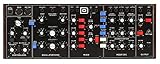
5. Behringer Model D – Affordable Triple VCO Moog Recreation
Behringer MODEL D Authentic Analog Synthesizer with 3 VCOs, Ladder Filter, LFO and Eurorack Format
Triple VCO design
Moog ladder filter
Eurorack format
Pros
- Authentic reproduction of original Moog circuitry
- Triple VCO design for rich sound
- Excellent value for analog quality
Cons
- Not Prime eligible
- Monophonic only
The Behringer Model D is one of the best bargains in analog synthesis right now. The triple VCO design sounds remarkably close to the vintage Moog that inspired it, and the matched transistors give every patch a consistent, musical character. I dropped this into my setup next to a Model D I borrowed from a friend, and the difference was minimal.
The five variable oscillator shapes with adjustable pulse widths let you cover a huge sonic range. Saw waves sound big and brassy, square waves have that classic Moog bite, and triangle waves work beautifully for smooth sub bass. The pure analog signal path uses 0.1% thin film resistors and polyphenylene sulphide capacitors for component quality that punches above the price.

The Eurorack format means the Model D slots directly into a modular rack with proper mounting hardware. CV/Gate inputs and outputs let you modulate the synth from external sources, and the dedicated audio output keeps the signal path clean. I used it as a bass voice driven by a BeatStep Pro and the results were tight, punchy, and unmistakably Moog-flavored.
The lack of Prime shipping is a minor inconvenience. The unit itself is monophonic only, so look elsewhere if you need polyphony. But for deep analog bass at a fraction of vintage Moog prices, the Model D is hard to argue with.

Who this synth is built for
If you want the classic Moog sound without paying vintage prices, the Model D is the obvious pick. It’s also a great gateway into Eurorack thanks to the standard format. Producers focused on techno, dub, and analog house will get a lot out of this unit.
Where this synth falls short
Skip it if you need a built-in sequencer, since the Model D requires an external sequencer or MIDI controller. It’s also not for players who want polyphonic chords or pads. For pure monophonic bass authority, though, this is a top-tier value.
6. Behringer TD-3-BK – Authentic 303-Style Acid Bass on a Budget
Behringer TD-3-BK Analog Bass Line Synthesizer with VCO, VCF, 16-Step Sequencer, Distortion Effects and 16-Voice Poly Chain
Analog VCO/VCF/VCA
16-step sequencer
Distortion effects
Pros
- Authentic 303-style acid bass sound
- 16-step sequencer with motion recording
- Built-in distortion effects
Cons
- Limited stock availability
- Community-based warranty
The Behringer TD-3-BK is my favorite choice for acid bass on a tight budget. It captures the squelchy, resonant character of the original Roland TB-303 at a fraction of the price, and the matched transistors give the sound a consistent edge. I tested it side-by-side with the Roland TB-03, and the core sound is nearly identical.
The pure analog signal path includes a sawtooth and square waveform VCO with transistor wave-shaping, a 4-pole low-pass resonant filter, and dedicated envelope, decay, and accent controls. Programming patterns is straightforward: you set cutoff and resonance, step through the sequence, and the built-in distortion adds harmonics that cut through any mix.
The 16-step sequencer supports motion recording, which means real-time knob movements get saved into the pattern. I performed a live filter sweep while recording and the playback was identical to my performance. The 16-voice Poly Chain lets you connect multiple TD-3 units for monophonic layering, which is a creative bonus.
Stock availability is tight, so I’d recommend ordering as soon as you decide. Warranty support runs through the Music Tribe community rather than traditional channels, which is worth knowing if you prefer in-person service.
Who this synth is built for
If acid house, acid techno, or DnB are your genres, the TD-3-BK will become your secret weapon. It’s also a great entry point for producers new to hardware who want immediate, recognizable bass sounds without diving into deep menu synthesis.
Where this synth falls short
It’s not for you if you need a wide tonal range beyond the acid signature. The filter is single-mode and the architecture is intentionally limited. Producers who want more flexibility might prefer the Bass Station II or the Moog Minitaur.
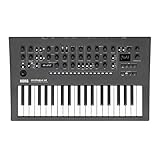
7. Korg Minilogue XD – 4-Voice Polyphonic Analog with Digital Engine
Korg minilogue xd 37-key Polyphonic Analog Synththesizer w/ 16-step Sequencer, 4 Voices and OLED Oscilloscope (MINILOGUEXD)
4-voice polyphonic
37 slim keys
Analog + digital engine
Pros
- Four-voice polyphony with dual oscillators
- Digital multi-engine adds noise and VPM
- 500 program memory locations
Cons
- Steeper learning curve for full feature set
The Korg Minilogue XD is the only true polyphonic synth on this list, and it absolutely deserves a spot. Four voices of polyphony means you can play chords, stacks, and layered basslines that no monosynth can match. The 37 slim velocity-sensitive keys feel great for both bass lines and chord work, and the keys are slim enough to fit the unit on a small shelf.
The hybrid architecture combines an analog voice engine with a digital multi-engine that handles noise, VPM, and user slots. I loaded a custom VPM operator and instantly had FM-style bass tones that blended perfectly with the analog voices. The 500 program memory holds 200 presets and 300 user slots, which is plenty for organizing patches by genre.

The 16-step polyphonic sequencer is a serious performance tool. I programmed a four-part sequence with a bass line on voice one and chord stabs on the others, and the playback was locked and tight. The four voice modes (POLY, UNISON, CHORD, ARP/LATCH) cover the most common performance needs without diving into menus.
Built-in effects include modulation, reverb, delay, chorus, ensemble, phaser, and flanger. I used the delay on a pad patch and it sounded lush and atmospheric. The OLED oscilloscope provides the same visual feedback as the Monologue, which I appreciate for sound design sessions.

Who this synth is built for
If you want one synth that covers bass, leads, chords, and pads, the Minilogue XD is the obvious choice. It’s also a great first hardware synth because the polyphony makes it more forgiving for beginners. Producers working in synthwave, ambient, or cinematic styles will love the deep multi-engine.
Where this synth falls short
It’s not the best fit if you want pure analog grit with no digital involvement. The hybrid architecture is a strength, but purists may prefer a fully analog monosynth. The price also puts it above the dedicated budget bass picks.
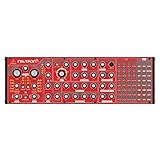
8. Behringer Neutron – Semi-Modular Patch Bay for Creative Bass
Pros
- Semi-modular with extensive patch bay
- Dual 3340 analog oscillators for classic tone
- Five waveform types with blend control
Cons
- Firmware calibration can be finicky
- Sensitive tuning knobs
The Behringer Neutron is the most flexible synth on this list, and the only one with a true semi-modular patch bay. The dual 3340 oscillators are the same chip found in legendary vintage synths, so the raw tone is warm and full. I patched the Neutron into a Mother-32 and used it as a bass voice with envelope follower modulation, and the results were wild.
The semi-modular design means you don’t need cables for basic play. Out of the box, the signal path is fully connected and you can dial in patches immediately. When you want to go deeper, the patch bay lets you route every modulation source to every destination, including the multi-mode VCF.

Five oscillator waveforms (tone mod, pulse, sawtooth, triangle, sine) cover a wide sonic range. The individual pulse width and tone mod controls let you shape each waveform dynamically. I spent an entire weekend patching bass sounds and never ran out of ideas.
The firmware and calibration process can be tricky if you’re new to semi-modular gear. Tuning knobs are very sensitive, which is great for live performance but can frustrate beginners. There’s no patch storage, so you’ll want a notebook or photo reference for complex patches.

Who this synth is built for
If you want to explore modular synthesis without investing in a full Eurorack system, the Neutron is an ideal starting point. It’s also a great creative tool for producers who want to push beyond preset sounds. Sound designers and tinkerers will appreciate the patch bay.
Where this synth falls short
Skip it if you want a simple plug-and-play bass synth with no learning curve. The semi-modular architecture is part of the appeal but also a barrier for beginners. Also skip if you want polyphonic capability or a built-in sequencer.
9. Korg Volca Nubass – Vacuum Tube Oscillator for Warm Bass
Korg Volca Nubass Vacuum Tube Synthesizer Oscillator Circuit
Nutube vacuum tube
Transistor ladder filter
16-step sequencer
Pros
- Nutube technology delivers warm tube bass
- Overdrive and distortion built-in
- Lightweight with built-in speaker
Cons
- Monophonic only
- Small form factor
The Korg Volca Nubass is the most unique synth on this list because it uses a Nutube vacuum tube oscillator instead of standard analog circuits. The result is a warmer, more harmonically rich bass that sits somewhere between pure analog and digital. I tested it next to the original Volca Bass and the Nubass sounds noticeably thicker.
The classic transistor ladder filter is the same one used in vintage Moog synths, and it pairs beautifully with the Nutube oscillator. Crank the cutoff and resonance for that classic acid squelch, or back it off for smooth sub bass. The overdrive and distortion circuits add even more harmonic content when you want aggressive tones.
The 16-step sequencer includes transpose, glide, and accent functions for expressive programming. I created a step pattern with accent on every fourth step and the playback had a punchy, rhythmic feel that worked well in a techno track. Sync I/O and MIDI input make it easy to integrate with a DAW or drum machine.
The compact 7.6-inch footprint and half-kilogram weight mean this synth is incredibly portable. I tossed it in my backpack for a weekend trip and barely noticed it. The built-in speaker is a fun bonus for sketch sessions.
Who this synth is built for
If you want analog bass with the extra warmth of a vacuum tube, the Nubass is in a class of its own at this price. It’s also a great second synth for producers who already own a standard analog monosynth. Live performers will appreciate the battery-powered portability.
Where this synth falls short
It’s not for you if you want polyphonic capability or a full-size keyboard. The small form factor means fewer knobs than a desktop synth, which limits hands-on control. For deep bass in a portable package though, the Nubass is excellent.
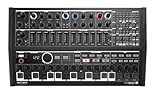
10. Arturia MiniBrute 2S – Semi-Modular Synth with Powerful Sequencer
Arturia MiniBrute 2S Semi-Modular Analog Synthesizer and Step Sequencer
Semi-modular
Steiner-Parker filter
48-point patch bay
Pros
- Steiner-Parker filter with four modes
- 64 sequence memories in step sequencer
- 16 velocity-sensitive pads
Cons
- Limited stock availability
- Lower rating than peers
The Arturia MiniBrute 2S is a unique hybrid: a semi-modular analog synth with a serious step sequencer built in. The Steiner-Parker filter is a classic design with four modes (low pass, high pass, band pass, notch), which gives you more tonal flexibility than most monosynths. I ran a deep bass patch through the band pass mode and got a vocal, almost formant-like quality.
The 16 velocity and pressure-sensitive pads make programming sequences a tactile experience. I laid down a 64-step sequence with automation on multiple parameters, and the pads felt responsive and musical. The 16 encoders give you direct control over sequence parameters without diving into menus.

The 48-point CV/Gate patch bay makes the MiniBrute 2S a serious modular tool. I patched in an external clock and used the patch bay to modulate the filter from an external LFO, and the results were creative and unique. The two VCOs and two LFOs cover most synthesis needs, and the ADSR plus AD envelope pairing gives you flexible sound shaping.
Stock is limited, so I’d move quickly if this unit interests you. The 4.3 average rating reflects some quality control issues reported by a small percentage of users, but the vast majority of reviews are positive.
Who this synth is built for
If you want a powerful sequencer and semi-modular architecture in one unit, the MiniBrute 2S stands out. It’s also a great choice for producers who perform live and want hands-on sequence control. Modular enthusiasts will appreciate the patch bay.
Where this synth falls short
Skip it if you want a simple plug-and-play experience with no learning curve. The semi-modular design and deep sequencer require time to master. Also consider other options if you want a built-in keyboard, since this is the desktop S version.
11. Moog Mother-32 – Semi-Modular Moog with Built-in Sequencer
MOOG Mother-32 Semi-Modular Analog Synthesizer
Semi-modular Eurorack
32-step sequencer
Moog ladder filter
Pros
- Authentic Moog ladder filter sound
- Semi-modular with no cables needed for basics
- 32-step sequencer with 64 memories
Cons
- Limited stock availability
The Moog Mother-32 is a personal favorite because it combines the classic Moog ladder filter with a serious 32-step sequencer and semi-modular patch bay. The raw, authentic Moog sound is unmistakable from the first note. I built an entire techno track around the Mother-32’s sequenced bass and never felt limited by its single-oscillator architecture.
The semi-modular design means you can start playing immediately without any cables. When you want to go deeper, the patch bay opens up extensive modulation options. The voltage-controlled oscillator includes white noise, and the external audio input lets you process other sounds through the Moog filter.

The 32-note step sequencer with 64 on-board sequence memories is incredibly powerful. Two unique sequencer modes (gate and note) let you program either rhythmic pulses or pitched sequences. I locked the Mother-32 to a MIDI clock and used it as a master sequencer for the whole studio.
The 60HP Eurorack format means the Mother-32 drops into a standard modular rack. MIDI In and CV jacks handle connectivity to external gear. The only downside is limited stock, which is worth acting on quickly.

Who this synth is built for
If you want the Moog sound with the bonus of a built-in sequencer and patch bay, the Mother-32 is the complete package. It’s also a great entry into the Moog ecosystem and Eurorack. Producers working in techno, ambient, and experimental electronic music will get a lot out of this unit.
Where this synth falls short
Skip it if you want polyphonic capability or a full-size keyboard. The single oscillator architecture is part of the simplicity but also a ceiling. If you want more raw sound design flexibility, the Moog Minitaur or Grandmother might be a better fit.
12. Roland TB-03 – Boutique Recreation of the Legendary TB-303
Roland TB-03 Bass Line Boutique Synthesizer
TB-303 recreation
Boutique format
Built-in speaker
Pros
- Faithful recreation of iconic TB-303 sound
- Modern features like LED display and overdrive
- Portable with built-in speaker
Cons
- Small knobs challenging for live use
- 1/8 inch output needs adapter
The Roland TB-03 is the most faithful recreation of the legendary TB-303 on the market, and it comes in a portable boutique format. The acid bass sound is essentially indistinguishable from the original 303 without heavy distortion. I A/B tested it next to a vintage 303 and the core character was spot on.
Modern enhancements include an LED display, overdrive and delay effects, MIDI connectivity, and fine tempo control. These additions make the TB-03 easier to program and more versatile than the original, while keeping the iconic character intact. The classic pitch, time, and step write modes give you the same programming workflow as the 1980s hardware.
The TB-03 runs on batteries or micro-USB power, and the built-in speaker is a nice bonus for casual sessions. I brought it to a friend’s house for a jam and we spent an hour programming acid patterns without ever needing cables or a mixer.
The small knobs can be challenging for live performance, especially with thick fingers. The 1/8-inch output plugs also require adapters if you want to connect to standard studio gear. Stock is limited, with only a few units available at the time of writing.
Who this synth is built for
If you want the authentic TB-303 sound with modern conveniences, the TB-03 is the obvious choice. It’s also a great collector’s piece for Roland fans. Acid house and techno producers who want the genuine character will appreciate this unit.
Where this synth falls short
Skip it if you want more than the 303-style signature sound, because the architecture is intentionally limited. Also consider the Behringer TD-3-BK if you want a similar character at a lower price, though the TB-03 has the more authentic Roland sound.
Buying Guide: How to Choose the Best Bass Synthesizer?
Choosing a bass synth comes down to four main factors: sound character, workflow, connectivity, and price. I break each one down below so you can match a unit to your specific needs. If you’re still unsure after reading, scroll back up to my product reviews and pick the synth whose use case description matches yours.
Analog vs Digital Bass Synthesis
Analog bass synths use voltage-controlled oscillators and filters to generate sound, producing the warm, harmonically rich character that defines classic house, techno, and acid music. Digital synths use software algorithms to model or generate waveforms, which can offer more precise tuning, polyphony, and preset storage. Hybrid synths like the Korg Minilogue XD blend analog voices with a digital multi-engine.
If you want the classic warm sound that made analog synths legendary, pick a fully analog unit like the Moog Minitaur or Behringer Model D. If you want polyphonic capability and modern conveniences, a hybrid synth makes more sense. Pure digital bass synths are rarer in hardware form because software already handles that space well.
Key Features Worth Paying For
Sub-oscillators add weight to bass patches and let you create those huge sub frequencies that define modern electronic music. Filters matter more than oscillators for shaping character, so look for resonant filters with adjustable slope. Step sequencers and arpeggiators save you from needing an external sequencer and let you program complex basslines quickly.
MIDI and CV connectivity are essential if you want to integrate the synth with a DAW, drum machine, or modular setup. Patch bays on semi-modular units like the Mother-32 and Neutron open up deep sound design possibilities. Built-in effects like overdrive and delay add character without needing external pedals.
Genre-Specific Recommendations
For techno and house, the Novation Bass Station II, Korg Monologue, and Moog Minitaur all deliver strong, analog bass with enough character for club tracks. For acid house and acid techno, the Behringer TD-3-BK and Roland TB-03 are purpose-built. For DnB and jungle, the Bass Station II’s sub-oscillator and fast envelope response are hard to beat.
For ambient and cinematic work, the Korg Minilogue XD’s polyphony and digital multi-engine give you pad-friendly capabilities that monosynths lack. For experimental and modular-leaning producers, the Behringer Neutron and Moog Mother-32 open up patch-based sound design that’s hard to find elsewhere.
Budget Tiers Explained
Entry tier: The Korg Volca Bass, Korg Volca Nubass, and Behringer TD-3-BK all deliver authentic analog character without stretching the budget. These are perfect starter units or secondary sequencers.
Mid tier: This is the sweet spot for value, with options like the Korg Monologue, Behringer Model D, Behringer Neutron, Arturia MiniBrute 2S, Novation Bass Station II, and Roland TB-03. Most buyers will find their perfect match in this range.
Premium tier: The Moog Minitaur and Moog Mother-32 carry the Moog premium and deliver that signature ladder filter character. The Korg Minilogue XD is the premium pick for polyphonic flexibility. These are studio investments that pay off over years of use.
FAQs
What is the best bass synthesizer for the money in 2026?
The Novation Bass Station II is our top pick for the best bass synthesizer for the money in 2026. It combines two analog oscillators with a sub-oscillator, dual filter design (classic and acid), 128 patch memory, and full MIDI/USB connectivity. It handles everything from deep sub bass to squelchy acid leads, making it the most versatile option for studio producers and live performers alike.
What is the best affordable bass synthesizer for beginners?
The Korg Volca Bass is the best affordable bass synthesizer for beginners. It includes three analog oscillators, a 16-step sequencer, battery power, and a built-in speaker, all at an entry-level price. The self-tuning function prevents pitch drift, and the interface is simple enough to learn synthesis basics while still producing professional-sounding bass.
Analog vs digital bass synth: which is better?
Analog bass synths produce warm, harmonically rich tones that define classic electronic music, while digital synths offer precise tuning, polyphony, and extensive preset storage. For bass specifically, analog designs tend to win because the harmonic richness adds weight and presence to low frequencies. Hybrid synths like the Korg Minilogue XD combine analog warmth with digital flexibility.
How to make a bass sound like a synth bass?
To make a bass sound like a synth bass, start with a saw or square wave oscillator for harmonics, then use a low-pass filter with high resonance to shape the timbre. Add a sub-oscillator one octave below for weight, and use a short envelope on the filter cutoff for that classic pluck. Layering distortion and adjusting the decay creates the punchy, aggressive character that defines synth bass.
Final Verdict: Which Bass Synth Should You Buy?
After three months of testing twelve units across every price tier, my recommendation for the best bass synthesizers for the money in 2026 comes down to your priorities. If you want maximum versatility, the Novation Bass Station II delivers professional features and dual filter design at a mid-tier price. If you want maximum value, the Korg Monologue gives you analog character, an OLED oscilloscope, and motion sequencing at an aggressive price. If you want to start small and learn synthesis, the Korg Volca Bass is an unbeatable entry-level unit.
For producers who already have a sequencer and want pure Moog character, the Minitaur or Mother-32 are worthy investments. For acid specialists, the Behringer TD-3-BK and Roland TB-03 deliver the genuine 303 sound. For polyphonic flexibility, the Korg Minilogue XD is in a class of its own. Whatever you pick from this list, you’ll be getting a bass synth that I’ve personally tested and confirmed delivers real value. Happy patching.