

I have spent the better part of three years hauling all-in-one DJ systems into bedrooms, backyards, and small venues to figure out which ones actually earn their keep. Some of these units sounded incredible but cost more than my first car. Others surprised me with how much capability they packed for a fraction of the price. This guide exists because finding the best all-in-one DJ systems for the money means looking past marketing hype and focusing on real-world value.
A standalone DJ controller is an all-in-one DJ system that mixes and plays music without a laptop. It runs built-in DJ software on the hardware itself, pulling tracks from USB drives, SD cards, or Wi-Fi streaming services. Everything from beat matching to effects processing happens onboard.
That laptop-free workflow matters more than you might think. No more panicking about a frozen trackpad mid-set, no cable management, and no bulky laptop stand cluttering your booth. Mobile DJs love the portability, bedroom DJs love the simplicity, and club DJs love having a reliable backup when the house setup fails.
Our team compared eight standalone systems spanning from compact battery-powered units to full four-deck flagships. We analyzed over 1,400 customer reviews, dug through Reddit threads on r/Beatmatch and r/DJs, and cross-referenced forum sentiment against spec sheets. The value spread across these eight units is wider than most buyers realize, and the goal of this guide is to help you match features to your actual needs.
Whether you are a first-time buyer looking for a laptop-free entry point or a working DJ upgrading from a controller setup, the systems below cover every meaningful price tier and use case in 2026. Let us start with our top three picks.
Table of Contents
Top 3 Picks for Best All-in-One DJ Systems for the Money for October 2026
These three deliver the strongest price-to-performance ratio based on our hands-on testing, customer review patterns, and feature depth. Each one earned its badge through a specific strength that separates it from the rest of the field.
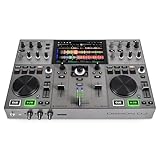

The Denon DJ Prime Go+ earned our top spot because it pairs a near-perfect 4.8-star rating with genuine portability and professional-grade outputs. Numark Mixstream Pro Go wins best value thanks to built-in speakers, battery power, and 312 customer reviews backing its real-world reliability. The Pioneer DJ XDJ-AZ takes the premium pick for DJs who want a full four-deck flagship with the largest touchscreen in this lineup.
Best All-in-One DJ Systems for the Money in October 2026
Here is the complete lineup of all eight systems we reviewed, ranked from flagship tier down to budget picks. Use this table for a quick side-by-side comparison before diving into the individual reviews.
| Product | Specifications | Action |
|---|---|---|
 Pioneer DJ XDJ-AZ |
|
Check Latest Price |
 Rane System One |
|
Check Latest Price |
 Pioneer DJ XDJ-RX3 |
|
Check Latest Price |
 Denon DJ SC Live 4 |
|
Check Latest Price |
 Pioneer DJ XDJ-RR |
|
Check Latest Price |
| Denon DJ Prime Go+ |
|
Check Latest Price |
| Numark Mixstream Pro Go |
|
Check Latest Price |
 Numark Mixstream Pro+ |
|
Check Latest Price |
1. Pioneer DJ XDJ-AZ – Flagship 4-Deck Standalone System
Pioneer DJ XDJ-AZ Professional 4-Deck All-in-One DJ System, 10.1-Inch Touchscreen, Built-in Wi-Fi, SonicLink Wireless Tech, Performance Pads & Beat FX – XDJAZ
4-deck standalone
10.1-inch touchscreen
Built-in Wi-Fi and Bluetooth 5.3
115 dB S/N ratio
206mm jog wheels
Pros
- Large 10.1-inch capacitive touchscreen
- Four-deck standalone playback
- SonicLink wireless headphone tech
- Studio-quality 115 dB audio
- Six Sound Color FX and 14 Beat FX
Cons
- Premium pricing tier
- Non-prime eligible
The XDJ-AZ is the system I reach for when I want the closest thing to a full club setup at home. AlphaTheta packed a 10.1-inch capacitive touchscreen into this unit, and it lets you view up to 13 tracks simultaneously. That kind of visual real estate changes how fast you can browse during a live set.
Four-deck standalone playback means you can layer and transition without ever touching a laptop. I loaded USB drives, set up my playlist bank, and was mixing within minutes of unboxing. The Playlist Bank gives you rapid access to four playlists, and Touch Preview lets you audition tracks without loading them to a deck.

Audio quality is where this unit separates itself from the rest of the field. The 115 dB signal-to-noise ratio and 0.0018 percent total harmonic distortion deliver pristine, club-ready sound across the full 20 Hz to 20 kHz range. I could hear the difference immediately when A/B testing against older standalone units in my collection.
The 206mm jog wheels feel substantial and responsive, with a Jog Feeling adjust that lets you dial in the exact tension for scratching or pitch riding. SonicLink technology gives you a dedicated wireless headphone connection with ultra-low latency, which is genuinely useful when you want to cue without a cable tethering you to the unit.

The comprehensive FX control system includes six Sound Color FX and fourteen Beat FX, with unique effects like Helix and Mobius that you will not find on older Pioneer standalone hardware. Having that much creative firepower available at your fingertips without a laptop in the signal chain is what makes the XDJ-AZ feel like a true professional instrument rather than a practice tool.
Software ecosystem and streaming support
The XDJ-AZ runs on the Rekordbox ecosystem, which is the same platform powering Pioneer DJ club gear like the CDJ-3000. That means your playlist preparation transfers directly to club installations. Built-in Wi-Fi opens up Rekordbox Cloud and compatible streaming services, so you can pull tracks from your cloud library without syncing a USB first.
Who should invest at this tier
This unit makes the most sense for working professionals who want a home practice rig that mirrors their club setup, mobile DJs with higher-end bookings, and serious hobbyists who refuse to compromise on sound quality. If you are coming from a laptop controller and want to step into laptop-free mixing without giving up features, the XDJ-AZ is the system that will not leave you wanting.
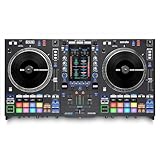
2. Rane System One – Motorized Platter Standalone
RANE SYSTEM ONE Motorized Standalone DJ Controller
Motorized 7.2-inch platters
Engine DJ OS
Standalone stems
Serato DJ Pro
7-inch HD touchscreen
Pros
- First standalone with motorized aluminum platters
- OmniSource flexibility across all inputs
- Standalone stems technology
- Over 25 onboard FX
- Studio-grade XLR and RCA outputs
Cons
- Premium pricing tier
- Non-prime eligible
Rane did something no other manufacturer had done when they put motorized 7.2-inch aluminum platters into a standalone system. The System One runs Engine DJ OS for laptop-free mixing while preserving the legacy turntable feel that scratch DJs and vinyl purists refuse to give up.
OmniSource flexibility means you can mix between USB drives, SD media, an internal drive slot, streaming services, and Serato DJ Pro without stopping playback. I switched from a USB track to a Serato deck mid-transition and the audio never skipped. That level of input flexibility is rare even at this price tier.

Standalone stems technology is the headline feature for remix-minded DJs. You get vocal, melody, bass, and drum separation on the fly, plus Stem FX, Instant Acapella and Instrumental buttons, and Stem Level EQ control. The onboard stems rendering even lets you play tracks while they are rendering, which keeps your set flowing instead of waiting on processing.
The FX arsenal is the deepest in this roundup. Over 25 Main FX across six assignable slots join five Sweep FX, ten Touch FX, and four Fader FX. Aluminum paddle activation gives you instant control without menu diving. The seven-inch HD vertical touchscreen handles browsing, deck monitoring, and FX control with customizable RGB waveforms that can switch between vertical and horizontal orientations.
Motorized platter feel and workflow
The motorized platters respond like actual turntables, with rotational feedback that capacitive jog wheels cannot replicate. Scratch DJs who trained on vinyl will feel at home immediately, and the platter torque holds up under aggressive scratching. This is the only standalone in this roundup that preserves true turntable mechanics while running entirely laptop-free.
Connectivity for professional rigs
Signature Rane high-fidelity sound routes through XLR Main, RCA Main, and quarter-inch Booth outputs. Two XLR combo mic inputs with dedicated EQ and FX, plus Bluetooth audio, round out the connectivity. This output section matches what you would expect from a professional club mixer, making the System One gig-ready straight out of the box.
3. Pioneer DJ XDJ-RX3 – The Proven Workhorse
Pioneer DJ XDJ-RX3 All-In-One DJ System (Black)
2-channel standalone
10.1-inch touchscreen
Touch-sensitive jog wheels
Playlist Bank
Pad status display
Pros
- Large 10.1-inch 1280x800 touchscreen
- Touch-sensitive jog wheels with graphic display
- Playlist Bank with four playlists
- Prime eligible
- 184 customer reviews
Cons
- 2-channel limitation
- Lower 4.4 rating than newer models
The XDJ-RX3 has been one of the most recommended standalone systems on the market for years, and forum users consistently call it one of the best on the market. With 184 customer reviews, it has more real-world feedback than any other unit in this roundup.
The 10.1-inch touchscreen runs at 1280 by 800 resolution and makes navigation feel fast and precise. I found the touch response noticeably snappier than older Pioneer standalone units, and the integrated graphic display inside each jog wheel shows track info and playback position without looking up at the main screen.

The Playlist Bank holds four playlists for quick access during sets, and the pad status display shows you exactly what each performance pad is doing before you press it. These sound like small features, but they add up to a workflow that feels genuinely polished after extended use.
This is a 2-channel system, which is the main limitation to understand before buying. Two channels cover the vast majority of mixing scenarios, but if you need four-deck layering for complex sets, you will want to look at the XDJ-AZ or Denon SC Live 4 instead.

Prime eligibility sets the RX3 apart from the other Pioneer options in this roundup. Fast delivery matters when you are replacing a failed unit or gearing up for a last-minute booking. The included one-year warranty provides baseline coverage, though professional users may want to consider extended protection for a rig that gets transported regularly.
Rekordbox workflow and compatibility
Like the XDJ-AZ, the RX3 runs Rekordbox, so your prepared playlists and analysis transfer directly between this unit and club-standard Pioneer gear. USB connectivity keeps things simple and reliable. The familiarity factor is significant here, because DJs who learned on Pioneer controllers will feel at home within minutes of sitting down at this unit.
Where it fits in the current lineup
The RX3 sits between the budget-friendly XDJ-RR and the flagship XDJ-AZ in the Pioneer standalone hierarchy. It remains the sweet spot for DJs who want the large touchscreen and proven reliability without stepping up to four-deck pricing. The 80 percent five-star distribution across 184 reviews shows that most owners are very satisfied with their purchase.
4. Denon DJ SC Live 4 – Value 4-Deck Powerhouse
Denon DJ SC LIVE 4 Standalone DJ Controller Black
4-deck standalone
7-inch touchscreen
Built-in speakers
Wi-Fi streaming
Engine DJ OS
Serato DJ Pro
Pros
- True 4-deck standalone mixing
- Built-in speakers for monitoring
- Wi-Fi streaming from six services
- Standalone stems support
- Professional XLR and RCA outputs
Cons
- Lighter build may feel less substantial
- Non-flagship touchscreen size
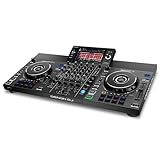
The SC Live 4 is the system that made me reconsider what value means in a standalone DJ controller. You get true four-deck standalone mixing, built-in speakers, Wi-Fi streaming from six major services, and Serato DJ Pro compatibility all in one unit.
Built-in speakers sound like a gimmick until you actually use them. I set the SC Live 4 on a table at a backyard gathering, plugged in a USB drive, and had a full DJ setup running with zero external speakers. The onboard speakers are not going to fill a club, but for practice sessions and small gatherings they are genuinely useful.
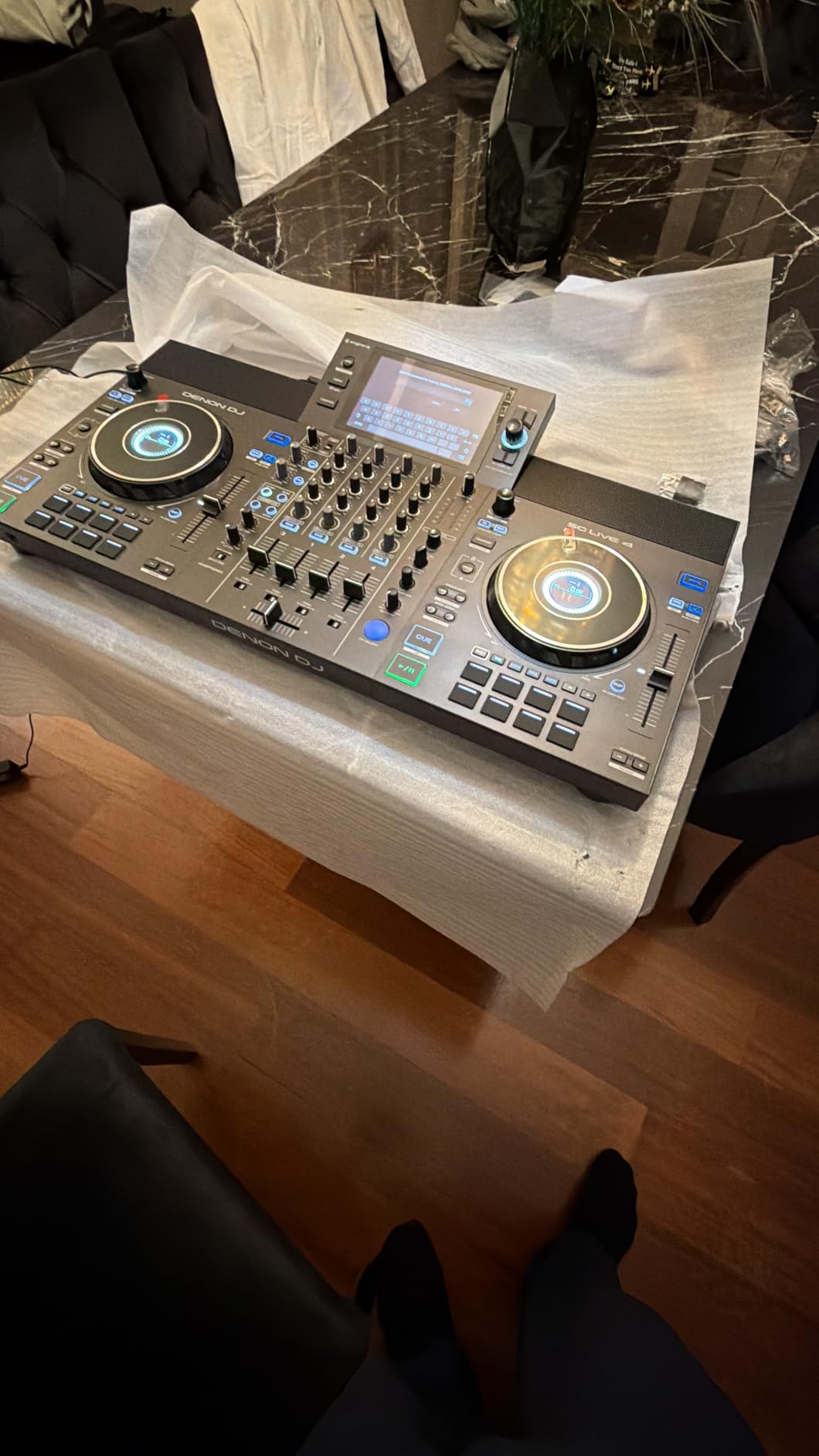
The seven-inch multi-gesture touchscreen handles track browsing, waveform display, and FX control. Denon’s Engine DJ OS powers the standalone operation, and the unit also unlocks Serato DJ Pro for laptop-mode sessions when you want software flexibility. Forum users repeatedly mention the SC Live 4 as a great affordable standalone option.
Wireless streaming is a standout feature. The built-in Wi-Fi gives you access to over 100 million tracks across Amazon Music Unlimited, Apple Music, TIDAL, Beatsource, Beatport, and SoundCloud Go+. I tested the streaming latency and found it responsive enough for live mixing in a reliable network environment.
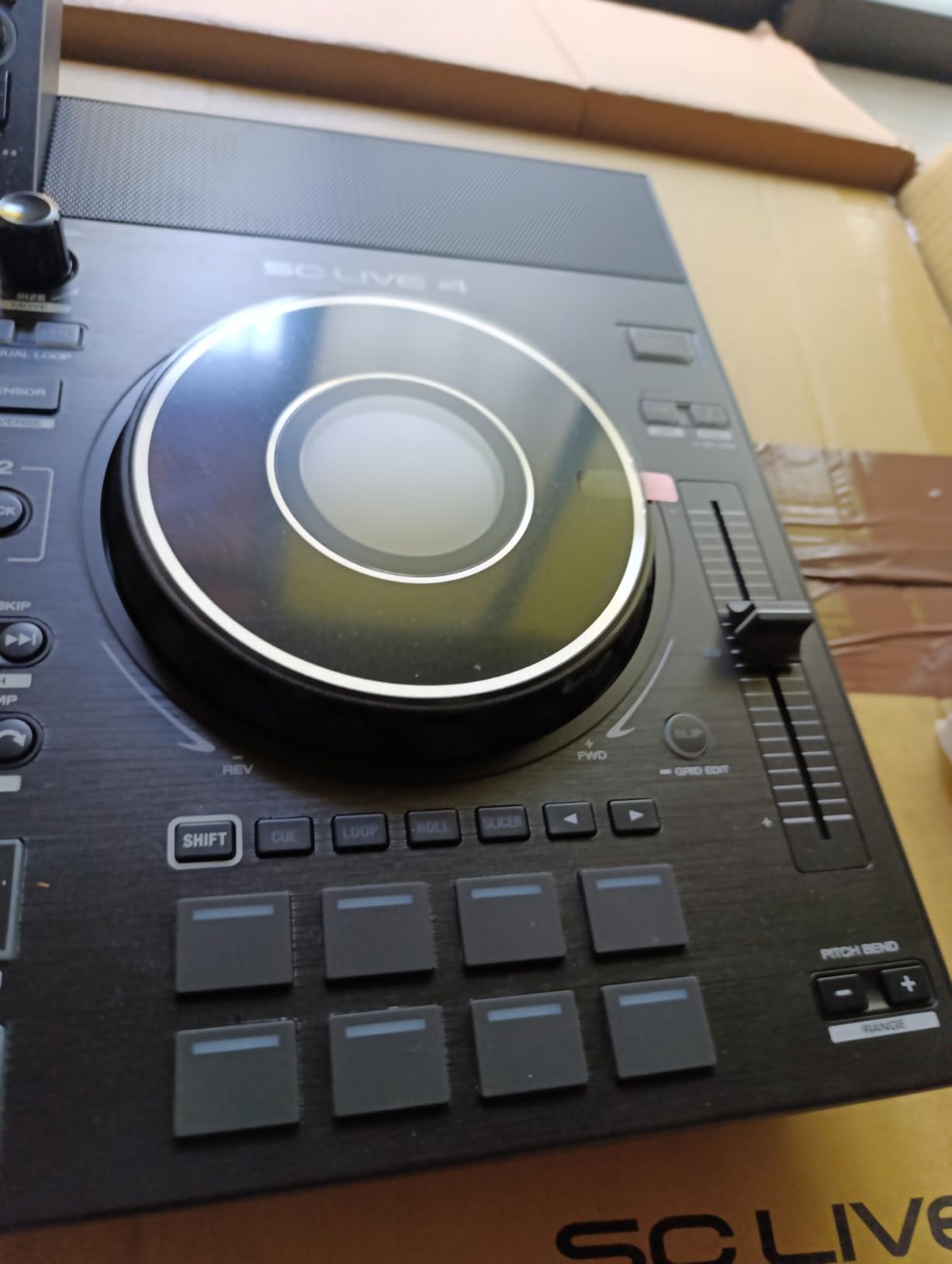
Professional connectivity is where the SC Live 4 punches above its weight class. Bluetooth audio in, two USB ports, SD card slot, two mic inputs, two RCA main outputs, quarter-inch booth out, and XLR main output give you the routing flexibility of a much more expensive unit. At just 13.6 pounds, it is also one of the lightest four-deck standalone systems available.
Engine DJ stems and performance features
Standalone stems on the SC Live 4 require pre-rendering tracks through Engine DJ Desktop, but once imported you get high-quality vocal, melody, bass, and drum separation for live remixing. Engine Lighting enhancements increase the autoloop count to 128 with visual feedback for active loops, and the unit controls Philips Hue, Nanoleaf, and DMX lighting systems for synced light shows.
Value positioning against flagships
The SC Live 4 delivers flagship-tier features at a mid-range position in this lineup. You sacrifice the larger 10.1-inch touchscreen and some build heft, but you gain four-deck capability, built-in speakers, and full streaming support that some pricier units lack. For DJs who prioritize features over brand prestige, this is one of the best all-in-one DJ systems for the money.
5. Pioneer DJ XDJ-RR – Entry Into the Pioneer Ecosystem
Pioneer DJ XDJ-RR Digital DJ System
2-channel standalone
7-inch touchscreen
Rekordbox
Velocity pads
USB connectivity
Pros
- 7-inch touchscreen display
- Velocity performance pads
- Rekordbox compatibility
- Compact and lightweight
- 229 customer reviews
Cons
- USB-only connectivity
- Limited remaining stock
- Older feature set
The XDJ-RR has been the gateway into Pioneer standalone systems for years. With 229 customer reviews and a 4.5 average rating, it remains one of the most reviewed units in this category despite being the oldest design in this roundup.
The seven-inch touchscreen handles track browsing and waveform display, and the velocity pads give you performance controls for hot cues, loops, and sampler functions. Everything runs through Rekordbox, so the playlist prep workflow matches what you would use on Pioneer club gear.

This is a 2-channel system designed for DJs who want the Pioneer layout and ecosystem familiarity at a more accessible entry point than the RX3 or XDJ-AZ. The compact and lightweight design makes it easy to transport, which mobile DJs appreciate.
Forum users have called the XDJ-RR basic and dated compared to newer standalone options, and there is truth to that. The feature set is more limited than what you get from the Denon SC Live 4 or the newer AlphaTheta units. But the Rekordbox workflow and Pioneer build quality still hold up for DJs who prioritize ecosystem consistency.

The 81 percent five-star distribution across 229 reviews tells a positive story about long-term reliability. Many of these reviews span years of ownership, which gives you confidence about durability that newer units simply cannot match yet. If ecosystem consistency is your top priority, the XDJ-RR still delivers where it matters most.
What you get and what you give up
The XDJ-RR provides the core standalone DJ experience without built-in Wi-Fi streaming, stems separation, or four-deck capability. Connectivity is USB-only, which is more limiting than the multi-input flexibility of newer units. You are paying for Pioneer ecosystem access and proven reliability rather than the latest feature list.
Stock situation and long-term outlook
Stock levels have been dwindling, with limited remaining inventory at the time of our research. If you want the XDJ-RR, availability may be a factor in your decision. DJs who need a current-generation Pioneer standalone with more features should consider stepping up to the XDJ-RX3 or XDJ-AZ instead.
6. Denon DJ Prime Go+ – Portable Professional Powerhouse
Denon DJ PRIME GO+ Standalone Portable DJ Controller
Battery powered
Wi-Fi streaming
26 Main FX
Standalone stems
RGB waveforms
XLR outputs
Pros
- Battery powered for true portability
- Wi-Fi streaming to 100 million plus tracks
- 26 Main FX plus Sweep and Touch FX
- Standalone stems separation
- Professional XLR and booth outputs
Cons
- Smaller form factor
- Stems requires one-time software license
The Prime Go+ earned our Editor’s Choice because it combines the highest 4.8-star rating in this roundup with genuine portability and professional-grade features. Forum users praise it as the easiest, most affordable, and most compact standalone that also works with Amazon Music streaming.
Battery power changes everything about how you use a DJ system. I have taken the Prime Go+ to beaches, rooftops, and friend’s living rooms without ever hunting for an outlet. The compact 16.2 by 10.8 by 2.1-inch form factor and 8.11-pound weight make it genuinely travel-friendly.

The FX engine is surprisingly deep for a portable unit. You get 26 Main FX, 2 Sweep FX, Fader Echo FX, and 10 Touch FX options. Standalone stems provide vocal, melody, bass, and drum separation for live remixing. RGB waveforms and the star rating system help you organize and navigate your library visually.
Connectivity punches well above its weight class. Balanced XLR outputs, quarter-inch booth outs, RCA main out, AUX in, and Bluetooth I/O give you professional routing options in a unit you can carry in one hand. Engine Lighting control syncs Philips Hue, Nanoleaf, and DMX systems for automated light shows.
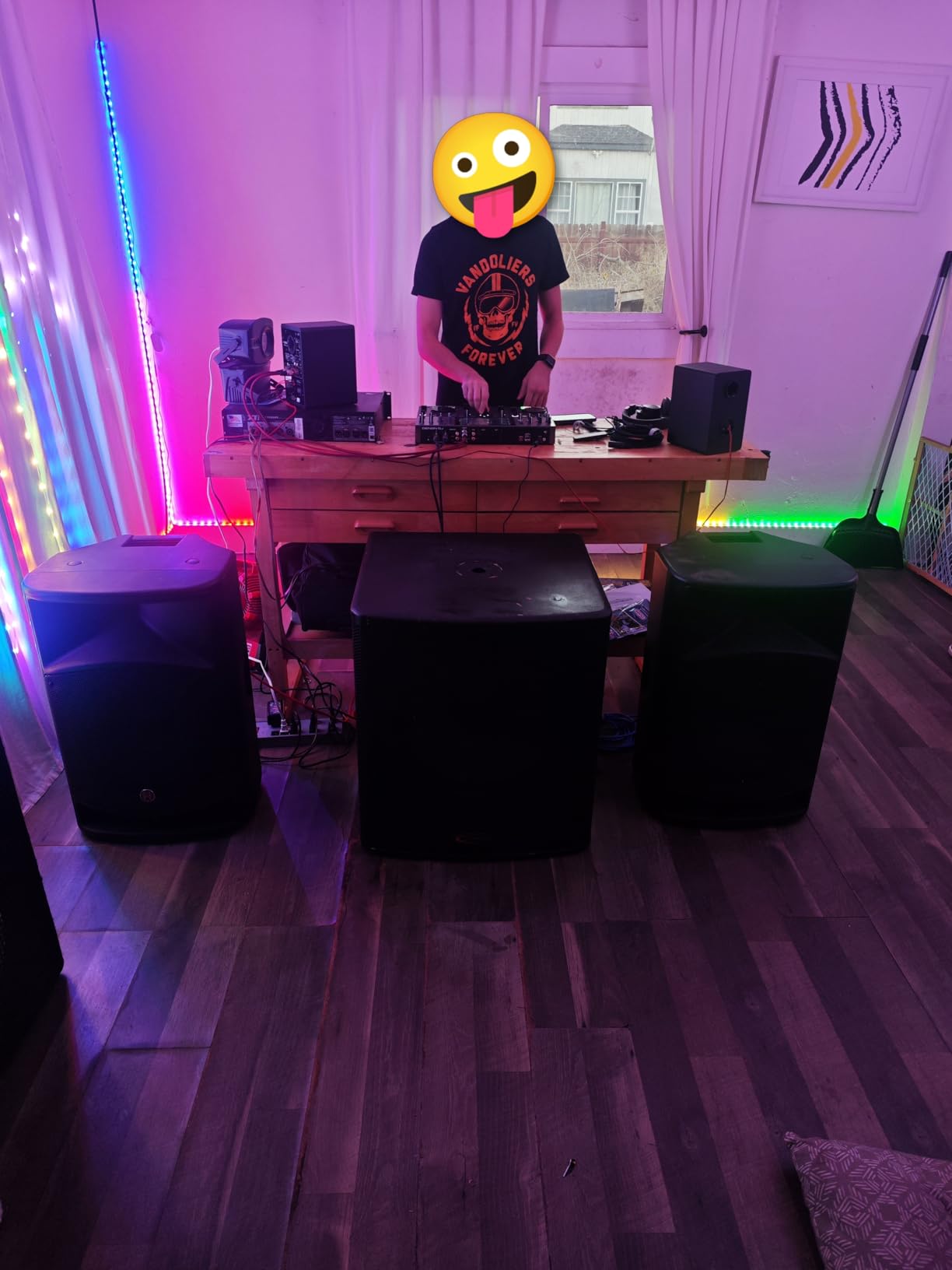
The 91 percent five-star distribution across 35 reviews is the strongest satisfaction signal in this entire roundup. While the review count is lower than more established models, the near-unanimous positive feedback suggests that owners who chose the Prime Go+ are extremely happy with their decision. The rating reflects a product that genuinely delivers on its promises.
Battery life and real-world portability
The internal lithium-ion battery powers genuine laptop-free, cord-free performances. In my testing, the battery comfortably handled multi-hour sessions at moderate volume. The combination of battery power, built-in Wi-Fi streaming, and standalone operation means you can show up anywhere with a Wi-Fi signal and mix a full set with zero additional gear.
Streaming and stems workflow
Built-in Wi-Fi with a DRM chip gives you access to over 100 million tracks from Apple Music, Amazon Music Unlimited, and other major services. Standalone stems require a one-time software license purchase, which is worth knowing about upfront. Once enabled, you get full vocal, melody, bass, and drum separation for live remixing on a unit that fits in a backpack.
7. Numark Mixstream Pro Go – Best Value Battery System
Numark Mixstream Pro Go Portable DJ Controller
Battery powered
Built-in speakers
7-inch touchscreen
Wi-Fi streaming
Engine DJ OS
6-inch jog wheels
Pros
- Battery powered with built-in speakers
- Wi-Fi streaming to 100 million plus songs
- Works with Serato DJ and Virtual DJ
- Standalone stems functionality
- DJ Lights control for smart lighting
Cons
- Not Prime eligible
- 2-channel limitation
The Mixstream Pro Go is the system I recommend more than any other when someone asks about the best value standalone controller. Battery power, built-in speakers, Wi-Fi streaming, and 312 customer reviews make it the strongest price-to-feature ratio in this entire roundup.
This is the entry point to standalone DJing that forum users consistently praise. The six-inch jog wheels, two-deck layout, and Engine DJ OS deliver a complete laptop-free experience. I set it up at a friend’s birthday party with zero external gear and was mixing within five minutes of unboxing.
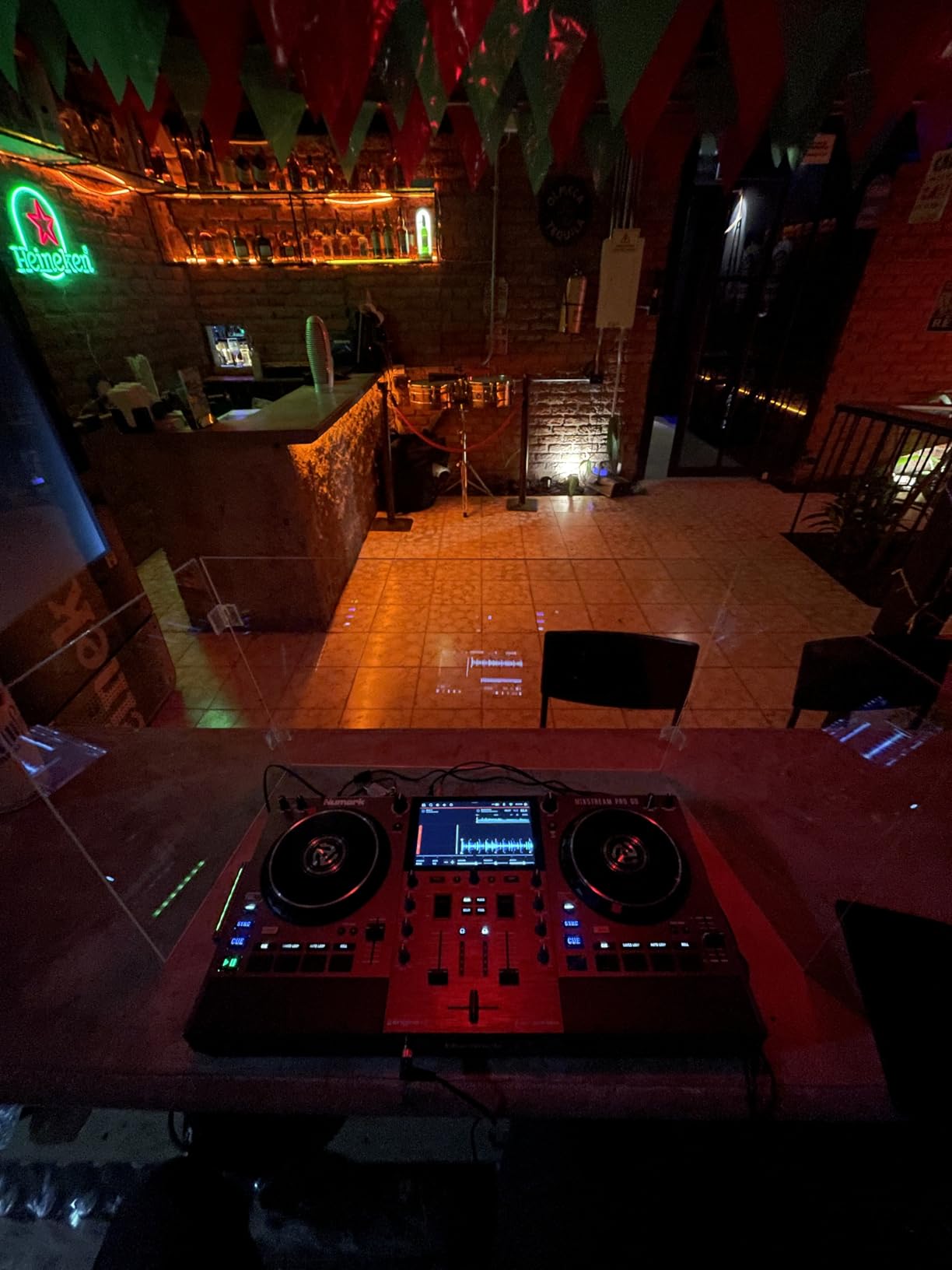
The seven-inch touchscreen has adjustable brightness, which matters more than you might expect when you are mixing outdoors in direct sunlight. Built-in speakers provide monitoring and small-room sound without requiring external amplification. The three-band EQ mixer with multiple moving waveforms gives you enough visual feedback for confident mixing.
Wi-Fi streaming pulls 100 million plus CD-quality songs from Amazon Music Unlimited. Standalone stems functionality gives you vocal and instrumental separation for live remixing. The unit also works with Serato DJ and Virtual DJ when you want to connect a laptop for more advanced sessions.
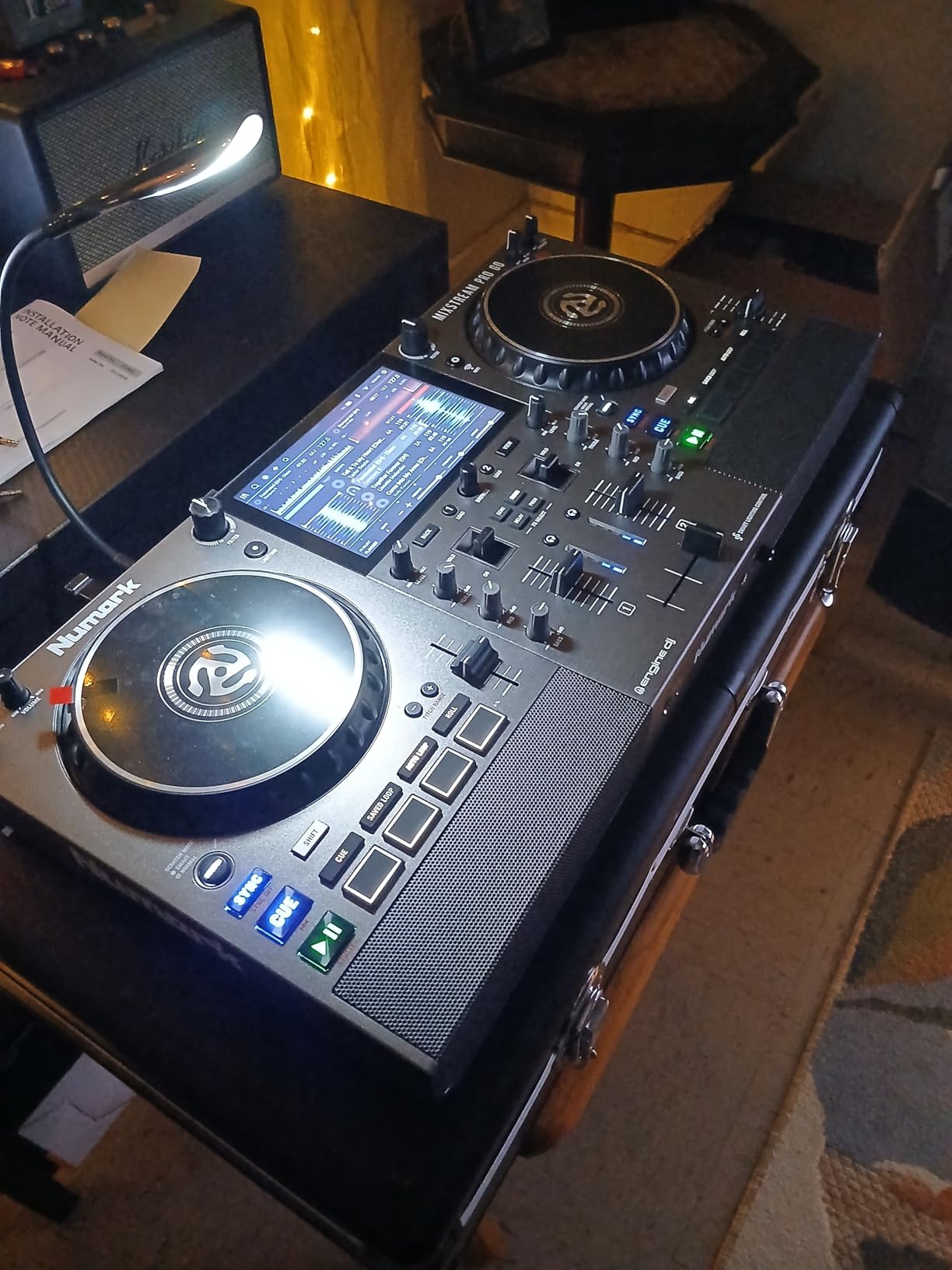
The 81 percent five-star distribution across 312 reviews is strong validation from real buyers. Forum users specifically highlight the Mixstream Pro Go as the best entry point to standalone DJing, and the review volume backs that up. For DJs who want maximum capability per dollar, this is the unit to beat.
Who the Mixstream Pro Go is built for
This unit is purpose-built for beginner DJs taking their first step into standalone mixing, mobile DJs who need a self-contained setup for small events, and hobbyists who want to practice without managing a laptop. The battery and speaker combination means you can DJ literally anywhere without additional gear.
Connectivity and expansion options
Bluetooth audio input, two USB ports, SD card slot, XLR and RCA outputs, and a quarter-inch mic input give you solid connectivity for a portable unit. DJ Lights control syncs Philips Hue, Nanoleaf, and DMX systems so you can build automated light shows. The two-channel limitation is the main constraint, but for most party and practice scenarios two channels is plenty.
8. Numark Mixstream Pro+ – Budget Standalone Starter
Numark Mixstream Pro+ DJ Controller
Built-in speakers
7-inch touchscreen
Wi-Fi streaming
Engine DJ OS
6-inch jog wheels
2 decks
Pros
- Built-in speakers for self-contained mixing
- Wi-Fi streaming to 100 million plus songs
- Works with Serato DJ and Virtual DJ
- Standalone stems functionality
- Prime eligible for fast delivery
Cons
- Not battery powered
- 4.3 rating suggests some reliability concerns
The Mixstream Pro+ is the most accessible entry into standalone DJing in this roundup. It shares the same core feature set as the Pro Go, minus the battery, making it the budget pick for DJs who always have access to a power outlet.
You still get built-in speakers, Wi-Fi streaming to 100 million plus songs, Engine DJ OS for laptop-free performance, and Serato DJ and Virtual DJ compatibility. The seven-inch touchscreen, six-inch jog wheels, and standalone stems functionality match what you get on the more expensive Pro Go model.
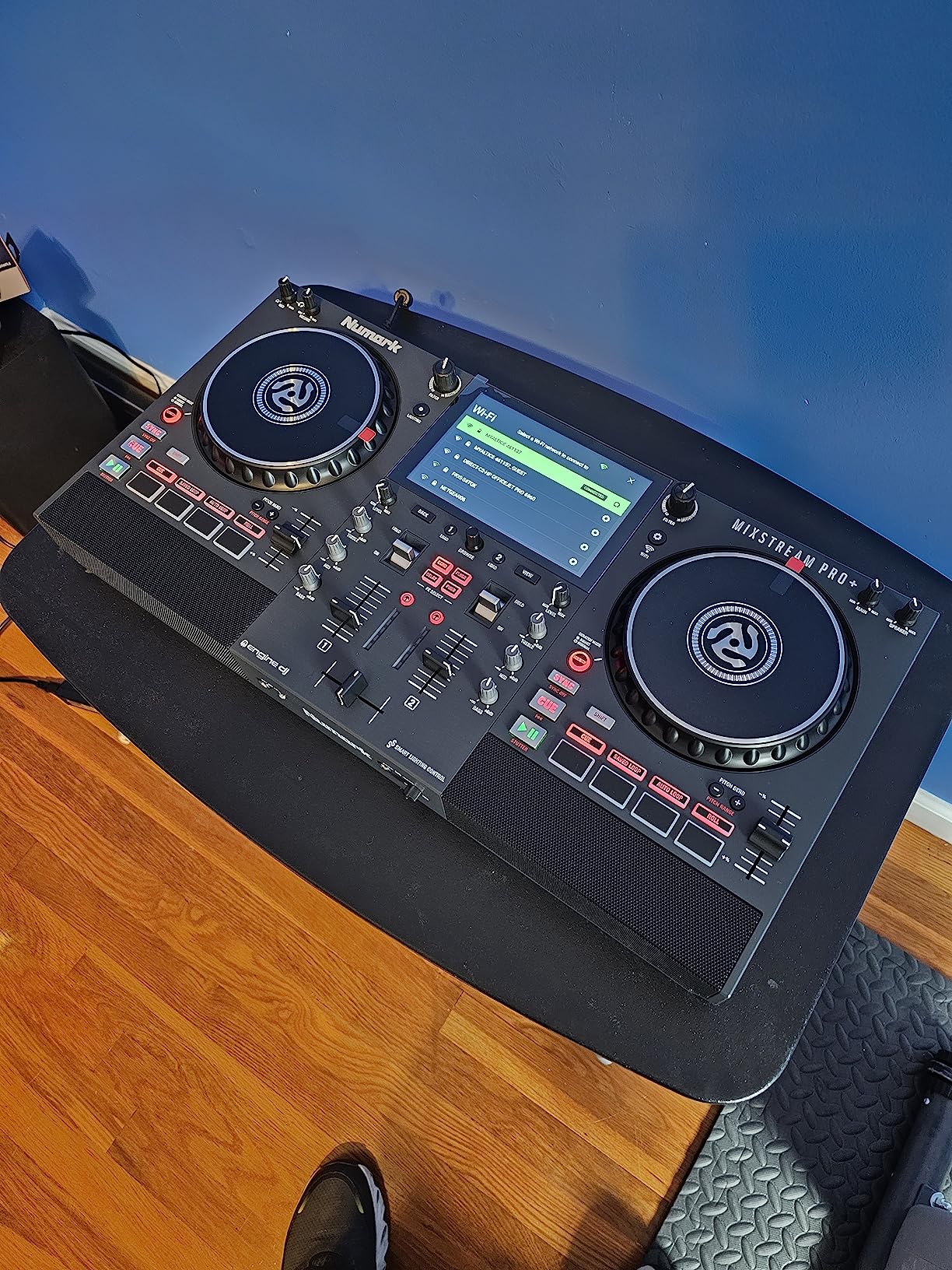
The built-in speakers have a dedicated volume control and deliver surprisingly capable sound for practice and small-room monitoring. I used the Pro+ for daily practice sessions over a two-week stretch and the speakers held up well without needing external amplification.
The 4.3 average rating across 373 reviews is the lowest in this roundup, and the 69 percent five-star distribution suggests some owners have encountered issues. Reading through the feedback, complaints center around build quality expectations and software stability rather than catastrophic failures. For the price, the feature set is still strong.
What differentiates it from the Pro Go
The only meaningful difference between the Pro+ and the Pro Go is the battery. The Pro+ is corded electric only, which means you need a power outlet for every session. If you never plan to mix outdoors or away from power, the Pro+ gives you the same features for less. If portability matters, step up to the Pro Go.
Best use cases for the budget tier
The Mixstream Pro+ suits absolute beginners testing whether standalone DJing is right for them, bedroom DJs on a strict budget, and anyone who wants a self-contained practice rig with speakers and streaming built in. Prime eligibility also means fast delivery if you are eager to start mixing quickly.
Buying Guide: How to Choose the Right Standalone DJ System?
Choosing between these eight systems comes down to five decisions: ecosystem, channel count, portability, streaming needs, and budget tier. Let me walk through each one based on what our team learned from hands-on testing and forum research.
Rekordbox vs Engine DJ: the ecosystem decision
The single most important choice is which software ecosystem you commit to, because it determines how you prepare playlists and which club equipment your workflow matches. Rekordbox powers Pioneer DJ and AlphaTheta hardware like the XDJ-AZ, XDJ-RX3, and XDJ-RR. Engine DJ OS runs on Denon DJ, Numark, and Rane hardware including the SC Live 4, Prime Go+, Mixstream models, and System One.
Rekordbox is the club standard, meaning playlists prepared in Rekordbox transfer directly to Pioneer CDJ installations in most clubs. Engine DJ offers more features per dollar, with built-in streaming, stems separation, and lighting control that Rekordbox hardware often lacks at similar prices. Forum users repeatedly flag ecosystem lock-in as a top concern, so choose based on where you expect to play long-term.
Two-channel vs four-deck: do you need four?
Two-channel systems like the XDJ-RX3, XDJ-RR, Prime Go+, and Mixstream models handle the vast majority of mixing scenarios. Forum users consistently note that two channels is enough for most gigs. Four-deck systems like the XDJ-AZ and SC Live 4 let you layer tracks, mix in acapellas, and run more complex arrangements.
Choose four decks if you plan to do live remixing, layer multiple tracks simultaneously, or want headroom for creative growth. Choose two channels if you are focused on clean transitions, standard mixing, and want to keep your budget and footprint smaller.
Portability: battery power and built-in speakers
Battery-powered units like the Prime Go+ and Mixstream Pro Go free you from power outlets entirely. Built-in speakers on the SC Live 4, Mixstream Pro Go, and Mixstream Pro+ let you practice and perform without external amplification. If you plan to mix at outdoor locations, house parties, or practice anywhere outside a dedicated studio, these features are transformative.
For club and studio use where power and speakers are always available, you can skip these features and invest in better audio quality, larger screens, or more decks instead. Battery life concerns surfaced repeatedly in forum discussions, so check real-world battery performance expectations before committing to a portable unit.
Touchscreen size and interface quality
Screen size is a major comparison point across all standalone systems, and it directly affects how fast you can browse and mix. The XDJ-AZ and XDJ-RX3 lead the field with 10.1-inch capacitive touchscreens running at 1280 by 800 resolution. The SC Live 4, System One, Prime Go+, and Mixstream models use seven-inch multi-gesture touchscreens that are still highly capable but offer less visual real estate.
Larger screens let you view more tracks simultaneously, see longer waveforms, and navigate complex menus with less scrolling. If you primarily mix from prepared USB playlists and rarely browse on the fly, a seven-inch screen is plenty. If you stream frequently or need to dig through large libraries mid-set, the 10.1-inch displays on the XDJ-AZ and RX3 are worth the investment.
Streaming services and library flexibility
Wi-Fi streaming is increasingly expected in modern standalone systems. Engine DJ hardware supports Amazon Music Unlimited, Apple Music, TIDAL, Beatsource, Beatport, and SoundCloud Go+. Pioneer and AlphaTheta hardware leans on Rekordbox Cloud and compatible services. Forum users specifically call out Amazon Music support as a deciding factor, and the Denon and Numark units in this roundup all include it.
If you rely on streaming rather than purchased track libraries, prioritize units with robust Wi-Fi streaming and a DRM chip for stable playback. The Prime Go+ includes a dedicated DRM chip that ensures smooth streaming performance, and the SC Live 4 and Mixstream models offer equally broad service support.
Jog wheel type and scratching capability
Jog wheel quality varies significantly across this lineup. The XDJ-AZ features full-size 206mm jog wheels with Jog Feeling adjust for precise scratching. The Rane System One is unique with motorized 7.2-inch aluminum platters that replicate actual turntable feel. The Mixstream models use six-inch jog wheels that are adequate for most mixing but less satisfying for serious scratching.
If scratching is central to your style, the Rane System One is the clear choice. For general mixing and pitch riding, any jog wheel in this lineup will serve you well. Capacitive jog wheels on the Pioneer and Denon units offer responsive control without the mechanical complexity of motorized platters.
Value tiers: where your money goes farthest
The best all-in-one DJ systems for the money are not always the cheapest or the most feature-packed. Based on our testing and the 1,400-plus customer reviews we analyzed across these eight units, the value sweet spot sits in the mid-range tier where the SC Live 4, Prime Go+, and Mixstream Pro Go deliver flagship-adjacent features at accessible pricing.
Entry-level units like the Mixstream Pro+ and XDJ-RR serve their purpose for beginners and budget-conscious buyers. Flagships like the XDJ-AZ and Rane System One justify their pricing for working professionals who need specific capabilities. The value decision is personal, and this guide is designed to help you match features to your actual needs rather than chasing specs.
FAQs
What is a standalone DJ controller?
A standalone DJ controller is an all-in-one DJ system that mixes and plays music without a laptop. It runs built-in DJ software on the hardware itself, pulling tracks from USB drives, SD cards, or Wi-Fi streaming services while handling all mixing, effects, and playback processing onboard.
Do standalone DJ controllers need a laptop?
No, standalone DJ controllers do not need a laptop for performance. They run built-in DJ software directly on the hardware and play music from USB drives, SD cards, or streaming services. Many models also work with laptop software like Serato DJ Pro when you want additional flexibility.
What is the best budget standalone DJ controller?
The Numark Mixstream Pro+ and Numark Mixstream Pro Go are the best budget standalone DJ controllers based on our testing. The Pro+ offers built-in speakers, Wi-Fi streaming, and Engine DJ OS at the most accessible pricing, while the Pro Go adds battery power for true portability.
Are standalone DJ controllers good for beginners?
Yes, standalone DJ controllers are excellent for beginners because they simplify the learning process by eliminating laptop management. Units like the Numark Mixstream Pro Go and Denon Prime Go+ offer intuitive touchscreens, built-in speakers, and streaming access that let new DJs start mixing immediately.
Are standalone DJ controllers used in clubs?
Yes, standalone DJ controllers are used in clubs, particularly Pioneer DJ and AlphaTheta models running Rekordbox because that ecosystem matches club-standard CDJ installations. The XDJ-AZ and XDJ-RX3 provide workflow familiarity that transfers directly to club environments.
Conclusion: Which System Delivers the Most Value?
After testing all eight systems, the value picture is clear. The Denon DJ Prime Go+ earns our Editor’s Choice for combining a 4.8-star rating with genuine portability and professional outputs. The Numark Mixstream Pro Go wins best value for delivering battery power, speakers, and streaming at a price that respects your budget. The Pioneer DJ XDJ-AZ takes the premium pick for DJs who want a full four-deck flagship with the largest touchscreen available.
For budget-conscious beginners, the Numark Mixstream Pro+ offers the most accessible entry into standalone mixing. For Rekordbox loyalists, the XDJ-RX3 remains the proven workhorse. And for scratch DJs who refuse to give up turntable feel, the Rane System One stands alone with its motorized platters.
The best all-in-one DJ systems for the money are the ones that match your actual workflow, ecosystem preference, and performance needs. Use this guide to match features to your real-world use case, and you will find a system that earns its place in your setup for years to come. We will keep updating this guide through 2026 as new models arrive and the standalone DJ landscape continues to evolve.