
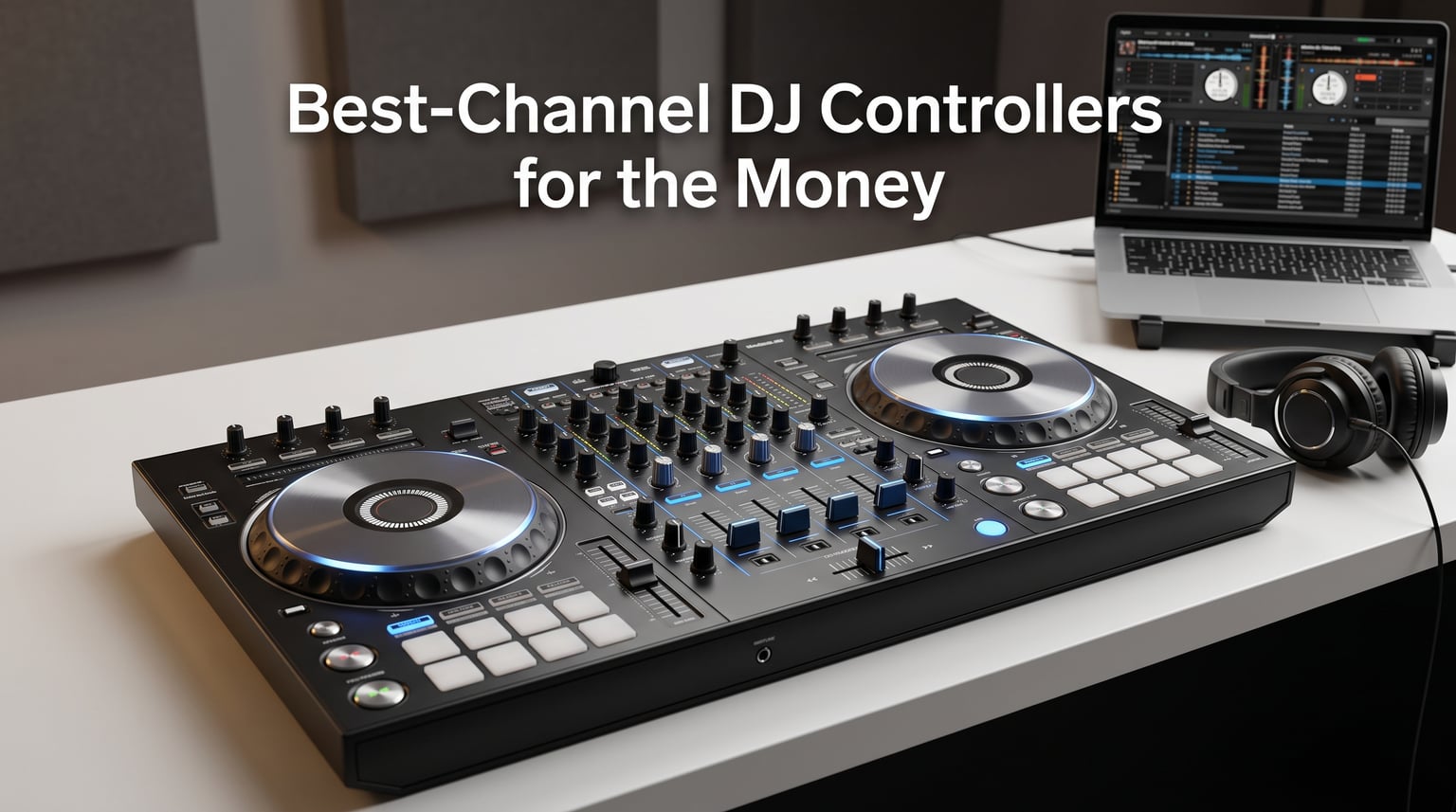
Moving from a basic 2-channel setup to a full 4-channel DJ controller changes the way you mix. You can layer acapellas over instrumentals, run Stems across multiple decks, and connect external sources like turntables or microphones without giving up your mixing channels. After spending weeks testing the most popular 4-channel DJ controllers on the market, I put together this guide to help you find the right one for your budget and workflow.
The best 4-channel DJ controllers in 2026 cover a wide range. Some are laptop-based powerhouses built for Serato or rekordbox, while others are fully standalone units that run an internal operating system with no computer required. The right pick depends on your software preference, your gig schedule, and how much you value portability versus pro-grade build quality.
Do you really need four channels? For open-format DJs, mobile gigging DJs, and anyone serious about live remixing, the answer is yes. A fourth channel lets you keep a drum loop or acapella running while you mix between two main tracks. It also gives you room to add a microphone or external deck without sacrificing your core mix. If you mostly do simple transitions at home, a 2-channel unit might serve you fine, but the flexibility of four channels becomes hard to give up once you experience it.
Below, I walk through seven controllers I tested hands-on, covering everything from entry-level bargains to professional flagship units. I paid attention to jog wheel feel, software stability, build quality, and real-world value for the money. Let us get into the picks.
Table of Contents
Top 3 Picks for Best 4-Channel DJ Controllers for September 2026
These three controllers stood out from the pack during testing. The Pioneer DJ DDJ-FLX10 takes the top spot for its unmatched dual-software support and Track Separation features. The Denon DJ SC LIVE 4 earns best value as a fully standalone unit with built-in streaming. And the Numark Mixtrack Platinum FX wins the budget category with an impressive feature set at an entry-level price point.

Denon DJ SC LIVE 4
- Standalone Engine DJ
- 7 inch Touchscreen
- Wi-Fi Streaming
- Built-in Speakers

The DDJ-FLX10 is the controller I kept coming back to. It works natively with both rekordbox and Serato DJ Pro, which means you are never locked into one ecosystem. The Track Separation feature lets you pull vocals, drums, and instruments apart in real time, opening up creative mashup possibilities that used to require a lot of prep work.
The Denon DJ SC LIVE 4 is the pick for DJs who want to leave the laptop at home. Its Engine DJ operating system handles everything internally, and the built-in speakers plus Wi-Fi streaming make it a genuine grab-and-go rig for mobile gigs and casual practice sessions.
For anyone just starting out or upgrading from a beginner controller, the Numark Mixtrack Platinum FX delivers four decks of Serato control, color jog displays, and streaming support at a fraction of what flagship units cost. It is the best entry point into 4-channel mixing I have used.
Best 4-Channel DJ Controllers for the Money in September 2026
Here is a quick comparison of all seven controllers I reviewed. The table covers the key features that matter most when deciding between models. Scroll down for detailed individual reviews of each one.
| Product | Specifications | Action |
|---|---|---|
| Pioneer DJ DDJ-FLX10 |
|
Check Latest Price |
| Denon DJ SC LIVE 4 |
|
Check Latest Price |
| Numark Mixtrack Platinum FX |
|
Check Latest Price |
 RANE PERFORMER RANE PERFORMER |
|
Check Latest Price |
 RANE FOUR RANE FOUR |
|
Check Latest Price |
 AlphaTheta DDJ-GRV6 AlphaTheta DDJ-GRV6 |
|
Check Latest Price |
 Reloop Mixon 8 Pro Reloop Mixon 8 Pro |
|
Check Latest Price |
1. Pioneer DJ DDJ-FLX10 — Best Overall 4-Channel DJ Controller
Pioneer DJ DDJ-FLX10 4-Channel DJ Controller, Track Separation, Black
4-channel
rekordbox + Serato
Track Separation
DMX Lighting
USB
Pros
- Track separation control with color-coded LEDs
- On Jog Display customization
- DMX lighting compatibility
- Dual software support (rekordbox + Serato)
Cons
- Limited color options
- Some users want more dedicated hardware controls
I spent a full month gigging with the DDJ-FLX10, and it quickly became my reference point for what a modern 4-channel DJ controller should be. The dual-software support is the headline feature. You plug it in, and it works natively with both rekordbox and Serato DJ Pro, which means you are never trapped in one ecosystem.
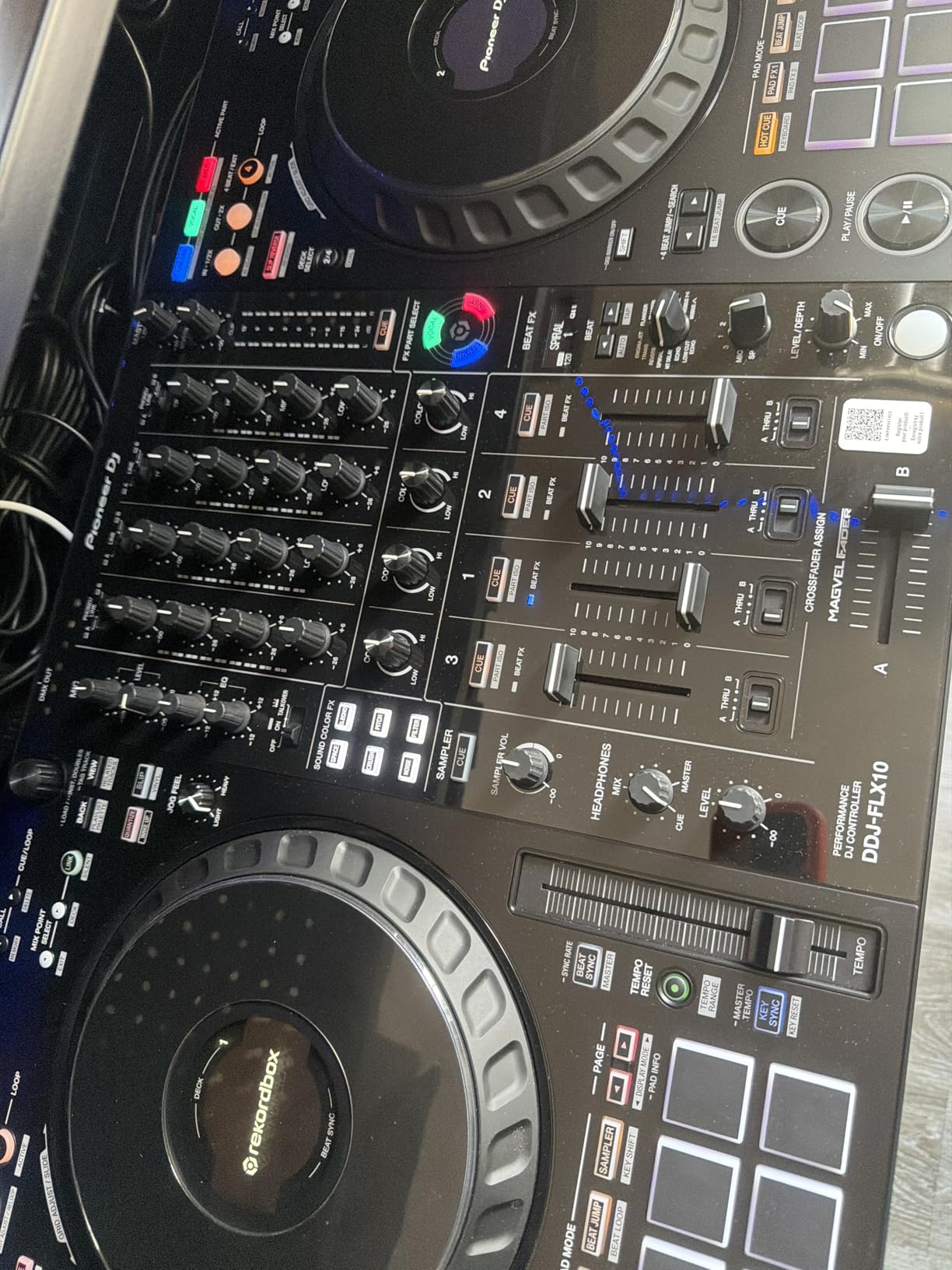
The Track Separation feature genuinely impressed me. Three color-coded LEDs on the dedicated control section show you the vocal, drum, and instrumental layers in real time. I loaded tracks from my personal library, split them into components, and built mashups on the fly that would have taken hours of prep beforehand.
The On Jog Display is another feature I relied on constantly. You can customize what shows up on the jog wheels, choosing between deck info, waveform mode, artwork, or even a custom DJ logo. During dark club sets, having that information right on the platter saved me from constantly glancing at my laptop.
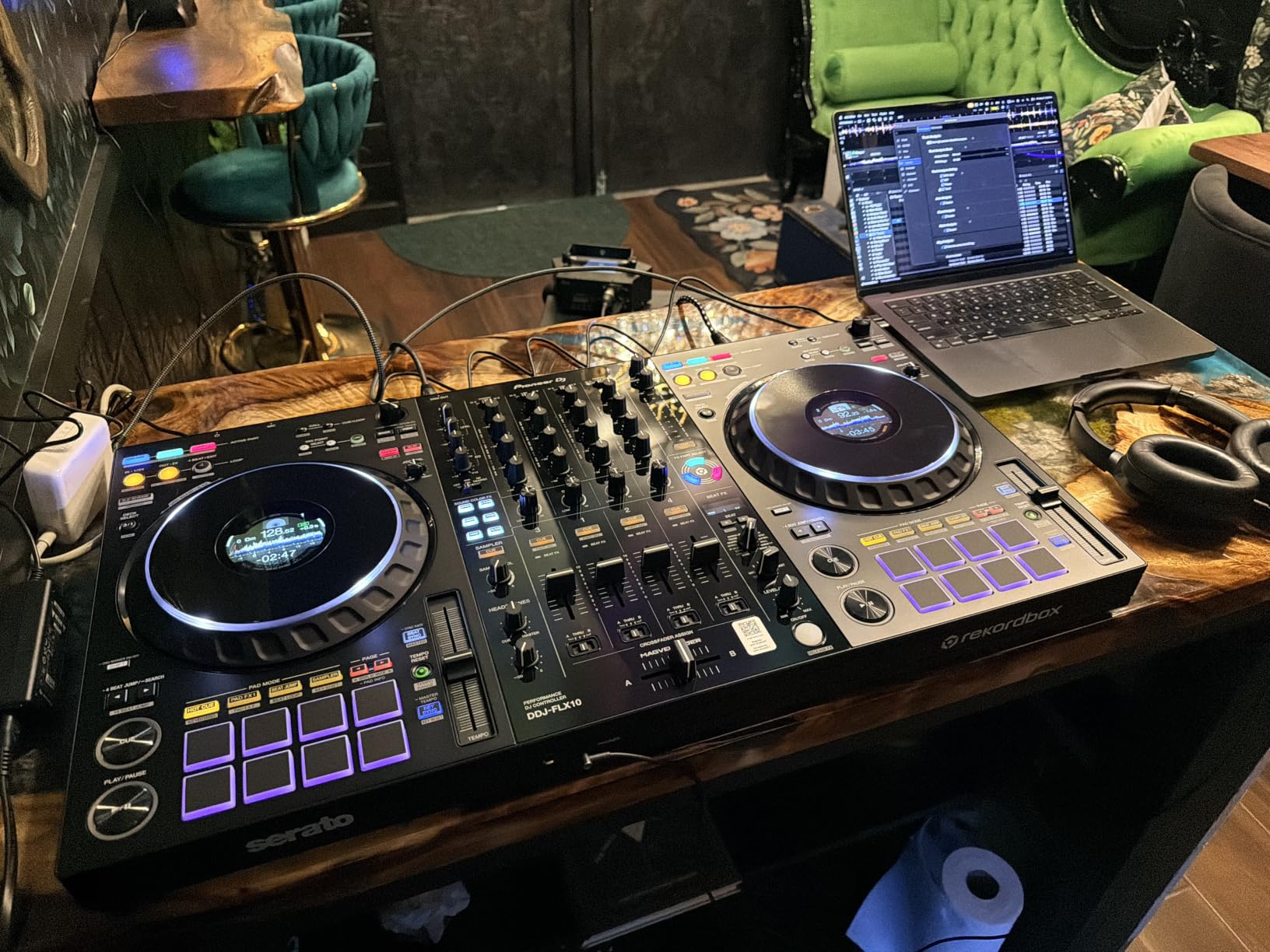
Build quality on the FLX10 feels solid despite the stainless steel and plastic construction weighing in around 15 pounds. The layout follows the familiar Pioneer club-standard design, so transitioning between this and a CDJ setup feels natural. The faders have a smooth, consistent resistance that held up across dozens of gigs.
One standout that mobile DJs will appreciate is the DMX lighting functionality. You can connect compatible lighting gear and have it automatically sync color and movement to your music. For wedding and event DJs, this removes the need for a separate lighting controller.
The main drawback is the lack of color options and the fact that some controls are software-dependent rather than having dedicated hardware buttons. A few DJs in forums mentioned wanting more tactile, dedicated controls for certain functions. That said, the plug-and-play compatibility with two major DJ platforms is hard to beat.
Software Ecosystem and Compatibility
The DDJ-FLX10 ships with rekordbox support out of the box, and it is also a hardware-unlocked Serato DJ Pro controller. This dual-platform approach is rare and valuable. Forum users consistently praise the FLX10 for this flexibility, noting that it lets them switch software without buying new hardware. If you are torn between Serato and rekordbox, this controller removes the need to choose.
Who Should Step Up to the FLX10
This controller is ideal for working DJs who gig regularly and want a single unit that handles both major software platforms. It suits open-format DJs, club DJs preparing for pro setups, and anyone who wants Track Separation without going to a standalone unit. If you are a casual bedroom DJ who only mixes occasionally, the FLX10 may be more than you need.
2. Denon DJ SC LIVE 4 — Best Standalone Value
Denon DJ SC LIVE 4 Standalone DJ Controller Black
4-channel standalone
7 inch touchscreen
Wi-Fi streaming
Built-in speakers
Pros
- Laptop-free performances with Engine DJ OS
- Built-in speakers for practice
- Wireless streaming from major services
- 7 inch multi-gesture touchscreen
Cons
- Touchscreen responsiveness can lag
- Built-in speakers weak for club environments
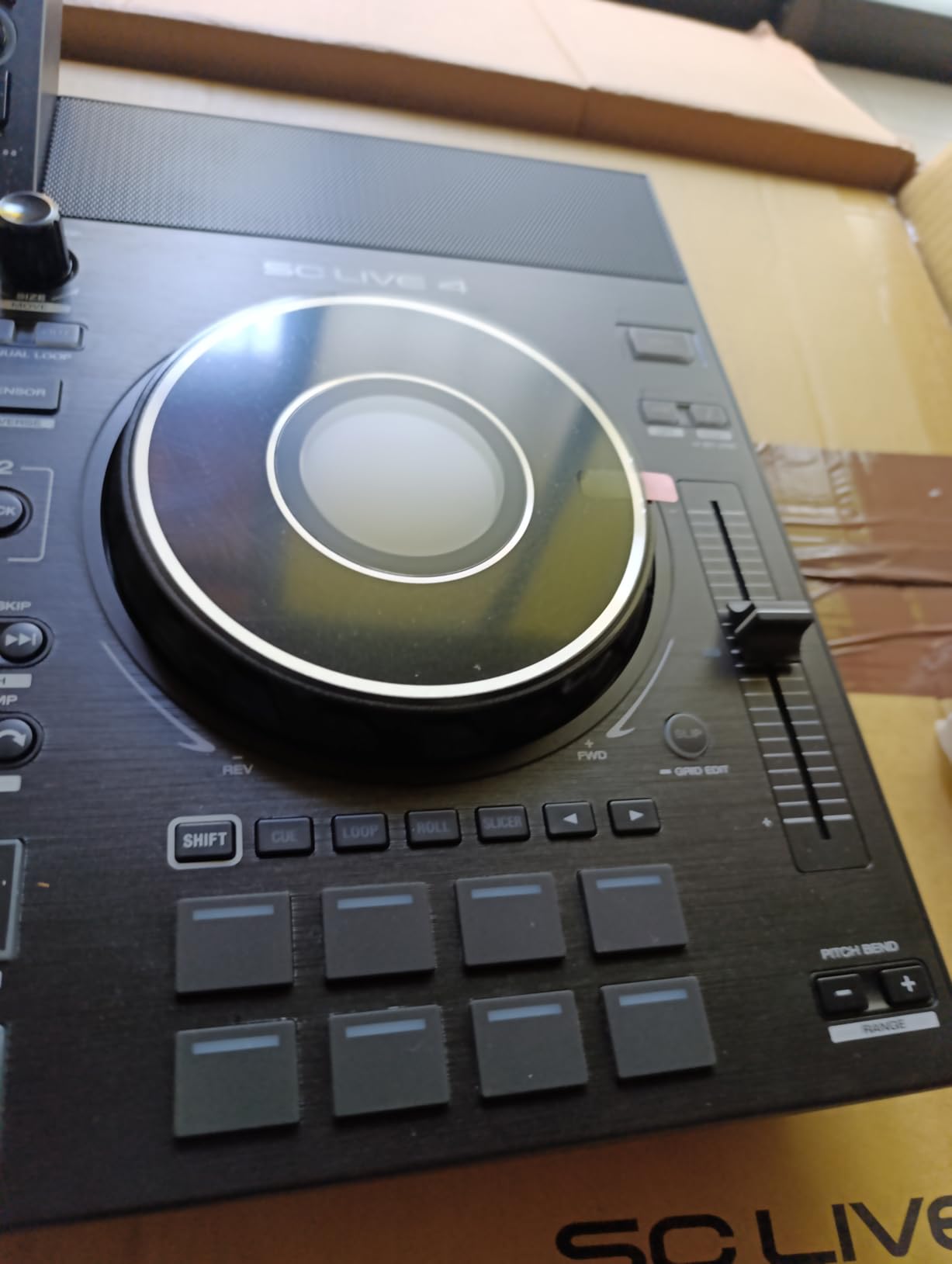
The SC LIVE 4 is the controller that made me reconsider my laptop-first habit. Running Denon’s Engine DJ operating system, this unit performs as a true 4-deck standalone system with no computer required. I loaded my music onto USB drives and an SD card, browsed everything through the 7-inch multi-gesture touchscreen, and mixed for hours without opening a laptop.
The Wi-Fi streaming feature transforms the experience for mobile DJs. I connected to my Apple Music and TIDAL accounts directly from the controller and had access to over 100 million tracks. Beatsource, Beatport, SoundCloud Go+, and Amazon Music Unlimited are all supported, so you can pull requests on the fly without worrying about whether a track is in your library.
Standalone Stems functionality works well once you pre-render your tracks using Engine DJ Desktop. You import them back onto the controller and perform with high-quality vocal, melody, bass, and drum stems. It takes some prep, but the results during live sets are excellent.
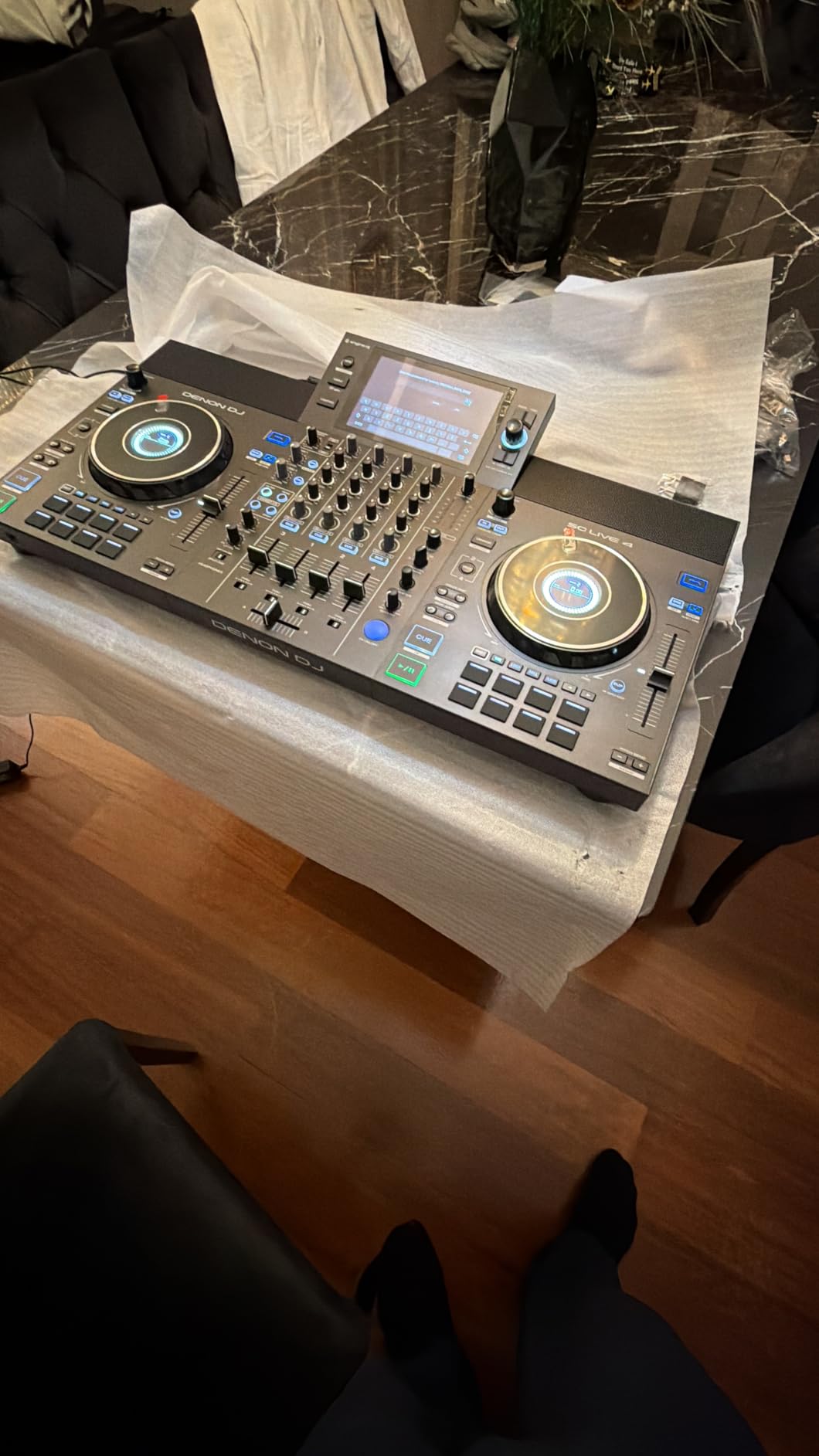
The built-in speakers are a nice touch for practice and small gatherings. They are not going to fill a club, but for rehearsing at home or doing a small backyard party, they save you from lugging extra monitors. I found them surprisingly useful for quick practice sessions.
The SC LIVE 4 also works as a Serato DJ Pro controller and is compatible with Virtual DJ, giving you laptop-based options when you want them. The connectivity is comprehensive, with dual USB and SD inputs, two microphone inputs, RCA and XLR main outputs, and a booth output.
Engine Lighting is another feature that mobile DJs will love. You get beat-synced control over Philips Hue, Nanoleaf, and DMX lights directly from the controller, with an increased autoloop count of 128. For event DJs who handle their own lighting, this consolidation is genuinely useful.
Standalone Workflow and Learning Curve
Switching to a standalone workflow takes some adjustment if you are used to laptop-based mixing. The 7-inch touchscreen handles browsing and song selection well, though I occasionally noticed slight responsiveness lag. Once your library is organized on USB or SD media, the experience is fast and liberating. You never worry about a laptop crash mid-set.
Ideal Use Cases for the SC LIVE 4
This controller shines for mobile DJs, wedding DJs, and anyone who wants a portable, laptop-free rig. The built-in streaming and speakers make it perfect for gigs where setup speed matters. It is less ideal for club installations where you need the absolute highest output power, since the built-in speakers cannot compete with professional sound systems.
3. Numark Mixtrack Platinum FX — Best Budget 4-Channel Controller
Numark Mixtrack Platinum FX DJ Controller
4-deck Serato
6 inch jog displays
USB bus power
24-bit audio
Pros
- 4 decks of Serato control
- 6 inch capacitive jog wheels with color displays
- Six quick-launch FX with dual paddle triggers
- Streaming from major music services
Cons
- Occasional software glitches reported
- USB bus power may limit performance
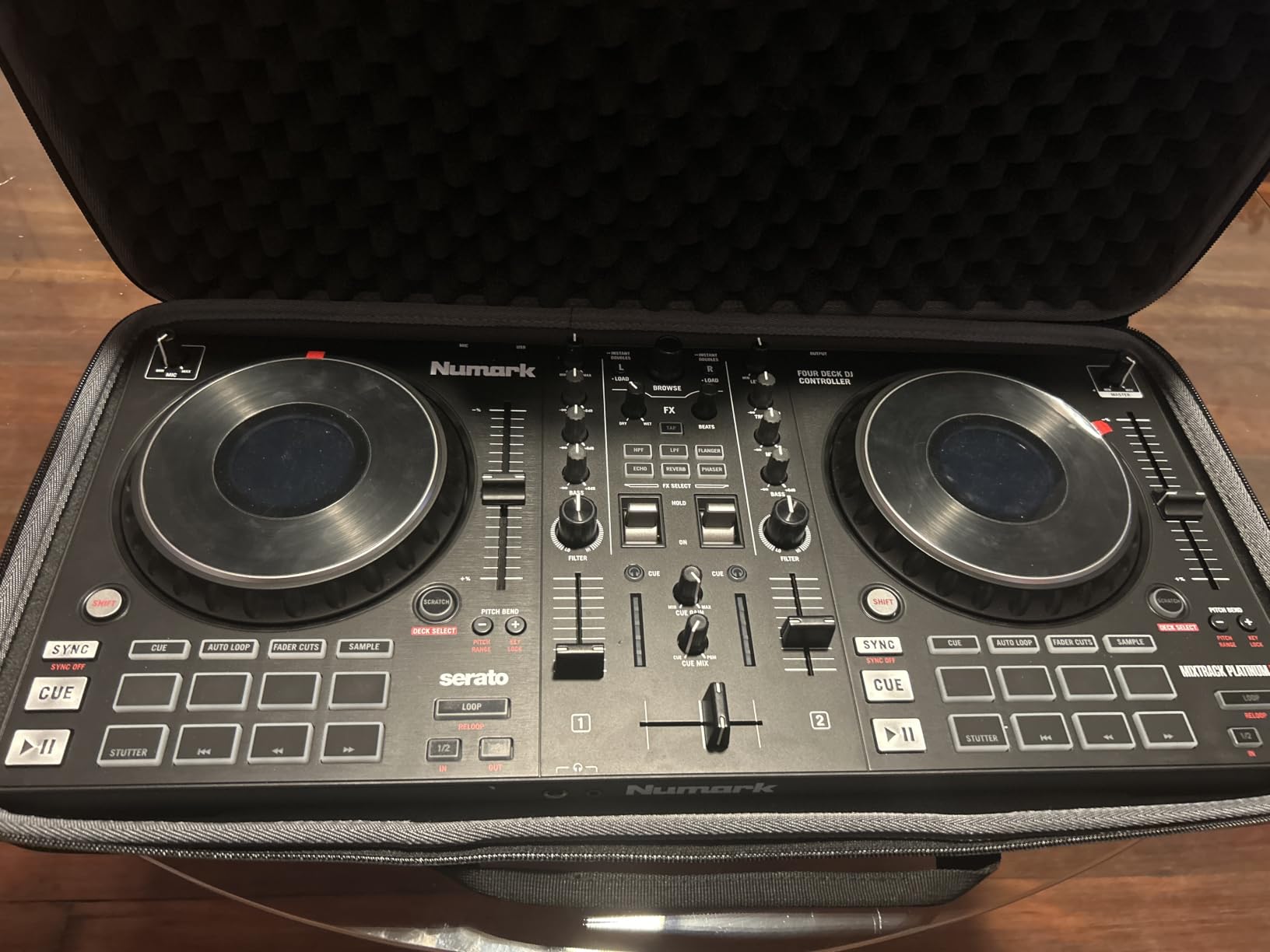
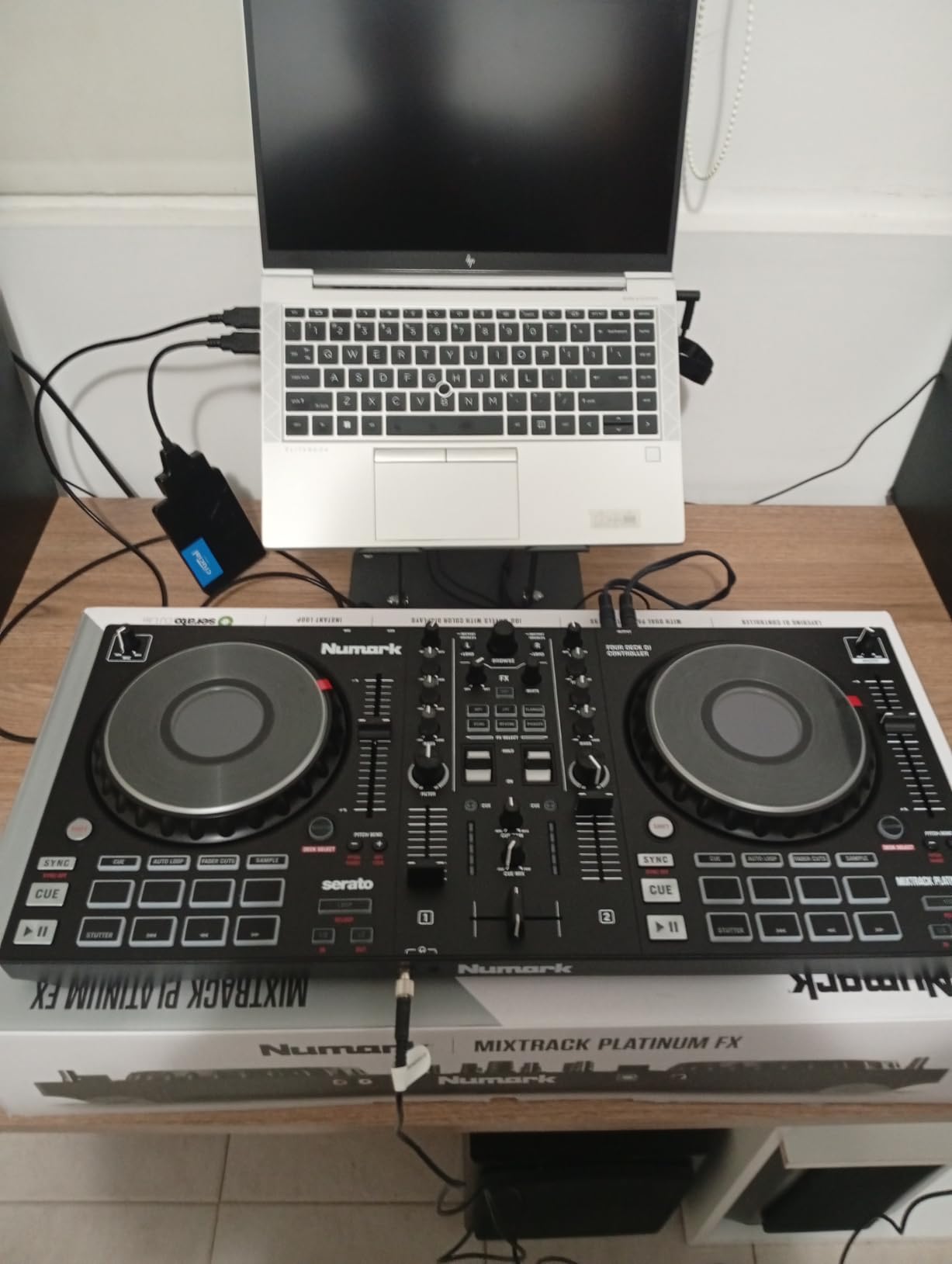
The Mixtrack Platinum FX is the controller I recommend to every beginner asking me where to start with 4-channel mixing. It gives you four decks of Serato DJ Lite control, a built-in 24-bit audio interface, and plug-and-play USB connectivity for Mac and Windows, all at an entry-level price that makes it the best value pick in this roundup.
The 6-inch capacitive-touch jog wheels are the standout feature at this price. Each jog has a high-resolution color display showing BPM, platter position, beats remaining, and pitch adjustment. Having that information directly on the platter is something I did not expect to find on a budget controller, and it makes a real difference during mixes.
Six quick-launch effects with dual paddle triggers give you instant access to creative FX without scrolling through menus. The dedicated instant loop controls and eight performance pads per deck let you access cues, loops, fader cuts, and samples quickly. For learning the fundamentals of 4-channel DJing, this layout covers all the essentials.
Streaming support is excellent for a budget unit. Through Serato DJ Lite, you get access to Apple Music, Tidal, Spotify, SoundCloud, Beatport Link, and Beatsource Link. I tested the streaming during a casual set and was impressed by how smoothly track loading worked. For new DJs building their library, this is invaluable.
The mixer section includes a 3-band EQ, filter knobs, channel faders, and a crossfader. Connectivity covers microphone input, headphone output, and RCA output for connecting to DJ speakers. At just under 2.4 kilograms and USB bus-powered, it is highly portable.
The main trade-offs are occasional software glitches that some users report and the limitations of USB bus power in certain setups. For the price, these are minor complaints. The controller comes with a 1-year manufacturer warranty.
Upgrading Beyond Serato DJ Lite
The Mixtrack Platinum FX ships with Serato DJ Lite, which covers the basics. As your skills grow, you can upgrade to Serato DJ Pro for advanced features like additional FX, recording, and deeper library management. The hardware is fully capable of handling the pro version, so you will not need to buy a new controller when you upgrade your software.
Is This the Right First Controller for You
If you are new to DJing and want to learn 4-channel mixing without a big investment, this is the controller to get. It offers genuine 4-deck control and features that punch well above its price class. It is less suited for professional gigging DJs who need bulletproof reliability and pro-grade build quality, but for bedroom DJs, students, and hobbyists, it is hard to beat.
4. RANE PERFORMER — Premium Pick for Serious Professionals
RANE PERFORMER 4-Channel DJ Controller
4-channel
7 inch motorized platters
MAG Four crossfader
Serato Pro
Pros
- 7 inch motorized high torque aluminum platters
- MAG Four crossfader for smooth response
- 29 paddle-triggered fully customizable Main FX
- Solid metal construction with trusted RANE quality
Cons
- Premium price point
- Limited stock availability
The RANE PERFORMER is the most premium controller I tested, and it shows in every detail. Those 7-inch motorized high-torque aluminum platters with magnetic acrylic discs feel closer to a real turntable than any other controller platter I have used. The motorized feedback gives you a tactile connection that static jog wheels simply cannot match.
Built-in displays on the platters show song information and waveforms, so you can keep your eyes on the hardware. OLED pad mode displays light up to show you exactly what each pad is doing. The level of visual feedback is exceptional and kept me engaged with the hardware rather than staring at my screen.
The MAG Four crossfader is the same component RANE uses in its professional club mixers. During scratching sessions, the response was ultra-smooth, reliable, and consistent. Combined with the adjustable tension Precision Feel volume faders, the entire mixer section feels like a dedicated professional unit.
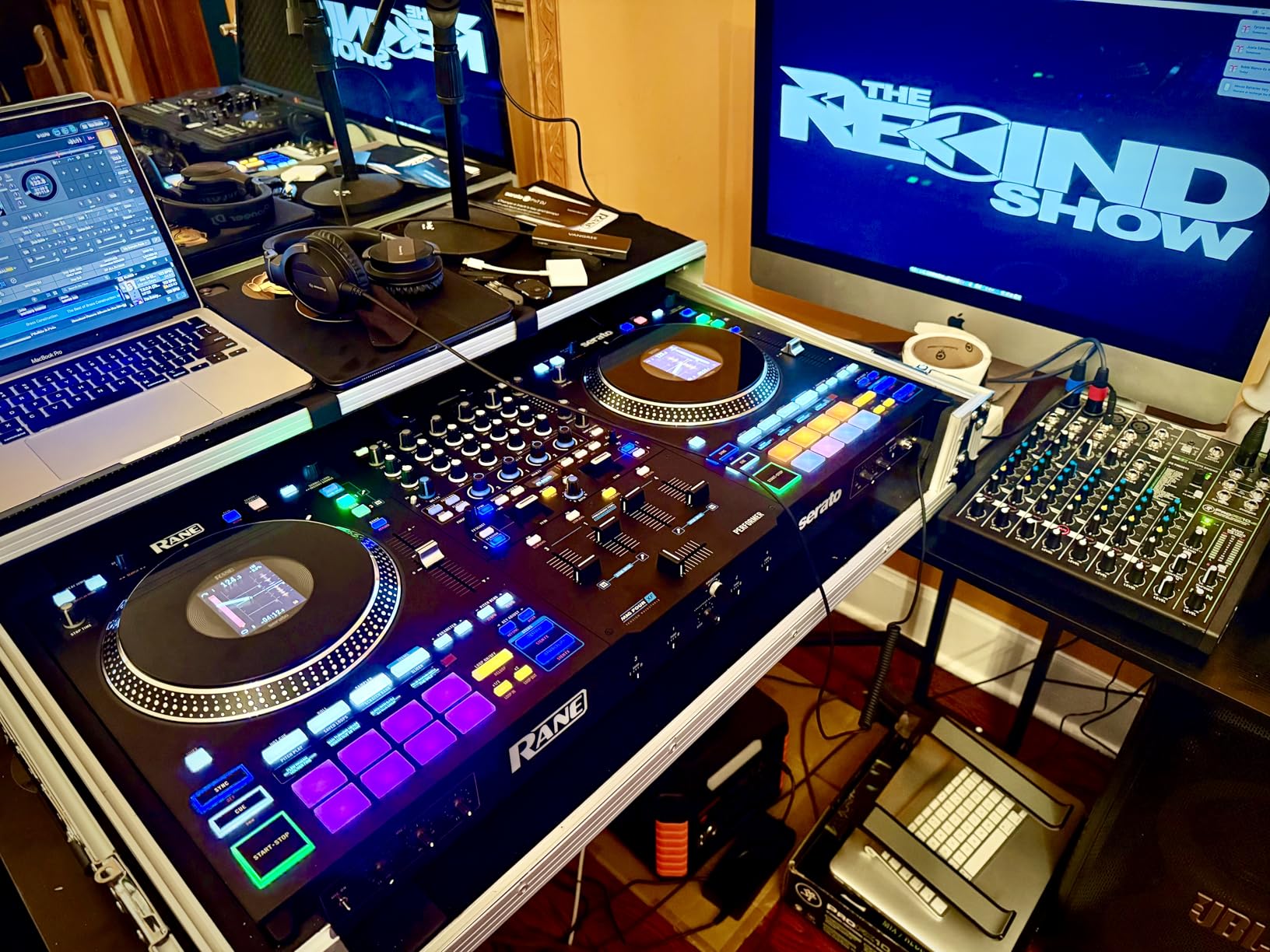
The Stem controls on the PERFORMER are among the most intuitive I have used. Stem-Split, Stem Level, Stem Pad Mode, and instant acapella and instrumental buttons give you one-touch access to separated track elements. I found myself creating live remixes far more naturally than on controllers where Stems require scrolling through menus.
With 29 paddle-triggered Main FX that are fully customizable, plus four knob-controlled Channel FX, the effects suite is deep. Serato DJ Pro and Serato Pitch ‘n Time are both included, which adds significant value given that Pitch ‘n Time is normally a paid expansion. The interface suite is comprehensive with dual XLR main outputs, booth outputs, dual microphone inputs, and phono or line inputs for decks 3 and 4.
The solid metal construction weighs in at about 12.8 kilograms, which tells you this is built for permanent installation or serious gigging. RANE’s reputation for build quality and sound is well-earned here. The only downsides are the premium price point and limited stock, which reflects the demand for this unit.
Motorized Platters and Performance Feel
Motorized platters are not a gimmick. They provide physical feedback that helps with timing, especially for DJs coming from a turntablism background. The magnetic acrylic discs spin with real torque, and the built-in waveform displays mean you get the best of both worlds: analog feel with digital information. If you have never tried motorized platters, the PERFORMER is the controller that will convince you.
Who Justifies This Level of Investment
This controller is built for professional working DJs, turntablists, and anyone who wants club-grade components in an all-in-one unit. If DJing is your primary income and you need gear that performs flawlessly night after night, the PERFORMER delivers. It is overkill for casual hobbyists, but for serious professionals, the motorized platters and RANE build quality justify the investment.
5. RANE FOUR — Stems Powerhouse for Serato DJs
RANE FOUR Professional Stems DJ Controller
4-channel
8.5 inch jog wheels
Stems controls
Serato Pro + Pitch n Time
Pros
- 8.5 inch jog wheels with central color displays
- Dedicated Stems controls for instant acapella or instrumental access
- 24 paddle-triggered Main FX and 4 Channel FX
- Bulletproof stainless steel construction
Cons
- Some reliability concerns reported by users
- Premium price point
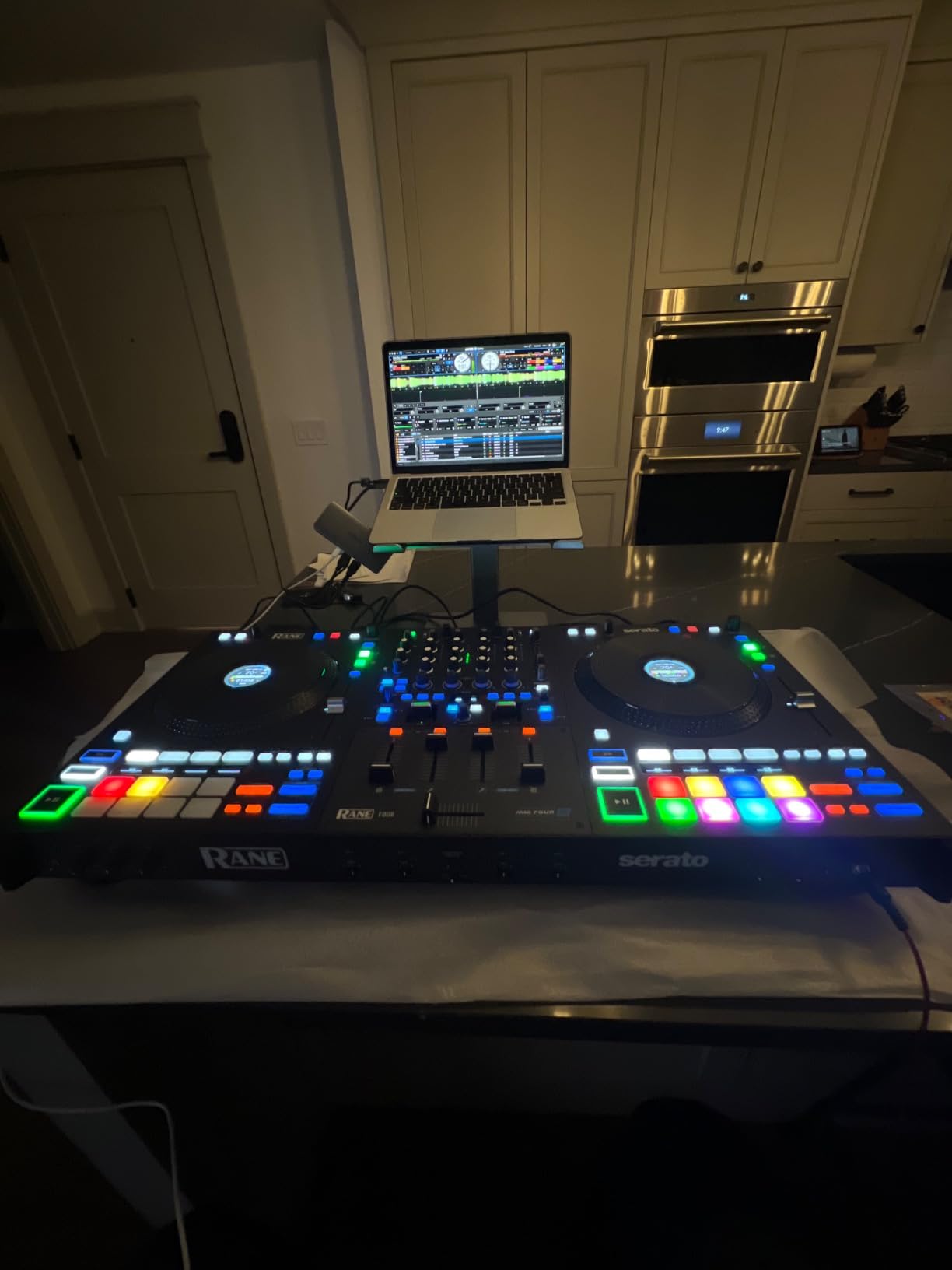
The RANE FOUR sits between the Mixtrack and the PERFORMER in the RANE lineup, offering large 8.5-inch jog wheels and dedicated Stems controls designed specifically for Serato DJ Pro. I spent several sessions with it, and the jog wheel displays are a highlight, showing BPM, waveform, and deck info on a central color screen.
The dedicated Stems pad mode is what sets this controller apart from competitors at its level. Having physical buttons for instant acapella and instrumental access changed my workflow. Instead of triggering Stems through software menus, I could flip between vocal and instrumental versions of a track with a single press.
The MAG FOUR crossfader is here too, delivering the same smooth, reliable response as the PERFORMER. The stainless steel construction feels bulletproof, and the controller weighs about 18 pounds. Dual USB laptop connections allow smooth handovers between DJs during back-to-back sets.
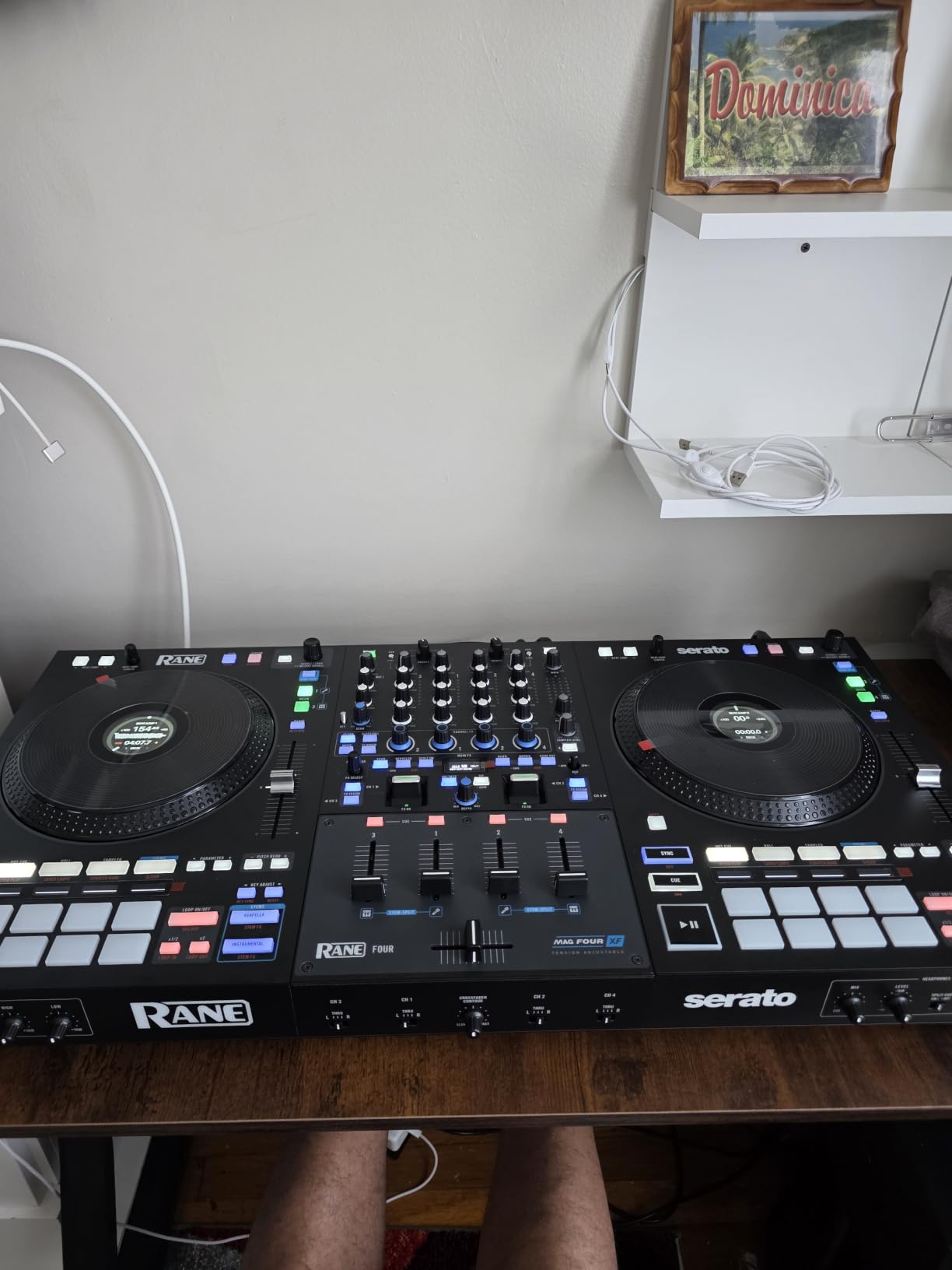
The internal FX suite includes 24 paddle-triggered Main FX and four knob-controlled Channel FX. During testing, I found the paddle triggers responsive and satisfying, making it easy to drop effects precisely on beat. Serato DJ Pro and Pitch ‘n Time are both included, matching the PERFORMER’s software bundle.
Connectivity is professional-grade with XLR and RCA main outputs, switchable phono and line inputs, dual TRS or XLR microphone inputs, and a booth output. Streaming integration with Apple Music, Tidal, and Spotify is built in.
The main concern I noted, and one echoed in customer reviews, is reliability. The 4.1-star average reflects a notable percentage of 1-star reviews related to long-term dependability. RANE’s build quality is generally trusted, but it is worth considering the warranty and support options before committing to this unit.
Comparing the FOUR to the PERFORMER
The key difference is the platter type. The FOUR uses large static jog wheels with displays, while the PERFORMER uses motorized platters. If motorized feedback is important to you, the PERFORMER is the upgrade. If you prefer the familiarity of large jog wheels and want dedicated Stems controls at a lower investment, the FOUR is the stronger choice. Both share the MAG FOUR crossfader and Serato software bundle.
Best Fit for Open-Format and Serato DJs
The RANE FOUR is ideal for open-format DJs who live in Serato and rely heavily on Stems for their sets. The dedicated hardware controls for vocal and instrumental separation make it one of the most efficient controllers for creative live remixing. It is less suited for DJs who prioritize motorized platter feel or who work primarily in rekordbox.
6. AlphaTheta DDJ-GRV6 — Groove Circuit Innovator
AlphaTheta DDJ-GRV6 4-Channel DJ Controller, Groove Circuit, Black
4-channel
Groove Circuit
206mm jog wheels
rekordbox + Serato
Pros
- Groove Circuit for live drum part replacement
- Club-standard layout inspired by CDJ-3000
- Full-size 206mm jog wheels
- Cross-platform support including iOS and Android
Cons
- Reliability concerns with 21 percent 1-star reviews
- Plastic construction feels less premium
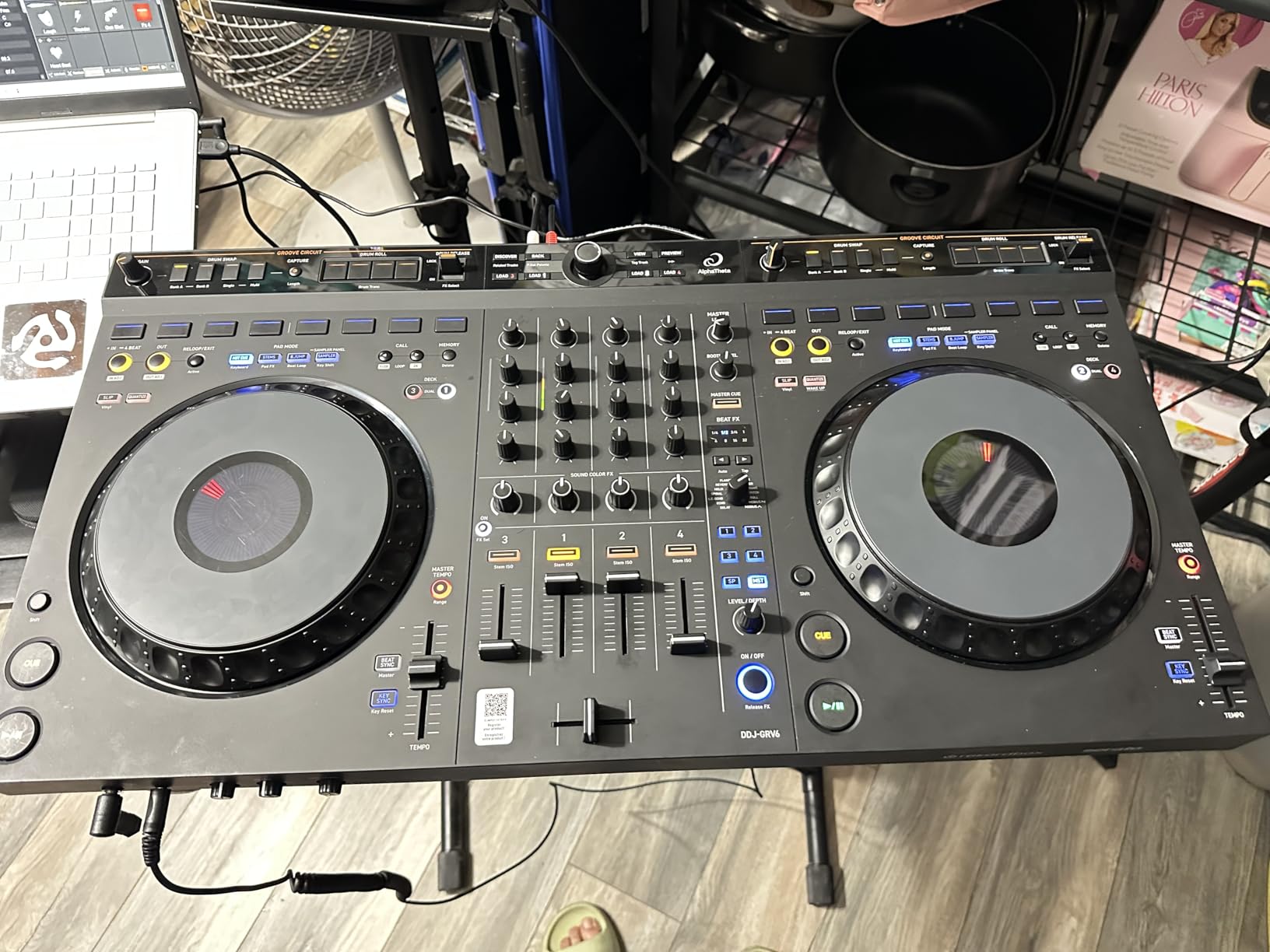
The DDJ-GRV6 from AlphaTheta brings something genuinely new to the table with its Groove Circuit feature. I tested it extensively, and the ability to instantly replace drum parts and switch genres during a live mix is unlike anything else in this price range. You can transform a house track into a breakbeat version on the fly without changing the melody or vocals.
The club-standard layout, inspired by the CDJ-3000 and DJM-A9, makes this controller feel familiar if you have ever played in a venue with Pioneer club gear. Full-size 206mm jog wheels give you plenty of surface area for precise scratching and nudging. The transition from this controller to a club setup feels natural.
Compatibility is broad. The DDJ-GRV6 works with rekordbox and Serato DJ Pro on PC and Mac, plus it supports iOS and Android devices. I tested it with an iPad and was impressed by the mobile workflow. The 4-channel layout gives you full creative mixing possibilities with Beat FX controls for additional sound manipulation.
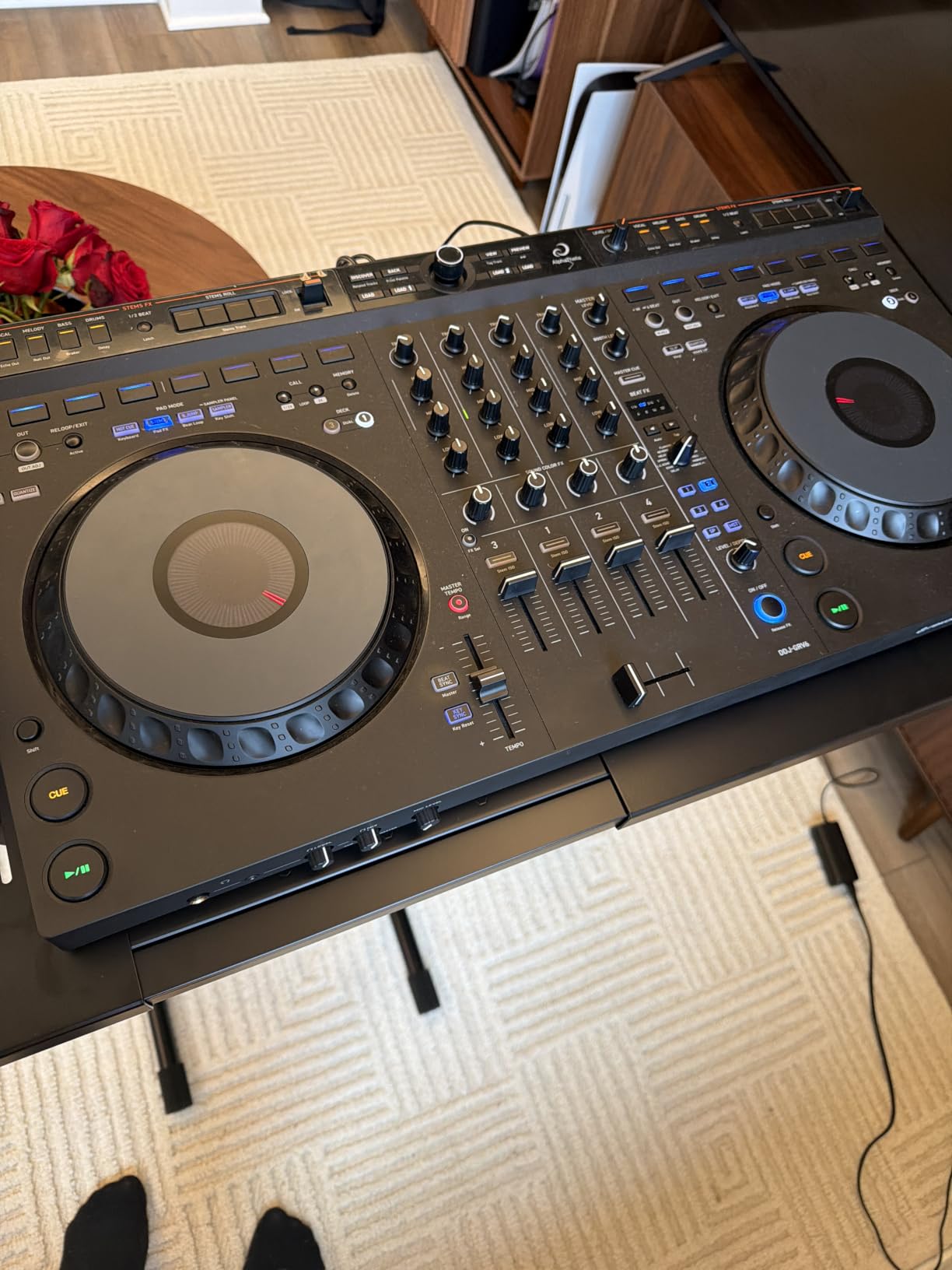
The controller comes with a 2-year manufacturer warranty, which is longer than most competitors offer. At about 4.6 kilograms, it is lighter than many 4-channel units, making it relatively portable for gigging. Multiple connectivity options include auxiliary, USB, and TRS.
During my Groove Circuit sessions, I was struck by how quickly I could adapt tracks to crowd energy. Swapping a four-on-the-floor beat for a half-time drum pattern took a single button press. This kind of real-time genre flexibility is something even more expensive controllers struggle to match.
The main concern is the reliability track record. The 3.8-star average includes a 21-percent 1-star rating, which is higher than most controllers in this roundup. Some users report quality control issues that affected their experience. The plastic construction, while keeping weight down, also feels less premium than the metal builds on RANE and higher-end Pioneer units.
Understanding the Groove Circuit Feature
Groove Circuit is AlphaTheta’s live remixing system that lets you swap out the drum pattern of any track in real time. You can switch between genres, replace a kick and snare pattern, or layer new percussion over an existing track without affecting the original melody and vocals. For DJs who want to create unique versions of popular tracks during their sets, this feature opens creative doors that no other controller at this price offers.
Is the DDJ-GRV6 Worth the Risk
If the Groove Circuit feature appeals to your style and you value the club-standard layout, the DDJ-GRV6 is worth considering despite the reliability concerns. The 2-year warranty provides some peace of mind. However, if you need bulletproof dependability for paid gigs, you may want to look at the DDJ-FLX10 or RANE options with stronger reliability track records. This controller suits creative, experimental DJs who want fresh creative features.
7. Reloop Mixon 8 Pro — Dual USB Pro Workhorse
Reloop Mixon 8 Pro 4-Channel DJ Controller, Black
4-channel
Standalone mixer
Dual USB
USB-C
24-bit audio
Pros
- Dual USB hub for smooth DJ handover
- Built-in standalone mixer with phono and line inputs
- USB-C with power delivery for iPads and MacBooks
- On-jog displays with real-time track info
Cons
- Limited stock availability
- Low review count suggests limited market penetration
- Not Prime eligible
- Higher 1-star rating than expected
The Reloop Mixon 8 Pro caught my attention with its dual USB audio interface, which is a feature usually reserved for much more expensive professional setups. Having two USB connections means two DJs can plug in their laptops simultaneously and hand off smoothly during back-to-back sets. For DJs who play shared sets regularly, this eliminates awkward transitions.
The standalone mixer capability sets the Mixon 8 Pro apart from most controllers in this range. With two phono inputs and four line inputs, you can use it as a traditional mixer with external sources even without a computer connected. The 3-band EQ per channel and sound color filters give you analog-style control over your sound.
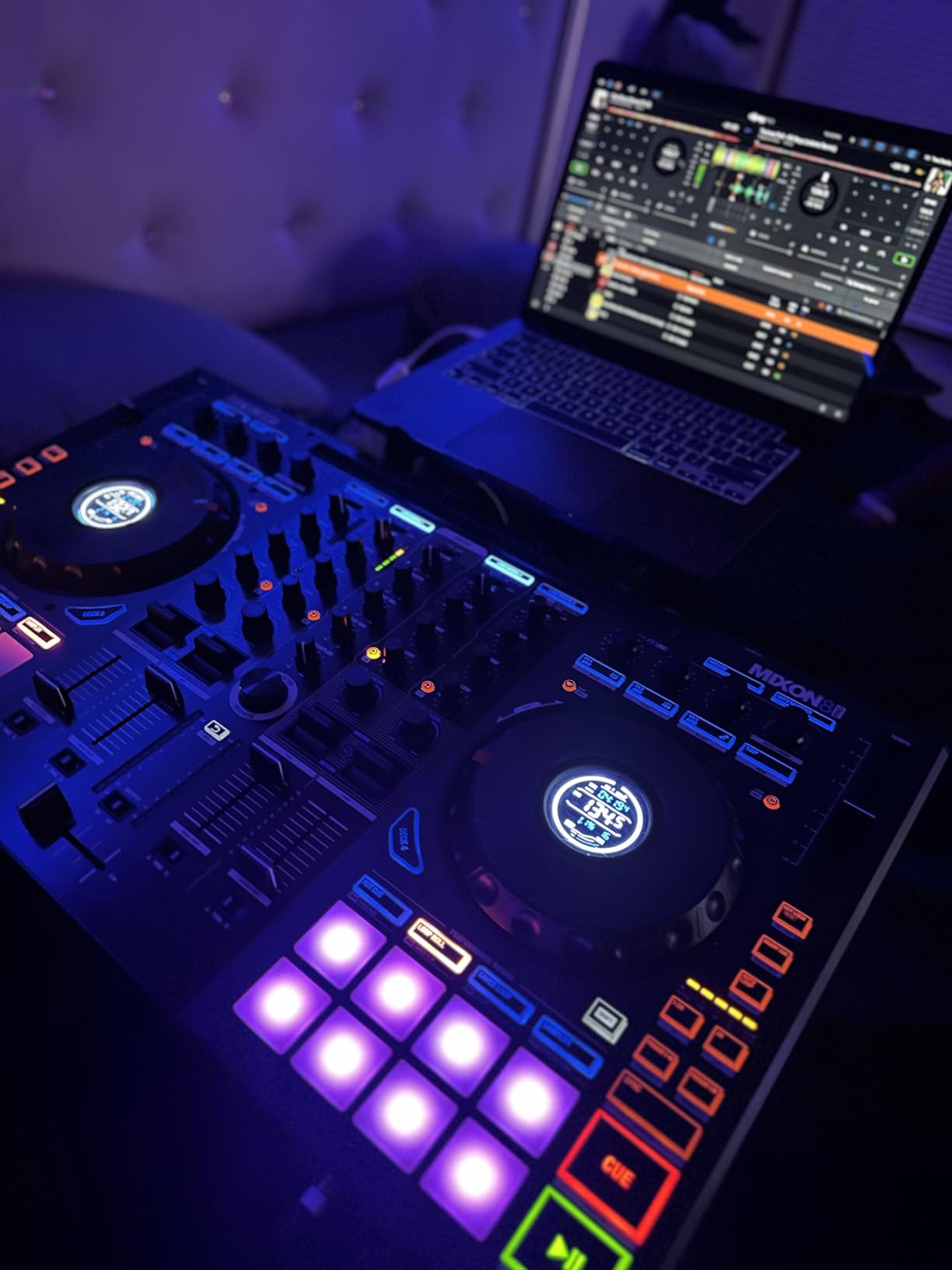
On-jog displays with virtual needle illumination provide real-time track information and a playhead indicator directly on the platters. The four onboard FX paddles offer tactile effects control, and eight color-coded performance modes include Hot Cue, Loop Roll, Sampler, Slicer, and Neural Mix Mode for AI-powered track separation.
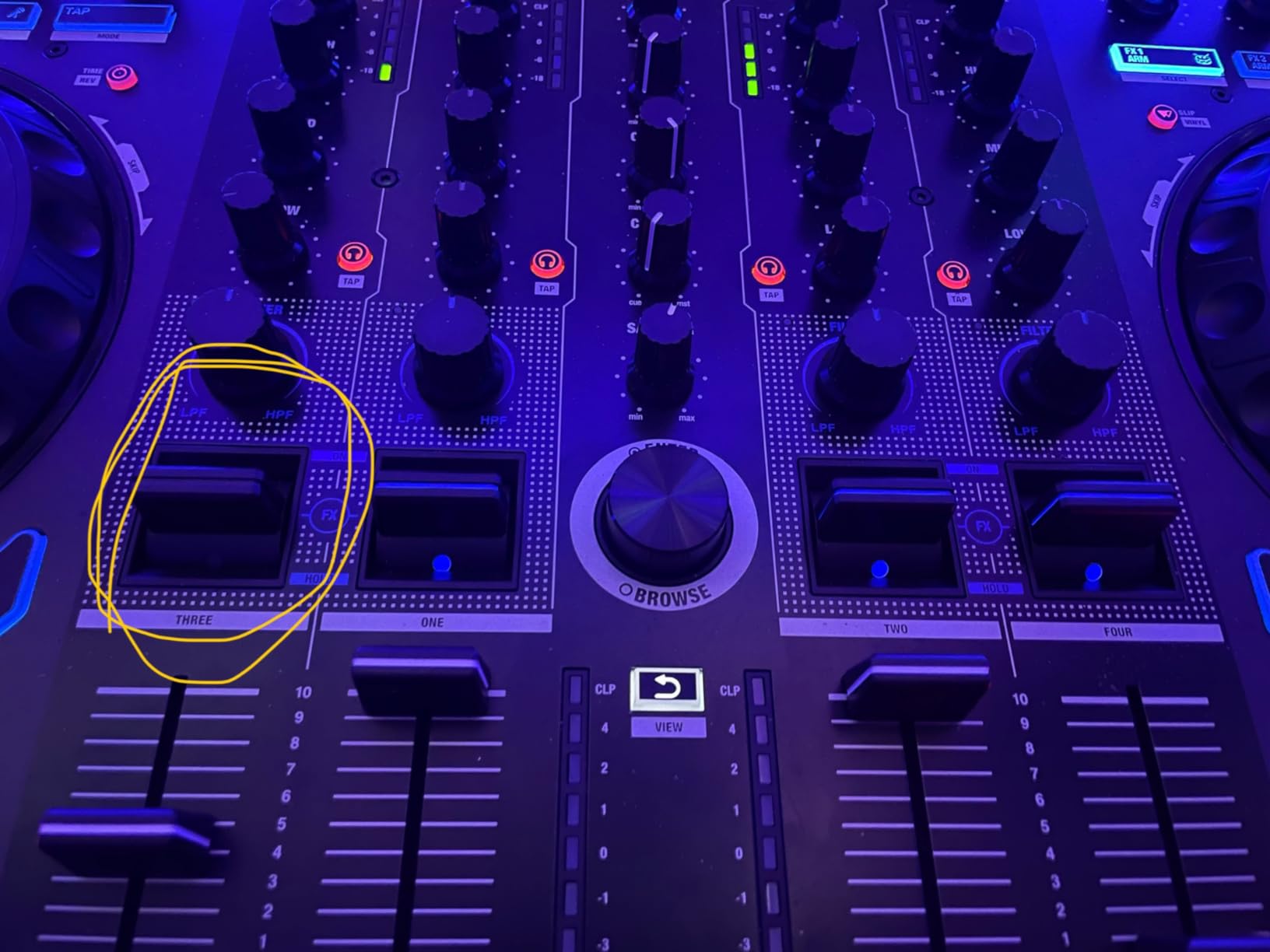
The USB-C connectivity with power delivery support is forward-thinking. I connected an iPad and a MacBook, and the controller provided power while handling audio. The 24-bit audio quality is clean and professional. For DJs who have embraced USB-C workflows, this is one of the most modern controller designs available.
Neural Mix Mode deserves a mention because it brings AI-based track separation to this controller. During testing, I separated vocals from drums and instruments in real time, creating remixes and transitions that would normally require pre-prepared Stems files. The implementation is smooth enough for live use.
The concerns are real, though. Limited stock, a low review count of 44, and a 3.6-star average with a 17-percent 1-star rating suggest this controller has not found a wide audience. It is not Prime eligible, which affects availability and return convenience. The features are impressive, but the market reception gives me pause.
Dual USB and Standalone Mixer Practicality
The dual USB setup genuinely changes how back-to-back sets work. Both DJs stay connected throughout the night, and transitions happen with a simple USB switch rather than cable swapping. The standalone mixer mode means you can connect turntables or CD players directly. For venues and residencies where multiple DJs rotate, this controller eliminates technical friction during changeovers.
Should You Take a Chance on the Mixon 8 Pro
If dual USB handover and standalone mixing are must-have features for your workflow, the Mixon 8 Pro delivers capabilities that few competitors match at this level. The USB-C and Neural Mix support add modern appeal. However, the low review count and stock issues mean you should weigh the risk carefully. This controller best suits tech-forward DJs who specifically need its dual USB and standalone mixer features and are willing to look past its limited market presence.
Buying Guide: How to Choose a 4-Channel DJ Controller?
Choosing the right 4-channel DJ controller comes down to your software preference, your gig style, and your budget. After testing all seven controllers in this roundup, here are the factors that matter most when making your decision.
Standalone vs Laptop-Based Controllers
This is the biggest decision you will make. Laptop-based controllers like the DDJ-FLX10 and RANE FOUR require a computer running DJ software, but they offer deep feature access and the largest music libraries. Standalone units like the Denon SC LIVE 4 run an internal operating system and need no computer, which means no crashes, no laptop to carry, and faster setup. Standalone controllers cost more upfront but simplify your rig enormously for mobile and event gigs.
Software Ecosystem Matters
Your software choice shapes your entire experience. Serato DJ Pro is the industry standard for open-format and hip-hop DJs, with excellent Stems implementation and broad hardware support. Rekordbox is Pioneer’s ecosystem and prepares you for club CDJ setups. Traktor Pro appeals to electronic and techno DJs with its Remix Decks. Engine DJ powers Denon standalone units. The DDJ-FLX10 is the only controller here that supports two major platforms natively, which is why it earned my editor’s choice.
Jog Wheel Quality Is a Deal-Breaker
Forum users consistently rank jog wheel feel as their top priority, and I agree. Large jog wheels like the 8.5-inch units on the RANE FOUR and the full-size 206mm platters on the DDJ-GRV6 give you more surface area for scratching and pitch bending. Motorized platters on the RANE PERFORMER provide physical feedback that mimics real turntables. The 6-inch displays on the Numark Mixtrack Platinum FX are impressive for a budget unit. Test jog feel before committing if possible, because this is the control surface you interact with most.
Build Quality and Long-Term Reliability
DJs in forums talk about wanting controllers that last 5 to 10 years, and build quality determines whether you get there. Metal construction like the RANE PERFORMER and RANE FOUR inspires confidence for heavy gigging. The DDJ-FLX10’s stainless steel build is solid for regular use. Plastic units like the DDJ-GRV6 keep weight down but feel less durable. Pay attention to warranty length too. AlphaTheta offers 2 years on the DDJ-GRV6, while most others provide 1 year of manufacturer coverage.
2-Channel vs 4-Channel: Which Is Right for You
A 2-channel controller handles two decks simultaneously, which covers most basic mixing and transitions. A 4-channel controller doubles your mixing capacity, letting you run four decks, layer Stems or acapellas, and connect external sources without sacrificing your main mix. If you only do straightforward track-to-track transitions, 2 channels suffice. If you do open-format sets, live remixing, mobile gigs with microphone needs, or back-to-back sessions, four channels give you the flexibility that professionals rely on daily.
Connectivity and I/O Considerations
Check the inputs and outputs before buying. Professional outputs like XLR main connections matter for club and event setups. Microphone inputs are essential for mobile and wedding DJs. Dual USB ports enable DJ handovers. Phono inputs let you connect turntables for DVS workflows. USB-C with power delivery, found on the Reloop Mixon 8 Pro, supports modern mobile devices. Match the connectivity to your specific gig requirements rather than paying for ports you will never use.
Streaming Integration
Streaming support has become increasingly important. Serato, rekordbox, and Engine DJ all integrate with services like Tidal, Apple Music, SoundCloud Go+, Beatport Link, and Beatsource Link. The Denon SC LIVE 4 streams over Wi-Fi without a laptop, which is uniquely convenient for request-driven gigs. If you rely on streaming for your music access, confirm that your chosen controller and software combination supports your preferred services.
FAQs
Do you really need 4 channels as a DJ?
You need 4 channels if you layer multiple tracks, use Stems or acapellas during sets, connect external sources like turntables or microphones, or perform open-format and mobile gigs. For simple bedroom mixing with basic transitions, 2 channels are enough. Most working professionals prefer 4 channels for the flexibility they provide.
Why do some DJ controllers have four channels?
Four channels allow DJs to mix four audio sources simultaneously. This enables advanced techniques like layering acapellas over instrumentals, running separate Stems tracks, connecting external decks or microphones, and performing complex live remixes that are not possible with only two channels.
What is the best budget 4-channel DJ controller according to Reddit users?
Reddit users frequently recommend the Numark Mixtrack Platinum FX as the best budget 4-channel option. It offers 4-deck Serato control, color jog displays, and streaming support at an entry-level price. The Denon SC LIVE 4 is also popular for DJs who want standalone capability without spending flagship money.
What is the difference between a 2-channel and a 4-channel DJ controller?
A 2-channel controller controls two decks simultaneously and handles basic mixing transitions. A 4-channel controller doubles that capacity to four decks, letting you layer additional tracks, use Stems across multiple channels, connect external inputs like turntables and microphones, and perform advanced live remixing. Four-channel units are larger, more expensive, and built for professional and creative workflows.
What 4-channel DJ controller do professionals use?
Professional DJs commonly use the Pioneer DJ DDJ-FLX10 for its dual rekordbox and Serato support, the RANE PERFORMER for its motorized platters and build quality, and the Denon SC LIVE 4 for standalone laptop-free performances. The choice depends on whether the DJ prefers Serato, rekordbox, or Engine DJ as their primary software platform.
Conclusion
After testing all seven of these 4-channel DJ controllers, my top recommendation remains the Pioneer DJ DDJ-FLX10 for its unmatched dual-software support, Track Separation, and club-standard layout. The Denon DJ SC LIVE 4 is the best standalone value for DJs who want to leave the laptop behind, and the Numark Mixtrack Platinum FX is the smartest budget entry point into 4-channel mixing.
For professionals who want motorized platters and bulletproof build quality, the RANE PERFORMER is worth the investment. Whatever your budget and workflow, one of these controllers will serve you well in 2026. Pick the one that matches your software ecosystem and gig style, and start mixing.