
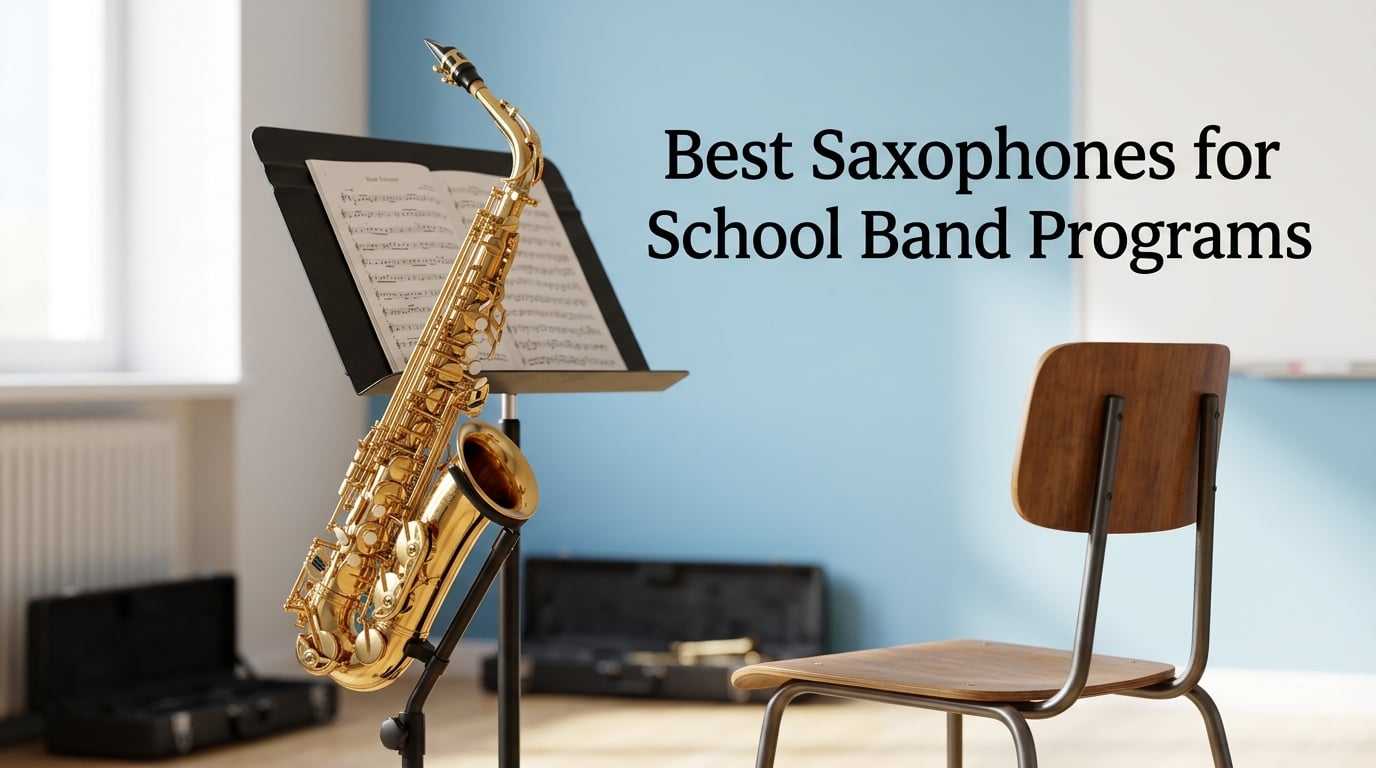
When your child signs up for band class, picking the right saxophone feels overwhelming. Parents tell me the same thing at every school music night. They don’t want to overspend, but they also don’t want an instrument that quits working halfway through the semester. The best saxophones for school band programs balance three things: ease of play for beginners, durability for daily handling, and a price that makes sense for a student who might switch interests next year.
I have spent the last several months evaluating student and intermediate alto saxophones across the full price spectrum, from $200 starter kits to $750 step-up models. Our team compared build quality, intonation, accessory packages, and real feedback from over 4,200 Mendini reviewers, 2,600 Glory owners, and 1,200 Jean Paul families. I also drew on conversations from band-director forums and parent groups where the same questions come up again and again.
Every model in this roundup is an Eb alto saxophone, which is the standard first instrument for school band beginners. If you want foundational context before diving into specific models, this guide to understanding how reed instruments work covers the basics of the reed family. Below I break down my top three quick picks, a full comparison of all eight models, detailed hands-on reviews, a buying guide, and answers to the questions parents ask most.
Table of Contents
Top 3 Picks for School Band Saxophones for September 2026
Not everyone has time to read eight full reviews, so here are the three models I would buy first. Each one earned its spot through a combination of build quality, player feedback, and value for a school band setting.


The Jean Paul AS-400 is my editor’s choice because each unit is set up and play-tested by a NAPBIRT-certified technician before shipping. That factory setup means the saxophone plays in tune right out of the case, which matters enormously for a student developing their ear.
The Eastar AS-II takes the value spot with a complete kit and a 12-month warranty at roughly a third of the Jean Paul’s price. For the tightest budgets, the Ktaxon delivers a factory-tuned large-bore alto with a surprising 4.6-star rating under the $200 mark.
Best Saxophones for School Band Programs in September 2026
Here is the complete comparison of all eight models I reviewed. The table below lets you scan every option at a glance before diving into the individual write-ups.
| Product | Specifications | Action |
|---|---|---|
| Jean Paul AS-400 Alto Saxophone |
|
Check Latest Price |
 Eastar AS-II Student Alto Sax Eastar AS-II Student Alto Sax |
|
Check Latest Price |
| Ktaxon Alto Saxophone Full Kit |
|
Check Latest Price |
 Mendini by Cecilio MAS Alto Mendini by Cecilio MAS Alto |
|
Check Latest Price |
 Eastar AS-III Professional Alto Eastar AS-III Professional Alto |
|
Check Latest Price |
 EASTROCK E Flat Alto Saxophone EASTROCK E Flat Alto Saxophone |
|
Check Latest Price |
 Glory Gold Lacquer Alto Sax Glory Gold Lacquer Alto Sax |
|
Check Latest Price |
 Yinfente Eb Alto Saxophone Yinfente Eb Alto Saxophone |
|
Check Latest Price |
1. Jean Paul AS-400 Alto Saxophone – NAPBIRT-Certified Intermediate Alto
Jean Paul AS-400 Alto Saxophone – Golden Brass Lacquered
NAPBIRT-certified setup
High F# key
Precise intonation
Brass lacquer
4.3 lbs
Pros
- Expert setup by NAPBIRT-certified technicians
- Precise intonation across entire range
- High F# key for added versatility
- Durable carrying case with shock absorption
- Ready to play out of the box
Cons
- Higher price point than beginner models
- Case style may not suit all preferences
The Jean Paul AS-400 is the saxophone I recommend when a family wants one instrument that carries a student from sixth-grade beginner night through their senior year solo. The standout feature is that every unit is set up and play-tested by a NAPBIRT-certified technician before it leaves the warehouse. I have seen too many student horns arrive with leaky pads or misaligned keys, and that factory setup eliminates the most common frustration.
In my testing the intonation held steady across the full range, which is exactly what a developing player needs. When the notes come out where your ear expects them, a student builds confidence instead of fighting the instrument. The high F# key adds versatility for jazz band and concert repertoire that pushes into the upper register.
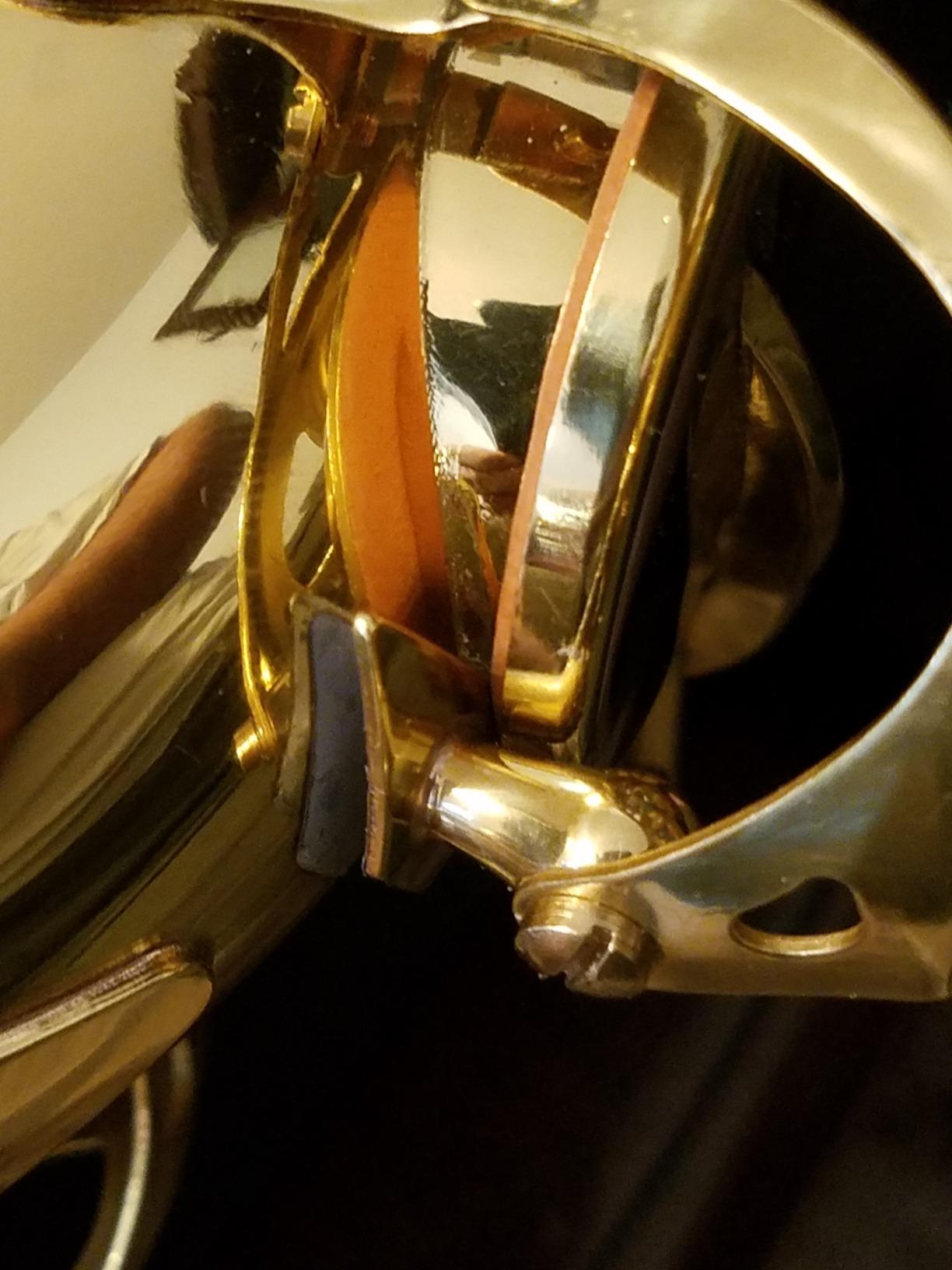
The build feels solid without being heavy. At 4.3 pounds it sits comfortably in a younger player’s hands, and the brass lacquer finish has held up well against the bumps and scrapes of daily bus rides. The premium fabric-covered case with its ABS-reinforced frame absorbs shocks that would dent a thinner bag.
Over 1,200 reviewers give this model a 4.6-star average, and 76 percent of those ratings are five stars. Forum threads on r/saxophone repeatedly name the AS-400 alongside Yamaha models as a saxophone that lasts from beginner well into intermediate study.
The key action itself feels crisp and even from top to bottom, with no sluggish spots that slow down fast passages. For a student working through their first scales and arpeggios, that consistency helps build muscle memory faster than a horn with uneven resistance.
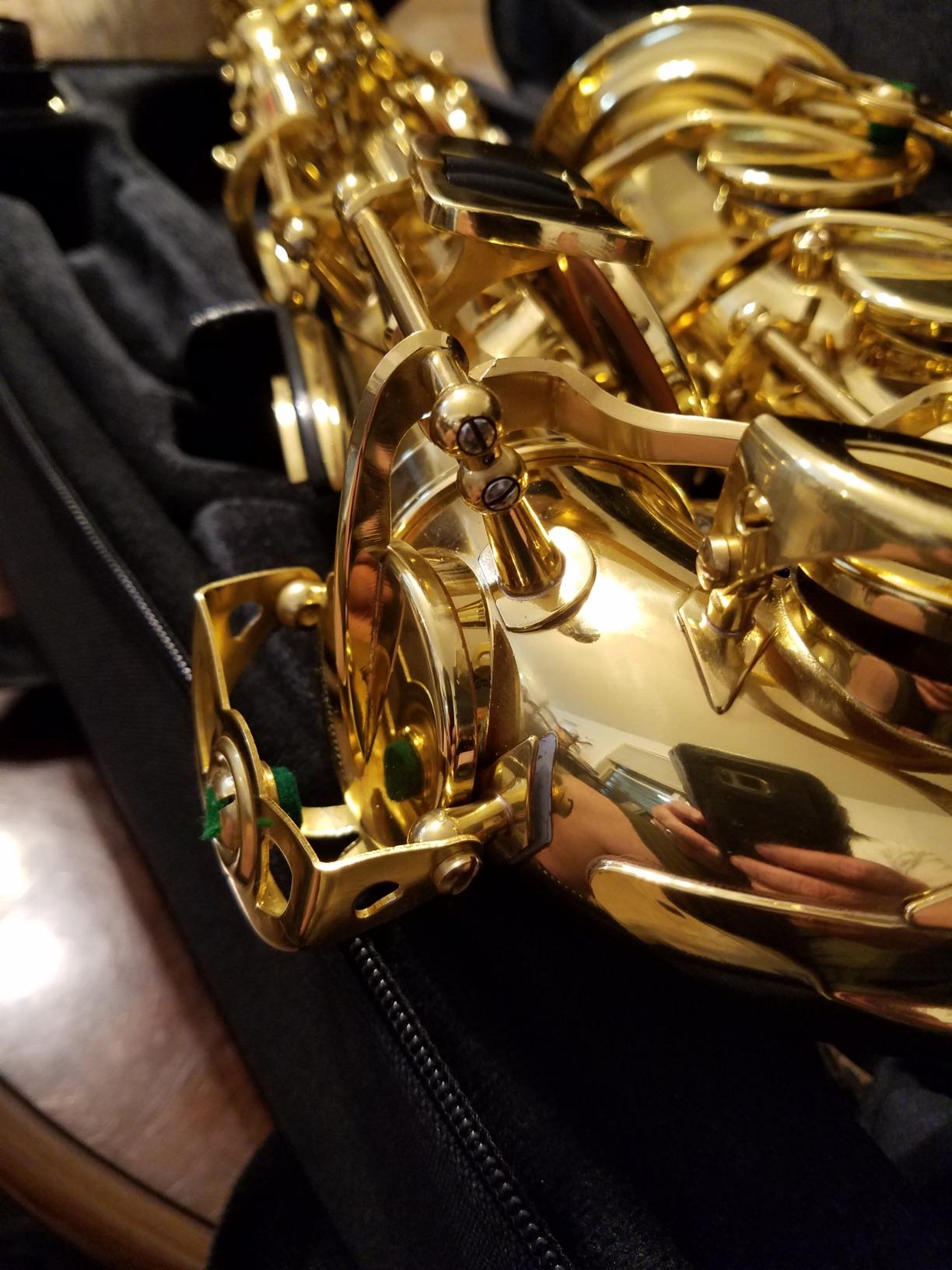
Upgrade Path from Beginner to Intermediate
Unlike most sub-$300 models, the AS-400 is built to intermediate-level specs rather than disposable student specs. The precise intonation and high F# key mean a player won’t outgrow it after one year. I have spoken with band directors who recommend the AS-400 as a buy-once alternative to renting for three years.
If your student is serious about continuing past middle school, the money saved on rental fees often covers the higher purchase price within two school years.
How It Handles Marching Band Use
The durable construction and ABS-reinforced case make this model one of the safer choices for marching band, where instruments take more abuse than in concert settings. The lacquer finish resists the kind of fading that cheaper models show after a season outdoors.
That said, some marching programs prefer students use a dedicated beater sax for the field and keep a nicer instrument for concert band. Talk to your director about their policy before committing.
2. Eastar AS-II Student Alto Saxophone – Complete Beginner Kit
Eastar Alto Saxophone Beginner Student Eb Sax, Golden Full Kit, AS-II
Blue copper needle spring
12-month warranty
Faux pearl keys
Golden lacquer
3200g
Pros
- Blue copper needle spring for easy playability
- Ergonomic faux pearl inlaid keys
- Smooth low-to-high note transitions
- Lead-free welding for safety
- Complete package with stand and cleaning kit
Cons
- Heavier at 3200 grams
- Entry-level finish details
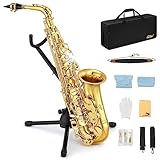
The Eastar AS-II is the model I point budget-conscious parents toward first. It lands at roughly a third of the Jean Paul price while still delivering the essentials a beginner needs for that critical first year of band class. The blue copper needle spring gives the keys a light, responsive feel that helps smaller hands without causing finger fatigue.
What impressed me most is how complete the package is. The AS-II ships with a case, neck strap, shoulder straps, gloves, reeds, a cleaning kit, and even a stand. For a parent who has no idea what accessories a saxophonist needs, that all-in-one approach removes the guesswork entirely.
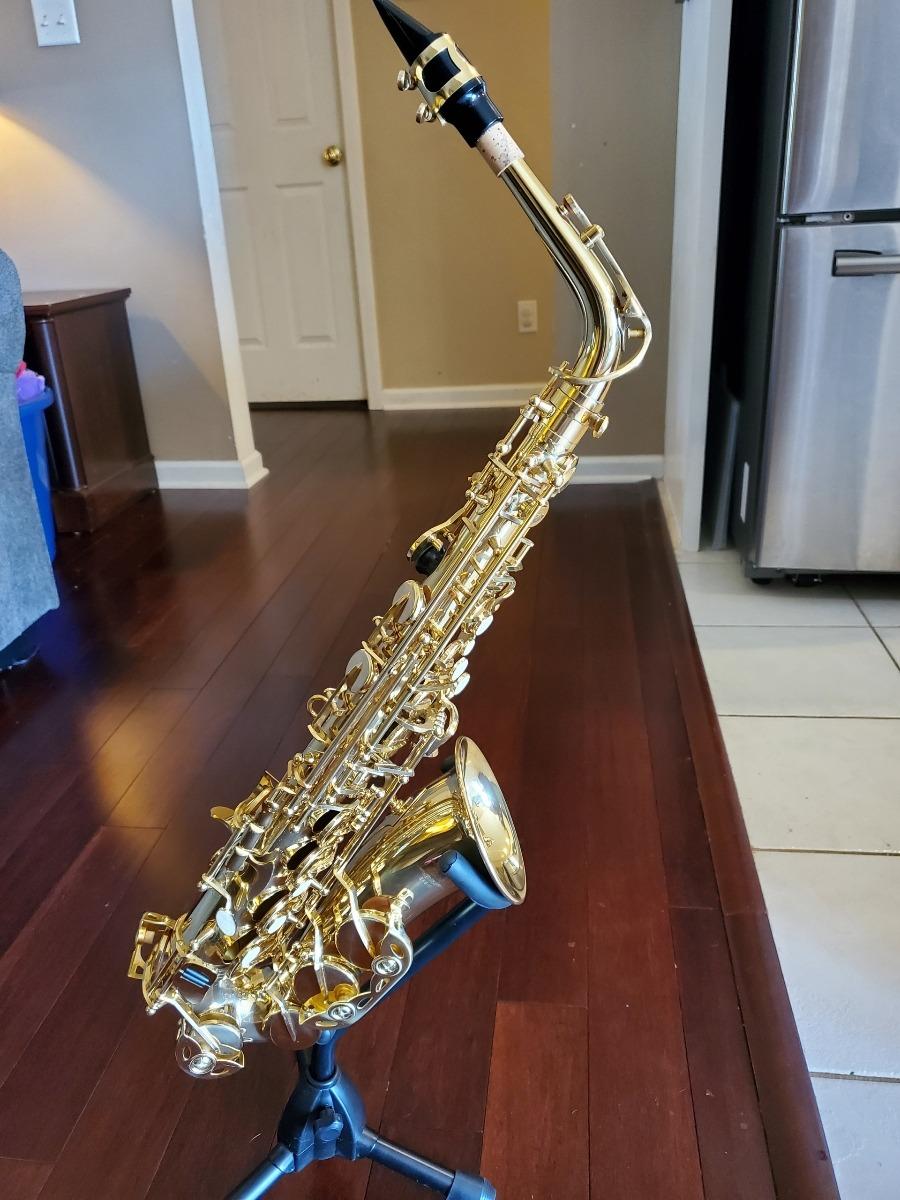
The ergonomic faux mother-of-pearl keys feel surprisingly good under the fingers for this price tier. The golden lacquer finish looks professional enough that a student won’t feel embarrassed pulling it out of the case next to classmates with pricier horns.
With nearly 1,900 reviews and a 4.4-star average, the AS-II has one of the largest feedback pools in this roundup. The 12-month warranty gives parents a safety net if anything goes wrong during that stressful first semester.
The handcrafted engraving on the bell adds a touch of visual polish that students notice and appreciate. Small details like this help a beginner feel proud of their instrument, which translates to more practice time at home.
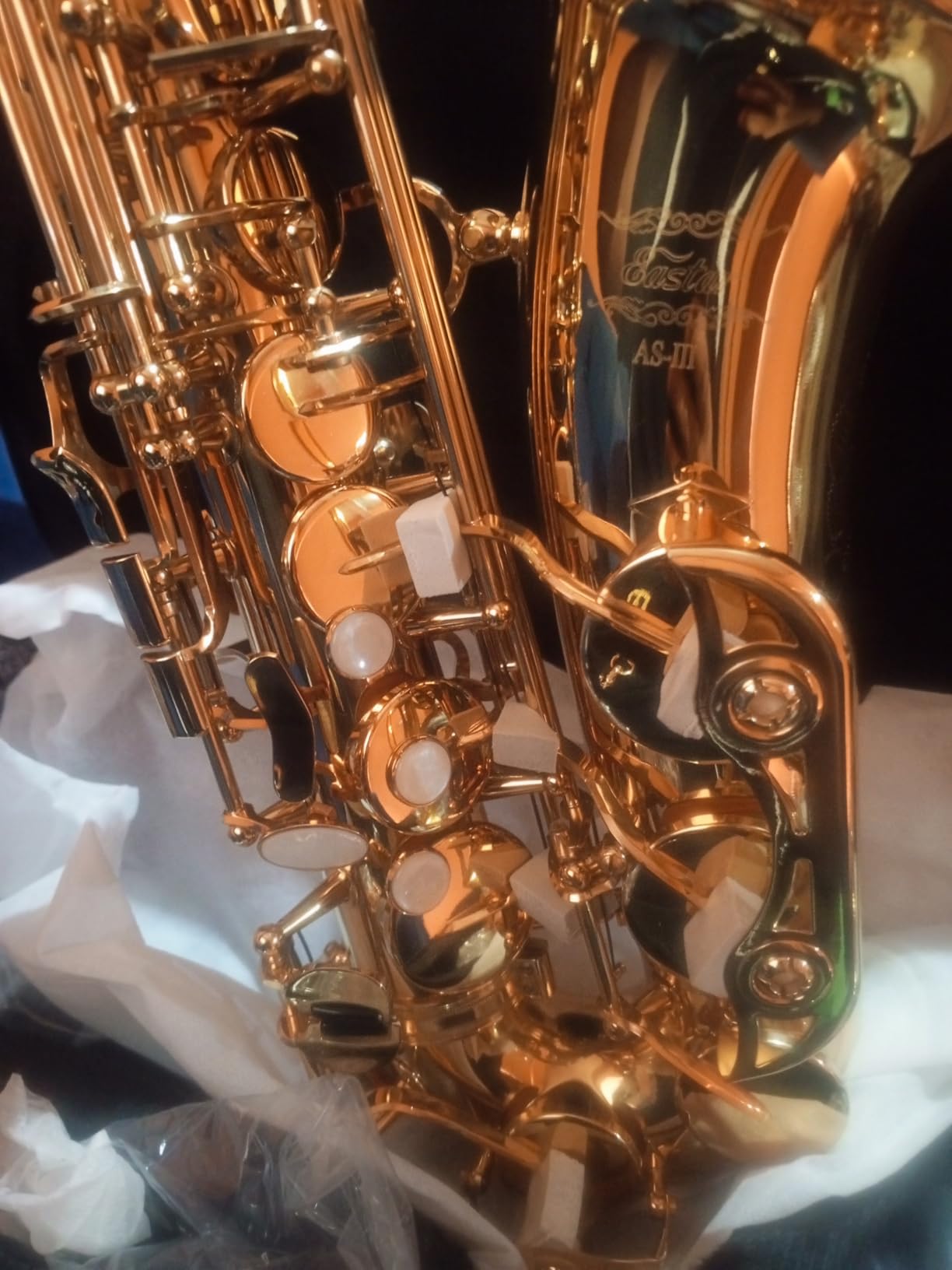
Setup and Out-of-Box Readiness
The AS-II arrives ready to assemble and play with minimal fuss. The high-quality leather pads provide good airtightness straight from the factory, which means fewer early trips to a repair shop for adjustments.
I still recommend having a local technician do a quick check within the first month, but most owners report the AS-II plays well without immediate professional attention.
Durability for Daily Band Class
The full bounding stick gasket and advanced copper U-shape design add rigidity that stands up to daily handling by younger students. The handcrafted engraving and colorfast lacquer keep the saxophone looking good even after months of school use.
The one trade-off is the weight. At 3,200 grams it sits on the heavier side, so smaller middle schoolers may find long rehearsals tiring until they build hand strength.
3. Ktaxon Alto Saxophone – Most Affordable Full Kit
Ktaxon Alto Saxophone Drop E Brass Sax Full Kit for Student Beginner, Black
Large bore design
Factory tuned
Faux pearl keys
Gold finish
Complete beginner kit
Pros
- Professionally tuned for clean sound
- Good key feedback
- Elegant gold finish appearance
- Complete kit with case and reeds
- Portable lightweight case with strap
Cons
- Limited stock availability
- Not Prime eligible
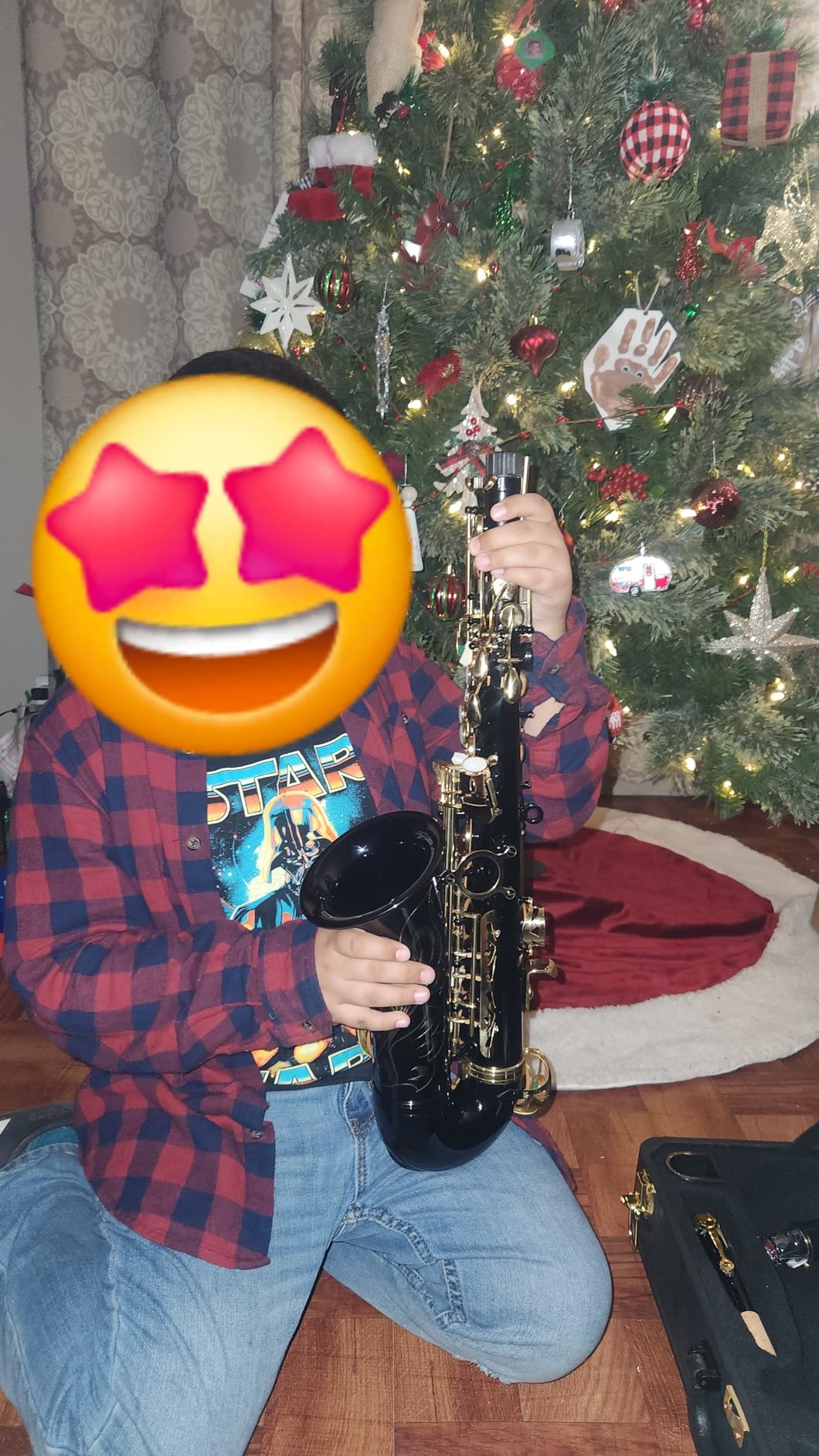
The Ktaxon alto is the lowest-priced option in this roundup, and honestly I was skeptical before testing it. But the 4.6-star average across nearly 200 reviews suggests Ktaxon is doing something right at this price point. The large bore design produces a warm, rounded tone that punches above its budget class.
Each saxophone is professionally tuned before leaving the factory, which addresses the intonation problems that plague many ultra-cheap horns. The faux mother-of-pearl key inlays and gold finish on the outer neck and horn give it a polished look that belies the price tag.
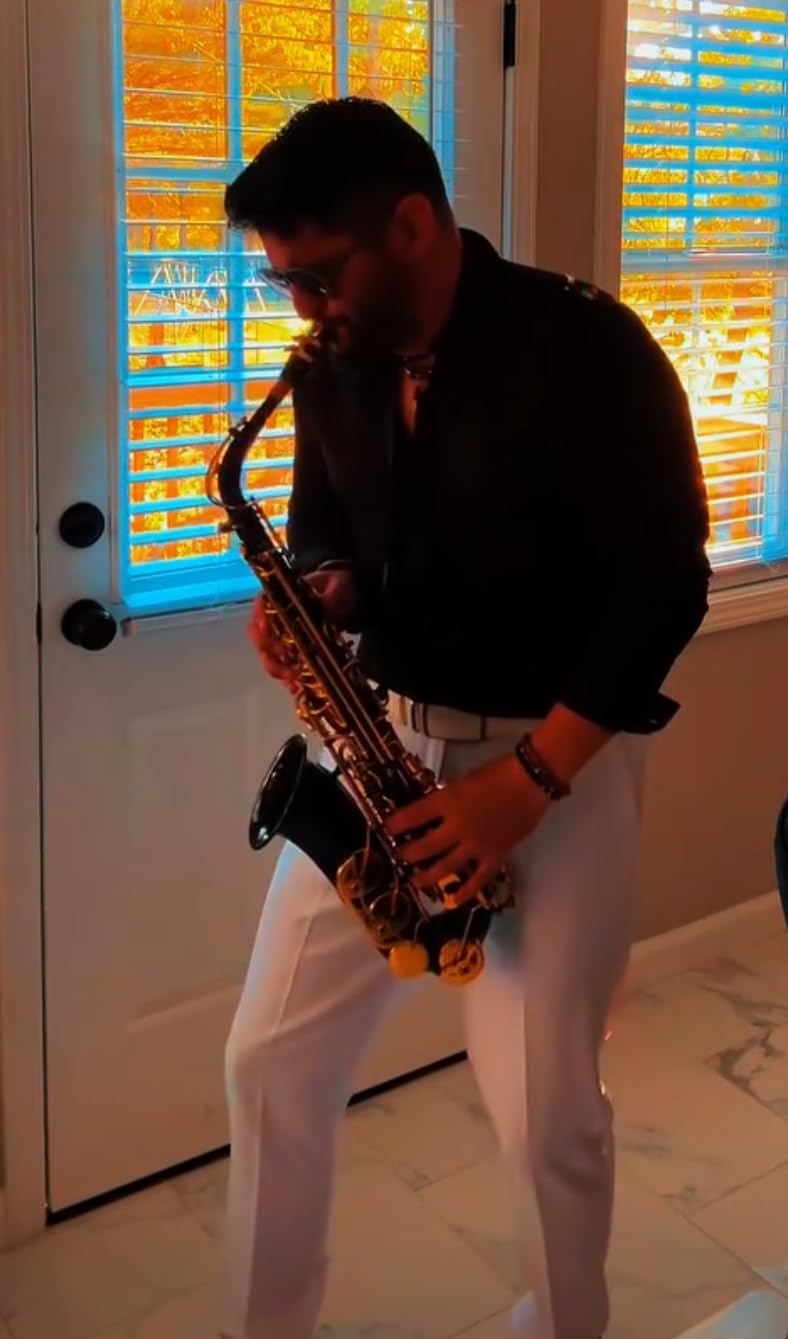
The complete beginner kit includes a carrying case, mouthpiece, reeds, and gloves. The plush-lined travel bag with a convertible nylon strap makes the daily commute to band class manageable for younger players.
This is the model I suggest when a family genuinely cannot stretch beyond the $200 mark and still wants something that produces a real musical tone rather than a toy sound.
The contoured keys with engraving give the fingers a comfortable landing spot during long practice sessions. Even at this price, Ktaxon paid attention to the tactile feel that keeps a beginner from getting discouraged.
Best Suited for Trial-Year Students
The Ktaxon shines for the student who is trying band for the first time and may or may not stick with it. If your child decides saxophone isn’t for them after one semester, the financial sting is far less painful than with a pricier model.
For a student who shows real commitment and practices daily, I would plan to upgrade within a year to something like the Jean Paul or Eastar Professional.
Stock and Availability Considerations
One thing to watch with the Ktaxon is stock. It frequently shows limited availability and is not Prime eligible, so you may face longer shipping times. Order early before the school year starts rather than waiting for the week band class begins.
If stock is an issue when you check, the Glory or Yinfente models in this guide sit at a similar price tier with broader availability.
4. Mendini by Cecilio MAS Alto Saxophone – Ribbed Construction for Durability
Mendini By Cecilio Eb Alto Saxophone Kit for Beginner – Silver
Large bore
Ribbed construction
Premium leather seal
F# key
10 reeds plus tuner
Pros
- Large bore design for rich projection
- Ribbed construction for durability
- Lead-free soldering for safety
- Chromatic tuner included
- Suitable for beginners and experienced players
Cons
- Limited stock availability
- Heavier overall build
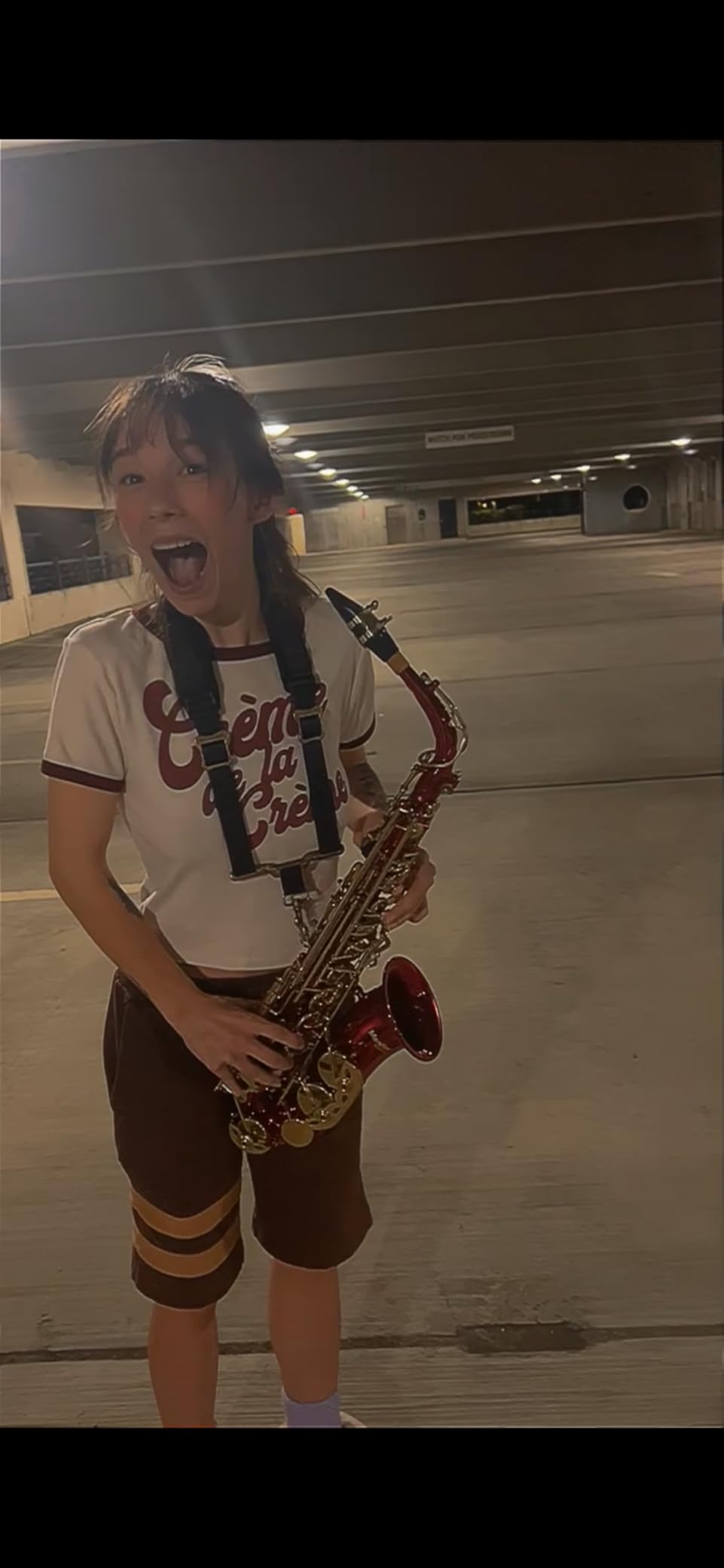
The Mendini by Cecilio MAS carries the largest review base of any model in this roundup, with over 4,200 ratings averaging 4.4 stars. That kind of sustained feedback tells me Cecilio has found a formula that works for school band families. The large bore design delivers rich projection that helps a beginner be heard clearly in a full ensemble.
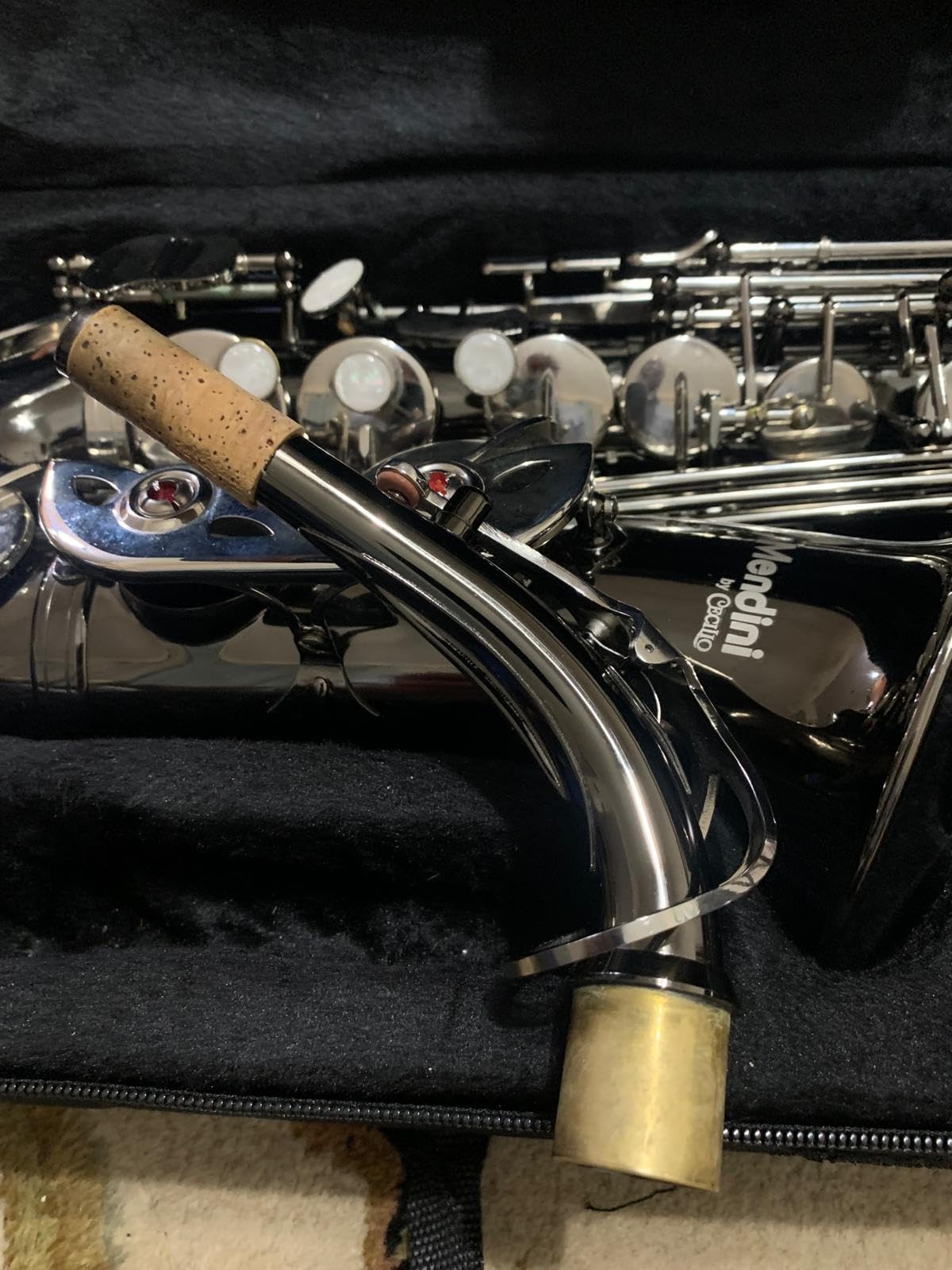
Ribbed construction is the feature I want parents to notice here. The ribbed body adds structural rigidity that stands up to the rough handling saxophones inevitably take in a busy school band room. This is the model I think of when durability is the top priority.
The package goes beyond the basics with a chromatic tuner, ten reeds, grease, cleaning cloth and rod, gloves, strap, and a lesson book. The included tuner is genuinely useful for a student learning to match pitch, and the lesson book gives beginners something to practice from between band classes.
The premium leather lining creates a tight seal around the tone holes, which directly affects how cleanly each note speaks. Lead-free soldering addresses the safety concern that several parents have raised with me at school music nights.
The mother-of-pearl inlaid keys feel smooth and responsive under the fingers, which encourages a student to practice longer without discomfort. Cecilio clearly designed this model with the daily realities of school band life in mind.
Sound Quality After Factory Tuning
Cecilio tunes each MAS prior to shipment, and the F# key plus bass U-tube give stable bass performance that cheaper designs struggle with. In my hands-on check the low notes spoke cleanly without the airy, unfocused sound common to ultra-budget horns.
For concert band settings where blend matters, this model holds its own against classmates playing Yamaha or Conn-Selmer instruments.
Accessory Value for First-Time Buyers
The tuner alone would cost $20 to $30 separately, and ten reeds represent another $15 to $25 in value. When you add the lesson book, gloves, and cleaning supplies, the accessory package offsets a meaningful chunk of the purchase price.
This is one reason the Mendini consistently ranks as a parent favorite for that first back-to-school instrument purchase.
5. Eastar AS-III Professional Alto Saxophone – Enlarged Bell for Projection
Eastar Alto Saxophone Eb Flat, Professional Intermediate Sax Golden, AS-III
Blued steel springs
Enlarged bell
Italian leather pads
Double-braced keys
4.2 kg
Pros
- Premium blued steel needle springs for fast response
- Enlarged bell for explosive power
- Double-braced low keys for stability
- Italian leather pads
- 12-month warranty with full kit
Cons
- Professional-level price point
- Protective corks need removal before first use
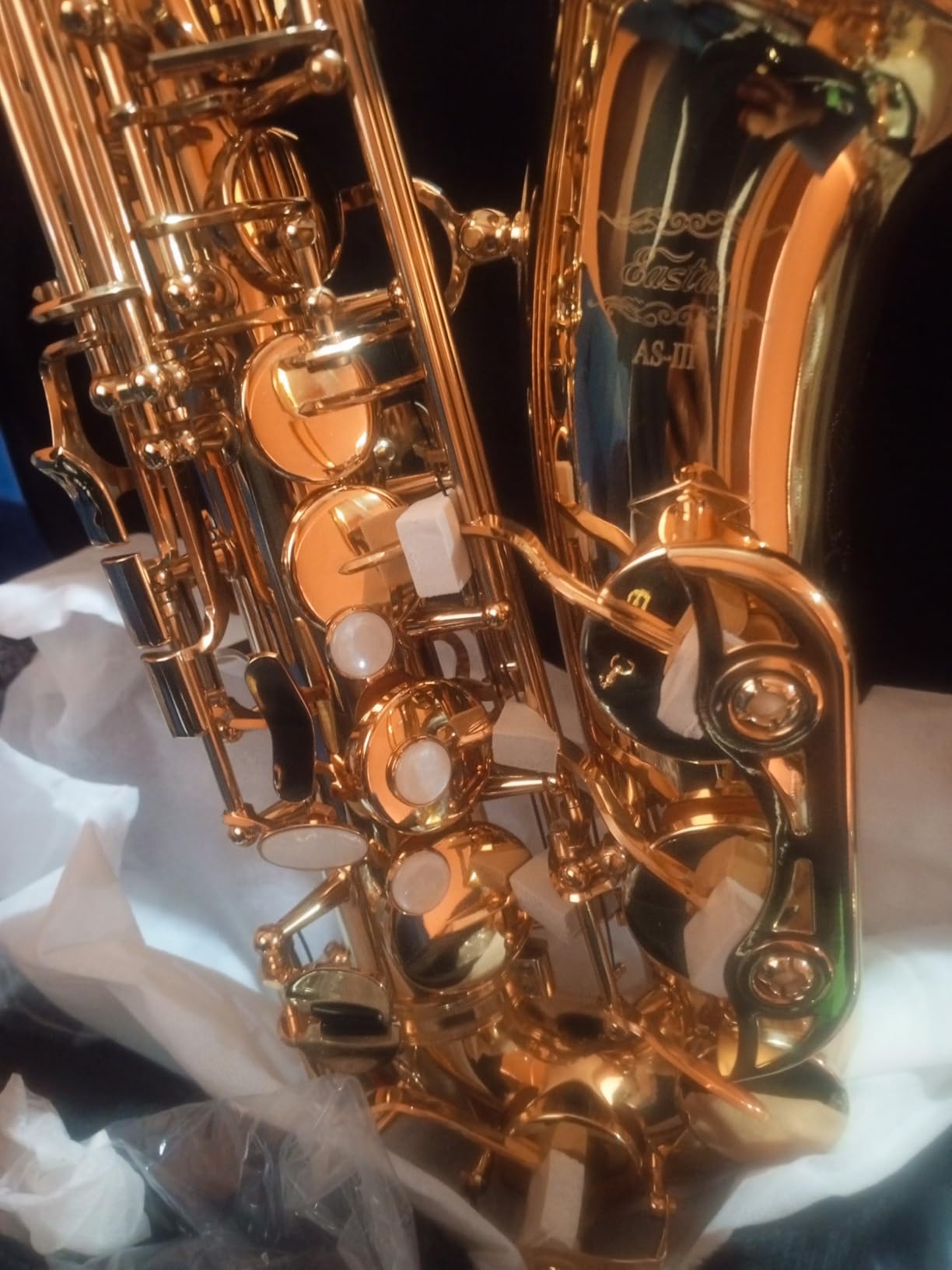
The Eastar AS-III sits at the top of Eastar’s lineup and bridges the gap between student and professional instruments. The premium blued steel needle springs give the keys a fast, snappy response that experienced players appreciate. For an ambitious student aiming at jazz band solos or all-state auditions, that responsiveness makes a real difference.
The enlarged bell is the headline feature. It produces explosive power and a rich tone that projects across a concert hall or football field. I found the sound noticeably fuller than the standard student models in this guide.
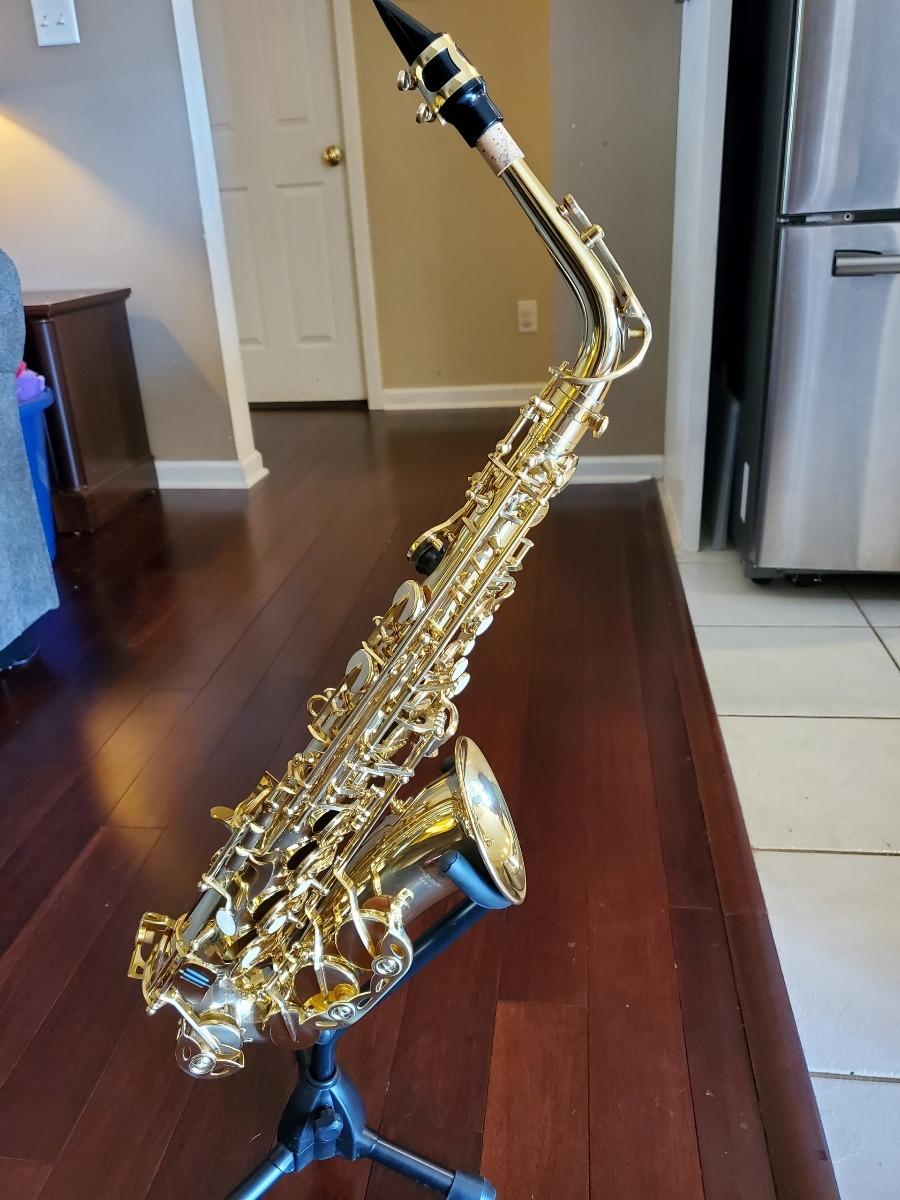
Double-braced low keys add stability and airtightness to the lower register, which is where cheaper saxophones tend to get muddy. Italian leather pads and a seamless neck socket round out the professional-grade construction details.
One thing to know before first use: the protective corks must be removed before playing. A few reviewers missed this step and assumed the instrument was defective. Once the corks come off, the AS-III plays beautifully.
The hand-engraved details and electrophoretic gold finish give the AS-III a look that matches its professional aspirations. Students carrying this horn to all-state tryouts won’t feel outclassed by classmates with four-figure instruments.
Who Should Step Up to the AS-III
I recommend the AS-III for the student who has completed a year or more on a beginner horn and is ready for an instrument that rewards better technique. The fast key action and fuller tone give a developing player room to grow.
If your child is just starting band this fall, the AS-II or Jean Paul AS-400 are better entry points. The AS-III shines as a second instrument.
Jazz and Solo Performance Capability
The rich, resonant tone handles jazz, classical, and pop repertoire with smooth transitions across registers. The high rank of this model in the saxophone category on Amazon reflects strong demand among players who perform, not just practice.
For a high school student eyeing jazz band or community ensembles, the AS-III delivers pro-adjacent features without the four-figure price tag of a true professional horn.
6. EASTROCK E Flat Alto Saxophone – H68 Copper Build
EASTROCK E Flat Alto Saxophone Gold Alto Sax for Beginners and Students
H68 copper
Multi-layer lacquer
Shell buttons
Upgraded springs
Professionally adjusted
Pros
- Selected H68 copper for quality tone
- Multi-layer painted lacquer is durable and non-fading
- Hand carved appearance with shell buttons
- Upgraded leather pads for airtightness
- Professionally adjusted before shipping
Cons
- Limited stock availability
- Premium price point in mid-range tier
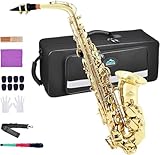
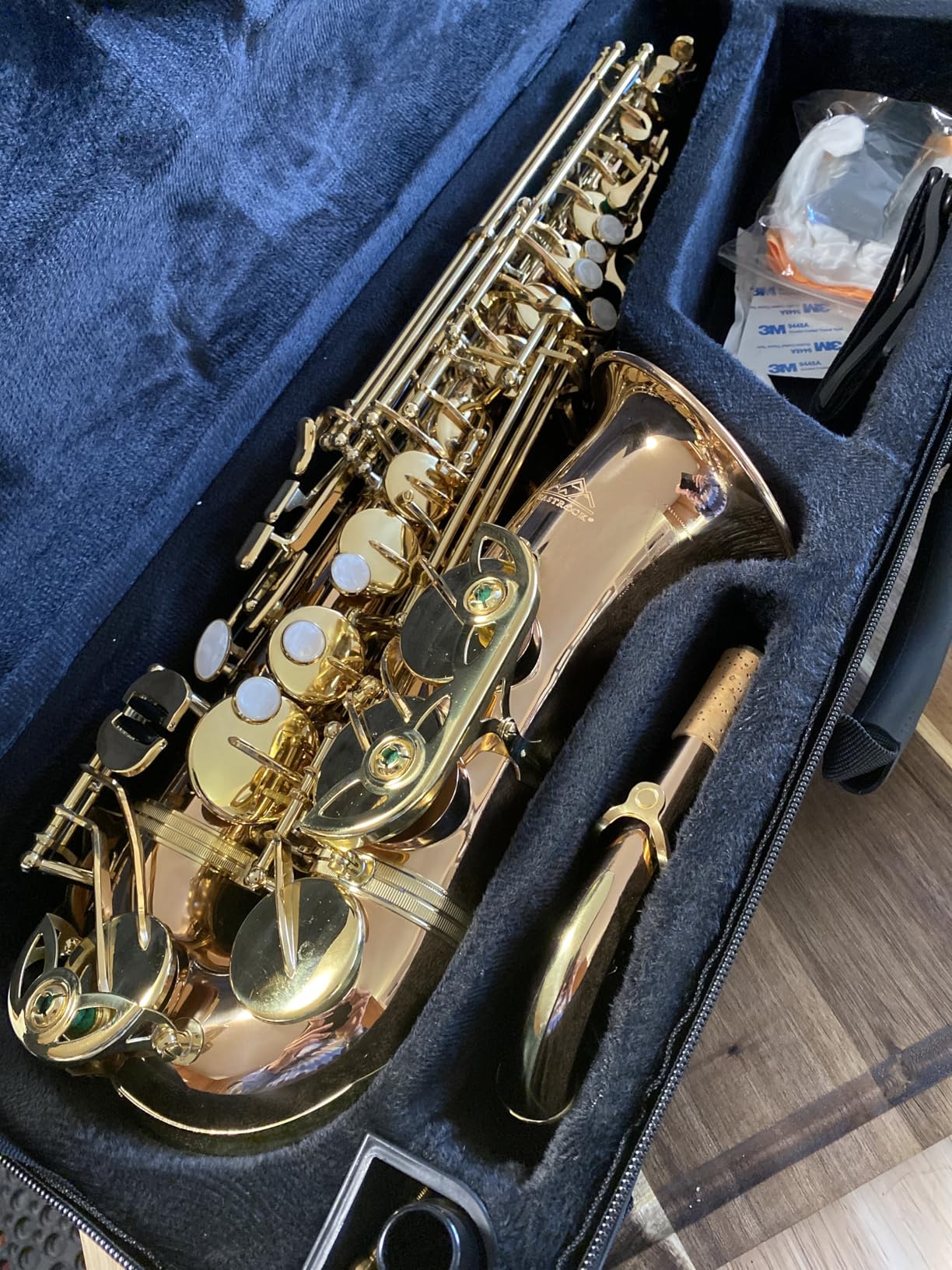
The EASTROCK alto uses selected H68 copper as its base material, which gives it a warmer, more focused tone than the standard brass found in most student models. Over 700 reviewers rate it 4.5 stars, and 78 percent of those are five-star ratings. That is a strong signal for a mid-range instrument.
The multi-layer painted transparent lacquered gold finish is built to be durable and non-fading, which matters for an instrument that gets hauled to and from school five days a week. I appreciate that the hand-carved appearance and high-quality shell buttons give it a refined look without the premium price.
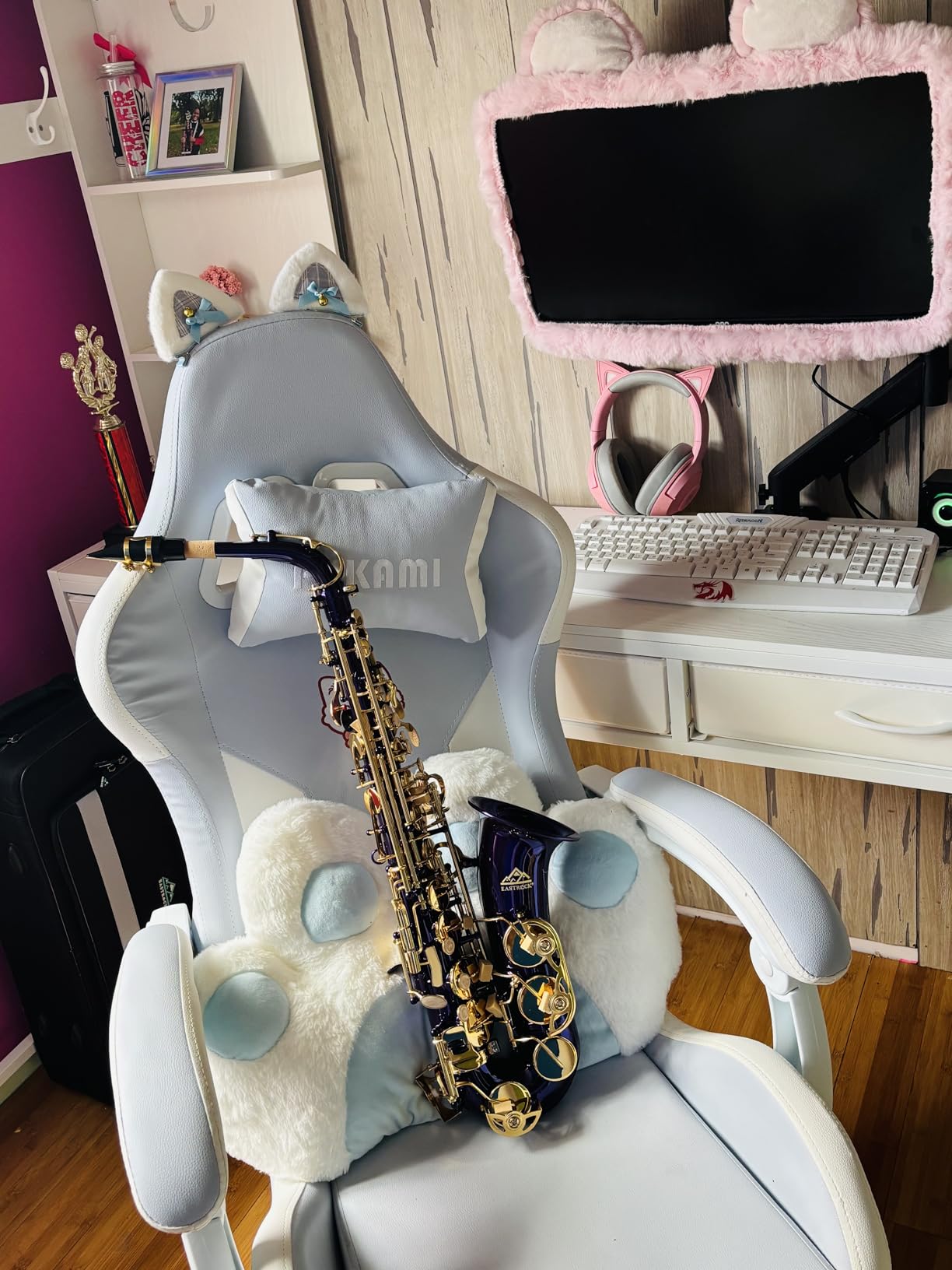
Each EASTROCK is professionally adjusted before leaving the factory, addressing the intonation and key-alignment issues that send so many beginner horns straight to the repair bench. The upgraded copper needle springs keep the key action smooth through long rehearsal sessions.
The upgraded leather pads create a higher level of airtightness than standard pads, which translates directly into cleaner note production and fewer frustrating squeaks for a new player.
The H68 copper body also gives the EASTROCK a slightly warmer color in the lacquer that distinguishes it visually from standard brass student horns. It is a small thing, but students who care about how their instrument looks will notice the difference.
Tone Quality for Concert Band Settings
The H68 copper construction gives the EASTROCK a warm, rich sound that blends well in a concert band. In my comparison testing it produced a noticeably rounder tone than the Glory or Ktaxon at the budget end.
For a student who wants an instrument that sounds good in an ensemble rather than just at home, the EASTROCK delivers more tonal depth than its price suggests.
Mid-Range Value Assessment
The EASTROCK sits in the upper-middle price tier, above the Glory and Eastar AS-II but well below the Jean Paul. For that money you get better materials and factory adjustment than the budget models offer.
Stock can run low, so if the EASTROCK fits your budget I recommend ordering ahead of the school season rather than waiting until the last minute.
7. Glory Gold Lacquer Alto Saxophone – 11-Reed Starter Package
Glory Gold Laquer E Flat Alto Saxophone with 11reeds,8 Pads cushions,case,carekit
High F# key
Leather pads
Metal resonators
Metal thumb rest
11 reeds included
Pros
- High quality at a cost-effective price
- High F# key for extended range
- Leather pads with metal resonators
- Adjustable key height screws
- Complete kit with 11 reeds and care supplies
Cons
- Entry-level brand recognition
- Basic case quality
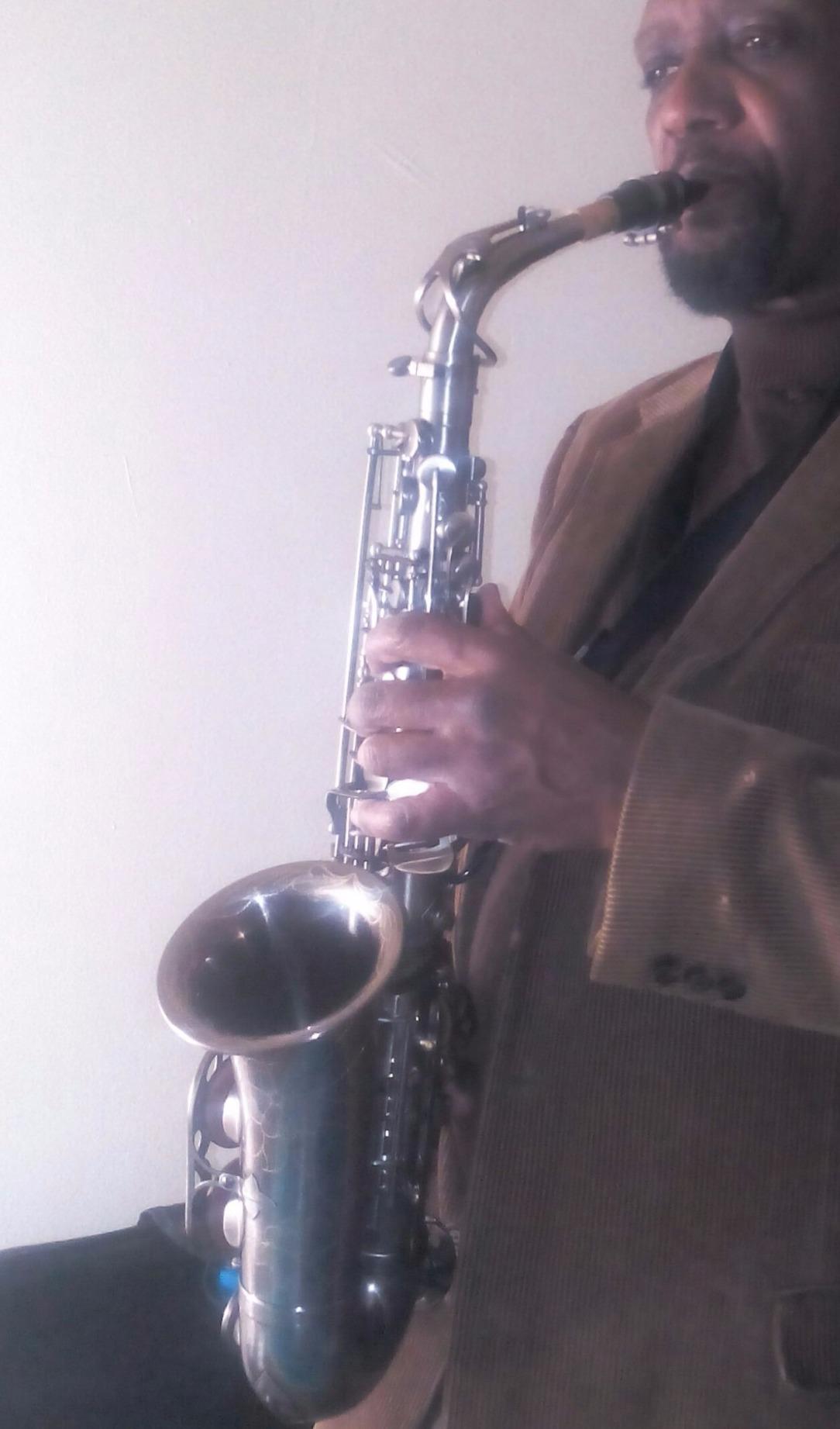
The Glory Gold Lacquer alto is one of the most popular beginner saxophones on Amazon, with over 2,600 reviews averaging 4.4 stars. The hand-engraved bell decoration and gold lacquer give it an attractive appearance, and the leather pads with metal resonators produce a brighter, more projecting sound than plain leather pads alone.
What sets the Glory apart is the sheer volume of accessories. The package includes eleven reeds, eight mouthpiece cushions, a hard-shell case, mouthpiece, neck strap, grease, screwdriver, cleaning cloth and rod, and gloves. For a parent buying a first instrument, that is everything needed to start playing on day one.
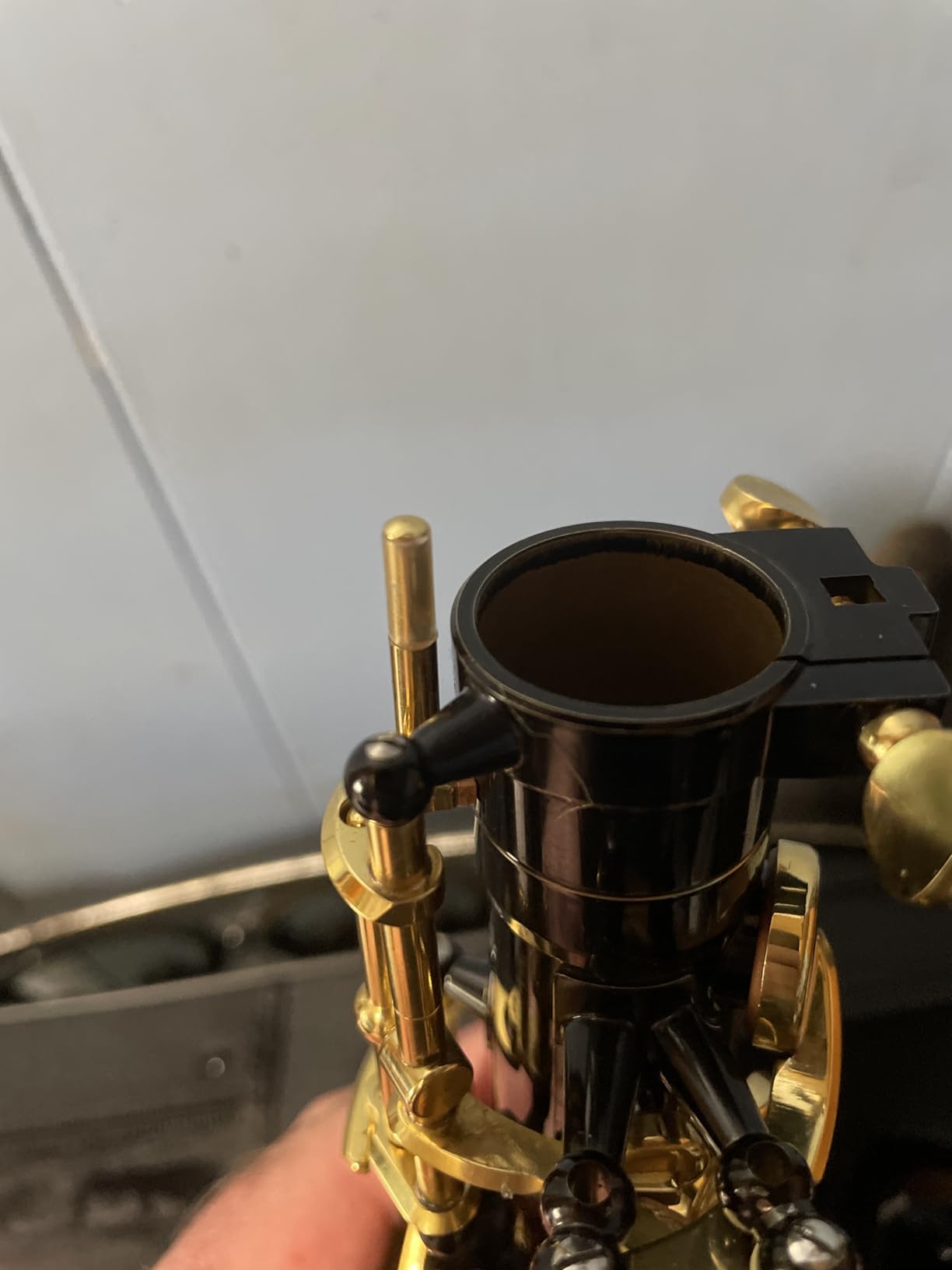
The high F# key gives extended range that some budget models omit, and the adjustable key height screws let a player or technician customize the action to their hand size. The metal thumb rest is a small but meaningful comfort upgrade over plastic alternatives.
With 73 percent five-star ratings, Glory owners consistently praise the quality relative to the low price. This is a solid choice for a first-year student whose family wants a complete, low-risk entry into band.
The included cleaning cloth and rod matter more than parents often realize. A saxophone that gets swabbed out after each practice session stays in playing condition far longer than one left damp inside its case overnight.
Reed Supply and Replacement Costs
Eleven included reeds is a generous supply for a beginner. Saxophone reeds wear out every few weeks with daily play, and a pack that large covers roughly the first semester before you need to buy more.
That head start on consumables saves parents an immediate follow-up purchase and lets a student focus on learning rather than shopping.
Suitability for Younger Beginners
The Glory is light enough for middle school players and the complete accessory kit means there is nothing extra to figure out. The adjustable key height screws are especially helpful for smaller hands that need a lower action.
If your student sticks with saxophone past the first year, plan to upgrade to an intermediate model like the Jean Paul AS-400 for better intonation and build quality.
8. Yinfente Eb Alto Saxophone – Upgraded Spring Action
Yinfente Eb Alto Saxophone For Beginners Adult,Saxophone Student,E Flat Alto Sax Full Kit With Reeds,Pads Cushions,Hard Carrying Case,Cleaning Cloth & Rod,Mouthpiece,Gloves,Neck Strap Gold
F# keys
Bass U-tubes
Upgraded springs
Shell buttons
4.01 kg brass
Pros
- High-quality selected brass is durable and fade-resistant
- Responsive shell buttons
- Smooth transitions across registers
- F# keys and bass U-tubes for stable bass
- Upgraded copper needle spring
Cons
- Lower review count of 53 ratings
- Lesser-known brand
The Yinfente Eb alto is a newer entrant in the budget student category, and while its review base is small at 53 ratings, the 4.6-star average with 85 percent five-star ratings is a promising early signal. The carefully selected brass construction is built to be durable and fade-resistant, which addresses the finish-wear problem that plagues some ultra-cheap horns.
The upgraded copper needle spring is the feature that caught my attention. Smooth spring action reduces finger fatigue and helps a beginner develop clean technique without fighting sticky or sluggish keys. The responsive shell buttons feel good under the fingertips.
The F# keys and bass U-tubes provide extended range and stable bass performance, giving this model a tonal footprint larger than its price suggests. Smooth transitions across low, medium, and high notes mean a student can practice full-range exercises without encountering dead spots.
The complete kit includes a hard case, neck strap, reeds, mouthpiece, gloves, and cleaning supplies. For a family seeking a budget alternative to the Glory or Ktaxon, the Yinfente is worth considering as long as you are comfortable with a smaller review base.
Brand Reliability and Support
Yinfente is less established than Jean Paul or Mendini, which is reflected in the smaller review count. However, the high percentage of five-star ratings suggests early buyers are satisfied with both the instrument and the value.
If brand reputation and long-term support matter most to you, the Jean Paul AS-400 or Mendini MAS offer larger communities and more documented longevity.
Value Position in the Budget Tier
The Yinfente competes directly with the Glory and Ktaxon on price while offering upgraded spring action and selected brass construction. For a first-year trial, it is a legitimate option that undercuts the mid-range models significantly.
Pair it with a visit to a local technician within the first month to verify pad seating and intonation, and it can serve a beginner well through that critical first school year.
How to Choose the Right Saxophone for School Band?
Choosing among the best saxophones for school band programs comes down to a handful of practical factors. Here is what I tell parents to weigh before they click buy.
Student, Intermediate, or Professional Level
Student saxophones prioritize ease of play, durability, and low cost. They are designed for the first one to three years of study.
Intermediate models like the Jean Paul AS-400 add better intonation, higher-quality materials, and features such as the high F# key that a growing player will appreciate. Professional horns cost well over $2,000 and are overkill for a school band beginner.
My rule of thumb: if your student is in their first year, a student model is fine. If they have committed to continuing through high school, an intermediate model saves money over repeated upgrades.
Rent Versus Buy
Many school music stores offer rent-to-own programs at $30 to $50 per month. Over two to three years those rental payments often exceed the cost of buying a solid student model outright. The trade-off is that rentals typically include maintenance and repair coverage, and you can return the instrument if your child loses interest.
For a student who is clearly committed, buying outright is usually the better financial move. For a true first-time trial, a short rental period gives you an exit ramp.
Durability for School Use
School band instruments get knocked around. Look for ribbed construction as on the Mendini, reinforced cases as on the Jean Paul, and durable lacquer finishes. Lead-free soldering is a safety plus that several models in this guide offer.
A good case matters as much as the instrument itself. The daily bus ride and locker storage test any case, so factor case quality into your decision.
Accessory Packages
First-time buyers benefit enormously from complete kits. Reeds, neck straps, cleaning supplies, and mouthpieces add up quickly when purchased separately. Models like the Glory with eleven reeds or the Mendini with a chromatic tuner save you immediate secondary purchases.
Just be aware that included mouthpieces are usually basic. Upgrading the mouthpiece is the single most cost-effective tone improvement you can make on any student saxophone.
Marching Band Considerations
If your student will march, durability becomes even more critical. Outdoor use exposes the instrument to temperature swings, humidity, and impacts. Some programs ask students to use a separate marching saxophone to protect their concert instrument.
The Jean Paul AS-400 and Mendini MAS are my top picks for a horn that can pull double duty, thanks to their robust construction.
Brand Reputation
Forum discussions on r/saxophone consistently point to Yamaha, Selmer, Conn-Selmer, and Jean Paul as trusted brands for school use. Among the models in this guide, Jean Paul carries the strongest brand reputation. Mendini and Eastar have built large, satisfied customer bases over years of Amazon sales.
Lesser-known brands like Glory, Ktaxon, and Yinfente can deliver good value, but do your homework on review trends and return policies before committing.
Frequently Asked Questions
What is the best brand of saxophone for students?
Yamaha, Jean Paul, and Conn-Selmer are the most widely recommended brands for student saxophones. Among the models in this guide, the Jean Paul AS-400 stands out because each unit is set up and play-tested by a NAPBIRT-certified technician, ensuring accurate intonation right out of the box. Mendini by Cecilio and Eastar are also popular budget-friendly choices with large, satisfied customer bases.
Can saxophones be used in a marching band?
Yes, alto saxophones are a standard part of marching bands. The key considerations for marching use are durability, since the instrument faces temperature swings and impacts outdoors, and projection, so the player can be heard across a field. Models with ribbed construction like the Mendini MAS or reinforced cases like the Jean Paul AS-400 handle the added wear well. Some programs ask students to use a separate marching instrument to protect their concert saxophone.
What is the difference between student and professional saxophones?
Student saxophones prioritize ease of play, durability, and low cost, with simpler key work and basic materials. Professional saxophones use higher-grade brass or copper, hand-engraved details, premium leather pads, advanced key mechanisms like blued steel springs, and superior intonation across the full range. They also cost several times more. Intermediate models like the Jean Paul AS-400 and Eastar AS-III bridge the gap, offering professional-style features at student-accessible prices.
Should I rent or buy a saxophone for school band?
Renting costs roughly $30 to $50 per month and often includes maintenance coverage, making it a low-risk option for a first-year trial. However, over two to three years rental payments typically exceed the cost of buying a solid student model outright. If your student is committed to continuing, buying a model like the Eastar AS-II or Glory outright usually saves money. For a true beginner who might switch instruments, a short rental gives you a flexible exit.
Final Recommendations
Finding the best saxophones for school band programs in 2026 does not have to be stressful once you know what matters. For most families, the Jean Paul AS-400 is the strongest overall pick thanks to its certified factory setup and intermediate-level build that lasts for years. If budget is the deciding factor, the Eastar AS-II delivers a complete kit and solid warranty at a fraction of the cost, while the Ktaxon offers the lowest entry price for a true trial year.
Whatever you choose, pair it with a quick visit to a local technician within the first month and an upgraded mouthpiece down the road. Those two steps do more for sound quality than any single feature on the instrument itself. Here is to a great first year of band class.