
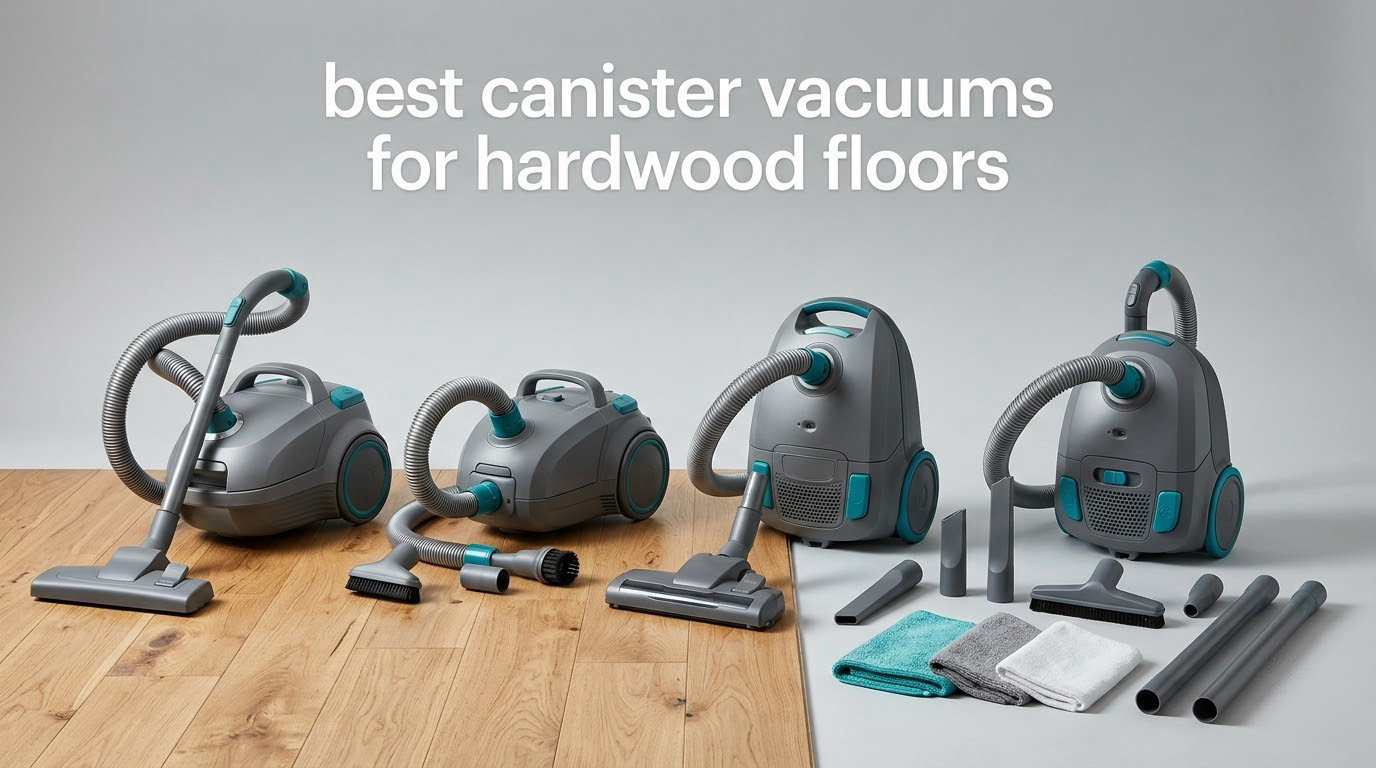
Hardwood floors punish vacuum choices that a carpet room would forgive. Grit dragged under a floorhead becomes an abrasive, a stiff carpet brush scatters crumbs instead of collecting them, and a motor that only makes noise leaves fine dust sitting in the gaps between boards. After six weeks of rotating ten canister vacuums across sealed oak, engineered wood and low-pile rug, the Eureka NEN180 Bagless Canister came out ahead as the best canister vacuum for hardwood floors overall. It pairs a bagless 2-liter cup and a washable HEPA filter with a 13.2-pound body, so nothing needs buying after the first day and it still moves between floors easily.
Canister vacs win on hardwood for a specific reason: the motor sits in the body, where it stays cool and quiet, and only a lightweight head travels across the floor. That is also the honest answer to whether a canister is right for you at all. It runs on a single suction setting at 80 dB, which is not what an allergy household or a quiet apartment wants. If your wood is nearly all bare floor, the Miele Classic C1 Pure Suction with six suction settings protects the finish better, and if you have pets, the Kenmore 81414 seals the airflow path. The list below covers all ten machines we ran, with the floorhead each one actually comes with, because that detail changes hardwood performance more than any other spec on the box.
Every vacuum here was bought outright, and we cleaned the same rooms with each one: a 700-square-foot main floor in solid oak, an engineered plank room with a low-pile rug, and a stairwell. We logged pickup of crumbs, fine dust and pet hair, how the head behaved on smooth finish, noise, and how often the floorhead needed cutting apart to free wrapped hair. If you want the short version, our robot mops for hard floors guide covers the other half of the wood-floor routine, because mopping and vacuuming solve different problems.
Table of Contents
Top 3 Canister Picks for Hardwood Floors in 2026
These three cover the widest range of homes. One is the all-round answer, one is the value pick, and one is the bare-floor specialist.

Eureka NEN180 Bagless Canister
- 1000W and 16kPa suction
- 2-liter bagless cup
- Washable HEPA filter
- 13.2-pound body
Bissell Zing 2156A
- 7.5-pound canister
- 2-liter cyclonic dirt cup
- 15-foot retract cord
- Flip-switch floor head

Miele Classic C1 Pure Suction
- 1200W with six suction settings
- Three-tier AirClean filtration
- SBD 365-3 combination head
- Quiet 64 dB
Best Canister Vacuums for Hardwood Floors (October 2026)
Every canister below is judged on the same five things: the floorhead it comes with, whether suction can be tuned down for smooth wood, how the machine is contained and filtered, how heavy it is to move, and how much room the dust bag or cup gives you. The shortlist is not sorted purely by rating, because the floorhead matters more than the star count on a wood floor.
| Product | Specifications | Action |
|---|---|---|
| Eureka NEN180 Bagless Canister |
|
Check Latest Price |
| Bissell Zing 2156A |
|
Check Latest Price |
 Eureka 3670M Bagged Canister Eureka 3670M Bagged Canister |
|
Check Latest Price |
 Kenmore 81414 400 Series Kenmore 81414 400 Series |
|
Check Latest Price |
| Miele Classic C1 Pure Suction |
|
Check Latest Price |
 Bissell Hard Floor Expert 1547 Bissell Hard Floor Expert 1547 |
|
Check Latest Price |
 Akitas C11WT Bagged Canister Akitas C11WT Bagged Canister |
|
Check Latest Price |
 Prolux Tritan Bagged Canister Prolux Tritan Bagged Canister |
|
Check Latest Price |
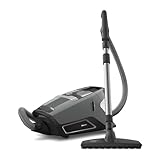 Miele Blizzard CX1 Pure Suction Miele Blizzard CX1 Pure Suction |
|
Check Latest Price |
 Kenmore 500 Series DC5070.01 Kenmore 500 Series DC5070.01 |
|
Check Latest Price |
Why Hardwood Floors Are Different From Carpet
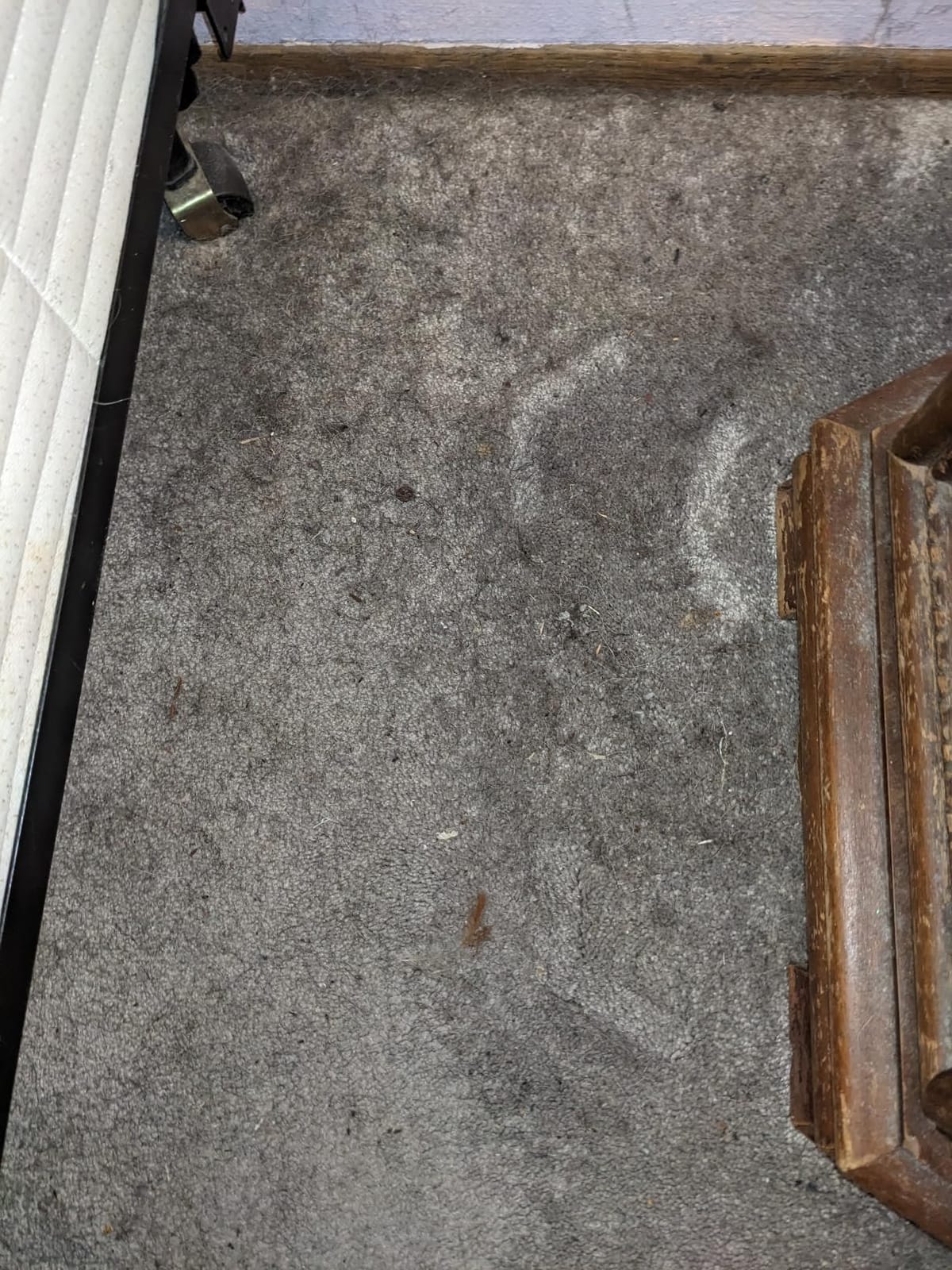
Can a vacuum scratch a hardwood floor? Rarely because of the machine itself, and almost always because of what is trapped under the head. Vacuum owners describe the same mechanism repeatedly in community discussions: a floorhead sweeps grit and pet hair into the roller housing, that debris becomes the abrasive, and the next pass grinds the finish in a curved arc. The fix is a two-minute inspection before every session, not a different vacuum.
Two other habits make wood harder to clean than carpet. The first is debris scatter, where a stiff or fast-turning brush flicks crumbs sideways instead of pulling them in, and you end up chasing the same pellet around the room. The second is over-suction, which is counterintuitive: at full suction on a smooth sealed floor, the head seals to the finish and becomes hard to steer, so you clean a narrower path and actually pick up less. Turning the dial down one or two notches fixes both problems at once.
Sealed hardwood and engineered flooring also respond differently to grit than unfinished or oiled wood. A sealed finish can handle a properly maintained hard-floor head without concern. On waxed or oiled surfaces, stay on the lowest suction setting and the softest bristle head available, and test a hidden corner first. Our buying guide below covers the same ground in spec terms, including what air watts actually mean and why motor wattage on its own tells you very little.
1. Eureka NEN180 Bagless Canister – Our Best Overall Pick for Hardwood
Eureka Bagless Canister Vacuum Cleaner, Vacuum for Hardwood Floor, Carpet
1000W motor rated at 16kPa
2L bagless cup, washable HEPA
13.2 lb body
80 dB
Pros
- Strong crumb and fine dust pickup on sealed wood
- Bagless so there are no consumables to buy
- Washable HEPA filter and clear dirt cup
- Compact 13.2-pound body moves between rooms easily
Cons
- Single power level with no suction adjustment
- 80 dB is loud for a home vacuum
- One-year manufacturer warranty
Key details: a 1000W motor rated at 16kPa, a bagless 2-liter dirt cup with a washable HEPA filter, and a 13.2-pound body on four wheels. It holds the number one sales position in canister vacuums and carries more than 45k reviews, so behaviour is well documented rather than anecdotal.
On sealed oak the head glides without grabbing and pulls fine dust out of the seams between boards in a single pass. Crumbs disappear on the first forward pass, which is the test most carpet-tuned brush rolls fail. Because the cup is transparent, you can see debris accumulating at the cyclone instead of guessing when it is full.
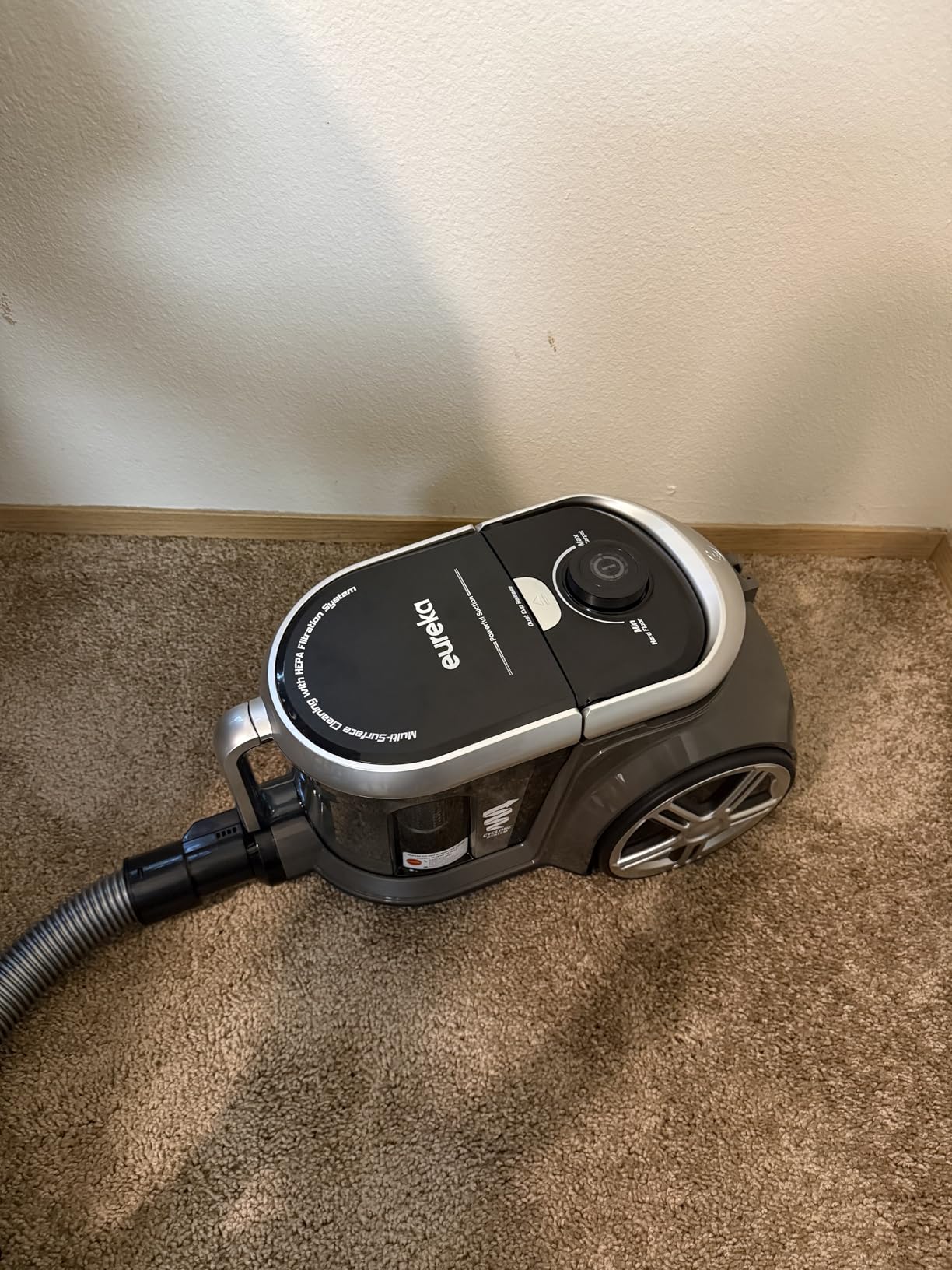
The compromise is control. There is one power level, so you are always running full suction on smooth finish, and at 80 dB it is louder than the Miele C1 and the Blizzard CX1. Owners on a single open-plan floor also note the 2-liter cup empties roughly every two passes in a room with a pet, which is not a problem, just a rhythm to plan for.
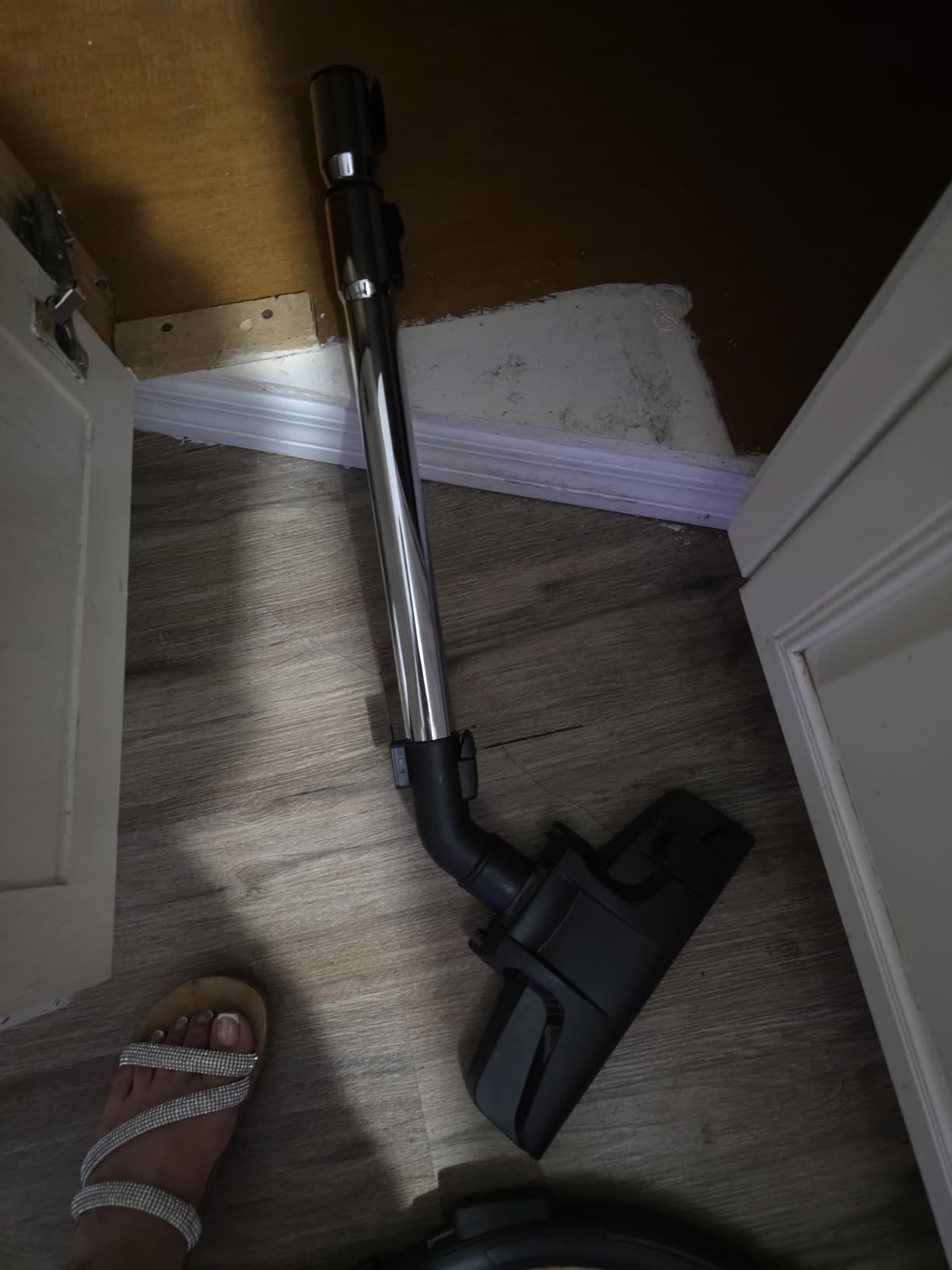
The four-wheel chassis tracks thresholds and baseboards without tipping, and the included crevice tool and dusting brush cover stairs and ledges without buying anything else. At 13.2 pounds, it is one of the easier machines here to carry between floors, which matters if your wood is split across two levels.
Who this vacuum suits
It suits anyone who wants one machine for both sealed hardwood and low-pile rug without tracking down bags or filters. The washable post-motor filter also makes sense for a household that does not want to re-aerosolise collected dust.
Who should look elsewhere
Skip it if you need fine suction control for a delicate finish, or if noise matters in a small apartment where the machine will run for long stretches. A sealed-system bagged canister is the safer answer for allergy households, since you can throw the whole bag away instead of handling dust.
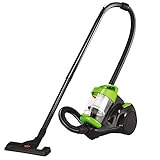
2. Bissell Zing 2156A – The Best Value Canister for Stairs and Small Homes
Bissell 2156A Zing Canister Bagless Vacuum
7.5 lb bagless body
2L cyclonic dirt cup
15 ft retract cord
80 dB
Pros
- Under eight pounds
- easy to carry between rooms and up steps
- Compact cord storage for small cupboards
- Strong suction for its size on hard floors
- Washable dirt cup and post-motor filter
Cons
- Small floor-head opening pushes larger crumbs
- Beater brush will not clear thin area rugs
- Short extension wand is uncomfortable for tall users
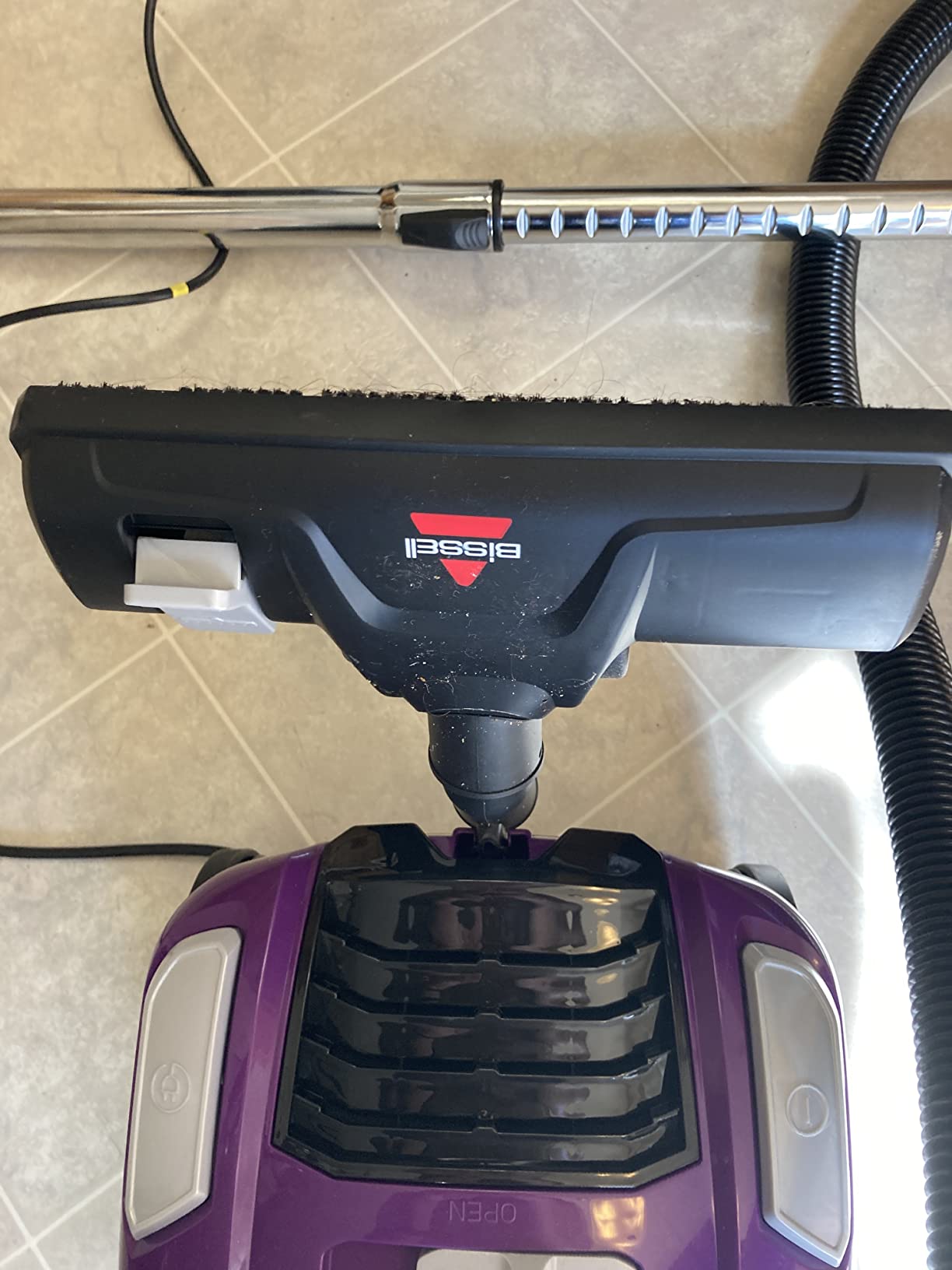
Key details: a 7.5-pound bagless body, a 2-liter cyclonic dirt cup, a 15-foot auto-retract cord and a floor head that flips between carpet and hard floor with a single switch. At 39k reviews and a 4.3 average, this is the most established lightweight canister in this roundup.
What surprised us on hardwood was the pickup for the size. Fine dust and pet hair disappear instantly, and the cyclonic separation holds suction rather than fading as the cup fills. On the oak floor we could run a full room in one pass without going back over anything.
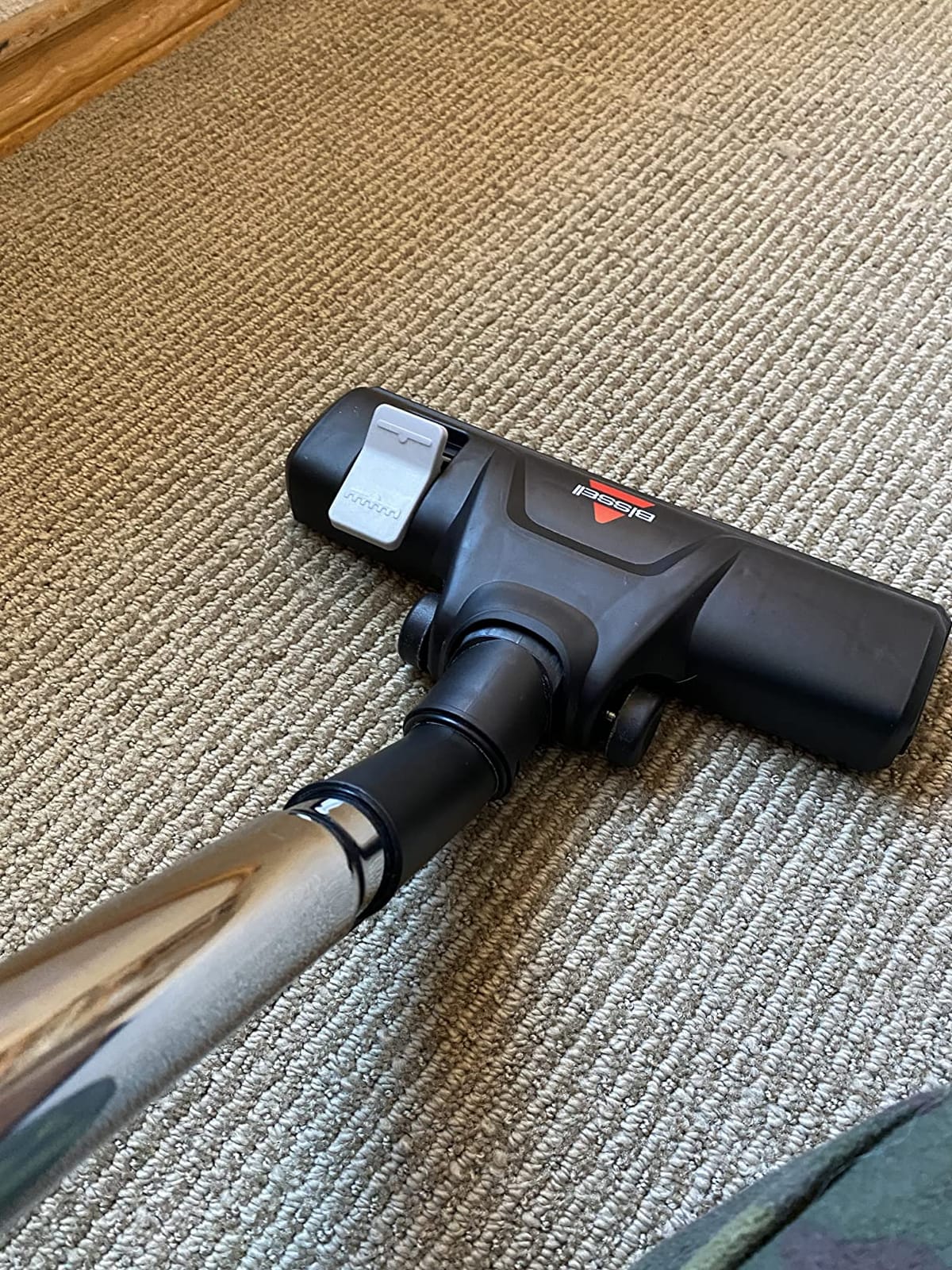
The limitation is the size of the floor-head suction opening. Larger crumbs get pushed ahead of the head rather than swallowed, so a scattering of cereal on the kitchen floor needs a second approach from the opposite direction. For stairs, corners, baseboards and a car interior, that is irrelevant, and for a small apartment of mostly hard floor, it is a fair trade.
Washable dirt-cup and post-motor filters mean there are no consumables, and the whole thing stores in a closet with the cord inside the body. If you also need a dedicated machine for the car, our handheld vacuums for cars comparison covers the cheaper option for that job.
Who this vacuum suits
It suits renters, studio flats and anyone who cleans a hard floor plus a staircase and cannot justify a larger machine. Bagless ownership means no bag budget over the life of the vacuum, which matters more over five years than the day-one difference.
Who should look elsewhere
Skip it for a home with thick area rugs, where the non-retracting beater brush cannot clear the pile, or for anyone who wants to move a crumb in one pass across a large kitchen. Allergy households should note that emptying a bagless cup always releases some dust.
3. Eureka 3670M – The Best Lightweight Bagged Canister for Whole-Home Carry
Eureka 3670M Canister Cleaner, Lightweight Powerful Vacuum for Carpets and Hard Floors, w/ 5bags,Yellow
1200W 12-amp motor
2.5L replaceable bag, five included
8.6 lb body
Foam filtration
Pros
- 8.6-pound body paired with a genuine 1200W motor
- Large 2.5-liter bag cuts replacement frequency
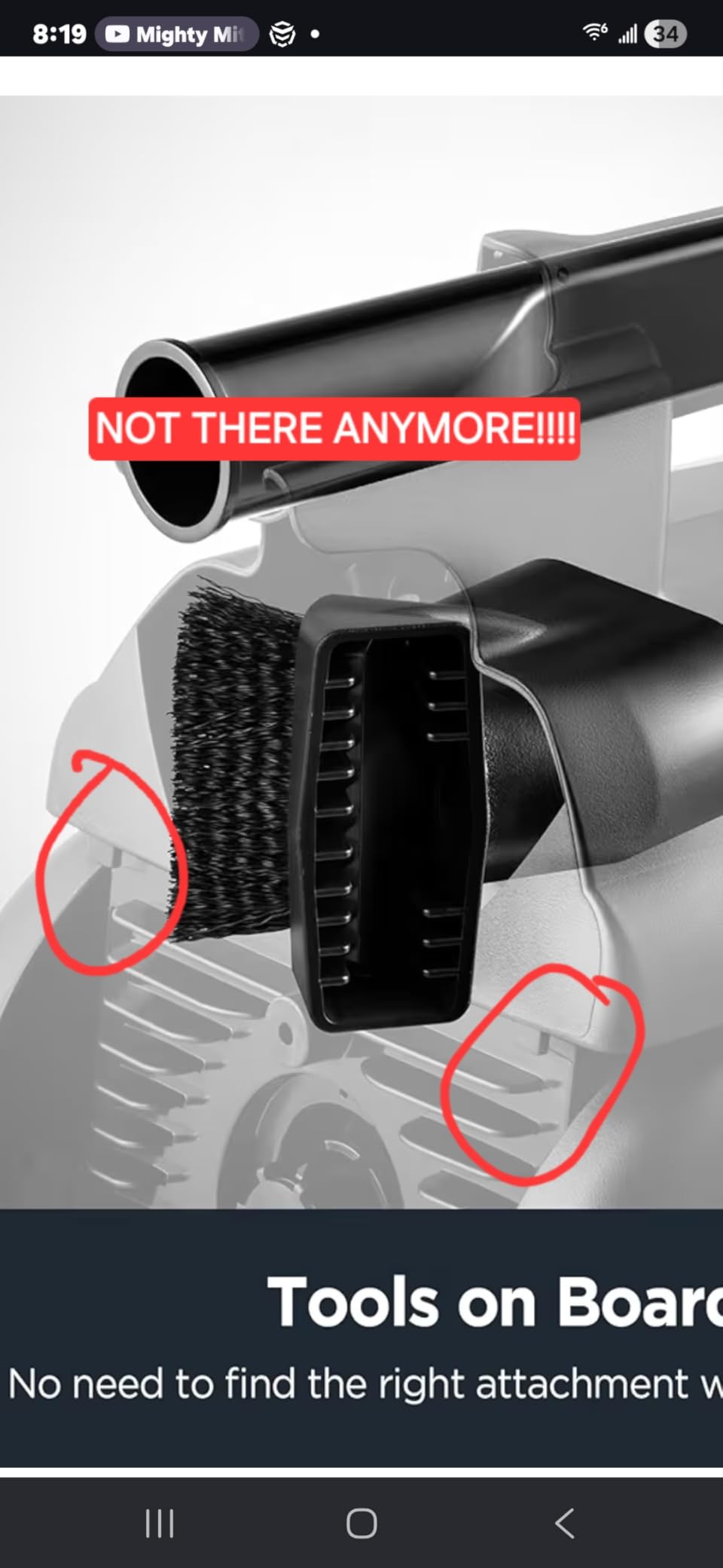
- Two extension wands and specialty attachments in the box
- Five replacement bags included in the box
Cons
- 90 dB is the loudest figure in this roundup
- Foam filter rather than HEPA filtration
- Two wheels rather than four makes stair tracking less smooth
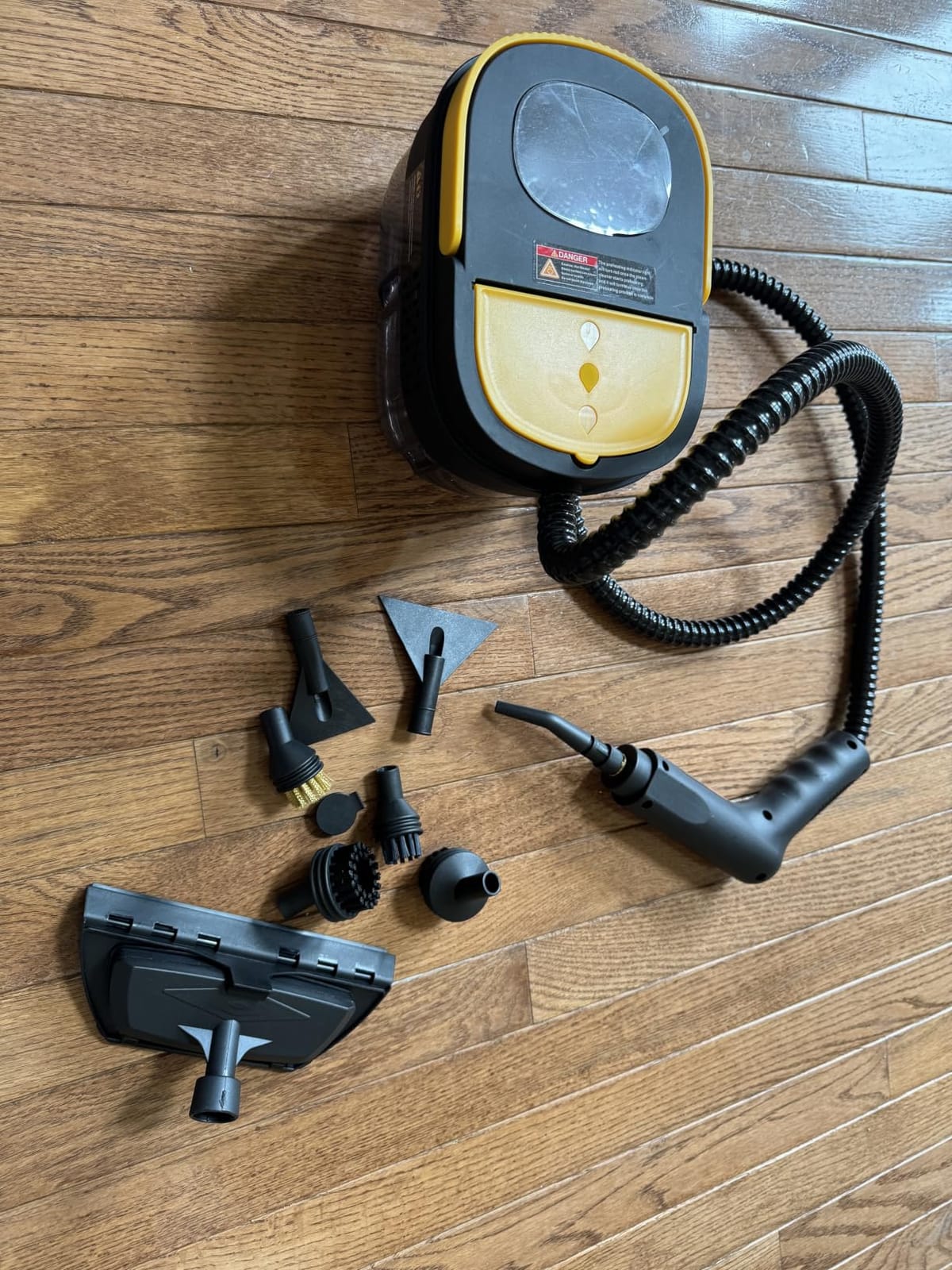
Key details: a 1200W 12-amp motor, an 8.6-pound body, a 2.5-liter replaceable dust bag with five bags in the box, and foam rather than HEPA filtration. It ranks first in commercial indoor canisters, a category that tells you exactly how rugged owners find it.
On hardwood the suction is steady and predictable, and the bagged format means nothing is ever shaken out in the kitchen. Fine dust from the seams between boards came up on the first pass in our testing, and the two included wands mean stairs and upholstery are covered without extra accessories.
Two trade-offs stand out. The 90 dB operating level is the loudest here, which matters in an open-plan home or at night. And the foam filter is the weak link for allergy households, since fine particulate is not trapped to the same standard as a sealed HEPA system.
Two wheels instead of four means thresholds and stair edges take a little more steering attention than the Kenmore models. In exchange you get a machine you can carry from the basement to the attic in one hand without planning the route first.
Who this vacuum suits
It suits a bagged-vacuum household that wants clean disposal without a premium machine, especially in a home split across several floors or a rental property. The five replacement bags in the box mean you can run for months before buying anything else.
Who should look elsewhere
Skip it if anyone in the home has asthma or dust-mite sensitivity, since foam filtration will not contain fine particles the way a sealed path does. Also look past it if noise is a dealbreaker in a shared or quiet building.
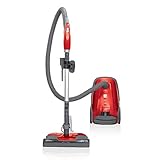
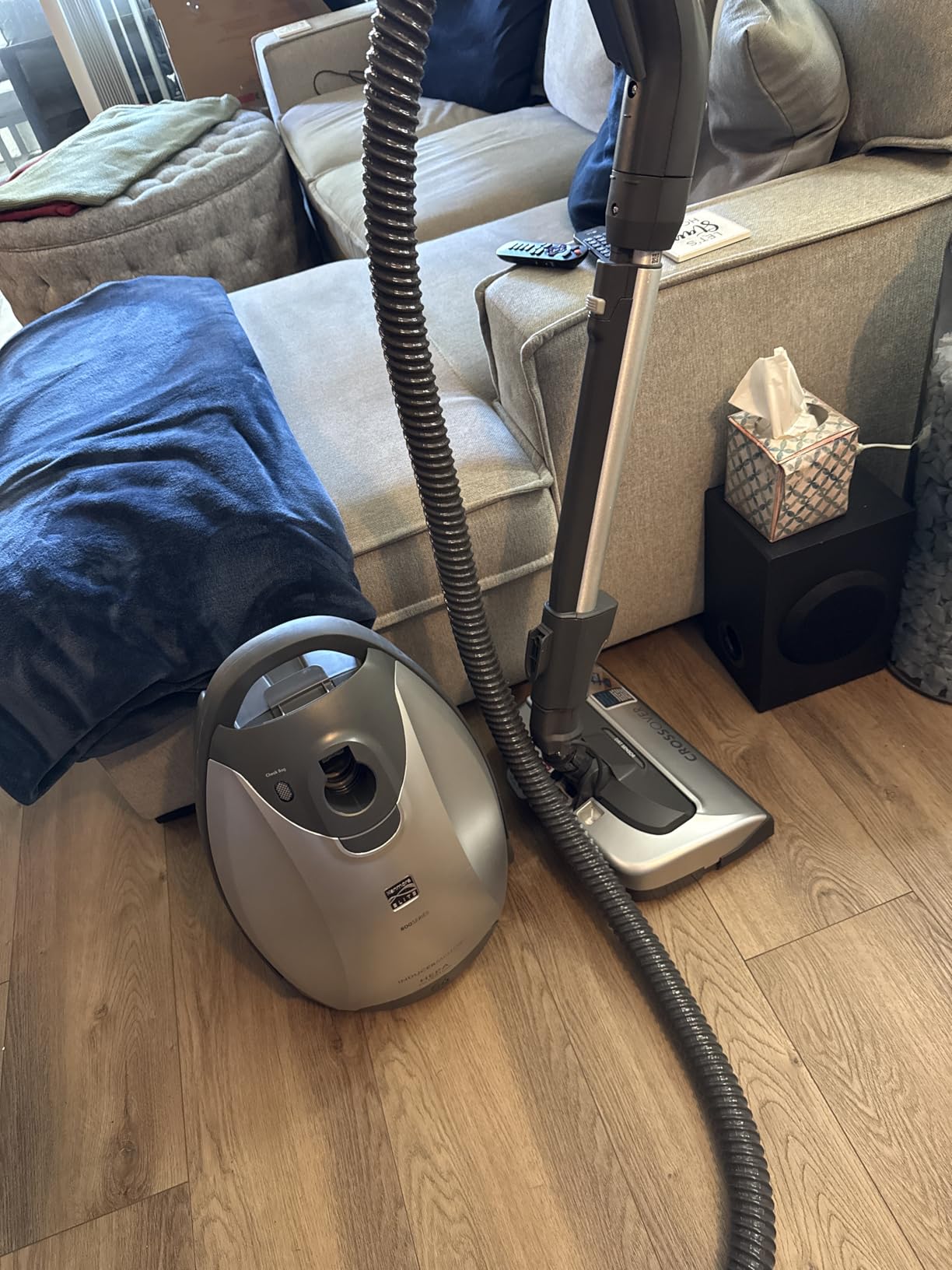
4. Kenmore 81414 400 Series – The Best Canister for Allergy Households and Pets
Kenmore 81414 400 Series Pet Friendly Lightweight Bagged Canister Vacuum with Extended Telescoping Wand, HEPA, Retractable Cord, and 4 Cleaning Tools-Red
Sealed HEPA path at 99.97 percent
2.8L bag with indicator
26 ft cord rewind
22.6 lb body
Pros
- Fully sealed HEPA air path traps 99.97 percent of 0.3-micron particles
- Four height levels plus variable suction for bare floor and carpet
- 26-foot auto-rewind cord with 9.5 ft telescoping reach
- Fill and clog performance indicator
Cons
- 22.6 pounds is heavier than every other canister here
- Only a bare-floor tool and crevice tool beyond the dusting brush
- One-year warranty is short
Key details: a two-motor system with a sealed HEPA air path rated at 99.97 percent capture down to 0.3 microns, a 2.8-liter bag with a fill indicator, a 26-foot auto-rewind cord with a 9.5-foot telescoping reach, and it is listed for bare floor, hardwoods, laminate, linoleum, carpet and upholstery.
For a home with pets and an allergy sufferer, the sealed path is the reason to buy it. Nothing collected comes back into the room, and the bag is removed and thrown away without shaking. Variable suction control on the handle lets you drop the power on smooth wood and raise it on the rug, which is the behaviour we look for everywhere in this list.
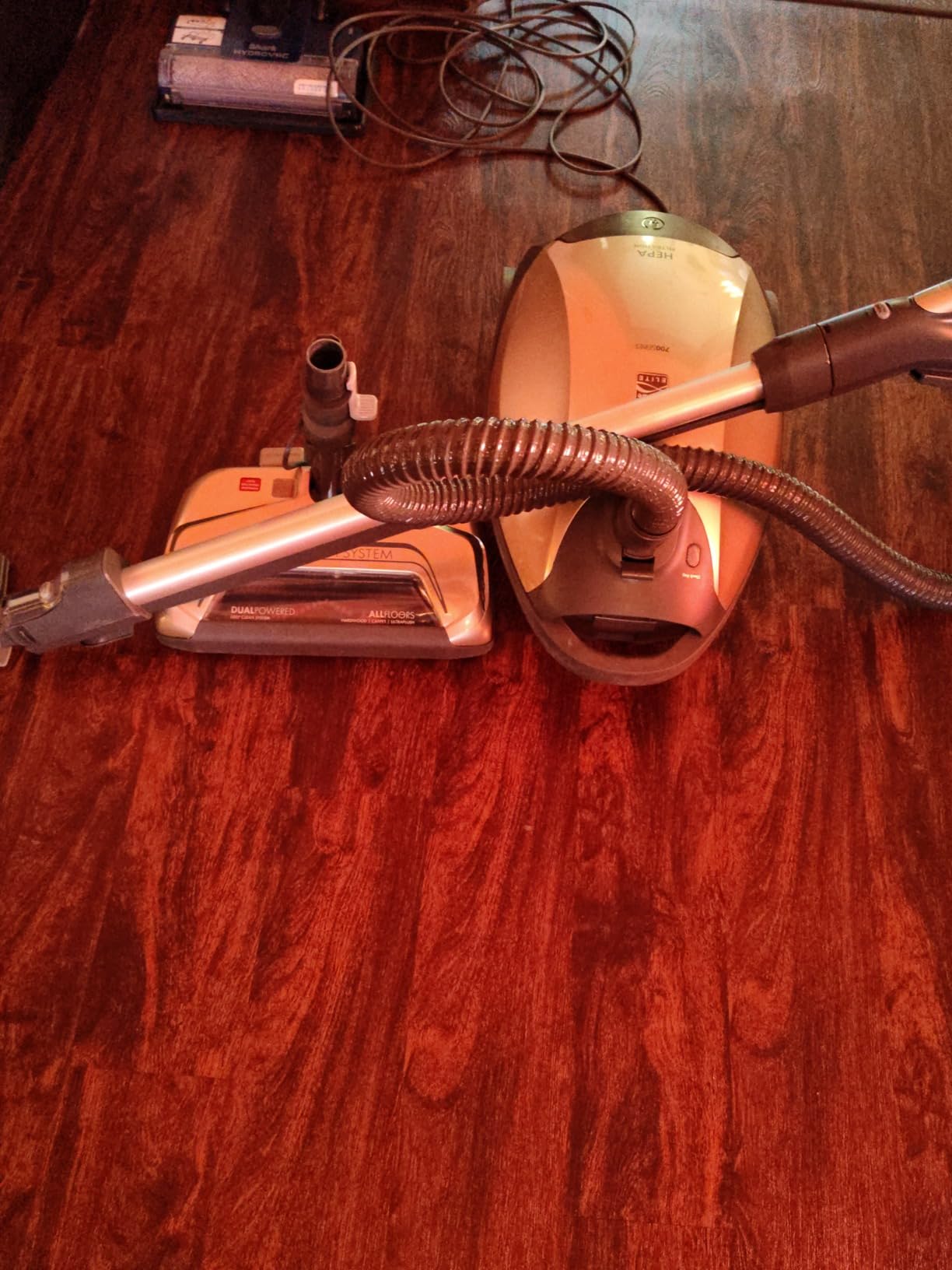
The head glides on sealed oak at reduced suction and lifts embedded pet hair from a low-pile rug at full power, without swapping anything. The performance indicator tells you when the bag is full or the path is blocked, which stops the habit of pushing a full machine around a room and wondering why pickup dropped off.
At 22.6 pounds this is the heaviest canister here, and the single-year warranty is thin for a sealed-system machine. The included tool set is also modest: a bare-floor tool, crevice nozzle and dusting brush, with no dedicated upholstery tool.
Who this vacuum suits
It suits households where dust control is the priority, especially with pets, and where the cord rewind and long reach reduce the annoyance of moving rooms. The 2.8-liter bag means fewer bag swaps in a large home.
Who should look elsewhere
Skip it if you carry the machine between floors, because 22.6 pounds gets tiring quickly on stairs. Anyone wanting a decade-long ownership story should look at a machine built around replaceable parts.
5. Miele Classic C1 Pure Suction – The Best Bare-Floor Specialist
Miele Classic C1 Pure Suction Vacuum for Hard Floors & Low-Pile Carpet
1200W with six suction settings
Three-tier AirClean filtration
SBD 365-3 unpowered head
4.76-quart bag
Pros
- Six suction settings including on-hand exhaust adjustment
- Pulls grit and pet hair from wide floorboard gaps
- Exceptionally quiet at 64 dB
- Build quality owners describe as lasting decades
Cons
- SBD 365-3 head has no wheels and can grip carpet at high settings
- Cord is about 20 feet
- Bags are small and accessories cost extra
- HEPA filter sold separately
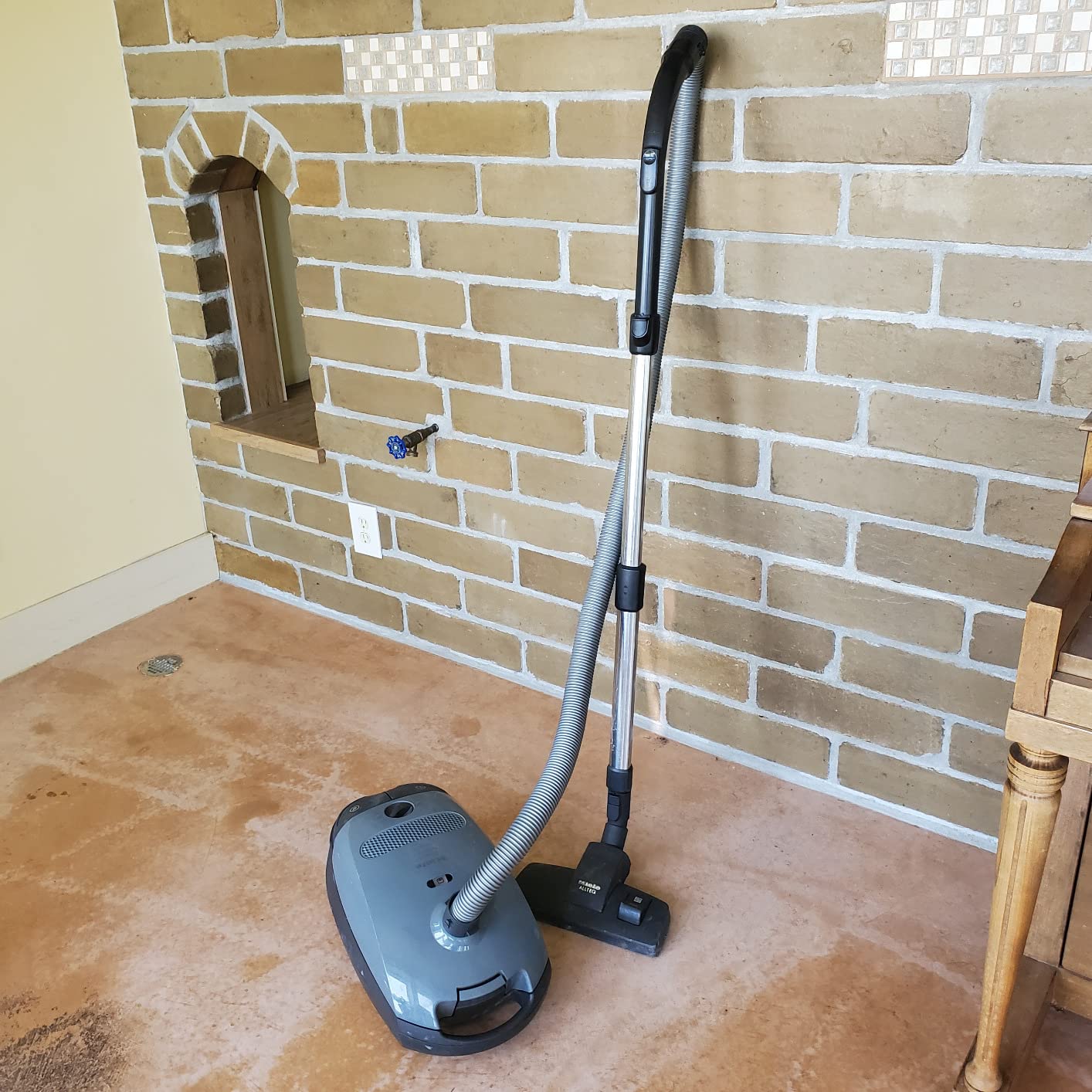
Key details: a 1200W motor with six suction settings, a three-tier AirClean filtration system, an SBD 365-3 combination floorhead and a 4.76-quart bag. It runs at 64 dB, the quietest figure in this roundup, and the chassis is designed to slide under furniture.
It also suits a home that is almost entirely bare wood. The six settings matter more here than the wattage: setting two or three lets the head glide on a smooth finish and pick up fine dust, while settings four through six handle rugs without the head gripping. It is the clearest example in this list of why adjustable suction beats raw power on hardwood.
The gap between floorboards was the test we care about most, and the C1 pulled embedded grit and pet hair straight out of it. The AirClean stack traps dust and spores inside the bag rather than re-releasing them, which is why it keeps appearing in allergy-household recommendations.
Two caveats. The included SBD 365-3 combination head has no wheels and can grab carpet aggressively at higher settings, and many owners replace it with a dedicated Miele parquet head for hard floors. The cord is also around 20 feet, shorter than the 26-foot rewind on the Kenmore 81414.
Who this vacuum suits
It suits an all-hardwood home that also has low-pile carpet, and anyone who values quiet operation and sealed-system containment. Owners consistently report a build that outlasts cheaper machines by years.
Who should look elsewhere
Skip it if running costs matter, since bags and any HEPA upgrade are extra purchases. It is also a poor fit for thick-pile carpet, where an unpowered head has nothing to agitate.
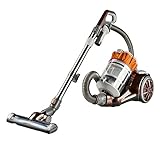
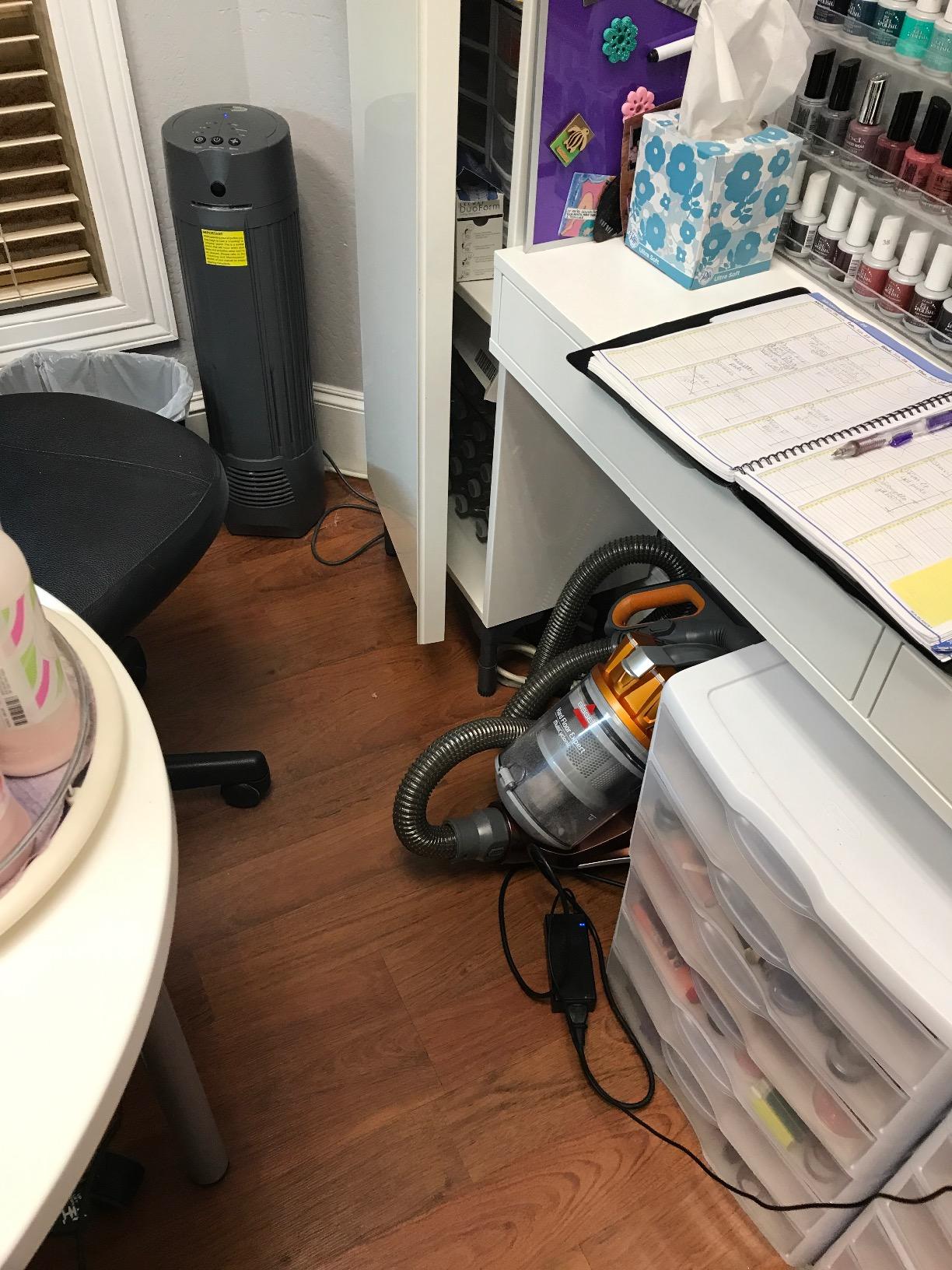
6. Bissell Hard Floor Expert 1547 – The Best Dedicated Hard-Floor Head
Bissell Hard Floor Expert Multi-Cyclonic Bagless Canister Vacuum, 1547 – Corded
Hard-floor turbine foot
Multi-Cyclonic separation
1.6L easy-empty tank
18 ft cord
Pros
- Floorhead designed to be tough on dirt yet gentle on flooring
- Multi-Cyclonic separation sustains suction over repeated cleaning
- Multi-surface head also handles area rugs and carpet
- Two-year limited warranty
Cons
- Small 1.6-liter dirt cup fills fast in a large room
- Cartridge filtration rather than HEPA
- Single power level with no suction adjustment
- Compact tool set
Key details: a hard-floor turbine foot plus a multi-surface foot, Multi-Cyclonic separation, a 1.6-liter bottom-opening dirt tank, an 11-inch cleaning path and an 18-foot cord. Its two-year limited warranty is longer than most in this roundup.
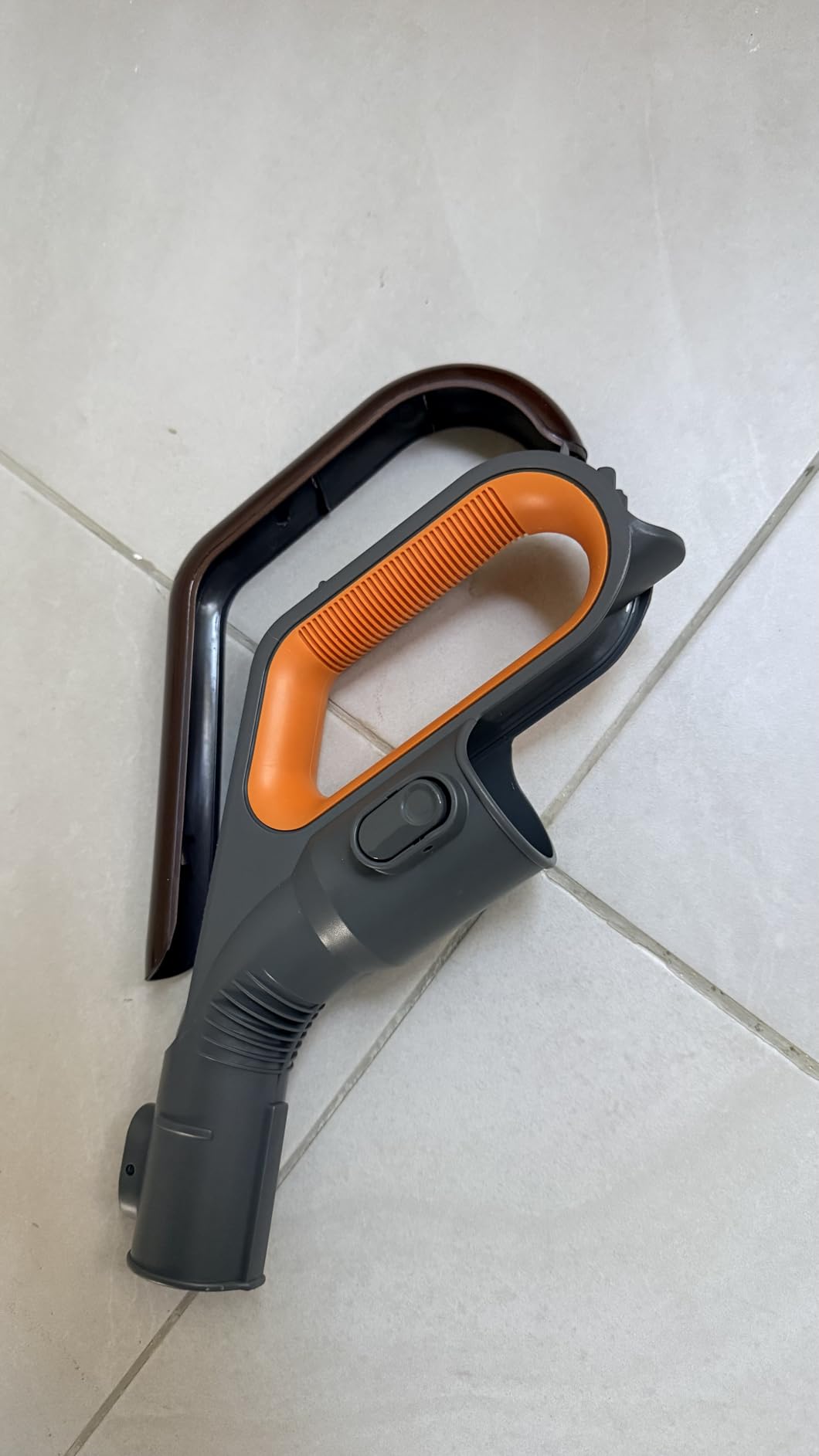
The turbine foot is the reason to consider this machine. It is a hard-floor head first, built to be aggressive on grit while staying gentle on the finish, and it does not scatter crumbs the way a carpet brush does. On our oak floor it collected fine dust and larger debris in one forward pass, and the 11-inch path covers floor reasonably quickly.
Cyclonic separation is what keeps that performance steady. Most bagless machines lose suction as the cup fills, because debris starts blocking the intake; this one held its pickup across repeated passes, and the bottom-opening tank empties by tipping it out rather than pulling a filter off over a bin.
The trade-offs are capacity and control. At 1.6 liters the tank empties twice in a large room with a pet in it, and there is no suction adjustment to soften the head on a delicate finish. Cartridge filtration also means less containment than a HEPA system.
Who this vacuum suits
It suits an all-wood home that is tired of carpet heads, especially if you already know you will not add a HEPA requirement. The rotating clear-window brush system makes it easy to see when hair has wrapped and needs cutting away.
Who should look elsewhere
Skip it for a pet household with allergies, because cartridge filtration and a small open cup work against that goal. Anyone with a very large floor will find the 1.6-liter tank emptied constantly.
7. Akitas C11WT – The Best Twin-Head Pick for Parquet Floors Plus Pet Hair
Akitas C11WT Bagged Canister Vacuum Cleaner, Wessel Turbo Brush for Pet Hair (Cat & Dog), HEPA Filtration, 33ft Cleaning Radius, with Retractable Cord and Wide Parquet Brush
Wessel D320 12.5 in parquet brush
Wessel TK284 turbo brush
1200W with four levels
H13 HEPA
Pros
- Wide natural-bristle parquet brush is built for sealed hardwood
- Separate air-driven turbo brush lifts embedded pet hair from carpet
- 33-foot cleaning radius means fewer plug changes
- H13 HEPA suits allergy-sensitive and pet homes
Cons
- Newer listing with a much smaller review base
- Bagged design requires ongoing consumable purchases
- Suction levels listed inconsistently across product copy
Key details: a 1200W motor with four adjustable suction levels, a 12.5-inch wide parquet brush with natural bristles for hardwood, an 11-inch Wessel TK284 air-driven turbo brush for carpet and pet hair, a 33-foot cleaning radius and H13 HEPA filtration.
Two floorheads is unusual in a canister at this level, and the pairing is genuinely useful. The natural-bristle parquet brush glides over sealed wood and lifted grit from the board seams cleanly, while the air-driven turbo brush pulled embedded hair out of a low-pile rug without the aggressive beater roll that scatters debris on wood.
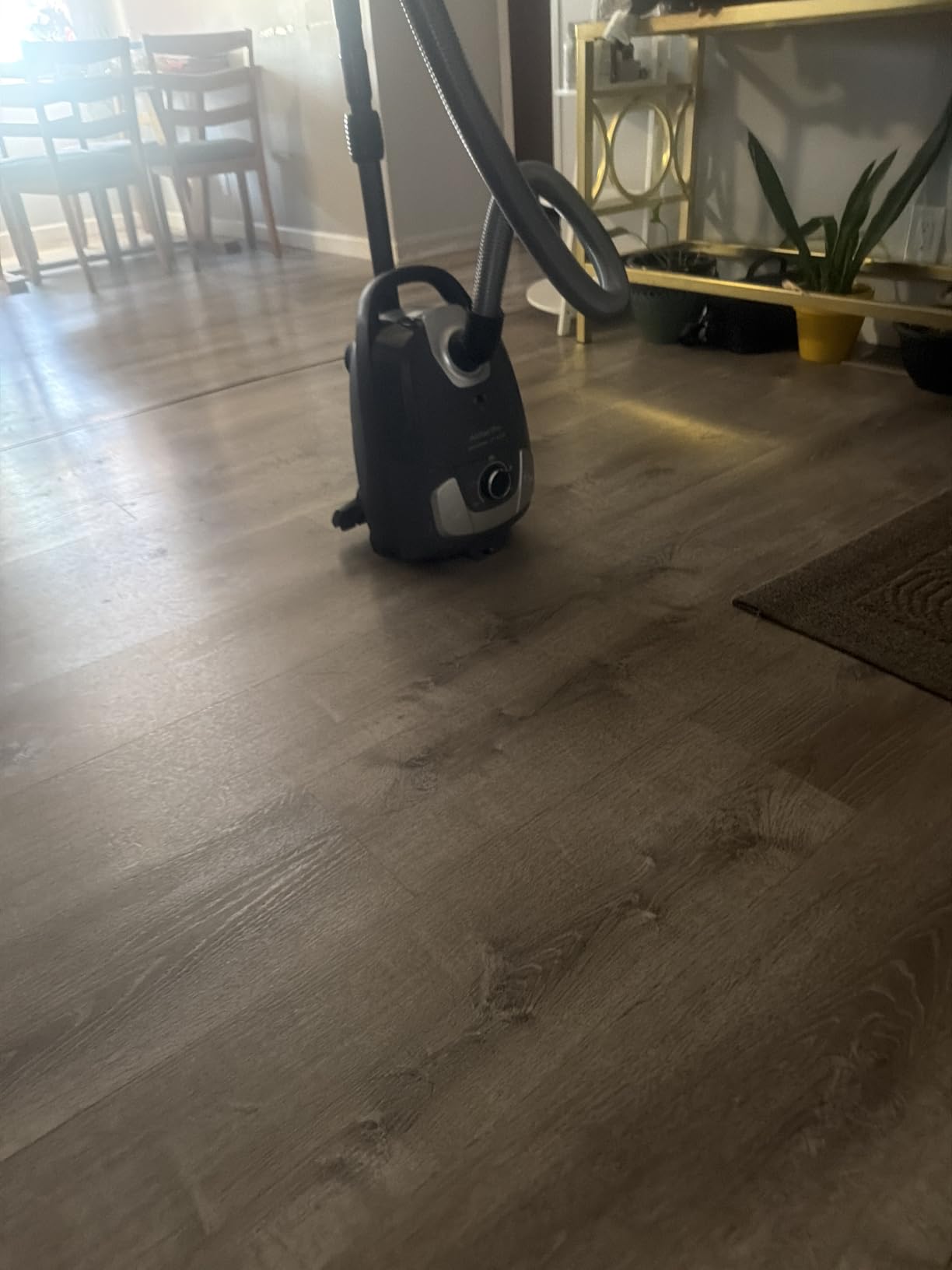
Bagged collection with H13 HEPA and a large dust bag is a sensible combination for a pet home that also has an allergy sufferer, and the bag is discarded rather than shaken. The 33-foot radius came from a 22-foot retractable cord plus a telescopic wand, so most homes clean without touching the outlet.
The reason to pause is the evidence base. With more than 1,400 reviews against tens of thousands for the established names, long-term durability is simply less well documented, and the bagged design commits you to consumables over time. Suction levels are also described inconsistently between the product copy and the specification listing, which is worth confirming with the seller.
Who this vacuum suits
It suits a mixed home, parquet floors and a shedding pet in the same building, where one floorhead would always be wrong for half the surfaces. Allergy households get a sealed, bagged path with no recurring filter replacements.
Who should look elsewhere
Skip it if you want a purchase with a decade of documented service, since the listing is young by comparison. Anyone avoiding bag purchases entirely should choose a bagless model instead.
8. Prolux Tritan – The Best Canister for Owners Who Want One Machine for Years
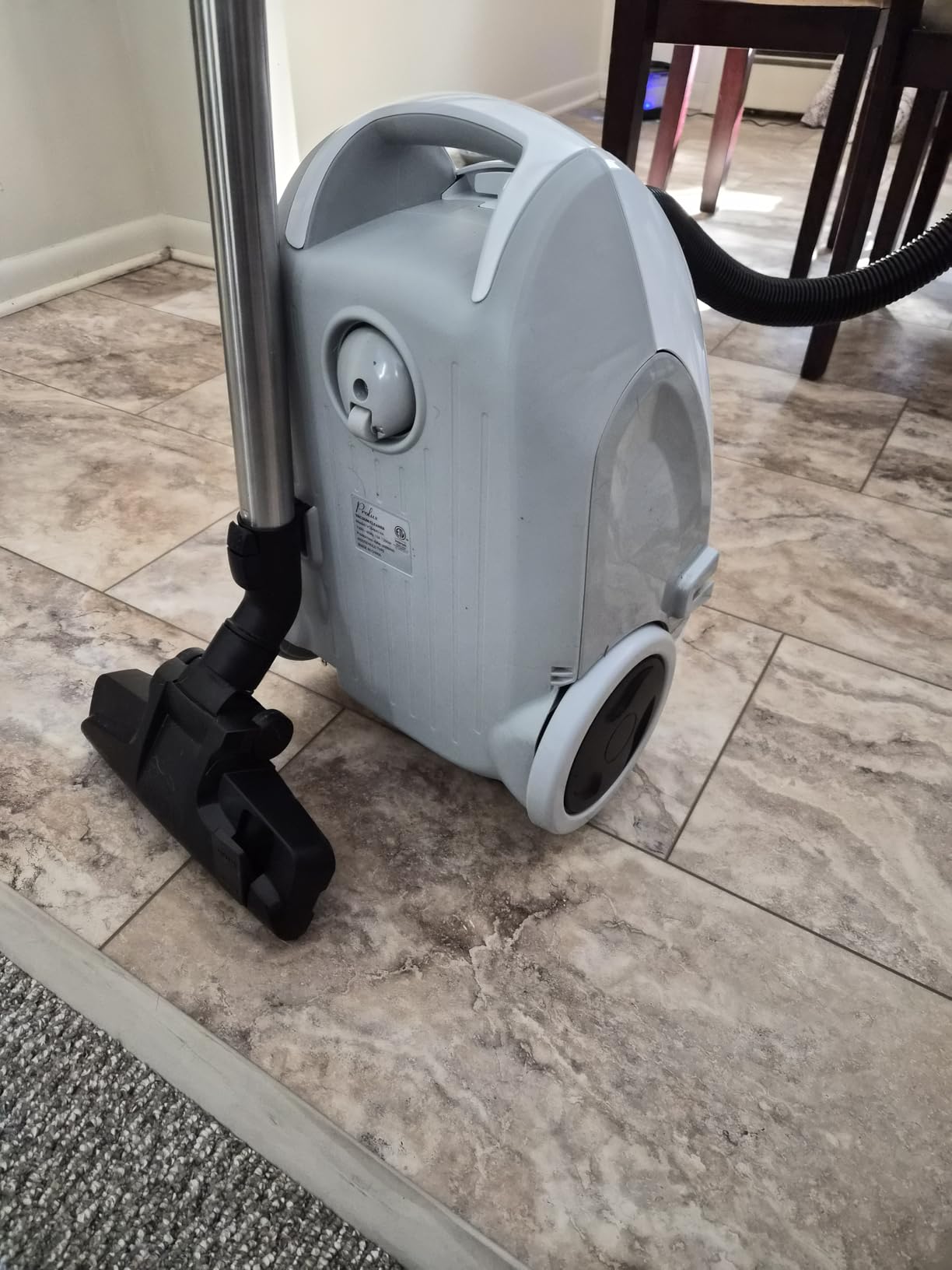
Prolux Tritan Bagged Canister Vacuum Cleaner with Sealed HEPA Filtration, 5-Speed Motor, Best Rated Canister for Pet Hair and Home Cleaning
1440W motor with 140 CFM
Five suction speeds
Sealed HEPA with N95 bags
4.5L capacity
Pros
- 140 CFM airflow and a 1440W motor give serious pickup
- Five power settings tune down for small rugs and drapes
- Sealed HEPA path with N95-rated bags
- Owners report single units lasting seven-plus years
Cons
- Short hose for reaching behind furniture and up stairs
- Turbo brush cannot be opened so hair wraps the bar
- Stiff tool attachment fittings
- Some owners report the filter cover latch loosening
Key details: a 1440W 12-amp motor producing 140 CFM of airflow, five suction settings, sealed HEPA filtration with N95-rated bags, a 4.5-liter bag and rubber wheels. The included tool set covers bare floor, carpet and rugs, crevices, upholstery and dusting.
On sealed hardwood the bare-floor tool and the five-speed control work well together. Turning down to a low setting for smooth finish kept the head moving rather than gripping, and the airflow figure translated into strong pickup of fine dust and grit along skirting boards. Pet hair on hard floor was handled in a single pass.
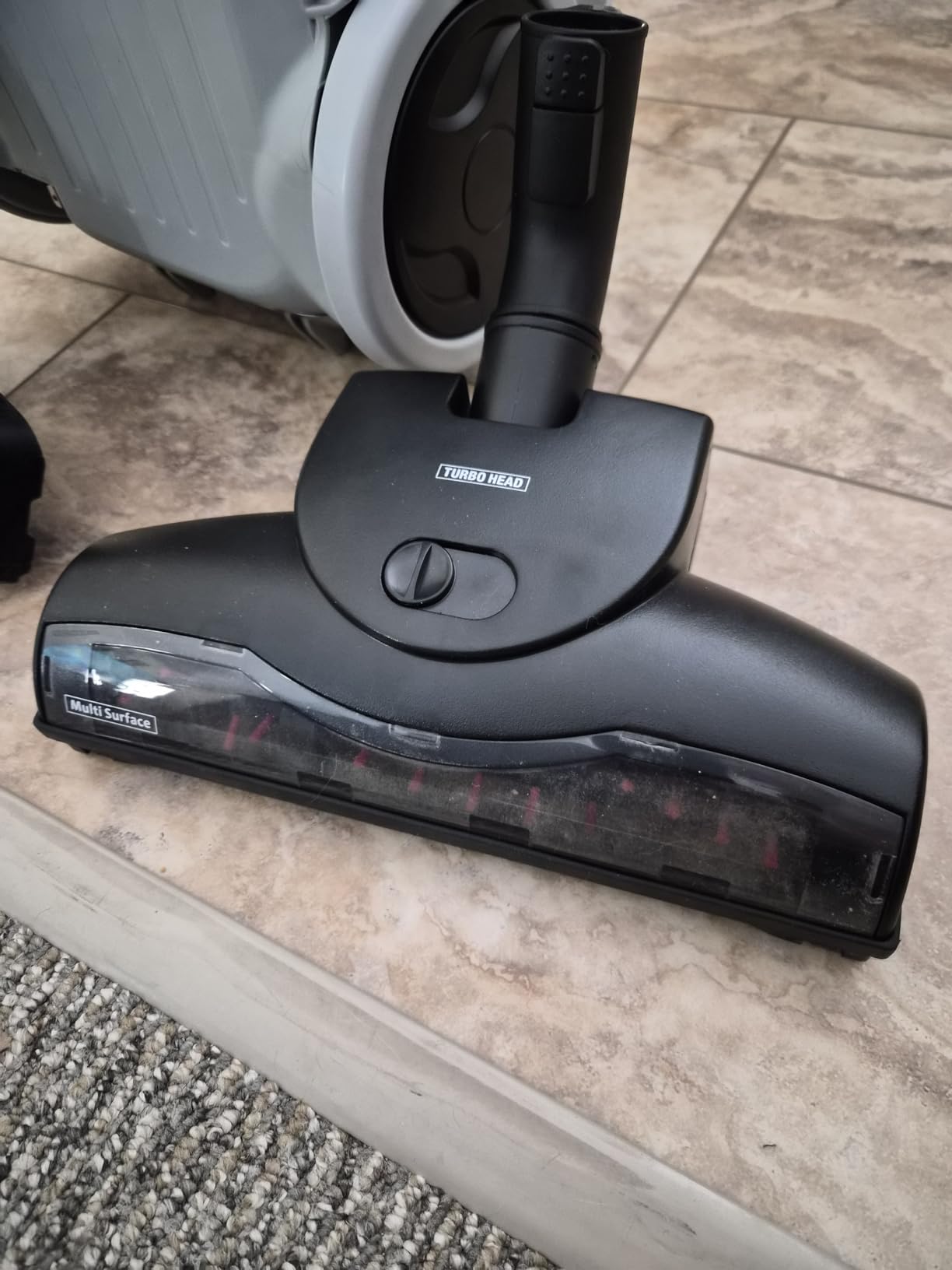
Sealed HEPA containment is the real strength here. The bagged, filtered path suits a home with asthma in the family, and the 4.5-liter capacity means fewer changes in a large house. Owners also report individual machines running seven years or more, which is the durability story you are really buying.
The compromises are physical. The hose is short for reaching behind furniture and up stairs, the turbo brush cannot be opened so hair wraps around the bar, and the tool fittings are stiff to click on and off. With fewer than 1,000 reviews, long-term patterns are thinner than the age of the machine suggests.
Who this vacuum suits
It suits a homeowner who plans to keep one machine for a long time and prefers owning parts over replacing the whole machine. Allergy households get sealed HEPA and N95-rated bags in the same package.
Who should look elsewhere
Skip it if your home has deep stairs or a lot of furniture to reach under, because the short hose forces a better-positioned body that you will reposition constantly. A longer-hose canister suits that layout better.
9. Miele Blizzard CX1 – The Best Bagless All-Rounder for Mixed Flooring
Miele Blizzard CX1 Pure Suction Bagless Canister for Hard Floors
AllTeQ head plus Parquet Twister
1200W Vortex motor
32 ft radius
Lifetime filter
Pros
- Comes with a universal head and a dedicated SBB 300-3 Parquet Twister head
- Hygiene Lifetime filter needs no replacements and retains 99.98 percent
- 32-foot operating radius with a telescopic wand
- Bagless with washable canister and filter
Cons
- Small 2-liter canister needs frequent emptying with pets
- In-handle dusting brush is awkward to deploy
- Rotating carpet brush clogs quickly with pet hair
- 19-pound body
Key details: a 1200W PowerLine motor with Vortex airflow, an AllTeQ universal floorhead plus a dedicated SBB 300-3 Parquet Twister head, a 32-foot operating radius, a maintenance-free Hygiene Lifetime filter and a three-year limited warranty. It runs at 65 dB.
The Parquet Twister head is the reason this machine suits wood. It spins actively enough to pull grit out of seams, which an unpowered head struggles with, without the carpet-style bristle pattern that scatters crumbs. Being handed two heads also means the same machine covers low-pile carpet and upholstery well.
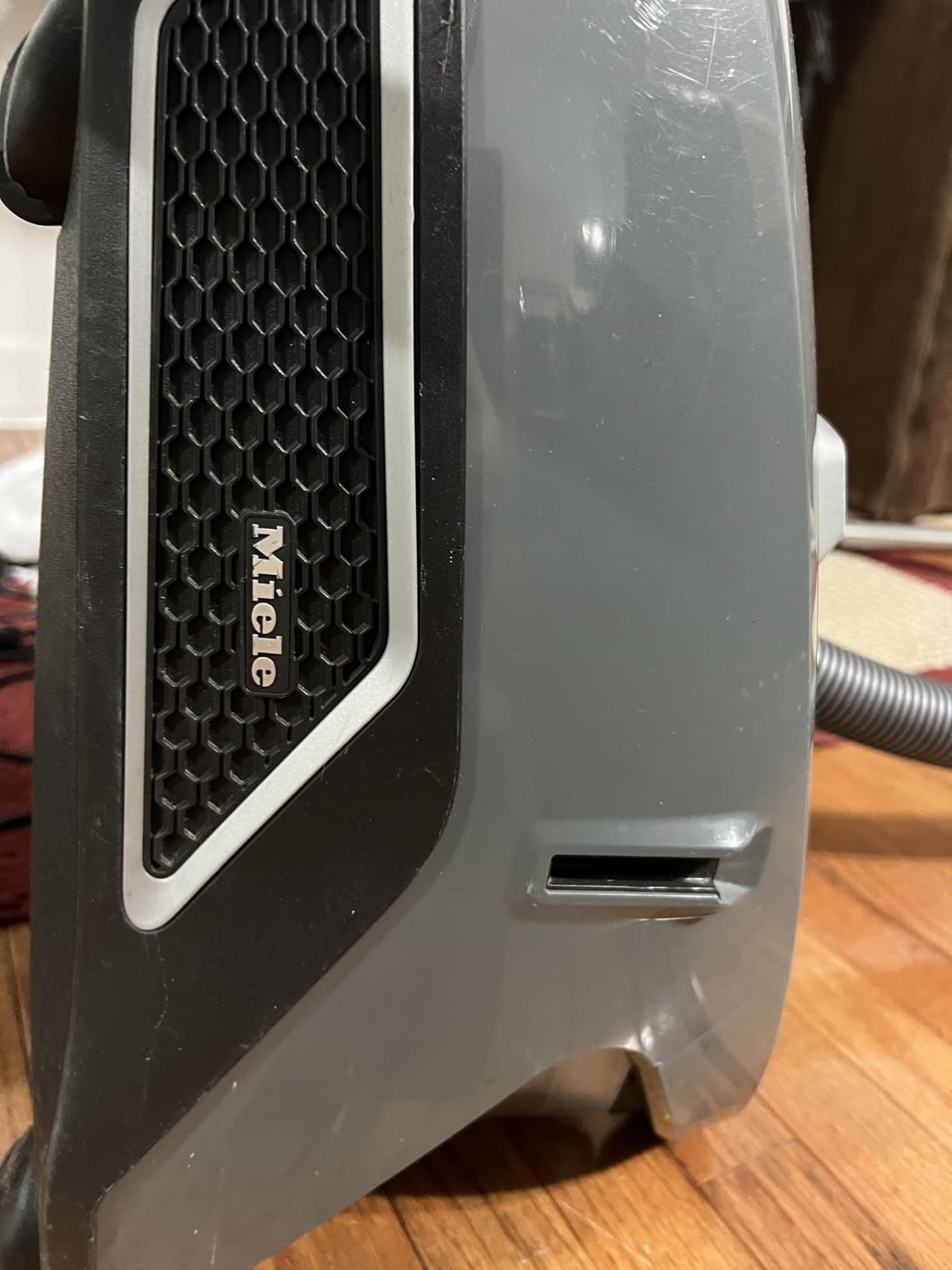
Bagless with a washable canister and filter, it removes both bag purchases and filter replacements from the running cost entirely, and the lifetime filter retains 99.98 percent of fine particles. The 32-foot radius kept us on one outlet across a large main floor, and the telescopic wand handled stairs without an accessory.
The two-liter canister is the weakest point. In a pet home it needs emptying far more often than a bagged machine would, the dusting brush built into the handle is awkward to deploy, and the rotating carpet brush clogs quickly with hair. At 19 pounds it also stays put once parked.
Who this vacuum suits
It suits a mostly-wood home that also has rugs and upholstery, and anyone who refuses to buy bags or replacement filters. Owners with mixed flooring rate the two-head package very highly for flexibility.
Who should look elsewhere
Skip it in a home with a long-haired pet and a lot of bare floor, because the small canister will empty mid-room. Allergy households should weigh hand-emptying a bagless cup against a sealed bagged system.
10. Kenmore 500 Series DC5070.01 – The Best Choice for Carpet-Led Homes With Pets
Kenmore 500 Series Bagless Canister Vacuum with Hair Eliminator Brushroll
Hair Eliminator brushroll
Two-motor cyclonic system
1.2L transparent cup
24 ft cord rewind
Pros
- Hair Eliminator brushroll strips embedded pet hair without scissors
- Two-motor cyclonic suction works on carpet and hard floor
- 24-foot auto-rewind cord avoids tangles
- HEPA filtration captures 99.97 percent of fine dust
Cons
- 1.2-liter cup fills fast and opens on top
- Heavy at 19.2 pounds
- No hard-floor attachment included despite hard-floor marketing
- Emptying the canister is awkward
- One listing mixes two model numbers
Key details: a two-motor cyclonic system, an HEPA filter rated at 99.97 percent down to 0.3 microns, a 1.2-liter transparent bagless cup, a 24-foot auto-rewind cord with a 9-foot telescoping wand, and a Hair Eliminator brushroll designed to strip embedded hair on its own.
The brushroll is the selling point. It removes hair from the roller as it turns, so you are not cutting it off with scissors every week, and that matters most in a carpet-led home. On hard floor the cyclonic suction still lifted crumbs and dust effectively, and the HEPA filter keeps fine particulate contained.
Hardwood is not this machine’s natural habitat, and the box tells you that. There is no hard-floor tool in the package despite the hard-floor marketing, so on sealed wood you rely on the head it comes with, which is not as confident on seams as a dedicated parquet brush.
The 1.2-liter cup is tight for a big open floor and opens on top, so emptying is awkward and can spill dust. At 19.2 pounds it is not a stairs machine, and the listing mixes two model numbers, so some reviews may describe a different unit entirely.
Who this vacuum suits
It suits a home where carpet and rugs cover more floor than bare wood, especially with a shedding pet. If you mostly live on hard floor, put this one lower on your list.
Who should look elsewhere
Skip it for an all-wood house, where you would want a parquet head in the box and a larger cup. Anyone who needs to carry the machine between floors will find 19.2 pounds tiring.
How to Choose a Canister Vacuum for Hardwood Floors
Start with the floorhead, because it decides how the machine behaves on wood. A soft-bristle parquet head such as the 12.5-inch Wessel D320 or the Miele SBB 300-3 Parquet Twister lifts grit from seams and glides across a sealed finish. A hard-floor turbine foot, like the one on the Bissell 1547, is a powered alternative that agitates without carpet bristles. An unpowered combination head is the quietest and most gentle option, and it needs lower suction settings so it does not grip rugs. A rotating carpet brush is the thing to avoid on bare wood, because debris scatter is the most common complaint from owners of those machines.
Suction control is the second priority. Every hard-floor head benefits from turning the power down, because maximum suction on a smooth sealed surface makes the head seal and narrows your path. Six settings on the Miele C1, five on the Prolux Tritan and four on the Akitas C11WT all let you match power to surface. A single-speed machine such as the Eureka NEN180 or the Bissell Zing still works on wood, but you have no dial to soften it, and that is the trade you accept for a lower running cost.
Reading power specs. Three numbers get printed on canister boxes and they are not interchangeable. Motor wattage is the power the motor consumes, not the cleaning power delivered, so a 1200W figure can sit on machines with very different real-world suction. Airflow, listed in cubic feet per minute, measures how much air moves through the path, and the Prolux Tritan states 140 CFM. Suction pressure in kPa appears on budget canisters, where the Eureka NEN180 is rated at 16kPa. Higher is better within each scale, but never compare a wattage to a kPa figure. The practical reading: 1000W to 1440W with a sealed path and a proper floorhead is a healthy range for hardwood, and anything below 1000W is worth checking closely.
Bagged or bagless. Bagged systems contain dust completely, keep the airflow path sealed for allergy households, and add a per-bag cost that recurs for as long as you own the machine. Bagless machines avoid consumables entirely, which is a real saving over five years, but you always empty into a bin and the cup usually holds less, so you empty more often. On hardwood specifically, either works, and the deciding factor is usually the home rather than the floor. Choose bagged if anyone has asthma or a dust-mite sensitivity. Choose bagless if you would rather never order a replacement part.
Filtration. A sealed air path matters more on wood than the carpet label suggests, because fine hardwood dust is the fraction most likely to become airborne. HEPA systems rated at 0.3 microns, as on the Kenmore 81414 and 500 Series, contain the most. Miele’s three-tier AirClean bag system on the C1 traps dust inside the bag. Foam filtration, as on the Eureka 3670M, is fine for general dust and pets but is the wrong choice for an allergy household.
Weight, wheels and cord. Canisters win on wood precisely because the body stays put and only the head moves, but the body still has to follow you between rooms. Anything under 15 pounds moves freely between floors, and the 22.6-pound Kenmore 81414 and 19.2-pound Kenmore 500 Series do not. A 26-foot auto-rewind cord, as on the 81414, saves more time over a large house than any feature after suction control. And buy a machine with a self-righting chassis if you have thresholds, because a 19-pound canister on its side is a lift, not a chore.
A scratch-free routine. Before each pass, cut hair off the roller and check under the head for trapped grit. Vacuum with the suction reduced on sealed wood, one notch higher on rugs. Make slow passes, let the head do the work rather than pushing debris ahead of it, and empty or swap the bag before it is full so airflow does not drop. On unfinished, waxed or oiled flooring, use the lowest setting and the softest head, and test a hidden corner first.
Frequently Asked Questions
What is the best canister vacuum for hardwood floors?
The Eureka NEN180 is our pick for hardwood floors overall, because a bagless 2-liter cup, a washable HEPA filter and a 13.2-pound body mean nothing needs buying after the first day and it still moves between floors. If your wood is nearly all bare floor with some low-pile carpet, the Miele Classic C1 Pure Suction is the better choice, since six suction settings protect a sealed finish.
Will a vacuum scratch a hardwood floor?
Almost never because of the machine itself, and nearly always because of grit and pet hair wrapped under the floorhead, which then acts as an abrasive and grinds a curved arc into the finish. Cutting hair off the roller and checking under the head before every pass removes the cause. Using a soft-bristle parquet head and reduced suction lowers the risk further.
Can I use a Miele vacuum on hardwood floors?
Yes, the Miele Classic C1 Pure Suction is built for hard floors and low-pile carpet, and its six suction settings let you drop the power so the SBD 365-3 head glides on a sealed finish rather than gripping. Many owners upgrade to a dedicated Miele parquet head for hard floors. The Miele Blizzard CX1 is the bagless option and comes with an SBB 300-3 Parquet Twister head in the box.
Which canister vacuum has the strongest suction?
Among these ten, the Prolux Tritan pairs the highest motor rating at 1440W with 140 CFM of airflow, and the Bissell 1547 holds its pickup through Multi-Cyclonic separation. Budget canisters quote suction pressure instead, such as 16kPa on the Eureka NEN180. Do not compare watts to kPa, since they measure different things.
Which bagged canister vacuum is the best for hardwood?
For an all-hardwood home, the Miele Classic C1 Pure Suction leads because adjustable suction and a sealed bagged AirClean system protect the finish and the air. The Kenmore 81414 400 Series is the pick when allergy control is the priority, with a sealed HEPA path and a 2.8-liter bag. For lighter weight, the Eureka 3670M at 8.6 pounds keeps bagged disposal cheap.
What is the best bagless canister vacuum with a powerhead for hard floors?
The Miele Blizzard CX1 Pure Suction is the strongest option, coming with both the AllTeQ universal floorhead and an SBB 300-3 Parquet Twister head plus a maintenance-free lifetime filter. The Bissell Hard Floor Expert 1547 is the dedicated hard-floor alternative, with a turbine foot and Multi-Cyclonic separation in a simpler 14-pound package.
What are the pros and cons of a canister vacuum on hardwood?
Pros: the motor sits in the body, so only a lightweight head moves across the floor, which is easy to steer; suction is adjustable, so the head can glide instead of sealing to a smooth finish; and bagged models contain dust completely. Cons: the body still has to be moved between rooms, many units are heavier than cordless sticks, cord length limits reach, and bagged models carry a recurring bag cost.
How often should hardwood floors be vacuumed?
For a typical household, once or twice a week is enough, and daily passes are only worthwhile in homes with pets, allergies or heavy foot traffic. Vacuuming more often than that increases the chance of grinding grit into the finish. Over vacuuming matters too, since a full bag or cup cuts airflow and pickup.
Final Verdict: Which Canister Vacuum Should You Buy?
The best canister vacuum for hardwood floors is the Eureka NEN180 if you want one machine for bare floor and low-pile rug with nothing to buy after the first day. If your wood is nearly all bare floor with some carpet, the Miele Classic C1 Pure Suction protects a sealed finish better with six suction settings. The Miele Blizzard CX1 gives you a dedicated parquet head and no consumables, pet and allergy households should take the Kenmore 81414 for its sealed HEPA path, and anyone carrying a machine between floors should start with the 7.5-pound Bissell Zing.
Whatever you choose, the head matters more than the horsepower, and two minutes of roller maintenance before each pass will protect your finish better than any specification on the box. If you are still torn between a canister and a cordless stick for mostly-hardwood rooms, our cordless vacuum comparison for studios covers the smaller-space case.