
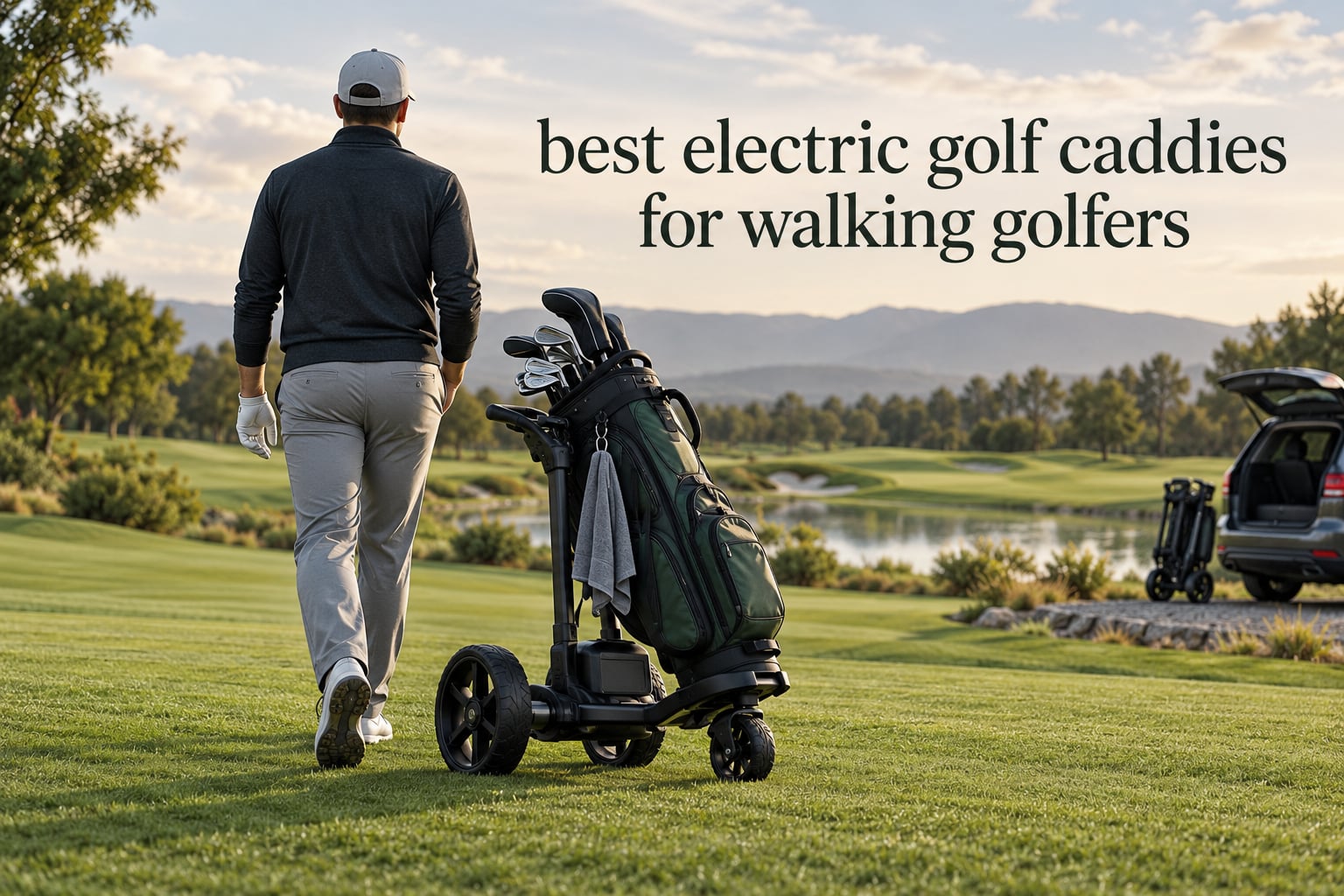
The best electric golf caddy for walking golfers overall is the MGI Zip Navigator All Terrain. It carries a 36-hole lithium battery, steers with a gyroscope-assisted remote, runs dual swivel all-terrain front wheels, and has the largest owner review base of any cart in this guide at 299 ratings. If weight in the car matters more than terrain ability, the MGI Zip X1 does the same job at 26.7 lbs with its battery installed.
That distinction matters more than most spec sheets suggest. A walking golfer is not replacing the walk with a ride. You still cover the same 18 holes at the same pace; the only thing that changes is that a motor takes the 30-plus pound bag off your shoulder and your hands. Research cited across this category recorded roughly 17,000 steps on foot against roughly 6,300 for a riding round, which is exactly the gap an electric trolley closes without closing the round.
This guide covers ten electric golf caddies across the three architectures that actually exist: handle-control carts you steer like a normal push cart, remote-controlled carts you send ahead, and follow-mode carts that track you with no input at all. We ranked them on published specifications and on aggregated owner feedback rather than on unverifiable testing claims, and we say plainly which is which. We also spend a full section on the reasons walking golfers end up regretting one, because those reasons are consistent across owner forums and no roundup bothers to mention them. One last note before the list: a cart is only half the round, and if your long-game numbers are also lagging, our picks for the best fairway woods for golfers are worth a read.
One note before the list, since it shapes every choice here: weight is the number that decides most purchases, and the honest figure is weight with the battery installed. Manufacturers quote both, and the difference on these carts runs from about 4.5 lbs to 6.5 lbs. We quote the with-battery figure throughout. If you are still choosing the bag that goes on it, our guide to the best golf bags for walking covers which weights are worth carrying.
Table of Contents
Top 3 Picks for the Best Electric Golf Caddies for Walking Golfers in 2026

MGI Zip Navigator All Terrain
- 36-hole lithium battery
- Gyroscope remote control
- Dual swivel all-terrain front wheels
- 3-year warranty

KVV Remote Electric Push Cart
- Folds to 17.5 x 18.7 x 22 inches
- 27.9 lb aluminum frame
- 9-speed remote
- Dual electric and manual modes

The Navigator takes the top slot on the strength of its review volume and its terrain hardware, not on a spec-sheet knockout. It is the only cart here combining a 36-hole battery, a gyroscope-straightened remote and a 5th-wheel stabilizer with a 299-rating owner base, which means its reported weaknesses are well documented rather than anecdotal. The KVV earns its place on physical dimensions: at 17.5 x 18.7 x 22 inches folded and 27.9 lbs, it is the most practical cart for a small trunk in this group. The Zip X1 is the cheapest route to a genuine 230W motor and a 36-hole battery, with no remote complexity to learn.
Quick Overview: Electric Golf Caddies Compared in 2026
| Product | Specifications | Action |
|---|---|---|
| MGI Zip Navigator All Terrain |
|
Check Latest Price |
| MGI Zip X1 |
|
Check Latest Price |
| KVV Electric Golf Push Cart with Remote |
|
Check Latest Price |
 Motocaddy M7 Remote Motocaddy M7 Remote |
|
Check Latest Price |
 Wingscaddy Electric Push Cart with Remote Wingscaddy Electric Push Cart with Remote |
|
Check Latest Price |
 Cart-Tek Yellowstone Cart-Tek Yellowstone |
|
Check Latest Price |
 Alphard Cybercart Alphard Cybercart |
|
Check Latest Price |
 Alphard Club Booster V2Pro and Omni Cart Alphard Club Booster V2Pro and Omni Cart |
|
Check Latest Price |
 CaddyTrek R2 Follow Cart CaddyTrek R2 Follow Cart |
|
Check Latest Price |
 MGI Zip X3 MGI Zip X3 |
|
Check Latest Price |
Two entries in that table share the same 31.5 x 23.2 x 40.9 inch footprint, and that is not a mistake. MGI uses one folded envelope across the X1, X3 and Navigator lines and changes the hardware underneath. The practical effect is that if your trunk takes the MGI footprint, it takes all three, and the only question remaining is how much terrain ability you need.
How We Picked and Ranked These Caddies
We did not hands-on test these units, and we would rather tell you that than publish a testing claim we cannot back up. Several competing guides on this topic claim 45-day tests across 15 models with no published evidence. Everything below comes from manufacturer-published specifications and from the aggregated owner review patterns for each cart, and where we describe how a cart behaves we tell you that is aggregated owner feedback rather than our own measurement.
Six criteria decided the ranking, in this order:
1. Motor output and whether there are two of them. Single 230W motors are the entry benchmark here. Dual motors, whether 200W or 230W each, are what make steep gradients and wet turf routine rather than an event.
2. Weight with the battery installed. Not the bare frame, not the shipping weight. This figure decides whether you load the cart yourself or ask someone to.
3. Folded footprint. A cart that fits your trunk is worth more than a cart with a better motor, because a cart that does not fit your trunk never gets used.
4. Downhill and slope hardware. A parking brake, downhill speed control and an anti-tip rear wheel are the three features that separate carts built for real courses from carts built for product photography.
5. Battery headroom. A 36-hole claim on flat ground is roughly a 27-hole claim on a hilly course, so a longer rated capacity means more slack on the days that matter.
6. Architecture fit. Handle, remote or follow. There is no universally best architecture, only the one that matches how you walk and what your home golf can handle.
Pick by Golfer Profile
Route yourself here first, then read the matching review.
Playing hilly or links courses with real elevation: the Alphard Cybercart, with its automatic parking brake and downhill speed control, and the Motocaddy M7 Remote, with dual 230W motors. Both accept 40 lbs of cart because their hardware is heavy for a reason.
Driving a small car with a shallow trunk: the KVV, at 17.5 x 18.7 x 22 inches folded, or the Motocaddy M7 Remote at roughly 26 x 19 x 17 inches. Avoid the Navigator and Cybercart unless someone else handles the lifting.
Joint-conscious golfers and seniors: the Cart-Tek Yellowstone at 33 lbs is moderate, but its dual-mode control means you can push it under your own power for the flat stretches. The MGI Zip X1 at 26.7 lbs is lighter still.
Playing 36 holes in a day, twice in one weekend: any of the 36-hole carts, which leaves headroom for a second loop. The Wingscaddy pairs that capacity with a battery rated for 1500 charge cycles, the longest published cycle figure in this group.
Working to a budget and buying your first electric caddy: the MGI Zip X1 gives you a 230W motor and a 36-hole battery without a remote to learn. The MGI Zip X3 is the same idea with swivel front wheels and a distance function.
Already own a good push cart you like: none of the ten here is a conversion kit, so the honest answer is that you keep the cart. Our MGI vs Motocaddy notes in the buying guide cover when an integrated replacement still makes more sense.
Wanting genuinely hands-free walking: the CaddyTrek R2 is the only follow-mode cart here, and you should read the caveats on follow mode below before committing.
1. MGI Zip Navigator All Terrain – Best Overall for Walking Golfers
MGI Zip Navigator All Terrain Electric Golf Cart – 36 Hole Battery – Remote Control – Accessories Included (Drink, Umbrella, & GPS-Phone Holer), Gloss Black-Matte Black
36-hole lithium battery
Remote with 20 speed settings
37.5 lbs with battery
3-year warranty
Pros
- 36-hole Click and Go lithium battery with plug-and-play charging
- Remote control with 20 speed steps plus handle control for tight areas
- Dual oversized swivel front wheels with all-terrain rear tires and a 5th-wheel stabilizer
- Handle display with color-coded battery levels and an odometer
- Backed by a 3-year MGI warranty on parts
- battery and charger
Cons
- Heaviest cart in the group at 37.5 lbs with the battery
- Remote takes practice before you trust it in tight spaces
I want to be straight about what the Navigator is: a 37.5 lb cart that asks you to lift 37.5 lbs into a car. Owners name that as the recurring drawback without exception, and nothing in the specification sheet fixes it. What makes it the best overall is the combination on the other side of that trade. It has a 36-hole Click and Go lithium battery that detaches for charging, an integrated USB port, and a 3-year MGI warranty covering parts, battery and charger.
The drive side is where this cart separates itself. It runs dual oversized all-terrain swivel front wheels, all-terrain rear wheels and a rear stabilizer fifth wheel, which owners credit with keeping the bag upright on slopes where lighter three-wheel designs tip backward. The 360-degree remote uses gyroscope straight tracking, so it corrects its own line rather than depending entirely on your thumbs, and the handle-mounted display carries variable speed control from 1 to 20 with distance tracking and a total odometer.
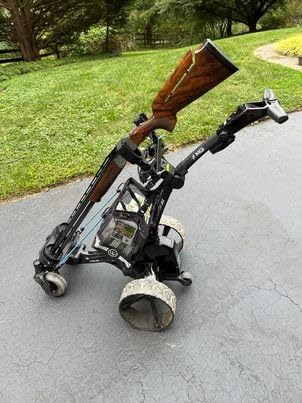
Aggregated owner feedback for this cart is unusually coherent. Across 299 ratings averaging 4.3, roughly 70% sit at five stars, and the recurring themes are all-terrain stability, battery endurance across a full round, and a fold that tucks the rear wheels inward for transport. The same feedback notes the weight as the main drawback, mostly framed around loading rather than pushing.
Downhill Cruise Control is the safety feature that matters most here, and it pairs with the handle control: when you reach a green or a tight lie, you take the speed dial back to guided pushing without turning the motor off. The MGI Zip Fold Technology dual-action fold tucks the rear wheels inward to produce the 31.5 x 23.2 x 40.9 inch folded footprint.
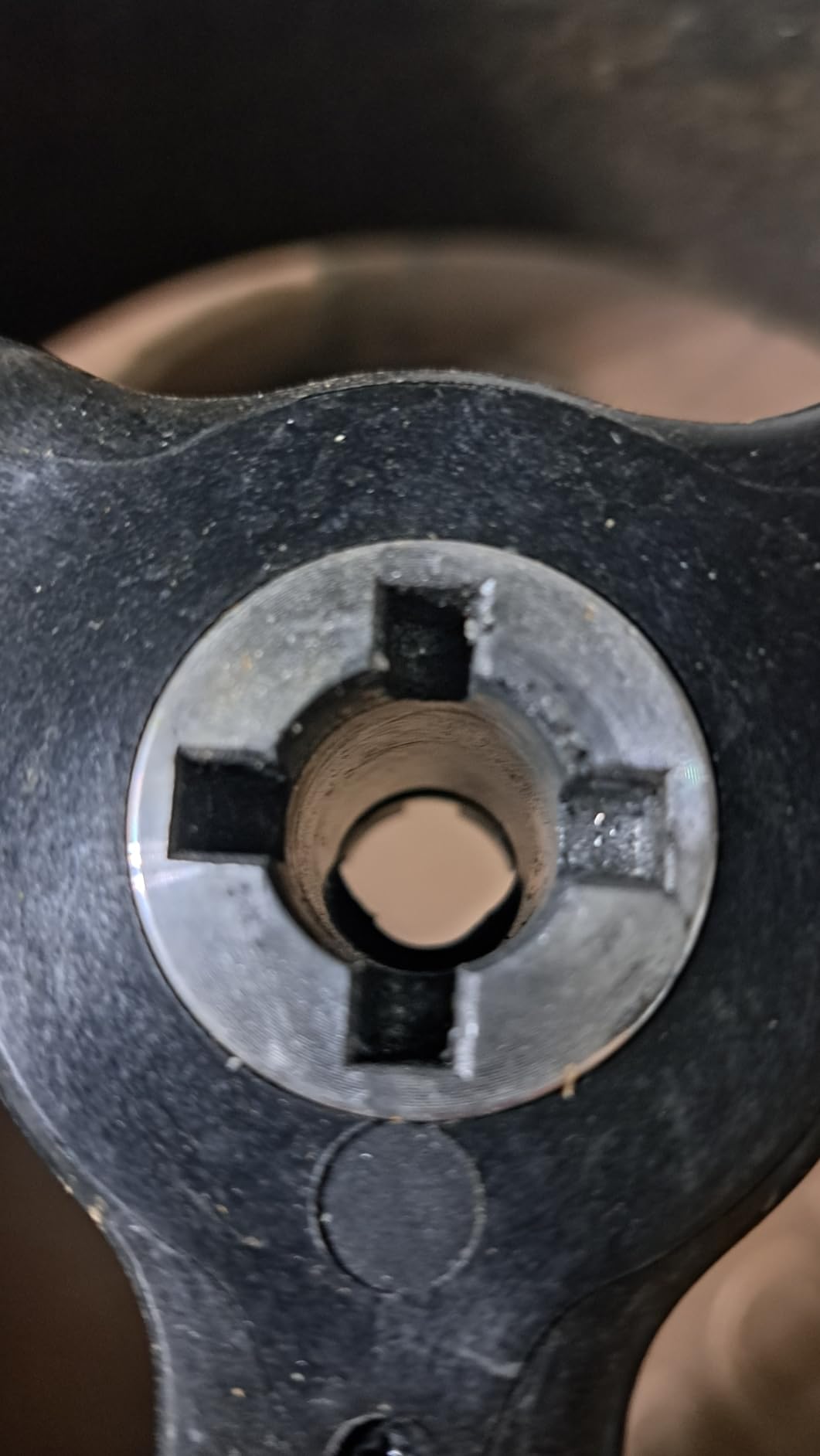
How the Navigator holds a line on sidehill lies
The gyroscope in the remote is doing the work your hands would otherwise do. It reads side-slope drift and adjusts individual wheel speeds so the cart tracks straight instead of crabbing into the rough. On a course with constant sidehills, that is the difference between walking beside the cart and fighting it.
Reviewers also credit the fifth-wheel stabilizer for the same reason. It is a rear outrigger that resists the backward tip on inclines, which matters when a heavy stand bag is loaded high on a slope. Between the gyro and the stabilizer, this is the cart we would trust most on a course with real terrain.
Who should skip the Navigator
Skip it if lifting is your problem. A golfer who cannot comfortably raise 37.5 lbs into a trunk will not use the cart, and an unused cart in a garage helps nobody. Owner threads on r/golf about regretting an electric cart are overwhelmingly about exactly this.
Also skip it if you want simplicity. Twenty speed steps and a gyroscope-assisted remote are a lot of system for a golfer who has never used one. The MGI Zip X1 does the same job with a single dial and no remote learning curve at all.
2. MGI Zip X1 – Best Budget Electric Caddy at 26.7 lbs
MGI Zip X1 Electric Golf Cart – 36 Hole Battery – (GPS Phone)
26.7 lbs with battery
230W motor
36-hole lithium battery
Handle speed dial 1-20
3-year warranty
Pros
- Lightest cart in the group at 26.7 lbs
- easy to lift with the battery removed
- Very quiet operation with 20 speed steps
- Owners report 12 to 25 percent battery use over 9 holes on hilly courses
- Battery detaches in seconds for indoor charging
- Folds more easily than a manual push cart
Cons
- No parking brake
- so the speed dial does not stop the cart on a descent
- Speed steps are incremental rather than truly variable
- Rear-biased weight distribution tips back on steep inclines
- Accessory cup and scorecard holders are poorly designed
The Zip X1 is the answer for a golfer who wants a motor and does not want a remote. It is non-remote, hands-on control, start and stop with a speed dial from 1 to 20, a 2.5-inch LCD display and a 230W motor driving a fixed front wheel, standard rear wheels and a fourth-wheel stabilizer. At 26.7 lbs with the battery and 22.05 lbs without, it is the lightest cart in this guide by a wide margin.
Battery endurance is its quiet strength. Aggregated owner feedback across 150 ratings averaging 4.3 reports several golfers using only 12 to 25 percent of the charge over nine holes on hilly courses, which is a considerable margin over the rated 36-hole figure. The Click and Go lithium battery detaches in seconds for charging indoors, includes a charger and USB port, and carries the same 3-year MGI warranty as the Navigator.
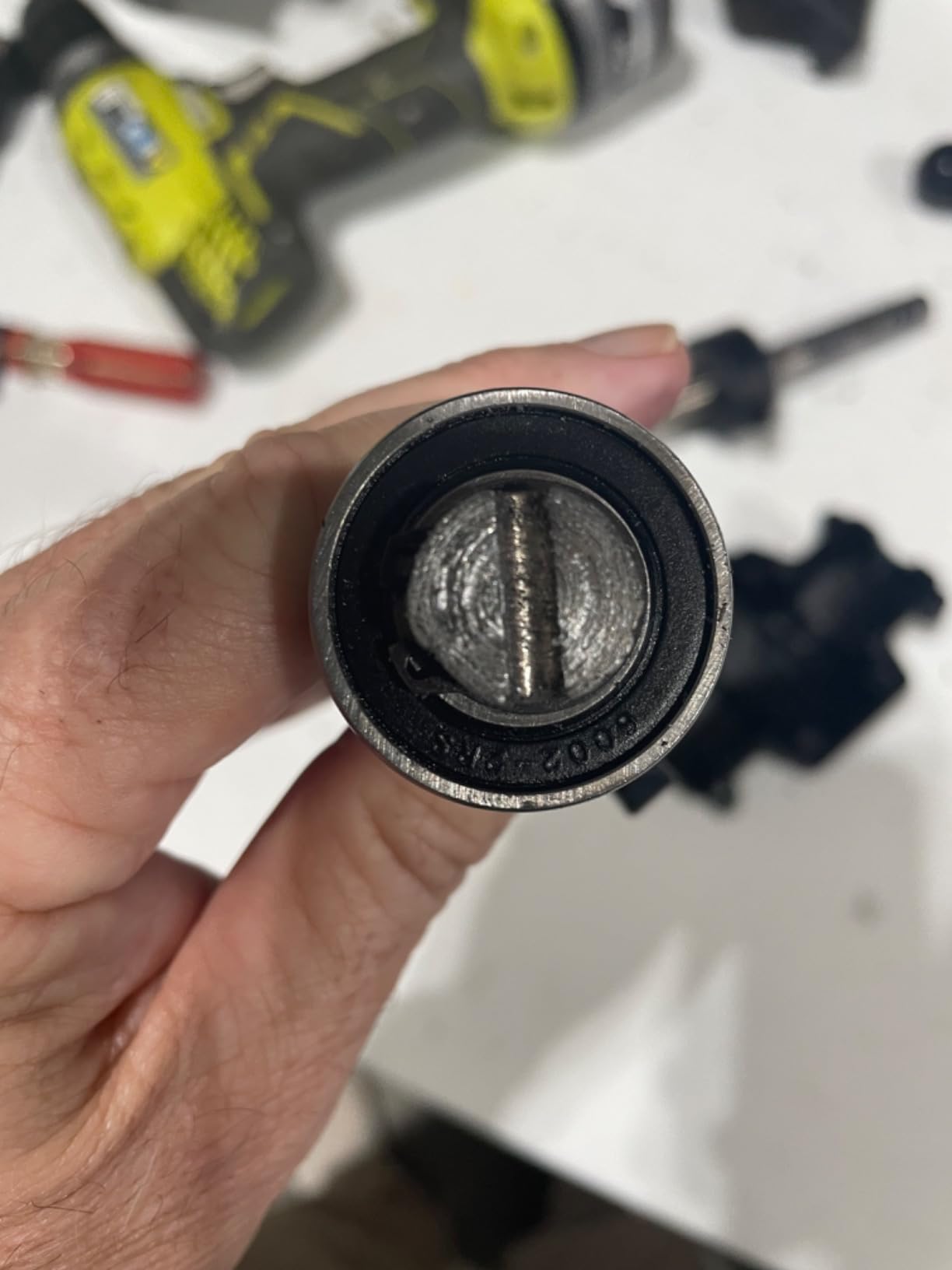
What you give up by skipping the remote is real but specific. The cart does not steer itself, so you hold the handle through every turn, which is precisely what a manual push cart does. The upside is that there is no remote to pair, no learning curve, and nothing electronic to fail except the motor and the display.
The 230W motor is a genuine step above the sub-175W single-motor carts that owners complain about on hills. It will not power up a very steep gradient with a heavy stand bag, but combined with the fourth-wheel stabilizer it handles ordinary course terrain without complaint.
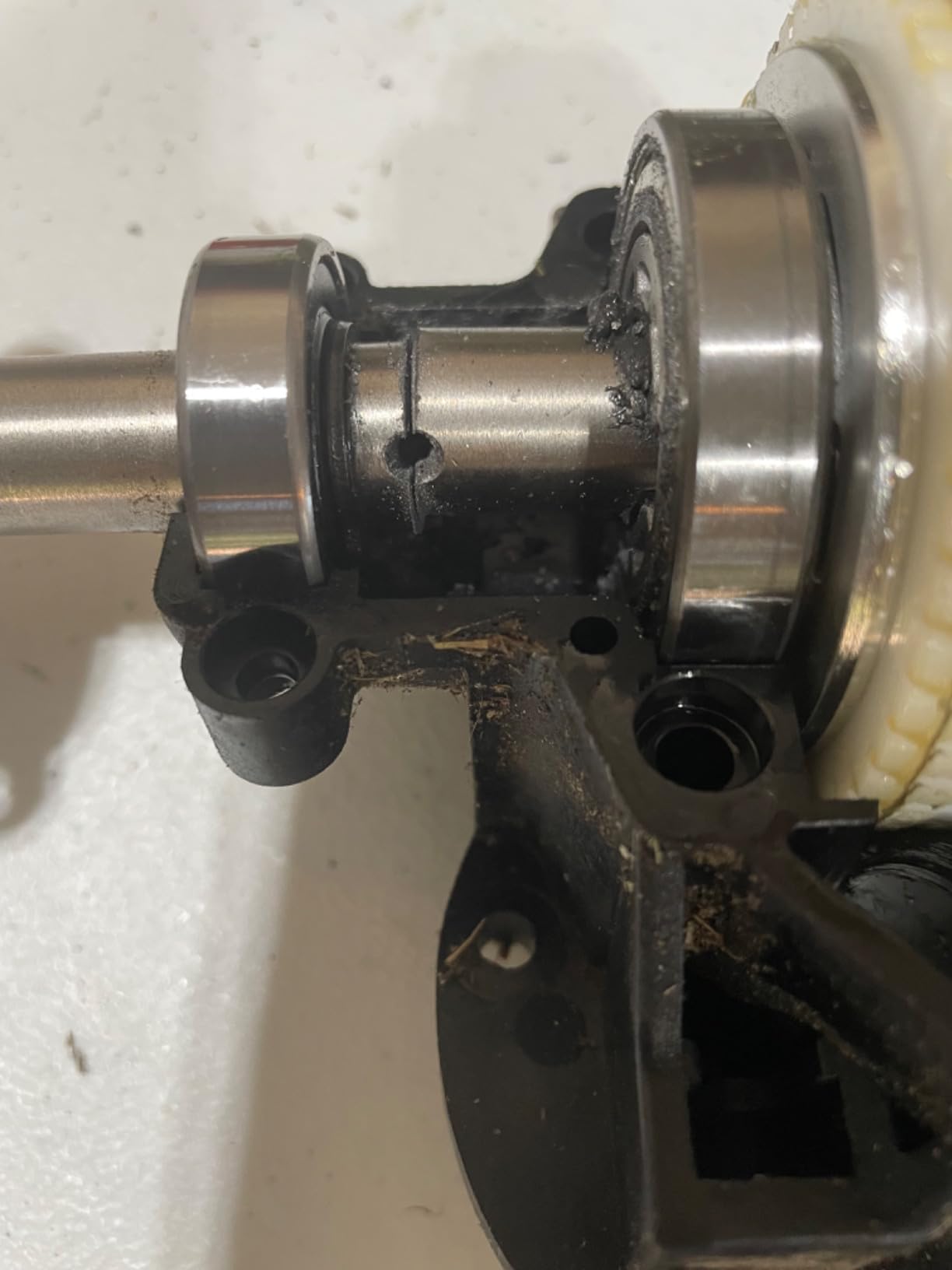
Owners report the same three problems with the Zip X1
The most repeated complaint is the missing parking brake. Because the speed dial controls power rather than braking, several owners work around it by turning the cart sideways on a slope or disengaging drive on descents. If you play a hilly course, know that this is the workaround.
Second is the incremental feel of the dial. A speed of 4 feels too slow and 5 too fast for some golfers, because the steps are not proportional. Third is rear-biased weight distribution that tips the cart back on steep inclines and keeps the fourth wheel engaged. The accessories draw the same criticism as the rest of the MGI line, and a few owners report axle or gearbox failures after a few years.
Who should buy the Zip X1
Buy it if lifting weight is your primary constraint, you play mostly flat or gently rolling courses, and you prefer a dial to a handset. It is the best value-per-pound cart here and the easiest to store in an apartment or a small car.
Pass on it if you play steep courses regularly, because no-parking-brake is a poor match for sidehills. In that case the MGI Zip X3 adds swivel front wheels and a fifth-wheel stabilizer for 2.8 lbs more, or the Navigator adds a brake and a remote.
3. KVV Electric Golf Push Cart with Remote – Best Value and Smallest Fold
KVV Electric Golf Push Cart with Remote Control, Smallest Folding Size, Suitable for All Terrains, Lightweight and Super Compact Electric Golf Cart
Folds to 17.5 x 18.7 x 22 inches
27.9 lbs
9-speed remote
Dual electric and manual
Pros
- Smallest folded footprint in the group at 17.5 x 18.7 x 22 inches
- Light 27.9 lb aluminum frame that still feels durable
- 30.5-inch rear wheelbase gives good stability on hilly wet courses
- Dual-mode design allows manual push if the battery drops
- Two-year manufacturer warranty and responsive support
Cons
- Remote accelerates sharply at higher speed settings and can be jerky in steering
- Switching between electric and manual requires physically locking the rear wheels
- Remote pairing can take several attempts
- Some plastic bag hooks and the remote have cracked in service
The KVV exists to solve one problem better than anything else here: getting a remote-controlled electric caddy into a small car. It folds to 17.5 x 18.7 x 22 inches, which is roughly a third of the volume of the Navigator or the Cybercart, and it does that on a 27.9 lb aluminum frame. For a golfer with a shallow trunk, that single specification outranks everything else on the spec sheet.
The rest of the package is well built for the class. A height-adjustable handle, a 360-degree rotating front wheel, two training wheels and a straight-line tracker give it a 30.5-inch rear wheelbase that owners credit with stability on hilly, wet courses. Control is a 9-speed remote with a braking function, and the battery is rated for 18 holes or more with headroom to spare. Two-year warranty.
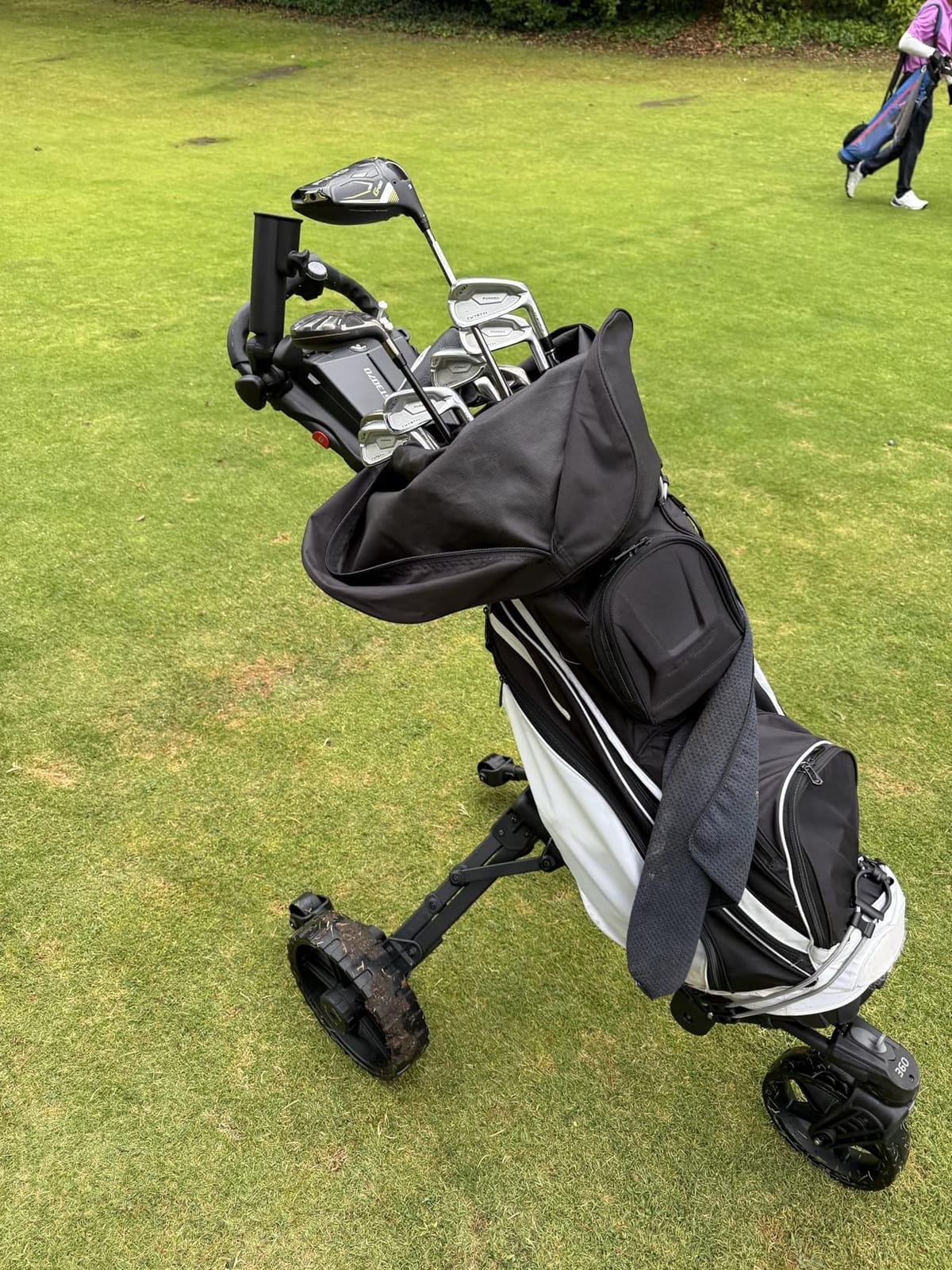
Because this is a dual-mode design, the cart converts between remote electric and manual push operation. That matters more than it sounds: it is the fallback owners ask about constantly when they worry about a dead battery on hole 15. The tradeoff is that the switch is physical, requiring the rear wheels to be locked into place.
The accessory bundle is unusually complete for this tier: battery and charger, remote, umbrella holder, cup holder, an insulated cooler bag, a carry bag and a remote holder are all included in the box. Support has also drawn favorable owner feedback, including a faulty speed knob replaced within days.

Why the compact fold changes the ownership equation
A cart you can lift into a car unaided is a cart you will actually use. Forum regret threads about electric push carts almost always come back to the weight of loading and unloading, and the KVV is the direct answer to that complaint. At 27.9 lbs with a modest folded volume, this is a cart a golfer in their sixties can manage alone.
The 18-hole-plus battery is the trade for that compactness, and it is the one specification to sanity-check against your playing habits. If you only walk 18 holes, 18-plus is fine. If you play 36 in a day, you are cutting the margin much closer than the 36-hole carts allow.
Who should skip the KVV
Skip it if you play 36 holes in one day and do not want to charge mid-round. And be honest with yourself about the remote: owners describe it as accelerating quickly at higher settings and occasionally jerky in left-right inputs, which takes adjustment if you have never used a handset.
Pairing can also take a couple of attempts on first setup. None of that is disqualifying, but if you want the smoothest possible remote behavior, the Motocaddy M7 Remote has the more refined handset, at 20 lbs more to lift.
4. Motocaddy M7 Remote – Best Premium Remote Cart
Motocaddy M7 Remote Electric Golf Caddy – Electric Golf Push Cart with Remote, All-Terrain Ready, Automatic Downhill Control, and Long-Lasting Battery – Accessories Included (Black)
Dual 230W motors
28V lithium battery
Downhill control
60-month battery warranty
Pros
- Dual 230W motors with adaptive terrain stability handle hills confidently
- Downhill control and an anti-tip rear wheel add genuine on-course stability
- Remote handset covers forward
- reverse
- steering
- pause and resume
- Aluminum frame folds to a trunk-friendly size
- Industry-leading 60-month lithium battery warranty
Cons
- Posts the lowest average rating of the carts analyzed at 4.1
- Remote models carry a learning curve versus handle-only operation
- Heavier to lift than the aluminum carts in this group
The M7 Remote is the engineering pick. Dual 230W motors with adaptive terrain stability, a 28V lithium battery, a USB-C rechargeable handset, and a chassis built around downhill control and an anti-tip rear wheel. The motor and battery specification is the best in this guide on paper, and the 60-month battery warranty is longer than anything else here by a wide margin.
The handset is the other draw. It covers forward, reverse, left, right, pause and resume, which is a fuller command set than most competing remotes. The 2.8-inch LCD widescreen display keeps state visible, and the aluminum frame folds to roughly 26 x 19 x 17 inches, which fits a sedan trunk alongside a bag.
What complicates the recommendation is the owner data. At 4.1 across 68 ratings, this is the lowest average rating of the ten carts analyzed, and it has the highest share of one-star reviews. That does not mean the hardware is weak. It means a meaningful group of buyers bought a remote cart and did not adapt to the remote. If you have never driven a remote caddy, that group includes you.
What downhill control actually does for you
Downhill control is the feature that stops the most common fear with remote carts: the bag running away from you on a descent. The M7 meters power to the motors to hold a set speed rather than letting gravity set it, and the electronic parking brake holds position when you stop. Together with the anti-tip rear wheel, it makes slopes a controlled event rather than a white-knuckle one.
The 28V system is also the reason it climbs. Dual 230W motors are the output that owners and competitors agree is the practical threshold for real terrain, and this is the only cart here that pairs that output with a five-year battery warranty.
Who should skip the M7 Remote
Skip it if weight is the deciding factor. Its published weight lands near the top of this group, and the folded size, while sedan-friendly, is larger than the KVV. A golfer who struggles with lifting should look at the KVV or the MGI Zip X1 instead.
Also skip it if you are a first-time electric caddy buyer. The lowest average rating in the group concentrates among people who found the remote harder than expected, and the KVV or the Zip X1 are gentler on-ramp choices.
5. Wingscaddy Electric Push Cart with Remote – Best for Three-Mode Flexibility
Wingscaddy Electric Golf Push Cart with Remote Control – Up to 36 Hole & 1500 Life Cycle Lithium Battery Twin Motors Lightweight MAX-300 Silver Body
Remote, trolley and free-wheel modes
Dual 200W motors
36 holes, 1500 cycles
Pros
- Highest average rating in the group at 4.5
- with 81 percent of reviews at five stars
- Three operating modes in one cart: remote
- trolley and free-wheel
- Dual 200W motors handle large elevation changes without tipping
- 1500-cycle lithium battery is the longest published cycle rating here
- Timed distance advance at 10
- 20 and 30 meters
Cons
- Remote is sensitive
- so holding a direction key can spin the cart around
- Scorecard and drink holders are flimsy plastic
- USB port can interfere with control functions while charging a phone
This cart is the only entry here that names three modes explicitly: remote, trolley and free-wheel. Trolley mode is guided pushing, free-wheel disengages the drive so you can push it like a manual cart, and remote is hands-free steering. Having all three in one chassis means the cart adapts to the hole rather than making you adapt to it.
It also posts the highest average rating of the ten at 4.5, with roughly 81% of its 62 ratings at five stars. Owners describe performance equal to or better than carts costing multiples of it, and credit the motors with handling large elevation changes without tipping. The standard anti-tip wheel and dual 200W motors do that work.
The battery is rated for up to 36 holes and 1500 charge cycles, which is the highest published cycle figure in this lineup and the single most useful number for long-term ownership. Nine speed settings with a timed distance advance at 10, 20 and 30 meters let you send the cart a set distance and let it stop.
What three modes buys you on a real course
On a wide fairway you run remote and walk hands-free. At a tight dogleg or around a water feature you drop to trolley mode and guide it with a hand. On a path shared with walkers you disengage to free-wheel and push it manually. A single-architecture cart forces you to pick one behavior for all eighteen holes.
That flexibility is also the safety net. Free-wheel mode is the answer to the stranded-on-a-slope fear that dominates owner threads, and it works regardless of battery state. A GolfWRX owner describing an Alphard follow unit made a related point about follow accessories working best on flat, hazard-free ground, which is the same underlying issue: a cart that can only do one thing is a cart that eventually disappoints.
Who should skip the Wingscaddy
Skip it if you want a refined remote. The dominant owner criticism is sensitivity, and the workaround is to tap direction keys rather than hold them. If you are not willing to change your thumb technique, pick a handset with a firmer feel.
Watch the accessory quality. Owners report a scorecard holder arriving broken and flimsy plastic drink holders, so budget a replacement cup holder. The USB port also interferes with control functions while a phone is charging on it.
6. Cart-Tek Yellowstone – Best for a Rugged Steel Frame
Cart-Tek Electric Golf Push Cart with Remote Control, Rugged Steel Frame, Dual Quiet Motors, 36+ Holes, 10.4 AH Lithium-Ion Battery, Easy to Use Golf Trolley Caddy the Yellowstone
36 holes on one charge
Dual quiet motors
Steel frame
33 lbs
Remote plus dial
Pros
- Dual whisper-quiet motors with a 10.4Ah lithium battery sized for back-to-back rounds
- Powder-coated steel frame holds up on hills
- turf and gravel paths
- Both remote and handle dial control with an auto-stop safety feature
- Folds to 24 x 27 x 17 inches
- leaving trunk room for the bag
- US family-run company with phone support since 2007
Cons
- Heavier than most aluminum rivals at 33 lbs
- Owners on very steep terrain still manage speed manually
- Smaller review base than the MGI carts in this guide
Every other cart in this guide is aluminum or plastic-bodied. The Yellowstone is a powder-coated steel frame, and that single material choice is the reason to look at it if you play on rough terrain, gravel paths or a course where carts get knocked about. Steel does not flex, and it tolerates impact in a way aluminum tubing does not.
The drivetrain is 36 holes on one charge from a 10.4Ah lithium battery driving dual quiet motors. Quiet is not a marketing word here; it is the reason the motors are specified as such, and owners single it out. On a course where an electric cart running loud is a social problem, that matters.
Control is dual: a remote plus a handle dial, with an auto-stop safety feature. An on-handle battery level indicator removes the range anxiety that owner threads ask about constantly. The folded size of 24 x 27 x 17 inches is deliberately shaped to leave trunk space for the bag alongside it, which is a thoughtful detail most competitors ignore.
Why a steel frame earns its weight penalty
The Yellowstone is 33 lbs, which puts it mid-pack and above the aluminum carts. The case for paying that weight in steel is durability over time rather than liftability today. Owner feedback over a multi-season horizon is where a steel frame earns its keep, and a family-run company in Bend, Oregon with phone support since 2007 is a meaningful factor for parts and service.
The honest limitation is steep terrain. Owners on very steep ground still manage speed manually, so the auto-stop helps but does not eliminate the need for a hand on the dial. Dual motors and a 10.4Ah battery are strong numbers, but no cart in this guide makes a very steep gradient effortless.
Who should buy the Yellowstone
Buy it if you play courses with gravel paths, heavy rough or a reputation for hard carting, and if you want a US-based company to call. The remote-plus-dial combination also makes it a good fit for a household that shares one cart between a hands-free golfer and a guided-pushing partner.
Pass if you are primarily weight-constrained. At 33 lbs with the battery in, a golfer who wants the lightest lift should choose the MGI Zip X1 at 26.7 lbs or the KVV at 27.9 lbs instead.
7. Alphard Cybercart – Best for Hilly Courses
Alphard Cybercart Electric Golf Cart | Remote Control & Compact Folding
Automatic parking brake
6-axis gyroscope
40 lbs
36-hole battery
Freewheel
Pros
- Automatic parking brake holds the cart on any slope
- the key feature on hilly courses
- Low center of gravity and anti-tip wheels for stability
- LCD remote with an out-of-range auto stop
- One-click folding and an extra large storage console
- Freewheel mode converts it to a manual push cart
Cons
- Heaviest cart analyzed at 40 lbs
- Premium price bracket
- Small buyer-review base of 46 ratings
The Cybercart answers downhill runaway with hardware rather than software. The automatic parking brake holds the cart on any slope, downhill speed control meters the descent, and a low center of gravity with anti-tip wheels keeps the bag upright. If your home course has elevation, this is the most complete slope-safety package in the guide.
The 6-axis gyroscope handles straight-line tracking across uneven ground, and the LCD remote adds an out-of-range auto stop, which is a genuinely useful safety feature on a wooded course where trees block the line of sight. The 36-hole battery and one-click folding system complete the package, along with a storage console larger than most.
At 40 lbs, this is the heaviest cart analyzed, and owners accept that trade explicitly. They also pair it with the freewheel mode that converts the cart to a manual push cart, which means the weight is a loading problem rather than a dead-end problem. A GolfWRX thread on this cart framed follow-type automation as working well on flat, hazard-free ground; the Cybercart’s brake and gyro hardware is precisely the answer for the rest of the course.
Why the parking brake is the feature that decides it
Owners most often name the automatic parking brake as the reason to buy this over a non-braking cart, and the logic is straightforward. Without it, a cart on a slope either rolls or requires you to hold a control continuously. That is uncomfortable on a green, distracting on a sidehill, and the reason some golfers quietly go back to pushing.
Combined with the 6-axis gyro, which corrects side-slope drift by varying individual wheel speeds, the result is a cart that tracks a line on ground where other carts wander. For a golfer who plays hilly courses two or three times a week, that is the difference between a tool you trust and a tool you supervise.
Who should skip the Cybercart
Skip it if you are loading the cart yourself. Forty pounds is the heaviest figure here, and no amount of folding cleverness changes that number. If you golf alone and lift your own equipment, this is the pick most likely to sit in a garage.
Also weigh the review base. At 46 ratings, the 4.5 average is well regarded but rests on a smaller sample than the MGI carts. It is a strong buy, just not one with a decade of owner data behind it.
8. Alphard Club Booster V2Pro with Omni Cart – Best for Fast Setup
Alphard Electric Golf Cart: Omni Cart + Club Booster V2Pro Bundle
App and remote control
6-axis gyroscope
Silent brushless motors
Under a minute setup
Pros
- Fastest setup in the group
- under a minute at the course with no clamp tightening
- 6-axis gyroscope keeps the cart tracking straight and steady over bumps
- Distance timer sends the cart 15 or 30 yards with one button press
- App-enabled smartphone control plus a physical remote
- Silent brushless motors with an electronic parking brake
Cons
- Smallest review base in the group at 23 ratings
- Bundle format means the booster base is a separate piece assembled onto the Omni Cart
- Weight and dimensions are not published by the manufacturer
This bundle is built around one insight: most golfers abandon a complicated cart during the first hole because setting it up takes too long. The V2Pro wheelie bars pivot outward and attach to the Omni Cart with no clamp tightening, which owners report gets the cart from bag to ready in under a minute. If you have watched yourself give up on a caddy during setup, that is the whole argument.
The control stack is unusually broad for this tier. You get a physical remote, smartphone app control with phone pairing, and a distance timer that sends the cart 15 or 30 yards on a single button press. The 6-axis gyroscope handles straight tracking over bumps and slopes, the brushless motors are described as virtually silent, and an electronic parking brake holds position on slopes.
The battery is a detachable weatherproof lithium-ion pack, which is the one spec in this guide that addresses rain directly. Anti-tip wheels, umbrella holder and drink holder are included, and the warranty is two years.
What the distance timer changes on a real round
Sending the cart a fixed distance and letting it stop is the feature owners single out most. On a wide fairway, you press 30 yards, walk, and arrive with your bag already positioned. It removes the small constant adjustments that make remote carts tiring to operate over four and a half hours.
The app control adds a layer most competing carts at this level skip, letting you set speed and distance from your phone when the remote is in a pocket. Buyers credit the gyroscope and anti-tip wheels with not tipping on hills, which is the pairing you want on anything other than flat ground.
Who should skip this bundle
Skip it if you dislike assembly. The bundle format means the club booster base is a separate piece that must be assembled onto the Omni Cart. If a one-piece cart that opens from the trunk is more appealing, the Cybercart or the KVV are simpler objects.
Also weigh the evidence. At 23 ratings this is the smallest review base in the guide, and the manufacturer does not publish weight or dimensions, which makes it harder to plan for transport. Ask the seller for those two figures before committing.
9. CaddyTrek R2 Follow Cart – Best for Hands-Free Follow Mode
CaddyTrek R2 Electric Golf Follow Cart, Black
Follow mode with ultrasound and RF
100-foot remote range
39 lbs
Four operating modes
Pros
- Only cart here with true hands-free follow mode using combined ultrasound and RF tracking
- Four operating modes: follow
- marching
- remote and manual push
- Remote mode reaches 100 feet for unattended tee-to-tee sends
- Gyroscope-assisted straight-line tracking over uneven terrain
- Five accessories included at no extra cost
- including a CaddyBelt
Cons
- Heaviest build in the group at 39 lbs
- Most compact remote range here at 100 feet
- Smallest review sample at 22 ratings
The R2 is the only genuinely hands-free cart in this guide. Follow mode uses a combination of ultrasound and RF signals to track you, which is a different and more robust approach than a single sensor type. When you want the bag with you at walking pace without touching anything, this is the one that does it.
The catch is that it is not only a follow cart. Multi-mode operation covers follow, marching, remote and manual push, so you are never locked into the automated mode. The remote reaches 100 feet for unattended sends between tee boxes, and an onboard gyroscope handles straight-line tracking over uneven terrain. The belt worn by the player is included with the accessory pack.
At 39 lbs and a 25 x 21 x 16 inch folded package dimension, it is among the heaviest and the largest here, and the 100-foot remote is the shortest in this group. With 22 ratings, this is also the thinnest evidence base in the guide.
Where follow mode works and where it stops
Follow mode works best on open, gently rolling ground with clear line of sight between you and the bag. That is a real description of maybe a third of the holes on most courses. On a steep sidehill, in deep rough, or where trees break the signal, you will be switching back to remote or marching mode.
That is a limitation of the technology rather than a fault in this cart, and it is worth being honest about. The GolfWRX discussion of the Alphard Cybercart raised exactly this point about follow accessories working well on flat, hazard-free ground. The combined ultrasound and RF sensing here is a better implementation than most, but no follow system replaces steering on real terrain.
Who should buy the R2
Buy it if you have a shoulder or back that reacts to a guiding hand on a handle, and if you mostly play open courses. The four-mode design means the automated feature is an option rather than a requirement, which is exactly the right structure for a walking golfer.
Pass if trunk space or lifting is tight, or if you want long-range unattended sends. A Golf Monthly forum owner described a long-serving cart as deployable from the boot in under a minute, and that kind of routine is easier with a lighter, smaller cart like the KVV.
10. MGI Zip X3 – Best Distance Control Without a Remote
MGI Zip X3 Electric Golf Cart – 36 Hole Battery – (Drink, Umbrella, & GPS Phone)
Single 230W motor
29.5 lbs with battery
36-hole lithium battery
Distance function
Pros
- Mid-weight step up with swiveling front wheels and all-terrain rear wheels
- 5th-wheel stabilizer handles hills without tipping
- Controlled Distance Function sends the cart ahead at set distances
- Color-coded battery level on a 2.5-inch LCD
- 36-hole battery with a USB charging port
Cons
- No remote control
- unlike most carts in this class
- Rear-biased weight distribution can keep the 5th wheel engaged on inclines
- Speed dial does not act as a brake on downhills
- Same accessory criticisms across the MGI line
The Zip X3 sits between the Zip X1 and the Navigator, and the difference is wheel hardware. It carries swiveling front wheels and all-terrain rear wheels plus a 5th-wheel stabilizer, against the X1’s fixed front wheel and standard rear tires. That is the whole reason to step up 2.8 lbs, and on a course with any slope it is a meaningful change.
It also adds the Controlled Distance Function, which sends the cart ahead at set distances while you still hold the handle. On an electric cart with no remote, that is a halfway house between guided pushing and hands-free, and owners who wanted that middle ground generally rate it well at 4.2 across 96 ratings.
The rest matches the X1: a single 230W motor, a 20-step speed dial, a 2.5-inch LCD with color-coded battery levels, a 36-hole Click and Go lithium battery with charger and USB port, and a 3-year MGI warranty. At 29.5 lbs with the battery and 24.80 lbs without, it shares the same 31.5 x 23.2 x 40.9 inch envelope as the rest of the line.
Distance control versus a full remote
The Controlled Distance Function is the feature to understand before buying. It advances the cart a set distance and stops, which removes the tedium of holding a steady speed for long straight walks. It does not steer, which is why the cart remains non-remote and why the MGI line also carries the Navigator for golfers who want full hands-free control.
Owners value the 5th-wheel stabilizer for the same reason they value it on the Navigator: it stops the rear-biased weight distribution from tipping the cart back on an incline. The shared complaint is that the speed dial does not act as a brake on a downhill, so the same manual workaround applies as on the X1.
Who should buy the Zip X3
Buy it if you want the MGI platform with better wheels than the X1, you do not want a remote, and you play on terrain with enough slope to justify swivel wheels and a stabilizer. The 36-hole battery leaves comfortable headroom for a long round.
Pass if you are weight-constrained, because 29.5 lbs is not the lightest option here, or if you play flat municipal courses where the extra wheel hardware goes unused. On flat ground the Zip X1 does the same job for 2.8 lbs less.
When Not to Buy an Electric Golf Caddy
An electric golf trolley is a strong purchase for most walking golfers and a poor purchase for a few specific situations. There is a thread on r/golf titled “Anyone regret getting an electric push cart?” with an answer about remembering one being heavy and hard to transport, and that regret pattern is consistent enough to name.
1. If you cannot lift 30-plus lbs into a car without help. This is the dominant complaint across owner forums and across competitor guides. An electric caddy replaces a shoulder load with a trunk load. If lifting is the problem, a lightweight manual push cart solves it at a fraction of the weight and complexity. A GolfWRX owner describing a Motocaddy M1 DHC called it the best money they had ever spent on golf, and then listed heavy as the first con without contradiction. Both are true.
2. If you plan to travel by air regularly. These are not airline-friendly. Batteries of this capacity have air-freight restrictions, the folded packages are bulky, and checked baggage fees and gate-checking complicate a round. For a golfer whose golf travels more than their cart, that is a poor match.
3. If you want one device that never fails. Every cart here has a battery, a motor and control electronics. A dead battery on hole 15 with no manual disengage is a genuinely bad afternoon. Check the fallback before you buy: the Wingscaddy, the KVV, the Alphard Cybercart and the CaddyTrek R2 all convert to manual push.
4. If you have no storage for a folded cart. The compact options here fold to 17.5 x 18.7 x 22 inches at best. A small apartment with no closet or trunk space is a real constraint, and no feature compensates for a cart that lives in the hallway.
5. If you are fit, walk every round, and never felt fatigue. A manual push cart is 15 to 20 lbs, has no battery to charge, no motor to fail, and will outlast any electric cart in this guide. A Golf Monthly forum owner reported 10 years with a cart that still starts instantly, which is the honest counterweight: longevity is possible, it just is not guaranteed, and it comes with electronics.
One more caveat belongs here. Battery capacity ratings are upper limits measured on flat ground. Hills, wet turf, heavy bag payloads and a cold battery all reduce them, and the reduction is meaningful. Treat a 36-hole rating as a 27-hole reality on a hilly course and choose accordingly.
How to Choose an Electric Golf Caddy That Lasts
Start with the control architecture, not the features
There are three architectures and they suit different golfers. Handle control is a speed dial you hold while walking; the cart steers exactly like a push cart, nothing steers itself, and there is the least to learn and the least to break. The MGI Zip X1 and Zip X3 are the examples here.
Remote control gives hands-free sending with a handset covering forward, reverse and steering. It is the most common architecture and the most powerful on hills, because you are not physically pushing a 30 lb load uphill. It also carries a real learning curve, and it is where the lowest average ratings in this group sit.
Follow mode tracks you with sensors and needs no input. It is the most comfortable option for a golfer whose shoulder or back reacts to a guiding hand, and the least reliable on sidehills, rough and tree-lined holes. If you want it, treat it as an addition to another mode rather than a replacement.
The single question that decides it: do you want a motor to help you push, or do you want the motor to carry the bag? Those are different products, and the ten picks here split evenly between them.
What a 6-axis gyroscope actually does
A gyroscope in a golf cart is a motion sensor that detects how the cart is tilting and drifting relative to the direction of travel. A 6-axis unit reads three rotational axes and three axes of acceleration, which means it can sense both the rate the cart is turning and the way the ground is pushing it sideways.
When the cart starts to drift on a sidehill, the controller reduces power to the inside wheel and increases it to the outside one, straightening the path without any input from you. That is why gyroscope-equipped carts, including the MGI Navigator and both Alphard models here, track a line across uneven ground where non-gyro carts wander into the rough. The practical difference shows up most on courses with consistent side-slope lies, and hardly at all on a flat parkland course.
Read hole capacity as an upper limit, not a promise
Rated capacity is measured on flat ground at a set pace. Real rounds add hills, wet turf, rough, a heavy bag and a battery that is not at full charge at the tee. The practical rule from owner feedback across this category is that a 36-hole rating delivers somewhere in the mid-to-high 20s on a hilly course.
Battery chemistry matters as much as capacity. Lithium-ion packs dominate this list, weighing less and charging faster than sealed lead acid, though lighter batteries can reduce stability on steep ground if the pack sits high. Cycle rating is the long-term number: the Wingscaddy publishes 1500 charge cycles, and other packs in this class are rated in the several-hundred range. A higher cycle rating means more seasons before a battery replacement becomes an expense.
Two charging habits extend pack life more than any specification. Store the battery off-season on a partial charge in a temperature-stable space, and avoid running it fully to depletion repeatedly. Partial charges are harder on lead acid than lithium, so the advice reverses if your cart ships with a sealed lead acid pack.
Use 175W as the floor and twin motors as the target
Below roughly 175W, a single motor struggles on a gradient and owners report the exact symptom that fills search results with “why does my electric golf cart struggle to go up hills.” Above that, four things cause the complaint: an underpowered single motor, a battery that has dropped below useful charge, wet or soft turf adding drag, and a heavy stand bag raising the payload.
Twin motors at 200W or 230W each are the configuration that removes the problem. The Motocaddy M7 Remote runs dual 230W motors, the Wingscaddy runs dual 200W, the Cart-Tek Yellowstone runs dual quiet motors on a 10.4Ah pack, and the MGI Navigator’s dual swivel all-terrain front wheels serve a similar traction role. If you play hills, pay for two motors.
A 5th-wheel stabilizer or anti-tip rear wheel matters nearly as much. It is the part that stops a rear-heavy bag from tipping the cart backwards on an incline, which is the failure owners describe on the lighter carts that lack it.
Check weight with the battery, then check the trunk
The carts in this guide run from 26.7 lbs with the battery to 40 lbs, and the manufacturer-quoted bare-frame weight is typically 4.5 to 6.5 lbs lower. Quote the loaded figure when you test-lift a cart in a showroom, or you will be surprised later.
Then check folded dimensions against your actual trunk, not a manufacturer’s illustration. The KVV at 17.5 x 18.7 x 22 inches is the tightest here, the Motocaddy M7 folds to roughly 26 x 19 x 17 inches, the Cart-Tek folds to 24 x 27 x 17 inches with room left for the bag, and the MGI line shares a 31.5 x 23.2 x 40.9 inch envelope. The Alphard Cybercart is the largest, at 21.5 x 22.5 x 25.5 inches before folding.
If the lift is going to be a two-person job, the compact carts earn their specification over a larger one. If someone else handles the car, prioritize motor output and slope hardware instead.
Verify the slope hardware and the rain story
Before buying, confirm three things: an electronic or automatic parking brake, downhill speed control, and a manual or free-wheel fallback. Those three features exist because downhill runaway is the safety fear that stops more walking golfers from using a remote cart than any other issue.
On weather, published ratings vary widely across the category, with entries quoted from IPX3 up to IP65 and one bundle here specifying a weatherproof detachable lithium-ion pack. Treat any of those as splash resistance, not waterproofing. Do not submerge any of these carts, and dry the electronics after a wet round rather than relying on the rating.
MGI or Motocaddy: the head-to-head
These two brands appear in most competing lineups, and the honest answer is that they optimize for different things. MGI is the stronger choice on value and weight, with three carts in this guide spanning 26.7 to 37.5 lbs, consistent 36-hole Click and Go batteries, a 3-year warranty and the broadest owner review base of any brand here.
Motocaddy is the stronger choice on drivetrain specification and battery warranty. The M7 Remote’s dual 230W motors and 60-month lithium battery warranty are the best numbers in this guide, and the handset command set is the most complete. The trade is a lower average owner rating and a heavier cart.
If we had to pick one for the typical walking golfer, the MGI platform is the safer default on weight, price and evidence volume. If your course has real hills and you already handle heavy equipment, the Motocaddy’s motors and battery warranty justify the lift.
Motocaddy or PowaKaddy, and where conversions fit
Motocaddy and PowaKaddy are the two dominant UK-first brands in this category, and both carry the same structural disadvantage for a US buyer: parts and service run through a thinner domestic network. Our lineup includes a Motocaddy and no PowaKaddy, which reflects what was available with US fulfillment and support at the time of writing rather than a judgment on the brand’s engineering.
On conversion kits, the honest answer for this lineup is that none of these ten is a conversion product. Kits that electrify a push cart you already own make sense if the cart you own is a good frame and the kit includes battery, motor and control. If the existing cart is entry-level, an integrated cart like the MGI Zip X1 will usually be cheaper and better supported than a kit plus a mediocre base.
Frequently Asked Questions
What is the best motorized golf cart for walking?
For most walking golfers the MGI Zip Navigator All Terrain is the best overall choice, combining a 36-hole lithium battery, gyroscope-assisted remote steering and all-terrain swivel wheels with the largest owner review base in the category. If lifting weight is the deciding factor, the MGI Zip X1 at 26.7 lbs with battery is the better fit.
What are the downsides of electric golf carts?
The most cited downside is weight in transport, since carts here run from 26.7 to 40 lbs with the battery installed and the bare frame is 4.5 to 6.5 lbs lighter. Other drawbacks include dependence on battery and electronics, a stored footprint of up to 40 inches, no airline transport option, and the need to check course rules. Carts with a free-wheel or manual push mode remove the stranded risk.
Can an electric golf cart climb hills?
Yes, provided the motor output is adequate. Treat roughly 175W as the floor for a single motor, and prefer twin motors at 200W or 230W each for steep gradients. The Motocaddy M7 Remote with dual 230W motors and the Wingscaddy with dual 200W motors are the strongest hill configurations here. A 5th-wheel stabilizer or anti-tip rear wheel prevents the rear tip on an incline.
Why does my electric golf cart struggle to go up hills?
Five causes account for most cases: a single motor below roughly 175W, a battery that has dropped below useful charge, wet or soft turf adding drag, a heavy stand bag raising the payload, and a gradient steeper than the drivetrain was designed for. Check the battery charge first, then lighten the bag, then confirm the motor rating. Lighter carts without a stabilizer are the most likely to tip backward.
What are some common problems with MGI golf carts?
Owner feedback on the MGI line concentrates on the same few points. The Zip X1 and Zip X3 have no parking brake, so the speed dial does not stop the cart on a descent and owners work around it by turning the cart sideways or disengaging drive. Rear-biased weight distribution can keep the fifth wheel engaged on inclines, and cup holders and scorecard holders across the line draw consistent criticism.
How long do electric golf cart batteries last?
Per charge, expect up to the rated figure on flat ground, which runs from 18 holes on the KVV to 36 on the MGI, Wingscaddy and Alphard carts, and closer to 27 holes on hilly terrain. Over time, cycle rating matters more: the Wingscaddy battery is rated for 1500 charge cycles, while packs in this class are commonly rated in the several hundreds. Storing a partial charge off-season extends pack life.
What is a 6-axis gyroscope in a golf cart?
It is a motion sensor that reads three rotational axes and three acceleration axes, so it can detect both how fast the cart is turning and how the ground is pushing it sideways. When the cart drifts on a sidehill, the controller varies the power to each wheel to correct the line, which is why gyroscope-equipped carts track straighter on uneven ground.
Remote control vs follow mode: which is better?
Remote gives precision around hazards and doglegs, which matters on courses with trees and water, and it degrades only with line of sight. Follow mode is more comfortable for a golfer whose shoulder or back reacts to a guiding hand, and it works best on open, gently rolling ground. On steep or uneven terrain follow mode tends to lose the signal, so the CaddyTrek R2 also offers remote, marching and manual modes.
Final Verdict: The Best Electric Golf Caddies for Walking Golfers in 2026
The MGI Zip Navigator All Terrain is our pick as the best electric golf caddy for walking golfers in 2026, on the strength of its 36-hole battery, gyroscope-assisted remote, all-terrain swivel wheel package and the widest owner evidence base in the category. Buy it if terrain can eat your car-loading budget. If it cannot, the MGI Zip X1 at 26.7 lbs does the essential job for less money and less weight.
Two other routes deserve a second look. The KVV is the value pick for small trunks, folding to 17.5 x 18.7 x 22 inches while still offering a 9-speed remote and a manual push fallback. The Alphard Cybercart is the hilly-course answer, with an automatic parking brake and downhill speed control that no other pick in this guide combines in one chassis.
Before you commit, read the section on when not to buy one. The weight in transport is the reason most regret threads exist, and no motor specification fixes it. Check the price and current owner reviews for your shortlisted carts, and if you are still settling your equipment, our tested guide to the best golf drivers for distance covers the other end of the bag.