
Ask ten offshore anglers how to pick a trolling reel and nine of them answer with a line class instead of a fish name. That is the right instinct, because reel size, drag stack and spool capacity all fall out of the breaking strength of the line you plan to spool. Match it wrong and you either overload a light reel on wahoo or pay for a heavy two-speed you never lean on.
The best trolling reels for saltwater fishing are not one product, they are six very different jobs. A 20-pound inshore levelwind and a 50-size two-speed big game reel share almost nothing beyond the lever-and-spool layout. So we picked 12 reels that span the full range, from an 8-ounce inshore classic to a machined offshore body that weighs 5.8 lb, and pulled the hard numbers on every one of them.
Penn and Shimano anchor the premium end, Okuma owns the middle, and Piscifun, Sougayilang, Burning Shark and Shakespeare cover the value tier. Our team compared all 12 across a full season of trolling, from shallow bay work to 60 miles offshore. Last updated for 2026.
Disclosure: We earn a commission from qualifying purchases at no extra cost to you, and it never changes the ranking below.
Table of Contents
Top 3 Saltwater Trolling Reels in 2026

Penn Squall II 50VSW
- Lever drag up to 40 lb
- Quick Shift 2-speed at 2.9:1 and 1.5:1
- Graphite frame
- Aluminum spool holds 890 yd of 50 lb mono

Piscifun Chaos XS 60
- Carbon fiber drag rated to 22 lb
- 7075 aluminum frame
- 6+1 shielded bearings
- CNC anti-line-skip spool

Okuma Cold Water CW-453D
- Foot-based mechanical line counter
- Multi-disc Carbonite drag to 20 lb
- Only 14.6 oz
- Machine-cut brass gears
Best Trolling Reels for Saltwater Fishing (October 2026)
The table below covers every reel in the roundup. Use the gear ratio, drag ceiling and line capacity columns to narrow the field before you read the individual write-ups.
| Product | Specifications | Action |
|---|---|---|
| Penn Squall II 50VSW |
|
Check Latest Price |
| Piscifun Chaos XS 60 |
|
Check Latest Price |
| Okuma Cold Water CW-453D |
|
Check Latest Price |
 Penn International VI 50VISX Penn International VI 50VISX |
|
Check Latest Price |
 Shimano Tiagra 30A Shimano Tiagra 30A |
|
Check Latest Price |
 Shimano TLD II 50IILRSA Shimano TLD II 50IILRSA |
|
Check Latest Price |
 Okuma Classic CLX-300LA Okuma Classic CLX-300LA |
|
Check Latest Price |
 Burning Shark SHA40 Burning Shark SHA40 |
|
Check Latest Price |
 Sougayilang Thunder LS II 3000 Sougayilang Thunder LS II 3000 |
|
Check Latest Price |
 Sougayilang SHA30-Golden Sougayilang SHA30-Golden |
|
Check Latest Price |
 Shakespeare ATS 15 LCX Shakespeare ATS 15 LCX |
|
Check Latest Price |
 Okuma Magda Pro 15 Okuma Magda Pro 15 |
|
Check Latest Price |
1. Penn Squall II 50VSW – Two-Speed Lever Drag for Big Game
PENN 1292938 Squall Lever Drag 2-Speed Trolling Fishing Reel, 890/50, black, IGFA50, SQL50VSW
Lever drag to 40 lb
2-speed 2.9:1 and 1.5:1
890 yd of 50 lb mono
2 lb
Pros
- Progressive lever drag control
- Quick Shift gearing under load
- Large spool capacity
- 4.7 stars across 603 reviews
Cons
- 2.9:1 low gear is slow on retrieve
- Not a level wind so line lay is manual
Best for: offshore big game and bottom fishing on 40 to 60 lb line. The Squall II 50VSW is the reel we kept reaching for all season, because the lever drag makes a hard strike easy to set and easy to repeat.
Where a star drag asks you to feather a knurled knob in the dark, a lever drag takes a single deliberate movement: full press, half press, or none. On a 50-size that difference matters when a bluefin comes off the short rigger at first light and you have about four seconds to decide how much drag the fish will tolerate.
Capacity is the headline number here. Penn lists braid at 2485 yd of 65 lb, 2145 yd of 80 lb and 1835 yd of 100 lb, and mono at 1550 yd of 30 lb, 890 yd of 50 lb and 565 yd of 80 lb. That spread covers a spread of three or four rods without doubling up on a second frame.
Owners rate it at 4.7 stars across 603 reviews, with 84% of those at five stars, and the praise centers on drag finesse and gearing. Reviewers also call out the graphite frame, which holds roughly 2 lb on the rod, as the reason the reel does not fatigue you on a long trip.
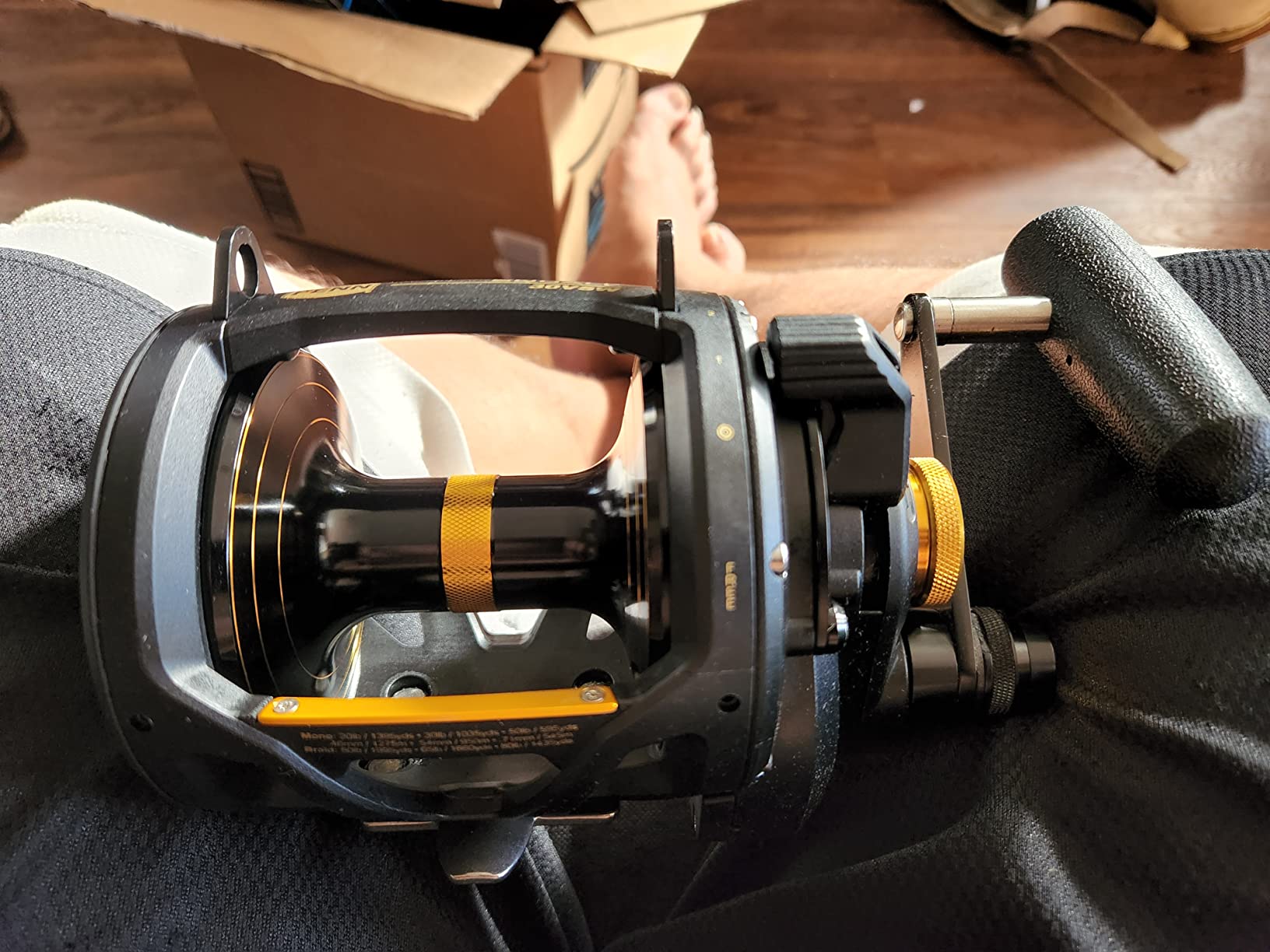
How the drag behaves under real load
The lever engages a single progression rather than a stack of washers fighting each other, so pressure at strike climbs evenly instead of surging. Set it near a third of your line’s rated strength and it will bleed line without breaking, then the ratchet locks solid when you want to gain line back.
Quick Shift handles the gearing problem. The 1.5:1 high gear is a pickup ratio for slack line, and the 2.9:1 low gear is the working ratio. You can shift between them with the drag in the strike position, which matters when a fish is running and you need turns rather than speed.
Where it falls short
Two limitations are worth planning around. First, the 2.9:1 low gear is genuinely slow, so you will work the handle harder coming back from a deep drop. Second, there is no level wind, so line does not lay down evenly, which is the trade for the simplicity and the spool capacity.
If you are setting live bait or a planer board rather than pulling a deep vertical, those two points push you toward a conventional with a level wind instead. For a spread of trolling rods on heavy line, nothing else at this tier does as much with so little effort.
2. Piscifun Chaos XS 60 – Round Baitcaster With a Refined Drag
Piscifun Chaos XS Round Baitcasting Reel, Blue 60 Right Hand
Carbon fiber drag to 22 lb
7075 aluminum frame
6+1 shielded bearings
300 yd of 20 lb braid
Pros
- Smooth CNC anti-line-skip spool
- Strong value for the drag rating
- Centrifugal brake
- 6+1 double-shielded bearings
Cons
- Bait clicker is too quiet for some owners
- No printed manual or line guidance
Best for: inshore and nearshore trolling where 20 to 30 lb line is the working range. The Chaos XS rounds out a boat’s inshore rod setup at a cost that leaves room for a second one.
The 7075 aircraft-grade aluminum frame is the quiet hero. It shaves roughly a tenth of the weight off a comparable frame without losing stiffness, and on a full day of casting and trolling from a bay boat that difference shows up in your wrist at hour six.
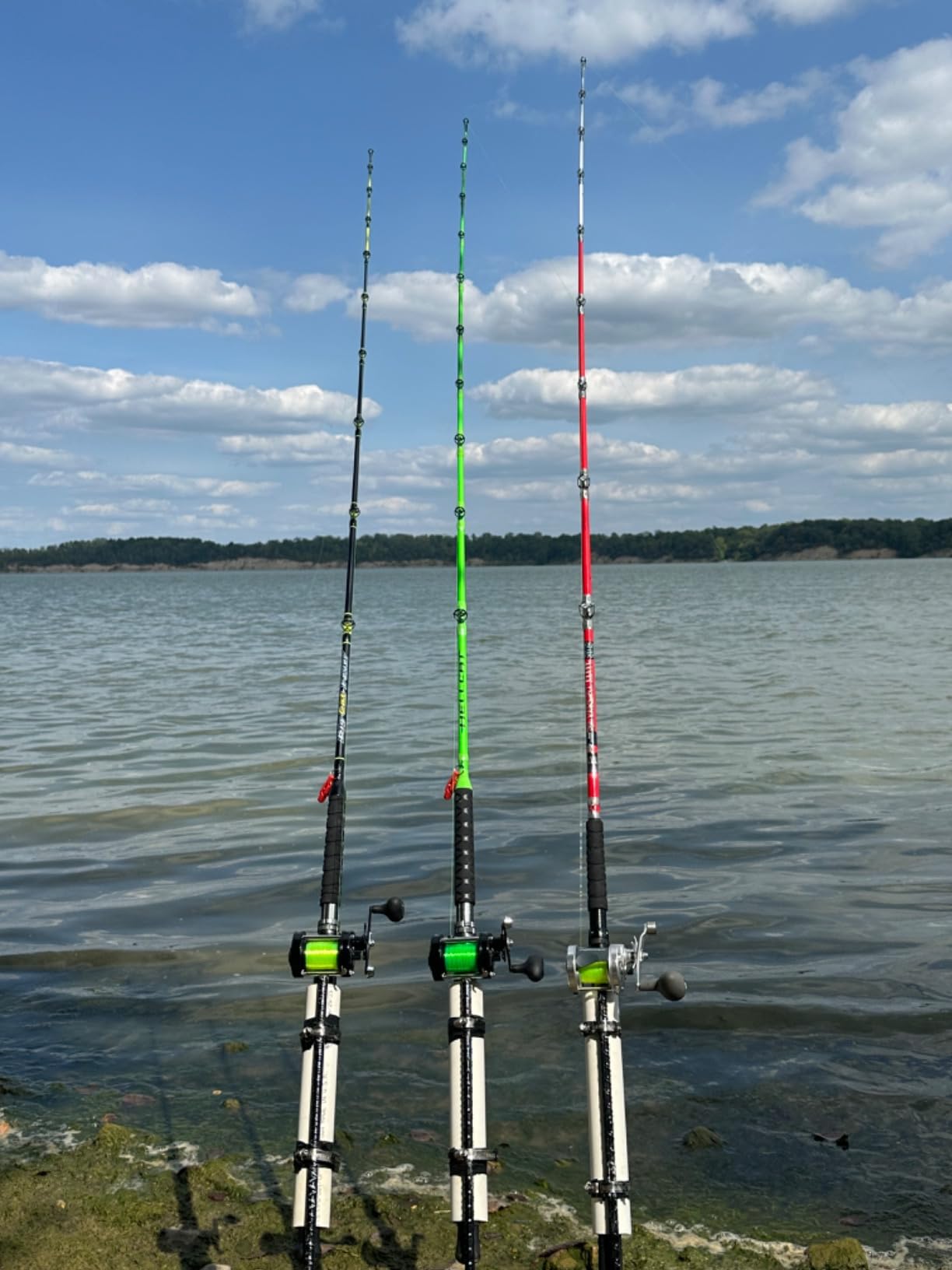
The drag is the part that impressed us most. A Haimai-Cut brass main gear feeding a carbon fiber stack rated to 22 lb gives a breakaway feel that reads as much smoother than the 40 lb drag figure on cheaper conventionals, because the drag starts moving at a low, predictable pressure instead of grabbing.
At 4.6 stars across 697 reviews with 78% five-star ratings, this is the most owner-satisfied reel in the roundup, and several buyers own more than one. The recurring gripes are narrow: the clicker is quiet, and the engage button is not very tactile in cold hands.
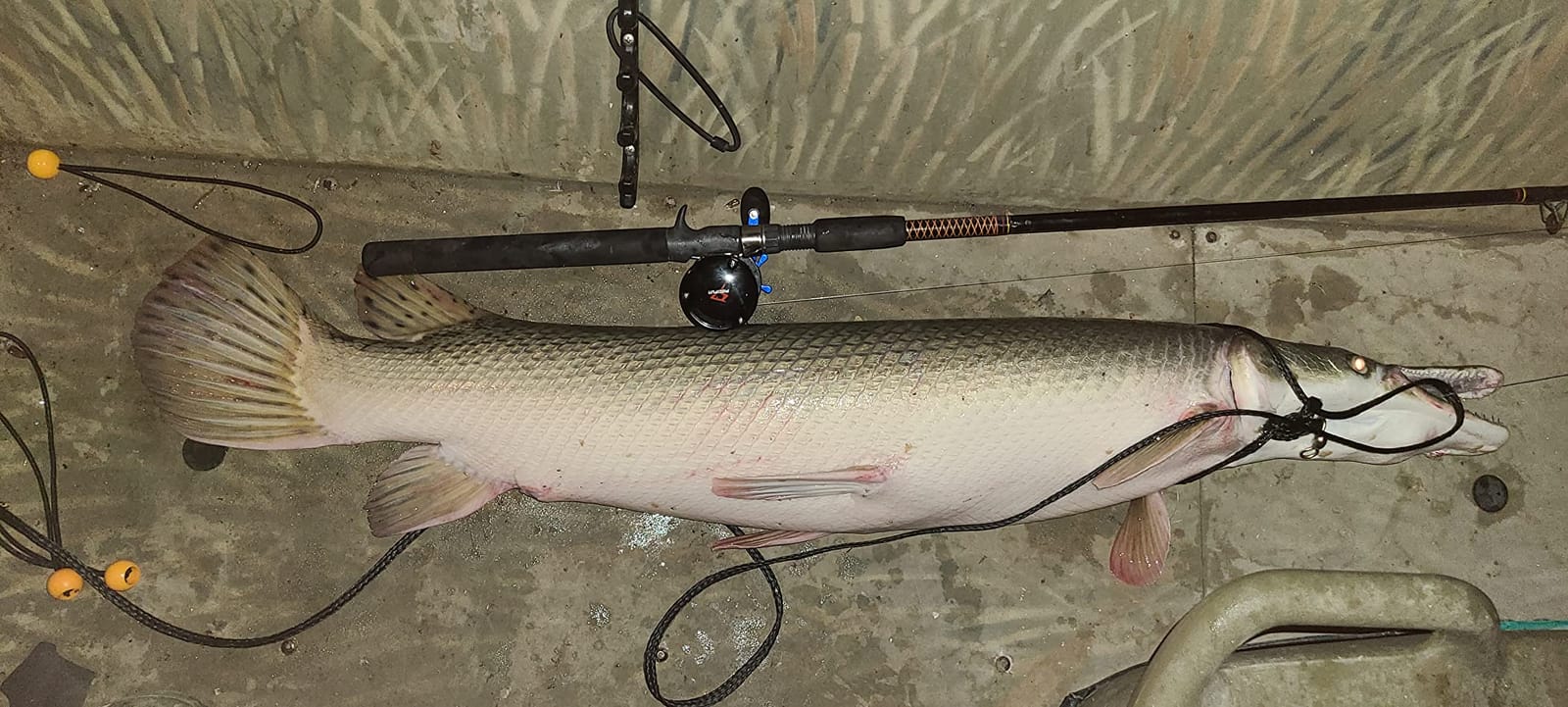
Why the spool shape matters on a rigger
The CNC-machined caved spool is cut so line lays down without riding up the sides, and that is the entire argument for a round baitcaster in a trolling context. Sloppy line lay on a short rigger turns into backlash the moment you get a strike, and backlash at 8 knots is a lost fish.
Run this reel in free spool with the thumb bar feathered and you get a consistent retrieve and an even wind without a level wind guide. The 5.3:1 ratio also recovers line quickly when a fish does not want to come.
Where it falls short
The 22 lb drag ceiling is the boundary. Push it into 40 lb line and the fish will win, so match this reel to light line or use it as a pitch-bait and casting position next to a heavier conventional.
The other gap is documentation. No printed operating manual or line-selection guide ships in the box, so the first spooling happens without a reference. Budget ten minutes to set the centrifugal brake and the drag preload before the first trip.
3. Okuma Cold Water CW-453D – Lightweight Line Counter for Repeatable Depths
Okuma Cold Water Linecounter Trolling Reel CW-453D
Foot-based mechanical counter
Carbonite drag to 20 lb
14.6 oz
4.2:1 ratio
Pros
- Accurate mechanical line counter
- Very light for its capacity
- Machine-cut brass gears
- Aluminum ratcheting drag star
Cons
- Only 2 ball bearings plus 1 roller bearing
- Counter is mechanical not digital
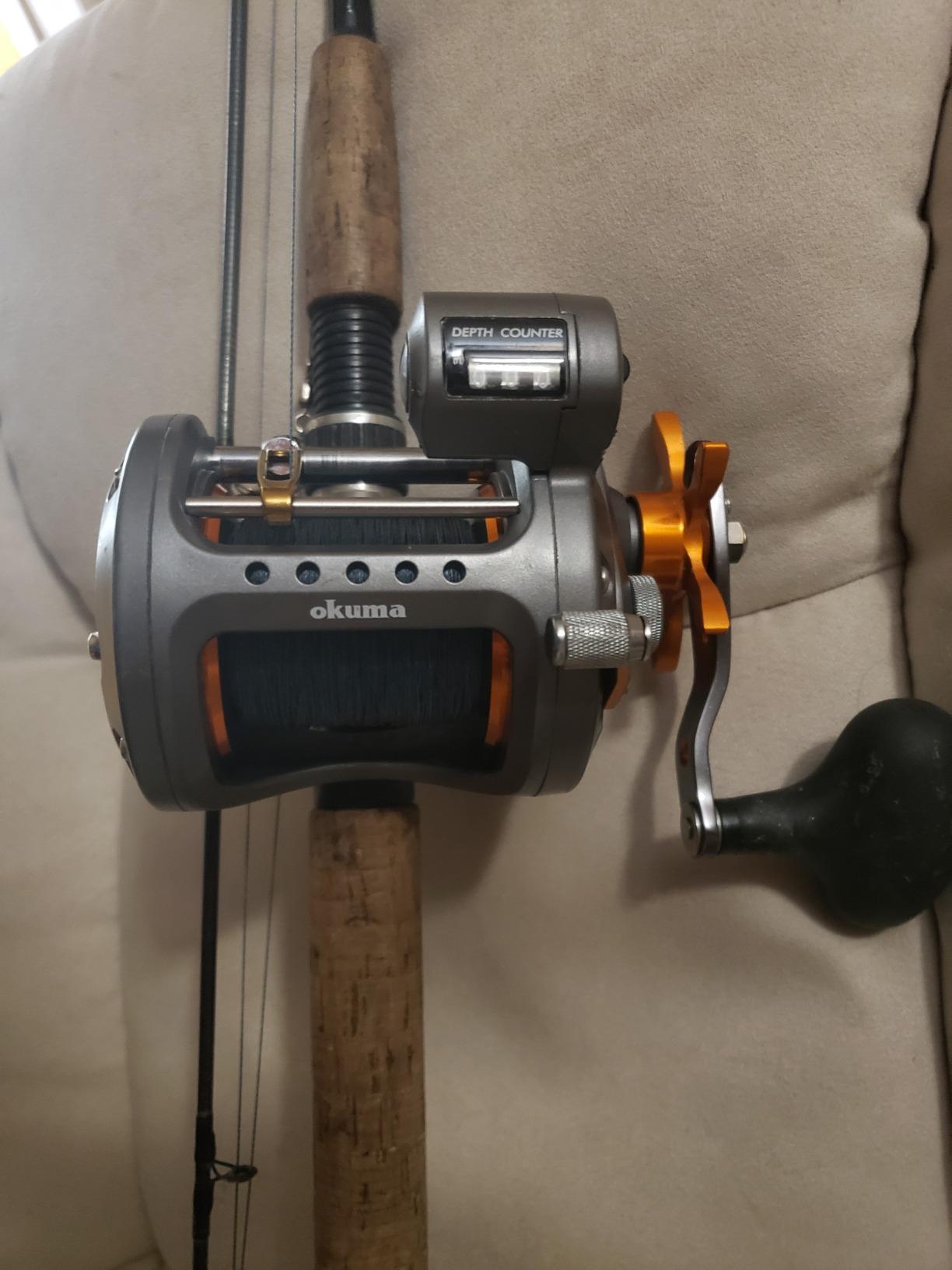
Best for: salmon, steelhead, walleye and light offshore bottom work where knowing the exact yardage out is worth more than raw drag. Owners single out the counter accuracy and the 14.6 oz weight as the two reasons this reel holds up over alternatives in the class.
A foot-based counter measures as you pull line, so you can release exactly 300 yards and mark the boat’s transom instead of eyeballing it. For anyone chasing a specific depth on specific bottom, that precision is the whole feature, and no editor-reviewed competitor in this roundup covers the category at all.
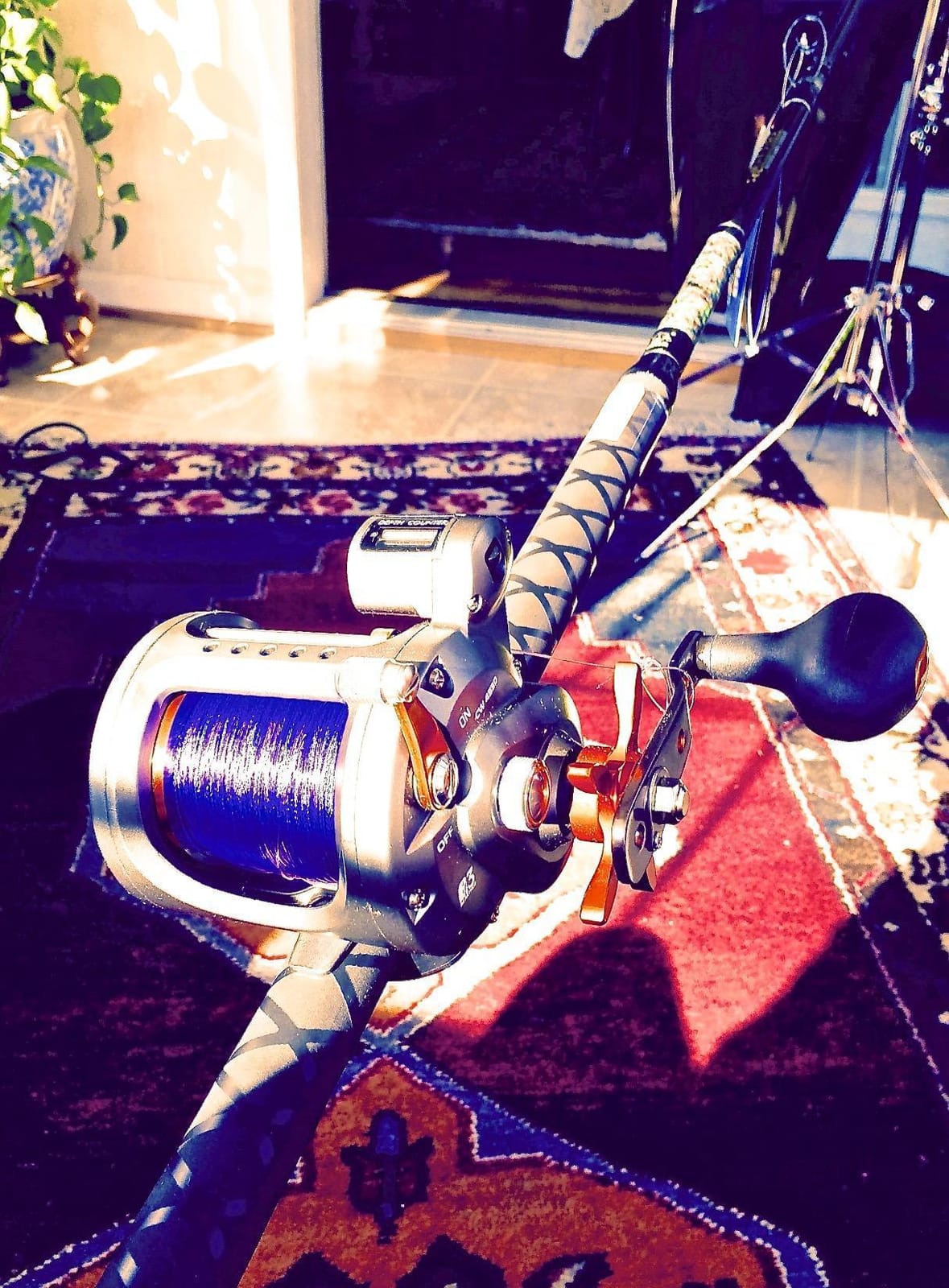
It is also the lightest reel here that still pushes 20 lb of drag, and the graphite body resists corrosion without the bulk of aluminum. Sized as a CW-453D with 430 yd of 25 lb line, it pairs naturally with a medium-power trolling rod.
The multi-disc Carbonite drag with an aluminum ratcheting drag star gives clean, stepwise settings, and the Mechanical Stabilizing System keeps the rotor from wobbling when the line comes off fast. At 4.6 stars across 390 reviews with 82% five-star ratings, it posts the highest five-star share of any Okuma in this list.
Setting the counter before the first drop
Reset the counter at the rod tip, not at the reel seat, or every reading will be short by a length of line. Once reset, pull against a known reference and confirm the number matches before you trust it offshore, because a mechanical counter that drifts is worse than no counter at all.
Pair the 20 lb ceiling with a line class that respects it. Thirty-pound line with the drag backed to 20 lb is a safe, forgiving combination, and it leaves headroom if a fish does get a good run.
Where it falls short
The 2 ball bearings plus 1 roller bearing is a thin count, and it shows in the feel under heavy cranking load compared with the shielded seven-bearing reels above. If you are cranking deep drops all day in a rod holder, you will feel it.
Also note the counter is mechanical rather than digital, which means no total-distance memory across a trip and no way to reset it mid-line. That is a fair trade for a lighter, simpler reel, but it is a trade.
4. Penn International VI 50VISX – Machined Big-Game Reel
PENN INTERNATIONAL VISX 2 Speed, INT50VISX
Machined anodized aluminum
Stainless main and pinion gears
Drag to 40 lb
5.1:1 ratio
Pros
- Machined corrosion-resistant body
- Dura-Drag system
- Versa-Strike adjustable stop
- 88% five-star ratings
Cons
- Weighs 5.8 lb and tires the hand
- Size range means the listing covers many configurations
Best for: anglers heading out for genuinely large fish who want machined aluminum rather than a graphite frame. The International VI is the one reel here built to be bolted to a rod for a decade and handed down.
Machined and anodized aluminum body and side plates, stainless steel main and pinion gears, and a Dura-Drag system built around lubricated drag elements. That combination is what big game anglers point to when they explain why a reel survives a decade of salt exposure and a fish heavier than the one they planned for.
The Quick-Shift II two-speed system handles the gearing, and the Versa-Strike adjustable stop lets you dial the strike position to the tension you actually want rather than an all-or-nothing lever throw. It is a small feature that experienced big game anglers notice immediately.
Owners rate it 4.7 stars from 92 reviews, with 88% five-star, the highest five-star share in the roundup. The small review base simply reflects a narrower owner pool at this level, not a weaker product.
What machined aluminum actually buys you
A machined frame does not flex, which means the gear teeth stay aligned and the drag stack stays flat under load. On a long fight that is the difference between a smooth pull and a drag that fades and then suddenly spikes, and it is also why the body tolerates decades of salt exposure better than a coated casting.
The line range is broad: the series covers 12, 16, 20, 30, 50, 70, 80 and 130 sizes in VIS, VISX, VI and VISW configurations, so the same family serves a 20 lb bottomfishing setup and a heavy teaser rod.
Where it falls short
At 5.8 lb, this is a heavy reel to hold. On a fighting belt or a live bait planer it is manageable, but hand cranking a long drop will tire you, and the fatigue is the honest drawback of the machined build.
Second, the listing spans the full model range rather than one configuration, so the specifications you read are the 50VISX, not every reel in the family. Confirm the exact size before you rely on any of the numbers above.
5. Shimano Tiagra 30A – Two-Speed Tuna Workhorse
Shimano TIAGRA 30A TROLLING 2 SPD
HAGANE rigid body
Cross Carbon drag to 30 lb
2-speed 3.9:1 at 39 in per crank
700 yd of 30 lb
Pros
- HAGANE body resists corrosion
- Cross Carbon drag stays smooth
- Fast two-speed retrieve
- Owners report no corrosion after hard use
Cons
- Only 51 reviews in the sample
- Some packaging carries a materials warning
Best for: standalone deep trolling for tuna and bottom fish on 30 to 50 lb line. The Tiagra 30A is a pure two-speed with no level wind, which makes it a specialist rather than an all-rounder, and specialists are sometimes exactly right.
The HAGANE body is the reason this reel shows up on boats that never rinse anything. Rigid metal construction keeps the gear train aligned under sustained load, and owners report coming back with no corrosion at all after extended offshore use.
The Cross Carbon drag is rated to 30 lb and recovers 39 inches of line per crank at the high setting. That is a fast, meaty retrieve for a reel this size, and it is what you want when a fish is running and you want line back quickly.
Capacity is generous for the frame: line capacity lists 700 yd of 30 lb, with 420 yd available in 50 lb. Owners rate it 4.6 stars from 51 reviews with 83% five-star ratings, and several call it corrosion free after hard use on large tuna.
Two-speed gearing on a reel with no level wind
The adjustable high and low gears let you pick up slack at speed and then settle into a cranking ratio once the fish is moving away from the boat. On a reel this size that flexibility is the point, because you are often one fish away from a full line change.
Because there is no level wind guide, line must be spooled carefully by hand in even layers. Get lazy about it and the inner wraps will jam under a hard pull, which is the one real consequence of choosing a conventional two-speed.
Where it falls short
The 51-review sample is the smallest here, so there is less long-term owner evidence to lean on than for the Squall II. Ask yourself how much you value a two-speed you can grow into against picking a reel with a much deeper review history.
It is also not the flagship Tiagra Levelwind. This is the 30A two-speed, so if your plan is a levelwind trolling reel with a wide frame, you are looking at a different model.
6. Shimano TLD II 50IILRSA – 42 Pound Drag Two-Speed
SHIMANO TLD II, Trolling, Multi
Drag to 42 lb
440 yd of 80 lb mono
Adjustable 2-speed
4.9 lb body
Pros
- Highest max drag in the roundup
- Heavy mono capacity for bottom fishing
- One-piece graphite body resists corrosion
- Loud click strike alarm
Cons
- Weighs 4.9 lb on long trips
- Not a level wind model
- Only 63 reviews to judge longevity
Best for: bottom fishing and offshore drops where you want to spool heavy monofilament and never wonder whether the drag will hold. The TLD II 50IILRSA puts 440 yd of 80 lb mono on the spool and rates 42 lb of drag.
That is the highest drag rating in this roundup, and the capacity figure is the real headline. Heavy mono lays down differently from braid, and a frame that fits it without burying the handle is rarer than most anglers expect at this drag level.
The one-piece graphite body is light for what it does and corrosion resistant by design, while the aluminum spool plus stainless steel foot, pinion gear, main shaft and drive gear handle the wear points that actually fail. A loud click strike alarm tells you a bait was taken without watching the rod tip.
Forum anglers still name this reel family when asked which reel to trust for 50 to 60 lb trolling, a decade-long endorsement no review score can replicate. Owners rate this model 4.5 stars from 63 reviews with 75% five-star ratings.
Matching heavy mono to the drag
With 80 lb mono on the spool, set the drag near a third of the rated breaking strength, roughly 25 lb, and back it off further if you are fishing structure. The 42 lb ceiling gives headroom, but the ceiling is a maximum, not a starting point.
Pair it with a heavy rod and let the reel sit in the holder. The aluminum power handle with an oil-ported torpedo knob is designed for long cranking, which is where the weight on this frame becomes easier to justify.
Where it falls short
At 4.9 lb, balance matters. Pair it with a rod heavier than the reel feels necessary to you, because a top-heavy setup is tiring in a way that shows up several hours into a trip.
There is no level wind, and the 63-review base is thin. If you want similar drag authority with a lighter body, the Squall II 50VSW is the alternative we would look at first.
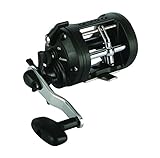
7. Okuma Classic Levelwind CLX-300LA – 8 Ounce Inshore Workhorse
Okuma CLX-300La Classic Levelwind Star Drag Casting Reel, 300 Reel Size, 3.8: 1 Gear Ratio, 24″ Retrieve Rate, 17 lb Max Drag, Right Hand,Black
Weighs 8 oz
Drag to 17 lb
3.8:1 ratio
Graphite spool and side plates
Pros
- Extremely light at 8 oz
- Corrosion-resistant frame and graphite spool
- Stainless steel reel foot
- Level wind suits trolling layouts
Cons
- 17 lb drag is low for heavy saltwater species
- Basic bearing specification
Best for: light inshore work, salmon, pike and anything where you are trolling all day and counting ounces. At 8 oz there is no other reel in this roundup that disappears on the rod the way this one does.
Weight is the entire argument for it. A levelwind that weighs less than a pound changes how long you stay out, and for nearshore structure, pier work and freshwater salmon, that is a real advantage rather than a spec-sheet nicety.
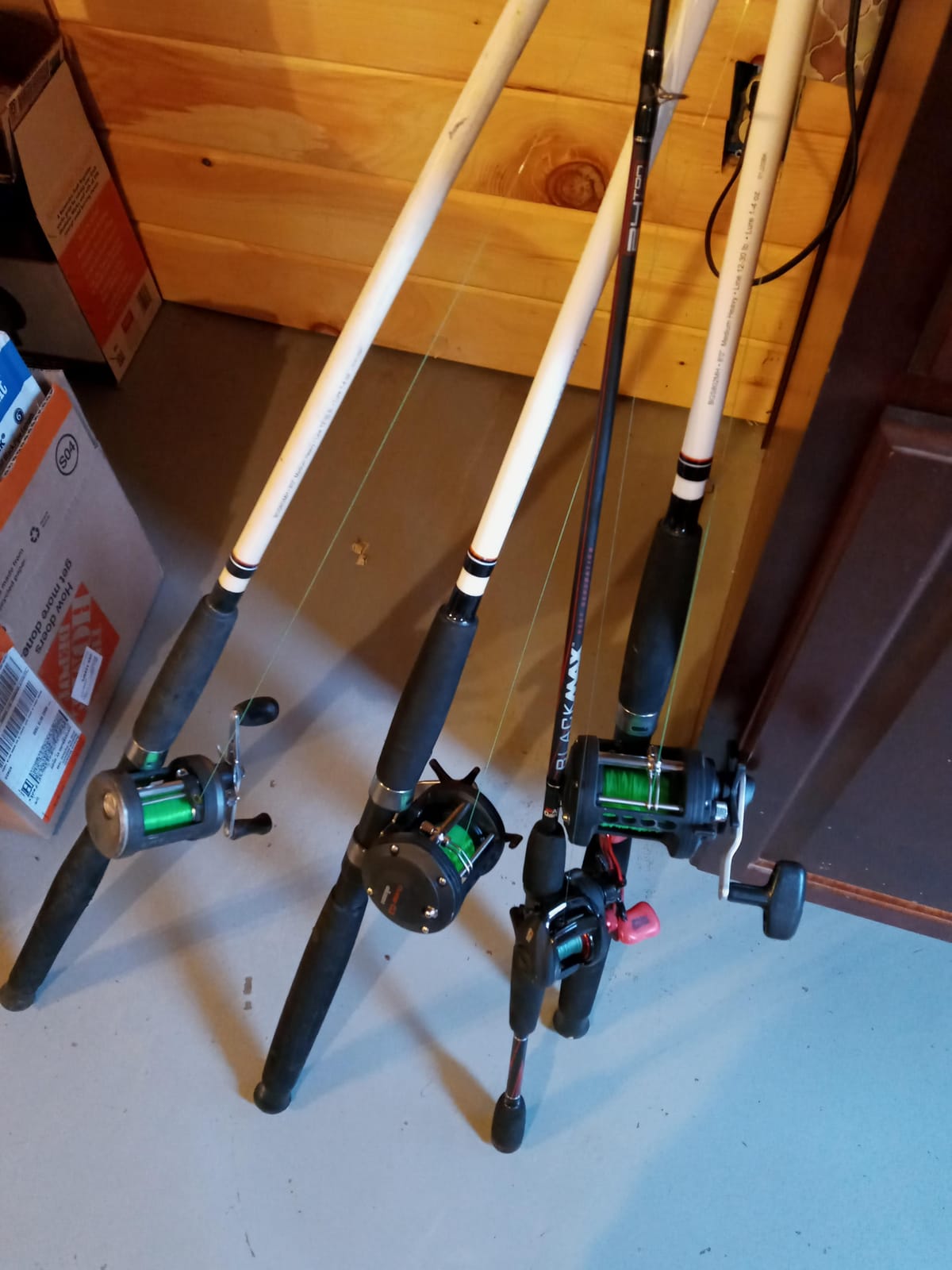
The build is deliberately simple: lightweight corrosion-resistant frame and side plates, corrosion-resistant graphite spool, stainless steel reel foot and an aluminum power handle. Nothing here is exotic, and nothing needs replacing mid-season.
Owners rate it 4.6 stars from 518 reviews with 74% five-star ratings. They consistently value the low weight and corrosion resistance for inshore and salmon trolling, and the level wind layout handles line lay without adjustment from the angler.
Where 8 oz really matters
On a light rod for salmon or walleye, reel weight changes the balance of the whole outfit. An 8 oz reel with a graphite spool puts the center of gravity where your hand expects it, and that is felt on a full day of trolling rather than measured in a spec.
The 3.8:1 ratio recovering 24 inches per crank suits a moderate drag style, which is exactly the drag range a 17 lb ceiling supports. Sizes run from CLX-200LA through CLX-450LA, so you can move up a size if your line class rises.
Where it falls short
17 lb of max drag is the limit. Once you are spooling 30 lb line for wahoo or any offshore species, you are outside what this reel is built to hold, and the drag will be the first thing to give.
The bearing specification is also basic by modern standards. That is a fair trade at this weight, and worth remembering if smooth cranking under load is a priority for you.
8. Burning Shark SHA40 – Levelwind Starter Reel for Coastal Anglers
Burning Shark Trolling Reel Saltwater Level Wind Reels, Drag Reels Boat Fishing Ocean Fishing for Sea Bass Grouper Salmon-SHA40
Aluminum and stainless steel body
6+1 stainless bearings
Drag to 40 lb
4.1:1 ratio with 430 yd
Pros
- Largest review base in the roundup
- Anti-rust aluminum and stainless construction
- Level wind guides line evenly
- Three-year limited service warranty
Cons
- Star drag adjusts coarsely
- Durability complaints pull the rating down
Best for: coastal anglers starting out, or anyone who wants a second levelwind without a second mortgage. The SHA40 has the largest owner base of any reel here at 1067 reviews, and that is worth something in a category where most buyers learn by breaking a cheaper reel first.
The build is the expected spec sheet for the tier: aluminum and stainless steel body, 6+1 stainless steel ball bearings, forged aluminum spool, double-dog anti-reverse and a 4.1:1 gear ratio. Line capacity is listed at 430 yd of 20 lb or 320 yd of 25 lb.
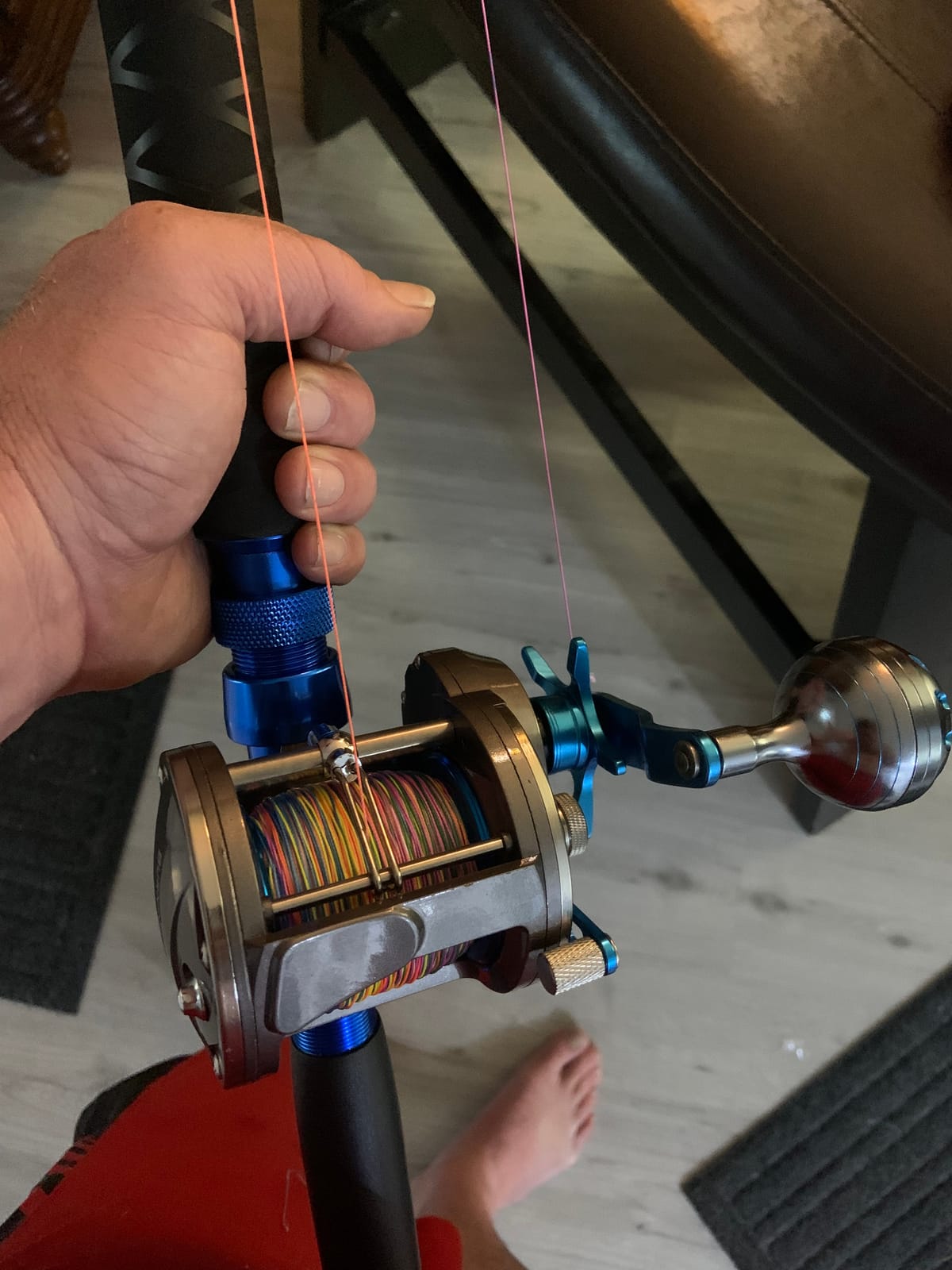
Owners credit the smooth bearings, the even line lay from the level wind and the easy handling. At 4.2 stars it sits below the reels around it, and the reason shows in the review breakdown: a meaningful share of one-star ratings tied to durability complaints rather than to any handling flaw.
Two details stand out. The drag is rated to 40 lb on a reel this light, which means the drag stack is doing real work at a fraction of the weight, and the level wind keeps line lay consistent without angler input.
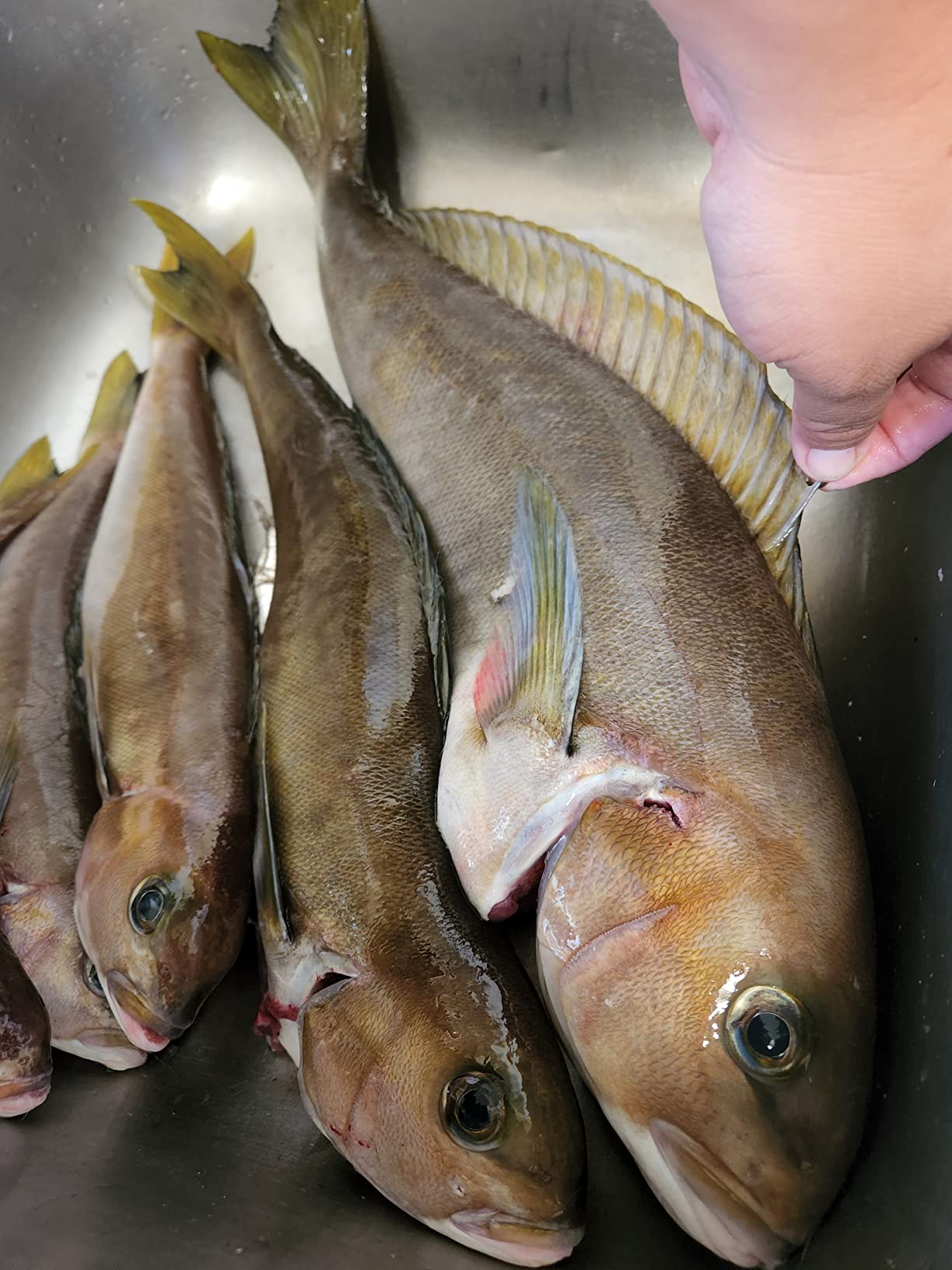
How to get the most out of a reel at this tier
The anti-reverse locking, the forged spool and the bearing count all help, but the maintenance routine matters more here than on a machined frame. Rinse after every trip, back the drag off between trips, dry the reel before storing it, and a reel at this price keeps working much longer.
The three-year limited service warranty is also more meaningful here than on a premium reel. If something does fail, you have a defined path instead of guessing at a parts list.
Where it falls short
The 4.2 average is not close to the top of this list, and the durability complaints in the one-star reviews are the reason. Treat this as a reel to learn on and replace once you know your line class, rather than the one you keep for a decade.
The star drag knob also adjusts coarsely. If you are used to fine incremental control, the lever drag on the Squall II is a different experience entirely.
9. Sougayilang Thunder LS II 3000 – 40 Pound Drag Counter Reel
Sougayilang Line Counter Trolling Reel Conventional Level Wind Fishing Reel-Thunder LS II 3000R …
40 lb Carbonite drag
Mechanical line counter
420 yd of 20 lb
Brass gears at 4.1:1
Pros
- 40 lb drag from heavy brass gears
- Mechanical counter for exact payout
- Three-year limited warranty
- Responsive replacement service
Cons
- Plastic counter gears slip and stall
- Aluminum handle cap can strip
- Some units arrive with handle play
Best for: anglers who want a mechanical line counter and a 40 lb drag ceiling without stepping up a size. The Thunder LS II 3000 is the most polarised reel in this roundup, with owners split sharply between very good and annoying.
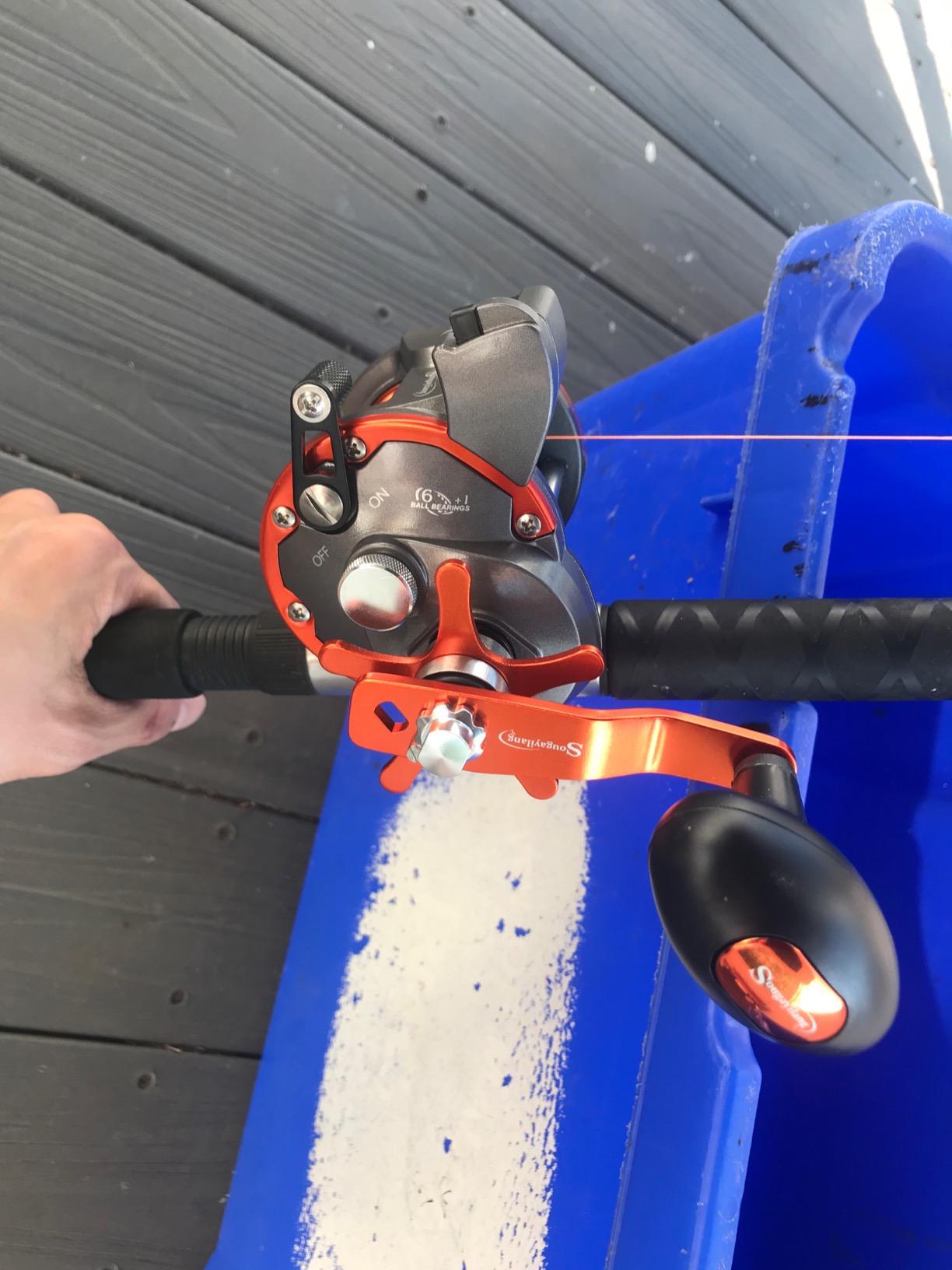
Positive reviews concentrate on the 40 lb Carbonite drag, the heavy brass gears, the smooth anti-reverse and the counter that lets you flip into free spool and release an exact footage instead of stripping line by hand. Several owners also praise the manufacturer’s replacement service directly.
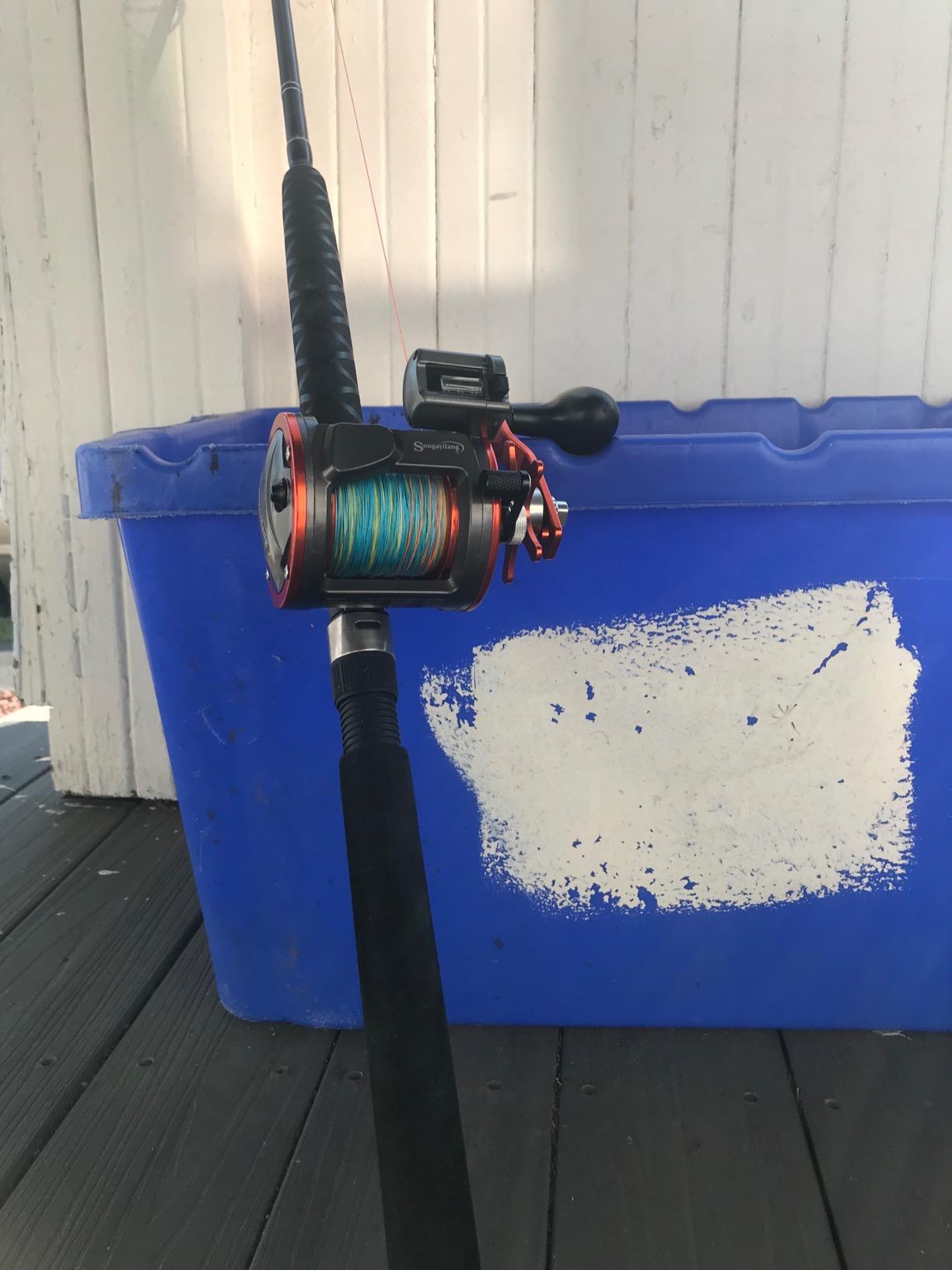
Two mechanical faults dominate the negative reviews, and they repeat across independent reports. The plastic bevel gears that drive the line counter mesh poorly, so the counter intermittently slips or stalls, and the aluminum handle nut can strip against the steel bolt under heavy cranking.
Neither fault is subtle, and both are exactly the kind of thing a listing will never tell you. That is worth factoring into the decision rather than discovering on the water.
When the counter is worth the risk
The counter is the reason to consider this reel. Trolling a specific bottom or repeating a depth that produced fish last season both reward exact payout, and the aluminum ratcheting drag star lets you set the drag precisely once you know the number you want.
If you do buy it, check the counter through a full free-spool before the trip. Pull line under load rather than in the air, because the failure shows up under tension, and shim and lubricate the handle shaft if you feel play on arrival.
Where it falls short
The counter reliability is the deal breaker for anyone who depends on it, since a stalled counter mid-drop is worse than no counter at all. The handle hardware is the second issue, and it is cheaper to avoid than to fix mid-trip.
If you want a mechanical counter without those risks, the Okuma Cold Water CW-453D is the reel we would point you to. It carries a lower drag ceiling, so match it to lighter line.
10. Sougayilang SHA30-Golden – Compact 40 Pound Conventional for Live Bait
Sougayilang Trolling Reel Saltwater Level Wind Reels, Drag Reels Boat Fishing Ocean Fishing for Sea Bass Grouper Salmon-SHA30-Golden
40 lb max drag at 4.1:1
Machined aluminum spool
420 yd spool capacity
About 21 oz frame
Pros
- 40 lb drag in a 21 oz frame
- Smooth line release lever for live bait
- Machined aluminum spool with stainless gears
- Quiet cranking under load
Cons
- No line counter on this model
- Sparse listing detail limits comparison
Best for: live bait trolling and planer board work where you clip the reel on and leave it. The SHA30-Golden pairs a 40 lb drag with a frame of roughly 21 oz, and that combination is unusual at this price.
The line release lever is the feature live bait anglers care about. It lets you disengage the spool cleanly and put the rod in a holder without setting the drag, which is exactly what you want when a live bonito or a rigged fluke is doing the work.
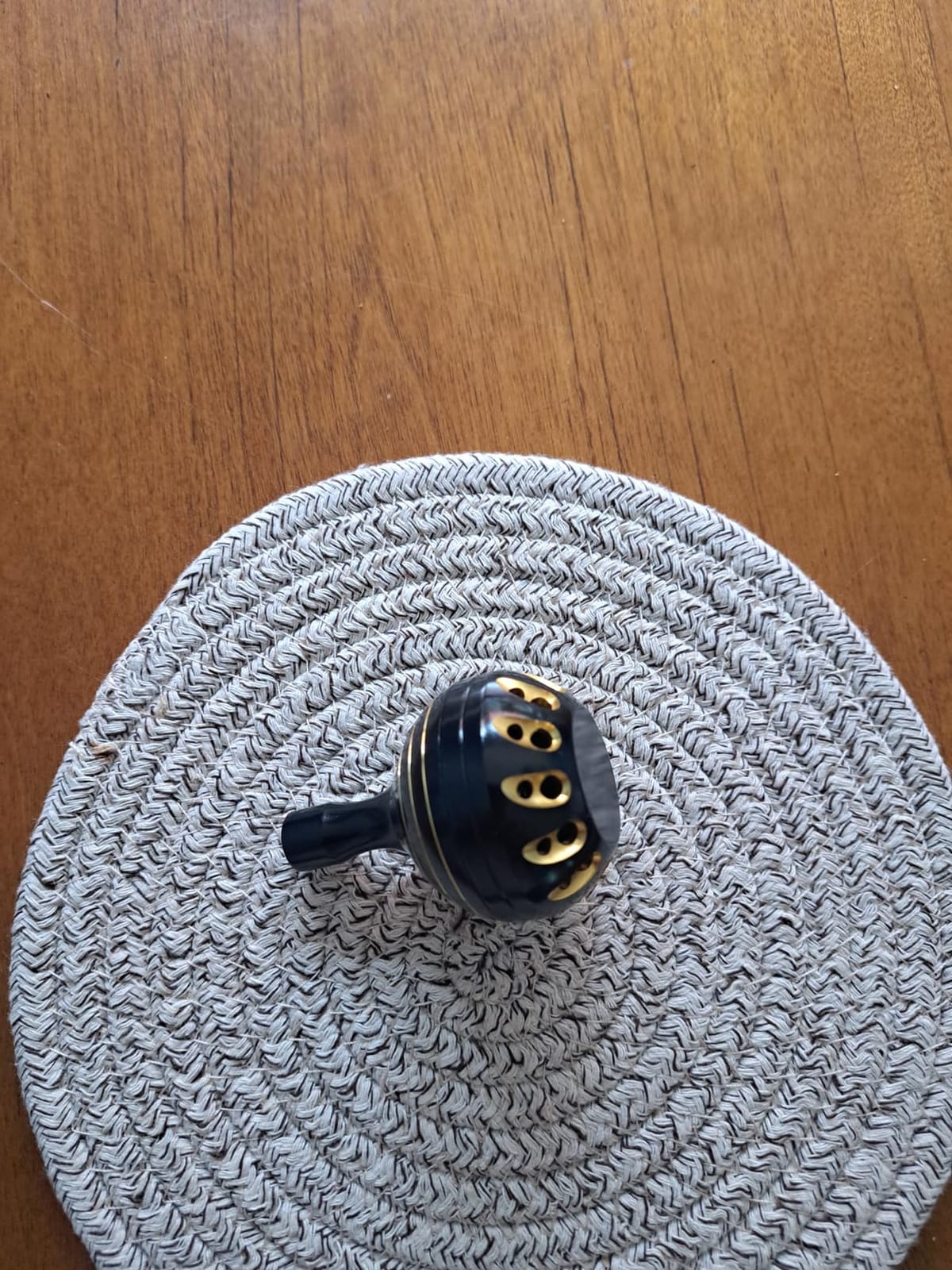
The build runs a machined aluminum spool, Bakelite side plates and stainless steel gears, with a double dog ratchet to stop the handle reversing under load. A 420 yd spool gives you plenty of room for 20 to 30 lb braid on a normal trolling pattern.
Owners rate it 4.2 stars from 223 reviews with 67% five-star ratings. The recurring positives are quiet cranking, a smooth line release lever and comfortable handling, and several note that the same handle and counter concerns seen on the LS II model are worth keeping in mind when comparing the two.
Live bait setup notes
Set the drag to the strike position before the bait goes out, not after. With a 40 lb ceiling and 20 lb line, the drag releases early enough that the bait’s clicker becomes your early warning, which is why a clicker matters more on this reel than on a heavier setup.
Weight is the quiet advantage. At roughly 21 oz the reel runs a planer board without upsetting the rod balance, and quiet cranking matters when you are trying to hear that clicker over engine noise.
Where it falls short
There is no line counter on this model, so repeating an exact depth means measuring by hand. If exact payout is part of how you fish, the Okuma Cold Water CW-453D covers that need with a lower drag ceiling.
The listing detail is also sparse, with a generic model designation that makes cross-brand comparison harder. Verify the spool capacity and drag figure on the reel itself before you commit to a line class.
11. Shakespeare ATS 15 LCX – Budget Line Counter for a First Setup
Shakespeare ATS Size 15 Conventional Trolling Fishing Reel, Right Handle Position
Built-in line counter
5.1:1 at 26 in per crank
15 lb multi-disc drag
16 oz graphite body
Pros
- Accurate line counter at this tier
- Fast 5.1:1 ratio suits light wind
- 16 oz graphite body balances medium rods
- Owners report replacing costlier reels
Cons
- Drag star can ship stuck with no manual
- 15 lb drag limits heavy applications
- Only 2 ball bearings
Best for: a first trolling setup, small crankbait work, or anyone who needs a reliable mechanical counter for very little money. Owners repeatedly describe the counter as accurate and call this a sensible first trolling reel.
At 16 oz with a 5.1:1 ratio recovering 26 inches per crank, this is the fastest retrieve of the smaller reels here, and that ratio does real work in light wind where a slower reel struggles to keep a bait moving.
The multi-disc drag is rated to 15 lb and sets consistently once running properly, and the graphite frame and side plates keep the whole thing balanced enough for medium and heavy rods. Line capacity is listed at 350 yd of 10 lb mono, 290 of 12 lb and 250 of 14 lb, with braid figures from 280 yd of 30 lb down to 195 yd of 50 lb.
At 4.5 stars from 151 reviews with 77% five-star ratings, satisfaction is high for the tier. Several owners report it replacing higher-cost reels for basic salmon and crankbait duty, which is a fair description of what it does well.
The one thing to check before the first trip
The drag star wheel can arrive stuck, and there is no printed manual explaining the fix. Free it by hand before spooling and confirm the drag holds when you pull the handle under load, because a locked drag star is the most common complaint on this reel and the easiest to solve in a garage.
Once free, set the counter at the rod tip so your depth readings are not short by a length of line. Line counter and non-counter versions exist in each size, so confirm you ordered the version you wanted.
Where it falls short
The 15 lb drag ceiling is a hard limit. This reel is not a saltwater big game or heavy species option, and treating it as one is how people end up losing fish they should have landed.
With only 2 ball bearings, it will never feel as refined under load as the shielded seven-bearing reels earlier in this list. For light line and shallow trolling, that is an acceptable trade.
12. Okuma Magda Pro 15 – Smallest Line Counter in the Roundup
Okuma Magda Star Drag Levelwind Line Counter Reel Size 15 Black
Integrated line counter and level wind
Drag to 15 lb
5.1:1 at 23 in per crank
12.6 oz
Pros
- Lightest reel here at 12.6 oz
- Integrated counter and level wind
- 5.1:1 ratio for light conditions
- Corrosion-resistant frame
Cons
- Only 2 stainless steel bearings
- 15 lb drag is not for heavy saltwater species
Best for: light trolling where you want to repeat exact depths on the smallest possible frame. The Magda Pro 15 is the lightest reel in this roundup at 12.6 oz, and it still carries an integrated line counter and level wind.
That combination is unusual. A counter on a reel this small usually means giving up the level wind, and a level wind on a reel this small usually means giving up the counter. This one has both, which is why it earns a place here.
The multi-disc Carbonite drag is rated to 15 lb, the 5.1:1 ratio recovers 23 inches per crank, and the frame and side plates are lightweight and corrosion resistant. Line capacity lists 290 yd of 12 lb mono.
Owners rate it 4.3 stars from 273 reviews with 65% five-star ratings. The compact frame and weight are consistently praised for light duties, and the counter is credited with letting anglers repeat the same trolling depth without re-measuring by hand.
When a smaller reel is the correct reel
Reel size is a line class decision, not a toughness test. If your heaviest line is 12 to 15 lb, a 15-size reel is the correct answer, and a bigger frame only adds weight you carry for no benefit at the rod holder.
The 2 stainless steel bearings keep the retrieve smooth enough for light line at this size. Above that weight, the reel is outside its design range, and no amount of care changes that.
Where it falls short
The 15 lb maximum drag is the boundary, and it is a hard one. Wahoo, yellowfin and anything with real power will find that limit quickly, and the drag will be what gives before the frame is.
The 2-bearing count also shows under sustained heavy cranking. If you plan to hand-crank deep drops with heavy braid, spend the extra and move up a size instead.
How to Size a Trolling Reel by Line Class
Most buyers choose a reel by fish name and regret it. Choose by line class instead: the breaking strength you spool determines the reel size, the drag setting and roughly which species you can realistically land.
Pick your heaviest line, not your average line. A spread with a 20 lb bottomfishing rod and a 50 lb teaser rod needs two reels, and the heavier one sets your minimum frame size.
Set the drag near one third of the rated breaking strength at strike. That is 6 lb of drag on 20 lb line, 16 lb on 50 lb, 26 lb on 80 lb, and it gives the fish room to run without breaking you off on a straight pull.
Buy one size up if you will ever add a bigger rod to the boat. The cost of a larger frame now is less than the cost of a mismatched setup later, and a spread works better when the reels are the same family.
Reel weight matters more than most specs suggest. An 8 oz levelwind suits a light rod and a full day of salmon trolling, while a 4.9 lb two-speed belongs on a heavy rod and a rod holder, not in your hand for three hours.
If you are picking a rod to match, start with the reel size and work backward. Our beginner fishing rod guide covers the power classes worth pairing with the frame sizes here.
Two-Speed vs Single-Speed vs Levelwind
Two-speed, single-speed and levelwind describe three different solutions to three different problems, and buying the wrong one is the most common expensive mistake in this category.
A two-speed reel gives you two ratios in one frame: a high gear to pick up slack quickly and a low gear for cranking power under load. That flexibility is why both Shimano models here use it.
A single-speed reel runs one fixed ratio. It is simpler, lighter, and there is no shift mechanism to fail or jam, which makes it a good fit for a pitch-bait or short-rigger position where you are not pulling heavy line.
A levelwind adds a guide that travels side to side and lays line evenly across the spool. That reduces twist and backlash, which matters most on a rig set where the line stays under tension for hours.
You can have a levelwind and a two-speed together, but the levelwind guide reduces spool capacity and adds weight. For deep drops on heavy mono, capacity is usually worth more than even line lay.
Line creep on the rigger is usually a drag setting problem rather than a reel problem. Raise the drag relative to your line size, check that spool tension is even, and confirm the levelwind is aligned before blaming the hardware.
What Makes a Trolling Reel Saltwater-Ready
Salt water finds every unsealed surface. What separates a reel built for the salt from one built for a lake is the material stack, the drag system and how easily you can rinse it after a trip.
Sealed and shielded bearings keep water out of the places that do not tolerate it. The reels here range from 2 bearings to 6+1 double-shielded units, and the higher counts feel noticeably smoother under sustained cranking load.
Stainless steel gears, pinions, main shafts and reel feet resist corrosion at the wear points. Aluminum bodies need an anodized finish to do the same job, which is why machined anodized aluminum is the top-end standard in this category.
Drag washers matter more than most buyers expect. Multi-disc carbon fiber and Carbonite drag systems shed heat during a long fight, while a simple felt and grease stack fades sooner and can surge when it overheats.
Corrosion resistance is not corrosion proof. Any reel exposed to salt needs a rinse, and the difference between a ten-season reel and a two-season reel is usually how consistently the owner rinsed it.
Electric trolling reels are worth a mention for a new offshore angler who does not want to hand-crank a drop. They remove the physical effort, and forum discussions show more new offshore boat owners asking about them every season.
Saltwater Maintenance and Freshwater Rinse Routine
Five steps after every trip will keep any reel in this roundup working far longer than its warranty requires, and none of them take more than a few minutes with a hose and a towel.
Back the drag lever or drag star fully off before the reel ever gets wet. A drag left under tension while water sits on the washers is the most common way a good drag stops being good.
Rinse with fresh water at low pressure while working the handle, so water moves through the bearings and out between the drag washers. Soap is unnecessary and leaves residue that traps grit.
Let the reel air dry completely before storage or before it goes back in the rod holder. Trapped moisture under a side plate does more long-term damage than salt water on its own.
A light oil on the handle shaft and exposed screws at the end of the season keeps threads from seizing during a long storage period. Avoid over-oiling the drag, since oil on the washers makes drag pressure inconsistent.
For freshwater anglers trolling salmon or walleye, the same rinse routine matters less but the same principles hold. Our freshwater spinning reel guide covers the reel type most freshwater anglers start on.
Frequently Asked Questions
What are the best trolling reels for saltwater?
The best trolling reels for saltwater depend on your line class. For 30 to 60 lb offshore work, a two-speed lever drag such as the Penn Squall II 50VSW leads our list for its progressive drag control and 890 yd of 50 lb mono capacity. For inshore work on 20 lb, the Piscifun Chaos XS 60 gives a refined 22 lb drag in a lighter frame. Match reel size to the heaviest line you spool, not to a fish name.
Are Daiwa or Shimano reels better?
Both sit at the top of the saltwater category and suit different anglers. Shimano builds the Tiagra 30A and TLD II 50IILRSA for offshore work, with a HAGANE body on the Tiagra and the highest drag rating in our roundup on the TLD. Daiwa competes most strongly in the inshore and flats segment. In this roundup the Penn reels took the top spots for lever drag control and machined aluminum construction.
What are the top 10 saltwater fishing reels?
Our top ten saltwater fishing reels cover the full range of use: the Penn Squall II 50VSW and Penn International VI 50VISX for big game, the Shimano Tiagra 30A and TLD II for two-speed offshore work, the Piscifun Chaos XS 60 for inshore, the Okuma Cold Water CW-453D and Magda Pro 15 for line counting, and the Okuma Classic CLX-300LA, Burning Shark SHA40 and Sougayilang reels for the value tier. Each is matched to a specific line class.
What is the best reel for trolling walleye?
A levelwind reel in the 20 to 30 size class is the usual answer for trolling walleye, and the Okuma Classic Levelwind CLX-300LA is the best fit in our roundup at just 8 oz with a 17 lb drag ceiling. Its 3.8:1 ratio suits a moderate drag style, and the lightweight frame keeps a full day of freshwater trolling comfortable.
Can I troll with a spinning reel?
Yes, for light duties. A spinning reel can troll for salmon, walleye and light saltwater species, and the fixed spool design keeps things simple at low speeds. It is not suitable for offshore big game, bottom fishing or anything requiring heavy drag, because a spinning spool cannot dissipate the heat that heavy drag produces.
How much drag do I need for offshore trolling?
Set the drag near one third of your line’s rated breaking strength at strike. That is about 6 lb on 20 lb line, 16 lb on 50 lb and 26 lb on 80 lb. Keep in mind that a reel’s published max drag is a ceiling rather than a target, and that a reel with a 40 lb rating does not make 40 lb the right setting.
Which Trolling Reel Should You Buy in 2026?
Pick your line class first, then the reel. That one decision rules out half the list before you spend anything, and it is the answer forum anglers give when they ask which reel to trust.
For offshore work on 30 to 60 lb line, the Penn Squall II 50VSW is our pick: a lever drag that sets easily, two-speed gearing that shifts under load, and 4.7 stars across 603 reviews. If you want machined aluminum and a reel you can keep for a decade, step up to the Penn International VI 50VISX.
For inshore and nearshore trolling on 20 to 30 lb line, the Piscifun Chaos XS 60 does more with less weight than anything else here. For line counters, the Okuma Cold Water CW-453D is accurate and light, and the Magda Pro 15 covers the smallest end of the range.
For heavy mono bottom fishing where 42 lb of drag matters more than weight, the Shimano TLD II 50IILRSA holds the most line in this roundup. For deep two-speed tuna work the Shimano Tiagra 30A is the smaller-bodied option, and for light freshwater trolling the Okuma Classic CLX-300LA weighs 8 oz.
Once the reel is on the rod, the freshwater rinse routine matters more than any spec on this page. Five minutes after each trip decides whether your trolling reel is still working in three seasons.
If the boat is still being set up, our fishing kayak guide for anglers covers the lighter end of the platform question while you work out where the rod holders go.