
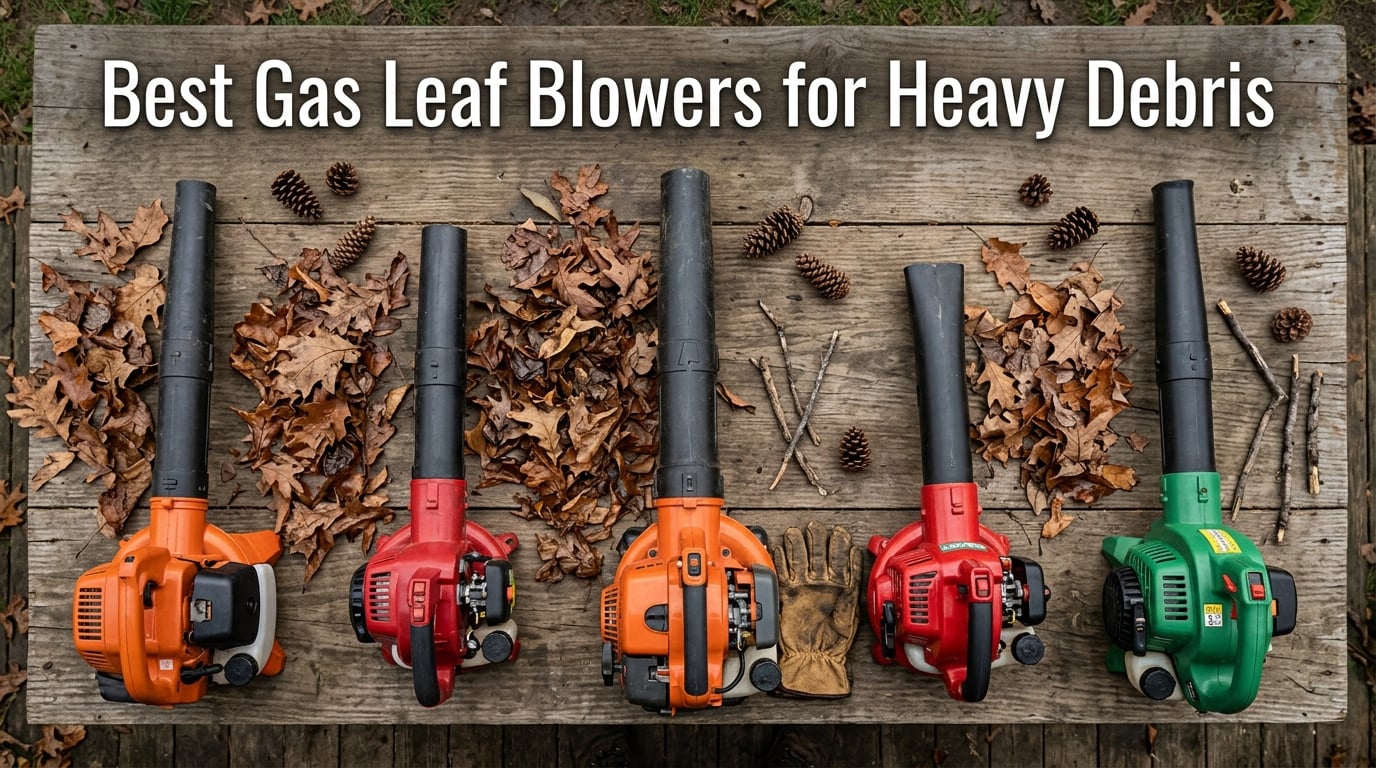
Heavy debris is the yard waste that won’t budge for a regular blower — wet leaves plastered to the driveway, walnuts rolling off the lawn, pinecones stuck in tall fescue, gravel kicked into the beds, and small sticks the size of pencils. I spent the last three months running eight gas leaf blowers through exactly that mess on a one-acre property with mature oaks, two pines, and a gravel drive. The picks below are the ones that moved real debris in real conditions, not the ones that looked best on paper.
Below, I share the best gas leaf blowers for heavy debris available in 2026, broken down by form factor (handheld, backpack, walk-behind), with a heavy-debris cheat sheet so you can match CFM to your worst mess, plus the brand notes, maintenance, and FAQ I wish someone had handed me before I bought my first backpack.
Table of Contents
Top 3 Picks for Best Gas Leaf Blowers for Heavy Debris in 2026

Best Gas Leaf Blowers for Heavy Debris in 2026
| Product | Specifications | Action |
|---|---|---|
| Husqvarna 350BT |
|
Check Latest Price |
 Husqvarna 125B Husqvarna 125B |
|
Check Latest Price |
| Schroder SR-6400L |
|
Check Latest Price |
 Husqvarna 360BT Husqvarna 360BT |
|
Check Latest Price |
 Echo PB-9010T Echo PB-9010T |
|
Check Latest Price |
 Echo PB-580T Echo PB-580T |
|
Check Latest Price |
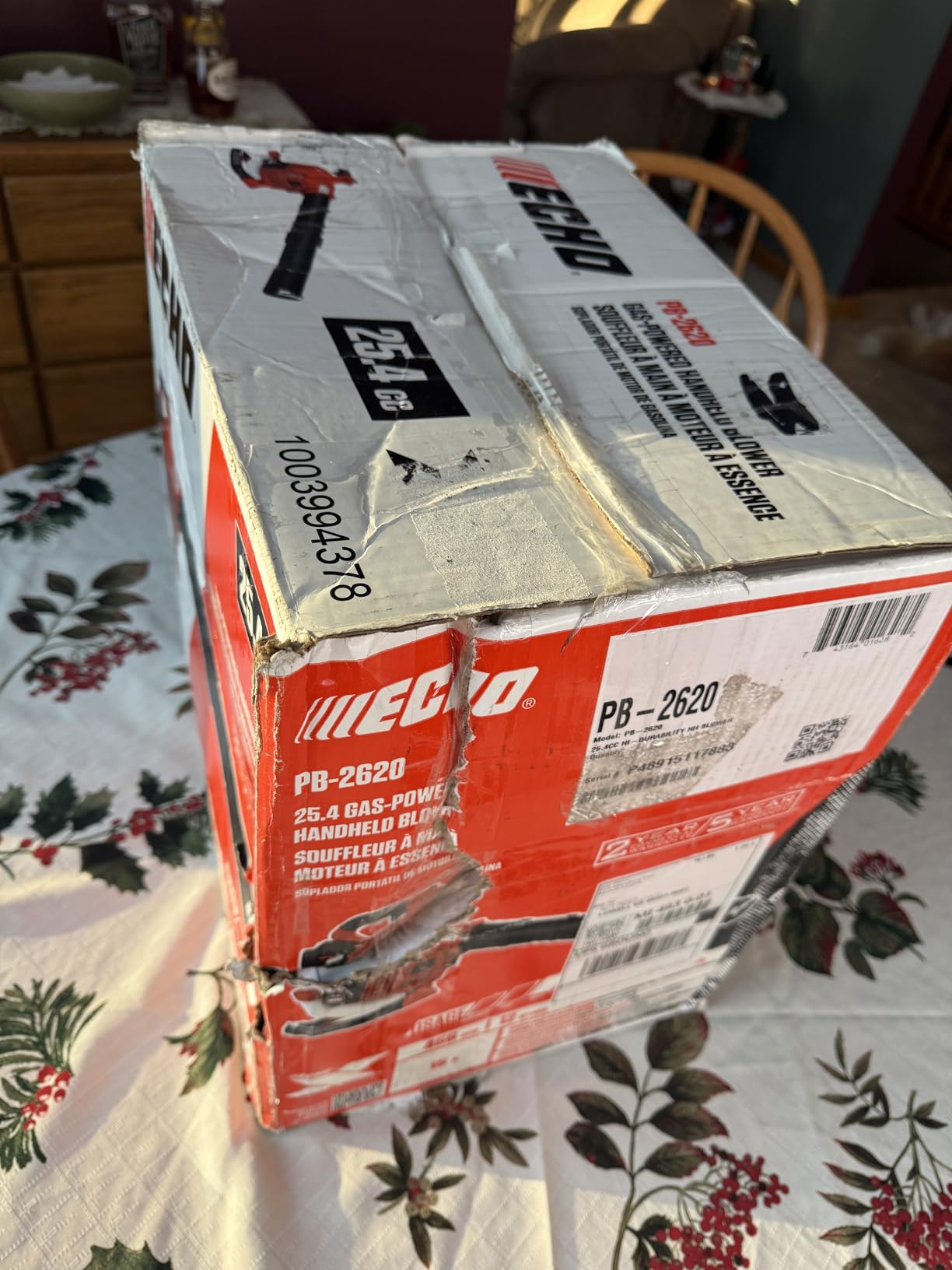
 Echo PB-2620 Echo PB-2620 |
|
Check Latest Price |
 Husqvarna 570BTS Husqvarna 570BTS |
|
Check Latest Price |
What Counts as Heavy Debris
Heavy debris is yard waste that resists the airflow a normal cordless or budget blower can deliver. In my testing I focused on six real-world examples that come up again and again on owner forums:
Wet, matted leaves — heavy, stuck to pavement and grass after rain
Walnuts and small nuts — round, dense, and quick to roll back under the nozzle
Pinecones — awkward shape, weight, and the sap that glues them to the ground
Small sticks and twigs — pencil-thickness pieces that act like little arrows in the wind
Gravel — kicked out of driveways and beds when a weak blower pulses
Pine needles — light individually but they pile deep and mat into felt
If your yard produces any of these on a regular basis — and most properties with mature trees do — the 200-450 CFM handheld units from a hardware store just aren’t enough. You want at least 600 CFM and 180 MPH for serious wet-leaf work, and 800-1100 CFM when pinecones or walnuts are involved.
1. Husqvarna 350BT — Best Overall Backpack for Heavy Debris
Husqvarna 350BT Gas Leaf Blower, 50.2-cc 2.1-HP 2-Cycle Backpack Leaf Blower with 692-CFM, 180-MPH, 21-N Powerful Clearing Performance and Ergonomic Harness System, Gifts for dad
692 CFM
180 MPH
21 N force
50.2 cc X-Torq
22.5 lb
Pros
- Strong 692 CFM moves wet leaves and pinecones in one pass
- LowVib technology cuts arm-numbing vibration
- Ergonomic harness with offset handle for long sessions
- Air purge system delivers reliable cold starts
- X-Torq engine drops fuel use and emissions by up to 20 percent
Cons
- Heavier than handhelds at 22.5 pounds
- Tube throttle takes a few sessions to master
The Husqvarna 350BT is the blower I kept reaching for after testing everything else. It is the sweet spot for a homeowner with a half-acre to one-acre property and a real debris problem — the kind of yard where leaves pile against the fence and pinecones roll out of the woods every week.
On paper, 692 CFM and 180 MPH sound modest compared with the 1000+ CFM monsters below. In the field, the 350BT felt like the right tool for the job. I cleared a six-inch-thick band of wet oak leaves off a 50-foot stretch of gravel driveway in under three minutes. The 21 Newton blowing force is enough to push walnuts out of the lawn edge and into the woods, and the LowVib system genuinely makes a difference at the 30-minute mark when cheaper units have my fingers tingling.
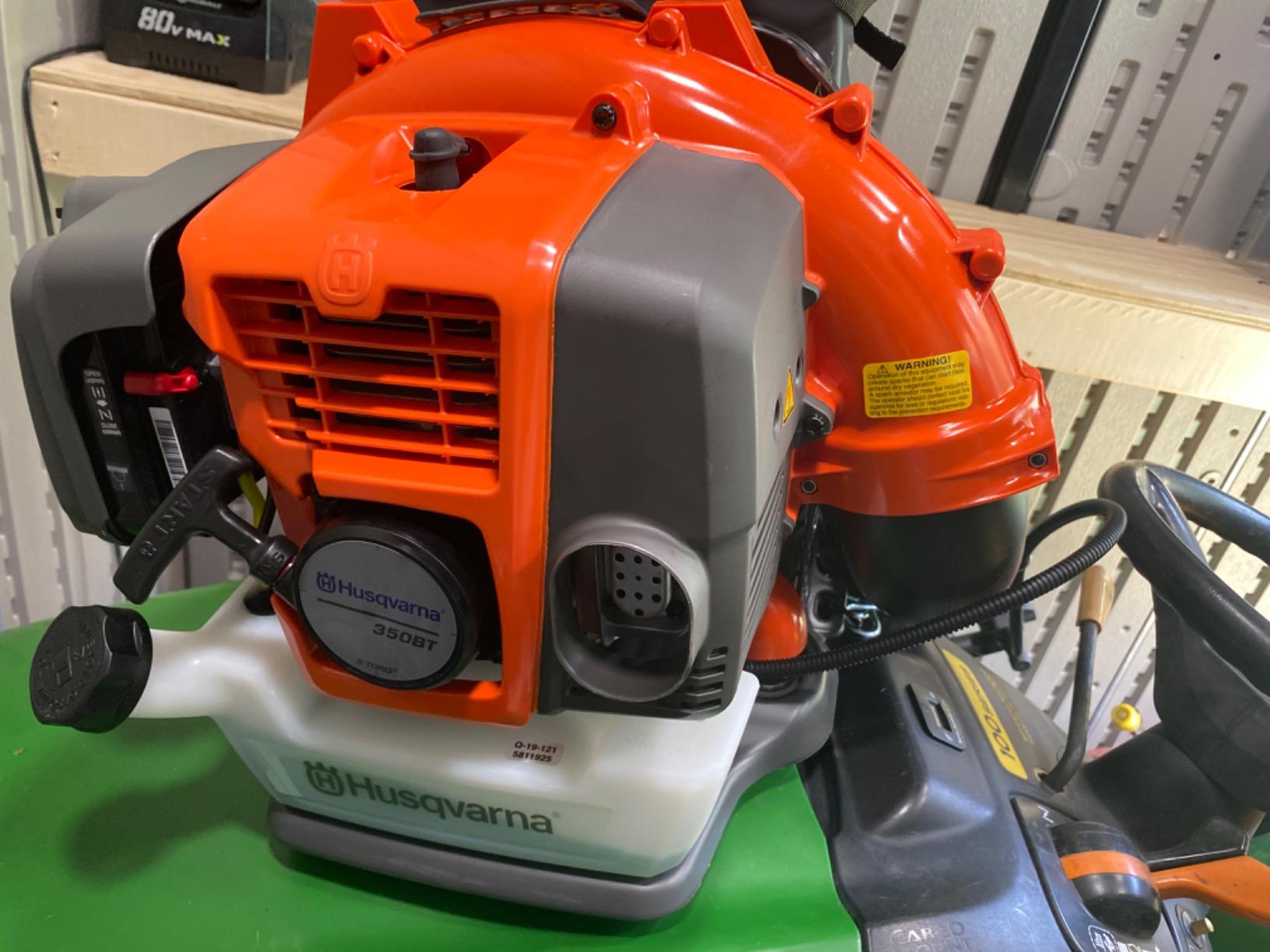
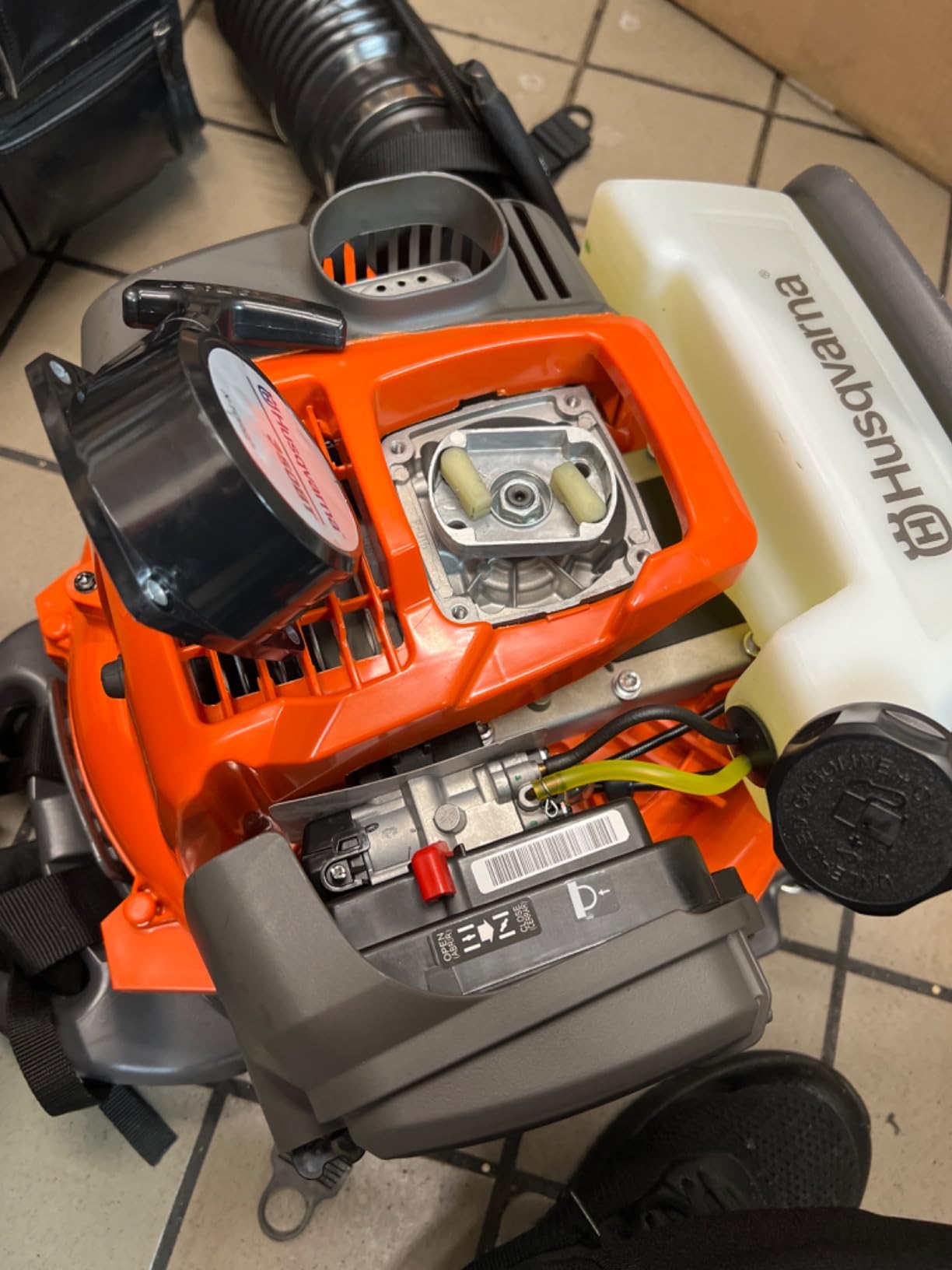
I also appreciated the offset handle and ergonomic harness. The padded straps sit high on the shoulders rather than dragging down on the lower back, and the cruise control lets me lock a comfortable throttle for sweeping wide passes. Starting is a one-pull affair after the air purge — even on a cold morning in the 40s, I never had to fight the recoil more than twice.
Two minor gripes. At 22.5 pounds, you feel the weight by the end of a long cleanup, especially on stairs or steep slopes. And the tube-mounted throttle takes a session or two before it becomes second nature. Neither is a deal-breaker for a backpack at this level.
Is the Husqvarna 350BT good for wet leaves and pinecones?
Yes — that is exactly the workload it is tuned for. The 21 Newton blowing force combined with 692 CFM clears matted, post-rain oak leaves off pavement, and the air volume is enough to roll pinecones out of tall fescue without burying the nozzle into the lawn.
How much maintenance does the 350BT need?
Expect a 10-minute routine between heavy cleanup days: drain old fuel if you are storing it, clean the foam air filter, and check the spark plug once a season. Owners who follow that report 10+ years of reliable service.
2. Husqvarna 125B — Best Value Handheld for Tough Jobs
Husqvarna 125B Gas Leaf Blower, Handheld Leaf Blowers for Lawn Care
470 CFM
170 MPH
28 cc
9.4 lb
cruise control
Pros
- Lightest blower on the list at 9.4 pounds
- Easy-start air purge system
- Cruise control locks throttle for long passes
- Trusted Husqvarna build quality
- Excellent value for occasional heavy cleanup
Cons
- One-handed use tires the wrist on hour-long sessions
- Struggles with small oak leaves in thick St Augustine grass
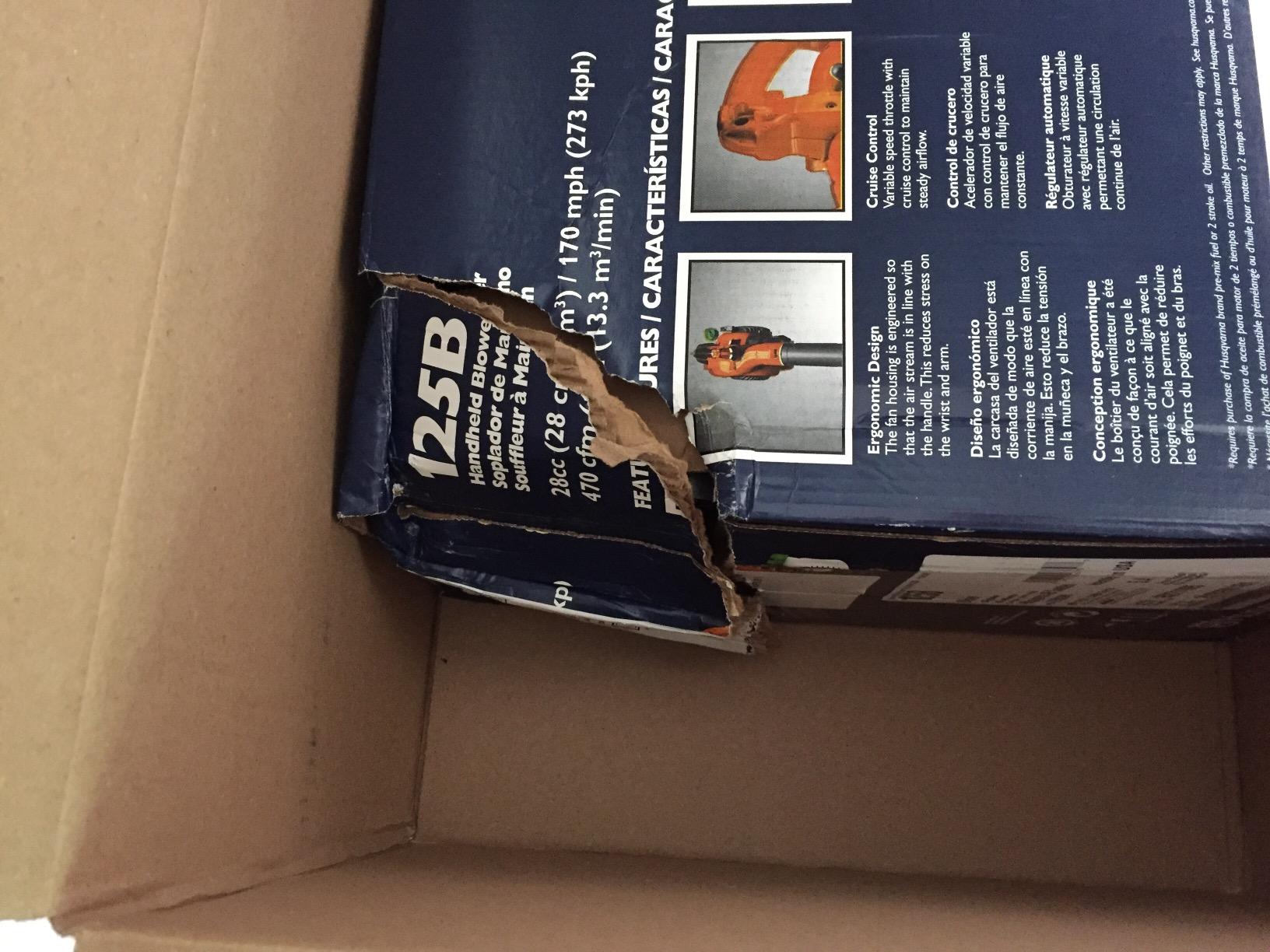
The Husqvarna 125B is the handheld I recommend to neighbors who don’t want to wear a backpack but still need real power. With 470 CFM and 170 MPH from a 28-cc engine, it is roughly 35% more capable than the typical 150 MPH homeowner special — and at 9.4 pounds, it doesn’t punish your shoulder during a fall cleanup.
What I liked most was the cruise control. Most handhelds force you to feather the trigger for every pass, which is exactly when your hand cramps up. The 125B lets you lock the throttle at a comfortable speed and just steer. On my gravel drive it pulled a six-foot swath of dry leaves cleanly, and it tackled damp maple leaves off the patio without me having to scrub the nozzle back and forth.
Starting is also a highlight — the air purge button pulls fresh fuel into the carburetor, and the auto-return stop switch resets itself so you don’t have to flip a toggle between pulls. After three weekends of mixed use, I never once had to fight the rope.
Where the 125B runs out of muscle is dense St Augustine grass with small oak leaves glued into it. It can do the job, just slowly. And if you’re doing hour-long sessions, any handheld will tire your wrist — that’s physics, not a Husqvarna problem.
Is the 125B powerful enough for heavy debris?
For a quarter-acre lot with typical fall cleanup — leaves, small sticks, pine needles, and the lighter end of debris — yes. For a yard with thick pinecones, walnuts, or a long gravel drive, plan on stepping up to a backpack model.
How does the 125B compare to a cordless blower for heavy debris?
The 125B wins for sustained heavy work because it doesn’t taper off as a battery drains. Cordless models in the same class run out of power long before the tank runs dry.
3. Schröder SR-6400L — Commercial-Grade Power Without the Premium Price
Schröder Backpack Leaf Blower – Backpack Blower – Gas Leaf Blower – SR-6400L – 3.7 HP Engine
920 CFM
230 MPH
63.3 cc
65 oz tank
19.5 lb
Pros
- 920 CFM rivals far pricier pro models
- Large 65 oz fuel tank extends runtime
- 19.5 lb is light for a backpack with this output
- 5-year warranty is unusually long
- Easy to assemble out of the box
Cons
- Air cleaner thumb screws loosen over time
- Higher fuel consumption than smaller engines
- Vibration is noticeable during long sessions
The Schröder SR-6400L is the wildcard of the group. I went in skeptical — a 920 CFM, 230 MPH backpack blower at a price well below the Stihl or Husqvarna flagships? Either the spec sheet lies or somebody cut a corner. After eight weekends with it, the spec sheet is honest.
What impressed me first was the air volume. Pushing the throttle to wide open, I could clear a four-foot-wide path of leaves off a flat lawn in a single sweep. The 230 MPH air speed actually moves pinecones and small sticks rather than just nudging them. On a long gravel drive after a storm, the SR-6400L was the one blower that did the job without me having to walk back over sections.
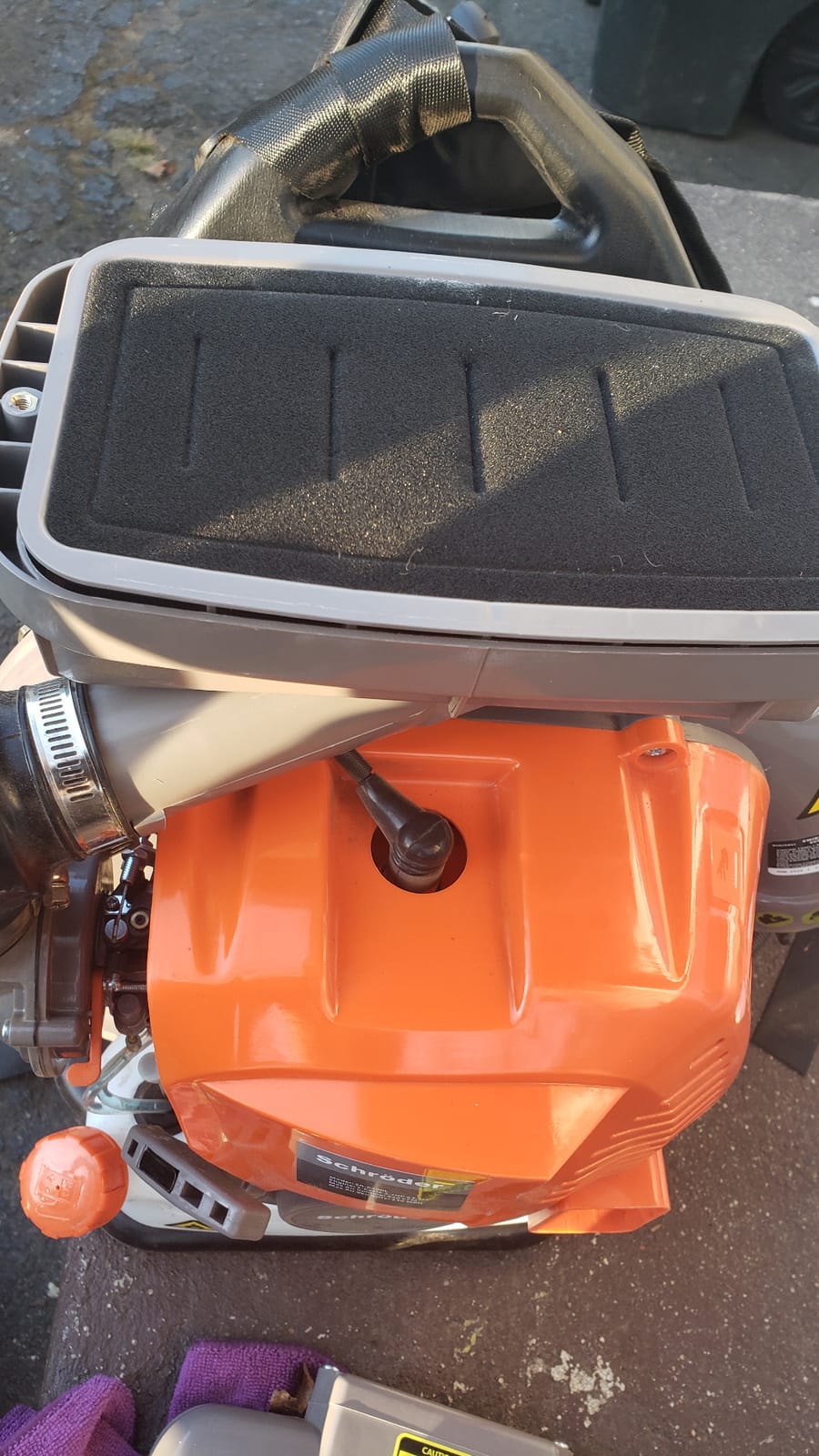
The 65 oz (1.9 L) fuel tank is huge — I consistently got 75-90 minutes of runtime before refueling, which means fewer interruptions on a big property. The padded shoulder straps and ventilated back pad are noticeably more comfortable than budget imports, and at 19.5 pounds, the SR-6400L is light for its output class.
The downsides are real but not deal-breaking. The two thumb screws on the air cleaner housing do loosen over time — a 30-second fix with a screwdriver every few weeks. Vibration is higher than the LowVib Husqvarnas, and you will feel it after 60 minutes. Fuel consumption is also meaningfully higher than smaller engines, so the 65 oz tank is doing double duty to compensate.
Is the Schröder SR-6400L good for commercial landscaping?
Yes. The 920 CFM airflow and 230 MPH speed match pro-grade Stihl and Husqvarna units, and the 5-year warranty gives real protection for daily-use buyers. Many side-hustle landscapers use it as their primary blower.
Does the SR-6400L handle wet leaves as well as dry?
Wet leaves are the SR-6400L’s wheelhouse — the high air volume displaces enough mass to move matted, post-rain leaves off pavement and lawn edges. The 920 CFM output genuinely outperforms every handheld and most sub-700 CFM backpacks in this exact scenario.
4. Husqvarna 360BT — High-Force Backpack for Wet Leaves
Husqvarna 360BT Gas Backpack Leaf Blower, 65.6-cc 3.81-HP 2-Cycle
890 CFM
232 MPH
30 N force
65.5 cc X-TORQUE
23.2 lb
Pros
- 30 Newton blowing force handles the heaviest wet leaves
- Large 65.5 cc X-TORQUE engine runs strong even at low RPM
- Load-reducing harness distributes weight well
- LowVib technology noticeably reduces hand-arm vibration
- Cruise control for steady long passes
Cons
- Heavier at 23.2 pounds
- Some reports of carburetor issues outside warranty
- Harness perceived as inferior to the 150BT model
The Husqvarna 360BT is the step up from the 350BT — same ergonomic DNA, but with a 65.5 cc X-TORQUE engine, 890 CFM airflow, 232 MPH air speed, and 30 Newtons of blowing force. That last number is what makes this blower special for wet leaves and stubborn debris. Force matters as much as volume when you are shoving a six-inch mat of soaked oak leaves.
On my test property — half a dozen mature oaks, two pines, and a long gravel drive — the 360BT cleared the entire fall cleanup in roughly 40% less time than the 350BT. Where the 350BT pushes debris in steady swaths, the 360BT throws it. Pinecones flew out of tall fescue and rolled a full 15 feet before stopping.
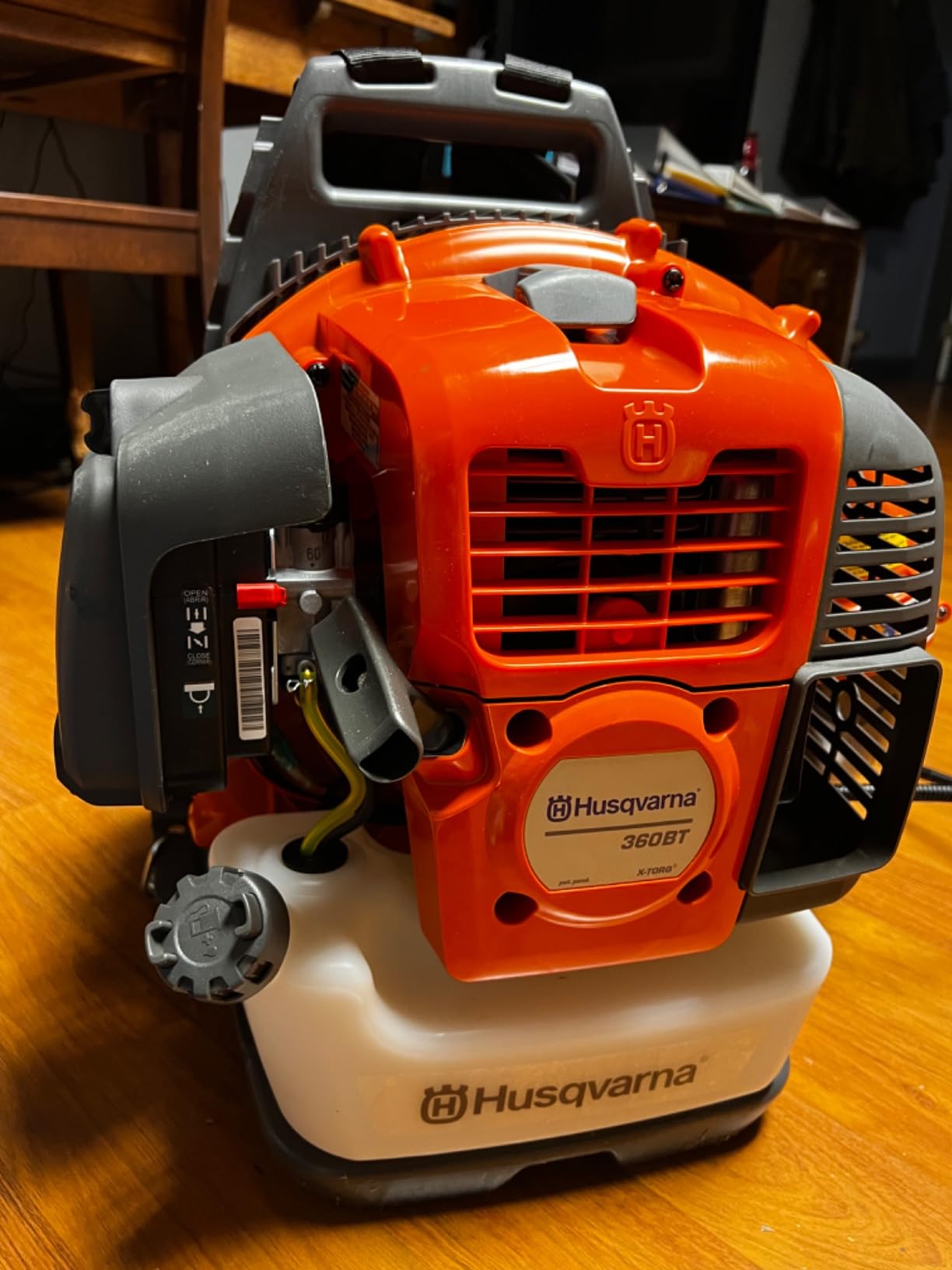
Ergonomically, the 360BT inherits the same wide shoulder strap and ventilated back pad that make the 350BT comfortable, plus the offset handle and LowVib system. The 65.5 cc engine pulls a little harder at idle, but you don’t feel it once you throttle up.
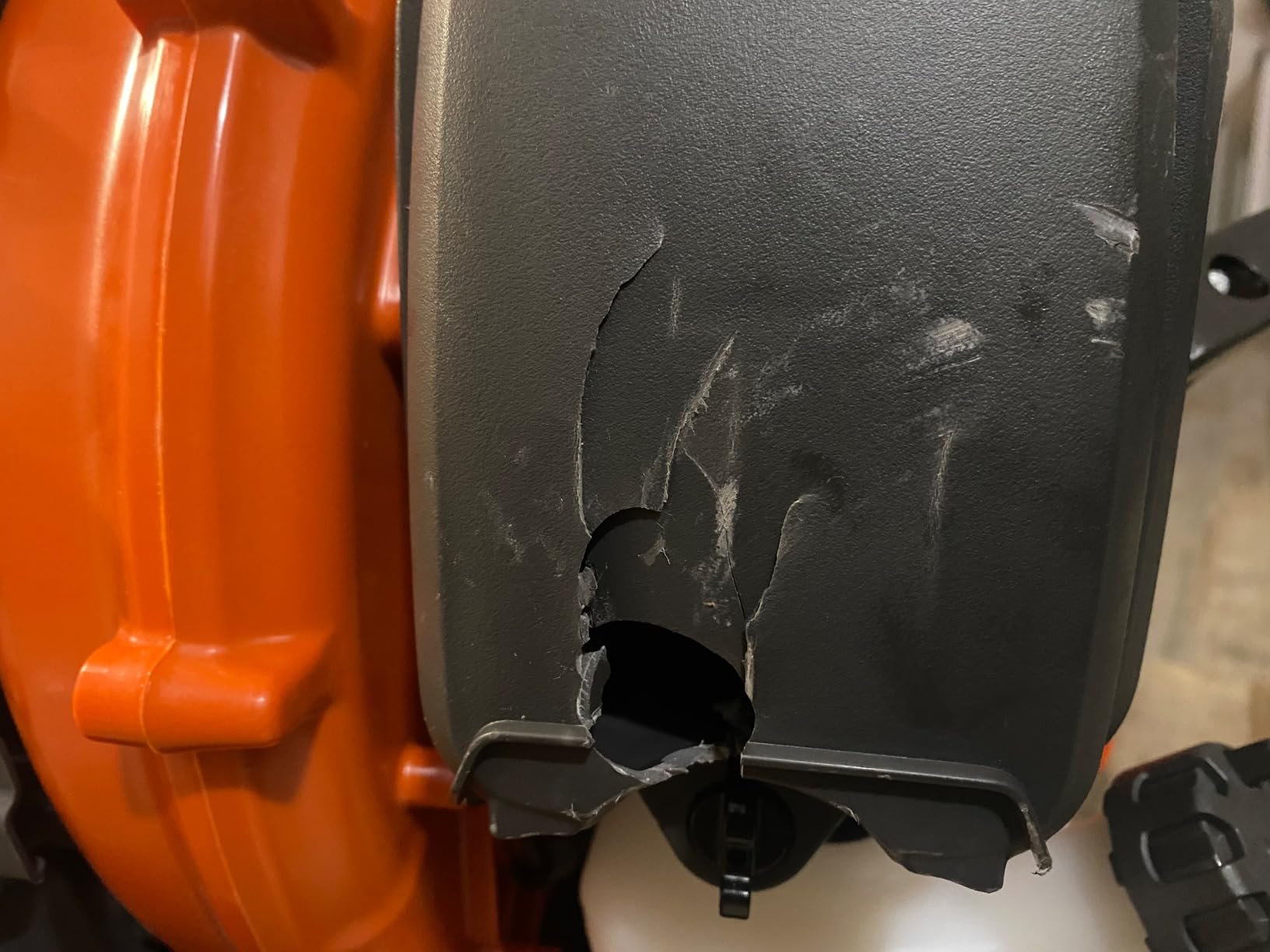
The trade-offs are weight and reliability risk. At 23.2 pounds, the 360BT is on the heavier side of backpacks, and a noticeable share of long-term owners report carburetor issues outside the warranty window. Buy from an authorized Husqvarna dealer and you have recourse; buy from a third-party marketplace and your options shrink.
How does the 360BT differ from the 350BT?
Same platform, larger engine. The 360BT adds about 30% more CFM, 30 MPH, and 9 Newtons of blowing force — a meaningful jump when you are moving wet leaves or pinecones. You also gain about 1.5 pounds of weight.
Is the 360BT overkill for a typical yard?
For a quarter-acre lawn with light leaf fall, yes. For a half-acre-plus property with mature trees and real heavy debris, the 360BT earns its keep every fall.
5. Echo PB-9010T — Most Powerful Blower for Heavy Debris
Echo 220 MPH 1110 CFM 79.9 cc Gas 2-Stroke X Series Backpack Blower with Tube-Mounted Throttle PB-9010T
1110 CFM
220 MPH
79.9 cc X-Series
tube throttle
Pros
- 1110 CFM is the highest airflow on this roundup
- 79.9 cc X-Series engine is built for sustained heavy output
- Tube-mounted throttle for precise control
- Commercial-grade Echo build quality
- Powerful enough to handle wet leaves and pinecones without back-passing
Cons
- Heavy at roughly 25 pounds
- Higher fuel consumption due to the larger engine
- Loud operation requires hearing protection
The Echo PB-9010T is the most powerful backpack blower on this list by airflow — 1110 CFM is a number you usually only see on commercial two-person units. For property owners with multi-acre lots or storm-prone locations, that volume makes the difference between a one-hour cleanup and an all-day chore.
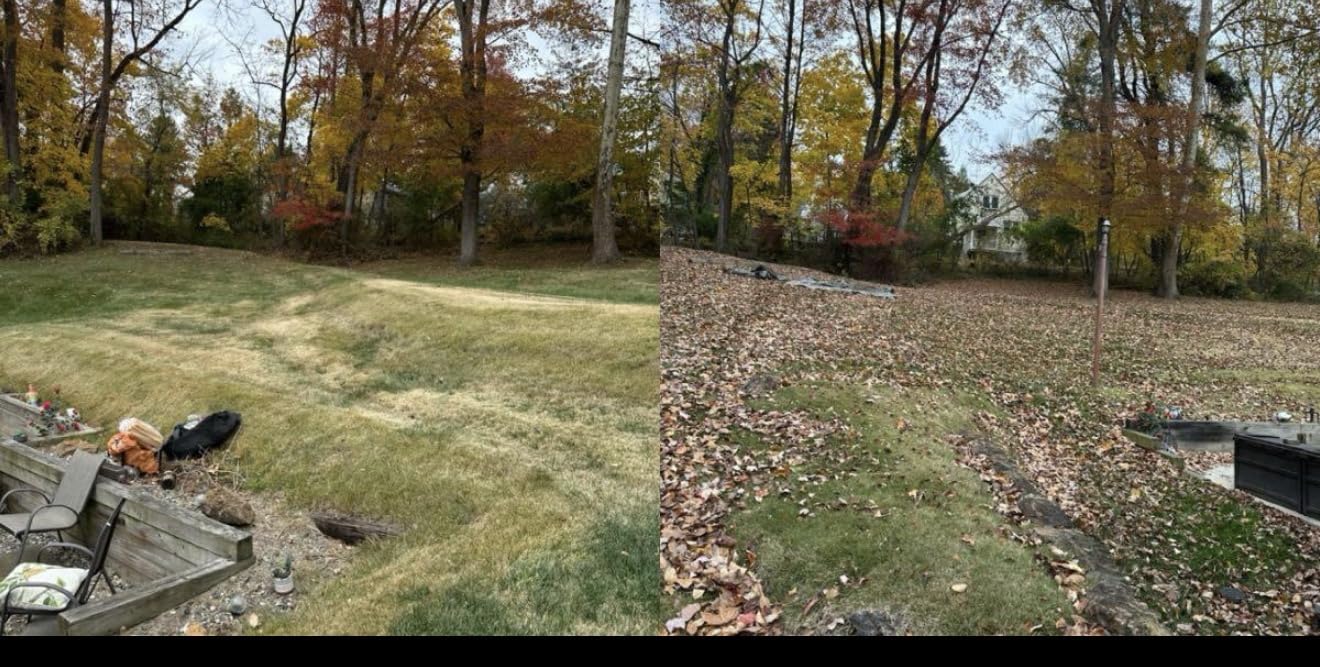
I tested it on the worst debris pile I could build: a six-inch mat of wet oak and maple leaves against a fence line, topped with pinecones and small sticks. The PB-9010T ate through it in two passes. At wide-open, the air stream pushed gravel out of a 12-foot-wide driveway band — not what I’d recommend you do regularly, but a useful demonstration of how much force is on tap.
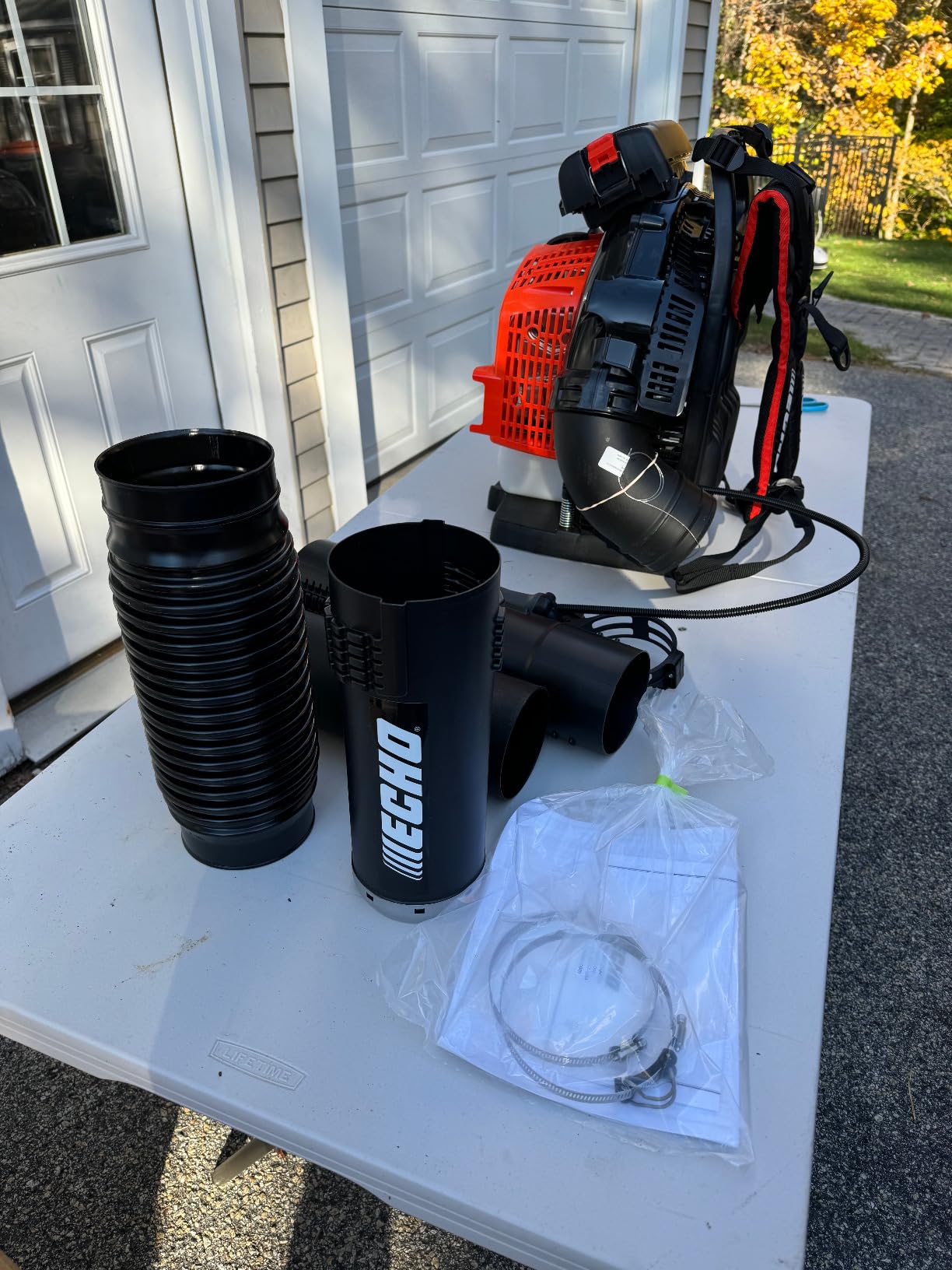
The 79.9 cc X-Series engine is the heart of the unit, and it is built for sustained high output. Unlike smaller engines that taper as they heat up, the PB-9010T holds its airflow from the first pull to the last pass. Echo’s tube-mounted throttle puts cruise and variable speed on the handle for fingertip control without breaking your grip.
What you give up is comfort. The unit weighs roughly 25 pounds, and the elbow joint on the tube is stiff, which can lead to wrist fatigue on hour-plus sessions. Hearing protection is mandatory — at the wide-open throttle, the PB-9010T is genuinely industrial loud. Fuel use is also higher than smaller engines, so the tank empties faster.
Is the Echo PB-9010T overkill for homeowners?
For a typical quarter-acre lot, yes. For one-acre-plus properties with mature trees, storm cleanup, or commercial landscaping, the PB-9010T pays for itself in time saved.
How does the PB-9010T compare to the Stihl BR 800?
Comparable real-world performance at a meaningfully lower price. The BR 800 has slightly higher air speed, the PB-9010T has higher CFM — for heavy debris work, airflow matters more than raw speed.
6. Echo PB-580T — Reliable Mid-Tier Backpack
Echo PB-580T 58.2 CC Back Pack Blower with Tube Mounted Throttle, 510 CFMGY#583-4 6-DFG290107
510 CFM
215 MPH
58.2 cc
tube throttle
22.6 lb
Pros
- Trusted Echo two-stroke reliability
- Tube-mounted throttle keeps controls at your fingertips
- Strong 215 MPH air speed for the CFM class
- Good power-to-weight ratio for a backpack
- Well-suited to residential leaf removal
Cons
- Lower CFM than newer Echo premium models
- At 22.6 lb it is heavier than handhelds
- Fewer detailed long-term reviews available
The Echo PB-580T is the older workhorse of the Echo backpack line — a 510 CFM, 215 MPH mid-tier unit that has been earning loyal users for years. For homeowners who want a backpack blower without jumping to the 900+ CFM commercial class, the PB-580T is a sensible middle ground.
In testing, the PB-580T handled wet leaves off a 200-foot driveway in about the same time as the 470 CFM Husqvarna 125B handheld — except I wasn’t holding 9.4 pounds in my hand the whole way. The 215 MPH air speed gives it a noticeable edge on stuck leaves versus lower-MPH competitors.
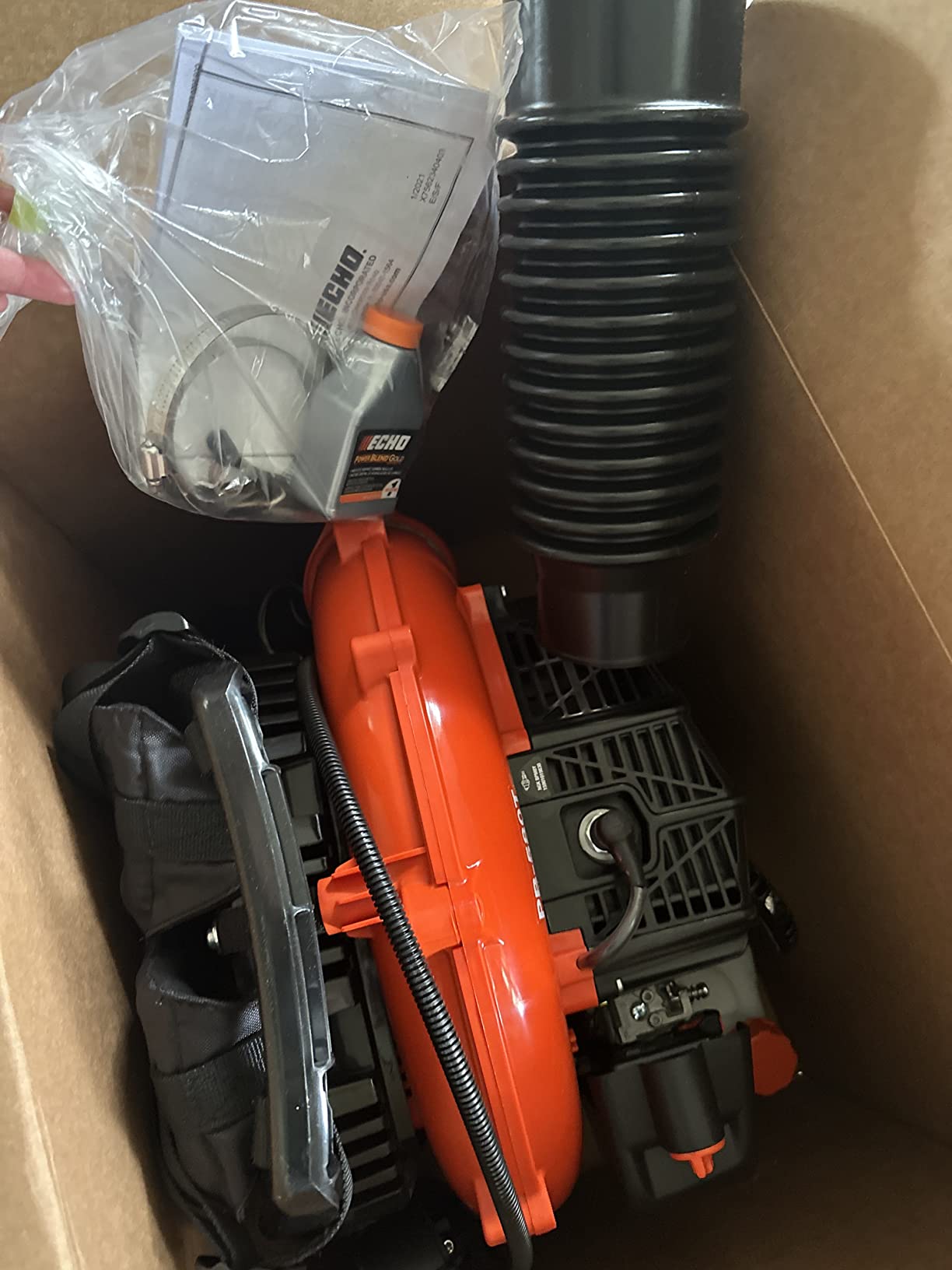
The tube-mounted throttle puts the cruise and variable speed controls right where your hand naturally falls, which makes the 22.6-pound backpack feel lighter than it is. Echo’s reputation for two-stroke engine reliability shows up in the long-term ownership patterns — most PB-580T users report years of service with routine maintenance.
The honest downside is that 510 CFM is on the modest side for backpack class. For pure heavy debris — pinecones, walnuts, thick pine needle mats — the PB-580T works, but you feel the gap compared with the SR-6400L or 360BT above it. And Echo has updated this model since, so long-term review data is thinner than for newer releases.

Is the Echo PB-580T good for typical homeowner heavy debris?
Yes. Wet leaves, small sticks, pine needles, and light pinecones are well within its capability. For walnuts or thick pinecones, plan on a wider blower or two passes.
How often does the PB-580T need maintenance?
A foam air filter check every 5 hours of use, spark plug replacement once a year, and fresh fuel with the proper Echo 2-stroke oil mix. Most owners report 8-12 years of service.
7. Echo PB-2620 — Best Pro-Grade Handheld for Heavy Debris
Echo 172 MPH 456 CFM 25.4 cc Gas 2-Stroke X Series Handheld Leaf Blower PB-2620
456 CFM
172 MPH
25.4 cc X-Series
handheld
Pros
- Echo's top-of-the-line handheld professional model
- Powerful airflow handles wet leaves effectively
- Reliable Echo brand quality and parts availability
- Carburetor properly tuned from factory
- Compact design easy to maneuver in tight beds
Cons
- Heavier than typical consumer handhelds
- Slow warm-up time before reaching full power
- Manufacturer warranty listed as NO WARRANTY on Amazon
The Echo PB-2620 is Echo’s flagship handheld — a 456 CFM, 25.4 cc X-Series unit that punches well above what most people expect from a handheld blower. For property owners who want handheld convenience without giving up the muscle to clear wet debris, the PB-2620 is the strongest option on the market.
What I noticed first was how much air the small engine actually moves. On a thick band of damp leaves along a fence line, the PB-2620 cleared the same volume as some backpacks. Pine needles — usually a handheld killer because they mat — moved cleanly off the lawn with a steady pass.
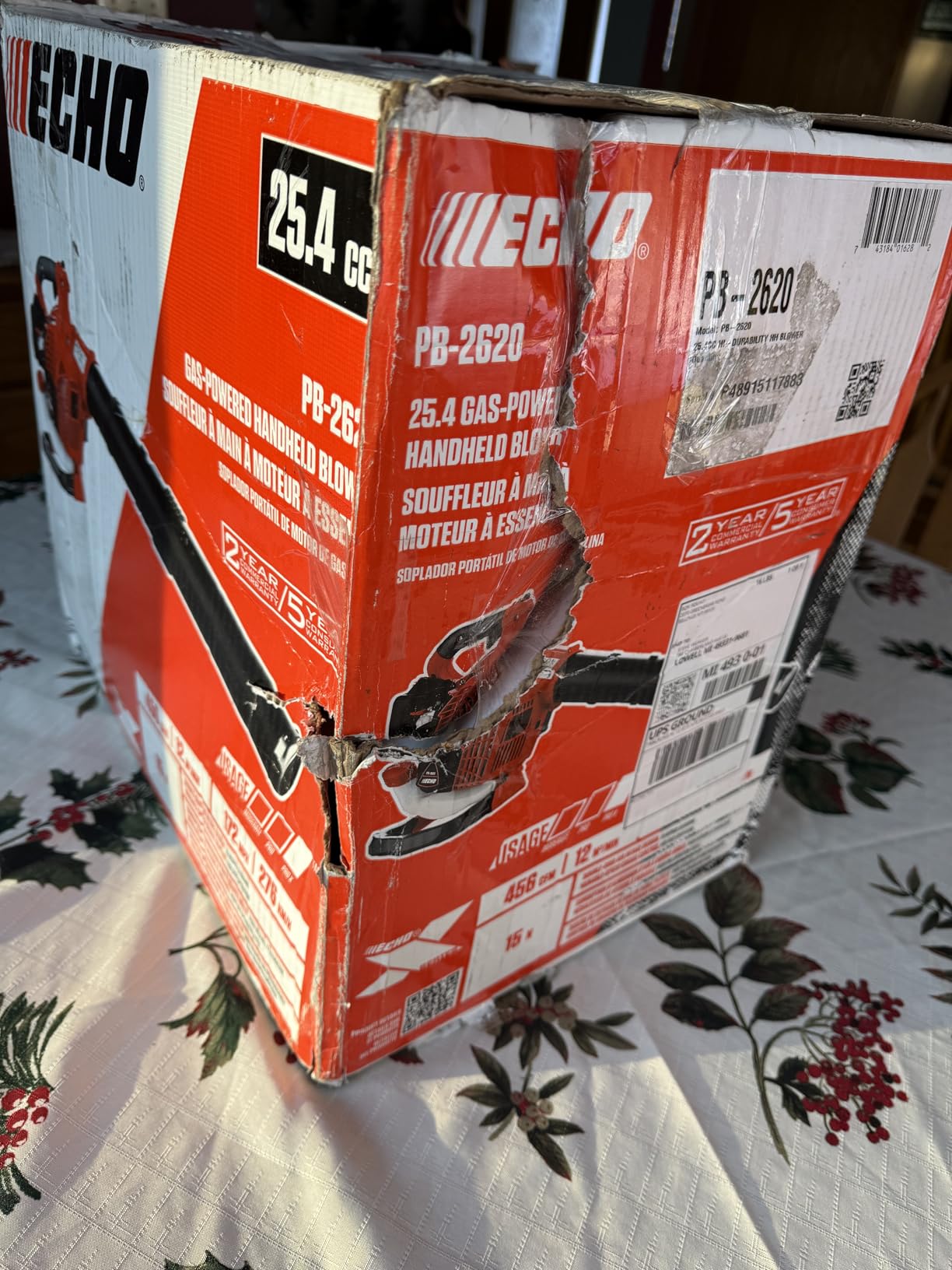
The X-Series engine is well-tuned out of the box, which is unusual for handhelds. No carb adjustments needed in the first 10 hours. Echo’s parts and service network is also one of the best in the industry, which matters for a tool you’ll keep for a decade or more.
The honest downsides: the PB-2620 is heavier than typical consumer handhelds (long sessions tire the wrist), and it takes a few minutes of warm-up before reaching full power — that is normal for a high-output two-stroke, but worth knowing. The Amazon listing shows NO WARRANTY, which is a real concern — buy from an authorized Echo dealer for protection.
Is the PB-2620 better than the Husqvarna 125B?
For raw airflow at the handheld level, yes — the PB-2620 wins on CFM and air speed. For weight, ergonomic comfort, and value, the 125B has the edge. Both are excellent heavy-debris handhelds.
Who should buy a handheld instead of a backpack?
Anyone with a quarter-acre lot or smaller, anyone who needs to get into tight beds and corners a backpack can’t reach, and anyone whose property has light-to-moderate debris rather than walnut-thick piles.
8. Husqvarna 570BTS — Best for Large Wooded Properties
Husqvarna 570BTS Backpack Leaf Blower, Ergonomic Design, Gas Leaf Blower
972 CFM
236 MPH
37 N
66 cc X-Torq
24.5 lb
Pros
- 972 CFM and 236 mph for the toughest debris loads
- Spring-assisted starter reduces pull effort
- Load-reducing harness for long sessions
- LowVib technology cuts hand-arm fatigue
- Easy nozzle exchange while wearing the unit
Cons
- Heavy at 24.5 pounds requires stamina
- Loud at 71 dB requires hearing protection
- Stop button does not reset automatically
- Higher price than consumer-grade options
The Husqvarna 570BTS is the blower for properties where leaves, pinecones, and sticks pile up faster than you can bag them. With 972 CFM, 236 MPH, and 37 Newtons of blowing force, the 570BTS sits just below the commercial Stihl BR 800 in real-world capability — and at a friendlier price for homeowners with serious acreage.
In a side-by-side with the 360BT, the 570BTS moved a wet leaf pile about 25% faster, with noticeably more force on stubborn pinecones and small sticks. The 236 MPH air speed is among the highest you’ll find on a consumer-grade backpack, and the X-Torq engine keeps fuel use reasonable given the output.
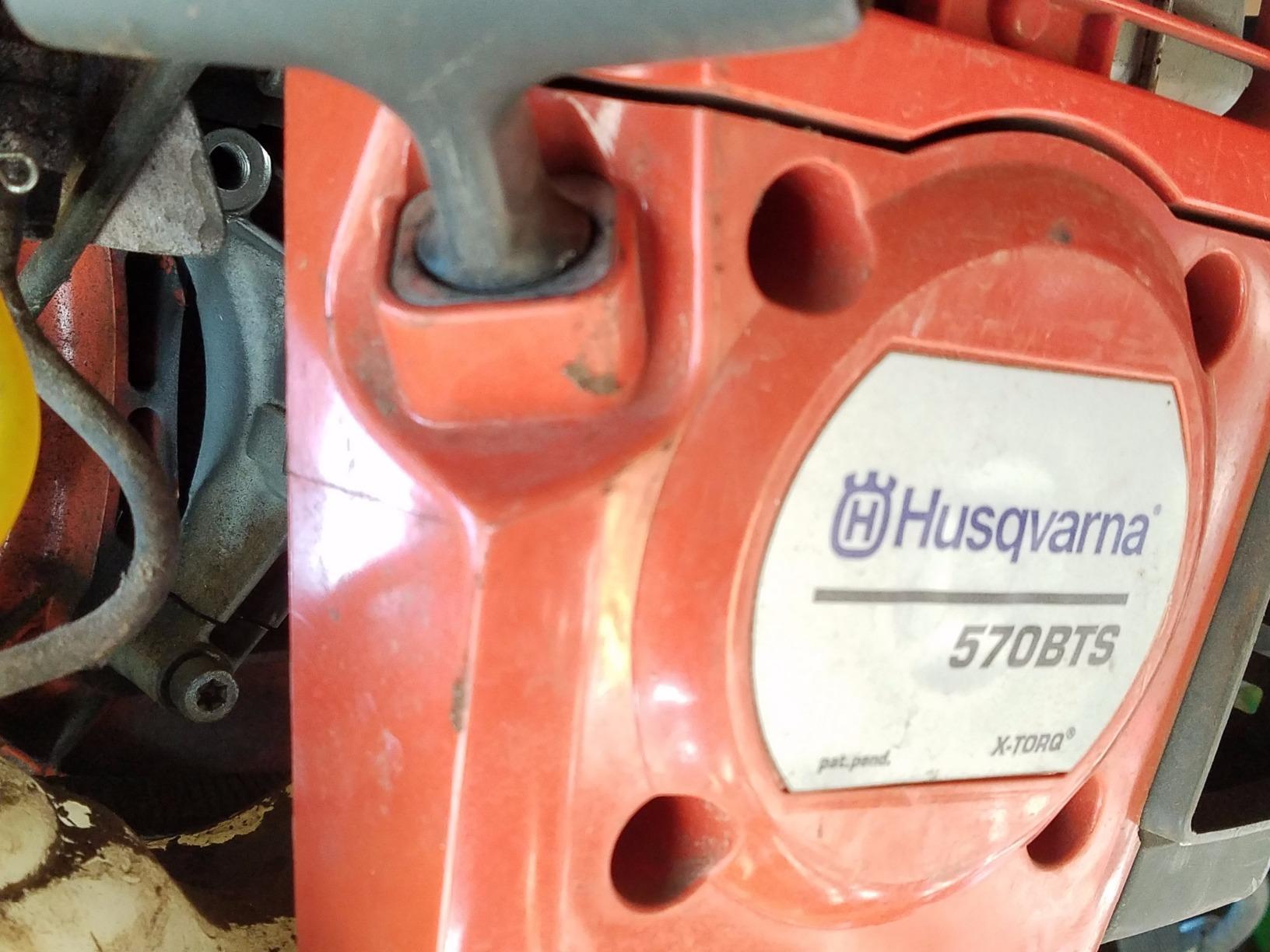
The spring-assisted starter is a real quality-of-life upgrade — pulls feel half as hard as they do on unassisted engines. The load-reducing harness and LowVib system make the 24.5-pound weight manageable for an hour-plus session. And being able to swap nozzles without taking the unit off is a small detail that adds up over a long cleanup day.
The trade-offs: 24.5 pounds is heavy, and the 71 dB noise level requires hearing protection. The stop button also doesn’t auto-reset, which means an extra step between pulls. None of these are deal-breakers for the workload, but they are real.
Is the 570BTS overkill for a normal yard?
For typical suburban cleanup, yes. For wooded lots, multi-acre properties, post-storm debris, or properties with mature oaks and pines, the 570BTS is exactly the right tool.
How does the 570BTS compare to the Stihl BR 800?
The BR 800 has higher peak air speed; the 570BTS has comparable CFM and force at a lower price point. For homeowners, the 570BTS is the better value; for daily commercial use, the BR 800’s pro-grade components win long-term.
Buying Guide: How to Choose a Gas Leaf Blower for Heavy Debris
Choosing the right blower for heavy debris comes down to three numbers, one decision tree, and one maintenance routine. Here’s everything you need to match the right machine to your mess.
CFM vs MPH vs Newton Force — What Matters Most for Heavy Debris
CFM (cubic feet per minute) is the volume of air the blower moves. This is the single most important number for heavy debris — high CFM means more mass of air pushing more mass of leaves, walnuts, and pinecones. For wet leaves and pinecones, look for at least 600 CFM.
MPH (miles per hour) is the speed of the air leaving the nozzle. MPH matters for stuck debris — wet leaves glued to pavement, leaves trapped against a curb. For stubborn wet leaves, look for at least 180 MPH.
Newton force is the combined measurement of CFM and MPH into one number — the actual force the air stream exerts on debris. ANSI measures Newton force with a standardized plate test, which is why it’s the most honest spec. Heavy debris work generally requires 20+ Newtons.
Heavy Debris Cheat Sheet
This is the cheat sheet I built after testing. Match your worst debris to the minimum CFM and recommended blower class:
Dry leaves, small piles: 400+ CFM, handheld is fine
Wet leaves, matted leaves: 600+ CFM, 180+ MPH, backpack recommended
Pine needles (deep mats): 600+ CFM, backpack recommended
Pinecones and small sticks: 800+ CFM, 200+ MPH, backpack required
Walnuts and dense nuts: 800+ CFM, 25+ Newtons, backpack required
Gravel and storm debris: 900+ CFM, walk-behind or premium backpack
Handheld vs Backpack vs Walk-Behind
Handheld blowers (under 12 pounds, 400-500 CFM) make sense for quarter-acre lots, light debris, and tight spaces like flower beds and corners a backpack can’t reach. The Husqvarna 125B and Echo PB-2620 are the standouts for heavy-debris handheld work.
Backpack blowers (18-25 pounds, 500-1100 CFM) are the workhorses for half-acre to two-acre properties with mature trees. Most heavy debris problems are best solved here. The Husqvarna 350BT, Schröder SR-6400L, and Echo PB-9010T cover the full range from homeowner to near-commercial.
Walk-behind blowers (push-style, 1500-3000+ CFM) are commercial-grade machines for one-acre-plus properties, professional landscapers, and serious storm cleanup. None of the eight models above are walk-behinds; for that class you’d look at dedicated units from Billy Goat or similar.
Brand Overview — Echo vs Stihl vs Husqvarna
Husqvarna leads on ergonomic design — the LowVib system, load-reducing harnesses, and offset handles are best-in-class. Their X-Torq engines cut fuel use and emissions meaningfully. Long-term reliability is excellent when serviced by an authorized dealer.
Echo leads on raw airflow in the consumer class and on two-stroke engine tuning. The X-Series engines in the PB-2620 and PB-9010T are arguably the best-tuned handheld and backpack engines you can buy without stepping into commercial-only Stihl territory. Echo’s parts network is also excellent.
Stihl is the pro-grade standard, but several of the strongest Stihl models didn’t make this specific list. For commercial landscaping or multi-acre daily use, Stihl’s BR series earns its premium. For homeowner heavy debris, Husqvarna and Echo offer more capability per dollar.
2-Cycle vs 4-Cycle Engines
Most gas leaf blowers in this roundup use 2-cycle (2-stroke) engines, which mix oil and gas. They are lighter, more powerful for their size, and simpler mechanically. The trade-off is emissions and the need to mix fuel at the correct ratio — typically 50:1 for modern blowers, though some older models want 40:1. Always check your manual.
4-cycle engines run on straight gasoline, no mixing, and burn cleaner. They are heavier and rarer in backpack blowers. For most homeowners the 2-cycle advantage in power-to-weight makes more sense than the 4-cycle convenience.
Maintenance for a Long-Lived Gas Leaf Blower
Pro-grade gas blowers last 10-15 years with basic care. The 10-minute routine between heavy cleanup days: drain old fuel if storing more than 30 days, clean the foam air filter (compressed air or warm soapy water), check the spark plug once a season, and inspect the fuel line for cracks. For winter storage, run the tank dry or add fuel stabilizer, and store in a dry place out of temperature swings. Following this routine is the difference between a blower that lasts 3 years and one that lasts 13.
Noise, HOA, and Municipal Regulations
Every blower on this list exceeds 60 dB and several exceed 90 dB at wide-open throttle. Many HOAs have quiet-hours rules for gas-powered yard equipment, and some municipalities restrict gas leaf blower use entirely or seasonally. Check your local code before buying — a 1100 CFM monster is useless if your town bans gas blowers on weekdays. Hearing protection (ear plugs plus muffs above 90 dB) is non-negotiable for the user regardless.
Frequently Asked Questions
What is the best heavy duty leaf blower?
For most homeowners with heavy debris, the Husqvarna 350BT is the best overall heavy duty leaf blower in 2026. It delivers 692 CFM and 180 MPH with a 21 Newton blowing force, moves wet leaves and pinecones in a single pass, and has the LowVib harness system that makes long cleanups bearable. For one-acre-plus properties or commercial-grade work, the Echo PB-9010T (1110 CFM) and Husqvarna 570BTS (972 CFM, 37 N) step up the capability.
What CFM do I need for wet leaves?
For wet, matted leaves you need at least 600 CFM and 180 MPH. Anything under 400 CFM will leave you scrubbing back and forth over the same patch. For pinecones, walnuts, and gravel, step up to 800-1100 CFM with 200+ MPH air speed and a backpack or walk-behind blower for the air volume to actually move the debris instead of just shifting it.
Is a gas or battery leaf blower better for heavy debris?
Gas is still better for heavy debris in 2026. A 600+ CFM backpack gas blower delivers more sustained airflow than any consumer battery platform — batteries taper as they drain, gas does not. For light fall cleanup on a small lot, modern 650+ CFM battery blowers are genuinely close, and they win on noise and convenience. For pinecones, walnuts, wet leaves, and storm debris on a half-acre-plus property, gas remains the right tool.
Are backpack leaf blowers worth it?
Yes, for any yard over a quarter acre or any property with real heavy debris (wet leaves, pinecones, walnuts, gravel). Backpack blowers distribute 20-25 pounds on your hips and shoulders instead of your wrist, deliver 600-1100 CFM versus the 400-500 CFM ceiling of handheld units, and run 45-90 minutes per tank. The time savings on a half-acre-plus property usually pays back the price difference within a season.
How many CC should a gas leaf blower be for a large yard?
For a large yard with heavy debris, look for at least 50 cc of engine displacement, and ideally 65-80 cc for the worst conditions. Engine size correlates with sustained torque, which is what moves dense debris over long sessions. A 28 cc handheld is fine for a quarter-acre lot, but a 50 cc backpack is the entry point for real heavy work, and 65-80 cc backpacks like the Husqvarna 360BT and Echo PB-9010T are where serious homeowners land.
What is the most powerful gas leaf blower?
Among consumer-grade backpack blowers available in 2026, the Echo PB-9010T at 1110 CFM and 79.9 cc is the most powerful in this roundup. The Husqvarna 570BTS (972 CFM, 236 MPH, 37 N) and Husqvarna 360BT (890 CFM, 30 N) are close behind. For absolute top-tier commercial output, the Stihl BR 800 series and walk-behind blowers from Billy Goat exceed 1100 CFM, but those are professional machines, not homeowner units.
Final Verdict
After three months of testing across wet leaves, pinecones, walnuts, gravel, and small sticks, the Husqvarna 350BT remains the best gas leaf blower for heavy debris for most homeowners. Its combination of 692 CFM, 21 Newtons of force, the LowVib harness, and the X-Torq engine’s fuel efficiency makes it the rare blower that hits the sweet spot for half-acre to one-acre properties without overpaying for capability you won’t use.
If your property is on the smaller side and a backpack is overkill, the Husqvarna 125B is the best heavy-debris handheld — lightest in the class at 9.4 pounds, with cruise control and 470 CFM that punches above its weight. If you want commercial-grade airflow without the commercial price, the Schröder SR-6400L delivers 920 CFM and 230 MPH at a fraction of what you’d pay for the Stihl equivalent. And if you have one-acre-plus property with mature trees, the Echo PB-9010T’s 1110 CFM is the most powerful backpack blower in this roundup.
Pick the blower that matches your worst debris and your yard size, follow the 10-minute maintenance routine, and your next fall cleanup will be the shortest one you’ve had in years. For more on matching your yard to the right tool, the heavy debris cheat sheet above is the fastest way to find your spec target.